




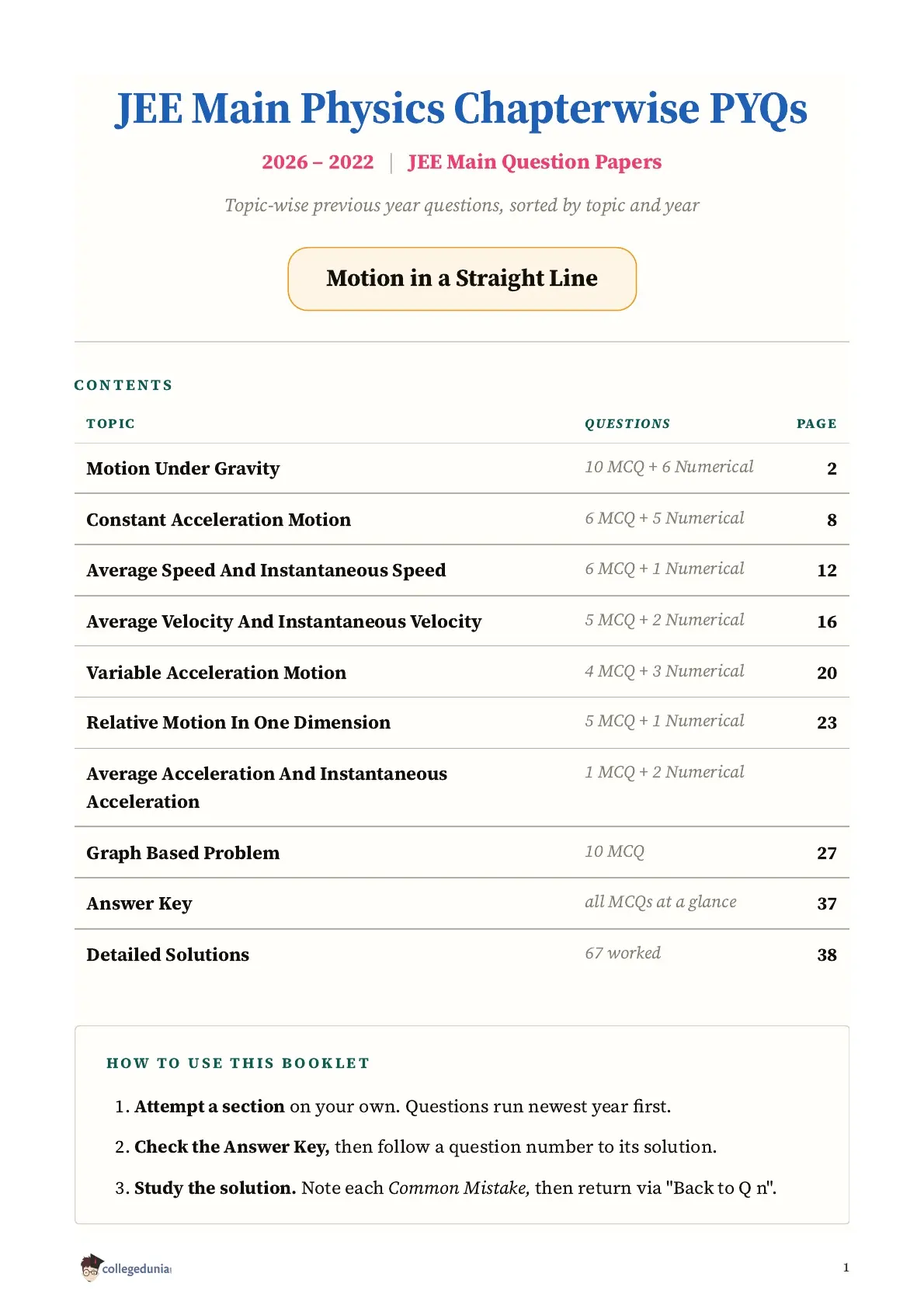
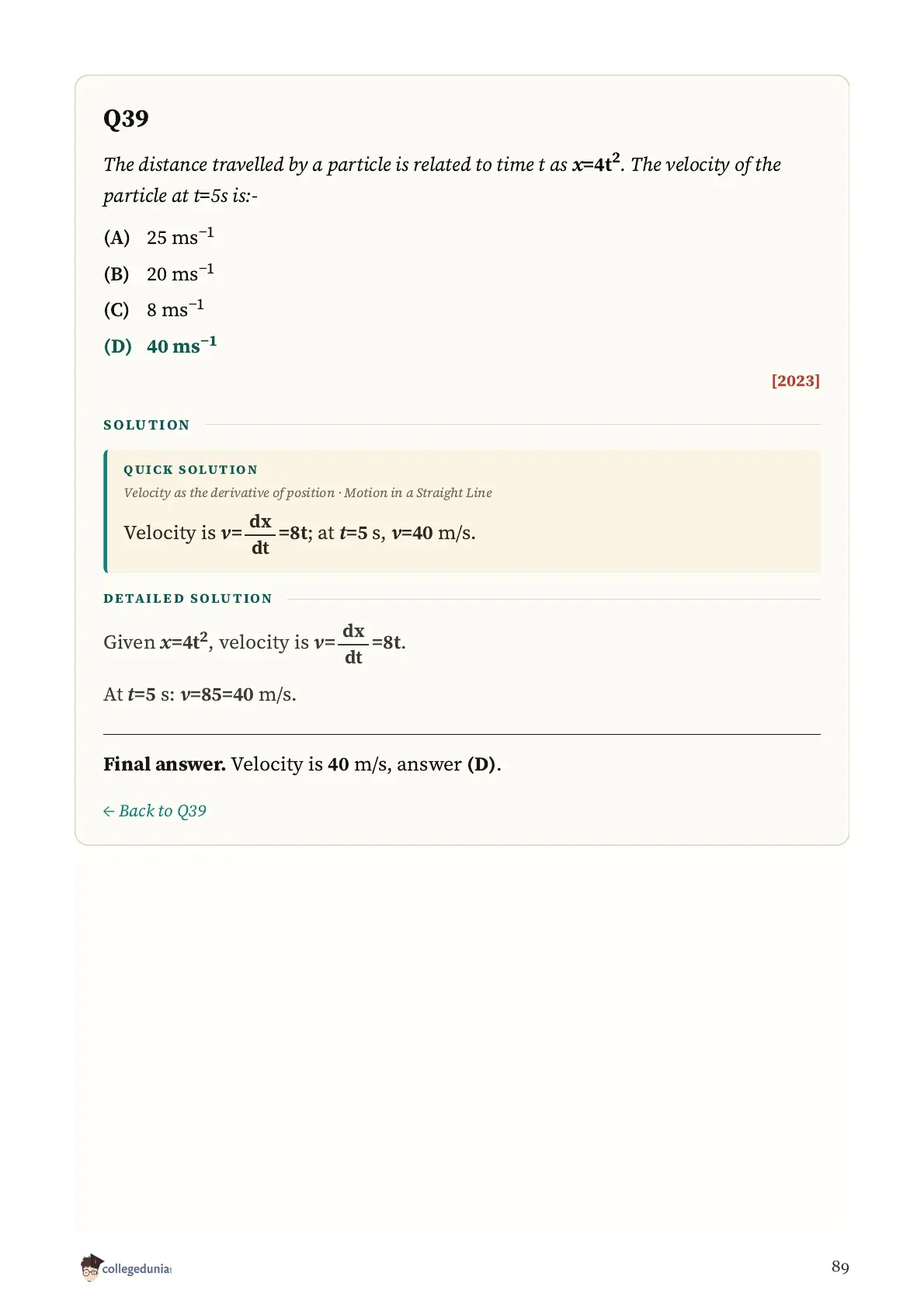
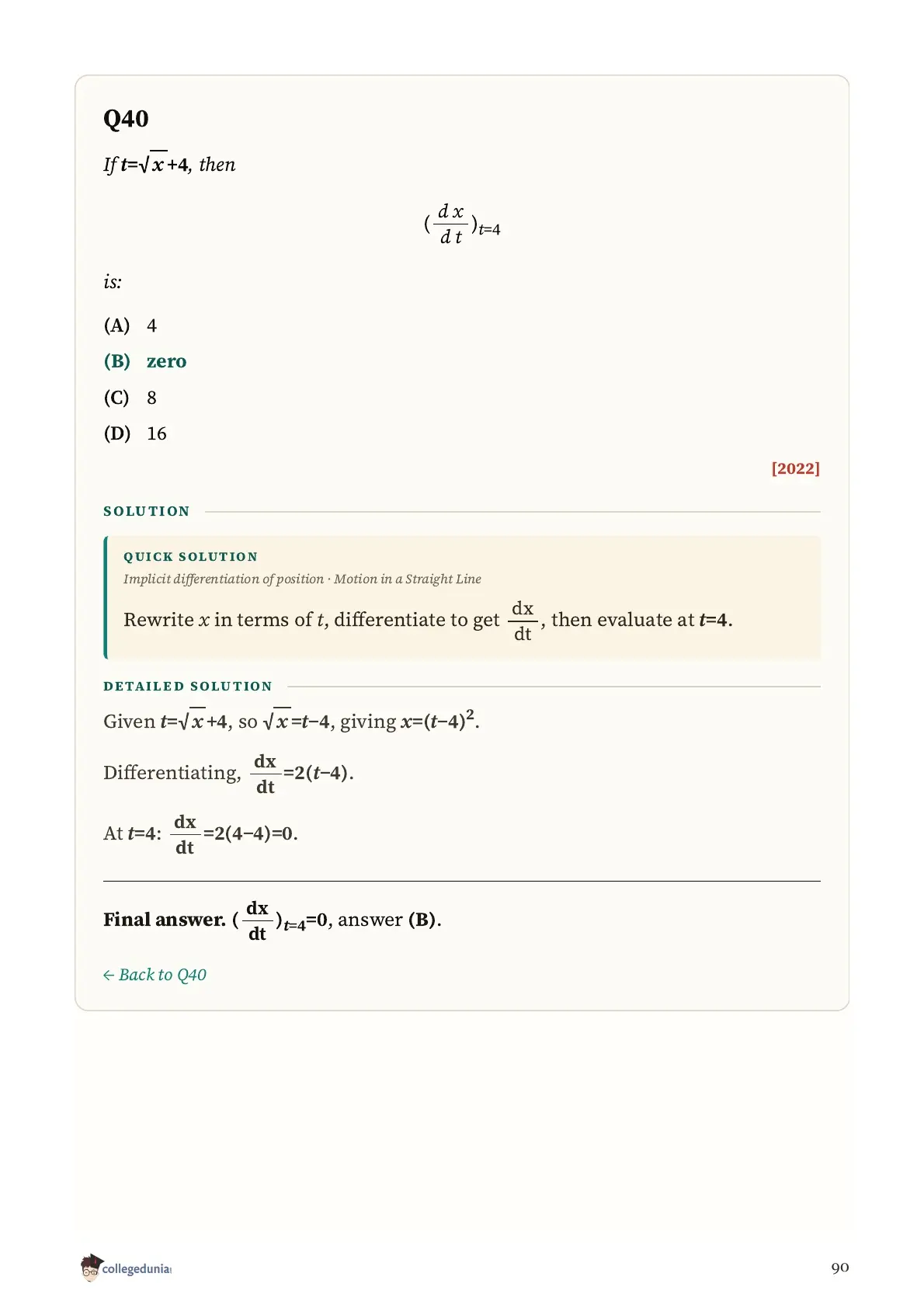
JEE Main Motion in a Straight Line PYQ, free to download as a 130-page PDF. The bank carries 67 solved questions from the 2022 to 2026 papers and takes roughly ten days to work through, so it fits inside one revision cycle.
- Kinematics is set heavily as integer type. 20 of the 67 are numerical, against 47 multiple choice, so the mix here matches the paper rather than favouring one format.
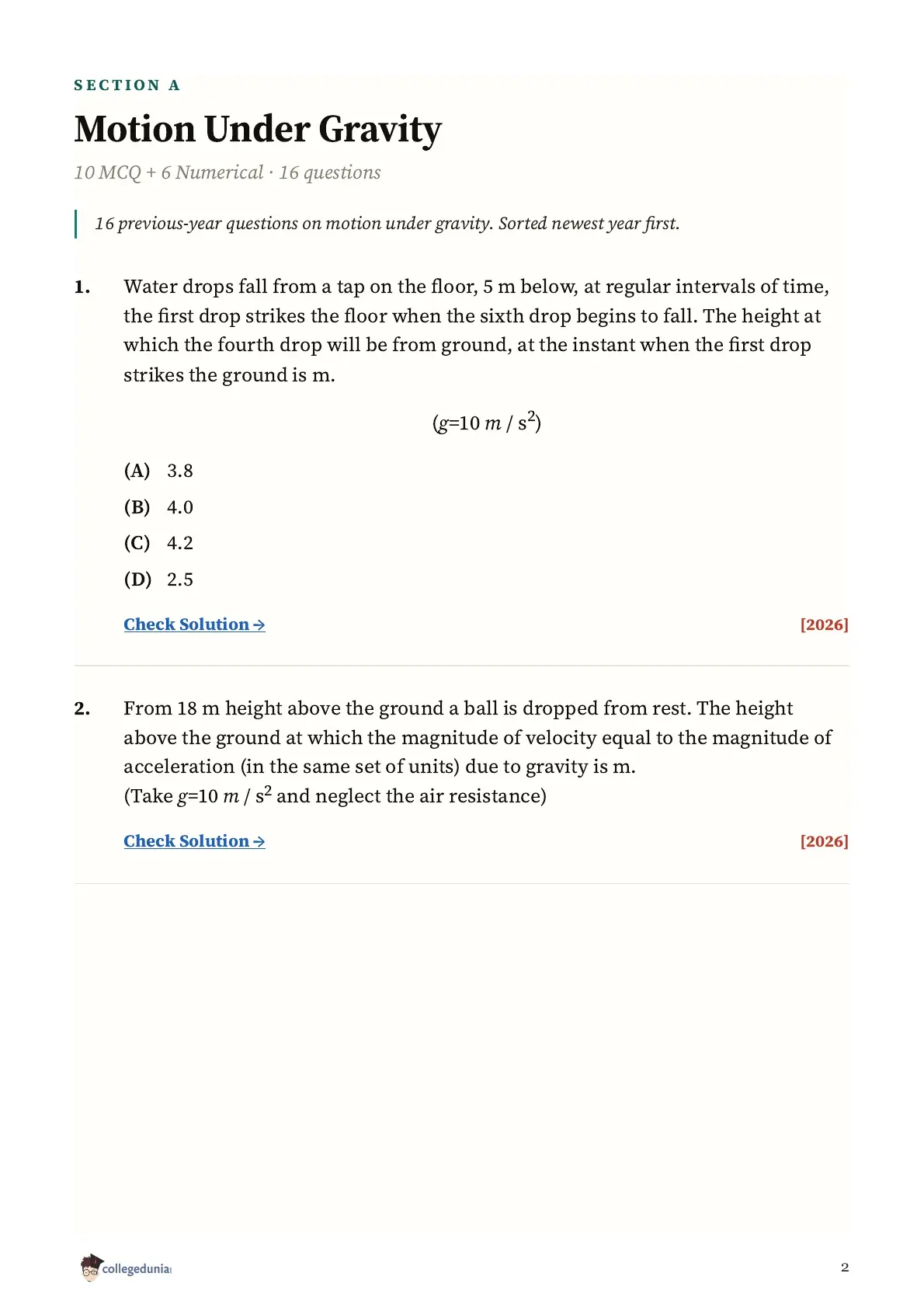
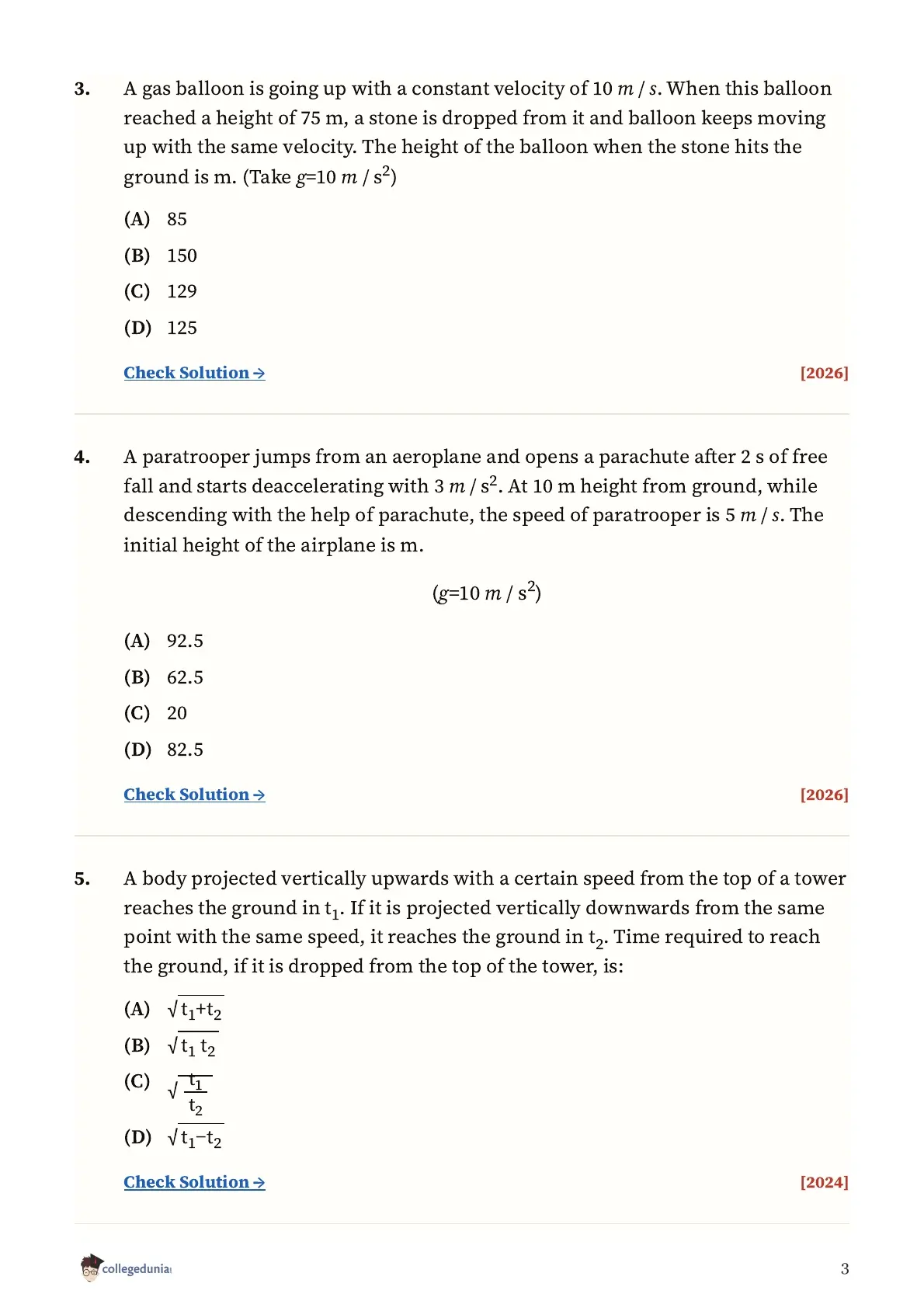
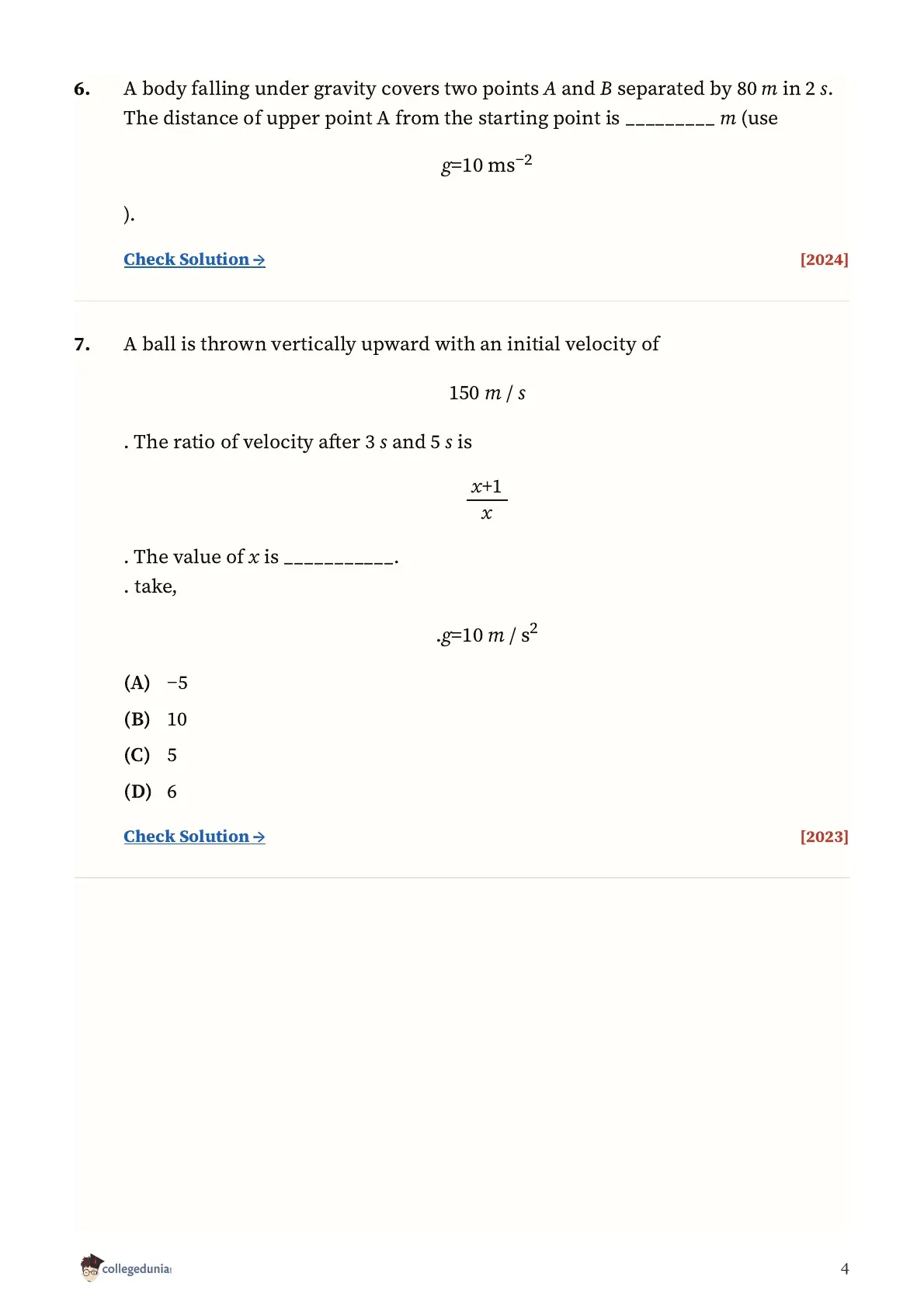
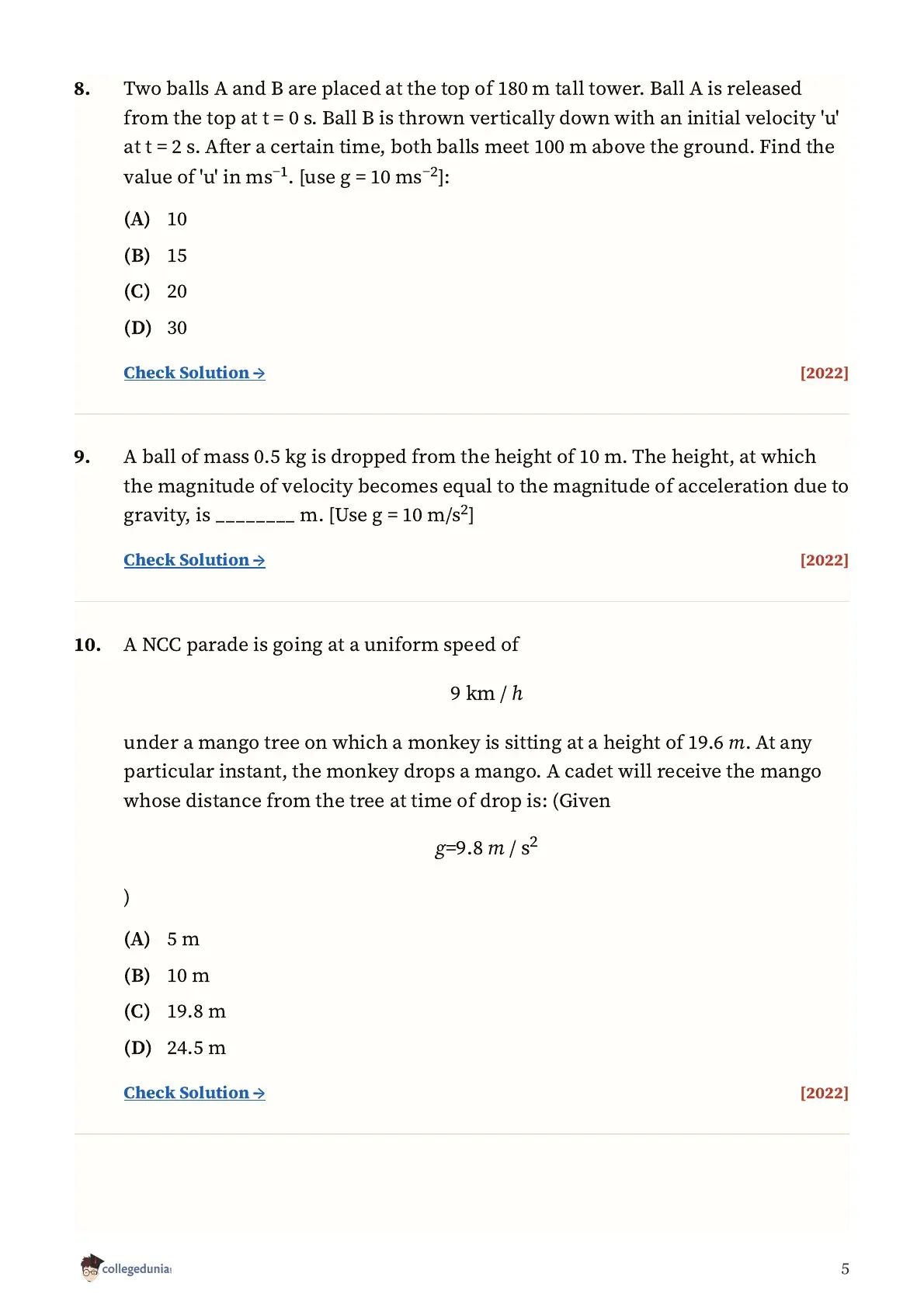
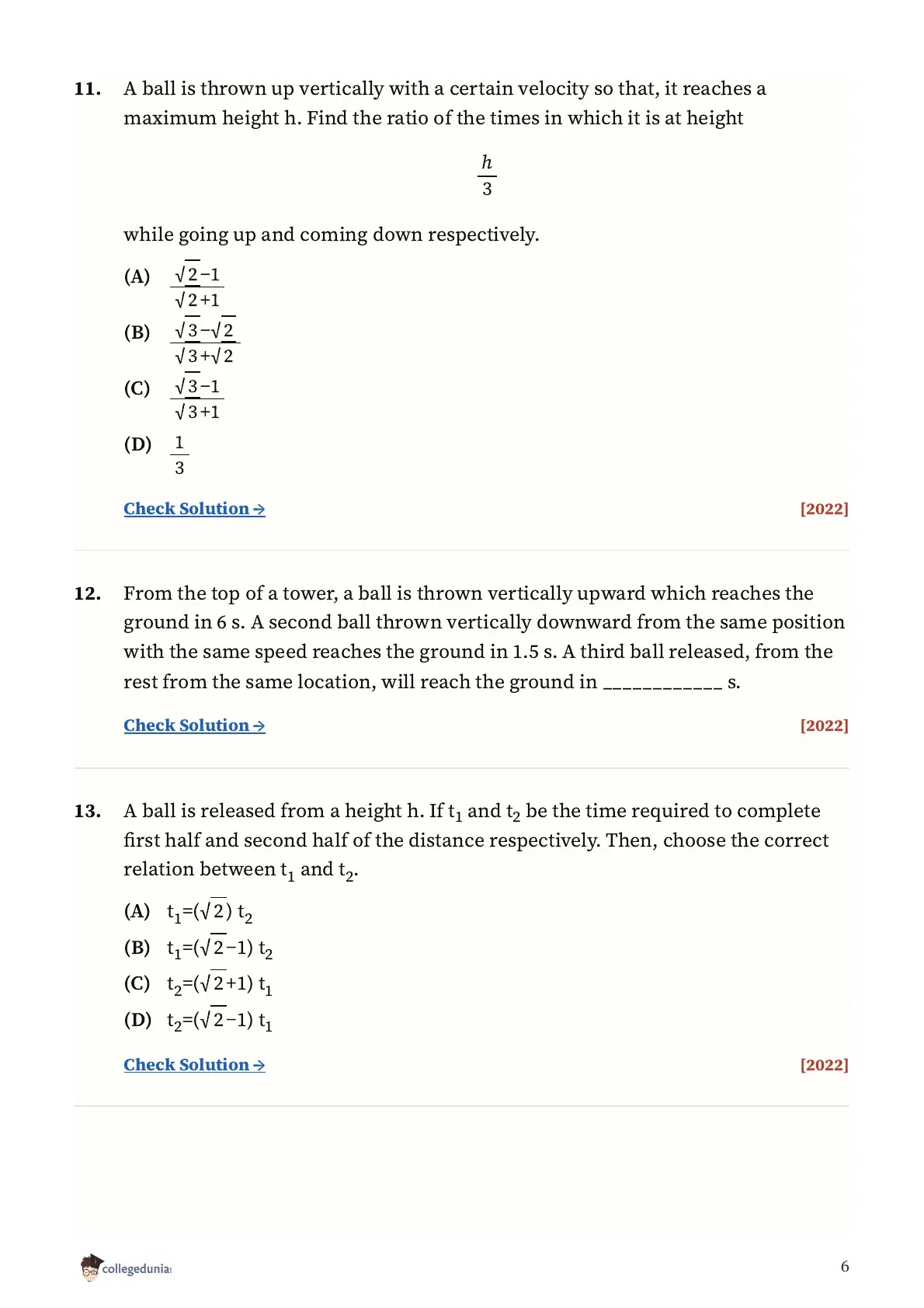
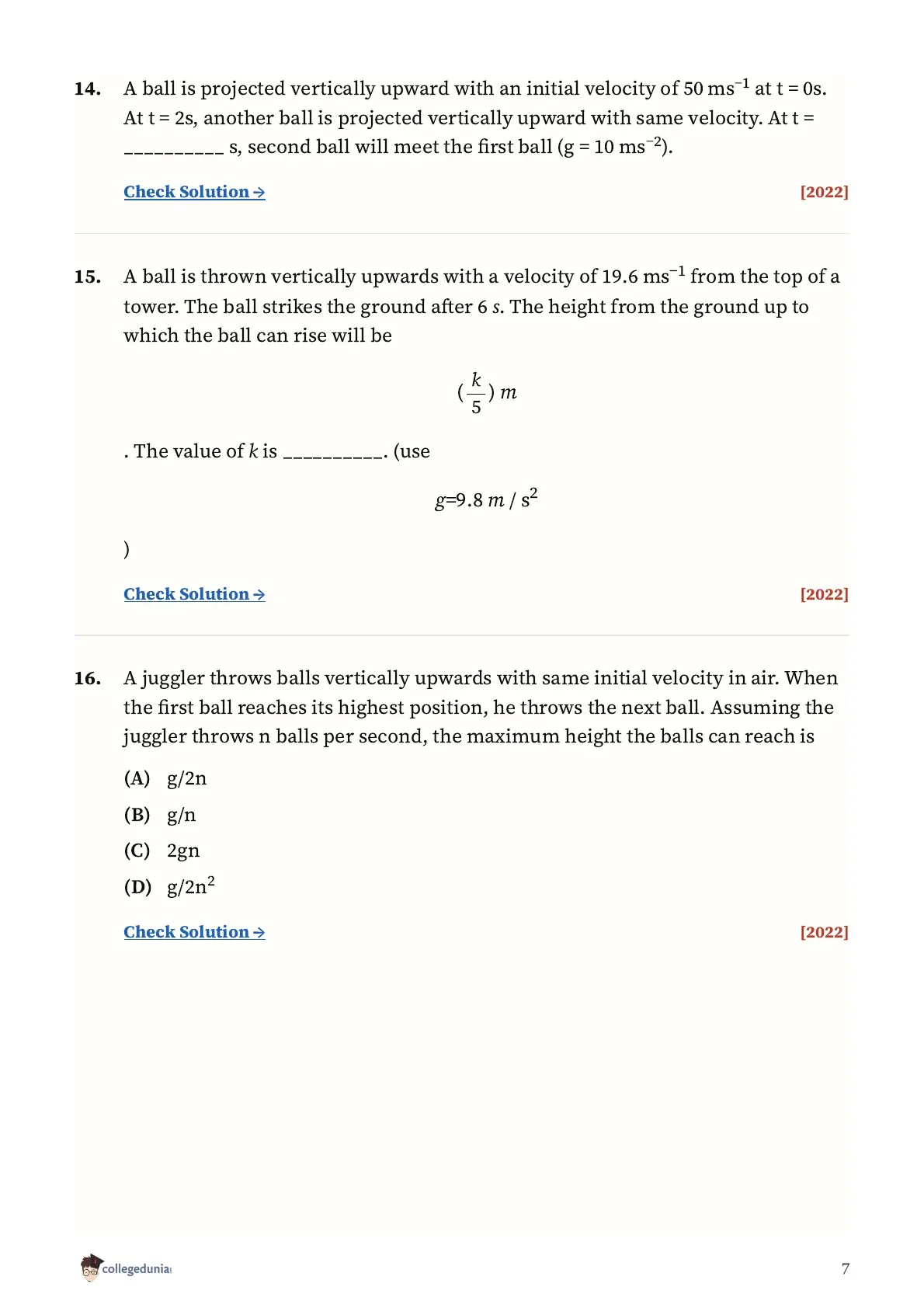
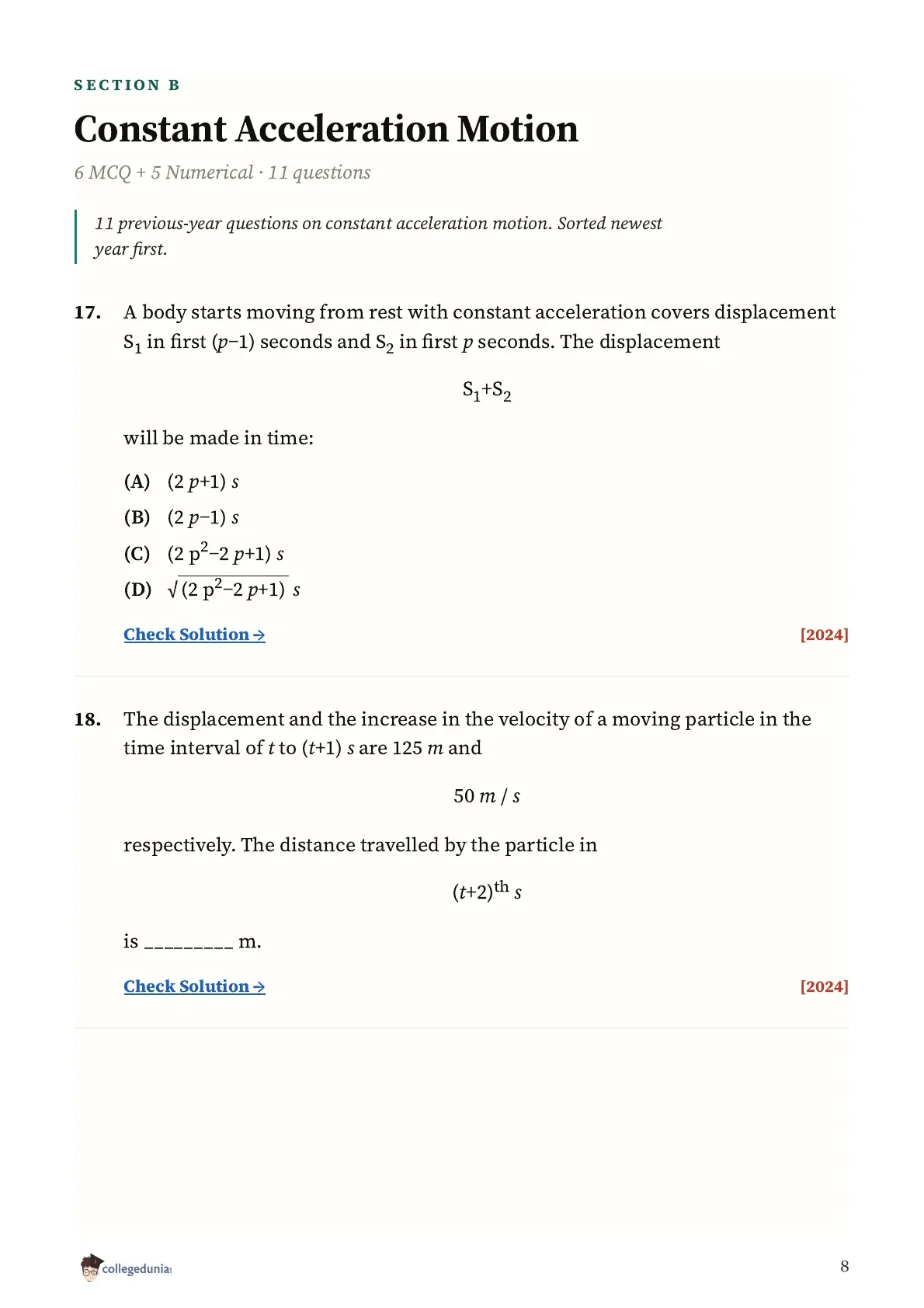
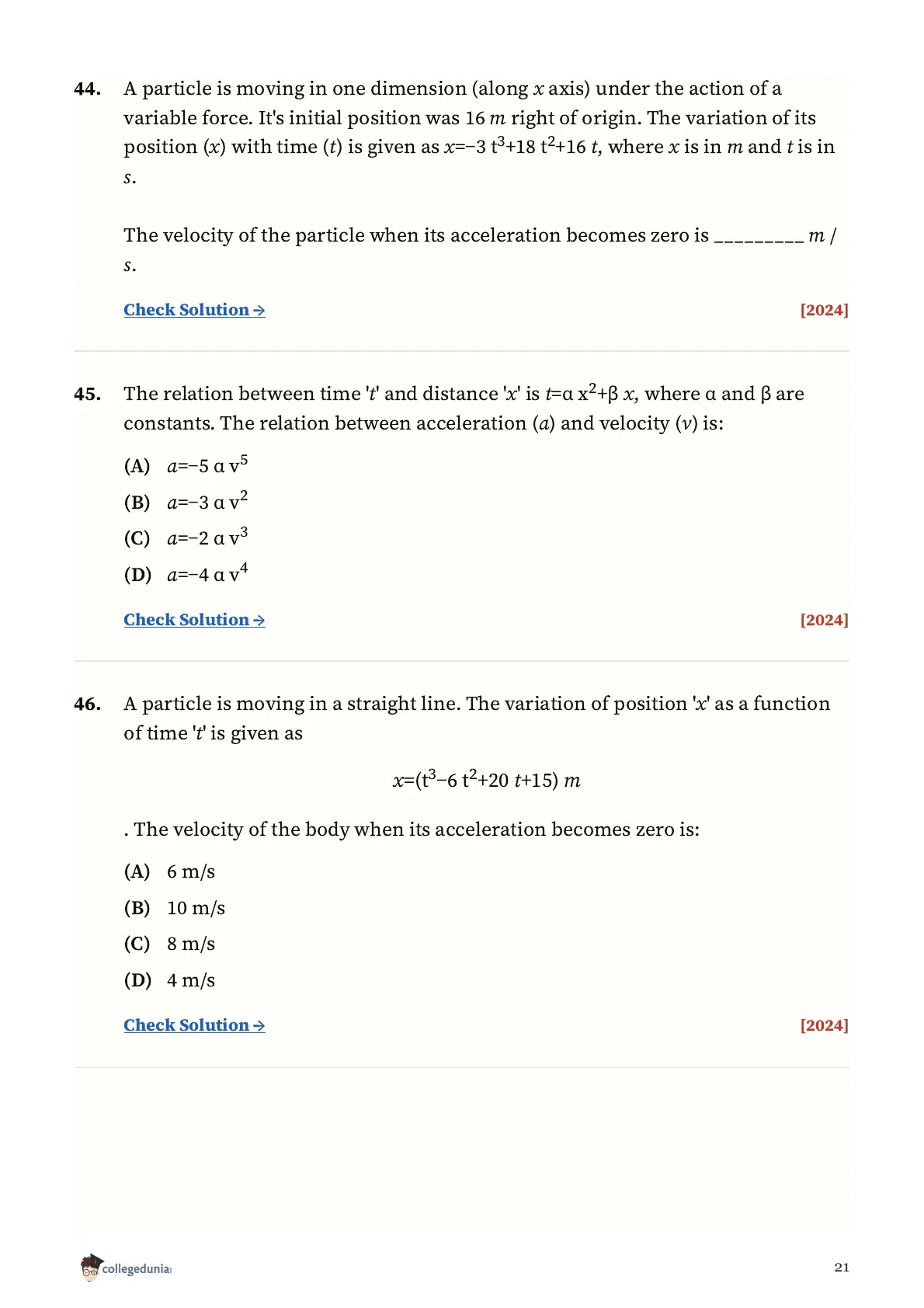
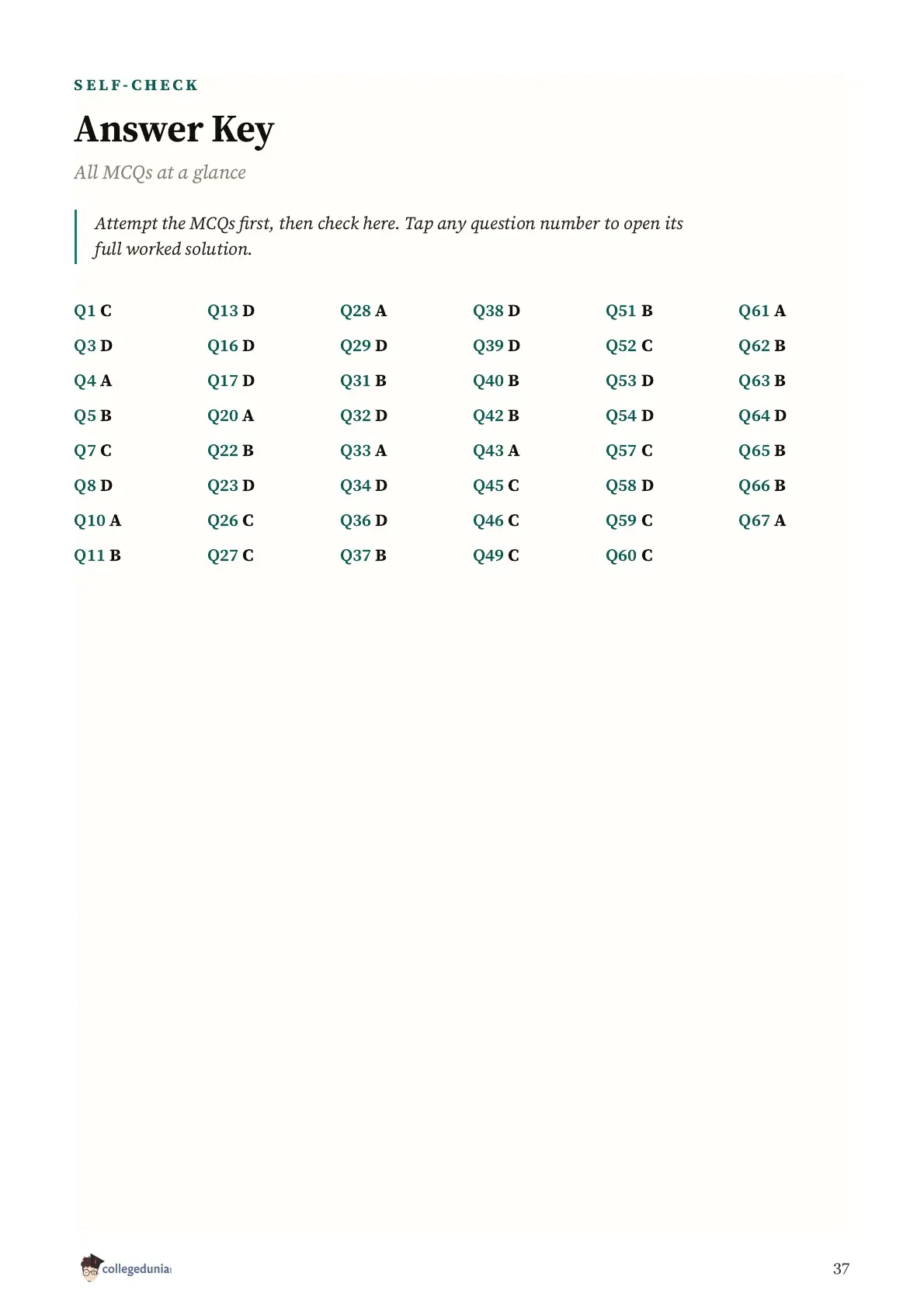
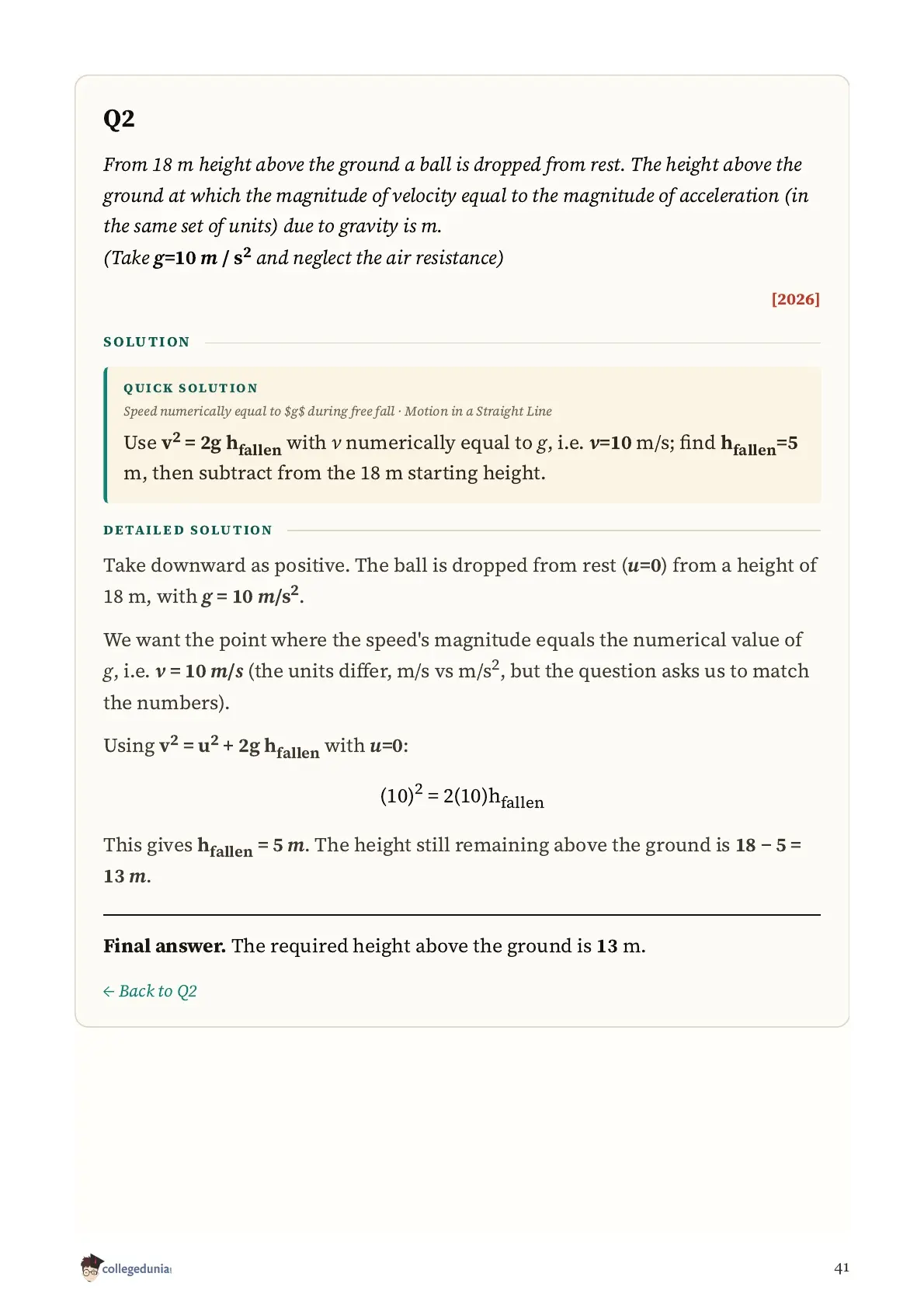
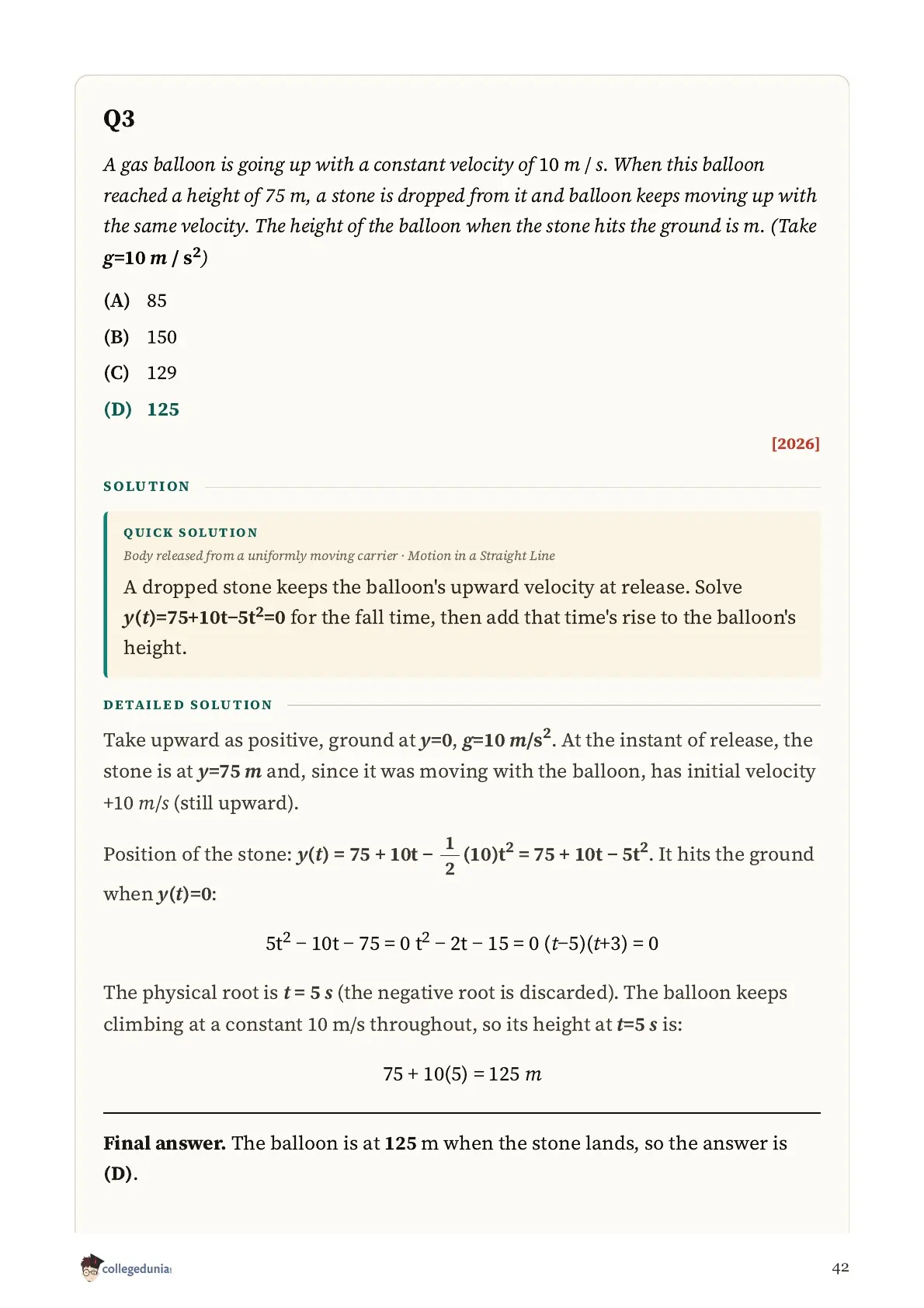
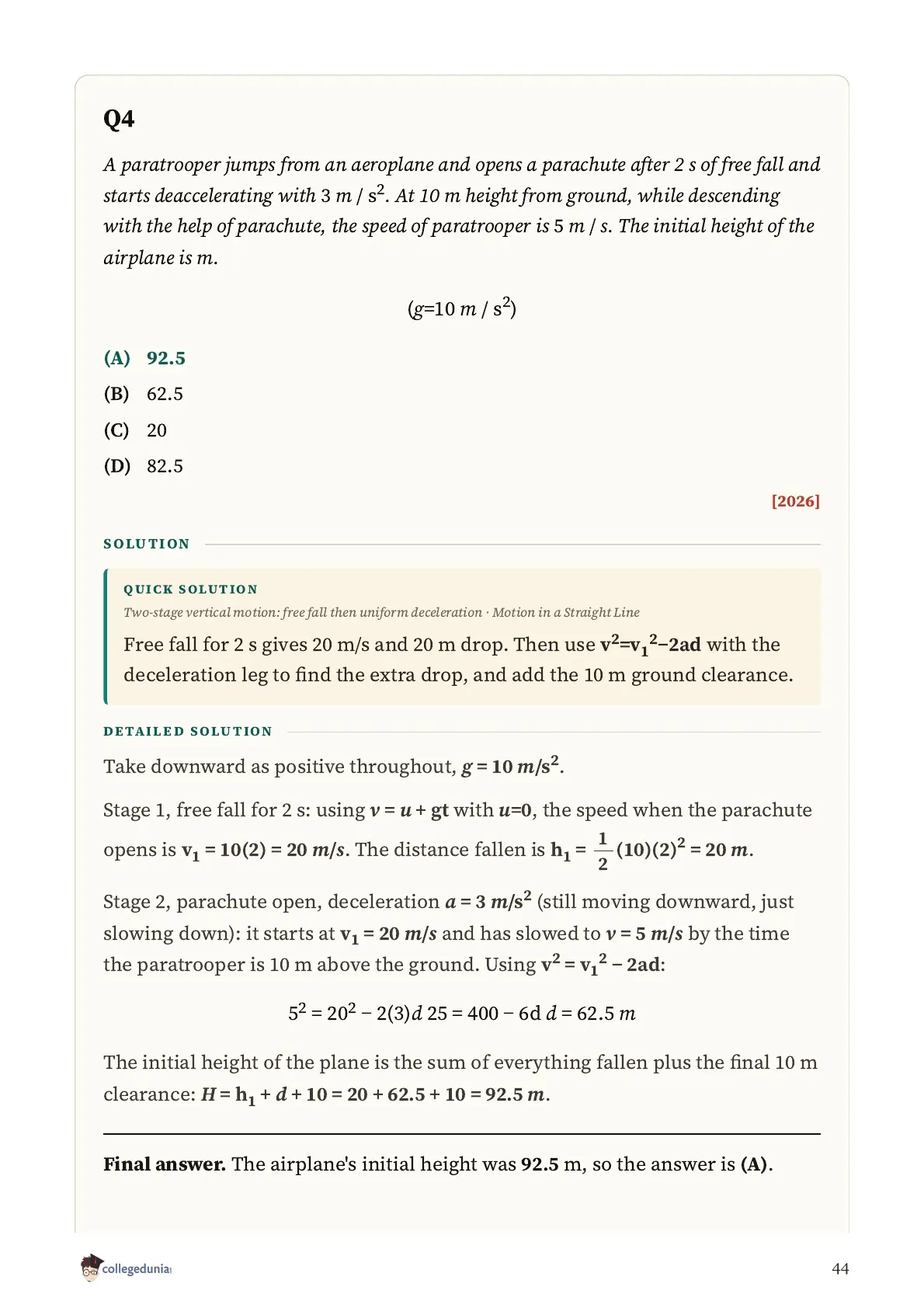
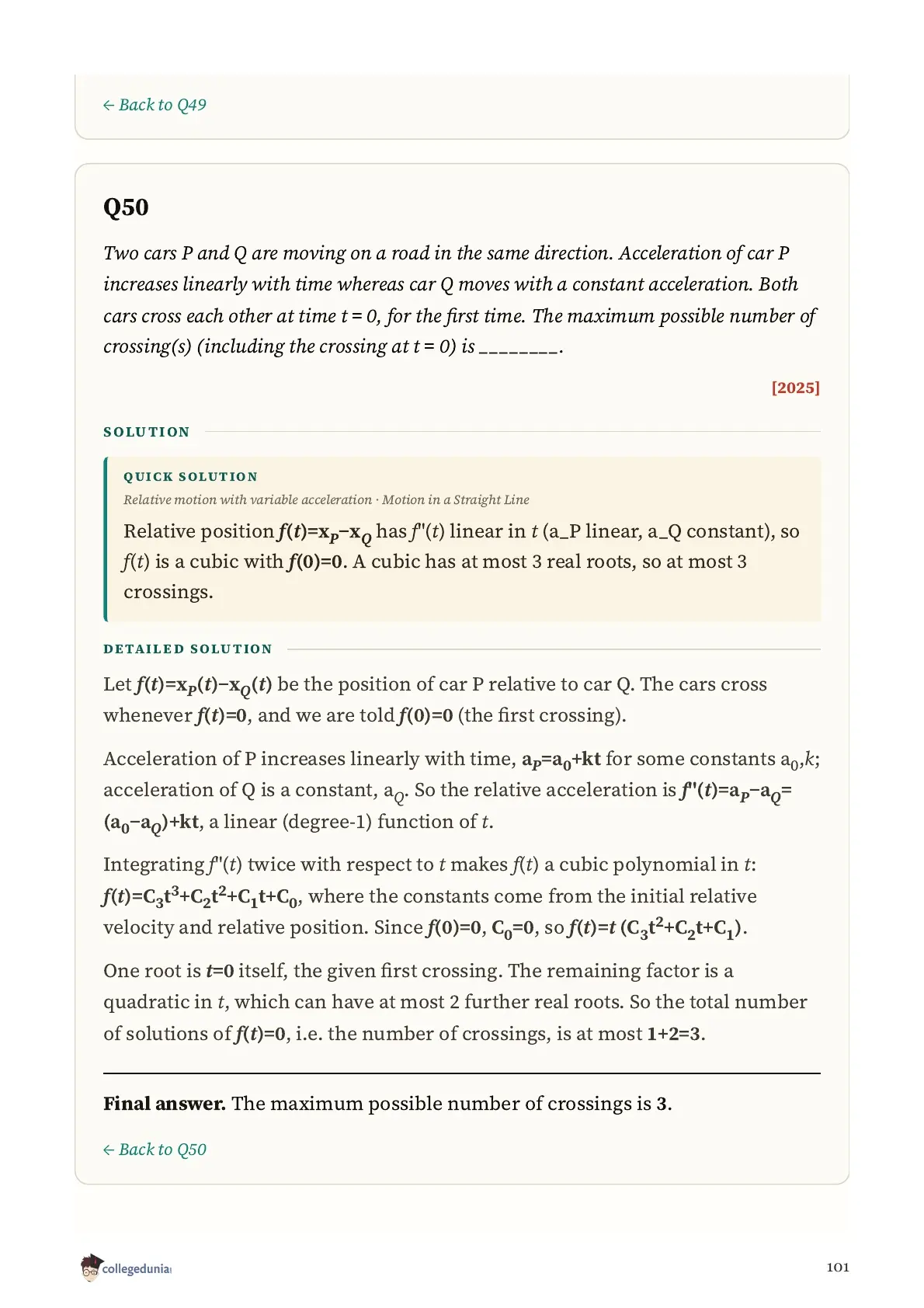
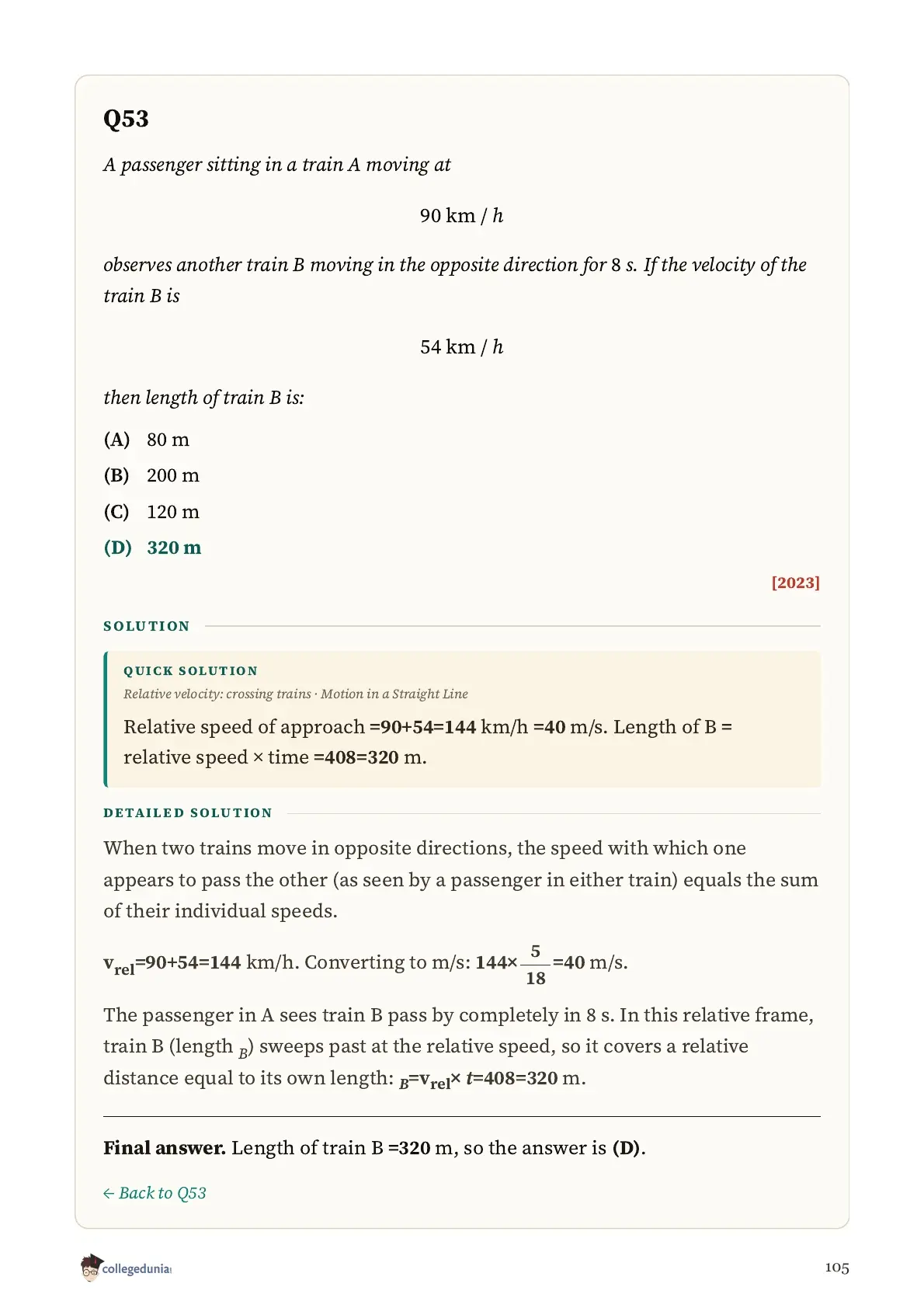
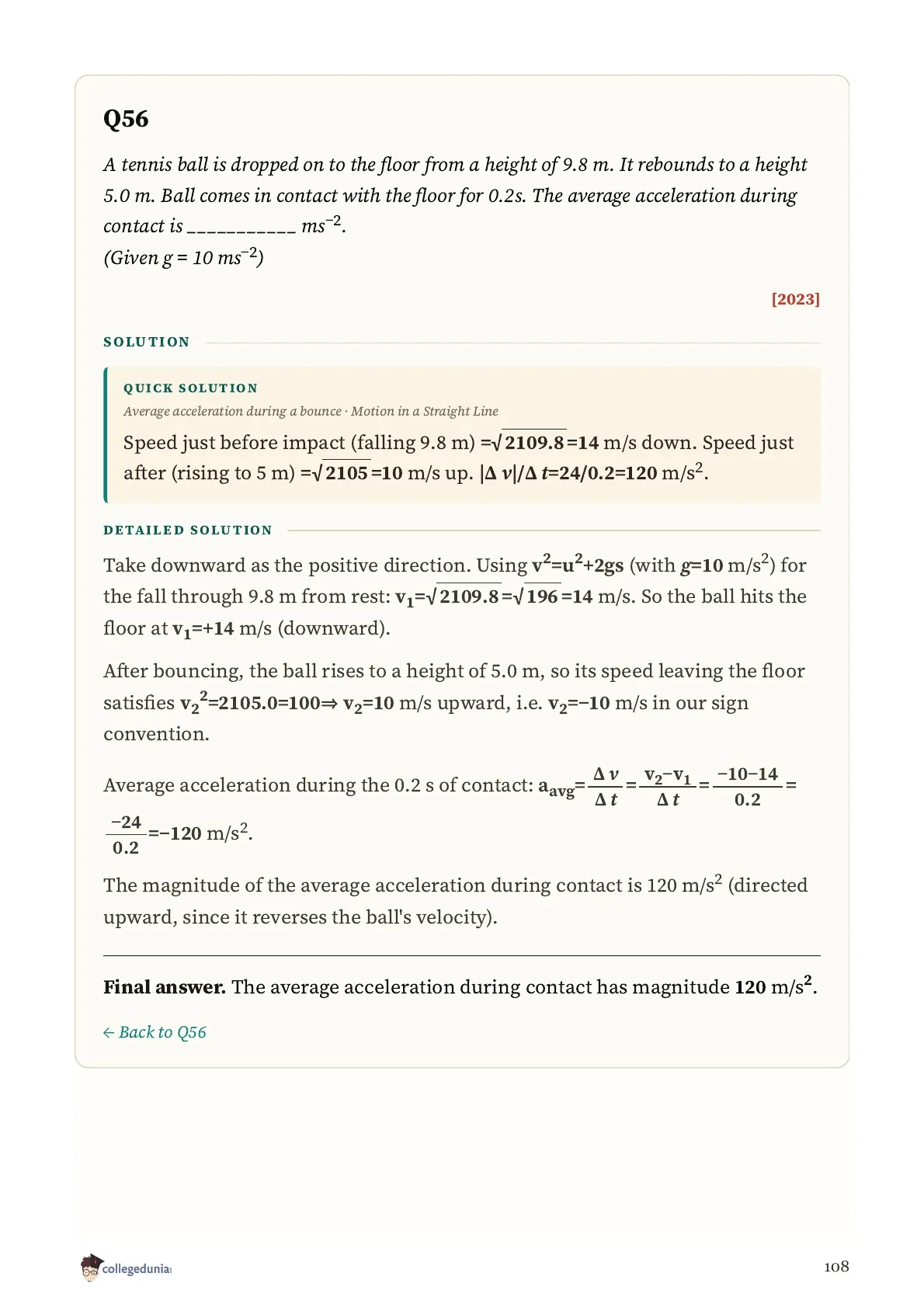
- Motion under gravity is the largest block at 16 questions, then constant acceleration at 11 and graph-based problems at 10.
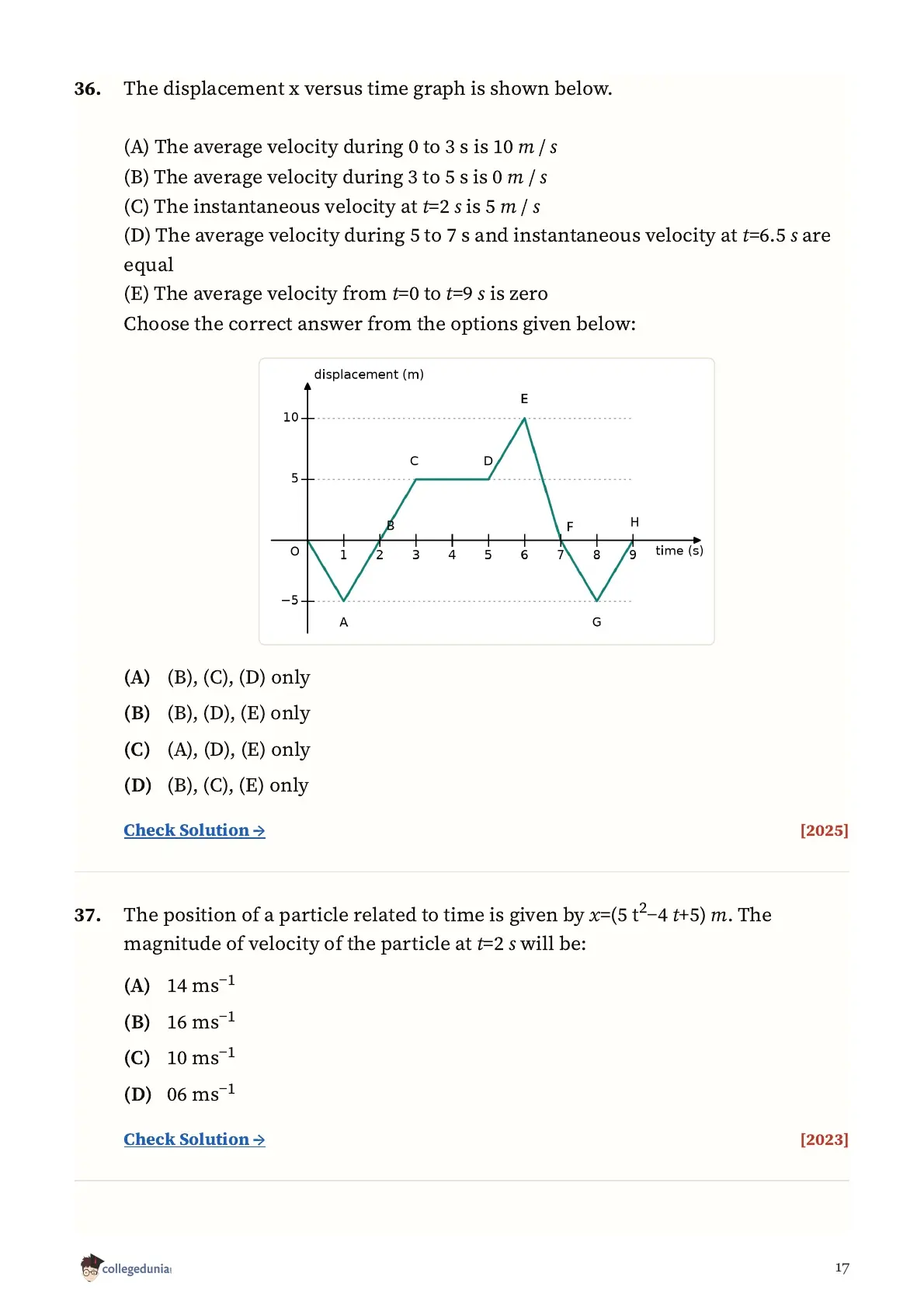
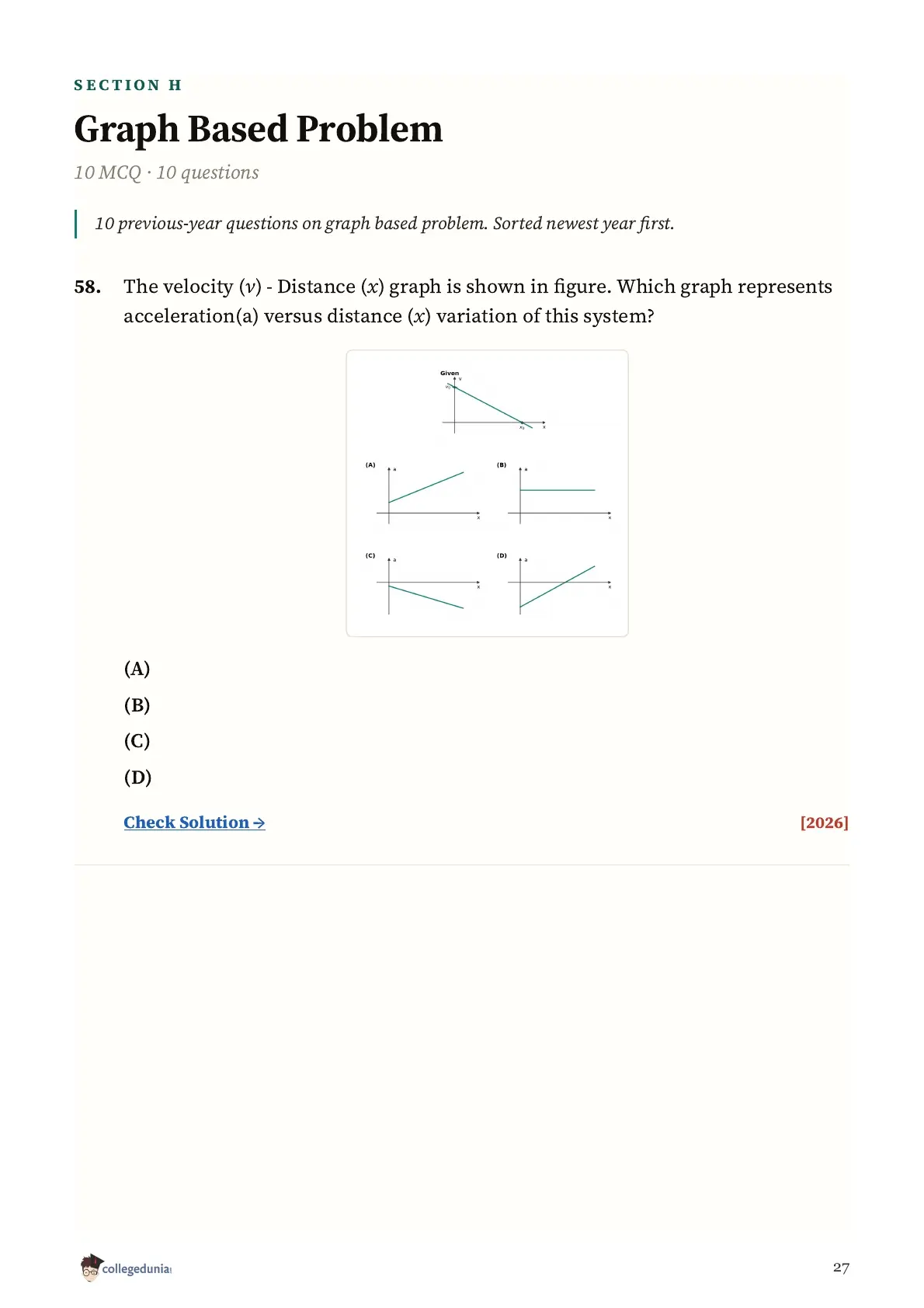
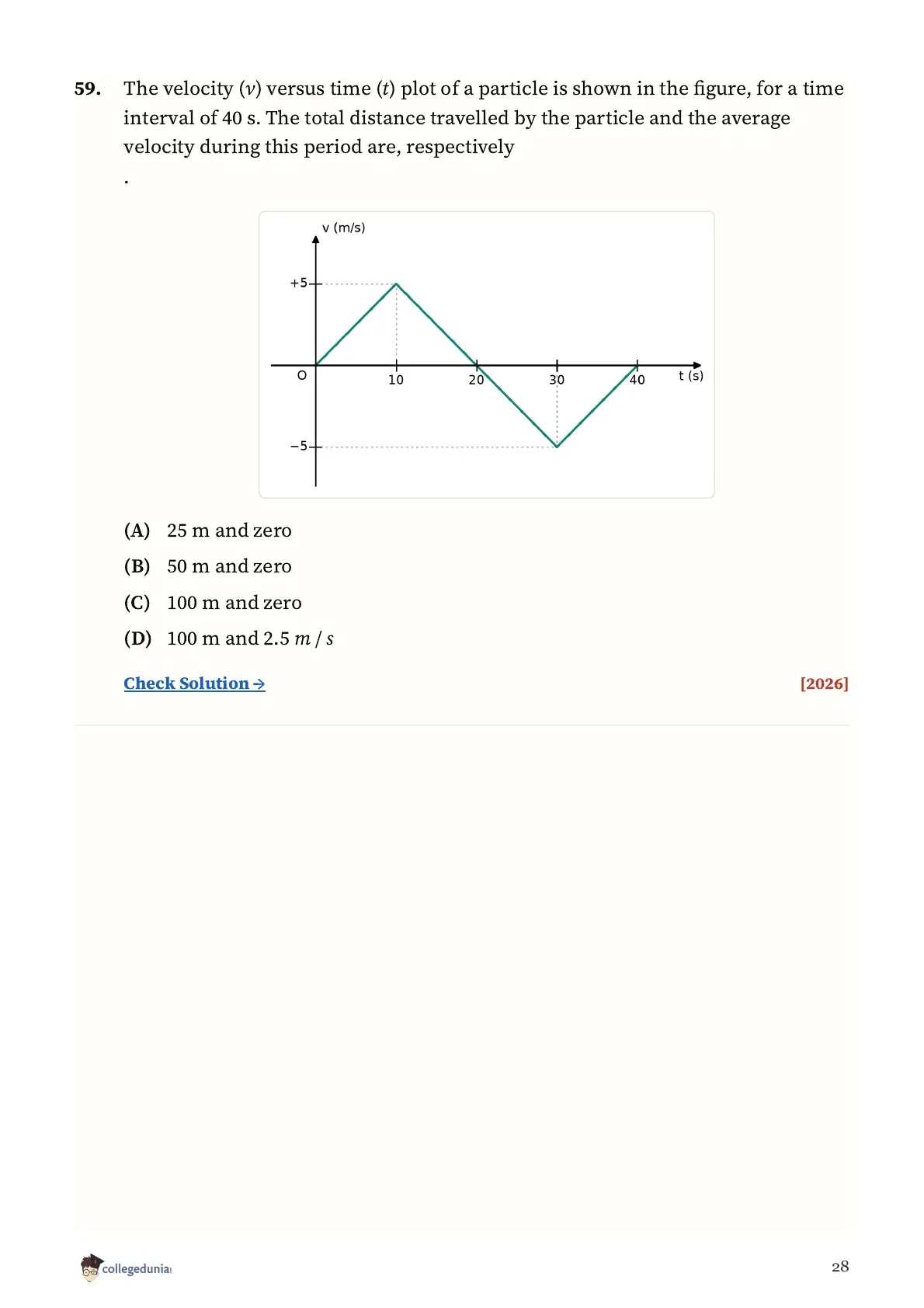
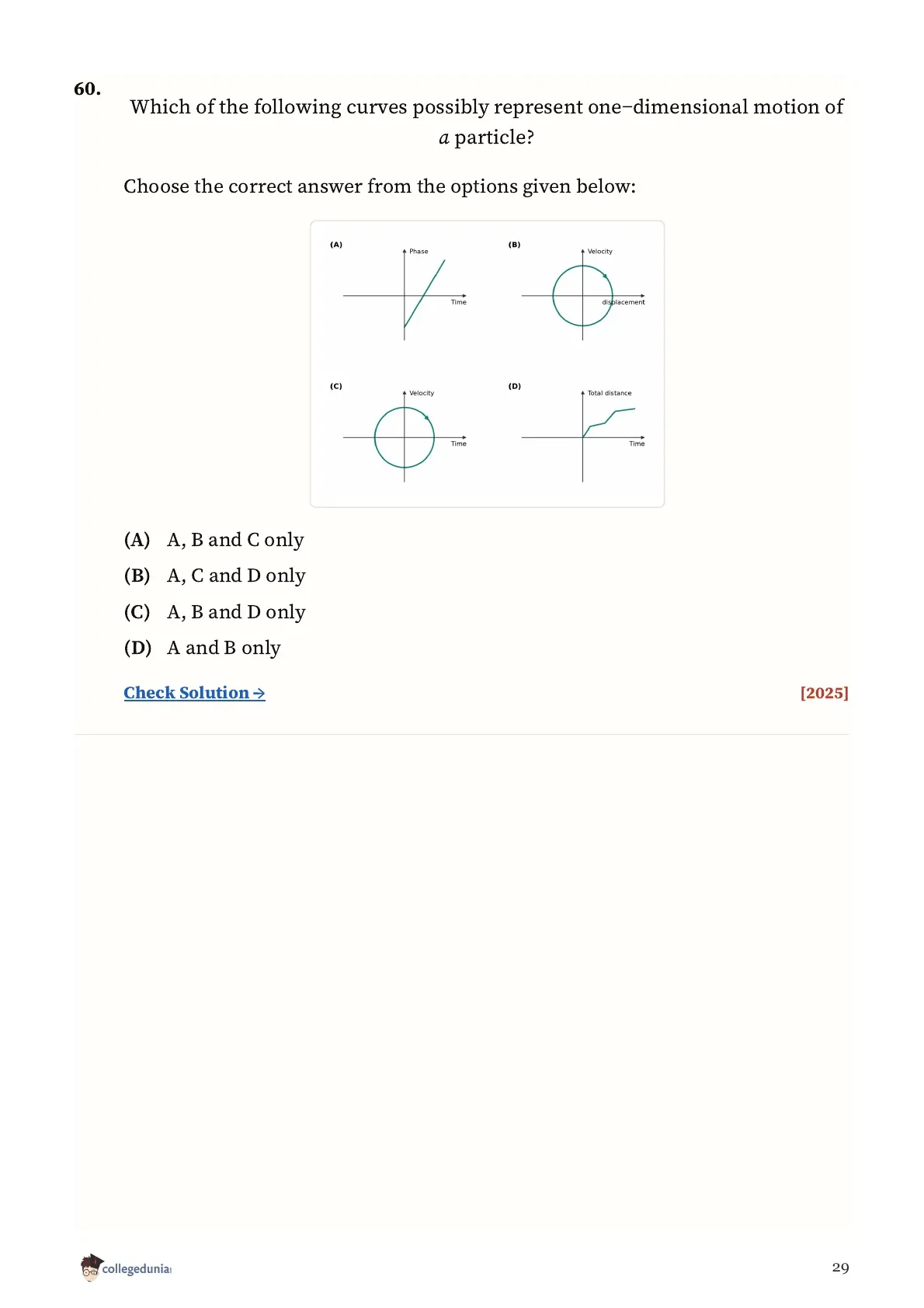
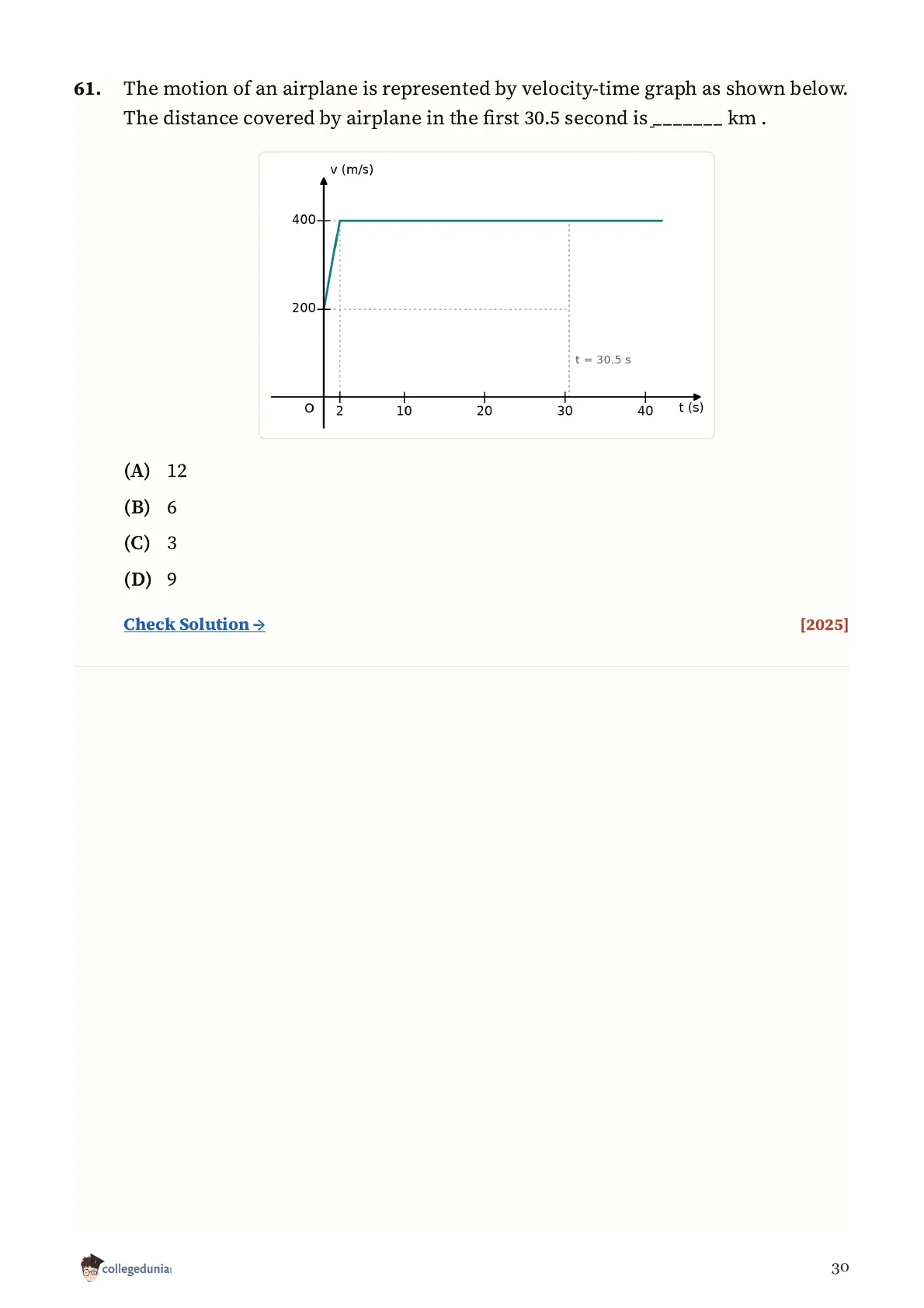
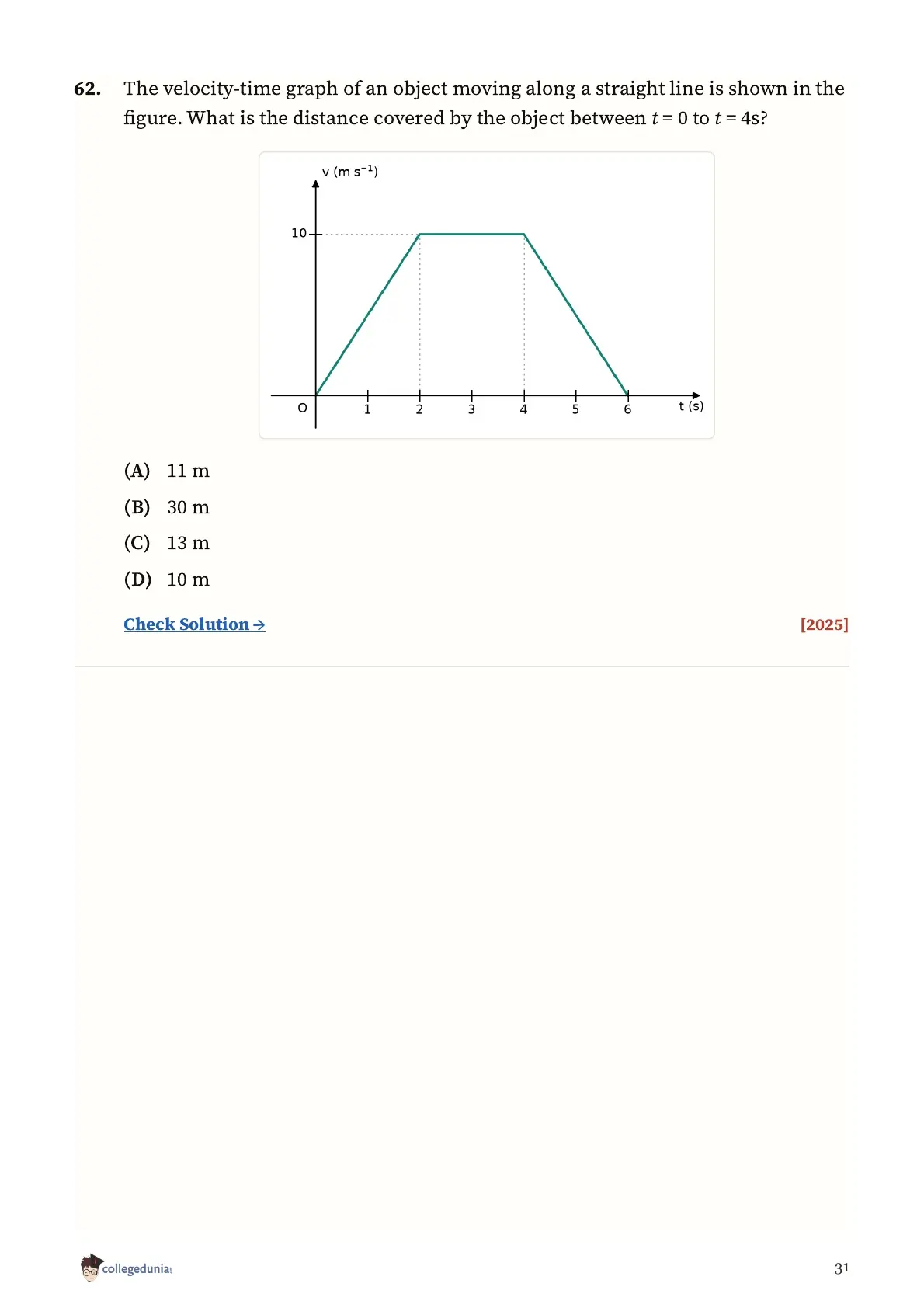
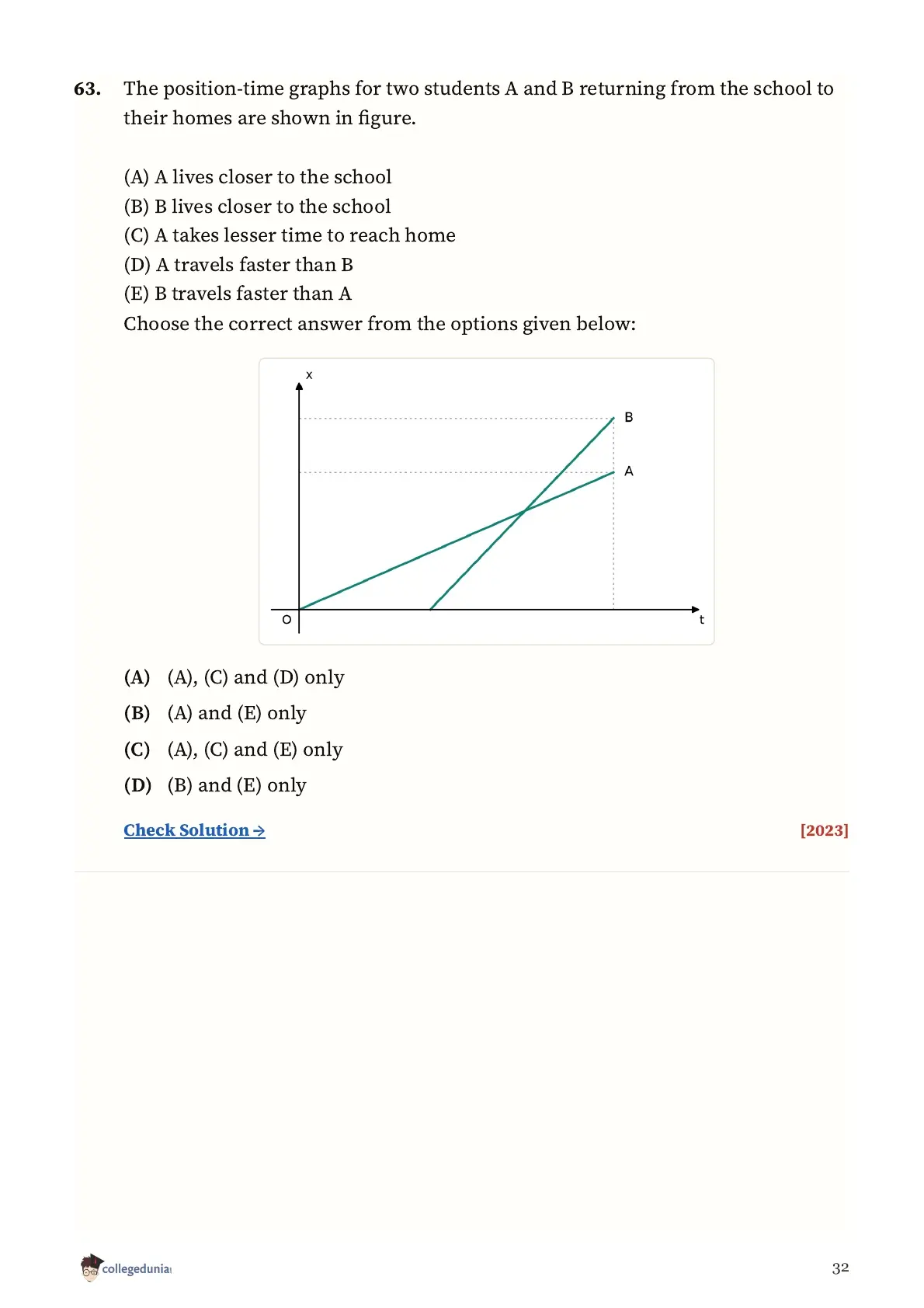
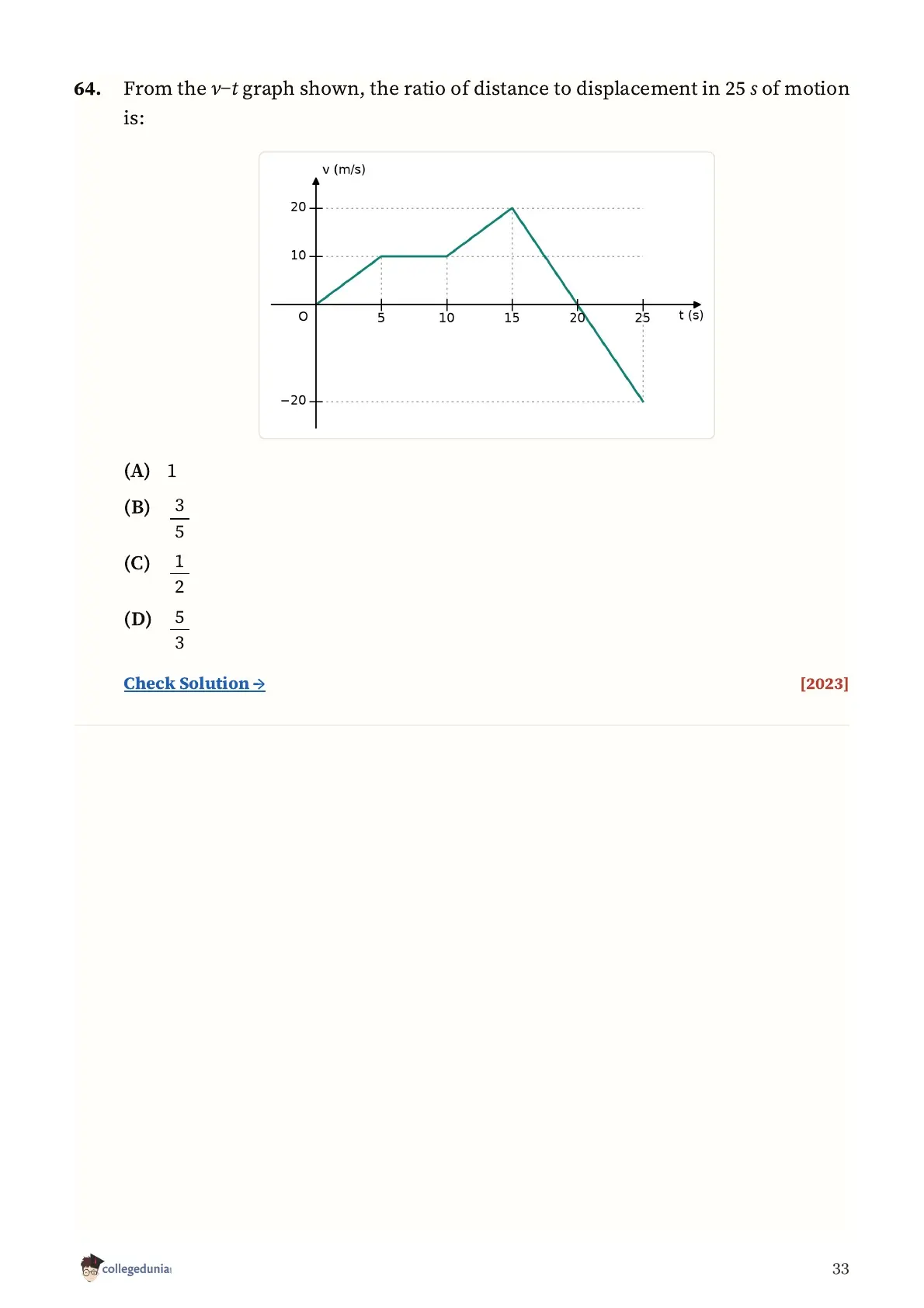
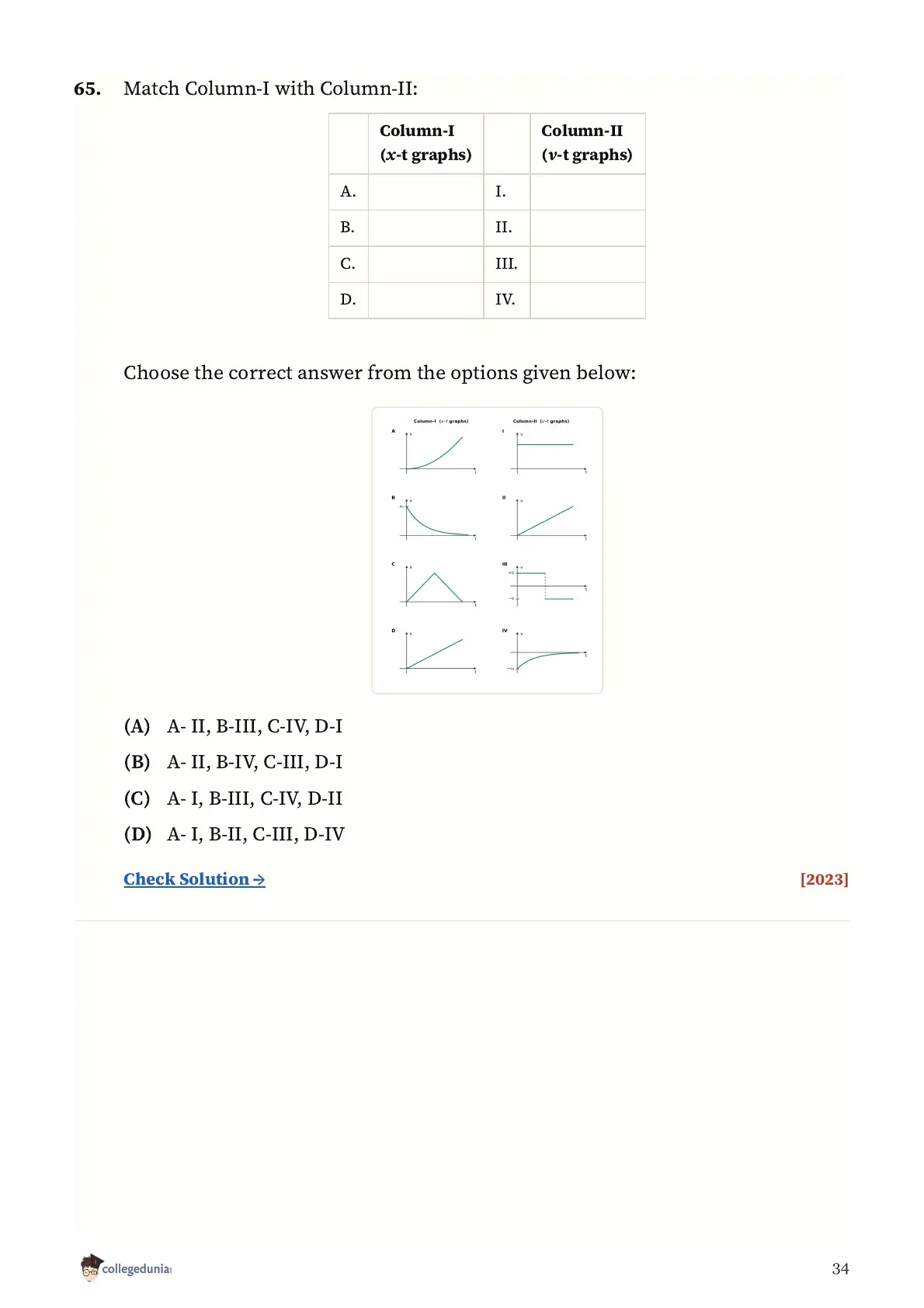
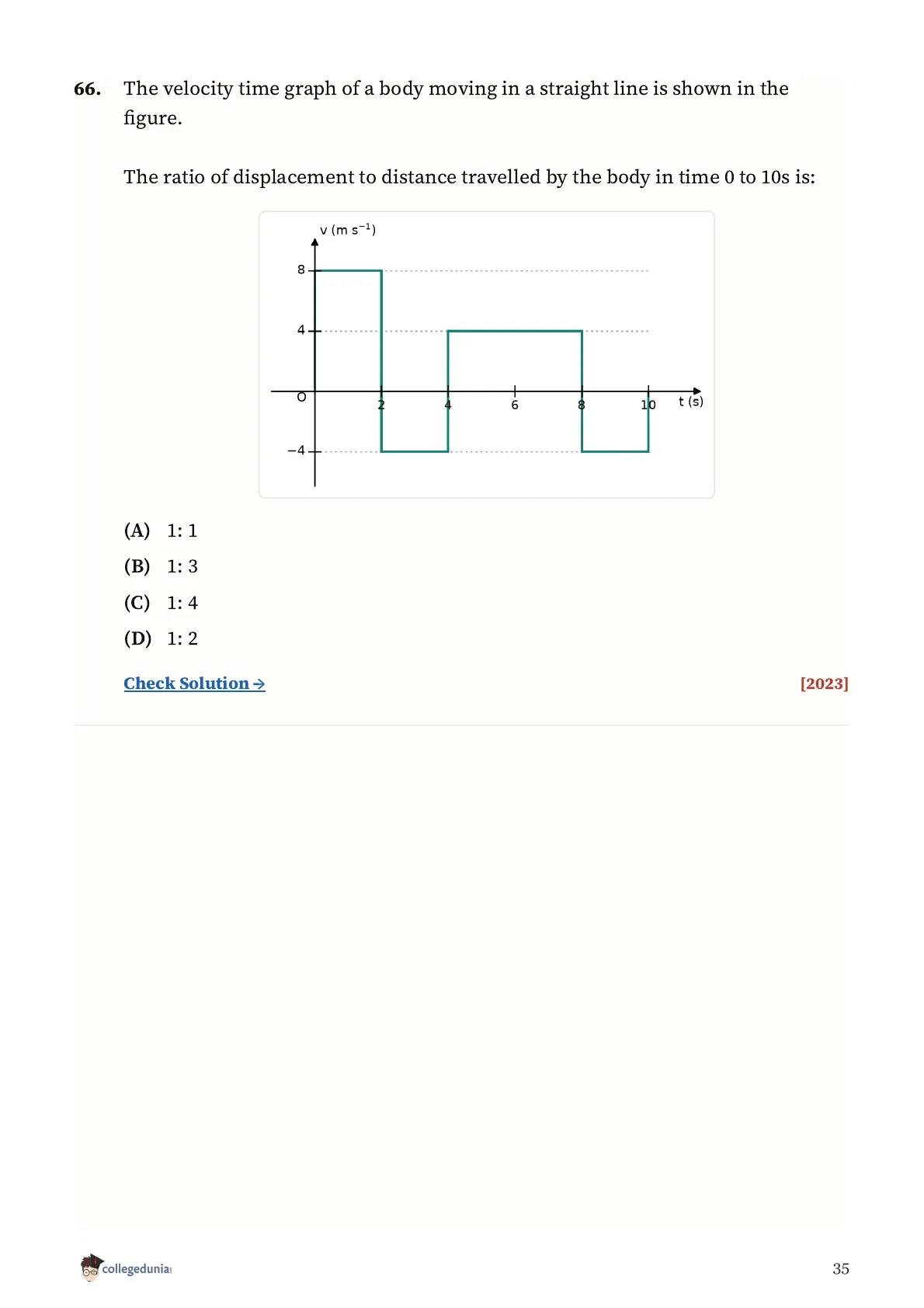
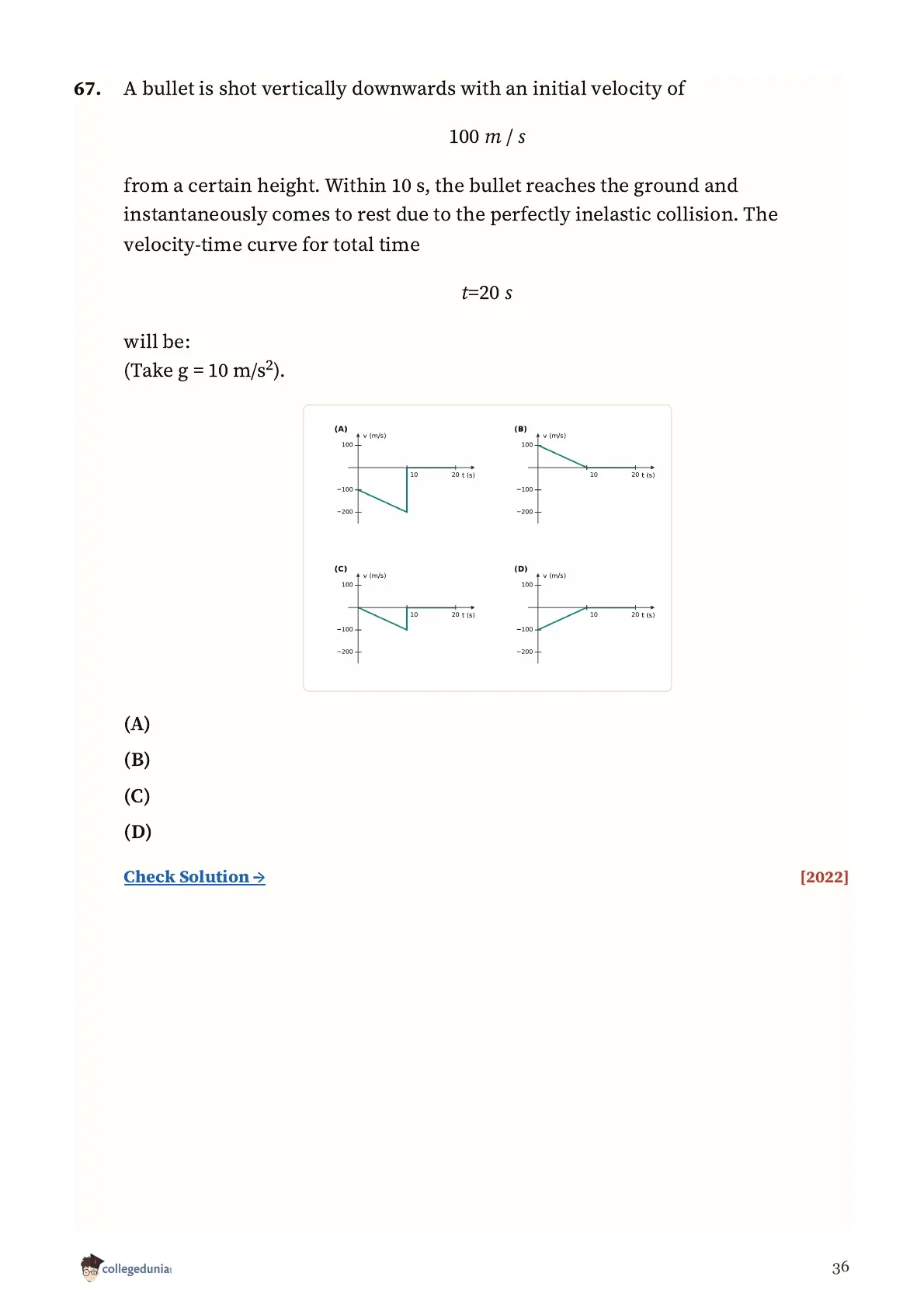
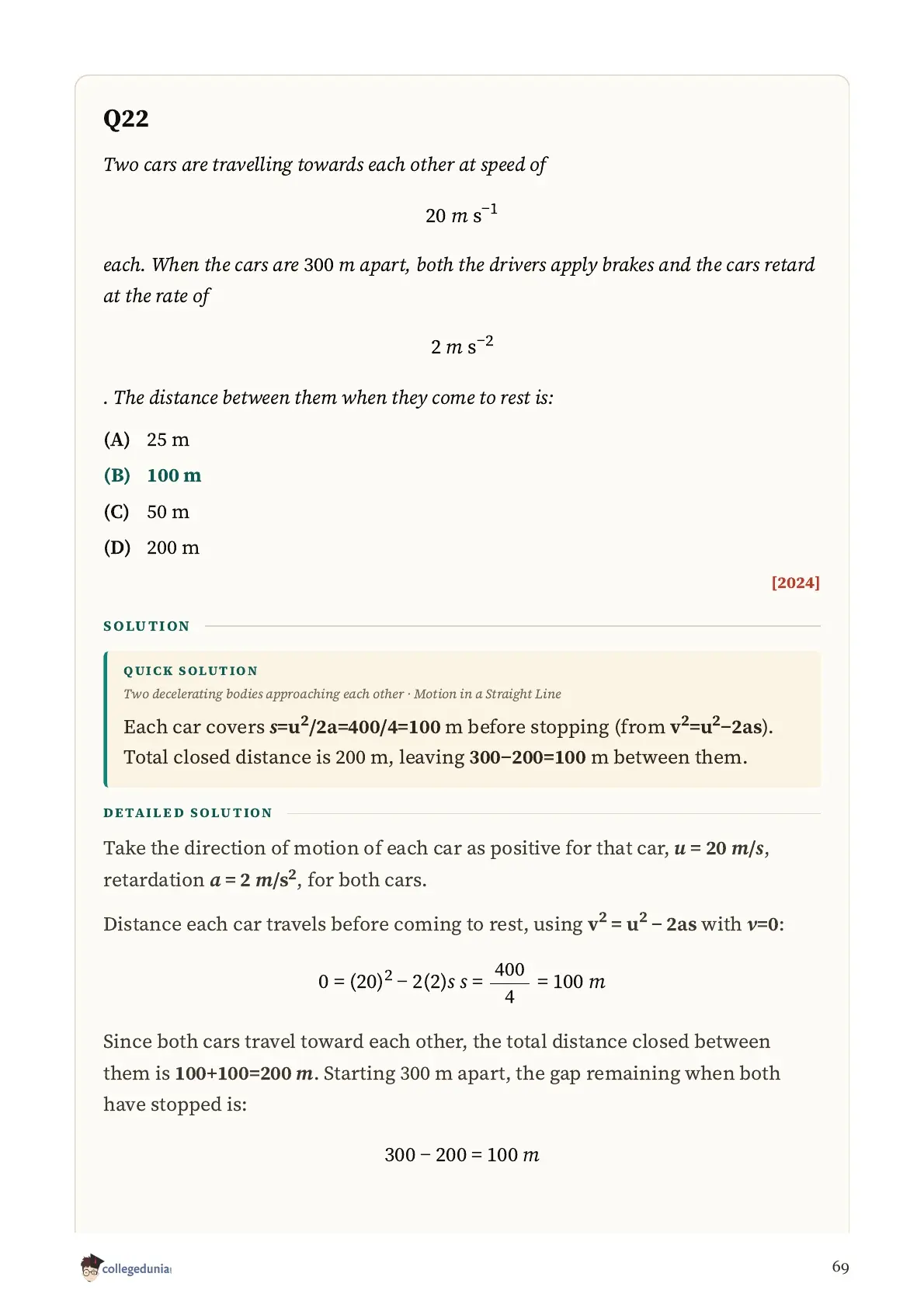
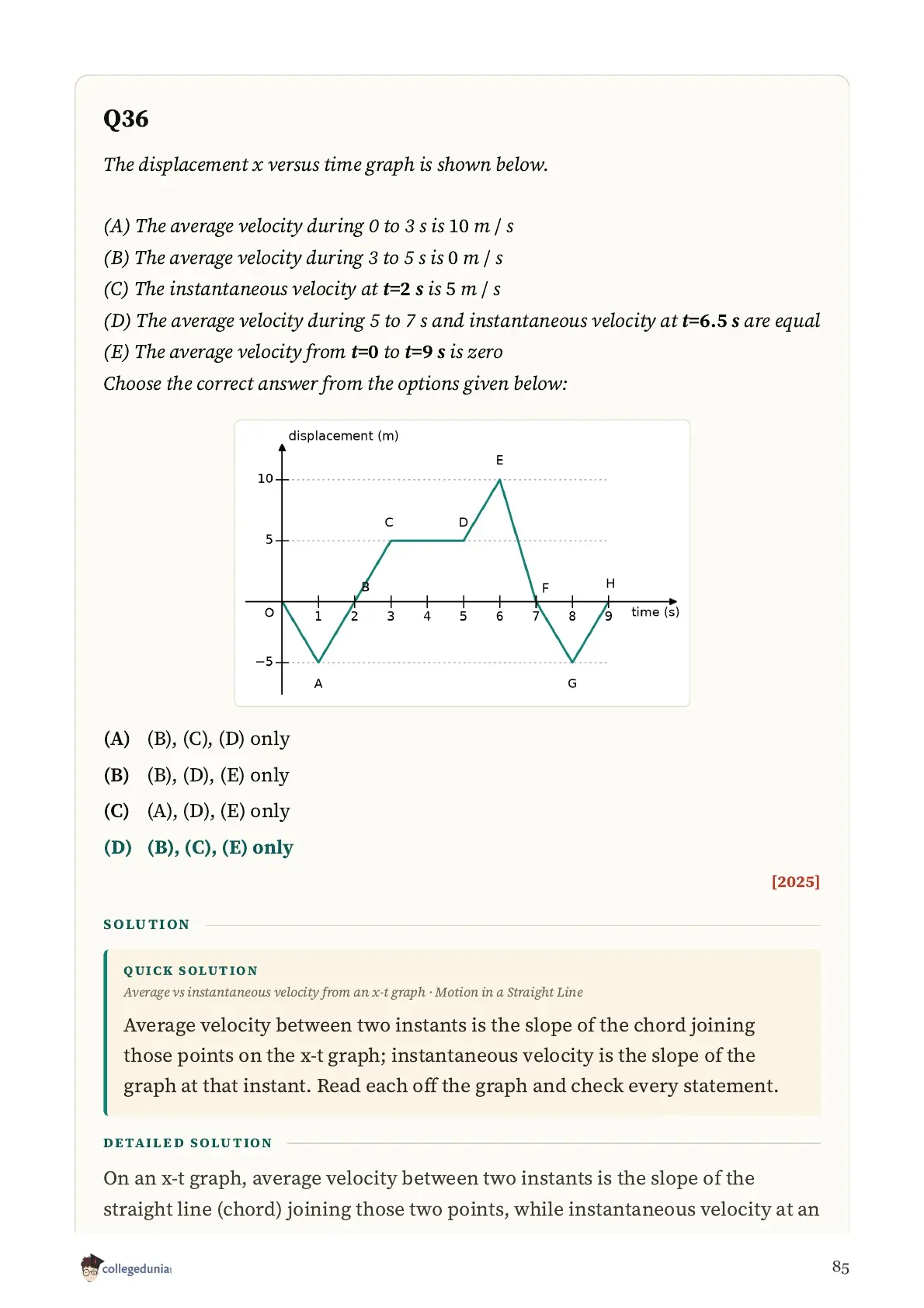
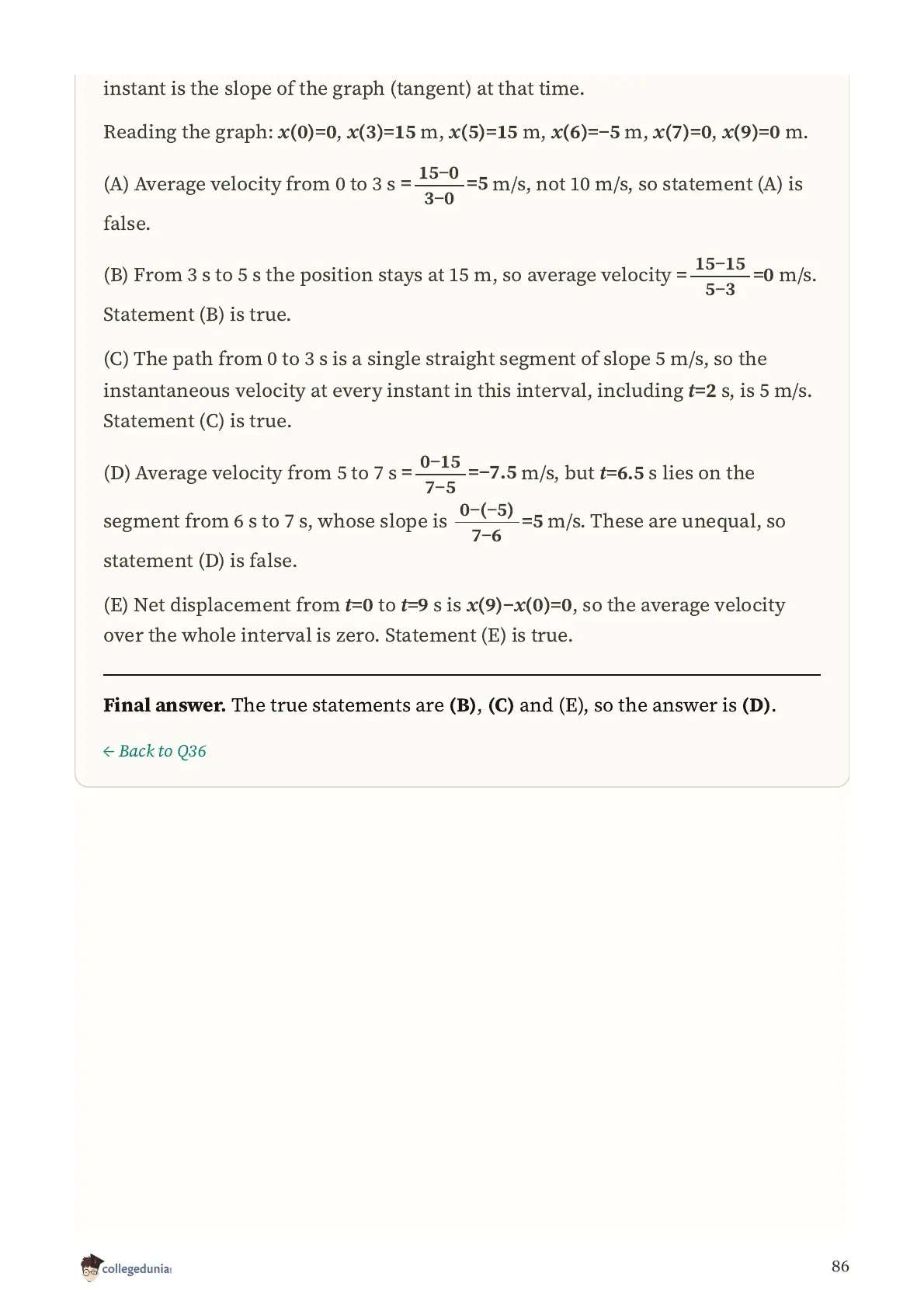
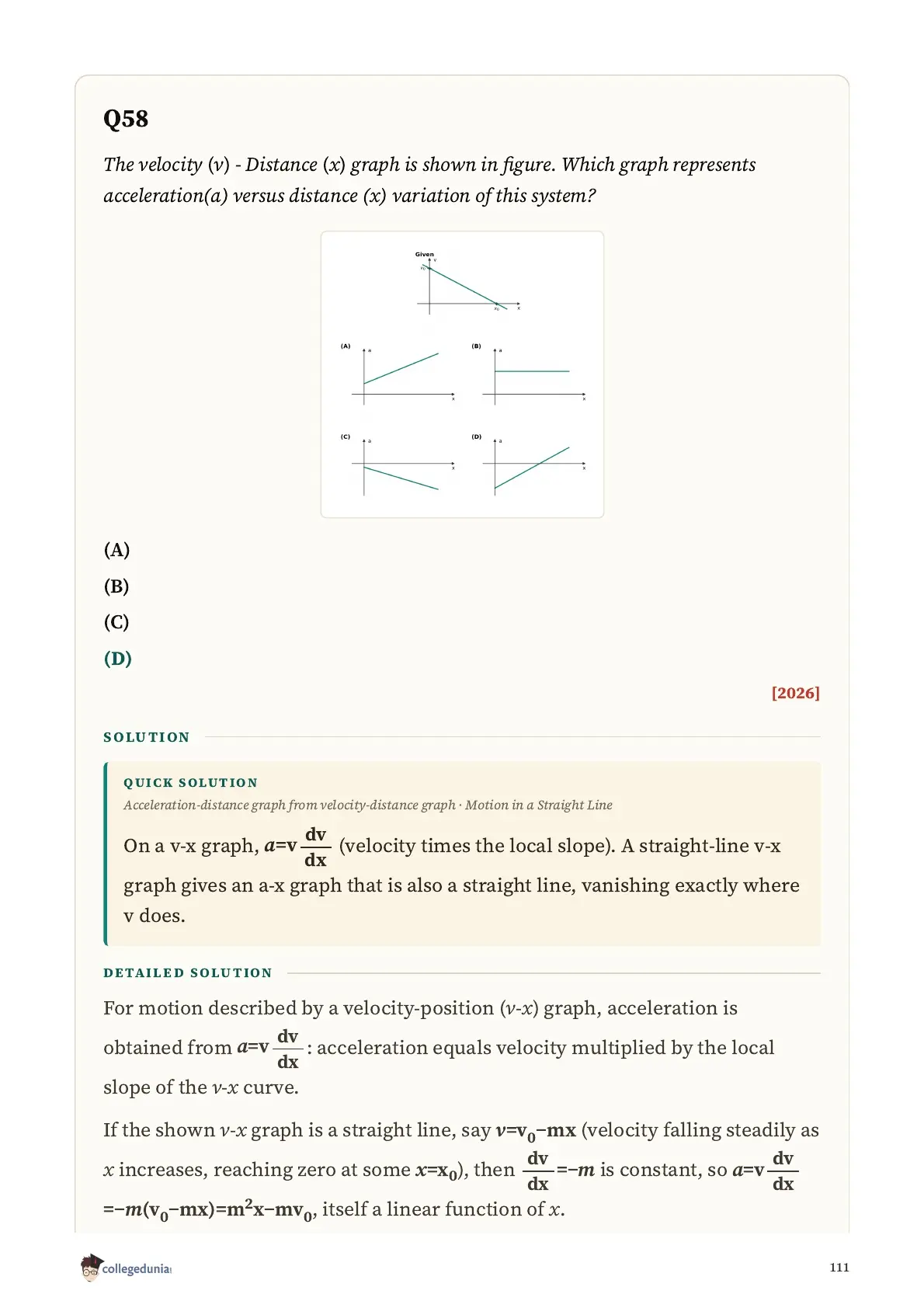
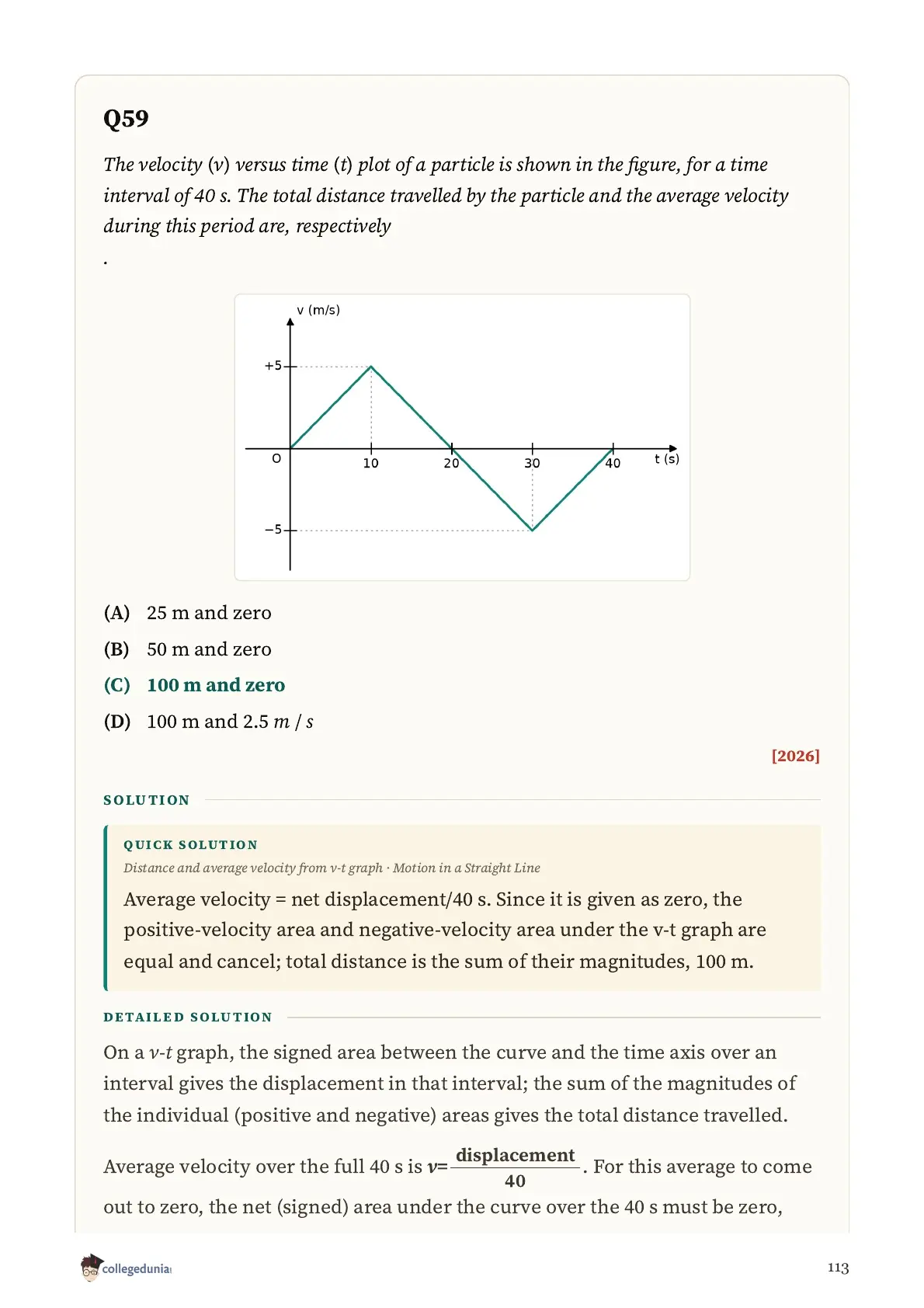
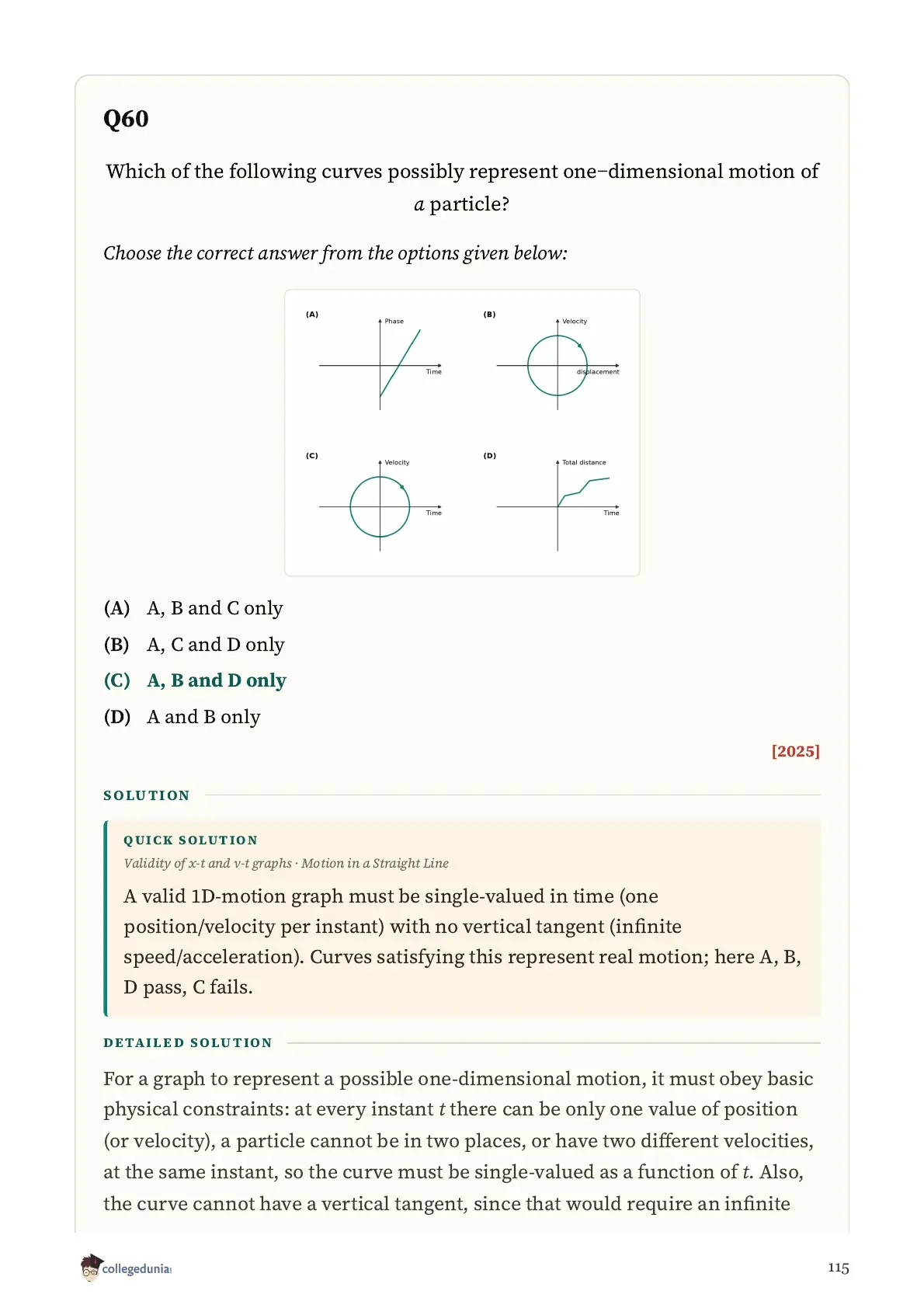
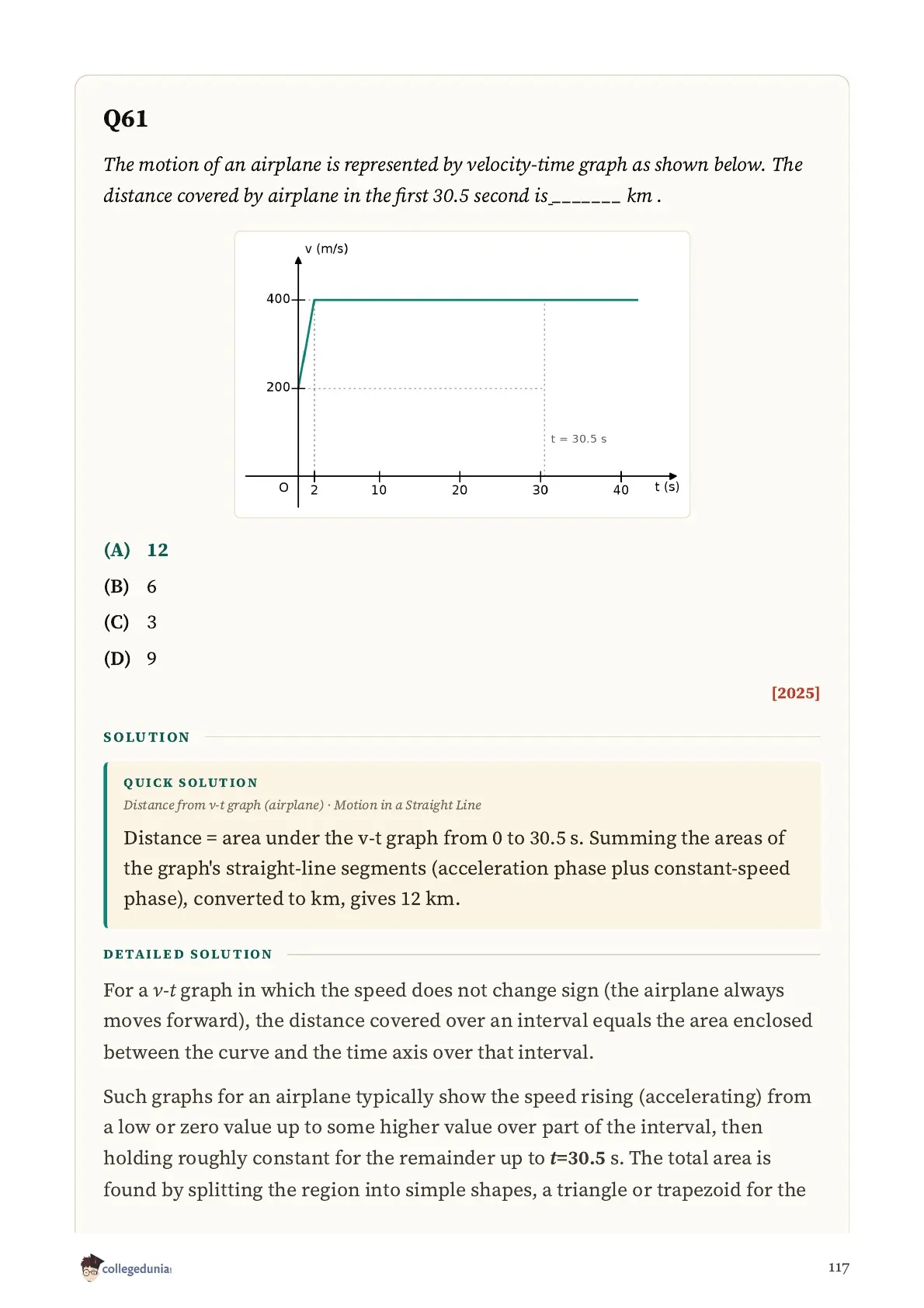
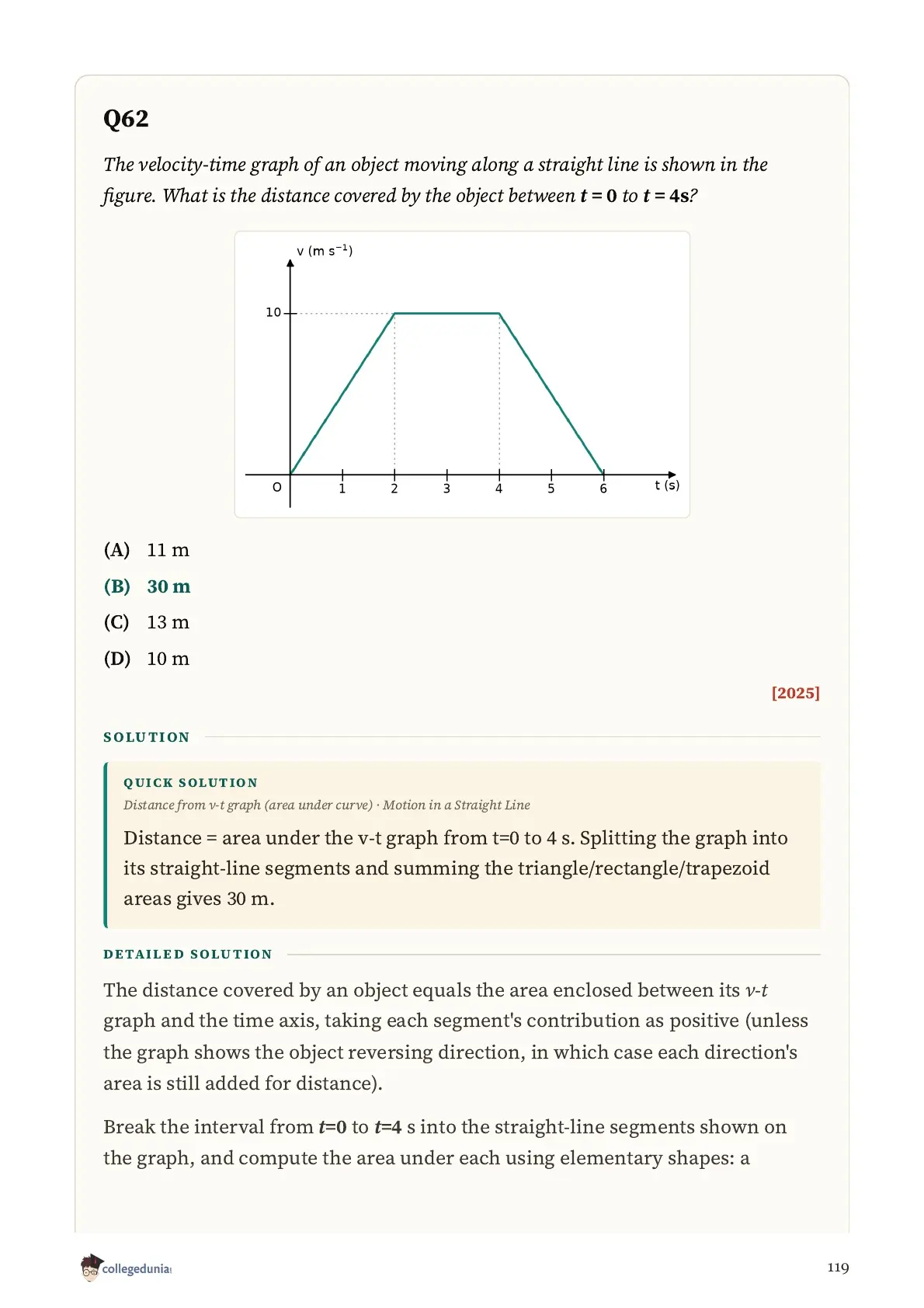
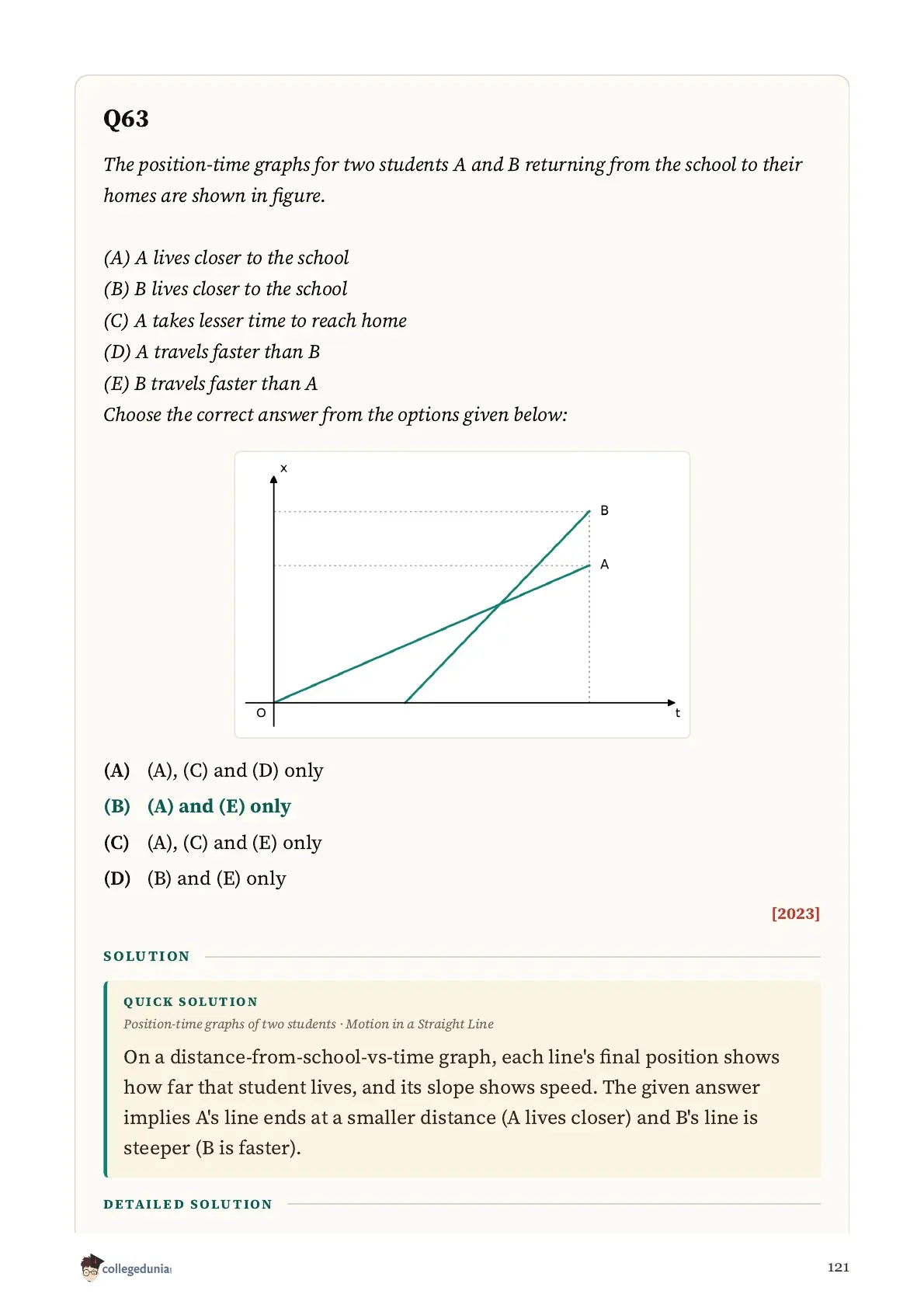
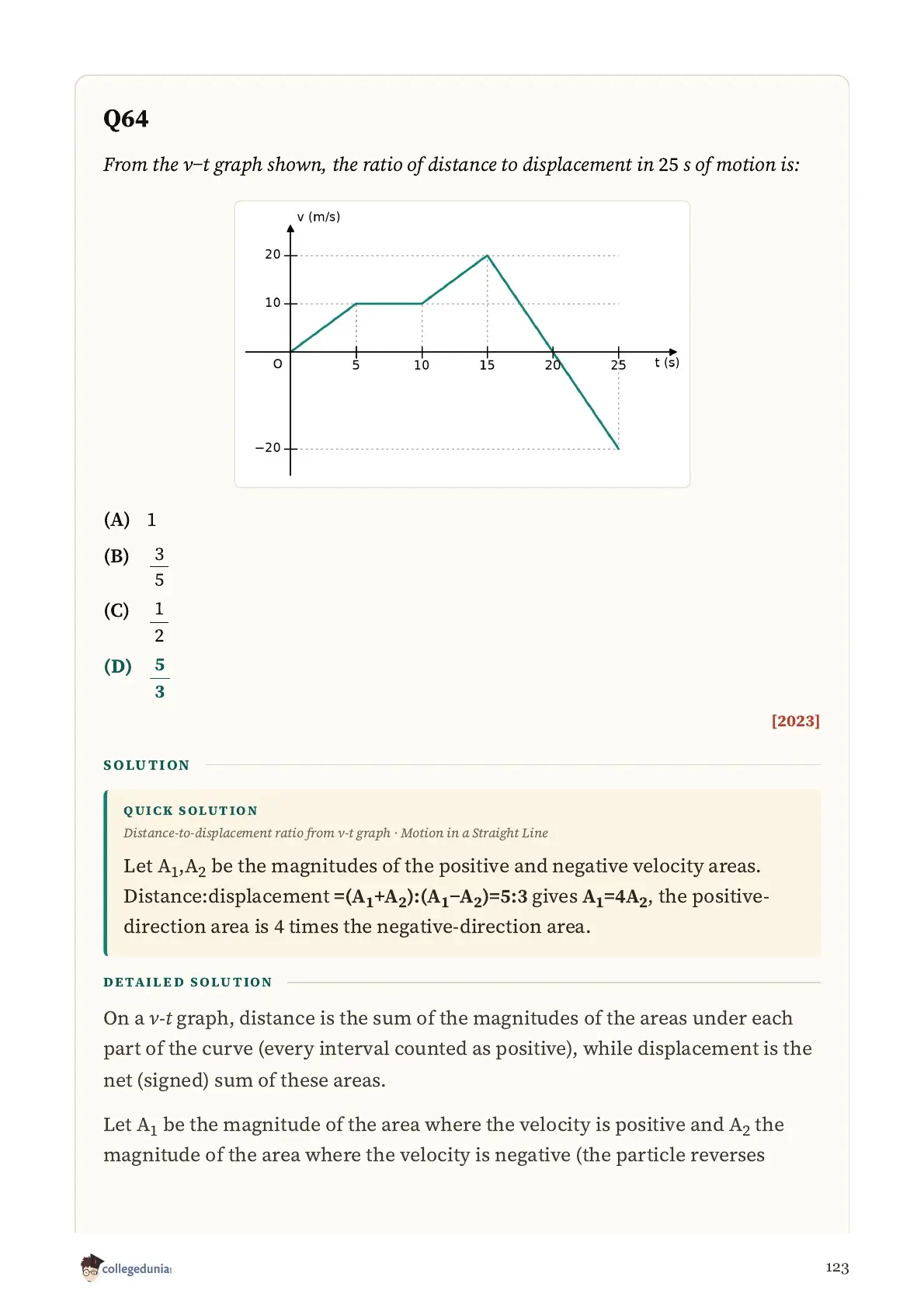
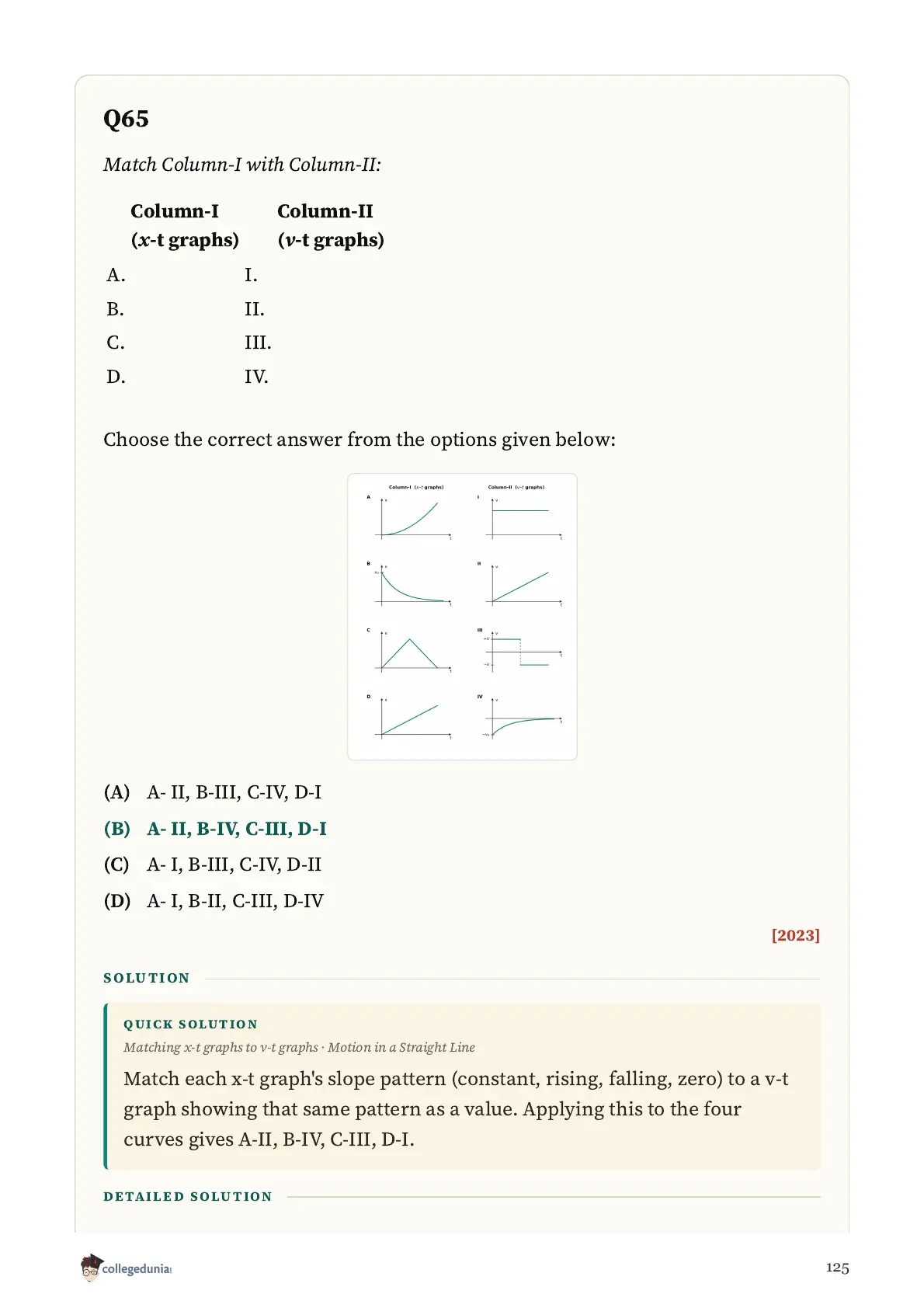
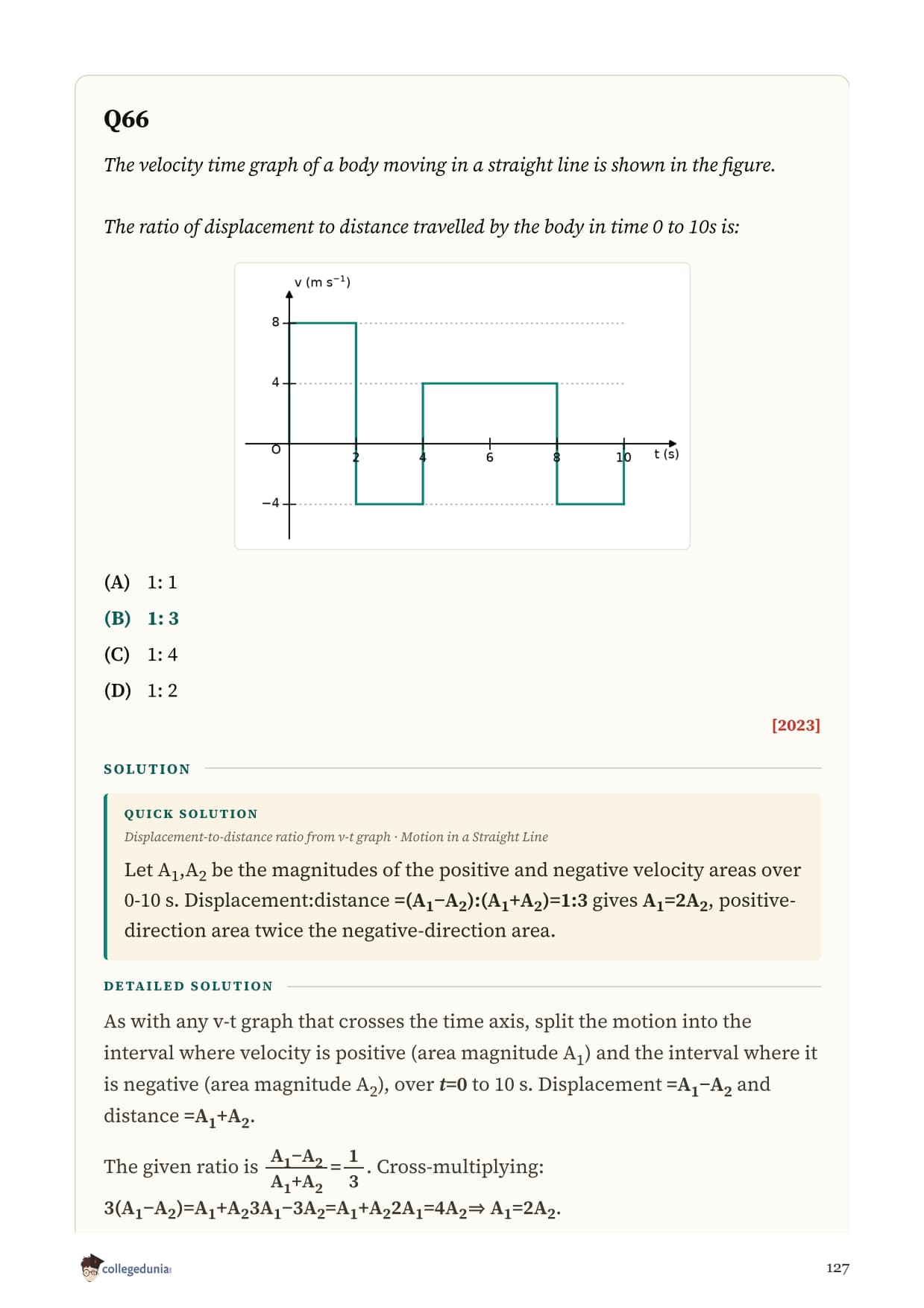
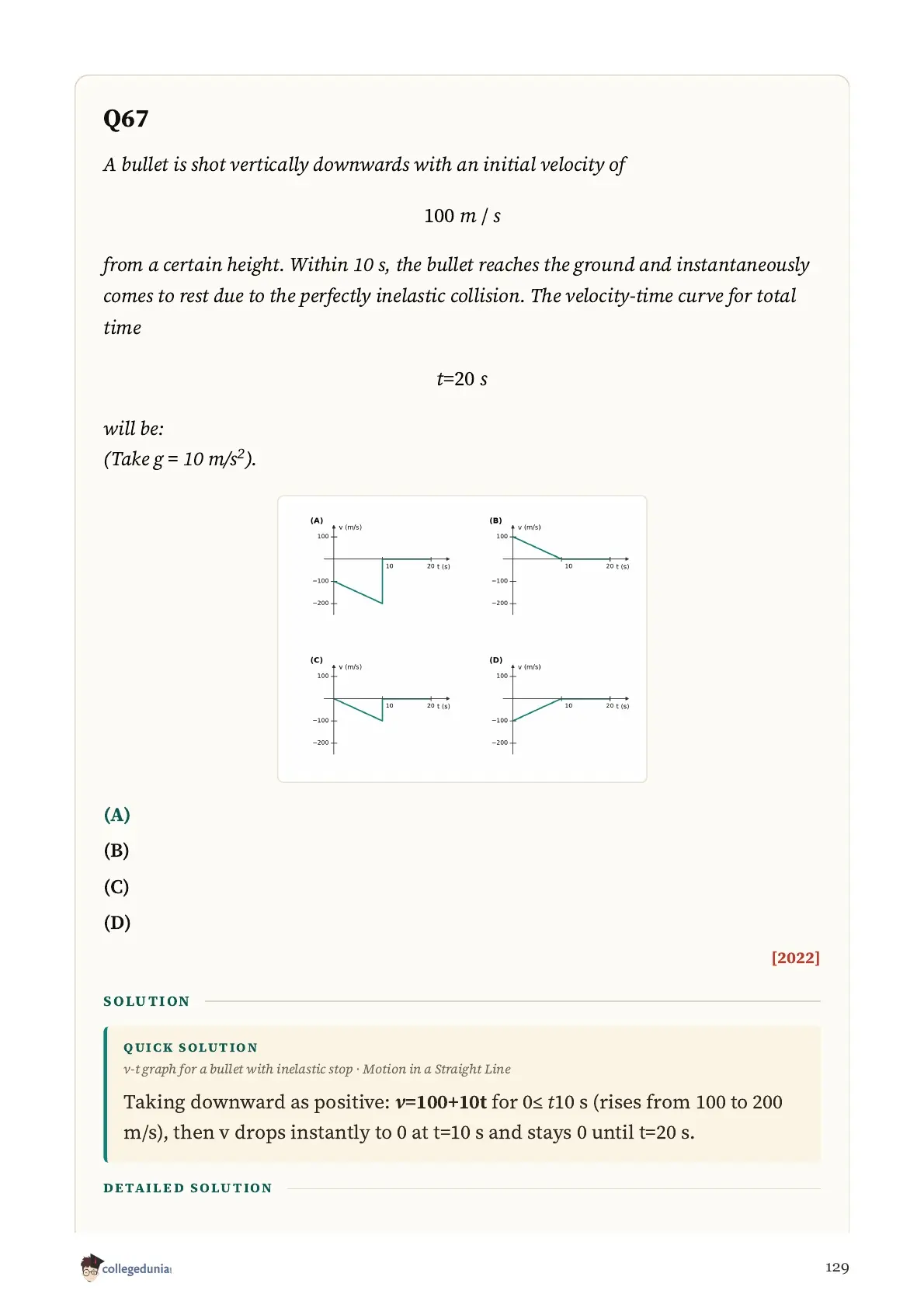
- Every graph question carries its figure. 13 graphs were redrawn in house after recovering the data, so nothing refers to a picture that is not on the page.
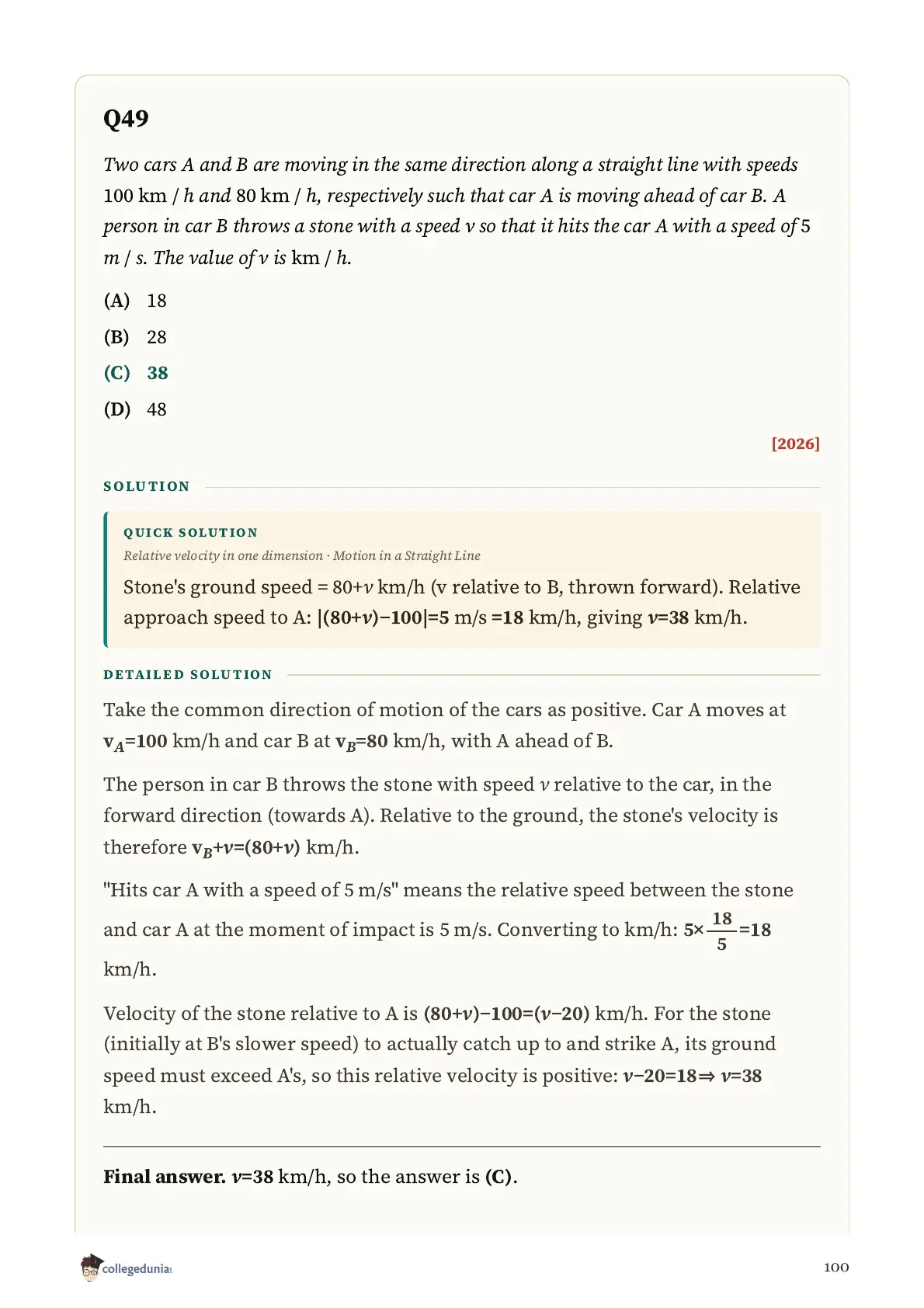
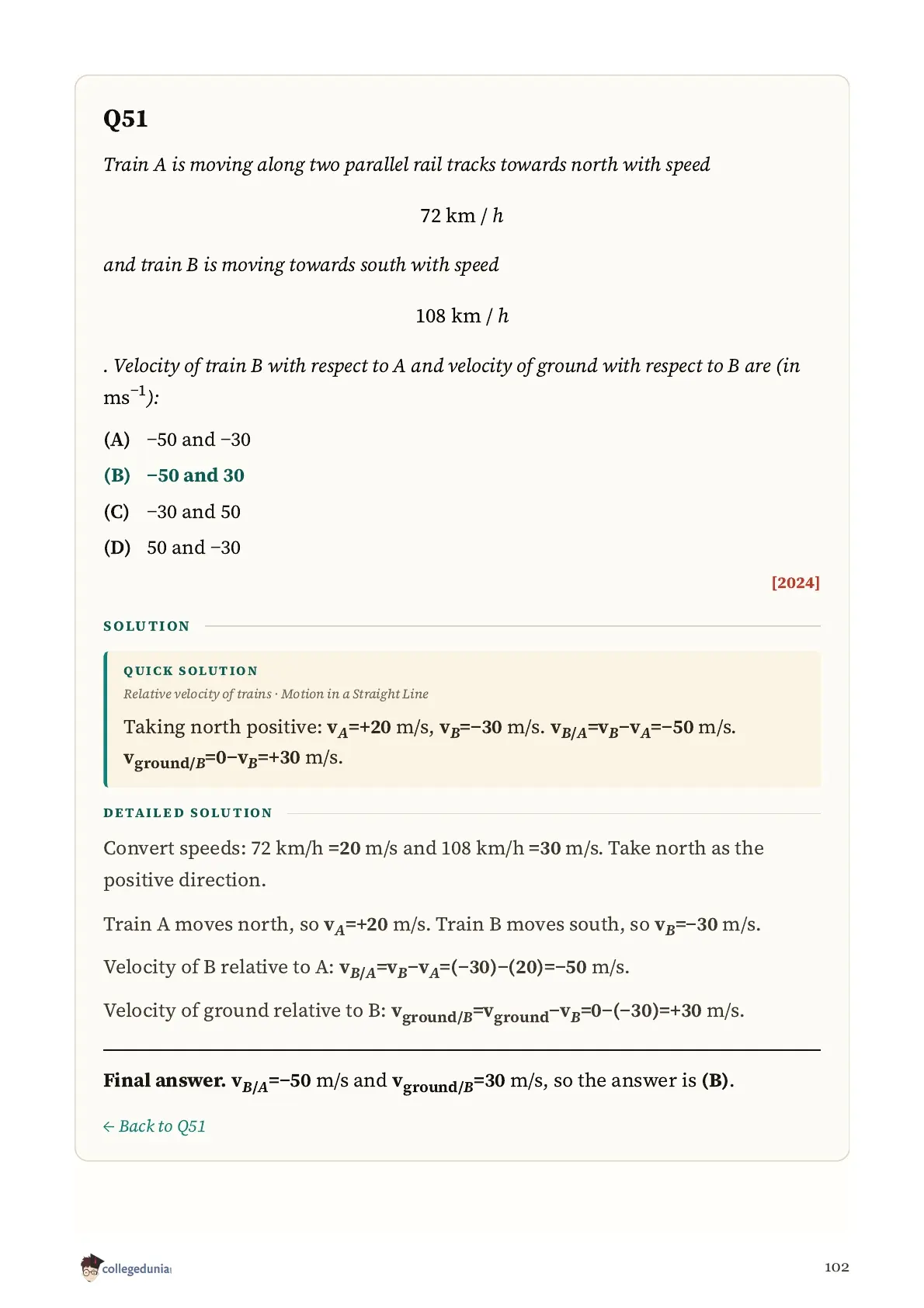
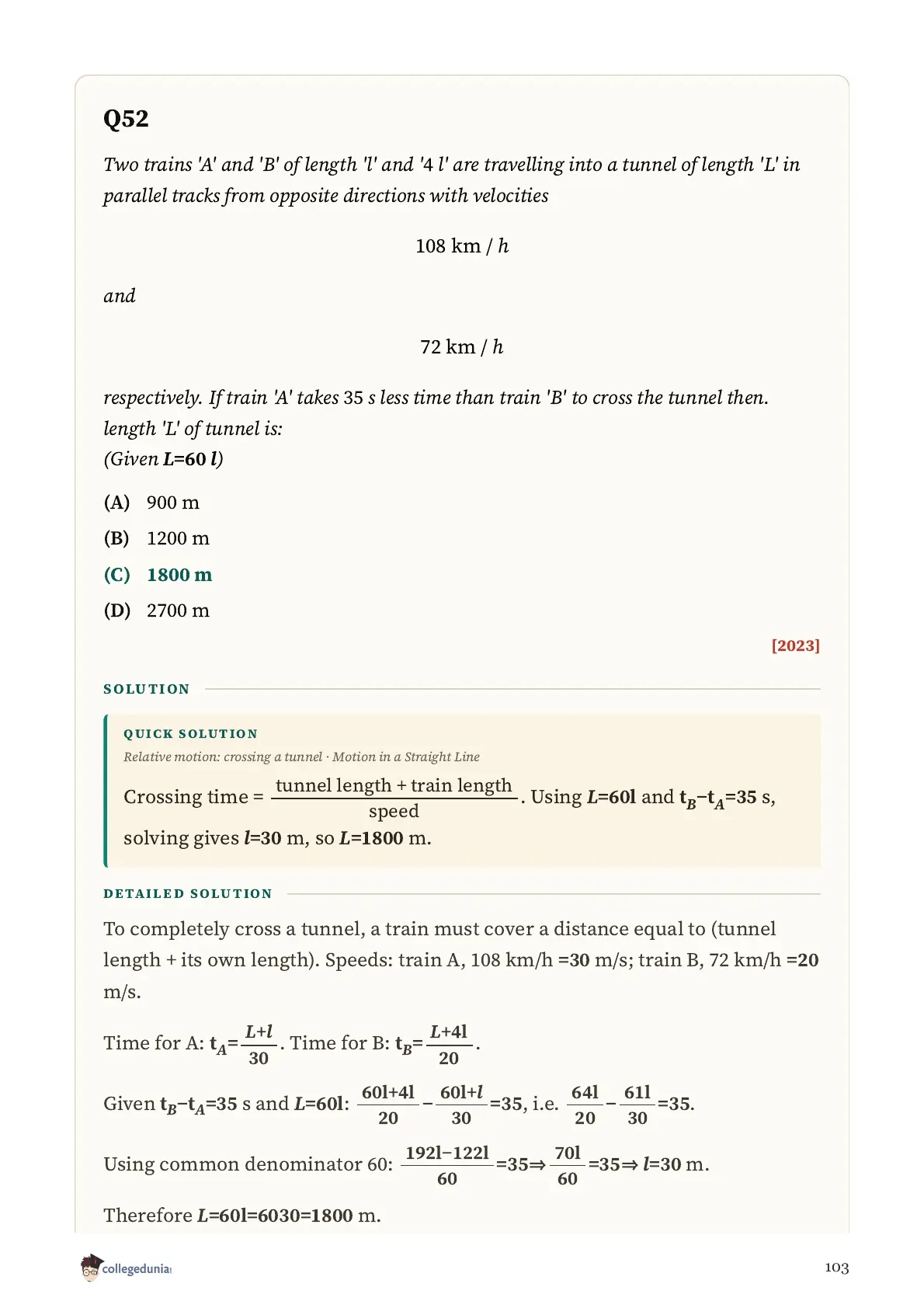
- Sign conventions are stated on every gravity and relative-motion solution, because that is where most of the lost marks are.
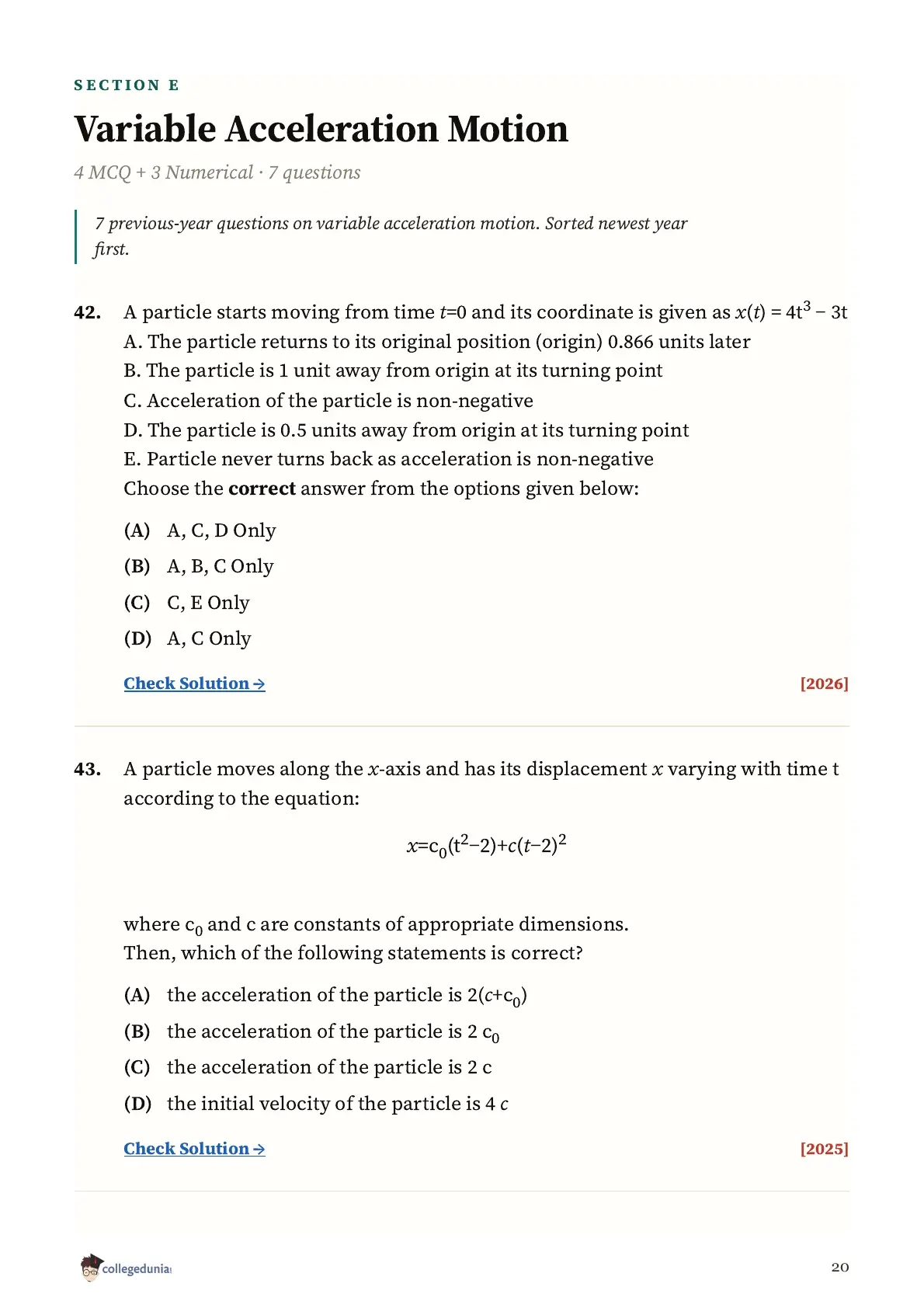
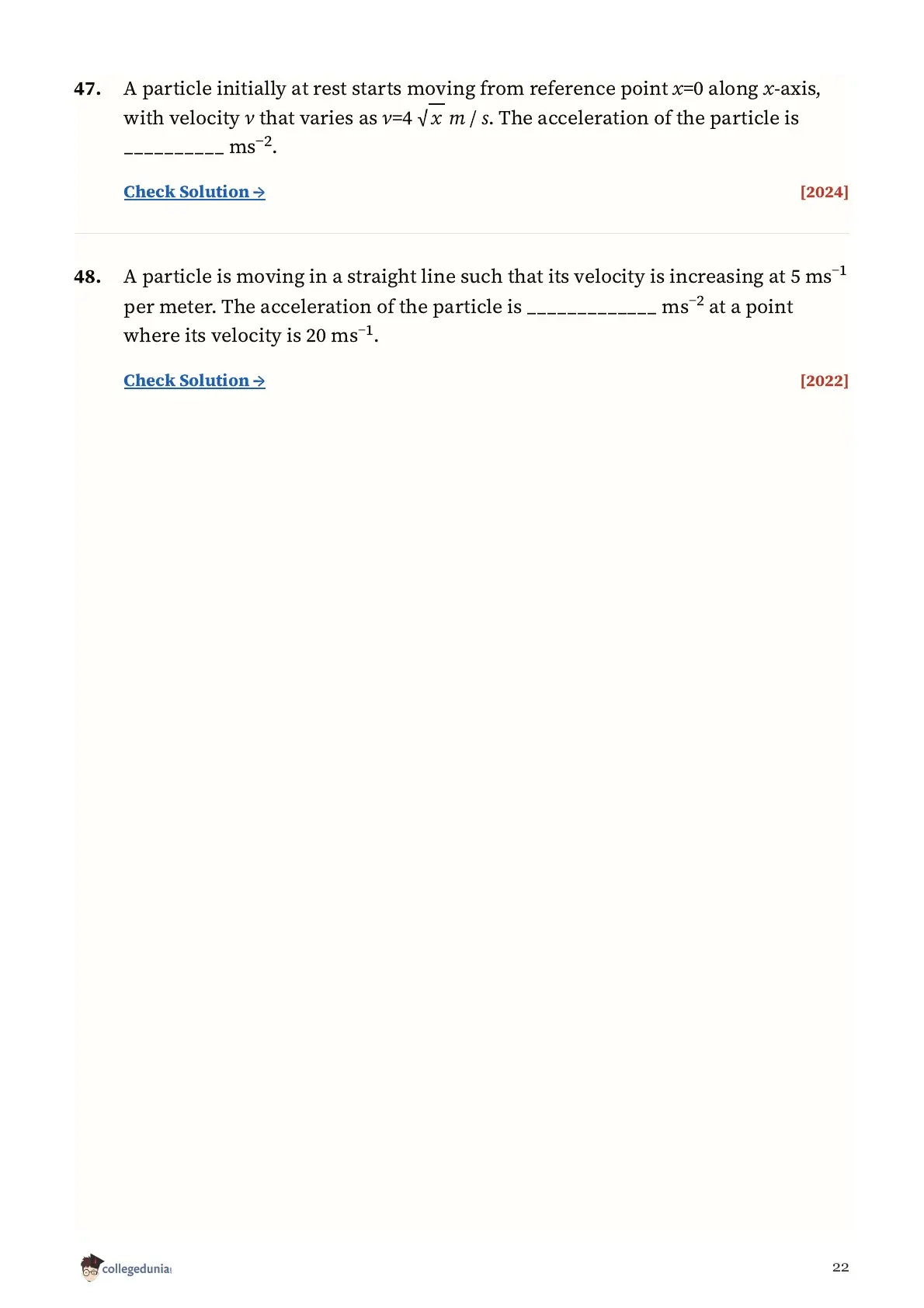
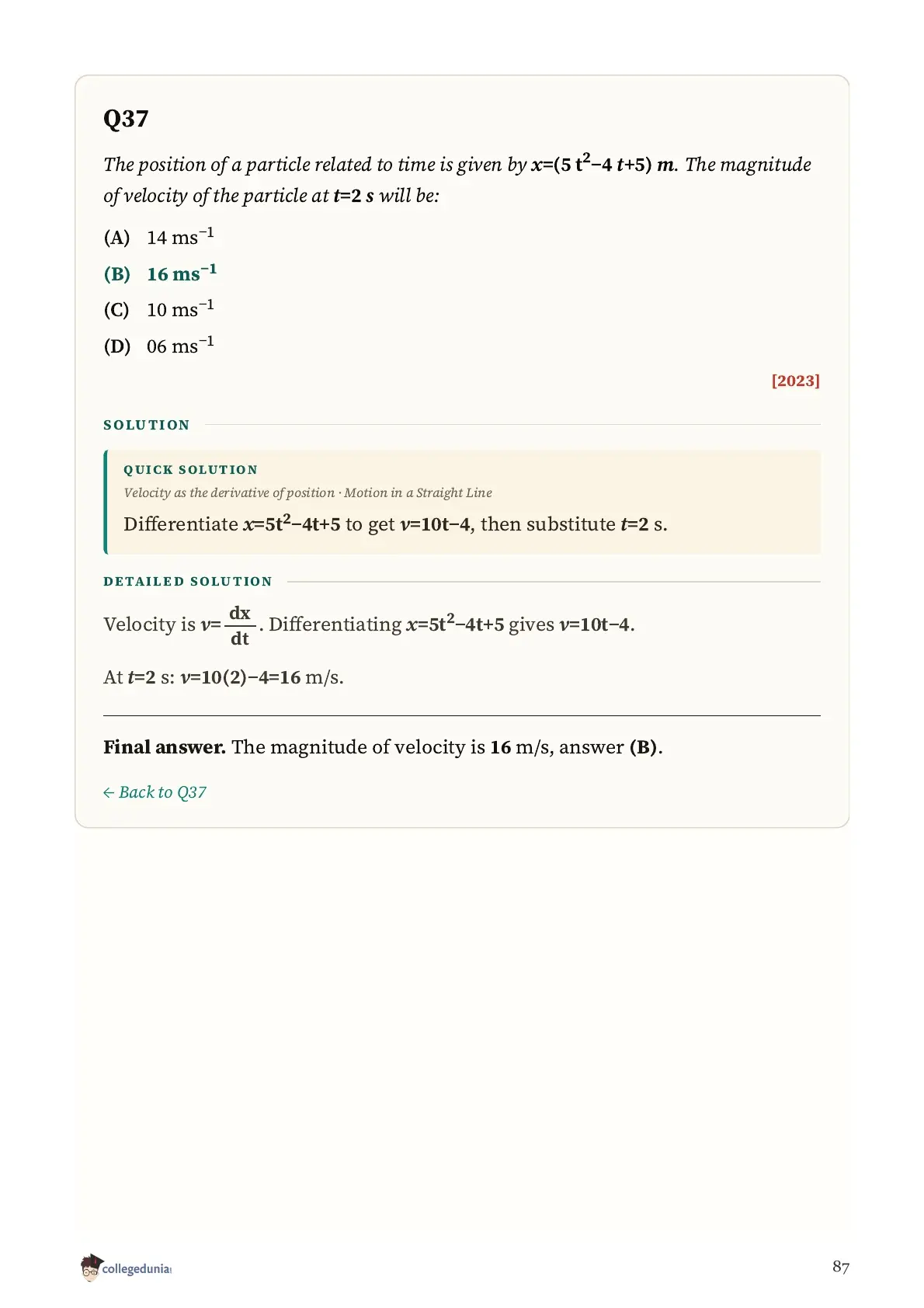
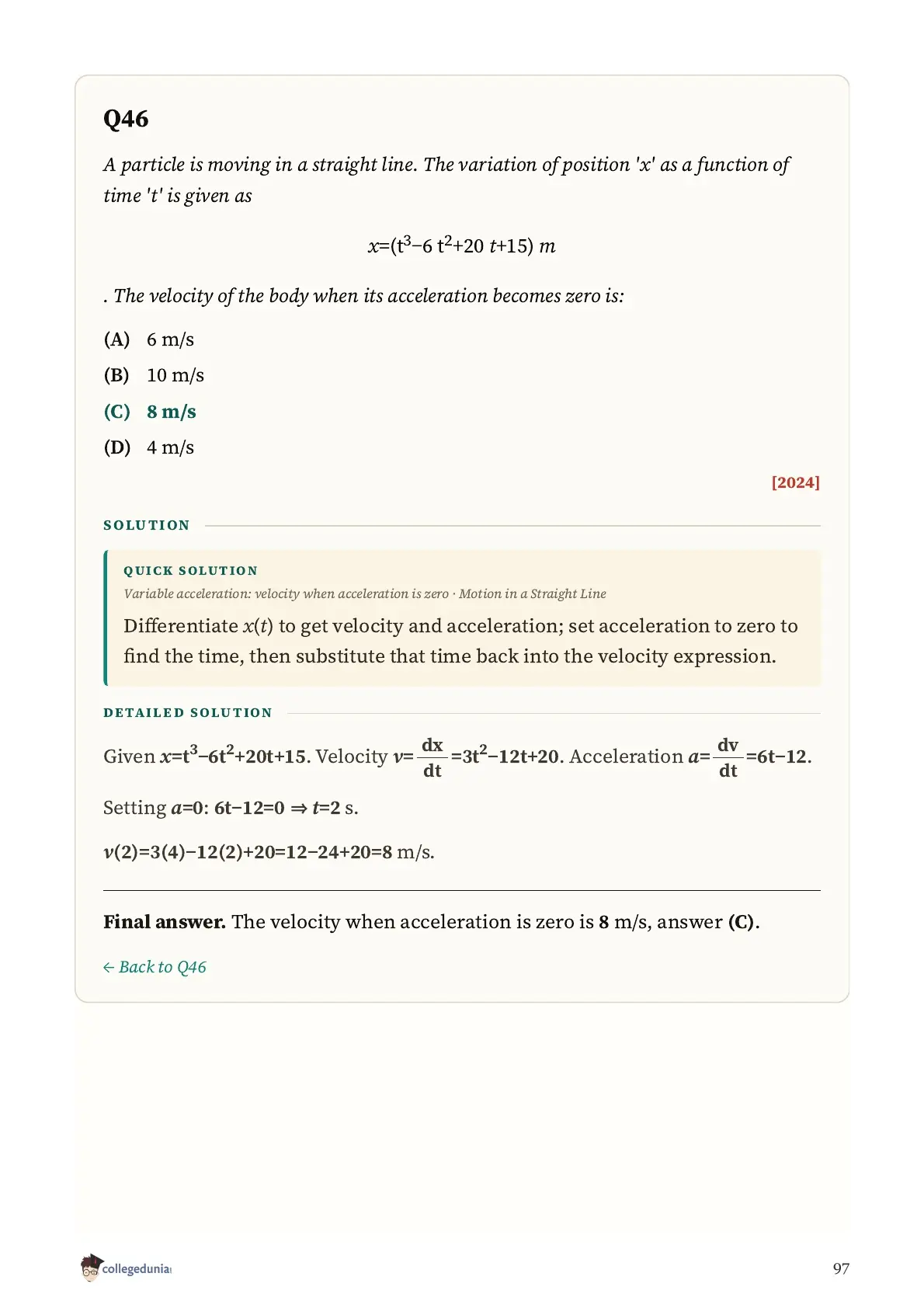
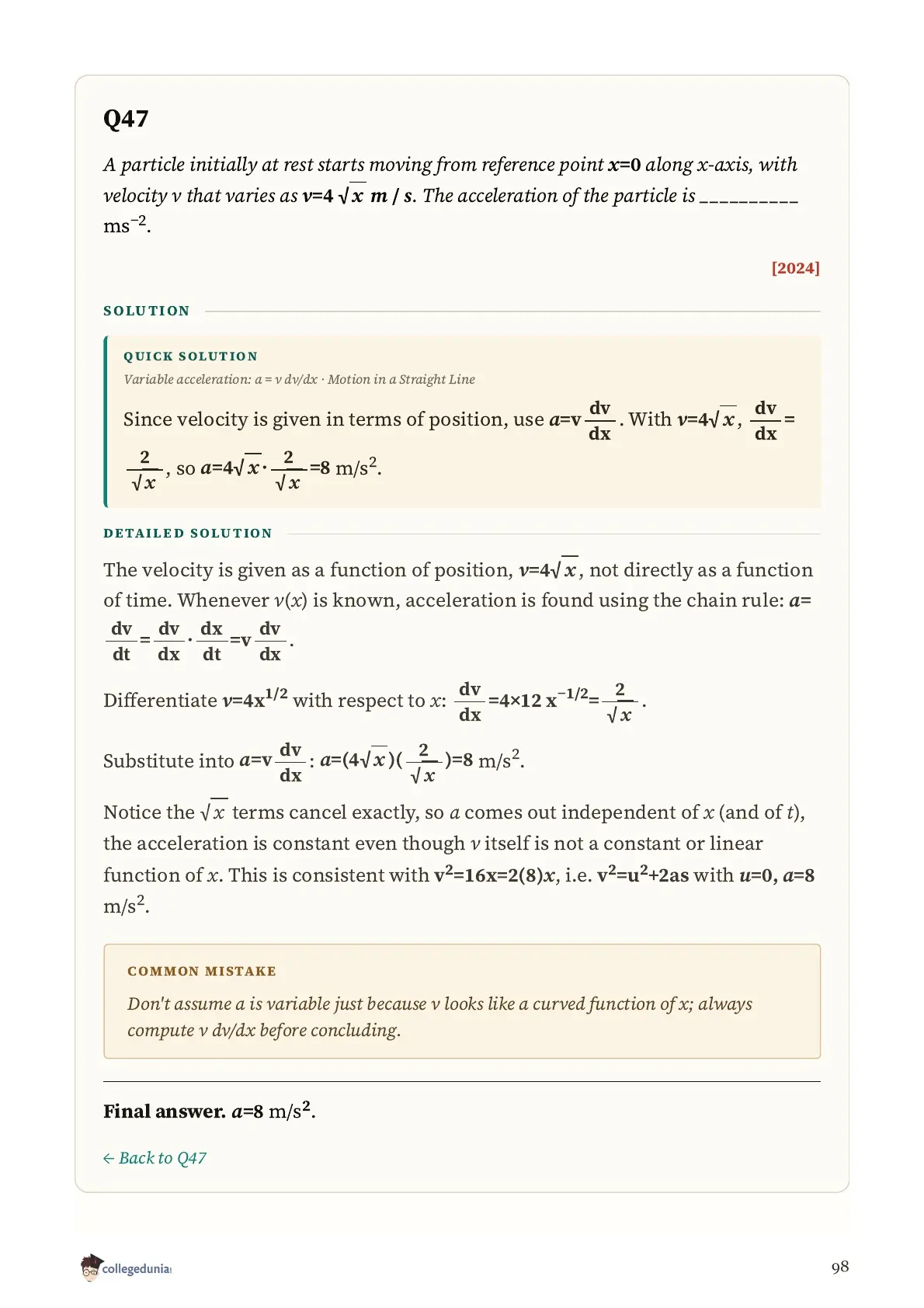
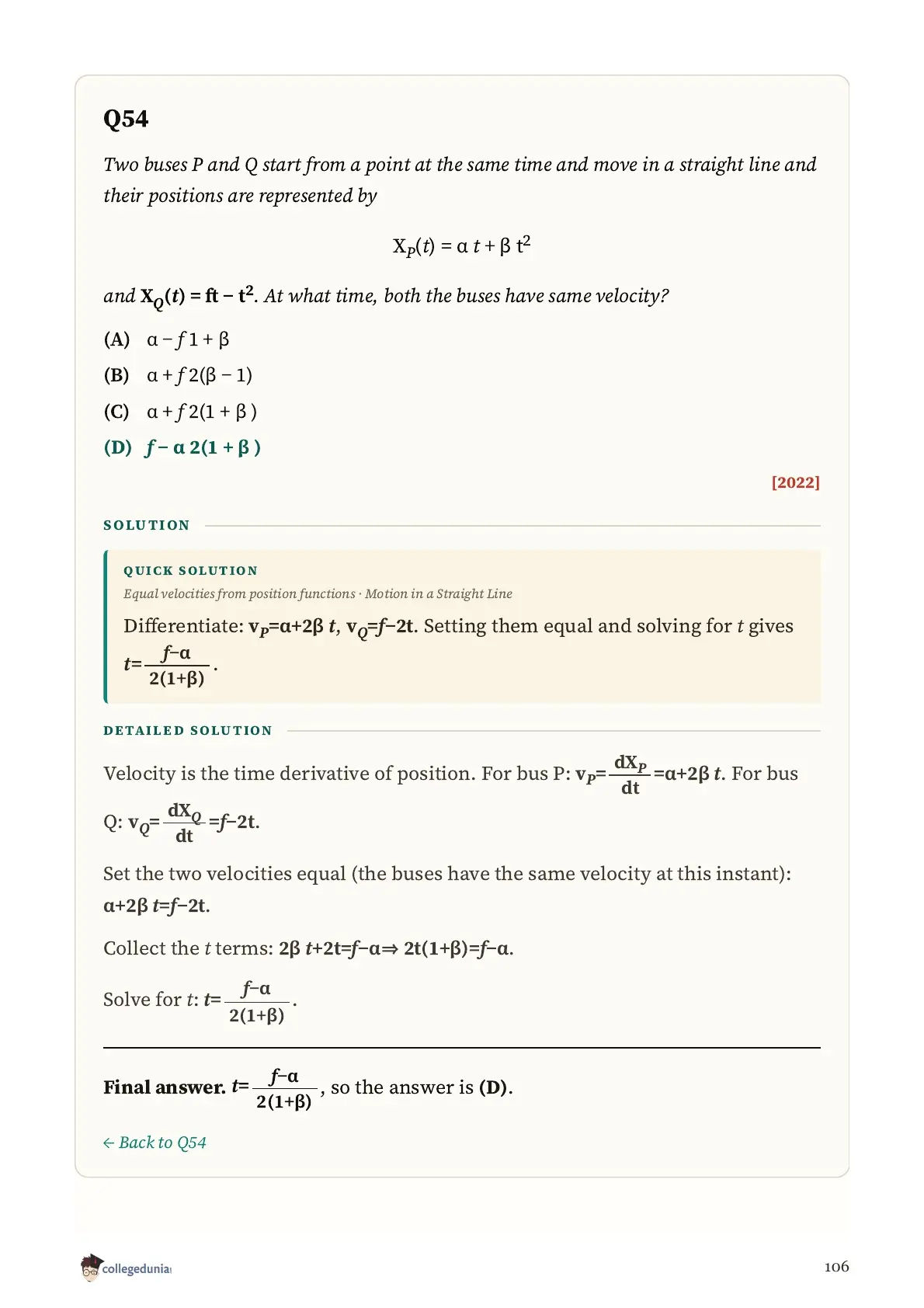
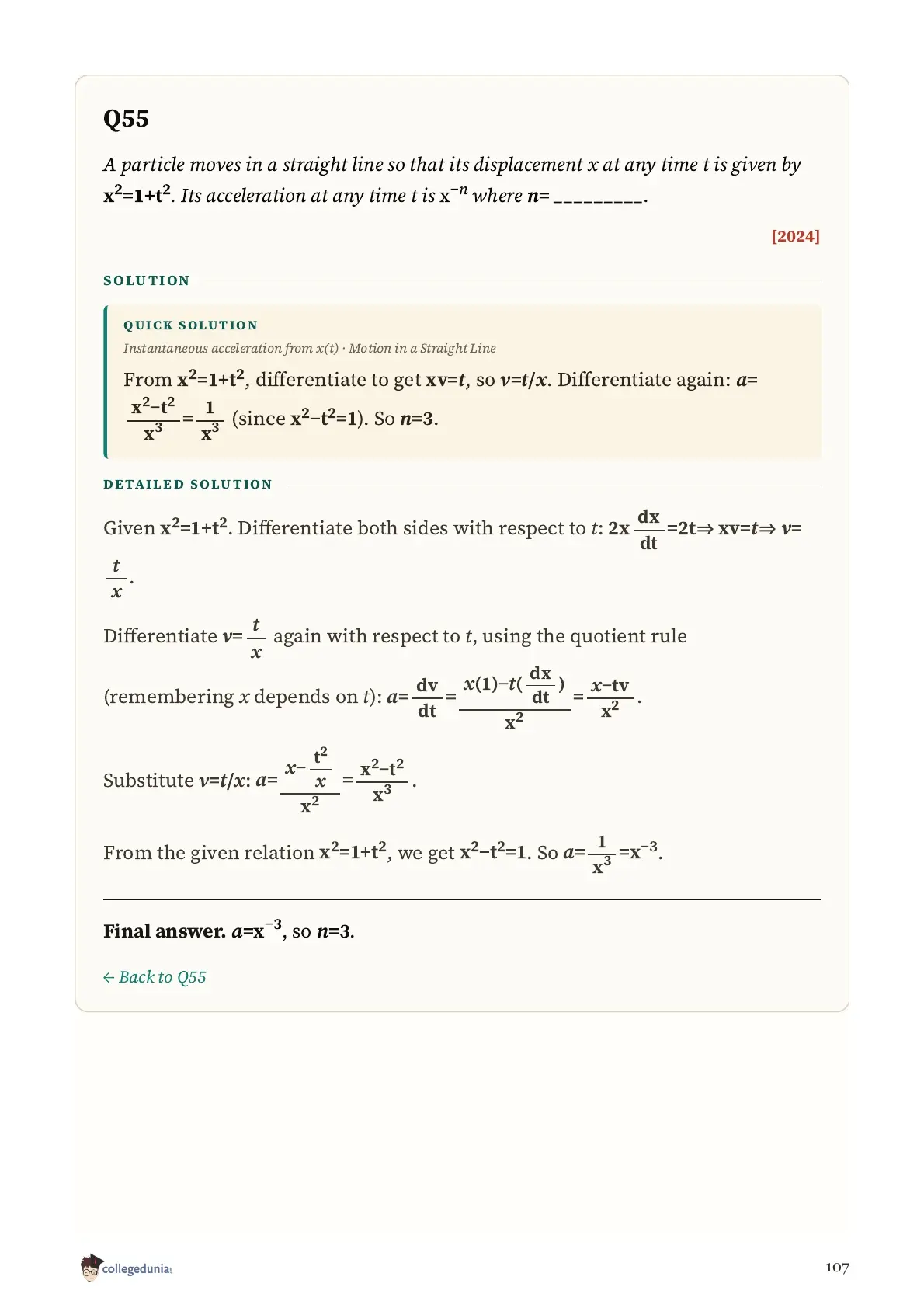
- Variable acceleration questions show the integration limits rather than jumping to a result.
- All 67 answers were checked against the official key, and where the working disagreed it was solved again instead of being bent to fit.
Where the Marks Sit in This Chapter
Motion in a Straight Line is one of the more numerical-heavy chapters in JEE Main Physics. Across the 2022 to 2026 papers about 30 percent of its questions are integer type, roughly three times the share in Units and Dimensions.
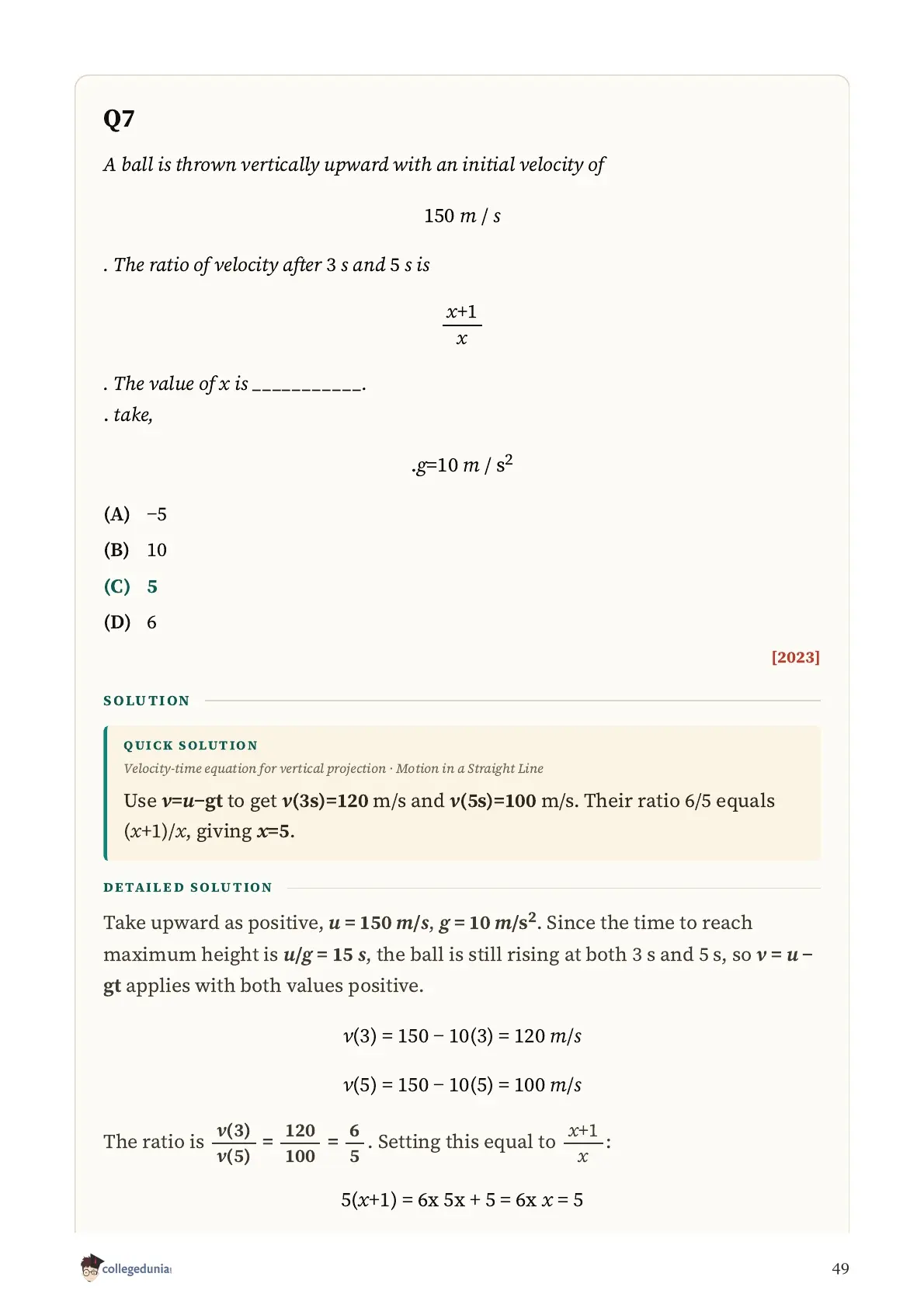
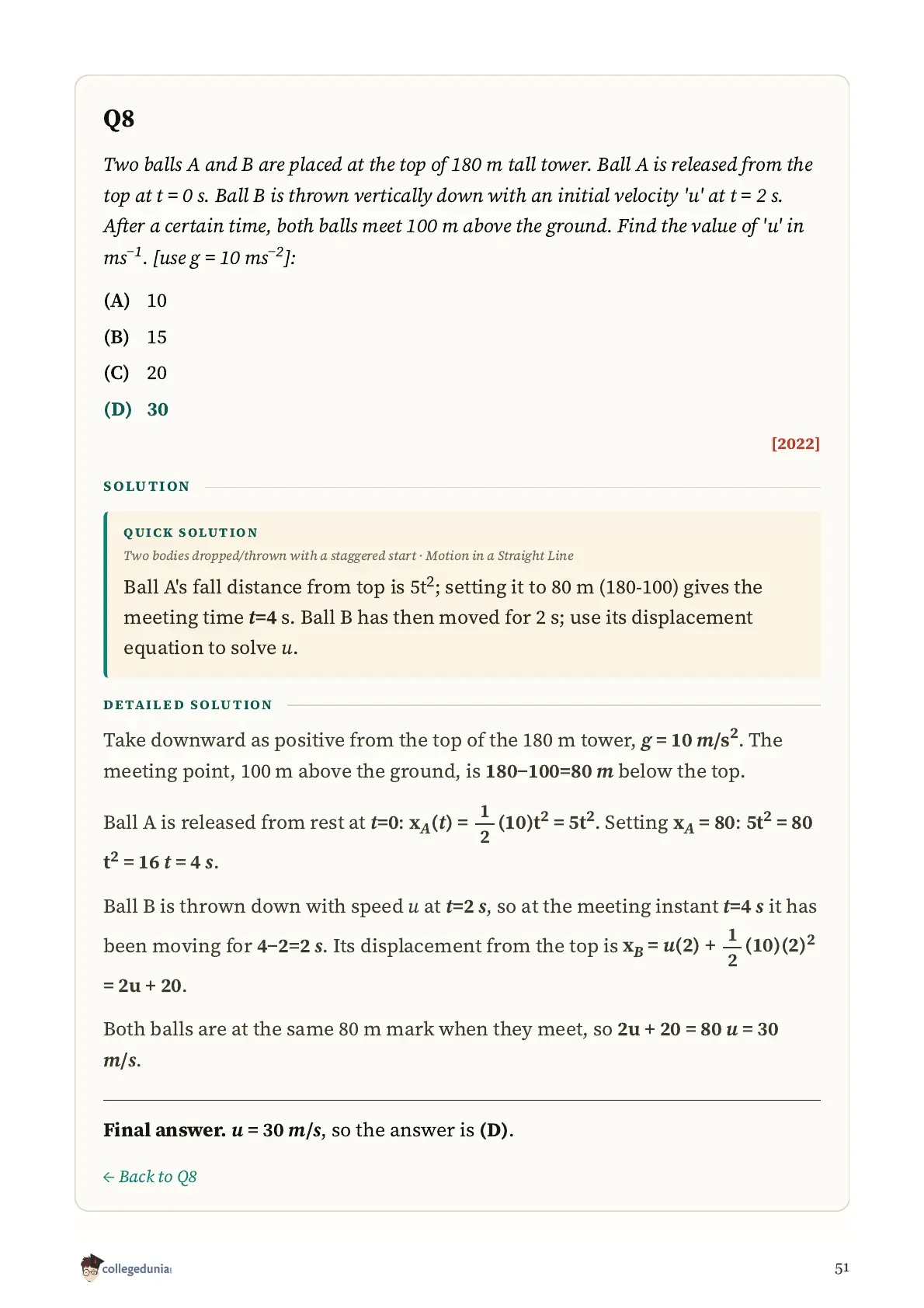
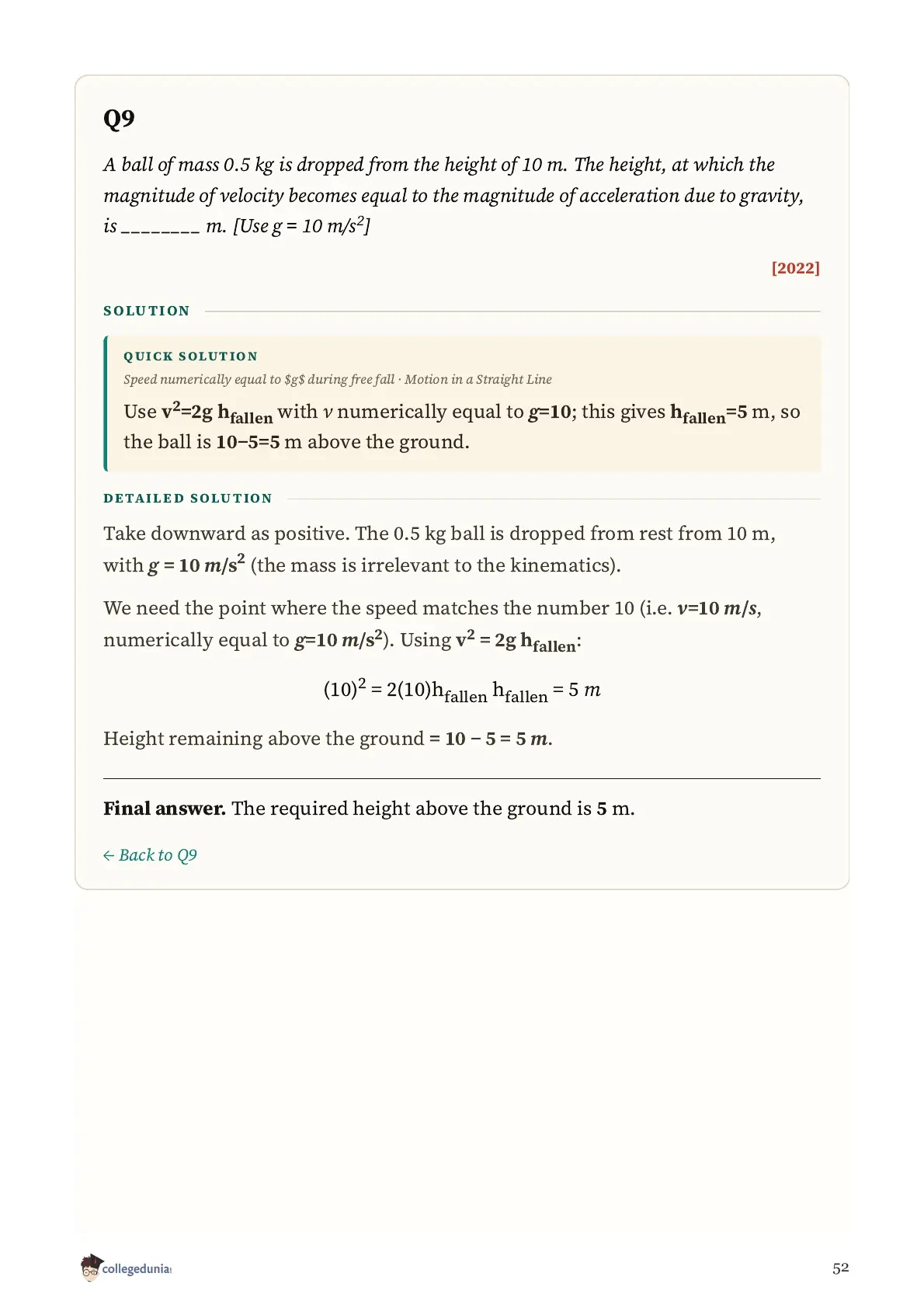
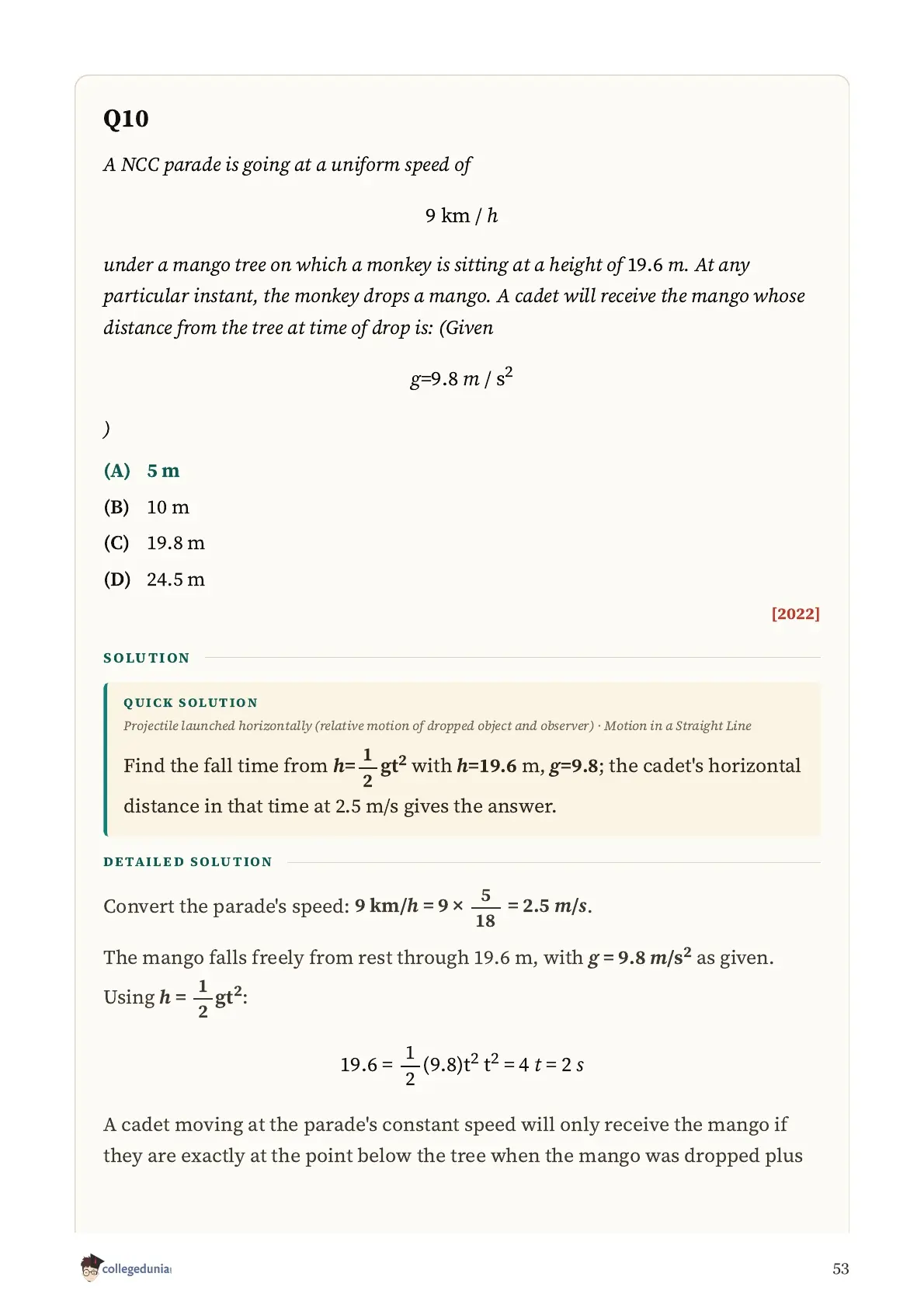
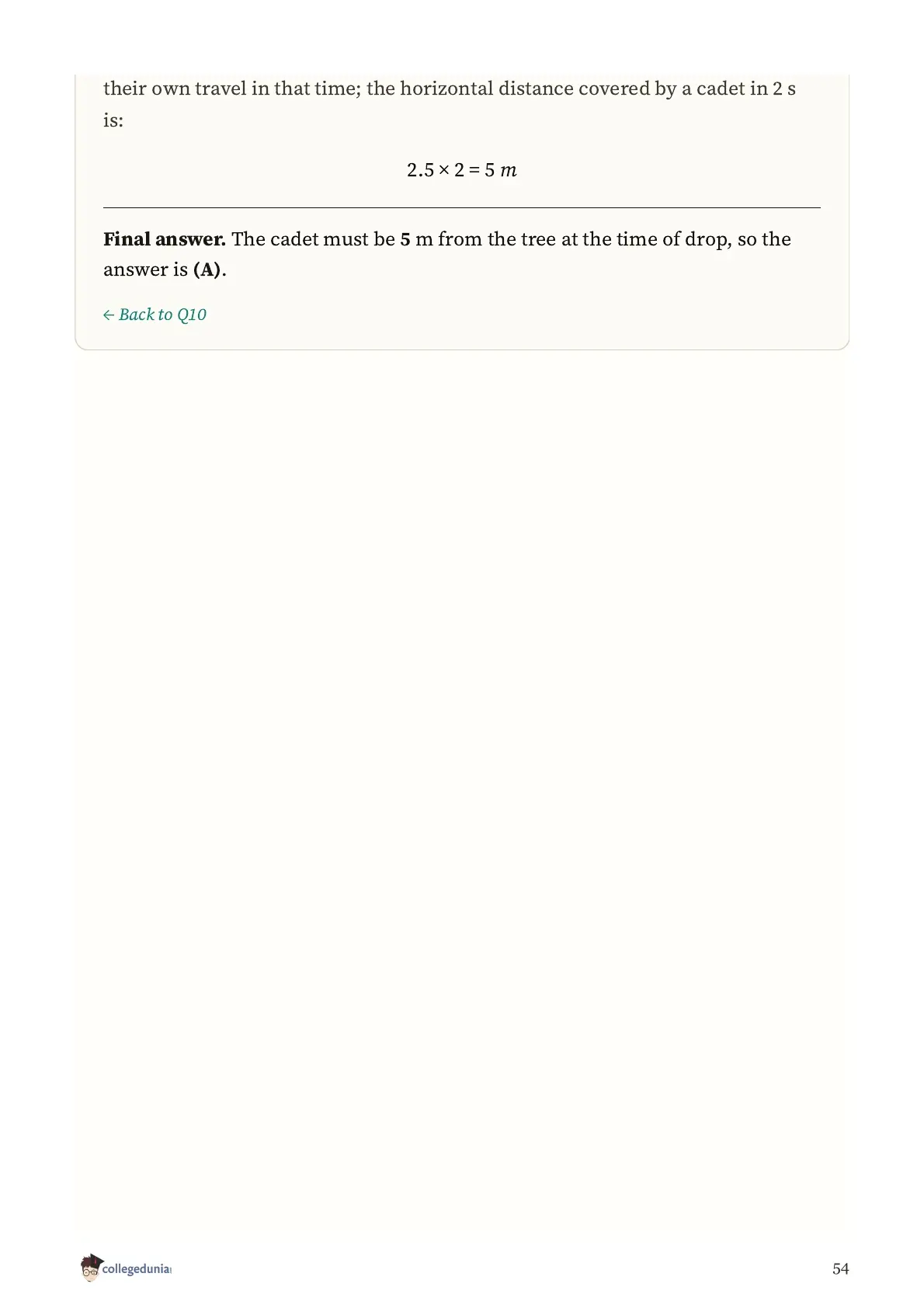
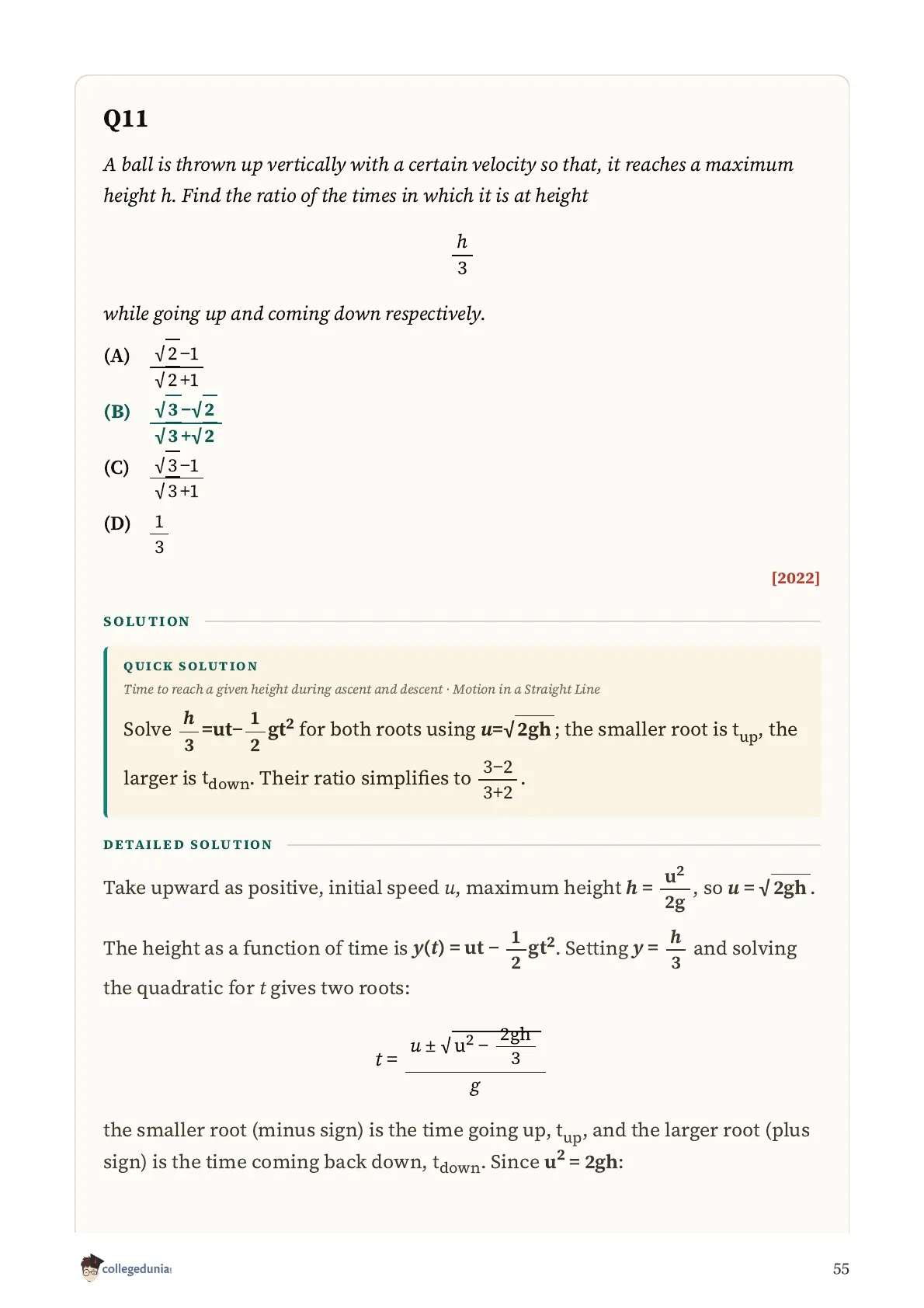
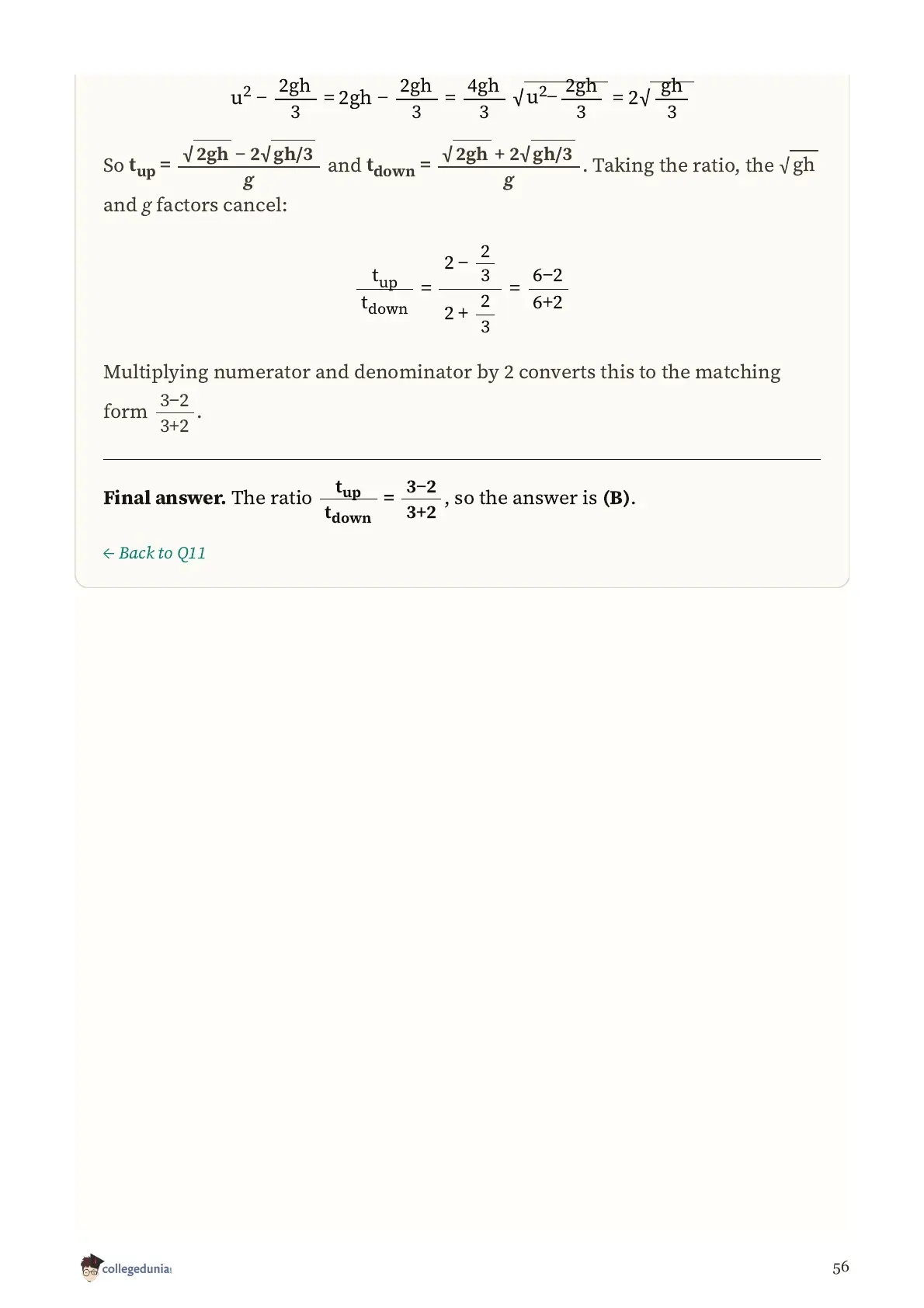
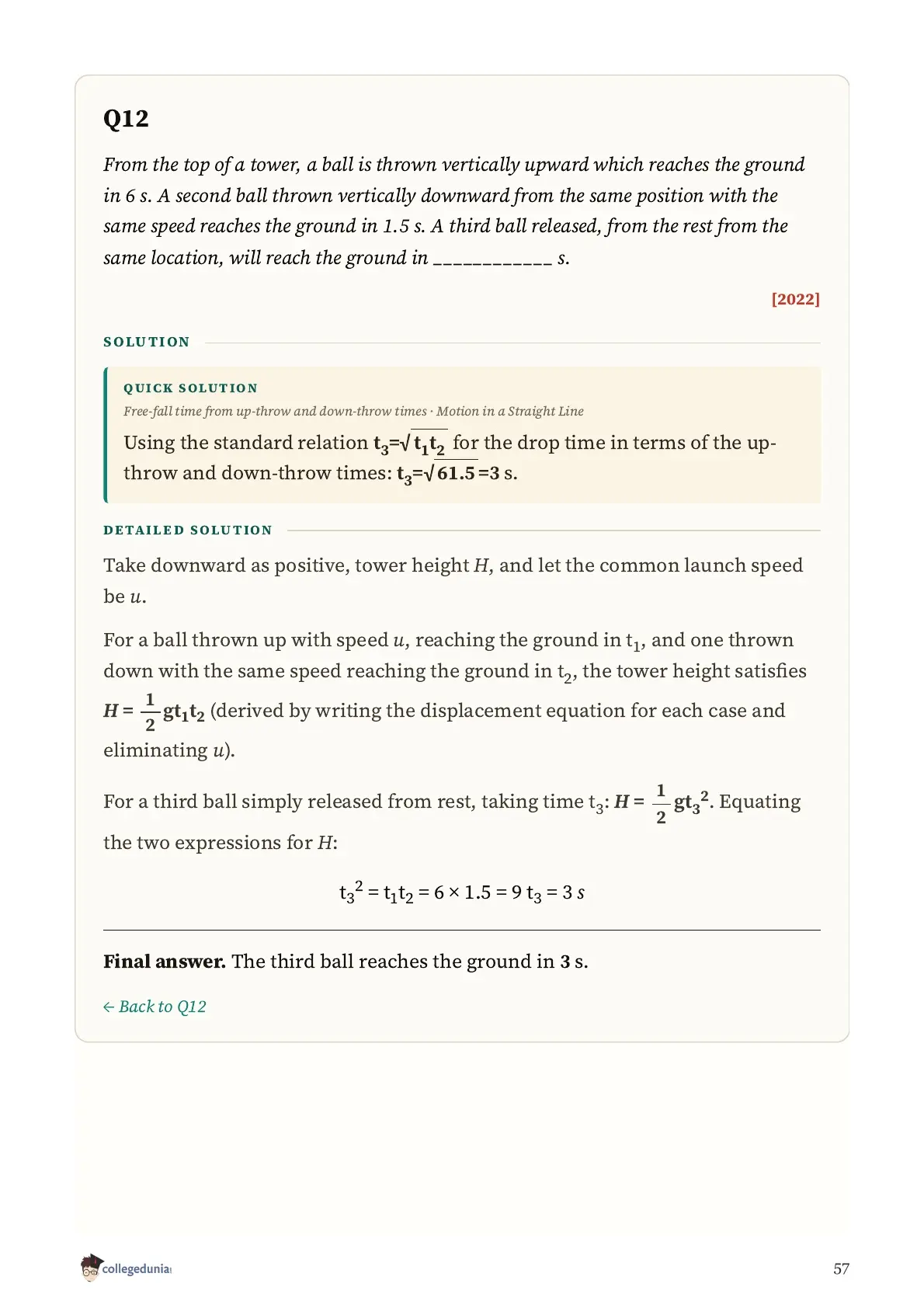
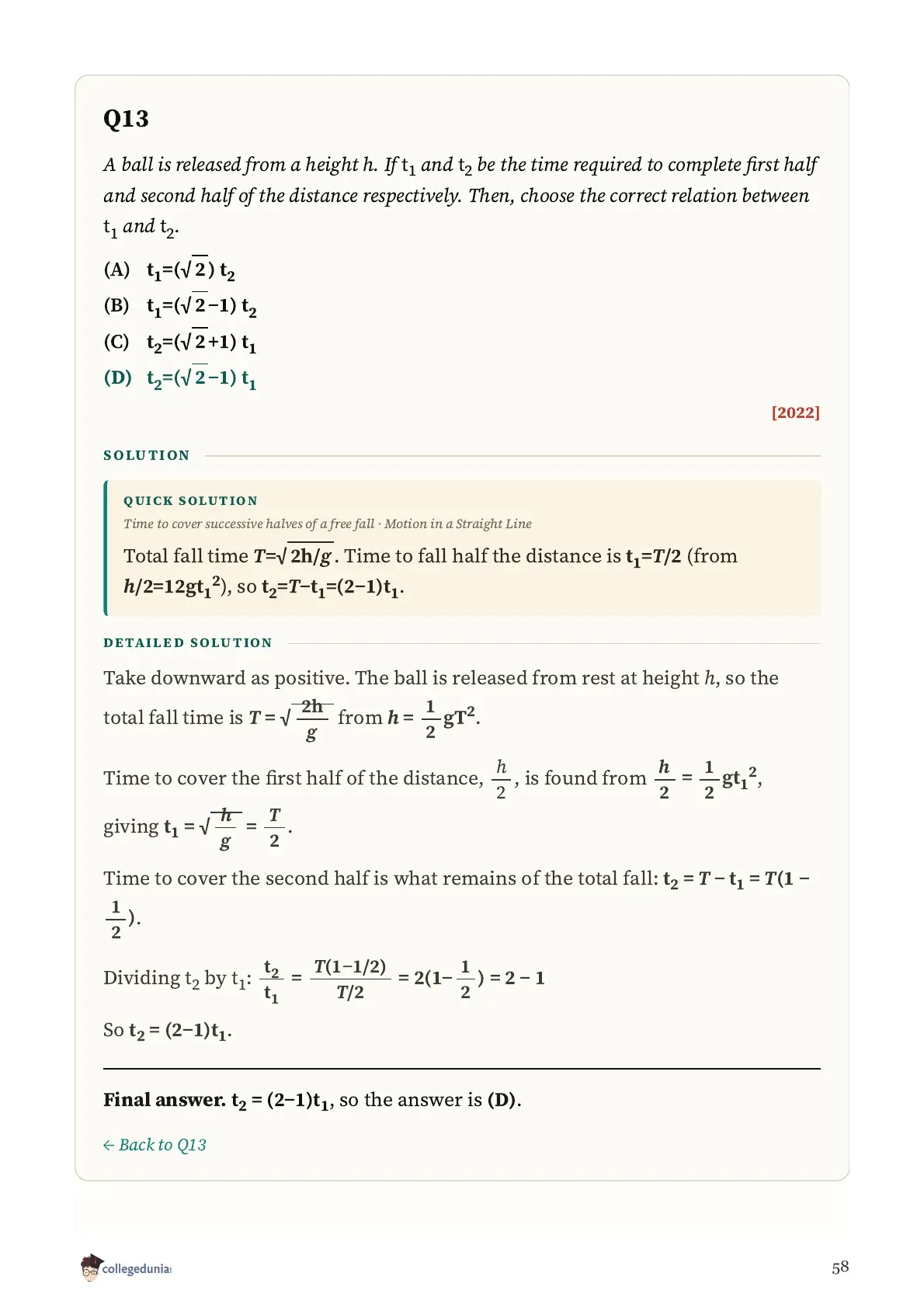
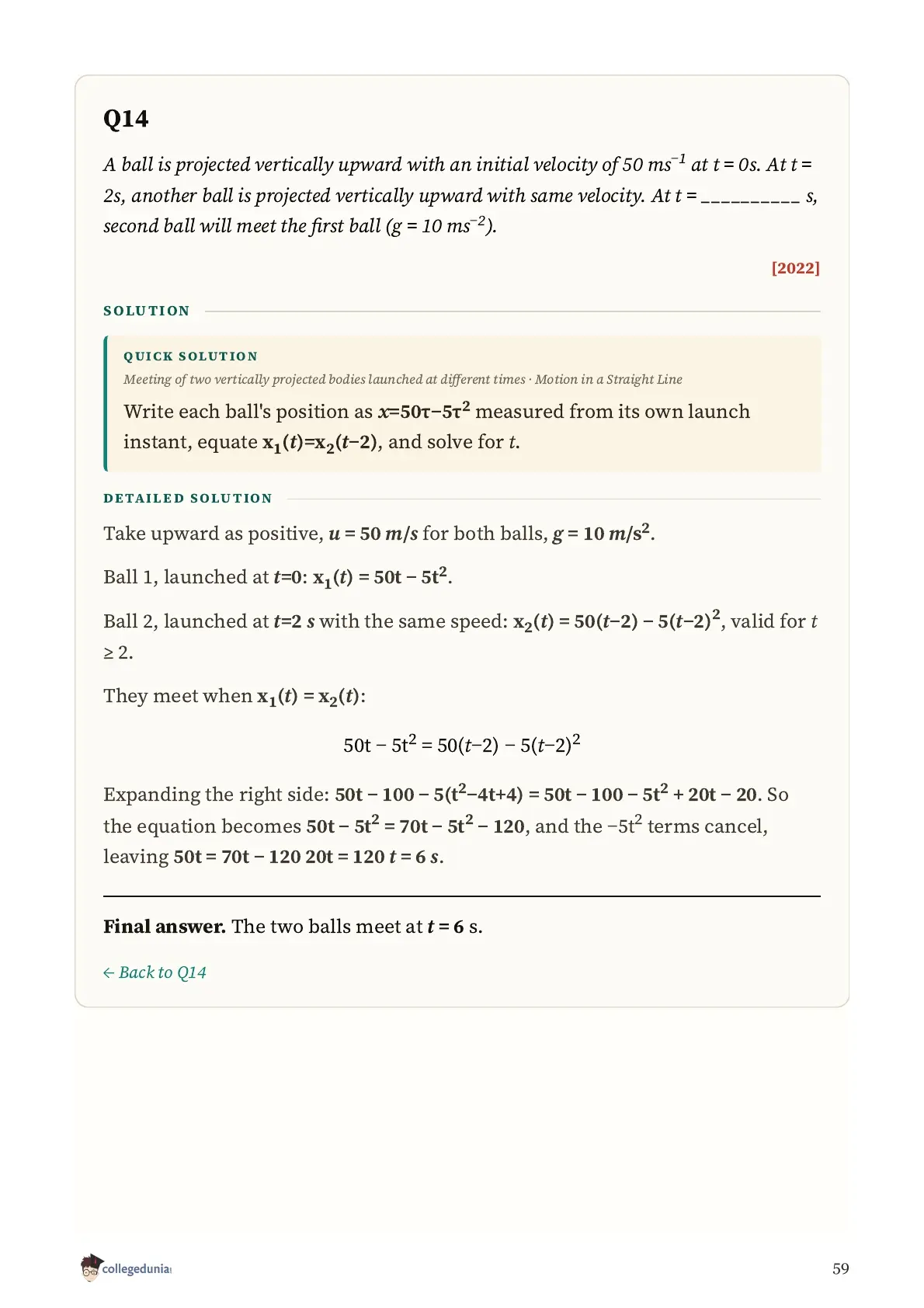
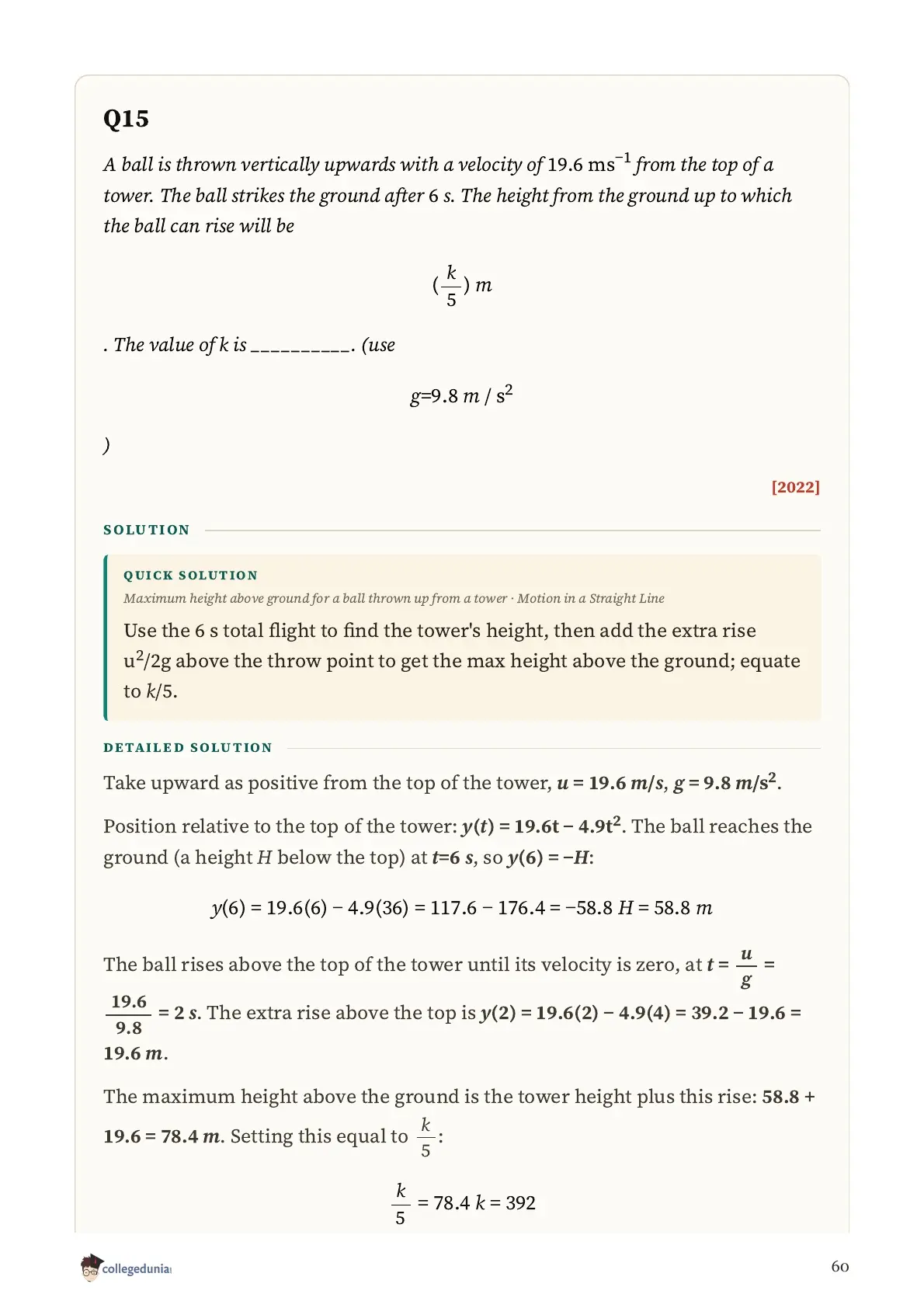
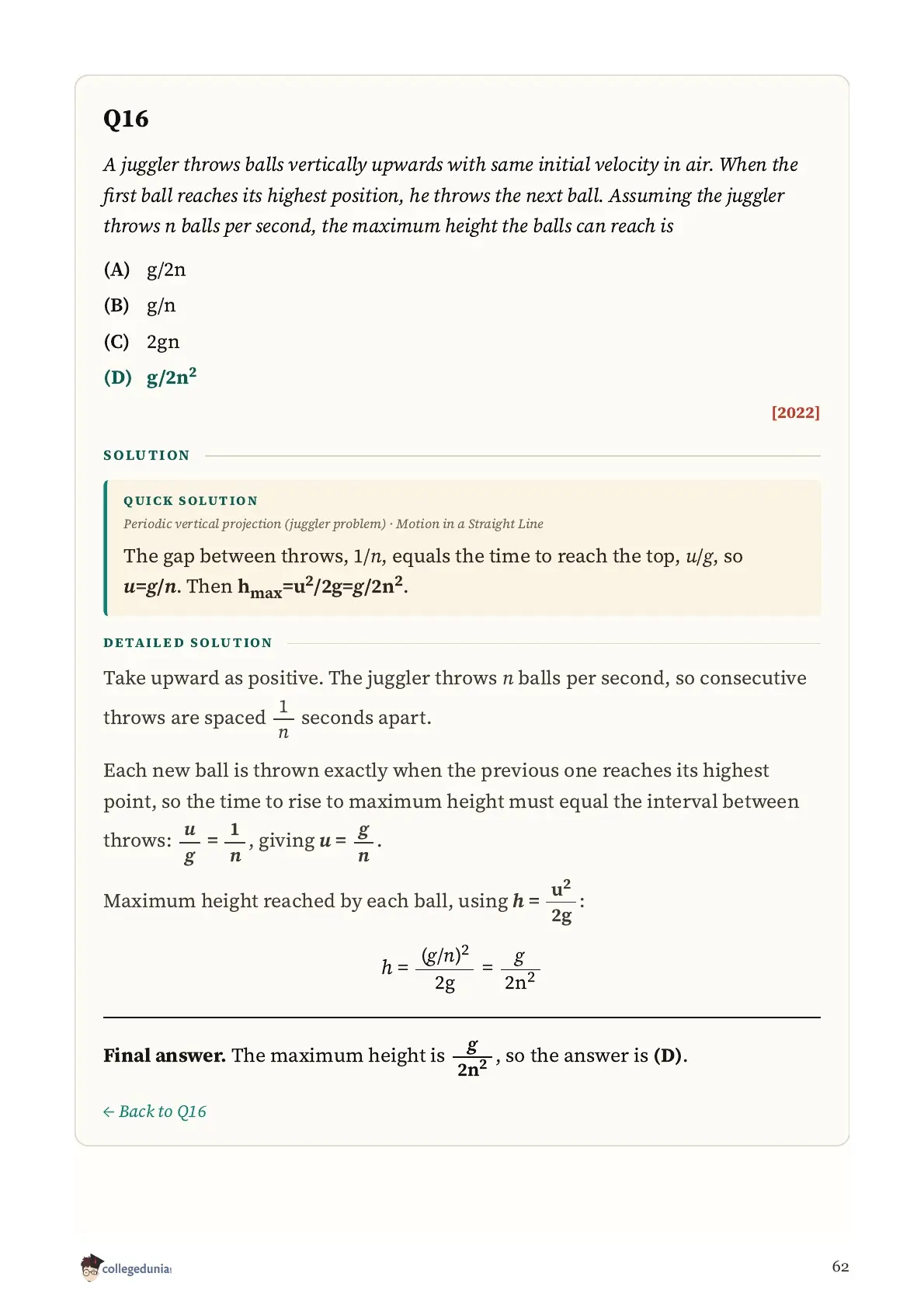
- Motion under gravity, 16 questions, mostly time of flight and maximum height.
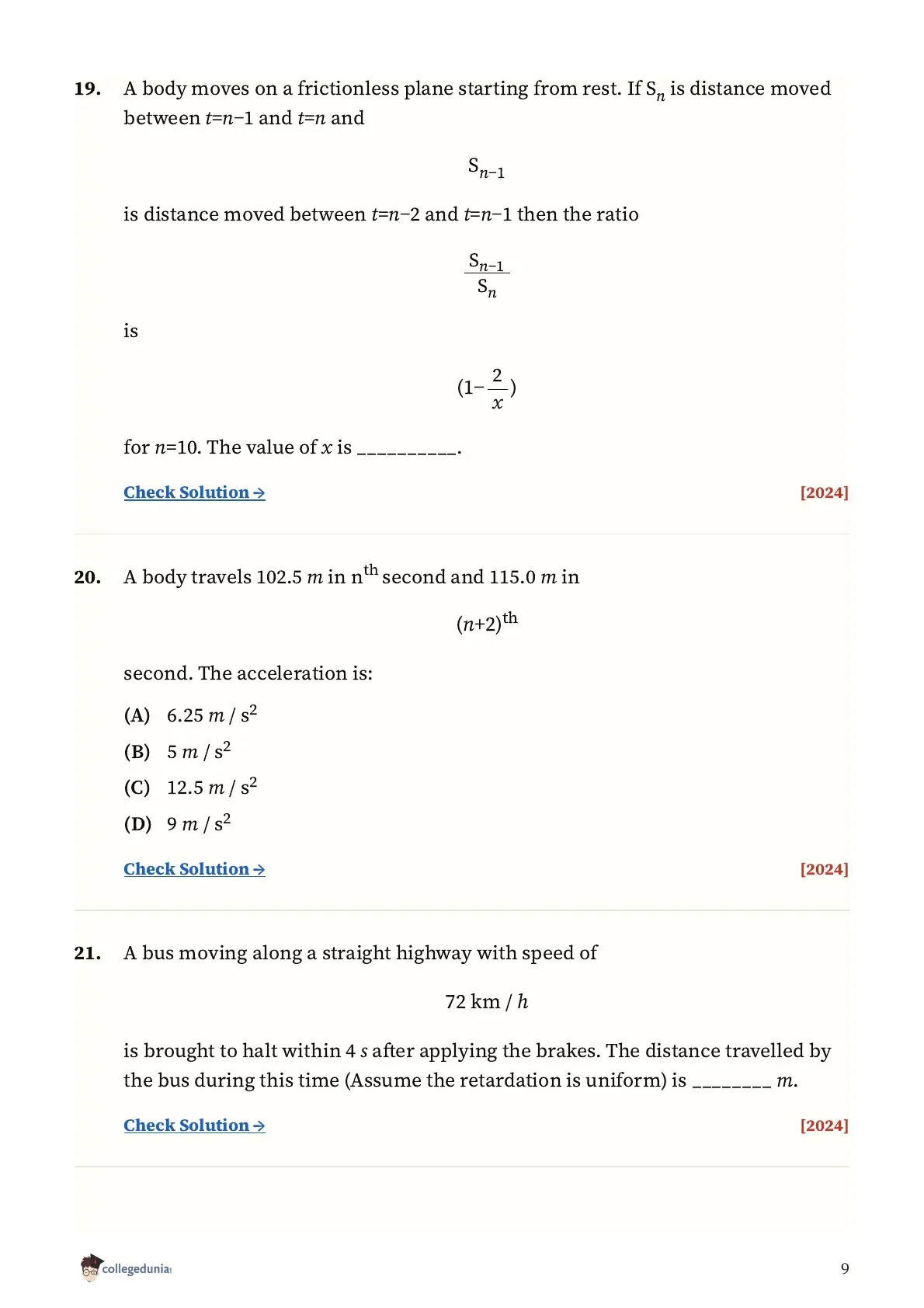
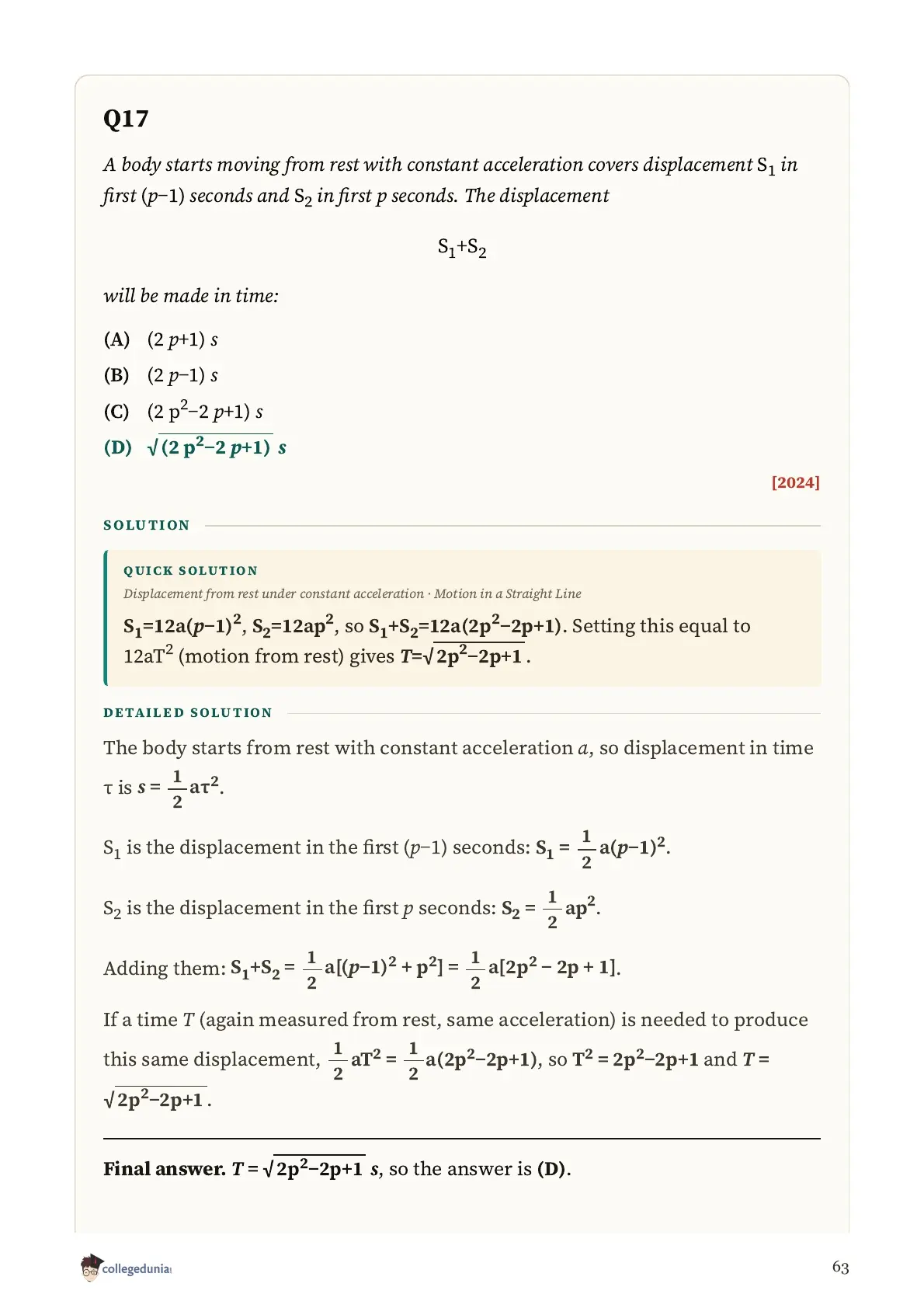
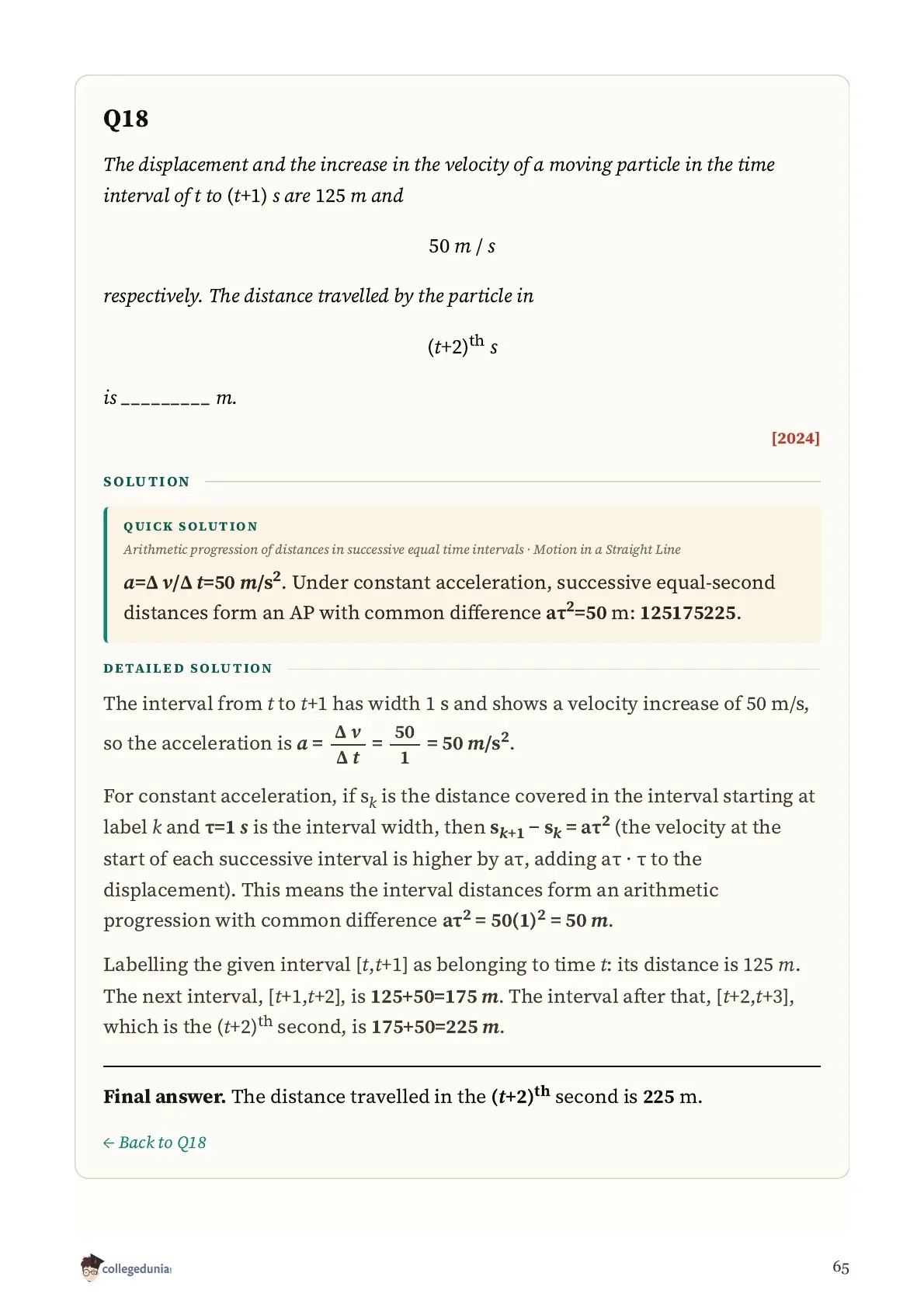
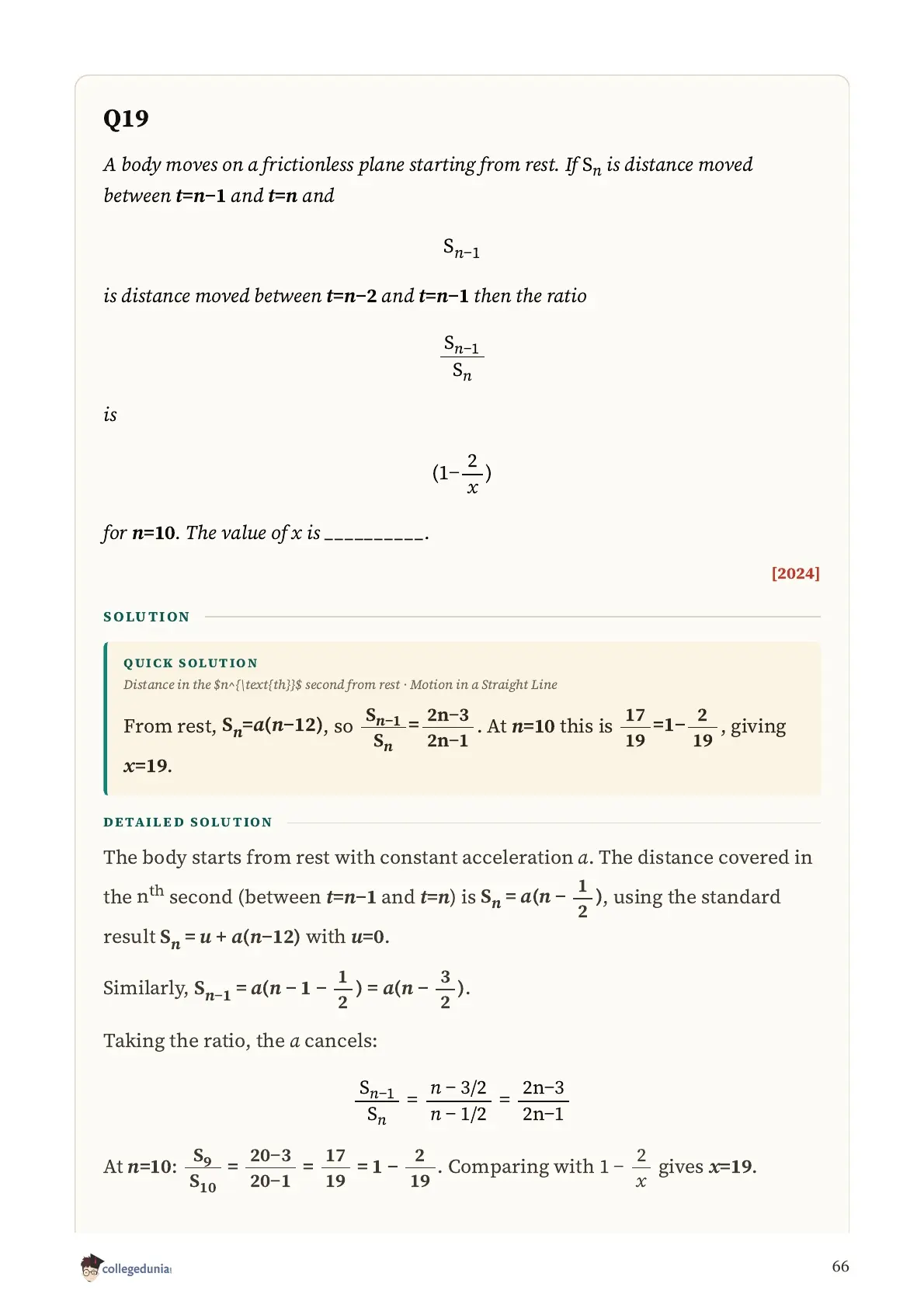
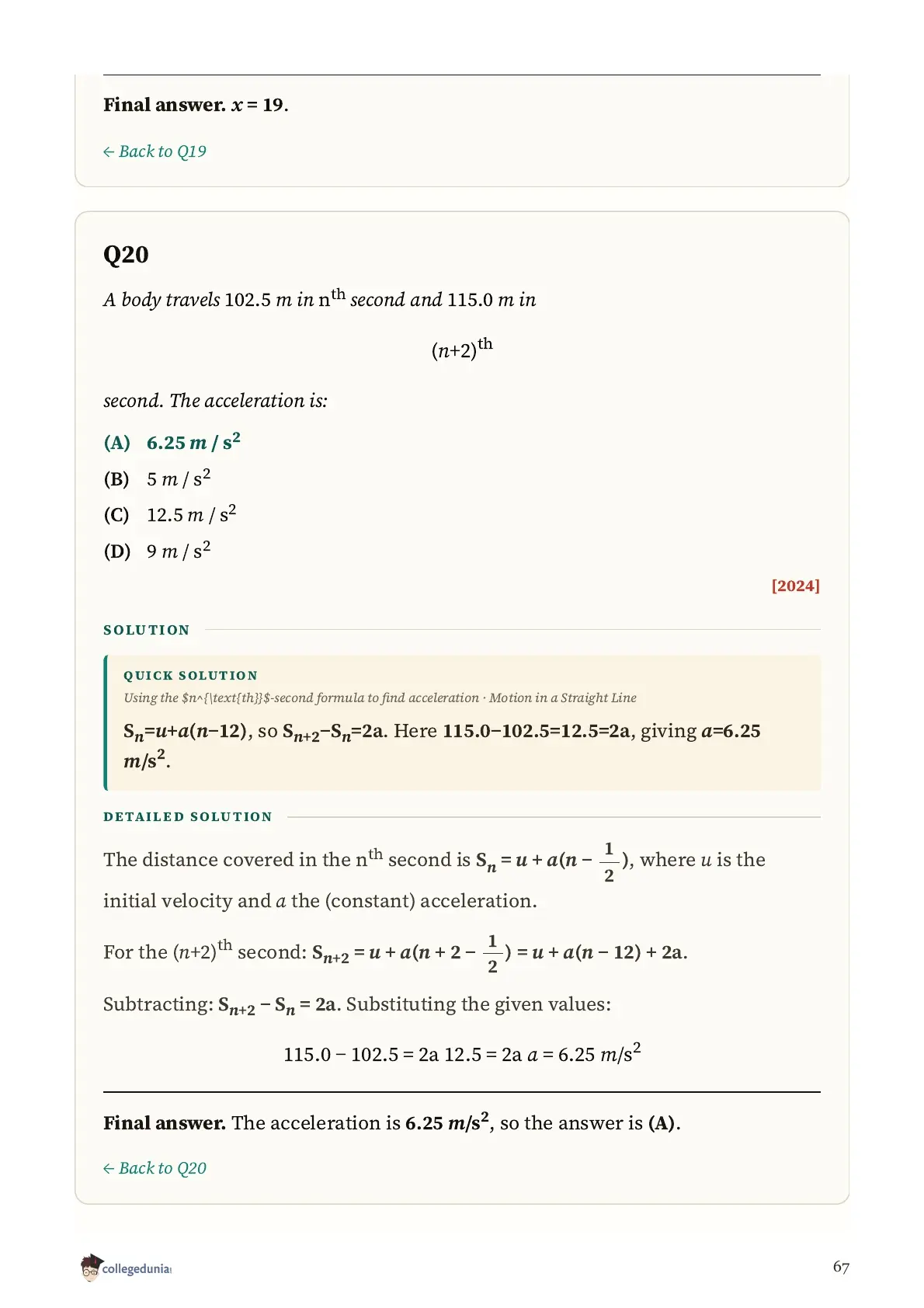
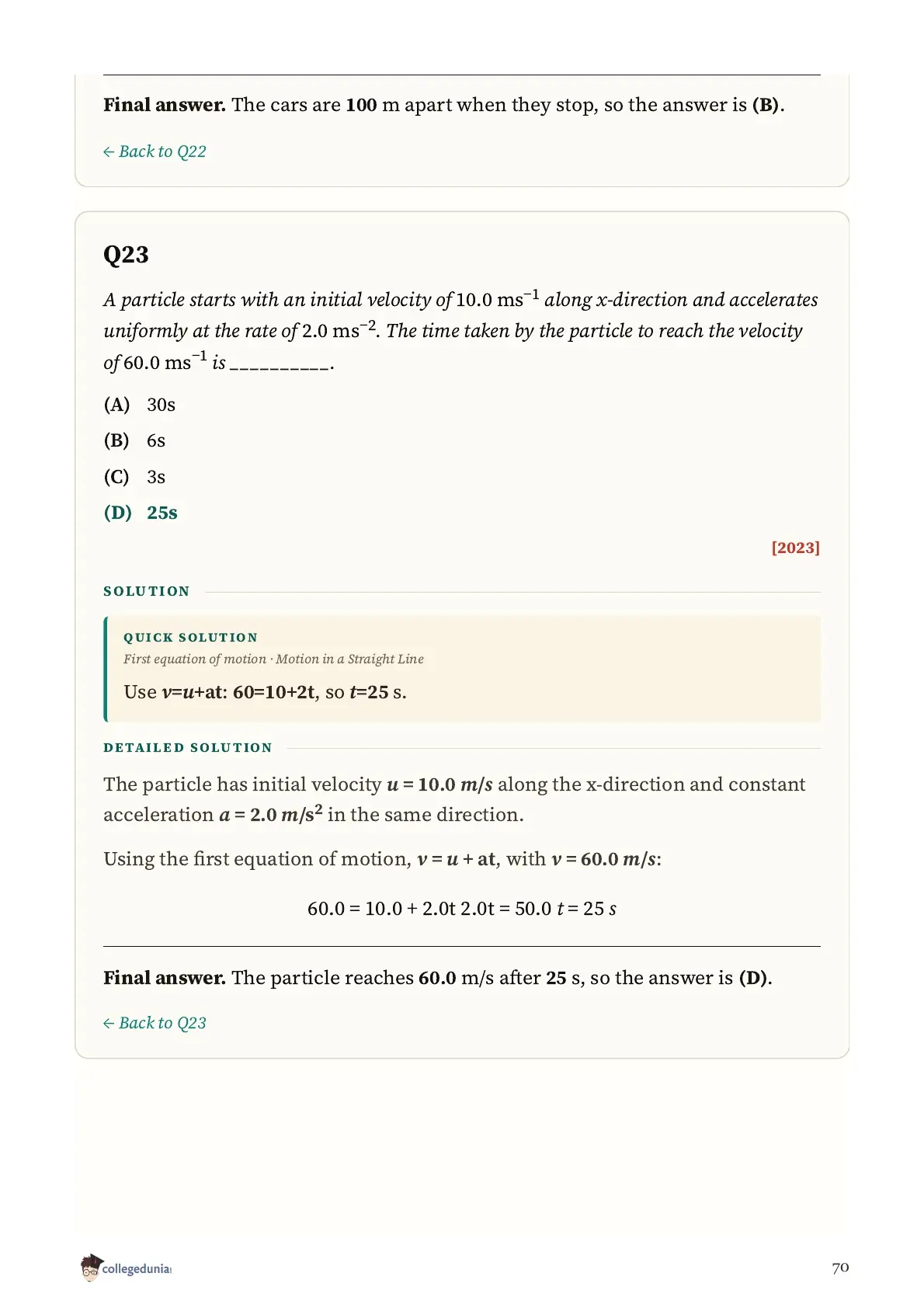
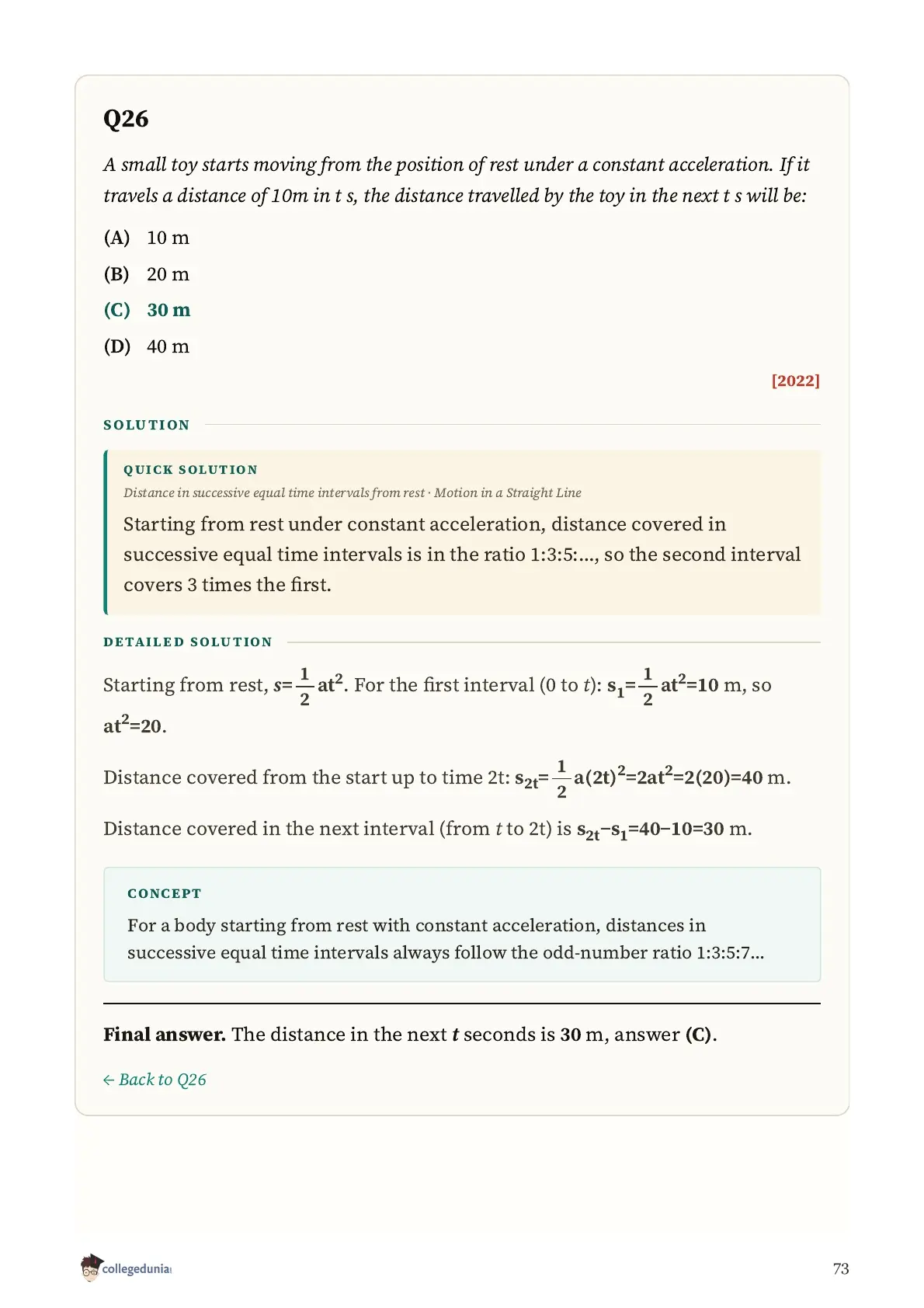
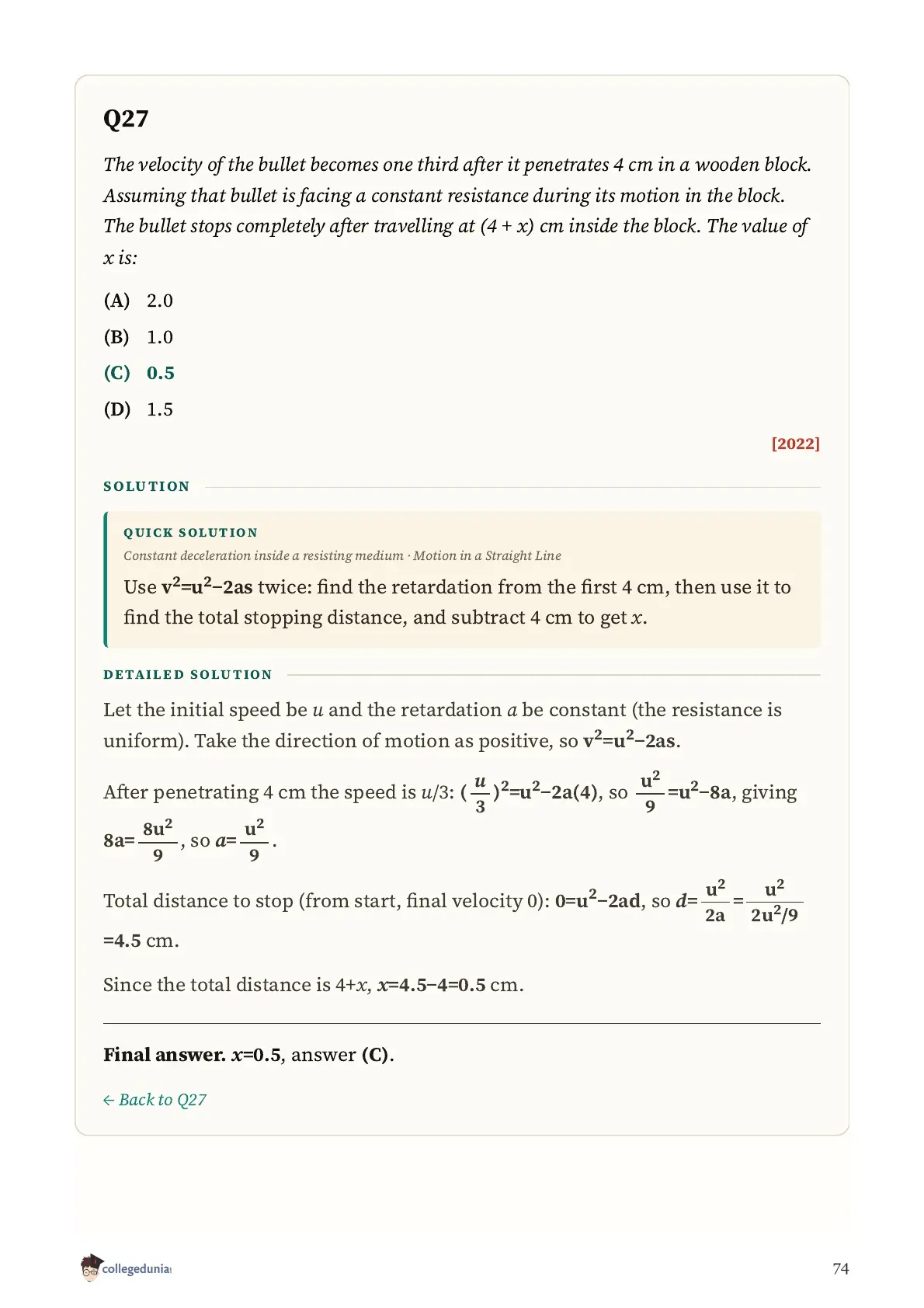
- Constant acceleration, 11 questions, including the nth-second pattern.
- Graph problems, 10 questions, almost all asking for distance against displacement.
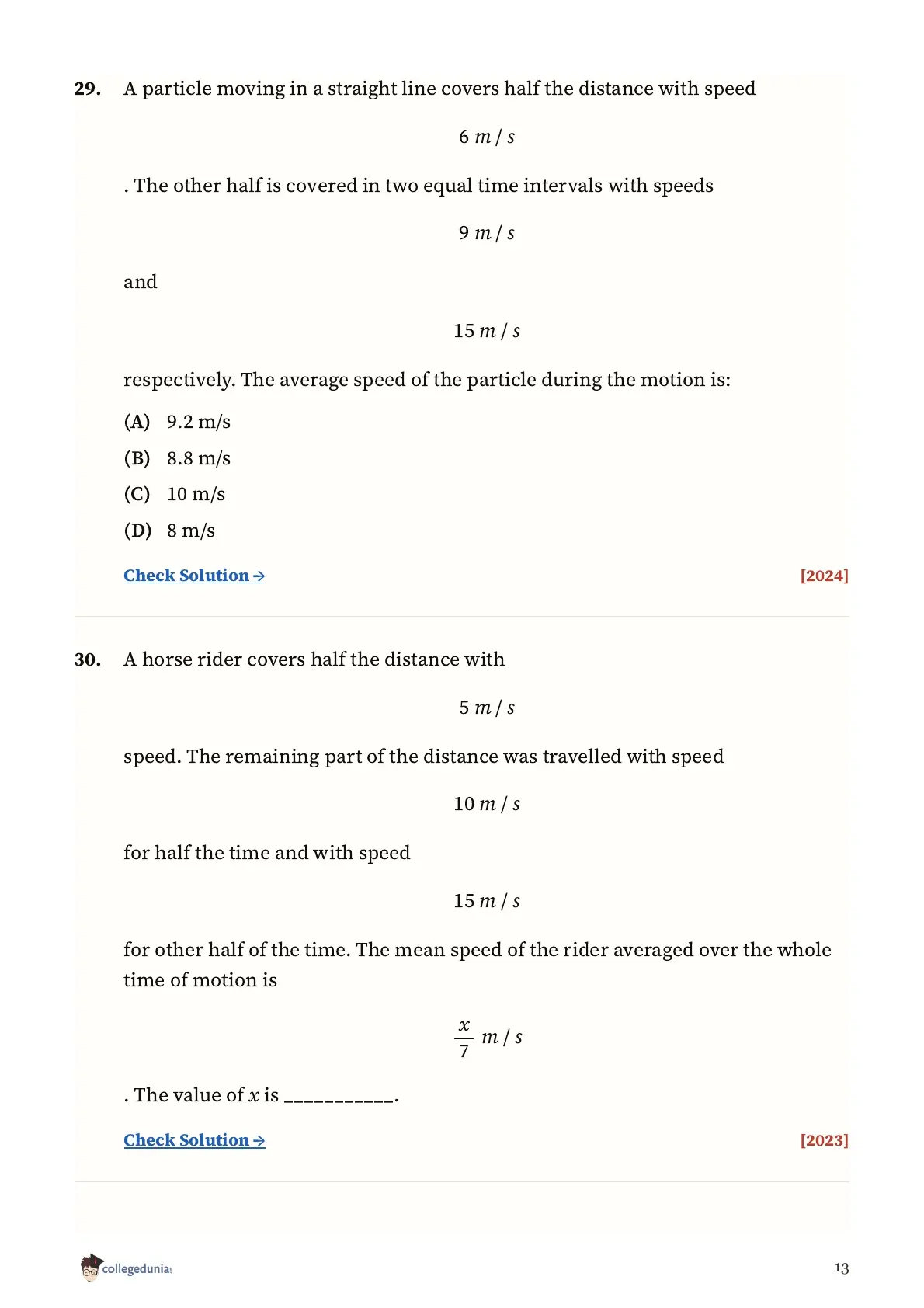
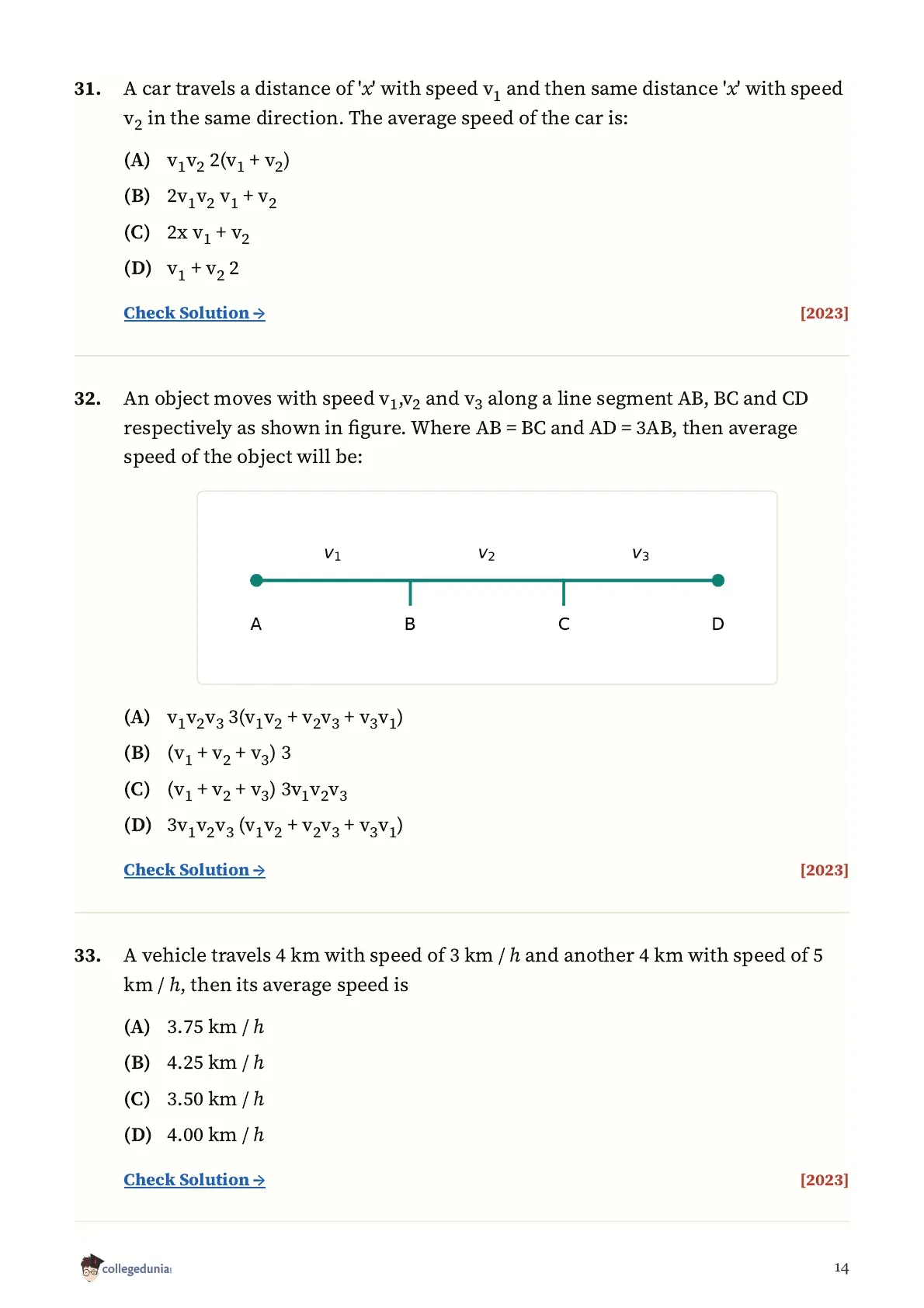
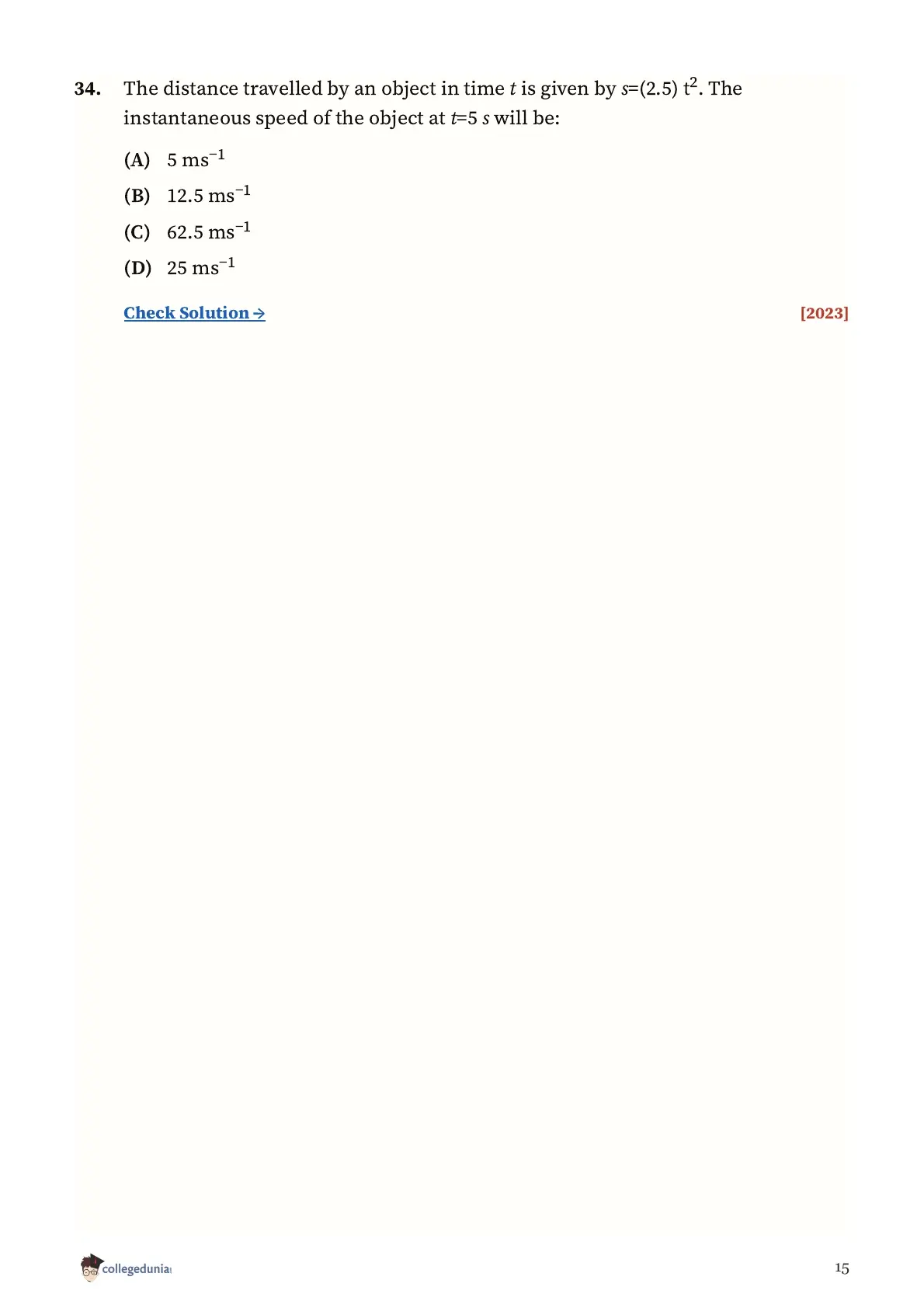
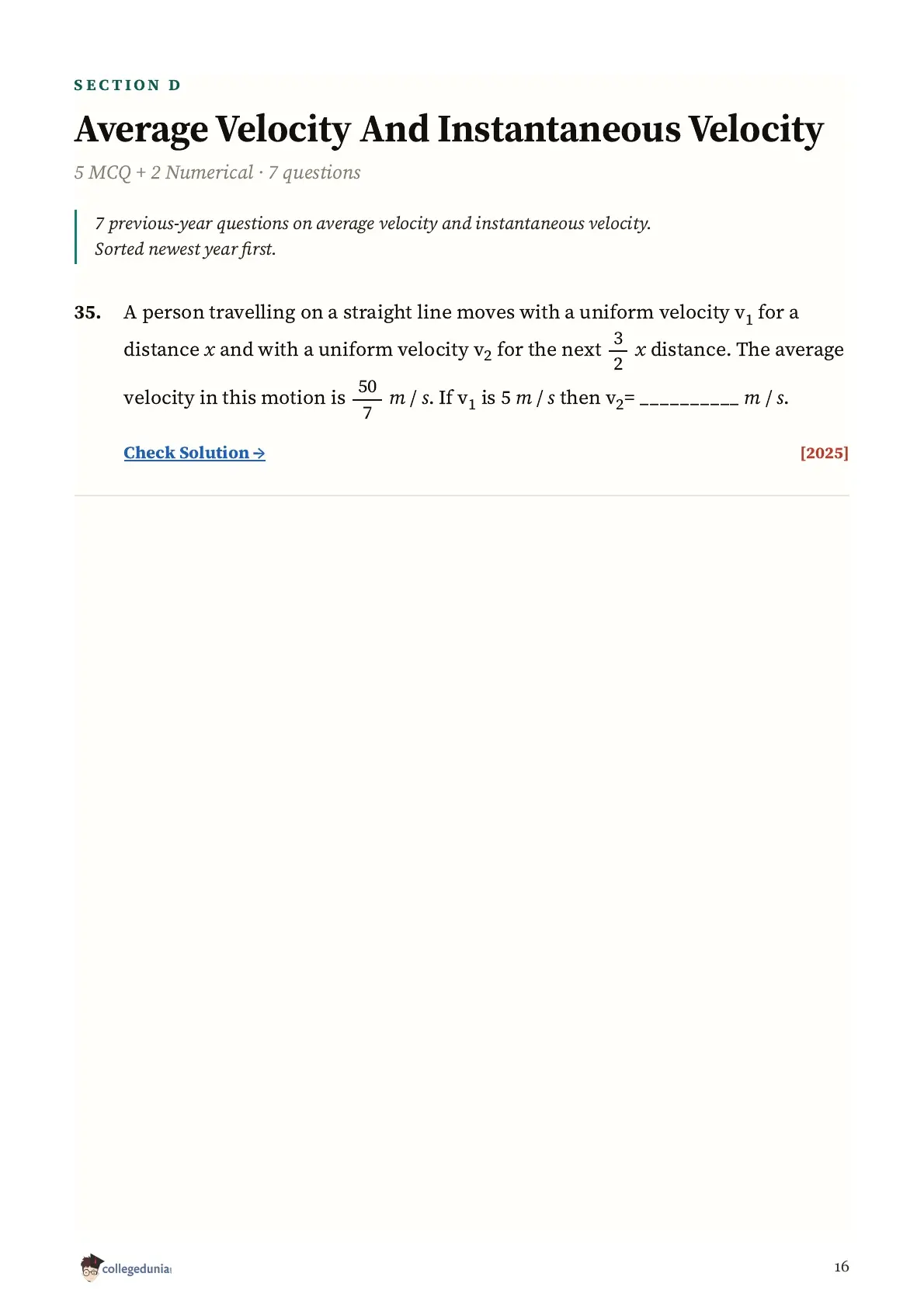
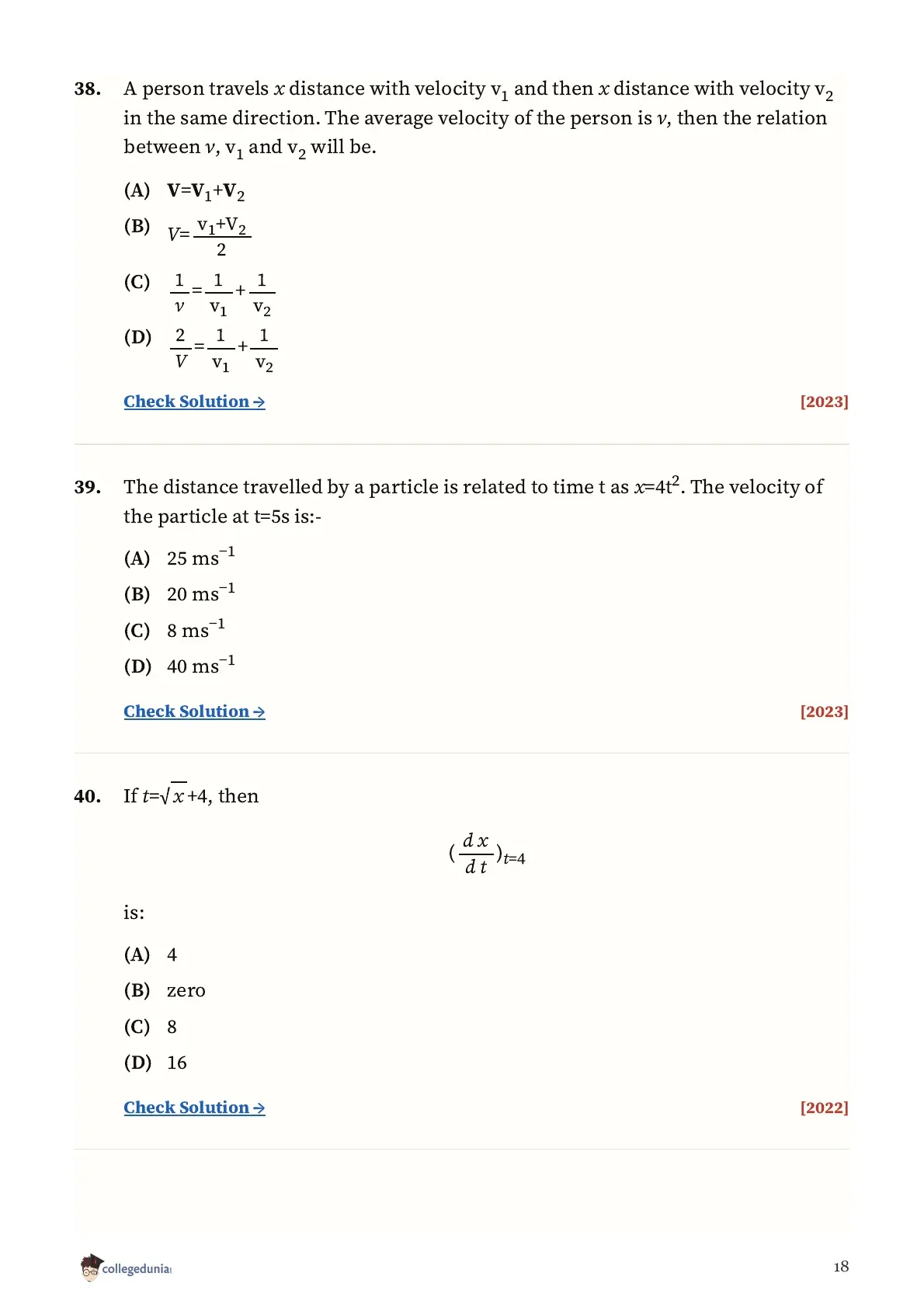
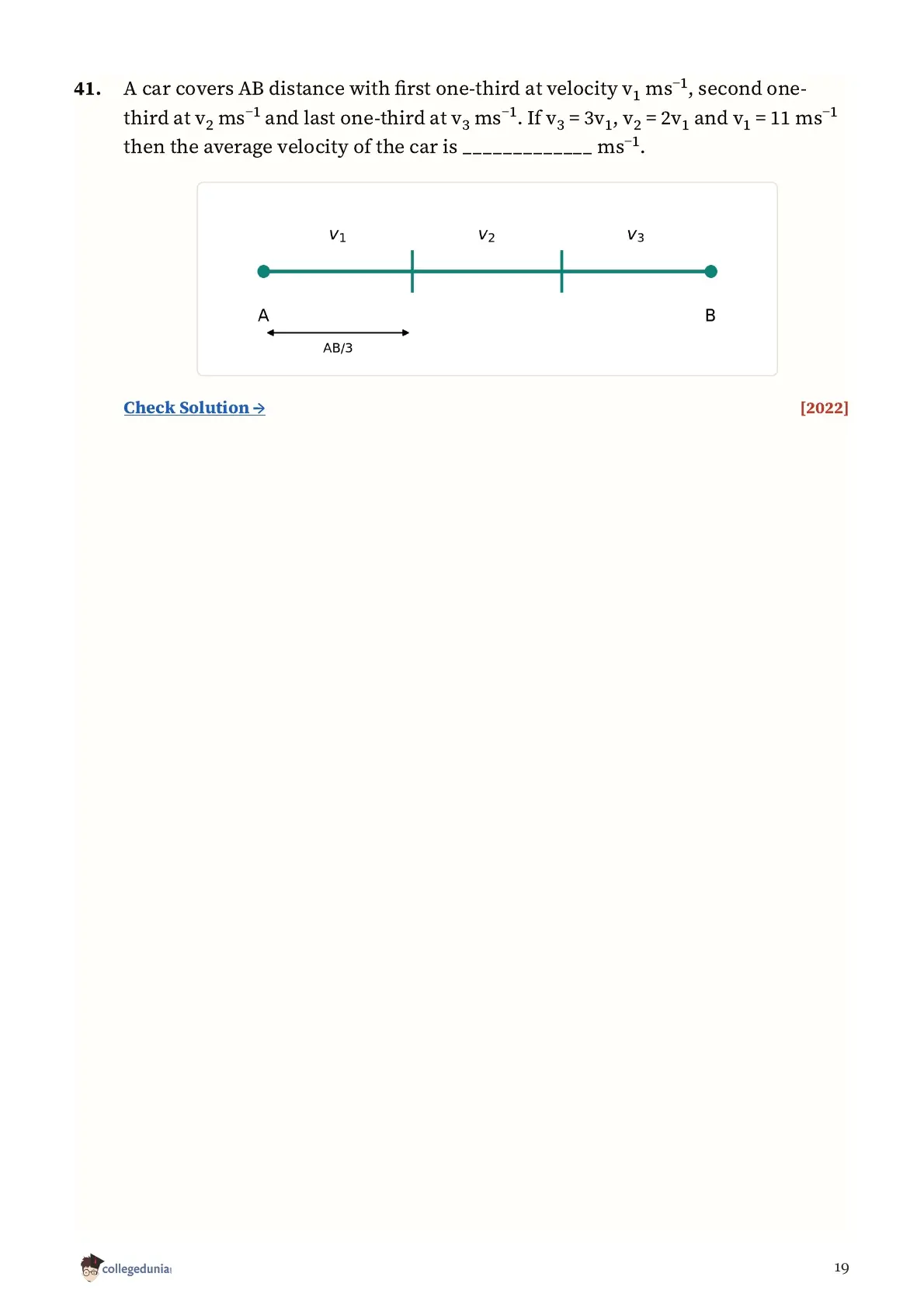
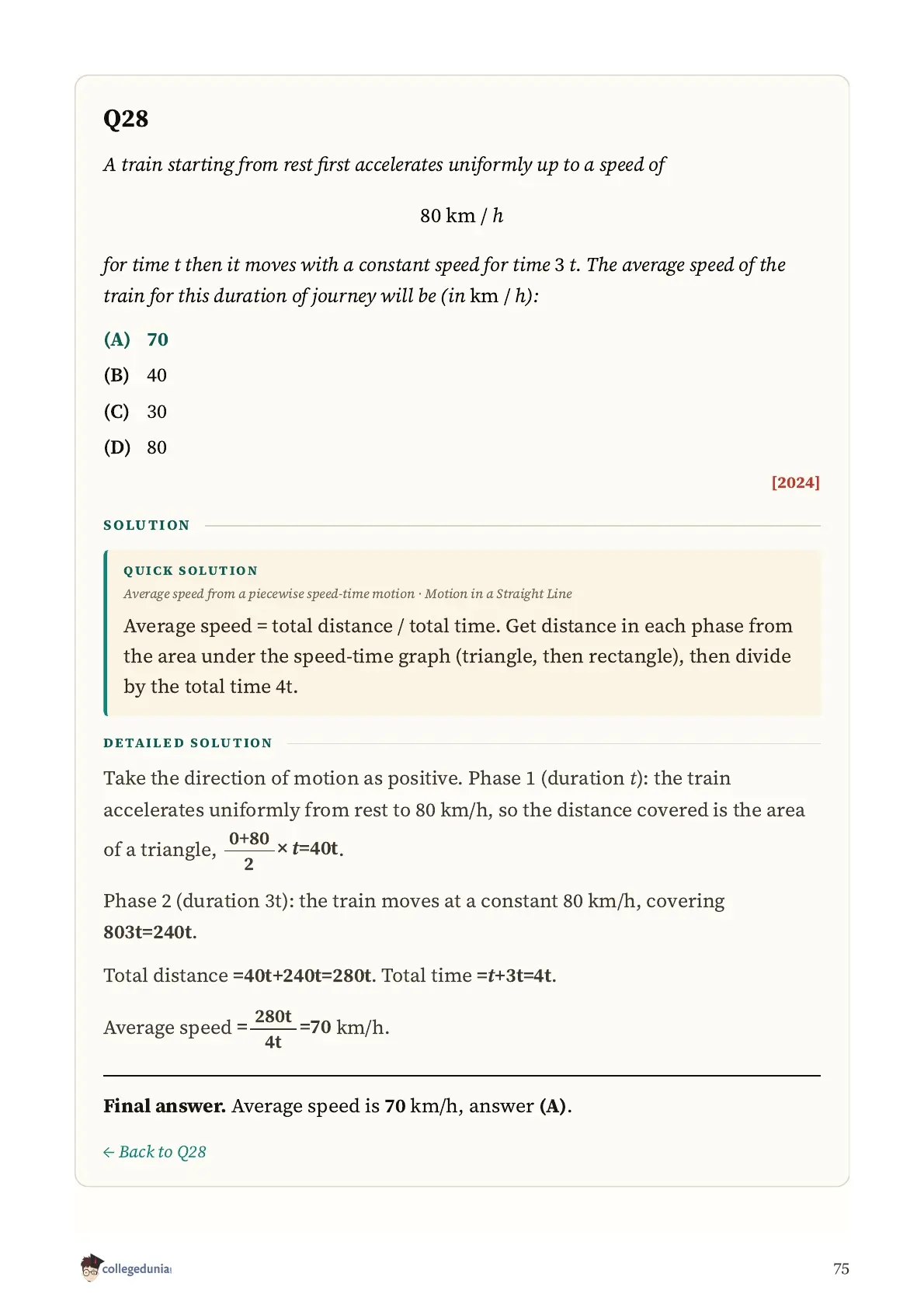
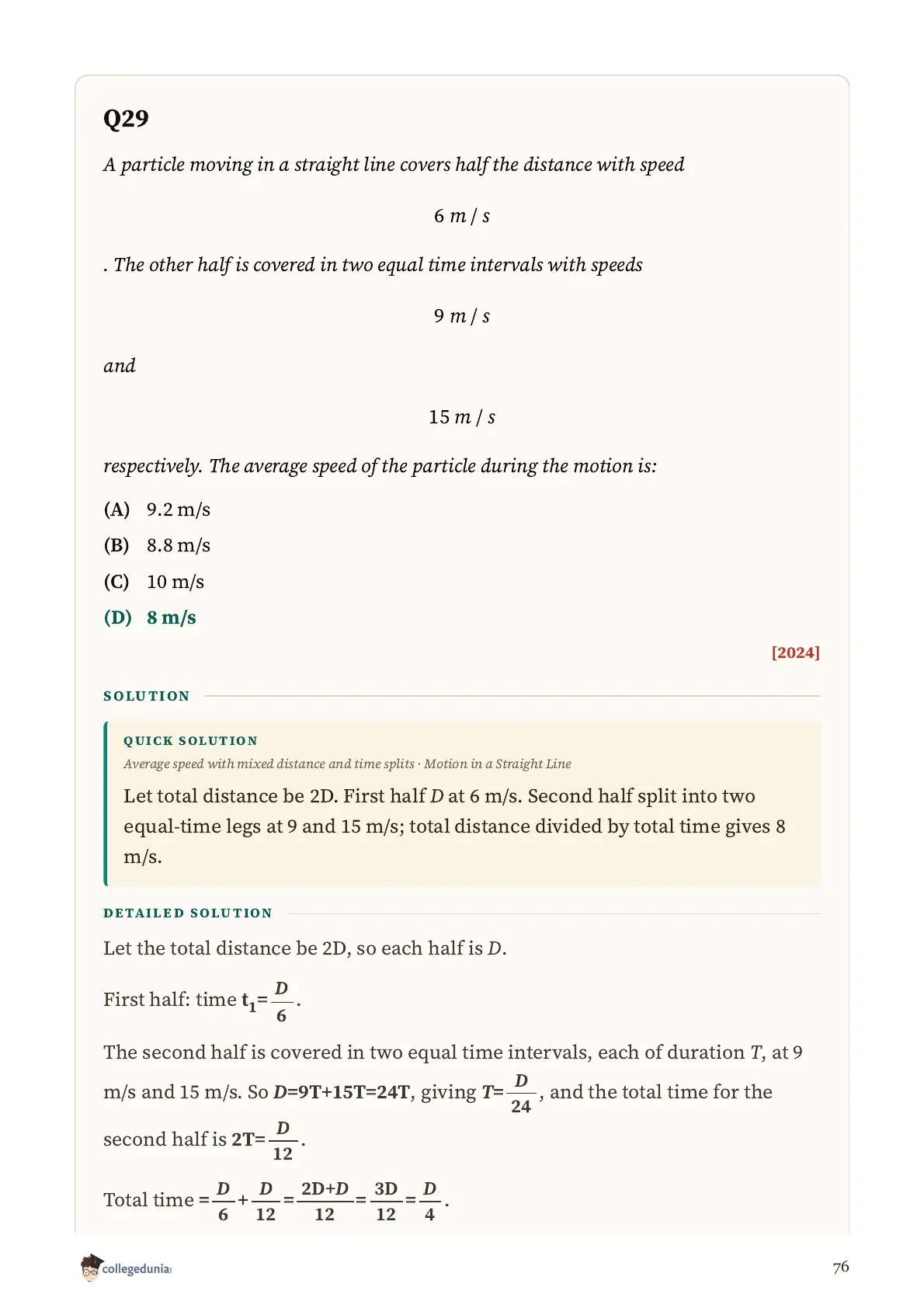
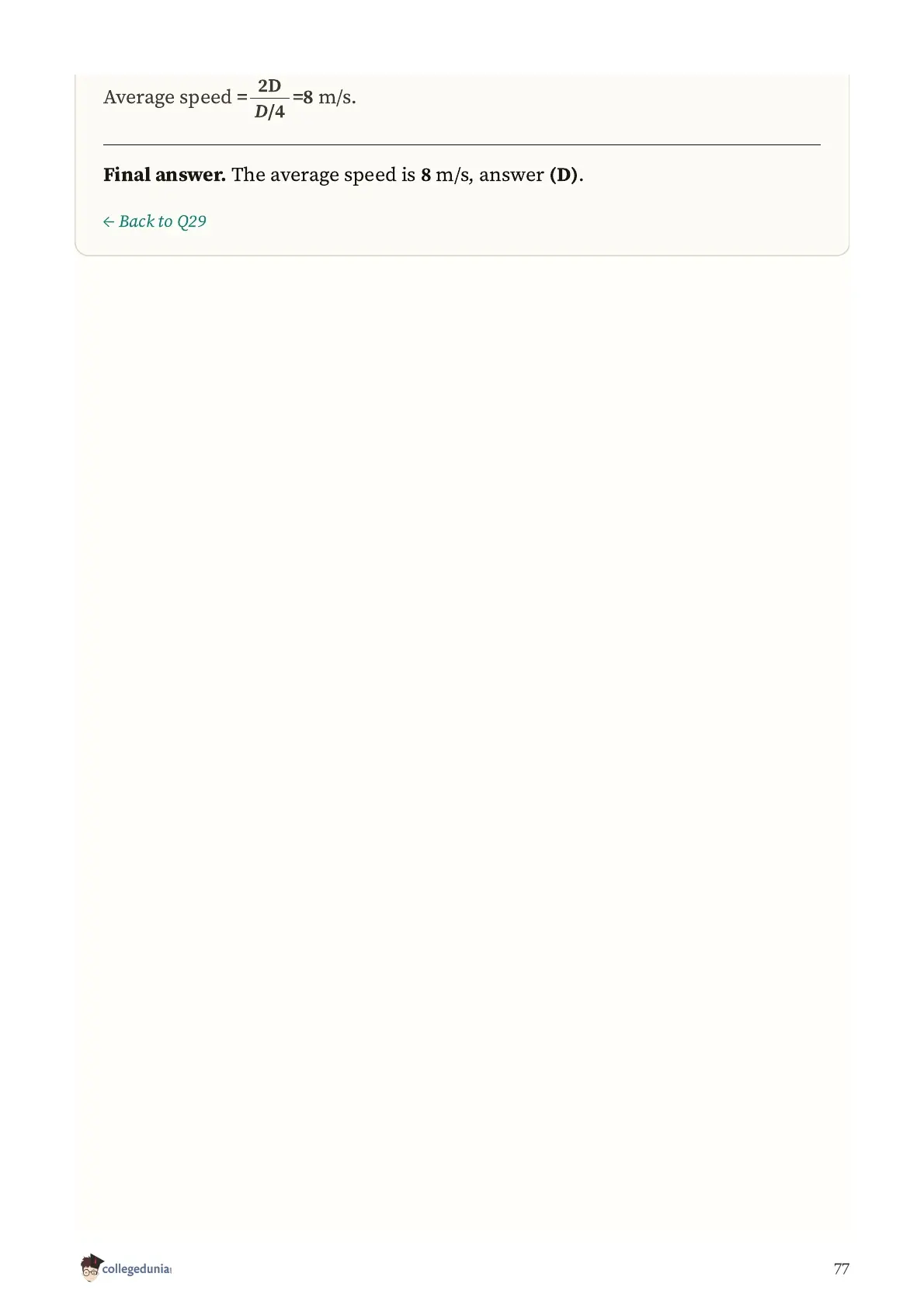
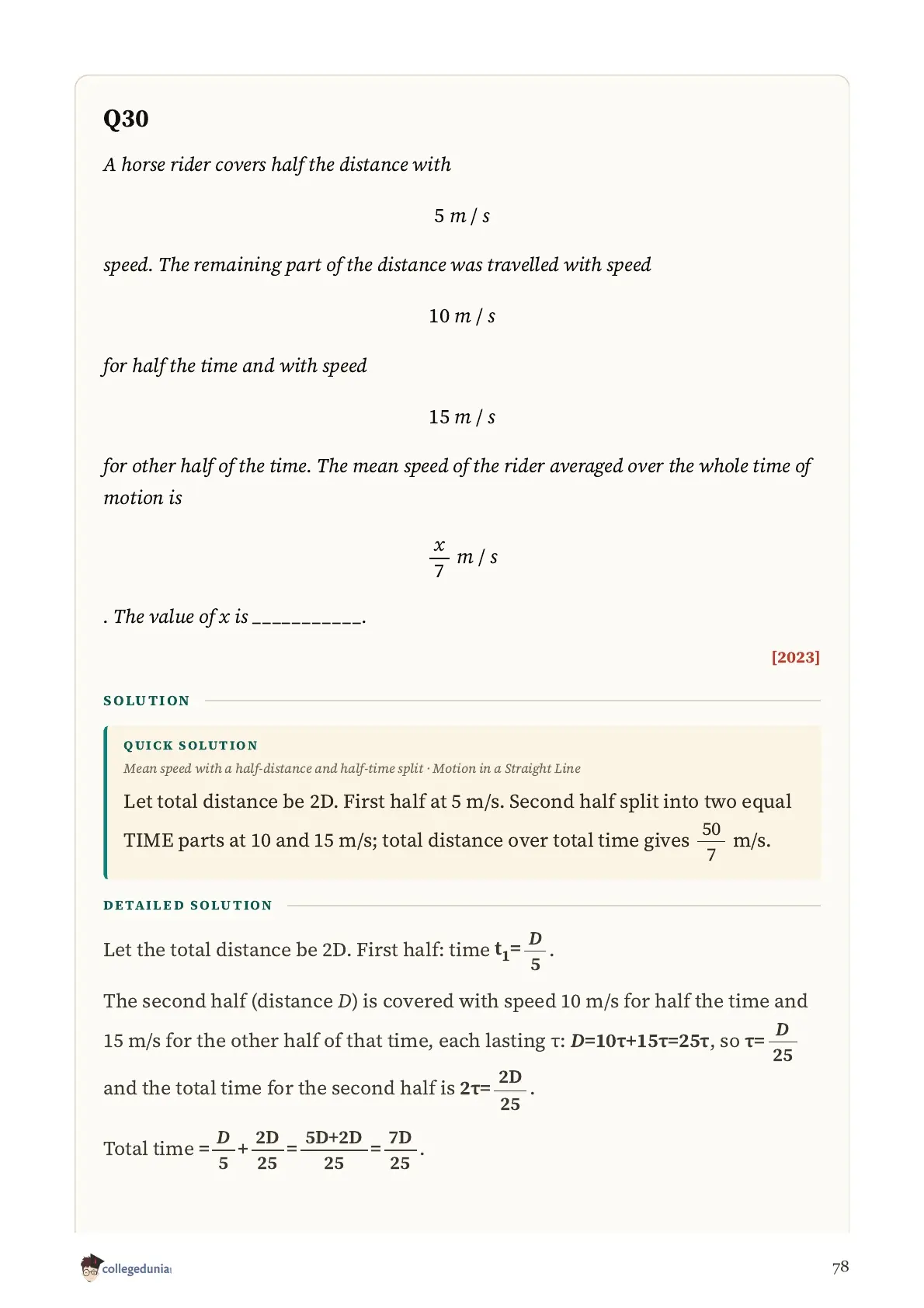
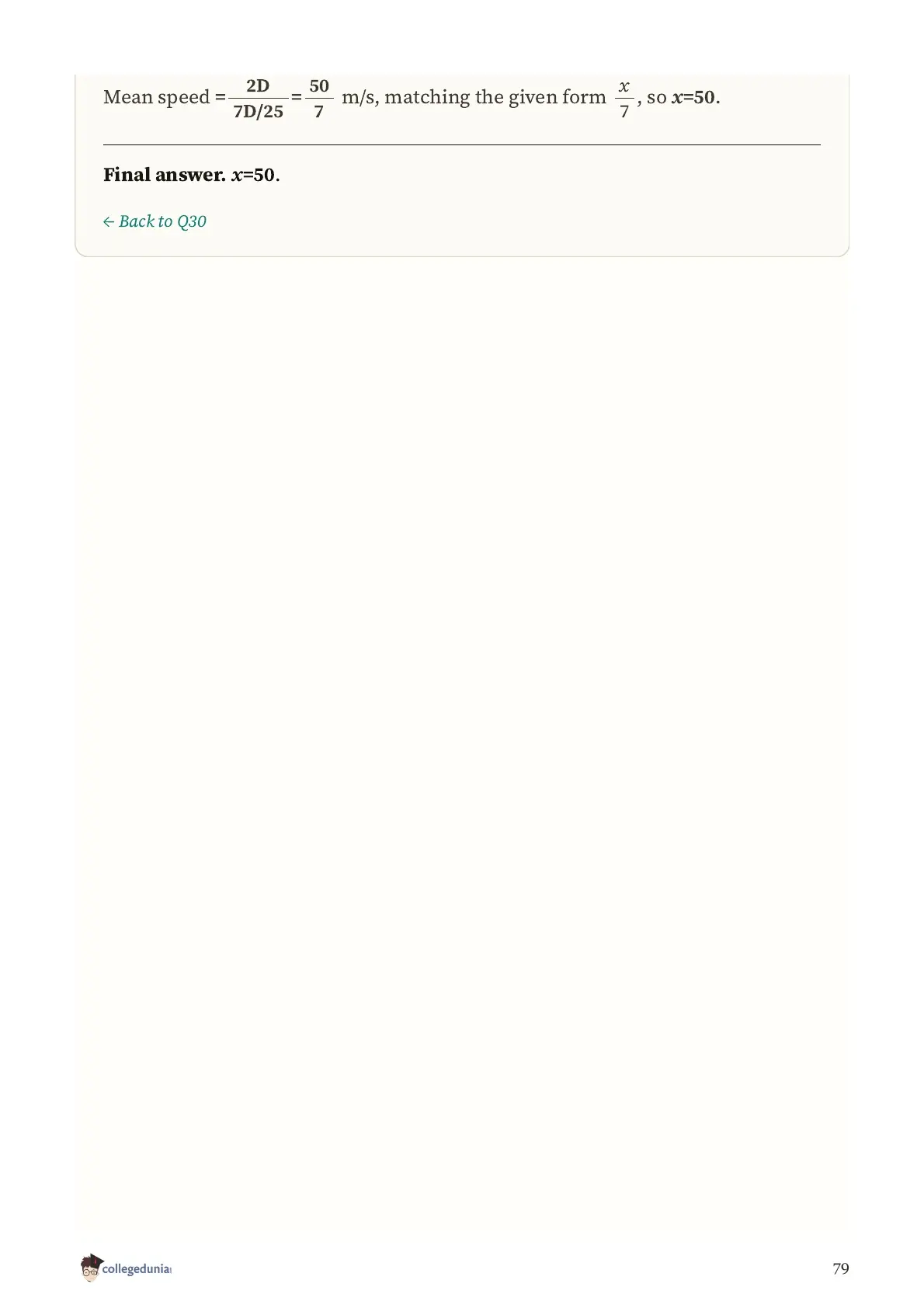
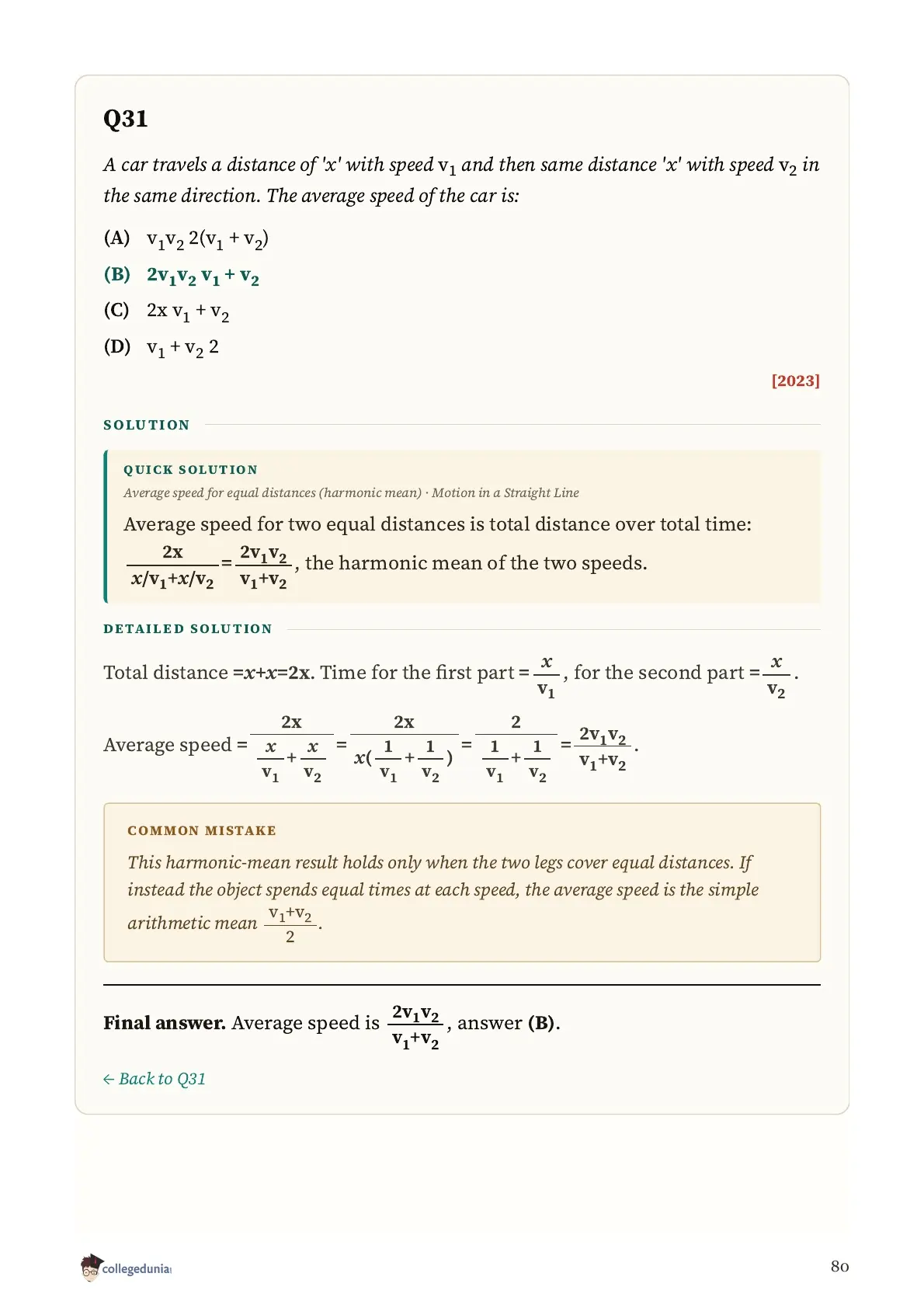
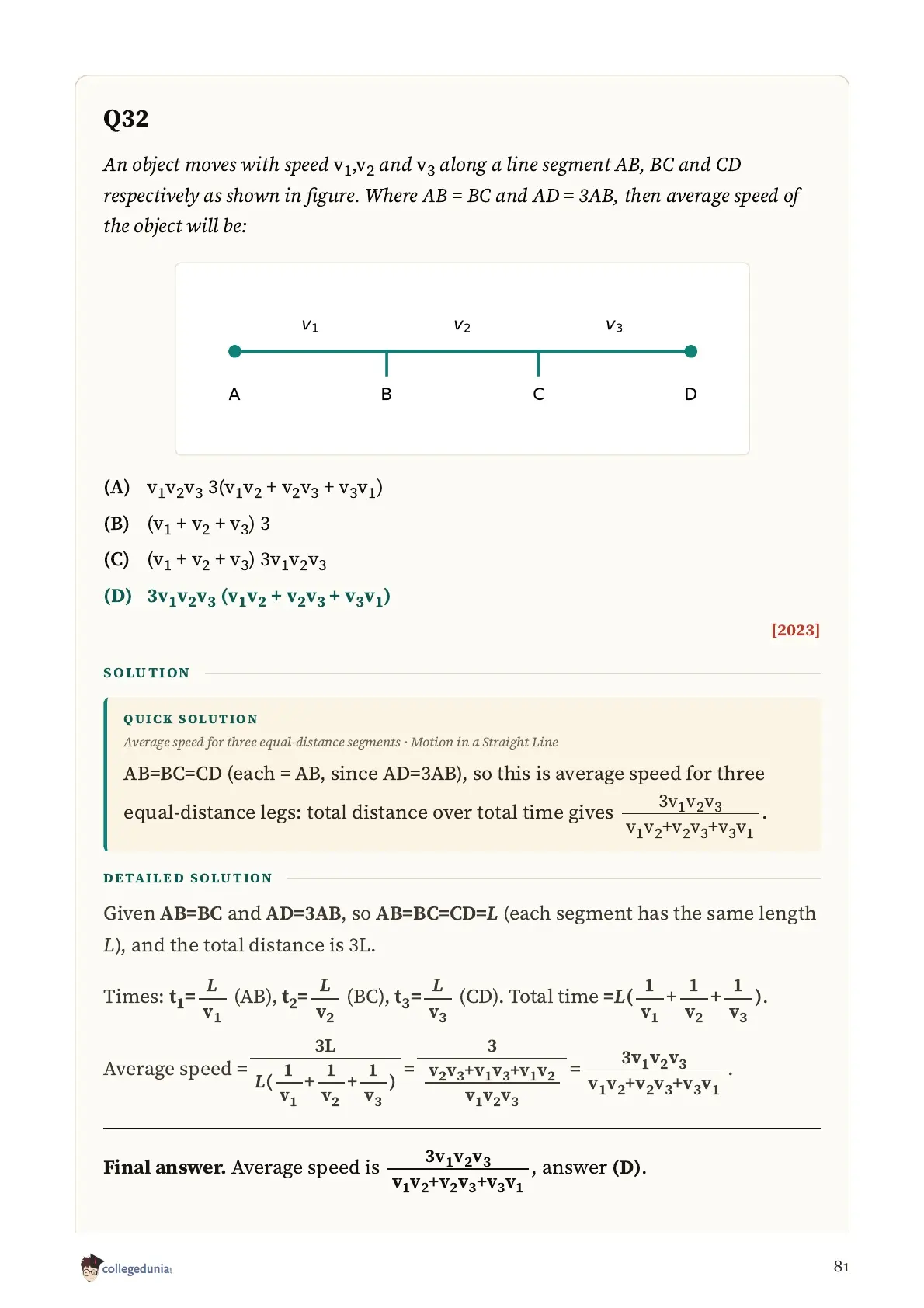
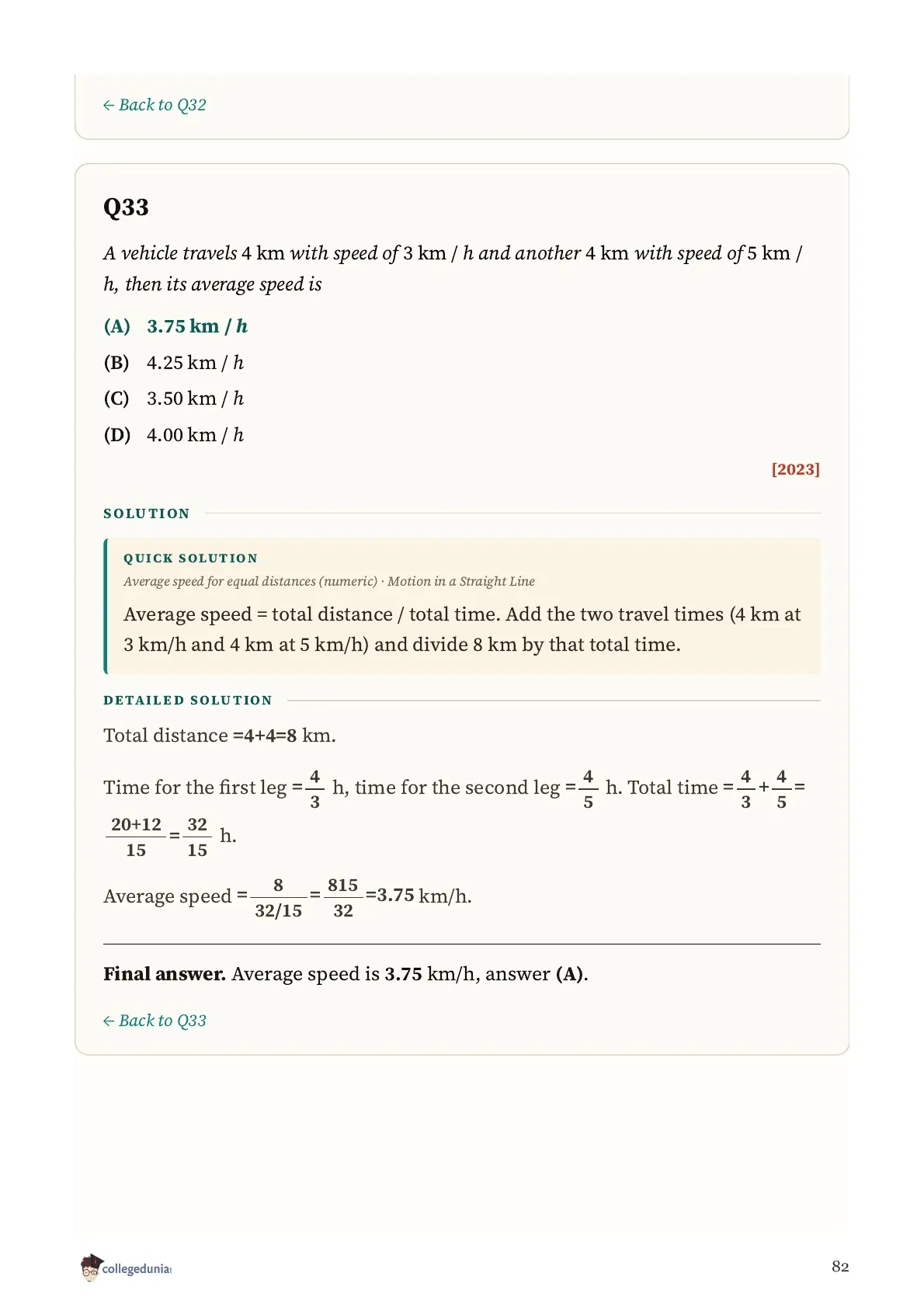
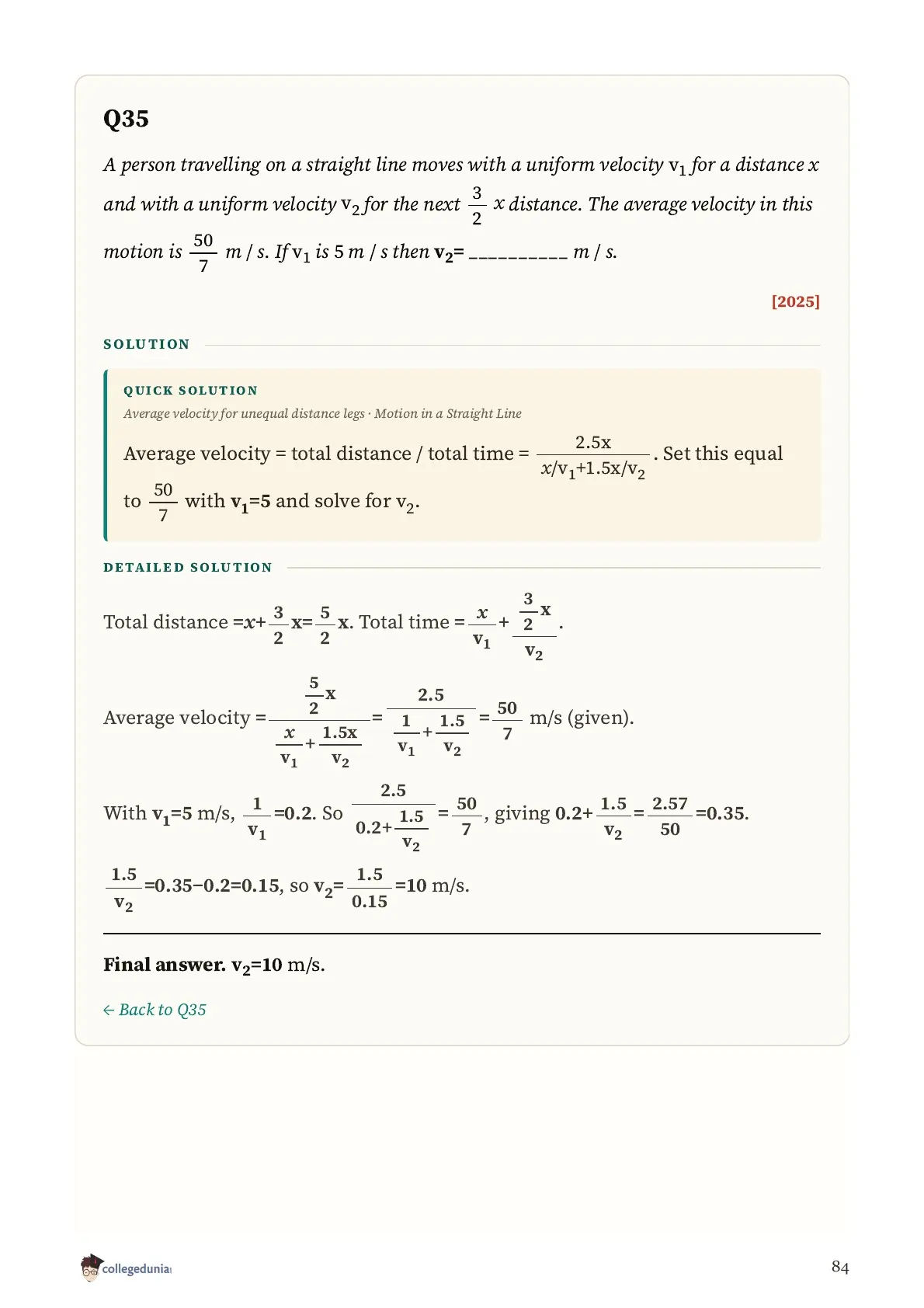
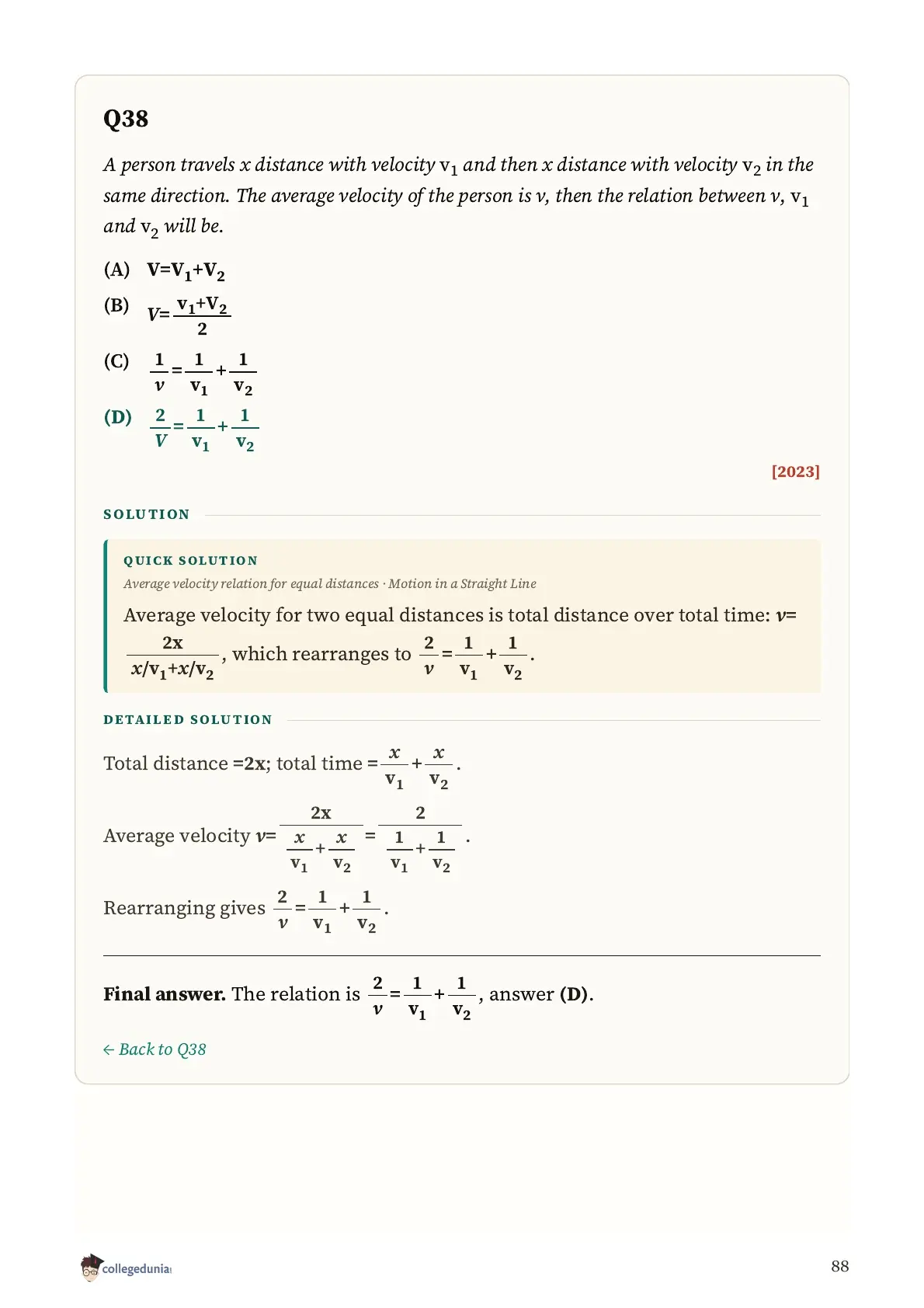
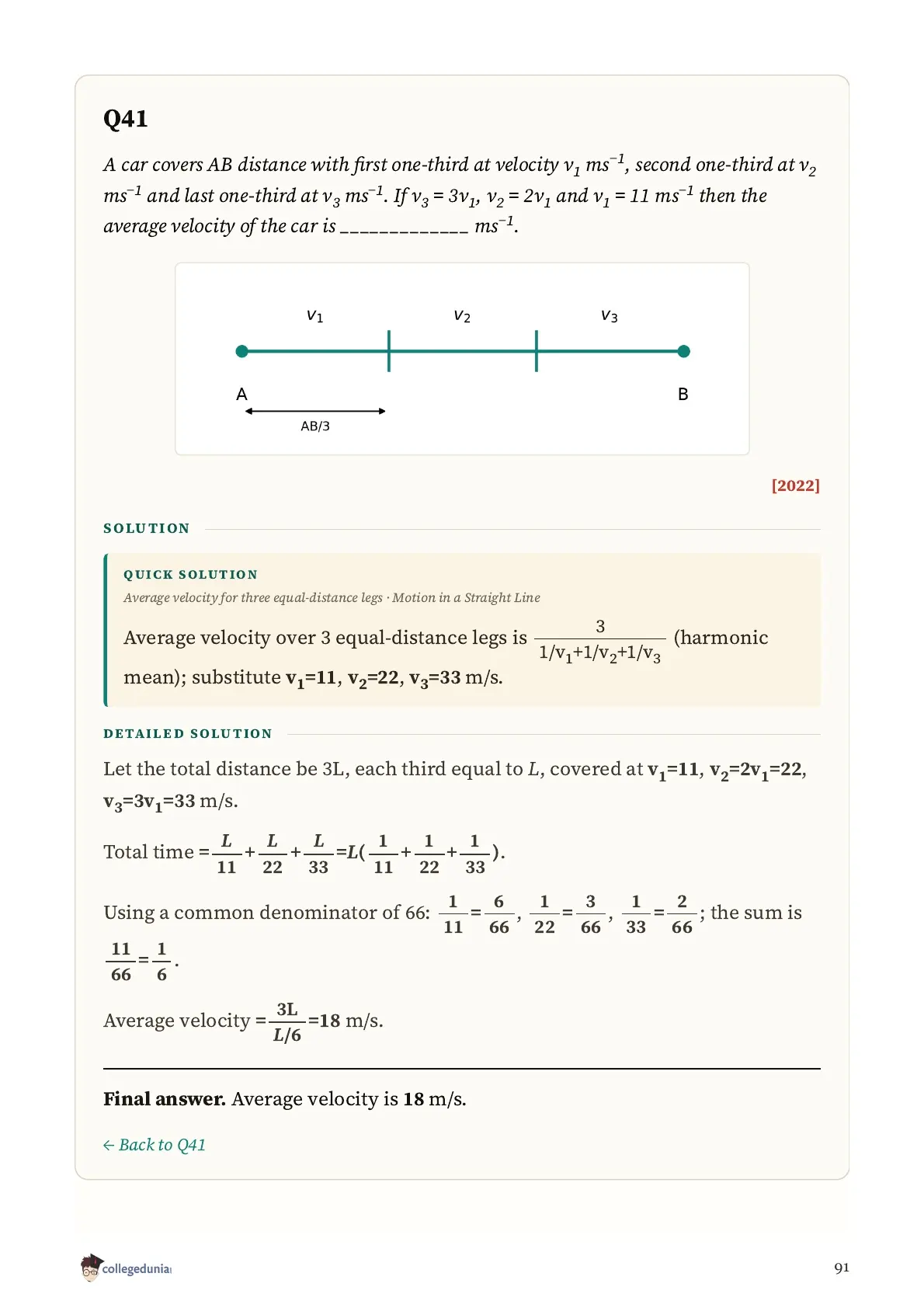
- Average speed and velocity, 14 between them, where the harmonic mean trips students up.
The Two Errors That Repeat
Reading the solutions in order, the same two mistakes account for most of what goes wrong.
- Switching the positive direction mid-problem. Fix it once, write it down, and let every quantity carry its sign from there.
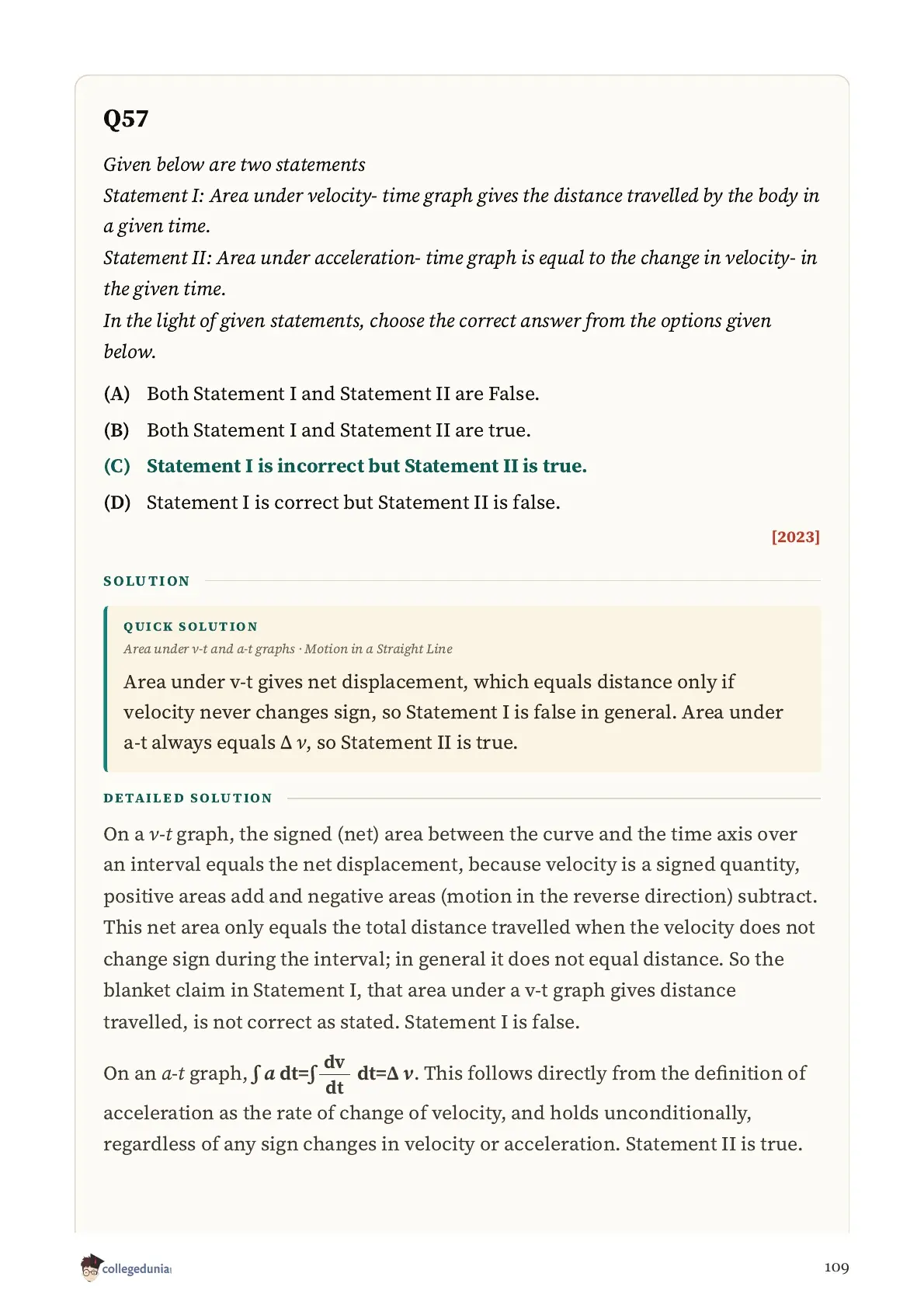
- Treating area under a v-t graph as distance. It is displacement. Distance counts every part positive, and the two only differ once the curve crosses the axis.
Variable Acceleration Questions
Seven questions in this set drop the constant-acceleration assumption, and the three standard equations stop working the moment they do. Which substitution you need depends on what the acceleration is a function of.
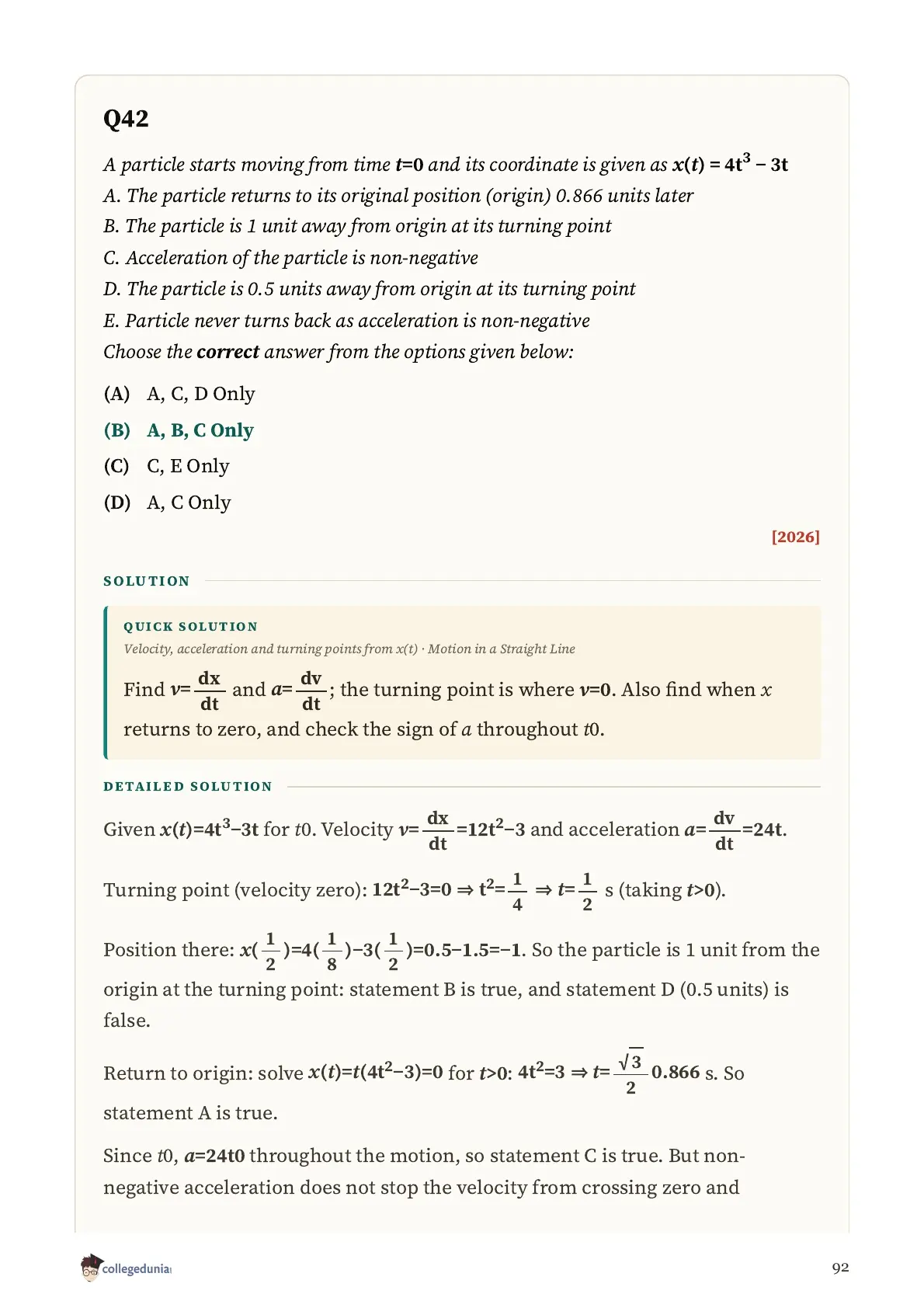
- Acceleration given against time: integrate a dt for velocity, then v dt for position.
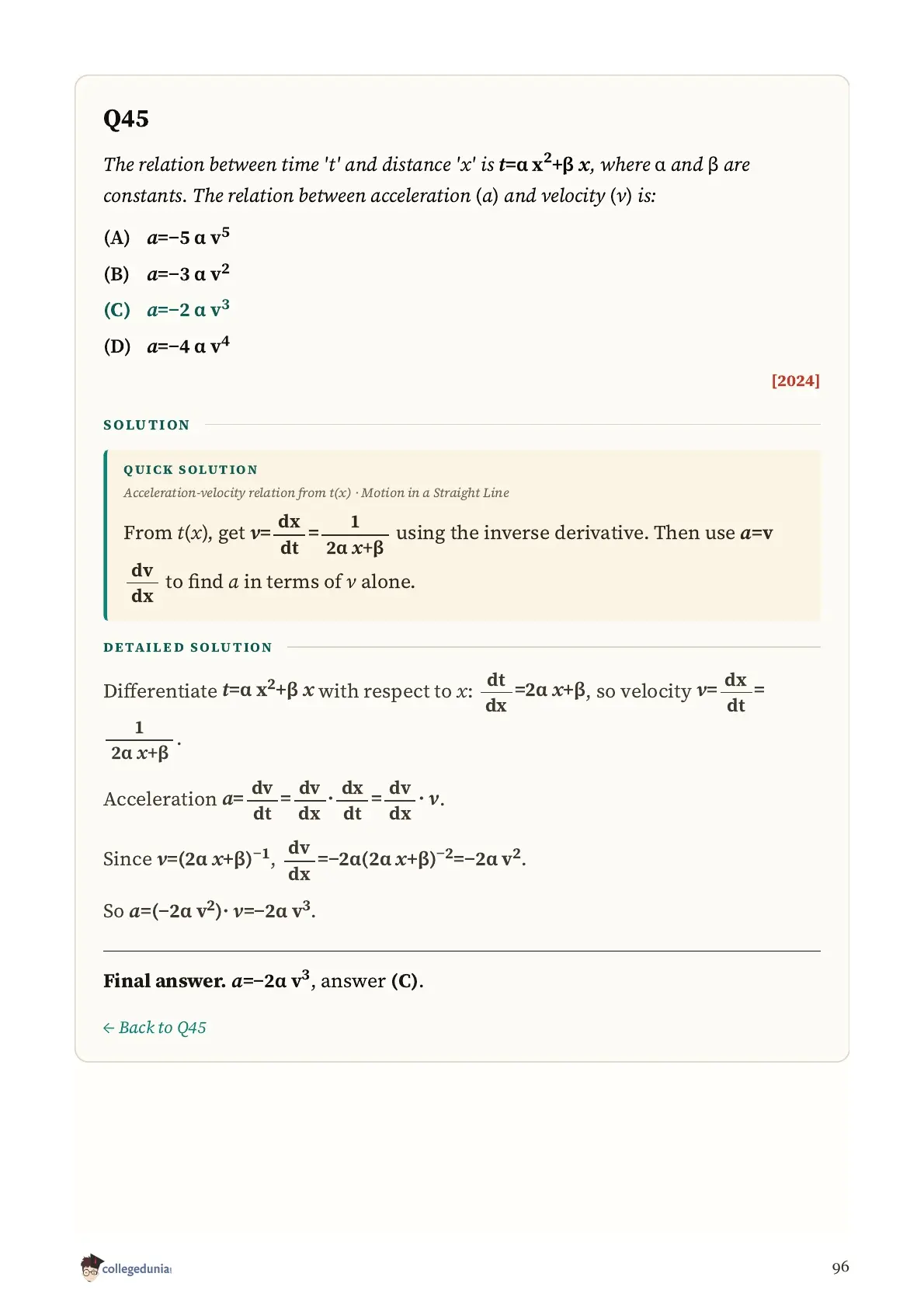
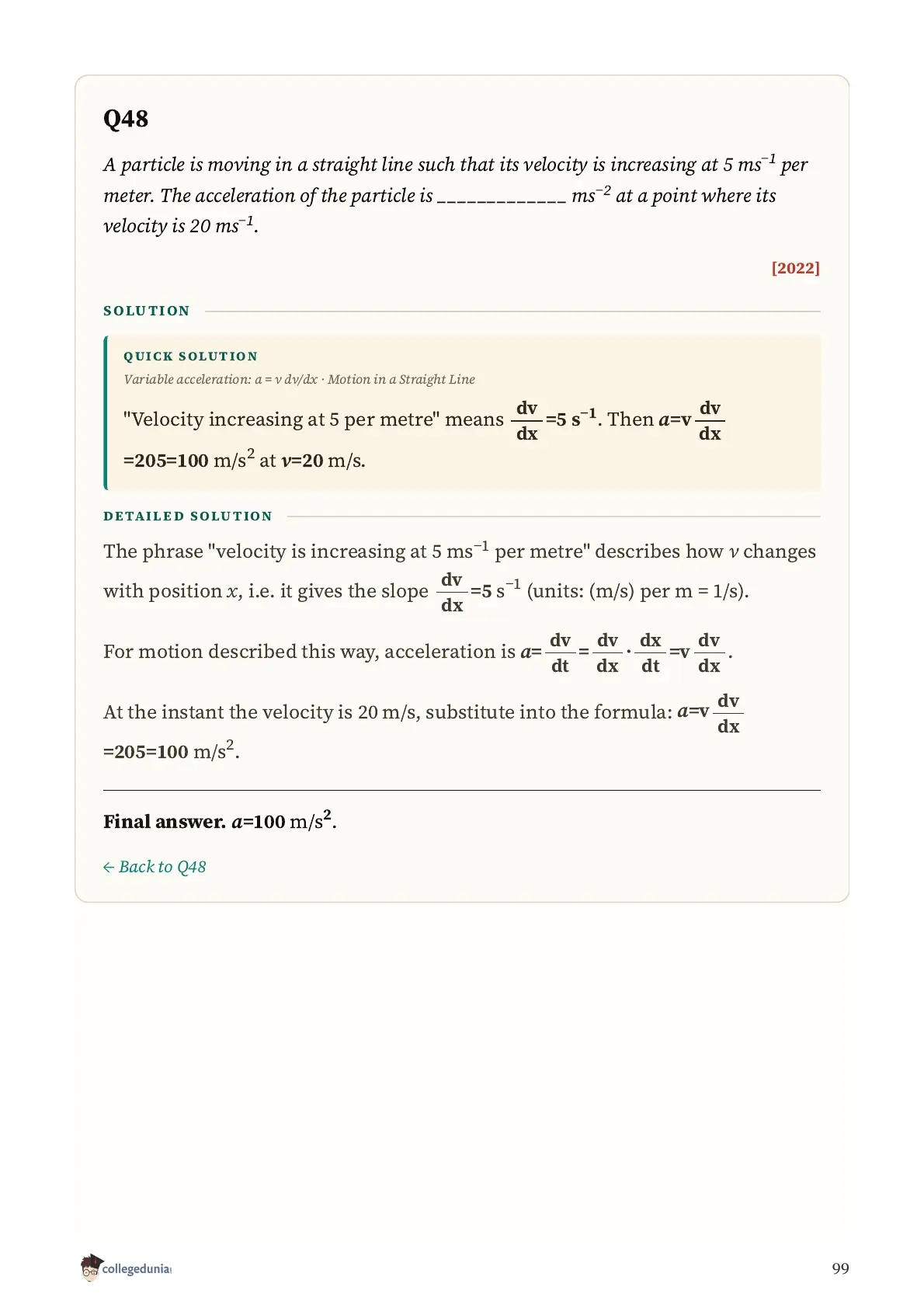
- Acceleration given against position: use a = v dv/dx and separate the variables.
- Acceleration given against velocity: separate dv over a(v) equals dt.
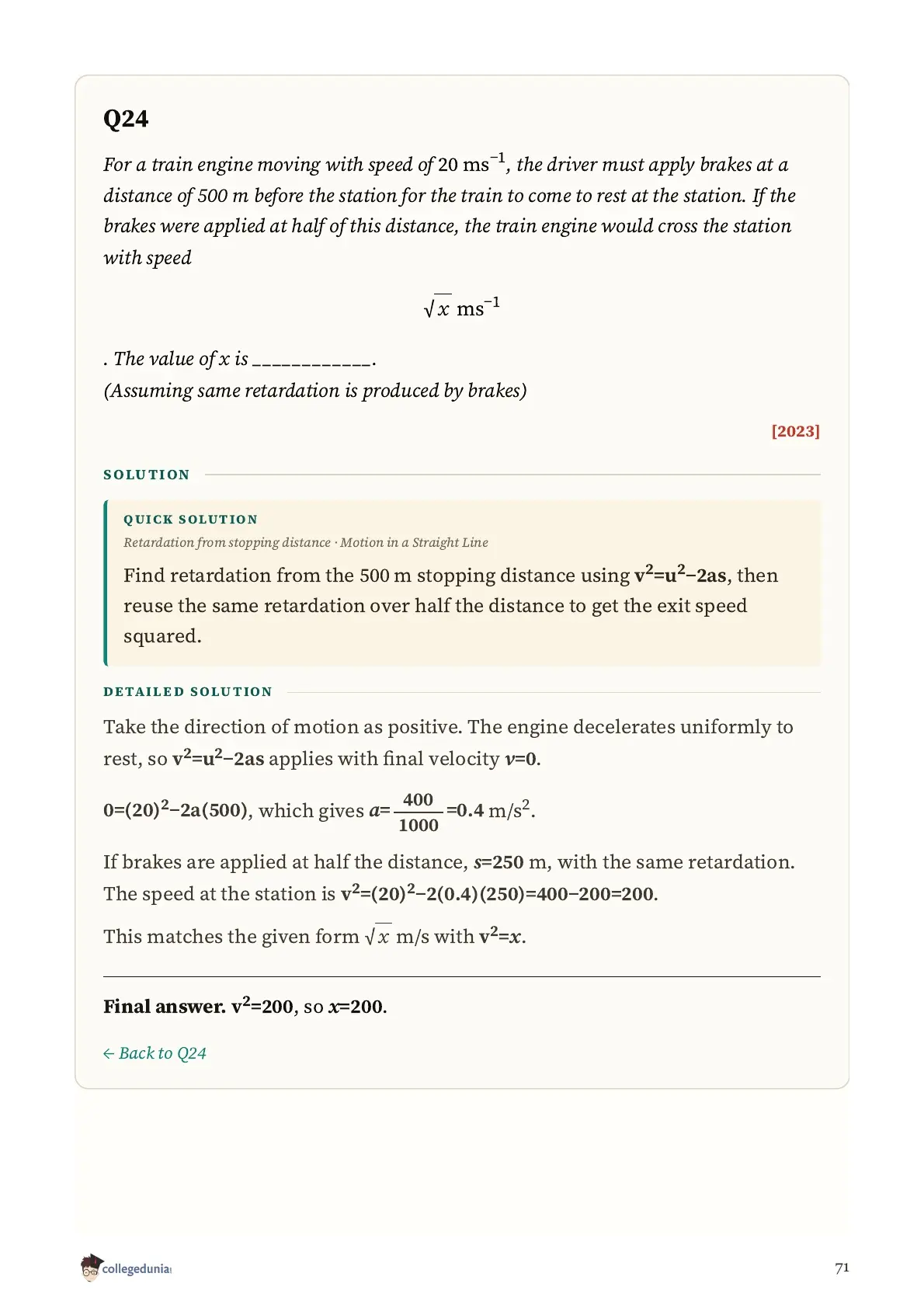
Each of the seven solutions writes the integration limits out rather than quoting a result, since picking the wrong limits is the usual failure rather than the calculus itself.
How to Work Through the Bank
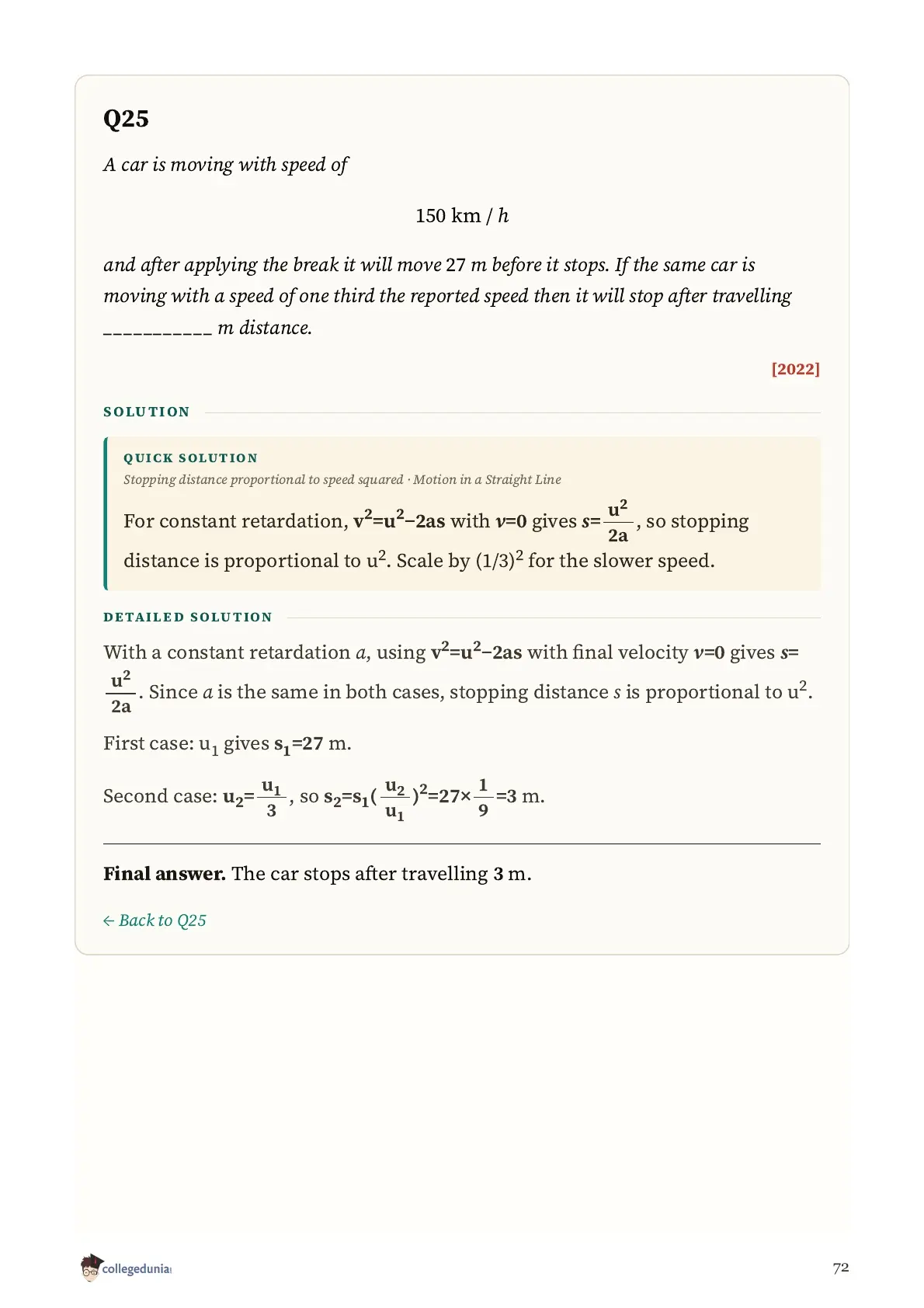
Attempt a section cold. Read only the Quick Solution first and see whether that is enough to spot your error, then open the full derivation if it is not.
Kinematics in One Sitting
Source: JEE Wallah
JEE Main Motion in a Straight Line PYQ FAQs
Ques. How many questions come from this chapter in JEE Main?
Ans. One or two per shift. This bank collects 67 distinct questions from the 2022 to 2026 papers, which is a fair indicator of how consistently kinematics is set.
Ques. Why are so many of these numerical rather than multiple choice?
Ans. Kinematics suits integer answers. Twenty of the 67 here are numerical, close to 30 percent, and they cluster in motion under gravity and constant acceleration where the answer is a clean number.
Ques. Do the graph questions include the graphs?
Ans. Yes. Thirteen figures were redrawn in house after recovering the underlying data, so every question that refers to a graph shows it. No question in this set asks you to read a figure that is missing.
Ques. Are the answers verified?
Ans. Every one of the 67 was derived independently and then checked against the official answer for that paper. Where the two disagreed the solution was re-derived rather than adjusted to match.



Comments