CVS BA (Hons.) Hindi FAQs
Ques. What is the cutoff for BA (Hons.) Hindi at CVS?
Ans. The CUET cutoff for BA (Hons.) Hindi at CVS in 2025 was 345 marks for General category, 276 for SC, and 236 for OBC-NCL. These are relatively lower cutoff marks compared to other BA honours courses, making it more accessible. Cutoff marks vary each year based on the number of applicants and their performance.
Ques. What career opportunities are available for BA (Hons.) Hindi graduates?
Ans. BA (Hons.) Hindi graduates can pursue careers in education, journalism, content writing, publishing, translation, and government services. Many graduates also pursue higher studies in MA Hindi or related fields. The college provides some internship opportunities in content writing and research.
Ques. Is the curriculum outdated at CVS?
Ans. Some students have noted that the course curriculum relies on traditional teaching methods and lacks modern facilities like smart classes. However, the college has been working to improve infrastructure and teaching methods. Students are encouraged to supplement their learning with additional resources and online courses.
Ques. What are the scholarship opportunities for BA (Hons.) Hindi students?
Ans. Scholarships are available through the National Scholarship Portal for students with annual family income below INR 8 lakhs. Merit-based scholarships are also available for academically excellent students. Delhi University provides additional scholarships for SC/ST/OBC/EWS categories. Students must submit required documents to apply.
Ques. Can students from non-arts background take BA (Hons.) Hindi?
Ans. Yes, students from any stream (Science, Commerce, or Arts) can apply for BA (Hons.) Hindi at CVS. There are no specific subject requirements for admission. However, students from non-arts backgrounds may need to invest additional effort in understanding Hindi literature and linguistics concepts.
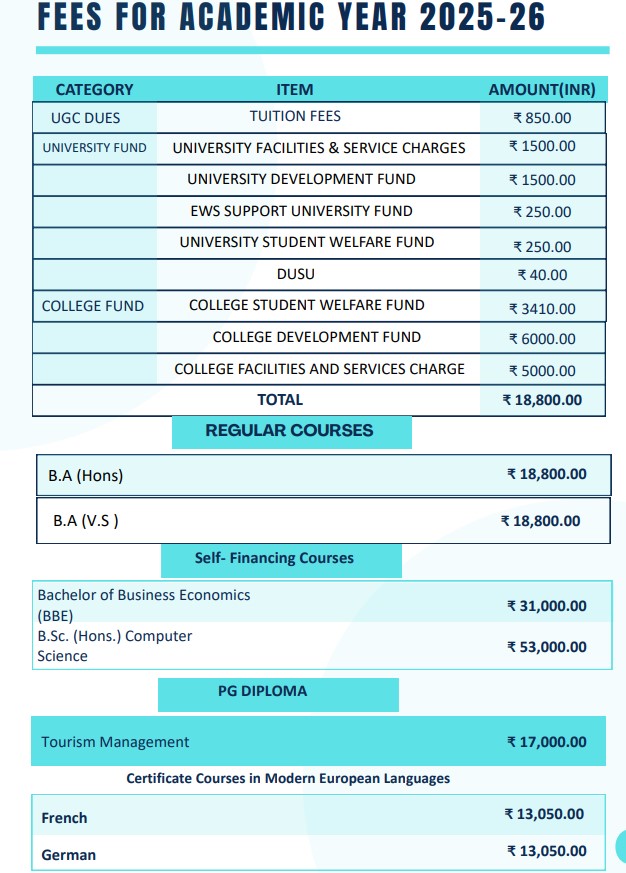
Ques. What is the total cost of studying BA (Hons.) Hindi at CVS?
Ans. The annual tuition fee is INR 18,800, with additional examination fees of INR 600-800 per semester. The total fees for the 4-year course is INR 75,200. However, students should budget for accommodation in South Delhi, which typically costs INR 10,000-15,000 per month. Overall annual expenses including accommodation, books, and travel can range from INR 25,000-35,000.


![College of Vocational Studies - [CVS]](public/college_data/images/logos/1492415426logo.png)




.png?h=78&w=78&mode=stretch)

.png?h=78&w=78&mode=stretch)











.png?h=72&w=72&mode=stretch)
.png?h=72&w=72&mode=stretch)
.png?h=72&w=72&mode=stretch)





Comments