




CBSE Class 12 Biology Set 3 - (57/2/3) Question Paper 2026 is available for download here. CBSE conducted Class 12 Biology exam on March 27, 2026 from 10:30 AM to 1:30 PM. The Biology theory paper is of 70 marks, and the internal assessment is of 30 marks.
Biology question paper includes MCQs (1 mark each), short-answer type questions (2 & 3 marks each), case-study based questions (4 marks each) and long-answer type questions (5 marks each) which makes up the total of 70 marks.
Download CBSE Class 12 Biology Set 3 - (57/2/3) Question Paper 2026 with detailed solutions from the links provided below.
CBSE Class 12 Biology Question Paper 2026 (Set 3 - 57/2/3) with Solution PDF
| CBSE Official PDF | CD PDF | CD PDF with Solutions |
|---|---|---|
| Download official PDF 2.08 MB | Download Collegedunia PDF 1.25 MB | Download solutions PDF 1.64 MB |
CBSE Class 12 Biology 2026 Set 3 (57/2/3) Questions with Solutions
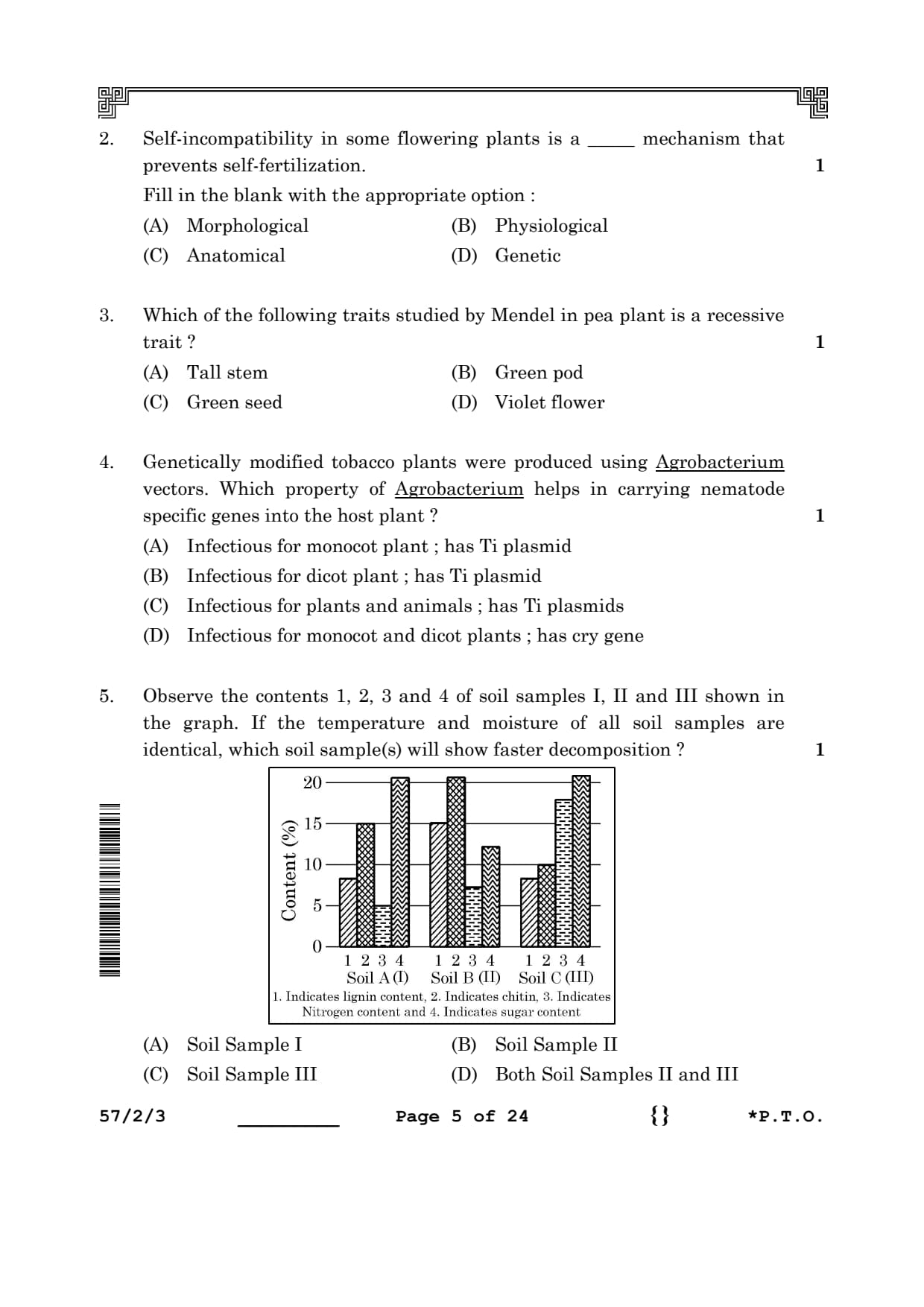
2. Self-incompatibility in some flowering plants is a _____ mechanism that prevents self-fertilization.
Fill in the blank with the appropriate option :
3. Which of the following traits studied by Mendel in pea plant is a recessive trait ?
Genetically modified tobacco plants were produced using Agrobacterium vectors. Which property of Agrobacterium helps in carrying nematode specific genes into the host plant ?
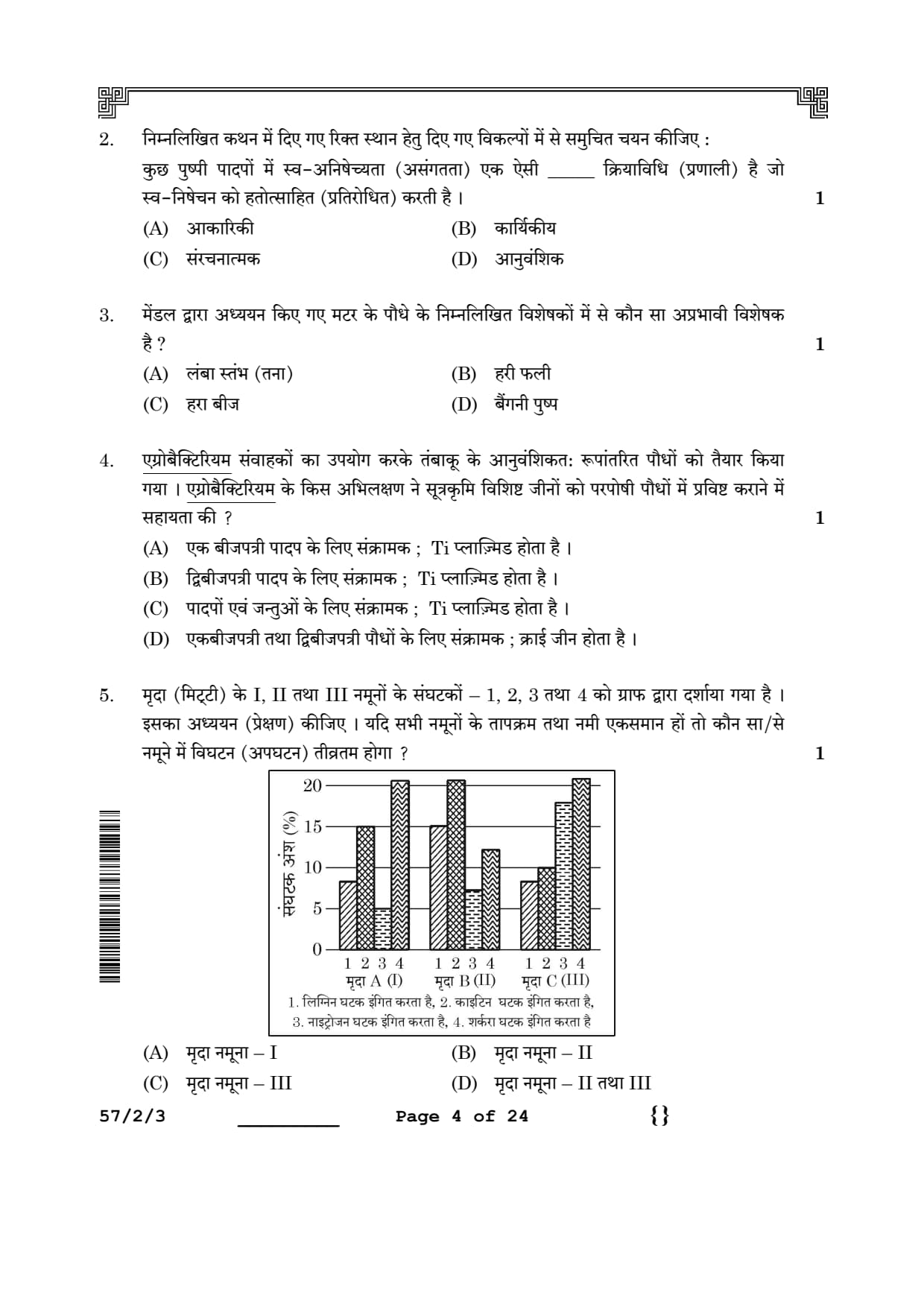
Observe the contents 1, 2, 3 and 4 of soil samples I, II and III shown in the graph. If the temperature and moisture of all soil samples are identical, which soil sample(s) will show faster decomposition ?

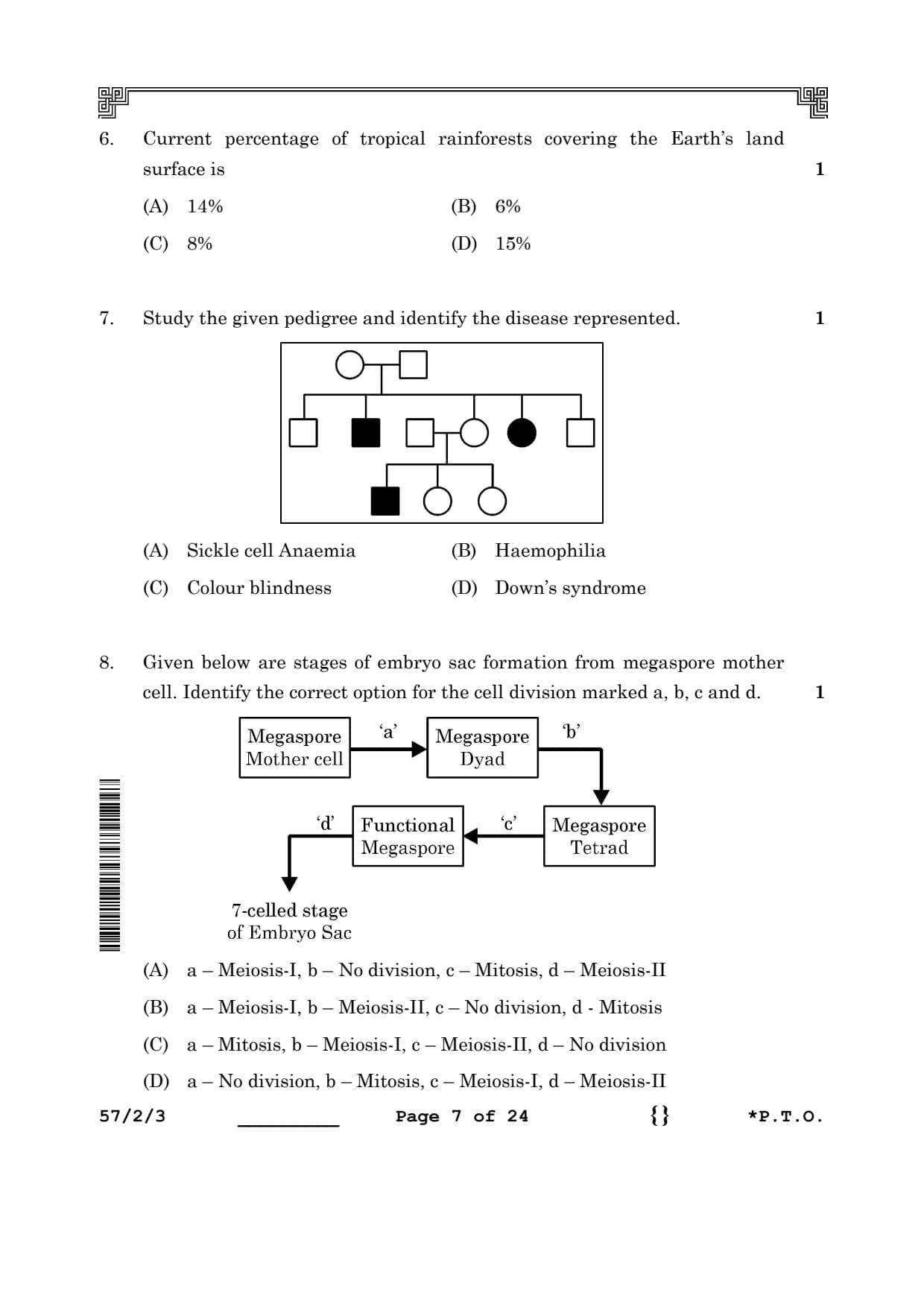
6. Current percentage of tropical rainforests covering the Earth's land surface is

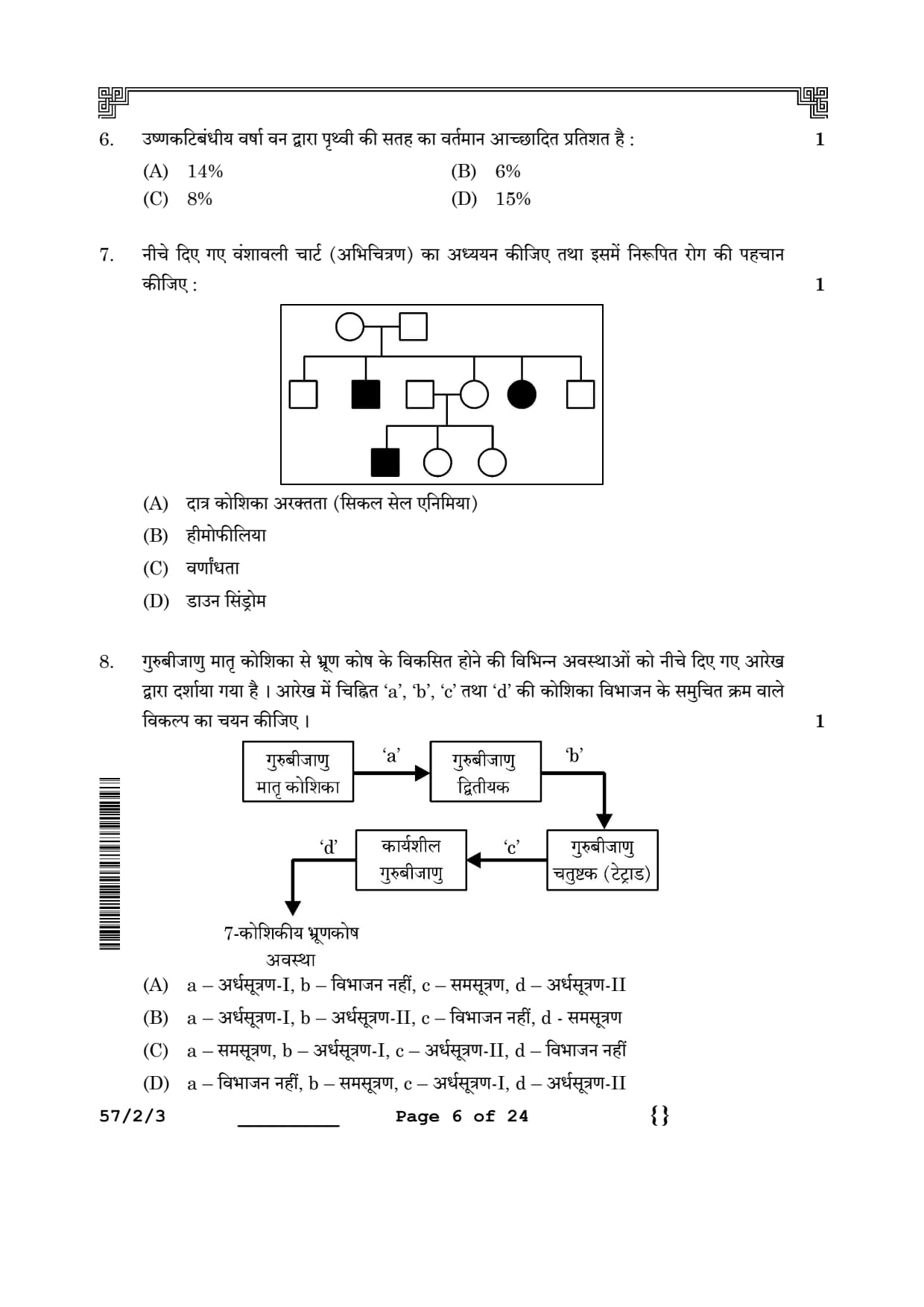
Given below are stages of embryo sac formation from megaspore mother cell. Identify the correct option for the cell division marked a, b, c and d.
[Flow chart: Megaspore Mother cell, arrow a, Megaspore Dyad, arrow b, Megaspore Tetrad, arrow c, Functional Megaspore, arrow d, 7-celled stage of Embryo Sac]

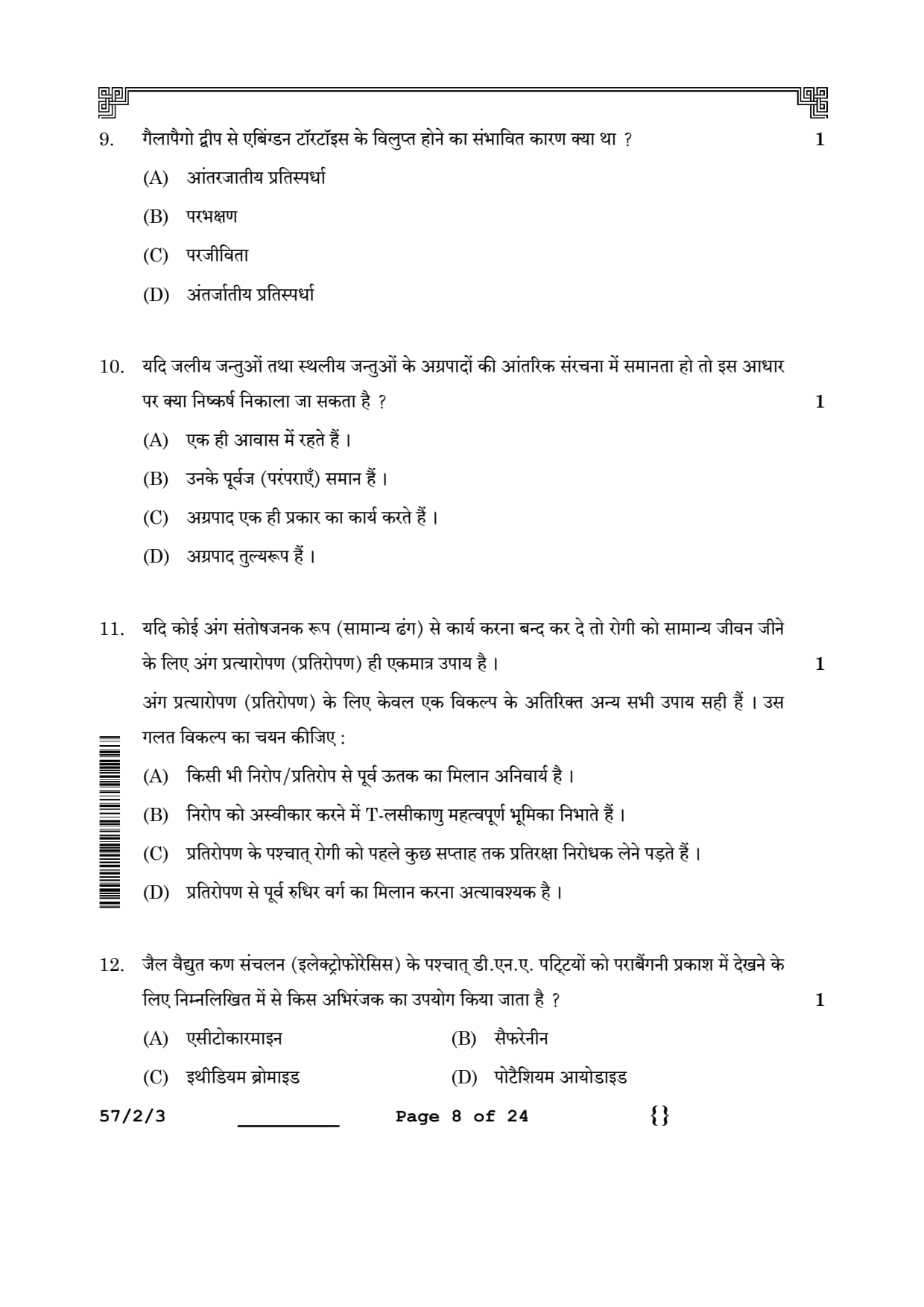
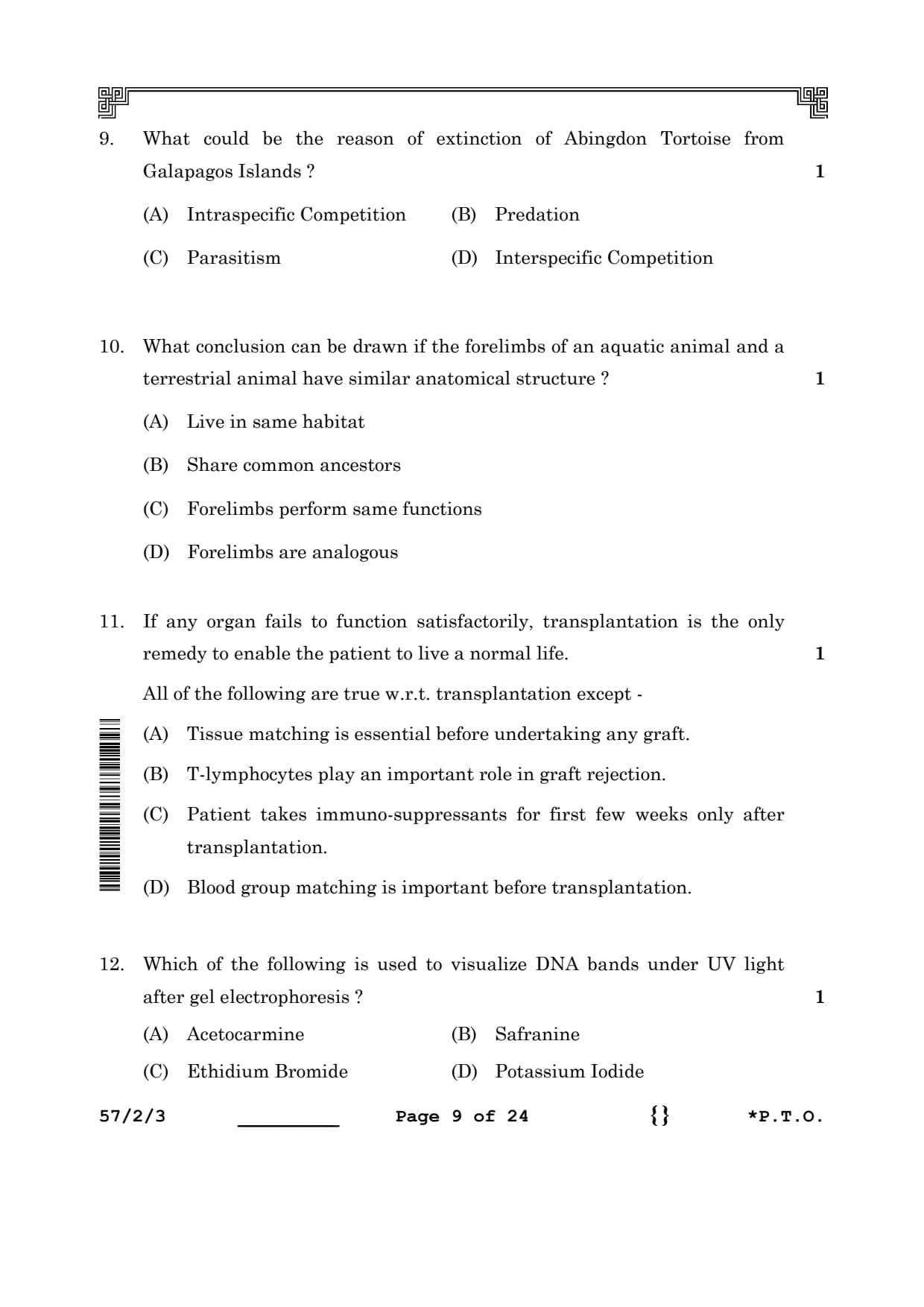
What could be the reason of extinction of Abingdon Tortoise from Galapagos Islands ?
What conclusion can be drawn if the forelimbs of an aquatic animal and a terrestrial animal have similar anatomical structure ?
If any organ fails to function satisfactorily, transplantation is the only remedy to enable the patient to live a normal life.
All of the following are true w.r.t. transplantation except -
Which of the following is used to visualize DNA bands under UV light after gel electrophoresis ?
Assertion (A) : DNA Ligase is used to join DNA fragments.
Reason (R) : It catalyses the formation of glycosidic bonds between nucleotides.
Assertion (A) : Apomixis leads to production of genetically identical off-springs.
Reason (R) : Apomixis involves fertilization between two genetically similar plants.
Assertion (A) : Under a particular set of selection pressure, organisms evolve towards the most efficient reproductive strategy.
Reason (R) : Populations evolve to maximise their reproductive fitness in the habitat where they live.
Assertion (A) : Microbes are used for commercial production of alcohol and beverages.
Reason (R) : Yeast converts glucose into ethanol and carbon dioxide during fermentation.
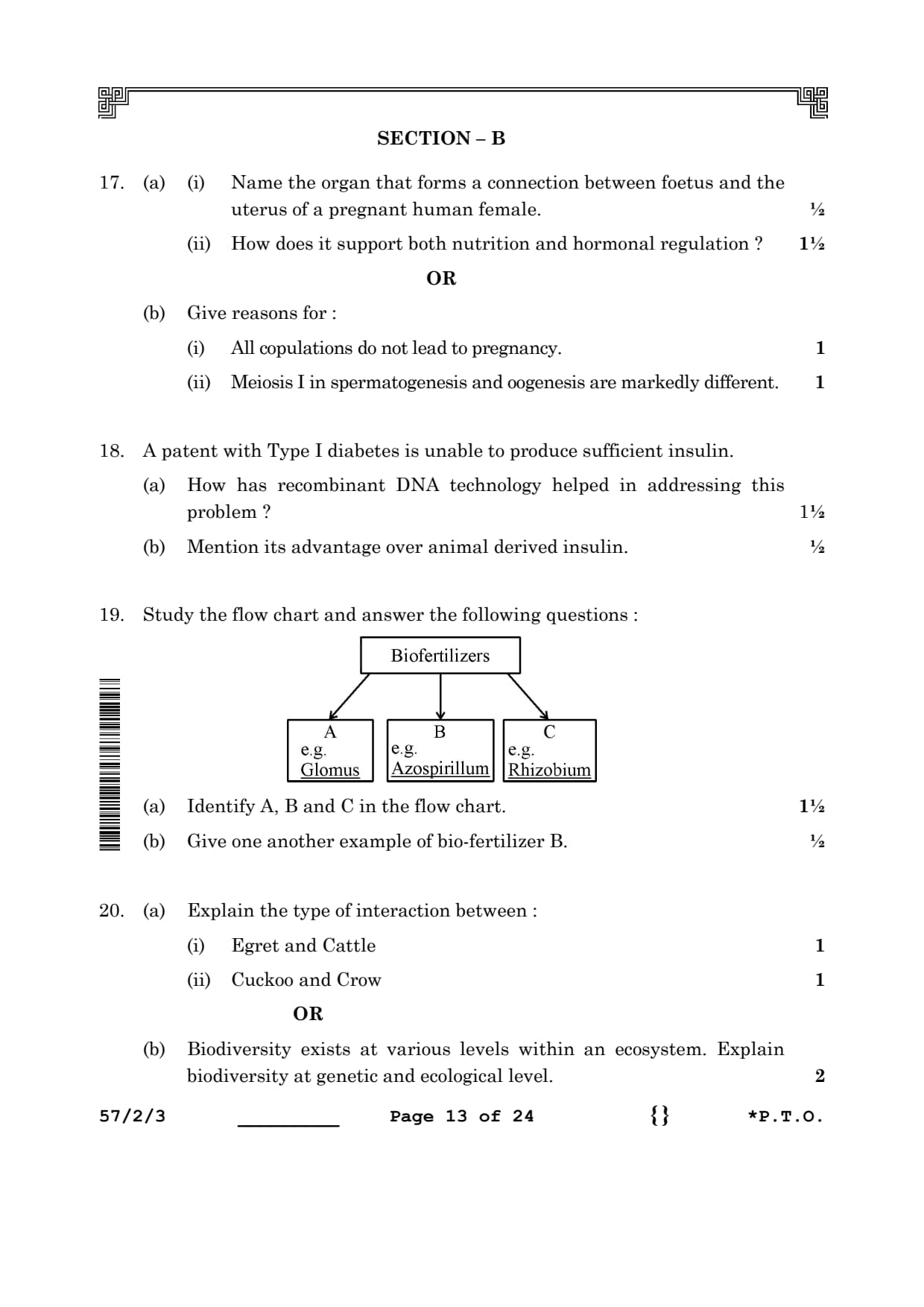
(i) Name the organ that forms a connection between foetus and the uterus of a pregnant human female.
(ii) How does it support both nutrition and hormonal regulation ?
Give reasons for :
(i) All copulations do not lead to pregnancy.
(ii) Meiosis I in spermatogenesis and oogenesis are markedly different.
A patent with Type I diabetes is unable to produce sufficient insulin.
(a) How has recombinant DNA technology helped in addressing this problem ?
(b) Mention its advantage over animal derived insulin.
Study the flow chart and answer the following questions :
(a) Identify A, B and C in the flow chart.
(b) Give one another example of bio-fertilizer B.

Explain the type of interaction between :
(i) Egret and Cattle
(ii) Cuckoo and Crow
Biodiversity exists at various levels within an ecosystem. Explain biodiversity at genetic and ecological level.
The diagram below shows the sequence of amino acids in part of haemoglobin molecule.
[Diagram: haemoglobin chain Val, His, Leu, Thr, Pro, Glu, Glu; mRNA line; DNA line with triplets CAT, GTA, AAT, TGA, GGA, CTT (the T marked with *), CTC. Key: Val = valine, His = histidine, Leu = leucine, Thr = threonine, Pro = proline, Glu = glutamic acid]
(i) If the base T (marked with *) is substituted with A, in "CTT" of DNA strand how would it affect the haemoglobin chain ?
(ii) Name the condition and the effects associated with the above substitution.

DNA is considered a more stable genetic material than RNA. Justify this statement with suitable reasons.
22. (a) A person inhales dust and pathogens but does not always fall sick. Explain how the body protects against such infections.
(b) Name and describe any two barriers involved in this protection.
(a) What is a genetic code ?
(b) Why did scientists feel the need to propose a genetic code ?
(c) Genetic code is said to be "Universal". Why ?
There are limitations of traditional breeding techniques that led to promotion of micro-propagation ?
(a) Mention two advantages of micropropagation.
(b) Give two examples where it is commercially adopted.
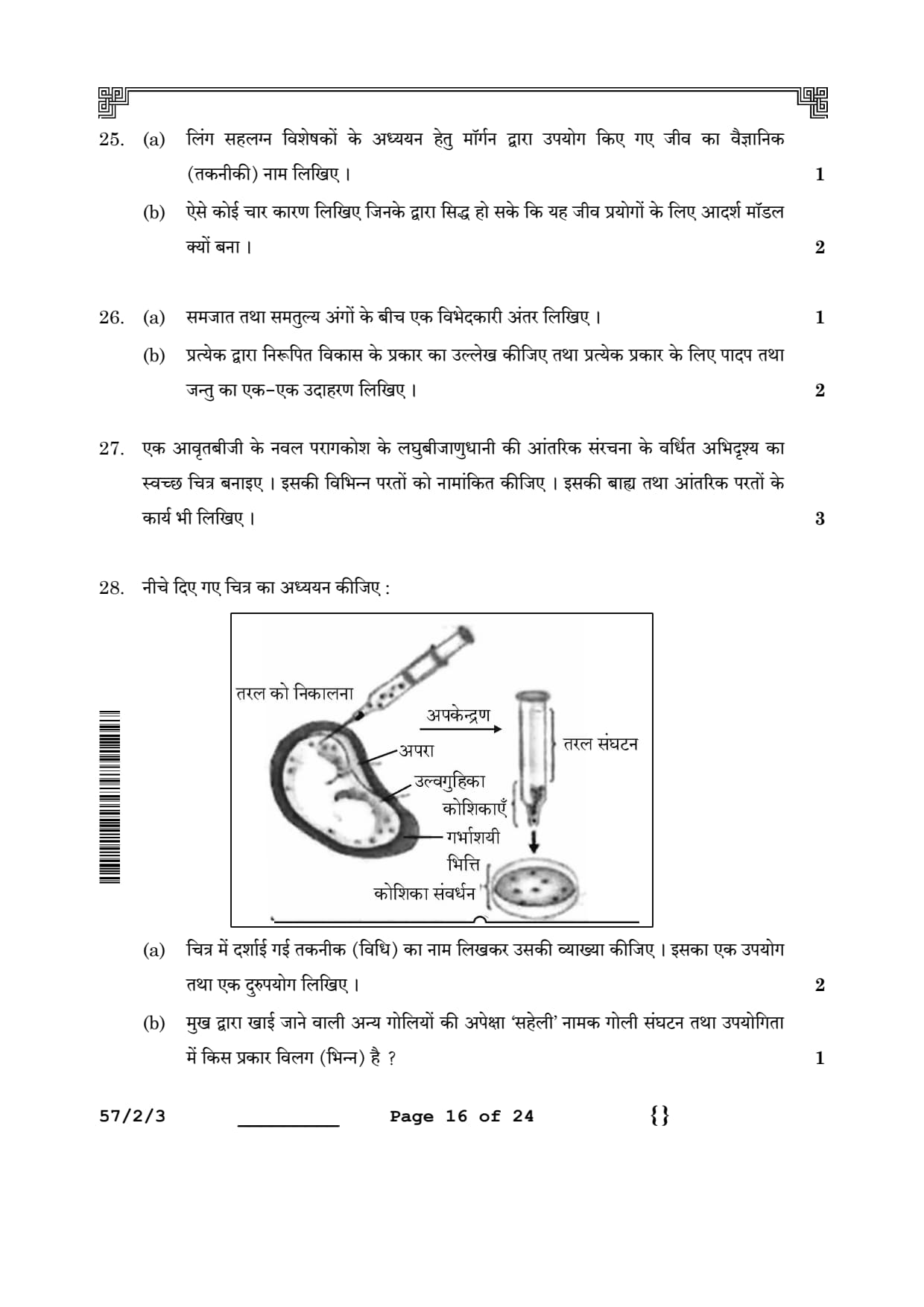
(a) Give the scientific name of the organism used by Morgan to study sex-linked traits.
(b) Write any four reasons why this organism made it an ideal experimental model.
(a) Compare homologous and analogous organs by giving any one point of difference.
(b) Mention the type of evolution each represents and give one example of each from plants and animals.
Draw a neat diagram of enlarged view of one microsporangium of a Young anther of an angiosperm. Label the different layers of the wall and write the functions of the outermost and innermost layer.
Study the diagram given below :
(a) Name and explain the procedure shown in the diagram. Mention one of its advantage and one disadvantage.
(b) How is Saheli different from other oral pills in terms of its composition and advantage ?

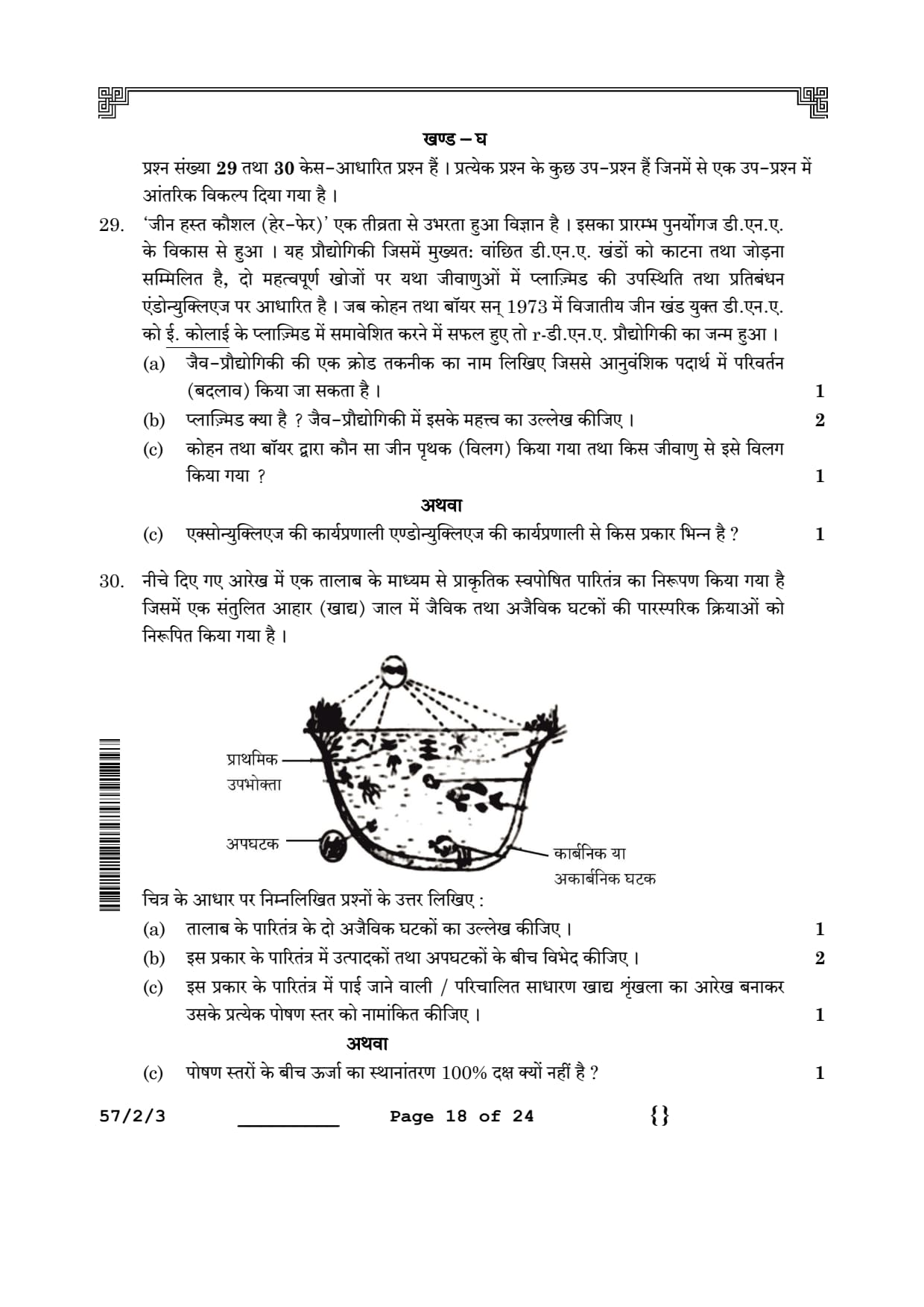
Gene manipulation is a fast emerging science. It started with the development of recombinant DNA molecules. This technology which mostly involves cutting and pasting of desired DNA fragments is based on two most important discoveries in bacteria - presence of plasmid and restriction endonucleases. The science of r-DNA technology took birth when Cohen and Boyer (1973) were able to produce a piece of gene containing foreign DNA introduced into plasmid of E.coli.
(a) Name one core technique of biotechnology that alters the genetic material.
Gene manipulation is a fast emerging science. It started with the development of recombinant DNA molecules. This technology which mostly involves cutting and pasting of desired DNA fragments is based on two most important discoveries in bacteria - presence of plasmid and restriction endonucleases. The science of r-DNA technology took birth when Cohen and Boyer (1973) were able to produce a piece of gene containing foreign DNA introduced into plasmid of E.coli.
(b) What is a plasmid ? Mention its importance in biotechnology.
Gene manipulation is a fast emerging science. It started with the development of recombinant DNA molecules. This technology which mostly involves cutting and pasting of desired DNA fragments is based on two most important discoveries in bacteria - presence of plasmid and restriction endonucleases. The science of r-DNA technology took birth when Cohen and Boyer (1973) were able to produce a piece of gene containing foreign DNA introduced into plasmid of E.coli.
(c) Which gene was isolated by Cohen and Boyer and from which bacteria ?
Gene manipulation is a fast emerging science. It started with the development of recombinant DNA molecules. This technology which mostly involves cutting and pasting of desired DNA fragments is based on two most important discoveries in bacteria - presence of plasmid and restriction endonucleases. The science of r-DNA technology took birth when Cohen and Boyer (1973) were able to produce a piece of gene containing foreign DNA introduced into plasmid of E.coli.
(c) How is the action of exonuclease different from that of endonuclease ?
Below is shown a pond that represents a self-sustaining natural ecosystem with both biotic and abiotic components interacting in a balanced food web.
Based on the diagram, answer the questions :
Mention two abiotic components of a pond ecosystem.

Below is shown a pond that represents a self-sustaining natural ecosystem with both biotic and abiotic components interacting in a balanced food web.
Based on the diagram, answer the questions :
Differentiate between the roles of producers and decomposers in such an ecosystem.
Below is shown a pond that represents a self-sustaining natural ecosystem with both biotic and abiotic components interacting in a balanced food web.
Based on the diagram, answer the questions :
Draw a simple food chain operating in such an ecosystem and label each trophic level.
Below is shown a pond that represents a self-sustaining natural ecosystem with both biotic and abiotic components interacting in a balanced food web.
Based on the diagram, answer the questions :
Why is transfer of energy not 100% efficient between trophic levels ?
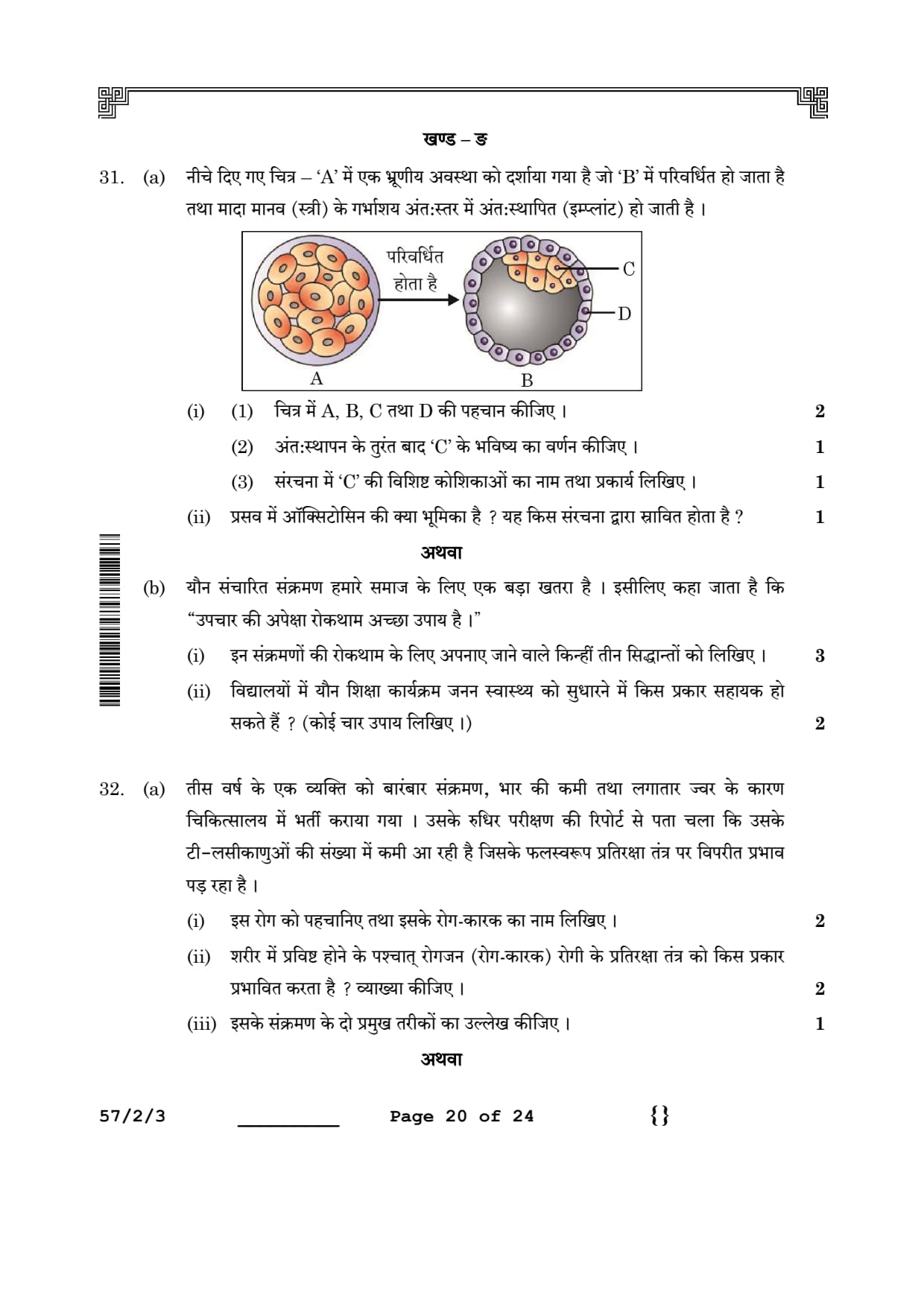
In the given diagram, A is an embryonic stage that gets transformed into B, which in turn gets implanted in the endometrium of human female.
(i) (1) Identify A, B, C and D.
(2) State the fate of C immediately after implantation.
(3) Name the special cells found in C and their function.
(ii) What is the role of oxytocin during parturition ? Where is it released from ?

Sexually transmitted infections are a major threat to our society. So it is said that "Prevention is better than cure".
(i) Write the three simple principles to be followed to prevent such infections.
(ii) How can sex education programs in schools help in improving reproductive health ? (4 points)
A 30 year old man was admitted to a hospital with recurrent infections, weight loss, prolonged fever. His blood report showed a decline in count of T-Lymphocytes thus affecting immune system.
(i) Identify the disease and its causative agent.
(ii) How did the pathogen affect the immune system once it entered the body ? Explain.
(iii) Mention two major modes of its transmission.
(i) Why are microbes considered effective biocontrol agents in sustainable agriculture ?
(ii) Explain the role of the following as biocontrol agents naming the pests or diseases they help to control :
(1) A Bacterium
(2) A Fungus
(3) Virus
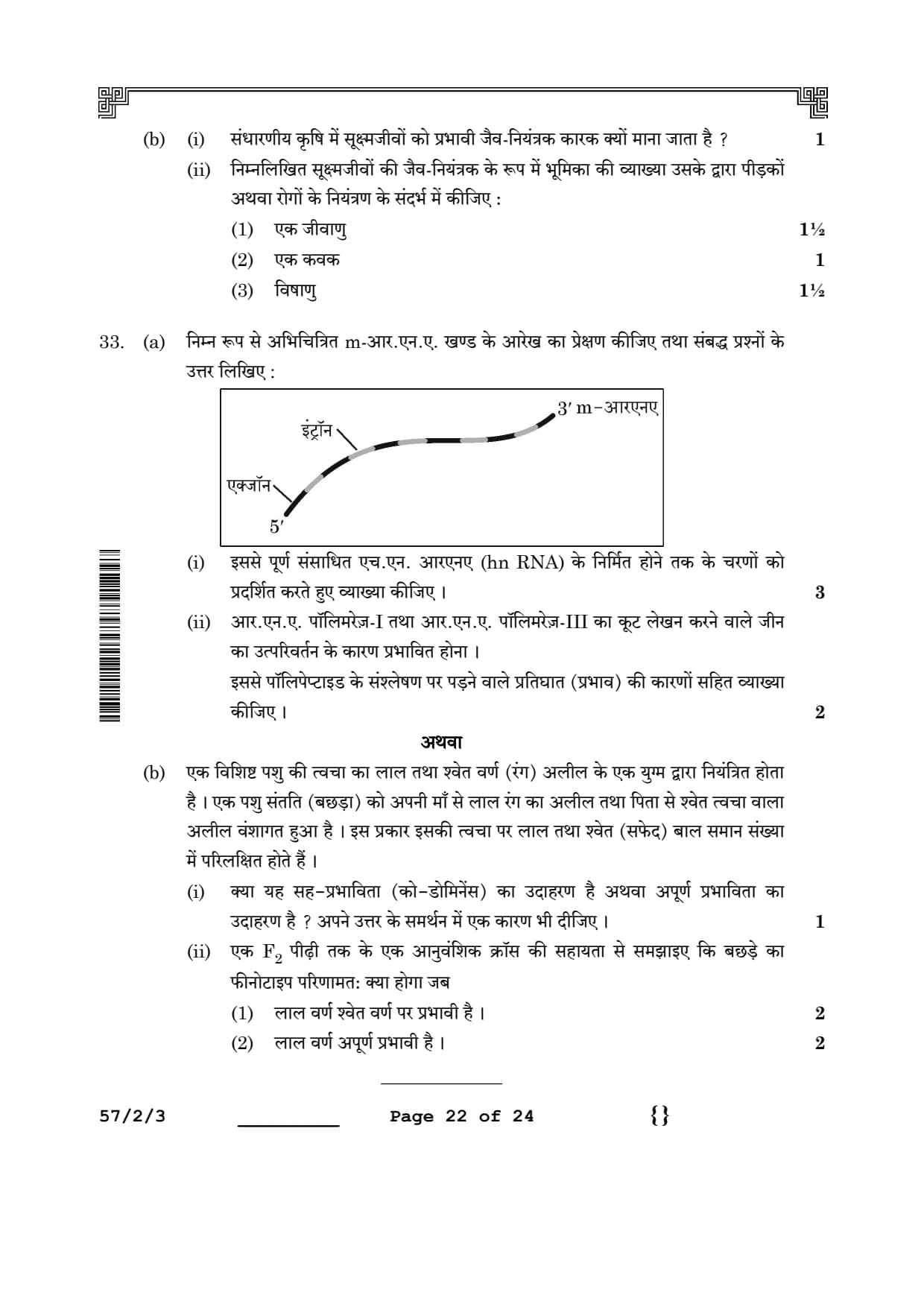
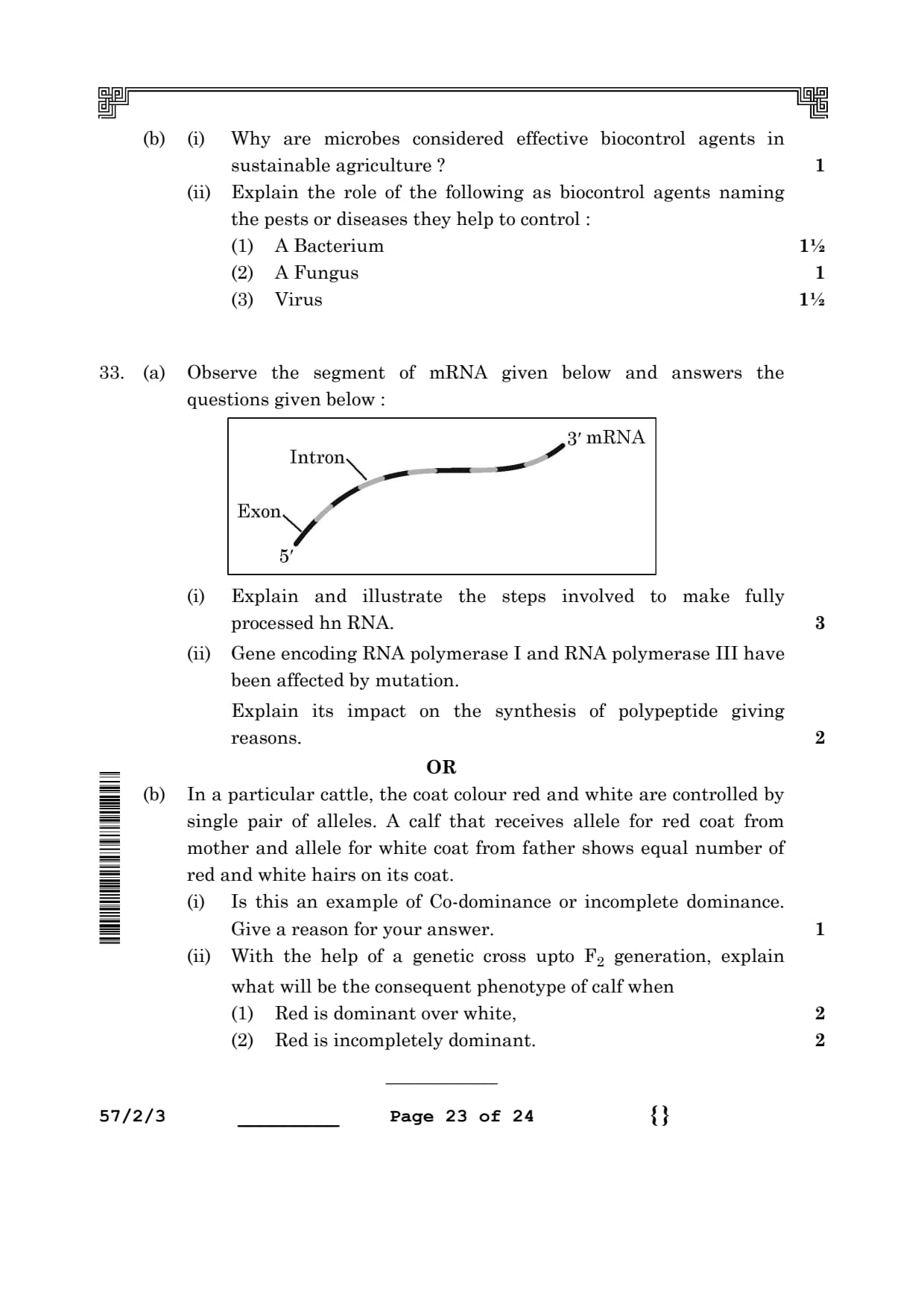
Observe the segment of mRNA given below and answers the questions given below :
(i) Explain and illustrate the steps involved to make fully processed hn RNA.
(ii) Gene encoding RNA polymerase I and RNA polymerase III have been affected by mutation.
Explain its impact on the synthesis of polypeptide giving reasons.

In a particular cattle, the coat colour red and white are controlled by single pair of alleles. A calf that receives allele for red coat from mother and allele for white coat from father shows equal number of red and white hairs on its coat.
(i) Is this an example of Co-dominance or incomplete dominance. Give a reason for your answer.
(ii) With the help of a genetic cross upto \( \mathrm{F_2} \) generation, explain what will be the consequent phenotype of calf when
(1) Red is dominant over white,
(2) Red is incompletely dominant.







CBSE Class 12 Biology Unit-Wise Weightage
| Unit No. | Unit Name | Marks |
|---|---|---|
| VI | Reproduction | 16 |
| VII | Genetics and Evolution | 20 |
| VIII | Biology and Human Welfare | 12 |
| IX | Biotechnology and Its Applications | 12 |
| X | Ecology and Environment | 10 |
| Total | — | 70 |



Comments