




CBSE Class 12 Biology Set 2 - (57/3/2) Question Paper 2026 is available for download here. CBSE conducted Class 12 Biology exam on March 27, 2026 from 10:30 AM to 1:30 PM. The Biology theory paper is of 70 marks, and the internal assessment is of 30 marks.
Also Check: CBSE Class 12 Question Paper 2026 (All Subjects)
Biology question paper includes the following types of questions:
- MCQs: 1 mark each
- Short-answer type questions: 2 & 3 marks each
- Case-study based questions: 4 marks each
- Long-answer type questions: 5 marks each
- Total: 70 marks
CBSE Class 12 Biology Question Paper 2026 Set 2 - (57/3/2) with Solution PDF
| CBSE Official PDF | CD PDF | CD PDF with Solutions |
|---|---|---|
| Download official PDF 0.87 MB | Download Collegedunia PDF 0.50 MB | Download solutions PDF 0.60 MB |
CBSE Class 12 Biology 2026 Set 2 (57/3/2) Questions with Solutions
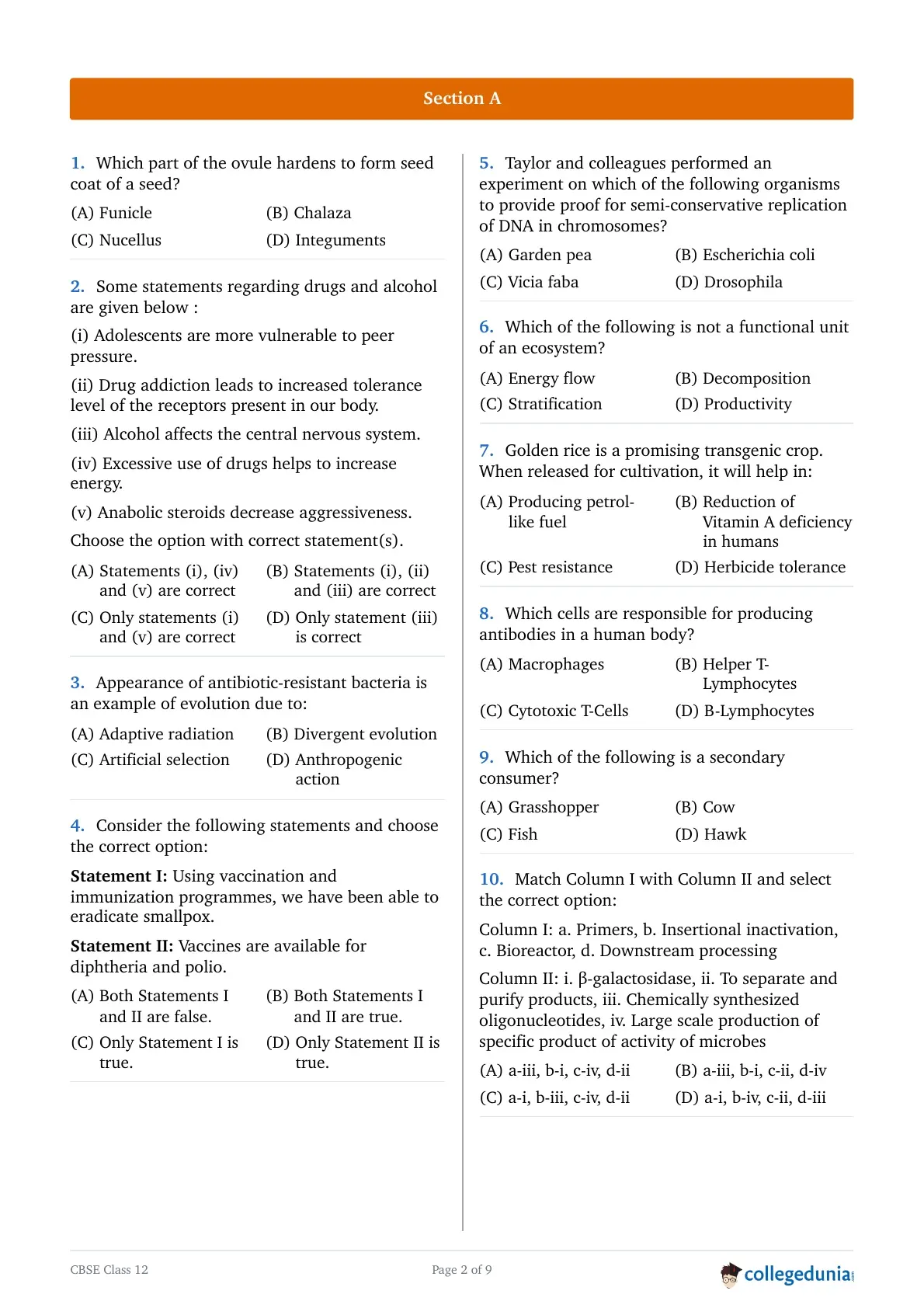
Some statements regarding drugs and alcohol are given below :
(i) Adolescents are more vulnerable to peer pressure.
(ii) Drug addiction leads to increased tolerance level of the receptors present in our body.
(iii) Alcohol affects the central nervous system.
(iv) Excessive use of drugs helps to increase energy.
(v) Anabolic steroids decrease aggressiveness.
Choose the option with correct statement(s).
Appearance of antibiotic-resistant bacteria is an example of evolution due to:
Consider the following statements and choose the correct option :
Statement I : Using vaccination and immunization programmes, we have been able to eradicate smallpox.
Statement II : Vaccines are available for diphtheria and polio.
Taylor and colleagues performed an experiment on which of the following organisms to provide proof for semi-conservative replication of DNA in chromosomes ?
Which of the following is not a functional unit of an ecosystem?
Golden rice is a promising transgenic crop. When released for cultivation, it will help in :
Which cells are responsible for producing antibodies in a human body ?
Match Column I with Column II and select the correct option :
| Column I | Column II |
|---|---|
| a. Primers | i. \( \beta \)-galactosidase |
| b. Insertional inactivation | ii. To separate and purify products |
| c. Bioreactor | iii. Chemically synthesized oligonucleotides |
| d. Downstream processing | iv. Large scale production of specific product of activity of microbes |
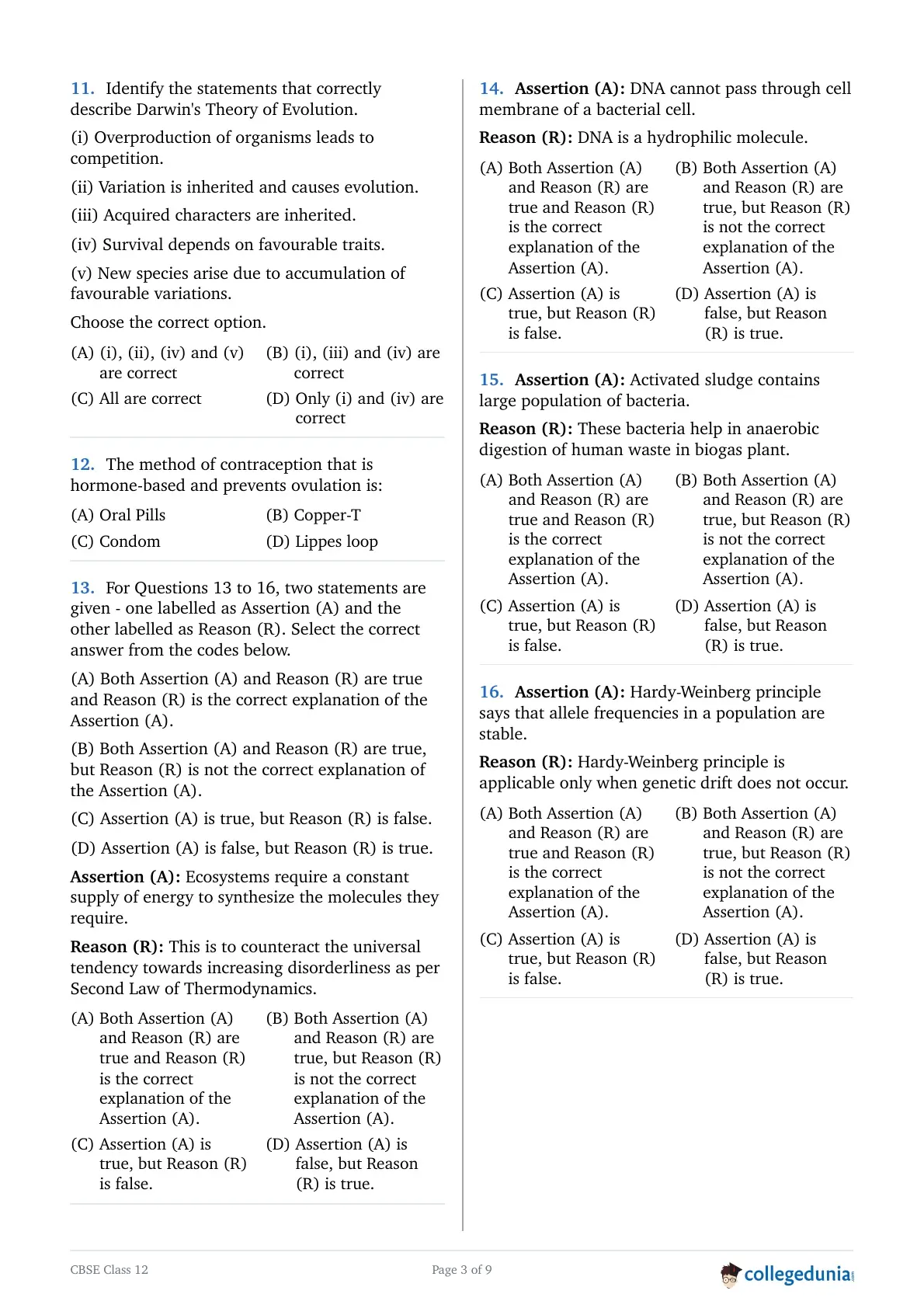
Identify the statements that correctly describe Darwin's Theory of Evolution.
(i) Overproduction of organisms leads to competition.
(ii) Variation is inherited and causes evolution.
(iii) Acquired characters are inherited.
(iv) Survival depends on favourable traits.
(v) New species arise due to accumulation of favourable variations.
Choose the correct option.
The method of contraception that is hormone-based and prevents ovulation is :
Assertion (A): Ecosystems require a constant supply of energy to synthesize the molecules they require.
Reason (R): This is to counteract the universal tendency towards increasing disorderliness as per Second Law of Thermodynamics.
Assertion (A): DNA cannot pass through cell membrane of a bacterial cell.
Reason (R): DNA is a hydrophilic molecule.
Assertion (A): Activated sludge contains large population of bacteria.
Reason (R): These bacteria help in anaerobic digestion of human waste in biogas plant.
Assertion (A) : Hardy-Weinberg principle says that allele frequencies in a population are stable.
Reason (R) : Hardy-Weinberg principle is applicable only when genetic drift does not occur.
A patient reports a high fever, chills and sweating. His blood shows the presence of a toxic substance.
(i) Identify the disease and the causative organism.
(ii) Explain why this disease shows recurring pattern of fever.
Give the microbial source and mode of action of the following bioactive molecules :
(i) Cyclosporin-A
(ii) Streptokinase
After performing gel electrophoresis, a student observes that DNA fragments are not visible.
Suggest a reason for this and explain how fragments can be made visible.
Also explain how a specific DNA fragment can be collected from the gel for further use.
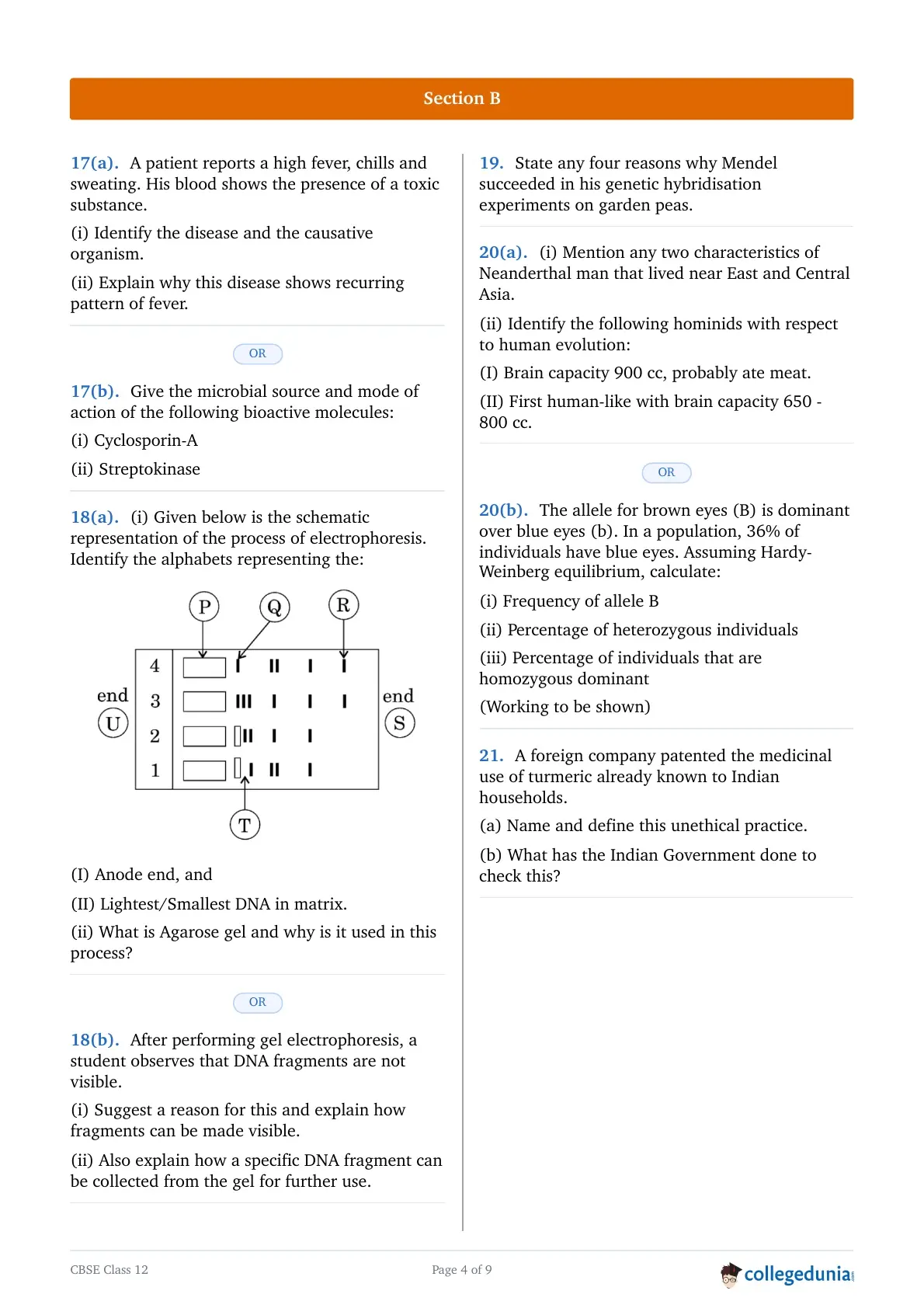
Given below is the schematic representation of the process of electrophoresis. Identify the alphabets representing the:
Anode end, and
Lightest/Smallest DNA in matrix.

(i) Given below is the schematic representation of the process of electrophoresis. Identify the alphabets representing the :
(I) Anode end, and
(II) Lightest/Smallest DNA in matrix.
(ii) What is Agarose gel and why is it used in this process ?

State any four reasons why Mendel succeeded in his genetic hybridisation experiments on garden peas.
The allele for brown eyes (B) is dominant over blue eyes (b). In a population, 36% of individuals have blue eyes.
Assuming Hardy-Weinberg equilibrium, calculate :
(i) Frequency of allele B
(ii) Percentage of heterozygous individuals
(iii) Percentage of individuals that are homozygous dominant
(Working to be shown)
Mention any two characteristics of Neanderthal man that lived near East and Central Asia.
Identify the following hominids with respect to human evolution:
Brain capacity 900 cc, probably ate meat.
First human-like with brain capacity 650 - 800 cc.
A foreign company patented the medicinal use of turmeric already known to Indian households.
(a) Name and define this unethical practice.
(b) What has the Indian Government done to check this ?
Describe the experiment conducted by T.H. Morgan on Drosophila melanogaster involving eye colour and body colour.
How did the results deviate from Mendelian inheritance pattern ?
(c) Explain the two genetic terms used by Morgan for his observations.
In vitro fertilization (IVF) is a popular method these days that is helping childless couples to bear a child.
Write the different steps that are carried out in this technique.
Would you consider gamete intra fallopian transfer as a type of IVF? Justify your answer.
Explain the different ways by which apomictic seeds can be developed.
Mention one advantage of apomictic seeds for farmers.
Draw a neat diagram of a maize grain showing the internal structure and label any five parts.
What is meant by translation in protein synthesis?
Explain charging of tRNA (aminoacylation of tRNA) and mention its importance in the process of translation.
(a) Who discovered Penicillin and how? Explain.
(b) Why is this discovery considered accidental?
(c) In what way did it prove to be a "milestone" in the field of medicine?
What is the carrying capacity of a species in a habitat?
Explain the growth curve that takes this capacity into account.
Read the following passage and answer the questions that follow:
India is one of the megadiverse countries housing around 8·1 per cent of global species diversity, although its land area is only 2·4 per cent of the world’s land area. Many of the species are highly threatened due to human activities like deforestation, mining and habitat fragmentation. Laws like Wildlife (Protection) Act, 1972 were enacted by the Government of India to preserve our biological wealth. Various conservation measures are being implemented to save the threatened species.
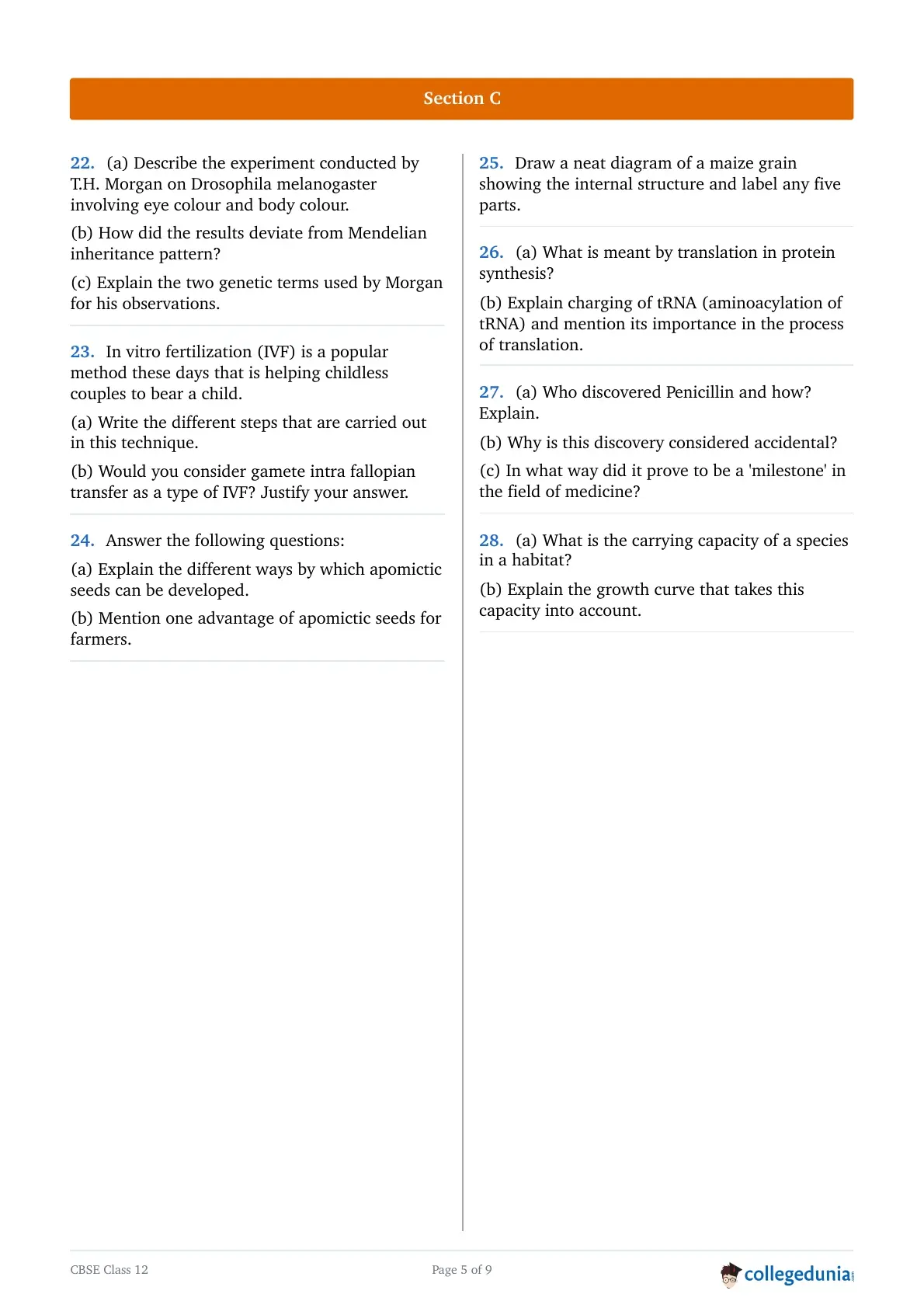
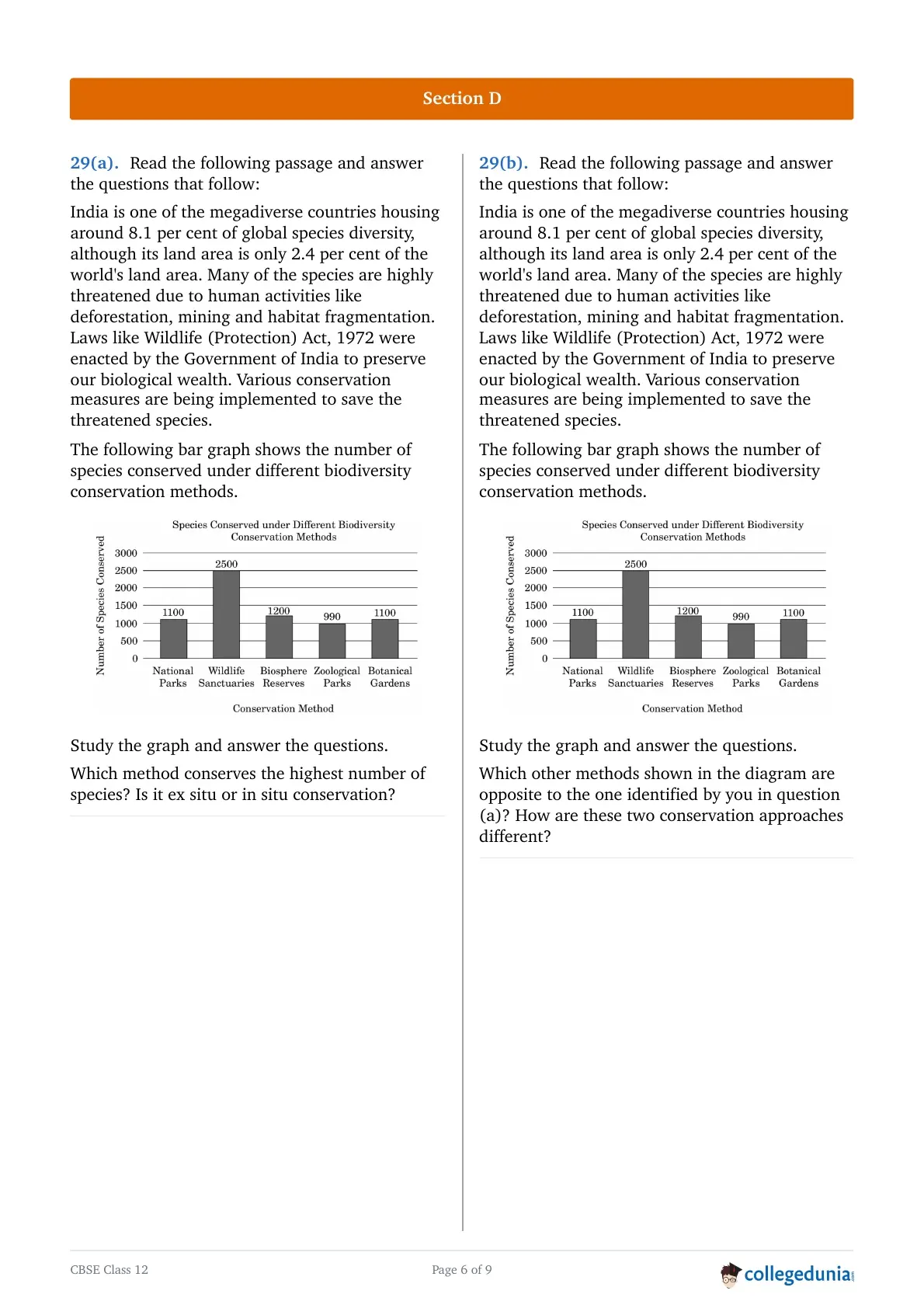
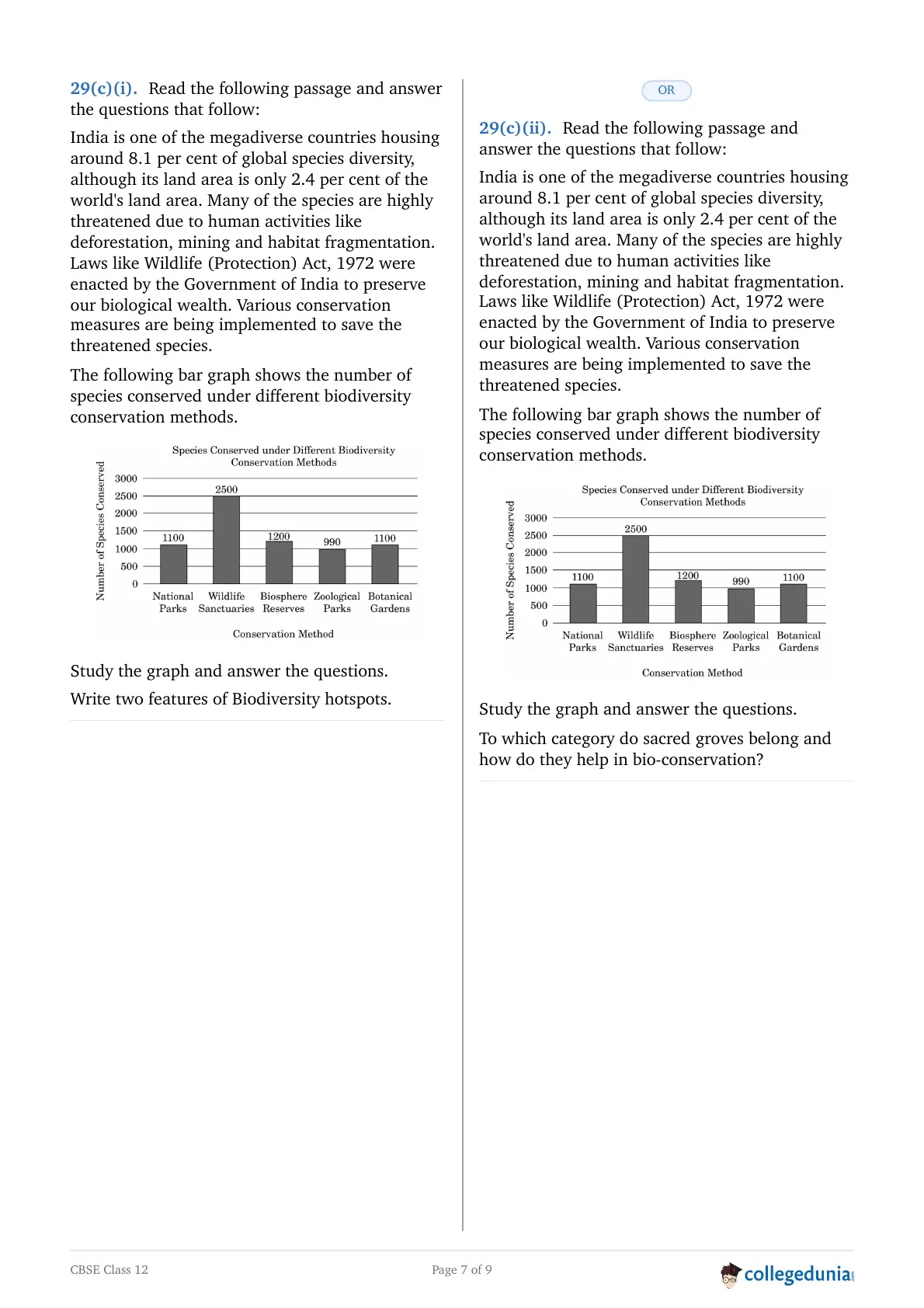
The following bar graph shows the number of species conserved under different biodiversity conservation methods.

Study the graph and answer the questions.
(a) Which method conserves the highest number of species ? Is it ex situ or in situ conservation ?
(b) Which other methods shown in the diagram are opposite to the one identified by you in question (a) ? How are these two conservation approaches different ?
(c) (i) Write two features of Biodiversity hotspots.
OR
(c) (ii) To which category do sacred groves belong and how do they help in bio-conservation ?
Read the following passage and answer the questions that follow:
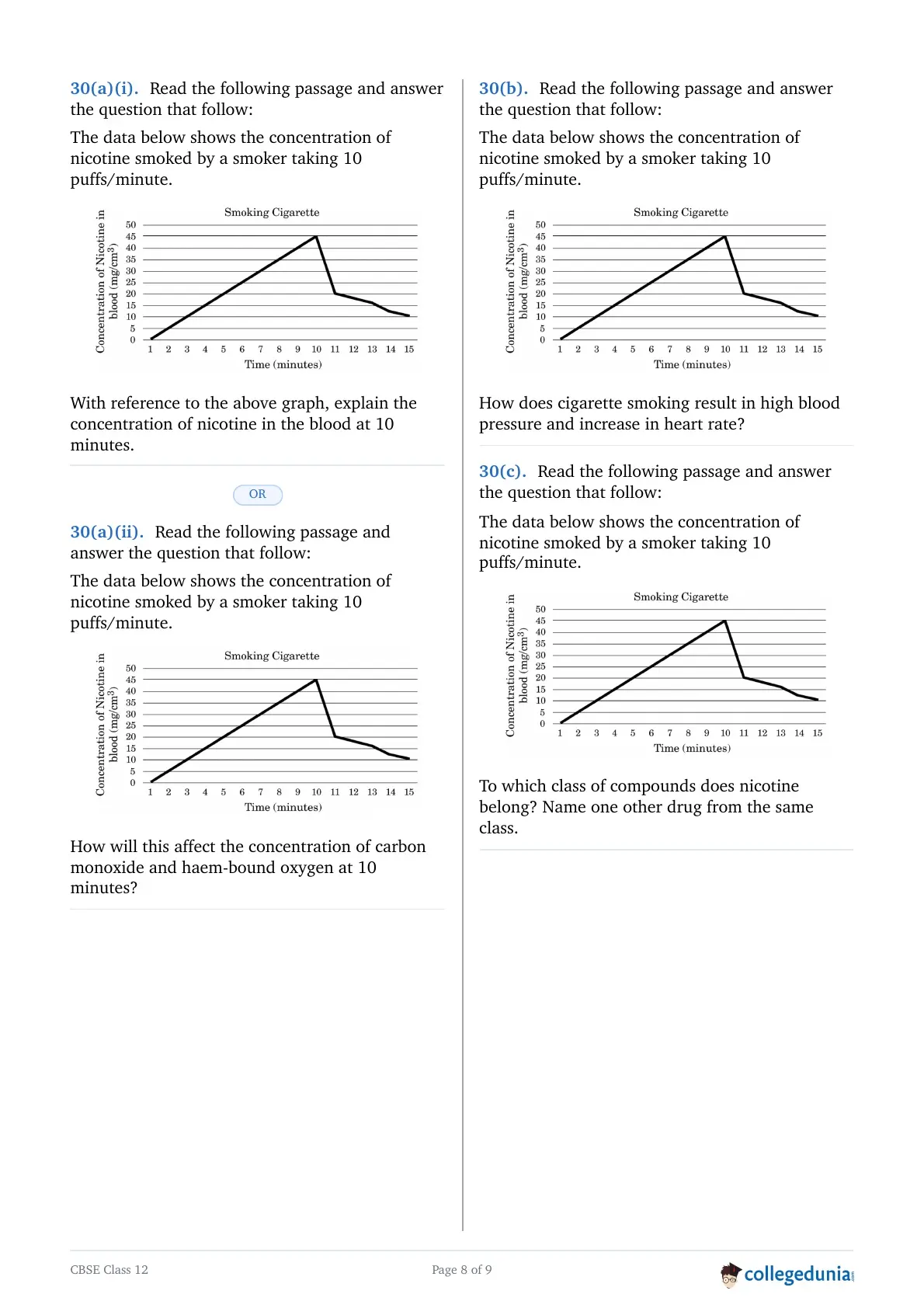
The data below shows the concentration of nicotine smoked by a smoker taking 10puffs/minute.

Read the following passage and answer the question that follow :
The data below shows the concentration of nicotine smoked by a smoker taking 10 puffs/minute.
[Graph: "Smoking Cigarette", concentration of nicotine in blood (mg/cm3) against time (minutes), 1 to 15. The line rises steadily from about 0 at 1 minute to a peak of 45 at 10 minutes, falls sharply to 20 at 11 minutes, then declines slowly to about 10 at 15 minutes.]
(a) (i) With reference to the above graph, explain the concentration of nicotine in the blood at 10 minutes.

Read the following passage and answer the question that follow:
The data below shows the concentration of nicotine smoked by a smoker taking 10 puffs/minute.
(a) (ii) How will this affect the concentration of carbon monoxide and haem-bound oxygen at 10 minutes?
Read the following passage and answer the question that follow:
The data below shows the concentration of nicotine smoked by a smoker taking 10 puffs/minute.
(b) How does cigarette smoking result in high blood pressure and increase in heart rate?
Read the following passage and answer the question that follow:
The data below shows the concentration of nicotine smoked by a smoker taking 10 puffs/minute.
(c) To which class of compounds does nicotine belong? Name one other drug from the same class.
The following questions are based on the classic experiment conducted by Hershey and Chase.
(i) Why were bacteriophages chosen by the scientists?
(ii) Name the radioactive isotopes used and state the reason for using them.
(iii) Describe the steps of the experiment.
(iv) Why is this experiment considered a major breakthrough in the field of molecular biology?
(i) What are multiple alleles? How do they differ from simple dominant-recessive allele pairs?
(ii) Explain the concept of multiple alleles with the help of a human trait studied by you.
(iii) Mention all possible genotypes with their corresponding phenotypes of the human trait as explained by you.
(iv) Comment on the type of inheritance pattern involved in the example explained by you.
Oogenesis is a discontinuous process that begins before birth and is completed after puberty.
Trace the development of a gamete mother cell till its release from the ovary during ovulation.
Name the two pituitary hormones that play an important role in the process.
Draw a labelled two-celled structure of male gametophyte of an angiosperm.
Name the three layers that surround the cytoplasm of a male gametophyte starting from innermost to outermost layer.
(iii) Which organic material makes the outermost layer? Mention its advantage.
(iv) Why is the outermost layer of male gametophyte not continuous ?
"Early and accurate diagnosis of diseases is vital in medical technology."
Name the conventional methods of diagnosis and their disadvantages.
Which three diagnostic techniques have been developed through Biotechnology ? Explain how each one helps in detecting diseases.
Explain any two basic principles/core techniques on which biotechnology is based.
Describe any three key tools used in Recombinant DNA technology.
CBSE Class 12 Biology Question Paper Pattern and Marking Scheme
The CBSE Class 12 Biology 2026 question paper is of 70 marks and has 33 questions in five sections, A to E, all compulsory. The tables below give the section-wise paper pattern and the marking rules from the official CBSE marking scheme.
CBSE Class 12 Biology Question Paper Pattern 2026
| Section | Questions | Question Type | Marks per Question | Marks |
|---|---|---|---|---|
| A | Q1 - Q16 | Multiple choice questions | 1 | 16 |
| B | Q17 - Q21 | Very short answer type | 2 | 10 |
| C | Q22 - Q28 | Short answer type | 3 | 21 |
| D | Q29 - Q30 | Case-based questions | 4 | 8 |
| E | Q31 - Q33 | Long answer type | 5 | 15 |
| Total | 33 questions | 70 |
CBSE Class 12 Biology Marking Scheme 2026
| Marking point | How it is applied |
|---|---|
| Value-point marking | Marks are awarded against the value points (steps) given in the official marking scheme; the marks of an answer are split across its steps. |
| Own expression | The marking scheme carries suggested value points only. A correct answer in the student's own words is awarded due marks. |
| Competency-based questions | If a competency-based answer is not from the marking scheme but shows the correct competency, due marks are awarded. |
| Errors | An error is penalised only once; no marks are deducted for its cumulative effect. |
| Incorrect answer | A totally incorrect answer is awarded zero (0) marks. |
| Choice (OR) questions | If both options of a question with internal choice are attempted, marks are awarded for both and the higher score is taken; if only one option is attempted, the other is marked NA (not attempted). |
| Scale of marks | The full scale of 0 to 70 marks is used and full marks are awarded whenever the answer deserves them. |
CBSE Class 12 Biology Unit-Wise Weightage
| Unit No. | Unit Name | Marks |
|---|---|---|
| VI | Reproduction | 16 |
| VII | Genetics and Evolution | 20 |
| VIII | Biology and Human Welfare | 12 |
| IX | Biotechnology and Its Applications | 12 |
| X | Ecology and Environment | 10 |
| Total | — | 70 |



Comments