


NEET 2026 Botany Question Paper is available here. NTA conducted NEET 2026 exam on May 3 in single shift from 2 PM to 5 PM. NEET question question paper consists of 180 questions for 720 marks to be attempted in 3 hours.
- NEET Botany Question Paper 2026 consists of 45 questions.
- Each correct answer carries 4 marks and incorrect answer has a negative marking of 1.
Candidates can download NEET 2026 Botany Question Paper with Answer Key and Solution PDF from the links provided below
NEET 2026 Botany Question Paper with Solution PDF
| NEET 2026 Botany Question Paper | Download PDF | Check Solution |
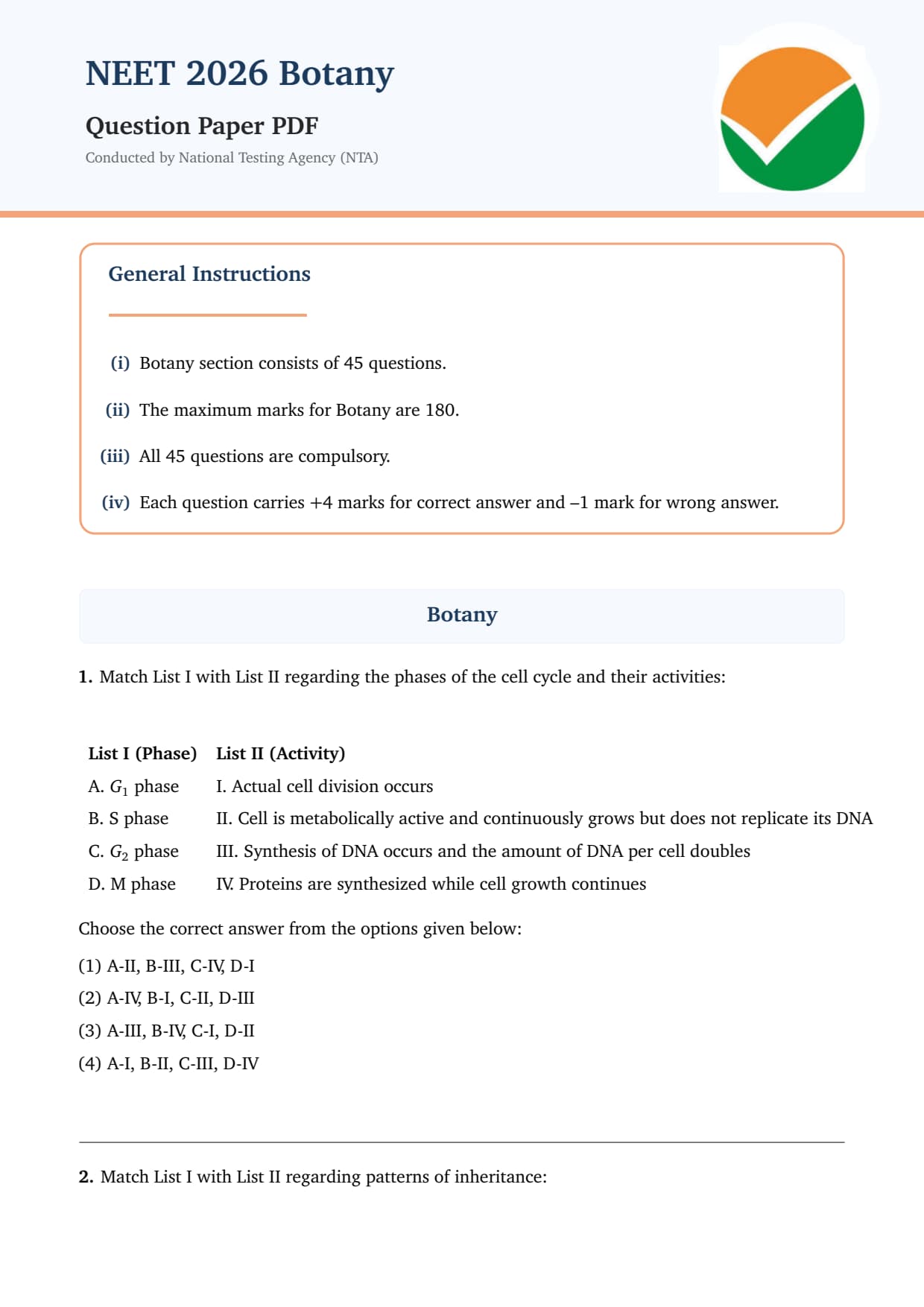
Match List I with List II regarding the phases of the cell cycle and their activities:
List I (Phase) & List II (Activity)
A. \(G_1\) phase & I. Actual cell division occurs
B. S phase & II. Cell is metabolically active and continuously grows but does not replicate its DNA
C. \(G_2\) phase & III. Synthesis of DNA occurs and the amount of DNA per cell doubles
D. M phase & IV. Proteins are synthesized while cell growth continues
Choose the correct answer from the options given below:
View Solution
The cell cycle is divided into Interphase (\(G_1, S, G_2\)) and the M phase (Mitosis). Each stage has distinct metabolic and synthetic characteristics:
\(G_1\) Phase (Gap 1): This is the interval between mitosis and the initiation of DNA replication. During this phase, the cell is metabolically active and grows continuously but does not replicate its DNA yet.
S Phase (Synthesis): This is the critical stage where DNA synthesis or replication takes place. The amount of DNA per cell doubles (from \(2C\) to \(4C\)), though the chromosome number remains the same.
\(G_2\) Phase (Gap 2): During this phase, proteins (like tubulin for spindle fibers) are synthesized in preparation for mitosis while cell growth continues.
M Phase (Mitosis): This is the most dramatic period of the cell cycle, representing the actual cell division where the components of the cell are reorganized and divided into two daughter cells. Quick Tip: Remember: S} stands for S}ynthesis (DNA), and M} stands for M}itosis (Division). \(G_1\) is just "Growth 1" and \(G_2\) is "Growth 2" plus protein prep!
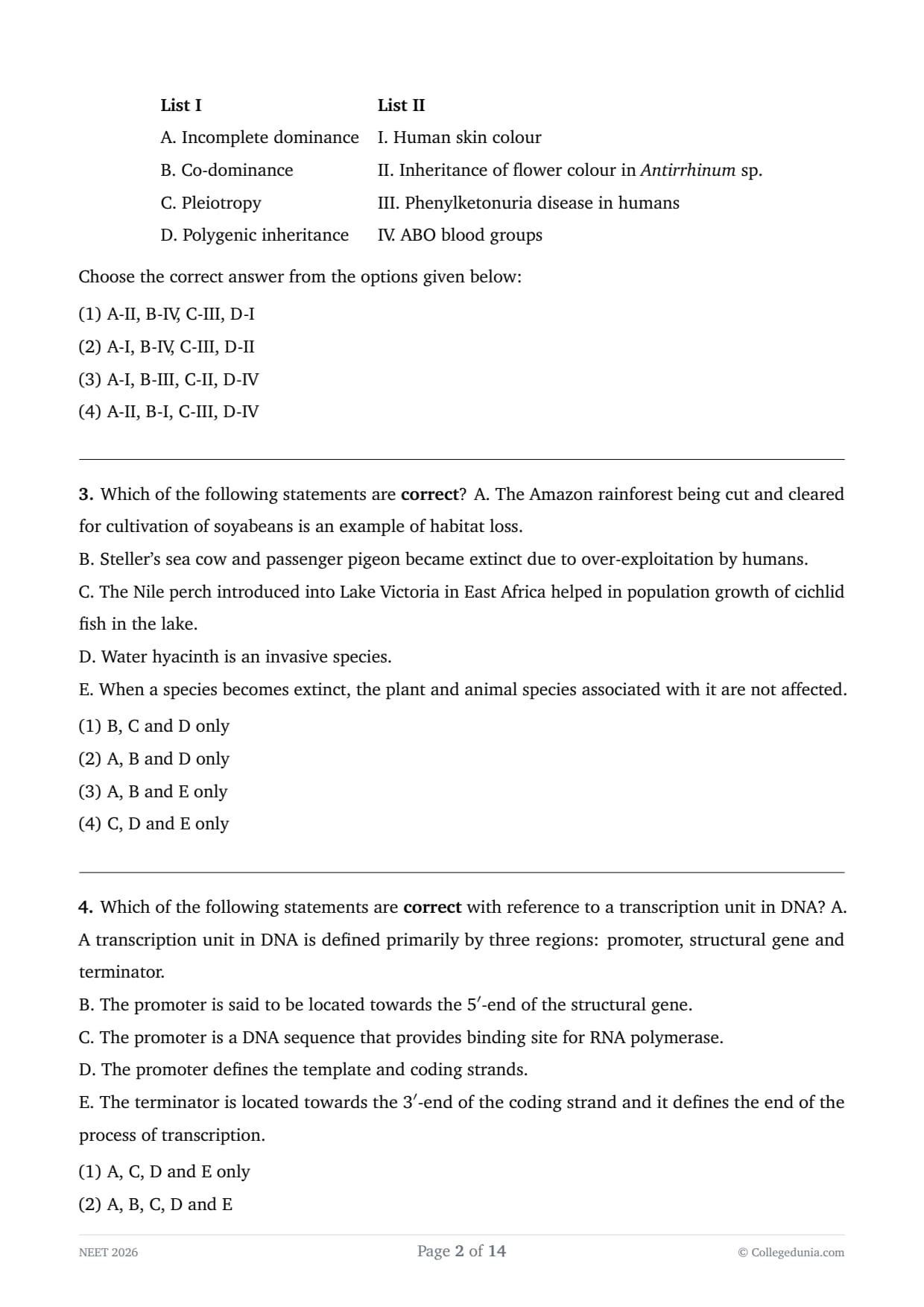
Match List I with List II regarding patterns of inheritance:
List I & List II
A. Incomplete dominance & I. Human skin colour
B. Co-dominance & II. Inheritance of flower colour in Antirrhinum sp.
C. Pleiotropy & III. Phenylketonuria disease in humans
D. Polygenic inheritance & IV. ABO blood groups
Choose the correct answer from the options given below:
View Solution
Genetic inheritance often deviates from simple Mendelian dominance. The following examples are classic NEET cases:
Incomplete Dominance: Seen in Antirrhinum majus (Snapdragon). Here, the \(F_1\) phenotype is an intermediate between the two parents (e.g., Red \(\times\) White = Pink).
Co-dominance: The ABO blood grouping in humans is a prime example where both alleles \(I^A\) and \(I^B\) are fully expressed in the \(AB\) phenotype.
Pleiotropy: This occurs when a single gene influences multiple phenotypic traits. Phenylketonuria (PKU) is caused by a single gene mutation but results in mental retardation, skin pigmentation changes, and hair reduction.
Polygenic Inheritance: This involves multiple genes controlling a single trait, leading to a gradient of phenotypes. Human skin colour is the standard example, controlled by at least three genes. Quick Tip: Pleiotropy = 1} Gene \(\rightarrow\) Many} Effects. P}olygenic = Many} Genes \(\rightarrow\) 1} Effect. Don't flip these two!
Which of the following statements are correct?
A. The Amazon rainforest being cut and cleared for cultivation of soyabeans is an example of habitat loss.
B. Steller's sea cow and passenger pigeon became extinct due to over-exploitation by humans.
C. The Nile perch introduced into Lake Victoria in East Africa helped in population growth of cichlid fish in the lake.
D. Water hyacinth is an invasive species.
E. When a species becomes extinct, the plant and animal species associated with it are not affected.
View Solution
This question tests the "Evil Quartet" of biodiversity loss:
Statement A is Correct: Habitat loss and fragmentation are the leading causes of extinction. Clearing the Amazon for soyabeans is a classic example.
Statement B is Correct: Over-exploitation by humans led to the extinction of the Steller's sea cow and Passenger pigeon.
Statement C is Incorrect: The introduction of the Nile perch was an "Alien Species Invasion" that led to the extinction (not growth) of more than 200 species of cichlid fish.
Statement D is Correct: Water hyacinth (Eichhornia crassipes) is one of the most invasive weeds, known as the "Terror of Bengal."
Statement E is Incorrect: This describes "Co-extinction." When a host species becomes extinct, its associated parasites or mutualists also face extinction.
Therefore, statements A, B, and D are the only correct ones. Quick Tip: The "Evil Quartet" includes: 1. Habitat Loss, 2. Over-exploitation, 3. Alien Species Invasion, and 4. Co-extinctions. If you see "benefit" in alien species questions, it's almost always a wrong statement!
Which of the following statements are correct with reference to a transcription unit in DNA?
A. A transcription unit in DNA is defined primarily by three regions: promoter, structural gene and terminator.
B. The promoter is said to be located towards the \(5'\)-end of the structural gene.
C. The promoter is a DNA sequence that provides binding site for RNA polymerase.
D. The promoter defines the template and coding strands.
E. The terminator is located towards the \(3'\)-end of the coding strand and it defines the end of the process of transcription.
View Solution
The transcription unit is the segment of DNA that takes part in transcription. All five statements accurately describe its architecture:
Components (A): It consists of the Promoter (start), the Structural Gene (actual code), and the Terminator (end).
Promoter Location (B \& C): The promoter is located upstream (\(5'\)-end) of the structural gene (referenced to the coding strand). It is the specific DNA sequence where RNA polymerase binds to initiate the process.
Strand Definition (D): By its position and orientation, the promoter determines which strand will act as the template strand (\(3' \rightarrow 5'\)) and which will be the coding strand (\(5' \rightarrow 3'\)).
Terminator (E): The terminator is located downstream (\(3'\)-end) relative to the coding strand and signals the end of transcription.
Since all statements (A, B, C, D, and E) are factually correct according to NCERT standards, option (b) is the right choice. Quick Tip: Crucial Rule: All "ends" (\(5'\) or \(3'\)) in transcription unit descriptions are given with respect to the Coding Strand}, even though the coding strand doesn't actually code for anything!
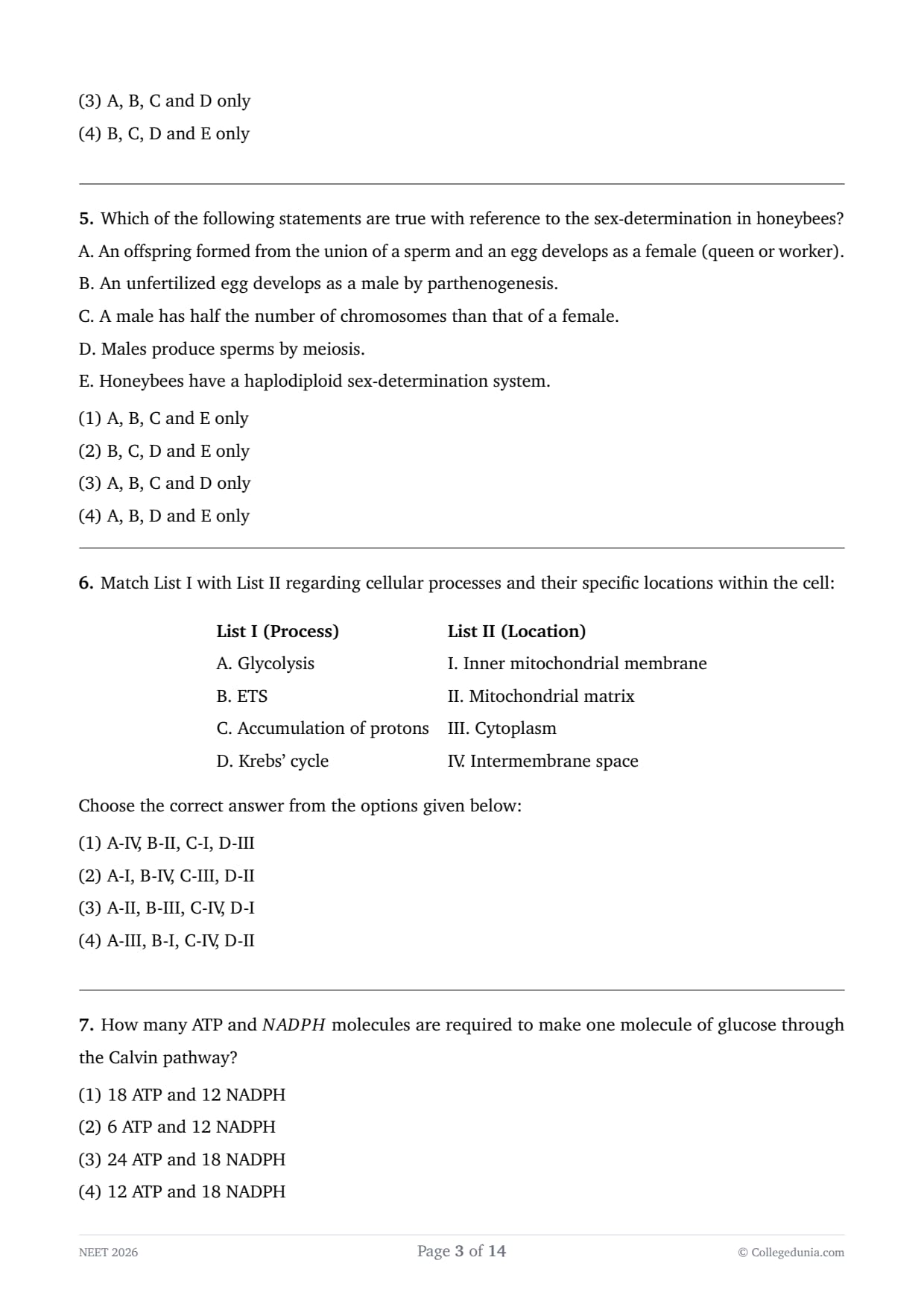
Which of the following statements are true with reference to the sex-determination in honeybees?
A. An offspring formed from the union of a sperm and an egg develops as a female (queen or worker).
B. An unfertilized egg develops as a male by parthenogenesis.
C. A male has half the number of chromosomes than that of a female.
D. Males produce sperms by meiosis.
E. Honeybees have a haplodiploid sex-determination system.
View Solution
Honeybees exhibit a fascinating genetic mechanism for sex determination known as the haplodiploid system. This system ensures a specific social structure within the hive based on chromosomal count.
The detailed breakdown of these biological processes is as follows:
Female Development (Diploid): Females, which include both the fertile Queen and the sterile Workers, are produced through sexual reproduction. When a sperm fertilizes an egg, the resulting zygote has a complete set of 32 chromosomes (\(2n = 32\)).
Male Development (Haploid): Males, known as Drones, are produced via arrhenotokous parthenogenesis. This means they develop directly from unfertilized eggs laid by the queen. Consequently, they possess only 16 chromosomes (\(n = 16\)), which is exactly half the female count.
Spermatogenesis in Drones: Since males are already haploid (\(n\)), they cannot undergo a reductional division (meiosis) to produce gametes. Therefore, they produce sperm through mitosis. Statement D is incorrect because it claims they use meiosis.
Kinship Consequences: Because of this system, drones have no father and cannot have sons, but they do have a grandfather and can have grandsons.
Since statements A, B, C, and E are scientifically accurate and statement D is false, option (a) is the only correct choice. Quick Tip: To remember why drones use mitosis: They are already at the "halfway point" (\(n\)). If they did meiosis, they'd have "half-a-set" of instructions, which doesn't work! Male Honeybees = Mitosis.
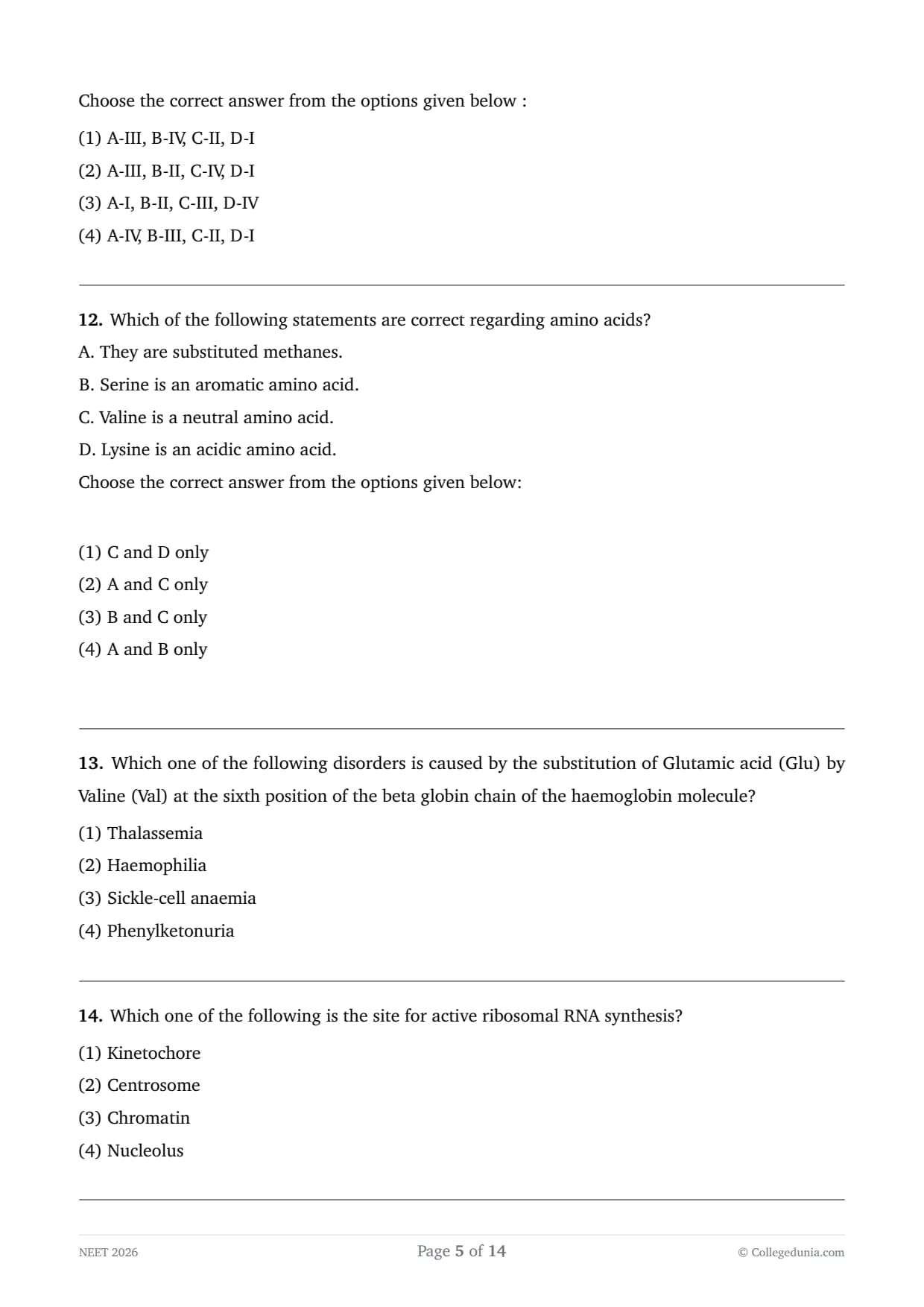
Match List I with List II regarding cellular processes and their specific locations within the cell:
List I (Process) & List II (Location)
A. Glycolysis & I. Inner mitochondrial membrane
B. ETS & II. Mitochondrial matrix
C. Accumulation of protons & III. Cytoplasm
D. Krebs' cycle & IV. Intermembrane space
Choose the correct answer from the options given below:
View Solution
Aerobic respiration is a multi-step process that is compartmentalized within the cell to maximize efficiency and maintain necessary chemical gradients.
The specific locations for each stage are:
Glycolysis (A): This occurs in the Cytoplasm (III). It is the universal first step of glucose breakdown, occurring in both aerobic and anaerobic organisms. It does not require oxygen or specialized organelles.
Electron Transport System (B): The ETS consists of a series of protein complexes and organic molecules located in the Inner Mitochondrial Membrane (I). This is where the majority of ATP is generated through oxidative phosphorylation.
Accumulation of Protons (C): As electrons move through the ETS, the energy released is used to pump protons (\(H^{+}\)) from the matrix into the Intermembrane Space (IV). This creates a high concentration of protons, forming the "proton motive force."
Krebs' Cycle (D): Also known as the Citric Acid Cycle, this series of enzymatic reactions takes place within the Mitochondrial Matrix (II). It is here that Acetyl CoA is fully oxidized into \(CO_2\).
Matching these leads to: A-III, B-I, C-IV, D-II. Quick Tip: Think of the Matrix as the "Inside Room" (Krebs) and the Intermembrane Space as the "Pressure Tank" (Proton accumulation) that drives the ATP turbine!
How many ATP and \(NADPH\) molecules are required to make one molecule of glucose through the Calvin pathway?
View Solution
The Calvin cycle (the dark reaction of photosynthesis) uses the energy stored in ATP and \(NADPH\) to fix atmospheric \(CO_2\) into sugar. To build one molecule of glucose (\(C_6H_{12}O_6\)), the cycle must turn six times.
The energy "cost" breakdown per single \(CO_2\) molecule fixed is:
Reduction Phase: For every \(CO_2\) that enters, two molecules of 3-PGA are converted to G3P. This requires 2 ATP and 2 NADPH.
Regeneration Phase: To keep the cycle going, the \(CO_2\) acceptor (RuBP) must be regenerated from G3P. This requires an additional 1 ATP.
Total per \(CO_2\): 3 ATP and 2 \(NADPH\).
Since one glucose molecule contains six carbon atoms, we multiply these values by six:
Total ATP: \(6 turns \times 3 ATP/turn = \mathbf{18 ATP}\)
Total NADPH: \(6 turns \times 2 NADPH/turn = \mathbf{12 NADPH}\) Quick Tip: Remember the 3:2 ratio. For every single Carbon atom you want to "glue" into a sugar, you need 3 ATP "batteries" and 2 NADPH "reducing agents."
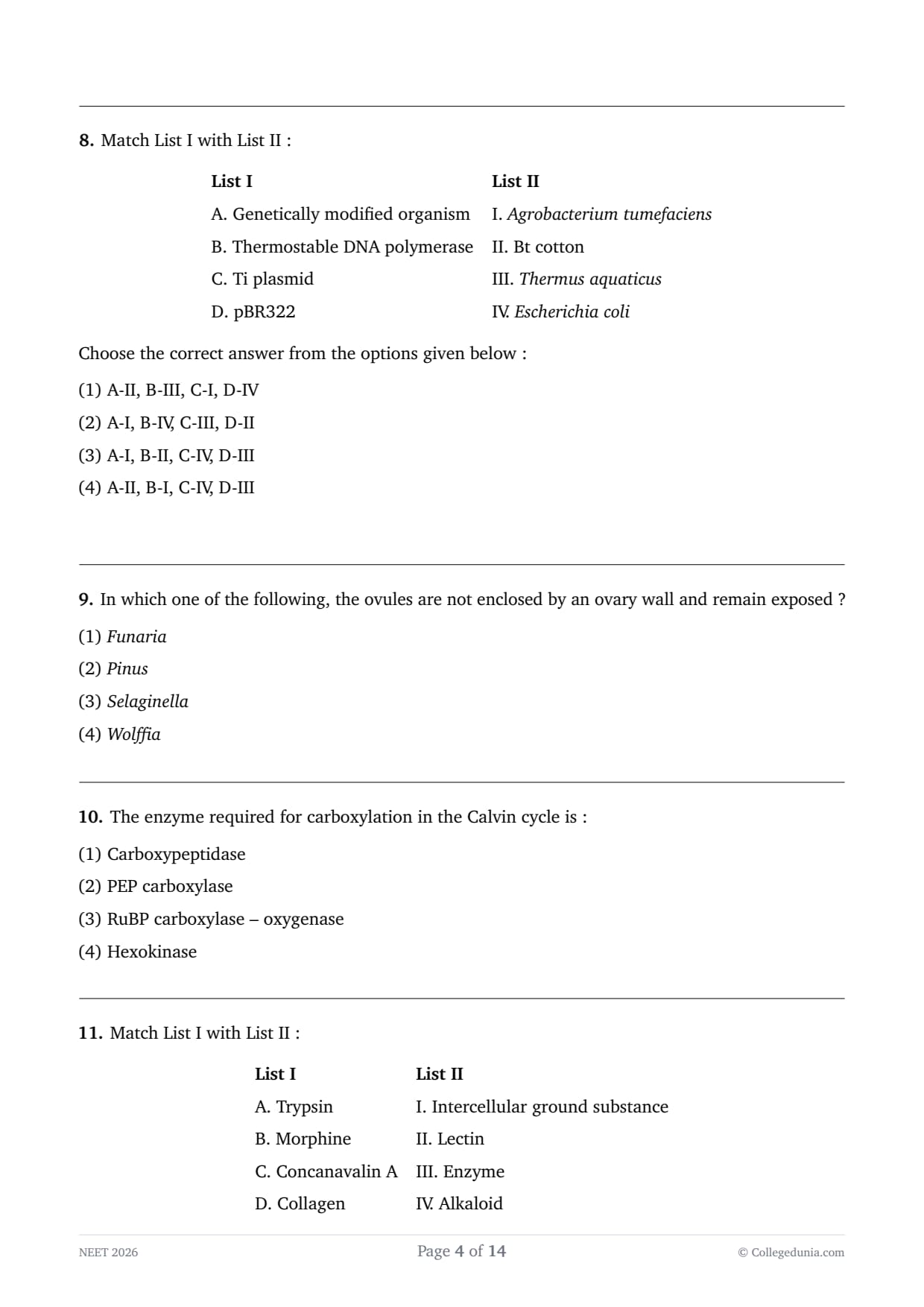
Match List I with List II :
List I & List II
A. Genetically modified organism & I. Agrobacterium tumefaciens
B. Thermostable DNA polymerase & II. Bt cotton
C. Ti plasmid & III. Thermus aquaticus
D. pBR322 & IV. Escherichia coli
Choose the correct answer from the options given below :
View Solution
This question focuses on essential biological tools and organisms utilized in modern biotechnology for gene cloning and crop improvement.
Genetically modified organism (A): Bt cotton is a prime example. It was created by incorporating genes from the bacterium Bacillus thuringiensis into the cotton genome to provide resistance against specific pests like bollworms.
Thermostable DNA polymerase (B): This refers to Taq polymerase, which is isolated from the bacterium Thermus aquaticus. Its ability to withstand high temperatures makes it indispensable for the denaturation and extension steps of the Polymerase Chain Reaction (PCR).
Ti plasmid (C): The Tumor-inducing (Ti) plasmid is a naturally occurring vector found in Agrobacterium tumefaciens. It is widely used to deliver desired DNA segments into the genomes of dicotyledonous plants.
pBR322 (D): This is one of the most commonly used artificial cloning vectors. It is designed to be maintained and replicated within the bacterium Escherichia coli. Quick Tip: Associate Thermostable with Thermus aquaticus} and Ti} plasmid with Agrobacterium} (The Natural Genetic Engineer).
In which one of the following, the ovules are not enclosed by an ovary wall and remain exposed ?
View Solution
The classification of plants into Gymnosperms and Angiosperms is largely based on the protection provided to the ovules.
Gymnosperms: The term itself comes from gymnos (naked) and sperma (seed). In these plants, such as Pinus, the ovules are not enclosed by an ovary wall. They are borne directly on the surface of megasporophylls and remain exposed both before and after fertilization.
Angiosperms: In flowering plants like Wolffia, the ovules are securely enclosed within an ovary wall, which eventually develops into a fruit.
Bryophytes and Pteridophytes: Plants like Funaria (moss) and Selaginella do not produce true seeds or ovaries, reproducing instead via spores. Quick Tip: "Naked seeds" is the hallmark of Gymnosperms. If you see Pinus or Cycas, they lack an ovary wall.
The enzyme required for carboxylation in the Calvin cycle is :
View Solution
The Calvin cycle (\(C_3\) cycle) is the primary pathway for carbon fixation in all photosynthetic plants. The most critical step is the carboxylation of Ribulose-1,5-bisphosphate (RuBP).
RuBP carboxylase-oxygenase (RuBisCO): This is the enzyme that catalyzes the reaction between \(CO_2\) and RuBP to form two molecules of 3-phosphoglyceric acid (3-PGA). It is considered the most abundant enzyme on Earth.
PEP carboxylase: This enzyme is involved in the initial fixation of carbon in \(C_4\) plants and CAM plants, but not in the \(C_3\) Calvin cycle.
Hexokinase: This enzyme is used in the first step of glycolysis (respiration), not photosynthesis.
Carboxypeptidase: This is a digestive protease enzyme found in animals. Quick Tip: RuBisCO has a "dual personality"—it can bind both \(CO_2\) (Carboxylation) and \(O_2\) (Oxygenation) depending on their relative concentrations.
Match List I with List II :
List I & List II
A. Trypsin & I. Intercellular ground substance
B. Morphine & II. Lectin
C. Concanavalin A & III. Enzyme
D. Collagen & IV. Alkaloid
Choose the correct answer from the options given below :
View Solution
Living organisms contain a wide variety of primary and secondary metabolites, each serving unique structural or functional roles.
Trypsin (A): This is a protein-digesting enzyme (III) secreted by the pancreas.
Morphine (B): This is a secondary metabolite classified as an alkaloid (IV), derived from the poppy plant.
Concanavalin A (C): This is a well-known lectin (II), which is a type of protein that binds specifically to carbohydrates.
Collagen (D): This is the most abundant protein in the animal world, serving as the intercellular ground substance (I) in connective tissues. Quick Tip: The "Secondary Metabolites" table in NCERT is extremely high-yield. Memorize: Alkaloids = Morphine/Codeine; Lectins = Concanavalin A.
Which of the following statements are correct regarding amino acids?
A. They are substituted methanes.
B. Serine is an aromatic amino acid.
C. Valine is a neutral amino acid.
D. Lysine is an acidic amino acid.
Choose the correct answer from the options given below:
View Solution
Amino acids are organic compounds containing an amino group and an acidic group as substituents on the same carbon (the alpha-carbon).
The detailed analysis of the provided statements is as follows:
Statement A is Correct: Amino acids are considered substituted methanes. There are four substituent groups occupying the four valency positions of the alpha-carbon: hydrogen, a carboxyl group, an amino group, and a variable R group.
Statement B is Incorrect: Serine is not an aromatic amino acid; it is a hydroxylic amino acid because its R group is a hydroxy-methyl group (\(-CH_2OH\)). Examples of aromatic amino acids include Tyrosine, Phenylalanine, and Tryptophan.
Statement C is Correct: Valine is classified as a neutral amino acid because it contains one amino group and one carboxyl group, and its R group (isopropyl) is non-polar.
Statement D is Incorrect: Lysine is not an acidic amino acid; it is a basic amino acid because it has an extra amino group in its side chain. Glutamic acid and Aspartic acid are examples of acidic amino acids.
Based on this evaluation, only statements A and C are correct. Quick Tip: Remember the classification: Acidic = Glutamic acid (A-G), Basic = Lysine/Arginine (B-L), Neutral = Valine (N-V).
Which one of the following disorders is caused by the substitution of Glutamic acid (Glu) by Valine (Val) at the sixth position of the beta globin chain of the haemoglobin molecule?
View Solution
Sickle-cell anaemia is an autosome-linked recessive trait that can be transmitted from parents to offspring when both partners are carriers for the gene.
The molecular basis of the disease is a specific point mutation:
The Mutation: There is a substitution of Glutamic acid (Glu) by Valine (Val) at the sixth position of the beta (\( \beta \)) globin chain of the haemoglobin molecule.
Genetic Cause: This protein change is due to a single base substitution at the sixth codon of the beta-globin gene from GAG to GUG.
Physiological Effect: The mutant haemoglobin molecule undergoes polymerisation under low oxygen tension, causing a change in the shape of the Red Blood Cell (RBC) from a biconcave disc to an elongated, sickle-like structure. Quick Tip: To remember the mutation: Glu (Good) becomes Val (Vile) at position 6 because of a change from A to U in the codon.
Which one of the following is the site for active ribosomal RNA synthesis?
View Solution
The nucleus contains various structures, each with specialized functions related to genetic material management.
Nucleolus: It is a non-membrane bound, spherical structure found within the nucleoplasm. It is the specific site for active ribosomal RNA (rRNA) synthesis. Larger and more numerous nucleoli are found in cells actively carrying out protein synthesis.
Kinetochore: These are disc-shaped structures on the sides of the centromere where spindle fibers attach during cell division.
Centrosome: An organelle usually containing two cylindrical structures called centrioles; it is involved in organizing microtubules for cell division.
Chromatin: The loose and indistinct network of nucleoprotein fibers containing DNA and proteins that condenses to form chromosomes. Quick Tip: The Nucleolus is the rRNA factory. No membrane means it can quickly export ribosomal subunits to the cytoplasm!
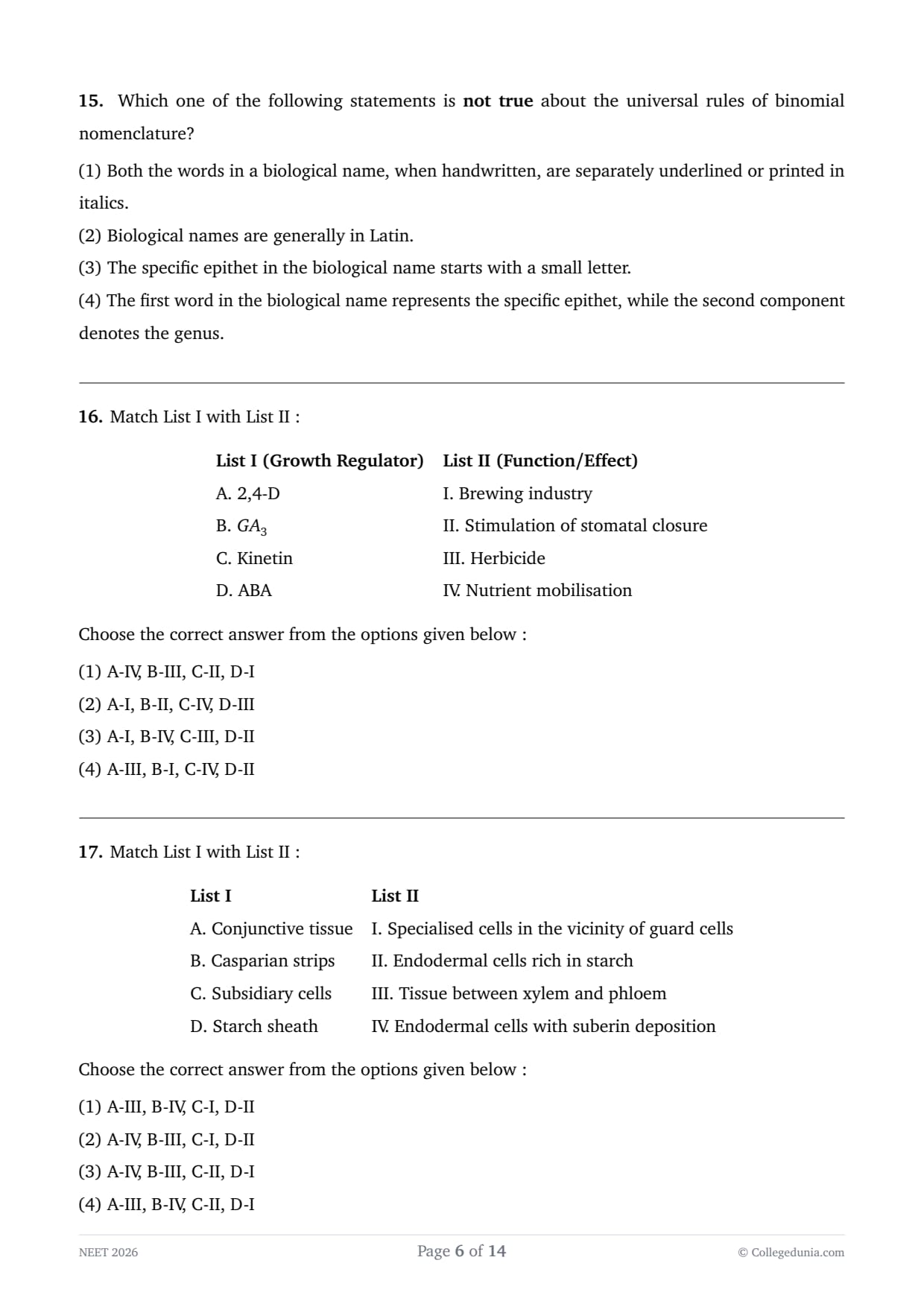
Which one of the following statements is not true about the universal rules of binomial nomenclature?
View Solution
Binomial nomenclature is a formal system of naming species, established by Carolus Linnaeus to provide a standardized name for every organism.
The universal rules are:
Biological Names (2): They are generally in Latin and written in italics to indicate their Latin origin, regardless of their source.
Components (4): The first word in a biological name represents the Genus, while the second component denotes the specific epithet. Statement (4) incorrectly swaps these two.
Handwriting and Printing (1): When handwritten, both words are separately underlined, or printed in italics to indicate their Latin origin.
Capitalization (3): The first word denoting the genus starts with a capital letter while the specific epithet starts with a small letter.
For example, in Mangifera indica, Mangifera is the genus (Capital 'M') and indica is the specific epithet (small 'i'). Quick Tip: Remember Genus = Grand (First and Capital) and specific = small (Second and small letter).
Match List I with List II :
List I (Growth Regulator) & List II (Function/Effect)
A. 2,4-D & I. Brewing industry
B. \(GA_3\) & II. Stimulation of stomatal closure
C. Kinetin & III. Herbicide
D. ABA & IV. Nutrient mobilisation
Choose the correct answer from the options given below :
View Solution
Plant Growth Regulators (PGRs) are small, simple molecules that exert profound effects on plant physiological processes. Each class of hormone has specific industrial and biological applications:
2,4-D (A): 2,4-Dichlorophenoxyacetic acid is a synthetic auxin widely used as a Herbicide (III). It is highly effective in killing broad-leaved (dicotyledonous) weeds while leaving mature monocotyledonous plants unaffected.
\(GA_3\) (B): Gibberellic acid is used in the Brewing industry (I) to speed up the malting process. It stimulates the production of hydrolytic enzymes like \(\alpha\)-amylase in the aleurone layer of germinating seeds.
Kinetin (C): This is a type of cytokinin that promotes Nutrient mobilisation (IV). By enhancing the movement of nutrients to different parts of the plant, cytokinins help in delaying leaf senescence (the Richmond-Lang effect).
ABA (D): Abscisic acid is often called the "stress hormone." It plays a critical role in the Stimulation of stomatal closure (II) during water stress to prevent excessive transpiration. Quick Tip: Remember the "Stress" link: ABA helps plants "close up" during stress. For \(GA_3\), think "G" for "Germination" and "Grain" (malting in brewing).
Match List I with List II :
List I & List II
A. Conjunctive tissue & I. Specialised cells in the vicinity of guard cells
B. Casparian strips & II. Endodermal cells rich in starch
C. Subsidiary cells & III. Tissue between xylem and phloem
D. Starch sheath & IV. Endodermal cells with suberin deposition
Choose the correct answer from the options given below :
View Solution
This question relates to the internal anatomy of flowering plants. Understanding the specific terminology for cell layers and tissues is essential for identifying plant organs (root vs. stem):
Conjunctive tissue (A): In dicot roots, the parenchymatous cells located in the Tissue between xylem and phloem (III) patches are called conjunctive tissue.
Casparian strips (B): These are characteristic of the endodermis in roots. They consist of Endodermal cells with suberin deposition (IV) in the form of water-impermeable waxy material, which forces water to enter the vascular cylinder through the cell cytoplasm.
Subsidiary cells (C): These are Specialised cells in the vicinity of guard cells (I) in the epidermis. They are modified epidermal cells that assist in the movement and regulation of stomatal opening.
Starch sheath (D): In the dicot stem, the endodermis is often referred to as the starch sheath because its Endodermal cells are rich in starch (II) grains. Quick Tip: Casparian strips = Control of water (Suberin). The starch sheath is just another name for the endodermis but specifically in the stem.
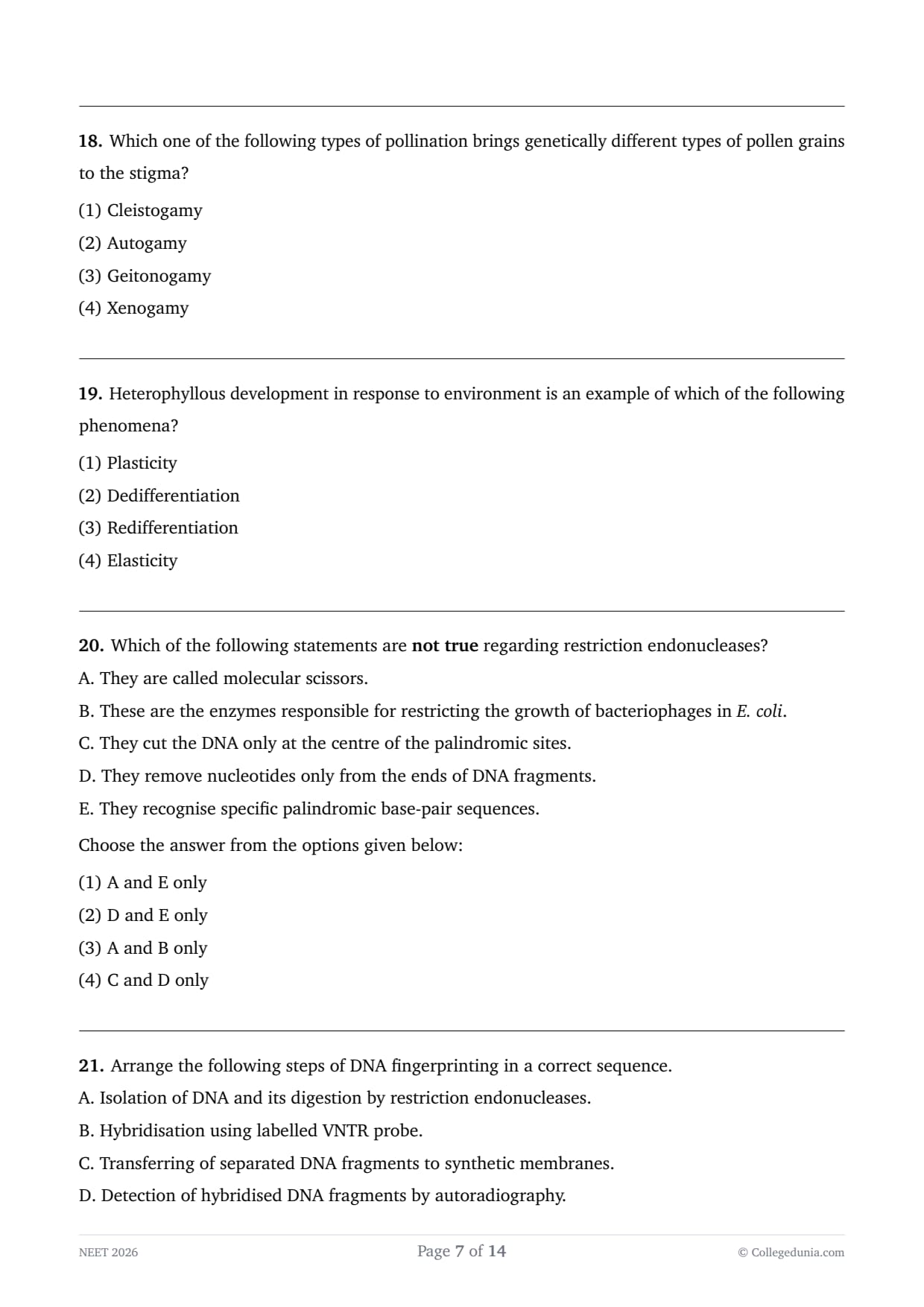
Which one of the following types of pollination brings genetically different types of pollen grains to the stigma?
View Solution
Pollination can be classified based on the source of the pollen grains. The genetic makeup of the offspring depends entirely on whether the pollen comes from the same flower, the same plant, or a different plant:
Xenogamy (4): This involves the transfer of pollen grains from the anther to the stigma of a different plant. This is the only type of pollination which, during pollination, brings genetically different types of pollen grains to the stigma.
Geitonogamy (3): This is the transfer of pollen from the anther to the stigma of another flower on the same plant. Functionally, it is cross-pollination (requires a vector), but genetically it is similar to autogamy because the pollen comes from the same parent.
Autogamy (2): This is the transfer of pollen grains within the same flower. It results in genetic uniformity.
Cleistogamy (1): This occurs in flowers that never open. In such flowers, autogamy is mandatory, and there is no chance of cross-pollination, meaning the offspring are genetically identical to the parent. Quick Tip: Xenogamy = X-tra (Different) plant. It is the only one that truly achieves "Cross-Pollination" in a genetic sense!
Heterophyllous development in response to environment is an example of which of the following phenomena?
View Solution
Plants follow different pathways in response to environment or phases of life to form different kinds of structures. This ability is called plasticity.
A classic example is heterophylly in cotton, coriander, and larkspur, where the leaves of the juvenile plant are different in shape from those in mature plants. In the case of Ranunculus (buttercup), the leaf shapes are modified in response to the environment (air vs. water).
Plasticity: The capacity of an organism to alter its development or phenotype in response to varying environmental conditions.
Dedifferentiation: The process where differentiated cells regain the capacity to divide.
Redifferentiation: The process where cells produced by dedifferentiated tissues lose their ability to divide and become specialized again. Quick Tip: Remember: Plasticity allows P}lants to be flexible with their leaf shapes based on where they grow!
Which of the following statements are not true regarding restriction endonucleases?
A. They are called molecular scissors.
B. These are the enzymes responsible for restricting the growth of bacteriophages in E. coli.
C. They cut the DNA only at the centre of the palindromic sites.
D. They remove nucleotides only from the ends of DNA fragments.
E. They recognise specific palindromic base-pair sequences.
Choose the answer from the options given below:
View Solution
Restriction endonucleases are a class of enzymes that function as part of the bacterial defense system.
Statement C is Not True: Restriction enzymes do not usually cut exactly at the center of the palindromic sequence. Instead, they cut the two strands of DNA at specific points, often slightly away from the center of the palindrome, but between the same two bases on opposite strands, creating "sticky ends."
Statement D is Not True: Removing nucleotides from the ends of DNA is the function of exonucleases. Endonucleases make cuts at specific positions within the DNA.
Statements A, B, and E are True: They are indeed molecular scissors, part of the bacterial defense against phages, and they recognize specific palindromic sequences. Quick Tip: Exo means Exit/End} (removes from ends). Endo} means Inside} (cuts within the strand).
Arrange the following steps of DNA fingerprinting in a correct sequence.
A. Isolation of DNA and its digestion by restriction endonucleases.
B. Hybridisation using labelled VNTR probe.
C. Transferring of separated DNA fragments to synthetic membranes.
D. Detection of hybridised DNA fragments by autoradiography.
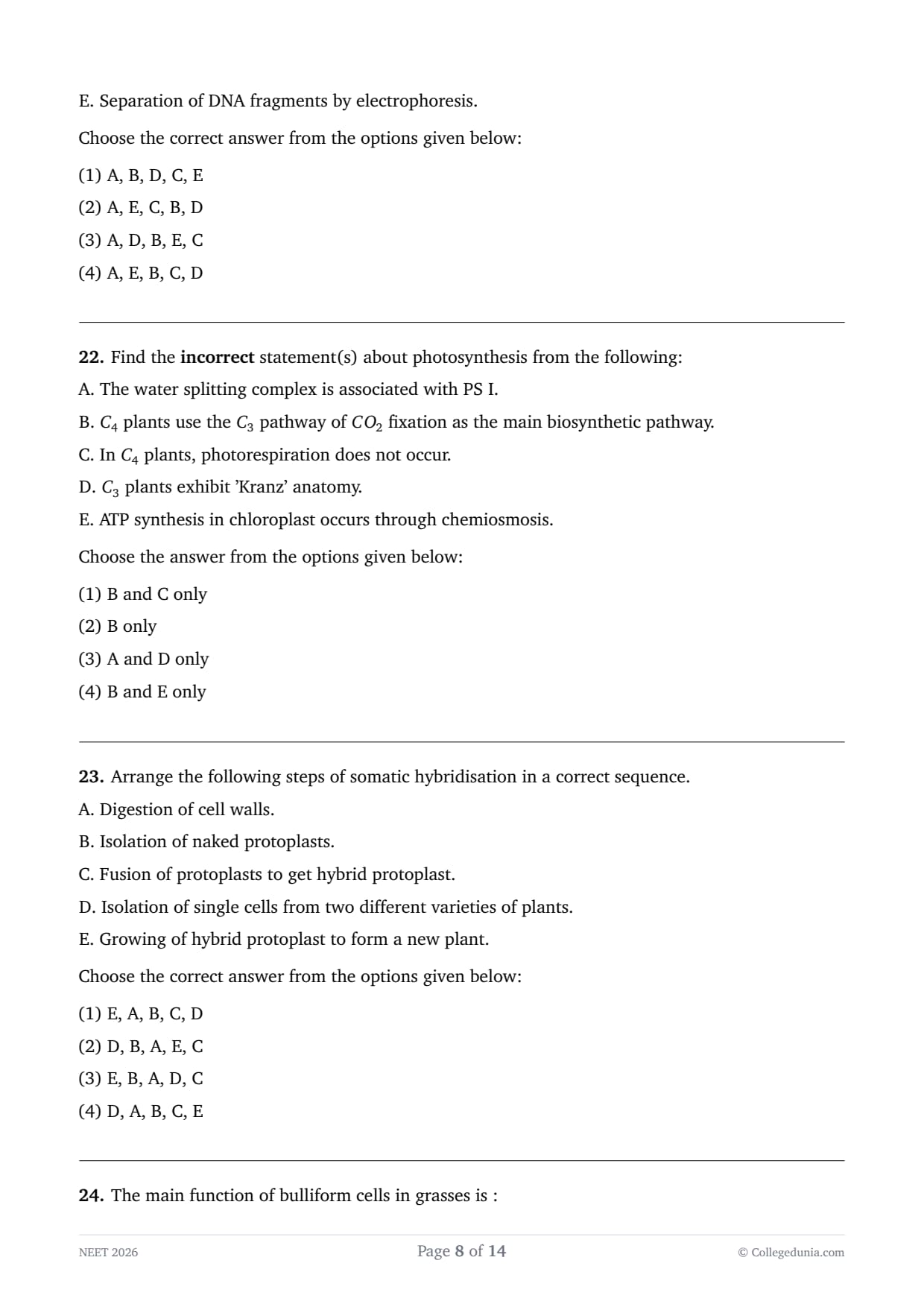
E. Separation of DNA fragments by electrophoresis.
Choose the correct answer from the options given below:
View Solution
DNA fingerprinting involves a specific sequential protocol to identify individuals based on their unique DNA patterns:
Isolation and Digestion (A): DNA is extracted and cut into pieces using restriction enzymes.
Electrophoresis (E): The DNA fragments are separated based on size.
Blotting (C): The separated DNA fragments are transferred (blotted) onto a synthetic membrane (Nitrocellulose or Nylon).
Hybridisation (B): The membrane is treated with a labeled VNTR (Variable Number Tandem Repeat) probe.
Detection (D): The hybridised DNA is visualized using autoradiography. Quick Tip: The process flow: Cut} (A) \(\rightarrow\) Separate} (E) \(\rightarrow\) Transfer} (C) \(\rightarrow\) Probe} (B) \(\rightarrow\) Detect} (D).
Find the incorrect statement(s) about photosynthesis from the following:
A. The water splitting complex is associated with PS I.
B. \(C_4\) plants use the \(C_3\) pathway of \(CO_2\) fixation as the main biosynthetic pathway.
C. In \(C_4\) plants, photorespiration does not occur.
D. \(C_3\) plants exhibit 'Kranz' anatomy.
E. ATP synthesis in chloroplast occurs through chemiosmosis.
Choose the answer from the options given below:
View Solution
Let's analyze each statement to find the inaccuracies:
Statement A is Incorrect: The water-splitting complex (Oxygen Evolving Complex) is associated with Photosystem II (PS II), not PS I. It is located on the inner side of the thylakoid membrane.
Statement D is Incorrect: \(C_4\) plants exhibit Kranz anatomy, which is characterized by bundle sheath cells arranged in a wreath-like manner. \(C_3\) plants do not have this structure.
Statement B is Correct: Even in \(C_4\) plants, the actual synthesis of sugars occurs via the \(C_3\) cycle (Calvin Cycle) in the bundle sheath cells.
Statement C is Correct: \(C_4\) plants have a mechanism to increase \(CO_2\) concentration around RuBisCO, thereby minimizing photorespiration.
Statement E is Correct: Both mitochondria and chloroplasts use the chemiosmotic gradient to synthesize ATP. Quick Tip: PS II} is for II}ydrogen (splitting water into \(H^+\) and \(O_2\)). Kranz = \(C_4\) (Wreath-like cells).
Arrange the following steps of somatic hybridisation in a correct sequence.
A. Digestion of cell walls.
B. Isolation of naked protoplasts.
C. Fusion of protoplasts to get hybrid protoplast.
D. Isolation of single cells from two different varieties of plants.
E. Growing of hybrid protoplast to form a new plant.
Choose the correct answer from the options given below:
View Solution
Somatic hybridisation is the process of fusing protoplasts from two different plant varieties to create a hybrid:
Cell Selection (D): Start by isolating single cells from the desired varieties.
Wall Digestion (A): Use enzymes like cellulase and pectinase to digest the plant cell walls.
Protoplast Isolation (B): This leaves you with "naked" protoplasts (cells without walls).
Fusion (C): Fuse the protoplasts (often using PEG) to form a hybrid protoplast.
Regeneration (E): Culture the hybrid protoplast to grow into a whole new plant. Quick Tip: Think of it as: Get cells} \(\rightarrow\) Take off their coats} (walls) \(\rightarrow\) Merge them} \(\rightarrow\) Grow the hybrid}.
The main function of bulliform cells in grasses is :
View Solution
Bulliform cells are large, bubble-shaped epidermal cells that occur in groups on the upper surface of the leaves of many grasses.
When these cells absorb water and are turgid, the leaf surface is exposed (open).
When they lose water due to water stress, they become flaccid and cause the leaves to curl inwards to minimize water loss by reducing the exposed surface area. Quick Tip: Bulliform cells act like "Hydraulic Hinges" that fold the leaf to save water!
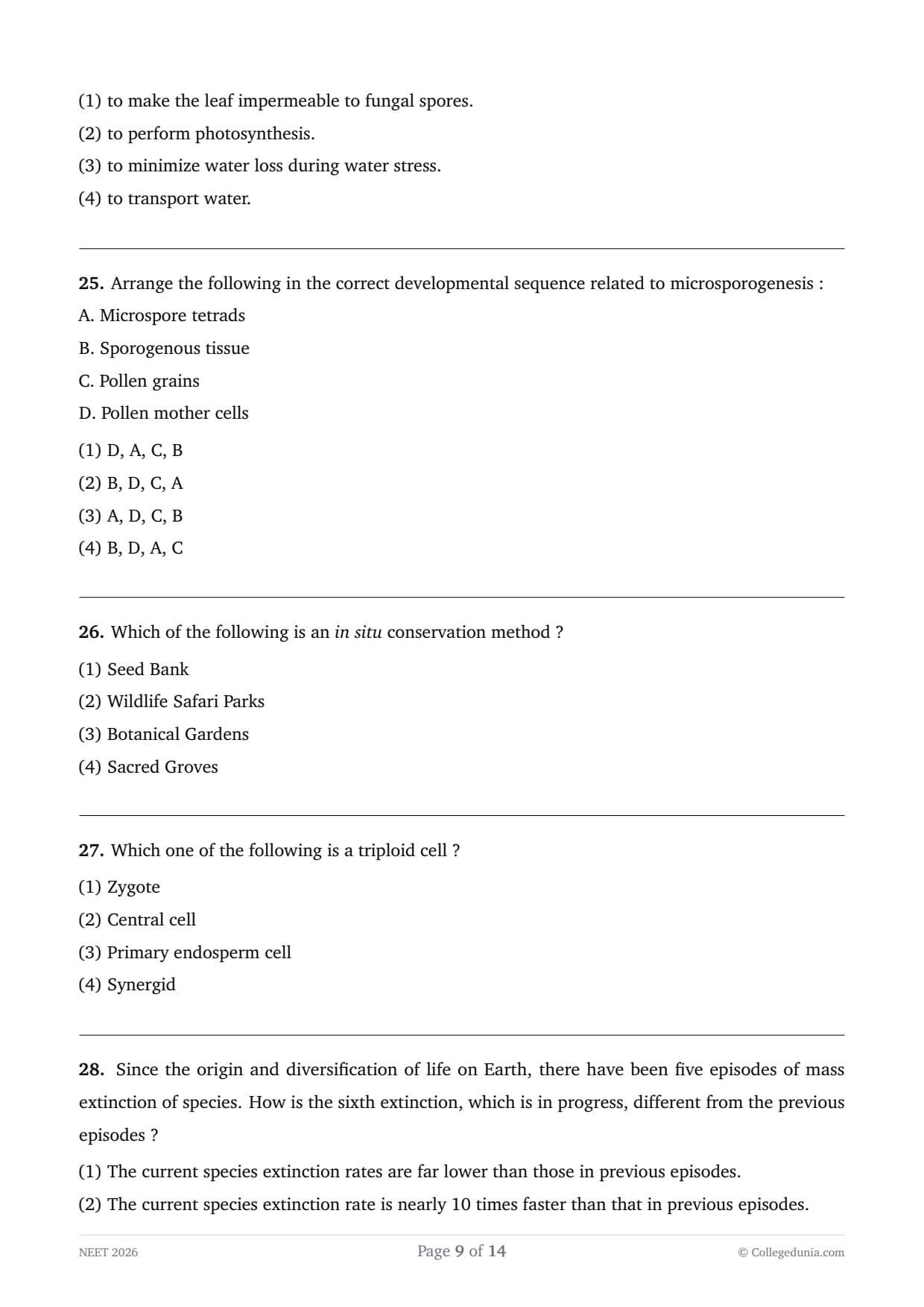
Arrange the following in the correct developmental sequence related to microsporogenesis :
A. Microspore tetrads
B. Sporogenous tissue
C. Pollen grains
D. Pollen mother cells
View Solution
Microsporogenesis is the biological process by which pollen grains are formed within the anther of a flower. The sequential stages of this development are highly regulated:
Sporogenous tissue (B): Initially, a young anther contains a mass of compactly arranged homogenous cells called sporogenous tissue located at the center of each microsporangium.
Pollen mother cells (D): As the anther develops, the cells of the sporogenous tissue undergo modifications to become potential pollen mother cells (PMCs) or microspore mother cells.
Microspore tetrads (A): Each PMC undergoes meiosis (reduction division) to produce a cluster of four haploid cells known as a microspore tetrad.
Pollen grains (C): As the anther matures and dehydrates, the microspores dissociate from each other and develop into individual pollen grains, which represent the male gametophyte. Quick Tip: To remember the sequence: S}porogenous \(\rightarrow\) M}other cell \(\rightarrow\) T}etrad \(\rightarrow\) P}ollen. (Think: S}ome M}others T}each P}atience).
Which of the following is an in situ conservation method ?
View Solution
Biodiversity conservation is categorized into two main strategies based on whether the protection occurs inside or outside the natural habitat:
In situ Conservation (On-site): This approach aims to protect the entire ecosystem in its natural location. Sacred Groves are tracts of forest that are traditionally protected by local communities due to religious beliefs. Other examples include National Parks, Biosphere Reserves, and Sanctuaries.
Ex situ Conservation (Off-site): This involves removing threatened species from their natural habitats and placing them in special settings where they can be protected and cared for. Examples include Seed Banks, Wildlife Safari Parks, and Botanical Gardens. Quick Tip: In} situ = In} the natural home. Ex} situ = Ex}it from the home (to a park/lab/bank).
Which one of the following is a triploid cell ?
View Solution
In angiosperms, double fertilization leads to the formation of structures with different ploidy levels:
Primary endosperm cell (PEC): During double fertilization, one male gamete (\(n\)) fuses with the two polar nuclei (\(n+n\)) of the central cell. This process is called triple fusion, resulting in a triploid (\(3n\)) Primary Endosperm Nucleus (PEN) within the PEC.
Zygote: Formed by the fusion of a male gamete (\(n\)) with an egg cell (\(n\)). It is diploid (\(2n\)).
Central cell: Before fertilization, it contains two polar nuclei (\(n+n\)). While often treated as diploid (\(2n\)) in simplified contexts, it is technically dikaryotic.
Synergid: Part of the egg apparatus in the embryo sac, these cells are haploid (\(n\)). Quick Tip: Endosperm = 3}n (Triple fusion). Most other structures in the embryo sac are 1}n, and the zygote is 2}n.
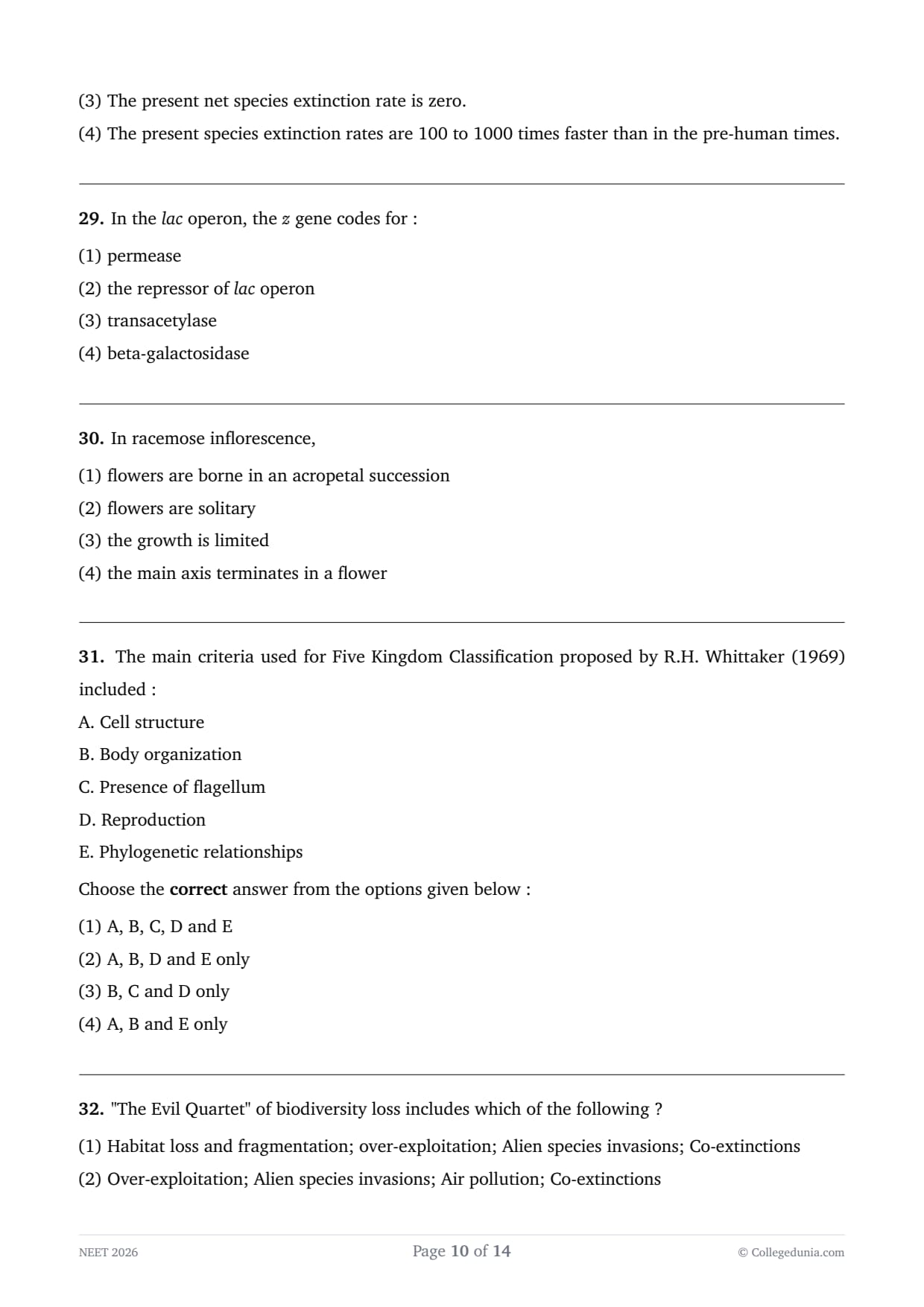
Since the origin and diversification of life on Earth, there have been five episodes of mass extinction of species. How is the sixth extinction, which is in progress, different from the previous episodes ?
View Solution
The Earth is currently witnessing the "Sixth Extinction," but unlike the previous five mass extinctions (such as the one that wiped out the dinosaurs), this one has distinct characteristics:
Anthropogenic Cause: The previous extinctions were caused by natural disasters (volcanic eruptions, asteroid impacts). The current episode is primarily driven by human activities like habitat destruction and over-exploitation.
Accelerated Rate: Estimates suggest that the current rate of species loss is 100 to 1000 times faster than the natural background (pre-human) rates of extinction. Quick Tip: The Sixth Extinction is "Man-made" and moving at a "Super-speed" compared to the past natural extinctions.
In the lac operon, the z gene codes for :
View Solution
The lac operon in E. coli is a polycistronic structural gene regulated by a common promoter and regulatory genes. The three structural genes code for specific enzymes required for lactose metabolism:
z gene: Codes for beta-galactosidase (\(\beta\)-gal), which is primarily responsible for the hydrolysis of the disaccharide lactose into its monomeric units, galactose and glucose.
y gene: Codes for permease, which increases the permeability of the cell to \(\beta\)-galactosides (lactose).
a gene: Codes for transacetylase. Quick Tip: Remember the order Z-Y-A and their enzymes B-P-T: Z} \(\rightarrow\) B}eta-gal, Y} \(\rightarrow\) P}ermease, A} \(\rightarrow\) T}ransacetylase.
In racemose inflorescence,
View Solution
Inflorescence is the arrangement of flowers on the floral axis. In the racemose type of inflorescence:
The main axis continues to grow indefinitely (unlimited growth).
The flowers are borne laterally in an acropetal succession, meaning the oldest flowers are at the base and the youngest (buds) are at the apex.
In contrast, in cymose inflorescence, the main axis terminates in a flower, has limited growth, and flowers are borne in a basipetal succession. Quick Tip: R}acemose = R}unning (unlimited growth) + A}cropetal (bottom to top). C}ymose = C}losed (limited growth).
The main criteria used for Five Kingdom Classification proposed by R.H. Whittaker (1969) included :
A. Cell structure
B. Body organization
C. Presence of flagellum
D. Reproduction
E. Phylogenetic relationships
Choose the correct answer from the options given below :
View Solution
R.H. Whittaker's Five Kingdom Classification (Monera, Protista, Fungi, Plantae, and Animalia) was based on several sophisticated scientific criteria:
Cell structure (A): Distinguishing between prokaryotic and eukaryotic cell types.
Body organization (B): Complexity of the organism (unicellular vs. multicellular/tissue/organ levels).
Mode of nutrition: (Not listed in the prompt but a primary criterion).
Reproduction (D): Methods of producing offspring.
Phylogenetic relationships (E): Evolutionary history and ancestry.
Whittaker did not use the presence of a flagellum (C) as a primary criterion for defining the five kingdoms. Therefore, statements A, B, D, and E are the correct ones. Quick Tip: To remember the 5 criteria: Cell, Body, Nutrition, Reproduction, Phylogeny. (Clever Boys Never Read Poetry).
"The Evil Quartet" of biodiversity loss includes which of the following ?
View Solution
The "Evil Quartet" is a term used to describe the four major causes of accelerated species extinction in the world today:
Habitat loss and fragmentation: The most important cause (e.g., clearing the Amazon rainforest).
Over-exploitation: Humans harvesting more than can be replenished (e.g., Steller’s sea cow).
Alien species invasions: Introduction of non-native species that outcompete locals (e.g., Nile perch in Lake Victoria).
Co-extinctions: When a host becomes extinct, the organisms strictly dependent on it also perish.
Pollution (Air or Water), while harmful, is not considered one of the four components of the "Evil Quartet" in standard ecological texts. Quick Tip: The Evil Quartet: Habitat, Over-use, Aliens, Co-extinction. (Mnemonic: HOAC).
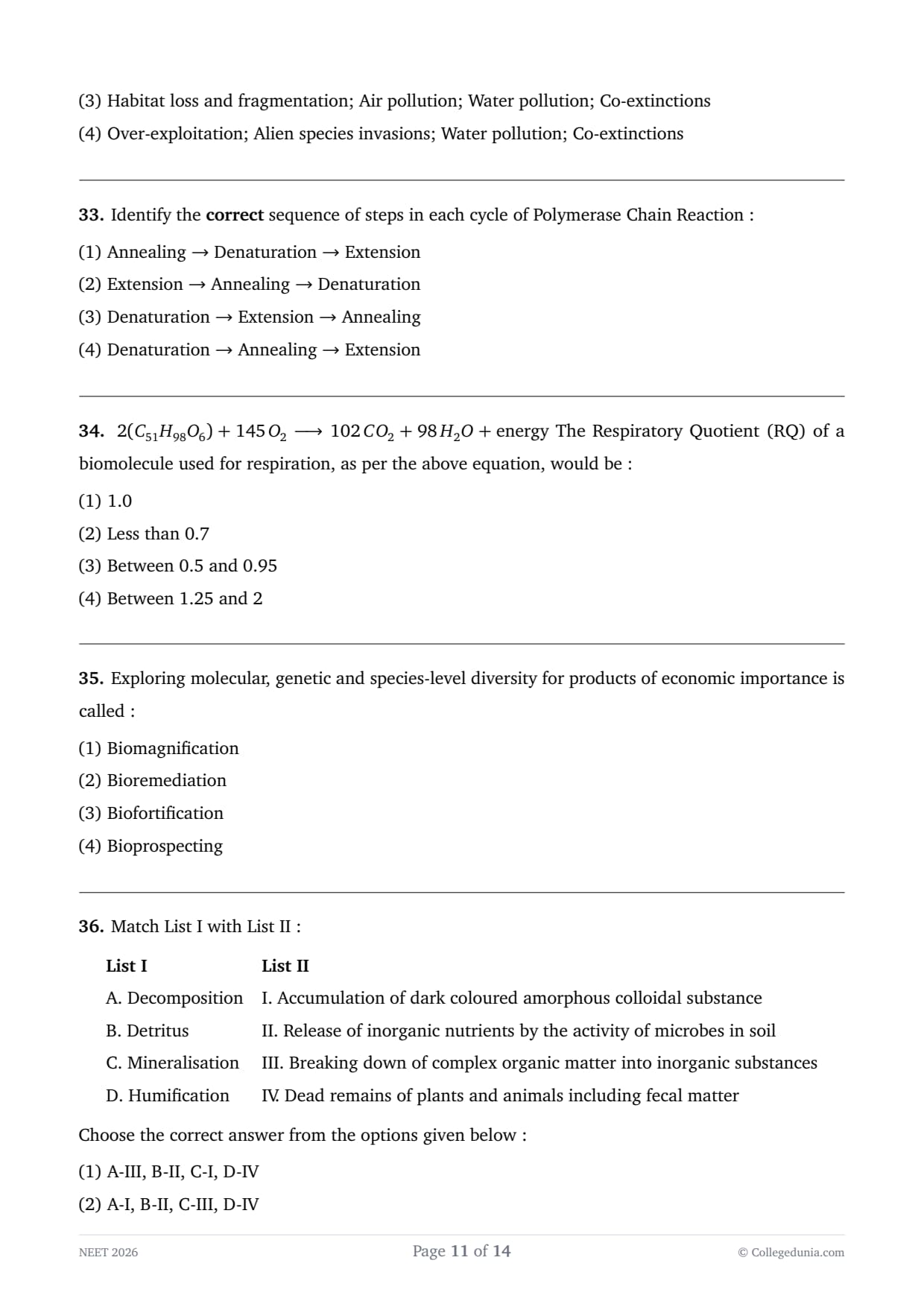
Identify the correct sequence of steps in each cycle of Polymerase Chain Reaction :
View Solution
The Polymerase Chain Reaction (PCR) is used to amplify DNA in vitro. Each cycle consists of three steps in a specific thermal sequence:
Denaturation: Heating the target DNA to approximately \(94^\circC\) to separate the double-stranded DNA into single strands.
Annealing: Lowering the temperature to allow primers to bind to their complementary sequences on the single-stranded DNA.
Extension: The temperature is adjusted (usually to \(72^\circC\)) to allow Taq polymerase to synthesize new DNA strands starting from the primers. Quick Tip: Remember the order D-A-E: Denature (Heat), Anneal (Cool), Extend (Synthesize).
\(2(C_{51}H_{98}O_{6}) + 145\,O_{2} \longrightarrow 102\,CO_{2} + 98\,H_{2}O + energy\)
The Respiratory Quotient (RQ) of a biomolecule used for respiration, as per the above equation, would be :
View Solution
The Respiratory Quotient (RQ) is defined as the ratio of the volume of \(CO_{2}\) evolved to the volume of \(O_{2}\) consumed during respiration.
The calculation based on the provided balanced chemical equation for Tripalmitin (a fat) is as follows:
Formula: \(RQ = \frac{Volume of CO_{2} evolved}{Volume of O_{2} consumed}\)
Values from Equation: \(CO_{2}\) evolved = 102 molecules; \(O_{2}\) consumed = 145 molecules.
Calculation: \(RQ = \frac{102}{145} \approx 0.7\)
In the given options, \(0.7\) falls under the category of being "Less than 1.0". However, strictly speaking for fats, the value is \(0.7\). Since the options provide specific ranges, and \(102/145\) is exactly \(0.703\), it is generally recognized as being less than \(1.0\). Most textbooks specify that for fats, RQ is always less than \(1.0\) (typically \(0.7\)). Quick Tip: Remember the standard RQ values: Carbohydrates = 1.0, Proteins \(\approx\) 0.9, and Fats = 0.7.
Exploring molecular, genetic and species-level diversity for products of economic importance is called :
View Solution
Biodiversity offers vast economic benefits, and the systematic search for these benefits is a specialized field of study.
Bioprospecting: This is the process of exploring biological resources (at molecular, genetic, or species levels) to find genes or compounds that can be developed into commercially valuable products, such as medicines or industrial chemicals.
Biomagnification: The increase in the concentration of toxic substances at successive trophic levels.
Bioremediation: The use of microorganisms to clean up contaminated environments.
Biofortification: Breeding crops with higher levels of vitamins, minerals, or proteins to improve public health. Quick Tip: Think of Bioprospecting as "Biological Prospecting"—just like miners prospect for gold, scientists prospect for valuable biological "treasures."
Match List I with List II :
List I & List II
A. Decomposition & I. Accumulation of dark coloured amorphous colloidal substance
B. Detritus & II. Release of inorganic nutrients by the activity of microbes in soil
C. Mineralisation & III. Breaking down of complex organic matter into inorganic substances
D. Humification & IV. Dead remains of plants and animals including fecal matter
Choose the correct answer from the options given below :
View Solution
Decomposition is a complex process involving the breakdown of organic matter into simpler inorganic components.
The correct matches are:
Decomposition (A): The process of breaking down complex organic matter into inorganic substances like \(CO_{2}\), water, and nutrients (III).
Detritus (B): The raw material for decomposition, consisting of dead remains of plants and animals (IV).
Mineralisation (C): The final step where inorganic nutrients are released into the soil by microbial activity (II).
Humification (D): The process that leads to the accumulation of humus, a dark-coloured amorphous substance (I). Quick Tip: Remember the order: Fragmentation \(\rightarrow\) Leaching \(\rightarrow\) Catabolism \(\rightarrow\) Humification \(\rightarrow\) Mineralisation.
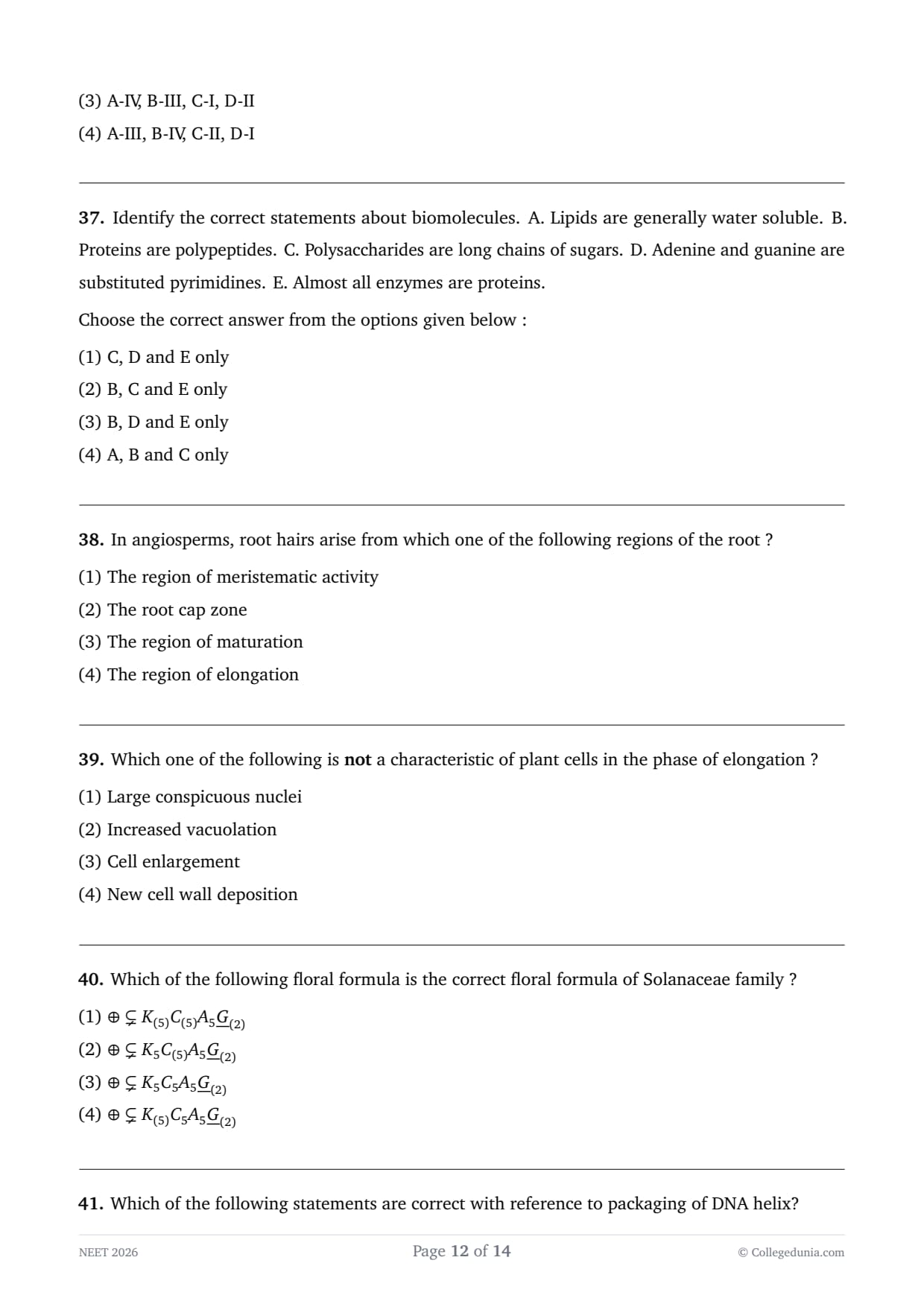
Identify the correct statements about biomolecules.
A. Lipids are generally water soluble.
B. Proteins are polypeptides.
C. Polysaccharides are long chains of sugars.
D. Adenine and guanine are substituted pyrimidines.
E. Almost all enzymes are proteins.
Choose the correct answer from the options given below :
View Solution
Biomolecules are the organic molecules that make up living organisms. Let's evaluate each statement:
Statement A is Incorrect: Lipids are water-insoluble (hydrophobic) molecules.
Statement B is Correct: Proteins are linear chains of amino acids linked by peptide bonds, hence they are polypeptides.
Statement C is Correct: Polysaccharides (like starch or cellulose) are polymers consisting of long chains of monosaccharides (sugars).
Statement D is Incorrect: Adenine and Guanine are Purines (double-ring structures), not pyrimidines. Cytosine, Uracil, and Thymine are pyrimidines.
Statement E is Correct: While some RNA molecules (ribozymes) act as catalysts, almost all enzymes are proteins.
The correct statements are B, C, and E. Quick Tip: To remember nitrogenous bases: Pure As Gold (Purines = Adenine, Guanine). Pyrimidines are CUT (Cytosine, Uracil, Thymine).
In angiosperms, root hairs arise from which one of the following regions of the root ?
View Solution
A typical root is divided into several distinct zones, each with a specific function:
Region of Maturation: In this zone, the cells differentiate and mature. Some epidermal cells in this region form very fine, delicate, thread-like structures called root hairs, which are responsible for absorbing water and minerals from the soil.
Root Cap: Protects the tender apex of the root as it makes its way through the soil.
Meristematic Zone: Region of active cell division.
Region of Elongation: Responsible for the growth of the root in length. Quick Tip: Remember: Roots "grow" in the elongation zone, but they "drink" (absorb) through root hairs in the maturation zone.
Which one of the following is not a characteristic of plant cells in the phase of elongation ?
View Solution
Cell growth in plants occurs in phases: meristematic, elongation, and maturation.
Characteristics of the Elongation Phase include:
Increased vacuolation: The development of a large central vacuole (2).
Cell enlargement: The overall size of the cell increases (3).
New cell wall deposition: The addition of cell wall material to accommodate the larger size (4).
Large conspicuous nuclei (1) is a characteristic of cells in the meristematic phase, where cells are actively dividing and have dense cytoplasm with prominent nuclei. In the elongation phase, the nucleus often becomes less conspicuous as the vacuole occupies more space. Quick Tip: Meristematic cells are the "active babies"—they have huge nuclei and dense cytoplasm. Elongating cells are "teenagers"—they get taller and fill up with vacuoles!
Which of the following floral formula is the correct floral formula of Solanaceae family ?
View Solution
The Solanaceae (Potato family) is characterized by specific floral traits represented in its floral formula:
\(\oplus\): Actinomorphic symmetry.
\(\subsetneq\): Bisexual flower.
\(K_{(5)}\): Calyx has 5 sepals, which are gamosepalous (united/fused).
\(C_{(5)}\): Corolla has 5 petals, which are gamopetalous (united/fused).
\(A_{5}\): Androecium has 5 stamens, which are epipetalous (attached to petals).
\(G_{(2)}\): Gynoecium is bicarpellary, syncarpous (united), with a superior ovary.
Option (1) correctly shows the brackets indicating fusion for both the calyx and corolla, which is essential for Solanaceae. Quick Tip: The "Potato Family" (Solanaceae) likes to "stay together"—everything (K, C, and G) is fused, represented by brackets in the formula!
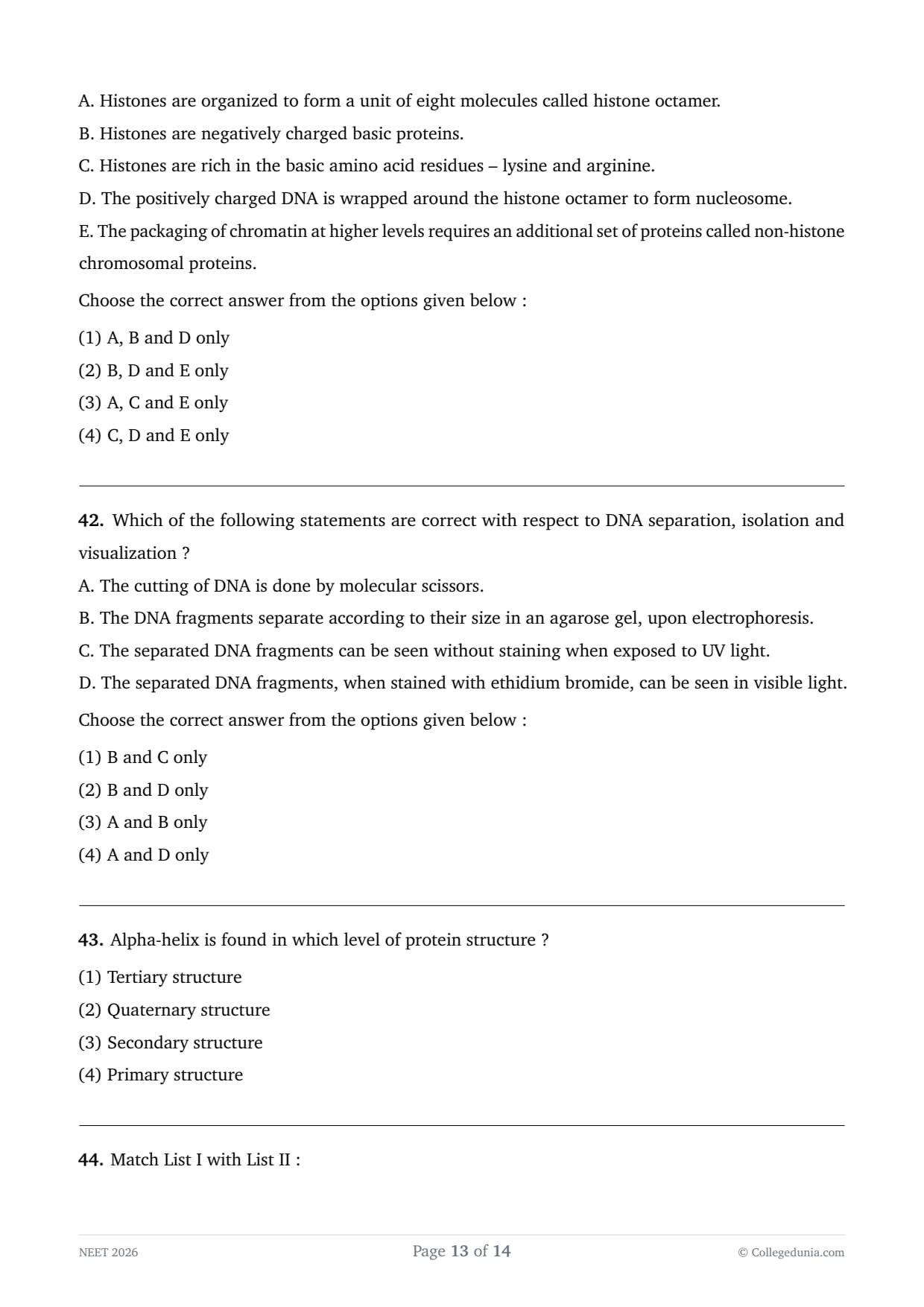
Which of the following statements are correct with reference to packaging of DNA helix?
A. Histones are organized to form a unit of eight molecules called histone octamer.
B. Histones are negatively charged basic proteins.
C. Histones are rich in the basic amino acid residues – lysine and arginine.
D. The positively charged DNA is wrapped around the histone octamer to form nucleosome.
E. The packaging of chromatin at higher levels requires an additional set of proteins called non-histone chromosomal proteins.
Choose the correct answer from the options given below :
View Solution
The packaging of DNA is a complex process that allows long DNA threads to fit into the microscopic nucleus. The evaluation of the statements is as follows:
Statement A is Correct: Histones are indeed organized into a unit of eight molecules to form the histone octamer.
Statement B is Incorrect: Histones are positively charged proteins, not negatively charged. Their basic nature and positive charge allow them to interact with the negatively charged DNA.
Statement C is Correct: Histones acquire their charge because they are rich in basic amino acid residues like lysine and arginine, both of which carry positive charges in their side chains.
Statement D is Incorrect: The statement is inverted. It is the negatively charged DNA that is wrapped around the positively charged histone octamer to form the nucleosome.
Statement E is Correct: While nucleosomes represent the first level of packaging, further condensation of chromatin into chromosomes requires Non-Histone Chromosomal (NHC) proteins.
Therefore, statements A, C, and E are the only correct ones. Quick Tip: Remember: DNA is Decidedly Negative (due to phosphate groups). Histones are Highly positive basic proteins. Opposites attract to form the nucleosome!
Which of the following statements are correct with respect to DNA separation, isolation and visualization ?
A. The cutting of DNA is done by molecular scissors.
B. The DNA fragments separate according to their size in an agarose gel, upon electrophoresis.
C. The separated DNA fragments can be seen without staining when exposed to UV light.
D. The separated DNA fragments, when stained with ethidium bromide, can be seen in visible light.
Choose the correct answer from the options given below :
View Solution
Genetic engineering relies on the precise manipulation of DNA. Let's analyze the procedural statements:
Statement A is Correct: Molecular scissors is the common term used for Restriction Endonucleases, which cut DNA at specific palindromic sequences.
Statement B is Correct: In gel electrophoresis, DNA fragments (which are negatively charged) move toward the anode. The agarose gel acts as a sieve; hence, the fragments separate based on their size (shorter fragments move faster and farther).
Statement C is Incorrect: Separated DNA fragments are invisible to the naked eye and cannot be seen under UV light without being stained first.
Statement D is Incorrect: Even after staining with Ethidium Bromide, DNA cannot be seen in normal visible light. It only becomes visible as bright orange-colored bands when exposed to UV radiation.
Since only A and B are factually correct, option (3) is the right choice. Quick Tip: For visualization, remember: EtBr + UV = Orange Bands. You cannot skip either the stain or the specific light source!
Alpha-helix is found in which level of protein structure ?
View Solution
Protein structure is organized into four hierarchical levels:
Primary Structure: The linear sequence of amino acids in a polypeptide chain.
Secondary Structure: Refers to local folded structures that form within a polypeptide due to hydrogen bonding between the backbone atoms. The Alpha-helix and Beta-pleated sheets are the two most common types of secondary structure.
Tertiary Structure: The overall three-dimensional shape of a single polypeptide chain, formed by folding the secondary structures.
Quaternary Structure: The arrangement of multiple folded protein subunits in a multi-subunit complex (e.g., Haemoglobin). Quick Tip: Think of protein levels like a phone cord: The wire is Primary, the coiling of the wire is Secondary, the tangled mess of the cord is Tertiary, and multiple cords together is Quaternary.
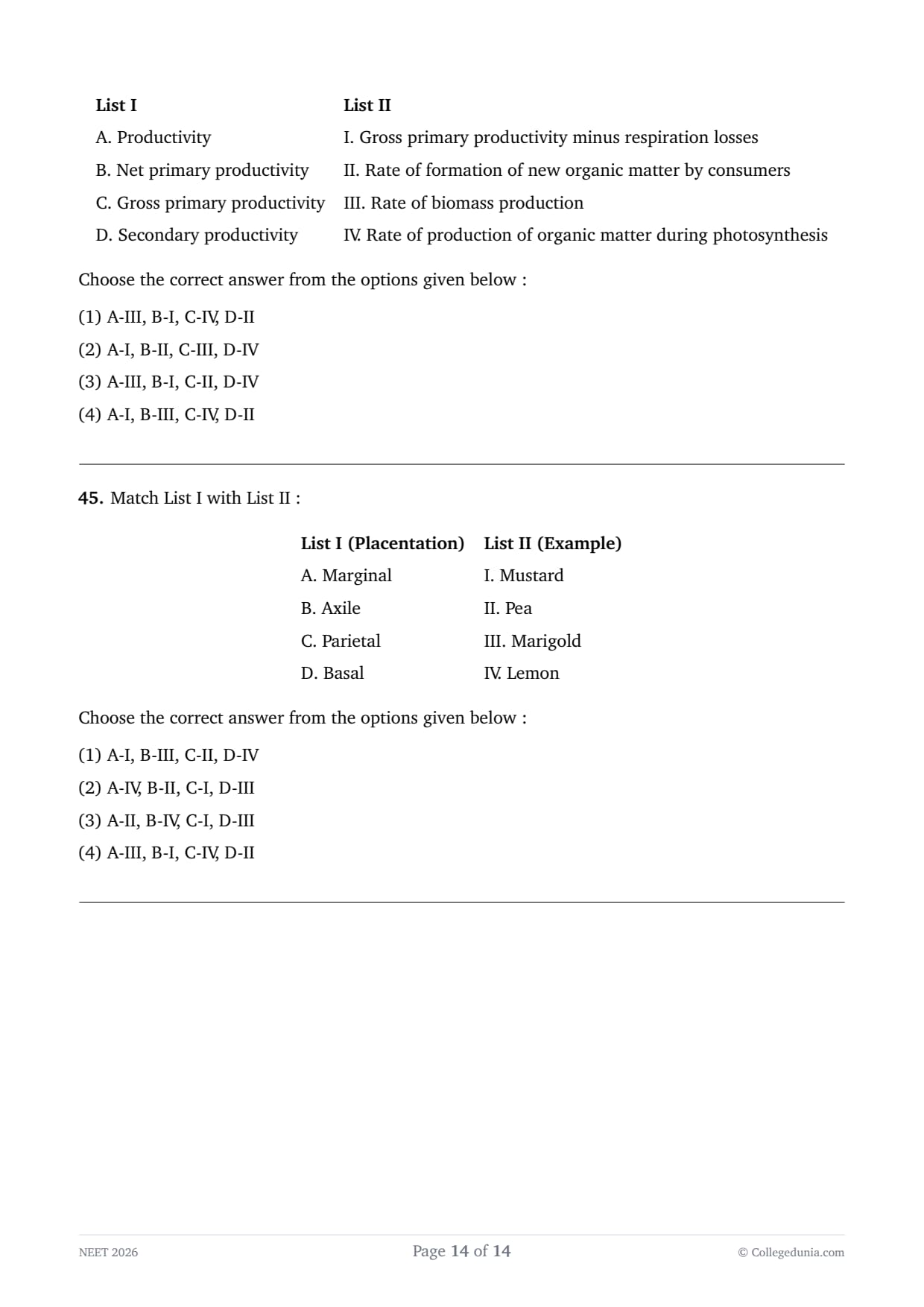
Match List I with List II :
List I & List II
A. Productivity & I. Gross primary productivity minus respiration losses
B. Net primary productivity & II. Rate of formation of new organic matter by consumers
C. Gross primary productivity & III. Rate of biomass production
D. Secondary productivity & IV. Rate of production of organic matter during photosynthesis
Choose the correct answer from the options given below :
View Solution
Ecosystem energetics involves the rate at which organic matter is created. The correct matches are:
Productivity (A): General term for the rate of biomass production (III).
Net primary productivity (B): The organic matter available to consumers, calculated as Gross primary productivity minus respiration losses (I). Equation: \(NPP = GPP - R\).
Gross primary productivity (C): The total rate of production of organic matter during photosynthesis by producers (IV).
Secondary productivity (D): Defined as the rate of formation of new organic matter by consumers (II).
Matching these gives A-III, B-I, C-IV, D-II. Quick Tip: Gross is the Total check, Respiration is the Tax, and Net is what you actually get to Keep (and pass on to the next level).
Match List I with List II :
List I (Placentation) & List II (Example)
A. Marginal & I. Mustard
B. Axile & II. Pea
C. Parietal & III. Marigold
D. Basal & IV. Lemon
Choose the correct answer from the options given below :
View Solution
Placentation refers to the arrangement of ovules within the ovary. The correct examples for each type are:
Marginal (A): The placenta forms a ridge along the ventral suture of the ovary. Example: Pea (II).
Axile (B): The placenta is axial and the ovules are attached to it in a multilocular ovary. Examples: Lemon (IV), Tomato, China rose.
Parietal (C): The ovules develop on the inner wall of the ovary or on peripheral parts. Examples: Mustard (I), Argemone.
Basal (D): The placenta develops at the base of the ovary and a single ovule is attached to it. Examples: Marigold (III), Sunflower.
Matching these results in A-II, B-IV, C-I, D-III. Quick Tip: Use mnemonics! Marginal Pea (Map), Axile China Tomato Lemon (ACTL), Parietal Mustard Argemone (PMA), Basal Sunflower Marigold (BSM).
NEET 2026 Botany Topic-Wise Weightage
| Topic | Expected Questions |
|---|---|
| Molecular Basis of Inheritance | 6–7 |
| Biotechnology: Principles and Processes | 5–6 |
| Biotechnology and Its Applications | 4–5 |
| Plant Kingdom | 3–5 |
| Morphology of Flowering Plants | 3–4 |
| Cell: The Unit of Life | 3–4 |
| Biomolecules | 3–4 |
| Sexual Reproduction in Flowering Plants | 3–5 |
| Photosynthesis in Higher Plants | 2–3 |
| Plant Growth and Development | 2–3 |
| Anatomy of Flowering Plants | 2–3 |
| Respiration in Plants | 1–2 |
| Biological Classification | 1–2 |
| The Living World | 1 |




Comments