




The National Testing Agency (NTA) conducted the CUET PG 2026 Electronics & Communication Engineering (MTQP05) examination on March 17, 2026, during Shift 3 from 04:00 PM to 05:30 PM.
Students who appeared for the exam reported that the overall difficulty level of the paper was moderate. CUET PG 2026 Electronics and Communication Engineering Question Paper with Solutions PDF is available here for download. The marking scheme is +4 for correct answers and -1 for wrong answers, totaling 300 marks.
CUET PG 2026 Electronics and Communication Engineering Question Paper with Solutions PDF
| CUET PG 2026 Electronics and Communication Engineering Question Paper with Answer Key | Download PDF | Check Solutions |
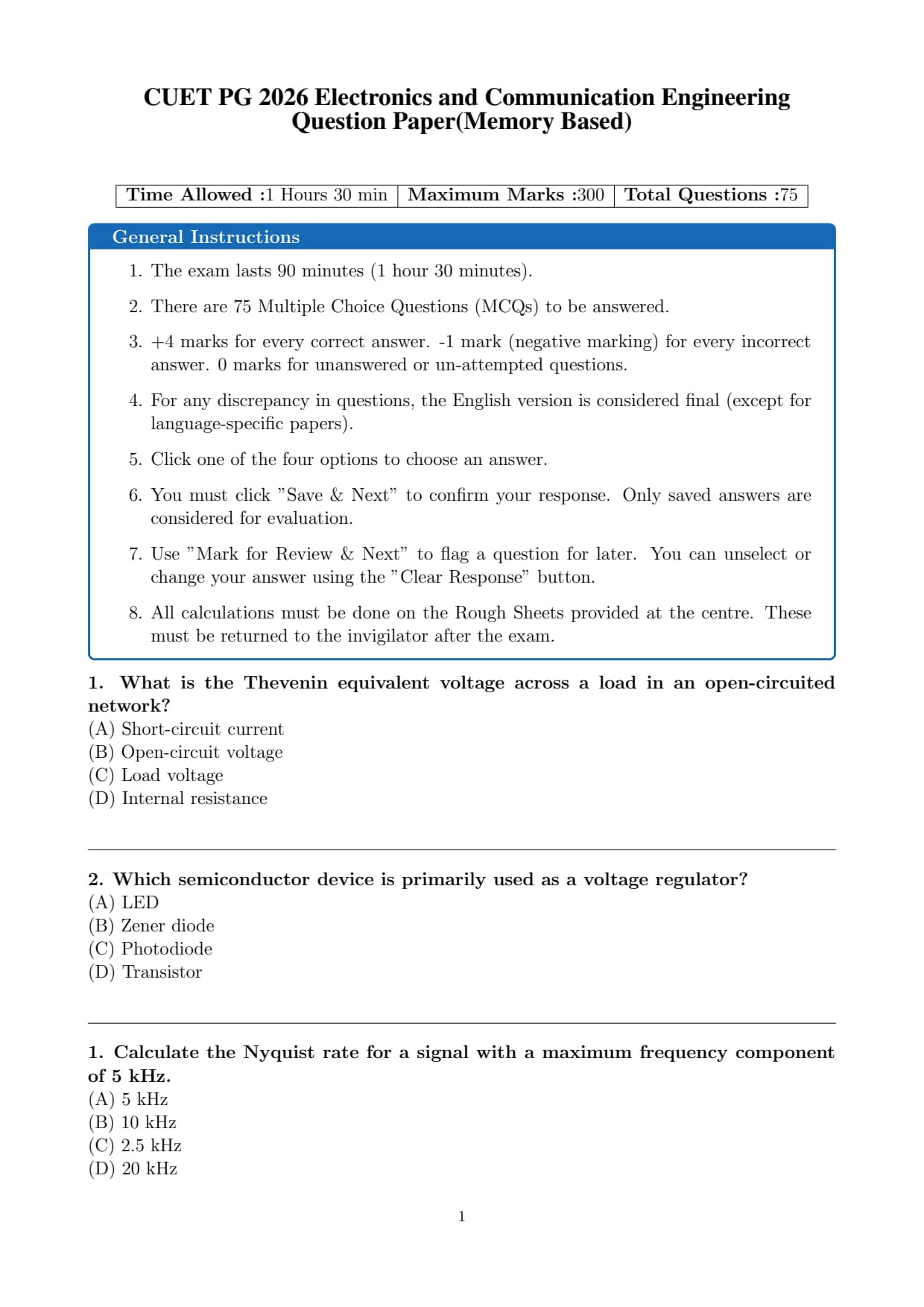
What is the Thevenin equivalent voltage across a load in an open-circuited network?
Which semiconductor device is primarily used as a voltage regulator?
Calculate the Nyquist rate for a signal with a maximum frequency component of 5 kHz.
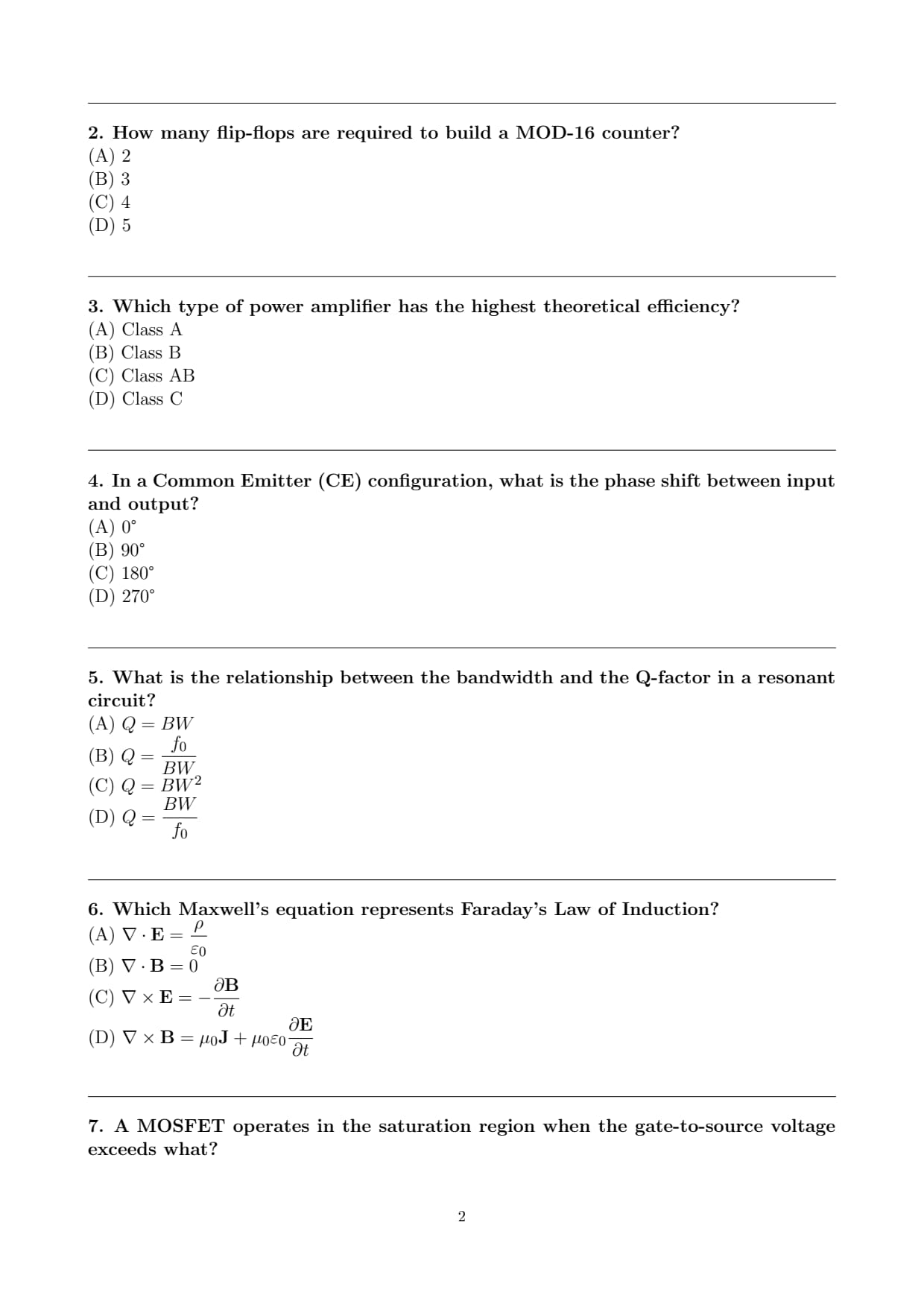
How many flip-flops are required to build a MOD-16 counter?
Which type of power amplifier has the highest theoretical efficiency?
In a Common Emitter (CE) configuration, what is the phase shift between input and output?
What is the relationship between the bandwidth and the Q-factor in a resonant circuit?
Which Maxwell's equation represents Faraday's Law of Induction?
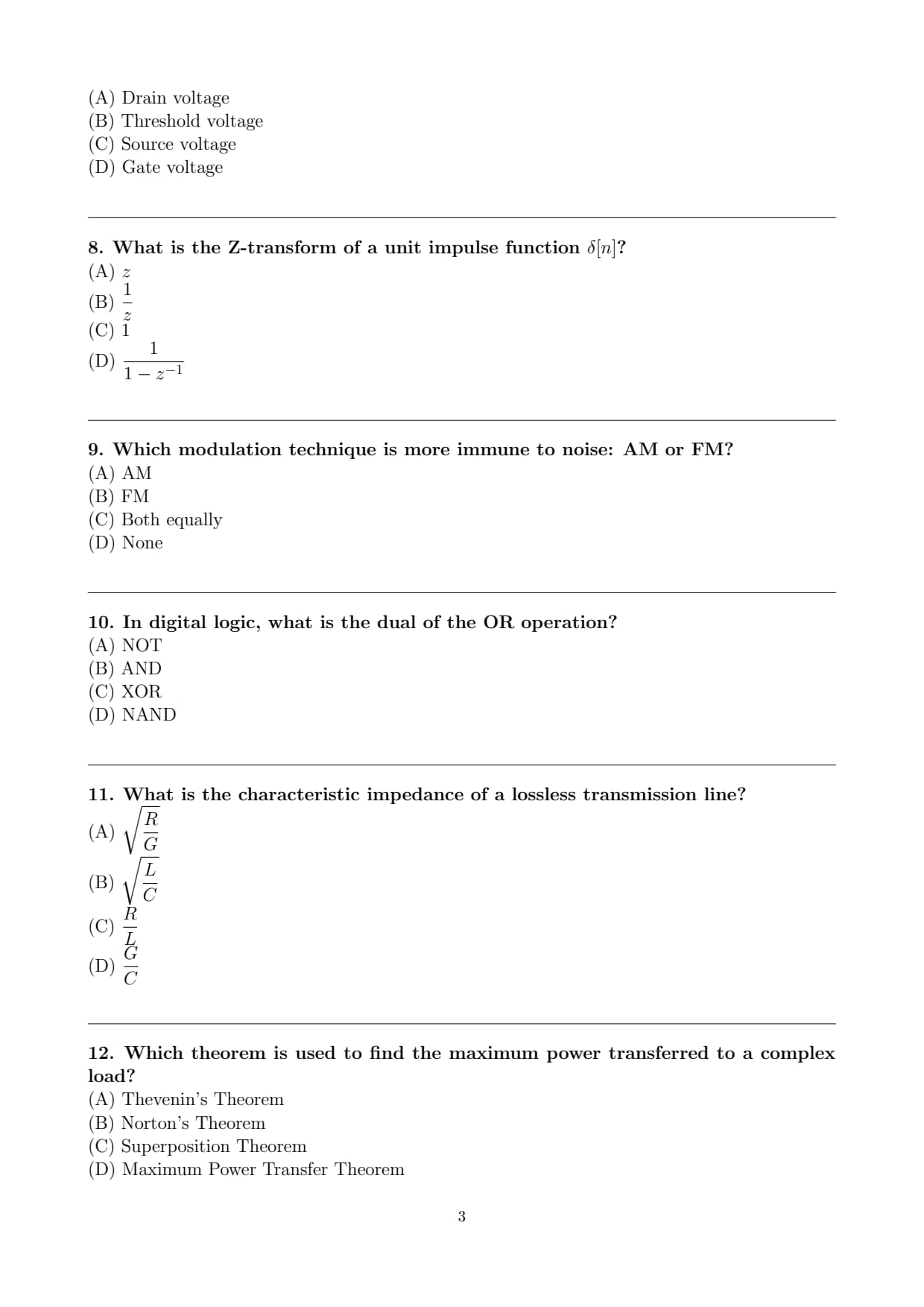
A MOSFET operates in the saturation region when the gate-to-source voltage exceeds what?
What is the Z-transform of a unit impulse function \(\delta[n]\)?
Which modulation technique is more immune to noise: AM or FM?
In digital logic, what is the dual of the OR operation?
What is the characteristic impedance of a lossless transmission line?
Which theorem is used to find the maximum power transferred to a complex load?
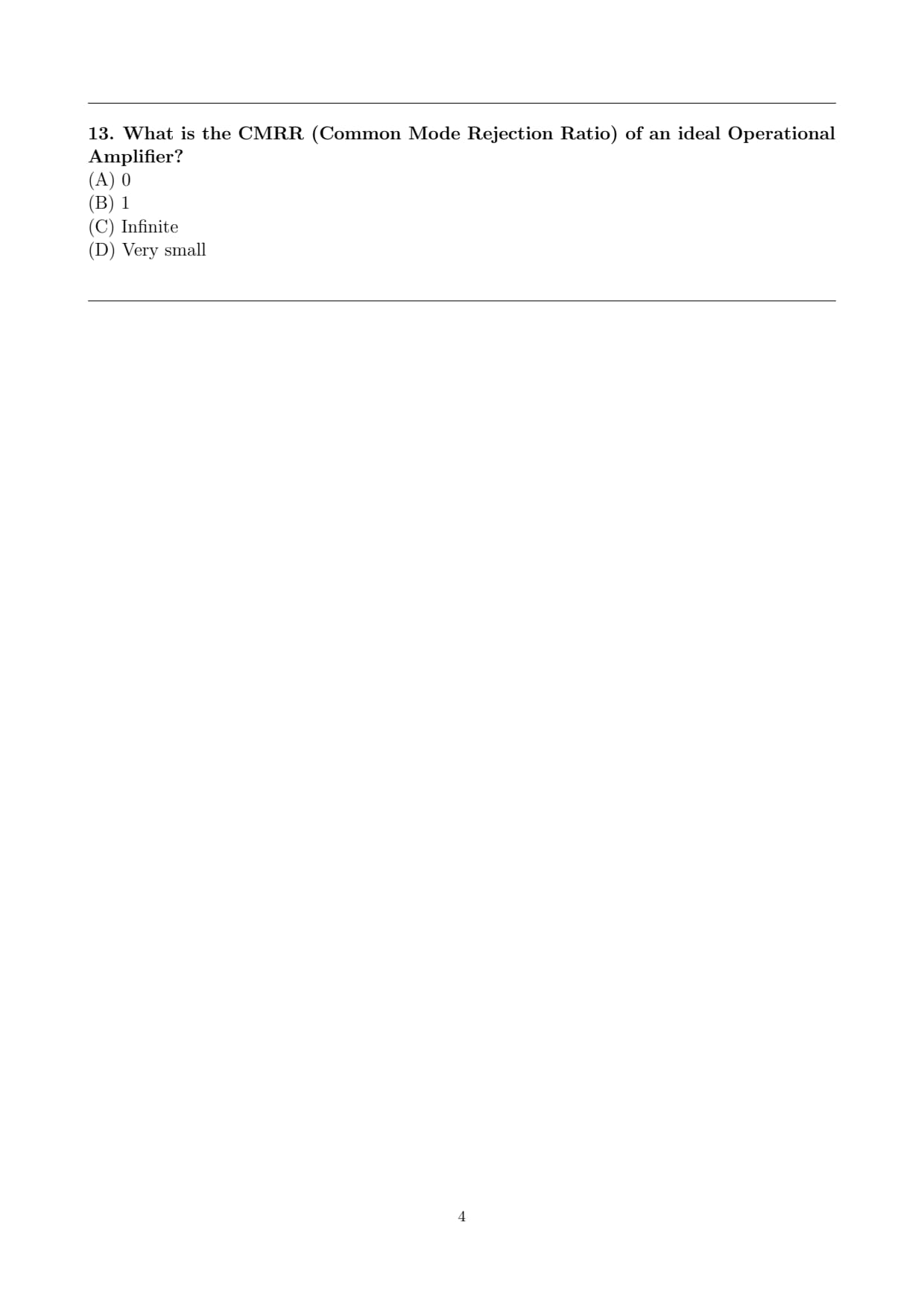
What is the CMRR (Common Mode Rejection Ratio) of an ideal Operational Amplifier?



Comments