




CUET PG Geography Climatology and Oceanography Handwritten Notes, free to download as a 20-page PDF. HUQP08 asks 75 questions at four marks each, and this pair takes roughly two days to learn, so keep the ocean for the second sitting.
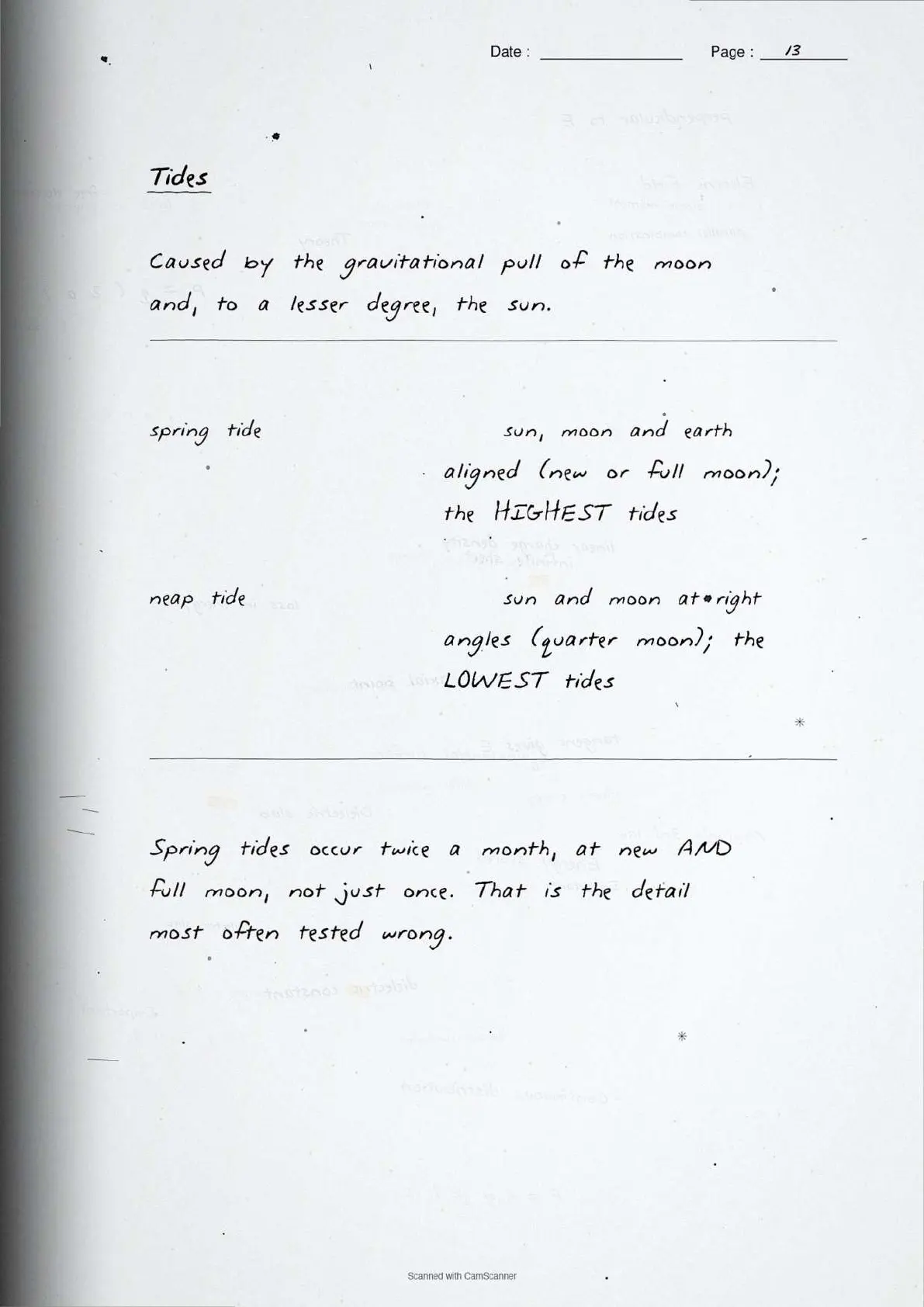
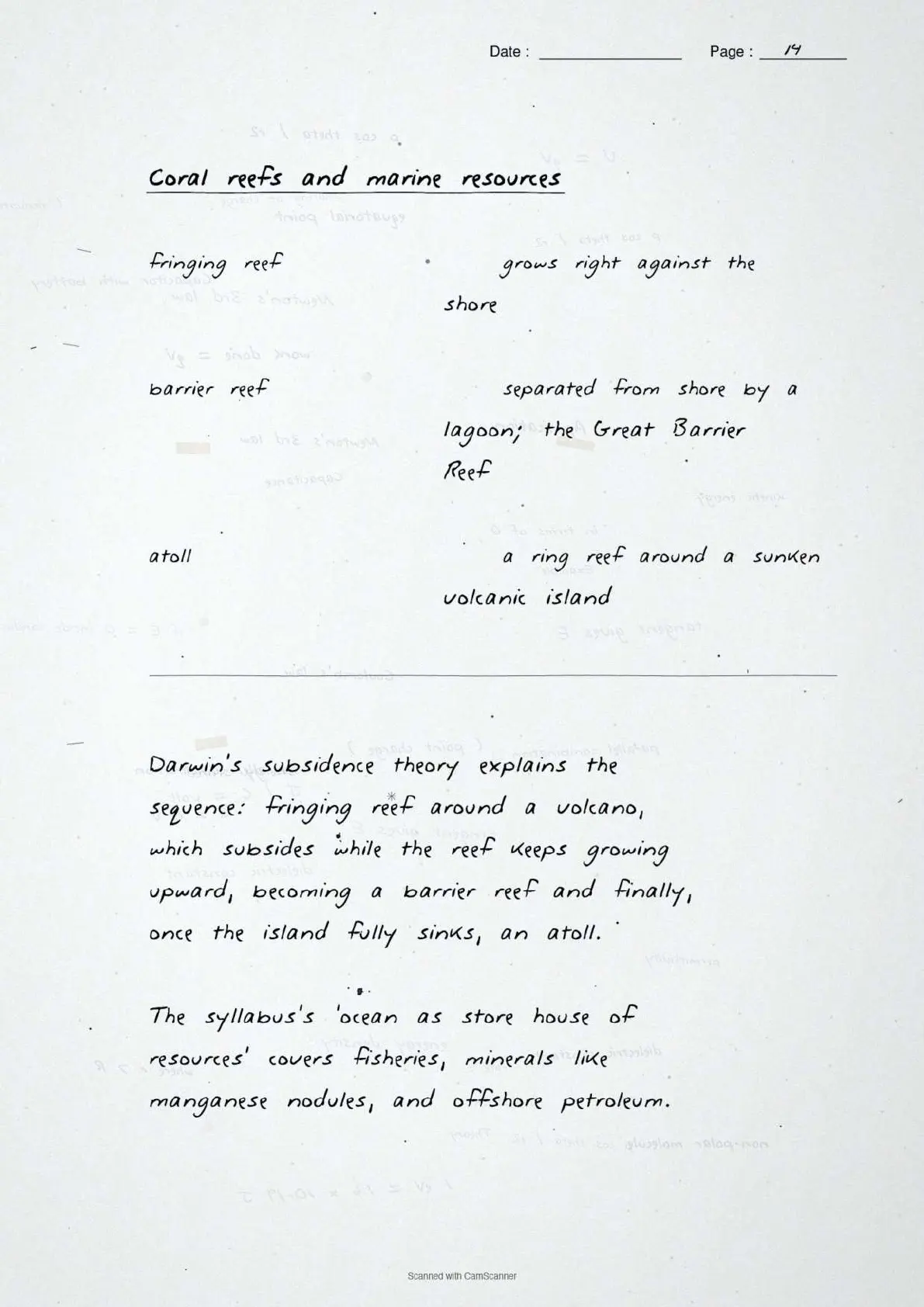
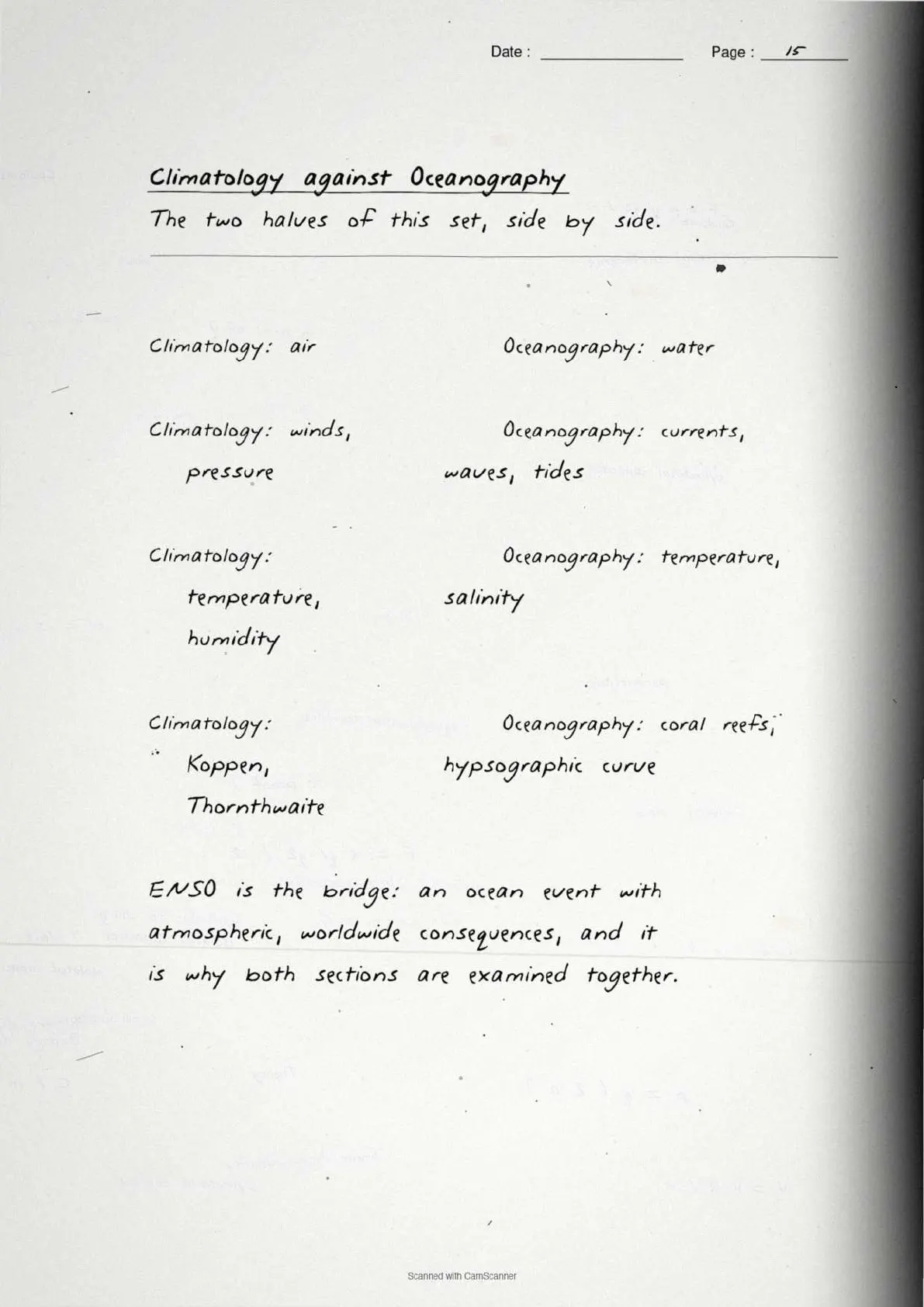
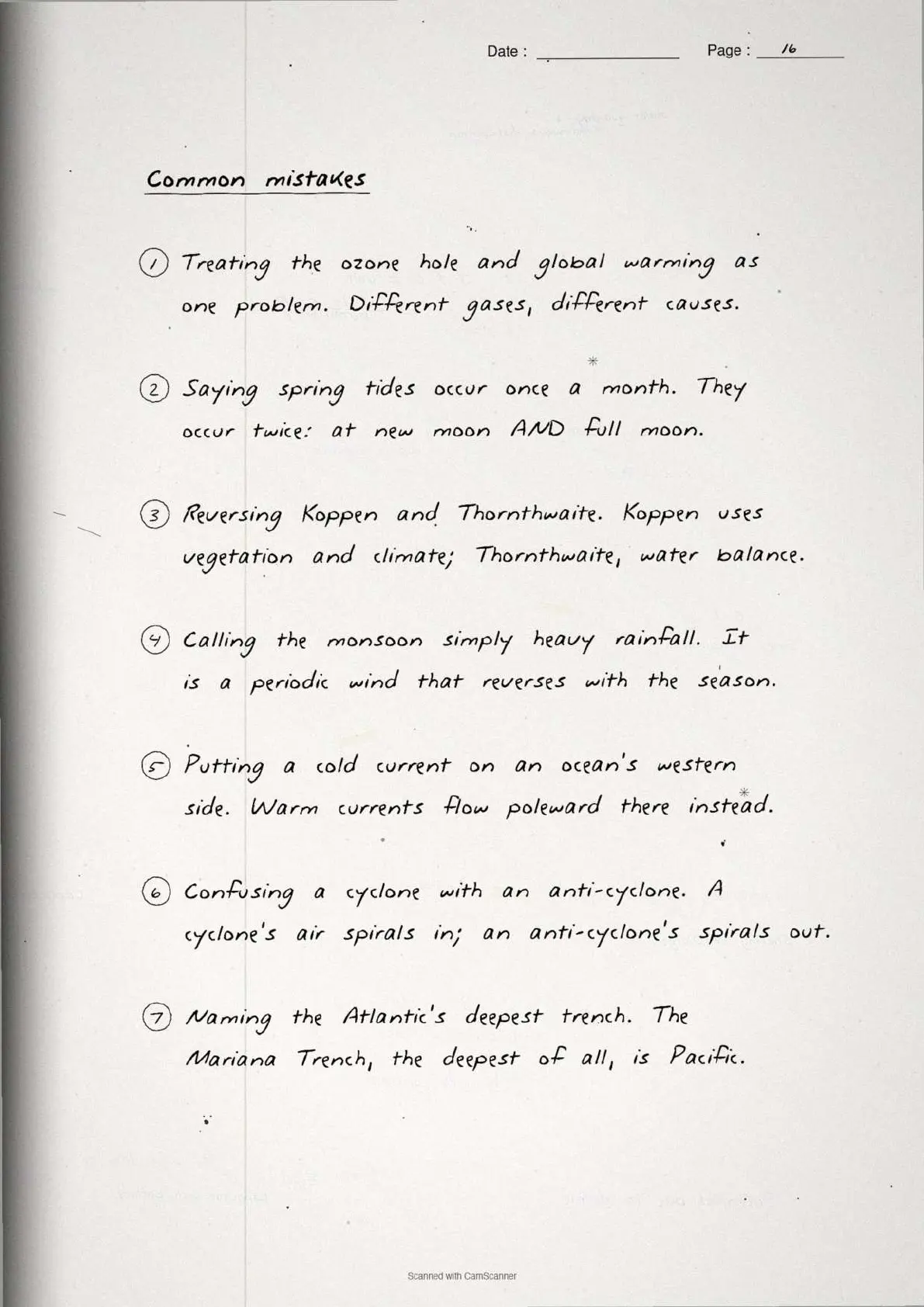
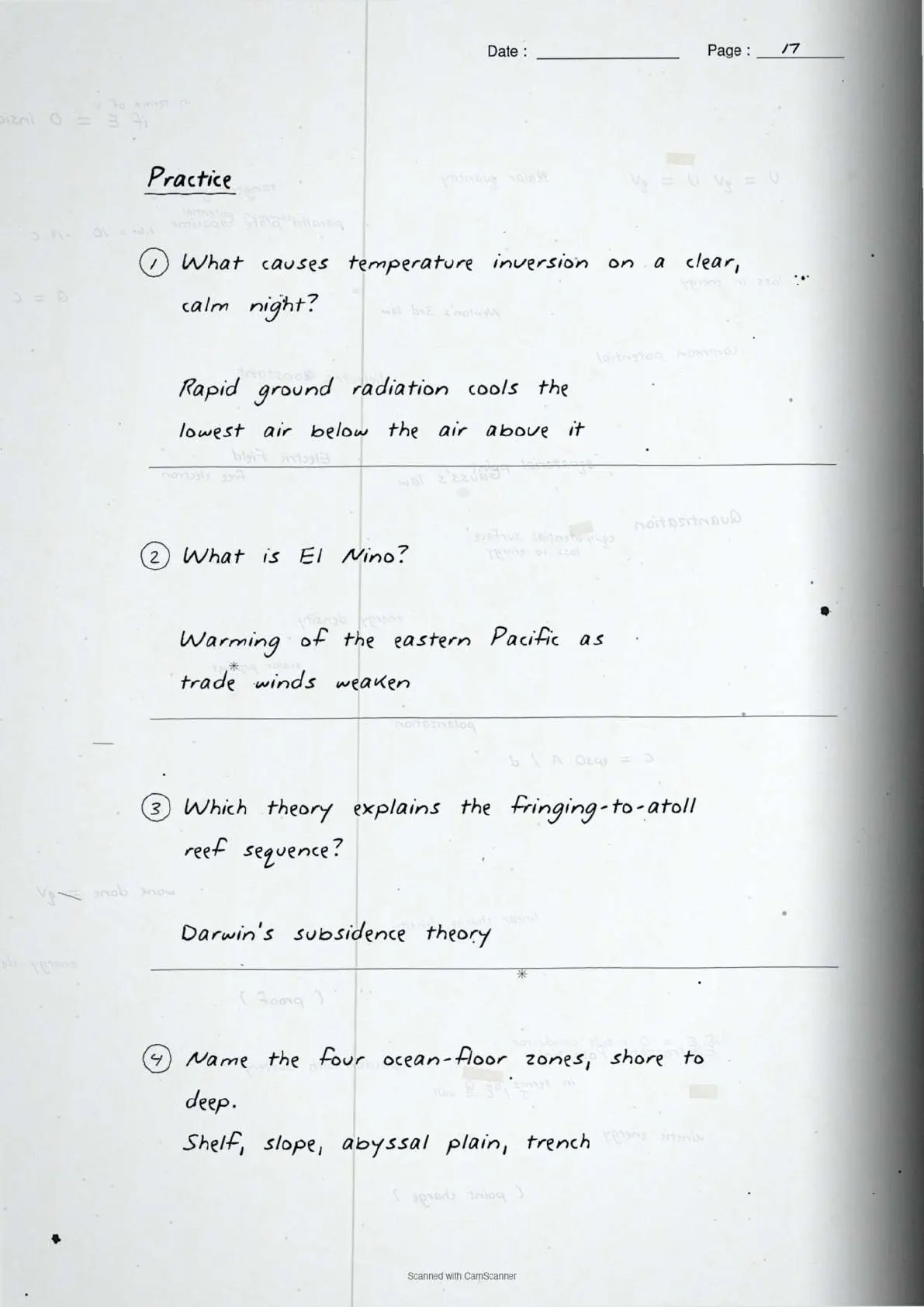
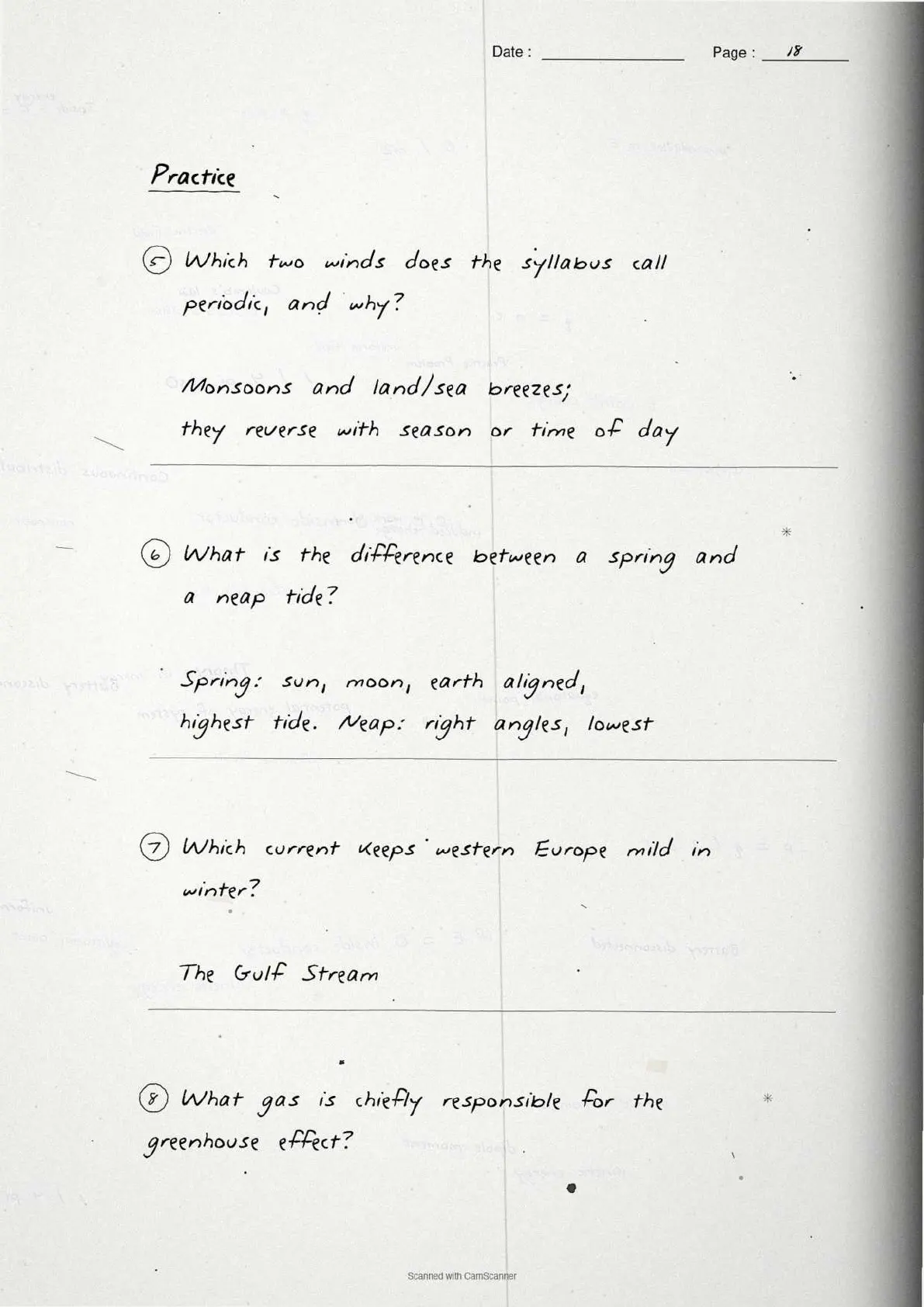
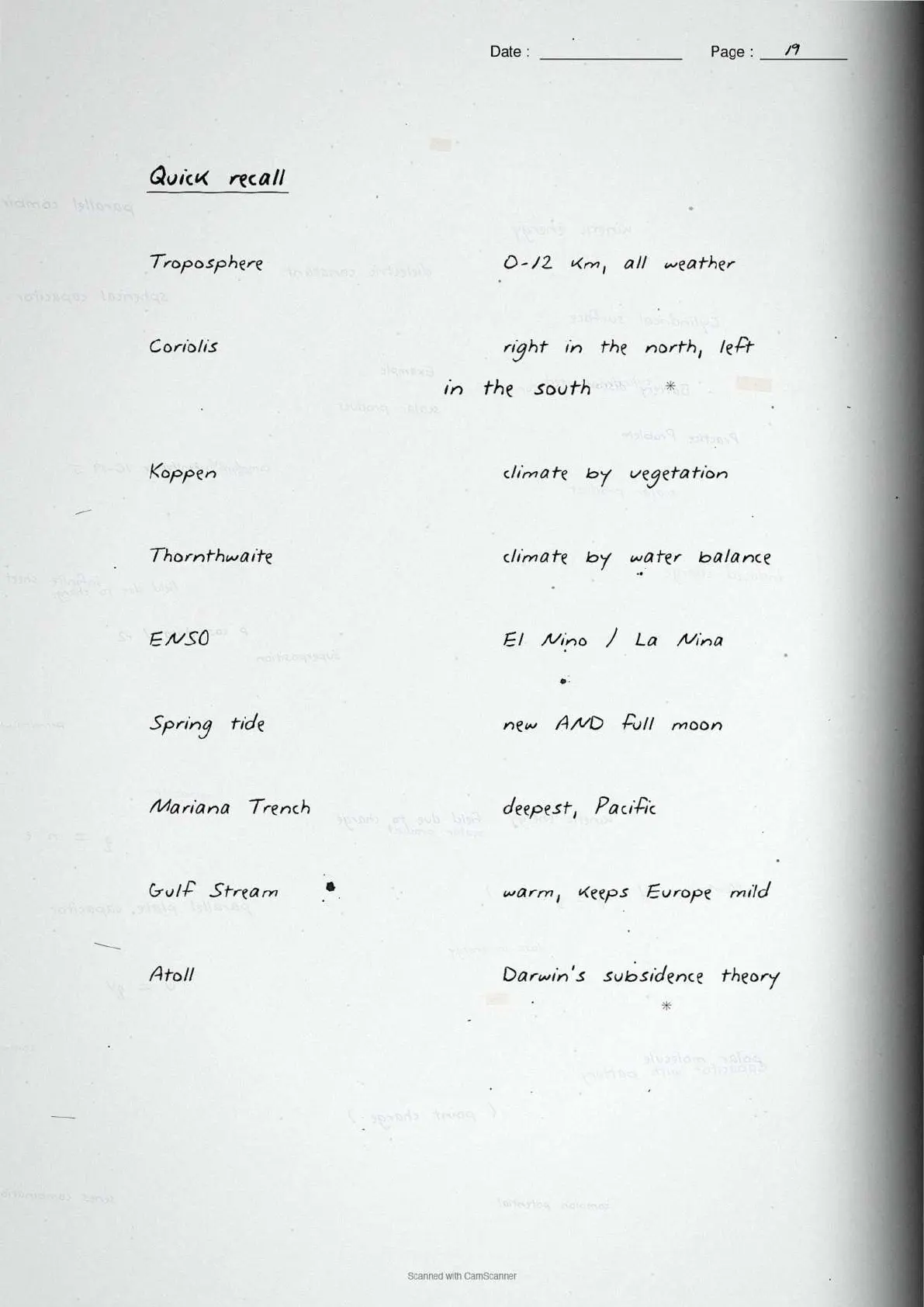
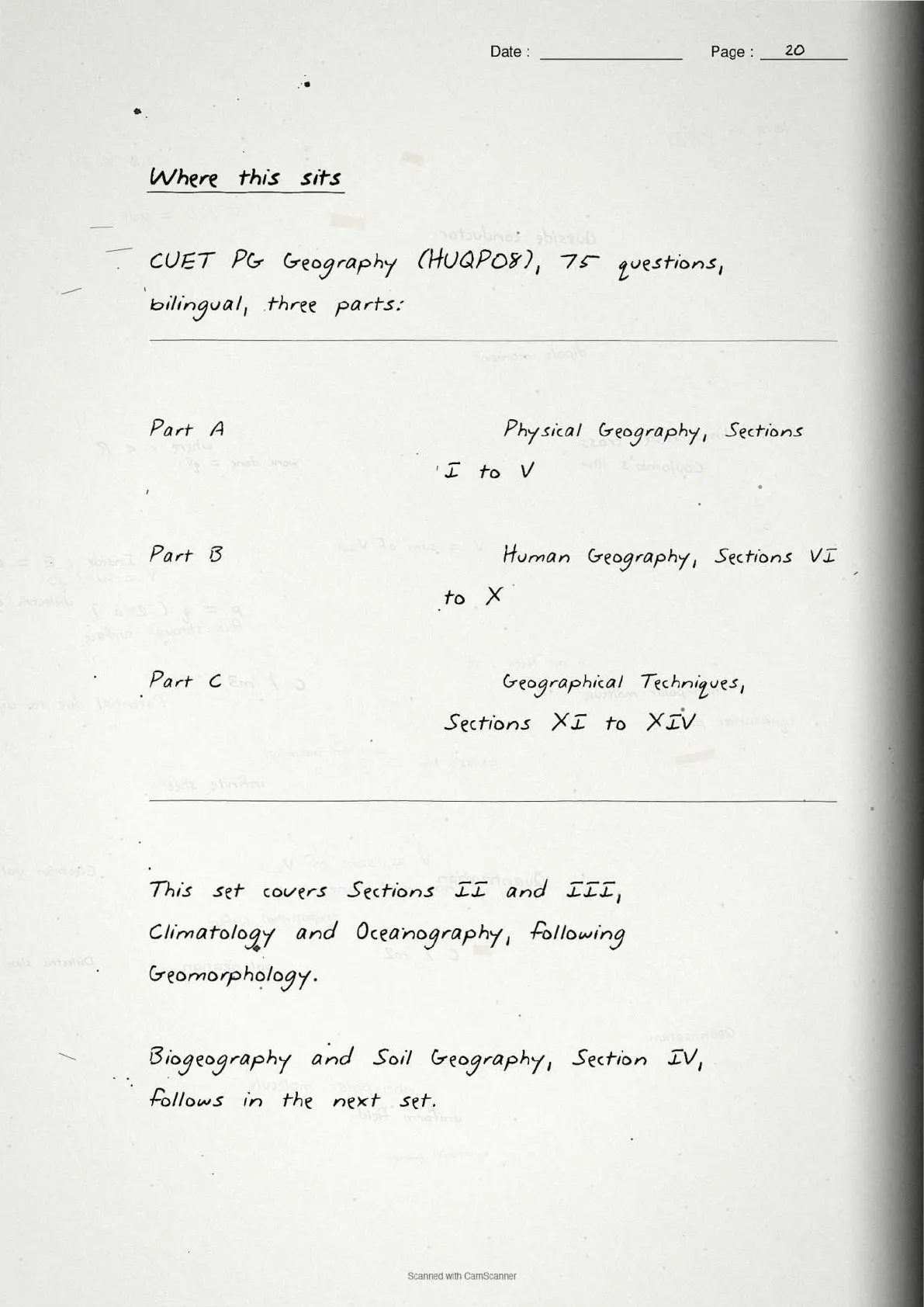
The notes are scans of a real notebook: short lines, boxed rules, and a margin note wherever something is easy to get wrong.
Where This Sits in HUQP08
Climatology and Oceanography are Sections II and III, following Geomorphology to close out the first half of Part A, Physical Geography.
| Part | Content | Sections |
|---|---|---|
| A | Physical Geography | I to V |
| B | Human Geography | VI to X |
| C | Geographical Techniques | XI to XIV |
What the Notes Cover
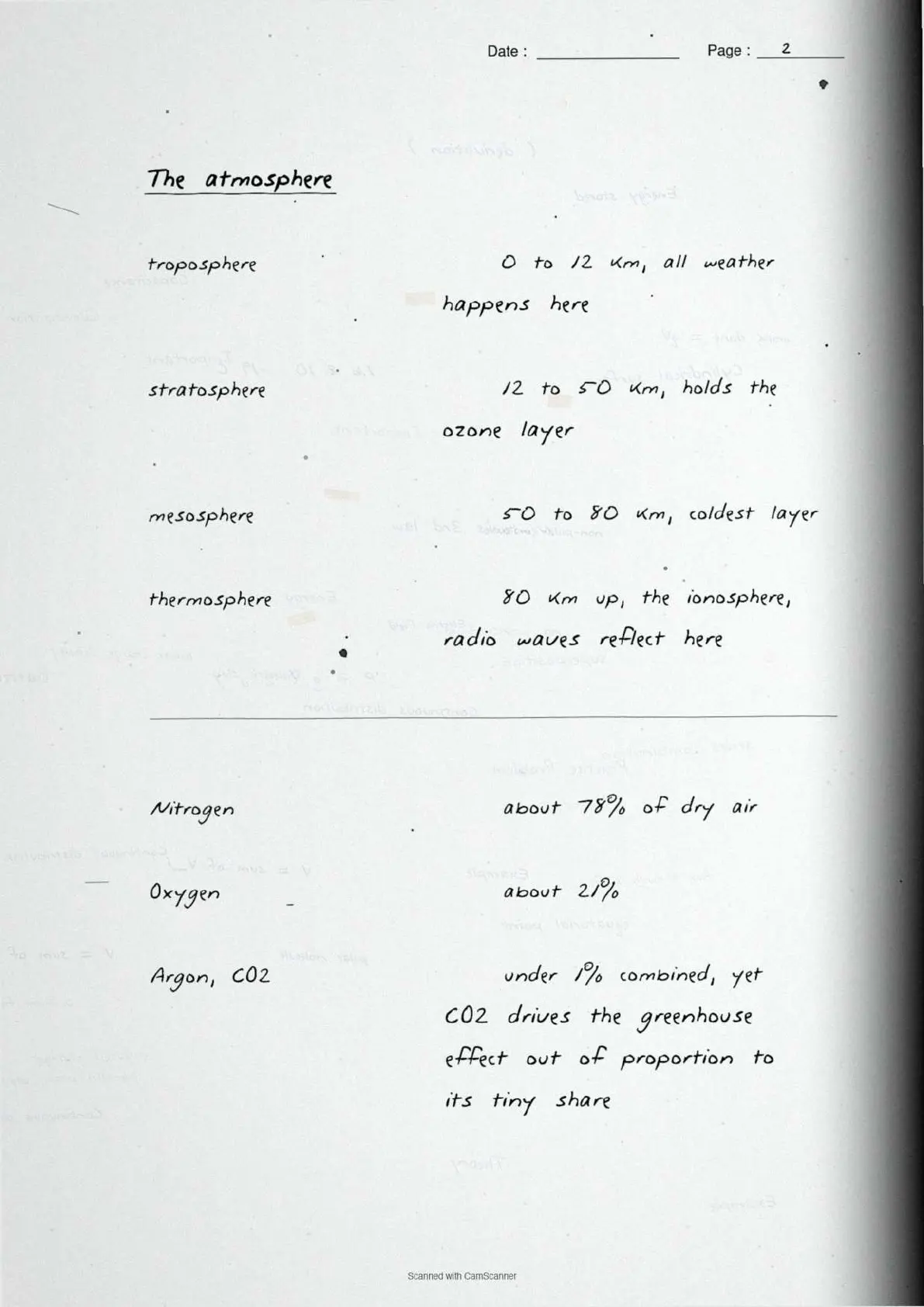
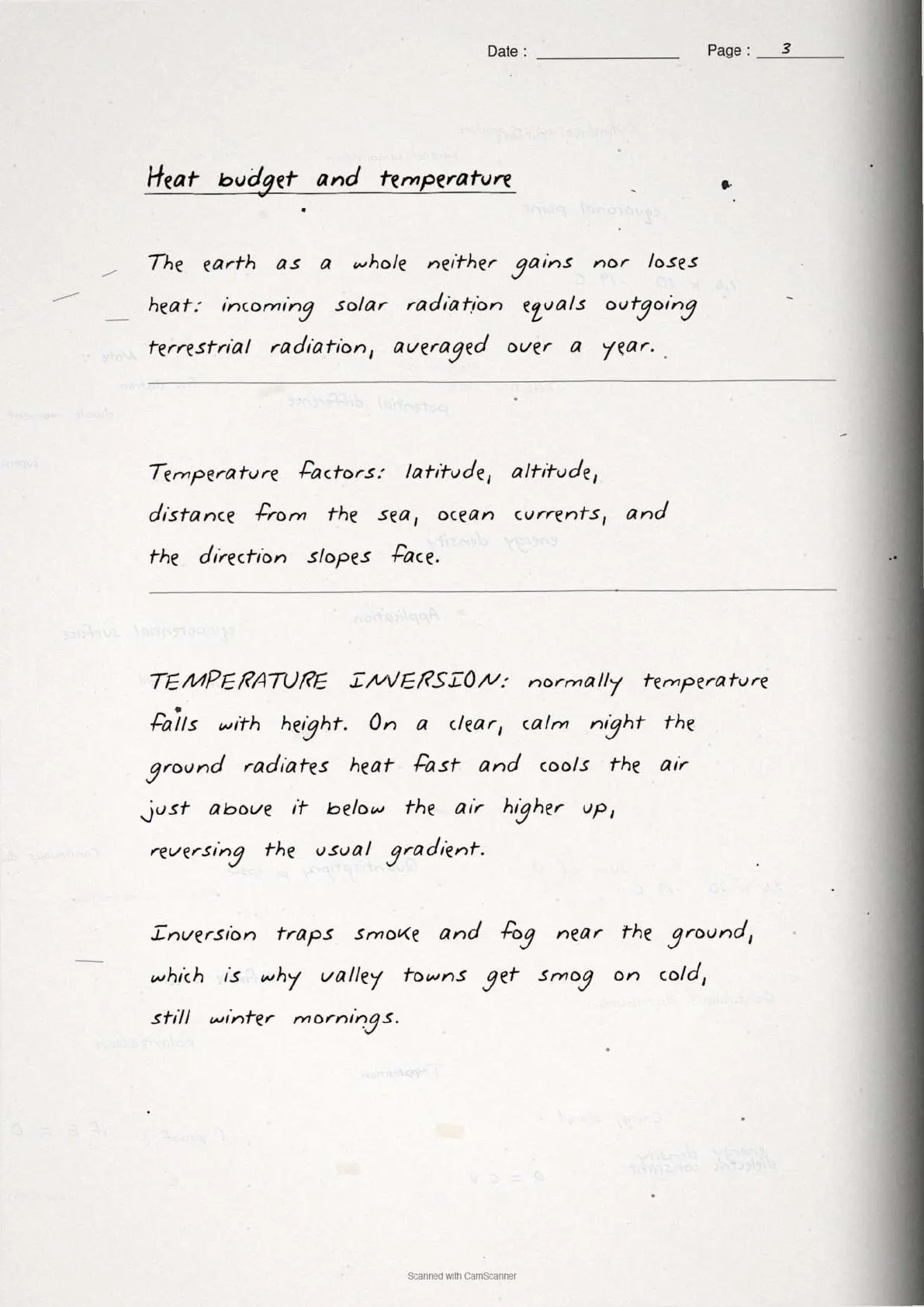
- The atmosphere's layers, composition, and heat budget
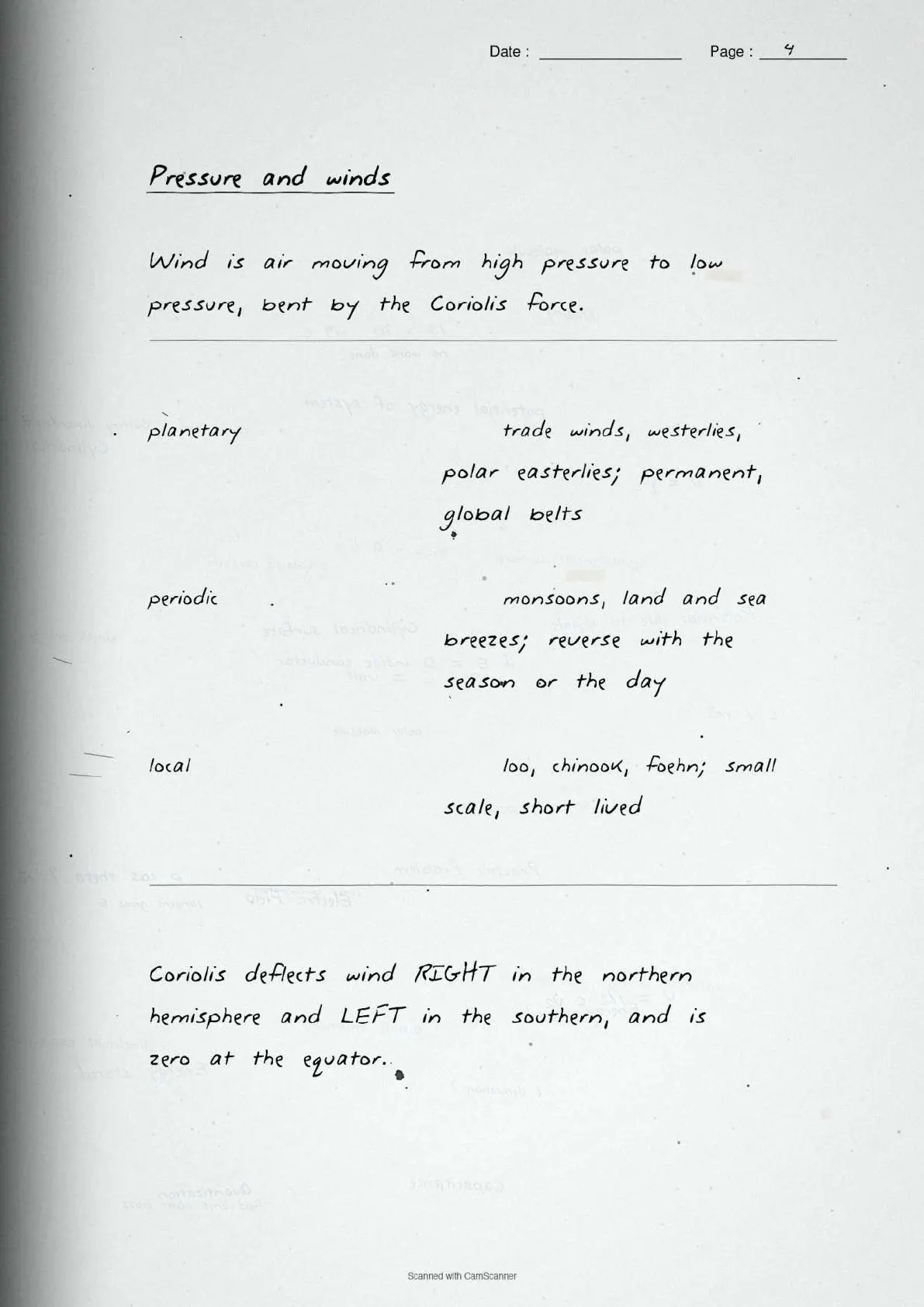
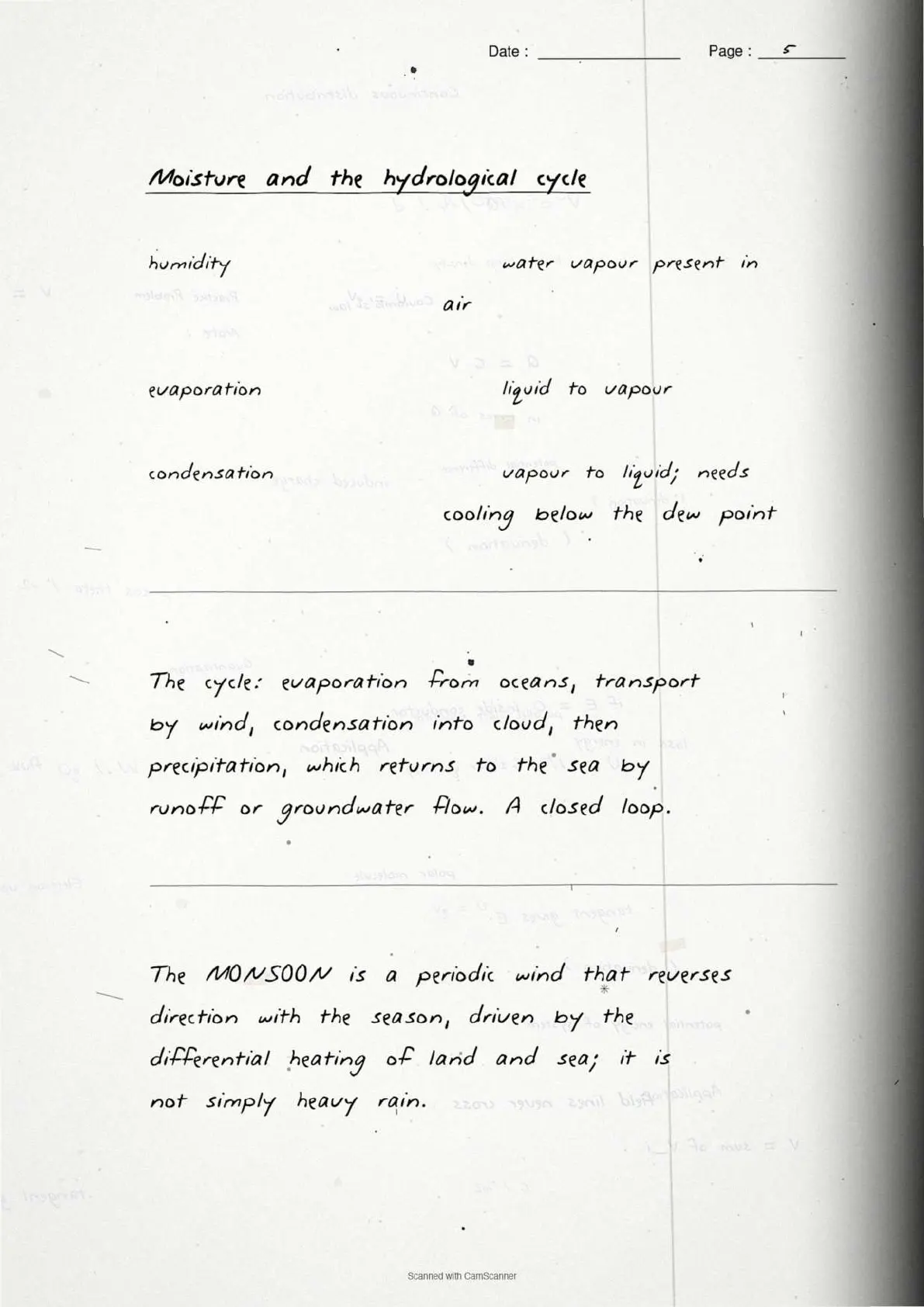
- Pressure, winds, temperature inversion, and the hydrological cycle
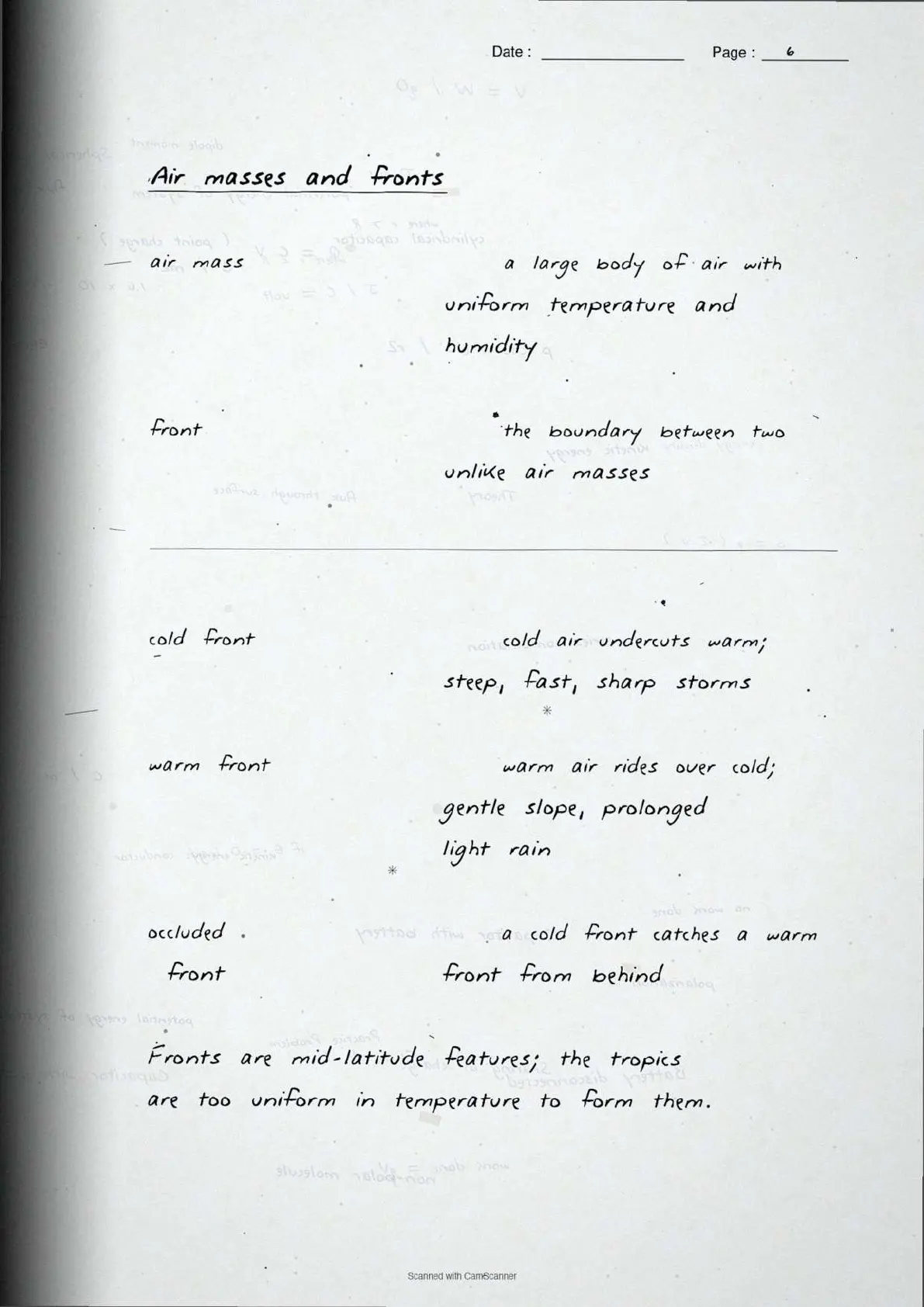
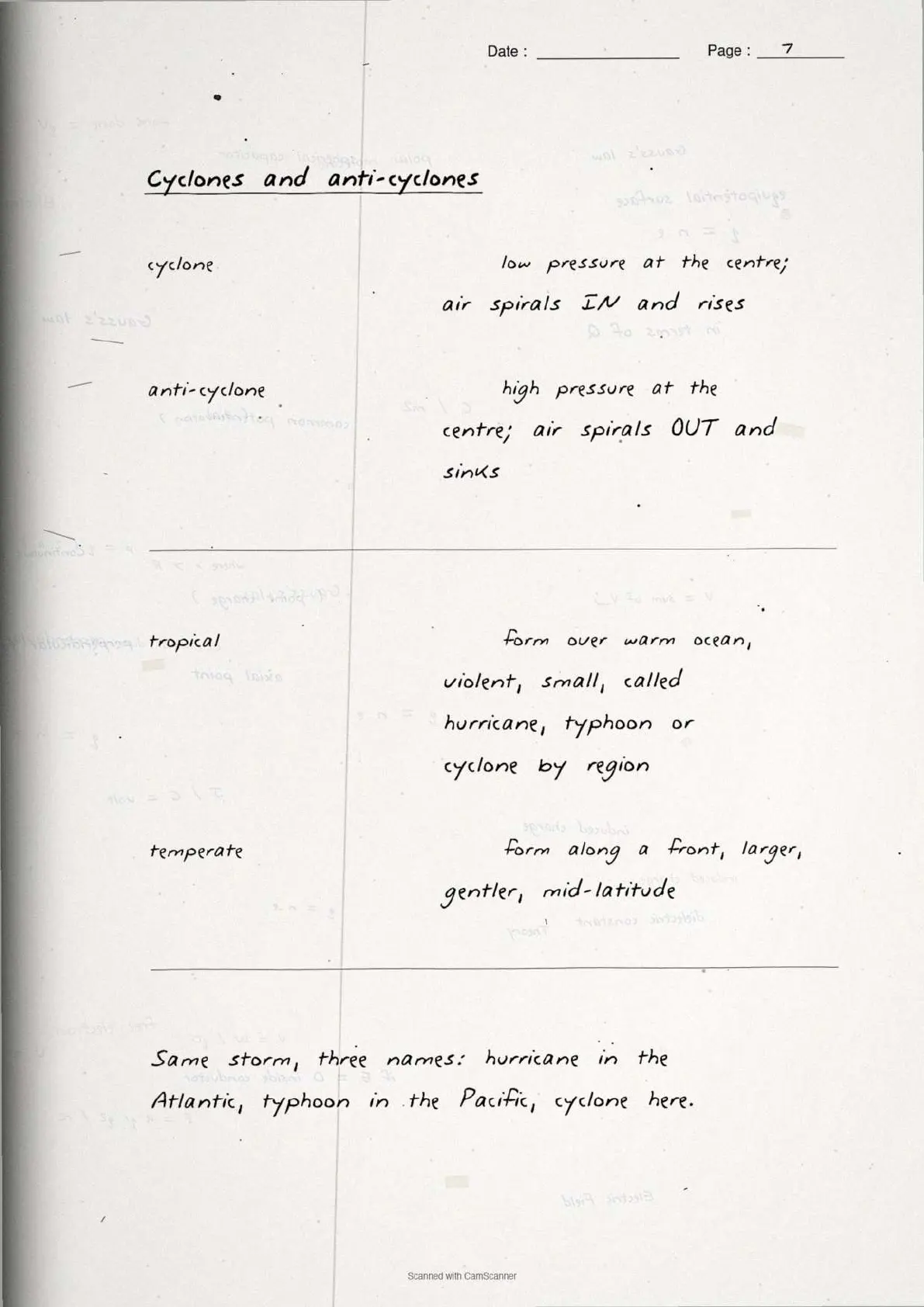
- Air masses, fronts, cyclones and anti-cyclones
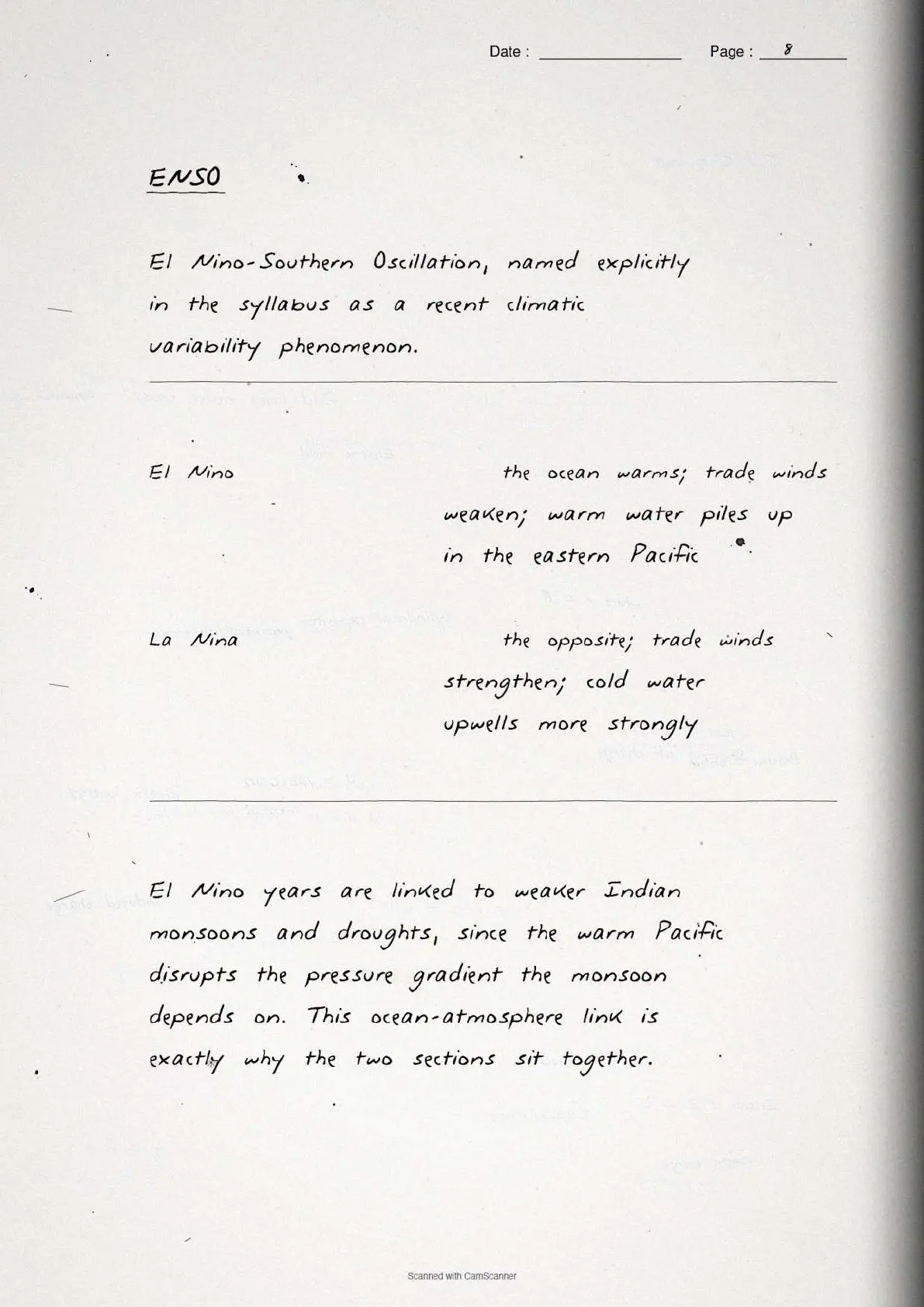
- ENSO, El Nino and La Nina, and their link to the Indian monsoon
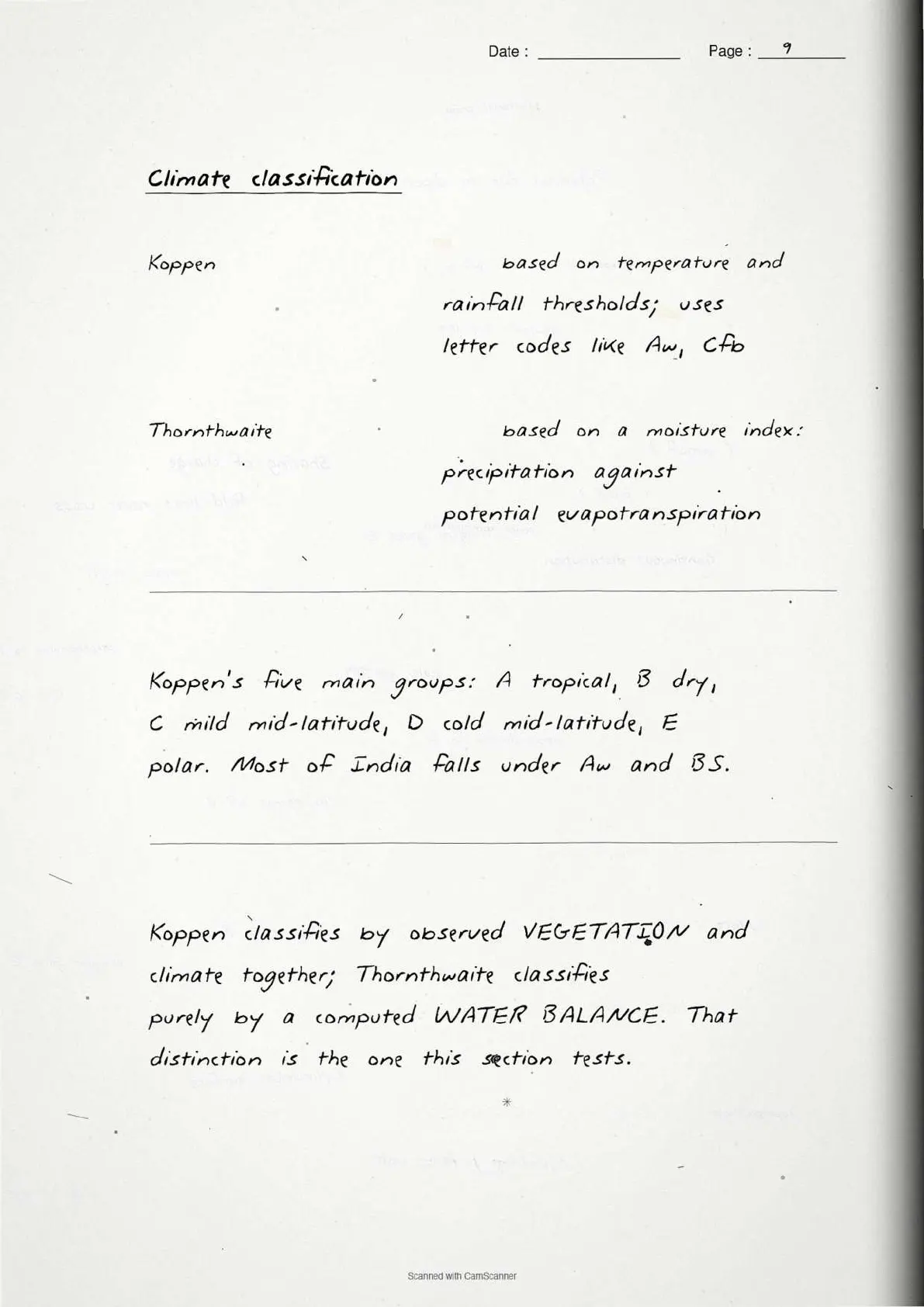
- Koppen's and Thornthwaite's climate classifications
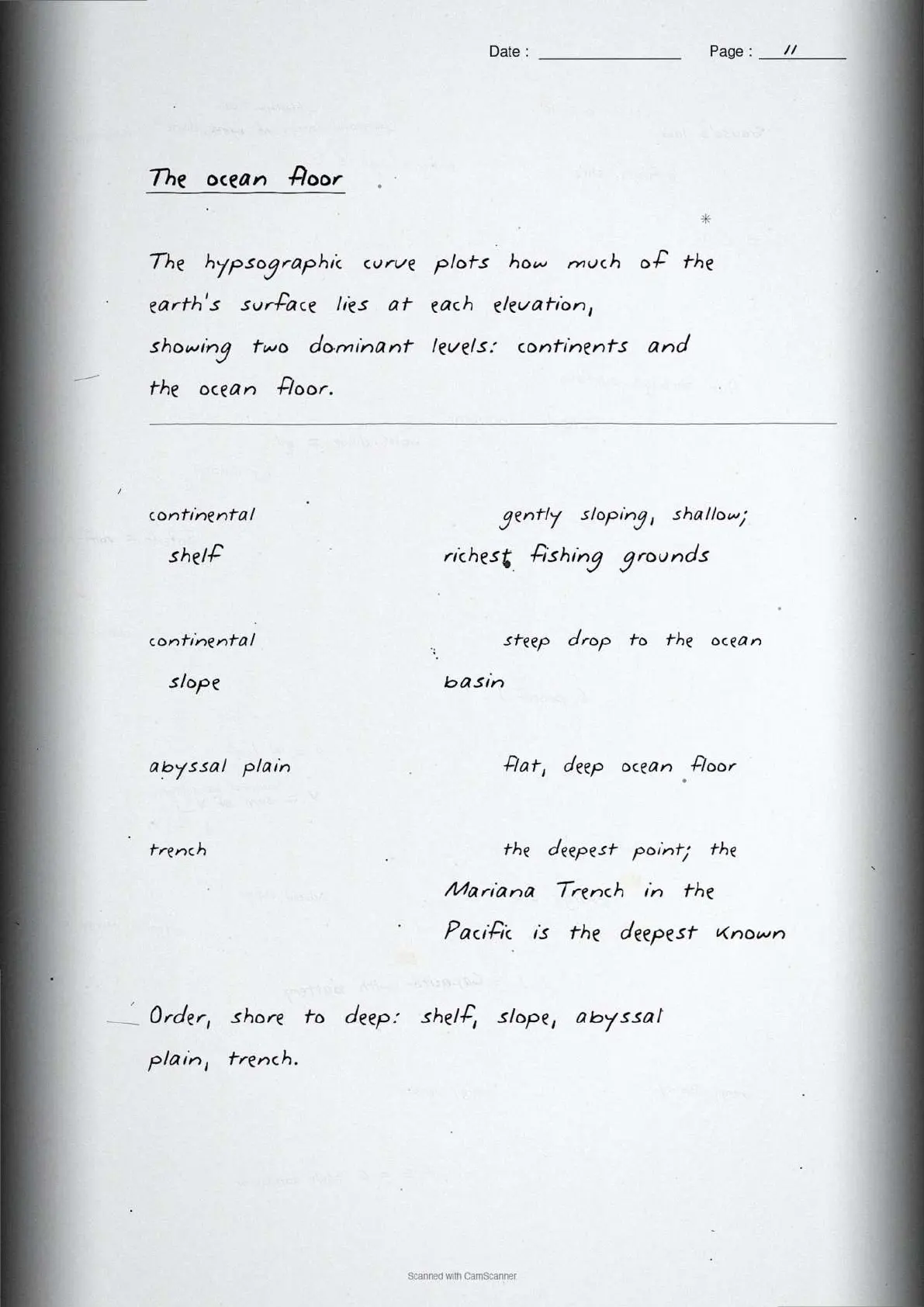
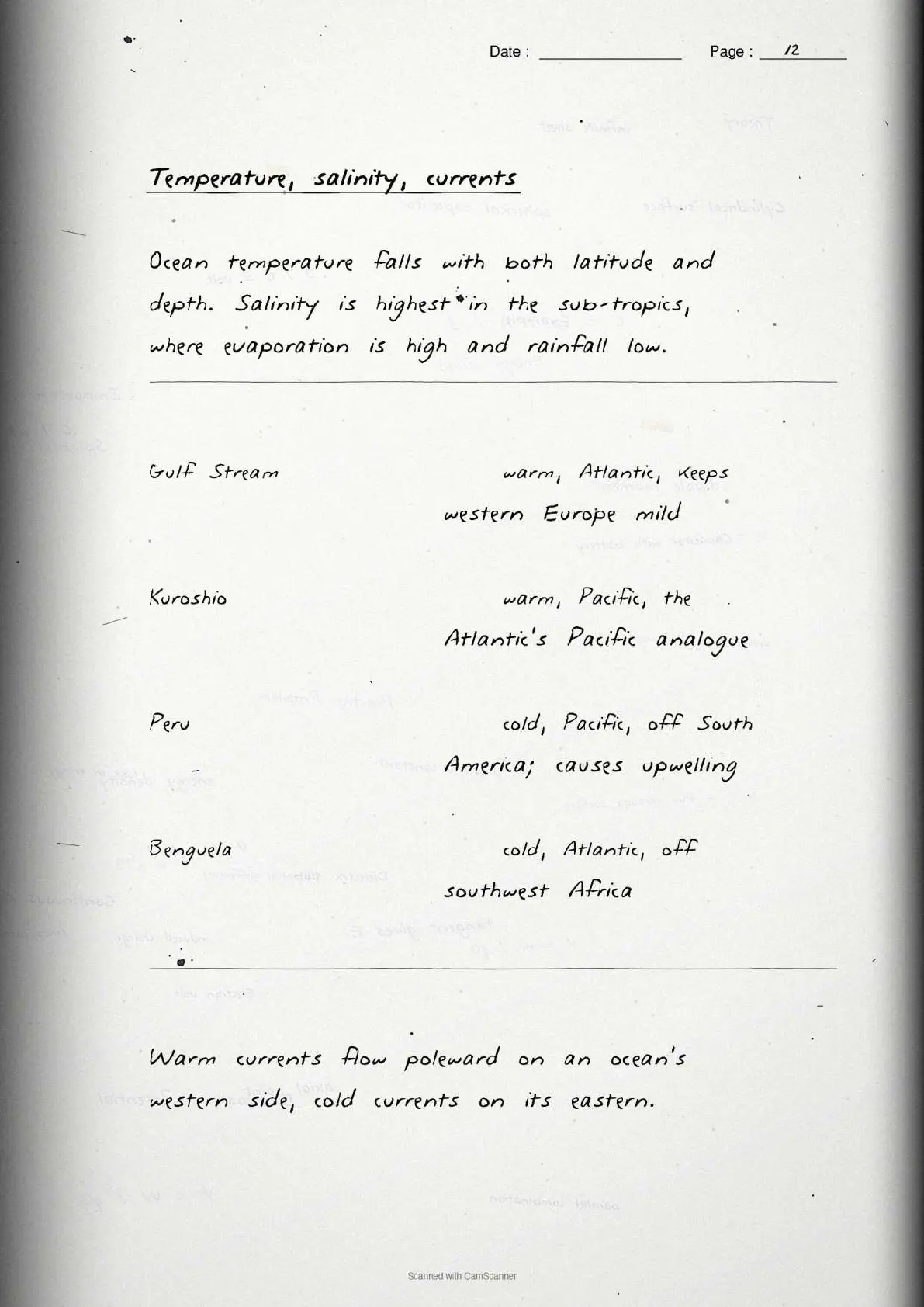
- The ocean floor, temperature, salinity and major currents
- Tides, coral reefs, and the ocean as a store of resources
How to Approach the Topic
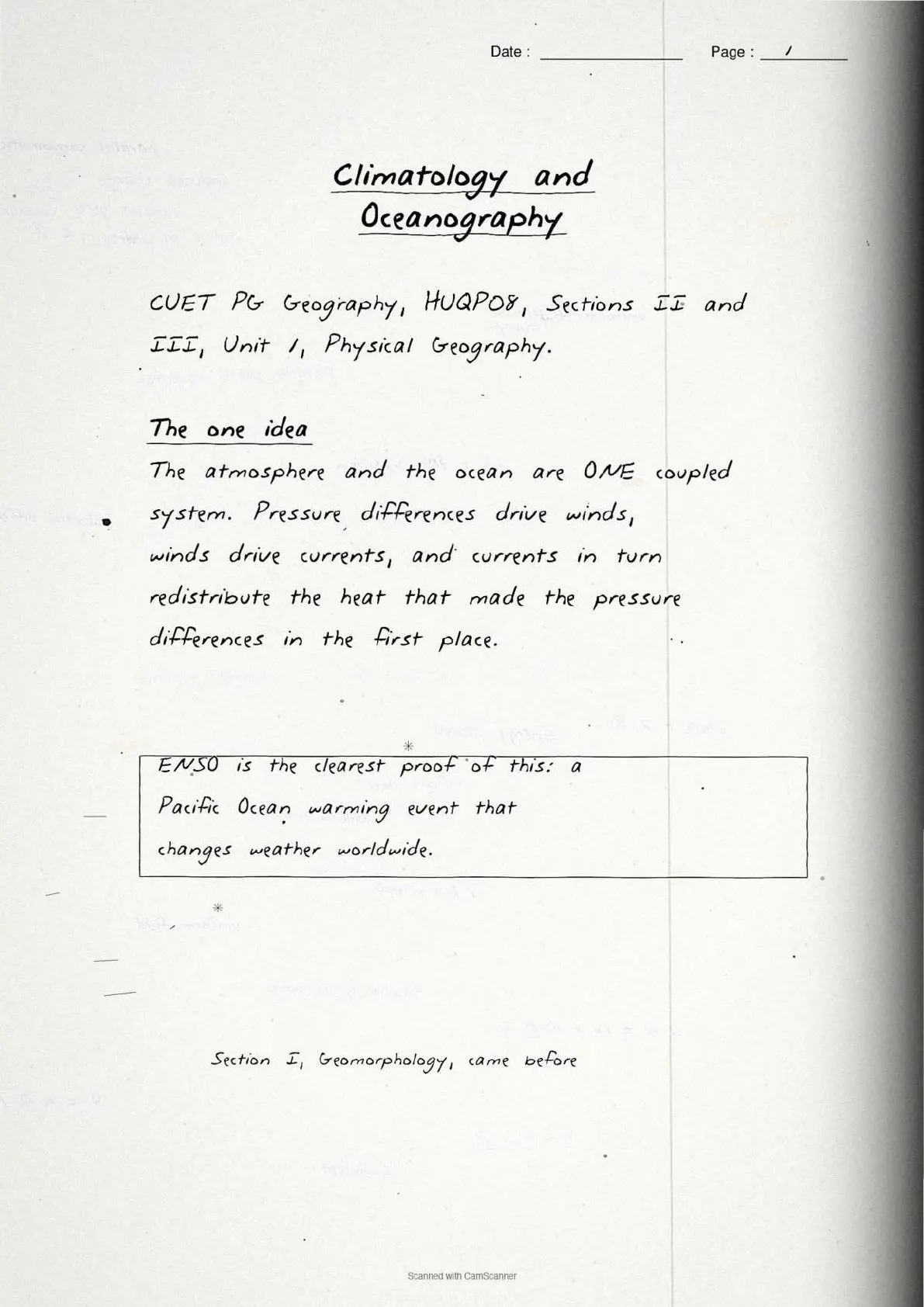
The atmosphere and the ocean are treated as one coupled system in this paper, not two separate topics that happen to sit next to each other. ENSO is the clearest proof: a warming event in the Pacific Ocean changes rainfall patterns worldwide, including weakening the Indian monsoon in El Nino years.
Koppen and Thornthwaite are tested as a contrast rather than as two isolated names: Koppen classifies climate by observed vegetation together with temperature and rainfall, while Thornthwaite classifies purely by a computed water balance between precipitation and potential evapotranspiration.
Ocean currents follow a reliable rule worth memorising over any list of names: warm currents flow poleward on an ocean's western side, and cold currents flow on its eastern side.
Common Mistakes
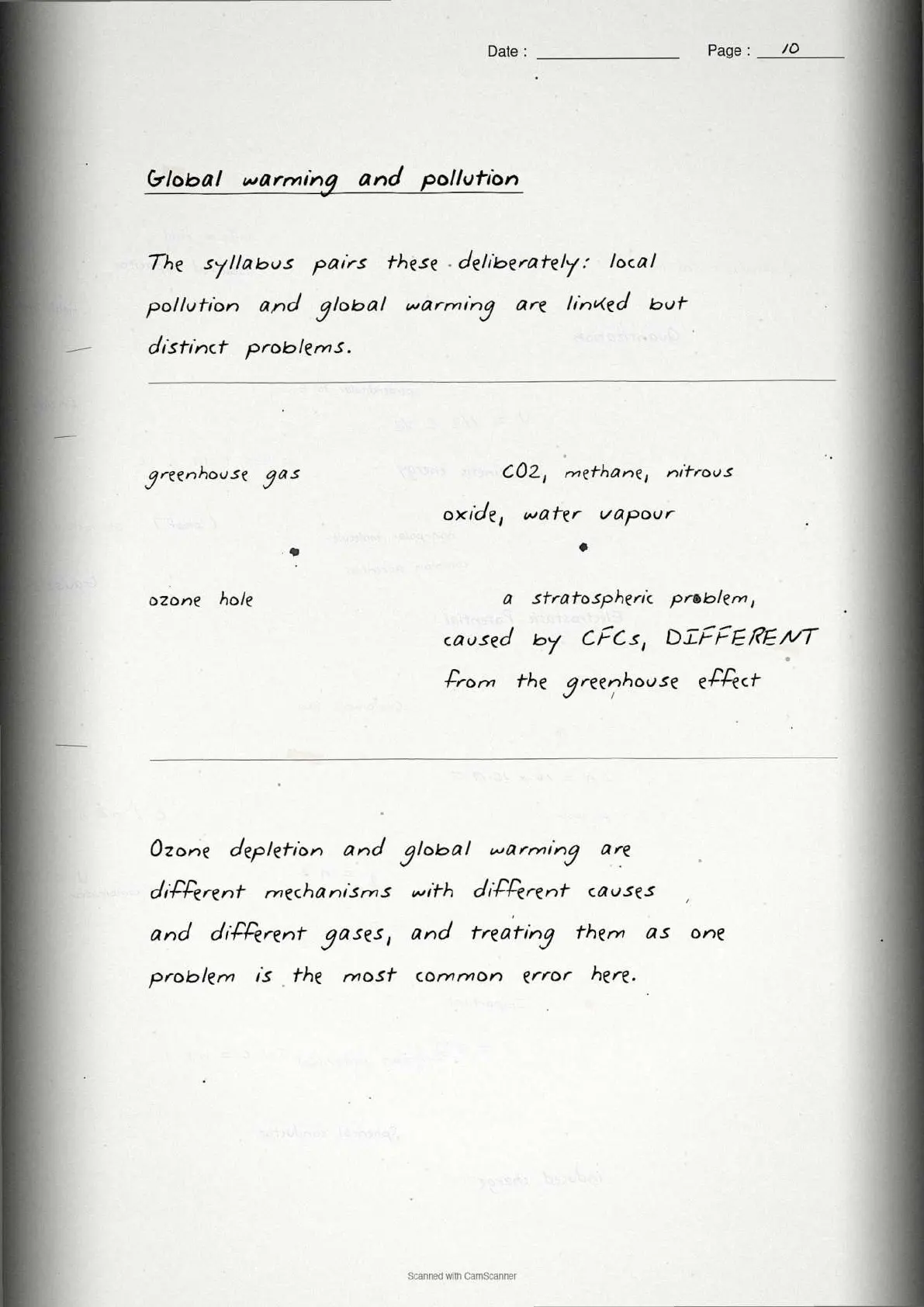
- Treating the ozone hole and global warming as one problem, when they involve different gases and different causes
- Saying spring tides occur once a month, when they occur twice, at both new moon and full moon
- Reversing Koppen and Thornthwaite, since Koppen uses vegetation and climate, and Thornthwaite uses a water balance
- Calling the monsoon simply heavy rainfall, when it is a periodic wind that reverses with the season
- Putting a cold current on an ocean's western side, where warm currents flow instead
- Confusing a cyclone, where air spirals in, with an anti-cyclone, where it spirals out
Video Revision
Source: UPSC Unstoppables by Unacademy
How to Use These Notes
Page 15 sets Climatology against Oceanography in one table, and page 19 is the recall grid.
Page 8 works through ENSO and its link to the monsoon, which is worth reading before any practice paper, since it is the bridge the paper uses to justify examining both sections together.
The previous set covers Geomorphology, and the next one moves into Biogeography and Soil Geography.
CUET PG Geography Climatology and Oceanography Notes FAQs
Ques. What is ENSO?
Ans. The El Nino-Southern Oscillation, a periodic warming (El Nino) and cooling (La Nina) of the eastern Pacific Ocean that changes weather patterns worldwide, including the strength of the Indian monsoon.
Ques. What is the difference between Koppen's and Thornthwaite's classifications?
Ans. Koppen classifies climate using observed vegetation together with temperature and rainfall thresholds. Thornthwaite classifies climate using a computed moisture index, precipitation measured against potential evapotranspiration.
Ques. When do spring tides occur?
Ans. Twice a month, at both new moon and full moon, whenever the sun, moon and earth are aligned. Neap tides, the lowest, occur at the quarter moons.
Ques. Why do fishing grounds cluster where ocean currents meet?
Ans. A cold current meeting a warm one stirs nutrients up from the sea floor into sunlit surface water, feeding the plankton at the base of the food chain. The Grand Banks, at the meeting of the Labrador and Gulf Stream currents, is the standard example.
Ques. Can the notes be downloaded free?
Ans. Yes. All 20 pages can be read on this page and downloaded at no cost.



Comments