




CUET PG Geography Geomorphology Handwritten Notes, free to download as a 20-page PDF. HUQP08 asks 75 questions at four marks each, and this opening section takes roughly two days to learn, so plan two sittings.
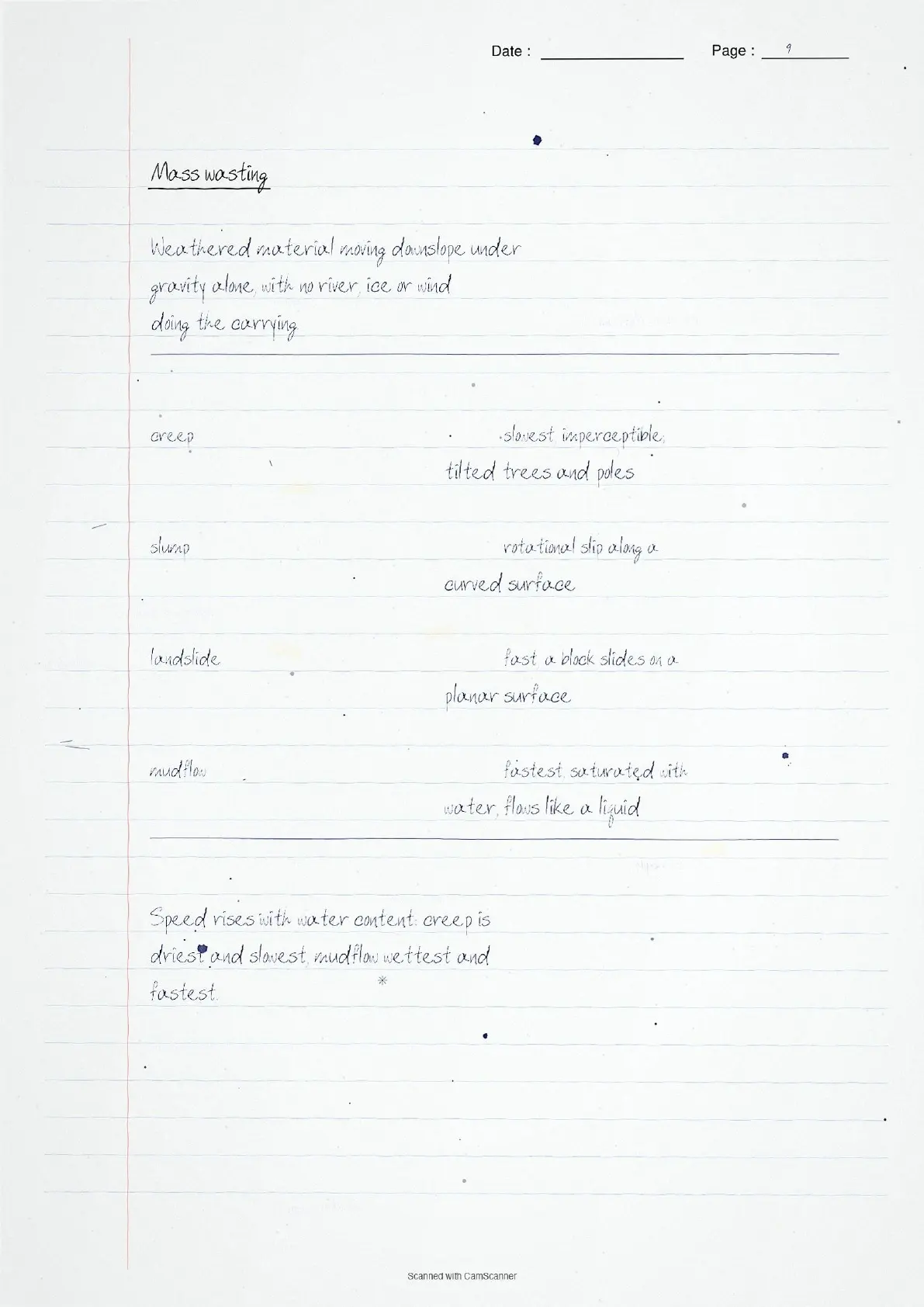
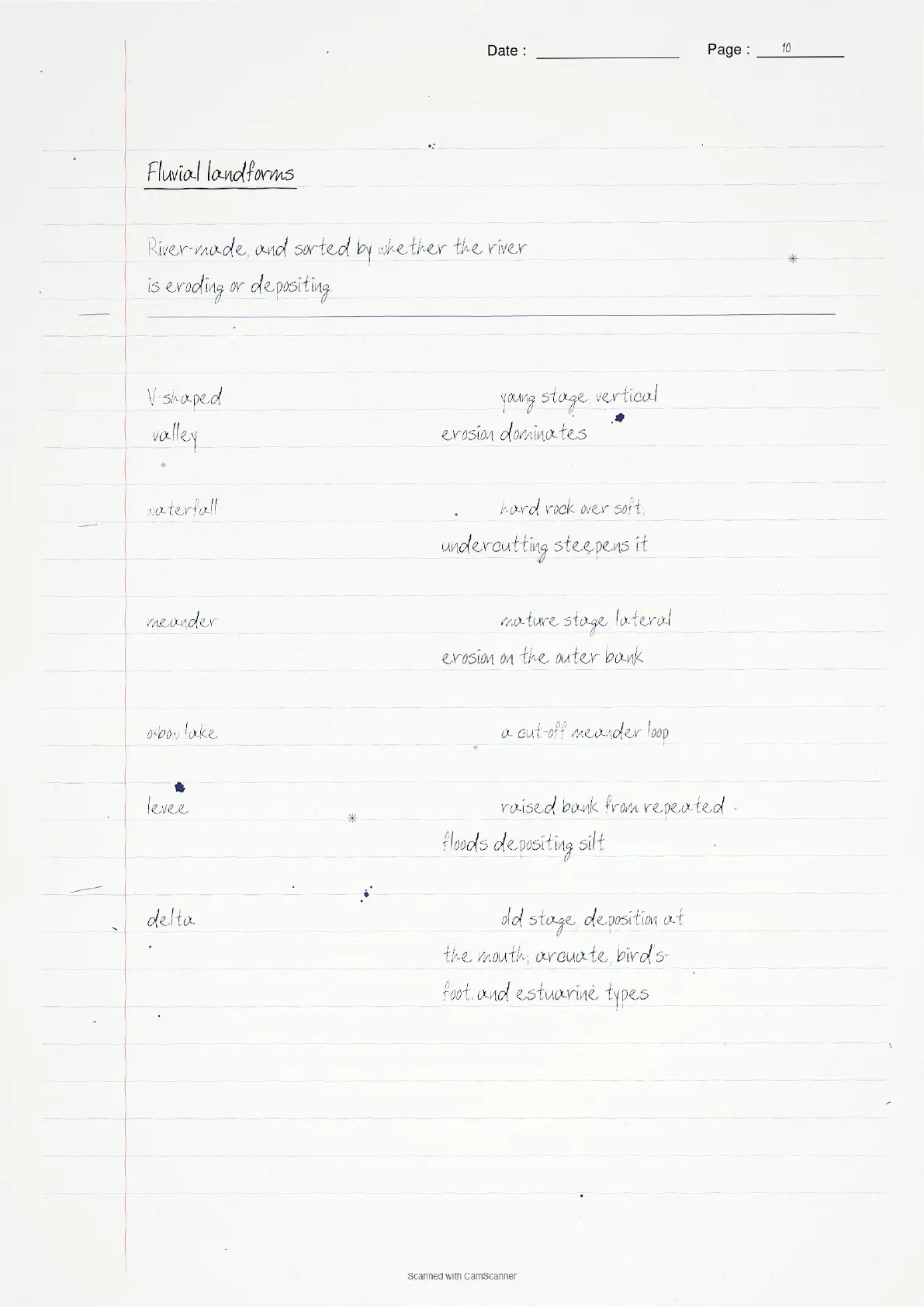
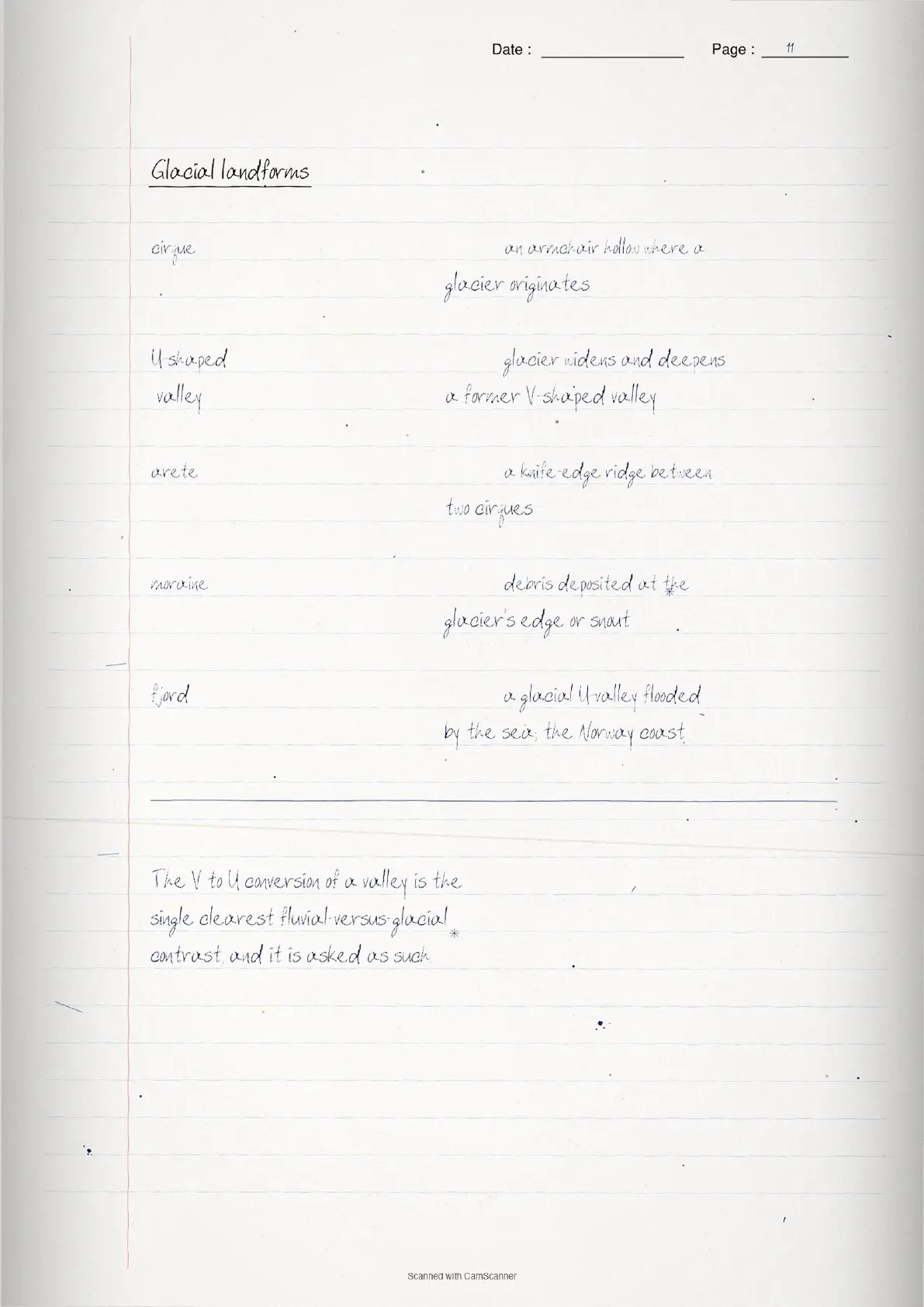
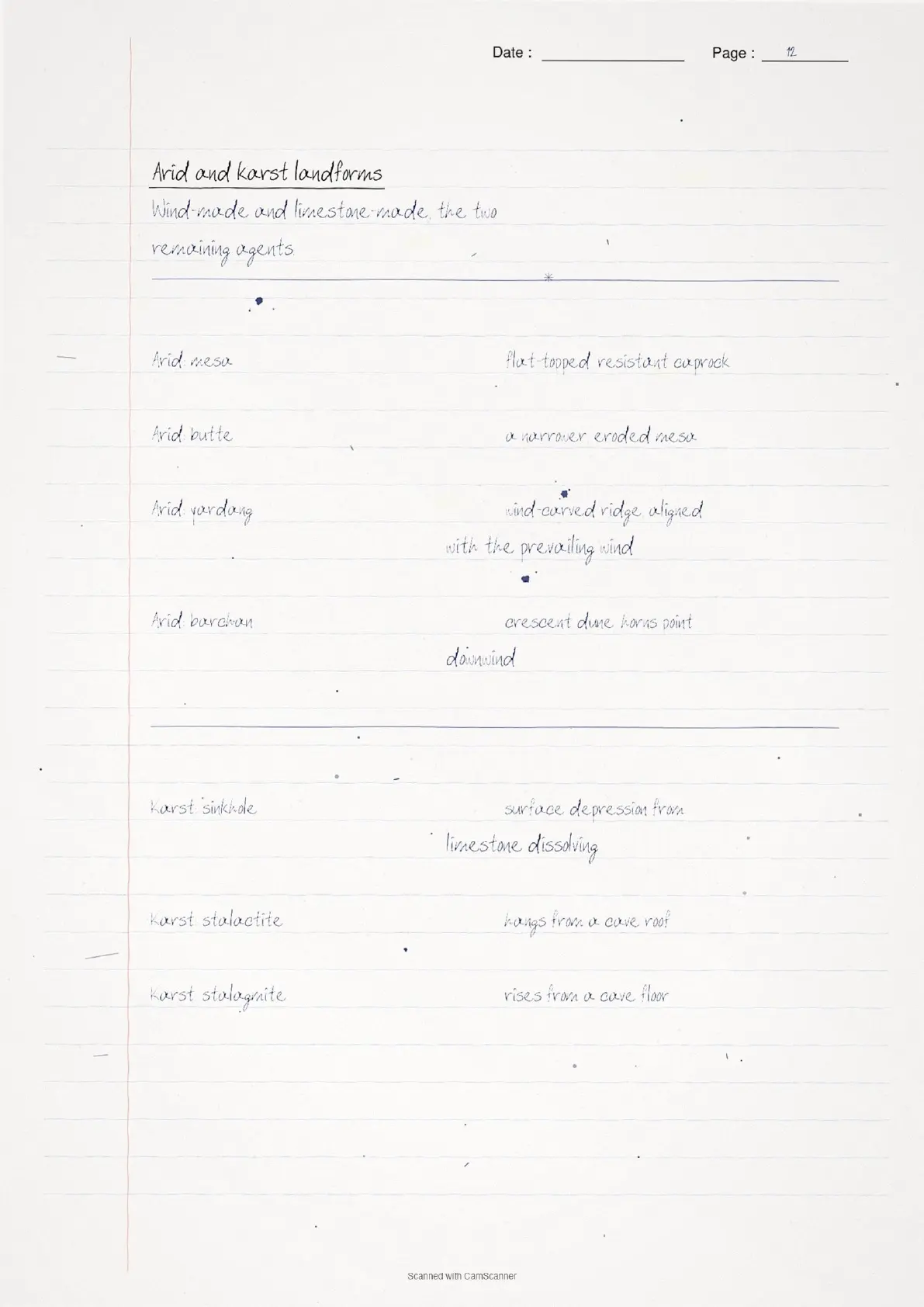
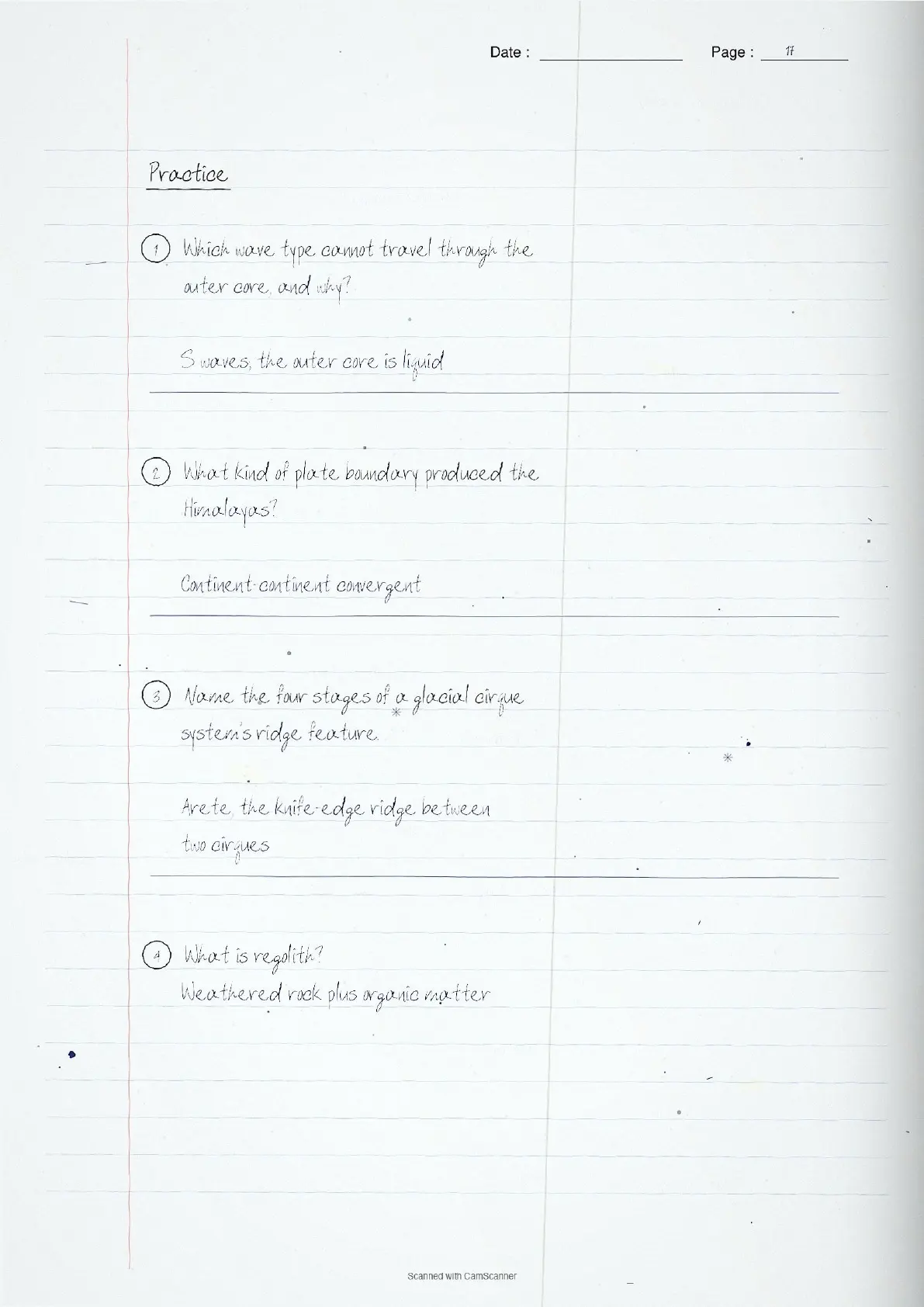
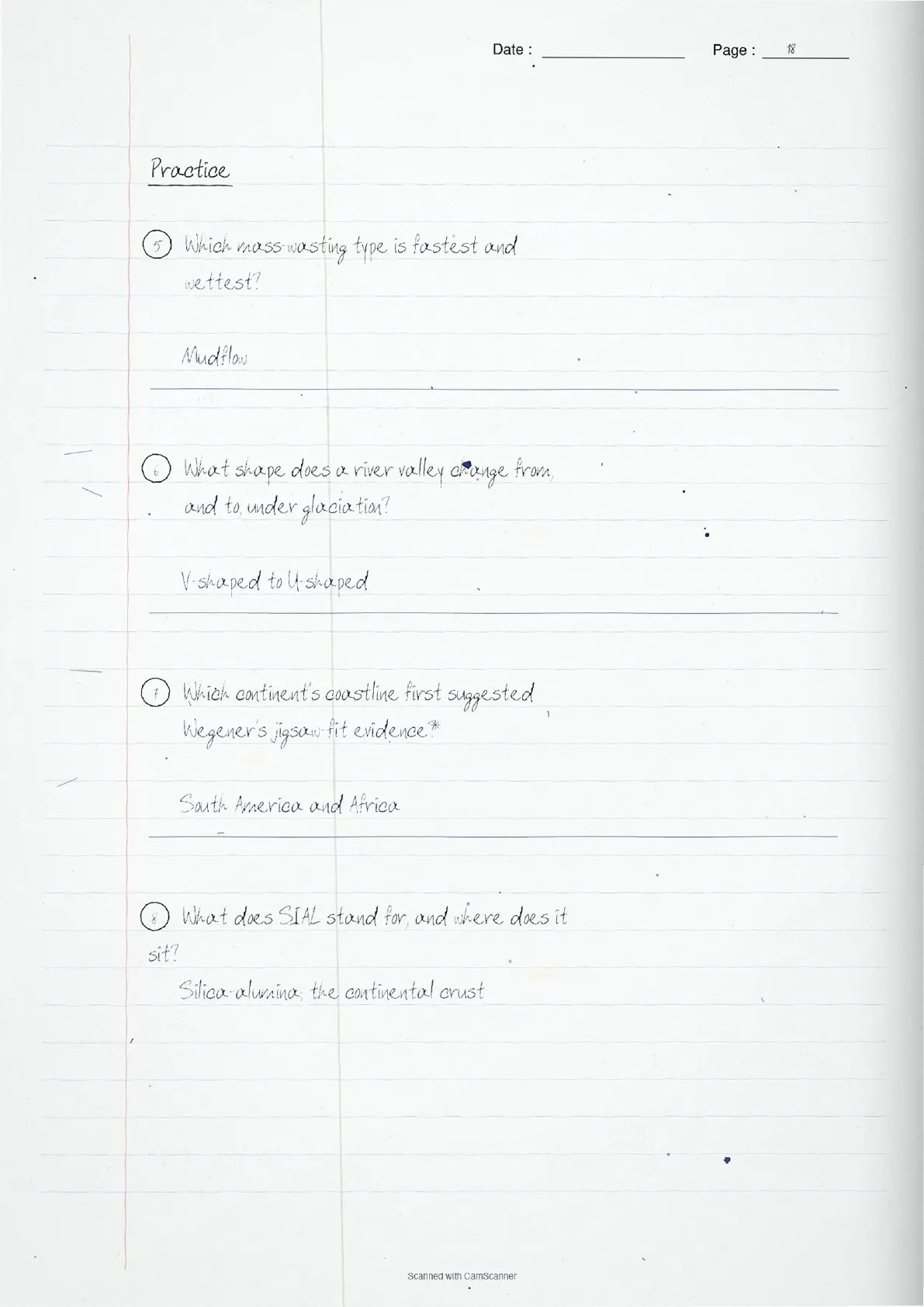
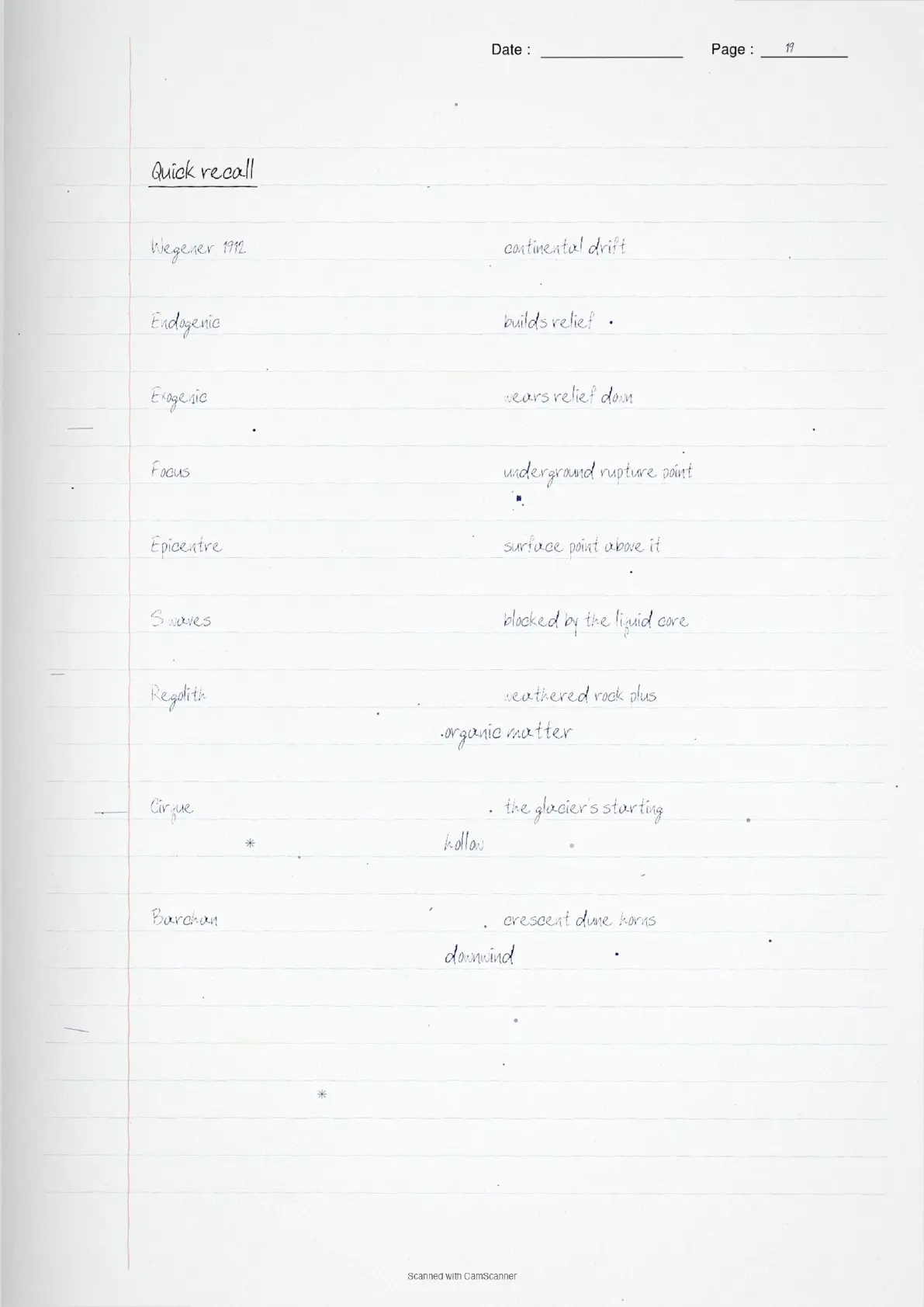
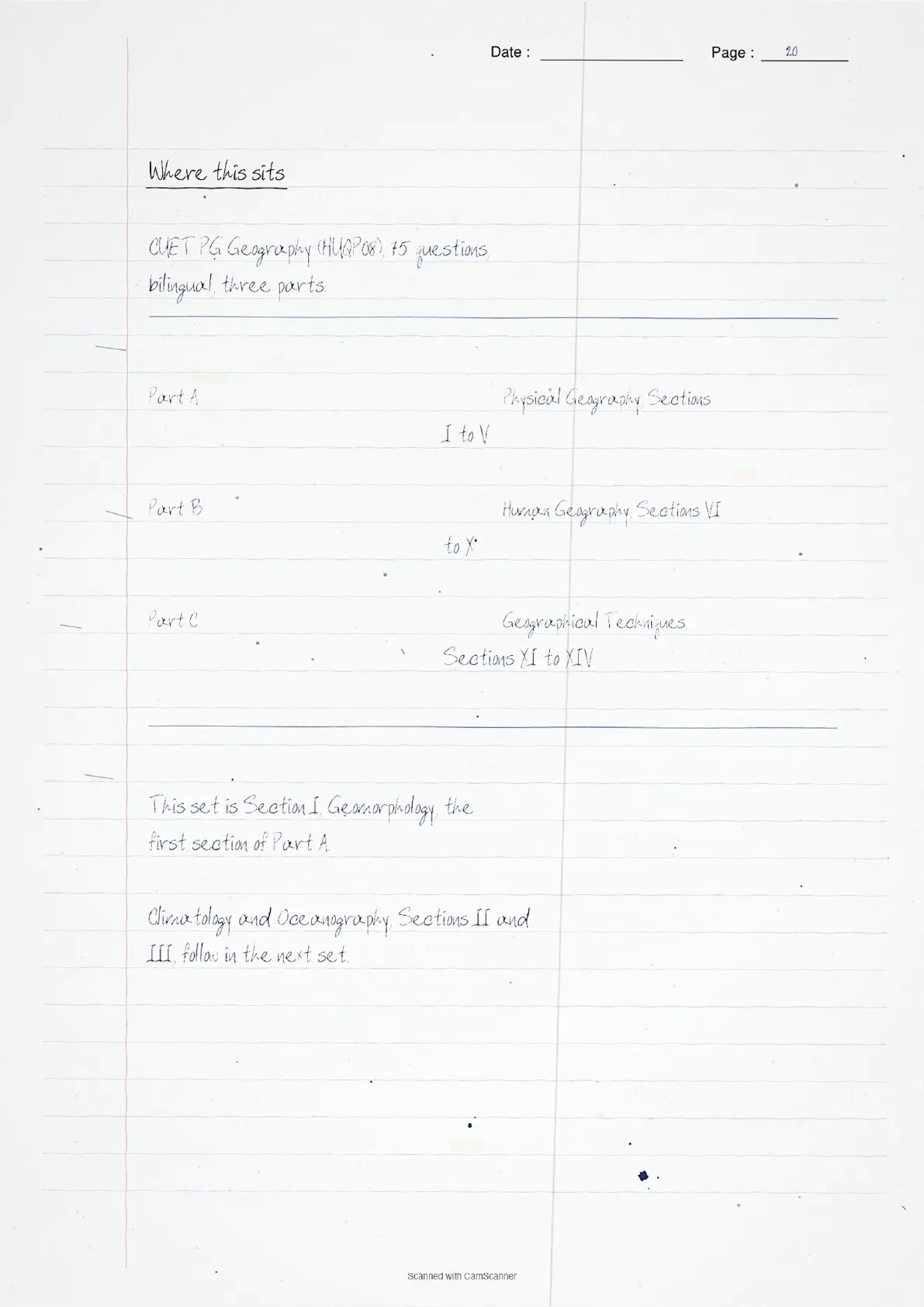
The notes are scans of a real notebook: short lines, boxed rules, and a margin note wherever something is easy to get wrong.
Where This Sits in HUQP08
CUET PG Geography carries 75 bilingual questions across three parts and fourteen numbered sections. Geomorphology is Section I, the opening section of Part A.
| Part | Content | Sections |
|---|---|---|
| A | Physical Geography | I to V |
| B | Human Geography | VI to X |
| C | Geographical Techniques | XI to XIV |
What the Notes Cover
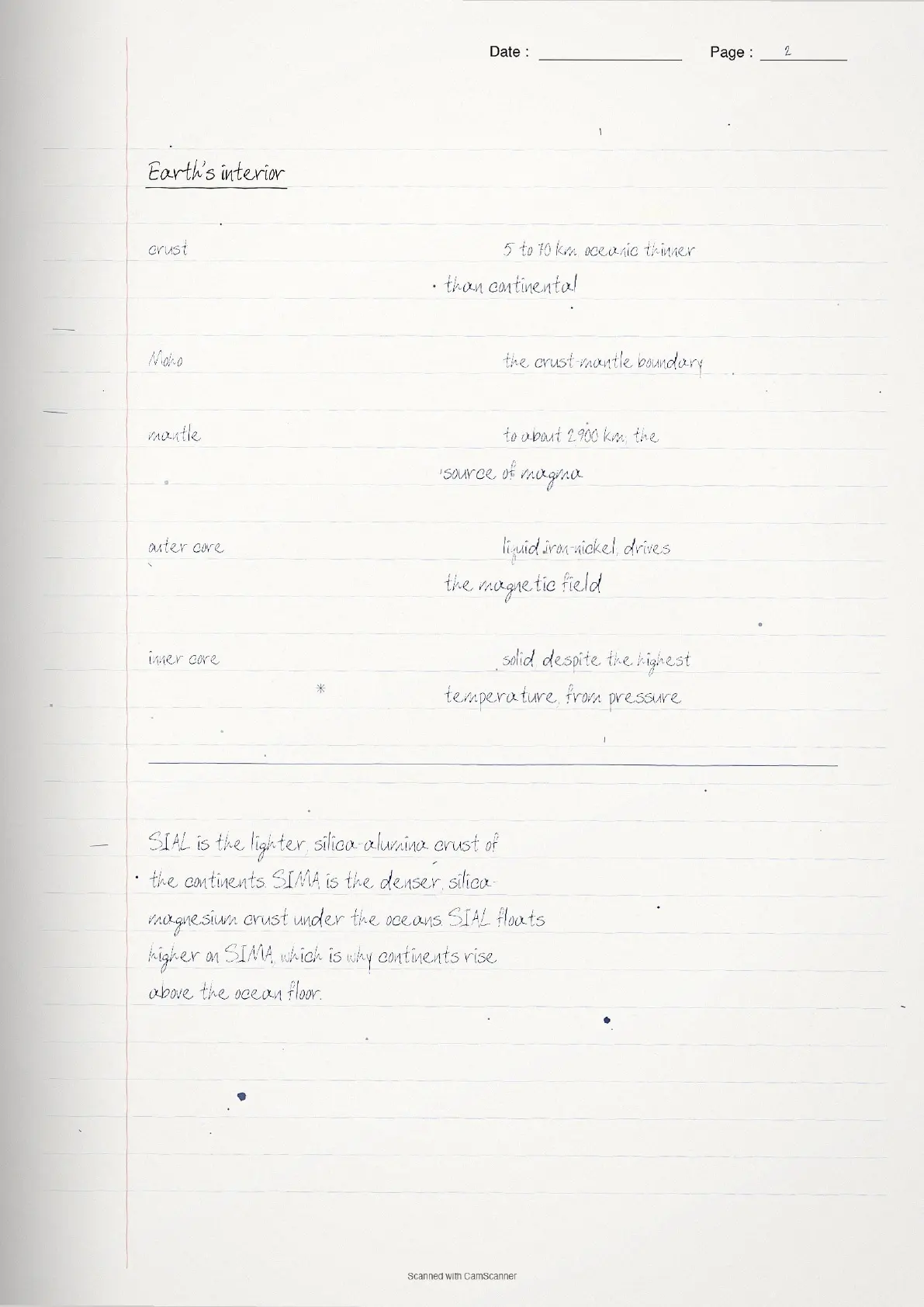
- Earth's interior, from crust to inner core, and the SIAL-SIMA contrast
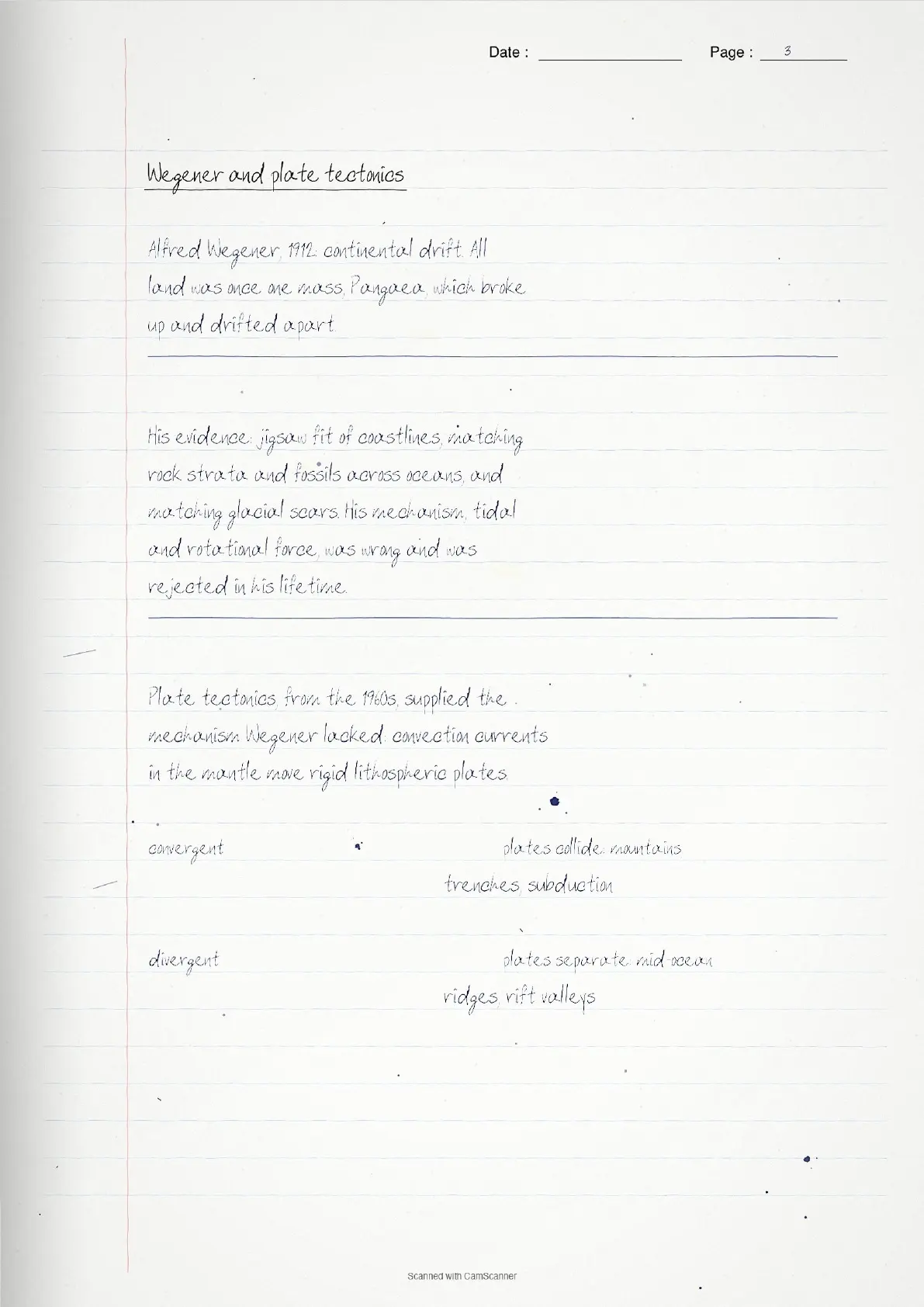
- Wegener's continental drift and the plate tectonics that supplied its missing mechanism
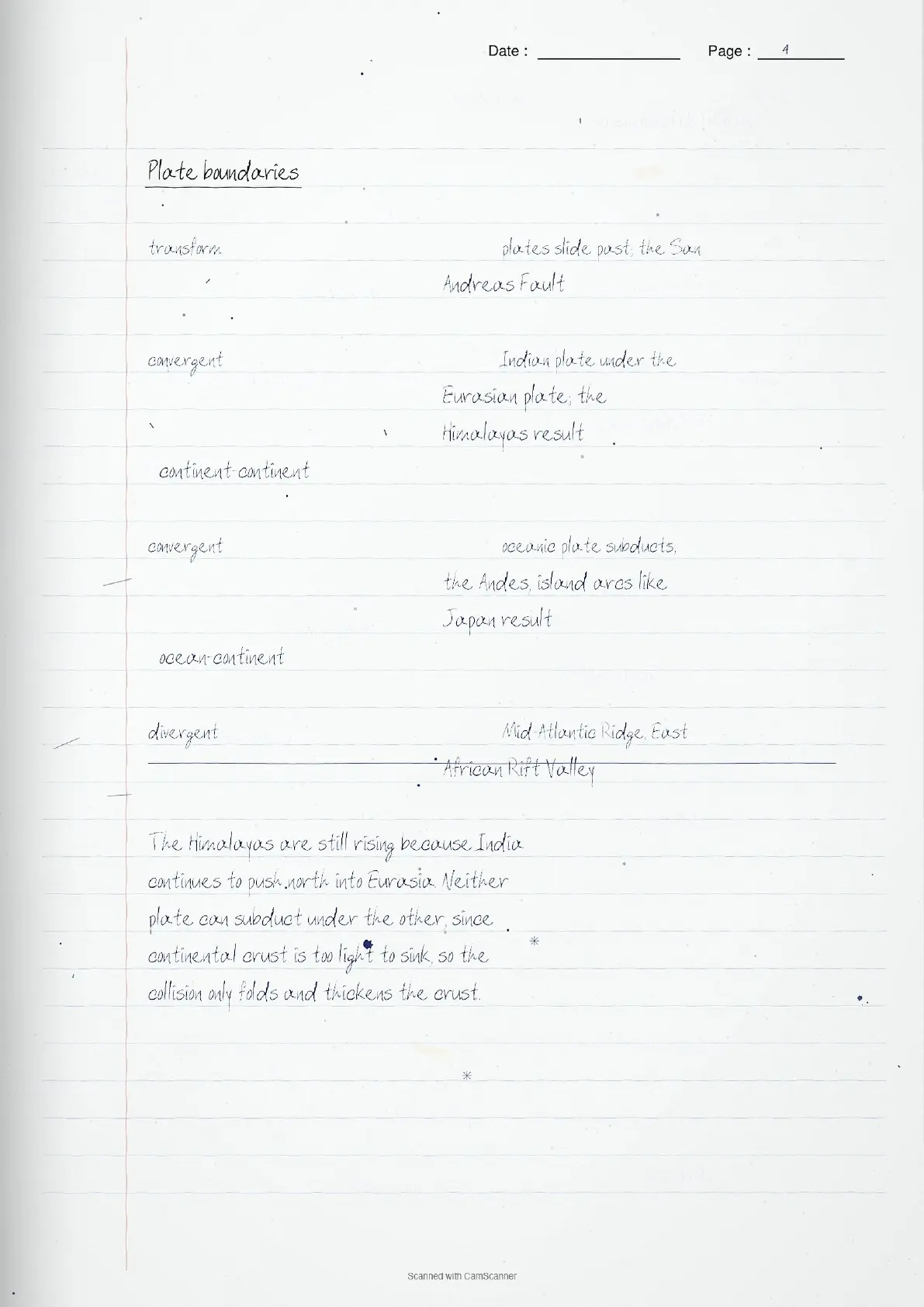
- Plate boundaries: transform, convergent and divergent, with named examples
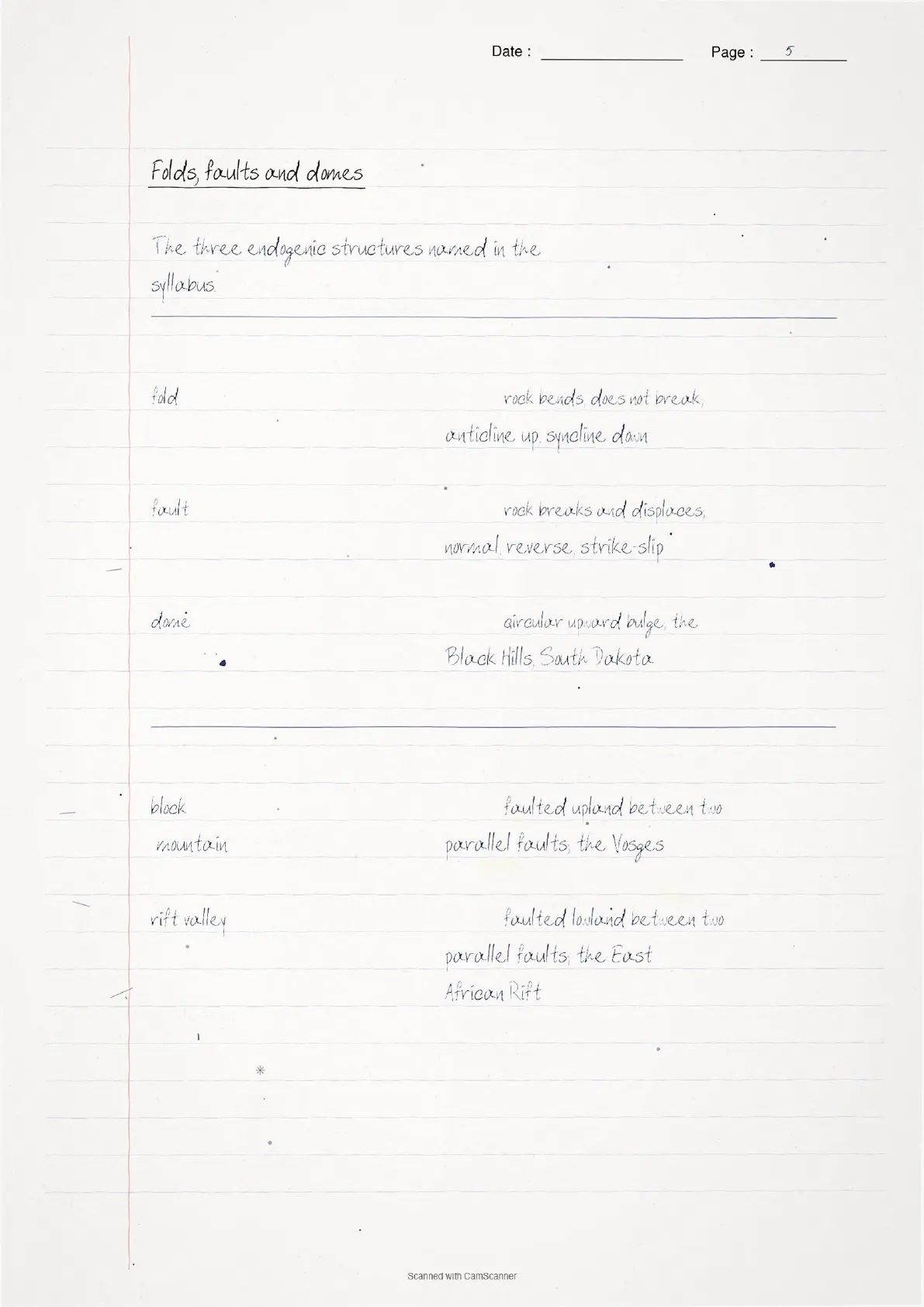
- Folds, faults and domes, the three endogenic structures
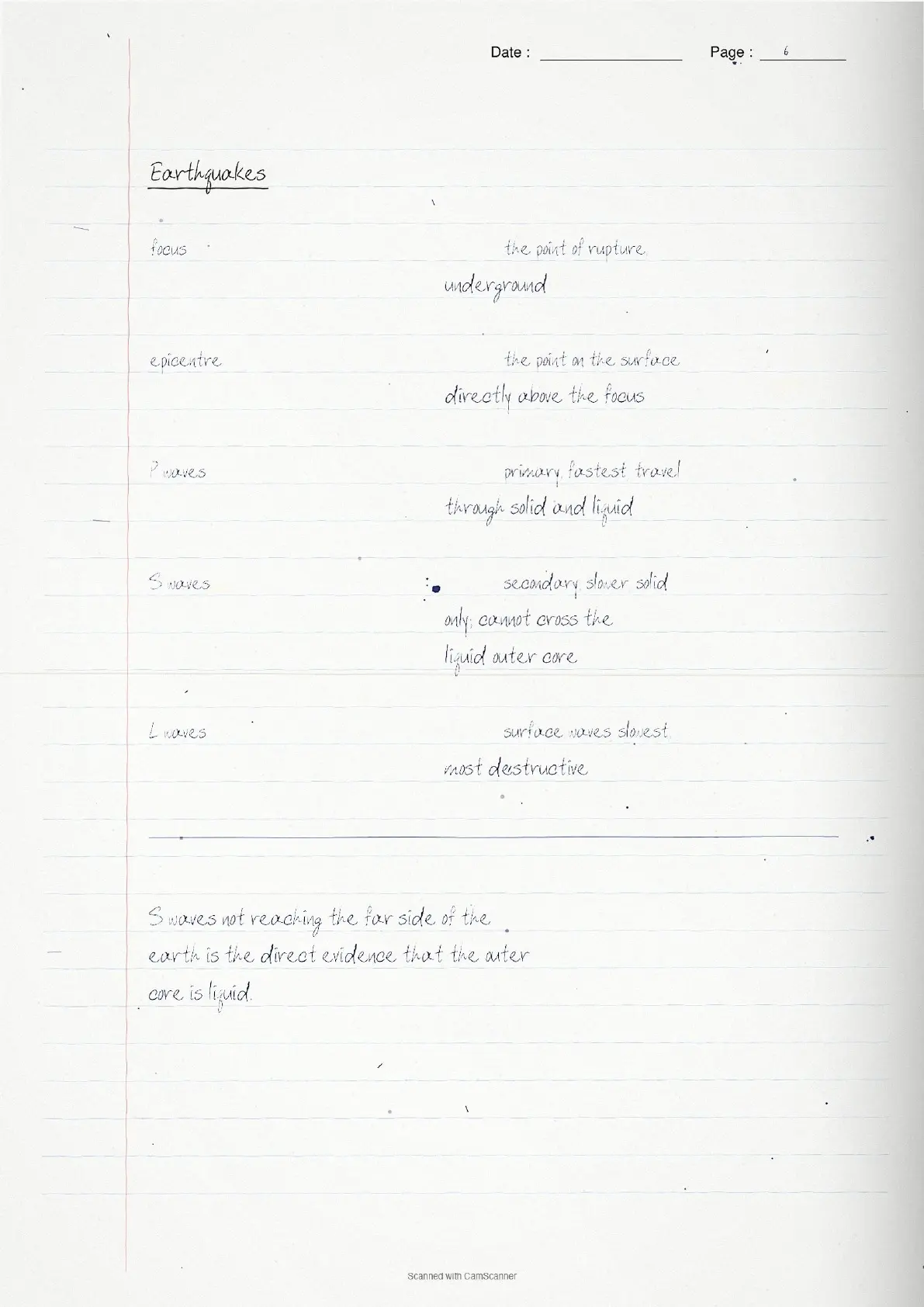
- Earthquakes, their waves, and why the outer core must be liquid
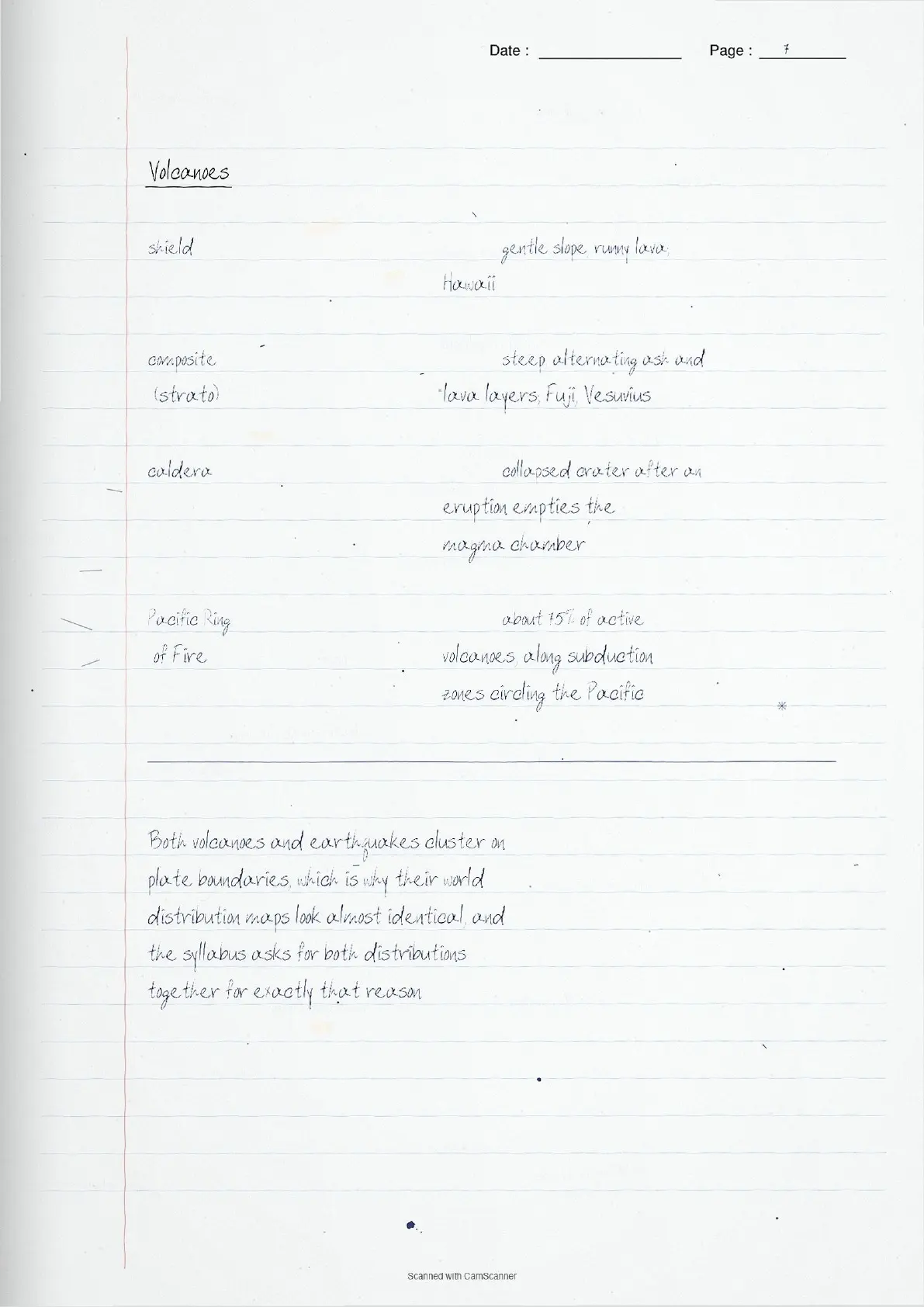
- Volcanoes and the Pacific Ring of Fire
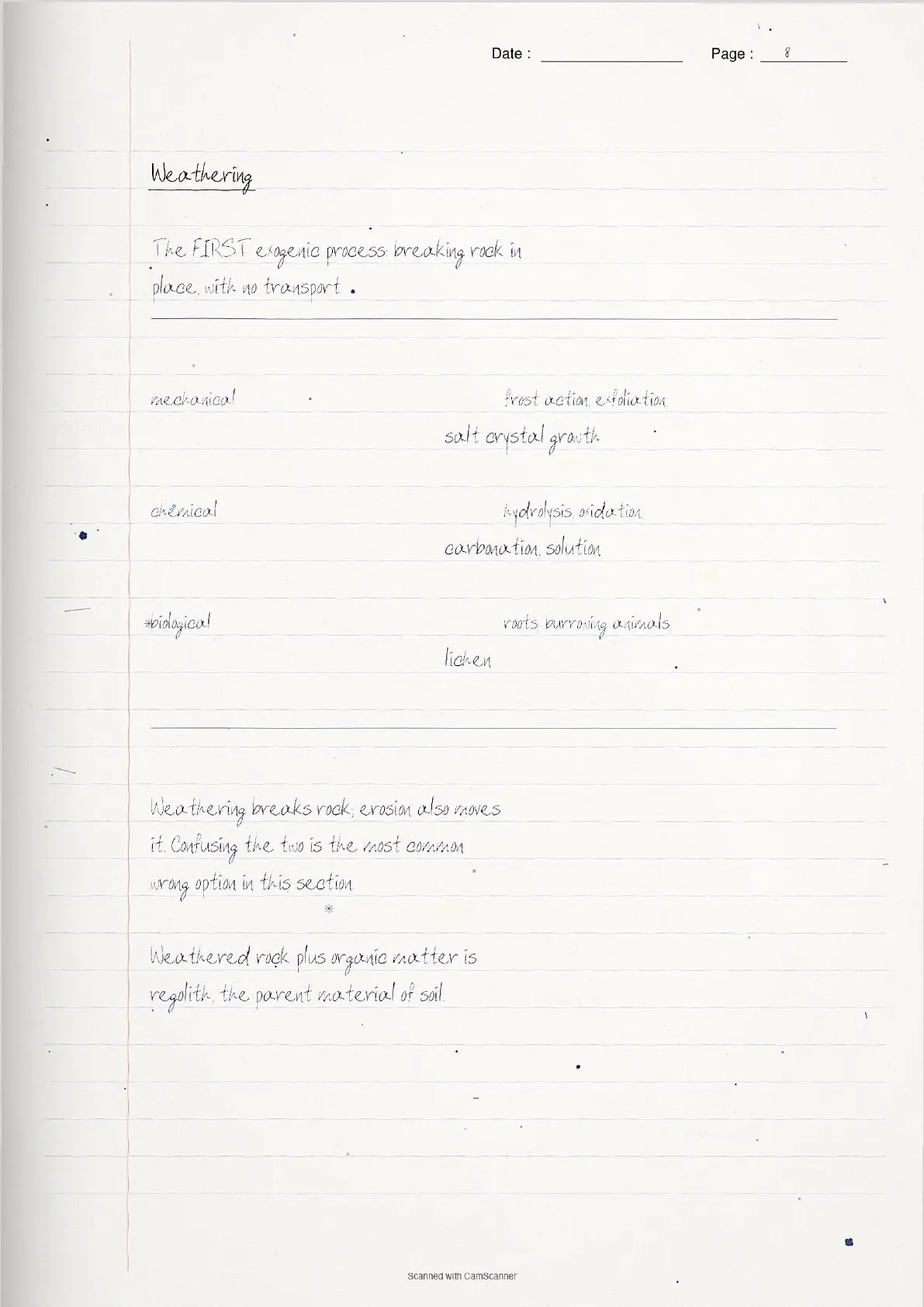
- Weathering, mass wasting, and the fluvial, glacial, arid and karst landforms that follow
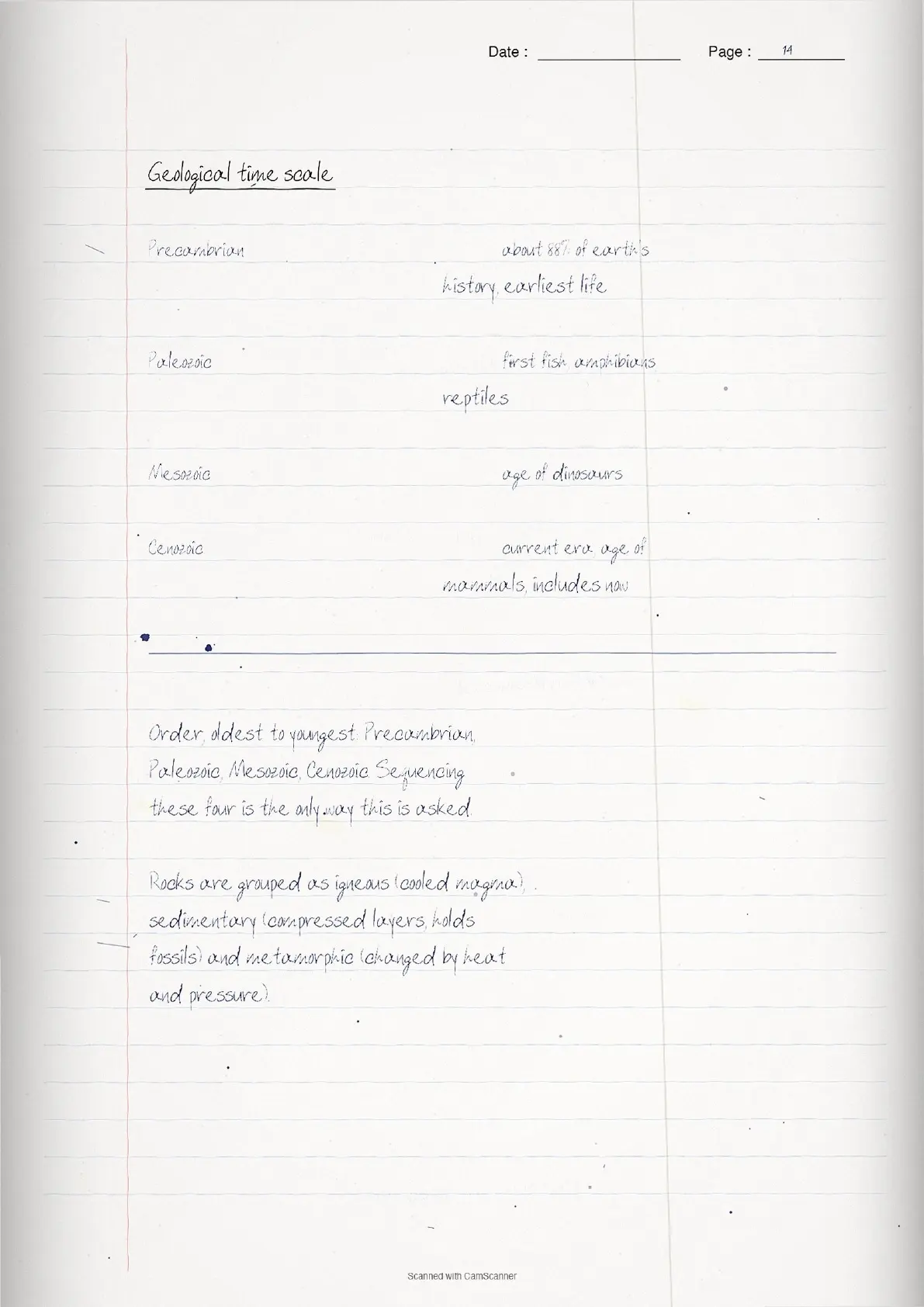
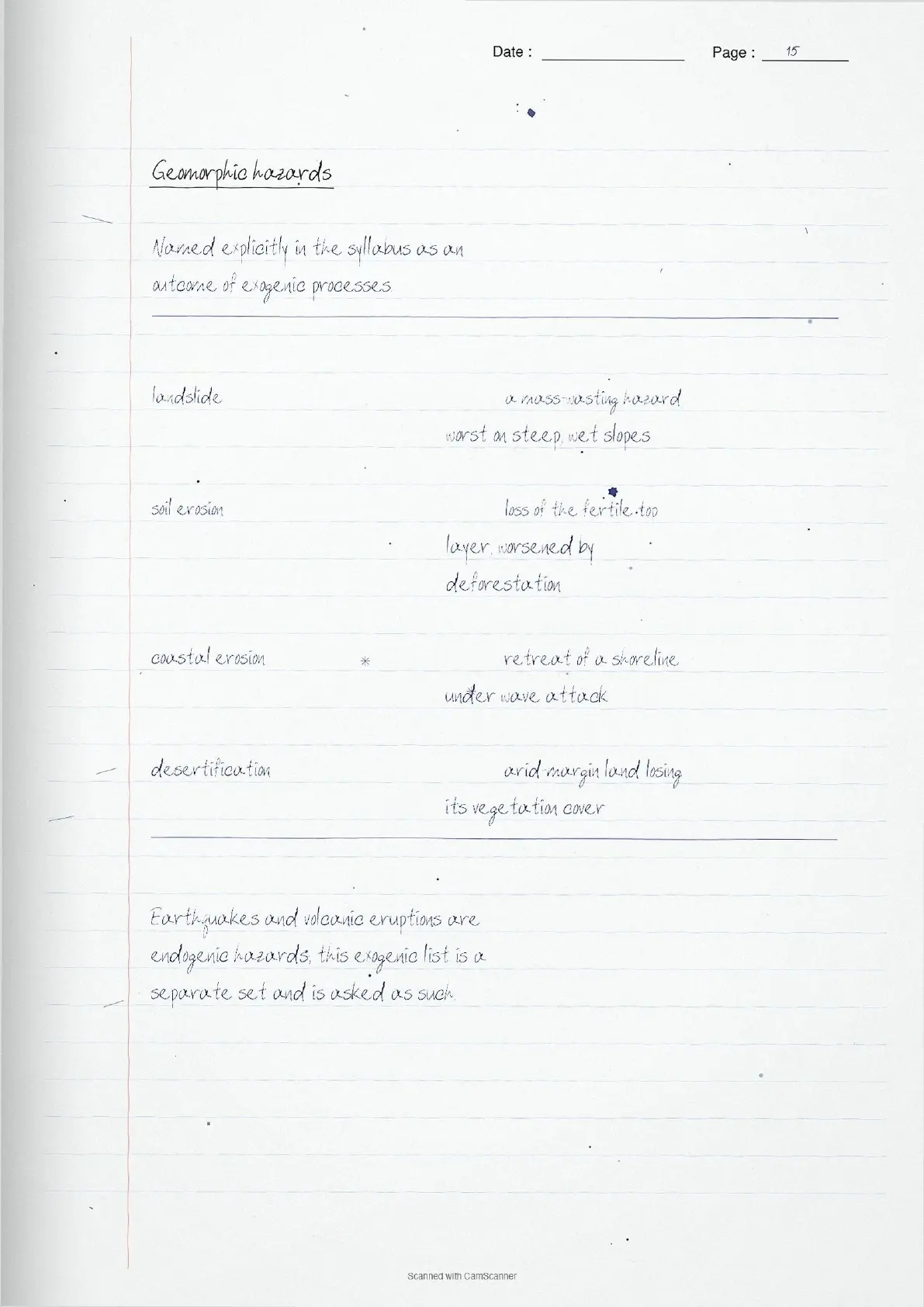
- The geological time scale and geomorphic hazards
How to Approach the Topic
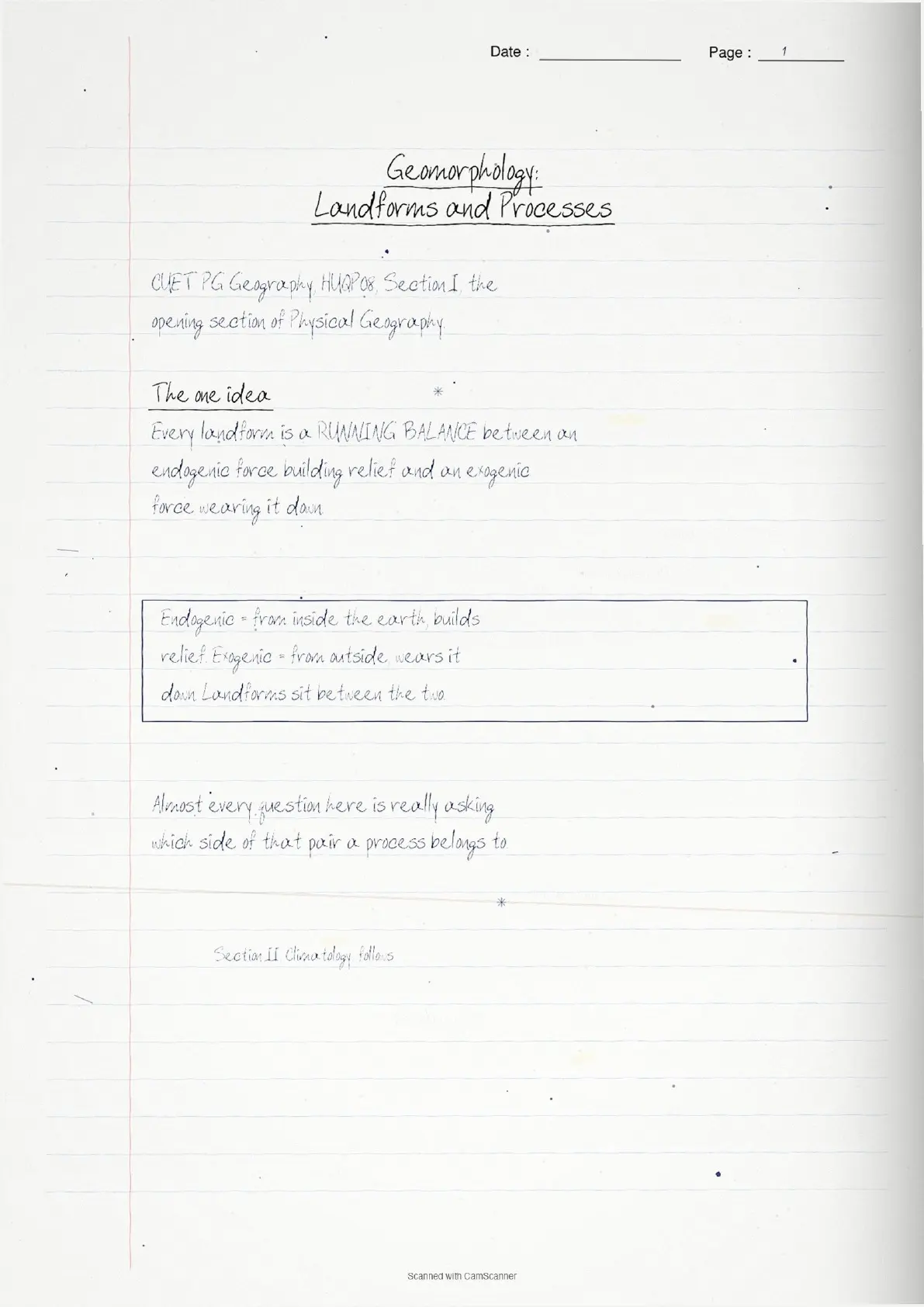
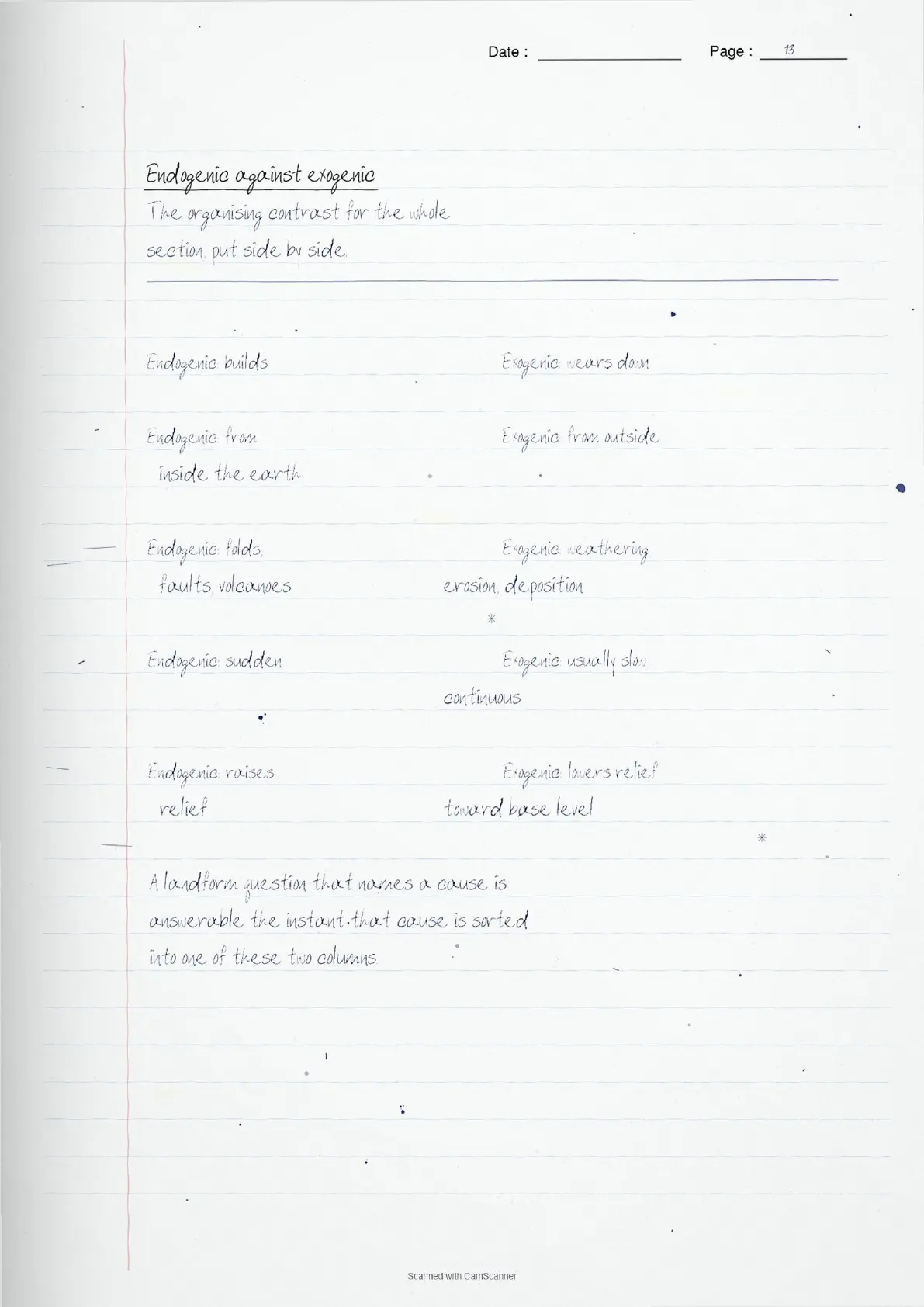
Every landform question is really a question about which side of one divide a process sits on: endogenic processes build relief from inside the earth, exogenic processes wear it down from outside. Sorting a cause into one of those two columns answers most of what is asked here.
Wegener's continental drift is tested for a specific reason: his evidence, the jigsaw-fit coastlines and matching fossils, was sound, but his proposed mechanism was wrong and was only supplied decades later by plate tectonics. Examiners like this exact gap between evidence and mechanism.
The fluvial-to-glacial contrast is the clearest single test of whether a candidate can tell agents of erosion apart: the same river valley that starts V-shaped is carved into a U-shape once a glacier occupies it.
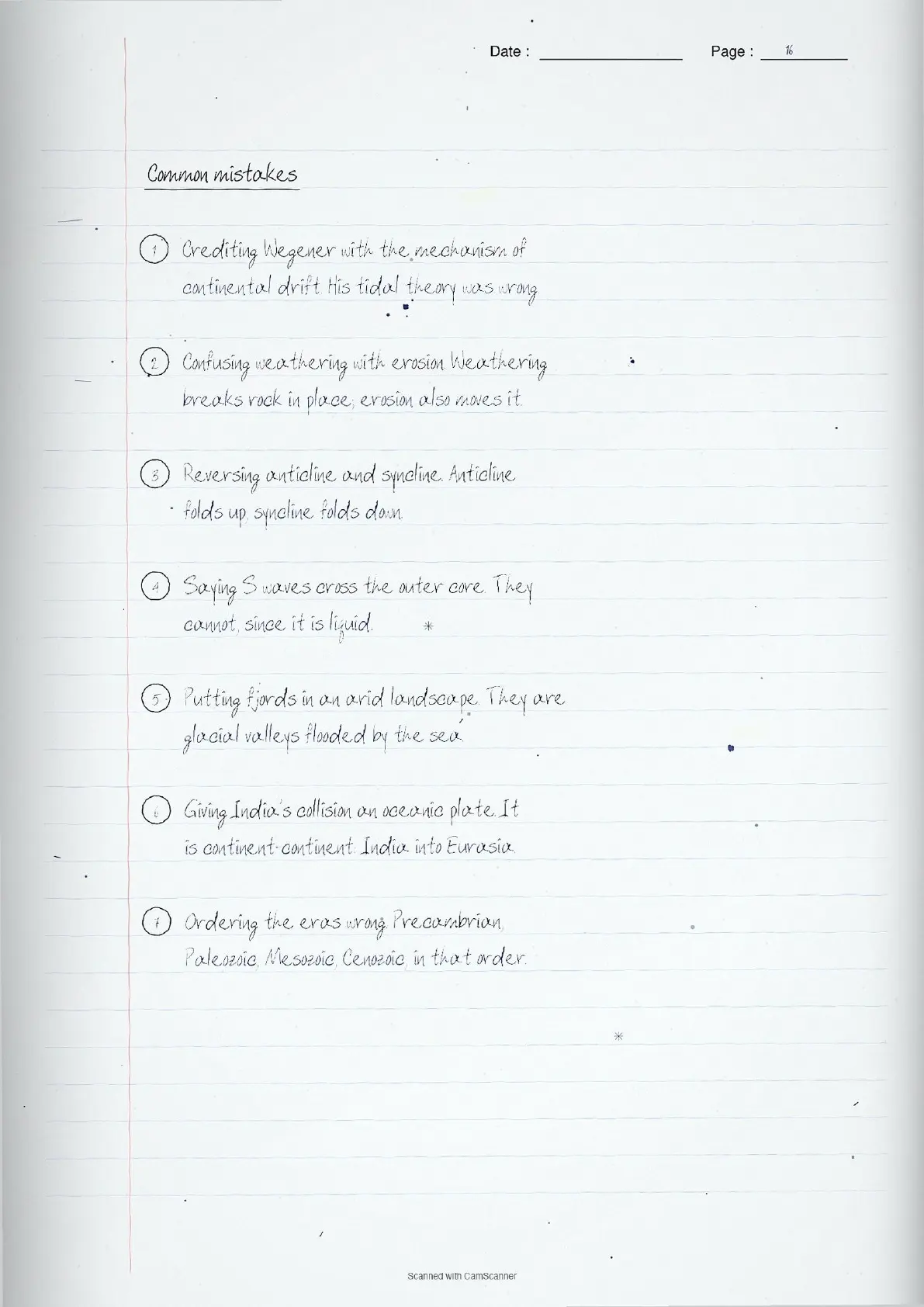
Common Mistakes
- Crediting Wegener with the mechanism of continental drift, when his tidal theory was wrong
- Confusing weathering with erosion, when weathering breaks rock in place and erosion also moves it
- Reversing anticline and syncline, an upward fold against a downward one
- Saying S waves cross the earth's outer core, which they cannot, since it is liquid
- Placing a fjord in an arid landscape, when it is a glacial valley flooded by the sea
- Giving India's Himalayan collision an oceanic plate, when it is continent against continent
- Misordering the geological eras: Precambrian, Paleozoic, Mesozoic, Cenozoic
Video Revision
Source: Dr. UPSC
How to Use These Notes
Page 13 sets endogenic against exogenic processes in one table, and page 19 is the recall grid. Between them they are a workable revision on the morning of the exam.
Page 6 works through earthquake waves and why the liquid outer core follows directly from them, which is worth reading before any practice paper.
The next set moves from the solid earth to the atmosphere and the ocean: Climatology and Oceanography.
CUET PG Geography Geomorphology Notes FAQs
Ques. Which part and section of HUQP08 is geomorphology in?
Ans. Section I, the first section of Part A, Physical Geography. Part A runs from Section I to Section V.
Ques. What is the difference between weathering and erosion?
Ans. Weathering breaks rock apart where it stands, with no transport involved. Erosion also moves the broken material away, by a river, glacier, wind or wave.
Ques. Why can S waves not cross the earth's core?
Ans. S waves, unlike P waves, cannot travel through a liquid. Their disappearance on the far side of the earth from an earthquake is the direct evidence that the outer core is liquid.
Ques. What kind of plate boundary produced the Himalayas?
Ans. A continent-continent convergent boundary, between the Indian and Eurasian plates. Neither plate subducts, since continental crust is too light to sink, so the collision folds and thickens the crust instead, and the range keeps rising.
Ques. Can the notes be downloaded free?
Ans. Yes. All 20 pages can be read on this page and downloaded at no cost.



Comments