





Nottingham Trent University admissions accept Class XII holders at 65 percent for undergraduate courses and Bachelor’s holders at 55 percent for postgraduate, with UCAS handling undergraduate submissions and NTU’s own portal handling postgraduate applications.
- Undergraduate September 2027 intake closes 13 January 2027 at UCAS (equal-consideration deadline).
- Base tuition from £17,950 (₹ 23.18 Lakh) UG and £18,300 (₹ 23.63 Lakh) PG; UCAS application fee £29.50 (₹ 3,809), no direct PG fee.
- UG floor: Class XII 65 percent with IELTS 6.0. PG floor: Bachelor’s 55 percent with IELTS 6.5.
- Estimated acceptance rate around 22 percent, positioning NTU as a medium-selective UK post-1992 university.
Indian students most often join NTU for the MBA, MSc Computer Science, and MSc Cyber Security, and reviews consistently highlight practical, industry-linked teaching and strong placement-year uptake. Read the full Nottingham Trent University overview before shortlisting programs.
Table of Contents
- Nottingham Trent University Application Deadlines
- NTU Eligibility for Indian Students
- Nottingham Trent Postgraduate Programs and English Scores
- NTU Undergraduate Programs and UCAS Requirements
- Nottingham Business School MBA Admissions
- NTU PhD Application Process and Funding
- Nottingham Trent University Application Process
- NTU Documents Required for Indian Applicants
- Nottingham Trent University Acceptance Rate
- UK Student Visa Process for NTU Students
- Tips and Checklist for Nottingham Trent Admissions
- Nottingham Trent University Admissions FAQs
Nottingham Trent University Application Deadlines
Nottingham Trent University runs two annual intakes for Indian students. The September intake is the primary window where most postgraduate and all undergraduate courses open, while January is a smaller postgraduate top-up cycle. Undergraduate applications route through UCAS, and postgraduate applications go directly to NTU’s own portal per the international applicants page.
The table below shows dates for the currently active September 2027 cycle and the January 2027 top-up window still open at time of writing.
Nottingham Trent University’s primary intake for Indian students is September, when most programs open.
| Intake | Level | App Opens | Deadline | App Fee | Portal |
|---|---|---|---|---|---|
| September 2027 (Primary intake) | UG | 1 September 2026 (UCAS) | 13 January 2027 | £29.50 (₹ 3,809) | UCAS |
| September 2027 (Primary intake) | PG | Rolling from August 2026 | Rolling until course fills | No fee | NTU direct portal |
| January 2027 | PG | Open now | Rolling (apply by early November 2026 for visa timing) | No fee | NTU direct portal |
| January 2027 | PhD | Open now | 1 October 2026 | No fee | NTU direct portal |
| September 2027 (Oxbridge / Medicine) | UG | 1 September 2026 (UCAS) | 15 October 2026 | £29.50 (₹ 3,809) | UCAS |
Planning note: Popular NTU postgraduate courses such as MSc Computer Science and MSc Cyber Security can close without notice once seats fill. Aim to submit at least four months before your intake starts.
Nottingham Trent University Eligibility for Indian Students
Nottingham Trent University sets separate academic and English thresholds by level. Program pages carry additional prerequisites, so treat these as the institution-wide floor rather than the final requirement. English scores below apply across all accepted proficiency tests.
NTU Academic Entry Floors
- Undergraduate: Class XII (CBSE, CISCE, or State Board) at 65 percent overall, with subject prerequisites for STEM courses.
- Postgraduate taught: Indian Bachelor’s degree at 55 percent overall (equivalent to UK 2:2), rising to 60 percent (UK 2:1) for competitive programs.
- MBA: Bachelor’s degree plus at least three years of managerial work experience after graduation.
- PhD: Master’s degree in a relevant discipline plus a research proposal aligned to an NTU supervisor.
NTU English Language Requirements
NTU accepts several English tests. The table below shows the institution-wide minimums for direct entry, drawn from NTU’s English language requirements page.
| Test | UG Minimum | PG Minimum | Sub-band Rule |
|---|---|---|---|
| IELTS Academic | 6.0 | 6.5 | No band below 5.5 |
| TOEFL iBT | 72 | 87 | Section minimums apply |
| PTE Academic | 59 | 65 | No skill below 51 |
| Duolingo | 105 | 115 | No sub-score below 95 |
| LanguageCert / Oxford ELLT | Accepted at equivalent bands | Accepted at equivalent bands | Confirm per course |
NTU IELTS Waiver for Indian Students
Indian applicants can skip IELTS at the undergraduate level if their Class XII English score is 70 percent or higher on CBSE or CISCE. This waiver applies to most direct-entry undergraduate courses but does not extend to nursing, midwifery, or teacher-training programs. Postgraduate applicants may qualify for a Medium of Instruction letter only if their Bachelor’s degree is from an NTU-recognised university on the accepted list. Do not assume any Bachelor’s MOI letter will pass.
Insider note: The Class XII English 70 percent waiver saves both the IELTS booking cost and roughly three weeks of test scheduling. Have your Class XII marksheet ready with the offer letter to trigger the waiver at CAS stage.
Nottingham Trent University Postgraduate Programs and English Scores
Nottingham Trent University’s postgraduate portfolio spans business, computing, law, forensic science, and creative fields. Base tuition sits between £18,300 (₹ 23.63 Lakh) and £21,150 (₹ 27.31 Lakh) per year depending on the school, with lab-based courses at the upper end. For a full course-wise fees breakdown, use the Fees page rather than this article.
| Programme | Duration | Minimum Eligibility | English Req. Min. |
|---|---|---|---|
| MSc Computer Science | 1 year | Bachelor’s with 55 percent in Computer Science or related discipline | IELTS 6.5 |
| MSc Cyber Security | 1 year | Bachelor’s with 55 percent in Computing or STEM subject | IELTS 6.5 |
| MSc Data Science | 1 year | Bachelor’s with 55 percent in a numerate discipline | IELTS 6.5 |
| MSc Business Analytics | 1 year | Bachelor’s with 55 percent, any discipline with quantitative background | IELTS 6.5 |
| MSc Finance and Investment Banking | 1 year | Bachelor’s with 55 percent in Finance, Economics, or Business | IELTS 6.5 |
| MSc International Business | 1 year | Bachelor’s with 55 percent, any discipline | IELTS 6.5 |
| MSc Marketing | 1 year | Bachelor’s with 55 percent, any discipline | IELTS 6.5 |
| MSc Forensic Science | 1 year | Bachelor’s with 55 percent in Chemistry, Biology, or Forensic Science | IELTS 6.5 |
| LLM International Business Law | 1 year | Bachelor’s in Law (LLB) with 55 percent or equivalent | IELTS 6.5 |
| MA International Relations | 1 year | Bachelor’s with 55 percent in Social Science or Humanities | IELTS 6.5 |
Note: Program-specific entry requirements, fees, and intake availability may differ from the institution-wide minimums shown above. Always confirm on the official Nottingham Trent University page for your chosen program before applying.
Nottingham Trent University Undergraduate Programs and UCAS Requirements
Undergraduate degrees at Nottingham Trent University run for three years, or four years with the optional placement year (fee £1,905 (₹ 2.46 Lakh) for that year). The placement year is a paid industry sandwich year that most Indian students take up. All undergraduate offers route through UCAS on the equal-consideration basis.
| Programme | Duration | Minimum Eligibility | English Req. Min. |
|---|---|---|---|
| BSc (Hons) Computer Science | 3 years (4 with placement) | Class XII at 65 percent with Mathematics | IELTS 6.0 |
| BSc (Hons) Cyber Security | 3 years (4 with placement) | Class XII at 65 percent with Mathematics or Computer Science | IELTS 6.0 |
| BA (Hons) Business Management | 3 years (4 with placement) | Class XII at 65 percent overall | IELTS 6.0 |
| LLB (Hons) Law | 3 years | Class XII at 70 percent overall | IELTS 6.5 |
| BSc (Hons) Psychology (BPS accredited) | 3 years (4 with placement) | Class XII at 65 percent, Biology preferred | IELTS 6.0 |
Nottingham Business School MBA Admissions at Nottingham Trent University
The Nottingham Business School MBA at Nottingham Trent University is a one-year full-time program with triple crown accreditation (EQUIS, AACSB, AMBA), a rare status held by fewer than 1 percent of business schools globally. Fees sit within the wider PG band of £18,300 to £21,150 (₹ 23.63 Lakh to ₹ 27.31 Lakh). For funding routes, see the funding for Indian students announcement.
NTU MBA Work Experience Rule
The full-time MBA asks for a Bachelor’s degree plus at least three years of post-graduation professional experience in a role with responsibility for people, projects, budgets, or organisational resources. Applicants without a Bachelor’s may be considered with 8+ years of substantive management experience under the experience-substitution pathway. The Global Executive MBA runs part-time and requires 5+ years of senior-level experience.
NTU MBA Rounds and Interview
MBA applications are reviewed on a rolling basis with two main entry points, September and January. Shortlisted candidates go through a competency-based interview conducted online for international applicants, typically 30 to 45 minutes long, focused on leadership examples and MBA goals. GMAT is not compulsory but a score of 500+ strengthens borderline applications.
Insider note: The MBA interview is the deciding stage, not the transcript. Prepare two crisp leadership stories with quantified outcomes, and one clear post-MBA plan tied to a UK sector before the call.
Nottingham Trent University PhD Application Process and Funding
Nottingham Trent University offers PhDs across nine schools with two annual entry points, October and January. Indian applicants must secure a supervisor before formally applying, since NTU does not accept unsupervised research proposals.
NTU PhD Application Steps
- Browse NTU school research pages and identify two potential supervisors.
- Email a 500-word proposal outline plus CV to the shortlisted supervisor.
- Once a supervisor confirms interest, submit the full application via the NTU direct portal.
- January 2027 intake applications close 1 October 2026.
- Fully-funded studentships are advertised on the NTU studentships page and carry their own separate deadlines.
NTU PhD Funding Snapshot
NTU studentships cover home-rate tuition plus a UKRI-aligned annual stipend (£19,237 for 2025-26, updated each academic year). International PhD candidates without a studentship pay full overseas tuition, currently within the £18,300 to £21,150 PG band. For international-specific funding, check the Scholarships page.
Note: Programme-specific entry requirements, fees, and intake availability may differ from the institution-wide minimums shown above. Always confirm on the official NTU PhD page for your chosen research area before applying.
Nottingham Trent University Application Process
The application route depends on level. Undergraduate applicants use the UCAS platform, and postgraduate applicants apply directly through the NTU portal. Step 1 varies accordingly.
- Register on the correct platform. UG applicants create a UCAS account (the UCAS 2027 cycle opened 1 September 2026); PG applicants create an account on the NTU direct portal.
- Pay the application fee. UG applicants pay the UCAS fee of £29.50 (₹ 3,809) at submission. PG applicants pay no direct NTU application fee.
- Upload academic transcripts, Class XII marksheet, Bachelor’s degree certificate (PG), and English proof.
- Draft a personal statement (UCAS UG, 4,000 characters) or Statement of Purpose (PG, 500 to 800 words).
- Submit two academic references (or one academic plus one professional reference for MBA applicants).
- Await the offer letter, usually issued in four to six weeks for postgraduate direct applications.
- Accept the offer, pay the tuition deposit, and request the CAS letter for your visa application.
Planning note: The CAS is issued only after deposit payment and English-proof verification. Allow three weeks between deposit and CAS, and another three weeks for the visa itself.
Nottingham Trent University Documents Required for Indian Applicants
Nottingham Trent University verifies all documents at the offer and CAS stages. Uploads should be clear, colour scans in PDF format. Missing paperwork is the top reason for delayed decisions.
- Valid Indian passport with at least 18 months’ validity from the intended travel date.
- Class X and Class XII marksheets and passing certificates.
- Bachelor’s degree marksheets (all semesters or years) and provisional or final degree certificate.
- Statement of Purpose tailored to the chosen NTU course (PG applicants).
- UCAS personal statement (UG applicants only, 4,000 characters).
- Two reference letters, at least one academic; MBA applicants may substitute one with a professional reference.
- Updated CV covering education, work experience, projects, and extracurriculars.
- English test score report (IELTS, TOEFL, PTE, Duolingo, or LanguageCert).
- Class XII English marksheet if claiming the 70 percent English waiver.
- Portfolio for art, design, architecture, and fashion applicants.
- Work experience letters for MBA applicants confirming role, duration, and responsibilities.
Nottingham Trent University Acceptance Rate for Indian Applicants
NTU does not publish an official institutional acceptance rate. Third-party estimates place the overall rate at around 22 percent, based on competitive-intake patterns across UK post-1992 universities of similar size. NTU sits within the top 100 in the world for teaching quality per the Times Higher Education ranking, which pushes application volume above intake capacity for popular courses.
Which NTU Programs Are Most Competitive?
MBA at Nottingham Business School, MSc Computer Science, MSc Cyber Security, LLB (Hons) Law, and BSc Psychology tend to fill fastest. These sit in the tighter 15 to 20 percent selectivity band once places approach capacity. Creative and language-track programs run closer to the institutional average.
What Improves Your NTU Chances?
NTU rewards applicants who exceed the academic floor by 5 to 10 percent, submit a course-specific SOP, and apply within the first three months of the cycle. Bachelor’s applicants with a UK 2:1 equivalent (60 percent) are prioritised for the more competitive postgraduate courses. For the current ranking band, see the dedicated ranking page.
Insider note: Applying in the first four weeks of the postgraduate cycle roughly doubles offer speed. NTU processes early-cycle files with lighter competition and unfilled seat quotas.
UK Student Visa Process for Nottingham Trent University Students
Indian students admitted to Nottingham Trent University apply for the UK Student Visa (formerly Tier 4 General), filed online at gov.uk and biometrics submitted at a VFS Global centre in India. The visa is course-length plus four months for degree programs.
Applications require the CAS letter from NTU, tuition-deposit proof, financial proof of £1,023 per month (₹ 1.32 Lakh) for nine months for Nottingham-based courses (£1,334 or ₹ 1.72 Lakh per month if studying at NTU London), a valid passport, English proof, TB test certificate, and the Immigration Health Surcharge of £1,035 per year (₹ 1.34 Lakh). Funds must be held for a continuous 28-day period ending within 31 days of the visa application. Standard processing is three weeks; the priority service returns a decision in five working days for an extra fee.
2026 update: UKVI now accepts digital bank statements only if downloaded within the last 31 days and stamped by the issuing branch. Static PDFs from netbanking without a branch stamp are rejected.
Tips and Checklist for Nottingham Trent University Admissions
The following tips and steps are drawn from Indian-applicant patterns at Nottingham Trent University. They cover timing and sequencing rather than restating documents already listed.
- Book IELTS or PTE by October 2026 if targeting the January 2027 UG UCAS deadline, allowing time for a rebook if scores fall short.
- Request Bachelor’s transcripts and degree certificate eight weeks before your PG application, especially for Indian universities with slow verification.
- Contact two potential MBA referees early; NBS interviews often follow within two weeks of a complete application.
- Apply for the postgraduate NTU International Scholarship by 18 December 2026 for January 2027 entry, on your offer letter.
- Pay the tuition deposit within four weeks of accepting the offer to keep CAS issuance on the standard three-week track.
- Book the TB test at an IOM-approved Indian clinic before applying for the visa; results take up to five working days.
- Open a Wise or ICICI multi-currency account for the 28-day financial-proof period, avoiding fixed deposits that do not qualify.
- Schedule the visa biometrics slot at VFS Global at least four weeks before your intended travel date.
Nottingham Trent University rewards applicants who move early, keep documentation tight, and use the Class XII English waiver where eligible. September 2027 undergraduate applicants have the equal-consideration UCAS deadline on 13 January 2027, while postgraduate applicants for both January 2027 and September 2027 can apply on a rolling basis today. Confirm the live fee, waiver, and scholarship rules on the official NTU page before you press submit.
Nottingham Trent University Admissions: Frequently Asked Questions
Ques. What is the main deadline for Indian undergraduate applicants at Nottingham Trent University for September 2027?
Ans. The UCAS equal-consideration deadline is 13 January 2027 at 18:00 UK time. Late applications may still be considered until courses fill, but priority goes to on-time submissions.
Ques. Does Nottingham Trent University charge an application fee?
Ans. Undergraduate applicants pay the UCAS fee of £29.50 (₹ 3,809) at submission. Postgraduate applicants applying directly via the NTU portal pay no application fee.
Ques. What is the minimum IELTS score for postgraduate admission at NTU?
Ans. Postgraduate courses require IELTS 6.5 overall with no band below 5.5. Some competitive courses such as LLM and journalism specialisations may ask for 7.0 in Writing.
Ques. Can Indian students get an IELTS waiver at Nottingham Trent University?
Ans. Yes, Class XII English at 70 percent or higher on CBSE or CISCE waives the IELTS requirement for most undergraduate courses. Postgraduate MOI letters are accepted only from NTU-approved universities.
Ques. What are the base tuition fees for international students at NTU?
Ans. Undergraduate tuition starts at £17,950 (₹ 23.18 Lakh) per year. Postgraduate tuition ranges from £18,300 (₹ 23.63 Lakh) to £21,150 (₹ 27.31 Lakh) per year based on the course.
Ques. Does the NTU MBA require GMAT?
Ans. GMAT is not compulsory for the Nottingham Business School MBA. A GMAT score of 500 or higher strengthens borderline profiles, especially applicants at the lower end of the three-year work-experience threshold.
Ques. When should I apply for a scholarship at NTU?
Ans. The postgraduate international scholarship deadline for January 2027 entry is 18 December 2026. September 2027 scholarship windows open after the offer letter is issued, typically with a spring 2027 deadline.
Ques. How long does it take to receive an offer letter from NTU?
Ans. Complete postgraduate applications typically receive a decision within four to six weeks. Undergraduate UCAS decisions follow the standard UCAS timeline, with most offers issued by the end of March 2027.
Ques. What financial proof do I need for the UK Student Visa as an NTU applicant?
Ans. You need £1,023 (₹ 1.32 Lakh) per month for nine months for Nottingham-based courses, or £1,334 (₹ 1.72 Lakh) per month for NTU London courses. Funds must sit in your name for a continuous 28-day period.
Ques. Does NTU offer conditional offers to Indian students awaiting final results?
Ans. Yes, NTU issues conditional offers pending Bachelor’s final marksheets or Class XII results. You must meet the conditions and submit updated documents before the CAS is issued.
Ques. Can I switch my intake from January 2027 to September 2027 at NTU?
Ans. Yes, deferrals are possible if requested in writing before the CAS is issued. NTU typically approves one-cycle deferrals without a fresh application, subject to course availability.
Ques. Is a placement year available for international undergraduate students?
Ans. Yes, most NTU undergraduate courses offer an optional paid placement year charged at £1,905 (₹ 2.46 Lakh). Indian students commonly take it up to build UK work experience before graduation.
College Student Profiles

Nottingham Trent University Program Fees & Deadlines
| Program | Important Dates | Fees | Application Fees | Eligibility | Financial Aid |
|---|---|---|---|---|---|
MSc Cyber Security 1 year | Spring 2027 rolling admission intake (1st Jan 2027) | USD 26,467 /Yr GBP 19,900 /Yr | - | IELTS: 6.5, TOEFL: 4.5, PTE: 62, Bachelor's Degree, minimum 50% | |
MSc Computer Science 1 year | USD 26,467 /Yr GBP 19,900 /Yr | - | IELTS: 6.5, TOEFL: 4.5, PTE: 62, Bachelor's Degree | ||
| USD 33,250 /Yr GBP 25,000 /Yr | - | IELTS: 6.5, TOEFL: 4.5, PTE: 62, Bachelor's Degree | |||
MSc Data Science 1 year | USD 26,467 /Yr GBP 19,900 /Yr | - | IELTS: 6.5, TOEFL: 4.5, PTE: 62, Bachelor's Degree | ||
LLB Business Law 3 years | UCAS 2027 undergraduate application deadline (13th Jan 2027) | USD 23,874 /Yr GBP 17,950 /Yr | 29 | IELTS: 6, TOEFL: 4, PTE: 59, High School Diploma, minimum 65% | |
MSc Project Management 1 year | Spring 2027 rolling admission intake (1st Jan 2027) | USD 28,728 /Yr GBP 21,600 /Yr | - | IELTS: 6.5, TOEFL: 4.5, PTE: 62, Bachelor's Degree, minimum 50% | |
Spring 2027 rolling admission intake (1st Jan 2027) | USD 28,728 /Yr GBP 21,600 /Yr | - | IELTS: 6.5, TOEFL: 4.5, PTE: 62, Bachelor's Degree, minimum 50% | ||
| USD 24,339 /Yr GBP 18,300 /Yr | - | IELTS: 6.5, TOEFL: 4.5, PTE: 62, Bachelor's Degree | |||
M.B.A Finance 1 year | USD 33,250 /Yr GBP 25,000 /Yr | - | Grade: 50%, Toefl: 79, Ielts: 6.5 | ||
MSc Forensic Science 1 year | USD 24,339 /Yr GBP 18,300 /Yr | - | IELTS: 6.5, TOEFL: 4.5, PTE: 62, Bachelor's Degree |
Do you think the Dates are wrong ? Report Here


Course Finder - Search from 50K+ courses
Popular Streams:
Reviews
23 Reviews Found
Likes
- It had a global lounge which has free coffee also I had made some amazing friends due to international activites planned
- My campus was huge and it was in middle of the city which was to easy to navigate
- We had top-notch equipments to work with I- mac desktops and Nikon DSLR
Dislikes
- Due to pandemic , most of the classes were online
- Everything had a cost which prevented international students to actually take up opportunities
- Instructors were very casual and chilled out , which i feel the course itself was very outdated
Scholarship
- There were scholarships available for Indian Students for up to 25% based on academic grades and strength of profile, although I could not avail it because I had missed the deadline. The award amount varies from 3000- 10,000 pounds.
- Two of my friends got a full-ride scholarship, but they were British by citizenship. So, it really depended on the nationality criteria, too
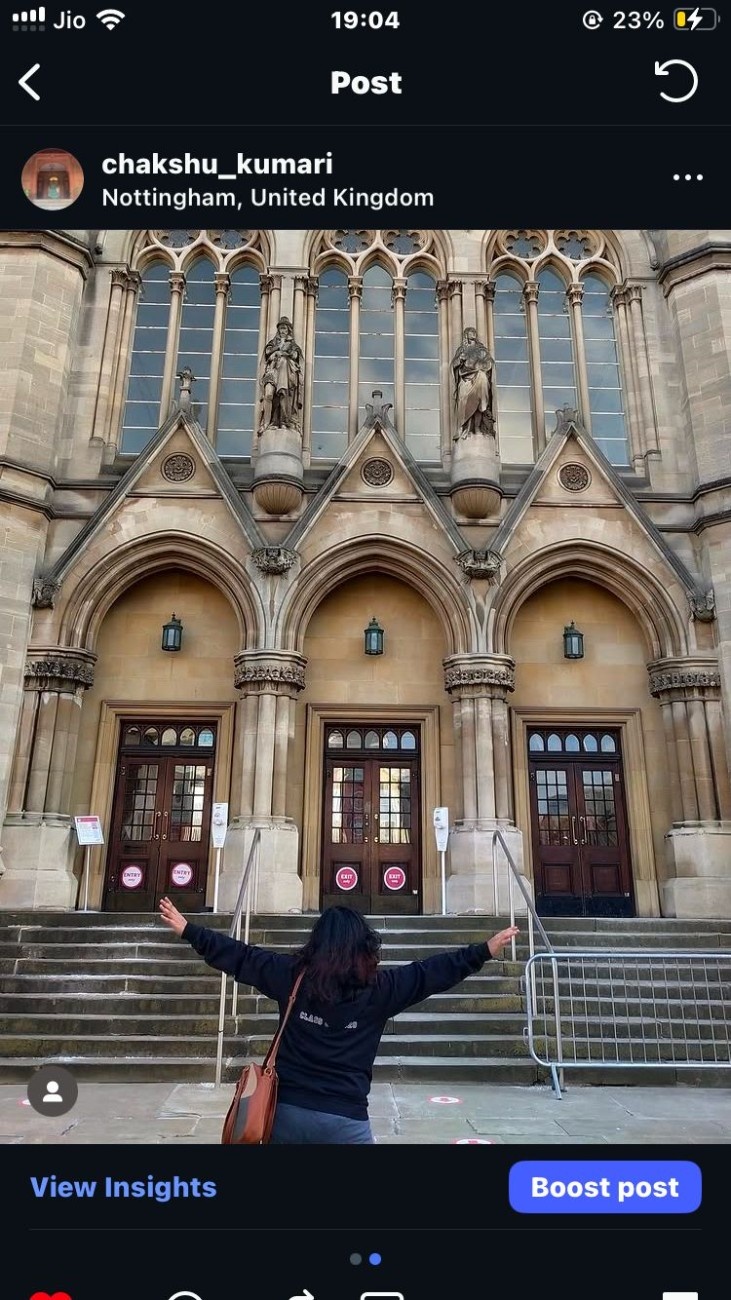
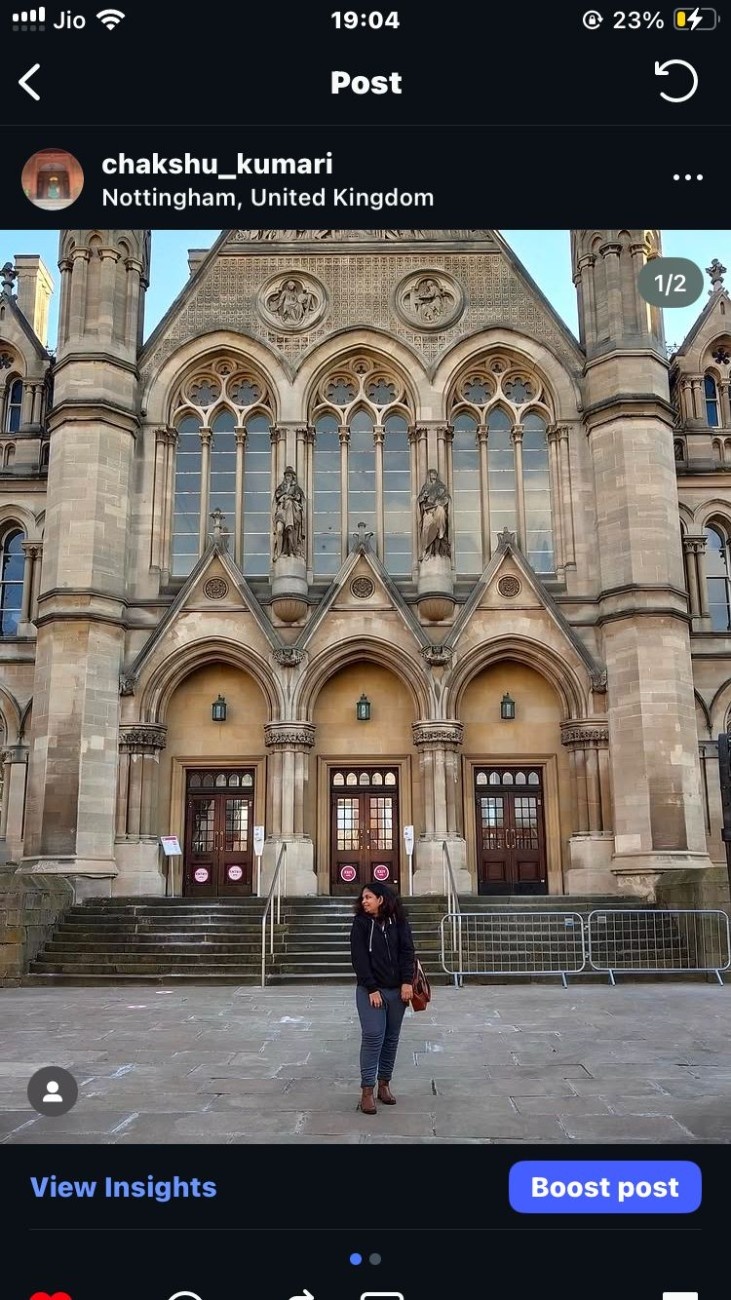

Likes
- Modern Campus and facility: Providing eat-ins, libraries and nightclubs.
- International Students: Students all over from the globe and hence more interactions and diversity.
- Open gated Campus: The city campus is an open gated which means it creates more of the city vibe.
Dislikes
- Less lectures and classes: The total numbers of classes and lectures and a bit less for a full time university.
- British weather: The typical British weather is a nuisance as being an open university, the weather becomes a hassle with uncertain rains and chilly winds.
- Living cost: The living cost especially nearby to the university (being in the city) is quite high. While cheaper than London, rent and daily expenses have been only rising.
Scholarship
- I did not get any scholarship as the University provides a first-come, first-served policy. Which means the earlier you apply for the Scholarship, the more chances you get.
- In my case, I applied at a later stage and hence did not qualify for the scholarship.
- The Universities in the United Kingdom heavily provide scholarships for students of at least 2-3 Lakhs INR.
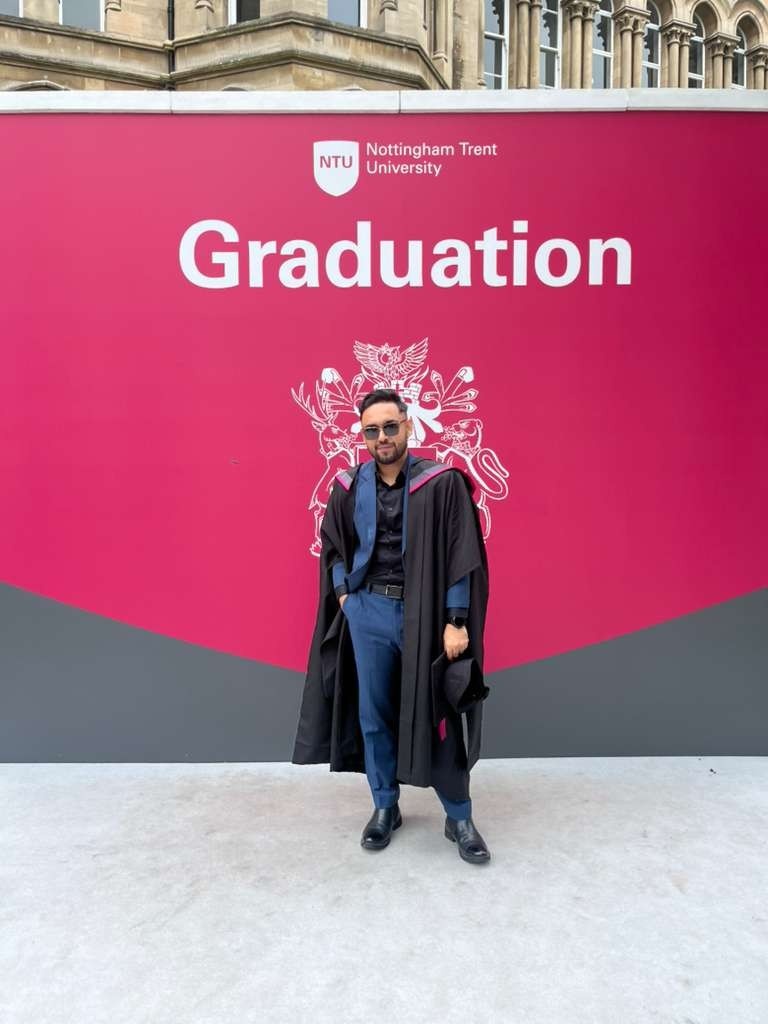
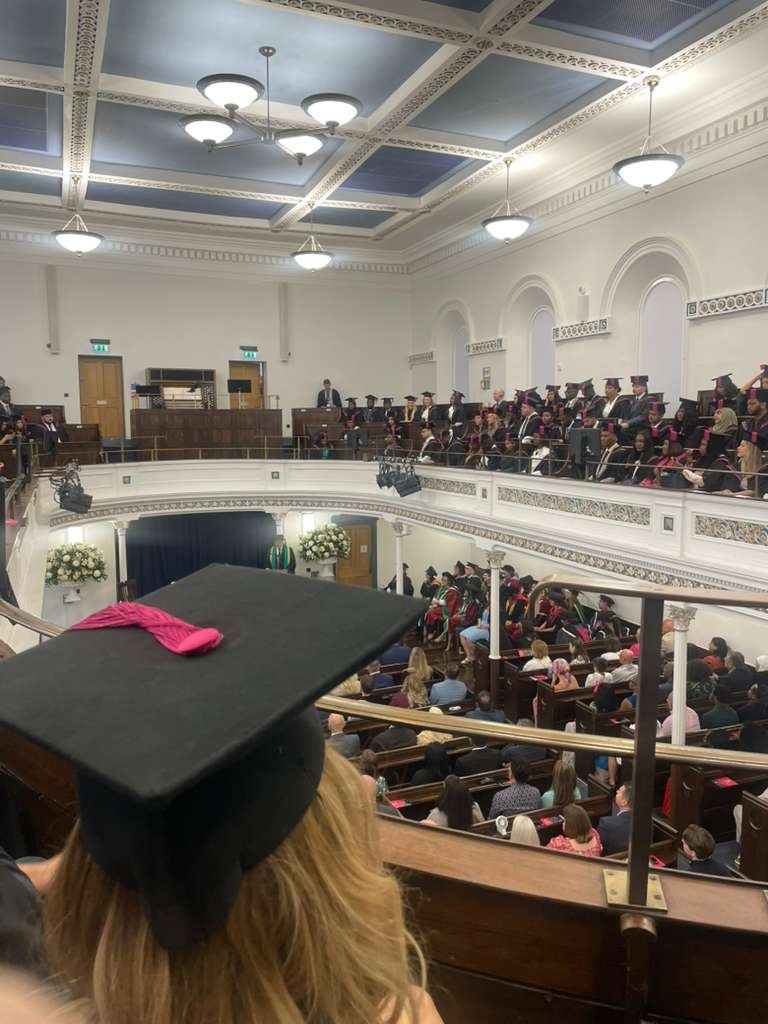



Likes
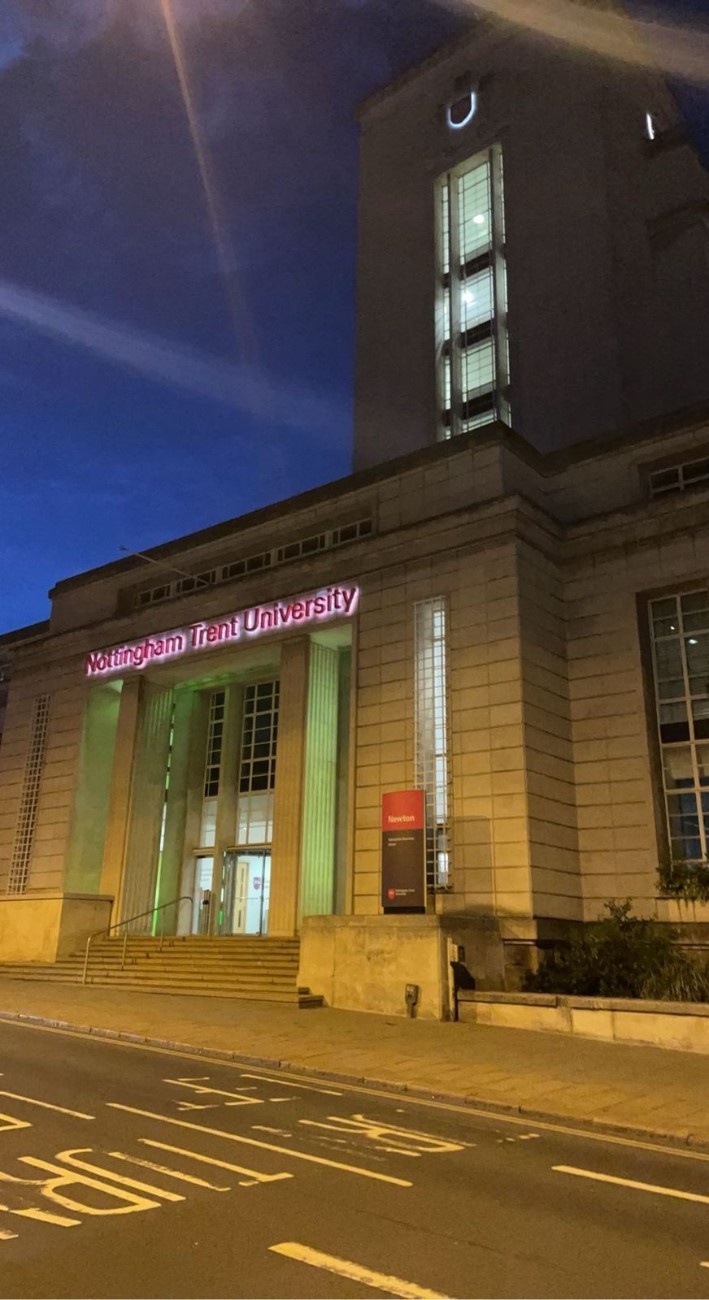
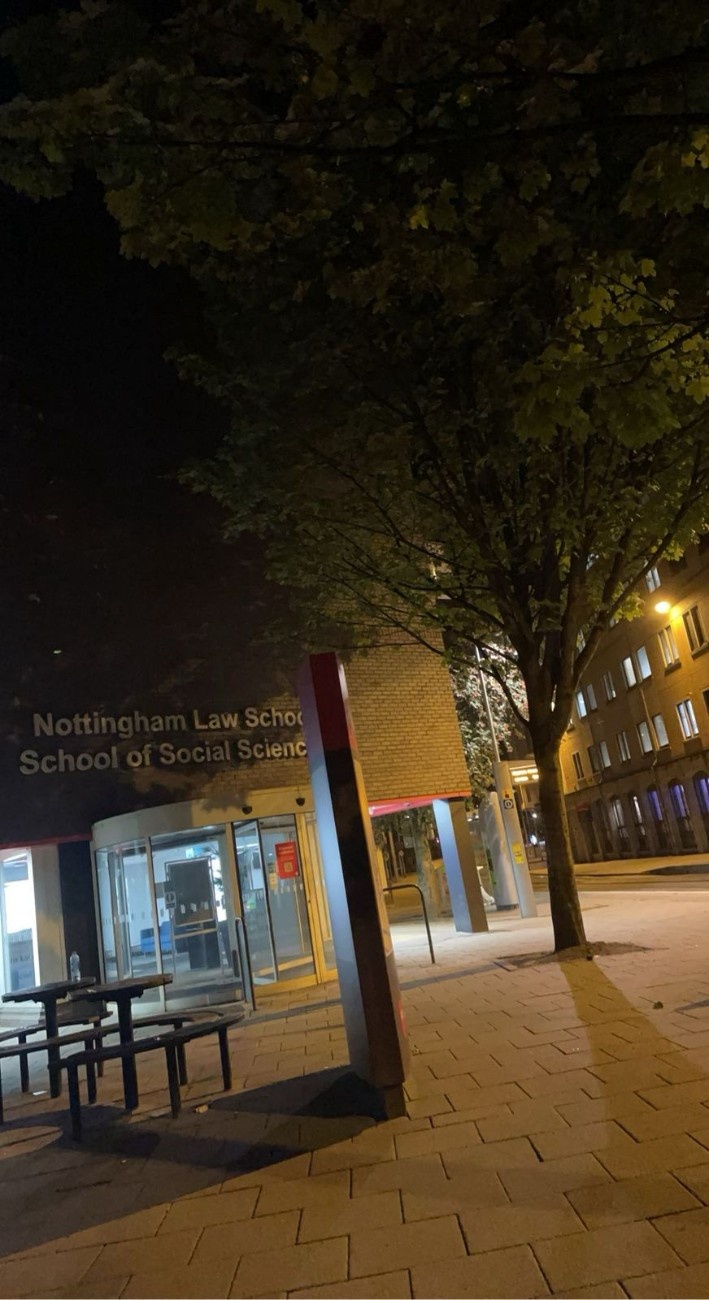
- Location wise University was good it had 3 different campus each catering for different subject
- The support staff at University is also good as it provides best help to students studying over there
- As I was research student over there i had good interaction with faculty they were well qualified and had good knowledge about the respective subjects they were dealing with
Dislikes
- As far there are no such dislikes the only thing I would like to say if they bring more companies for placement which will help student to secure job
Scholarship
- Yes, I received an International Scholar Student Scholarship of £3500
- The eligibility criteria depend on the answers you give during filling out the scholarship form
- Most of my friends received a scholarship from the University. Some of my friends didn't receive it all, depending on the answers that were given in the form
- The average of 500 students gets a scholarship from different fields and different scholarships
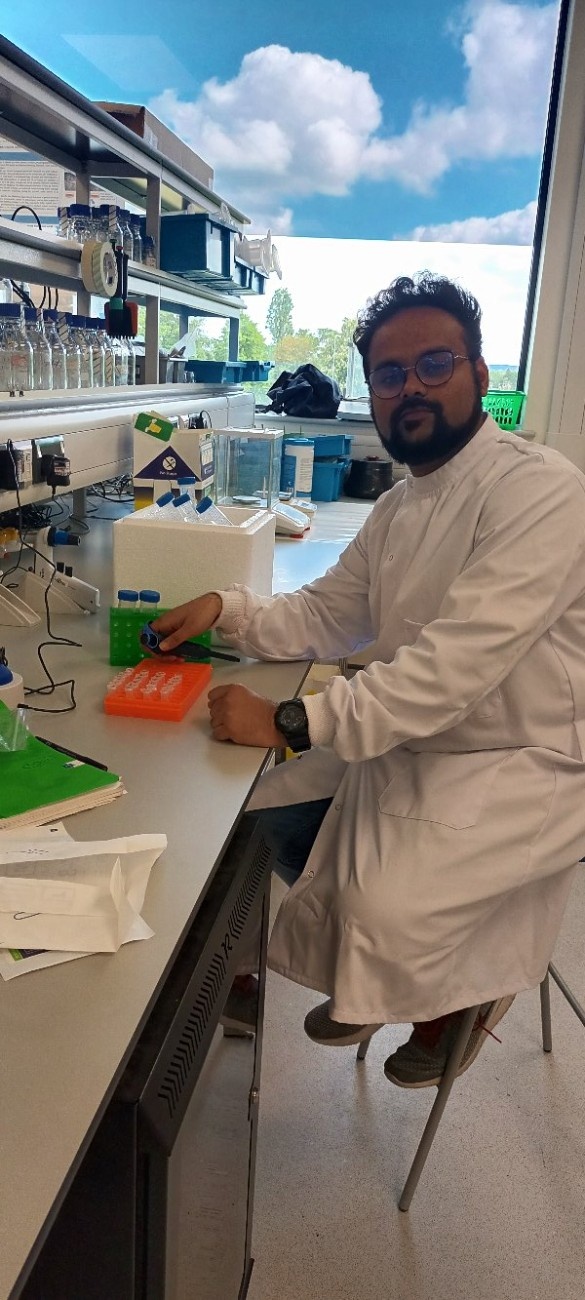
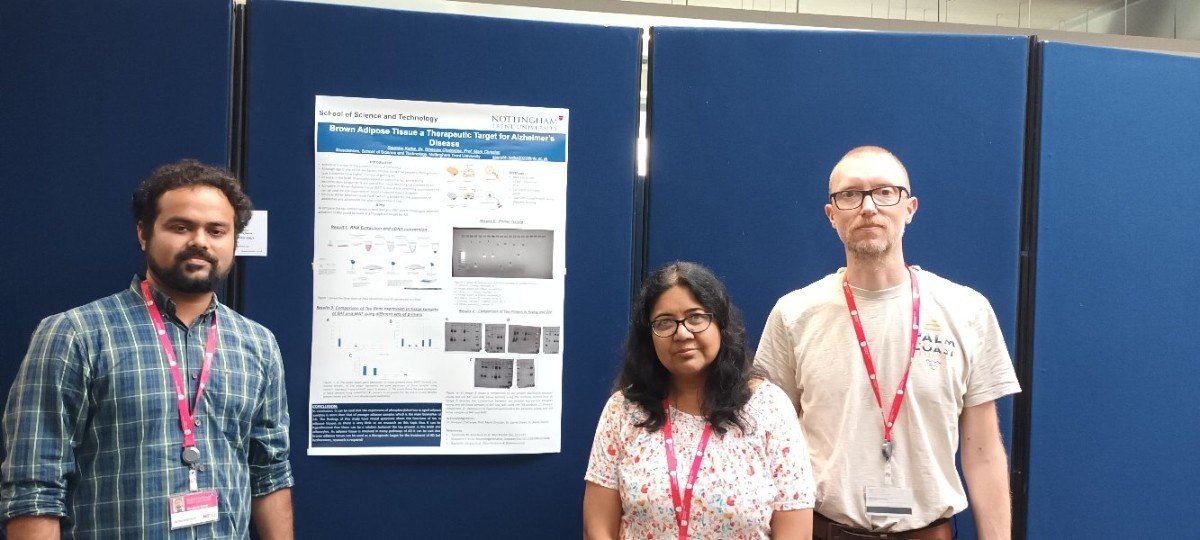
Likes
- The student accommodation provided by our uni at a reduced price: I couldn't find a decent accommodation even 2 weeks before leaving, so when I contacted representatives from our uni, they immediately helped me get a wonderful place to stay called The Maltings which was 20 mins away from the City Campus. It was okay priced. And we had all facilities available including a one year free bus pass that helped me tour the entire city fully free of cost. Infact the bus stop was 1 min away, yes 1 min away from our hostel and made our commute very quick and nifty.
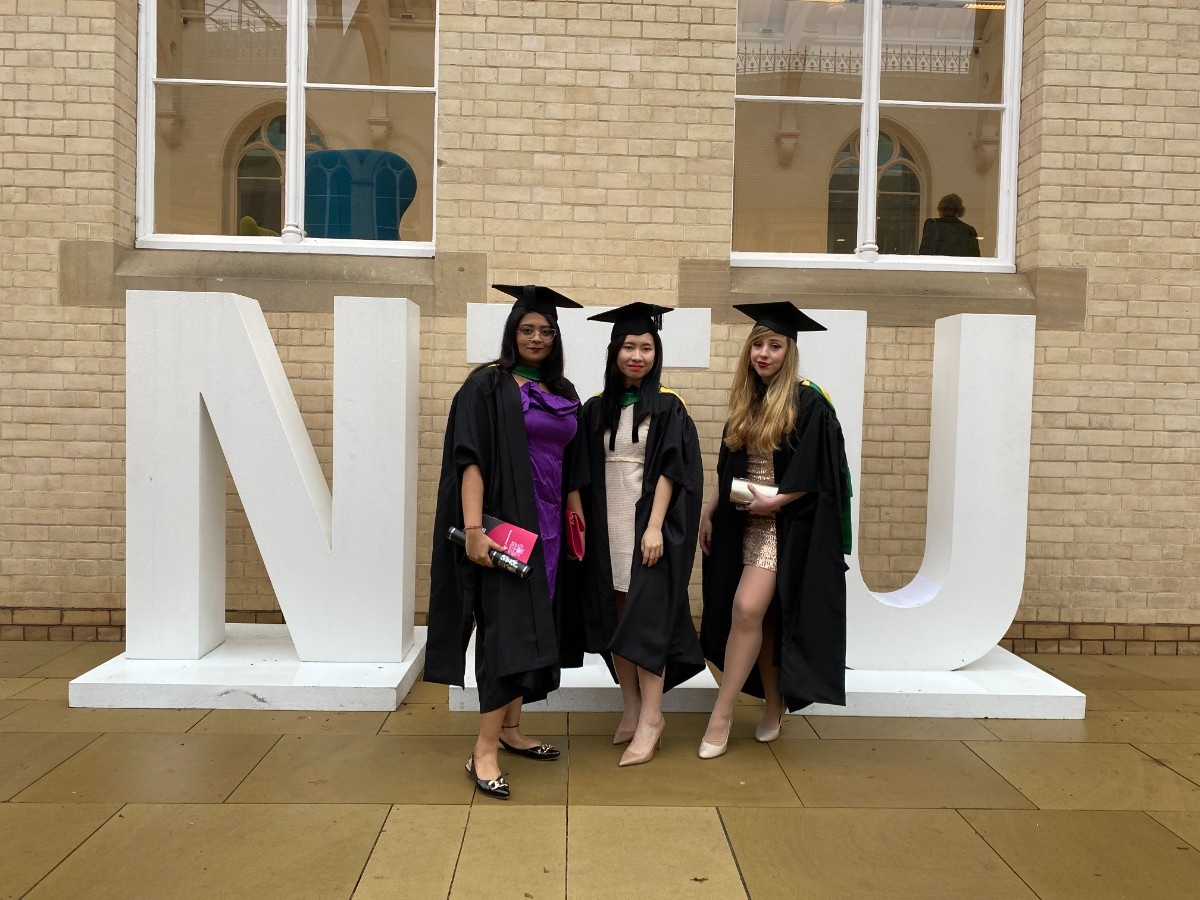
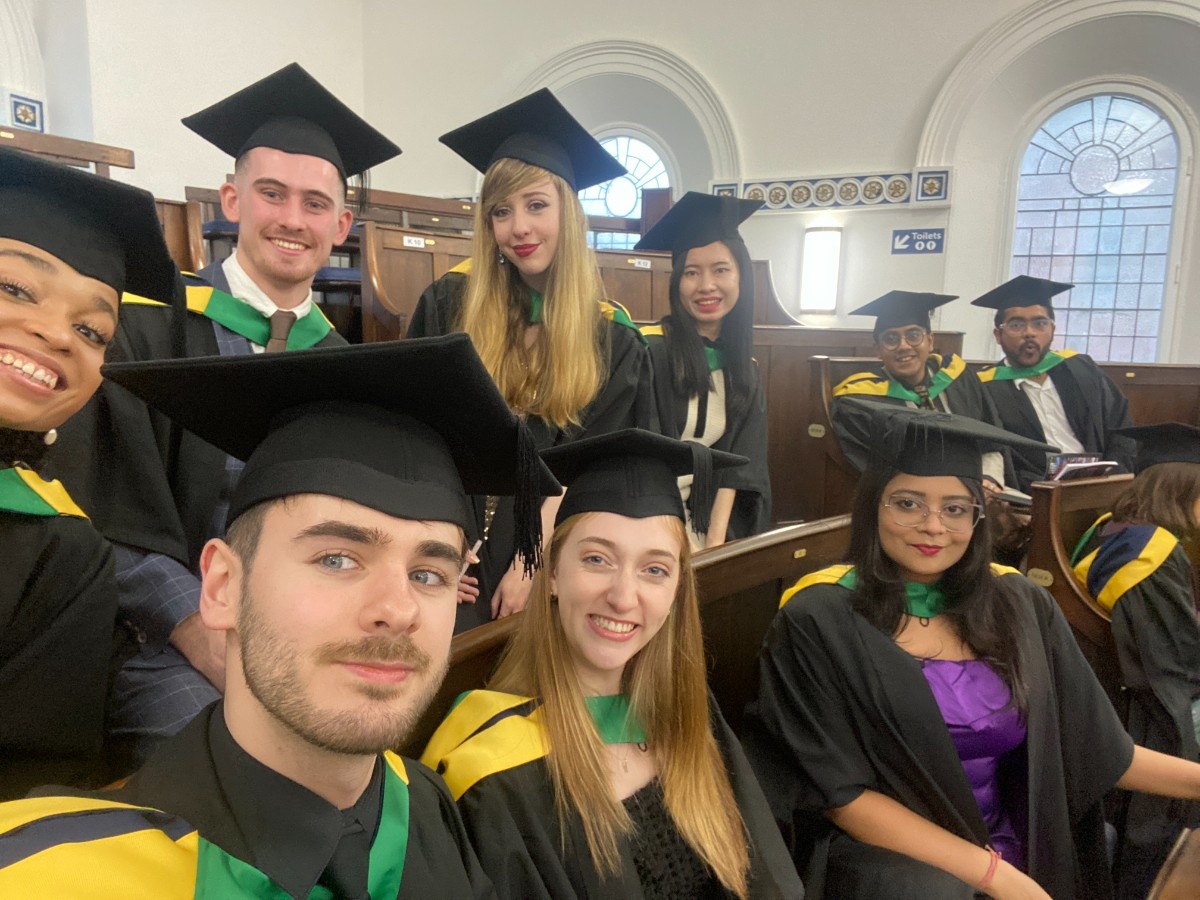
- Incredible tutors with real newsroom experience: The lecturers weren’t just academics — I mean yes they were all scholars with terribly rich backgrounds that will stupefy you beyond comprehension but they were ALL seasoned journalists who had actually worked in BBC, ITV, Sky News and major global outlets. Their stories, their constructive feedback, and their refusal to sugarcoat the realities of the industry made every class feel alive and rooted in real-world journalism. We often had people from Facebook, Twitter (X), Reach PLC and other major organisations visit us. They were not intimidating but their resumes were. It felt like being mentored by such humble personas and not just taught.
- The adrenaline rush of daily newsdays followed by 3 newsweeks: Our newsdays were intense and so rewarding. We had to pitch, produce, edit, and deliver real broadcast packages under strict deadlines — just like in a real newsroom. The rush of pulling a package together in time, coordinating with your team, and then seeing your work aired or published was absolutely unforgettable. We would fall apart and pull through simultaneously. But more than that, we always had each others' back. If someone didn't have a story, one of us will find one for another. If one struggled with editing, we would jump in. If someone was ill, others would lend a hand. It wasn't you vs me. It was WE. One batch of 15 students who worked for the same goal.
Dislikes
- Some modules felt outdated or too UK-centric: Now I say this with all the love for NTU but to be crazy and brutal honest, As an international student, I sometimes felt like the curriculum assumed prior familiarity with British politics, media law, and institutional systems. I mean we went for Journalism, right? Why were we obsessively being taught only UK House of Lords and House of Commons? Their Municipal/County system? Their laws? I kinda hated learning those modules but the stakes were high so we mugged up as much as we could but didn't like it at all. It was forced down our gullet with no optional modules. The topics could be more global but they couldn't have cared the least. Media Law was still okay but Public Affairs was the worst. To learn the entire UK map and their government felt like a major waste of time. There wasn’t always space made for global media perspectives or alternative storytelling structures outside the UK style. No, forget global, I would expect include Europe atleast. But nope. Give us a comparison with other countries, but no. It made me feel a bit unseen at times. Imagine coming from India, in a class that's filled with Indians and the uni pays no, not one second of academic interest in our country.
- Lack of emotional or mental health support during high-pressure periods: Newsweeks could get brutal. But we lacked any morale from the authorities. We were expected to perform like professionals, like Journalists in training and often with little room for error, no room for NO error but without consistent mental health check-ins or even acknowledgment of burnout. It was a lot — especially for international students managing life alone in a new country. The thing is there are Students Counselling Services provided and I took them but they didn't help me that much. I had little to no moral support and often felt suffocated and extremely overwhelmed with the academic pressure. Only we had a few handful friends as support but that was never enough.
Scholarship
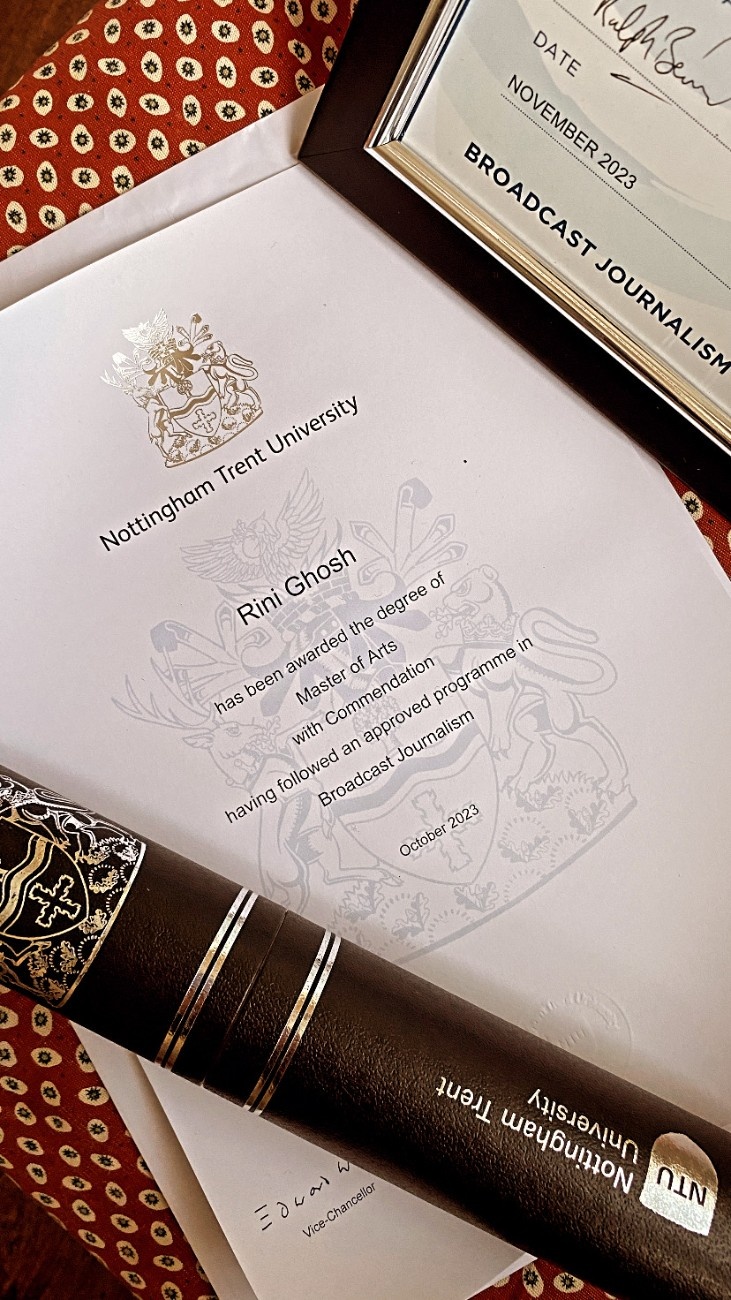
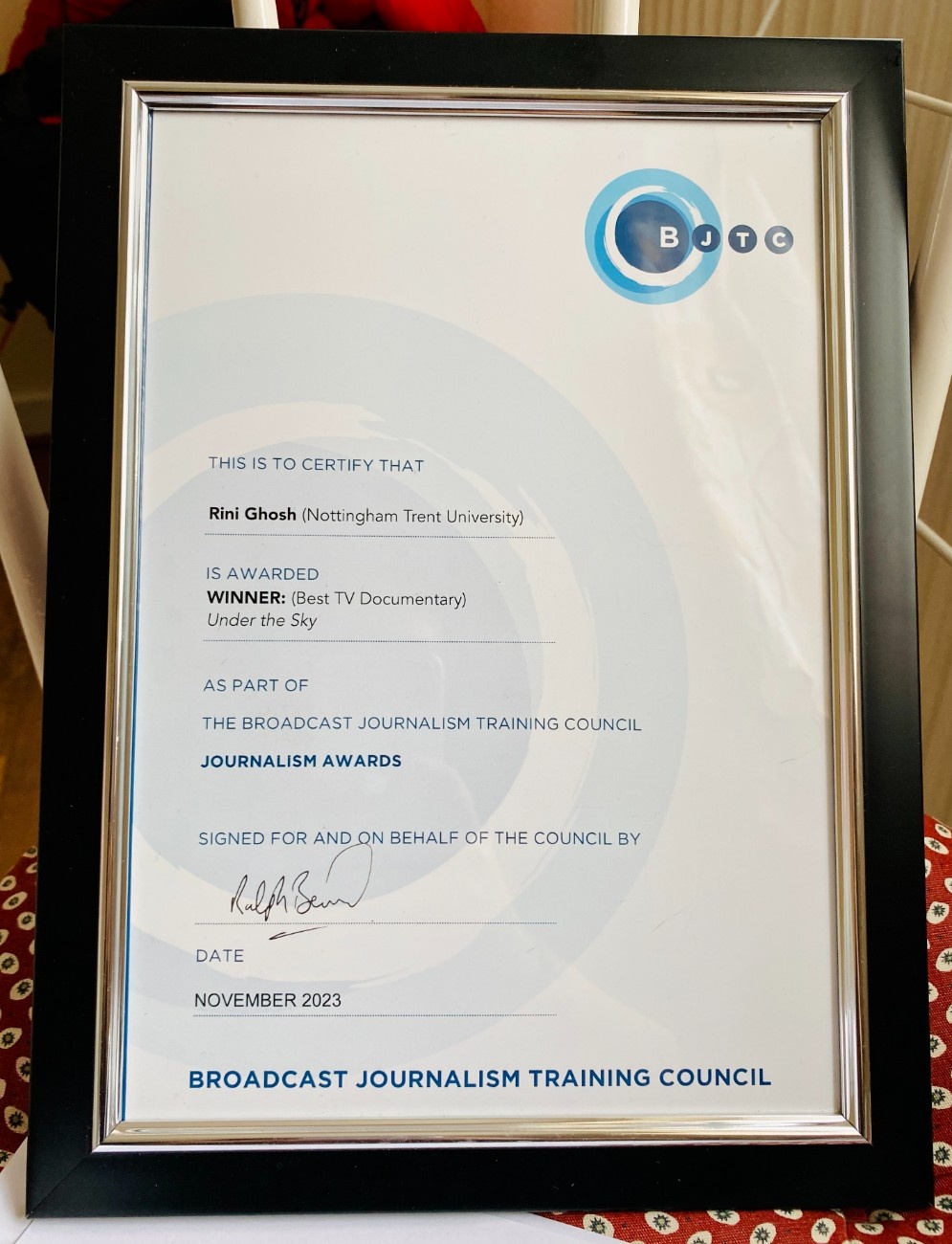
- Yes, Nottingham Trent University offers several scholarships for international students, including those applying for postgraduate courses like mine in Broadcast Journalism. These scholarships are merit-based and are awarded on the basis of academic excellence, personal statement strength, and overall potential to contribute to the university community. Like I said, I received the NTU Excellence Scholarship, which is one of the more competitive international scholarships offered by the university.
- The eligibility was primarily based on my previous academic record, the strength of my personal statement, and how well I could demonstrate why I was a good fit for the course and for NTU as an institution. There was no separate exam or interview—it was based on the merit of our essays and our motivation to pursue the course. The scholarship awarded me a 50% tuition fee waiver, which amounted to approximately ?7.5 lakhs being deducted from my total course fee. For an international student, that kind of financial relief made a huge difference. It helped ease the burden on my family and allowed me to focus fully on my studies and creative projects during the course. Yes, two of my batchmates also received scholarships.
- One of them received a 20% tuition fee waiver, and the other got 50%, just like I did. We were all from different countries, which shows that NTU’s scholarship program is quite inclusive and doesn’t favour any one nationality. What matters most is your application strength and what you bring to the course. While I don’t have the exact numbers, from what I gathered during my time there and from speaking with staff, roughly 100–200 international students across various degrees receive scholarships each year. The award amounts typically range from £2,000 partial waivers to 50% of full tuition fees, depending on the specific scholarship and the applicant's profile. Full scholarships are rare but not impossible—most awards fall between the 20% and 50% range.


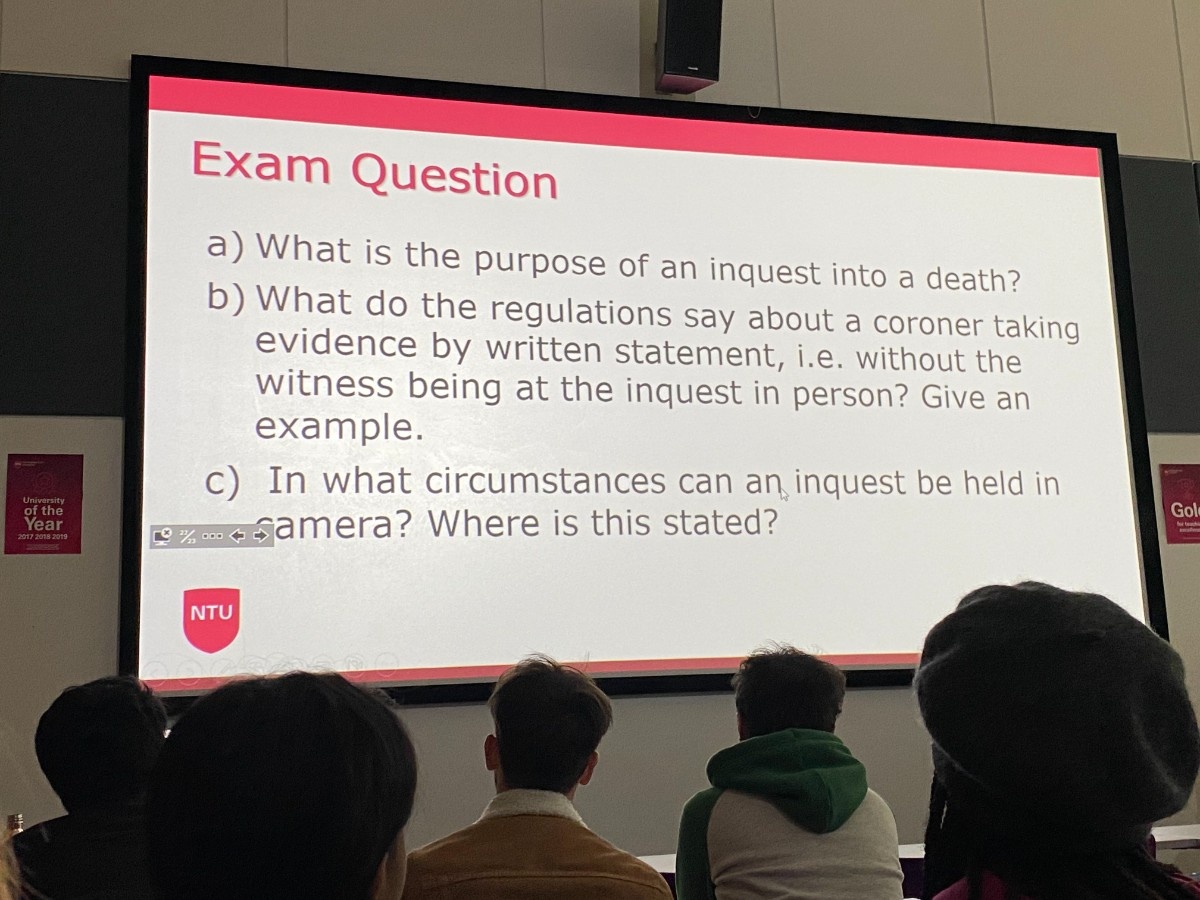
Likes
- Infrastructure is extremely good.
- Teaching methods as they were highly intuitive
- Employability Support
Dislikes
- Workload towards certain Subjects unbalanced
- Some resources are outdated
- Location is not the best as it is a city campus.
Scholarship
- Unfortunately, I did not receive any scholarship because I failed to apply by the deadline. If you received Distinction in your first 5 subjects. Also, it depends on how many grades you have received in your undergraduate, which I am not 100 percent sure of, as the details were only shared with students who applied. That Scholarship amount was 3000 GBP. Around 100 people across all departments received scholarships.

Likes
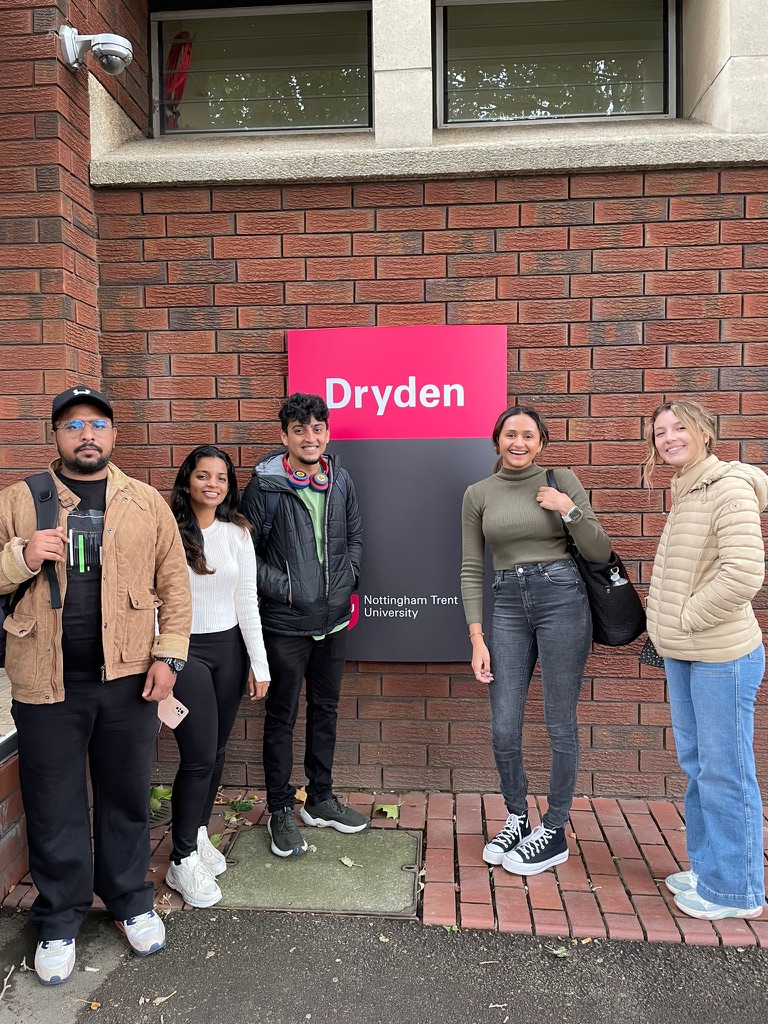
- Location: Nottingham is a huge city and the university campus is spread across the entire city. The lectures for my particular course were held mainly in the “Nottingham Business School” (NBS) building, which is in NG1, very close to the town hall, accessible by all forms of local public transportations such as, Tram Line and various different buses from private to public.
- Library: Nottingham Trent University (NTU) Library is right next to the NBS is very easily accessible, operating 24/7 it is easily accessible and provides various forms of support for the students and working individuals at the University.
- Portal: The online platform for students to access and get all the reading material was most essential. It provided the recordings, notes, presentations of the lectures and all the schedules for private course related activities/events that were happening in and around the University.
Dislikes
- Campus accommodations fill up quite fast, so be quick and early to find an accommodation for yourself as close as possible to the lecture halls or wherever your courses are!
- Food in the canteen can be quite expensive
- Travelling is quite expensive, since the campus is right in the middle of the city.
Scholarship
- Yes, I received an International Undergraduate Student Scholarship on my tuition fees from Nottingham Trent University
- The criteria is simple, I simply had to express my views, plans and my passion for studying at this university on my specific choice of course by answering some questions through NTU’s main website. All the universities provide such scholarships, so I had applied to all the universities of my choice.
- I received a £2,000 International Undergraduate Student Scholarship from Nottingham Trent University on my tuition fees only.
- Not all of them had applied for it so, no! Everyone did not receive a scholarship.
- But many Europeans had applied for bursary, which they did receive! (The amount of the bursary varied from student to student)
- I’m unaware of this information but I have heard that the majority of the students that apply for the undergraduate scholarship, do receive it!



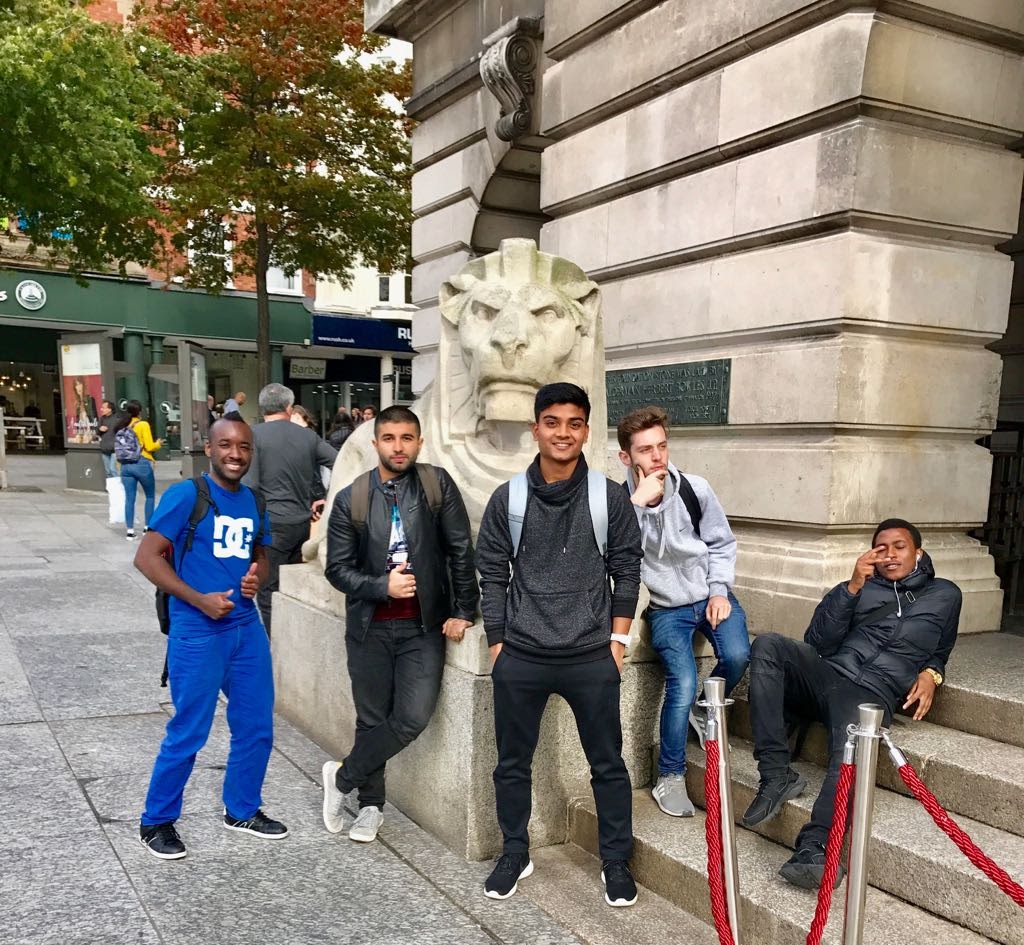
Likes
- World class Faculty that comes with world class experience
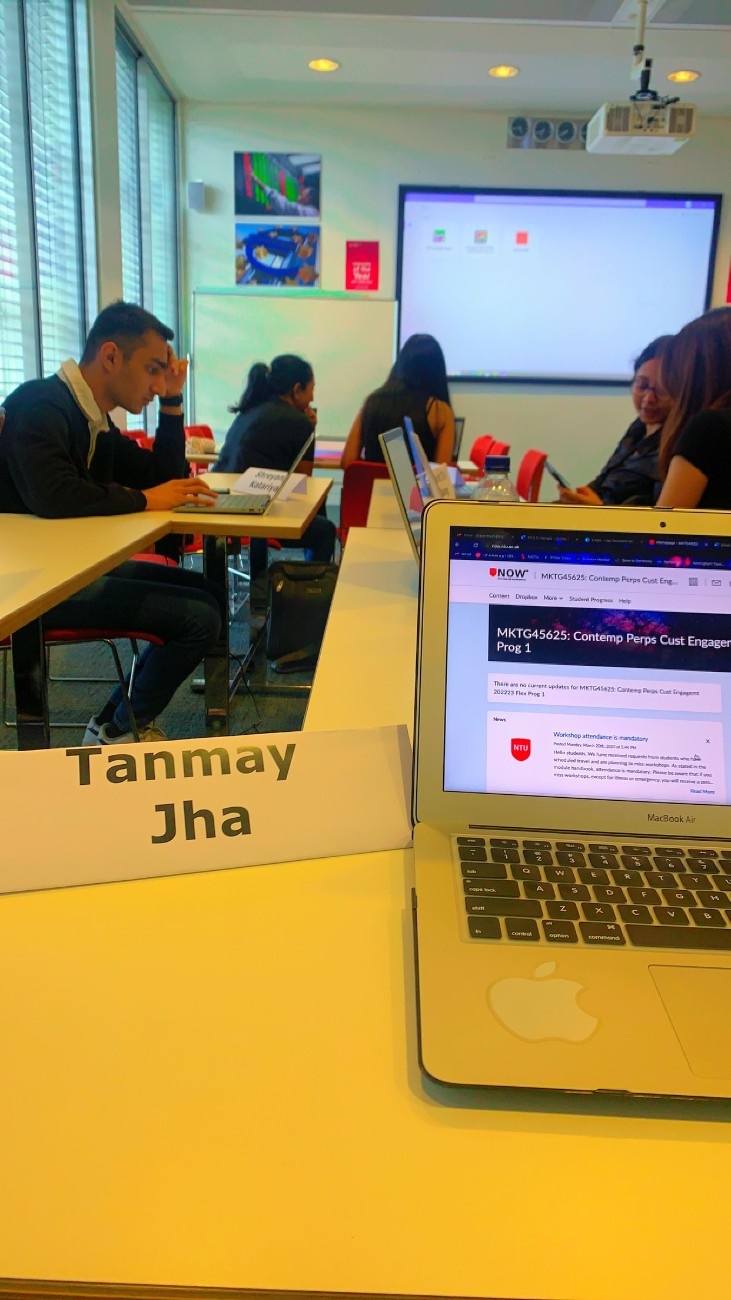
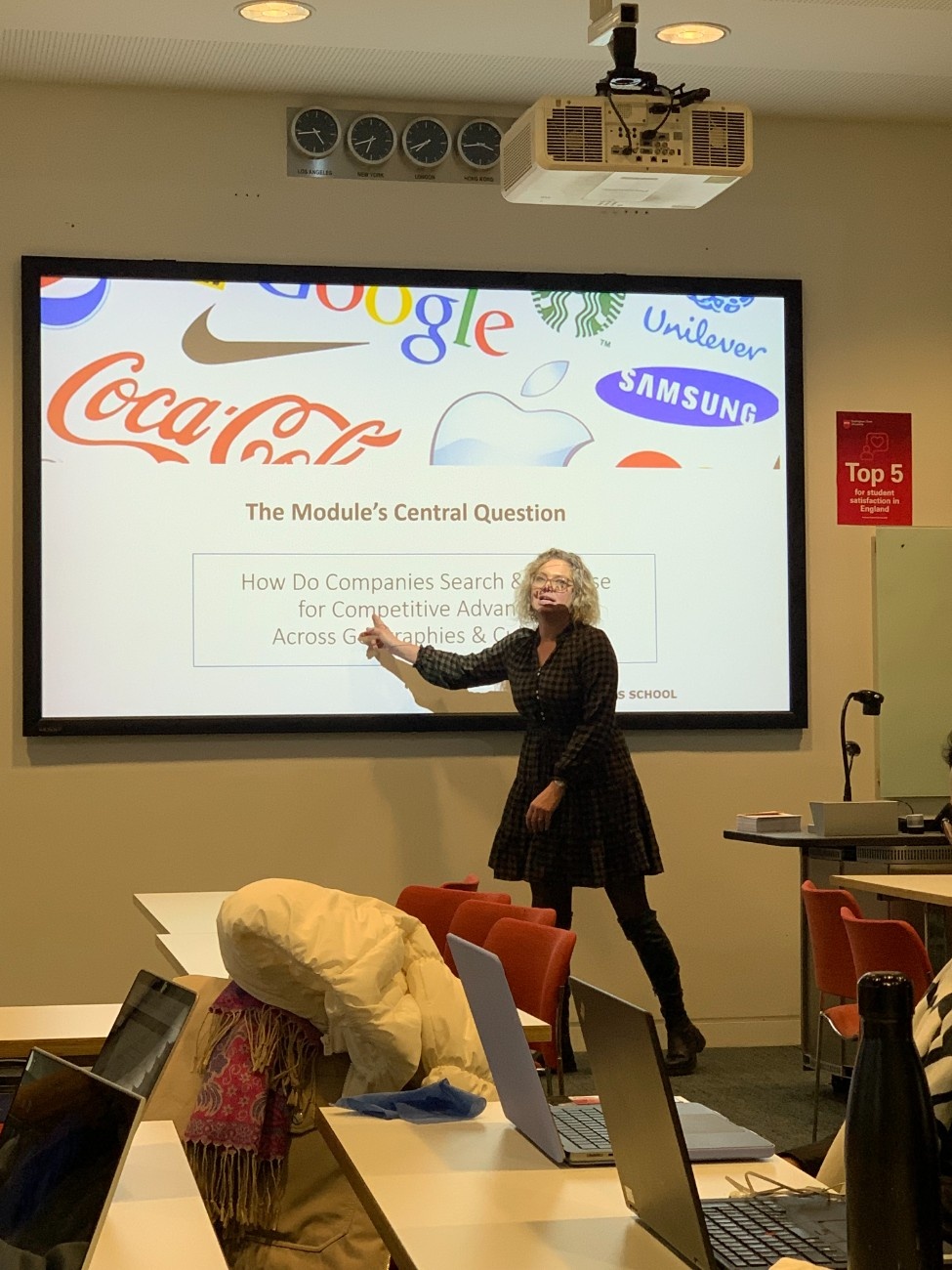
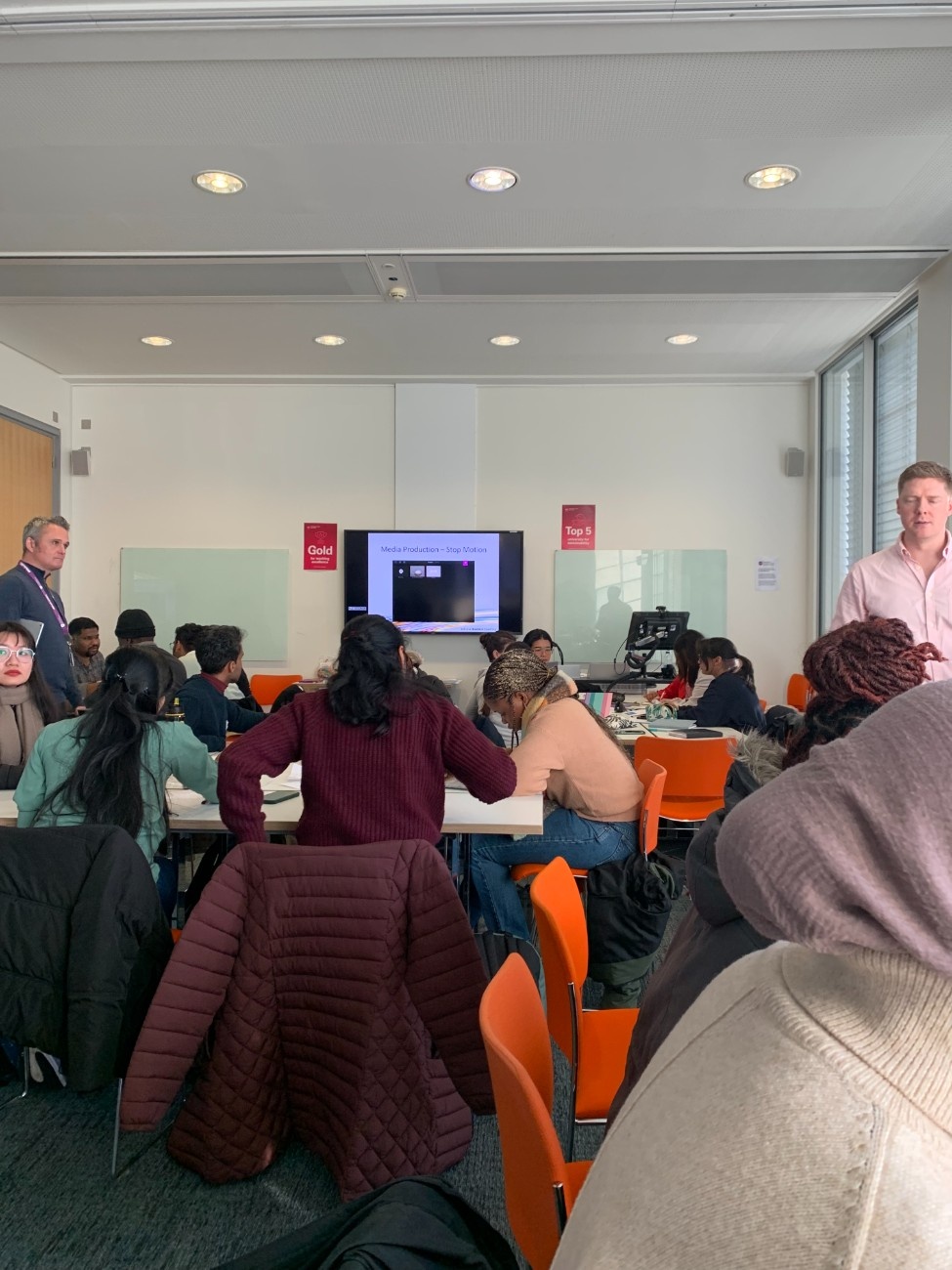
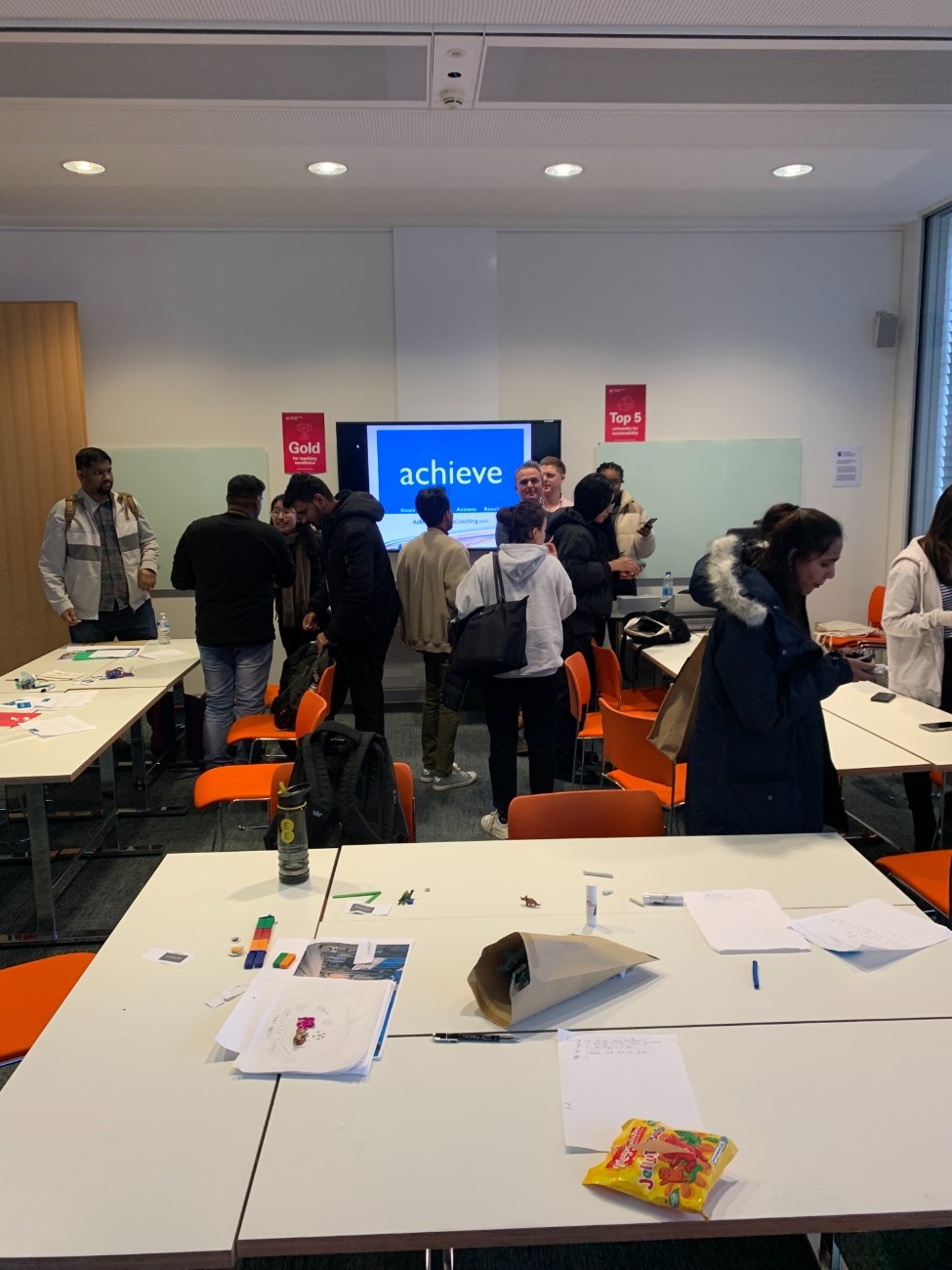
- Classrooms with comfortable seating and well lit up atmosphere for projector screens
- Campus that is spread across the city center
Dislikes
- Limited support from Career support team
- Lack of balance between theoretical and practical teaching
- Few face to face webinars and more online lectures
Scholarship
- Yes there are and i was fortunate enough to receive one. My overall tuition was £15000 and i received a scholarship for £3000 so i had to pay only £12000 as my tuition, out of which i had paid £6000 as the first installment during the start of my course and later at the start of the final term, I had to pay the balance of £6000 to the university.
- Getting scholarships is not very difficult if you write a good and focused essay on why do you need the scholarship and how does it make your life easy when choosing to study at NTU

Likes
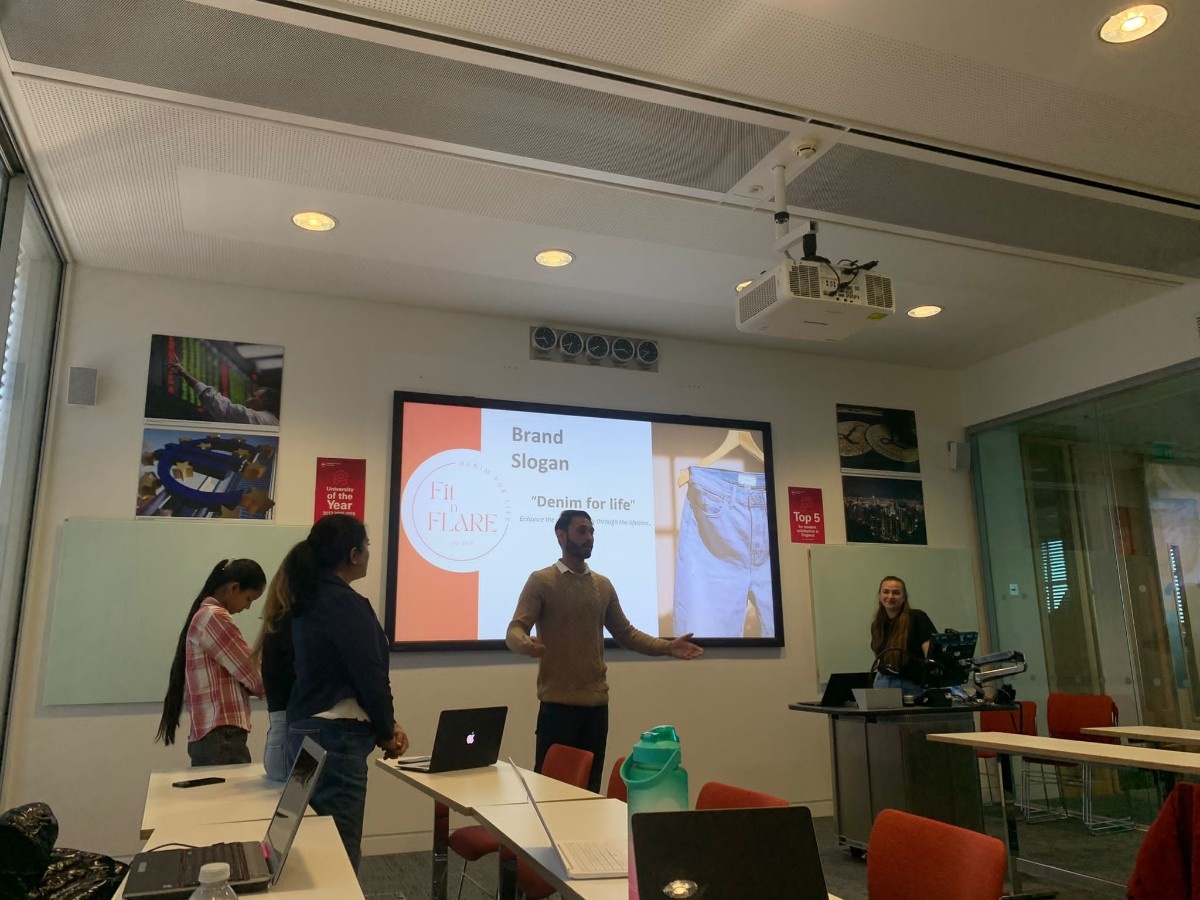
- The course structure was very interesting, starting with a theorical lecture, followed by seminars with a small group of students where we shared our opinions of the topic, exposing us to different opinions of different cultures of people in one room
- Making studying quite interesting, The professors were all from different backgrounds and age groups all adding a different level of expertise in my coursework. The student life in nottingham was quite interesting with multiple events organised to
- Know different cultures, languages and people helping us getting out of our comfort zone and explore new things. The people in general were all very sweet and helpful, with no caste discrimination incidents or biases making it a safe place to stay
Dislikes
- The employability team was not quite helpful in securing a full time job in the fashion industry, which was very challenging to get a job there.
- Employability team was not helpful for my field
- Library was usually closed in summer holidays and this was during or final dissertation making it difficult for us to study



Likes
- I like the way we have to take ownership and learn from scratch if you are changing country as the education system is different.
- Learned how research is done how important it is when it comes to education.
- I liked campus, cafe and events hosted by University.
Dislikes
- I disliked the teaching provided to me for my particular course. It is very difficult if you come from a different field. They will expect alot from you as you are masters student but when it comes to teaching to be honest it is a big zero. Hardly any lecturers were good. Will be a waste of money doing luxury fashion brand management as they hardly have any industry visits or any person coming from industry and teaching or sharing experience.
- Exposure needed to luxury industry is not there. I expected people from luxury industry will come share experience or will get to visit any company or something but none of it was been done. So basically for this course is a waste of money. As a master’s student and mainly the course is about management where in real nothing related to management withing luxury is been taught.
- You have to make your own contacts. So start making contacts as soon as possible.
Overview
I chose this university as it ranked amongst top 10 in arts in UK. My overall experience is a learning path for me evolving gradually and learning. Career opportunities is hardly any if you do not make contacts. Achieving good marks and passing will not help unless you make industry contacts.
Likes
- I like how we are made feel at home, we have great teachers and they support us at every point.
Dislikes
- But I think the job help could be better, especially for international students.
Overview
I chose this university as the academic reputation of NTU is great for my course of study, and the city itself is extremely student-friendly. It was extremely easy for me as an international student to indulge in university activities and eventually, I fell in love with the city.


interested in this College ?
Follow & Share this college to get information about admission.



Comments