



Reviewed on Aug 23, 2025(Enrolled 2022)
What Students Say
Likes
- The student accommodation provided by our uni at a reduced price: I couldn't find a decent accommodation even 2 weeks before leaving, so when I contacted representatives from our uni, they immediately helped me get a wonderful place to stay called The Maltings which was 20 mins away from the City Campus. It was okay priced. And we had all facilities available including a one year free bus pass that helped me tour the entire city fully free of cost. Infact the bus stop was 1 min away, yes 1 min away from our hostel and made our commute very quick and nifty.
- Incredible tutors with real newsroom experience: The lecturers weren’t just academics — I mean yes they were all scholars with terribly rich backgrounds that will stupefy you beyond comprehension but they were ALL seasoned journalists who had actually worked in BBC, ITV, Sky News and major global outlets. Their stories, their constructive feedback, and their refusal to sugarcoat the realities of the industry made every class feel alive and rooted in real-world journalism. We often had people from Facebook, Twitter (X), Reach PLC and other major organisations visit us. They were not intimidating but their resumes were. It felt like being mentored by such humble personas and not just taught.
- The adrenaline rush of daily newsdays followed by 3 newsweeks: Our newsdays were intense and so rewarding. We had to pitch, produce, edit, and deliver real broadcast packages under strict deadlines — just like in a real newsroom. The rush of pulling a package together in time, coordinating with your team, and then seeing your work aired or published was absolutely unforgettable. We would fall apart and pull through simultaneously. But more than that, we always had each others' back. If someone didn't have a story, one of us will find one for another. If one struggled with editing, we would jump in. If someone was ill, others would lend a hand. It wasn't you vs me. It was WE. One batch of 15 students who worked for the same goal.
Dislikes
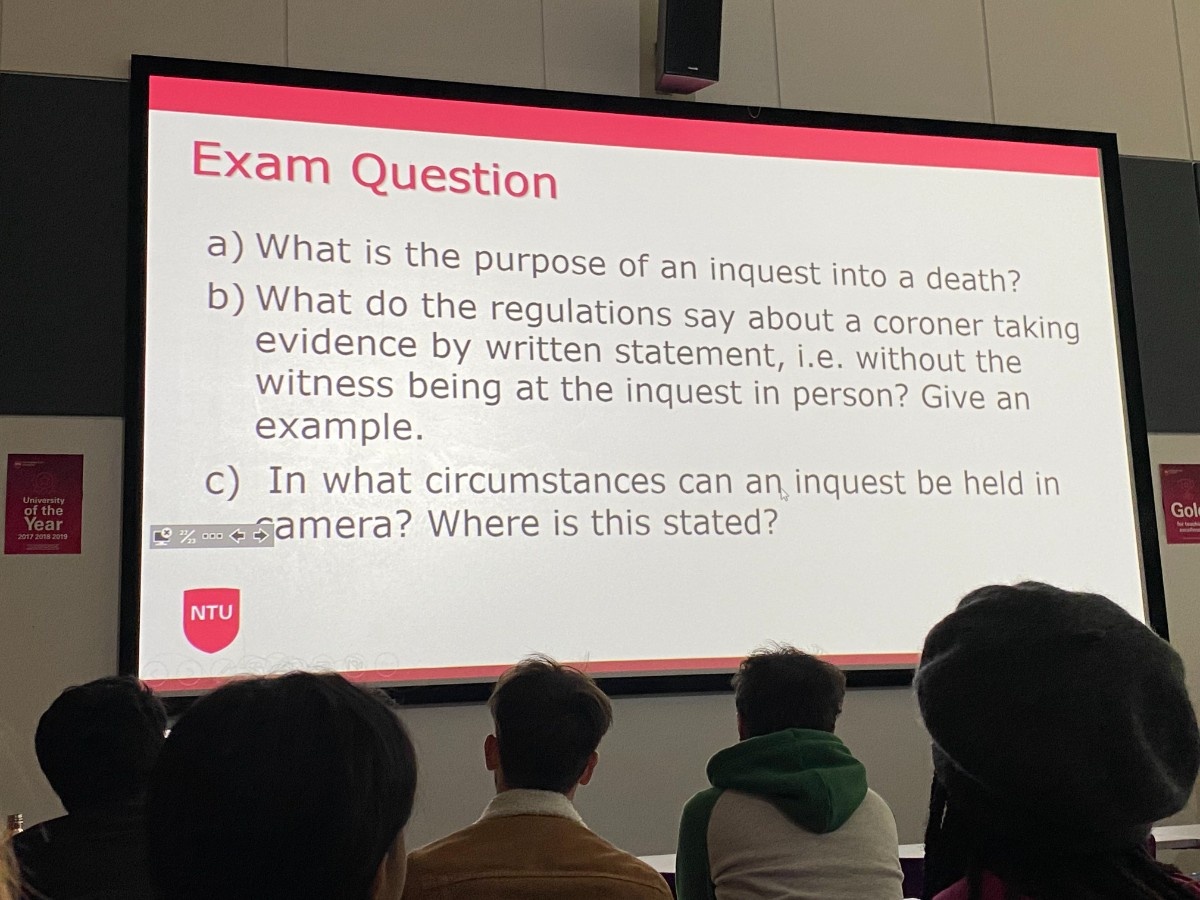
- Some modules felt outdated or too UK-centric: Now I say this with all the love for NTU but to be crazy and brutal honest, As an international student, I sometimes felt like the curriculum assumed prior familiarity with British politics, media law, and institutional systems. I mean we went for Journalism, right? Why were we obsessively being taught only UK House of Lords and House of Commons? Their Municipal/County system? Their laws? I kinda hated learning those modules but the stakes were high so we mugged up as much as we could but didn't like it at all. It was forced down our gullet with no optional modules. The topics could be more global but they couldn't have cared the least. Media Law was still okay but Public Affairs was the worst. To learn the entire UK map and their government felt like a major waste of time. There wasn’t always space made for global media perspectives or alternative storytelling structures outside the UK style. No, forget global, I would expect include Europe atleast. But nope. Give us a comparison with other countries, but no. It made me feel a bit unseen at times. Imagine coming from India, in a class that's filled with Indians and the uni pays no, not one second of academic interest in our country.
- Lack of emotional or mental health support during high-pressure periods: Newsweeks could get brutal. But we lacked any morale from the authorities. We were expected to perform like professionals, like Journalists in training and often with little room for error, no room for NO error but without consistent mental health check-ins or even acknowledgment of burnout. It was a lot — especially for international students managing life alone in a new country. The thing is there are Students Counselling Services provided and I took them but they didn't help me that much. I had little to no moral support and often felt suffocated and extremely overwhelmed with the academic pressure. Only we had a few handful friends as support but that was never enough.
Course Curriculum
8
- It was moderately difficult, I won't lie. First sem was theoretical. Second and third were more practical, with a bit of both.
- I thought I already mentioned it; the positive was the hands-on training by BBC execs and the negative was not getting opportunities to work there.
- We had 3-4 classes per week. From 8 to 5. 15 students in our class. 7 were Indian.
Admission Experience
-
I applied to 8 unis across the UK and got into 7.
- University of Salford – MA in Public Relations and Digital Communications (Accepted with around 2500 GBP scholarship)
- University of Stirling - MSc in Public Relations (I almost went there but tuition fees were higher than the rest). 3000 GBP scholarship
- Bournemouth University – MA in Film and Television Writing (2000 GBP scholarship)
- Aberystwyth University, Wales - MA in Film Writing (Scholarship or Free Stay option)
- Sheffield Hallam University - MA in Public Relations (Scholarship of 3000 GBP)
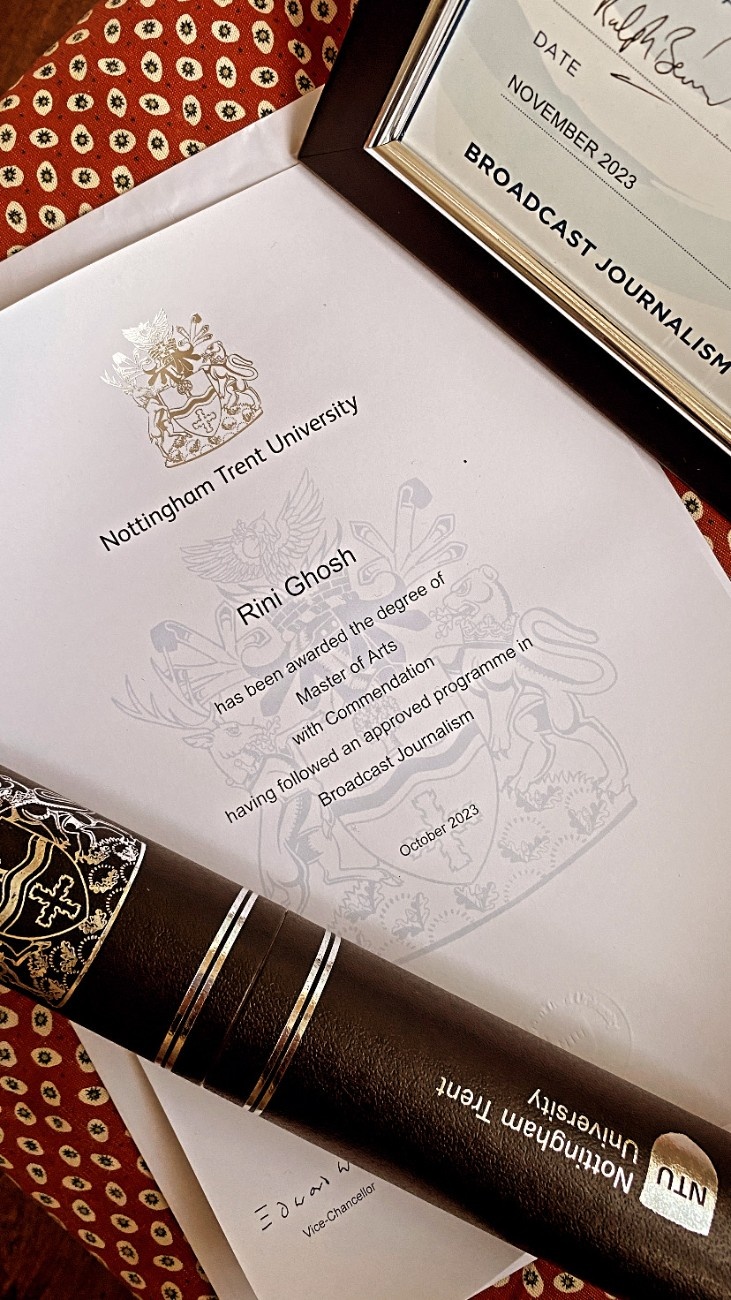
- Nottingham Trent University - MA in Broadcast Journalism (50 per cent scholarship after 3 essay submission criteria was fulfilled and selected)
- Brighton University - MA in Journalism (Not selected)
- Leeds Beckett University - MA in English (selected without scholarship)
- To be honest, Brighton looked out of my reach from Day 1, both in terms of tuition fees and their academic criteria, which were also high. I had 65% from Calcutta University for my BA in English and an 8 band out of 9 in IELTS which was accepted by most but probably their criteria were high.
- I chose Nottingham Trent University for its practical, hands-on approach to Broadcast Journalism. At least that's what was mentioned on their website. A lot of other universities offered this course, but NTU felt different—it didn’t just promise theoretical knowledge; it emphasised real newsroom simulation, working with industry-standard equipment, and news weeks that mirrored actual broadcast environments. I could see myself becoming a journalist there, not just studying the idea of one. And that was the idea they sold to us. We were kind of sure that we'd at least get some real-life opportunities there. Plus, they gave a 50 per cent scholarship to me, which itself is a very competitive process. We all had to write really long and descriptive essays and 1000s were submitted, out of which only 100 were selected.
- Like I said, I was accepted into a few other media programs in the UK, but NTU stood out for three major reasons:
- Industry-connected faculty – many of them had years of experience with the BBC, ITV, and international media. And I really believed we would secure some odd jobs there. Not just unpaid internships but actual exposure to the world of iTV and BBC.
- Strong career support – I read reviews and testimonials that praised the uni’s focus on employability, not just academics. Our uni has GOLD standards with tonnes of lofty awards every year. Our degree too has GOLD standards as per the BJTC Council, which is the council for Broadcast Journalism in the UK. Plus its ranking was good. The course had accreditation as well.
- Affordability and city life – Compared to London-based universities, Nottingham offered a great balance between quality education and a liveable, student-friendly city vibe. That mattered as an international student trying to budget without compromising on opportunities. Just 2 hours from London yet not as expensive, Nottingham is basically a student city with 2 enormous unis making the city a very student-friendly one. In compared to Sheffield or Salford or even Scotland, this seemed like a budget-friendly option.
-
I applied for the 2022–2023 September intake. My decision was mainly influenced by the structure and quality of the Broadcast Journalism course at NTU — especially the emphasis on practical training, newsroom simulation, and employability. I also factored in Nottingham’s affordable cost of living compared to cities like London, which made it more manageable for me as an international student. Overall, the combination of the university’s reputation, the course content, and the city’s student-friendly environment made it the ideal choice for me. The entire admission process took around 2 to 3 months from start to finish. Here’s a rough breakdown of how it went:
- January 2022: I began preparing my documents, including my Statement of Purpose, academic transcripts, and IELTS score. I received guidance and assistance from SI-UK Lucknow (now rebranded as StudyIn), which really helped streamline the process.
- February 2022: I officially submitted my application through the NTU portal.
- March 2022: I was invited for a written interview to showcase my writing skills — mostly centred around my journalism experience, motivation, and current affairs awareness.
- Late March 2022: I received a conditional offer, subject to submitting my final documents and financial proof. Around the 17th, I think.
- April–Aug 2022: Once I submitted the remaining documents, the offer was updated to unconditional with scholarship submissions and I proceeded with my visa process and scholarship application. By 27th July, my scholarship was confirmed. On 8th August, I got my Visa.
- The university was responsive and efficient throughout, and having SI-UK help with the logistics made things significantly less stressful. I honestly didn't have to do much. SI-UK did a lot for me.
Faculty
8
- The faculty-to-student ratio was quite balanced—small enough for us to get personal feedback and regular one-on-one guidance. Most professors came from real broadcast backgrounds (BBC, ITV, Sky, Twitter, etc.), so their teaching was practical, fast-paced, and industry-aligned.
- The course definitely prepares you for newsroom life. Some tutors did share job leads or reference opportunities, especially if they saw potential in your work. Personally, I admired Dr. Emma Hemingway and Julie Nightingale the most—tough but fair, deeply experienced, and genuinely invested in pushing us to become better journalists. I kind of miss them now.
Campus Life
10
- NTU has 3 main campuses:
- City Campus (where I studied – home to journalism, business, art & design)
- Clifton Campus (mostly science, education, and sports)
- Brackenhurst Campus (focused on animal, environmental and rural sciences)
- The City Campus had everything I needed — a modern library, state-of-the-art media labs, radio/TV studios, editing suites, journalism equipment, fashion and design halls, and even sports facilities close by.
- The NTSU (Nottingham Trent Students’ Union) organised tonnes of events — freshers’ week, career fairs, open mic nights, cultural mixers, mental health campaigns, etc. There were also many active clubs and societies: drama, media, sports, debate, and even niche interest groups like film and true crime.
- To be honest, I didn’t get deeply involved in all of them, but there was definitely something for everyone. The vibe was inclusive and always buzzing.
Part Time Jobs
- Part-time jobs were available both on and off campus, but they were super competitive. On-campus roles like Library Assistant, Student Ambassador, IT helpdesk, or Admin Support were there, but not easy to get unless you applied early and had relevant skills. Teaching or Research Assistant roles were mostly limited and usually went to PhD or research-heavy postgraduate students — so not common in Broadcast Journalism.
- Hourly wages for on-campus jobs were usually around £10–£12 per hour, depending on the role. TA/RA/DA pay can vary but tends to be similar or slightly higher.
- The legal work limit is 20 hours/week during term time for international students. Off-campus jobs like retail, cafés, delivery, etc., were easier to get but took time, and location mattered. I got a job from an Indian company called Josh so that spared me the horror of working at odd hours under minus-degree temperatures.
- Most Indian students I knew preferred working in retail stores or restaurants as waiters or busboys, delivery services (like Uber Eats/Deliveroo), and sometimes university cafes or public events like fairs or carnivals. These jobs were relatively more accessible and flexible with hours. On-campus jobs were harder to get and usually went fast. The average hourly pay ranged between £9 and £12, depending on the job and location. Getting part-time work wasn’t impossible, but it did take effort — especially for international students new to the system. It’s easier if you start early, are open to different roles, and polish your CV.
- Here's the basic process:Start searching early on job boards like Indeed, StudentJob, LinkedIn, or even university portals. Walk-ins work too — many students found jobs by just visiting local shops with printed CVs and asking directly. Tailor your CV to the UK format – short, neat, with transferable skills.
- Apply consistently and be ready for short interviews — usually casual but fast-paced. Once hired, you’ll need to apply for a National Insurance (NI) number for legal work and set up a UK bank account. The key is persistence and being okay with starting small. Every shift helps ease the expenses a little.
Placement
4
- Full-time job opportunities after the Broadcast Journalism course really depend on how proactive you are. Journalism is competitive, and jobs don’t just land in your lap—you need to hustle. That said, NTU prepares you well with practical training, and many of us got a foot in the door through internships or freelance gigs during the course.
- Especially if you're an International student don't expect things to happen. Salary on average is 14-15K GBP a year. Most UK students got cushy jobs. Most international ones, like myself, left after graduation. No major companies showed any interest whatsoever.
Accommodation
Off Campus
10
- Once again, I already highlighted this in the very first question. Your form is too long.
- Found it through university representatives.
- 4884 GBP. Paid by me. Every facility, including private rooms, shared kitchens and bathrooms.
- No challenges! We were highly secured.
- Yes, they can go for the Maltings. It's pretty great and cheaper than other options.
- Around 20 mins by bus, which is paid for because they provide bus passes. I have no idea where most Indian students stay; that's a very illogical question. Indian students are the highest in numbers; they stay everywhere depending on their budget.
Exams
- I just had to take the IELTS Exam which I breezed through. Got an 8 band and it was an upward journey from there. For SOPs and LORs, I made rough draft copies and submitted them to SI-UK which they modified and honestly, they took it from there.
- Even my CV was altered beautifully by them. It wasn't an interview per se. Everything was sent and submitted in written format. Essays, Journalism reports etc.
Fees
- It was broken into four parts and was all covered by the Education loan. Total 15 lakhs; after a 50 percent scholarship, it was 7.5 Lakhs which is the minimum amount of loan you have to take. SBI covered that in four halves, in 3-month intervals.
- Housing was 4884 GBP which we paid from home. Monthly expenses were around 200 to 250 GBP which I earned from working part-time with the Josh app (an Indian app) remotely.
Scholarship
- Yes, Nottingham Trent University offers several scholarships for international students, including those applying for postgraduate courses like mine in Broadcast Journalism. These scholarships are merit-based and are awarded on the basis of academic excellence, personal statement strength, and overall potential to contribute to the university community. Like I said, I received the NTU Excellence Scholarship, which is one of the more competitive international scholarships offered by the university.
- The eligibility was primarily based on my previous academic record, the strength of my personal statement, and how well I could demonstrate why I was a good fit for the course and for NTU as an institution. There was no separate exam or interview—it was based on the merit of our essays and our motivation to pursue the course. The scholarship awarded me a 50% tuition fee waiver, which amounted to approximately ?7.5 lakhs being deducted from my total course fee. For an international student, that kind of financial relief made a huge difference. It helped ease the burden on my family and allowed me to focus fully on my studies and creative projects during the course. Yes, two of my batchmates also received scholarships.
- One of them received a 20% tuition fee waiver, and the other got 50%, just like I did. We were all from different countries, which shows that NTU’s scholarship program is quite inclusive and doesn’t favour any one nationality. What matters most is your application strength and what you bring to the course. While I don’t have the exact numbers, from what I gathered during my time there and from speaking with staff, roughly 100–200 international students across various degrees receive scholarships each year. The award amounts typically range from £2,000 partial waivers to 50% of full tuition fees, depending on the specific scholarship and the applicant's profile. Full scholarships are rare but not impossible—most awards fall between the 20% and 50% range.


