

![Chitkara University - [CU]](https://image-static.collegedunia.com/public/college_data/images/logos/1771840116Screenshot20260223at13.53.40.png?h=71.7&w=71.7&mode=stretch)

As digital transformation reshapes hiring across every sector, a new kind of management degree is gaining ground, one that prepares graduates for the workplace as it actually exists, not the one from a decade ago.
Walk into any mid-to-large Indian company today and you will notice something that simply wasn't true ten years ago. The marketing team is deep in a debate about algorithm changes. The finance department is running predictive models. The supply chain head is watching real-time dashboards on a second screen. And the person everyone wants in the room is the one who gets both sides: the business problem and the digital system shaping it.

This shift has been gradual, but its effects on hiring are now very direct. Companies across sectors are struggling to find management graduates who can hold their own in conversations about data, technology, and digital strategy. Most graduates arrive well-versed in theory. Far fewer arrive ready for how businesses actually run.
That gap is the reason India's business schools are quietly but seriously rethinking the BBA.
What Went Wrong With the Traditional BBA?
Nothing went wrong, exactly. The traditional BBA was built for its time, and for a long time it worked well. Marketing, finance, operations, organisational behaviour: these are still the bones of any management education worth taking seriously.
But the business environment those subjects were designed for has changed beyond recognition. The roles that management graduates are stepping into today require a layer of capability that most traditional BBA programs simply were not built to deliver.
Think about what even entry-level jobs now expect. A marketing associate needs to read campaign analytics and make decisions based on them. A business development executive is expected to navigate CRM platforms and interpret conversion data. Operations and HR roles increasingly involve digital tools, automated workflows, and data dashboards that didn't exist in the curriculum frameworks of ten or fifteen years ago.
A 2023 LinkedIn Workforce Report found that roles combining business acumen with digital skills have been growing considerably faster than roles requiring business knowledge alone. In India's rapidly expanding digital economy, that trend is, if anything, more pronounced than it is globally.
So the real question for a student finishing Class 12 today is not just which college to pick. It is which program will leave them genuinely prepared for the workplace they are about to walk into.
A Different Kind of BBA: What the Integrated Model Looks Like
Several institutions are now building management programs that treat business and digital capability as inseparable. Chitkara University is one of them. Its BBA in Digital Sciences and Business Management is a three-year undergraduate program designed around exactly this kind of integration.
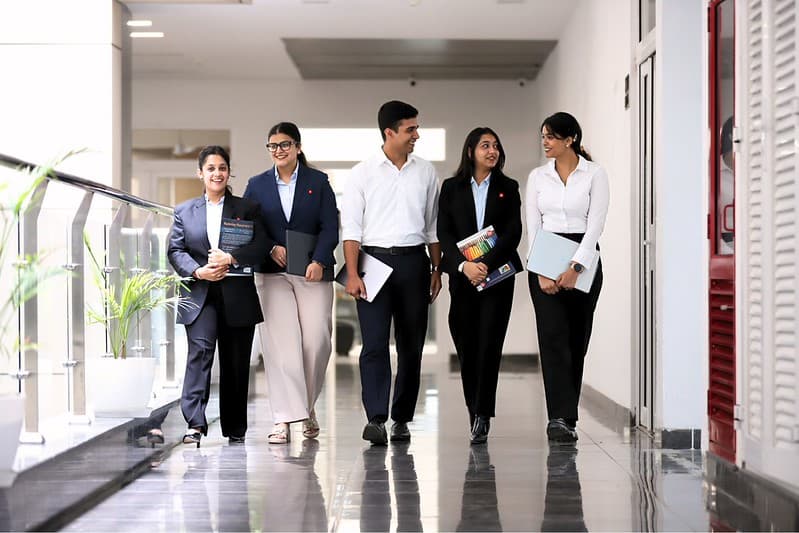
It is worth being clear about what this program is not. It is not a technology degree with a few business modules bolted on. Nor is it a conventional BBA with a digital marketing elective added to feel current. The structure is genuinely different: business fundamentals and digital skills are taught alongside each other, in a curriculum built around the idea that modern organisations do not separate these functions, so neither should the degree.
Students cover core management ground: principles of management, marketing and consumer behaviour, financial management, business economics, operations, and strategy. Running parallel to this is a track focused on the skills reshaping how decisions actually get made: data-driven decision making, business analytics, digital business models, e-commerce ecosystems, and the technology trends driving change in sectors from retail and banking to healthcare and logistics.
There is a third dimension too. The program weaves in innovation and entrepreneurial thinking through design thinking frameworks, startup ecosystems, and the practicalities of building and scaling digital ventures. This makes it relevant not just for students aiming at corporate careers, but also for those thinking about starting something of their own.
What Does This Mean for Students and Their Families?
For parents helping a child navigate undergraduate admissions, the volume of management programs available can make it genuinely hard to tell them apart. Most sound similar. Most claim to be industry-aligned. The more useful filter is a direct one: does this curriculum reflect how organisations actually work today?
Digital literacy is no longer a bonus skill. It is a baseline. Students who leave university with both management fundamentals and real digital competence are better placed to contribute early, move across functions, and adapt as their industries evolve.
This matters particularly in India right now. Fintech, e-commerce, digital media, healthtech, and edtech are among the most active employers of management graduates in the country. In all of these sectors, the ability to move comfortably between business strategy and technology-driven execution is not a nice-to-have. It is what separates the candidates who get shortlisted from those who don't.
Graduates from Chitkara University's BBA in Digital Sciences and Business Management are prepared for roles including digital business analyst, product associate, digital marketing strategist, technology consulting associate, and e-commerce or growth manager. These are not niche positions. They are among the fastest-growing job categories in India's current market.
The Bigger Picture for Management Education in India
Chitkara University's program sits within a broader and necessary shift in how undergraduate business education is being reimagined across India. Institutions that continue to treat management and technology as separate disciplines will keep producing graduates who arrive underprepared for what the workplace actually demands of them.
The more important conversation, for students, parents, and institutions alike, is about honest alignment: between what gets taught and what the economy needs, and between the degree on paper and the capability it actually builds.
For students across Punjab and the rest of India weighing their options for 2026, the BBA in Digital Sciences and Business Management at Chitkara University is a serious answer to that question. It is a program built not around where business education has been, but around where the industry unambiguously is.



.png?h=132&w=263&mode=stretch)

















![MBA/PGDM | admission | 2024 | Narsee Monjee Institute of Management Studies - [NMIMS Deemed to be University]](https://image-static.collegedunia.com/public/college_data/images/logos/1506323004Logo.jpg?h=72&w=72&mode=stretch)


![MBA/PGDM | admission | 2024 | Indian Institute of Management - [IIMC]](https://image-static.collegedunia.com/public/college_data/images/logos/1488950580d2.png?h=72&w=72&mode=stretch)


.jpeg?h=72&w=72&mode=stretch)
.jpeg?h=72&w=72&mode=stretch)





Comments