




The NCERT Solutions for Class 6 Social Science Chapter 11 Grassroots Democracy Part 2: Local Government in Rural Areas cover every textbook question for 2026-27. The answers explain the Gram Sabha, Gram Panchayat, Panchayat Samiti and Zila Parishad in simple words.
- Learn how villagers take part in local decisions.
- Compare the three levels of Panchayati Raj.
- Write clear answers using examples from village life.
Each Collegedunia answer follows the 2026-27 NCERT textbook and uses language suitable for Class 6 students.
Student Feedback
In a Collegedunia study poll of 12,640 students, most students found the three-level Panchayati Raj table useful for revision.
Local Government in Rural Areas and the Gram Sabha
Local government lets people help manage the place where they live. In villages, this system is called Panchayati Raj. It brings public decisions closer to rural communities.
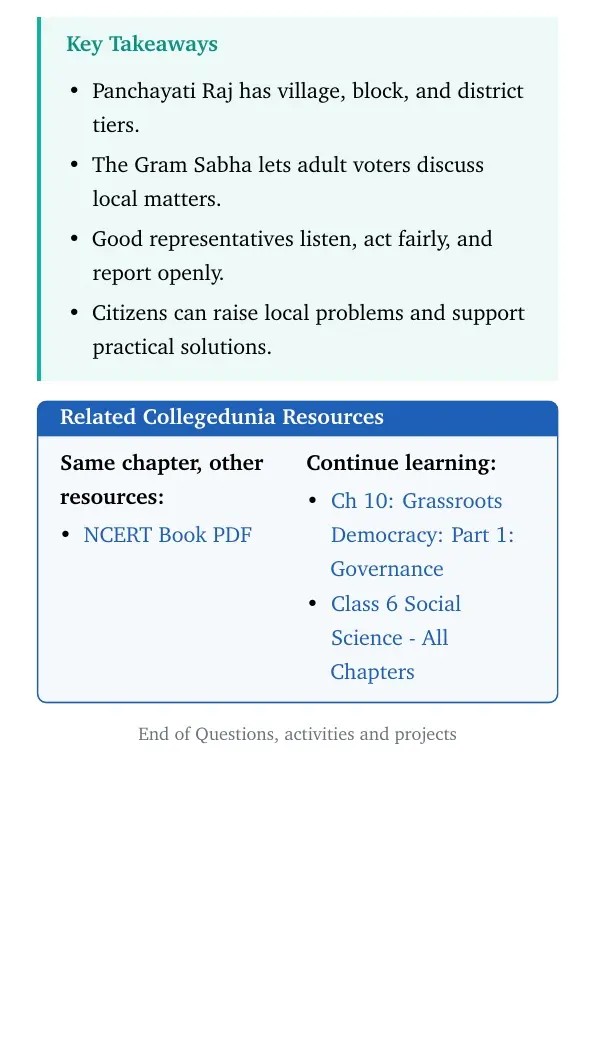
- The Gram Sabha includes all adult voters in a village or group of villages.
- Members discuss local needs, plans and the use of public money.
- They can ask the Gram Panchayat questions about its work.
- Women and disadvantaged groups receive reserved seats in Panchayati Raj bodies.
The Gram Sabha supports direct participation because villagers can speak and vote in its meetings. It also helps people check whether local work is fair.
How Panchayati Raj Works in Rural India
Source: PW Little Champs 6th, 7th & 8th on YouTube
Gram Panchayat Members, Sarpanch and Village Work
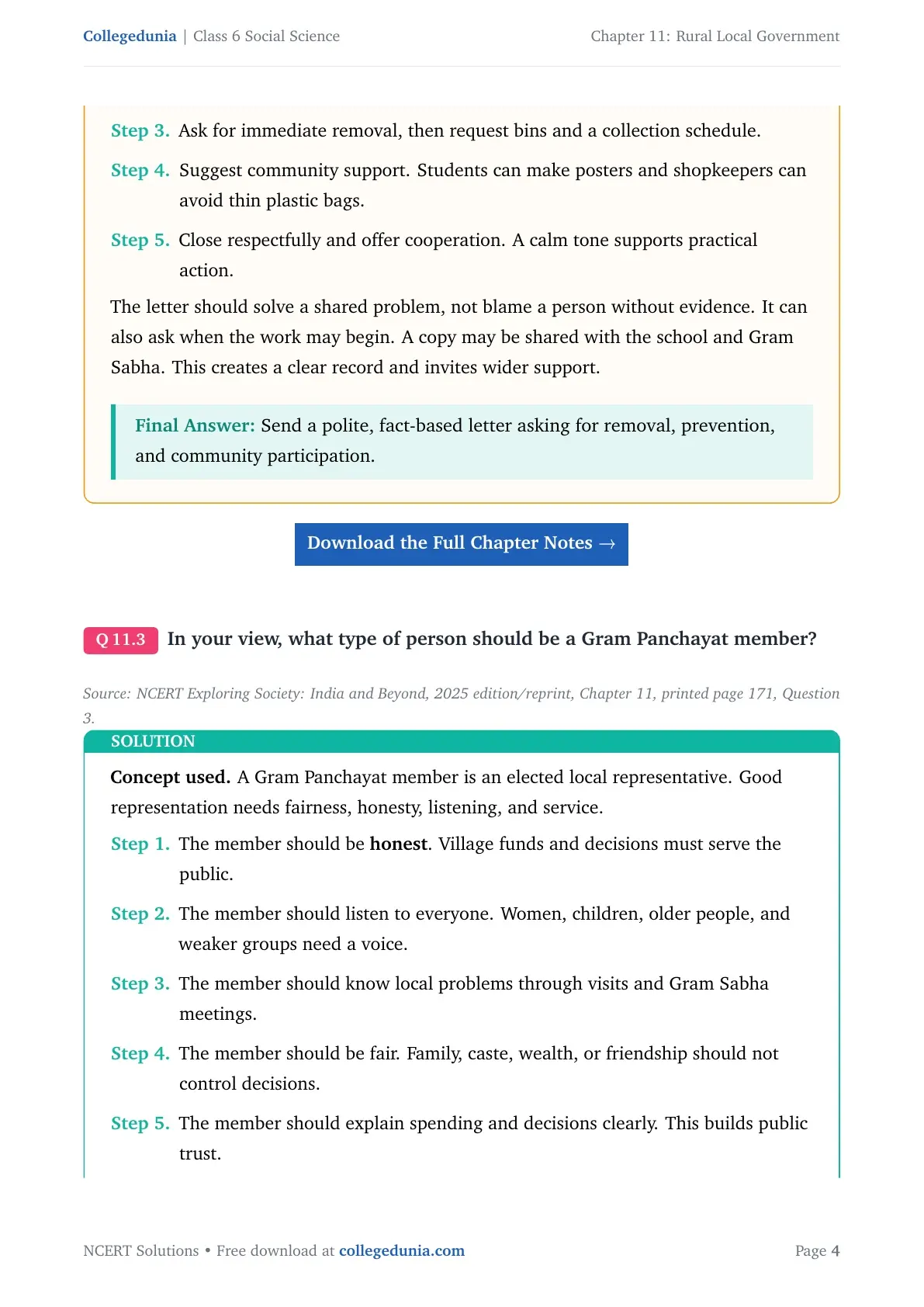
The Gram Panchayat is the elected body at village level. Each village is divided into wards. Voters elect one representative from each ward.
| Member or body | Main role | Simple example |
|---|---|---|
| Ward member | Represents one ward | Reports a broken hand pump |
| Sarpanch | Heads the Gram Panchayat | Leads a meeting on road repair |
| Gram Panchayat | Plans and carries out village work | Maintains drains and public spaces |
| Gram Sabha | Discusses plans and checks the Panchayat | Reviews spending on a water project |
The Sarpanch does not govern alone. Elected ward members work together, while the Gram Sabha reviews their decisions. This sharing of power makes the Panchayat answerable to villagers.
Three Levels of Panchayati Raj in India
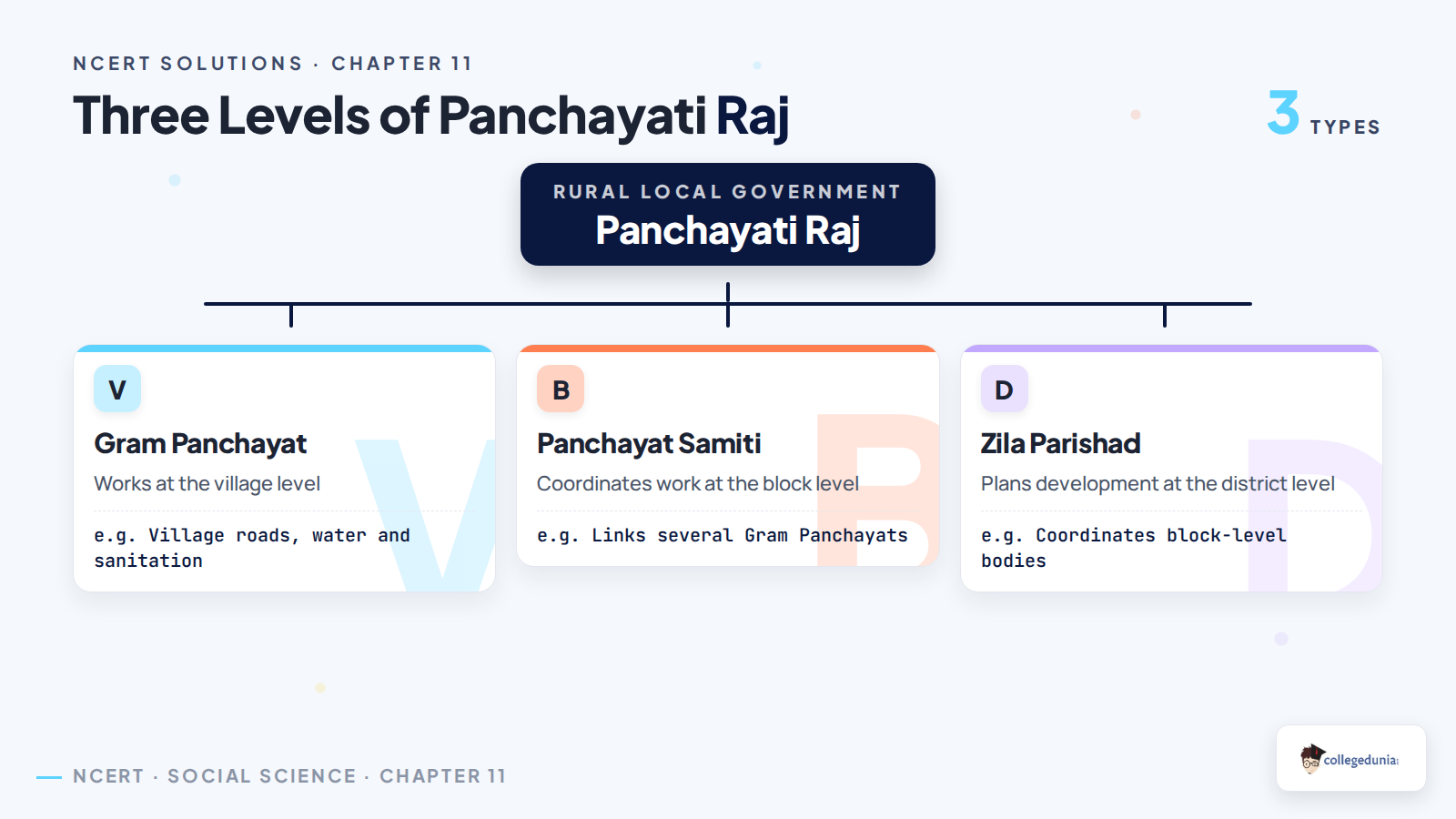
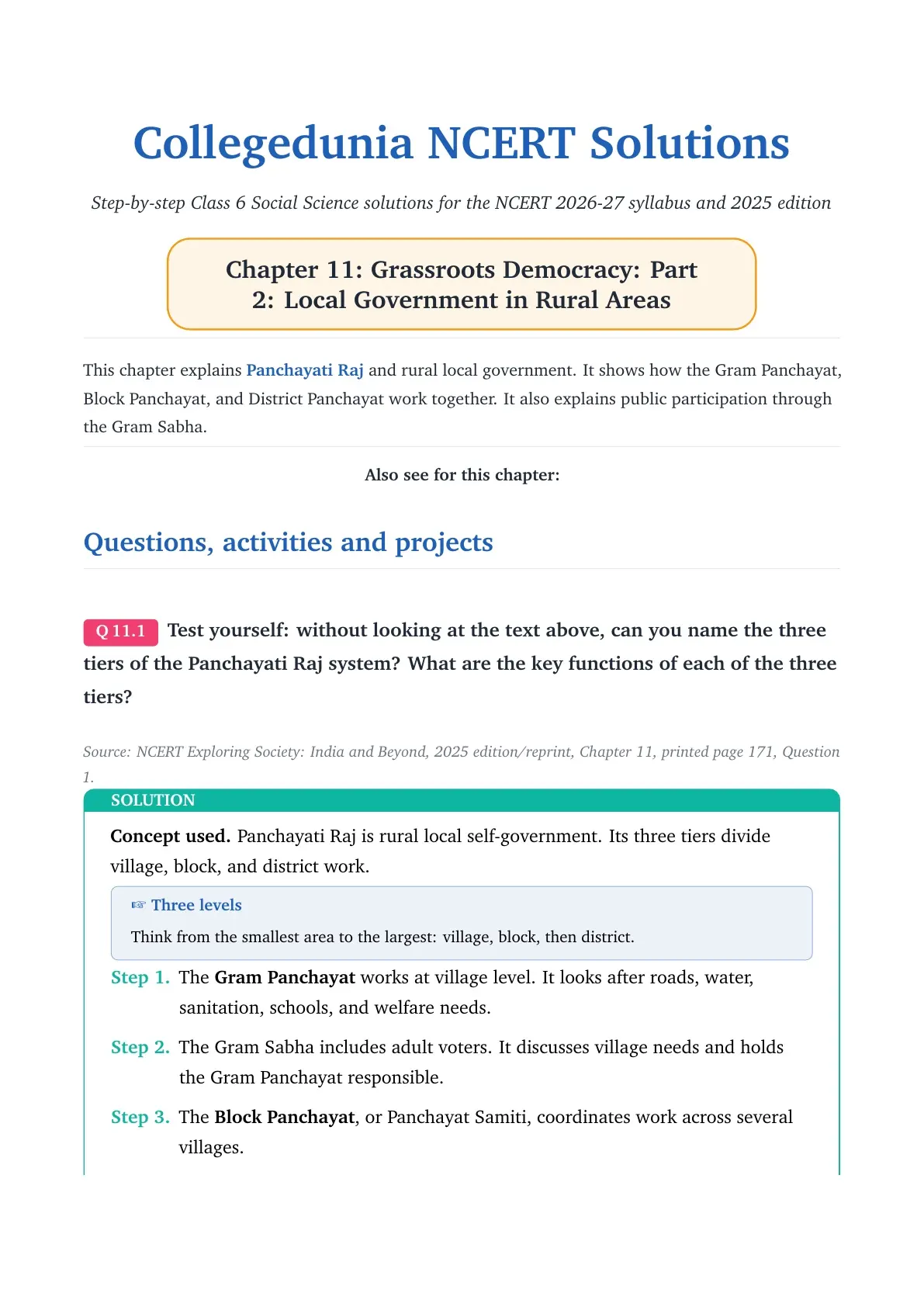
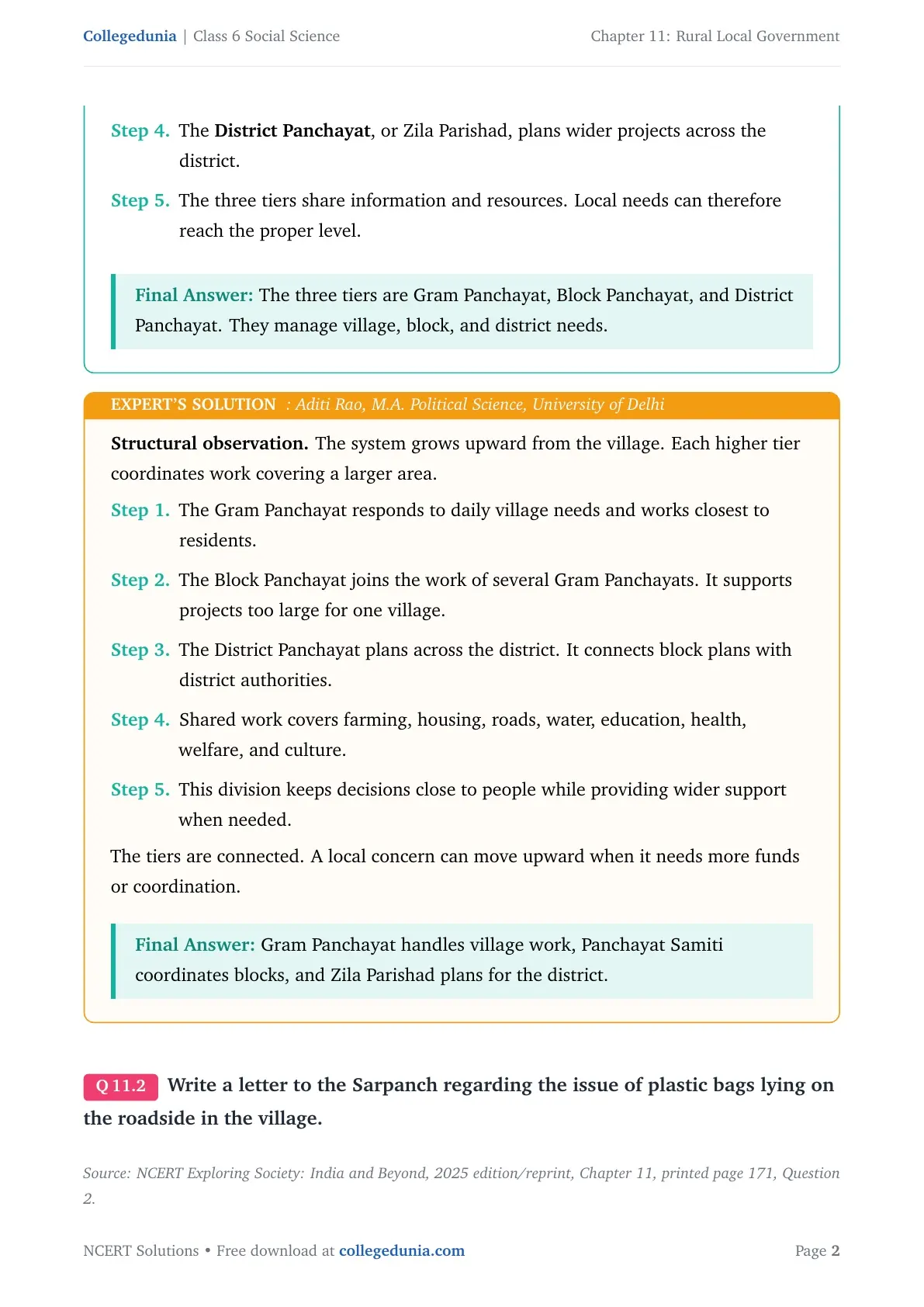
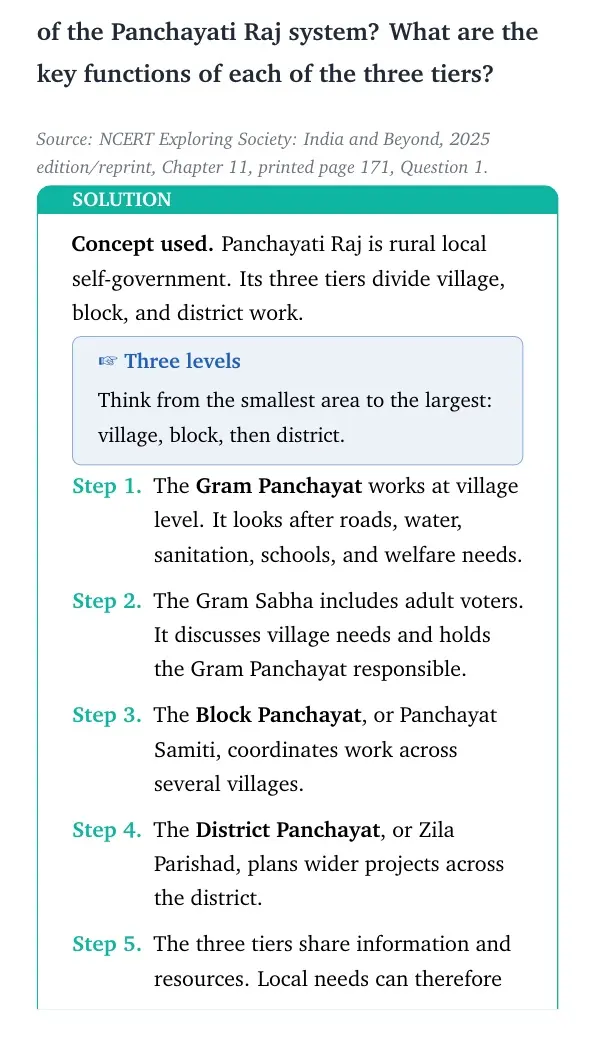
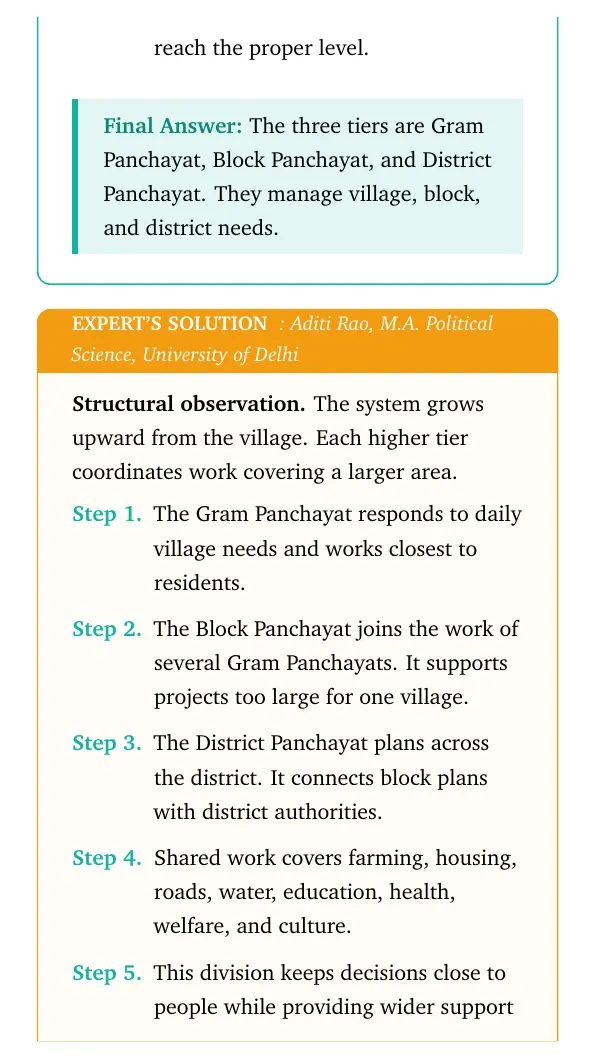
Panchayati Raj usually has three levels. Each level handles work for a different area. The levels also coordinate projects that affect several villages.
| Level | Institution | Area served |
|---|---|---|
| Village | Gram Panchayat | One village or a small group of villages |
| Block | Panchayat Samiti | Several Gram Panchayats in a block |
| District | Zila Parishad | Rural areas across a district |
The three levels connect a village problem with block and district planning. A large road or health project may need support beyond one Gram Panchayat.
How Rural Local Bodies Solve Village Problems
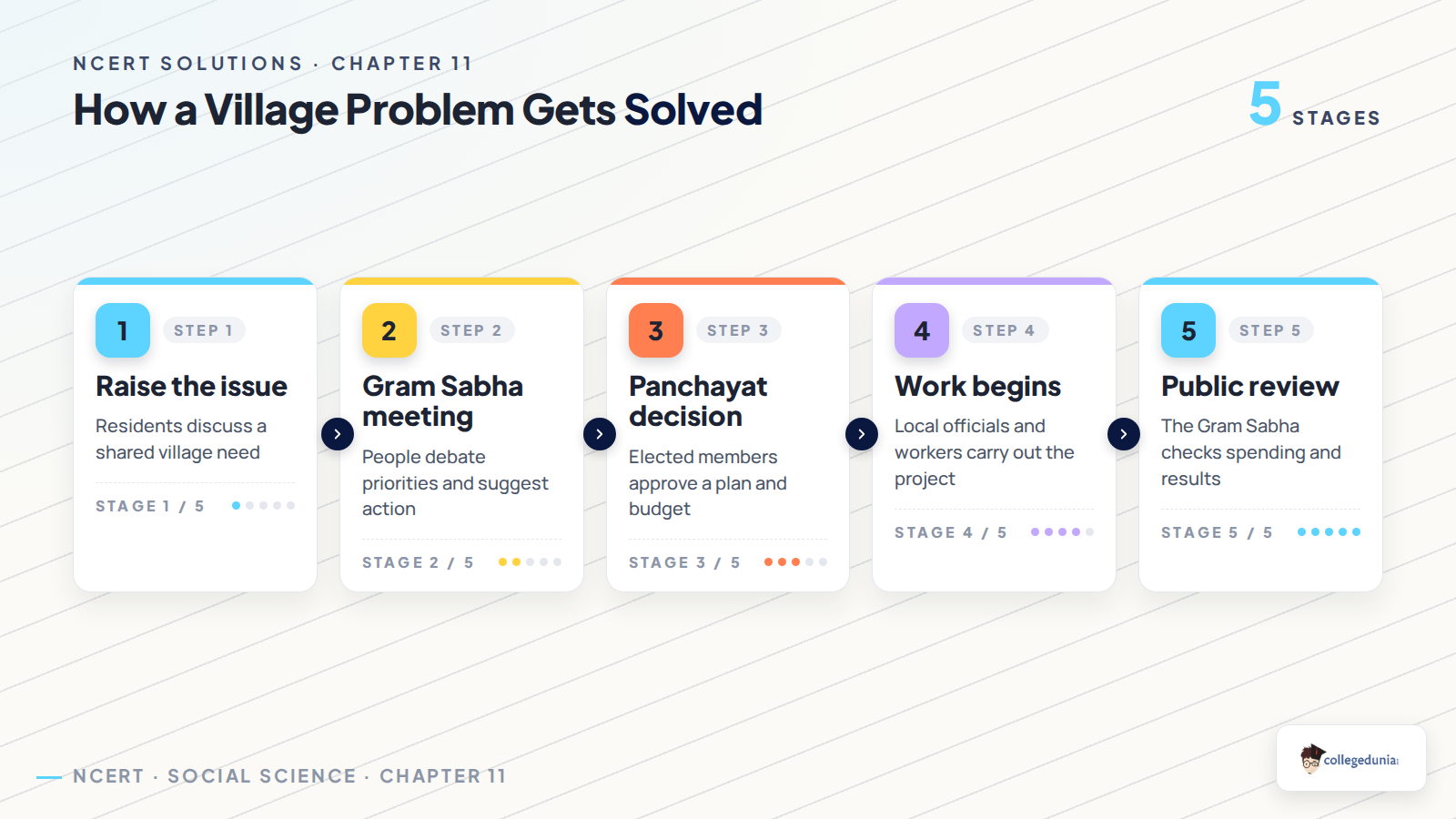
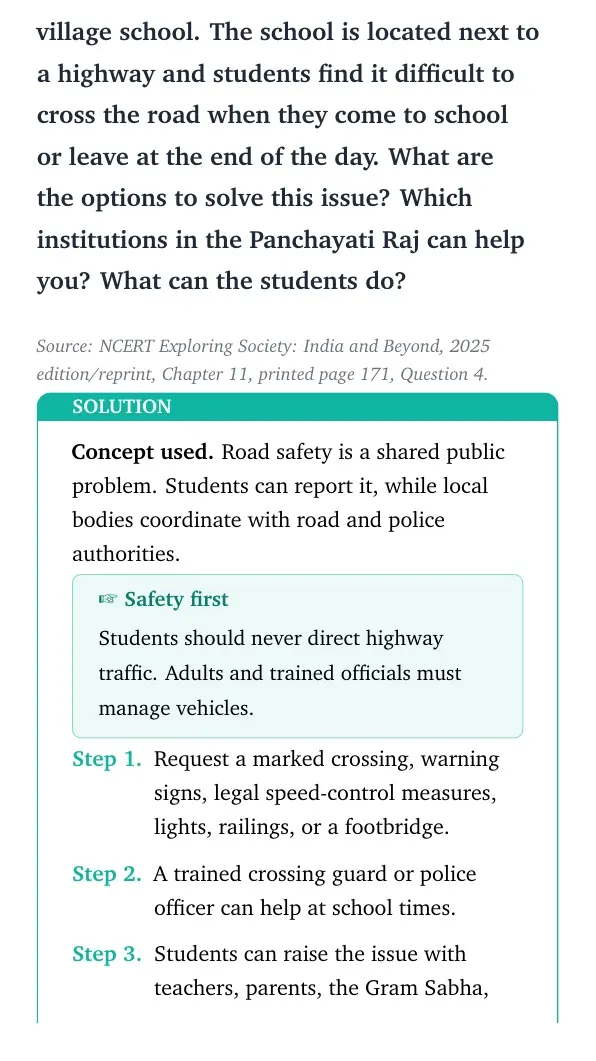
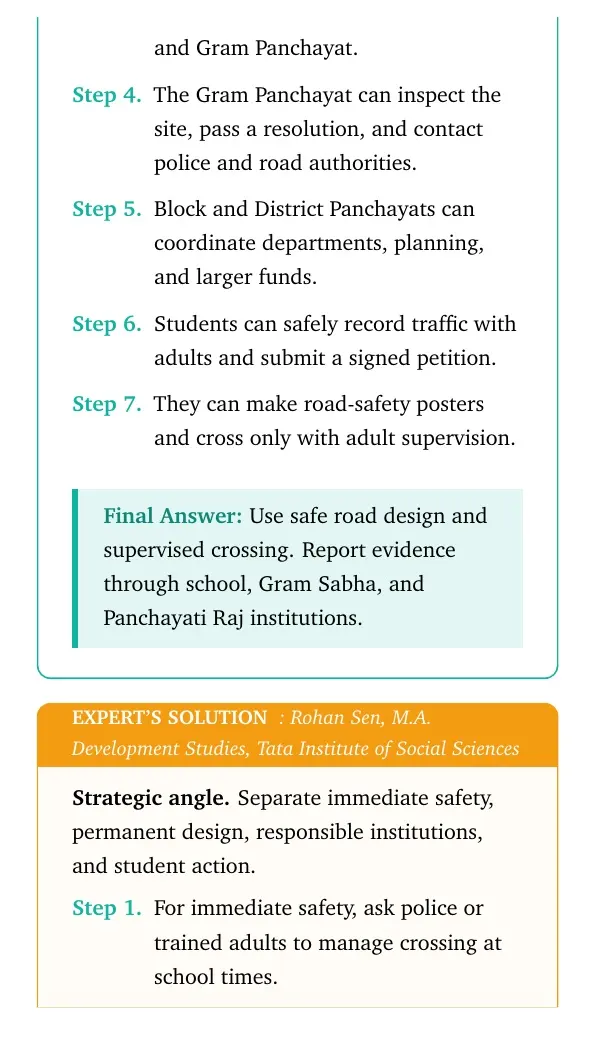
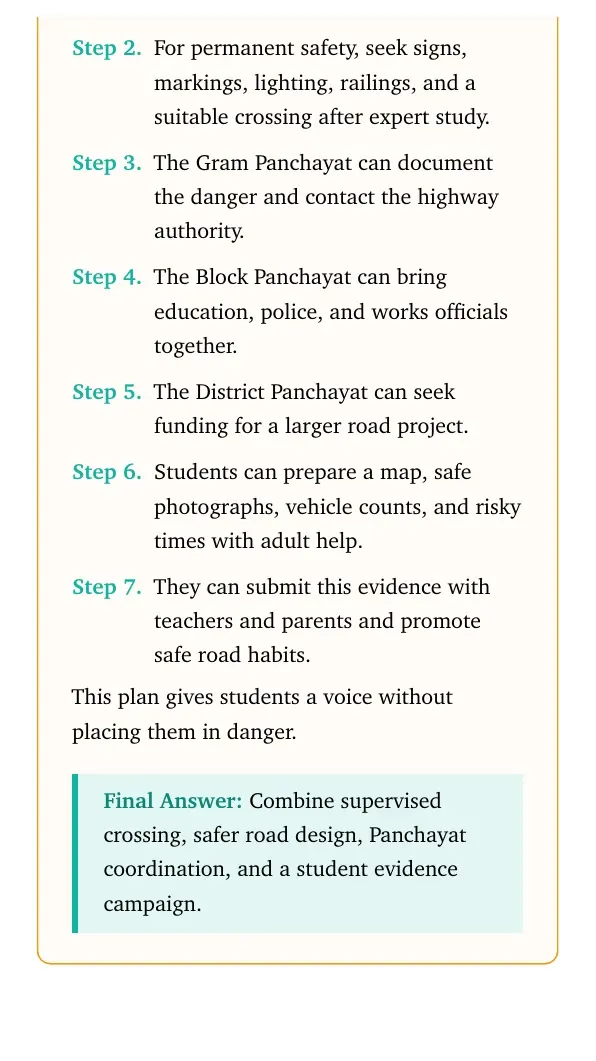
Villagers first identify a shared problem. The Gram Sabha discusses it and sets priorities. The Panchayat then plans the work within its powers and budget.
- Residents raise an issue, such as unsafe water or a damaged road.
- The Gram Sabha discusses which need should come first.
- The Gram Panchayat prepares a plan and checks available funds.
- Officials and elected members arrange the work.
- Villagers review the result and ask questions about spending.
Public participation makes local government more answerable. People can report missing services, suggest solutions and check completed work.
How to Write Better Local Government Answers
Start with a direct definition. Name the correct rural body and its level. Add one clear example when the question asks how it works.
- Do not confuse the Gram Sabha with the Gram Panchayat.
- Write village, block and district levels in the correct order.
- Use Panchayat Samiti for the block level.
- Use Zila Parishad for the district level.
- Connect grassroots democracy with participation and accountability.
Local Government in Rural Areas Class 6 Related Resources
Use the textbook for the chapter activities. Pair it with short notes for revision after you finish these solutions.
| Resource | Best use |
|---|---|
| Local Government in Rural Areas Class 6 NCERT Book PDF | Read the official chapter and activities |
| Local Government in Rural Areas Class 6 Notes | Revise terms and key roles |
| Local Government in Rural Areas Class 6 Handwritten Notes | Complete a quick recap |
All Class 6 Social Science NCERT Solutions
Continue with the neighbouring civics chapters to connect government, village institutions and urban local bodies.
| Chapter | NCERT Solutions |
|---|---|
| 9 | Family and Community |
| 10 | Grassroots Democracy Part 1: Governance |
| 11 | Grassroots Democracy Part 2: Local Government in Rural Areas |
| 12 | Grassroots Democracy Part 3: Local Government in Urban Areas |
| 13 | The Value of Work |
Open all Local Government in Rural Areas questions with step-by-step solutions
Grassroots Democracy Part 2: Local Government in Rural Areas Social Science NCERT Solutions FAQs
Ques. What is Panchayati Raj?
Ans. Panchayati Raj is the system of rural local government through elected bodies at village, block and district levels.
Ques. What is a Gram Sabha?
Ans. A Gram Sabha includes all adult voters in a village or group of villages. It discusses local plans and checks Panchayat work.
Ques. What is the difference between Gram Sabha and Gram Panchayat?
Ans. The Gram Sabha includes all adult voters. The Gram Panchayat is the elected body that plans and carries out village work.
Ques. Who is a Sarpanch?
Ans. A Sarpanch is the elected head of a Gram Panchayat. The Sarpanch leads meetings and works with ward members.
Ques. What are the three levels of Panchayati Raj?
Ans. The three levels are Gram Panchayat at village level, Panchayat Samiti at block level and Zila Parishad at district level.
Ques. Why is local government important in rural areas?
Ans. It lets villagers take part in decisions and helps solve local problems through nearby elected bodies.



Comments