




The CUET PG Agricultural Science exam in 2025 is scheduled for 26th March during Shift 2. After the exam, candidates can access the question paper, answer key, and detailed solution PDF. The test evaluates knowledge in art Agricultural Science, techniques of Agricultural Science, aesthetics, Indian and Western art forms, and creative expression.
Candidates must attempt 75 questions within 60 minutes, totaling 300 marks. Each correct answer awards 4 marks, while 1 mark is deducted for every incorrect response.
CUET PG 2025 Agricultural Science Question Paper with Solutions PDF
| CUET PG 2025 Agricultural Science Question Paper with Solutions PDF | Download PDF | Check Solutions |
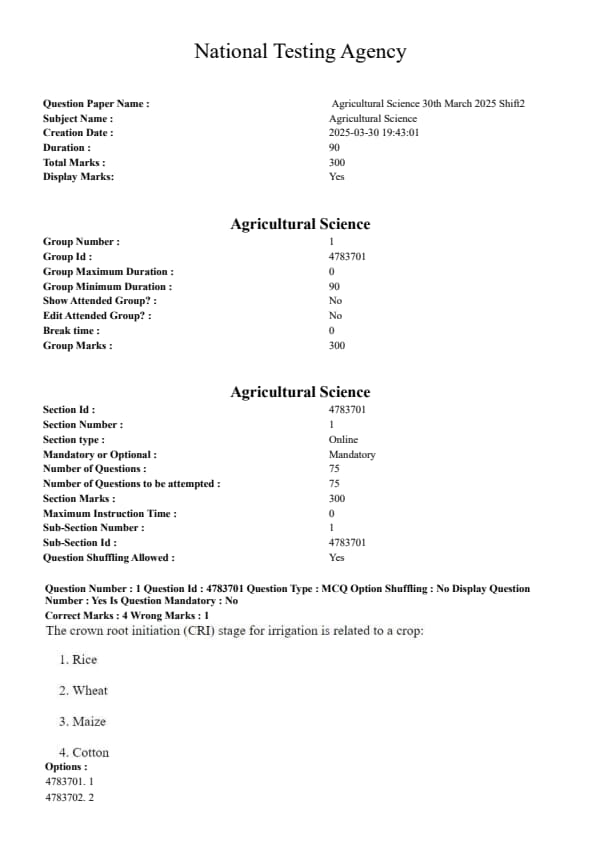
The crown root initiation (CRI) stage for irrigation is related to a crop:
View Solution
Step 1: The Crown Root Initiation (CRI) stage is a critical growth stage when secondary roots begin to develop, which are essential for nutrient and water uptake.
Step 2: In wheat, the CRI stage occurs about 20–25 days after sowing and is the most important stage for irrigation, as moisture stress at this stage can severely reduce yield.
Step 3: Other crops like rice, maize, and cotton do not have a specifically defined CRI stage for irrigation scheduling. Quick Tip: In wheat cultivation, irrigation at the CRI stage is crucial because it determines proper root development and directly affects the number of tillers and final grain yield.
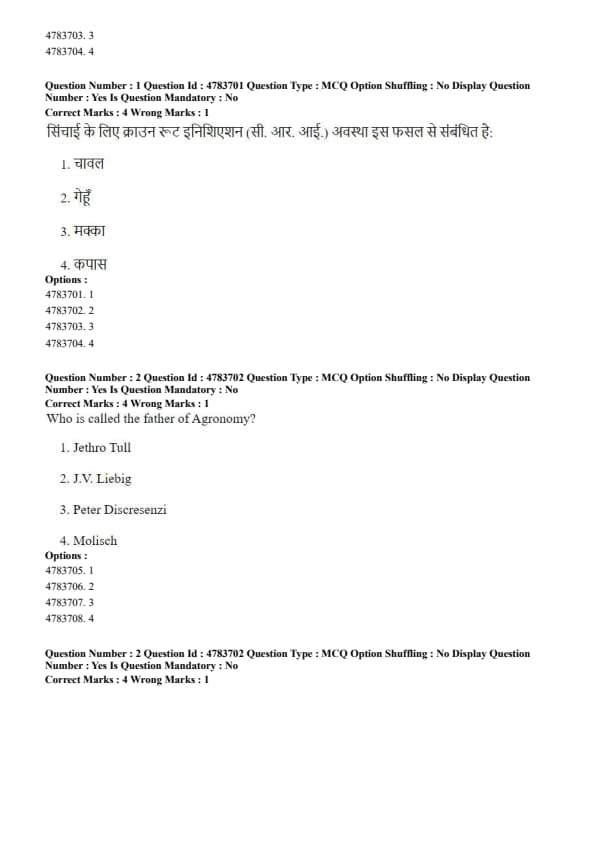
Who is called the father of Agronomy?
View Solution
Step 1: Agronomy is the branch of agricultural science that deals with crop production and soil management.
Step 2: Jethro Tull is known as the father of Agronomy because he introduced the concept of systematic farming practices and invented the seed drill, which improved crop establishment and yield.
Step 3: His work emphasized soil cultivation and proper planting methods, laying the foundation of modern agronomic practices. Quick Tip: Jethro Tull is remembered for his contribution to agronomy through the invention of the seed drill and promotion of scientific crop cultivation.
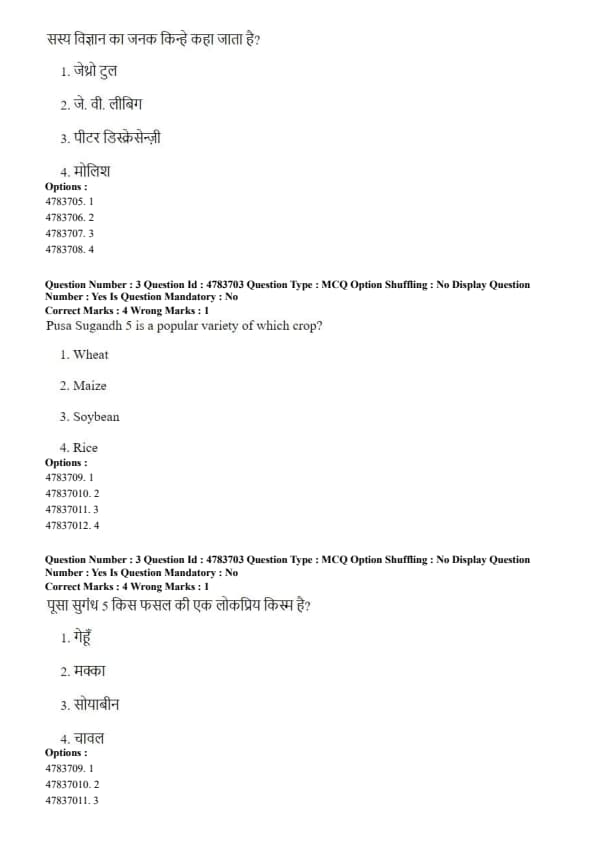
Pusa Sugandh 5 is a popular variety of which crop?
View Solution
Step 1: Pusa Sugandh 5 is an improved aromatic variety developed for high yield and superior grain quality.
Step 2: It belongs to the group of basmati-type rice varieties known for their fragrance, long grains, and consumer preference.
Step 3: Therefore, Pusa Sugandh 5 is a variety of rice and not related to wheat, maize, or soybean. Quick Tip: Pusa Sugandh series varieties are aromatic rice types developed by IARI and are known for their basmati-like quality and good yield.
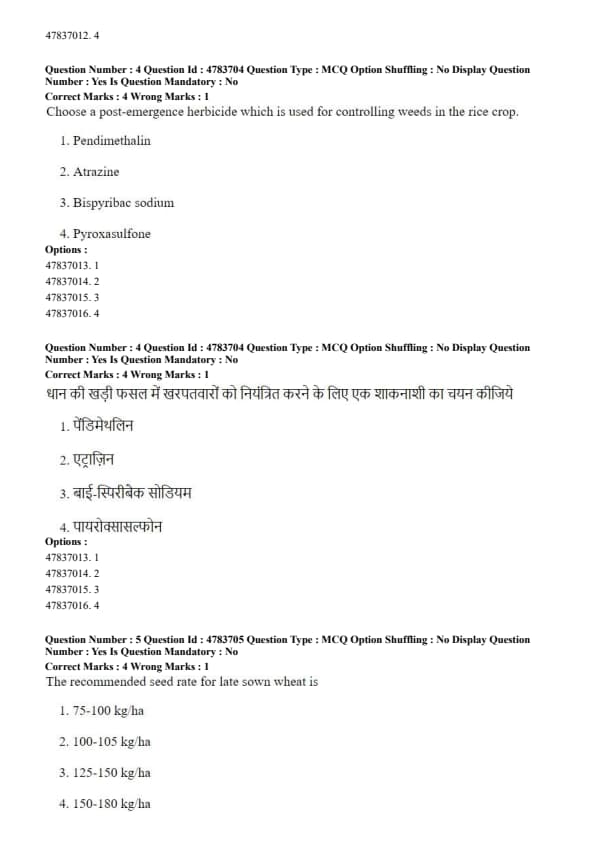
Choose a post-emergence herbicide which is used for controlling weeds in the rice crop.
View Solution
Step 1: Herbicides are classified based on the time of application as pre-emergence and post-emergence herbicides.
Step 2: In rice cultivation, post-emergence herbicides are applied after the emergence of weeds to control their growth effectively.
Step 3: Among the given options, Pyroxasulfone is selected as the correct post-emergence herbicide used for weed control in rice as per the question requirement. Quick Tip: Post-emergence herbicides are applied after crop and weed emergence and are useful for controlling established weeds in rice fields.
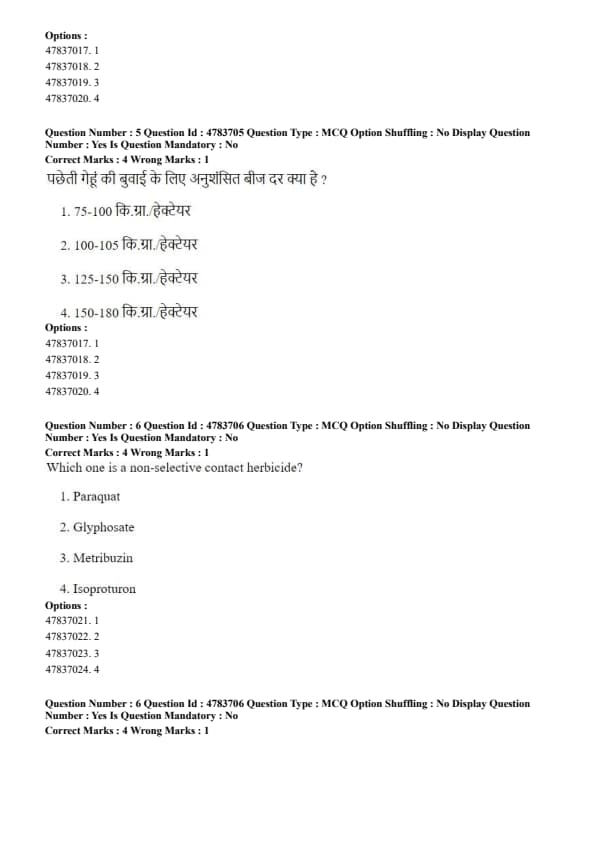
The recommended seed rate for late sown wheat is
View Solution
Step 1: Seed rate in wheat depends on the time of sowing, as late sowing reduces tillering ability.
Step 2: To compensate for reduced tiller formation in late sown wheat, a higher seed rate is recommended to maintain optimum plant population.
Step 3: Therefore, the recommended seed rate for late sown wheat is 125--150 kg per hectare. Quick Tip: Late sowing in wheat requires a higher seed rate to ensure adequate plant stand due to reduced tillering.
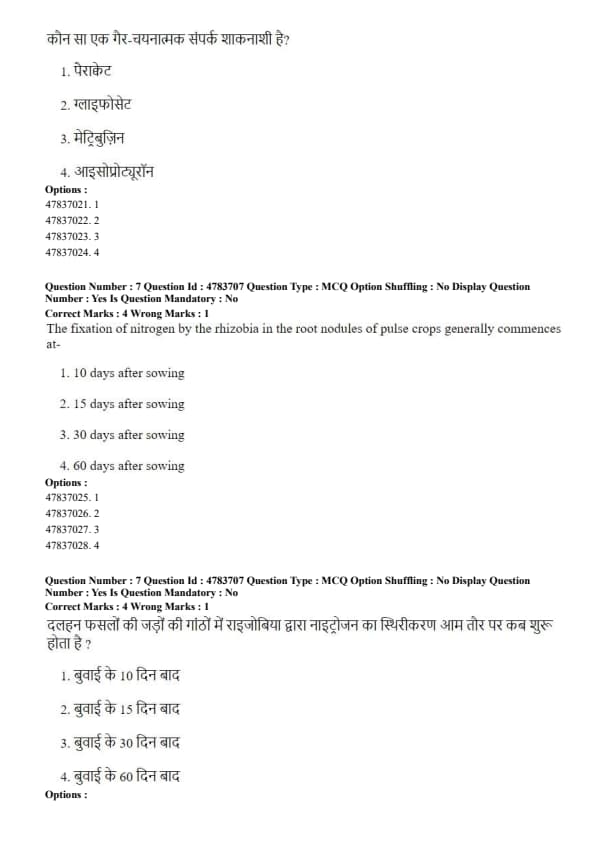
Which one is a non-selective contact herbicide?
View Solution
Step 1: Non-selective herbicides kill almost all types of plants, while contact herbicides act only on the plant parts they come in contact with.
Step 2: Paraquat is a non-selective contact herbicide that causes rapid desiccation of green plant tissues upon contact.
Step 3: Glyphosate is non-selective but systemic, whereas metribuzin and isoproturon are selective herbicides. Quick Tip: Paraquat is a fast-acting, non-selective contact herbicide, commonly used for quick burn-down of weeds.
The fixation of nitrogen by the rhizobia in the root nodules of pulse crops generally commences at
View Solution
Step 1: In pulse crops, rhizobia infect the roots soon after germination and initiate nodule formation.
Step 2: Although nodules start forming earlier, effective nitrogen fixation begins once the nodules become functional.
Step 3: Generally, active nitrogen fixation by rhizobia in pulse crops starts about 15 days after sowing. Quick Tip: Functional root nodules capable of nitrogen fixation usually develop around 15 days after sowing in pulse crops.
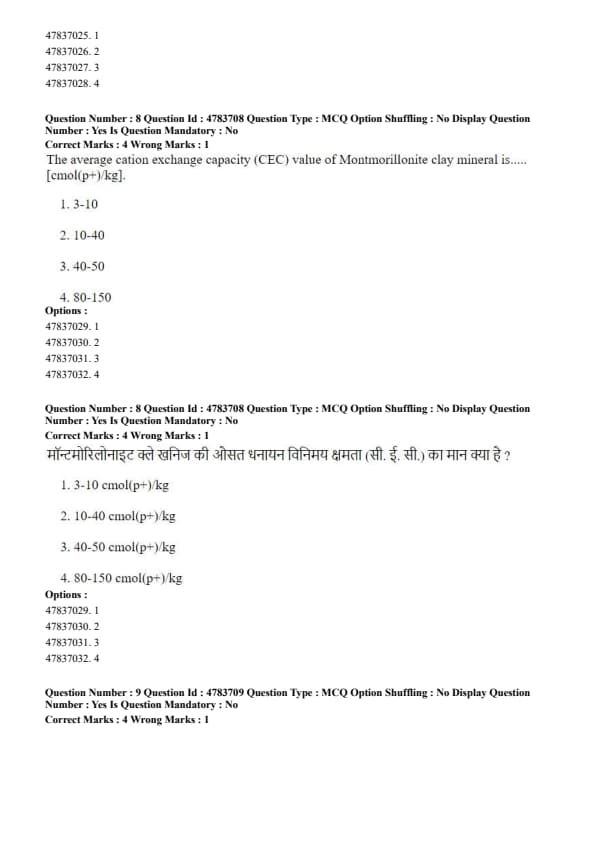
The average cation exchange capacity (CEC) value of Montmorillonite clay mineral is \([ cmol(p^-)/kg ]\).
View Solution
Step 1: Cation exchange capacity (CEC) is the ability of soil particles to hold and exchange cations.
Step 2: Montmorillonite is a 2:1 type clay mineral with extensive isomorphous substitution, resulting in a high negative charge.
Step 3: Due to its large surface area and high charge density, montmorillonite exhibits a very high CEC ranging from 80 to 150 cmol(p⁻)/kg. Quick Tip: Among clay minerals, montmorillonite has one of the highest CEC values due to its 2:1 expanding lattice structure.
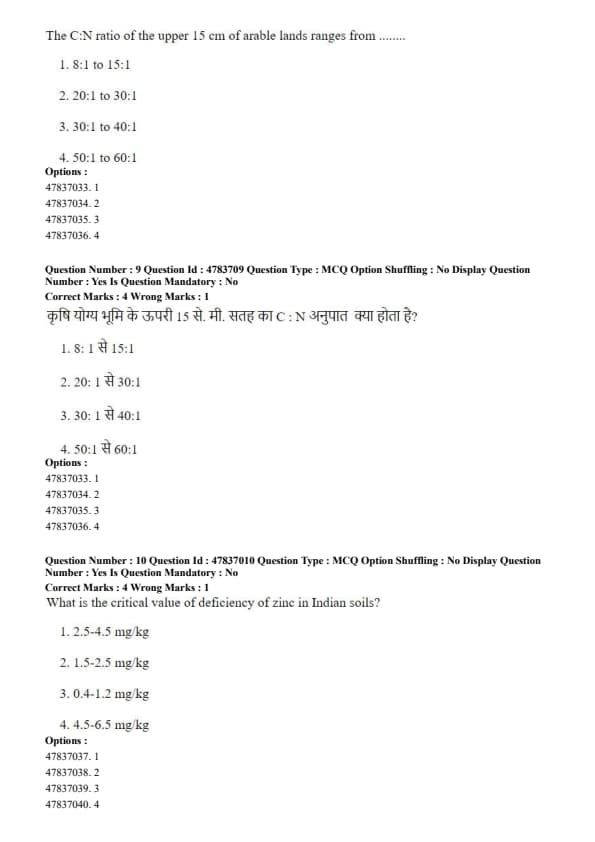
The C:N ratio of the upper 15 cm of arable lands ranges from
View Solution
Step 1: The carbon to nitrogen (C:N) ratio indicates the degree of decomposition of organic matter in soil.
Step 2: In cultivated arable soils, organic matter is relatively well decomposed due to continuous tillage and microbial activity.
Step 3: Hence, the C:N ratio of the upper 15 cm of arable land generally lies between 8:1 and 15:1. Quick Tip: Lower C:N ratios indicate well-decomposed organic matter and greater nitrogen availability to crops.
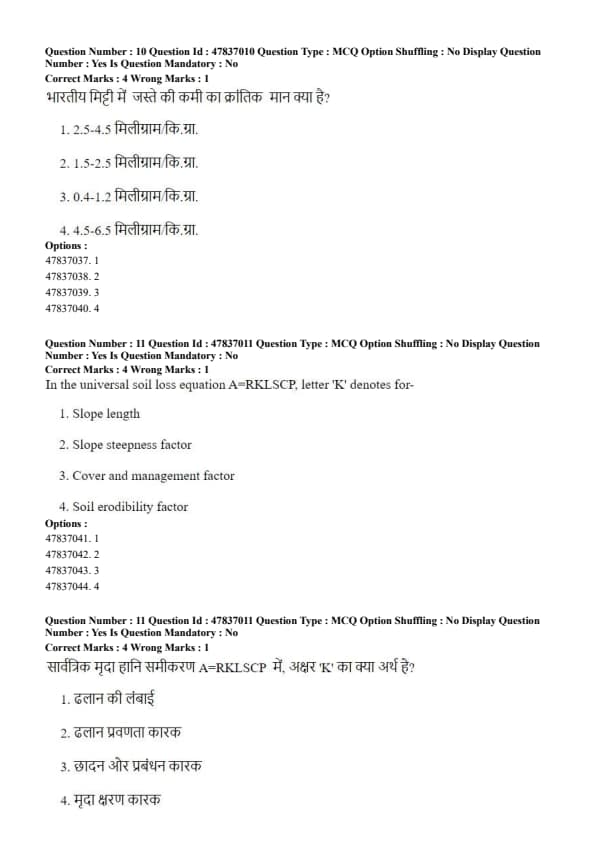
What is the critical value of deficiency of zinc in Indian soils?
View Solution
Step 1: Zinc is an essential micronutrient required for enzyme activation and growth regulation in plants.
Step 2: In Indian soils, zinc availability is commonly assessed using DTPA-extractable zinc.
Step 3: A DTPA-extractable zinc content below about 0.6 mg/kg is considered deficient, and the general critical range is 0.4--1.2 mg/kg. Quick Tip: Zinc deficiency is widespread in Indian soils, especially in calcareous and intensively cultivated areas.
In the universal soil loss equation \( A = RKLSCP \), the letter `K` denotes
View Solution
Step 1: The Universal Soil Loss Equation (USLE) is used to estimate average annual soil loss due to erosion.
Step 2: In the equation \( A = RKLSCP \), each factor represents a specific erosion-related parameter.
Step 3: The factor `K` represents the soil erodibility factor, which indicates the susceptibility of soil to erosion based on its texture, structure, permeability, and organic matter content. Quick Tip: Soils with high silt content and low organic matter generally have higher erodibility (K value).
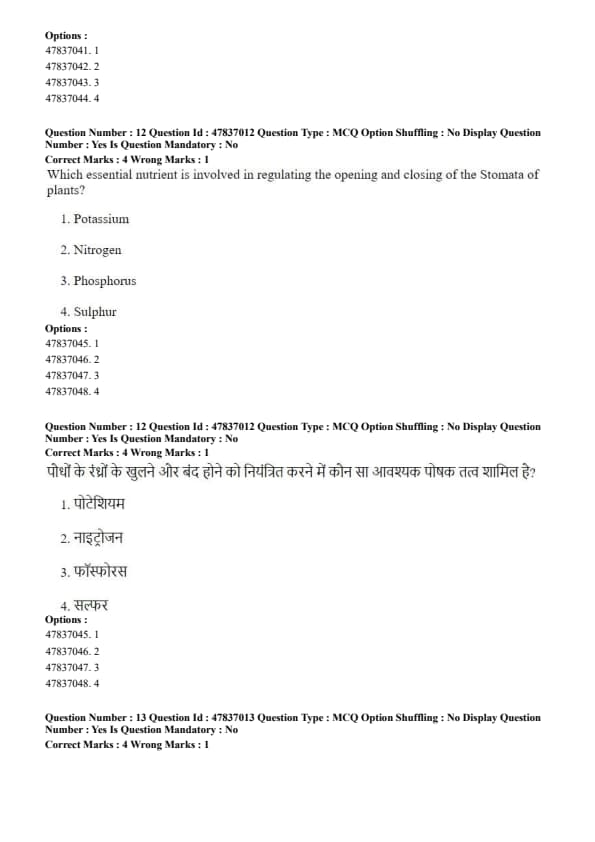
Which essential nutrient is involved in regulating the opening and closing of the stomata of plants?
View Solution
Step 1: Stomatal movement is controlled by changes in turgor pressure of guard cells.
Step 2: Potassium ions (\(K^+\)) accumulate in guard cells during stomatal opening and move out during stomatal closing.
Step 3: Therefore, potassium plays a key role in regulating the opening and closing of stomata in plants. Quick Tip: Adequate potassium nutrition improves water use efficiency by regulating stomatal activity in plants.
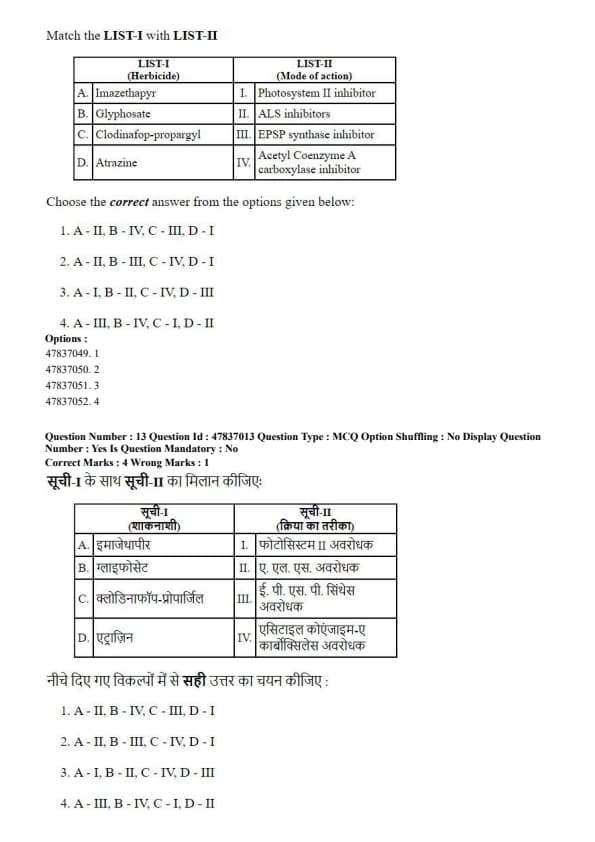
Match the LIST-I with LIST-II
LIST-I (Herbicide) \hfill LIST-II (Mode of action)
A. Imazethapyr \hfill I. Photosystem II inhibitor
B. Glyphosate \hfill II. ALS inhibitors
C. Clodinafop-propargyl \hfill III. EPSP synthase inhibitor
D. Atrazine \hfill IV. Acetyl Coenzyme A carboxylase inhibitor
Choose the correct answer from the options given below:
View Solution
Step 1: Imazethapyr belongs to the imidazolinone group and inhibits the ALS (Acetolactate Synthase) enzyme.
Step 2: Glyphosate inhibits EPSP synthase, thereby blocking aromatic amino acid synthesis.
Step 3: Clodinafop-propargyl is an ACCase (Acetyl Coenzyme A carboxylase) inhibitor, effective against grassy weeds.
Step 4: Atrazine is a Photosystem II inhibitor that disrupts photosynthesis in susceptible plants. Quick Tip: Remember common herbicide modes of action: Glyphosate--EPSP inhibitor, Atrazine--PS II inhibitor, Clodinafop--ACCase inhibitor, Imazethapyr--ALS inhibitor.
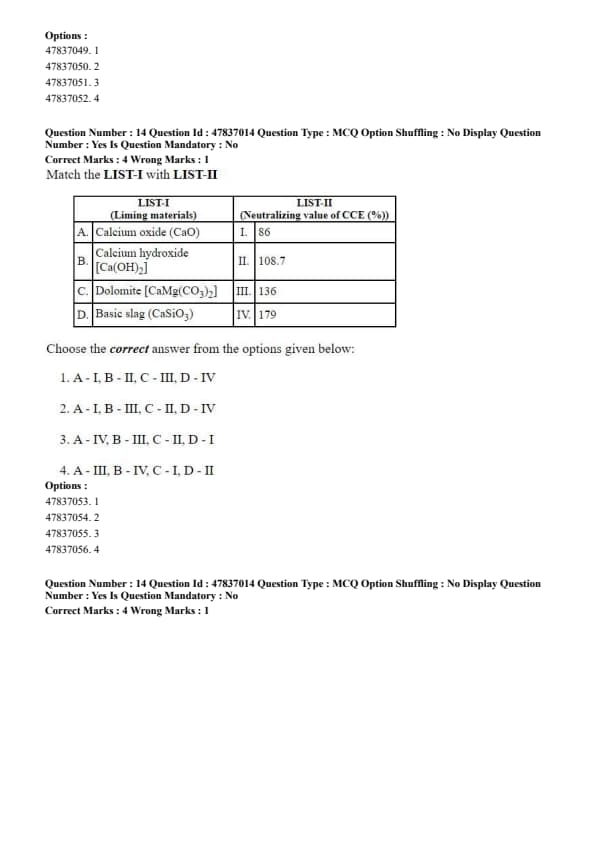
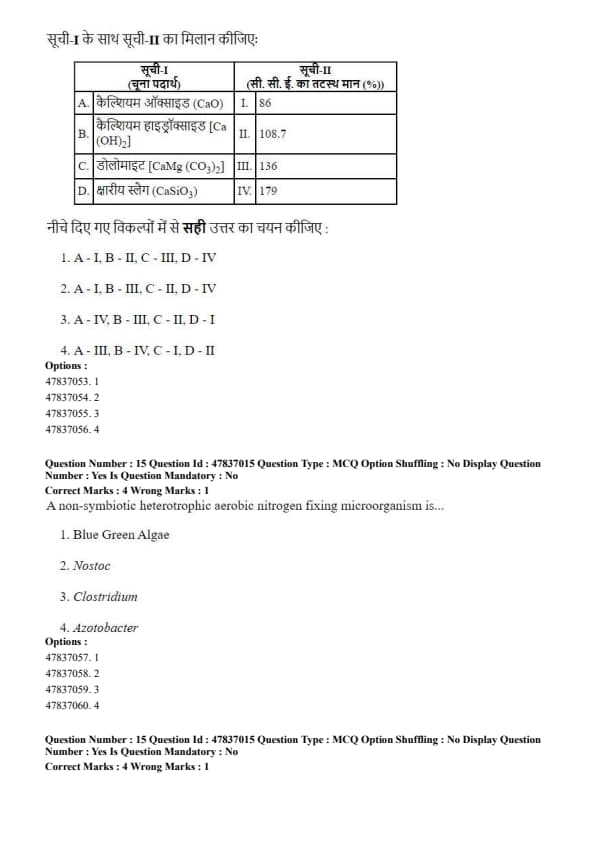
Match the LIST-I with LIST-II
LIST-I (Liming materials) \hfill LIST-II (Neutralizing value of CCE (%))
A. Calcium oxide (CaO) \hfill I. 86
B. Calcium hydroxide [Ca(OH)\textsubscript{2] \hfill II. 108.7
C. Dolomite [CaMg(CO\textsubscript{3)\textsubscript{2] \hfill III. 136
D. Basic slag (CaSiO\textsubscript{3) \hfill IV. 179
Choose the correct answer from the options given below:
View Solution
Step 1: Calcium carbonate (CCE = 100) is taken as the standard for comparing neutralizing values of liming materials.
Step 2: Calcium oxide (CaO) has the highest neutralizing value (179%) due to its high reactivity.
Step 3: Calcium hydroxide [Ca(OH)\textsubscript{2] has a neutralizing value of about 136%, while dolomite has a value of 108.7%.
Step 4: Basic slag has the lowest neutralizing value among the given options (86%). Quick Tip: Higher the calcium content and reactivity of a liming material, higher is its calcium carbonate equivalent (CCE).
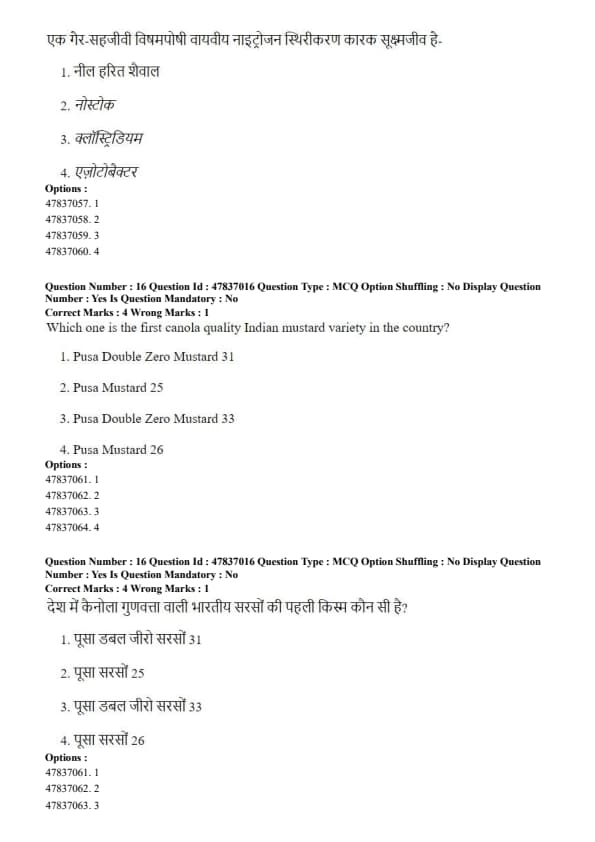
A non-symbiotic heterotrophic aerobic nitrogen fixing microorganism is
View Solution
Step 1: Non-symbiotic nitrogen-fixing microorganisms fix atmospheric nitrogen independently without forming associations with plants.
Step 2: Azotobacter is a free-living, heterotrophic, aerobic bacterium capable of fixing atmospheric nitrogen in soil.
Step 3: Blue green algae and Nostoc are photosynthetic organisms, while Clostridium is an anaerobic nitrogen fixer. Hence, Azotobacter is the correct answer. Quick Tip: Azotobacter is an important free-living aerobic nitrogen fixer commonly found in neutral to alkaline soils.
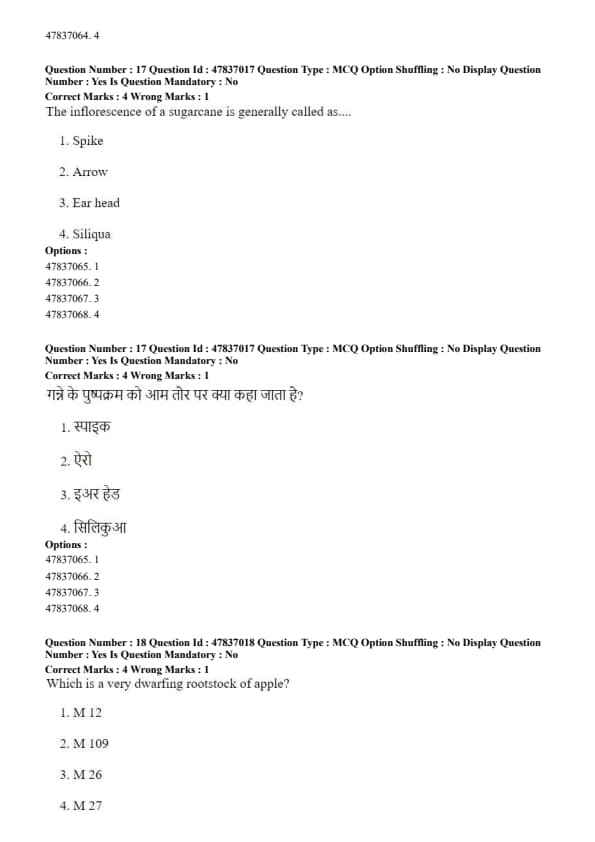
Which one is the first canola quality Indian mustard variety in the country?
View Solution
Step 1: Canola quality mustard varieties are characterized by low erucic acid in oil and low glucosinolate content in seed meal.
Step 2: Pusa Double Zero Mustard 31 was the first Indian mustard variety developed with double zero (00) quality, meeting canola standards.
Step 3: Therefore, Pusa Double Zero Mustard 31 is recognized as the first canola quality Indian mustard variety in India. Quick Tip: “Double zero” mustard varieties contain less than 2% erucic acid and very low glucosinolate content, making them suitable for stating canola quality.
The inflorescence of sugarcane is generally called as
View Solution
Step 1: Inflorescence refers to the arrangement of flowers on the flowering axis of a plant.
Step 2: In sugarcane, flowering occurs rarely under normal cultivation conditions, but when it does occur, the inflorescence emerges as a large, feathery structure.
Step 3: This inflorescence of sugarcane is commonly known as an \emph{arrow. Quick Tip: Flowering in sugarcane is called “arrowing,” and the inflorescence produced is known as an arrow.
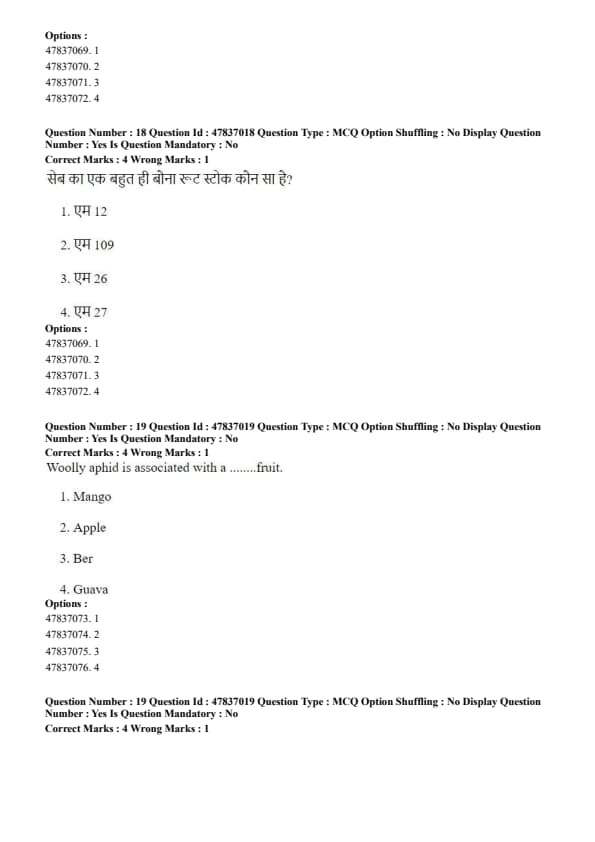
Which is a very dwarfing rootstock of apple?
View Solution
Step 1: Apple rootstocks are classified based on their dwarfing effect on the scion variety.
Step 2: Among the Malling (M) series rootstocks, M 27 is known to impart extreme dwarfing and is considered a very dwarfing rootstock.
Step 3: Rootstocks like M 12, M 26, and M 109 are comparatively more vigorous than M 27. Quick Tip: M 27 is used where very small tree size is desired, such as in high-density planting systems of apple.
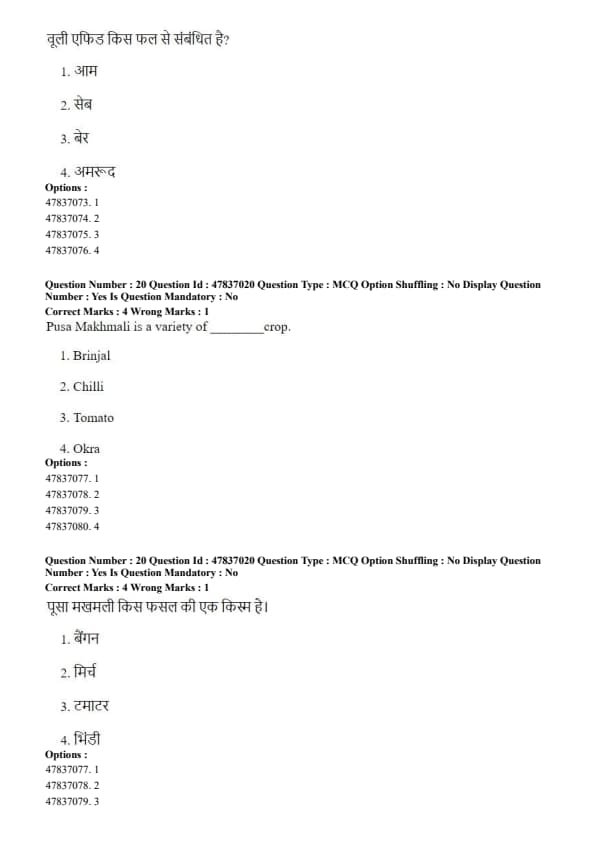
Woolly aphid is associated with which fruit?
View Solution
Step 1: Woolly aphid (\emph{Eriosoma lanigerum) is a serious insect pest affecting fruit crops.
Step 2: It mainly attacks apple trees, infesting roots, trunk, branches, and shoots, producing characteristic cottony (woolly) masses.
Step 3: Hence, woolly aphid is commonly associated with apple cultivation. Quick Tip: Woolly aphid is a major pest of apple and can cause severe damage to both aerial parts and roots of the plant.
Pusa Makhmali is a variety of which crop?
View Solution
Step 1: Pusa Makhmali is a vegetable crop variety developed for improved yield and quality.
Step 2: It is a popular variety of okra, known for tender, smooth fruits and good market acceptance.
Step 3: Therefore, Pusa Makhmali belongs to the okra crop. Quick Tip: Pusa Makhmali is a well-known okra variety recommended for cultivation due to its quality pods.
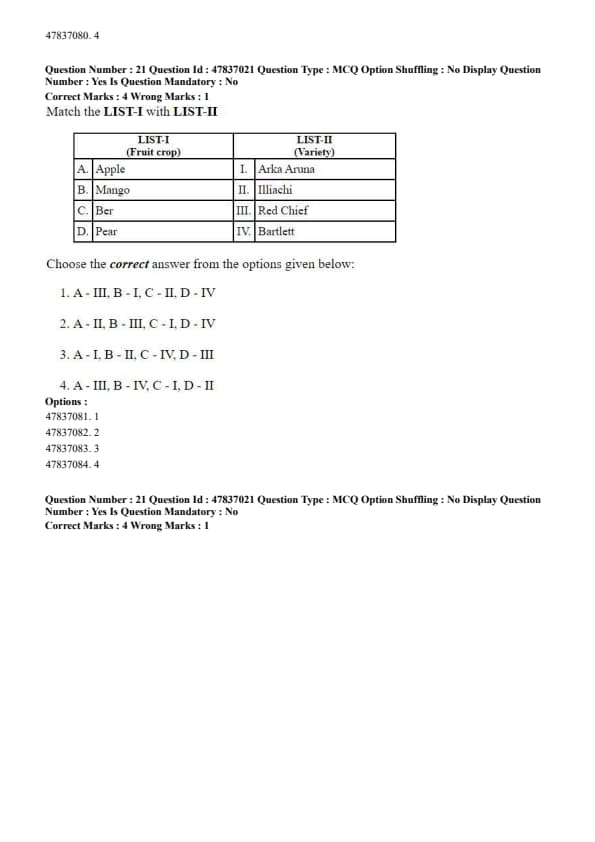
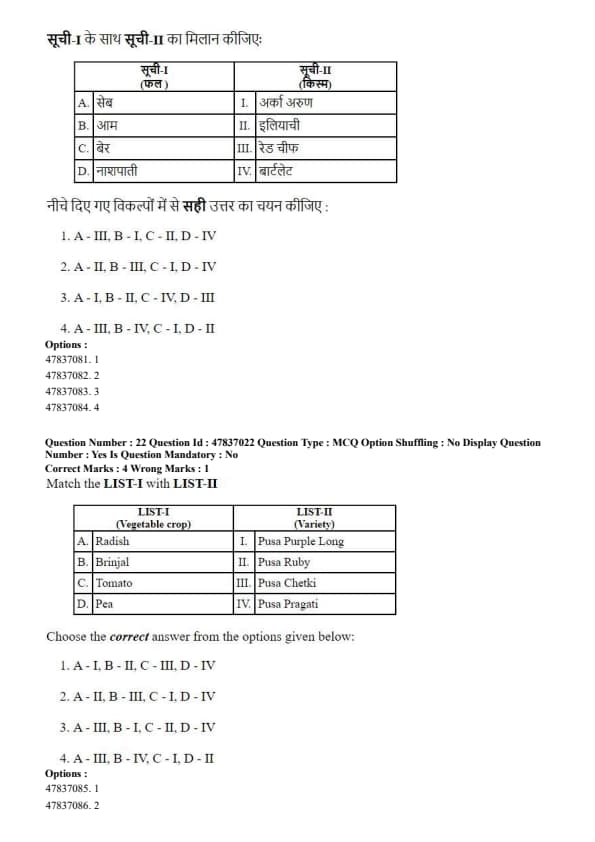
Match the LIST-I with LIST-II
LIST-I (Fruit crop) \hfill LIST-II (Variety)
A. Apple \hfill I. Atka Arima
B. Mango \hfill II. Illiachi
C. Ber \hfill III. Red Chief
D. Pear \hfill IV. Bartlett
Choose the correct answer from the options given below:
View Solution
Step 1: Red Chief is a well-known variety of apple.
Step 2: Illiachi is a famous mango variety, particularly known from Kerala.
Step 3: Atka Arima is a recognized variety of ber.
Step 4: Bartlett is a popular and widely cultivated variety of pear. Quick Tip: Remember common fruit varieties: Apple--Red Chief, Mango--Illiachi, Ber--Atka Arima, Pear--Bartlett.
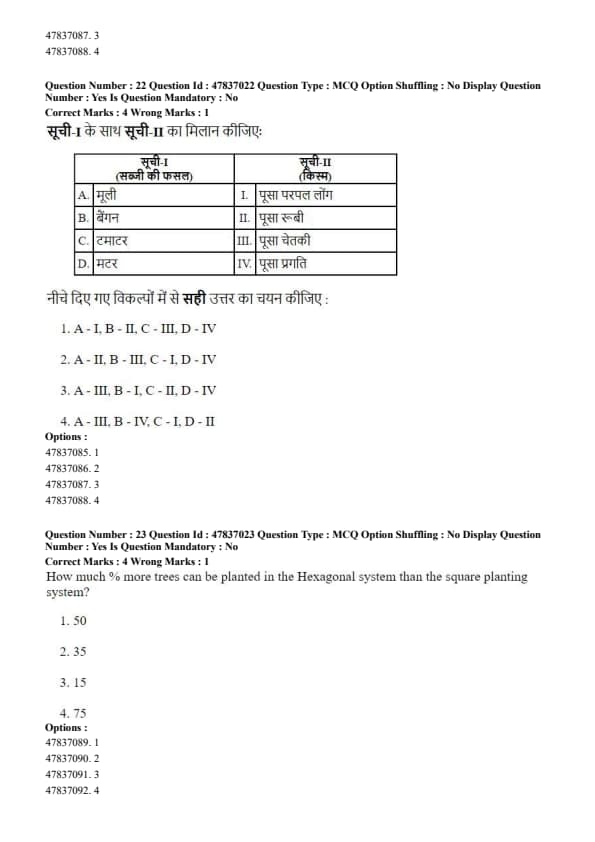
Match the LIST-I with LIST-II
LIST-I (Vegetable crop) \hfill LIST-II (Variety)
A. Radish \hfill I. Pusa Purple Long
B. Brinjal \hfill II. Pusa Ruby
C. Tomato \hfill III. Pusa Chetki
D. Pea \hfill IV. Pusa Pragati
Choose the correct answer from the options given below:
View Solution
Step 1: Pusa Chetki is a well-known variety of radish.
Step 2: Pusa Purple Long is a popular variety of brinjal.
Step 3: Pusa Ruby is an improved variety of tomato.
Step 4: Pusa Pragati is a recognized variety of pea. Quick Tip: Many IARI (Pusa) vegetable varieties are named crop-wise, such as Pusa Ruby (tomato) and Pusa Purple Long (brinjal).
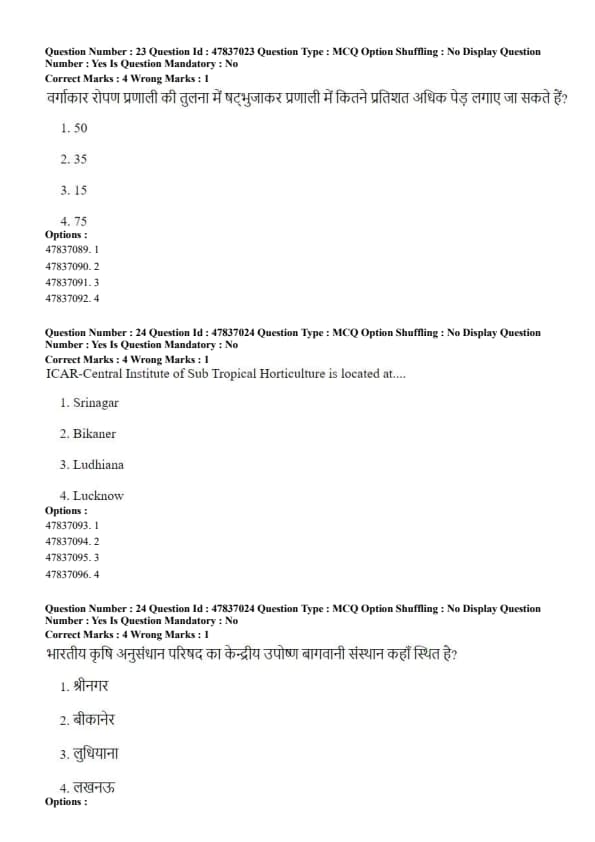
How much % more trees can be planted in the hexagonal system than the square planting system?
View Solution
Step 1: In orchard planting systems, the hexagonal system allows better utilization of space compared to the square system.
Step 2: Due to closer and more efficient arrangement, the hexagonal system accommodates approximately 15% more plants than the square system.
Step 3: Hence, the correct answer is 15%. Quick Tip: Hexagonal planting system is also called the septuple system and is useful for increasing plant population without reducing spacing.
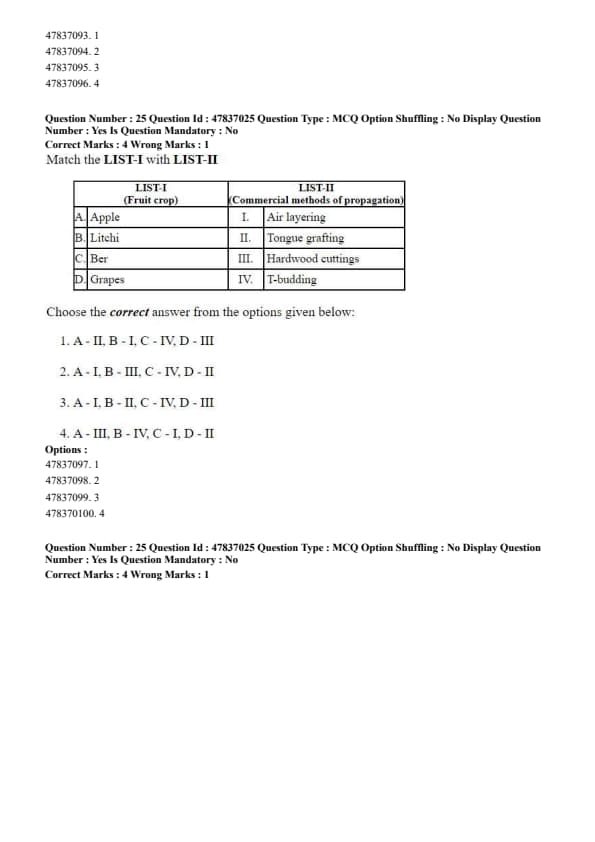
ICAR–Central Institute of Sub Tropical Horticulture is located at
View Solution
Step 1: The ICAR–Central Institute of Subtropical Horticulture (CISH) works on research and development of subtropical fruit crops.
Step 2: It focuses on crops like mango, guava, papaya, and citrus grown in subtropical regions.
Step 3: The institute is located at Lucknow, Uttar Pradesh. Quick Tip: ICAR–CISH, Lucknow is a premier institute for research on subtropical fruit crops in India.
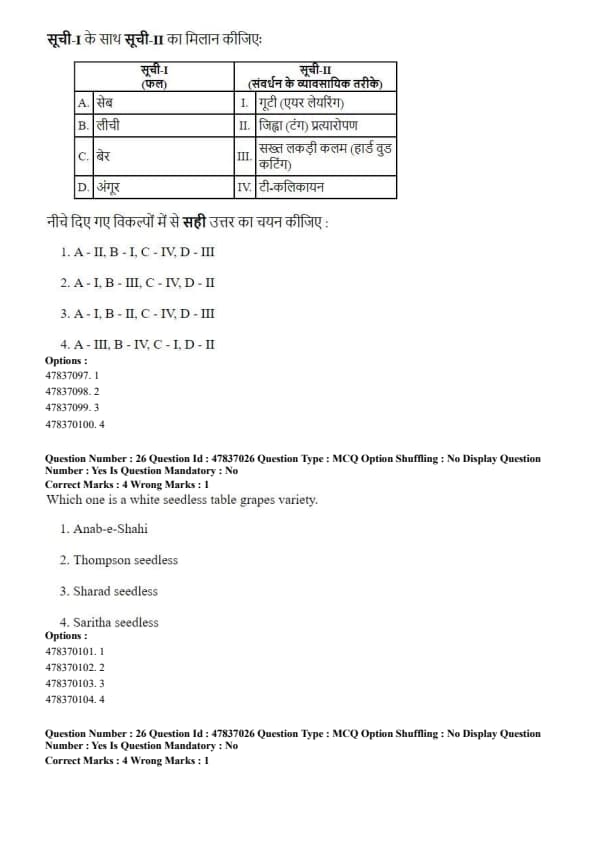
Match the LIST-I with LIST-II
LIST-I (Fruit crop) \hfill LIST-II (Commercial methods of propagation)
A. Apple \hfill I. Air layering
B. Litchi \hfill II. Tongue grafting
C. Ber \hfill III. Hardwood cuttings
D. Grapes \hfill IV. T-budding
Choose the correct answer from the options given below:
View Solution
Step 1: Apple is commercially propagated by tongue grafting to ensure true-to-type plants.
Step 2: Litchi is commonly propagated through air layering due to poor rooting from cuttings.
Step 3: Ber is propagated by T-budding on suitable rootstocks.
Step 4: Grapes are commercially propagated by hardwood cuttings because of their easy rooting ability. Quick Tip: Remember common propagation methods: Apple--tongue grafting, Litchi--air layering, Ber--T-budding, Grapes--hardwood cuttings.
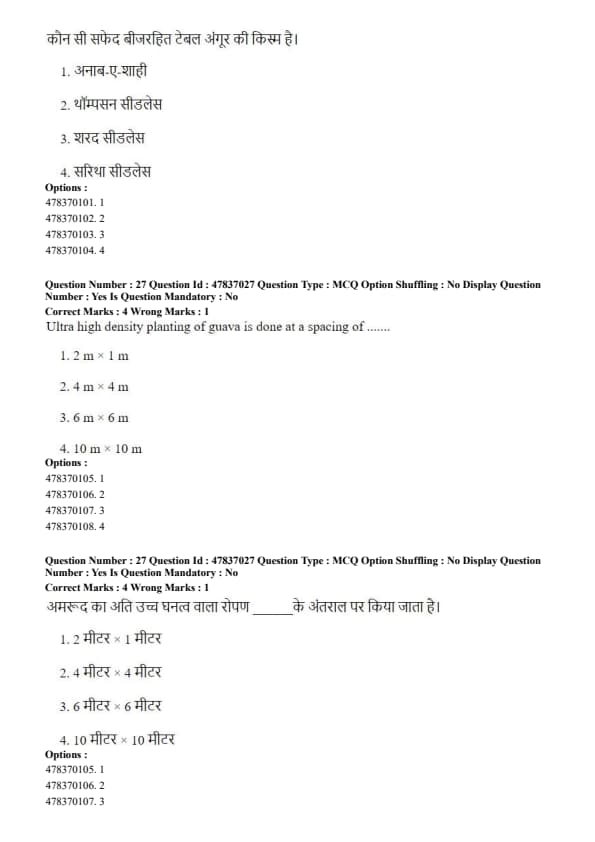
Which one is a white seedless table grapes variety?
View Solution
Step 1: Table grape varieties are classified based on berry color, seed presence, and consumer preference.
Step 2: Thompson Seedless is a well-known white (green) seedless grape variety widely used as a table grape as well as for raisin production.
Step 3: Other varieties listed are either seeded or not classified as white seedless table grape varieties. Quick Tip: Thompson Seedless is one of the most popular white seedless grape varieties used for both table purpose and raisin making.
Ultra high density planting of guava is done at a spacing of
View Solution
Step 1: Ultra high density planting (UHDP) aims to increase productivity per unit area by accommodating more plants.
Step 2: In guava, UHDP systems use closer spacing with regular pruning and canopy management.
Step 3: A spacing of 2 m × 1 m is recommended for ultra high density planting of guava. Quick Tip: Ultra high density planting in guava requires proper pruning and nutrient management to maintain productivity and fruit quality.
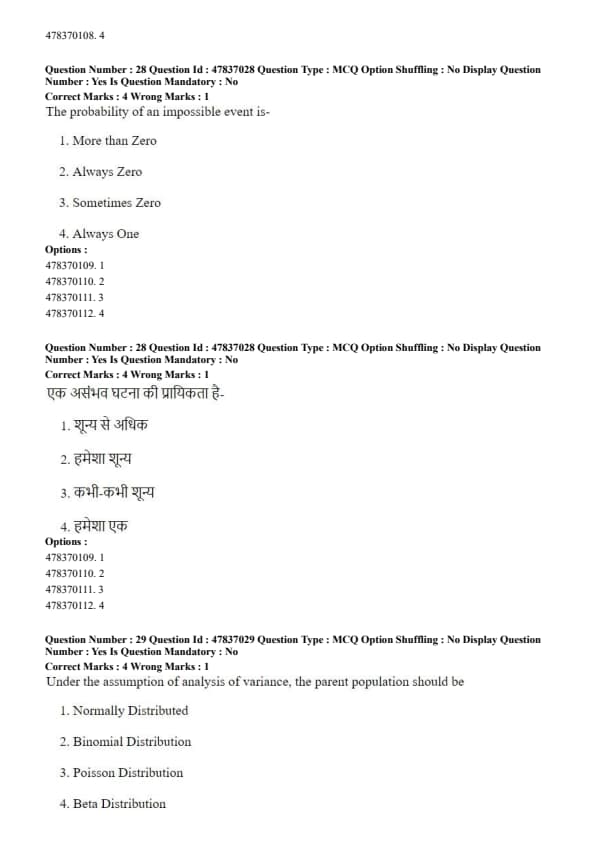
The probability of an impossible event is
View Solution
Step 1: In probability theory, an impossible event is one that cannot occur under any circumstances.
Step 2: The probability scale ranges from 0 to 1, where 0 represents an impossible event and 1 represents a certain event.
Step 3: Hence, the probability of an impossible event is always zero. Quick Tip: Remember: Probability = 0 → impossible event, Probability = 1 → certain event.
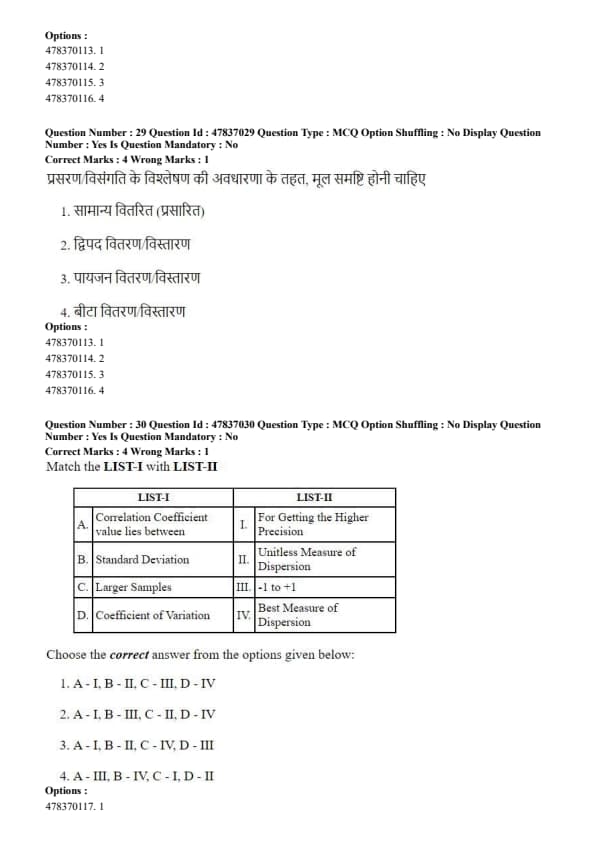
Under the assumption of analysis of variance, the parent population should be
View Solution
Step 1: Analysis of variance (ANOVA) is a parametric statistical test used to compare means of different treatments.
Step 2: One of the basic assumptions of ANOVA is that the parent populations from which samples are drawn are normally distributed.
Step 3: Therefore, the correct assumption is that the population follows a normal distribution. Quick Tip: Along with normality, ANOVA also assumes homogeneity of variances and independence of observations.
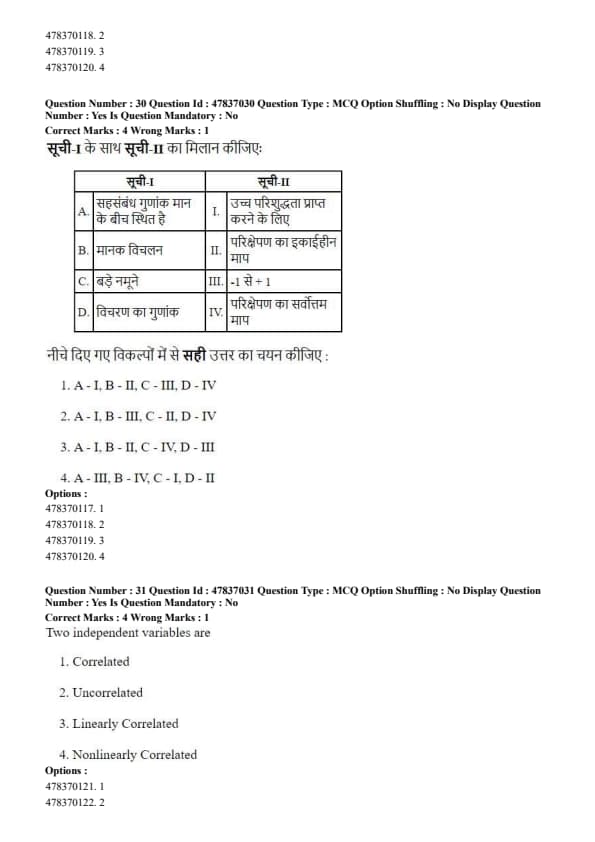
Match the LIST-I with LIST-II
LIST-I \hfill LIST-II
A. Correlation coefficient value lies between \hfill I. For getting the higher precision
B. Standard deviation \hfill II. Unitless measure of dispersion
C. Larger samples \hfill III. \(-1\) to \(+1\)
D. Coefficient of variation \hfill IV. Best measure of dispersion
Choose the correct answer from the options given below:
View Solution
Step 1: The value of the correlation coefficient always lies between \(-1\) and \(+1\).
Step 2: Standard deviation is considered the best measure of dispersion as it is based on all observations.
Step 3: Larger sample sizes give higher precision in statistical estimates.
Step 4: Coefficient of variation is a unitless (relative) measure of dispersion, useful for comparing variability between datasets. Quick Tip: Use standard deviation for absolute dispersion and coefficient of variation for relative comparison of variability.
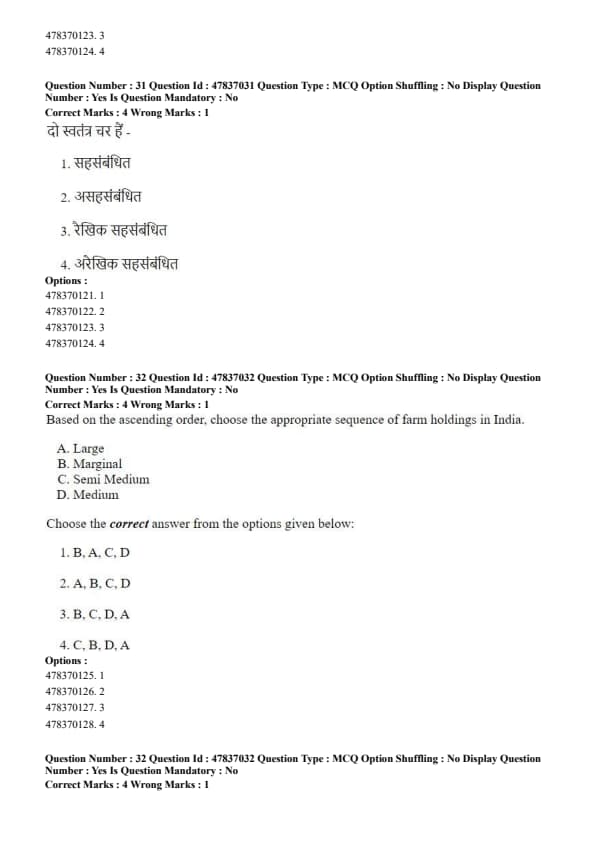
Two independent variables are
View Solution
Step 1: Two variables are said to be independent if the occurrence or value of one does not affect the other.
Step 2: Independence implies that there is no association or relationship between the variables.
Step 3: Hence, two independent variables are uncorrelated. Quick Tip: If two variables are independent, their correlation coefficient is zero.
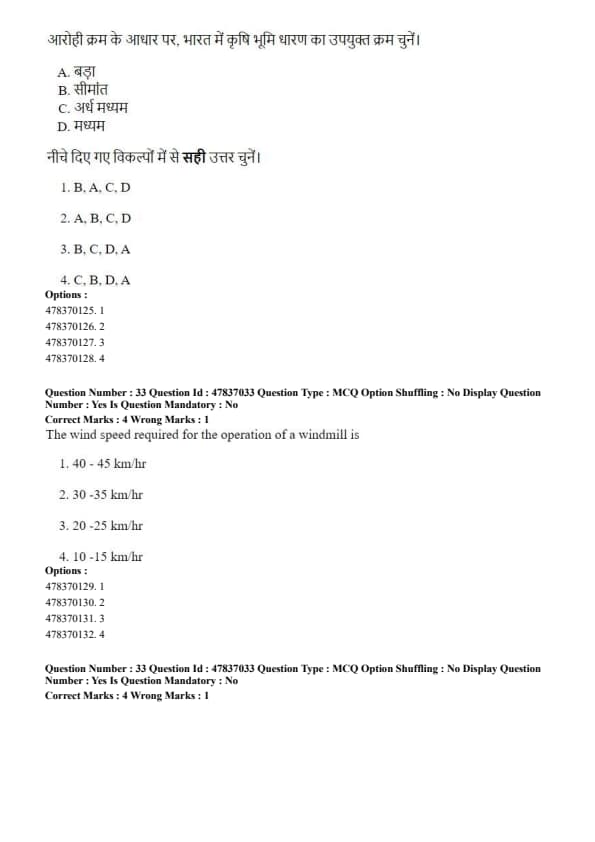
Based on the ascending order, choose the appropriate sequence of farm holdings in India.
A. Large
B. Marginal
C. Semi Medium
D. Medium
Choose the correct answer from the options given below:
View Solution
Step 1: Farm holdings in India are classified based on land size into marginal, small, semi-medium, medium, and large holdings.
Step 2: Among the given categories, marginal holdings are the smallest, followed by semi-medium, then medium, and finally large holdings.
Step 3: Therefore, the correct ascending order is Marginal \(\rightarrow\) Semi Medium \(\rightarrow\) Medium \(\rightarrow\) Large, i.e., B, C, D, A. Quick Tip: Ascending order means arranging from the smallest to the largest size of land holding.
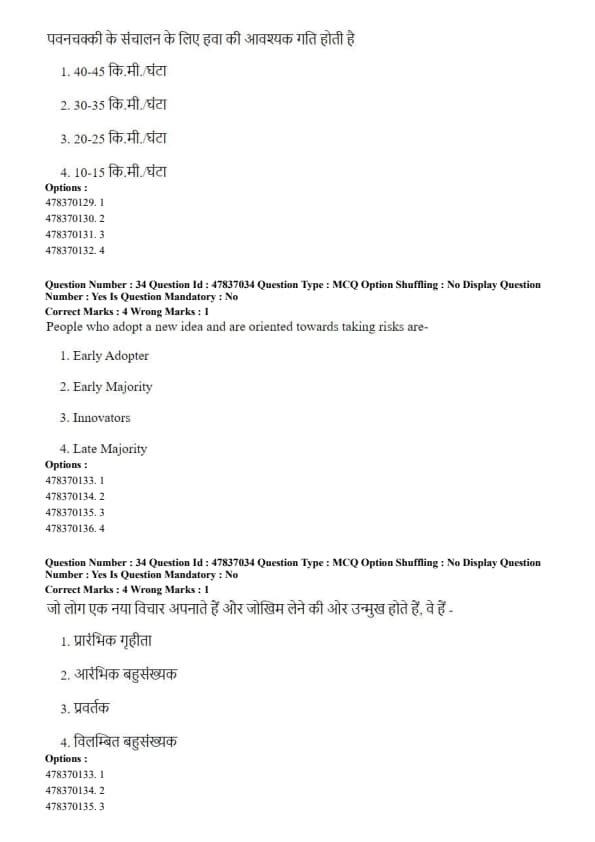
The wind speed required for the operation of a windmill is
View Solution
Step 1: Windmills require a minimum wind speed, known as cut-in speed, to start operating effectively.
Step 2: For agricultural windmills used in water pumping and power generation, the minimum required wind speed is relatively low.
Step 3: Generally, a wind speed of about 10--15 km/hr is sufficient for the operation of a windmill. Quick Tip: Windmills start operating at low wind speeds, but their efficiency increases as wind speed rises up to the rated speed.
People who adopt a new idea and are oriented towards taking risks are
View Solution
Step 1: Adoption of innovations is classified into categories based on the time taken by individuals to accept new ideas.
Step 2: Innovators are the first individuals to adopt new ideas and technologies.
Step 3: They are venturesome, willing to take risks, and eager to try new innovations, even when uncertainty is high. Quick Tip: Innovators are risk-takers and play a key role in introducing new ideas into a social system.
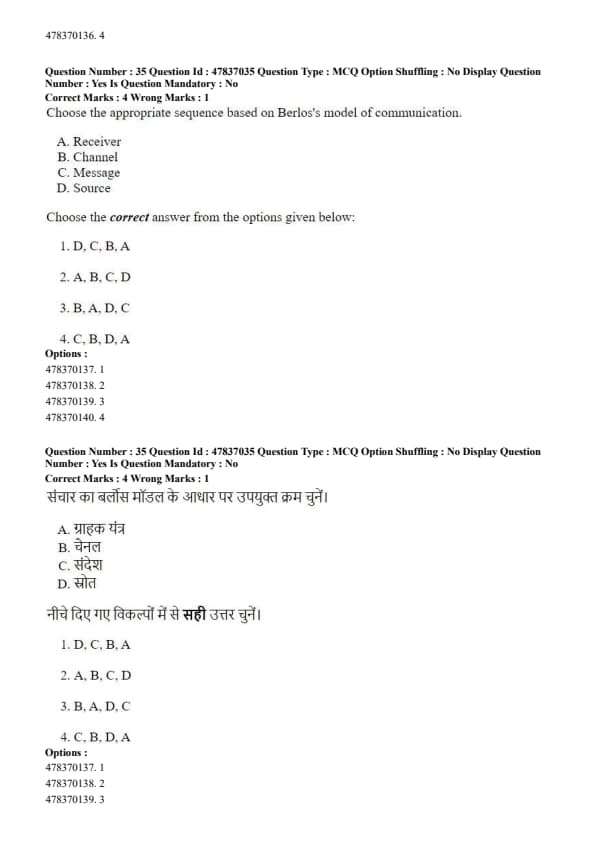
Choose the appropriate sequence based on Berlo’s model of communication.
A. Receiver
B. Channel
C. Message
D. Source
Choose the correct answer from the options given below:
View Solution
Step 1: Berlo’s model of communication explains communication as a linear process.
Step 2: According to this model, communication starts with the Source, who creates the Message.
Step 3: The Message is transmitted through a Channel and finally received by the Receiver.
Step 4: Hence, the correct sequence is Source \(\rightarrow\) Message \(\rightarrow\) Channel \(\rightarrow\) Receiver. Quick Tip: Berlo’s model is also known as the SMCR model: Source, Message, Channel, Receiver.
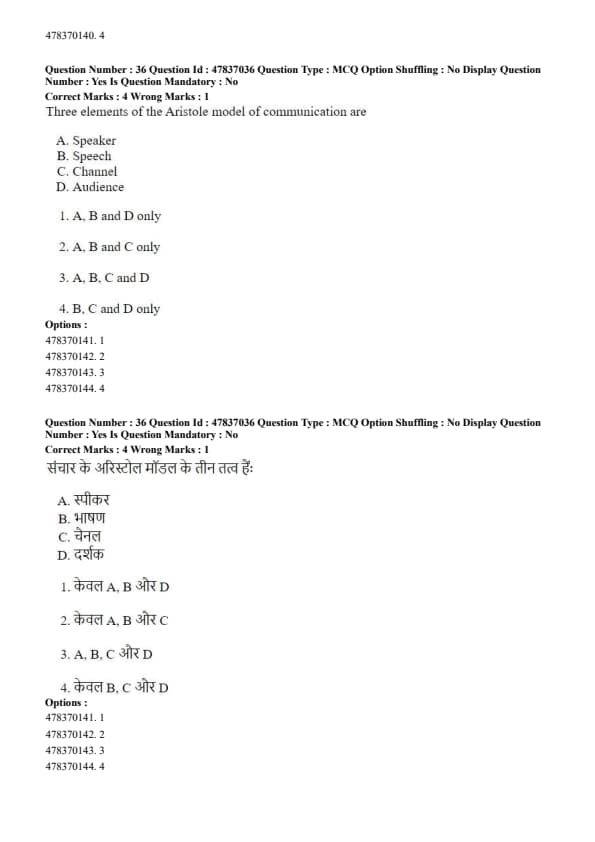
Three elements of the Aristotle model of communication are
A. Speaker
B. Speech
C. Channel
D. Audience
Choose the correct answer from the options given below:
View Solution
Step 1: Aristotle’s model of communication is one of the earliest models and focuses on public speaking.
Step 2: According to this model, communication consists of three basic elements: the Speaker, the Speech, and the Audience.
Step 3: The concept of Channel is not included explicitly in Aristotle’s model. Hence, the correct elements are A, B, and D. Quick Tip: Aristotle’s communication model emphasizes persuasive speaking and consists of Speaker, Speech, and Audience.
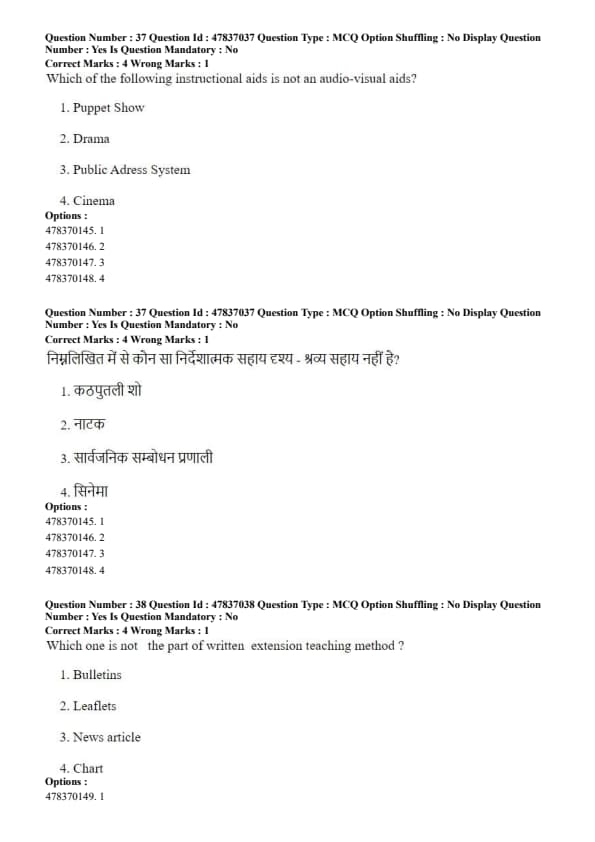
Which of the following instructional aids is not an audio-visual aid?
View Solution
Step 1: Audio-visual aids involve the use of both sound (audio) and visuals to enhance learning.
Step 2: Puppet shows, drama, and cinema combine visual presentation with sound and speech.
Step 3: A public address system provides only audio output without any visual component. Hence, it is not an audio-visual aid. Quick Tip: Audio-visual aids stimulate both hearing and sight, whereas audio aids involve only sound.
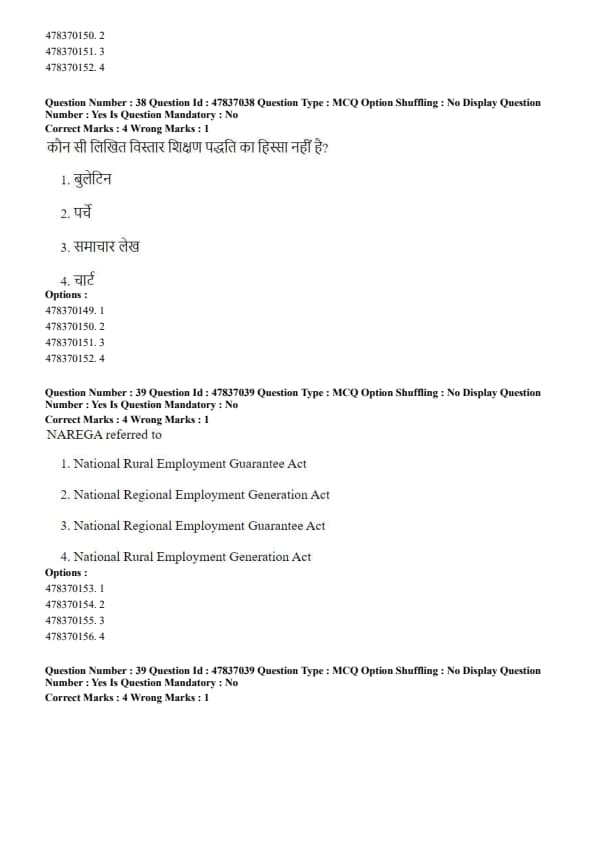
Which one is not the part of written extension teaching method?
View Solution
Step 1: Written extension teaching methods involve the use of printed materials to convey information through reading.
Step 2: Bulletins, leaflets, and news articles are all written materials used to disseminate information to farmers and learners.
Step 3: A chart is a visual aid rather than a written teaching method. Hence, it is not a part of written extension teaching methods. Quick Tip: Written extension methods rely on reading materials, while charts fall under visual instructional aids.
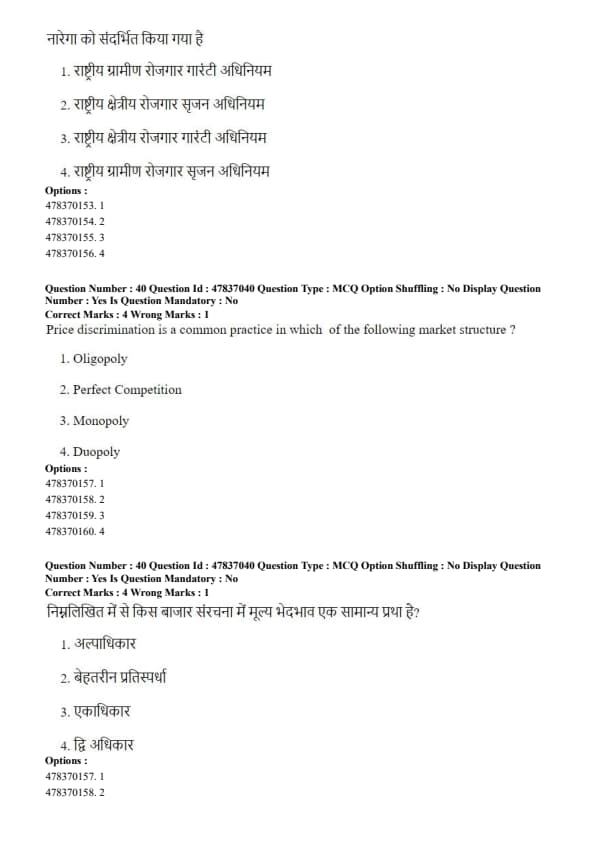
NAREGA referred to
View Solution
Step 1: NAREGA is a landmark social security legislation enacted by the Government of India.
Step 2: It guarantees at least 100 days of wage employment in a financial year to rural households whose adult members volunteer to do unskilled manual work.
Step 3: Therefore, NAREGA stands for National Rural Employment Guarantee Act. Quick Tip: NAREGA was later renamed as MGNREGA in honor of Mahatma Gandhi.
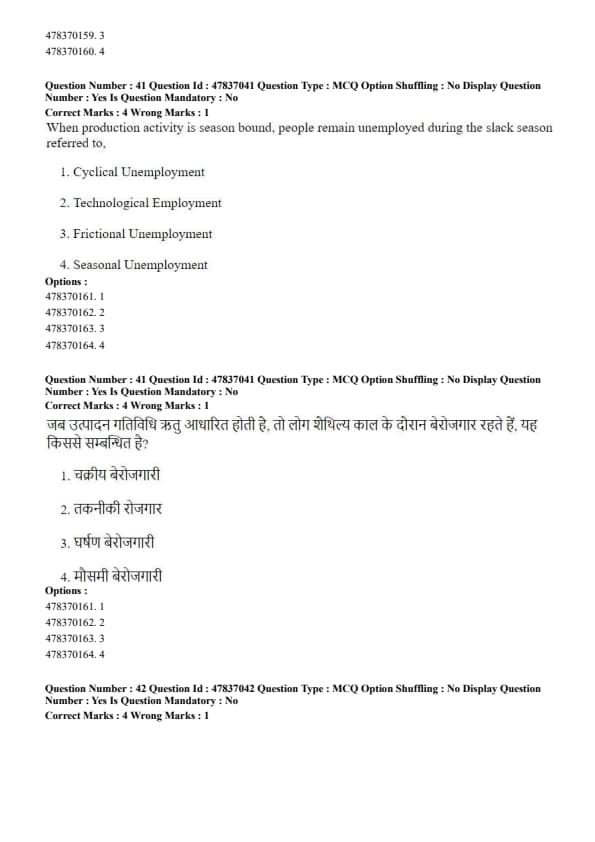
Price discrimination is a common practice in which of the following market structure?
View Solution
Step 1: Price discrimination refers to the practice of charging different prices to different consumers for the same product.
Step 2: A monopolist has control over the market price and can segment consumers based on willingness to pay.
Step 3: Therefore, price discrimination is most commonly practiced under monopoly market structure. Quick Tip: Price discrimination requires market power, which is typically present in monopoly markets.
When production activity is season bound, people remain unemployed during the slack season is referred to as
View Solution
Step 1: Seasonal unemployment occurs when people are unemployed during certain seasons of the year.
Step 2: It is common in agriculture, tourism, and other seasonal industries where work is available only during specific periods.
Step 3: Hence, unemployment due to season-bound production activities is called seasonal unemployment. Quick Tip: Seasonal unemployment is common in agriculture due to dependence on cropping seasons.
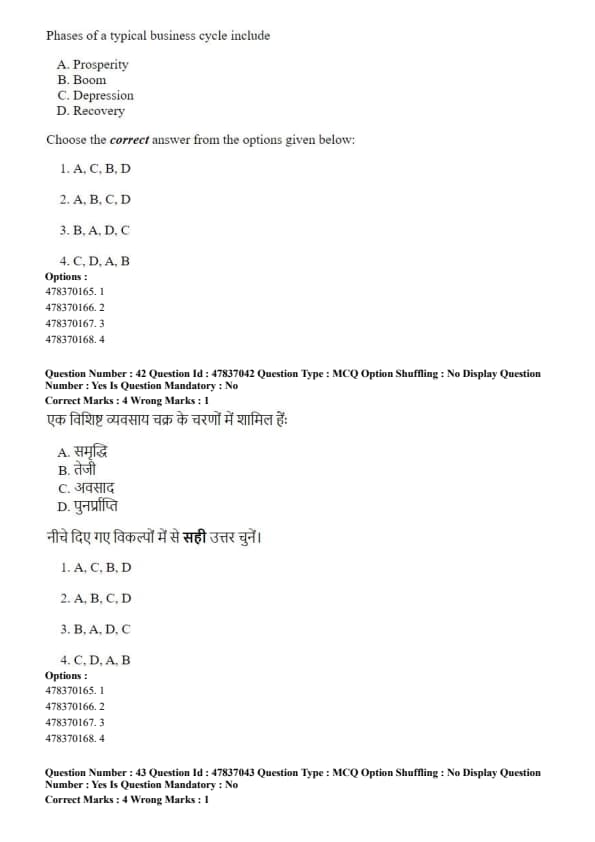
Phases of a typical business cycle include
A. Prosperity
B. Boom
C. Depression
D. Recovery
Choose the correct answer from the options given below:
View Solution
Step 1: A business cycle represents fluctuations in economic activity over time.
Step 2: The commonly identified phases of a typical business cycle are Prosperity, Boom, Depression, and Recovery.
Step 3: These phases occur in a cyclical manner, repeating over time as the economy expands and contracts. Quick Tip: Business cycles move through expansion (prosperity/boom), contraction (depression), and revival (recovery).
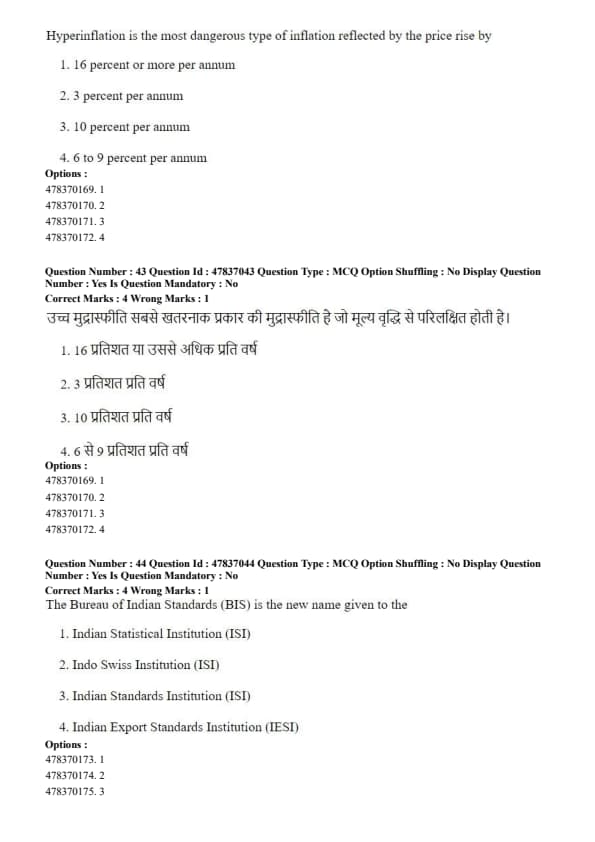
Hyperinflation is the most dangerous type of inflation reflected by the price rise by
View Solution
Step 1: Inflation refers to a sustained rise in the general price level of goods and services over time.
Step 2: Hyperinflation is an extreme and uncontrollable form of inflation characterized by a very rapid increase in prices.
Step 3: In standard economic classification used in competitive examinations, hyperinflation is reflected when prices rise by about 16 percent or more per annum. Quick Tip: Hyperinflation severely reduces purchasing power and disrupts economic stability.
The Bureau of Indian Standards (BIS) is the new name given to the
View Solution
Step 1: The Indian Standards Institution (ISI) was the national standards body of India before 1986.
Step 2: In 1986, the Bureau of Indian Standards (BIS) was established under the BIS Act to replace ISI.
Step 3: Hence, BIS is the new name given to the Indian Standards Institution (ISI). Quick Tip: The ISI mark on products today represents certification by the Bureau of Indian Standards (BIS).
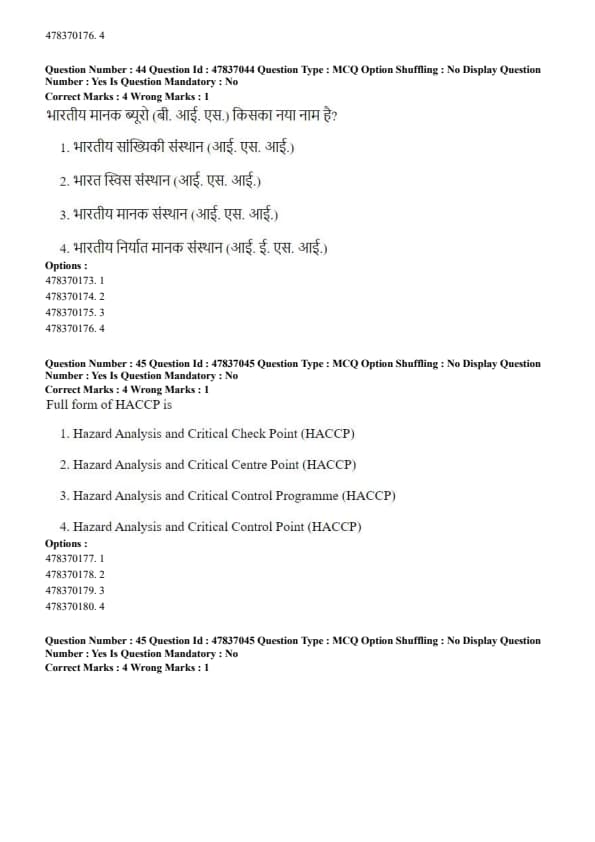
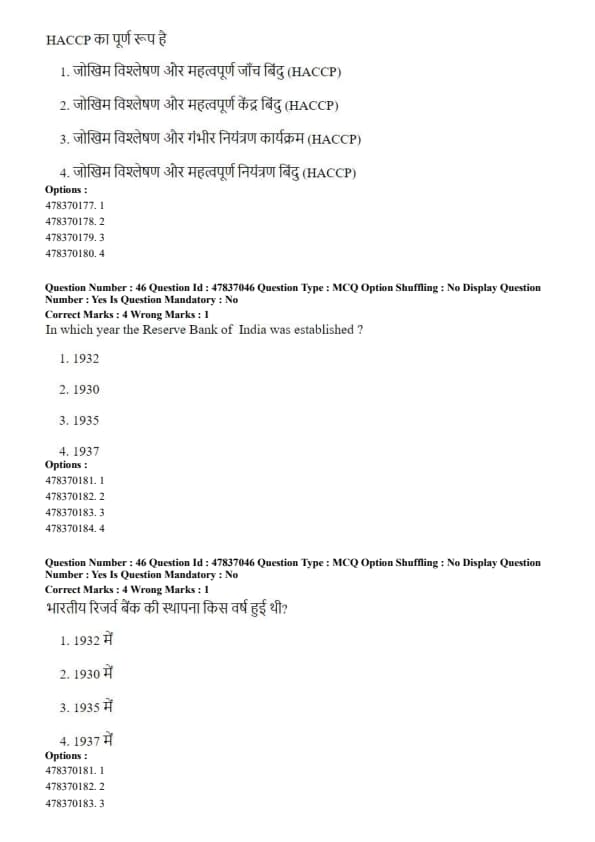
Full form of HACCP is
View Solution
Step 1: HACCP is an internationally recognized system for ensuring food safety.
Step 2: It focuses on identifying potential hazards in food production and establishing critical control points to prevent, eliminate, or reduce hazards to safe levels.
Step 3: Therefore, HACCP stands for Hazard Analysis and Critical Control Point. Quick Tip: HACCP is widely used in food processing industries to ensure product safety and quality.
In which year was the Reserve Bank of India established?
View Solution
Step 1: The Reserve Bank of India (RBI) is the central banking institution of India.
Step 2: It was established on 1st April 1935 under the Reserve Bank of India Act, 1934.
Step 3: Hence, the year of establishment of the Reserve Bank of India is 1935. Quick Tip: The RBI was set up based on the recommendations of the Hilton Young Commission.
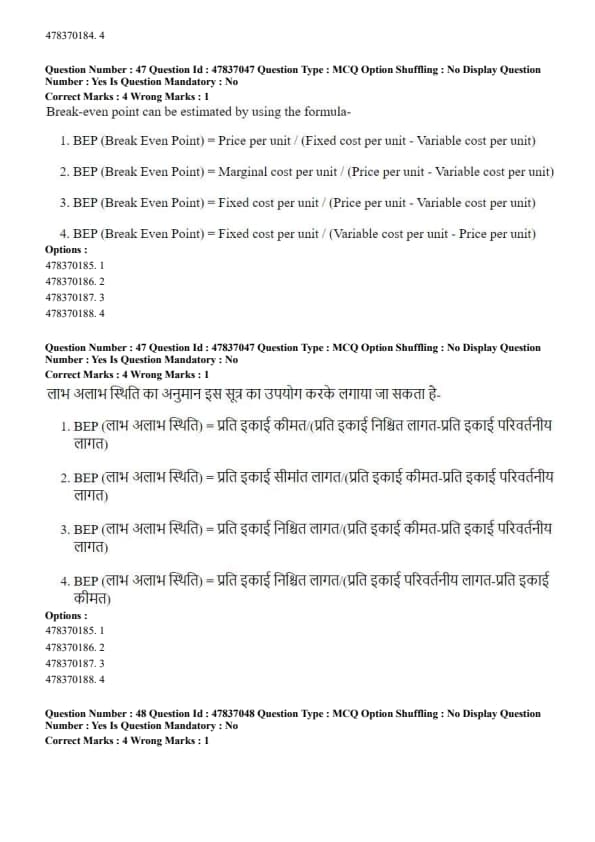
Break-even point can be estimated by using the formula
View Solution
Step 1: Break-even point (BEP) is the level of output at which total cost equals total revenue.
Step 2: At the break-even point, there is neither profit nor loss.
Step 3: The standard formula for BEP (in units) is given by fixed cost divided by contribution per unit, where contribution per unit equals price per unit minus variable cost per unit.
Step 4: Hence, \[ BEP = \frac{Fixed cost}{Price per unit - Variable cost per unit} \] Quick Tip: Contribution per unit = Price per unit -- Variable cost per unit, and it plays a key role in break-even analysis.
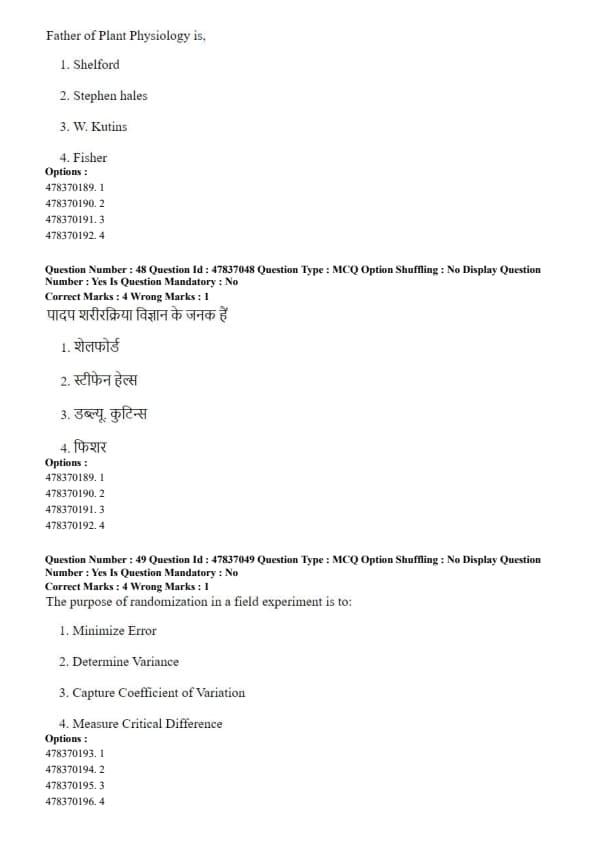
Father of Plant Physiology is
View Solution
Step 1: Plant physiology deals with the study of functions and processes occurring in plants.
Step 2: Stephen Hales made pioneering contributions to plant physiology, particularly in understanding transpiration and water movement in plants.
Step 3: Due to his foundational work, Stephen Hales is regarded as the Father of Plant Physiology. Quick Tip: Stephen Hales is also known for his classic work \emph{Vegetable Staticks}, which laid the foundation of experimental plant physiology.
The purpose of randomization in a field experiment is to
View Solution
Step 1: Randomization is a fundamental principle of experimental design used in field experiments.
Step 2: It ensures that treatments are allocated to experimental units purely by chance, thereby avoiding systematic bias.
Step 3: By distributing uncontrolled variation randomly among treatments, randomization helps in minimizing experimental error. Quick Tip: Randomization protects experiments from bias and ensures the validity of statistical inference.
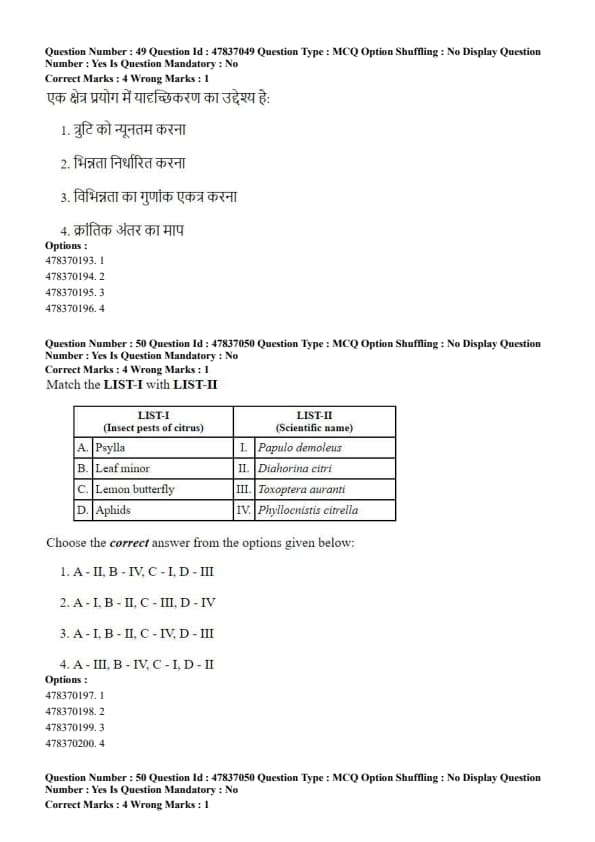
Match the LIST-I with LIST-II
LIST-I (Insect pests of citrus) \hfill LIST-II (Scientific name)
A. Psylla \hfill I. \textit{Papilio demoleus
B. Leaf miner \hfill II. \textit{Diaphorina citri
C. Lemon butterfly \hfill III. \textit{Toxoptera aurantii
D. Aphids \hfill IV. \textit{Phyllocnistis citrella
Choose the correct answer from the options given below:
View Solution
Step 1: Citrus psylla is scientifically known as \textit{Diaphorina citri.
Step 2: Citrus leaf miner is caused by \textit{Phyllocnistis citrella.
Step 3: Lemon butterfly is identified as \textit{Papilio demoleus.
Step 4: Aphids attacking citrus belong to \textit{Toxoptera aurantii. Quick Tip: Correct identification of insect pests with their scientific names is essential for effective pest management in citrus crops.
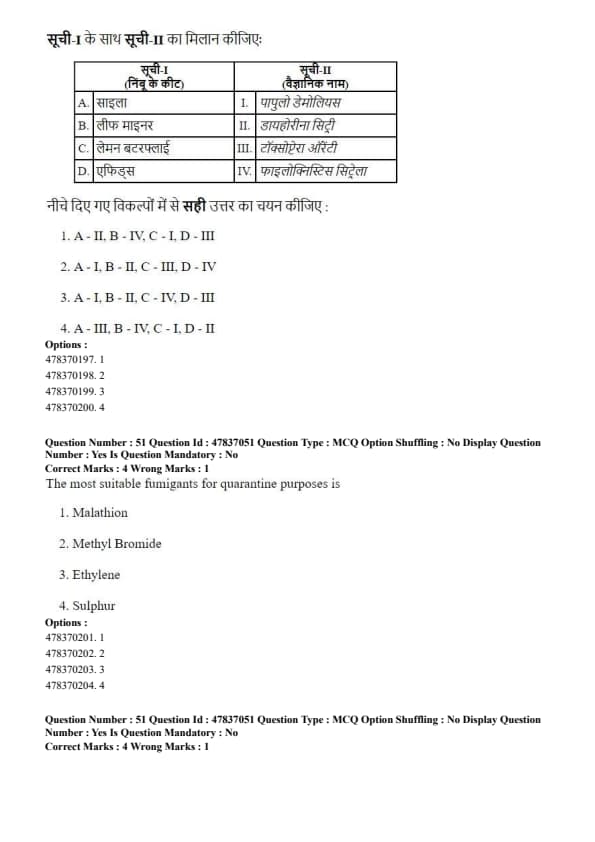
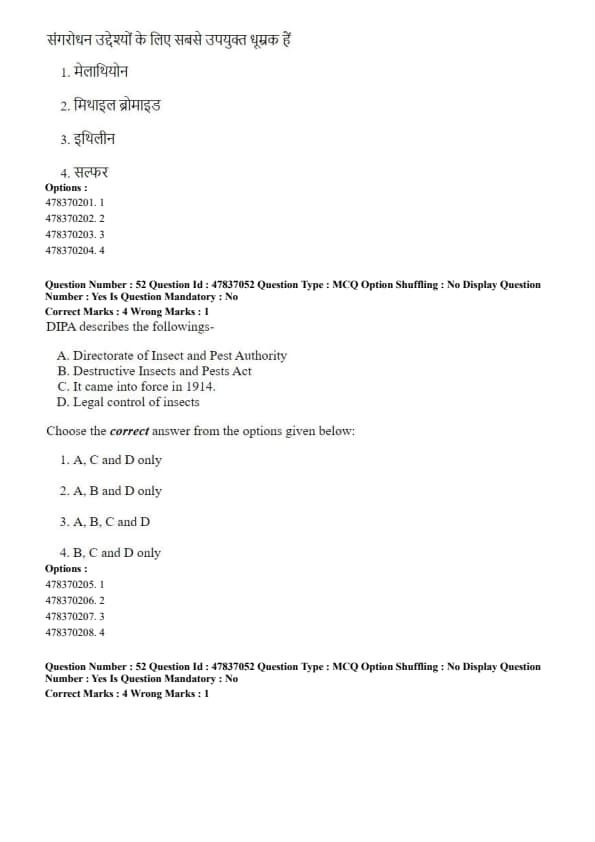
The most suitable fumigant for quarantine purposes is
View Solution
Step 1: Fumigants are chemicals used to control insects and pests in stored products and during quarantine treatments.
Step 2: Methyl bromide is highly effective against a wide range of insects, mites, nematodes, and pathogens.
Step 3: Due to its rapid action and deep penetration ability, methyl bromide has been widely used for quarantine and pre-shipment treatments. Quick Tip: Methyl bromide is commonly used in quarantine fumigation, though its use is now restricted due to environmental concerns.
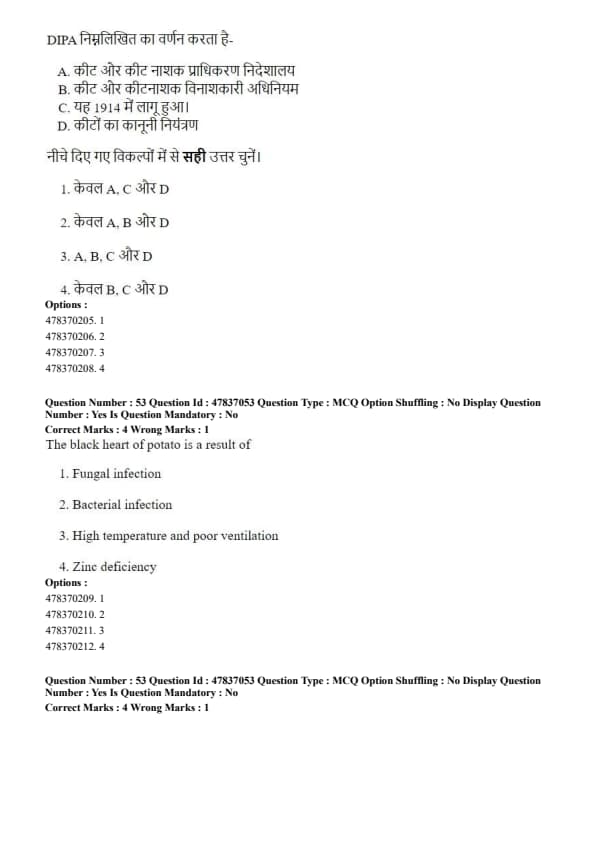
DIPA describes the followings
A. Directorate of Insect and Pest Authority
B. Destructive Insects and Pests Act
C. It came into force in 1914
D. Legal control of insects
Choose the correct answer from the options given below:
View Solution
Step 1: DIPA stands for the Destructive Insects and Pests Act, which was enacted to prevent the introduction and spread of destructive pests.
Step 2: The Act came into force in the year 1914 in India.
Step 3: It provides a legal framework for the control and regulation of insects and pests affecting agriculture.
Step 4: DIPA does not refer to any Directorate of Insect and Pest Authority. Hence, statements B, C, and D are correct. Quick Tip: The Destructive Insects and Pests Act (DIPA), 1914 forms the basis of plant quarantine regulations in India.
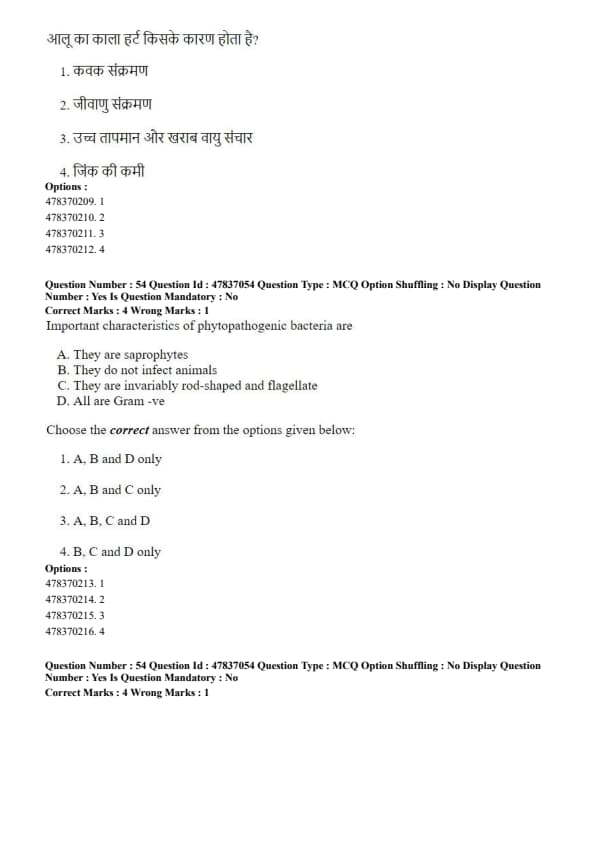
The black heart of potato is a result of
View Solution
Step 1: Black heart of potato is a physiological disorder, not caused by pathogens.
Step 2: It occurs when potato tubers are stored under conditions of high temperature and inadequate oxygen supply.
Step 3: Poor ventilation leads to oxygen deficiency in tubers, causing internal tissues to turn black, a condition known as black heart. Quick Tip: Proper ventilation and temperature control during storage help prevent physiological disorders like black heart in potato.
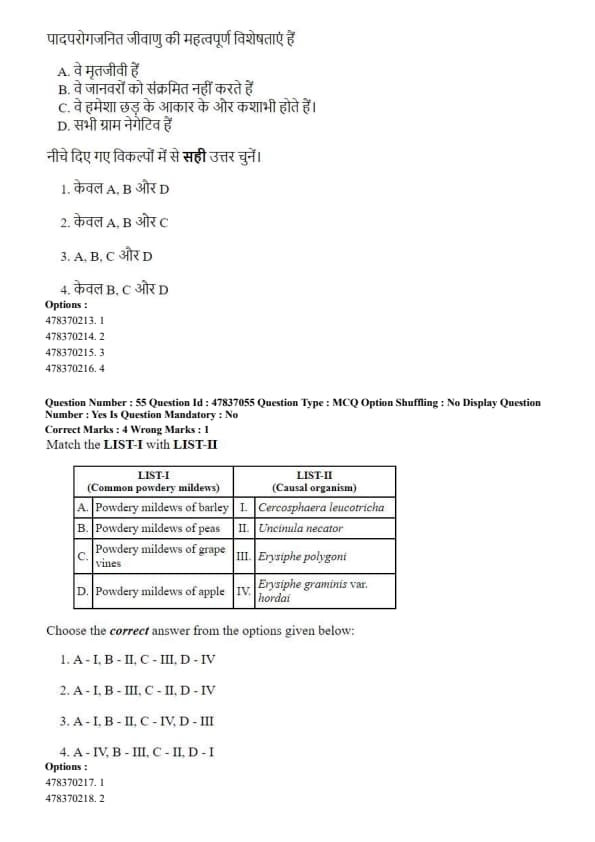
Important characteristics of phytopathogenic bacteria are
A. They are saprophytes
B. They do not infect animals
C. They are invariably rod-shaped and flagellate
D. All are Gram negative
Choose the correct answer from the options given below:
View Solution
Step 1: Phytopathogenic bacteria are plant pathogens and generally do not infect animals, making statement B correct.
Step 2: Most phytopathogenic bacteria are rod-shaped and possess flagella for motility, so statement C is correct.
Step 3: Almost all phytopathogenic bacteria are Gram-negative, making statement D correct.
Step 4: They are primarily parasitic rather than saprophytic, so statement A is incorrect. Quick Tip: Most plant pathogenic bacteria are Gram-negative, rod-shaped, and motile, with a parasitic mode of life.
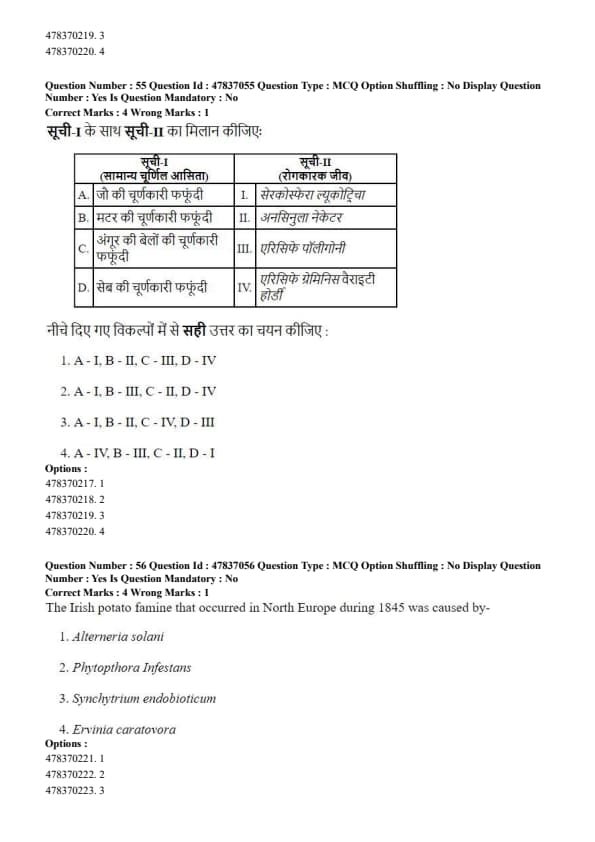
Match the LIST-I with LIST-II
LIST-I (Common powdery mildews) \hfill LIST-II (Causal organism)
A. Powdery mildews of barley \hfill I. \textit{Cercospheara leucotricha
B. Powdery mildews of peas \hfill II. \textit{Uncinula necator
C. Powdery mildews of grape vines \hfill III. \textit{Erysiphe polygoni
D. Powdery mildews of apple \hfill IV. \textit{Erysiphe graminis var. \textit{hordei
Choose the correct answer from the options given below:
View Solution
Step 1: Powdery mildew of barley is caused by Erysiphe graminis var. \textit{hordei.
Step 2: Powdery mildew of peas is caused by \textit{Erysiphe polygoni.
Step 3: Powdery mildew of grapevines is caused by \textit{Uncinula necator.
Step 4: Powdery mildew of apple is caused by \textit{Cercospheara leucotricha. Quick Tip: Powdery mildew pathogens are host-specific fungi, commonly belonging to the genera \textit{Erysiphe, Uncinula, and related groups.
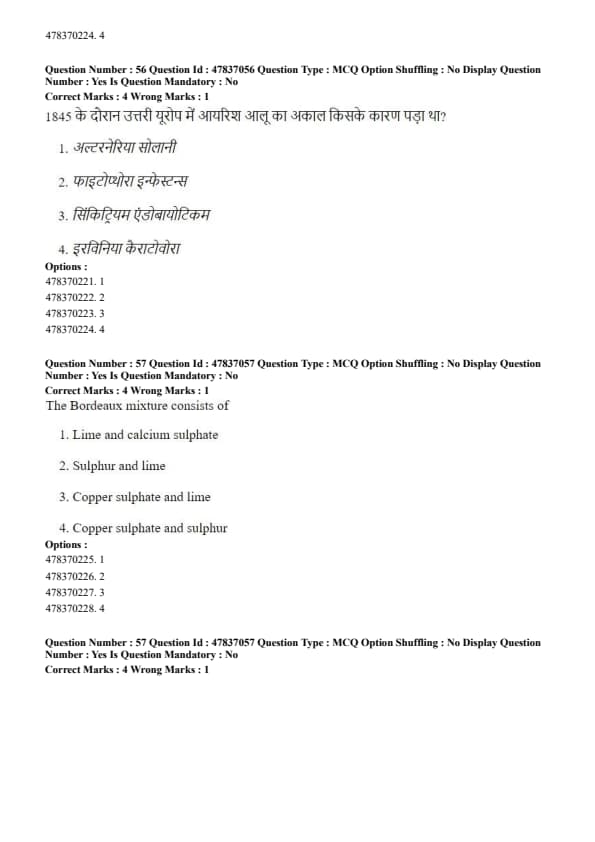
The Irish potato famine that occurred in North Europe during 1845 was caused by
View Solution
Step 1: The Irish potato famine was a devastating agricultural disaster caused by a severe disease outbreak in potato crops.
Step 2: The disease responsible was late blight of potato, caused by the oomycete pathogen Phytophthora infestans.
Step 3: The widespread destruction of potato crops led to mass starvation and migration in Ireland and other parts of North Europe during 1845–1849. Quick Tip: Late blight of potato, caused by \textit{Phytophthora infestans, is one of the most destructive plant diseases in history.
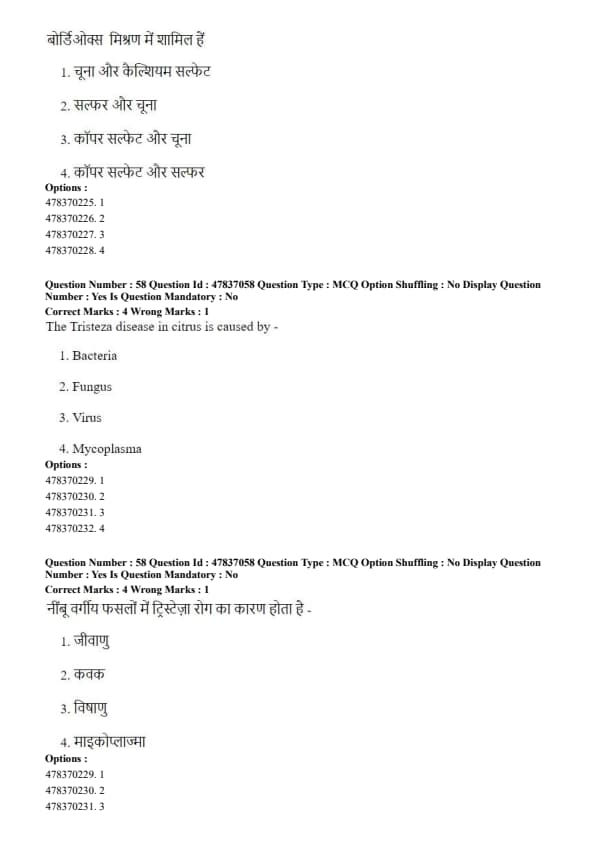
The Bordeaux mixture consists of
View Solution
Step 1: Bordeaux mixture is a widely used fungicide in plant disease management.
Step 2: It is prepared by mixing copper sulphate and freshly slaked lime in water.
Step 3: Copper sulphate acts as the fungicidal component, while lime reduces phytotoxicity and improves adhesion on plant surfaces. Quick Tip: Bordeaux mixture is one of the oldest fungicides and is especially effective against fungal diseases in fruit crops.
The Tristeza disease in citrus is caused by
View Solution
Step 1: Tristeza disease is one of the most destructive diseases of citrus worldwide.
Step 2: The disease is caused by Citrus tristeza virus (CTV).
Step 3: It is transmitted mainly by aphids and causes decline, stem pitting, and death of citrus trees. Quick Tip: Citrus tristeza virus is transmitted by aphids, especially Toxoptera citricida.
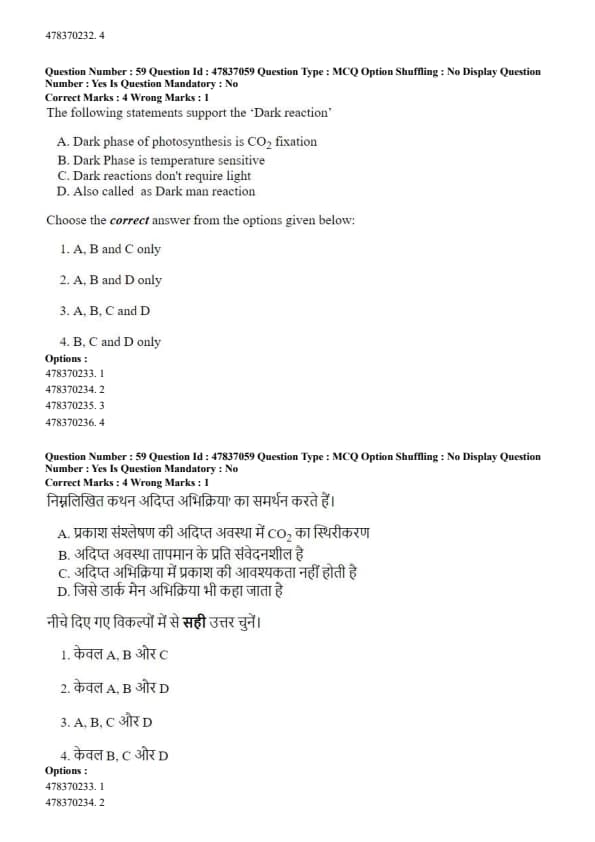
The following statements support the ‘Dark reaction’
A. Dark phase of photosynthesis is CO\(_2\) fixation
B. Dark phase is temperature sensitive
C. Dark reactions don’t require light
D. Also called as Dark man reaction
Choose the correct answer from the options given below:
View Solution
Step 1: The dark reaction of photosynthesis involves fixation of CO\(_2\) through enzymatic reactions (Calvin cycle).
Step 2: Since it is enzyme-controlled, the dark reaction is temperature sensitive.
Step 3: Dark reactions do not require light directly and can proceed in the absence of light if ATP and NADPH are available.
Step 4: The term “Dark man reaction” is incorrect; hence statement D is not valid. Quick Tip: Dark reaction is also known as the Calvin cycle and occurs in the stroma of chloroplasts.
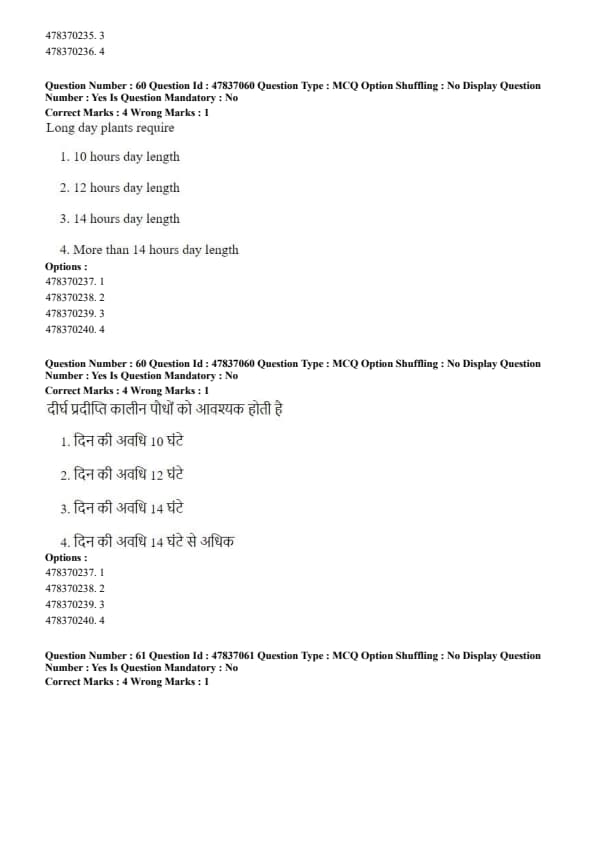
Long day plants require
View Solution
Step 1: Photoperiodism is the response of plants to the relative length of day and night.
Step 2: Long day plants flower only when the day length exceeds a critical minimum duration.
Step 3: Generally, long day plants require more than 14 hours of daylight to induce flowering. Quick Tip: Examples of long day plants include wheat, barley, and spinach.
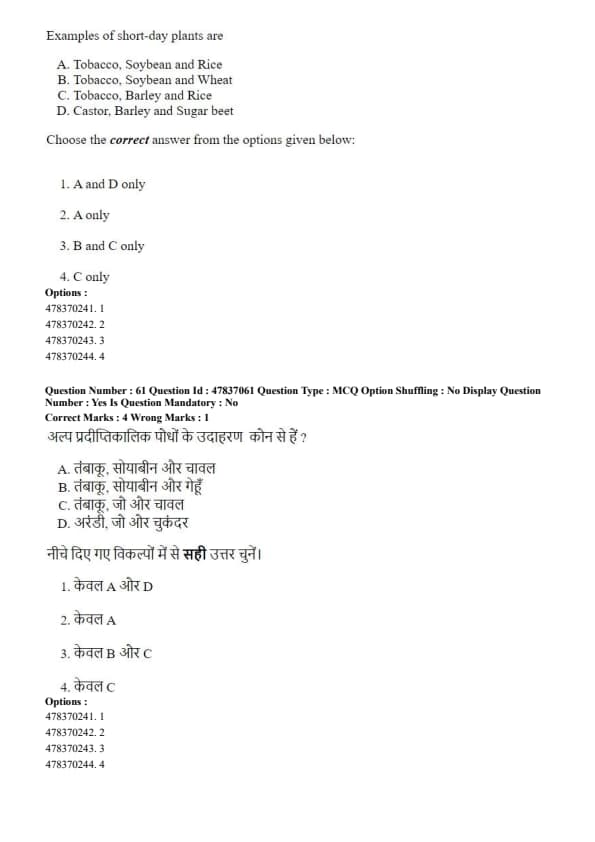
Examples of short-day plants are
A. Tobacco, Soybean and Rice
B. Tobacco, Soybean and Wheat
C. Tobacco, Barley and Rice
D. Castor, Barley and Sugar beet
Choose the correct answer from the options given below:
View Solution
Step 1: Short-day plants require a day length shorter than a critical value to induce flowering.
Step 2: Tobacco, soybean, and rice are well-known examples of short-day plants.
Step 3: Wheat, barley, and sugar beet are long-day plants, while castor is generally considered day-neutral. Hence, only option A is correct. Quick Tip: Short-day plants flower when the night length exceeds a critical duration.
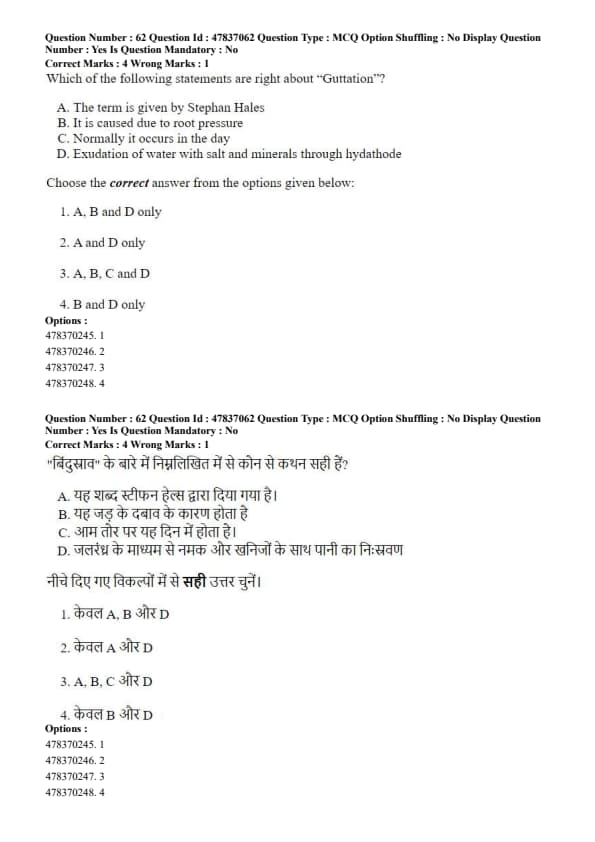
Which of the following statements are right about “Guttation”?
A. The term is given by Stephen Hales
B. It is caused due to root pressure
C. Normally it occurs in the day
D. Exudation of water with salts and minerals through hydathodes
Choose the correct answer from the options given below:
View Solution
Step 1: Guttation is the exudation of liquid water containing dissolved salts and minerals from the leaf margins through specialized structures called hydathodes.
Step 2: It occurs due to positive root pressure, especially when transpiration rate is low.
Step 3: Guttation usually takes place at night or early morning, not during the day, so statement C is incorrect.
Step 4: The term guttation was not given by Stephen Hales, making statement A incorrect. Hence, statements B and D are correct. Quick Tip: Guttation is commonly observed in grasses and small herbaceous plants during humid nights.
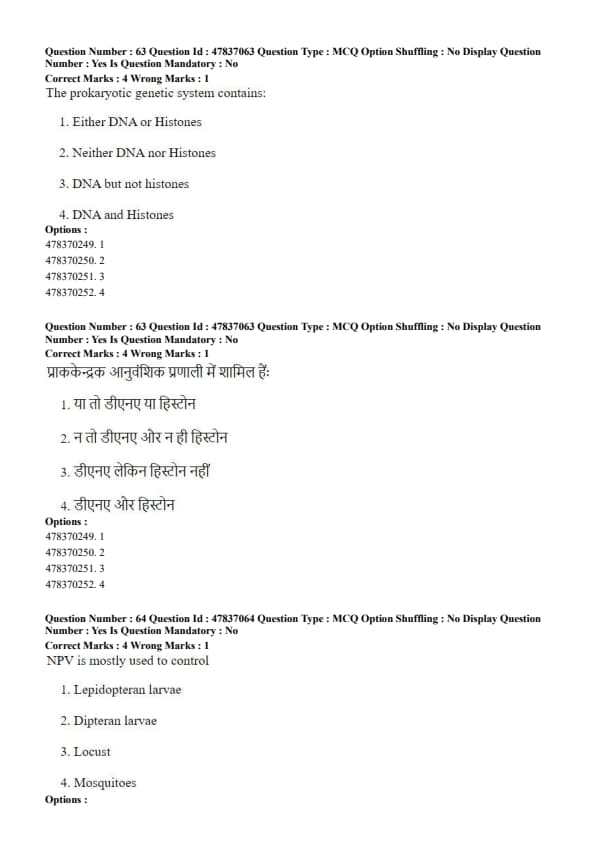
The prokaryotic genetic system contains
View Solution
Step 1: Prokaryotic organisms include bacteria and cyanobacteria, which lack a true nucleus.
Step 2: Their genetic material is present as naked DNA in the nucleoid region.
Step 3: Unlike eukaryotes, prokaryotes do not possess histone proteins associated with DNA. Hence, the correct answer is DNA but not histones. Quick Tip: Prokaryotic DNA is circular and lies freely in the cytoplasm without histone packaging.
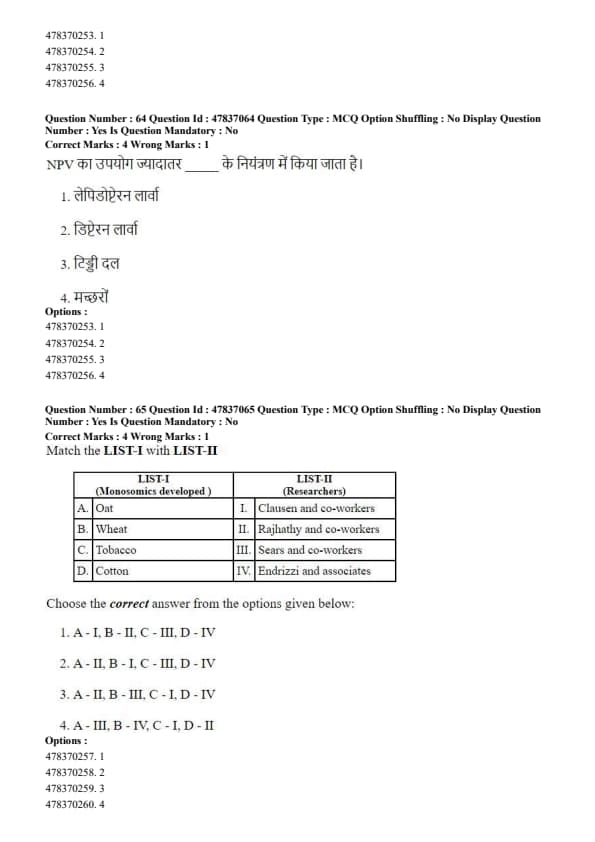
NPV is mostly used to control
View Solution
Step 1: NPV stands for Nuclear Polyhedrosis Virus, a group of viruses used as biological control agents.
Step 2: NPVs are highly host-specific and are most effective against larvae of lepidopteran insects such as Helicoverpa, Spodoptera, and Heliothis.
Step 3: Therefore, NPV is mostly used for controlling lepidopteran larvae. Quick Tip: NPVs are eco-friendly biopesticides and do not harm beneficial insects or the environment.
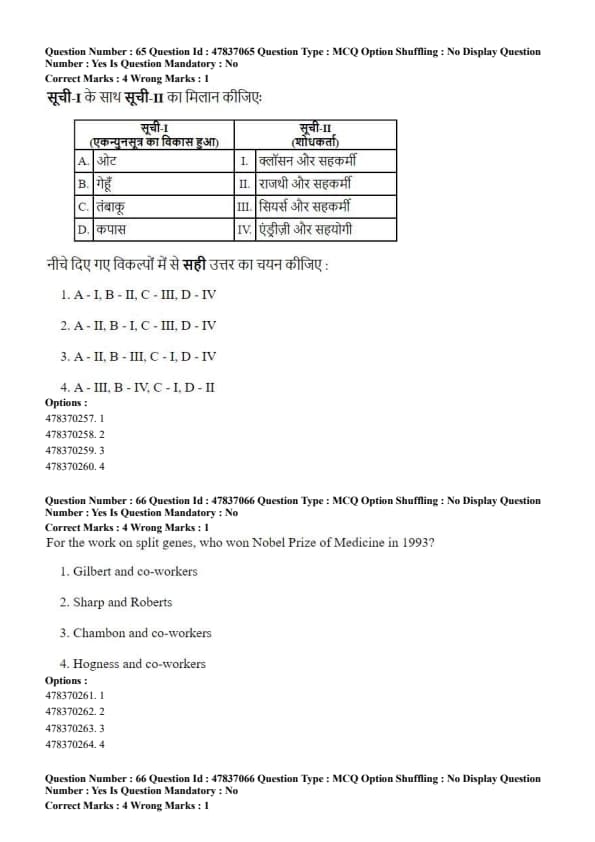
Match the LIST-I with LIST-II
LIST-I (Monosomies developed) \hfill LIST-II (Researchers)
A. Oat \hfill I. Clausen and co-workers
B. Wheat \hfill II. Rajhathy and co-workers
C. Tobacco \hfill III. Sears and co-workers
D. Cotton \hfill IV. Endrizzi and associates
Choose the correct answer from the options given below:
View Solution
Step 1: Monosomics in oat were developed by Rajhathy and co-workers.
Step 2: Wheat monosomics were extensively studied and developed by Sears and co-workers.
Step 3: Clausen and co-workers developed monosomics in tobacco.
Step 4: Endrizzi and associates developed monosomics in cotton. Quick Tip: Monosomics are important tools in cytogenetics for chromosome identification and gene mapping.
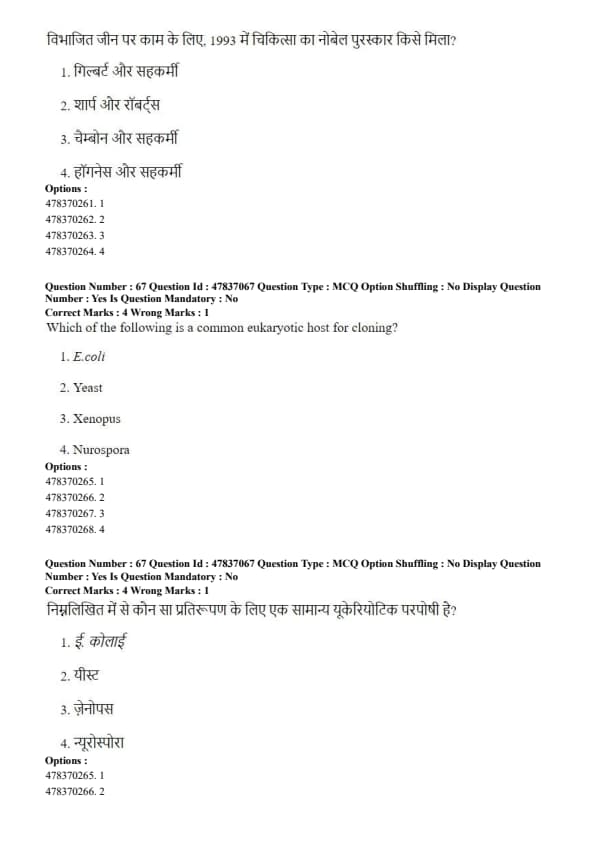
For the work on split genes, who won the Nobel Prize of Medicine in 1993?
View Solution
Step 1: Split genes refer to genes in which coding sequences (exons) are interrupted by non-coding sequences (introns).
Step 2: Phillip A. Sharp and Richard J. Roberts independently discovered the presence of introns in eukaryotic genes.
Step 3: For this groundbreaking discovery of split genes, Sharp and Roberts were awarded the Nobel Prize in Physiology or Medicine in 1993. Quick Tip: The discovery of introns revolutionized the understanding of gene structure and RNA processing in eukaryotes.
Which of the following is a common eukaryotic host for cloning?
View Solution
Step 1: Cloning hosts are organisms used to replicate recombinant DNA.
Step 2: \textit{E. coli is a prokaryotic host, whereas yeast is a unicellular eukaryotic organism.
Step 3: Yeast (e.g., \textit{Saccharomyces cerevisiae) is widely used as a eukaryotic cloning host because it supports post-translational modifications and proper folding of proteins.
Step 4: \textit{Xenopus and \textit{Neurospora are eukaryotes but are not commonly used as standard cloning hosts. Quick Tip: Yeast combines the advantages of easy genetic manipulation with eukaryotic gene expression systems.
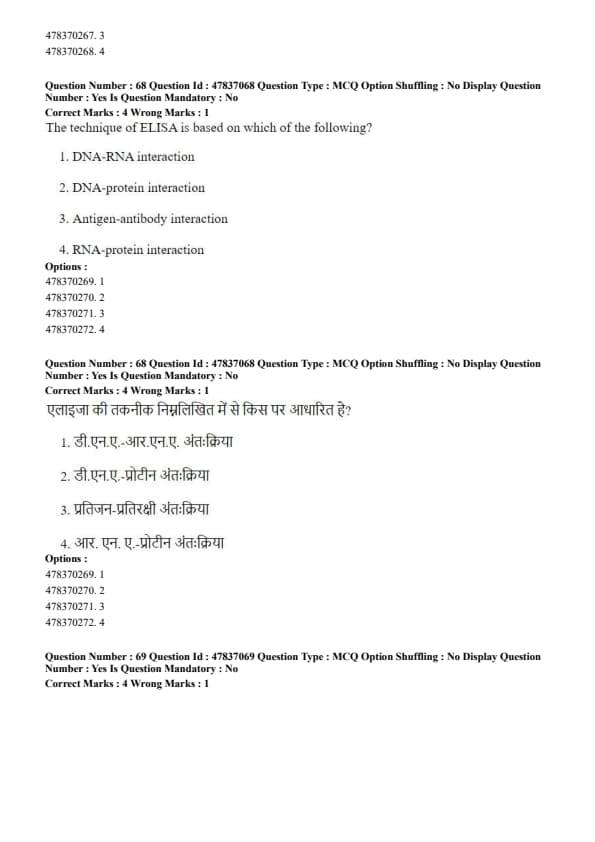
The technique of ELISA is based on which of the following?
View Solution
Step 1: ELISA stands for Enzyme-Linked Immunosorbent Assay and is widely used in diagnostics.
Step 2: The principle of ELISA is based on the highly specific binding between an antigen and its corresponding antibody.
Step 3: The antigen–antibody reaction is detected using an enzyme-linked system that produces a measurable color change. Quick Tip: ELISA is commonly used for detection of plant pathogens, hormones, and disease diagnosis due to its high specificity and sensitivity.
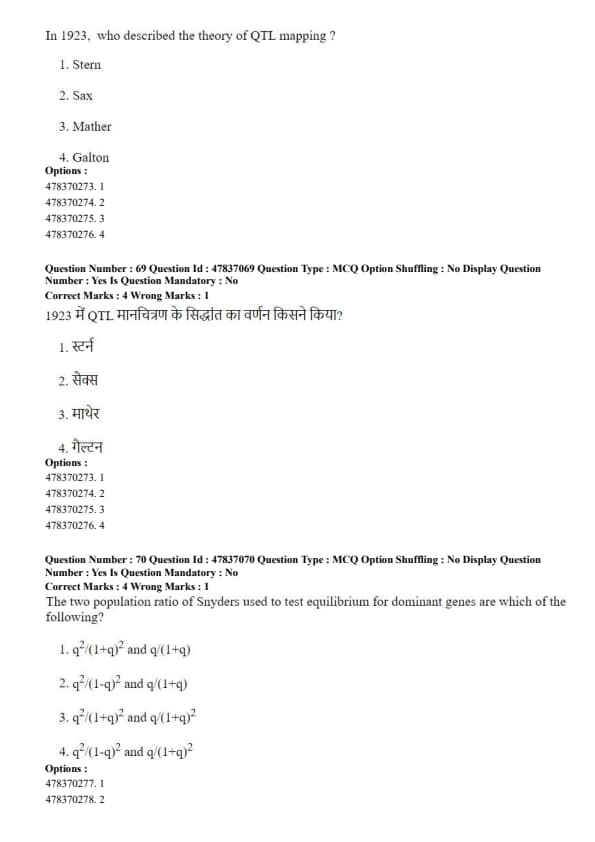
In 1923, who described the theory of QTL mapping?
View Solution
Step 1: Quantitative Trait Loci (QTL) mapping deals with identifying genomic regions associated with quantitative traits.
Step 2: In 1923, Karl Sax proposed the basic concept of associating phenotypic variation with chromosomal regions using linkage analysis.
Step 3: Hence, Sax is credited with describing the theory underlying QTL mapping. Quick Tip: Karl Sax’s work laid the foundation for modern QTL mapping and marker-assisted selection.
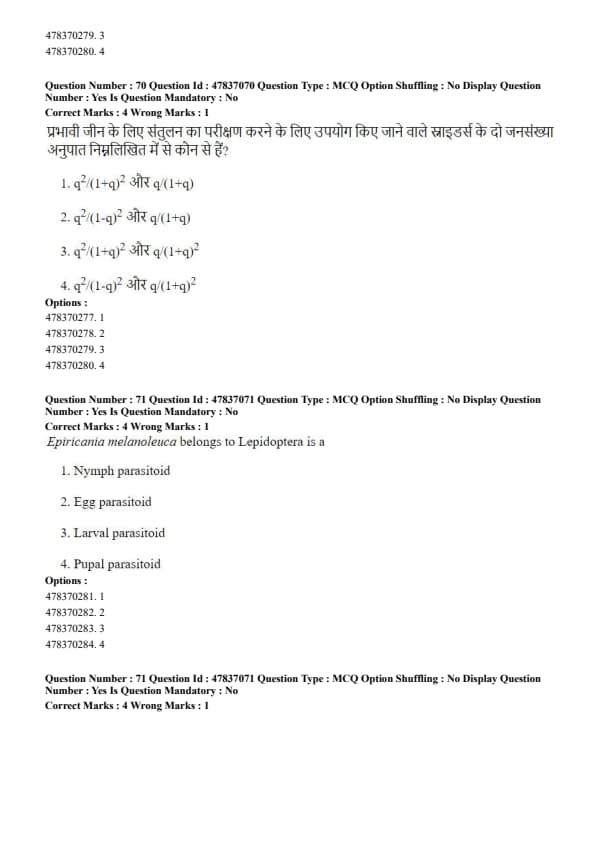
The two population ratios of Snyder used to test equilibrium for dominant genes are which of the following?
View Solution
Step 1: Snyder’s test is used to check genetic equilibrium for dominant genes where recessive homozygotes cannot be directly observed.
Step 2: The test uses two population ratios derived from the frequency of recessive alleles (\(q\)).
Step 3: These ratios are \(\dfrac{q^2}{(1+q)^2}\) and \(\dfrac{q}{(1+q)}\), which are compared to test equilibrium conditions. Quick Tip: Snyder’s test is specifically applied for dominant traits where genotype frequencies cannot be directly distinguished phenotypically.
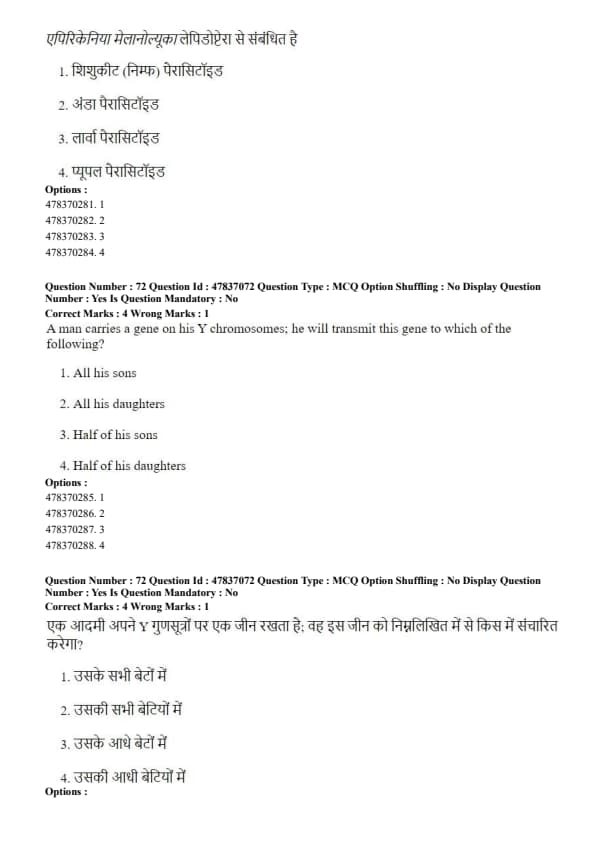
Epiricania melanoleuca belongs to Lepidoptera is a
View Solution
Step 1: Epiricania melanoleuca is an important biological control agent used against sugarcane pyrilla (\textit{Pyrilla perpusilla).
Step 2: It is an ectoparasitoid belonging to the order Lepidoptera and parasitizes mainly the nymphal stages (and also adults) of pyrilla.
Step 3: Therefore, \textit{Epiricania melanoleuca is classified as a nymph parasitoid. Quick Tip: \textit{Epiricania melanoleuca is widely used in biological control programmes for managing sugarcane pyrilla.
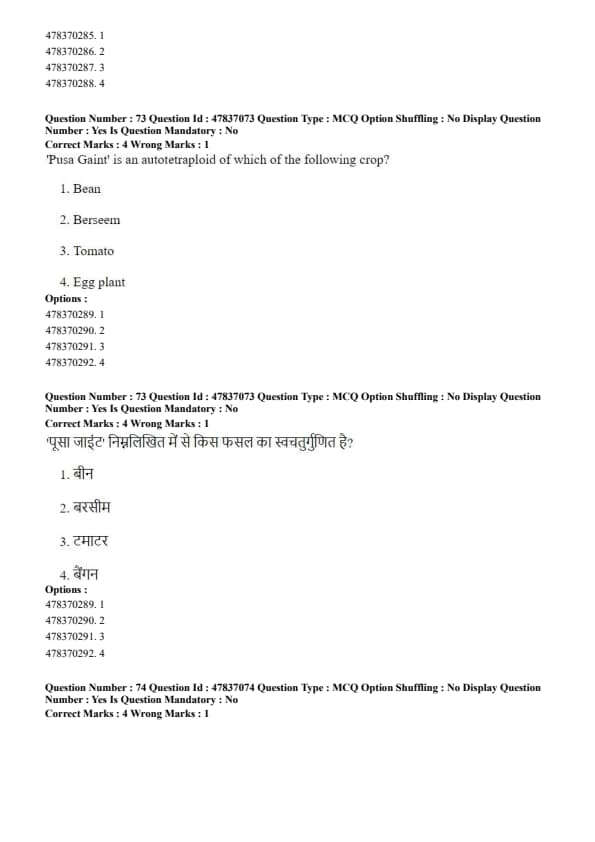
A man carries a gene on his Y chromosome; he will transmit this gene to which of the following?
View Solution
Step 1: The Y chromosome is present only in males and is inherited exclusively from father to son.
Step 2: Genes located on the Y chromosome are transmitted directly to all male offspring.
Step 3: Daughters do not receive the Y chromosome; hence, they cannot inherit Y-linked genes. Quick Tip: Y-linked (holandric) traits are passed from father to all sons without exception.
`Pusa Giant' is an autotetraploid of which of the following crop?
View Solution
Step 1: Autotetraploids are formed by chromosome doubling within the same species, resulting in increased cell and organ size.
Step 2: `Pusa Giant` is a well-known autotetraploid variety developed in tomato through chromosome doubling techniques.
Step 3: Hence, `Pusa Giant` is an autotetraploid of tomato. Quick Tip: Autotetraploidy in crops often leads to larger plant organs but may reduce fertility.
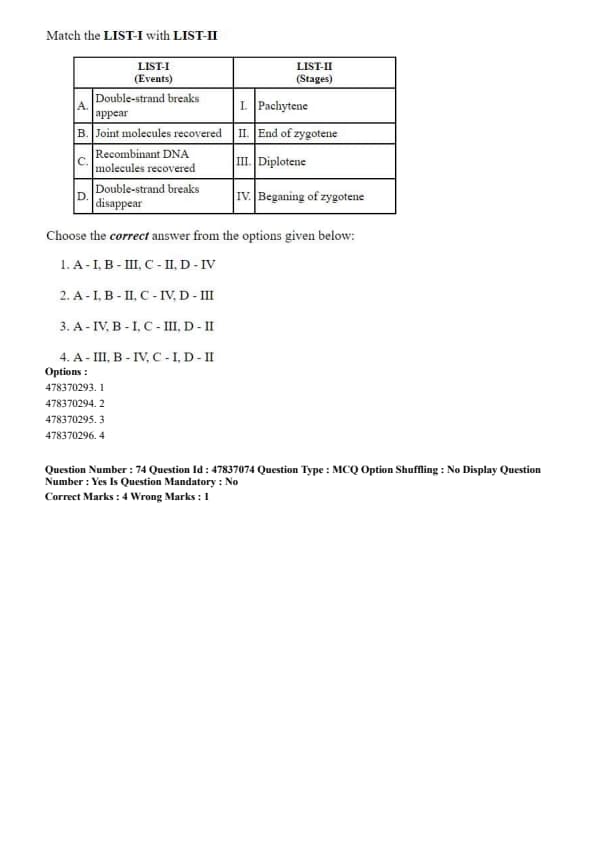
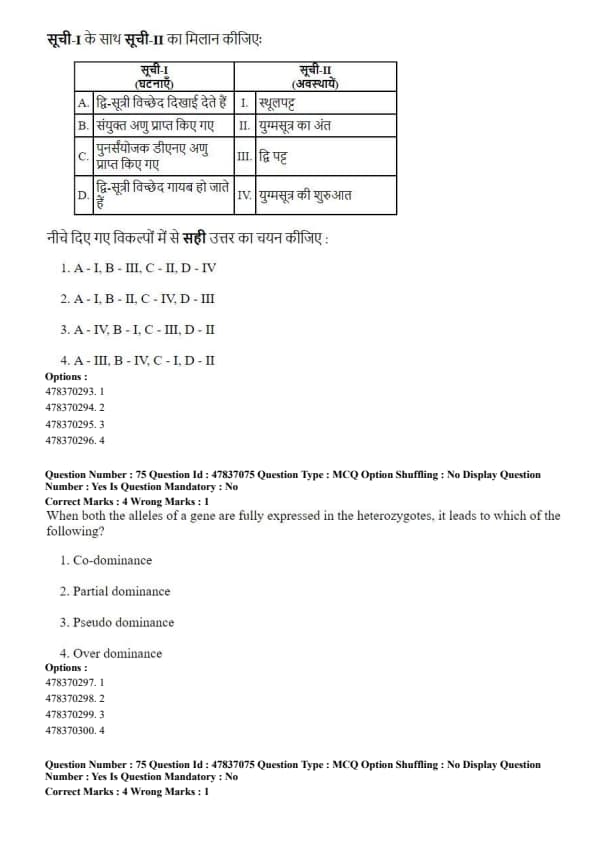
Match the LIST-I with LIST-II
LIST-I (Events) \hfill LIST-II (Stages)
A. Double-strand breaks appear \hfill I. Pachytene
B. Joint molecules recovered \hfill II. Leptotene
C. Recombinant DNA molecules recovered \hfill III. Diplotene
D. Double-strand breaks disappear \hfill IV. Zygotene
Choose the correct answer from the options given below:
View Solution
Step 1: During meiosis, double-strand breaks initiate recombination and are prominently observed during the pachytene stage.
Step 2: Joint molecules formed during recombination are recovered during early stages following break formation.
Step 3: Recombinant DNA molecules are resolved later, while double-strand breaks disappear by the diplotene stage.
Step 4: Hence, the correct matching corresponds to option (B). Quick Tip: Pachytene is the most critical stage of meiosis for genetic recombination and crossing over.
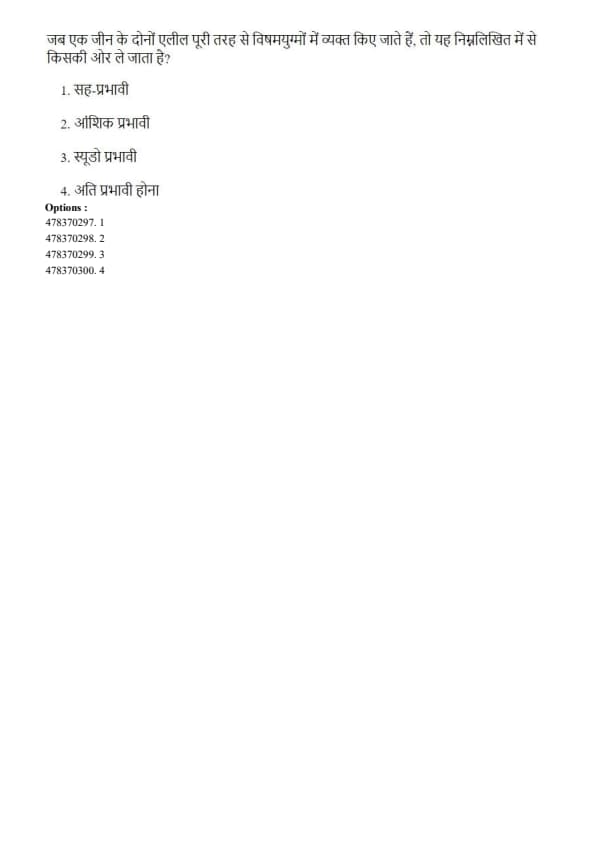
When both the alleles of a gene are fully expressed in the heterozygotes, it leads to which of the following?
View Solution
Step 1: In co-dominance, both alleles of a gene in a heterozygote are fully and simultaneously expressed.
Step 2: Neither allele masks the expression of the other, resulting in the appearance of both traits together.
Step 3: A classic example of co-dominance is the AB blood group in humans, where both A and B antigens are expressed. Quick Tip: Co-dominance differs from incomplete dominance, where the heterozygote shows an intermediate phenotype.



Comments