




CUET PG History Rajputs, Cholas and Indian Feudalism Handwritten Notes, free to download as a 20-page PDF. HUQP09 asks 75 questions at four marks each, and Unit 2 as a whole takes roughly two days to learn, so split it between polity and historiography.
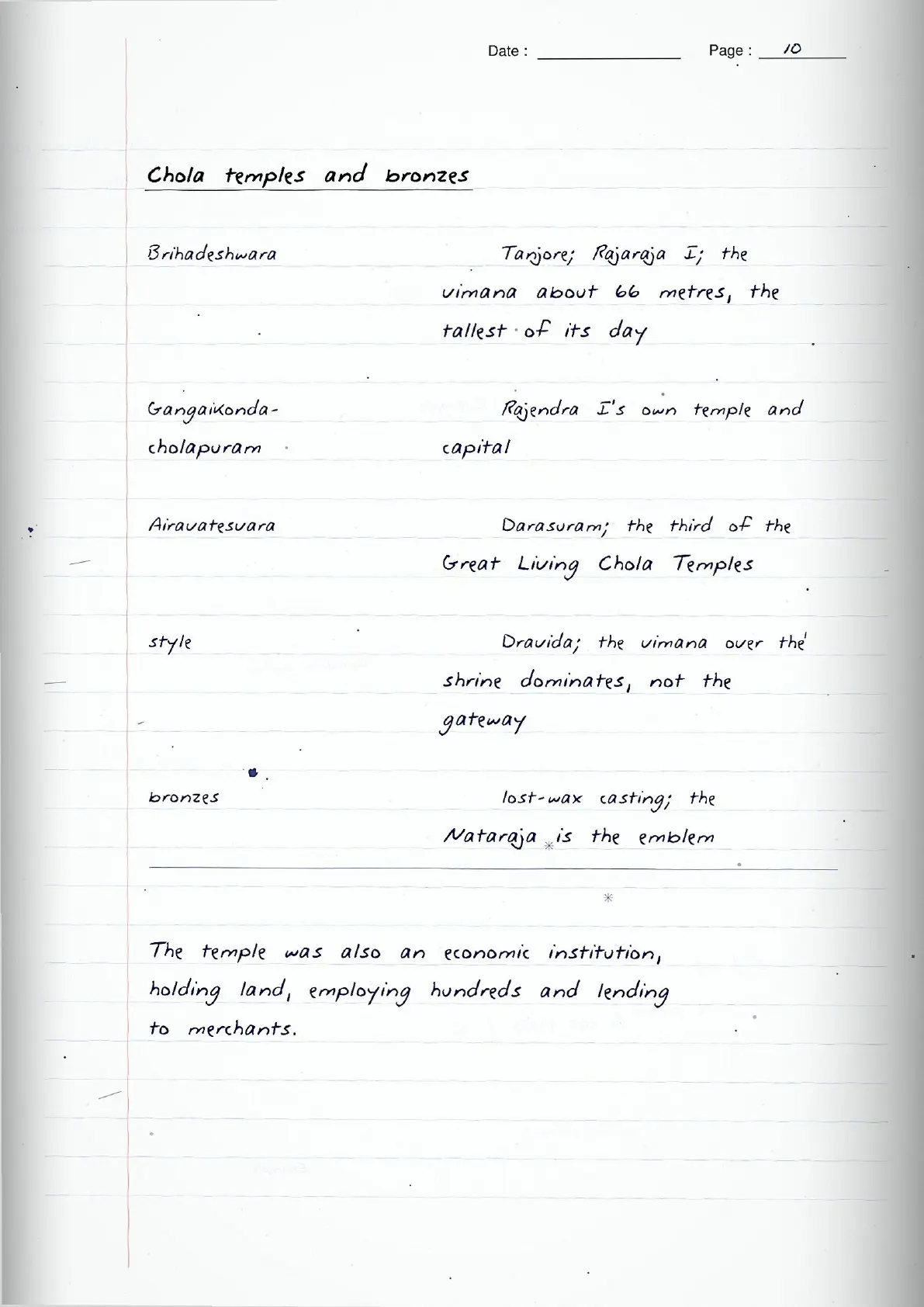
The notes are scans of a real notebook: short lines, boxed rules, and a margin note wherever something is easy to get wrong.
Where This Sits in HUQP09
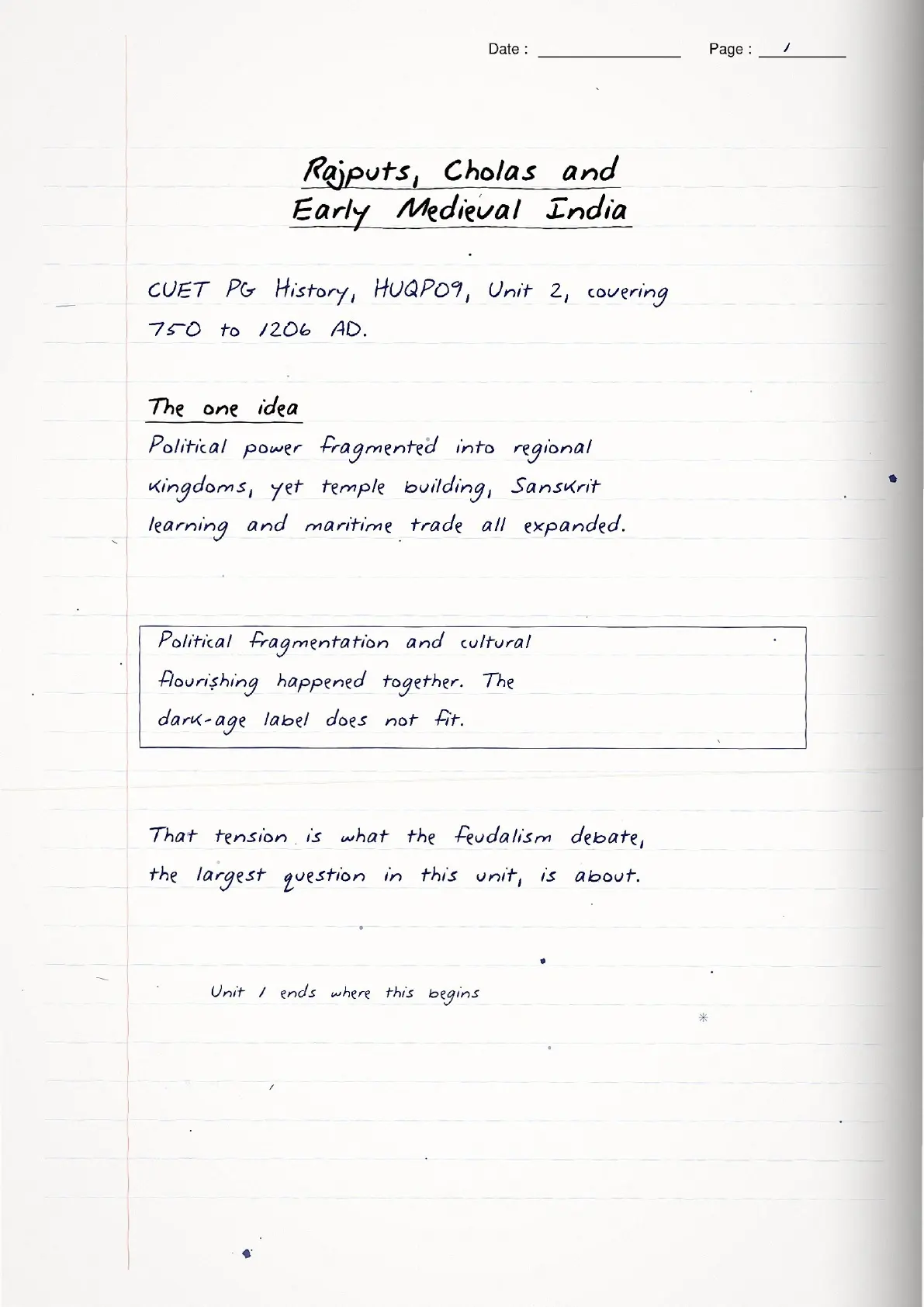
Unit 2 runs from 750 to 1206 AD and overlaps the tail of Unit 1. It is listed separately because the questions it carries are different: less dynastic sequence, more debate about what the sources mean.
| Unit | Period | Span |
|---|---|---|
| 1 | Ancient History of India | 10000 BC to 1206 AD |
| 2 | Early Medieval India | 750 AD to 1206 AD |
| 3 | Medieval History of India | 1206 to 1707 AD |
| 4 | Modern History of India | 1707 to 1947 |
What the Notes Cover
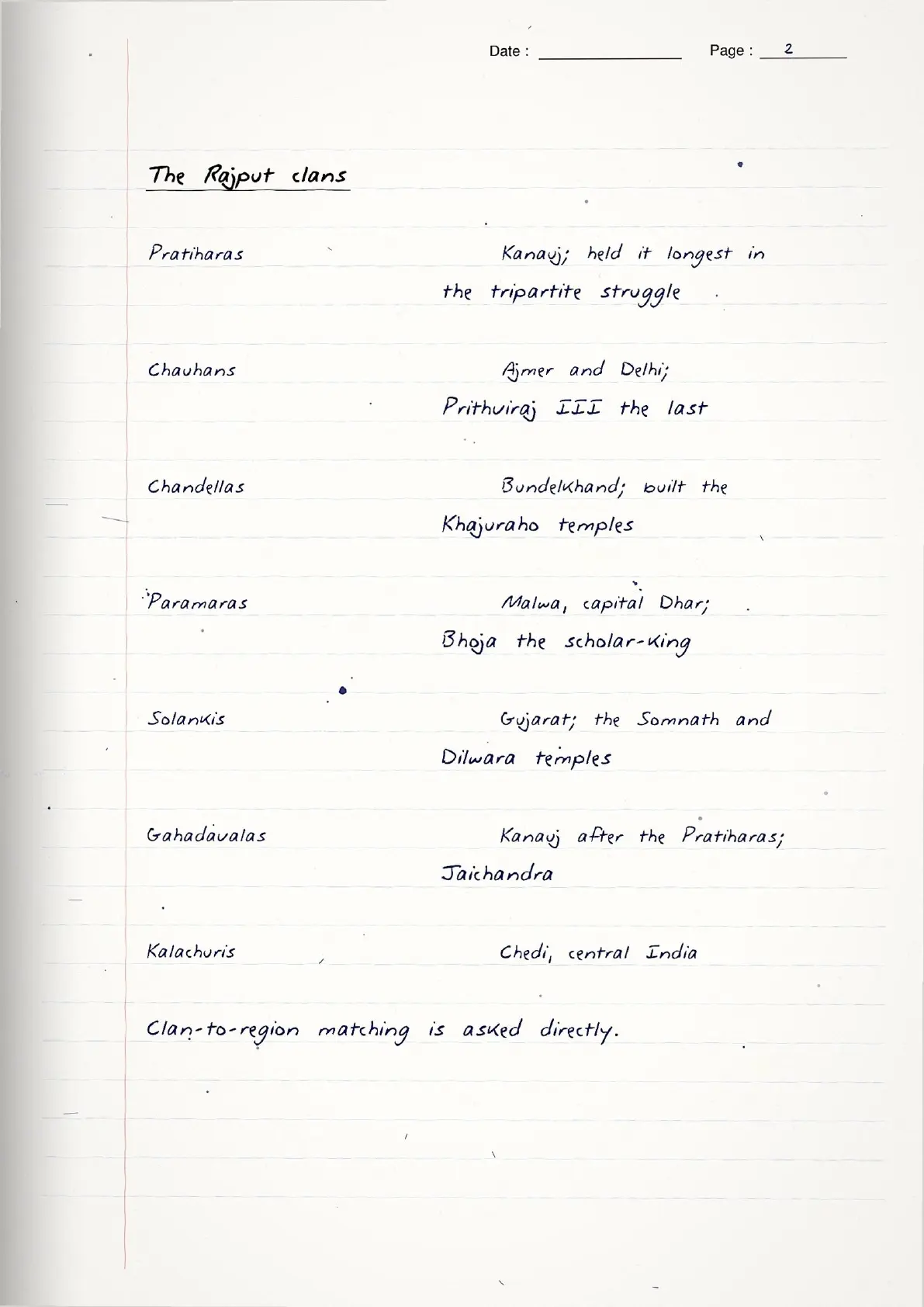
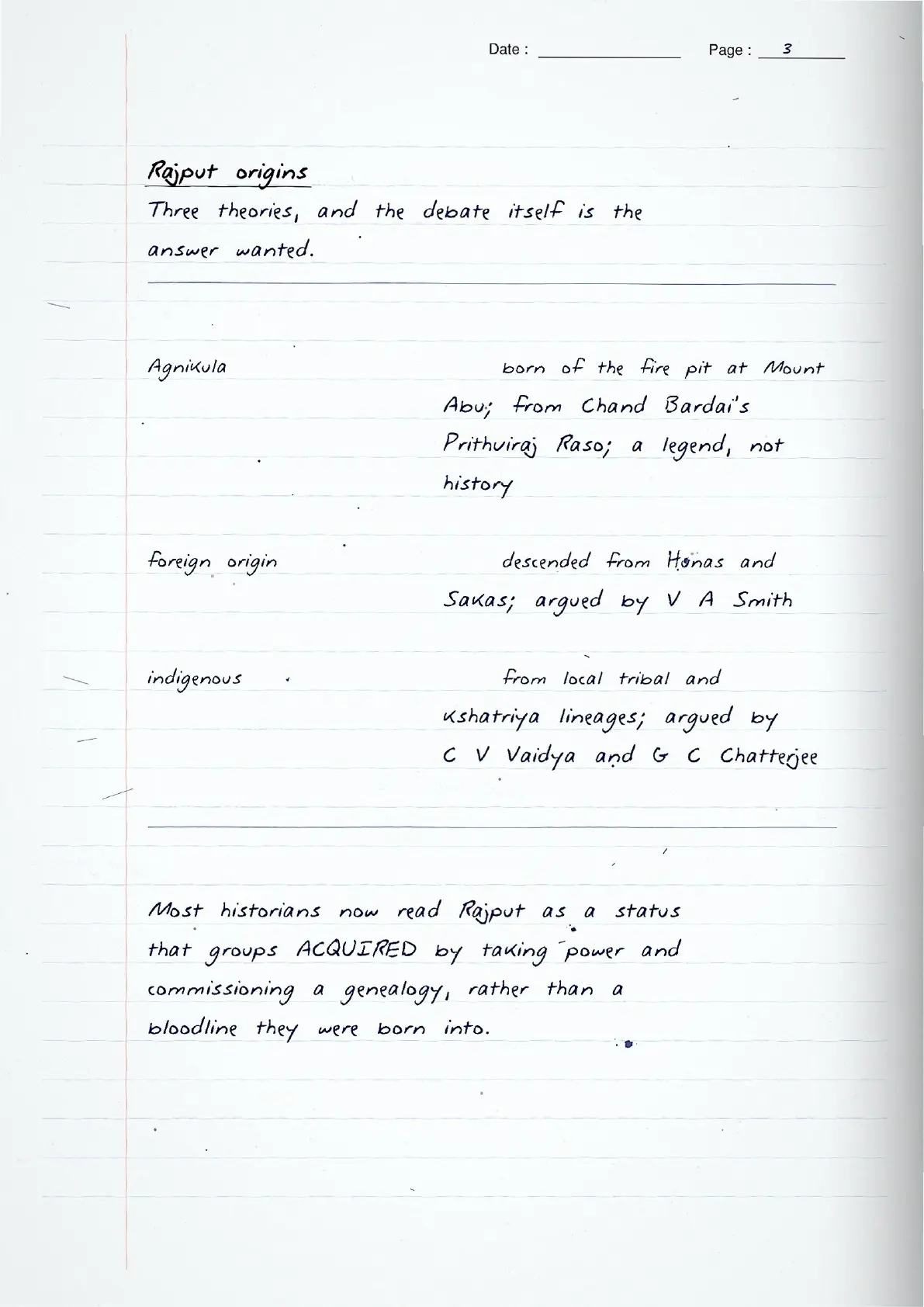
- The Rajput clans by region, and the three theories of their origin
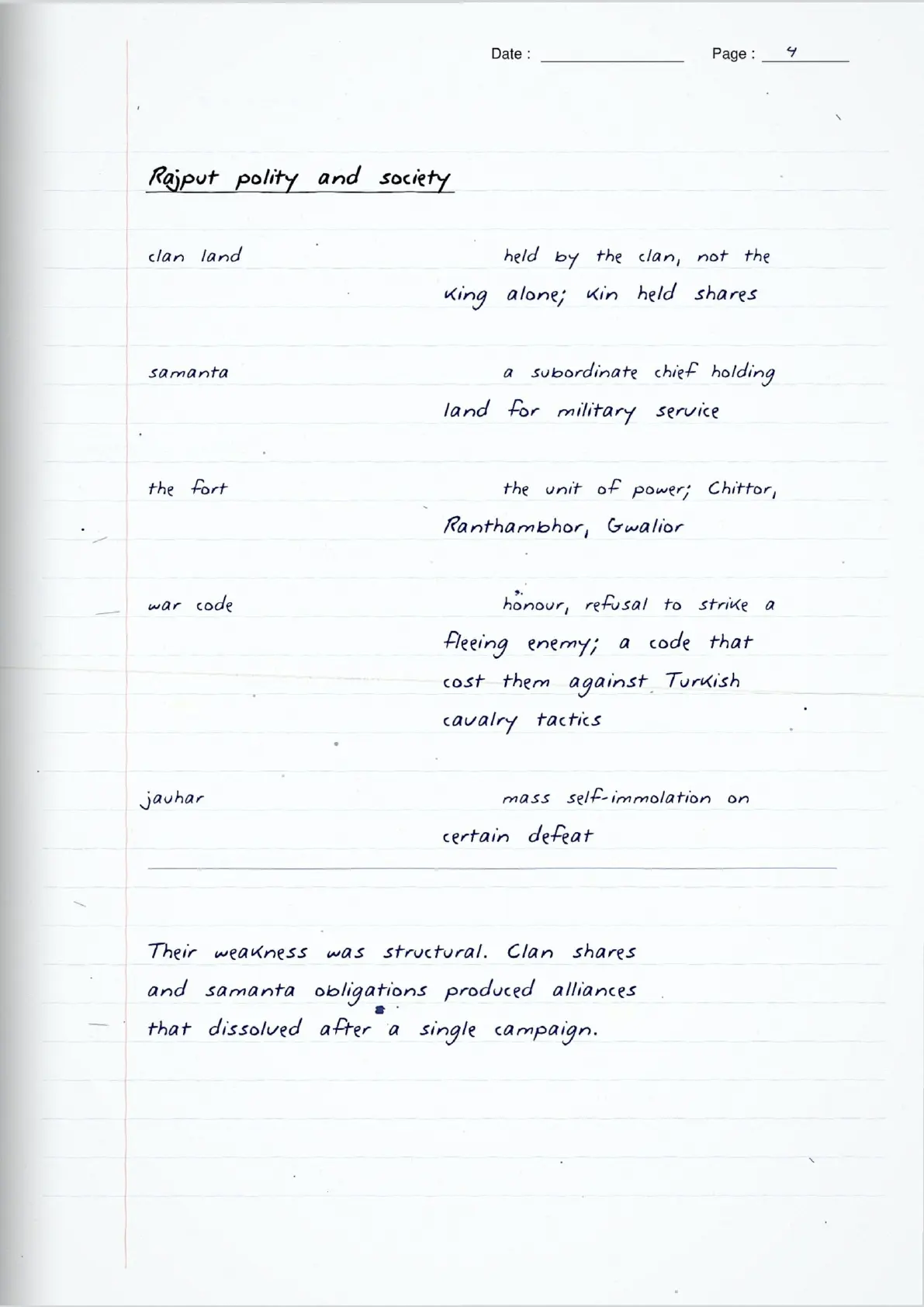
- Rajput polity: clan landholding, the samanta, the fort and the war code
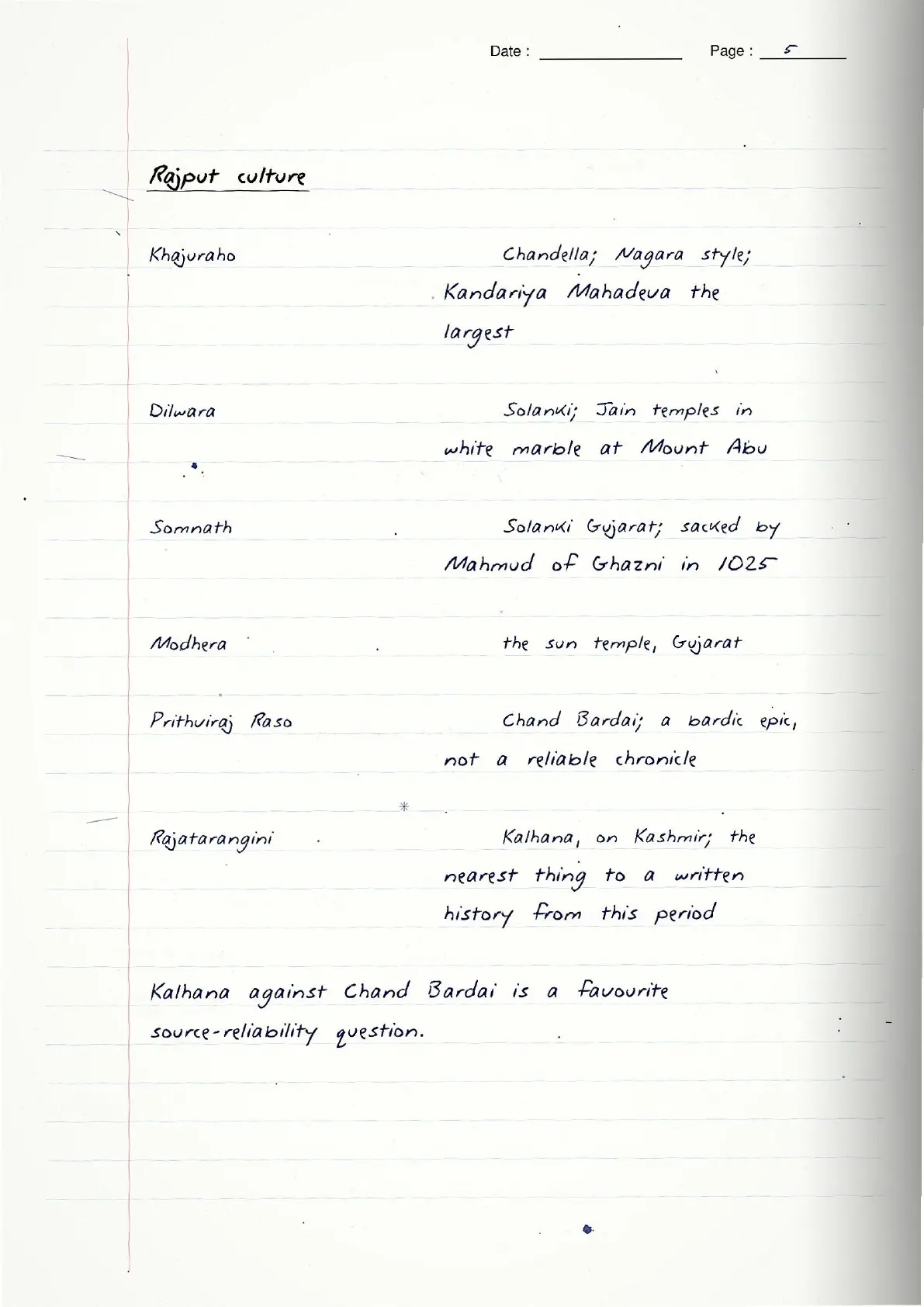
- Khajuraho, Dilwara and the sources, from Kalhana to Chand Bardai
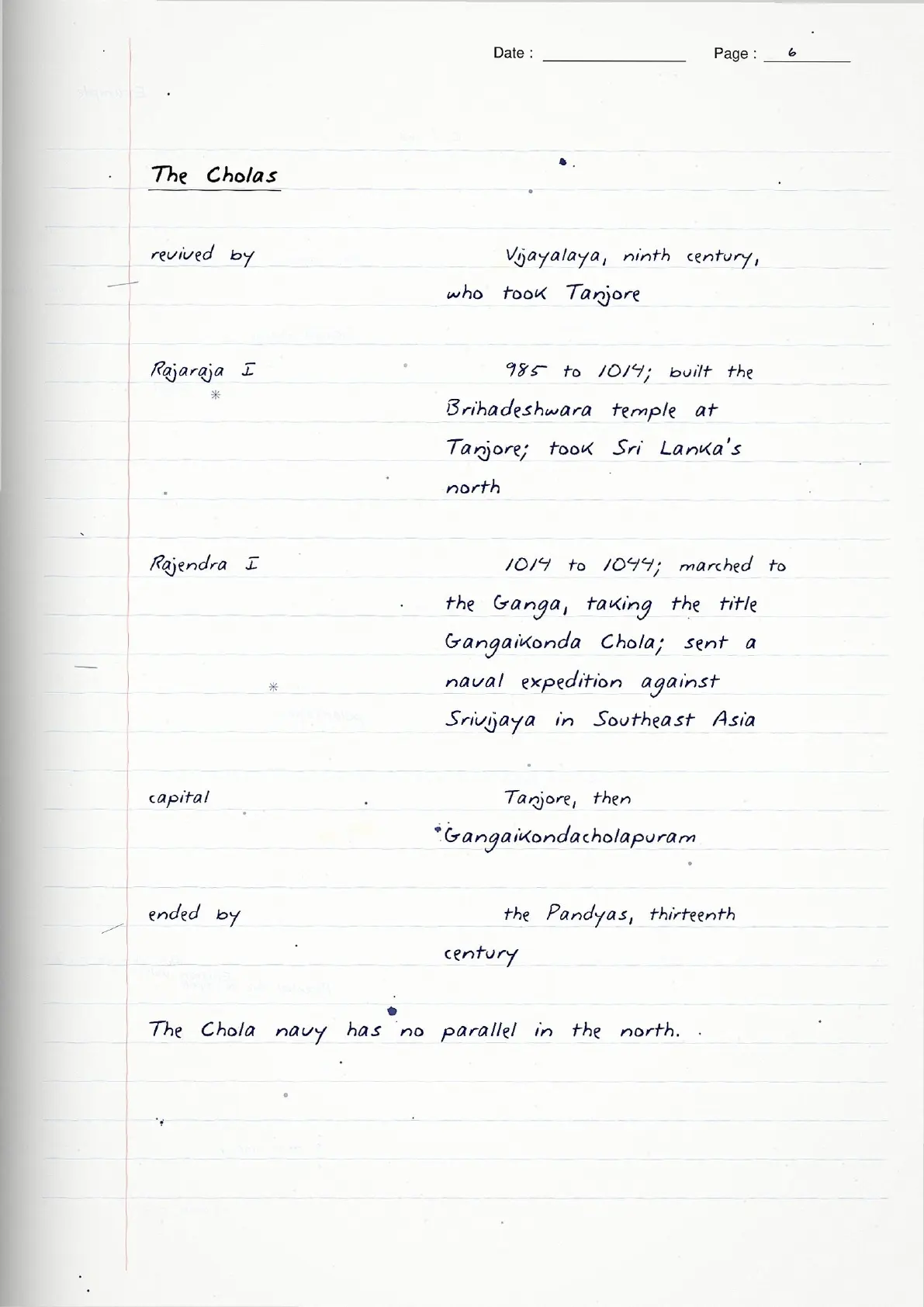
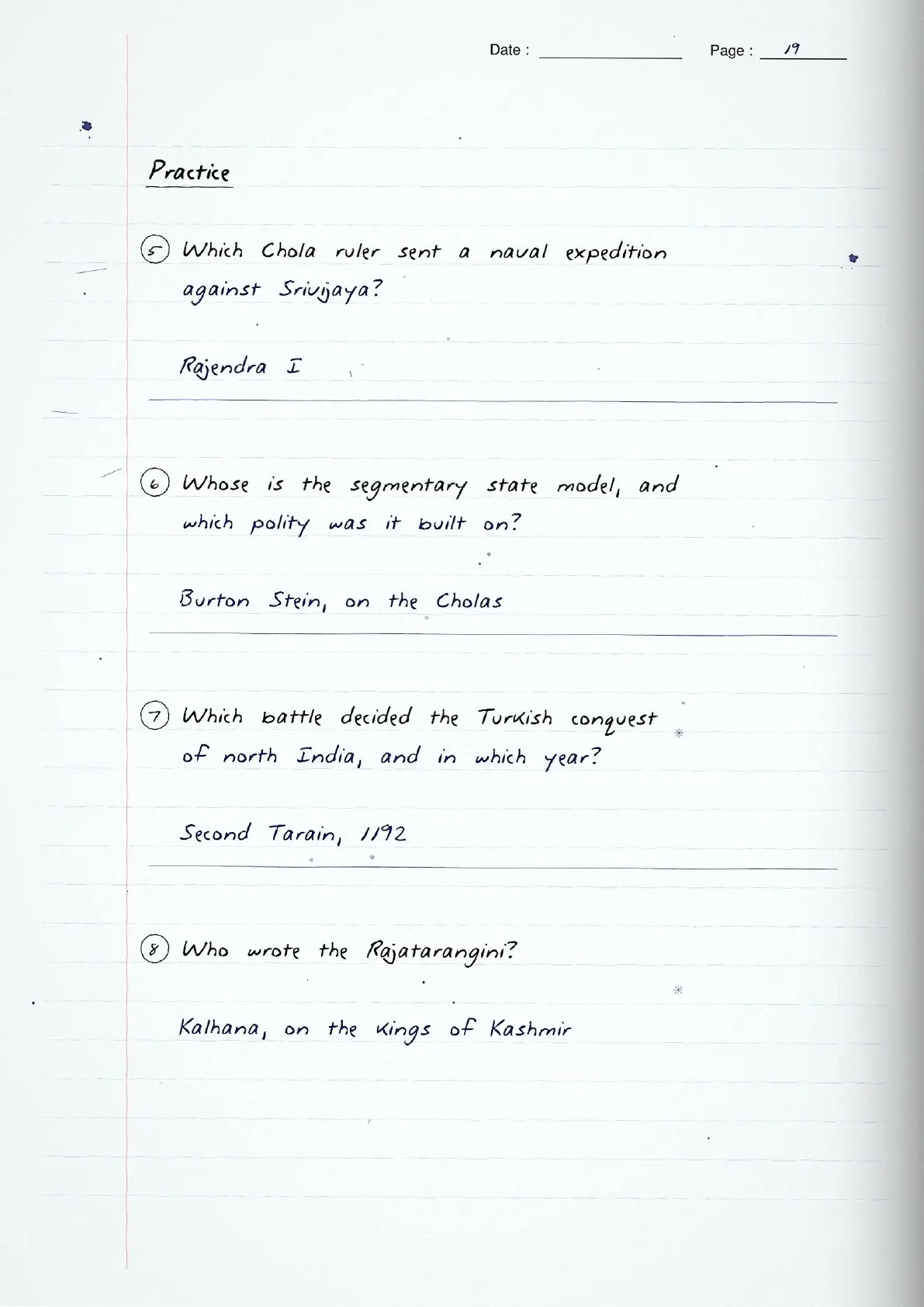
- The Cholas from Vijayalaya to Rajendra I, including the Srivijaya expedition
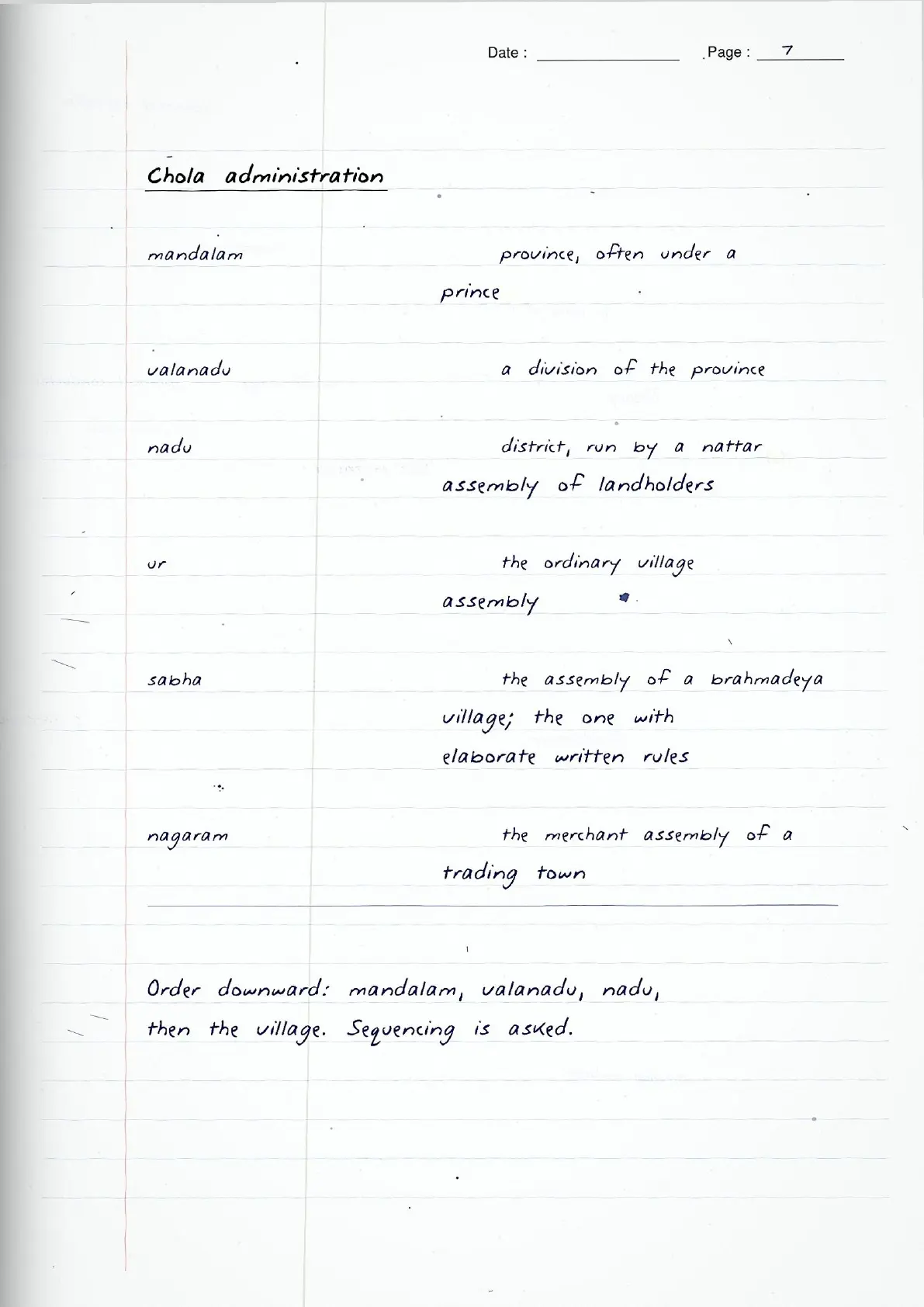
- The administrative ladder from mandalam down to the ur and the sabha
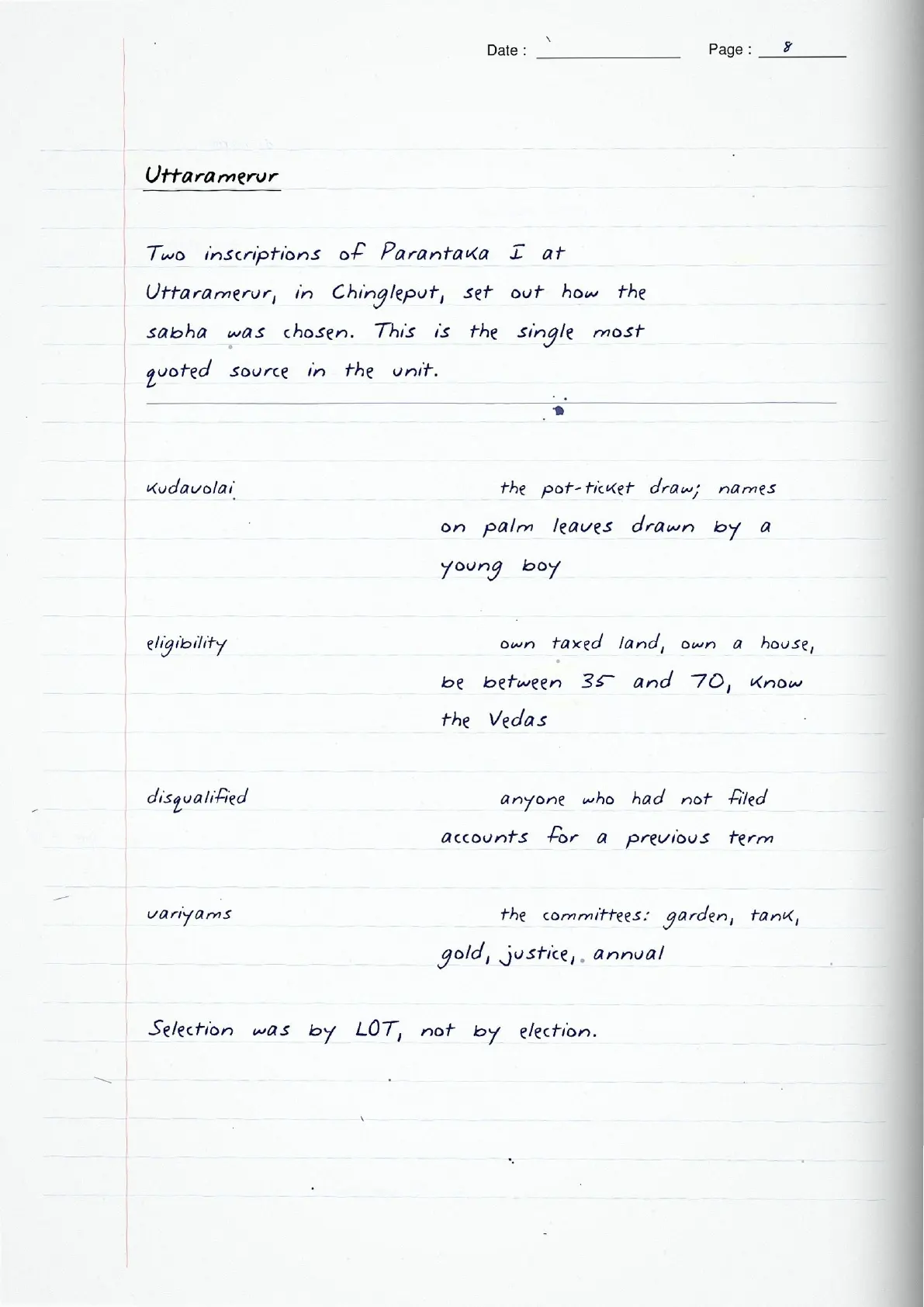
- Uttaramerur, the kudavolai draw, and what the qualifications actually allowed
- The feudalism debate: Sharma, Mukhia, Stein and Chattopadhyaya
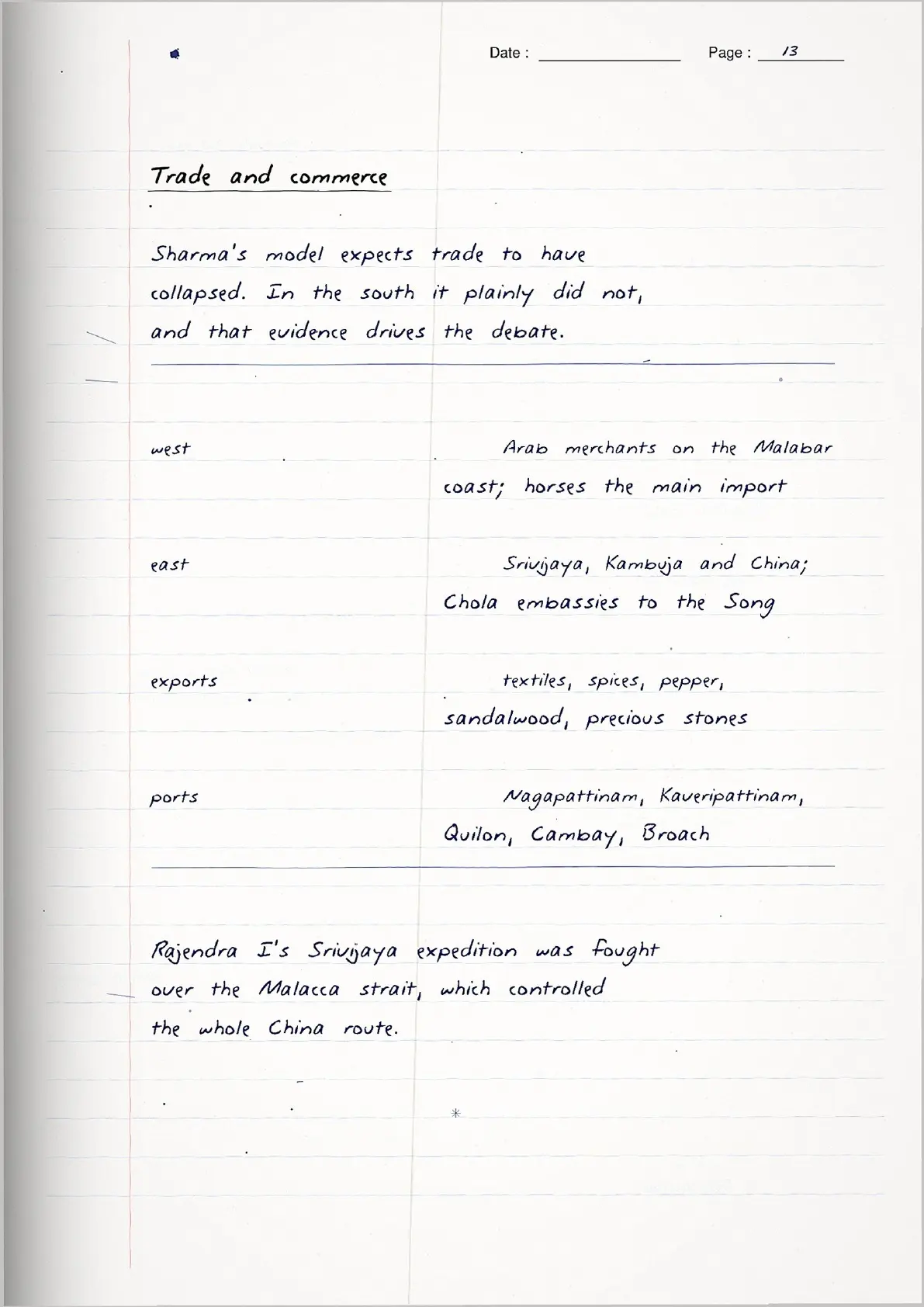
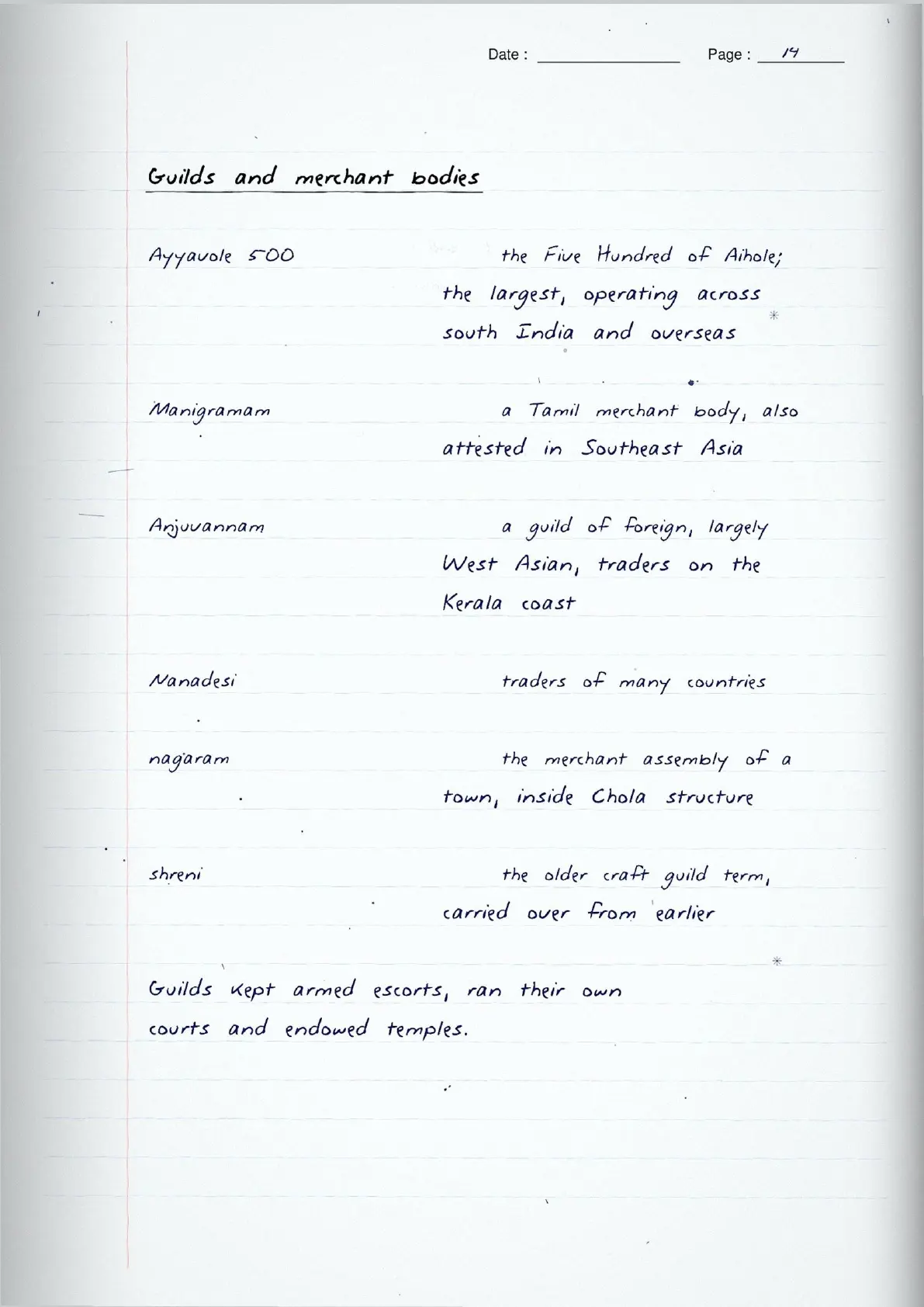
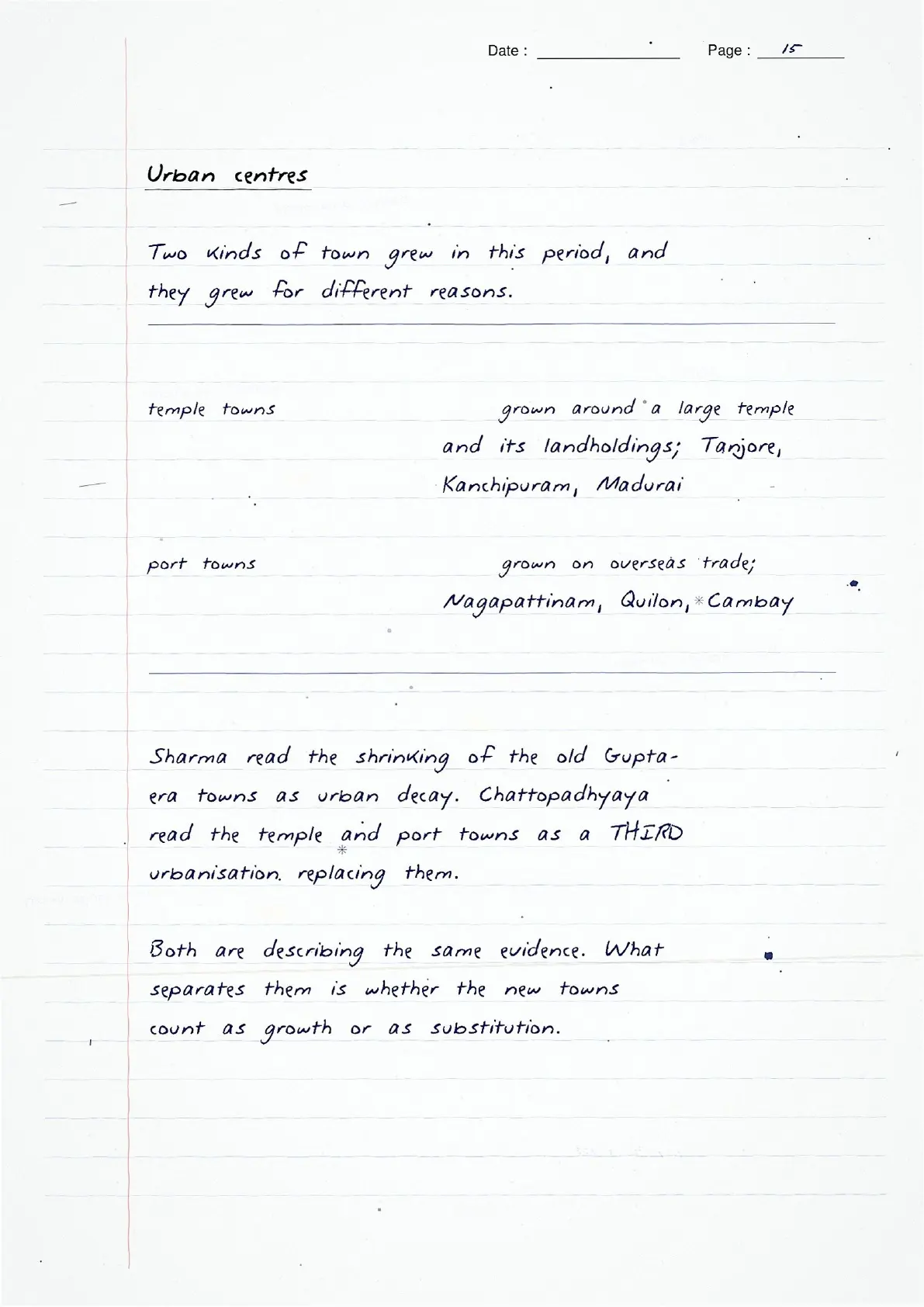
- Trade, ports, temple towns, and the merchant guilds
How to Approach the Topic
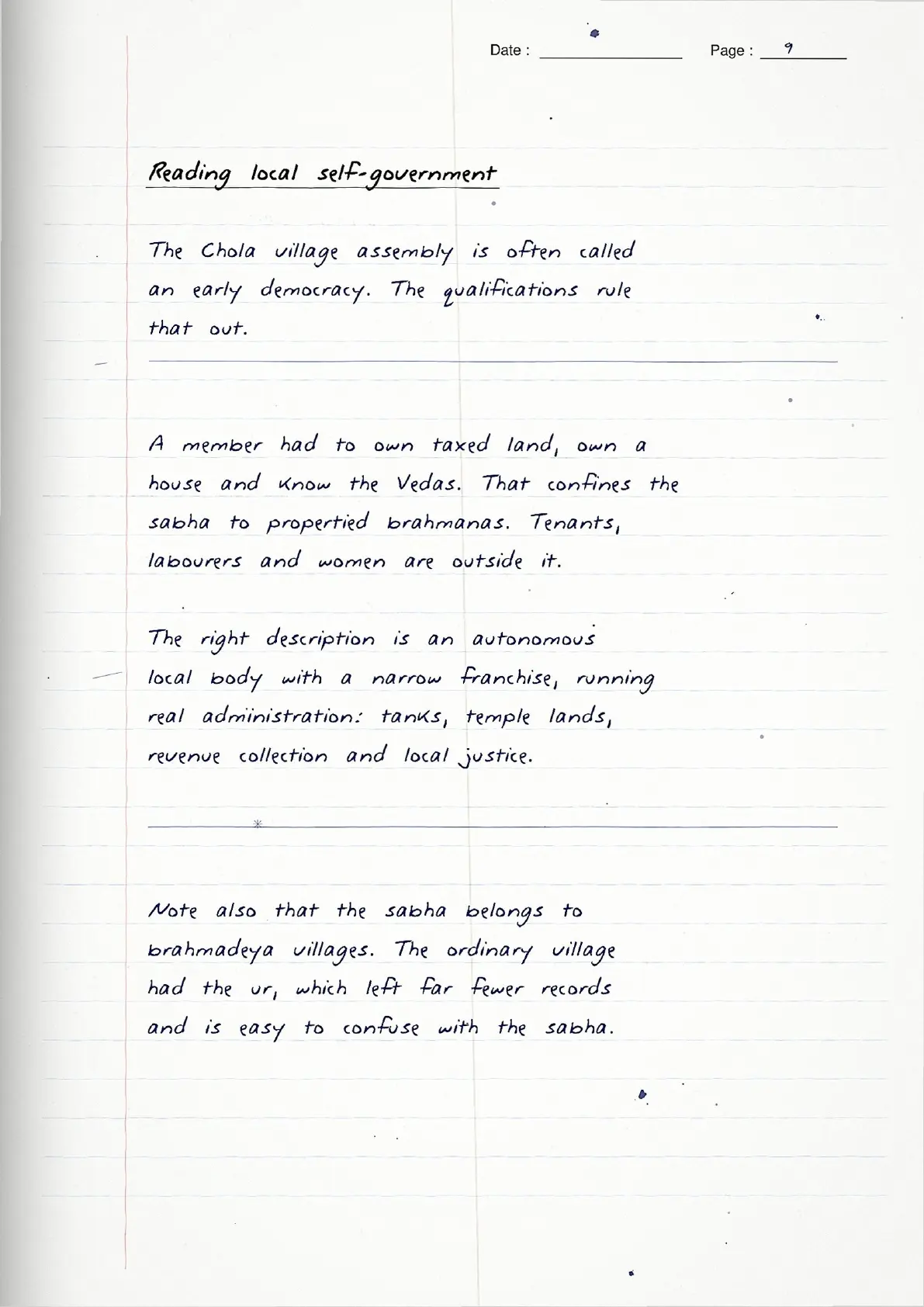
The Chola village assembly is the most examined thing in the unit and the most commonly misdescribed. Members were chosen by drawing palm-leaf tickets from a pot, not elected, and a candidate had to own taxed land, own a house and know the Vedas.
That makes it an autonomous local body with a narrow franchise, which is not the same thing as an early democracy.
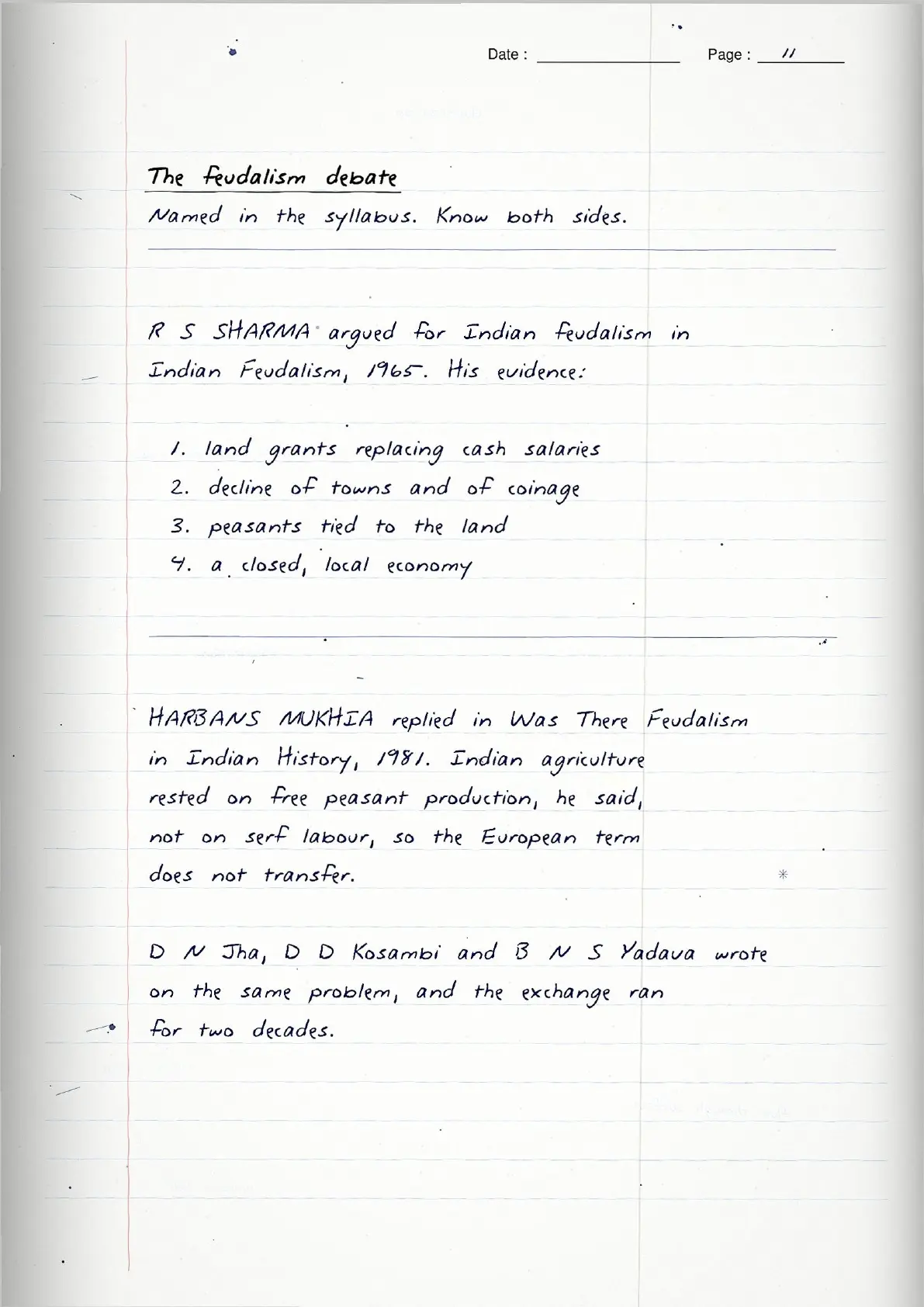
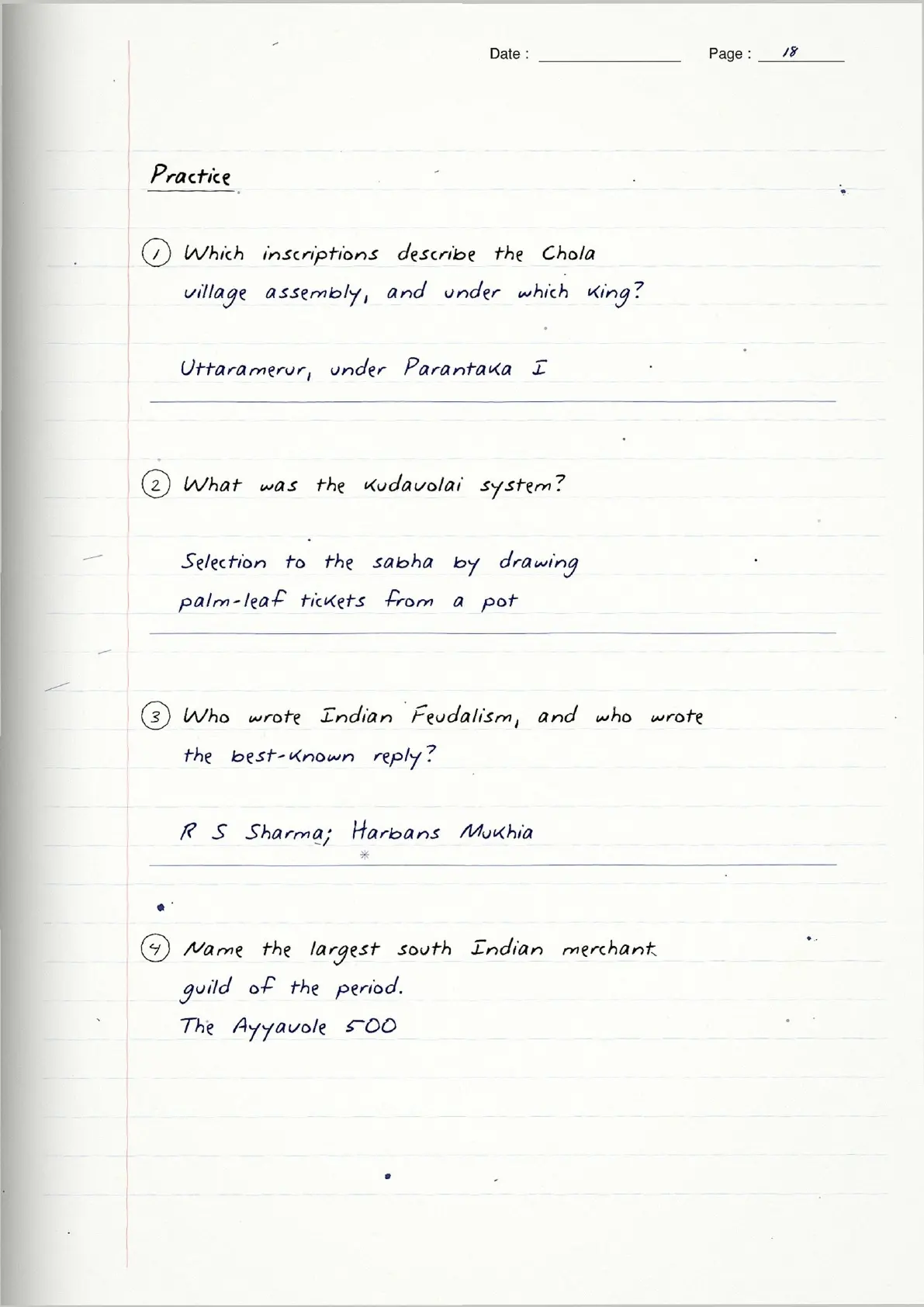
The feudalism debate is named in the syllabus, so it is worth holding as four positions with four names attached. R S Sharma argued that land grants, decaying towns and vanishing coinage amount to Indian feudalism, and Harbans Mukhia replied that Indian agriculture rested on free peasants rather than serfs.
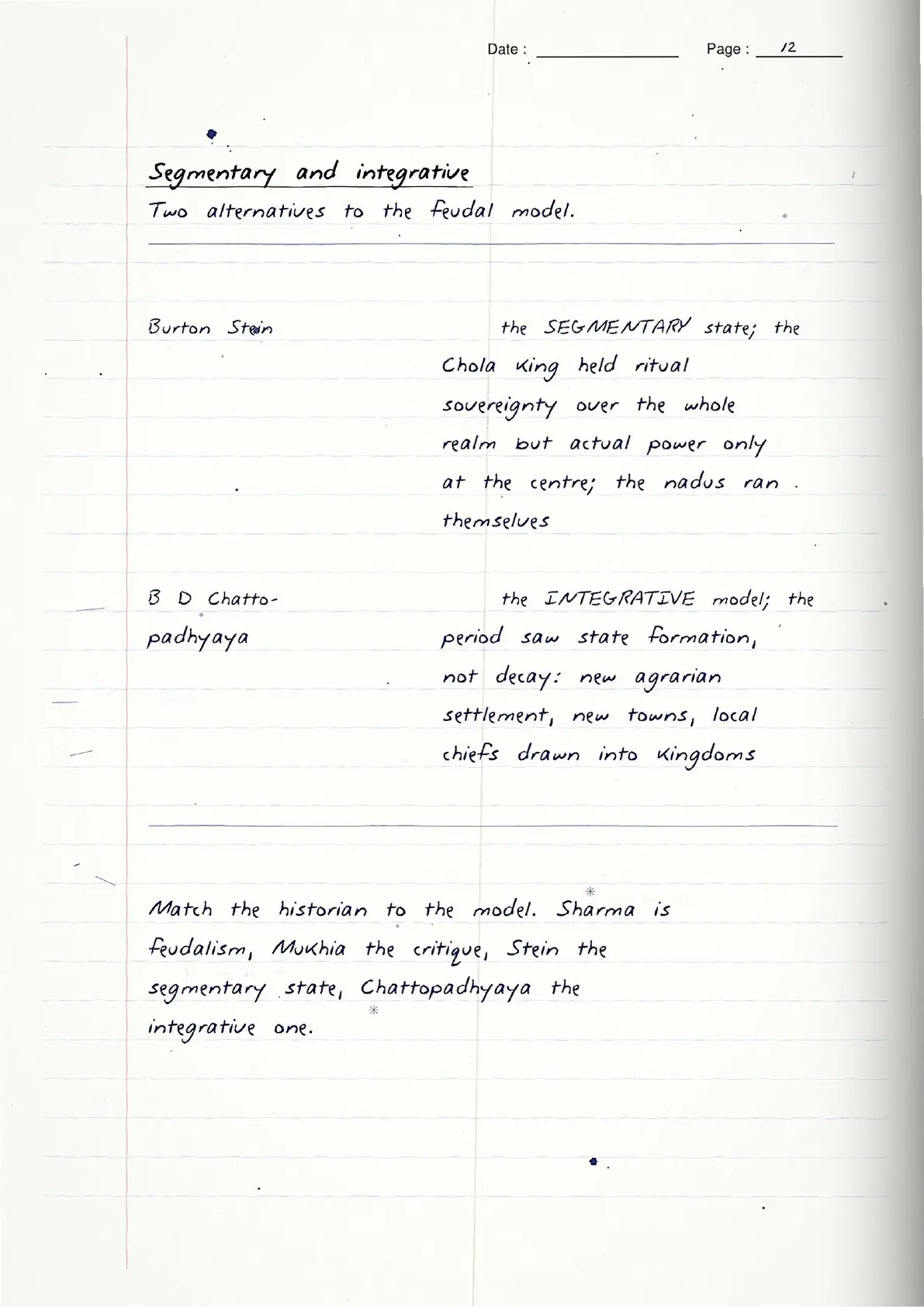
Burton Stein proposed the segmentary state instead, and B D Chattopadhyaya read the period as state formation rather than decay.
Trade is the evidence that keeps the debate open. Sharma's model expects commerce to have collapsed, and in the south it plainly did not: the Ayyavole 500 operated overseas, Chola embassies reached the Song court, and the port towns grew. Knowing that tension is more useful than knowing any one guild's name.
Common Mistakes
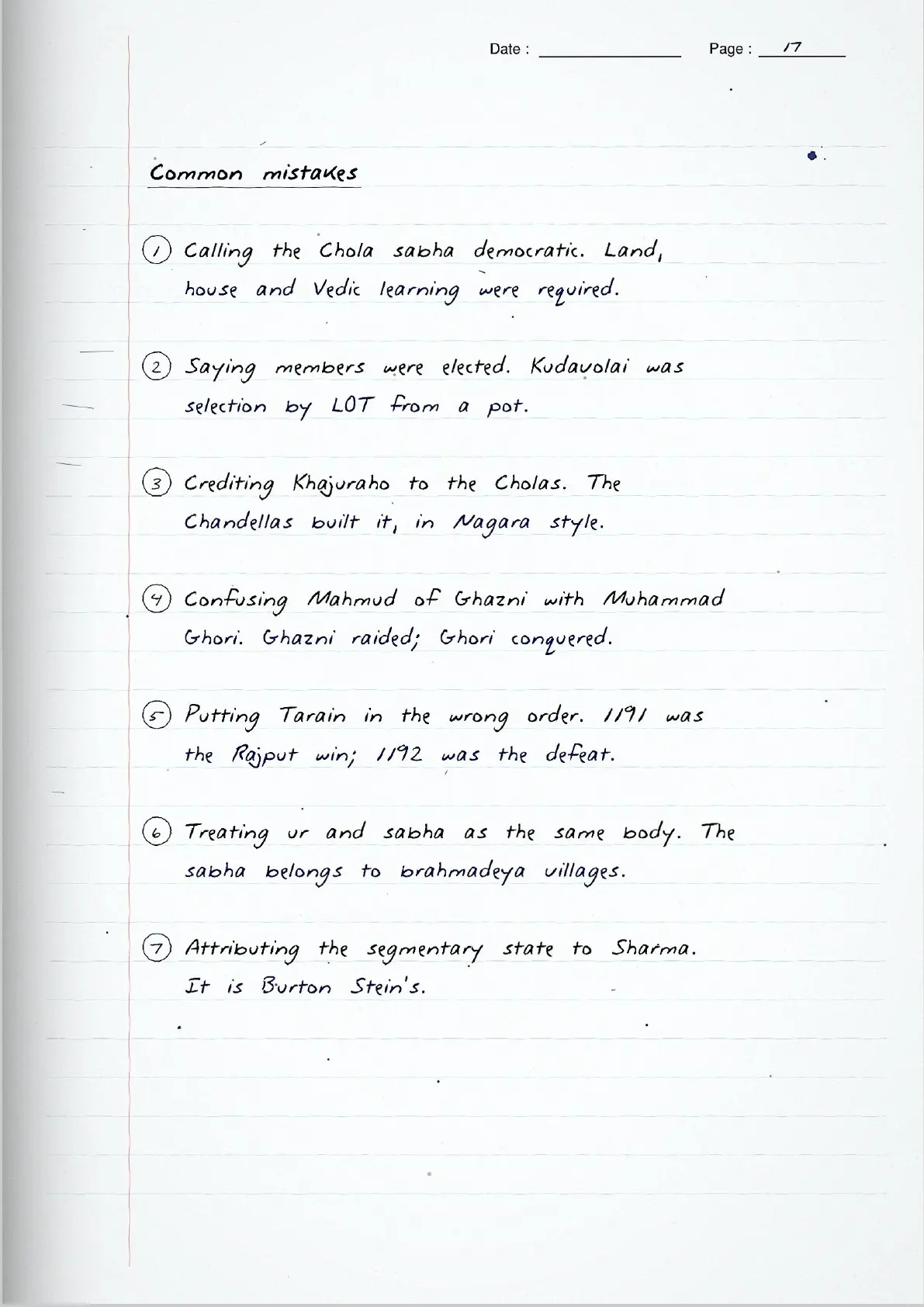
- Calling the Chola sabha democratic, when land, a house and Vedic learning were required
- Saying its members were elected. Kudavolai was selection by lot
- Treating the ur and the sabha as the same body
- Crediting Khajuraho to the Cholas. The Chandellas built it
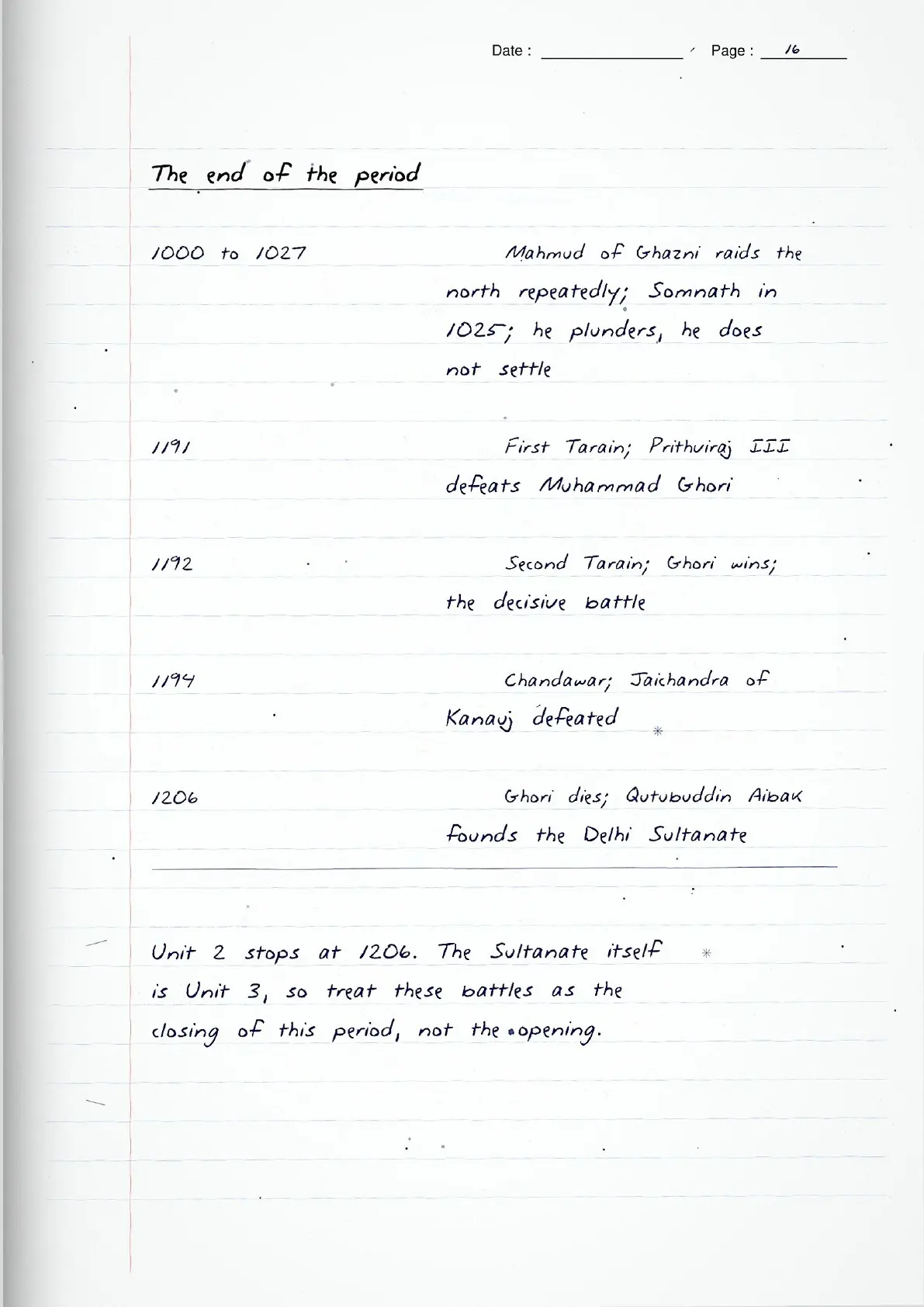
- Confusing Mahmud of Ghazni, who raided, with Muhammad Ghori, who conquered
- Reversing Tarain: 1191 was the Rajput victory, 1192 the defeat
- Attributing the segmentary state to Sharma rather than to Burton Stein
Video Revision
Source: Sleepy Classes IAS
How to Use These Notes
Pages 11 and 12 hold the feudalism debate and the two alternatives to it, with each model against the historian who argued it. Page 8 is Uttaramerur in detail.
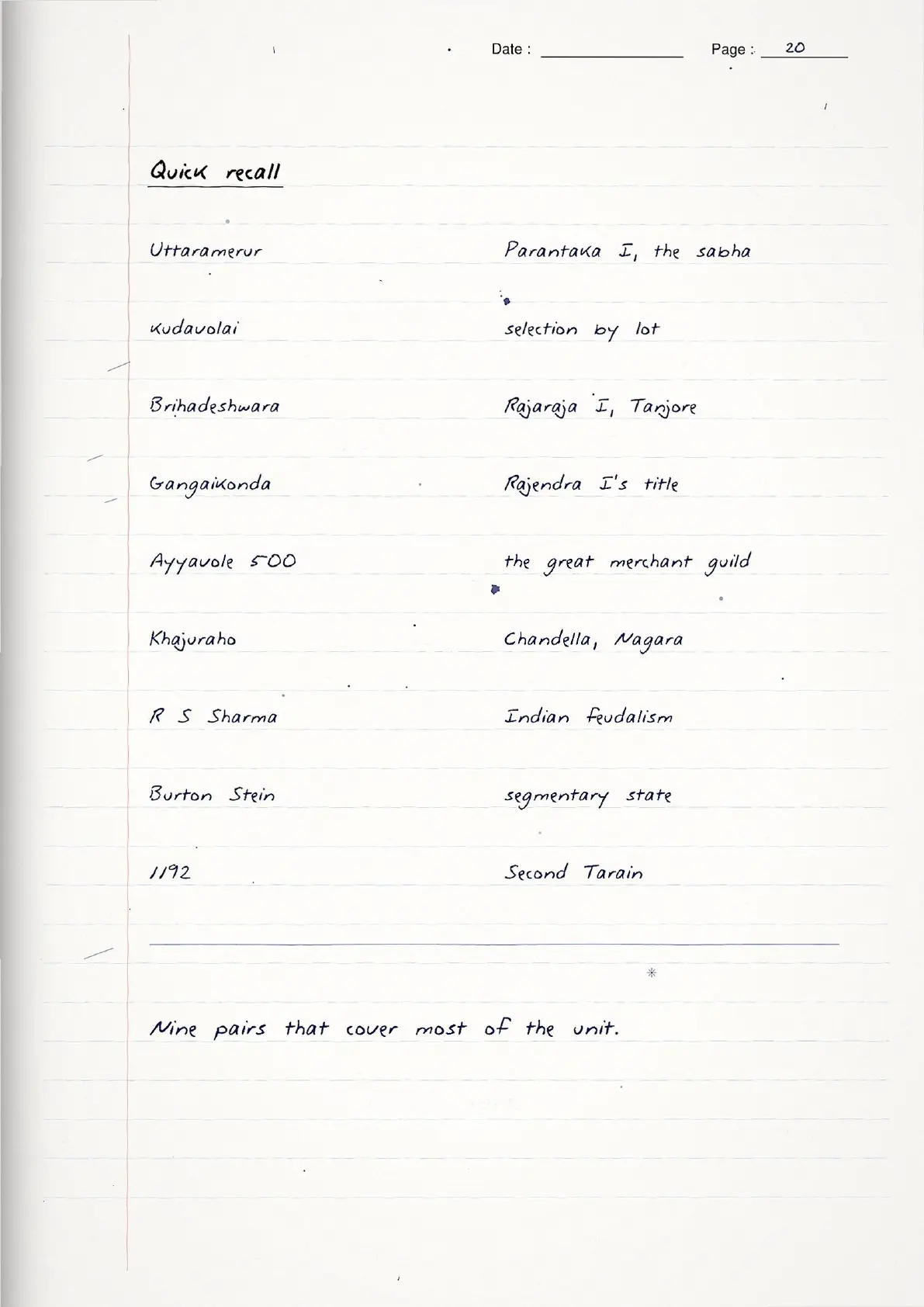
Page 20 is the recall grid, and page 17 lists the errors above with the correction beside each.
The previous set closes Unit 1 with the Guptas, the Vakatakas and Harsha.
CUET PG History Rajputs and Cholas Notes FAQs
Ques. Was the Chola village assembly democratic?
Ans. Not in any modern sense. The Uttaramerur inscriptions require a member to own taxed land, own a house, be aged between 35 and 70, and know the Vedas, which confines the sabha to propertied brahmanas. It was a genuinely autonomous local body with a very narrow franchise.
Ques. What was the kudavolai system?
Ans. Selection by lot. Names were written on palm leaves, put in a pot, and drawn out by a young boy. Anyone who had not filed accounts for a previous term was disqualified.
Ques. Who are the main historians in the feudalism debate?
Ans. R S Sharma made the case in Indian Feudalism in 1965. Harbans Mukhia answered it in 1981. Burton Stein offered the segmentary state model for the Cholas, and B D Chattopadhyaya argued the period is better read as state formation. D N Jha and D D Kosambi also wrote on the question.
Ques. Which merchant guilds should be known?
Ans. The Ayyavole 500 of Aihole is the largest and traded overseas. Manigramam is the other major Tamil body, Anjuvannam was a guild of foreign traders on the Kerala coast, and the nagaram was the merchant assembly of a town within the Chola structure.
Ques. Can the notes be downloaded free?
Ans. Yes. All 20 pages can be read on this page and downloaded at no cost.



Comments