




CUET PG Aptitude Ratio Time and Mensuration Handwritten Notes, free to download as a 20-page PDF. The topic is worth about 6 to 10 marks and takes roughly one day to learn, so treat it as a single focused sitting.
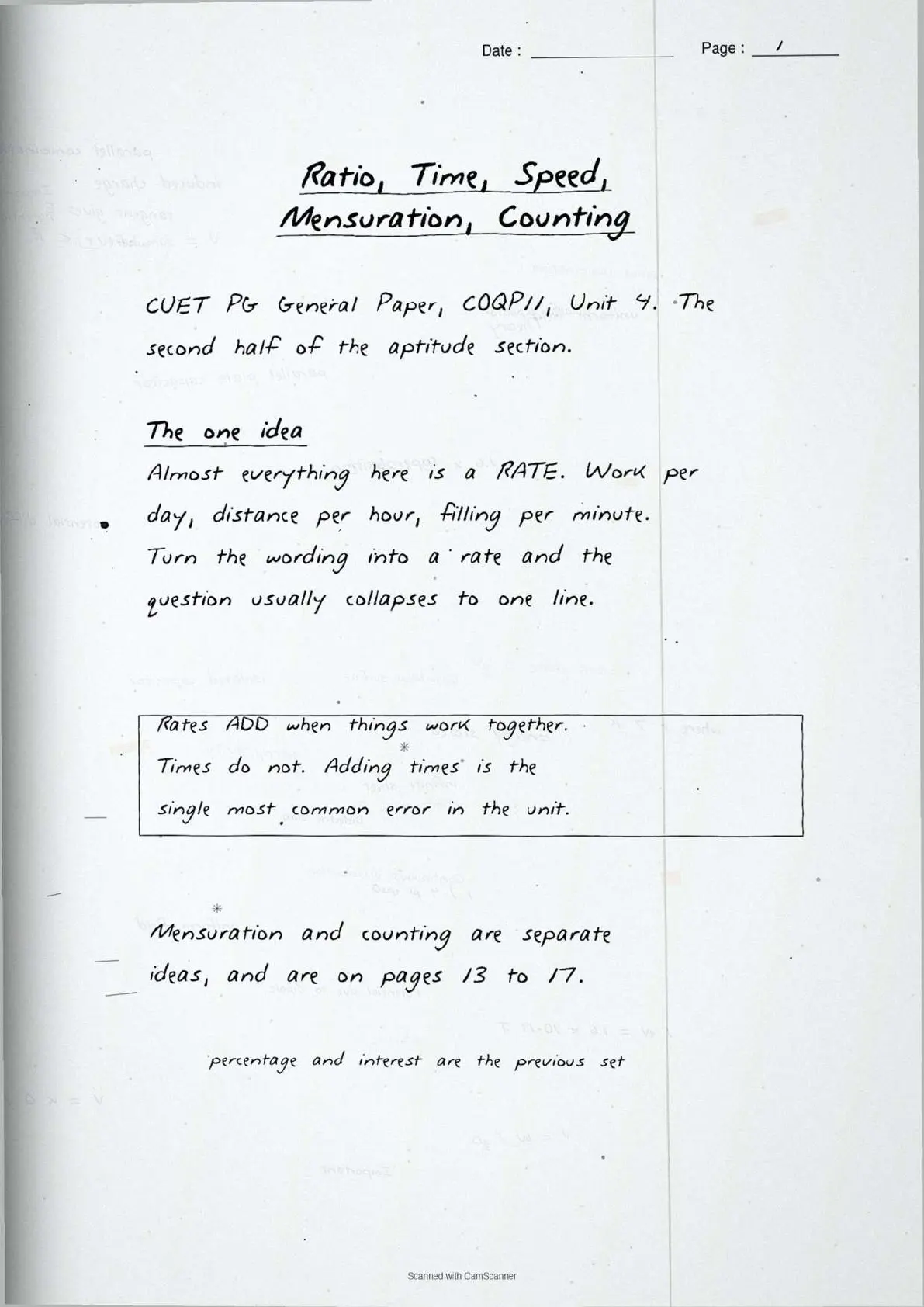
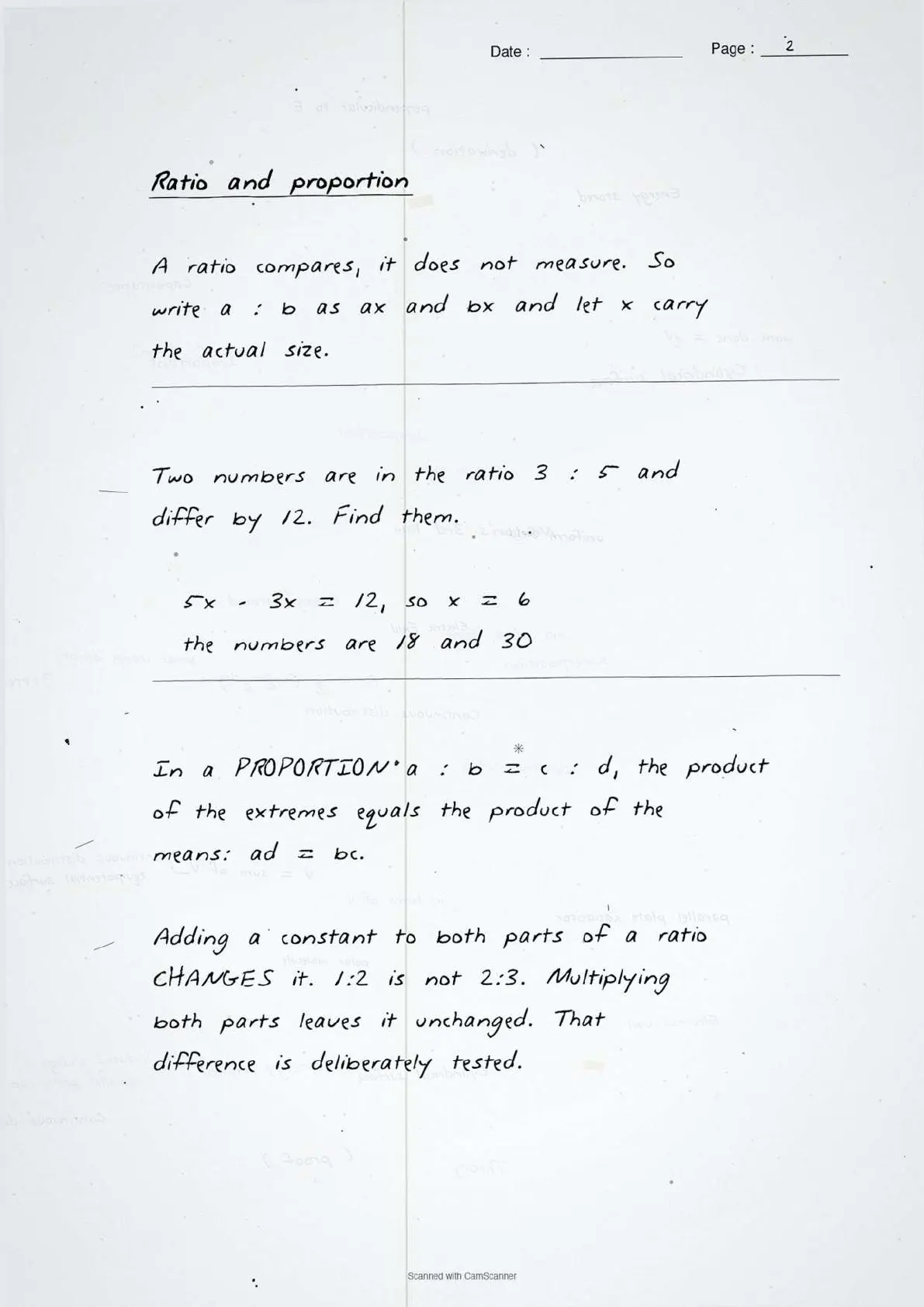
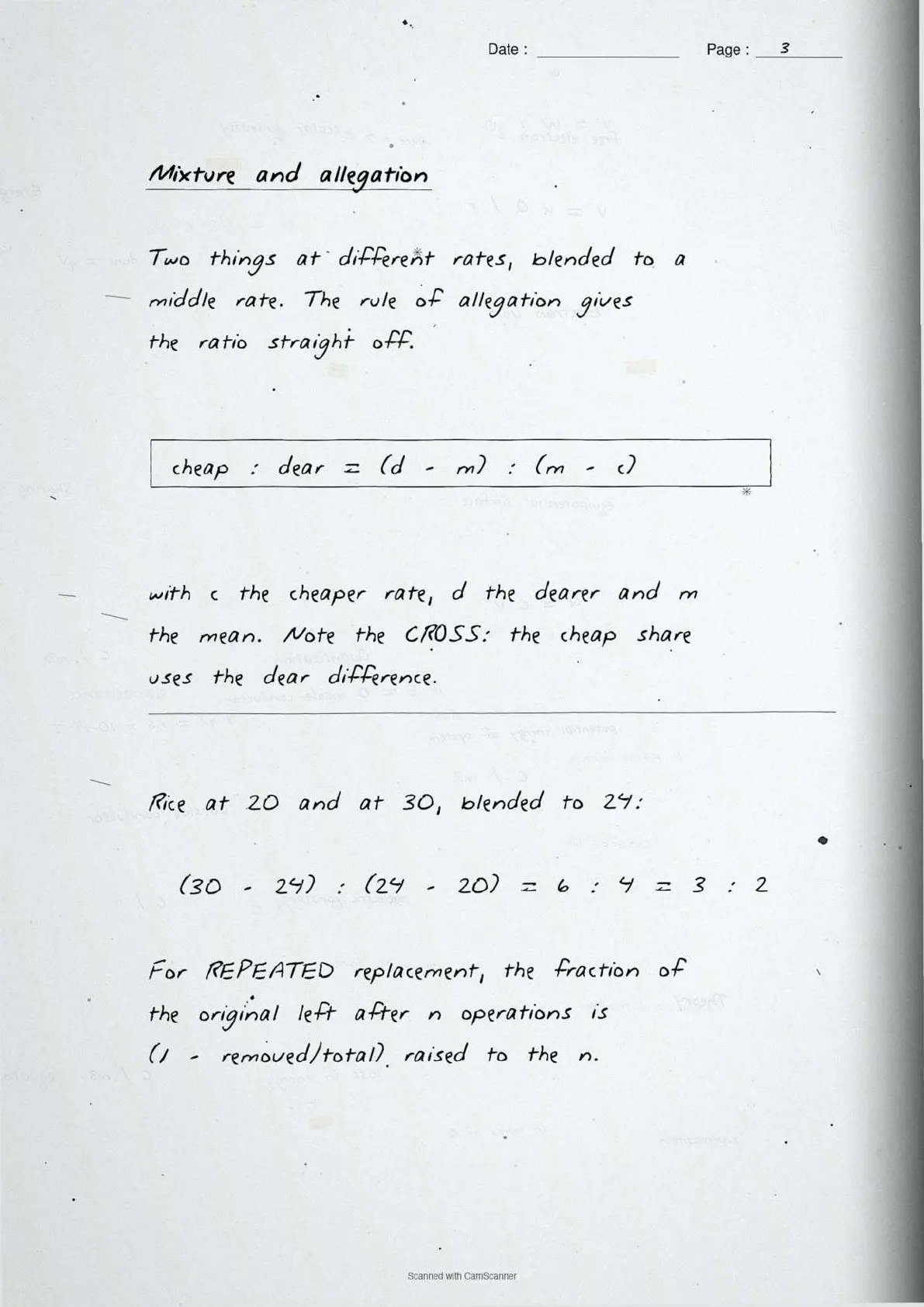
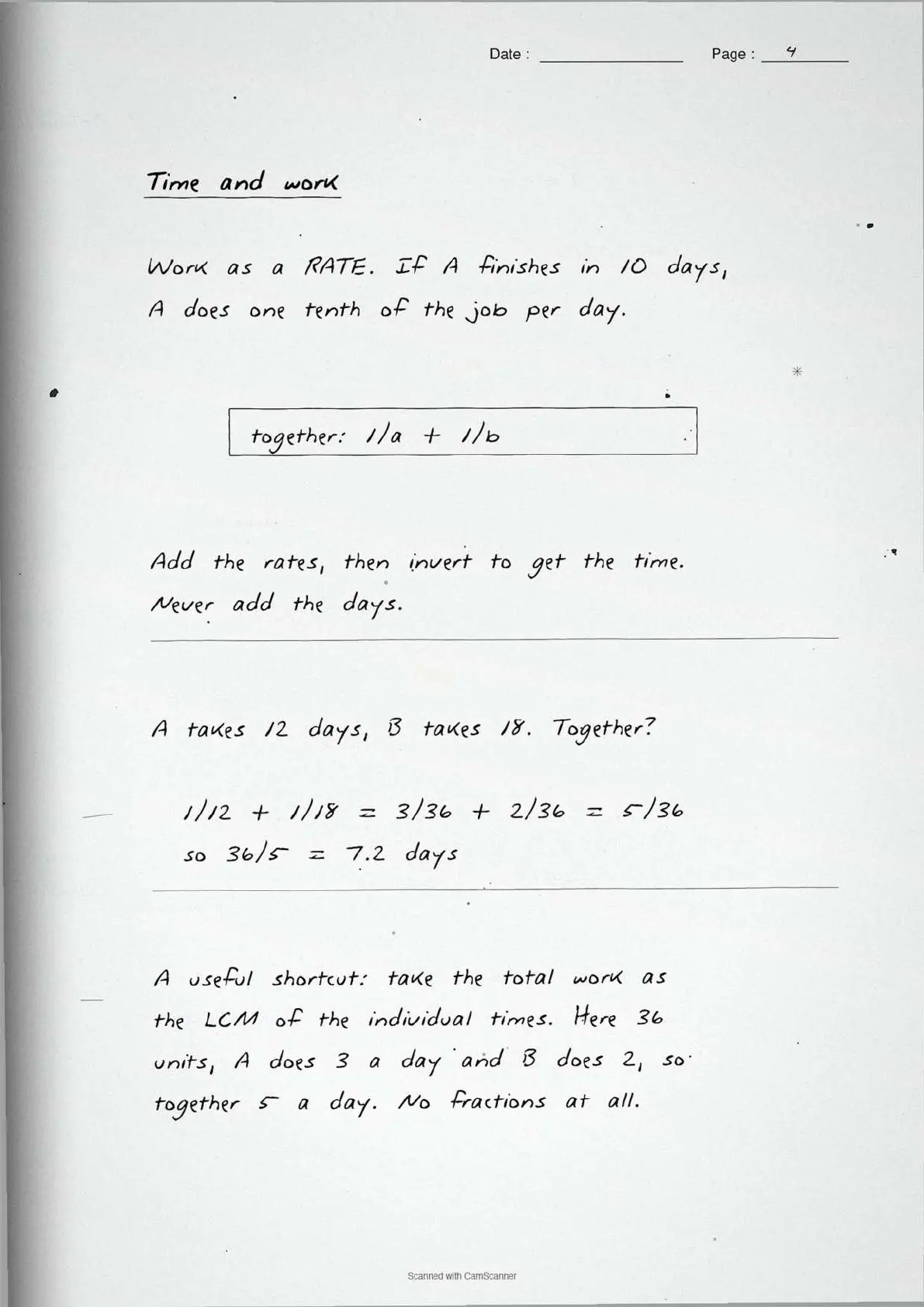
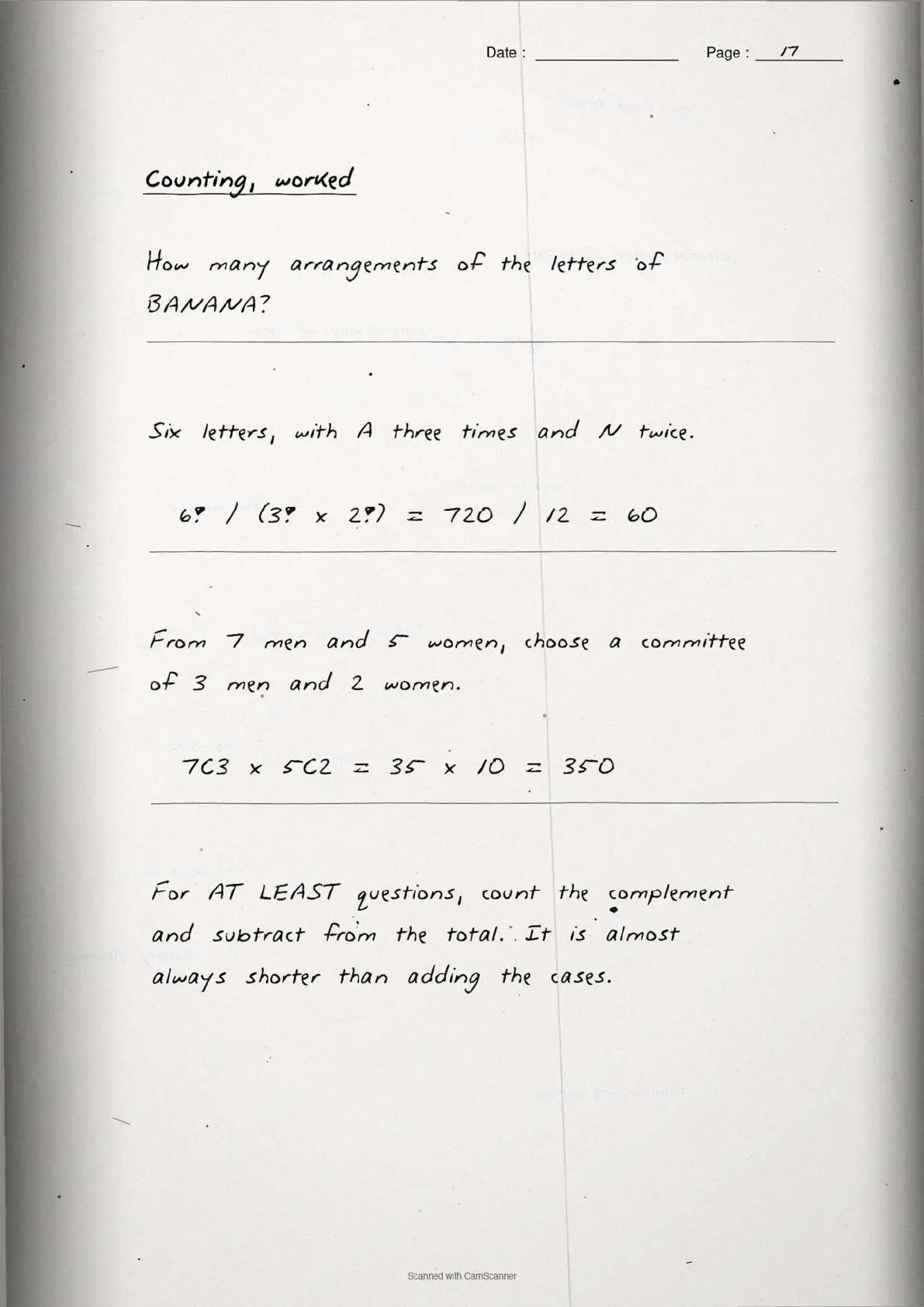
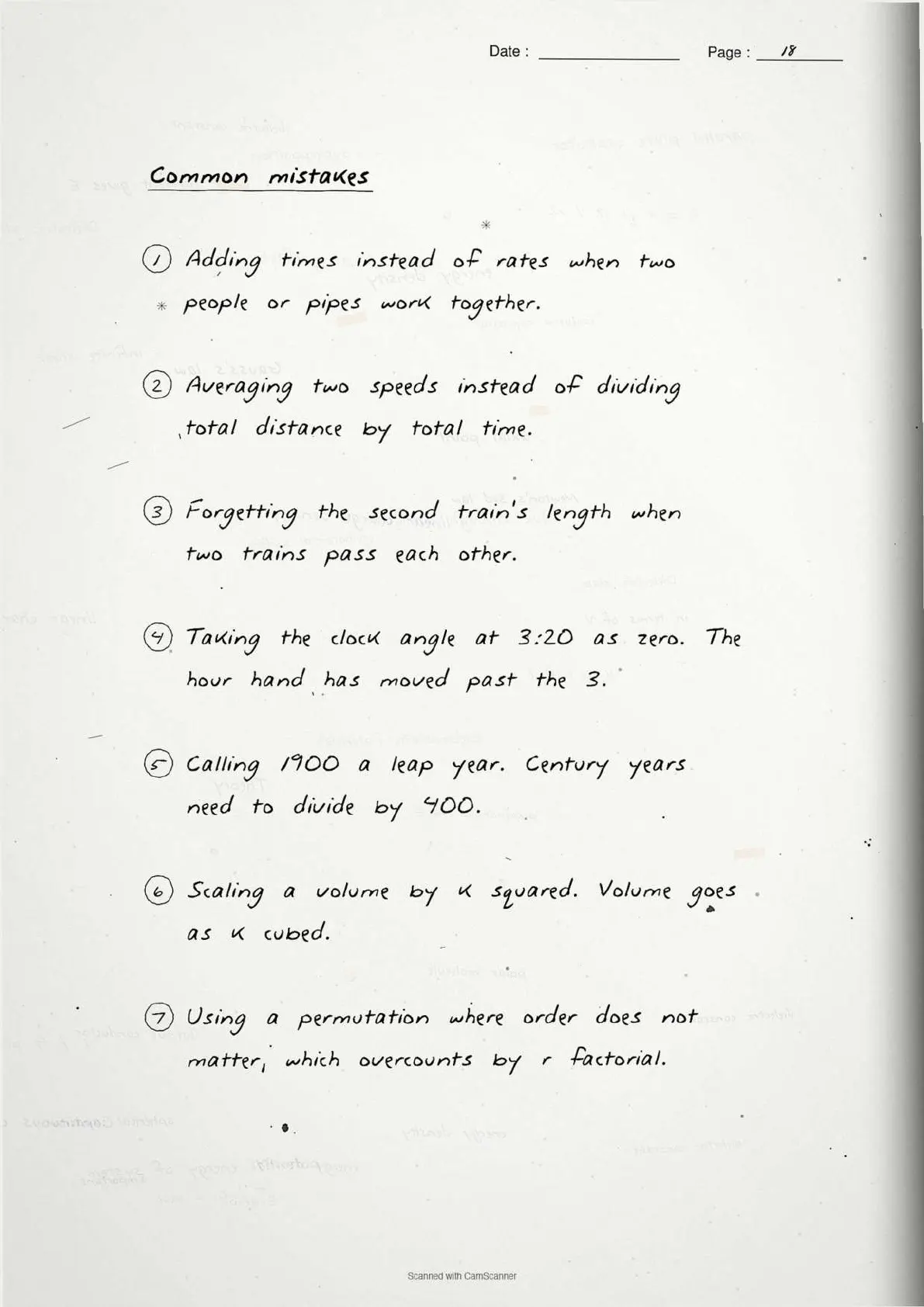
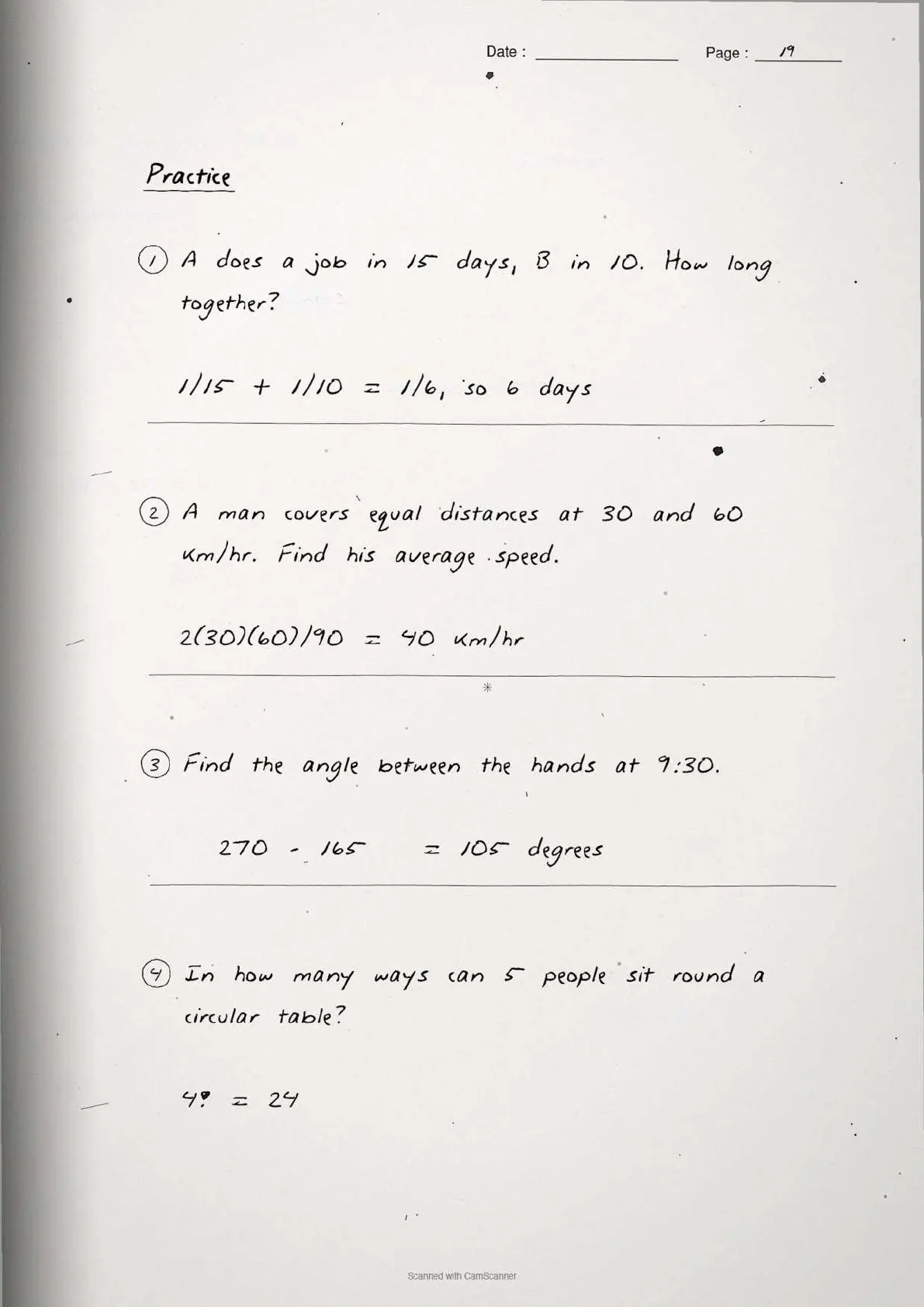
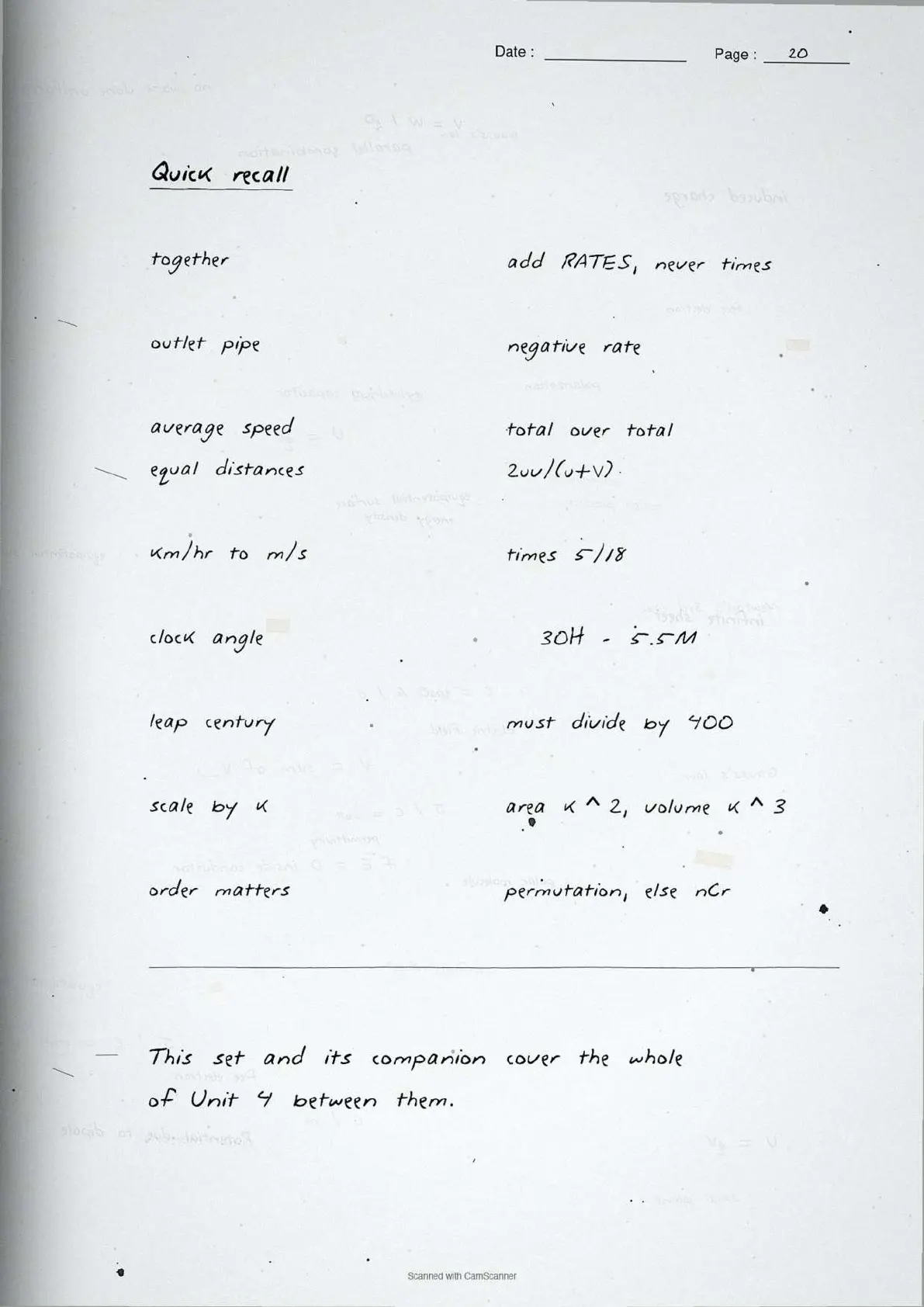
The notes are scans of a real notebook: short lines, boxed rules, and a margin note wherever something is easy to get wrong.
CUET PG General Paper Structure
COQP11 carries 75 bilingual questions across five official sections. This set takes the ratio, rate, shape and counting half of Unit 4's twenty-four sub-topics.
| Unit | Official section |
|---|---|
| 1 | English Comprehension |
| 2 | General Knowledge/Awareness |
| 3 | Computer Basics |
| 4 | General Aptitude & Logical Reasoning |
| 5 | Logical Reasoning |
What the Notes Cover
- Ratio and proportion, and mixture and allegation
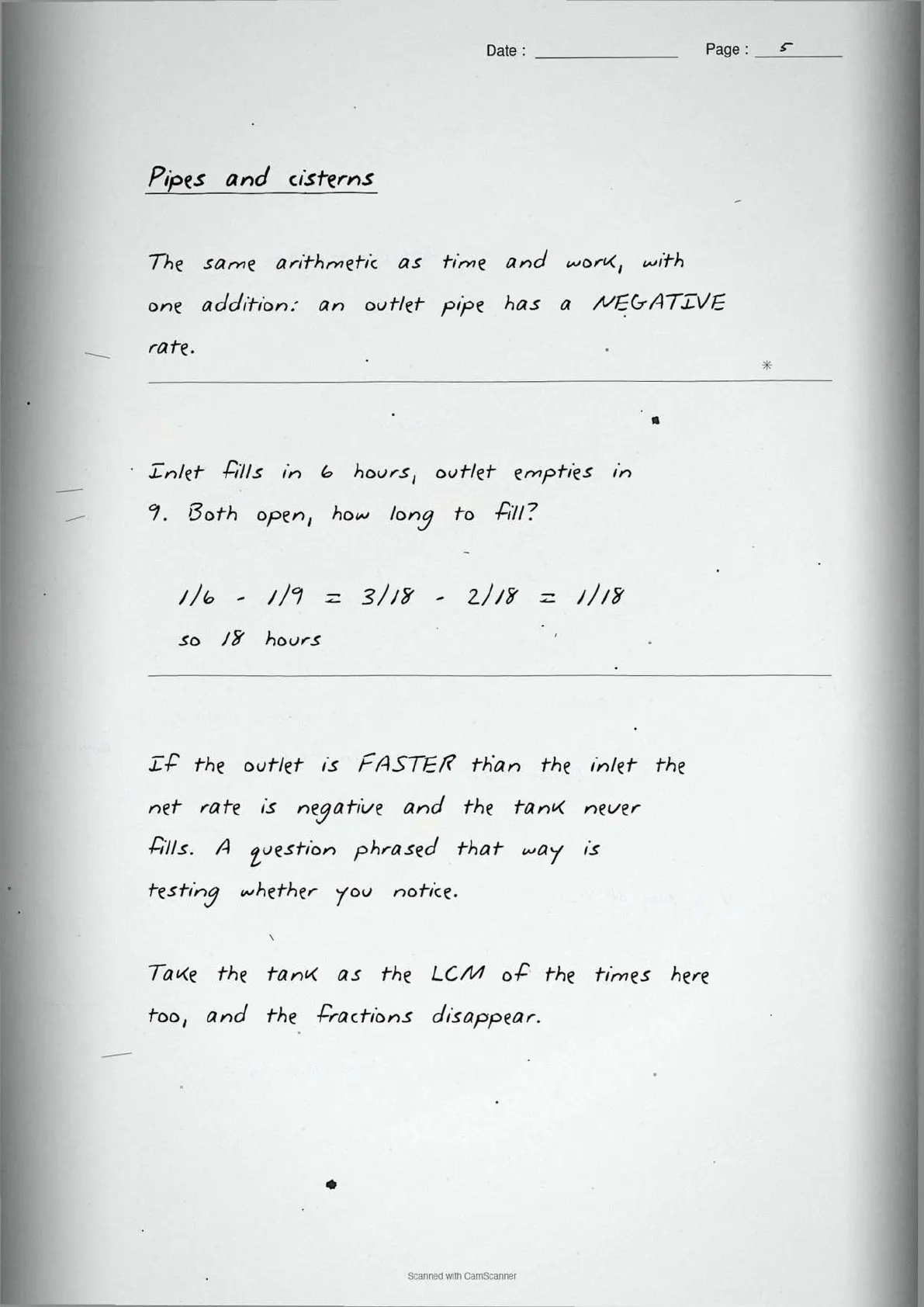
- Time and work, and pipes and cisterns with a negative rate
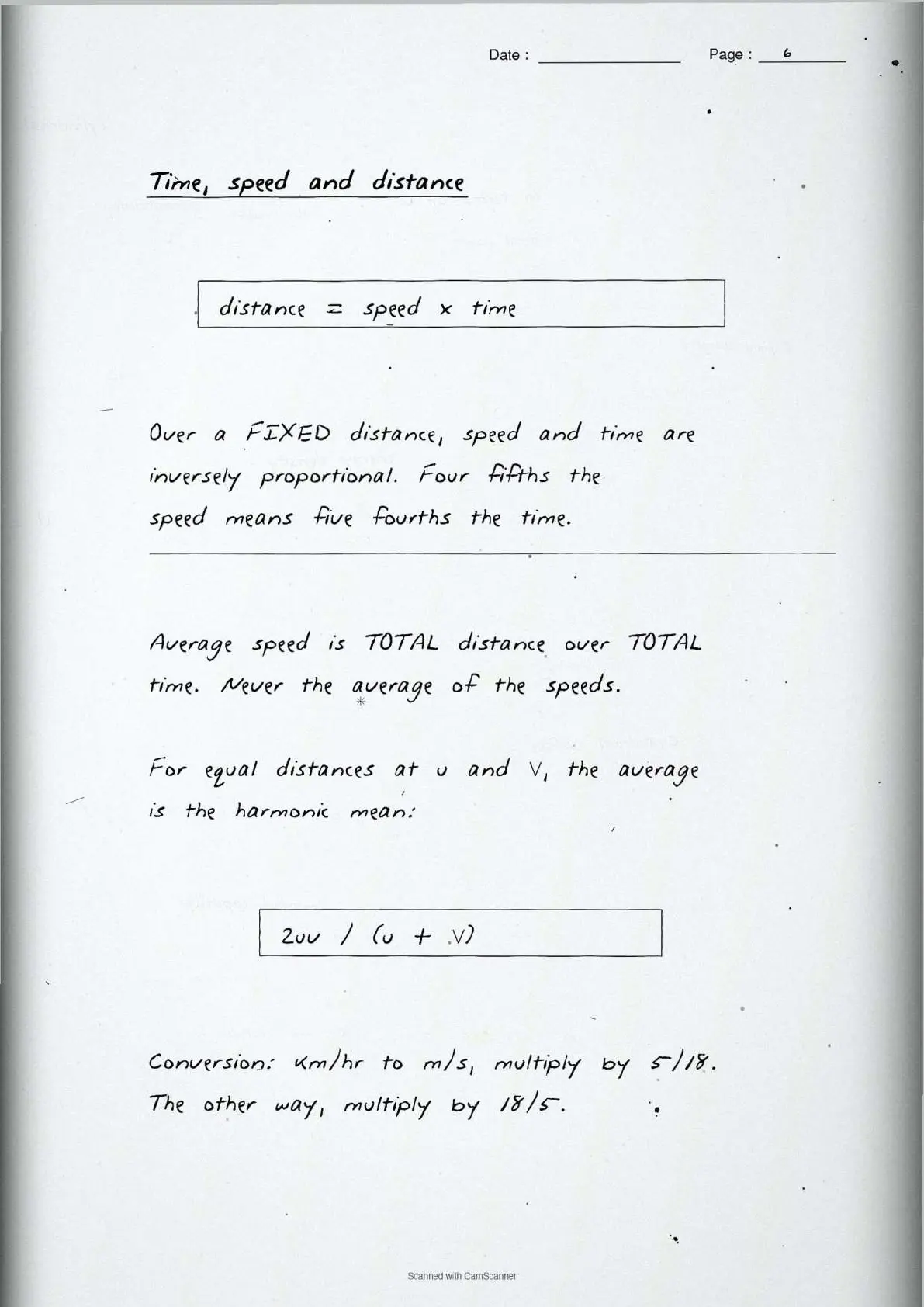
- Time, speed and distance, including the harmonic mean for equal distances
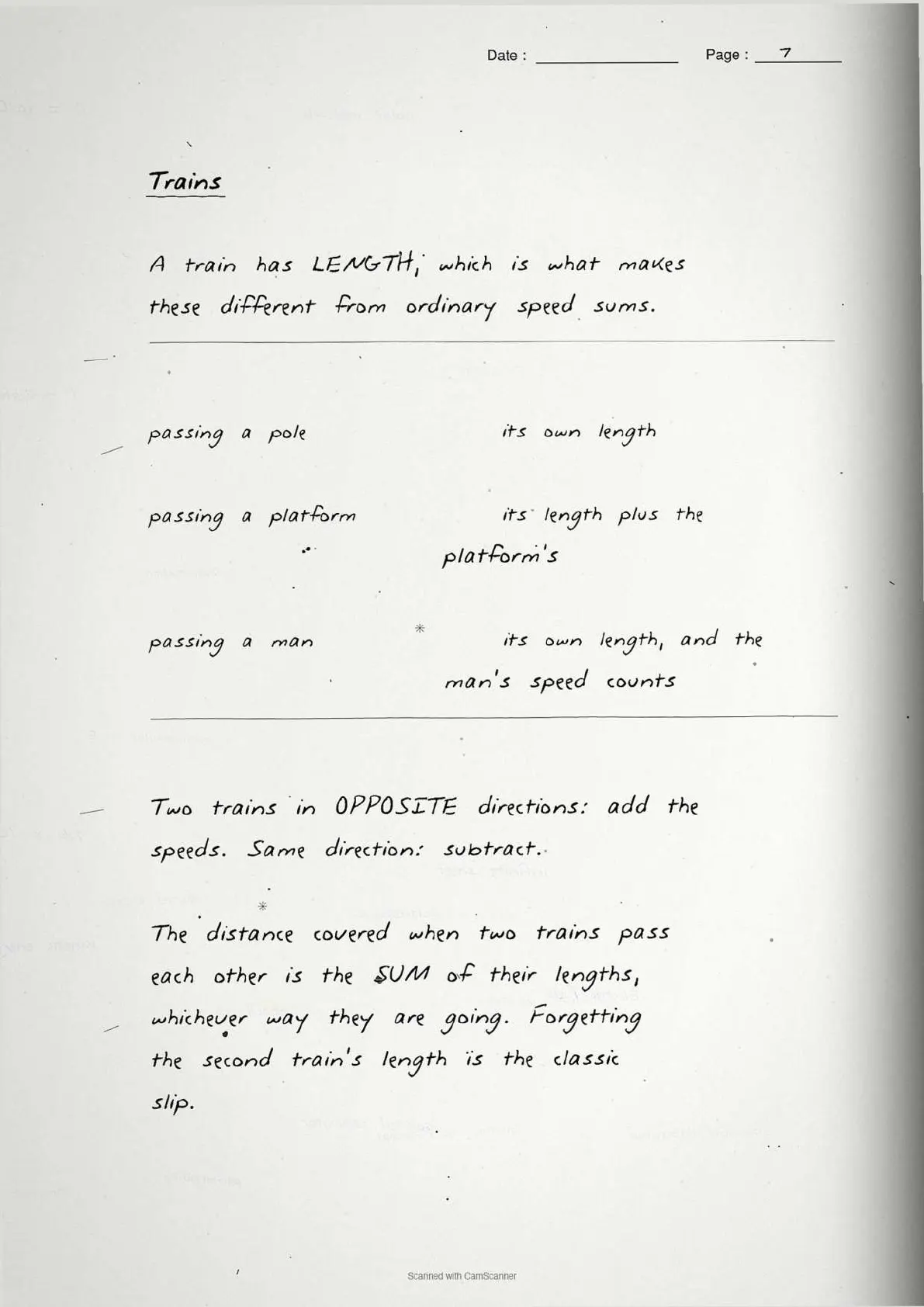
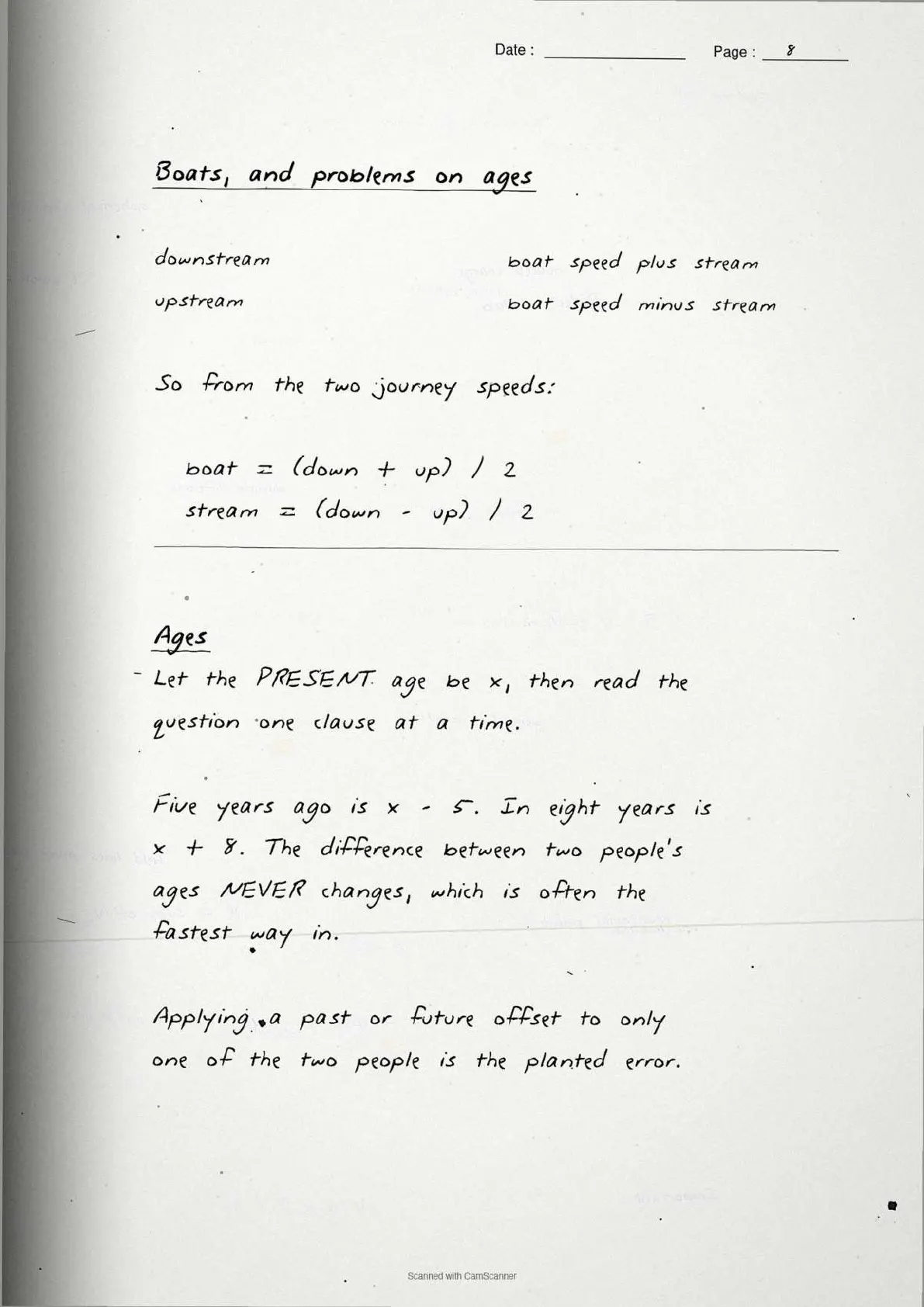
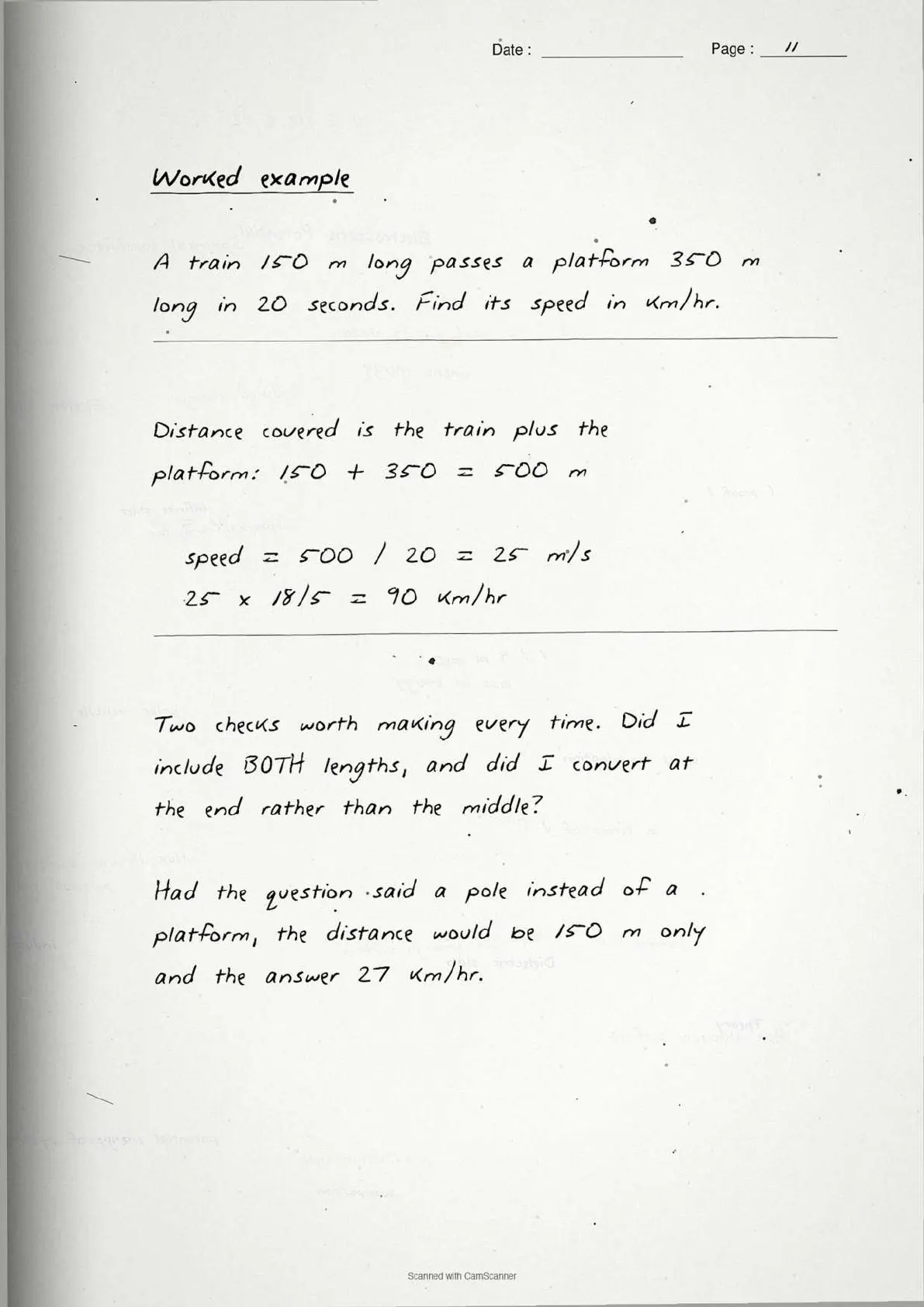
- Trains, boats and streams, and problems on ages
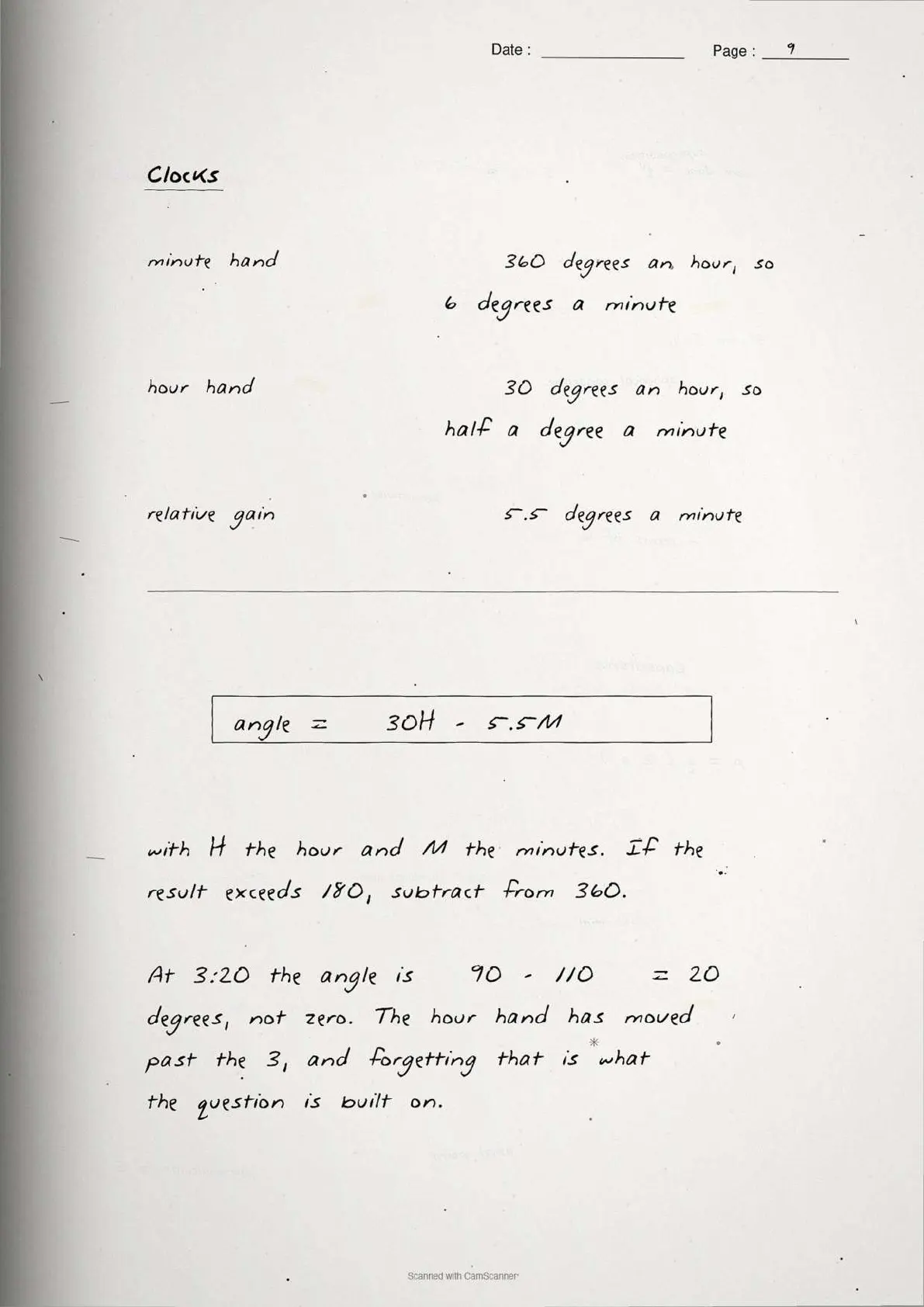
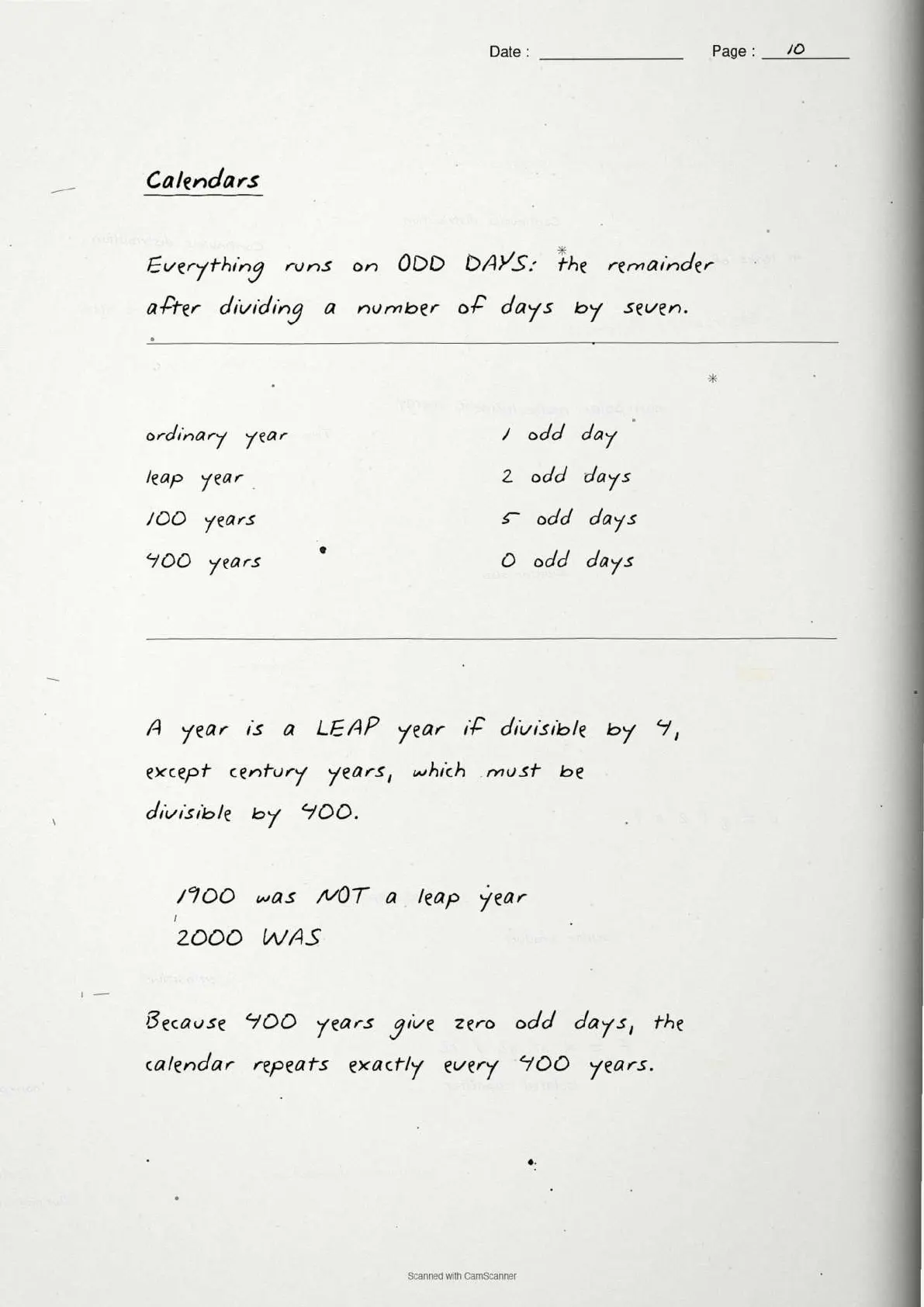
- Clocks, with the angle formula, and calendars, with odd days
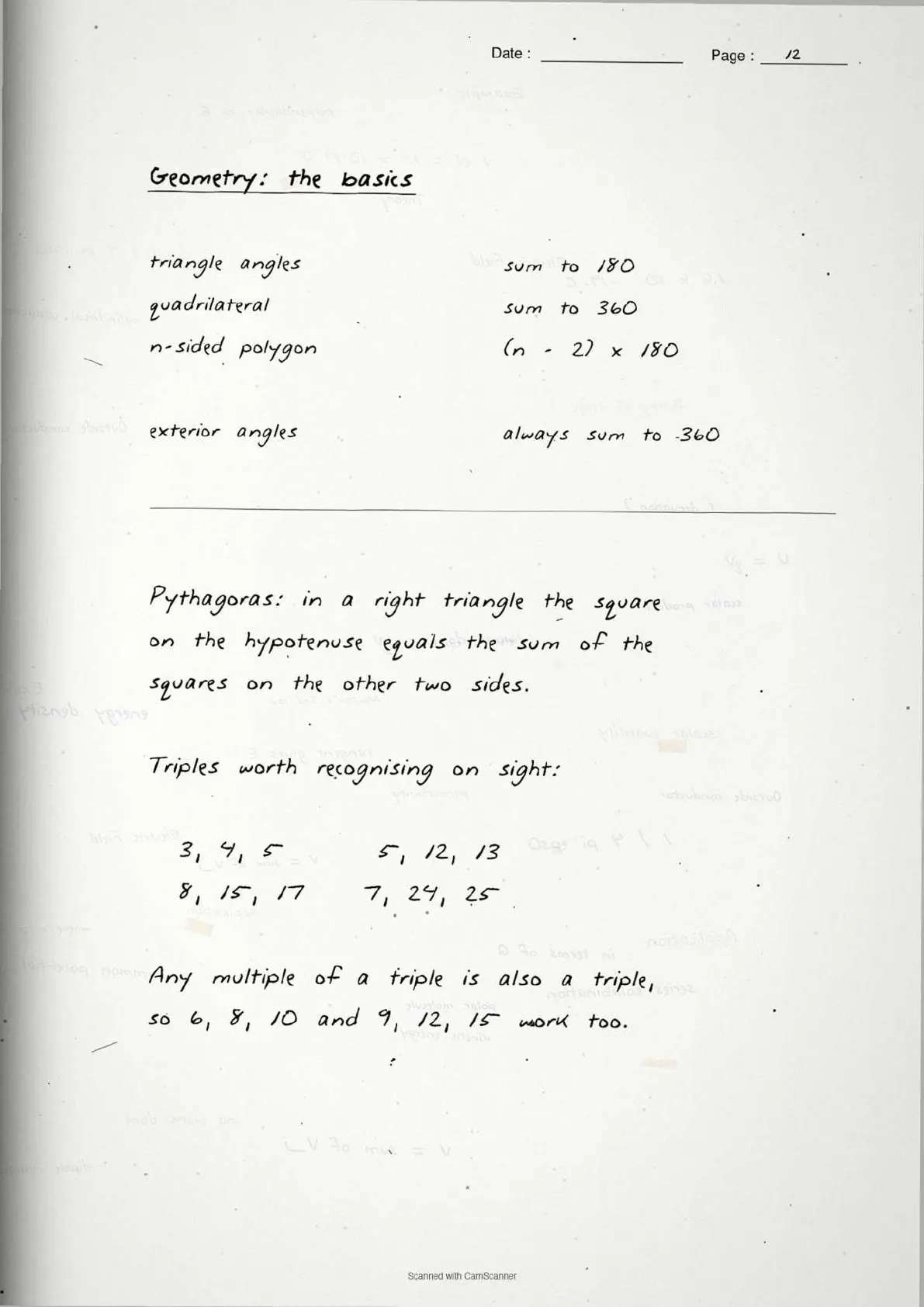
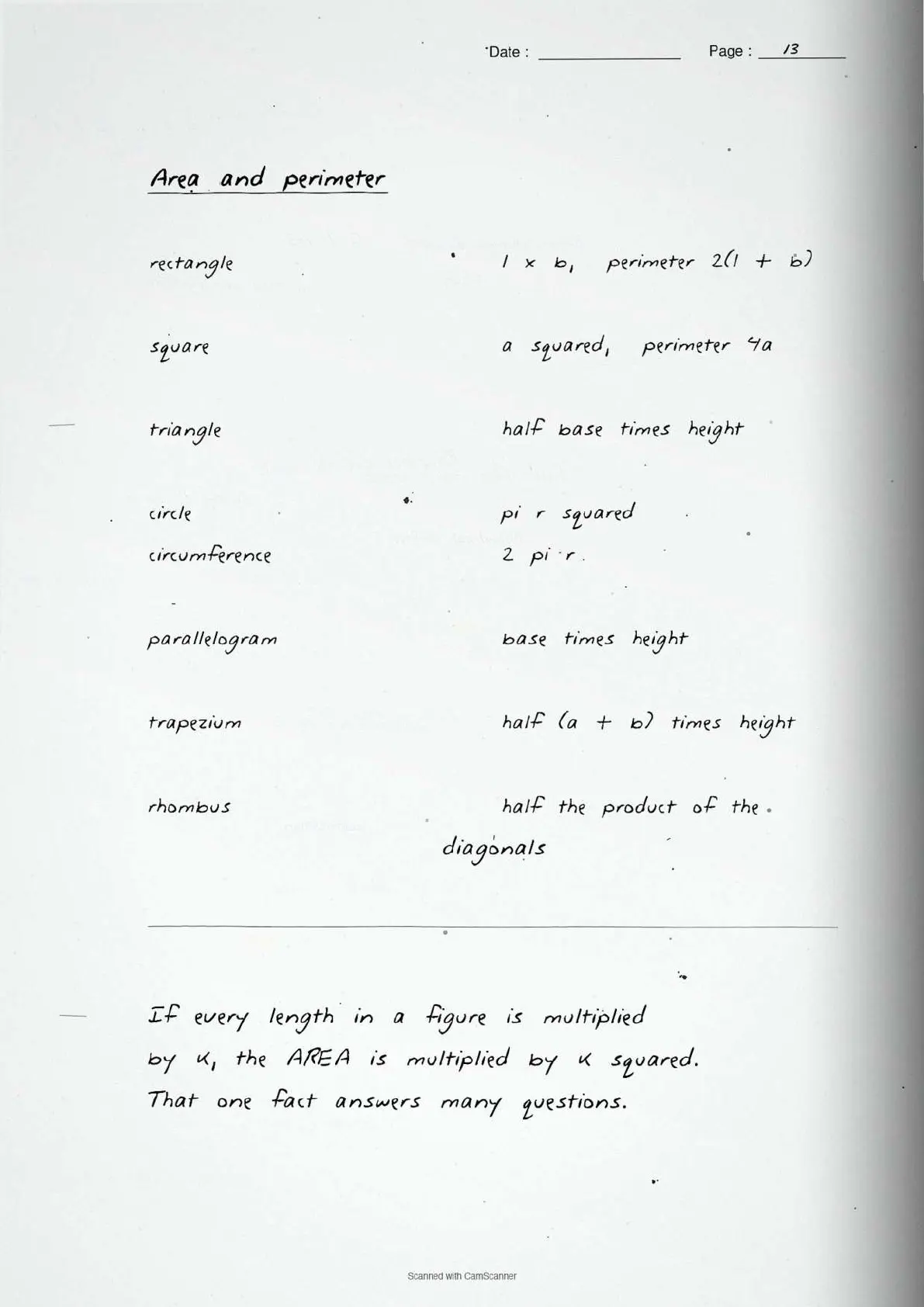
- Geometry, area and perimeter
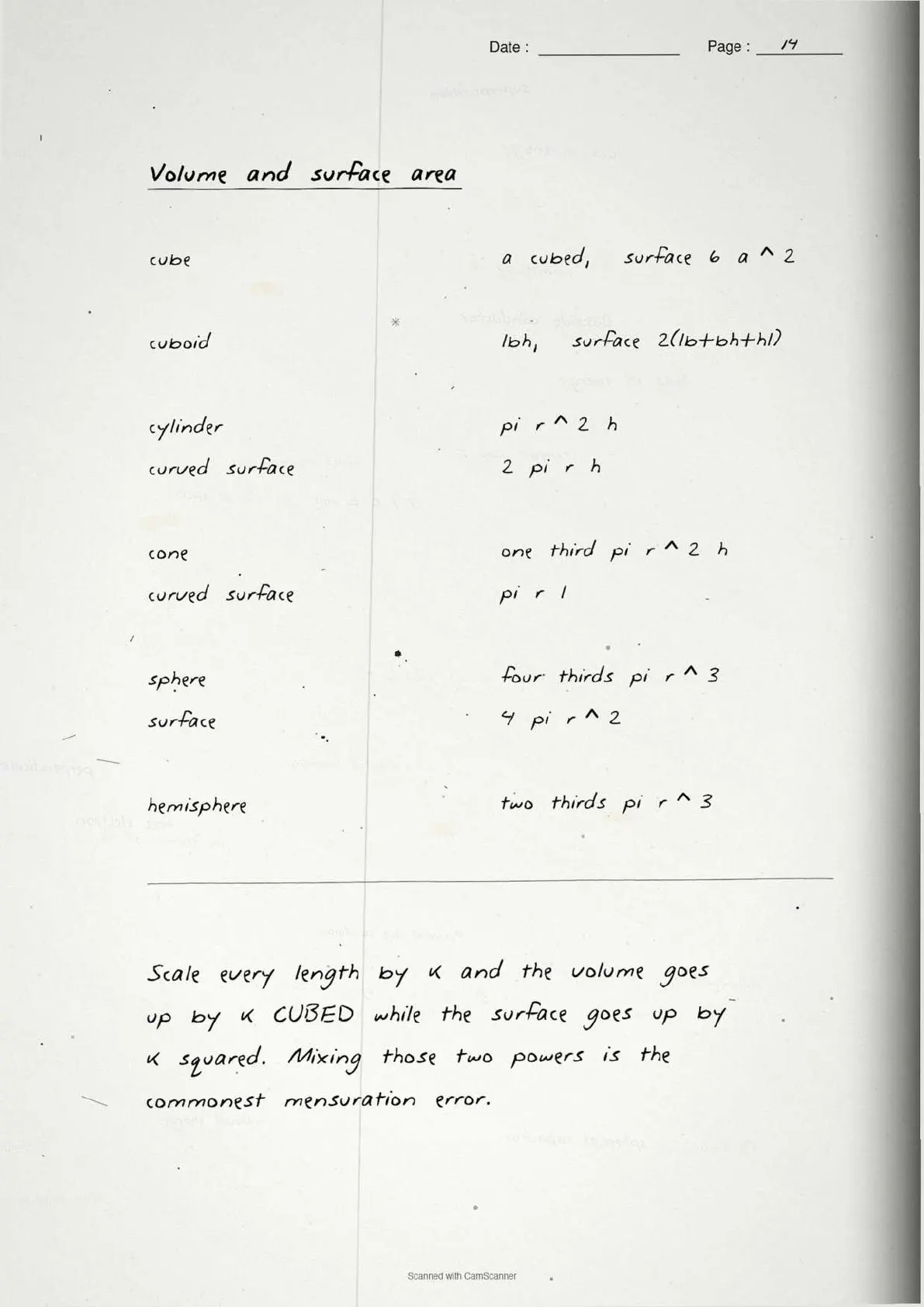
- Volume and surface area, and how they scale
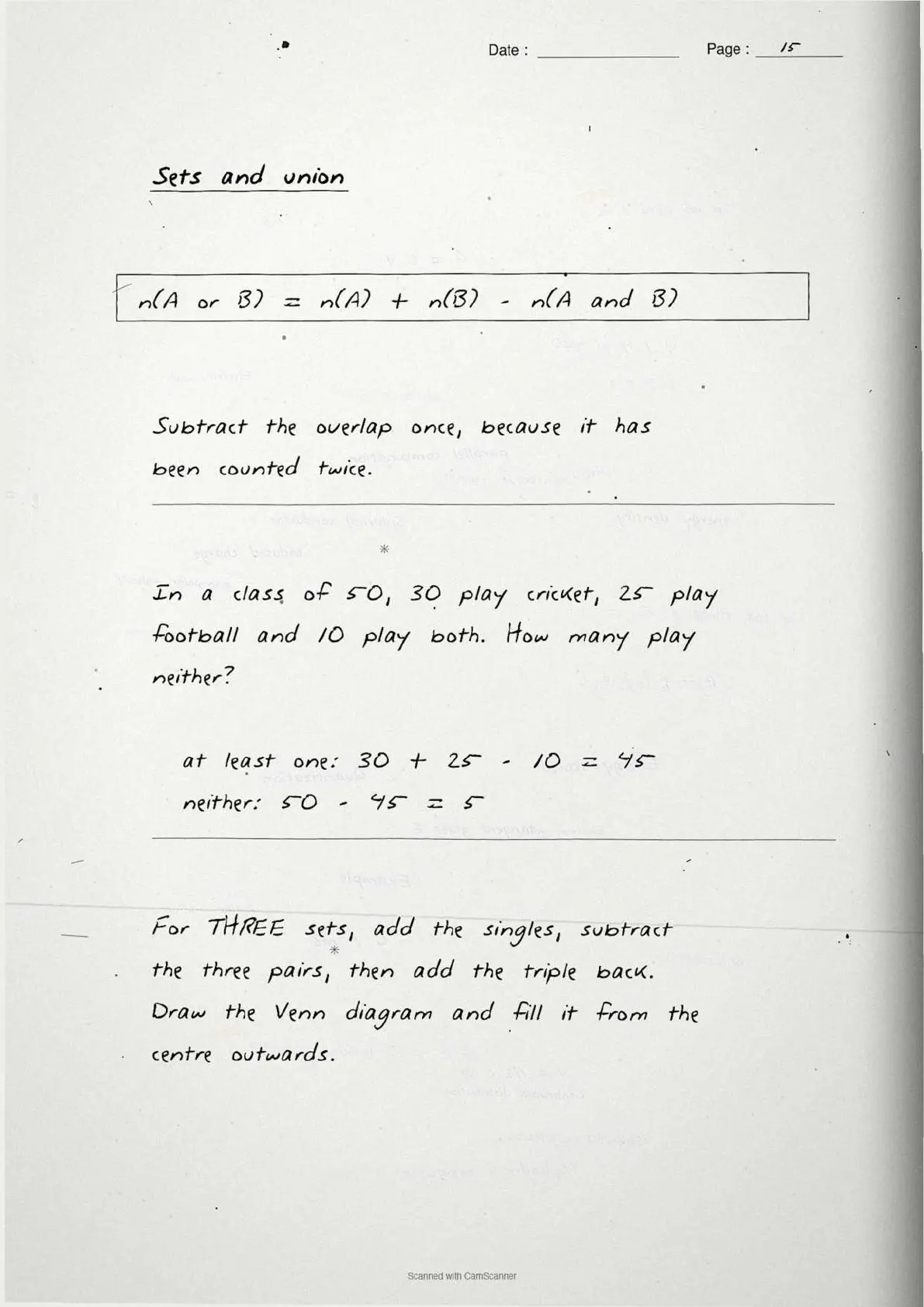
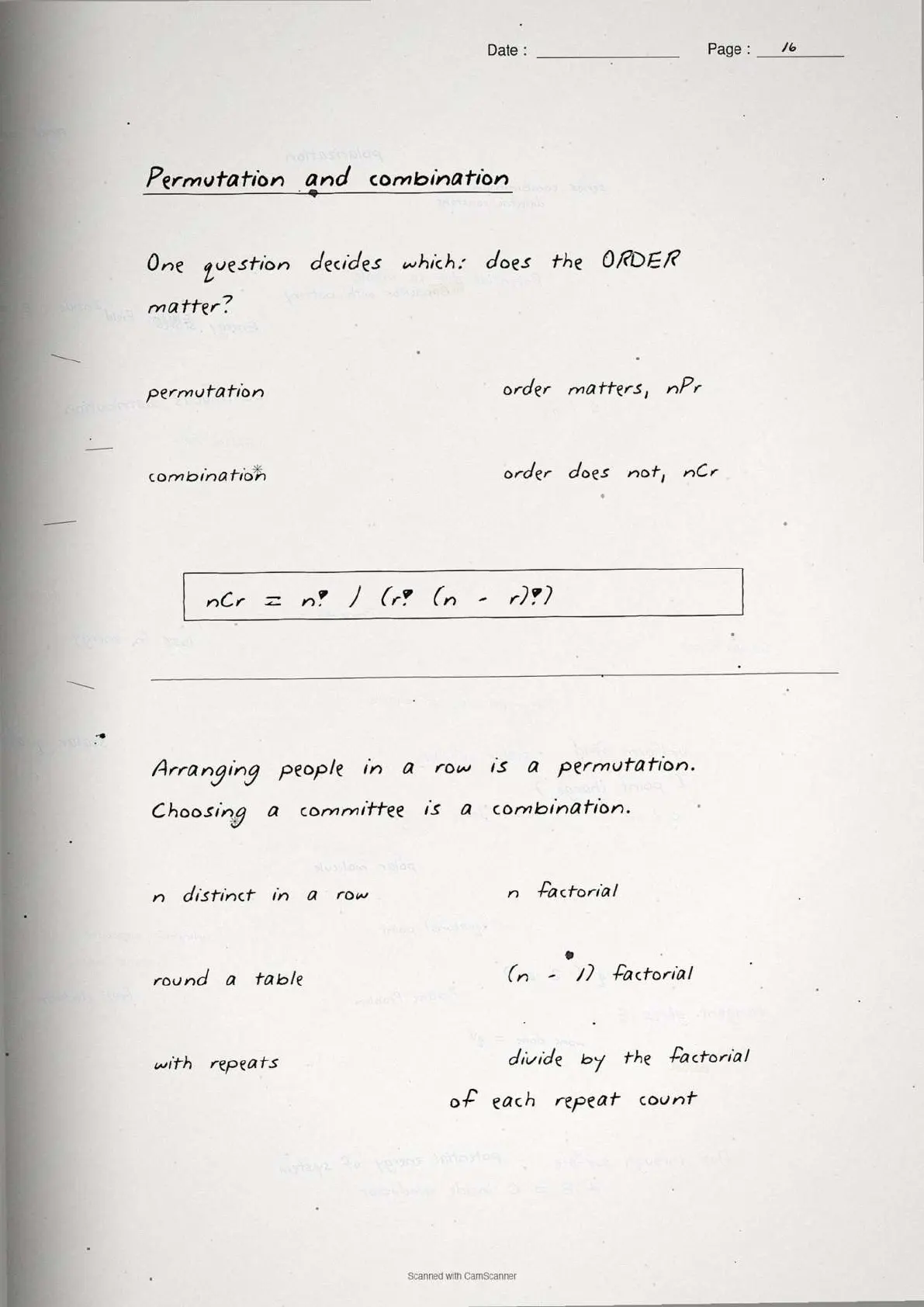
- Sets and union, and permutation and combination
How to Approach the Section
Almost everything here is a rate. Work per day, distance per hour, filling per minute. Turn the wording into a rate and the question usually collapses to one line.
Rates add when things work together; times do not. Adding times is the single most common error in the unit, and taking the total work as the LCM of the individual times removes the fractions entirely.
For mensuration, one fact answers a surprising number of questions: scale every length by k and the area goes up by k squared while the volume goes up by k cubed.
Common Mistakes
- Adding times instead of rates when two people or pipes work together
- Averaging two speeds instead of dividing total distance by total time
- Forgetting the second train's length when two trains pass each other
- Taking the clock angle at 3:20 as zero. The hour hand has moved past the 3
- Calling 1900 a leap year. Century years must divide by 400
- Scaling a volume by k squared. Volume goes as k cubed
- Using a permutation where order does not matter, which overcounts
Video Revision
Source: Adda247 Law Entrance Exams
How to Use These Notes
Pages 13 and 14 carry the area, volume and surface formulas in one place, and page 20 reduces the whole set to nine lines for a last-hour revision.
Page 9's clock formula and page 10's odd-days rule are the two things in this set most worth memorising outright, because neither can be worked out under time pressure.
The companion set covers averages, percentage, profit and interest.
CUET PG Aptitude Ratio Time and Mensuration Notes FAQs
Ques. How do I combine two workers or two pipes?
Ans. Add their rates, never their times. If one finishes in a days and the other in b, together they do 1/a plus 1/b of the job per day, and the time is the reciprocal of that.
Ques. What is the formula for the angle between clock hands?
Ans. The modulus of 30H minus 5.5M, where H is the hour and M the minutes. If the result exceeds 180, subtract it from 360.
Ques. Which years are leap years?
Ans. Those divisible by 4, except century years, which must also be divisible by 400. So 1900 was not a leap year and 2000 was.
Ques. When do I use a combination rather than a permutation?
Ans. When order does not matter. Choosing a committee is a combination; arranging people in a row is a permutation. Using the wrong one overcounts by r factorial.
Ques. Can the notes be downloaded free?
Ans. Yes. All 20 pages can be read on this page and downloaded at no cost.



Comments