




The National Testing Agency (NTA) conducted the CUET PG B.Ed. (COQP03) exam on March 8, 2026, during Shift 1 (9:00 AM – 10:30 AM). This live update covers the CUET PG B.Ed. 2026 question paper analysis, memory-based questions shared by candidates, and the direct link to download the B.Ed. 2026 question paper PDF with solutions.
According to students who appeared for the exam, the overall paper was Moderate in difficulty. Most questions were focused on educational psychology, teaching aptitude, research basics, and concepts of lifelong learning and extension education, while a few questions also tested knowledge of education policies and classroom pedagogy.
CUET PG B.Ed. 2026 Question Paper with Solutions PDF
| CUET PG B.Ed. 2026 Question Paper with Solutions PDF | Download PDF | Check Solutions |
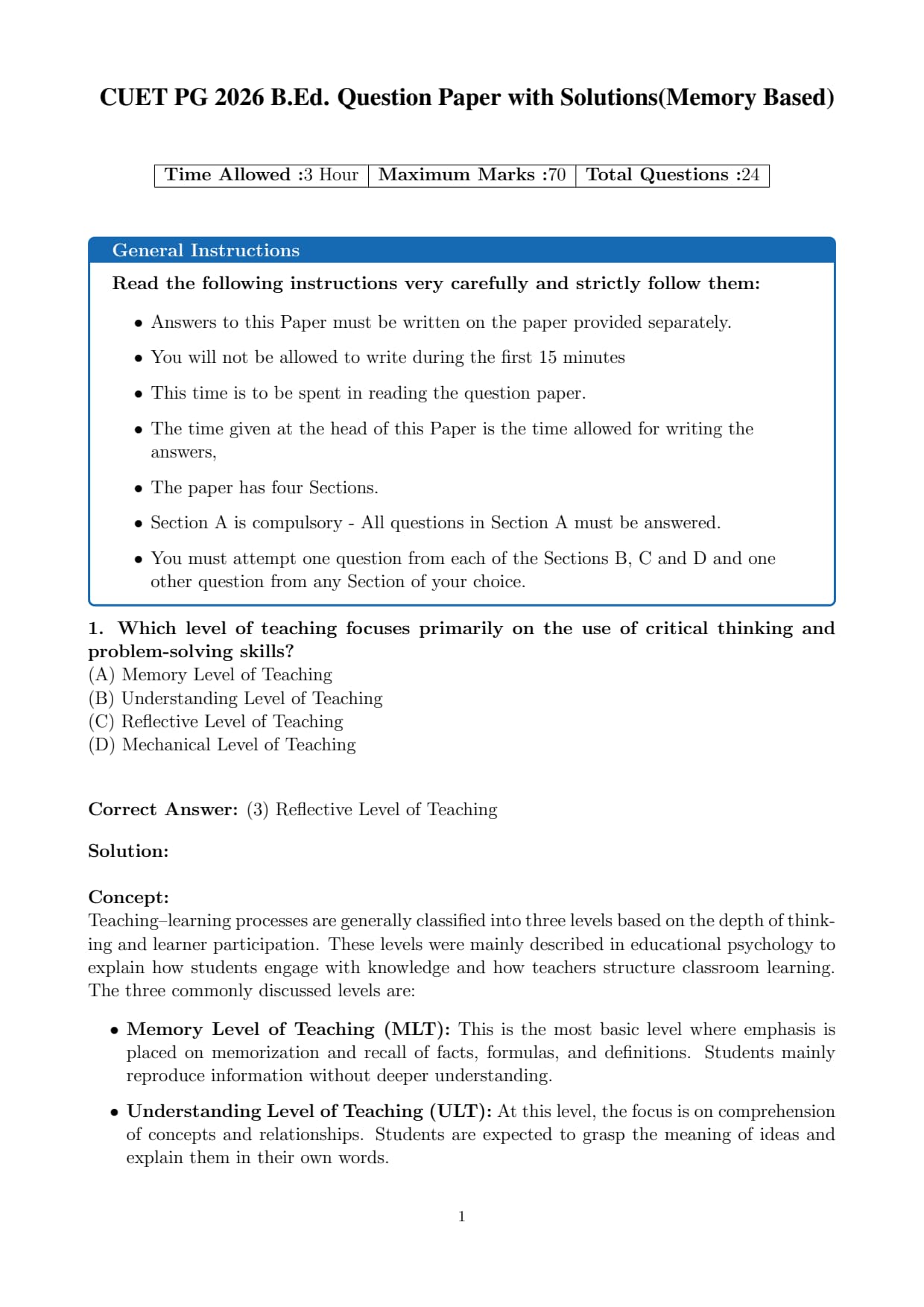
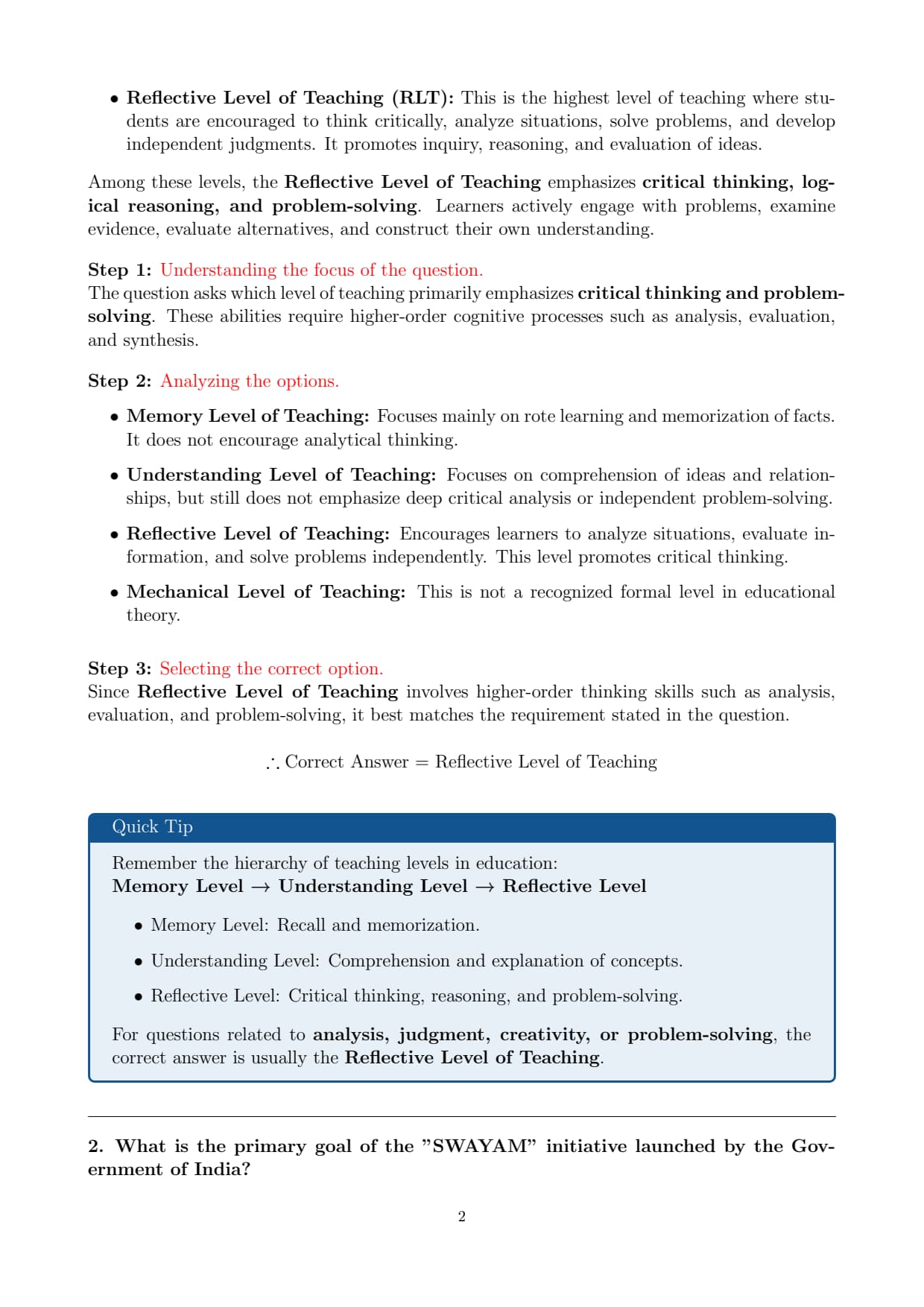
Which level of teaching focuses primarily on the use of critical thinking and problem-solving skills?
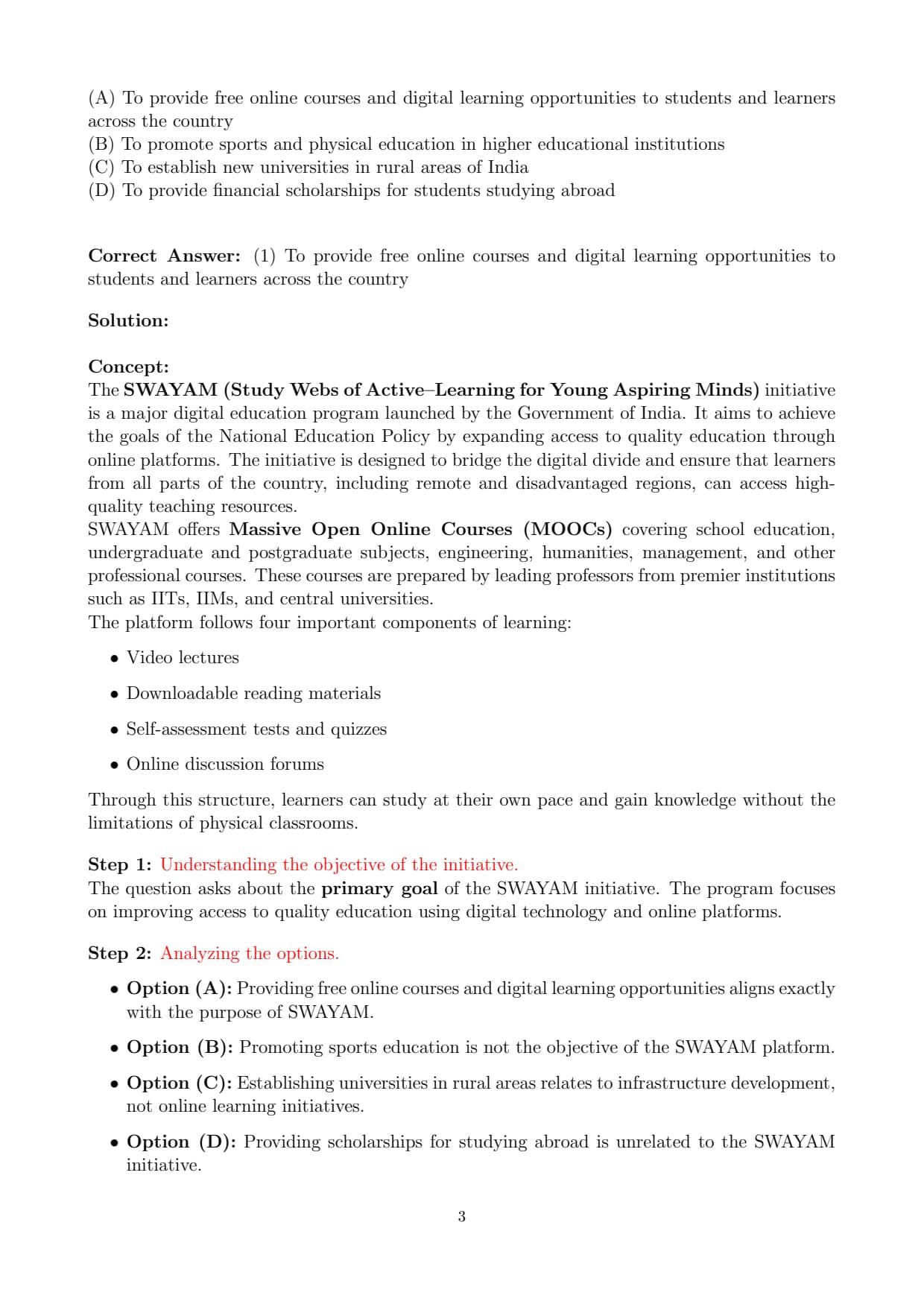
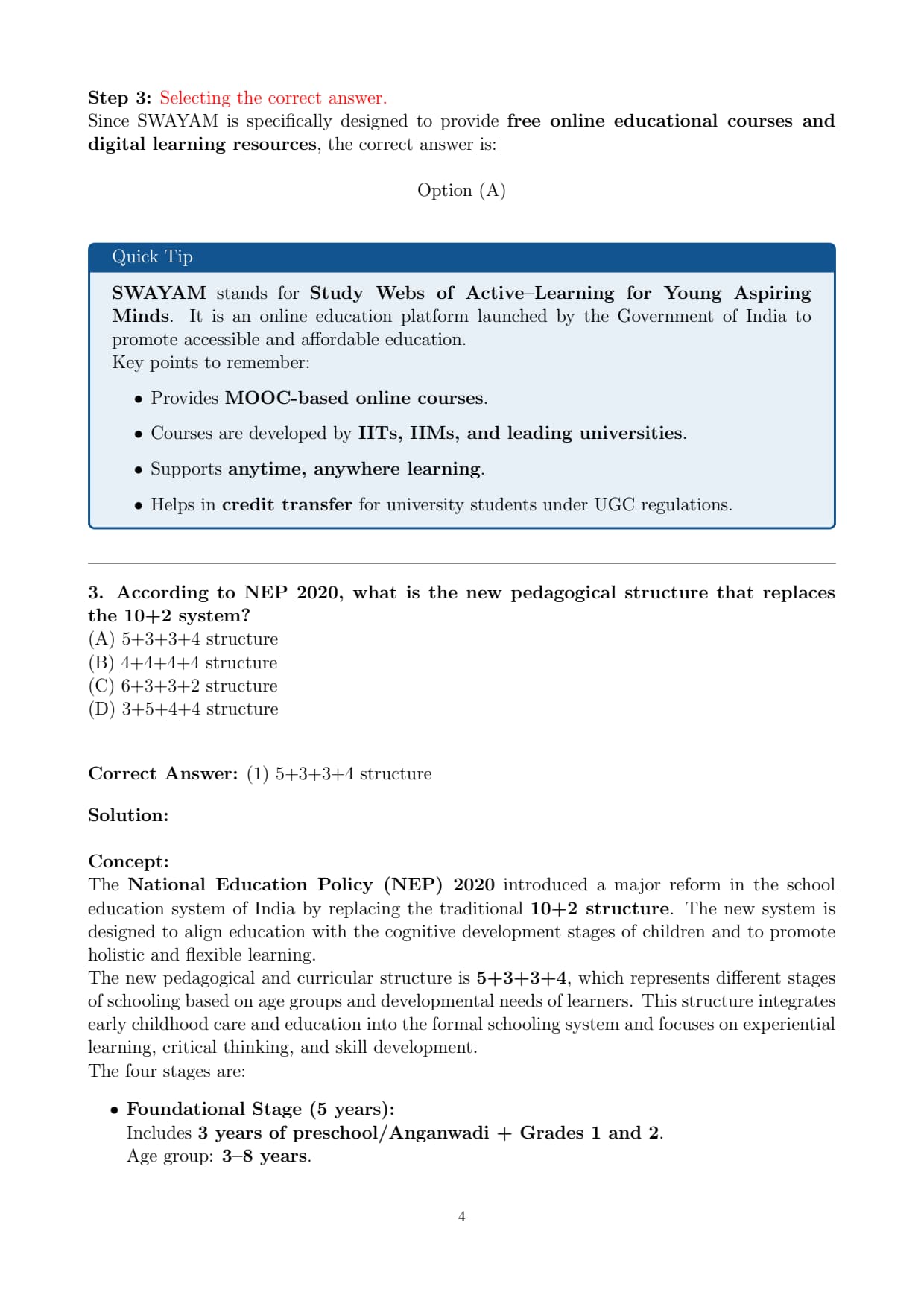
What is the primary goal of the "SWAYAM" initiative launched by the Government of India?
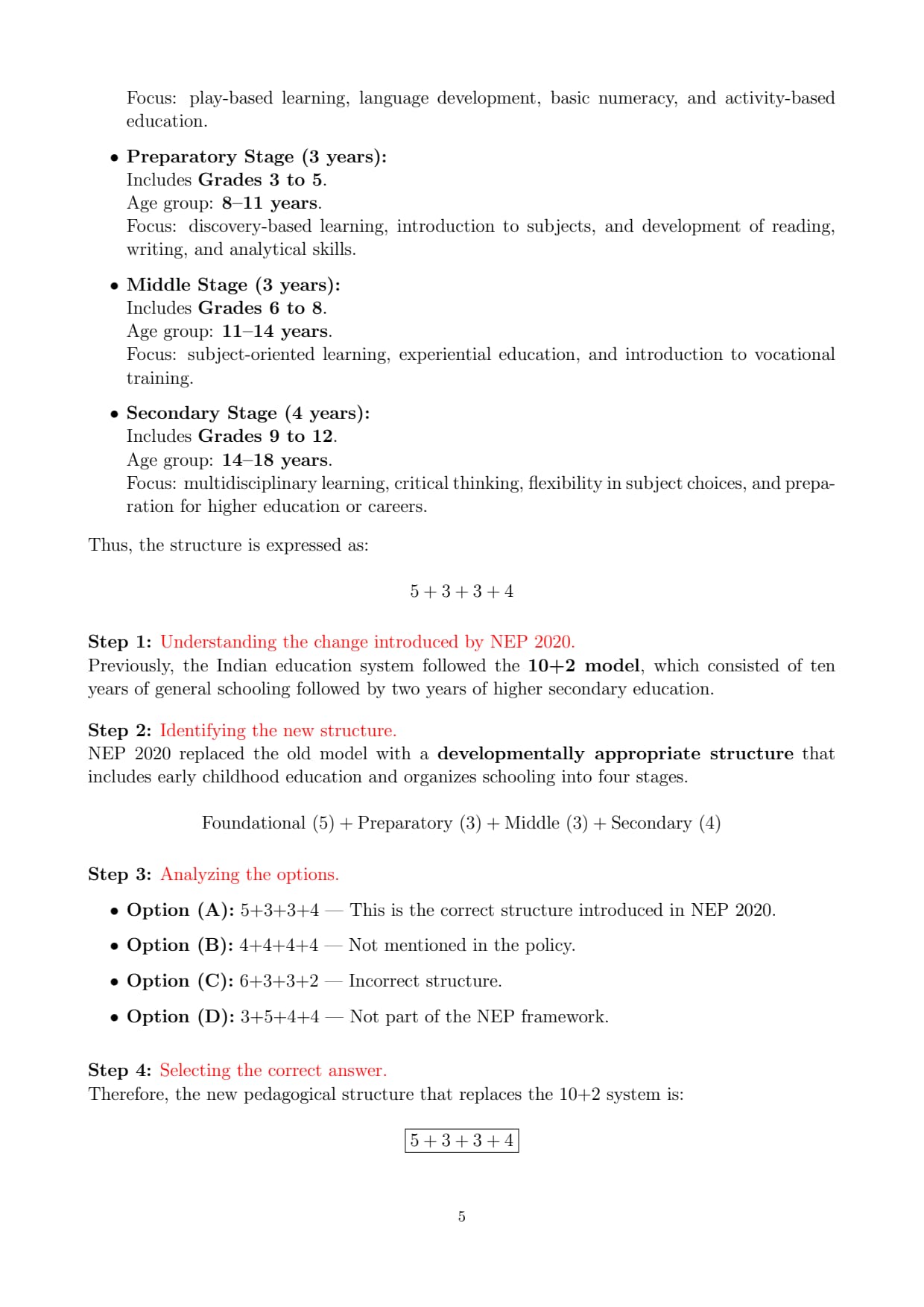
According to NEP 2020, what is the new pedagogical structure that replaces the 10+2 system?
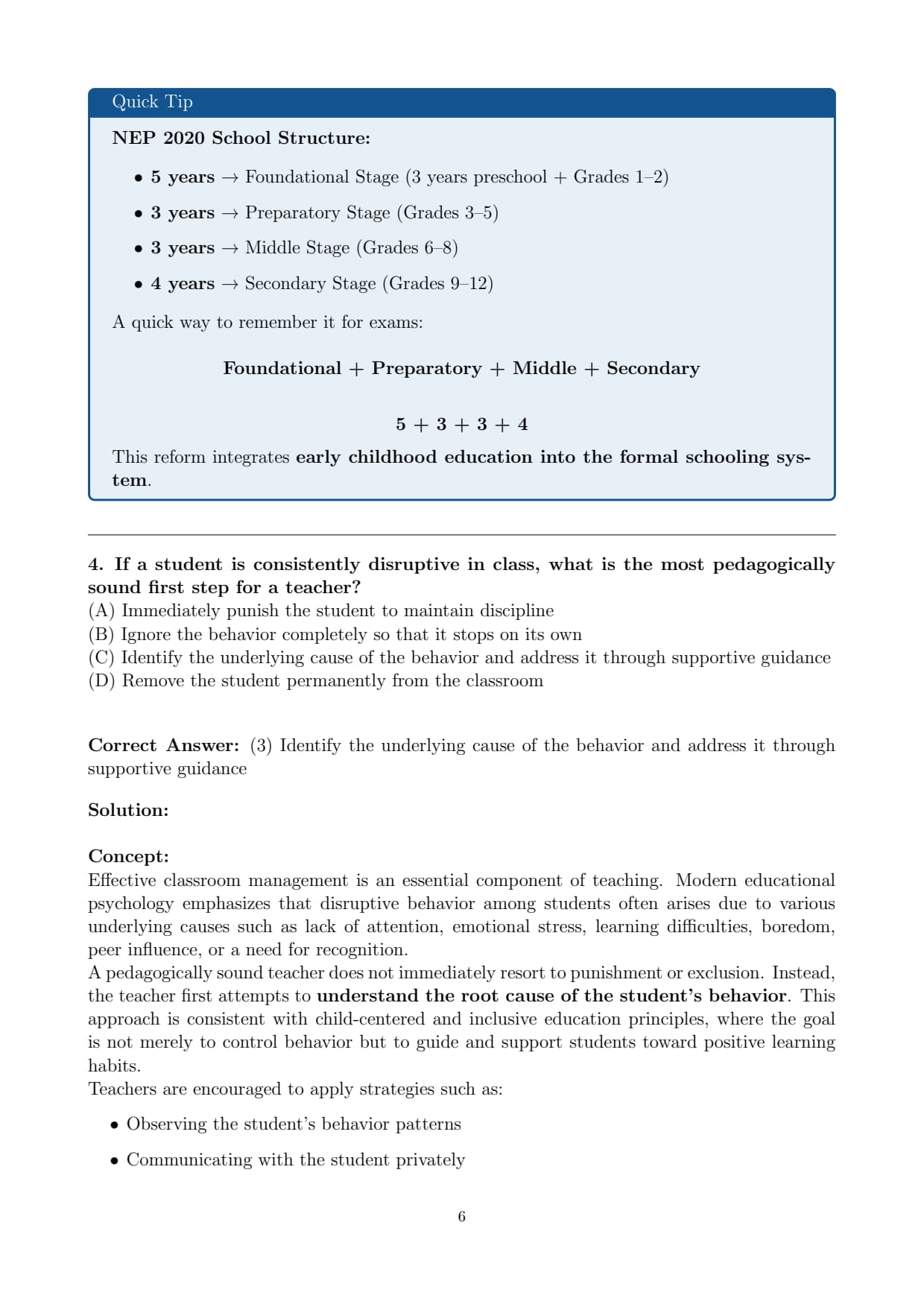
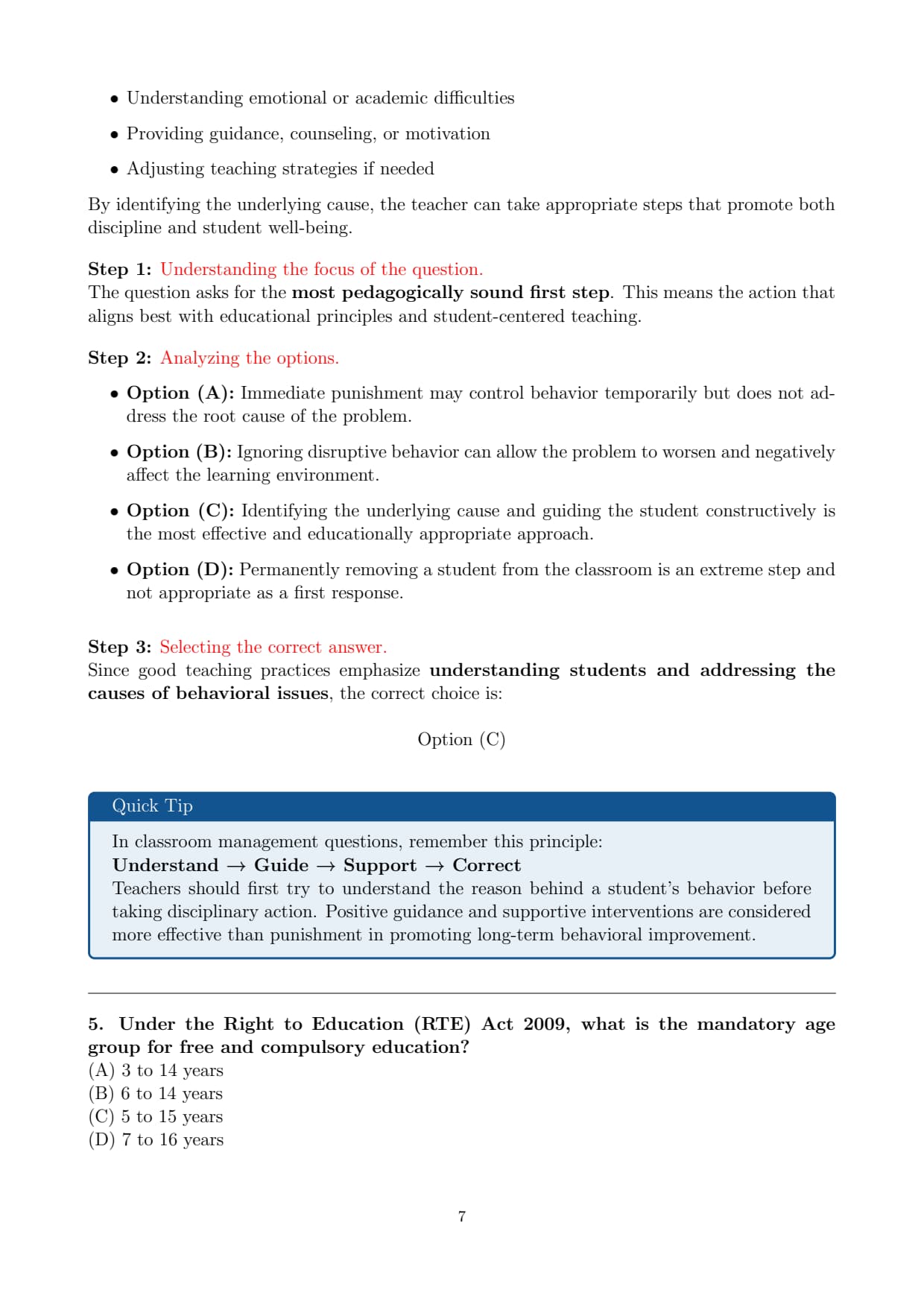
If a student is consistently disruptive in class, what is the most pedagogically sound first step for a teacher?
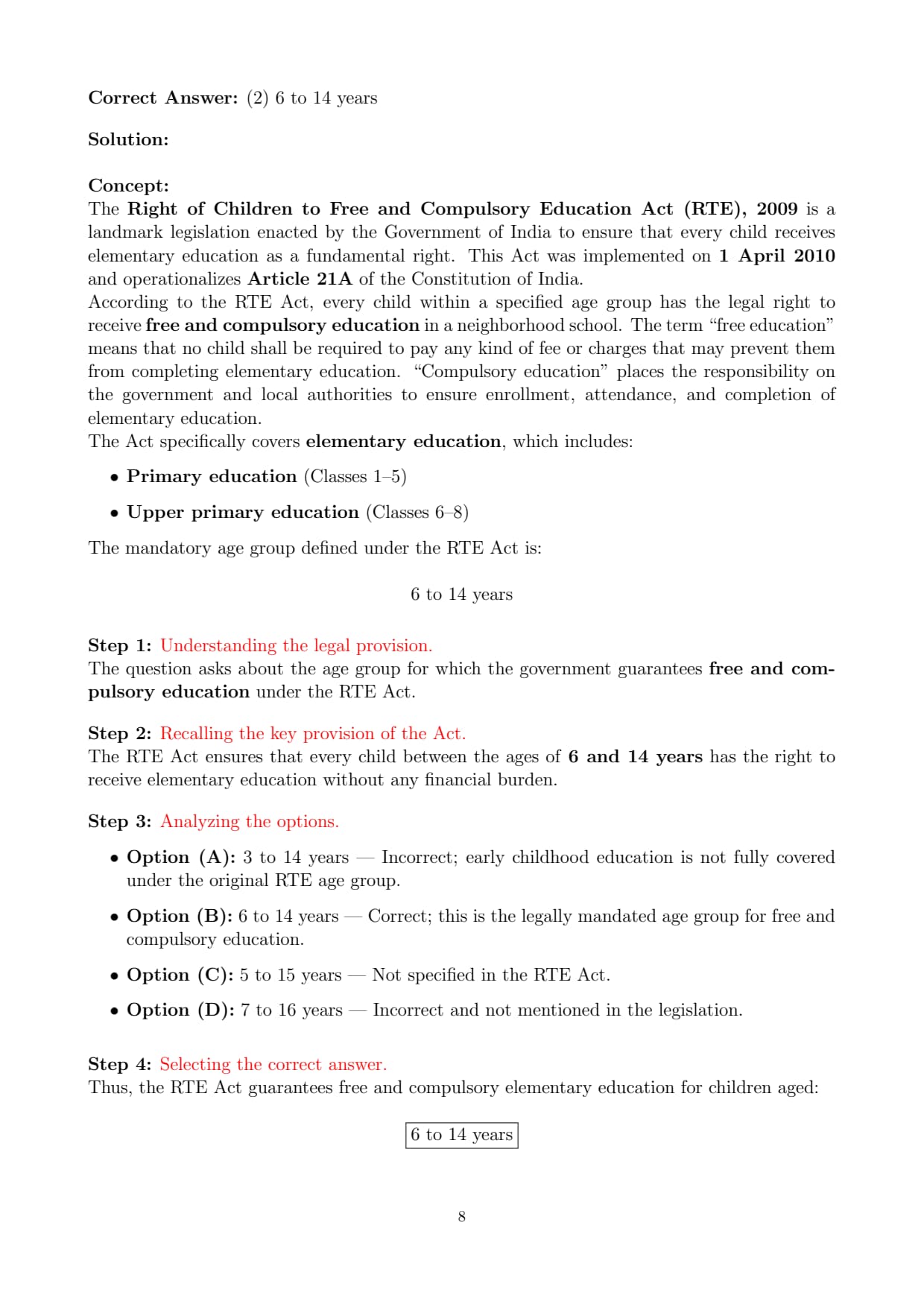
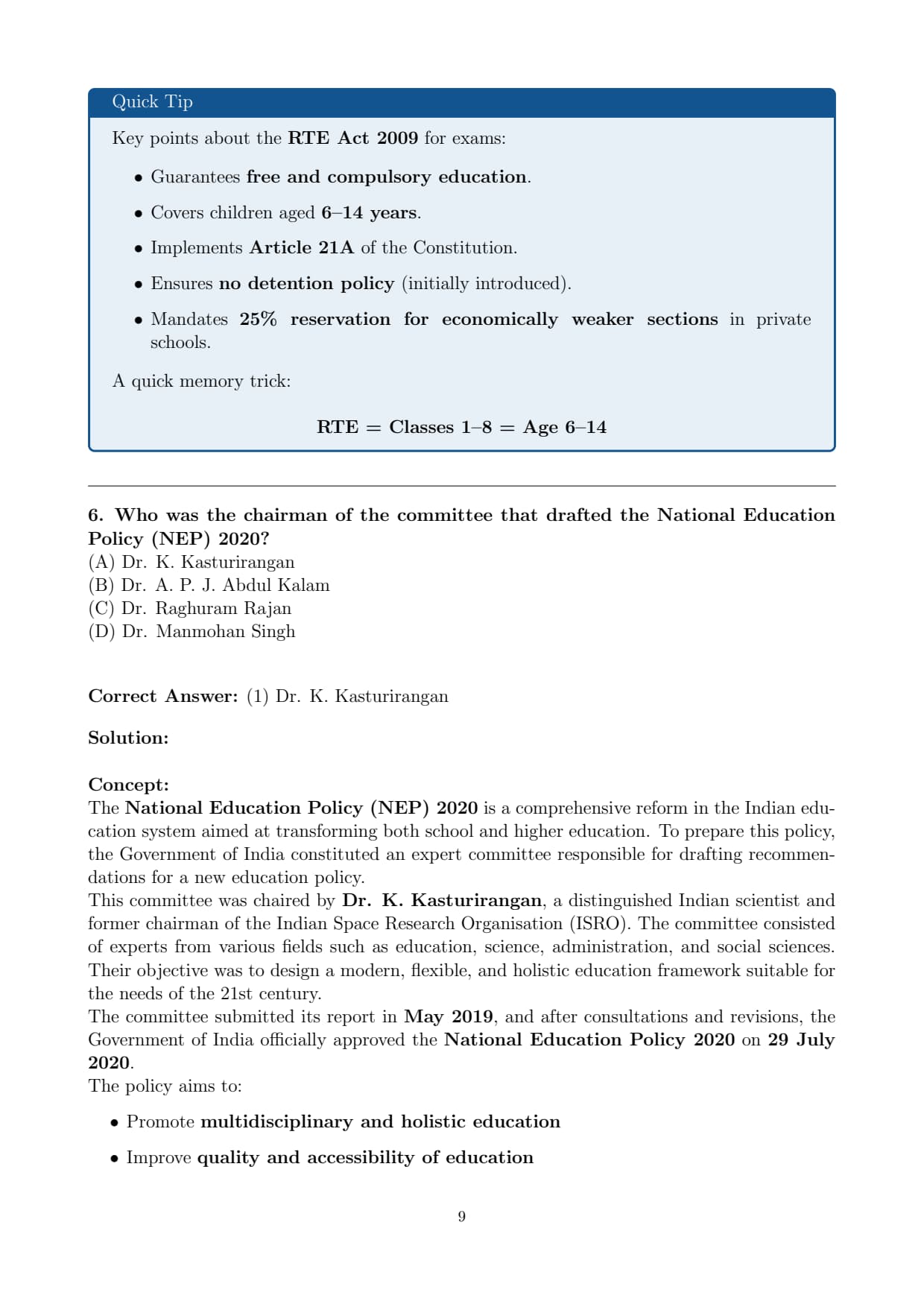
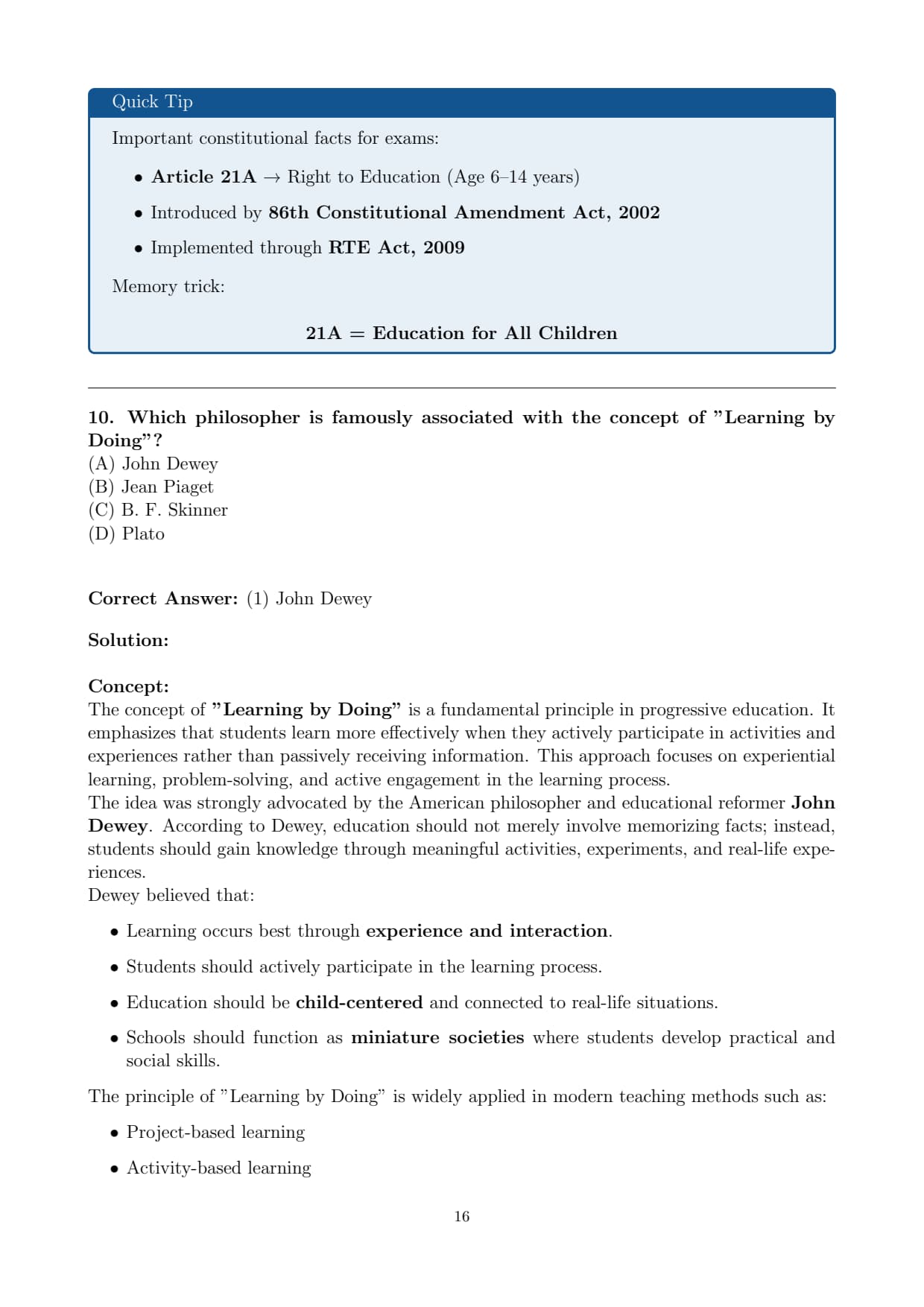
Under the Right to Education (RTE) Act 2009, what is the mandatory age group for free and compulsory education?
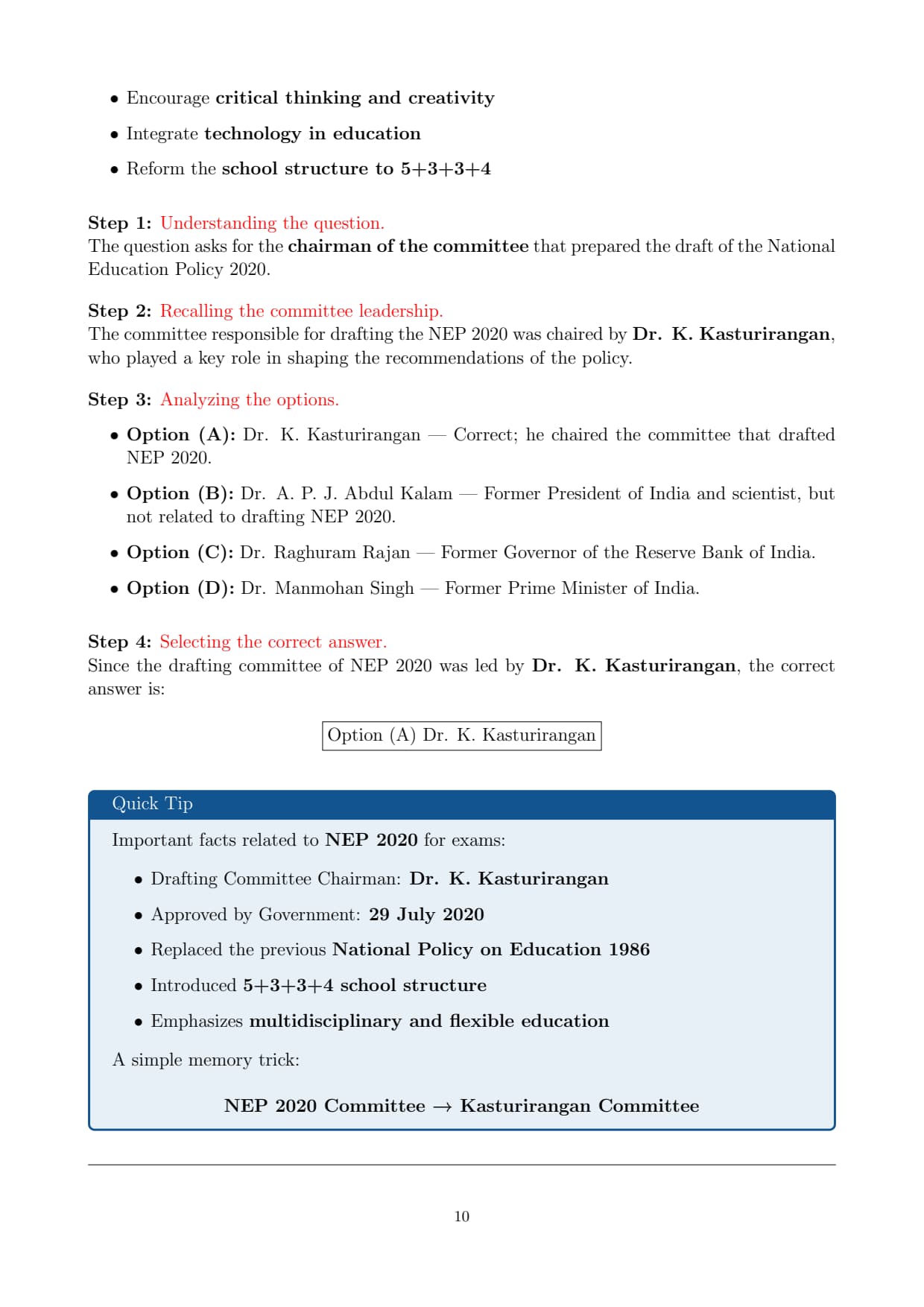
Who was the chairman of the committee that drafted the National Education Policy (NEP) 2020?
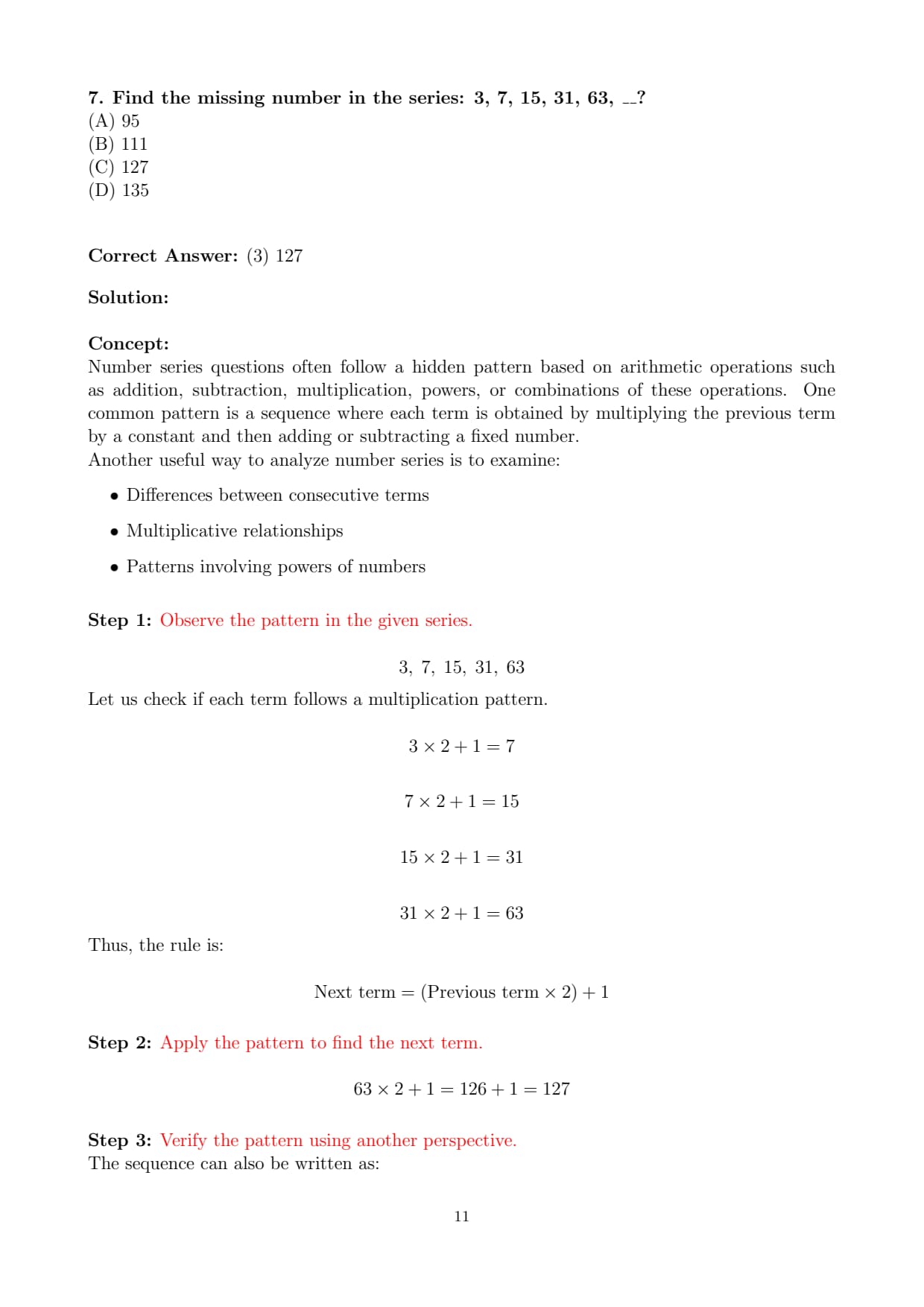
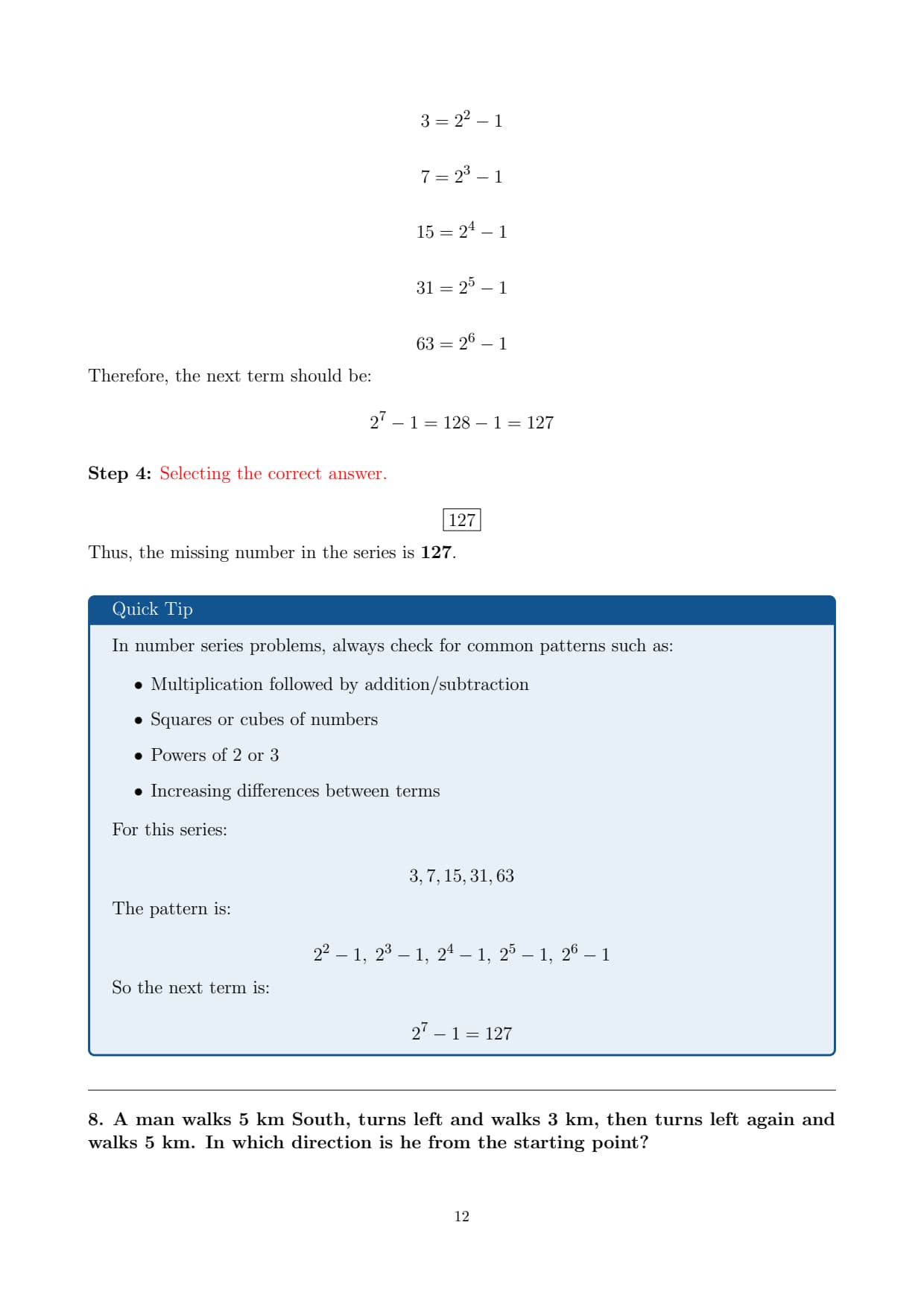
Find the missing number in the series: 3, 7, 15, 31, 63, __?
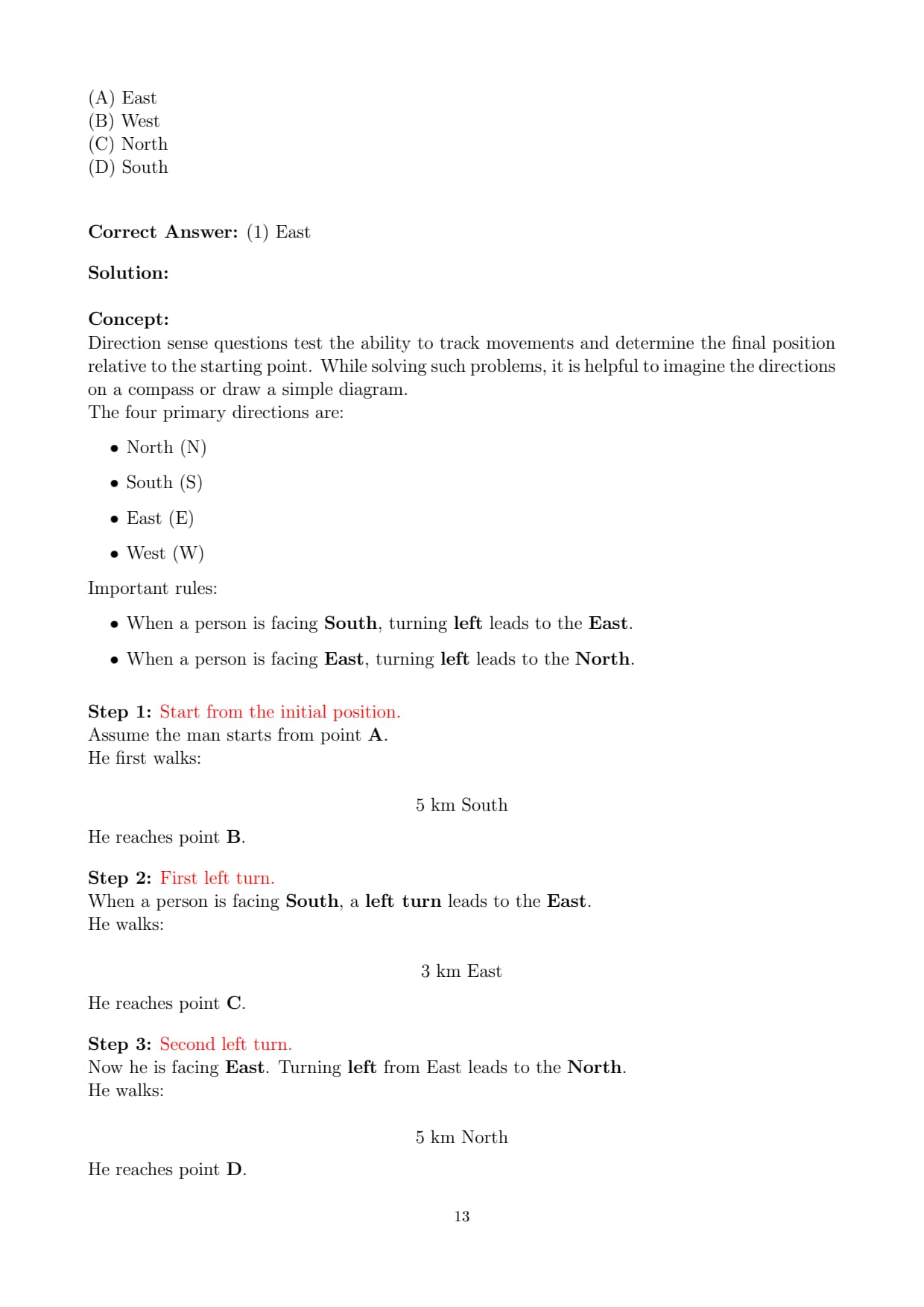
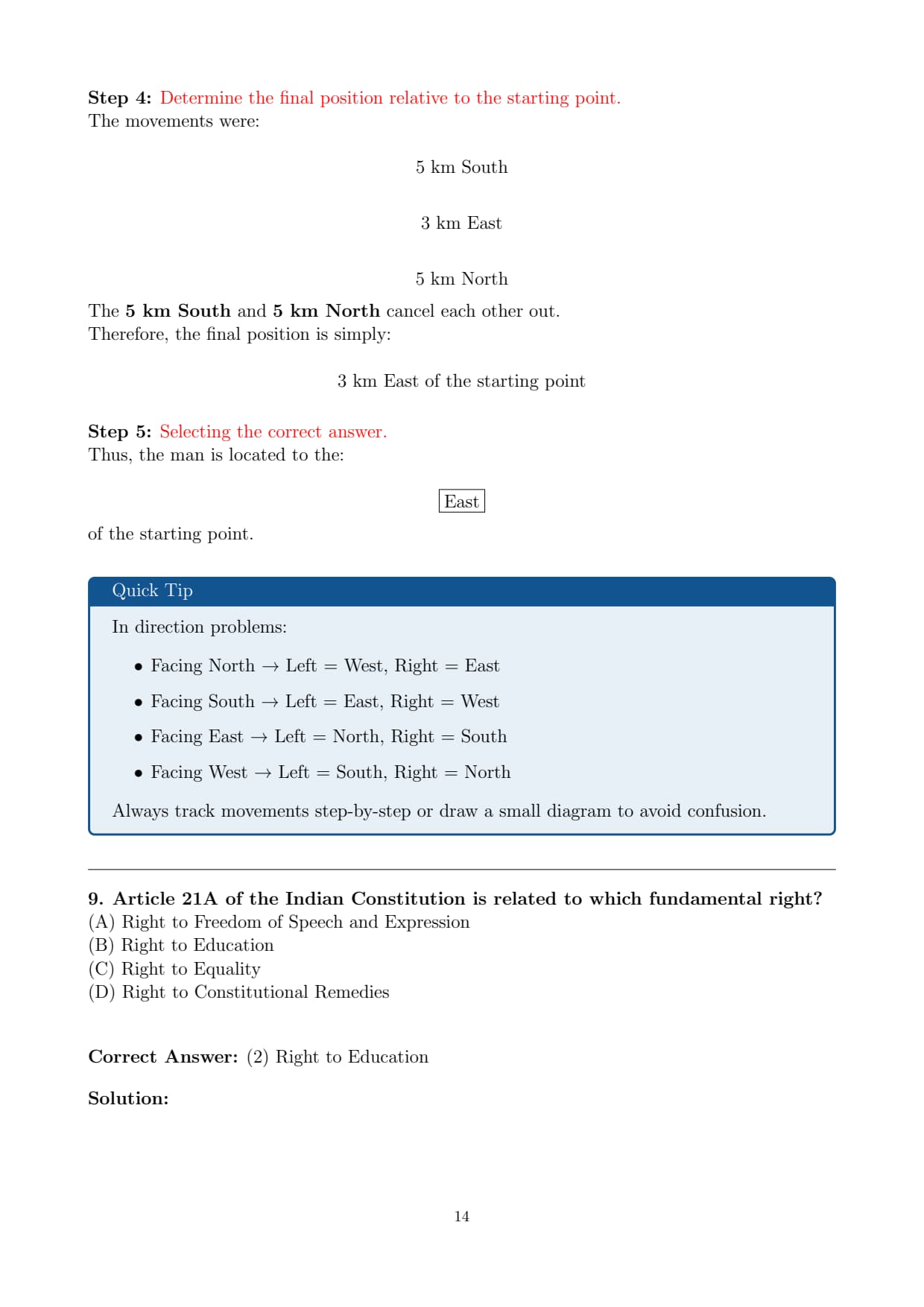
A man walks 5 km South, turns left and walks 3 km, then turns left again and walks 5 km. In which direction is he from the starting point?
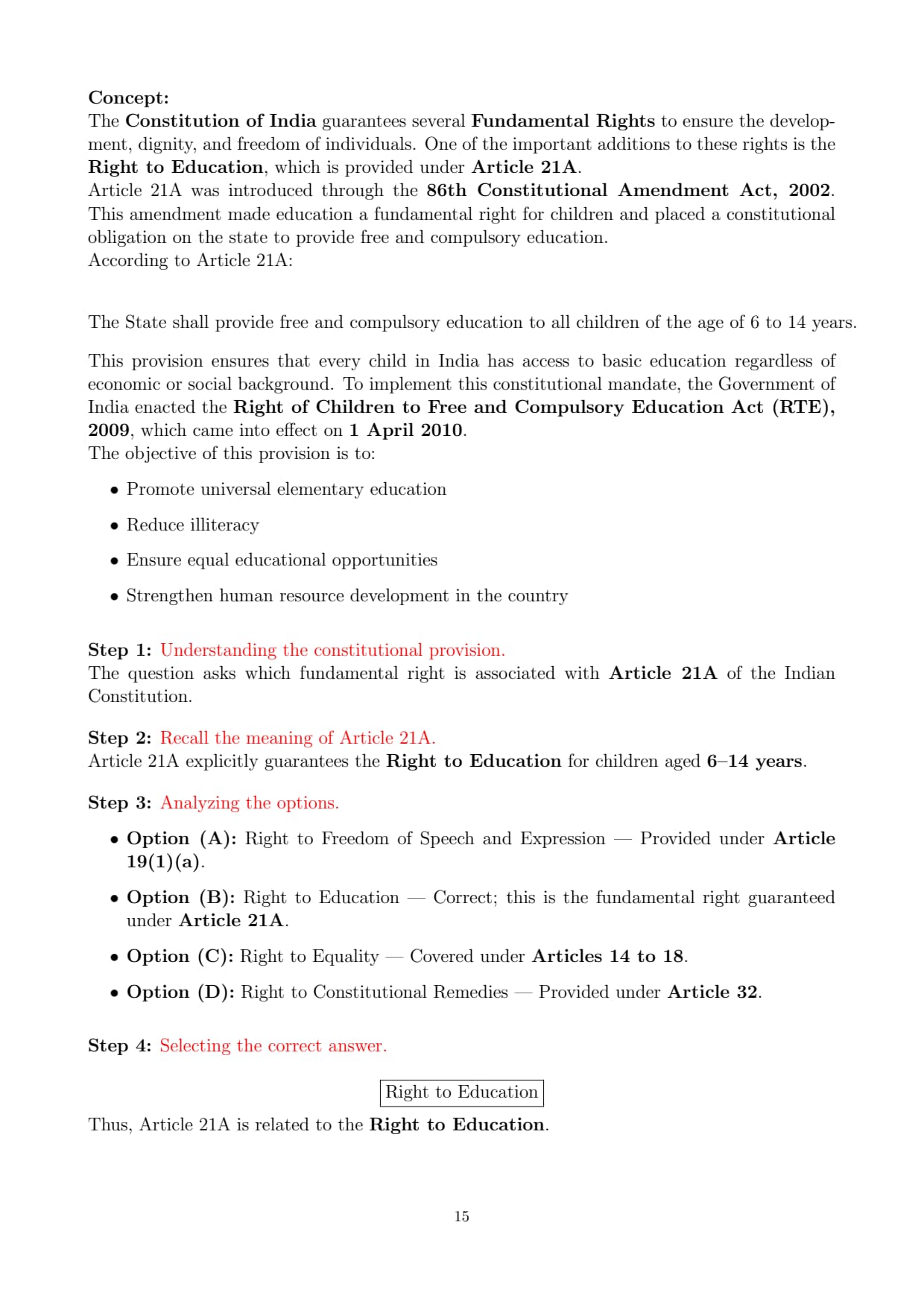
Article 21A of the Indian Constitution is related to which fundamental right?
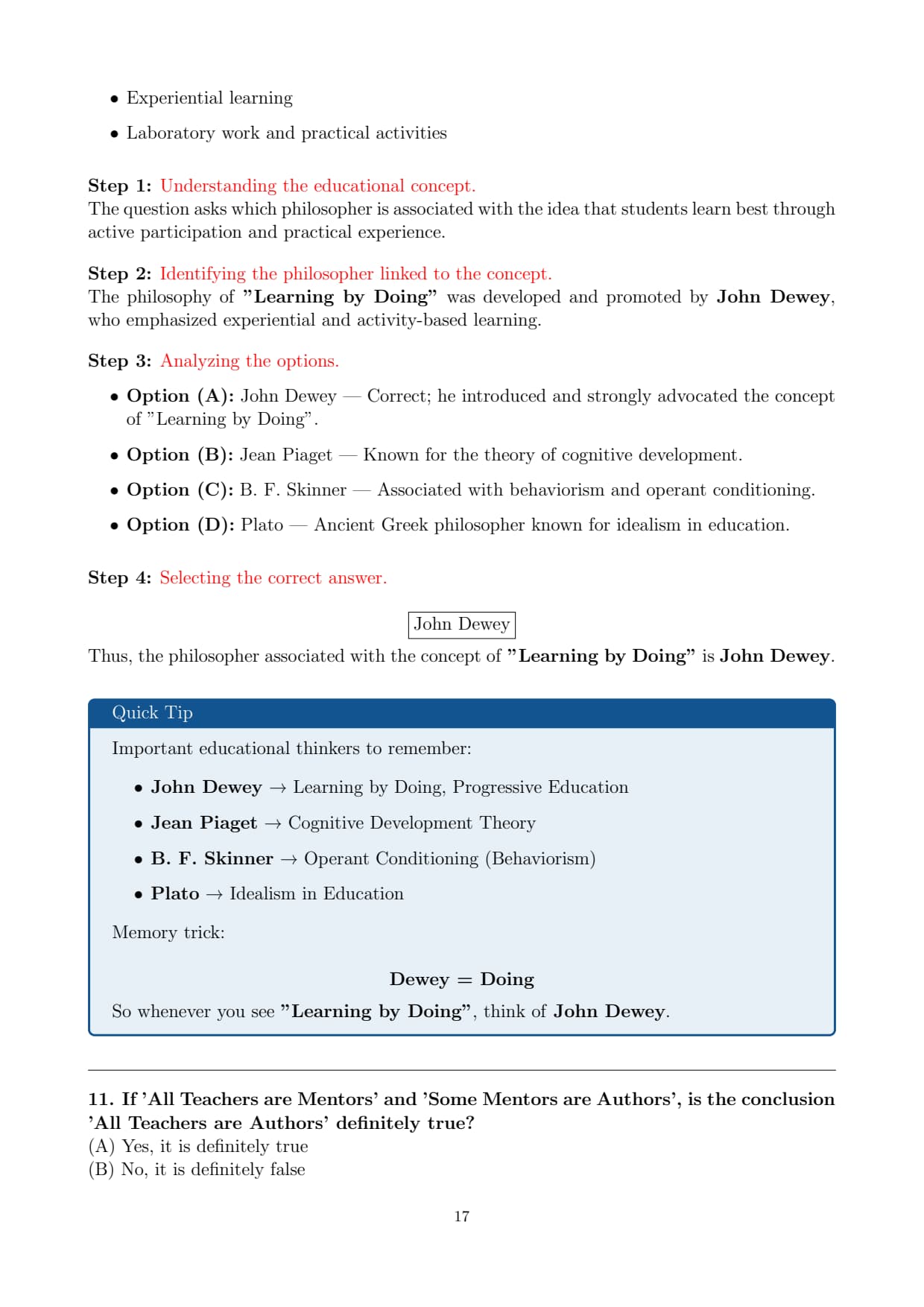
Which philosopher is famously associated with the concept of "Learning by Doing"?
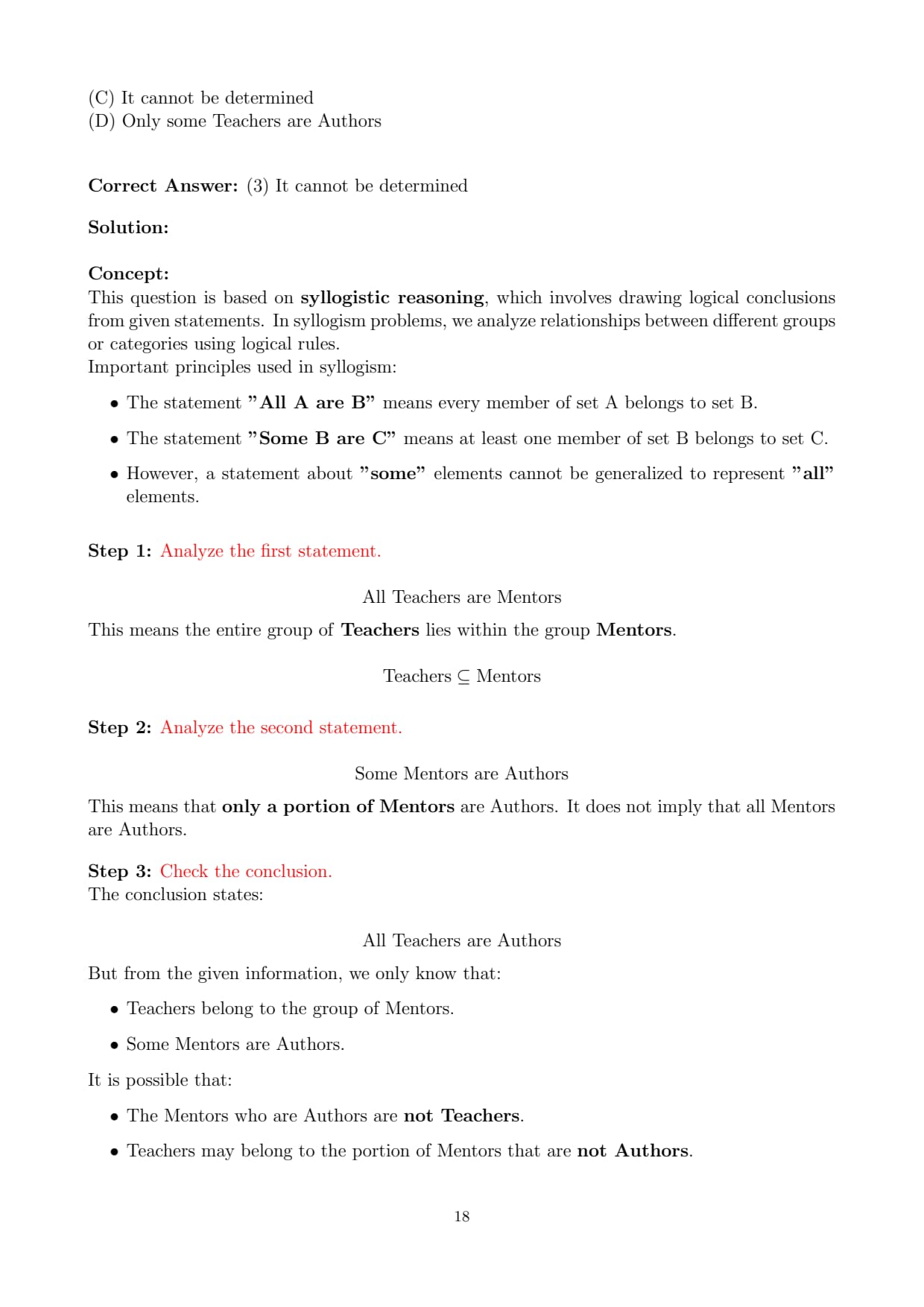
If 'All Teachers are Mentors' and 'Some Mentors are Authors', is the conclusion 'All Teachers are Authors' definitely true?
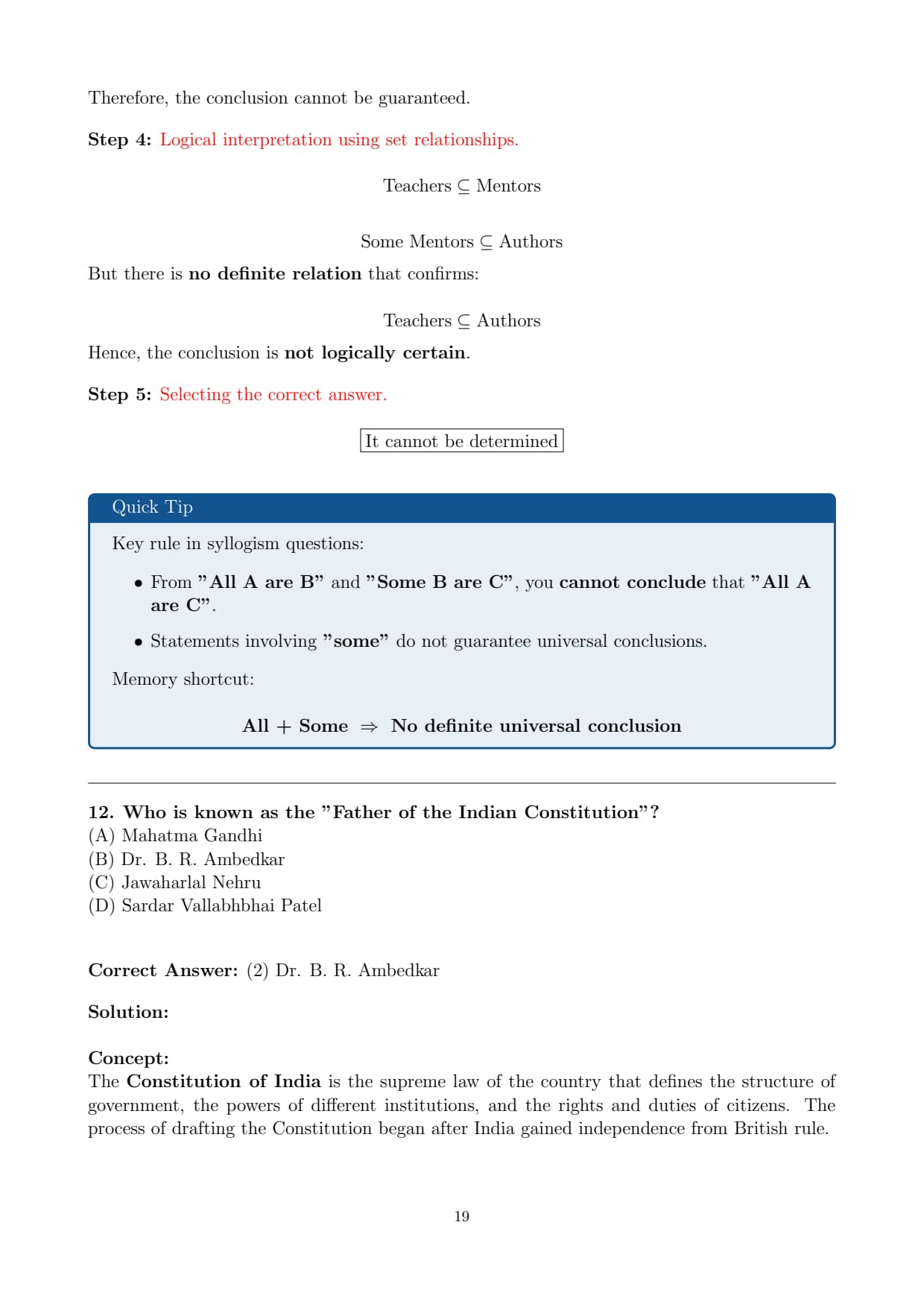
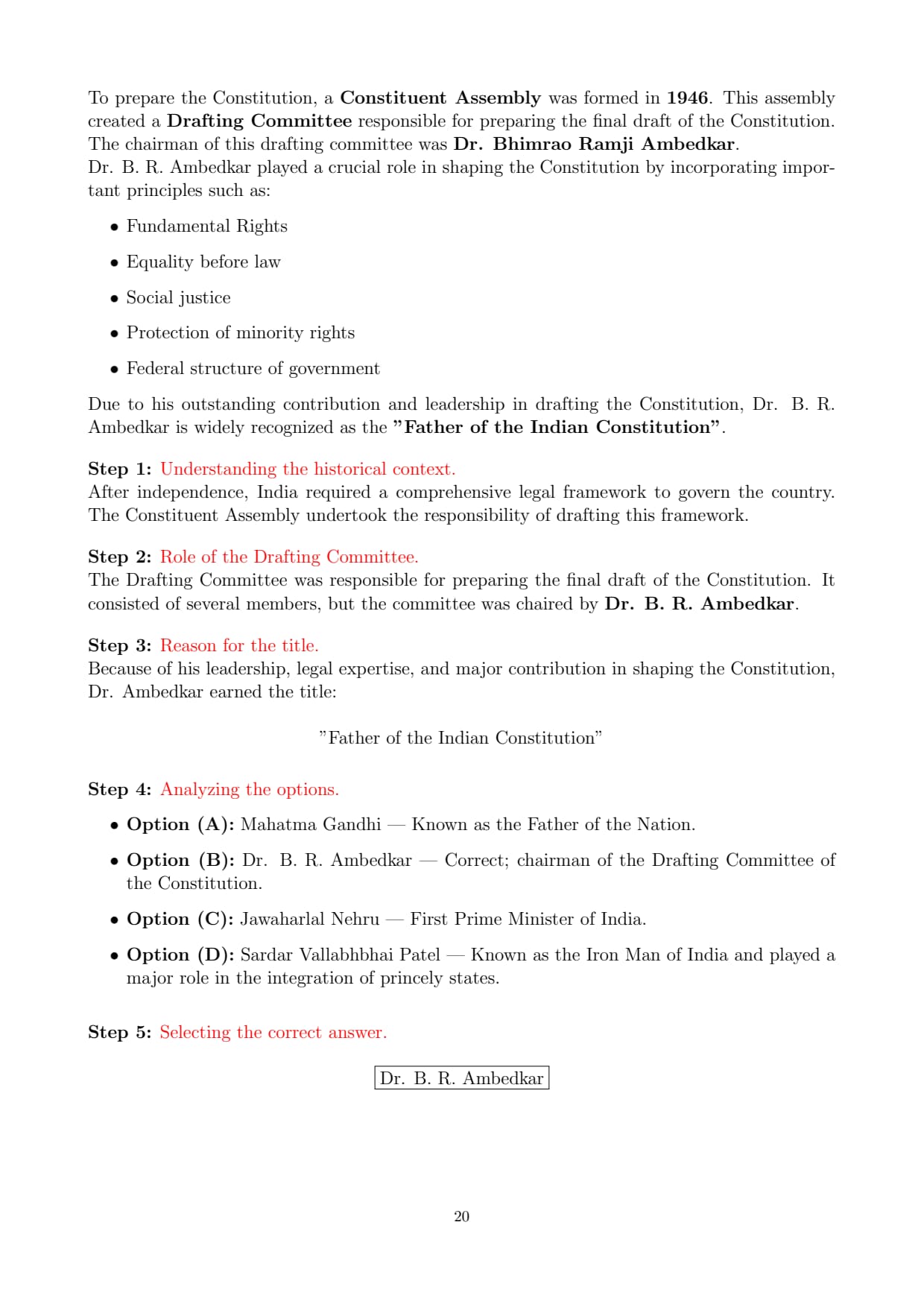
Who is known as the "Father of the Indian Constitution"?
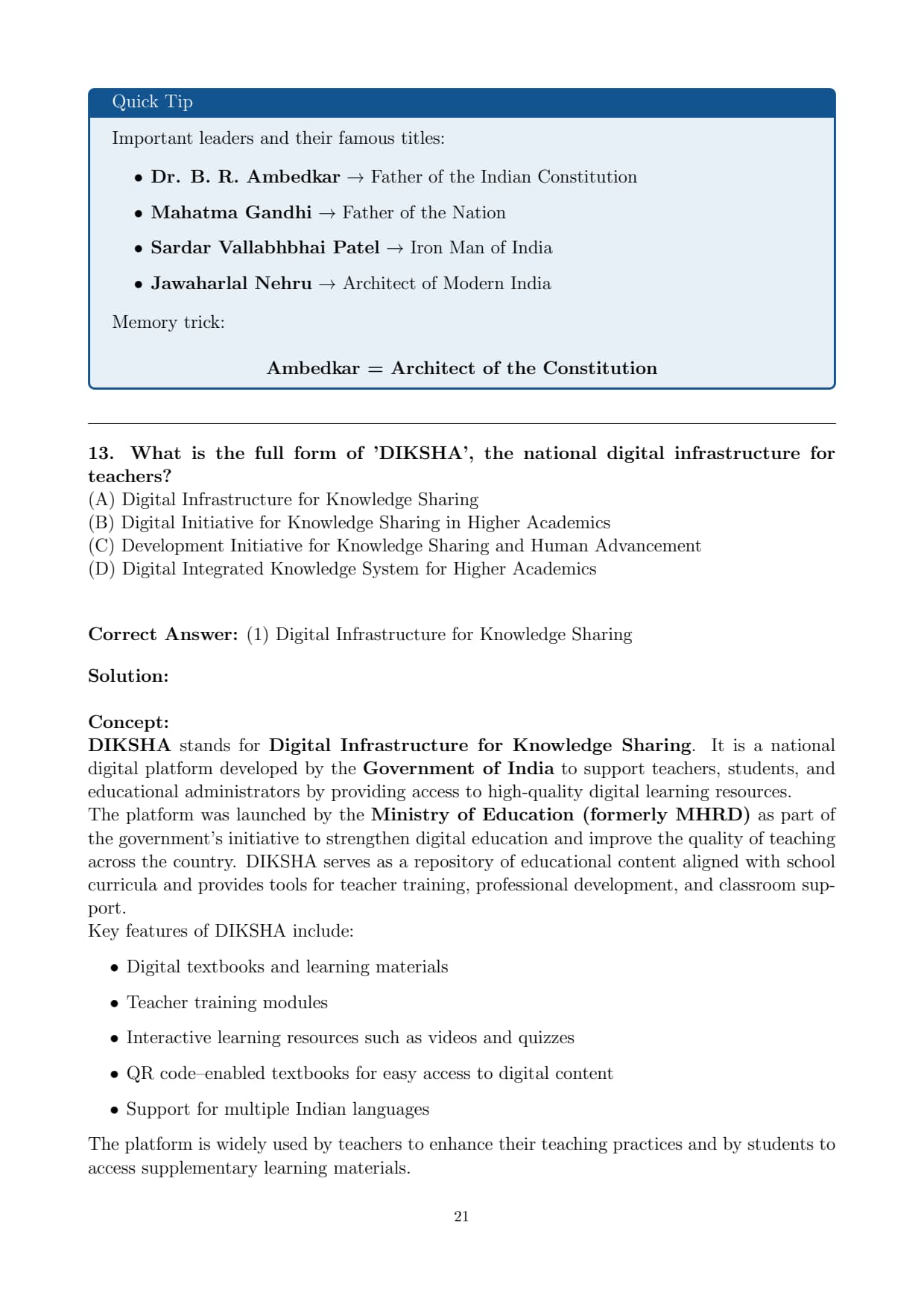
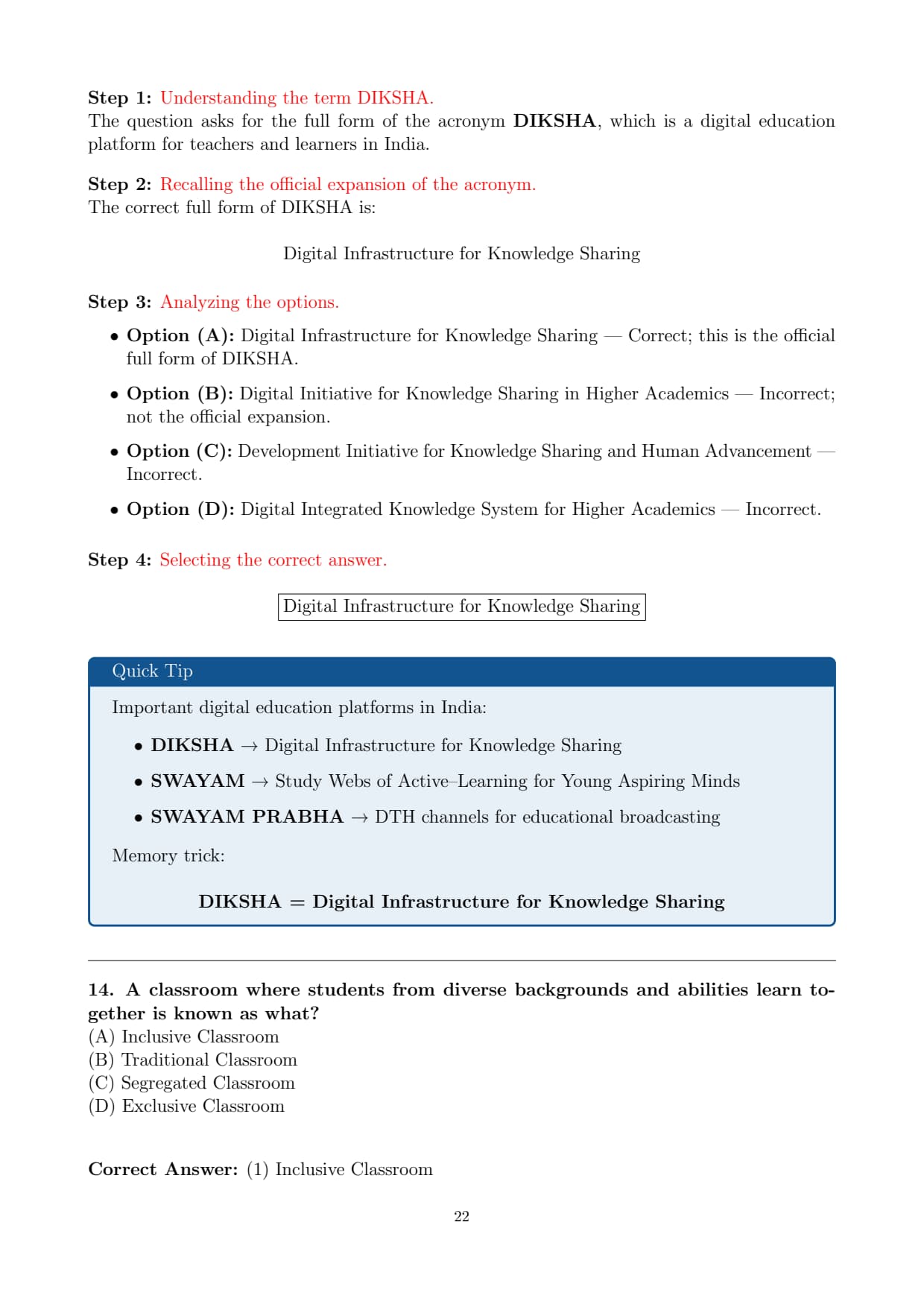
What is the full form of 'DIKSHA', the national digital infrastructure for teachers?
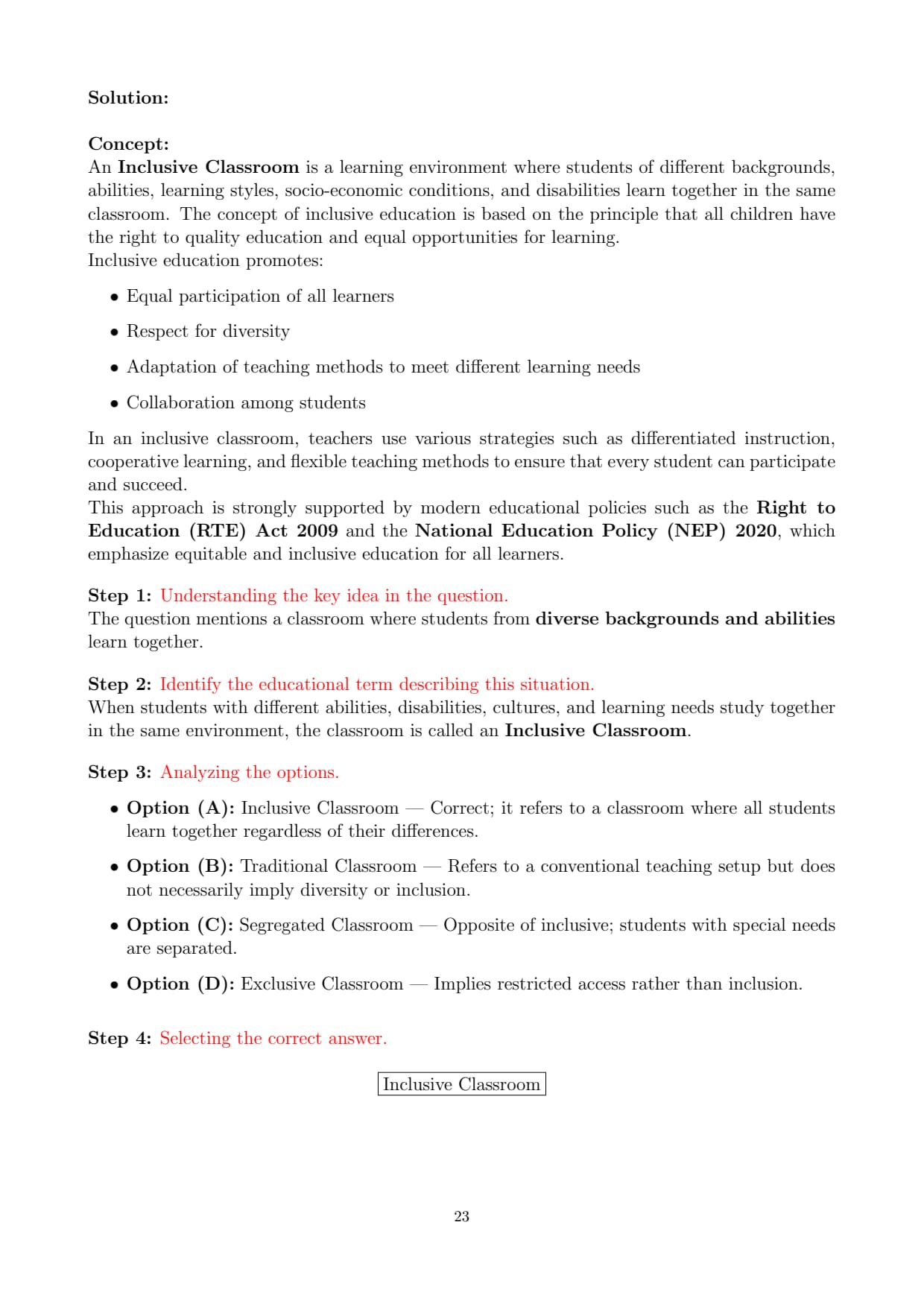
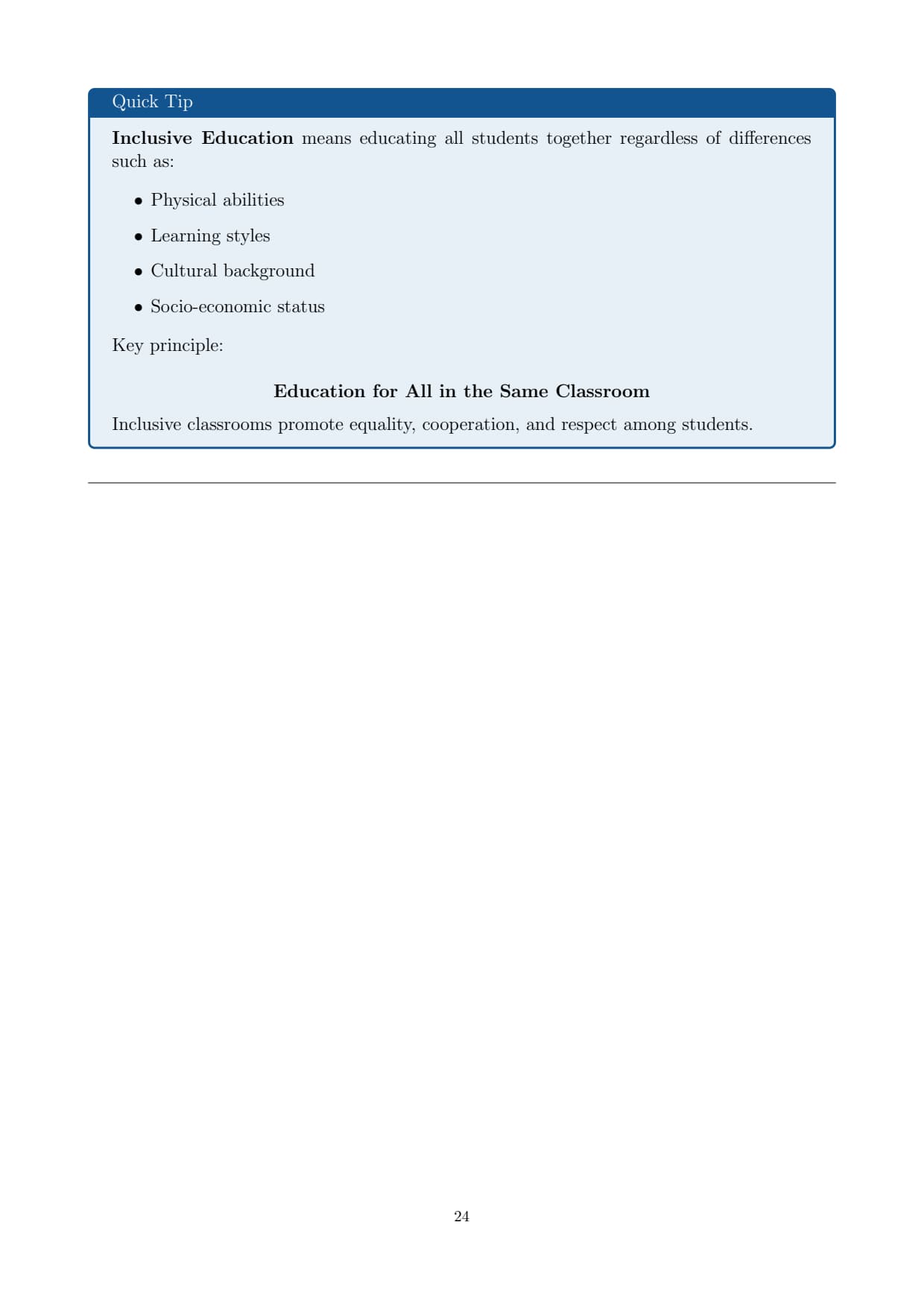
A classroom where students from diverse backgrounds and abilities learn together is known as what?
CUET PG B.Ed. Question Paper 2026: Unit-Wise Weightage
| Unit Name | Approx. Questions | Difficulty |
| Foundations of Education (Philosophical, Sociological & Historical Perspectives) | 12–14 | Moderate |
| Educational Psychology (Learning Theories, Intelligence, Motivation) | 10–12 | Moderate |
| Teaching-Learning Process & Pedagogy | 10–12 | Moderate |
| Educational Technology & ICT | 8–10 | Easy–Moderate |
| Assessment, Evaluation & Research in Education | 8–10 | Moderate |
| Inclusive Education, Guidance & Counselling | 6–8 | Easy |



Comments