




Karnataka CET is an entrance test for various professional courses, such as engineering, pharmacy, veterinary, and agricultural courses, which is administered by KEA. KEA has announced the exam dates on 2nd January for all the subjects and the Kannada language test.
In 2025, RVCE Bangalore CSE general merit closed at ~234-500, which was one of the lowest in KCET history. Thus, the increasing competition for desired branches in the desired colleges highlights the need for a good preparation strategy for students to sail through these hurdles.
Toppers are scoring near-perfect scores in the KCET exam, such as Bhavesh Jayanthi, who scored 179 marks out of 180.
As the exam dates are out, students can follow some unique and important aspects in their preparation strategy, given in this article, to avoid last-minute surprises.
Related Topics:
- KCET Previous Year Question Papers with Solution PDFs
- KCET 2026 Best Books as recommended by Toppers
- KCET 2026 Free Mock Tests
Key Summary
- Do not ignore board exams, as the ranks are determined on a 50:50 basis, with 50% weightage to KCET marks and 50% to 2nd PUC marks.
- Always prioritise high-weightage chapters or topics first to avoid last minute rush.
- Practice PYQs as much as possible, as it will help you increase your speed and accuracy.
- Always do mock test analysis after attempting a mock because it will widen your knowledge base.
- Always attempt PYQs test and mock tests in time bound manner and in exam friendly environment.
Why are KCET Preparation Tips Required?
As the competition is rising with lakhs of students competing for limited seats in colleges such as RVCE, BMSCE, and PES University, students with a detailed roadmap can easily sail through this exam with a decent rank.
To secure a seat in the desired branch of the desired college or institute, students must follow a preparation strategy or plan because of the following reasons:
- High competition, with around 2 lakhs students appearing for engineering seats alone every year.
- No negative marking leads to careless attempting of the questions.
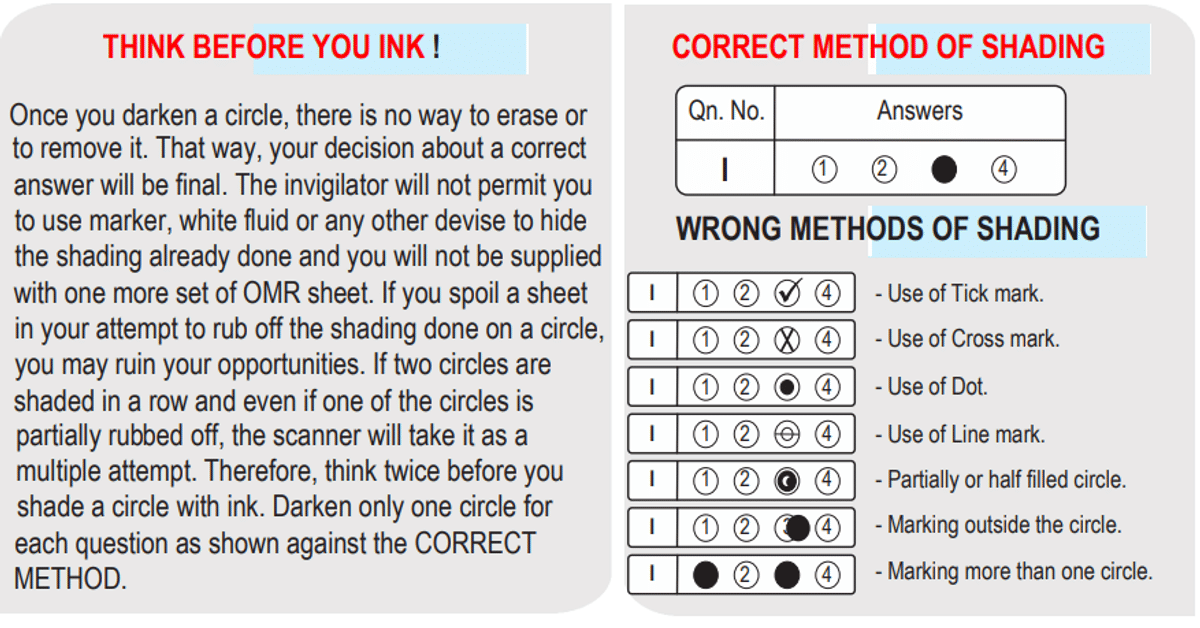
- Time pressure as 60 questions are to be done in 80 minutes, and 10 minutes out of 80 are given for shading the OMR details such as name, etc.
- 80-90% questions are directly or indirectly from the NCERTs.
- PYQ patterns repeat every year, with approx 20-40% questions based on these patterns and trends.
- Speed and accuracy decide the rank more than a deeper understanding, as most of the questions are direct.
KCET 2026: Syllabus
KCET syllabus is based on the 1st and 2nd PUC (Class 11 and 12) curriculum of the Karnataka State Board.
KCET 2026: Exam Pattern
The KCET exam pattern is similar to that of previous years, consisting of three parts: Physics, Chemistry, and Mathematics/Biology, each with 60 marks.
- Mode of Exam: Offline ( Pen and Paper)
- Medium of exam: English and Kannada.
- Number of Sessions: 4 sessions in total: one for each subject.
- Total Questions: Each Session: 60 MCQs and 1 hour 20 minutes ( 80 Minutes) per section.
- Total Mark: (PCM): 180 marks ( 60 per subject x 1 mark each)
- Question Type: MCQs with 4 options and 1 correct answer.
- Marking Scheme: +1 mark for each correct answer and no negative marking for wrong answers.
KCET 2026: 3 Month Study Plan
KCET 2026 requires a disciplined preparation for at least 6 months. However, as only ~ 90 days are left for the exam, you can follow the 3-month plan given below to give your best shot at the KCET 2026 exam:
Timeline Division:
- Month 1: Build strong fundamentals using NCERT textbooks, clear the basic concepts, and make short notes for quick revision.
- Month 2: Focus on advanced problem-solving, mastering important topics, and solving daily sectional MCQs.
- Month 3: Intensive revision, full-length mocks, error analysis, and PYQs.
Daily Routine: Study consistently for 8-9 hours, giving around 2 hours per subject, and the rest of the hours should be used for mock tests, PYQs, and quick revision of what you have studied during the day.
Subject-Specific Tips
Physics
- Practice numerical as ~55% questions are numerical-based.
- Memorise formulas, as direct formula-based questions are common in Gravitation, Thermodynamics, and Current Electricity.
- Graph & diagram-based questions are frequent in Ray Optics, Kinematics, and Waves.
- Solve sectional PYQs for building strong concepts.
Chemistry
- Organic chemistry dominates in Chemistry. Students should focus on reactions, mechanisms, and Conversions.
- In Physical Chemistry, 25-30% are numerical questions. Students should practice calculations for Electrochemistry, Kinetics, etc.
- Inorganic Chemistry has more memory-based questions, which are around 20-25%.
Mathematics
- Focus on the highest weightage areas, such as Calculus (Integration, application, and Derivatives). It accounts for 15-18 questions almost every year.
- Some of the chapters, like Integrals, Matrices& Determinants, Vectors & 3D Geometry, are scoring as they are direct formula-based.
- Students should practice numericals to build accuracy and speed since 60-70% of questions are calculation-based.
Biology
- Must have to complete NCERT thoroughly, as most of the questions are NCERT-based.
- Memorisation is more important than logic in biology as it is a fact-heavy subject with a lot of names to remember.
- Must do high-weightage chapters like Genetics and evolution, Human Physiology, etc.
- Diagrams are extremely important in biology, as diagram-based questions are consistent every year.
KCET 2026: Time Management and Revision
- Devote 8-9 hours daily to your study, with at least 2 hours per subject.
- Revise daily at the end of the day for better retention.
- Daily practice PYQs for at least 1 hour to adjust yourself to solving MCQs.
- Can use pomodoro technique, which means study for 50 minutes and then take 10 minutes break to prevent burnout.
- Make weekly and monthly targets that are achievable, as if you make unachievable targets and cannot complete them, it will demotivate you and will create backlogs.
- Document your day so that you can track your time effectively and prevent wastage of time.
D-day time management
- You will get 70 minutes to solve the paper, as 10 minutes will be used to fill in the OMR details. So target ~70 seconds per question.
- Finish the 1st round in ~50 minutes and leave 10-20 minutes for the 2nd round and OMR filing.
- First 10 minutes to skim through the paper and solve easy questions.
- Next 35-45 minutes, solve the medium difficulty level questions.
- Last 10-15 minutes to attempt remaining questions, if attempting all the questions.
- OMR filling should ideally be after attempting each question, but students can do it as per their practice and convenience. However, you should not leave it for the last minute as it creates panic and can lead to wrong filling of the OMR sheet.
KCET 2026: Value of Solving PYQs and MCQs
Solving PYQs and multiple-choice questions is the most recommended thing for KCET students, as it is the most differentiating factor between students who score 120-140 and those who score 170+.
- Concepts and patterns of the questions repeat frequently.
- It makes students habitual of solving questions in time and increases their speed.
- Helps students tackle random questions without stressing over them.
- It teaches students the art of skipping and understanding the examiner's mindset to solve the questions.
KCET 2026: Confidence and Motivation
Confidence and motivation are the most crucial aspects of an aspirant's journey, as confidence helps you do well under pressure, and motivation makes you keep going irrespective of the results.
- With confidence, you can even attempt the questions in which you have a 50:50 doubt.
- Confidence teaches you to face situations you are not prepared for.
- Mock tests and multiple revisions help in building confidence.
- Motivation is important to keep you going. However, it is a one or two-time thing, whereas discipline is what makes you consistent throughout your preparation.
KCET 2026: Important Topics
Knowing the important topics helps students prepare the syllabus strategically. It will help you focus on high-weightage topics, and you can make your study plan more efficient.
Physics
| 1st PUC Important Topics | 2nd PUC Important Topics |
|---|---|
| Laws of Motion | Current Electricity |
| Work, Energy, and Power | Electrostatic potential and capacitance |
| Gravitation | Ray & Wave Optics |
| Thermodynamics | Electromagnetic Induction & Alternating Current |
| Kinematics | Magnetic Effects of Currents |
| Oscillations and Waves | Modern Physics (Atoms, Nuclei, Semiconductors) |
| Mechanical Properties of Solids /Fluids |
Chemistry
| 1st PUC Important Topics | 2nd PUC Important Topics |
|---|---|
| Chemical Bonding & Molecular Structure | Organic Chemistry ( Alcohols, Phenols, Ethers; Aldehydes, Ketones, Carboxylic Acids; Amines ) |
| Thermodynamics & Equilibrium | Electrochemistry & Chemical Kinetics |
| Some Basic Concepts ( Mole Concept) | Solutions & Solid State |
| Structure of Atom & Periodic Table | p- Block Elements & Coordination Compounds |
| States of Matter | Surface Chemistry |
| Hydrocarbons & Organic Basics | |
| Redox Reactions |
Mathematics
| 1st PUC Important Topics | 2nd PUC Important Topics |
|---|---|
| Trigonometric Functions | Integrals & Applications of Integrals |
| Sets, Relations & Functions | Differential Equations |
| Complex Numbers & Quadratic Equations | Matrices & Determinants |
| Straight Lines & Conic Sections | Vectors & 3D Geometry |
| Probability & Statistics | Continuity, Differentiability & Applications of Derivatives |
| Limits & Derivatives | Probability (Advanced) |
| Permutations, Combinations & Binomial Theorem |
Biology
| 1st PUC Important Topics | 2nd PUC Important Topics |
|---|---|
| Diversity in Living World & Biological Classification | Human Reproduction & Reproductive Health |
| Cell: Unit of Life & Biomolecules | Genetics & Evolution (Molecular Basis of Inheritance) |
| Plant/Animal Kingdom | Human Physiology ( Neural, Circulatory, Excretory) |
| Morphology & Anatomy of Flowering Plants | Biotechnology & Applications |
| Structural Organisation in Animals | Ecology (Organisms, Populations, Ecosystems) |
| Photosynthesis & Respiration in Plants | Plant Physiology |
Also Check: KCET 2026 Chapter-Wise Weightage
KCET 2026: Best Books
The golden rule shared by toppers and experts is that students should start with NCERT textbooks as they cover 80-90% of the questions directly, and then move to KCET-specific reference books for practice.
| Subject | Recommended Books |
|---|---|
| Physics |
|
| Chemistry |
|
| Mathematics |
|
| Biology |
|
KCET 2026: Common Mistakes to Avoid
Given below are some common mistakes that students can avoid to give them an edge over other candidates. It can also improve your score by around 10-20 marks.
- No proper daily and weekly schedule.
- Ignoring the 1st PUC or class 11th chapters, as their weightage is less than 2nd PUC.
- Studying from too many resources and not revising enough.
- Ignoring mock tests and question solving.
- Not documenting your schedule or daily targets.
- Not maintaining an error log or a mistakes notebook.
- Not doing the mock test analysis after attempting it.
- Overdependence on coaching institutes and their study materials.
- Ignoring boards to prepare for KCET, ignoring the fact that 2nd PU marks have a weightage of 50% in rank determination.
KCET 2026: FAQs
Ques. Is 3 months enough to prepare for KCET 2026?
Ans. Yes, students can prepare for KCET 2026 in just 3 months, as the syllabus of KCET 2026 is based on 1st and 2nd PUC, which they have studied earlier. With quick revisions, multiple mock tests, and solving PYQs, your chances of clearing KCET with a good rank are good under just 3 months of preparation.
Ques. Which books should I follow for KCET 2026?
Ans. As the syllabus is based on the 1st and 2nd PUC, your sole focus in the initial phase should be on the NCERTs. After thoroughly covering the NCERTs, you can shift to reference books if you have certain doubts regarding some topics.
Ques. Should I join coaching or prepare by self-study for KCET 2026?
Ans. Joining coaching or doing self-study depends on the students, as per their requirements. If a student lacks a basic understanding of topics, he/she can go for coaching, which can provide a foundation course for clearing basic concepts and doubts. However, if you have a basic understanding, you can do self-study by revising NCERTs, giving mock tests, and solving PYQs.
Ques. Which subject is the most time-consuming in KCET 2026?
Ans. Mathematics is the most time-consuming as it has a lot of numericals, which require practice. However, daily practising PYQs and MCQs can improve your speed and accuracy.
Ques. How many mock tests should I take before the actual exam?
Ans. It depends on the students and their strategy, as a candidate who focuses on accuracy can attempt around 20 mock tests and can focus more on revising. A student who focuses on maximising attempts should give as many mocks as he/she can, maybe around ~35 at least.
Ques. What should be my target score/attempts in KCET 2026 for a good college?
Ans. If you are targeting a rank under 100, you should aim for 170-180 marks to get admission to the RVCE and BMSCE top branches, such as CSE. For ranks under 500, your target score should be around 160+.
Ques. What are the biggest mistakes students make in the last 2 months of KCET prep?
Ans. Students often face the fear of missing out (FOMO) in the preparation phase. This FOMO makes students do things that are not required:
- Starting new topics or changing their resources.
- Not taking mock tests and focusing solely on studying.
- Not focusing on their health and over-stressing about the exam.
- Spending a lot of time on revision, instead of quick revisions and recalling.



Comments