




CAT Percentages handwritten notes, free to download as a 22-page PDF. The topic carries about 6 to 10 marks across profit, loss, interest and DI, and takes roughly four days to work through, so it earns an early slot in a study plan.
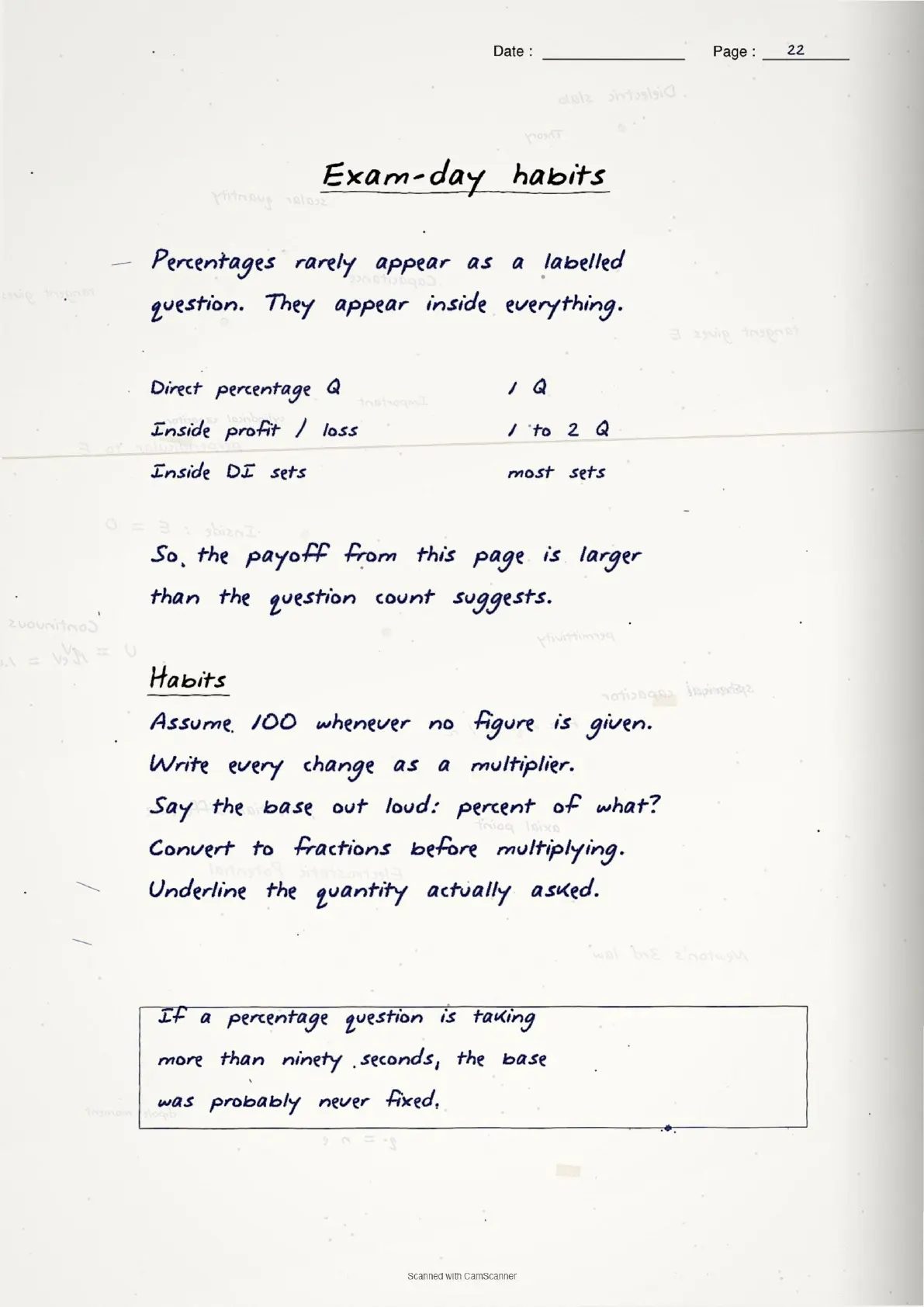
Almost nobody meets a percentage question that admits it's a percentage question. It hides inside profit and loss, inside interest, inside a mixture, inside half of Data Interpretation. That's the whole case for learning it properly: the payoff shows up in chapters that don't even mention the word.
Why the Base Matters More Than the Number
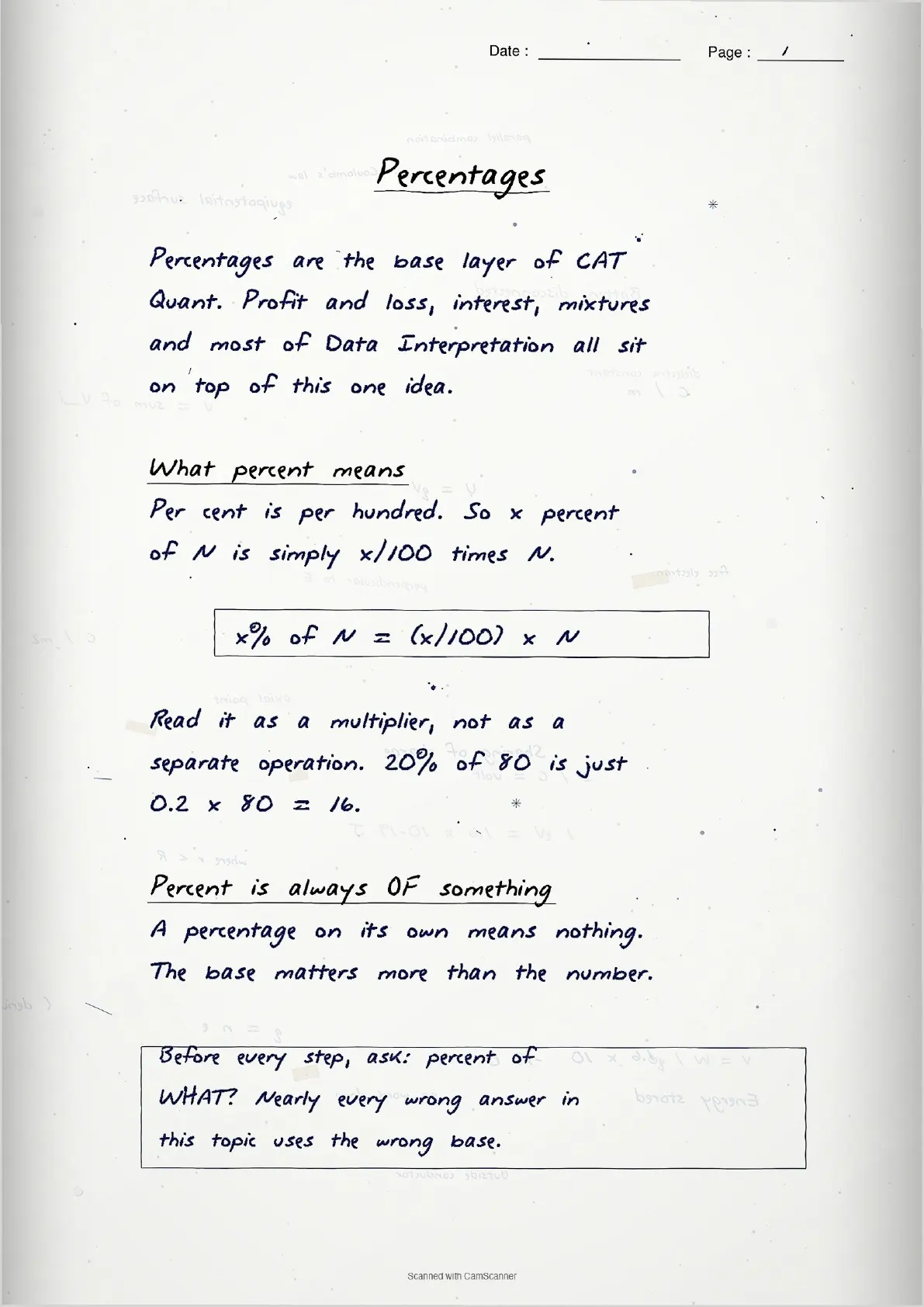
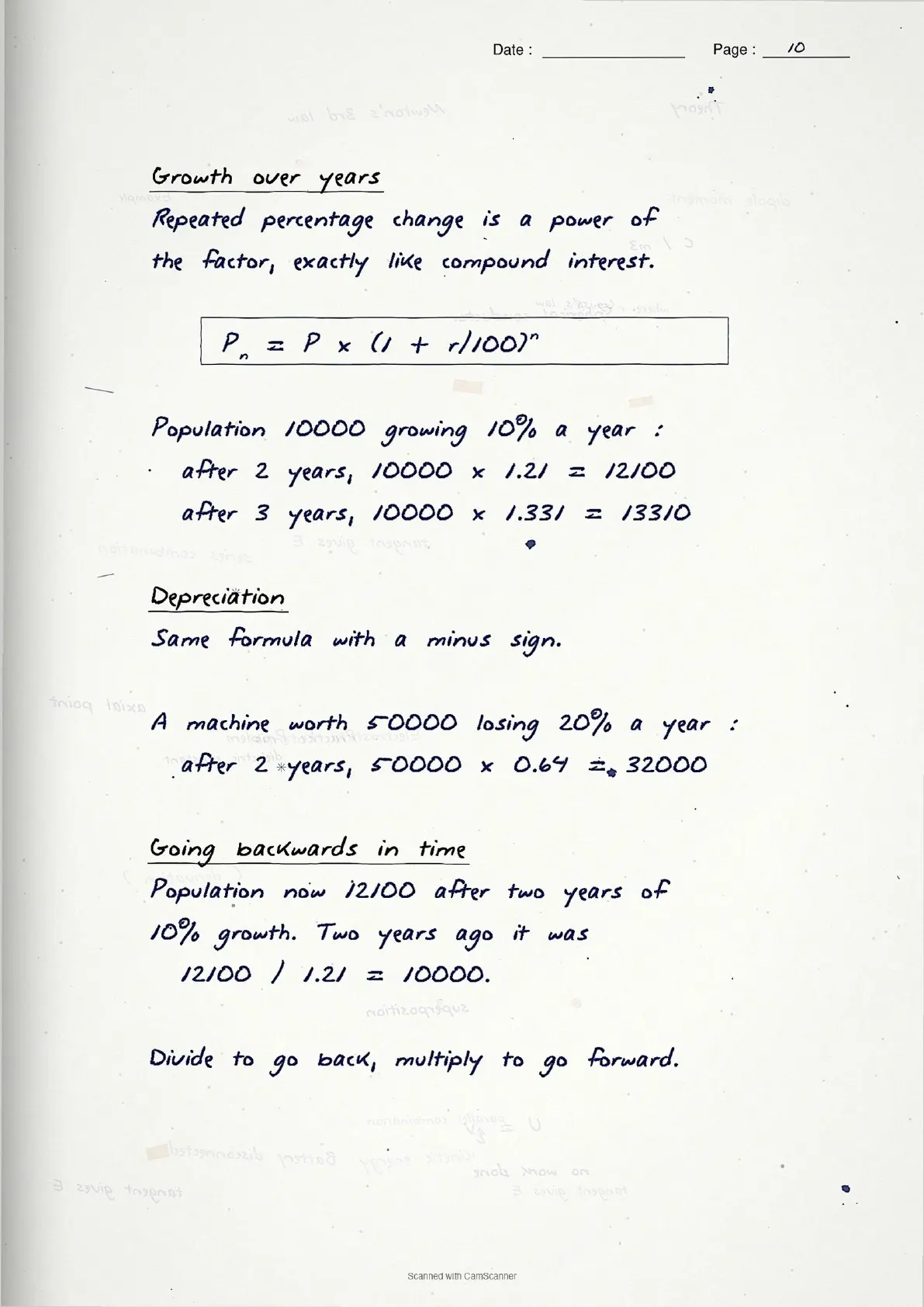
Here is the one habit that decides most of the marks in this chapter: a percentage means nothing on its own. You need to know what it's a percentage of, and nearly every wrong answer in this topic is correct arithmetic done on the wrong base.
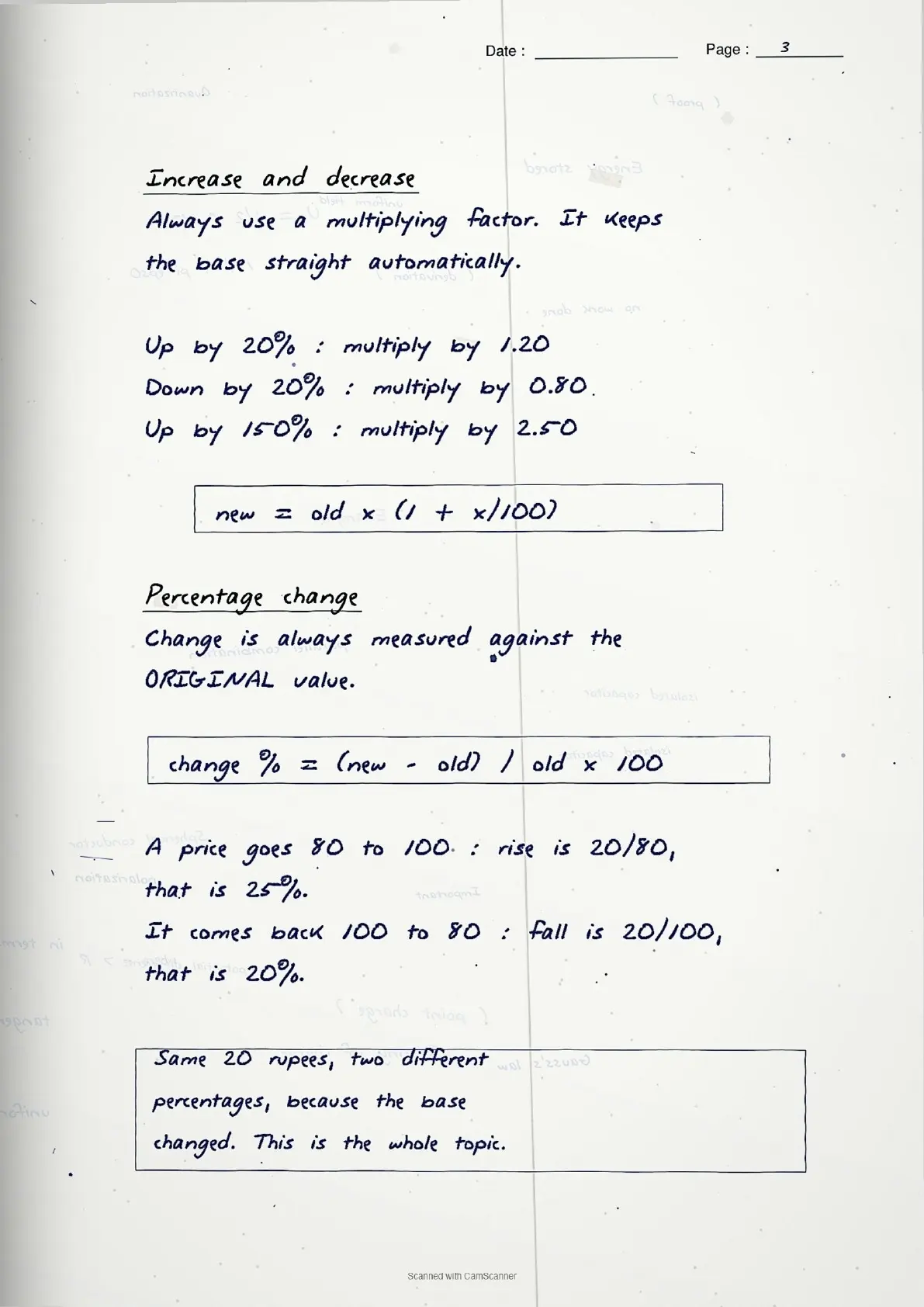
A price climbing from 80 to 100 is a 25 per cent rise. Watch it fall the same 20 rupees back to 80, and that's only a 20 per cent fall. Same 20 rupees both times. Different base underneath.
- Treat every change as a multiplying factor, not something you add
- Measure a change against the original value, never the one you just worked out
- Say the base out loud before touching a calculation: percent of what?
Fractions Worth Memorising
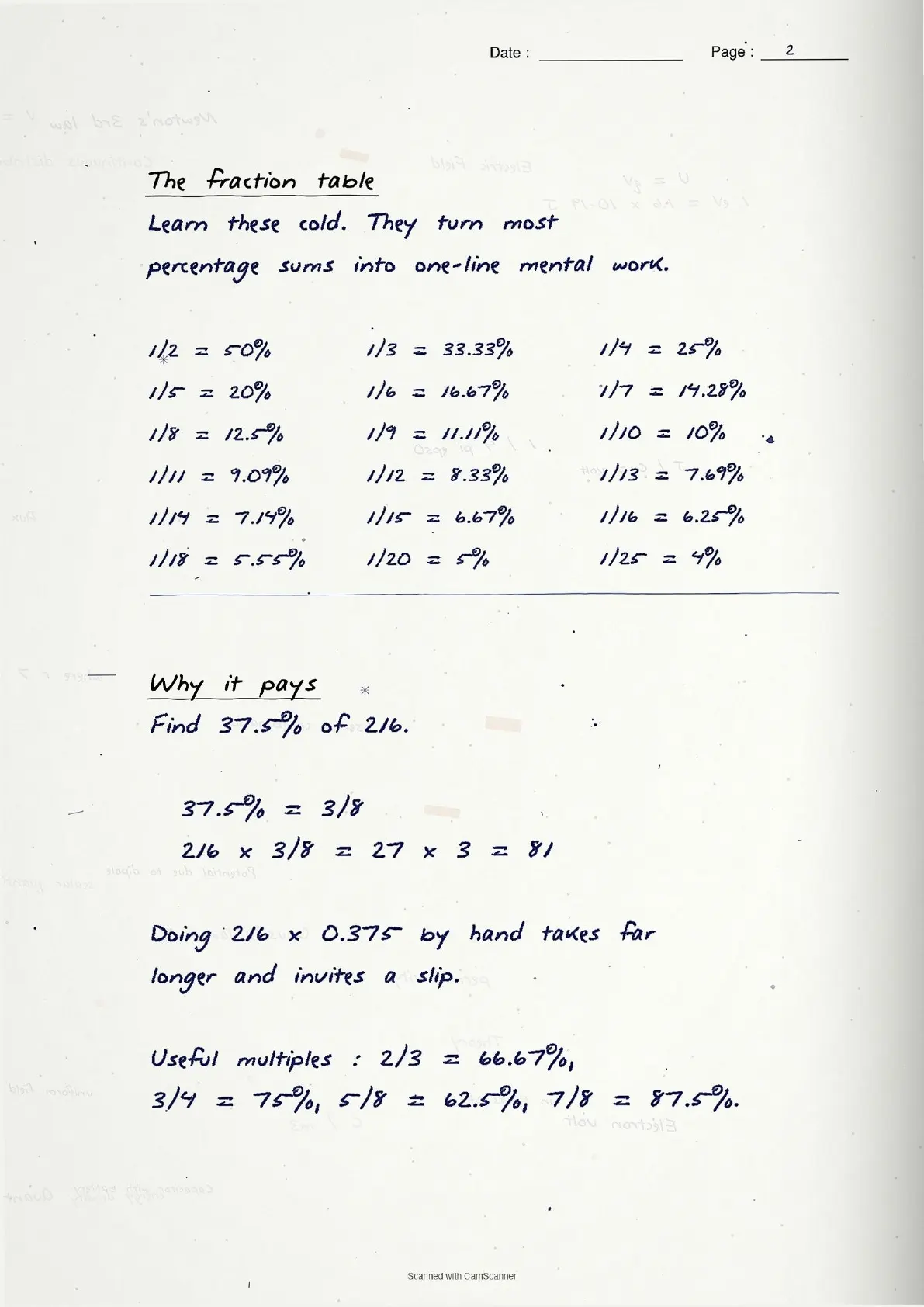
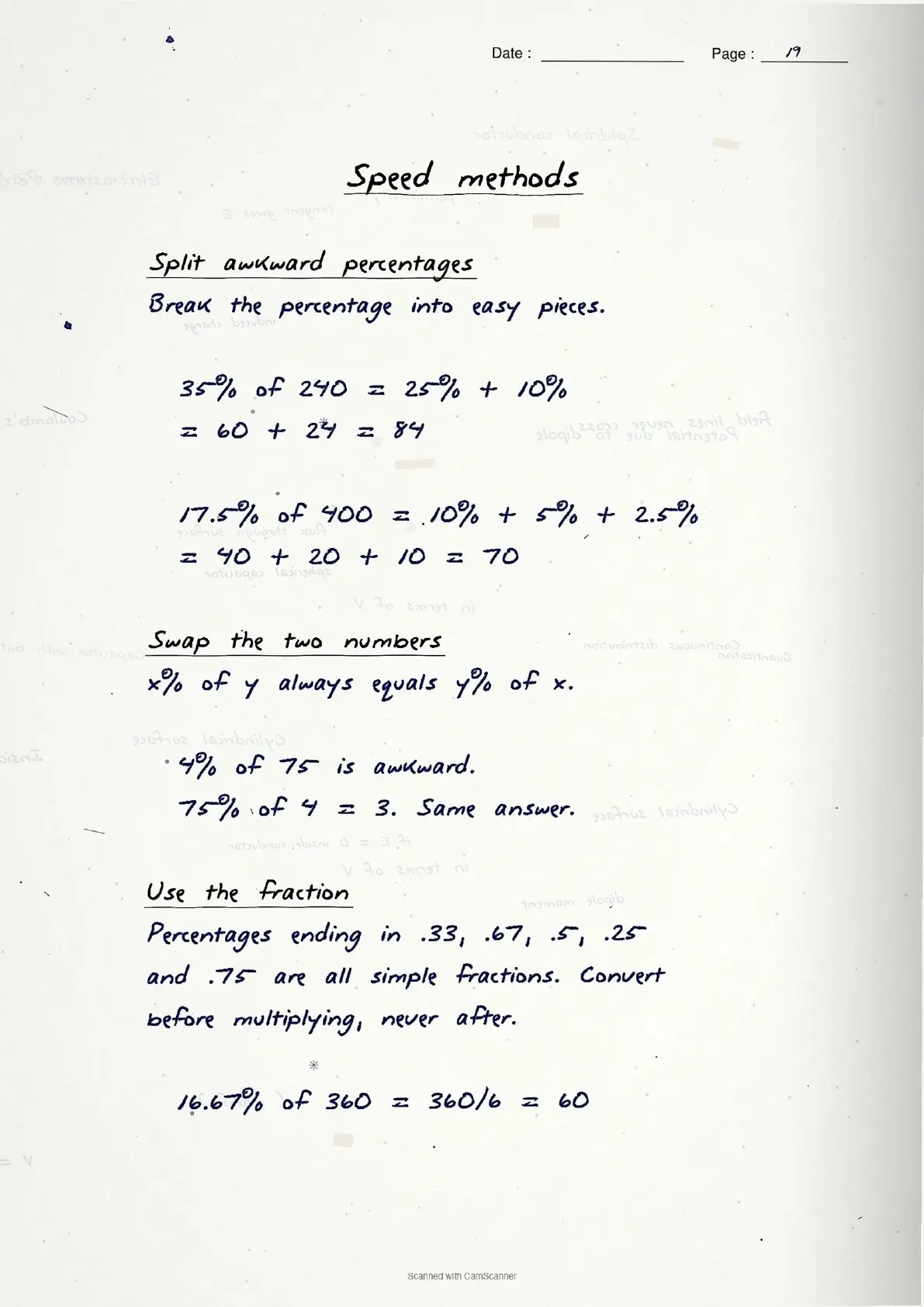
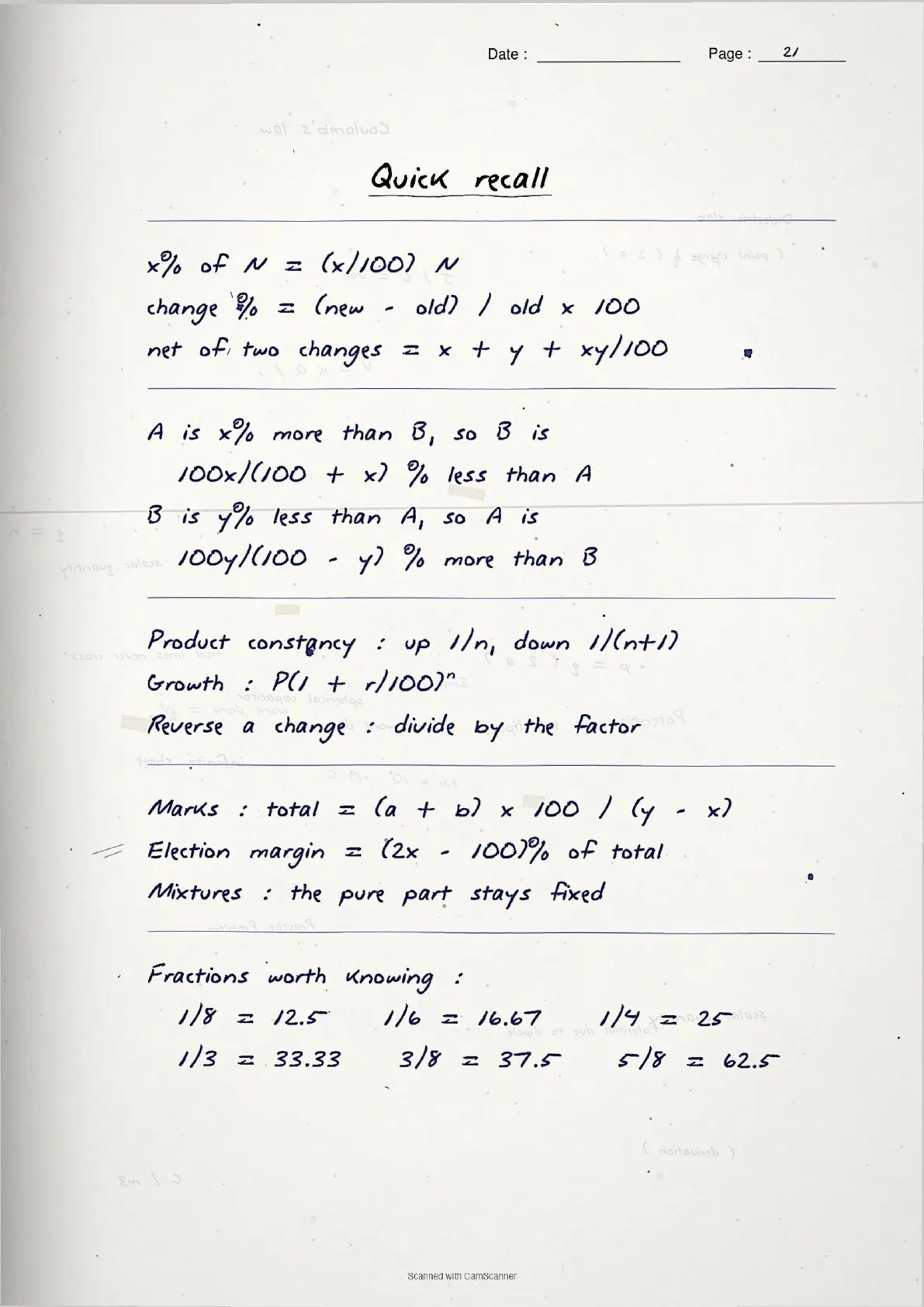
Most of the arithmetic in this chapter is a fraction wearing a disguise. 37.5 per cent is 3/8, so 37.5 per cent of 216 is just 216 times 3/8, which comes out to 81, faster than multiplying by 0.375 and much less likely to go wrong.
Anything ending in .67 or .33 is almost always a sixth or a third underneath.
One more habit worth keeping: x per cent of y is always the same number as y per cent of x, so if the arithmetic looks ugly one way round, flip it. An awkward figure like 35 per cent splits into 25 plus 10 without any real effort either.
Successive Changes and Product Constancy
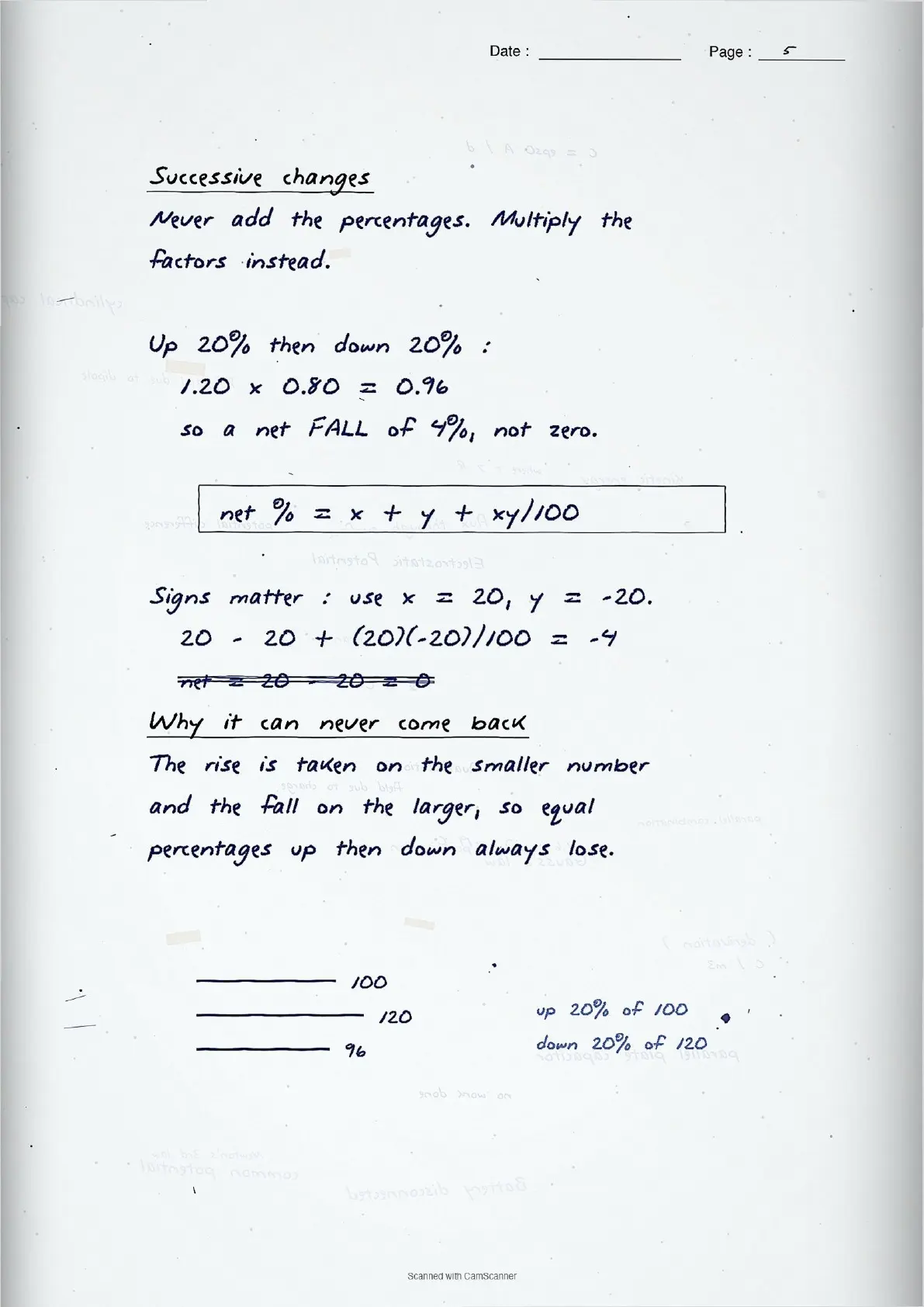
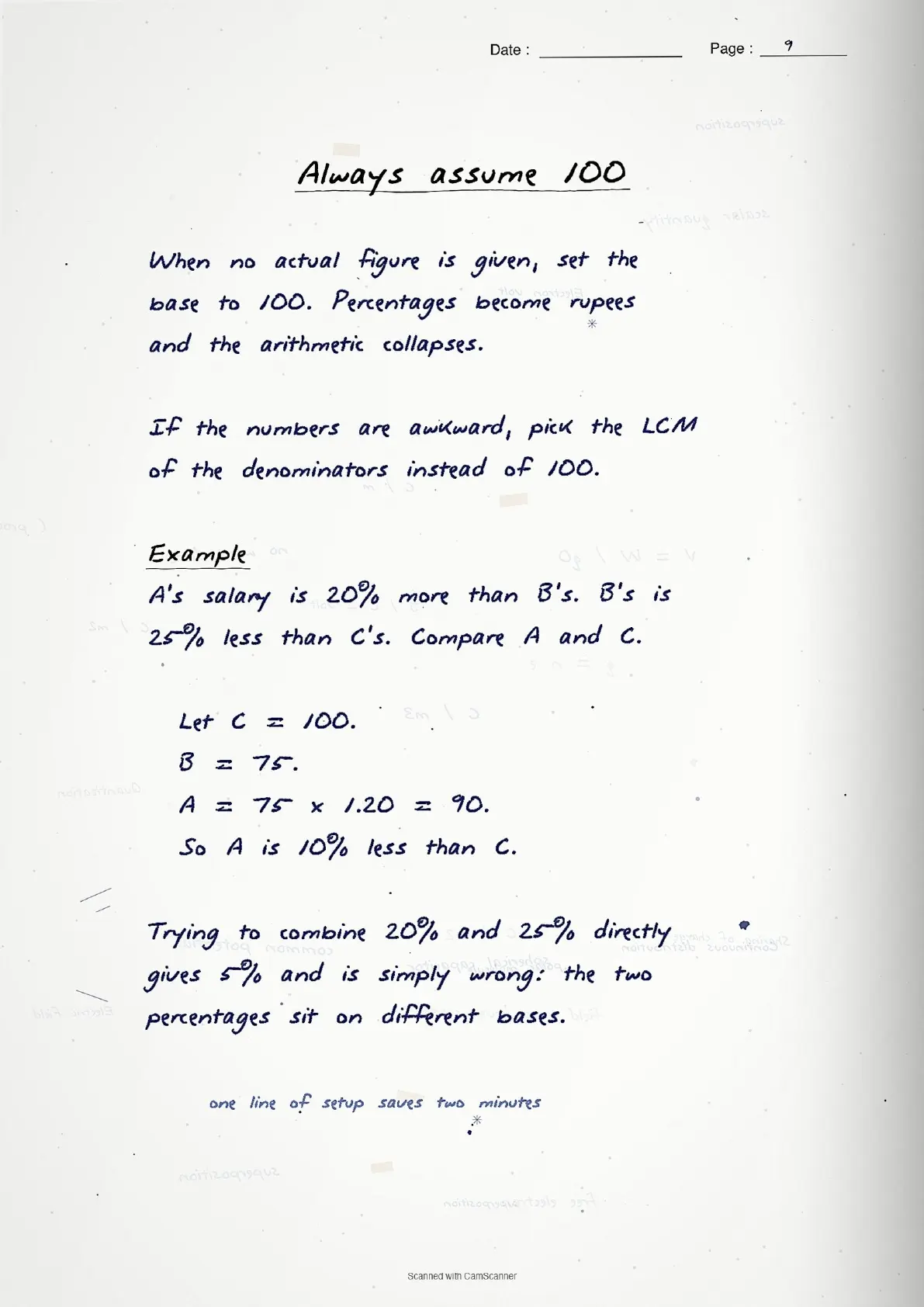
Percentages don't add across two steps. They multiply, and that catches almost everyone out at least once.
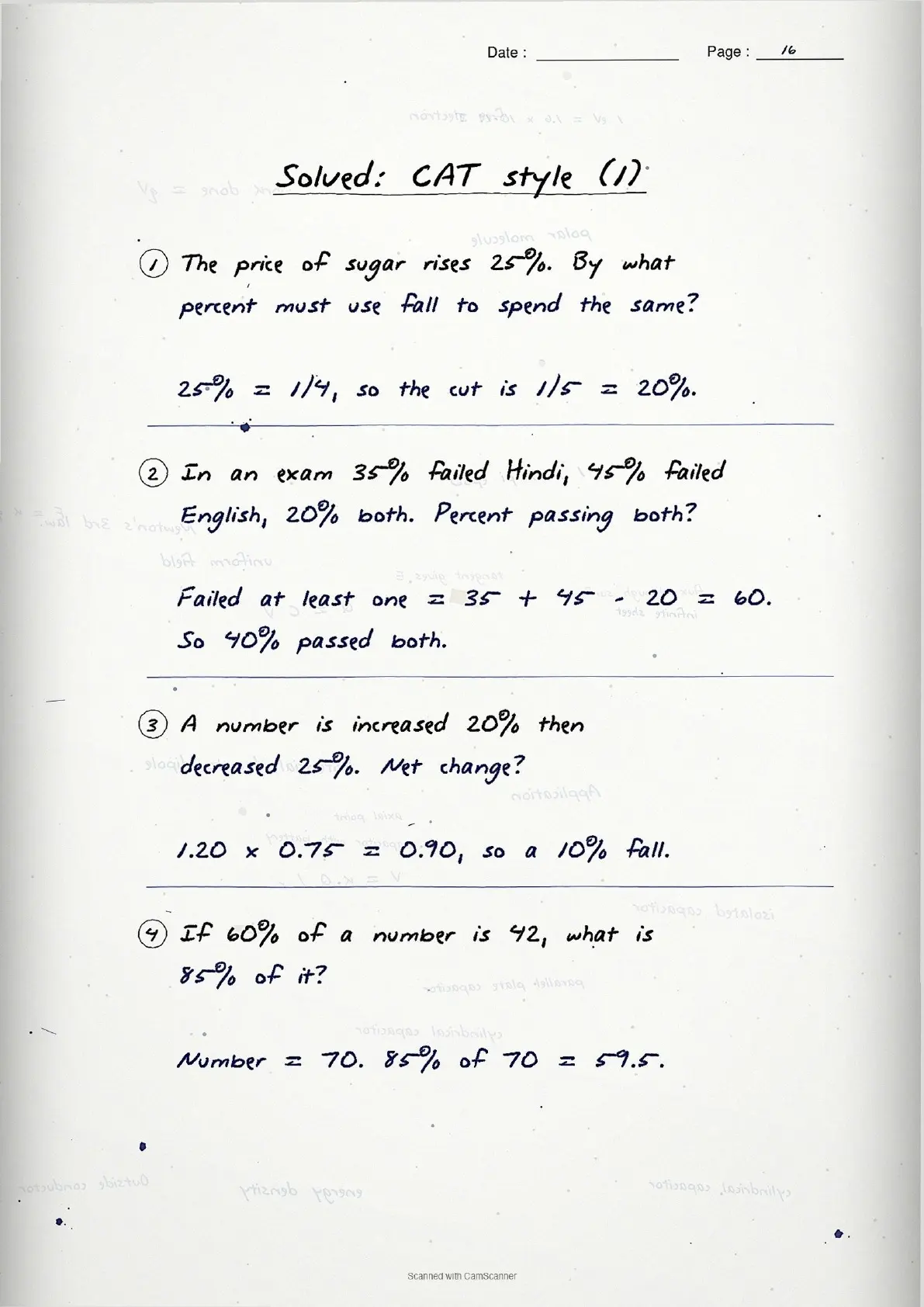
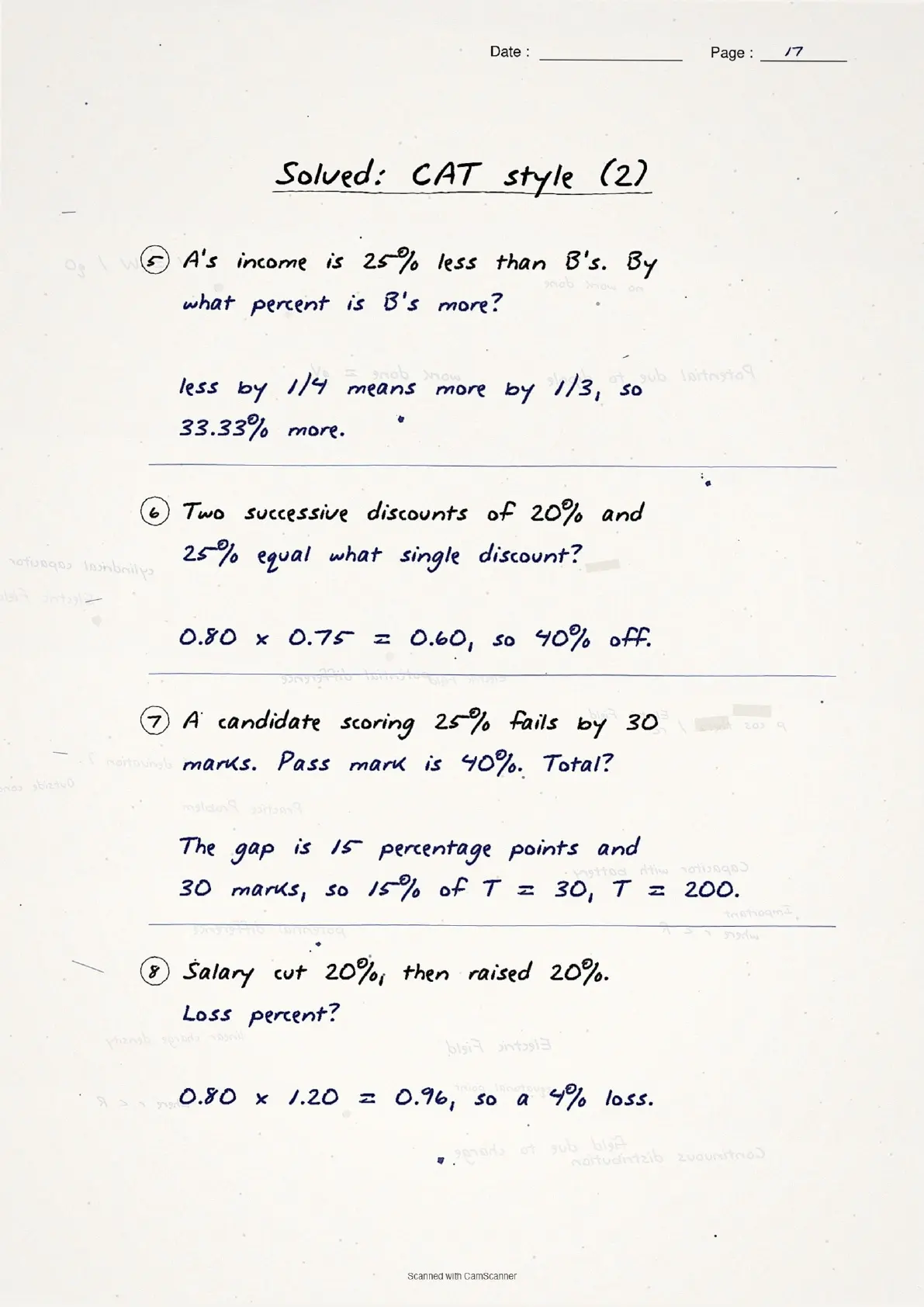
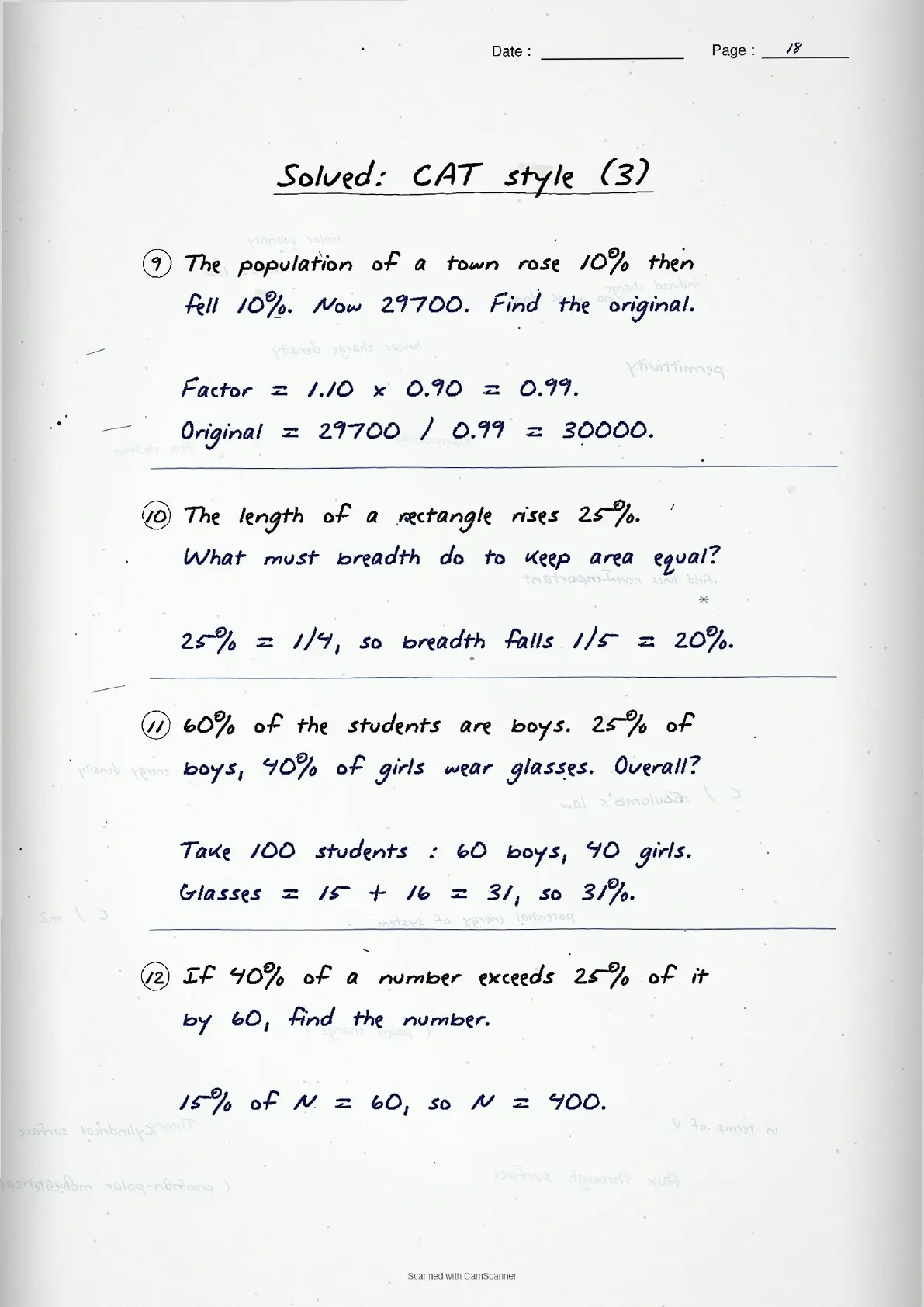
Raise something 20 per cent and then drop it 20 per cent, and you don't land back where you started; you land at 0.96 of the original, a net loss of 4 per cent. The rise happened on the smaller number, the fall on the larger one, and that mismatch is the entire topic.
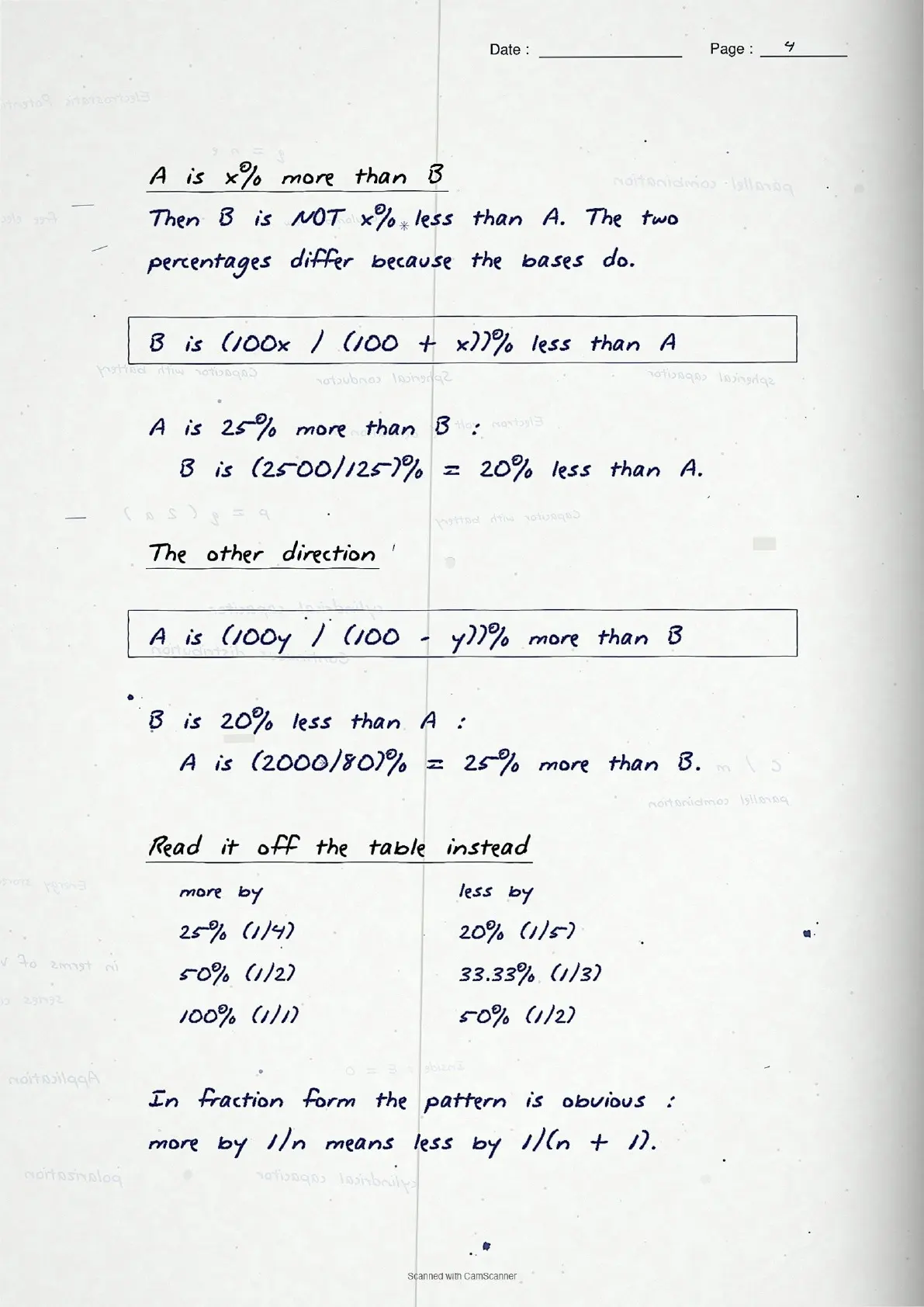
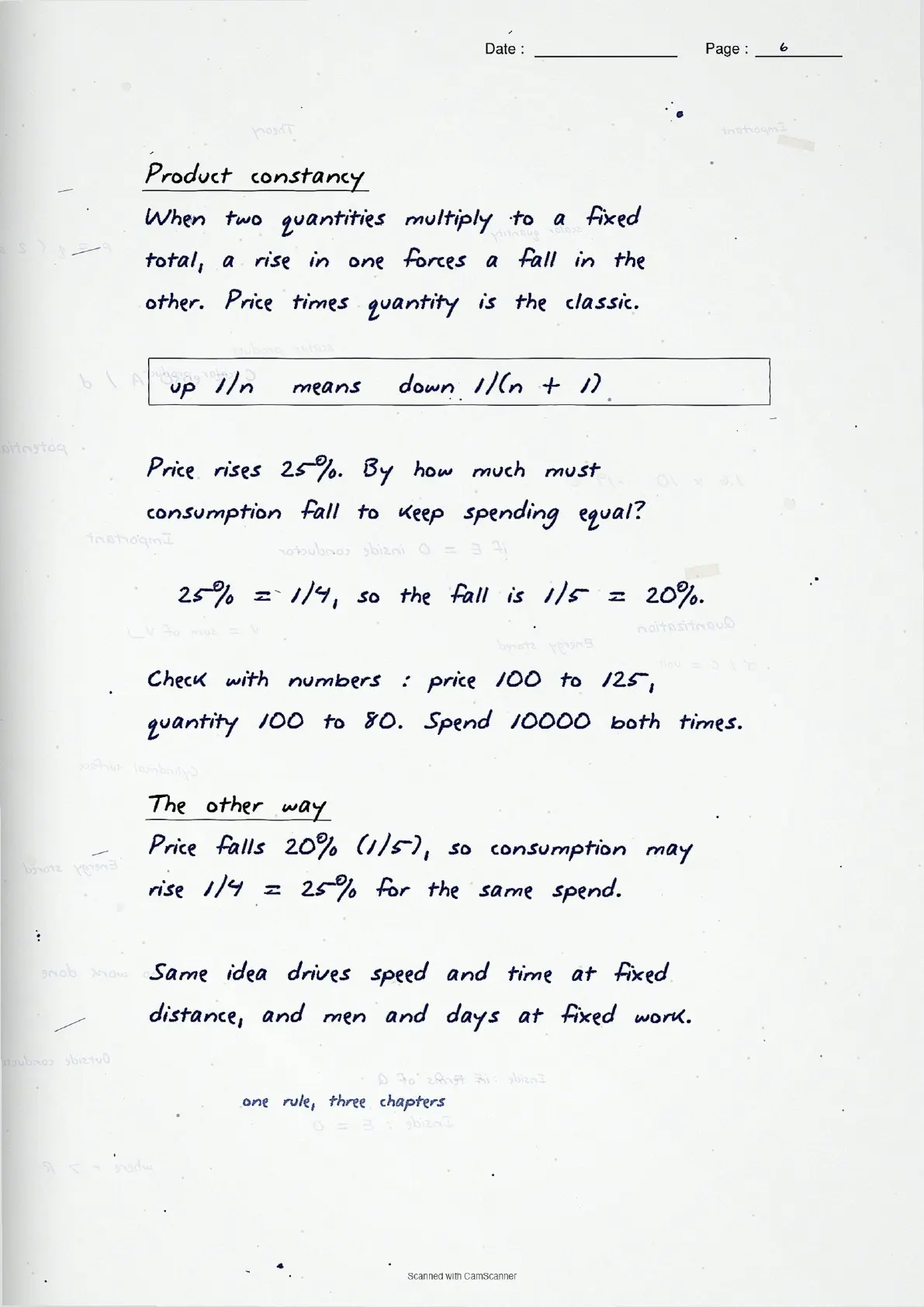
The same mismatch governs product constancy. If price times quantity has to stay fixed, a price rise of 1/n only needs a quantity fall of 1/(n+1) to balance it, not 1/n back. A 25 per cent rise in price, for instance, is undone by a mere 20 per cent fall in consumption.
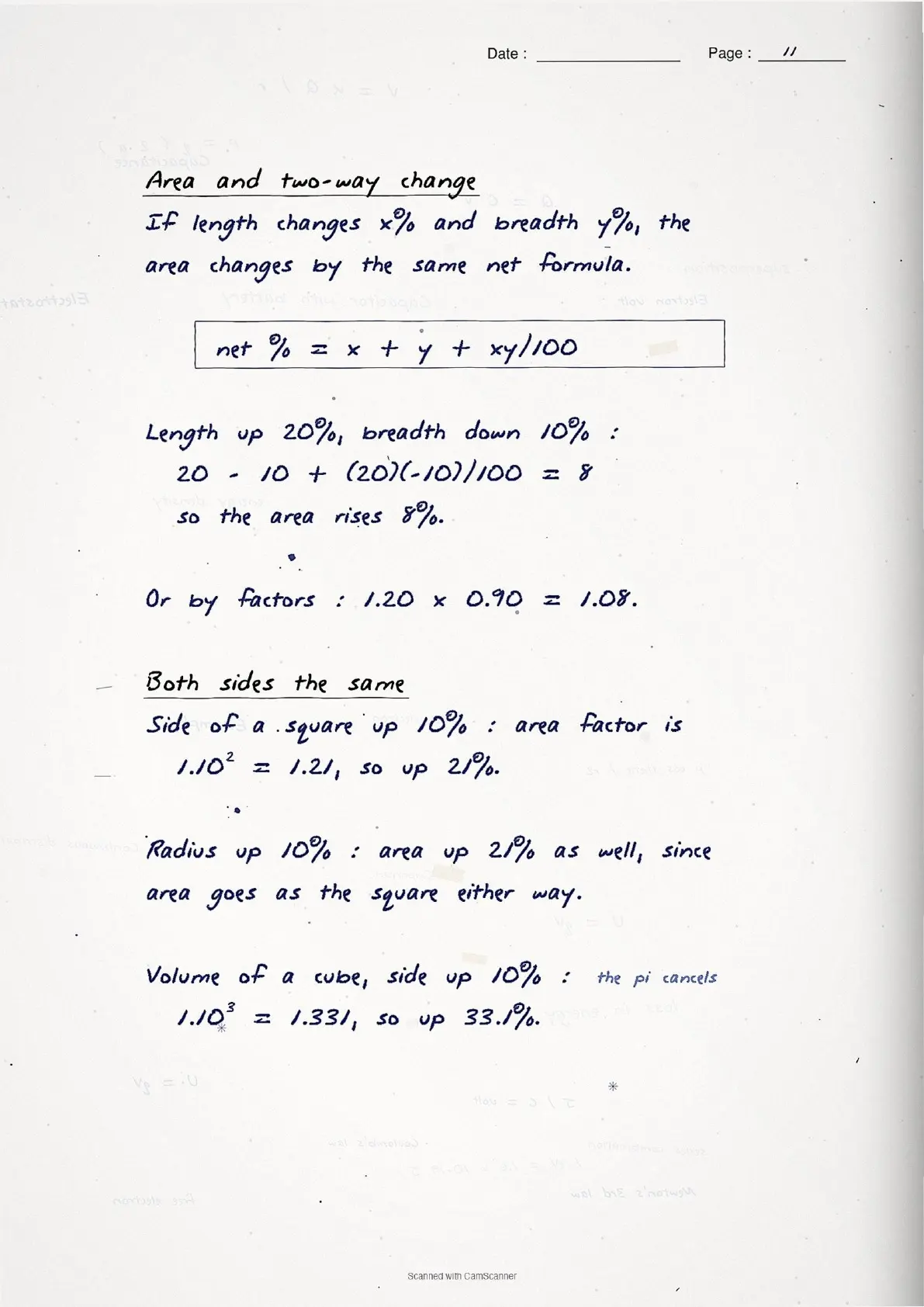
Combine two changes and you get x + y + xy/100, signs included, and the identical rule quietly runs area, speed and time, and men and days.
Passing Marks, Elections, Savings and Mixtures
Four setups cover most of what CAT actually asks under this heading, and the notes work every one of them on real numbers instead of letters.
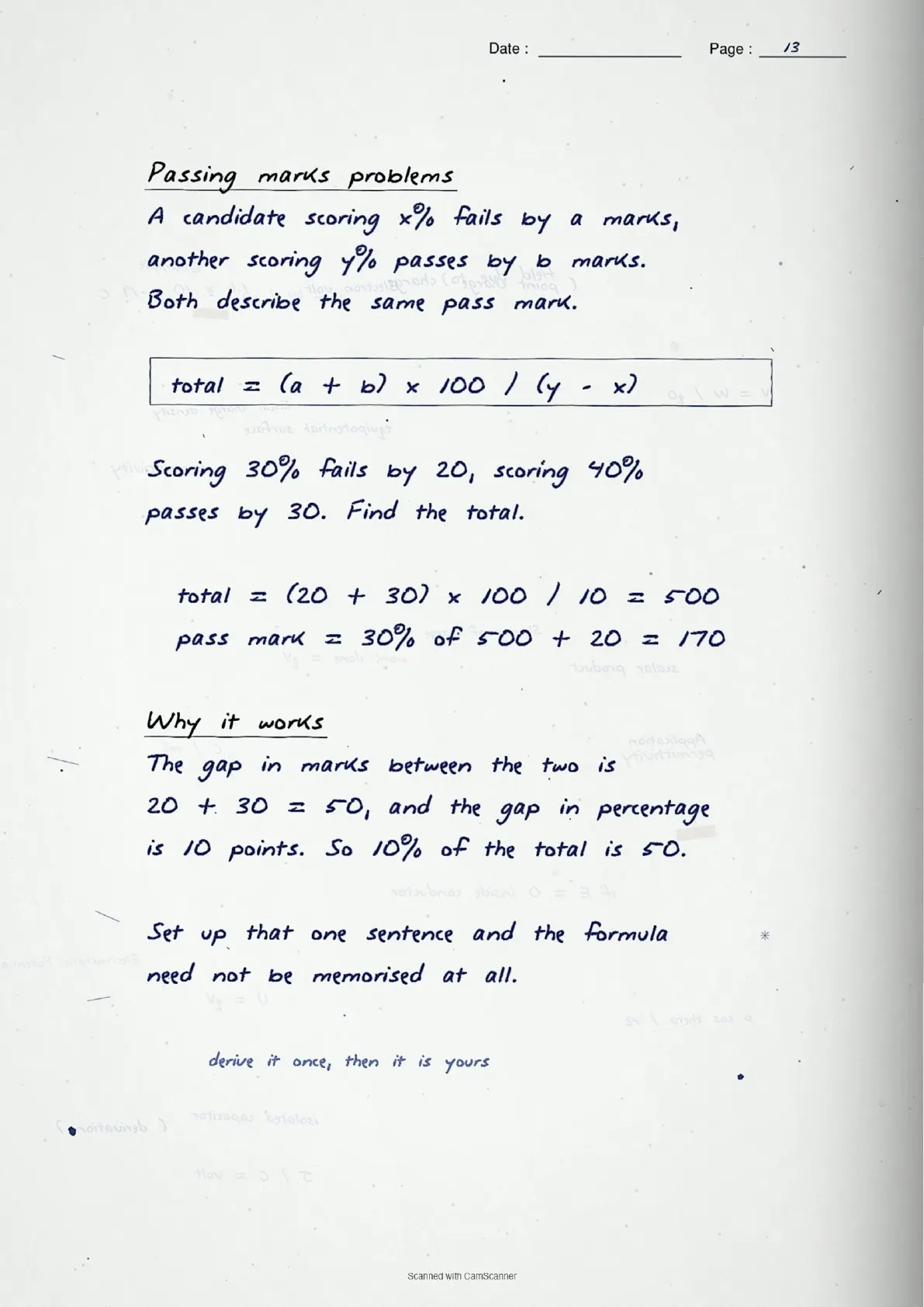
- Passing marks: one candidate falls short by a fixed number of marks, another clears it by a different fixed number, and both statements describe the same pass mark from opposite sides
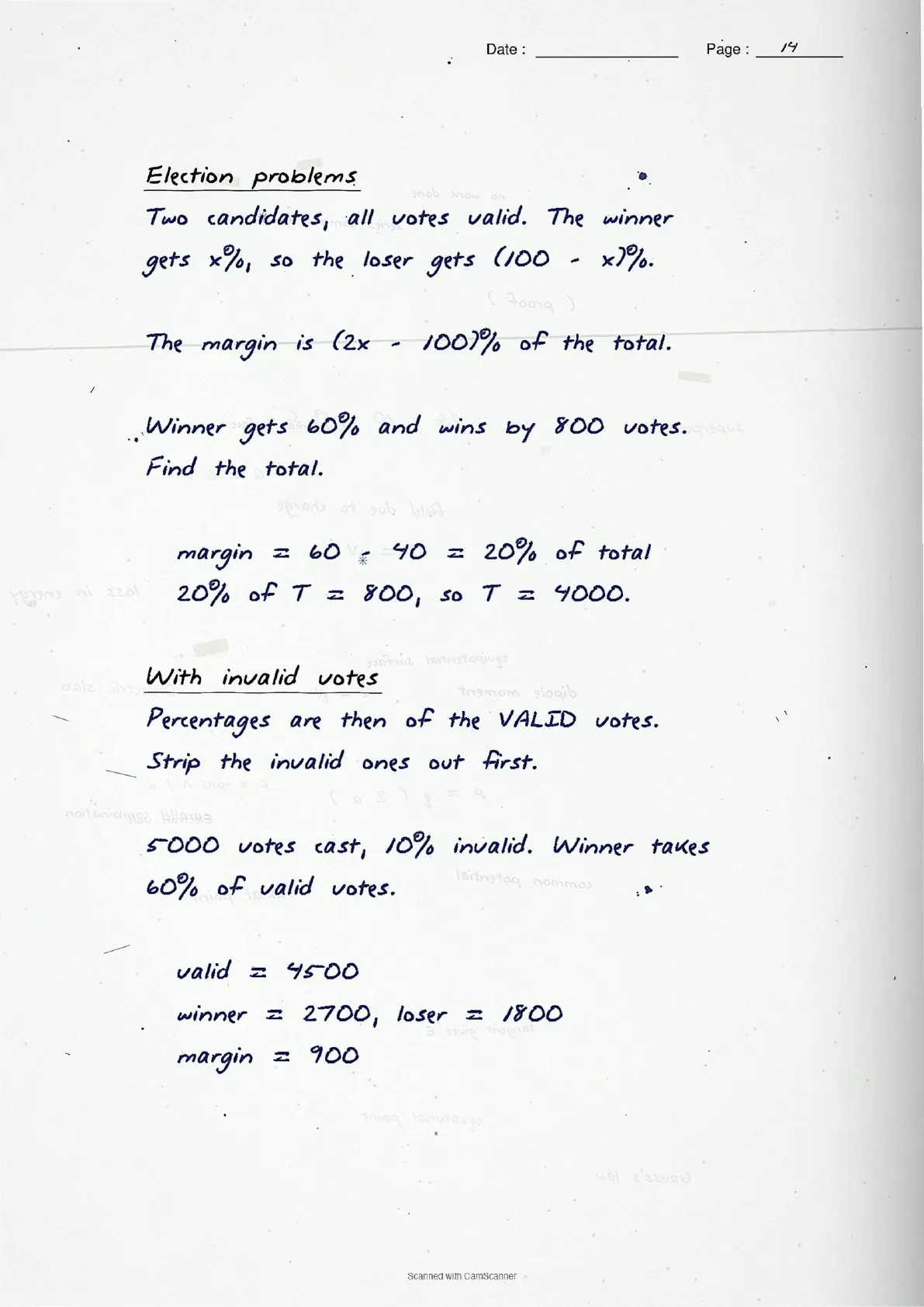
- Elections: the winning margin comes out to twice the winner's vote share minus 100
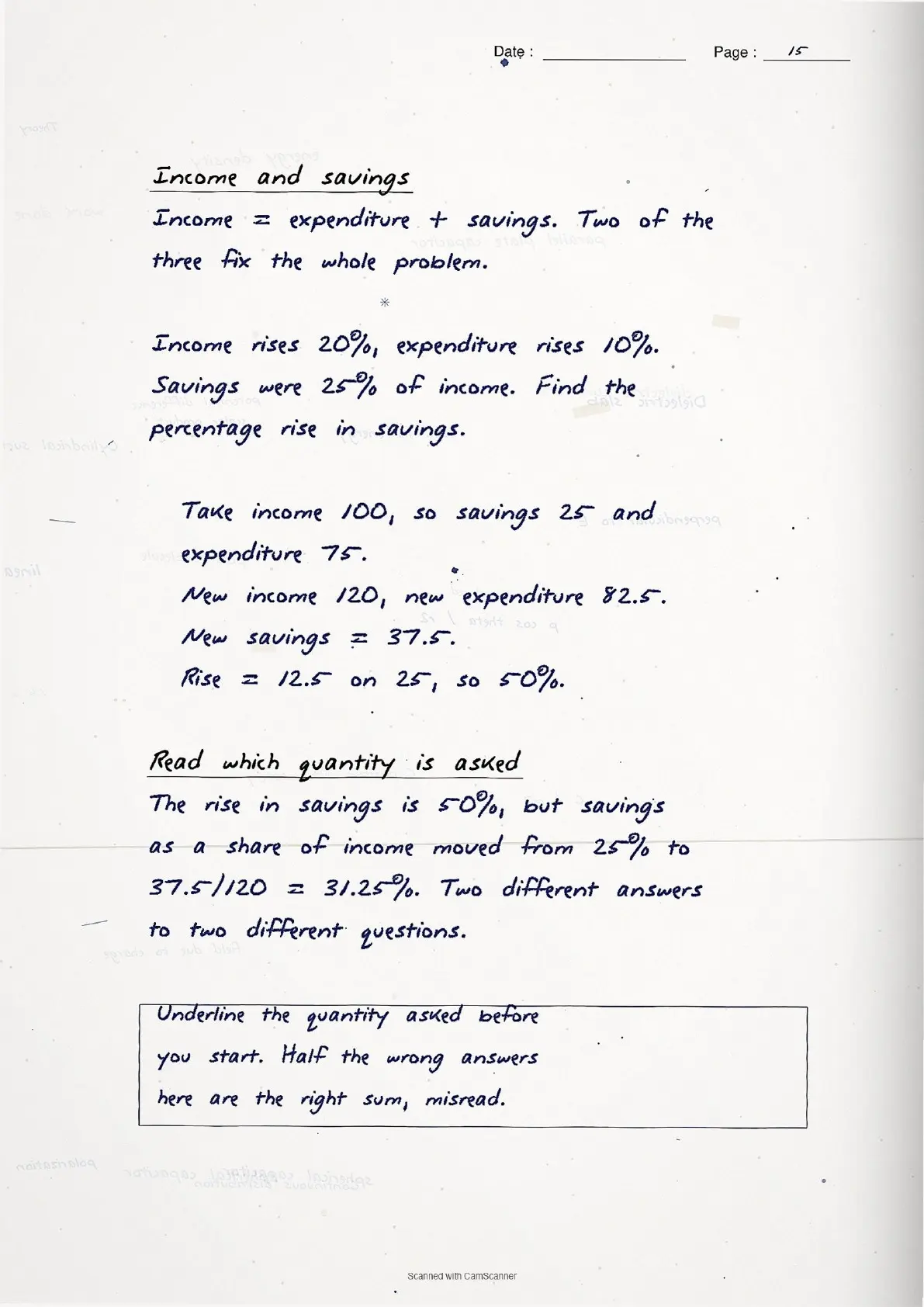
- Income and savings problems give you two of three linked quantities and expect the third to fall out
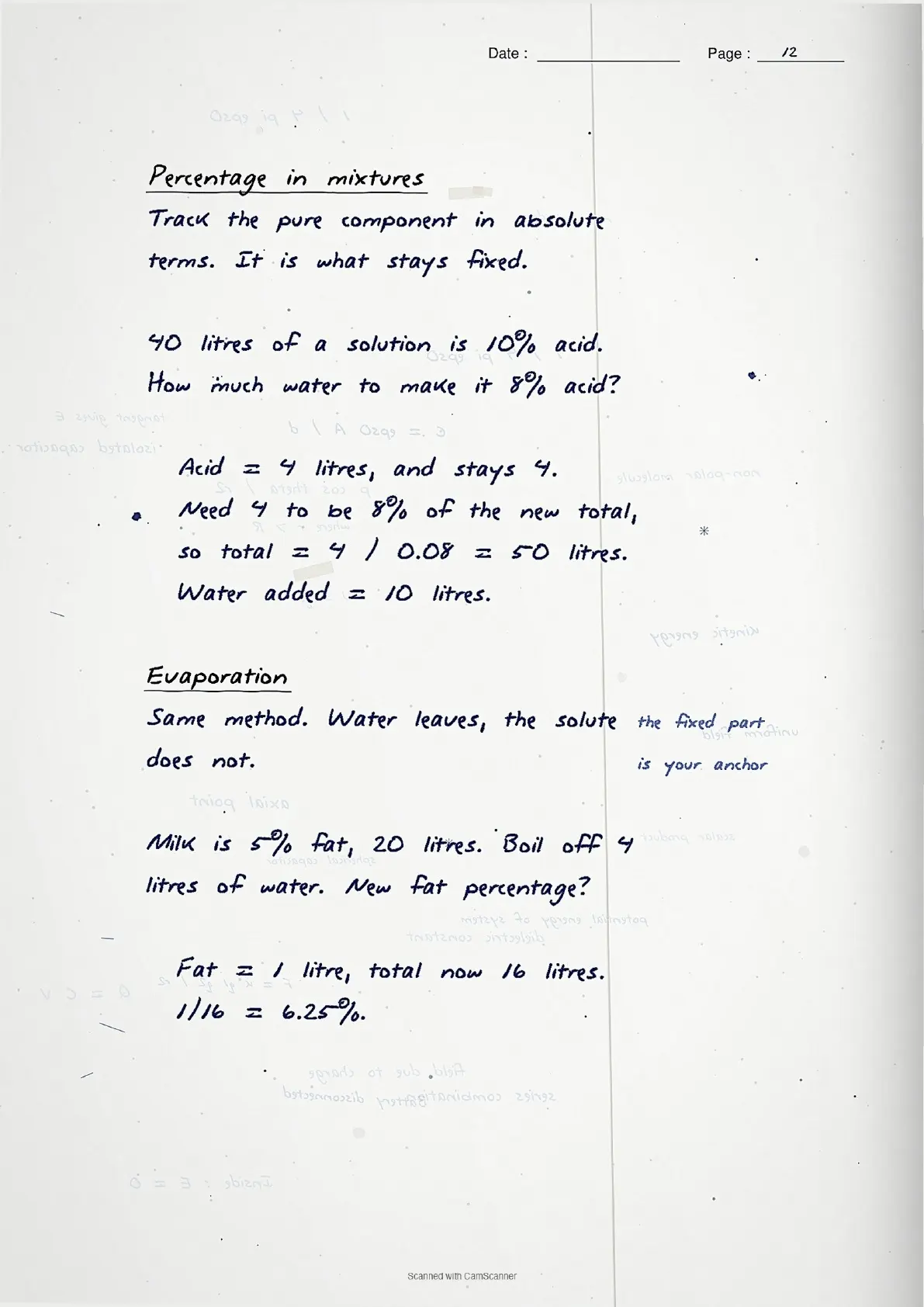
- In a mixture, the pure component is what stays fixed while water is added or boiled away
When a question gives no starting figure at all, assume 100. The percentages turn into plain rupees, and what's left is usually one line of arithmetic.
Percentage Shortcuts, Worked Through on Video
Source: MBA Wallah
Where Students Lose Marks
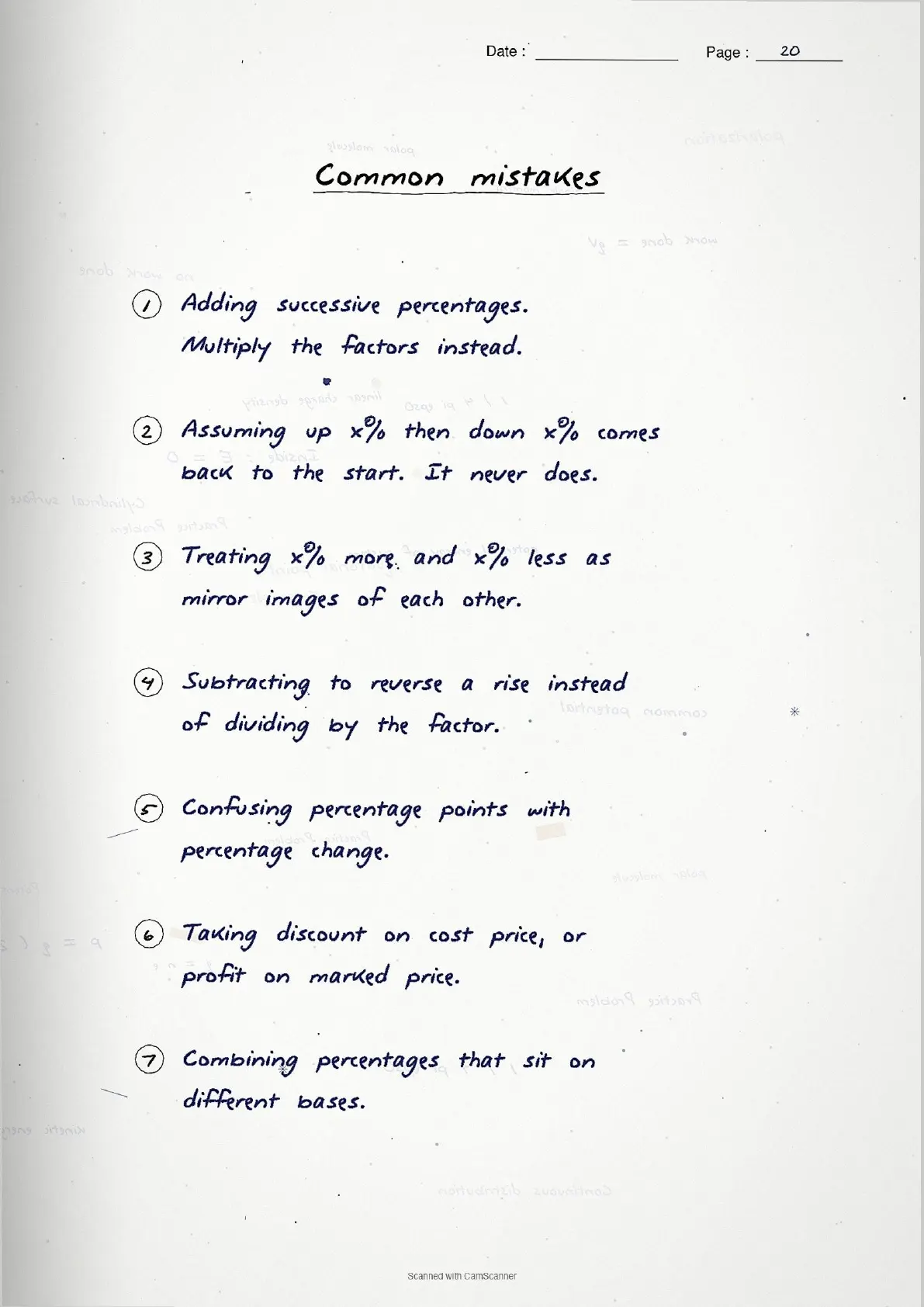
Six mistakes account for most of the marks lost on this topic, and the notes call out each one right where it happens instead of collecting them in a warning box at the end.
- Adding successive percentages instead of multiplying the underlying factors
- Assuming a rise of x per cent followed by a fall of x per cent brings you back to the start, when it never does
- Treating "x per cent more" and "x per cent less" as mirror images of one another
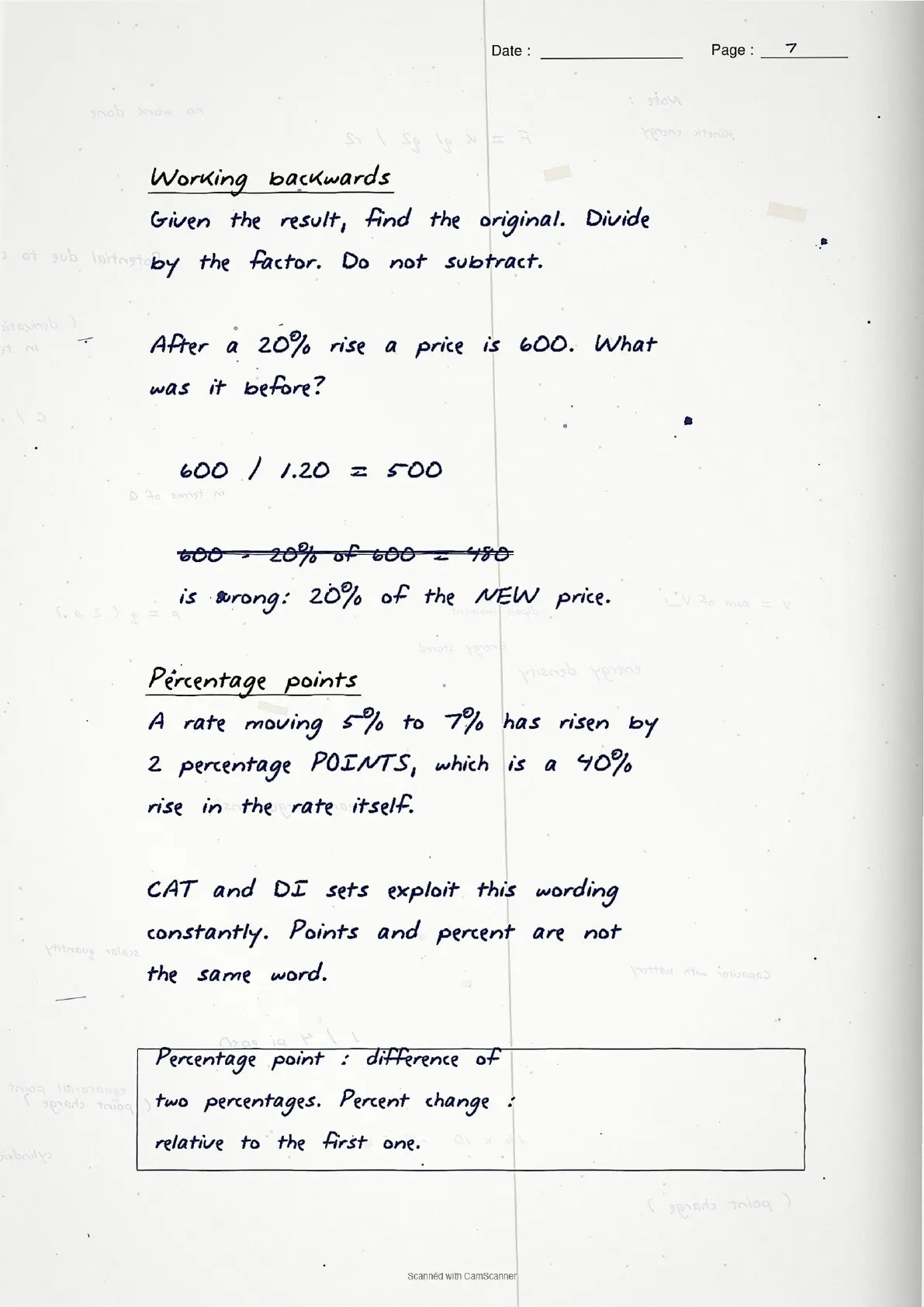
- Subtracting to undo a rise, when dividing by the factor is what actually reverses it
- Confusing a percentage point with a percentage change, which are not the same quantity
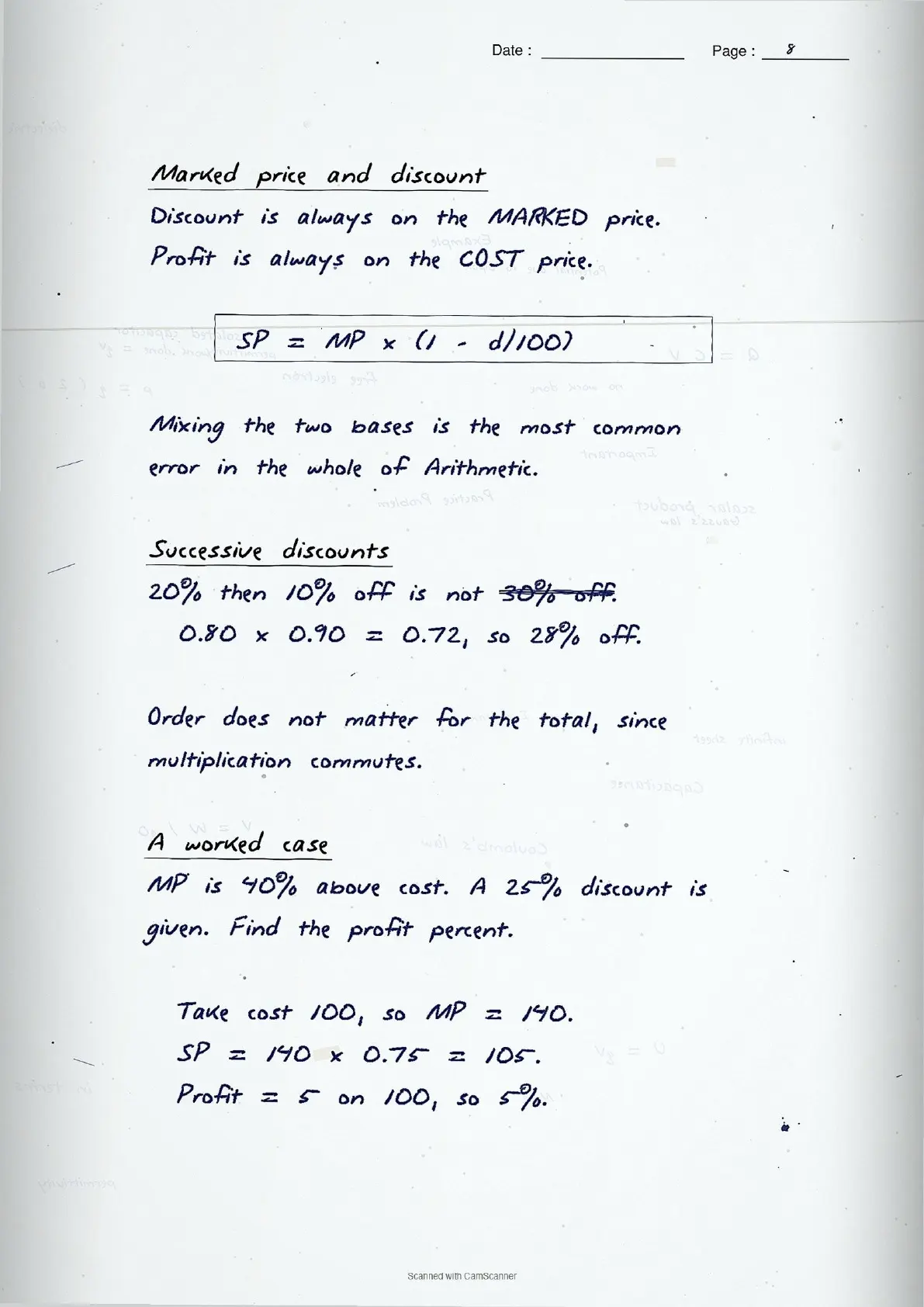
- Taking the discount on cost price, or the profit on marked price, the wrong way round
Two Pages Worth Revisiting Before the Exam
Of the 22 pages, two carry most of the weight on a last read-through: the fraction table near the start, and the quick-recall page at the end. Everything between them mainly exists to explain why those two work.
- Default to 100 the moment a question skips an actual figure
- Convert to fractions before multiplying, not after
- Underline the exact quantity being asked for; two different questions can share identical numbers
- Work the twelve solved questions closed-book first, then check the method against the notes
One rule holds up better than any shortcut in this chapter: if a percentage question is still running past ninety seconds, the base was never pinned down. Fix that, not the arithmetic.
CAT Percentages Handwritten Notes FAQs
Ques. How important are percentages for CAT Quant?
Ans. More than the direct question count suggests. One question is usually set on percentages outright, but the same idea sits underneath profit and loss, interest, mixtures and most Data Interpretation sets, which together push its real weight to roughly 6 to 10 marks.
Ques. Why doesn't a 20 per cent rise followed by a 20 per cent fall cancel out?
Ans. Because the two changes sit on different bases. The rise applies to the smaller starting number, the fall to the larger one that follows, and the two factors multiply out to 0.96, a net loss of 4 per cent rather than zero.
Ques. What's the actual difference between a percentage point and a percentage?
Ans. A rate moving from 5 per cent to 7 per cent has risen by 2 percentage points, but that same move is a 40 per cent rise in the rate itself. CAT leans on this gap in its wording fairly often.
Ques. Is it worth memorising the fraction-to-percentage table?
Ans. Yes, at least up to one-twentieth. It turns most percentage sums into a single division, which is the main reason strong candidates finish these questions in under a minute.
Ques. Is the PDF actually free to download?
Ans. Yes. All 22 pages can be read on this page or downloaded at no cost, so it can be printed or kept on a phone for revision.



Comments