SNU B.Tech Civil Engineering FAQs
Ques. Is B.Tech Civil Engineering at SNU a good choice given that most top engineering students prefer CSE or ECE?
Ans. Civil Engineering at SNU is a strong choice for students interested in infrastructure, sustainability, and environmental engineering. The department's curriculum uniquely integrates ML, IoT, Remote Sensing, and Sustainability into core civil engineering subjects, making graduates relevant to modern smart city and infrastructure projects. The department has received the DST FIST-2022 grant, indicating strong research credentials. With India's massive infrastructure push under programmes like PM Gati Shakti and Smart Cities Mission, Civil Engineering graduates with tech-integrated skills are in high demand.
Ques. What are the thrust areas and specialisations available in B.Tech Civil Engineering at SNU?
Ans. The department focuses on three thrust areas: Sustainable Infrastructure Systems, Water, Environment, and Climate, and Urban Network Systems. While there are no separate named specialisations at the UG level (unlike Chemical Engineering), the curriculum includes electives and research opportunities in these areas. Students can also pursue a minor in any other stream offered by the university, such as Computer Science, Data Science, or Environmental Studies, enabling cross-disciplinary learning.
Ques. What is the total cost of doing B.Tech Civil Engineering at SNU over 4 years?
Ans. The annual tuition fee is Rs 4,25,000 for the 2026 batch. Including mandatory hostel and living charges of Rs 2,43,500 per annum (twin-sharing AC room), the total annual cost is Rs 6,68,500. Over 4 years, this amounts to Rs 26,74,000. Adding the one-time admission fee of Rs 60,000, application fee of Rs 2,500, and refundable security deposit of Rs 30,000, the total outgo is approximately Rs 27,66,500. The security deposit of Rs 30,000 is refunded upon leaving the university.
Ques. What laboratory and research facilities are available for Civil Engineering students at SNU?
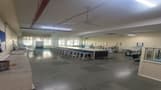
Ans. The department has 15 well-equipped laboratories including Strength of Materials, Fluid Mechanics, Hydraulic Engineering, Concrete Technology, Geoinformatics, Environmental Engineering, Transportation Engineering, Soil Mechanics, Disaster Management, Air Quality, Intelligent Geosystems, River Hydraulics, and Water Management Field Lab. The institution also has centralised research facilities with a Scanning Electron Microscope (SEM), Metallic 3D Printer, Energy Dispersive X-Ray Spectroscopy (EDX), and Differential Scanning Calorimeter (DSC), which are accessible to Civil Engineering researchers.
Ques. How does SNU's Civil Engineering admission process work for students who have not appeared for JEE?
Ans. Students who have not appeared for JEE can apply through the SNUSAT+APT route. SNUSAT is an online home-proctored test conducted across 6 cycles from January to July 2026, testing quantitative and logical reasoning. The APT (Academic Proficiency Test) tests Physics and Mathematics. Alternatively, students with valid College Board SAT or ACT scores can also apply directly. CUET 2026 scores are also accepted after the declaration of results, subject to seat availability. Multiple routes can be applied for in the same application form.
Ques. What kind of career opportunities are available for Civil Engineering graduates from SNU?
Ans. Civil Engineering graduates from SNU find opportunities in infrastructure development, construction management, environmental consulting, urban planning, water resources management, and government organisations like NHAI, CPWD, and state PWDs. With the curriculum's integration of ML, IoT, and Remote Sensing, graduates are also well-positioned for roles in smart city projects, GIS-based planning, and disaster management. The university's Career Development Centre (CDC) provides placement support, and the overall engineering average salary for AY 2024-25 was Rs 10.82 LPA, with 174 organisations visiting campus.


![Shiv Nadar University - [SNU]](https://image-static.collegedunia.com/public/college_data/images/logos/1685085024PNGSNUIOE01.jpeg?h=71.7&w=71.7&mode=stretch)




.png?h=78&w=78&mode=stretch)
.png?h=78&w=78&mode=stretch)











.png?h=72&w=72&mode=stretch)
.png?h=72&w=72&mode=stretch)


.png?h=72&w=72&mode=stretch)





Comments