GRE 2024 Quantitative Reasoning Practice Test Set 18 Question Paper with Solutions PDF

Shivam Yadav logo
QHgemN, Oct 13, 2025

byShivam Yadav

GRE 2024 Quantitative Reasoning Practice Test Set 18 Question Paper with Solutions PDF is available for download. The overall test time is about 1 hour and 58 minutes. GRE has total 5 sections:

  • Analytical Writing  (One "Analyze an Issue" task, Alloted time 30 minutes)
  • Verbal Reasoning  (Two Sections, with 12 questions and 15 questions respectively)
  • Quantitative Reasoning (Two Sections, with 12 questions and 15 questions respectively)

GRE 2024 Qantitative Reasoning Practice Test Set 18 Question Paper with Solutions PDF

GRE 2024 Quantitative Reasoning Set 18 Question Paper with Solutions PDF download iconDownload Check Solutions
GRE 2024 Qantitative Reasoning Practice Test Set 18 Question Paper with Solutions PDF

Question 1:

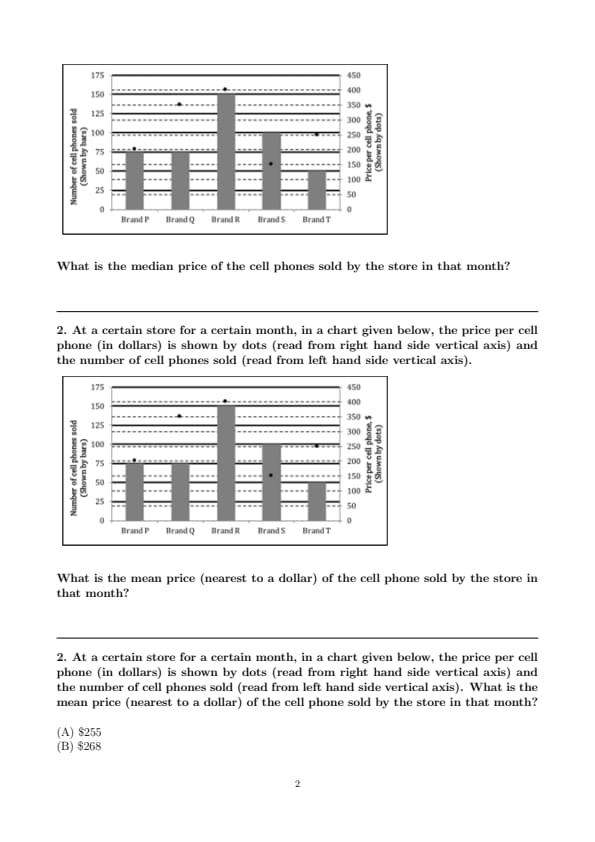
At a certain store for a certain month, in a chart given below, the price per cell phone (in dollars) is shown by dots (read from right hand side vertical axis) and the number of cell phones sold (read from left hand side vertical axis).
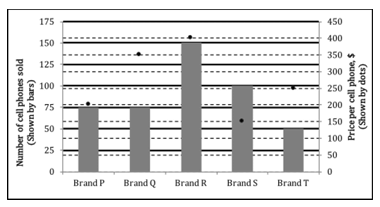


What is the median price of the cell phones sold by the store in that month?


Question 2:

At a certain store for a certain month, in a chart given below, the price per cell phone (in dollars) is shown by dots (read from right hand side vertical axis) and the number of cell phones sold (read from left hand side vertical axis).


What is the mean price (nearest to a dollar) of the cell phone sold by the store in that month?


Question 3:

At a certain store for a certain month, in a chart given below, the price per cell phone (in dollars) is shown by dots (read from right hand side vertical axis) and the number of cell phones sold (read from left hand side vertical axis). What is the mean price (nearest to a dollar) of the cell phone sold by the store in that month?

  • (A)255
  • (B)268
  • (C)274
  • (D)285
  • (E)300

Question 4:

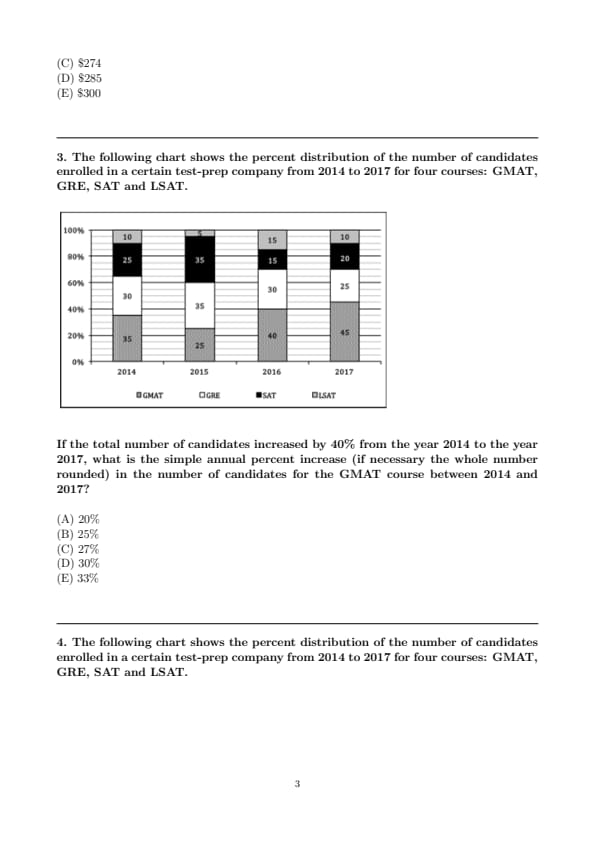
The following chart shows the percent distribution of the number of candidates enrolled in a certain test-prep company from 2014 to 2017 for four courses: GMAT, GRE, SAT and LSAT.
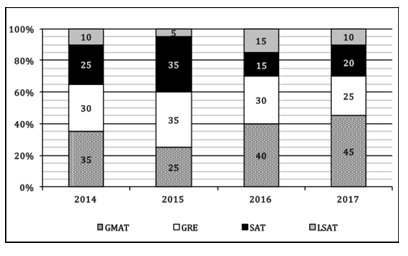


If the total number of candidates increased by 40% from the year 2014 to the year 2017, what is the simple annual percent increase (if necessary the whole number rounded) in the number of candidates for the GMAT course between 2014 and 2017?

  • (A) 20%
  • (B) 25%
  • (C) 27%
  • (D) 30%
  • (E) 33%

Question 5:

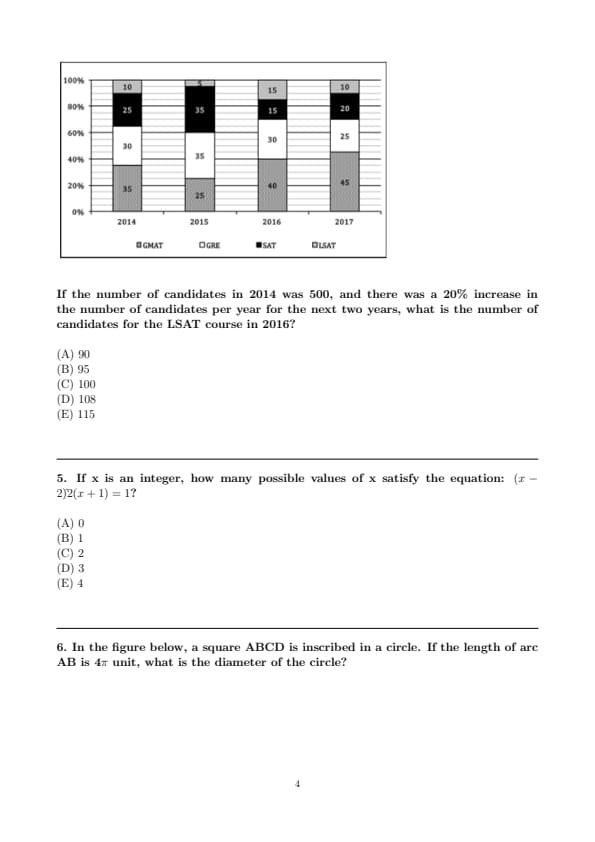
The following chart shows the percent distribution of the number of candidates enrolled in a certain test-prep company from 2014 to 2017 for four courses: GMAT, GRE, SAT and LSAT.


If the number of candidates in 2014 was 500, and there was a 20% increase in the number of candidates per year for the next two years, what is the number of candidates for the LSAT course in 2016?

  • (A) 90
  • (B) 95
  • (C) 100
  • (D) 108
  • (E) 115

Question 6:

If x is an integer, how many possible values of x satisfy the equation: \((x-2)\^{}2(x+1)=1\)?

  • (A) 0
  • (B) 1
  • (C) 2
  • (D) 3
  • (E) 4

Question 7:

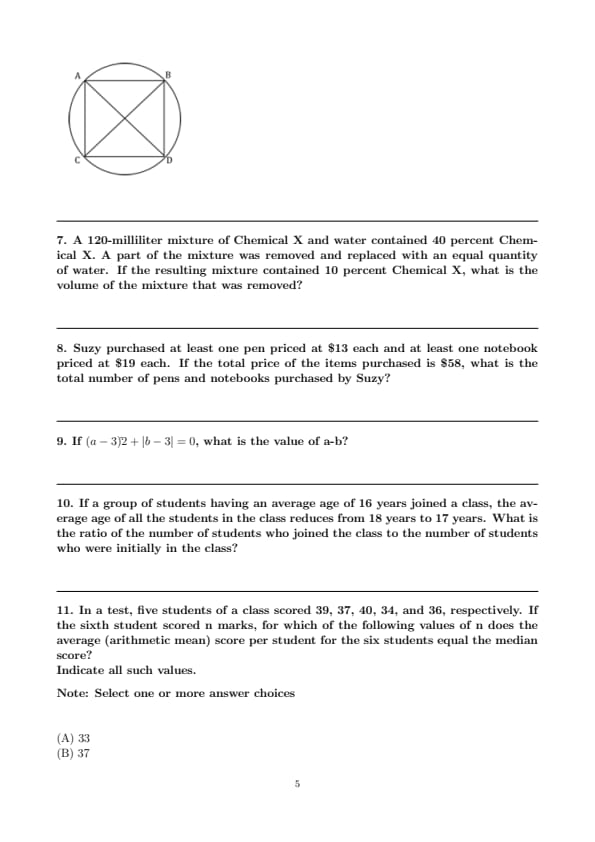
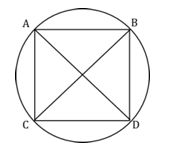
In the figure below, a square ABCD is inscribed in a circle. If the length of arc AB is 4\(\pi\) unit, what is the diameter of the circle?


Question 8:

A 120-milliliter mixture of Chemical X and water contained 40 percent Chemical X. A part of the mixture was removed and replaced with an equal quantity of water. If the resulting mixture contained 10 percent Chemical X, what is the volume of the mixture that was removed?


Question 9:

Suzy purchased at least one pen priced at 13 each and at least one notebook priced at 19 each. If the total price of the items purchased is 58, what is the total number of pens and notebooks purchased by Suzy?


Question 10:

If \((a-3)\^{}2+|b-3|=0\), what is the value of a-b?


Question 11:

If a group of students having an average age of 16 years joined a class, the average age of all the students in the class reduces from 18 years to 17 years. What is the ratio of the number of students who joined the class to the number of students who were initially in the class?


Question 12:

In a test, five students of a class scored 39, 37, 40, 34, and 36, respectively. If the sixth student scored n marks, for which of the following values of n does the average (arithmetic mean) score per student for the six students equal the median score?

Indicate all such values.
[Note: Select one or more answer choices]

  • (A) 33
  • (B) 37
  • (C) 42

Question 13:

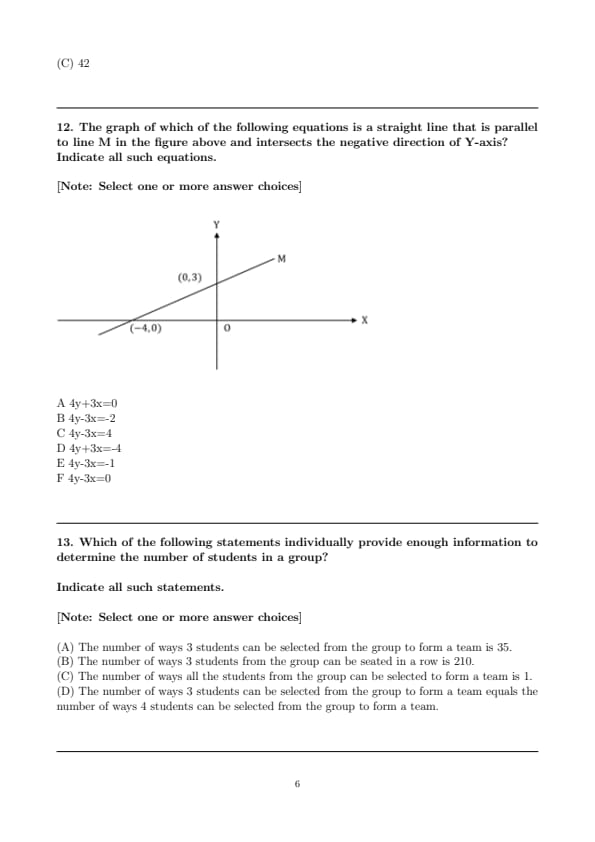
The graph of which of the following equations is a straight line that is parallel to line M in the figure above and intersects the negative direction of Y-axis?
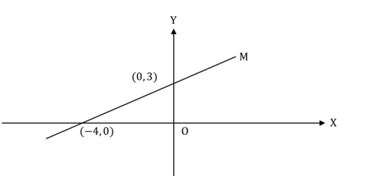

Indicate all such equations.
[Note: Select one or more answer choices]


Question 14:

Which of the following statements individually provide enough information to determine the number of students in a group?


Indicate all such statements.
[Note: Select one or more answer choices]

  • (A) The number of ways 3 students can be selected from the group to form a team is 35.
  • (B) The number of ways 3 students from the group can be seated in a row is 210.
  • (C) The number of ways all the students from the group can be selected to form a team is 1.
  • (D) The number of ways 3 students can be selected from the group to form a team equals the number of ways 4 students can be selected from the group to form a team.

Question 15:

What could be the values of integers from 180 to 300, inclusive, that leave the remainder 2 when divided by 15 and by 9?


Indicate all such statements.
[Note: Select one or more answer choices]

  • (A) 182
  • (B) 191
  • (C) 197
  • (D) 227
  • (E) 242
  • (F) 272
  • (G) 281

Question 16:

In a certain batch of guests in a museum, there are 50 guests; each guest buys either a $40 ticket or a $60 ticket, with at least one guest of each ticket type. The average (arithmetic mean) value of ticket-receipts from the batch is more than $50. If the average value of ticket-receipts is to be reduced to less than $50 by including few new guests with $40 tickets, what could definitely NOT be the number of new guests with $40 tickets that could be included?

Indicate all such numbers.
[Note: Select one or more answer choices]

  • (A) 1
  • (B) 2
  • (C) 3
  • (D) 4

Question 17:

In a certain batch of guests in a museum, there are 50 guests; each guest buys either a $40 ticket or a $60 ticket, with at least one guest of each ticket type. The average (arithmetic mean) value of ticket-receipts from the batch is more than $50. If the average value of ticket-receipts is to be reduced to less than $50 by including few new guests with $40 tickets, what could definitely NOT be the number of new guests with $40 tickets that could be included?

Indicate all such numbers.
[Note: Select one or more answer choices]

  • (A) 1
  • (B) 2
  • (C) 3
  • (D) 4

Question 18:

If \(x\^{}2y\^{}3<0\), which of the following must be true?


Indicate all such answers.
[Note: Select one or more answer choices]

  • (A) x\textgreater0
  • (B) xy\textless0
  • (C) x\^{}2y\textless0
  • (D) xy\^{}2\textgreater0
  • (E) x\^{}2\textgreater0
  • (F) y\^{}2\textgreater0
  • (G) xy\neq0

Question 19:

If ab>cd, and none of c, and d is equal to 0, which of the following must be true?


Indicate all such answers.
[Note: Select one or more answer choices]

  • (A) -ab
  • (B) |ab|>|cd|
  • (C) ba
  • (D) -ab<-cd

Question 20:

David bought greater than 10 paperback books that cost $8 each and greater than 8 hardcover books that cost $20 each. If the total cost of all the books that he bought was between $240 and $300, exclusive, how many total books could he buy?


Indicate all such answers.
[Note: Select one or more answer choices]

  • (A) 17
  • (B) 18
  • (C) 19
  • (D) 20
  • (E) 21
  • (F) 22
  • (G) 23

Question 21:

If two interior angles of a quadrilateral ABCD are right angles and the degree measure of \(\angle\)ABC is twice the degree measure of \(\angle\)BCD, what could be the measure of the largest interior angle of quadrilateral ABCD?


Indicate all such answers.
[Note: Select one or more answer choices]
  • (A) 90°
  • (B) 105°
  • (C) 120°
  • (D) 135°
  • (E) 150°
  • (F) 180°

4ADFK1

  • 1.
    Claim: Though often considered an objective pursuit, learning about the historical past requires creativity.
    Reason: Because we can never know the past directly, we must reconstruct it by imaginatively interpreting historical accounts, documents, and artifacts.
    Write a response in which you discuss the extent to which you agree or disagree with the claim and the reason on which the claim is based.


      • 2.
        “Color photography has eliminated the need for realism in artistic painting, in the opinion of a number of art scholars and artists. At the same time, many members of the art community still feel that realistic artwork is still valuable and worthwhile.”

          • Agree, because color photography has eliminated the need for realistic art.
          • Disagree, as realism in art serves as an important expression of human creativity.
          • Agree, but only in some cases, color photography does not affect all artistic forms.
          • Disagree, as traditional forms of art hold inherent value independent of color photography.

        • 3.
          Three years ago, because of flooding at the Western Palean Wildlife Preserve, 100 lions and 100 western gazelles were moved to the East Palean Preserve, an area that is home to most of the same species that are found in the western preserve, though in larger numbers, and to the eastern gazelle, a close relative of the western gazelle.
          Write a response in which you discuss one or more alternative explanations that could rival the proposed explanation and explain how your explanation(s) can plausibly account for the facts presented in the argument.


            • 4.
              Should we really care for the greatest actors of the past could we have them before us? Should we find them too different from our accent of thought, of feeling, of speech, in a thousand minute particulars which are of the essence of all three? Dr. Doran's long and interesting records of the triumphs of Garrick, and other less familiar, but in their day hardly less astonishing, players, do not relieve one of the doubt. Garrick himself, as sometimes happens with people who have been the subject of much anecdote and other conversation, here as elsewhere, bears no very distinct figure. One hardly sees the wood for the trees. On the other hand, the account of Betterton, "perhaps the greatest of English actors," is delightfully fresh. That intimate friend of Dryden, Tillatson, Pope, who executed a copy of the actor's portrait by Kneller which is still extant, was worthy of their friendship; his career brings out the best elements in stage life. The stage in these volumes presents itself indeed not merely as a mirror of life, but as an illustration of the utmost intensity of life, in the fortunes and characters of the players. Ups and downs, generosity, dark fates, the most delicate goodness, have nowhere been more prominent than in the private existence of those devoted to the public mimicry of men and women. Contact with the stage, almost throughout its history, presents itself as a kind of touchstone, to bring out the bizarrerie, the theatrical tricks and contrasts, of the actual world.


                • 5.
                  The best way to solve environmental problems caused by consumer-generated waste is for towns and cities to impose strict limits on the amount of trash they will accept from each household.
                  Write a response in which you discuss the extent to which you agree or disagree with the claim. In developing and supporting your position, be sure to address the most compelling reasons and/or examples that could be used to challenge your position.


                    • 6.
                      Complete the paragraph from the given words. It is refreshing to read a book about our planet by an author who does not allow facts to be (i) _________ by politics: well aware of the political disputes about the effects of human activities on climate and biodiversity, this author does not permit them to (ii) _________ his comprehensive description of what we know about our biosphere. He emphasizes the enormous gaps in our knowledge, the sparseness of our observations, and the (iii) _________, calling attention to the many aspects of planetary evolution that must be better understood before we can accurately diagnose the condition of our planet. Fill in the blanks from the following:

                        • overshadowed
                        • invalidated
                        • illuminated
                        • enhance
                        • obscure

                      Comments


                      No Comments To Show