


UP Board Class 10 Social Science Question Paper 2023 PDF (Code 825 FC) with Answer Key and Solutions PDF is available for download here. UP Board Class 10 exams were conducted between February 24th to March 12th 2023. The total marks for the theory paper were 70. Students reported the paper to be easy to moderate.
UP Board Class 10 Social Science Question Paper 2023 (Code 825 FC) with Solutions PDF
| UP Board Class 10 Social Science (825 FC) Question Paper with Solutions PDF |  Download Download |
Check Solutions |
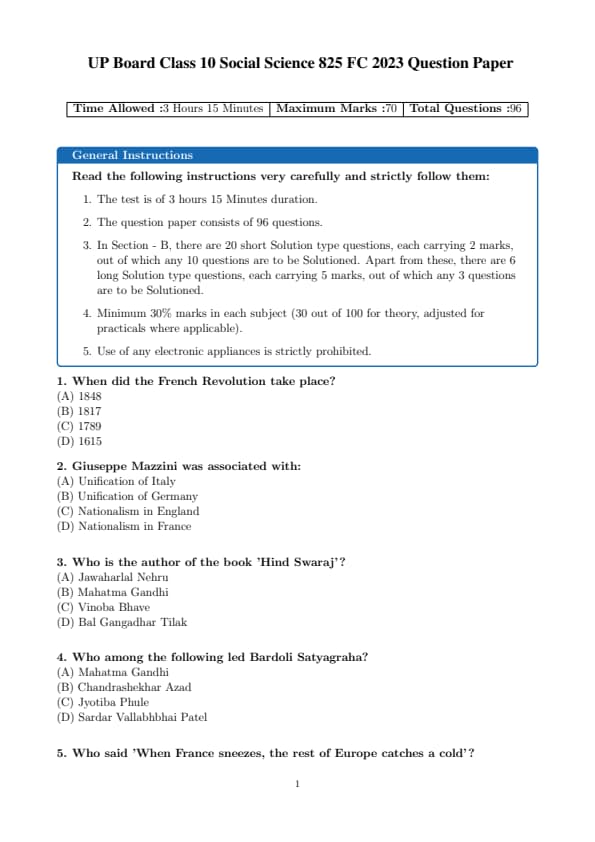
When did the French Revolution take place?
View Solution
The French Revolution began in 1789, and it was one of the most significant events in world history, fundamentally altering the course of France and the larger European political landscape. This revolution was primarily driven by social inequality, financial crises, and widespread dissatisfaction with the monarchy's rule under King Louis XVI.
Key Events:
- 1789 - Storming of the Bastille: The Revolution gained momentum on July 14, 1789, when the people of Paris stormed the Bastille, a symbol of royal tyranny. This event is now celebrated annually as France’s National Day.
- Declaration of the Rights of Man and Citizen: In August 1789, the National Assembly, representing the common people, adopted the "Declaration of the Rights of Man and Citizen," a document asserting individual freedoms and the rights of citizens.
- End of Absolute Monarchy: The Revolution led to the abolition of the absolute monarchy. In 1792, the monarchy was formally abolished, and King Louis XVI was executed in 1793.
- Rise of Napoleon Bonaparte: The power vacuum created by the Revolution eventually led to the rise of Napoleon Bonaparte, who declared himself Emperor in 1804, bringing an end to the Revolutionary period but spreading its ideas across Europe.
Thus, the French Revolution, which began in 1789, marked the end of the ancien régime and led to the rise of modern democratic ideals. Quick Tip: The French Revolution had profound and long-lasting effects not just on France, but on the world. It led to the spread of republicanism, nationalism, and the ideas of liberty, equality, and fraternity. Remember that the year 1789 marks the start of the revolution and symbolizes the dramatic shift from monarchy to republic.
Giuseppe Mazzini was associated with:
View Solution
Giuseppe Mazzini was an Italian nationalist and a key figure in the unification of Italy. He is often referred to as the "soul" of Italian unification. Mazzini was a founder of the movement known as Young Italy, which aimed to establish a democratic republic and unite the various Italian states into one nation. His ideals of liberty and unity inspired many Italians to fight for a united Italy. His contributions were crucial in the early stages of the Italian unification, alongside figures like Cavour and Garibaldi, though the unification was ultimately achieved through a combination of military action and diplomatic efforts. Quick Tip: Mazzini's ideas of a united and democratic Italy were foundational to the broader European nationalist movements in the 19th century. His vision was not just for political unity but for a republic based on democratic ideals. Remember that his work laid the ideological foundation for the unification of Italy in 1861.
Who is the author of the book 'Hind Swaraj'?
View Solution
The book Hind Swaraj was written by Mahatma Gandhi in 1909. In this work, Gandhi outlines his vision of self-rule (or Swaraj) for India, emphasizing a return to traditional values, simplicity, and self-reliance. He criticizes Western civilization for its materialism, industrialization, and exploitation of nature. The book is a critical piece in understanding Gandhi's philosophy of non-violence (ahimsa), self-reliance, and his approach to India’s struggle for independence.
Gandhi's concept of Swaraj in the book was not just political independence but also spiritual and cultural revival. Quick Tip: Hind Swaraj is a key text in Gandhian thought. It presents Gandhi's critique of colonialism and industrialization, urging a return to self-sufficiency and moral living. This book is central to understanding Gandhi's philosophy of non-violent resistance and his vision of India’s future.
Who among the following led Bardoli Satyagraha?
View Solution
The Bardoli Satyagraha was led by Sardar Vallabhbhai Patel in 1928 in the Bardoli taluka (region) of Gujarat. The protest was against the increase in land revenue assessments by the British government, which the farmers felt were unjust and excessive. Patel organized the farmers, urging them to refuse payment until their demands were met. The success of the movement helped Patel gain national recognition, and he was later called the "Sardar" (leader). The victory of the Bardoli Satyagraha played a pivotal role in India's struggle for independence and in establishing Patel as one of the key leaders in the freedom movement. Quick Tip: Sardar Vallabhbhai Patel’s leadership in Bardoli is often seen as a turning point in his political career. The success of the movement demonstrated the power of non-violent protest and mass mobilization, and Patel became known as a leader capable of uniting people for a common cause.
Who said 'When France sneezes, the rest of Europe catches a cold'?
View Solution
The phrase "When France sneezes, the rest of Europe catches a cold" is attributed to Prince Klemens von Metternich, the Austrian diplomat and statesman. Metternich was deeply concerned with the political instability caused by revolutionary movements, particularly the French Revolution, which he believed had the potential to spread to the rest of Europe. His remark reflects the idea that political changes in France—especially revolutionary ones—would have far-reaching effects across Europe, inspiring similar movements in other countries. Metternich’s diplomacy played a key role in the efforts to suppress revolutionary movements during the early 19th century. Quick Tip: Metternich was a key figure in the Congress of Vienna (1814-1815), which sought to restore European monarchies after Napoleon’s defeat. His remark highlights the influence of France's political climate on the rest of Europe, particularly in the context of the Napoleonic Wars and the spread of revolutionary ideas.
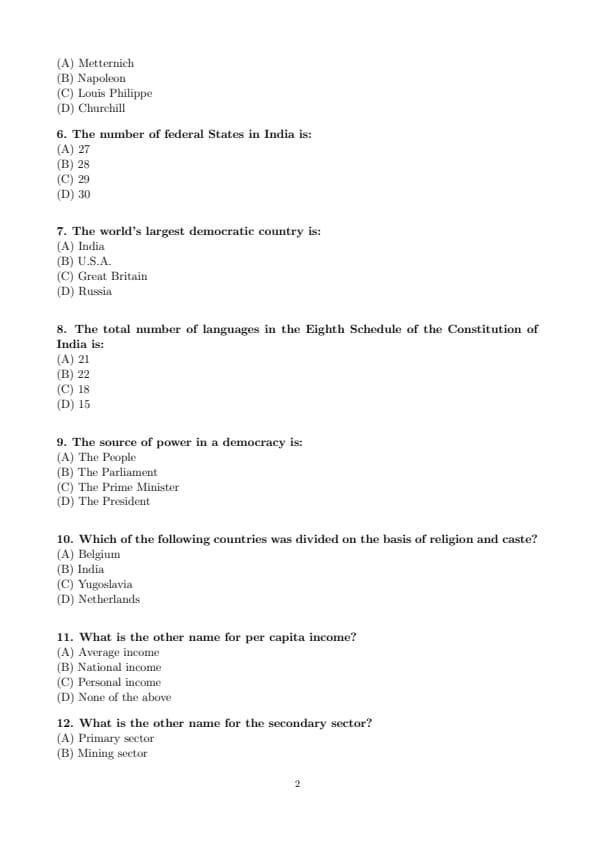
The number of federal States in India is:
View Solution
India is a federal union comprising 28 states and 8 Union Territories. As of recent amendments, however, the total number of states is 29 following the inclusion of Jammu and Kashmir as a union territory. This federal structure, defined by the Constitution of India, allocates powers between the central government and individual states. Quick Tip: The number of federal states in India can change with the reorganization of states, like the bifurcation of Jammu and Kashmir in 2019. Keep in mind that federal structures can evolve over time.
The world’s largest democratic country is:
View Solution
India is the world's largest democracy, with over 1.3 billion people. Its democratic system is based on a parliamentary form of government, with universal suffrage for all citizens over the age of 18. The Indian elections, which are held at various levels (local, state, and national), are the largest in the world by voter turnout and participation. Quick Tip: India's democracy is characterized by regular elections and a multi-party system. It is not just the largest by population but also the most vibrant, with a diverse range of political voices.
The total number of languages in the Eighth Schedule of the Constitution of India is:
View Solution
The Eighth Schedule of the Constitution of India lists the official languages recognized by the Indian government. As of now, there are 22 languages included in the Eighth Schedule. These languages represent a diverse range of linguistic communities across India and are recognized for official use in government communications, education, and cultural representation. Quick Tip: The number of languages in the Eighth Schedule has increased over the years. Keep in mind that the Constitution recognizes linguistic diversity as a crucial part of India's identity.
The source of power in a democracy is:
View Solution
In a democracy, the ultimate source of power is the people. The concept of popular sovereignty means that the government derives its authority from the consent of the governed. This is reflected in the practice of regular elections where citizens choose their representatives. The elected representatives, in turn, govern on behalf of the people. Quick Tip: In a democracy, it's essential to understand that the power of the government is vested in the people, who express their will through voting and participation.
Which of the following countries was divided on the basis of religion and caste?
View Solution
India was partitioned in 1947 into two independent dominions, India and Pakistan, largely on the basis of religious differences between Hindus and Muslims. The partition resulted in one of the largest mass migrations in history and a significant loss of life. The division was initially based on religious identity, but over time, caste-based politics also played a role in shaping India's social and political fabric. Quick Tip: The partition of India was a major historical event that changed the geopolitical landscape of South Asia. It remains a key topic in understanding the region's politics and history.
What is the other name for per capita income?
View Solution
Per capita income is also known as average income, which is calculated by dividing the total national income by the total population. It serves as an indicator of the standard of living and economic well-being of a country. It provides a general sense of how much income each individual, on average, would have if the national income were distributed equally. Quick Tip: Per capita income is a commonly used metric to compare living standards between different countries or regions. It helps in understanding economic disparities and development progress.
What is the other name for the secondary sector?
View Solution
The secondary sector is also known as the industrial sector. This sector involves the transformation of raw materials into finished goods and products. It includes industries like manufacturing, construction, and utilities. Unlike the primary sector, which is focused on extraction of raw materials, the secondary sector adds value to these raw materials through processing and production. Quick Tip: The secondary sector is a crucial part of the economy as it includes activities that create products from raw materials, such as factories, construction industries, and energy production.
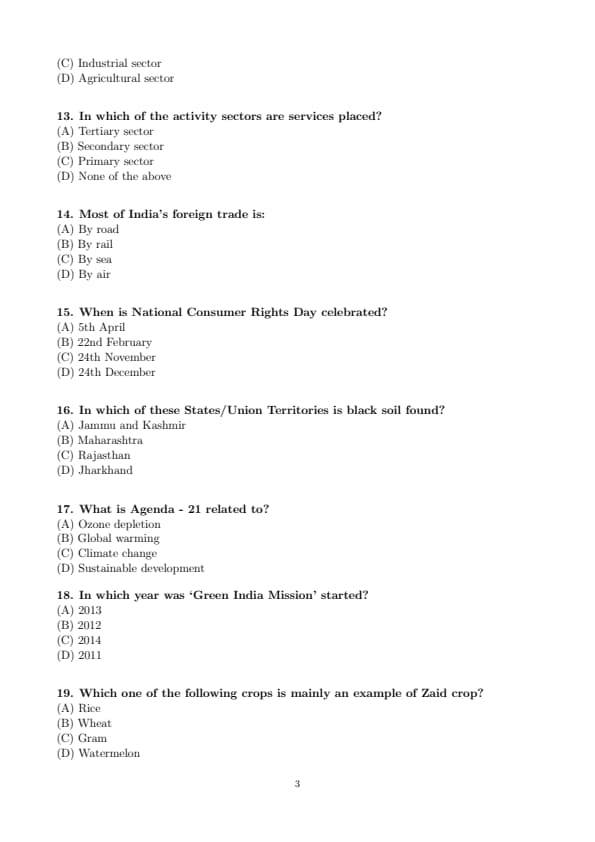
In which of the activity sectors are services placed?
View Solution
Services are placed in the tertiary sector of the economy. This sector involves the provision of services rather than goods. It includes activities such as retail, healthcare, education, banking, entertainment, and transportation. The tertiary sector is crucial for the modern economy, as it supports the primary and secondary sectors by providing necessary services to both industries and consumers. Quick Tip: The tertiary sector is often considered the "service sector" and is a major part of developed economies, providing jobs in services like finance, healthcare, and tourism.
Most of India’s foreign trade is:
View Solution
Most of India’s foreign trade is conducted by sea. India has a long coastline and major ports such as Mumbai, Kolkata, Chennai, and others, which facilitate a large volume of imports and exports. Maritime trade is more cost-effective compared to air or land transport for bulk goods, and it is essential for connecting India to global markets. Quick Tip: Sea trade is the backbone of international commerce, and India’s strategic location in the Indian Ocean has made it a key player in global maritime trade.
When is National Consumer Rights Day celebrated?
View Solution
National Consumer Rights Day is celebrated on December 24th every year in India. This day commemorates the enactment of the Consumer Protection Act in 1986, which provided a legal framework for the protection of consumers' rights. The day aims to raise awareness about consumer rights, responsibilities, and issues related to consumer protection. Quick Tip: National Consumer Rights Day serves as a reminder of the importance of protecting consumers from exploitation and ensuring their rights are respected in the marketplace.
In which of these States/Union Territories is black soil found?
View Solution
Black soil, also known as Regur soil, is predominantly found in the Deccan Plateau of India, particularly in the states of Maharashtra, Madhya Pradesh, Gujarat, and parts of Andhra Pradesh and Karnataka. This type of soil is rich in minerals and is suitable for growing crops like cotton, groundnut, and soybeans. Quick Tip: Black soil is very fertile and retains moisture well, making it ideal for dryland farming. It's particularly known for being beneficial to crops like cotton, which requires such soil.
What is Agenda - 21 related to?
View Solution
Agenda 21 is a comprehensive action plan for sustainable development, adopted by the United Nations at the Earth Summit in Rio de Janeiro in 1992. It addresses global challenges like poverty, environmental degradation, and social inequality, promoting sustainability across all sectors of society. The goal is to ensure that development meets the needs of the present without compromising the ability of future generations to meet their own needs. Quick Tip: Agenda 21 is a framework for action aimed at achieving sustainable development. It encourages countries to implement policies that balance economic growth with environmental protection.
In which year was ‘Green India Mission’ started?
View Solution
The ‘Green India Mission’ was launched in 2012 as part of India's National Action Plan on Climate Change. The mission focuses on enhancing carbon sinks through afforestation and increasing forest cover across the country. It aims to improve biodiversity, restore degraded ecosystems, and enhance the resilience of the Indian environment to climate change. This initiative is crucial for reducing India's carbon footprint and promoting sustainable environmental practices. Quick Tip: The Green India Mission is one of the eight national missions under India's National Action Plan on Climate Change. Its goal is to enhance environmental sustainability by expanding forest cover and promoting green practices.
Which one of the following crops is mainly an example of Zaid crop?
View Solution
Zaid crops are a type of seasonal crop grown during the short period between the rabi and kharif seasons in India, generally during the summer months. These crops are sown in the summer and harvested before the onset of the monsoon. Watermelon is a perfect example of a Zaid crop because it is grown in the summer and harvested before the monsoon rains. Other examples of Zaid crops include cucumber, melon, and pumpkin. Quick Tip: Zaid crops are typically grown in regions with a hot, dry climate, and they benefit from the hot conditions that prevail in India between March and June, before the monsoon rains start.
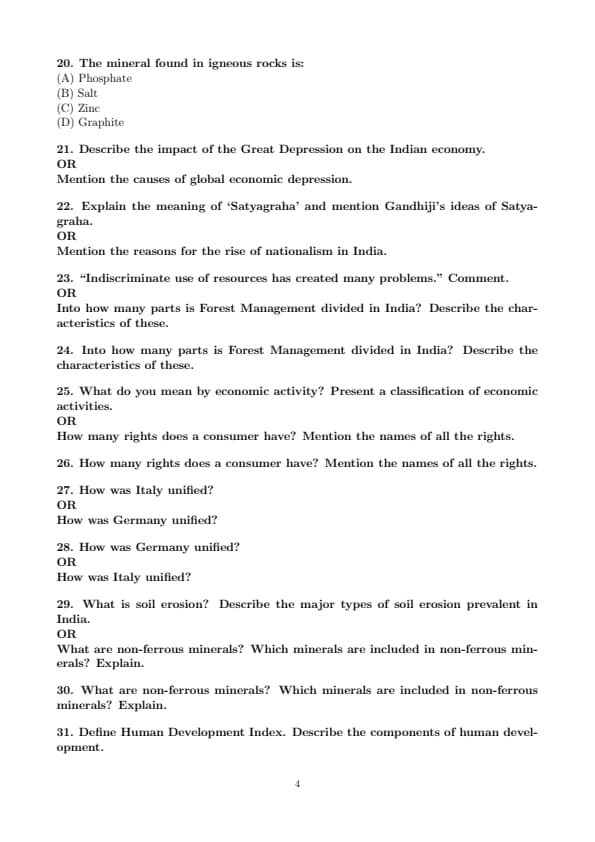
The mineral found in igneous rocks is:
View Solution
Igneous rocks, which are formed through the cooling and solidification of magma or lava, contain a variety of minerals. Among the options given, graphite is the mineral most commonly associated with igneous rocks, especially in the form of metamorphic rocks like schist. Graphite is a naturally occurring form of carbon, and while it is not the most abundant mineral in igneous rocks, it can be found in certain igneous environments, particularly in metamorphic or high-temperature settings. Quick Tip: Igneous rocks are rich in minerals such as quartz, feldspar, and mica. Graphite, while it can form in igneous environments, is more commonly found in metamorphic rocks due to the intense heat and pressure they undergo.
Describe the impact of the Great Depression on the Indian economy.
OR
Mention the causes of global economic depression.
View Solution
The Great Depression of the 1930s, which originated in the United States, had a profound global impact, including on India. India, as a British colony at the time, was deeply affected by the global economic downturn, primarily due to its dependence on international trade, especially with Britain and other Western countries.
Impact on the Indian Economy:
Decline in Exports: India’s economy was heavily dependent on agricultural exports, especially to Britain. With the onset of the Depression, the demand for Indian goods, including agricultural products like cotton, jute, and wheat, sharply declined. This led to a drop in export revenues and an adverse effect on the rural economy.
Falling Prices: The prices of agricultural products fell due to the lack of demand from international markets. This caused widespread distress among Indian farmers, many of whom were already dealing with poverty and land revenue pressures from the colonial administration. This resulted in an economic crisis in rural areas.
Industrial Decline: The Depression also had a negative impact on Indian industries. Industries such as cotton textiles, jute, and steel faced a decline in both demand and production. This led to factory closures, unemployment, and further economic stagnation.
Currency Depreciation: The Indian Rupee also experienced depreciation due to the global decline in trade and the instability in the British Empire’s finances. The British government’s decision to devalue the Rupee further worsened the situation for Indian businesses involved in trade.
Increase in Unemployment: The overall economic stagnation led to an increase in unemployment across various sectors. As the Depression deepened, many factories and industries had to reduce production or close down entirely, resulting in widespread job losses.
Rural Distress and Famine: The fall in agricultural prices and subsequent failure to generate income affected the rural economy, leading to poverty, famine, and migration. The Great Bengal Famine of 1943, though not directly caused by the Depression, can be seen as a consequence of the prolonged economic distress.
Social Unrest: The economic hardships led to increased social unrest and protests in India. The discontent with colonial economic policies intensified, contributing to the larger anti-colonial movement and the push for independence.
Causes of the Global Economic Depression:
Stock Market Crash of 1929: The most immediate cause of the Great Depression was the stock market crash in the United States in October 1929. This event triggered a massive loss of wealth and confidence in the financial markets, leading to reduced consumption, business failures, and an economic downturn globally.
Overproduction and Underconsumption: In the years leading up to the Depression, industries and agriculture had expanded rapidly, producing more goods than could be consumed. This imbalance between production and demand led to a collapse in prices, particularly for agricultural goods, and eventually to widespread bankruptcies.
Bank Failures: The collapse of major banks and financial institutions during the Depression exacerbated the crisis. The failure of banks led to a severe credit crunch, where businesses and individuals could not access loans, further stalling economic growth.
Protectionist Trade Policies: Countries, including the United States, adopted protectionist trade policies in an attempt to shield their economies from foreign competition. The U.S. imposed high tariffs through the Smoot-Hawley Tariff Act (1930), which led to retaliatory tariffs by other countries. This reduced international trade and worsened the economic downturn.
Collapse of the Gold Standard: Many countries, including the United States, adhered to the gold standard, where their currency was directly tied to gold reserves. The deflationary policies that came with this system contributed to falling prices and the worsening of the global economic crisis. Eventually, many countries abandoned the gold standard in an effort to stabilize their economies.
Failure of International Cooperation: There was a lack of coordinated international efforts to tackle the depression. Different countries pursued national solutions to the crisis, such as isolationist policies or devaluing currencies, but failed to come together to formulate a global response. Quick Tip: The Great Depression was not just an economic event, but also a political and social crisis. It played a significant role in shaping the future of global economics and politics, including the rise of protectionist policies, political instability, and the eventual emergence of World War II.
Explain the meaning of ‘Satyagraha’ and mention Gandhiji’s ideas of Satyagraha.
OR
Mention the reasons for the rise of nationalism in India.
View Solution
Satyagraha:
The term Satyagraha was coined by Mahatma Gandhi during the Indian freedom struggle, derived from two Sanskrit words: Satya (meaning "truth") and Agraha (meaning "firmness" or "insistence"). Satyagraha literally means "insistence on truth" or "truth force." It is a method of non-violent resistance and civil disobedience that aims to achieve social and political change through peaceful means, without the use of force.
Gandhiji’s philosophy of Satyagraha was based on the belief that truth and non-violence (Ahimsa) are the most powerful weapons for achieving justice. Satyagraha was not just about resistance, but a way of life, where one must strive to be morally and ethically upright while pursuing a cause.
Gandhiji's Ideas of Satyagraha:
Gandhi outlined several core principles of Satyagraha that were integral to the freedom movement:
Non-Violence (Ahimsa): The most fundamental principle of Satyagraha is non-violence. Gandhi believed that one must never harm anyone, physically or emotionally, even when fighting for a noble cause. Violence only breeds more violence, whereas non-violence brings out the best in people and leads to a moral victory.
Truth (Satya): Gandhi emphasized the importance of truth in the fight for justice. He believed that every Satyagrahi (one who practices Satyagraha) must adhere to the truth, no matter how difficult it may be. The truth will eventually prevail, and it is the moral compass that guides actions.
Self-Sacrifice (Tapasya): Gandhi believed in the power of self-sacrifice. A Satyagrahi was expected to be willing to endure suffering, including imprisonment or violence, without retaliating. This endurance showed moral strength and could inspire others to join the cause.
Civil Disobedience (Vichar Mandal): Civil disobedience was a crucial part of Satyagraha. Gandhi encouraged people to disobey unjust laws peacefully. This was evident during the Salt March (Dandi March) when Gandhi led thousands of Indians to defy the British monopoly on salt production.
Belief in the Power of the Masses: Gandhi believed that ordinary people, through Satyagraha, could challenge even the mightiest empire. He encouraged the masses to get involved in the struggle for independence, even those from the rural and illiterate sections of society.
Love and Compassion: While fighting for justice, Gandhi advocated compassion for the oppressors as well. The idea was to change the heart and mind of the oppressor through love and peaceful means, rather than hatred or violence.
Non-Cooperation and Boycott: Gandhi's concept of non-cooperation involved refusing to cooperate with the British colonial system, including boycotting British goods, educational institutions, and even the British administration.
Impact of Satyagraha:
Satyagraha played a pivotal role in the Indian independence movement. The first major success was the Champaran Satyagraha of 1917, which focused on the rights of indigo farmers in Bihar. The non-violent protests led to the resolution of their grievances. This was followed by the Kheda Satyagraha (1918) and the Non-Cooperation Movement (1920), which galvanized millions of Indians to fight against British rule. The Salt March of 1930 further exposed the oppressive nature of British colonial rule, leading to international recognition of India's struggle for independence. Quick Tip: Satyagraha is not just a political tool; it is also a philosophy of life. Gandhi believed that it could be used to address social, economic, and political issues, emphasizing truth, non-violence, and self-sacrifice.
“Indiscriminate use of resources has created many problems.” Comment.
OR
Into how many parts is Forest Management divided in India? Describe the characteristics of these.
View Solution
Indiscriminate Use of Resources:
Indiscriminate use of resources refers to the reckless or uncontrolled consumption of natural resources without considering the long-term consequences for the environment or society. Overuse and mismanagement of resources have led to a wide range of problems globally, particularly in developing nations like India. These issues stem from human activities such as deforestation, overgrazing, overfishing, industrialization, and the excessive extraction of water, minerals, and fossil fuels.
Problems Created by Indiscriminate Use of Resources:
Environmental Degradation:
The unchecked exploitation of natural resources leads to the destruction of ecosystems. Deforestation, mining, and industrial pollution can result in habitat loss, reduced biodiversity, and the extinction of species. Moreover, the depletion of resources, such as soil erosion due to overgrazing, or water scarcity due to over-extraction, accelerates environmental degradation.
Climate Change:
Excessive burning of fossil fuels and deforestation are major contributors to the increase in greenhouse gases like carbon dioxide, leading to global warming and climate change. The rise in temperatures, melting of glaciers, and erratic weather patterns are some of the visible impacts of climate change.
Loss of Biodiversity:
Over-exploitation of resources such as forests, water bodies, and land for agriculture or urbanization has caused a loss of biodiversity. Many species of plants and animals have become extinct or are on the verge of extinction due to habitat destruction and over-exploitation.
Water Scarcity:
The indiscriminate use of water resources, especially in agriculture and industry, has led to a depletion of groundwater levels, reduced river flow, and the drying up of water sources. Overuse of water resources for irrigation in particular has led to water scarcity in many parts of India.
Soil Degradation:
Overgrazing, deforestation, and the overuse of chemical fertilizers and pesticides have resulted in soil erosion, reduced fertility, and desertification of large areas. This has severely impacted agricultural productivity and the livelihoods of farmers.
Overpopulation and Pressure on Resources:
In countries like India, rapid population growth has placed enormous pressure on available resources. The increasing demand for food, water, energy, and land has led to their overuse, resulting in resource depletion and environmental harm.
Health Problems:
The indiscriminate use of pesticides, chemicals, and fertilizers in agriculture has led to the contamination of food and water sources. Air pollution from industrial emissions and vehicular exhaust has caused respiratory diseases and other health problems.
Socio-Economic Disparities:
The unequal distribution of resources and their overexploitation often leads to socio-economic disparities. Rural communities that depend on natural resources for their livelihoods face the brunt of environmental degradation, leading to displacement and loss of traditional livelihoods.
Conclusion:
Indiscriminate use of resources is unsustainable and results in severe ecological, economic, and social problems. It is crucial to adopt sustainable practices such as resource conservation, waste reduction, and eco-friendly technologies to ensure that future generations can meet their needs without compromising the health of the planet. Quick Tip: Sustainable resource use is key to maintaining ecological balance. Conservation, proper management, and renewable energy sources are essential for mitigating the negative effects of indiscriminate resource use.
Into how many parts is Forest Management divided in India? Describe the characteristics of these.
View Solution
In India, forest management is primarily divided into three main parts:
Reserved Forests (RF):
Reserved forests are the most protected category of forests in India.
These forests are strictly controlled and managed by the government.
They are primarily used for timber, fuelwood, and other forest products.
No activity such as grazing, hunting, or collecting forest products is allowed without government permission.
Reserved forests are critical for maintaining biodiversity, water cycles, and soil fertility.
Protected Forests (PF):
Protected forests are less restrictive than reserved forests but still enjoy certain protections.
Activities such as grazing, firewood collection, and limited timber extraction are allowed under controlled conditions.
These forests help in providing ecosystem services and resources to local communities.
The primary goal of protected forests is to conserve and preserve biodiversity and wildlife while allowing sustainable use of forest resources.
Unclassed Forests (UF):
Unclassed forests are typically community-managed or owned forests.
These forests may be subject to fewer regulations compared to reserved or protected forests.
Local people, often tribal or rural communities, use these forests for firewood, grazing, and other forest products.
Management of unclassed forests is usually decentralized and involves local governance, sometimes leading to over-exploitation of forest resources.
Characteristics of Forest Management in India:
Sustainable Harvesting:
Forest management practices in India are focused on ensuring that the harvesting of timber, fuelwood, and other products does not exceed the forest's ability to regenerate. Sustainable forestry practices are crucial for long-term forest health.
Afforestation and Reforestation:
India has undertaken various afforestation and reforestation programs to increase forest cover and improve degraded ecosystems. The Green India Mission and other national initiatives aim to restore lost forest areas.
Biodiversity Conservation:
Forests in India are home to a wide range of biodiversity. Forest management focuses on the conservation of wildlife and maintaining the integrity of ecosystems. National parks, wildlife sanctuaries, and protected areas are managed to safeguard endangered species.
Community Participation:
Local communities, especially tribal and rural populations, are integral to forest management in India. The Forest Rights Act (2006) provides legal rights to forest-dwelling communities, allowing them to participate in the sustainable management of forests.
Monitoring and Enforcement:
Forest management in India involves strict monitoring and enforcement of regulations to prevent illegal logging, poaching, and other harmful activities. Forest officers and local authorities are responsible for overseeing the management of forests and their resources.
Promotion of Non-Timber Forest Products (NTFPs):
Non-timber forest products, such as medicinal plants, fruits, and bamboo, are increasingly important for rural economies. Forest management policies encourage the sustainable harvesting of NTFPs to improve livelihoods without depleting forest resources.
Conclusion:
Effective forest management is essential for the protection of India’s rich biodiversity, the livelihoods of millions of people, and the health of the planet. Sustainable forestry practices, community involvement, and the preservation of forest ecosystems are crucial to ensuring that forests continue to provide essential resources and services. Quick Tip: Forest management in India is evolving towards greater community involvement and sustainable practices. Efforts like afforestation, biodiversity conservation, and legal rights for forest communities are key to ensuring that India’s forests remain vibrant and productive.
What do you mean by economic activity? Present a classification of economic activities.
OR
How many rights does a consumer have? Mention the names of all the rights.
View Solution
Economic Activity:
Economic activity refers to the actions undertaken by individuals or organizations to produce, distribute, and consume goods and services in order to satisfy human wants. These activities involve the use of resources such as land, labor, capital, and entrepreneurship to generate economic value. Economic activities are aimed at earning income and contributing to the overall economy.
Economic activities are classified into three main categories based on their nature and the type of goods or services produced.
Classification of Economic Activities:
Primary Activities:
Primary activities involve the extraction and harvesting of natural resources directly from the Earth. These activities are concerned with the use of natural resources for consumption or further production.
Examples: Agriculture, fishing, forestry, mining, and animal husbandry.
Primary activities form the foundation of an economy, as they provide raw materials that are essential for secondary activities.
Secondary Activities:
Secondary activities involve the processing and manufacturing of raw materials into finished goods. These activities add value to raw materials by transforming them into products that are used in consumption or further production.
Examples: Manufacturing, construction, power generation, and production of consumer goods like clothing, electronics, and automobiles.
Secondary activities often occur in factories, workshops, or other industrial settings and play a key role in economic development.
Tertiary Activities:
Tertiary activities are service-oriented activities that support the production and distribution of goods and services. They are concerned with providing services to individuals and businesses rather than producing goods.
Examples: Education, healthcare, banking, insurance, transportation, retail trade, entertainment, and tourism.
The tertiary sector is critical for the functioning of an economy, as it provides the infrastructure, services, and support needed by primary and secondary sectors.
Quaternary Activities:
Quaternary activities involve knowledge-based services, including research, development, information technology, financial planning, and consultation.
Examples: Information technology services, scientific research, and high-level decision-making.
This category is growing in importance in modern economies, especially in countries that are heavily industrialized and technologically advanced.
Quinary Activities:
Quinary activities are high-level decision-making and intellectual activities. They are focused on services that involve complex decision-making and require advanced knowledge.
Examples: Scientific research, higher education, health services, and non-profit activities.
Quinary activities are important in advanced economies as they contribute to innovation, development, and the advancement of society.
Conclusion:
Economic activities are fundamental to the functioning of any economy. Primary, secondary, tertiary, quaternary, and quinary activities all contribute to the overall economic output and well-being of society. As economies evolve, the importance of each category of economic activity may change, but all are necessary for balanced economic development. Quick Tip: Understanding the classification of economic activities helps in analyzing the economic structure of a country. As economies grow, the share of the tertiary and quaternary sectors tends to increase, reflecting a shift from agriculture-based to service and knowledge-based economies.
How many rights does a consumer have? Mention the names of all the rights.
View Solution
Consumers are the backbone of any economy, and to protect their interests, the government has defined several consumer rights. The Consumer Protection Act (CPA) of 1986 in India recognizes eight basic rights of consumers to safeguard them from exploitation by businesses and traders.
The Eight Basic Consumer Rights:
Right to Safety:
The right to be protected against the marketing of goods and services that are hazardous to health or life. Consumers should not be exposed to products that pose a risk to their well-being.
Right to be Informed:
The right to be informed about the quality, quantity, price, and ingredients of goods or services. This enables consumers to make informed choices and avoid deceptive or misleading practices.
Right to Choose:
The right to access a variety of goods and services at competitive prices, allowing consumers to make choices based on their preferences, needs, and budget.
Right to be Heard:
The right to be heard in the formulation of policies, laws, and regulations affecting consumers. This includes the right to voice complaints, grievances, and suggestions to authorities or consumer protection organizations.
Right to Redress:
The right to seek compensation or redressal in case of unfair trade practices, defects in goods or services, or violations of consumer rights. This includes the right to seek refunds, repairs, replacements, or damages for harm caused.
Right to Consumer Education:
The right to acquire knowledge and skills to make informed choices regarding goods and services. Consumer education empowers individuals to understand their rights, identify fraudulent practices, and act responsibly.
Right to Healthy Environment:
The right to live and work in an environment that is not harmful to health or well-being. Consumers are entitled to a safe, clean, and healthy environment, free from pollution or unsafe products.
Right to Sustainable Consumption:
The right to access goods and services that are produced sustainably and without causing environmental harm. Consumers are encouraged to make responsible choices that promote sustainable development.
Conclusion:
Consumer rights ensure that individuals are protected from exploitation, fraud, and unsafe practices in the marketplace. By recognizing these rights, societies empower consumers to demand quality products and services, make informed decisions, and contribute to a fairer and more equitable market. Quick Tip: Consumer rights help in promoting fairness in the market. Being aware of these rights can protect you from being taken advantage of and can empower you to seek redressal when needed.
How was Italy unified?
OR
How was Germany unified?
View Solution
Unification of Italy:
The unification of Italy, also known as the "Risorgimento," was the political and social movement that consolidated various independent Italian states into a single nation-state. The process of unification occurred in the 19th century and involved a series of diplomatic and military actions. Key figures in this process were Giuseppe Mazzini, Count Camillo di Cavour, and Giuseppe Garibaldi.
Early Efforts and the Role of Mazzini:
In the early 19th century, Italy was divided into various small kingdoms and states, including the Papal States, Kingdom of Naples, Kingdom of Sardinia, and others. Revolutionary movements, inspired by the ideals of nationalism and liberalism, began to emerge. Giuseppe Mazzini, a nationalist and revolutionary, formed the movement known as \textit{Young Italy, which sought to create a unified and republican Italy. Mazzini’s efforts, though unsuccessful in the short term, helped spread the ideas of unity and nationalism across Italy.
The Role of Sardinia-Piedmont and Cavour:
The Kingdom of Sardinia-Piedmont, under the leadership of King Victor Emmanuel II and his Prime Minister Count Camillo di Cavour, played a central role in the unification process. Cavour pursued diplomatic strategies to gain the support of major European powers, particularly France. He sought to drive Austria, which controlled large parts of northern Italy, out of the region.
- In 1859, Cavour allied with France to fight Austria, resulting in the victory of the Sardinian army and the annexation of Lombardy. Cavour also worked diplomatically to annex other states like Tuscany, Modena, and Parma into Sardinia.
The Role of Garibaldi:
Meanwhile, Giuseppe Garibaldi, an Italian nationalist and military leader, led a volunteer army known as the \textit{Red Shirts. In 1860, Garibaldi launched an expedition to southern Italy and successfully overthrew the Kingdom of the Two Sicilies (Southern Italy). Garibaldi handed over his conquests to King Victor Emmanuel II, further paving the way for unification.
Proclamation of the Kingdom of Italy:
By 1861, the Kingdom of Italy was officially proclaimed, with Victor Emmanuel II as its first king. However, certain regions, including Venice and Rome, remained outside the new Italian state. The final steps of unification came in 1866 when Italy, allied with Prussia, defeated Austria and gained Venice. The final piece, Rome, was captured in 1870 when the Papal States were annexed following the withdrawal of French troops (who had been protecting the pope).
Conclusion:
Italy’s unification was a combination of diplomatic efforts, military victories, and popular support. The efforts of key leaders like Mazzini, Cavour, and Garibaldi, along with the defeat of foreign powers, led to the formation of a unified Italian state by 1871. Quick Tip: The unification of Italy was a complex process that involved both military action and diplomatic negotiation. The combined efforts of prominent nationalists and the strategic use of alliances were key to achieving unity.
How was Germany unified?
OR
How was Italy unified?
View Solution
Unification of Germany:
The unification of Germany was a process that took place in the 19th century under the leadership of Otto von Bismarck, the Prime Minister of the Kingdom of Prussia. This process, which involved both diplomacy and war, led to the consolidation of various German-speaking states into a single German Empire in 1871.
The Fragmentation of Germany:
Prior to unification, Germany was a collection of over 30 small states and territories, loosely united in the German Confederation, which was dominated by Austria and Prussia. These states were economically and politically divided, and the idea of a unified German state had been a topic of discussion for many years. However, there was no unified leadership or coordination.
The Role of Bismarck:
Otto von Bismarck, who became the Prime Minister of Prussia in 1862, played a crucial role in unifying Germany. Bismarck's policy of "Realpolitik" focused on pragmatic, rather than ideological, solutions to achieve his goals. He worked to expand Prussia's power and weaken Austria’s influence in German affairs.
The Danish War (1864):
Bismarck first took action in 1864, when Prussia and Austria jointly defeated Denmark in the Danish War. As a result, the two powers gained control of the duchies of Schleswig and Holstein. This war helped to weaken Denmark's influence in the region and set the stage for further conflict.
The Austro-Prussian War (1866):
In 1866, Bismarck engineered a conflict with Austria, known as the Austro-Prussian War. Prussia defeated Austria in just seven weeks, and as a result, Austria was excluded from German affairs. Prussia established the North German Confederation, a group of northern German states under Prussian leadership. This victory solidified Prussia’s dominance in the German-speaking world.
The Franco-Prussian War (1870-1871):
To unite the southern German states, which were still independent, Bismarck manipulated diplomatic tensions with France. In 1870, he provoked the Franco-Prussian War, portraying France as a threat to Germany. The war united the North German Confederation with the southern German states (which were Catholic and had previously been hesitant to join a Protestant-led state). After Prussia’s victory over France, the German states rallied together to form the German Empire under the leadership of King Wilhelm I of Prussia.
Proclamation of the German Empire (1871):
On January 18, 1871, the German Empire was officially proclaimed at the Palace of Versailles. King Wilhelm I of Prussia became the first Kaiser (Emperor) of Germany, and Bismarck became the Chancellor of the new German Empire. The unification was completed with the annexation of Alsace and Lorraine from France as part of the war settlement.
Conclusion:
The unification of Germany was primarily driven by the leadership of Otto von Bismarck, who used war and diplomacy to achieve his goal of a unified German state. Through strategic military victories and the manipulation of international tensions, Bismarck was able to unify Germany under Prussian leadership, creating a powerful empire in the heart of Europe. Quick Tip: Bismarck's "Realpolitik" approach focused on pragmatic policies and strategic wars to achieve German unification. His skillful manipulation of international relations and conflicts ultimately led to the creation of the German Empire in 1871.
What is soil erosion? Describe the major types of soil erosion prevalent in India.
OR
What are non-ferrous minerals? Which minerals are included in non-ferrous minerals? Explain.
View Solution
Soil Erosion:
Soil erosion is the process by which the topsoil, which is rich in nutrients, is removed from the land by natural forces like wind, water, and human activities. It is a serious environmental problem that can lead to the degradation of land, reduced agricultural productivity, and loss of biodiversity. Soil erosion can occur in various ways and is influenced by factors such as rainfall, wind, vegetation, and human activities like deforestation and unsustainable farming practices.
Types of Soil Erosion in India:
In India, soil erosion is a major issue due to the country's diverse climate, topography, and agricultural practices. The major types of soil erosion prevalent in India are:
Water Erosion:
Water erosion is the most common form of soil erosion in India, particularly in areas with heavy rainfall. It occurs when rainfall or surface water washes away the topsoil.
\textit{Sheet erosion, which is the gradual removal of thin layers of soil, and \textit{rill erosion, which forms small channels in the soil, are common forms of water erosion.
Regions such as the Himalayan foothills, the eastern and western Ghats, and the Deccan Plateau are particularly prone to water erosion due to intense monsoon rains.
Wind Erosion:
Wind erosion is more prevalent in arid and semi-arid regions, where the lack of vegetation allows wind to blow away loose soil particles.
In India, wind erosion is significant in the Thar Desert and parts of Rajasthan, Gujarat, and Haryana, where sandy soils are easily carried away by strong winds.
Human-Induced Erosion:
Human activities like deforestation, overgrazing, and unsustainable farming practices contribute significantly to soil erosion. The removal of vegetation reduces the soil's ability to retain moisture and hold the topsoil together, making it more vulnerable to erosion.
Over-cultivation in areas with steep slopes, such as in the Western and Eastern Himalayas, exacerbates the erosion problem.
Glacial Erosion:
This type of erosion occurs in the higher altitudes, especially in the Himalayan region, where glaciers move and carve out the landscape, removing the topsoil and rocks.
Conclusion:
Soil erosion is a major threat to India's agricultural and environmental stability. Water erosion is the most common, followed by wind erosion in arid areas. Human activities play a significant role in accelerating soil erosion, particularly in fragile ecosystems like the Himalayan foothills and arid deserts. Quick Tip: To reduce soil erosion, effective land management practices such as afforestation, terracing, contour plowing, and water conservation are essential.
What are non-ferrous minerals? Which minerals are included in non-ferrous minerals? Explain.
View Solution
Non-ferrous Minerals:
Non-ferrous minerals are those minerals that do not contain significant amounts of iron. These minerals are usually more valuable in their pure form and are essential for various industrial applications. Non-ferrous metals are used in the manufacturing of various products due to their lightness, resistance to corrosion, and high conductivity. These minerals are crucial in the production of products ranging from electronics to transportation materials.
Minerals Included in Non-ferrous Minerals:
Some of the major non-ferrous minerals include:
Copper:
Copper is one of the most important non-ferrous metals. It is a good conductor of electricity and is widely used in electrical wiring, electronics, and industrial machinery.
In India, copper is mainly found in the states of Rajasthan, Madhya Pradesh, and Jharkhand.
Aluminum:
Aluminum is lightweight, corrosion-resistant, and has a wide range of applications, including in the aerospace, automobile, and construction industries.
The main source of aluminum is bauxite ore. In India, major deposits of bauxite are found in the states of Orissa, Gujarat, and Jharkhand.
Lead:
Lead is a heavy metal with a high density and is used in batteries (especially lead-acid batteries), cable sheathing, and in the manufacturing of various alloys.
Lead deposits in India are found in areas like Rajasthan, Bihar, and Tamil Nadu.
Zinc:
Zinc is used in the galvanization of iron and steel to prevent rusting, as well as in alloys such as brass. It is also essential for the production of batteries and fertilizers.
Major zinc-producing regions in India include Rajasthan and Andhra Pradesh.
Gold:
Gold is a precious metal used in jewelry, electronics, and as a store of value. It is highly resistant to corrosion and tarnish.
In India, gold is mostly found in the states of Karnataka, Kerala, and Rajasthan.
Silver:
Silver, like gold, is used in jewelry, coins, and electronics due to its excellent conductivity and resistance to corrosion.
In India, silver is found in the states of Rajasthan, Uttar Pradesh, and Bihar.
Tin:
Tin is used primarily in the production of alloys, especially bronze, and in the tinning of steel to make it resistant to corrosion.
Tin is not abundantly found in India, but some deposits are located in areas like Rajasthan.
Conclusion:
Non-ferrous minerals, unlike ferrous minerals, do not contain iron and are used in a variety of industrial processes. They are critical to modern industries due to their properties like electrical conductivity, light weight, and corrosion resistance. The availability of non-ferrous minerals in India contributes significantly to the country’s industrial growth and development. Quick Tip: Non-ferrous minerals are valuable because they are generally more versatile and resistant to corrosion. They are essential in the production of modern technologies such as electronics, machinery, and vehicles.
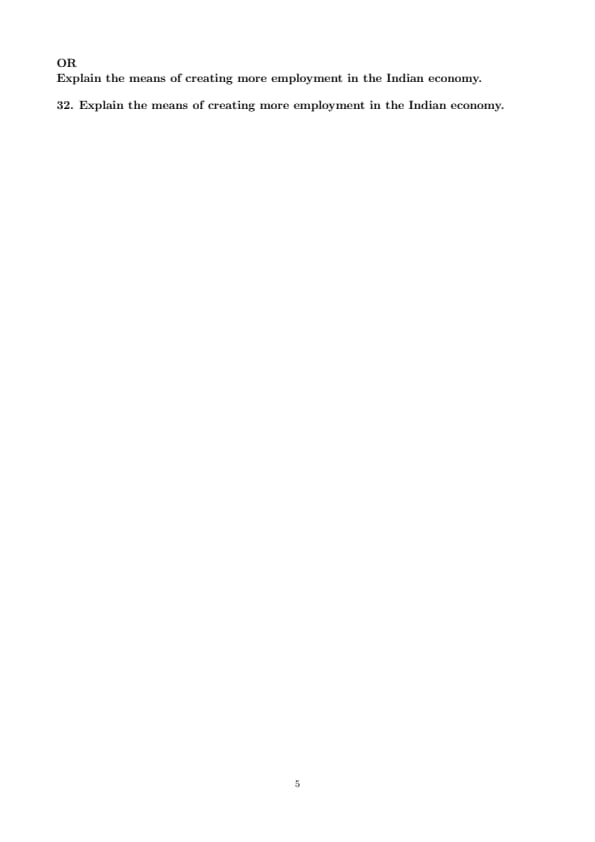
Define Human Development Index. Describe the components of human development.
OR
Explain the means of creating more employment in the Indian economy.
View Solution
Human Development Index (HDI):
The Human Development Index (HDI) is a composite measure introduced by the United Nations Development Programme (UNDP) in 1990 to assess the development progress of countries. HDI takes into account three basic dimensions of human development: health, education, and standard of living. It provides a broader perspective on development beyond just economic indicators like GDP per capita.
HDI is calculated using the following three indicators:
Life Expectancy at Birth: This reflects the health dimension of development, indicating the average number of years a person can expect to live. Higher life expectancy is associated with better healthcare systems and overall health conditions.
Education Level: Education is measured by two components: the mean years of schooling for adults aged 25 years or older and the expected years of schooling for children of school-entry age. Education is considered an important factor for economic growth and personal development.
Per Capita Income: This dimension reflects the standard of living or economic well-being of a population. It is measured by Gross National Income (GNI) per capita, adjusted for purchasing power parity (PPP). This shows how much income, on average, individuals in a country are able to earn and spend.
The HDI score ranges from 0 to 1, with a higher value indicating a higher level of human development. Countries with scores above 0.8 are considered to have high human development, between 0.5 and 0.8 as medium, and below 0.5 as low human development.
Components of Human Development:
Human development is a broader concept that focuses on improving the well-being of people, ensuring their access to essential services, and enabling them to lead fulfilling lives. The key components of human development are:
Health:
Health is a fundamental aspect of human development, as it directly influences people's ability to engage in work, education, and leisure. Improving health systems, reducing infant mortality, increasing life expectancy, and promoting access to healthcare services are vital components of human development.
Education:
Education empowers individuals to improve their socio-economic status and participate fully in the economy. Quality education ensures skill development, broadens opportunities for employment, and contributes to personal and societal growth. The focus is on both literacy and technical skills.
Standard of Living:
The standard of living includes factors such as income, access to basic amenities (e.g., clean water, electricity, sanitation), and housing conditions. A higher standard of living contributes to an improved quality of life and personal well-being.
Social Equality:
Human development emphasizes the importance of reducing inequalities. It is essential that development is inclusive, meaning that benefits should be distributed equitably, reducing disparities based on gender, caste, race, or region.
Political Freedom and Empowerment:
A well-functioning democratic system and political freedom allow individuals to make choices, voice their opinions, and participate in the decision-making process. Empowerment of marginalized groups is an important aspect of human development.
Environmental Sustainability:
Human development is closely linked with environmental sustainability. Ensuring that development does not harm the environment and promoting eco-friendly practices contribute to the long-term well-being of individuals and communities. Quick Tip: HDI emphasizes a people-centered approach to development, which focuses on improving the quality of life and providing access to basic services like healthcare, education, and income, rather than merely economic growth.
Explain the means of creating more employment in the Indian economy.
View Solution
Creating more employment in the Indian economy is crucial for improving standards of living, reducing poverty, and promoting sustainable economic growth. Despite rapid economic development in recent decades, India faces challenges like a high unemployment rate, underemployment, and a large informal sector. To tackle these issues, a multifaceted approach is necessary.
Here are some means of creating more employment in India:
Promoting Small and Medium Enterprises (SMEs):
Small and medium-sized enterprises (SMEs) play a crucial role in generating employment. These businesses are labor-intensive and provide employment opportunities in both urban and rural areas.
Encouraging entrepreneurship, providing financial support (e.g., low-interest loans), and improving access to technology and markets can help SMEs grow and create more jobs.
Development of the Rural Economy:
A large portion of India's population resides in rural areas, where agricultural employment is predominant. Diversifying the rural economy and promoting agro-based industries (food processing, dairy, textiles) can help reduce dependence on agriculture and create jobs in rural areas.
Programs like the Mahatma Gandhi National Rural Employment Guarantee Act (MGNREGA) have been aimed at providing wage employment in rural areas.
Skill Development and Vocational Training:
India's youth population is vast, but many lack the skills required for formal employment. By focusing on skill development and vocational training, the workforce can be better equipped to meet the demands of industries such as manufacturing, information technology (IT), and services.
Programs like the Skill India Mission and Pradhan Mantri Kaushal Vikas Yojana (PMKVY) aim to train millions of youth in various skill sets to increase employability.
Investing in Infrastructure Development:
Investments in infrastructure projects such as roads, ports, railways, and energy generation create jobs directly in construction and indirectly in related sectors.
Infrastructure development also has long-term economic benefits by improving connectivity, which can facilitate trade, investment, and the overall growth of the economy.
Encouraging Foreign Direct Investment (FDI):
Foreign direct investment (FDI) can create employment opportunities by bringing in capital, technology, and expertise, leading to the establishment of new industries and the expansion of existing ones.
FDI policies should focus on labor-intensive sectors such as manufacturing, retail, and services to maximize employment generation.
Expanding the Service Sector:
The service sector, including information technology, tourism, healthcare, and education, has seen rapid growth in India and offers significant potential for employment creation.
Policy initiatives that promote services like IT parks, medical tourism, and the expansion of digital services can create millions of new jobs, especially in urban centers.
Supporting the Industrial Sector:
Industrialization can provide a large number of employment opportunities. The Make in India initiative aims to promote manufacturing and create jobs in this sector.
Government incentives, subsidies for new businesses, and improving ease of doing business can help in the growth of industries and boost employment.
Improving Labor Market Flexibility:
A rigid labor market can limit job creation. Simplifying labor laws, providing social security benefits to workers, and promoting flexible labor practices can encourage both formal and informal sector job creation.
Conclusion:
Creating more employment in India requires a multi-pronged approach that focuses on promoting small businesses, expanding the rural economy, developing skills, and encouraging foreign investment. By supporting industries that are labor-intensive and improving the overall business environment, India can significantly reduce unemployment and enhance the quality of life for its citizens. Quick Tip: The key to increasing employment in India lies in the diversification of the economy, skill enhancement, and focusing on sectors such as manufacturing, services, and rural development.



Comments