





This is the All India Post Graduate Medical Entrance Examination (AIPGMEE) 2003, popularly archived today as NEET PG 2003, conducted by the Central Board of Secondary Education (CBSE) on behalf of the Medical Council of India (MCI) for 50% of India's MD, MS and PG Diploma seats. This compiled paper carries 239 questions from the original test booklets, each with a step-by-step solution.
| NEET PG 2003 Question Paper with Solutions | Download PDF | Check Solutions |
NEET PG 2003 Questions with Solutions
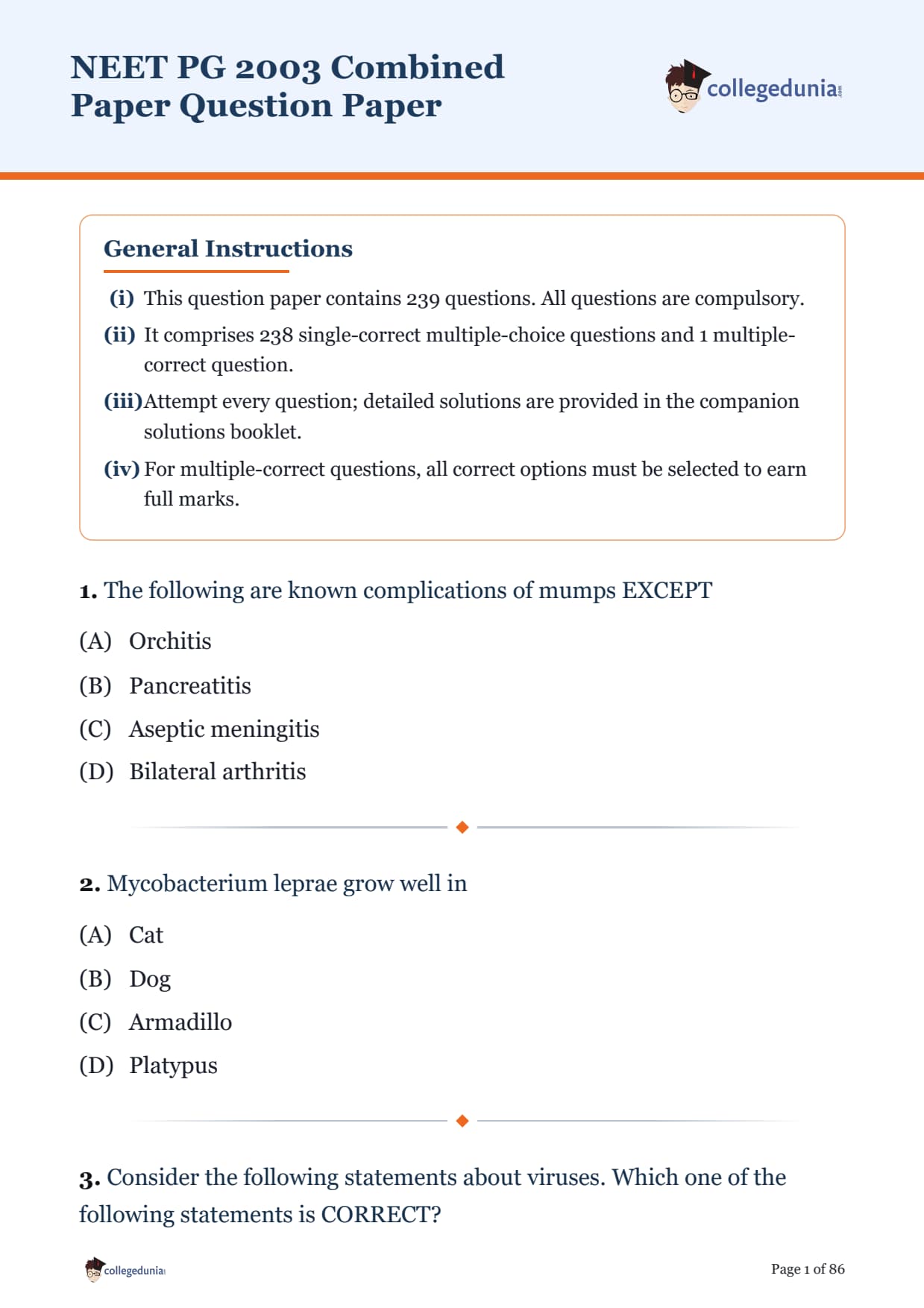
The following are known complications of mumps EXCEPT
Mycobacterium leprae grow well in
Consider the following statements about viruses. Which one of the following statements is CORRECT?
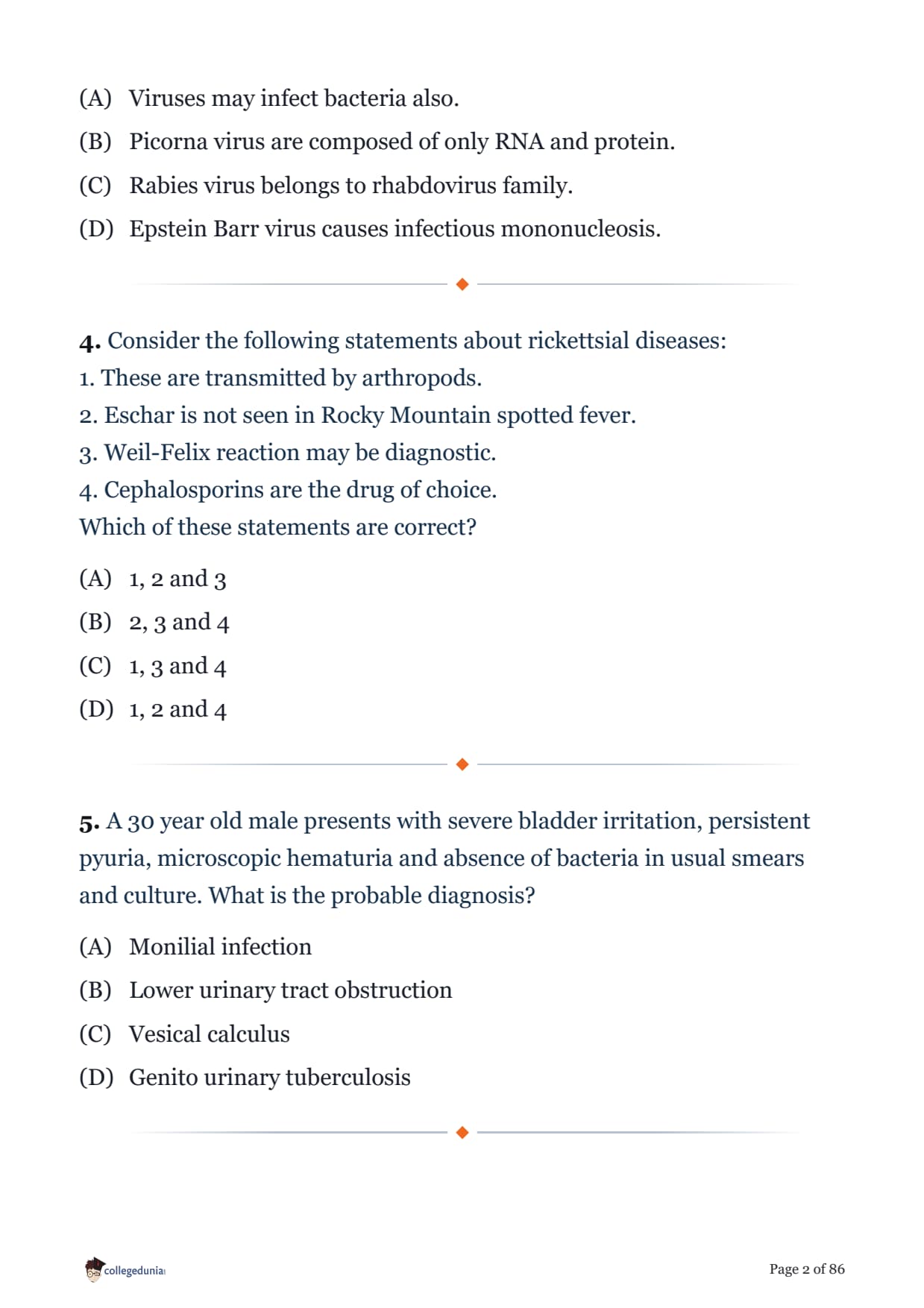
Consider the following statements about rickettsial diseases:
1. These are transmitted by arthropods.
2. Eschar is not seen in Rocky Mountain spotted fever.
3. Weil-Felix reaction may be diagnostic.
4. Cephalosporins are the drug of choice.
Which of these statements are correct?
A 30 year old male presents with severe bladder irritation, persistent pyuria, microscopic hematuria and absence of bacteria in usual smears and culture. What is the probable diagnosis?
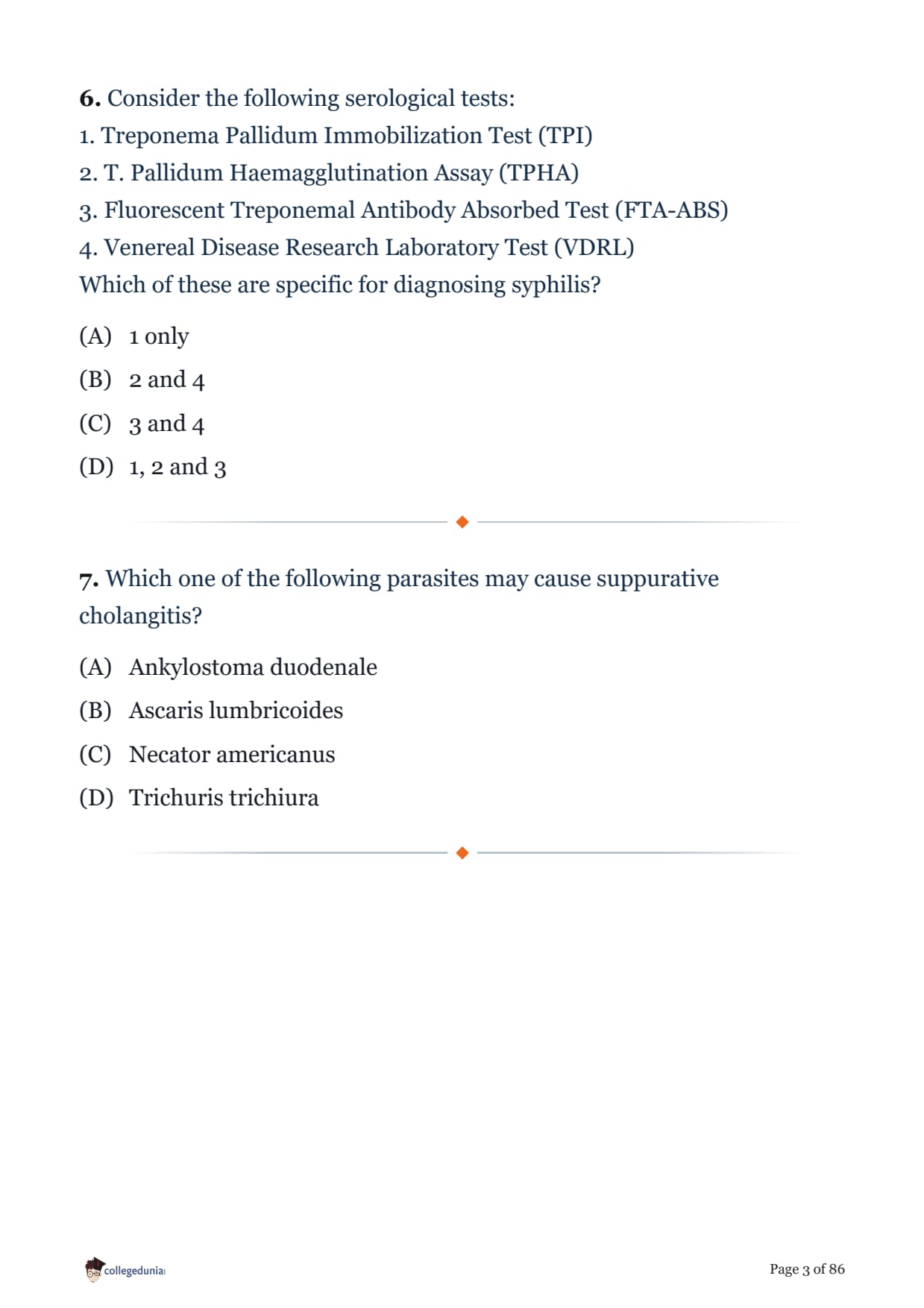
Consider the following serological tests:
1. Treponema Pallidum Immobilization Test (TPI)
2. T. Pallidum Haemagglutination Assay (TPHA)
3. Fluorescent Treponemal Antibody Absorbed Test (FTA-ABS)
4. Venereal Disease Research Laboratory Test (VDRL)
Which of these are specific for diagnosing syphilis?
Which one of the following parasites may cause suppurative cholangitis?
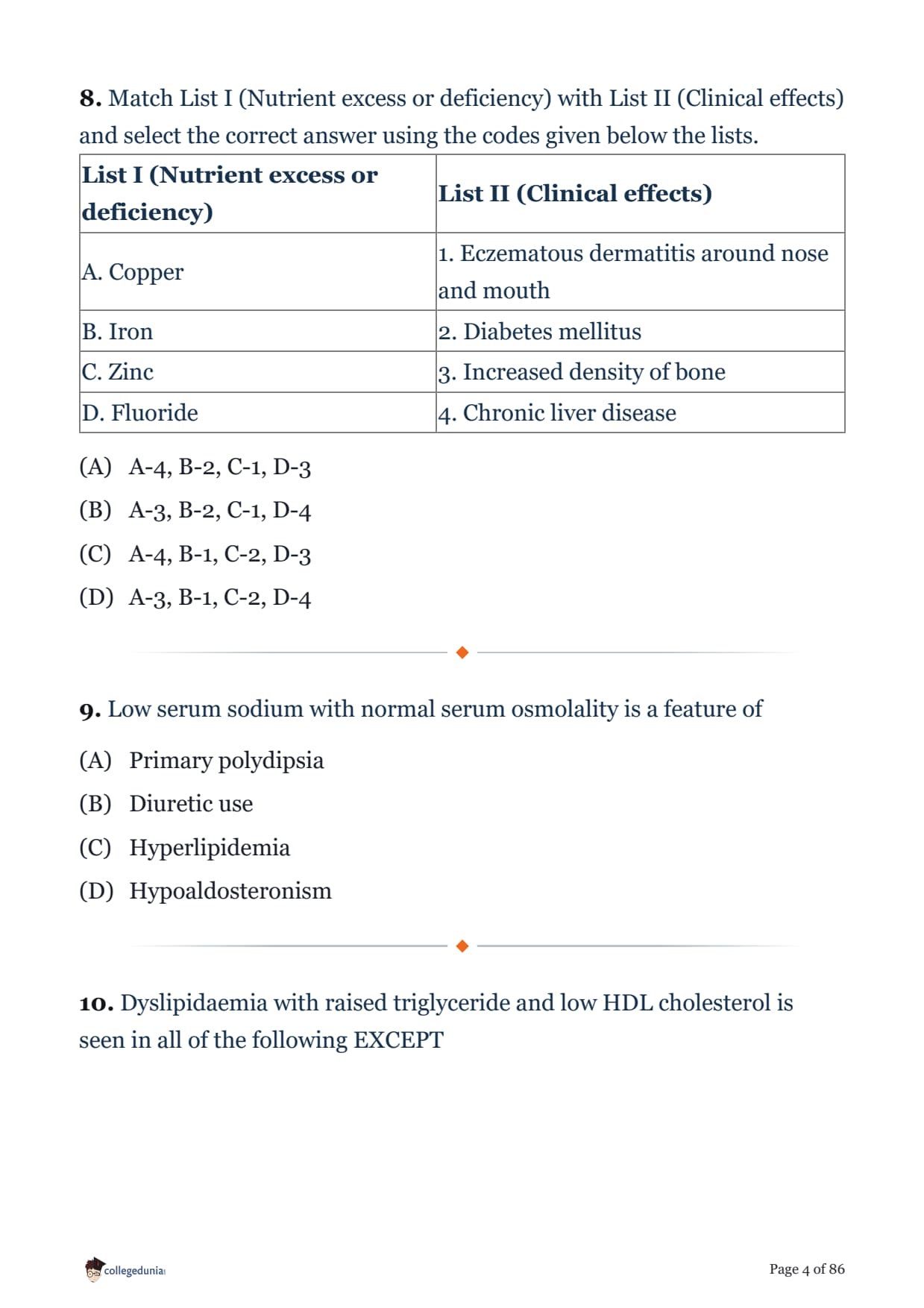
Match List I (Nutrient excess or deficiency) with List II (Clinical effects) and select the correct answer using the codes given below the lists.
| List I (Nutrient excess or deficiency) | List II (Clinical effects) |
|---|---|
| A. Copper | 1. Eczematous dermatitis around nose and mouth |
| B. Iron | 2. Diabetes mellitus |
| C. Zinc | 3. Increased density of bone |
| D. Fluoride | 4. Chronic liver disease |
Low serum sodium with normal serum osmolality is a feature of
Dyslipidaemia with raised triglyceride and low HDL cholesterol is seen in all of the following EXCEPT
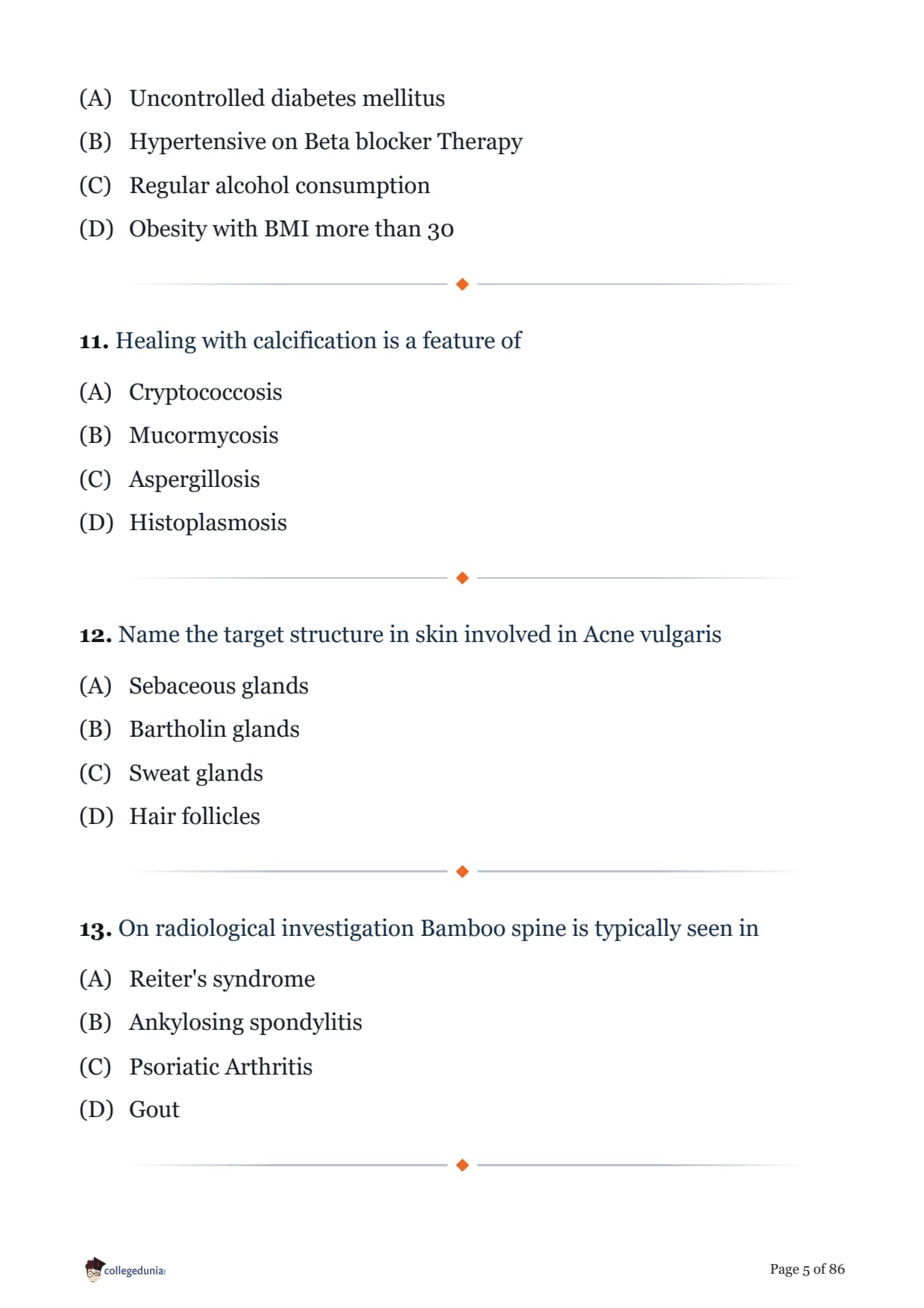
Healing with calcification is a feature of
Name the target structure in skin involved in Acne vulgaris
On radiological investigation Bamboo spine is typically seen in
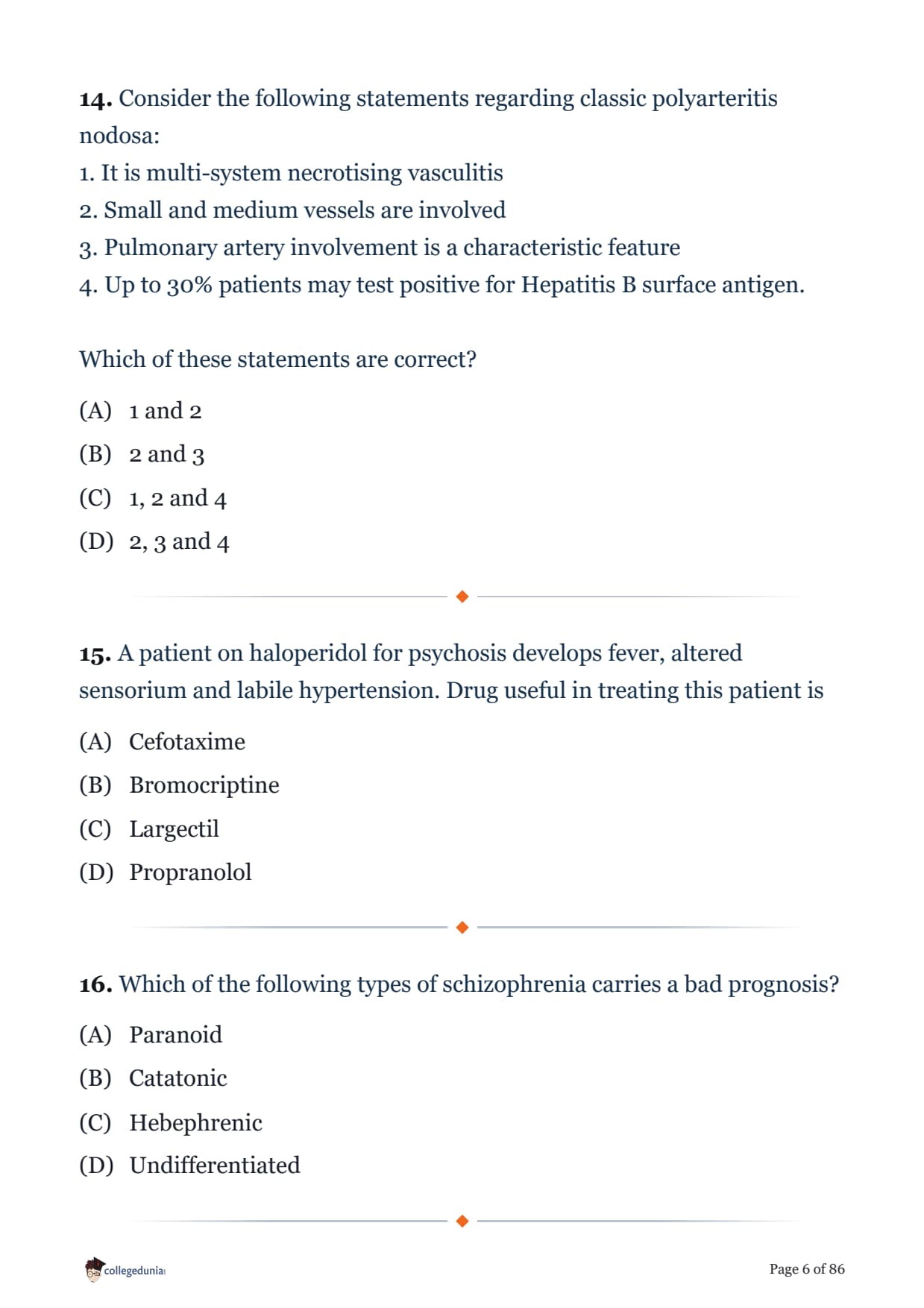
Consider the following statements regarding classic polyarteritis nodosa:
1. It is multi-system necrotising vasculitis
2. Small and medium vessels are involved
3. Pulmonary artery involvement is a characteristic feature
4. Up to 30% patients may test positive for Hepatitis B surface antigen.
Which of these statements are correct?
A patient on haloperidol for psychosis develops fever, altered sensorium and labile hypertension. Drug useful in treating this patient is
Which of the following types of schizophrenia carries a bad prognosis?
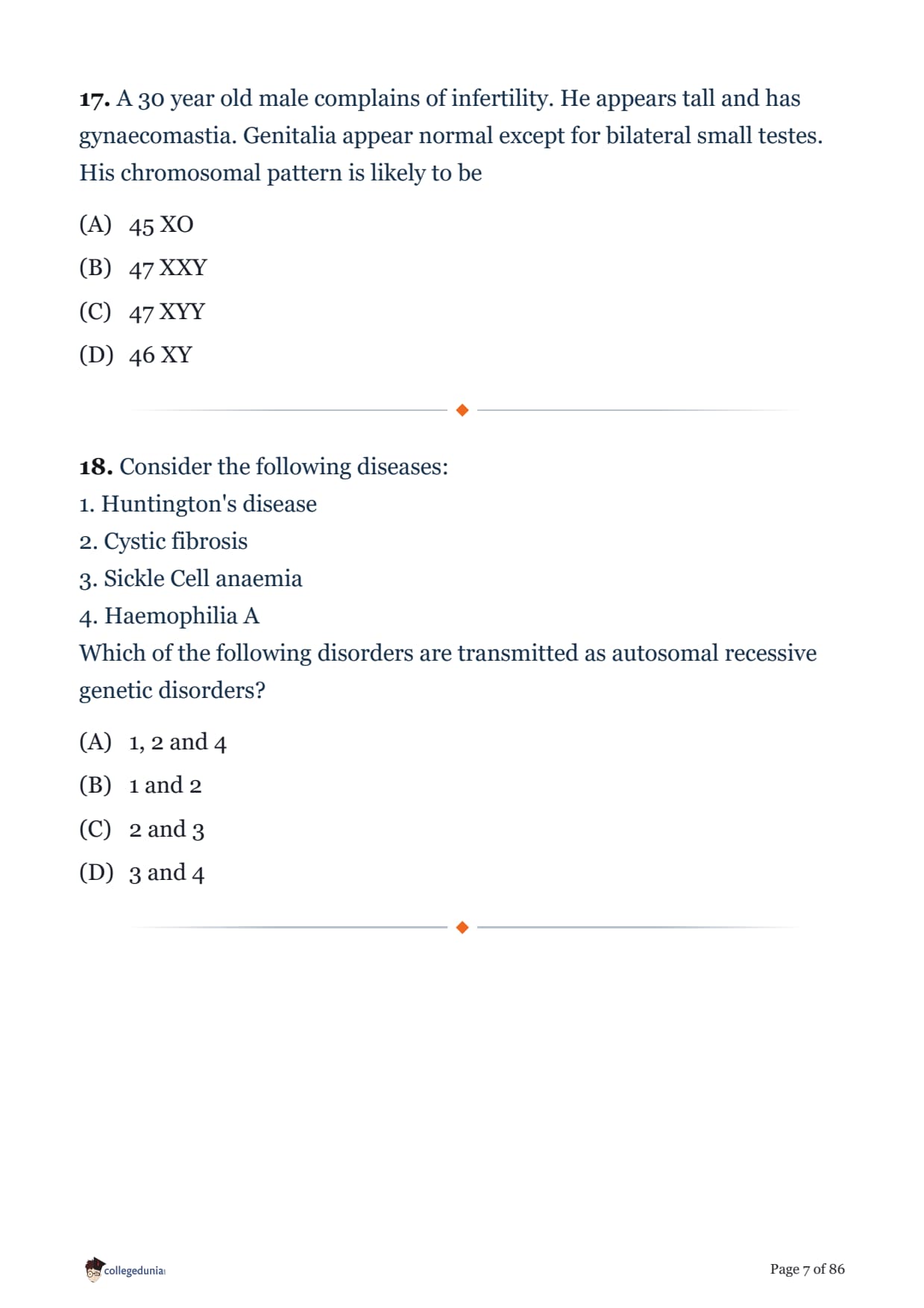
A 30 year old male complains of infertility. He appears tall and has gynaecomastia. Genitalia appear normal except for bilateral small testes. His chromosomal pattern is likely to be
Consider the following diseases:
1. Huntington's disease
2. Cystic fibrosis
3. Sickle Cell anaemia
4. Haemophilia A
Which of the following disorders are transmitted as autosomal recessive genetic disorders?
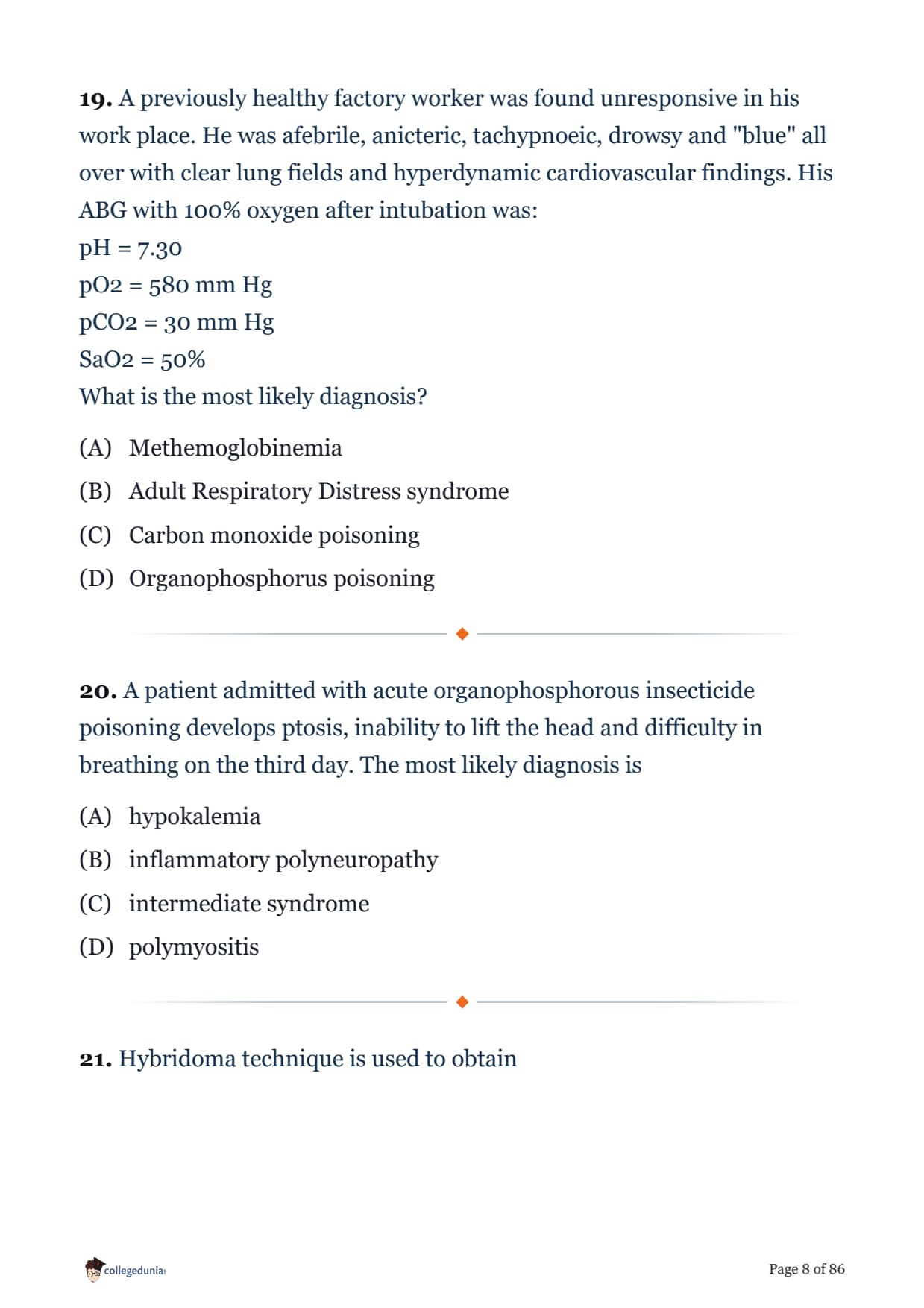
A previously healthy factory worker was found unresponsive in his work place. He was afebrile, anicteric, tachypnoeic, drowsy and "blue" all over with clear lung fields and hyperdynamic cardiovascular findings. His ABG with 100% oxygen after intubation was:
pH = 7.30
pO2 = 580 mm Hg
pCO2 = 30 mm Hg
SaO2 = 50%
What is the most likely diagnosis?
A patient admitted with acute organophosphorous insecticide poisoning develops ptosis, inability to lift the head and difficulty in breathing on the third day. The most likely diagnosis is
Hybridoma technique is used to obtain
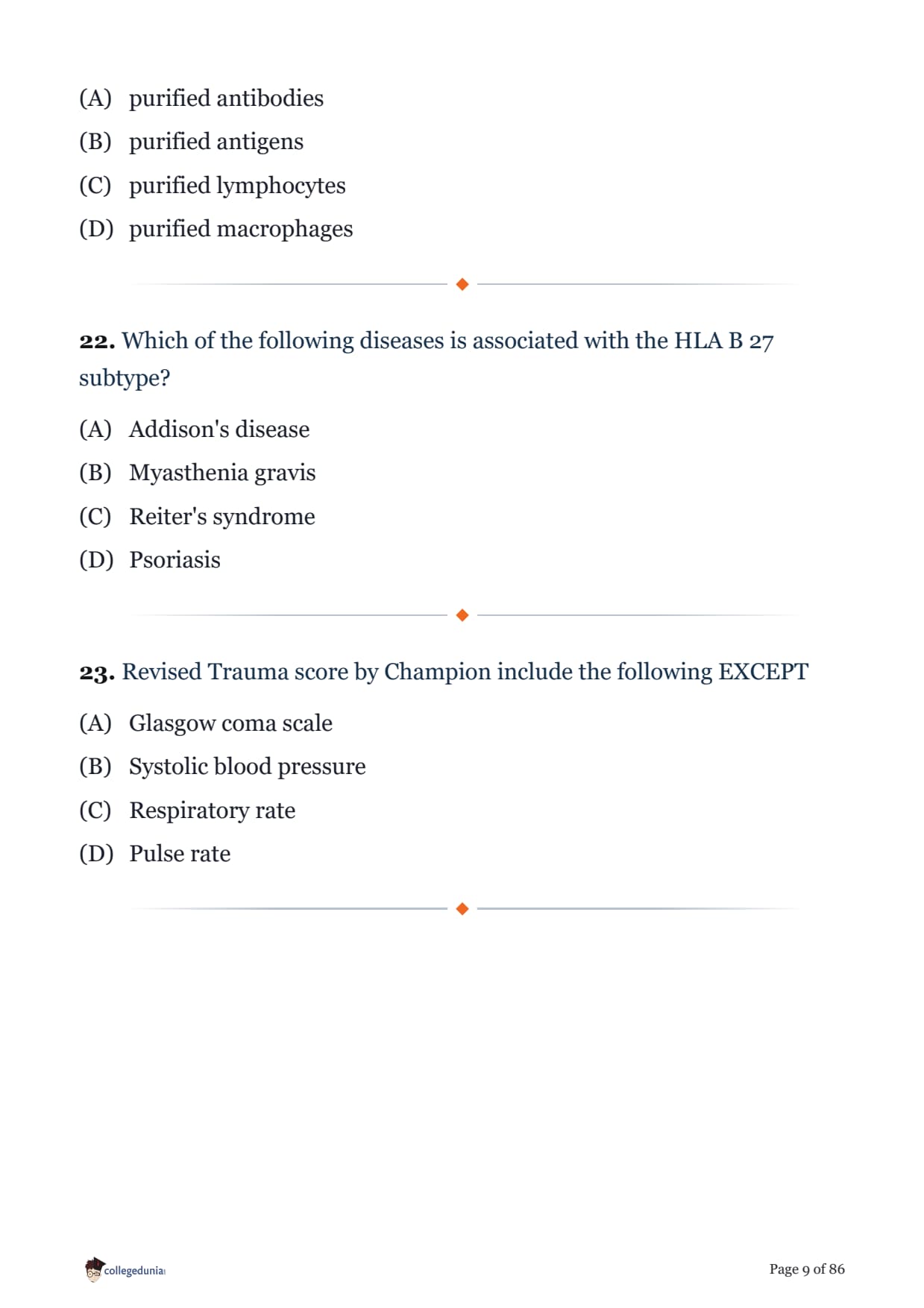
Which of the following diseases is associated with the HLA B 27 subtype?
Revised Trauma score by Champion include the following EXCEPT
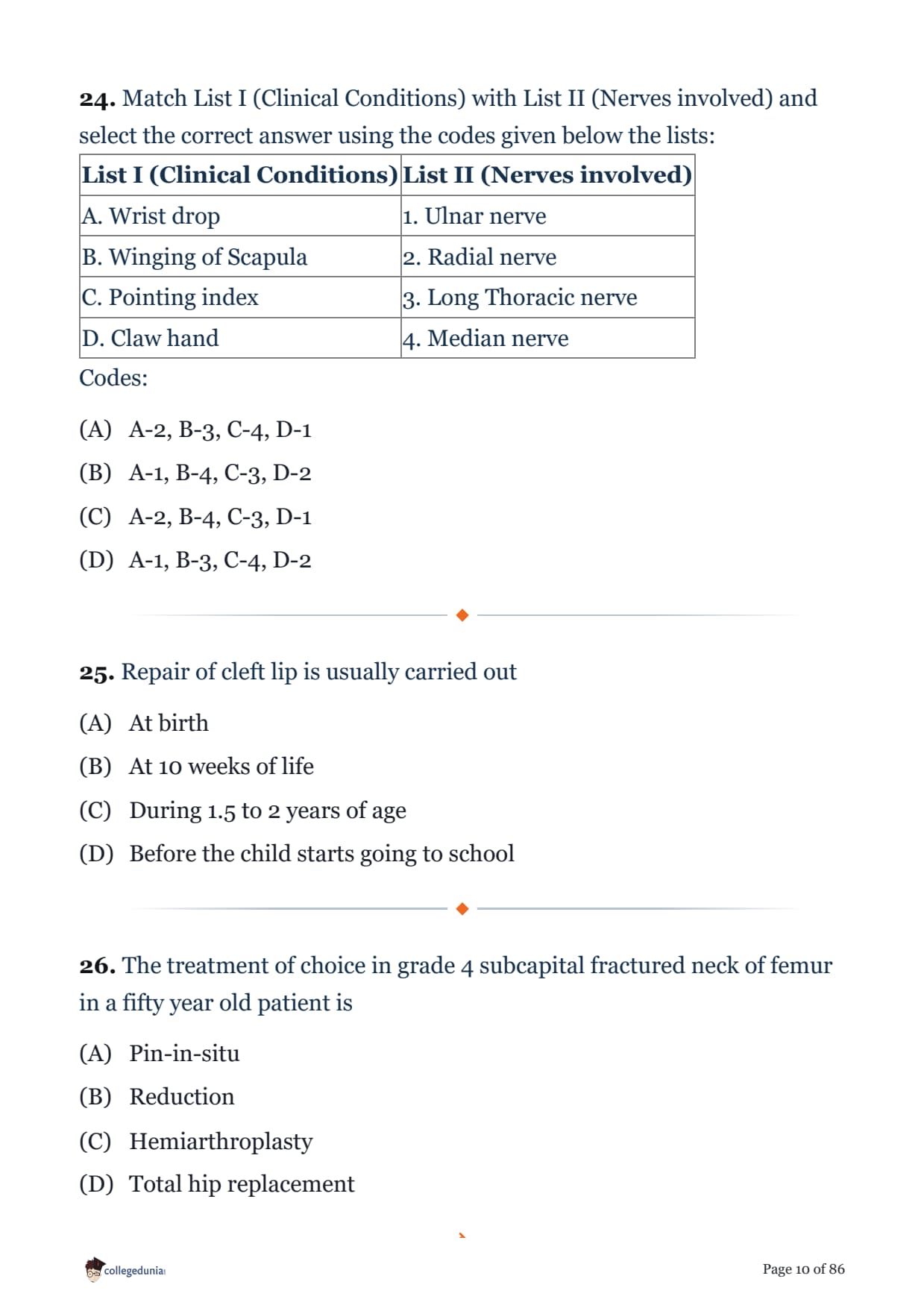
Match List I (Clinical Conditions) with List II (Nerves involved) and select the correct answer using the codes given below the lists:
| List I (Clinical Conditions) | List II (Nerves involved) |
|---|---|
| A. Wrist drop | 1. Ulnar nerve |
| B. Winging of Scapula | 2. Radial nerve |
| C. Pointing index | 3. Long Thoracic nerve |
| D. Claw hand | 4. Median nerve |
Repair of cleft lip is usually carried out
The treatment of choice in grade 4 subcapital fractured neck of femur in a fifty year old patient is
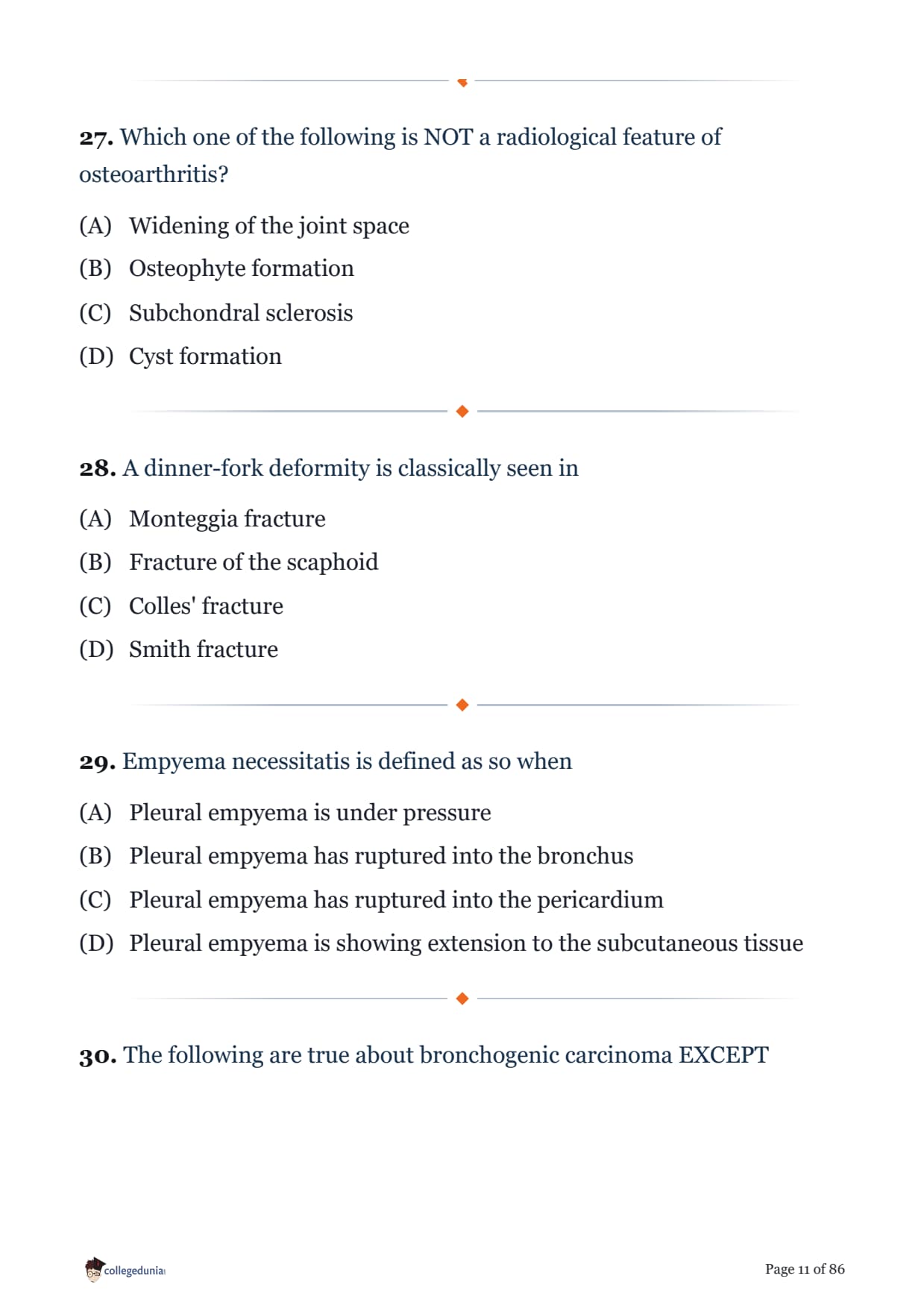
Which one of the following is NOT a radiological feature of osteoarthritis?
A dinner-fork deformity is classically seen in
Empyema necessitatis is defined as so when
The following are true about bronchogenic carcinoma EXCEPT
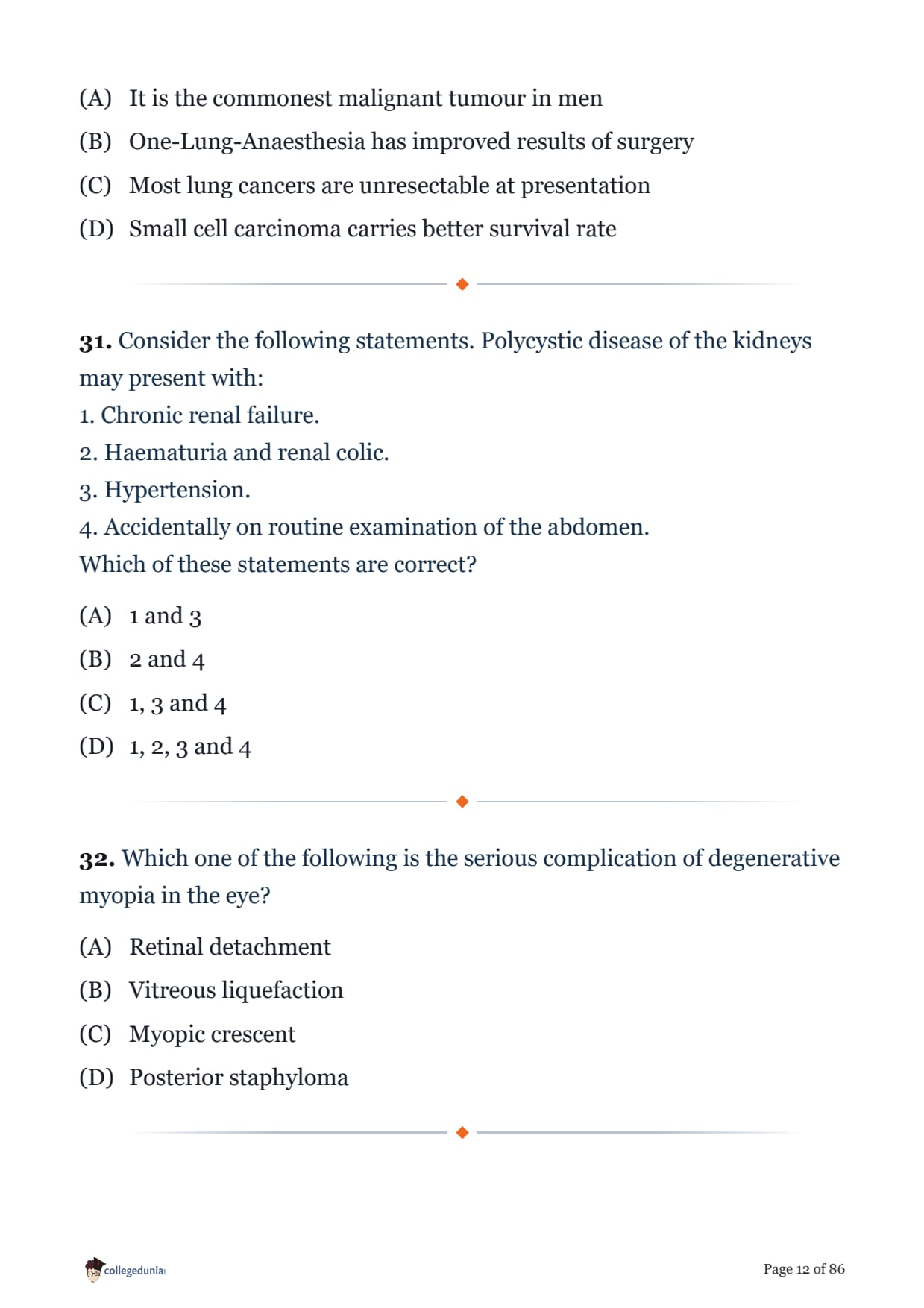
Consider the following statements. Polycystic disease of the kidneys may present with:
1. Chronic renal failure.
2. Haematuria and renal colic.
3. Hypertension.
4. Accidentally on routine examination of the abdomen.
Which of these statements are correct?
Which one of the following is the serious complication of degenerative myopia in the eye?
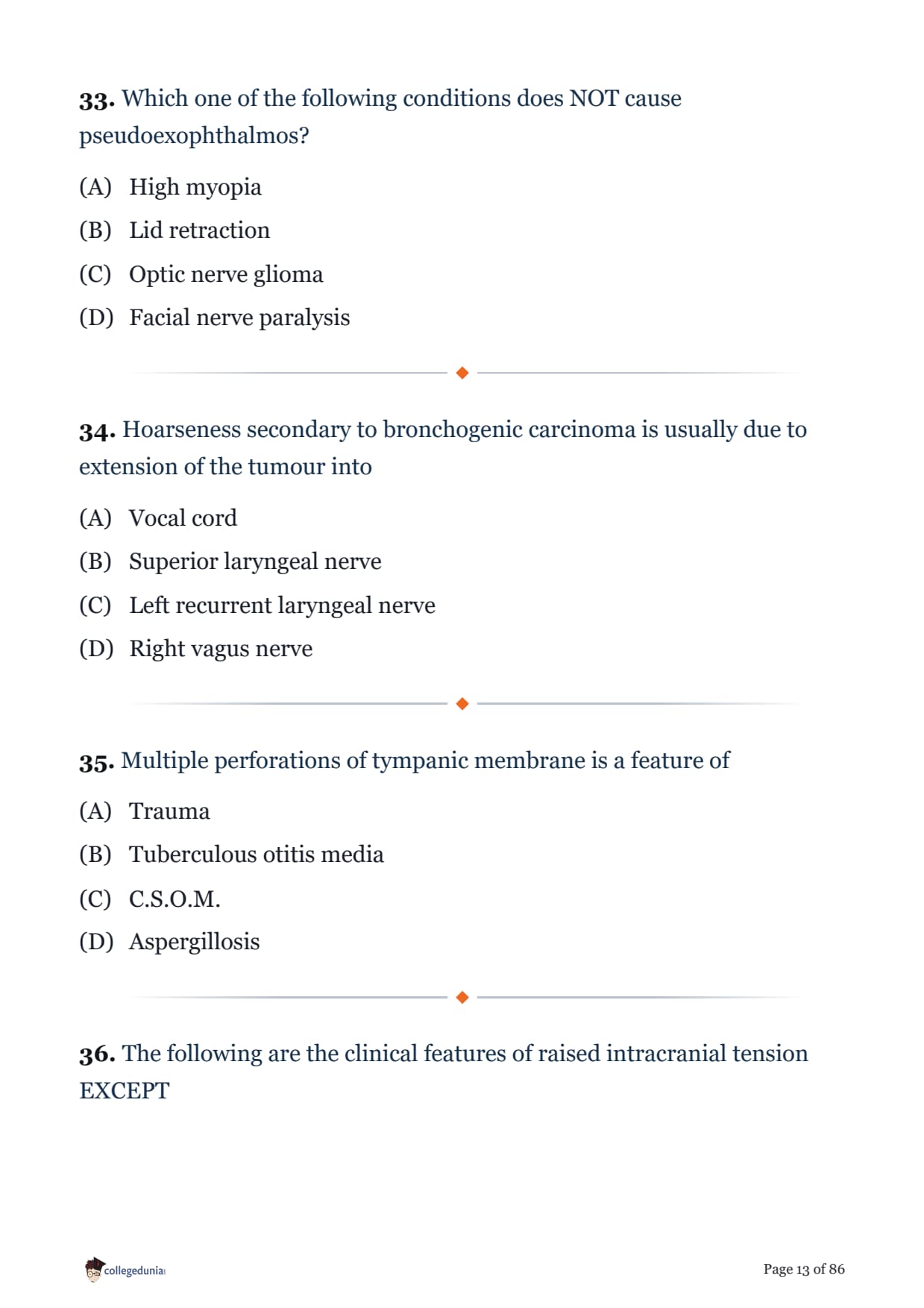
Which one of the following conditions does NOT cause pseudoexophthalmos?
Hoarseness secondary to bronchogenic carcinoma is usually due to extension of the tumour into
Multiple perforations of tympanic membrane is a feature of
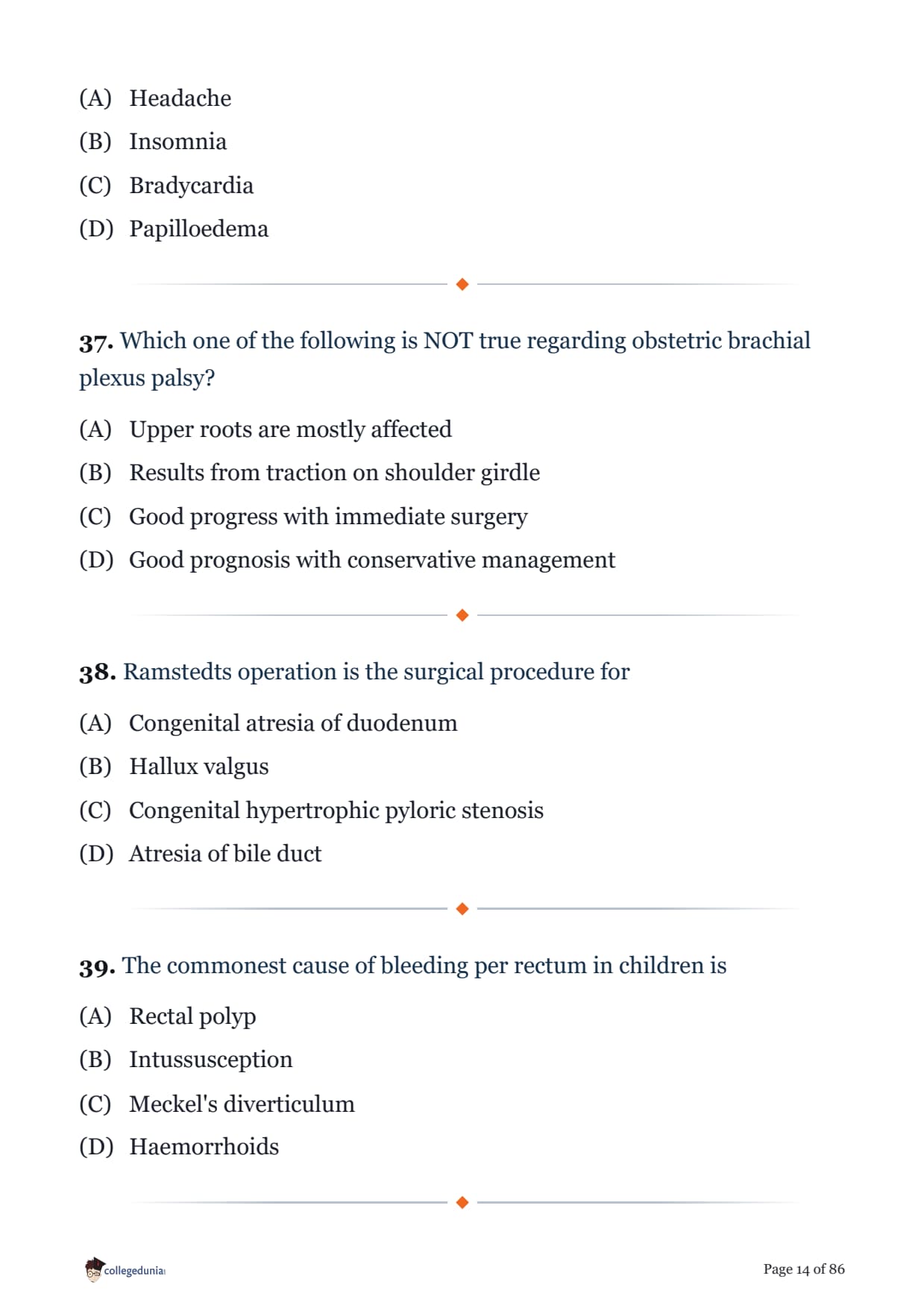
The following are the clinical features of raised intracranial tension EXCEPT
Which one of the following is NOT true regarding obstetric brachial plexus palsy?
Ramstedts operation is the surgical procedure for
The commonest cause of bleeding per rectum in children is
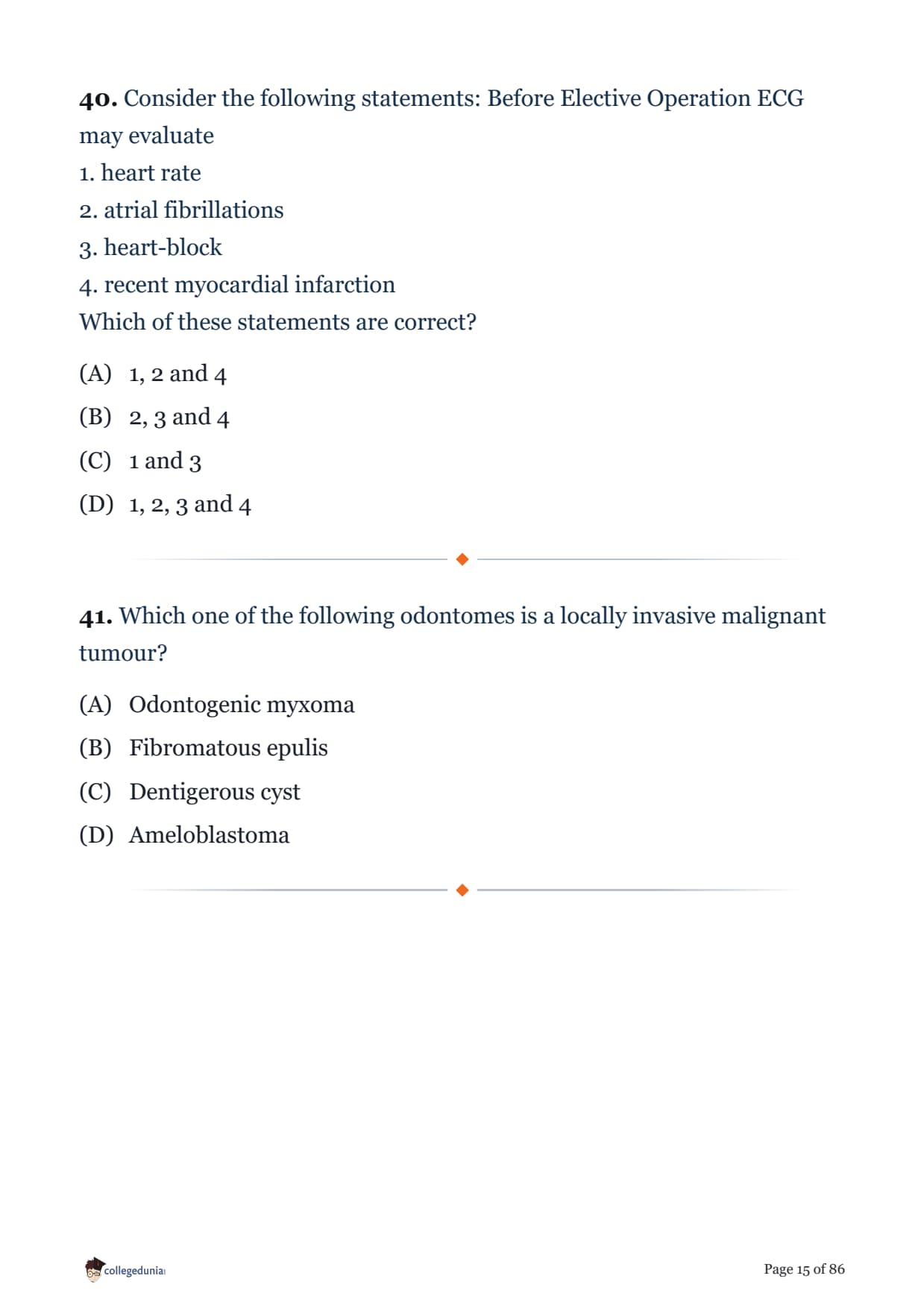
Consider the following statements: Before Elective Operation ECG may evaluate
1. heart rate
2. atrial fibrillations
3. heart-block
4. recent myocardial infarction
Which of these statements are correct?
Which one of the following odontomes is a locally invasive malignant tumour?
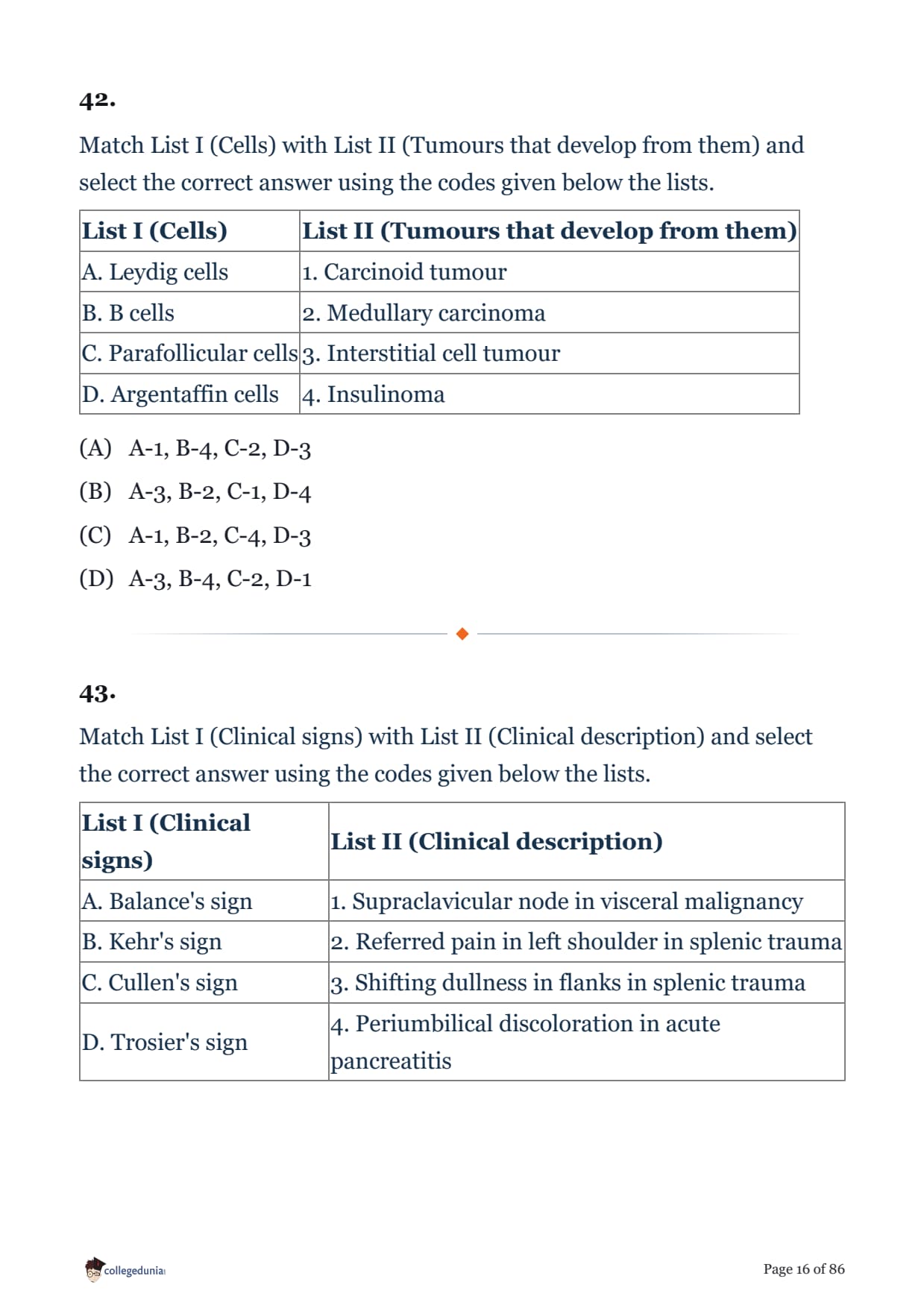
Match List I (Cells) with List II (Tumours that develop from them) and select the correct answer using the codes given below the lists.
| List I (Cells) | List II (Tumours that develop from them) |
|---|---|
| A. Leydig cells | 1. Carcinoid tumour |
| B. B cells | 2. Medullary carcinoma |
| C. Parafollicular cells | 3. Interstitial cell tumour |
| D. Argentaffin cells | 4. Insulinoma |
Match List I (Clinical signs) with List II (Clinical description) and select the correct answer using the codes given below the lists.
| List I (Clinical signs) | List II (Clinical description) |
|---|---|
| A. Balance's sign | 1. Supraclavicular node in visceral malignancy |
| B. Kehr's sign | 2. Referred pain in left shoulder in splenic trauma |
| C. Cullen's sign | 3. Shifting dullness in flanks in splenic trauma |
| D. Trosier's sign | 4. Periumbilical discoloration in acute pancreatitis |
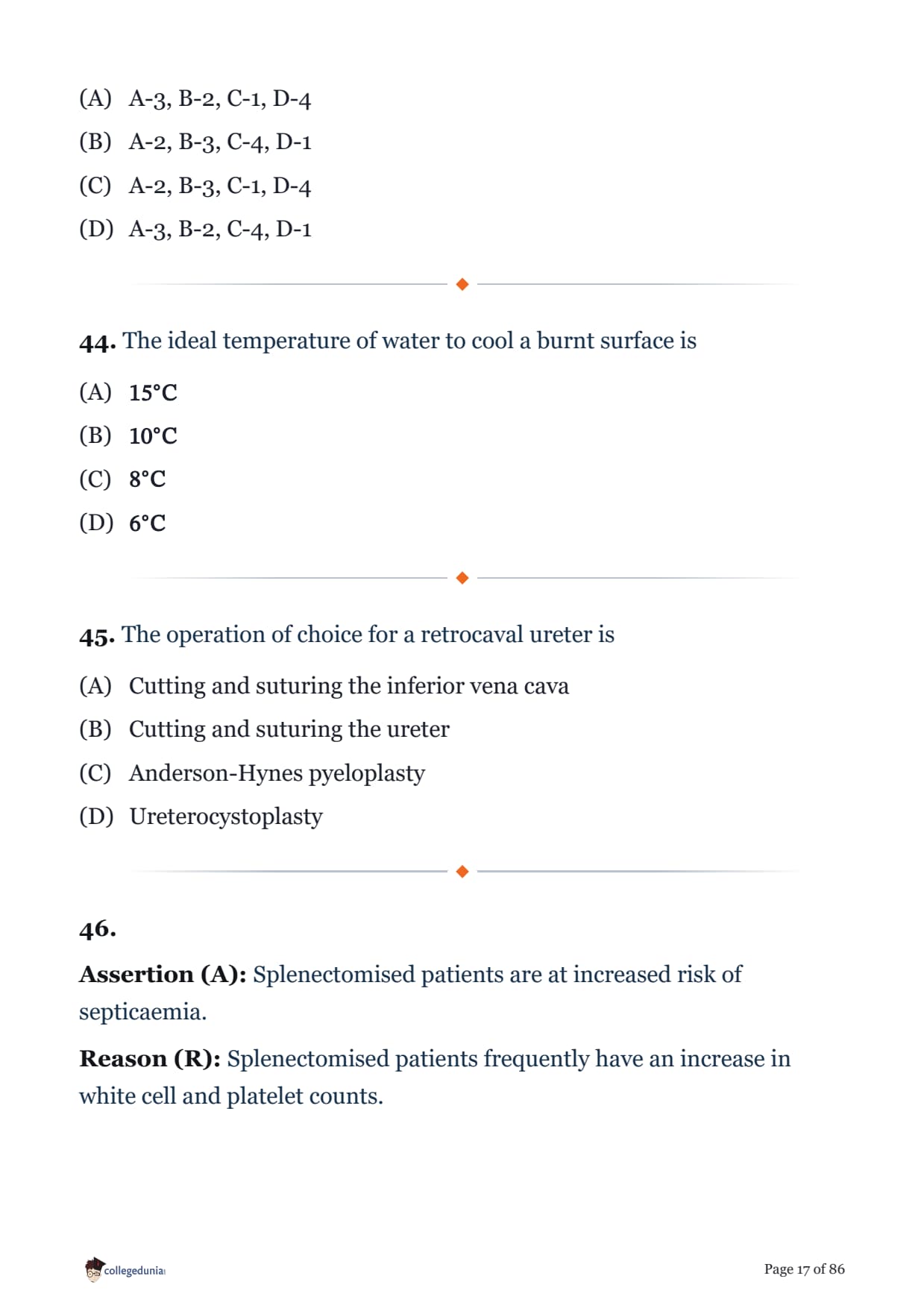
The ideal temperature of water to cool a burnt surface is
The operation of choice for a retrocaval ureter is
Assertion (A): Splenectomised patients are at increased risk of septicaemia.
Reason (R): Splenectomised patients frequently have an increase in white cell and platelet counts.
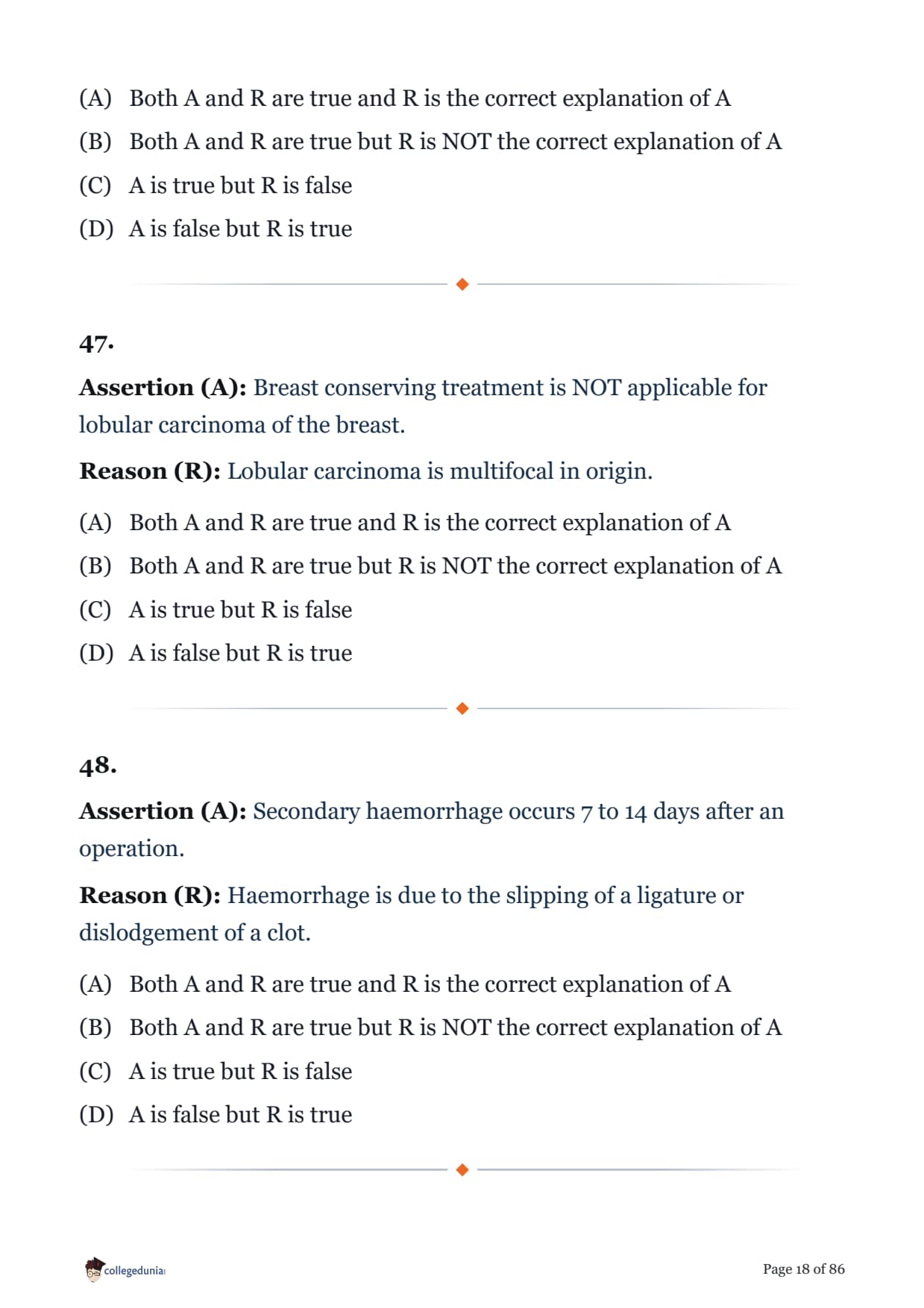
Assertion (A): Breast conserving treatment is NOT applicable for lobular carcinoma of the breast.
Reason (R): Lobular carcinoma is multifocal in origin.
Assertion (A): Secondary haemorrhage occurs 7 to 14 days after an operation.
Reason (R): Haemorrhage is due to the slipping of a ligature or dislodgement of a clot.
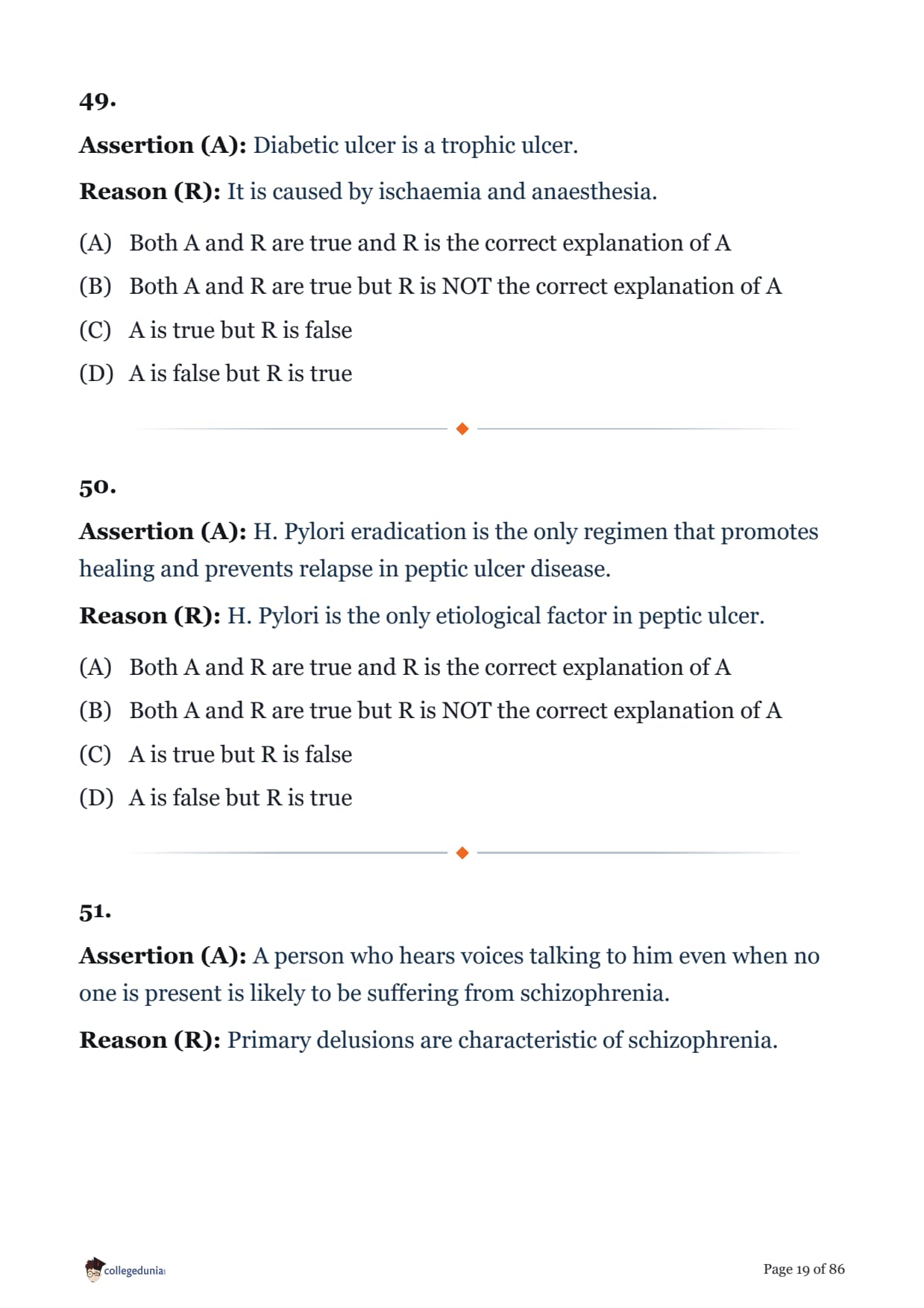
Assertion (A): Diabetic ulcer is a trophic ulcer.
Reason (R): It is caused by ischaemia and anaesthesia.
Assertion (A): H. Pylori eradication is the only regimen that promotes healing and prevents relapse in peptic ulcer disease.
Reason (R): H. Pylori is the only etiological factor in peptic ulcer.
Assertion (A): A person who hears voices talking to him even when no one is present is likely to be suffering from schizophrenia.
Reason (R): Primary delusions are characteristic of schizophrenia.
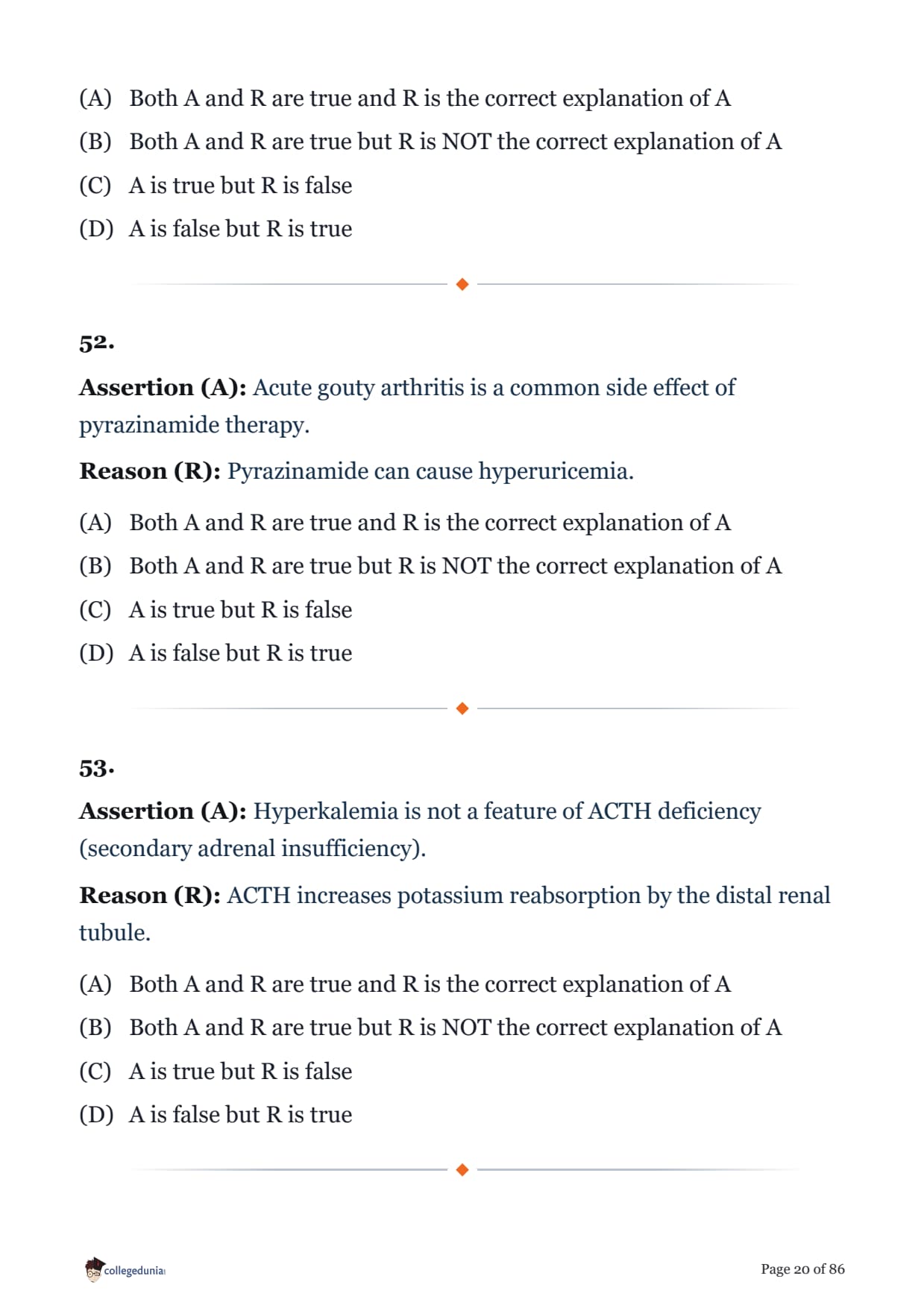
Assertion (A): Acute gouty arthritis is a common side effect of pyrazinamide therapy.
Reason (R): Pyrazinamide can cause hyperuricemia.
Assertion (A): Hyperkalemia is not a feature of ACTH deficiency (secondary adrenal insufficiency).
Reason (R): ACTH increases potassium reabsorption by the distal renal tubule.
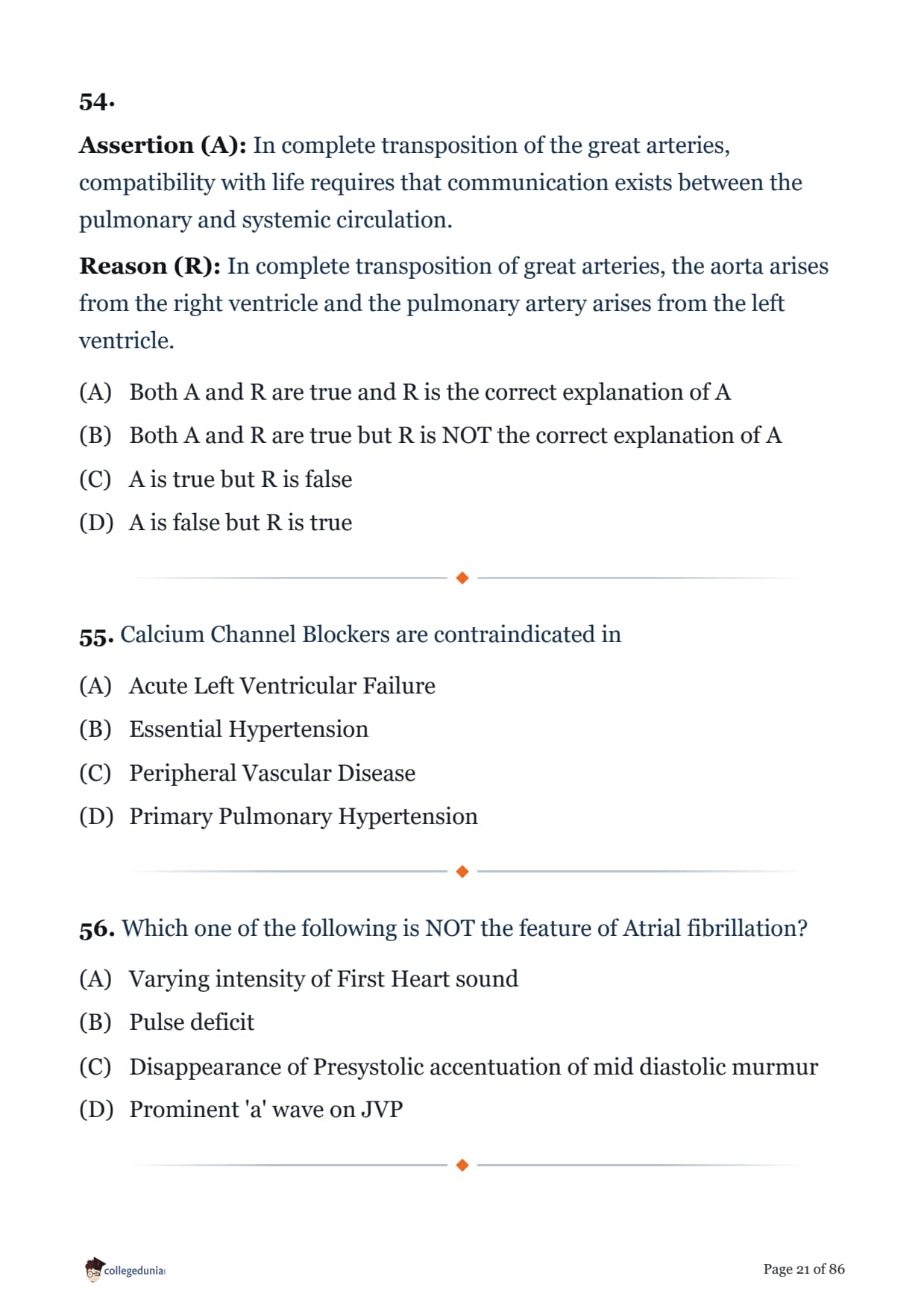
Assertion (A): In complete transposition of the great arteries, compatibility with life requires that communication exists between the pulmonary and systemic circulation.
Reason (R): In complete transposition of great arteries, the aorta arises from the right ventricle and the pulmonary artery arises from the left ventricle.
Calcium Channel Blockers are contraindicated in
Which one of the following is NOT the feature of Atrial fibrillation?
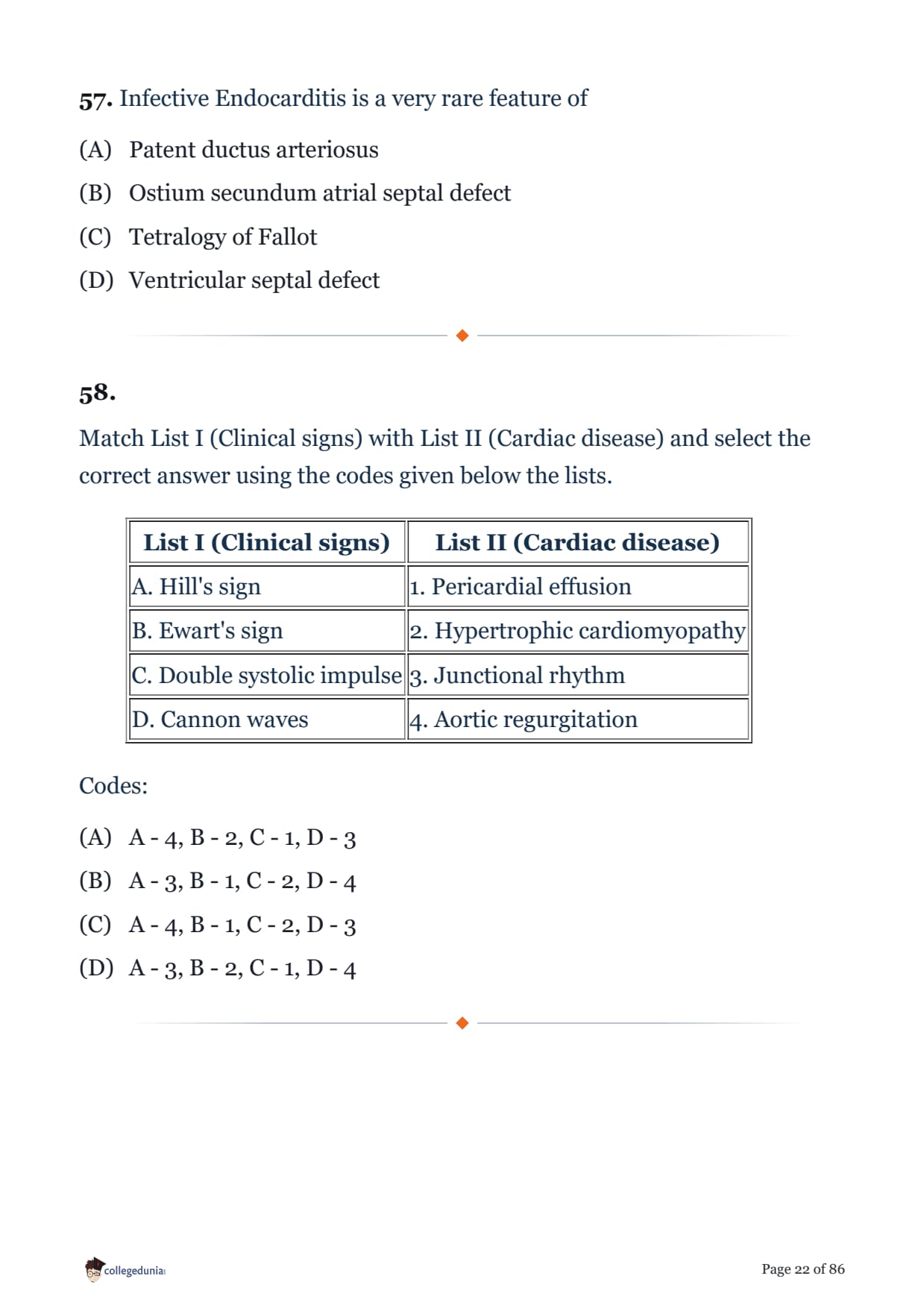
Infective Endocarditis is a very rare feature of
Match List I (Clinical signs) with List II (Cardiac disease) and select the correct answer using the codes given below the lists.
| List I (Clinical signs) | List II (Cardiac disease) |
|---|---|
| A. Hill's sign | 1. Pericardial effusion |
| B. Ewart's sign | 2. Hypertrophic cardiomyopathy |
| C. Double systolic impulse | 3. Junctional rhythm |
| D. Cannon waves | 4. Aortic regurgitation |
Codes:
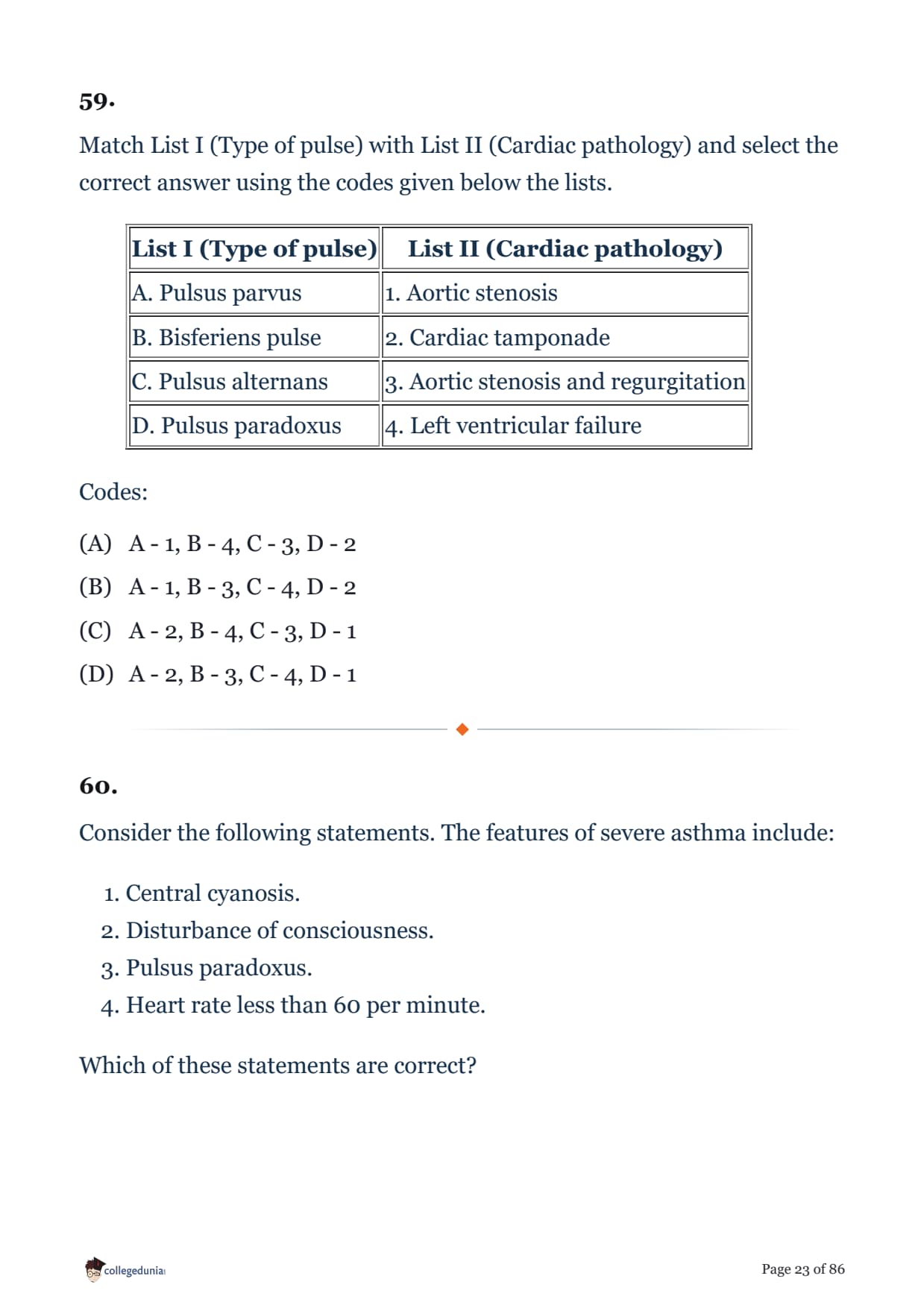
Match List I (Type of pulse) with List II (Cardiac pathology) and select the correct answer using the codes given below the lists.
| List I (Type of pulse) | List II (Cardiac pathology) |
|---|---|
| A. Pulsus parvus | 1. Aortic stenosis |
| B. Bisferiens pulse | 2. Cardiac tamponade |
| C. Pulsus alternans | 3. Aortic stenosis and regurgitation |
| D. Pulsus paradoxus | 4. Left ventricular failure |
Codes:
Consider the following statements. The features of severe asthma include:
- Central cyanosis.
- Disturbance of consciousness.
- Pulsus paradoxus.
- Heart rate less than 60 per minute.
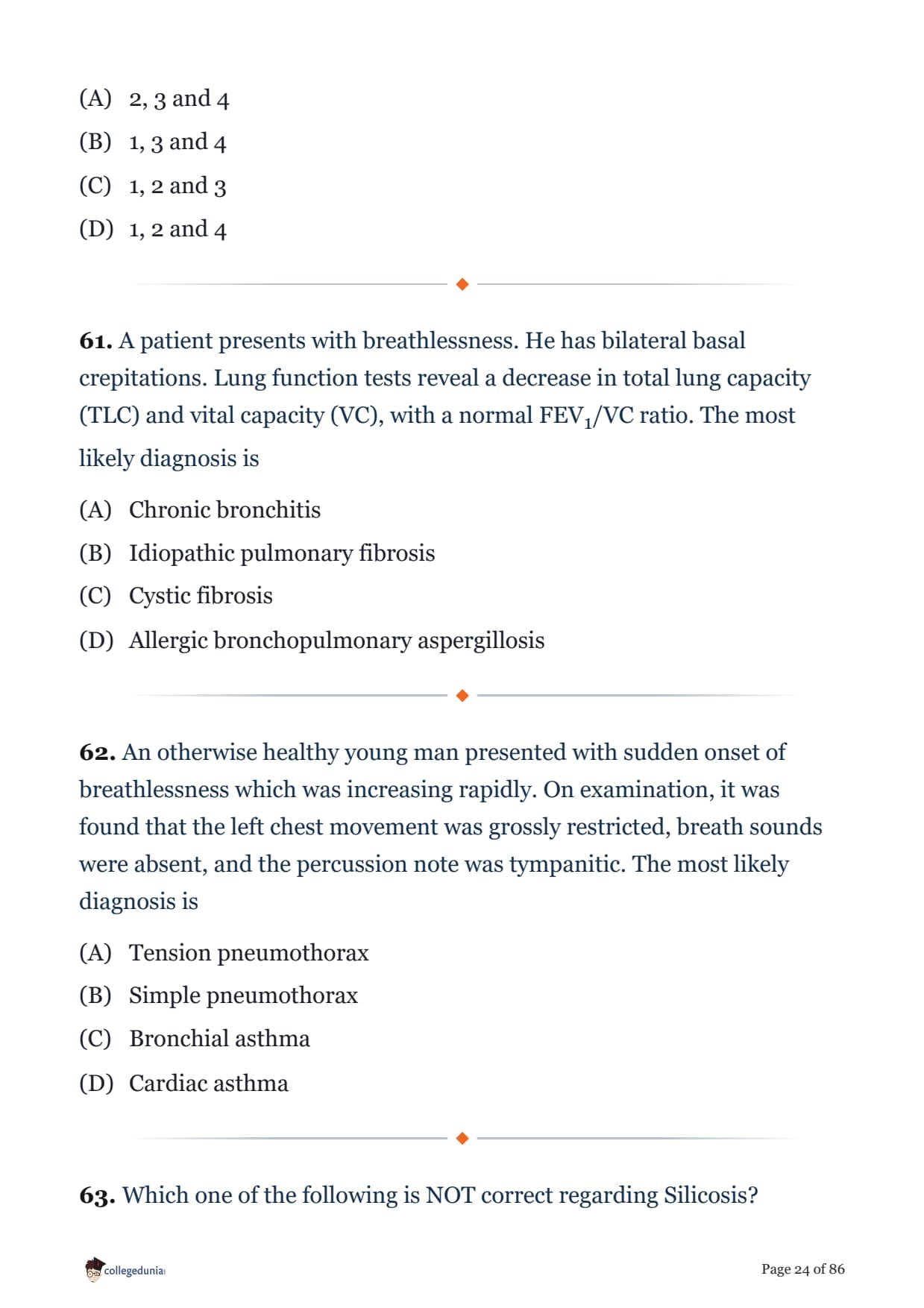
Which of these statements are correct?
A patient presents with breathlessness. He has bilateral basal crepitations. Lung function tests reveal a decrease in total lung capacity (TLC) and vital capacity (VC), with a normal FEV1/VC ratio. The most likely diagnosis is
An otherwise healthy young man presented with sudden onset of breathlessness which was increasing rapidly. On examination, it was found that the left chest movement was grossly restricted, breath sounds were absent, and the percussion note was tympanitic. The most likely diagnosis is
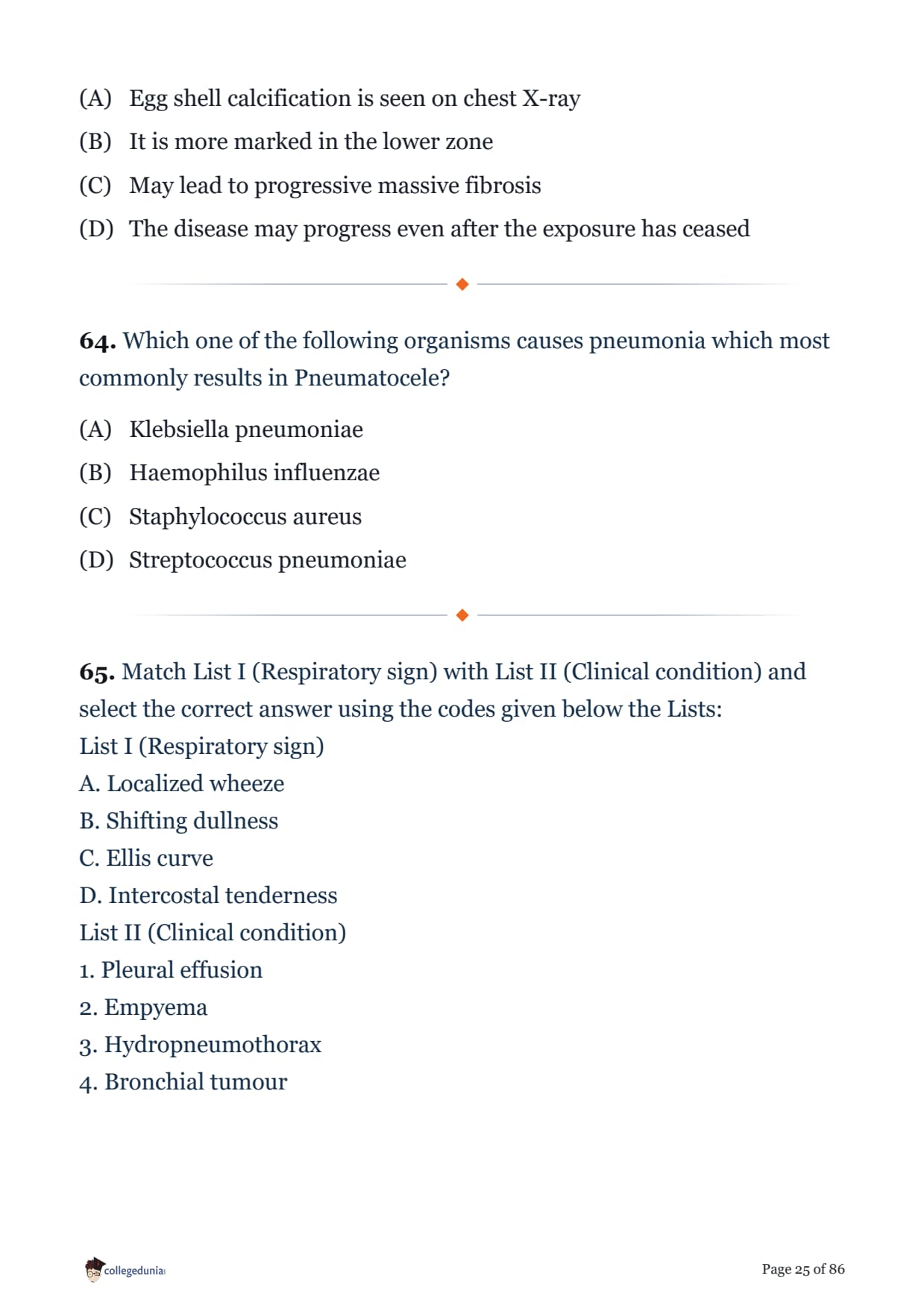
Which one of the following is NOT correct regarding Silicosis?
Which one of the following organisms causes pneumonia which most commonly results in Pneumatocele?
Match List I (Respiratory sign) with List II (Clinical condition) and select the correct answer using the codes given below the Lists:
List I (Respiratory sign)
A. Localized wheeze
B. Shifting dullness
C. Ellis curve
D. Intercostal tenderness
List II (Clinical condition)
1. Pleural effusion
2. Empyema
3. Hydropneumothorax
4. Bronchial tumour
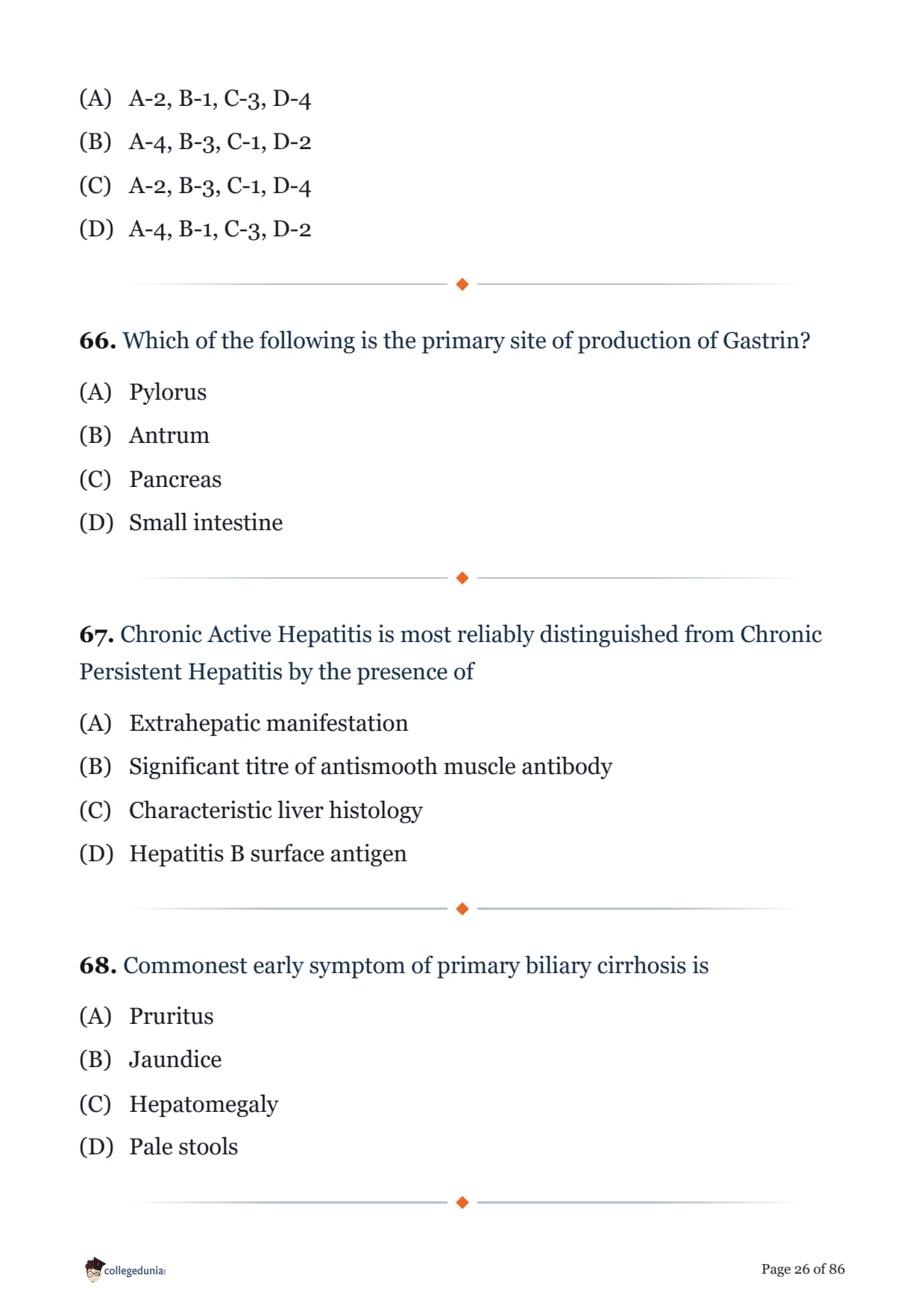
Which of the following is the primary site of production of Gastrin?
Chronic Active Hepatitis is most reliably distinguished from Chronic Persistent Hepatitis by the presence of
Commonest early symptom of primary biliary cirrhosis is
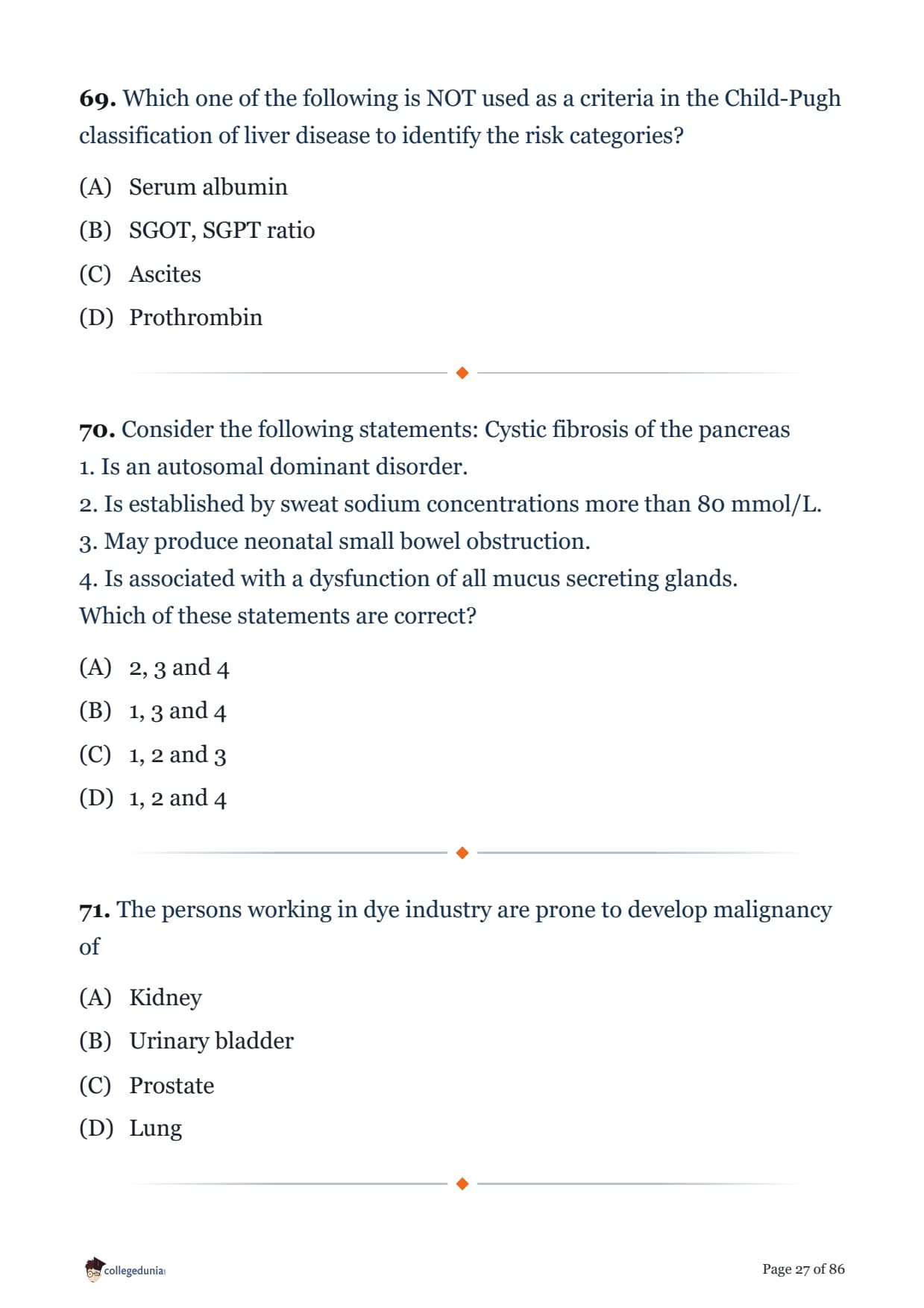
Which one of the following is NOT used as a criteria in the Child-Pugh classification of liver disease to identify the risk categories?
Consider the following statements: Cystic fibrosis of the pancreas
1. Is an autosomal dominant disorder.
2. Is established by sweat sodium concentrations more than 80 mmol/L.
3. May produce neonatal small bowel obstruction.
4. Is associated with a dysfunction of all mucus secreting glands.
Which of these statements are correct?
The persons working in dye industry are prone to develop malignancy of
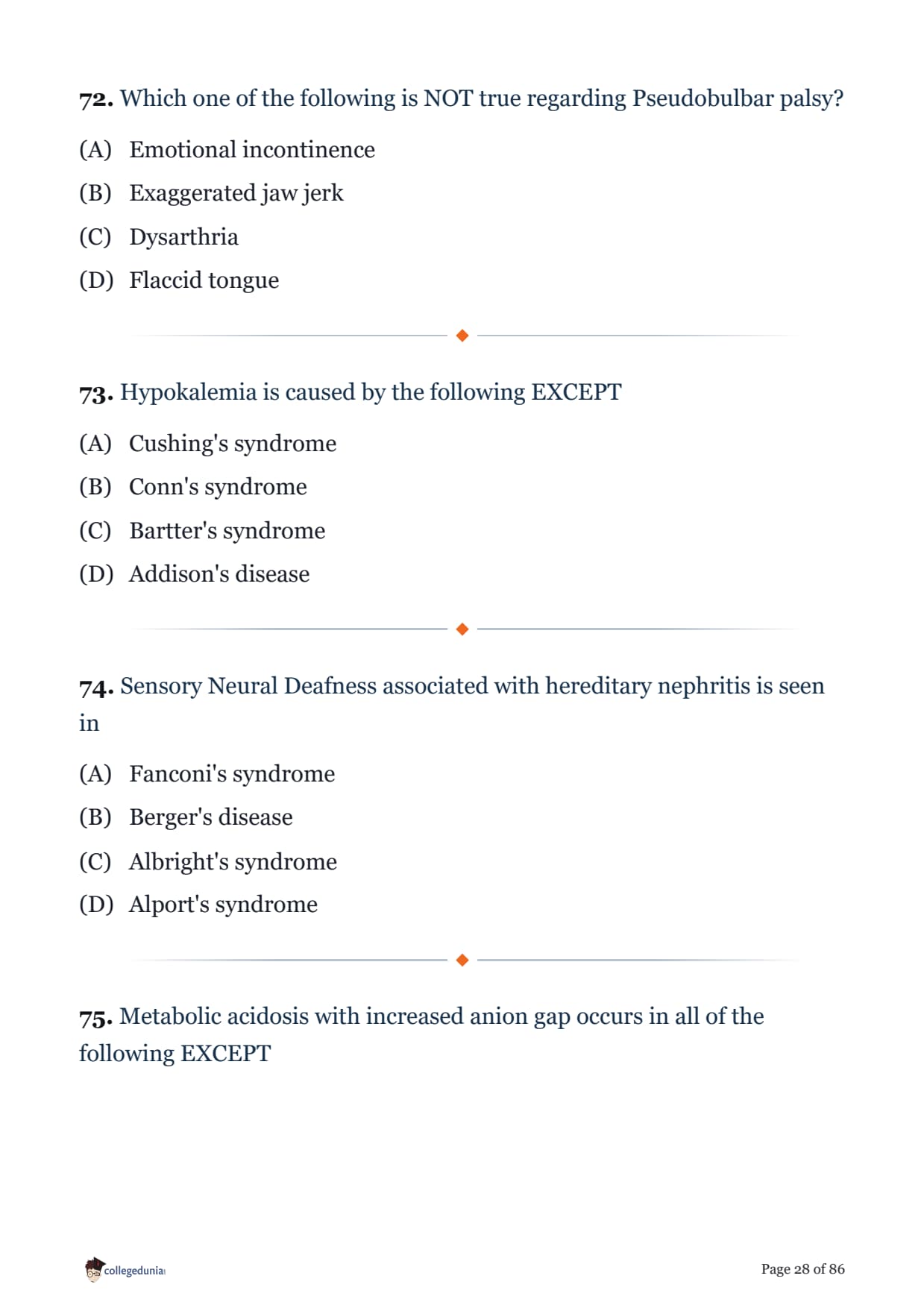
Which one of the following is NOT true regarding Pseudobulbar palsy?
Hypokalemia is caused by the following EXCEPT
Sensory Neural Deafness associated with hereditary nephritis is seen in
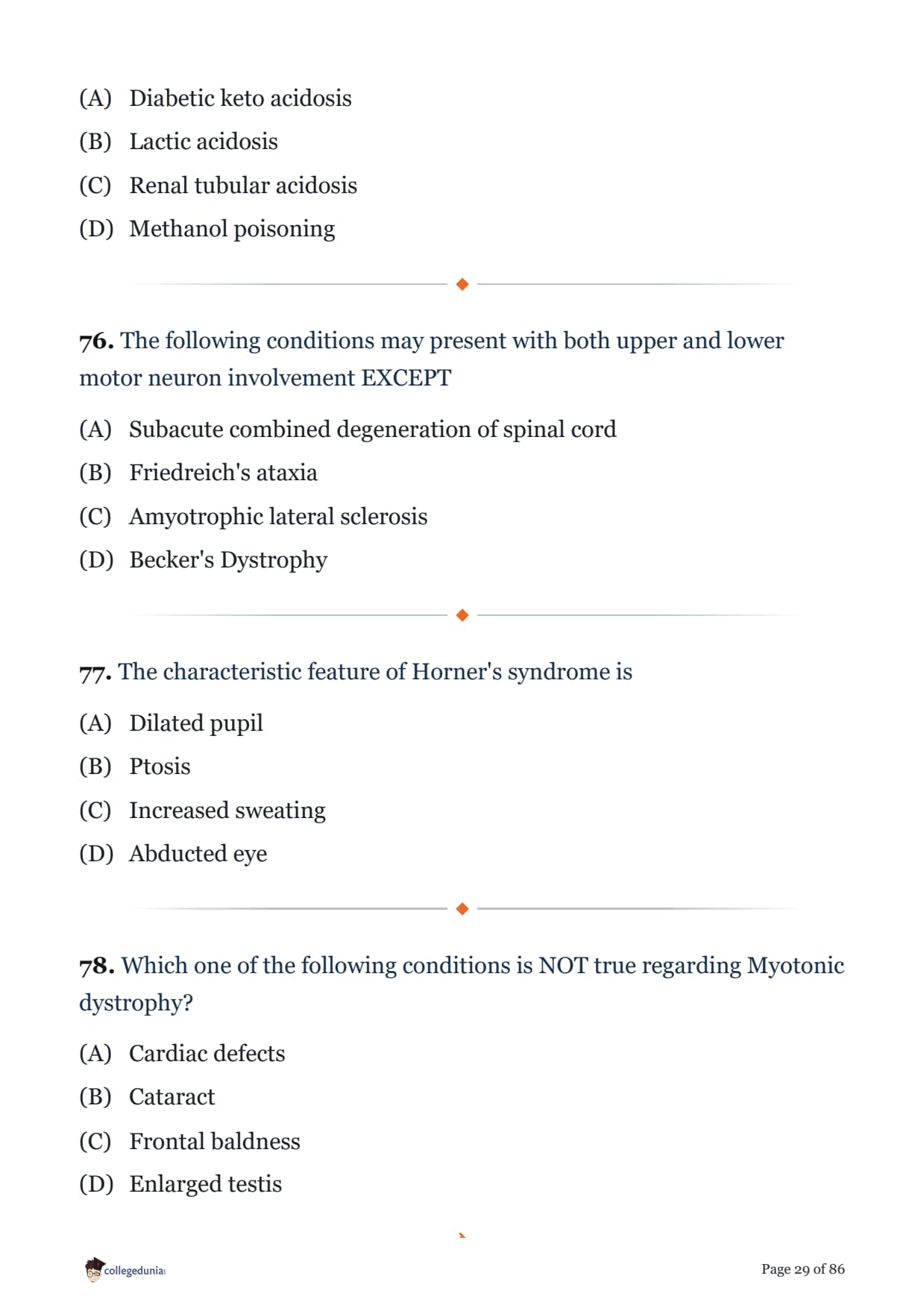
Metabolic acidosis with increased anion gap occurs in all of the following EXCEPT
The following conditions may present with both upper and lower motor neuron involvement EXCEPT
The characteristic feature of Horner's syndrome is
Which one of the following conditions is NOT true regarding Myotonic dystrophy?
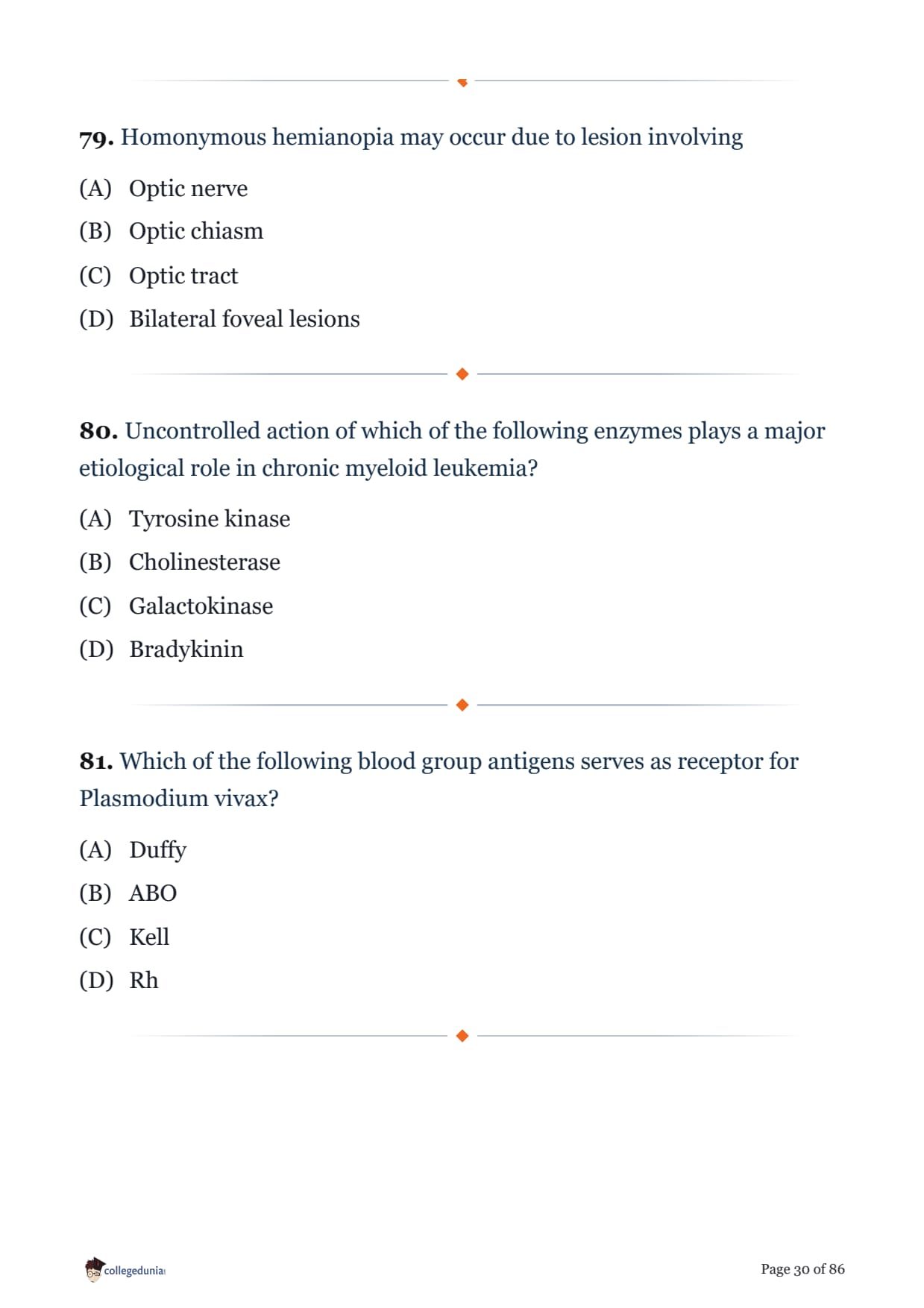
Homonymous hemianopia may occur due to lesion involving
Uncontrolled action of which of the following enzymes plays a major etiological role in chronic myeloid leukemia?
Which of the following blood group antigens serves as receptor for Plasmodium vivax?
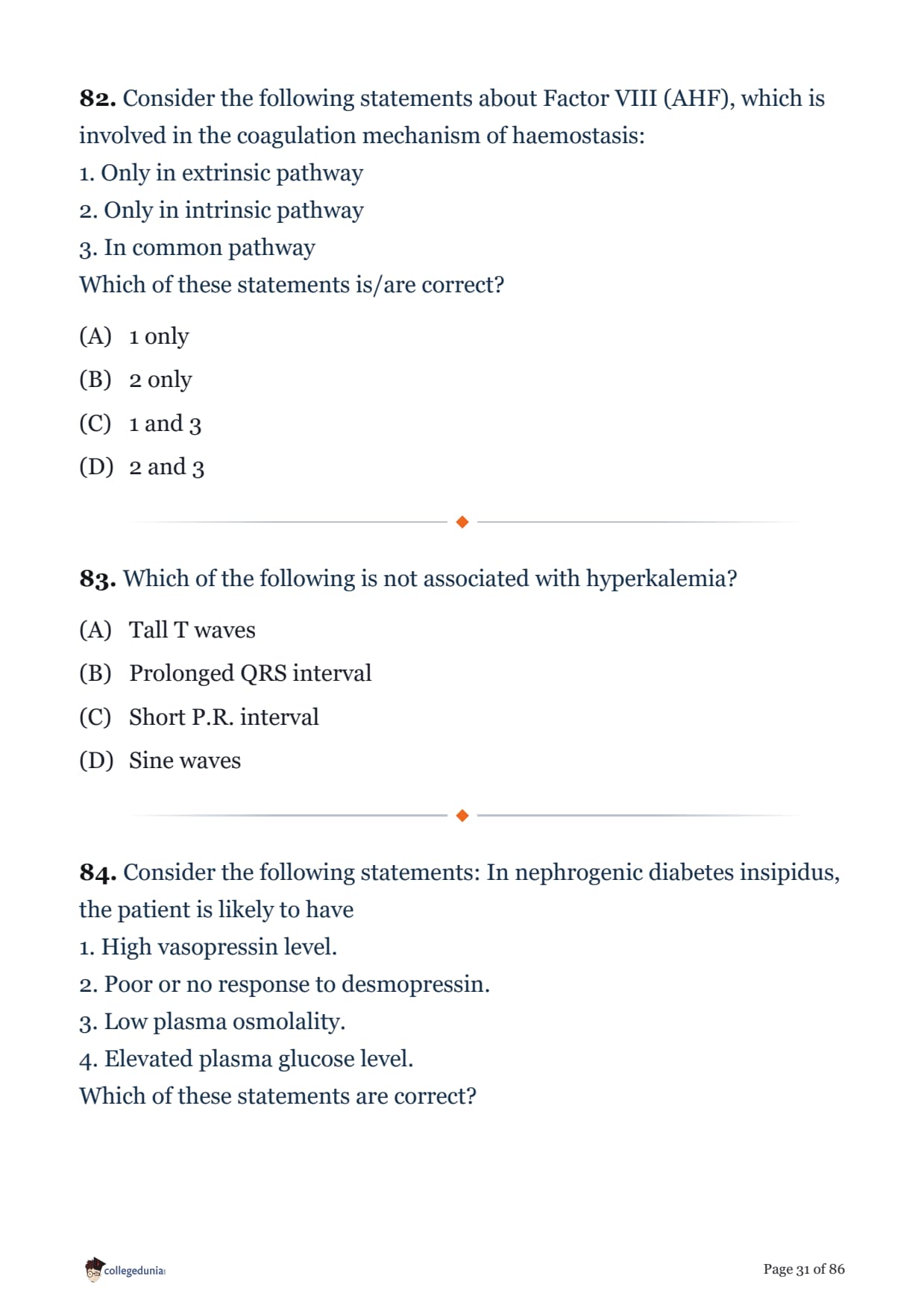
Consider the following statements about Factor VIII (AHF), which is involved in the coagulation mechanism of haemostasis:
1. Only in extrinsic pathway
2. Only in intrinsic pathway
3. In common pathway
Which of these statements is/are correct?
Which of the following is not associated with hyperkalemia?
Consider the following statements: In nephrogenic diabetes insipidus, the patient is likely to have
1. High vasopressin level.
2. Poor or no response to desmopressin.
3. Low plasma osmolality.
4. Elevated plasma glucose level.
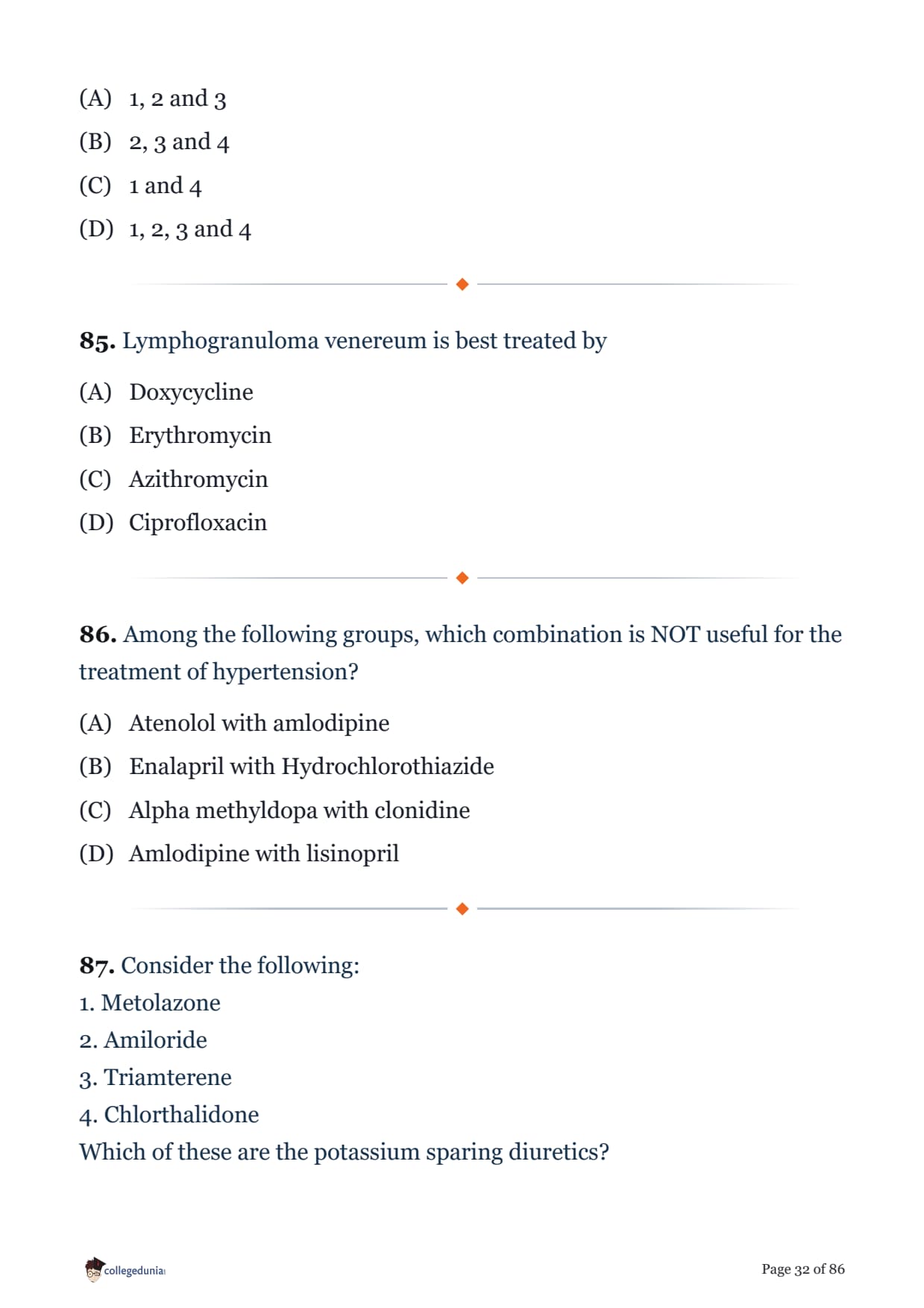
Which of these statements are correct?
Lymphogranuloma venereum is best treated by
Among the following groups, which combination is NOT useful for the treatment of hypertension?
Consider the following:
1. Metolazone
2. Amiloride
3. Triamterene
4. Chlorthalidone
Which of these are the potassium sparing diuretics?
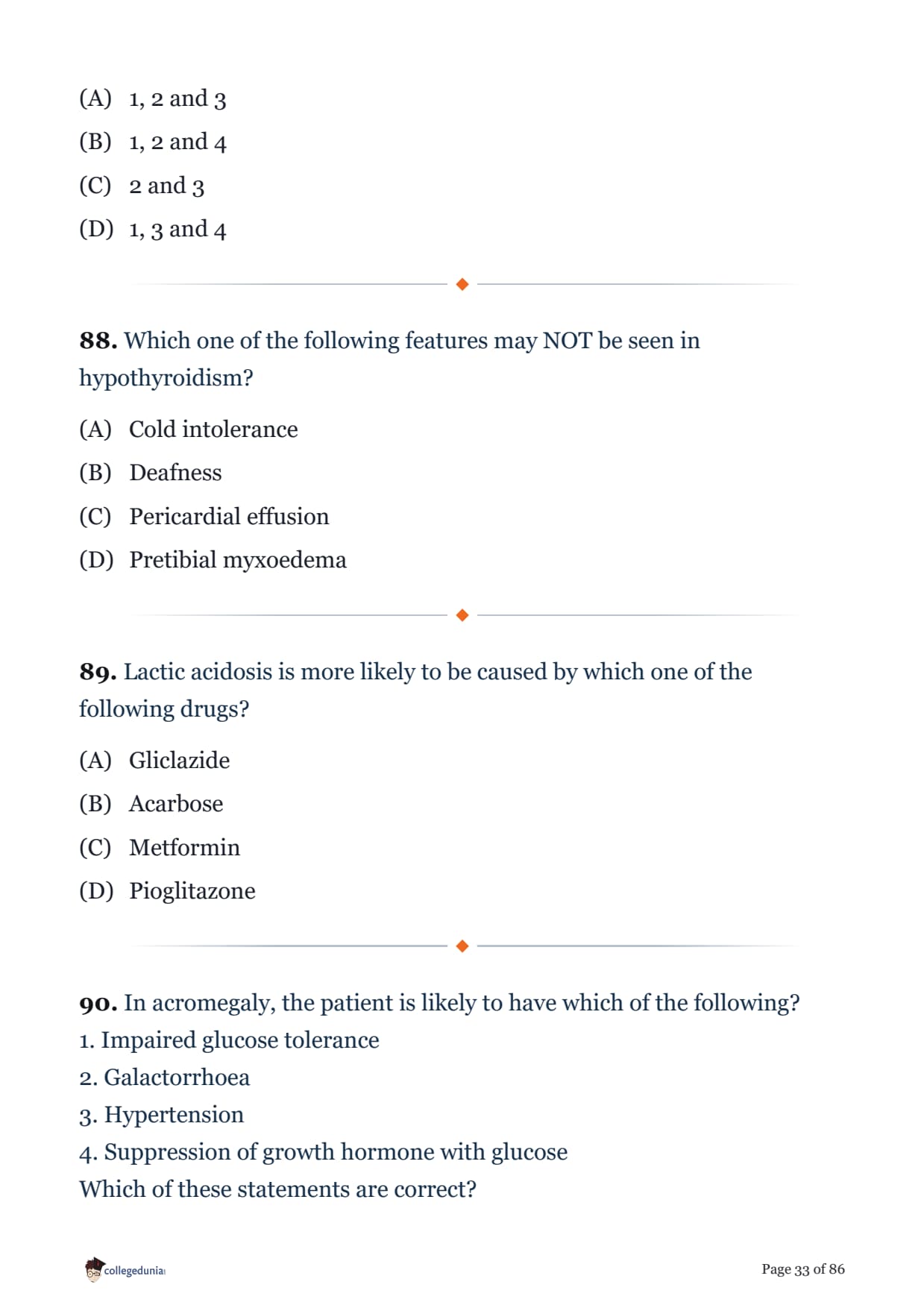
Which one of the following features may NOT be seen in hypothyroidism?
Lactic acidosis is more likely to be caused by which one of the following drugs?
In acromegaly, the patient is likely to have which of the following?
1. Impaired glucose tolerance
2. Galactorrhoea
3. Hypertension
4. Suppression of growth hormone with glucose
Which of these statements are correct?
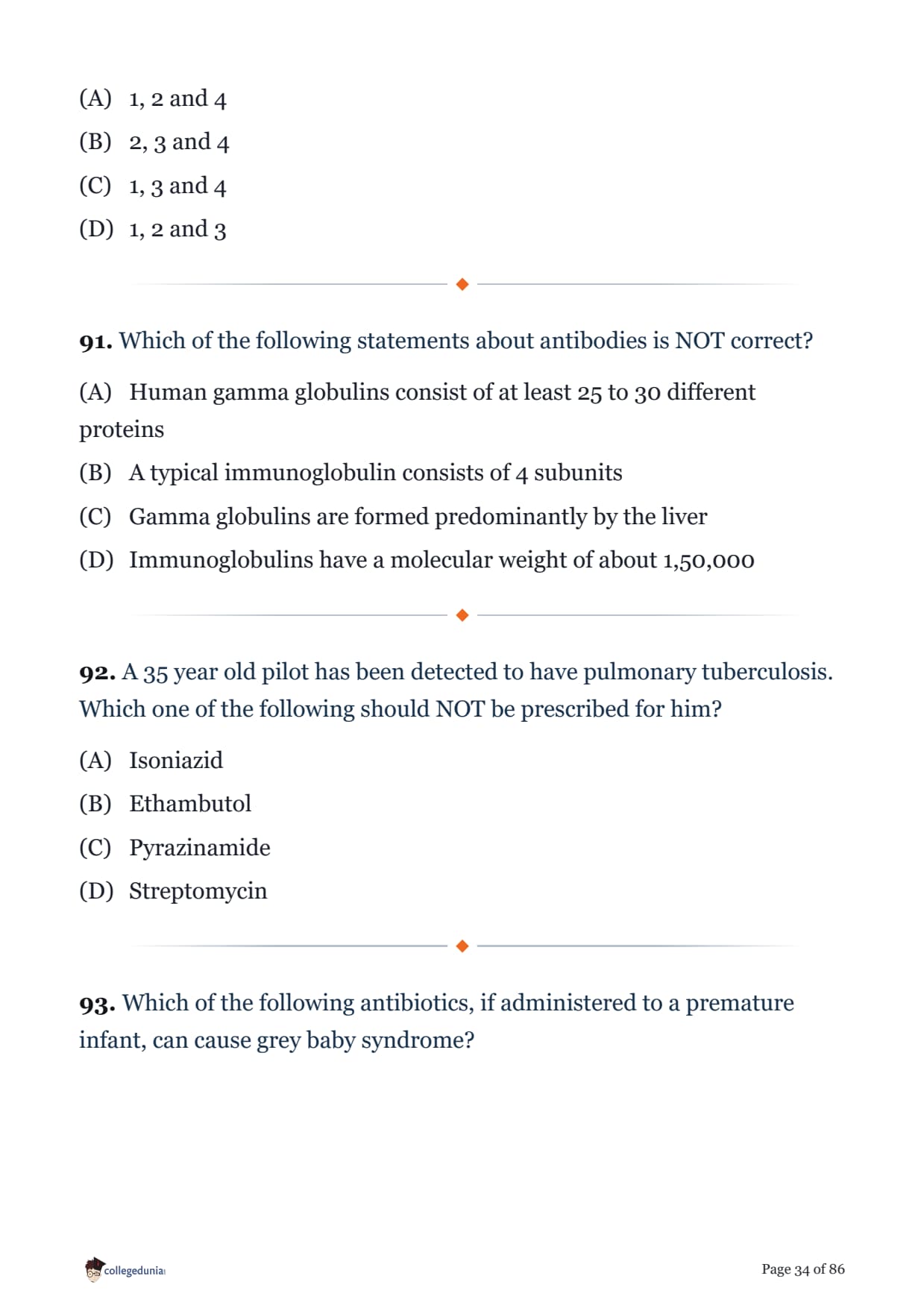
Which of the following statements about antibodies is NOT correct?
A 35 year old pilot has been detected to have pulmonary tuberculosis. Which one of the following should NOT be prescribed for him?
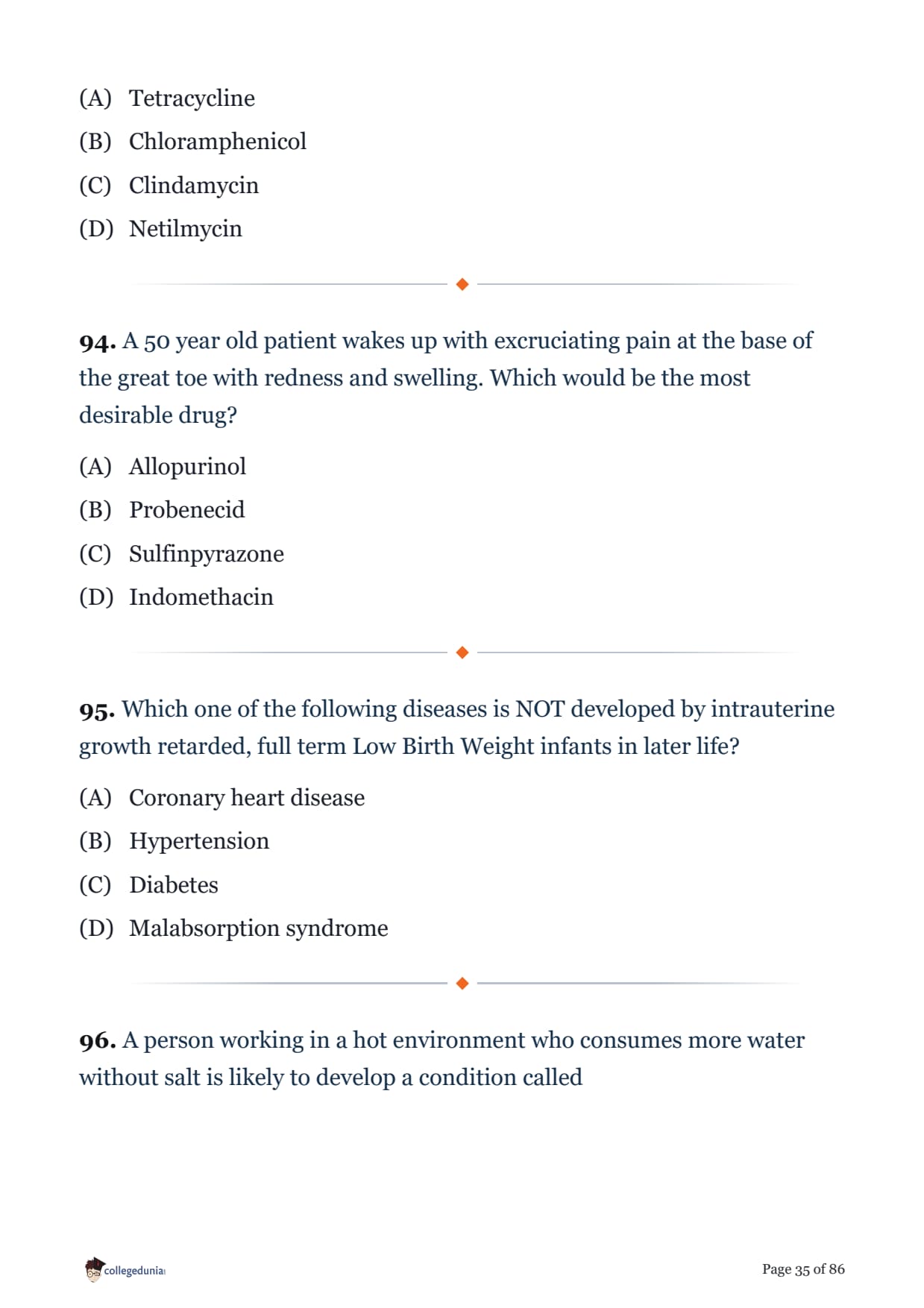
Which of the following antibiotics, if administered to a premature infant, can cause grey baby syndrome?
A 50 year old patient wakes up with excruciating pain at the base of the great toe with redness and swelling. Which would be the most desirable drug?
Which one of the following diseases is NOT developed by intrauterine growth retarded, full term Low Birth Weight infants in later life?
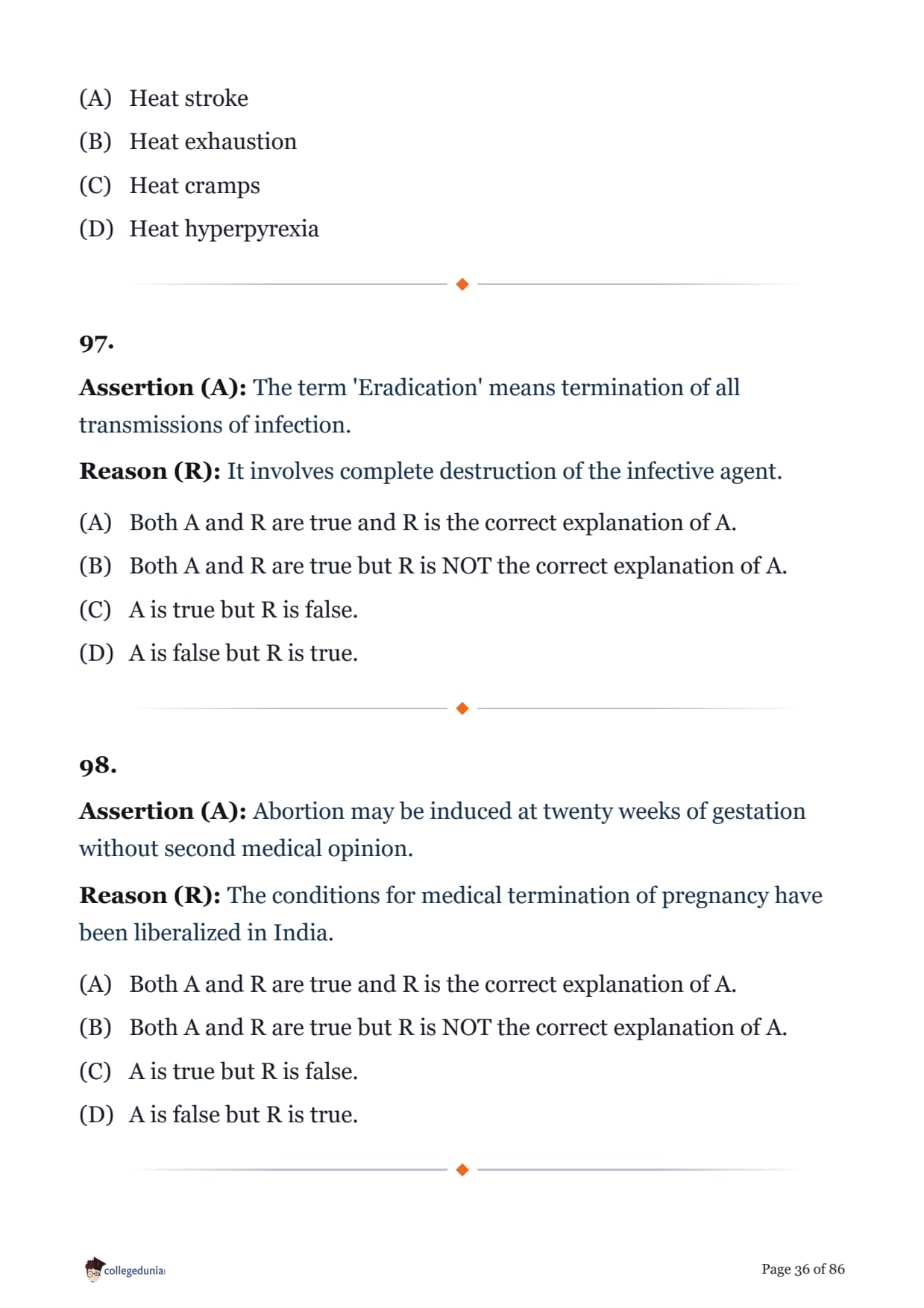
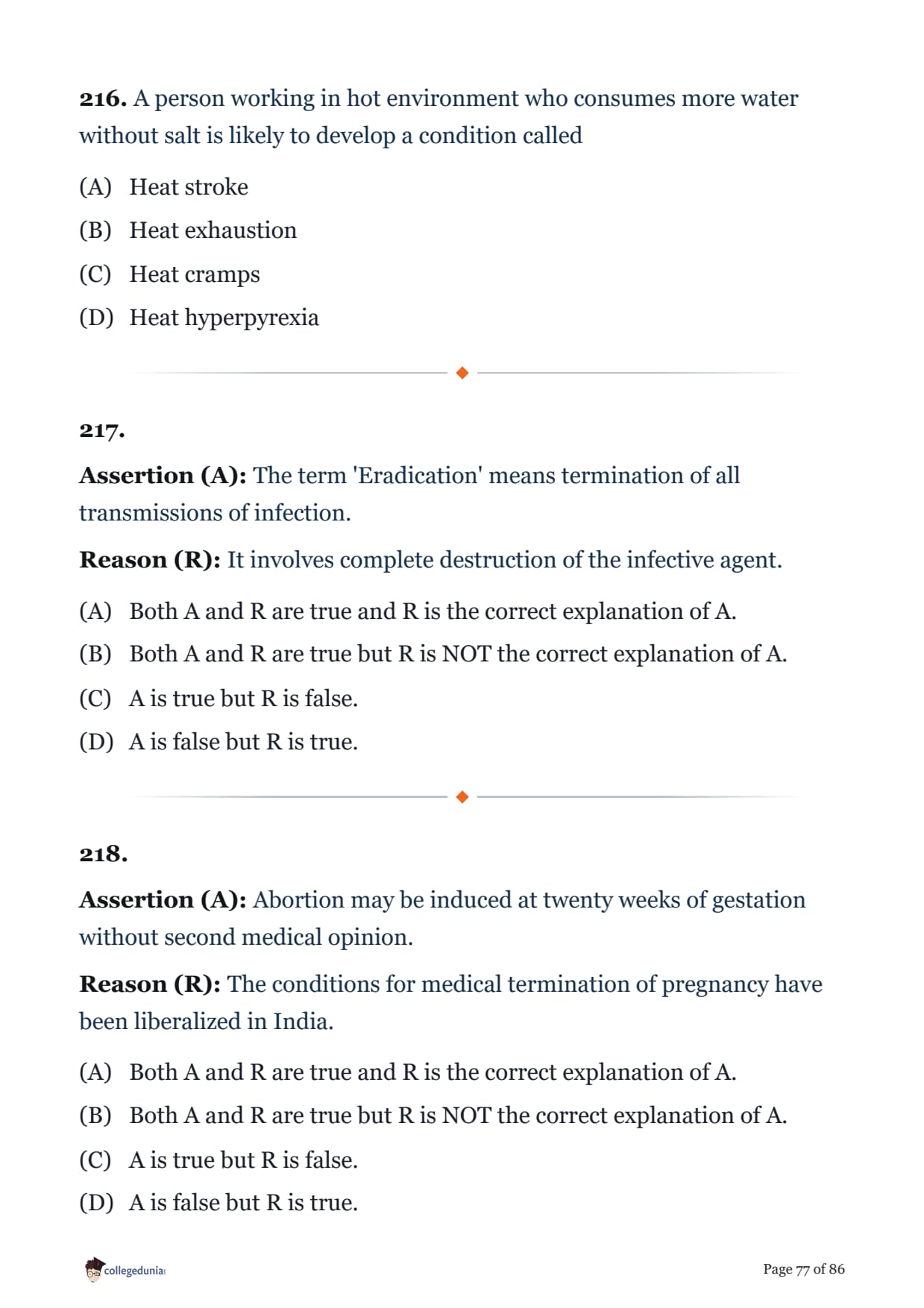
A person working in a hot environment who consumes more water without salt is likely to develop a condition called
Assertion (A): The term 'Eradication' means termination of all transmissions of infection.
Reason (R): It involves complete destruction of the infective agent.
Assertion (A): Abortion may be induced at twenty weeks of gestation without second medical opinion.
Reason (R): The conditions for medical termination of pregnancy have been liberalized in India.
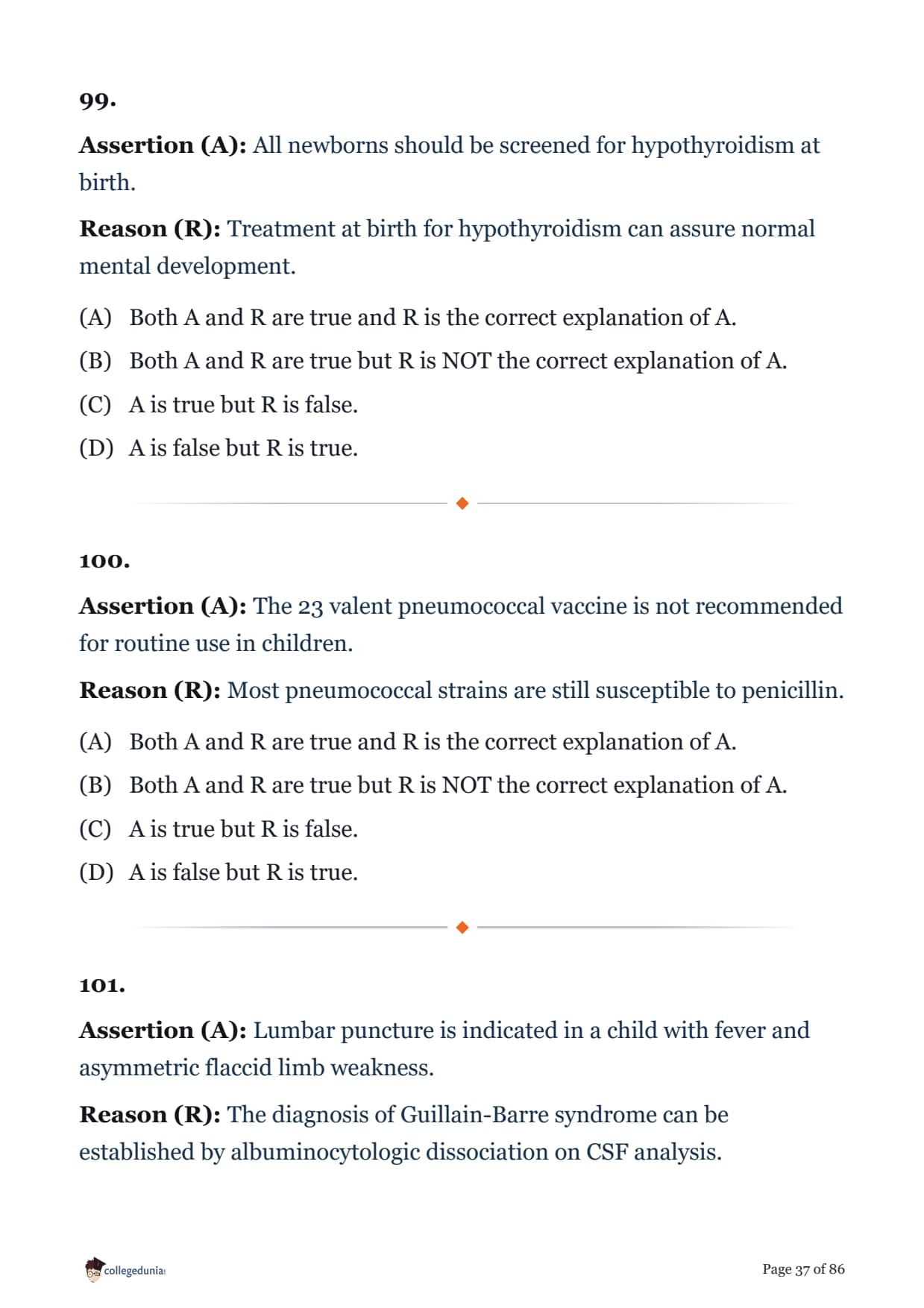
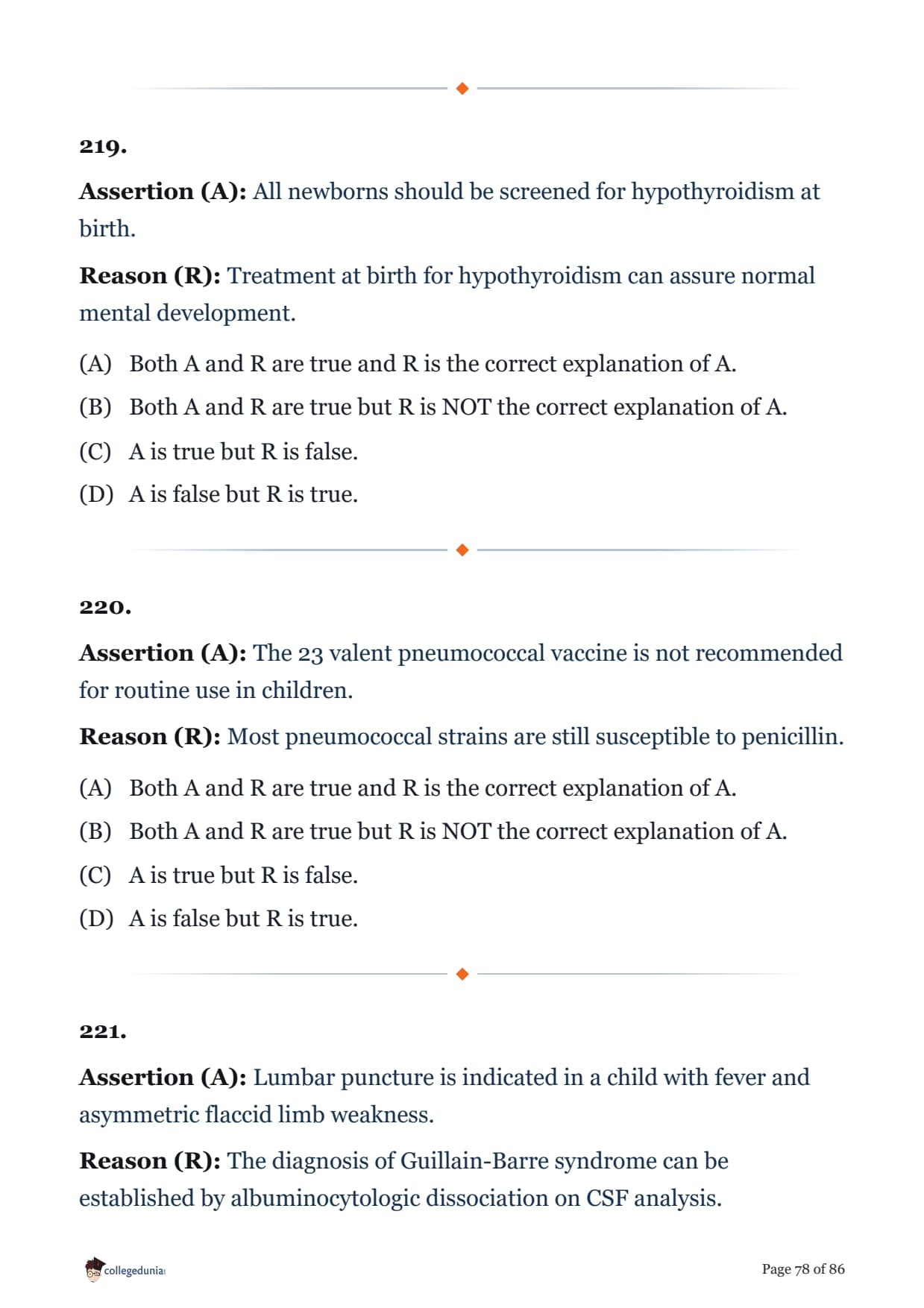
Assertion (A): All newborns should be screened for hypothyroidism at birth.
Reason (R): Treatment at birth for hypothyroidism can assure normal mental development.
Assertion (A): The 23 valent pneumococcal vaccine is not recommended for routine use in children.
Reason (R): Most pneumococcal strains are still susceptible to penicillin.
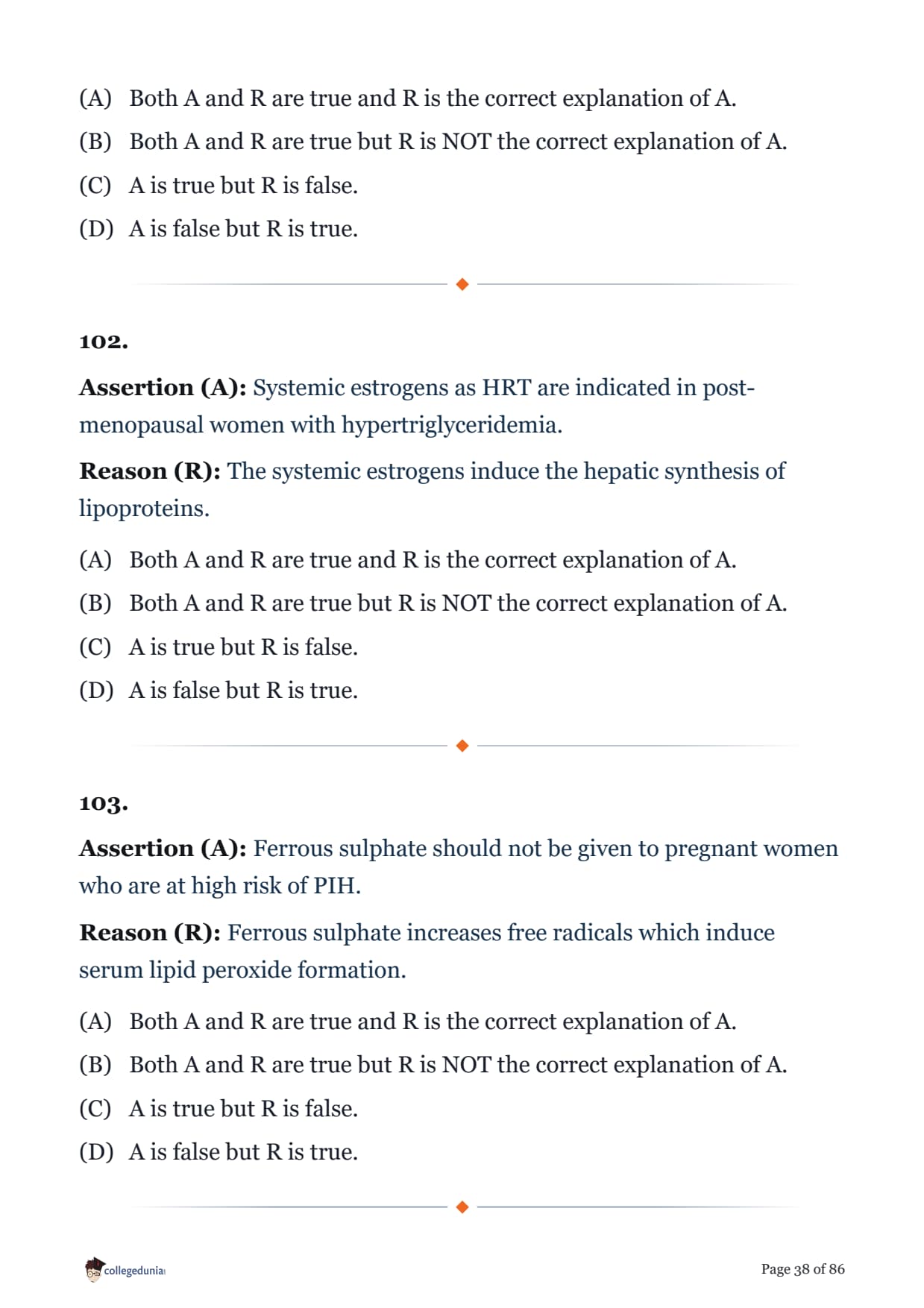
Assertion (A): Lumbar puncture is indicated in a child with fever and asymmetric flaccid limb weakness.
Reason (R): The diagnosis of Guillain-Barre syndrome can be established by albuminocytologic dissociation on CSF analysis.
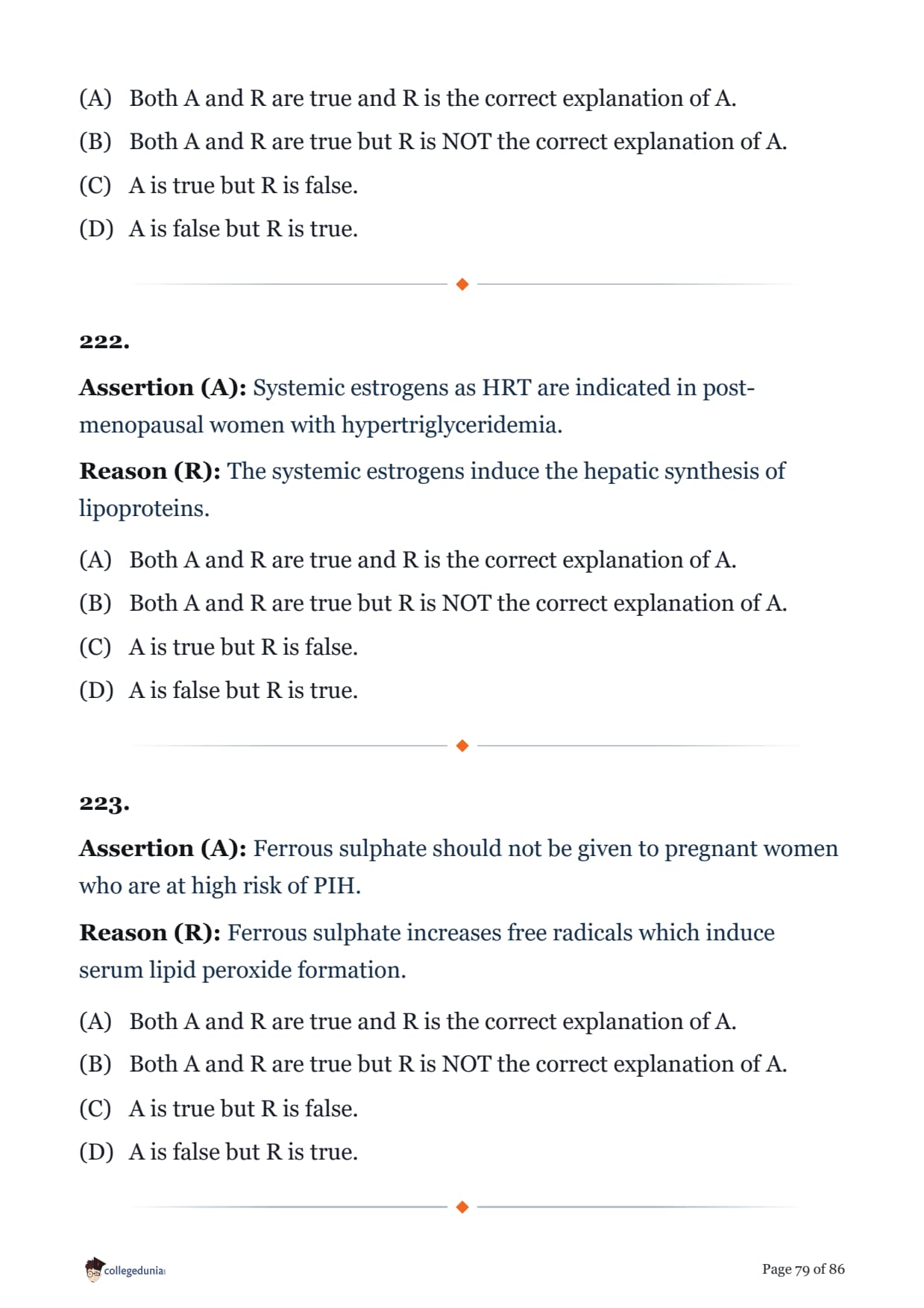
Assertion (A): Systemic estrogens as HRT are indicated in post-menopausal women with hypertriglyceridemia.
Reason (R): The systemic estrogens induce the hepatic synthesis of lipoproteins.
Assertion (A): Ferrous sulphate should not be given to pregnant women who are at high risk of PIH.
Reason (R): Ferrous sulphate increases free radicals which induce serum lipid peroxide formation.
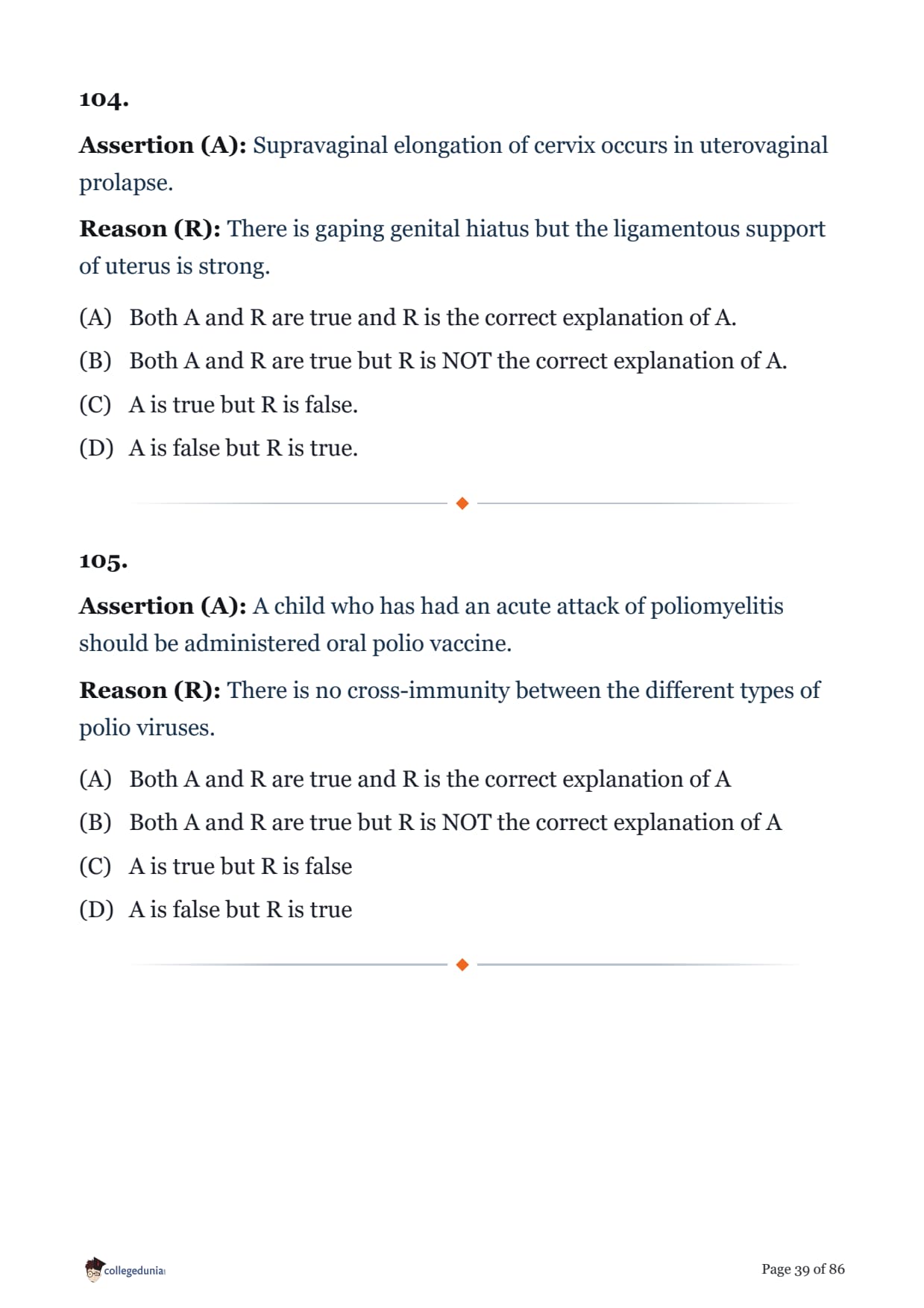
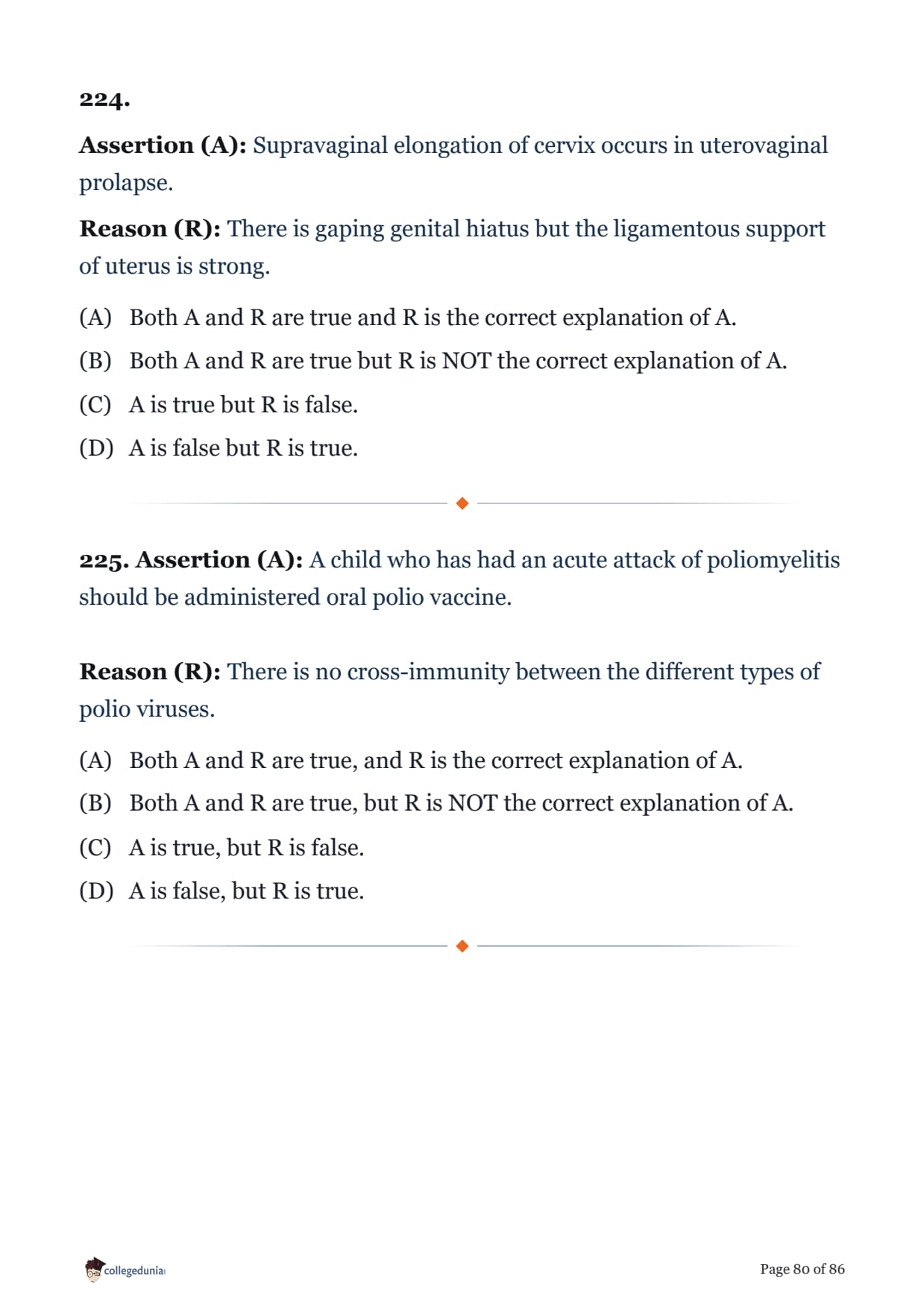
Assertion (A): Supravaginal elongation of cervix occurs in uterovaginal prolapse.
Reason (R): There is gaping genital hiatus but the ligamentous support of uterus is strong.
Assertion (A): A child who has had an acute attack of poliomyelitis should be administered oral polio vaccine.
Reason (R): There is no cross-immunity between the different types of polio viruses.
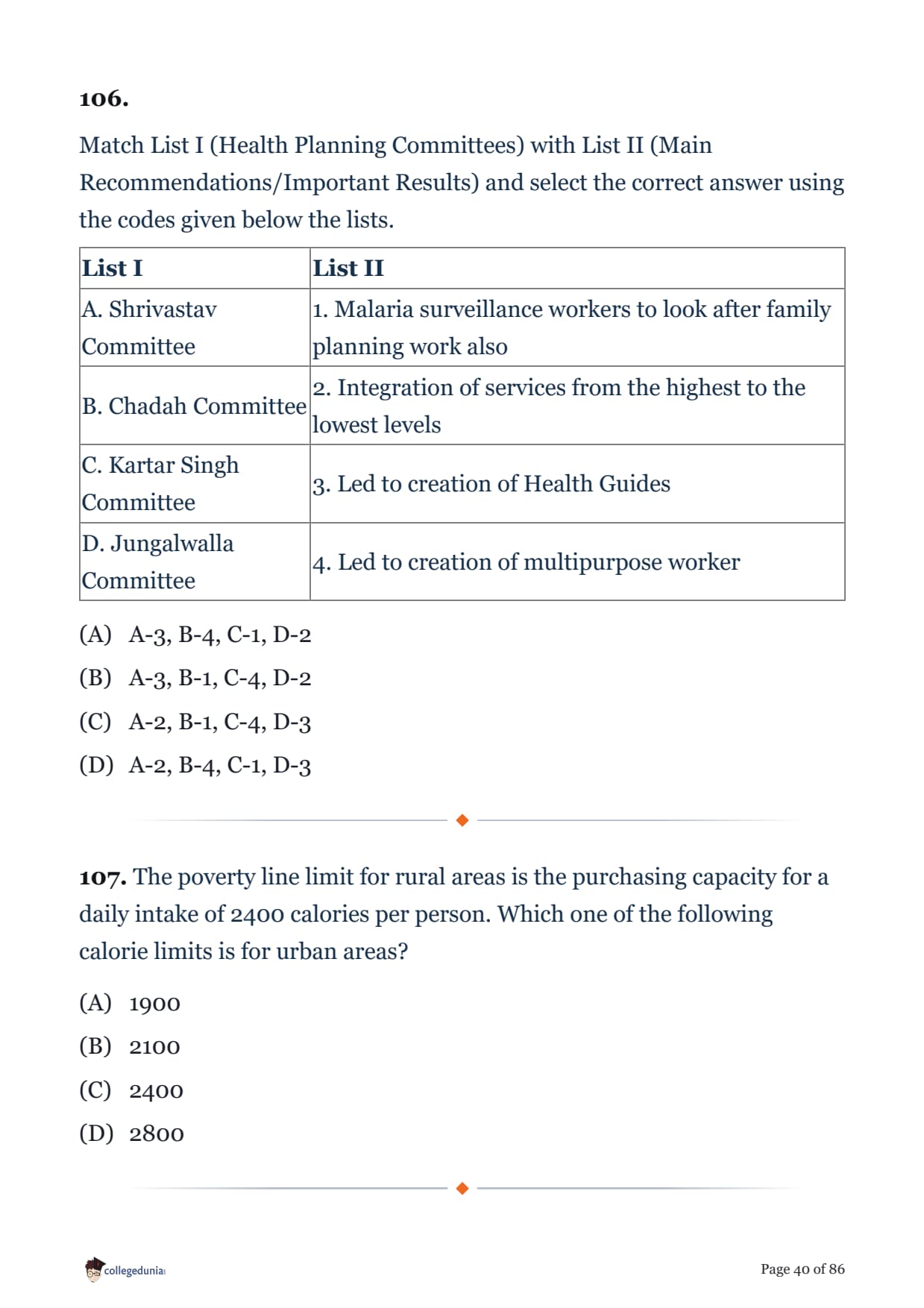
Match List I (Health Planning Committees) with List II (Main Recommendations/Important Results) and select the correct answer using the codes given below the lists.
| List I | List II |
|---|---|
| A. Shrivastav Committee | 1. Malaria surveillance workers to look after family planning work also |
| B. Chadah Committee | 2. Integration of services from the highest to the lowest levels |
| C. Kartar Singh Committee | 3. Led to creation of Health Guides |
| D. Jungalwalla Committee | 4. Led to creation of multipurpose worker |
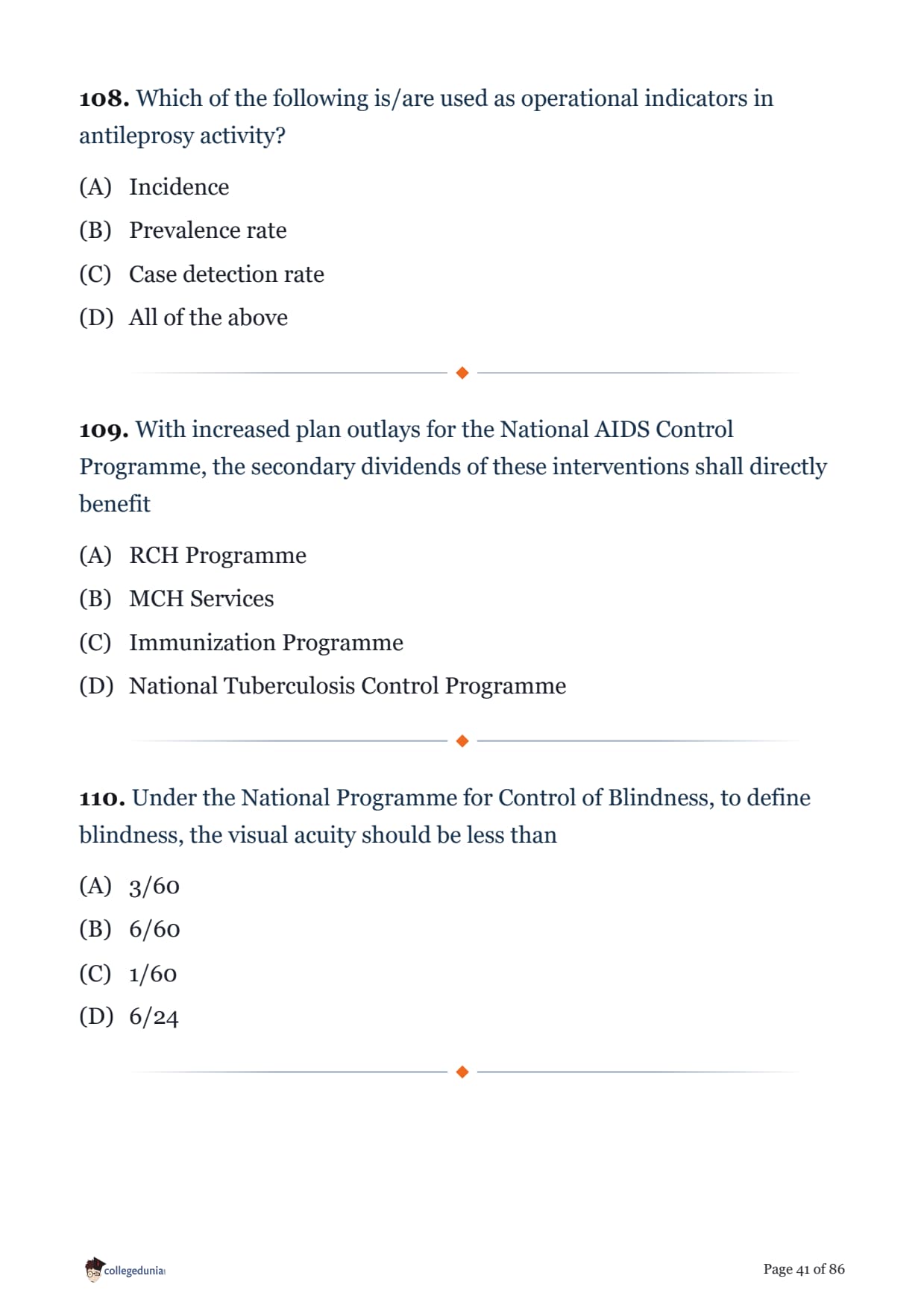
The poverty line limit for rural areas is the purchasing capacity for a daily intake of 2400 calories per person. Which one of the following calorie limits is for urban areas?
Which of the following is/are used as operational indicators in antileprosy activity?
With increased plan outlays for the National AIDS Control Programme, the secondary dividends of these interventions shall directly benefit
Under the National Programme for Control of Blindness, to define blindness, the visual acuity should be less than
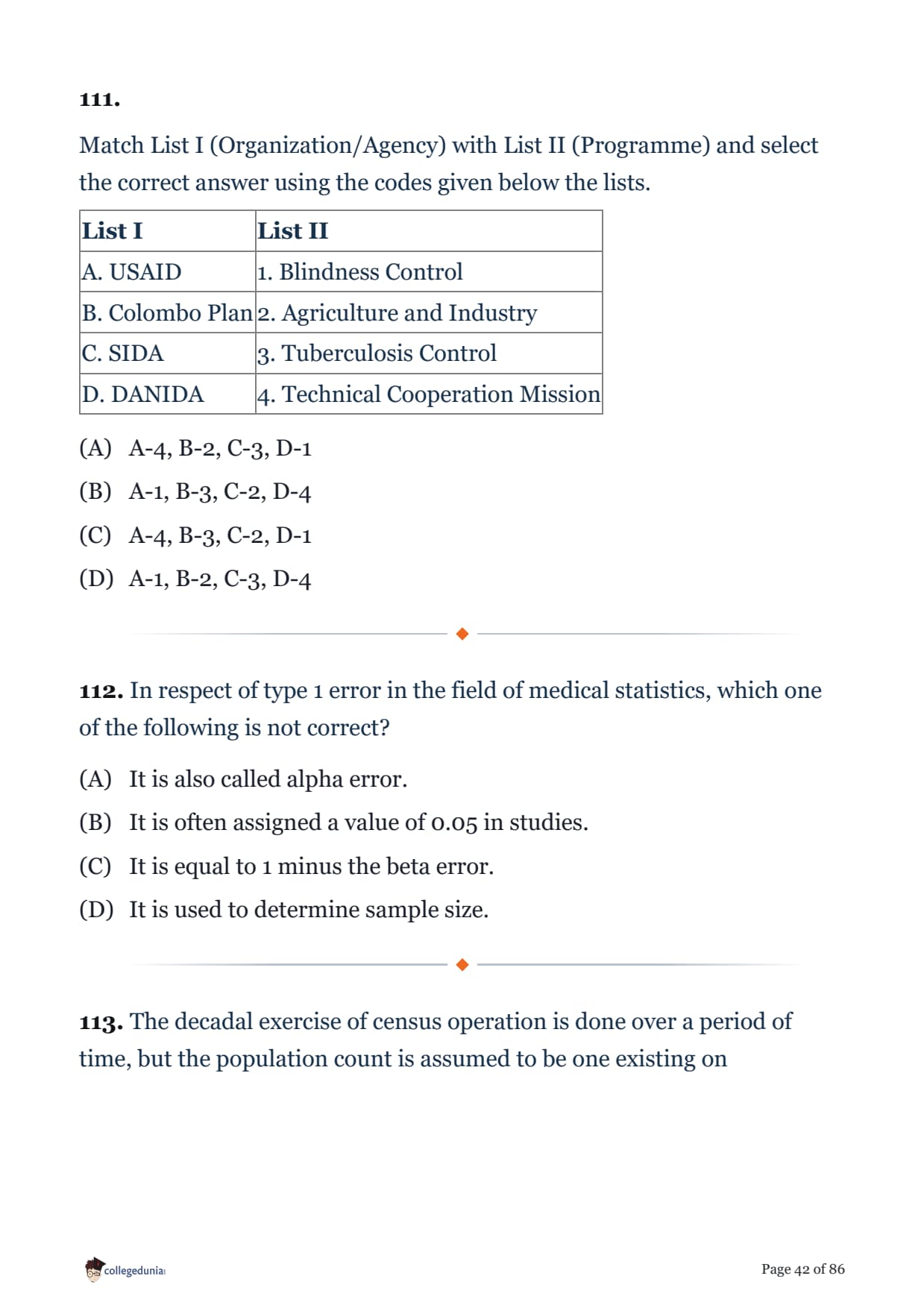
Match List I (Organization/Agency) with List II (Programme) and select the correct answer using the codes given below the lists.
| List I | List II |
|---|---|
| A. USAID | 1. Blindness Control |
| B. Colombo Plan | 2. Agriculture and Industry |
| C. SIDA | 3. Tuberculosis Control |
| D. DANIDA | 4. Technical Cooperation Mission |
In respect of type 1 error in the field of medical statistics, which one of the following is not correct?
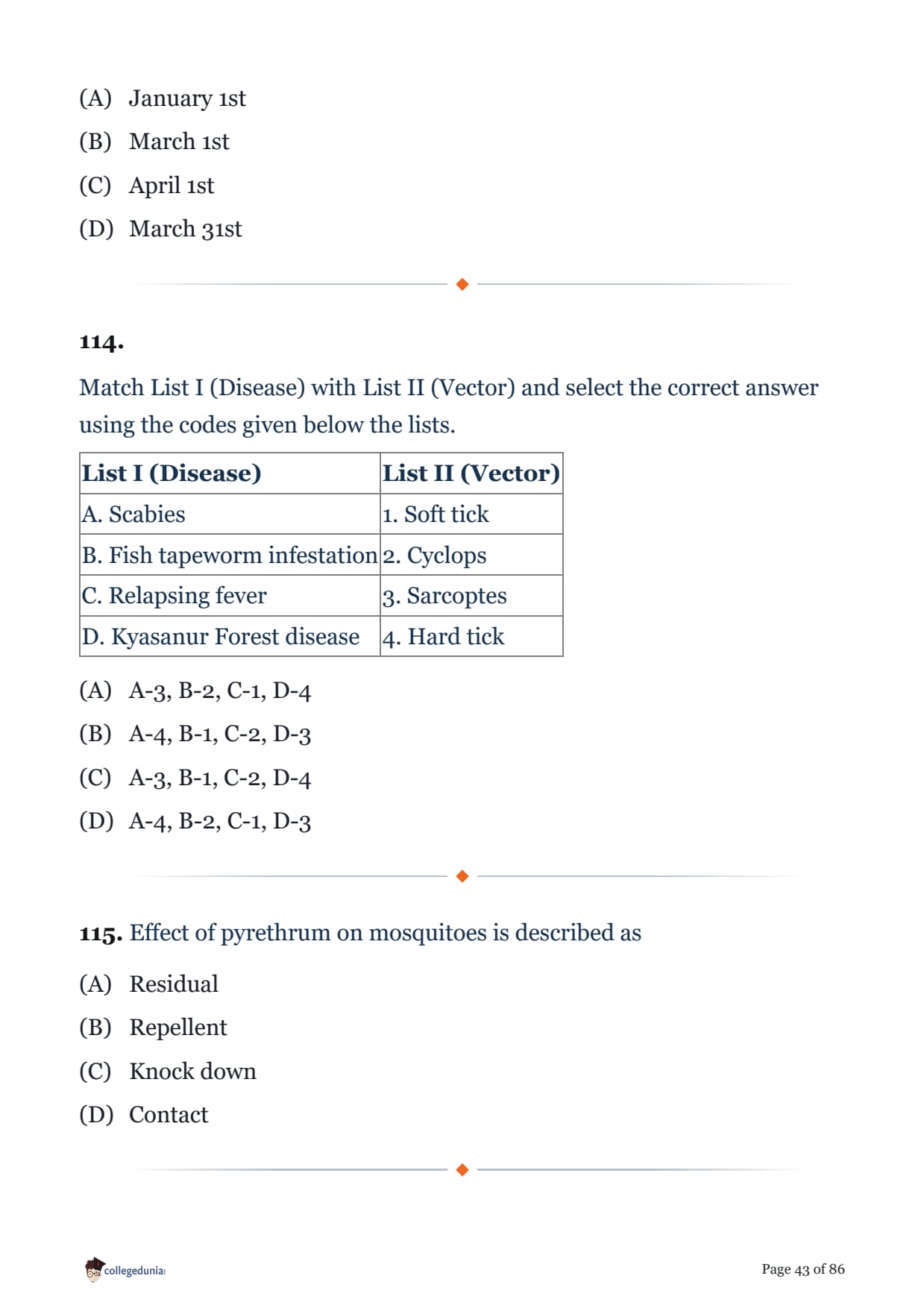
The decadal exercise of census operation is done over a period of time, but the population count is assumed to be one existing on
Match List I (Disease) with List II (Vector) and select the correct answer using the codes given below the lists.
| List I (Disease) | List II (Vector) |
|---|---|
| A. Scabies | 1. Soft tick |
| B. Fish tapeworm infestation | 2. Cyclops |
| C. Relapsing fever | 3. Sarcoptes |
| D. Kyasanur Forest disease | 4. Hard tick |
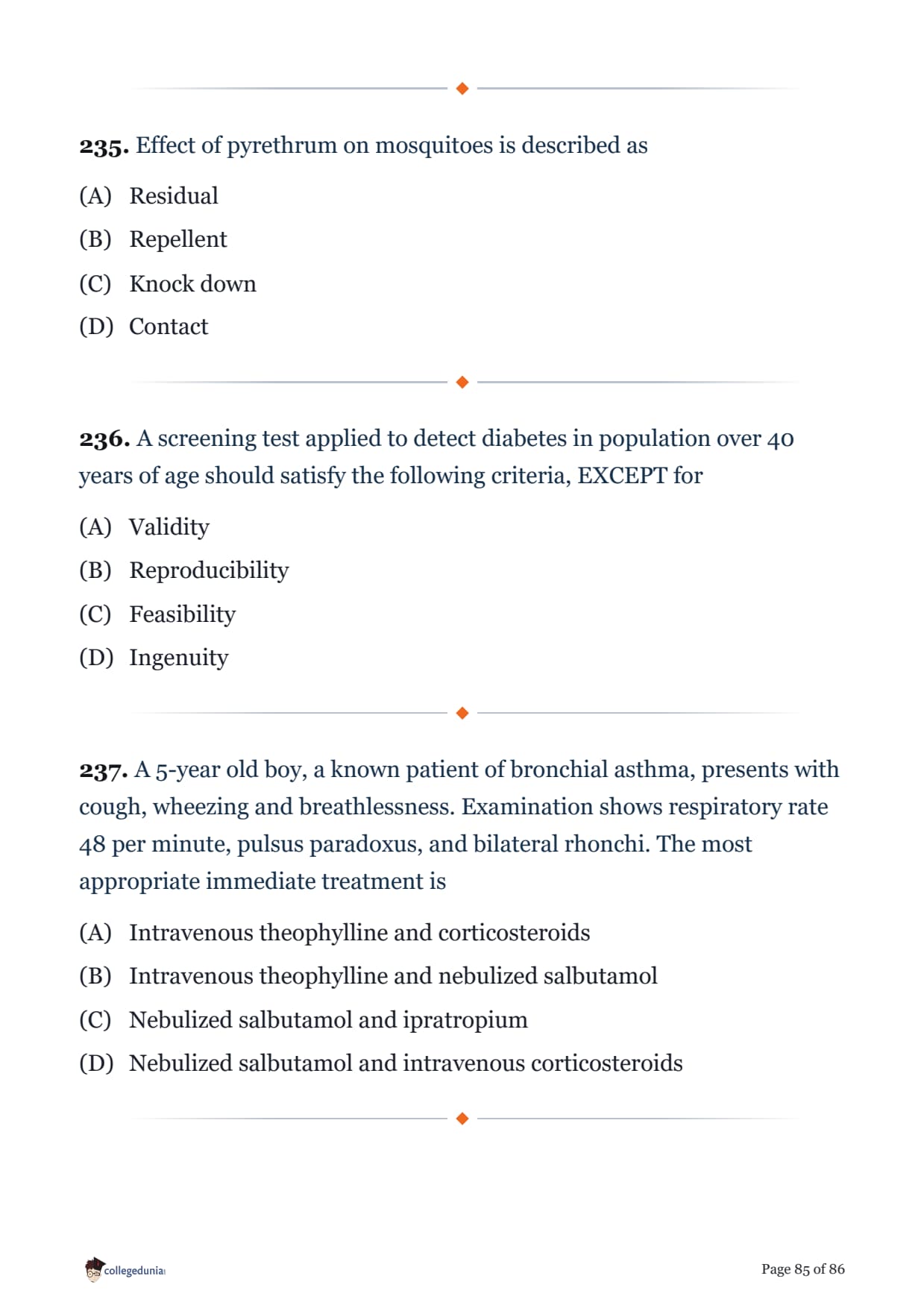
Effect of pyrethrum on mosquitoes is described as
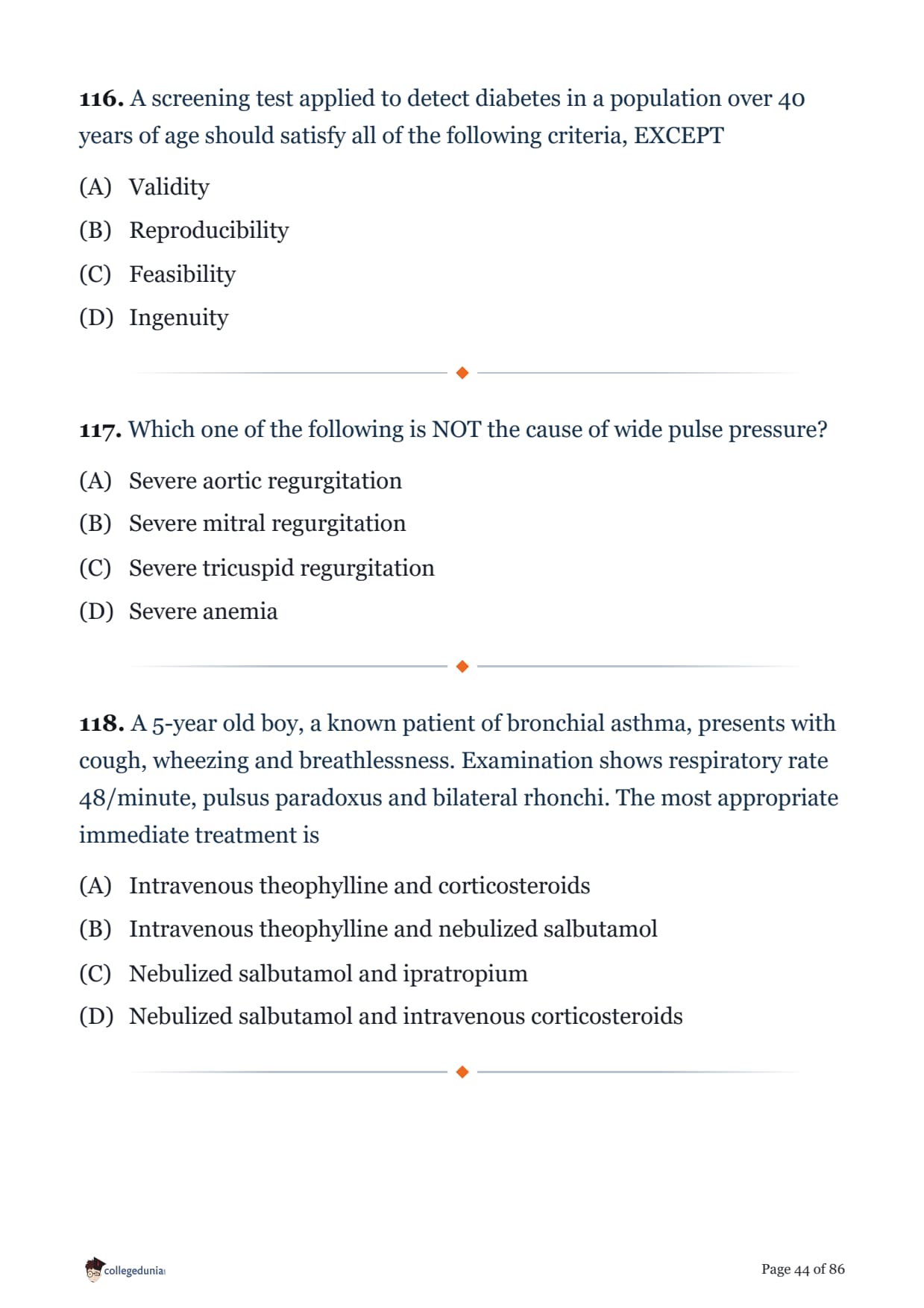
A screening test applied to detect diabetes in a population over 40 years of age should satisfy all of the following criteria, EXCEPT
Which one of the following is NOT the cause of wide pulse pressure?
A 5-year old boy, a known patient of bronchial asthma, presents with cough, wheezing and breathlessness. Examination shows respiratory rate 48/minute, pulsus paradoxus and bilateral rhonchi. The most appropriate immediate treatment is
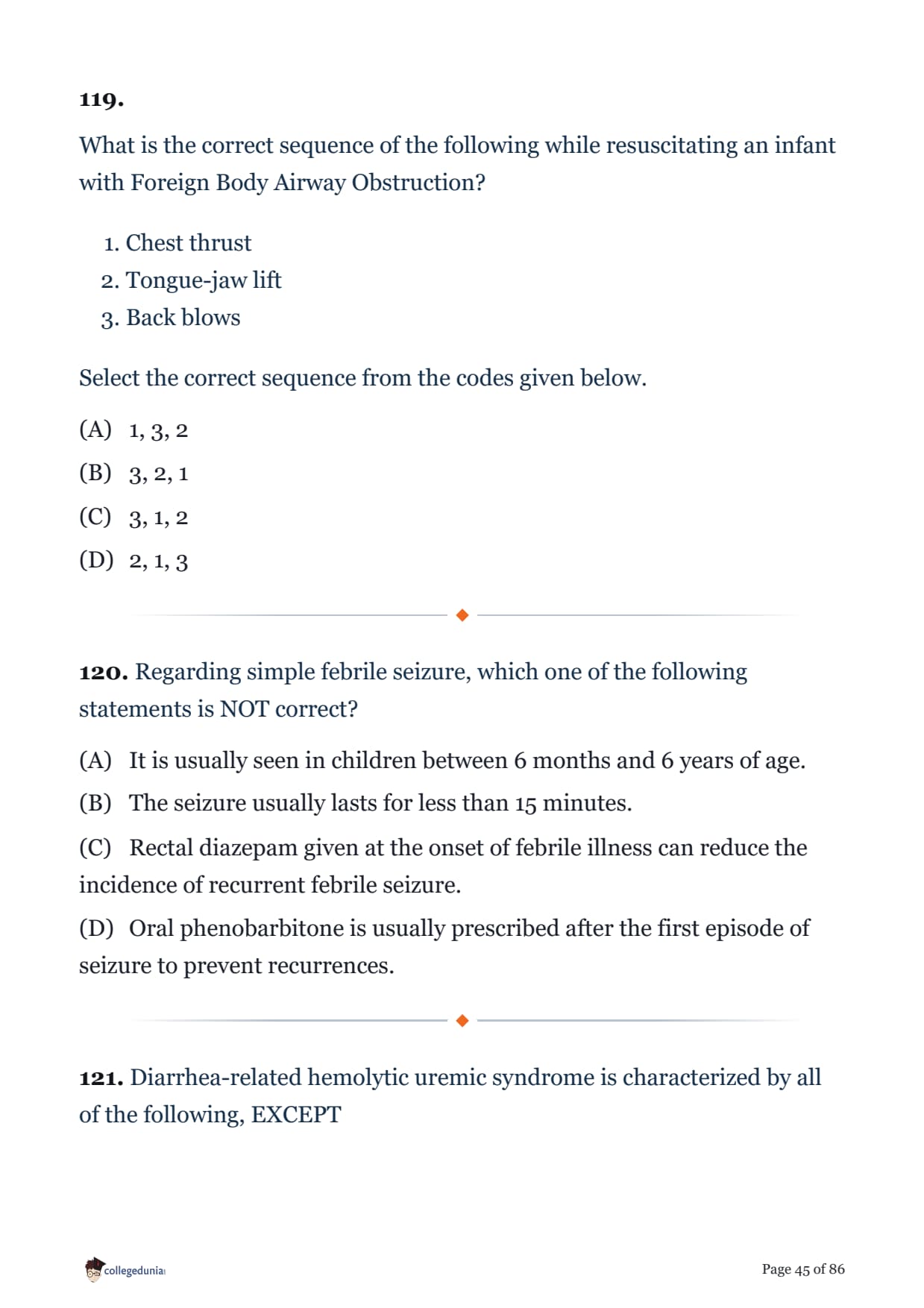
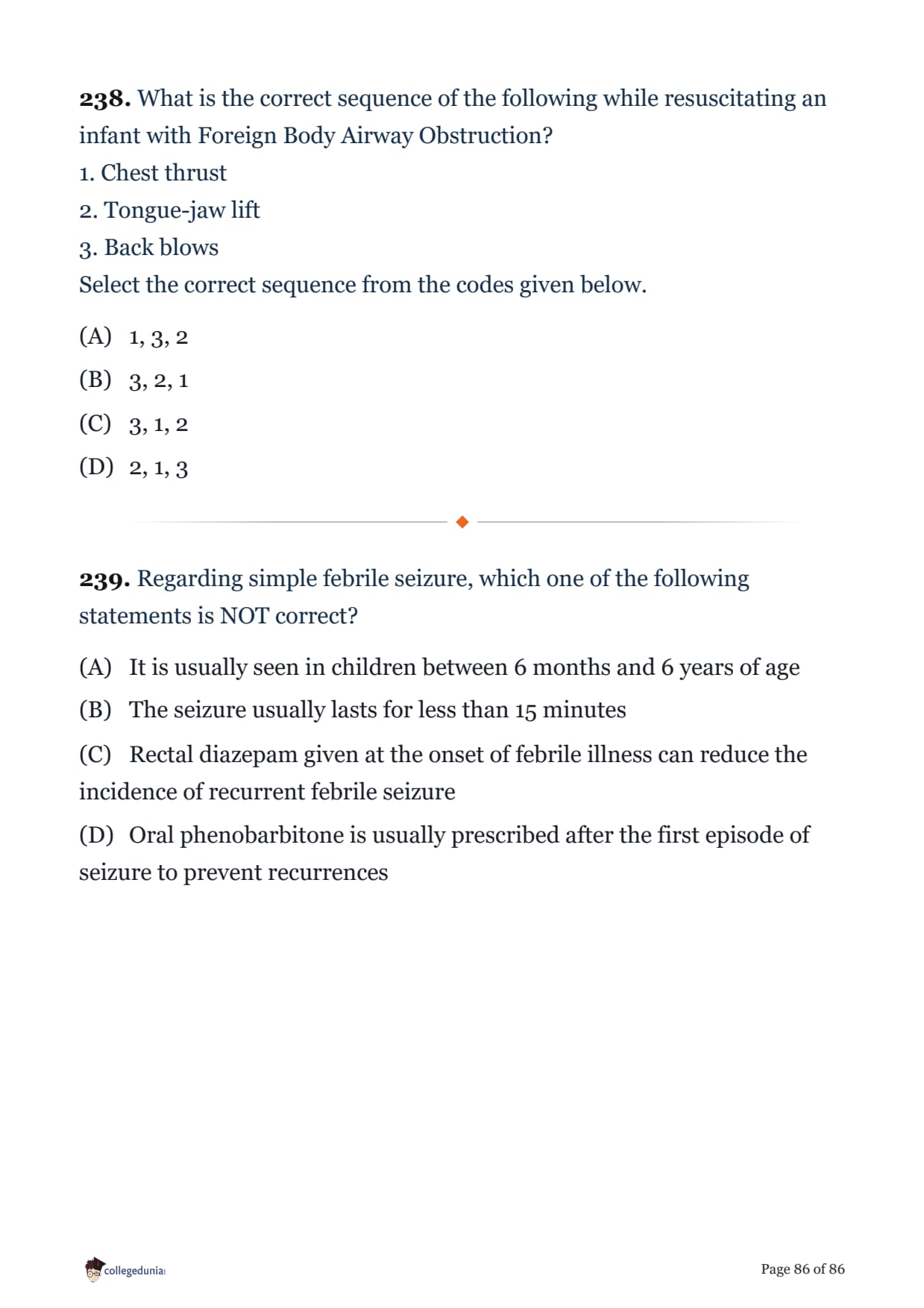
What is the correct sequence of the following while resuscitating an infant with Foreign Body Airway Obstruction?
- Chest thrust
- Tongue-jaw lift
- Back blows
Select the correct sequence from the codes given below.
Regarding simple febrile seizure, which one of the following statements is NOT correct?
Diarrhea-related hemolytic uremic syndrome is characterized by all of the following, EXCEPT
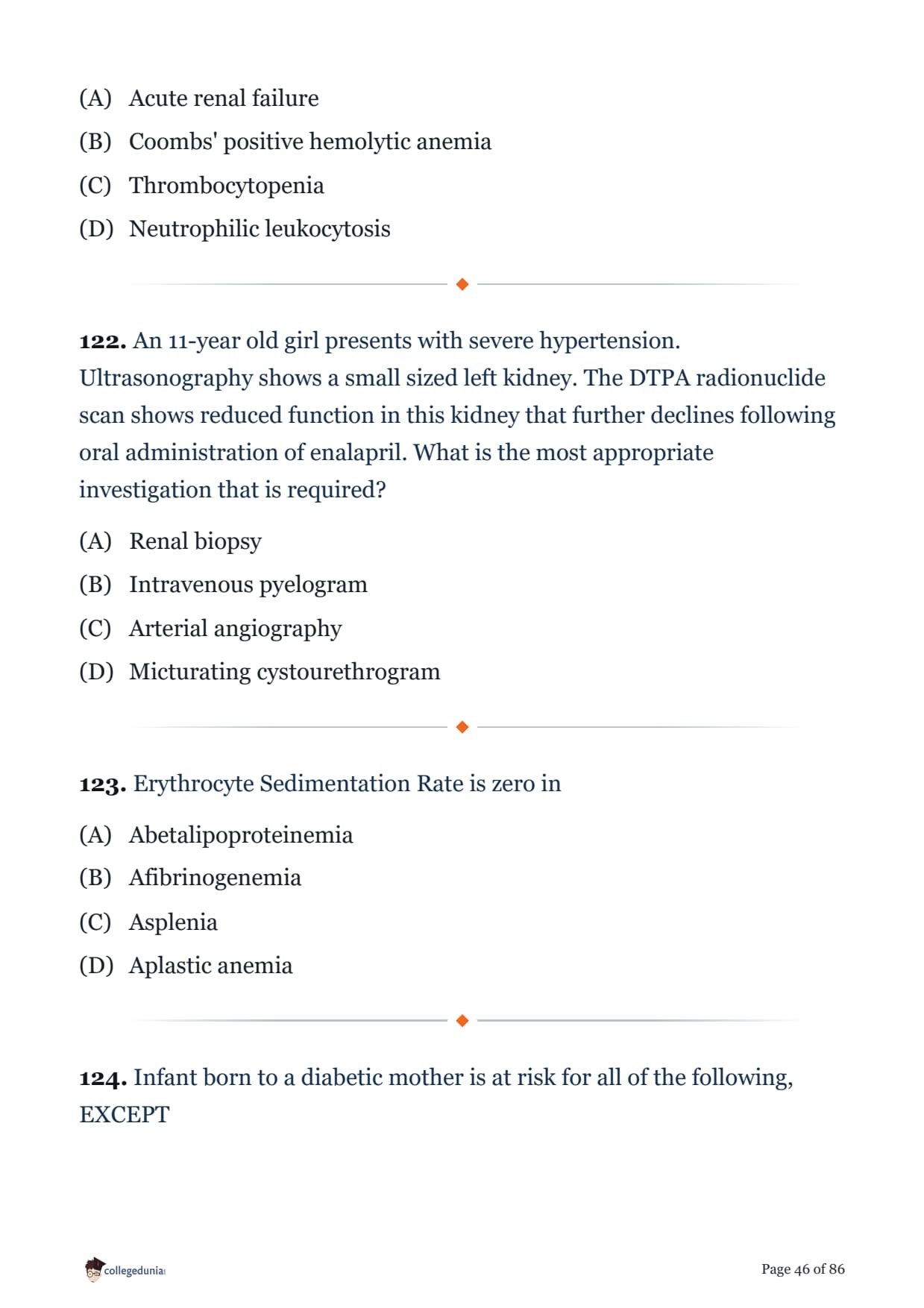
An 11-year old girl presents with severe hypertension. Ultrasonography shows a small sized left kidney. The DTPA radionuclide scan shows reduced function in this kidney that further declines following oral administration of enalapril. What is the most appropriate investigation that is required?
Erythrocyte Sedimentation Rate is zero in
Infant born to a diabetic mother is at risk for all of the following, EXCEPT
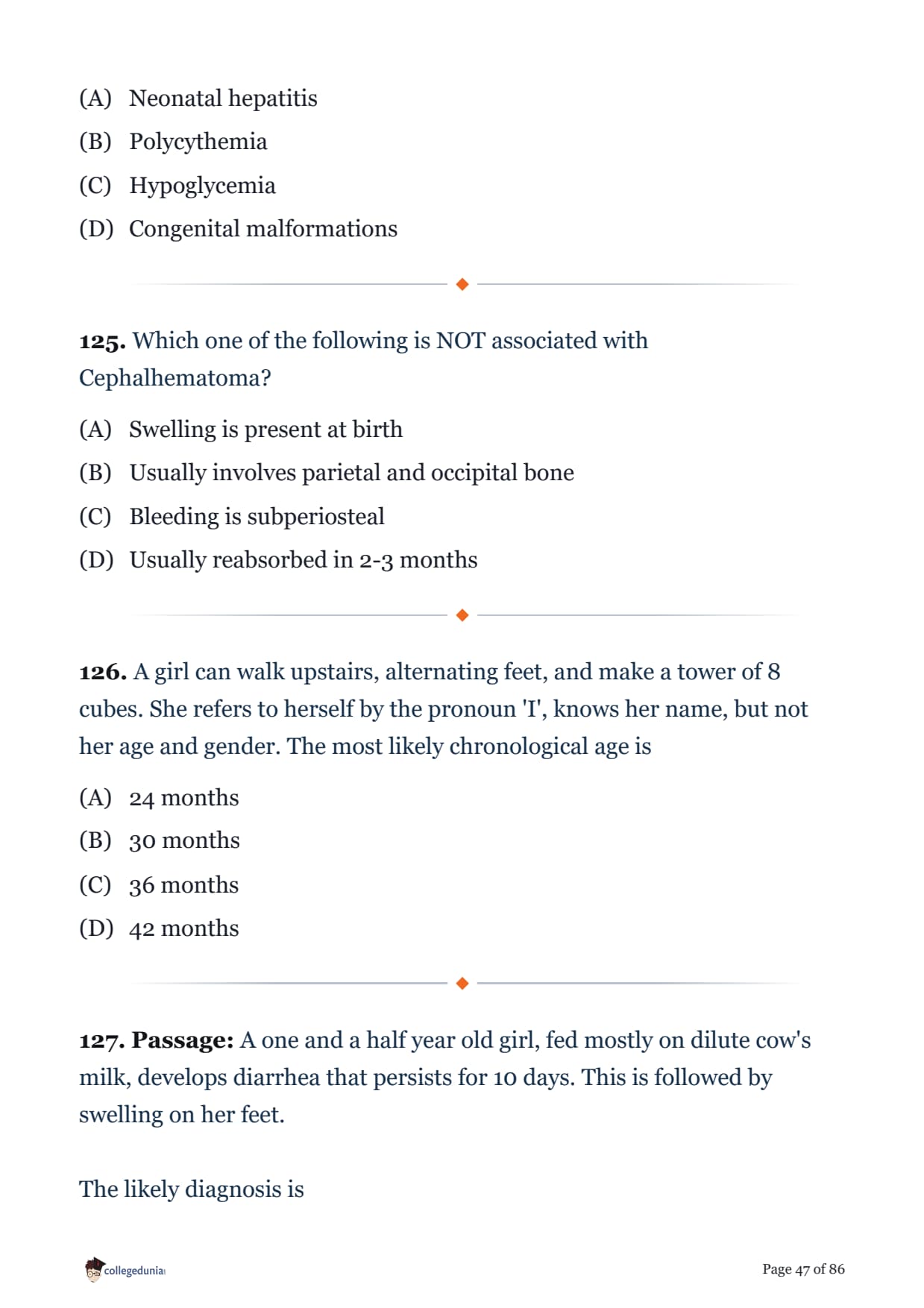
Which one of the following is NOT associated with Cephalhematoma?
A girl can walk upstairs, alternating feet, and make a tower of 8 cubes. She refers to herself by the pronoun 'I', knows her name, but not her age and gender. The most likely chronological age is
Passage: A one and a half year old girl, fed mostly on dilute cow's milk, develops diarrhea that persists for 10 days. This is followed by swelling on her feet.
The likely diagnosis is
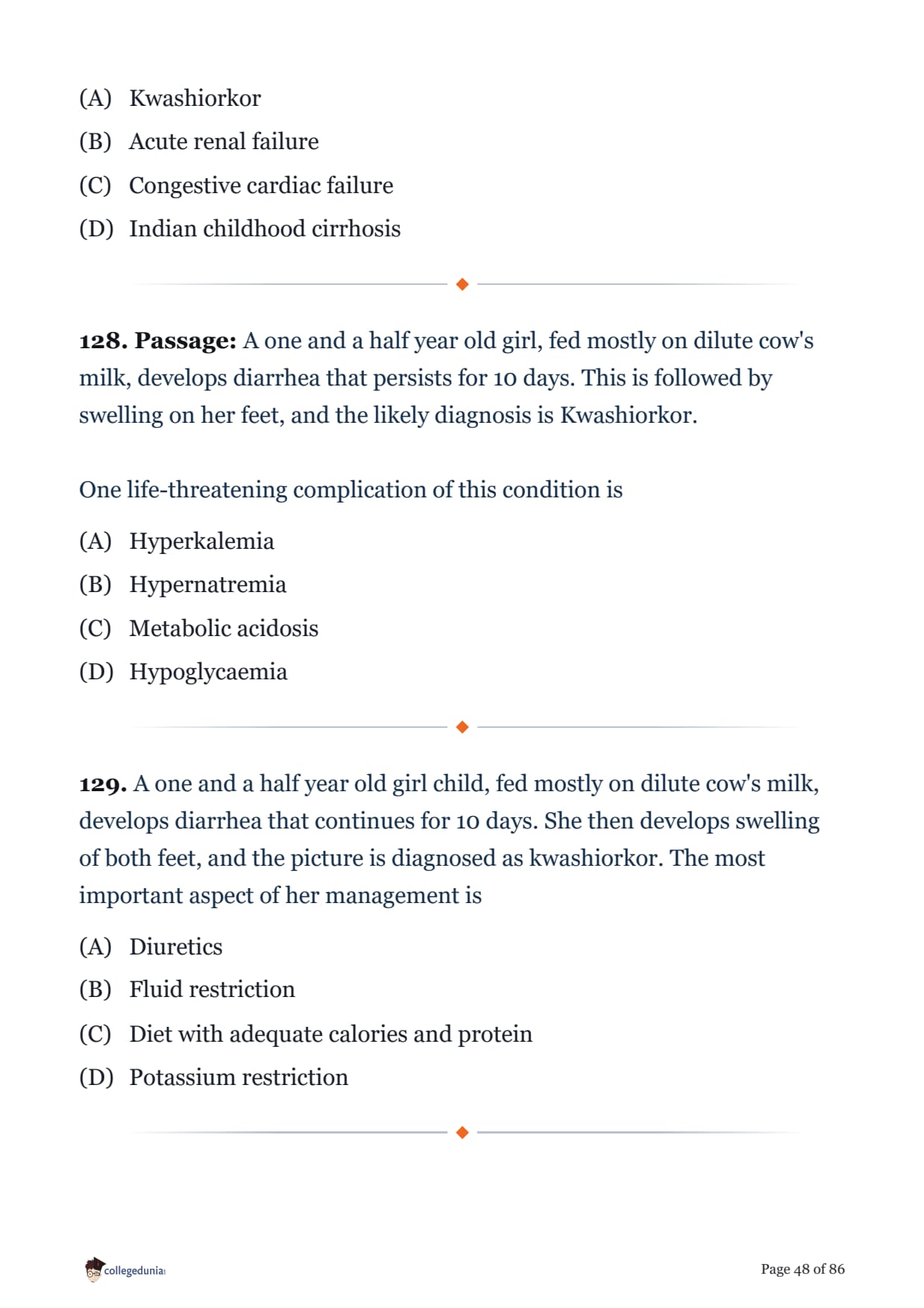
Passage: A one and a half year old girl, fed mostly on dilute cow's milk, develops diarrhea that persists for 10 days. This is followed by swelling on her feet, and the likely diagnosis is Kwashiorkor.
One life-threatening complication of this condition is
A one and a half year old girl child, fed mostly on dilute cow's milk, develops diarrhea that continues for 10 days. She then develops swelling of both feet, and the picture is diagnosed as kwashiorkor. The most important aspect of her management is
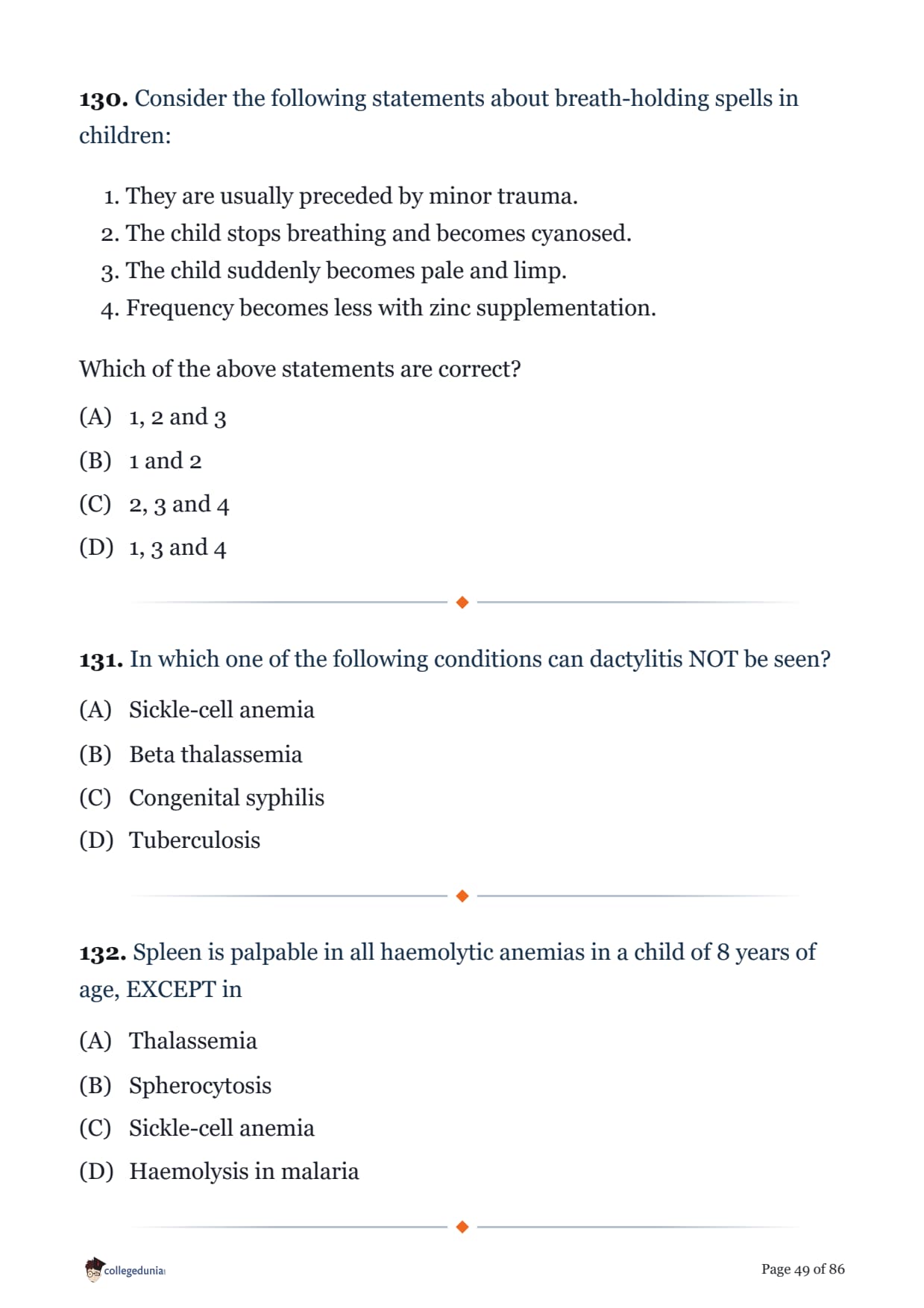
Consider the following statements about breath-holding spells in children:
- They are usually preceded by minor trauma.
- The child stops breathing and becomes cyanosed.
- The child suddenly becomes pale and limp.
- Frequency becomes less with zinc supplementation.
In which one of the following conditions can dactylitis NOT be seen?
Spleen is palpable in all haemolytic anemias in a child of 8 years of age, EXCEPT in
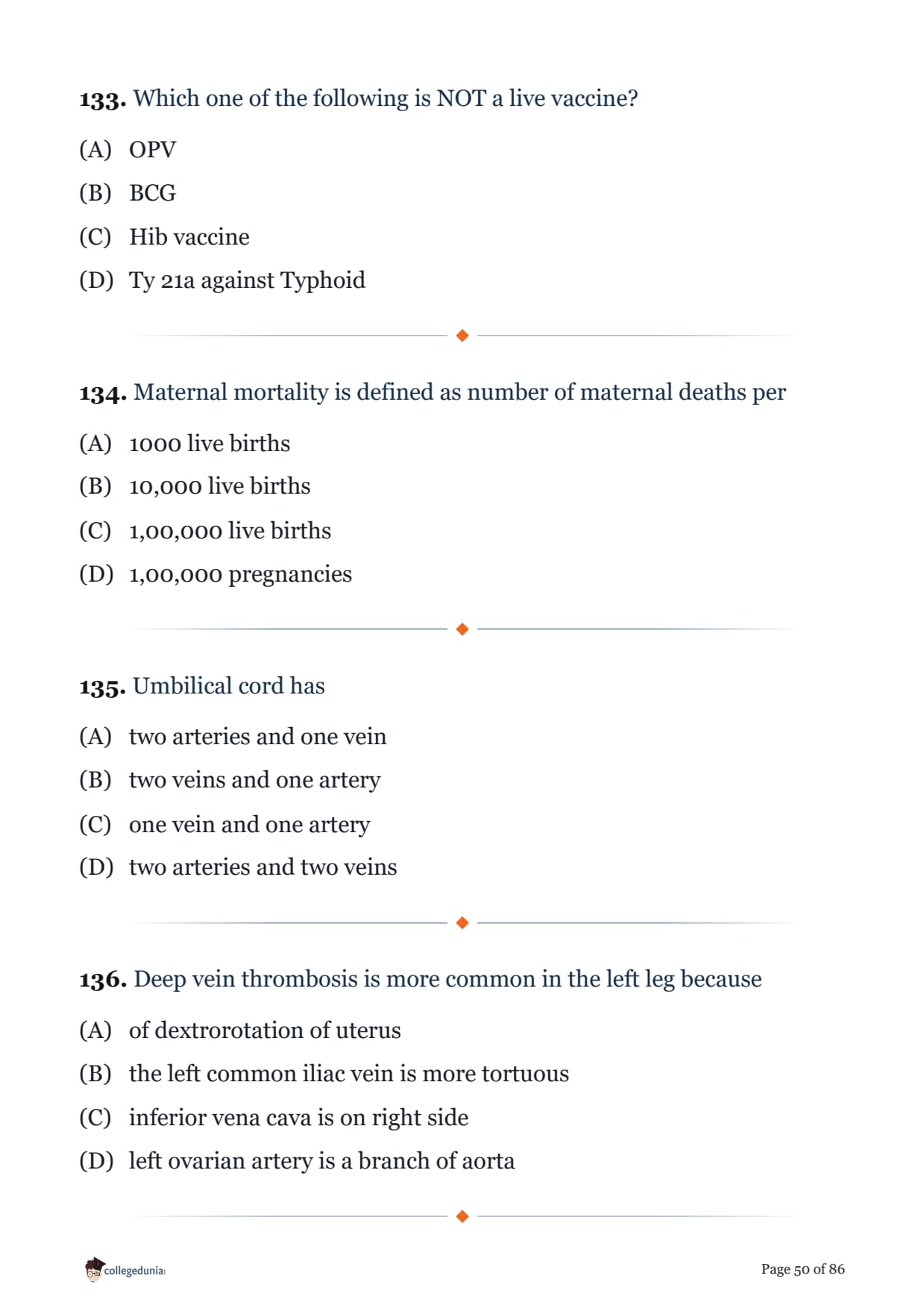
Which one of the following is NOT a live vaccine?
Maternal mortality is defined as number of maternal deaths per
Umbilical cord has
Deep vein thrombosis is more common in the left leg because
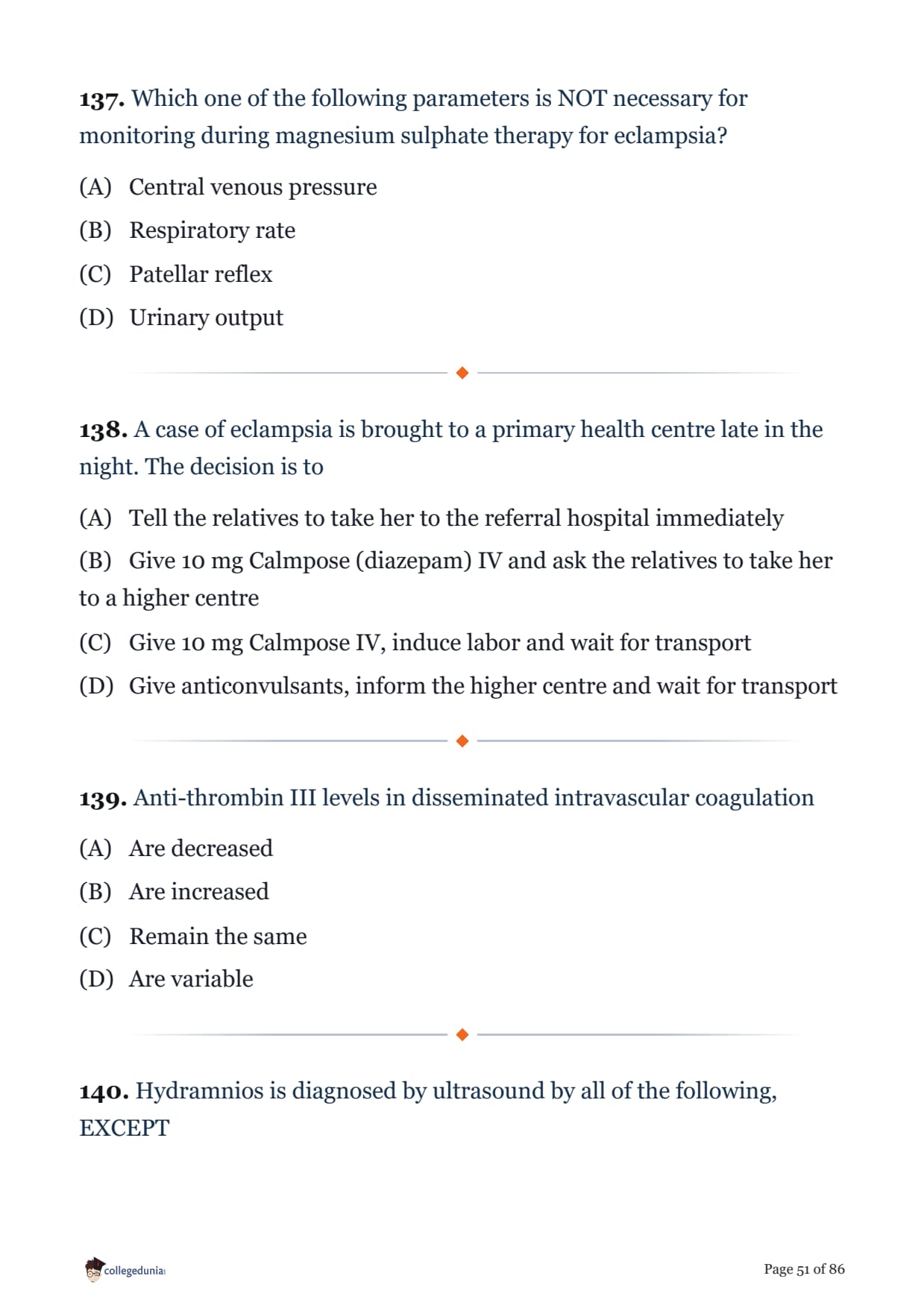
Which one of the following parameters is NOT necessary for monitoring during magnesium sulphate therapy for eclampsia?
A case of eclampsia is brought to a primary health centre late in the night. The decision is to
Anti-thrombin III levels in disseminated intravascular coagulation
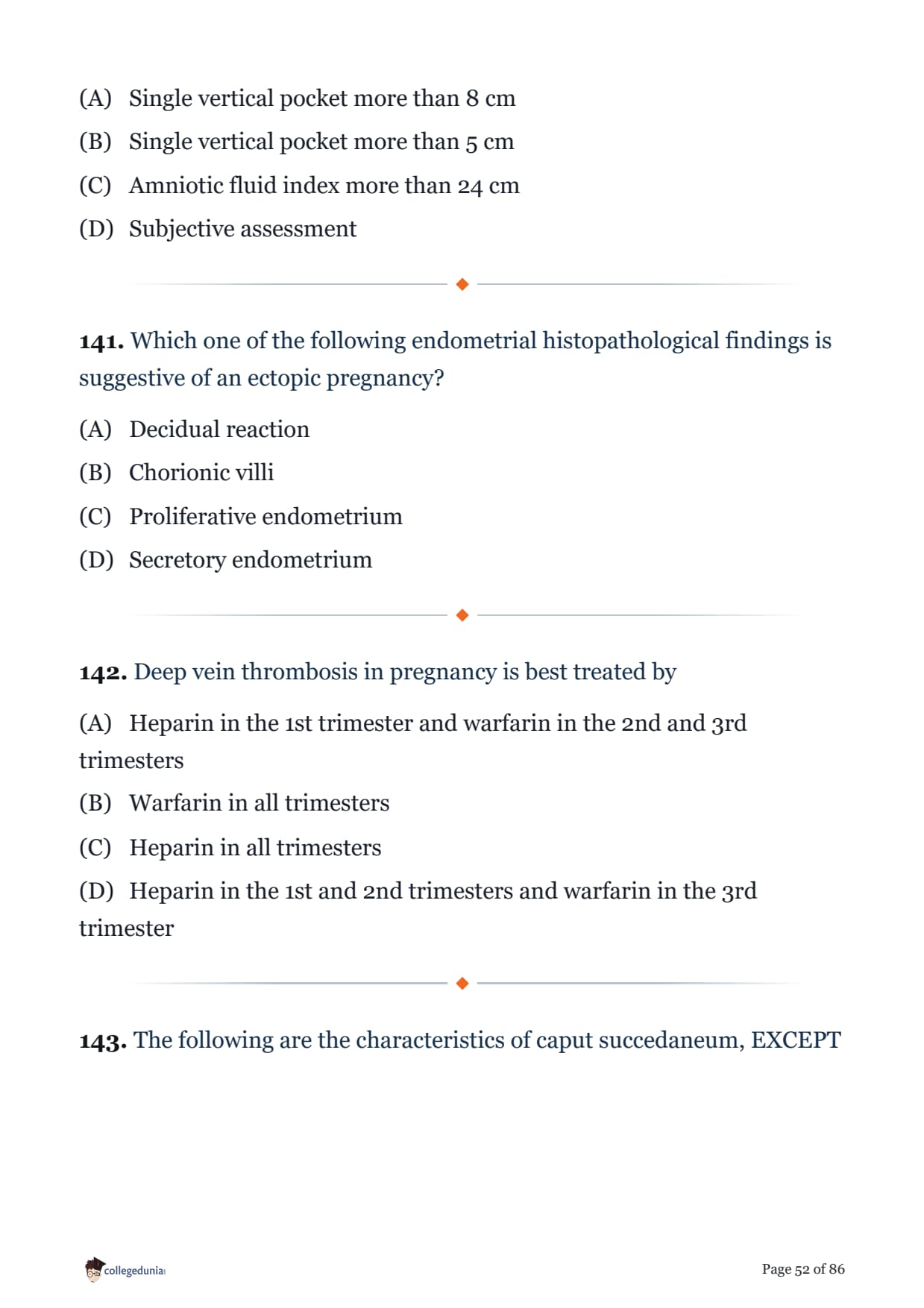
Hydramnios is diagnosed by ultrasound by all of the following, EXCEPT
Which one of the following endometrial histopathological findings is suggestive of an ectopic pregnancy?
Deep vein thrombosis in pregnancy is best treated by
The following are the characteristics of caput succedaneum, EXCEPT
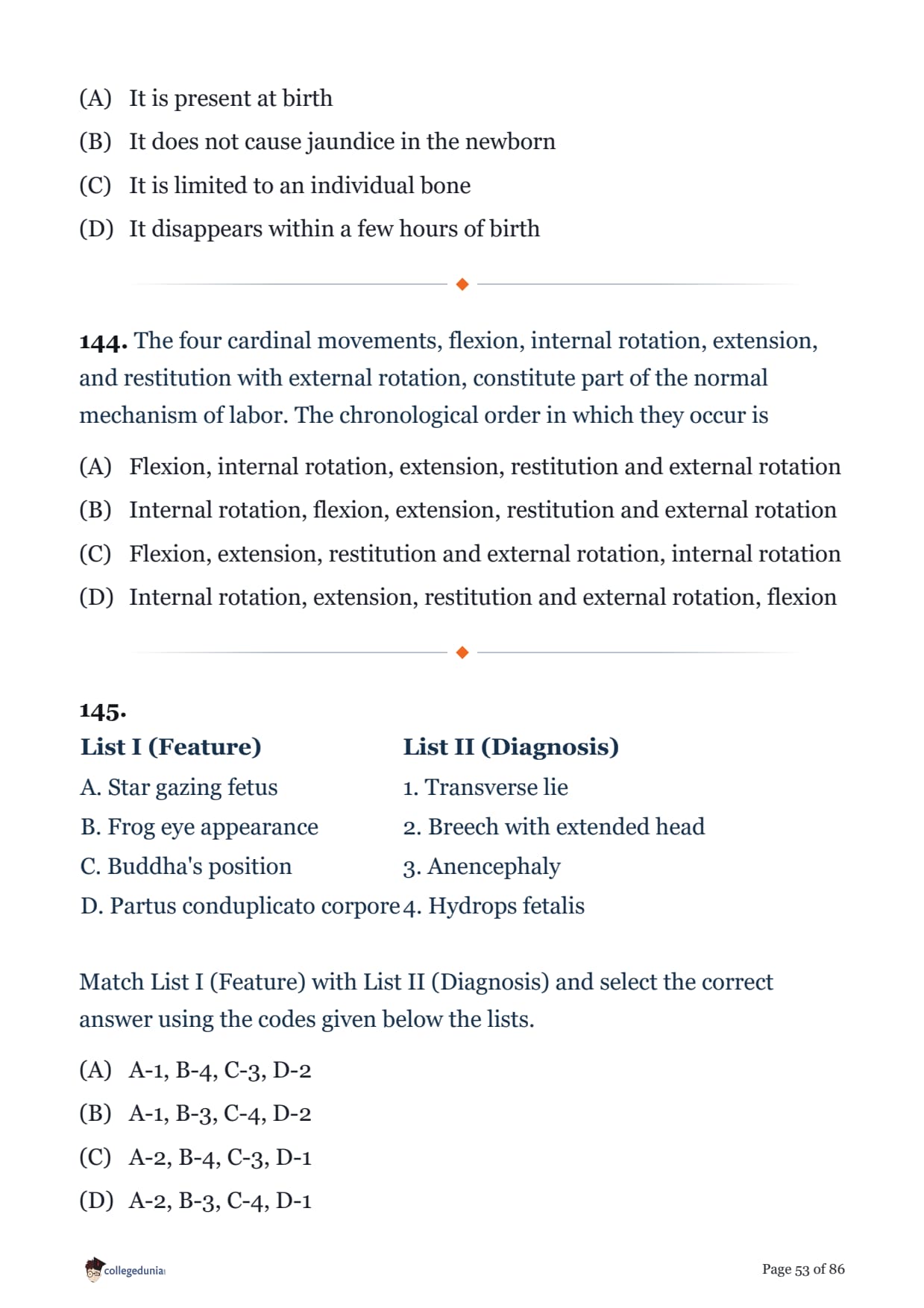
The four cardinal movements, flexion, internal rotation, extension, and restitution with external rotation, constitute part of the normal mechanism of labor. The chronological order in which they occur is
| List I (Feature) | List II (Diagnosis) |
|---|---|
| A. Star gazing fetus | 1. Transverse lie |
| B. Frog eye appearance | 2. Breech with extended head |
| C. Buddha's position | 3. Anencephaly |
| D. Partus conduplicato corpore | 4. Hydrops fetalis |
Match List I (Feature) with List II (Diagnosis) and select the correct answer using the codes given below the lists.
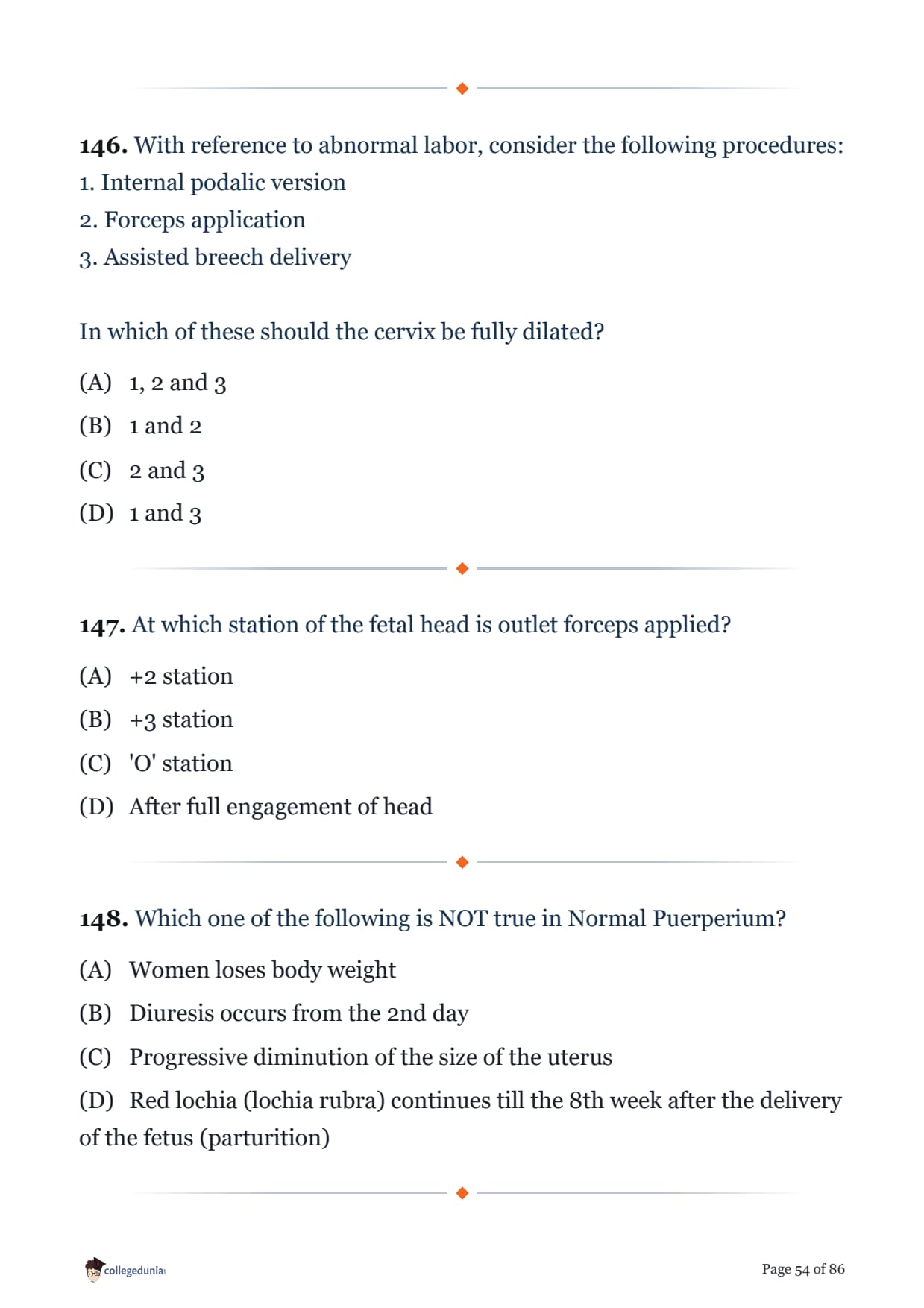
With reference to abnormal labor, consider the following procedures:
1. Internal podalic version
2. Forceps application
3. Assisted breech delivery
In which of these should the cervix be fully dilated?
At which station of the fetal head is outlet forceps applied?
Which one of the following is NOT true in Normal Puerperium?
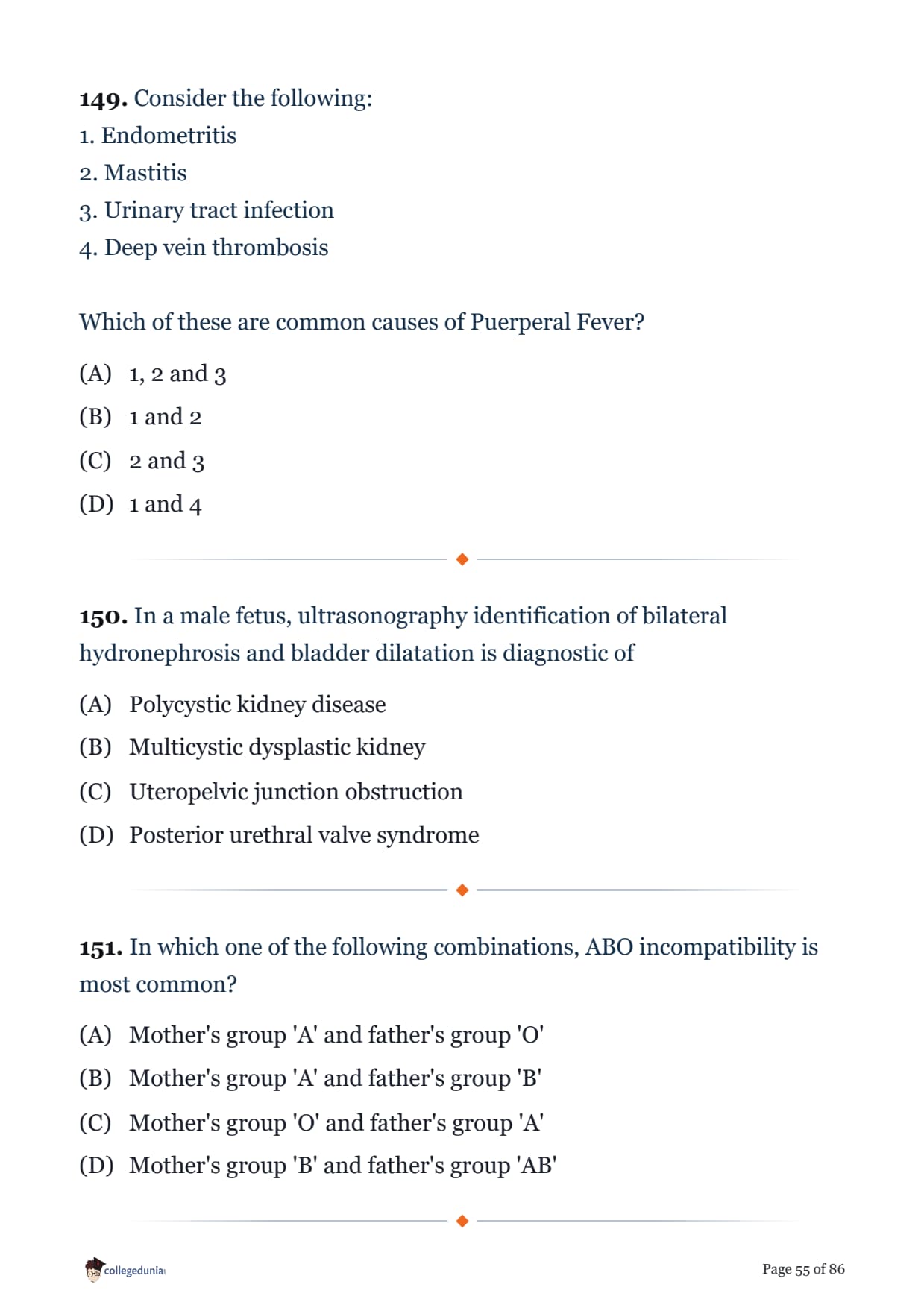
Consider the following:
1. Endometritis
2. Mastitis
3. Urinary tract infection
4. Deep vein thrombosis
Which of these are common causes of Puerperal Fever?
In a male fetus, ultrasonography identification of bilateral hydronephrosis and bladder dilatation is diagnostic of
In which one of the following combinations, ABO incompatibility is most common?
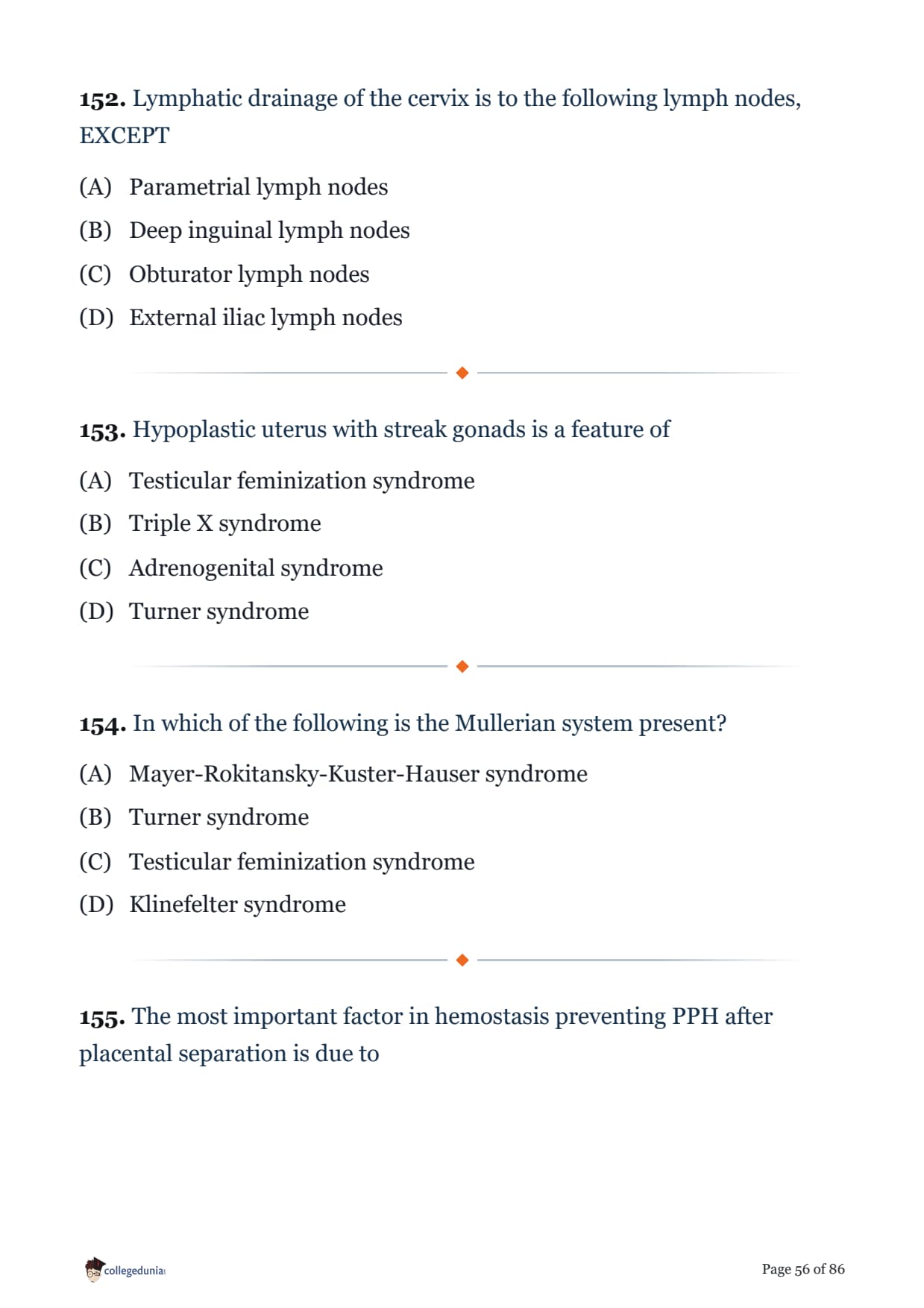
Lymphatic drainage of the cervix is to the following lymph nodes, EXCEPT
Hypoplastic uterus with streak gonads is a feature of
In which of the following is the Mullerian system present?
The most important factor in hemostasis preventing PPH after placental separation is due to
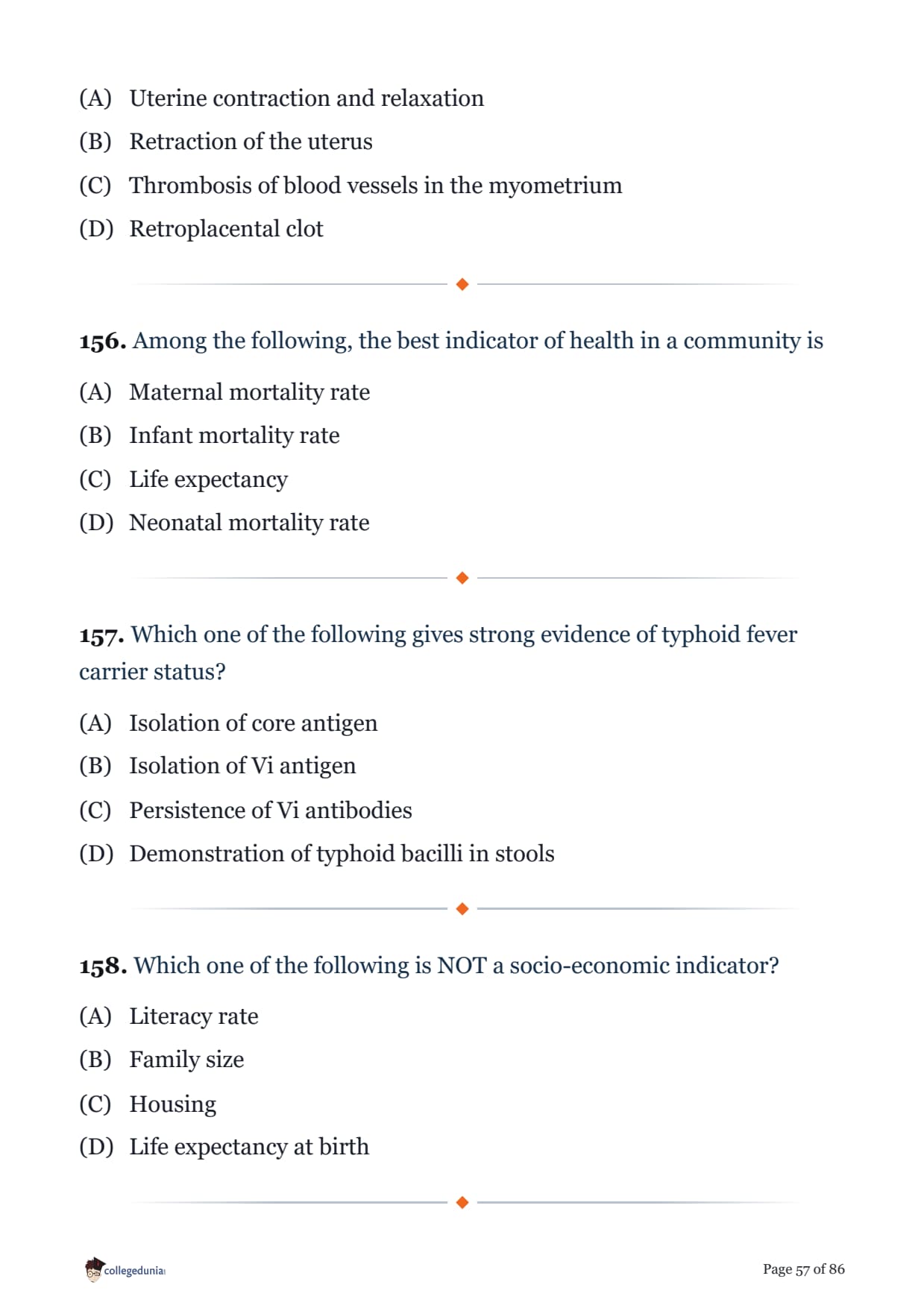
Among the following, the best indicator of health in a community is
Which one of the following gives strong evidence of typhoid fever carrier status?
Which one of the following is NOT a socio-economic indicator?
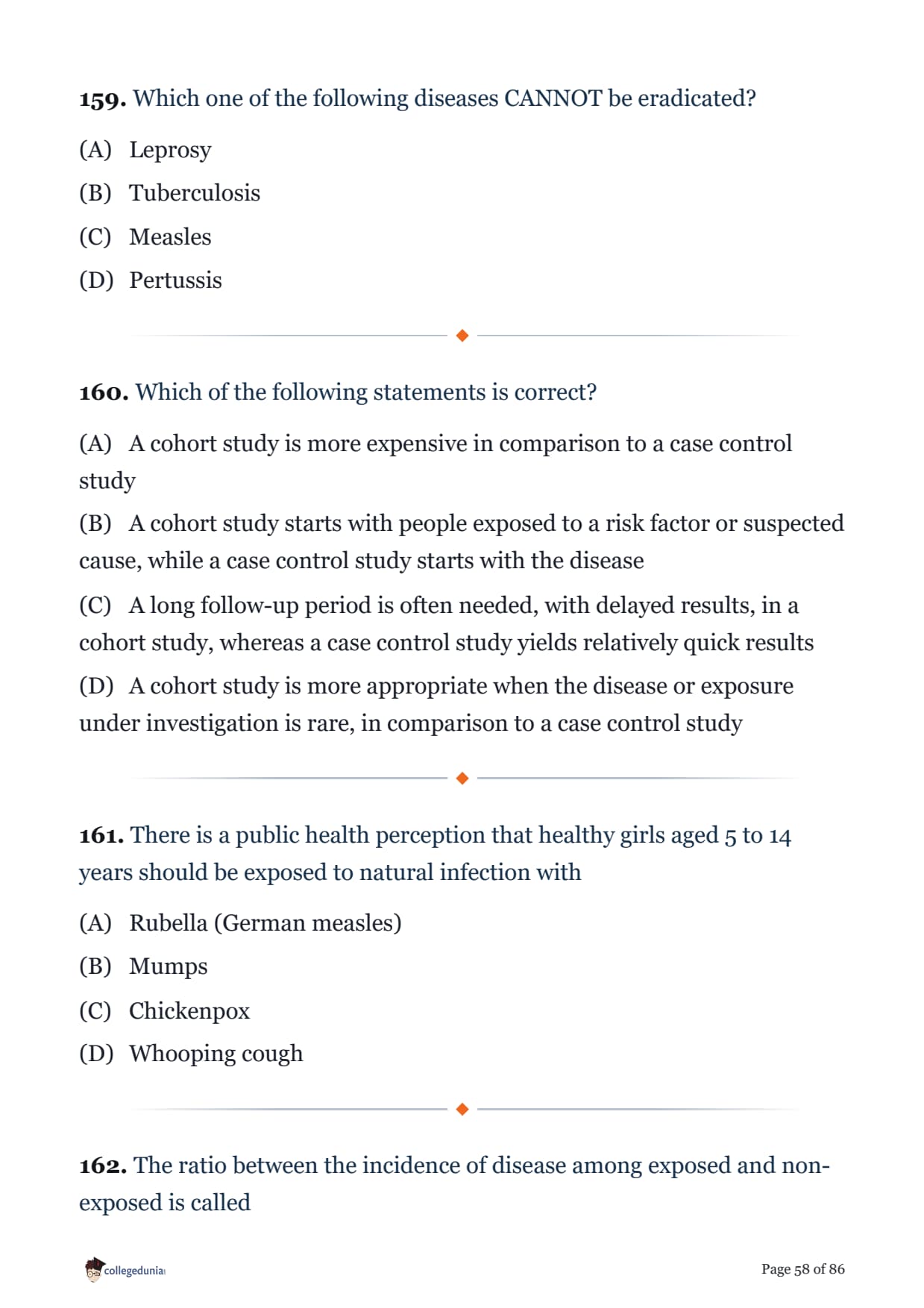
Which one of the following diseases CANNOT be eradicated?
Which of the following statements is correct?
There is a public health perception that healthy girls aged 5 to 14 years should be exposed to natural infection with
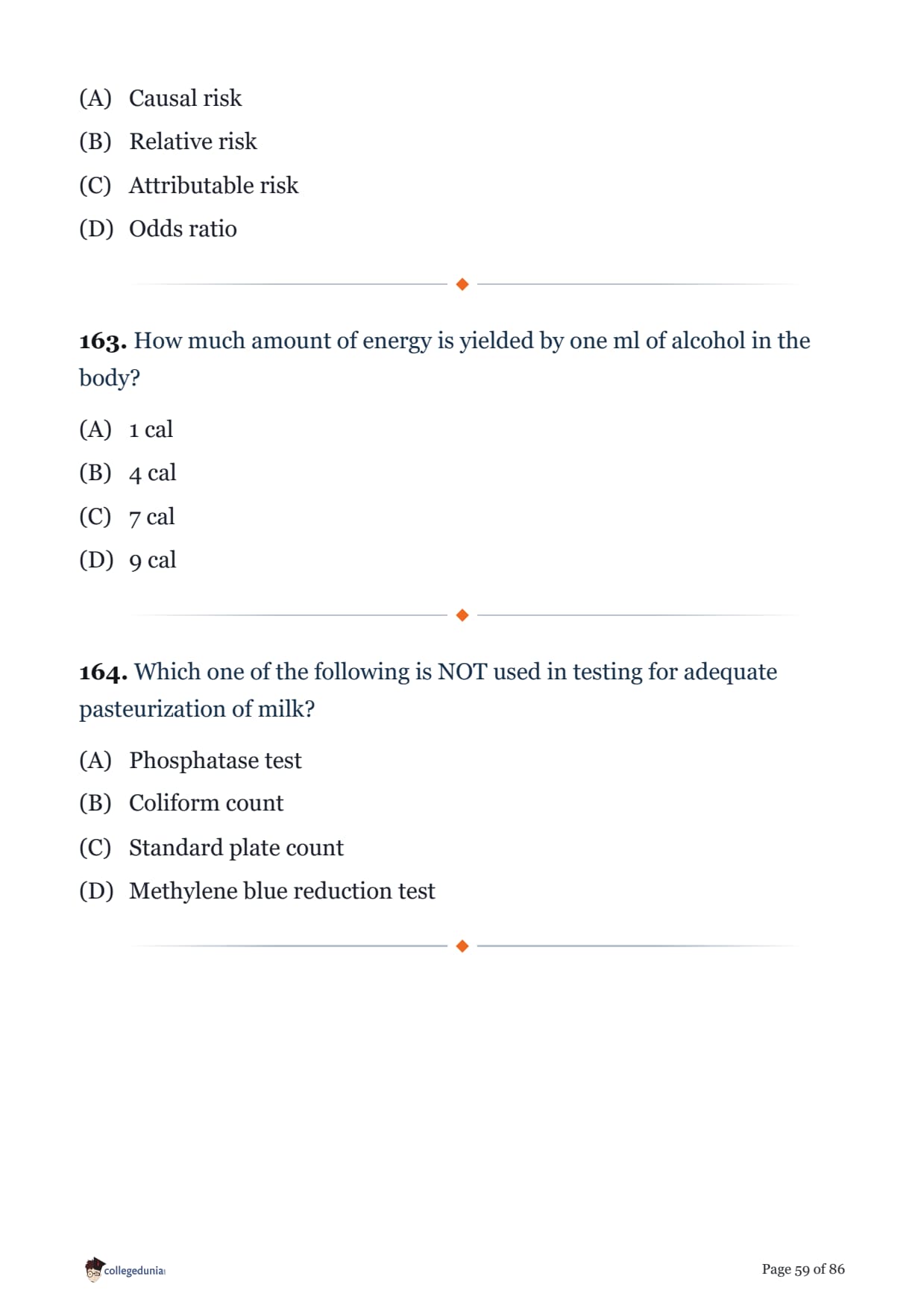
The ratio between the incidence of disease among exposed and non-exposed is called
How much amount of energy is yielded by one ml of alcohol in the body?
Which one of the following is NOT used in testing for adequate pasteurization of milk?
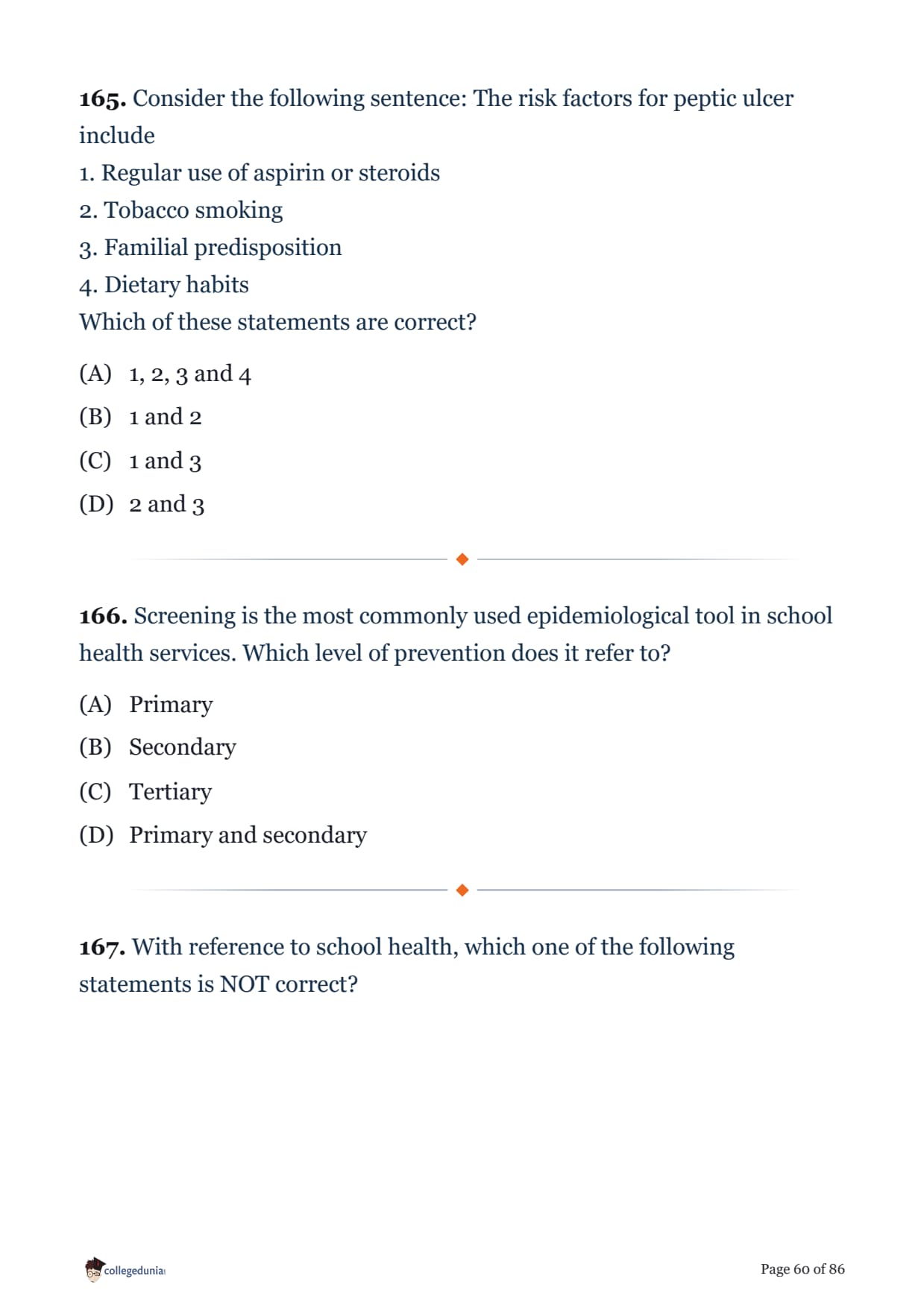
Consider the following sentence: The risk factors for peptic ulcer include
1. Regular use of aspirin or steroids
2. Tobacco smoking
3. Familial predisposition
4. Dietary habits
Which of these statements are correct?
Screening is the most commonly used epidemiological tool in school health services. Which level of prevention does it refer to?
With reference to school health, which one of the following statements is NOT correct?
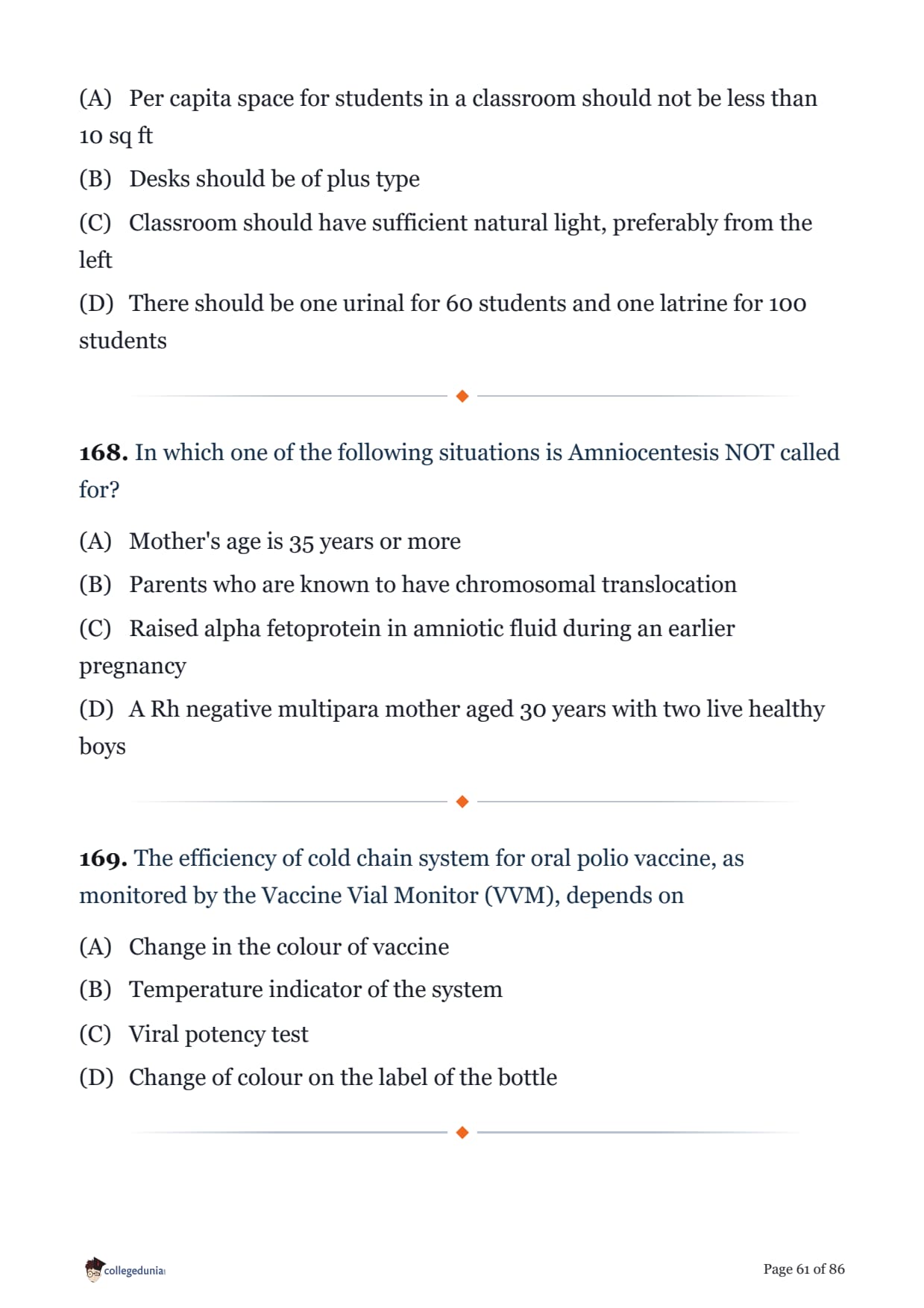
In which one of the following situations is Amniocentesis NOT called for?
The efficiency of cold chain system for oral polio vaccine, as monitored by the Vaccine Vial Monitor (VVM), depends on
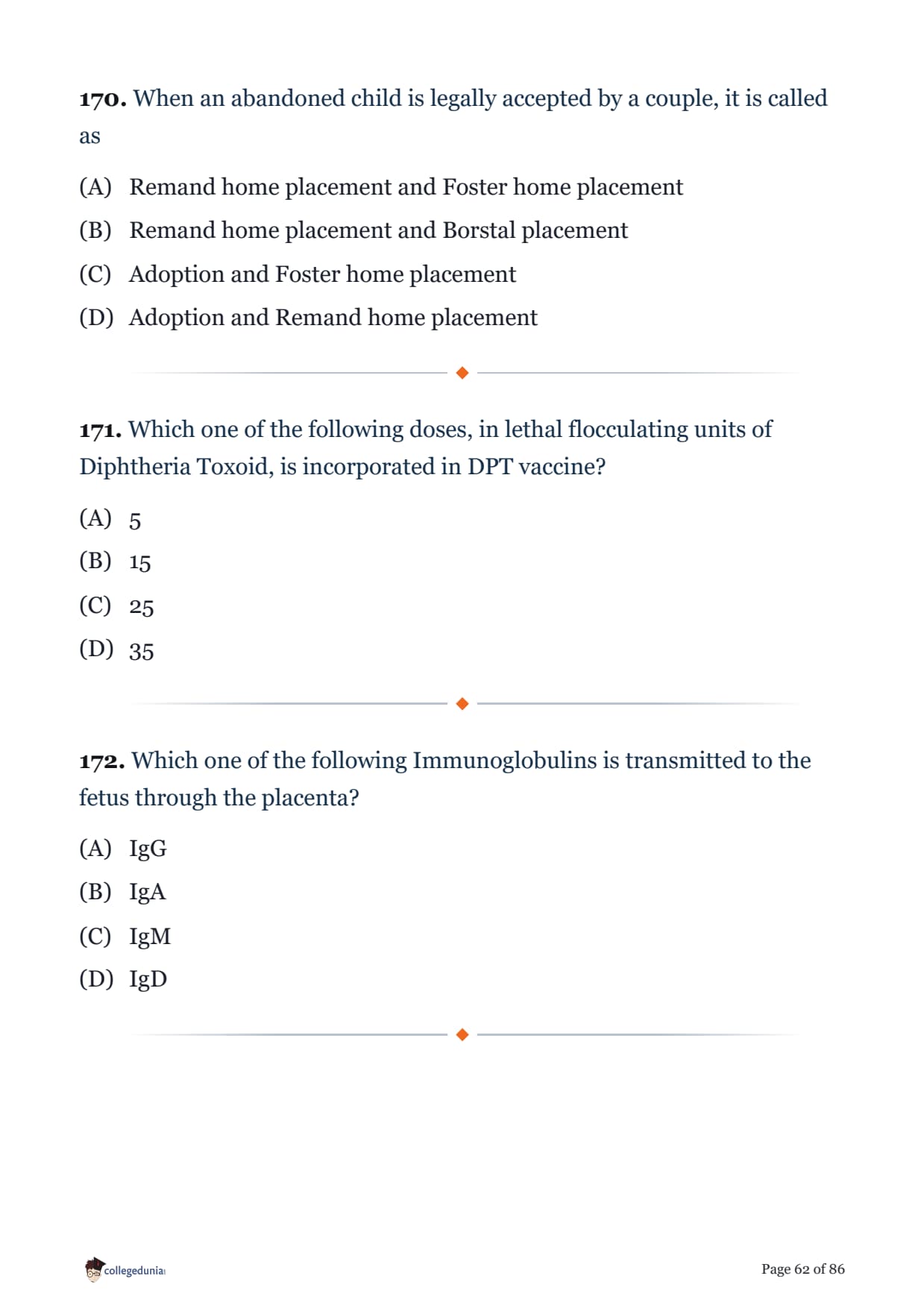
When an abandoned child is legally accepted by a couple, it is called as
Which one of the following doses, in lethal flocculating units of Diphtheria Toxoid, is incorporated in DPT vaccine?
Which one of the following Immunoglobulins is transmitted to the fetus through the placenta?
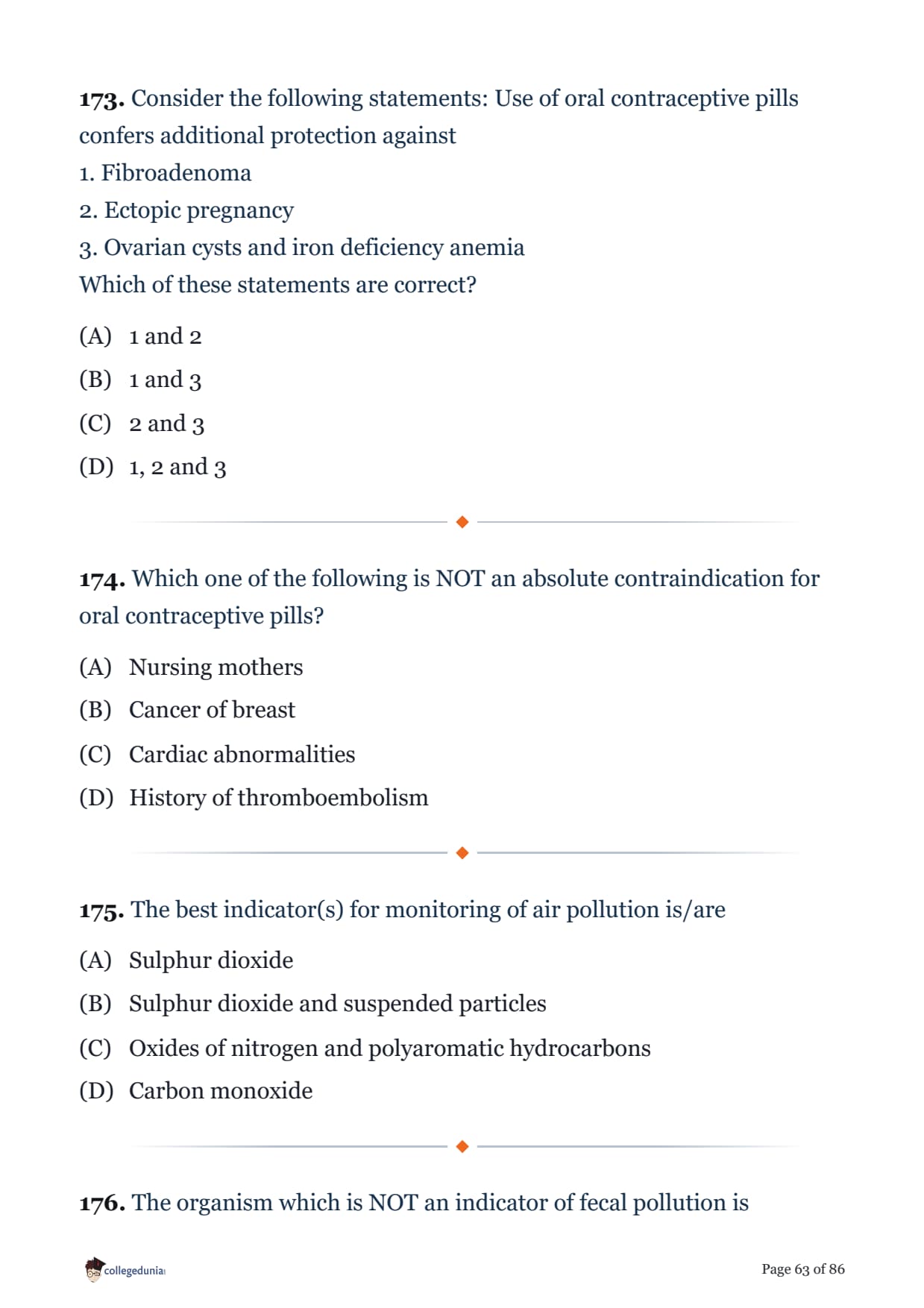
Consider the following statements: Use of oral contraceptive pills confers additional protection against
1. Fibroadenoma
2. Ectopic pregnancy
3. Ovarian cysts and iron deficiency anemia
Which of these statements are correct?
Which one of the following is NOT an absolute contraindication for oral contraceptive pills?
The best indicator(s) for monitoring of air pollution is/are
The organism which is NOT an indicator of fecal pollution is
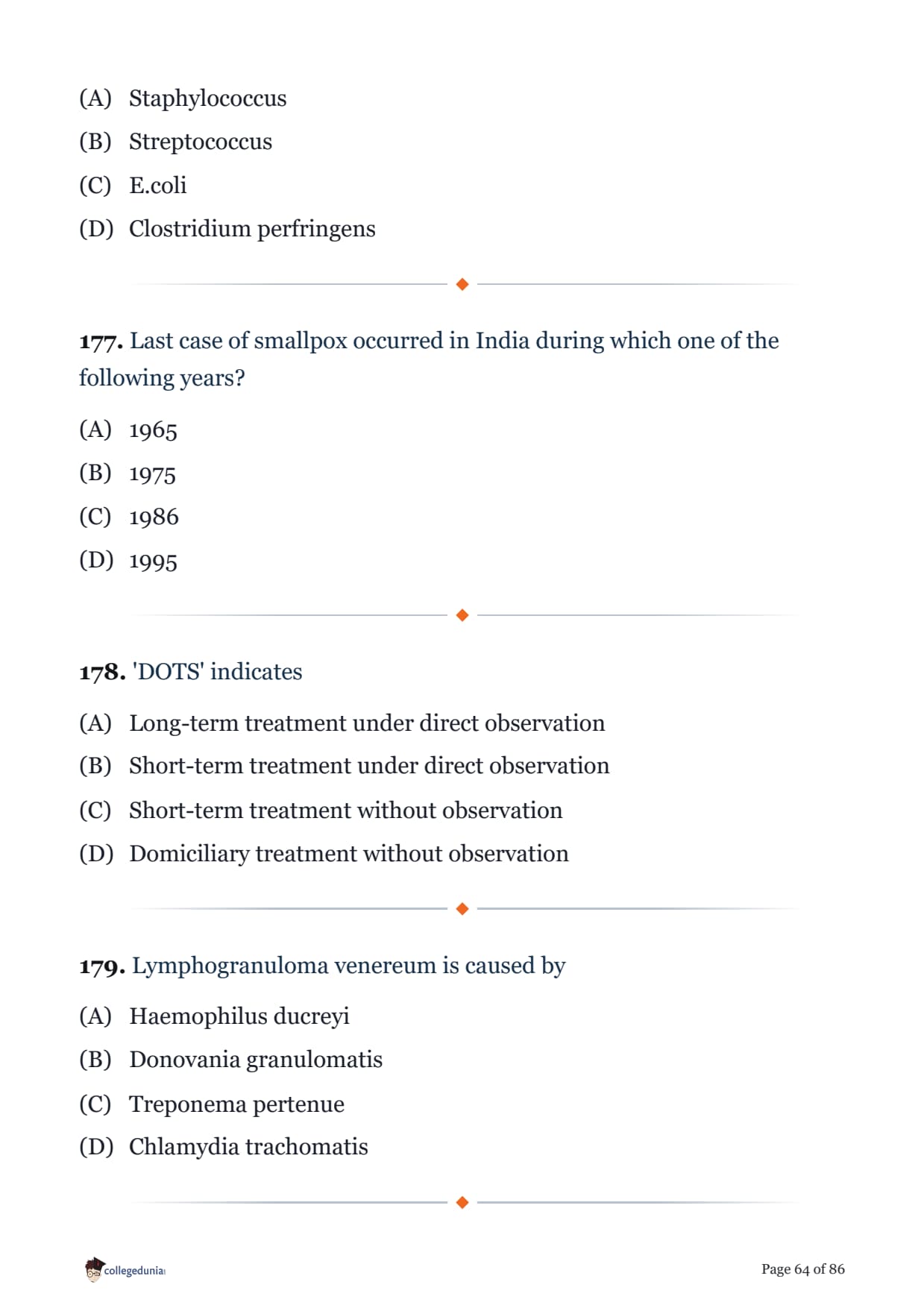
Last case of smallpox occurred in India during which one of the following years?
'DOTS' indicates
Lymphogranuloma venereum is caused by
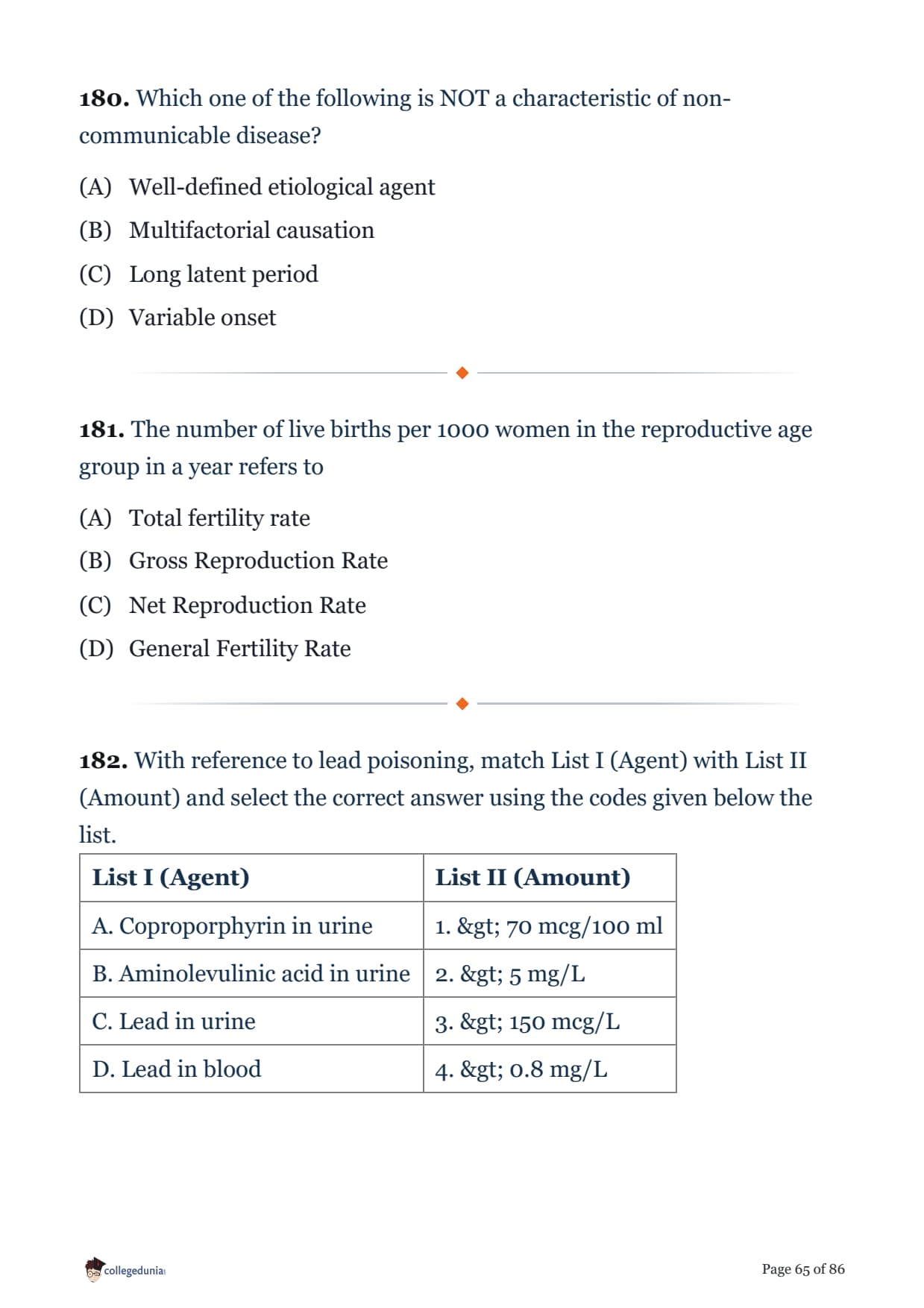
Which one of the following is NOT a characteristic of non-communicable disease?
The number of live births per 1000 women in the reproductive age group in a year refers to
With reference to lead poisoning, match List I (Agent) with List II (Amount) and select the correct answer using the codes given below the list.
| List I (Agent) | List II (Amount) |
|---|---|
| A. Coproporphyrin in urine | 1. > 70 mcg/100 ml |
| B. Aminolevulinic acid in urine | 2. > 5 mg/L |
| C. Lead in urine | 3. > 150 mcg/L |
| D. Lead in blood | 4. > 0.8 mg/L |
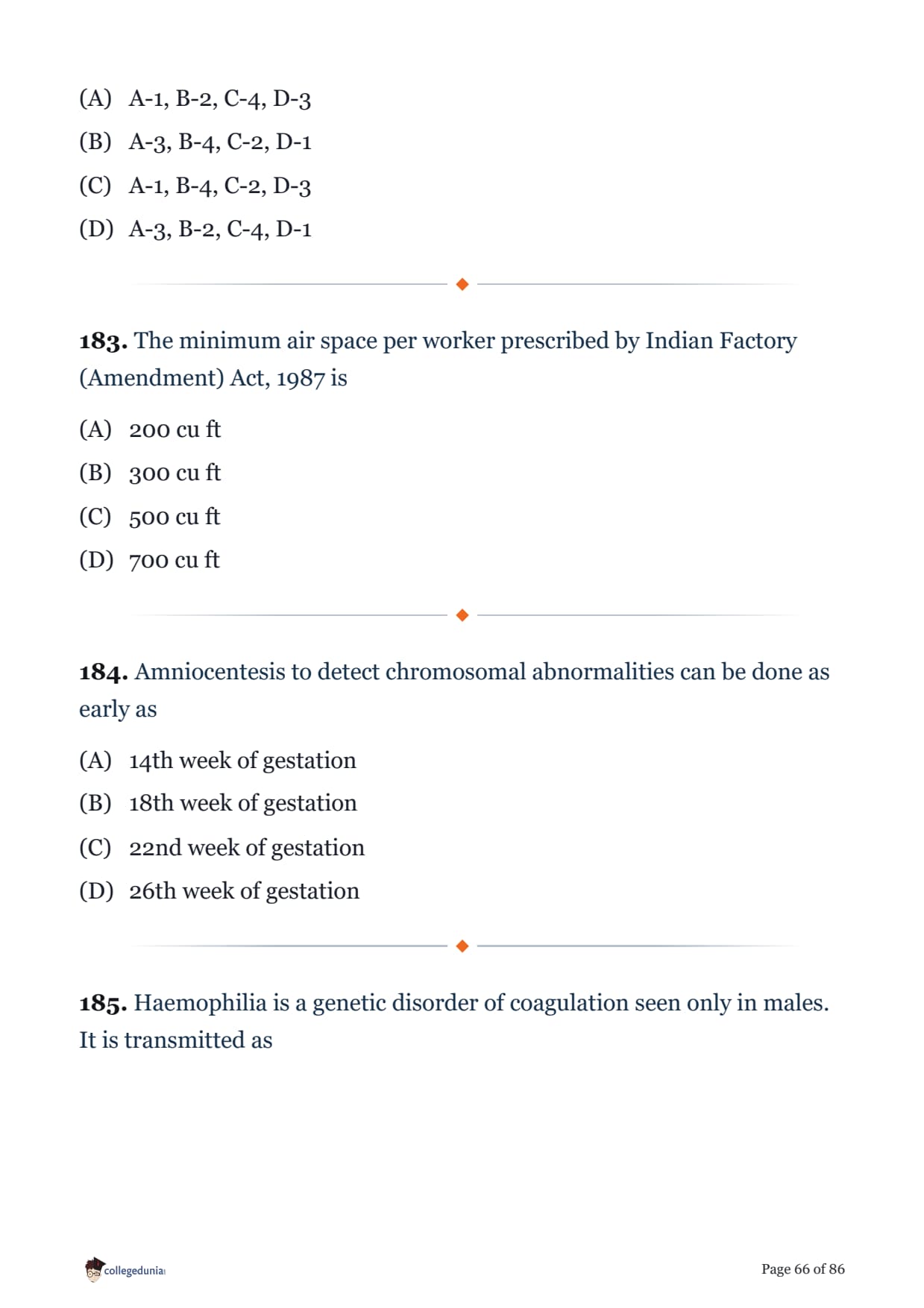
The minimum air space per worker prescribed by Indian Factory (Amendment) Act, 1987 is
Amniocentesis to detect chromosomal abnormalities can be done as early as
Haemophilia is a genetic disorder of coagulation seen only in males. It is transmitted as
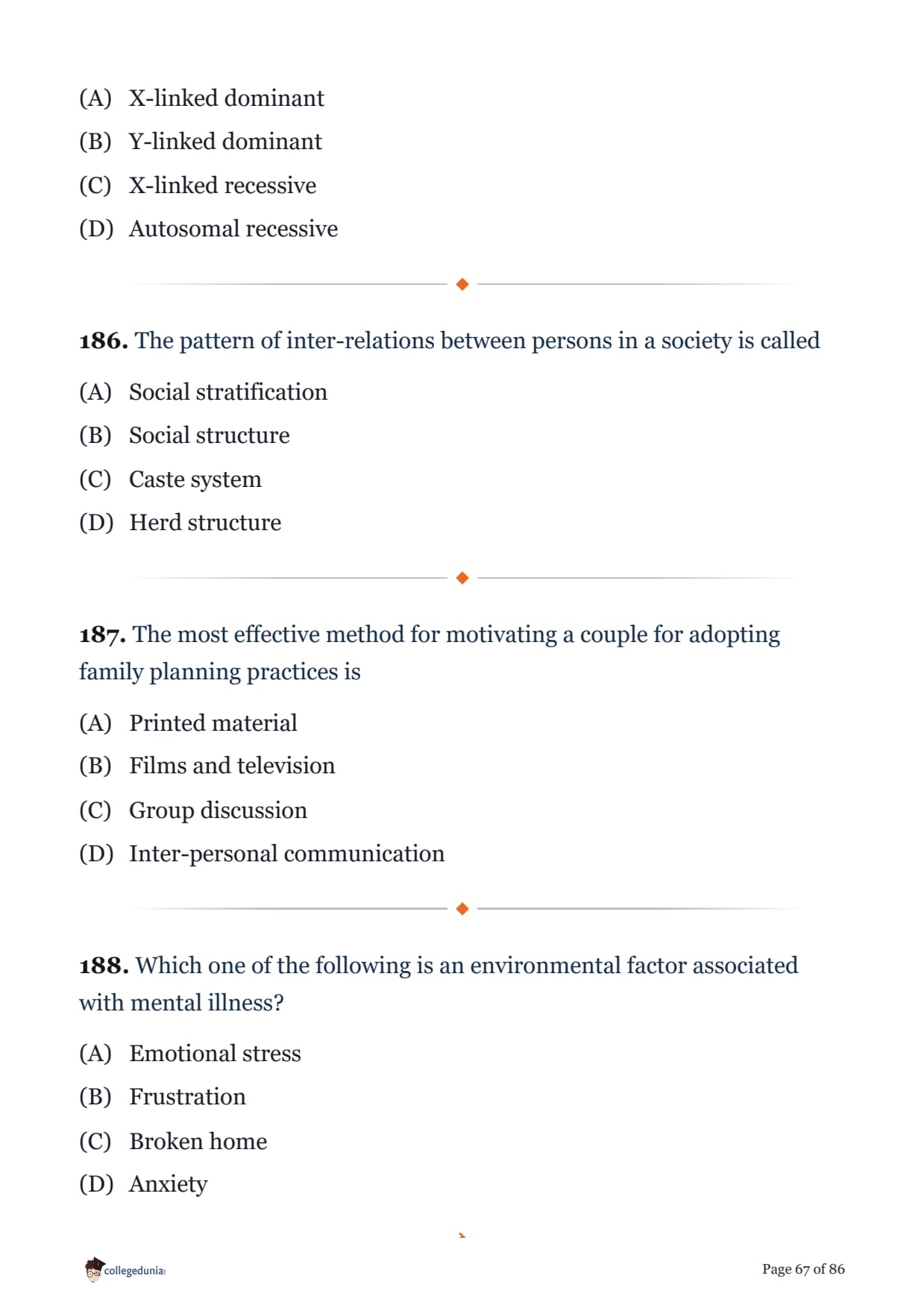
The pattern of inter-relations between persons in a society is called
The most effective method for motivating a couple for adopting family planning practices is
Which one of the following is an environmental factor associated with mental illness?
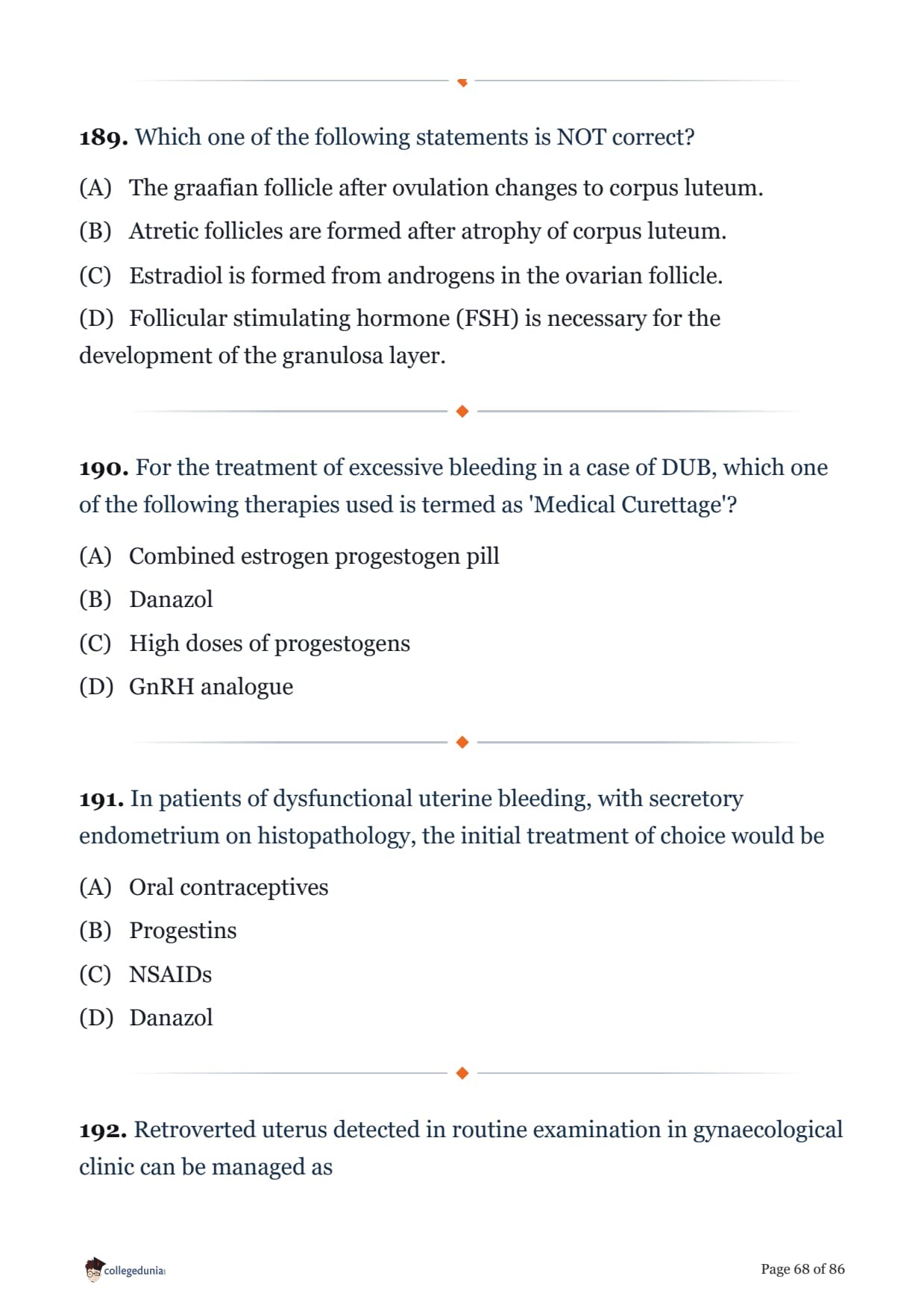
Which one of the following statements is NOT correct?
For the treatment of excessive bleeding in a case of DUB, which one of the following therapies used is termed as 'Medical Curettage'?
In patients of dysfunctional uterine bleeding, with secretory endometrium on histopathology, the initial treatment of choice would be
Retroverted uterus detected in routine examination in gynaecological clinic can be managed as
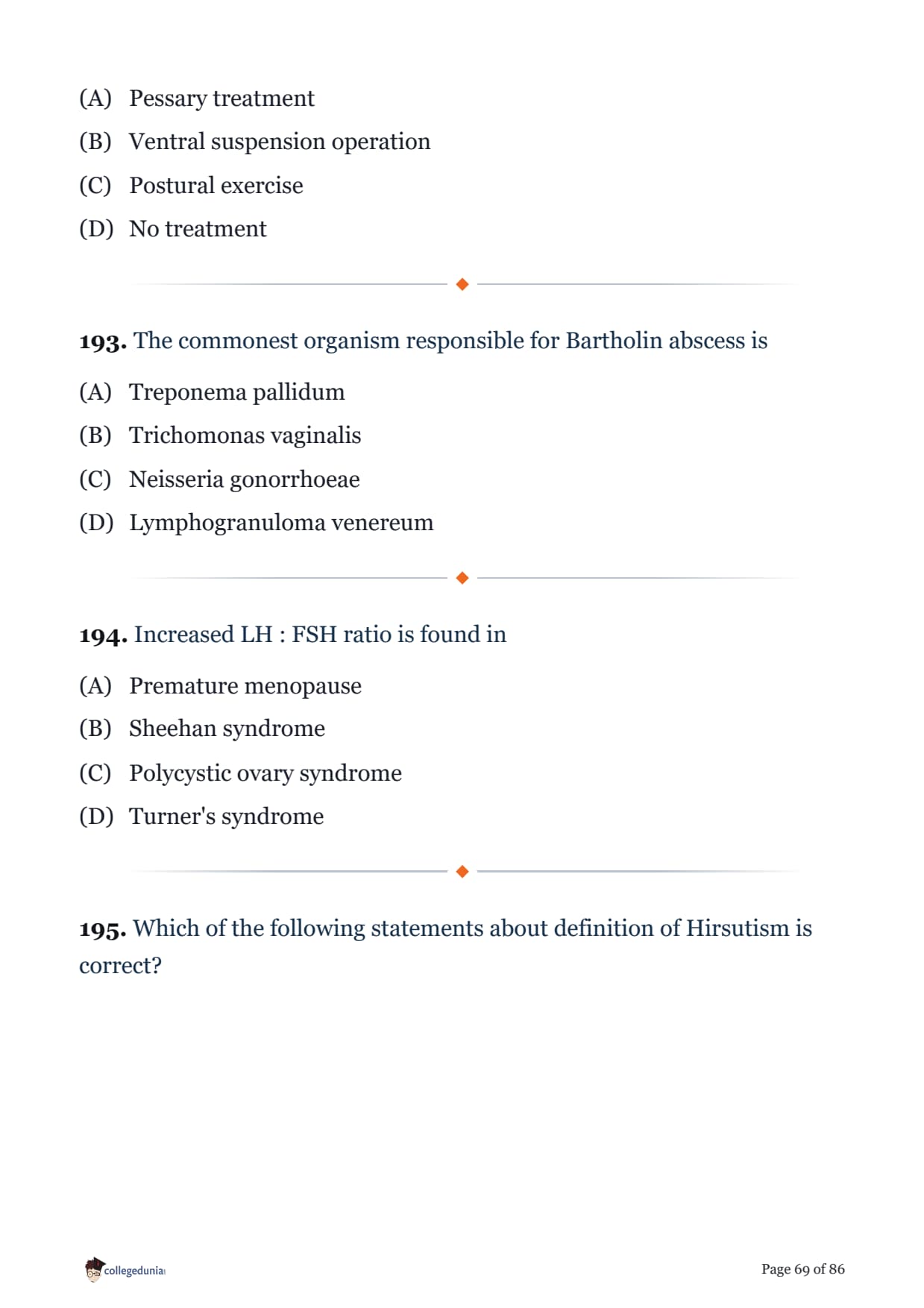
The commonest organism responsible for Bartholin abscess is
Increased LH : FSH ratio is found in
Which of the following statements about definition of Hirsutism is correct?
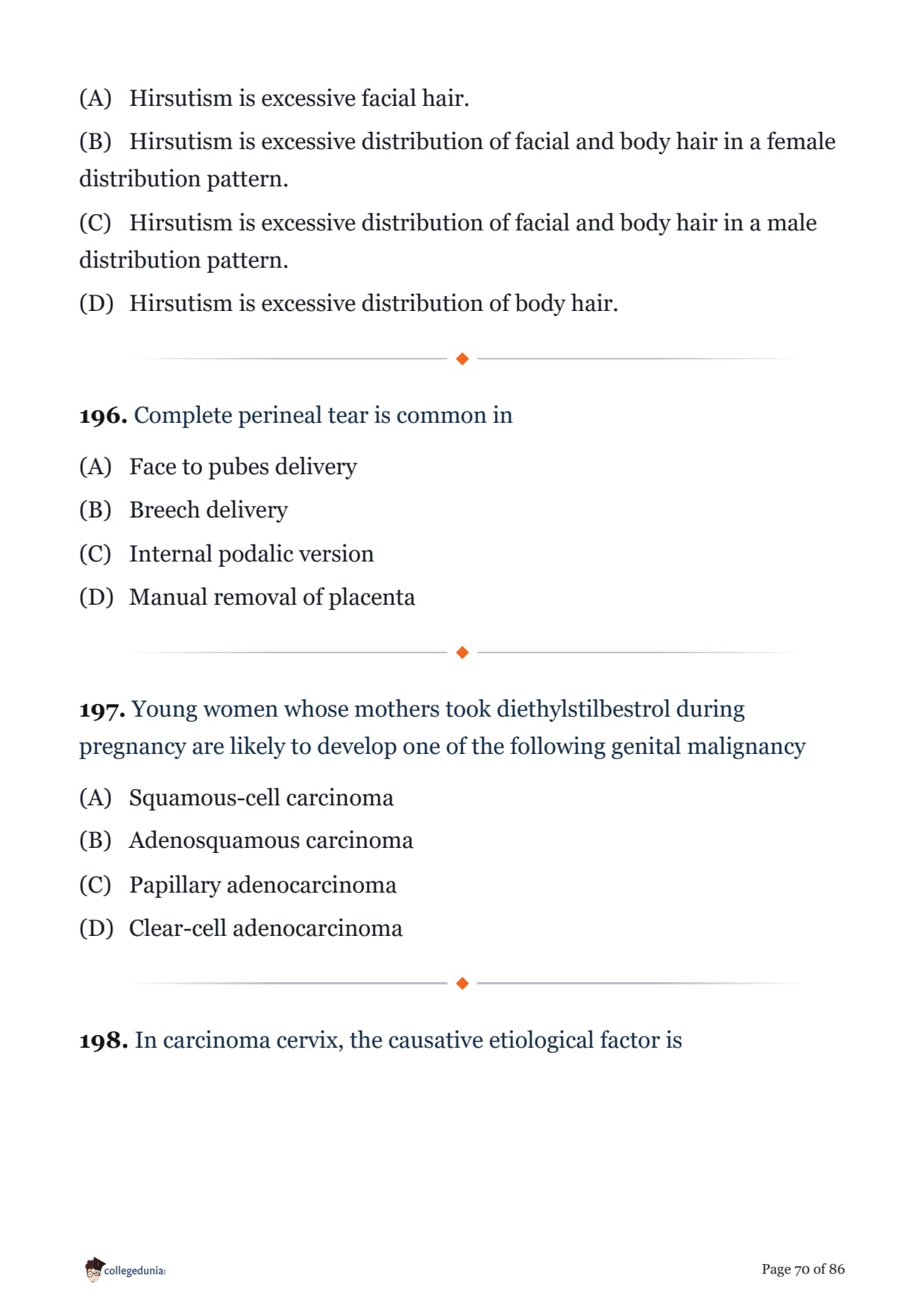
Complete perineal tear is common in
Young women whose mothers took diethylstilbestrol during pregnancy are likely to develop one of the following genital malignancy
In carcinoma cervix, the causative etiological factor is
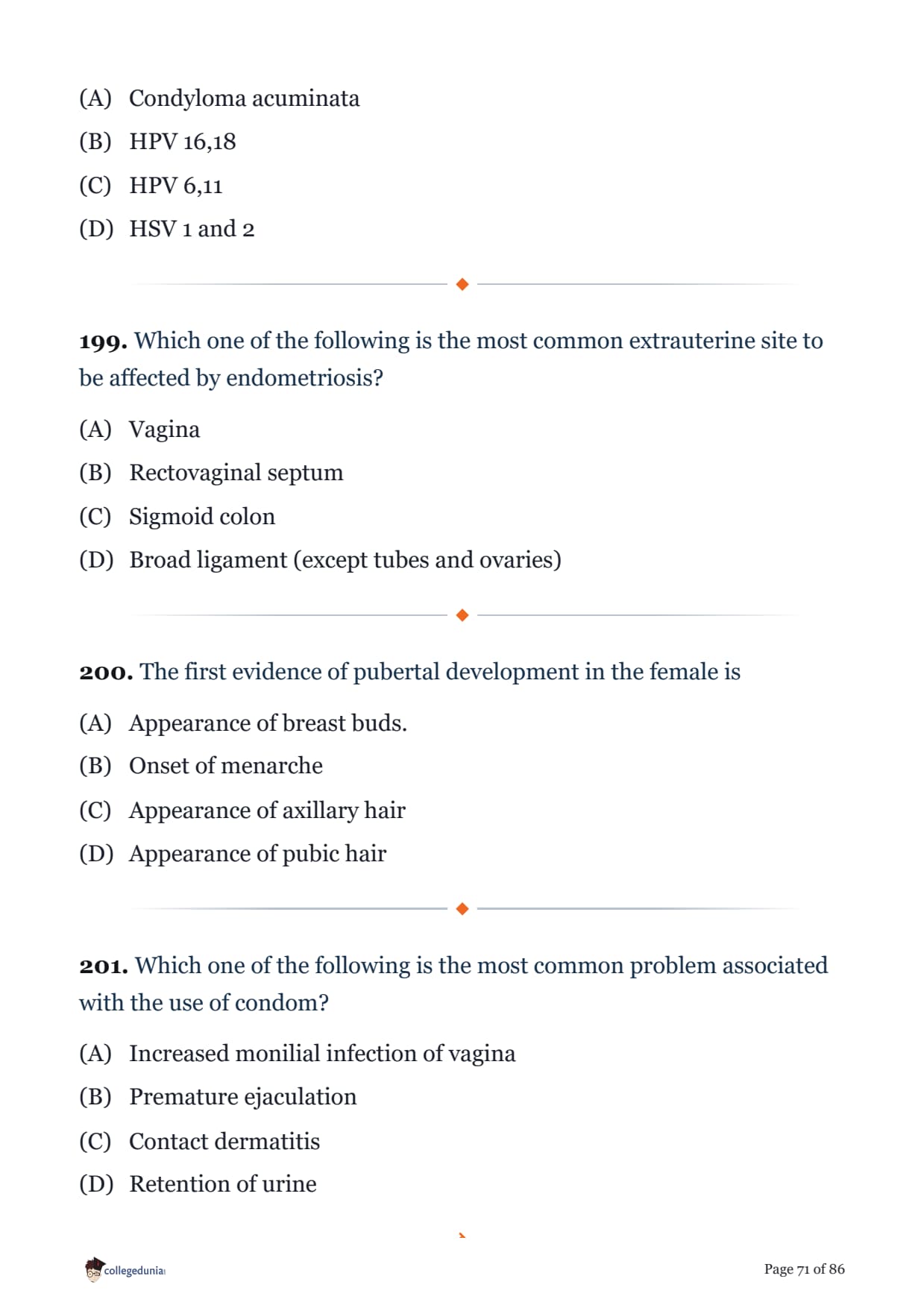
Which one of the following is the most common extrauterine site to be affected by endometriosis?
The first evidence of pubertal development in the female is
Which one of the following is the most common problem associated with the use of condom?
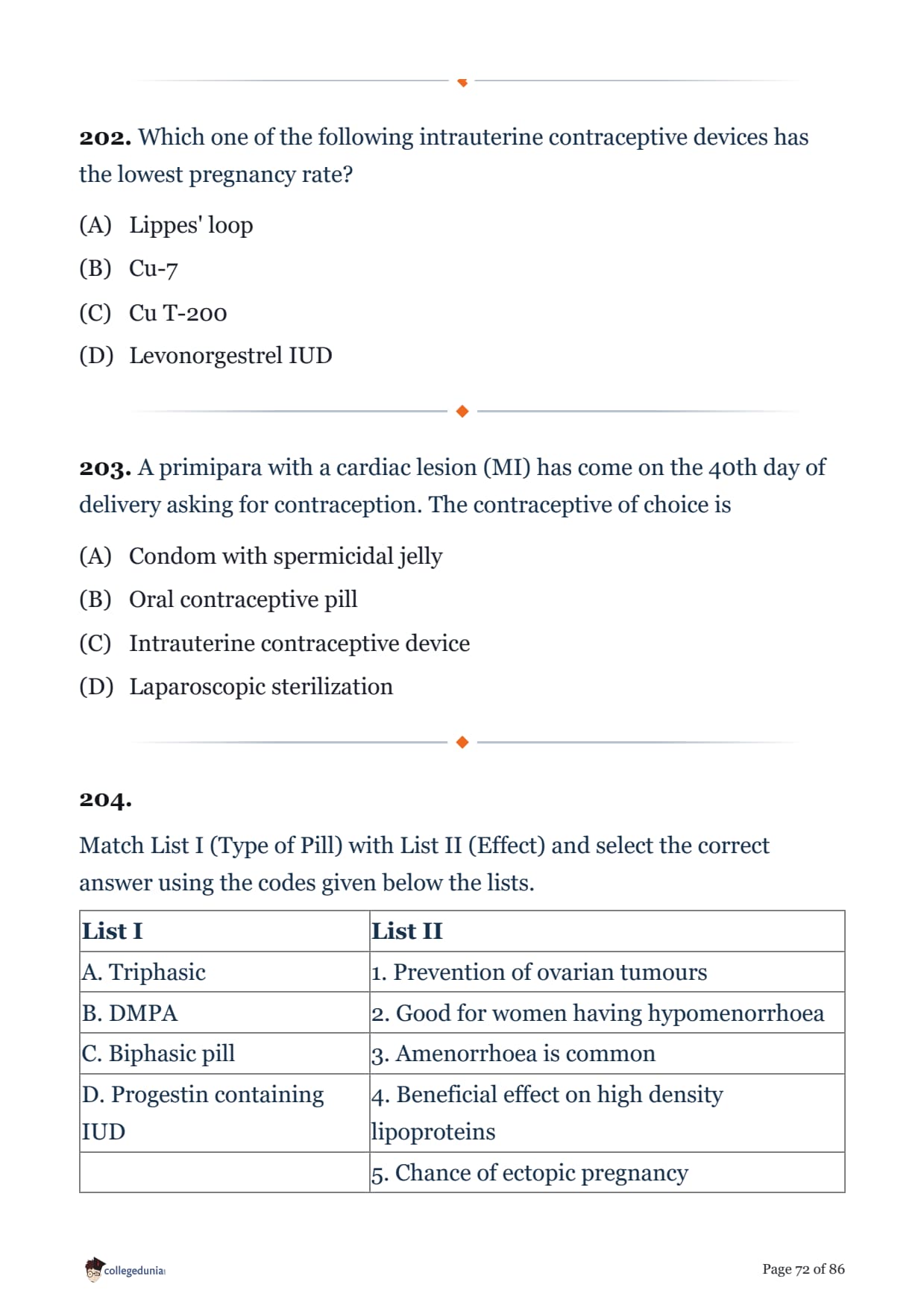
Which one of the following intrauterine contraceptive devices has the lowest pregnancy rate?
A primipara with a cardiac lesion (MI) has come on the 40th day of delivery asking for contraception. The contraceptive of choice is
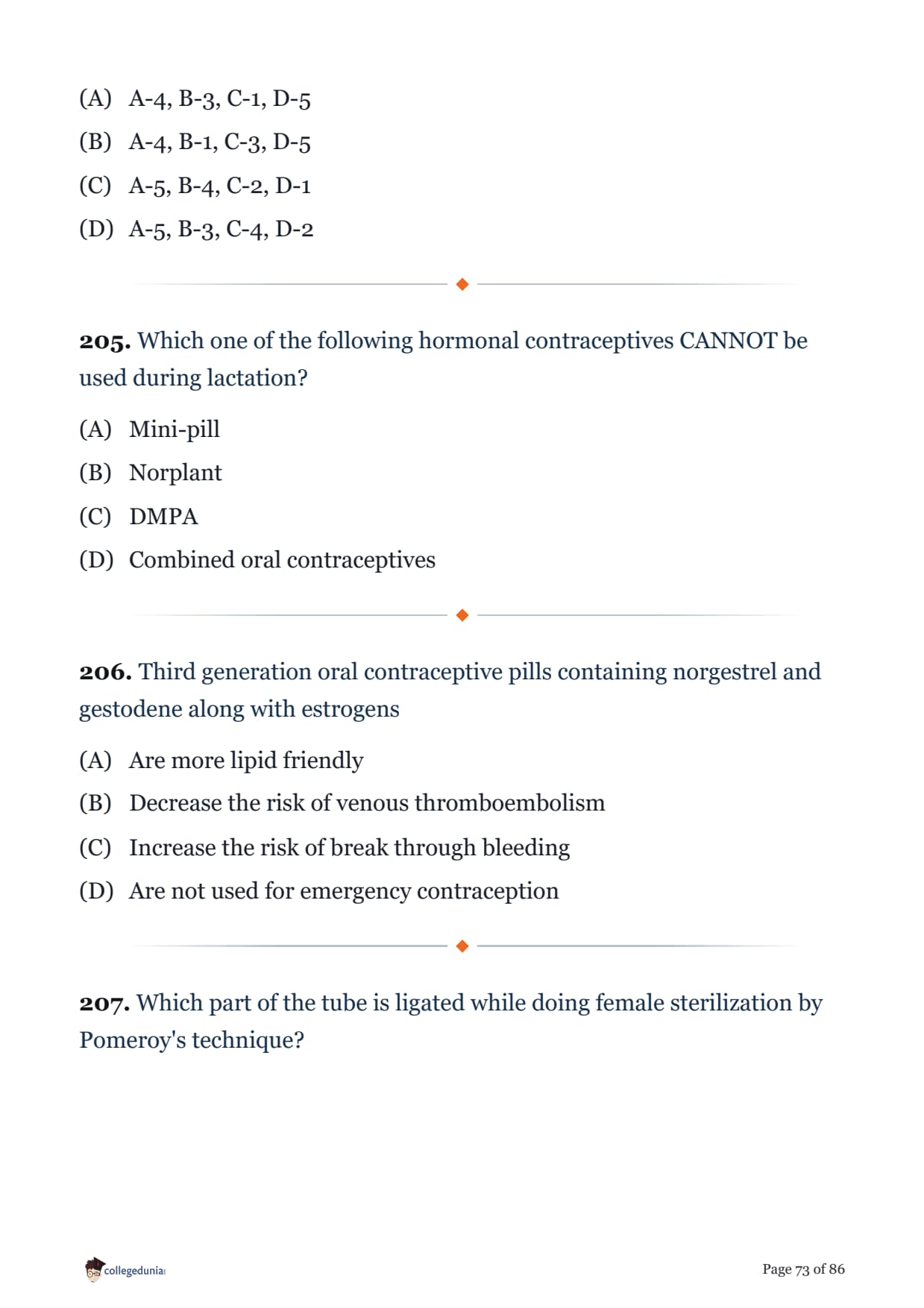
Match List I (Type of Pill) with List II (Effect) and select the correct answer using the codes given below the lists.
| List I | List II |
|---|---|
| A. Triphasic | 1. Prevention of ovarian tumours |
| B. DMPA | 2. Good for women having hypomenorrhoea |
| C. Biphasic pill | 3. Amenorrhoea is common |
| D. Progestin containing IUD | 4. Beneficial effect on high density lipoproteins |
| 5. Chance of ectopic pregnancy |
Which one of the following hormonal contraceptives CANNOT be used during lactation?
Third generation oral contraceptive pills containing norgestrel and gestodene along with estrogens
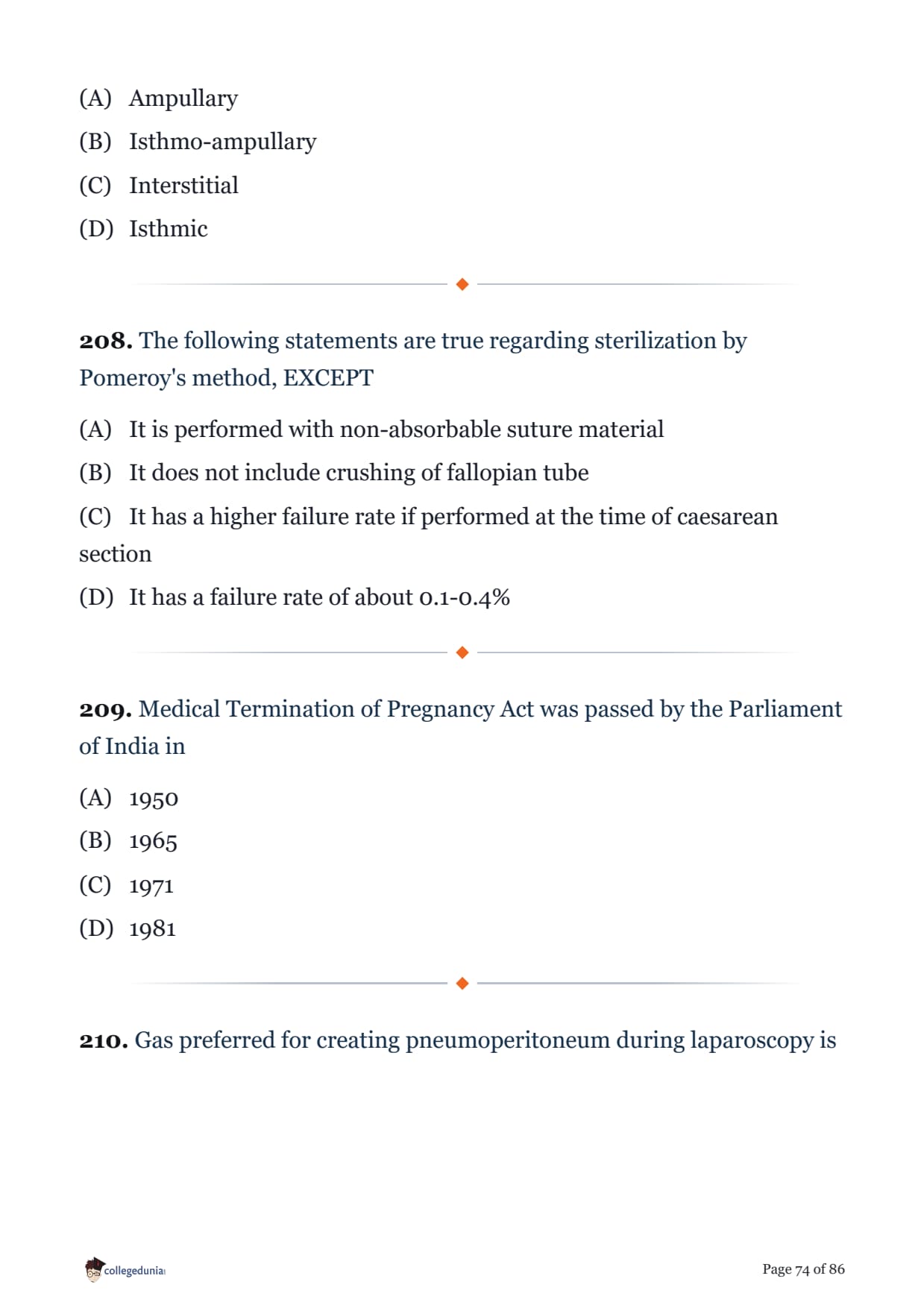
Which part of the tube is ligated while doing female sterilization by Pomeroy's technique?
The following statements are true regarding sterilization by Pomeroy's method, EXCEPT
Medical Termination of Pregnancy Act was passed by the Parliament of India in
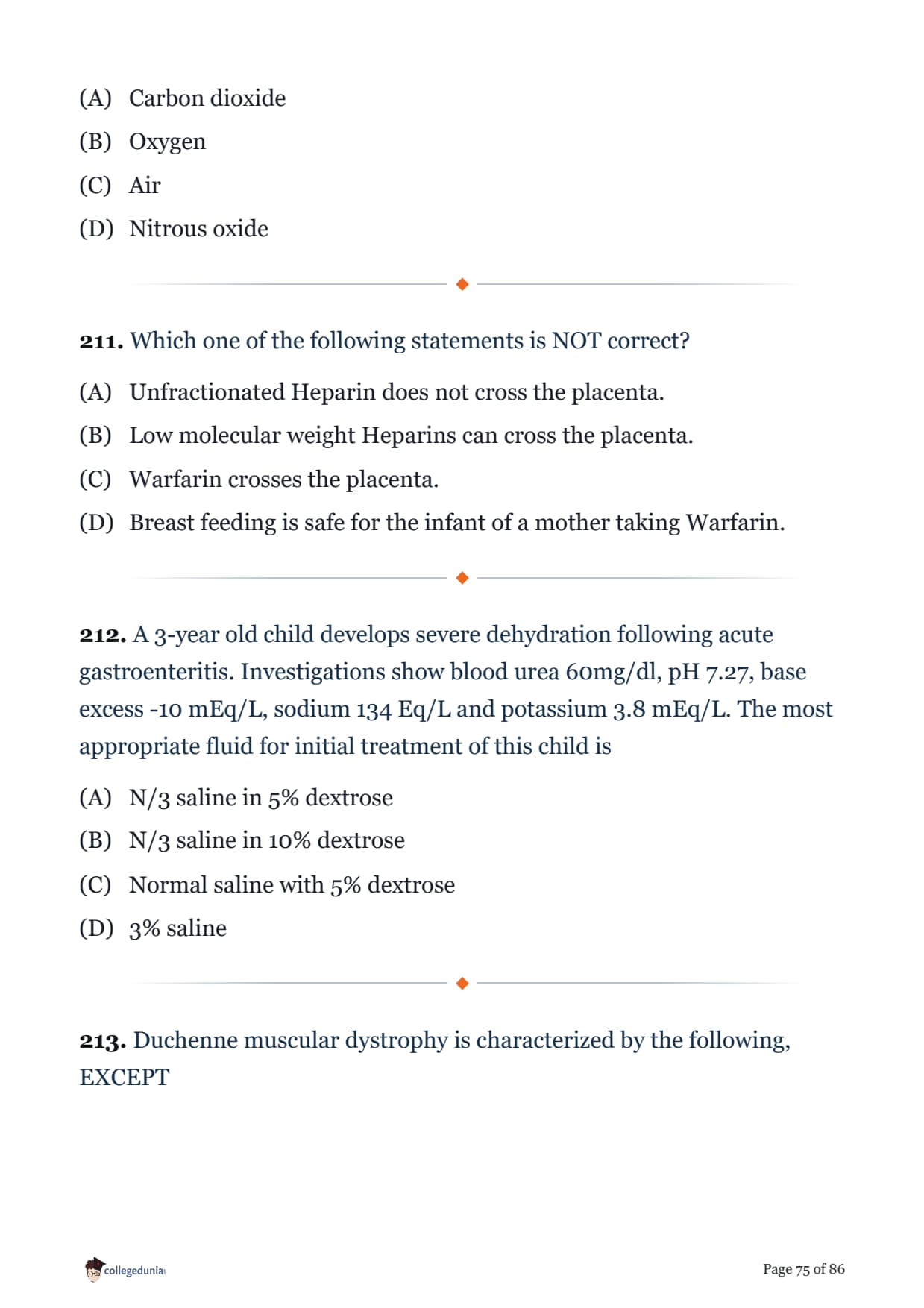
Gas preferred for creating pneumoperitoneum during laparoscopy is
Which one of the following statements is NOT correct?
A 3-year old child develops severe dehydration following acute gastroenteritis. Investigations show blood urea 60mg/dl, pH 7.27, base excess -10 mEq/L, sodium 134 Eq/L and potassium 3.8 mEq/L. The most appropriate fluid for initial treatment of this child is
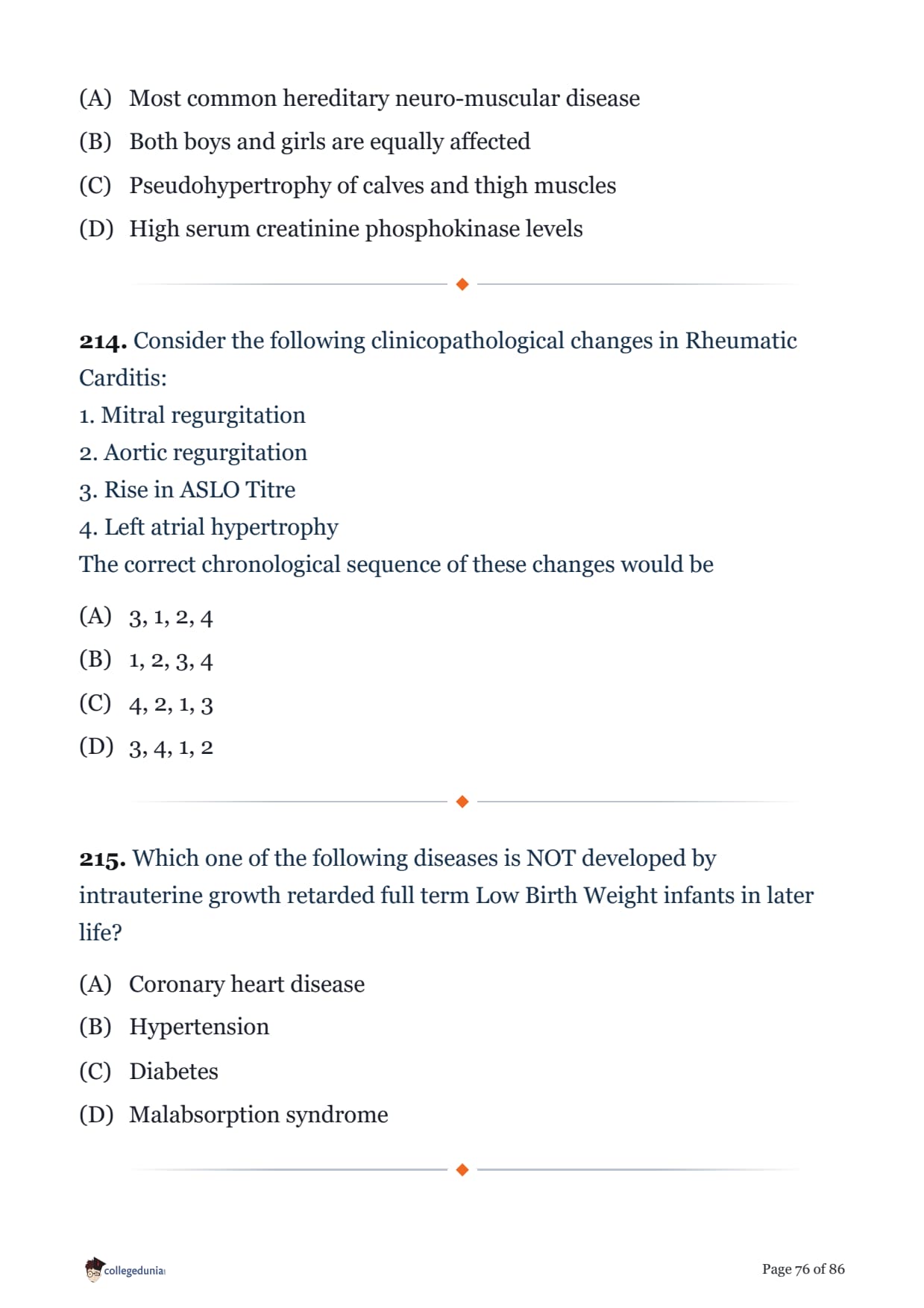
Duchenne muscular dystrophy is characterized by the following, EXCEPT
Consider the following clinicopathological changes in Rheumatic Carditis:
1. Mitral regurgitation
2. Aortic regurgitation
3. Rise in ASLO Titre
4. Left atrial hypertrophy
The correct chronological sequence of these changes would be
Which one of the following diseases is NOT developed by intrauterine growth retarded full term Low Birth Weight infants in later life?
A person working in hot environment who consumes more water without salt is likely to develop a condition called
Assertion (A): The term 'Eradication' means termination of all transmissions of infection.
Reason (R): It involves complete destruction of the infective agent.
Assertion (A): Abortion may be induced at twenty weeks of gestation without second medical opinion.
Reason (R): The conditions for medical termination of pregnancy have been liberalized in India.
Assertion (A): All newborns should be screened for hypothyroidism at birth.
Reason (R): Treatment at birth for hypothyroidism can assure normal mental development.
Assertion (A): The 23 valent pneumococcal vaccine is not recommended for routine use in children.
Reason (R): Most pneumococcal strains are still susceptible to penicillin.
Assertion (A): Lumbar puncture is indicated in a child with fever and asymmetric flaccid limb weakness.
Reason (R): The diagnosis of Guillain-Barre syndrome can be established by albuminocytologic dissociation on CSF analysis.
Assertion (A): Systemic estrogens as HRT are indicated in post-menopausal women with hypertriglyceridemia.
Reason (R): The systemic estrogens induce the hepatic synthesis of lipoproteins.
Assertion (A): Ferrous sulphate should not be given to pregnant women who are at high risk of PIH.
Reason (R): Ferrous sulphate increases free radicals which induce serum lipid peroxide formation.
Assertion (A): Supravaginal elongation of cervix occurs in uterovaginal prolapse.
Reason (R): There is gaping genital hiatus but the ligamentous support of uterus is strong.
Assertion (A): A child who has had an acute attack of poliomyelitis should be administered oral polio vaccine.
Reason (R): There is no cross-immunity between the different types of polio viruses.
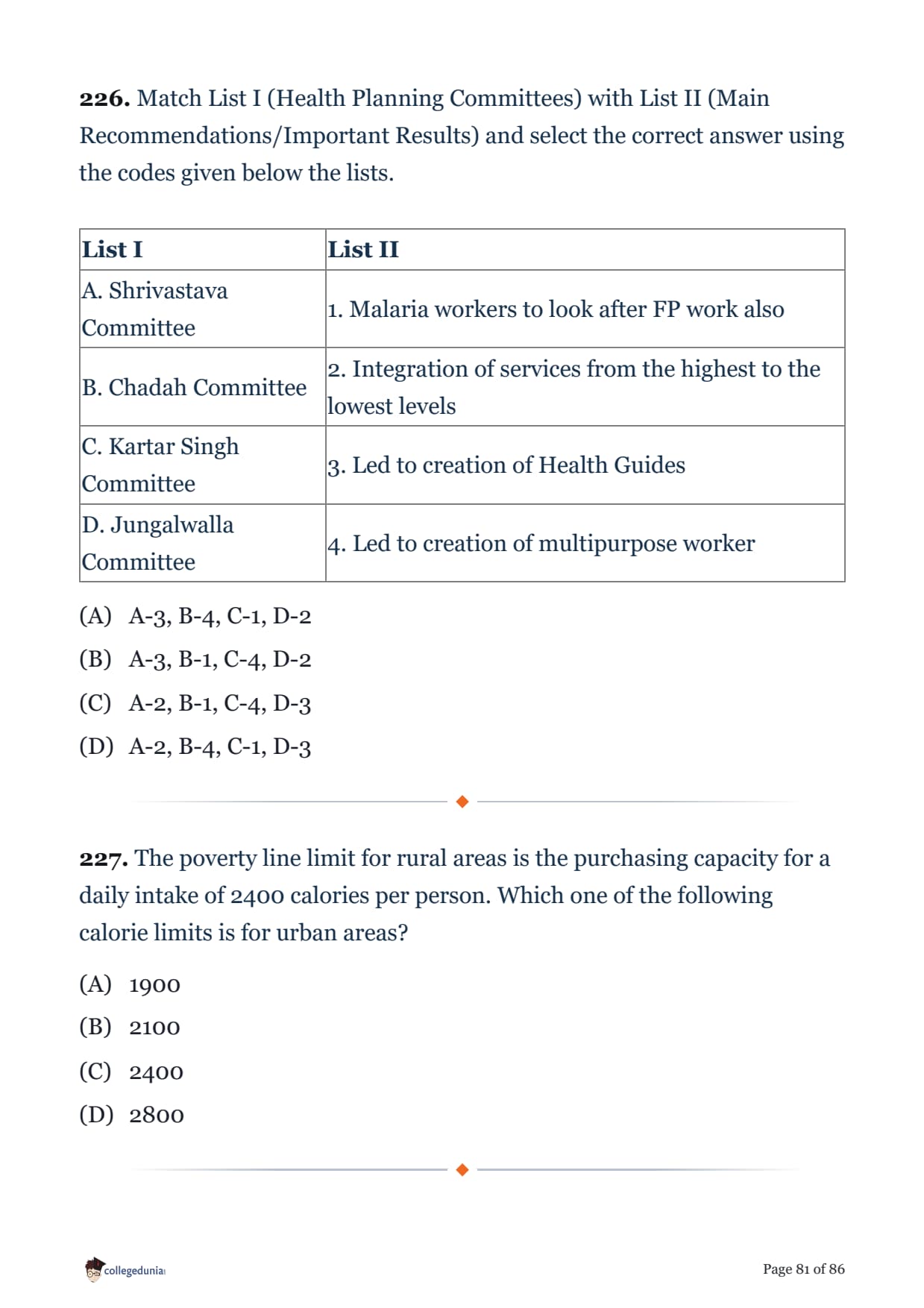
Match List I (Health Planning Committees) with List II (Main Recommendations/Important Results) and select the correct answer using the codes given below the lists.
| List I | List II |
|---|---|
| A. Shrivastava Committee | 1. Malaria workers to look after FP work also |
| B. Chadah Committee | 2. Integration of services from the highest to the lowest levels |
| C. Kartar Singh Committee | 3. Led to creation of Health Guides |
| D. Jungalwalla Committee | 4. Led to creation of multipurpose worker |
The poverty line limit for rural areas is the purchasing capacity for a daily intake of 2400 calories per person. Which one of the following calorie limits is for urban areas?
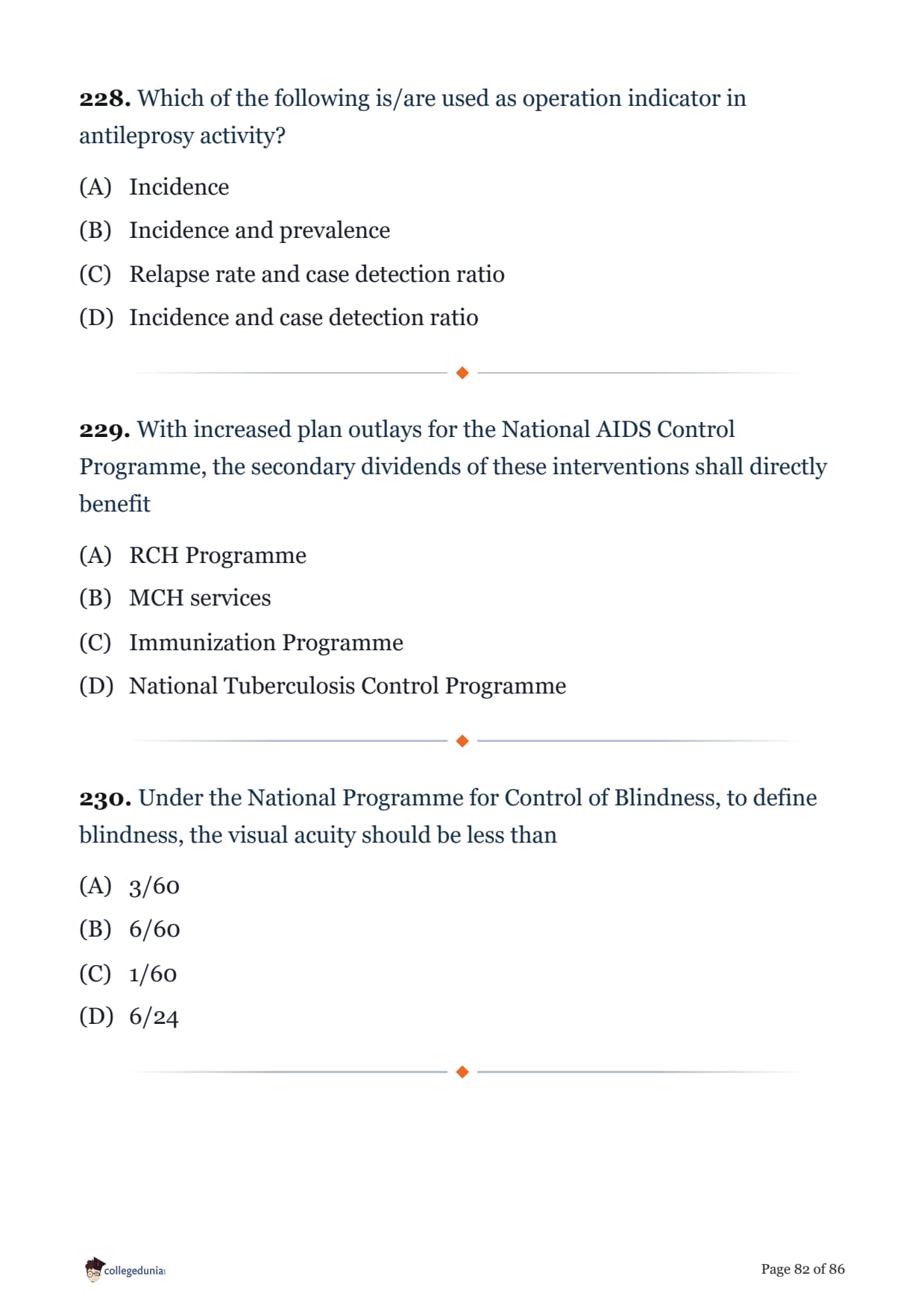
Which of the following is/are used as operation indicator in antileprosy activity?
With increased plan outlays for the National AIDS Control Programme, the secondary dividends of these interventions shall directly benefit
Under the National Programme for Control of Blindness, to define blindness, the visual acuity should be less than
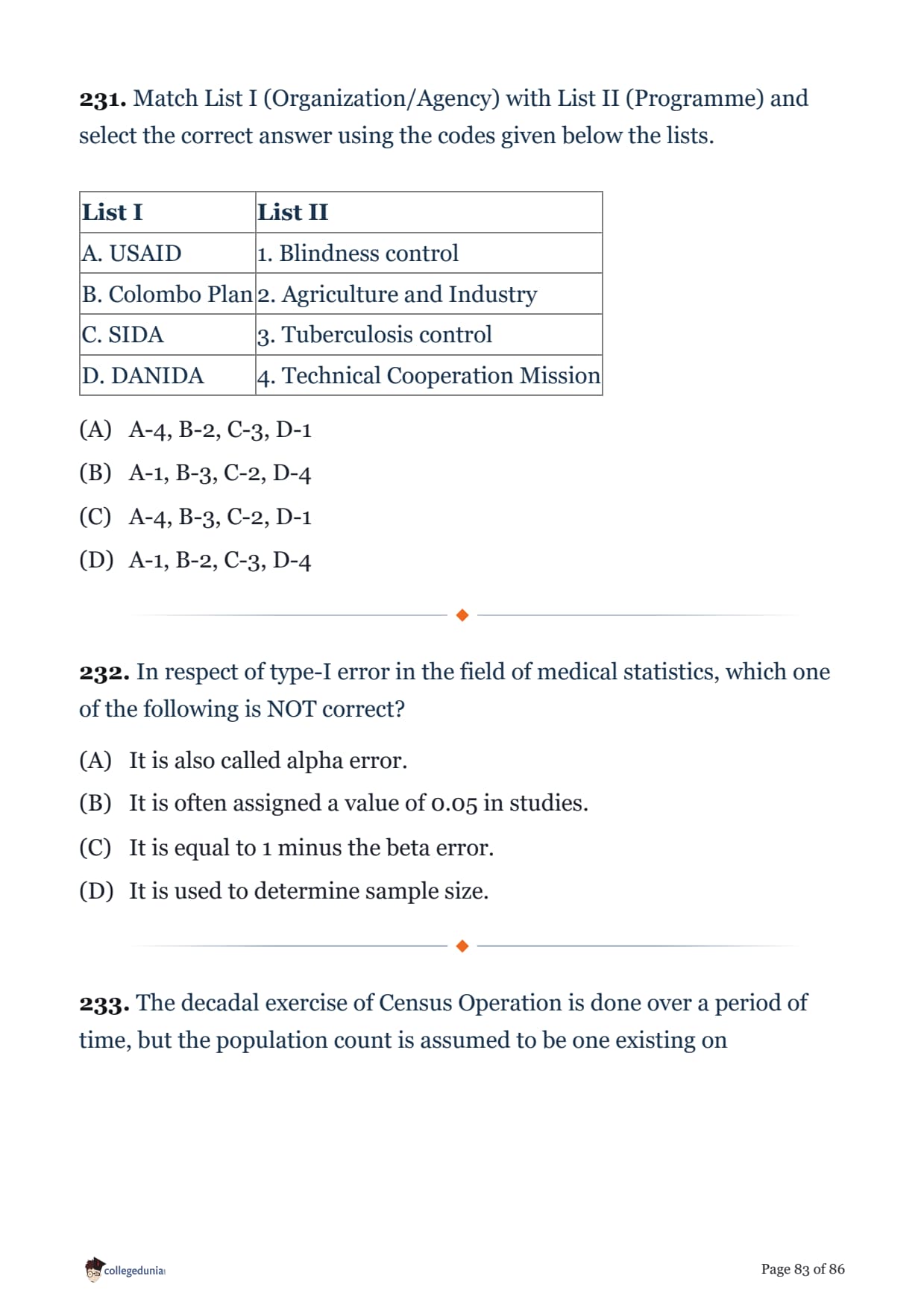
Match List I (Organization/Agency) with List II (Programme) and select the correct answer using the codes given below the lists.
| List I | List II |
|---|---|
| A. USAID | 1. Blindness control |
| B. Colombo Plan | 2. Agriculture and Industry |
| C. SIDA | 3. Tuberculosis control |
| D. DANIDA | 4. Technical Cooperation Mission |
In respect of type-I error in the field of medical statistics, which one of the following is NOT correct?
The decadal exercise of Census Operation is done over a period of time, but the population count is assumed to be one existing on
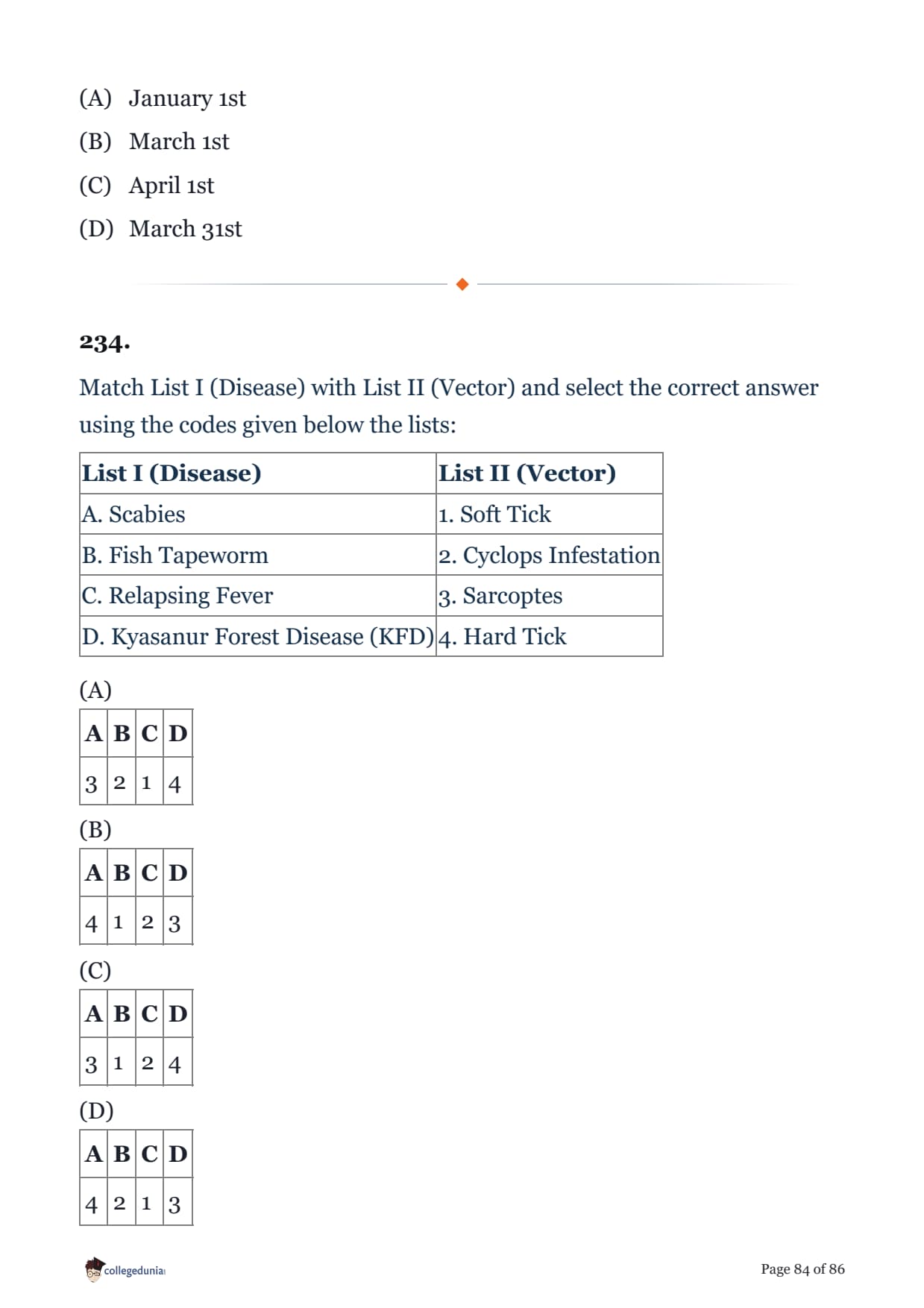
Match List I (Disease) with List II (Vector) and select the correct answer using the codes given below the lists:
| List I (Disease) | List II (Vector) |
|---|---|
| A. Scabies | 1. Soft Tick |
| B. Fish Tapeworm | 2. Cyclops Infestation |
| C. Relapsing Fever | 3. Sarcoptes |
| D. Kyasanur Forest Disease (KFD) | 4. Hard Tick |
Effect of pyrethrum on mosquitoes is described as
A screening test applied to detect diabetes in population over 40 years of age should satisfy the following criteria, EXCEPT for
A 5-year old boy, a known patient of bronchial asthma, presents with cough, wheezing and breathlessness. Examination shows respiratory rate 48 per minute, pulsus paradoxus, and bilateral rhonchi. The most appropriate immediate treatment is
What is the correct sequence of the following while resuscitating an infant with Foreign Body Airway Obstruction?
1. Chest thrust
2. Tongue-jaw lift
3. Back blows
Select the correct sequence from the codes given below.
Regarding simple febrile seizure, which one of the following statements is NOT correct?
NEET PG 2003 (AIPGMEE) Exam Pattern
AIPGMEE 2003 was an objective-type paper, not the computer-based NEET PG format students sit today. Here is what defined its pattern.
- Question format: single-best-response multiple-choice questions, one correct option per question.
- Conducting body: the Central Board of Secondary Education (CBSE) ran AIPGMEE on behalf of the Medical Council of India (MCI); the National Board of Examinations took charge of the postgraduate entrance exam only years later.
- Purpose: ranking students for 50% of India's all-India-quota MD, MS and PG Diploma seats, separate from state-quota counselling and institutional exams like AIIMS PG and JIPMER PG.
- Syllabus base: the Graduate Medical Education Regulations framed by the Medical Council of India, spanning every pre-clinical, para-clinical and clinical subject taught in MBBS.
- This paper: compiles 239 questions merged from the original AIPGMEE 2003 booklets, spread across 19 subjects from Social and Preventive Medicine to Anaesthesia.
NEET PG 2003 Question Paper Discussion Video
Source: Doc. Swati
Subject-Wise Question Distribution in This NEET PG 2003 Paper
Breaking down the 239 questions by subject shows where this paper leans hardest, useful for planning revision before you attempt it.
- Social and Preventive Medicine carries the largest share with 64 questions.
- Gynaecology and Obstetrics follows with 48 questions, and Medicine contributes 37.
- Pediatrics adds 31 questions and Surgery another 13, together with SPM and Gynae-Obs making up close to two-thirds of the paper.
- Pharmacology and Microbiology hold 8 questions each, with the rest spread across Orthopedics, Pathology, Psychiatry, Medical Genetics, Ophthalmology and other clinical subjects.
- By difficulty, 133 questions are rated medium, 55 easy and 51 hard, so working through the full set mirrors real exam-day pressure.
NEET PG 2003 Question Paper FAQs
Ques. What is the NEET PG 2003 question paper?
Ans. It is the All India Post Graduate Medical Entrance Examination (AIPGMEE) held in 2003, an objective multiple-choice test used to rank students for 50% of India's MD, MS and PG Diploma seats. This compiled version carries 239 questions from the original booklets with worked solutions.
Ques. Who conducted the NEET PG 2003 (AIPGMEE) paper?
Ans. The Central Board of Secondary Education (CBSE) conducted AIPGMEE 2003 on behalf of the Medical Council of India (MCI). The National Board of Examinations, now at natboard.edu.in, took over the postgraduate entrance exam years later and eventually replaced it with NEET PG in 2013.
Ques. How many questions are in this NEET PG 2003 paper?
Ans. This compiled paper has 239 questions merged from the original AIPGMEE 2003 test booklets, covering subjects from Social and Preventive Medicine to Anaesthesia.
Ques. Which subject carries the most questions in NEET PG 2003?
Ans. Social and Preventive Medicine has the largest share with 64 questions, followed by Gynaecology and Obstetrics with 48 and Medicine with 37.
Ques. Is the NEET PG 2003 (AIPGMEE) paper still useful for NEET PG preparation?
Ans. Yes. Even though the exam has since moved to the NEET PG format under the NBE, solving the AIPGMEE 2003 paper gives subject-wise practice in clinical areas like Medicine, Surgery and Obstetrics-Gynaecology that still dominate the current exam.
Ques. Where can I download the NEET PG 2003 question paper with solutions for free?
Ans. Both the question paper and the solved answer key are hosted as free PDFs in the download table and flipbook above, with a separate Check Solutions PDF giving a step-by-step explanation for every question.



Comments