





This is the AIIMS PG entrance examination from 2001, popularly archived today as NEET PG 2001, conducted by the All India Institute of Medical Sciences (AIIMS), New Delhi for admission to its own MD, MS and MDS seats. This compiled paper carries 200 questions from the original test booklet, each with a step-by-step solution.
| NEET PG 2001 Question Paper with Solutions | Download PDF | Check Solutions |
NEET PG 2001 Questions with Solutions
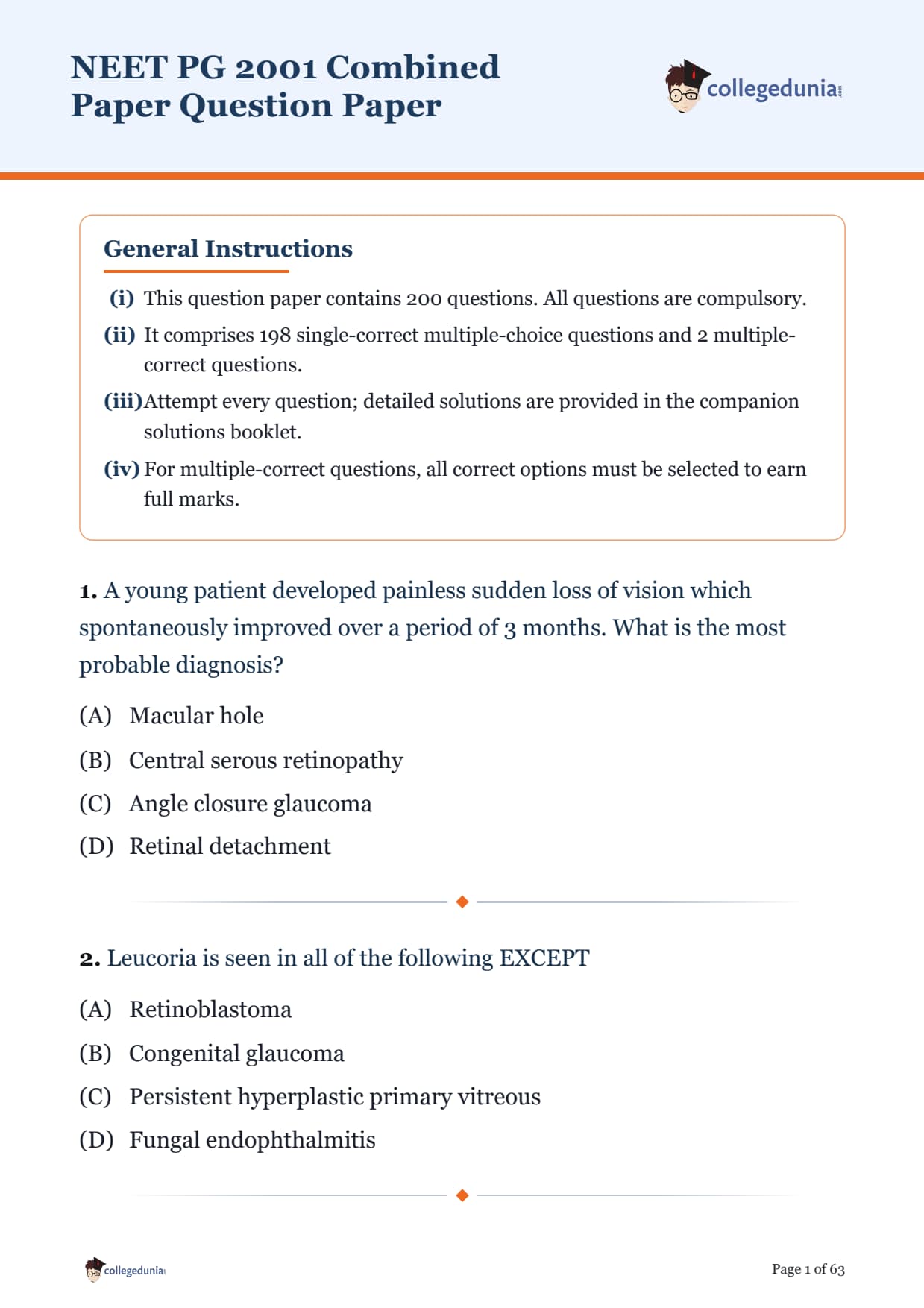
A young patient developed painless sudden loss of vision which spontaneously improved over a period of 3 months. What is the most probable diagnosis?
Leucoria is seen in all of the following EXCEPT
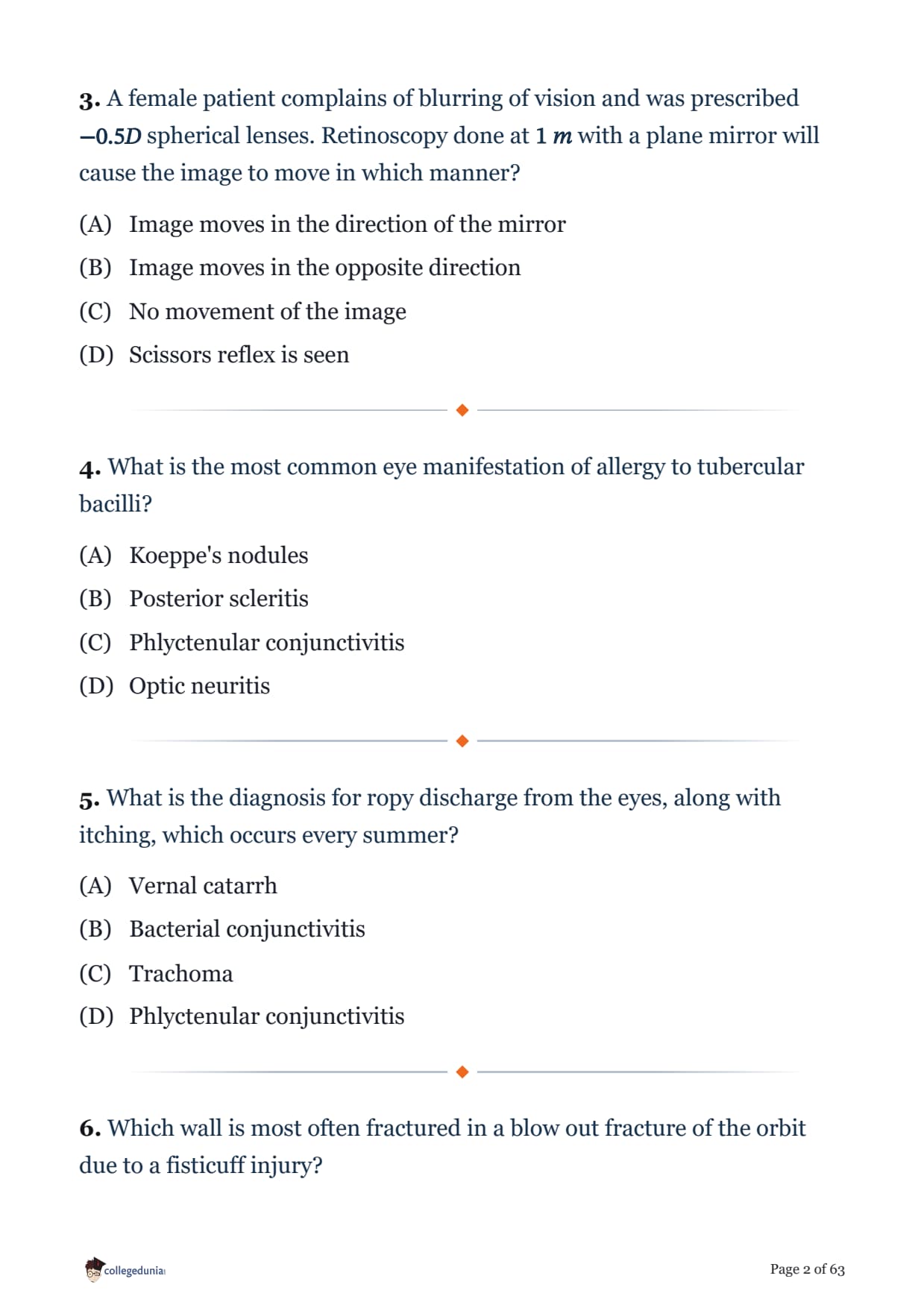
A female patient complains of blurring of vision and was prescribed \(-0.5D\) spherical lenses. Retinoscopy done at \(1\ m\) with a plane mirror will cause the image to move in which manner?
What is the most common eye manifestation of allergy to tubercular bacilli?
What is the diagnosis for ropy discharge from the eyes, along with itching, which occurs every summer?
Which wall is most often fractured in a blow out fracture of the orbit due to a fisticuff injury?
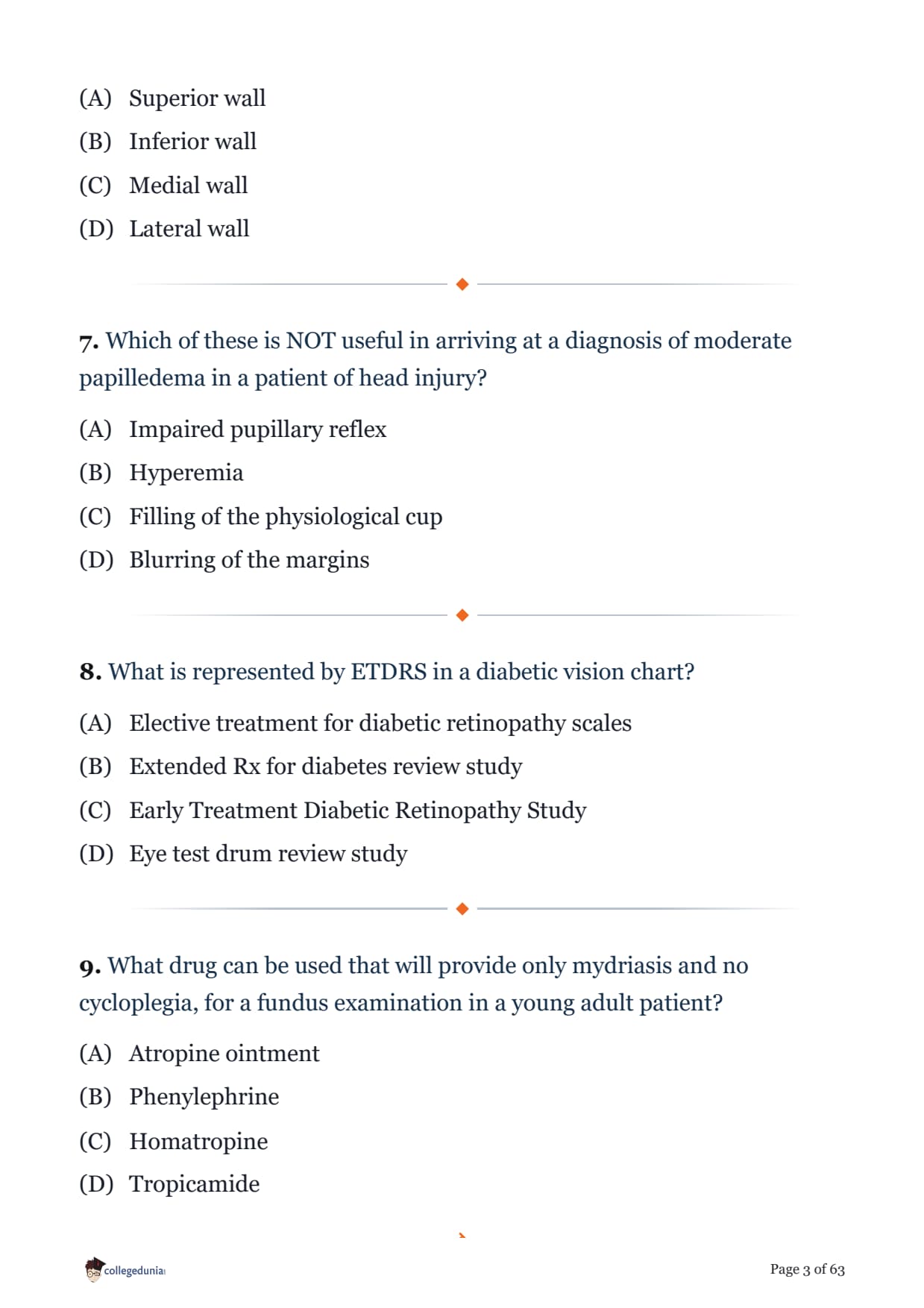
Which of these is NOT useful in arriving at a diagnosis of moderate papilledema in a patient of head injury?
What is represented by ETDRS in a diabetic vision chart?
What drug can be used that will provide only mydriasis and no cycloplegia, for a fundus examination in a young adult patient?
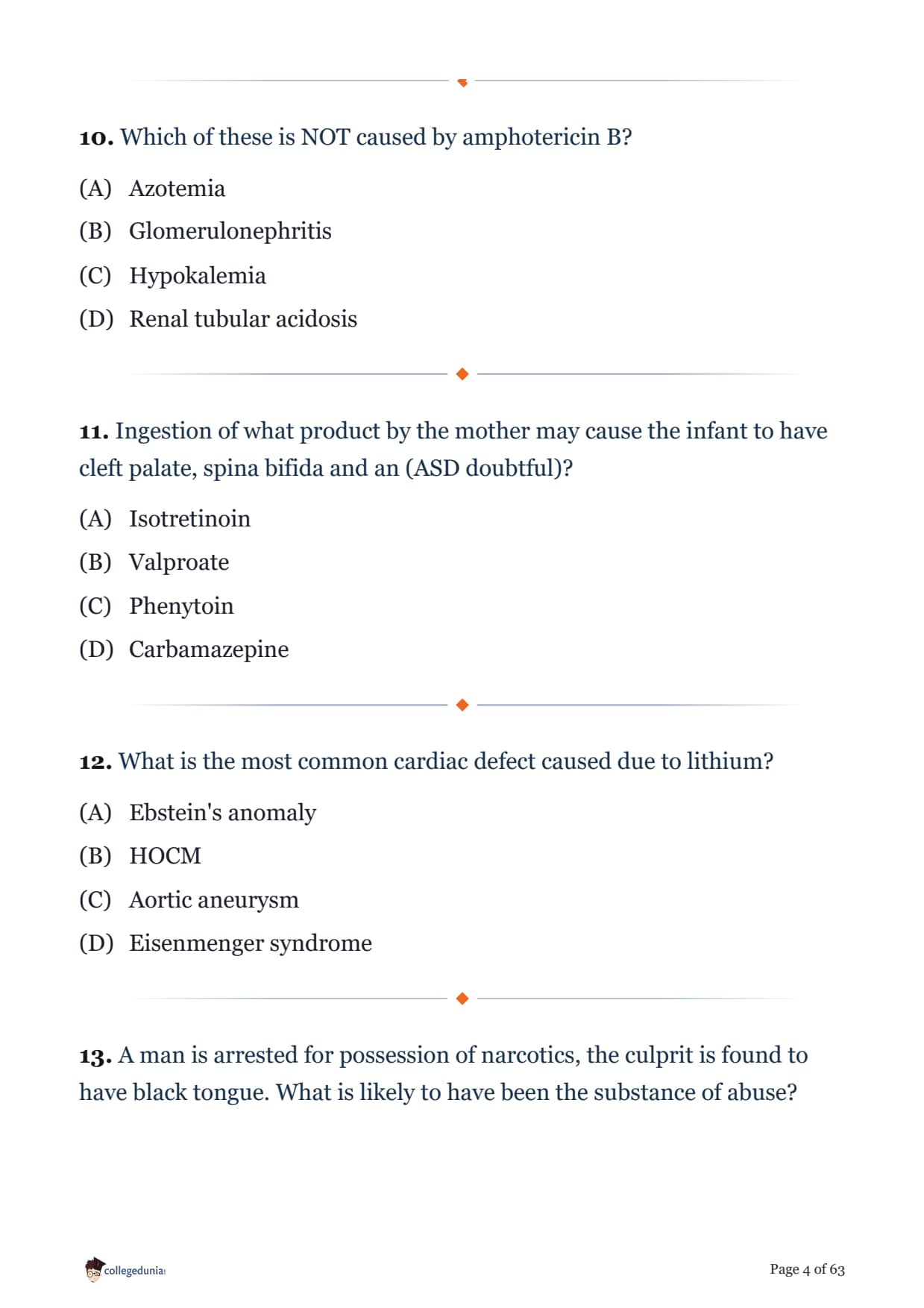
Which of these is NOT caused by amphotericin B?
Ingestion of what product by the mother may cause the infant to have cleft palate, spina bifida and an (ASD doubtful)?
What is the most common cardiac defect caused due to lithium?
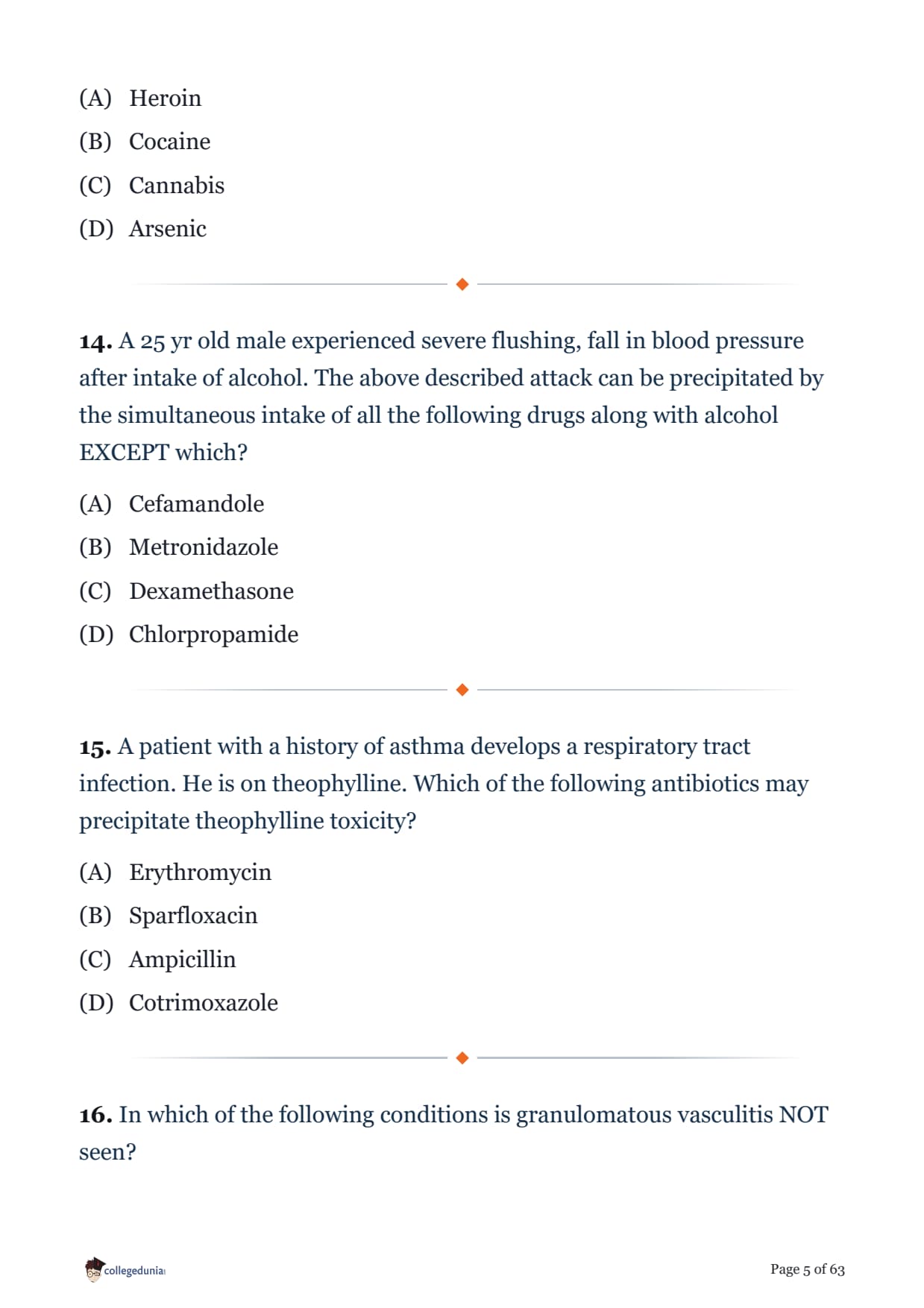
A man is arrested for possession of narcotics, the culprit is found to have black tongue. What is likely to have been the substance of abuse?
A 25 yr old male experienced severe flushing, fall in blood pressure after intake of alcohol. The above described attack can be precipitated by the simultaneous intake of all the following drugs along with alcohol EXCEPT which?
A patient with a history of asthma develops a respiratory tract infection. He is on theophylline. Which of the following antibiotics may precipitate theophylline toxicity?
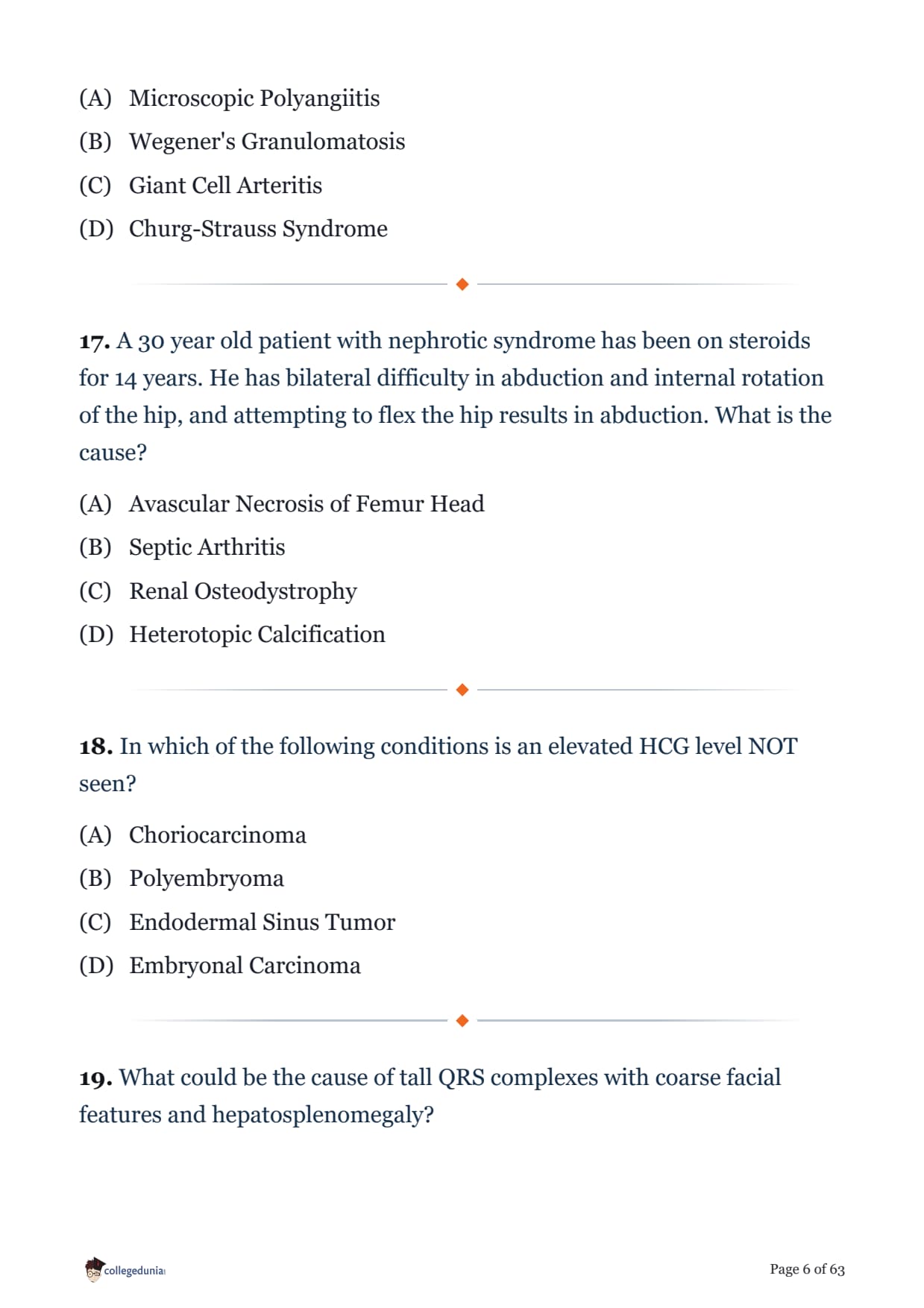
In which of the following conditions is granulomatous vasculitis NOT seen?
A 30 year old patient with nephrotic syndrome has been on steroids for 14 years. He has bilateral difficulty in abduction and internal rotation of the hip, and attempting to flex the hip results in abduction. What is the cause?
In which of the following conditions is an elevated HCG level NOT seen?
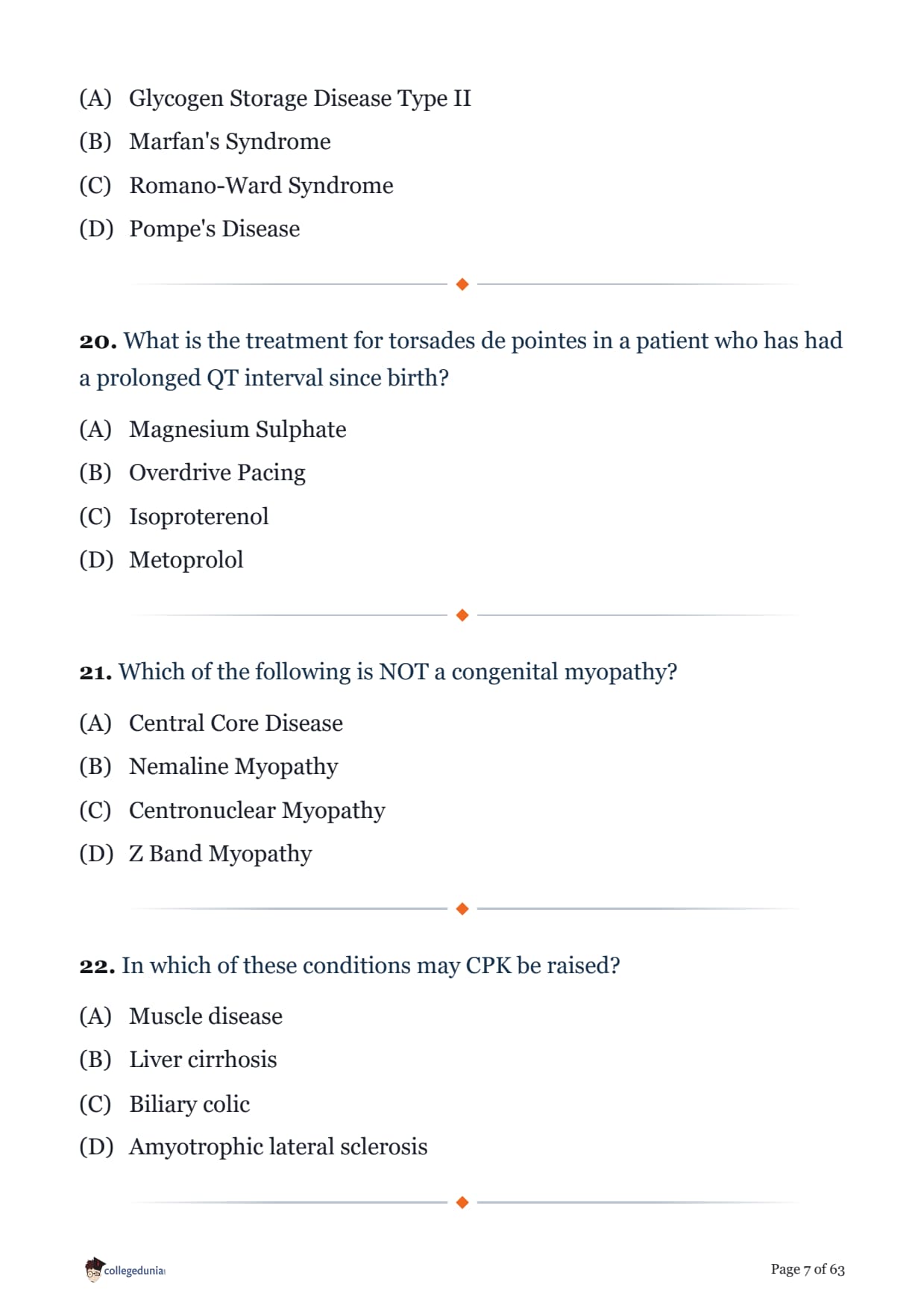
What could be the cause of tall QRS complexes with coarse facial features and hepatosplenomegaly?
What is the treatment for torsades de pointes in a patient who has had a prolonged QT interval since birth?
Which of the following is NOT a congenital myopathy?
In which of these conditions may CPK be raised?
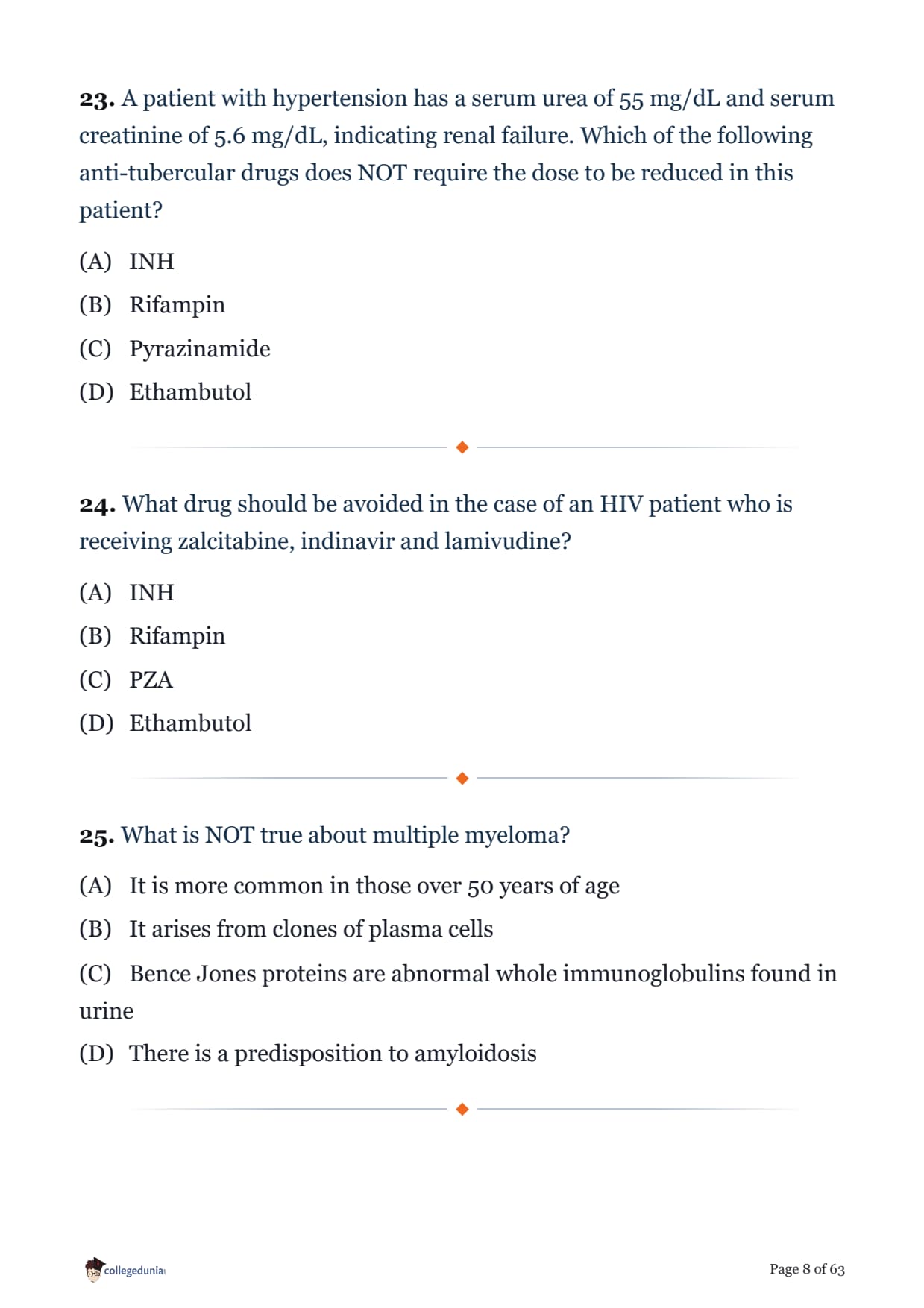
A patient with hypertension has a serum urea of 55 mg/dL and serum creatinine of 5.6 mg/dL, indicating renal failure. Which of the following anti-tubercular drugs does NOT require the dose to be reduced in this patient?
What drug should be avoided in the case of an HIV patient who is receiving zalcitabine, indinavir and lamivudine?
What is NOT true about multiple myeloma?
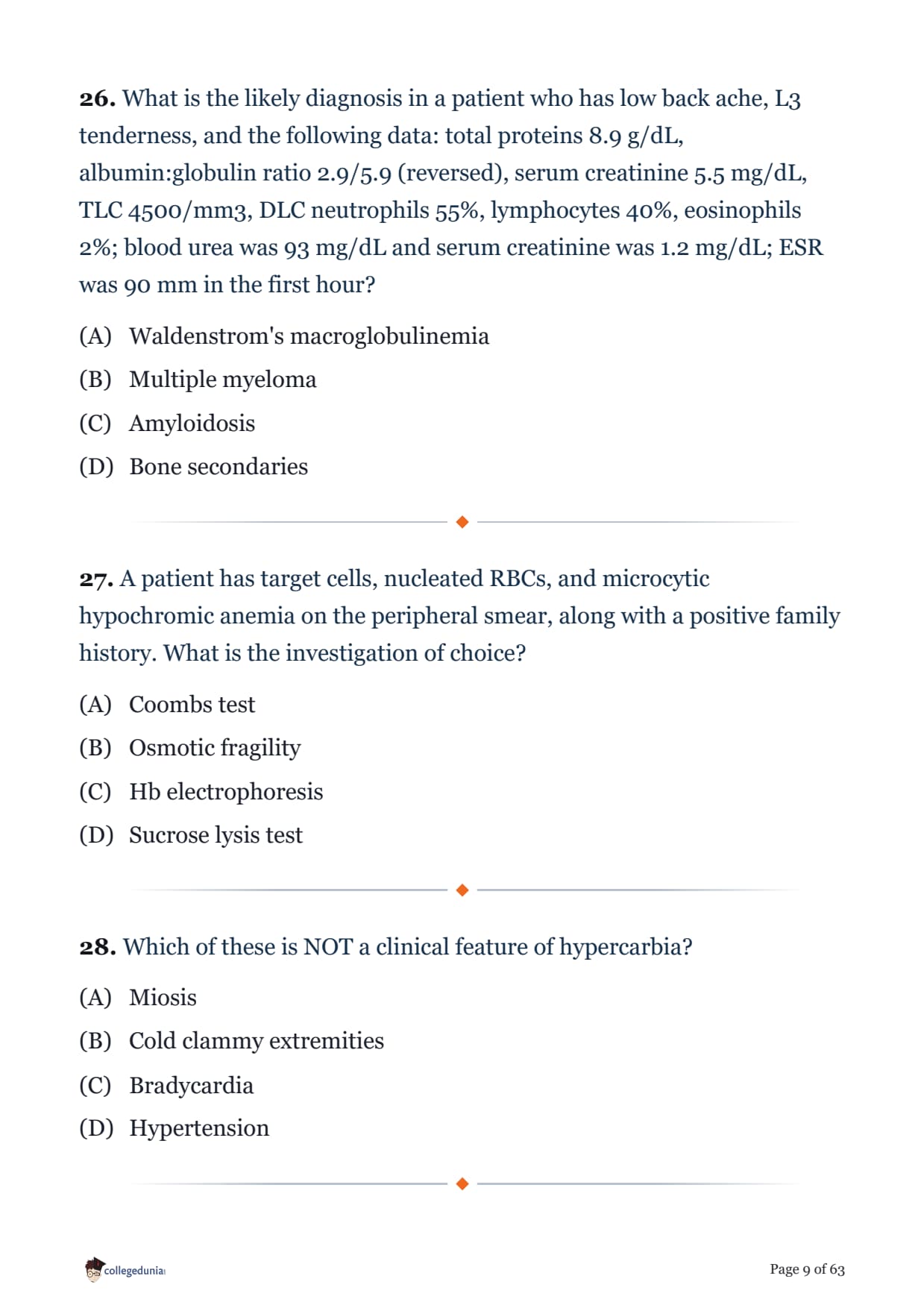
What is the likely diagnosis in a patient who has low back ache, L3 tenderness, and the following data: total proteins 8.9 g/dL, albumin:globulin ratio 2.9/5.9 (reversed), serum creatinine 5.5 mg/dL, TLC 4500/mm3, DLC neutrophils 55%, lymphocytes 40%, eosinophils 2%; blood urea was 93 mg/dL and serum creatinine was 1.2 mg/dL; ESR was 90 mm in the first hour?
A patient has target cells, nucleated RBCs, and microcytic hypochromic anemia on the peripheral smear, along with a positive family history. What is the investigation of choice?
Which of these is NOT a clinical feature of hypercarbia?
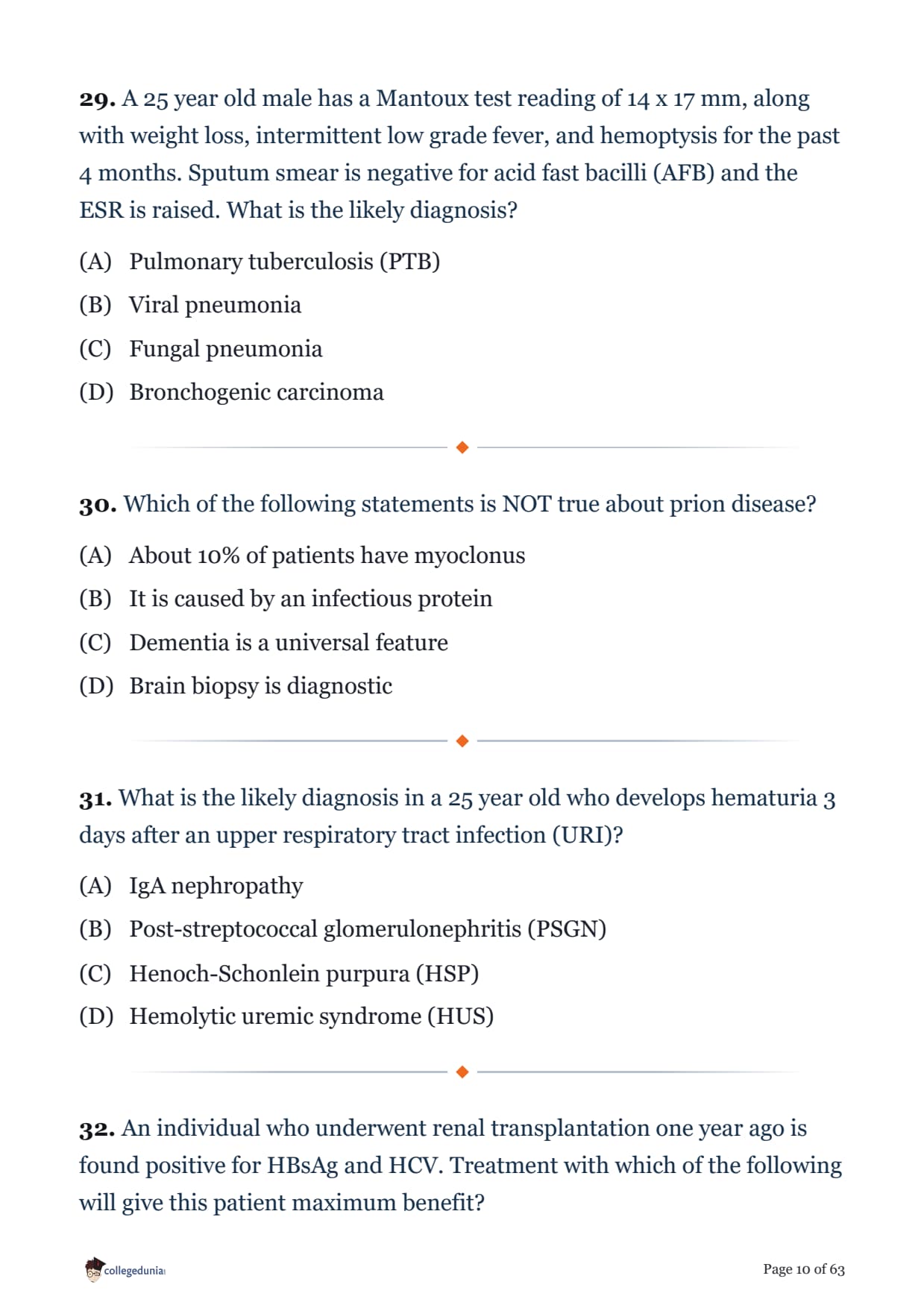
A 25 year old male has a Mantoux test reading of 14 x 17 mm, along with weight loss, intermittent low grade fever, and hemoptysis for the past 4 months. Sputum smear is negative for acid fast bacilli (AFB) and the ESR is raised. What is the likely diagnosis?
Which of the following statements is NOT true about prion disease?
What is the likely diagnosis in a 25 year old who develops hematuria 3 days after an upper respiratory tract infection (URI)?
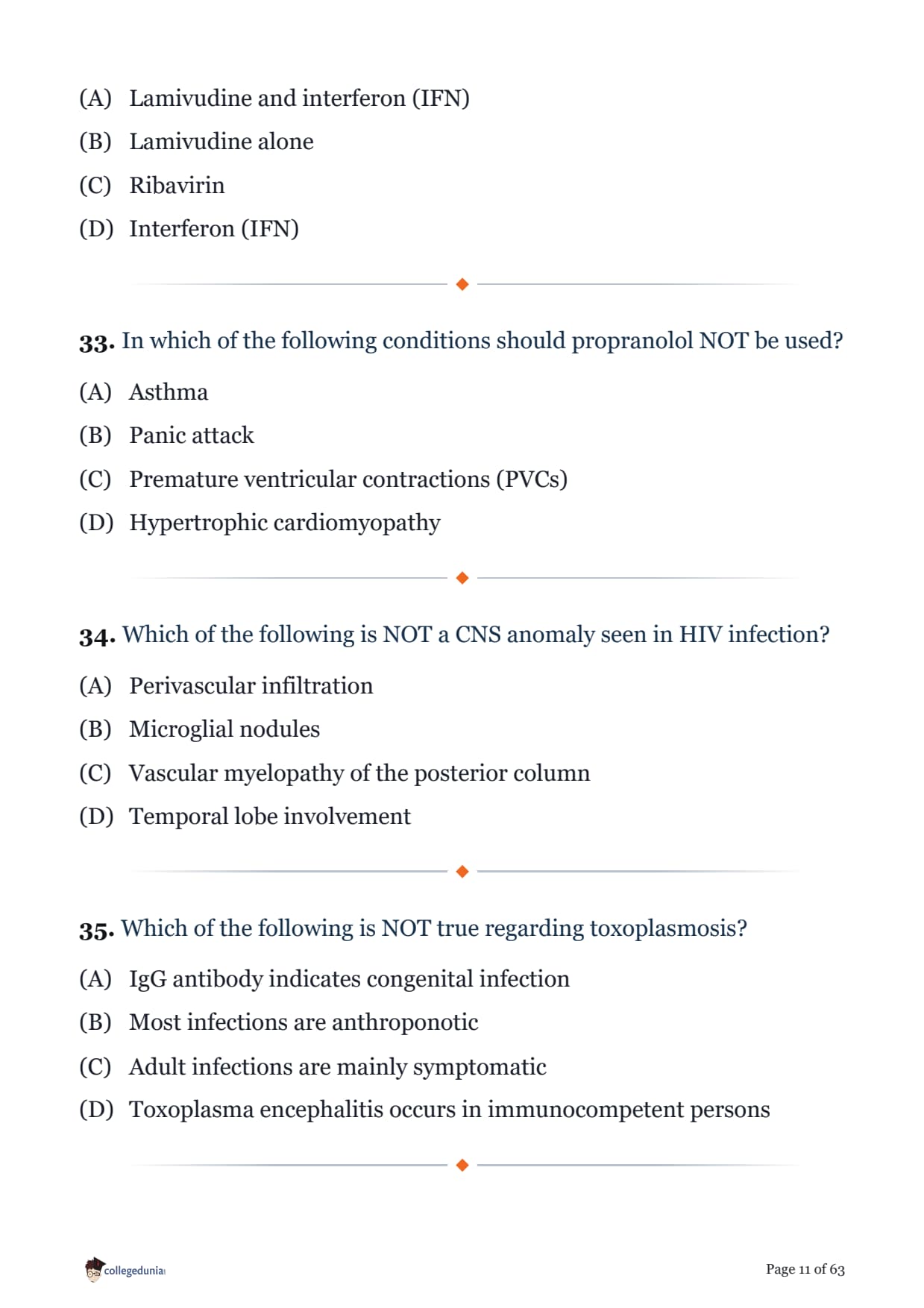
An individual who underwent renal transplantation one year ago is found positive for HBsAg and HCV. Treatment with which of the following will give this patient maximum benefit?
In which of the following conditions should propranolol NOT be used?
Which of the following is NOT a CNS anomaly seen in HIV infection?
Which of the following is NOT true regarding toxoplasmosis?
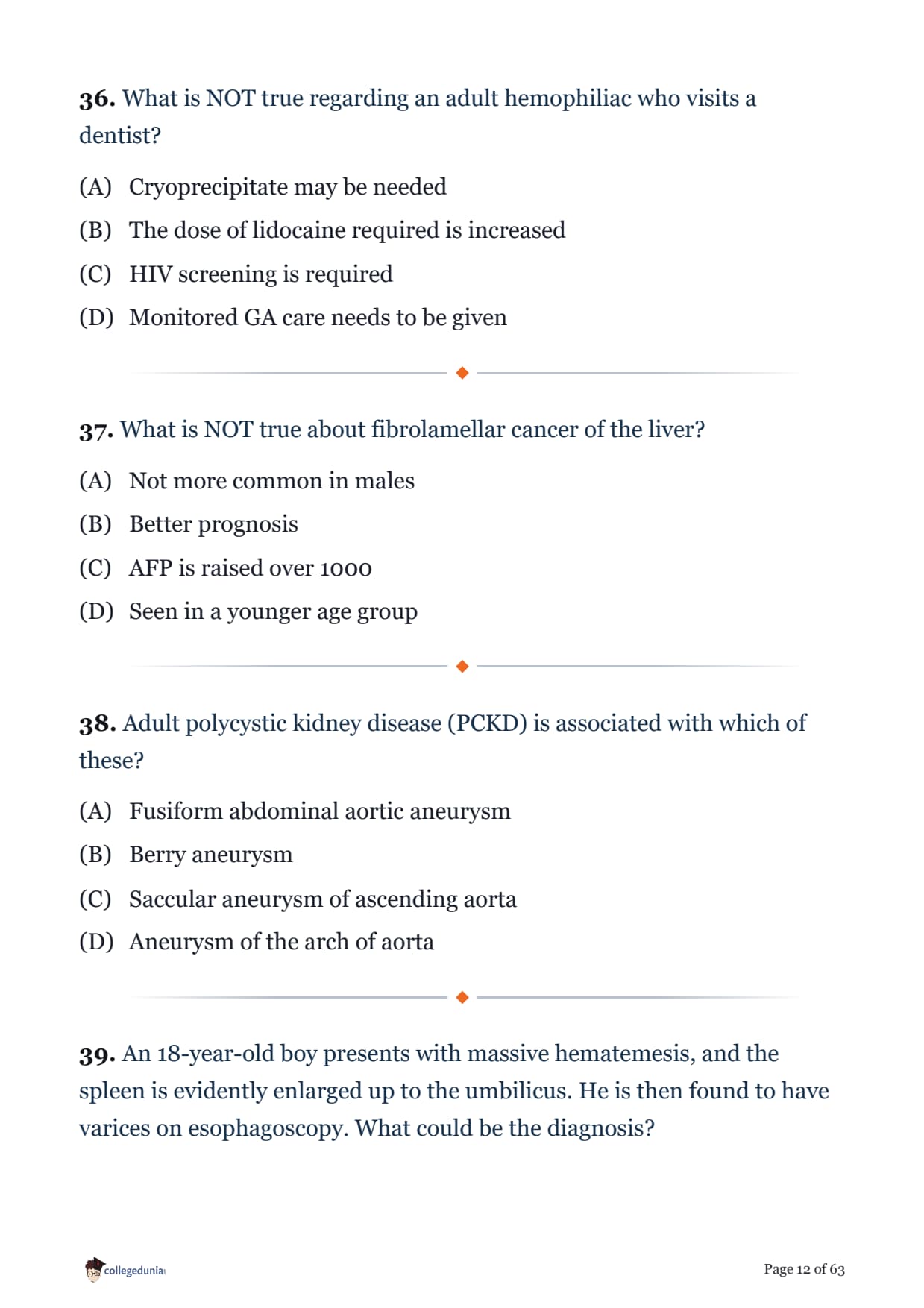
What is NOT true regarding an adult hemophiliac who visits a dentist?
What is NOT true about fibrolamellar cancer of the liver?
Adult polycystic kidney disease (PCKD) is associated with which of these?
An 18-year-old boy presents with massive hematemesis, and the spleen is evidently enlarged up to the umbilicus. He is then found to have varices on esophagoscopy. What could be the diagnosis?
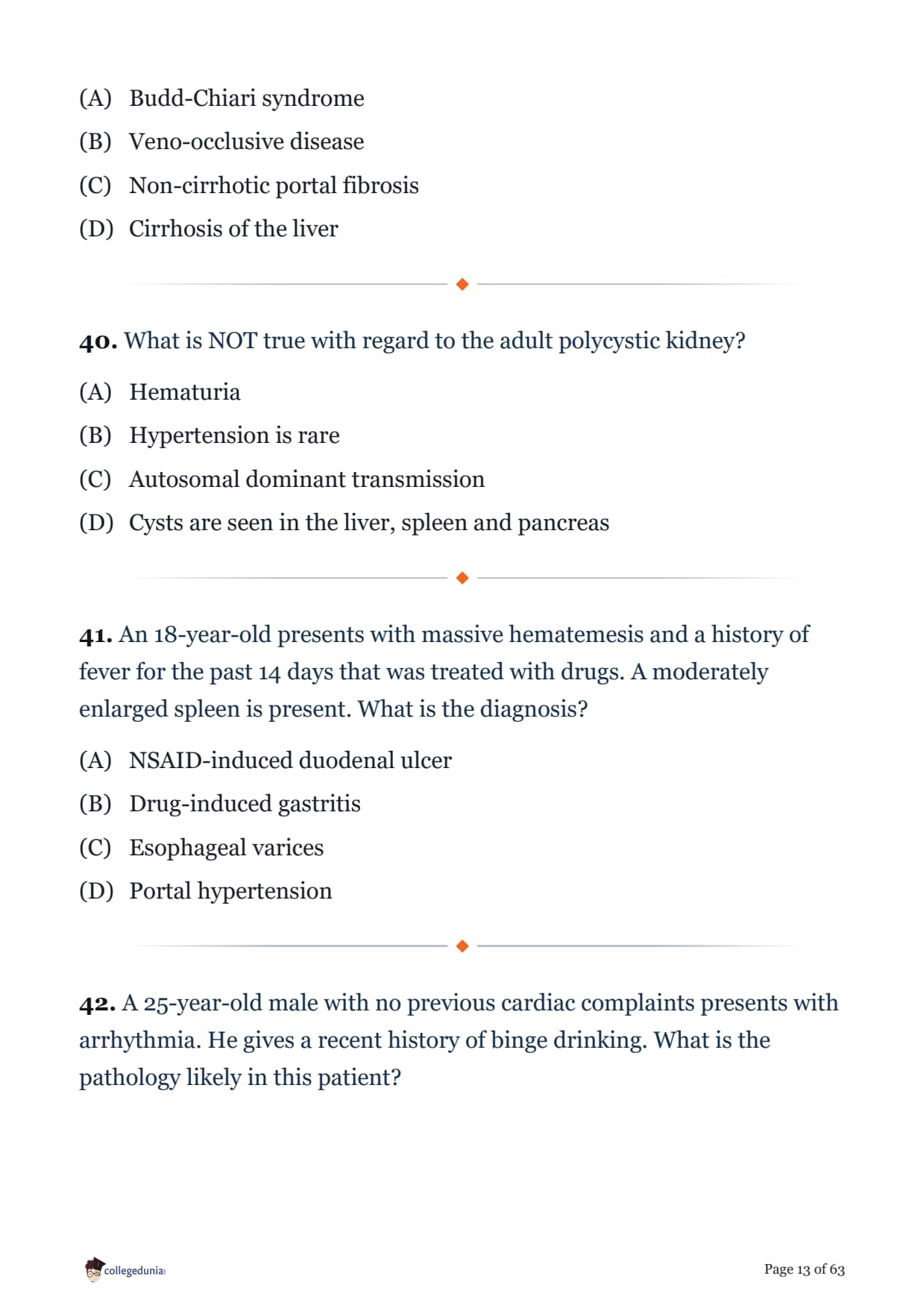
What is NOT true with regard to the adult polycystic kidney?
An 18-year-old presents with massive hematemesis and a history of fever for the past 14 days that was treated with drugs. A moderately enlarged spleen is present. What is the diagnosis?
A 25-year-old male with no previous cardiac complaints presents with arrhythmia. He gives a recent history of binge drinking. What is the pathology likely in this patient?
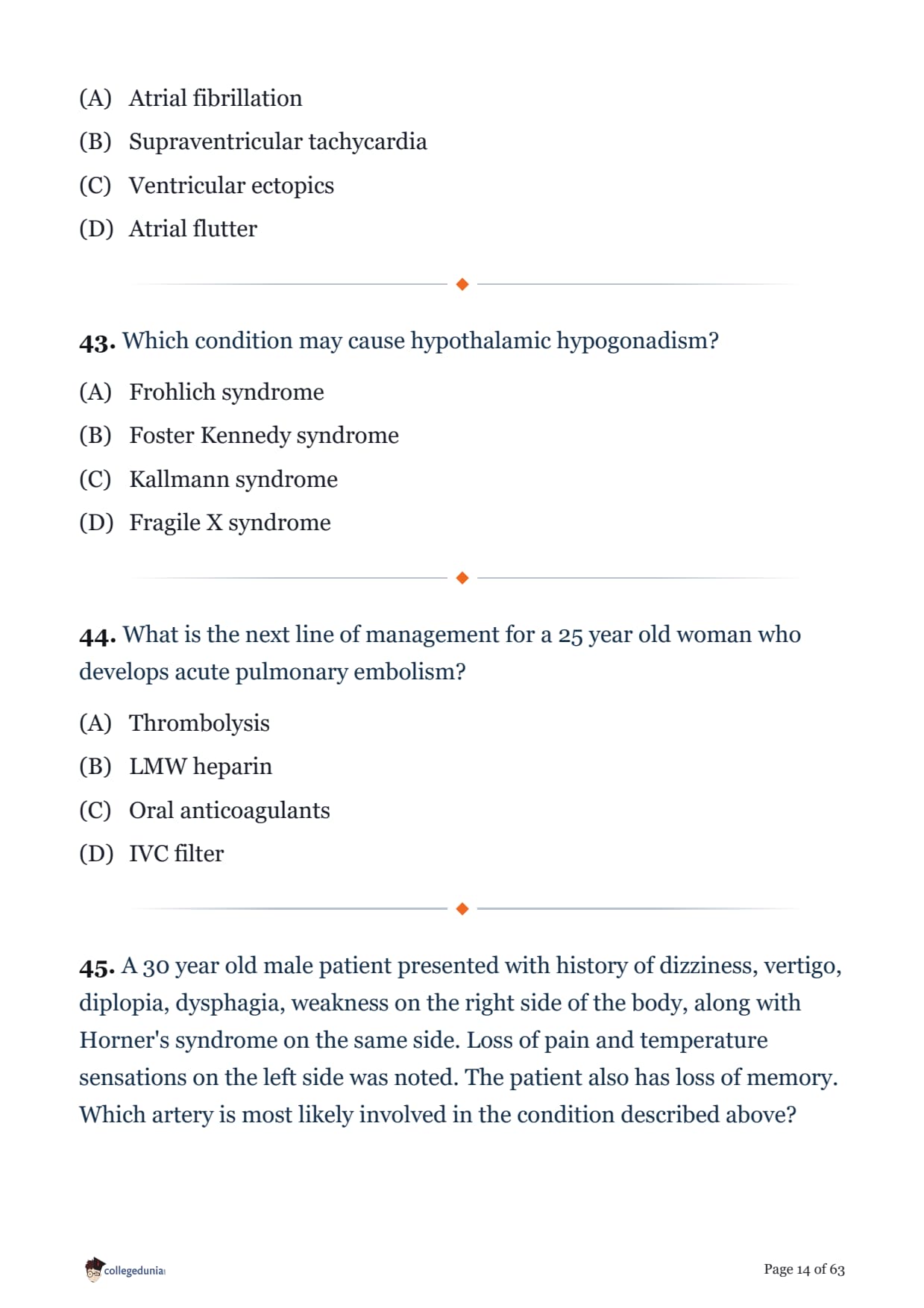
Which condition may cause hypothalamic hypogonadism?
What is the next line of management for a 25 year old woman who develops acute pulmonary embolism?
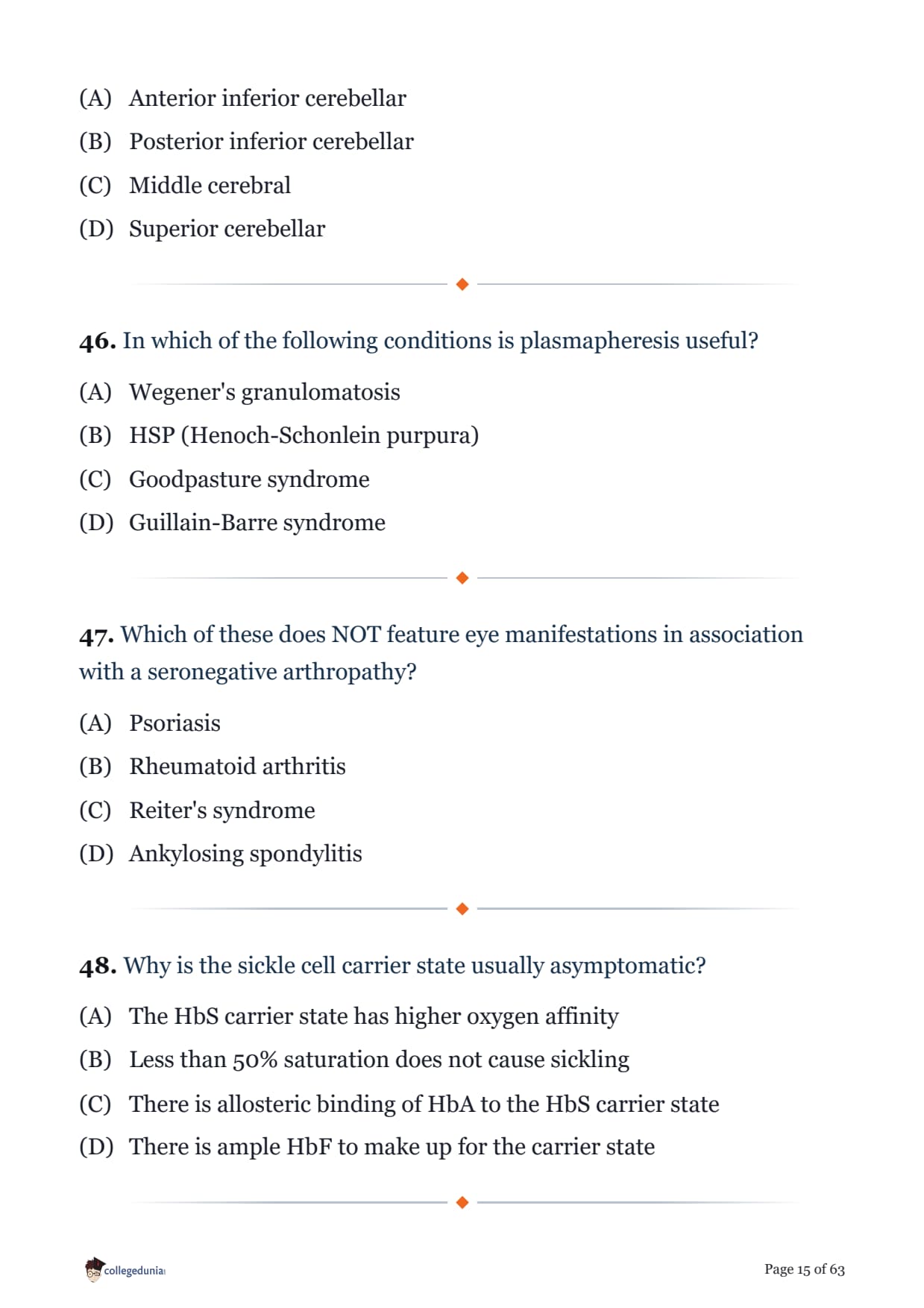
A 30 year old male patient presented with history of dizziness, vertigo, diplopia, dysphagia, weakness on the right side of the body, along with Horner's syndrome on the same side. Loss of pain and temperature sensations on the left side was noted. The patient also has loss of memory. Which artery is most likely involved in the condition described above?
In which of the following conditions is plasmapheresis useful?
Which of these does NOT feature eye manifestations in association with a seronegative arthropathy?
Why is the sickle cell carrier state usually asymptomatic?
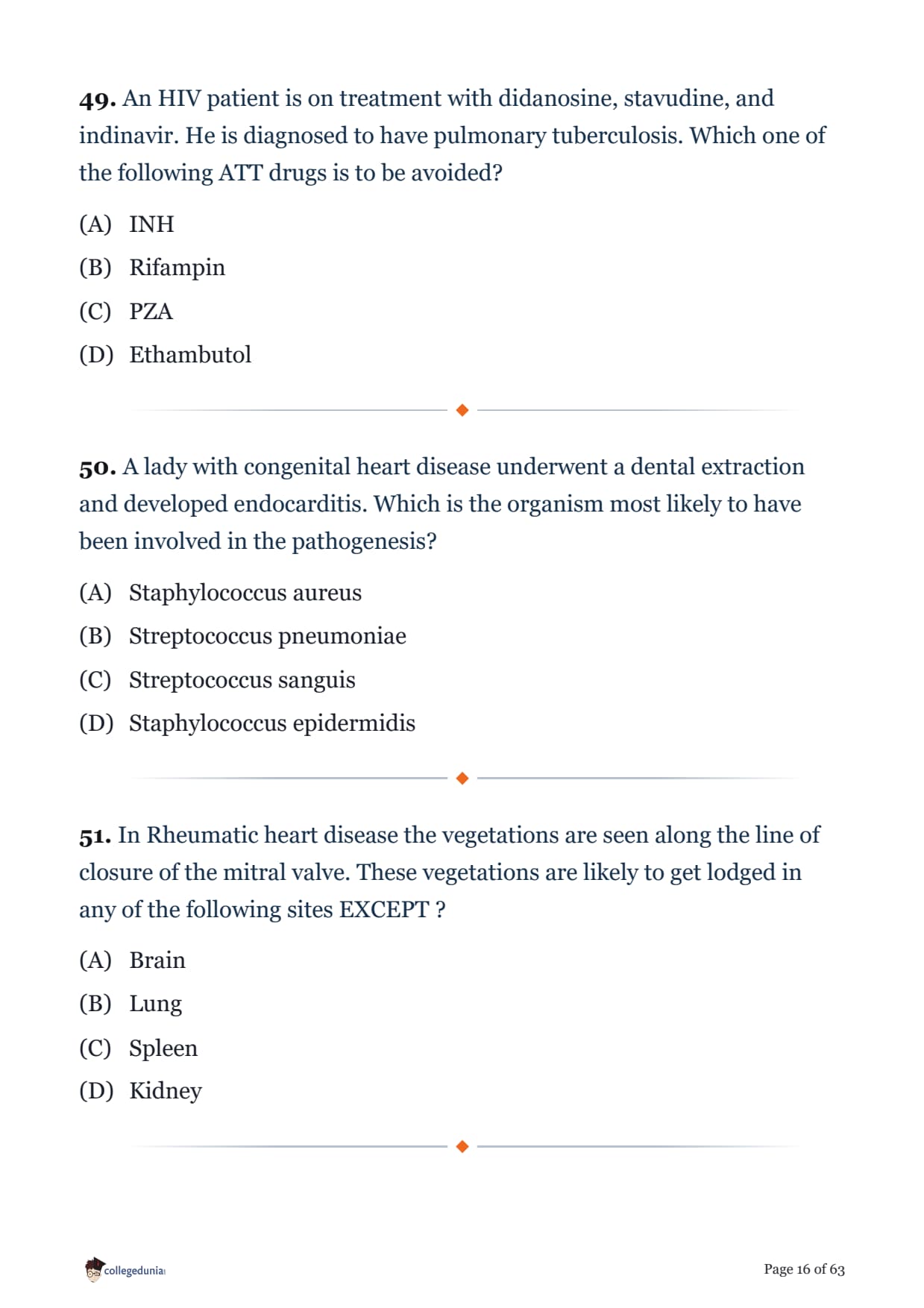
An HIV patient is on treatment with didanosine, stavudine, and indinavir. He is diagnosed to have pulmonary tuberculosis. Which one of the following ATT drugs is to be avoided?
A lady with congenital heart disease underwent a dental extraction and developed endocarditis. Which is the organism most likely to have been involved in the pathogenesis?
In Rheumatic heart disease the vegetations are seen along the line of closure of the mitral valve. These vegetations are likely to get lodged in any of the following sites EXCEPT ?
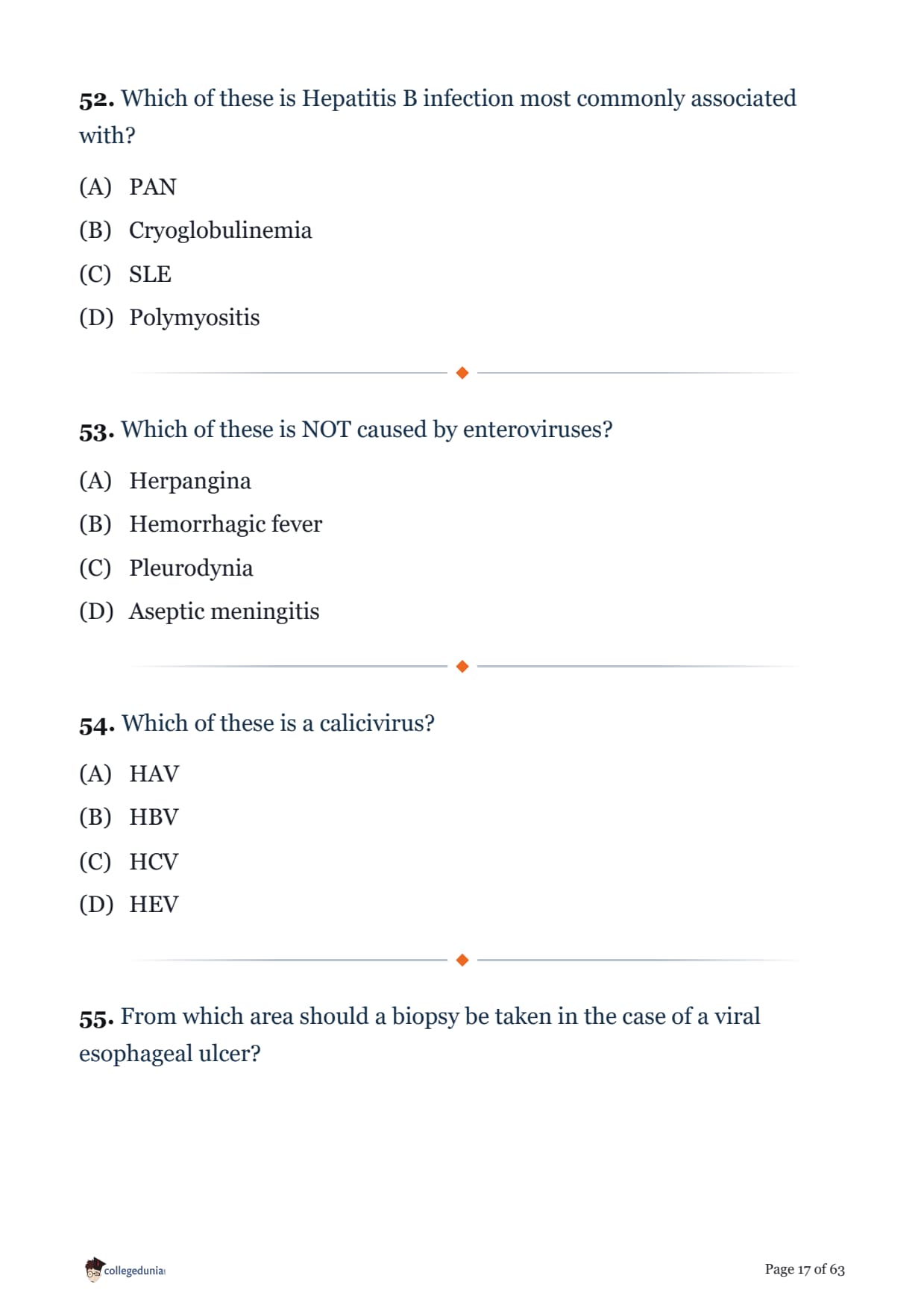
Which of these is Hepatitis B infection most commonly associated with?
Which of these is NOT caused by enteroviruses?
Which of these is a calicivirus?
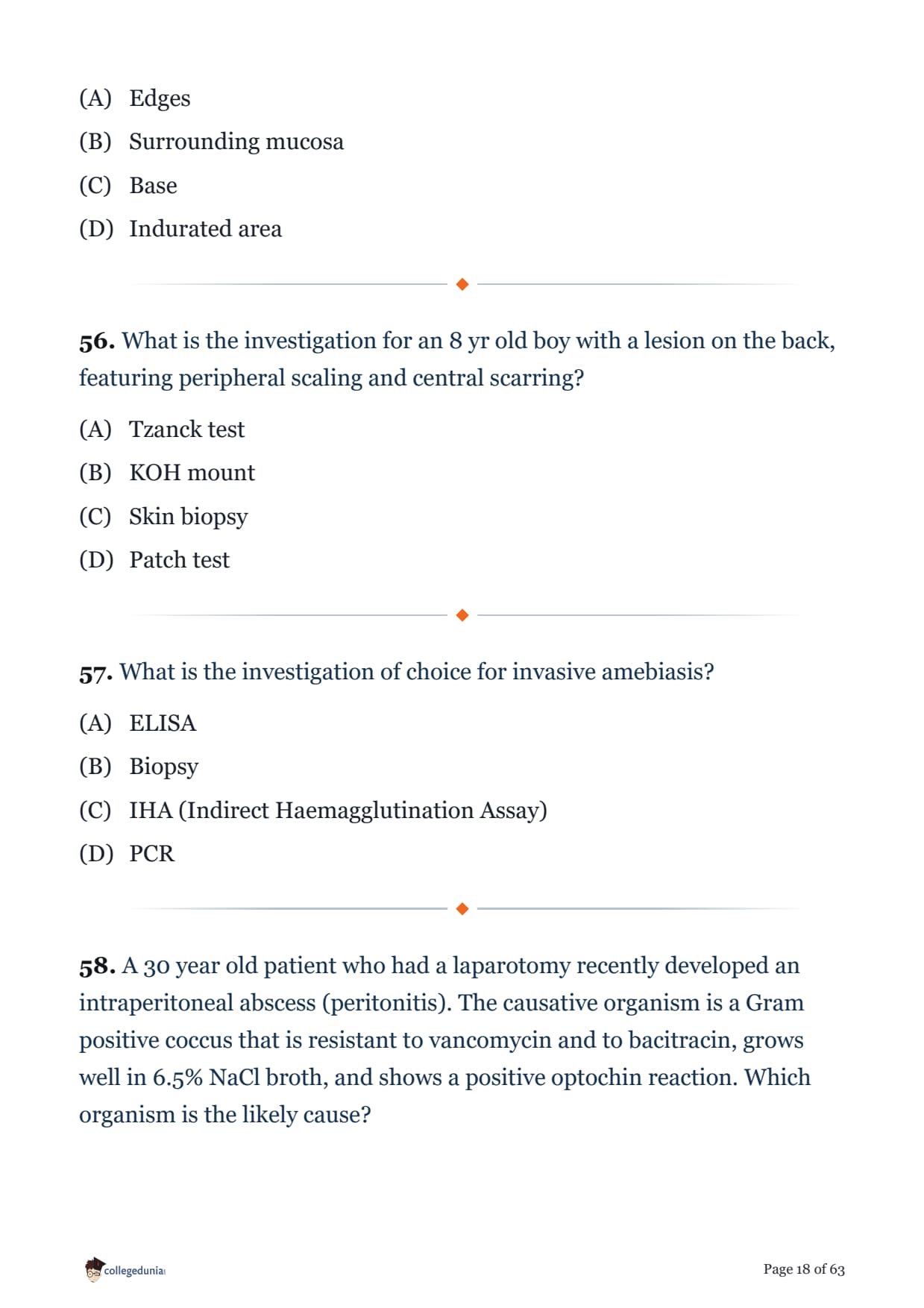
From which area should a biopsy be taken in the case of a viral esophageal ulcer?
What is the investigation for an 8 yr old boy with a lesion on the back, featuring peripheral scaling and central scarring?
What is the investigation of choice for invasive amebiasis?
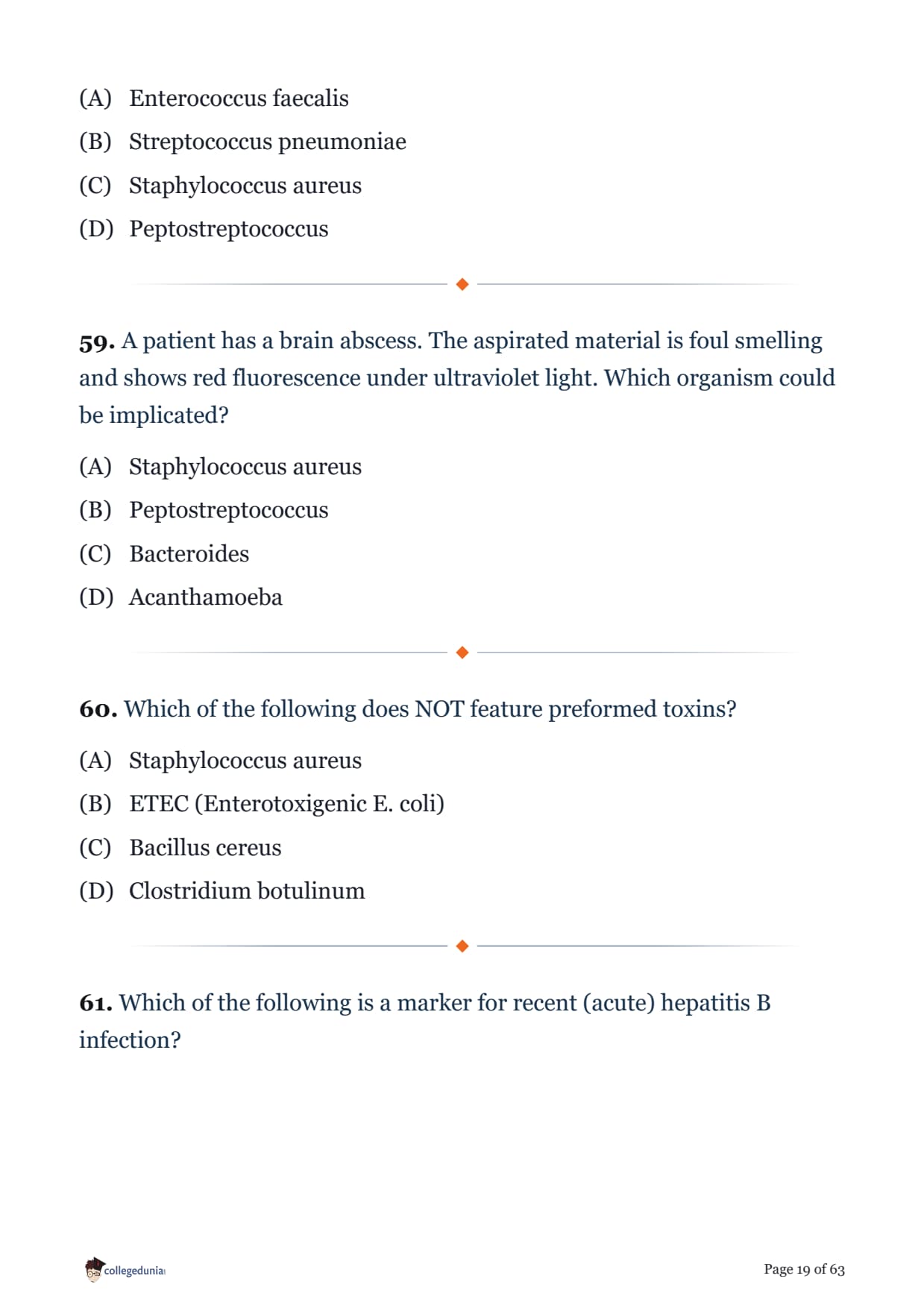
A 30 year old patient who had a laparotomy recently developed an intraperitoneal abscess (peritonitis). The causative organism is a Gram positive coccus that is resistant to vancomycin and to bacitracin, grows well in 6.5% NaCl broth, and shows a positive optochin reaction. Which organism is the likely cause?
A patient has a brain abscess. The aspirated material is foul smelling and shows red fluorescence under ultraviolet light. Which organism could be implicated?
Which of the following does NOT feature preformed toxins?
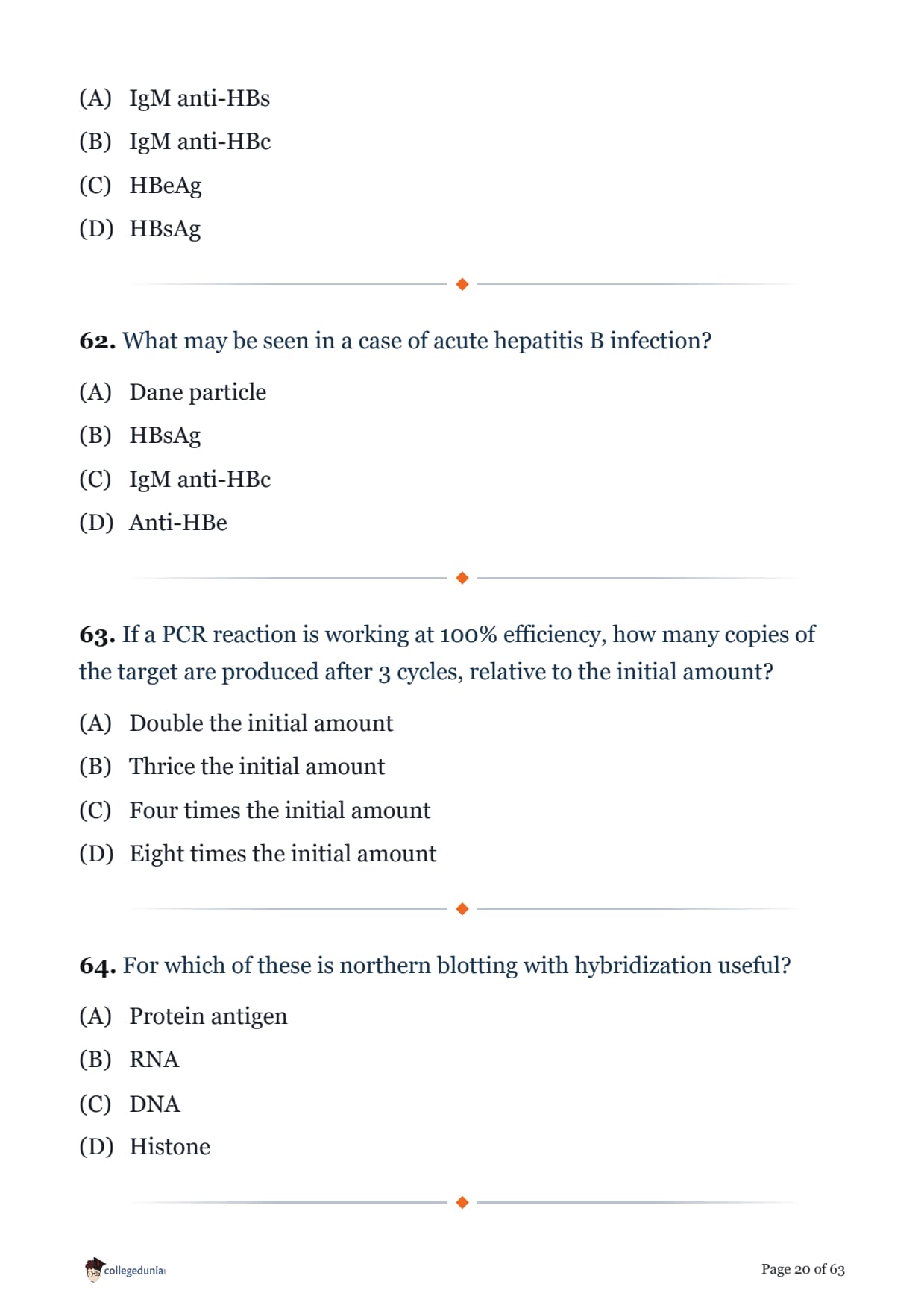
Which of the following is a marker for recent (acute) hepatitis B infection?
What may be seen in a case of acute hepatitis B infection?
If a PCR reaction is working at 100% efficiency, how many copies of the target are produced after 3 cycles, relative to the initial amount?
For which of these is northern blotting with hybridization useful?
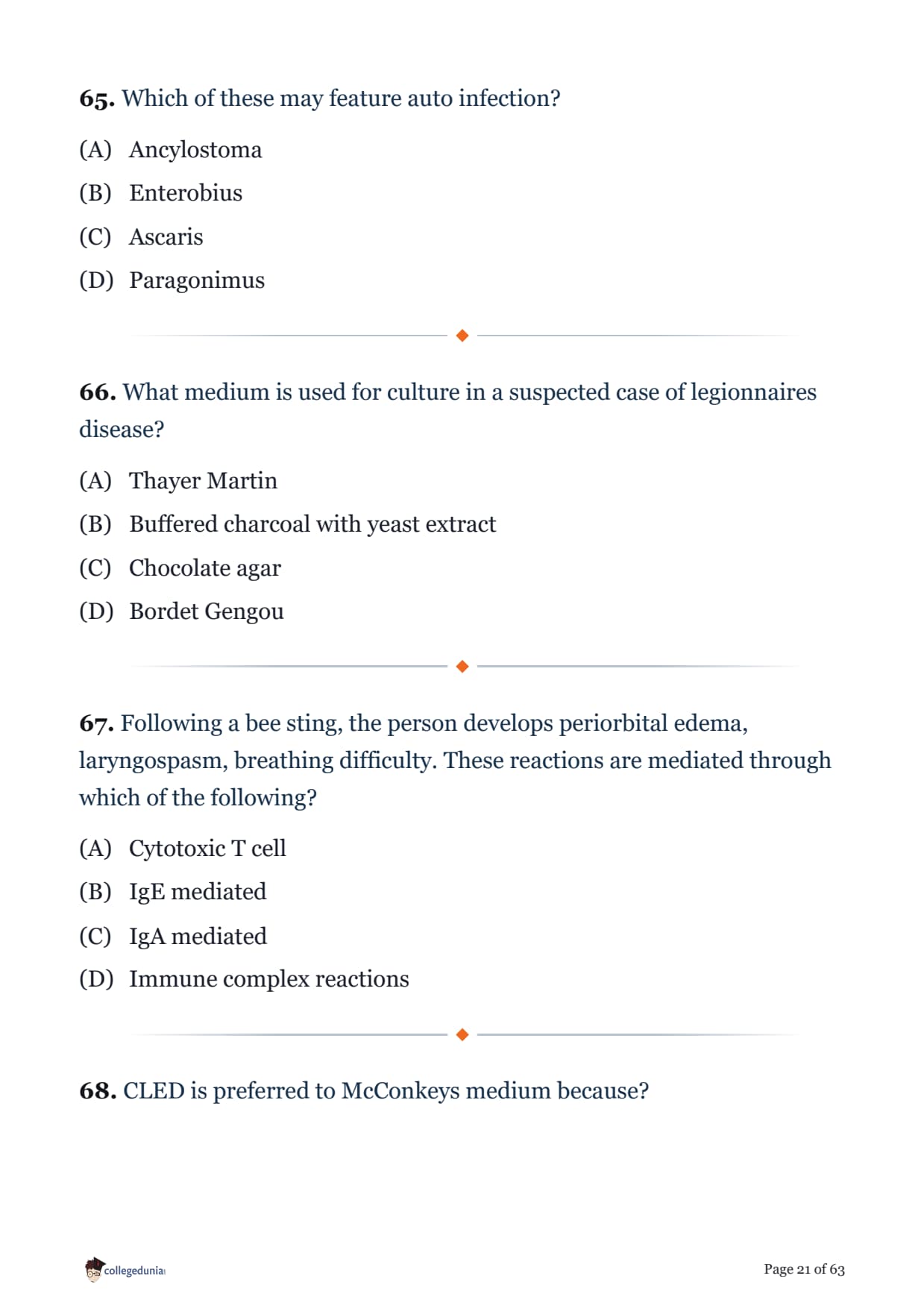
Which of these may feature auto infection?
What medium is used for culture in a suspected case of legionnaires disease?
Following a bee sting, the person develops periorbital edema, laryngospasm, breathing difficulty. These reactions are mediated through which of the following?
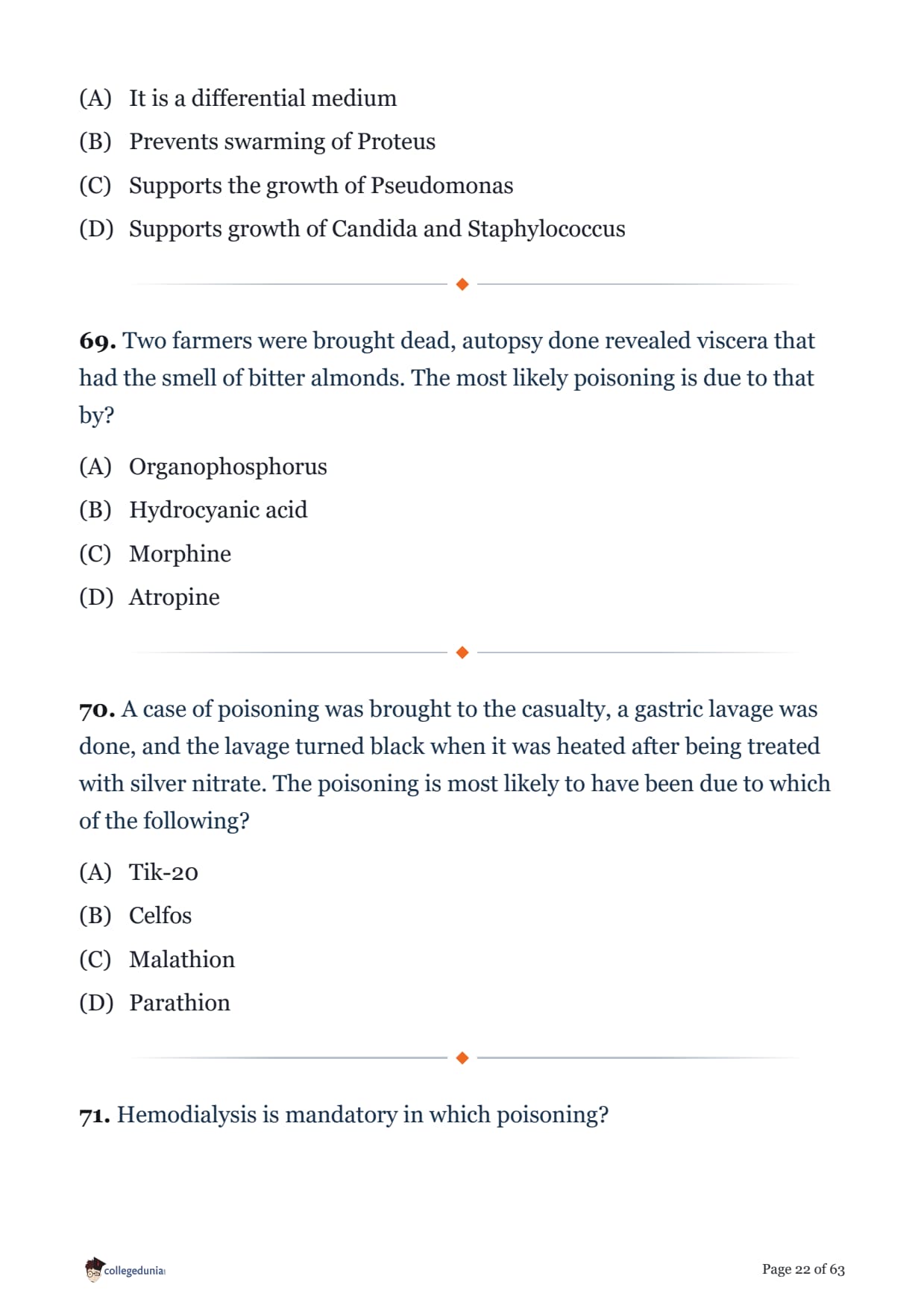
CLED is preferred to McConkeys medium because?
Two farmers were brought dead, autopsy done revealed viscera that had the smell of bitter almonds. The most likely poisoning is due to that by?
A case of poisoning was brought to the casualty, a gastric lavage was done, and the lavage turned black when it was heated after being treated with silver nitrate. The poisoning is most likely to have been due to which of the following?
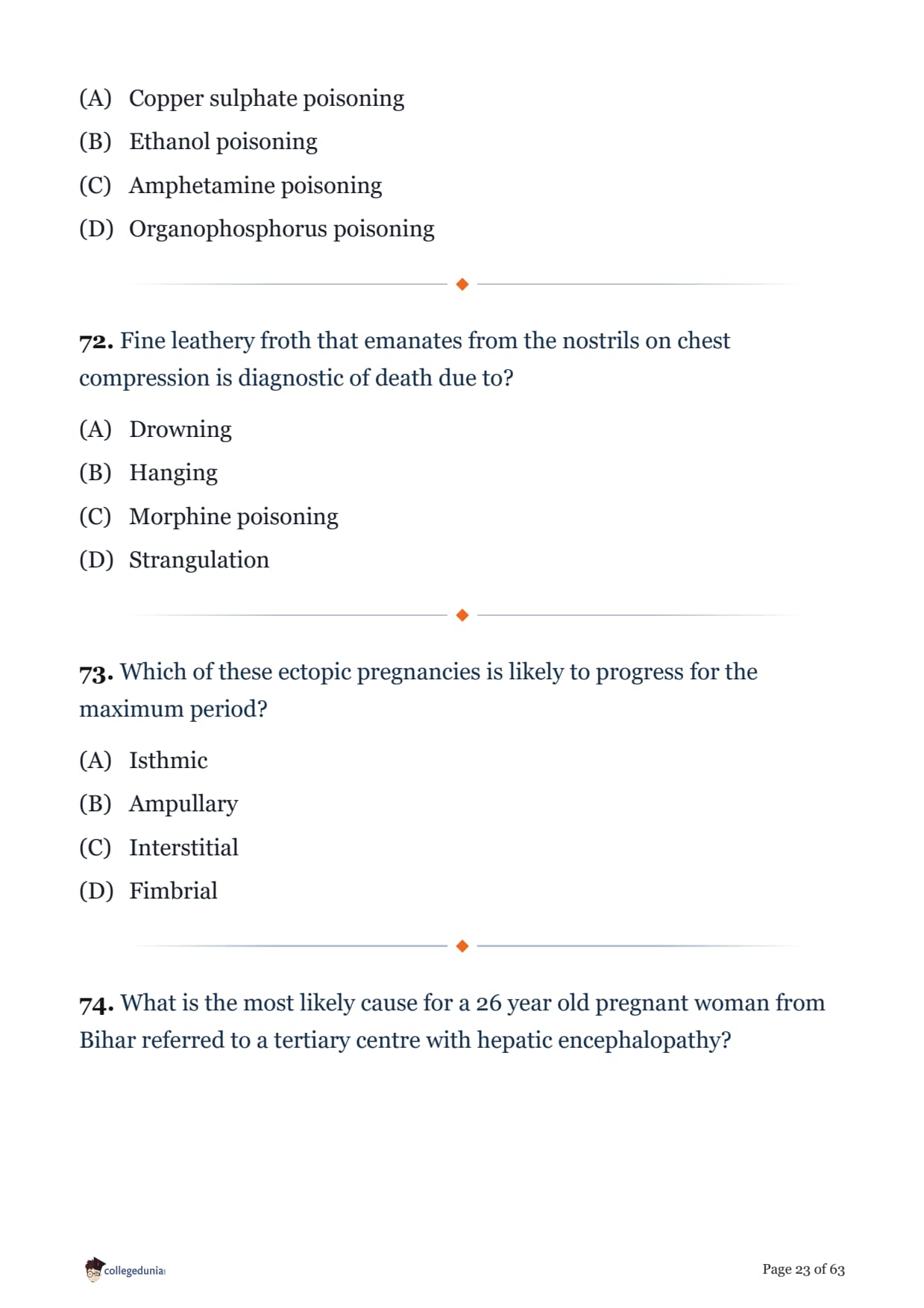
Hemodialysis is mandatory in which poisoning?
Fine leathery froth that emanates from the nostrils on chest compression is diagnostic of death due to?
Which of these ectopic pregnancies is likely to progress for the maximum period?
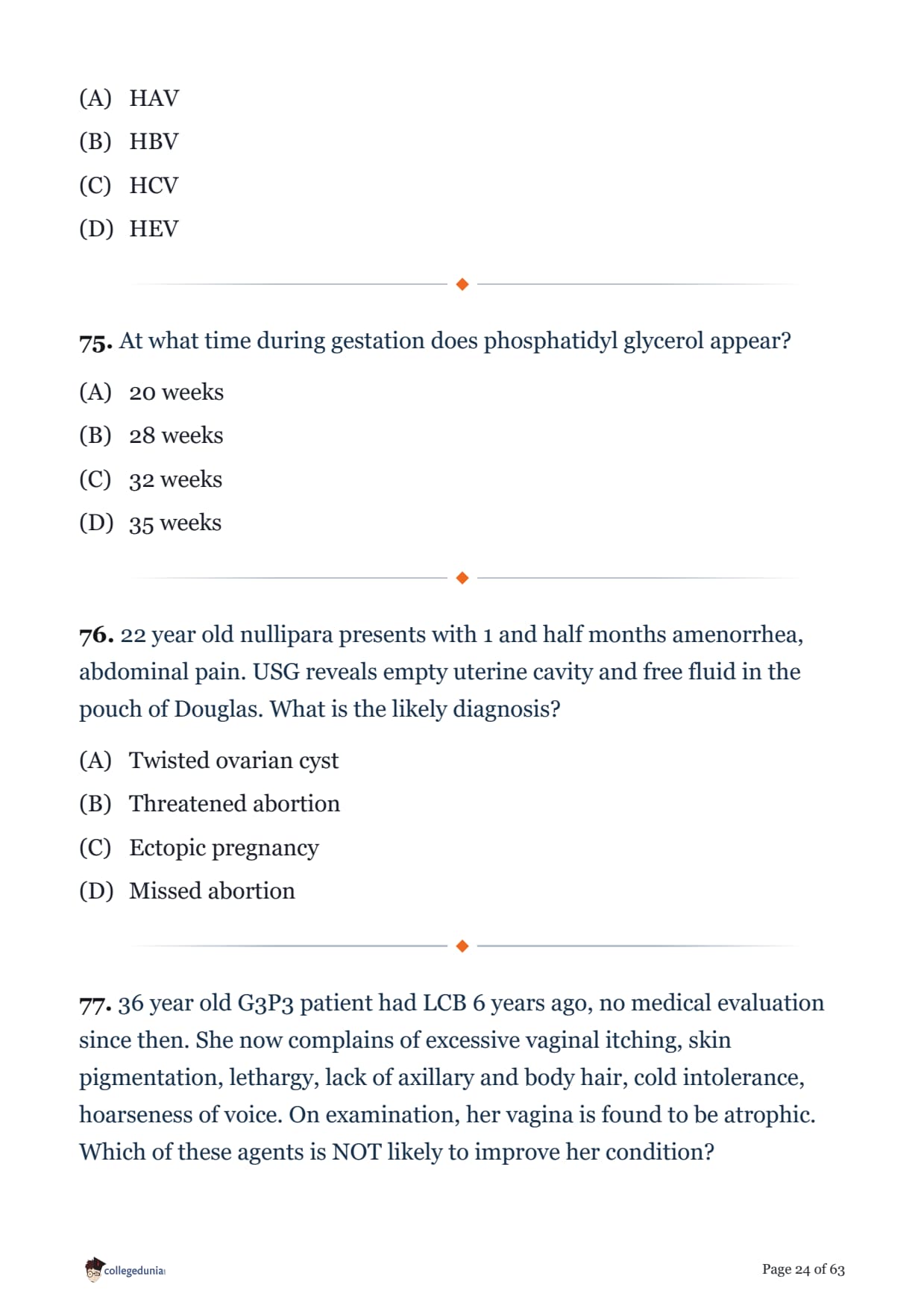
What is the most likely cause for a 26 year old pregnant woman from Bihar referred to a tertiary centre with hepatic encephalopathy?
At what time during gestation does phosphatidyl glycerol appear?
22 year old nullipara presents with 1 and half months amenorrhea, abdominal pain. USG reveals empty uterine cavity and free fluid in the pouch of Douglas. What is the likely diagnosis?
36 year old G3P3 patient had LCB 6 years ago, no medical evaluation since then. She now complains of excessive vaginal itching, skin pigmentation, lethargy, lack of axillary and body hair, cold intolerance, hoarseness of voice. On examination, her vagina is found to be atrophic. Which of these agents is NOT likely to improve her condition?
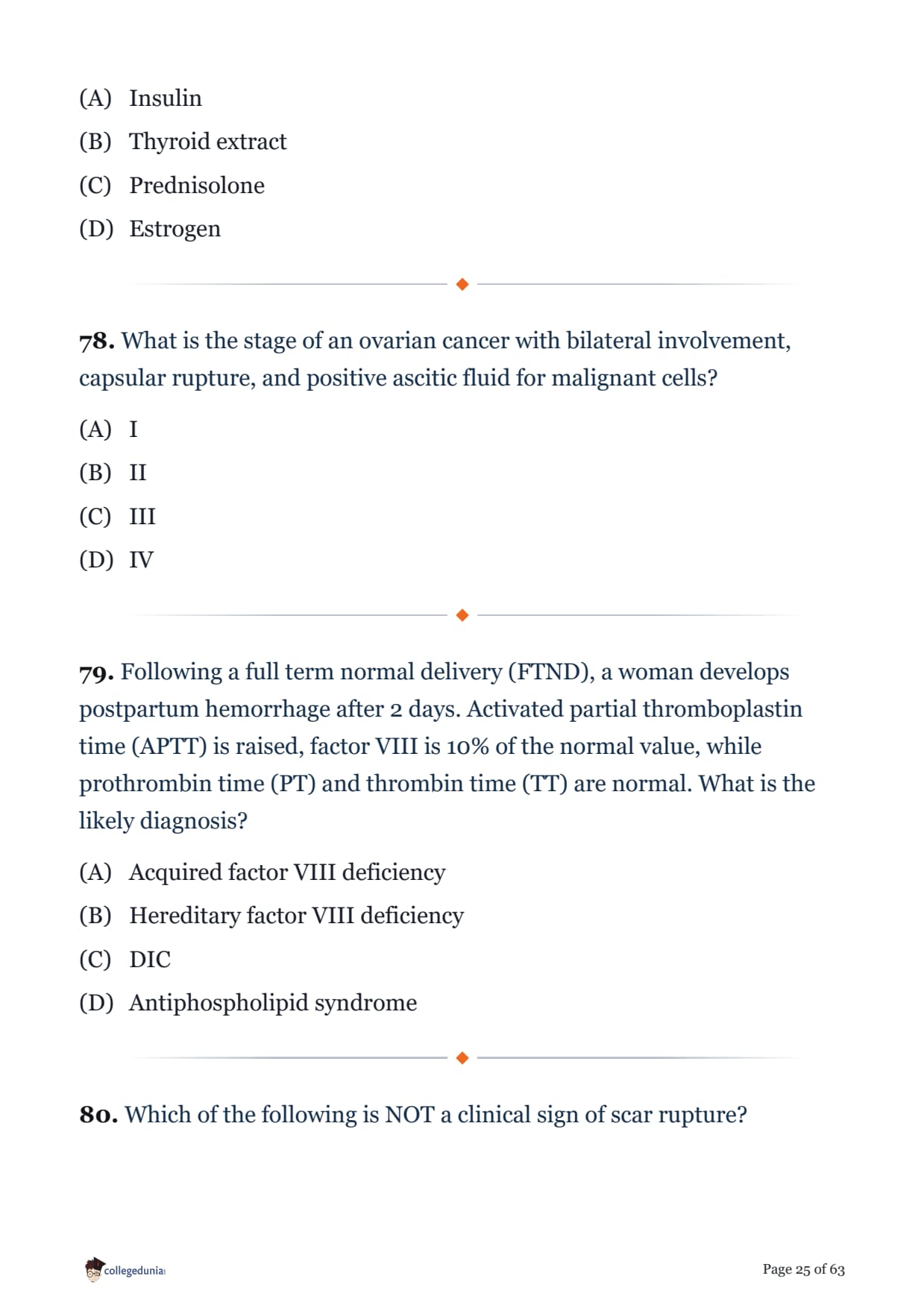
What is the stage of an ovarian cancer with bilateral involvement, capsular rupture, and positive ascitic fluid for malignant cells?
Following a full term normal delivery (FTND), a woman develops postpartum hemorrhage after 2 days. Activated partial thromboplastin time (APTT) is raised, factor VIII is 10% of the normal value, while prothrombin time (PT) and thrombin time (TT) are normal. What is the likely diagnosis?
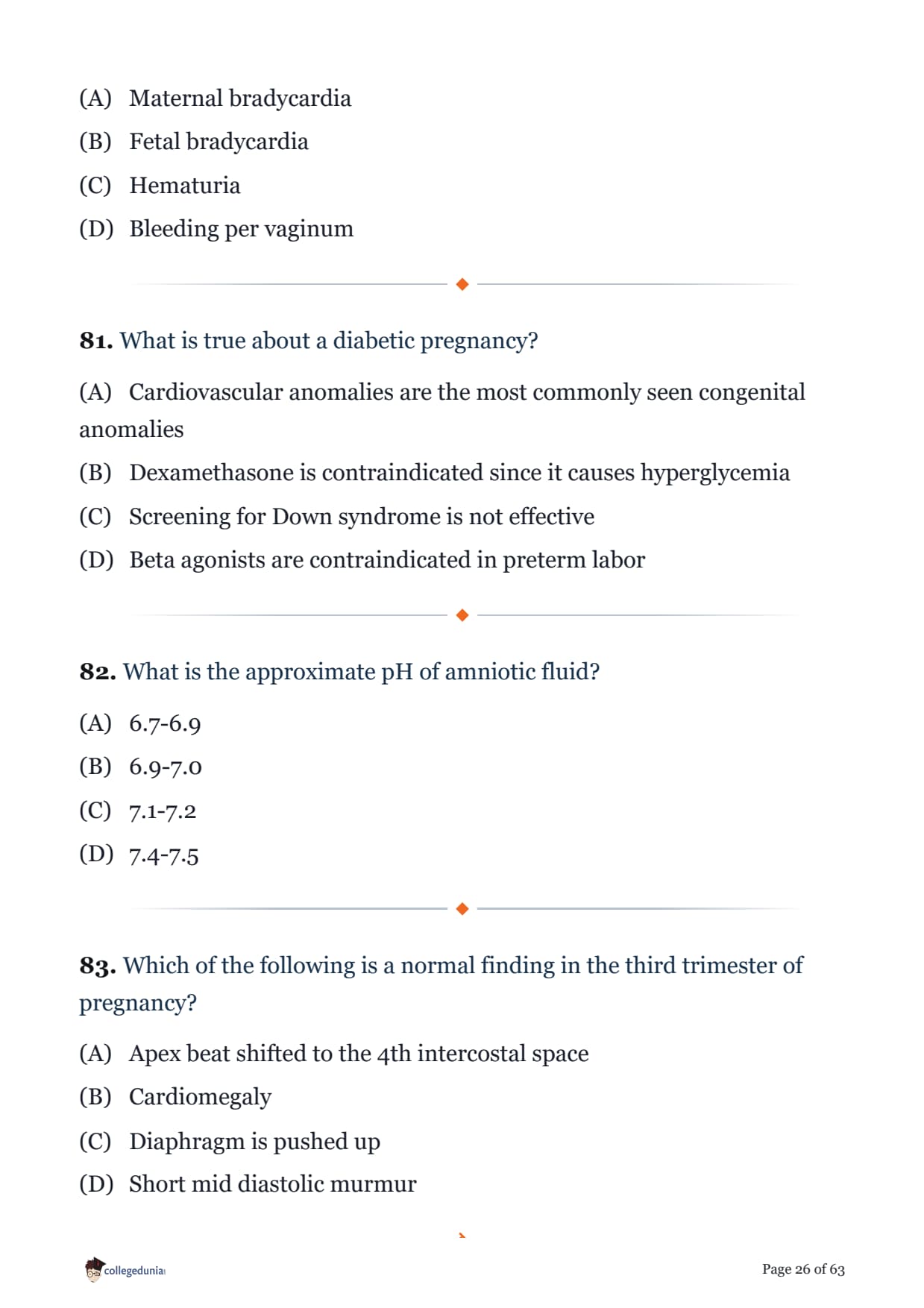
Which of the following is NOT a clinical sign of scar rupture?
What is true about a diabetic pregnancy?
What is the approximate pH of amniotic fluid?
Which of the following is a normal finding in the third trimester of pregnancy?
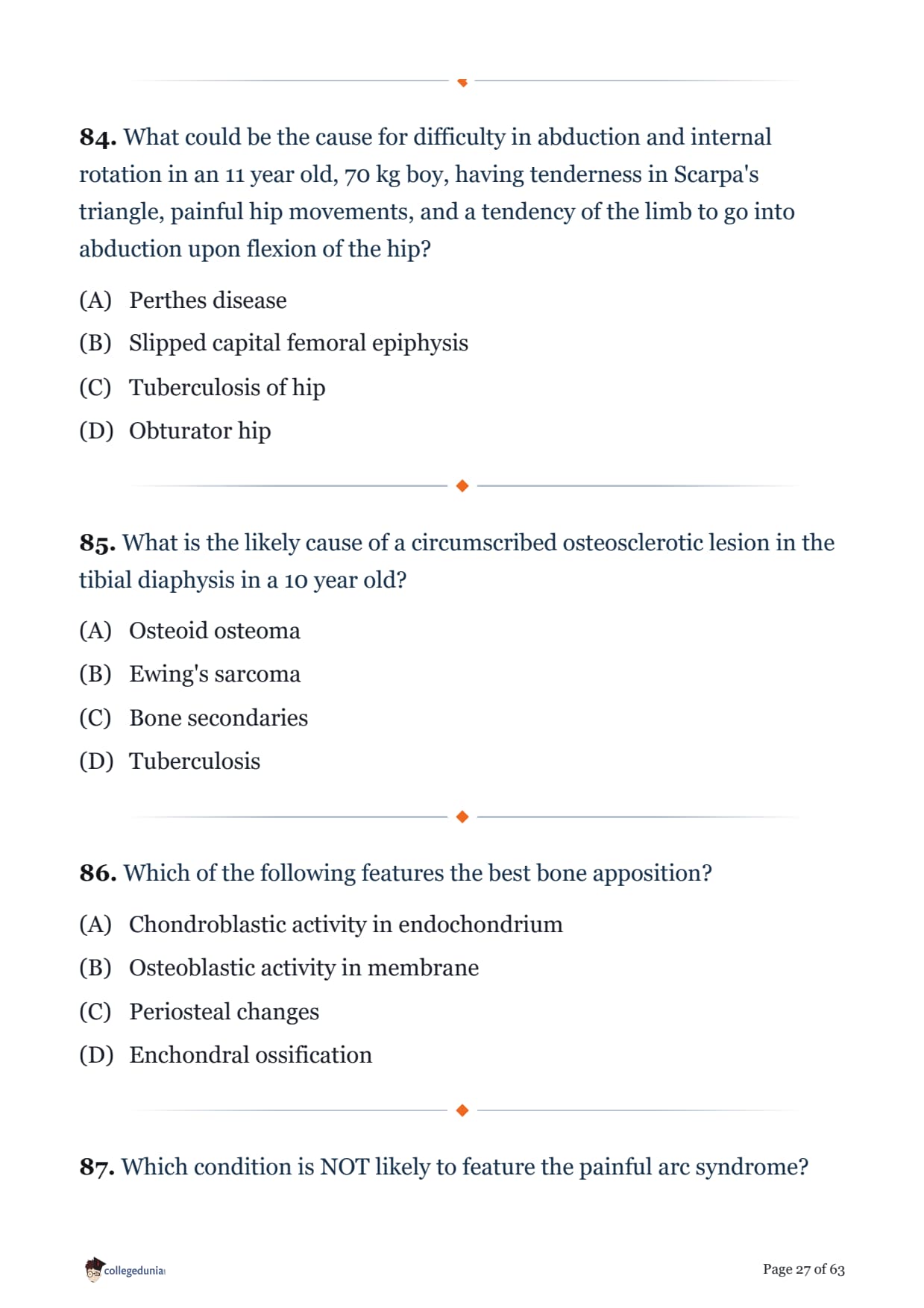
What could be the cause for difficulty in abduction and internal rotation in an 11 year old, 70 kg boy, having tenderness in Scarpa's triangle, painful hip movements, and a tendency of the limb to go into abduction upon flexion of the hip?
What is the likely cause of a circumscribed osteosclerotic lesion in the tibial diaphysis in a 10 year old?
Which of the following features the best bone apposition?
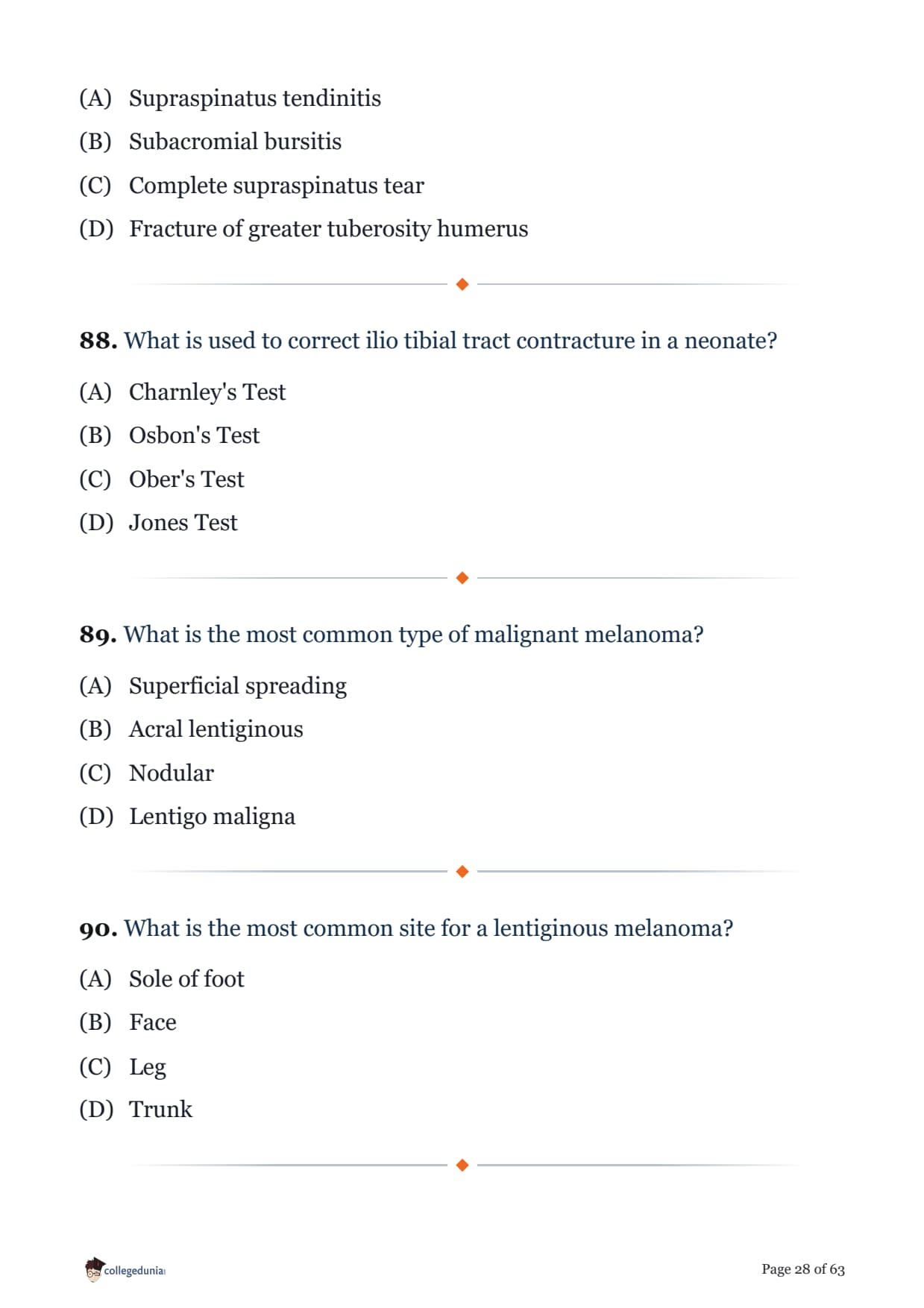
Which condition is NOT likely to feature the painful arc syndrome?
What is used to correct ilio tibial tract contracture in a neonate?
What is the most common type of malignant melanoma?
What is the most common site for a lentiginous melanoma?
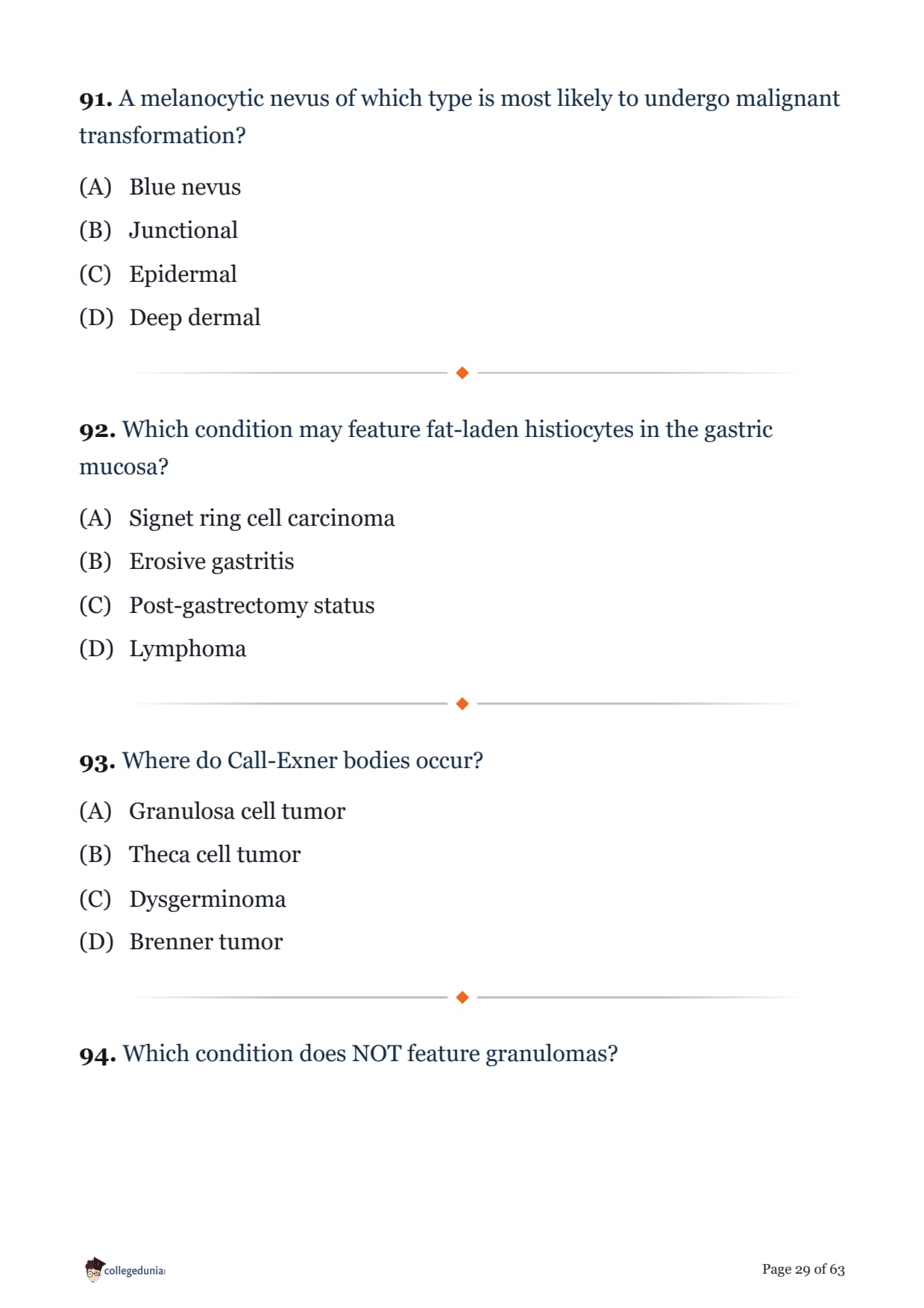
A melanocytic nevus of which type is most likely to undergo malignant transformation?
Which condition may feature fat-laden histiocytes in the gastric mucosa?
Where do Call-Exner bodies occur?
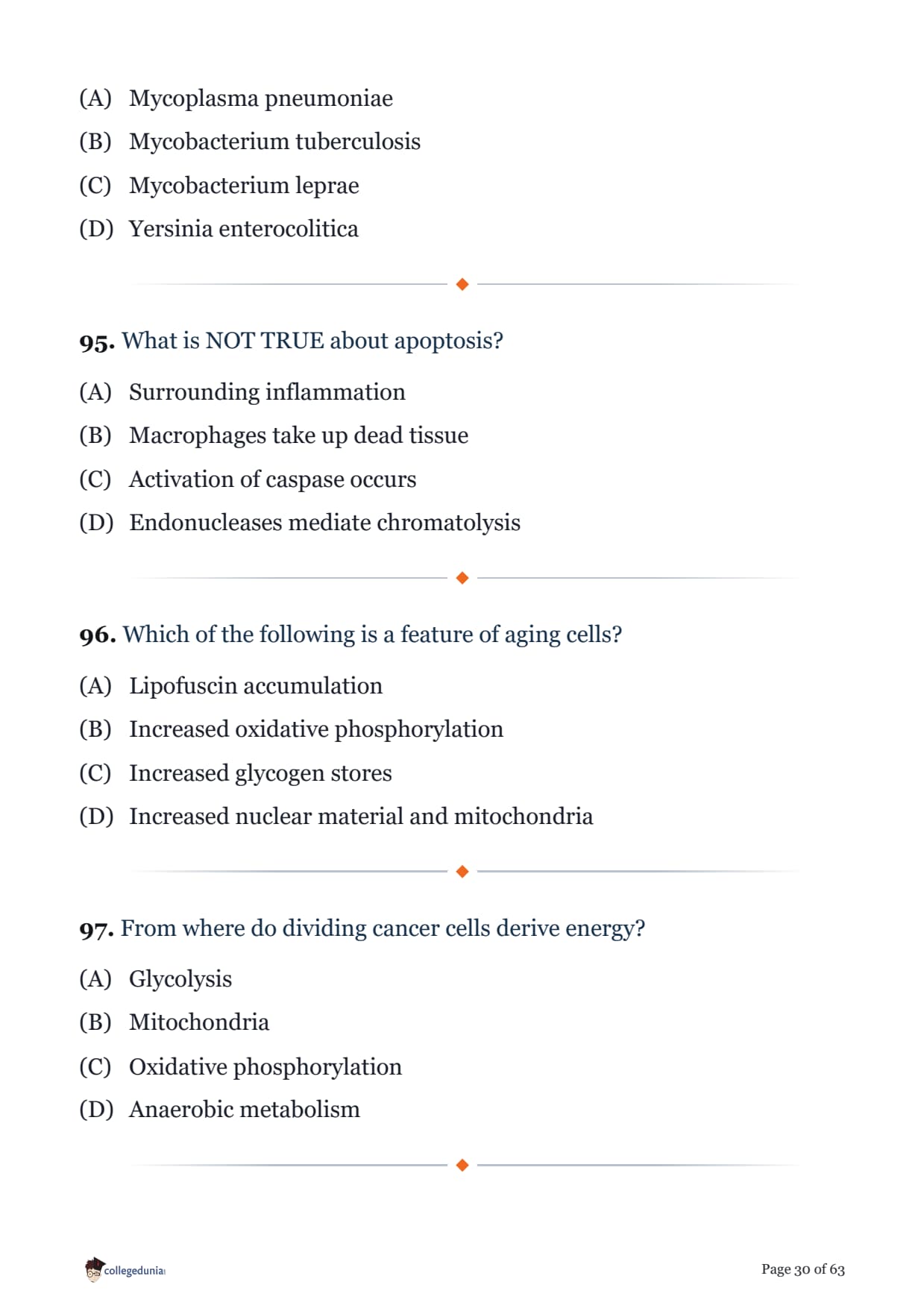
Which condition does NOT feature granulomas?
What is NOT TRUE about apoptosis?
Which of the following is a feature of aging cells?
From where do dividing cancer cells derive energy?
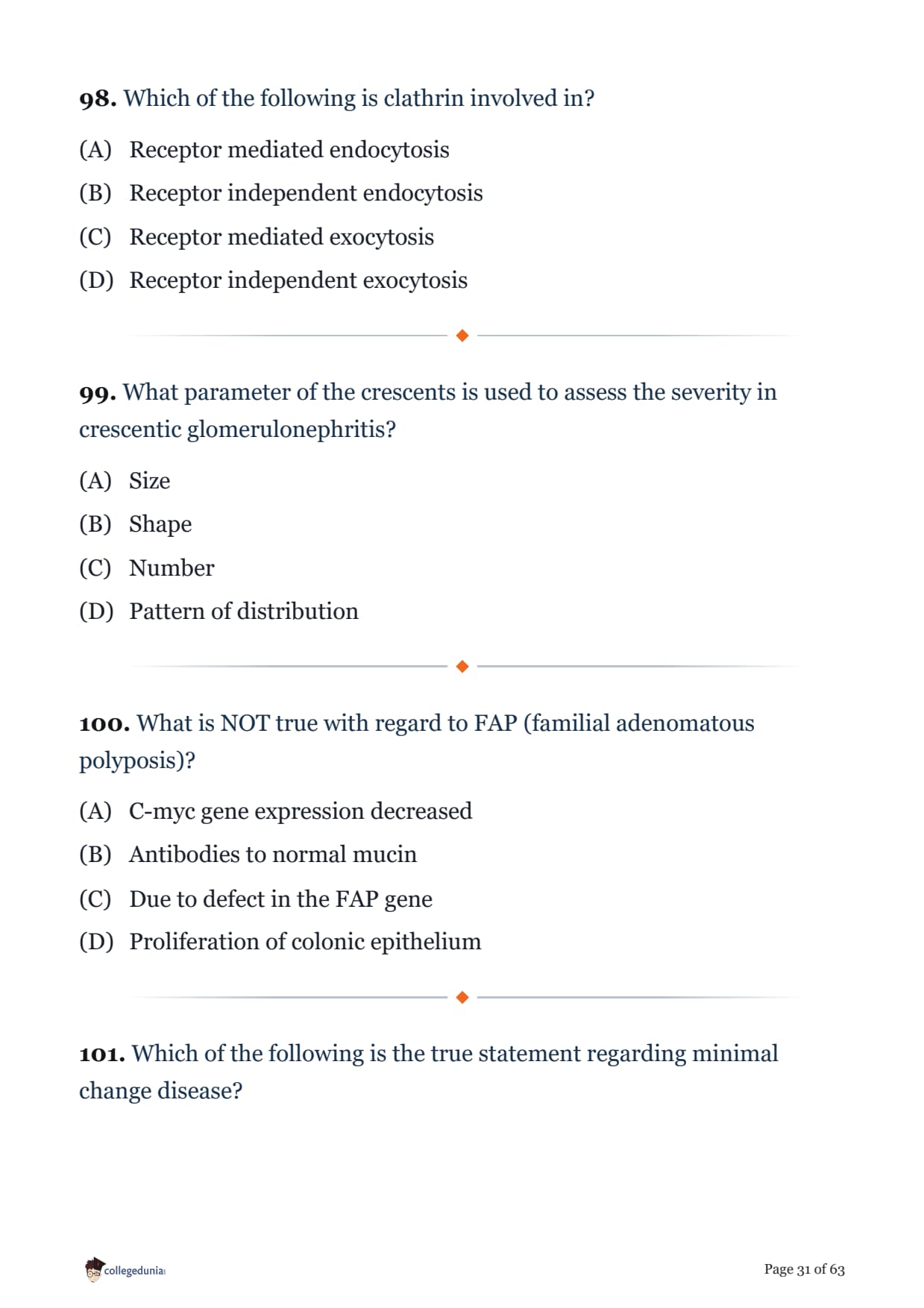
Which of the following is clathrin involved in?
What parameter of the crescents is used to assess the severity in crescentic glomerulonephritis?
What is NOT true with regard to FAP (familial adenomatous polyposis)?
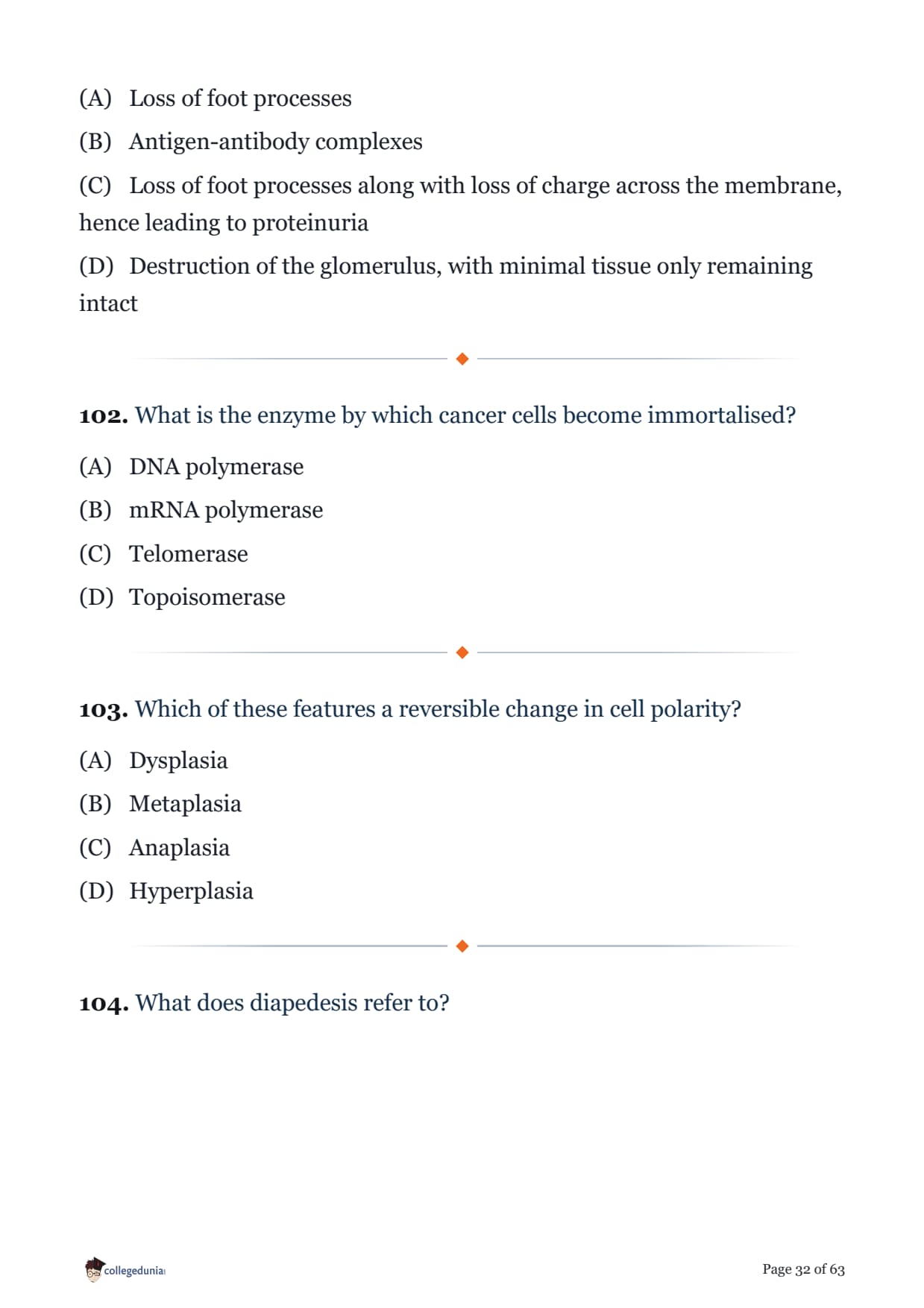
Which of the following is the true statement regarding minimal change disease?
What is the enzyme by which cancer cells become immortalised?
Which of these features a reversible change in cell polarity?
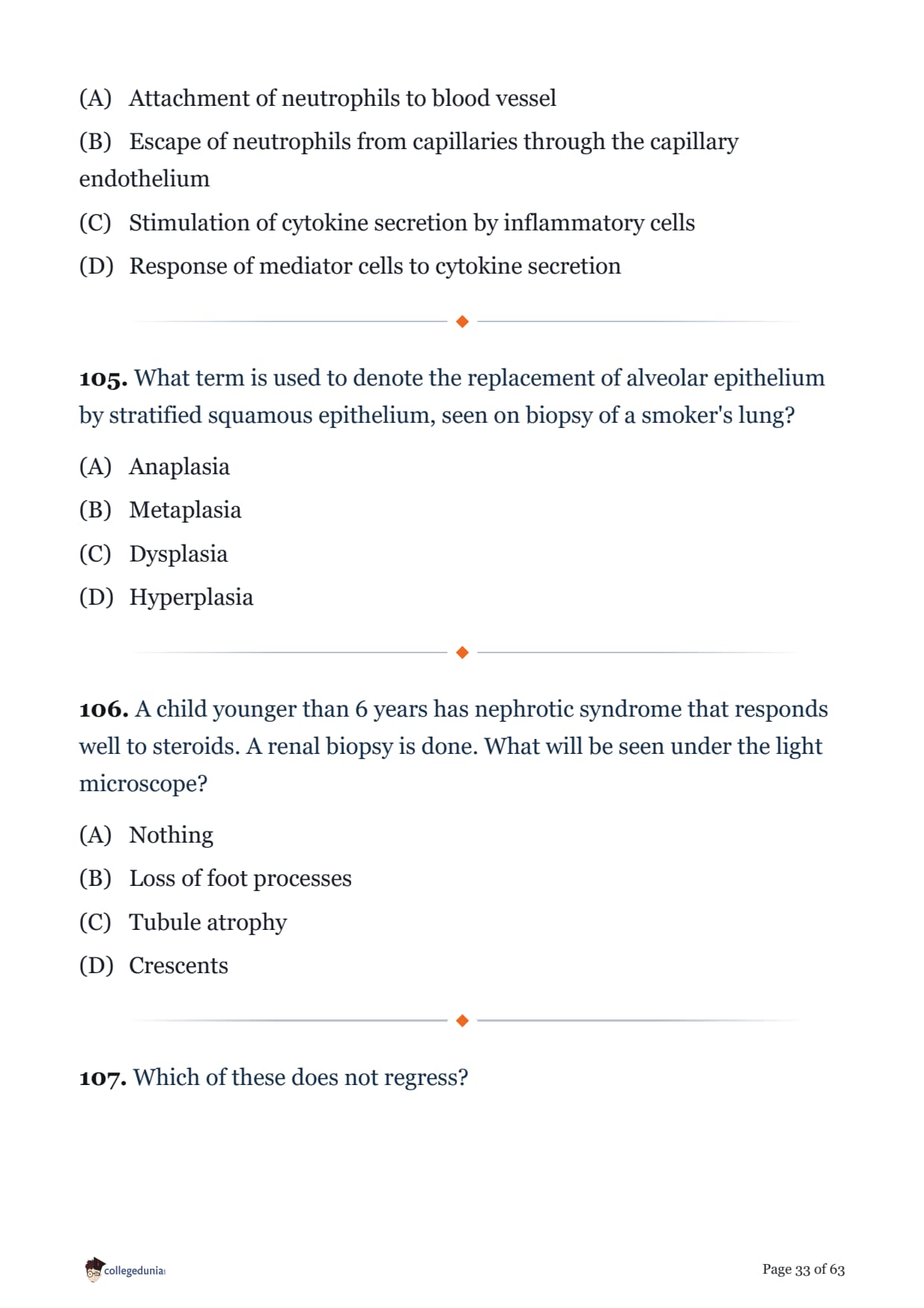
What does diapedesis refer to?
What term is used to denote the replacement of alveolar epithelium by stratified squamous epithelium, seen on biopsy of a smoker's lung?
A child younger than 6 years has nephrotic syndrome that responds well to steroids. A renal biopsy is done. What will be seen under the light microscope?
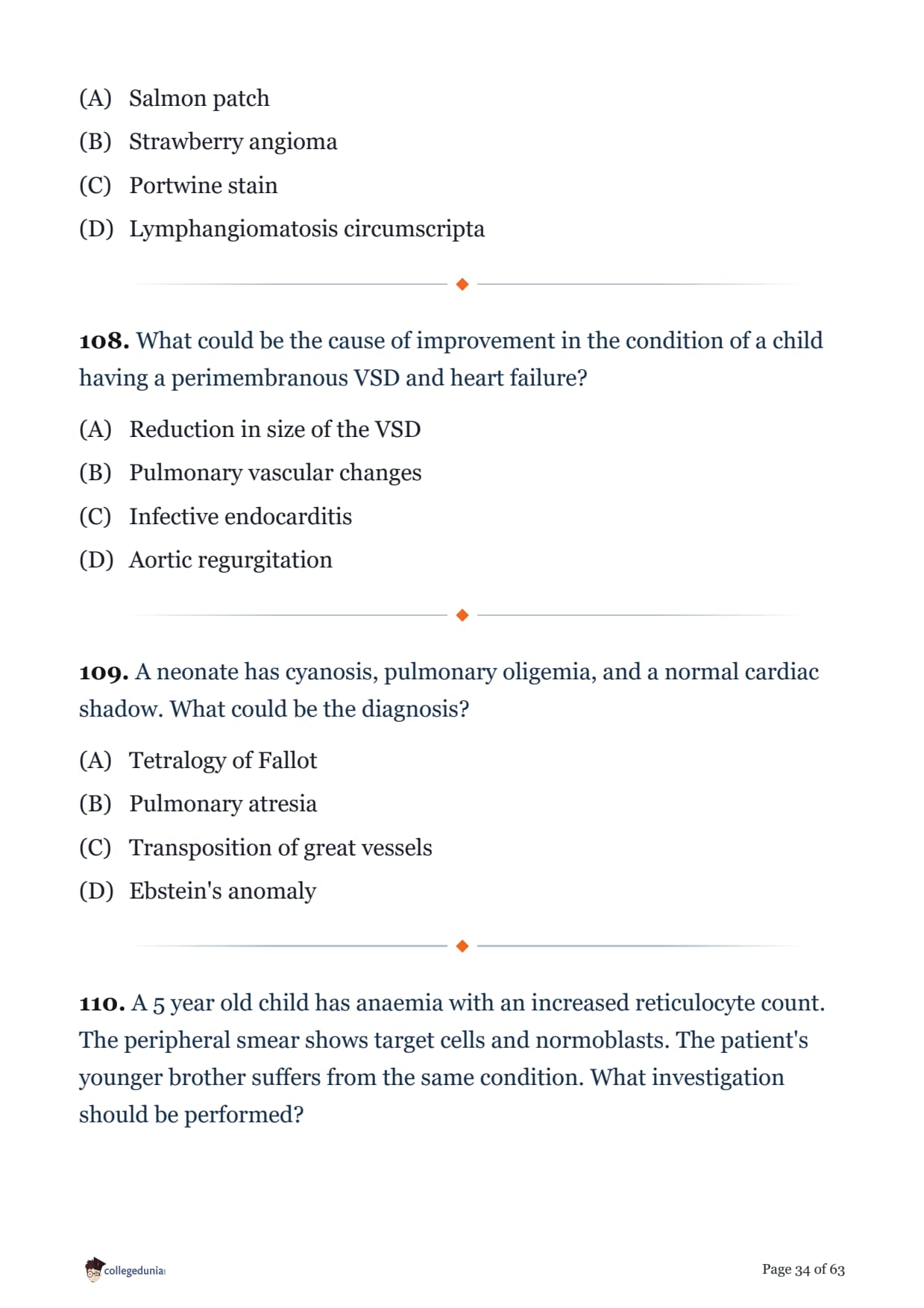
Which of these does not regress?
What could be the cause of improvement in the condition of a child having a perimembranous VSD and heart failure?
A neonate has cyanosis, pulmonary oligemia, and a normal cardiac shadow. What could be the diagnosis?
A 5 year old child has anaemia with an increased reticulocyte count. The peripheral smear shows target cells and normoblasts. The patient's younger brother suffers from the same condition. What investigation should be performed?
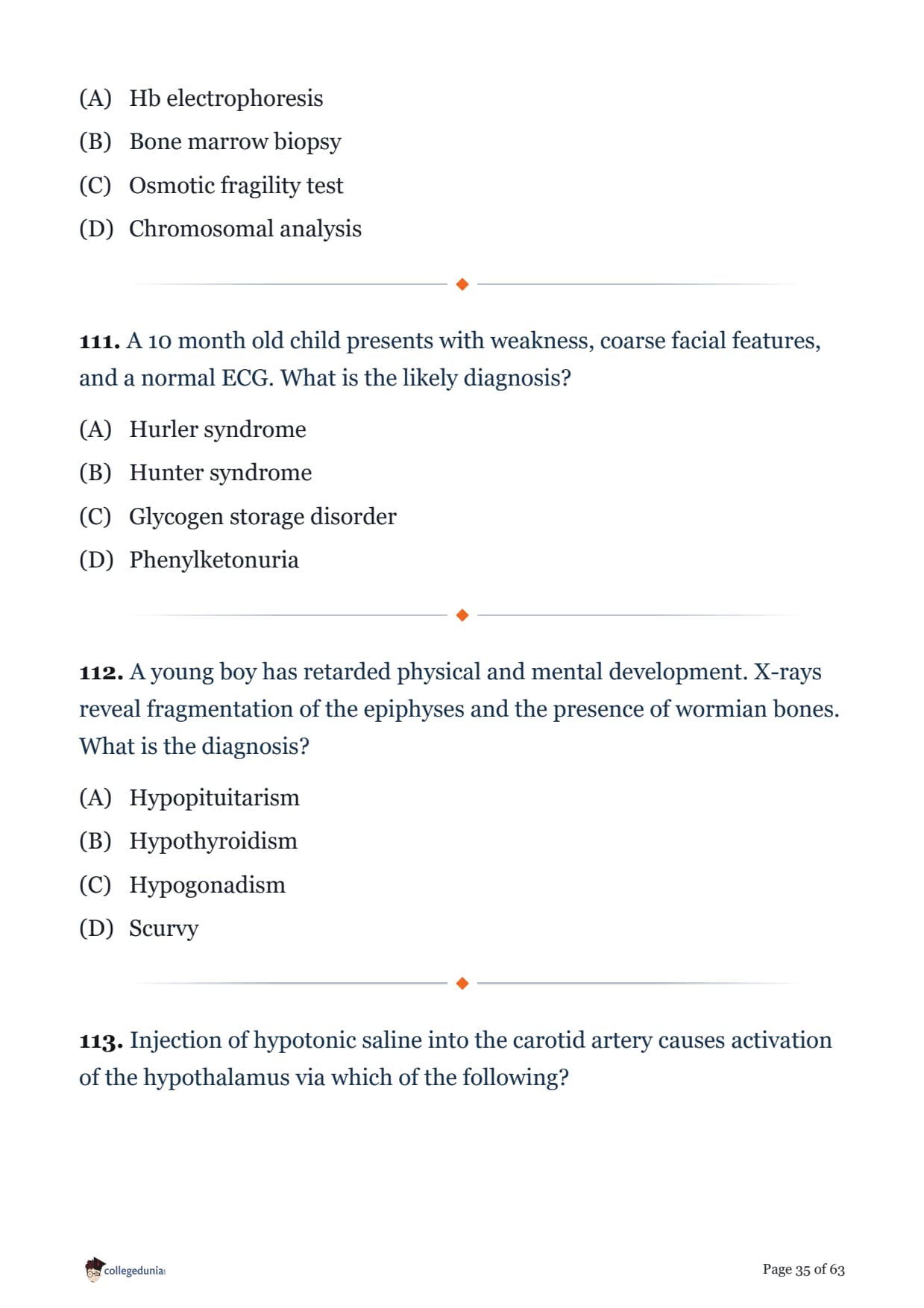
A 10 month old child presents with weakness, coarse facial features, and a normal ECG. What is the likely diagnosis?
A young boy has retarded physical and mental development. X-rays reveal fragmentation of the epiphyses and the presence of wormian bones. What is the diagnosis?
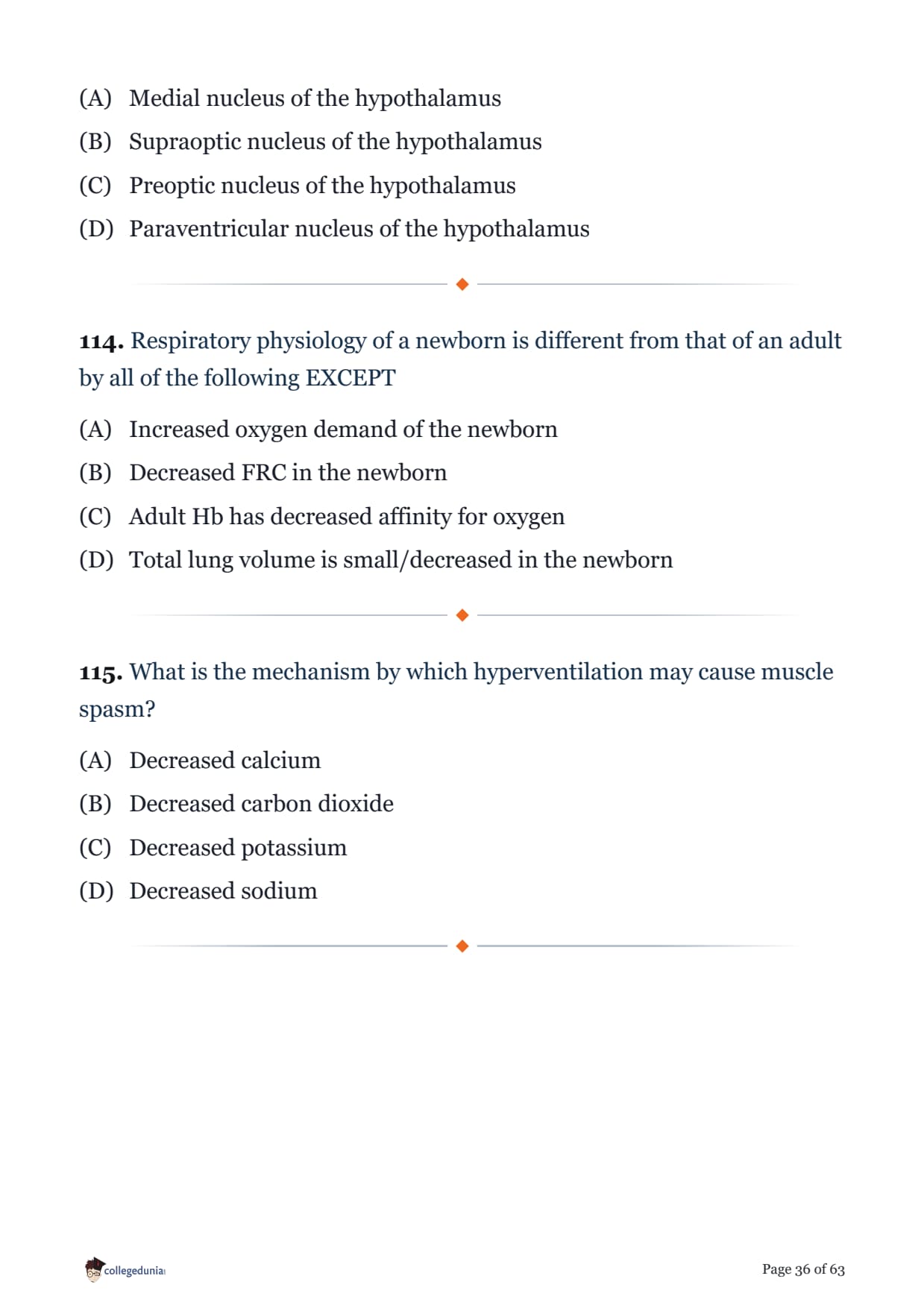
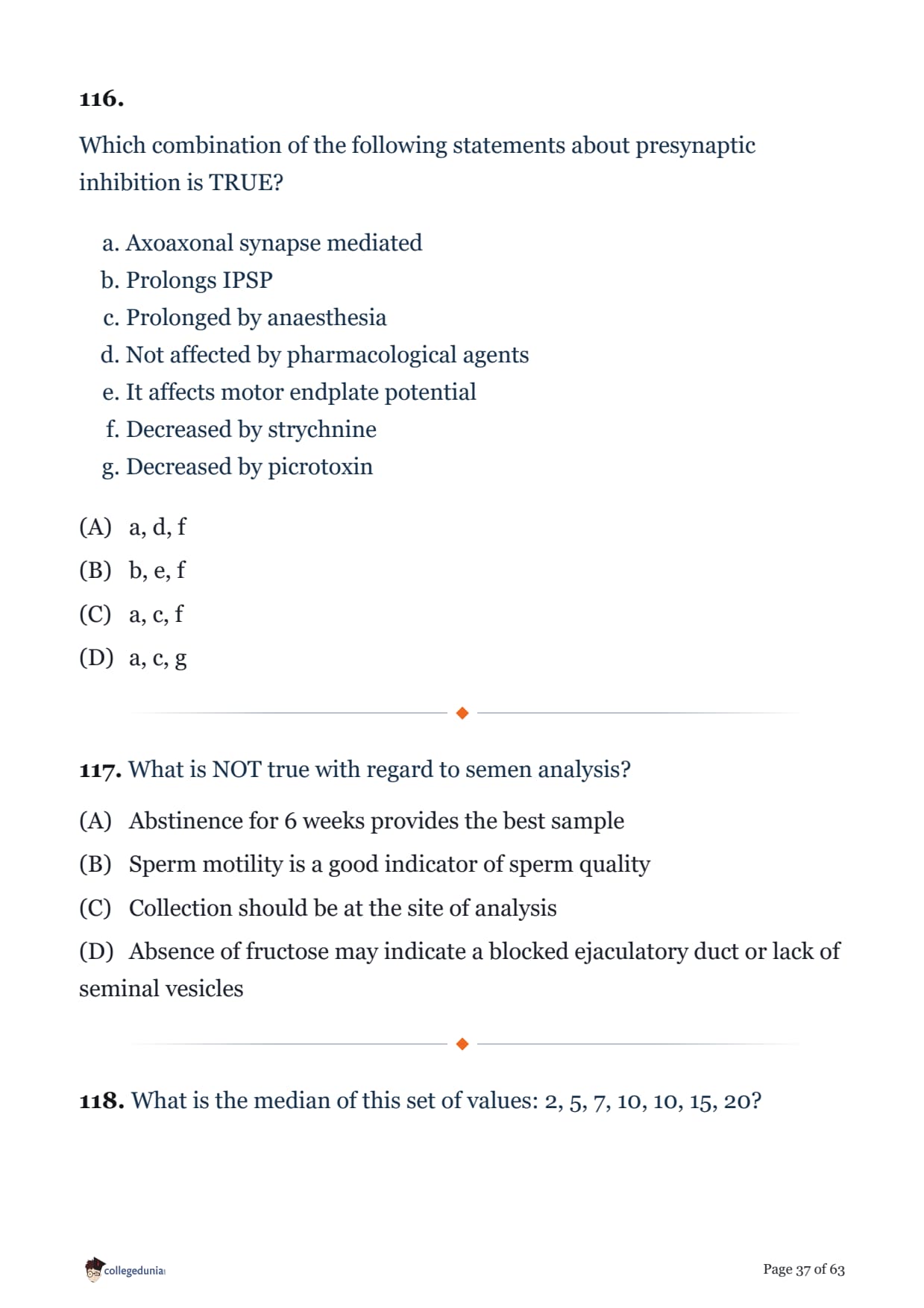
Injection of hypotonic saline into the carotid artery causes activation of the hypothalamus via which of the following?
Respiratory physiology of a newborn is different from that of an adult by all of the following EXCEPT
What is the mechanism by which hyperventilation may cause muscle spasm?
Which combination of the following statements about presynaptic inhibition is TRUE?
- Axoaxonal synapse mediated
- Prolongs IPSP
- Prolonged by anaesthesia
- Not affected by pharmacological agents
- It affects motor endplate potential
- Decreased by strychnine
- Decreased by picrotoxin
What is NOT true with regard to semen analysis?
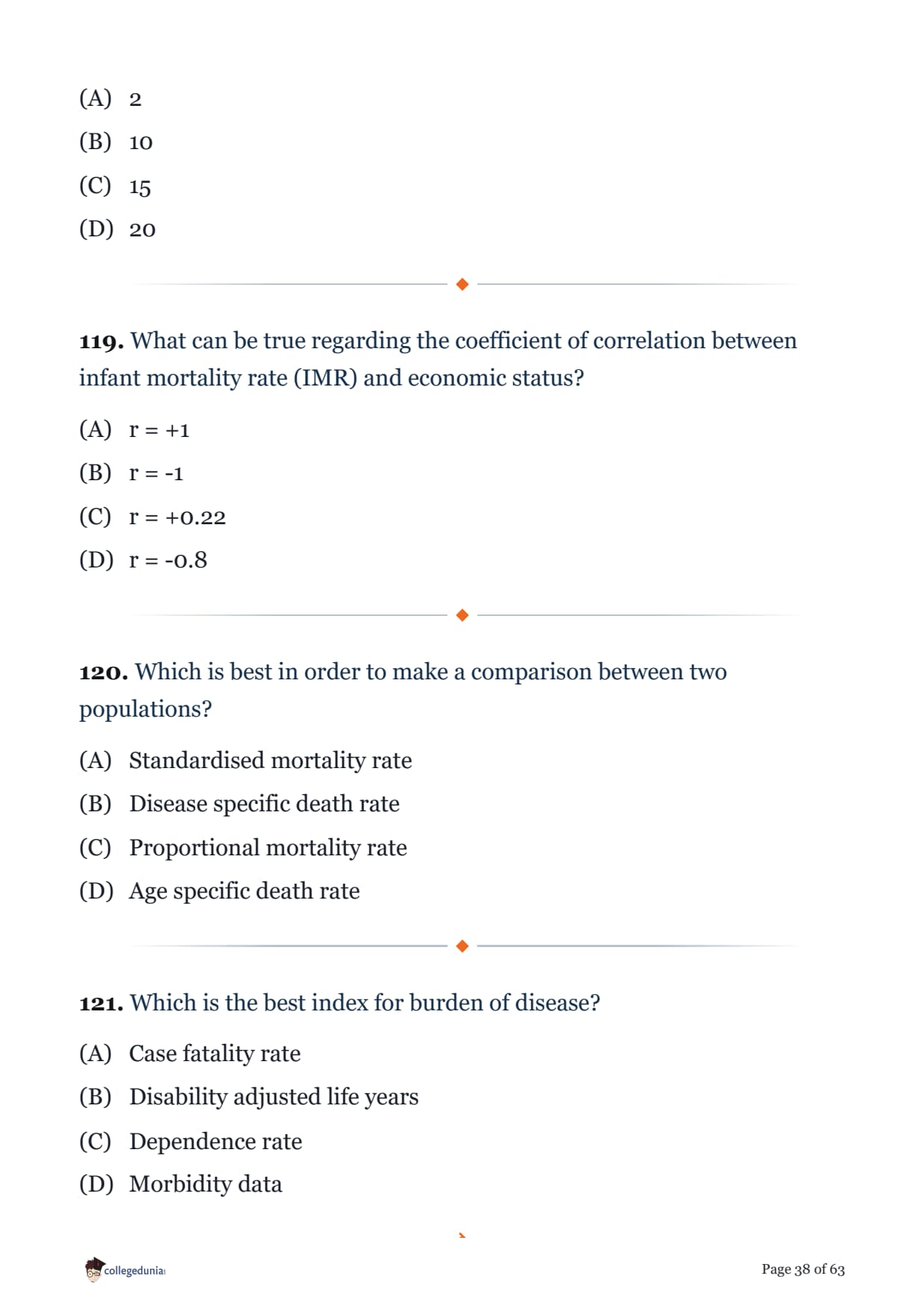
What is the median of this set of values: 2, 5, 7, 10, 10, 15, 20?
What can be true regarding the coefficient of correlation between infant mortality rate (IMR) and economic status?
Which is best in order to make a comparison between two populations?
Which is the best index for burden of disease?
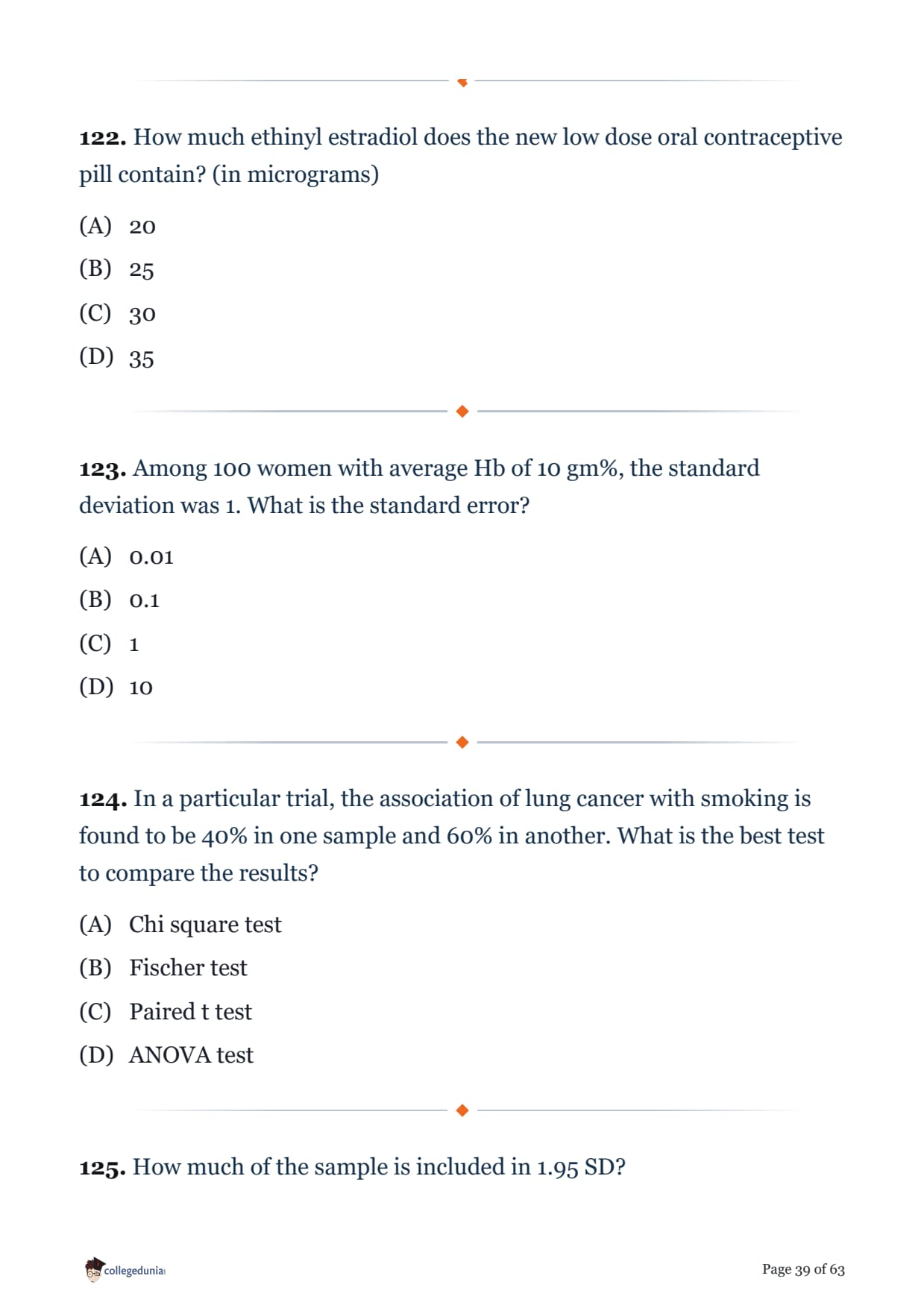
How much ethinyl estradiol does the new low dose oral contraceptive pill contain? (in micrograms)
Among 100 women with average Hb of 10 gm%, the standard deviation was 1. What is the standard error?
In a particular trial, the association of lung cancer with smoking is found to be 40% in one sample and 60% in another. What is the best test to compare the results?
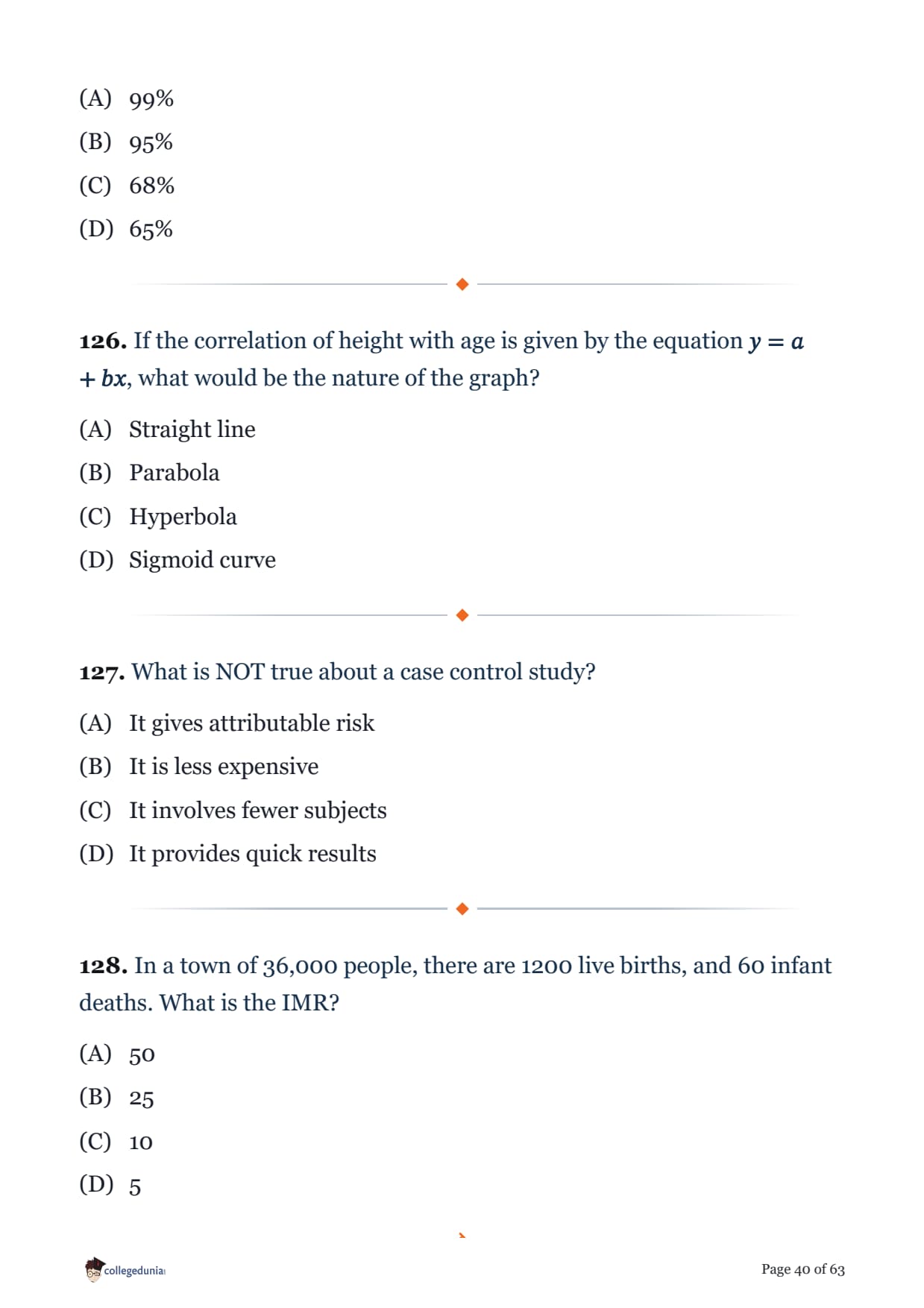
How much of the sample is included in 1.95 SD?
If the correlation of height with age is given by the equation \(y = a + bx\), what would be the nature of the graph?
What is NOT true about a case control study?
In a town of 36,000 people, there are 1200 live births, and 60 infant deaths. What is the IMR?
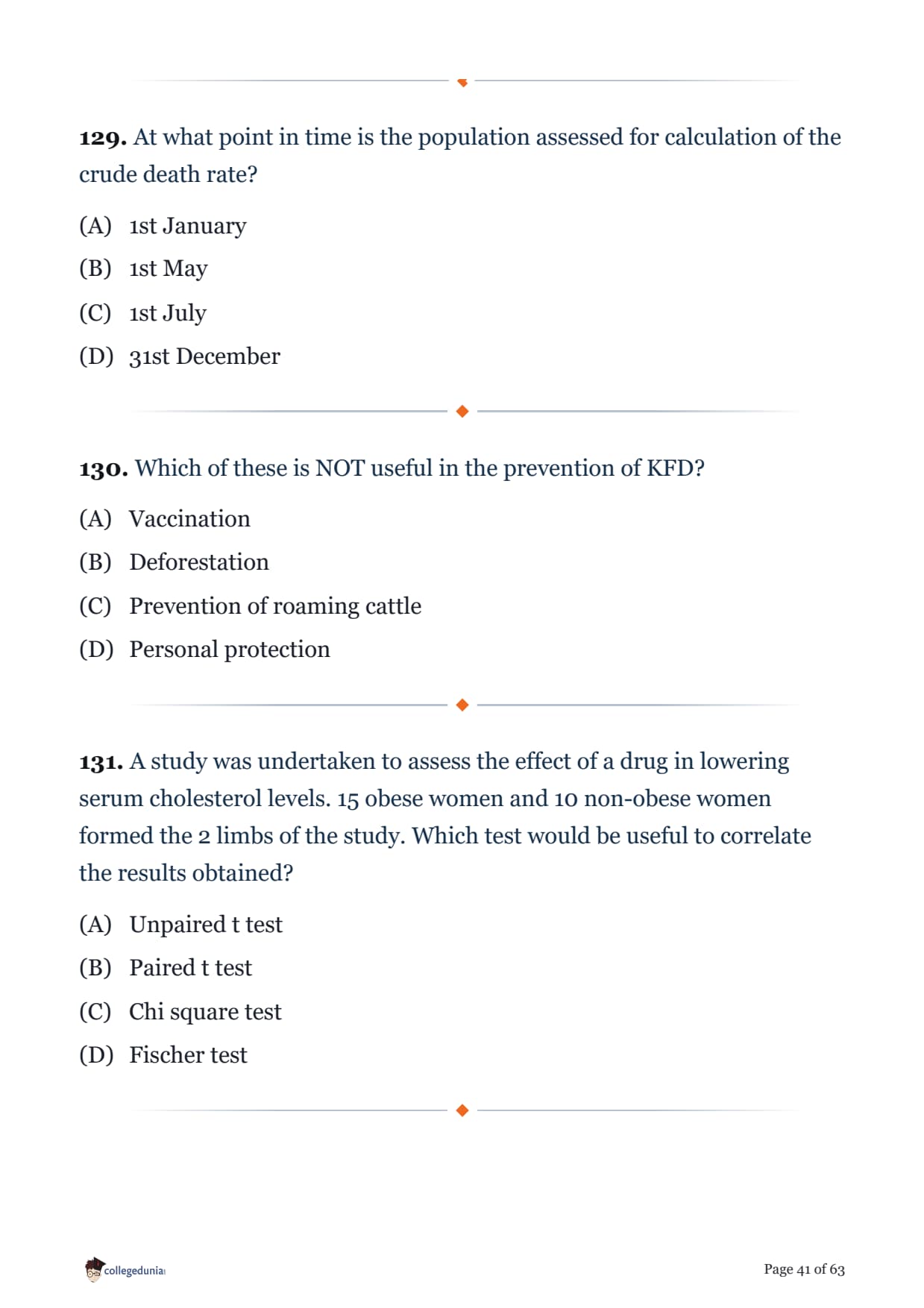
At what point in time is the population assessed for calculation of the crude death rate?
Which of these is NOT useful in the prevention of KFD?
A study was undertaken to assess the effect of a drug in lowering serum cholesterol levels. 15 obese women and 10 non-obese women formed the 2 limbs of the study. Which test would be useful to correlate the results obtained?
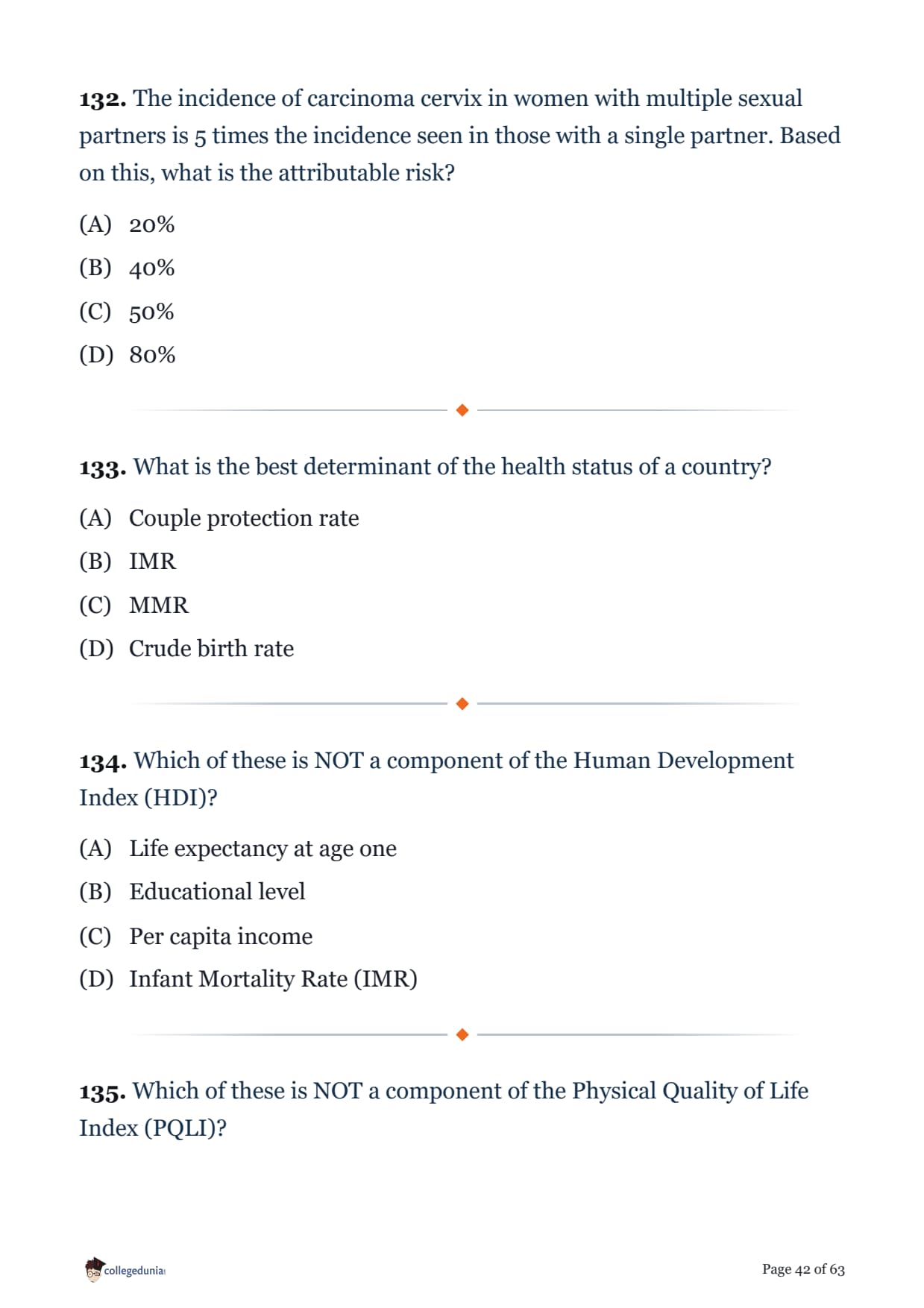
The incidence of carcinoma cervix in women with multiple sexual partners is 5 times the incidence seen in those with a single partner. Based on this, what is the attributable risk?
What is the best determinant of the health status of a country?
Which of these is NOT a component of the Human Development Index (HDI)?
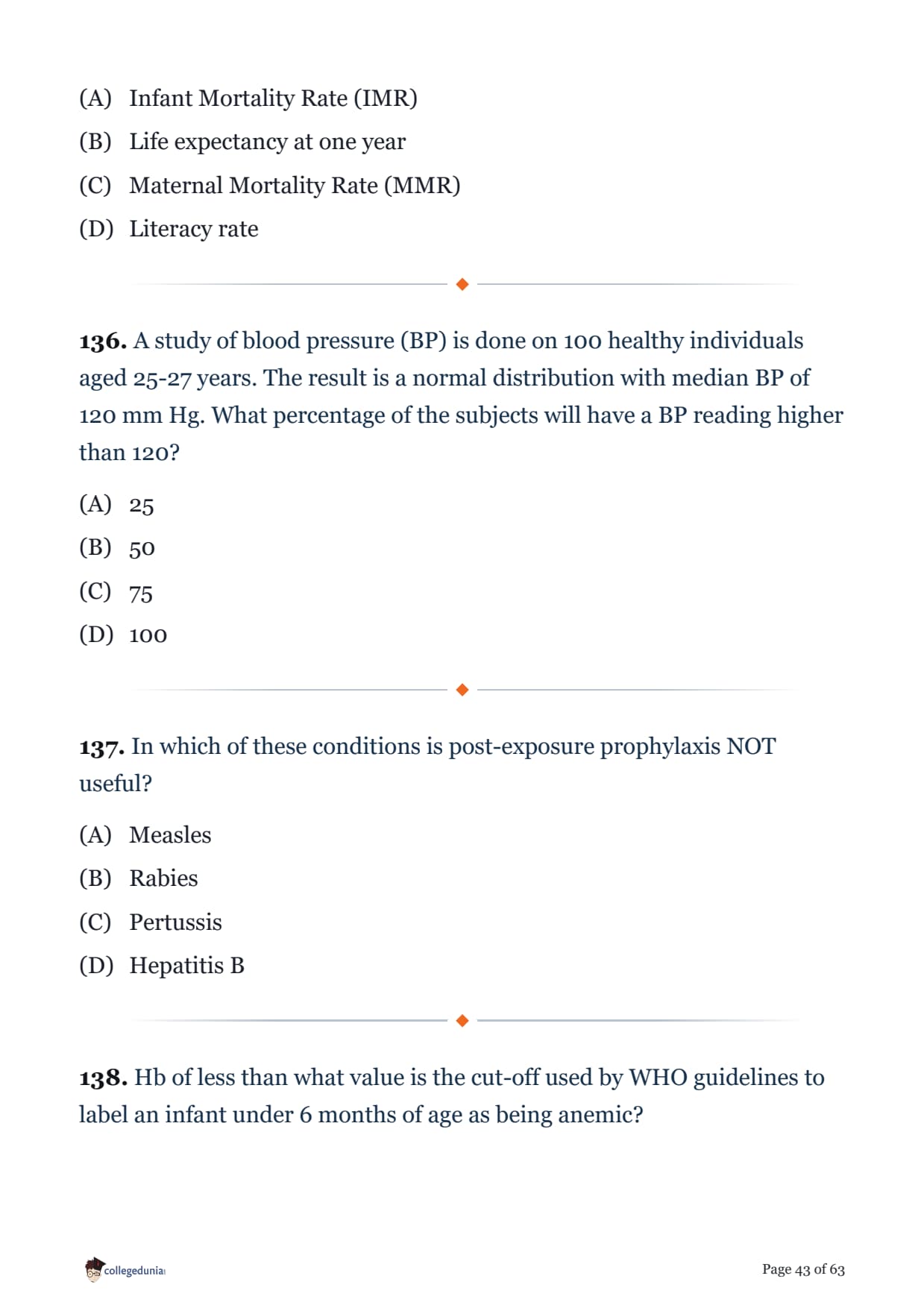
Which of these is NOT a component of the Physical Quality of Life Index (PQLI)?
A study of blood pressure (BP) is done on 100 healthy individuals aged 25-27 years. The result is a normal distribution with median BP of 120 mm Hg. What percentage of the subjects will have a BP reading higher than 120?
In which of these conditions is post-exposure prophylaxis NOT useful?
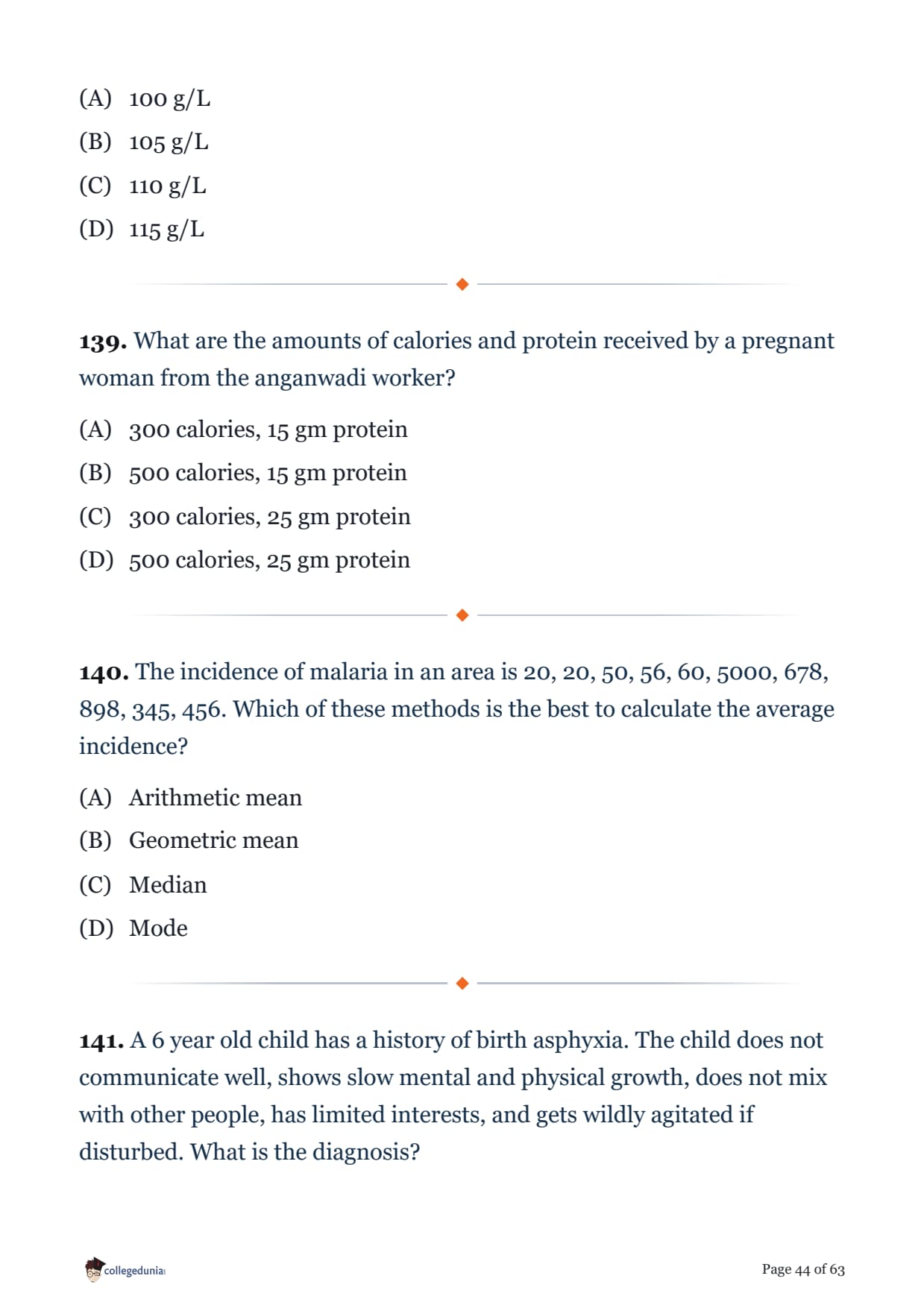
Hb of less than what value is the cut-off used by WHO guidelines to label an infant under 6 months of age as being anemic?
What are the amounts of calories and protein received by a pregnant woman from the anganwadi worker?
The incidence of malaria in an area is 20, 20, 50, 56, 60, 5000, 678, 898, 345, 456. Which of these methods is the best to calculate the average incidence?
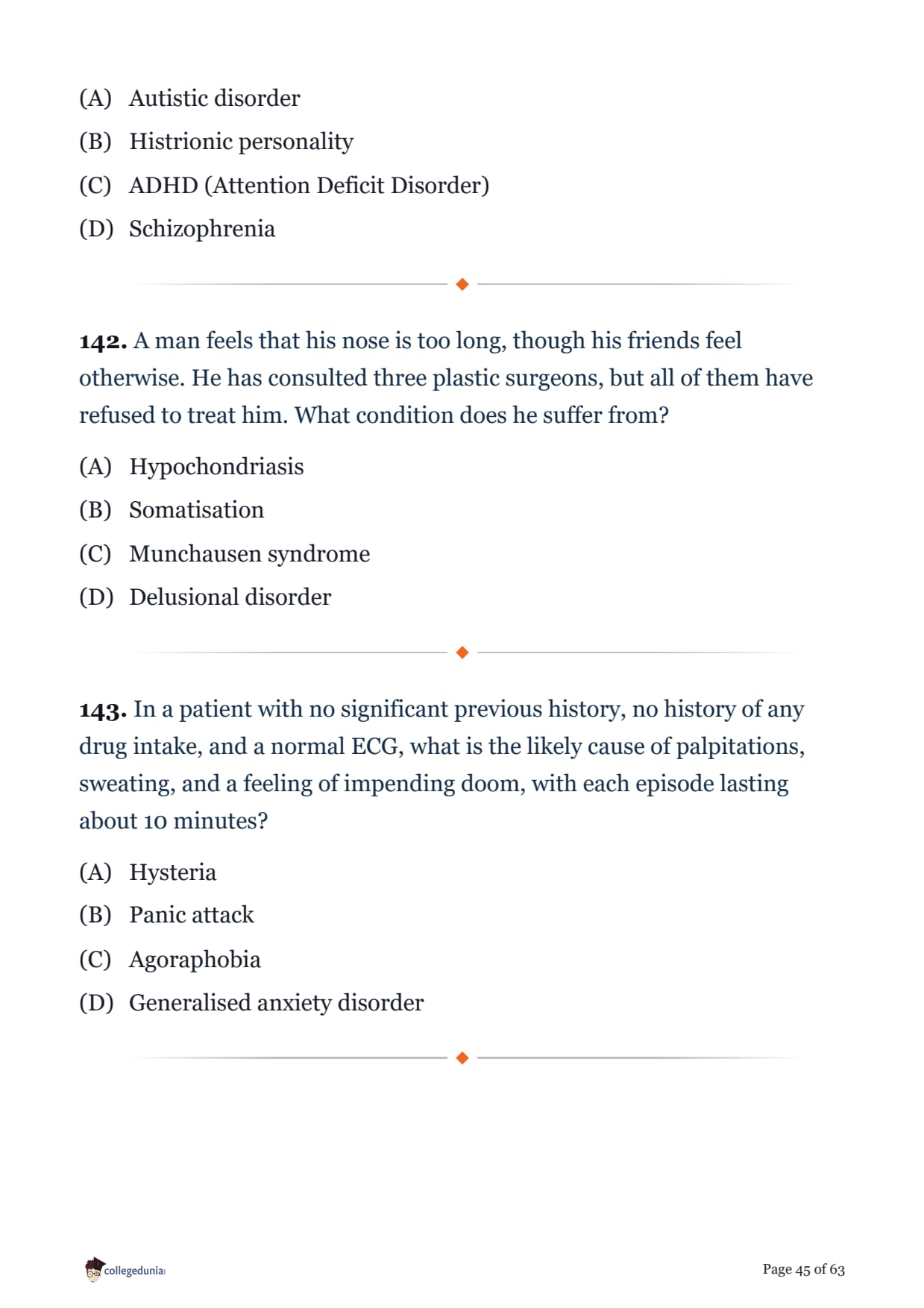
A 6 year old child has a history of birth asphyxia. The child does not communicate well, shows slow mental and physical growth, does not mix with other people, has limited interests, and gets wildly agitated if disturbed. What is the diagnosis?
A man feels that his nose is too long, though his friends feel otherwise. He has consulted three plastic surgeons, but all of them have refused to treat him. What condition does he suffer from?
In a patient with no significant previous history, no history of any drug intake, and a normal ECG, what is the likely cause of palpitations, sweating, and a feeling of impending doom, with each episode lasting about 10 minutes?
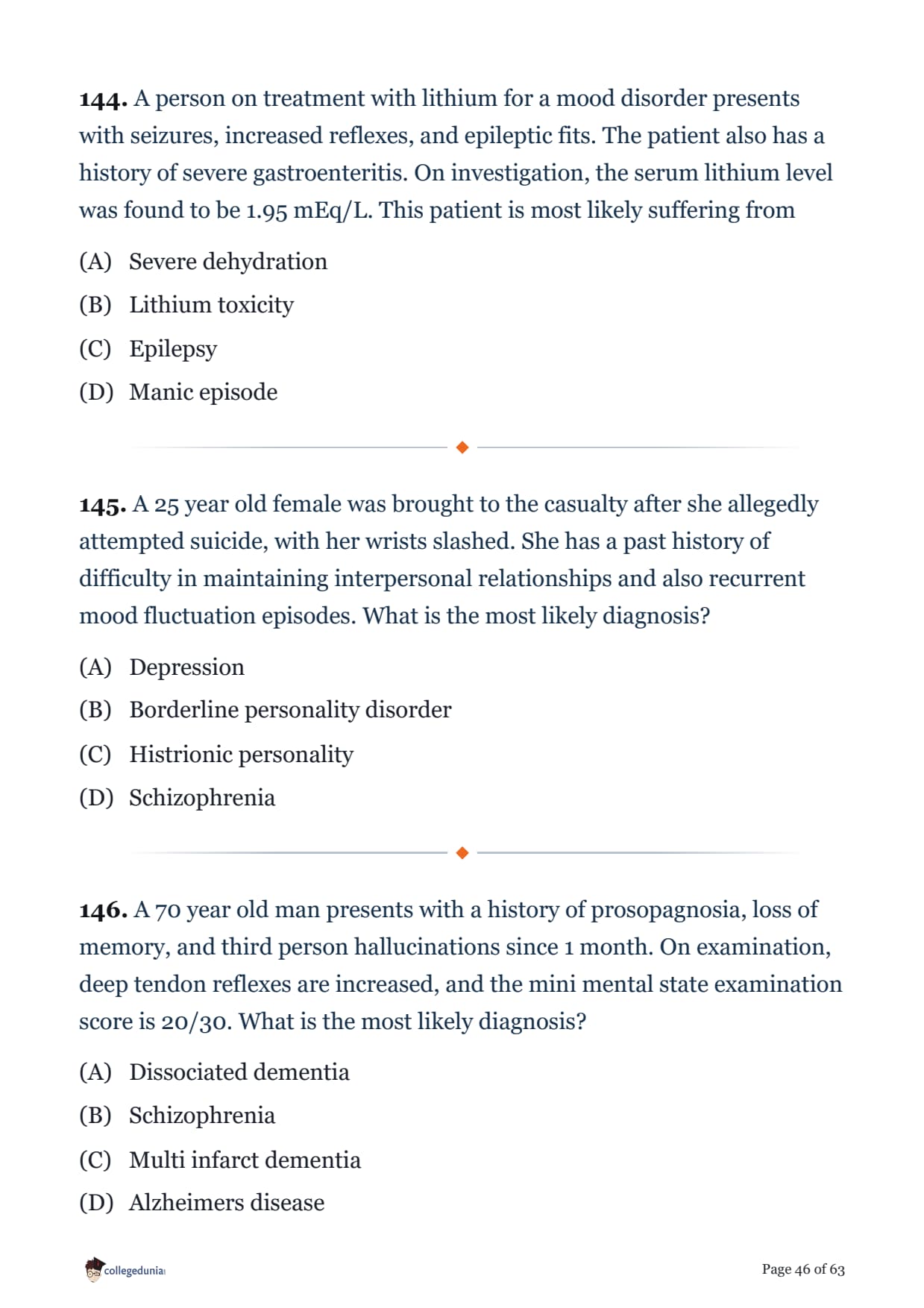
A person on treatment with lithium for a mood disorder presents with seizures, increased reflexes, and epileptic fits. The patient also has a history of severe gastroenteritis. On investigation, the serum lithium level was found to be 1.95 mEq/L. This patient is most likely suffering from
A 25 year old female was brought to the casualty after she allegedly attempted suicide, with her wrists slashed. She has a past history of difficulty in maintaining interpersonal relationships and also recurrent mood fluctuation episodes. What is the most likely diagnosis?
A 70 year old man presents with a history of prosopagnosia, loss of memory, and third person hallucinations since 1 month. On examination, deep tendon reflexes are increased, and the mini mental state examination score is 20/30. What is the most likely diagnosis?
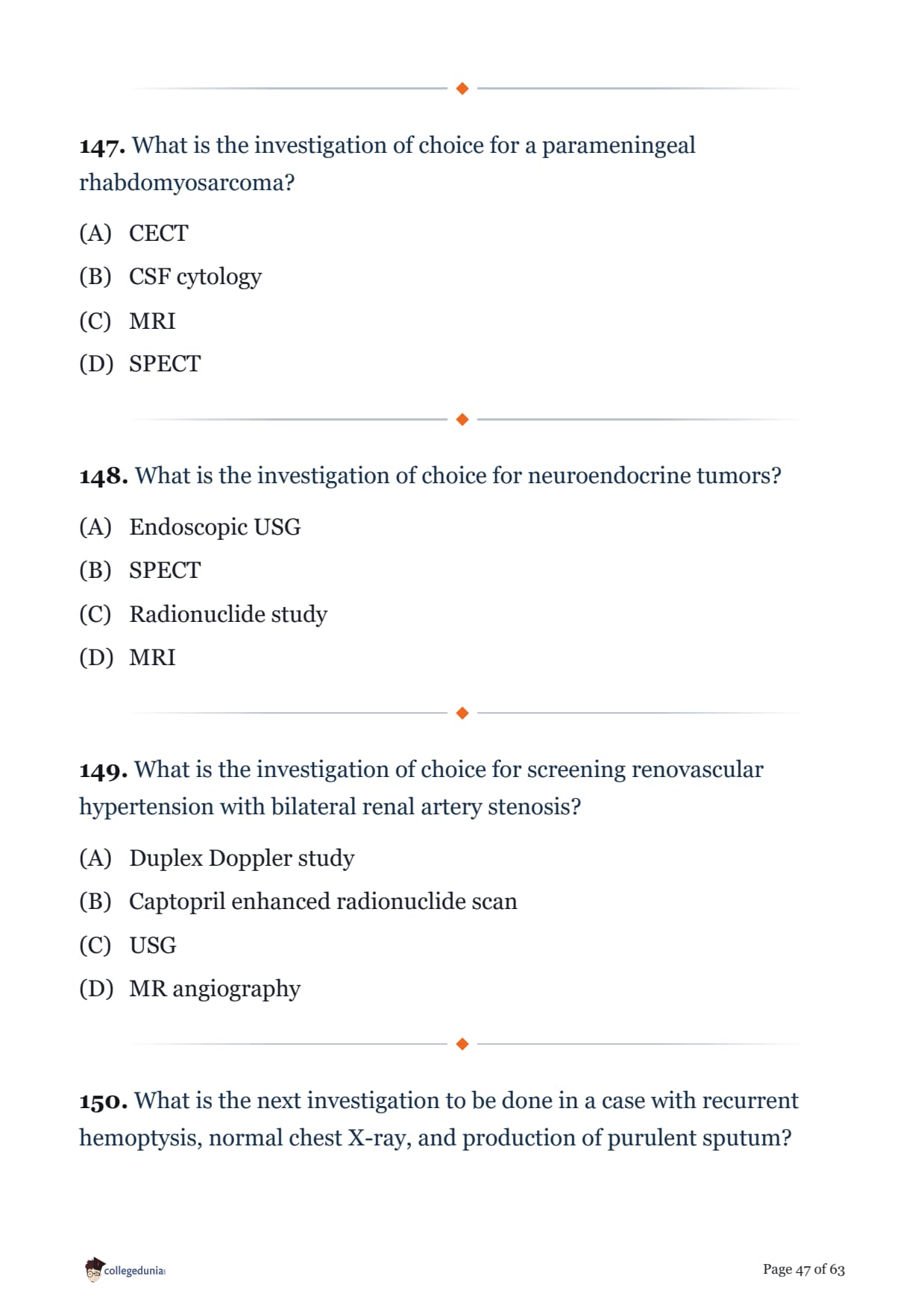
What is the investigation of choice for a parameningeal rhabdomyosarcoma?
What is the investigation of choice for neuroendocrine tumors?
What is the investigation of choice for screening renovascular hypertension with bilateral renal artery stenosis?
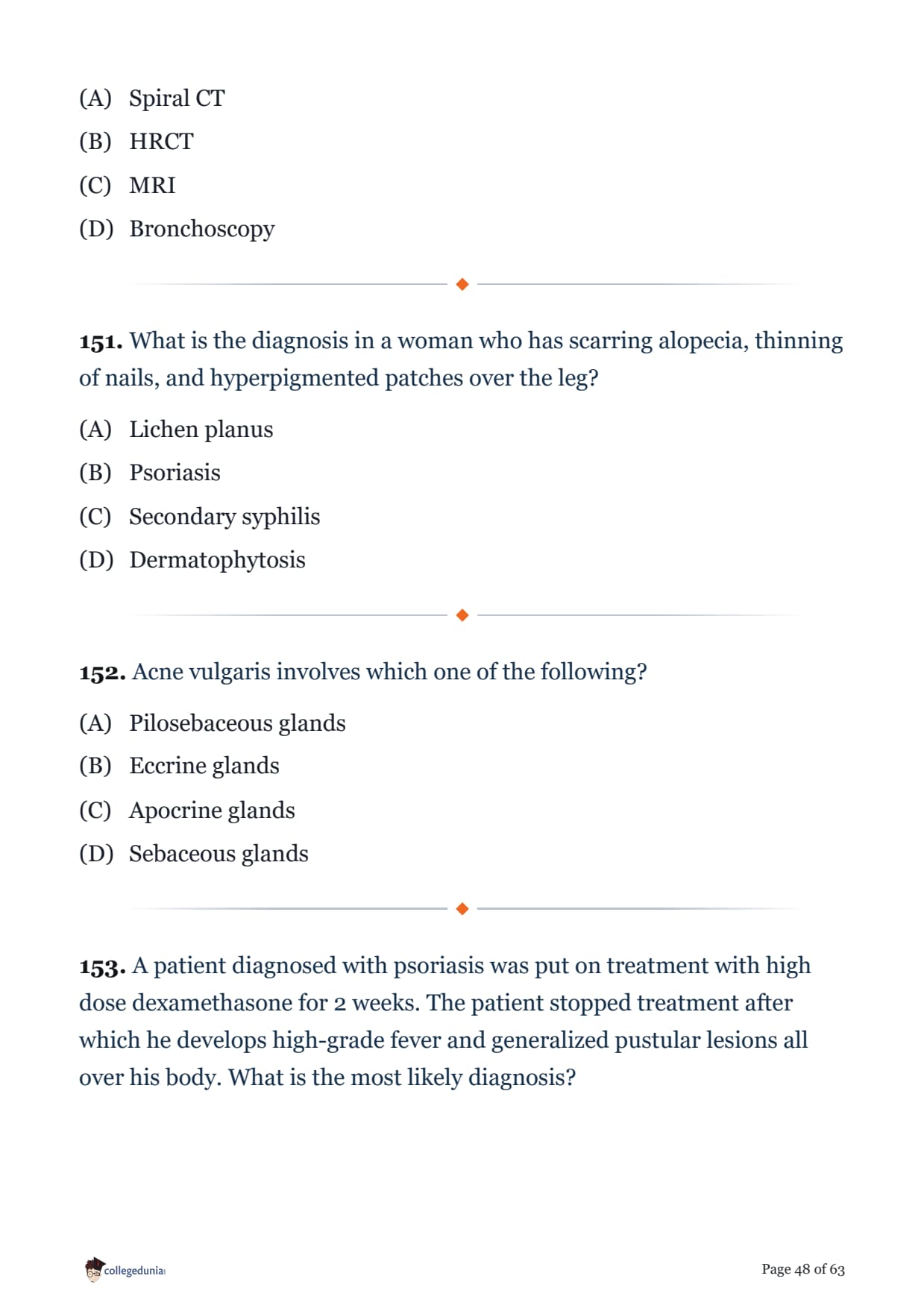
What is the next investigation to be done in a case with recurrent hemoptysis, normal chest X-ray, and production of purulent sputum?
What is the diagnosis in a woman who has scarring alopecia, thinning of nails, and hyperpigmented patches over the leg?
Acne vulgaris involves which one of the following?
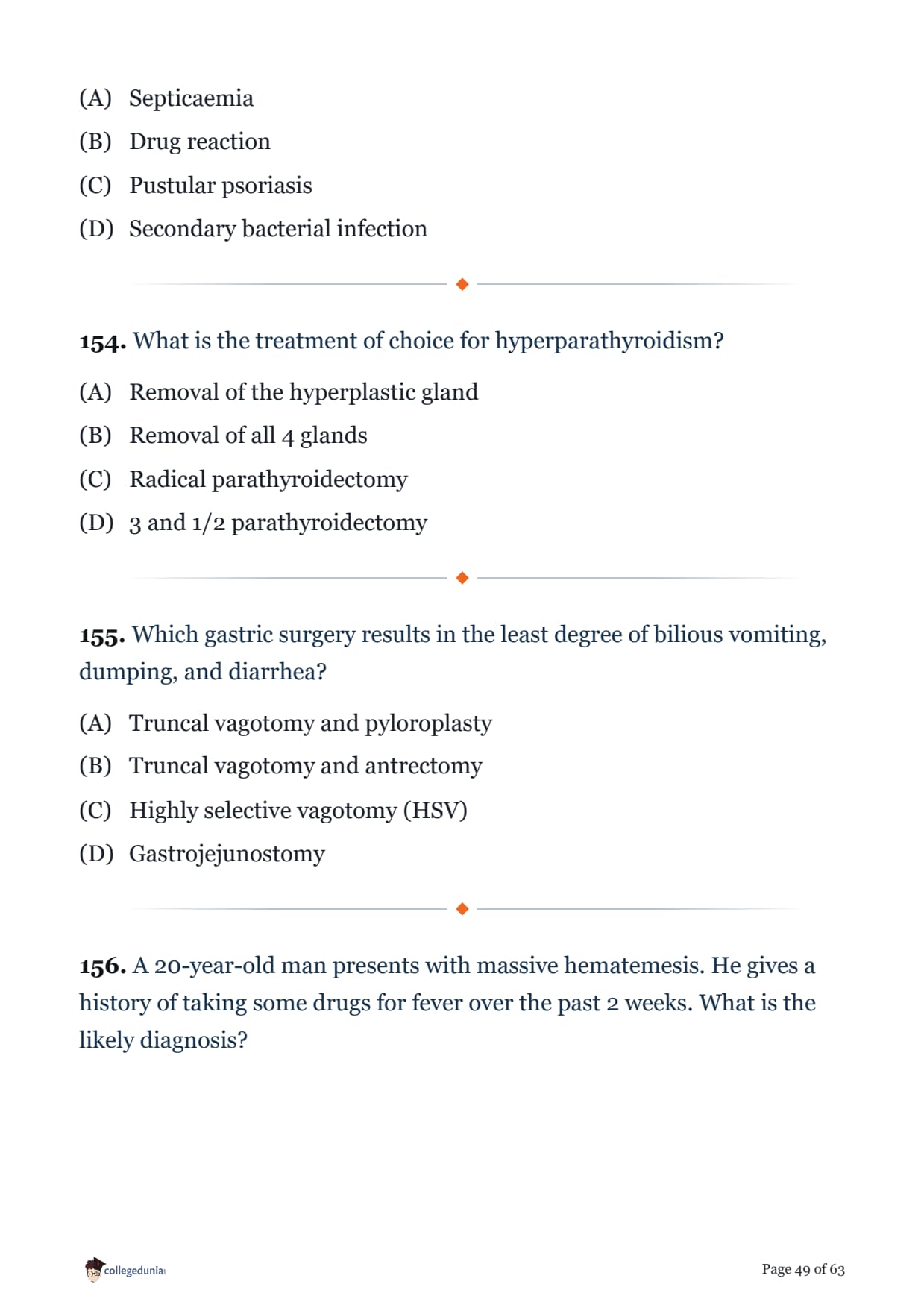
A patient diagnosed with psoriasis was put on treatment with high dose dexamethasone for 2 weeks. The patient stopped treatment after which he develops high-grade fever and generalized pustular lesions all over his body. What is the most likely diagnosis?
What is the treatment of choice for hyperparathyroidism?
Which gastric surgery results in the least degree of bilious vomiting, dumping, and diarrhea?
A 20-year-old man presents with massive hematemesis. He gives a history of taking some drugs for fever over the past 2 weeks. What is the likely diagnosis?
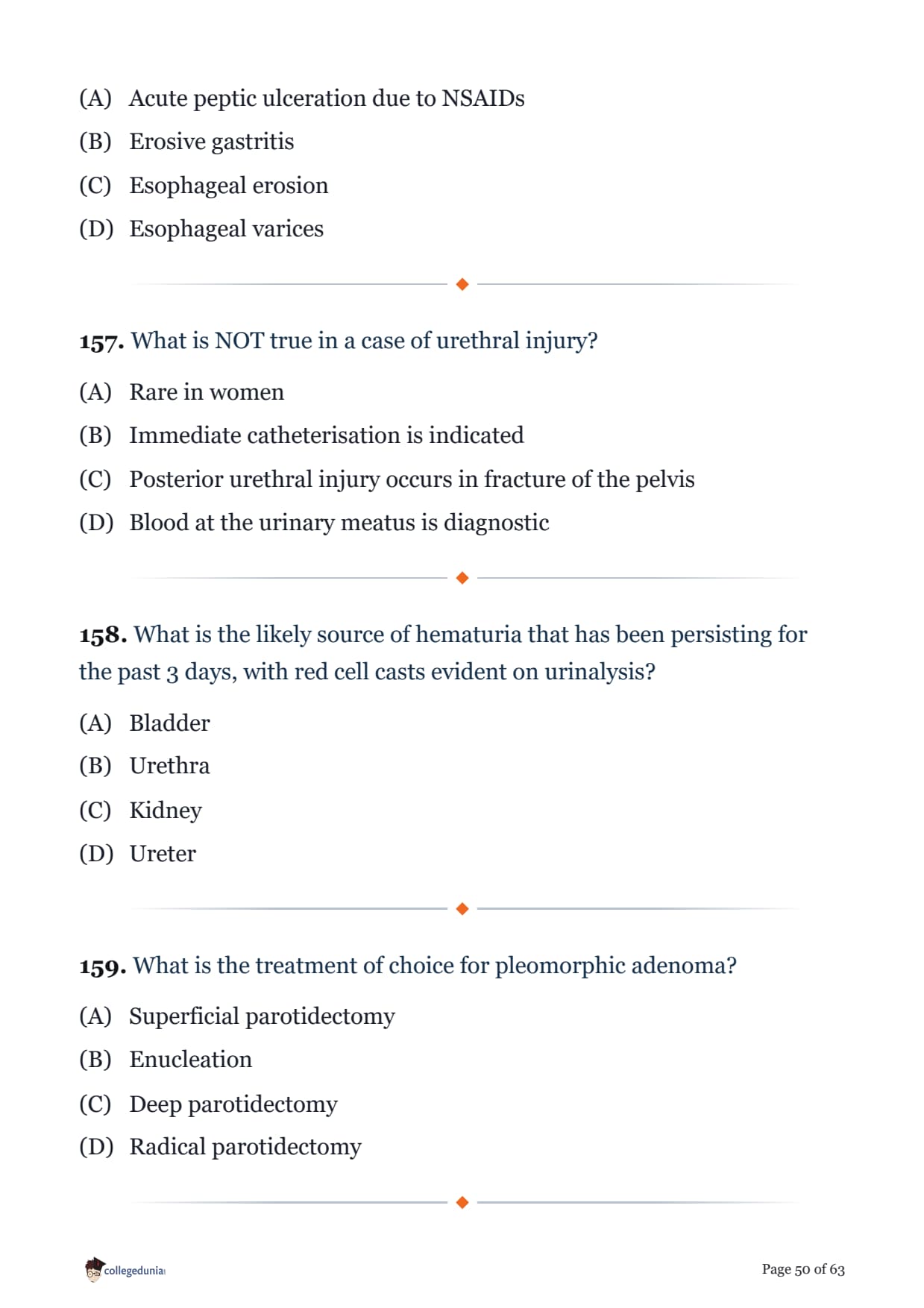
What is NOT true in a case of urethral injury?
What is the likely source of hematuria that has been persisting for the past 3 days, with red cell casts evident on urinalysis?
What is the treatment of choice for pleomorphic adenoma?
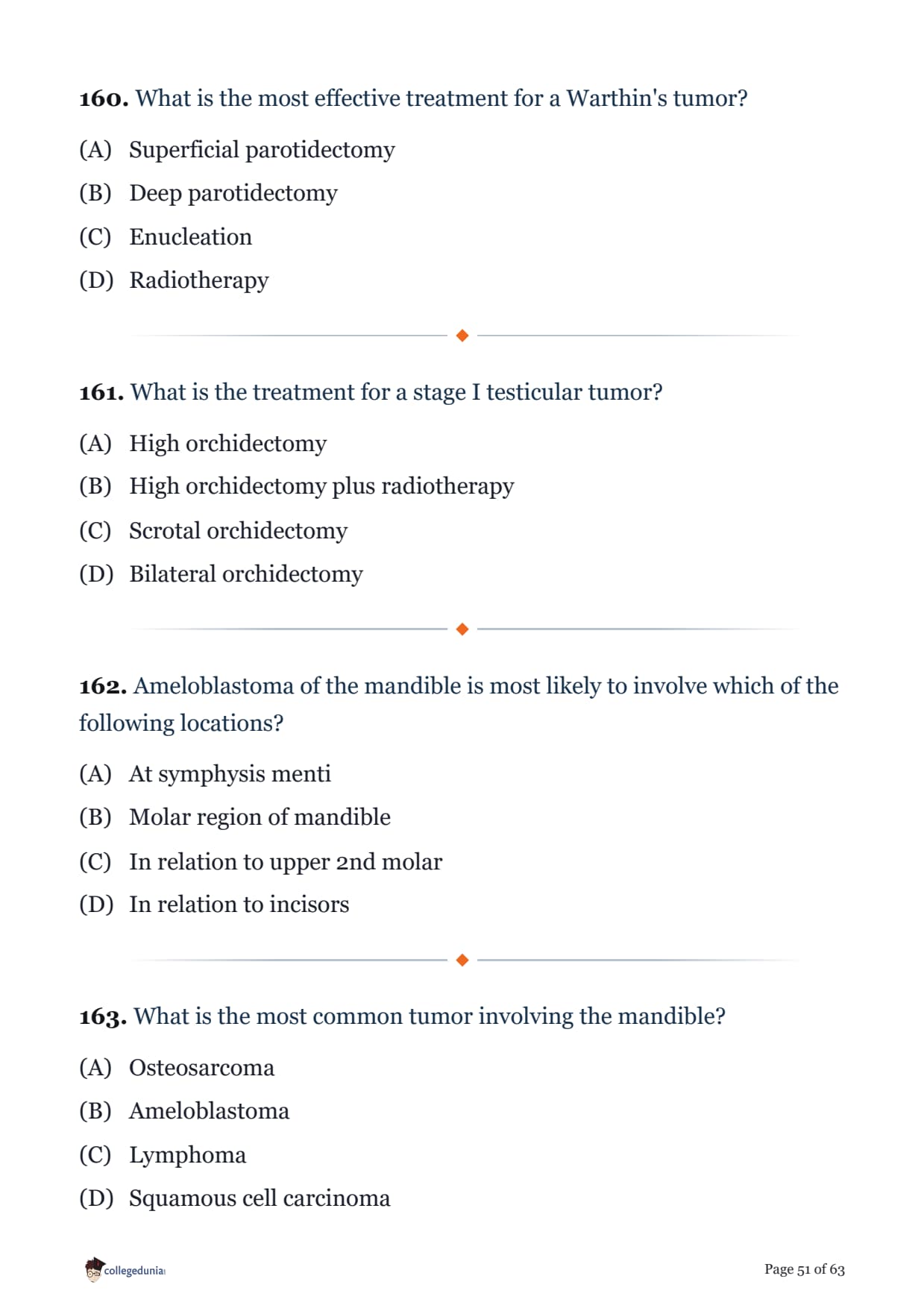
What is the most effective treatment for a Warthin's tumor?
What is the treatment for a stage I testicular tumor?
Ameloblastoma of the mandible is most likely to involve which of the following locations?
What is the most common tumor involving the mandible?
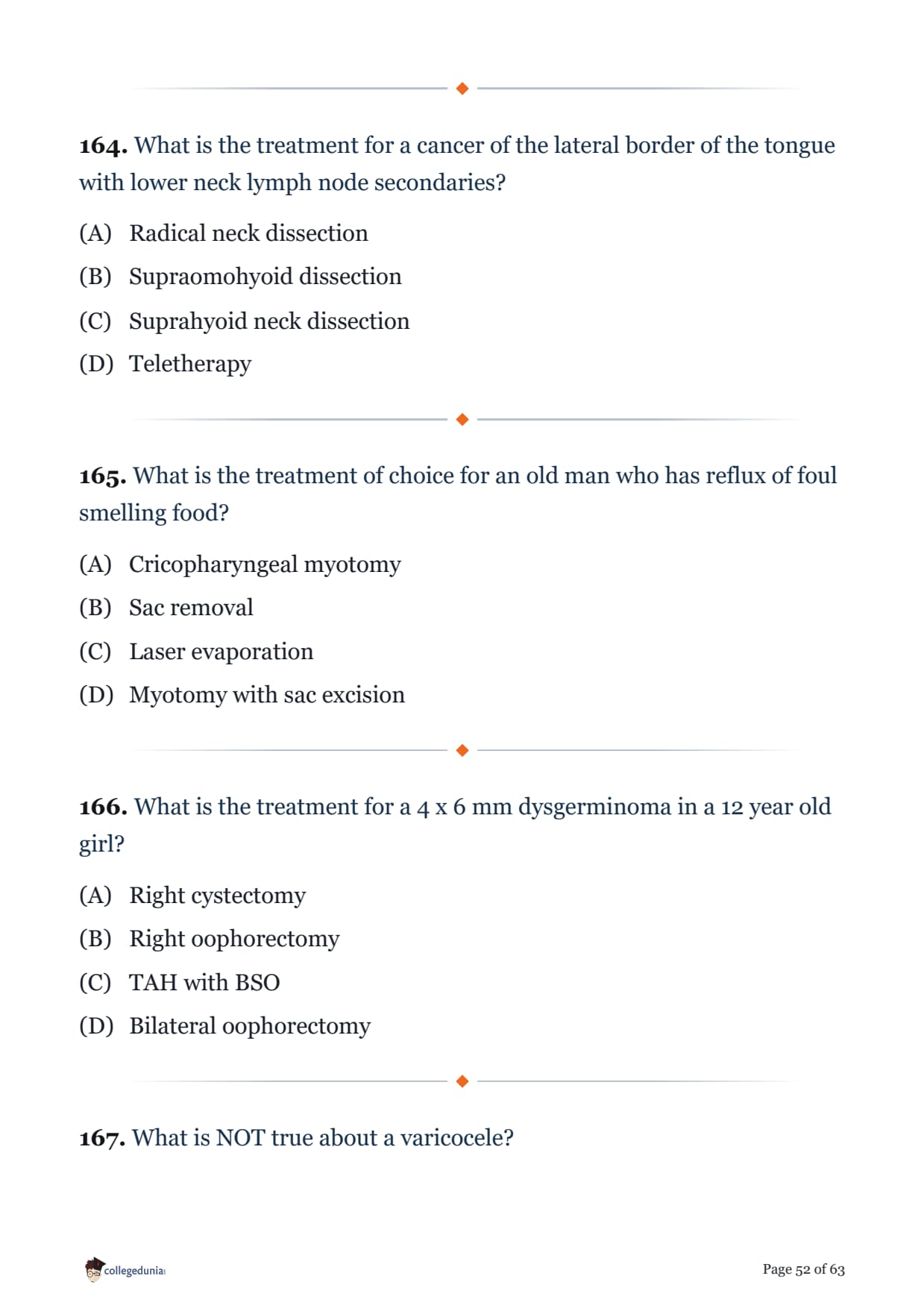
What is the treatment for a cancer of the lateral border of the tongue with lower neck lymph node secondaries?
What is the treatment of choice for an old man who has reflux of foul smelling food?
What is the treatment for a 4 x 6 mm dysgerminoma in a 12 year old girl?
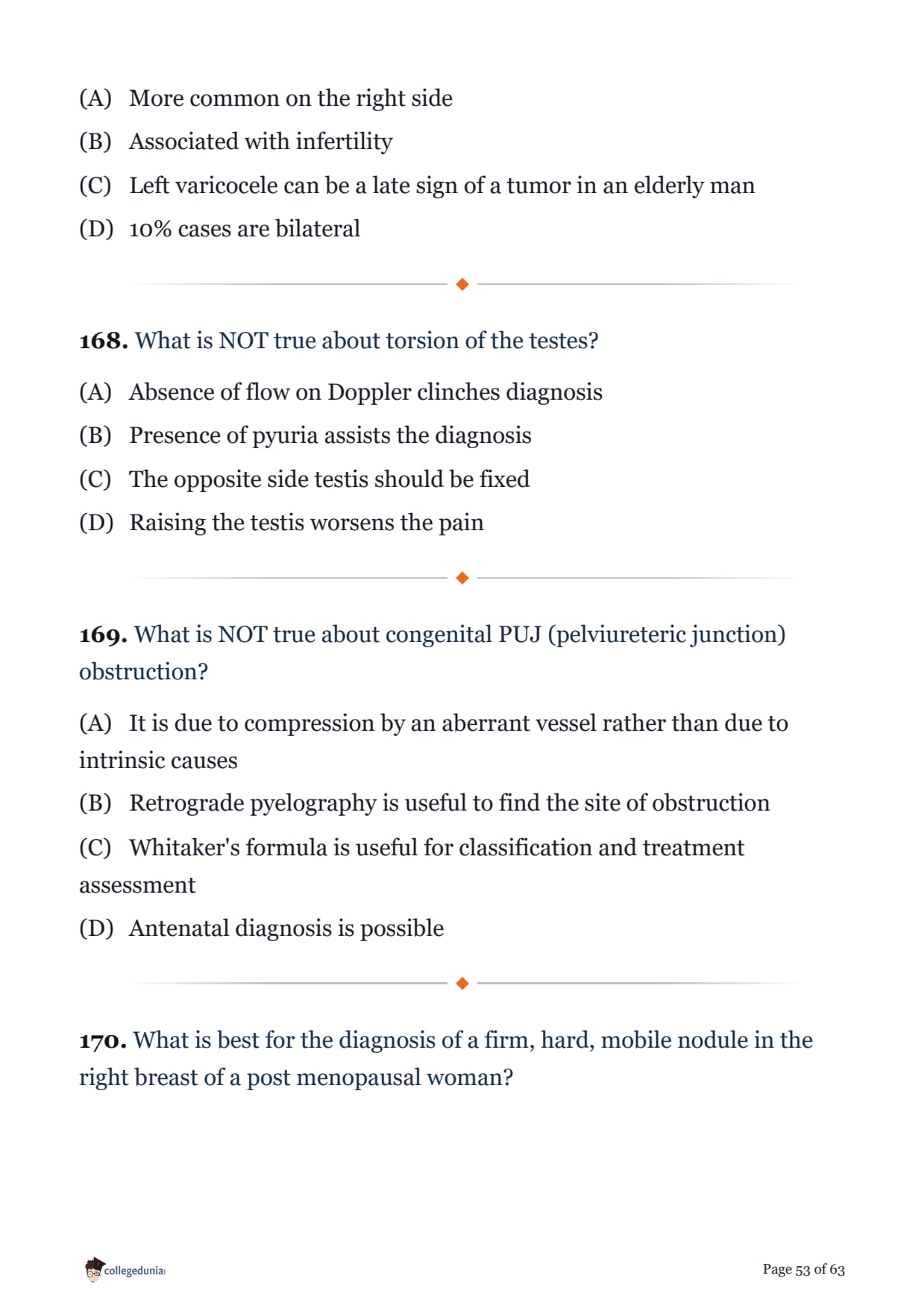
What is NOT true about a varicocele?
What is NOT true about torsion of the testes?
What is NOT true about congenital PUJ (pelviureteric junction) obstruction?
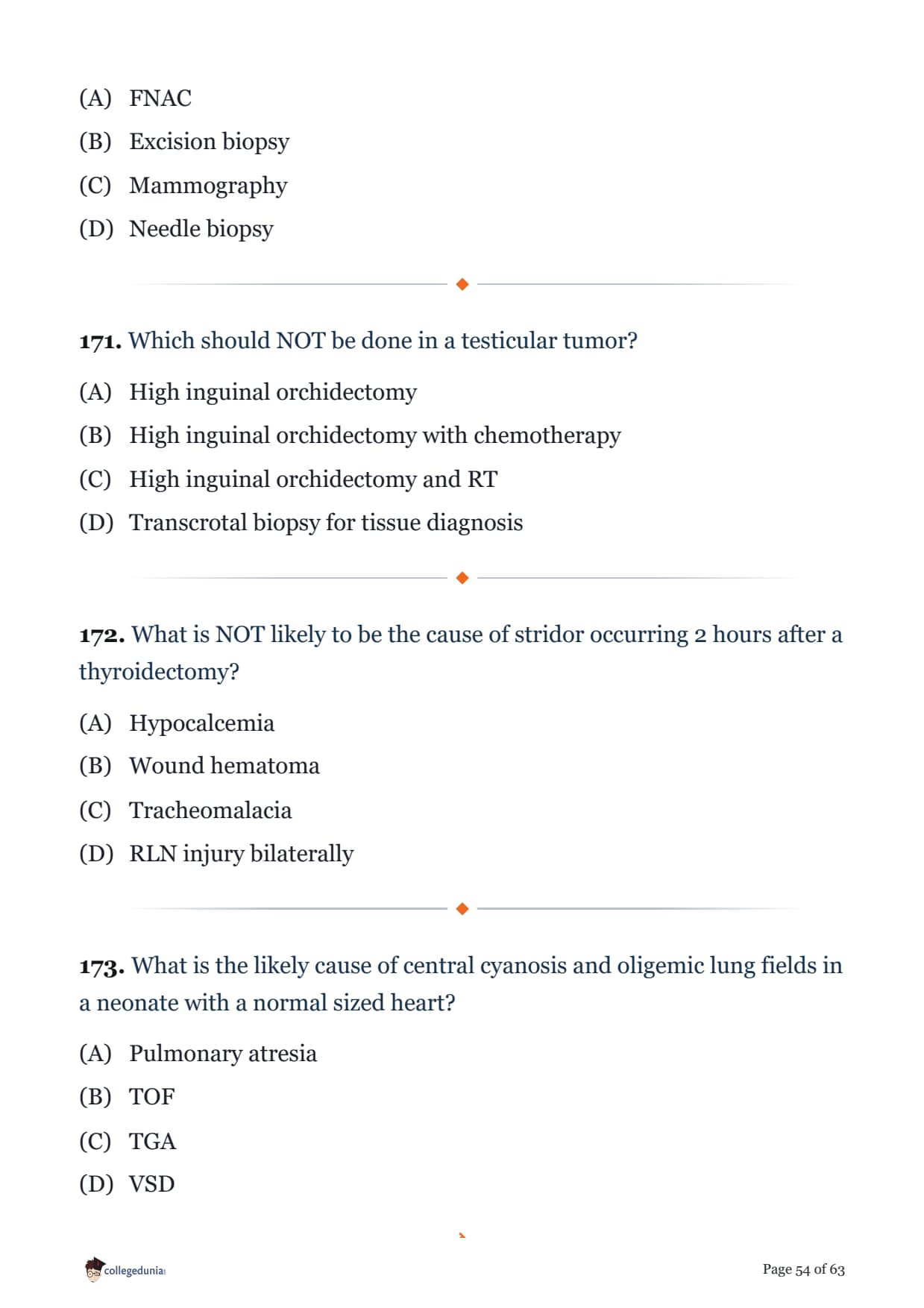
What is best for the diagnosis of a firm, hard, mobile nodule in the right breast of a post menopausal woman?
Which should NOT be done in a testicular tumor?
What is NOT likely to be the cause of stridor occurring 2 hours after a thyroidectomy?
What is the likely cause of central cyanosis and oligemic lung fields in a neonate with a normal sized heart?
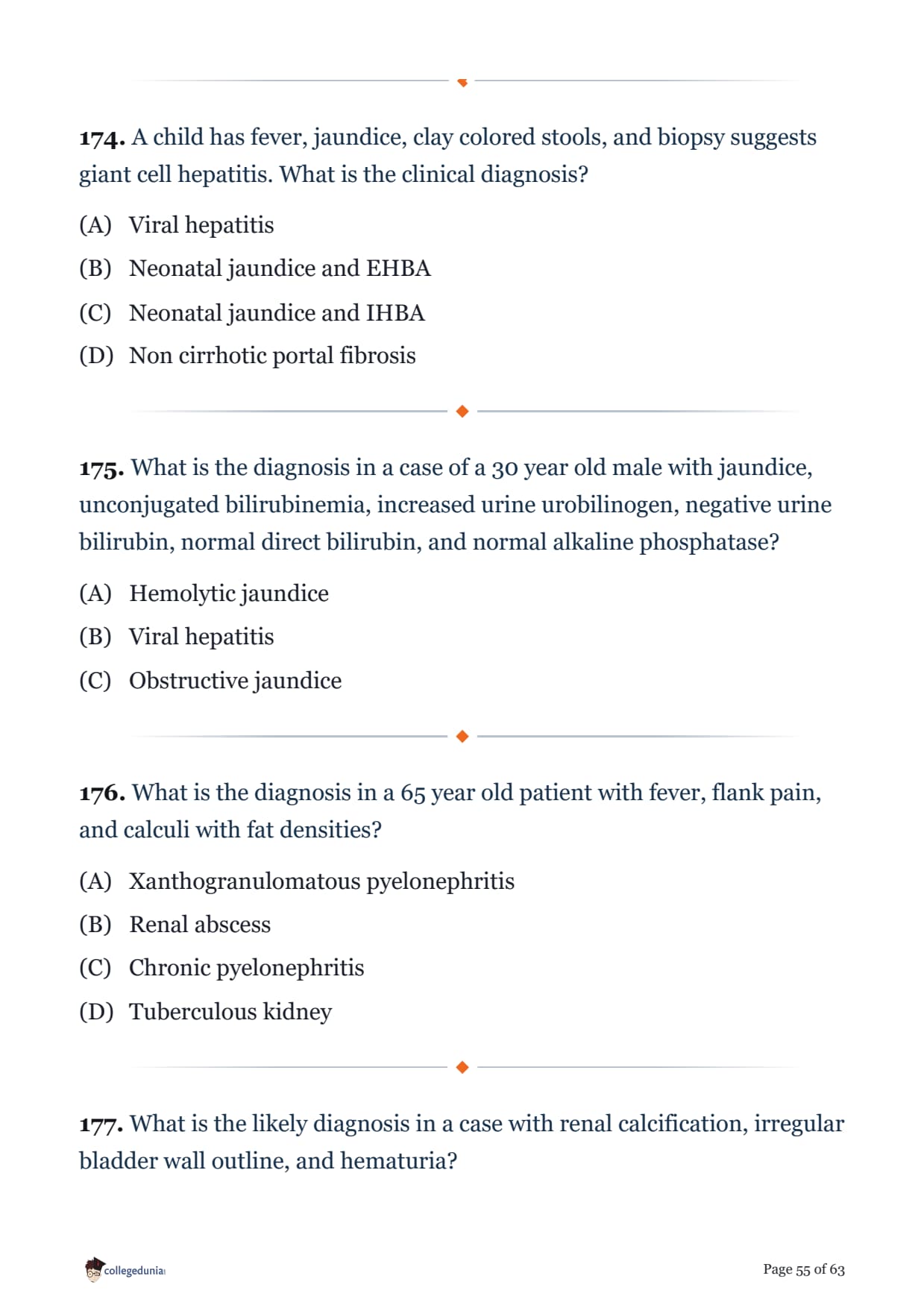
A child has fever, jaundice, clay colored stools, and biopsy suggests giant cell hepatitis. What is the clinical diagnosis?
What is the diagnosis in a case of a 30 year old male with jaundice, unconjugated bilirubinemia, increased urine urobilinogen, negative urine bilirubin, normal direct bilirubin, and normal alkaline phosphatase?
What is the diagnosis in a 65 year old patient with fever, flank pain, and calculi with fat densities?
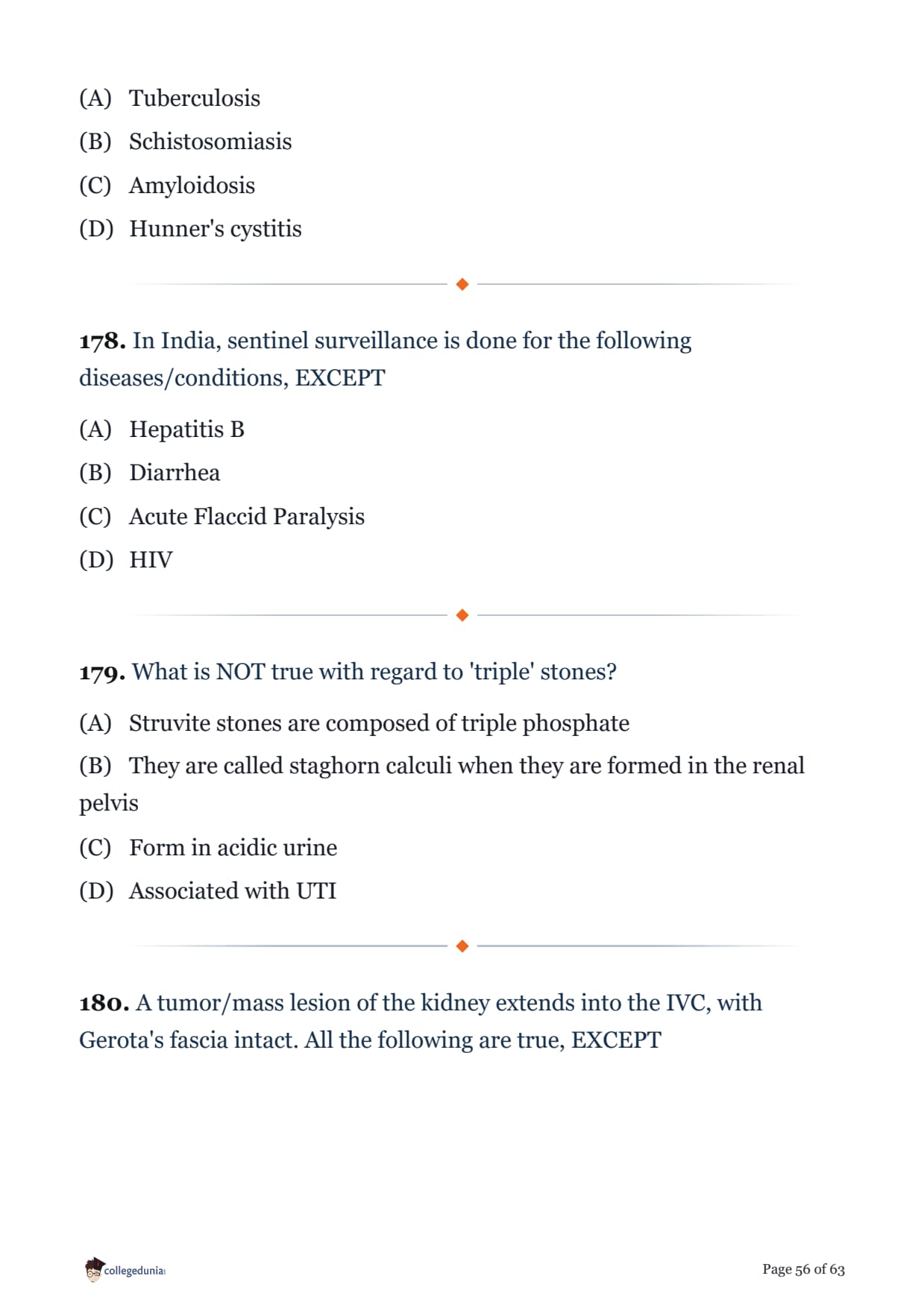
What is the likely diagnosis in a case with renal calcification, irregular bladder wall outline, and hematuria?
In India, sentinel surveillance is done for the following diseases/conditions, EXCEPT
What is NOT true with regard to 'triple' stones?
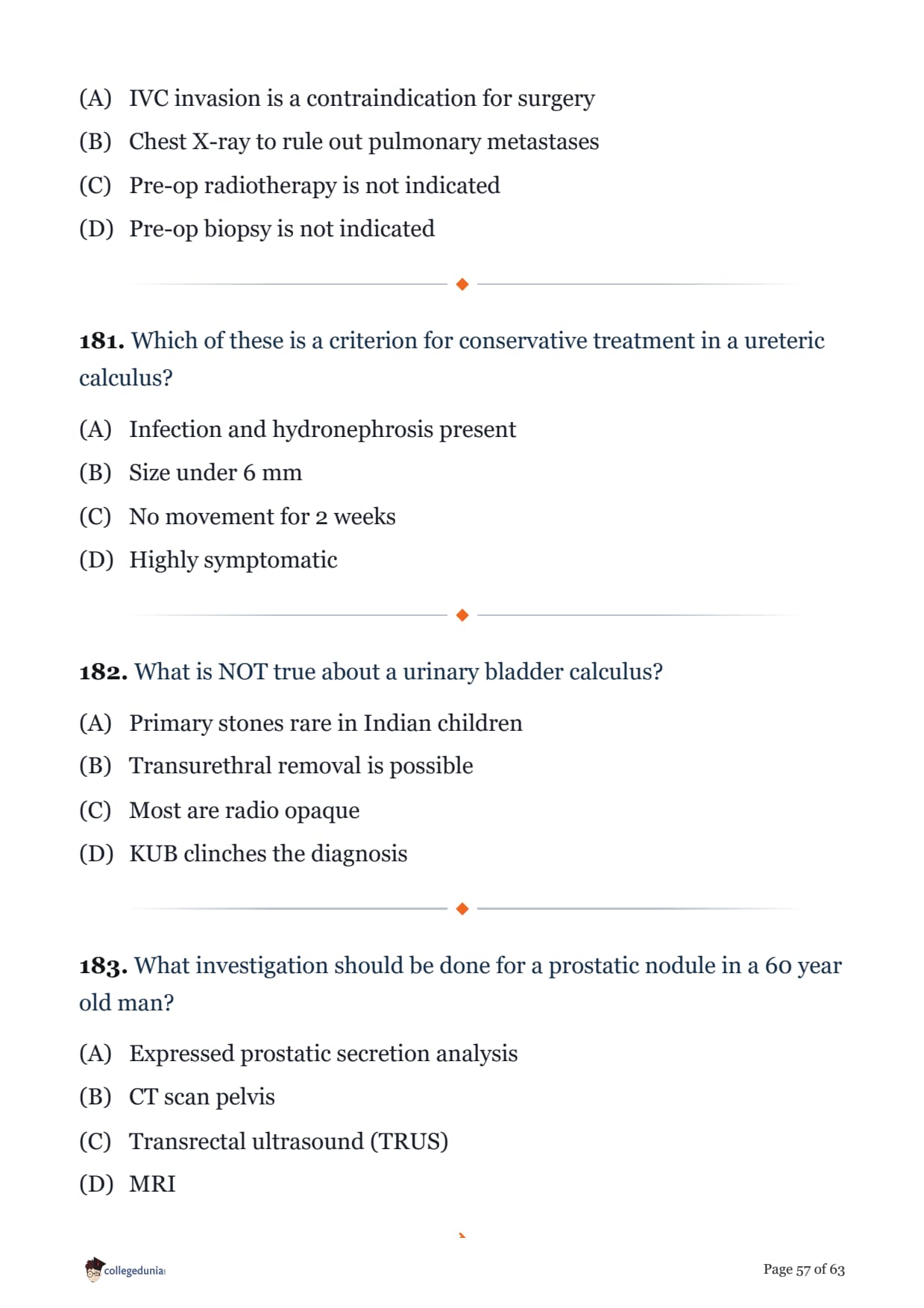
A tumor/mass lesion of the kidney extends into the IVC, with Gerota's fascia intact. All the following are true, EXCEPT
Which of these is a criterion for conservative treatment in a ureteric calculus?
What is NOT true about a urinary bladder calculus?
What investigation should be done for a prostatic nodule in a 60 year old man?
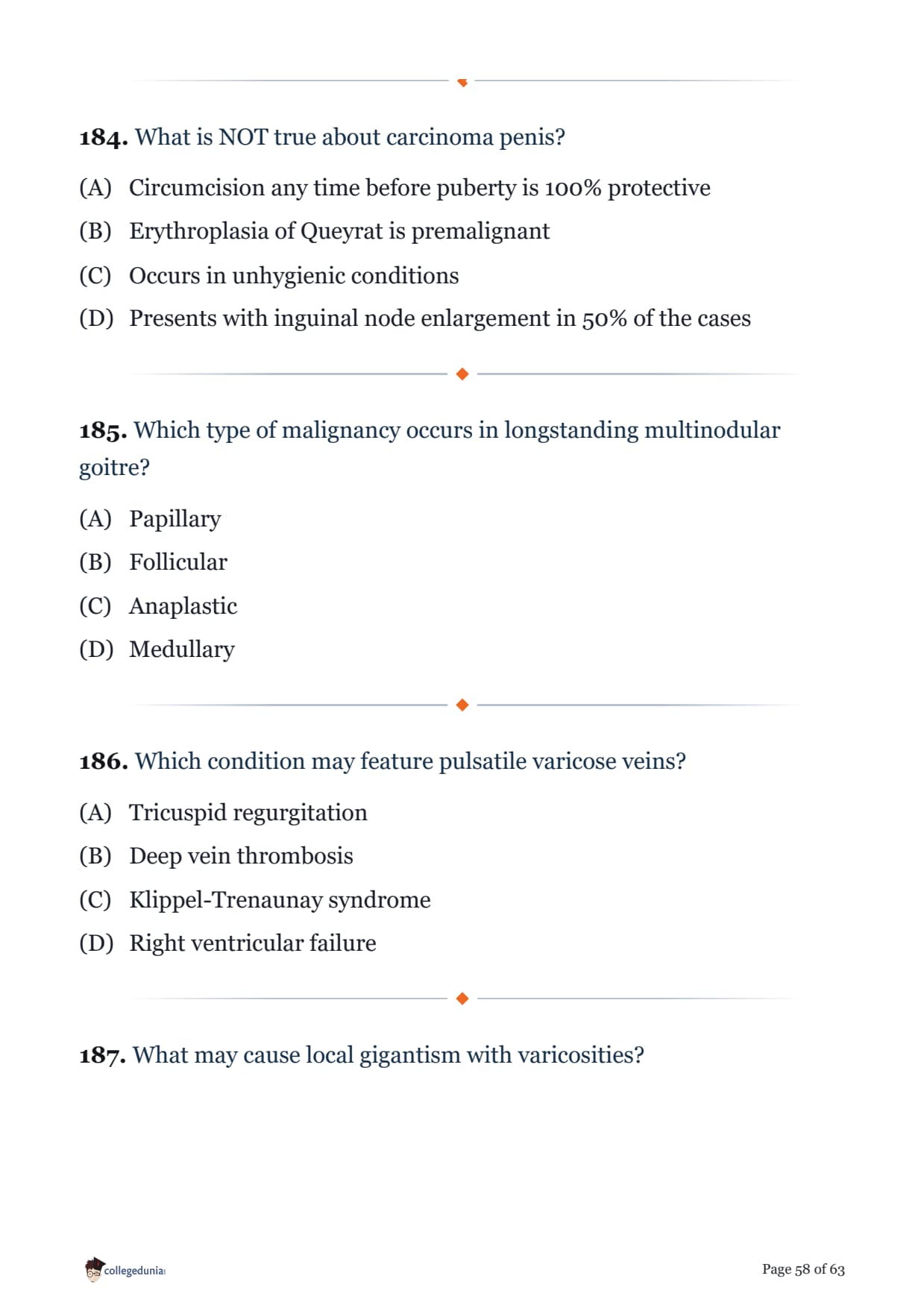
What is NOT true about carcinoma penis?
Which type of malignancy occurs in longstanding multinodular goitre?
Which condition may feature pulsatile varicose veins?
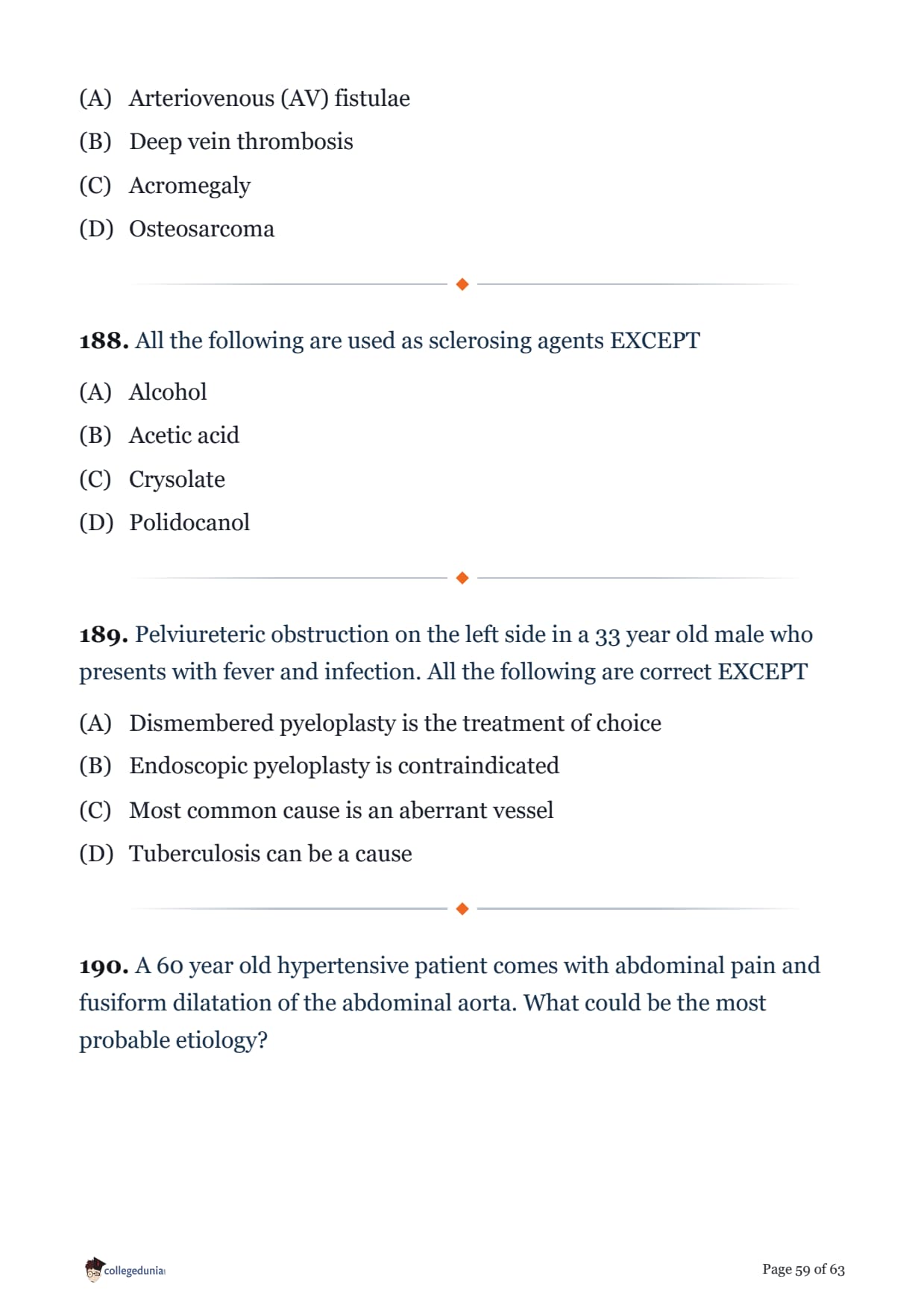
What may cause local gigantism with varicosities?
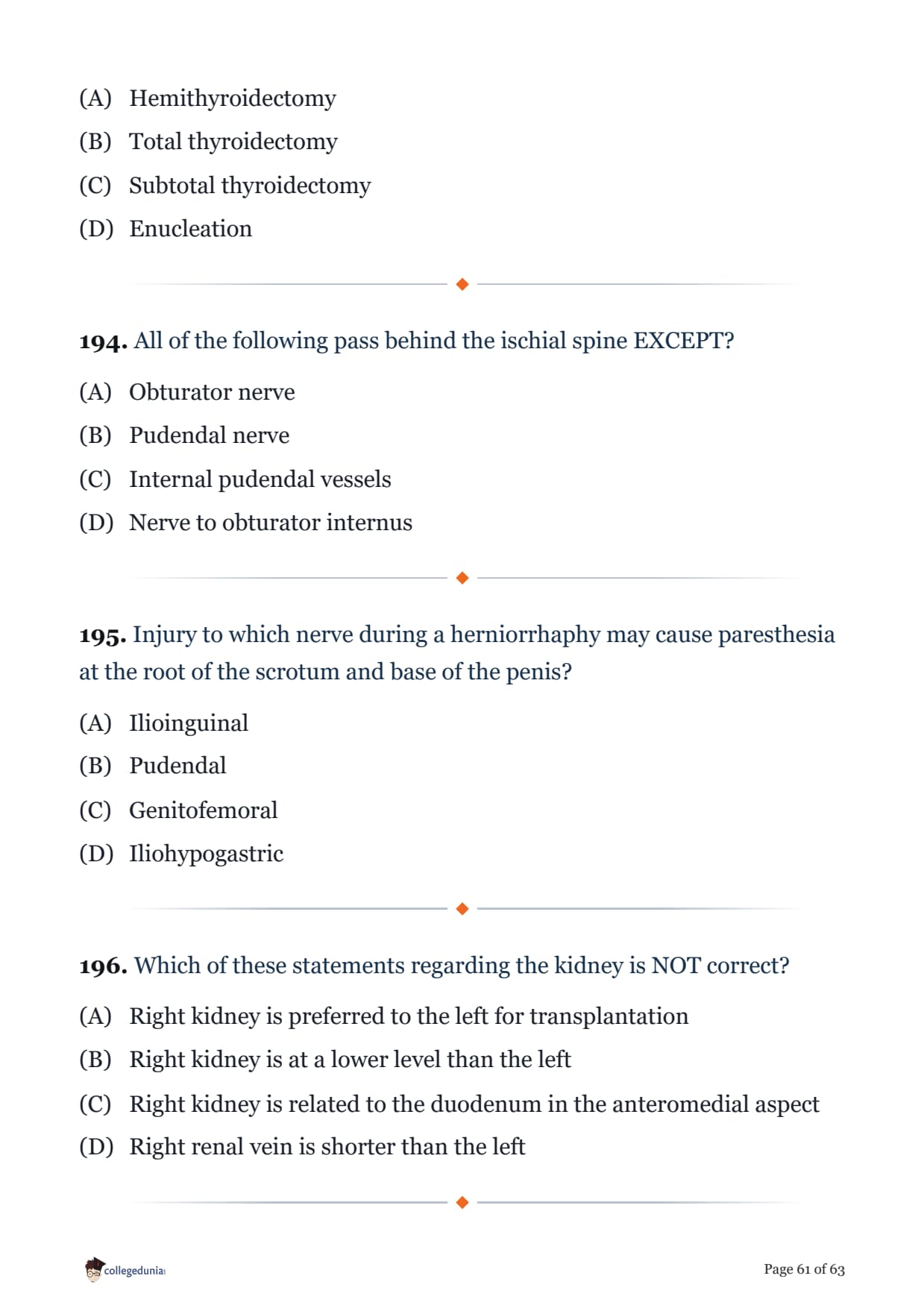
All the following are used as sclerosing agents EXCEPT
Pelviureteric obstruction on the left side in a 33 year old male who presents with fever and infection. All the following are correct EXCEPT
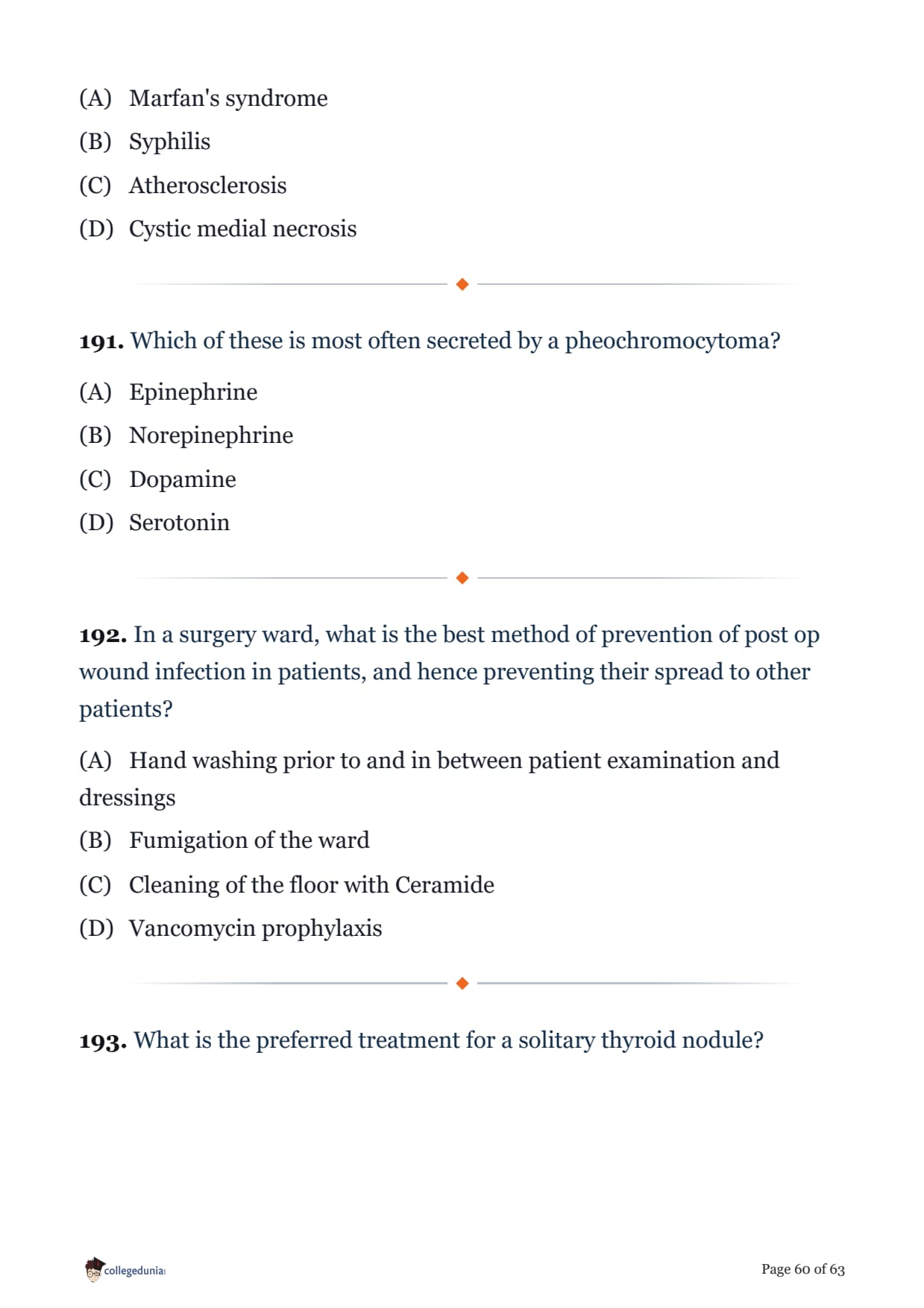
A 60 year old hypertensive patient comes with abdominal pain and fusiform dilatation of the abdominal aorta. What could be the most probable etiology?
Which of these is most often secreted by a pheochromocytoma?
In a surgery ward, what is the best method of prevention of post op wound infection in patients, and hence preventing their spread to other patients?
What is the preferred treatment for a solitary thyroid nodule?
All of the following pass behind the ischial spine EXCEPT?
Injury to which nerve during a herniorrhaphy may cause paresthesia at the root of the scrotum and base of the penis?
Which of these statements regarding the kidney is NOT correct?
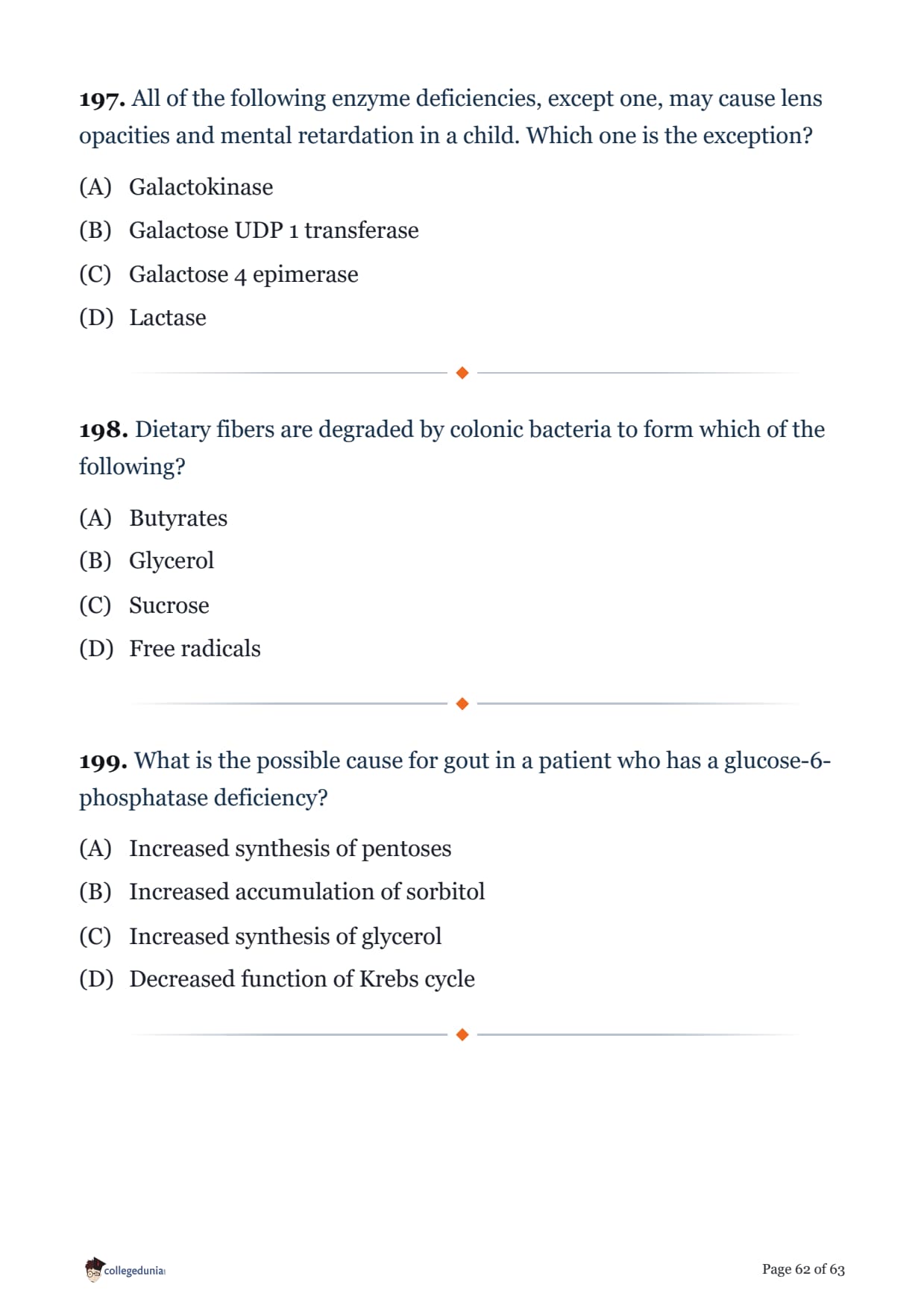
All of the following enzyme deficiencies, except one, may cause lens opacities and mental retardation in a child. Which one is the exception?
Dietary fibers are degraded by colonic bacteria to form which of the following?
What is the possible cause for gout in a patient who has a glucose-6-phosphatase deficiency?
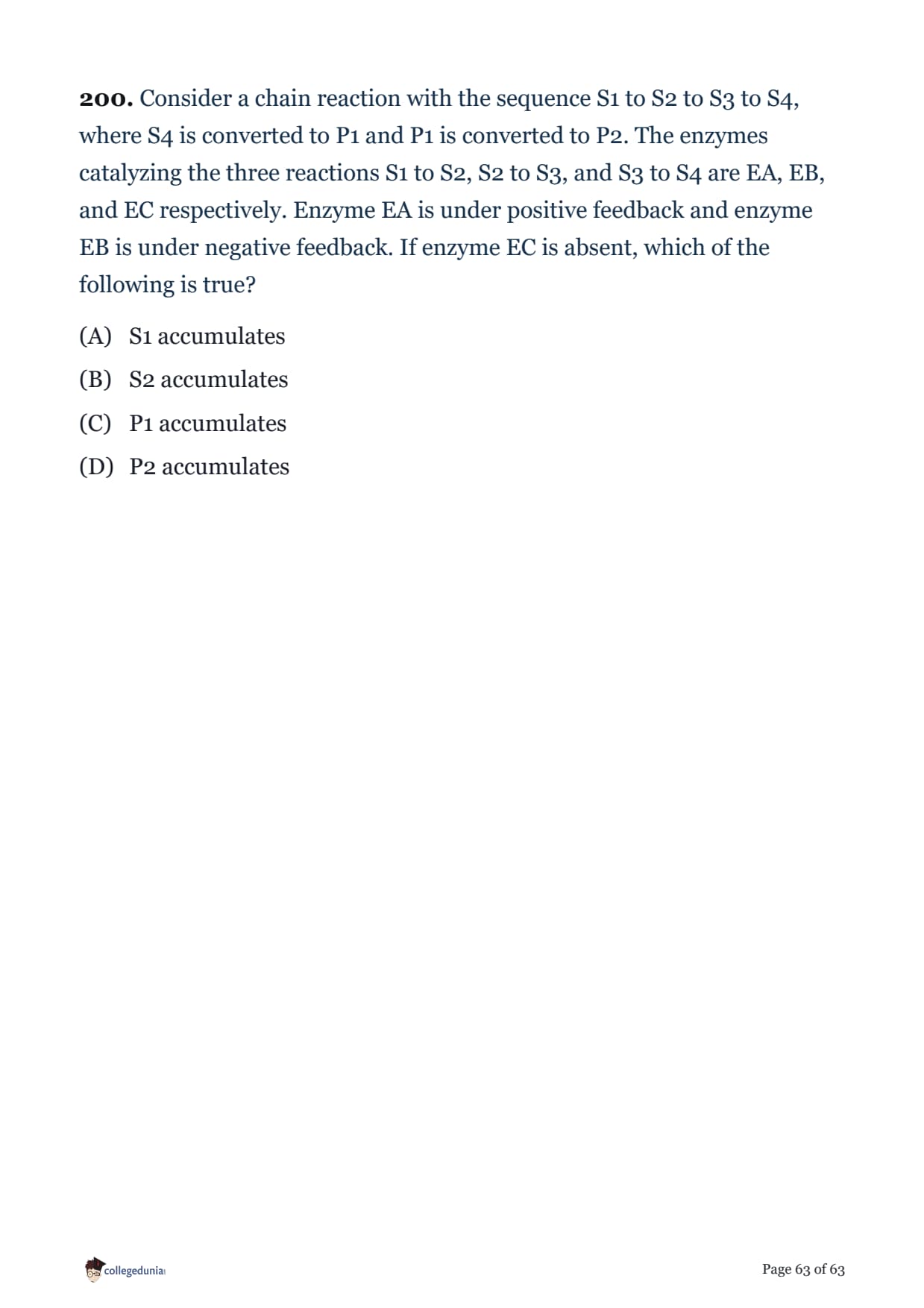
Consider a chain reaction with the sequence S1 to S2 to S3 to S4, where S4 is converted to P1 and P1 is converted to P2. The enzymes catalyzing the three reactions S1 to S2, S2 to S3, and S3 to S4 are EA, EB, and EC respectively. Enzyme EA is under positive feedback and enzyme EB is under negative feedback. If enzyme EC is absent, which of the following is true?
NEET PG 2001 (AIIMS PG Entrance) Exam Pattern
The AIIMS PG entrance exam of 2001 was an objective-type pen-and-paper test, not the computer-based INI-CET format doctors sit today. Here is what defined its pattern.
- Question format: single-best-response multiple-choice questions, one correct option per question.
- Conducting body: the All India Institute of Medical Sciences (AIIMS), New Delhi, conducted its own postgraduate entrance test independently of the CBSE-run AIPGMEE, which covered the separate 50% all-India-quota seats at other medical colleges.
- Purpose: ranking candidates for MD, MS and MDS seats at AIIMS New Delhi and its associated centres, a small and highly competitive intake compared to the national AIPGMEE pool.
- Format history: AIIMS ran this exam offline on OMR sheets through the 2000s, long before AIIMS PG (and later INI-CET) moved to a computer-based format.
- This paper: compiles 200 questions from the original 2001 AIIMS PG test booklet, spread across 18 subjects from Anatomy to Social and Preventive Medicine.
NEET PG 2001 Question Paper Discussion Video
Source: Dr Suvo
Subject-Wise Question Distribution in This NEET PG 2001 Paper
Breaking down the 200 questions by subject shows where this paper leans hardest, useful for planning revision before you attempt it.
- Surgery carries the largest share with 31 questions, followed by Medicine with 28 and Social and Preventive Medicine with 25.
- Pathology adds 19 questions and Microbiology another 14, together with Surgery, Medicine and SPM making up well over half the paper.
- Gynaecology and Obstetrics holds 11 questions, while Ophthalmology, Pharmacology and Biochemistry carry 9 each.
- Dermatology and Pediatrics contribute 8 and 7 questions respectively, with the rest spread across Physiology, Forensic Medicine, Orthopedics, Psychiatry, Anatomy, Radiology and ENT.
- By difficulty, 112 questions are rated medium, 51 hard and 37 easy, so working through the full set mirrors real exam-day pressure.
NEET PG 2001 Question Paper FAQs
Ques. What is the NEET PG 2001 question paper?
Ans. It is the AIIMS PG entrance examination held in 2001, an objective multiple-choice test conducted by AIIMS New Delhi to select candidates for its own MD, MS and MDS seats. This compiled version carries 200 questions from the original test booklet with worked solutions.
Ques. Who conducted the NEET PG 2001 (AIIMS PG) paper?
Ans. The All India Institute of Medical Sciences (AIIMS), New Delhi conducted its own postgraduate entrance exam in 2001, separately from the CBSE-run AIPGMEE that covered India's all-India-quota MD, MS and PG Diploma seats at other colleges. AIIMS PG was later folded into the newer INI-CET exam.
Ques. How many questions are in this NEET PG 2001 paper?
Ans. This compiled paper has 200 questions from the original 2001 AIIMS PG entrance test booklet, covering subjects from Anatomy to Social and Preventive Medicine.
Ques. Which subject carries the most questions in NEET PG 2001?
Ans. Surgery has the largest share with 31 questions, followed by Medicine with 28 and Social and Preventive Medicine with 25.
Ques. Is the NEET PG 2001 (AIIMS PG) paper still useful for NEET PG preparation?
Ans. Yes. Even though the exam format has since changed, solving the 2001 AIIMS PG paper gives subject-wise practice in high-yield clinical areas like Surgery, Medicine and Pathology that still dominate the current NEET PG and INI-CET syllabus.
Ques. Where can I download the NEET PG 2001 question paper with solutions for free?
Ans. Both the question paper and the solved answer key are hosted as free PDFs in the download table and flipbook above, with a separate Check Solutions PDF giving a step-by-step explanation for every question.



Comments