



Education Journalist | Study Abroad Lead
Degradation of Natural Resources refers to the deterioration of the environment due to the depletion of resources like air, water and soil. The air we breathe, the water we drink and the food we eat - all come from natural resources. With the explosion of population and the technological boom, the degradation of natural resources is a subject of prime concern faced by the world today. Our natural resources are fast depleting; causing an alarming situation for the survival of the planet and humans.
Key Terms: Natural resources, degradation, deforestation, soil erosion, pollution, desertification, climate change, water scarcity
Natural Resources
[Click Here for Sample Questions]
Natural resources are the natural materials or substances that are available on Earth in raw form without any human effort or intervention. Some of these resources include air, water, sunlight, oil, stone, gas, minerals, metals, etc. These resources are of utmost importance for human survival.
- Natural resources are materials that occur naturally in nature and are useful to humans for their various needs such as food, clothing, building, etc.
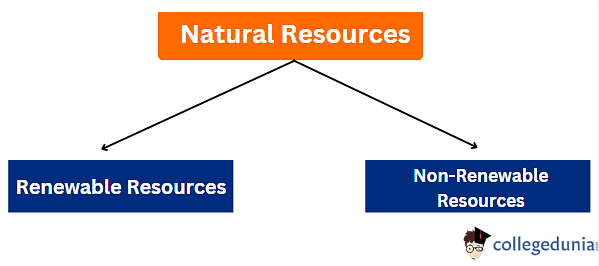
- Based on their availability, natural resources can be divided into 2 categories – renewable resources and non-renewable resources.
- Renewable resources are available in abundance and can be used again. For example water, wind, etc.
- Non-Renewable resources cannot be used again and are limited in abundance. For example minerals, fossil fuels, etc.
- The degradation of natural resources is a cause of concern as they are of utmost importance to us for our daily needs.
Read More:
Degradation of Natural Resources
[Click Here for Sample Questions]
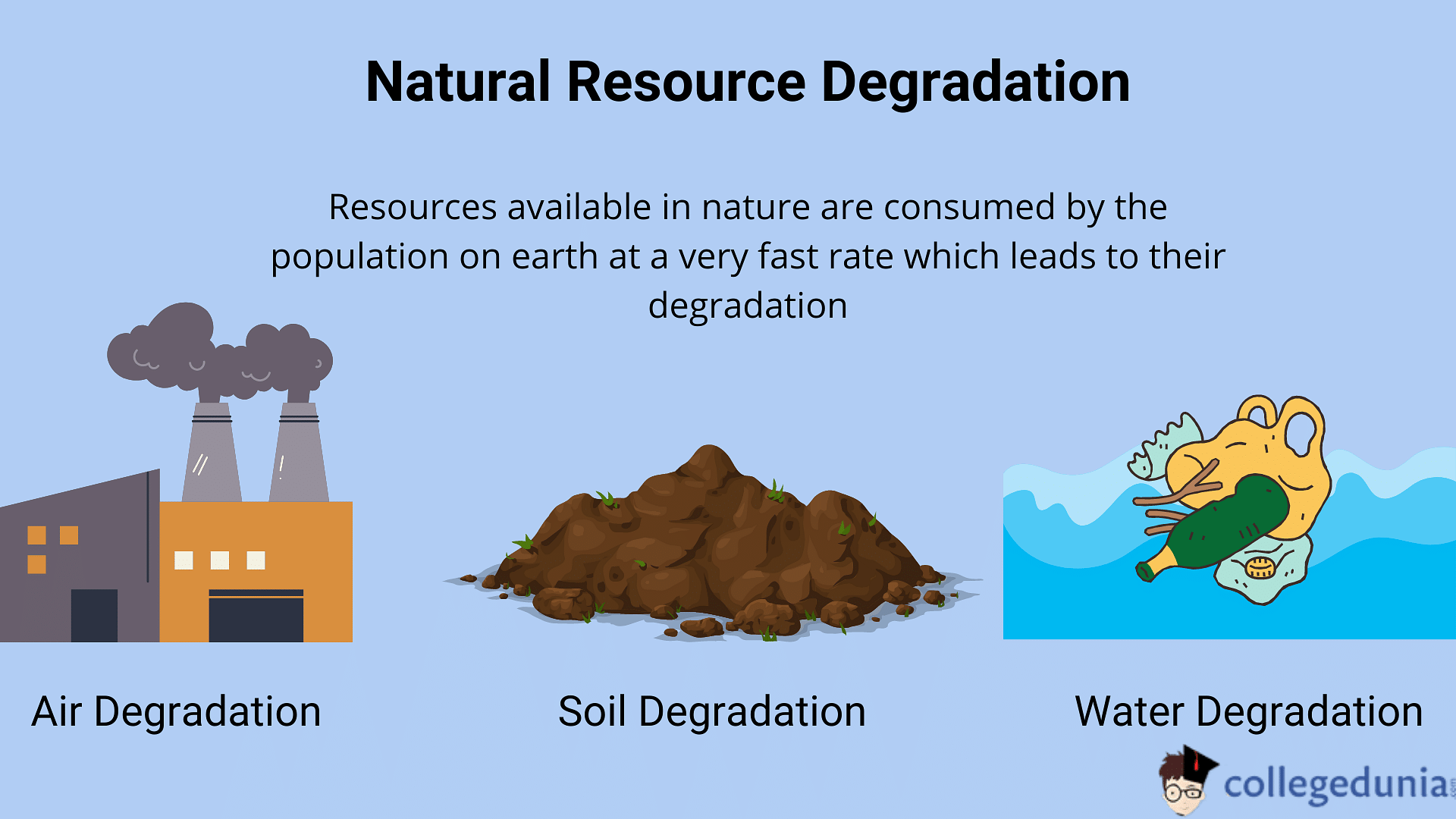
Resources available in nature are consumed by the population on earth at a very fast rate. This causes the resources to decrease or deplete at a fast rate too.
- With the ever-growing demand for these resources due to the increasing population, it is becoming increasingly important to replenish the resources to meet these demands.
- But the rate of consumption is much faster than the rate of replacement.
- This leads to the degradation of natural resources or deterioration of the available resources.
Causes of Natural Resource Degradation
[Click Here for Sample Questions]
The causes of degradation of natural resource degradation are as follows:
Land and Soil Degradation
The topmost layer of soil on earth called the topsoil is the most fertile and full of nutrients, it is generally 2 to 8 inches deep. This topsoil is continuously being exposed to bad irrigation and farming practices which degrade the quality of the topsoil and leech the nutrients out of it making it lose its flora, fauna and wildlife. This leads to soil erosion and desertification of once-fertile land.
Soil Erosion
The practices responsible for the degradation of natural resource – topsoil are as follows:
- Excessive use of pesticides and fertilizers destroys the microorganisms in the soil responsible for replenishing soil nutrition.
- Poor irrigation practices lead to water logging and an increase in soil salinity.
- Lack of crop rotation.
- Over-cultivation to meet the growing demand for food for the increasing population.
- Unrestricted grazing with an increase in animal husbandry to meet food demands.
- Leakage from landfills used for dumping industrial and domestic waste.
- Deforestation as a result of an increase in demand for the land requirement for agriculture and urbanization.
- Mining is done to extract minerals from the earth. With an increase in demand and improvement in mining technology, there is a higher rate of extraction causing the depletion of minerals. Apart from this, mining causes irreversible damage to a much larger area surrounding the mining site disturbing the ecology through greenhouse gases, loss of flora and fauna and land erosion.
Water Degradation
The degradation of natural resources of water like oceans, rivers and lakes have all been degraded by the pollutants being released into these water bodies from industrial and domestic waste. This is also affecting the life and sustenance of sea creatures and plants alike.
Atmospheric Degradation
The massive air pollution caused by vehicles, industries and other human activities has degraded the air quality in the atmosphere. Global warming and the depletion of the ozone layer are one of the major consequences of air pollution.
Other Causes of Natural Resource Degradation
Pollution
In addition to the pollution of land, water and air, there are other types of pollution like noise pollution and light pollution which are causing the degradation of the earth’s environment and its resources.
Overpopulation
The world population is about to reach 8 billion in the year 2023. With the population explosion, the available natural resources are being consumed at an irreplaceable rate. Another major effect of an increase in population is the increase in the amount of contamination of land, air and water, which is leading to crashing ecosystems and vanishing flora and fauna. Hence, overpopulation is one of the major contributors to the degradation of natural resources.
Overconsumption and Wastage
The irresponsible overconsumption and wastage of natural resources like minerals, water, oil, etc. are depleting the resources at a rate faster than the restoration of the same.
Natural Causes
Natural calamities like earthquakes, tsunamis, hurricanes, wildfires, etc. damage natural resources and affect plant and animal life.
Effects of Resource Degradation
[Click Here for Sample Questions]
The effects of the degradation of natural resources are –
- Desertification – As a result of deforestation and soil erosion, many fertile lands once thrived with plants and wildlife are now barren and have turned into deserts.
- Water Scarcity – The increase in contamination of water bodies due to human activities is resulting in acute water shortages, which may even lead to world wars.
- Loss of Biodiversity – Cumulative effect of climate change, deforestation, overpopulation and pollution has caused great damage to biodiversity in the form of huge losses of plant and animal life, also leading to the extinction of several species.
- Climate Change and Ozone Layer Depletion – The degradation of natural resources is leading to global warming and climate change all across the globe. The ozone layer responsible for protecting the earth from harmful ultraviolet rays of the sun is fast depleting with the effect of air pollution.
- Loss for the Tourism Industry – The degradation of natural resources due to several types of contamination is leading to loss of greenery and biodiversity, causing a huge dent in the tourism industry.
- Economic Impact – The cost of restoration projects in place for replenishment and restoration of natural resource degradation has a great economic impact.
Remedial Measures to Stop Resource Degradation
[Click Here for Sample Questions]
Some of the measures to prevent the degradation of natural resources are as follows –
- Stop deforestation and promote the planting of more trees.
- Improve irrigation and agricultural practices.
- Stop overconsumption by reducing over-cultivation, mining, fishing and other such practices.
- Government Regulations and policies should be created to save precious natural resources and restore biodiversity.
- Punish and penalize industries contributing to pollution.
- Efforts to Reduce Consumption of natural resources.
- Recycle, Reuse and Reduce waste generation.
- Create Awareness by educating people about natural resource preservation and helping them understand their responsibility towards nature and saving the planet.
Things to Remember
- Natural resource degradation is super high consumption with low or almost no replenishment of natural resources like air, water, soil, minerals, fossil fuels, etc.
- The main cause of natural resource degradation is overpopulation.
- The increasing population causes overconsumption of natural resources leading to its depletion.
- Natural resource degradation leads to loss of biodiversity which directly impacts the ecological balance in nature.
- Irrigation practices and agricultural invasion of forest lands cause soil erosion and deforestation.
- Advancement in technology is not always a boon, it is causing more damage to the environment than the benefits it brings along.
Sample Questions
Ques. What is natural resource degradation? (2 Marks)
Ans. Natural resource degradation is the deterioration or depletion of natural resources like air, water, soil, fossil fuels, etc. at a very high rate with little or no replacement of these resources. The main reason for this degradation is the
Ques. What are the main causes of Land and soil degradation? (2 Marks)
Ans. The main causes of Land and soil degradation are soil erosion and desertification due to over-cultivation, lack of crop rotation, excessive use of fertilizer and pesticides, unrestricted grazing, poor irrigation practices leading to water logging and soil salinity, leakage from landfills, deforestation and mining.
Ques. What is the economic impact of natural resource degradation? (2 Marks)
Ans. The degradation of natural resources is leading to loss of biodiversity, loss of green cover, climate change and global warming. The cost of restoration projects in place for making up for these losses and restoration of the natural resources has a big economic impact.
Ques. How does mining contribute to natural resource degradation? (2 Marks)
Ans. Mining is done to extract minerals from the earth. With the increase in demand for mining, a higher rate of extraction takes place which results in the depletion of minerals. Apart from this, mining also leads to irreversible damage to a larger area surrounding the mining site which further disturbs the ecology through greenhouse gases, loss of flora and fauna and land erosion.
Ques. What are the natural causes of natural resource degradation? (1 Mark)
Ans. Natural calamities like earthquakes, tsunamis, hurricanes, wildfires, etc. damage natural resources and affect plant and animal life.
Ques. What is desertification? Mention a few reasons leading to desertification. (2 Marks)
Ans. Desertification is a type of land degradation when arid or semi-arid land turns into a desert. When the topsoil is continuously exposed to bad irrigation and farming practices which degrade the quality of the topsoil and leeches the nutrients out of it making it lose its flora, fauna and wildlife. This leads to soil erosion and desertification of once-fertile land.
Ques. What is water logging and how does it affect the quality of the soil? (2 Marks)
Ans. Water logging occurs as a result of over-irrigation and poor drainage of water. The soil around the plant root becomes oversaturated with moisture leading to dangerously increased oxygen levels in the soil which interferes with the respiration of the roots and makes them rot. Water logging eventually increases the salinity and makes the soil infertile.
Ques. What are the three main types of natural resource degradation? Give examples of each. (2 Marks)
Ans. The three main types of Natural Resource Degradation are
- Land Degradation, for example, deforestation, desertification, soil erosion, water logging, over-cultivation, overgrazing, mining, etc.
- Water Degradation, for example, water contamination, water scarcity
- Air Degradation: Air pollution, climate change, global warming, ozone layer depletion
Ques. What are the main factors leading to deforestation? (3 Marks)
Ans. The main factors leading to deforestation are:
- Cutting down trees in large numbers to be used as firewood and for making buildings, paper and furniture.
- Clearing forests for new settlements due to overpopulation and industrial growth.
- The slash-and-burn technique is adopted by farmers to cut off large trees and burn the remaining forest area to create agricultural land for the cultivation of crops to fulfil the increasing demand for food. The ash left after burning the forest serves as fertilizer for the crops.
- Wildfires caused by climate change and other environmental factors lead to the destruction of forests.
- Overgrazing by farm animals also leads to deforestation.
Ques. List down the effects of natural resource degradation. (3 Marks)
Ans. The effects of natural resource degradation are:
- Desertification as a result of deforestation, and soil erosion.
- Water Scarcity due to increased contamination, overconsumption, and wastage.
- Loss of Biodiversity due to the cumulative effect of climate change, deforestation, overpopulation and pollution
- Climate Change and Ozone Layer Depletion as a result of air pollution.
- Loss for the Tourism Industry due to increased contamination, destruction of ecosystems, extinction of wildlife, loss of green cover and loss of biodiversity.
- Economic Impact as a result of the huge cost of restoration projects for replenishment and restoration of natural resource degradation.
Ques. What are the preventive measures we can take to stop natural resource degradation? (3 Marks)
Ans. The preventive measures we can take to stop natural resource degradation are:
- Stopping deforestation.
- Improve irrigation practices.
- Stop the overconsumption of natural resources.
- Recycle, Reuse and Reduce Practices
- Creating Awareness about natural resource preservation for saving the planet.
Ques. What is the main reason for natural resource degradation? (3 Marks)
Ans. One of the main reasons for natural resource degradation is overpopulation. With the population explosion, the available natural resources are being consumed at an irreplaceable rate.
Another major effect of an increase in population is the increase in the amount of contamination of land, air and water, which is leading to crashing ecosystems and vanishing flora and fauna. Moreover, overpopulation is one of the main contributors to overconsumption and the wastage of natural resources. Unless we control the population of the world, we cannot put a stop to overconsumption of the resources.
Check Out:



Comments