



Content Curator
Agricultural implements are the necessary tools and processes that are essential in carrying out the labor-intensive process of agriculture. Tools such as sickle, plough, hoe, drills, etc. are important in the process of agriculture. The different methods of agriculture make organic and non-organic farming practices possible. With the emergence of agricultural tools, the physical labor of the farmers has also decreased considerably.
| Table of Content |
Key Takeaways: Tools, Implements, Agriculture, Machines, Crops, Soil
Read More: Cell Wall and Cell Membrane
Agricultural Implements
Earlier farmers had to depend on physical labor and handmade tools to get agricultural output and after industrialization, technological advancements have replaced traditional tools with advanced machines which not only increased the overall production of crops but also changed the method of farmers to work in the field. Traditional agricultural methods are labor and time-intensive.
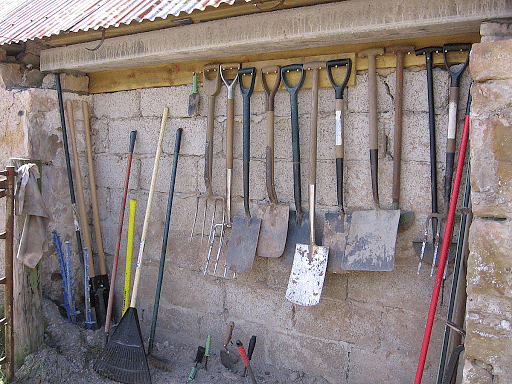
Traditional agricultural implements
Types of Agricultural Implements
There are several agricultural practices that are done with the help of modern agricultural implements or tools. The different types of agricultural implements make cultivation effective and efficient. The several types of agricultural implements for crop production are:
Read More:
Harvesting
Harvesters are used to cut mature crops which were initially done by sickle or other relevant agricultural tools. Another machine known as the combine harvester is used for threshing after harvesting the crops from the field. Other machines such as trailers, pickers, and diggers are also used.
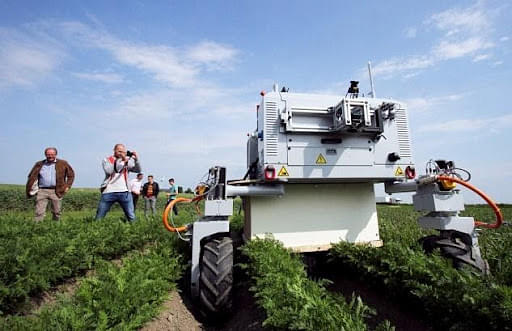
Irrigation Machinery
In order to help the crops to receive the appropriate level of water, a central pivot irrigation system and pump units are installed. Modern irrigation tools which help in saving water are the sprinkler system and irrigation piping system.

Soil Cultivating Implements
Soil cultivating implements are used to plough and make the soil appropriate for cultivation. Examples: Spike, disk harrows, drag, etc. a cultivator is used which is less time consuming and also reduces physical labor.

Planting Machines
Planting machines are used to sow saplings and seeds with the help of seed drills, transplanting equipment, precision drills, air seeders, and broadcast seeders. A driller is an important machine as it sows the seeds by maintaining proper depth and distance and also saves the seeds from the damage caused by the birds.

Read Also:
Other Agricultural Tools
Plough: Plough is made up of wood which is pulled by two bulls. It is used during the time of turning, tiling and adding fertilizers. Plough has a long wooden leg called the plough shaft and a triangular iron strip called the ploughshare. The part of the ploughshare which is attached to the bull’s neck is known as a beam.
Hoe: Hoe is a long wooden rod and is pulled by the animals. It helps in the loosening of the soil and removing weeds. There is a blade attached which is strong, broad and made up of iron plate.
Read More:
Cultivator: A cultivator is a plough which is attached to a tractor.
Seed Drill: This is used for the purpose of sowing seeds. It is helped by the tractors, and makes sure that the seeds are sown at an equidistance and are properly covered with soil. It helps plants to flourish and receive the maximum amount of sunlight, nutrients and water from soil.
Traditional Tool: The traditional tools are in the shape of a funnel which is filled with seeds and are passed through the sharp ends of two or three pipes. The ends are placed inside the soil and the seeds are placed.
Also Read:
Advantages of Agricultural Implements
The benefits of agricultural implements are:
- Decreases manual labor and physical workload
- Agricultural implements include less labor
- With the use of more machines, The growth of agricultural industries increases
- Increase in the overall income with more output
- Less time consuming and budget-friendly
- The machines and tools are a one-time investment that is used over a long period
- Reduces the expense of work
- Increase in the overall production of crops
Read Also:
Points to Remember
- The different types of agricultural implements used in farming are plough, hoe, cultivator, seed drills, traditional tools, thresher, winnower, saw, scythe, axe, spade, harrow, leveler, and yoke.
- Commercial farming includes an interface of agriculture and industry
- The process of tilting and leveling is used to prepare the soil where ploughs and levelers are used.
- Organic manures and chemical fertilizers are used to enrich the soil.
- Silos and granaries are used to store crops and save them from pests.
- Agricultural implements are used for the purpose of sowing, planting, threshing, irrigating, and harvesting.
Read More:
Sample Questions
Ques 1. What are the different modern methods of irrigation? (4 marks)
Ans: The different methods of irrigation are:
- Basin irrigation: crops that require a large amount of water use this kind of surface irrigation.
- Furrow irrigation: furrows or narrow channels are made in the field between the rows to cultivate crops that do not require much water.
- Drip irrigation: it is used in regions of water scarcity to cultivate fruit orchids, trees, and gardens.
- Sprinkler irrigation: it is regarded as the best way of irrigation where sprinklers and spray guns are connected to large hosepipes.
Read More:
Ques 2. What are the different traditional methods of irrigation? (2 marks)
Ans: initially people used to take out water from wells and lakes through different methods in order to irrigate their fields. Pumps which are run by biogas, electricity, solar energy, and diesel are used in lifting water from the sources. The traditional methods were:
- Chain pump
- Moat (pulley-system)
- Rahat (lever system)
- Dhekli
Read More:
Ques 3. What is plough? (2 marks)
Ans: plough is a very common agricultural implement. It is used for tilting the soil, removing weeds, mixing fertilizers to the crop, and turning the soil. Ploughshare is a triangular part in plough made of the iron strip. The Plough shaft is considered as the main part of the plough which is made of a long log of wood. Nowadays iron ploughs are used instead of wooden ploughs.
Read More:
Ques 4. Why is manuring necessary? (2 marks)
Ans: soil loses its nutrients because of continuous cultivation. The farmers retain the nutrients in the soil by adding mature to it. If there is a nutrient deficiency in the soil, the plants become weak. Decomposed plants and animal wastes result in manure. It is caused by microorganisms. Organic manure increases the water holding capacity as well as the texture of the soil.
Read More:
Ques 5. What are fertilizers? (2 marks)
Ans: fertilizers are rich in particular nutrients that are manufactured in factories. Some of the fertilizers are ammonium sulfate, urea, superphosphate, potash, NPK (potassium, phosphorus, nitrogen). The production of wheat, paddy, and maize also increase due to fertilizers although it is a common source of water pollution.
Read More:
Ques 6. What is another method of recharging the condition of the soil? (2 marks)
Ans: crop rotation is another method of retaining the nutrient level of the soil. The alternate growth of different crops in a field is known as crop rotation. Farmers support this type of cultivation as it helps in replenishing the soil with nitrogen.
Read More:
Ques 7. Name some post-harvesting tools and implements (3 marks)
Ans: Some of the post-harvesting tools and implements are:
- Wooden pin
- Wooden pole
- Bamboo basket
- Hand mill
- Winnower
- Sieve
- Sack
- Shearer
- Skinner
- pine
Also Read:



Comments