



Content Curator
Air refers to the constant pressure that is not visible to any creature but always exists around us. Air is essential for survival of all living things including humans, birds and animals. It is a gaseous substance and hence can be compressed easily. It is a mixture of several gases such as oxygen, nitrogen, carbon dioxide etc. and forms a thick blanket that surrounds the surface of the earth.
| Table of Contents |
Key Terms: Air, Uses, Components, Atmosphere, Oxygen, Nitrogen
Uses of Air
[Click Here for Sample Questions]
Air is a natural resource which is present in our atmosphere abundantly. Talking about uses of air, the most important use is that it helps to sustain life on earth. However, there are few more important uses of air that are discussed below:
- Sustain life and growth
- Combustion
- Maintaining Temperature
- Supplier of Energy
- Photosynthesis
- Generation of Power
Sustain life and growth:-
Air consists of one of the most important life-sustaining gases called oxygen. Almost all living beings breathe in and out this air for their respiratory system. Nitrogen and Carbon dioxide which helps in growth of plants are also present.
Combustion:-
Another important characteristic of air is that it supports burning or combustion. The oxygen present in the air helps in burning of fuels and carrying out activities like cooking food, running industries and vehicles as well as generating heat and electricity.
Temperature Control:-
Air helps in maintaining the earth’s temperature by circulating the hot and cold air on the surface. Air also acts as a conductor of heat as well. Water cycle, a major phenomena for survival on Earth, is dependent on air.
Supplier of Energy:-
Air is one of the main suppliers of energy. Living things are made up of cells and these cells extract oxygen within the blood to produce energy usually in the form of ATP. This biochemical generation of ATP is essential to maintain life on the earth.
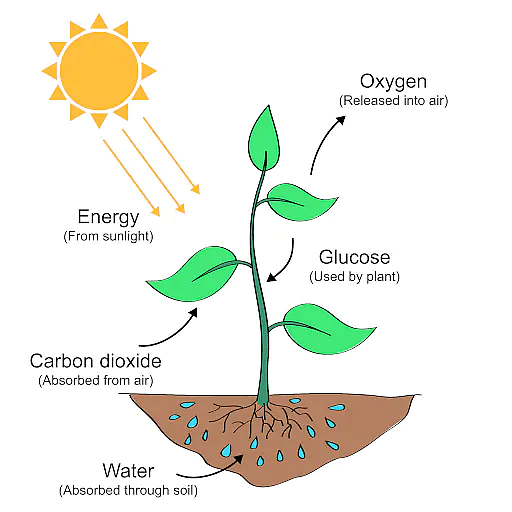
Photosynthesis:-
Air has a component named carbon dioxide that is used by plants during the process of photosynthesis. Here, oxygen is released by plants as a by-product of photosynthesis.
Generation of Power:-
Air plays an important role in the generation of electric power. Windmills are dependent on air to generate electricity. In a lot of power machines, a controlled air pressure is used in order to make use of the machinery.
Also Check:
Components of Air
[Click Here for Sample Questions]
Air is a mixture of multiple gases. All these gases have their own specific use and composition percentage. Some of them are discussed below:
| Name of gas | Composition % | Uses |
|---|---|---|
| Nitrogen | 78% | It helps in the growth of plants and balances out oxygen as it is a non- combustible gas. |
| Oxygen | 21% | Oxygen helps in breathing and is responsible for combustion. |
| Carbon Dioxide | 0.04% | Carbon dioxide helps in the process of photosynthesis. |

Things to Remember
- Air is a mixture of gases- mainly nitrogen, oxygen and carbon dioxide, that surrounds earth.
- Existence of life on earth is mainly possible due to air.
- Oxygen is required for basic purposes of breathing and respiration.
- Oxygen also helps in burning of fossil fuels and other combustible activities.
- Air helps in generation of electricity and acts as a supplier of energy.
- Air circulates and hence maintains the temperature of earth.
Sample Questions
Ques: Explain how air is a necessity for burning using an activity. (3 marks)
Ans: Light up two similar candles, one in the air and other submerged in the water. It is observed that the candle just consumes in the air, and not in water. This activity shows that air is helpful for burning.
Ques: What are the components in the air? Mention their percentage by volume in air. (3 marks)
Ans: The composition of air is given as follows:
- Nitrogen – 78%
- Oxygen – 21%
- Carbon dioxide – 0.03%
- Inert gases – 0.9%
- Other components include dust, impurities and water vapour which depend on several factors like industrial activities, natural resources etc.
Ques: Describe the importance of nitrogen in the air. (3 marks)
Ans: Nitrogen is converted into soluble nitrogenous compounds in soil, which plants absorb and use as proteins. It is also present in living organisms in classes like nucleic acid, amino acids. It is also a very important component in fertilisers and in the medical field as antibiotics.
Ques: Explain why nitrogen is filled in food packets and not oxygen? (3 marks)
Ans: Nitrogen is an inert and unreactive gas that is filled in food packets to remove oxygen and moisture from them. Nitrogen thus helps to keep the food preserved and fresh by reducing the bacterial growth in the food packages.
Ques: Discuss the utilisation of oxygen for respiration in (5 marks)
a) Living organisms
b) Plants
Ans: Living organisms: Respiration of living organisms involves inhaling oxygen to carbon & hydrogen present in food material which forms carbon dioxide, water vapour and energy in the form of heat.
Glucose + Oxygen → Carbon dioxide + water vapour + Energy
Plants: Plant respiration is the process of plants using up the sugars made through photosynthesis and turning them into energy for growth, reproduction, and other life processes. The process of respiration of plants involves taking in oxygen and releasing it as carbon dioxide into the air.
Ques: What are the uses of air? (5 marks)
Ans: Uses of air are as follows:
- Sustain life and growth
- Combustion
- Maintaining Temperature
- Supplier of Energy
- Photosynthesis
- Generation of Power
Also check:
Also check:



Comments