




140 marks in the MHT CET generally translates to a high percentile of 98.3+. A 140 score usually places you among the top 3000 ranks. This is usually enough to secure top core branches like EC, EE, or Mechanical at COEP Pune.
- The percentile for 140 marks can vary depending on the difficulty level of the MHT CET exam shifts.
- Chances of CSE in VJTI and COEP is low with 140 marks, especially for general candidates.
- Reserved candidates have the chances of CS at even top colleges such as WCE Sangli or VESIT with 140 marks.
Also Read:
- Check Category-wise MHT CET Marks vs Percentile in 2026
- 95 Percentile in MHT CET means how many marks?
Key Summary
- 140 marks in MHT CET typically translates to 98.3+ percentile, placing candidates within top 3000 ranks.
- In case of tough shifts, percentiles may reach 99, easier shifts can drop near 97.
- CSE at COEP or VJTI is might be challenging, but there is a high chance of core branches.
- You have a great chance of PICT, SPIT, VIT Pune, PCCOE, and DJSCE for IT, E&TC, or CS branches with 140 marks.
What is the Percentile for 140 Marks in MHT CET 2026?
140 marks in MHT CET is considered an excellent performance. 140 marks in MHT CET can get you around 98.3+ percentile.
- In a tough shift, 140 marks could even reach up to 99 percentile.
- 140 marks in an easy shift could see a decrease in percentile, around 97.
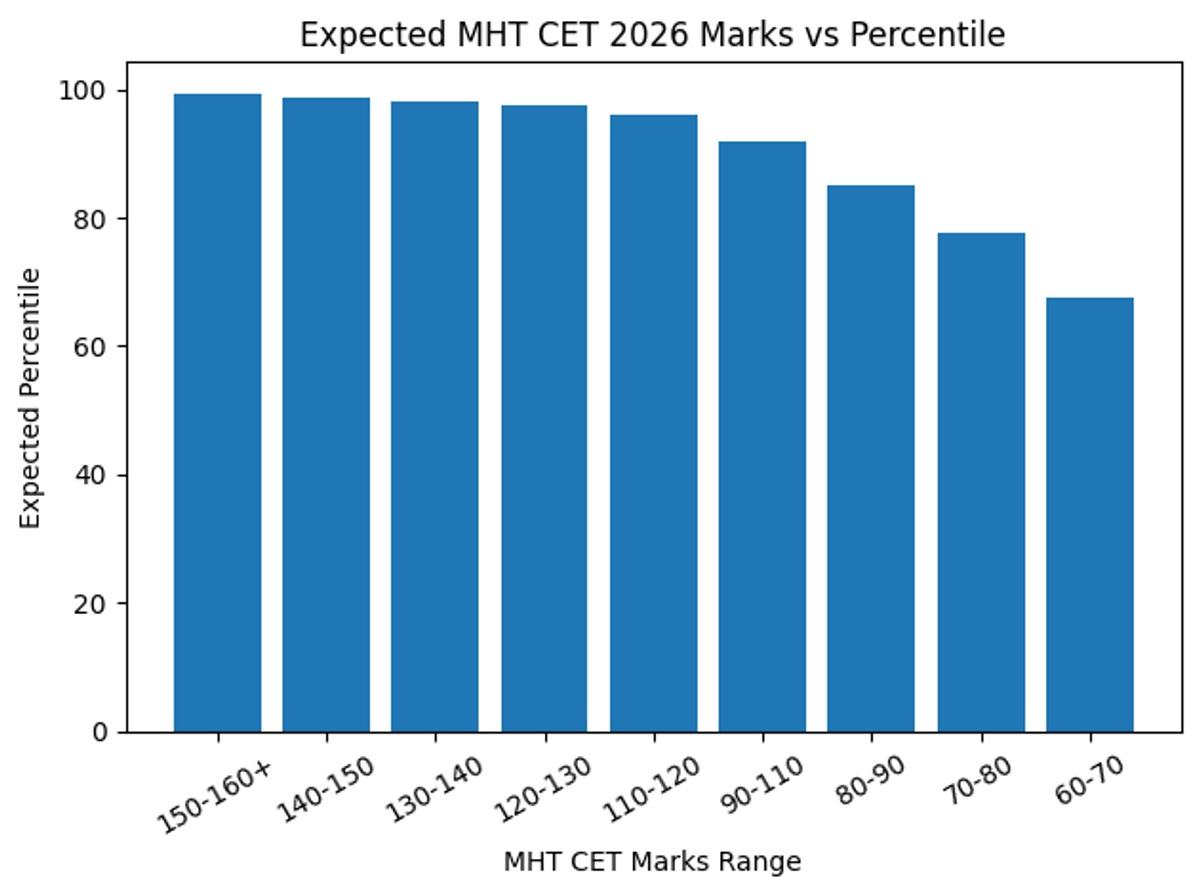
| MHT CET Marks | Expected MHT CET Percentile |
|---|---|
| 150 - 160+ | 99 - 99.5+ |
| 140-150 | 98.3 - 98.8+ |
| 130-140 | 98.10 - 98.30 |
| 120-130 | 97.10 - 98.10 |
| 110-120 | 95 - 97.10 |
| 90-110 | 87.60 - 96 |
| 80-90 | 80-90 |
| 70-80 | 75-80 |
| 60-70 | 60-75 |
| Less than 50 | Below 60 |
Source: Data presented here is from the analysis of previous year’s marks vs percentile and MHT CET 2025 marks vs percentile analysis.
Ques. Can 140 marks reach 99 percentile?
Ans. 140 marks can reach 99 percentile, but mostly in the difficult shift. In the moderate shift, 140 marks typically result in around 98 percentile.

As per the users in r/mht_cet thread on Reddit, 140 marks in MHT CET can result in 98.8-99 percentile.
What is the Expected Rank for 140 Marks in MHT CET?
Your expected state merit rank with 140 marks will generally fall within the top 3000 ranking. This rank allows you admission into top branches like IT, Electrical, E&TC and many core branches in most top-tier colleges.
| MHT CET Marks | Expected Rank |
|---|---|
| 160+ | 1-900 |
| 150-160 | 900-2000 |
| 140-150 | 2000-3000 |
| 110-140 | 3000-7900 |
| 100-110 | 7900-10,990 |
| 80-100 | 10,990-19,500 |
Read: Check General and Reserved category MHT CET qualifying Marks

Colleges for 140 Marks in MHT CET
With 140 marks in MHT CET, you will be eligible for the best government and private-aided colleges in Maharashtra.
- Even though 140 marks can’t get you CS in COEP, you have a high chance of getting Electrical, Mechanical, and Civil branches.
- If you are specifically looking for CSE and IT branches, VIT Pune, PCCOE, and DJSCE are the best choices.
- You have a high probability of E&TC in many top colleges including SPIT and PICT.
| College Name | Preferred Branches at 140 Marks |
|---|---|
| COEP Technological University | Electrical, Mechanical, Civil |
| VJTI Mumbai | Production, Textile, Civil |
| PICT Pune | E&TC |
| VIT Pune | IT, AI & Data Science |
| SPIT Mumbai | E&TC |
| WCE, Sangli | Electrical, Mechanical, Civil |
| PCCOE Pune | IT, E&TC |
| DJSCE Mumbai | CS, IT, E&TC |
| GCE Aurangabad | IT, Mechanical, Electrical |
Also Read:
Ques. Can I get VJTI, COEP with 140 marks if I have a category benefit?
Ans. Potentially yes. CS at VJTI and COEP is tough with the 140 marks, even for reserved category students. However, you have a chance of other core branches like mechanical, electrical, or other top branches.
Related News:
Scoring 140 marks in MHT CET opens the doors for many top branches at top colleges across Maharashtra. Admission to top government colleges, especially for CS, might be challenging, but there are multiple top colleges that candidates with 140 marks can get into, including government and private colleges.



Comments