



The Orange Economy refers to the economic value generated from creativity, culture, and ideas protected by intellectual property. It is the segment of the economy where ideas, talent, and innovation serve as the primary raw materials. The colour orange symbolises creativity, cultural vibrancy, and innovation—energy that fuels new forms of expression and enterprise.
This economy encompasses a wide range of creativity-led industries, including media, film, television, radio, advertising, marketing, and branding, design (graphic, fashion, product and UX), music, performing and visual arts, publishing, content creation, gaming, architecture, creative technology, cultural heritage, crafts, festivals, and digital platforms driven by influencers and creators.
Why the Orange Economy Matters
The Orange Economy plays a critical role in modern economic development. It generates large-scale employment, particularly for youth, freelancers, and gig workers; stimulates innovation and entrepreneurship; enhances nation branding and soft power; and contributes significantly to GDP growth and exports. Importantly, it is deeply reliant on intellectual property ecosystems, including copyrights, trademarks, and patents, making it central to a knowledge-based economy.
In India, the Orange Economy is witnessing rapid expansion, driven by start-ups in media, design, gaming and digital content, the rise of digital marketing and branding, growth in cultural tourism, crafts and heritage industries, and sustained policy support through initiatives such as Digital India, Start-up India, and creative skilling programs.
Union Budget 2026: A Strategic Shift
The Union Budget 2026 marks a significant policy shift by formally positioning the Orange Economy as a national priority. For the first time, creativity-led sectors—including animation, visual effects, gaming, digital content, design, media, and cultural industries—are recognised as strategic drivers of India’s economic growth.
A key highlight of the budget is the strong emphasis on skill development, with the establishment of AVGC Content Creator Labs across 15,000 schools and 500 colleges, supported by the Indian Institute of Creative Technologies. This initiative aims to build a future-ready creative talent pipeline, introduce creative skills at an early stage, and bridge the long-standing gap between education and industry requirements.
The budget also strengthens design and creative education through institutional expansion and new design infrastructure, promoting regional inclusion and equitable growth.
Implications
For creators and professionals, these measures signal greater formalisation, improved access to infrastructure, and enhanced global opportunities through IP-driven exports. For higher education institutions, the budget opens avenues to launch industry-aligned programs, strengthen academia-industry collaboration, and improve graduate employability.
Overall, Budget 2026 reframes the Orange Economy as a serious engine of employment, innovation, exports, and soft power, firmly aligning creativity with India’s long-term vision of a services-led, knowledge-based economy.
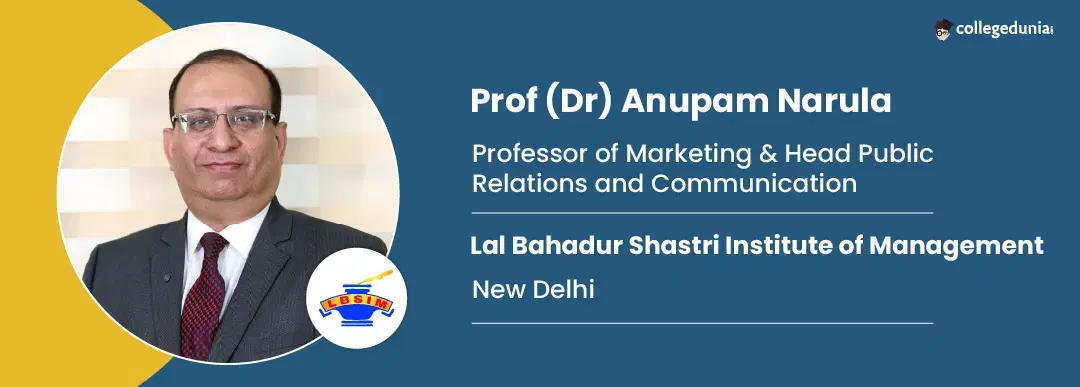
Prof (Dr) Anupam Narula is Professor at Lal Bahadur Shastri Institute of Management, Delhi and Former Founder and Director of Premier B-Schools in Delhi -NCR region of India.

 (1).png?h=132&w=263&mode=stretch)





 (1).png?h=78&w=78&mode=stretch)
-min.png?h=78&w=78&mode=stretch)












![MBA/PGDM | admission | 2024 | Narsee Monjee Institute of Management Studies - [NMIMS Deemed to be University]](https://image-static.collegedunia.com/public/college_data/images/logos/1506323004Logo.jpg?h=72&w=72&mode=stretch)


![MBA/PGDM | admission | 2024 | Indian Institute of Management - [IIMC]](https://image-static.collegedunia.com/public/college_data/images/logos/1488950580d2.png?h=72&w=72&mode=stretch)








 (1).png?h=72&w=72&mode=stretch)
-min.png?h=72&w=72&mode=stretch)





Comments