

-modified.png?h=56&w=56&mode=stretch)


GMAT Critical Reasoning is a key part of the verbal reasoning section. It consists of 100-word arguments that test your ability to evaluate and form logical arguments. To solve these questions effectively, you need strong reasoning skills and the ability to analyze arguments clearly. As a beginner, it's helpful to start with GMAT Critical Reasoning books, which provide comprehensive coverage of the syllabus, practice questions, and sample answers to help you improve your score. Developing strong logic and strategic reading is essential to mastering this section.
In this guide, we’ll explore effective strategies to help you tackle GMAT Critical Reasoning and boost your score.
Also Read
GMAT Syllabus 2026GMAT Critical Reasoning Syllabus 2026
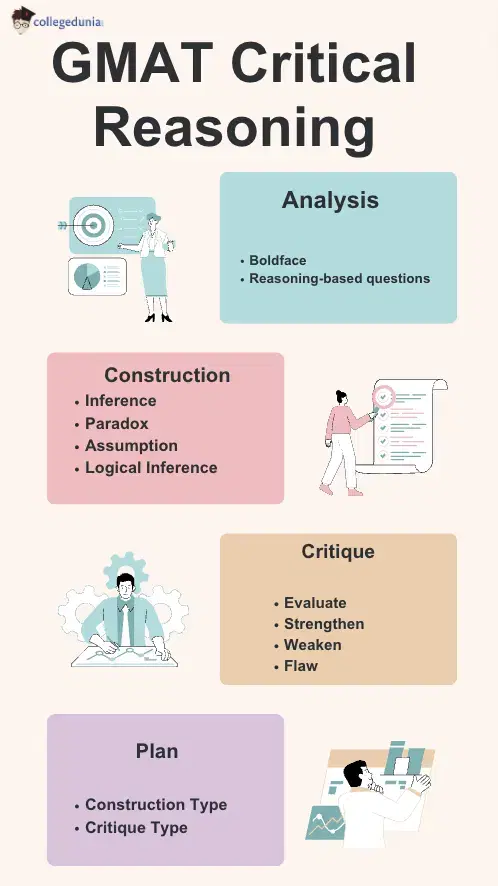
In the GMAT Focus Edition, the Verbal Reasoning section consists of a total of 23 questions. Since sentence correction has been removed, the Critical Reasoning part might have 10-12 questions. The syllabus for GMAT Critical Reasoning is given below:
- Argument structure
- Evaluate arguments and assumptions
- Formulate or evaluate a plan of action
- Strengthen or weaken an argument
- Complete an argument
These are the broad categories of questions that are asked under the topic of critical reasoning. Under these, there are further 8 types of questions that are asked:
- Strengthen an argument
- Weaken an argument
- Make an assumption
- Draw an inference or conclusion
- Paradox
- Evaluate the conclusion
- Complete a given argument
- Structure an argument
Also Read
Inference vs AssumptionGMAT Critical Reasoning Practice Questions
GMAT Critical Reasoning Practice Questions are essential for building your skills in analyzing and evaluating arguments. Practicing these questions helps you get familiar with the types of arguments you'll encounter on the exam, improving your ability to think critically and answer effectively. Given below are some practice questions to help you sharpen your reasoning skills and boost your GMAT score.
Practice Question 1.
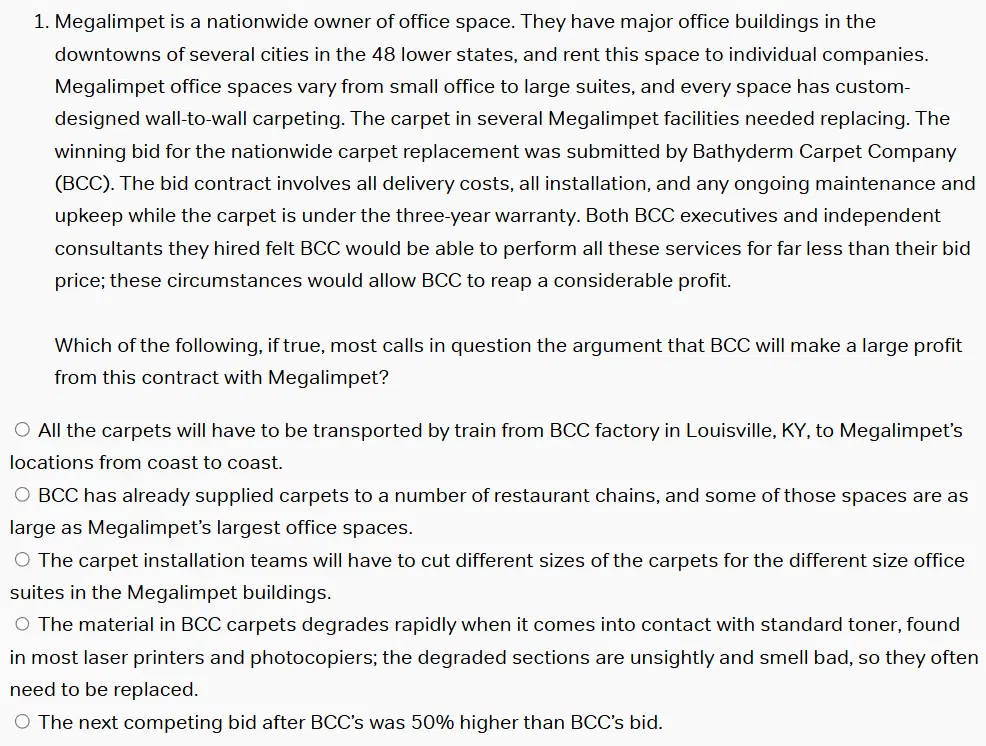
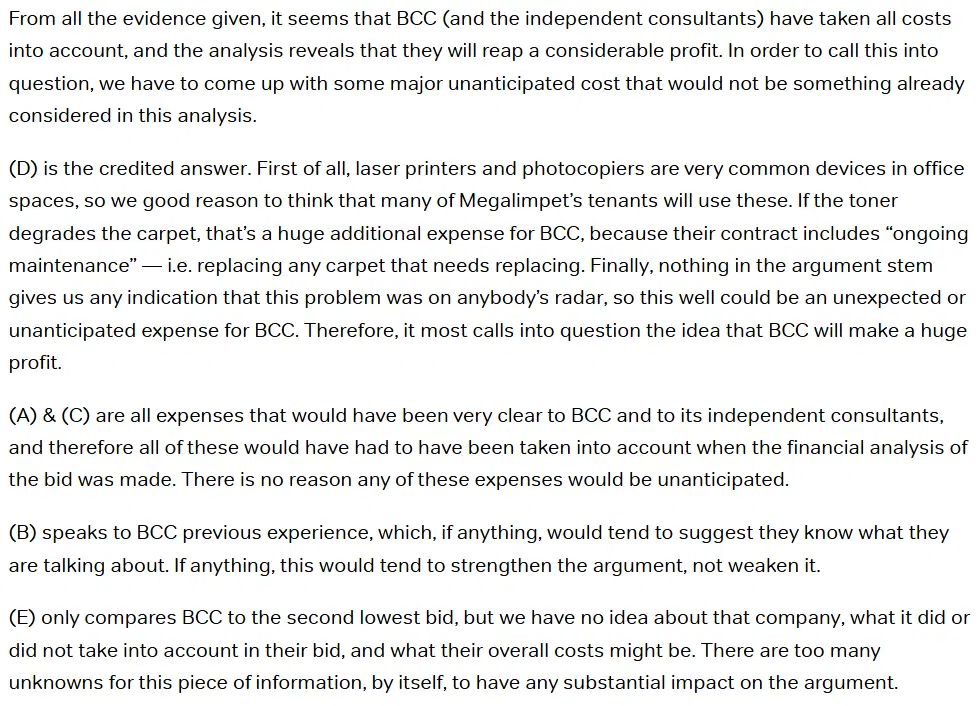
Answer: D
Explanation:
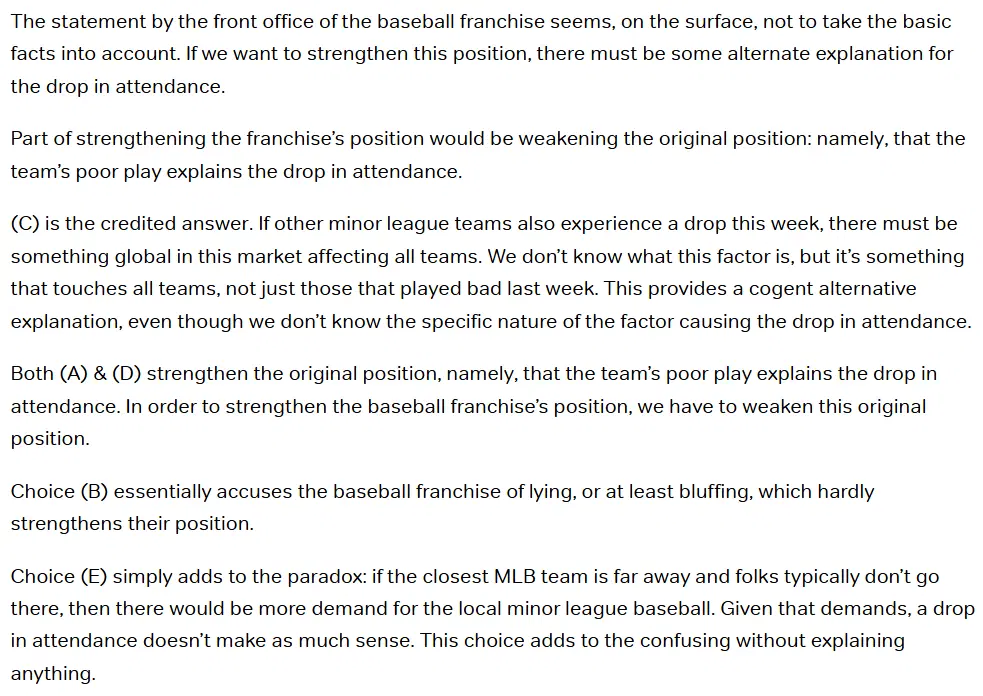
Practice Question 2.
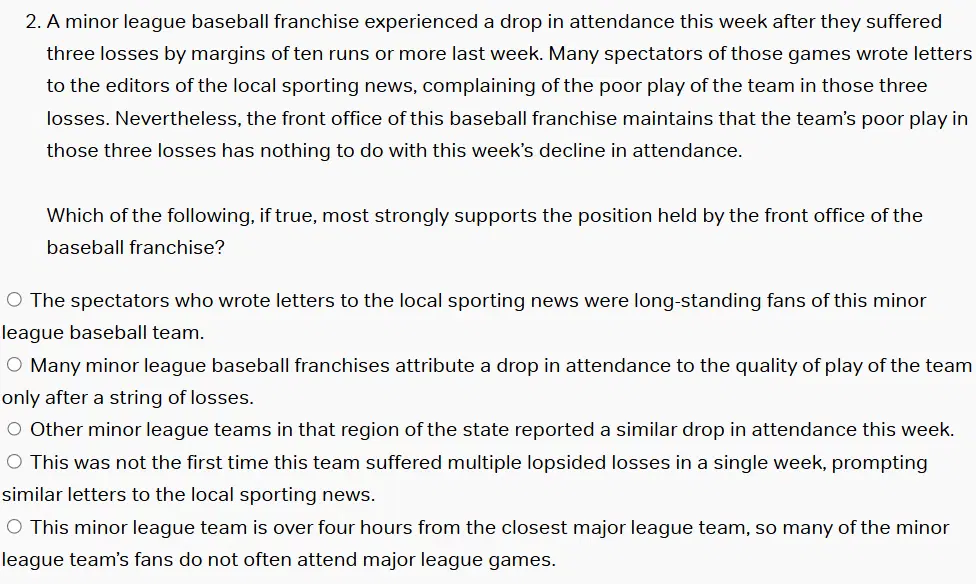
Answer: C
Explanation:
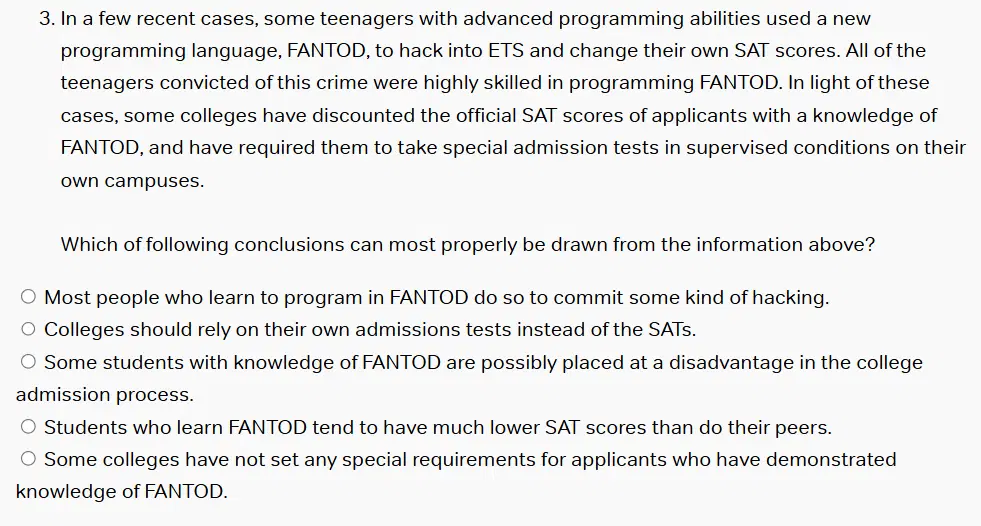
Practice Question 3.
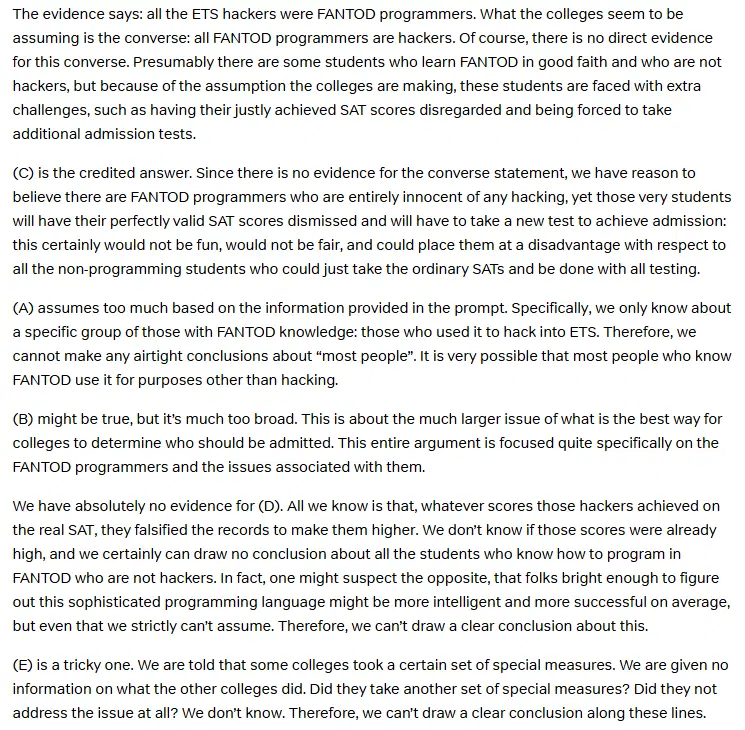
Answer: C
Explanation:
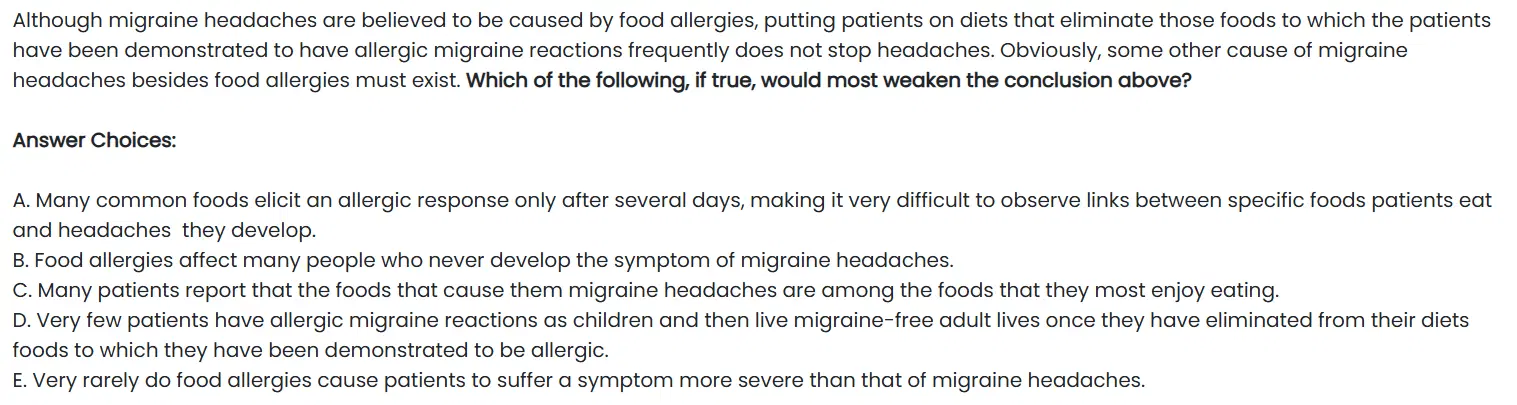
Practice Question 4.
Answer: A
Explanation:

GMAT Critical Reasoning Tips & Strategies
GMAT Critical Reasoning tips and strategies are key to mastering this challenging section. With the right approach, you can improve your ability to analyze arguments and select the best answers quickly. Given below are some effective strategies and tips that will help you tackle Critical Reasoning questions with confidence and boost your score.
1. Read the Question First.
Read the question stem first before the argument. This allows you to understand the type of question you'll be answering, so you can approach the argument with a clear focus.
2. Know the Different Elements of an Argument.
Every argument has 3 core parts: the premise, the conclusion, and the assumption. Quickly identify these elements as you read. Understand what the argument is based on (premise), what it’s trying to prove (conclusion), and what unstated idea holds it all together (assumption).
3. Focus on Assumptions
Critical Reasoning questions often hinge on identifying unstated assumptions. These are the ideas that must be true for the conclusion to make sense. Practice asking yourself, “What assumption is the author making here?” and “If this assumption is wrong, would the argument still hold?”
4. Eliminate Extreme Answers
The GMAT often includes answer choices that are extreme or too broad. These can usually be eliminated because they are rarely the correct choice. Focus on answers that are moderate and logically align with the argument.
5. Stay Objective—Don’t Bring in Outside Knowledge
It’s important not to let outside knowledge or opinions influence your answer. Stick to the information given in the argument. Your job is to analyze the argument as it is, not how you think it should be.
6. Practice Active Reading
Practice reading critically. Don’t just passively read the argument—engage with it. Break down the sentences, understand the logical flow, and always question the validity of the assumptions behind the conclusions.
7. Don’t Rush
While time management is crucial, don’t rush through Critical Reasoning questions. Take the time to carefully evaluate each argument. Skimming or guessing too quickly often leads to mistakes.
Also Read
Mastering GMAT Critical Reasoning requires a strategic approach and consistent practice. By focusing on understanding argument structure, identifying assumptions, and applying effective strategies, you can significantly improve your performance. Regular practice with diverse questions and a clear, methodical approach will boost your confidence and score in this crucial section of the GMAT.
FAQs
Ques. What are the main types of GMAT Critical Reasoning questions?
Ans. The main types include Strengthen, Weaken, Make an Assumption, Draw a Conclusion, Paradox, Evaluate the Conclusion, Complete the Argument, and Structure an Argument.
Ques. How do I identify the argument structure in Critical Reasoning?
Ans. Every argument has three parts: the premise (evidence), the conclusion (what the argument is trying to prove), and the assumption (unstated support for the conclusion).
Ques. What is the best way to approach GMAT Critical Reasoning questions?
Ans. Read the question stem first to understand the focus, then read the argument carefully. Identify assumptions, evaluate the conclusion, and avoid relying on outside knowledge.
Ques. How can I improve my GMAT Critical Reasoning skills?
Ans. Regular practice with a variety of questions, understanding argument structure, and focusing on assumptions are key strategies to improve your Critical Reasoning skills.
Ques. Why is it important to eliminate extreme answer choices?
Ans. Extreme answers are rarely correct as they make unwarranted claims. Focus on moderate answers that align logically with the argument.
Ques. How can I manage time effectively on Critical Reasoning questions?
Ans. While time management is important, don’t rush through questions. Take the time to evaluate each argument carefully, but stay mindful of the clock.
Ques. What is the role of assumptions in GMAT Critical Reasoning?
Ans. Assumptions are the unstated beliefs that hold the argument together. Identifying the correct assumption is often key to answering many GMAT Critical Reasoning questions.
*The article might have information for the previous academic years, which will be updated soon subject to the notification issued by the University/College.



Comments