





The University of Oxford is a collegiate research university based in Oxford, England. It ranks #4 globally on the QS World University Rankings 2027.
Oxford University runs more than 350 taught and research graduate programmes across humanities, social sciences, medical sciences and mathematical, physical and life sciences, all delivered in English. It hosts 550 Indian students across MSc, MPhil, MBA and DPhil routes, many arriving after comparing options with other MS in UK destinations. October is the single annual intake, served by five standard deadlines that each course maps to individually.
- Global rank: #1 Times Higher Education World 2026, #4 QS World 2027
- Acceptance rate: 17.5% (estimated)
- Intake: October (single annual)
- PG tuition: GBP 37,380 to 62,820 per year (INR 48.6 to 81.6 lakh)
- International students: 12,000+ from 160+ countries
- Median PG starting salary: GBP 40,000 (INR 51.96 lakh)
The Clarendon Fund awards 140 full scholarships yearly, while Rhodes and Felix schemes fund Indian nationals specifically. Monthly living costs in Oxford sit at GBP 1,405 to 2,105 (INR 1.83 to 2.73 lakh). Applicants often shortlist Oxford alongside Cambridge and other MBA in UK options before committing.
Exchange rate used: 1 GBP = INR 129.9 as of September 2026
Admission Status: Open (October 2027 intake). Oxford runs five standard graduate deadlines for October 2027 entry: one Expected in mid-November 2026, three funding-linked deadlines across December 2026 and January 2027, and one Expected in early March 2027. Each course maps to up to three of these five dates. Indian applicants should check the target course page on the Oxford Graduate Admissions website to confirm the specific deadlines that apply.
Table of Contents
- Popular Courses and Fees at University of Oxford 2027
- University of Oxford Admission 2027
- University of Oxford Admission Requirements for Indian Applicants 2027
- University of Oxford Acceptance Rate 2027
- University of Oxford Fees and Cost of Living for Indian Students 2027
- University of Oxford Campus, Facilities and Student Life
- University of Oxford Scholarships 2027
- University of Oxford Rankings 2027
- University of Oxford Placements and Career Outcomes
- University of Oxford vs Peer Universities
- University of Oxford FAQs
University of Oxford Popular Courses and Fees 2027
Oxford University charges annual programme tuition plus a separate college fee, both billed each year of the course. Most taught masters run for 9 to 12 months full-time, while research masters and DPhils run longer. Total programme fees below cover the full duration and include both the tuition and college fee for Indian and other overseas applicants.
Top Postgraduate Programmes at University of Oxford 2027
These programmes carry the highest Indian applicant volume across the Saïd Business School, the Mathematical and Physical Sciences Division and the Department of Politics and International Relations.
| Programme | Total Fee (GBP) | Total Fee (INR lakh) | Entry Requirement |
|---|---|---|---|
| MBA (1-year, Saïd) | GBP 94,120 | INR 122.3 lakh | Bachelor’s with 65% or CGPA 6.5/10 plus GMAT/GRE 690+ (recommended) |
| MSc Financial Economics | GBP 62,920 | INR 81.7 lakh | Bachelor’s with 70% or CGPA 7.5/10 in a numerate discipline (recommended) |
| MSc Advanced Computer Science | GBP 43,730 | INR 56.8 lakh | Bachelor’s with 65% or CGPA 6.5/10 in Computer Science (recommended) |
| MPhil International Relations | GBP 37,100 | INR 48.2 lakh | Bachelor’s with 65% or CGPA 7.0/10 in Politics or IR (recommended) |
| Other taught PG (range) | GBP 37,380 to 62,820 | INR 48.6 to 81.6 lakh | Bachelor’s with 65% to 70% or CGPA 6.5 to 7.5/10 (recommended) |
Popular Undergraduate Programmes at University of Oxford
Oxford undergraduate places are offered in five overseas fee bands set annually. Indian applicants apply through UCAS and sit subject-specific written tests.
| Programme | Annual Fee (GBP) | Annual Fee (INR lakh) | Entry Requirement |
|---|---|---|---|
| BA Philosophy, Politics and Economics | Verify at official fee schedule | Verify at official fee schedule | Class 12 with 90% or higher (recommended) |
| BSc Computer Science | Verify at official fee schedule | Verify at official fee schedule | Class 12 with 90% or higher in PCM (recommended) |
| BA Economics and Management | Verify at official fee schedule | Verify at official fee schedule | Class 12 with 90% or higher (recommended) |
Insider note: Indian applicants concentrate on the MBA at Saïd, MSc Financial Economics, MSc Advanced Computer Science and the Blavatnik MPP. These four programmes account for a large share of Indian graduate admits each year.
University of Oxford Admission 2027
Oxford runs a single October intake with five standard graduate deadlines, and every course selects up to three of them. Indian applicants apply directly through the Oxford Graduate Admissions portal and do not use UCAS for postgraduate study.
| Milestone | Date | Notes for Indian Applicants |
|---|---|---|
| Round 1 (November) | Expected mid-November 2026 (based on prior cycle) | Small subset of restricted courses; used for early decisions |
| Round 2 (January funding deadlines) | Expected early January 2027 (based on prior cycle) | Majority of restricted-admission courses; needed for Clarendon and central scholarships |
| Round 3 (March) | Expected early March 2027 (based on prior cycle) | Unrestricted-admission courses; last window for many taught masters |
| Credential verification (WES) | Start 4 to 6 weeks before deadline | WES lead times vary; begin as soon as marksheet is available |
| Programme start | October 2027 (Michaelmas Term) | Register in your college the week before teaching begins |
Oxford confirms decisions 8 to 10 weeks after each deadline. Applying earlier does not improve academic assessment odds but is critical for scholarship consideration.
Planning note: Aim for the earliest deadline your course lists. Clarendon, Rhodes and Felix all shortlist from the earlier applicant pools rather than the March round, so a March submission removes you from most central funding consideration.
Read More: University of Oxford Admissions Guide for Indian Students
University of Oxford Admission Requirements for Indian Applicants 2027
Indian PG applicants must meet a strong academic bar plus one of Oxford’s accepted English tests, with credential verification handled by WES or a similar service.
- Bachelor’s degree: Minimum 65% aggregate or CGPA 6.5/10 for a standard offer; competitive courses expect 70% or CGPA 7.5/10 (recommended)
- English test: IELTS Academic 7.0 overall with 6.5 in each component (Standard level); IELTS 7.5 with 7.0 each (Higher level, required by some courses); TOEFL iBT is not accepted for admissions from 21 January 2026 onwards, pending Oxford review
- Credential verification: WES or comparable third-party evaluation of your transcript, submitted with the application
- Extra requirements: GMAT or GRE for MBA and MSc Financial Economics; portfolio, writing sample or interview for many humanities and social science courses
UG applicants must show excellent Class 12 marks (typically 90% or higher aggregate on CBSE or ISC boards) and sit the subject-specific written test for their chosen course.
Key insight: Oxford does not waive the English test on the strength of an English-medium bachelor’s degree from India alone. Plan on sitting IELTS at least six weeks before your target deadline to allow a retake window if needed.
University of Oxford Acceptance Rate 2027
Oxford’s overall graduate acceptance rate sits at 17.5% (estimated) across taught and research programmes, though competitive courses like MBA and MSc Financial Economics run lower. The figure is derived from third-party applicant-to-offer data rather than a headline Oxford release, so treat it as directional.
Selectivity varies sharply by course: DPhil offers are typically research-fit conversations, while taught PG runs a numeric shortlist first. Indian applicants with a strong 70%+ bachelor’s and a well-scored GMAT/GRE improve their odds meaningfully.
Reality check: The headline acceptance rate misleads for competitive Indian applicants. A first-class bachelor’s from an IIT, NIT or top private university, plus strong test scores, puts most Indian shortlists closer to a course-specific 20 to 30% success rate.
Read More: University of Oxford Acceptance Rate
University of Oxford Fees and Cost of Living for Indian Students 2027
An Indian student’s full-year cost at Oxford sits between GBP 54,240 and GBP 87,930 (INR 70.5 to 114.2 lakh). This total combines annual tuition, the separate college fee and 12 months of Oxford living costs for the 2026-27 academic year.
University of Oxford Tuition Fees for Indian Students 2027
Oxford charges an annual programme fee plus a separate college fee that both continue each year of the course. This differs from the single all-in figure used at most universities.
| Level | Annual Fee Range (GBP) | Annual Fee Range (INR lakh) |
|---|---|---|
| Postgraduate taught (inc. college fee) | GBP 37,380 to 62,820 | INR 48.6 to 81.6 lakh |
| MBA (Saïd, 1-year total) | GBP 94,120 | INR 122.3 lakh |
| Undergraduate (Band A to Band E) | Verify at official fee schedule | Verify at official fee schedule |
Monthly Cost of Living at the University of Oxford for Indian Students
Oxford’s official financial declaration figure for graduate students is GBP 1,405 to 2,105 per month (INR 1.83 to 2.73 lakh). Colleges use these numbers when issuing your CAS letter for the UK Student visa.
| Category | Monthly (GBP) | Monthly (INR) |
|---|---|---|
| Accommodation | GBP 785 to 1,175 | INR 1.02 to 1.53 lakh |
| Food | GBP 320 to 460 | INR 41,568 to 59,754 |
| Transportation | GBP 25 to 45 | INR 3,248 to 5,846 |
| Books and course costs | GBP 45 to 65 | INR 5,846 to 8,444 |
| Personal expenses | GBP 230 to 360 | INR 29,877 to 46,764 |
| Total monthly | GBP 1,405 to 2,105 | INR 1.83 to 2.73 lakh |
| Total annual (12 months) | GBP 16,860 to 25,260 | INR 21.9 to 32.8 lakh |
[Source: University of Oxford official cost of living estimate 2026-27]
Insider note: College accommodation for graduates typically runs GBP 700 to 1,000 monthly and includes bills. Private rentals in central Oxford push GBP 1,000 to 1,400 for a shared house with utilities added separately.
Read More: Universities in UK for Indian Students
University of Oxford Campus, Facilities and Student Life
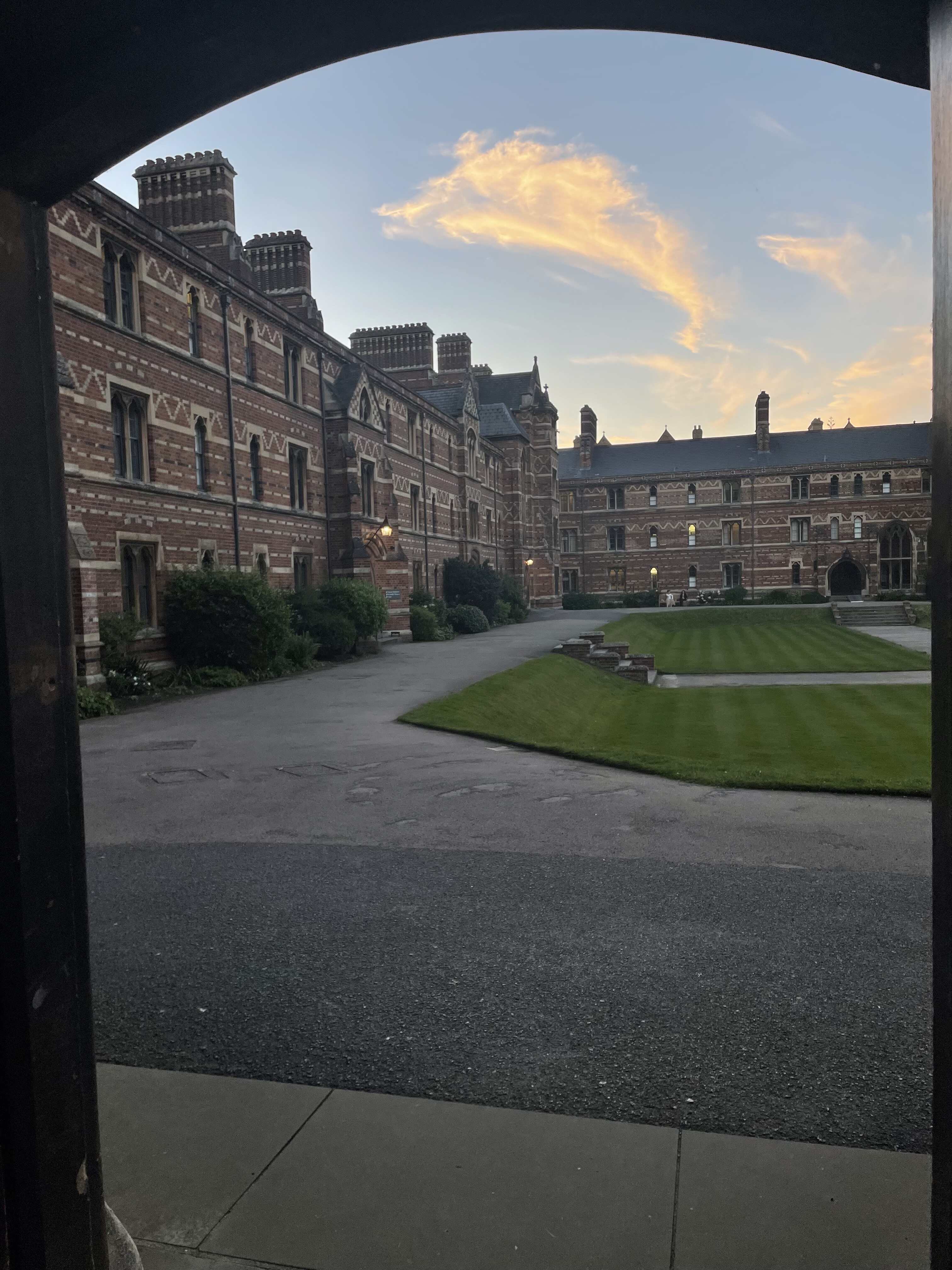
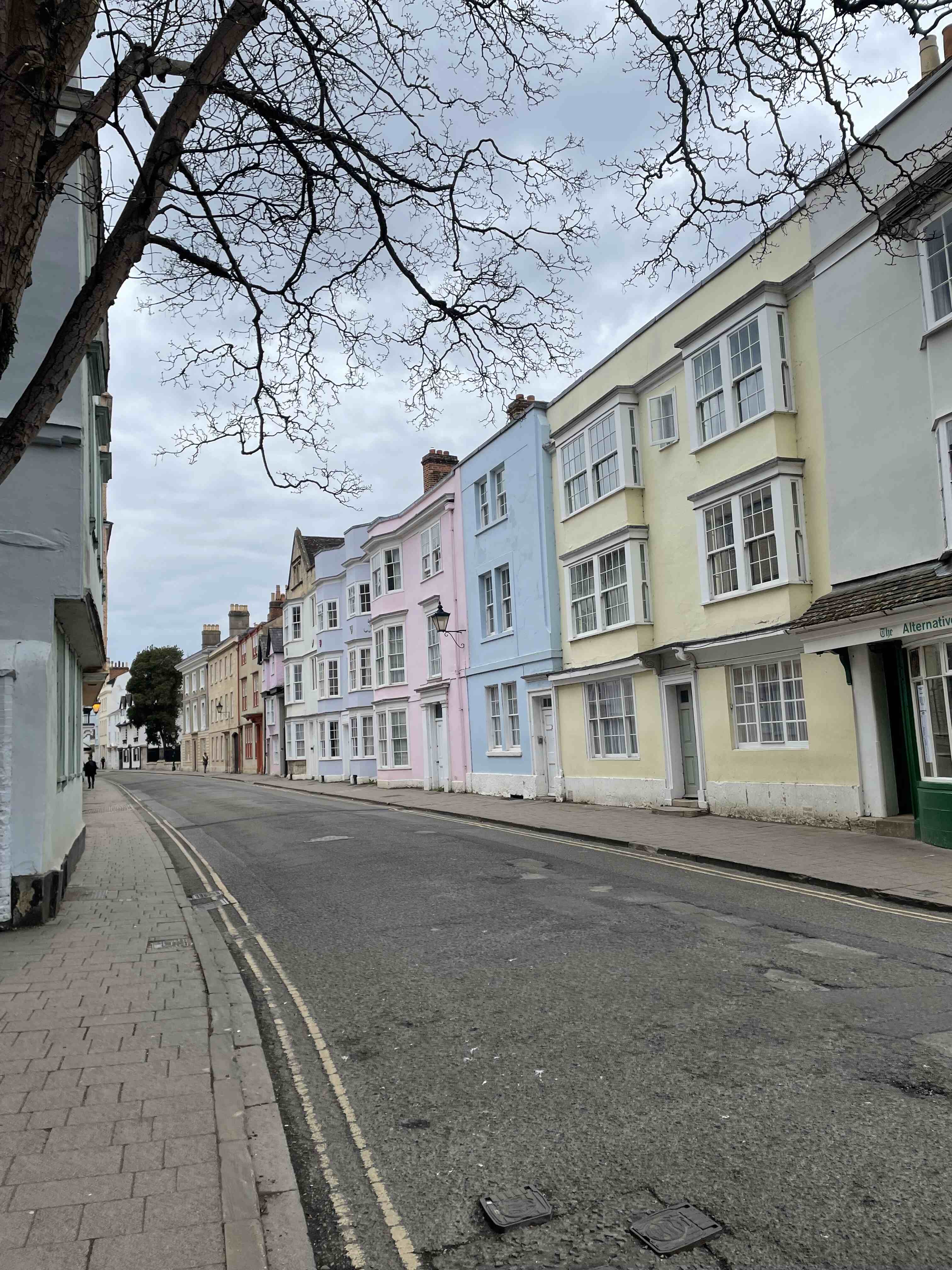
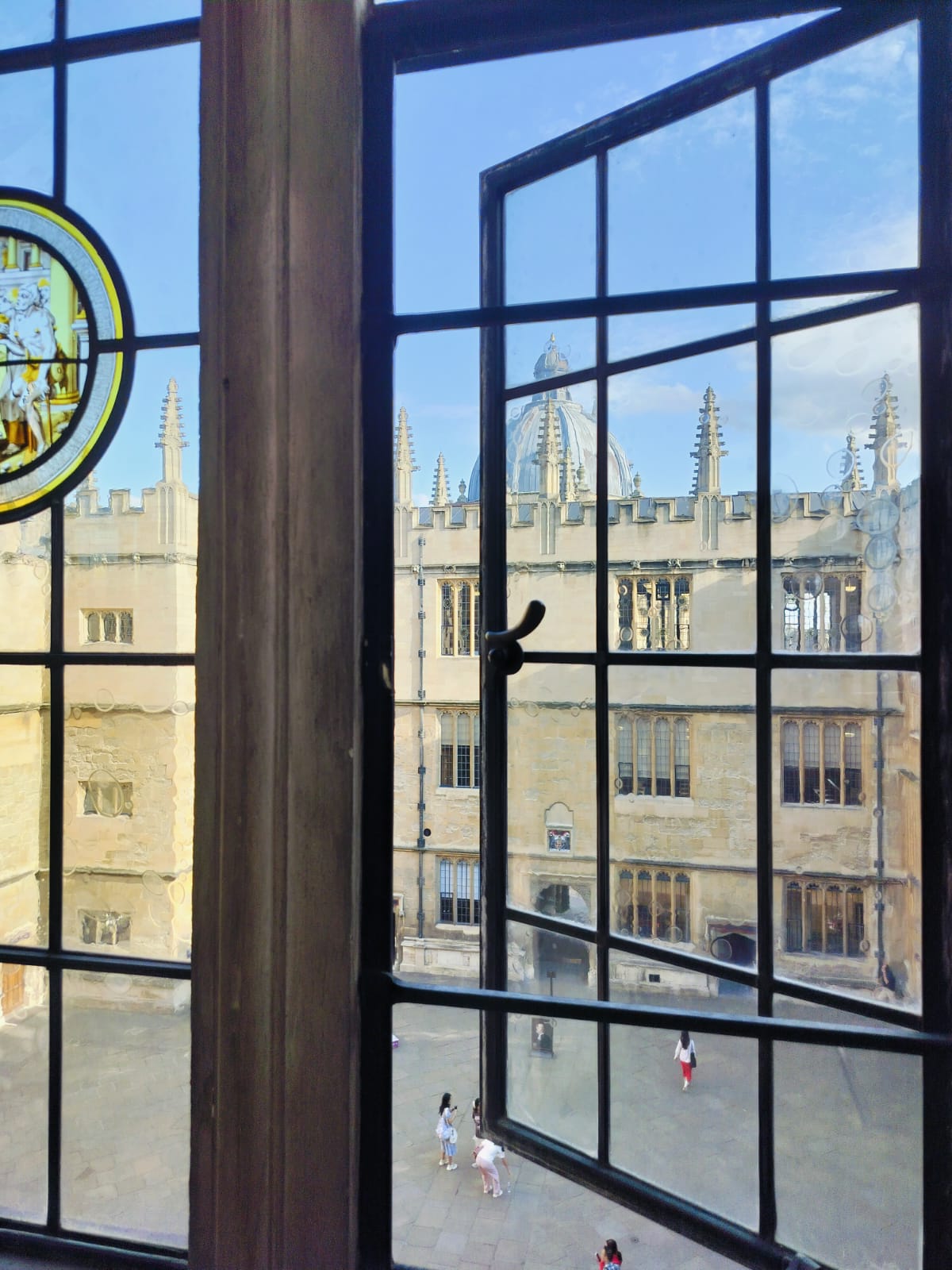
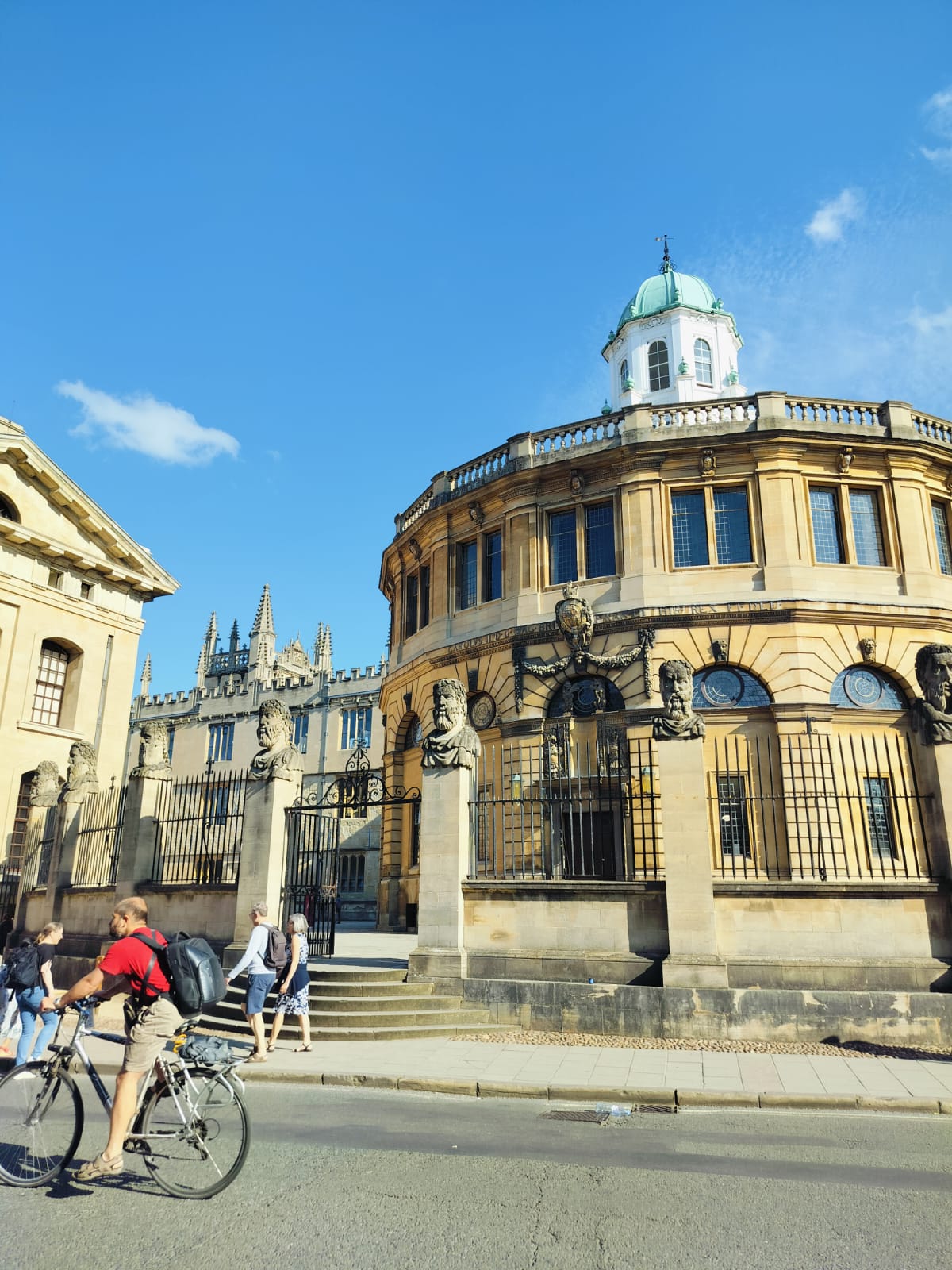
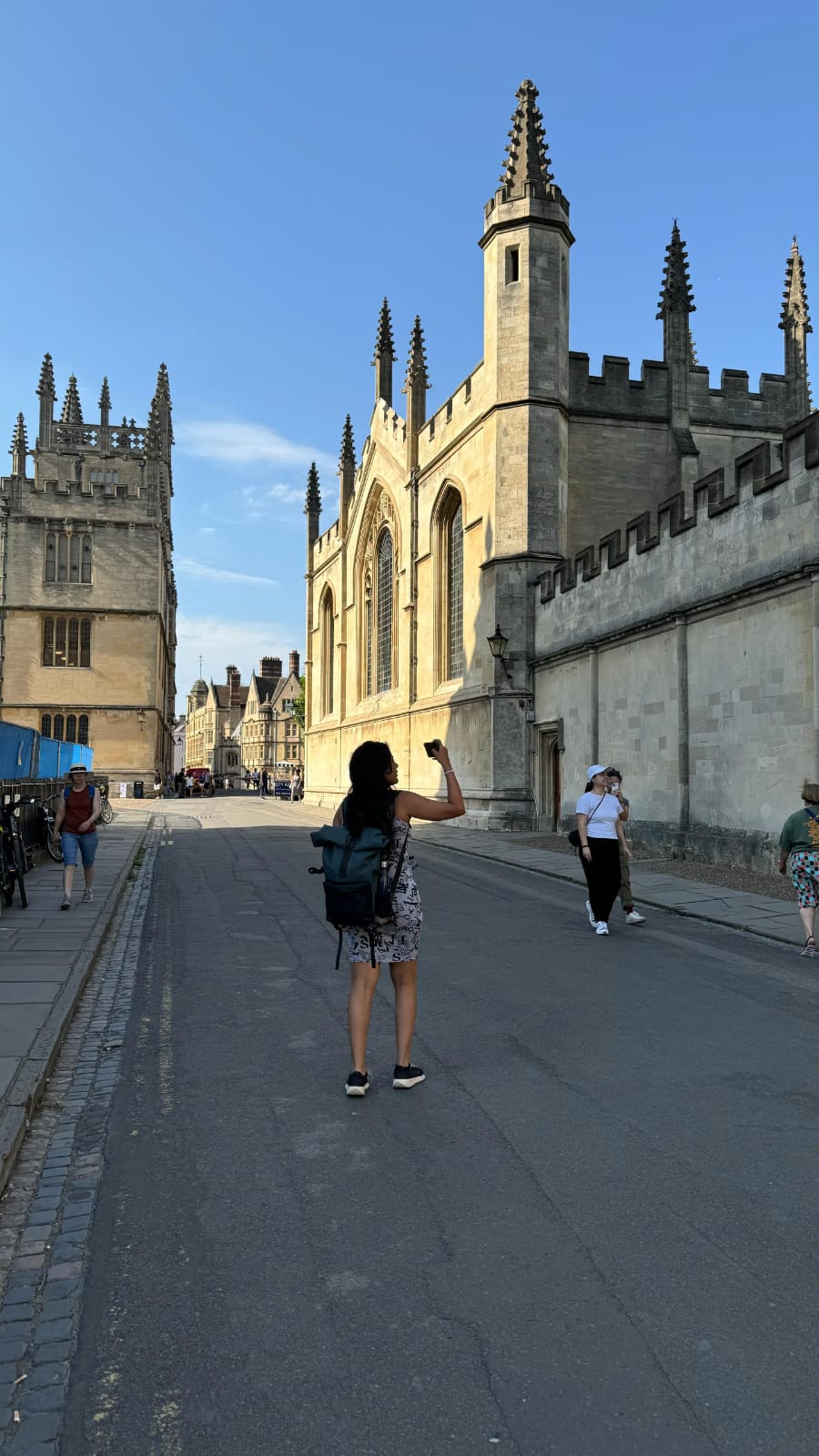
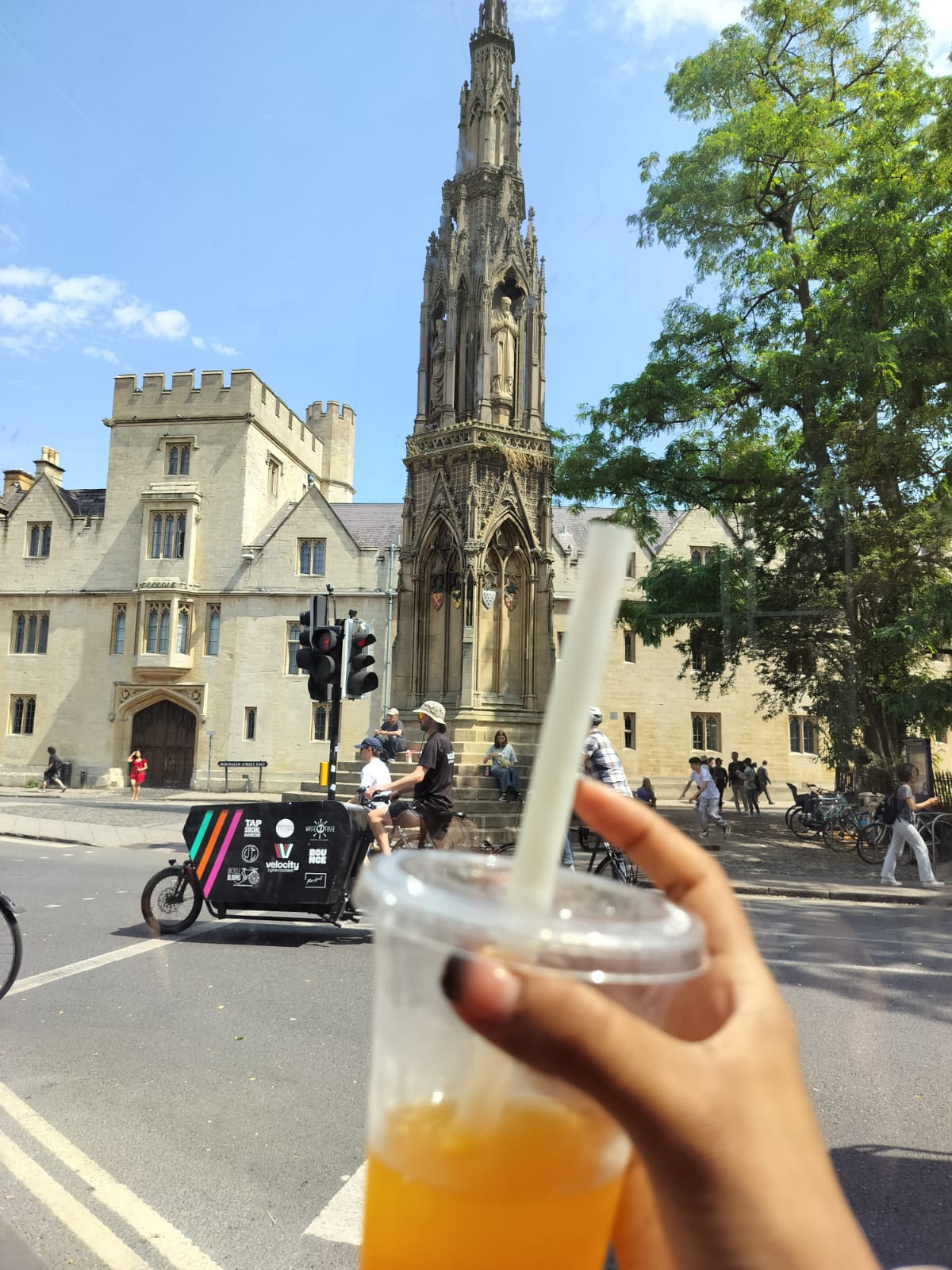
Oxford sits in a compact university city 60 minutes by train from London Paddington. The university’s 36 colleges are spread across the city centre rather than forming one enclosed campus.
- Location and transport: Central Oxford is walkable end to end; the Oxford Tube and rail services connect London in 60 to 100 minutes
- Housing: Every college guarantees on-site accommodation for at least the first year of graduate study; couples and families can apply for university-managed graduate housing
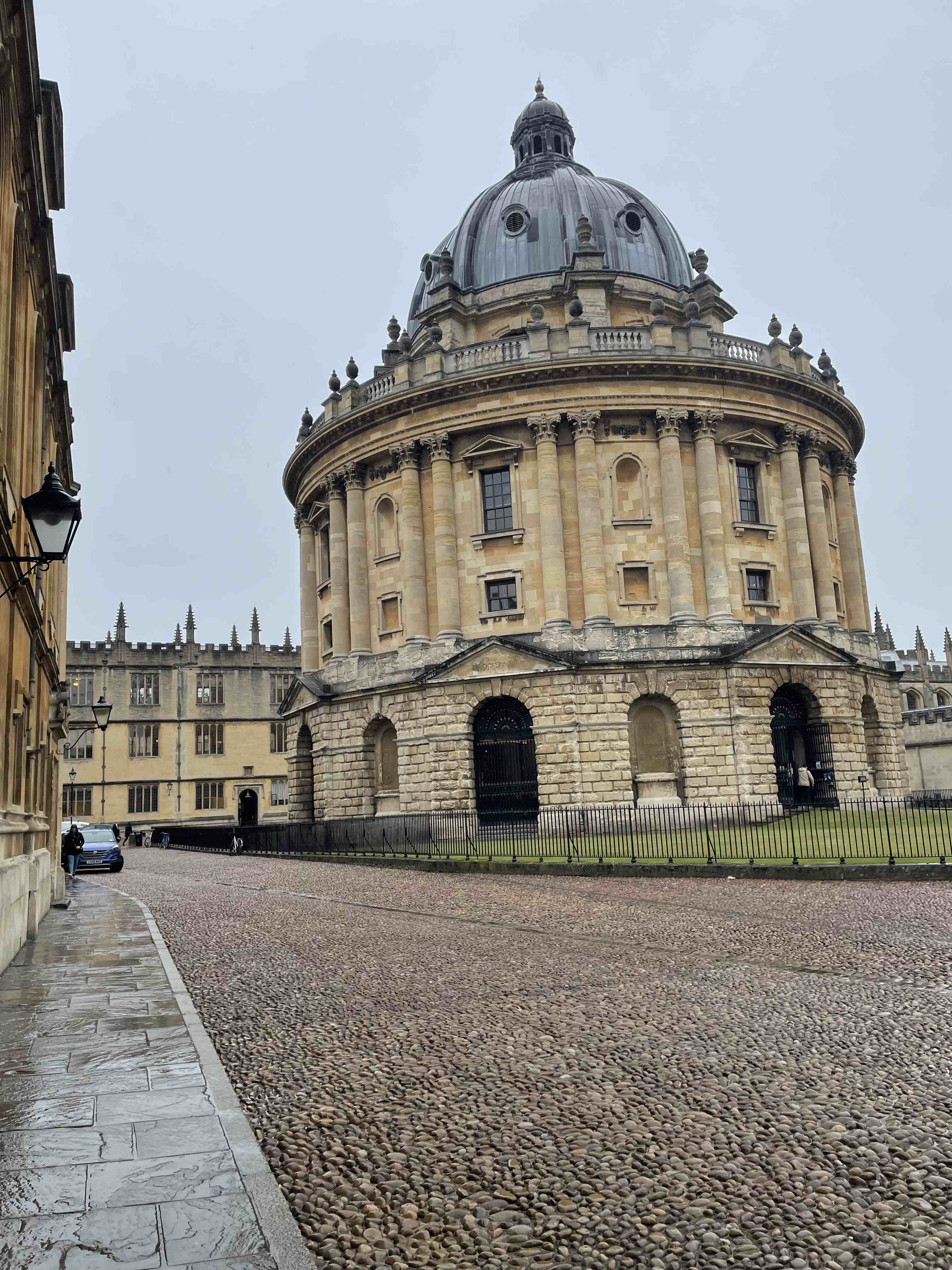
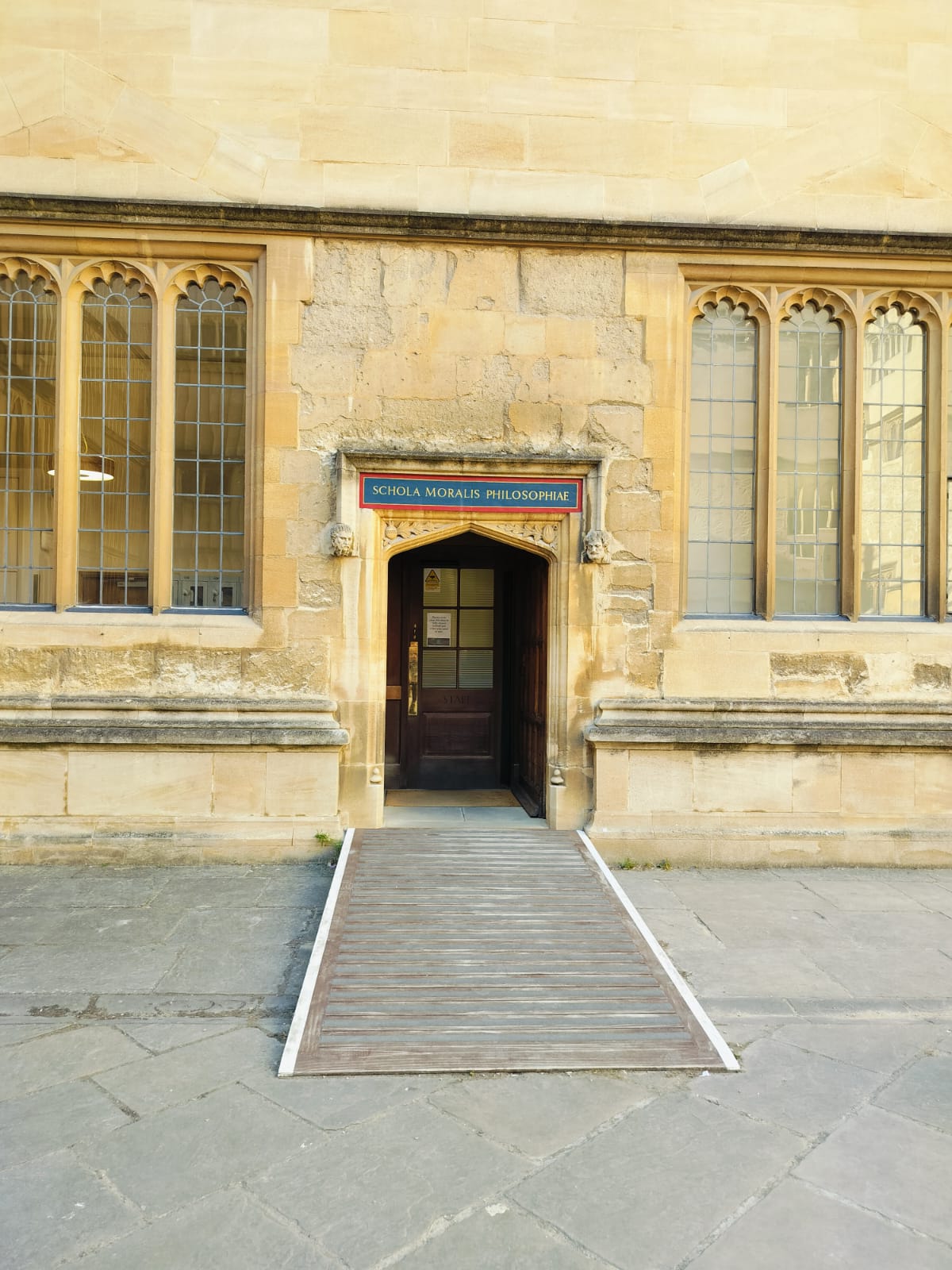
- Facilities: The Bodleian Library system holds 13+ million items with 24/7 access via card; sports at Iffley Road and the University Parks
- Indian community: Oxford India Society, Oxford Hindu Society and Oxford Sikh Society run regular cultural nights; Cowley Road hosts Indian grocery stores and restaurants
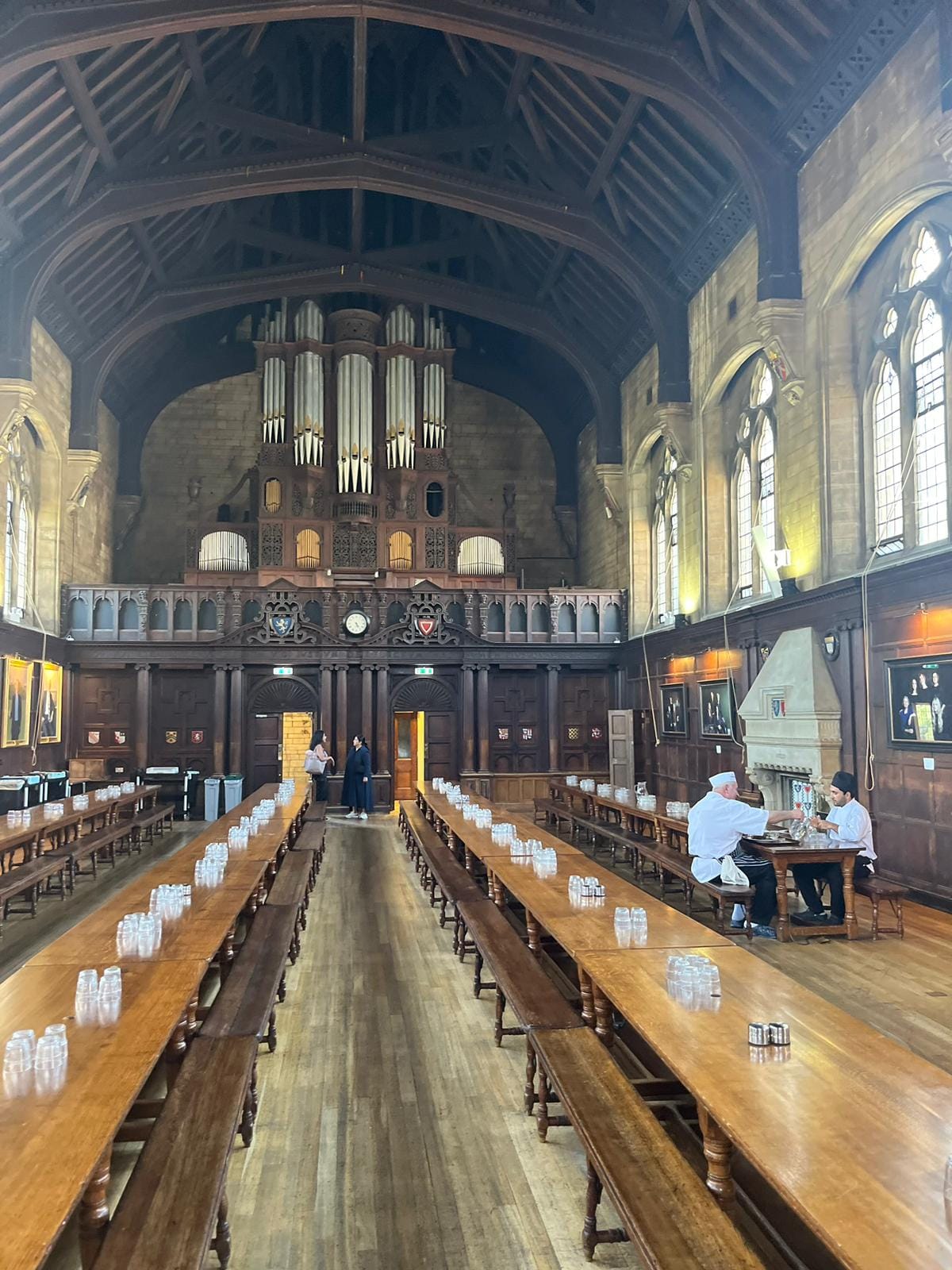
What Indian students say: The collegiate system means your social base is your college more than your department. Choosing a college with a large international MCR (Middle Common Room) helps if you want a diverse graduate cohort. Formal Hall dinners are subsidised and worth trying weekly.
University of Oxford Scholarships 2027
Oxford runs over 1,000 named funding routes for graduate study. Three of them specifically fund Indian nationals or offer several Indian slots each year.
| Scholarship | Type | Award Value | Eligibility | Deadline |
|---|---|---|---|---|
| Clarendon Fund | University-wide | Full tuition and college fees + GBP 15,009 living stipend (INR 19.5 lakh) | All full-time master’s and DPhil applicants; 140 awards per year | Automatic with January round application |
| Rhodes Scholarship (India) | India-specific | Full tuition and college fees + GBP 18,180 stipend (INR 23.6 lakh) | Indian nationals under 24 with first-class bachelor’s; 5 awards per year | Expected end-July 2026 (based on prior cycle) |
| Felix Scholarship | India-specific | Full tuition + GBP 19,000 living (INR 24.7 lakh) + return flight | Indian nationals with first-class bachelor’s; up to 7 India awards | Expected early January 2027 (based on prior cycle) |
| Oxford India Centre Bursaries | India-specific | Verify at official page | Indian nationals reading India-linked subjects at Somerville College | Aligns with course deadline |
| Reach Oxford Scholarship | UG, needs-based | Full tuition + living stipend | UG applicants from low-income countries; India-eligible via specific colleges | Aligns with UCAS deadline |
[Source: University of Oxford Fees, Funding and Scholarship Search 2026-27]
Planning note: Rhodes carries a hard sub-24 age cap on 1 October of the entry year and closes in July before other Oxford scholarships. It needs a separate application via the Rhodes Trust India platform, not via the Oxford portal.
Read More: University of Oxford Scholarships Guide
University of Oxford Rankings 2027
Oxford ranks #1 as per Times Higher Education 2026, holding the top spot since 2024. It sits at #4 on QS World 2027, unchanged from QS 2026.
| Ranking Body | Latest Edition | Previous Edition | Two Editions Back |
|---|---|---|---|
| QS World University Rankings | 2027: #4 | 2026: #4 | 2025: #3 |
| Times Higher Education World | 2026: #1 | 2025: #1 | 2024: #1 |
| US News Best Global Universities | 2026-2027: #4 | 2024-2025: #4 | 2023-2024: #5 |
| ARWU Shanghai | 2026: #7 | 2025: #6 | 2024: #6 |
| Collegedunia Study Abroad Global | #3 of 824 | NA | NA |
[Source: QS, Times Higher Education, US News, ShanghaiRanking Consultancy, Collegedunia Study Abroad]
Oxford also holds subject leadership across the humanities, medicine and social sciences on THE and QS subject tables. It ranks #1 in the UK (1 of 127) on the Collegedunia Study Abroad table.
Key insight: Oxford’s top-5 status across all four major global tables carries weight with Indian employers for consulting, banking and public policy roles. The UK Graduate Route recognises Oxford as a track-record institution, easing conditional-offer processing for Indian applicants.
Read More: University of Oxford Rankings Analysis
University of Oxford Placements and Career Outcomes
Oxford graduates achieve strong employment outcomes across consulting, finance, technology, policy and academia. The Careers Service supports all students for three years after graduation, including alumni.
- Median graduate starting salary: GBP 40,000 (INR 51.96 lakh) across master’s programmes
- MBA average salary: GBP 74,143 (INR 96.3 lakh) at Saïd Business School, per its Employment Report
- MSc Financial Economics average: GBP 64,164 (INR 83.3 lakh)
- Top hiring sectors: Management consulting, investment banking, technology, government and NGOs; specific recruiter lists are not centrally disclosed
- Post-study work: UK Graduate Route allows 2 years for master’s graduates and 3 years for DPhil holders
Insider note: Indian graduates appear in London consulting and investment banking hiring rounds each year. Internal referrals from Indian alumni at McKinsey, BCG, Goldman Sachs and JP Morgan often run in parallel to the formal Careers Service pipeline.
University of Oxford vs Peer Universities
The natural peer set for Oxford spans other top UK research universities plus one specialist. Indian applicants commonly shortlist University of Edinburgh and King’s College London alongside Oxford.
| University | QS World 2027 | Collegedunia Study Abroad | Differentiator |
|---|---|---|---|
| University of Oxford | #4 | #3 of 824 | Collegiate system with 140 Clarendon awards and India-specific Rhodes/Felix funding |
| University of Cambridge | #6 | Verify at Collegedunia | Sister collegiate model with distinct college fee and Gates Cambridge scholarship |
| Imperial College London | #2 | Verify at Collegedunia | STEM specialist with the strongest London placement network |
| University of Edinburgh | Verify at QS 2027 | Verify at Collegedunia | Broader intake with typically lower entry cutoffs and Scotland-based living costs |
Oxford edges the group on the THE 2026 table (#1) and on India-specific funding depth. Cambridge matches its collegiate structure, while Imperial matches its London placement access.
Planning note: For an Indian applicant choosing between Oxford and Cambridge, the deciding factors are college fee overlay and scholarship shortlist. Both universities sit in the global top 10 on QS and THE tables.
The University of Oxford fits Indian applicants with a first-class bachelor’s and a Clarendon or Rhodes-worthy scholarship file. It suits candidates comfortable with an INR 100 lakh two-year total against a median GBP 40,000 (INR 51.96 lakh) salary. The UK Graduate Route delivers two years of post-study work.
It is not the fit for cost-sensitive applicants without a scholarship shortlist. Applicants without a first-class bachelor’s are also unlikely to succeed at interview. University of Edinburgh sits close on academic reputation with lower fees and a broader intake.
University of Oxford FAQs
Ques. Can Indian students work part-time while studying at Oxford University?
Ans. Yes. On a UK Student visa, Indian students at the University of Oxford can work up to 20 hours per week during term and full-time during vacation periods. The university itself restricts term-time work to keep academic focus. The Careers Service runs a JobShop for on-campus roles that suit graduate schedules. Post-study, the UK Graduate Route allows two years of unrestricted work for master’s graduates.
Ques. Does the University of Oxford accept English-medium bachelor waivers for Indian applicants?
Ans. No. Oxford does not waive the English language requirement on the basis of a bachelor’s degree taught in English from India. Every Indian applicant must submit a valid IELTS Academic score at Standard or Higher level, depending on the course. Cambridge C1 Advanced is accepted for some courses. A plain English-medium certificate from your Indian college will not be enough on its own.
Ques. Is a GMAT or GRE waiver available for the Oxford MBA or MFE?
Ans. The Saïd MBA rarely waives GMAT or GRE and expects a score of 690 or higher on GMAT for competitive Indian applicants. The MSc Financial Economics is stricter still and does not routinely grant waivers. Only exceptional profiles with published research or a professional qualification such as CFA Level 3 may be considered for a test waiver, and only on written application.
Ques. What is the application fee at the University of Oxford for Indian applicants?
Ans. Oxford charges GBP 80 (INR 10,400) per graduate course application, non-refundable. Application fee waivers are available under a specific scheme for applicants from low-income backgrounds. Indian nationals typically do not qualify automatically. You must pay a separate fee for each course you apply to, and there is no bulk fee cap for multiple applications.
Ques. Do Indian education loan providers recognise Oxford University as a preferred lender?
Ans. Yes. HDFC Credila, Avanse, Auxilo, Prodigy Finance and MPOWER Financing all list the University of Oxford in their preferred university list. This unlocks higher loan limits, longer moratorium and lower interest rates. Public sector banks like SBI extend collateral-backed loans up to INR 1.5 crore for Oxford. Present your unconditional offer letter and the fee schedule to speed processing.
Ques. Which Oxford graduate programmes require an interview for Indian applicants?
Ans. Interviews are standard for the MBA at Saïd, the Master of Public Policy at Blavatnik, most humanities MPhils, all DPhil programmes and clinical-track courses. Taught MSc programmes in the sciences often shortlist on paper alone. Interviews for Indian applicants are conducted over Zoom or Microsoft Teams within 4 to 6 weeks of the deadline. Prepare a research statement and be ready for subject-specific questions.
Ques. How does Oxford’s Student visa dependent route work for Indian graduate students?
Ans. Only Oxford students on a course of nine months or longer can bring dependants. Since the January 2024 UK rule change, taught master’s students cannot bring a spouse or child on the dependant route; only PhD or research-master’s students qualify. You must show maintenance funds of GBP 845 (INR 1.1 lakh) per month per dependant for up to nine months, in addition to your own funds.
Ques. Are transcripts from Indian universities accepted at Oxford without apostille?
Ans. Oxford accepts scanned transcripts uploaded via the application portal for the initial admission decision. On accepting an offer, official transcripts must be sent directly from your Indian university to Oxford’s Graduate Admissions team by post or certified email. Apostille or WES verification is not compulsory at the admission stage. Rhodes and Felix scholarship bodies often require it as part of their own paperwork.
University of Oxford Program Fees & Deadlines
| Program | Important Dates | Fees | Application Fees | Eligibility | Financial Aid |
|---|---|---|---|---|---|
MBA 1 year | Fall 2027 Stage 3 application deadline (4th Nov 2026) Fall 2027 Stage 4 application deadline (6th Jan 2027) Fall 2027 Stage 5 application deadline (15th Mar 2027) | USD 124,238 /Yr GBP 94,120 /Yr | 75 | IELTS: 7.5, TOEFL: 110, GMAT: Required, Recognised Undergraduate Degree | |
Fall 2027 January application deadline (8th Jan 2027) | USD 61,182 /Yr GBP 46,350 /Yr | 75 | IELTS: 7.5, TOEFL: 110, GPA: 3.7, First-Class Honours Degree in Computer Science or Mathematics | ||
BM BCh Medicine 6 years | Fall 2027 UCAS Oxbridge medicine deadline (15th Oct 2026) | USD 69,115 /Yr GBP 52,360 /Yr | 29 | IELTS: 7.5, TOEFL: 110 | |
MSc Financial Economics 9 months | Fall 2027 intake Stage 1 deadline (24th Oct 2026) Fall 2027 intake Stage 2 deadline (7th Jan 2027) Fall 2027 intake Stage 3 deadline (4th Mar 2027) Fall 2027 intake rolling final deadline (31st Jul 2027) | USD 88,031 /Yr GBP 66,690 /Yr | 75 | IELTS: 7.5, TOEFL: 110, GRE: Required, Bachelor's Degree with First-Class or Upper Second-Class Honours | |
DPhil Law 3 years | Fall 2027 intake application deadline (28th Jan 2027) | USD 43,520 /Yr GBP 32,970 /Yr | 20 | IELTS: 7.5, TOEFL: 110, GPA: 3.7, First-Class Honours Degree in Law | |
DPhil Computer Science 3 years | Fall 2027 December round application deadline (2nd Dec 2026) Fall 2027 March round application deadline (3rd Mar 2027) | USD 47,863 /Yr GBP 36,260 /Yr | 20 | IELTS: 7.0, TOEFL: 100, GPA: 3.5, First-Class or Strong Upper Second-Class Undergraduate Degree with Honours | |
DPhil Economics 3 years | Fall 2027 intake application deadline (27th Jan 2027) | USD 43,151 /Yr GBP 32,690 /Yr | 20 | IELTS: 7.5, TOEFL: 110, GRE: Required, GPA: 3.6, First-Class or Upper Second-Class Undergraduate Degree in Economics | |
Fall 2027 November application deadline (18th Nov 2026) Fall 2027 January application deadline (28th Jan 2027) | USD 72,138 /Yr GBP 54,650 /Yr | 75 | IELTS: 7.5, TOEFL: 110, GPA: 3.6, First-Class or Strong Upper Second-Class Honours Degree in Mathematics | ||
MSc Social Data Science 10 months | Fall 2027 November round application deadline (14th Nov 2026) Fall 2027 January round application deadline (9th Jan 2027) | USD 53,764 /Yr GBP 40,730 /Yr | 75 | IELTS: 7.5, TOEFL: 110, GPA: 3.7, First-Class Undergraduate Degree with Honours | |
MPhil Economics 21 months | Fall 2027 intake application deadline (27th Jan 2027) | USD 46,002 /Yr GBP 34,850 /Yr | 75 | IELTS: 7.5, TOEFL: 110, GRE: Required, GPA: 3.6, First-Class or Upper Second-Class Undergraduate Degree in Economics |
Do you think the Dates are wrong ? Report Here
Important Alerts
| Events | Dates |
|---|---|
| Master of Business Administration [MBA] Fall 2027 Stage 3 application deadline | Closing in 26 days |


Find A Program
Top streams:
Top Recommended Courses
Do you think the fees are wrong ? Report Here
Do you think the fees are wrong ? Report Here
Course Finder - Search from 50K+ courses
Popular Streams:
University of Oxford comparison
| University Name | University of Oxford | University College London | Massachusetts Institute of Technology | Yale University | University of Toronto | University of Chicago | University of St Andrews | Columbia University | Princeton University | Sorbonne University | Sciences Po | Trinity College Dublin | Imperial College London | London School of Economics and Political Science | King's College London | Durham University | University of Exeter | Oxford Brookes University | University of Cambridge | Harvard University | St. Andrews University | Stanford University | University of Edinburgh | University of London |
|---|---|---|---|---|---|---|---|---|---|---|---|---|---|---|---|---|---|---|---|---|---|---|---|---|
| Collegedunia Score | 8.9 Out of 10 | 7.7 Out of 10 | 9 Out of 10 | 8.1 Out of 10 | 7.4 Out of 10 | 8.4 Out of 10 | 5.7 Out of 10 | 8.4 Out of 10 | 8.3 Out of 10 | - Out of 10 | - Out of 10 | 5.2 Out of 10 | 7.6 Out of 10 | 6.5 Out of 10 | 6.6 Out of 10 | 5.9 Out of 10 | 5.5 Out of 10 | 4.2 Out of 10 | 9 Out of 10 | 10 Out of 10 | - Out of 10 | 9.3 Out of 10 | 6.9 Out of 10 | - Out of 10 |
| Overall Ranking |
|
|
|
|
|
|
|
|
|
|
|
|
|
|
|
|
|
|
|
| - |
|
|
|
| Subject Strength |
|
|
|
|
|
|
|
|
|
|
|
|
|
|
|
|
|
|
|
| - |
|
| - |
| Programs |
|
|
|
|
|
|
|
|
|
|
|
|
|
|
|
|
|
|
|
|
|
|
|
|
| Acceptance Rate | 0.0 % | 25.0 % | 4.5 % | 4.6 % | 43.0 % | 0.0 % | 0.0 % | 4.0 % | 5.0 % | 28.0 % | 10.0 % | 33.5 % | 15.0 % | 9.0 % | 13.0 % | 83.0 % | 73.0 % | 72.0 % | 21.0 % | 3.0 % | 65.0 % | 4.0 % | 11.0 % | 63.0 % |
| Cost to Study |
|
|
|
|
|
|
|
|
|
|
|
|
|
|
|
|
|
|
|
|
|
|
|
|
| Placement | University of Oxford is one of the top public universities in Oxford, United Kingdom. It is ranked #4 in QS World University Rankings 2023.
| Graduate employability rank: #22, | Average Salaries Of Degree:
| Top recruiters include Yale University, Microsoft Corp, Deloitte Consulting LLP, Harvard University, Kaiser Permanente, etc.
| Placement rate was around 85% within 3 months of graduation Top recruiters were McKenzie Investments, KPMG, EY, Deloitte, Pepsico, Scotiank, National Bank Financial and others. University of Toronto Graduates & Alumni Salaries - By Degree:
| University of Chicago is one of the top private universities in Chicago, United States. It is ranked #10 in QS World University Rankings 2023. Top recruiters include McKinsey & Company Inc., Amazon.com Inc., Google LLC, JP Morgan Chase & Co., Accenture, Deloitte Consulting LLP etc
| 95.2% St Andrews students are employed; Graduate Employability Rankings #201-250; Highest paid degrees- Masters (112,000 USD); Master of Arts (93,000 USD); Masters in Finance (73,000 USD); Masters in Management (60,000 USD); Masters in Science (57,000 USD); Bachelor of Arts (50,000 USD) | Columbia University is one of the top private universities in New York City, United States. It is ranked #22 in QS World University Rankings 2023. Ranked #18 in Graduate Employability Rank Base Salaries by the following degrees:
| Hiring Companies are Amazon, IBM Corporation, Goldman Sachs Group, Raytheon Co., Microsoft, etc. Princeton University is one of the top private universities in Princeton, United States. It is ranked #=16 in QS World University Rankings 2023.
| Some of the programs and the average salary are: PhD: $101,000 Executive MBA: $100,000 MBA: $70,000 Bachelor (Other): $69,000 Doctorate: $65,000 Masters in Finance: $56,000 | Some programs and the average salary are: MBA: $125,000 Executive MBA: $96,000 Masters in Finance: $70,000 Other Degree: $69,000 Masters in Science: $67,000 LLM: $61,000 | Graduate employability ranking: #92. | Ranked 6th in the world in the QS World University Rankings® 2023, Imperial College London is a one-of-a-kind institution in the UK, focusing solely on science, engineering, medicine and business. Base Salaries By Degree:
| Graduate Employability Ranking 2020: 45; Top paying degrees with annual salary are MBA: 159,000 USD, Executive MBA: 151,000 USD, PhD: 144,000 USD, LLM: 120,000 USD | According to QS World University Rankings, the King's College London QS Ranking is 37. King's College ranks among the top 100 universities in the world since 2017 by Times Higher Education Ranking 2023. THE has ranked 35 in the world university ranking and sixth position in the UK for 2023. Base Salaries By Degree:
| Graduate Employability Ranking: #88; | University of Exeter is one of the top public universities in Exeter, United Kingdom. It is ranked #163 in QS World University Rankings 2023. Base Salaries by degree:
| Some of the programs and the average salary are as follows: PhD: $168,000 Doctorate: $112,000 MBA: $103,000 Masters in Finance: $62,000 Master (Other): $59,000 Other Degree: $53,000 | University of Cambridge is one of the top public universities in Cambridge, United Kingdom. It is ranked #2 in QS World University Rankings 2023. Average Salaries Of The Degree:
| Harvard University is one of the top private universities in Cambridge, United States. It is ranked #5 in QS World University Rankings 2023 and ranked #1 in US UNI.
| The programs along with the average salary is given as follows: Bachelors of Arts: $51,000 Masters in Management: $50,000 Master of Arts: $84,000 Bachelor of Science: $75,000 |
Stanford University is one of the top private universities in Stanford, United States. It is ranked #3 in QS World University Rankings 2023. Ranked #2 in Graduate Employability Rank
| The University of Edinburgh is one of the top public universities in Edinburgh, United Kingdom. It is ranked #15 in QS World University Rankings 2023.Graduate Employability Ranking #49;Top recruiters: Tesco Bank, Royal Bank of Scotland, Avaloq Evolution AG, Scottish Government; Average Salaries by the degree:
| Average Salaries By Degree:
|
| - | Read Full Comparison | Read Full Comparison | Read Full Comparison | Read Full Comparison | Read Full Comparison | Read Full Comparison | Read Full Comparison | Read Full Comparison | Read Full Comparison | Read Full Comparison | Read Full Comparison | Read Full Comparison | Read Full Comparison | Read Full Comparison | Read Full Comparison | Read Full Comparison | Read Full Comparison | Read Full Comparison | Read Full Comparison | Read Full Comparison | Read Full Comparison | Read Full Comparison | Read Full Comparison |
Do you think the data is wrong ? Report Here

Overall 4 out of 1504 in Global Ranking

Overall 1 out of 2298 in Global Ranking
Do you think the Rankings are wrong ? Report Here
University of Oxford Reviews
Most Popular Tags
11 Reviews Found
Likes
- High standards of rigor in research
- Reknown professors and alumni in department
- Opportunity to network with like-minded academics and scholars
Dislikes
- Only thing I wish could be better with the department if if it could offer more scholarships to incoming students. The city has also increased cost of living since a few years. Excluding this, there are no complaints with the college.
Campus Life
- There are many campuses for each department, research centre and college within the university. There are also separate libraries that are affiliated with the university and also with the college, to which students have access.
- All students have access to university sports facilities and are registered under a GP before arrival. There are 100+ clubs for different interests, hobbies, cultural groups, etc. It is a very happening place with multiple events and fests taking place across the university every day.
- The Freshers' fair is popular every year, where students can take a look at different societies and clubs at the university.
Fees
- The tuition fees for the course are around 35,000 GBP per year. It is to be paid yearly. Depending on your lifestyle, the monthly living expenses can be anywhere between 1000 GBP to 2000 GBP, a majority of the amount going towards rent expenditure.
- Rent (including bills) can cost anywhere between 550 - 1100 GBP based on amenities, sharing options and location. Transportation is cheaper if you can cycle, and it can come around to 70-80GBP per month if you plan to use the bus regularly.



Likes
- The University of Oxford has an immensely diverse student community. During my time there, I made friends from different disciplines and other countries, helping me engage myself in a very intercultural community.
- The coursework is very rigorous. It would prepare one for their career and helped me gain a lot of confidence since now I can deal with impromptu events or exams without stressing out since I went through the rigor of coursework at Oxford.
- There is a lot of support available to new students especially if you are struggling with mental health. I was going through homesickness and I feel the resources available helped me navigate that issue within months.
Dislikes
- I felt like transitioning into a new college life, especially for international students, needs more time to adapt. However, they might throw you directly into the coursework, which might make it stressful.
- The cost of living can be high, especially if you decide on dining in the college halls instead of cooking.
- Some of the departments are located far away which means you may have to heavily rely on transport, for eg, mine was at John Radcliffe Hospital.
Campus Life
-
The University has one main campus but the different departments may be spread out to different areas of Oxford.
-
All required facilities are available on campus including a plethora of libraries, sports grounds, medical centres etc.
-
For extracurricular, there would be some societies or clubs that you can join starting from clubs for book lovers to sports camps.
Fees
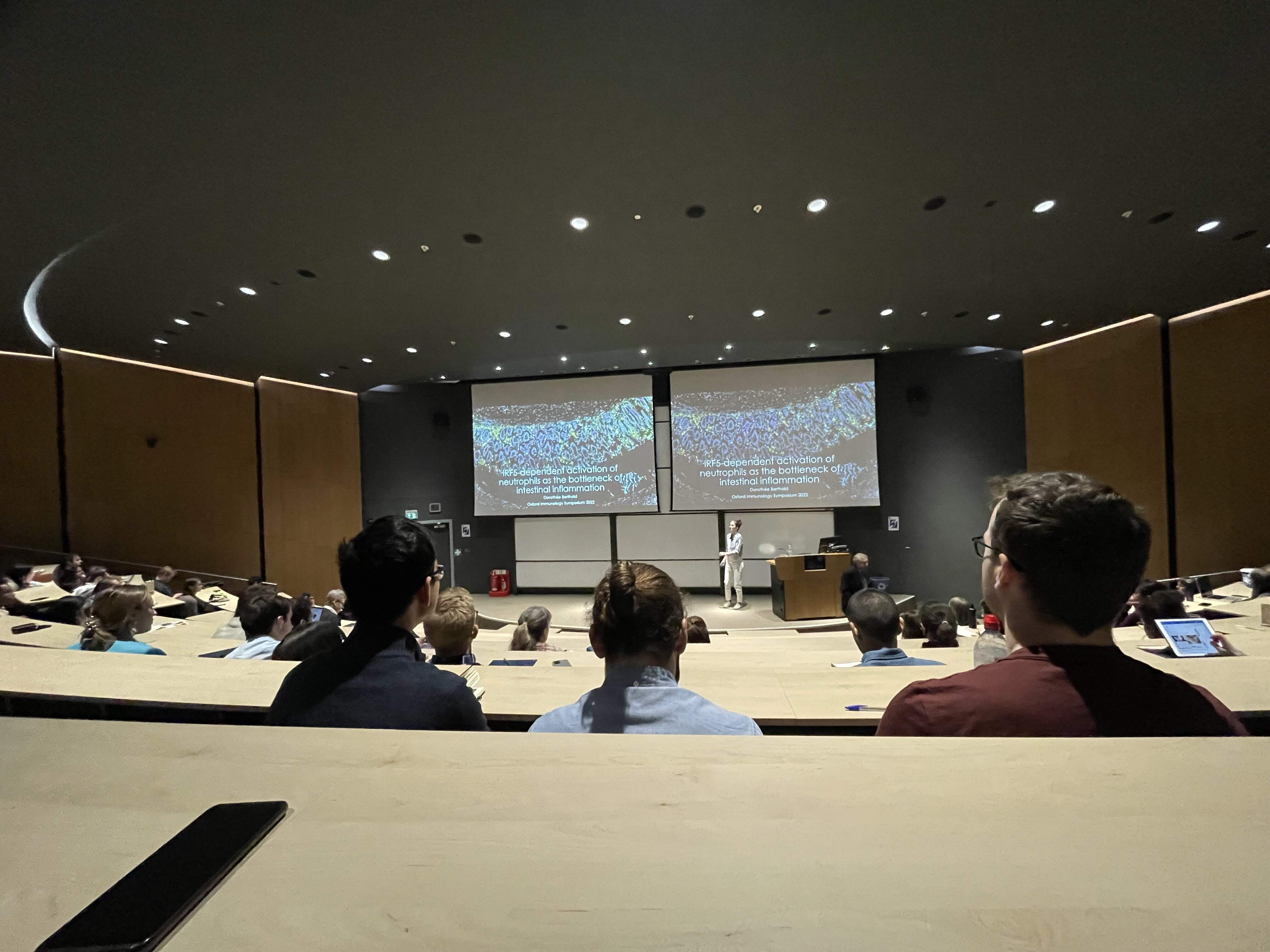
- The course fee was about 40,000 GBP for my course in Integrated immunology (2021-2022) and the cost of living was around 12,000 GBP including accommodation costs.
- You can estimate having a living cost of around 1000 GBP per month.
- The fees charged for the course are one-time while living costs are paid every month. Transportation can be as low as around 2 GBP per day.

Likes
- Faculty- To begin with, the department's faculty provides us with remarkable lectures. If we start with the online classes, we study from modules curated by our professors every semester. These modules are a blend of lectures and tasks hailing from practical experiments, refraining the lectures from becoming mundane. During the physical classes at Oxford, I realised how education could be imparted without having biases and rigidities regarding the correctness of a concept. To elaborate, in our class, no answer was wrong; it was always a different perception but not wrong. Furthermore, the lectures were usually not about theories but about the practical application of concepts that would help us become better writers.
- Cohort size- The size of the cohorts genuinely varies but does not cross 20 students and we had 4 cohorts in our batch. Particularly in my cohort, there are 14-15 students, making the entire course extremely close-knit. We not only interacted outside the course but also had a space to discuss everything we learnt. During the time we met, we spent most of the time together as a cohort, which brings me to my next point on networking.
- Networking opportunity- However, most of the networking was indeed done when we met for the course in July, the way the course is structured also provides countless networking opportunities. Let me explain: during the weekly tasks that we complete online, every student is repeatedly motivated to read and comment on the work of other students. This results in gaining different perspectives, and finding a safe space for interaction with peers.
Dislikes
- Leave structure- Even though the course is mindful of students working alongside the course, there are only two breaks given to the students- one after the first year ends and one during the Christmas holidays. The rest of the year, the students have to do weekly units with tasks and assignments after the end of the entire module, making the course slightly on the hectic side.
- Future help- As students usually enrol in such courses with the expectation of receiving resources such as agents and jobs, the availability of those is bleak. Even though one can connect with the tutors and ask for such materials, they are not formally provided. Furthermore, job and placement actively take place but as a student of a blended course without a visa, it is extremely unlikely to secure one with ease.
- Alumni network- Even though the University of Oxford has robust alumni, there is a lack of a platform for students to connect with these alumni. Better opportunities can be provided where students get easy access to the contacts in order to increase their network.
Campus Life
- My campus was happening- there were lecture series, theatre performances, meet-and-greet, roadside plays.
- The libraries were one of my favourite places and that's the place we spent most of our time as we wanted to explore different libraries across campus.
- Sports and student organization didn't have much role but the cultural activities were worth becoming a part of.
- In terms of online classes, there are a number of lecture series one can be a part of.
- Furthermore, students can become a part of the student organization and become class representatives. The seminars are usually very helpful and engaging
Fees
-
As mentioned earlier, there are two ways for fee submission-
- In one go- here the students can submit the entire fee for the year at once.
- Installments- here, the students can submit the free in 3 instalments spanning over a year with no additional interest or charges. -
The fee is usually taken for one year at a time and the second year fee is usually different from the first year and revealed after the first year is done.
-
There are no additional monthly expenses during the online course but while visiting Oxford for classes, the tuition is covered in the overall fee, but the hostel/BnB is an additional expense that varies each year. The hostel is very hard to secure due to high demand. BnBs which are shared with a family (this is something most students chose in my course) varied from somewhere 60,000 to 1,50,000 for fifteen days.
-
Additionally the fee each year varies but a round figure would be somewhere around 7 - 8 LPA.





Likes
- I get to take courses only in my major which enables me to specialize early on.
- Bachelor's degree is awarded in 3 years with an optional masters in the 4th year which means I save a lot of money and can start working sooner with more qualifications.
- One on one tutorials two to three times a week with professors who have a lot of research experience enables me to learn the course material in greater depth.
Dislikes
- Unable to take courses outside my major but I chose Oxford specifically because I was sure I wanted to do only Computer Science in college.
- Sports facilities are decent but because everybody is academically focused there is not much investment in the sports teams.
- No investment in the infrastructure and most of the laboratory buildings and even the CS department has outdated infra that should be upgraded considering the amount of money they receive.
Campus Life
- Oxford has just one campus with many colleges inside (about thirty)
- Each college has their own library for the use of people inside the college and each college has their own sports facilities although there is also a central sports facilities for students from across the entire university.
Fees
- 48 lakhs (INR) for the first year, 52 lakhs for the second year, 56 lakhs for the third year and 60 lakhs for the fourth year (optional)
- You can request to have your fees paid across the three terms by applying for financial aid - otherwise you have to make the entire payment at the start of the year.
- Monthly expenses is about 30K (INR) and transportation is 80K for the return flight twice or thrice a year
Likes
- It is a renowned university. I liked the tutorial system - groups of 2-4 students being taught by a professor after the main lectures. I chose maths because it always felt natural and enjoyable to me.
- The course material, the gothic architecture, department facilities, the area, the food.
Dislikes
- The accommodation and its facilities, wifi, and the fact that the course is not as engaging as it could be (e.g. with more projects, in-person presentations, group activities)
Overview
The terms are fast-paced and highly academic. Even though sometimes the academic load can get high, it was always manageable for me. The problem sheets favor quality over quantity. As for other social activities, there are lots of opportunities to join clubs and societies, little social events in your college and also your subject department. Lots of talks and workshops. We have formal dinners every now and then where you dress up. The exams are also traditionally taken and you must wear formal clothing.
Campus Life
There are many student societies. Rowing is a popular sport. Many old-fashioned libraries as well as modern ones. A single university-wide Wifi network, which is not the best in student rooms. All sports available.
Likes
- Prestige and great faculty along. Additionally, Oxford University is very different from any university in terms of culture.
- The friends/classmates, the city, the buildings/infrastructure, the accommodation.
Dislikes
- The Admin, the weather.
Overview
Admin is not really great, it is not very systematic. But otherwise you meet a lot of smart people. I never thought I would enjoy going for debates but we have many debates at the Oxford Union where esteemed speakers from around the world come to exchange thoughts and ideas. The formal dinners let you explore the different colleges across Oxford University. There is almost no medical help available unless it is fatal so carry medicines/bandages etc.
Campus Life
There's a lot of formal dinners where you get a chance to network with people from other majors, countries etc. There are beautiful libraries and a lot to explore. And it doesn't hurt that harry potter was shot here! There are't any good on-campus gym facilities. Major sport teams would be rowing/punting.
Overview
The candidates need to pass IELTS with a minimum score of 7 and minimum 100 in TOEFL. You apply through UCAS, as for any other university. The full information is contained in the University's Undergraduate Prospectus.To become a student at Oxford you need to be accepted by a particular college, though you apply through a central admissions system. If you don't know which college to name as your preference you can make an open application: details of this are also in the undergraduate prospectus. Candidates are shortlisted for interview on the basis of their academic record and promise, as detailed in the selection criteria. Interviews take place in December.
Campus Life
Several events are organised by the different departments of the university and these include concerts, speeches, etc. These are simple awesome and provide a new experience every time. We also get opportunities to meet peopl having remarkable contribution in the field of literature and its always a pleasure meeting them.
Overview
I chose Oxford University for obvious reasons as it is top-ranked, and I needed foreign accreditation to progress in my teaching career. Plus, it was a distance learning program so I was able to study while I worked. It also had a residential module which gave me an opportunity to meet my peers from all over the world. Also, since the ratio of instructors to students is very low. Only 13 fellows were admitted each year, making it easy for professors to give individual attention to each student.
Fees
Distance learners - the fee for foreign nationals is approximately £14000.
Overview
Oxford is best for my chosen course. It is one of the only courses in the world that lets students gain practical experience in micromanipulation, in vitro maturation and embryo biopsy.
Fees
40,585 pounds sterling per year
Overview
Because University of Oxford is one of the best university in the world, always top 10 in almost all university ranking website and Oxford also has a lot to offer to students
University of Oxford Scholarships
| Name | Scholarship Per Student | Level of Study | Type | |
|---|---|---|---|---|
| Oxford and Cambridge Society of India (OCSI) Scholarships | Scholarship per studentVariable Amount | Level Of StudyBachelor | TypeCollege-Specific | |
| Rhodes Scholarship | Scholarship per student$23,174 | Level Of StudyMaster | TypeCollege-Specific | |
| Clarendon Scholarships | Scholarship per studentVariable Amount | Level Of StudyDoctorate | TypeCollege-Specific | |
| Reach Oxford Scholarship | Scholarship per studentVariable Amount | Level Of StudyBachelor | TypeCollege-Specific | |
| Felix Scholarships | Scholarship per student$18,300 | Level Of StudyDoctorate | TypeCollege-Specific | |
| VueVille Future Technology Scholarship | Scholarship per student$1,000 | Level Of StudyBachelor | TypeMerit-Based |
View All 14 Scholarships
Do you think the Scholarship is wrong ? Report Here
Attendance Cost
The table shows average yearly cost of attendance for international students. Amount may vary with the course opted, nature of accommodation, and personal spending habits of a candidate.Check Program wise Fees
University of Oxford Campuses, Schools & Faculties
Faculty
| Total Faculty | Full Time | Part Time | Graduate Assistants |
|---|---|---|---|
| 15515 | - | - | - |


interested in this College ?
Follow & Share this college to get information about admission.



Comments
Found 89 Comments