





KTH Royal Institute of Technology admissions run on one central cycle for Indian applicants for the Autumn 2027 intake, starting August 2027. UG entry needs Class XII with maths and physics, master’s needs a bachelor’s equivalent to 180 ECTS plus IELTS 6.5 or TOEFL iBT 90.
- Autumn 2027 master’s cycle opens 16 October 2026, deadline 15 January 2027.
- Base tuition SEK 342,000 to 402,000 yearly (₹33.38 to ₹39.24 Lakhs), application fee SEK 900 (₹8,784).
- UG needs Class XII 75%+ with maths, PG needs bachelor’s 65%+ plus IELTS 6.5.
- Institutional acceptance rate around 41%, master’s 29%, bachelor’s 10%.
Popular master’s programmes among Indian applicants include Machine Learning, Industrial Engineering and Management, and Sustainable Energy Engineering. Alumni cite faculty access and Stockholm’s engineering employer base, both detailed in the KTH Royal Institute of Technology overview.
Table of Contents
- KTH Royal Institute of Technology Application Deadlines
- KTH Eligibility for Indian Students
- KTH Royal Institute of Technology PG Programs
- KTH Bachelor’s Programs and English Scores
- KTH PhD Admissions Pathway
- KTH Royal Institute of Technology Application Process
- KTH Documents Required for Indian Students
- KTH Royal Institute of Technology Acceptance Rate
- Sweden Student Visa for KTH
- Tips and Checklist for KTH Applicants
- KTH Admissions FAQs
KTH Royal Institute of Technology Application Deadlines
KTH runs a single admissions cycle for international students, opening each October for the Autumn intake starting August the following year. All applications flow through the Swedish national portal universityadmissions.se, per the KTH master’s admissions page. Applicants may rank up to four programmes on one application.
KTH’s primary intake for Indian students is Autumn (August), where all 62 English-taught master’s programmes and the sole English-taught bachelor’s open together. There is no winter intake for internationals.
| Intake | Level | App Opens | Deadline | App Fee | Portal |
|---|---|---|---|---|---|
| Autumn 2027 (Primary intake) | Master’s | 16 October 2026 | 15 January 2027 | SEK 900 (₹8,784) | universityadmissions.se |
| Autumn 2027 (Primary intake) | Bachelor’s, Round 1 | 16 October 2026 | 15 January 2027 | SEK 900 (₹8,784) | universityadmissions.se |
| Autumn 2027 | Bachelor’s, Round 2 | 15 March 2027 | 15 April 2027 | SEK 900 (₹8,784) | universityadmissions.se |
Indian bachelor’s applicants should target Round 1, where non-EU/EEA seats are prioritised. Round 2 is EU/EEA/Swiss-first and rarely admits Indian applicants. Documents (transcripts, English score, fee proof) must reach University Admissions by 1 February 2027. Selection results post 1 April 2027 for master’s, 9 April 2027 for bachelor’s.
KTH Royal Institute of Technology Eligibility for Indian Students
KTH sets a two-part bar for Indian applicants: an academic threshold that matches Swedish qualification levels, and English proficiency at the Swedish "English 6" upper-secondary standard. Both are checked by University Admissions before your file reaches KTH’s programme committee for merit scoring.
- UG general entry: Class XII (CBSE/ISC/State) at 75%+, with Mathematics and Physics studied through Class XII.
- PG general entry: Bachelor’s degree of 180 ECTS (three or four Indian years), roughly 65% aggregate or higher, in a discipline the programme accepts.
- English 6 floor: IELTS Academic 6.5 overall (no band under 5.5), TOEFL iBT 90 overall (writing 20), or a documented English-medium prior study.
- PhD entry: Master’s of at least 60 ECTS in a relevant field, plus a match to a funded research position advertised on kth.se.
Merit scoring inside each MSc programme is on a 1 to 75 scale that reads grades in prerequisite subjects, motivation letter, and prior university quality. KTH does not publish a fixed GPA cutoff, so a 65% Indian bachelor’s from an NIRF-ranked institution reads competitively when the required subjects are covered in full.
KTH Royal Institute of Technology IELTS Waiver Pathway
An Indian applicant can skip IELTS or TOEFL if their bachelor’s was fully taught and examined in English at a recognised university, and the transcript or a signed medium-of-instruction letter states this. Most IITs, IIITs, NITs, and central universities qualify. State-university applicants should attach an official MOI letter with the transcript. If the university label or transcript is silent on language of instruction, KTH will ask for an IELTS or TOEFL score, so submitting a test remains the safer default for a first-time applicant.
KTH Royal Institute of Technology PG Programs
KTH offers 62 English-taught two-year MSc programmes (120 ECTS) across engineering, computing, energy, industrial management, and sciences. Base tuition sits at SEK 342,000 to SEK 402,000 per year (₹33.38 to ₹39.24 Lakhs), payable in two semester instalments, with programme-level variation covered in the course-wise fees breakdown. Every programme below sets subject prerequisites in addition to the general 180 ECTS bachelor’s rule.
| Programme | Duration | Minimum Eligibility | English Req. Min. |
|---|---|---|---|
| MSc Computer Science | 2 years | Bachelor’s 180 ECTS with 28.5 ECTS maths (calculus, linear algebra, probability, discrete) and 22.5 ECTS CS (OOP, algorithms, complexity) | IELTS 6.5 |
| MSc Machine Learning | 2 years | Bachelor’s 180 ECTS with algebra, calculus, probability, programming, and algorithms and data structures | IELTS 6.5 |
| MSc Industrial Engineering and Management | 2 years | Bachelor’s in engineering with a technical specialisation such as mechanical, industrial, or product development | IELTS 6.5 |
| MSc Machine Design | 2 years | Bachelor’s 180 ECTS in mechanical engineering with 35 ECTS programming/numerical/engineering maths and 25 ECTS solid mechanics/materials | IELTS 6.5 |
| MSc Mechatronics | 2 years | Bachelor’s in mechanical, electrical, or mechatronics engineering with courses in control theory and programming | IELTS 6.5 |
| MSc Materials Science and Engineering | 2 years | Bachelor’s in materials, chemical, or mechanical engineering with thermodynamics and materials chemistry | IELTS 6.5 |
| MSc Electric Power Engineering | 2 years | Bachelor’s in electrical engineering with circuit theory, electromagnetism, and power systems | IELTS 6.5 |
| MSc Sustainable Energy Engineering | 2 years | Bachelor’s in energy, mechanical, chemical, or electrical engineering with thermodynamics and fluid mechanics | IELTS 6.5 |
| MSc Engineering Mechanics | 2 years | Bachelor’s in mechanical or aerospace engineering with solid mechanics, fluid mechanics, and mathematics | IELTS 6.5 |
| MSc Industrial Management | 2 years | Bachelor’s in engineering with a technical specialisation plus basic economics or business studies | IELTS 6.5 |
KTH’s MSc committees weigh subject grades over overall percentage, so a moderate CGPA with strong marks in the named prerequisite courses reads better than a high aggregate with weak core-subject grades. Applicants may pick up to four programmes on one universityadmissions.se application and rank them by preference.
Note: Program-specific entry requirements, fees, and intake availability may differ from the institution-wide minimums shown above. Always confirm on the official KTH programmes page for your chosen programme before applying.
KTH Royal Institute of Technology Bachelor’s Programs and English Scores
KTH offers a single English-taught bachelor’s programme open to Indian school-leavers, alongside a wider set of Swedish-taught bachelor’s degrees that are effectively closed to non-Swedish speakers. Round 1 in January is the applicable Indian window.
| Programme | Duration | Minimum Eligibility | English Req. Min. |
|---|---|---|---|
| BSc Information and Communication Technology | 3 years | Class XII with Mathematics through Class XII, Physics, and a science stream aggregate of around 75% | IELTS 6.5 |
Class XII maths at Standard level (not Applied) is required, and the boards KTH accepts routinely (CBSE, ISC, most state boards) all satisfy the "Swedish upper secondary" bar when maths and physics are studied through the final year. The Class XII merit score is the single largest factor in ranking, so higher board percentages materially improve selection odds.
KTH Royal Institute of Technology PhD Admissions Pathway
PhD entry at KTH is position-based, not application-cycle based. There is no fixed January deadline. Instead, KTH’s schools advertise individual funded PhD positions on the "Vacancies" page throughout the year, each tied to a specific research group and grant.
- Format: 4-year funded doctorate with an employment contract, not a scholarship.
- Stipend: KTH doctoral students are salaried employees, with monthly gross pay set by the collective agreement.
- Eligibility: Master’s of at least 60 ECTS in a relevant field, plus prerequisite courses named in each vacancy notice.
- English: Same English 6 floor as MSc entry, IELTS 6.5 or TOEFL iBT 90.
Because the doctorate is salaried, applicants apply directly to the advertised position with a CV and research statement, not through universityadmissions.se. Sustained funding is built into the position, so a separate scholarship search is not needed. Broader research funding routes are covered in the KTH funding for Indian students guide.
KTH Royal Institute of Technology Application Process
Every KTH international application, master’s or bachelor’s, is filed once on universityadmissions.se, not on the KTH website. KTH only ranks and admits after the central portal has verified academic and English eligibility.
- Create a universityadmissions.se account from 16 October 2026 and pick up to four programmes.
- Pay the application fee of SEK 900 (₹8,784) on the universityadmissions.se portal by 1 February 2027, or upload proof of an EU/EEA/Swiss citizenship for exemption.
- Upload documents before 1 February 2027: certified transcripts, degree certificate or provisional letter, English test scorecard, passport bio page.
- Add programme-specific attachments like the KTH summary sheet, motivation letter, and two recommendation letters where the programme page requests them.
- Wait for the merit ranking and selection result: master’s on 1 April 2027, bachelor’s on 9 April 2027.
- Reply to your offer on universityadmissions.se by the stated reply date to hold your seat.
KTH Royal Institute of Technology Admission Decisions Timeline
Master’s offers publish on 1 April 2027 and are conditional until you upload your final degree certificate and, where relevant, first-instalment tuition proof. Reply-yes is required within seven days, or the seat rolls to the waitlist. Deferrals are not routinely granted, so a deferred start usually means reapplying the next cycle.
KTH Royal Institute of Technology Documents Required
All paperwork is uploaded to universityadmissions.se in one pass by 1 February 2027. Physical copies are not posted to KTH. Documents in Hindi or regional languages need a certified English translation attached to the original.
- Passport bio page: Machine-readable page with photo, valid for the whole study period.
- Class XII marksheet and certificate: Required for both UG and PG applicants.
- Bachelor’s transcripts: All semester marksheets, PG applicants only.
- Degree certificate or provisional letter: Final-year PG applicants upload a provisional with expected completion date.
- English test scorecard: IELTS, TOEFL iBT, or MOI letter.
- KTH summary sheet: Programme-specific PDF listing prerequisite courses and grades.
- Motivation letter: One page tied to the specific programme.
- Two recommendation letters: From academic referees for MSc, research supervisors for PhD.
- CV: One or two pages, academic-focused.
- Application fee receipt: Card payment confirmation from universityadmissions.se.
Insider note: KTH’s summary sheet is where most Indian applications lose points. Fill every prerequisite row with a course code, credits, and grade. Blank cells read as "prerequisite not met" and drop your merit score.
KTH Royal Institute of Technology Acceptance Rate
KTH is selective at both levels, with tighter competition at bachelor’s than master’s because only one English-taught programme is available. Indian applicants should read the master’s rate as the more relevant benchmark.
- Master’s admits: around 29% of qualified international applicants.
- Bachelor’s admits: around 10% of qualified international applicants.
- Institutional overall: around 41% across all study levels combined.
KTH Royal Institute of Technology Programme-Level Competition
Programme-level rates run much tighter than the overall figure. KTH’s own numbers show MSc Computer Science admitting roughly 8% (63 admits from 762 qualified applicants in 2026) and MSc Machine Learning admitting roughly 6% (58 admits from 1,019 qualified in 2026). Industrial Engineering and Management, Mechatronics, and Sustainable Energy Engineering sit in similar single-digit-to-teens bands.
KTH Royal Institute of Technology Ranking Signal on Admissions
KTH sits 78 in the QS World Rankings 2026 and 98 in the THE World Rankings 2026, with a stronger showing in engineering subject tables (QS Engineering and Technology 37). That ranking band lifts application volumes each year, so subject prerequisites and grade quality now matter more than three cycles ago.
Sweden Student Visa for KTH Royal Institute of Technology
Indian admits to KTH apply for a Sweden residence permit for studies (uppehållstillstånd för studier) issued by Migrationsverket, the Swedish Migration Agency, not a short-stay Schengen visa. The permit covers the full degree length and doubles as your right to work part-time during studies.
Apply online at migrationsverket.se as soon as your KTH admission letter arrives in April, because processing runs eight to twelve weeks in peak months. You will need proof of admission, a paid first-instalment tuition receipt, and bank balance of SEK 11,540 per month for ten months (₹1.13 Lakhs per month, roughly ₹11.30 Lakhs total for one year), plus valid health insurance. On arrival, register with the local Skatteverket office within one week for a personnummer if your permit is longer than 12 months.
Planning note: Book the biometrics appointment at the Swedish embassy in Delhi or the consulate in Mumbai the same week you apply online. Slots for June and July fill first because that is when most Indian admits are travelling for their August start.
Tips and Checklist for KTH Royal Institute of Technology Applicants
The following tips and steps come from Indian-applicant patterns at KTH, where the merit sheet decides more than the CGPA and where late document uploads are the single most common rejection reason.
- Book IELTS by early November 2026, so the scorecard reaches universityadmissions.se before the 1 February document cut.
- Request university transcripts eight weeks before the deadline, because most Indian registrars need four to six weeks for certified copies.
- Draft the KTH summary sheet first, then write your motivation letter around the specific prerequisite gaps you are strong on.
- Rank all four programme slots on one application, using close cognate programmes as safety picks rather than leaving slots blank.
- Line up two academic referees by mid-December, ideally your final-year project guide plus a core-subject professor.
- Pay the SEK 900 (₹8,784) application fee on universityadmissions.se within 24 hours of submitting the application, so the file is not held.
- Track your Mina Sidor inbox weekly from March onward for verification queries, which carry a seven-day response window.
- Prepare the KTH India Scholarship application in parallel, since it uses your admission file and closes on the same 15 January date.
Reality check: KTH treats a blank prerequisite row on the summary sheet as a hard fail, not a soft flag. Fill every row with a course code and grade, even where the course name in India differs from the KTH label.
KTH Royal Institute of Technology admissions reward preparation over polish: strong subject grades in the exact prerequisites, a filed application well before 15 January 2027, and a complete document set on universityadmissions.se by 1 February 2027 do most of the work. The rest is picking the four programme slots that match your bachelor’s transcript.
KTH Royal Institute of Technology Admissions: Frequently Asked Questions
Ques. When do KTH admissions open for the Autumn 2027 intake?
Ans. Applications open 16 October 2026 on universityadmissions.se and close 15 January 2027 at midnight CET. Documents and the SEK 900 (₹8,784) application fee are due by 1 February 2027.
Ques. What is the minimum IELTS score for KTH master’s programmes?
Ans. KTH accepts IELTS Academic 6.5 overall with no band under 5.5, or TOEFL iBT 90 with at least 20 in writing. PTE Academic and Cambridge C1 Advanced are also accepted at equivalent bands.
Ques. Does KTH offer an English test waiver for Indian applicants?
Ans. Yes, an Indian applicant whose bachelor’s was fully taught and examined in English at a recognised university can submit a medium-of-instruction letter instead of IELTS. Most IIT, IIIT, NIT, and central-university graduates qualify.
Ques. Does KTH accept a three-year Indian bachelor’s for MSc admission?
Ans. Yes, a three-year bachelor’s from a UGC-recognised Indian university is treated as equivalent to 180 ECTS, provided the required subject prerequisites are covered. A BTech or four-year engineering degree also qualifies.
Ques. What is the application fee for KTH and how is it paid?
Ans. The fee is SEK 900 (₹8,784) for non-EU/EEA/Swiss applicants at every level. It is paid by card on universityadmissions.se after submitting the application and must clear by 1 February 2027 for the file to be considered.
Ques. How competitive is MSc Machine Learning at KTH?
Ans. Very. KTH’s own 2026 figures show 58 admits from 1,019 qualified applicants, about 6%. Strong grades in calculus, linear algebra, probability, and algorithms carry more weight than overall CGPA.
Ques. Can I apply to more than one KTH programme in the same cycle?
Ans. Yes, one universityadmissions.se application covers up to four Swedish master’s programmes ranked by preference. You pay a single SEK 900 (₹8,784) fee for the whole application, not per programme.
Ques. When does KTH release admission decisions?
Ans. Master’s results post on 1 April 2027 and bachelor’s results on 9 April 2027 in your universityadmissions.se account. You must reply "yes" to your offer within seven days or the seat moves to the waitlist.
Ques. Are KTH admissions conditional on final marks?
Ans. Yes, final-year PG applicants receive a conditional offer that firms up once the final degree certificate is uploaded. Bachelor’s admits similarly upload the Class XII marksheet after board results.
Ques. Does KTH grant deferrals to Indian students?
Ans. Not routinely. KTH usually asks a deferred applicant to reapply in the next cycle. Only visa-processing delays with documented evidence get short deferrals inside the same year.
Ques. What is KTH’s institutional acceptance rate?
Ans. KTH admits around 41% overall across levels combined, 29% at master’s, and 10% at bachelor’s. Programme-level rates in high-demand MSc courses like Computer Science and Machine Learning sit in single digits.
Ques. Do I apply to KTH’s PhD programmes on universityadmissions.se?
Ans. No, KTH doctoral positions are salaried employments advertised on the KTH Vacancies page. You apply directly to the specific position with a CV and research statement, not through the central admissions portal.
College Student Profiles

KTH Royal Institute of Technology Program Fees & Deadlines
| Program | Important Dates | Fees | Application Fees | Eligibility |
|---|---|---|---|---|
M.S Computer Science 2 years | USD 36,000 /Yr SEK 360,000 /Yr | 900 | IELTS:- 6.5, TOEFL:- 4.5 | |
M.S Machine Learning 2 years | Application Deadline For August 2027 intake (15th Jan 2027) Documents Submission Deadline for 2027 intake (2nd Feb 2027) | USD 36,000 /Yr SEK 360,000 /Yr | 900 | Grade: 65%, IELTS: 6.5, TOEFL: 90 |
M.S Embedded Systems 2 years | USD 36,000 /Yr SEK 360,000 /Yr | 900 | IELTS:- 6.5, TOEFL:- 90 | |
| USD 36,000 /Yr SEK 360,000 /Yr | 900 | IELTS:- 6.5, TOEFL:- 4.5 | ||
Application Deadline For August 2027 intake (15th Jan 2027) Documents Submission Deadline for 2027 intake (2nd Feb 2027) | USD 36,000 /Yr SEK 360,000 /Yr | 900 | Grade: 65%, IELTS: 6.5, TOEFL: 90 | |
M.S Aerospace Engineering 2 years | Application Deadline For August 2027 intake (15th Jan 2027) Documents Submission Deadline for 2027 intake (2nd Feb 2027) | USD 36,000 /Yr SEK 360,000 /Yr | 900 | Grade: 65%, IELTS: 6.5, TOEFL: 90 |
| USD 36,000 /Yr SEK 360,000 /Yr | 900 | IELTS:- 6.5, TOEFL:- 90 | ||
| USD 36,000 /Yr SEK 360,000 /Yr | 900 | IELTS:- 6.5, TOEFL:- 4.5 | ||
| USD 36,000 /Yr SEK 360,000 /Yr | 900 | IELTS:- 6.5, TOEFL:- 4.5 | ||
| USD 36,000 /Yr SEK 360,000 /Yr | 900 | IELTS:- 6.5, TOEFL:- 4.5 |
Do you think the Dates are wrong ? Report Here
Course Finder - Search from 50K+ courses
Popular Streams:
Reviews
9 Reviews Found
Likes
- Love how the courses and programs are holistic and sustainability at its core
- The infrastructure and Amenities are great, accessible & affordable
Dislikes
- College doesn't take much responsibility for placements.
- The programs are more research oriented than hard skills to be market ready
Dislikes
- The course schedules could be more organised
Likes
- Courses that prepare you for the industry
- Interaction with students from different backgrounds
- Knowledgeable faculty
Likes
- The professors have sound technical knowledge and are student friendly.
- Lab facilities
- College timing and schedule
Dislikes
- The fee is a little high compared to other university
- The work load and examination system is a little competitive
- The language is not a major problem, but knowing it would be a better option for internships and jobs.
Scholarship
- I did not receive a scholarship. I applied for a lot of scholarships when I entered the university itself, but it was extremely competitive and I was not chosen. I wish I had gotten one this year but I did not make it this time too, one of my friends got a scholarship and her entire tuition fees were waived.
- The ratio of students awarded scholarships is very low, like 2% of the entire student body, which includes all branches.
Likes
- The opportunity to interact with a diverse group of friends from different cultural backgrounds
- Enriched my global perspective.
- Language was never a barrier on campus, as English was widely spoken, making
Dislikes
- My programme was very hectic - sometimes you have to spend a lot of time to get the things done (ofcourse it depends on the Master programme you chose - but be ready for it)
- The professors are approachable during class hours but apart from that they are always busy and it is difficult to reach out to them. The classroom periods are more than doubts clearing sessions than learning.
- The living expenses are really high and it feels very expensive if you are coming from place like India.
Scholarship
- No, there are not any specific scholarships provided for my course. But, there is a full scholarship called India scholarship, which is awarded to only 2 students every year. So, it is very competitive to gain a scholarship.
- Also, there are other scholarships given for people from some other countries. These options are limited if you are from India. If you do well in your first year of studies, you can apply and win a scholarship for your 2nd year.

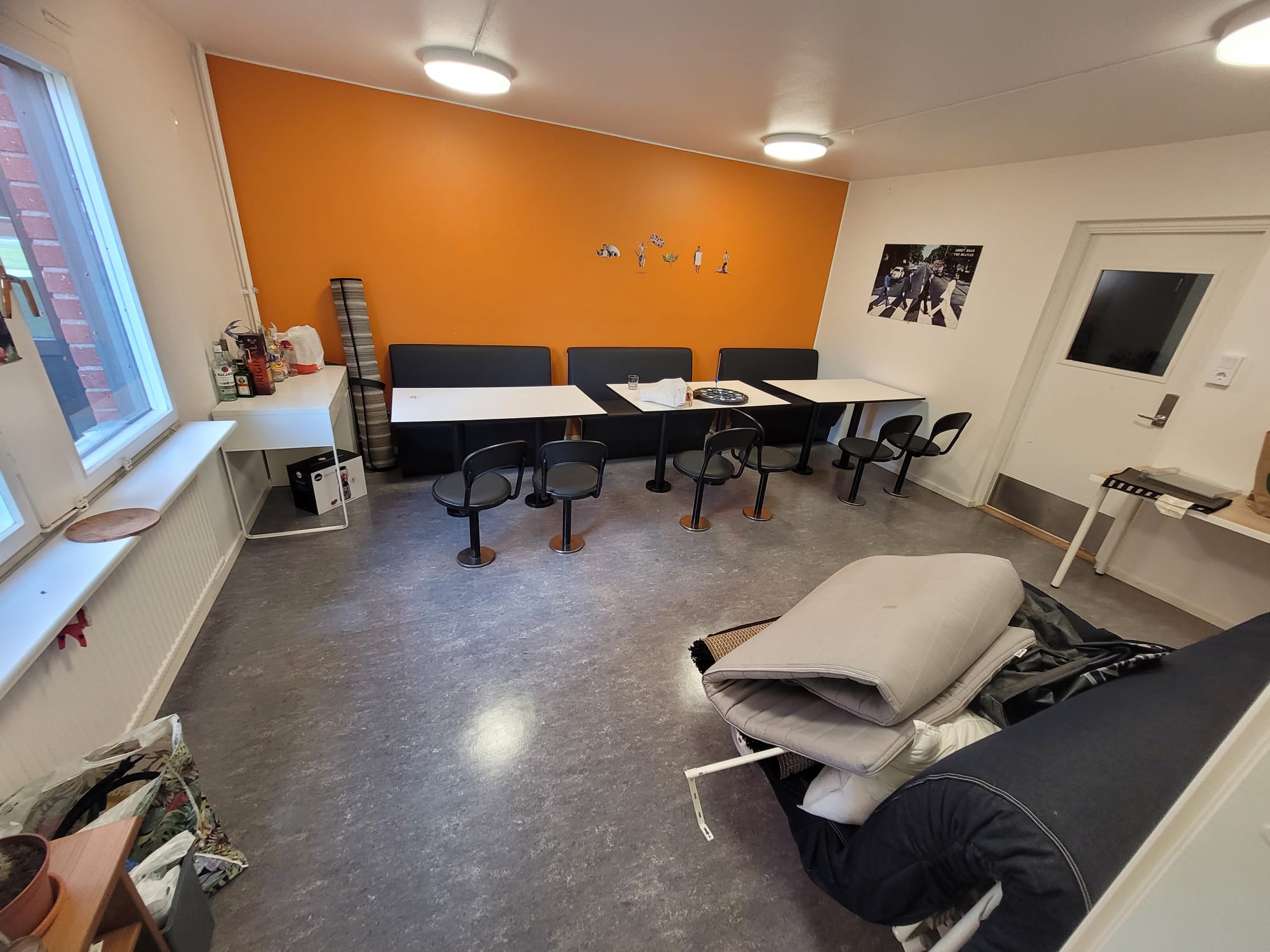

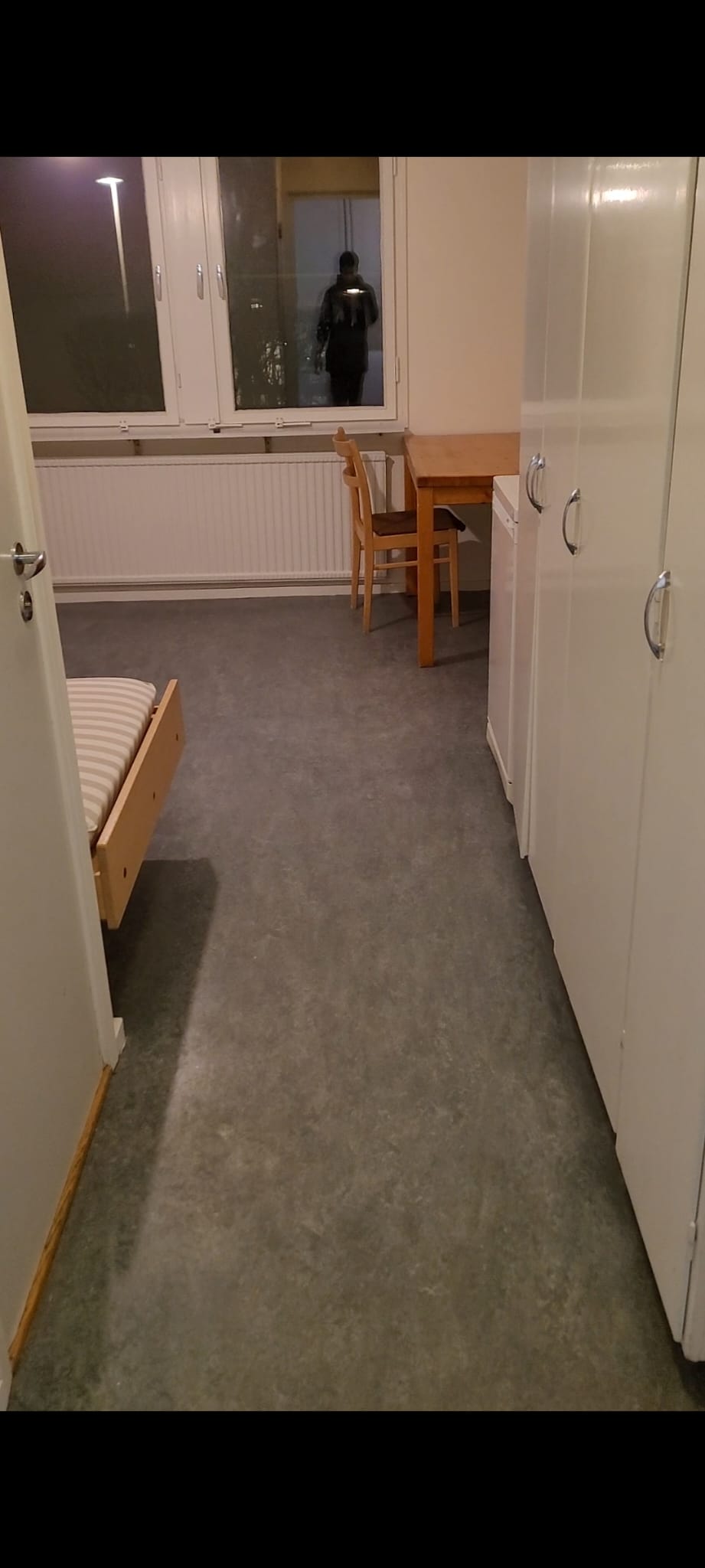
Scholarship
I didn?t had to pay tuition fees because I got scholarship from the Swedish government. So, everything was covered. I also got monthly installments from them of 10,000 Kronas. That was really good. It was really sufficient for my life as a student here.
Overview
The aspect of studying in 2 different technical uni in Europe was exciting and also we get a minor in Entrepreneurship which I always wanted to learn to start my own venture someday
Scholarship
Yes. EIT Merit Scholarship
Overview
Ranking and Reputation of the University, Sweden being the Innovation and Sustainability center, great career opportunities, my Masters program is aligned to my career goals and something I'm passionate about
Scholarship
No Scholarship
Overview
The overall curriculum was interesting especially for my course in Vehicle Engineering, there were option to choose your own subjects during your master studies to widen your knowledge base, at the same time the formula student team was quiet interesting to work with to gain practical experience.
Scholarship
No

interested in this College ?
Follow & Share this college to get information about admission.



Comments