




Polymers is an important topic in the Chemistry section in MHT CET exam. Practising this topic will increase your score overall and make your conceptual grip on MHT CET exam stronger.
This article gives you a full set of MHT CET PYQs for Polymers with explanations for effective preparation. Practice of MHT CET Chemistry PYQs including Polymers questions regularly will improve accuracy, speed, and confidence in the MHT CET 2026 exam.
Also Read

MHT CET PYQs for Polymers with Solutions
1.
In nitroprusside ion, the iron and NO exist as Fe(II) and rather than Fe(III) and NO. These forms can be distinguished by:- (A) estimating the concentration of iron
- (B) measuring the concentration of -
- (C) measuring the solid-state magnetic moment
- (D) thermally decomposing the compound
2.
The monomers used in preparation of dextron are- lactic acid and glycollic acid
- $3$-Hydroxybutanoic acid and $3$-Hydroxypenlanoic acid
- styrene and $1,3$-Butadiene
- hexamethylenediamine and adipic acid
3.
Solid is gradually dissolved in a solution. At which concentration of , precipitate of begins to form? for- (A)
- (B)
- (C)
- (D)
4.
Which from following polymers is obtained using
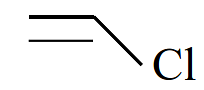
- Buna-S
- Polyacrylonitrile
- PVC
- Glyptal
5.
A hydrocarbon has molecular formula C2H6. Which of the class of hydrocarbons cannot have this formula?- (A) Cycloalkene
- (B) Bicycloalkane
- (C) A diene
- (D) None of these
6.
Identify the use of Buna-S from following.
- To obtain tyres
- To obtain unbreakable dinner ware
- To obtain gaskets
- To obtain water pipes



Comments