Download the NEET PG 2019 question paper with solutions as a free PDF, the postgraduate medical entrance test the National Board of Examinations (NBE) conducted on January 6, 2019. It was a single computer-based paper of 300 single-best-answer MCQs to be attempted in 3 hours 30 minutes, and this page pairs every one of the 293 questions on Collegedunia with a worked solution and the answer key.
NEET PG 2019 Questions with Solutions
Question 1:
Syndrome associated with posterior inferior cerebellar artery thrombosis:
- (A) Wallenberg syndrome
- (B) Medial medullary syndrome
- (C) Inferior alternating syndrome
- (D) Dejerine syndrome
Question 2:
Space of Disse is in:
- (A) Spleen
- (B) Lymph node
- (C) Liver
- (D) Bone
Question 3:
What are Gitter cells:
- (A) Macroglia
- (B) Modified macrophages in CNS
- (C) Astrocytes
- (D) Oligodendrocytes
Question 4:
Cholecystocaval line separates:
- (A) Right & Left liver lobe
- (B) Liver with Gall Bladder
- (C) Right Lobe of Liver with Gall Bladder
- (D) Left Lobe of Liver with Gall Bladder
Question 5:
Which of the following exocrine glandular ducts are not obstructed in cystic fibrosis:
- (A) Pancreas
- (B) Lung
- (C) Sweat gland
- (D) All of above
Question 6:
Boot shape of heart in TOF is due to:
- (A) Left atrial enlargement
- (B) Right atrial enlargement
- (C) Right ventricular hypertrophy
- (D) Biventricular hypertrophy
Question 7:
Which of the following structure is not derived from external oblique muscle:
- (A) Inguinal ligament
- (B) Lacunar ligament
- (C) Cooper ligament
- (D) Linea Semilunaris
Question 8:
Contralateral loss of pain and temperature sensation is due to injury to which tract?
- (A) Anterior spinothalamic tract
- (B) Lateral spinothalamic tract
- (C) Fasciculus gracilis
- (D) Fasciculus cuneatus
Question 9:
Ducts of Bellini are present in which organ?
- (A) Pancreas
- (B) Liver
- (C) Kidney
- (D) Salivary gland
Question 10:
Which structure is derived from the first pharyngeal arch?
- (A) Levator palatini
- (B) Buccinator
- (C) Stylohyoid
- (D) Anterior belly of digastric
Question 11:
Which joint is involved in movement of the head from left to right (turning side to side)?
- (A) Atlanto-axial
- (B) Atlanto-occipital
- (C) C2-C3 joint
- (D) C3-C4 joint
Question 12:
What is the nerve supply of the submandibular gland?
- (A) Auriculotemporal nerve
- (B) Lingual nerve
- (C) Glossopharyngeal nerve
- (D) Inferior alveolar nerve
Question 13:
During parathyroid surgery, the parathyroid gland is most commonly implanted (autotransplanted) into which muscle?
- (A) Sartorius
- (B) Supinator
- (C) Deltoid
- (D) Brachioradialis
Question 14:
The right coronary artery arises from which structure?
- (A) Right aortic sinus
- (B) Left aortic sinus
- (C) Posterior coronary sinus
- (D) Anterior coronary sinus
Question 15:
Bainbridge reflex causes?
- (A) Bradycardia
- (B) Increased cardiac output
- (C) Decreased venous return
- (D) Increased heart rate
Question 16:
Golgi tendon organ is responsible for sensing?
- (A) Tension
- (B) Length
- (C) Pressure
- (D) Proprioception
Question 17:
The hormone predominantly secreted after the 14th day acting on the endometrium is?
- (A) Progesterone
- (B) Estrogen
- (C) LH
- (D) FSH
Question 18:
Peripheral chemoreceptors respond to hypoxia using which channel?
- (A) Calcium channel
- (B) Sodium channel
- (C) Potassium channel
- (D) Chloride channel
Question 19:
With increase in age, which of the following is true for the lungs?
- (A) Pulmonary compliance increases
- (B) Residual volume decreases
- (C) Mucociliary clearance increases
- (D) Fibrosis of interstitium decreases
Question 20:
Functional residual capacity is the volume of air in the lungs measured?
- (A) After normal inspiration
- (B) After normal expiration
- (C) After forceful expiration
- (D) After forceful inspiration
Question 21:
Polyuria is defined as urine output greater than?
- (A) 70 ml/kg/day
- (B) 60 ml/kg/day
- (C) 50 ml/kg/day
- (D) 40 ml/kg/day
Question 22:
Tubuloglomerular feedback control is useful for the regulation of which one of the following?
- (A) GFR
- (B) Plasma sodium
- (C) Plasma volume
- (D) Determining tubular secretion
Question 23:
Calcitonin levels are increased in medullary thyroid carcinoma. This tumour is most commonly associated with which one of the following?
- (A) Hyperthyroidism
- (B) Hyperparathyroidism
- (C) Hypoparathyroidism
- (D) Cushing Syndrome
Question 24:
When the values of FEV1 = 1.3 and FVC = 3.9, which of the following does this signify?
- (A) Normal lung function
- (B) Obstructive lung disease
- (C) Restrictive lung disease
- (D) Both
Question 25:
Antegrade peristalsis (descending relaxation ahead of the bolus) is due to which one of the following neurotransmitters?
- (A) Acetylcholine
- (B) Serotonin
- (C) Substance P
- (D) VIP
Question 26:
C-peptide is seen in which one of the following?
- (A) In Pre-proinsulin
- (B) In Proinsulin
- (C) As a combined entity with insulin after secretion
- (D) A gastrointestinal proactive molecule
Question 27:
In forceful expiration, which one of the following groups of neurons gets fired?
- (A) VRG (Ventral respiratory group)
- (B) DRG (Dorsal respiratory group)
- (C) Pneumotaxic centre
- (D) Chemoreceptors
Question 28:
Slow conduction velocity is seen with which one of the following nerve fibers?
- (A) Preganglionic autonomic nerve fibers
- (B) Postganglionic autonomic nerve fibers
- (C) Motor nerves
- (D) Sympathetic nerve fibers
Question 29:
Testosterone is secreted by which of the following cells?
- (A) Leydig's cells
- (B) Somatotropic cells
- (C) Acidophilic cells
- (D) Gonadotropic cells
Question 30:
Vasopressin acts through which channels in the collecting duct?
- (A) Aquaporin 1
- (B) Aquaporin 2
- (C) GLUT-1
- (D) GLUT-4
Question 31:
Which of the following is true about decorticate rigidity?
- (A) Removal of cerebral cortex and basal ganglia
- (B) Flexion of lower limbs and extension of upper limbs
- (C) Rigidity is less pronounced than decerebrate rigidity
- (D) None of the above
Question 32:
Zellweger syndrome is due to the absence of which organelle?
- (A) Lysosome
- (B) Mitochondria
- (C) Peroxisome
- (D) Nucleus
Question 33:
Urea, creatinine, and nitric oxide are formed from which amino acid?
- (A) Histidine
- (B) Glycine
- (C) Cysteine
- (D) Arginine
Question 34:
Which of the following is NOT a source of cytosolic NADPH?
- (A) Isocitrate dehydrogenase
- (B) ATP citrate lyase
- (C) Malic enzyme
- (D) G6PD (glucose-6-phosphate dehydrogenase)
Question 35:
All of the following are true regarding mitochondrial DNA, EXCEPT?
- (A) Double stranded
- (B) Inherited from mother
- (C) High mutation rate
- (D) All respiratory proteins are synthesized within the mitochondria itself
Question 36:
Which apolipoprotein is responsible for Alzheimer's disease?
- (A) APOE4
- (B) APOE3
- (C) APOE2
- (D) APOE1
Question 37:
Hyperammonaemia inhibits the TCA cycle by depleting which intermediate?
- (A) Succinate
- (B) Alpha ketoglutarate
- (C) Malate
- (D) Fumarate
Question 38:
Which amino acid is used to synthesise nitric oxide?
- (A) Glycine
- (B) Arginine
- (C) Tyrosine
- (D) Threonine
Question 39:
Menkes disease is associated with deficiency of which enzyme?
- (A) Lysyl oxidase
- (B) Methionine synthase
- (C) Glutamyl aminopeptidase
- (D) Lysyl hydroxylase
Question 40:
LCAT deficiency increases which of the following?
- (A) HDL
- (B) LDL
- (C) VLDL
- (D) Chylomicron
Question 41:
A 25 year old alcoholic presented with edema, hypertension, ocular disturbance, and changes in mental state. A diagnosis of high output cardiac failure with Wet Beri Beri was made. This is due to deficiency of which vitamin?
- (A) Vitamin B3
- (B) Vitamin B6
- (C) Vitamin B9
- (D) Vitamin B1
Question 42:
Glutamine is increased in CSF, blood, and urine. This is due to deficiency of which enzyme?
- (A) CPS-I
- (B) Arginase
- (C) OTC
- (D) Argininosuccinate synthetase
Question 43:
Which of the following is true about type 1 diabetes mellitus?
- (A) Decreased protein catabolism
- (B) Decreased hepatic glucose output
- (C) Increased lipolysis
- (D) Increased glucose uptake
Question 44:
Which protein is NOT synthesised in the liver?
- (A) Phase protein
- (B) Immunoglobulins
- (C) Albumin
- (D) Plasma hormone
Question 45:
Which type of cholesterol is present in gallstones?
- (A) Amorphous cholesterol monohydrate
- (B) Amorphous cholesterol dihydrate
- (C) Crystalline cholesterol dihydrate
- (D) Crystalline cholesterol monohydrate
Question 46:
Which type of collagen is present in skin?
- (A) Type II
- (B) Type I
- (C) Type III
- (D) Type IV
Question 47:
Which of the following is NOT a ribozyme?
- (A) Poly A polymerase
- (B) Ribonuclease
- (C) Transpeptidase
- (D) Peptidyl transferase
Question 48:
Type I hyperlipoproteinemia is characterized by which of the following?
- (A) Elevated LDL
- (B) Elevated HDL
- (C) Elevated chylomicrons
- (D) Elevated lipoprotein lipase
Question 49:
In the Krebs cycle and the urea cycle, the linking amino acid is which of the following?
- (A) Fumarate
- (B) Alanine
- (C) Arginine
- (D) Aspartate
Question 50:
Vitamin A is stored in which of the following cells?
- (A) Cells of Ito
- (B) Hepatocyte
- (C) Endothelial cell
- (D) Kupffer cell
Question 51:
Glanzmann thrombasthenia is due to which of the following?
- (A) Decreased GpIb
- (B) Decreased GpIIb/IIIa
- (C) Anti-GpIIb/IIIa antibodies
- (D) Inhibition or deficiency of ADAMTS 13
Question 52:
Which of the following is an apoptotic gene?
- (A) Bax
- (B) Bcl2
- (C) Bclx
- (D) Mcl
Question 53:
Alpha-1 antitrypsin works by which of the following mechanisms?
- (A) Inhibition of trypsin
- (B) Inhibition of trypsinogen
- (C) Inhibition of elastase
- (D) Inhibition of chymotrypsin
Question 54:
Which one of the following is an autosomal recessive disorder?
- (A) Albinism
- (B) Huntington's syndrome
- (C) Marfan's syndrome
- (D) Neurofibromatosis-1
Question 55:
Fish-mouth appearance of the valve in rheumatic heart disease is due to which of the following?
- (A) Rupture of valve
- (B) Calcification and fibrosis
- (C) Hypertrophy of ventricular wall
- (D) None of the above
Question 56:
Follicular lymphoma shows positivity for which of the following?
- (A) Bcl-1
- (B) Bcl-6
- (C) Bcl-2
- (D) None of the above
Question 57:
What is the histological difference between Ulcerative colitis and Crohn's disease?
- (A) Diffuse distribution of pseudopolyps
- (B) Mucosal edema
- (C) Crypt abscess
- (D) Lymphoid aggregates in the mucosa
Question 58:
What is the cause of intracorpuscular defects in hemolysis?
- (A) Uremic syndrome
- (B) PCH
- (C) PNH
- (D) Portal hypertension
Question 59:
Type of necrosis seen in blood vessels due to immune reactions-
- (A) Coagulation
- (B) Liquefaction
- (C) Fibrinoid
- (D) None
Question 60:
In a patient with lipoprotein lipase deficiency, which of the following is increased following a fatty meal?
- (A) Chylomicron
- (B) LDL
- (C) HDL
- (D) Apo-A
Question 61:
In Wilson's disease, there is less urinary excretion of-
- (A) Phosphorus
- (B) Methyl-Histidine
- (C) Phosphotyrosine
- (D) Serine
Question 62:
What is the function of IL-1?
- (A) Enhances hematopoiesis
- (B) Stimulates mast cells
- (C) Has antiviral properties
- (D) Endogenous pyrogen
Question 63:
CEAP score indicates-
- (A) Atrial disorders
- (B) Venous disorder
- (C) Neurological disorder
- (D) Trauma disorder
Question 64:
IL-1 is activated by which of the following?
- (A) Caspase 1
- (B) Caspase 3
- (C) Caspase 8
- (D) Caspase 5
Question 65:
A parotid mass with mixed consistency is most likely which of the following?
- (A) Pleomorphic adenoma
- (B) Sebaceous cyst
- (C) Dermoid cyst
- (D) All
Question 66:
Krabbe's disease is caused by which enzyme deficiency?
- (A) Deficiency of beta-galactosylceramidase
- (B) Deficiency of aryl sulphatase
- (C) Alpha galactosidase
- (D) Acid lipase
Question 67:
What is the choice of treatment for idiopathic thrombocytopenic purpura (ITP)?
- (A) Blood transfusion
- (B) Spontaneous recovery
- (C) IV infusion
- (D) Splenectomy
Question 68:
Which fluoroquinolone has the maximum oral bioavailability?
- (A) Moxifloxacin
- (B) Gatifloxacin
- (C) Levofloxacin
- (D) Ciprofloxacin
Question 69:
What is the mechanism of action of buspirone?
- (A) 5-HT1A partial agonism
- (B) 5-HT1B antagonism
- (C) 5-HT1B partial agonism
- (D) 5-HT2C antagonism
Question 70:
Which statement best describes the mechanism of action of azole antifungals?
- (A) Inhibition of synthesis of ergosterol
- (B) Inhibition of thymidylate synthase
- (C) Targeting beta-1,3-glucan
- (D) Disruption of cell wall
Question 71:
Which of the following is an orally active direct factor Xa inhibitor?
- (A) Rivaroxaban
- (B) Argatroban
- (C) Dabigatran
- (D) Bivalirudin
Question 72:
Which among the following is the most probable reason for preference of cisatracurium over atracurium?
- (A) Decreased histamine release
- (B) Increased histamine release
- (C) Due to elimination by Hofmann elimination
- (D) Increased CNS toxicity
Question 73:
Which of the following drugs is used in SIADH (syndrome of inappropriate ADH secretion)?
- (A) Tolvaptan
- (B) Desmopressin
- (C) von Willebrand factor
- (D) Terlipressin
Question 74:
A drug acting on potassium (K+) channels includes which of the following?
- (A) Spironolactone
- (B) Amiloride
- (C) Nicorandil
- (D) Methyldopa
Question 75:
Imipenem, a newer antibiotic with a broad antibacterial spectrum, is co-administered with cilastatin. Which of the following is the best reason for the same?
- (A) Combination of antibiotics is synergistic against Pseudomonas species
- (B) Cilastatin aids gastrointestinal absorption of the active moiety, imipenem
- (C) Cilastatin inhibits the beta-lactamase enzyme destroying imipenem
- (D) Cilastatin inhibits an enzyme in the kidney destroying imipenem
Question 76:
Which of the following is the drug of choice for smoking cessation?
- (A) Acamprosate
- (B) Varenicline
- (C) Thalidomide
- (D) Tryptophan
Question 77:
Which of the following is the drug of choice for cyclosporiasis?
- (A) Trimethoprim-sulfamethoxazole combination
- (B) Paromomycin
- (C) Metronidazole
- (D) Cyclosporine
Question 78:
What is the mechanism of action of curare like drugs?
- (A) Blocks ACh synthesis
- (B) Blocks ACh receptors
- (C) Persistent depolarization
- (D) Agonistic with ACh receptors
Question 79:
A drug with high plasma protein binding property has which of the following properties?
- (A) Less GFR
- (B) Less drug interaction
- (C) Higher volume of distribution
- (D) Less tubular secretion
Question 80:
What is the mechanism of action of Oseltamivir?
- (A) Protein synthesis inhibitor
- (B) Thymidylate synthetase inhibitor
- (C) Neuraminidase inhibitor
- (D) Pyrimidine analog
Question 81:
Which of the following is/are true about colchicine?
- (A) Acts by neutrophil recruitment
- (B) Causes metaphase arrest
- (C) Useful in urate-lowering therapy
- (D) All of the above
Question 82:
Which of the following drugs is an alpha 2 agonist?
- (A) Apraclonidine
- (B) Timolol
- (C) PG analogues
- (D) Verapamil
Question 83:
Which drug is used to differentiate myasthenia gravis from cholinergic crisis?
- (A) Pyridostigmine
- (B) Edrophonium
- (C) Methacholine
- (D) Clonidine
Question 84:
Conversion of norepinephrine to epinephrine is mainly by which of the following?
- (A) S-adenosyl methionine
- (B) Arginine
- (C) Phenylalanine
- (D) Dehydrogenase
Question 85:
Carbapenem which has the tendency to cause maximum seizures is?
- (A) Imipenem
- (B) Ertapenem
- (C) Doripenem
- (D) Meropenem
Question 86:
Drug of choice for the diphtheria carrier state is?
- (A) Penicillin
- (B) Antitoxin
- (C) Penicillin or erythromycin
- (D) Ciprofloxacin
Question 87:
Healthy human volunteers are part of which clinical trial phase?
- (A) Phase 1
- (B) Phase 0
- (C) Phase 3
- (D) Phase 4
Question 88:
Drug of choice for a scorpion sting bite is?
- (A) EDTA
- (B) Neostigmine
- (C) N-acetylcysteine
- (D) Prazosin
Question 89:
What is the mechanism of action of teduglutide in short bowel syndrome?
- (A) GLP-2 analog
- (B) HT1a inhibitor
- (C) GLP-1 analog
- (D) C-peptide analog
Question 90:
Drug of choice for chemotherapy-induced vomiting is?
- (A) Granisetron
- (B) Prazosin
- (C) Clonidine
- (D) Dimenhydrinate
Question 91:
What is the advantage of a fixed dose combination of drugs?
- (A) Increases efficacy of drug
- (B) Decreases adverse effects
- (C) Patient compliance improved
- (D) All of the above
Question 92:
What is the drug of choice for digitalis-induced ventricular tachycardia?
- (A) Lidocaine
- (B) Reducing dosage of digoxin itself reverses the condition
- (C) Verapamil
- (D) Beta blockers
Question 93:
Antiretroviral therapy is to be given in HIV-infected patients irrespective of the presence of symptoms if the CD4 count is less than (cells/mm3)?
- (A) 100
- (B) 150
- (C) 200
- (D) 350
Question 94:
Filgrastim is used in the treatment of:
- (A) Anemia
- (B) Neutropenia
- (C) Malaria
- (D) Filarial
Question 95:
Which of the following is true about the treatment of early breast carcinoma?
- (A) Aromatase inhibitors are replacing tamoxifen in premenopausal women
- (B) Post-mastectomy radiation therapy is given when 4 or more lymph nodes are positive
- (C) Tamoxifen is not useful in post-menopausal women
- (D) In premenopausal women, multidrug chemotherapy is given in selected patients
Question 96:
A patient with rheumatoid arthritis has been taking methotrexate, steroids, and NSAIDs for 4 months, but the activity of disease progression is the same. What should be the next probable step?
- (A) Start monotherapy with anti-TNF alpha drugs
- (B) Continue methotrexate and steroids
- (C) Stop oral methotrexate and start parenteral methotrexate
- (D) Add sulfasalazine
Question 97:
IV mannitol is used for the treatment of:
- (A) Acute congestive glaucoma
- (B) Pulmonary edema
- (C) Acute renal failure
- (D) CHF
Question 98:
Variation in sensitivity of response to different doses of a drug in different individuals is obtained from?
- (A) Dose response curve
- (B) Therapeutic index
- (C) Bioavailability
- (D) Phase 1 clinical trials
Question 99:
Which one of the following is a function of PGI2 (prostacyclin)?
- (A) Inhibits platelet aggregation
- (B) Is a vasodilator
- (C) Is pyrogenic like PGE2
- (D) All of the above
Question 100:
A degloving injury of the skin involves removal of which layers?
- (A) Skin, subcutaneous fat, fascia, muscle
- (B) Skin, subcutaneous fat, fascia
- (C) Skin only
- (D) Skin, subcutaneous fat
Question 101:
Sexual perversion in the form of exhibitionism is punishable under which section of the IPC?
- (A) Section 290
- (B) Section 294
- (C) Section 230
- (D) Section 291
Question 102:
Which structure is affected first in rigor mortis?
- (A) Eyelids
- (B) Myocardium
- (C) Jaw
- (D) Neck
Question 103:
Punishment for perjury (giving false evidence under oath) is provided under which section of the IPC?
- (A) Section 193
- (B) Section 191
- (C) Section 197
- (D) Section 190
Question 104:
Gastric lavage is NOT contraindicated after ingestion of which acid?
- (A) HCl
- (B) H2SO4
- (C) Carbolic acid
- (D) Nitric acid
Question 105:
For toxicological analysis, viscera is stored or preserved in which medium?
- (A) Glycerine
- (B) Rectified spirit
- (C) Formalin
- (D) Saturated salt solution
Question 106:
Two identical (monozygotic) twins will NOT have the same:
- (A) Fingerprints
- (B) DNA copies
- (C) Iris color
- (D) Blood group
Question 107:
In an alleged history of gunshot injury there is burning, blackening, and tattooing around the wound with a dirt collar. The injury is a:
- (A) Close shot entry wound
- (B) Close shot exit wound
- (C) Distant shot entry wound
- (D) Distant shot exit wound
Question 108:
A child has Battered baby syndrome. How will you identify it?
- (A) Stab wound
- (B) Gunshot wound
- (C) Bruise of different ages
- (D) None of these
Question 109:
A patient has gastrointestinal problems including abdominal pain and distension, bloody or mucus-filled diarrhea, and tenesmus with rectal prolapse. A stool ova and parasite exam reveals typical barrel-shaped eggs. The possible causative agent is:
- (A) Campylobacter
- (B) Clostridium difficile
- (C) Giardia lamblia
- (D) Trichuris
Question 110:
Contact isolation is done for:
- (A) MRSA
- (B) Mumps
- (C) Diphtheria
- (D) Asthma
Question 111:
A child suffering from recurrent chronic infections with encapsulated bacteria has a deficiency of which IgG subclass?
- (A) IgG1
- (B) IgG2
- (C) IgG3
- (D) IgG4
Question 112:
The drug of choice (DOC) for Isospora (Cystoisospora) infection is:
- (A) Penicillin G
- (B) Benzathine penicillin
- (C) Co-trimoxazole
- (D) Albendazole
Question 113:
Coxsackievirus A16 causes
- (A) Yellow fever
- (B) Hand-foot-mouth disease
- (C) Rocky mountain spotted fever
- (D) Encephalomyocarditis
Question 114:
Pneumocystis jiroveci is:
- (A) Associated with CMV
- (B) Diagnosis is by sputum microscopy
- (C) Seen only in immunocompromised patients
- (D) Always associated with pneumatocele
Question 115:
All are true about congenital Toxoplasmosis EXCEPT
- (A) Chorioretinitis
- (B) Conjunctivitis
- (C) Hydrocephalus
- (D) Cerebral calcification
Question 116:
True about the TRIAD of congenital rubella syndrome
- (A) PDA, cataract and deafness is seen
- (B) Hepatosplenomegaly, mental retardation, deafness
- (C) Chorioretinitis, multiorgan failure, pneumonitis
- (D) None of these
Question 117:
Disc diffusion method is also known as
- (A) Kirby Bauer
- (B) VDRL
- (C) Dark field microscopy
- (D) None of these
Question 118:
Rubella virus belongs to which family?
- (A) Reovirus
- (B) Togavirus
- (C) Picornavirus
- (D) Orthomyxo
Question 119:
Which of the following infections resembles erythroblastosis?
- (A) EBV
- (B) CMV
- (C) HSV
- (D) Staphylococcus
Question 120:
Which of the following is the diagnostic test for neurosyphilis?
- (A) VDRL
- (B) RPR
- (C) TPI
- (D) FTA-ABS
Question 121:
Flask-shaped ulcers in the intestine are caused by which of the following?
- (A) Giardia lamblia
- (B) Entamoeba histolytica
- (C) Helicobacter pylori (H. pylori)
- (D) E. vermicularis
Question 122:
What type of culture media is used for Legionella?
- (A) (BCYE) agar media
- (B) MacConkey agar
- (C) Baird-Parker agar
- (D) Sabouraud's agar
Question 123:
Which is the special stain used for Cryptococcus?
- (A) ZN stain
- (B) Gram stain
- (C) Mucicarmine stain
- (D) Malachite green
Question 124:
A 36-year-old male presents with cough, cold, fever and rusty sputum. Sputum is negative for tuberculosis. He has a history of travel to China and eating crab. Name the infection.
- (A) Paragonimus westermani
- (B) Fasciola hepatica
- (C) Fasciolopsis buski
- (D) Entamoeba histolytica
Question 125:
Which is the microbiological test for diagnosing Leptospira infection?
- (A) Cold agglutination
- (B) Standard agglutination
- (C) Microscopic agglutination test (MAT)
- (D) None of these
Question 126:
Green colour of triage is for which type of patient?
- (A) Low priority
- (B) Morbidity
- (C) Ambulatory
- (D) High priority
Question 127:
The Concurrent List of the Indian Constitution includes which of the following?
- (A) International immigration rule for quarantine
- (B) Prevention of extension of communicable disease from one unit to another
- (C) Mines and oilfield workers rules
- (D) Establishment and maintenance of drug standards
Question 128:
The last point up to which the Reproductive and Child Health (RCH) programme is included is:
- (A) Sub-centre
- (B) Anganwadi
- (C) District
- (D) Taluka
Question 129:
The health centre in the remotest area, used as the first contact point for planning and management of schemes, is the:
- (A) Anganwadi
- (B) Block centre
- (C) Sub-centre
- (D) PHC
Question 130:
The diagnostic power of a test to correctly diagnose a disease (the proportion of positive test results that truly have the disease) is:
- (A) Negative predictive value
- (B) Positive predictive value
- (C) Sensitivity
- (D) Specificity
Question 131:
Paradoxical carriers are best defined as:
- (A) A person who acquires the microorganism due to his contact with the patient.
- (B) A person who acquires the microorganism from another carrier.
- (C) A person who is clinically recovered from an infectious disease but still capable of transmitting the infectious agent to others.
- (D) None
Question 132:
According to IMNCI, for a baby of 6 months of age, the criterion for fast breathing is a respiratory rate of more than how many breaths per minute?
- (A) 60
- (B) 50
- (C) 40
- (D) 30
Question 133:
All of the following are examples of dietary fibre except:
- (A) Pectin
- (B) Lignin
- (C) Cellulose
- (D) Gums
Question 134:
Cross product ratio is determined by which type of study?
- (A) Case control
- (B) Cohort
- (C) Cross sectional
- (D) Randomised controlled trial (RCT)
Question 135:
In a normal curve, what is the area that comes under 1 standard deviation (mean +/- 1 SD)?
- (A) 50%
- (B) 68%
- (C) 95%
- (D) 100%
Question 136:
A 2 year old boy weighing 12 kg has vitamin A deficiency. What is the recommended oral dose of vitamin A?
- (A) 50,000 I.U.
- (B) 1 lakh I.U.
- (C) 1.5 lakh I.U.
- (D) 2 lakh I.U.
Question 137:
Which of the following is NOT a personal protective equipment (PPE)?
- (A) Goggles
- (B) Badges for detecting radiation
- (C) Gloves
- (D) Lab coat
Question 138:
A confounding factor is best defined as which of the following?
- (A) Factor associated with both the exposure and the disease and is distributed unequally in study and control groups.
- (B) Factor associated with exposure only and is distributed unequally in study and control groups.
- (C) Factor associated with both the exposure and the disease and is distributed equally in study and control groups.
- (D) Factor associated with the disease and is distributed equally in study and control groups.
Question 139:
The significance of the difference between proportions can also be tested by which of the following?
- (A) 't' test
- (B) Chi square test
- (C) ANOVA
- (D) Correlation and regression
Question 140:
The paired t-test is best defined as which of the following?
- (A) Test used to assess quantitative observations before and after an intervention
- (B) Test that is used when the observations are in the form of proportions (for qualitative data)
- (C) Test applied when separate observations are made on individuals of two separate groups, and these need to be compared
- (D) None
Question 141:
Which diagram is the best representation of the incidence of a disease across different points on a timeline?
- (A) Histogram
- (B) Line diagram
- (C) Scattered diagram
- (D) Bar diagram
Question 142:
For the trench type of sanitary fill, the amount of land required for a 2 metre deep trench for a population of 10,000 is:
- (A) 1 acre
- (B) 2 acre
- (C) 3 acre
- (D) 4 acre
Question 143:
What is the approximate risk of genetic diseases in a consanguineous marriage between first cousins?
- (A) 1-2%
- (B) 4-8%
- (C) 8-10%
- (D) 12-14%
Question 144:
Which of the following is NOT an epidemiological indicator?
- (A) ABER
- (B) Annual parasite index
- (C) Annual falciparum incidence
- (D) None of the Above
Question 145:
The dose of diphtheria antitoxin (DAT) is:
- (A) 1000 to 5000 IU
- (B) 10000 to 100000 IU
- (C) 1000 to 2000 IU
- (D) None
Question 146:
Vertical transmission of HIV from mother to child is highest with which of the following?
- (A) Elective caesarean section
- (B) High viral RNA load
- (C) Breast feeding
- (D) Term delivery
Question 147:
The most common site of a branchial cyst is:
- (A) Posterior border of sternocleidomastoid
- (B) Anterior border of sternocleidomastoid
- (C) Digastric muscle
- (D) Omohyoid muscle
Question 148:
Inspiratory stridor is found in what kind of lesions?
- (A) Supraglottic
- (B) Subglottic
- (C) Tracheal
- (D) Bronchus
Question 149:
In Retinitis pigmentosa there is a decreased level of which of the following?
- (A) Arachidonic acid
- (B) Trielonic acid
- (C) Thromboxane
- (D) Docosahexaenoic acid
Question 150:
What is the against-the-rule correction in astigmatism?
- (A) -1.25 cyl 90
- (B) -2 spherical 180
- (C) -3 cyl 180
- (D) +2 cyl 180
Question 151:
Morbid fear of darkness is known as?
- (A) Claustrophobia
- (B) Xenophobia
- (C) Mysophobia
- (D) Nyctophobia
Question 152:
A child has ptosis and poor levator function. What surgery will you do?
- (A) Levator muscle resection
- (B) Mullerectomy
- (C) Fasanella Servat surgery
- (D) Frontalis suspension surgery
Question 153:
Which drug causes ocular hypotension with apnea in an infant?
- (A) Latanoprost
- (B) Timolol
- (C) Brimonidine
- (D) Dorzolamide
Question 154:
Which combination of chemotherapy agents is used for retinoblastoma?
- (A) Vincristine, carboplatin and etoposide
- (B) Vinblastine, etoposide and bleomycin
- (C) Vinblastine, vincristine and etoposide
- (D) Vinblastine, vincristine and cisplatin
Question 155:
Drug used in acute congestive glaucoma are:
- (A) Atropine
- (B) Pilocarpine
- (C) Acetazolamide
- (D) Both B & C
Question 156:
Which is the most common ocular finding in myasthenia gravis?
- (A) Ptosis
- (B) Lagophthalmos
- (C) Proptosis
- (D) Enophthalmos
Question 157:
Esotropia is usually associated with:
- (A) Myopia
- (B) Hypermetropia
- (C) Astigmatism
- (D) Presbyopia
Question 158:
Which wall of heart enlargement can be seen on barium swallow in patient with mitral stenosis?
- (A) Left atrium
- (B) Right atrium
- (C) Left ventricle
- (D) Right ventricle
Question 159:
Which of the following statements is true about the bundle of Kent?
- (A) Abnormal pathway between two atria
- (B) It is muscular or nodal pathway between the atria and ventricle in WPW syndrome
- (C) It is slower than the AV nodal pathway
- (D) None
Question 160:
Deep venous thrombosis - which is incorrect?
- (A) Clinical assessment highly reliable
- (B) Mostly bilateral
- (C) Most common clinically presents as pain and tenderness in calf
- (D) Some cases may directly present as pulmonary thromboembolism
Question 161:
Punched out ulcer in esophagus is seen in:
- (A) Herpes
- (B) CMV
- (C) Oesophagitis
- (D) Candida
Question 162:
In Brown-Sequard syndrome, which type of sensation is lost on the same (ipsilateral) side as the cord lesion?
- (A) Pain
- (B) Touch
- (C) Proprioception
- (D) Temperature
Question 163:
Achondroplasia shows which type of inheritance?
- (A) X-linked recessive
- (B) X-linked dominant
- (C) Autosomal recessive
- (D) Autosomal dominant
Question 164:
Which of the following is included in the MELD (Model for End-stage Liver Disease) score?
- (A) Serum creatinine
- (B) Transaminase
- (C) Albumin
- (D) Alkaline phosphatase
Question 165:
Infarcts involving which portion of the myocardium most commonly cause a ventricular aneurysm as a post-MI complication?
- (A) Subendocardial
- (B) Anterior transmural
- (C) Posterior transmural
- (D) Inferior wall
Question 166:
Which of the following is a recognised risk factor for Alzheimer's disease?
- (A) Klinefelter syndrome
- (B) Low BP
- (C) Down's syndrome
- (D) None
Question 167:
A 26-year-old female presents with oral ulcers, photosensitivity and a malar (butterfly) rash on the face that spares the nasolabial folds on both sides. What is the most likely diagnosis?
- (A) Sturge-Weber syndrome
- (B) SLE
- (C) Dermatitis
- (D) Psoriasis
Question 168:
What is the most characteristic cardiovascular defect seen in congenital rubella syndrome?
- (A) Pulmonary artery stenosis
- (B) Coarctation of aorta
- (C) Ankylosing spondylitis
- (D) Rheumatic fever
Question 169:
Osborn J waves are seen in-
- (A) Hypothermia
- (B) Hyperkalemia
- (C) Hypocalcemia
- (D) Hypokalemia
Question 170:
Alcoholic shows which type of cardiomyopathy-
- (A) Hypertrophic cardiomyopathy
- (B) Dilated cardiomyopathy
- (C) Pericarditis
- (D) Myocarditis
Question 171:
Which is not related to HIV?
- (A) Primary CNS lymphoma
- (B) Tertiary syphilis
- (C) Oesophageal candidiasis
- (D) None
Question 172:
Essential major blood culture criteria for infective endocarditis.
- (A) Single positive culture of HACEK
- (B) Single positive culture of Coxiella
- (C) Single positive culture of Corynebacterium
- (D) Both a & b
Question 173:
Respiratory centres are stimulated by-
- (A) Oxygen
- (B) Lactic acid
- (C) Carbon dioxide
- (D) Calcium
Question 174:
Which murmur increases on standing?
- (A) HOCM
- (B) MR
- (C) MS
- (D) VSD
Question 175:
Most common indication for liver transplant in children-
- (A) Biliary atresia
- (B) Cirrhosis
- (C) Hepatitis
- (D) Drug reactions
Question 176:
Most common type of gallstone is-
- (A) Mixed stones
- (B) Pure cholesterol stones
- (C) Pigment stones
- (D) Calcium bilirubinate
Question 177:
Serpiginous ulcer in the distal esophagus is classically caused by-
- (A) CMV
- (B) Herpes
- (C) Pill
- (D) Corrosive
Question 178:
Omphalocele is caused by?
- (A) Duplications of intestinal loops
- (B) Abnormal rotation of the intestinal loop
- (C) Failure of gut to return to the body cavity from its physiological herniation
- (D) Reversed rotation of the intestinal loop
Question 179:
Dohlman procedure is performed for-
- (A) Meckel's diverticulum
- (B) Zenker's diverticulum
- (C) Dermatomyositis
- (D) Menetrier's disease
Question 180:
If a mother is donating a kidney to her son, it is an example of-
- (A) Isograft
- (B) Allograft
- (C) Autograft
- (D) Xenograft
Question 181:
Uvula vesicae is produced by which prostate lobe?
- (A) Anterior lobe
- (B) Posterior lobe
- (C) Median lobe
- (D) Lateral lobe
Question 182:
True about Barrett's esophagus are all of the following except:
- (A) Causes adenocarcinoma
- (B) Patient is usually asymptomatic
- (C) Histology of the lesion shows mucus secreting goblet cells
- (D) Chronic gastroesophageal reflux is a predisposing factor
Question 183:
Parathyroid autoimplantation takes place in which of the muscle?
- (A) Biceps
- (B) Triceps
- (C) Brachioradialis
- (D) Sartorius
Question 184:
Bell's palsy is associated with the lesion in which of the nerve?
- (A) 11th cranial nerve
- (B) 7th cranial nerve
- (C) 9th cranial nerve
- (D) 3rd cranial nerve
Question 185:
Cushing ulcer is seen in case of-
- (A) Burns
- (B) Head injury
- (C) Cell necrosis
- (D) Stress
Question 186:
Gasless abdomen seen in-
- (A) Ulcerative colitis
- (B) Acute pancreatitis
- (C) Intussusception
- (D) Necrotising enterocolitis
Question 187:
Bidextrous grip is seen at what age?
- (A) 4 months
- (B) 5 months
- (C) 6 months
- (D) 7 months
Question 188:
Which vaccine to be given every year?
- (A) Hepatitis A
- (B) Hepatitis B
- (C) Influenza
- (D) Chicken pox
Question 189:
APGAR score 3 at 1 minute indicates:
- (A) Mildly depressed
- (B) Further resuscitation not needed
- (C) Severely depressed
- (D) Normal
Question 190:
Severe acute malnutrition as per WHO criteria is defined as:
- (A) Weight for age less than median plus -2 SD
- (B) Weight for height less than median plus 2 SD
- (C) Weight for age less than median plus 3 SD
- (D) Weight for height less than median minus -3 SD
Question 191:
Where do you look for pre-ductal oxygen saturation in a patent ductus arteriosus (PDA) in a 3-minute-old born infant?
- (A) Fetal left upper limb
- (B) Fetal left lower limb
- (C) Fetal right upper limb
- (D) Fetal right lower limb
Question 192:
Which of the following is true about Fragile X syndrome?
- (A) Triple nucleotide CAG sequence mutation
- (B) 10% female carriers are mentally retarded
- (C) Males have IQ 20-40
- (D) Gain of function mutation
Question 193:
Foot drop is caused by injury to which nerve?
- (A) Femoral nerve
- (B) Tibial nerve
- (C) Common peroneal nerve
- (D) Sciatic nerve
Question 194:
Which part of a scaphoid fracture is most susceptible to avascular necrosis?
- (A) Distal 1/3rd
- (B) Middle 1/3rd
- (C) Proximal 1/3rd
- (D) Scaphoid tubercle
Question 195:
Pott's puffy tumor is best described as:
- (A) Subperiosteal abscess of frontal bone
- (B) Subperiosteal abscess of ethmoid bone
- (C) Mucocele of frontal bone
- (D) Mucocele of ethmoid bone
Question 196:
Scissor gait is seen in which of the following conditions?
- (A) Polio
- (B) Cerebral palsy
- (C) Hyperbilirubinemia
- (D) Hyponatremia
Question 197:
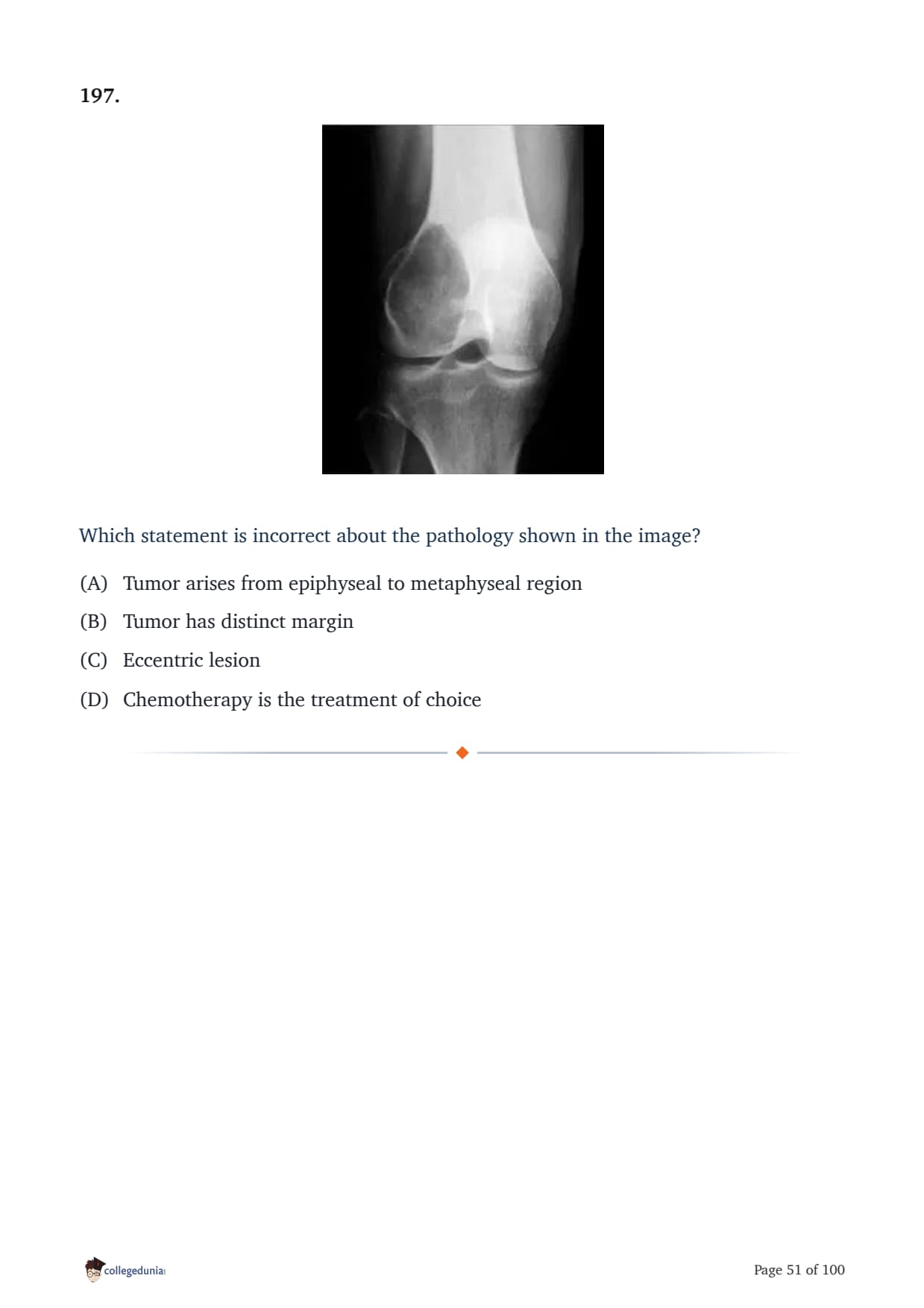
![]()
Which statement is incorrect about the pathology shown in the image?
- (A) Tumor arises from epiphyseal to metaphyseal region
- (B) Tumor has distinct margin
- (C) Eccentric lesion
- (D) Chemotherapy is the treatment of choice
Question 198:
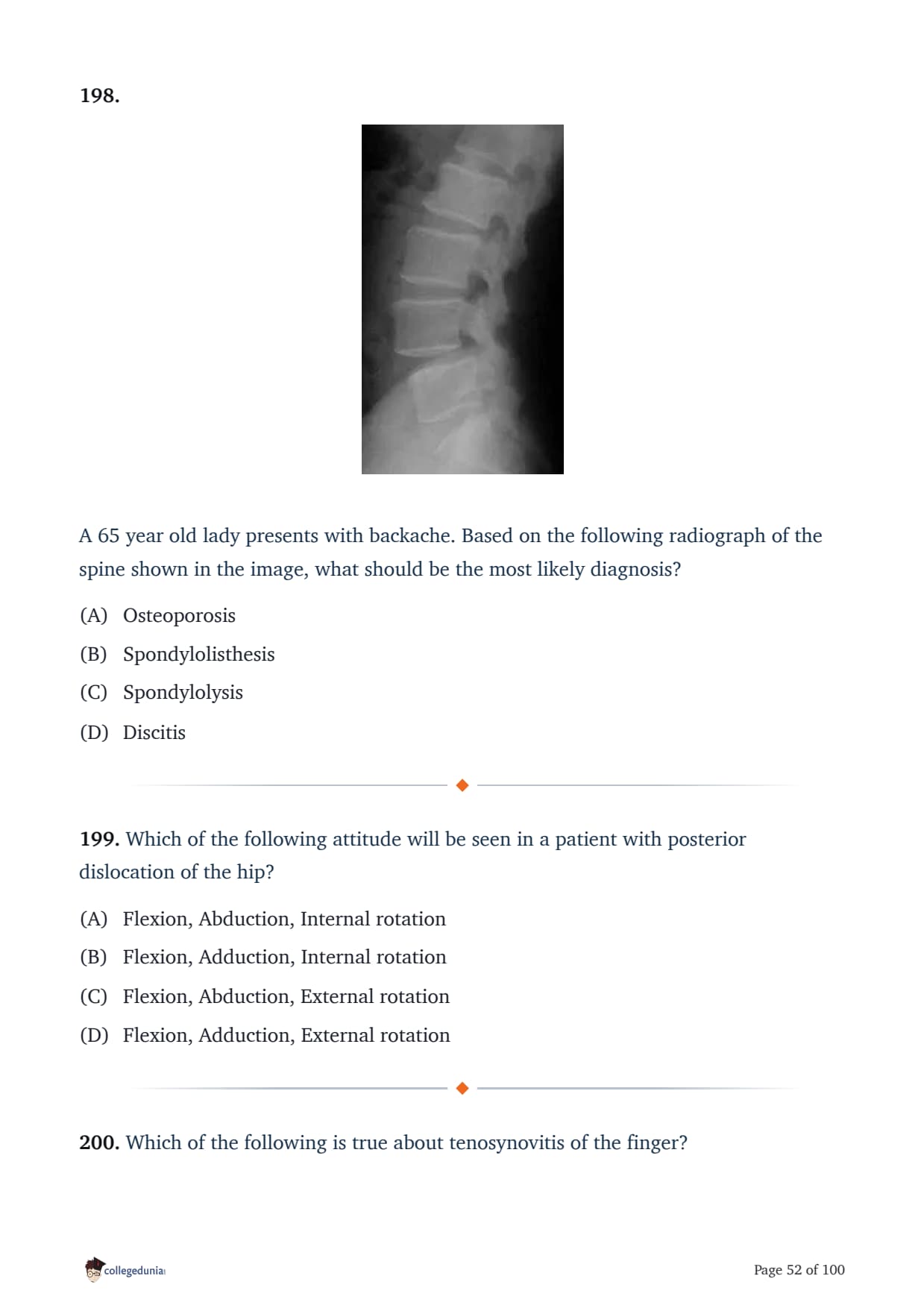
![]()
A 65 year old lady presents with backache. Based on the following radiograph of the spine shown in the image, what should be the most likely diagnosis?
- (A) Osteoporosis
- (B) Spondylolisthesis
- (C) Spondylolysis
- (D) Discitis
Question 199:
Which of the following attitude will be seen in a patient with posterior dislocation of the hip?
- (A) Flexion, Abduction, Internal rotation
- (B) Flexion, Adduction, Internal rotation
- (C) Flexion, Abduction, External rotation
- (D) Flexion, Adduction, External rotation
Question 200:
Which of the following is true about tenosynovitis of the finger?
- (A) Fingers held in mild extension / extension deformity at the involved fingers
- (B) Tenosynovitis of little finger will spread to thumb rather than ring finger
- (C) With involvement of little finger the infection can spread to the index finger
- (D) Treatment is conservative
Question 201:
Most common joint involved in septic arthritis is?
- (A) Knee
- (B) Hip
- (C) Shoulder
- (D) Elbow
Question 202:
In painful arc syndrome, pain is felt during?
- (A) Mid abduction
- (B) Initial abduction
- (C) Full range of abduction
- (D) Overhead abduction
Question 203:
Which of the following is false as a physiological change in pregnancy?
- (A) Increase cardiac output
- (B) Increase total protein
- (C) Increase residual volume
- (D) Increase GFR
Question 204:
Overt gestational diabetes is defined as blood glucose more than _?
- (A) >200 mg/dl
- (B) >126 mg/dl
- (C) >100 mg/dl
- (D) >180 mg/dl
Question 205:
MgSO4 has no role in prevention of -
- (A) Seizures in severe pre-eclampsia
- (B) Recurrent seizures in eclampsia
- (C) RDS in premature baby
- (D) Bradycardia
Question 206:
Green frothy vaginal discharge is produced by -
- (A) Herpes simplex
- (B) Candida albicans
- (C) Trichomonas vaginalis
- (D) Normal vaginal flora
Question 207:
Which of the following is an absolute contraindication to OCP use:
- (A) Chronic renal disease
- (B) DVT
- (C) Diabetes mellitus
- (D) History of amenorrhea
Question 208:
Which of the following statement is correct about acute fatty liver of pregnancy?
- (A) Occurs in 1 in 1000 pregnancy
- (B) Mostly seen in last trimester
- (C) Common if female fetus is present
- (D) May be associated with decreased uric acid
Question 209:
Female with 41 weeks gestation confirmed by radiological investigation, very sure of her LMP, no uterine contractions, no effacement and no dilatation. What should not be done?
- (A) Intracervical Foley's
- (B) PGE1 tab
- (C) PGE2 gel
- (D) PGF2alpha
Question 210:
Double decidua sign is seen during -
- (A) 1st trimester
- (B) 2nd early trimester
- (C) 2nd late trimester
- (D) 3rd trimester
Question 211:
A 60 year old woman comes with 3rd degree uterine prolapse. What will be the management?
- (A) Vaginal hysterectomy with pelvic floor repair
- (B) Pelvic floor repair
- (C) Sacrospinous fixation
- (D) Pessary
Question 212:
Day 20 of the menstrual cycle falls under which phase?
- (A) Menstrual phase
- (B) Follicular phase
- (C) Ovulation phase
- (D) Luteal phase
Question 213:
Chromosome number of a partial hydatidiform mole is-
- (A) 46 XX
- (B) 45 XO
- (C) 46 XXY
- (D) 69 XXX
Question 214:
Vulvar atrophy and itching are treated by-
- (A) Estrogen ointment
- (B) Antihistamines
- (C) Tamoxifen
- (D) None
Question 215:
Premature ejaculation is a part of which phase of sexual disorders?
- (A) Excitement phase
- (B) Plateau phase
- (C) Orgasm phase
- (D) Refractory phase
Question 216:
Nuchal translucency on USG can be detected at how many weeks of gestation?
- (A) 11-13 weeks
- (B) 18-20 weeks
- (C) 8-10 weeks
- (D) 20-22 weeks
Question 217:
First line of treatment of mastitis in a lactating mother is-
- (A) Dicloxacillin
- (B) Cefazolin
- (C) Ceftriaxone
- (D) Ampicillin
Question 218:
A patient with recurrent abortion is diagnosed to have antiphospholipid syndrome. What will be the treatment?
- (A) Aspirin only
- (B) Aspirin + Low molecular weight Heparin
- (C) Aspirin + Low molecular weight Heparin + Prednisolone
- (D) No Treatment
Question 219:
Gestational trophoblastic neoplasm does not include-
- (A) Choriocarcinoma
- (B) Placental site trophoblastic tumour
- (C) Invasive mole
- (D) Partial mole
Question 220:
Which vaccine is contraindicated in pregnancy:
- (A) Chicken pox
- (B) Rabies
- (C) Tet toxoid
- (D) Hepatitis B
Question 221:
A 45 years old female presents with 3 months of menorrhagia. USG shows a 2 cm submucosal fibroid. What are the treatment options?
- (A) OCP for 3 months
- (B) Progesterone for 3 months
- (C) Endometrial sampling
- (D) Hysterectomy
Question 222:
In low ovarian reserve, the anti-Mullerian hormone level will be:
- (A) <1
- (B) 1-4
- (C) >7
- (D) >10
Question 223:
The presenting diameter of a fully flexed fetal head is:
- (A) Suboccipito-bregmatic diameter
- (B) Suboccipito-frontal diameter
- (C) Occipito-frontal diameter
- (D) Occipito-posterior position
Question 224:
What is the dose of ulipristal acetate?
- (A) 300mg
- (B) 30mg
- (C) 300µg
- (D) 30µg
Question 225:
The major contribution of the amniotic fluid after 20 weeks of gestation is:
- (A) Ultrafiltrate and maternal plasma
- (B) Fetal urine
- (C) Fetal lung fluid
- (D) Fetal skin
Question 226:
The maximum dose of PGF2 alpha (15-methyl prostaglandin F2 alpha, carboprost) in postpartum haemorrhage (PPH) is:
- (A) 2000 micrograms
- (B) 200 micrograms
- (C) 2 mg
- (D) 20 mg
Question 227:
All are true about skin except:
- (A) Both dermis and epidermis are derived from ectoderm
- (B) Skin accounts for a total of 15% of body weight
- (C) Most of the cells in skin are keratinocytes derived from ectoderm
- (D) Dermis is made up of type 1 and type 3 collagen in a 3:2 ratio
Question 228:
The anaesthetic gas with maximum respiratory irritation is:
- (A) Halothane
- (B) Enflurane
- (C) Desflurane
- (D) Sevoflurane
Question 229:
Intravenous administration of which anaesthetic drug is most painful among the following?
- (A) Methohexital
- (B) Ketamine
- (C) Propofol
- (D) Etomidate
Question 230:
Which of the following is not cardiodepressive?
- (A) Propofol
- (B) Thiopentone
- (C) Ketamine
- (D) Etomidate
Question 231:
Which of the following is the most common method used to know the depth of anaesthesia?
- (A) BIS (Bispectral index)
- (B) Oesophageal contractility
- (C) Depressed responses
- (D) Hypotension
Question 232:
MRP2 (multidrug resistance protein 2) is associated with which of the following conditions?
- (A) Rotor syndrome
- (B) Dubin-Johnson syndrome
- (C) Crigler-Najjar syndrome
- (D) Gilbert syndrome
Question 233:
Which of the following elements forms the basis of a water-soluble radiographic contrast agent?
- (A) Barium
- (B) Iodine
- (C) Bromium
- (D) Calcium
Question 234:
A solitary lytic bone lesion can be seen in which of the following conditions?
- (A) Atherosclerosis
- (B) Multiple myeloma
- (C) Mitral stenosis
- (D) Osteoblast
Question 235:
Which of the following statements is NOT true regarding somnambulism (sleep walking)?
- (A) Sleep walking
- (B) Patient consciousness is preserved
- (C) Disorder of sleep arousal
- (D) Low level motor skill or function is present
Question 236:
The Confusion Assessment Method (CAM) scale is used for the assessment of which of the following?
- (A) Schizophrenia
- (B) Delirium
- (C) Dementia
- (D) Depression
Question 237:
Which of the following is a poor prognostic factor in obsessive-compulsive disorder (OCD)?
- (A) Magical thinking
- (B) Dirt contamination
- (C) Pathological doubt
- (D) Hoarding
Question 238:
Which forensic test is based on the principle that a suspect who has witnessed an event reacts in a certain measurable physiological way when confronted with stimuli related to it?
- (A) Narcoanalysis
- (B) Brain mapping
- (C) Truth serum testing
- (D) Polygraph
Question 239:
Intense depression and misery without any cause is?
- (A) Melancholia
- (B) Major depressive disorder
- (C) Mania
- (D) Schizophrenia
Question 240:
Which of the following is not true regarding delusional disorder?
- (A) Held with absolute conviction
- (B) Usually false
- (C) Not amenable to reasoning
- (D) Occurs at early age
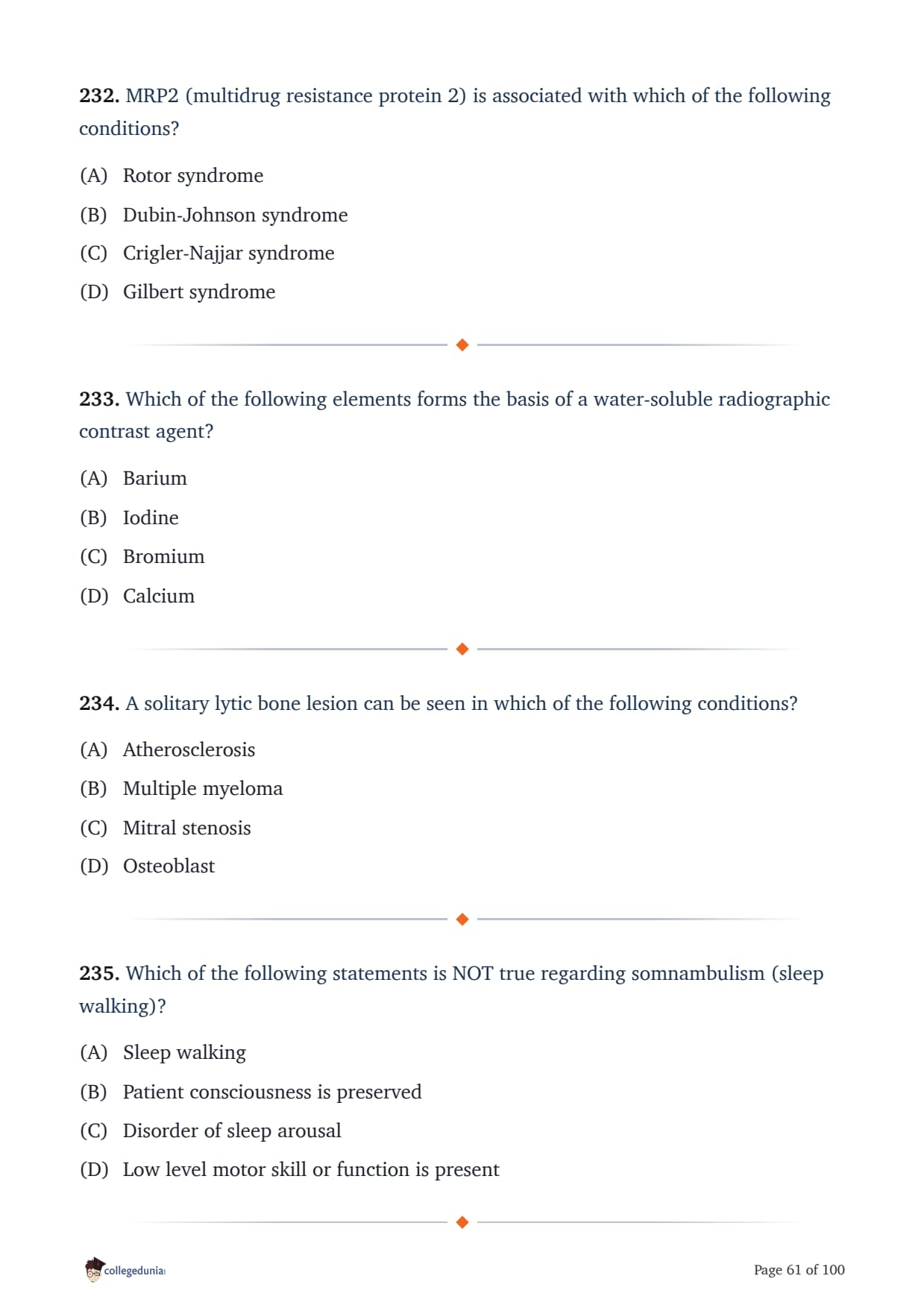
Question 241:
![]()
Identify the condition shown in the image below.
- (A) Intertrigo
- (B) Heat rash
- (C) Eczema
- (D) Impetigo
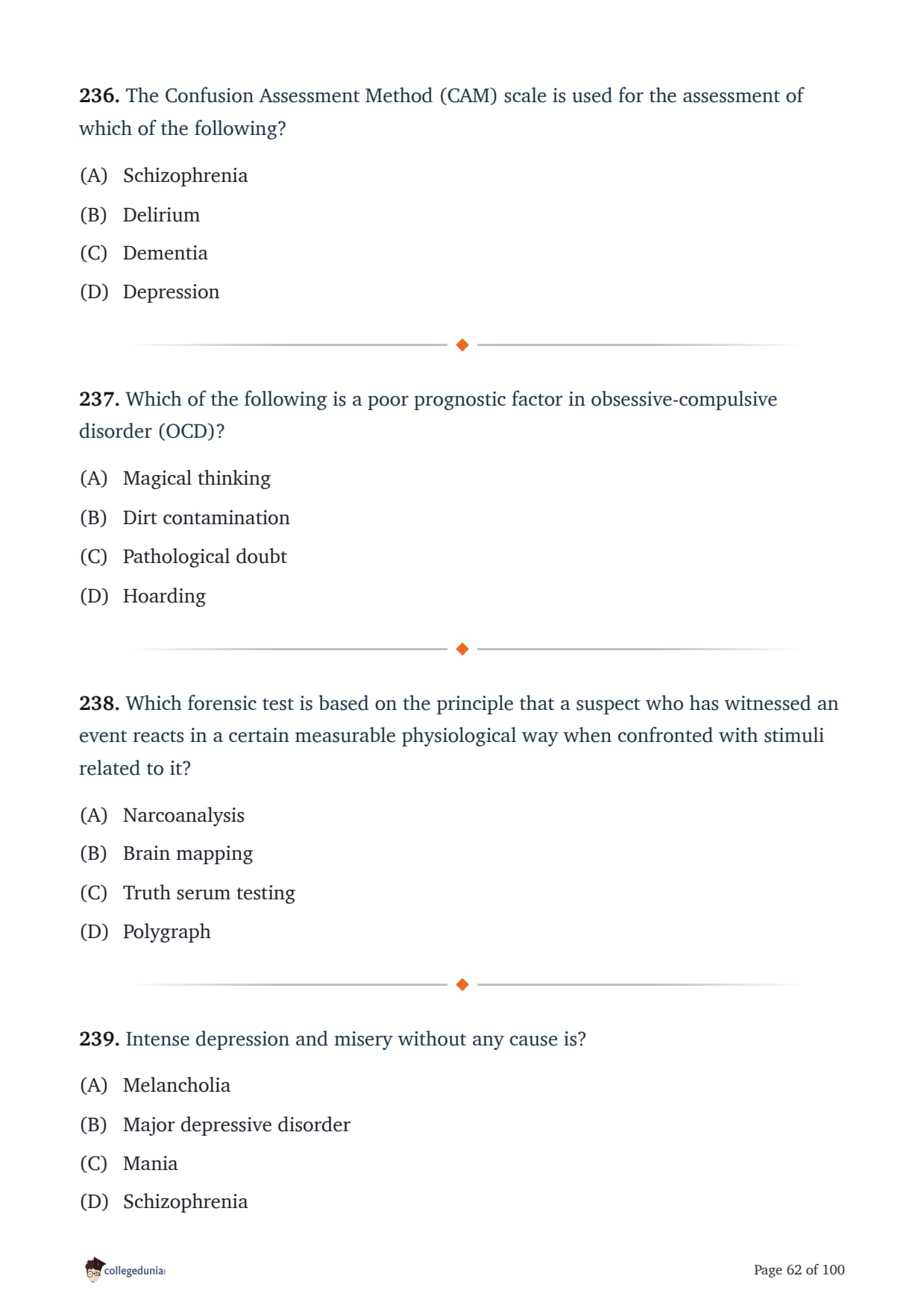
Question 242:
![]()
Identify the infection from the chest X-ray of a patient with low-grade fever?
- (A) ILD
- (B) Bronchopneumonia
- (C) Miliary TB
- (D) Consolidation
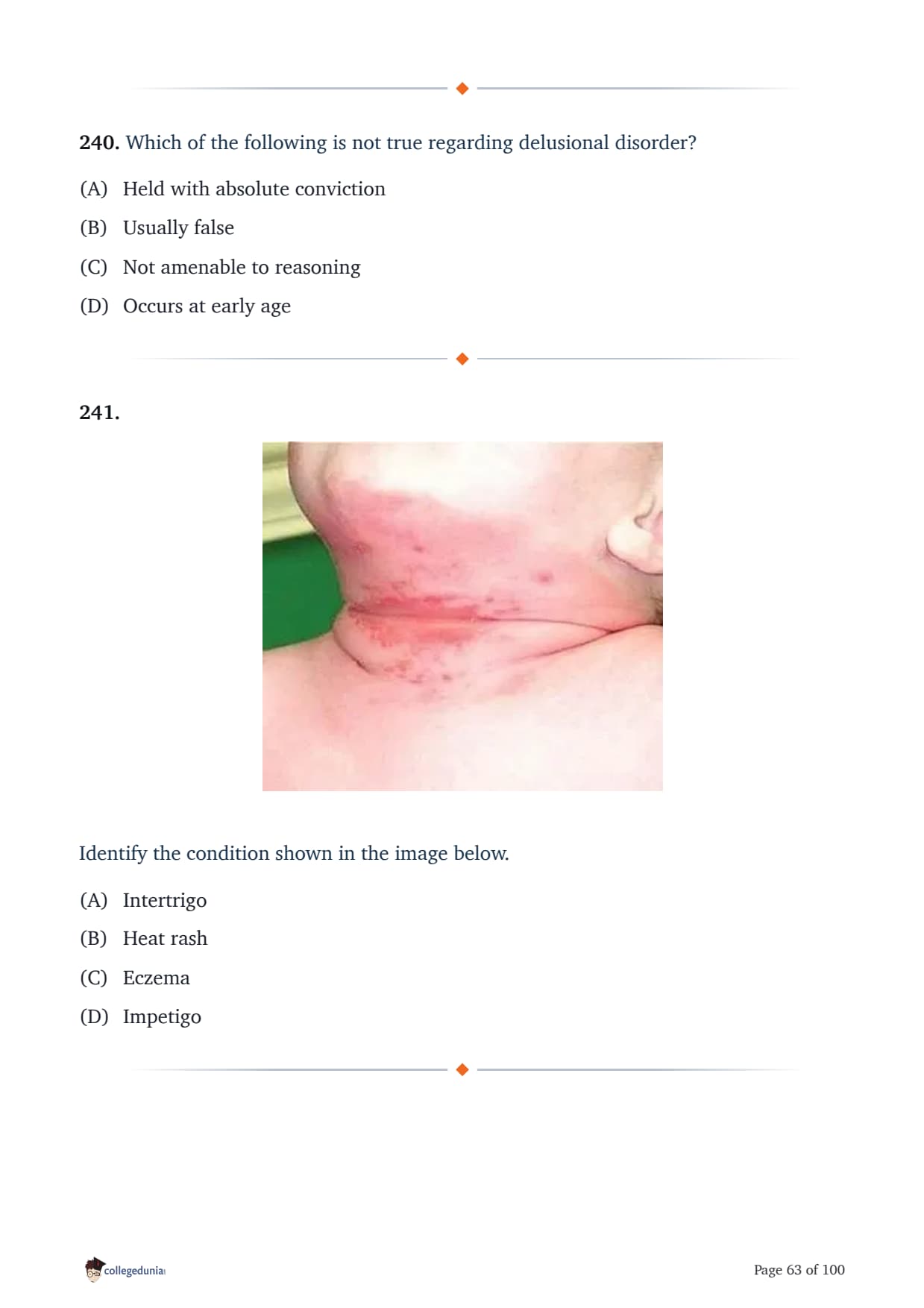
Question 243:
![]()
Identify the condition given in the image?
- (A) Atrial fibrillation
- (B) Atrial flutter
- (C) Ventricular tachycardia
- (D) SVT
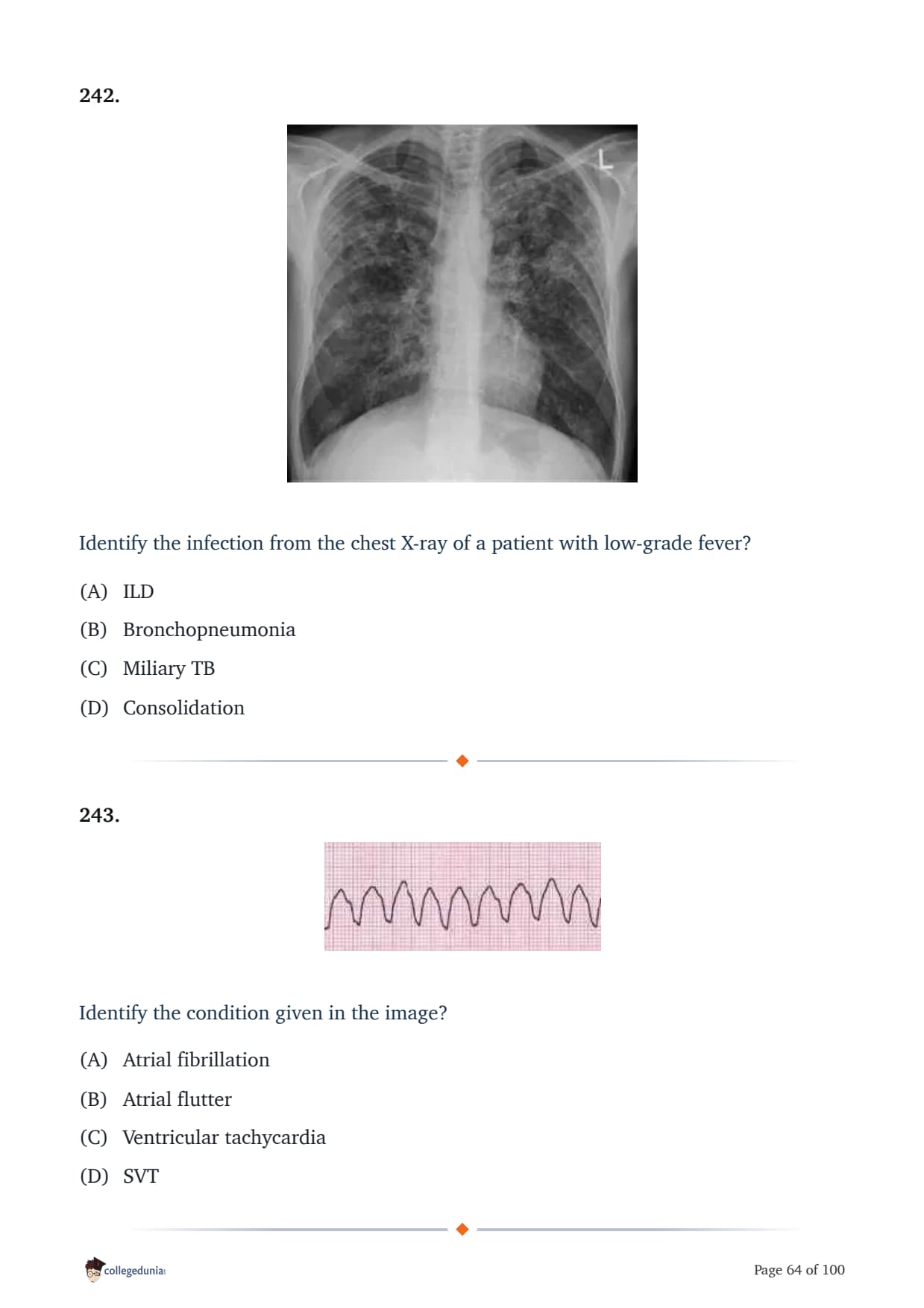
Question 244:
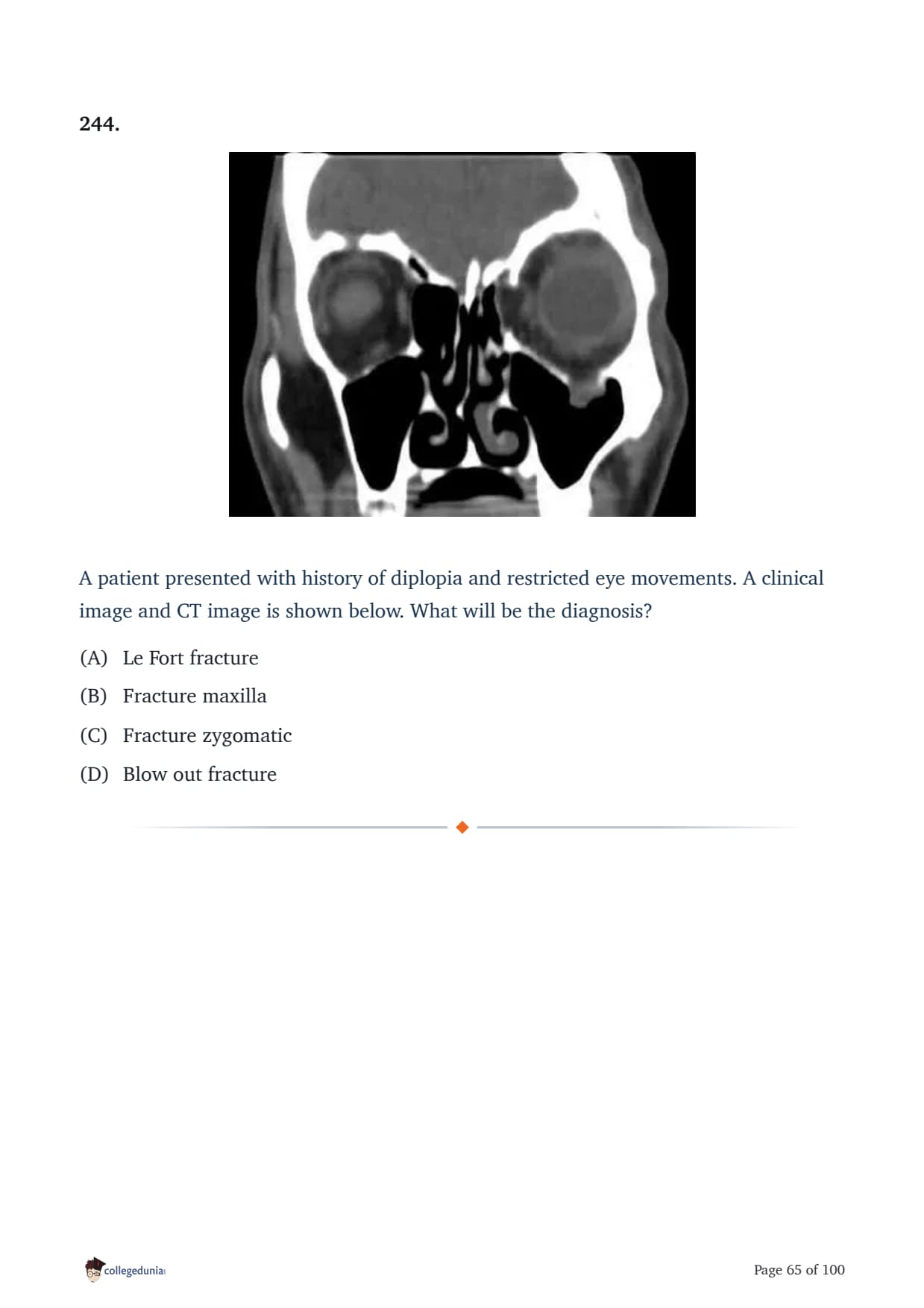
![]()
A patient presented with history of diplopia and restricted eye movements. A clinical image and CT image is shown below. What will be the diagnosis?
- (A) Le Fort fracture
- (B) Fracture maxilla
- (C) Fracture zygomatic
- (D) Blow out fracture
Question 245:
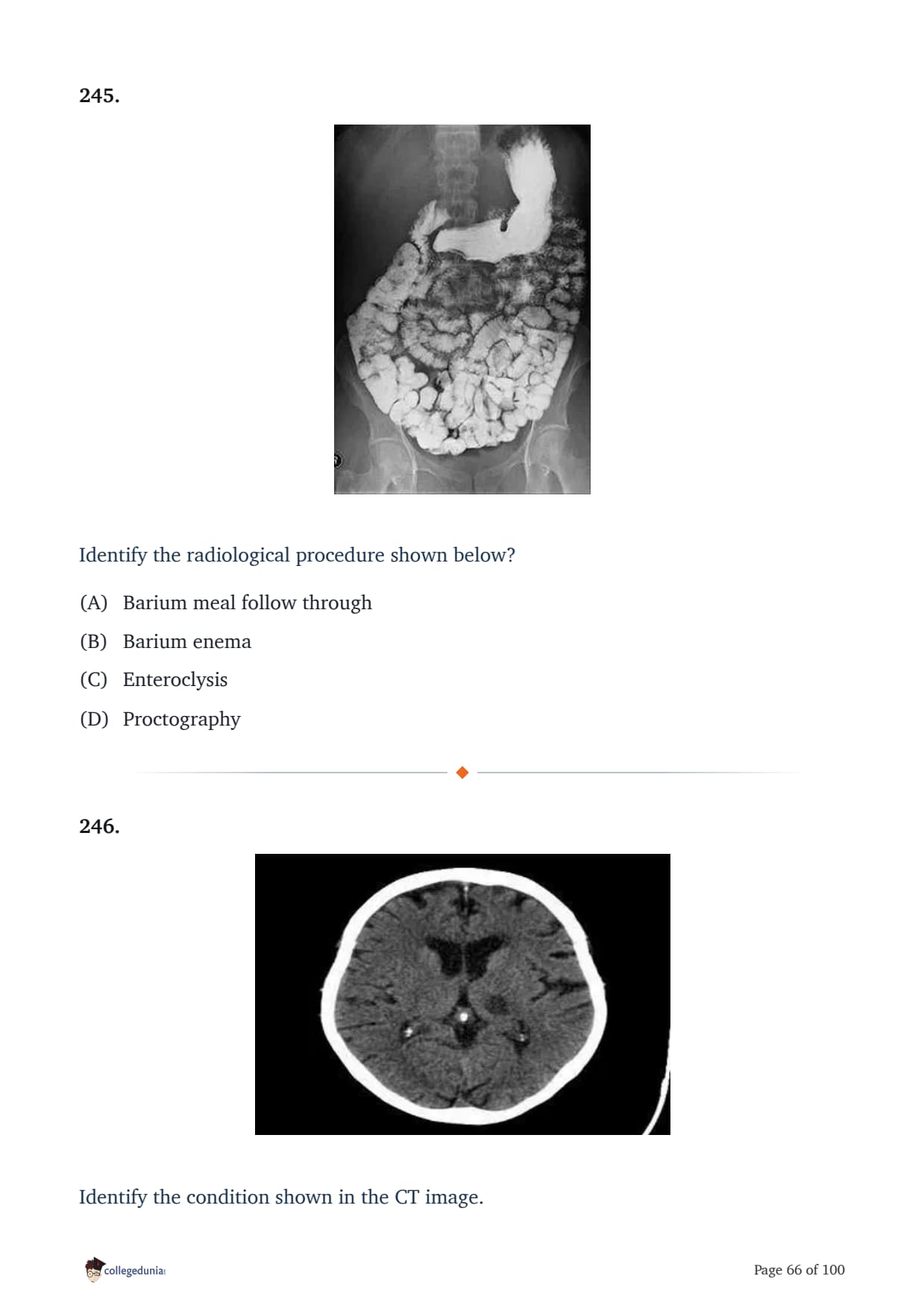
![]()
Identify the radiological procedure shown below?
- (A) Barium meal follow through
- (B) Barium enema
- (C) Enteroclysis
- (D) Proctography
Question 246:
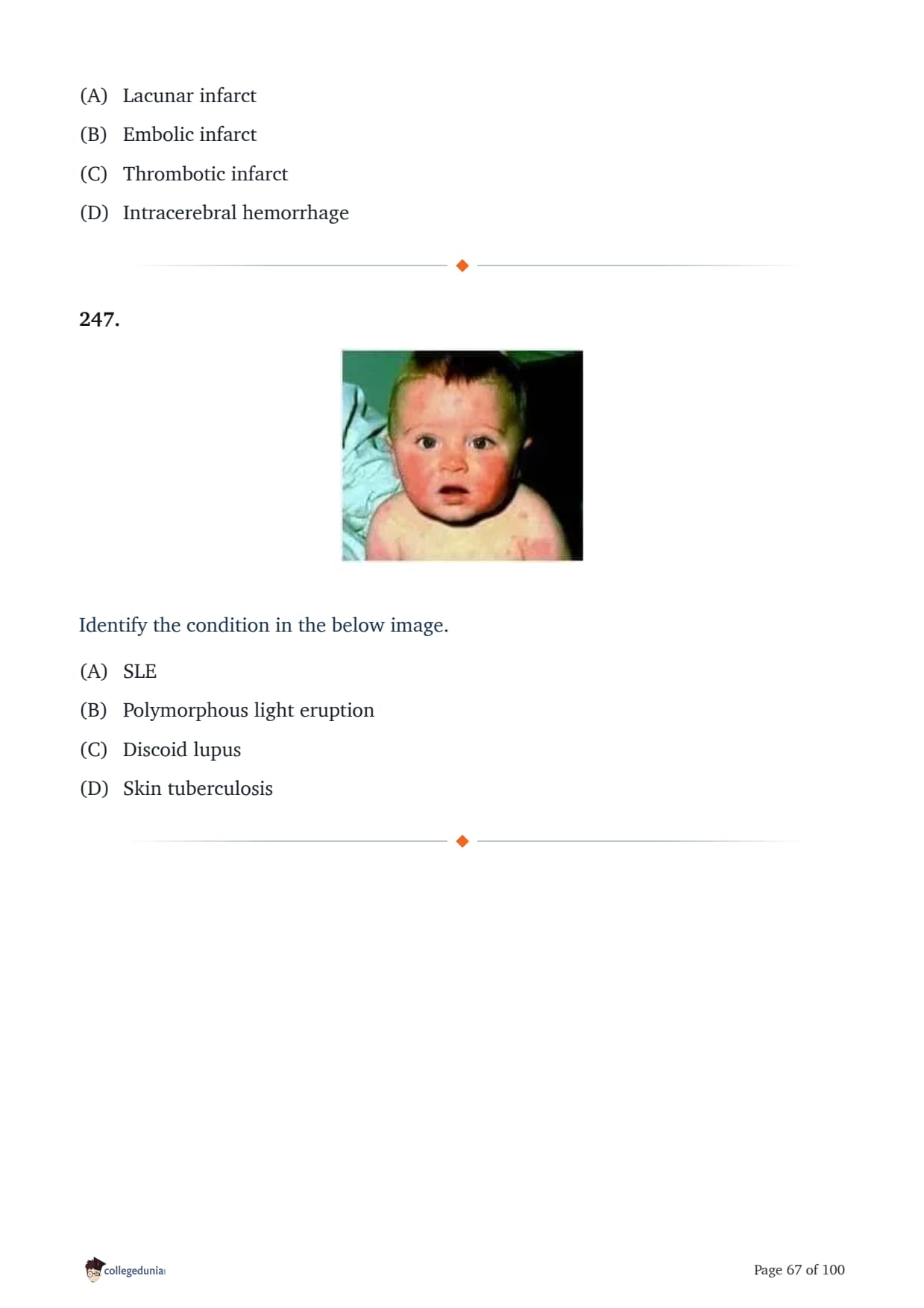
![]()
Identify the condition shown in the CT image.
- (A) Lacunar infarct
- (B) Embolic infarct
- (C) Thrombotic infarct
- (D) Intracerebral hemorrhage
Question 247:
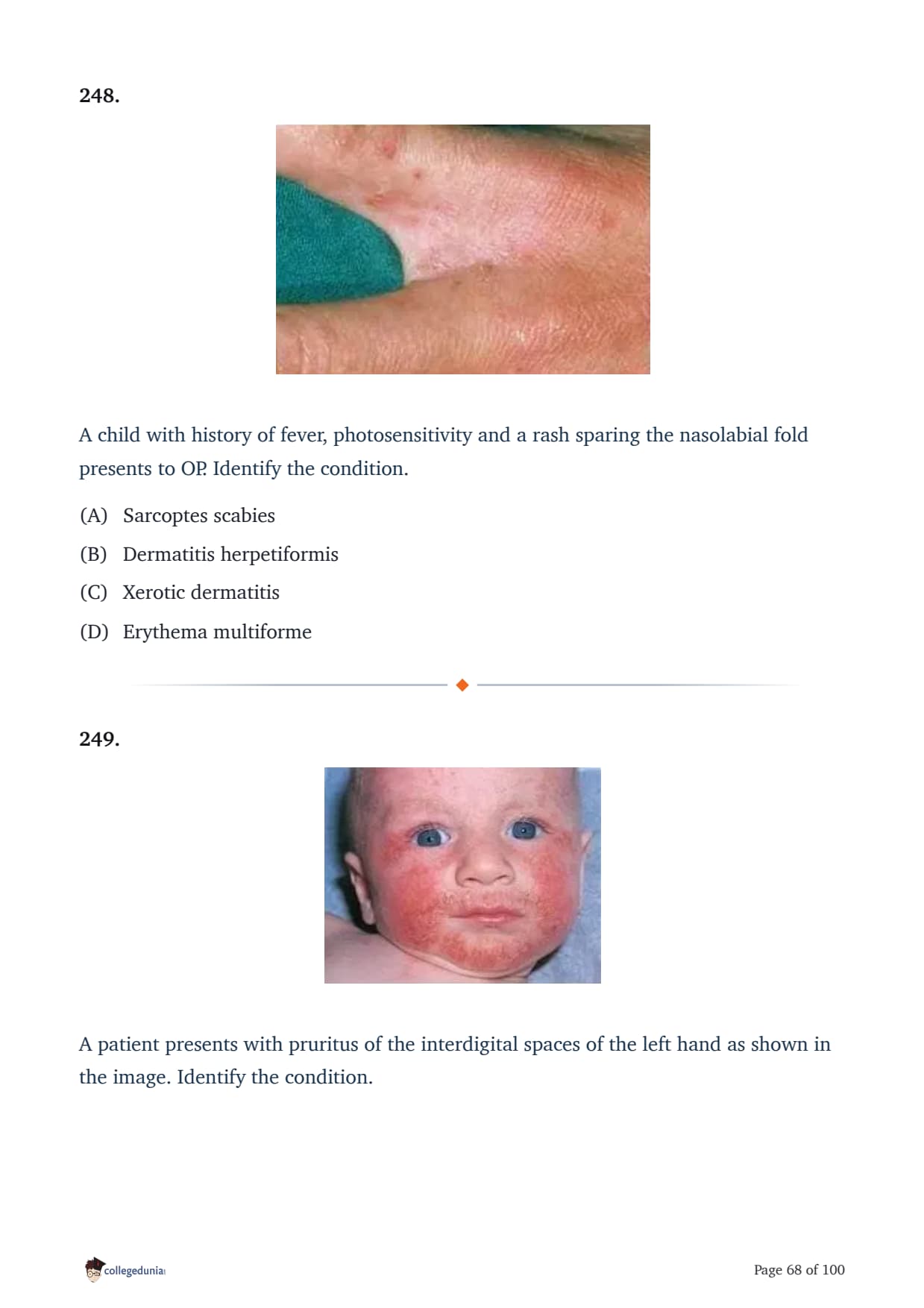
![]()
Identify the condition in the below image.
- (A) SLE
- (B) Polymorphous light eruption
- (C) Discoid lupus
- (D) Skin tuberculosis
Question 248:
![]()
A child with history of fever, photosensitivity and a rash sparing the nasolabial fold presents to OP. Identify the condition.
- (A) Sarcoptes scabies
- (B) Dermatitis herpetiformis
- (C) Xerotic dermatitis
- (D) Erythema multiforme
Question 249:
![]()
A patient presents with pruritus of the interdigital spaces of the left hand as shown in the image. Identify the condition.
- (A) Atopic dermatitis
- (B) SLE
- (C) Erythema
- (D) TEN
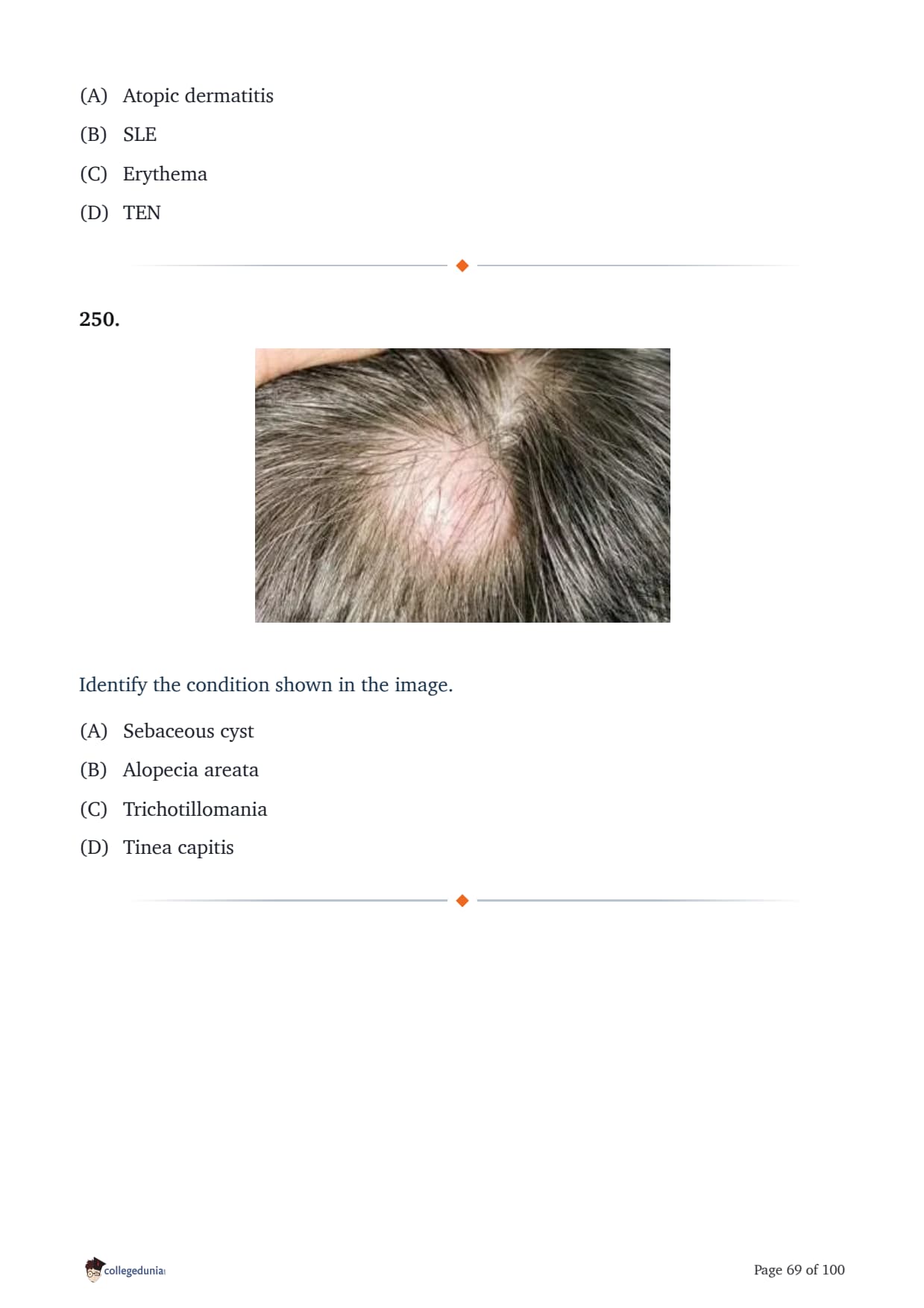
Question 250:
![]()
Identify the condition shown in the image.
- (A) Sebaceous cyst
- (B) Alopecia areata
- (C) Trichotillomania
- (D) Tinea capitis
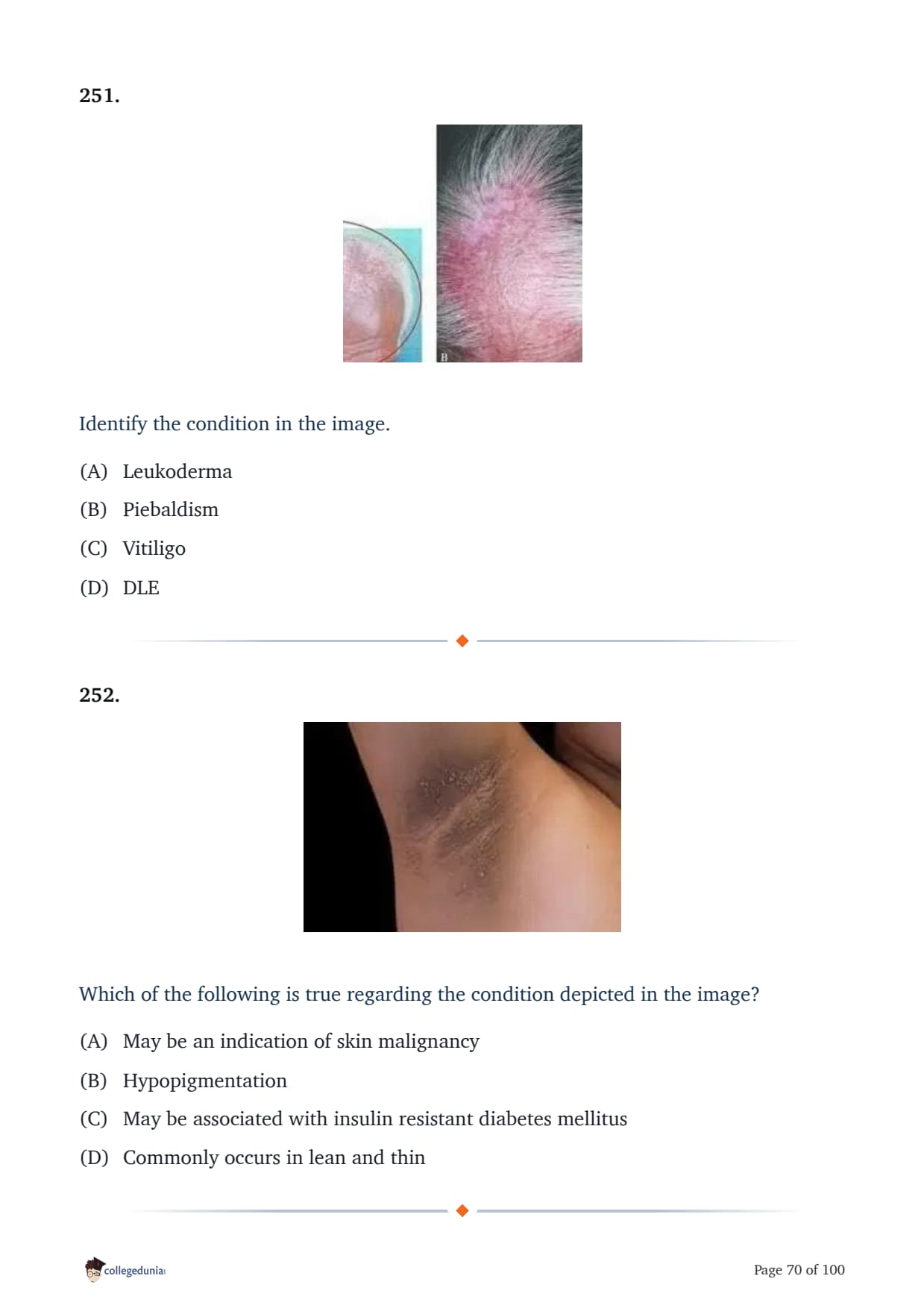
Question 251:
![]()
Identify the condition in the image.
- (A) Leukoderma
- (B) Piebaldism
- (C) Vitiligo
- (D) DLE
Question 252:
![]()
Which of the following is true regarding the condition depicted in the image?
- (A) May be an indication of skin malignancy
- (B) Hypopigmentation
- (C) May be associated with insulin resistant diabetes mellitus
- (D) Commonly occurs in lean and thin
Question 253:
![]()
The causative organism for the condition depicted in the image is?
- (A) Staphylococci
- (B) Candidal infection
- (C) Streptococcus
- (D) Actinomycetes
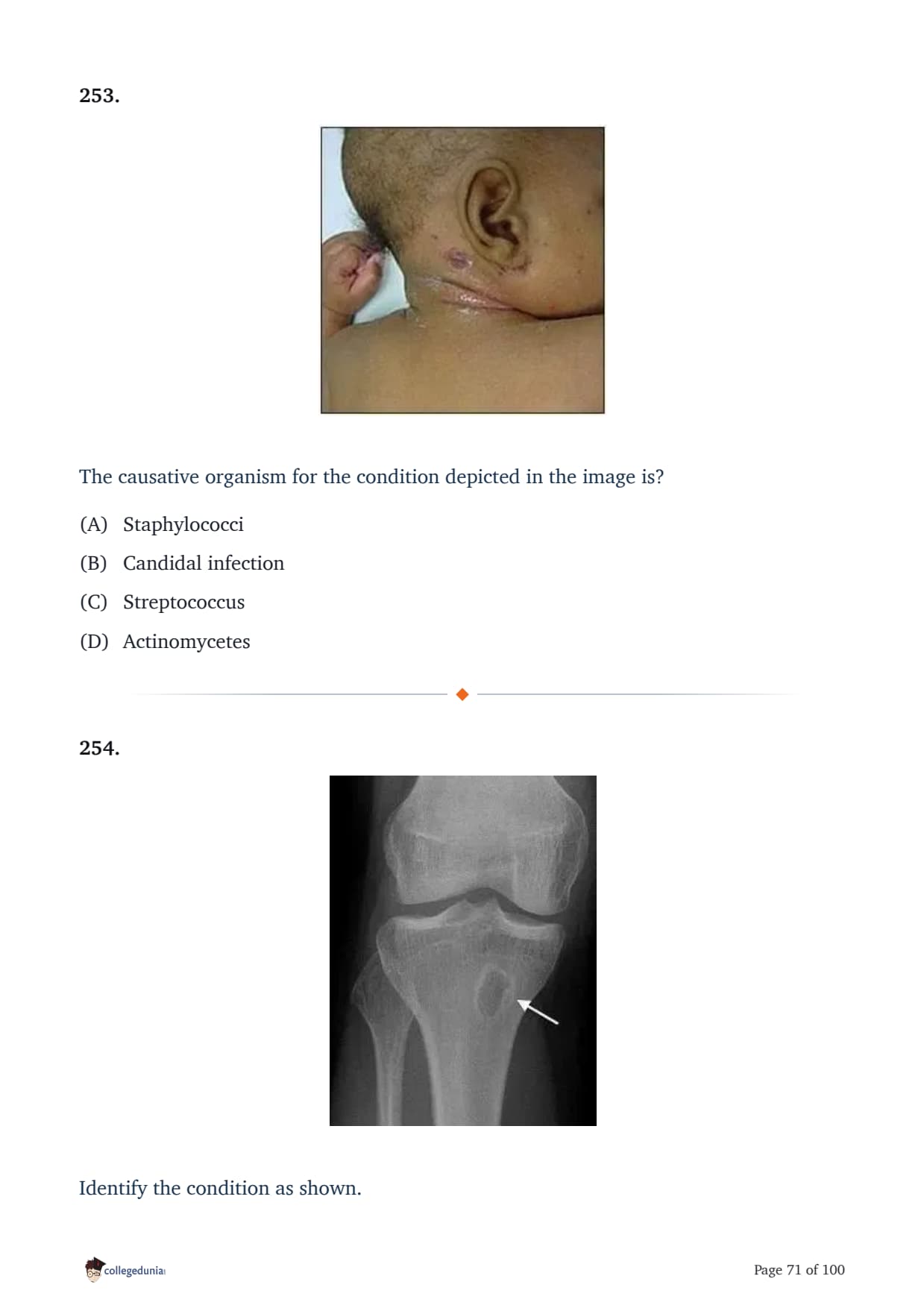
Question 254:
![]()
Identify the condition as shown.
- (A) Brodie abscess
- (B) Osteoid osteoma
- (C) Intracortical hemangioma
- (D) Chondromyxoid fibroma
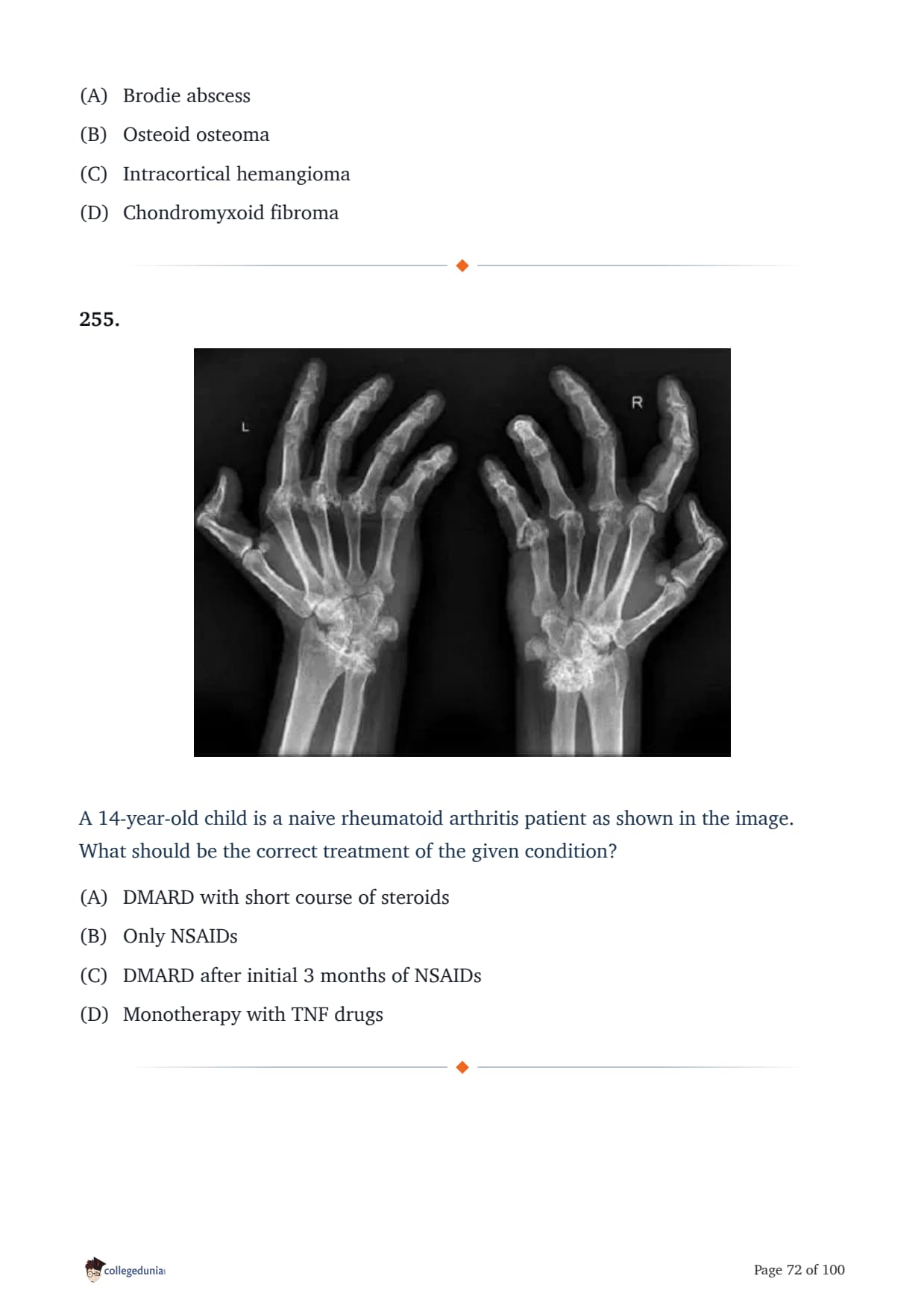
Question 255:
![]()
A 14-year-old child is a naive rheumatoid arthritis patient as shown in the image. What should be the correct treatment of the given condition?
- (A) DMARD with short course of steroids
- (B) Only NSAIDs
- (C) DMARD after initial 3 months of NSAIDs
- (D) Monotherapy with TNF drugs
Question 256:
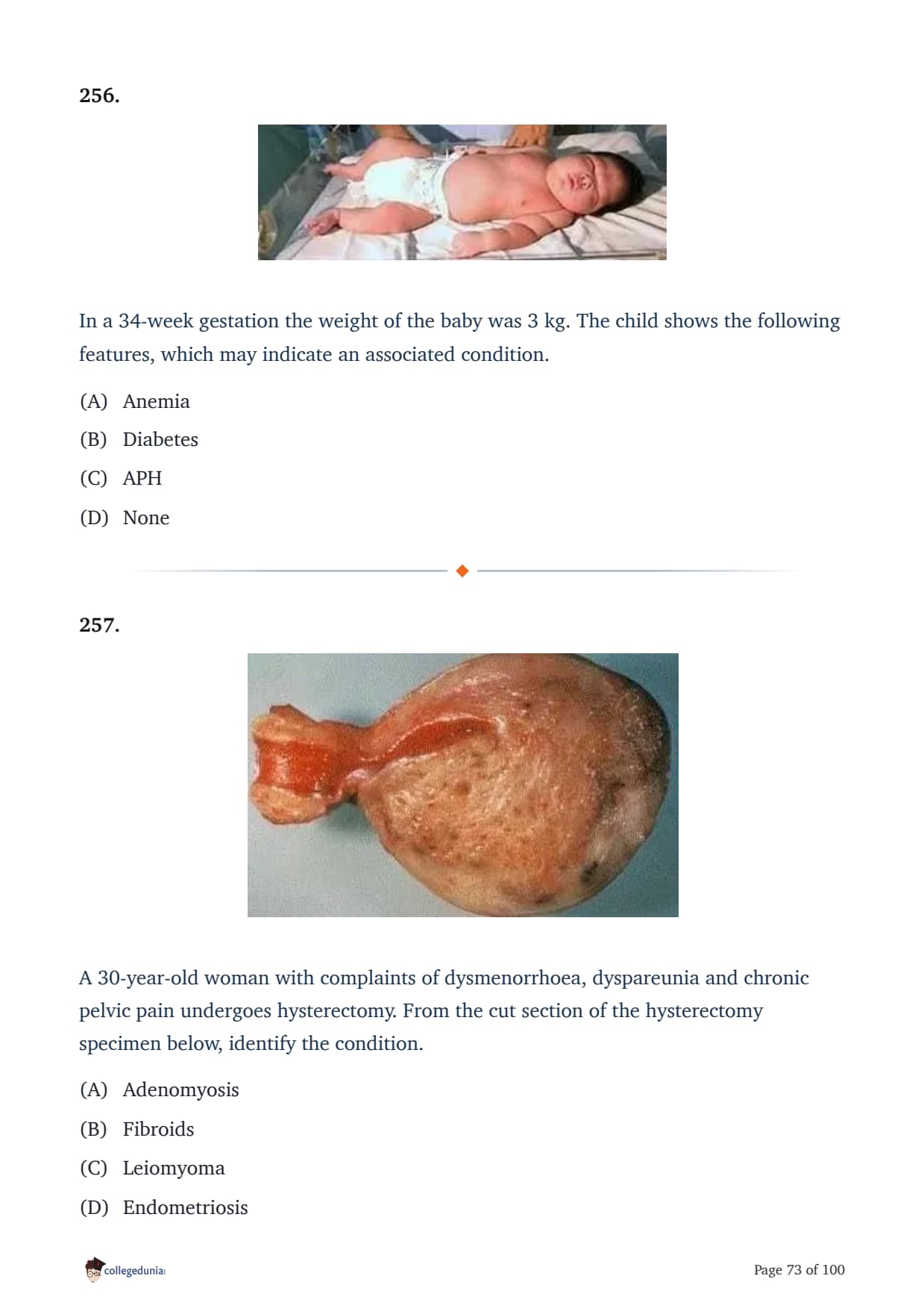
![]()
In a 34-week gestation the weight of the baby was 3 kg. The child shows the following features, which may indicate an associated condition.
- (A) Anemia
- (B) Diabetes
- (C) APH
- (D) None
Question 257:
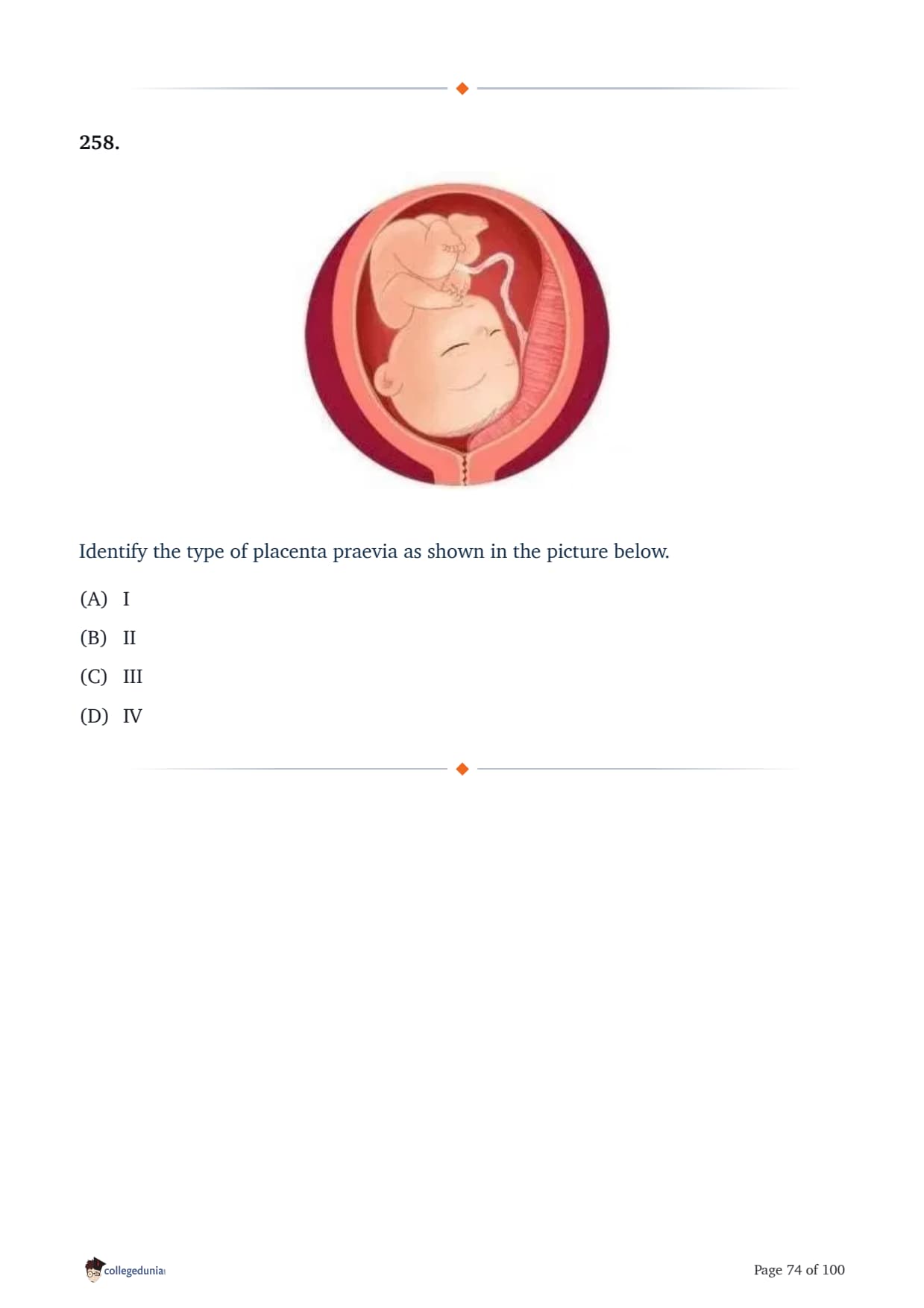
![]()
A 30-year-old woman with complaints of dysmenorrhoea, dyspareunia and chronic pelvic pain undergoes hysterectomy. From the cut section of the hysterectomy specimen below, identify the condition.
- (A) Adenomyosis
- (B) Fibroids
- (C) Leiomyoma
- (D) Endometriosis
Question 258:
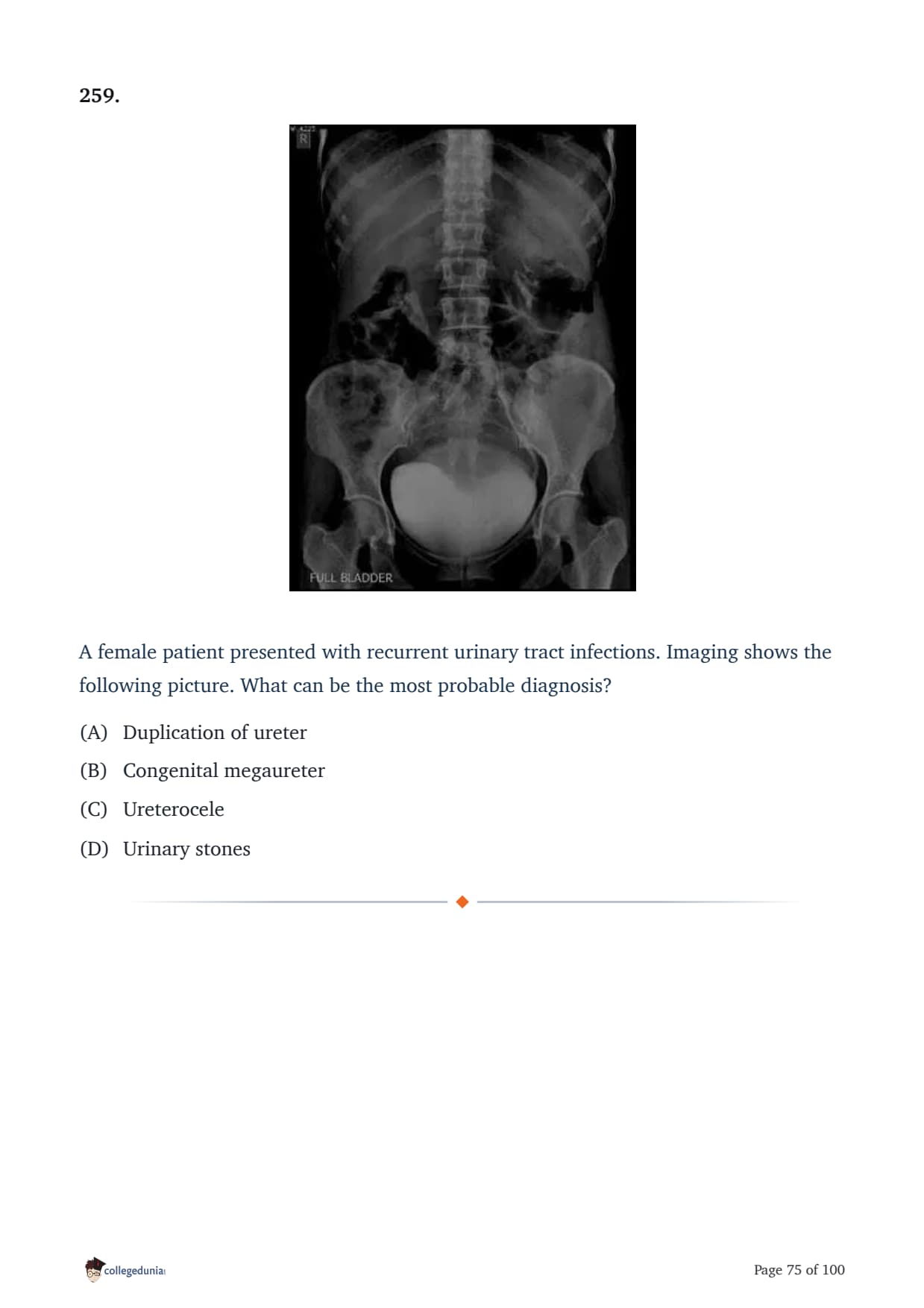
![]()
Identify the type of placenta praevia as shown in the picture below.
- (A) I
- (B) II
- (C) III
- (D) IV
Question 259:
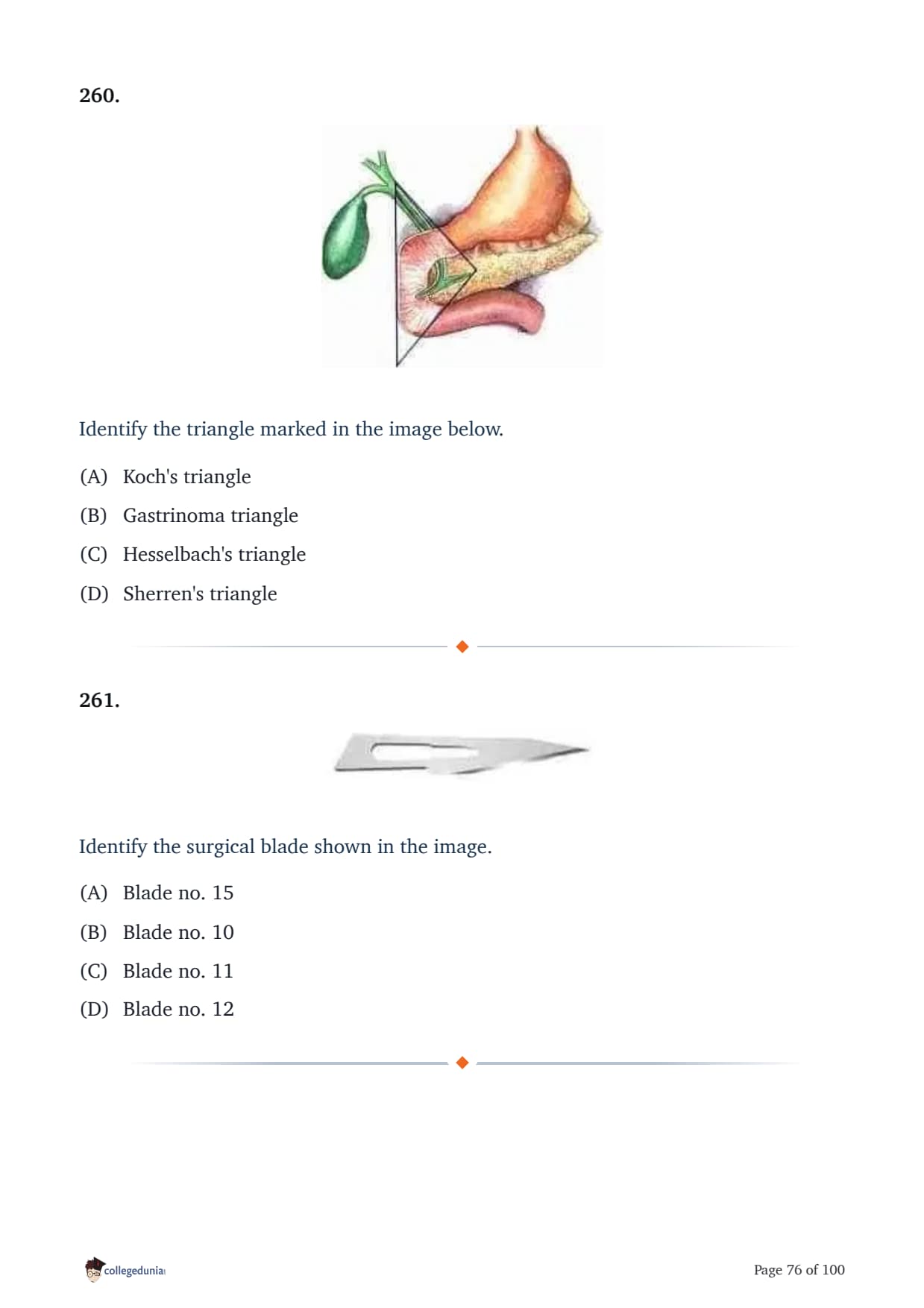
![]()
A female patient presented with recurrent urinary tract infections. Imaging shows the following picture. What can be the most probable diagnosis?
- (A) Duplication of ureter
- (B) Congenital megaureter
- (C) Ureterocele
- (D) Urinary stones
Question 260:
![]()
Identify the triangle marked in the image below.
- (A) Koch's triangle
- (B) Gastrinoma triangle
- (C) Hesselbach's triangle
- (D) Sherren's triangle
Question 261:
![]()
Identify the surgical blade shown in the image.
- (A) Blade no. 15
- (B) Blade no. 10
- (C) Blade no. 11
- (D) Blade no. 12
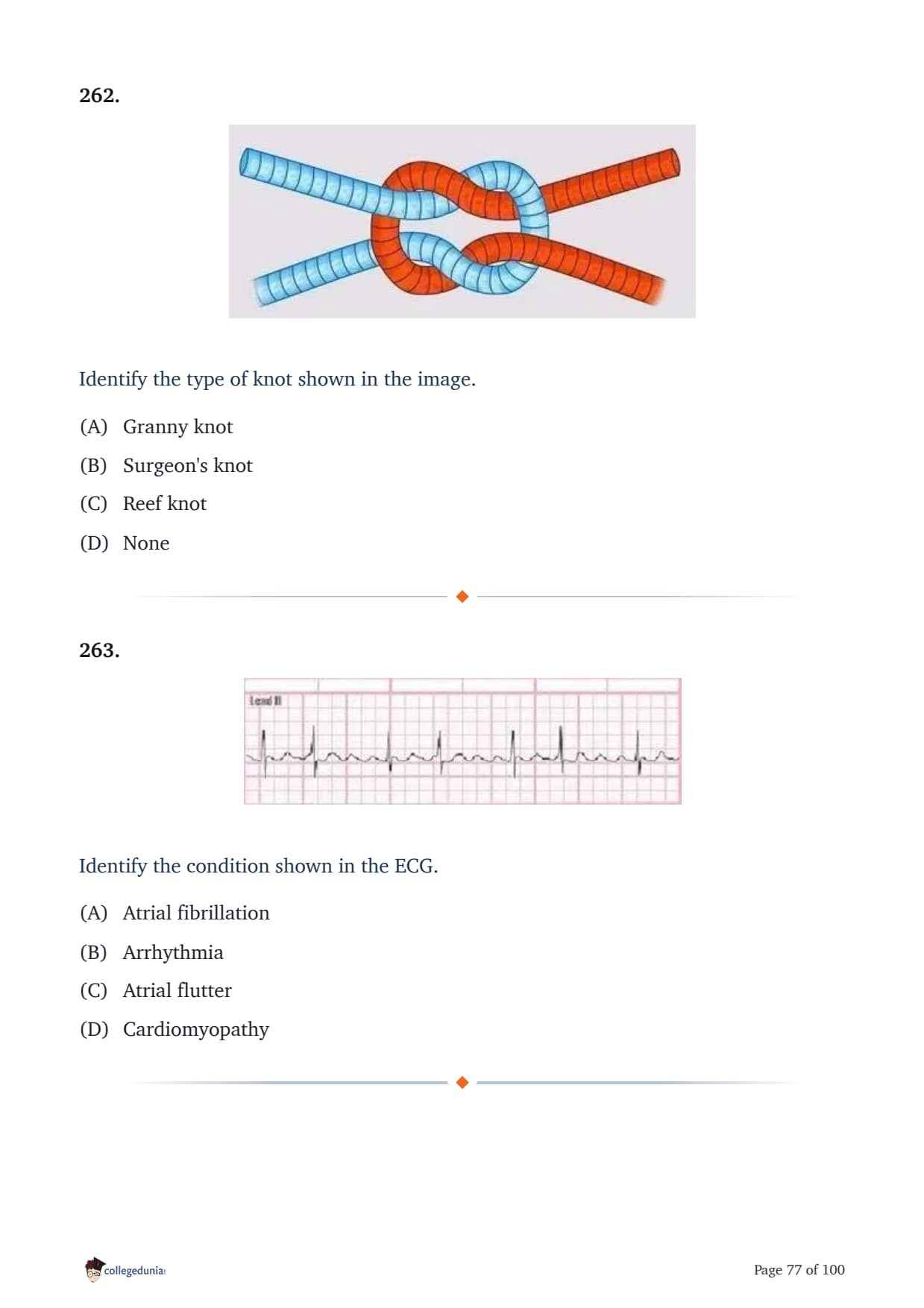
Question 262:
![]()
Identify the type of knot shown in the image.
- (A) Granny knot
- (B) Surgeon's knot
- (C) Reef knot
- (D) None
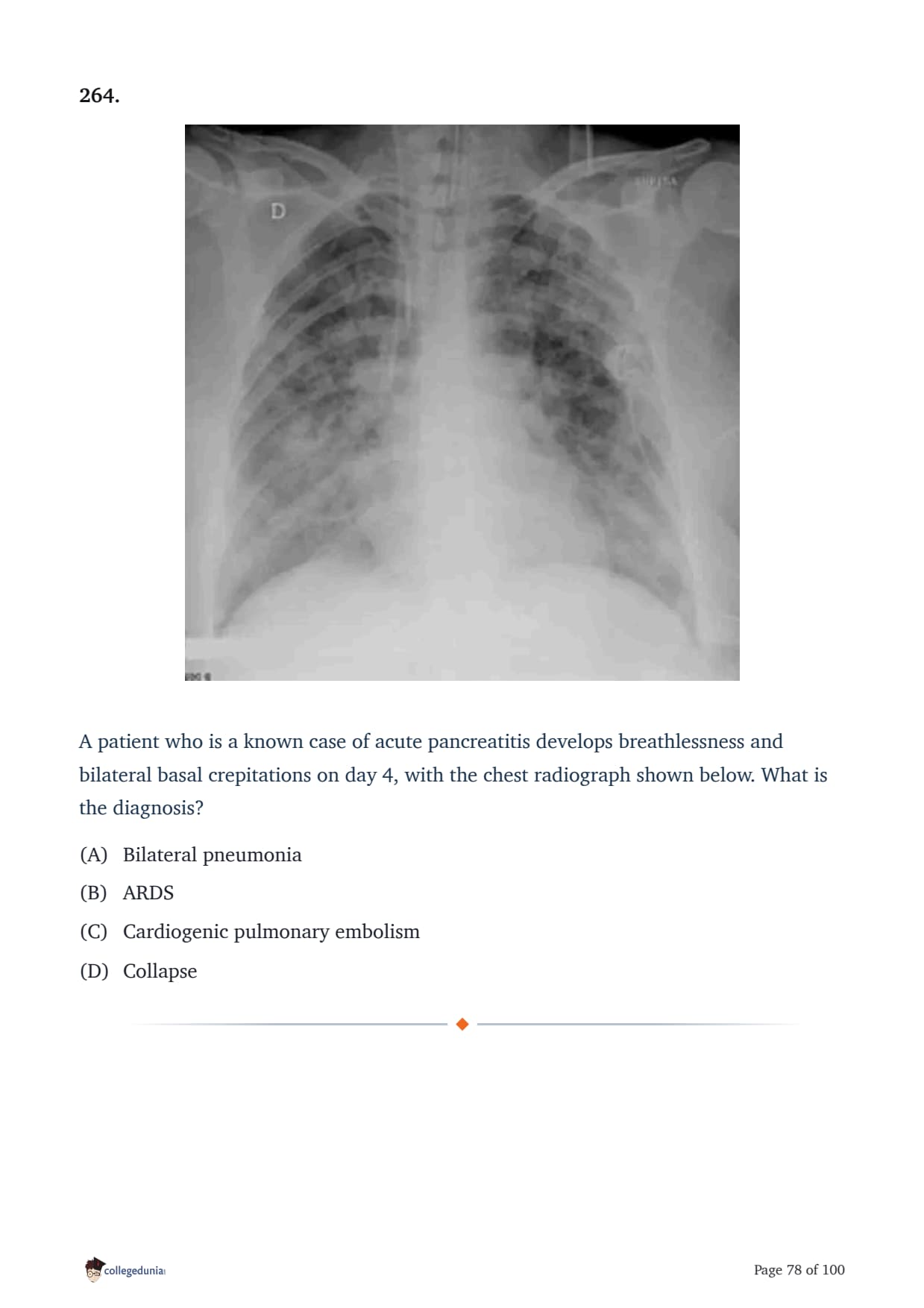
Question 263:
![]()
Identify the condition shown in the ECG.
- (A) Atrial fibrillation
- (B) Arrhythmia
- (C) Atrial flutter
- (D) Cardiomyopathy
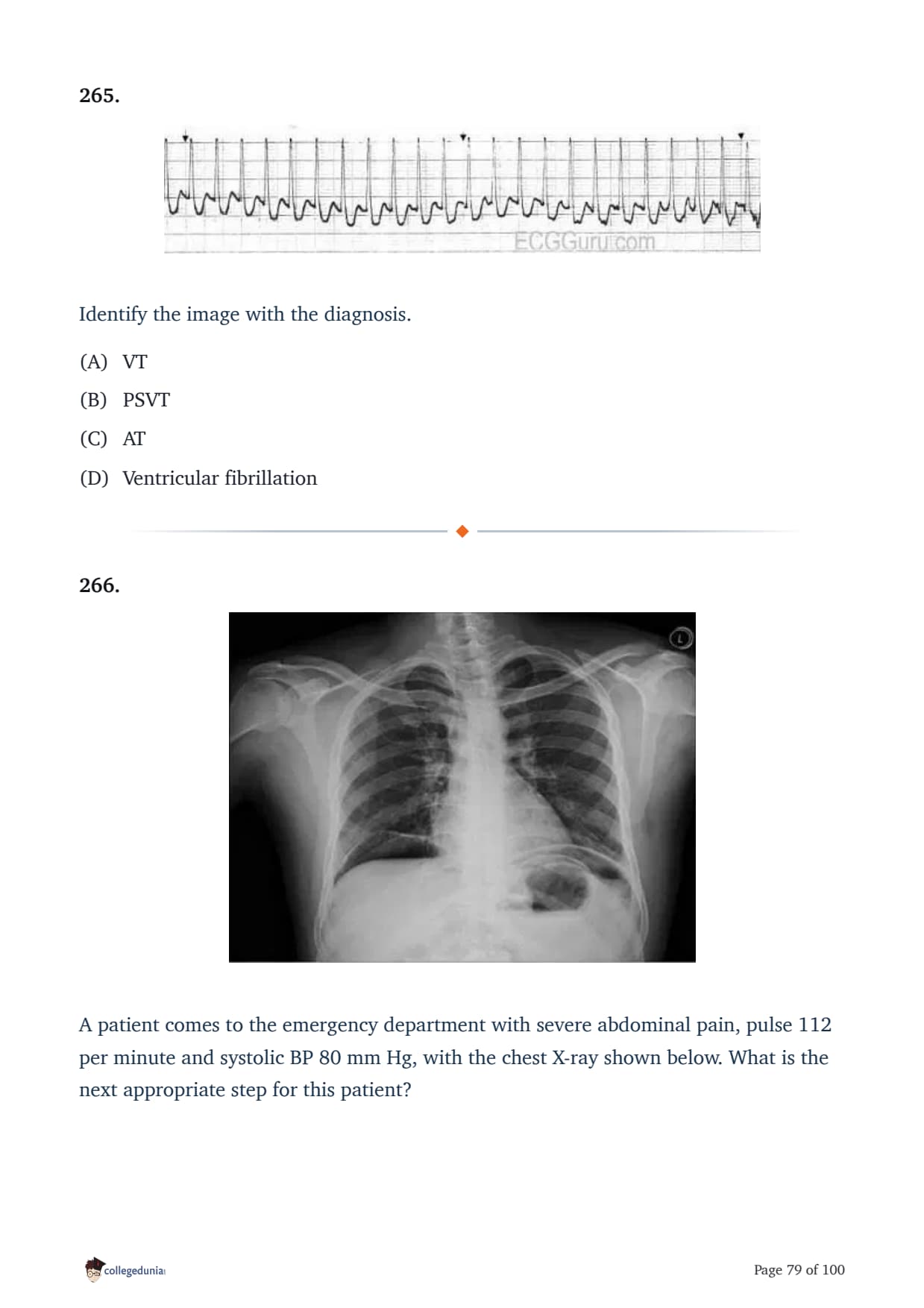
Question 264:
![]()
A patient who is a known case of acute pancreatitis develops breathlessness and bilateral basal crepitations on day 4, with the chest radiograph shown below. What is the diagnosis?
- (A) Bilateral pneumonia
- (B) ARDS
- (C) Cardiogenic pulmonary embolism
- (D) Collapse
Question 265:
![]()
Identify the image with the diagnosis.
- (A) VT
- (B) PSVT
- (C) AT
- (D) Ventricular fibrillation
Question 266:
![]()
A patient comes to the emergency department with severe abdominal pain, pulse 112 per minute and systolic BP 80 mm Hg, with the chest X-ray shown below. What is the next appropriate step for this patient?
- (A) Exploratory laparotomy
- (B) Saline wash of stomach
- (C) Intercostal tube drainage
- (D) None
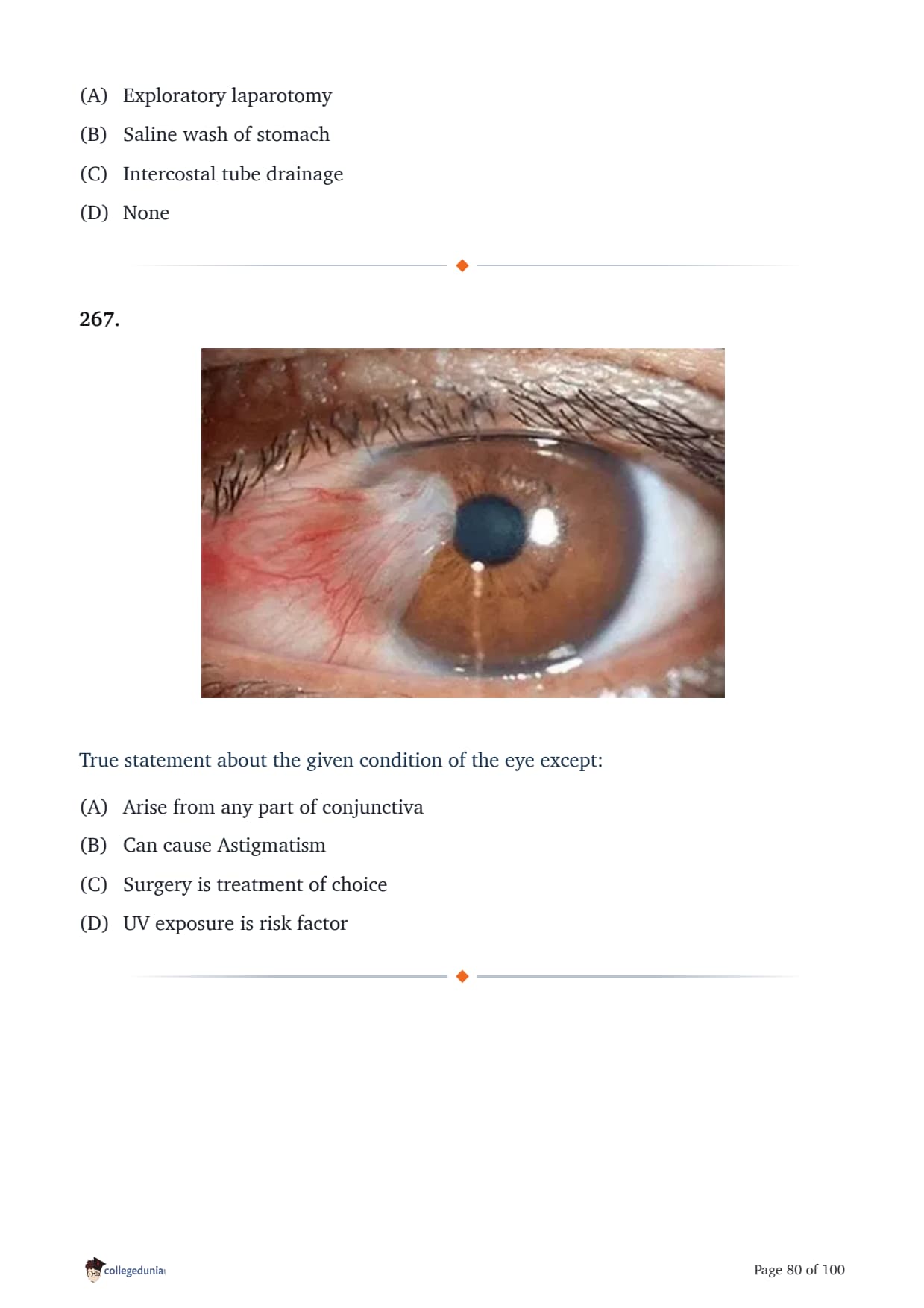
Question 267:
![]()
True statement about the given condition of the eye except:
- (A) Arise from any part of conjunctiva
- (B) Can cause Astigmatism
- (C) Surgery is treatment of choice
- (D) UV exposure is risk factor
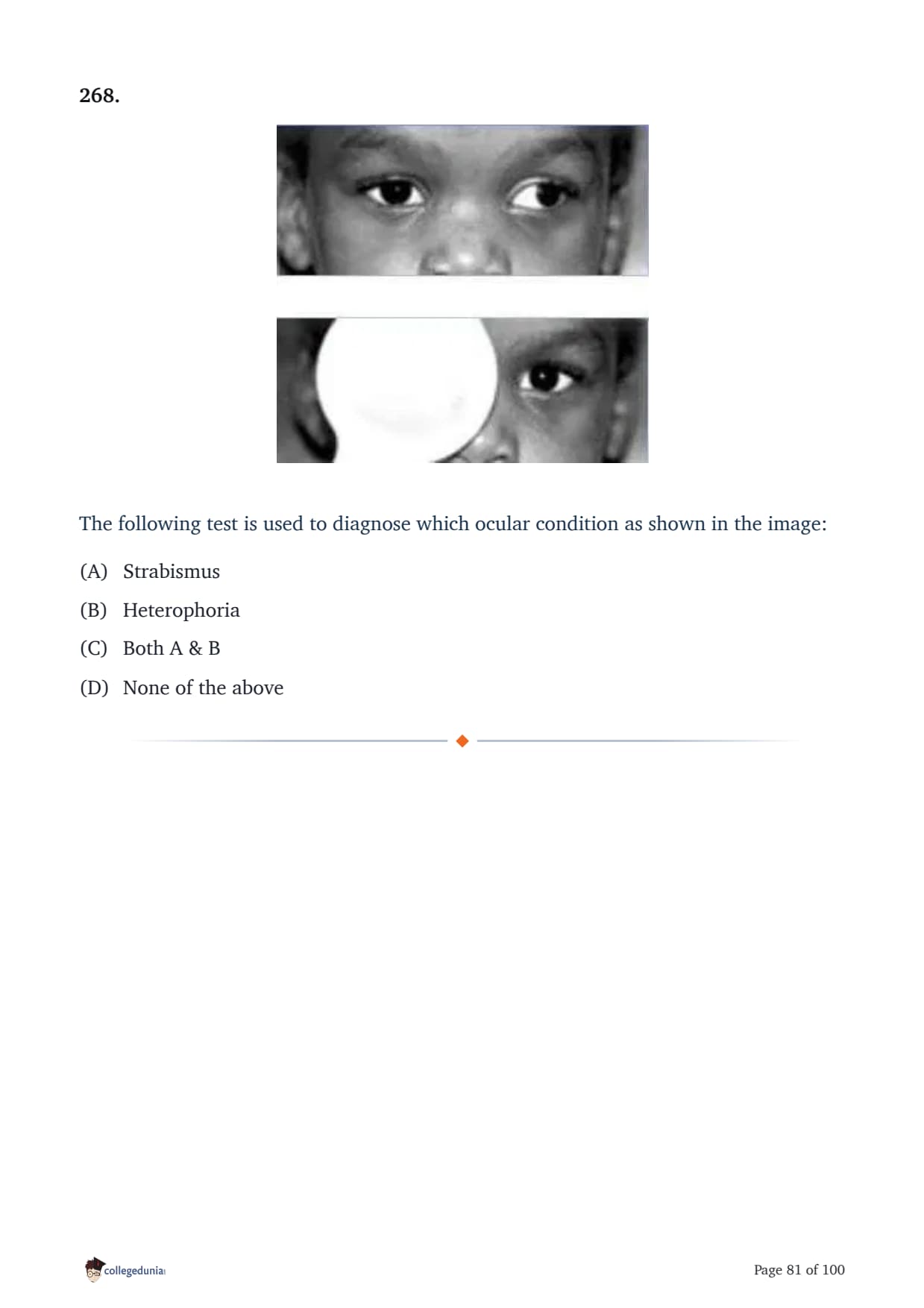
Question 268:
![]()
The following test is used to diagnose which ocular condition as shown in the image:
- (A) Strabismus
- (B) Heterophoria
- (C) Both A & B
- (D) None of the above
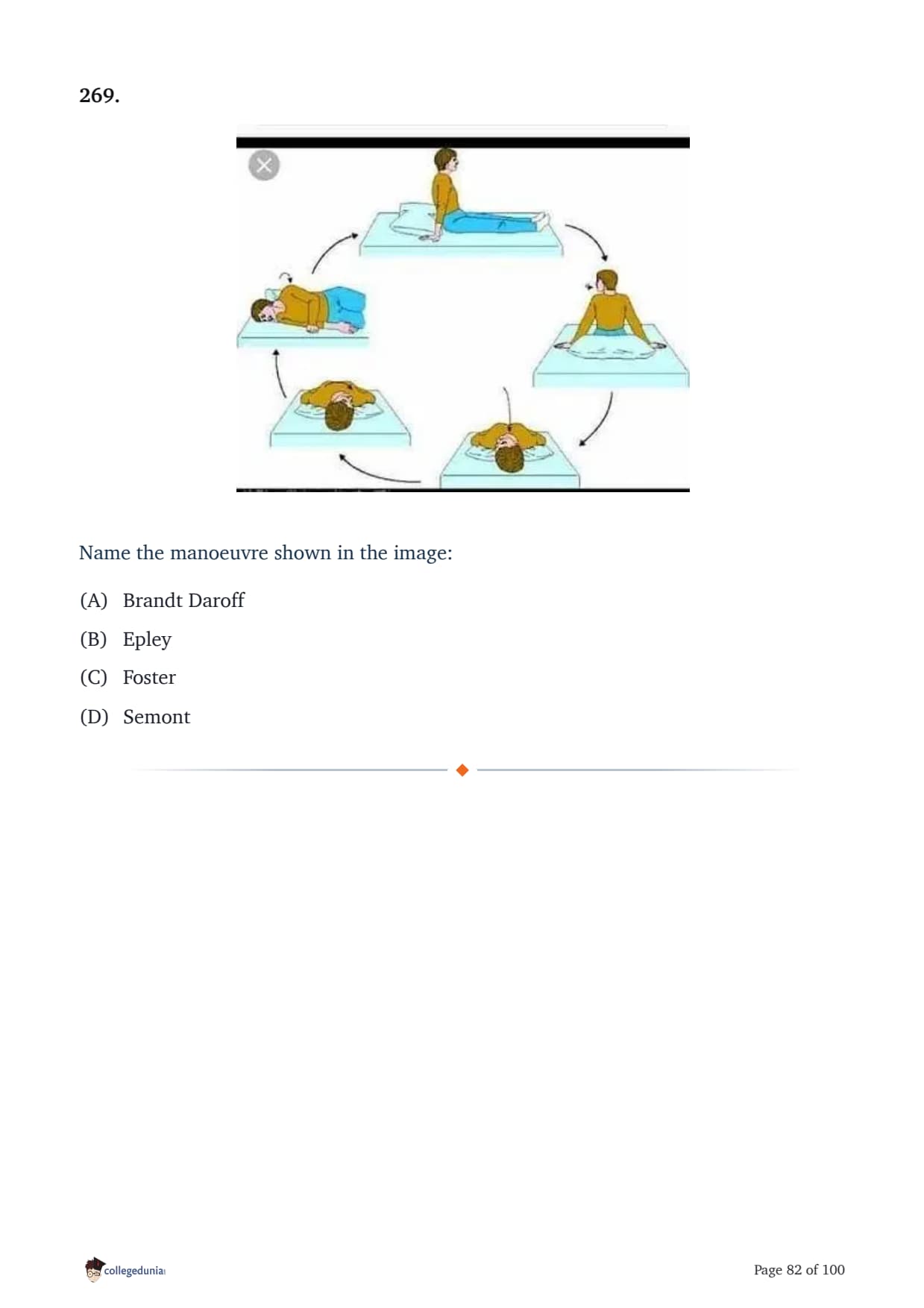
Question 269:
![]()
Name the manoeuvre shown in the image:
- (A) Brandt Daroff
- (B) Epley
- (C) Foster
- (D) Semont
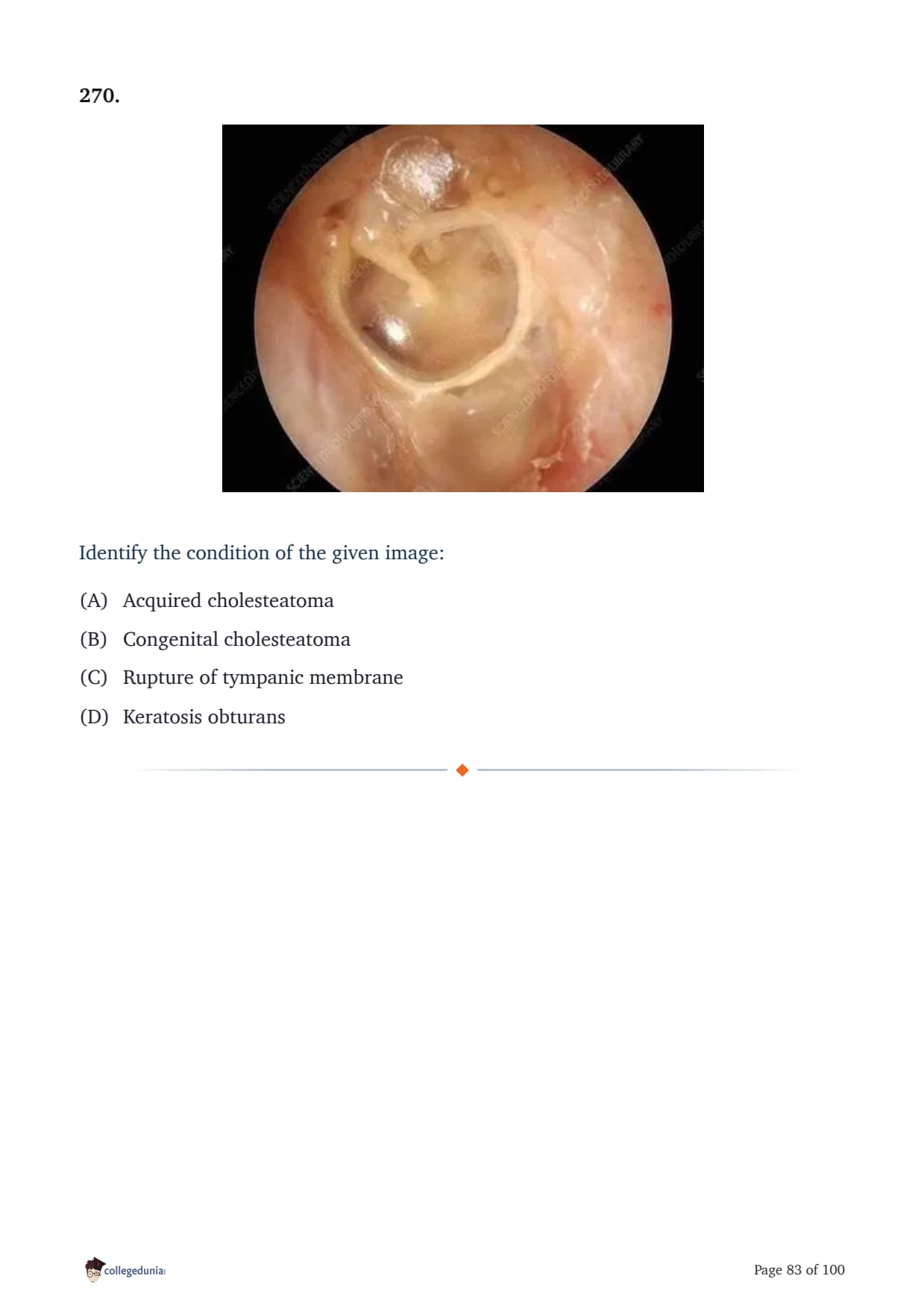
Question 270:
![]()
Identify the condition of the given image:
- (A) Acquired cholesteatoma
- (B) Congenital cholesteatoma
- (C) Rupture of tympanic membrane
- (D) Keratosis obturans
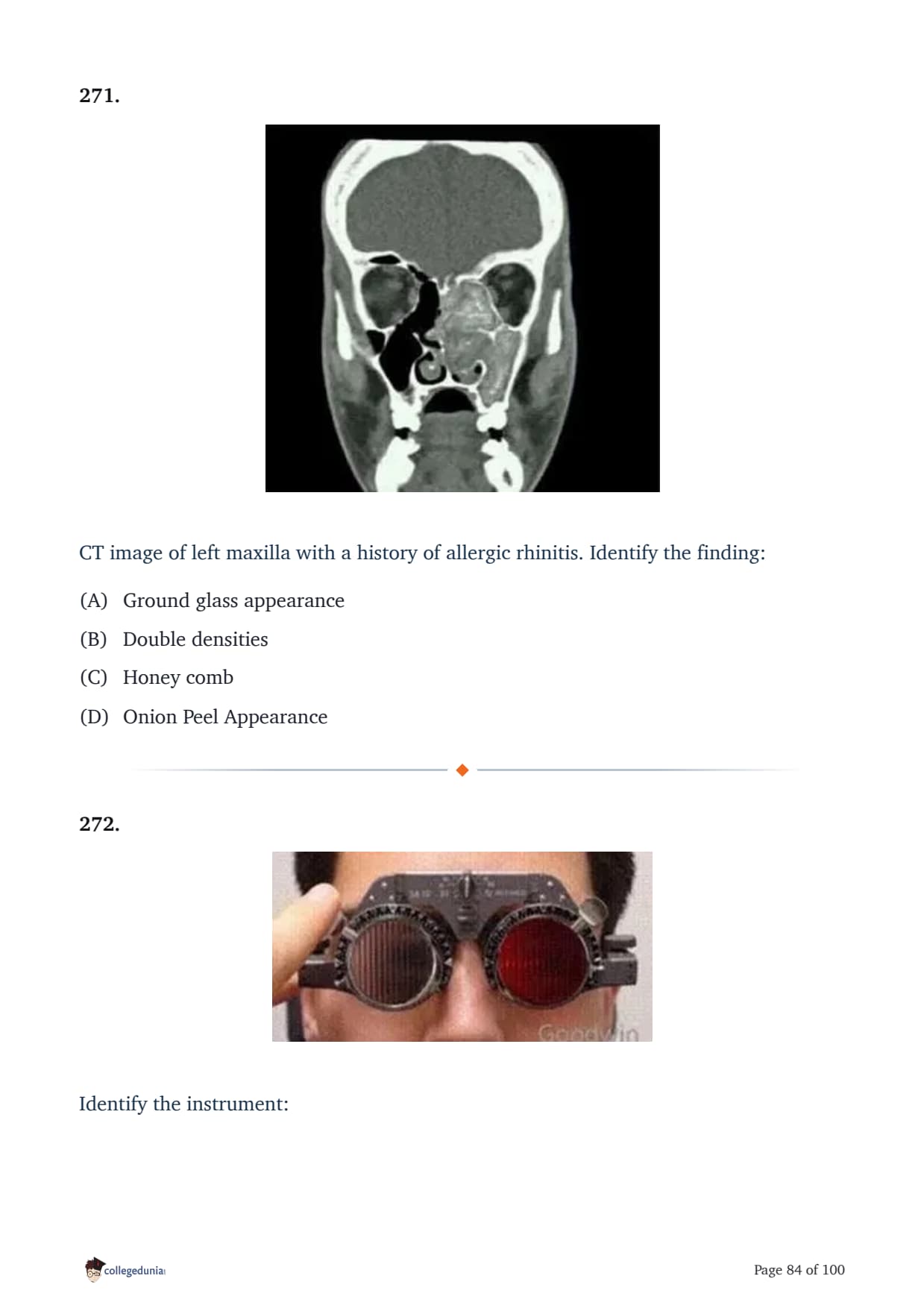
Question 271:
![]()
CT image of left maxilla with a history of allergic rhinitis. Identify the finding:
- (A) Ground glass appearance
- (B) Double densities
- (C) Honey comb
- (D) Onion Peel Appearance
Question 272:
![]()
Identify the instrument:
- (A) Maddox rod
- (B) Maddox wing
- (C) Maddox glass
- (D) Red glasses
Question 273:
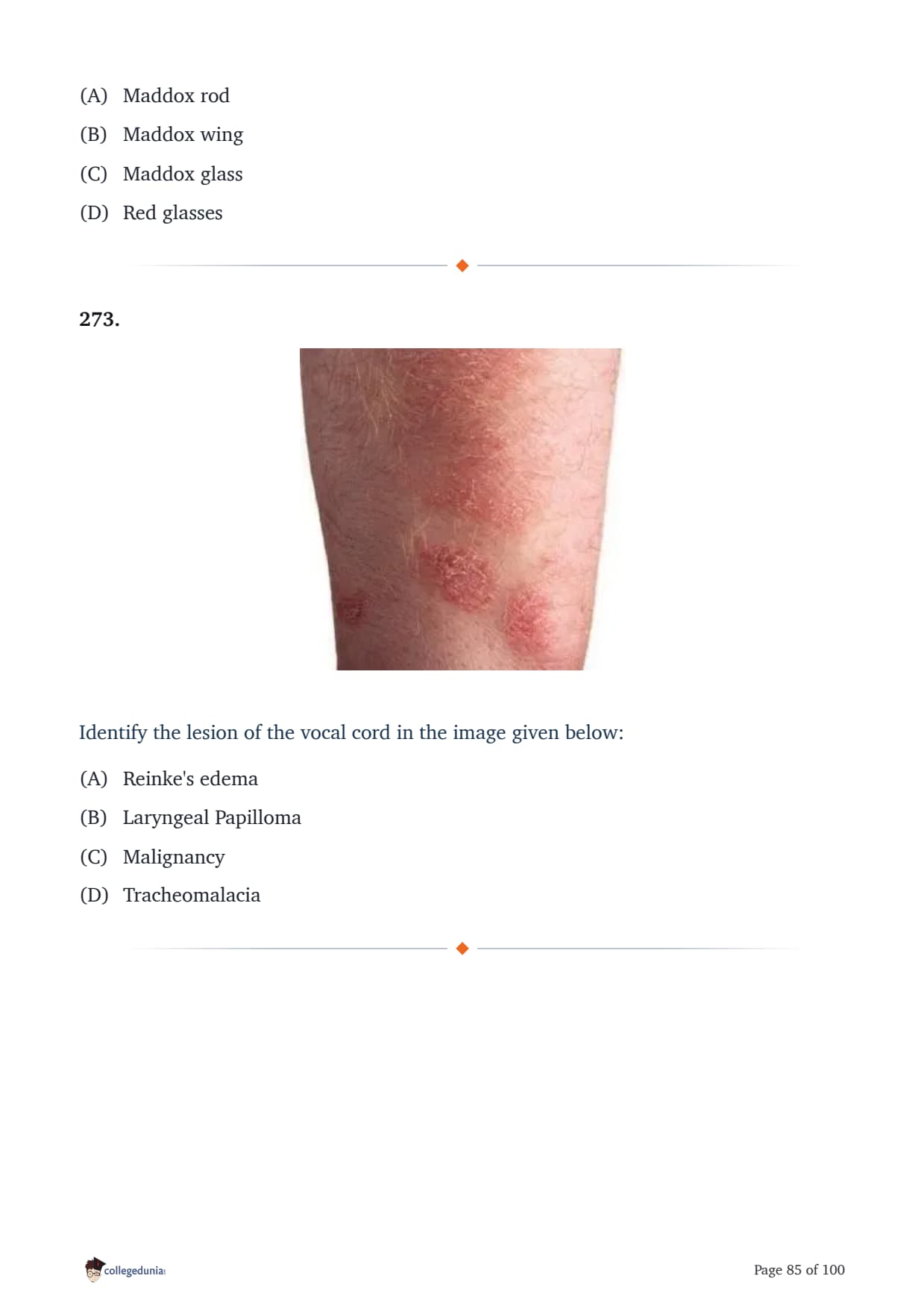
![]()
Identify the lesion of the vocal cord in the image given below:
- (A) Reinke's edema
- (B) Laryngeal Papilloma
- (C) Malignancy
- (D) Tracheomalacia
Question 274:
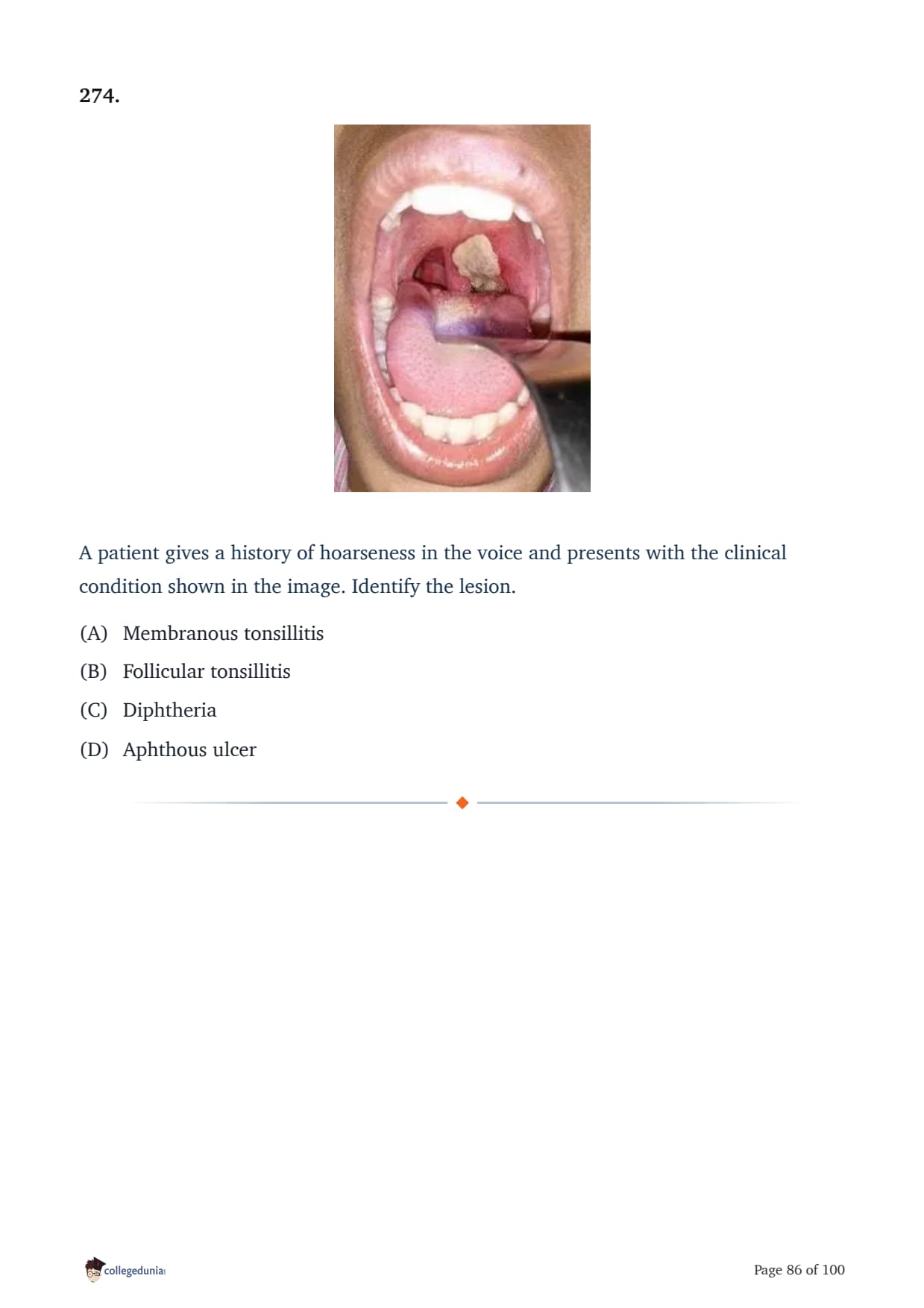
![]()
A patient gives a history of hoarseness in the voice and presents with the clinical condition shown in the image. Identify the lesion.
- (A) Membranous tonsillitis
- (B) Follicular tonsillitis
- (C) Diphtheria
- (D) Aphthous ulcer
Question 275:
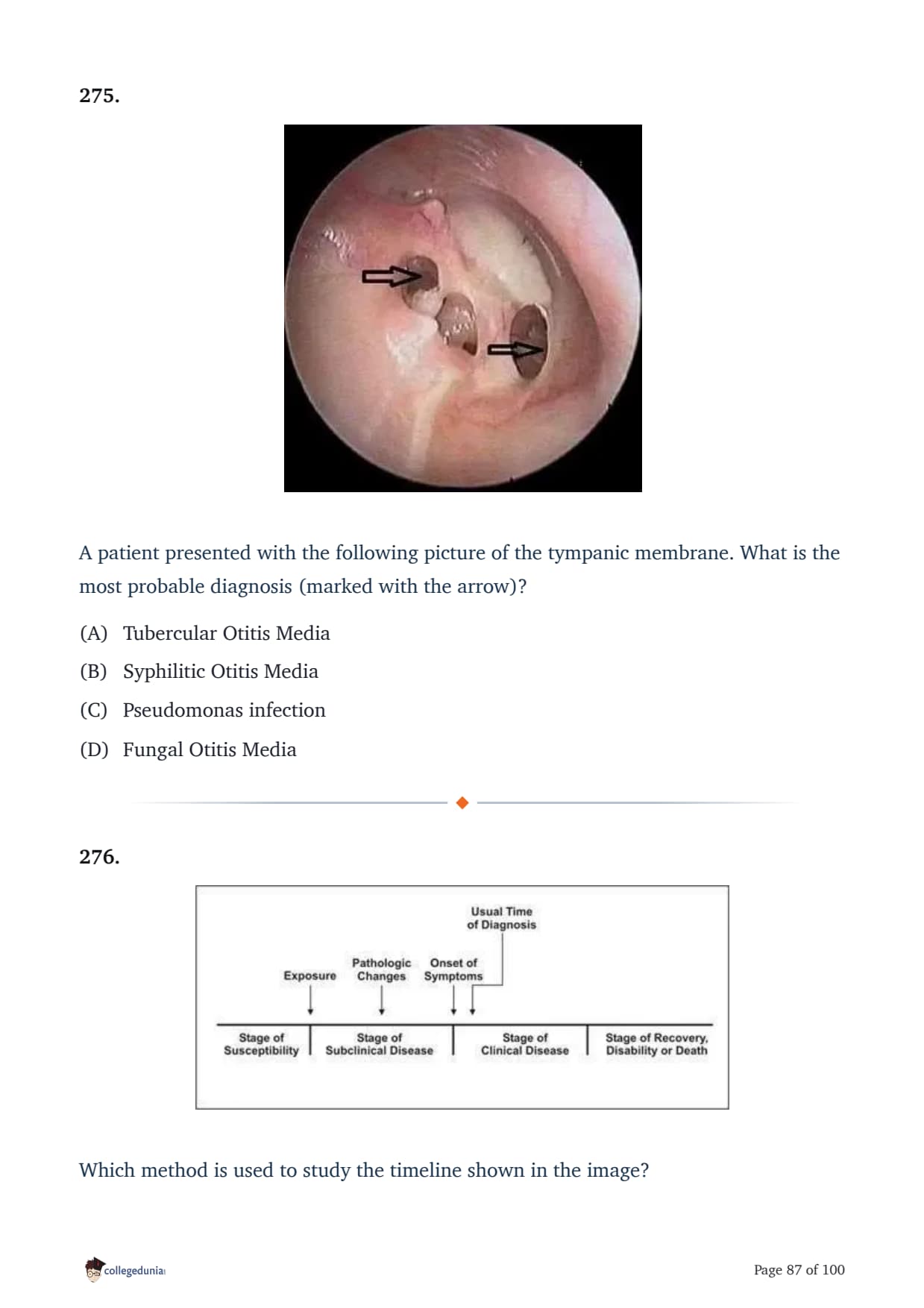
![]()
A patient presented with the following picture of the tympanic membrane. What is the most probable diagnosis (marked with the arrow)?
- (A) Tubercular Otitis Media
- (B) Syphilitic Otitis Media
- (C) Pseudomonas infection
- (D) Fungal Otitis Media
Question 276:
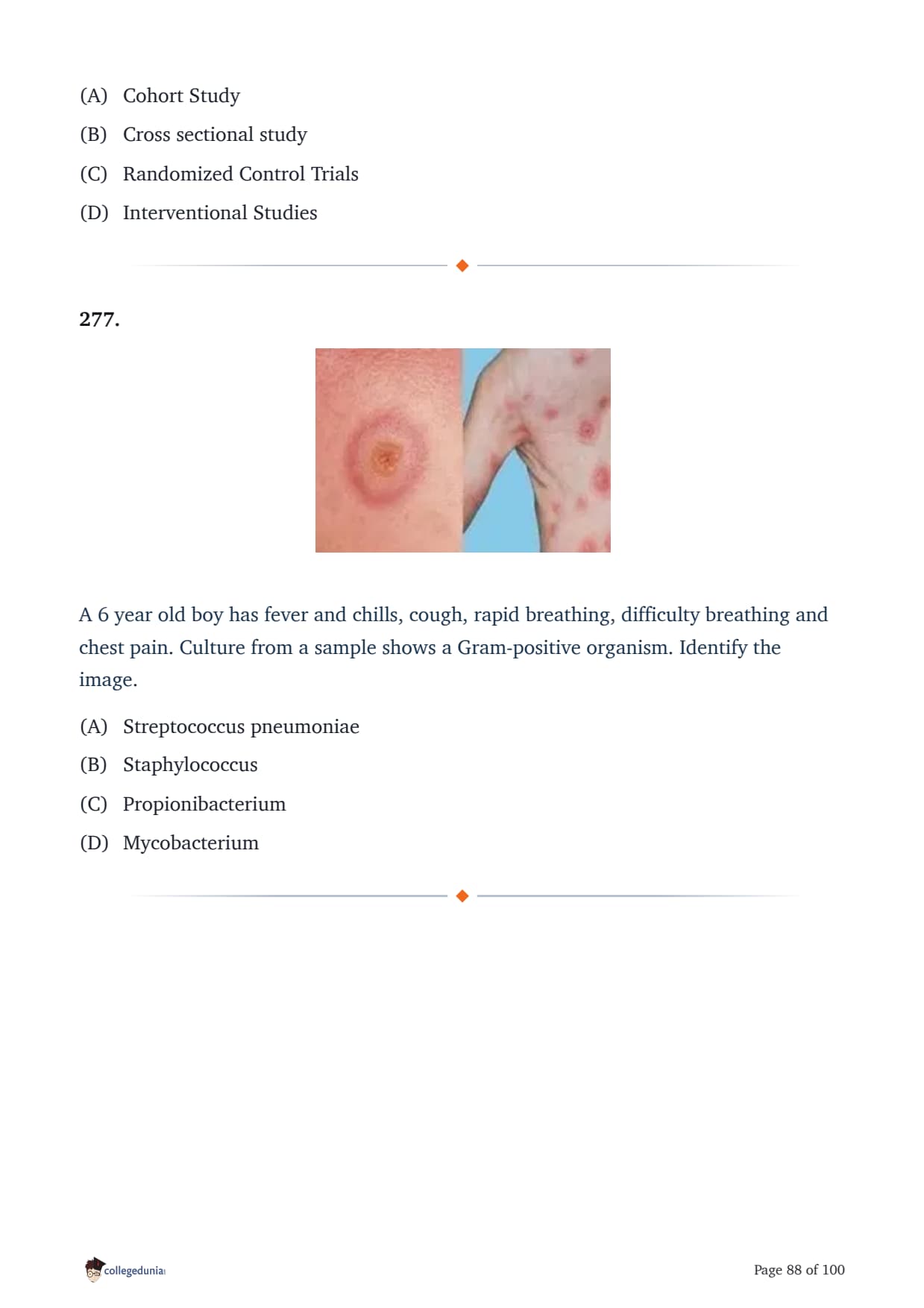
![]()
Which method is used to study the timeline shown in the image?
- (A) Cohort Study
- (B) Cross sectional study
- (C) Randomized Control Trials
- (D) Interventional Studies
Question 277:
![]()
A 6 year old boy has fever and chills, cough, rapid breathing, difficulty breathing and chest pain. Culture from a sample shows a Gram-positive organism. Identify the image.
- (A) Streptococcus pneumoniae
- (B) Staphylococcus
- (C) Propionibacterium
- (D) Mycobacterium
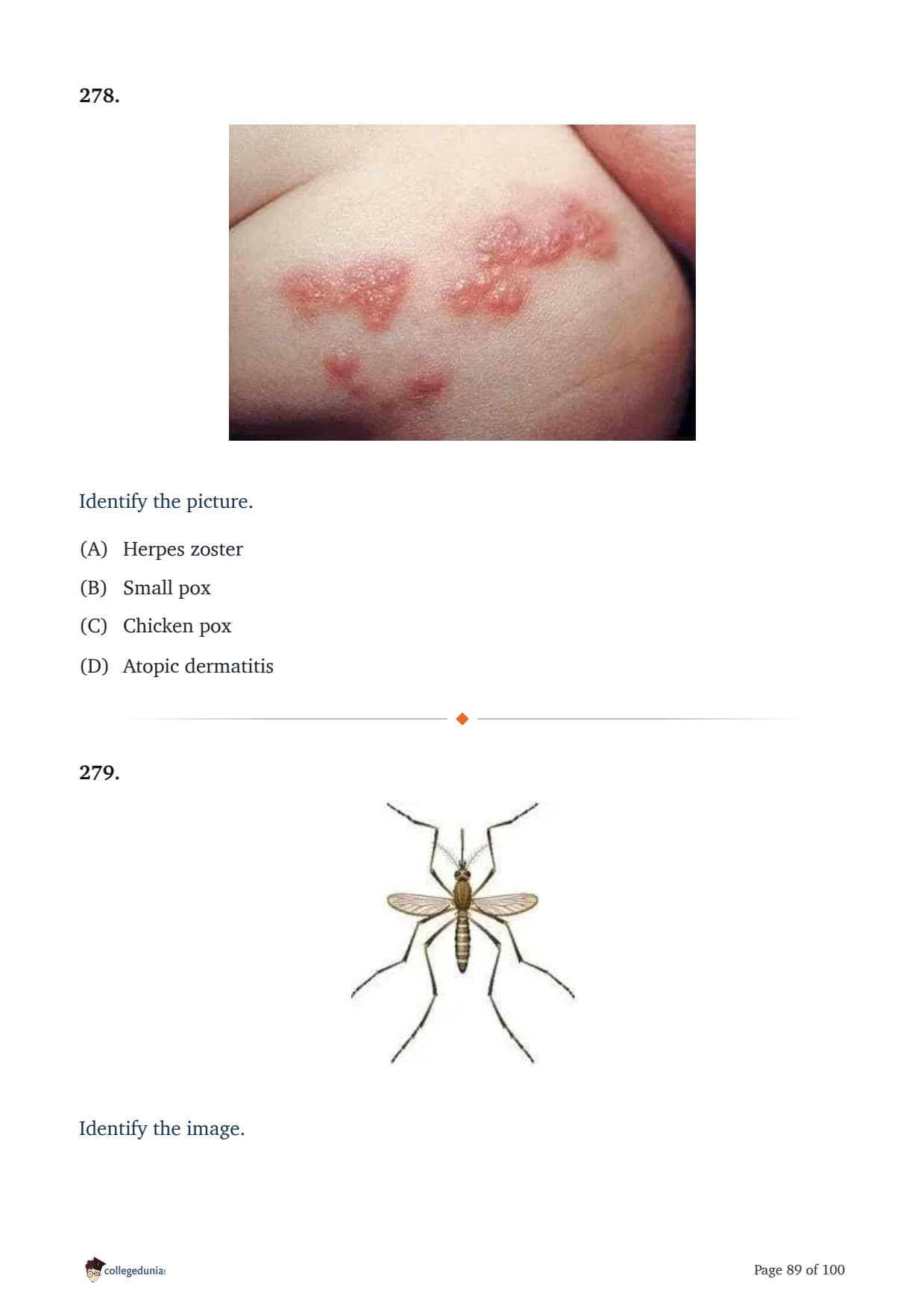
Question 278:
![]()
Identify the picture.
- (A) Herpes zoster
- (B) Small pox
- (C) Chicken pox
- (D) Atopic dermatitis
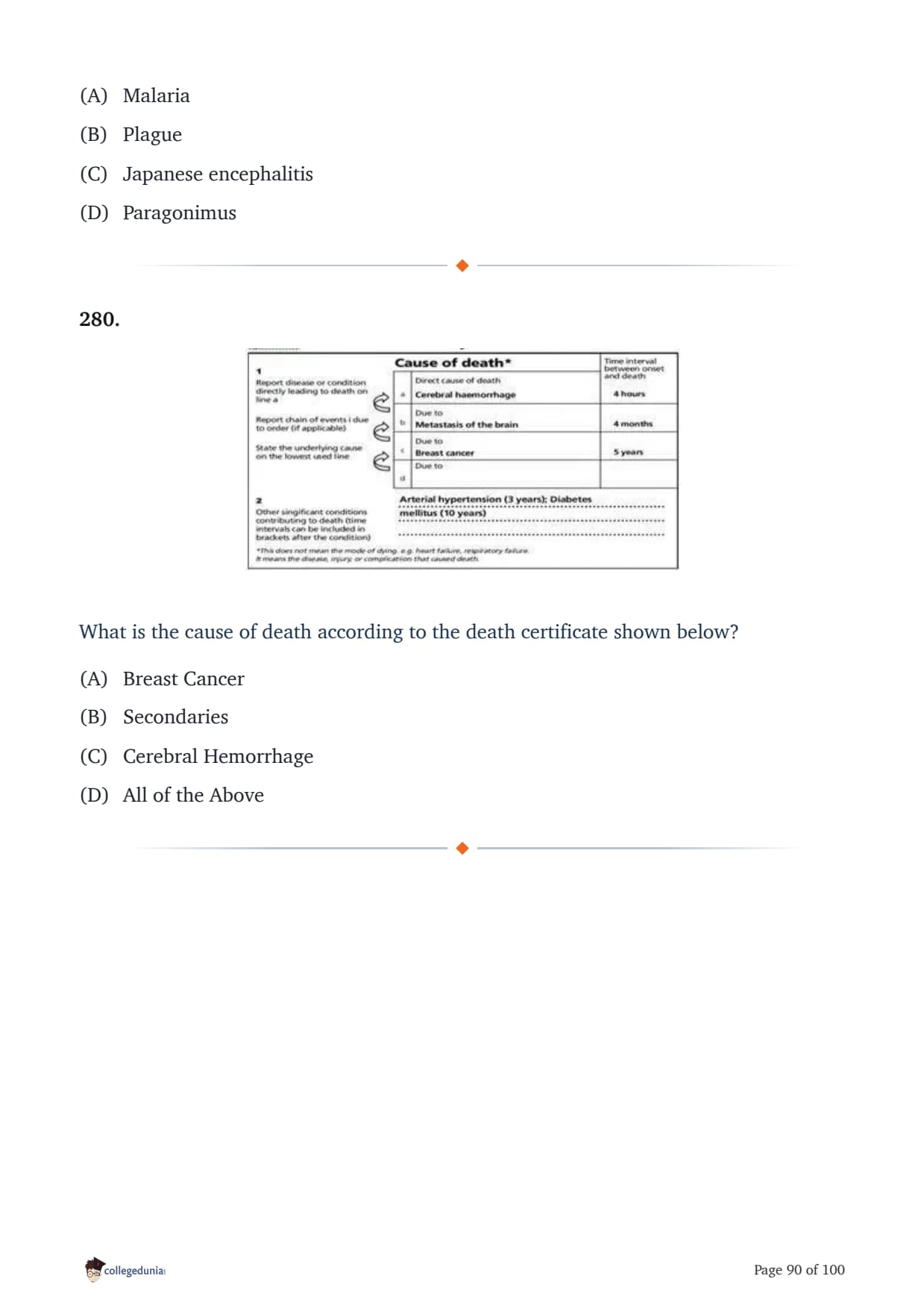
Question 279:
![]()
Identify the image.
- (A) Malaria
- (B) Plague
- (C) Japanese encephalitis
- (D) Paragonimus
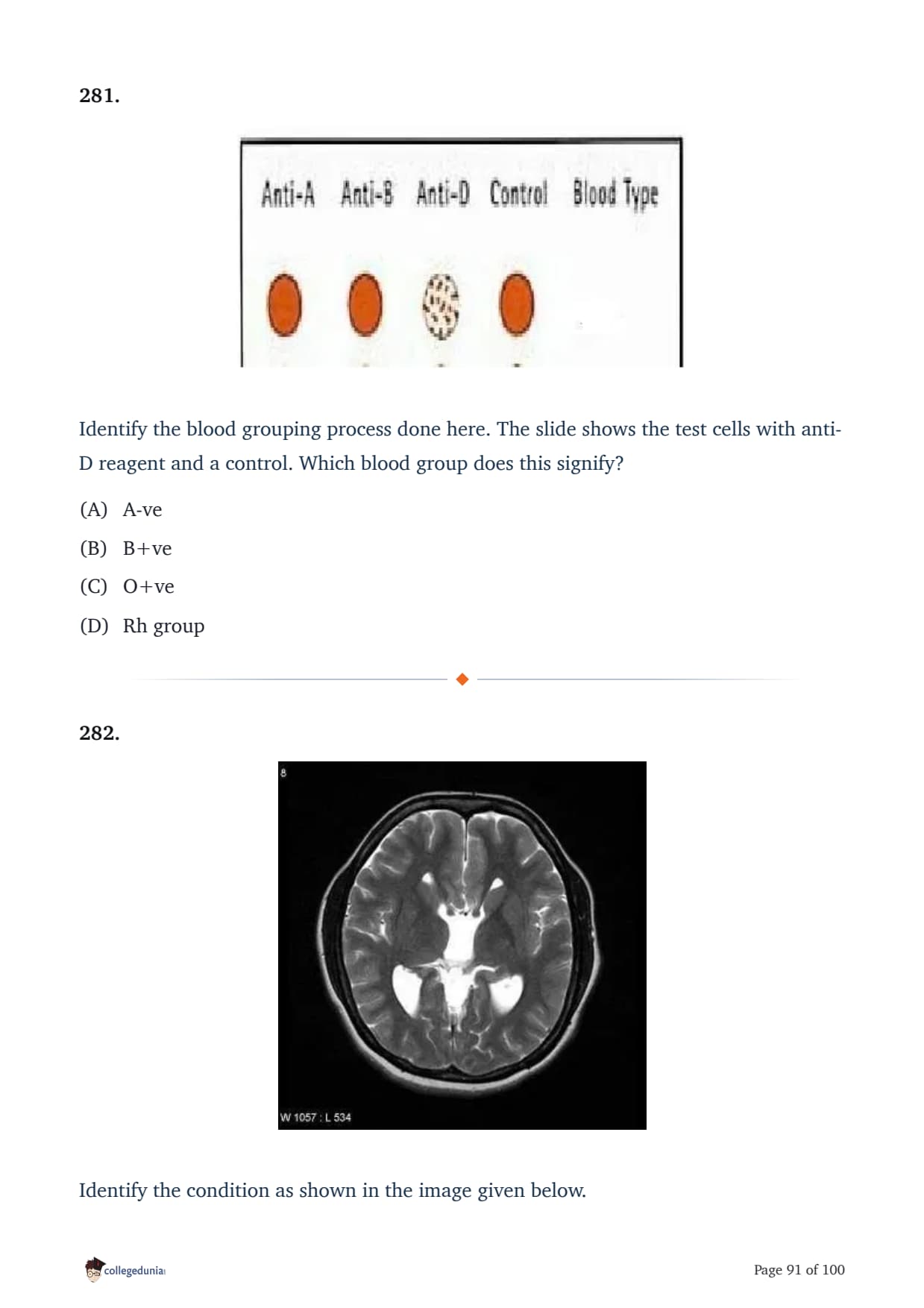
Question 280:
![]()
What is the cause of death according to the death certificate shown below?
- (A) Breast Cancer
- (B) Secondaries
- (C) Cerebral Hemorrhage
- (D) All of the Above
Question 281:
![]()
Identify the blood grouping process done here. The slide shows the test cells with anti-D reagent and a control. Which blood group does this signify?
- (A) A-ve
- (B) B+ve
- (C) O+ve
- (D) Rh group
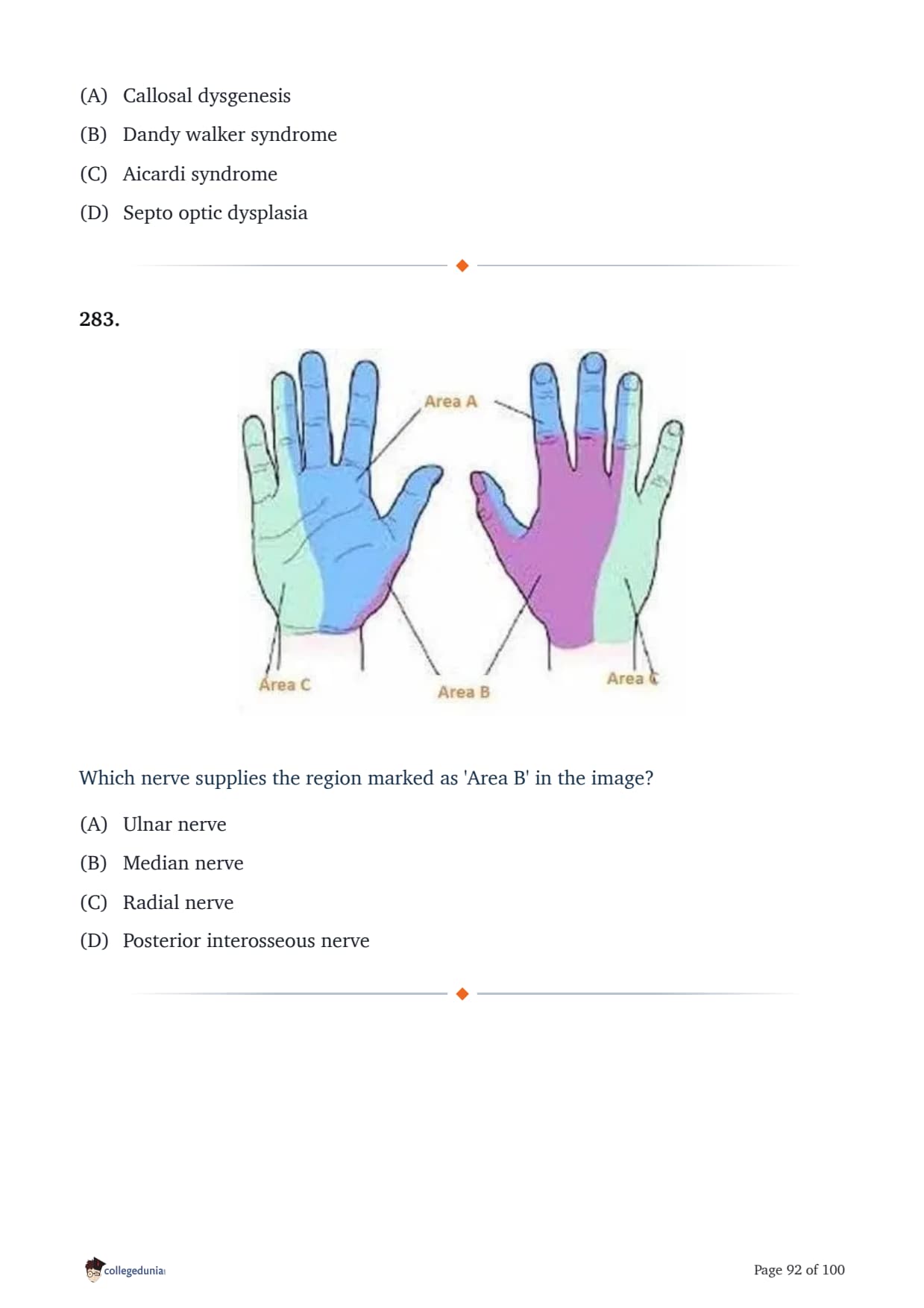
Question 282:
![]()
Identify the condition as shown in the image given below.
- (A) Callosal dysgenesis
- (B) Dandy walker syndrome
- (C) Aicardi syndrome
- (D) Septo optic dysplasia
Question 283:
![]()
Which nerve supplies the region marked as 'Area B' in the image?
- (A) Ulnar nerve
- (B) Median nerve
- (C) Radial nerve
- (D) Posterior interosseous nerve
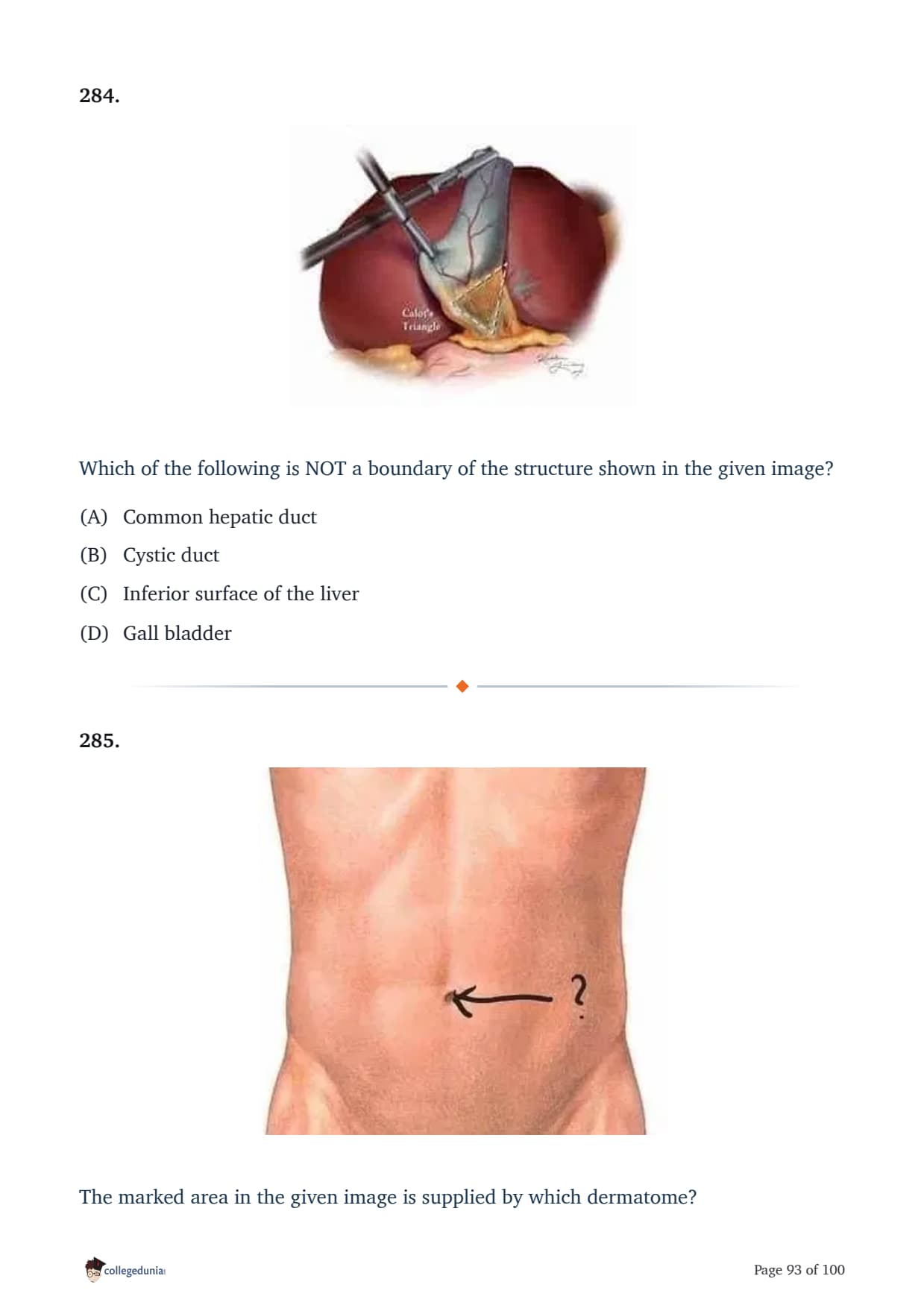
Question 284:
![]()
Which of the following is NOT a boundary of the structure shown in the given image?
- (A) Common hepatic duct
- (B) Cystic duct
- (C) Inferior surface of the liver
- (D) Gall bladder
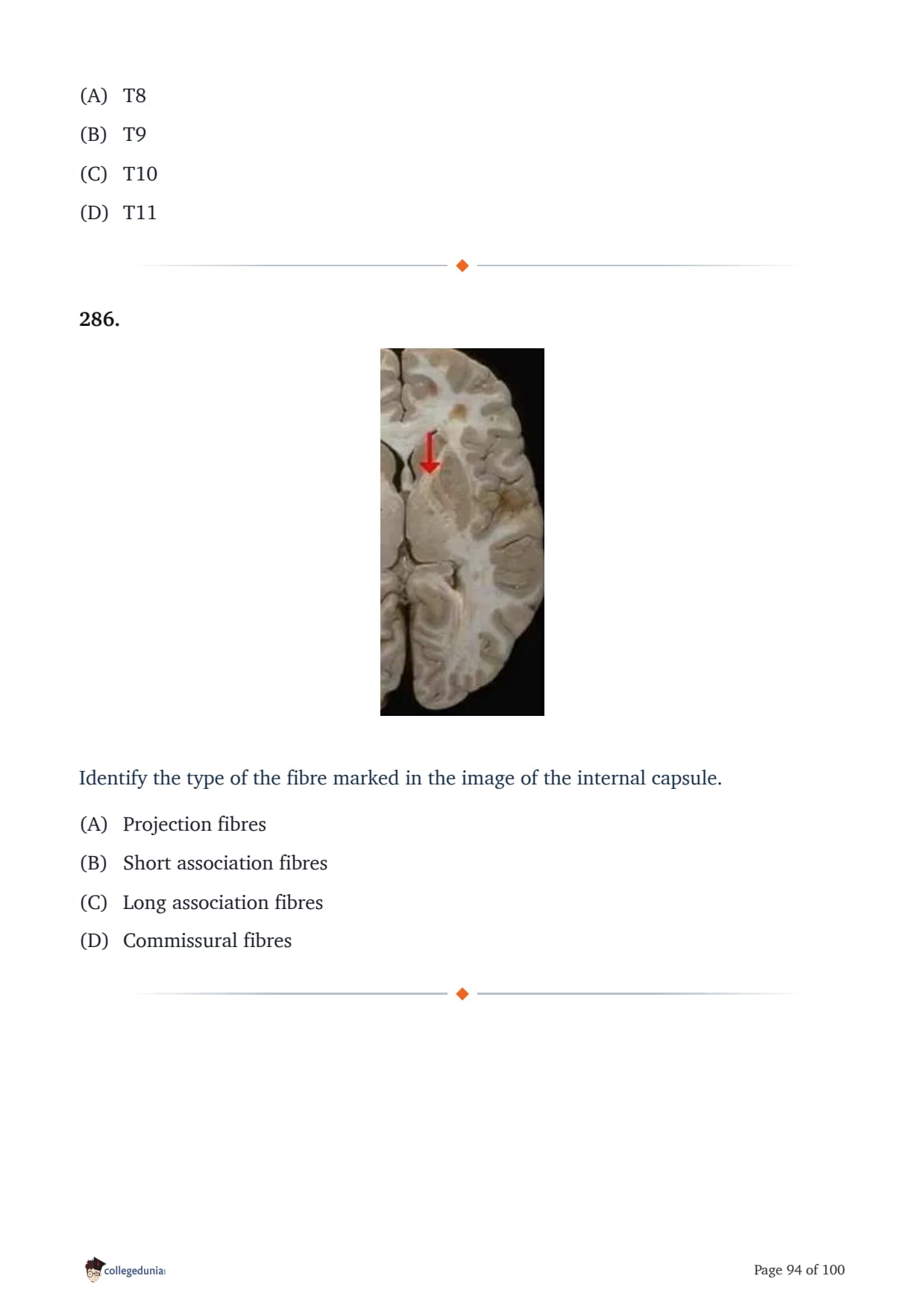
Question 285:
![]()
The marked area in the given image is supplied by which dermatome?
- (A) T8
- (B) T9
- (C) T10
- (D) T11
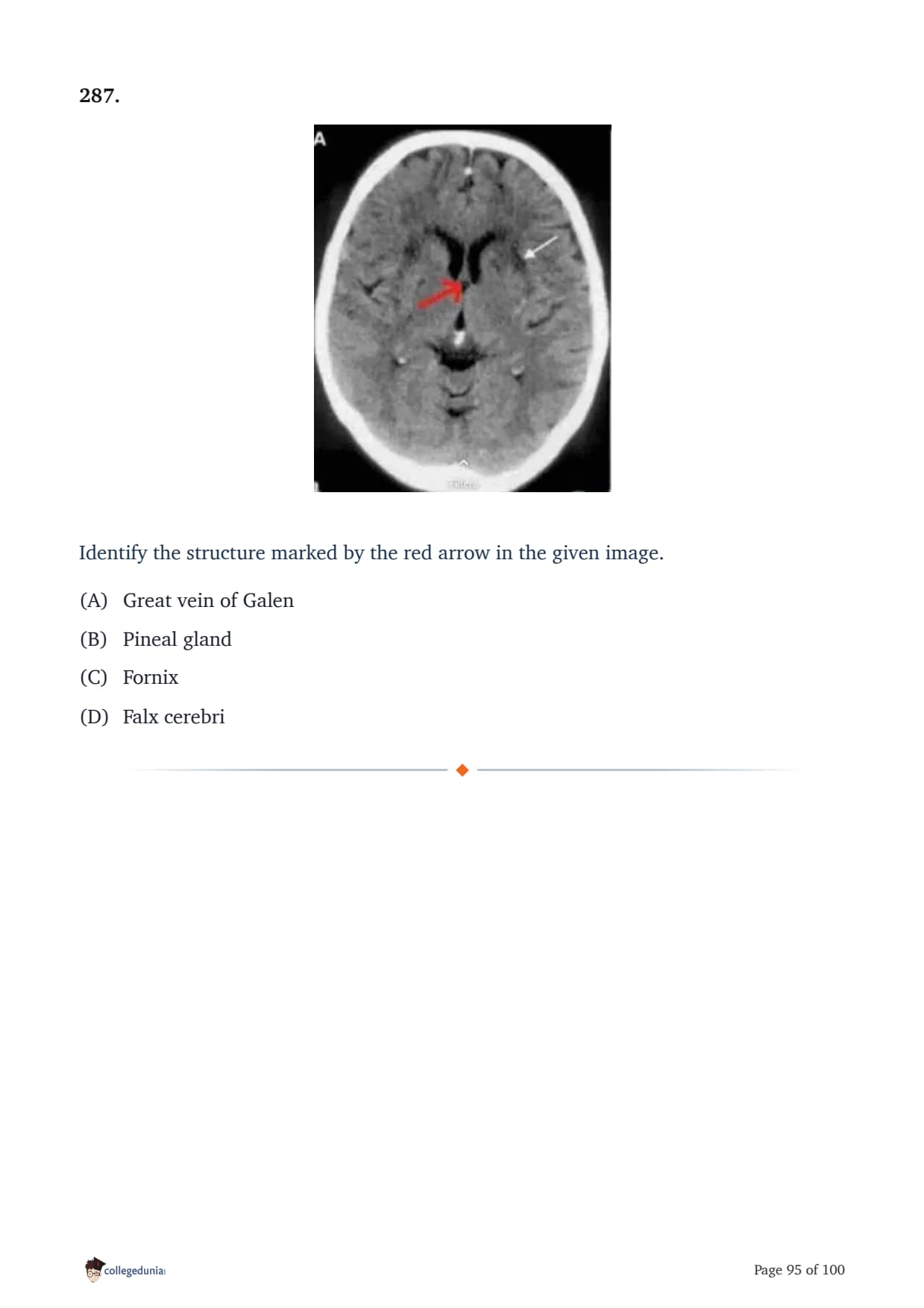
Question 286:
![]()
Identify the type of the fibre marked in the image of the internal capsule.
- (A) Projection fibres
- (B) Short association fibres
- (C) Long association fibres
- (D) Commissural fibres
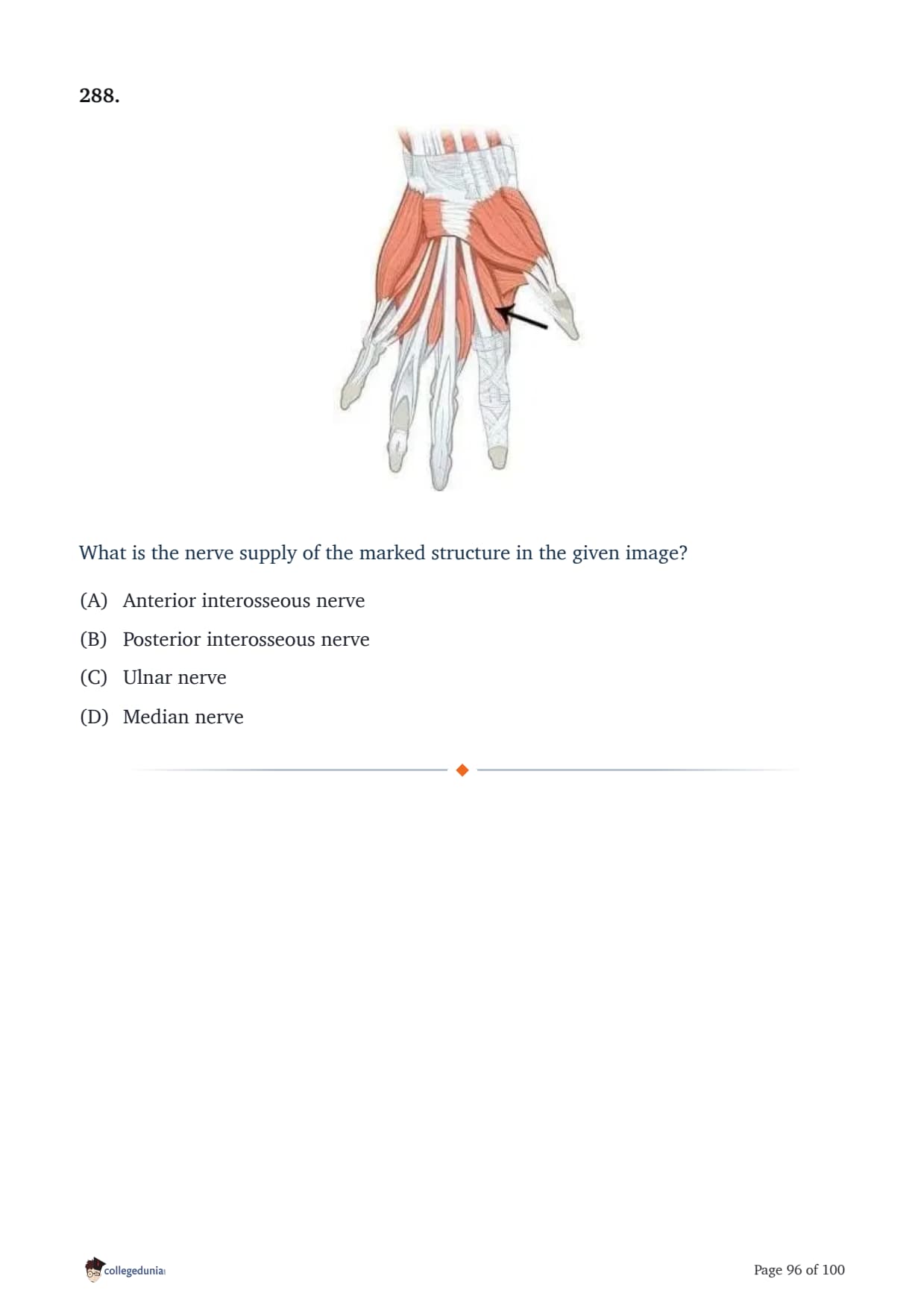
Question 287:
![]()
Identify the structure marked by the red arrow in the given image.
- (A) Great vein of Galen
- (B) Pineal gland
- (C) Fornix
- (D) Falx cerebri
Question 288:
![]()
What is the nerve supply of the marked structure in the given image?
- (A) Anterior interosseous nerve
- (B) Posterior interosseous nerve
- (C) Ulnar nerve
- (D) Median nerve
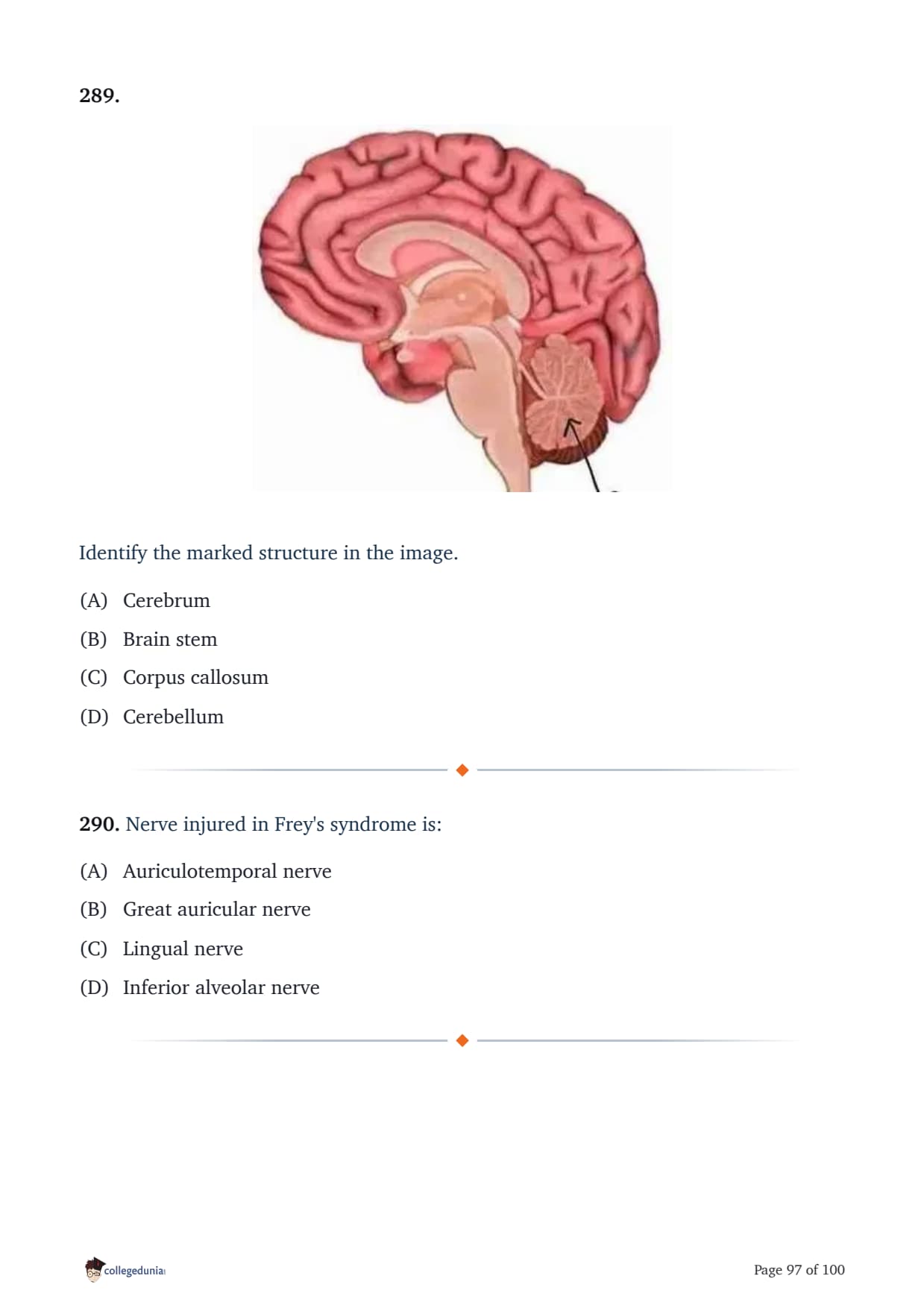
Question 289:
![]()
Identify the marked structure in the image.
- (A) Cerebrum
- (B) Brain stem
- (C) Corpus callosum
- (D) Cerebellum
Question 290:
Nerve injured in Frey's syndrome is:
- (A) Auriculotemporal nerve
- (B) Great auricular nerve
- (C) Lingual nerve
- (D) Inferior alveolar nerve
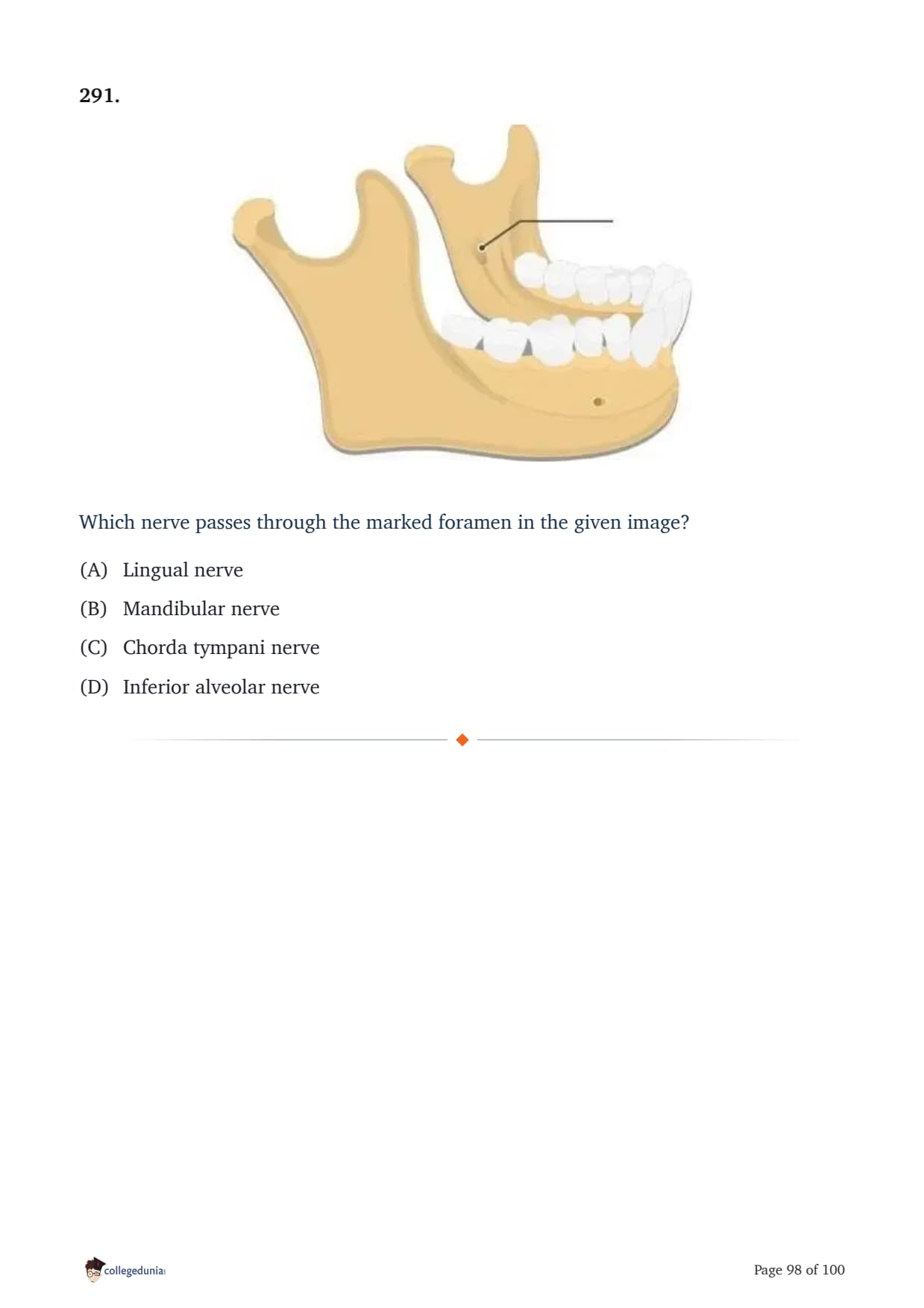
Question 291:
![]()
Which nerve passes through the marked foramen in the given image?
- (A) Lingual nerve
- (B) Mandibular nerve
- (C) Chorda tympani nerve
- (D) Inferior alveolar nerve
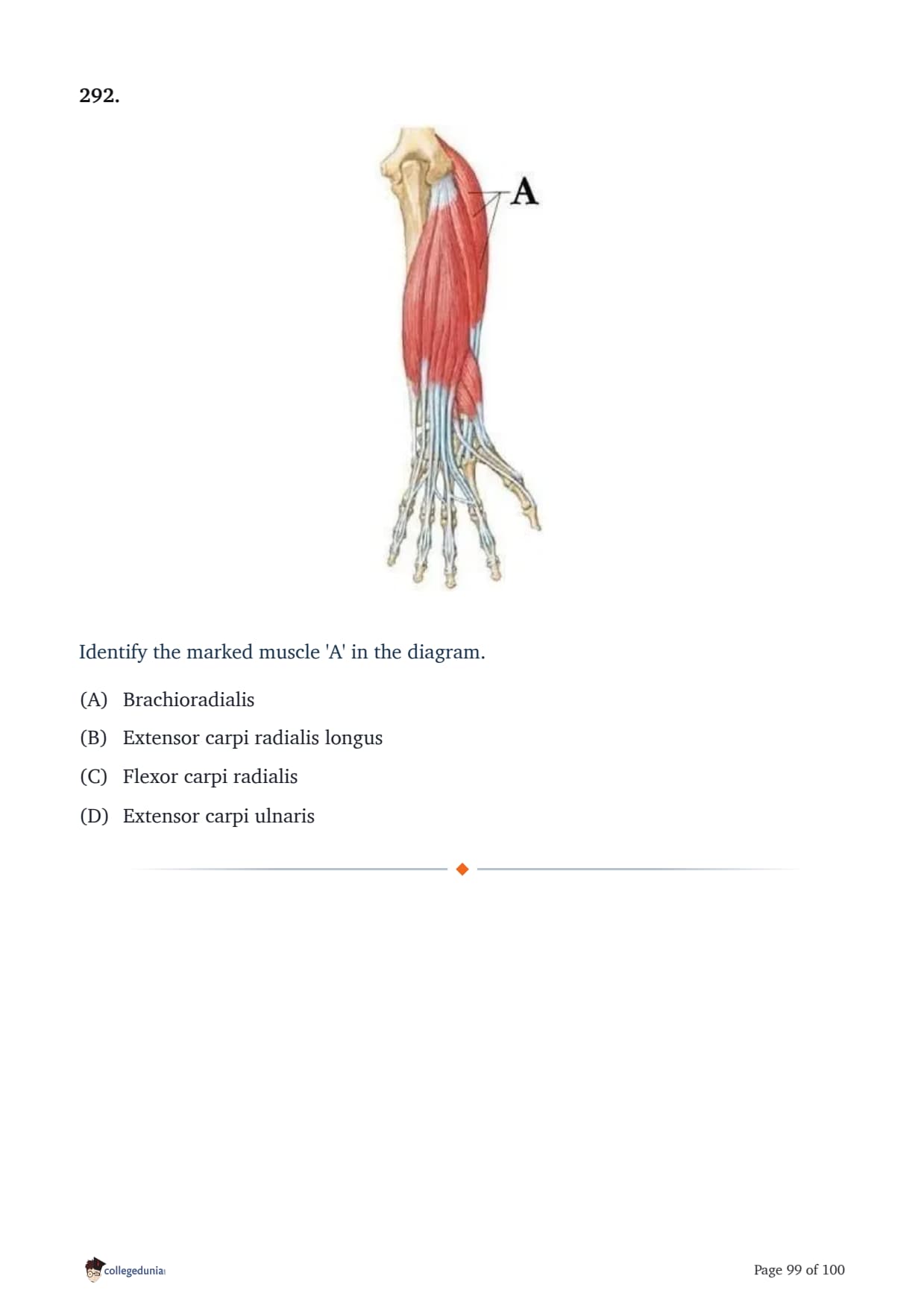
Question 292:
![]()
Identify the marked muscle 'A' in the diagram.
- (A) Brachioradialis
- (B) Extensor carpi radialis longus
- (C) Flexor carpi radialis
- (D) Extensor carpi ulnaris
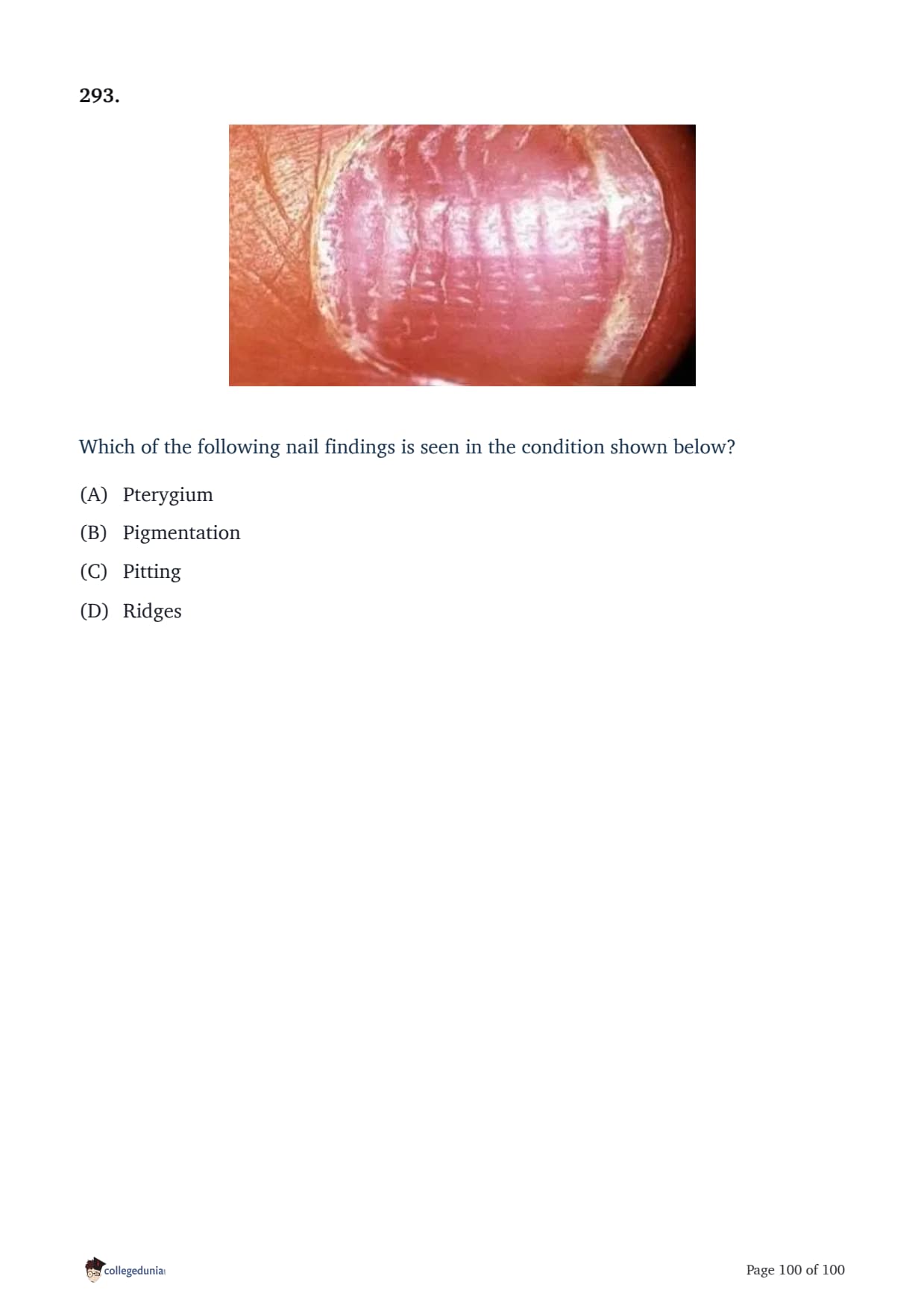
Question 293:
![]()
Which of the following nail findings is seen in the condition shown below?
- (A) Pterygium
- (B) Pigmentation
- (C) Pitting
- (D) Ridges
NEET PG 2019 Exam Pattern and Marking Scheme Explained
NEET PG 2019 was a single continuous computer-based test of single-best-response MCQs, with no sectional time-lock - the full 300 questions ran across 210 minutes in one sitting.
- Total questions: 300 single-best-answer MCQs in English, split into Part A (50), Part B (100) and Part C (150)
- Duration: 3 hours 30 minutes (210 minutes), one continuous slot
- Total marks: 1200 (300 questions x 4 marks)
- Marking scheme: +4 for a correct answer, -1 for a wrong one, 0 for an unattempted question
- Question types: clinical/applied single-best-answer MCQs across all 19 subjects
High-Weightage Subjects in NEET PG 2019 to Focus On First
The clinical majors carried the paper. General Medicine and General Surgery sat at the top with roughly 45 questions each, so these two alone decided a big chunk of your 1200 marks.
- General Medicine and General Surgery: about 45 questions each - the single largest blocks, and where most rank gaps opened up
- Obstetrics and Gynaecology: around 28-30 questions, heavy on clinical case stems
- PSM / Community Medicine: roughly 22-25 questions, with the usual high-yield biostatistics and epidemiology one-liners
- Pathology and Pharmacology: about 18-22 questions each, both strong PYQ-repeat zones
- Pre-clinical (Anatomy, Physiology, Biochemistry): lower in count but flagged as the toughest part of the 2019 paper, so do not treat them as easy marks
NEET PG 2019 Question Paper Analysis Video
Source: Gaurav Tyagi
How to Use the NEET PG 2019 Question Paper for Practice
Treat this paper as a full-length timed mock before you read a single solution. Sit the 300 questions in one 210-minute block, then open the solution PDF to mark every miss and every blind guess.
- Solve all 300 questions in one timed sitting to build the stamina the real 3.5-hour slot demands
- Review with the solution PDF, tagging each wrong answer to its subject so you can spot weak areas
- Redo Pharmacology, Pathology and Microbiology sets first - concept-level repetition is heaviest there, so PYQ practice pays back fastest
- Re-attempt the pre-clinical questions separately, since Anatomy and Physiology were the pain point this year
NEET PG 2019 Qualifying Cutoff and Score Benchmark
- General/UR qualifying cutoff was 50th percentile, around 340 out of 1200 in NEET PG 2019
- SC/ST/OBC cleared at the 40th percentile and PwD at the 45th percentile, both well below the General line
- Use roughly 700+ out of 1200 as your working target if you are chasing a government-seat rank, and treat the qualifying mark only as a floor
NEET PG 2019 Question Paper with Solutions FAQs
Ques. How many questions were there in NEET PG 2019 and what was the marking scheme?
Ans. NEET PG 2019 had 300 single-best-answer MCQs for 1200 marks, attempted in 3 hours 30 minutes. Each correct answer earned +4 and each wrong answer lost 1 mark, so blind guessing on a 25% penalty was rarely worth it.
Ques. Which subjects had the highest weightage in NEET PG 2019?
Ans. General Medicine and General Surgery dominated with about 45 questions each, followed by Obstetrics and Gynaecology, PSM, Pathology and Pharmacology. The pre-clinical subjects carried fewer questions but were rated the toughest part of the paper.
Ques. What was the NEET PG 2019 qualifying cutoff?
Ans. The General/UR category qualified at the 50th percentile, around 340 out of 1200. Reserved categories cleared at the 40th percentile and PwD candidates at the 45th percentile, so the cutoff varied by category.
Ques. Are NEET PG questions repeated from previous years?
Ans. Yes, but usually rephrased rather than copied word for word. Roughly 10-15 questions a year recur in altered form, and the repetition is heaviest in Pharmacology, Pathology and Microbiology, which is why solving 5-10 years of PYQs is standard advice.
Ques. How do NEET PG marks translate into rank and percentile?
Ans. NEET PG ranks are decided by percentile, not absolute marks, so your rank reflects how you did against everyone else rather than your raw score alone. NEET PG 2019 was effectively a single session, so shift normalisation mattered far less than in later multi-shift years.
Ques. Where can I download the NEET PG 2019 question paper with solutions PDF for free?
Ans. Download it free from the table at the top of this Collegedunia page, where every question is paired with a worked solution and the answer key. For the official bulletin and result archive, check the National Board of Examinations website at natboard.edu.in.








Comments