The NEET PG 2018 question paper with solutions is available here for free download with a full answer key and worked solutions. NEET PG 2018 was conducted by the National Board of Examinations (NBE) on January 7, 2018, as a computer-based test of 300 single-best-answer MCQs in 3 hours 30 minutes.
NEET PG 2018 Questions with Solutions
Question 1:
Nerves of the branchial (pharyngeal) arch are derived from:
- (A) Mesoderm
- (B) Endoderm
- (C) Neural crest
- (D) Neuroectoderm
Question 2:
The hard palate contains:
- (A) Keratinised epithelium, submucosa, minor salivary gland
- (B) Keratinised epithelium, absent submucosal layer, minor salivary gland
- (C) Non-keratinised epithelium, submucosal layer, minor salivary gland
- (D) Non-keratinised epithelium, absent submucosa, minor salivary gland
Question 3:
What is the tensor of the vocal cords?
- (A) Cricothyroid
- (B) Lateral cricoarytenoid
- (C) Thyroarytenoid
- (D) Posterior cricoarytenoid
Question 4:
The ureteric bud develops from:
- (A) Mesonephros
- (B) Metanephros
- (C) Pronephros
- (D) Genital sinus
Question 5:
Regarding Weber's syndrome, which statement is INCORRECT?
- (A) Contralateral hemiplegia
- (B) Ipsilateral oculomotor nerve palsy
- (C) Contralateral parkinsonism
- (D) Anterior cerebral peduncle
Question 6:
Regarding Sibson's fascia, which statement is INCORRECT?
- (A) Attached to the inner border of the 2nd rib
- (B) Covers the apical part of the lung
- (C) Is a part of the scalenus anterior muscle
- (D) Vessels pass above the fascia
Question 7:
Thrombosis of the posterior inferior cerebellar artery causes:
- (A) Lateral medullary syndrome
- (B) Weber syndrome
- (C) Medial medullary syndrome
- (D) None
Question 8:
Broca's area is situated in:
- (A) Inferior frontal gyrus
- (B) Superior temporal gyrus
- (C) Angular gyrus
- (D) None of the above
Question 9:
Acute tonsillitis affects which nerve?
- (A) Glossopharyngeal nerve
- (B) Facial nerve
- (C) Trigeminal nerve
- (D) Vagus nerve
Question 10:
Which of the following structures does NOT pass through the aortic opening of the diaphragm?
- (A) Azygos vein
- (B) Aorta
- (C) Thoracic duct
- (D) Vagus
Question 11:
What value of BMI is considered "lethal" in men?
- (A) 12
- (B) 18
- (C) 13
- (D) 14
Question 12:
Which receptors are blocked in Myasthenia Gravis?
- (A) Acetylcholine (ACh) receptors
- (B) Ca++ receptors
- (C) Na2+ receptors
- (D) Opioid receptors
Question 13:
What is the characteristic pattern seen in Brown-Sequard syndrome?
- (A) Contralateral loss of joint sense and position
- (B) Contralateral loss of pain
- (C) Ipsilateral loss of complete sensory functions
- (D) Contralateral motor functions
Question 14:
When is the ventilation-perfusion ratio (Va/Q) infinity?
- (A) Partial pressure of O2 becomes zero
- (B) No exchange of O2 and CO2
- (C) Partial pressure of CO2 alone becomes zero
- (D) Partial pressure of both CO2 and O2 remain normal
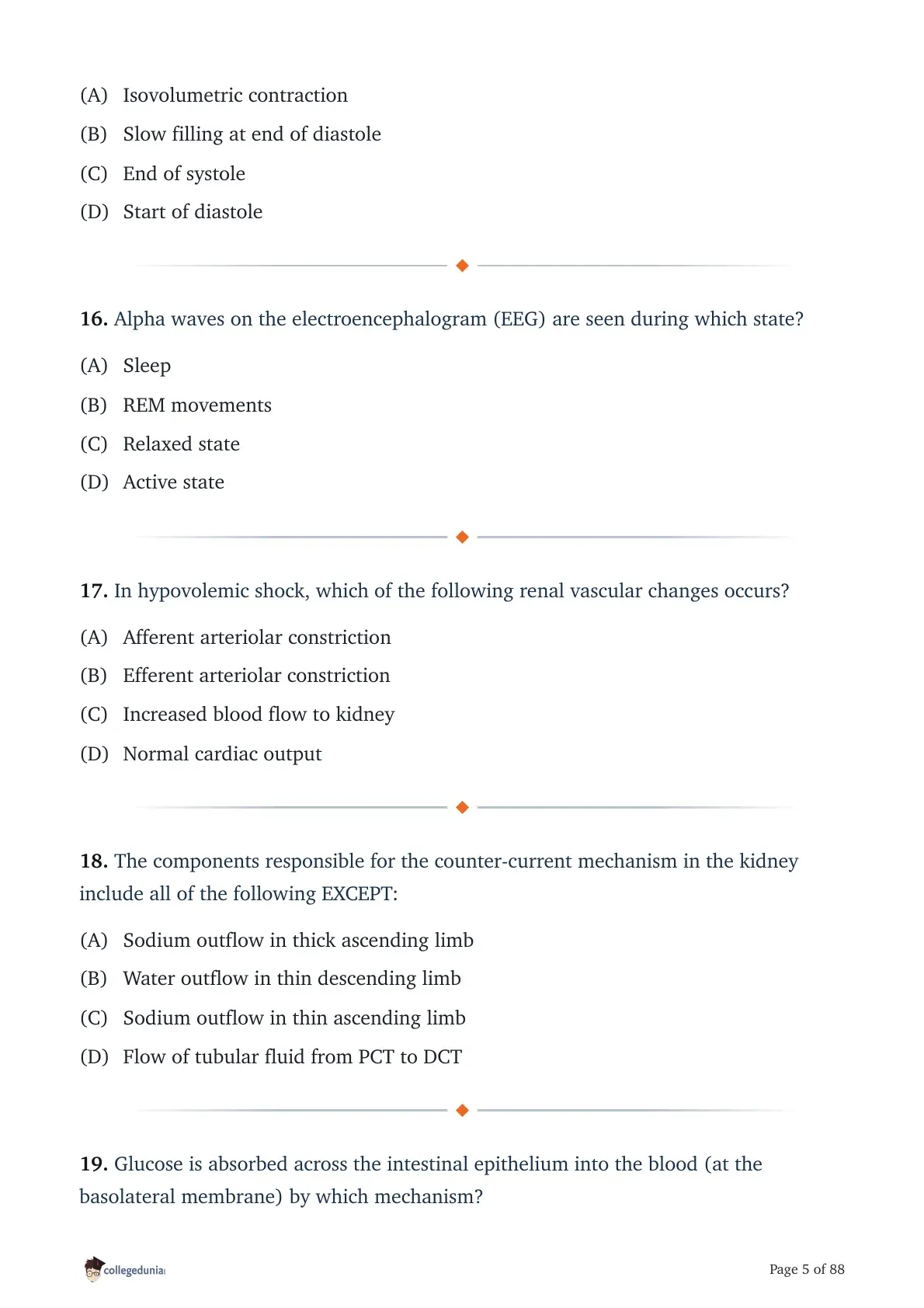
Question 15:
The 'c' wave of the jugular venous pulse (JVP) is seen during which phase of the cardiac cycle?
- (A) Isovolumetric contraction
- (B) Slow filling at end of diastole
- (C) End of systole
- (D) Start of diastole
Question 16:
Alpha waves on the electroencephalogram (EEG) are seen during which state?
- (A) Sleep
- (B) REM movements
- (C) Relaxed state
- (D) Active state
Question 17:
In hypovolemic shock, which of the following renal vascular changes occurs?
- (A) Afferent arteriolar constriction
- (B) Efferent arteriolar constriction
- (C) Increased blood flow to kidney
- (D) Normal cardiac output
Question 18:
The components responsible for the counter-current mechanism in the kidney include all of the following EXCEPT:
- (A) Sodium outflow in thick ascending limb
- (B) Water outflow in thin descending limb
- (C) Sodium outflow in thin ascending limb
- (D) Flow of tubular fluid from PCT to DCT
Question 19:
Glucose is absorbed across the intestinal epithelium into the blood (at the basolateral membrane) by which mechanism?
- (A) Secondary active transport
- (B) Facilitated diffusion
- (C) Simple diffusion
- (D) Primary active transport
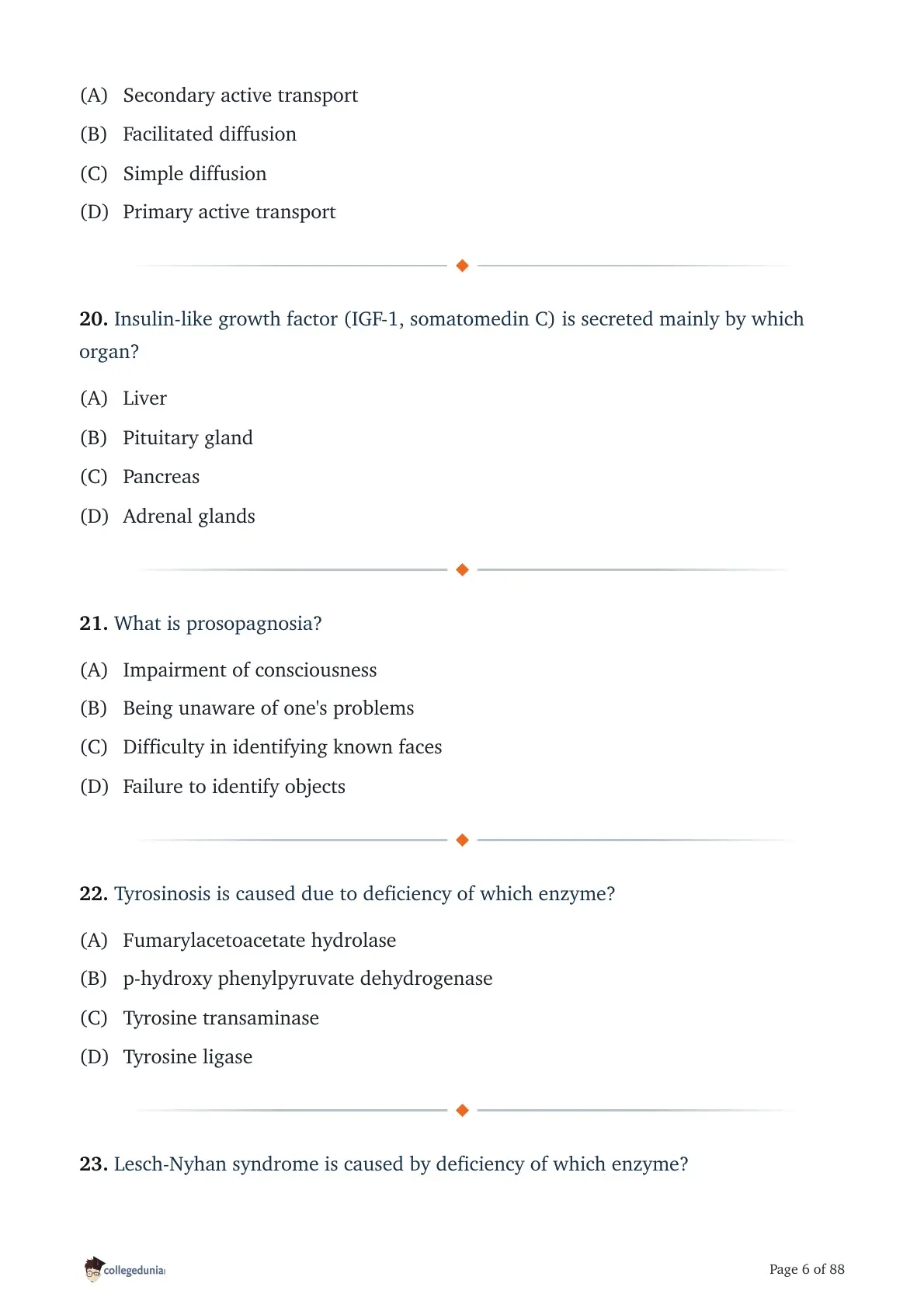
Question 20:
Insulin-like growth factor (IGF-1, somatomedin C) is secreted mainly by which organ?
- (A) Liver
- (B) Pituitary gland
- (C) Pancreas
- (D) Adrenal glands
Question 21:
What is prosopagnosia?
- (A) Impairment of consciousness
- (B) Being unaware of one's problems
- (C) Difficulty in identifying known faces
- (D) Failure to identify objects
Question 22:
Tyrosinosis is caused due to deficiency of which enzyme?
- (A) Fumarylacetoacetate hydrolase
- (B) p-hydroxy phenylpyruvate dehydrogenase
- (C) Tyrosine transaminase
- (D) Tyrosine ligase
Question 23:
Lesch-Nyhan syndrome is caused by deficiency of which enzyme?
- (A) Orotate phosphoribosyltransferase
- (B) Uracil phosphoribosyltransferase
- (C) Quinolinate phosphoribosyltransferase
- (D) Hypoxanthine-guanine phosphoribosyltransferase (HGPRT)
Question 24:
Fish odor syndrome is caused by deficiency of which enzyme?
- (A) Fumarylacetoacetate hydrolase
- (B) Methane monooxygenase
- (C) Flavin monooxygenase 3 (FMO3)
- (D) D-amino acid oxidase
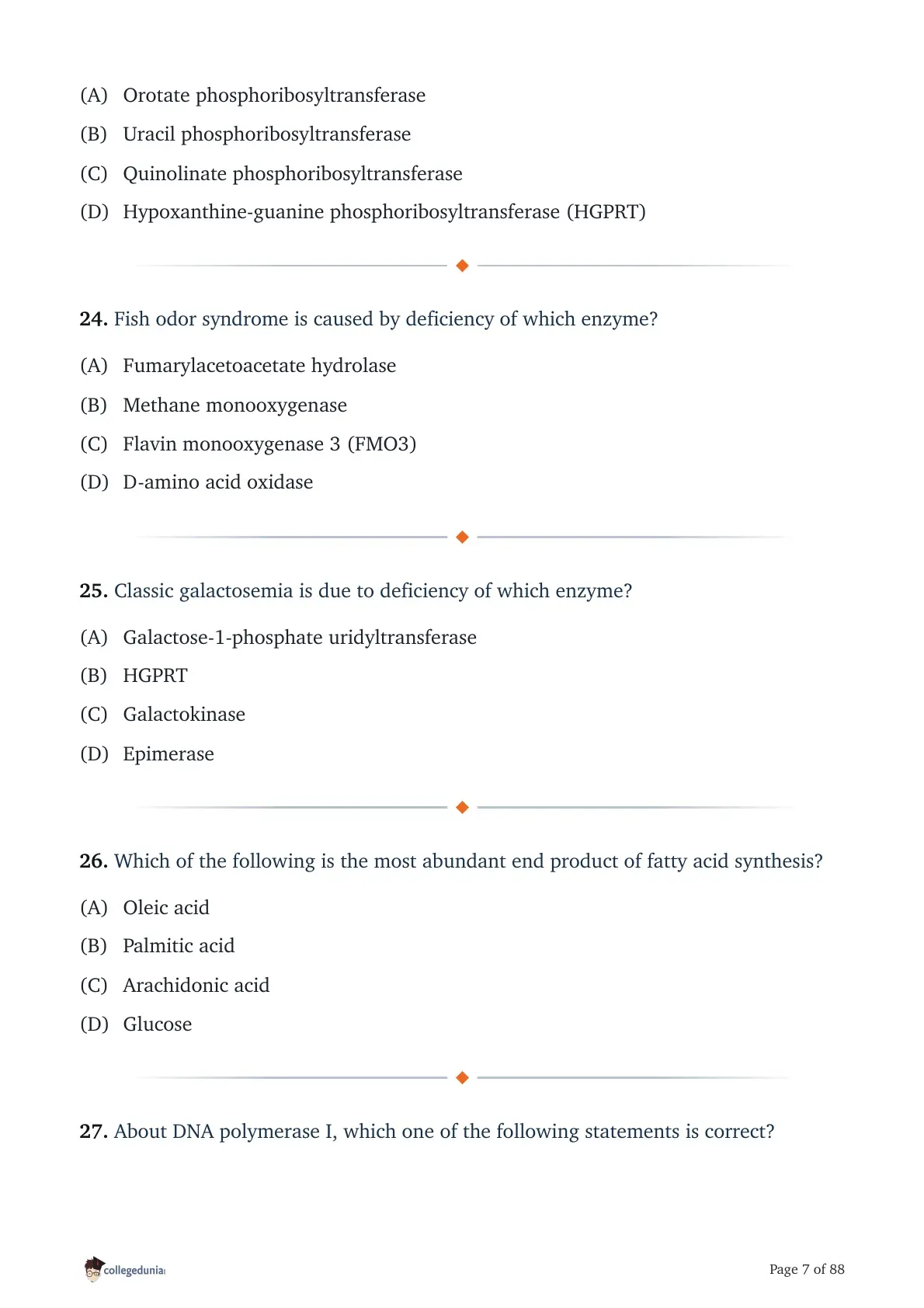
Question 25:
Classic galactosemia is due to deficiency of which enzyme?
- (A) Galactose-1-phosphate uridyltransferase
- (B) HGPRT
- (C) Galactokinase
- (D) Epimerase
Question 26:
Which of the following is the most abundant end product of fatty acid synthesis?
- (A) Oleic acid
- (B) Palmitic acid
- (C) Arachidonic acid
- (D) Glucose
Question 27:
About DNA polymerase I, which one of the following statements is correct?
- (A) Not required in bacteria
- (B) Repairs any damage within DNA
- (C) Involved in Okazaki fragment processing
- (D) Participates in DNA replication
Question 28:
What do chaperones assist in?
- (A) Protein cleavage
- (B) Protein folding
- (C) Protein degradation
- (D) Protein modification
Question 29:
Fishy odour occurs due to deficiency of which vitamin from the diet?
- (A) Biotin
- (B) Thiamine
- (C) Riboflavin
- (D) Vitamin A
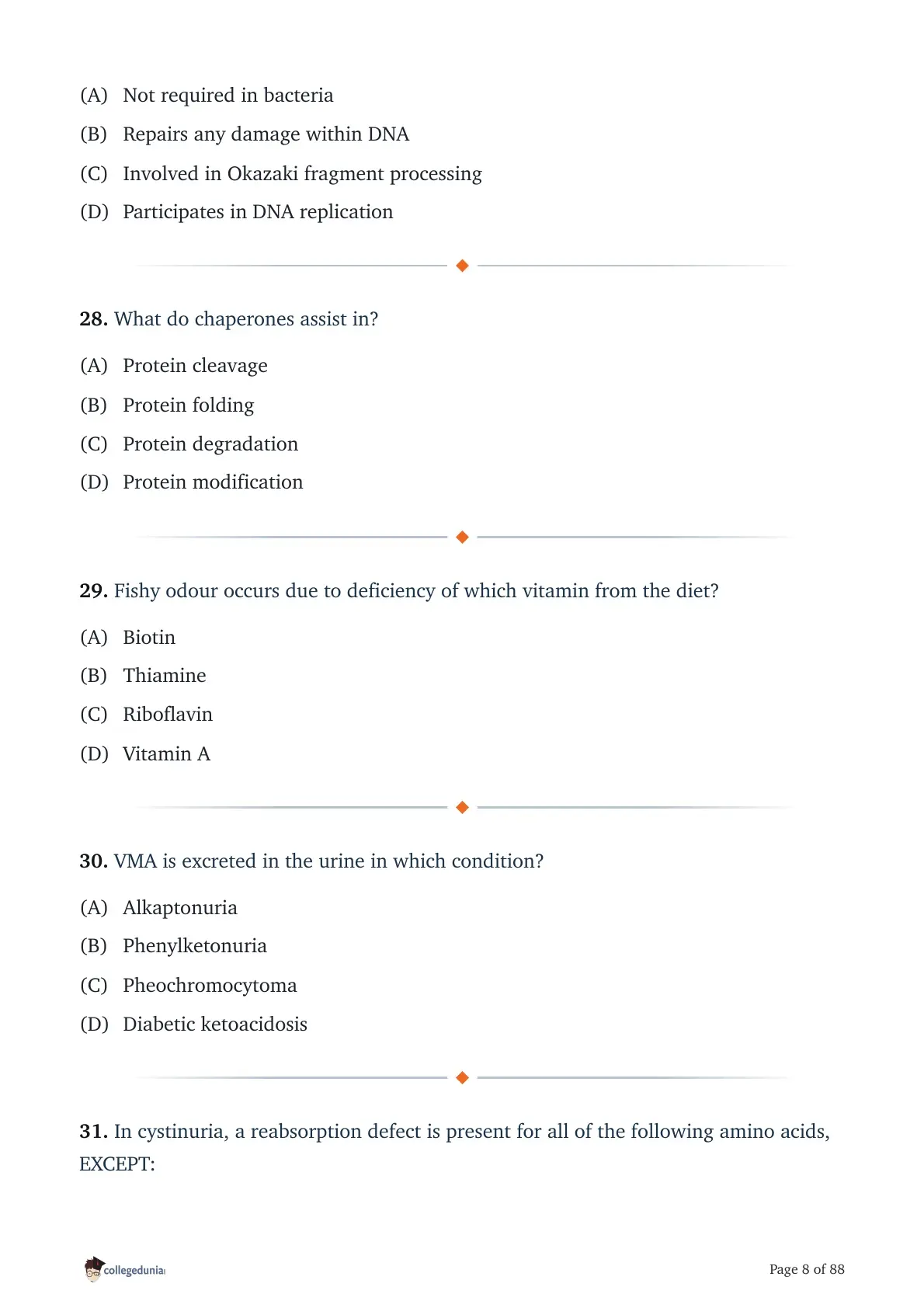
Question 30:
VMA is excreted in the urine in which condition?
- (A) Alkaptonuria
- (B) Phenylketonuria
- (C) Pheochromocytoma
- (D) Diabetic ketoacidosis
Question 31:
In cystinuria, a reabsorption defect is present for all of the following amino acids, EXCEPT:
- (A) Lysine
- (B) Citrulline
- (C) Arginine
- (D) Ornithine
Question 32:
Fibrinopeptide A and fibrinopeptide B are acidic due to the presence of which amino acids in their structure?
- (A) Serine and threonine
- (B) Glutamate and aspartate
- (C) Histidine and lysine
- (D) Glutamine and valine
Question 33:
HIAA (5-hydroxyindoleacetic acid) is present in the urine in which condition?
- (A) Alkaptonuria
- (B) Albinism
- (C) Carcinoid
- (D) Phenylketonuria
Question 34:
Warthin-Finkeldey cells are seen in which infection?
- (A) Measles
- (B) Rubella
- (C) Rabies
- (D) Typhoid
Question 35:
CD59 is a marker of which disease?
- (A) PNH
- (B) PTEN
- (C) BRR
- (D) Cowden syndrome
Question 36:
Opsonin is
- (A) C3a
- (B) C3b
- (C) C5a
- (D) C6
Question 37:
Bernard-Soulier syndrome is due to deficiency of
- (A) Gp 2b/3a
- (B) Gp 1b
- (C) vWf
- (D) TNF
Question 38:
Cowden syndrome is associated with mutation in
- (A) P53
- (B) PTEN
- (C) Rb
- (D) Ras
Question 39:
The chromosome involved in myotonic dystrophy is
- (A) Chromosome 19
- (B) Chromosome 20
- (C) Chromosome 21
- (D) Chromosome 22
Question 40:
TRALI occurs within how many hours of transfusion?
- (A) 48 Hrs
- (B) 72 Hrs
- (C) 6 Hrs
- (D) 12 Hrs
Question 41:
The kidney responds to shock by
- (A) Decreases renal blood flow
- (B) Increases afferent arteriole resistance
- (C) GFR remains unaltered
- (D) Perfusion of kidney increases
Question 42:
Which of the following is an epithelial tumor of stomach?
- (A) Carcinoid
- (B) Lymphoma
- (C) GIST
- (D) Gastric adenocarcinoma
Question 43:
Identify an X linked disorder?
- (A) Color blindness
- (B) Thalassemia
- (C) Azoospermia
- (D) Retinitis Pigmentosa
Question 44:
H and L variety cells are seen in which type of Hodgkin lymphoma?
- (A) Mixed cellularity Hodgkin
- (B) Lymphocyte depleted
- (C) Lymphocyte predominance
- (D) Nodular sclerosis
Question 45:
Stellate granuloma is seen in which of the following?
- (A) Sarcoidosis
- (B) Cat scratch disease
- (C) Cryptococcosis
- (D) Histoplasmosis
Question 46:
Which best explains the LDH "Flipping effect"?
- (A) LDH 1 > LDH 2
- (B) LDH 2 > LDH 1
- (C) LDH 2 > LDH 3
- (D) LDH 3 > LDH 2
Question 47:
Nude mice are not resistant to xenografts due to the absence of which cells?
- (A) B cell
- (B) T cell
- (C) Both B and T cell
- (D) None
Question 48:
Anaplasia is defined as?
- (A) Changing one type of epithelium to another
- (B) Nuclear chromatin
- (C) Lack of differentiation
- (D) Morphological changes
Question 49:
Which level of prolactin definitely suggests a prolactinoma?
- (A) 300 ng/ml
- (B) 150 ng/ml
- (C) 200 ng/ml
- (D) 100 ng/ml
Question 50:
Laxative abuse causes which of the following renal stones?
- (A) Uric acid
- (B) Ammonium urate
- (C) Struvite
- (D) Ca oxalate
Question 51:
Which of the following can result in dactylitis?
- (A) Hemophilia
- (B) Von Willebrand disease 1
- (C) Measles
- (D) Sickle Cell Anemia
Question 52:
Which chromosome is responsible for the production of MIF (Mullerian Inhibiting Factor)?
- (A) Chromosome 16
- (B) Chromosome 22
- (C) X Chromosome
- (D) Y chromosome
Question 53:
Site of action of amphotericin B is:
- (A) Ribosomes
- (B) Cell wall
- (C) Plasma membrane
- (D) Protein
Question 54:
Which antiretroviral drug also has anti-hepatitis activity?
- (A) Abacavir
- (B) Tenofovir
- (C) Nevirapine
- (D) Emtricitabine
Question 55:
Drug of choice for resistant rheumatic chorea?
- (A) Valproate
- (B) Haloperidol
- (C) Diazepam
- (D) Probenecid
Question 56:
At pKa = pH -
- (A) Conc. of drug is 50% ionic and 50% non-ionic
- (B) Absorption of drug is 50% ionic and 50% ionic
- (C) Conc. of drug is 75% ionic and 25% non-ionic
- (D) Conc. of drug is 25% ionic and 75% non-ionic
Question 57:
The physiological dose of hydrocortisone (mg/kg/day) is:
- (A) 5 mg/kg/day
- (B) 10 mg/kg/day
- (C) 15 mg/kg/day
- (D) 20 mg/kg/day
Question 58:
What is the mechanism of action of colchicine in acute gout?
- (A) Inhibition of purine metabolism
- (B) Inhibition of uric acid conversion
- (C) Migration of leukocytes
- (D) Leukocyte and lymphocyte migration inhibition & microtubular inhibitor
Question 59:
Basiliximab is an:
- (A) IL-1 receptor antagonist
- (B) Anti-CD3 antibody
- (C) IL-2 receptor antagonist
- (D) TNF inhibitor
Question 60:
Pirenzepine is used in:
- (A) Gastric ulcer
- (B) Glaucoma
- (C) Hypertension
- (D) Congestive cardiac failure
Question 61:
Which of the following antipsychotics has increased prolactin secretion?
- (A) Olanzapine
- (B) Ziprasidone
- (C) Clozapine
- (D) Risperidone
Question 62:
Which of the following is a glucocorticoid synthesis inhibitor?
- (A) Mifepristone
- (B) Flutamide
- (C) Finasteride
- (D) Metyrapone
Question 63:
Which of the following statements is incorrect with respect to prasugrel?
- (A) Not a prodrug
- (B) P2Y purinergic receptor blocker
- (C) Has a strong antiplatelet activity
- (D) Causes intracranial haemorrhage in TIA patients
Question 64:
Q-T elongation is seen in which drug?
- (A) Quinidine
- (B) Amiodarone
- (C) Magnesium Sulfate
- (D) Lignocaine
Question 65:
Sacubitril is,
- (A) ACE inhibitor
- (B) Neutral endopeptidase inhibitor
- (C) Calcium channel inhibitor
- (D) Beta adrenergic blocker
Question 66:
Niacin therapy is contraindicated in diabetes because -
- (A) Increases the blood sugar levels
- (B) Causes scleroderma
- (C) Difficult to give injection
- (D) Increases the metabolism of oral hypoglycemic drugs
Question 67:
Endothelin acts through which receptors?
- (A) cAMP
- (B) cGMP
- (C) Na+ receptors
- (D) Calcium receptos
Question 68:
Which is the centrally acting alpha 2 agonist muscle relaxant -
- (A) Diazepam
- (B) Bromocriptine
- (C) Tizanidine
- (D) Methocarbamol
Question 69:
Apixaban is -
- (A) Antithrombin inhibitor
- (B) Direct Xa inhibitor
- (C) Platelet activator
- (D) Clotting Factor XII
Question 70:
Anaerobes are resistant intrinsically against -
- (A) Beta lactam antibiotics
- (B) Aminoglycosides
- (C) Azithromycin
- (D) Metronidazole
Question 71:
Which of the following is NOT a bacteriostatic antibiotic?
- (A) Clindamycin
- (B) Vancomycin
- (C) Tetracycline
- (D) Cephalosporins
Question 72:
Which of the following causes melanosis coli?
- (A) Senna
- (B) Sorbitol
- (C) Magnesium Sulphate
- (D) Bisacodyl
Question 73:
Which among the following will be the choice of antibiotic for a bedridden patient with catheter-related UTI and pneumonia?
- (A) Amoxicillin
- (B) Beta lactam antibiotic with beta lactamase inhibitor
- (C) 3rd generation cephalosporins
- (D) 2nd generation cephalosporins
Question 74:
Mycoplasma is resistant to which of the following?
- (A) Ceftriaxone
- (B) Cephalosporins
- (C) Aminoglycosides
- (D) Fluoroquinolones
Question 75:
Tadalafil should NOT be given together with which of the following?
- (A) Vasodilator
- (B) Antibiotics
- (C) Vasoconstrictors
- (D) Valproate
Question 76:
Estimate the volume of Ringer lactate required in the first 8 hours for a 50 kg male with 40% second-degree burns.
- (A) 8 litres
- (B) 4 litres
- (C) 2 litres
- (D) 6 litres
Question 77:
A posthumous child is defined as:
- (A) A child delivered after the death of the biological mother
- (B) A child delivered after the death of the biological father
- (C) A child born after the death of both parents
- (D) A child who has been abandoned by the parents
Question 78:
M'naghten rule comes under which section of IPC?
- (A) CrPC 84
- (B) CPC 48
- (C) IPC 84
- (D) IPC 48
Question 79:
Bluish discoloration of gastric mucosa is seen in which poisoning?
- (A) Mercury
- (B) Cadmium
- (C) Amytal sodium
- (D) Arsenic
Question 80:
Muscle pain and nephropathy are caused by which metal poisoning?
- (A) Arsenic
- (B) Cadmium
- (C) Mercury
- (D) Lead
Question 81:
Which is the first organ to putrefy?
- (A) Brain
- (B) Heart
- (C) Prostate
- (D) Kidney
Question 82:
Locard is famous for:
- (A) Theory of exchange
- (B) Fingerprint study
- (C) Formula for estimation of stature
- (D) System of personal identification using body measurements
Question 83:
When does the basiocciput fuse with the basisphenoid?
- (A) 18 to 22 years
- (B) 22 to 25 years
- (C) 14 to 16 years
- (D) 12 to 14 years
Question 84:
What is the smell of a mummified body?
- (A) Odourless
- (B) Putrid
- (C) Pungent
- (D) Offensive
Question 85:
A patient presented with proximal tubule proteinuria. Which metal is most likely to be associated with it?
- (A) Cadmium
- (B) Mercury
- (C) Gold
- (D) Lead
Question 86:
Which of the following constitutional articles is NOT related to children?
- (A) Article 23
- (B) Article 21-A
- (C) Article 42
- (D) Article 24
Question 87:
Which of the following statements regarding the Factory Act is correct?
- (A) A child aged less than 14 years carrying out serious work earns more money
- (B) A child less than 14 years is not permitted to work under the Factory Act
- (C) More than 72 hours of work per week is allowed
- (D) More than 82 hours a week is allowed
Question 88:
Burkholderia cepacia is resistant to which of the following drugs?
- (A) Ceftazidime
- (B) Trimethoprim-sulfamethoxazole
- (C) Temocillin
- (D) Cefotetan
Question 89:
Shingles is caused by which of the following?
- (A) Varicella-zoster virus
- (B) Herpes simplex virus
- (C) Cytomegalovirus (CMV)
- (D) None
Question 90:
The urea breath test is used for diagnosis of infection by which organism?
- (A) Helicobacter pylori
- (B) Campylobacter jejuni
- (C) Escherichia coli
- (D) Lactobacillus
Question 91:
Hyperacute graft rejection occurs after how much time following transplantation?
- (A) 24 hours
- (B) 2 weeks
- (C) Within minutes
- (D) Years
Question 92:
Australian antigen for hepatitis B is?
- (A) HBsAg
- (B) HBeAg
- (C) HBcAg
- (D) HBV DNA
Question 93:
Which fungus is most commonly associated with orbital cellulitis in patients with diabetic ketoacidosis?
- (A) Candida
- (B) Mucor
- (C) Aspergillus
- (D) Rhizopus
Question 94:
Sabin Feldman dye test is used for diagnosis of which of the following conditions?
- (A) Botulism
- (B) Toxoplasmosis
- (C) Sarcoidosis
- (D) Yellow fever
Question 95:
Acute hemorrhagic conjunctivitis is caused by which enterovirus type?
- (A) 69
- (B) 68
- (C) 70
- (D) 71
Question 96:
Echinococcus granulosus is commonly seen in which of the given animals?
- (A) Dog
- (B) Cat
- (C) Fox
- (D) Pig
Question 97:
An anaerobe causing multiple abscesses with discharging sinuses, demonstrating sulphur granules in pus is?
- (A) Actinomyces
- (B) Nocardia
- (C) Salmonella
- (D) Tularemia
Question 98:
Whole blood is used as a sample for which test?
- (A) Bacteria
- (B) IGRA
- (C) GeneXpert
- (D) Virus
Question 99:
Which organism causes acute bacterial prostatitis?
- (A) Enterococcus
- (B) Streptococcus viridans
- (C) Peptostreptococcus
- (D) E. coli
Question 100:
Which of the following organisms releases histamine and causes scombroid fish poisoning?
- (A) Salmonella
- (B) Staphylococcus
- (C) P. aeruginosa
- (D) Weissella
Question 101:
Who is the father of microbiology?
- (A) A. V. Leeuwenhoek
- (B) Robert Brown
- (C) J. C. Bose
- (D) Pasteur
Question 102:
Cutaneous larva migrans is caused by which organism?
- (A) Strongyloides
- (B) Toxocara canis
- (C) Ancylostoma braziliense
- (D) Necator americanus
Question 103:
After kidney transplantation, infection with which organism is most likely to occur?
- (A) CMV
- (B) Klebsiella
- (C) Streptococcus
- (D) Staphylococcus
Question 104:
The incidence of a disease is 4 per 1000 of population with a duration of 2 years. Calculate the prevalence.
- (A) 8/1000
- (B) 4/1000
- (C) 2/1000
- (D) 6/1000
Question 105:
Disposal of cytotoxic and expired drugs is done by which method?
- (A) Dumping
- (B) Autoclave
- (C) Landfill
- (D) Burning
Question 106:
For the Net Reproduction Rate (NRR) to be equal to 1, the couple protection rate should be at least?
- (A) 50%
- (B) 60%
- (C) 55%
- (D) 75%
Question 107:
The new RNTCP online software introduced to monitor the TB control programme is?
- (A) NIKSHAY
- (B) NICHAY
- (C) E-DOTS
- (D) NIRBHAI
Question 108:
The unit of study in an ecological study is?
- (A) Population
- (B) Patient
- (C) Community
- (D) Case
Question 109:
In a screening test for diabetes mellitus, out of a population of 1000, 90 were positive. The gold standard test was then done, in which 100 were positive. Calculate the sensitivity of the screening test.
- (A) 90/100
- (B) 100/110
- (C) 80/100
- (D) 100/100
Question 110:
What is the drug of choice for mass chemoprophylaxis of meningococcal meningitis?
- (A) Rifampicin
- (B) Chloramphenicol
- (C) Tetracycline
- (D) Penicillin
Question 111:
Which among the following is the active form of chlorine responsible for disinfection during chlorination?
- (A) Hypochlorite ion
- (B) Hydrogen chloride
- (C) Hypochlorous acid
- (D) Chloride ion
Question 112:
Kala-azar is found in all of the following endemic areas in India except?
- (A) West Bengal
- (B) Uttar Pradesh
- (C) Bihar
- (D) Assam
Question 113:
The ratio of the risk of disease among those exposed to a factor to the risk among those not exposed is defined as:
- (A) Relative risk
- (B) Odds ratio
- (C) Attributable risk
- (D) None of the above
Question 114:
The holder (low-temperature) method of pasteurization of milk is done at:
- (A) 73 degrees C for 20 min
- (B) 63 degrees C for 30 min
- (C) 72 degrees C for 30 seconds
- (D) 63 degrees C for 30 seconds
Question 115:
When two live vaccines are not given at the same visit, the ideal minimum time gap between them is:
- (A) 2 weeks
- (B) 4 weeks
- (C) 8 weeks
- (D) 12 weeks
Question 116:
The number of susceptible persons who develop the disease within the range of the incubation period after contact with a primary case is the:
- (A) Secondary attack rate
- (B) Case fatality rate
- (C) Primary attack rate
- (D) Tertiary attack rate
Question 117:
Out of 100 women offered oral contraceptive pills, 10 women became pregnant when followed for 24 months. What is the Pearl Index?
Question 118:
Which of the following does NOT cause hardness of water?
- (A) Calcium carbonate
- (B) Calcium sulphate
- (C) Calcium bicarbonate
- (D) Magnesium bicarbonate
Question 119:
Which of the following is NOT an example of direct transmission in communicable diseases?
- (A) Transplacental (vertical)
- (B) Soil
- (C) Respiratory
- (D) STD
Question 120:
Water's view is used to obtain diagnostic information of:
- (A) Maxillary sinus
- (B) Ethmoidal sinuses
- (C) Frontal sinus
- (D) Sphenoid sinus
Question 121:
Tracheostomy indication is:
- (A) Vocal cord replacement
- (B) Pharynx replacement
- (C) Tracheomalacia
- (D) Foreign body obstructing airway
Question 122:
Caldwell's view is used for:
- (A) Maxillary sinus
- (B) Frontal sinus
- (C) Ethmoidal sinus
- (D) All of the above
Question 123:
Astigmatism in an emmetropic eye of an elderly person contributes to (the threshold above which laser/bioptics correction is needed):
- (A) +1D
- (B) +2D
- (C) +3D
- (D) +4D
Question 124:
100 day glaucoma is seen in which of the following conditions:
- (A) Central retinal vein occlusion (CRVO)
- (B) Neovascular glaucoma
- (C) Central retinal artery occlusion (CRAO)
- (D) Steroid induced glaucoma
Question 125:
Roth spots are seen in:
- (A) Uveal melanoma
- (B) Acute leukaemia
- (C) Both a & b
- (D) None of the above
Question 126:
Yoke muscle of the right lateral rectus is:
- (A) Left medial rectus
- (B) Left superior rectus
- (C) Left lateral rectus
- (D) Left inferior oblique
Question 127:
Severe (hyperacute) conjunctivitis is caused by which of the following organisms?
- (A) Neisseria
- (B) Staphylococcus
- (C) Streptococcus
- (D) Haemophilus
Question 128:
Which of the following spectacle prescriptions is an example of Simple Myopic Astigmatism?
- (A) Rx (+) sphere
- (B) Rx will be plano (-)
- (C) Rx will be (-) sphere
- (D) (-)(+) (+)(-) on both 90 and 180 degree axis
Question 129:
A blow out fracture of the orbit most commonly involves the:
- (A) Floor
- (B) Medial wall
- (C) Lateral wall
- (D) Roof
Question 130:
Which of the following prostaglandins is the principal final mediator of fever (pyrogenesis) in the hypothalamus?
- (A) PG E2
- (B) PG D2
- (C) PGF2 alpha
- (D) PG I2
Question 131:
In Bartter syndrome, the genetic defect is located in the:
- (A) Defect in PCT
- (B) Defect in DCT
- (C) Defect in thick ascending limb of loop of Henle
- (D) None
Question 132:
Which of the following is NOT a feature of allergic bronchopulmonary aspergillosis (ABPA)?
- (A) High IgE level
- (B) Recurrent pneumonia
- (C) Occurrence in patients with old cavitary lesions
- (D) Pleural effusion
Question 133:
Pseudo P pulmonale on the ECG is associated with which electrolyte abnormality?
- (A) Hypokalemia
- (B) Hyponatremia
- (C) Hypocalcemia
- (D) Hypercalcemia
Question 134:
Automatic Implantable Cardioverter Defibrillator (AICD) implantation is done for which of the following conditions?
- (A) Brugada syndrome
- (B) Ventricular fibrillation
- (C) Acute coronary syndrome with low ejection fraction
- (D) All of the above
Question 135:
What is the line of treatment for intractable Sydenham chorea?
- (A) Haloperidol
- (B) Valproate
- (C) Warfarin
- (D) Risperidone
Question 136:
All of the following are criteria for Neurofibromatosis type 1 EXCEPT:
- (A) Brain tumor
- (B) Acoustic neuromas
- (C) Pseudoarthrosis
- (D) Cafe-au-lait spots
Question 137:
What is the most common site of a chronic gastric ulcer?
- (A) Pyloric antrum
- (B) Upper part of lesser curvature
- (C) Lower part of lesser curvature
- (D) Segment of large intestine
Question 138:
The approximate time interval between HIV infection and the manifestation of AIDS is?
- (A) 7.5 years
- (B) 10 years
- (C) 12 years
- (D) 11 years
Question 139:
Heller's myotomy is done for which condition?
- (A) Zenker's diverticulum
- (B) Achalasia cardia
- (C) Bunions
- (D) Knee arthroscopy
Question 140:
A patient shows a myocardial stunning pattern that does not match the territory of the ECG changes. What is the diagnosis?
- (A) Takotsubo cardiomyopathy
- (B) Restrictive cardiomyopathy
- (C) Brugada cardiomyopathy
- (D) Pericardial disease
Question 141:
Alternative drug for cardiac arrest in place of epinephrine is?
- (A) Amiodarone infusion
- (B) Atropine
- (C) High dose vasopressin
- (D) Adenosine
Question 142:
A patient presents with cutaneous vasculitis, glomerulonephritis and peripheral neuropathy. Which investigation should be performed next to help diagnose the condition?
- (A) ANCA
- (B) RA factor
- (C) HBsAg
- (D) MIF
Question 143:
Cryoglobulinemia is most commonly associated with which of the following?
- (A) Hepatitis C
- (B) Ovarian cancer
- (C) Diabetes
- (D) Leukemia
Question 144:
Which of the following causes hypokalemic metabolic alkalosis with hypertension?
- (A) Liddle syndrome
- (B) Bartter syndrome
- (C) Gitelman syndrome
- (D) Renal tubular acidosis
Question 145:
According to the GOLD criteria, very severe COPD is defined by which of the following?
- (A) FEV1/FVC <70 and FEV1 < 30
- (B) FEV1/FVC <70 and FEV1 < 70
- (C) FEV1/FVC <70 and FEV1 < 50
- (D) Both A and C
Question 146:
The Ankle-Brachial Pressure Index (ABPI) is artificially increased in which of the following?
- (A) Arteriosclerosis with calcified arteries
- (B) Ischemic ulcers
- (C) Intermittent claudication
- (D) DVT
Question 147:
Minimal dysfunction syndrome (minimal brain dysfunction) is seen in?
- (A) Dyslexia
- (B) ADHD
- (C) Mental subnormality
- (D) Down's syndrome
Question 148:
Van Nuys prognostic index is not based on:
- (A) Age
- (B) Microcalcification
- (C) Size
- (D) ER status
Question 149:
Common cause of chronic pancreatitis:
- (A) Chronic alcohol
- (B) Chronic pancreatic calculi
- (C) Pancreas divisum
- (D) Gall bladder stones
Question 150:
The following statement about Keloid is true:
- (A) It contains growth factor
- (B) Extended excision is the treatment of choice
- (C) It does not extend beyond the wound
- (D) None of the above
Question 151:
Which of the following layers are cut during fasciotomy?
- (A) Skin
- (B) Skin + subcutaneous fascia
- (C) Skin + subcutaneous tissue + superficial fascia
- (D) Skin + subcutaneous tissue + superficial fascia + deep fascia
Question 152:
Which statement is not true regarding Crohn's disease?
- (A) Rectum is not involved
- (B) Continuous lesion visualized in endoscopy
- (C) Non-caseating granulomas
- (D) Cobblestone appearance
Question 153:
Which is the best investigation for carcinoma head of pancreas?
- (A) Guided biopsy
- (B) ERCP
- (C) Transduodenal / transperitoneal sampling
- (D) EUS
Question 154:
An abdominal mass is best demonstrated in congenital hypertrophic pyloric stenosis by:
- (A) In palpation over the epigastrium
- (B) In left hypochondriac region
- (C) Right iliac fossa
- (D) During feeding
Question 155:
Calculate the Glasgow Coma Scale (GCS) of a 25-year-old head injury patient with the following parameters: confused, opening eyes in response to pain, and localizing pain.
- (A) 6
- (B) 11
- (C) 12
- (D) 7
Question 156:
The RET proto-oncogene is associated with the development of which of the following?
- (A) Medullary carcinoma thyroid
- (B) Astrocytoma
- (C) Paraganglioma
- (D) Hurthle cell tumor thyroid
Question 157:
What is the cutoff for surgery in an abdominal aortic aneurysm in asymptomatic patients?
- (A) 5.5 cm
- (B) 6.5 cm
- (C) 7.5 cm
- (D) 8.5 cm
Question 158:
Which of the following fontanelles is the last to close?
- (A) Anterolateral
- (B) Anterior
- (C) Lateral
- (D) Occipital
Question 159:
Which enzyme deficiency causes Lesch-Nyhan syndrome?
- (A) Hypoxanthine-guanine phosphoribosyltransferase (HGPRT)
- (B) Xanthine oxidase
- (C) Adenine phosphoribosyltransferase (APRT)
- (D) AMP deaminase
Question 160:
Which vaccine is NOT included in the Mission Indradhanush immunization programme?
- (A) Tuberculosis
- (B) Measles
- (C) Japanese Encephalitis
- (D) Diphtheria
Question 161:
Which among the following is the most common cause of neonatal blindness?
- (A) Neisseria gonorrhoeae
- (B) Chlamydia trachomatis
- (C) Klebsiella
- (D) Enterobacter
Question 162:
Muscles affected in De Quervain tenosynovitis are -
- (A) Abductor pollicis longus and extensor pollicis brevis
- (B) Adductor pollicis longus and extensor pollicis brevis
- (C) Abductor pollicis longus and flexor pollicis brevis
- (D) Adductor pollicis longus and flexor pollicis brevis
Question 163:
What is meant by perilunate dislocation?
- (A) Lower radius, scaphoid, lunate and capitate all in same plane
- (B) Lower radius, scaphoid and capitate in alignment, lunate alone out of plane
- (C) Lower radius, scaphoid and lunate in alignment, capitate alone is out of plane
- (D) Both lunate and capitate are out of plane
Question 164:
Fallen fragment sign is seen in -
- (A) Simple bone cyst
- (B) Osteosarcoma
- (C) Adamantinoma
- (D) Aneurysmal bone cyst
Question 165:
You are posted as an intern in casualty. Among the following patients with fracture, which will be your first priority to call the ortho PG and inform?
- (A) Patient's finger is blackening
- (B) Patient cannot extend his arm
- (C) A 10 cm abrasion
- (D) Intra-articular fracture of the elbow joint
Question 166:
In rheumatoid arthritis, which type of cells are prominently present in the hypertrophied synovial lining?
- (A) B cells
- (B) T cells
- (C) Macrophages
- (D) Dendritic cells
Question 167:
The 8th and 9th rib costal cartilages form which type of joint with each other?
- (A) Costochondral joint
- (B) Interchondral joint
- (C) Synovial joint
- (D) Costovertebral joint
Question 168:
Tom Smith septic arthritis is -
- (A) Acute gonococcal arthritis
- (B) Smallpox arthritis
- (C) Septic arthritis of infancy
- (D) Chronic pyogenic arthritis
Question 169:
Which of the following is correct regarding the placenta and umbilical cord?
- (A) Placental artery provides nutrients through the umbilical cord to the baby
- (B) Placenta has Wharton's jelly
- (C) Placenta has 2 veins and 1 artery
- (D) Estrogen is secreted by the placenta
Question 170:
Acute fatty liver of pregnancy is commonly seen at which stage of pregnancy?
- (A) 3rd trimester
- (B) 1st trimester
- (C) Immediate postpartum
- (D) Intrapartum
Question 171:
Establishment of the fetoplacental circulation is seen at which day after fertilization?
- (A) 11 to 13 days
- (B) 20 to 22 days
- (C) 7 days
- (D) 25 to 26 days
Question 172:
The fimbriectomy procedure of tubal sterilization is known as which method?
- (A) Uchida method
- (B) Irving method
- (C) Madlener technique
- (D) Kroener method
Question 173:
What is the recommended dietary allowance (RDA) of iodine during lactation, in micrograms per day?
- (A) 150
- (B) 220
- (C) 100
- (D) 250
Question 174:
Which one of the following is NOT a cause of secondary postpartum haemorrhage?
- (A) Placenta previa
- (B) Retained bits of placenta
- (C) Endometritis
- (D) Polyp
Question 175:
What is the best time during pregnancy to perform the quadruple (quad) test?
- (A) 8-12 weeks
- (B) 11-15 weeks
- (C) 15-20 weeks
- (D) 18-22 weeks
Question 176:
Drug that is used for fetal lung maturity is:
- (A) Dexamethasone
- (B) Folic acid
- (C) Beclomethasone
- (D) None
Question 177:
In uterine prolapse, how to know if the ring pessary is in place?
- (A) If not expelled after increased abdominal pressure
- (B) If bleeding does not occur
- (C) If patient feels discomfort
- (D) None
Question 178:
Hormone therapy (HT) is indicated in menopausal women for:
- (A) Hot flash
- (B) Ca breast
- (C) Endometriosis
- (D) Uterine bleeding
Question 179:
Dilatation and curettage (D&C) is contraindicated in:
- (A) Pelvic inflammatory disease (PID)
- (B) Endometriosis
- (C) Ectopic pregnancy
- (D) None
Question 180:
Which of these steps is followed first for the management of shoulder dystocia after the McRoberts maneuver?
- (A) Sharp flexion of hip joints towards abdomen
- (B) Suprapubic pressure
- (C) 90 degree rotation of posterior shoulder
- (D) Emergency c-section
Question 181:
True hermaphroditism (ovotesticular DSD) most commonly has which karyotype?
- (A) 45 X0 with streak gonads
- (B) 46 XX with ovotestis
- (C) 47 XY +9
- (D) 47 XX
Question 182:
Peripartum cardiomyopathy occurs within what period of delivery?
- (A) Within 7 days
- (B) Within 6 weeks
- (C) Within 24 months
- (D) Within 5 months
Question 183:
Which nerve is most commonly compressed during pregnancy and the puerperium?
- (A) Radial nerve
- (B) Median nerve
- (C) Femoral nerve
- (D) Facial nerve
Question 184:
In pregnancy, which of the following levels is altered the most?
- (A) Total T3
- (B) Free T3
- (C) Free T4
- (D) TSH
Question 185:
Paget's disease is associated with which other cancer?
- (A) Vulva
- (B) Vagina
- (C) Cervix
- (D) Uterus
Question 186:
What is meant by Superfecundation?
- (A) Fertilization of two or more ova in one intercourse
- (B) Fertilization of two or more ova in different intercourses in same menstrual cycle
- (C) Fertilization of ovum and then its division
- (D) Fertilization of second ovum, first being implanted
Question 187:
The fetal heart starts contracting at:
- (A) 10-12 days
- (B) 10-12 weeks
- (C) 3-5 weeks
- (D) 3-5 months
Question 188:
Anaesthesia of choice for cesarean section in severe pre-eclampsia:
- (A) Spinal
- (B) GA (general anaesthesia)
- (C) Epidural
- (D) Spinal + epidural
Question 189:
Which of the following is NOT a high-risk pregnancy?
- (A) Previous history of manual removal of placenta
- (B) Anemia
- (C) Diabetes
- (D) Obesity
Question 190:
Which of the following is not used in pre-eclampsia?
- (A) Methyldopa
- (B) Atenolol
- (C) Labetalol
- (D) Hydralazine
Question 191:
Cutis marmorata occurs due to exposure to:
- (A) Cold temperature
- (B) Dust
- (C) Hot temperature
- (D) Humidity
Question 192:
Murphy's eye is seen in:
- (A) Macintosh laryngoscope
- (B) Endotracheal tube
- (C) LMA
- (D) Flexible laryngoscope
Question 193:
Modified Mallampati grading is used in assessment of:
- (A) Difficult intubation
- (B) Airway obstruction
- (C) Death due to aspiration
- (D) Intubation
Question 194:
Which nerve is tested for adequacy of anaesthesia?
- (A) Median Nerve
- (B) Ulnar Nerve
- (C) Radial nerve
- (D) Mandibular nerve
Question 195:
Most effective circuit in spontaneous anaesthesia is:
- (A) Mapleson A
- (B) Mapleson B
- (C) Mapleson C
- (D) Mapleson D
Question 196:
What is the mechanism of action of curonium drugs as muscle relaxants?
- (A) Persistently depolarizing at neuromuscular junction
- (B) Act competitively on ACh receptors blocking post-synaptically
- (C) Repetitive stimulation of ACh receptors on muscle end plate
- (D) Inhibiting the calcium channel on presynaptic membrane
Question 197:
Dye used in the diagnosis of esophageal perforation:
- (A) Iohexol
- (B) Barium sulphate
- (C) Gadolinium
- (D) Iodine dye
Question 198:
The Bragg peak effect is most pronounced in:
- (A) X-ray
- (B) Proton
- (C) Neutron
- (D) Electron
Question 199:
The salt and pepper pot appearance of the skull is seen in:
- (A) Hyperparathyroidism
- (B) Multiple myeloma
- (C) Hyperthyroidism
- (D) Pseudohyperparathyroidism
Question 200:
Imaging techniques used to evaluate uterine anomalies include all of the following EXCEPT:
- (A) HSG
- (B) MRI guided HSG
- (C) CT guided HSG
- (D) USG
Question 201:
The semen squeeze technique is used in the treatment of:
- (A) Erectile dysfunction
- (B) Premature ejaculation
- (C) Retrograde ejaculation
- (D) Antegrade ejaculation
Question 202:
A patient with a history of a road traffic accident 2 months ago presents with complaints of dreams of accidents. He is able to visualize the same scene whenever he visits the place and is afraid to go back to the accident site. Identify the type of disorder he might be suffering from:
- (A) Adjustment disorder
- (B) PTSD
- (C) Anxiety disorder
- (D) OCD
Question 203:
Freud's theory of dreams includes all of the following EXCEPT:
- (A) Displacement
- (B) Condensation
- (C) Symbolisation
- (D) Correlation
Question 204:
Expression and consequent release of a previously repressed emotion is called as
- (A) Regression
- (B) Dissociation
- (C) Abreaction
- (D) All of the above
Question 205:
All are habit disorders except
- (A) Nail biting
- (B) Thumb sucking
- (C) Temper tantrum
- (D) Tics
Question 206:
New name of mental retardation according to the American Association on Mental Retardation
- (A) Feeble mindedness
- (B) Madness
- (C) Intellectual disability
- (D) Mentally unstable
Question 207:
Now-a-days Down syndrome is referred to as
- (A) Submental disorder
- (B) Oligophrenia
- (C) Madness
- (D) Mentally unstable
Question 208:
A 55-year-old chronic alcoholic male presents with irrelevant talks, tremor and sweating. He had his last drink 3 days back. What is the probable diagnosis?
- (A) Delirium tremens
- (B) Korsakoff psychosis
- (C) Post-acute withdrawal syndrome
- (D) Discontinuation syndrome
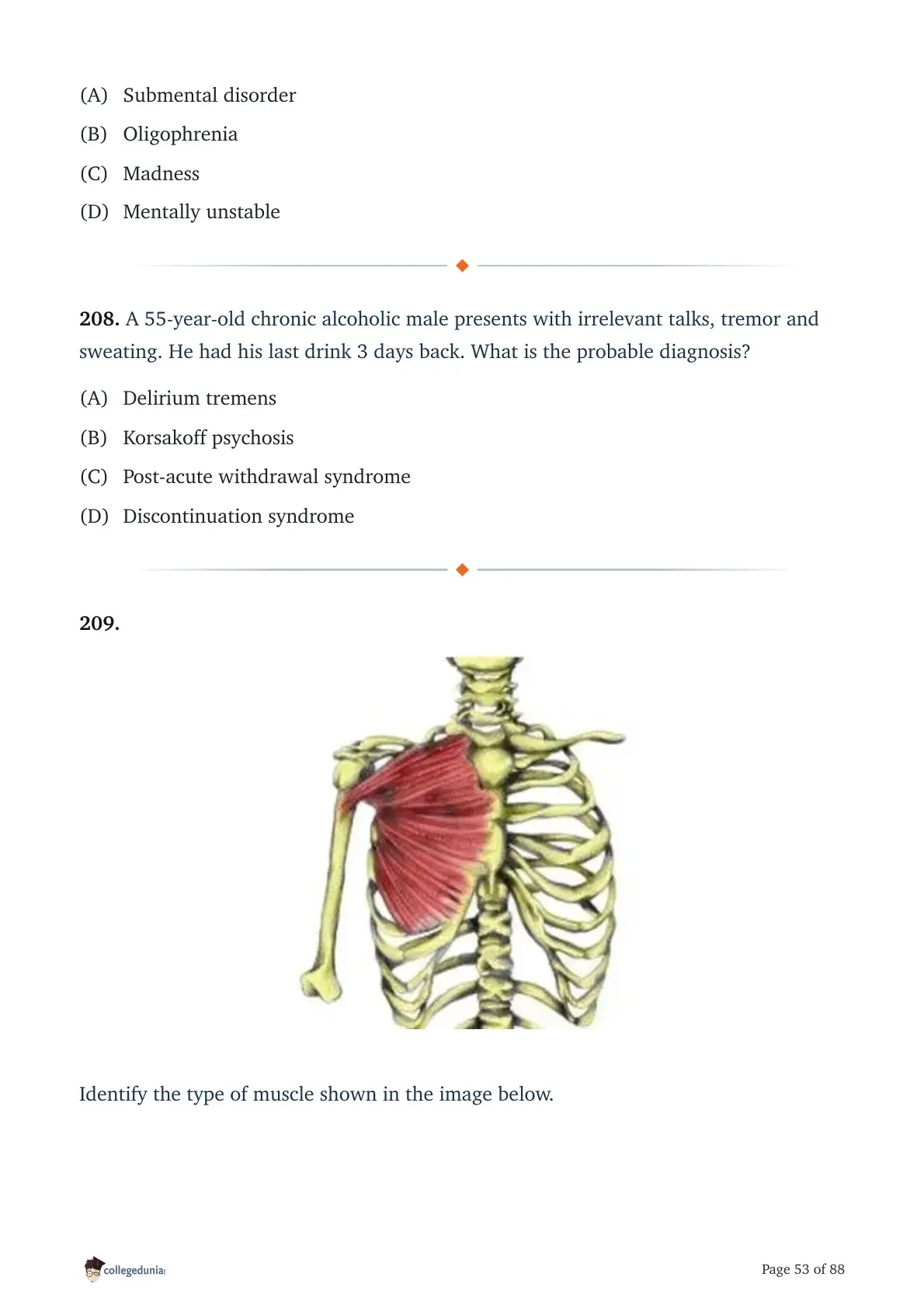
Question 209:
![]()
Identify the type of muscle shown in the image below.
- (A) Cruciate
- (B) Multipennate
- (C) Parallel
- (D) Unipennate
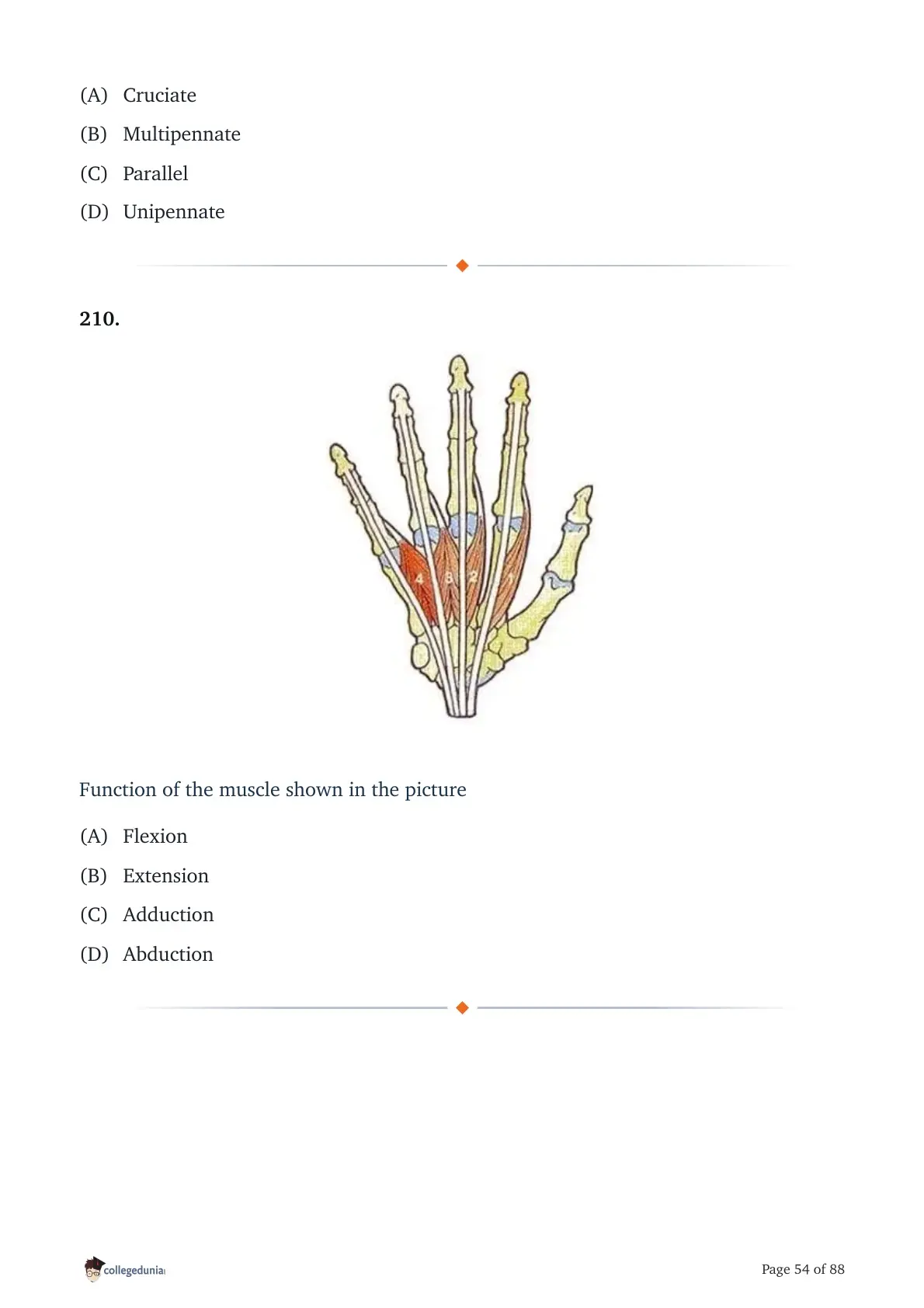
Question 210:
![]()
Function of the muscle shown in the picture
- (A) Flexion
- (B) Extension
- (C) Adduction
- (D) Abduction
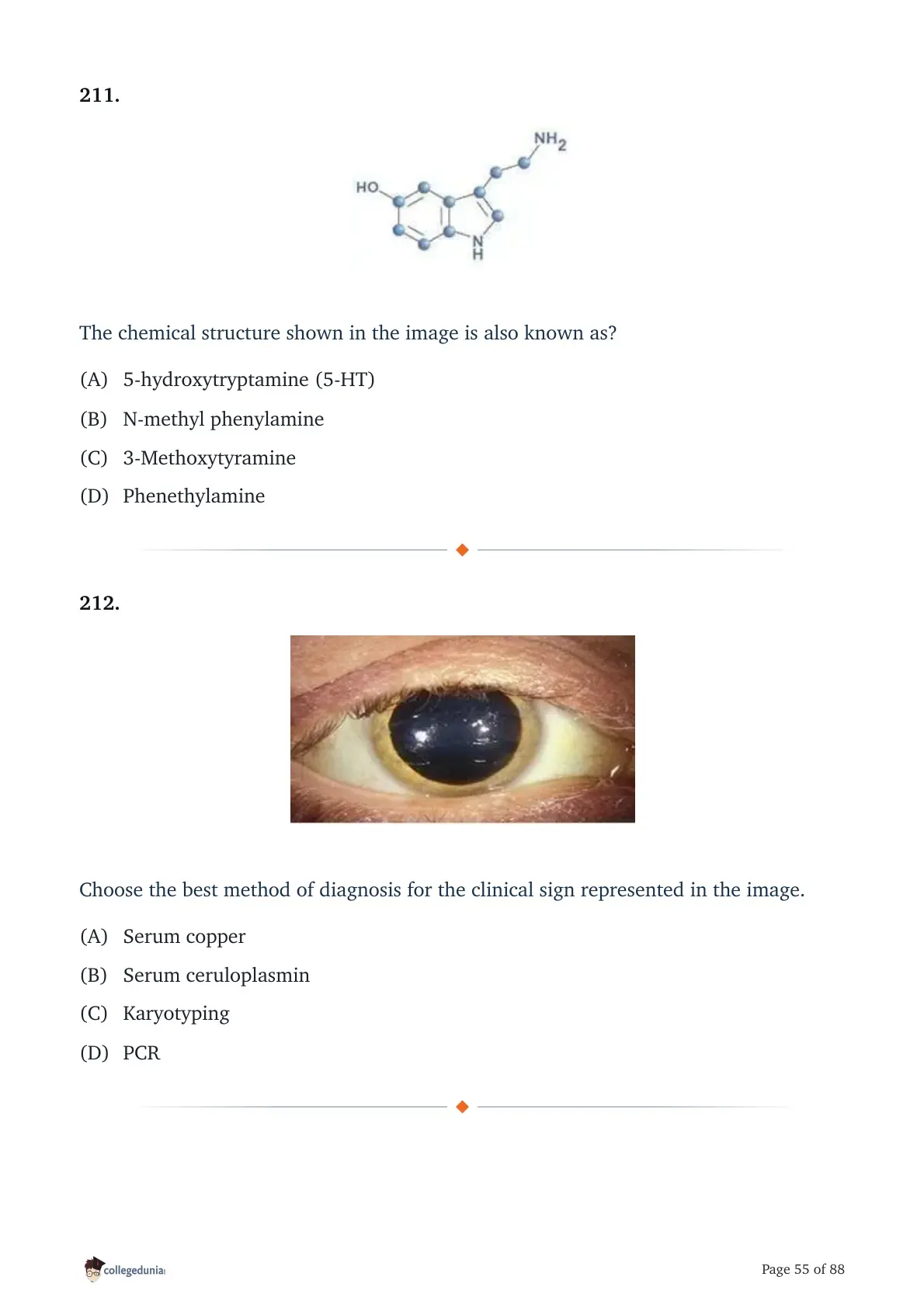
Question 211:
![]()
The chemical structure shown in the image is also known as?
- (A) 5-hydroxytryptamine (5-HT)
- (B) N-methyl phenylamine
- (C) 3-Methoxytyramine
- (D) Phenethylamine
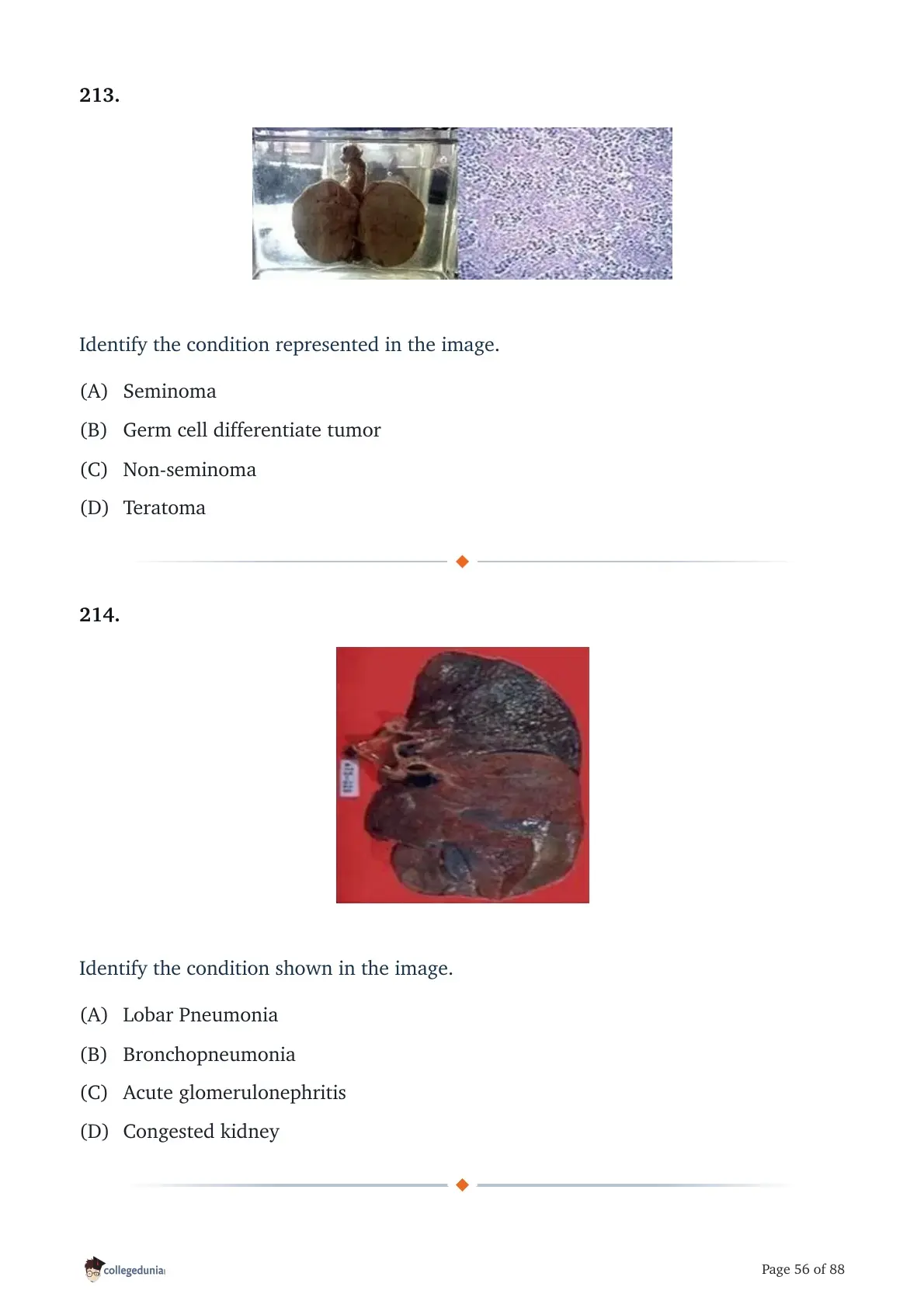
Question 212:
![]()
Choose the best method of diagnosis for the clinical sign represented in the image.
- (A) Serum copper
- (B) Serum ceruloplasmin
- (C) Karyotyping
- (D) PCR
Question 213:
![]()
Identify the condition represented in the image.
- (A) Seminoma
- (B) Germ cell differentiate tumor
- (C) Non-seminoma
- (D) Teratoma
Question 214:
![]()
Identify the condition shown in the image.
- (A) Lobar Pneumonia
- (B) Bronchopneumonia
- (C) Acute glomerulonephritis
- (D) Congested kidney
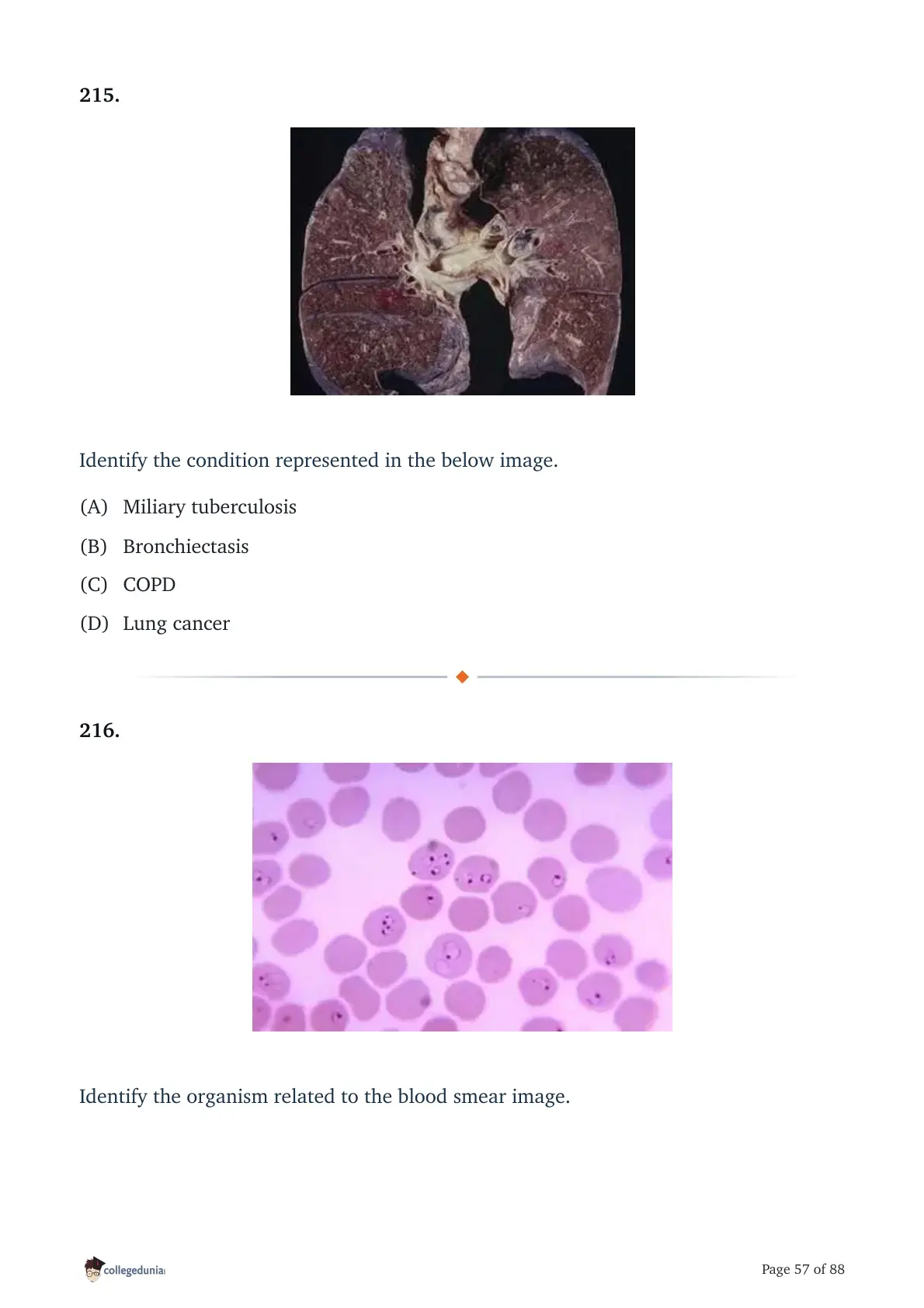
Question 215:
![]()
Identify the condition represented in the below image.
- (A) Miliary tuberculosis
- (B) Bronchiectasis
- (C) COPD
- (D) Lung cancer
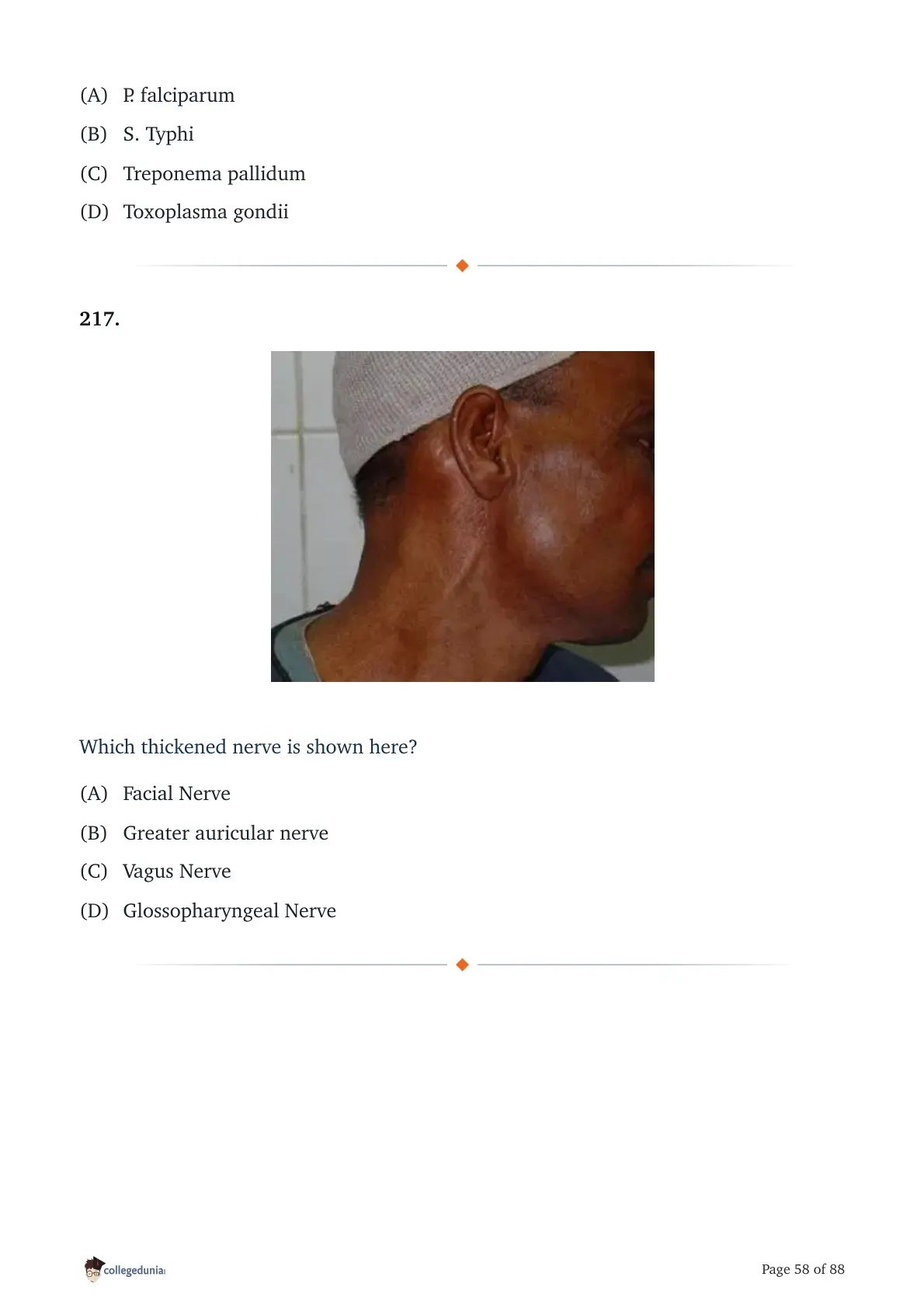
Question 216:
![]()
Identify the organism related to the blood smear image.
- (A) P. falciparum
- (B) S. Typhi
- (C) Treponema pallidum
- (D) Toxoplasma gondii
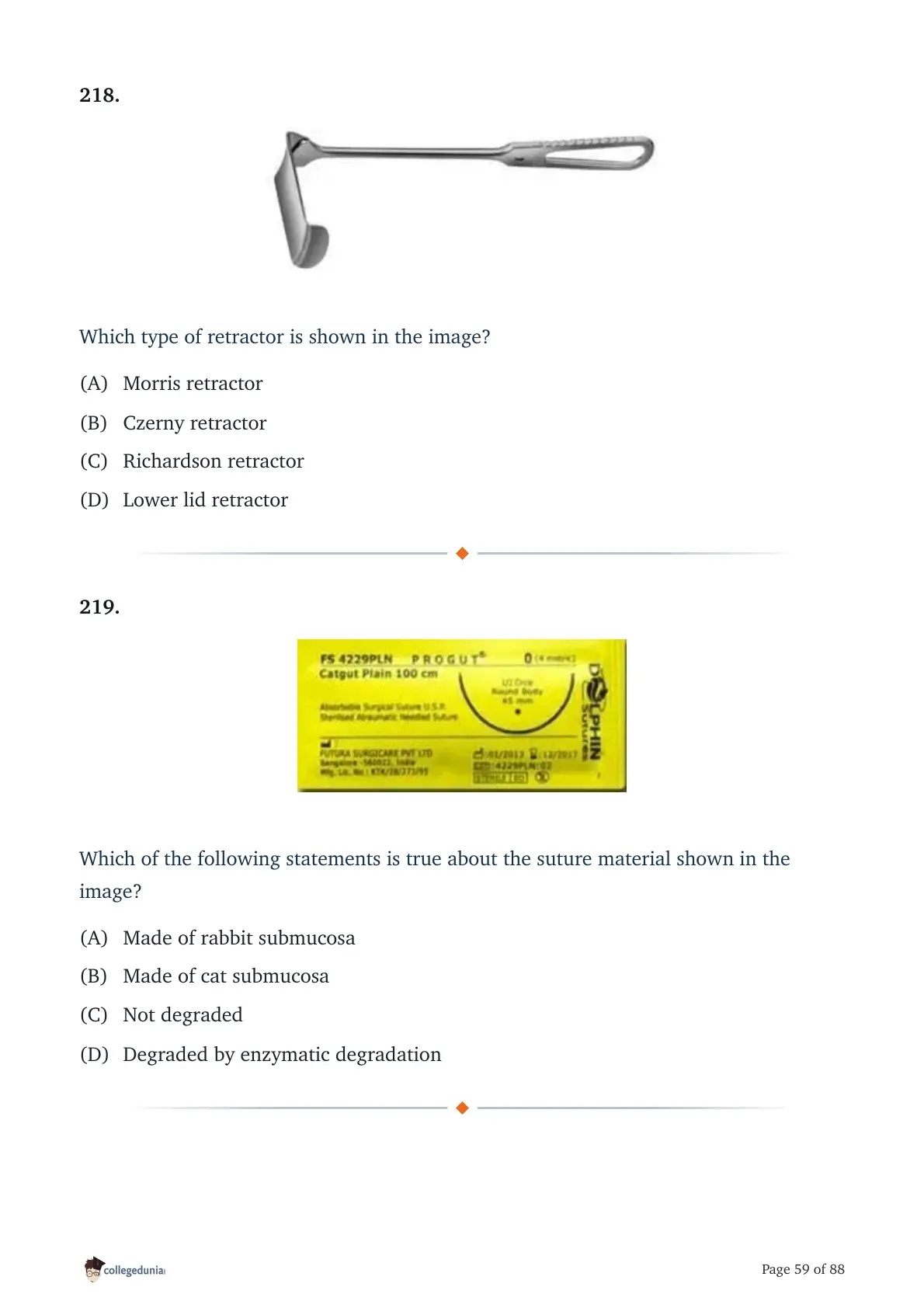
Question 217:
![]()
Which thickened nerve is shown here?
- (A) Facial Nerve
- (B) Greater auricular nerve
- (C) Vagus Nerve
- (D) Glossopharyngeal Nerve
Question 218:
![]()
Which type of retractor is shown in the image?
- (A) Morris retractor
- (B) Czerny retractor
- (C) Richardson retractor
- (D) Lower lid retractor
Question 219:
![]()
Which of the following statements is true about the suture material shown in the image?
- (A) Made of rabbit submucosa
- (B) Made of cat submucosa
- (C) Not degraded
- (D) Degraded by enzymatic degradation
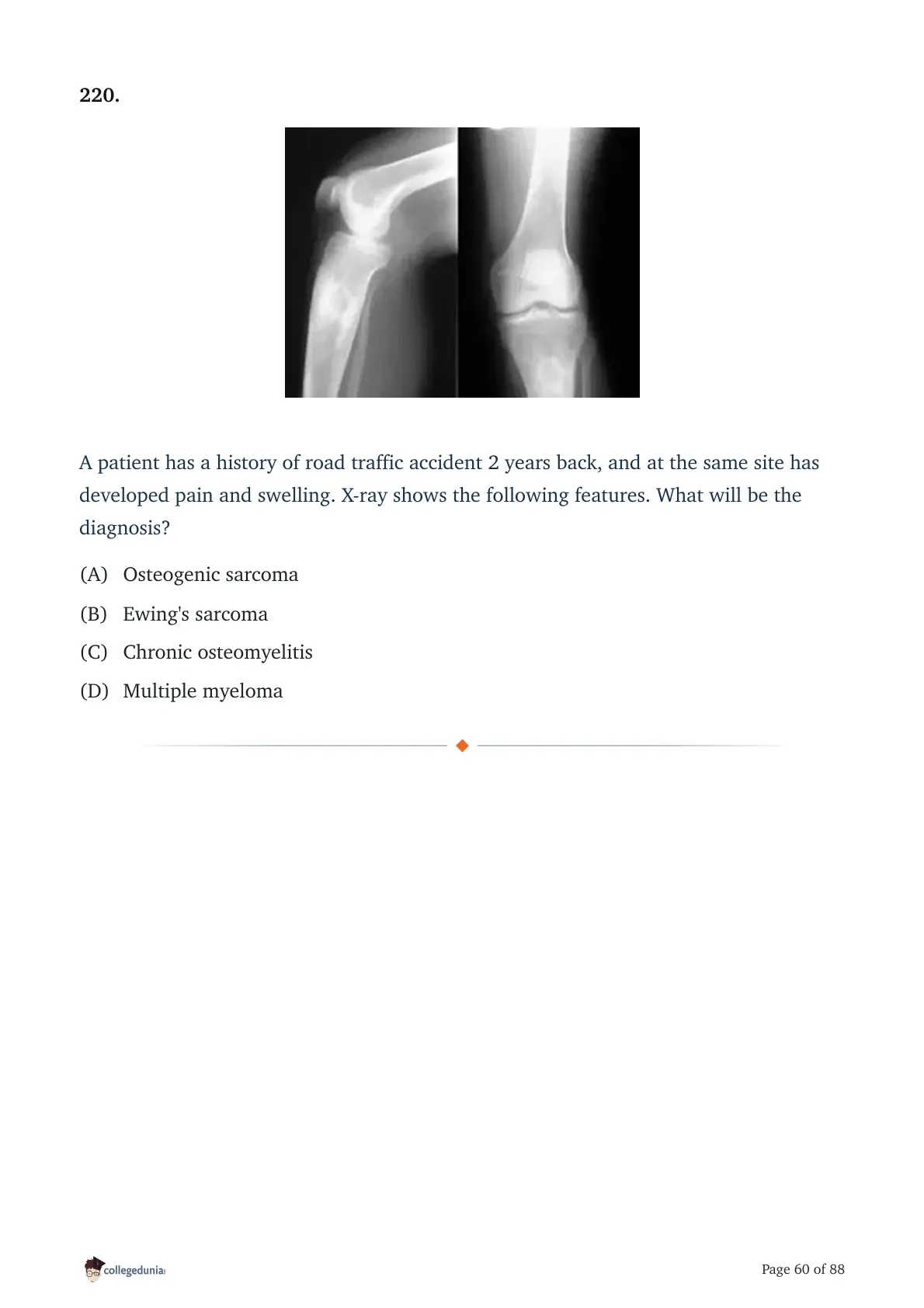
Question 220:
![]()
A patient has a history of road traffic accident 2 years back, and at the same site has developed pain and swelling. X-ray shows the following features. What will be the diagnosis?
- (A) Osteogenic sarcoma
- (B) Ewing's sarcoma
- (C) Chronic osteomyelitis
- (D) Multiple myeloma
Question 221:
![]()
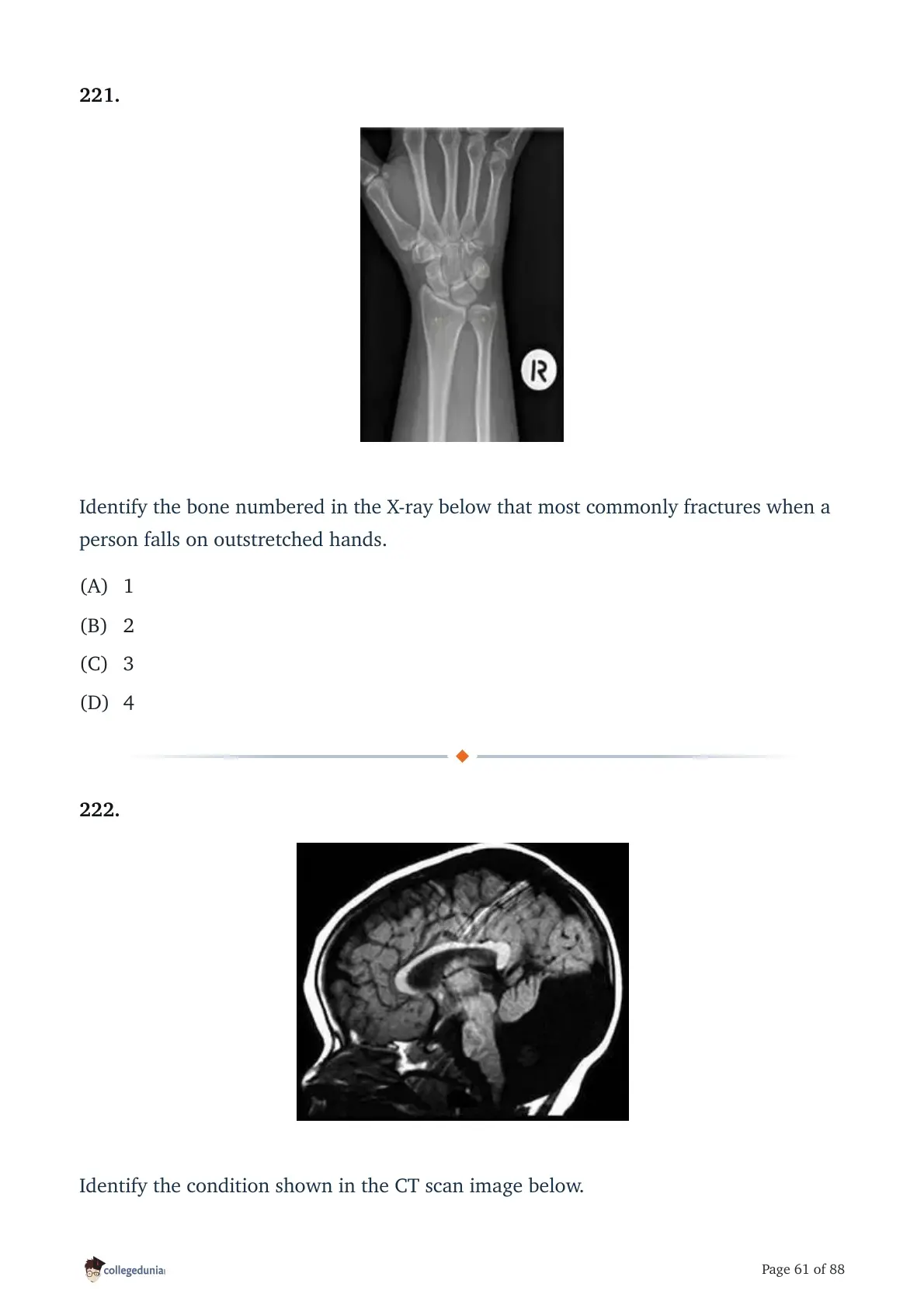
Identify the bone numbered in the X-ray below that most commonly fractures when a person falls on outstretched hands.
Question 222:
![]()
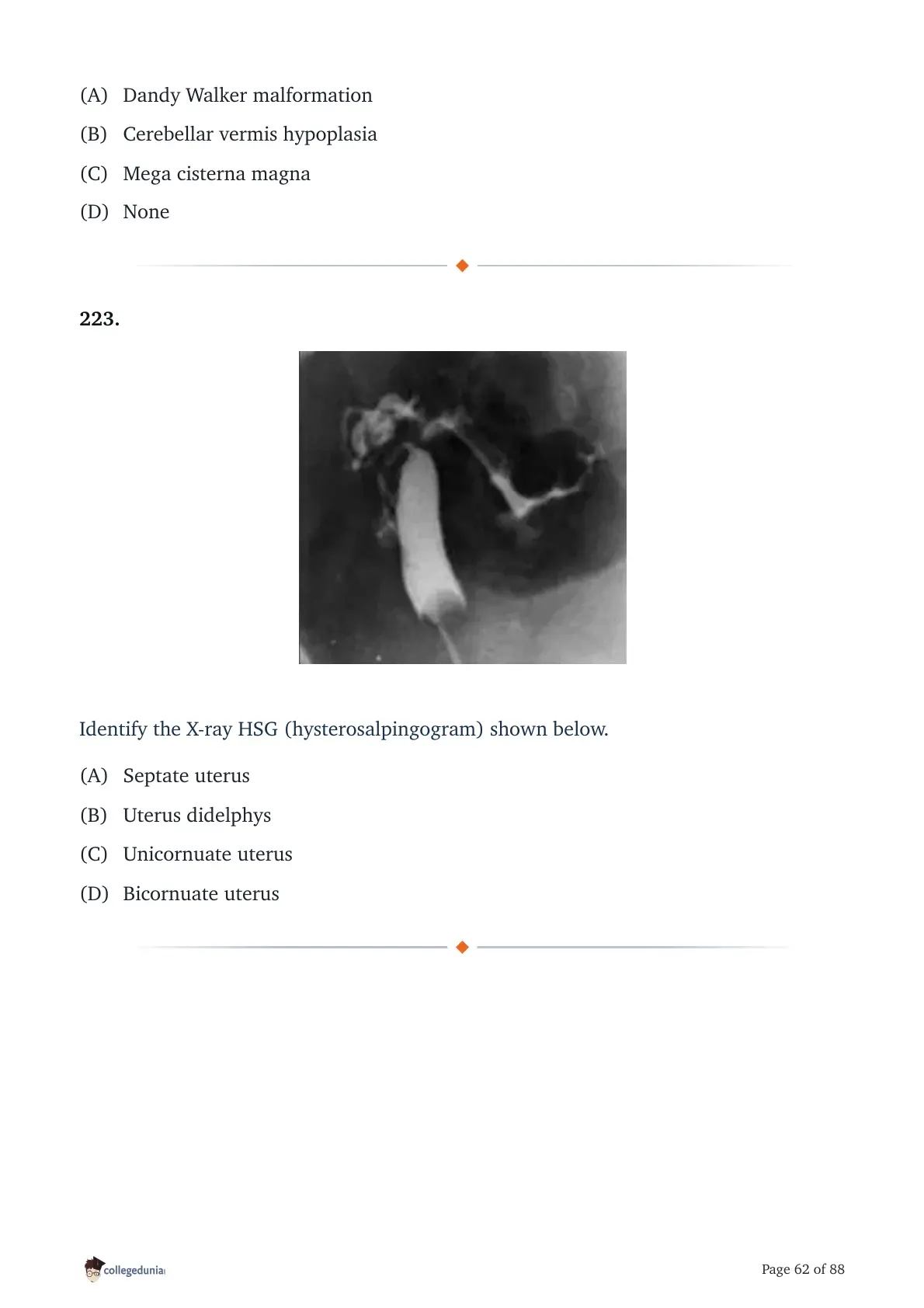
Identify the condition shown in the CT scan image below.
- (A) Dandy Walker malformation
- (B) Cerebellar vermis hypoplasia
- (C) Mega cisterna magna
- (D) None
Question 223:
![]()
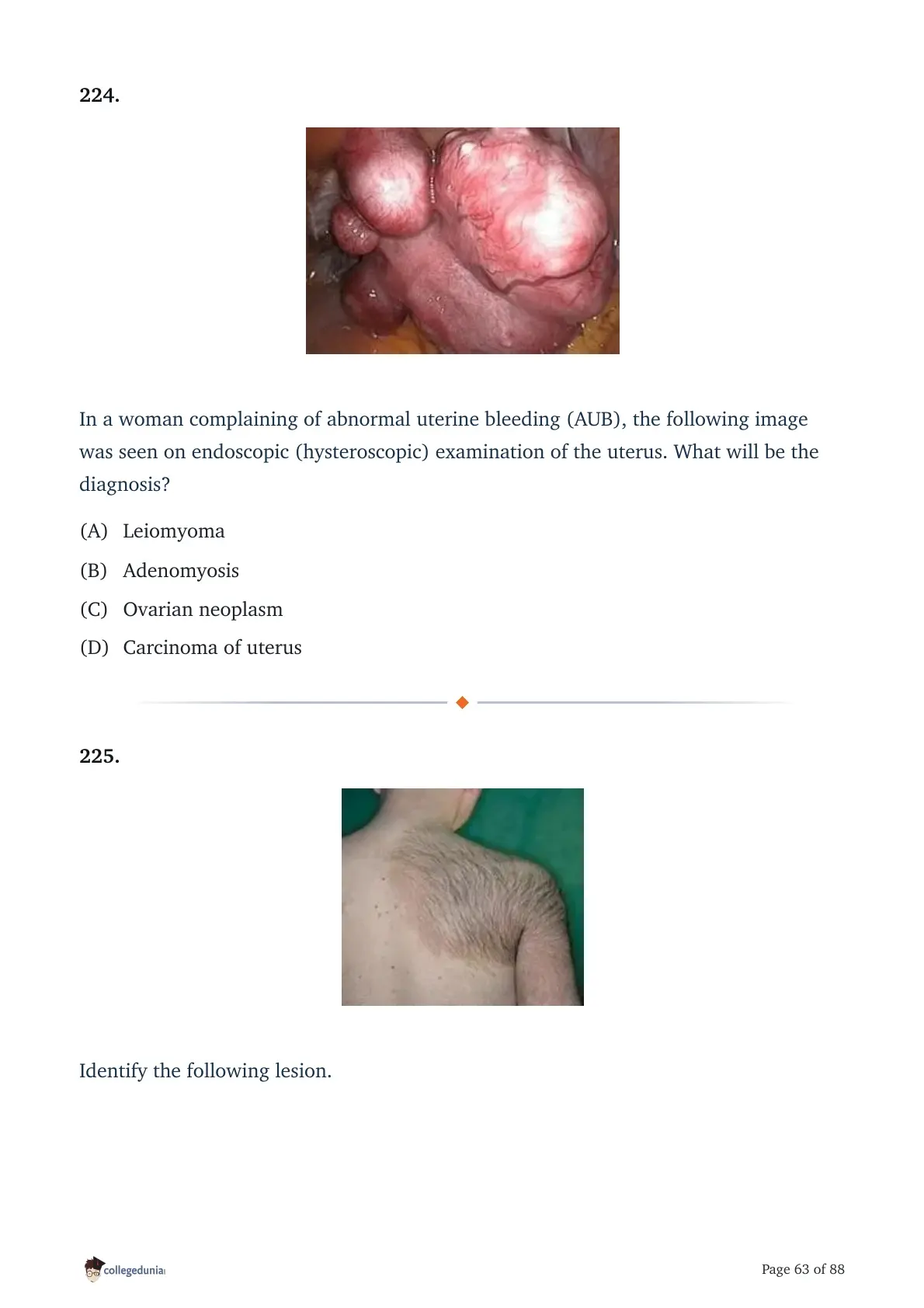
Identify the X-ray HSG (hysterosalpingogram) shown below.
- (A) Septate uterus
- (B) Uterus didelphys
- (C) Unicornuate uterus
- (D) Bicornuate uterus
Question 224:
![]()
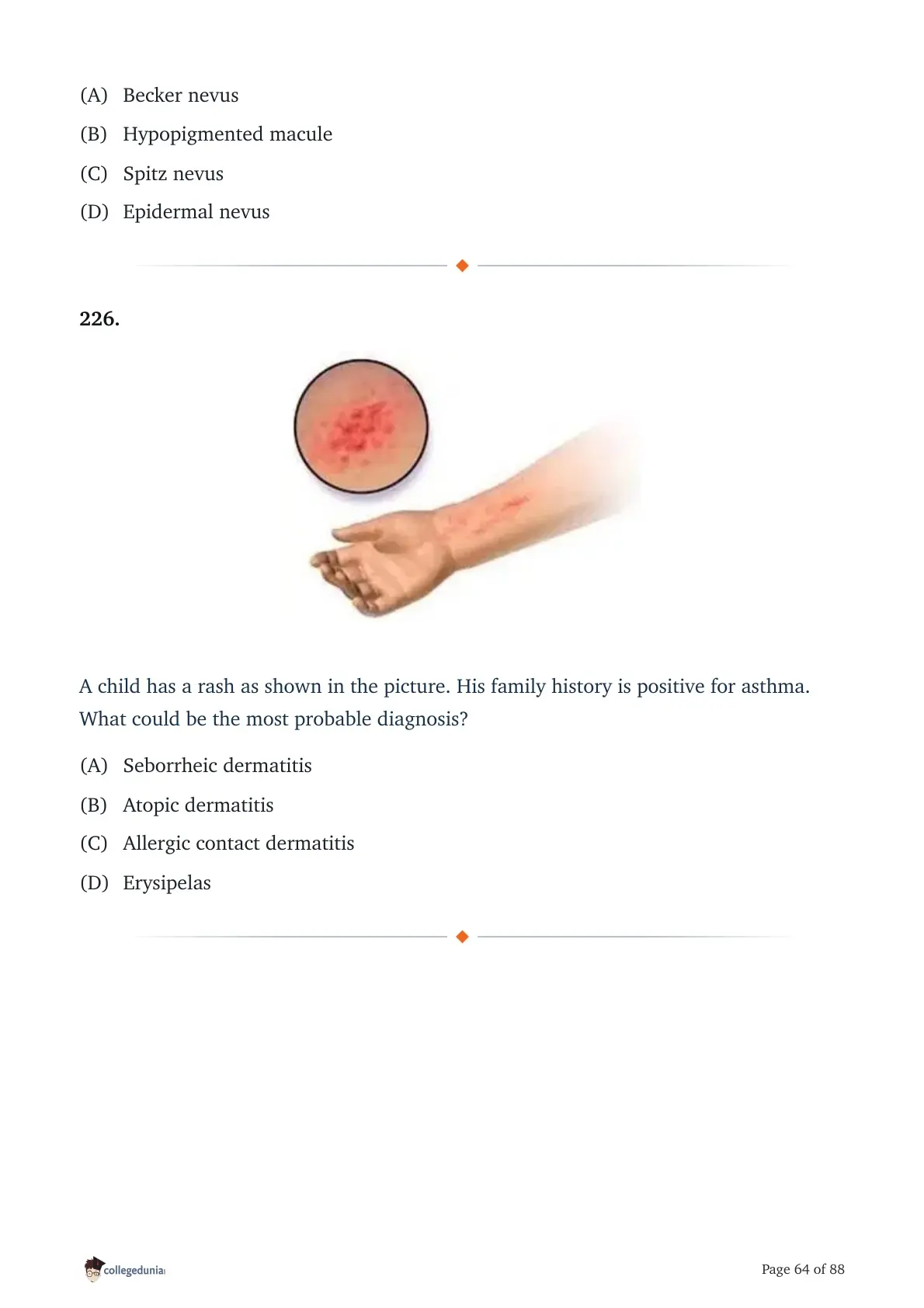
In a woman complaining of abnormal uterine bleeding (AUB), the following image was seen on endoscopic (hysteroscopic) examination of the uterus. What will be the diagnosis?
- (A) Leiomyoma
- (B) Adenomyosis
- (C) Ovarian neoplasm
- (D) Carcinoma of uterus
Question 225:
![]()
Identify the following lesion.
- (A) Becker nevus
- (B) Hypopigmented macule
- (C) Spitz nevus
- (D) Epidermal nevus
Question 226:
![]()
A child has a rash as shown in the picture. His family history is positive for asthma. What could be the most probable diagnosis?
- (A) Seborrheic dermatitis
- (B) Atopic dermatitis
- (C) Allergic contact dermatitis
- (D) Erysipelas
Question 227:
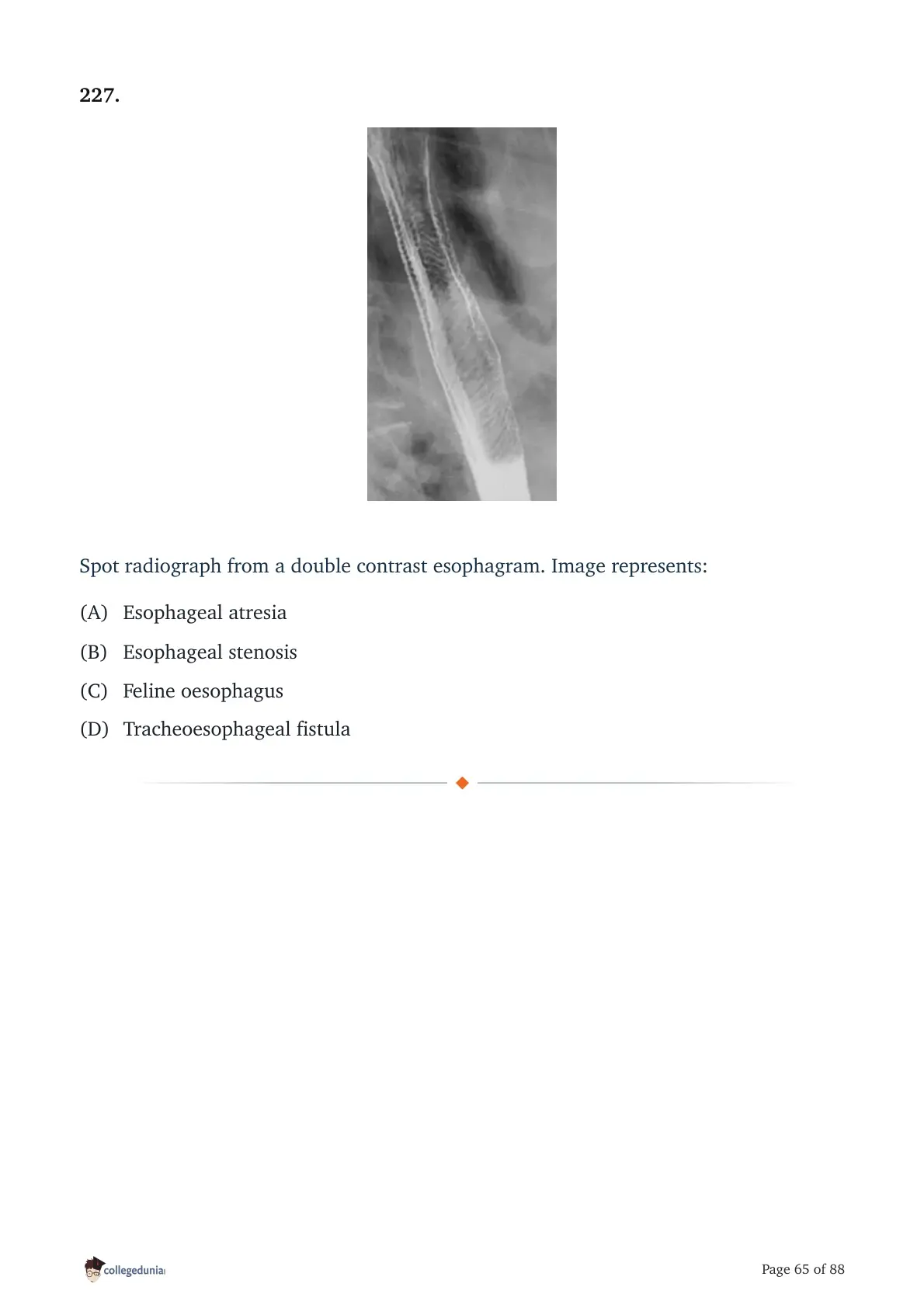
![]()
Spot radiograph from a double contrast esophagram. Image represents:
- (A) Esophageal atresia
- (B) Esophageal stenosis
- (C) Feline oesophagus
- (D) Tracheoesophageal fistula
Question 228:
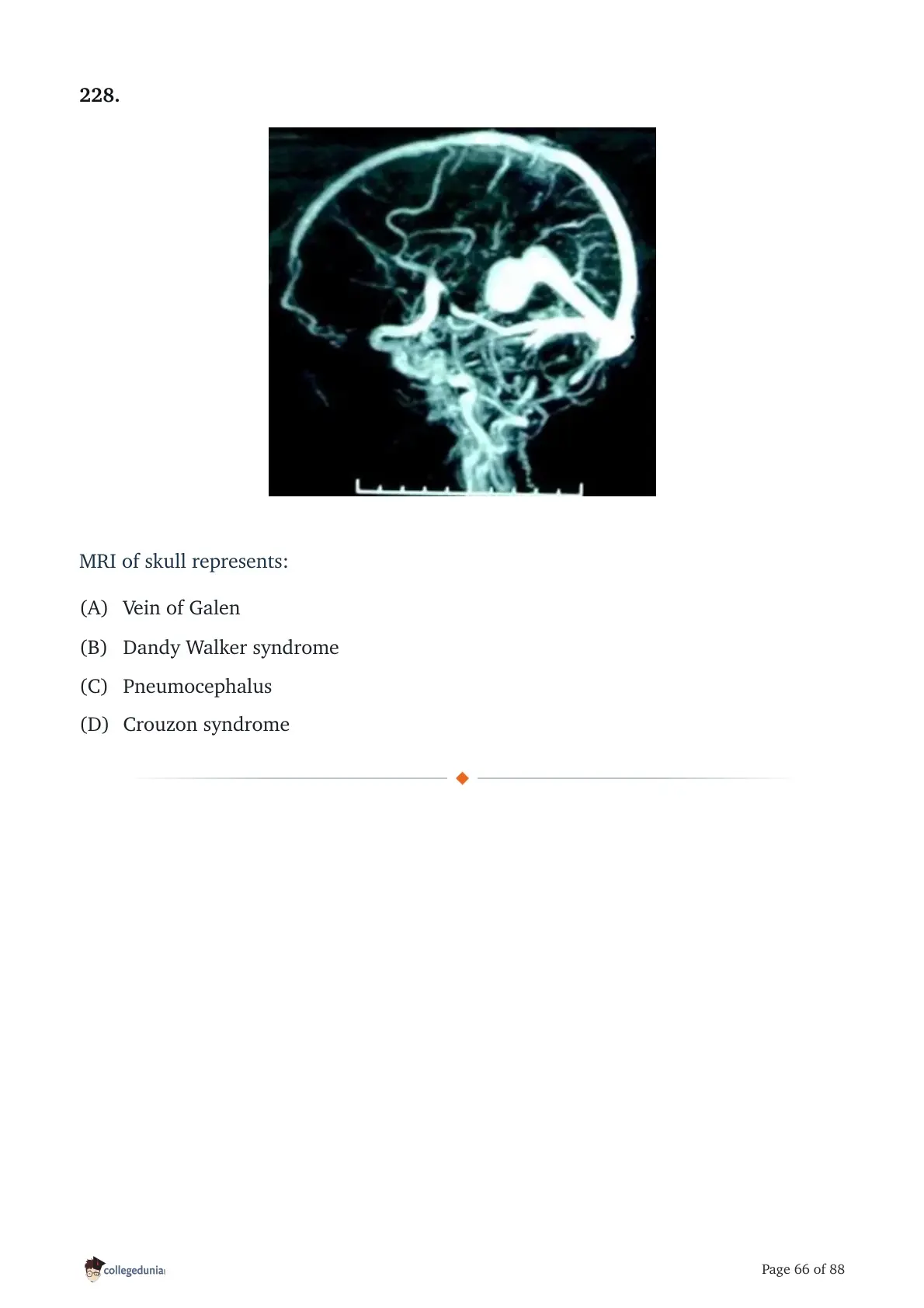
![]()
MRI of skull represents:
- (A) Vein of Galen
- (B) Dandy Walker syndrome
- (C) Pneumocephalus
- (D) Crouzon syndrome
Question 229:
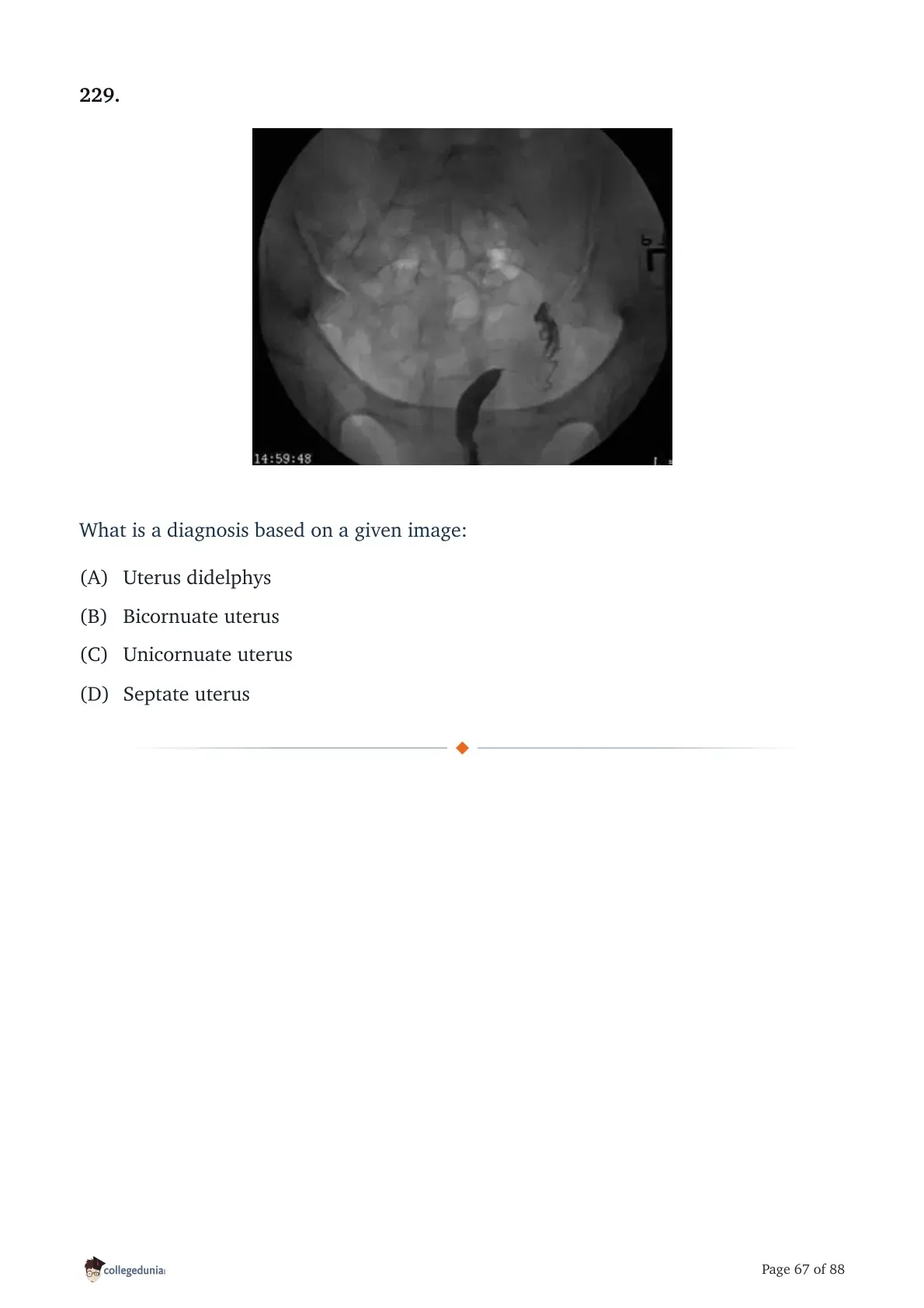
![]()
What is a diagnosis based on a given image:
- (A) Uterus didelphys
- (B) Bicornuate uterus
- (C) Unicornuate uterus
- (D) Septate uterus
Question 230:
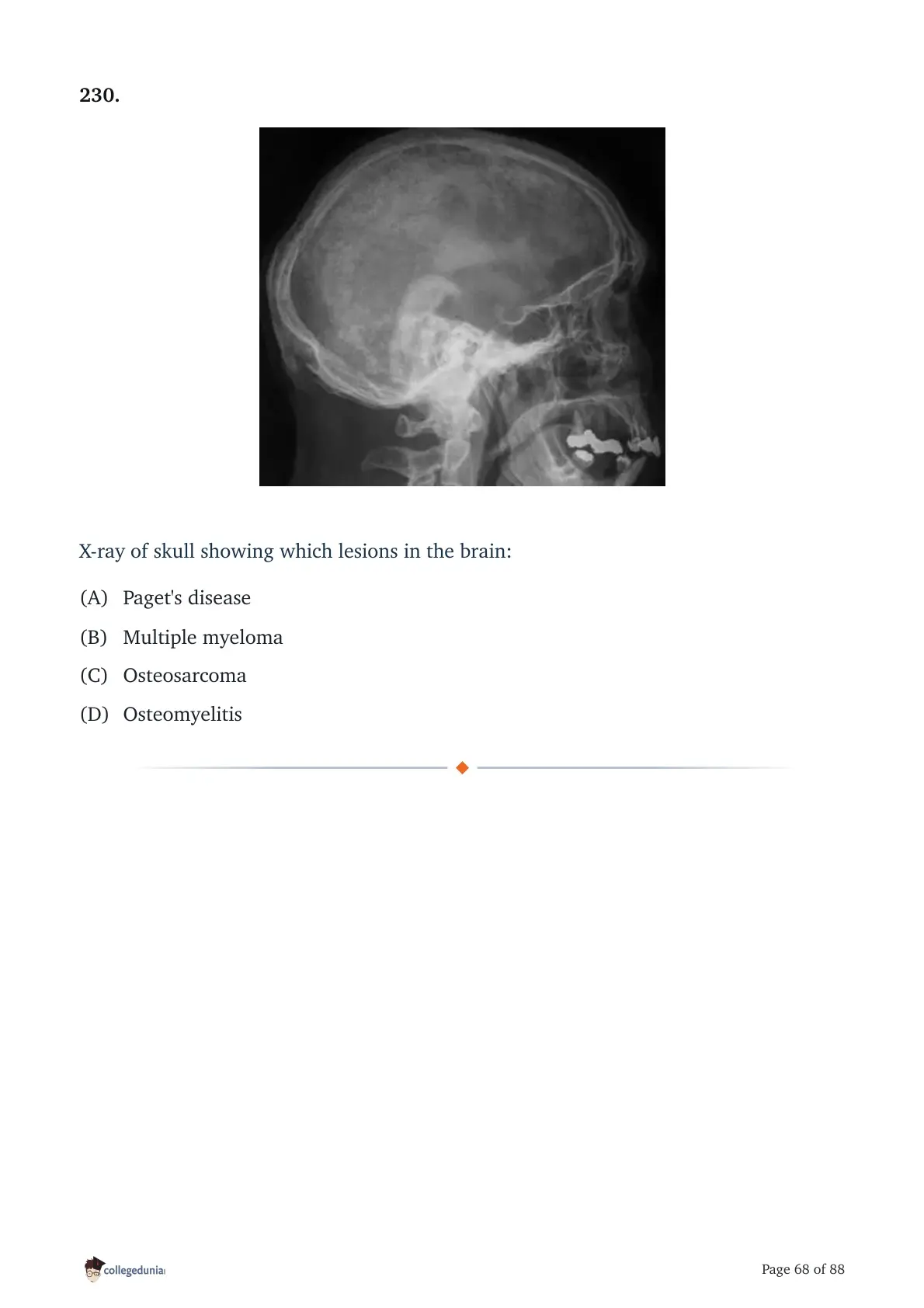
![]()
X-ray of skull showing which lesions in the brain:
- (A) Paget's disease
- (B) Multiple myeloma
- (C) Osteosarcoma
- (D) Osteomyelitis
Question 231:
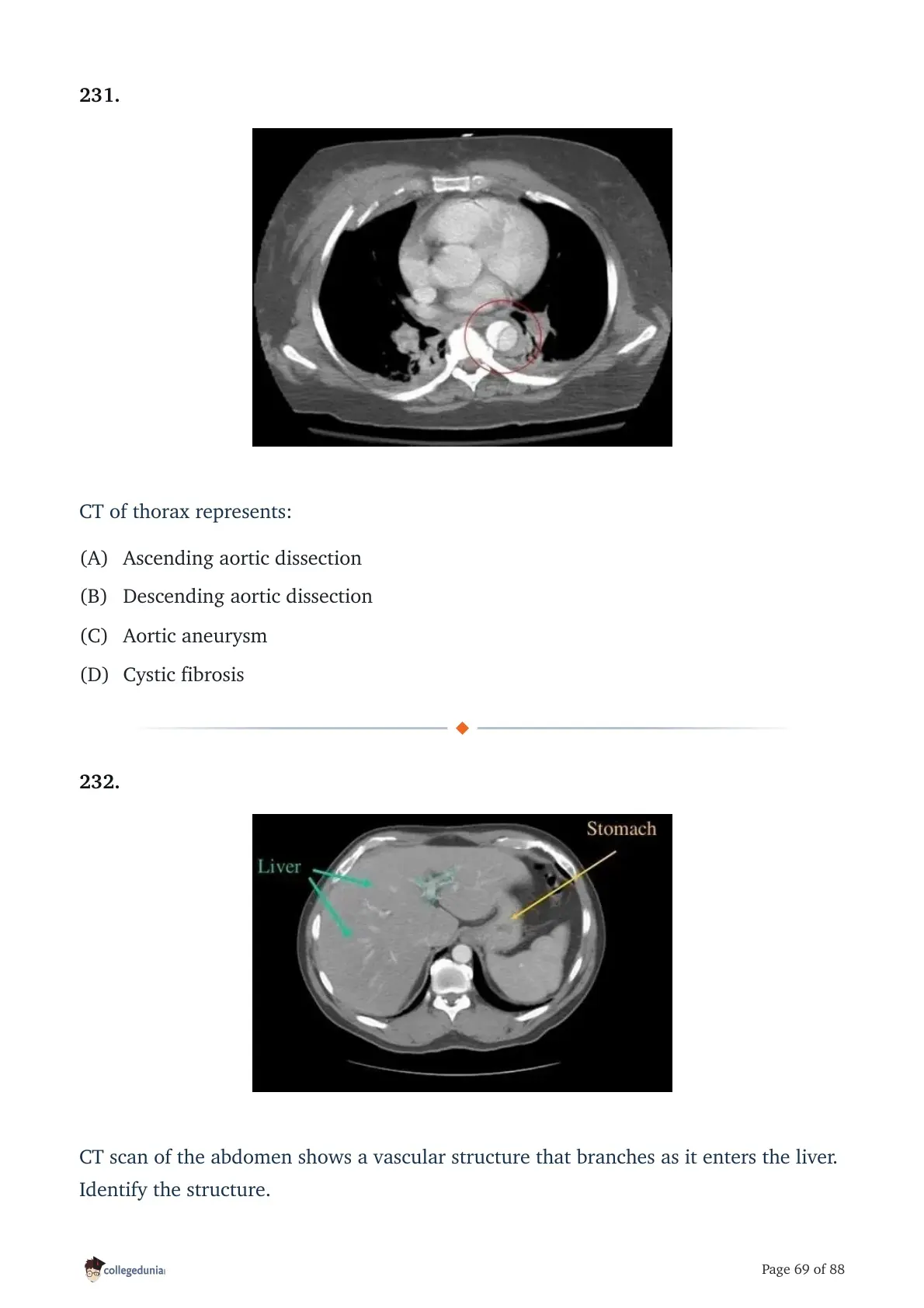
![]()
CT of thorax represents:
- (A) Ascending aortic dissection
- (B) Descending aortic dissection
- (C) Aortic aneurysm
- (D) Cystic fibrosis
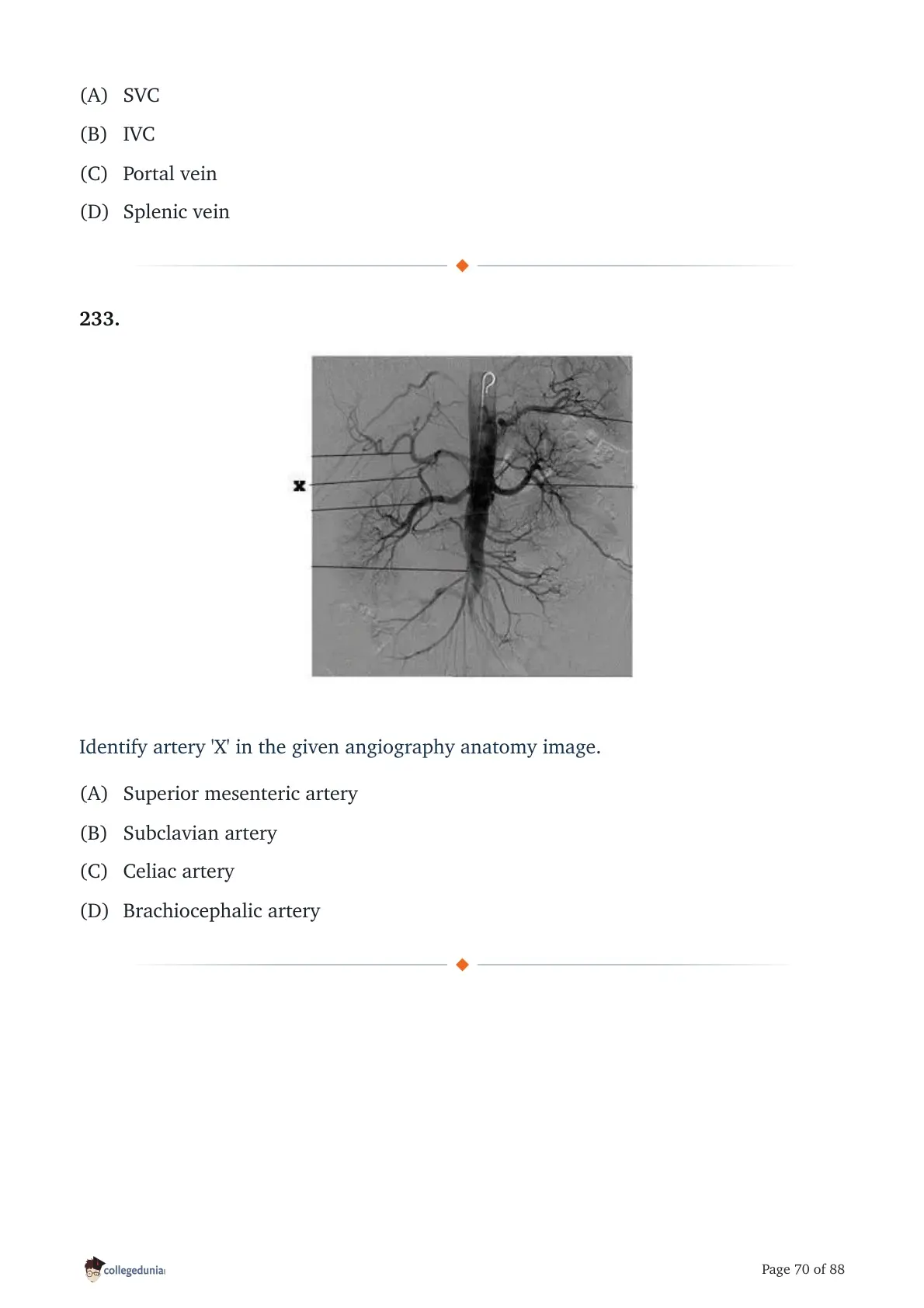
Question 232:
![]()
CT scan of the abdomen shows a vascular structure that branches as it enters the liver. Identify the structure.
- (A) SVC
- (B) IVC
- (C) Portal vein
- (D) Splenic vein
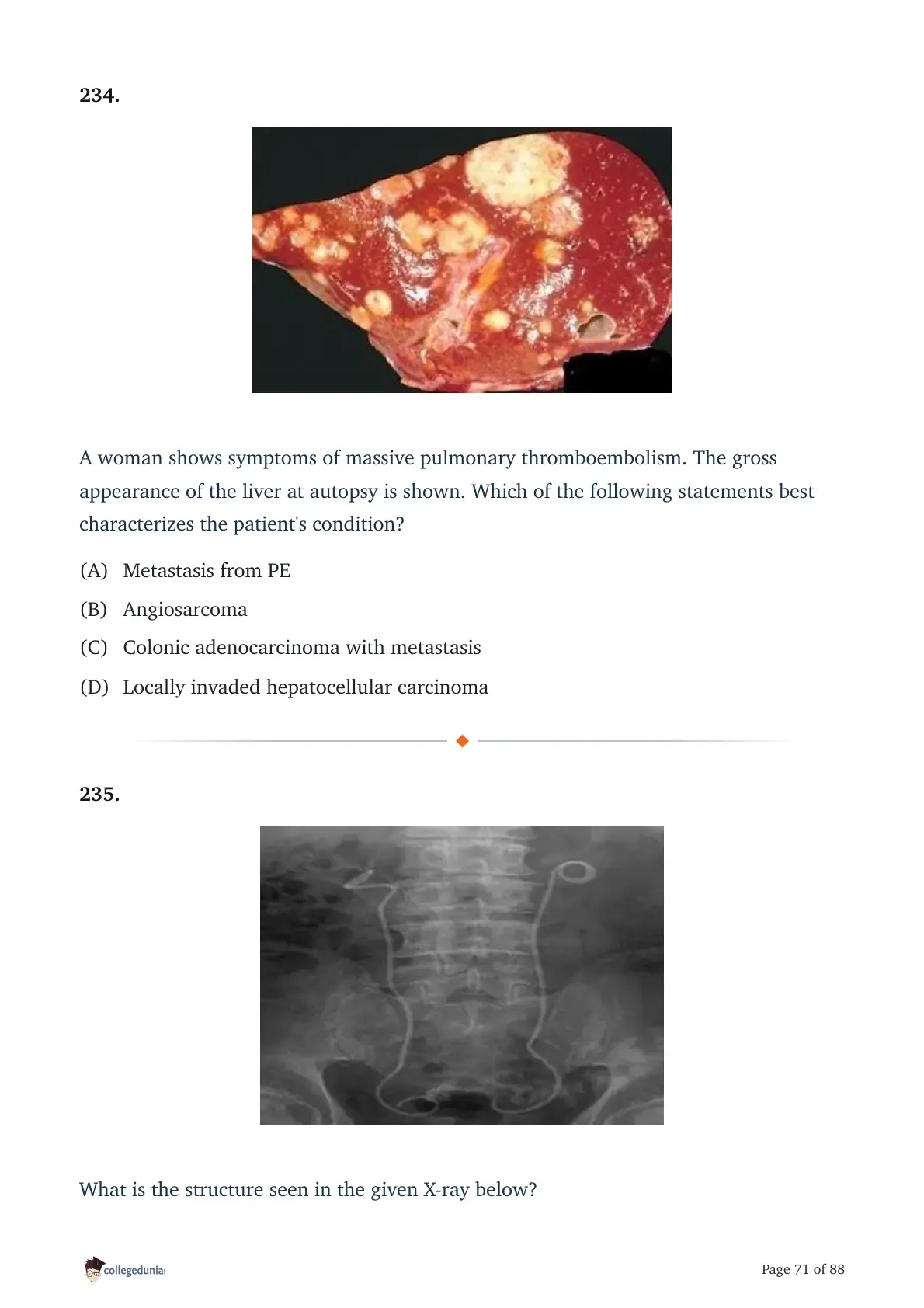
Question 233:
![]()
Identify artery 'X' in the given angiography anatomy image.
- (A) Superior mesenteric artery
- (B) Subclavian artery
- (C) Celiac artery
- (D) Brachiocephalic artery
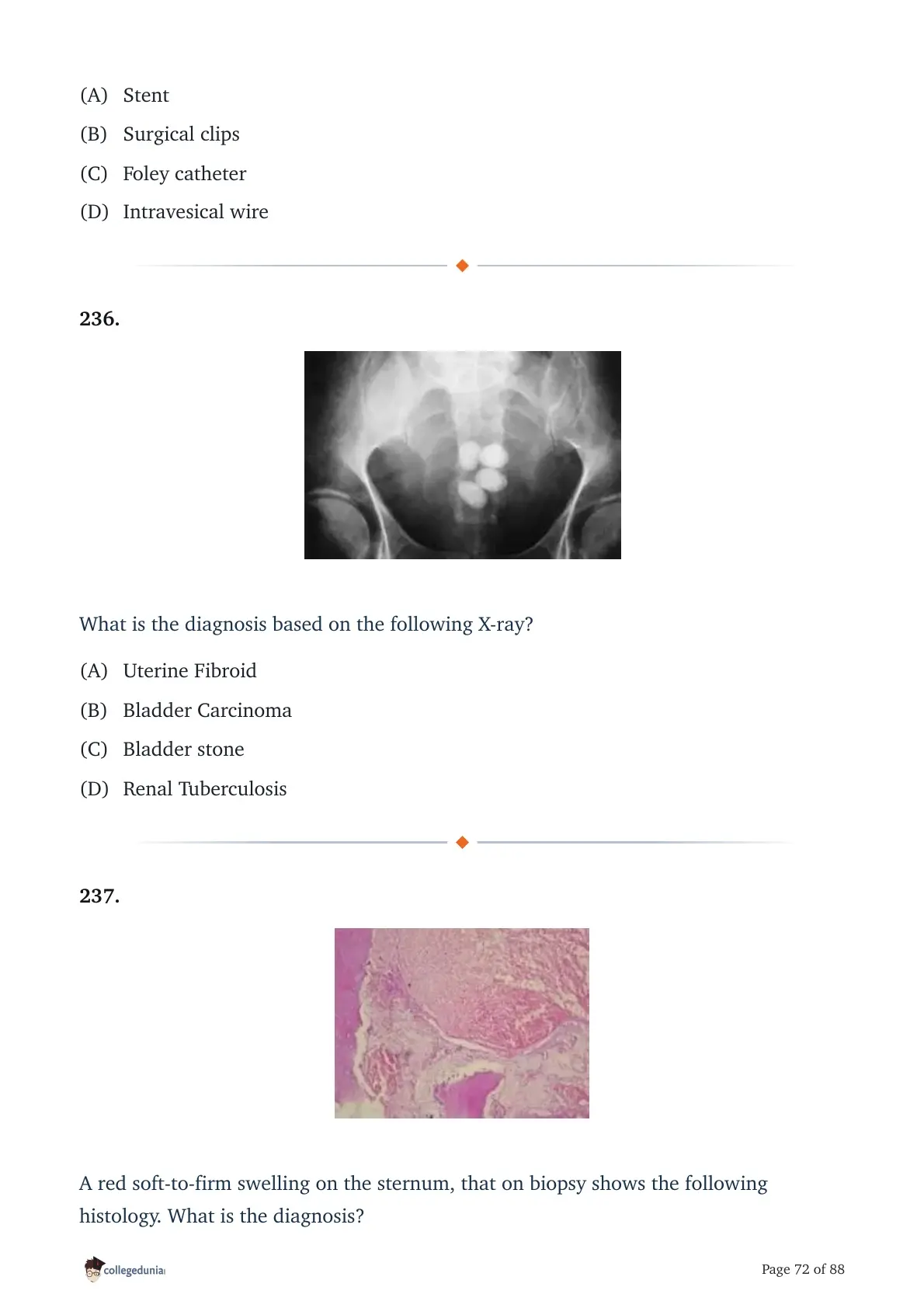
Question 234:
![]()
A woman shows symptoms of massive pulmonary thromboembolism. The gross appearance of the liver at autopsy is shown. Which of the following statements best characterizes the patient's condition?
- (A) Metastasis from PE
- (B) Angiosarcoma
- (C) Colonic adenocarcinoma with metastasis
- (D) Locally invaded hepatocellular carcinoma
Question 235:
![]()
What is the structure seen in the given X-ray below?
- (A) Stent
- (B) Surgical clips
- (C) Foley catheter
- (D) Intravesical wire
Question 236:
![]()
What is the diagnosis based on the following X-ray?
- (A) Uterine Fibroid
- (B) Bladder Carcinoma
- (C) Bladder stone
- (D) Renal Tuberculosis
Question 237:
![]()
A red soft-to-firm swelling on the sternum, that on biopsy shows the following histology. What is the diagnosis?
- (A) Hemangioma
- (B) Osteochondroma
- (C) Osteoid osteoma
- (D) Paget disease
Question 238:
![]()
Which of the following is the carrying agent (vector) for the disease with the given characteristic on polarized microscopy?
- (A) Anopheles
- (B) Ixodes scapularis ticks
- (C) Louse
- (D) Rat flea
Question 239:
Chordoma arises from:
- (A) Pharyngeal bursa
- (B) Notochord
- (C) Rathke's pouch
- (D) Luschka's bursa
Question 240:
What is the effect of progesterone only pills?
- (A) Completely suppresses ovulation
- (B) Thin lining of uterus
- (C) Thick cervical mucus
- (D) All of the above
Question 241:
Which metal results in "saturnine gout" formation?
- (A) Cadmium
- (B) Lead
- (C) Beryllium
- (D) Mercury
Question 242:
Which drug decreases the bone resorption in osteoporosis?
- (A) Teriparatide
- (B) Risedronate
- (C) Cortisone
- (D) Cimetidine
Question 243:
Phenylketonuria is due to deficiency of:
- (A) Phenylalanine
- (B) Phenylalanine hydroxylase (PAH)
- (C) Phenylene
- (D) All of these
Question 244:
Which is NOT correct?
- (A) MRI needed to assess haemorrhage
- (B) GCS assessment helps in prognosis
- (C) Haematoma must be operated
- (D) All of the above
Question 245:
Maastricht classification of donation after cardiac death. What category is stage 3?
- (A) Awaiting cardiac arrest
- (B) Brought in dead
- (C) Unsuccessful resuscitation
- (D) Cardiac arrest after brain-stem death
Question 246:
What is the cause of cardiogenic (myocardial) shock other than acute myocardial infarction?
- (A) Acute mitral regurgitation
- (B) Ventricular septal rupture
- (C) Isolated right ventricular shock
- (D) All of the above
Question 247:
Nitric oxide acts by increasing which of the following?
- (A) BRCA 1
- (B) BRCA 2
- (C) Interleukin
- (D) cGMP
Question 248:
Periodic acid-Schiff (PAS) positive macrophages are seen in which condition?
- (A) Whipple's disease
- (B) Crohn's disease
- (C) AIDS
- (D) None of the above
Question 249:
A boy presented with multiple non-suppurative osteomyelitis along with sickle cell anaemia. What will be the causative organism?
- (A) Salmonella
- (B) S. aureus
- (C) H. influenzae
- (D) Enterobacter species
Question 250:
The term pathology refers to:
- (A) Work
- (B) Function
- (C) Details
- (D) Explains
Question 251:
A 1-year-old child weighing 6 kg is suffering from acute gastroenteritis with signs of sunken eyes and a skin pinch going back to normal very rapidly. What will be your management?
- (A) RL infusion 120 ml in the first hour followed by 360 ml in the next 5 hours
- (B) RL infusion 180 ml in the first hour followed by 420 ml in the next 5 hours
- (C) RL infusion 180 ml in the first hour followed by 480 ml in the next 5 hours
- (D) RL infusion 240 ml in the first hour followed by 360 ml in the next 5 hours
Question 252:
What constitutes the Malpighian layer of the epidermis?
- (A) Stratum corneum and stratum lucidum
- (B) Stratum corneum and stratum spinosum
- (C) Stratum spinosum and stratum basale
- (D) Stratum basale and stratum granulosum
Question 253:
Which of the following is the underlying metabolic basis of acute gout?
- (A) Uric acid nephrolithiasis
- (B) Deficiency of enzyme xanthine oxidase
- (C) Increase in serum urate concentration
- (D) Renal disease involving interstitial tissues
Question 254:
Oxygen therapy may NOT be useful (or may be harmful) in which of the following conditions?
- (A) Asthma
- (B) Pneumonia
- (C) Subglottic stenosis
- (D) Pulmonary fibrosis
Question 255:
A newborn baby with a heart rate less than 60 beats per minute can be resuscitated by all of the following EXCEPT:
- (A) Chest compression
- (B) Oxygen therapy
- (C) Tactile stimulation
- (D) Slapping the back
Question 256:
Mobitz type 2 second degree AV block is seen in all of the following EXCEPT:
- (A) Hypothyroidism
- (B) Coronary artery disease
- (C) Sarcoidosis
- (D) Cushing syndrome
Question 257:
By which of the following criteria can one diagnose acute respiratory distress (pediatric ARDS) in a child?
- (A) Within 7 days of known clinical insult
- (B) Respiratory failure not fully explained by cardiac failure
- (C) Left ventricular dysfunction excluded as sole cause
- (D) All of the above
Question 258:
A 6-year-old boy presented with life-threatening shock. CT showed large ascites, bowel wall thickening and poor or absent enhancement of a strangulated bowel segment, with gangrenous bowel found on surgical exploration. After resection, which statement about the intestinal anastomosis is TRUE?
- (A) Should be done by continuous layers as it takes less time
- (B) Should be done with catgut
- (C) Should be done by single layer seromuscular Lembert sutures
- (D) Should be done by single layer taking submucosa
Question 259:
In ACLS, which drug can be given for ventricular fibrillation after cardiac arrest, other than epinephrine?
- (A) Amiodarone
- (B) Dopamine
- (C) Adenosine
- (D) Atropine
Question 260:
Which of the following statement is false about the MR vaccination campaign launched by WHO?
- (A) Children from 9 months to less than 15 years are vaccinated
- (B) Targets congenital rubella syndrome (CRS), which is responsible for irreversible birth defects
- (C) India has not yet launched this campaign
- (D) It will replace routine immunization for measles vaccine
Question 261:
Which of the following is true regarding Hemophilia A?
- (A) Serum levels of factor VIII are decreased
- (B) Deficiency of factor IX
- (C) PT is increased
- (D) FIT decreased
Question 262:
Marked bleeding is seen in which of the following conditions?
- (A) VMA disease
- (B) Haemophilia A
- (C) Haemophilia B
- (D) All
Question 263:
Reed-Sternberg cells are found in which condition?
- (A) Hodgkin's disease
- (B) Sickle cell anaemia
- (C) Thalassemia
- (D) CML
Question 264:
By which method is foreign DNA introduced into a cell by a virus or viral vector?
- (A) Transduction
- (B) Transcription
- (C) Lysogenic conversion
- (D) Transformation
Question 265:
Which one of the following shows allosteric inhibition?
- (A) Malonic acid & succinate
- (B) 2,3 BPG
- (C) Amino acid alanine & pyruvate kinase
- (D) Citrate
Question 266:
Which of the following is seen in seropositive rheumatoid arthritis?
- (A) Multiple joints affected
- (B) Symmetrical joint symptoms
- (C) Joint pain and swelling
- (D) All
Question 267:
Which of the following is not seen in the anterior mediastinum?
- (A) Thyroid tumour
- (B) Thymoma
- (C) Lymphoma
- (D) Neurogenic tumor
Question 268:
Struvite stone is caused by which metal?
- (A) Magnesium
- (B) Calcium
- (C) Sodium & potassium
- (D) Both (a) & (b)
Question 269:
Which of the following statements about Graves disease is false?
- (A) Results in hyperthyroidism
- (B) Autoimmune disorder
- (C) Common in male
- (D) Referred as toxic diffuse goitre
Question 270:
Aldosterone synthesis is stimulated by which of the following?
- (A) ACTH
- (B) Hyperkalemia
- (C) Hypernatremia
- (D) Exogenous steroids
Question 271:
Which of the following is false about Alzheimer's disease?
- (A) One in 10 people age 65 and older has Alzheimer's disease
- (B) Alzheimer's disease is curable
- (C) Causes dementia
- (D) All of the above
Question 272:
Which of the following is true about vitamin K?
- (A) Anticoagulant
- (B) Prolonged use of antimicrobial leads to deficiency
- (C) Dietary allowance is 15-20 mg
- (D) All of the above
Question 273:
Which drug needs continuous monitoring of prothrombin time?
- (A) Aspirin
- (B) Lepirudin
- (C) Digoxin
- (D) Coumadin
Question 274:
Which of the following are risk factors for cutaneous lymphoma?
- (A) Age
- (B) Gender
- (C) Weakened immune system
- (D) All
Question 275:
Which of the following is NOT included in AIDS-related complex (ARC)?
- (A) Ectopic pregnancy
- (B) Recurrent genital candidiasis
- (C) Generalised lymphadenopathy
- (D) Chronic diarrhea
Question 276:
Which is the treatment of choice for irradiation in chordoma?
- (A) Protons
- (B) Electrons
- (C) Gamma radiation
- (D) 3D-CRT
Question 277:
What differentiates delirium from dementia?
- (A) Confusion
- (B) Difficulty in communicating
- (C) Hallucination
- (D) Sudden change
Question 278:
Genital warts are caused by which virus?
- (A) Herpes simplex
- (B) Human papilloma
- (C) Cytomegalovirus
- (D) Varicella zoster
Question 279:
Which drug regimen is given in a pregnant woman with HIV infection?
- (A) Tenofovir disoproxil fumarate with emtricitabine
- (B) Tenofovir disoproxil fumarate with lamivudine
- (C) Abacavir with lamivudine
- (D) All
Question 280:
Which of the following structures develops from the dorsal mesentery?
- (A) Greater omentum
- (B) Lesser omentum
- (C) Liver
- (D) Diaphragm
Question 281:
Which of the following is the best graft/stent for a femoropopliteal bypass?
- (A) Dacron
- (B) Reversed saphenous vein
- (C) PTFE
- (D) None
Question 282:
Trilene (trichloroethylene) is degraded by:
- (A) Enzymatic degradation
- (B) Non-enzymatic degradation
- (C) Chemical degradation
- (D) None
Question 283:
The earliest feature of third cranial nerve involvement in a diabetes mellitus patient is:
- (A) Normal light reflex
- (B) Abnormal light reflex
- (C) Normal light and accommodation reflex
- (D) Abnormal light and accommodation reflex
Question 284:
During squint surgery the anaesthesiologist sees the blood pressure suddenly drop to 40. What is the best immediate management?
- (A) Give atropine
- (B) Increase level of anaesthesia
- (C) Ask the surgeon to stop the surgery
- (D) Give adrenaline
Question 285:
All of the following belong to the special visceral efferent column EXCEPT:
- (A) Glossopharyngeal nerve
- (B) Nucleus ambiguus
- (C) Vagus nerve
- (D) Trigeminal nerve
Question 286:
Which of the following conditions is NOT caused by Parvovirus B19?
- (A) Roseola infantum
- (B) Aplastic anaemia in sickle cell disease
- (C) Fetal hydrops
- (D) Erythema infectiosum
Question 287:
Which of the following statements is NOT true about the iliolumbar ligament?
- (A) Upper fibres attached to iliac crest
- (B) Lower fibres attached to base of sacrum
- (C) Helps in maintaining lumbosacral joint stability
- (D) Upper attachment to transverse process of T12
Question 288:
Where will be the placement location for an Auditory Brainstem Implant (ABI)?
- (A) Scala tympani
- (B) Recess of 4th ventricle
- (C) Internal auditory canal (IAC)
- (D) Back of ear
Question 289:
Which condition is associated with congenital adrenal hyperplasia?
- (A) Male pseudohermaphroditism
- (B) Female pseudohermaphroditism
- (C) True pseudohermaphroditism
- (D) Sequential pseudohermaphroditism
Question 290:
Which of the following is true regarding ataxia telangiectasia?
- (A) Increase in AFP (alpha-fetoprotein)
- (B) Increases the risk of squamous cell carcinoma
- (C) Autosomal dominant
- (D) None of the above
Question 291:
A diabetic patient develops hypopyon 2 days after cataract surgery. What is the management?
- (A) Intravitreal antibiotics
- (B) Eye drops
- (C) Surgery
- (D) No treatment required
Question 292:
What is the thinnest part of the neuro-retinal rim according to the ISNT rule?
- (A) Inferior
- (B) Superficial
- (C) Temporal
- (D) Medial
Question 293:
Leiden thrombophilia is caused by a mutational deficiency involving which of the following factors?
- (A) Factor V
- (B) Factor VII
- (C) Factor IX
- (D) Factor X
Question 294:
Anteversion of the uterus is maintained by which ligament?
- (A) Cardinal ligament
- (B) Uterosacral ligament
- (C) Pubocervical ligament
- (D) Round ligament
Question 295:
Long-standing pelvic inflammation may lead to which of the following conditions?
- (A) Pyometra
- (B) Uterine polyposis
- (C) Pseudopregnancy
- (D) Cystic endometrial hyperplasia
NEET PG 2018 Exam Pattern and Marking Scheme Explained
As per the NBE scheme of examination on the official website (natboard.edu.in), NEET PG 2018 was a single computer-based paper of single-best-response MCQs, and this solved paper rebuilds it from student recalls with 295 verified questions.
- Total questions: 300 single-best-answer MCQs in one paper
- Duration: 3 hours 30 minutes in a single sitting
- Total marks: 1200
- Marking scheme: +4 for a correct answer, -1 for a wrong one, 0 for unanswered
- Question types: one-liner factual MCQs, clinical case vignettes, and image-based questions
High-Weightage Subjects in NEET PG 2018 to Focus On First
Across the recalled NEET PG 2018 paper, the clinical and pathology-heavy subjects carried the bulk of the questions, so start your revision there.
- Medicine: the single largest block, with about 31 questions, many as short clinical vignettes
- Pathology: around 27 questions, leaning on haematology, neoplasia, and organ-specific lesions
- Obstetrics and Gynaecology: about 27 questions, including ligament anatomy and AUB workup
- Microbiology: roughly 25 questions, with classic organism and stain identification
- Pharmacology: about 25 questions on mechanisms, antidotes, and drug side effects
- Image-based set: close to 30 questions (q209 to q238) needed a clinical photo, X-ray, CT, or instrument image to answer
NEET PG 2018 Question Paper Analysis and Strategy Video
Source: Dr. Anuj Pachhel
How to Use the NEET PG 2018 Question Paper for Practice
Treat this solved paper as a timed mock, not a reading exercise, and review every option afterwards.
- Solve all 295 questions in one 3 hour 30 minute sitting to build real exam stamina
- Mark answers honestly, then open the solution PDF and read why each wrong option is wrong, not just the key
- Redo the image-based set (q209 to q238) separately, since image recognition is a distinct skill
- Re-attempt your weak subject after a week and track the score jump
NEET PG Good Attempts and Qualifying Score Benchmark
- General category students must clear the 50th percentile, while SC, ST, and OBC students qualify at the 40th percentile
- Persons with disability in the general category clear at the 45th percentile
- Use the percentile cut as your floor, but aim well above it, since admission ranks depend on raw marks
NEET PG 2018 Question Paper with Solutions FAQs
Ques. Where can I download the NEET PG 2018 question paper with solutions PDF for free?
Ans. You can download the full NEET PG 2018 question paper with solutions from the table above on this page, with 295 recalled questions, the answer key, and worked solutions. The NBE does not release the official paper, so a verified recall set like this is the closest source.
Ques. How many questions were there in NEET PG 2018 and what was the marking scheme?
Ans. NEET PG 2018 had 300 single-best-answer MCQs for 1200 marks, with +4 for a correct answer and -1 for a wrong one. This solved paper covers 295 verified recalled questions.
Ques. Was the NEET PG 2018 paper tough, and were questions repeated from previous years?
Ans. Students rated NEET PG 2018 as moderate to tough, with more image-based questions than before and several direct one-liner repeats from earlier NEET PG and AIIMS papers. Solving old papers genuinely helps, since concepts recur even when the exact wording changes.
Ques. Which subjects had the highest weightage in NEET PG 2018?
Ans. Medicine led with about 31 questions, followed by Pathology and Obstetrics and Gynaecology at around 27 each, then Microbiology and Pharmacology at about 25 each. Focus your first revision pass on these five subjects.
Ques. What was the qualifying percentile for NEET PG 2018?
Ans. The qualifying cut-off was the 50th percentile for the general category and the 40th percentile for SC, ST, and OBC students, with the 45th percentile for general-PwD. You must cross your category percentile to be eligible for counselling.
Ques. Who conducted NEET PG 2018 and on what date?
Ans. NEET PG 2018 was conducted by the National Board of Examinations (NBE), now NBEMS, on January 7, 2018, as a single computer-based test. You can read the official scheme on natboard.edu.in.








Comments