The NEET PG 2014 question paper with solutions is available here for free download, with every question solved and explained. NEET PG 2014 (then run as AIPGMEE 2014) was conducted by the National Board of Examinations (NBE) as a computer-based test from November 25 to December 6, 2013, with results declared in late January 2014, and carried 300 single-best-answer MCQs in 3 hours 45 minutes.
This Collegedunia set rebuilds the 2014 paper as 200 fully solved, recall-based questions you can actually work through. Each one carries the correct answer plus a step-by-step explanation, so you are not just checking a key, you are learning why the other three options are wrong. Use the table above to grab the PDF, then open the Check Solutions link for the worked answers.
NEET PG 2014 Questions with Solutions
Question 1:
Anterior interosseous nerve is a branch of?
- (A) Radial nerve
- (B) Median nerve
- (C) Ulnar nerve
- (D) Axillary nerve
Question 2:
Posterior wall of axilla is formed by?
- (A) Pectoralis major
- (B) Pectoralis minor
- (C) Subscapularis
- (D) Intercostal muscles
Question 3:
True about popliteus are all except?
- (A) Flexor of knee
- (B) Intracapsular origin
- (C) Supplied by tibial nerve
- (D) Causes locking of knee
Question 4:
Lower limit of the sacroiliac joint lies up to which level in females?
- (A) 1 to 1 1/2
- (B) 2 to 2 1/2
- (C) 3 to 3 1/2
- (D) 4 to 4 1/2
Question 5:
Which structure lies posterior to the transverse pericardial sinus?
- (A) Aorta
- (B) Pulmonary trunk
- (C) SVC
- (D) Left atrium
Question 6:
Superior rectal vein drains into?
- (A) Inferior mesenteric vein
- (B) External iliac vein
- (C) Internal iliac vein
- (D) Internal pudendal vein
Question 7:
Ligament extending from cervix and vagina to the lateral pelvic wall is?
- (A) Broad ligament
- (B) Pubocervical ligament
- (C) Round ligament
- (D) Transverse cervical ligament
Question 8:
Killian's dehiscence is seen in?
- (A) Oropharynx
- (B) Nasopharynx
- (C) Cricopharynx
- (D) Vocal cords
Question 9:
Which valve is present at the opening of the nasolacrimal duct?
- (A) Hasner's valve
- (B) Heister valve
- (C) Spiral valve
- (D) None
Question 10:
Scutum is present in which part of the middle ear?
- (A) Roof
- (B) Lateral wall
- (C) Medial wall
- (D) Floor
Question 11:
Optic cup is derived from?
- (A) Neural ectoderm
- (B) Surface ectoderm
- (C) Mesoderm
- (D) Neural crest
Question 12:
The 2nd part of the duodenum is derived from?
- (A) Foregut
- (B) Midgut
- (C) Both foregut and midgut
- (D) Hindgut
Question 13:
Innervated structures of joints are all except?
- (A) Synovium
- (B) Capsule
- (C) Articular cartilage
- (D) Ligaments
Question 14:
Mismatch of ventilation/perfusion ratio is seen in?
- (A) Apex
- (B) Base
- (C) Both
- (D) None
Question 15:
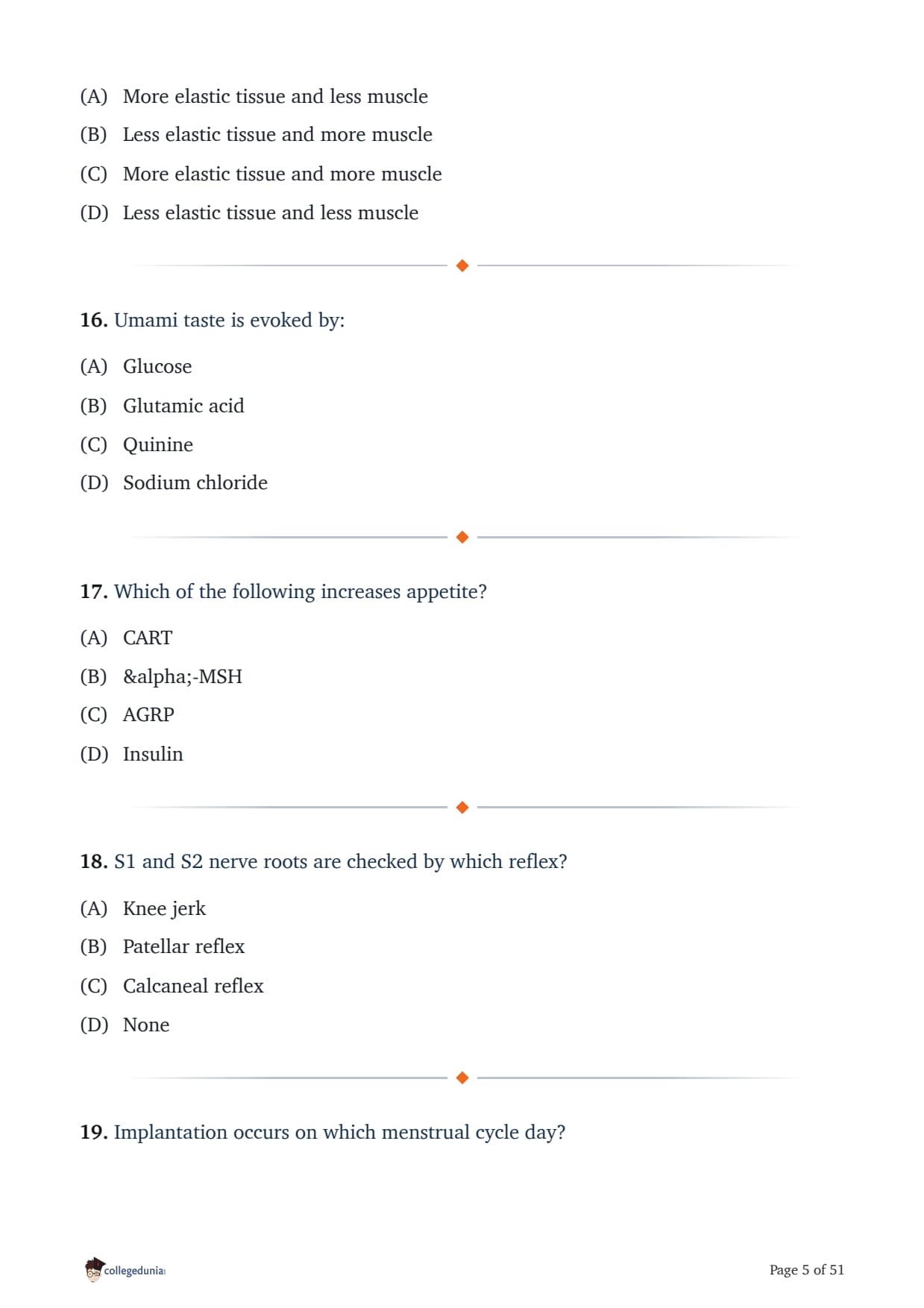
Capacitance vessels have in their wall:
- (A) More elastic tissue and less muscle
- (B) Less elastic tissue and more muscle
- (C) More elastic tissue and more muscle
- (D) Less elastic tissue and less muscle
Question 16:
Umami taste is evoked by:
- (A) Glucose
- (B) Glutamic acid
- (C) Quinine
- (D) Sodium chloride
Question 17:
Which of the following increases appetite?
- (A) CART
- (B) α-MSH
- (C) AGRP
- (D) Insulin
Question 18:
S1 and S2 nerve roots are checked by which reflex?
- (A) Knee jerk
- (B) Patellar reflex
- (C) Calcaneal reflex
- (D) None
Question 19:
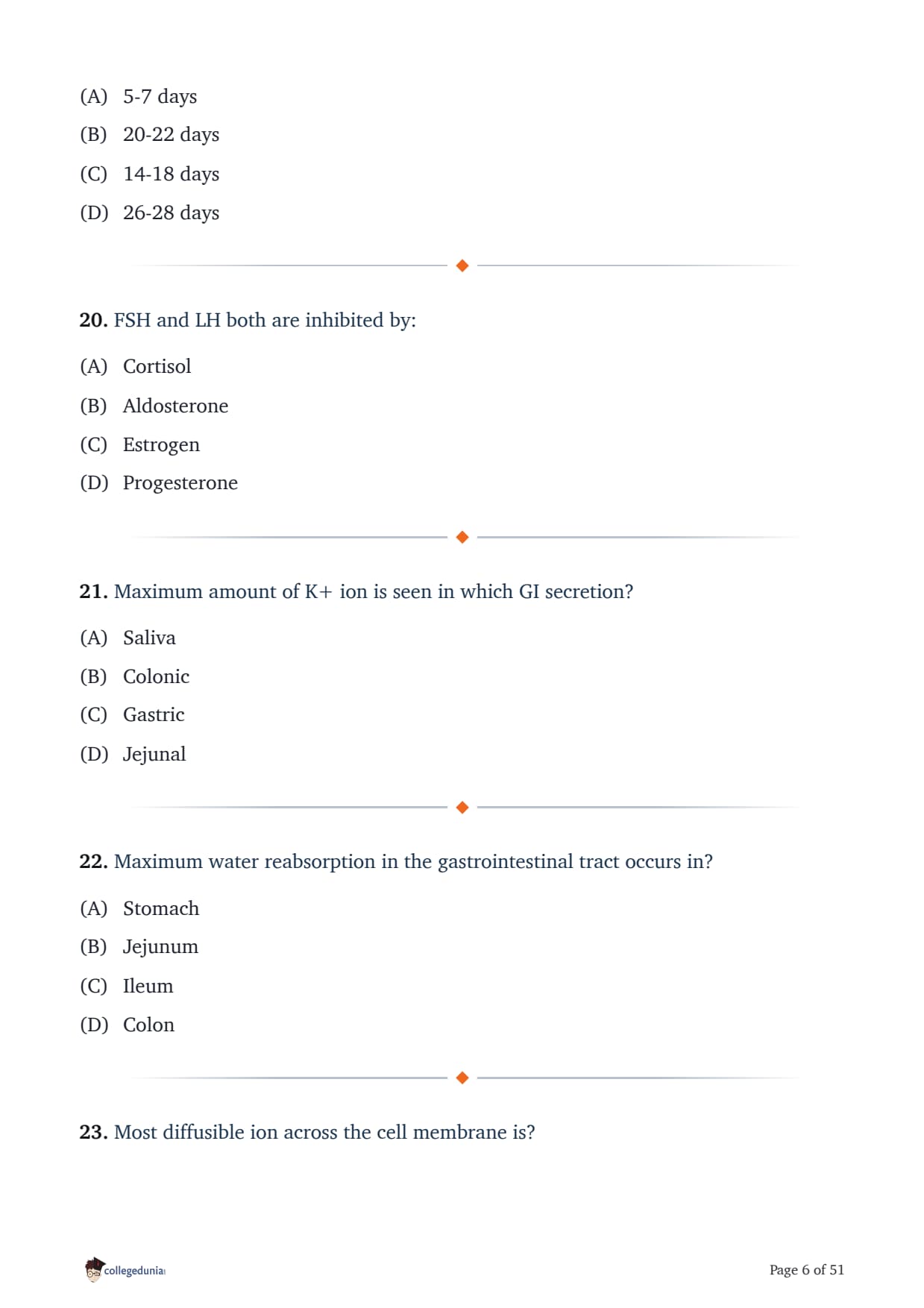
Implantation occurs on which menstrual cycle day?
- (A) 5-7 days
- (B) 20-22 days
- (C) 14-18 days
- (D) 26-28 days
Question 20:
FSH and LH both are inhibited by:
- (A) Cortisol
- (B) Aldosterone
- (C) Estrogen
- (D) Progesterone
Question 21:
Maximum amount of K+ ion is seen in which GI secretion?
- (A) Saliva
- (B) Colonic
- (C) Gastric
- (D) Jejunal
Question 22:
Maximum water reabsorption in the gastrointestinal tract occurs in?
- (A) Stomach
- (B) Jejunum
- (C) Ileum
- (D) Colon
Question 23:
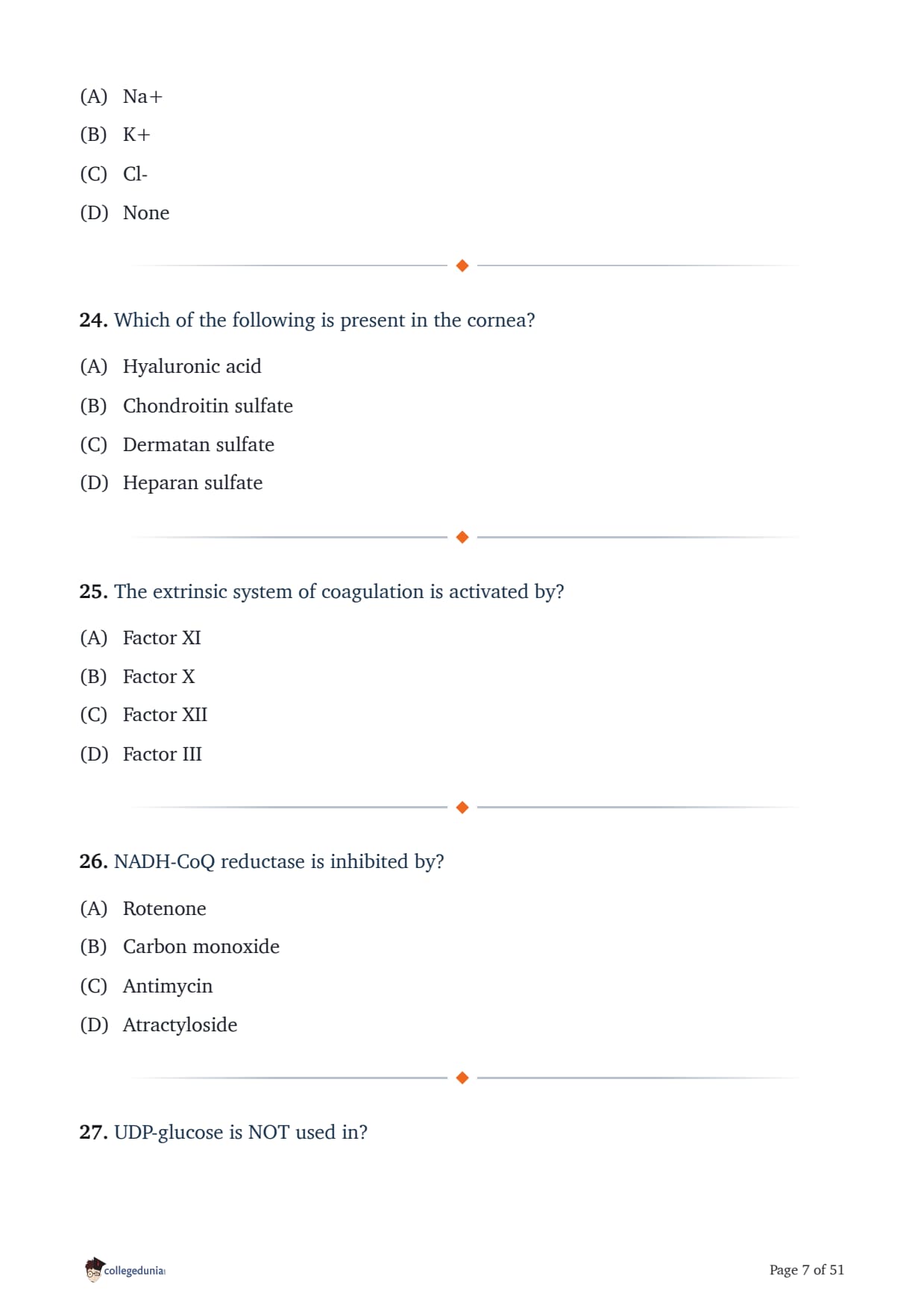
Most diffusible ion across the cell membrane is?
- (A) Na+
- (B) K+
- (C) Cl-
- (D) None
Question 24:
Which of the following is present in the cornea?
- (A) Hyaluronic acid
- (B) Chondroitin sulfate
- (C) Dermatan sulfate
- (D) Heparan sulfate
Question 25:
The extrinsic system of coagulation is activated by?
- (A) Factor XI
- (B) Factor X
- (C) Factor XII
- (D) Factor III
Question 26:
NADH-CoQ reductase is inhibited by?
- (A) Rotenone
- (B) Carbon monoxide
- (C) Antimycin
- (D) Atractyloside
Question 27:
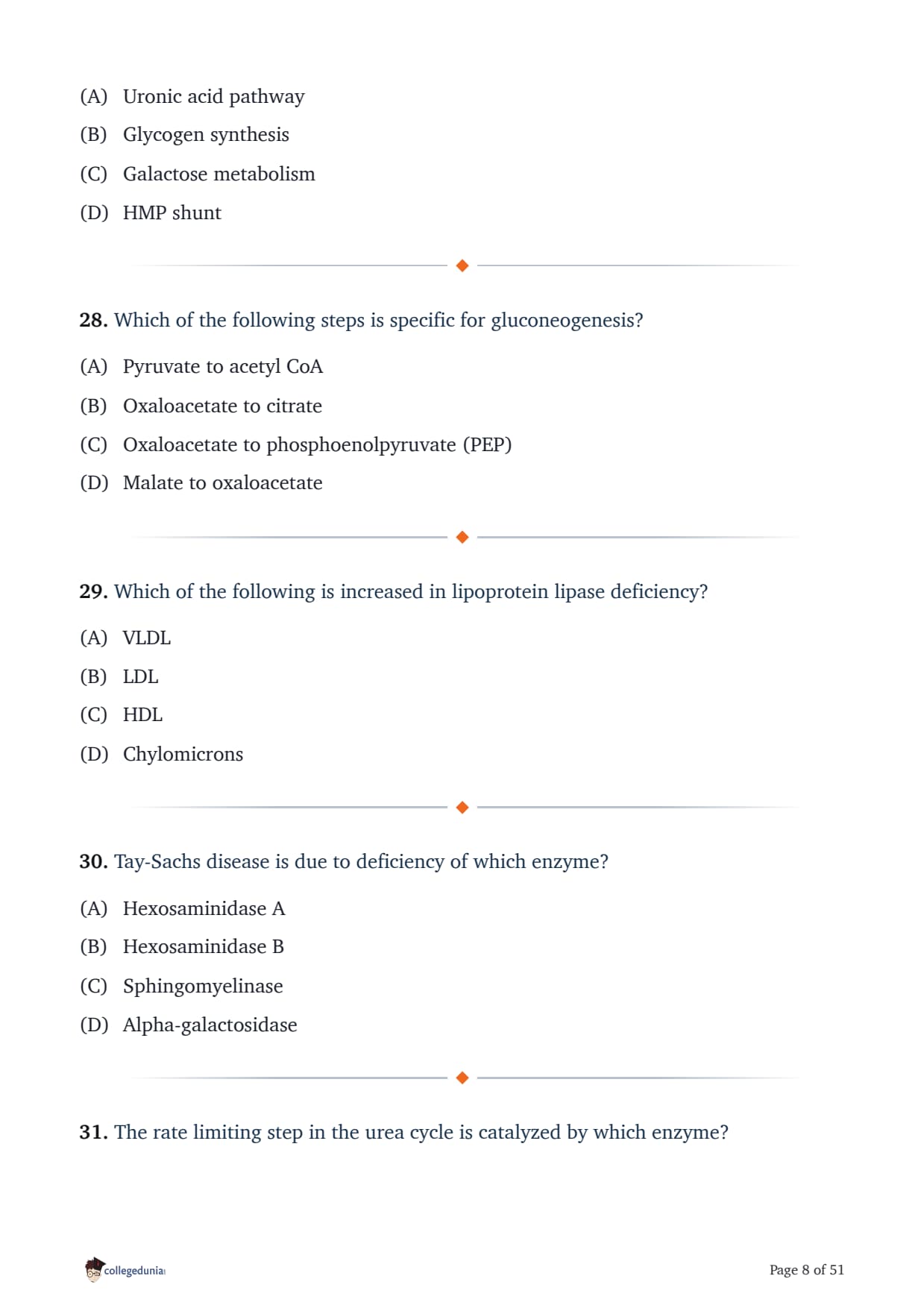
UDP-glucose is NOT used in?
- (A) Uronic acid pathway
- (B) Glycogen synthesis
- (C) Galactose metabolism
- (D) HMP shunt
Question 28:
Which of the following steps is specific for gluconeogenesis?
- (A) Pyruvate to acetyl CoA
- (B) Oxaloacetate to citrate
- (C) Oxaloacetate to phosphoenolpyruvate (PEP)
- (D) Malate to oxaloacetate
Question 29:
Which of the following is increased in lipoprotein lipase deficiency?
- (A) VLDL
- (B) LDL
- (C) HDL
- (D) Chylomicrons
Question 30:
Tay-Sachs disease is due to deficiency of which enzyme?
- (A) Hexosaminidase A
- (B) Hexosaminidase B
- (C) Sphingomyelinase
- (D) Alpha-galactosidase
Question 31:
The rate limiting step in the urea cycle is catalyzed by which enzyme?
- (A) Arginase
- (B) Argininosuccinase
- (C) Carbamoyl-phosphate synthase
- (D) Ornithine transcarbamylase
Question 32:
Which of the following is a neutral amino acid?
- (A) Aspartate
- (B) Arginine
- (C) Glycine
- (D) Histidine
Question 33:
Which is the first purine nucleotide synthesized in purine biosynthesis?
- (A) AMP
- (B) GMP
- (C) IMP
- (D) UMP
Question 34:
Which of the following is a nucleoside?
- (A) Adenine
- (B) Uridine
- (C) Thymine
- (D) Guanine
Question 35:
Which is the strongest interaction among the following?
- (A) Covalent
- (B) Hydrogen
- (C) Electrostatic
- (D) Van der Waals
Question 36:
Hypertrophy is -
- (A) Increase in cell number
- (B) Increase in cell size
- (C) Decrease in cell number
- (D) Decrease in cell size
Question 37:
Matrix metalloproteinases are -
- (A) Cathepsin
- (B) Zn metalloproteinases
- (C) Cu metalloproteinases
- (D) Cd metalloproteinases
Question 38:
Which of the following interleukin is secreted by T helper 2 cells?
- (A) IL 11
- (B) IL 7
- (C) IL 1
- (D) IL 13
Question 39:
Leukocyte migration through endothelium is induced by -
- (A) Selectin
- (B) N CAM
- (C) C CAM
- (D) PECAM
Question 40:
Pendred syndrome is due to mutation of -
- (A) Bartillin
- (B) Pendrin
- (C) Fibrillin
- (D) Reticulin
Question 41:
Which is not a feature of Down syndrome?
- (A) Clinodactyly
- (B) Pigmented birth marks
- (C) Hypotonia
- (D) Respiratory tract infections
Question 42:
Keratinization and pearl formation is characteristic of -
- (A) Squamous cell carcinoma
- (B) Basal cell carcinoma
- (C) Melanoma
- (D) Lymphoma
Question 43:
The phenomenon by which cancer cells are able to sustain and proliferate under adverse conditions of hypoxia is?
- (A) Warburg
- (B) Wanton
- (C) Wormian
- (D) Wolf
Question 44:
Which of the following is not a large vessel vasculitis?
- (A) Takayasu arteritis
- (B) Cogan syndrome
- (C) Churg-Strauss syndrome
- (D) Giant cell arteritis
Question 45:
True about gastric lymphoma:
- (A) Non-Hodgkin lymphoma is the commonest variety
- (B) Diagnosis is made by biopsy
- (C) H. pylori has a direct relationship
- (D) All of the above
Question 46:
Maintenance dose is calculated by using the value of?
- (A) Clearance
- (B) Volume of distribution
- (C) Oral bioavailability
- (D) Daily dosage
Question 47:
A young child weighing 20 kg was given a drug in the dose 100 mg/kg body weight. The plasma concentration of the drug is 2 mg/dl and the clearance is 200 ml/hr. What is the time required to reach steady state plasma concentration?
- (A) 10 hrs
- (B) 20 hrs
- (C) 30 hrs
- (D) 40 hrs
Question 48:
Most common cytochrome P-450 enzyme for drug metabolism detoxification reactions is?
- (A) CYP 3A4
- (B) CYP 1A2
- (C) CYP 2A6
- (D) CYP 2B6
Question 49:
A patient on verapamil should not be given a beta blocker as?
- (A) Conduction block
- (B) Bronchospasm
- (C) Neurogenic shock
- (D) Anaphylaxis
Question 50:
Which of the following is an inverse agonist at the benzodiazepine receptor?
- (A) Phenobarbitone
- (B) Flumazenil
- (C) Beta carboline
- (D) Gabapentin
Question 51:
A patient on carbidopa plus levodopa for 10 years now has a wearing-off effect. Which drug should be added to restore the action?
- (A) Tolcapone
- (B) Amantadine
- (C) Rasagiline
- (D) Benzhexol
Question 52:
Let A = ACE inhibitor, B = beta blocker, C = calcium channel blocker, and D = diuretic. For an elderly patient with hypertension, the antihypertensive drug of choice is?
- (A) A or D
- (B) A or B
- (C) A or C
- (D) C or D
Question 53:
Colistin is obtained from which of the following?
- (A) Bacteria
- (B) Fungi
- (C) Actinomycetes
- (D) Herbs
Question 54:
Which cephalosporin characteristically causes thrombocytopenia?
- (A) Cefixime
- (B) Ceftazidime
- (C) Cefoperazone
- (D) Cefdinir
Question 55:
Irreversible hearing loss is caused by which of the following?
- (A) Gentamicin
- (B) Clarithromycin
- (C) Both of the above
- (D) None of the above
Question 56:
Regarding nicotinic acid (niacin), which of the following is correct?
- (A) Increases HDL
- (B) Increases triglyceride synthesis
- (C) Used for type II hyperlipoproteinemia
- (D) Decreases hydrolysis of VLDL
Question 57:
Prophylactic dose of vitamin K given to newborn infants at delivery is?
- (A) 1 mg
- (B) 5 mg
- (C) 10 mg
- (D) 15 mg
Question 58:
DMPA (Depot medroxyprogesterone acetate) is given once in?
- (A) 3 months
- (B) 6 months
- (C) 9 months
- (D) 45 days
Question 59:
Drug which decreases efficacy of testosterone?
- (A) Isoniazid
- (B) Ketoconazole
- (C) Rifampicin
- (D) None
Question 60:
Mechanism of action of actinomycin D is?
- (A) Inhibits DNA dependent RNA synthesis
- (B) Activates DNA dependent RNA synthesis
- (C) Inhibits RNA dependent DNA synthesis
- (D) Activates RNA dependent DNA synthesis
Question 61:
Grievous hurt comes under which section of the Indian Penal Code?
- (A) 319
- (B) 320
- (C) 324
- (D) 326
Question 62:
Which of Gustafson's parameters is the most accurate?
- (A) Attrition
- (B) Periodontosis
- (C) Root resorption
- (D) Transparency of the tooth
Question 63:
Preauricular sulcus is a part of?
- (A) Humerus
- (B) Femur
- (C) Pelvis
- (D) Skull
Question 64:
Maximum soft tissue bruising in the neck is seen in -
- (A) Strangulation
- (B) Hanging
- (C) Burking
- (D) Smothering
Question 65:
Lucid interval may be seen in?
- (A) Intracerebral hemorrhage
- (B) Alcohol intake
- (C) Insanity
- (D) Subdural hemorrhage
Question 66:
Legal age by which a fetus is capable of independent existence is?
- (A) 240 days
- (B) 230 days
- (C) 220 days
- (D) 210 days
Question 67:
Postmortem blood is collected from which vessel?
- (A) Femoral artery
- (B) Femoral vein
- (C) Cephalic vein
- (D) Brachial artery
Question 68:
Chocolate brown postmortem staining is seen in?
- (A) KCl poisoning
- (B) Opium poisoning
- (C) H2S poisoning
- (D) Cyanide poisoning
Question 69:
For phage typing, how many phages of Staphylococcus aureus are used?
- (A) 12
- (B) 15
- (C) 20
- (D) 23
Question 70:
Infective endocarditis after tooth extraction is probably due to?
- (A) Streptococcus viridans
- (B) Streptococcus pneumoniae
- (C) Streptococcus pyogenes
- (D) Staphylococcus aureus
Question 71:
Which Vibrio species is the most halophilic (most salt tolerant)?
- (A) V. cholerae
- (B) V. vulnificus
- (C) V. alginolyticus
- (D) V. parahaemolyticus
Question 72:
Which of the following is a liquid medium used for the culture of tuberculosis bacilli?
- (A) LJ medium
- (B) Dorset medium
- (C) Loeffler's medium
- (D) MGIT
Question 73:
Indian tick typhus is caused by which organism?
- (A) R. typhi
- (B) R. conorii
- (C) R. akari
- (D) C. burnetii
Question 74:
What is the natural reservoir of plague?
- (A) Domestic rat
- (B) Wild rat
- (C) Rat flea
- (D) Man
Question 75:
Molluscum contagiosum virus belongs to which group of viruses?
- (A) Poxviruses
- (B) Herpesviruses
- (C) Picornaviruses
- (D) Adenovirus
Question 76:
Exanthema subitum is caused by which virus?
- (A) HHV-6
- (B) HHV-8
- (C) Parvovirus
- (D) Coxsackievirus
Question 77:
Which serum marker appears after successful Hepatitis B vaccination?
- (A) Anti-HBsAg
- (B) Anti-HBeAg
- (C) Anti-HBcAg
- (D) HBsAg
Question 78:
The chance that a health worker gets HIV from an accidental needle prick is:
- (A) 1%
- (B) 10%
- (C) 95%
- (D) 100%
Question 79:
The band form of Plasmodium malariae is which stage?
- (A) Schizont stage
- (B) Trophozoite stage
- (C) Merozoite stage
- (D) Gametocyte stage
Question 80:
Which of the following fungi is difficult to isolate in culture?
- (A) Candida
- (B) Dermatophytes
- (C) Cryptococcus
- (D) Malassezia furfur
Question 81:
Heat labile liquids are sterilized by which method?
- (A) Hot air oven
- (B) Autoclaving
- (C) Membrane filter
- (D) Moist heat
Question 82:
Blood agar is an example of which type of medium?
- (A) Enriched media
- (B) Indicator media
- (C) Enrichment media
- (D) Selective media
Question 83:
Which of the following is true about endotoxin?
- (A) Protein
- (B) Highly antigenic
- (C) No enzymatic activity
- (D) Produced by gram positive bacteria
Question 84:
Which of the following staphylococcal infections is not toxin mediated?
- (A) Toxic shock syndrome
- (B) Scalded skin syndrome
- (C) Food poisoning
- (D) Septic shock
Question 85:
Primordial prevention is done to prevent the development of?
- (A) Disease
- (B) Risk factors
- (C) Impairment
- (D) Disability
Question 86:
Which of the following is NOT true about vaccines?
- (A) Two live vaccines can be given at the same time at different sites
- (B) Two live vaccines at the same site should be given at least 3 weeks apart
- (C) In a vaccine vial monitor, if the colour of the inner square is the same as the outer background, the vaccine is good for use
- (D) Live and killed vaccines can be given together
Question 87:
Missing cases are detected by?
- (A) Active surveillance
- (B) Passive surveillance
- (C) Sentinel surveillance
- (D) Prevalence rate
Question 88:
Matching is not required in which epidemiological study?
- (A) Case control study
- (B) Cohort study
- (C) Case report
- (D) Randomized control trial
Question 89:
Which of the following is a positive mortality indicator?
- (A) IMR (Infant mortality rate)
- (B) Child mortality rate
- (C) MMR (Maternal mortality rate)
- (D) Life expectancy
Question 90:
The STOP TB Strategy was launched in?
- (A) 2002
- (B) 2006
- (C) 2010
- (D) 2013
Question 91:
The incubation period of measles is?
- (A) 18 to 72 hours
- (B) 10 to 14 days
- (C) 3 to 4 days
- (D) 20 to 25 days
Question 92:
In the National AIDS Control Programme, for the syndromic management of STDs, the blue colored kit is used for the treatment of which condition?
- (A) Urethral discharge
- (B) Scrotal swelling
- (C) Genital ulcers
- (D) Ano-rectal discharge
Question 93:
What is the recommended dose of equine rabies immunoglobulin for post-exposure prophylaxis?
- (A) 10 IU/kg
- (B) 20 IU/kg
- (C) 30 IU/kg
- (D) 40 IU/kg
Question 94:
Endemic typhus is transmitted by which vector?
- (A) Louse
- (B) Flea
- (C) Tick
- (D) Mite
Question 95:
Among the following states, the least neonatal mortality rate is seen in which state?
- (A) Delhi
- (B) Tamil Nadu
- (C) Karnataka
- (D) Maharashtra
Question 96:
What is the recommended level of fluoride in drinking water?
- (A) 0.2 to 0.5 mg/L
- (B) 0.5 to 0.8 mg/L
- (C) 0.8 to 1.2 mg/L
- (D) 1.2 to 2.0 mg/L
Question 97:
Which of the following is true about the Indian reference female?
- (A) Height 161 cm
- (B) Weight 60 kg
- (C) BMI 22
- (D) None of the above
Question 98:
Which disease is associated with an excessive maize diet?
- (A) Wernicke's encephalopathy
- (B) Pellagra
- (C) Beri-Beri
- (D) Scurvy
Question 99:
Which virus is NOT sensitive to disinfection of water by chlorination?
- (A) Rotavirus
- (B) Norwalk virus
- (C) Poliovirus
- (D) None
Question 100:
The most common cause of blindness in India is?
- (A) Cataract
- (B) Trachoma
- (C) Refractive errors
- (D) Vitamin A deficiency
Question 101:
The "3 by 5" initiative in the AIDS control programme refers to?
- (A) Providing 3 million people treatment by the end of 2005
- (B) Providing treatment to 3 out of 5 patients
- (C) Reducing the incidence of AIDS by 3% by 2005
- (D) All of the above
Question 102:
The most common cause of trigeminal neuralgia is?
- (A) Infection
- (B) Trauma
- (C) Vascular compression
- (D) Iatrogenic
Question 103:
Potato tumor (rhinophyma) is due to?
- (A) Hypotrophy of sebaceous glands of the nose
- (B) Hypertrophy of sebaceous glands of the nose
- (C) Hypotrophy of sweat glands of the nose
- (D) Hypertrophy of sweat glands of the nose
Question 104:
Acute suppurative otitis media in children is most commonly caused by?
- (A) Streptococcus pneumoniae
- (B) Staphylococcus epidermidis
- (C) Staphylococcus aureus
- (D) Pseudomonas
Question 105:
The length of the external auditory meatus is?
- (A) 12 mm
- (B) 16 mm
- (C) 20 mm
- (D) 24 mm
Question 106:
When a patient fails to understand normal speech but can understand shouted or amplified speech, the hearing loss is termed?
- (A) Mild hearing loss
- (B) Moderate hearing loss
- (C) Severe hearing loss
- (D) Profound hearing loss
Question 107:
The most common bacterial cause of rhinitis is?
- (A) Haemophilus influenzae
- (B) Streptococcus haemolyticus
- (C) Pasteurella multocida
- (D) Corynebacterium diphtheriae
Question 108:
Turban epiglottis is seen in?
- (A) TB
- (B) Leprosy
- (C) Laryngeal papilloma
- (D) Epiglottitis
Question 109:
Amsler's grid is used to evaluate?
- (A) Central 10 degrees of vision
- (B) Central 20 degrees of vision
- (C) Peripheral vision
- (D) Lens opacity
Question 110:
Munson's sign is a feature of?
- (A) Keratoconus
- (B) Corneal ulcer
- (C) Pterygium
- (D) Posterior staphyloma
Question 111:
The gland of Moll opens in or on the?
- (A) Skin
- (B) Hair follicle
- (C) Tarsal plate
- (D) Ducts of Meibomian glands
Question 112:
Diabetic ischemic maculopathy is characterized by all of the following except?
- (A) It occurs due to microvascular blockage
- (B) Mild visual loss
- (C) Areas of non-perfusion are evident on fluorescein angiography
- (D) Microaneurysms and hemorrhages are seen
Question 113:
Bilateral inferior dislocation of the lens (ectopia lentis) is characteristically seen in which condition?
- (A) Marfan's syndrome
- (B) Homocystinuria
- (C) Weil-Marchesani syndrome
- (D) Trauma
Question 114:
All of the following are clinical features of Leber's hereditary optic neuropathy EXCEPT:
- (A) Seen in the 2nd or 3rd decade of life
- (B) It is an example of gradual painless visual loss
- (C) Males can transmit the disease
- (D) No leak of dye is observed on fluorescein angiography
Question 115:
Retinoblastoma occurs bilaterally in what percentage of cases?
- (A) 10 - 15%
- (B) 15 - 20%
- (C) 20 - 25%
- (D) 25 - 30%
Question 116:
Bett's classification deals with which of the following?
- (A) Ocular trauma
- (B) Ocular foreign body
- (C) Squint
- (D) Maculopathy
Question 117:
Which metabolic derangement is normally seen in pregnancy?
- (A) Metabolic acidosis
- (B) Metabolic alkalosis
- (C) Respiratory acidosis
- (D) Respiratory alkalosis
Question 118:
High steppage gait is seen in which of the following?
- (A) Foot drop
- (B) Frontal lobe stroke
- (C) Tabes dorsalis
- (D) Leprosy
Question 119:
Aphasia which affects the arcuate fibres (arcuate fasciculus) is called:
- (A) Global aphasia
- (B) Anomic aphasia
- (C) Conduction aphasia
- (D) Broca's aphasia
Question 120:
Interstitial nephritis is common with
- (A) NSAID
- (B) Black water fever
- (C) Rhabdomyolysis
- (D) Tumor lysis syndrome
Question 121:
A patient is diagnosed with HIV and tuberculosis together. How should anti-tubercular treatment (ATT) and combination antiretroviral therapy (cART) be started?
- (A) Start ATT first
- (B) Start cART first
- (C) Start both simultaneously
- (D) Start cART only
Question 122:
All of the following are true about Rheumatoid arthritis, except
- (A) PIP and DIP joints involved equally
- (B) Pathology limited to articular cartilage
- (C) Women are affected 3 times more commonly than men
- (D) 20% of patients have extra articular manifestations
Question 123:
The finger-in-glove sign is seen in
- (A) Pulmonary alveolar proteinosis
- (B) Pneumocystis carinii
- (C) Tuberculosis
- (D) Bronchocele
Question 124:
The vitamin B12 level in chronic myeloid leukemia is
- (A) Elevated
- (B) Decreased
- (C) Normal
- (D) Markedly decreased
Question 125:
Brock's syndrome is
- (A) Bronchiectasis sicca
- (B) Middle lobe bronchiectasis
- (C) Kartagener's syndrome
- (D) Sarcoidosis
Question 126:
Which of the following is given to treat thrombocytopenia secondary to anti-cancer therapy and is known to stimulate progenitor megakaryocytes?
- (A) Filgrastim
- (B) Oprelvekin
- (C) Erythropoietin
- (D) Anagrelide
Question 127:
Which of the following is NOT true regarding obstructive sleep apnea (OSA)?
- (A) Nocturnal asphyxia
- (B) Alcoholism is a cofactor
- (C) Prone to hypertension
- (D) Overnight oximetry is diagnostic and can replace polysomnography
Question 128:
The most common acute complication of dialysis is:
- (A) Hypotension
- (B) Bleeding
- (C) Dementia
- (D) Muscle cramps
Question 129:
All of the following statements about the genetics of G6PD deficiency are true, EXCEPT:
- (A) X-linked inheritance
- (B) More severe in men
- (C) Contradicts the Lyon hypothesis
- (D) May affect heterozygous females
Question 130:
Asbestosis causes all of the following EXCEPT:
- (A) Shaggy heart borders
- (B) Honeycombing
- (C) Hilar lymphadenopathy
- (D) Basal peribronchial fibrosis
Question 131:
Gout can be precipitated by all of the following EXCEPT:
- (A) Thiazides
- (B) Furosemide
- (C) Cyclosporine
- (D) High dose salicylates
Question 132:
Rupture of a berry aneurysm most commonly results in:
- (A) Subarachnoid hemorrhage
- (B) Subdural hemorrhage
- (C) Extradural hemorrhage
- (D) Intra-parenchymal hemorrhage
Question 133:
Round pneumonia is seen with:
- (A) Streptococcal pneumonia
- (B) Kerosene oil aspiration
- (C) Lung cancer
- (D) Mendelson syndrome
Question 134:
HIV RNA detection by PCR (viral load assay) can reliably detect as low as how many copies of viral RNA per millilitre of blood?
- (A) 30 copies viral RNA/ml of blood
- (B) 40 copies viral RNA/ml of blood
- (C) 50 copies of viral RNA/ml of blood
- (D) 60 copies of viral RNA/ml of blood
Question 135:
What is the most common cause of complete heart block (acquired complete AV block) in infants and children?
- (A) SLE
- (B) Surgery for congenital heart disease
- (C) Viral myocarditis
- (D) Rheumatic fever
Question 136:
A banana shaped left ventricle on imaging is characteristically seen in which condition?
- (A) HOCM (hypertrophic obstructive cardiomyopathy)
- (B) DCM (dilated cardiomyopathy)
- (C) RCM (restrictive cardiomyopathy)
- (D) Takotsubo cardiomyopathy
Question 137:
Which of the following is NOT a high pitched heart sound?
- (A) Mid systolic click
- (B) Pericardial shudder
- (C) Opening snap
- (D) Tumor plop sound
Question 138:
A Mentzer index of more than 13 suggests a diagnosis of which condition?
- (A) Iron deficiency anemia
- (B) Thalassemia
- (C) Hereditary spherocytosis
- (D) Autoimmune hemolytic anemia
Question 139:
Chronic non-spherocytic hemolytic anemia is seen in which WHO class of G6PD deficiency?
- (A) Class I
- (B) Class II
- (C) Class III
- (D) Class IV
Question 140:
All of the following are markers of acute kidney injury EXCEPT?
- (A) Clusterin
- (B) Osteopontin
- (C) Alanine aminopeptidase
- (D) Acid phosphatase
Question 141:
Sialolithiasis is most commonly seen in which gland?
- (A) Parotid
- (B) Sublingual
- (C) Submandibular
- (D) Minor salivary gland
Question 142:
ABPI (ankle brachial pressure index) of imminent necrosis is
- (A) < 0.3
- (B) 0.3
- (C) < 0.6
- (D) > 0.6
Question 143:
Indications of liver transplantation are all EXCEPT
- (A) Biliary atresia
- (B) Sclerosing cholangitis
- (C) Hepatitis A
- (D) Cirrhosis
Question 144:
Commonest type of anal canal carcinoma is?
- (A) Squamous cell carcinoma
- (B) Adenocarcinoma
- (C) Adenoacanthoma
- (D) Papillary type
Question 145:
True about blind loop syndrome, all EXCEPT
- (A) Syndrome of bacterial overgrowth
- (B) Steatorrhea, megaloblastic anemia and deficiency of fat soluble vitamins
- (C) Surgery is not indicated
- (D) 14C-xylose or 14C-cholylglycine breath tests are indirect tests for bacterial overgrowth
Question 146:
Prophylactic thyroidectomy is indicated in
- (A) Hashimoto thyroiditis
- (B) MEN type 2
- (C) Riedel thyroiditis
- (D) De-Quervain's thyroiditis
Question 147:
Choledochal cyst is dilatation of
- (A) Gall bladder
- (B) CBD
- (C) Hepatic duct
- (D) Bile duct
Question 148:
A gum tumor measures 5 cm in dimension with contralateral lymph node enlargement of 2 cm. There is no distant metastasis. What is the stage of the tumor?
- (A) T3N2M0
- (B) T2N2M0
- (C) T1N2M0
- (D) T3N3M0
Question 149:
What is the appropriate management of a carcinoma of the lateral border of the tongue after primary resection?
- (A) Chemotherapy
- (B) Radiotherapy
- (C) Observation
- (D) Neck dissection
Question 150:
Over the last decade, the morbidity of duodenal ulcer has been reduced mainly due to which of the following?
- (A) Life style modification
- (B) Eradication of H. pylori
- (C) Proton pump inhibitors
- (D) None
Question 151:
What is the most common conotruncal anomaly?
- (A) TGA
- (B) Tetralogy of Fallot
- (C) Truncus arteriosus
- (D) Double outlet right ventricle
Question 152:
Which of the following is NOT included as a major criterion in the modified Jones criteria?
- (A) Polyarthralgia
- (B) Carditis
- (C) Chorea
- (D) Erythema marginatum
Question 153:
The swallowing and breathing reflex is NOT seen in the fetus until which gestational age?
- (A) 14 weeks
- (B) 12 weeks
- (C) 16 weeks
- (D) Appears in all the above periods
Question 154:
What is the most common bacterial cause of lower respiratory tract infection in a 3 year old child?
- (A) Klebsiella
- (B) H. influenzae
- (C) Streptococcus pneumoniae
- (D) Staphylococcus aureus
Question 155:
Pedigree analysis chart is used for which of the following purposes?
- (A) Used for growth monitoring
- (B) To assess side effect during chemotherapy
- (C) Used to see genetic transmission
- (D) To assess developmental delay in infant
Question 156:
In exchange blood transfusion, which blood product is used?
- (A) Whole blood
- (B) EPP
- (C) Serum
- (D) Packed cells
Question 157:
The most common organ involved in congenital tuberculosis is?
- (A) Liver
- (B) Pancreas
- (C) Kidney
- (D) Lung
Question 158:
Antiendomysial antibody is used in the screening of?
- (A) Myasthenia gravis
- (B) Autoimmune hepatitis
- (C) Coeliac disease
- (D) Graves disease
Question 159:
Regarding Reye syndrome, the FALSE statement is?
- (A) Associated with salicylate ingestion
- (B) Hepatomegaly
- (C) Jaundice
- (D) Hypoglycemia
Question 160:
A child has a lesion on the buttocks for 2 years, spreading peripherally with central scarring and non symptomatic. The diagnosis is?
- (A) Erythema annulare centrifugum
- (B) Erythema migrans
- (C) Erythema marginatum
- (D) Erythema gyratum repens
Question 161:
The most common cause of amputation in India is?
- (A) Diabetic gangrene
- (B) Gas gangrene
- (C) Road traffic accident
- (D) Tumors
Question 162:
Which of the following is NOT a complication of fracture of the neck of the femur?
- (A) Non-union
- (B) Malunion
- (C) Avascular necrosis (AVN)
- (D) Osteoarthritis
Question 163:
The most common site for an osteoporotic vertebral fracture is?
- (A) Dorsolumbar spine
- (B) Cervical spine
- (C) Lumbosacral spine
- (D) Dorsal spine
Question 164:
Froment's sign is positive in cases of weakness of?
- (A) Thumb adduction
- (B) Thumb abduction
- (C) Thumb flexion
- (D) Thumb extension
Question 165:
CASPAR criteria are used in the diagnosis of?
- (A) Psoriatic arthritis
- (B) Rheumatoid arthritis
- (C) Ankylosing spondylitis
- (D) Reactive synovitis
Question 166:
The development of chondrosarcoma is related with?
- (A) Maffucci syndrome
- (B) Felty syndrome
- (C) Both a and b
- (D) None of the above
Question 167:
Infection of the index finger spreads to which space?
- (A) Thenar space
- (B) Mid palmar space
- (C) Hypothenar space
- (D) Flexion space
Question 168:
The amniotic fluid volume is maximum at?
- (A) 32 weeks
- (B) 34 weeks
- (C) 36 weeks
- (D) 40 weeks
Question 169:
Beta hCG is detected earliest in serum by which day of conception?
- (A) 8 days
- (B) 15 days
- (C) 21 days
- (D) 30 days
Question 170:
Which of the following is true about the expected date of delivery (EDD)?
- (A) Less than 10% of deliveries occur on EDD
- (B) Less than 20% of deliveries occur on EDD
- (C) 80% of the deliveries occur on EDD
- (D) 90% of the deliveries occur on EDD
Question 171:
What is the most common cause of tenth day (secondary) postpartum bleeding?
- (A) Retained bits of membrane or placenta
- (B) Infection
- (C) Endometritis
- (D) Blood coagulopathy
Question 172:
Which of the following is true about luteoma of pregnancy?
- (A) Usually bilateral
- (B) It is a benign self limiting condition
- (C) It consists of luteinized cells
- (D) All of the above
Question 173:
The investigation of choice for the diagnosis of pelvic inflammatory disease (PID) is?
- (A) Laparoscopy
- (B) Colposcopy
- (C) Hysteroscopy
- (D) Ultrasonography
Question 174:
All of the following are true regarding the management of intrauterine fetal death EXCEPT?
- (A) In 50% of cases spontaneous expulsion occurs in 2 weeks
- (B) Fibrinogen levels should be checked weekly
- (C) Delivery by medical induction is preferred if spontaneous expulsion does not occur
- (D) Caesarean section has a limited place in the management of intrauterine fetal death
Question 175:
Mediolateral episiotomy is preferred because it?
- (A) Reduces damage to the anal sphincter and anal canal
- (B) Causes less blood loss
- (C) Is easy to suture
- (D) Is an easy technique
Question 176:
The following are causes of oligohydramnios EXCEPT?
- (A) IUGR
- (B) Postmaturity
- (C) Maternal dehydration
- (D) Labetolol
Question 177:
The most common breech presentation in a primigravida is?
- (A) Flexed breech
- (B) Frank breech
- (C) Footling presentation
- (D) Incomplete breech
Question 178:
The most common malignant ovarian tumor is?
- (A) Serous cystadenocarcinoma
- (B) Mucinous cystadenocarcinoma
- (C) Malignant teratoma
- (D) Sarcoma
Question 179:
The first line treatment of infertility in PCOS is?
- (A) Clomiphene
- (B) FSH
- (C) GnRH
- (D) Assisted reproductive techniques
Question 180:
A patient presents with discharge per urethra and microscopy shows the presence of intracytoplasmic gram negative cocci. What is the most probable diagnosis?
- (A) Gonorrhea
- (B) Donovanosis
- (C) Bacterial vaginosis
- (D) Syphilis
Question 181:
The treatment of nodulocystic acne is?
- (A) Erythromycin
- (B) Tetracycline
- (C) Isotretinoin (Retinoic acid)
- (D) Steroids
Question 182:
Alopecia areata is a/an?
- (A) Autoimmune disorder
- (B) Allergic disorder
- (C) Anaphylactic disorder
- (D) Bacterial infection
Question 183:
Groove sign of Greenblatt is seen in?
- (A) LGV
- (B) Donovanosis
- (C) Chancroid
- (D) Genital Herpes
Question 184:
Post spinal headache lasts for?
- (A) 10 min
- (B) 1 hr
- (C) 10 days
- (D) 1 week
Question 185:
False about local anesthetics?
- (A) Prilocaine is less toxic than lignocaine
- (B) Lignocaine is used as an antiarrhythmic
- (C) Mixture of lignocaine and prilocaine is known as eutectic
- (D) Lidocaine is shorter acting than bupivacaine
Question 186:
Anesthetic agent or agents which have a tocolytic effect are?
- (A) Halothane
- (B) Enflurane
- (C) Isoflurane
- (D) All the above
Question 187:
Shortest acting non depolarizing muscle relaxant is?
- (A) Mivacurium
- (B) Doxacurium
- (C) Pipecuronium
- (D) Vecuronium
Question 188:
Henry's law states that?
- (A) At a constant temperature gas dissolves in solution in proportion to its partial pressure
- (B) At a constant pressure gas dissolves in solution in proportion to its temperature
- (C) At a constant temperature gas dissolves in solution in proportion to its fat solubility
- (D) At a constant pressure gas dissolves in solution in proportion to its fat solubility
Question 189:
Radiocontrast is contraindicated in all of the following conditions except?
- (A) Renal failure
- (B) Patient on metformin
- (C) Dehydration
- (D) Obesity
Question 190:
Radiological features of coarctation of aorta is/are -
- (A) Reverse figure of 3 sign
- (B) Rock sign
- (C) Double aortic knuckle
- (D) All of the above
Question 191:
Best view for sphenoid sinus is -
- (A) Water's view
- (B) Caldwell view
- (C) Basal view
- (D) Towne's view
Question 192:
Which of the following is/are radiological features of fluorosis?
- (A) Osteosclerosis
- (B) Cortical thickening
- (C) Enthesopathy
- (D) All the above
Question 193:
Best imaging modality in patients with breast implants is:
- (A) MRI scan
- (B) CT scan
- (C) Mammography
- (D) Radionuclide scan
Question 194:
Obsessive attention by an individual towards another person is called?
- (A) Stalking
- (B) Perceiving
- (C) Following
- (D) Pressurizing
Question 195:
A woman firmly and persistently feels her husband is cheating on her and she refuses to accept any proof given in the husband's support. The other family members do not support her belief. This is an example of -
- (A) Illusion
- (B) Delusion
- (C) Hallucination
- (D) Perversion
Question 196:
All the following are true regarding pseudocyesis, EXCEPT:
- (A) The patients usually have an intense desire to have children
- (B) Change in the breast may be present
- (C) There may be considerable increase in the size of the abdomen
- (D) The labour pain invariably continues to persist even if she is told that she is not pregnant
Question 197:
Which is the most common type of persistent delusional disorder?
- (A) Delusion of persecution
- (B) Somatic delusion
- (C) Delusion of jealousy
- (D) Delusion of grandeur
Question 198:
Following are the major symptoms of obsessive compulsive disorder?
- (A) Contamination
- (B) Pathological doubts
- (C) Intrusive thoughts
- (D) All the above
Question 199:
Mania is characterized by:
- (A) Paranoid delusion
- (B) Loss of orientation
- (C) High self esteem
- (D) All
Question 200:
![]()
What percentage of the normal distribution curve is represented by the shaded area?
- (A) 1%
- (B) 3%
- (C) 5%
- (D) 7%
NEET PG 2014 Exam Pattern and Marking Scheme Explained
NEET PG 2014 was a single computer-based session of single-best-answer MCQs, conducted by the NBE (now NBEMS) on its official site (nbe.edu.in). The pattern below is what students sat in the 2013-14 window.
- Total questions: 300 single-best-answer MCQs
- Duration: 3 hours 45 minutes for the full paper
- Total marks: 1200 (4 marks per correct answer)
- Marking scheme: +4 for a correct answer, -1 for a wrong one
- Mode: computer-based test, no on-screen calculator allowed
- Question types: single-best-answer MCQs spanning all 19 MBBS subjects, from pre-clinical to clinical
High-Weightage Subjects in NEET PG 2014 to Focus On First
The 2014 paper followed the classic NEET PG weightage curve: the three big clinical subjects alone decided the bulk of your score, so this Collegedunia set front-loads them. Lead with these when you redo the paper.
- Medicine: the single heaviest block, around 30 to 45 questions, heavy on clinical diagnosis and management
- Surgery: roughly 25 to 30 questions, with instrument and procedure recalls that repeat year on year
- Obstetrics and Gynaecology: about 25 questions, strong on contraception, partograph, and high-risk pregnancy
- Pharmacology: close to 20 questions, dominated by mechanism of action, antimicrobials, and side-effect profiles
- Pathology and Microbiology: roughly 18 to 20 each, the highest-yield pre-clinical scoring zone
- Preventive and Social Medicine (PSM): about 20 questions, mostly direct fact recall you can bank quickly
NEET PG 2014 Question Paper Analysis Video
Source: Dr. Anuj Pachhel
How to Use the NEET PG 2014 Question Paper for Your Preparation
Treat this paper as a diagnostic first, not a reading exercise. The 2014 recalls still overlap heavily with what gets asked today, so the way you drill them matters more than how many you read.
- Solve the full set as a timed mock first, around 45 to 50 minutes per 100 questions, before you open any solution.
- Review every question with the solution PDF, including the ones you got right, to lock in why the other three options fail.
- Tag each miss to a subject, then redo the weak subject as a block instead of re-reading the whole paper.
- Re-attempt the full set after a week and aim to convert your earlier blind guesses into reasoned answers.
NEET PG Good Attempts and Qualifying Score Benchmark
- The general-category qualifying line sits at the 50th percentile - clear that and you are eligible for counselling.
- Reserved categories (SC/ST/OBC) qualify at the 40th percentile, and PwD candidates at the 45th percentile.
- For a competitive rank, target high accuracy on the clinical subjects above rather than chasing every one of the 300 questions.
NEET PG 2014 Question Paper FAQs
Ques. How many questions were there in NEET PG 2014 and what was the marking scheme?
Ans. NEET PG 2014 (AIPGMEE 2014) had 300 single-best-answer MCQs to be solved in 3 hours 45 minutes. Each correct answer earned +4 marks and each wrong answer carried -1 negative marking, for a maximum of 1200 marks.
Ques. Which subjects had the highest weightage in NEET PG 2014?
Ans. Medicine led with roughly 30 to 45 questions, followed by Surgery and Obstetrics and Gynaecology at about 25 each. Pharmacology, Pathology, Microbiology, and PSM together formed the next high-yield band, so the clinical trio plus these pre-clinical subjects decided most of the score.
Ques. Are NEET PG 2014 questions still worth solving in 2026?
Ans. Yes. On average 10 to 15 questions in a current NEET PG paper map back to concepts from older papers, so the 2014 recalls remain high-yield. Treat them as concept drills rather than memorised answers and they still pay off.
Ques. What was the qualifying percentile for NEET PG 2014?
Ans. The general category had to clear the 50th percentile, while SC/ST/OBC candidates qualified at the 40th percentile and PwD candidates at the 45th percentile. Clearing the percentile only makes you eligible for counselling, not a guaranteed seat.
Ques. Who conducted NEET PG 2014 and when was it held?
Ans. It was conducted by the National Board of Examinations (NBE), now NBEMS, as a computer-based test held from November 25 to December 6, 2013, with results declared in late January 2014. You can verify the official details on nbe.edu.in.
Ques. Where can I download the NEET PG 2014 question paper with solutions PDF?
Ans. Use the download table at the top of this page on Collegedunia to get the NEET PG 2014 question paper with solutions PDF for free. For the official record, the NBE archives sit on nbe.edu.in.








Comments