The NEET PG 2010 (AIPGMEE 2010) question paper is now available with detailed solutions for free download. AIPGMEE 2010 was conducted by the National Board of Examinations (NBE) in January 2010, and the paper carried 300 single-best-answer MCQs to be solved in 3 hours 30 minutes.

NEET PG 2010 (AIPGMEE) Question Paper with Solutions Download PDF Check Solutions

NEET PG 2010 (AIPGMEE) Questions with Solutions


Question 1:

A patient with a bilirubin value of 8 mg/dl and a serum creatinine of 1.9 mg/dl is planned for surgery. What is the muscle relaxant of choice in this patient?

  • (A) Vecuronium
  • (B) Pancuronium
  • (C) Atracurium
  • (D) Rocuronium

Question 2:

A 25 year old overweight female was given fentanyl-pancuronium anaesthesia for surgery. After surgery and extubation she was observed to have limited movement of the upper body and chest wall in the recovery room. She was conscious and alert but voluntary respiratory effort was limited. Her blood pressure and heart rate were normal. The likely diagnosis is:

  • (A) Incomplete reversal of pancuronium
  • (B) Pulmonary embolism
  • (C) Fentanyl induced chest wall rigidity
  • (D) Respiratory depression

Question 3:

All of the following statements about the neuromuscular blockade produced by succinylcholine are true, except:

  • (A) No fade on train of four stimulation
  • (B) Fade on tetanic stimulation
  • (C) No post tetanic facilitation
  • (D) Train of four ratio > 0.4

Question 4:

A 27 year old female was brought to the emergency department for acute abdominal pain, following which she was shifted to the operation theatre for laparotomy. A speedy intubation was performed, but after the intubation breath sounds were observed to be decreased on the left side and a high end tidal CO2 was recorded. The likely diagnosis is:

  • (A) Endotracheal tube blockage
  • (B) Bronchospasm
  • (C) Esophageal intubation
  • (D) Endobronchial intubation

Question 5:

The hypogastric sheath is a condensation of:

  • (A) Scarpa's fascia
  • (B) Colles' fascia
  • (C) Pelvic fascia
  • (D) Inferior layer of the urogenital diaphragm

Question 6:

Which of the following positions best describes the location of the celiac plexus?

  • (A) Anterolateral to the aorta
  • (B) Posterolateral to the aorta
  • (C) Anterolateral to the sympathetic chain
  • (D) Anteromedial to the sympathetic chain

Question 7:

The gluteus medius muscle is supplied by which nerve?

  • (A) Superior gluteal nerve
  • (B) Inferior gluteal nerve
  • (C) Nerve to obturator internus
  • (D) Nerve to quadratus femoris

Question 8:

Which of the following tendons passes below the sustentaculum tali?

  • (A) Tibialis anterior
  • (B) Tibialis posterior
  • (C) Flexor digitorum longus
  • (D) Flexor hallucis longus

Question 9:

Which of the following passes through the foramen magnum?

  • (A) Vertebral artery
  • (B) Sympathetic chain
  • (C) XIth cranial nerve
  • (D) Internal carotid artery

Question 10:

All of the following movements occur during abduction of the shoulder, except:

  • (A) Elevation of humerus
  • (B) Axial rotation of clavicle
  • (C) Medial rotation of scapula
  • (D) Acromioclavicular joint movement

Question 11:

All of the following are composite muscles, except:

  • (A) Flexor carpi ulnaris
  • (B) Flexor digitorum profundus
  • (C) Pectineus
  • (D) Biceps femoris

Question 12:

The urogenital diaphragm is made up of the following, except:

  • (A) Deep transverse perinei
  • (B) Perineal membrane
  • (C) Colles fascia
  • (D) Sphincter urethrae

Question 13:

In post-ductal coarctation of the aorta, collaterals may be formed by all of the following, except:

  • (A) Vertebral artery
  • (B) Suprascapular artery
  • (C) Subscapular artery
  • (D) Posterior intercostal artery

Question 14:

A left-sided superior vena cava drains into:

  • (A) Right atrium
  • (B) Left atrium
  • (C) Coronary sinus
  • (D) Pericardial space

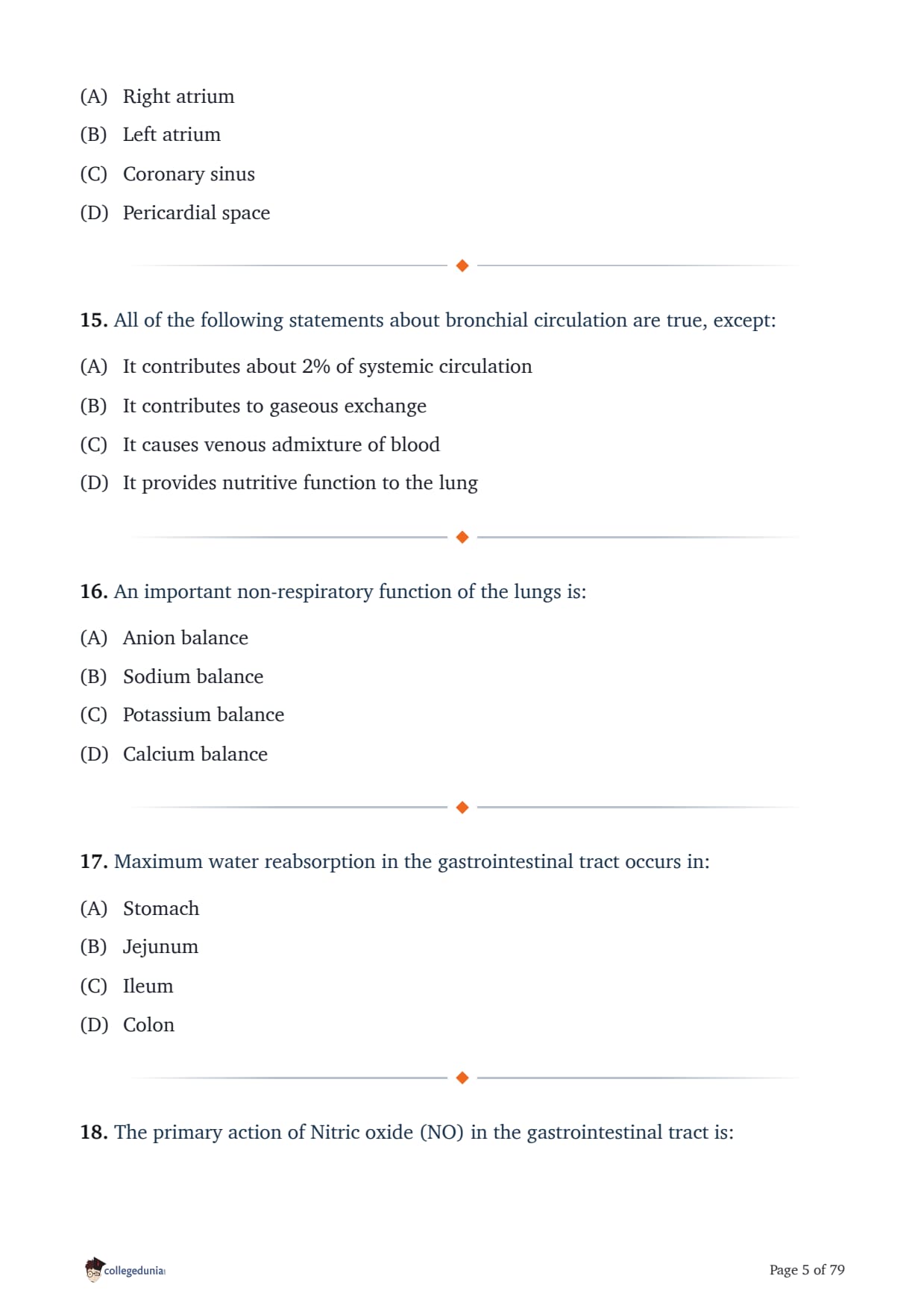
Question 15:

All of the following statements about bronchial circulation are true, except:

  • (A) It contributes about 2% of systemic circulation
  • (B) It contributes to gaseous exchange
  • (C) It causes venous admixture of blood
  • (D) It provides nutritive function to the lung

Question 16:

An important non-respiratory function of the lungs is:

  • (A) Anion balance
  • (B) Sodium balance
  • (C) Potassium balance
  • (D) Calcium balance

Question 17:

Maximum water reabsorption in the gastrointestinal tract occurs in:

  • (A) Stomach
  • (B) Jejunum
  • (C) Ileum
  • (D) Colon

Question 18:

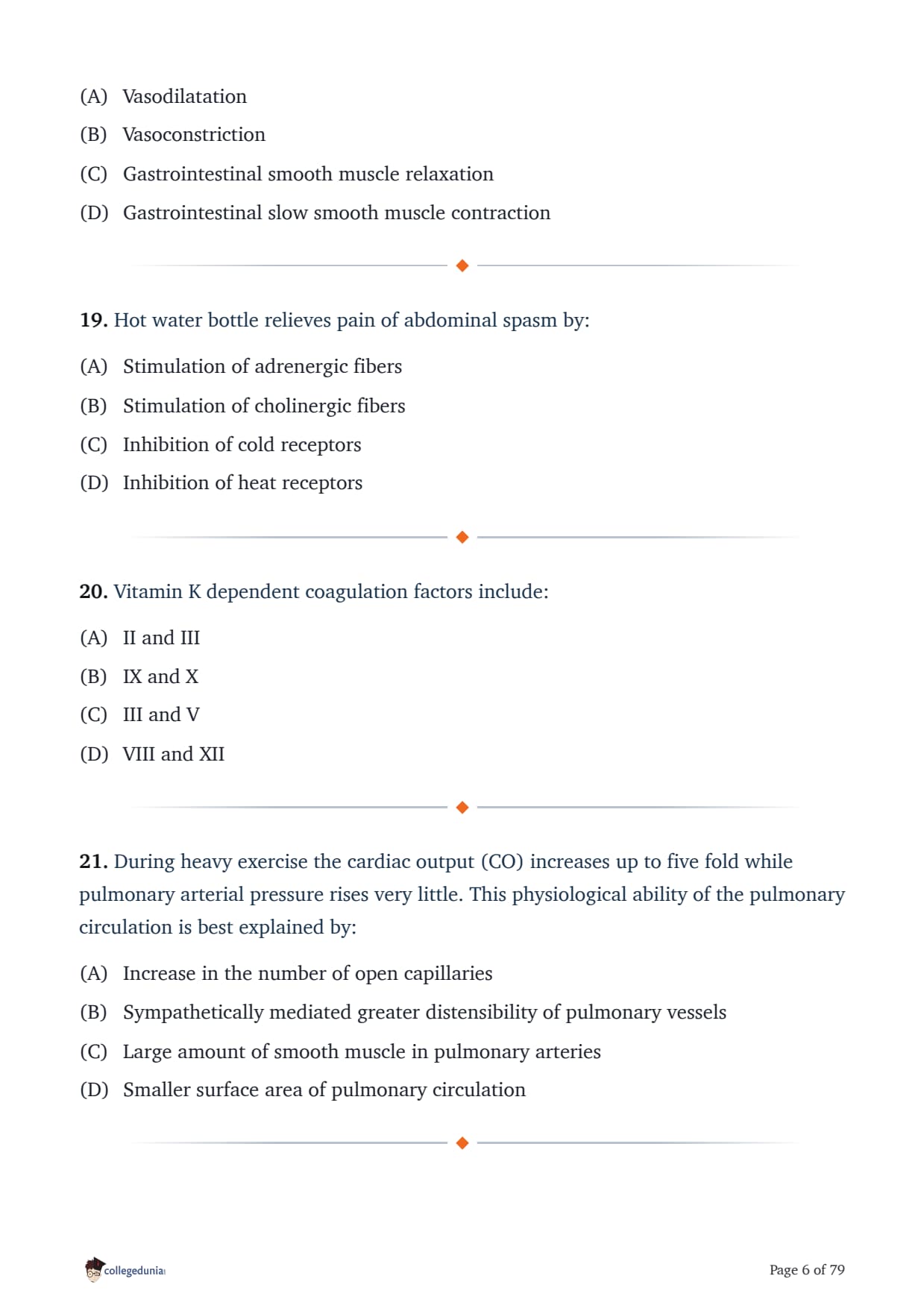
The primary action of Nitric oxide (NO) in the gastrointestinal tract is:

  • (A) Vasodilatation
  • (B) Vasoconstriction
  • (C) Gastrointestinal smooth muscle relaxation
  • (D) Gastrointestinal slow smooth muscle contraction

Question 19:

Hot water bottle relieves pain of abdominal spasm by:

  • (A) Stimulation of adrenergic fibers
  • (B) Stimulation of cholinergic fibers
  • (C) Inhibition of cold receptors
  • (D) Inhibition of heat receptors

Question 20:

Vitamin K dependent coagulation factors include:

  • (A) II and III
  • (B) IX and X
  • (C) III and V
  • (D) VIII and XII

Question 21:

During heavy exercise the cardiac output (CO) increases up to five fold while pulmonary arterial pressure rises very little. This physiological ability of the pulmonary circulation is best explained by:

  • (A) Increase in the number of open capillaries
  • (B) Sympathetically mediated greater distensibility of pulmonary vessels
  • (C) Large amount of smooth muscle in pulmonary arteries
  • (D) Smaller surface area of pulmonary circulation

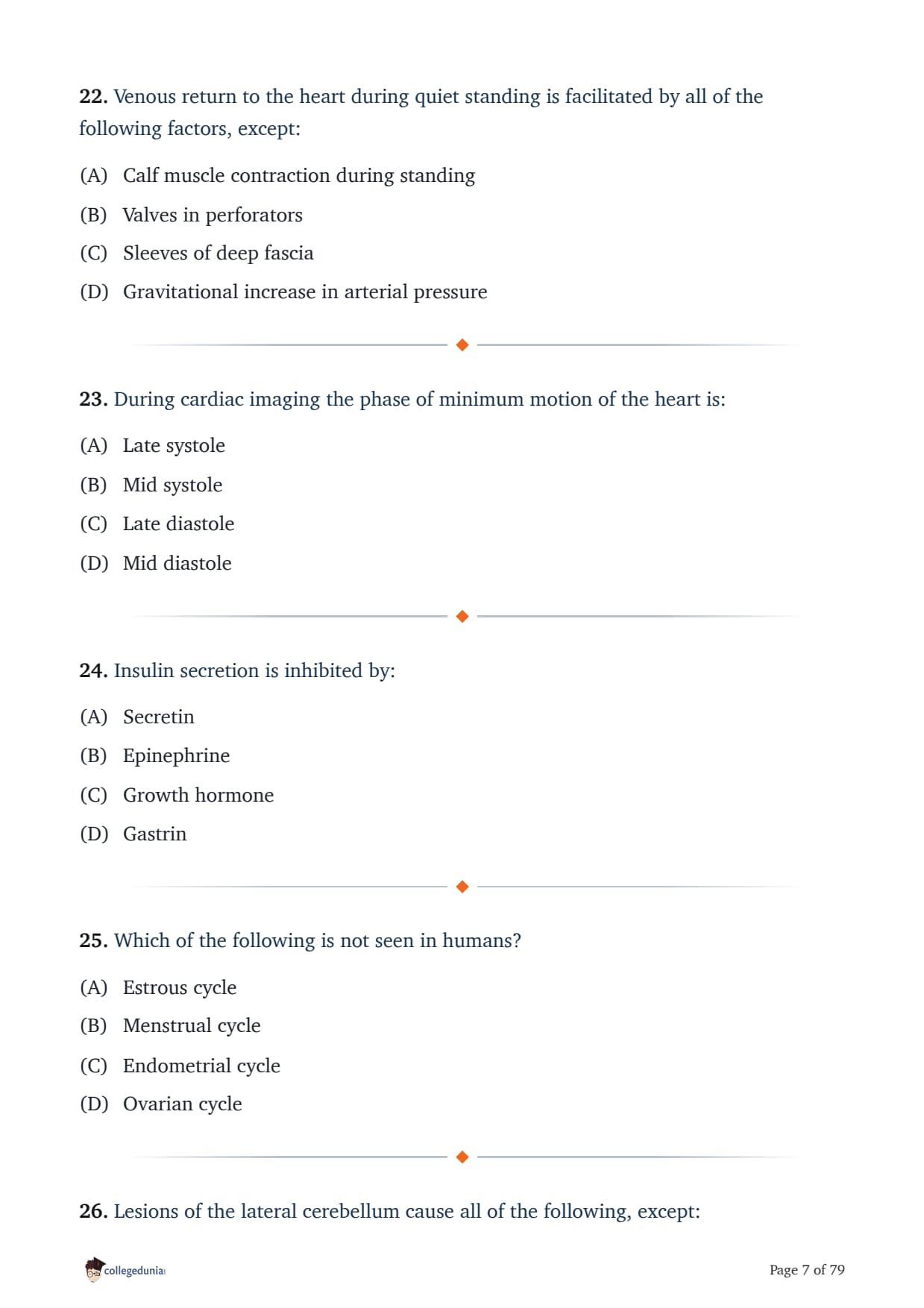
Question 22:

Venous return to the heart during quiet standing is facilitated by all of the following factors, except:

  • (A) Calf muscle contraction during standing
  • (B) Valves in perforators
  • (C) Sleeves of deep fascia
  • (D) Gravitational increase in arterial pressure

Question 23:

During cardiac imaging the phase of minimum motion of the heart is:

  • (A) Late systole
  • (B) Mid systole
  • (C) Late diastole
  • (D) Mid diastole

Question 24:

Insulin secretion is inhibited by:

  • (A) Secretin
  • (B) Epinephrine
  • (C) Growth hormone
  • (D) Gastrin

Question 25:

Which of the following is not seen in humans?

  • (A) Estrous cycle
  • (B) Menstrual cycle
  • (C) Endometrial cycle
  • (D) Ovarian cycle

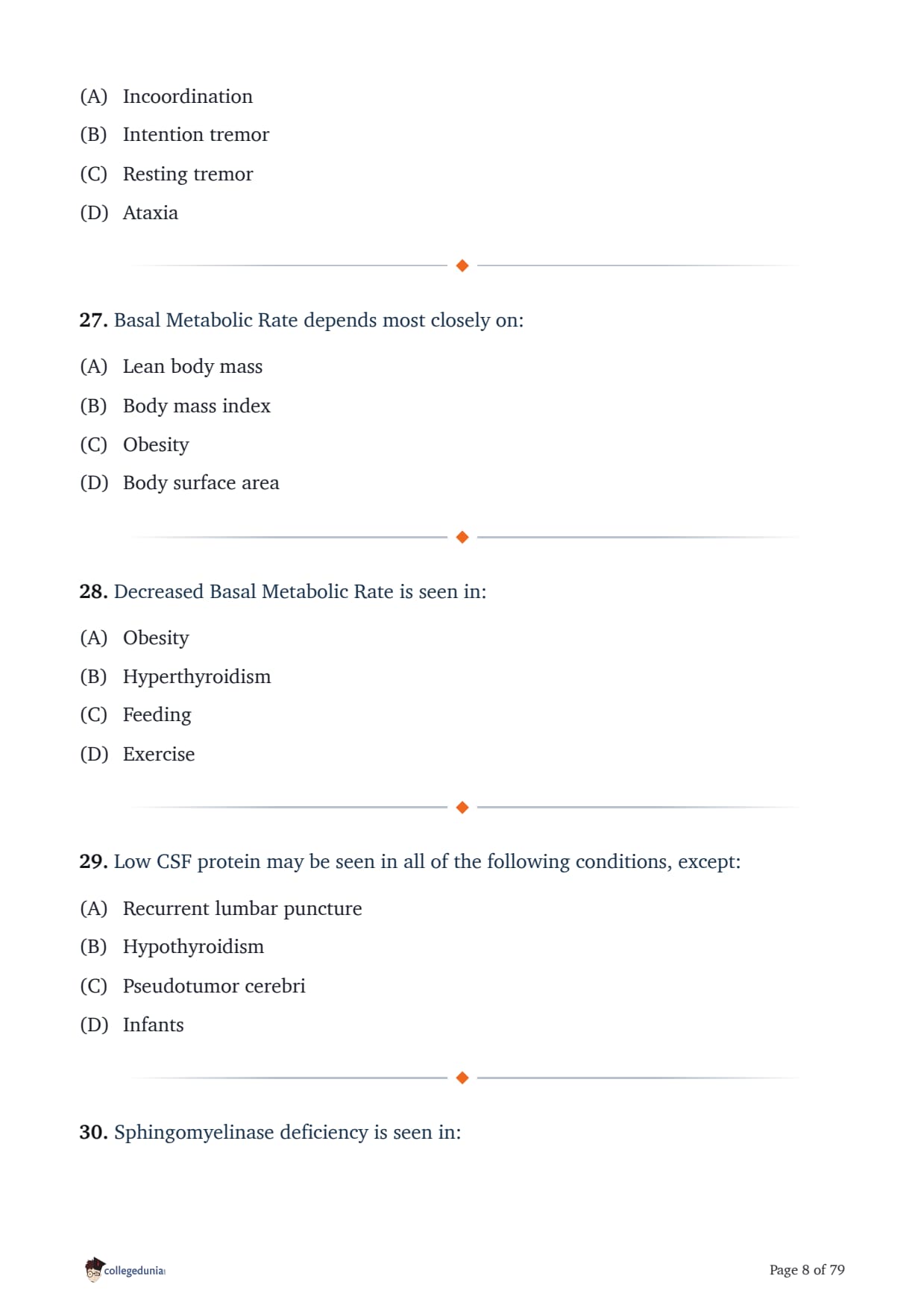
Question 26:

Lesions of the lateral cerebellum cause all of the following, except:

  • (A) Incoordination
  • (B) Intention tremor
  • (C) Resting tremor
  • (D) Ataxia

Question 27:

Basal Metabolic Rate depends most closely on:

  • (A) Lean body mass
  • (B) Body mass index
  • (C) Obesity
  • (D) Body surface area

Question 28:

Decreased Basal Metabolic Rate is seen in:

  • (A) Obesity
  • (B) Hyperthyroidism
  • (C) Feeding
  • (D) Exercise

Question 29:

Low CSF protein may be seen in all of the following conditions, except:

  • (A) Recurrent lumbar puncture
  • (B) Hypothyroidism
  • (C) Pseudotumor cerebri
  • (D) Infants

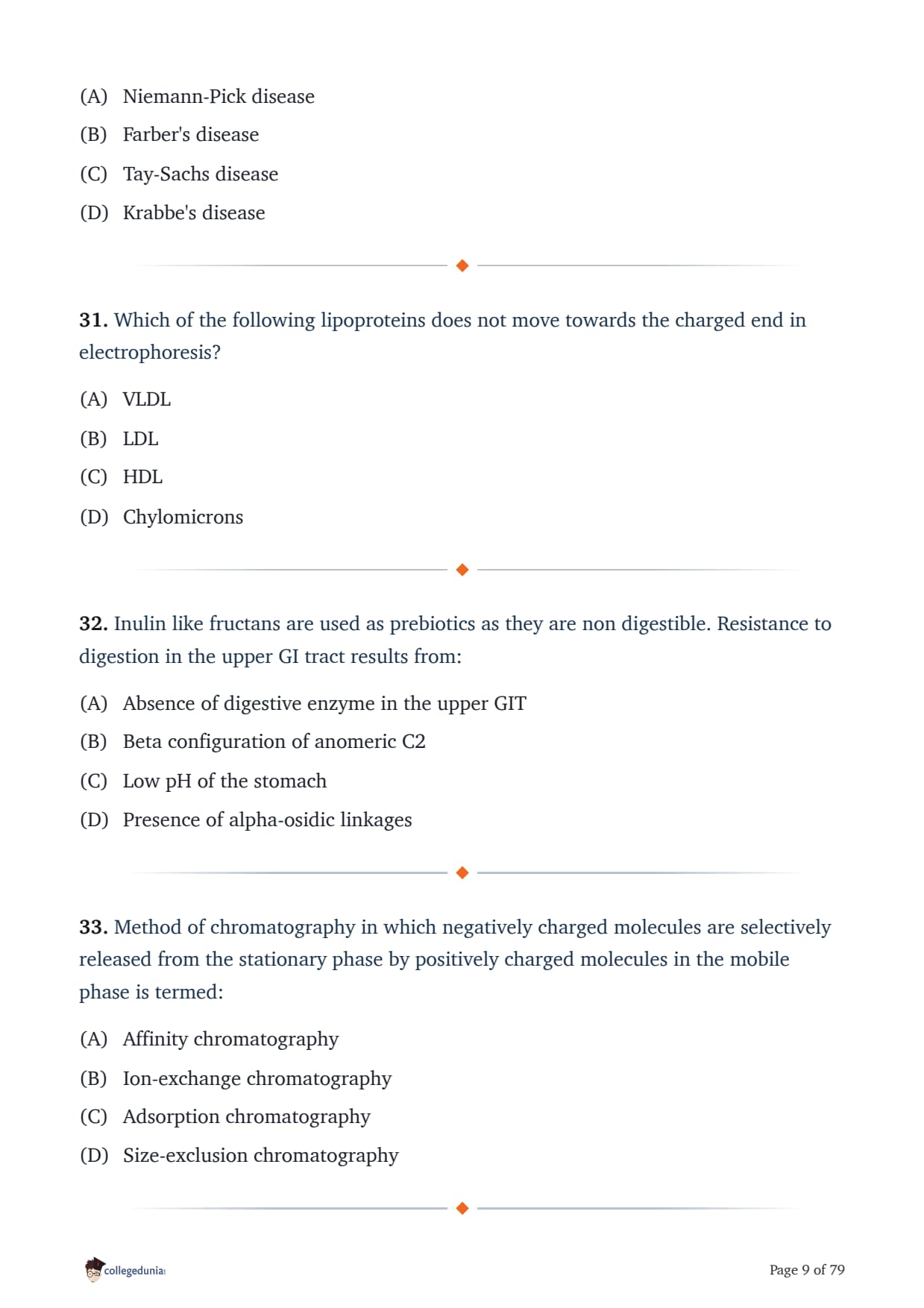
Question 30:

Sphingomyelinase deficiency is seen in:

  • (A) Niemann-Pick disease
  • (B) Farber's disease
  • (C) Tay-Sachs disease
  • (D) Krabbe's disease

Question 31:

Which of the following lipoproteins does not move towards the charged end in electrophoresis?

  • (A) VLDL
  • (B) LDL
  • (C) HDL
  • (D) Chylomicrons

Question 32:

Inulin like fructans are used as prebiotics as they are non digestible. Resistance to digestion in the upper GI tract results from:

  • (A) Absence of digestive enzyme in the upper GIT
  • (B) Beta configuration of anomeric C2
  • (C) Low pH of the stomach
  • (D) Presence of alpha-osidic linkages

Question 33:

Method of chromatography in which negatively charged molecules are selectively released from the stationary phase by positively charged molecules in the mobile phase is termed:

  • (A) Affinity chromatography
  • (B) Ion-exchange chromatography
  • (C) Adsorption chromatography
  • (D) Size-exclusion chromatography

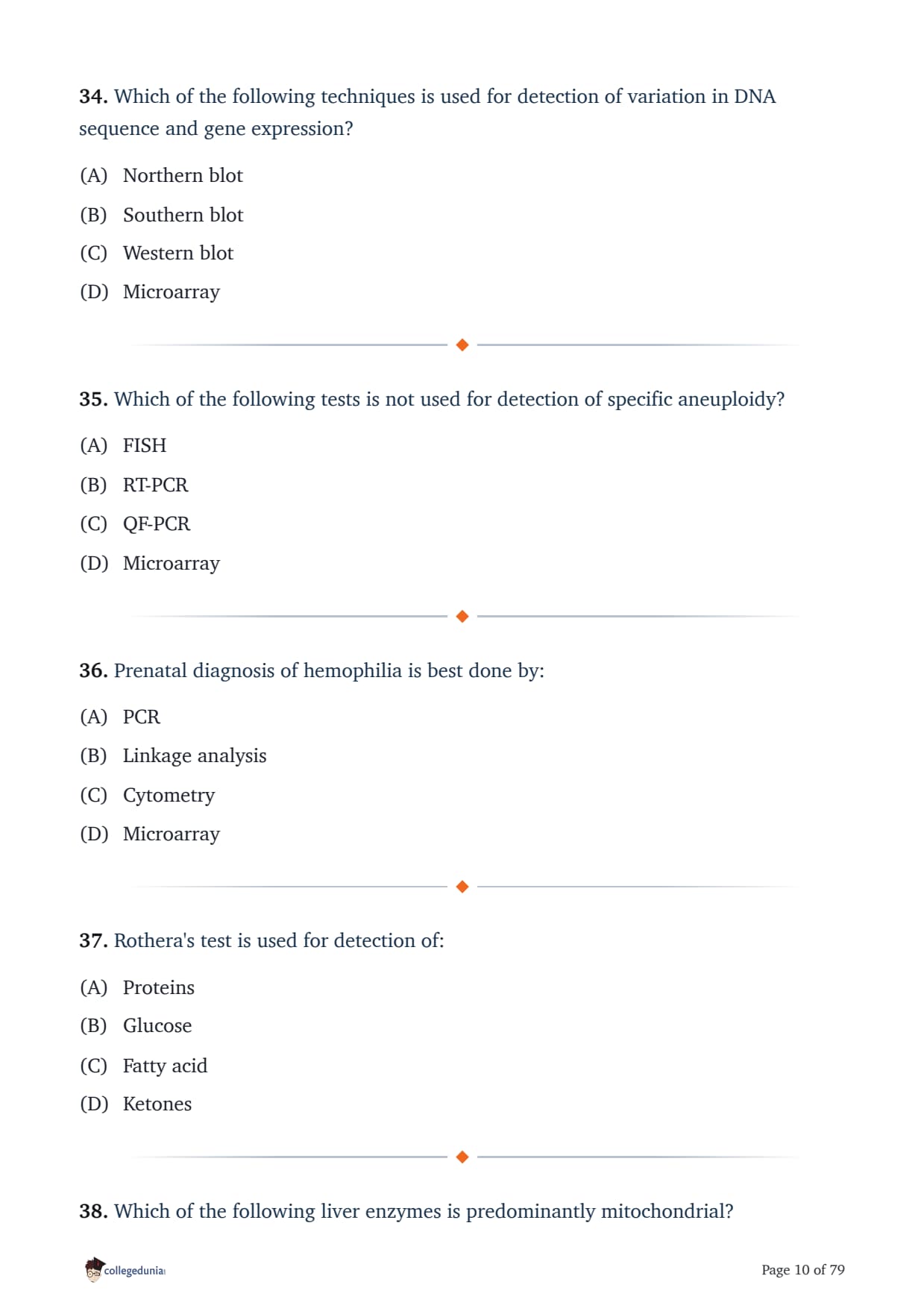
Question 34:

Which of the following techniques is used for detection of variation in DNA sequence and gene expression?

  • (A) Northern blot
  • (B) Southern blot
  • (C) Western blot
  • (D) Microarray

Question 35:

Which of the following tests is not used for detection of specific aneuploidy?

  • (A) FISH
  • (B) RT-PCR
  • (C) QF-PCR
  • (D) Microarray

Question 36:

Prenatal diagnosis of hemophilia is best done by:

  • (A) PCR
  • (B) Linkage analysis
  • (C) Cytometry
  • (D) Microarray

Question 37:

Rothera's test is used for detection of:

  • (A) Proteins
  • (B) Glucose
  • (C) Fatty acid
  • (D) Ketones

Question 38:

Which of the following liver enzymes is predominantly mitochondrial?

  • (A) SGOT (AST)
  • (B) SGPT (ALT)
  • (C) GGT
  • (D) 5'-Nucleotidase

Question 39:

Mechanism of action of theophylline in bronchial asthma includes all of the following except:

  • (A) Phosphodiesterase inhibition
  • (B) Adenosine receptor antagonism
  • (C) Increased histone deacetylation
  • (D) Beta-2 receptor stimulation

Question 40:

Which of the following drugs should not be used with rivastigmine in patients with Alzheimer's disease, except:

  • (A) SSRI
  • (B) Tricyclic antidepressant
  • (C) RIMA
  • (D) Atypical antidepressants

Question 41:

Ethosuximide is the drug of choice for:

  • (A) Generalized tonic clonic seizures
  • (B) Complex partial seizures
  • (C) Absence seizures
  • (D) Myoclonic seizures

Question 42:

Narrow therapeutic index is seen with:

  • (A) Desipramine
  • (B) Lithium
  • (C) Penicillin
  • (D) Diazepam

Question 43:

Which of the following is a proton pump inhibitor?

  • (A) Ranitidine
  • (B) Misoprostol
  • (C) Omeprazole
  • (D) Lafutidine

Question 44:

Methyldopa is primarily used in:

  • (A) Parkinsonism
  • (B) Pregnancy induced hypertension
  • (C) Hirsutism
  • (D) Refractory hypertension

Question 45:

Fetal hydantoin syndrome is caused by maternal use of:

  • (A) Phenytoin
  • (B) Valproate
  • (C) Carbamazepine
  • (D) Phenobarbitone

Question 46:

Which of the following statements about opioid receptor antagonists is false?

  • (A) Naloxone can be used for treatment of opioid induced constipation
  • (B) Naltrexone may be used for treatment of alcohol dependence
  • (C) Nalmefene has a longer half life than naloxone
  • (D) Naloxone is more potent than naltrexone

Question 47:

L-Dopa is combined with carbidopa in the treatment of parkinsonism to:

  • (A) Decrease the efficacy of levodopa
  • (B) Inhibit peripheral decarboxylation of levodopa
  • (C) Increase the dose of levodopa required
  • (D) Inhibit conversion of levodopa to dopamine in the CNS

Question 48:

All of the following statements about phenytoin are true, except:

  • (A) Follows saturation kinetics
  • (B) Is teratogenic
  • (C) Is highly protein bound
  • (D) Stimulates insulin secretion

Question 49:

Which of the following teratogenic effects is incorrectly matched?

  • (A) Phenytoin and Cleft lip / palate
  • (B) Zidovudine and Skull defects
  • (C) Valproate and Neural tube defects
  • (D) Warfarin and Nasal bone dysplasia

Question 50:

All of the following agents are used for prophylaxis of migraine, except:

  • (A) Propranolol
  • (B) Valproate
  • (C) Topiramate
  • (D) Ethosuximide

Question 51:

MAO inhibitors should not be used with:

  • (A) Pethidine
  • (B) Pentazocine
  • (C) Buprenorphine
  • (D) Morphine

Question 52:

Serotonin syndrome may be precipitated by all of the following medications, except:

  • (A) Chlorpromazine
  • (B) Pentazocine
  • (C) Buspirone
  • (D) Meperidine

Question 53:

A young male presents with meningococcal meningitis and allergy to penicillin. Which is the most suitable drug?

  • (A) Chloramphenicol
  • (B) Meropenem
  • (C) Ciprofloxacin
  • (D) Teicoplanin

Question 54:

All of the following drugs may cause hirsutism, except:

  • (A) Danazol
  • (B) Phenytoin
  • (C) Norethisterone
  • (D) Flutamide

Question 55:

Most common congenital anomaly associated with lithium:

  • (A) Cardiac malformations
  • (B) Neural tube defects
  • (C) Renal anomaly
  • (D) Fetal hydantoin syndrome

Question 56:

Which of the following should be monitored in a patient receiving linezolid therapy?

  • (A) Renal function
  • (B) Liver function
  • (C) Auditory function
  • (D) Platelet count

Question 57:

All of the following statements about thalidomide are true, except:

  • (A) It has been reintroduced for its activity in ENL
  • (B) Developed as an antiemetic in pregnancy but withdrawn because of phocomelia
  • (C) Used for new and relapsed cases of multiple myeloma
  • (D) Most common side effects are diarrhea and euphoria

Question 58:

Pancreatitis occurs with:

  • (A) Abacavir
  • (B) Zidovudine
  • (C) Lamivudine
  • (D) Didanosine

Question 59:

Which of the following agents is recommended for treatment of Gastrointestinal Stromal Tumors (GIST)?

  • (A) Sorafenib
  • (B) Imatinib
  • (C) Gefitinib
  • (D) Erlotinib

Question 60:

Amphotericin B toxicity can be lowered by:

  • (A) Giving it with glucose
  • (B) Decreasing the dose
  • (C) Using liposomal delivery systems
  • (D) Combining with flucytosine

Question 61:

Which of the following newer drugs has activity on both HER1 and HER2 receptors?

  • (A) Erlotinib
  • (B) Gefitinib
  • (C) Canertinib
  • (D) Lapatinib

Question 62:

Tyrosine kinase inhibitors are used in the treatment of:

  • (A) Gastrointestinal stromal tumors (GIST)
  • (B) Acute myeloid leukemia
  • (C) Neurofibromatosis
  • (D) Small cell carcinoma of lung

Question 63:

Which of the following statements about mycophenolate mofetil is not true?

  • (A) Most common adverse effect is nephrotoxicity
  • (B) Used in transplant rejection
  • (C) It is a prodrug and converted to mycophenolic acid
  • (D) Is not used with azathioprine

Question 64:

Which of the following drugs is recommended for the treatment of heparin induced thrombocytopenia?

  • (A) Abciximab
  • (B) Lepirudin
  • (C) Warfarin
  • (D) Alteplase

Question 65:

All of the following statements about Trientine are true, except:

  • (A) More potent than penicillamine and orally absorbed
  • (B) Alternative to penicillamine in non-tolerant patients
  • (C) Not given with iron within two hours of ingestion
  • (D) May cause iron deficiency anemia

Question 66:

Allopurinol is used in the treatment of:

  • (A) Osteoarthritis
  • (B) Gout
  • (C) Rheumatoid arthritis
  • (D) Ankylosing spondylitis

Question 67:

In equivalent concentrations, topical steroids are more potent in which form:

  • (A) Gel
  • (B) Cream
  • (C) Ointment
  • (D) Lotion

Question 68:

Caspases are involved in:

  • (A) Cell division
  • (B) Necrosis
  • (C) Apoptosis
  • (D) Inflammation

Question 69:

(a) Actions of bradykinin include all of the following, except: Vasodilatation, Bronchodilatation, Increased vascular permeability, Pain. (b) What is the most important role of bradykinin in acute inflammation? The options below answer part (b).

  • (A) Increase in vascular permeability
  • (B) Vasodilatation
  • (C) Mediation of pain
  • (D) Bronchoconstriction

Question 70:

Heterozygous sickle cell anemia (sickle cell trait) gives protection against:

  • (A) G6PD deficiency
  • (B) Malaria
  • (C) Thalassemia
  • (D) Dengue fever

Question 71:

Burkitt lymphoma is associated with:

  • (A) t(8;14)
  • (B) t(11;14)
  • (C) t(15;17)
  • (D) t(14;18)

Question 72:

Translocation t(2;8)(p12;q24) is associated with:

  • (A) Chronic myeloid leukemia (CML)
  • (B) Acute myeloid leukemia (AML)
  • (C) T cell acute lymphoblastic leukemia (T-cell ALL)
  • (D) Burkitt lymphoma

Question 73:

All of the following are features of apoptosis, except:

  • (A) Cellular swelling
  • (B) Nuclear compaction
  • (C) Intact cell membrane
  • (D) Cytoplasmic eosinophilia

Question 74:

Paroxysmal nocturnal hemoglobinuria (PNH) is associated with deficiency of:

  • (A) DAF (Decay accelerating factor)
  • (B) MIRL (Membrane inhibitor of reactive lysis)
  • (C) GPI anchored protein (Glycosyl phosphatidyl inositol anchored proteins)
  • (D) LFA (Lymphocyte function associated antigen)

Question 75:

Plasmacytoid lymphomas (lymphoplasmacytic lymphoma) may be associated with:

  • (A) IgG
  • (B) IgM
  • (C) IgA
  • (D) IgE

Question 76:

Which of the following has the most friable vegetation?

  • (A) Infective endocarditis
  • (B) Libman-Sacks endocarditis
  • (C) Rheumatic heart disease
  • (D) SLE

Question 77:

The characteristic pathological finding in carcinoid heart disease is:

  • (A) Fibrous endocardial thickening of the right ventricle, tricuspid valve and pulmonary valve
  • (B) Endometrial thickening of the tricuspid valve with severe tricuspid stenosis
  • (C) Collagen rich, elastic deposits in endocardium of right ventricle and pulmonary valve
  • (D) Calcification of the tricuspid and pulmonary valve

Question 78:

A female presents with a history of progressive breathlessness. Histology shows heterogeneous patchy fibrosis with several fibroblastic foci. The most likely diagnosis is:

  • (A) Cryptogenic organizing pneumonia
  • (B) Non-specific interstitial pneumonia
  • (C) Usual interstitial pneumonia
  • (D) Desquamative interstitial pneumonia

Question 79:

The chromophobe variant of renal cell carcinoma is associated with:

  • (A) VHL gene mutations
  • (B) Trisomy of 7 and 17 (+7, +17)
  • (C) 3p deletions (3p-)
  • (D) Monosomy of 1 and Y (-1, -Y)

Question 80:

All of the following conditions are associated with granulomatous pathology, except:

  • (A) Wegener's granulomatosis (granulomatosis with polyangiitis)
  • (B) Takayasu arteritis
  • (C) Polyarteritis nodosa (classic PAN)
  • (D) Giant cell arteritis

Question 81:

Electron microscopy is diagnostic in:

  • (A) Goodpasture's syndrome
  • (B) Alport's syndrome
  • (C) Wegener's syndrome
  • (D) Churg-Strauss syndrome

Question 82:

Which of the following is the most characteristic ultrastructural feature of paraganglioma on electron microscopy?

  • (A) Shrunken mitochondria
  • (B) Large Golgi apparatus
  • (C) Frequent mitoses
  • (D) Dense core neuroendocrine granules

Question 83:

Which of the following is a marker of Langerhans cell histiocytosis?

  • (A) CD1a
  • (B) CD10
  • (C) CD30
  • (D) CD56

Question 84:

Hypercoagulation in nephrotic syndrome is caused by:

  • (A) Loss of antithrombin III
  • (B) Decreased fibrinogen
  • (C) Decreased metabolism of vitamin K
  • (D) Increase in protein C

Question 85:

Which of the following markers is specific for gastrointestinal stromal tumors (GIST)?

  • (A) CD117
  • (B) CD34
  • (C) CD23
  • (D) S-100

Question 86:

Down's syndrome is most commonly caused by:

  • (A) Maternal nondisjunction
  • (B) Paternal nondisjunction
  • (C) Translocation
  • (D) Mosaicism

Question 87:

Cystic fibrosis is inherited as an autosomal recessive condition. A normal couple has one daughter affected with the disease. They are now planning to have another child. What is the chance of their next child being affected by the disease?

  • (A) 0
  • (B) 1/2
  • (C) 1/4
  • (D) 3/4

Question 88:

Males are more commonly affected than females in:

  • (A) Autosomal dominant
  • (B) Autosomal recessive
  • (C) X-linked dominant
  • (D) X-linked recessive

Question 89:

All of the following statements about El Tor vibrios are true, except:

  • (A) Humans are the only reservoir
  • (B) Can survive in ice cold water for 2 to 4 weeks
  • (C) Killed by boiling for 30 seconds
  • (D) Enterotoxin can have direct effects on tissues other than intestinal epithelial cells

Question 90:

The peptide binding site on class I MHC molecules for presenting processed antigen to CD8 T cells is formed by:

  • (A) Proximal domain of the alpha subunit
  • (B) Distal domains of the alpha subunit
  • (C) Proximal domains of the alpha and beta subunits
  • (D) Distal domains of the alpha and beta subunits

Question 91:

All of the following statements about Staphylococcus aureus are true, except:

  • (A) The most common source of infection is cross infection from infected people
  • (B) About 30 percent of the general population are healthy nasal carriers
  • (C) Epidermolysin and toxic shock syndrome toxin are superantigens
  • (D) Methicillin resistance is chromosomally mediated

Question 92:

A child presents with sepsis. The bacteria isolated showed beta hemolysis on blood agar, resistance to bacitracin, and a positive CAMP test. The most likely organism is:

  • (A) Streptococcus agalactiae (Group B Streptococcus)
  • (B) Streptococcus pyogenes (Group A Streptococcus)
  • (C) Streptococcus pneumoniae
  • (D) Enterococcus faecalis

Question 93:

Isolation of Chlamydia from a tissue specimen can be done by:

  • (A) ELISA (enzyme linked immunosorbent assay)
  • (B) Yolk sac inoculation
  • (C) Direct immunofluorescence antibody test (DFA)
  • (D) Polymerase chain reaction (PCR)

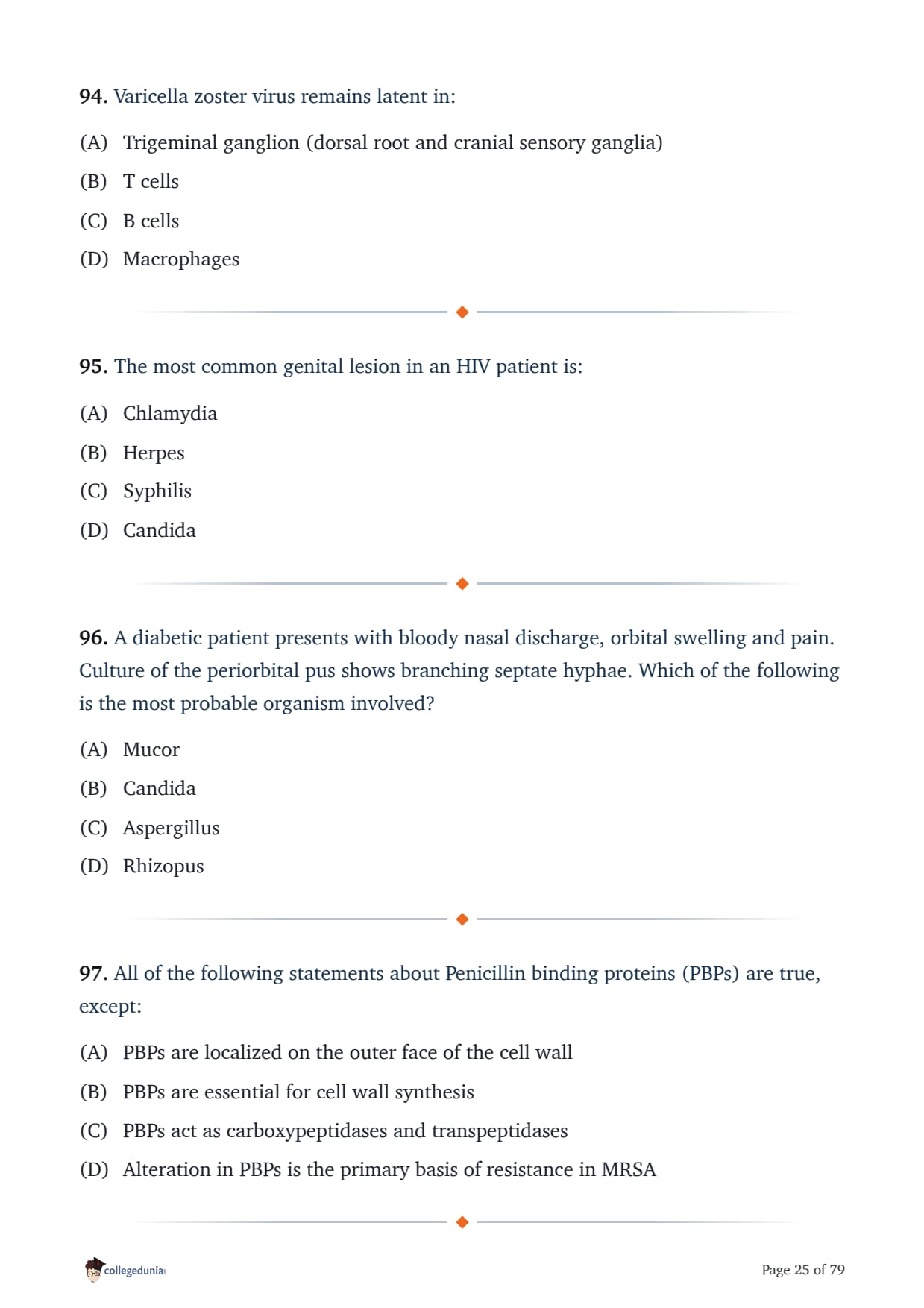
Question 94:

Varicella zoster virus remains latent in:

  • (A) Trigeminal ganglion (dorsal root and cranial sensory ganglia)
  • (B) T cells
  • (C) B cells
  • (D) Macrophages

Question 95:

The most common genital lesion in an HIV patient is:

  • (A) Chlamydia
  • (B) Herpes
  • (C) Syphilis
  • (D) Candida

Question 96:

A diabetic patient presents with bloody nasal discharge, orbital swelling and pain. Culture of the periorbital pus shows branching septate hyphae. Which of the following is the most probable organism involved?

  • (A) Mucor
  • (B) Candida
  • (C) Aspergillus
  • (D) Rhizopus

Question 97:

All of the following statements about Penicillin binding proteins (PBPs) are true, except:

  • (A) PBPs are localized on the outer face of the cell wall
  • (B) PBPs are essential for cell wall synthesis
  • (C) PBPs act as carboxypeptidases and transpeptidases
  • (D) Alteration in PBPs is the primary basis of resistance in MRSA

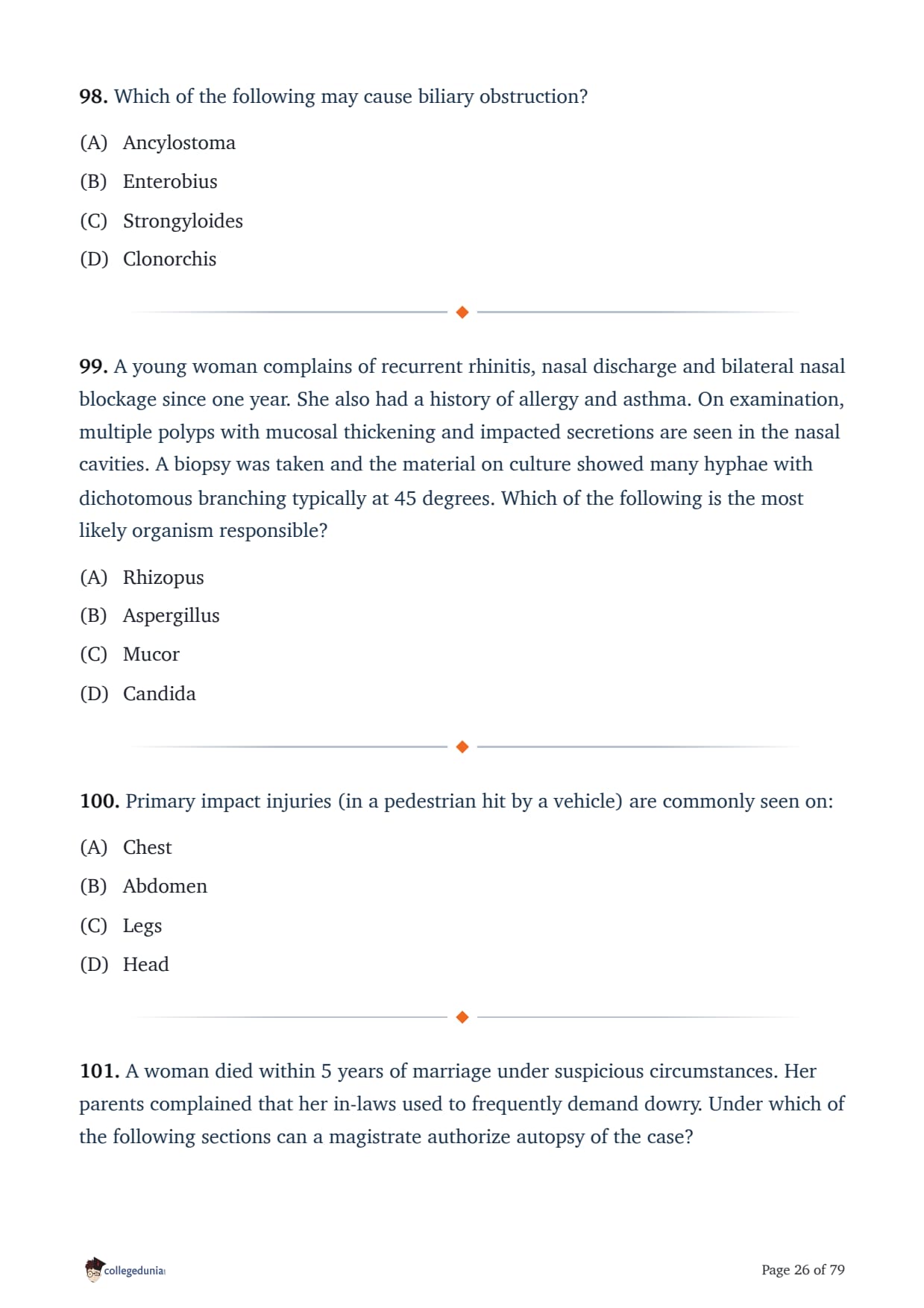
Question 98:

Which of the following may cause biliary obstruction?

  • (A) Ancylostoma
  • (B) Enterobius
  • (C) Strongyloides
  • (D) Clonorchis

Question 99:

A young woman complains of recurrent rhinitis, nasal discharge and bilateral nasal blockage since one year. She also had a history of allergy and asthma. On examination, multiple polyps with mucosal thickening and impacted secretions are seen in the nasal cavities. A biopsy was taken and the material on culture showed many hyphae with dichotomous branching typically at 45 degrees. Which of the following is the most likely organism responsible?

  • (A) Rhizopus
  • (B) Aspergillus
  • (C) Mucor
  • (D) Candida

Question 100:

Primary impact injuries (in a pedestrian hit by a vehicle) are commonly seen on:

  • (A) Chest
  • (B) Abdomen
  • (C) Legs
  • (D) Head

Question 101:

A woman died within 5 years of marriage under suspicious circumstances. Her parents complained that her in-laws used to frequently demand dowry. Under which of the following sections can a magistrate authorize autopsy of the case?

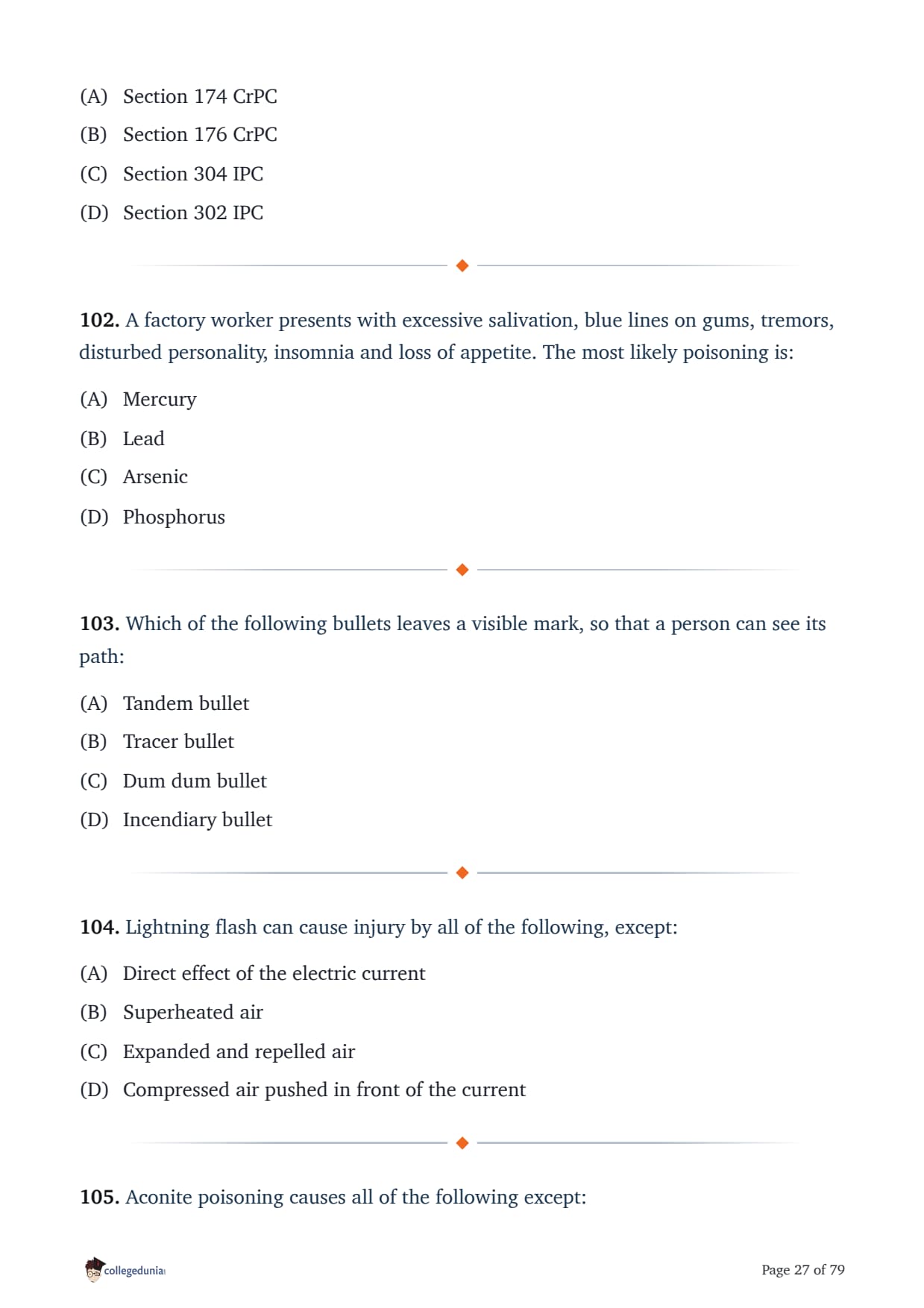
  • (A) Section 174 CrPC
  • (B) Section 176 CrPC
  • (C) Section 304 IPC
  • (D) Section 302 IPC

Question 102:

A factory worker presents with excessive salivation, blue lines on gums, tremors, disturbed personality, insomnia and loss of appetite. The most likely poisoning is:

  • (A) Mercury
  • (B) Lead
  • (C) Arsenic
  • (D) Phosphorus

Question 103:

Which of the following bullets leaves a visible mark, so that a person can see its path:

  • (A) Tandem bullet
  • (B) Tracer bullet
  • (C) Dum dum bullet
  • (D) Incendiary bullet

Question 104:

Lightning flash can cause injury by all of the following, except:

  • (A) Direct effect of the electric current
  • (B) Superheated air
  • (C) Expanded and repelled air
  • (D) Compressed air pushed in front of the current

Question 105:

Aconite poisoning causes all of the following except:

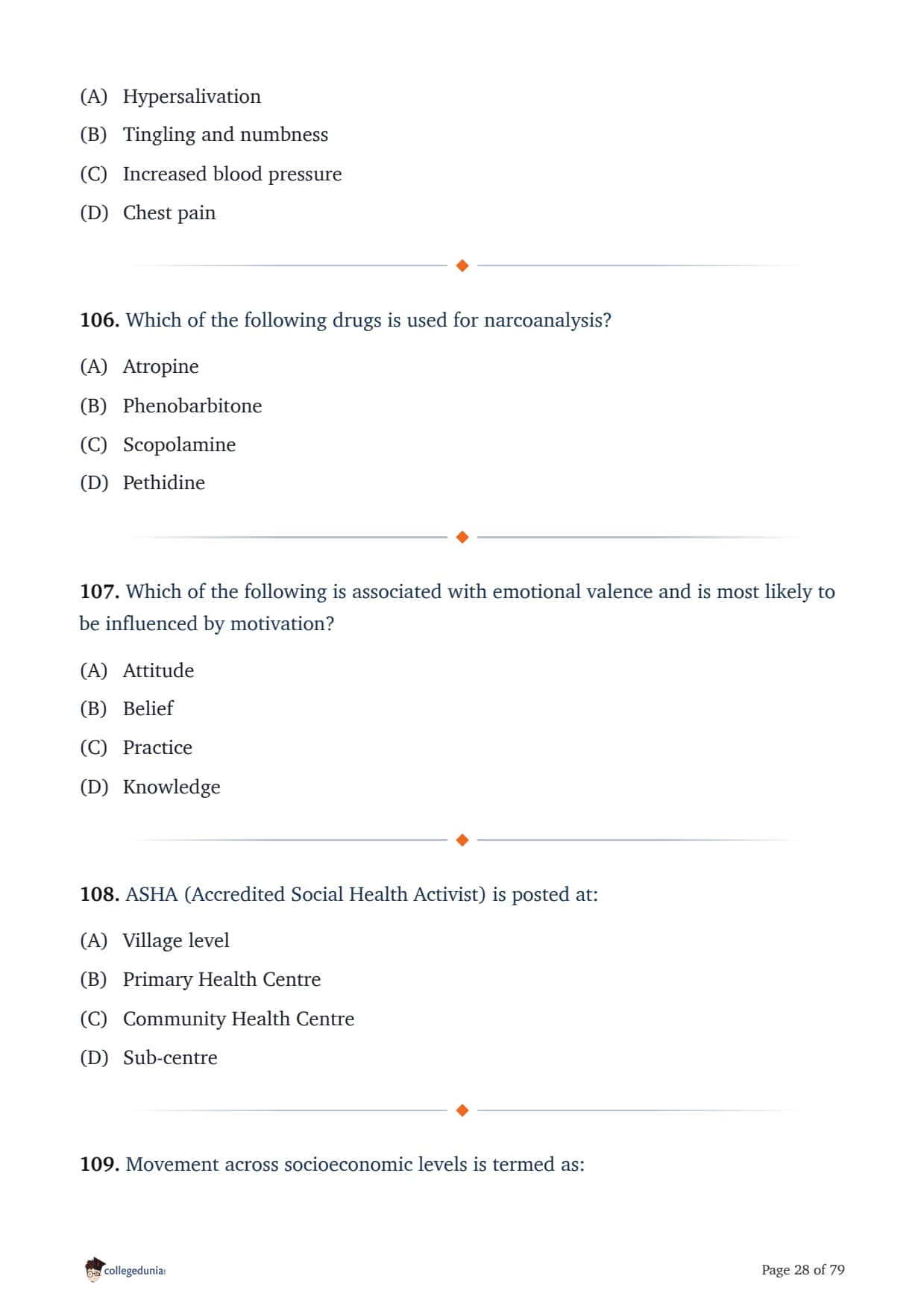
  • (A) Hypersalivation
  • (B) Tingling and numbness
  • (C) Increased blood pressure
  • (D) Chest pain

Question 106:

Which of the following drugs is used for narcoanalysis?

  • (A) Atropine
  • (B) Phenobarbitone
  • (C) Scopolamine
  • (D) Pethidine

Question 107:

Which of the following is associated with emotional valence and is most likely to be influenced by motivation?

  • (A) Attitude
  • (B) Belief
  • (C) Practice
  • (D) Knowledge

Question 108:

ASHA (Accredited Social Health Activist) is posted at:

  • (A) Village level
  • (B) Primary Health Centre
  • (C) Community Health Centre
  • (D) Sub-centre

Question 109:

Movement across socioeconomic levels is termed as:

  • (A) Social equality
  • (B) Social upliftment
  • (C) Social mobility
  • (D) Social insurance

Question 110:

JSY stands for:

  • (A) Janani Suraksha Yojana
  • (B) Jeevan Swastha Yojana
  • (C) Jan Sewa Yojana
  • (D) Jan Suraksha Yojana

Question 111:

The concept of primary health care was provided by:

  • (A) Bhore Committee
  • (B) Alma-Ata Declaration
  • (C) Shrivastava Committee
  • (D) National Health Policy

Question 112:

Which of the following best reflects the highest level of community participation?

  • (A) Planning of intervention by the community
  • (B) Intervention based on assessment of community needs
  • (C) Provision of resources by the community
  • (D) Community supports and cooperates with workers

Question 113:

Which of the following regarding maternal mortality rate (MMR) is not true?

  • (A) Numerator includes total number of female deaths within 42 days of delivery
  • (B) Denominator includes still births and abortions
  • (C) It is expressed as a rate and not a ratio
  • (D) It is expressed per 100

Question 114:

Perinatal mortality rate includes:

  • (A) Still borns and deaths within 7 days of birth
  • (B) Neonatal deaths within 30 days of birth
  • (C) Abortions and deaths within 7 days of birth
  • (D) Deaths between 7 and 28 days of birth

Question 115:

Rural and urban difference in prevalence is seen in all of the following, except:

  • (A) Lung cancer
  • (B) Tuberculosis
  • (C) Mental illness
  • (D) Chronic bronchitis

Question 116:

Which of the following is not an essential component of primary health care?

  • (A) Provision of essential drugs
  • (B) Cost effectiveness
  • (C) Immunization against major infectious diseases
  • (D) Health education

Question 117:

All of the following factors contribute to resurgence of malaria, except:

  • (A) Drug resistance in host
  • (B) Drug resistance in parasite
  • (C) Drug resistance in vectors
  • (D) Antigenic variations in parasite

Question 118:

Which of the following is the current trend in health care?

  • (A) Qualitative enquiry
  • (B) Community participation
  • (C) Equitable distribution
  • (D) Primary health care

Question 119:

IMNCI differs from IMCI in all of the following, except:

  • (A) Malaria and anemia are included
  • (B) 0 to 7 days neonates are included
  • (C) Emphasis on management of sick neonates over sick older children
  • (D) Treatment is aimed at more than one disease at a time

Question 120:

Mass chemoprophylaxis in an endemic area is recommended for all of the following, except:

  • (A) Yaws
  • (B) Leprosy
  • (C) Trachoma
  • (D) Filaria

Question 121:

A case of acute flaccid paralysis must be observed for how many days to look for residual weakness?

  • (A) 30 days
  • (B) 42 days
  • (C) 60 days
  • (D) 90 days

Question 122:

India aimed to eliminate which of the following diseases by 2015?

  • (A) Malaria
  • (B) Tuberculosis
  • (C) Kala Azar
  • (D) Filariasis

Question 123:

The screening strategy for prevention of blindness from diabetic retinopathy according to the NPCB involves:

  • (A) Opportunistic screening
  • (B) High risk screening
  • (C) Mass screening
  • (D) Screening by primary care physician

Question 124:

All of the following statements about the Tuberculosis annual risk of infection (ARI) are true, except:

  • (A) The average estimated ARI for India is 1.7%
  • (B) 1% ARI corresponds to 75 new cases of smear positive TB per 100,000 population
  • (C) ARI reflects the current trend and effectiveness of control measures
  • (D) ARI represents the percentage of new infections

Question 125:

All of the following statements about scrub typhus are true, except:

  • (A) Caused by Orientia tsutsugamushi
  • (B) Mites act as reservoirs
  • (C) Transmitted when adult mites feed on hosts
  • (D) Tetracycline is the drug of choice

Question 126:

Which of the following statements about confidence limits or interval is true?

  • (A) Smaller the confidence level, larger will be the confidence interval
  • (B) Less variable the data, wider will be the confidence interval
  • (C) Sample size does not affect the confidence interval
  • (D) 95% confidence interval will cover 2 standard errors around the mean

Question 127:

A standard z-score is related to:

  • (A) Binomial distribution
  • (B) Normal distribution
  • (C) Chi-square test
  • (D) t-test

Question 128:

A new test for diabetes was carried out. Of the 80 people who tested positive, it was found that actually 40 had diabetes. Of the 9920 people who tested negative, only 9840 did not have the disease actually. The sensitivity of this new test is:

  • (A) 33%
  • (B) 50%
  • (C) 65%
  • (D) 99%

Question 129:

Which of the following is not a synthetic pyrethroid compound?

  • (A) DDT
  • (B) Permethrin
  • (C) Proparthrin
  • (D) Cypermethrin

Question 130:

The population of a community on the 1st of June was recorded as 1,65,000. The total number of new cases of tuberculosis recorded from 1st January to 30th June was 22. The total registered cases of tuberculosis in the community were 220. What is the incidence of TB in this community per 10 lakh population?

  • (A) 133
  • (B) 220
  • (C) 13.3
  • (D) 22

Question 131:

All of the following about the Red Cross emblem are true, except:

  • (A) Size of the bars in the cross is equal horizontally and vertically
  • (B) Can be used by personnel of the United Nations Organization (UNO)
  • (C) Misuse of the emblem is a punishable offence under Indian law
  • (D) It was convened in Geneva

Question 132:

A 16 year old girl presents with a history of fatiguability, weakness and lethargy. The complete blood count (CBC) reveals a haemoglobin of 7.0 g/dL, MCV of 70 fL, MCH of 20 pg/cell and a red cell distribution width (RDW) of 20. The most likely diagnosis is:

  • (A) Iron deficiency anaemia
  • (B) Thalassaemia minor
  • (C) Thalassaemia major
  • (D) Sickle cell trait

Question 133:

Which of the following investigations should be done immediately to best confirm a mismatched (non-matched) blood transfusion reaction?

  • (A) Indirect Coombs test
  • (B) Direct Coombs test
  • (C) Antibody in the patient's serum
  • (D) Antibody in the donor serum

Question 134:

Bence Jones proteinuria may be seen in:

  • (A) Alpha heavy chain disease
  • (B) Gamma heavy chain disease
  • (C) Mu heavy chain disease
  • (D) Epsilon heavy chain disease

Question 135:

Bence Jones proteins are derived from:

  • (A) Alpha globulins
  • (B) Beta globulins
  • (C) Gamma globulins
  • (D) Delta globulins

Question 136:

Which of the following is a major criterion for the diagnosis of polycythaemia vera?

  • (A) Presence of JAK-2 mutation
  • (B) Low erythropoietin levels
  • (C) High leucocyte alkaline phosphatase (increased LAP score)
  • (D) Thrombocytosis

Question 137:

All of the following statements about Fanconi's anemia are true, except:

  • (A) Autosomal dominant inheritance
  • (B) Hypocellular bone marrow
  • (C) Congenital anomalies
  • (D) Usually normocytic or macrocytic cell morphology

Question 138:

All of the following statements about the third heart sound (S3) are true, except:

  • (A) Occurs due to rapid filling of the ventricles during atrial systole
  • (B) Seen in constrictive pericarditis
  • (C) Seen in atrial septal defect (ASD)
  • (D) Seen in ventricular septal defect (VSD)

Question 139:

A young asymptomatic female is observed to have a midsystolic click on routine examination. The valves are likely to show:

  • (A) Myxomatous degeneration
  • (B) Aschoff bodies
  • (C) Calcific degeneration
  • (D) Ruptured chordae tendineae

Question 140:

Beck's triad is seen in:

  • (A) Constrictive pericarditis
  • (B) Cardiac tamponade
  • (C) Right ventricular myocardial infarction (RVMI)
  • (D) Restrictive cardiomyopathy

Question 141:

A patient presents with the following parameters: pH 7.5, pCO2 30 mmHg, pO2 102 mmHg, and HCO3 16 meq/L. Which of the following correctly describes the primary disorder with its compensatory mechanism?

  • (A) Respiratory alkalosis
  • (B) Metabolic alkalosis
  • (C) Respiratory acidosis
  • (D) Metabolic acidosis

Question 142:

A 29 year old anxious lady presents with progressive breathlessness and exercise intolerance for four months. Her FVC is 90% and FEV1/FVC is 86%. Oxygen saturation after exercise dropped from 92% to 86%. What is the likely diagnosis?

  • (A) Primary alveolar hypoventilation
  • (B) Primary pulmonary hypertension
  • (C) Anxiety disorder
  • (D) Interstitial lung disease

Question 143:

Accelerated idioventricular rhythm (AIVR) is the most common arrhythmia associated with:

  • (A) Dilated cardiomyopathy
  • (B) Myocardial reperfusion
  • (C) Digitalis intoxication
  • (D) Myocarditis

Question 144:

Streptokinase and urokinase are contraindicated in:

  • (A) Intracranial malignancy
  • (B) Pulmonary embolism
  • (C) Arteriovenous fistula
  • (D) Thrombophlebitis

Question 145:

A truck driver presented with a history of fever for four weeks and a dry cough. He also gives a history of weight loss of about 10 kg. Chest X-ray shows bilateral reticulonodular infiltrates. The most likely diagnosis is:

  • (A) Tuberculosis
  • (B) Pneumocystis carinii pneumonia
  • (C) Pneumococcal pneumonia
  • (D) Interstitial lung disease

Question 146:

Cavitatory lesions in the lung are seen in:

  • (A) Primary pulmonary tuberculosis
  • (B) Staphylococcal pneumonia
  • (C) Pneumoconiosis
  • (D) Interstitial lung disease

Question 147:

Pre-renal azotemia is characterized by all of the following except:

  • (A) Fractional excretion of Na < 1%
  • (B) Urinary osmolality > 500 mosm/kg
  • (C) Urinary sodium concentration > 40 meq/l
  • (D) Reversible with replacement fluids

Question 148:

A patient is found to be positive for HBsAg on routine laboratory evaluation. Other serological tests for hepatitis are unremarkable. He is clinically asymptomatic and liver enzymes are within the normal range. Which of the following best describes his diagnosis?

  • (A) Inactive HBV carrier
  • (B) Acute hepatitis B
  • (C) Chronic hepatitis B
  • (D) Active HBV carrier

Question 149:

A male patient is observed to be HBsAg positive, HBeAg negative, and anti-HBe antibody positive. HBV DNA copies are observed to be 100,000/ml, while SGOT and SGPT are elevated to 6 times the upper limit of normal. What is the likely diagnosis?

  • (A) HBV surface mutant
  • (B) HBV precore mutant
  • (C) Wild HBsAg
  • (D) Inactive HBV carrier

Question 150:

(a) A patient presents with unconjugated hyperbilirubinemia and presence of urobilinogen in urine. Which amongst the following is the least likely diagnosis? (b) A related patient presents with unconjugated hyperbilirubinemia and elevated urobilinogen levels in urine, and the most likely diagnosis is asked. Choose the option that answers part (a), the least likely diagnosis.

  • (A) Hemolytic jaundice
  • (B) Crigler Najjar syndrome
  • (C) Gilbert's syndrome
  • (D) Dubin Johnson syndrome

Question 151:

A lady presented with non-progressive dysphagia for solids only. Barium study showed proximal esophageal dilatation with distal constriction. The most likely diagnosis is:

  • (A) Peptic stricture
  • (B) Carcinoma esophagus
  • (C) Achalasia cardia
  • (D) Lower esophageal ring

Question 152:

A young girl presents with abdominal pain and a recent change in bowel habit, with passage of mucus in the stool. There is no associated blood in the stool and the symptoms are increased with stress. The most likely diagnosis is:

  • (A) Irritable bowel syndrome
  • (B) Ulcerative colitis
  • (C) Crohn's disease
  • (D) Amebiasis

Question 153:

Which of the following statements about lung carcinoma is true?

  • (A) Squamous cell variant accounts for 70% of all lung cancers
  • (B) Oat cell variant typically presents with cavitation
  • (C) Oat cell variant is typically associated with hilar adenopathy
  • (D) Adenocarcinoma variant is typically central in location

Question 154:

A plasma urea to creatinine ratio of 20:1 may be seen in:

  • (A) Rhabdomyolysis
  • (B) Ureteric calculi
  • (C) Pre-renal failure
  • (D) Chronic glomerulonephritis

Question 155:

An elderly patient presents with a prolonged history of weakness and lethargy. On examination he is found to be anemic and the stool is positive for occult blood. Which of the following is the investigation of choice?

  • (A) Colonoscopy
  • (B) Barium meal
  • (C) Barium enema
  • (D) CT abdomen

Question 156:

Which of the following statements about Wilson's disease is true?

  • (A) Low serum ceruloplasmin and low urinary copper
  • (B) Low serum ceruloplasmin and high urinary copper
  • (C) High serum ceruloplasmin and low urinary copper
  • (D) High serum ceruloplasmin and high urinary copper

Question 157:

Gout is a disorder of:

  • (A) Purine metabolism
  • (B) Pyrimidine metabolism
  • (C) Ketone metabolism
  • (D) Protein metabolism

Question 158:

Which of the following is recommended in a woman with antiphospholipid antibodies and a history of prior abortions or still birth?

  • (A) Aspirin only
  • (B) Aspirin plus low molecular weight heparin
  • (C) Aspirin plus low molecular weight heparin plus prednisolone
  • (D) No treatment

Question 159:

All of the following may be associated with thymoma, except:

  • (A) SIADH
  • (B) Myasthenia gravis
  • (C) Hypogammaglobulinemia
  • (D) Cushing's syndrome

Question 160:

Plasmapheresis is used in all of the following except:

  • (A) Myasthenic crisis
  • (B) Cholinergic crisis
  • (C) Guillain-Barre syndrome
  • (D) Polymyositis

Question 161:

All of the following statements about primary gout arthritis are true, except:

  • (A) 90% of cases are caused by over production of uric acid
  • (B) Uric acid levels may be normal at the time of an acute attack
  • (C) Men are more commonly affected than women
  • (D) Definitive diagnosis requires aspiration of synovial fluid

Question 162:

Antiphospholipid antibody (APLA) syndrome is associated with all of the following except:

  • (A) Bleeding disorders
  • (B) Thrombotic disorders
  • (C) Coagulation disorders
  • (D) Recurrent fetal loss

Question 163:

All of the following statements about antiphospholipid antibody syndrome (APLA) are true except:

  • (A) Single titre anticardiolipin is diagnostic
  • (B) Commonly presents with recurrent fetal loss
  • (C) May cause pulmonary hypertension
  • (D) Warfarin is given as treatment

Question 164:

Low calcium and high phosphate is seen in:

  • (A) Hyperparathyroidism
  • (B) Hypoparathyroidism
  • (C) Hyperthyroidism
  • (D) Hypothyroidism

Question 165:

All of the following statements about pseudohypoparathyroidism are true, except:

  • (A) Decreased serum PTH
  • (B) Decreased serum calcium
  • (C) Increased serum phosphate
  • (D) Albright hereditary osteodystrophy

Question 166:

A patient presents with symptoms of hypoglycemia. Investigations reveal decreased blood glucose and increased insulin levels. A C-peptide assay shows a normal level of C-peptide. The most likely diagnosis is:

  • (A) Insulinoma
  • (B) Accidental sulfonylurea ingestion
  • (C) Accidental exogenous insulin administration
  • (D) Accidental metformin ingestion

Question 167:

Which of the following is associated with peripheral artery disease, coronary heart disease and stroke?

  • (A) Insulin deficiency
  • (B) Hyperestrogenemia
  • (C) Hypothyroidism
  • (D) Hyperprogesteronemia

Question 168:

All of the following statements about hyponatremia are true, except:

  • (A) Pseudohyponatremia is associated with low plasma osmolality
  • (B) Hyponatremia associated with hyperglycemia has high plasma osmolality
  • (C) Hyponatremia associated with SIADH is normovolemic
  • (D) NSAIDs increase the potency of vasopressin

Question 169:

A patient presents with ataxia, urinary incontinence and dementia. The likely diagnosis is:

  • (A) Alzheimer's disease
  • (B) Parkinson's disease
  • (C) Steele Richardson syndrome
  • (D) Normal pressure hydrocephalus

Question 170:

A patient known to have mitral stenosis and atrial fibrillation presents with acute onset of weakness in the left upper limb which recovered completely in two weeks. The most likely diagnosis is:

  • (A) Transient ischemic attack
  • (B) Ischemic stroke
  • (C) Hemorrhagic stroke
  • (D) Vasculitis

Question 171:

A 25 year old person presents with acute onset of fever and focal seizures. MRI scan shows hyperintensity in the temporal lobe and frontal lobe with enhancement. The most likely diagnosis is:

  • (A) Meningococcal meningitis
  • (B) Herpes simplex encephalitis
  • (C) Japanese encephalitis
  • (D) Tuberculous meningitis

Question 172:

In a patient with head injury, damage in the brain is aggravated by:

  • (A) Hyperglycemia
  • (B) Hypothermia
  • (C) Hypocapnia
  • (D) Raised serum osmolality

Question 173:

(a) All of the following are associated with hypergonadotrophic hypogonadism in males, except: (Klinefelter, Noonan, viral orchitis are causes; one option is not). (b) Which of the following is the most common cause of hypergonadotrophic hypogonadism in males? Options for both parts: A. Viral orchitis, B. Klinefelter's syndrome, C. Kallmann's syndrome, D. Noonan syndrome.

  • (A) Viral orchitis
  • (B) Klinefelter's syndrome
  • (C) Kallmann's syndrome
  • (D) Noonan syndrome

Question 174:

Which of the following represents the site of the lesion in Motor Neuron disease?

  • (A) Anterior horn cells
  • (B) Peripheral nerve
  • (C) Spinothalamic tract
  • (D) Spinocerebellar tract

Question 175:

All of the following are true about Guillain Barre Syndrome (GBS), except:

  • (A) Ascending paralysis
  • (B) Flaccid paralysis
  • (C) Sensory level
  • (D) Albumino-cytological dissociation

Question 176:

Kayser Fleischer rings (KF rings) are seen in:

  • (A) Pterygium
  • (B) Hemochromatosis
  • (C) Wilson's disease
  • (D) Menkes kinky hair syndrome

Question 177:

Lord's plication is done for:

  • (A) Inguinal hernia
  • (B) Testicular cancer
  • (C) Hydrocele
  • (D) Testicular varices

Question 178:

A 50 year old female is admitted with abdominal pain and anuria. Radiological studies revealed bilateral impacted ureteric stones with hydronephrosis. Urine analysis showed RBCs with pus cells in urine. Serum creatinine level was 16 mg/dl and urea level was 200 mmol/l. Which of the following should be the immediate treatment?

  • (A) Hemodialysis
  • (B) 'J' stent drainage
  • (C) Lithotripsy
  • (D) Ureteroscopic removal of stones

Question 179:

Which of the following is a complication of PCNL done through the 11th intercostal space, EXCEPT:

  • (A) Hydrothorax
  • (B) Hematuria
  • (C) Damage to colon
  • (D) Remnant fragments

Question 180:

Which of the following stones is hard to break by ESWL?

  • (A) Calcium oxalate monohydrate
  • (B) Calcium oxalate dihydrate
  • (C) Uric acid
  • (D) Struvite

Question 181:

Which of the following is the most common renal vascular anomaly?

  • (A) Supernumerary renal arteries
  • (B) Supernumerary renal veins
  • (C) Double renal arteries
  • (D) Double renal veins

Question 182:

The first autologous renal transplantation was done by:

  • (A) Hardy
  • (B) Kavosis
  • (C) Higgins
  • (D) Studor

Question 183:

The best time for surgery of an undescended testis is:

  • (A) Just after birth
  • (B) 6 months of age
  • (C) 12 months of age
  • (D) 21 months of age

Question 184:

The Grayhack shunt is established between:

  • (A) Corpora cavernosa and corpus spongiosum
  • (B) Corpora cavernosa and saphenous vein
  • (C) Corpora cavernosa and dorsal vein
  • (D) Corpora cavernosa and glans

Question 185:

Most common site of urethral carcinoma in men is:

  • (A) Bulbomembranous urethra
  • (B) Penile urethra
  • (C) Prostatic urethra
  • (D) Fossa navicularis

Question 186:

An adult presented with hematemesis and upper abdominal pain. Endoscopy revealed a growth at the pyloric antrum of the stomach. CT scan showed growth involving the pyloric antrum without infiltration or invasion into surrounding structures and no evidence of distant metastasis. At laparotomy the neoplastic growth was observed to involve the posterior wall of the stomach and the pancreas, extending 6 cm up to the tail of the pancreas. What will be the most appropriate surgical management?

  • (A) Closure of the abdomen
  • (B) Antrectomy and vagotomy
  • (C) Partial gastrectomy and distal pancreatectomy
  • (D) Partial gastrectomy, distal pancreatectomy and splenectomy

Question 187:

All of the following about gastrointestinal carcinoid tumors are true, except:

  • (A) Small intestine and appendix account for almost 60% of all gastrointestinal carcinoids
  • (B) Rectum is spared
  • (C) 5 year survival for carcinoid tumors is >60%
  • (D) Appendiceal carcinoids are more common in females than males

Question 188:

Treatment of choice for annular pancreas is:

  • (A) Division of pancreas
  • (B) Duodenoduodenostomy
  • (C) Duodenojejunostomy
  • (D) Roux-en-Y loop

Question 189:

A lady presented with recurrent attacks of giddiness and abdominal pain for three months. Endoscopy was normal. Her fasting blood glucose was 40 mg% and insulin levels were elevated. CT abdomen showed a well defined 8 mm enhancing lesion in the head of the pancreas, with no other abnormal findings. What should be the treatment plan for this patient?

  • (A) Whipple's operation
  • (B) Enucleation
  • (C) Enucleation with radiotherapy
  • (D) Administration of streptozotocin

Question 190:

A young male patient presents with complete rectal prolapse. The surgery of choice is:

  • (A) Abdominal rectopexy
  • (B) Delorme's procedure
  • (C) Anterior resection
  • (D) Goodsall's procedure

Question 191:

According to the Bismuth / Strasberg classification, 'cystic duct blow out' (cystic duct stump leak) is classified as:

  • (A) Type A
  • (B) Type B
  • (C) Type C
  • (D) Type D

Question 192:

In orthotopic liver transplantation, which is the best way to get bile drainage in the donor liver?

  • (A) Donor bile duct to recipient bile duct (duct-to-duct), or Roux-en-Y choledochojejunostomy
  • (B) Donor bile duct to duodenum of recipient
  • (C) Donor bile duct to jejunum of recipient
  • (D) External drainage for a few days followed by choledochojejunostomy

Question 193:

Most common cysts of the spleen are:

  • (A) Hydatid cyst
  • (B) Dermoid cyst
  • (C) Pseudocyst
  • (D) Lymphangioma

Question 194:

All of the following are primary restrictive operations for morbid obesity, except:

  • (A) Vertical banded gastroplasty
  • (B) Duodenal switch operation
  • (C) Roux-en-Y gastric bypass
  • (D) Laparoscopic adjustable gastric banding

Question 195:

The Trauma and Injury Severity Score (TRISS) includes:

  • (A) GCS + BP + RR
  • (B) RTS + ISS + Age
  • (C) RTS + ISS + GCS
  • (D) RTS + GCS + BP

Question 196:

A 27-year-old patient presented with left-sided abdominal pain to the emergency room 6 hours after a road traffic accident. He was haemodynamically stable and FAST positive. A contrast-enhanced CT (CECT) scan showed a grade III splenic laceration. (a) With no contrast blush, what is the most appropriate treatment? (b) If the same CECT instead shows a contrast blush along with the grade III laceration, what is the most appropriate management? (Choose the answer for part b.)

  • (A) Splenectomy
  • (B) Splenorrhaphy
  • (C) Splenic artery embolization
  • (D) Conservative management

Question 197:

A lady presented to the emergency department with a stab injury to the left side of the abdomen. She was haemodynamically stable and a contrast-enhanced CT scan revealed a laceration in the spleen. Laparoscopy was planned, but the patient's pO2 suddenly dropped as soon as the pneumoperitoneum was created. What is the most likely cause?

  • (A) Gas embolism through splenic vessels
  • (B) Injury to the left lobe of the diaphragm
  • (C) Inferior vena cava compression
  • (D) Injury to the colon

Question 198:

A patient presents with fever for 3 weeks. On examination he has splenomegaly. Ultrasonography reveals a hypoechoic shadow in the spleen near the hilum. Gram-negative bacilli are isolated on blood culture. Which of the following is the most likely causative organism?

  • (A) Cytomegalovirus
  • (B) Toxoplasma
  • (C) Salmonella
  • (D) Lymphoma virus

Question 199:

A patient with ITP has a platelet count of 50,000 and is being planned for splenectomy. What is the best time for platelet infusion in this patient?

  • (A) 2 hours before surgery
  • (B) At the time of skin incision
  • (C) After ligating the splenic artery
  • (D) Immediately after removal of the spleen

Question 200:

The most common cause of abdominal aortic aneurysm is:

  • (A) Atherosclerosis
  • (B) Trauma
  • (C) Syphilis
  • (D) Vasculitis

Question 201:

Which of the following grading methods is used to evaluate the prognosis or outcome after subarachnoid hemorrhage?

  • (A) Glasgow coma scale
  • (B) Hunt and Hess scale
  • (C) Glasgow-Blatchford bleeding score
  • (D) Intracerebral hemorrhage score

Question 202:

Health status of a child under 5 years of age will be adversely affected by all of the following, except:

  • (A) Malnutrition
  • (B) Low birth weight
  • (C) Maternal Hb of 11 gm%
  • (D) Infections

Question 203:

A seven year old asymptomatic girl is found to have persistent hypertension. There is no significant history and urine examination is normal. Which of the following is the most likely cause?

  • (A) Essential hypertension
  • (B) Renal parenchymal disease
  • (C) Polycystic kidney disease
  • (D) Coarctation of aorta

Question 204:

A child presented with intermittent episodes of left sided flank pain. Ultrasonography reveals a large hydronephrosis with dilated renal pelvis and cortical thinning with a normal ureter. Kidney differential function was observed to be 19 percent. Which of the following is the best management?

  • (A) Nephrectomy
  • (B) Pyeloplasty
  • (C) External drainage
  • (D) Endopyelotomy

Question 205:

A neonate presented with fever, lethargy, abdominal distension, vomiting and constipation. Clinically he was diagnosed as volvulus neonatorum with suspected perforation. Best investigation would be:

  • (A) Plain X-ray
  • (B) Barium enema
  • (C) Upper GI endoscopy
  • (D) Barium meal follow through

Question 206:

A ten year old boy presents to the pediatric emergency unit with seizures. Blood pressure in the upper extremity is measured as 200/140 mm Hg. Femoral pulses are not palpable. The most likely diagnosis amongst the following is:

  • (A) Takayasu aortoarteritis
  • (B) Renal parenchymal disease
  • (C) Grand mal seizures
  • (D) Coarctation of aorta

Question 207:

A child presents with hepatomegaly and hypoglycemia. There is no improvement in blood sugar even after administration of epinephrine. What is the likely diagnosis?

  • (A) Von Gierke's disease
  • (B) Andersen's disease
  • (C) Pompe's disease
  • (D) McArdle's disease

Question 208:

All of the following factors are associated with a substantially greater risk of developing epilepsy after febrile seizures, except:

  • (A) Complex febrile seizures
  • (B) Early age of onset
  • (C) Developmental abnormalities
  • (D) Positive family history of epilepsy

Question 209:

A child presents with short episodes of vacant stare several times a day. The vacant episode begins abruptly and the child remains unresponsive during the episode. There is no associated history of aura or postictal confusion and the child is otherwise normal. The likely diagnosis is:

  • (A) Grand mal seizures
  • (B) Absence seizures
  • (C) Complex partial seizures
  • (D) Day dreaming

Question 210:

Which of the following is the most common cause of meningoencephalitis in children?

  • (A) Mumps
  • (B) Arbovirus
  • (C) HSV
  • (D) Enterovirus

Question 211:

Which of the following agents is most commonly associated with recurrent meningitis due to CSF leaks?

  • (A) Meningococci
  • (B) Pneumococci
  • (C) Hemophilus influenzae
  • (D) E. coli

Question 212:

A two year old child with a long history of purulent nasal discharge and fever now presents with conjunctival congestion and edema. His fever is 102 to 103 F and WBC count is 12,000. The culture of eye discharge was negative. X-rays show opacification of the ethmoid sinus. Which of the following should be the next step in evaluating this patient?

  • (A) CT scan
  • (B) Urine culture
  • (C) Blood culture
  • (D) Repeat culture of eye discharge

Question 213:

A boy presented with weakness in the lower limbs, calf hypertrophy, positive Gower's sign and an elevated CPK value of 10,000. The most likely diagnosis is:

  • (A) Duchenne muscular dystrophy
  • (B) Spinal muscular atrophy
  • (C) Myotonia congenita
  • (D) Myotonic dystrophy

Question 214:

The primary metabolic bone disorder in scurvy is:

  • (A) Decreased mineralization
  • (B) Decreased osteoid matrix formation
  • (C) Increased bone resorption
  • (D) Decreased bone mass with normal mineralization and osteoid formation

Question 215:

Which of the following drugs is not used in Juvenile Myoclonic epilepsy (JME)?

  • (A) Topiramate
  • (B) Zonisamide
  • (C) Carbamazepine
  • (D) Valproate

Question 216:

A child presents to the clinic with a history of seizures and mental retardation. Clinical examination reveals multiple hypopigmented macules. What is the likely diagnosis?

  • (A) Tuberous sclerosis
  • (B) Neurofibromatosis
  • (C) Sturge Weber syndrome
  • (D) Linear epidermal nevus syndrome

Question 217:

Which of the following conditions presents with absence of both Mullerian and Wolffian duct structures?

  • (A) Antimullerian hormone deficiency
  • (B) Androgen insensitivity syndrome
  • (C) FSH receptor defect
  • (D) Ovotesticular syndrome

Question 218:

A lady presented with secondary amenorrhea 6 months after having an abortion. Her FSH level was measured as 6 mIU/ml. What is the most probable diagnosis?

  • (A) Pituitary failure
  • (B) Ovarian failure
  • (C) Fresh pregnancy
  • (D) Uterine synechiae

Question 219:

Which of the following methods for assessment of female fertility during a menstrual cycle can best predict the timing of ovulation?

  • (A) Basal body temperature (BBT)
  • (B) Fern test
  • (C) Spinnbarkeit phenomenon
  • (D) Hormonal study

Question 220:

Primary amenorrhea with absent uterus, normal breasts and scant pubic hair is seen in:

  • (A) Mayer Rokitansky Kuster Hauser syndrome
  • (B) Turner's syndrome
  • (C) Androgen insensitivity syndrome
  • (D) Noonan syndrome

Question 221:

Which of the following agents is most commonly associated with carcinoma cervix?

  • (A) HPV 16
  • (B) HPV 18
  • (C) HPV 33
  • (D) HPV 35

Question 222:

A 52 year old lady presents with constant leakage of urine and dysuria two weeks after a complicated total abdominal hysterectomy. A diagnosis of vesicovaginal fistula is suspected. The most important test for the diagnosis is:

  • (A) Triple swab test
  • (B) Urine culture
  • (C) Cystoscopy
  • (D) Intravenous pyelography (IVP)

Question 223:

Which of the following statements about partial mole is false?

  • (A) Usually associated with triploidy
  • (B) Rarely causes persistent gestational trophoblastic neoplasia
  • (C) Usually presents as missed abortion
  • (D) Can be reliably diagnosed by USG in early gestation

Question 224:

Conversion of a complete hydatidiform mole into an invasive mole is indicated by all of the following except:

  • (A) Plateau in hCG
  • (B) Enlarged uterine size
  • (C) Persistence of theca lutein cysts
  • (D) Suburethral nodule

Question 225:

A 40 year old woman presents with abnormal cervical cytology on PAP smear suggestive of CIN III (HSIL). The next best step in management is:

  • (A) Hysterectomy
  • (B) Colposcopy and LEEP
  • (C) Colposcopy and cryotherapy
  • (D) Conization

Question 226:

Sentinel lymph node biopsy is most useful for which of the following gynaecological malignancies?

  • (A) Carcinoma endometrium
  • (B) Carcinoma cervix
  • (C) Carcinoma vulva
  • (D) Carcinoma vagina

Question 227:

All of the following are associated with polycystic ovarian syndrome, except:

  • (A) Ovarian carcinoma
  • (B) Endometrial carcinoma
  • (C) Insulin resistance
  • (D) Osteoporosis

Question 228:

Which of the following is the most specific marker for neural tube defects?

  • (A) Acetylcholinesterase
  • (B) Pseudocholinesterase
  • (C) Alpha fetoprotein (AFP)
  • (D) Human chorionic gonadotrophin (HCG)

Question 229:

AFP (alpha fetoprotein) is raised in:

  • (A) Teratoma
  • (B) Yolk sac tumour
  • (C) Choriocarcinoma
  • (D) Dysgerminoma

Question 230:

Weight gain in pregnancy depends on all of the following factors, except:

  • (A) Socioeconomic status
  • (B) Prepregnancy weight
  • (C) Smoking
  • (D) Ethnicity

Question 231:

Which of the following statements about multiple pregnancies is true?

  • (A) Fetuses of the same gender exclude dichorionicity
  • (B) Twin peak sign is seen in dichorionicity
  • (C) Thick separating membrane is a feature of monochorionic twins
  • (D) Chorionicity can be reliably detected only after 16 weeks of gestation

Question 232:

Treatment of choice for intrahepatic cholestasis in pregnancy is:

  • (A) Cholestyramine
  • (B) Ursodiol (ursodeoxycholic acid)
  • (C) Corticosteroids (dexamethasone)
  • (D) Antihistaminics

Question 233:

All of the following are cardiac contraindications to pregnancy, except:

  • (A) Eisenmenger's syndrome
  • (B) Pulmonary hypertension
  • (C) Coarctation of aorta
  • (D) WPW syndrome

Question 234:

Two related recalls. (a) The drug of choice to treat Chlamydia infection in pregnancy, when azithromycin is an option, is: A. Tetracycline, B. Doxycycline, C. Erythromycin, D. Azithromycin (Ans D). (b) When azithromycin is not listed and the choice is between A. Tetracycline, B. Doxycycline, C. Erythromycin, D. Penicillin, the drug of choice is Erythromycin (Ans C). The single combined answer below addresses the version that lists azithromycin. Which is the drug of choice for Chlamydia in pregnancy?

  • (A) Tetracycline
  • (B) Doxycycline
  • (C) Erythromycin
  • (D) Azithromycin

Question 235:

Which of the following conditions is associated with polyhydramnios?

  • (A) Posterior urethral valves
  • (B) Cleft palate
  • (C) Congenital diaphragmatic hernia
  • (D) Bladder exstrophy

Question 236:

Increased nuchal translucency at 14 weeks gestation is seen in:

  • (A) Turner's syndrome
  • (B) Down's syndrome
  • (C) Hydrocephalus
  • (D) Skeletal dysplasia

Question 237:

Non-immune hydrops fetalis is caused by:

  • (A) CMV
  • (B) Parvovirus
  • (C) HSV
  • (D) HIV

Question 238:

A lady presented with features of threatened abortion at 32 weeks of pregnancy. Which of the following statements with regard to antibiotic usage is not correct?

  • (A) Antibiotic prophylaxis even with unruptured membranes
  • (B) Metronidazole if asymptomatic but significant bacterial vaginosis
  • (C) Antibiotics if asymptomatic but significant bacteriuria
  • (D) Antibiotics for preterm premature rupture of membranes

Question 239:

A woman presents with leakage of fluid per vaginum and meconium stained liquor at 34 weeks of gestation. The most likely organism causing infection would be:

  • (A) Listeria monocytogenes
  • (B) Toxoplasmosis
  • (C) CMV
  • (D) Herpes

Question 240:

Two related recalls on active management of the third stage of labour. (a) Which of the following interventions is not recommended in active management of the third stage of labour? A. Administration of uterotonic within 1 minute of delivery, B. Immediate clamping, cutting and ligation of cord, C. Gentle massage of uterus, D. Controlled cord traction (Ans B). (b) Active management of the third stage of labour includes all of the following except: A. Oxytocin injection, B. Ergometrine injection, C. Controlled cord traction, D. Gentle massage of uterus. The combined answer below addresses part (a). Which intervention is not recommended in active management of the third stage?

  • (A) Administration of uterotonic within 1 minute of delivery
  • (B) Immediate clamping, cutting and ligation of cord
  • (C) Gentle massage of uterus
  • (D) Controlled cord traction

Question 241:

All of the following maneuvers are used in shoulder dystocia, except:

  • (A) Woods corkscrew maneuver
  • (B) McRoberts maneuver
  • (C) Suprapubic pressure
  • (D) Mauriceau-Smellie-Veit maneuver

Question 242:

All of the following interventions are recommended to prevent mother-to-child transmission of HIV, except:

  • (A) Avoid ergometrine in the third stage of labour
  • (B) Highly active antiretroviral therapy (HAART)
  • (C) Elective Caesarean section
  • (D) Intrapartum Zidovudine

Question 243:

A person with prolonged use of contact lenses presented with irritation of the left eye. After examination, a diagnosis of keratitis was made and corneal scrapings revealed growth of Pseudomonas aeruginosa. The bacteria were observed to be multidrug resistant. Which of the following best explains the mechanism of antimicrobial resistance in these isolated Pseudomonas aeruginosa strains?

  • (A) Ability to transfer resistance genes from adjacent commensal flora
  • (B) Improper contact lens hygiene
  • (C) Frequent and injudicious use of topical antibiotics
  • (D) Ability of Pseudomonas to produce biofilms

Question 244:

Endophthalmitis involves inflammation of all of the following, except:

  • (A) Sclera
  • (B) Uvea
  • (C) Retina
  • (D) Vitreous

Question 245:

Which of the following is the least common corneal dystrophy?

  • (A) Macular dystrophy
  • (B) Lattice type I
  • (C) Lattice type III
  • (D) Granular corneal dystrophy

Question 246:

Cherry-red spot at the macula is seen in all of the following, except:

  • (A) Niemann-Pick disease
  • (B) GM1 gangliosidosis
  • (C) Tay-Sachs disease
  • (D) Gaucher's disease

Question 247:

Relative afferent pupillary defect (RAPD) is characteristically seen in damage to:

  • (A) Optic nerve
  • (B) Optic tract
  • (C) Lateral geniculate body
  • (D) Oculomotor nerve

Question 248:

A patient with ptosis presents with retraction of the ptotic eyelid on chewing. This represents:

  • (A) Marcus Gunn jaw-winking syndrome
  • (B) Third nerve misdirection syndrome
  • (C) Abducent palsy
  • (D) Oculomotor palsy

Question 249:

Otoacoustic emissions arise from:

  • (A) Inner hair cells
  • (B) Outer hair cells
  • (C) Organ of Corti
  • (D) Both outer and inner hair cells

Question 250:

Which of the following statements regarding corneal transplantation is true?

  • (A) Whole eye needs to be preserved in tissue culture
  • (B) Donor not accepted if age is more than 60 years
  • (C) Specular microscopy analysis is used to assess endothelial cell count
  • (D) HLA matching is mandatory

Question 251:

All of the following statements about sodium fluoride in otosclerosis are true, except:

  • (A) Acts by inhibiting proteolytic enzymes in the cochlea
  • (B) Acts by inhibiting osteoblastic activity
  • (C) Is contraindicated in chronic nephritis
  • (D) Is indicated in patients with a positive Schwartze sign

Question 252:

Arden Index is related to:

  • (A) ERG (Electroretinogram)
  • (B) EOG (Electrooculogram)
  • (C) VER (Visual Evoked Response)
  • (D) Perimetry

Question 253:

All of the following statements about CSF leak are true, except:

  • (A) The most common site of CSF leak is the fovea ethmoidalis
  • (B) Beta-2 transferrin estimation is highly specific for diagnosis
  • (C) Fluorescein dye can be used intrathecally for localising the site of leak
  • (D) MRI (gadolinium enhanced) T1 images are best for diagnosis of the site of leak

Question 254:

A patient with a known mutation in the Rb gene is disease free from retinoblastoma. The patient is at highest risk of developing which of the following malignancies?

  • (A) Renal cell carcinoma
  • (B) Osteosarcoma
  • (C) Pinealoblastoma
  • (D) Chondrosarcoma

Question 255:

Vestibular schwannoma (acoustic neuroma) arises most frequently from:

  • (A) Superior vestibular nerve
  • (B) Inferior vestibular nerve
  • (C) Cochlear nerve
  • (D) Facial nerve

Question 256:

All of the following statements about nasopharyngeal carcinoma are true, except:

  • (A) Bimodal age distribution
  • (B) Nasopharyngectomy with radical neck dissection is the treatment of choice
  • (C) IgA antibody to EBV is observed
  • (D) Squamous cell carcinoma is the most common histological subtype

Question 257:

All of the following are extrinsic laryngeal membranes or ligaments, except:

  • (A) Hyoepiglottic
  • (B) Cricothyroid
  • (C) Cricotracheal
  • (D) Thyrohyoid

Question 258:

Which of the following structures is not seen on bronchoscopy?

  • (A) Trachea
  • (B) Vocal cords
  • (C) Subcarinal lymph nodes
  • (D) First segmental division of bronchi

Question 259:

A child presents with stridor, barking cough and difficulty in breathing since 2 to 3 days. He has fever and elevated leukocyte count. All of the following statements about his condition are true, except:

  • (A) Subglottic stenosis and hypopharyngeal dilatation may be seen on X-rays
  • (B) Boys are more commonly affected than girls
  • (C) Symptoms are predominantly caused by involvement of the subglottis
  • (D) Antibiotics form the mainstay of treatment

Question 260:

Drug of choice in laryngeal stenosis is:

  • (A) Cyclophosphamide
  • (B) Doxorubicin
  • (C) Adriamycin
  • (D) Mitomycin C

Question 261:

Which of the following lasers is most commonly used in laryngeal surgery?

  • (A) CO2 laser
  • (B) Nd:YAG laser
  • (C) Argon laser
  • (D) KTP laser

Question 262:

Which of the following statements about the menisci is not true?

  • (A) Medial meniscus is more mobile than lateral
  • (B) Lateral meniscus covers more tibial articular surface than medial
  • (C) Medial meniscus is more commonly injured than lateral
  • (D) Menisci are predominantly made up of type I collagen

Question 263:

Which of the following statements about changes in articular cartilage with aging is not true?

  • (A) Total proteoglycan content is decreased
  • (B) Synthesis of proteoglycans is decreased
  • (C) Enzymatic degradation of proteoglycans is increased
  • (D) Total water content of cartilage is decreased

Question 264:

Metal on metal articulation should be avoided in:

  • (A) Osteonecrosis
  • (B) Young female
  • (C) Inflammatory arthritis
  • (D) Revision surgery

Question 265:

A patient developed breathlessness and chest pain on the second postoperative day after a total hip replacement. Echocardiography showed right ventricular dilatation and tricuspid regurgitation. What is the most likely diagnosis?

  • (A) Acute MI
  • (B) Pulmonary embolism
  • (C) Hypotensive shock
  • (D) Cardiac tamponade

Question 266:

The characteristic triad of Klippel-Feil syndrome includes all of the following, except:

  • (A) Short neck
  • (B) Low hair line
  • (C) Limited neck movements
  • (D) Elevated scapula

Question 267:

Progression of congenital scoliosis is least likely in which of the following vertebral anomalies:

  • (A) Fully segmented hemivertebra
  • (B) Wedge vertebra
  • (C) Block vertebra
  • (D) Unilateral unsegmented bar with hemivertebra

Question 268:

A patient involved in a road traffic accident presents with quadriparesis, sphincter disturbance, a sensory level up to the upper border of the sternum, and a respiratory rate of 35 per minute. The likely level of lesion is:

  • (A) C1-C2
  • (B) C4-C5
  • (C) T1-T2
  • (D) T3-T4

Question 269:

All of the following statements about synovial cell sarcoma are true, except:

  • (A) Originates from synovial lining
  • (B) Occurs more often at extra-articular sites
  • (C) Usually seen in patients less than 50 years of age
  • (D) Knee and foot are common sites involved

Question 270:

The lift-off test is done to assess the function of:

  • (A) Supraspinatus
  • (B) Infraspinatus
  • (C) Teres minor
  • (D) Subscapularis

Question 271:

A median nerve lesion at the wrist causes all of the following, except:

  • (A) Thenar atrophy
  • (B) Weakness of adductor pollicis
  • (C) Weakness of 1st and 2nd lumbricals
  • (D) Weakness of flexor pollicis brevis

Question 272:

Hyperglycemia is associated with:

  • (A) Multiple myeloma
  • (B) Ewing's sarcoma
  • (C) Osteosarcoma
  • (D) Chondrosarcoma

Question 273:

Brown Tumor is seen in:

  • (A) Hypothyroidism
  • (B) Hyperthyroidism
  • (C) Hypoparathyroidism
  • (D) Hyperparathyroidism

Question 274:

A 17 year old girl with acne has been taking a drug for the last two years. She now presents with blue black pigmentation of nails. The likely medication causing the above pigmentation is:

  • (A) Tetracycline
  • (B) Minocycline
  • (C) Doxycycline
  • (D) Azithromycin

Question 275:

Treatment of an erythematous skin rash with multiple pus lakes in a pregnant woman is:

  • (A) Corticosteroids
  • (B) Retinoids
  • (C) Methotrexate
  • (D) Psoralen with PUVA

Question 276:

Which of the following stains is used to study fungal morphology in tissue sections?

  • (A) PAS
  • (B) Von Kossa
  • (C) Alizarin red
  • (D) Masson's Trichrome

Question 277:

Which of the following best estimates the amount of radiation delivered to an organ in the radiation field?

  • (A) Absorbed dose
  • (B) Equivalent dose
  • (C) Effective dose
  • (D) Exposure dose

Question 278:

A young lady presents with white lacy lesions in the oral cavity and her proximal nail fold has extended onto the nail bed. What is the likely diagnosis?

  • (A) Psoriasis
  • (B) Geographic tongue
  • (C) Lichen planus
  • (D) Candidiasis

Question 279:

An otherwise healthy male presents with a creamy curd like white patch on the tongue. The probable diagnosis is:

  • (A) Candidiasis
  • (B) Histoplasmosis
  • (C) Lichen planus
  • (D) Aspergillosis

Question 280:

Which of the following statements about stochastic effects of radiation is true?

  • (A) Severity of effect is a function of dose
  • (B) Probability of effect is a function of dose
  • (C) It has a threshold
  • (D) Erythema and cataract are common examples

Question 281:

The 'Egg on side' (egg lying on its side) appearance on a chest radiograph is seen in:

  • (A) Tricuspid atresia
  • (B) Tetralogy of Fallot
  • (C) Total anomalous pulmonary venous connection (TAPVC)
  • (D) Transposition of the great arteries

Question 282:

Which of the following is the most ionizing radiation?

  • (A) Alpha
  • (B) Beta
  • (C) X rays
  • (D) Gamma

Question 283:

The walls of a CT scanner room are coated with:

  • (A) Lead
  • (B) Glass
  • (C) Tungsten
  • (D) Iron

Question 284:

The major difference between X-rays and visible light is:

  • (A) X-rays have a shorter wavelength and higher energy
  • (B) X-rays travel slower than light
  • (C) X-rays are not electromagnetic waves
  • (D) X-rays carry an electric charge

Question 285:

Which of the following statements best describes 'background radiation'?

  • (A) Radiation in the background of nuclear reactors
  • (B) Radiation in the background during radiological investigations
  • (C) Radiation present constantly from natural sources
  • (D) Radiation from nuclear fall out

Question 286:

All of the following statements about the CT scan features of an adrenal adenoma are true, except:

  • (A) Calcification is rare
  • (B) Low attenuation
  • (C) Early enhancement with slow wash out of contrast
  • (D) Regular margins

Question 287:

A patient presents with acute renal failure and anuria. The ultrasound is normal. Which of the following investigations will give the best information regarding renal function?

  • (A) Intravenous pyelogram
  • (B) Retrograde pyelography
  • (C) Antegrade pyelography
  • (D) DTPA scan

Question 288:

A dense nephrogram is obtained by:

  • (A) Dehydrating the patient
  • (B) Increasing the dose of contrast media
  • (C) Rapid (bolus) injection of dye
  • (D) Using non-ionic media

Question 289:

A 30 year old man, since 2 months, suspects that his wife is having an affair with his boss. He thinks his friend abroad is also involved and is providing technology support. He thinks people talk ill about him. His friends tried to convince him but he is not convinced at all. Otherwise he is normal. He does not have any thought disorder or any other inappropriate behaviour. The most likely diagnosis is:

  • (A) Paranoid personality disorder
  • (B) Persistent delusional disorder
  • (C) Schizophrenia
  • (D) Acute and transient psychosis

Question 290:

A 25 year old lady presented with sadness, palpitation, loss of appetite and insomnia. There is no complaint of hopelessness or suicidal thought, and there is no past history of any precipitating event. She is remarkably well in other areas of life. She is doing her office job normally and her social life is also normal. What is the probable diagnosis in this case?

  • (A) Generalised anxiety disorder (GAD)
  • (B) Mixed anxiety and depression
  • (C) Adjustment disorder
  • (D) Mild depressive episode

Question 291:

All of the following are done in behaviour therapy to increase a behaviour, except:

  • (A) Punishment
  • (B) Operant conditioning
  • (C) Negative reinforcement
  • (D) Reward

Question 292:

All of the following are parts of the cognitive behaviour change technique (stages of change), except:

  • (A) Pre-contemplation
  • (B) Consolidation
  • (C) Action
  • (D) Contemplation

Question 293:

A 60 year old man had undergone cardiac bypass surgery 2 days back. Now he started forgetting things and was not able to recall the names and phone numbers of his relatives. What is the probable diagnosis?

  • (A) Depression
  • (B) Post-traumatic psychosis
  • (C) Cognitive dysfunction
  • (D) Alzheimer's disease

Question 294:

Alcohol paranoia is associated with:

  • (A) Fixed delusions
  • (B) Drowsiness
  • (C) Hallucinations
  • (D) Impulse agitation

Question 295:

Autistic disorder is characterised by all of the following, except:

  • (A) Visual impairment
  • (B) Lack of social interaction
  • (C) Delayed development of speech
  • (D) Stereotypic movements

Question 296:

Which of the following is not a cognitive error or dysfunction?

  • (A) Catastrophic thinking
  • (B) Arbitrary inference
  • (C) Overgeneralization
  • (D) Thought block

Question 297:

A patient presents to the emergency department with self harm and indicates suicidal intent. Which of the following conditions does not warrant an immediate specialist assessment?

  • (A) Formal thought disorder
  • (B) Acute severe intoxication
  • (C) Chronic severe physical illness
  • (D) Social isolation

Question 298:

Lymphatics from the spongy urethra drain into the following lymph nodes:

  • (A) Superficial inguinal nodes
  • (B) Internal inguinal nodes
  • (C) Deep inguinal nodes
  • (D) Sacral nodes

Question 299:

Branched chain ketoacid decarboxylation is defective in:

  • (A) Maple syrup urine disease
  • (B) Hartnup disease
  • (C) Alkaptonuria
  • (D) GM1 gangliosidosis

Question 300:

A 60 year old male is brought by his wife. He thinks that he has committed sins all through his life. He is very depressed and has considered suicide but has not thought about how to go about it. He has also attended sessions with a spiritual guru. He is not convinced by his wife that he has led a pious life. He does not want to hear anything to the contrary. How will you treat him?

  • (A) Antipsychotic plus antidepressant
  • (B) Antidepressant alone
  • (C) Antipsychotic alone
  • (D) Electroconvulsive therapy alone

NEET PG 2010 (AIPGMEE) Exam Pattern and Marking Scheme Explained

As per the NBE pattern in force that year, AIPGMEE 2010 was a single paper of single-best-response MCQs covering the full MBBS syllabus, and you can see the same structure across all 300 questions in the solved PDF above.

  • Total questions: 300 single-best-answer MCQs in one combined paper
  • Duration: 3 hours 30 minutes for the full paper
  • Subjects covered: 15 subjects across pre-clinical, para-clinical and clinical MBBS
  • Marking scheme: +1 for a correct answer, with negative marking for wrong answers as per the NBE scheme that year
  • Question types: theory-based recall, one-liners and a few clinical-vignette MCQs (no image-based questions yet in 2010)

High-Weightage Subjects in NEET PG 2010 (AIPGMEE) to Focus On First

The 300 questions are spread across all 15 subjects, but the clinical majors and PSM carried the bulk of the paper, so start your revision there.

  • Medicine and allied: the single largest block at roughly 45 of the 300 questions, the most paper you can lock down from one subject
  • PSM (Community Medicine): close behind at around 37 questions, mostly direct fact and definition recall that is quick to score
  • Surgery and Pharmacology: about 32 and 29 questions, the next two heavy hitters worth a dedicated revision pass
  • Pathology and Anatomy: roughly 26 and 25 questions each, strong reservoirs of repeatable one-liners
  • Smaller subjects (Anaesthesia, Radiology, Skin, Psychiatry): single-digit to low-teen counts, so cover them only after the majors are solid

NEET PG 2010 (AIPGMEE) Question Paper Strategy Video

Source: Dr. Anuj Pachhel

How to Use the NEET PG 2010 (AIPGMEE) Question Paper for Practice

Treat this 300-question paper as a full-length recall test, not light reading, because a large share of these one-liners still resurface as concepts in current NEET PG papers.

  • Solve it as a timed 3 hour 30 minute mock first, then check every answer against the solution PDF
  • Mark the Medicine, PSM and Pharmacology questions you missed and revise those high-weightage subjects the same day
  • Redo the wrong questions after a week to convert weak recall into long-term memory
  • Note repeated themes across older AIPGMEE papers, since the same factual anchors keep coming back

NEET PG Good Attempts and Qualifying Score Benchmark

  • Aim to attempt 240 or more of the 300 questions at high accuracy when you use this as a mock
  • The qualifying bar that year was a percentile cut-off (50th percentile for the general category), so accuracy mattered more than raw speed
  • Use your attempt count and accuracy on this paper as a weekly target when you redo it

NEET PG 2010 (AIPGMEE) Question Paper FAQs

Ques. How many questions were there in the AIPGMEE 2010 (NEET PG 2010) paper?

Ans. The AIPGMEE 2010 paper had 300 single-best-answer MCQs from 15 subjects, to be solved in 3 hours 30 minutes. All 300 are solved in the PDF above.

Ques. Which subjects had the highest weightage in NEET PG 2010?

Ans. Medicine led with about 45 questions, followed by PSM at around 37 and Surgery near 32. Pharmacology, Pathology and Anatomy made up most of the rest, so the clinical majors plus PSM dominated the paper.

Ques. Are AIPGMEE 2010 questions still useful for NEET PG preparation now?

Ans. Yes. A large number of these factual one-liners and concepts keep repeating as updated questions, so working through the 2010 recall paper is a fast way to lock high-yield facts in Medicine, PSM and Pharmacology.

Ques. Who conducted AIPGMEE 2010 and is it the same as NEET PG?

Ans. AIPGMEE 2010 was conducted by the National Board of Examinations (NBE), the same body that now conducts NEET PG. You can verify the conducting authority on the official website, natboard.edu.in. AIPGMEE was later renamed NEET PG.

Ques. What was the marking scheme in AIPGMEE 2010?

Ans. Each correct answer carried +1 mark and wrong answers attracted negative marking as per the NBE scheme that year, so guessing blindly could pull your score down. Selection was based on a percentile cut-off, not a fixed pass mark.

Ques. Where can I download the NEET PG 2010 (AIPGMEE) question paper with solutions PDF for free?

Ans. Download it free from the table at the top of this Collegedunia page, which carries all 300 questions with step-by-step solutions. For the official record you can also check the NBE website at natboard.edu.in.