




This is the All India Post Graduate Medical Entrance Examination (AIPGMEE) 2004, the exam archived today as NEET PG 2004. It was conducted by the All India Institute of Medical Sciences (AIIMS), New Delhi, to rank MBBS graduates for MD, MS and PG Diploma seats under the all-India quota. This compiled paper carries 118 questions from the original booklet, each with a step-by-step solution and the correct answer.
| NEET PG 2004 Question Paper with Solutions | Download PDF | Check Solutions |
NEET PG 2004 Questions with Solutions
A young woman develops left sided pneumothorax following blunt injury to the chest. The most appropriate site to insert a chest tube would be
A 24-year-old man is brought to the casualty department after a fall from a height. His breathing is laboured and he is cyanotic. No breath sounds can be heard and the right lung field is resonant. The initial management should include
In a motor vehicle accident, the use of a seat belt is expected to result in all of the following EXCEPT
In a subcapital fracture of the neck of femur, the position of the limb is
Consider the following statements regarding hip dislocation: 1. Hip dislocation occurs in high velocity injuries. 2. Posterior dislocation is common. 3. Prompt reduction is required. 4. Avascular necrosis is infrequent. Which of these statements are correct?
Atlanto-axial subluxation is commonly encountered in the following conditions EXCEPT
In which of the following conditions is paradoxical respiration observed?
Agent of choice for intravesical therapy for carcinoma in situ of the bladder following endoscopic treatment is
During surgical exploration for a hydatid cyst of the liver, any of the following agents can be used as a scolicidal agent EXCEPT
Radical nephrectomy for renal cell carcinoma does NOT involve excision of
The thickness of the cornea is measured using
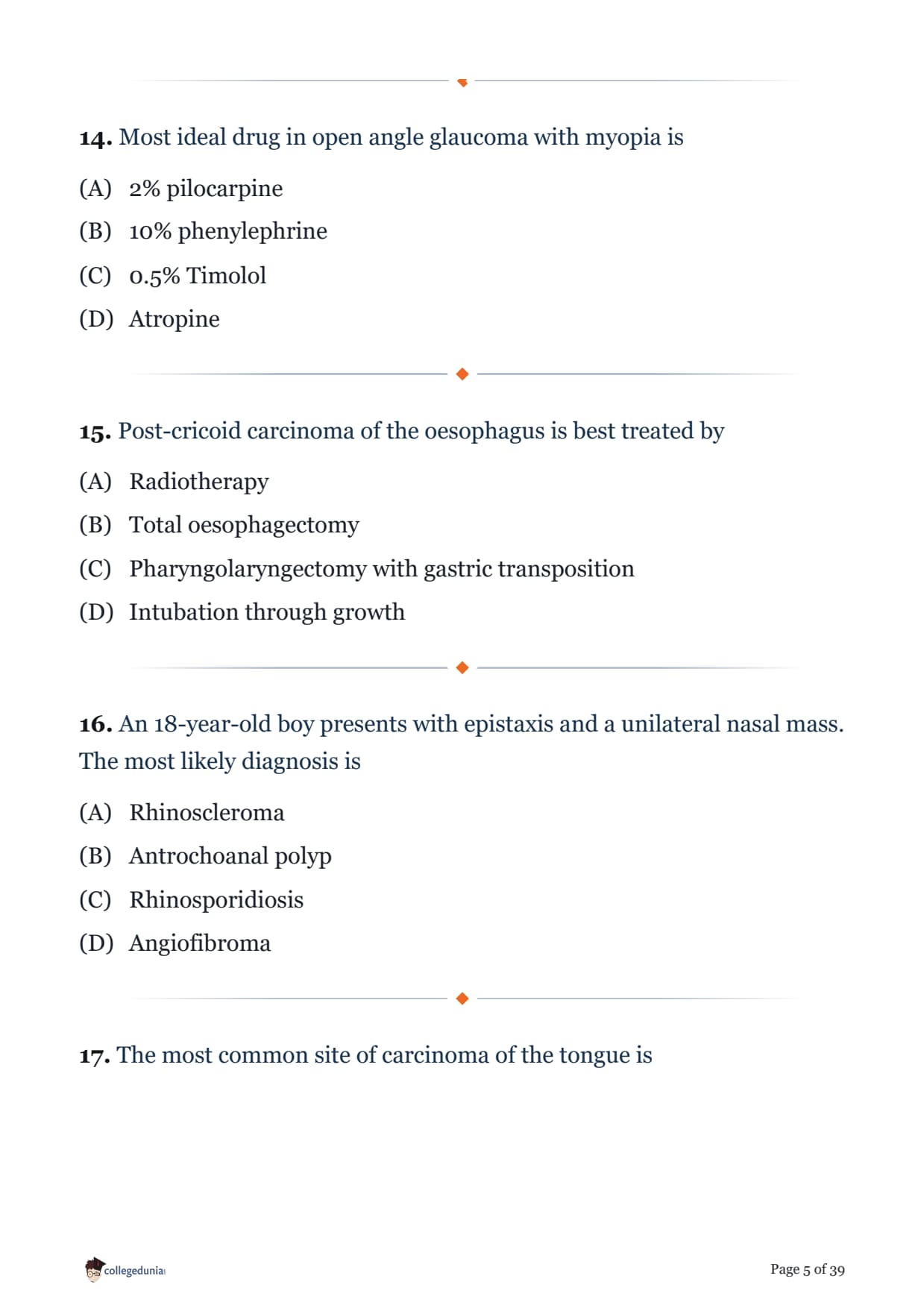
Most ideal drug in open angle glaucoma with myopia is
Post-cricoid carcinoma of the oesophagus is best treated by
An 18-year-old boy presents with epistaxis and a unilateral nasal mass. The most likely diagnosis is
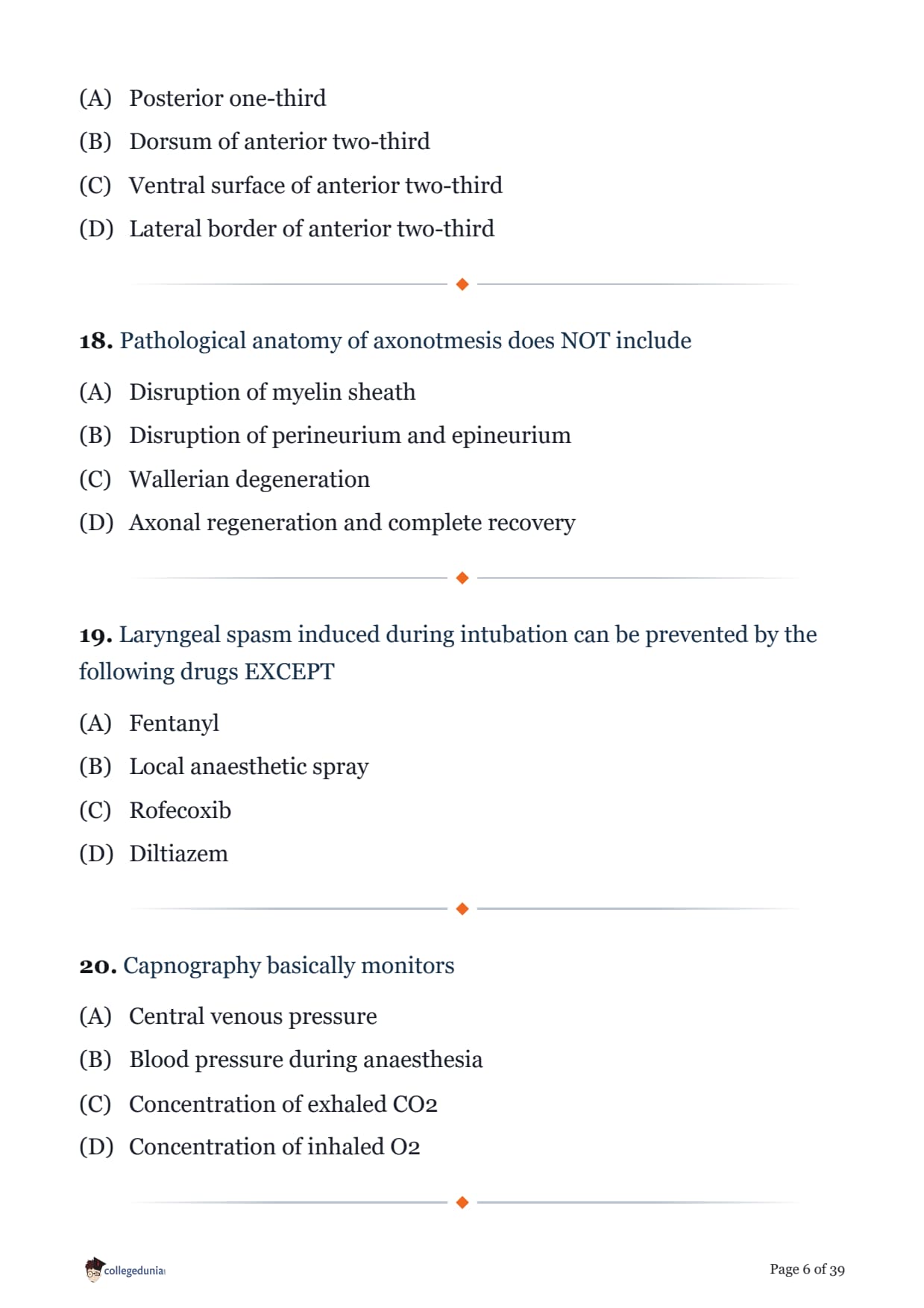
The most common site of carcinoma of the tongue is
Pathological anatomy of axonotmesis does NOT include
Laryngeal spasm induced during intubation can be prevented by the following drugs EXCEPT
Capnography basically monitors
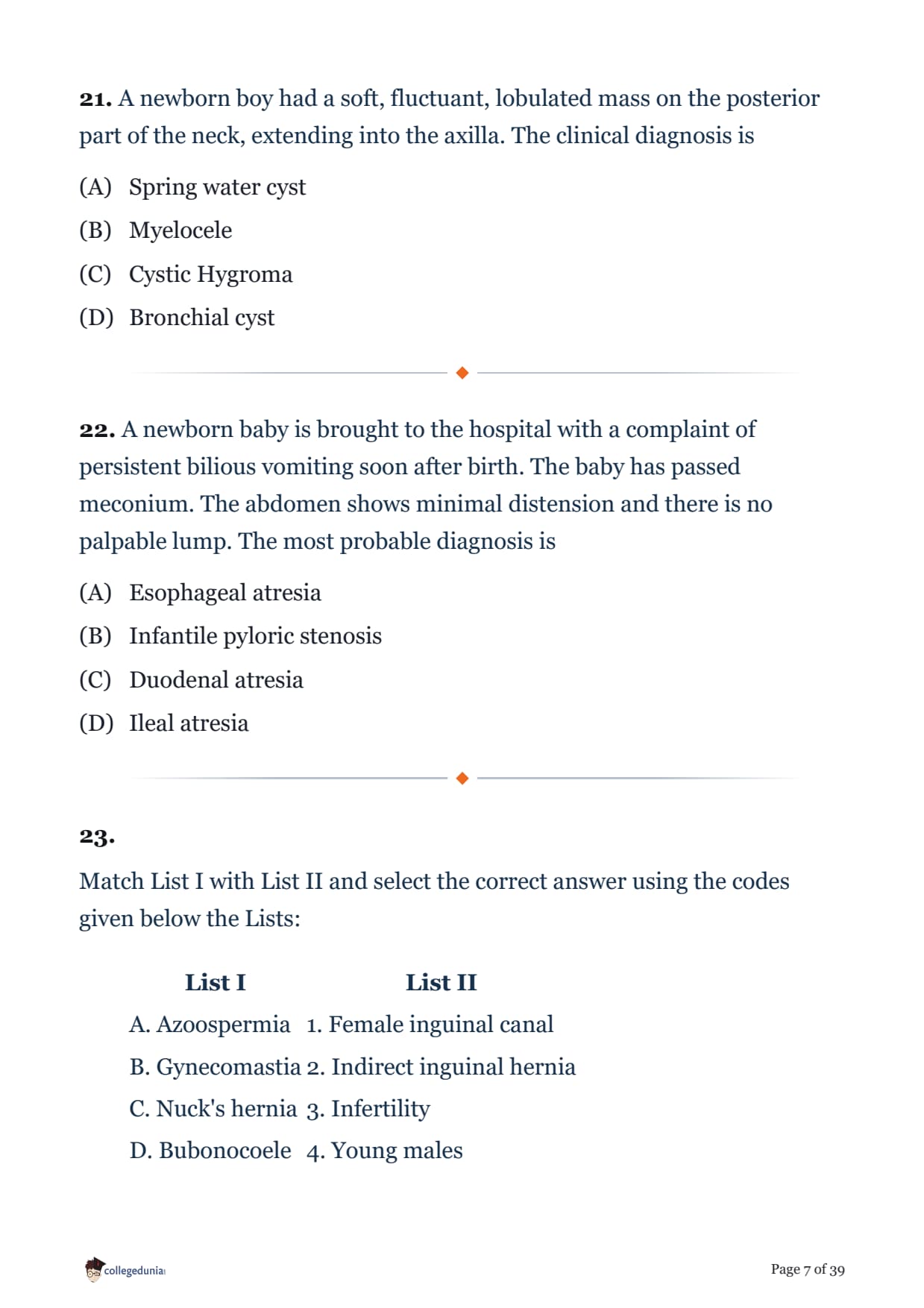
A newborn boy had a soft, fluctuant, lobulated mass on the posterior part of the neck, extending into the axilla. The clinical diagnosis is
A newborn baby is brought to the hospital with a complaint of persistent bilious vomiting soon after birth. The baby has passed meconium. The abdomen shows minimal distension and there is no palpable lump. The most probable diagnosis is
Match List I with List II and select the correct answer using the codes given below the Lists:
| List I | List II |
|---|---|
| A. Azoospermia | 1. Female inguinal canal |
| B. Gynecomastia | 2. Indirect inguinal hernia |
| C. Nuck's hernia | 3. Infertility |
| D. Bubonocoele | 4. Young males |
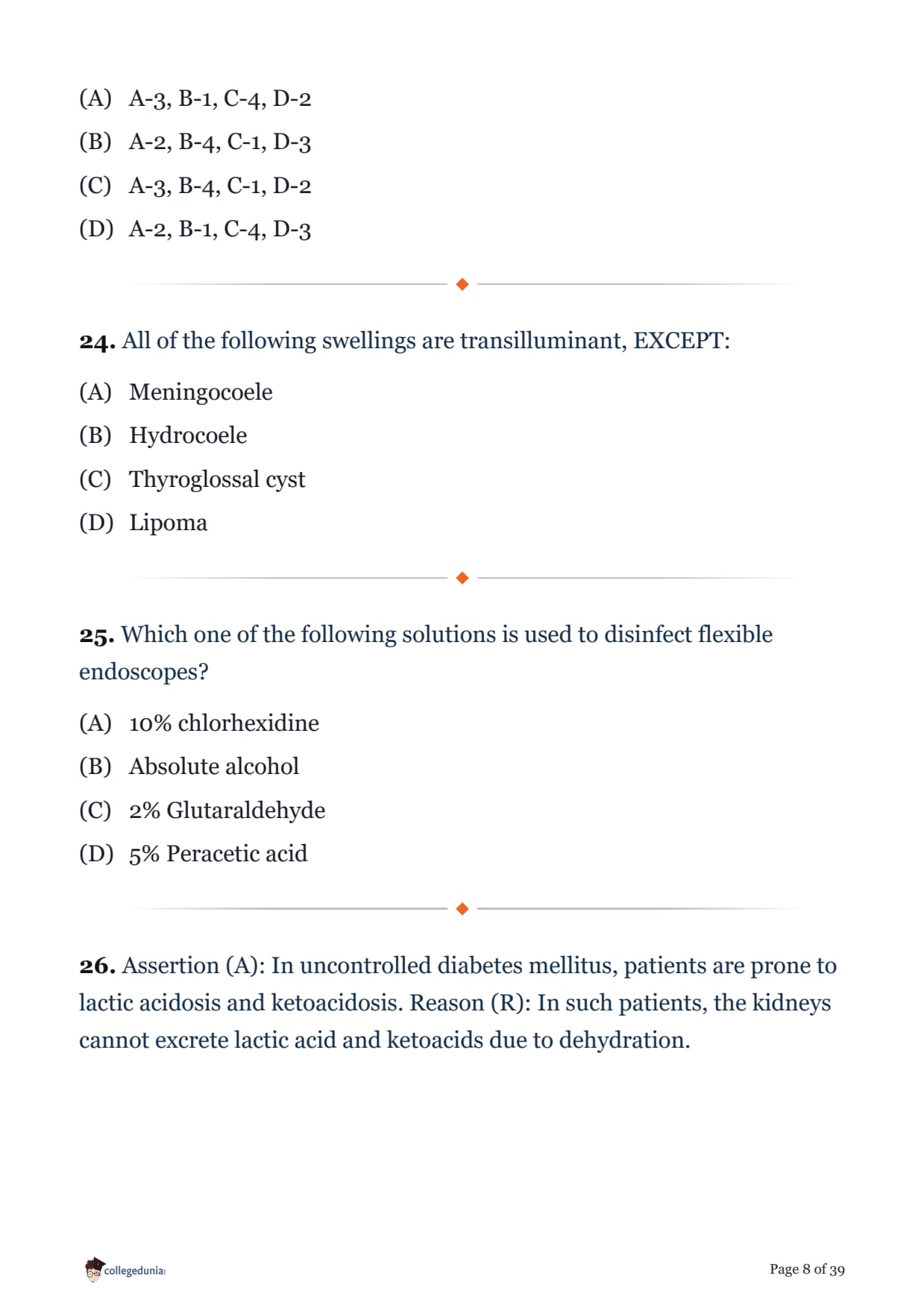
All of the following swellings are transilluminant, EXCEPT:
Which one of the following solutions is used to disinfect flexible endoscopes?
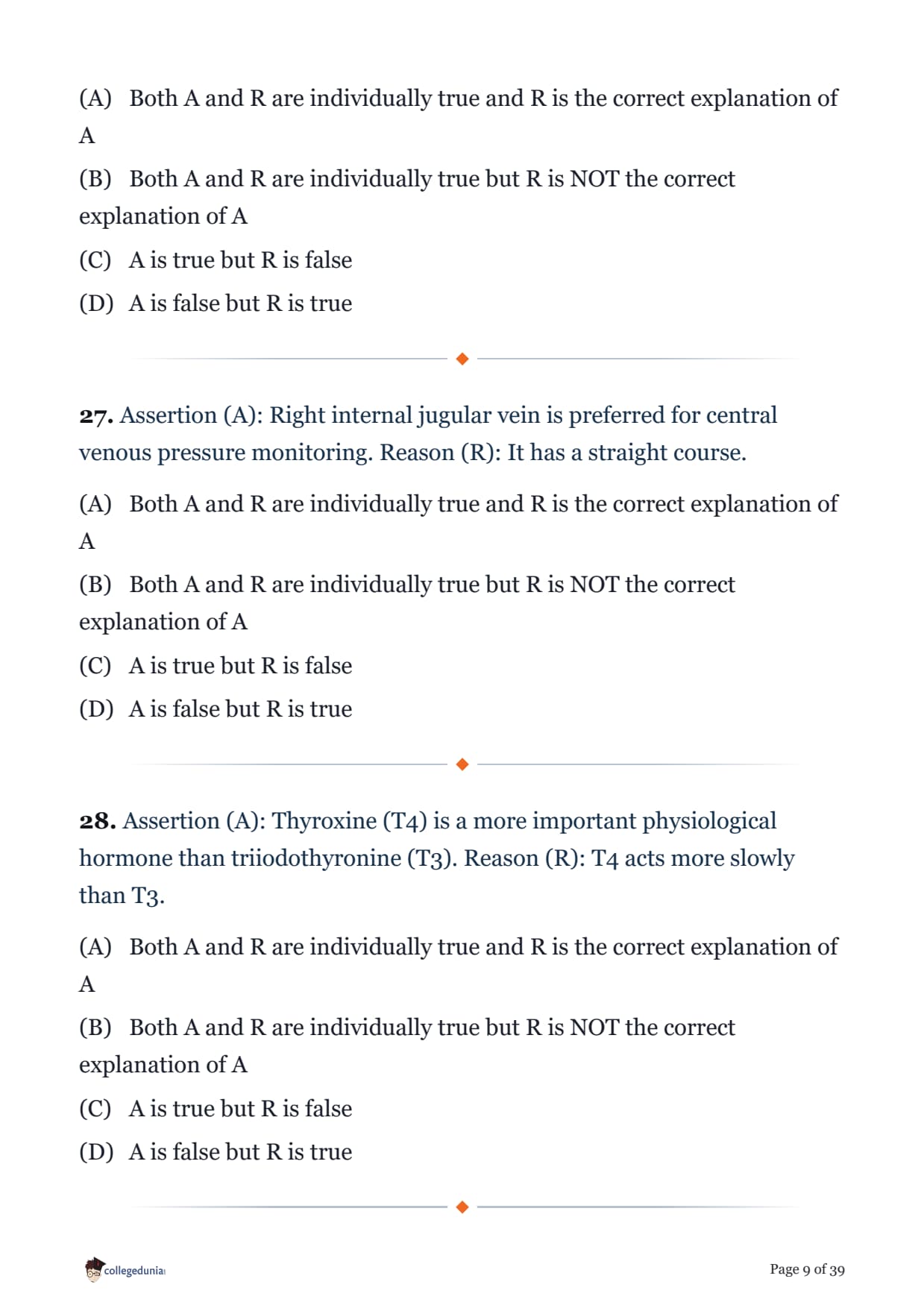
Assertion (A): In uncontrolled diabetes mellitus, patients are prone to lactic acidosis and ketoacidosis. Reason (R): In such patients, the kidneys cannot excrete lactic acid and ketoacids due to dehydration.
Assertion (A): Right internal jugular vein is preferred for central venous pressure monitoring. Reason (R): It has a straight course.
Assertion (A): Thyroxine (T4) is a more important physiological hormone than triiodothyronine (T3). Reason (R): T4 acts more slowly than T3.
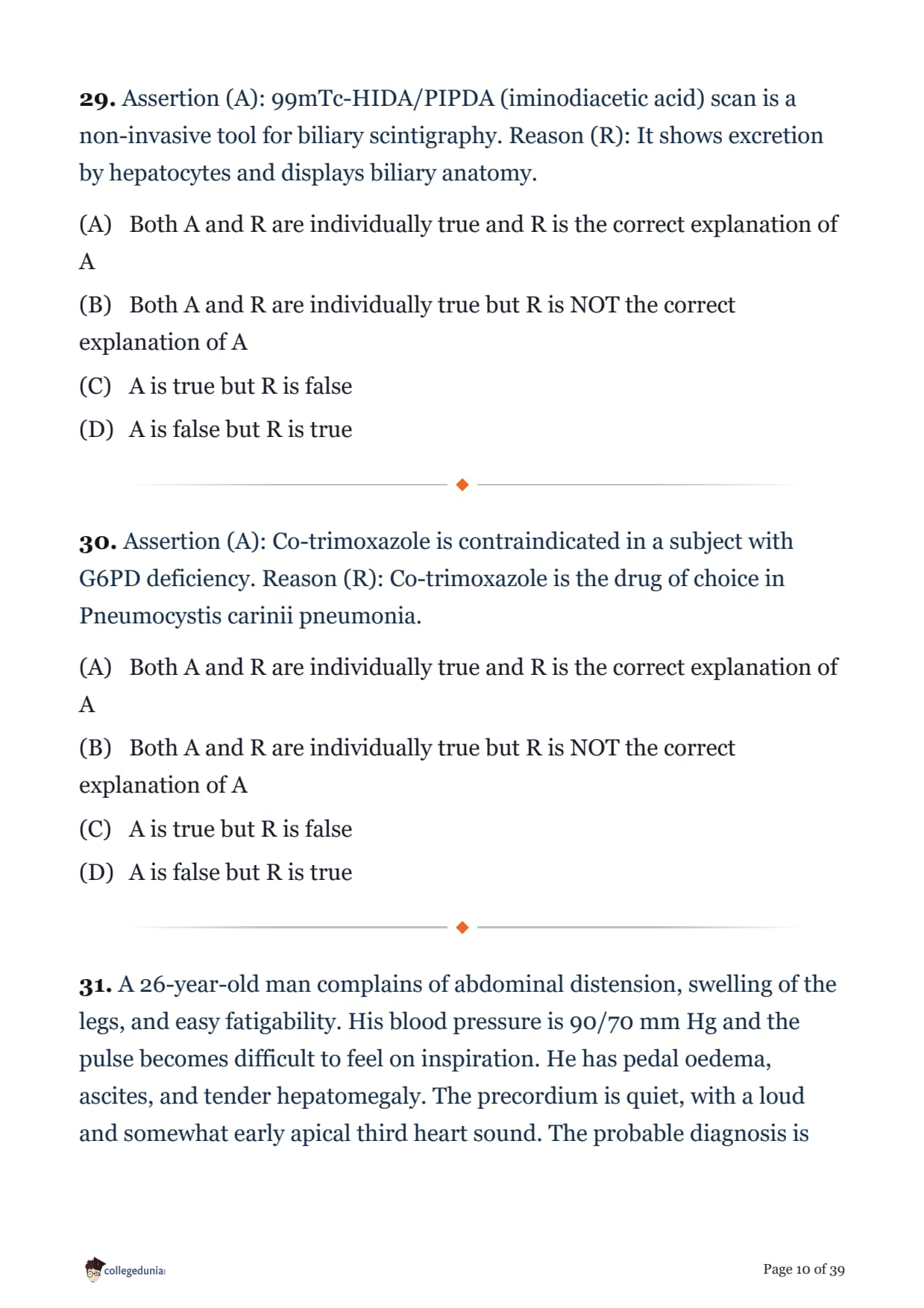
Assertion (A): 99mTc-HIDA/PIPDA (iminodiacetic acid) scan is a non-invasive tool for biliary scintigraphy. Reason (R): It shows excretion by hepatocytes and displays biliary anatomy.
Assertion (A): Co-trimoxazole is contraindicated in a subject with G6PD deficiency. Reason (R): Co-trimoxazole is the drug of choice in Pneumocystis carinii pneumonia.
A 26-year-old man complains of abdominal distension, swelling of the legs, and easy fatigability. His blood pressure is 90/70 mm Hg and the pulse becomes difficult to feel on inspiration. He has pedal oedema, ascites, and tender hepatomegaly. The precordium is quiet, with a loud and somewhat early apical third heart sound. The probable diagnosis is
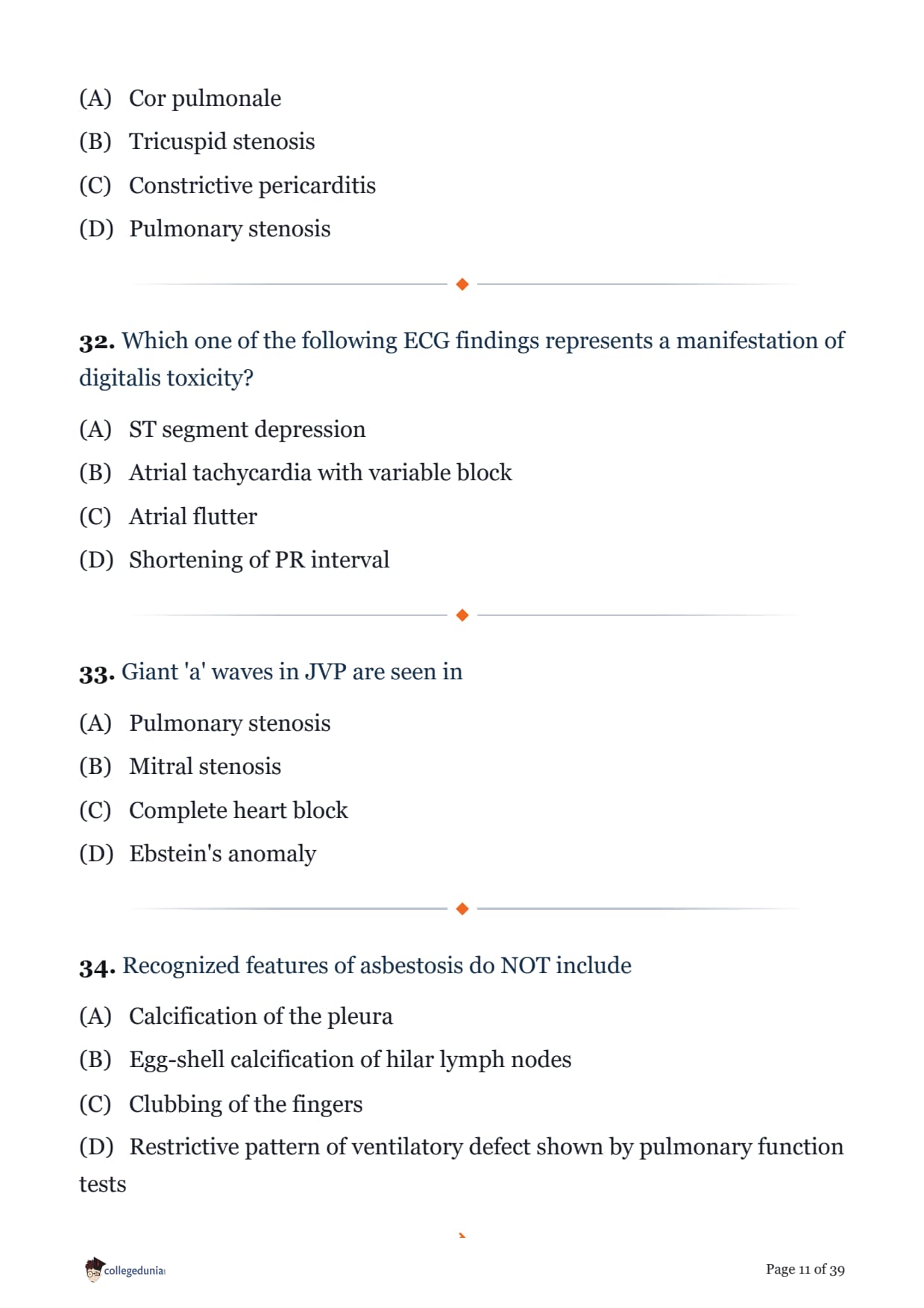
Which one of the following ECG findings represents a manifestation of digitalis toxicity?
Giant 'a' waves in JVP are seen in
Recognized features of asbestosis do NOT include
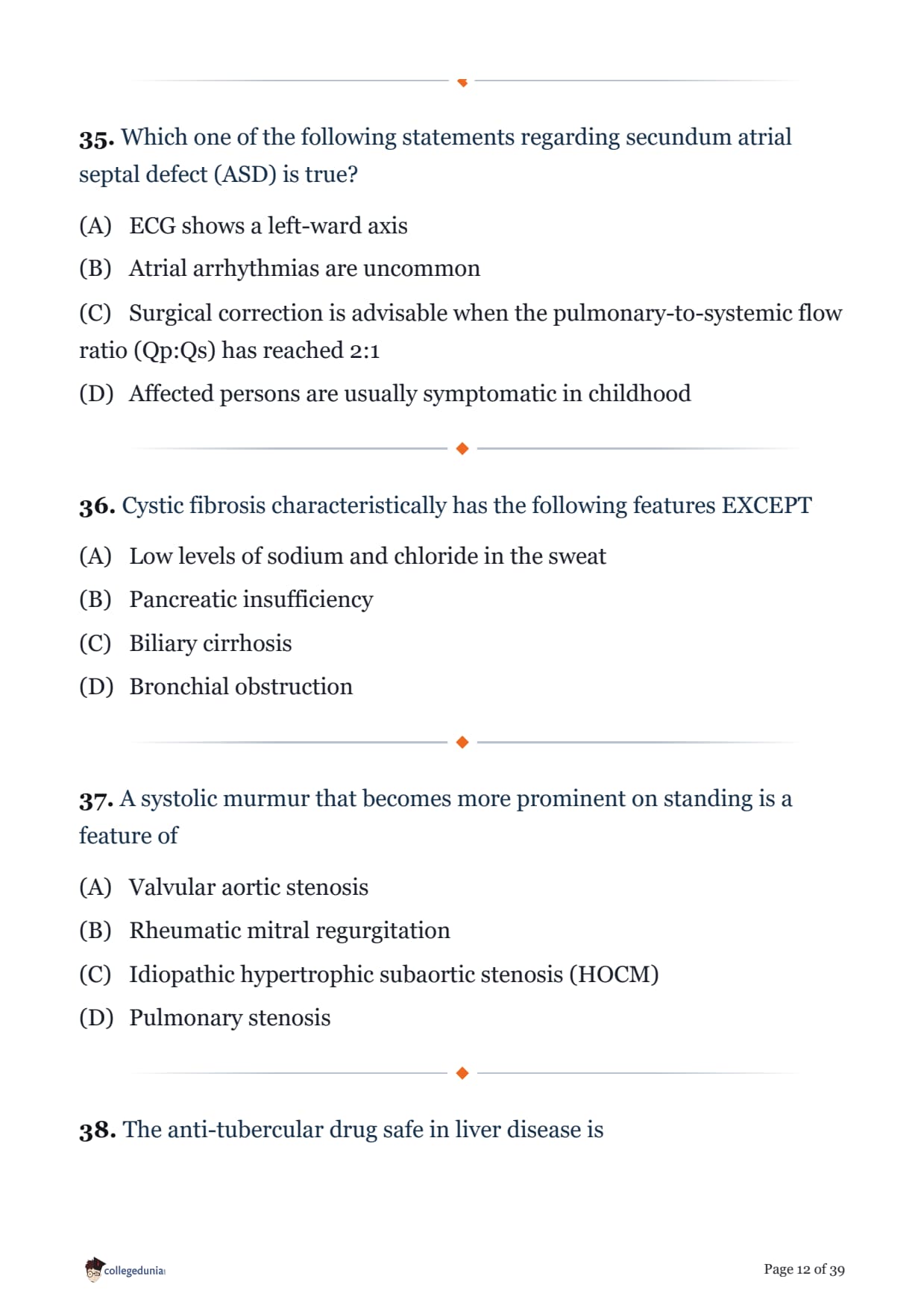
Which one of the following statements regarding secundum atrial septal defect (ASD) is true?
Cystic fibrosis characteristically has the following features EXCEPT
A systolic murmur that becomes more prominent on standing is a feature of
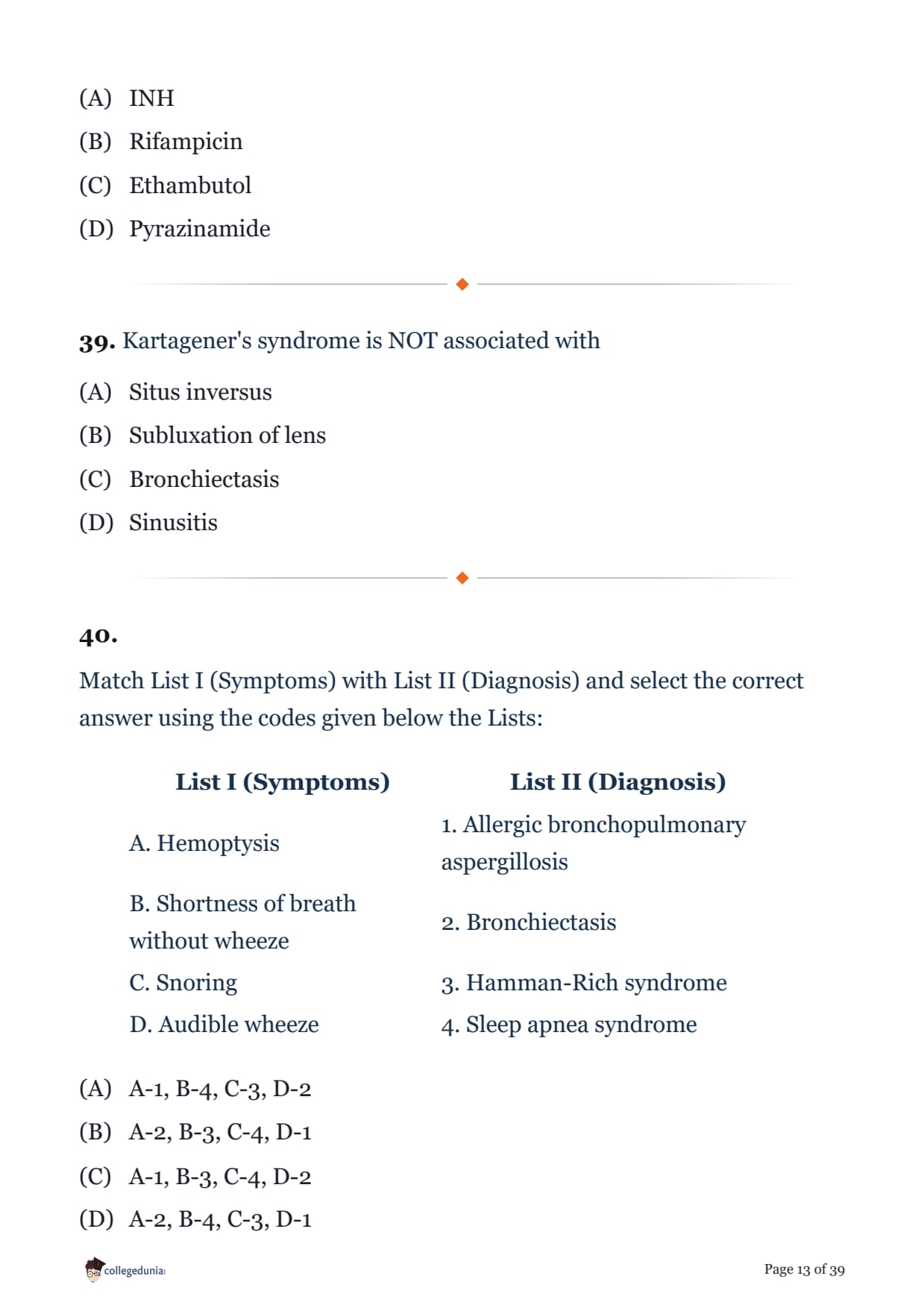
The anti-tubercular drug safe in liver disease is
Kartagener's syndrome is NOT associated with
Match List I (Symptoms) with List II (Diagnosis) and select the correct answer using the codes given below the Lists:
| List I (Symptoms) | List II (Diagnosis) |
|---|---|
| A. Hemoptysis | 1. Allergic bronchopulmonary aspergillosis |
| B. Shortness of breath without wheeze | 2. Bronchiectasis |
| C. Snoring | 3. Hamman-Rich syndrome |
| D. Audible wheeze | 4. Sleep apnea syndrome |
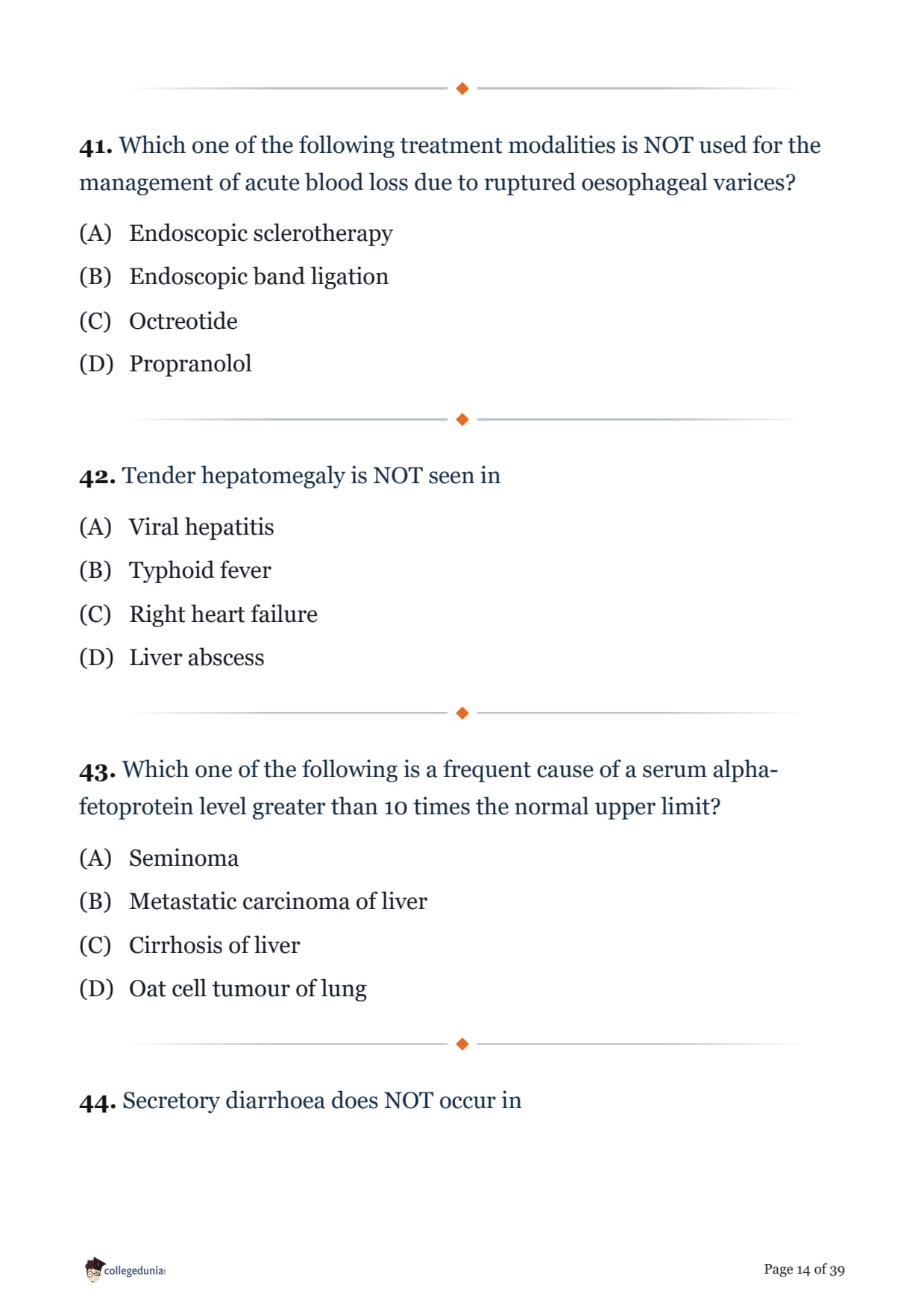
Which one of the following treatment modalities is NOT used for the management of acute blood loss due to ruptured oesophageal varices?
Tender hepatomegaly is NOT seen in
Which one of the following is a frequent cause of a serum alpha-fetoprotein level greater than 10 times the normal upper limit?
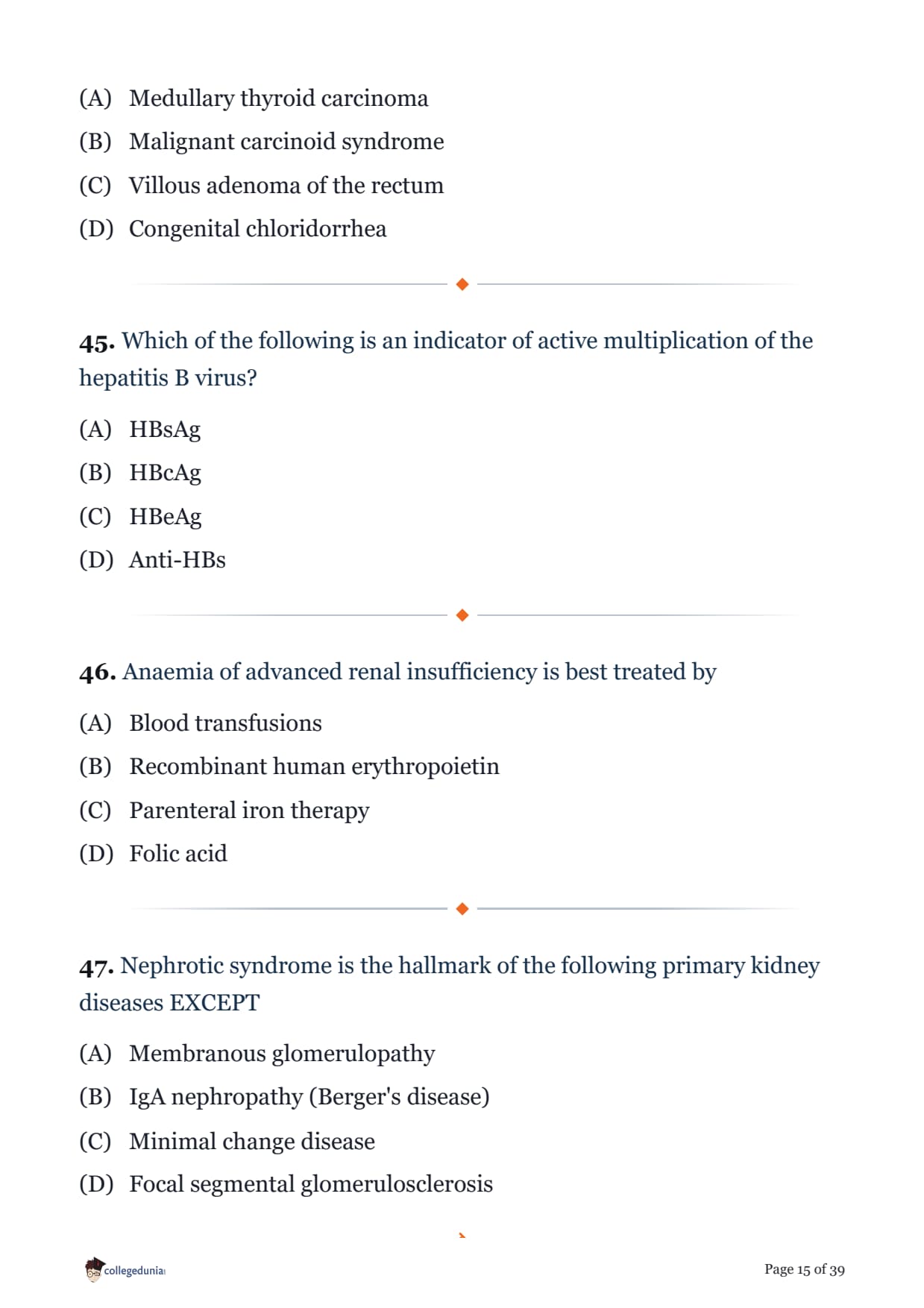
Secretory diarrhoea does NOT occur in
Which of the following is an indicator of active multiplication of the hepatitis B virus?
Anaemia of advanced renal insufficiency is best treated by
Nephrotic syndrome is the hallmark of the following primary kidney diseases EXCEPT
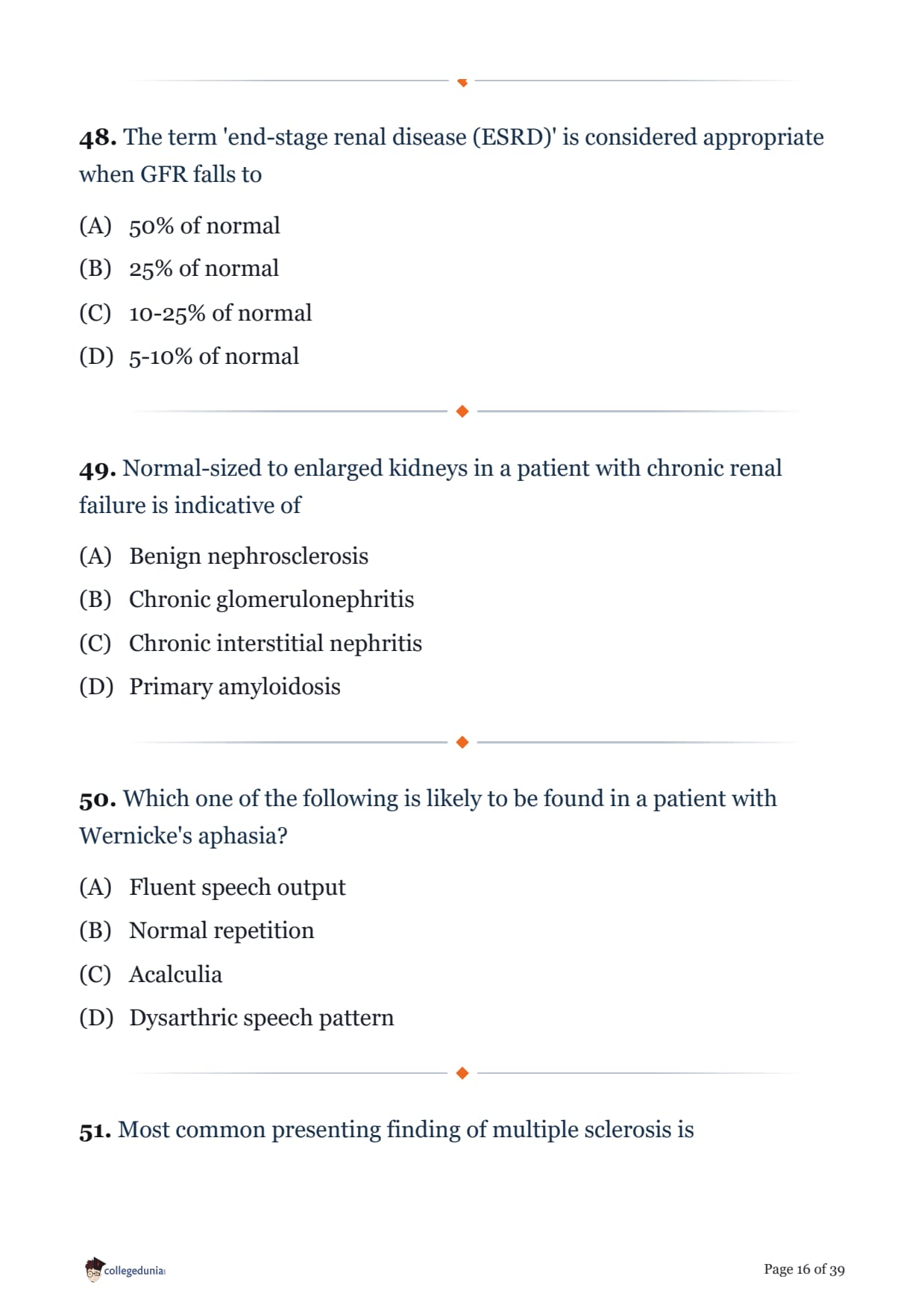
The term 'end-stage renal disease (ESRD)' is considered appropriate when GFR falls to
Normal-sized to enlarged kidneys in a patient with chronic renal failure is indicative of
Which one of the following is likely to be found in a patient with Wernicke's aphasia?
Most common presenting finding of multiple sclerosis is
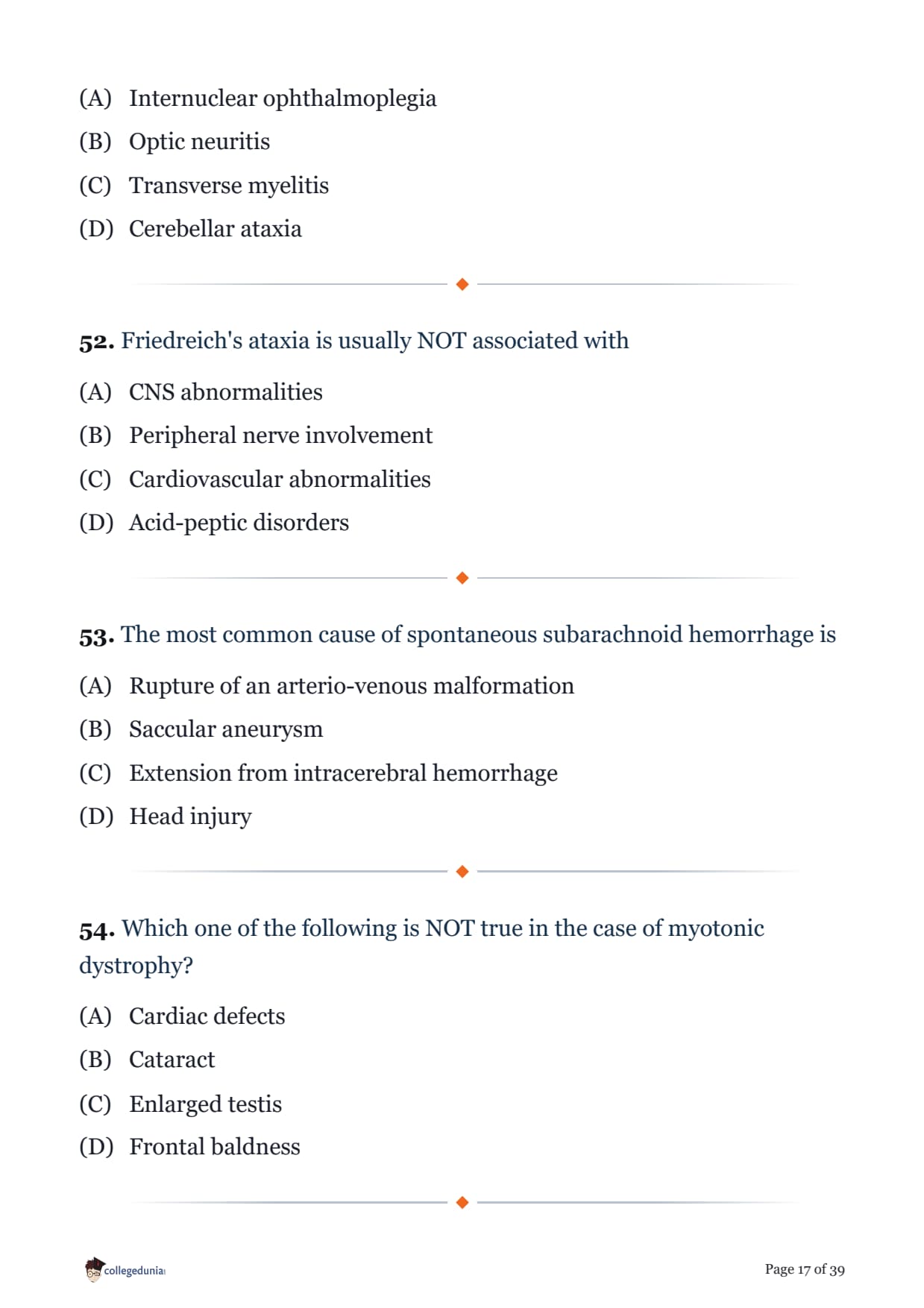
Friedreich's ataxia is usually NOT associated with
The most common cause of spontaneous subarachnoid hemorrhage is
Which one of the following is NOT true in the case of myotonic dystrophy?
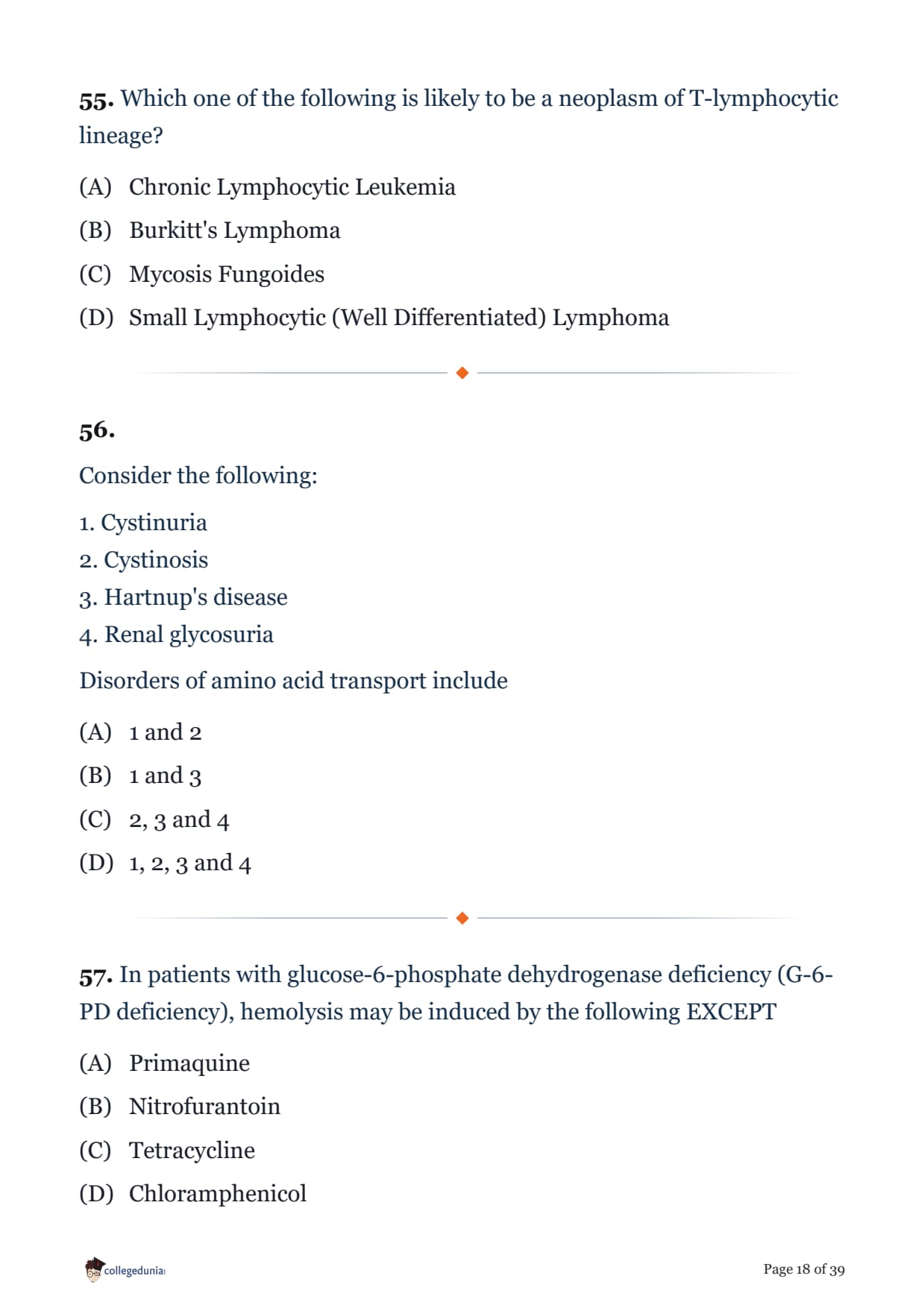
Which one of the following is likely to be a neoplasm of T-lymphocytic lineage?
Consider the following:
1. Cystinuria
2. Cystinosis
3. Hartnup's disease
4. Renal glycosuria
Disorders of amino acid transport include
In patients with glucose-6-phosphate dehydrogenase deficiency (G-6-PD deficiency), hemolysis may be induced by the following EXCEPT
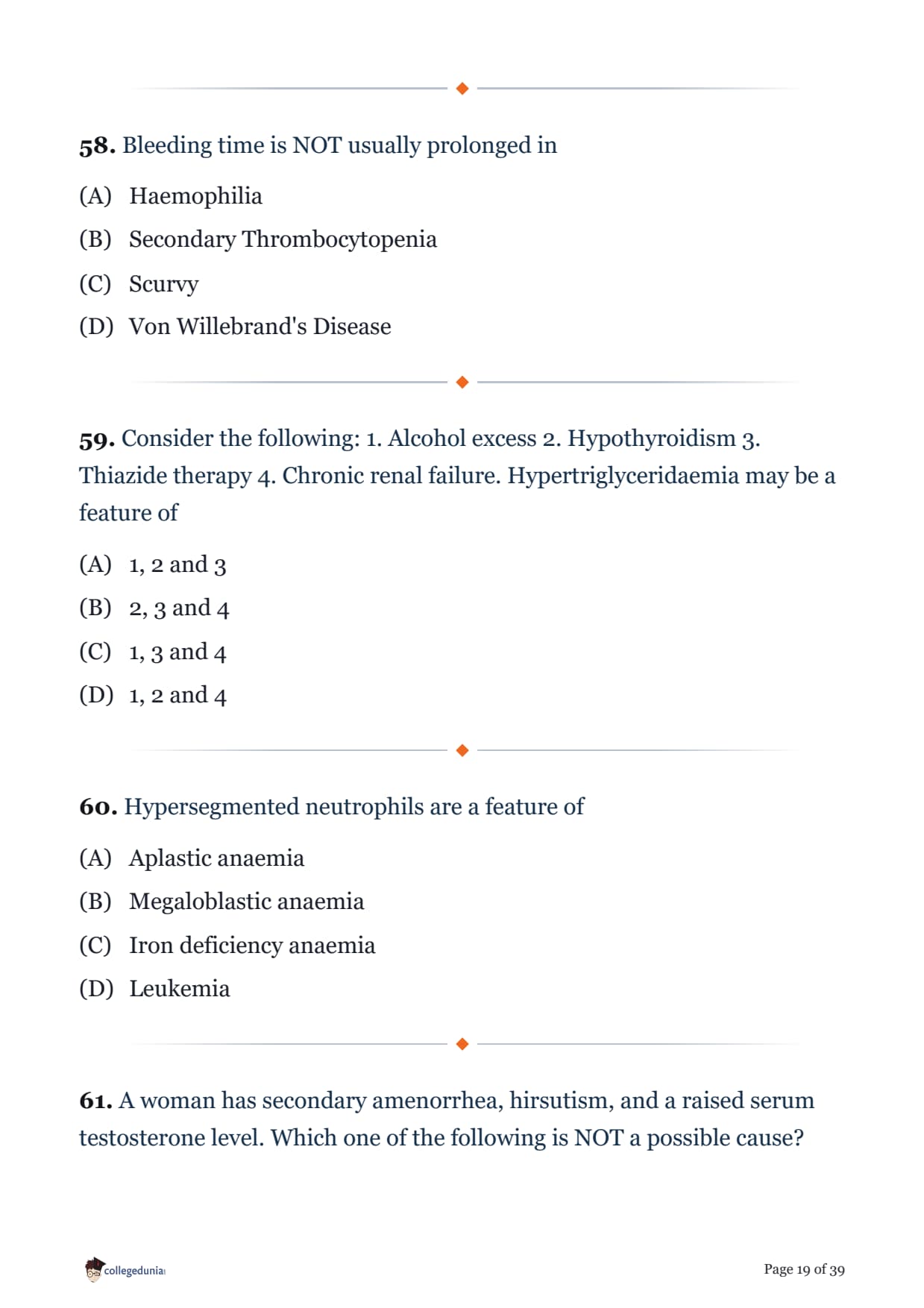
Bleeding time is NOT usually prolonged in
Consider the following: 1. Alcohol excess 2. Hypothyroidism 3. Thiazide therapy 4. Chronic renal failure. Hypertriglyceridaemia may be a feature of
Hypersegmented neutrophils are a feature of
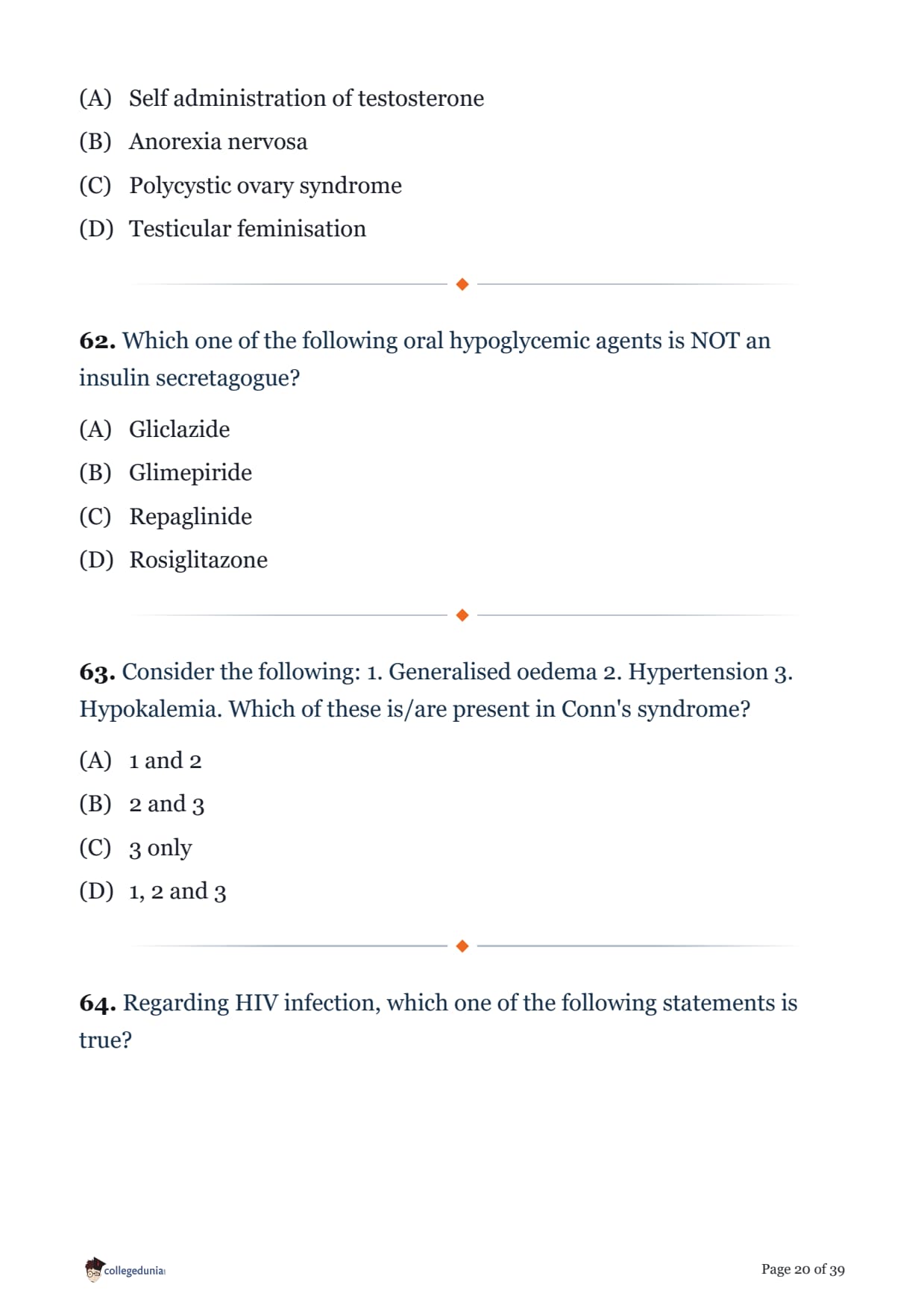
A woman has secondary amenorrhea, hirsutism, and a raised serum testosterone level. Which one of the following is NOT a possible cause?
Which one of the following oral hypoglycemic agents is NOT an insulin secretagogue?
Consider the following: 1. Generalised oedema 2. Hypertension 3. Hypokalemia. Which of these is/are present in Conn's syndrome?
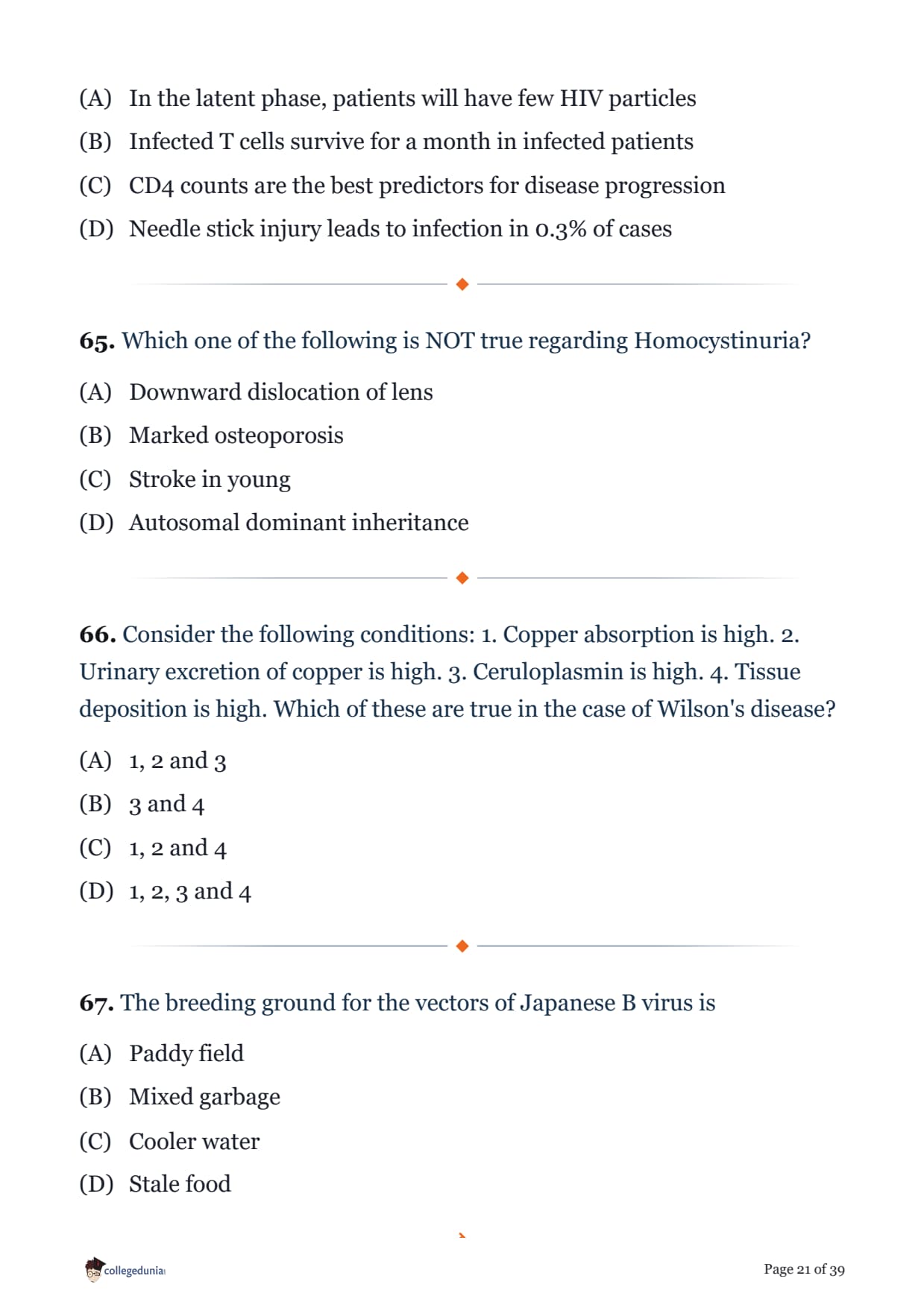
Regarding HIV infection, which one of the following statements is true?
Which one of the following is NOT true regarding Homocystinuria?
Consider the following conditions: 1. Copper absorption is high. 2. Urinary excretion of copper is high. 3. Ceruloplasmin is high. 4. Tissue deposition is high. Which of these are true in the case of Wilson's disease?
The breeding ground for the vectors of Japanese B virus is
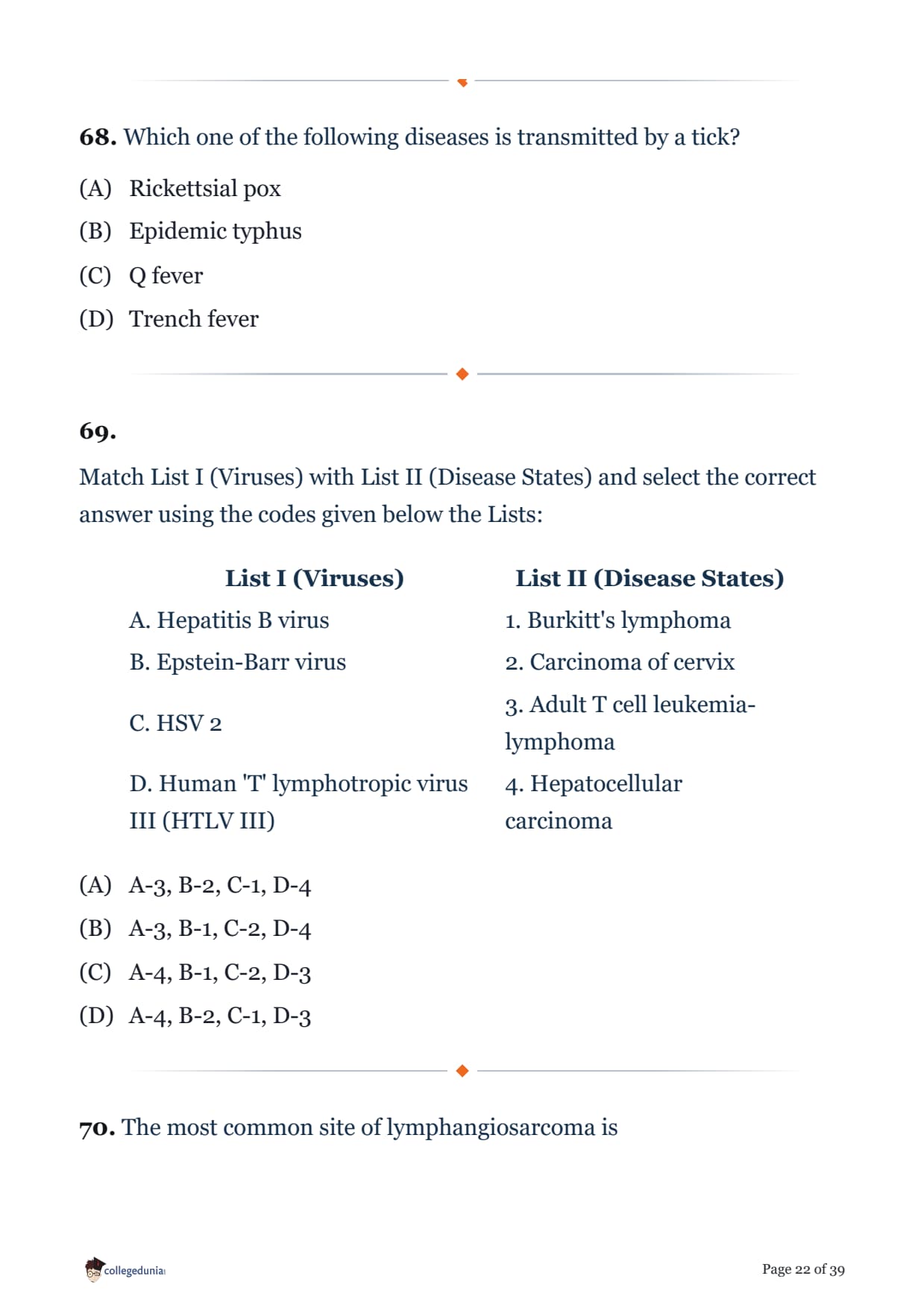
Which one of the following diseases is transmitted by a tick?
Match List I (Viruses) with List II (Disease States) and select the correct answer using the codes given below the Lists:
| List I (Viruses) | List II (Disease States) |
|---|---|
| A. Hepatitis B virus | 1. Burkitt's lymphoma |
| B. Epstein-Barr virus | 2. Carcinoma of cervix |
| C. HSV 2 | 3. Adult T cell leukemia-lymphoma |
| D. Human 'T' lymphotropic virus III (HTLV III) | 4. Hepatocellular carcinoma |
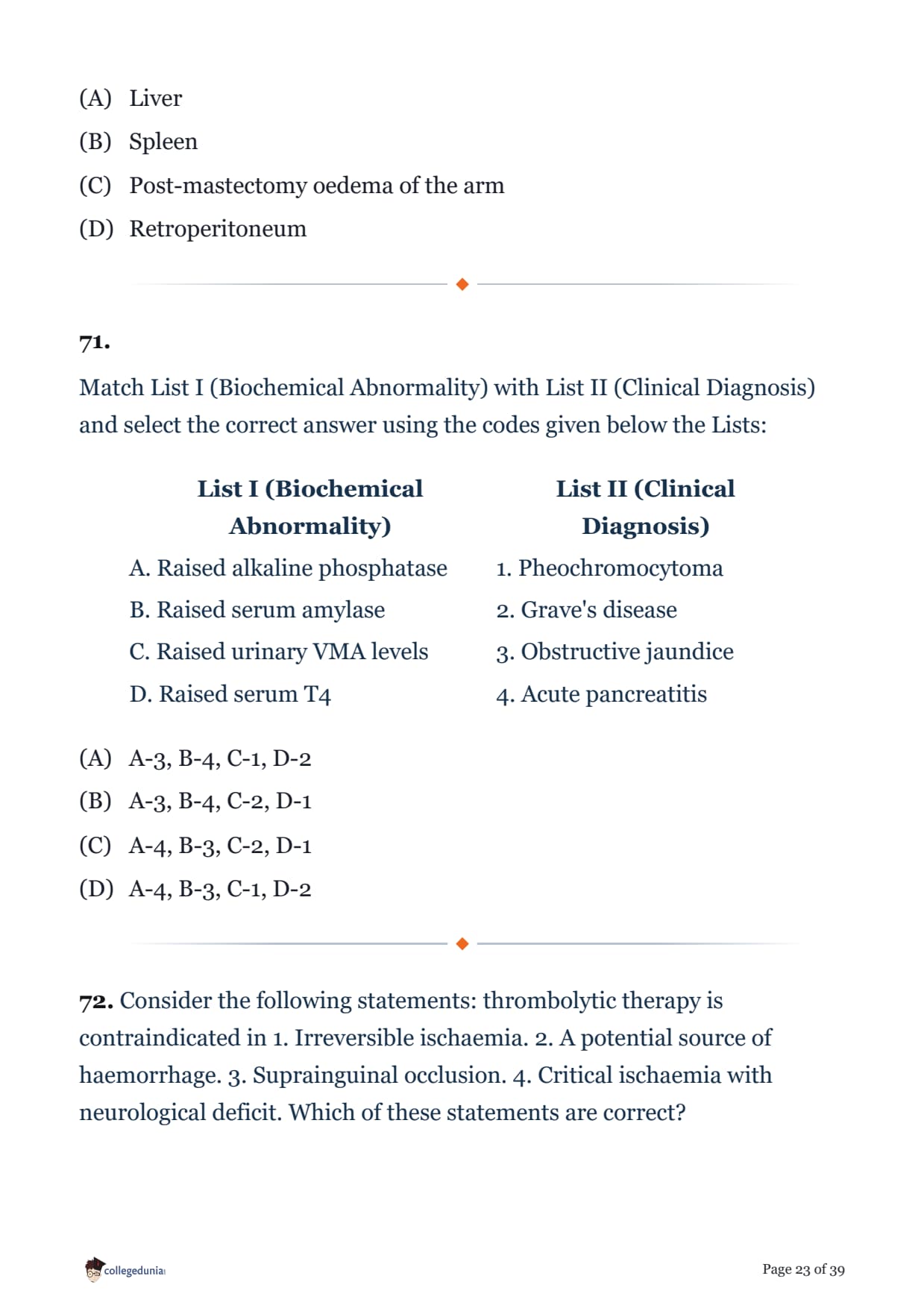
The most common site of lymphangiosarcoma is
Match List I (Biochemical Abnormality) with List II (Clinical Diagnosis) and select the correct answer using the codes given below the Lists:
| List I (Biochemical Abnormality) | List II (Clinical Diagnosis) |
|---|---|
| A. Raised alkaline phosphatase | 1. Pheochromocytoma |
| B. Raised serum amylase | 2. Grave's disease |
| C. Raised urinary VMA levels | 3. Obstructive jaundice |
| D. Raised serum T4 | 4. Acute pancreatitis |
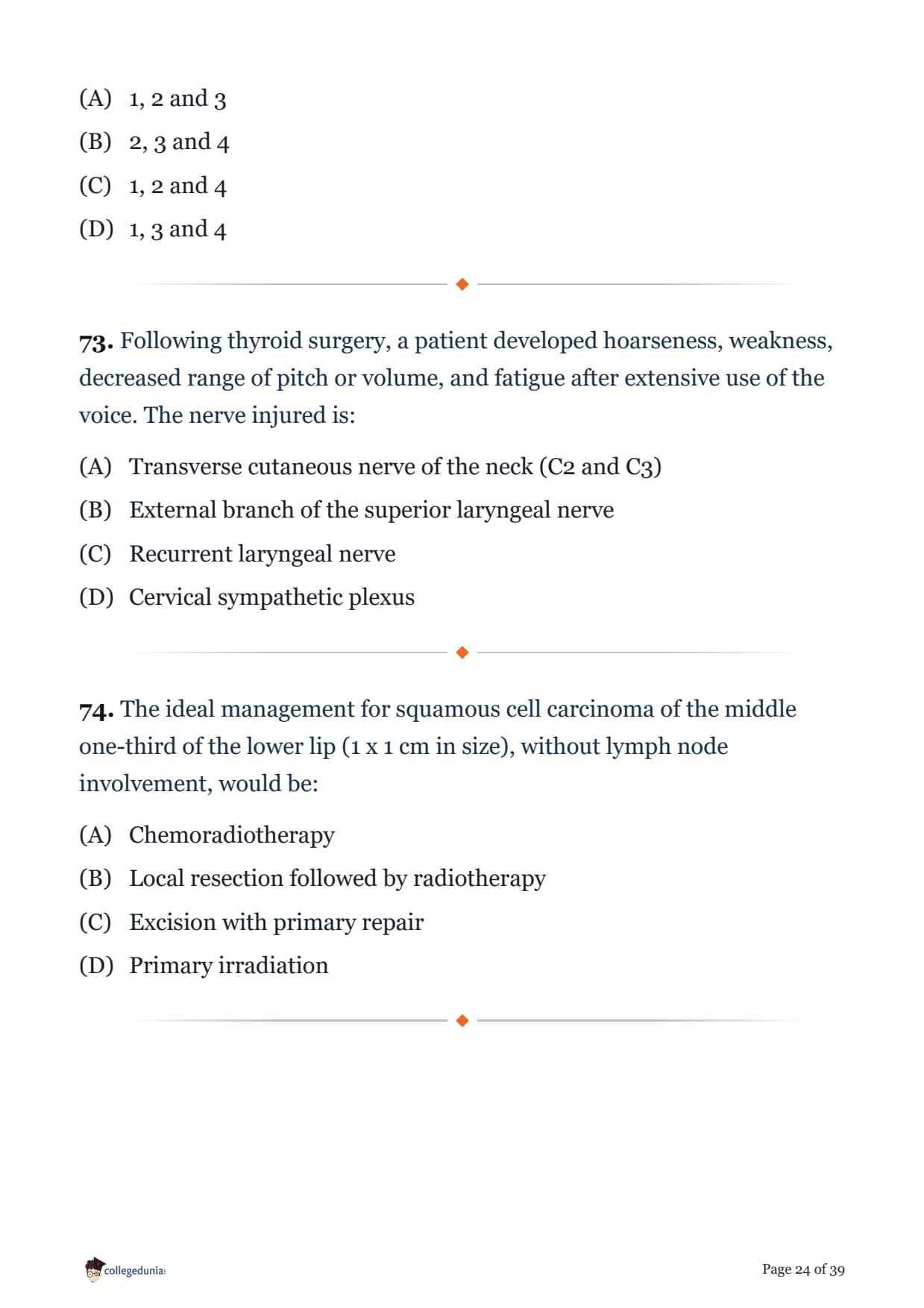
Consider the following statements: thrombolytic therapy is contraindicated in 1. Irreversible ischaemia. 2. A potential source of haemorrhage. 3. Suprainguinal occlusion. 4. Critical ischaemia with neurological deficit. Which of these statements are correct?
Following thyroid surgery, a patient developed hoarseness, weakness, decreased range of pitch or volume, and fatigue after extensive use of the voice. The nerve injured is:
The ideal management for squamous cell carcinoma of the middle one-third of the lower lip (1 x 1 cm in size), without lymph node involvement, would be:
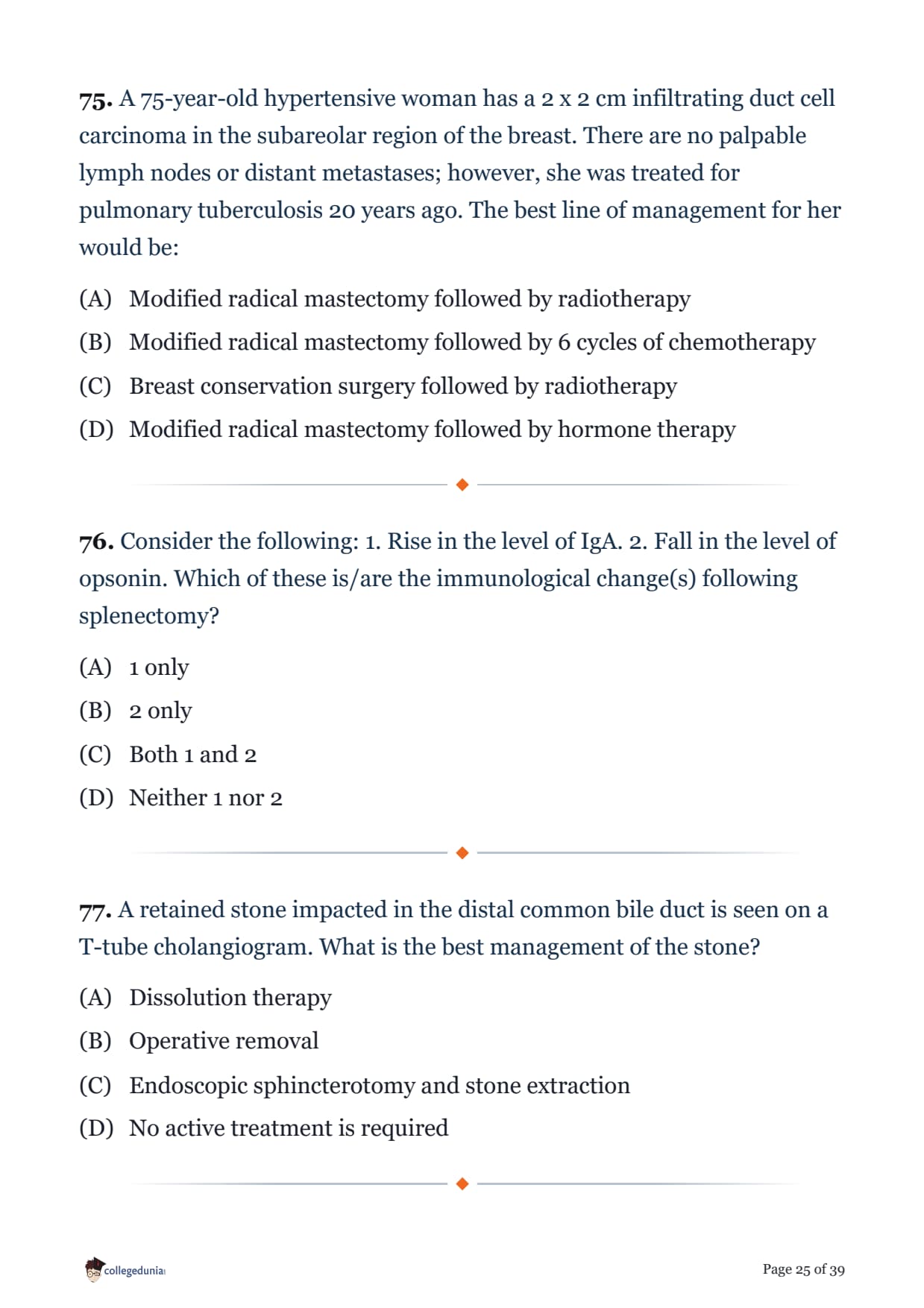
A 75-year-old hypertensive woman has a 2 x 2 cm infiltrating duct cell carcinoma in the subareolar region of the breast. There are no palpable lymph nodes or distant metastases; however, she was treated for pulmonary tuberculosis 20 years ago. The best line of management for her would be:
Consider the following: 1. Rise in the level of IgA. 2. Fall in the level of opsonin. Which of these is/are the immunological change(s) following splenectomy?
A retained stone impacted in the distal common bile duct is seen on a T-tube cholangiogram. What is the best management of the stone?
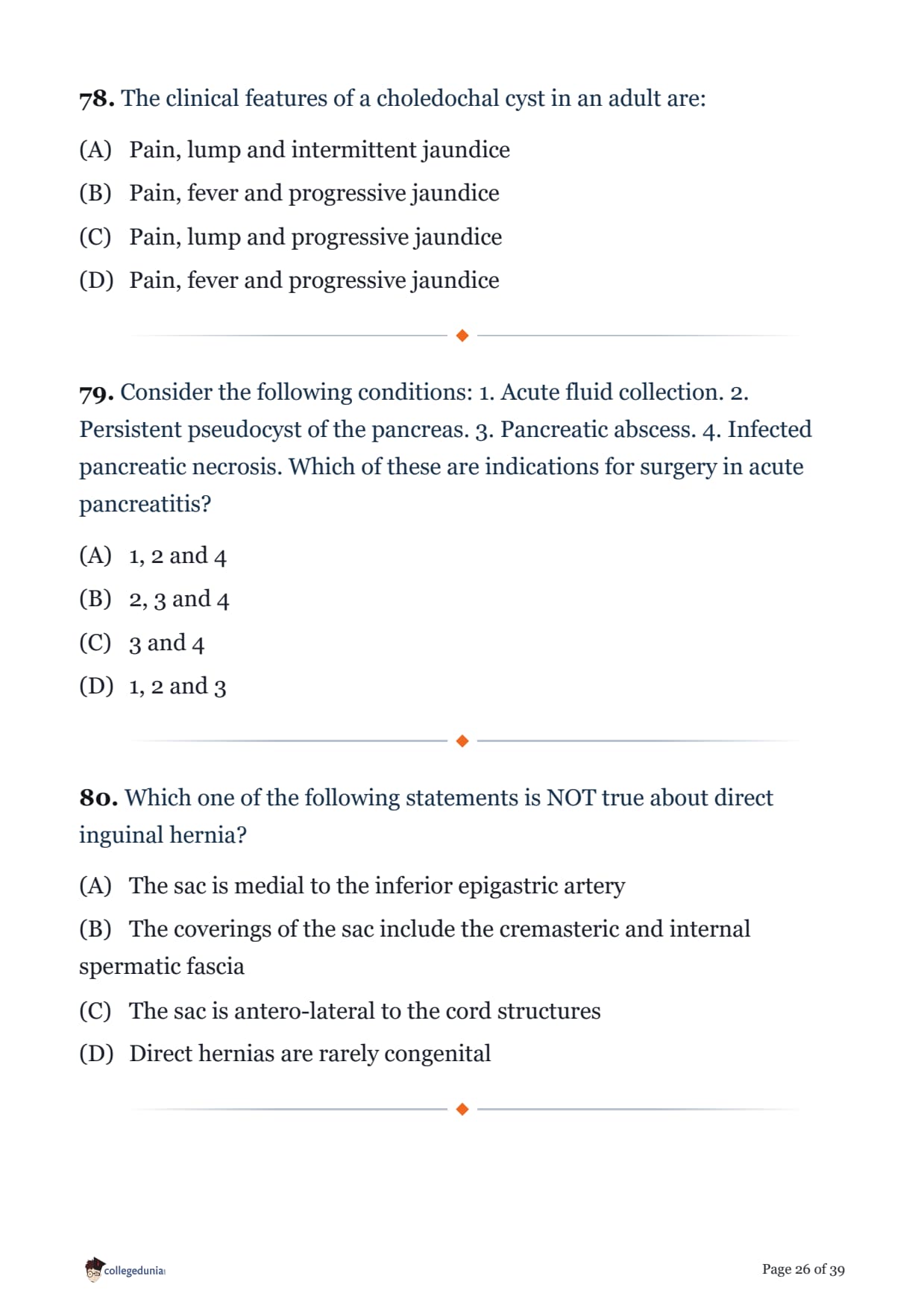
The clinical features of a choledochal cyst in an adult are:
Consider the following conditions: 1. Acute fluid collection. 2. Persistent pseudocyst of the pancreas. 3. Pancreatic abscess. 4. Infected pancreatic necrosis. Which of these are indications for surgery in acute pancreatitis?
Which one of the following statements is NOT true about direct inguinal hernia?
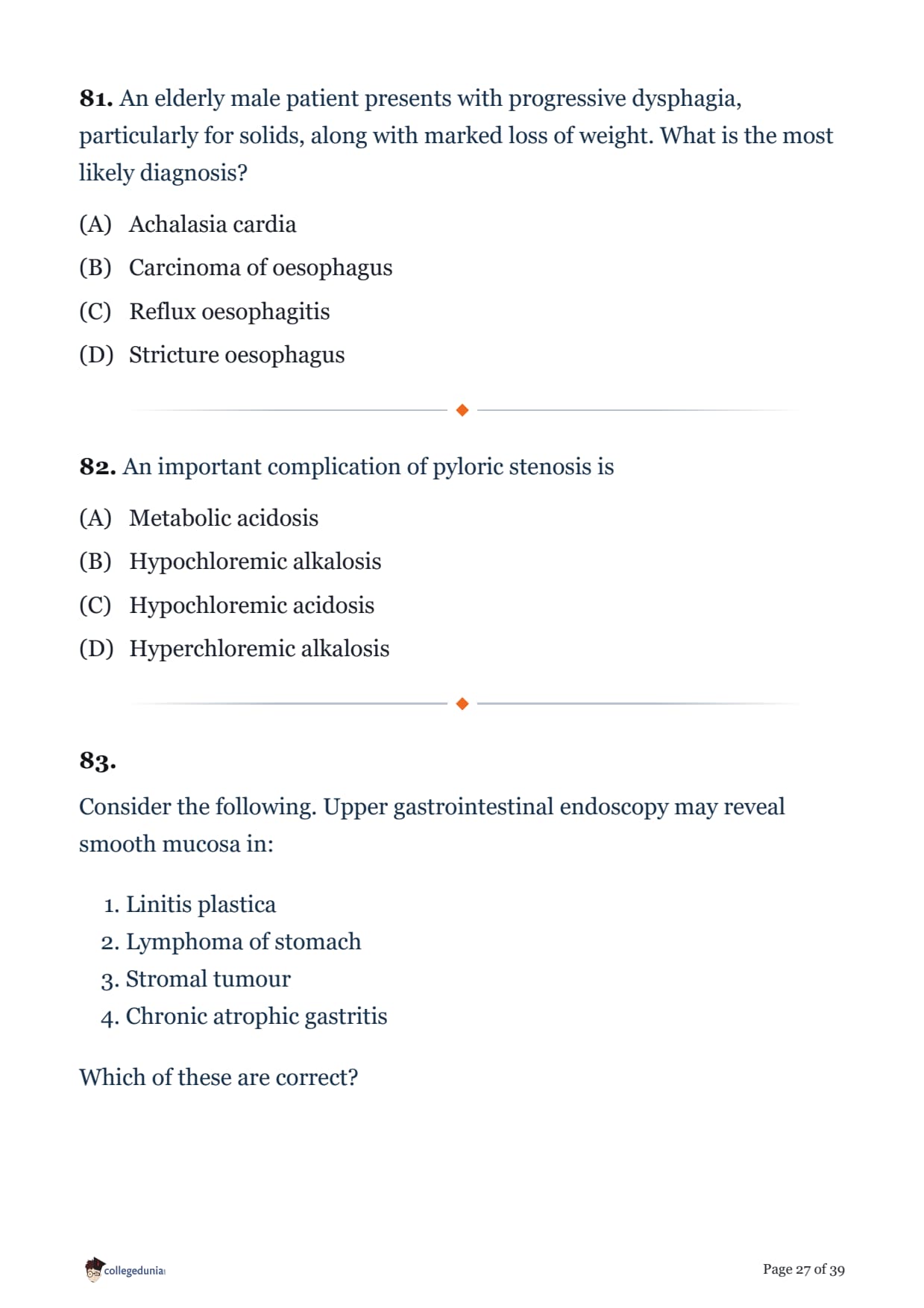
An elderly male patient presents with progressive dysphagia, particularly for solids, along with marked loss of weight. What is the most likely diagnosis?
An important complication of pyloric stenosis is
Consider the following. Upper gastrointestinal endoscopy may reveal smooth mucosa in:
- Linitis plastica
- Lymphoma of stomach
- Stromal tumour
- Chronic atrophic gastritis
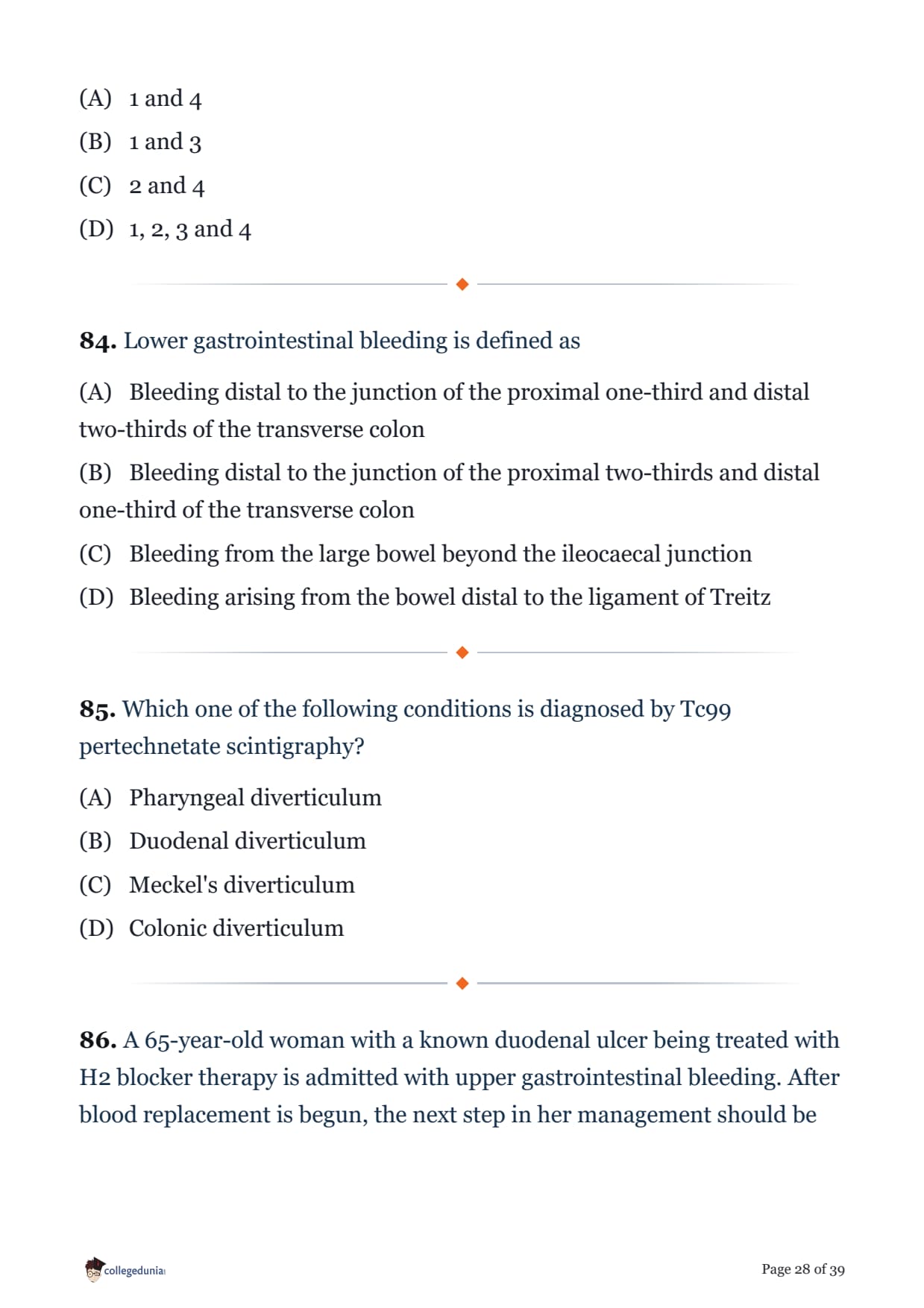
Which of these are correct?
Lower gastrointestinal bleeding is defined as
Which one of the following conditions is diagnosed by Tc99 pertechnetate scintigraphy?
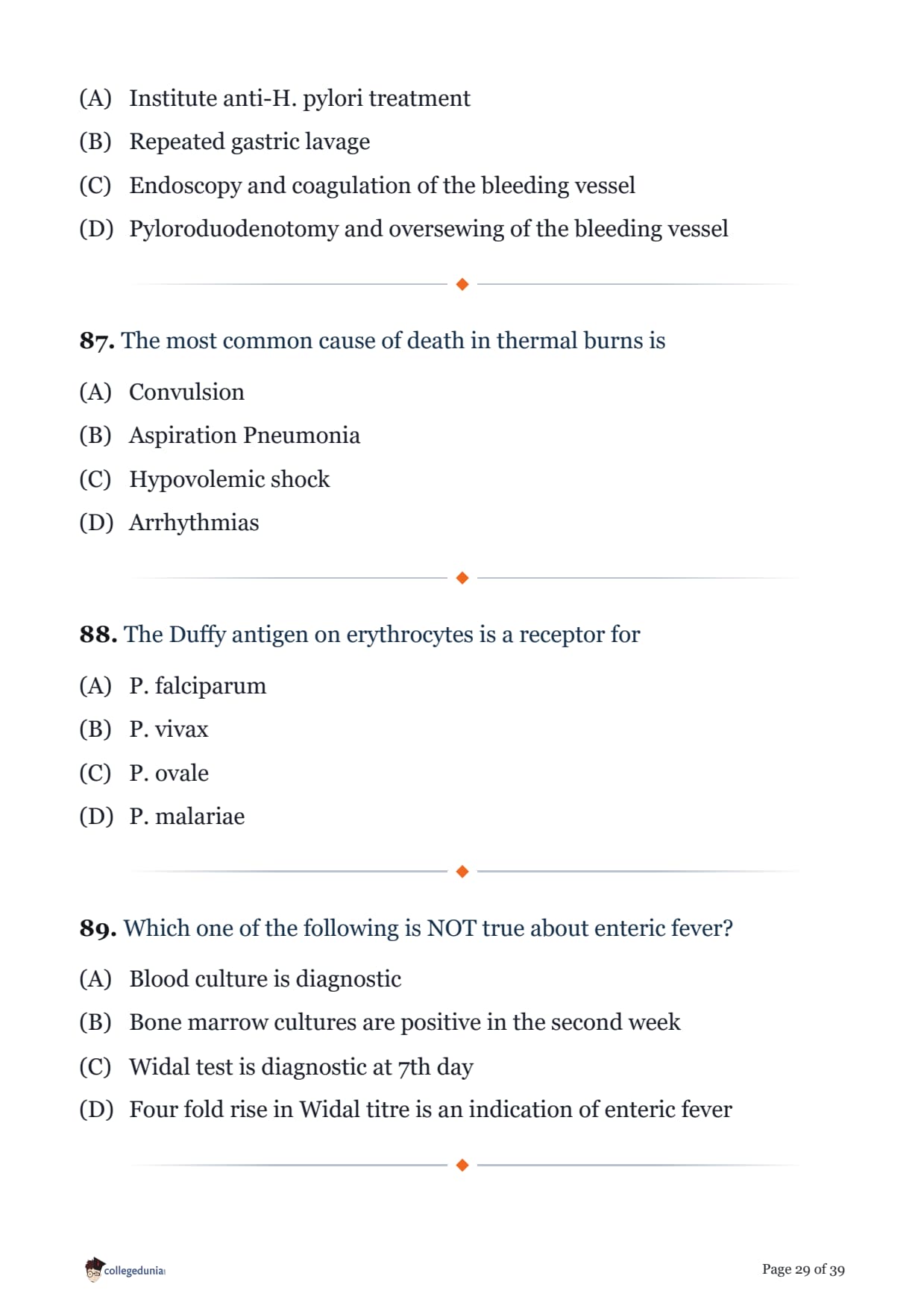
A 65-year-old woman with a known duodenal ulcer being treated with H2 blocker therapy is admitted with upper gastrointestinal bleeding. After blood replacement is begun, the next step in her management should be
The most common cause of death in thermal burns is
The Duffy antigen on erythrocytes is a receptor for
Which one of the following is NOT true about enteric fever?
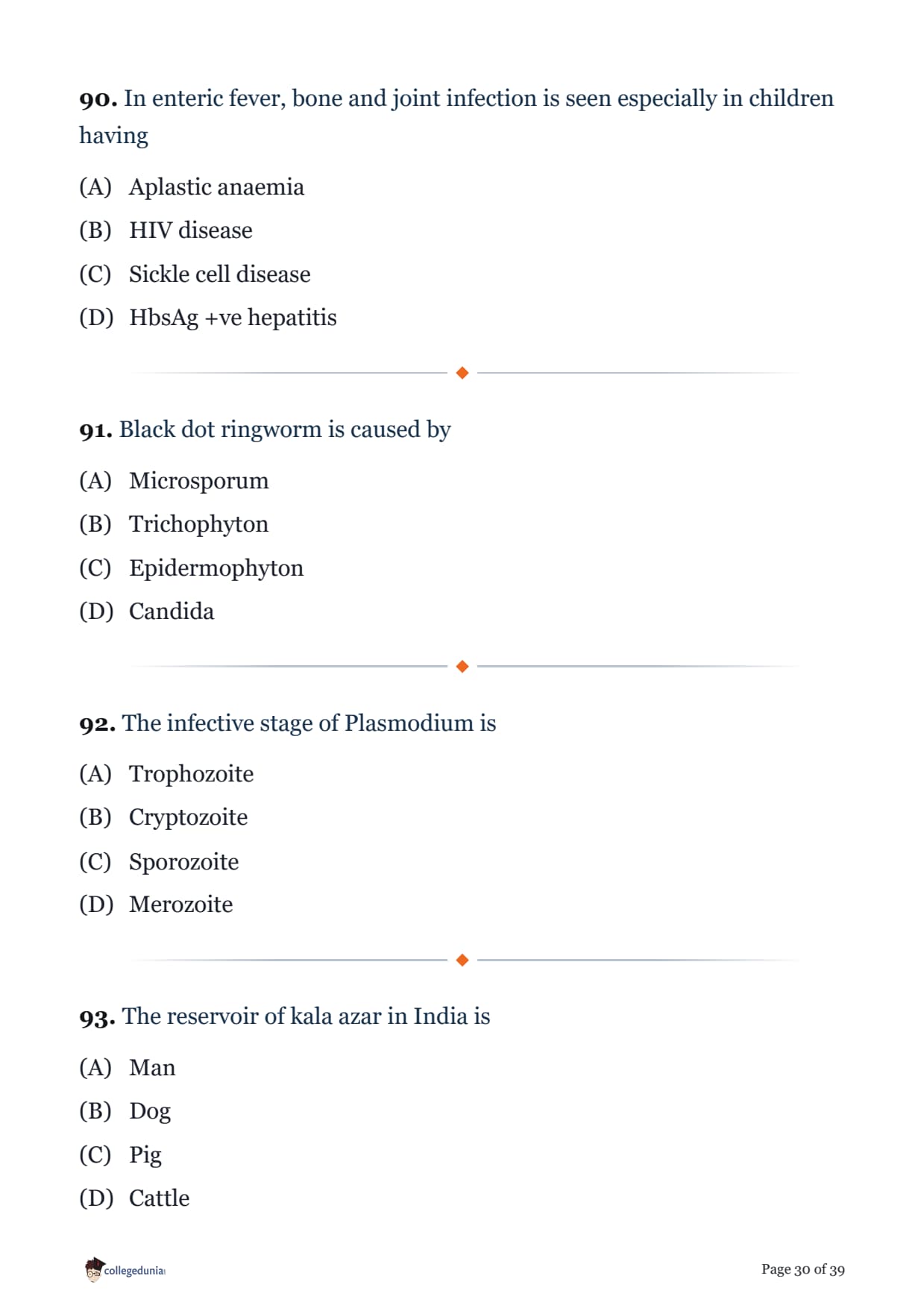
In enteric fever, bone and joint infection is seen especially in children having
Black dot ringworm is caused by
The infective stage of Plasmodium is
The reservoir of kala azar in India is
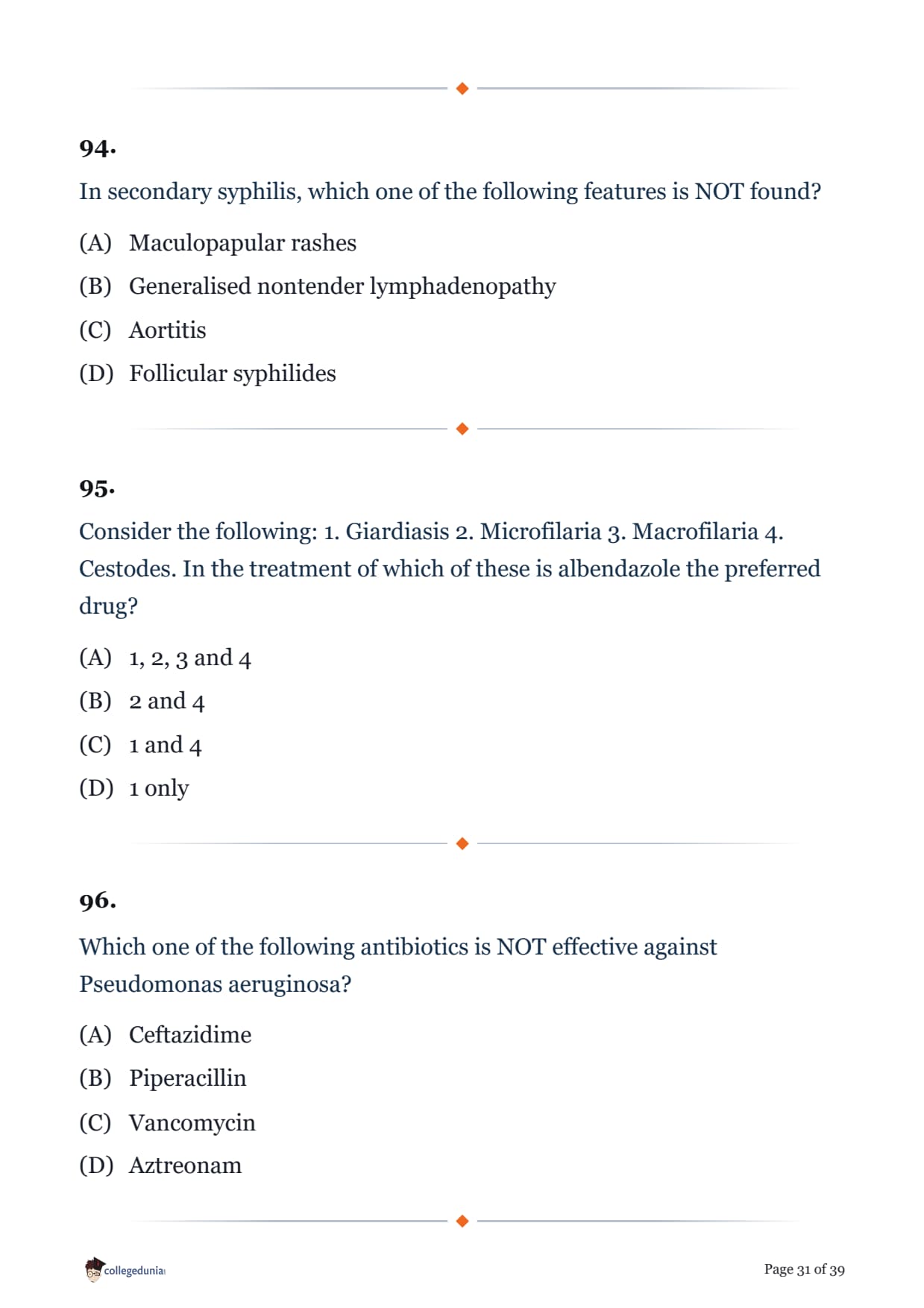
In secondary syphilis, which one of the following features is NOT found?
Consider the following: 1. Giardiasis 2. Microfilaria 3. Macrofilaria 4. Cestodes. In the treatment of which of these is albendazole the preferred drug?
Which one of the following antibiotics is NOT effective against Pseudomonas aeruginosa?
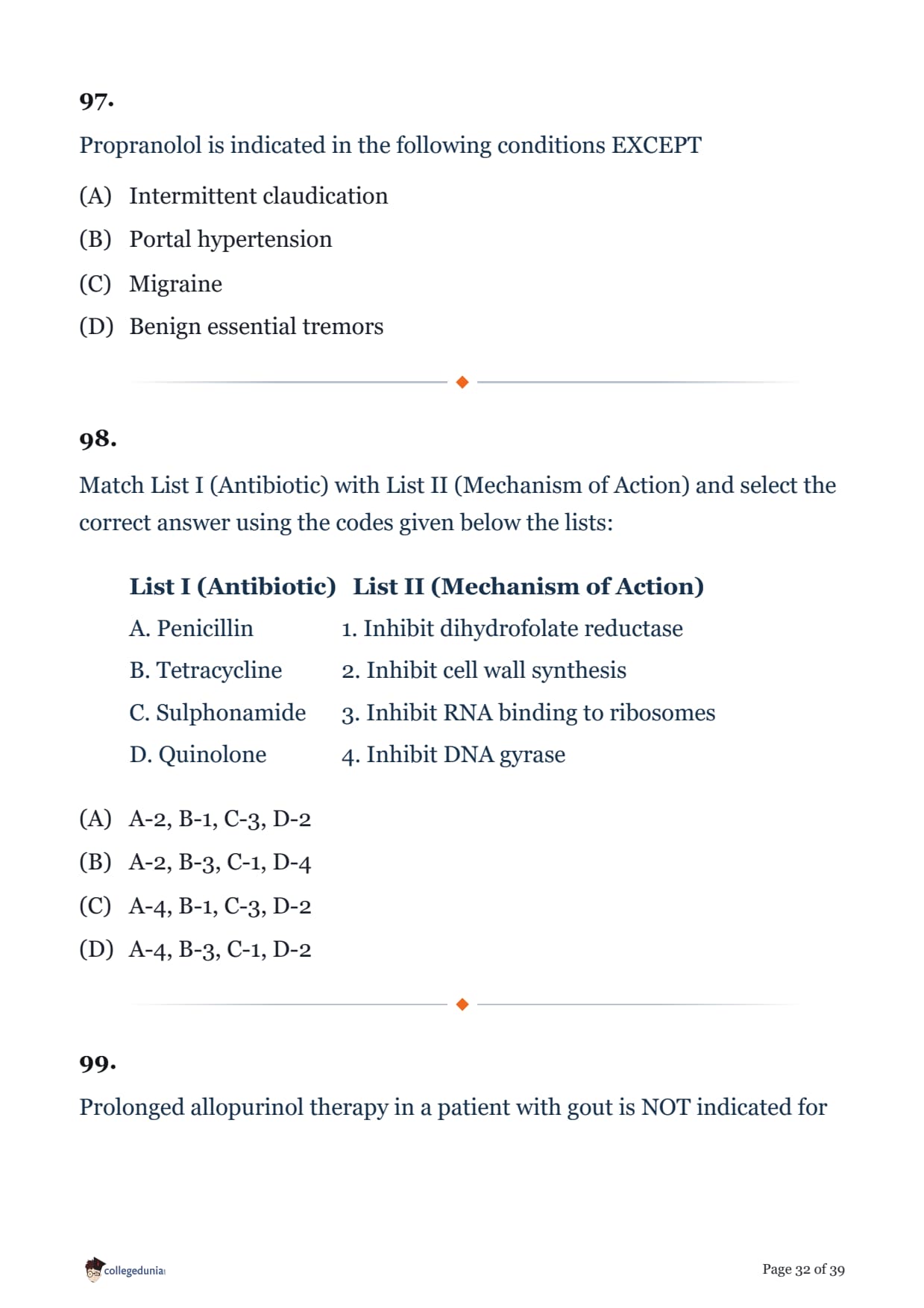
Propranolol is indicated in the following conditions EXCEPT
Match List I (Antibiotic) with List II (Mechanism of Action) and select the correct answer using the codes given below the lists:
| List I (Antibiotic) | List II (Mechanism of Action) |
|---|---|
| A. Penicillin | 1. Inhibit dihydrofolate reductase |
| B. Tetracycline | 2. Inhibit cell wall synthesis |
| C. Sulphonamide | 3. Inhibit RNA binding to ribosomes |
| D. Quinolone | 4. Inhibit DNA gyrase |
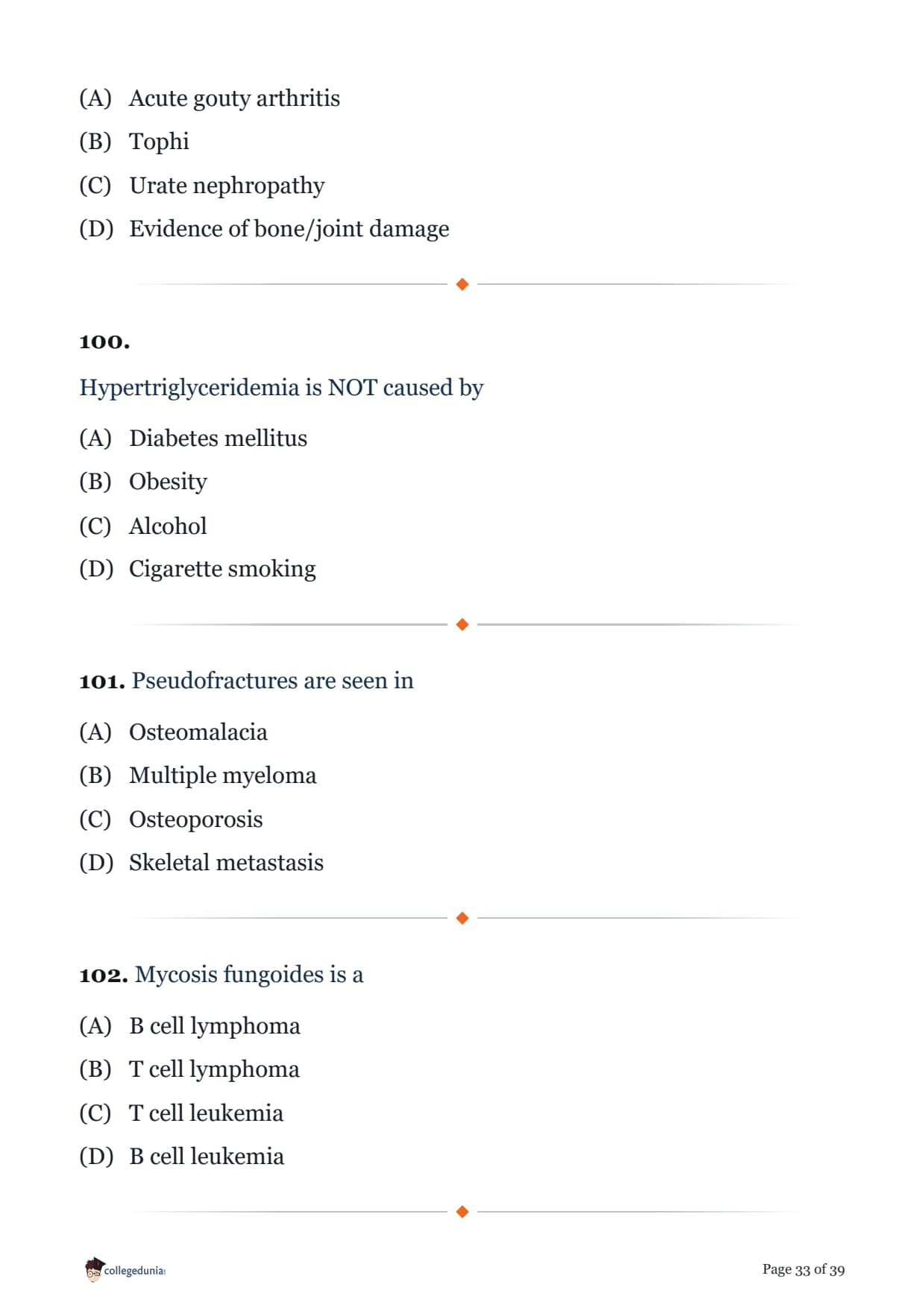
Prolonged allopurinol therapy in a patient with gout is NOT indicated for
Hypertriglyceridemia is NOT caused by
Pseudofractures are seen in
Mycosis fungoides is a
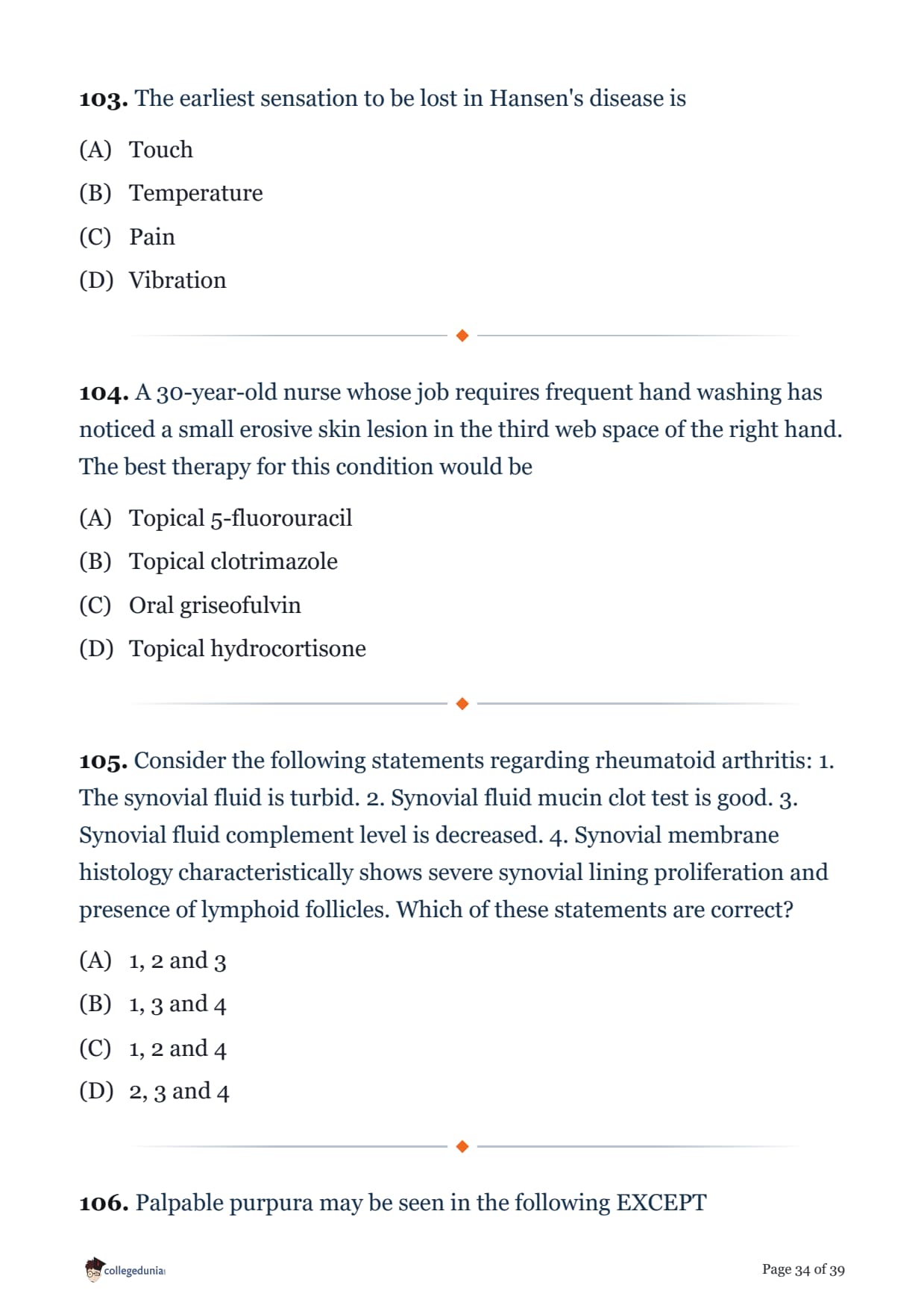
The earliest sensation to be lost in Hansen's disease is
A 30-year-old nurse whose job requires frequent hand washing has noticed a small erosive skin lesion in the third web space of the right hand. The best therapy for this condition would be
Consider the following statements regarding rheumatoid arthritis: 1. The synovial fluid is turbid. 2. Synovial fluid mucin clot test is good. 3. Synovial fluid complement level is decreased. 4. Synovial membrane histology characteristically shows severe synovial lining proliferation and presence of lymphoid follicles. Which of these statements are correct?
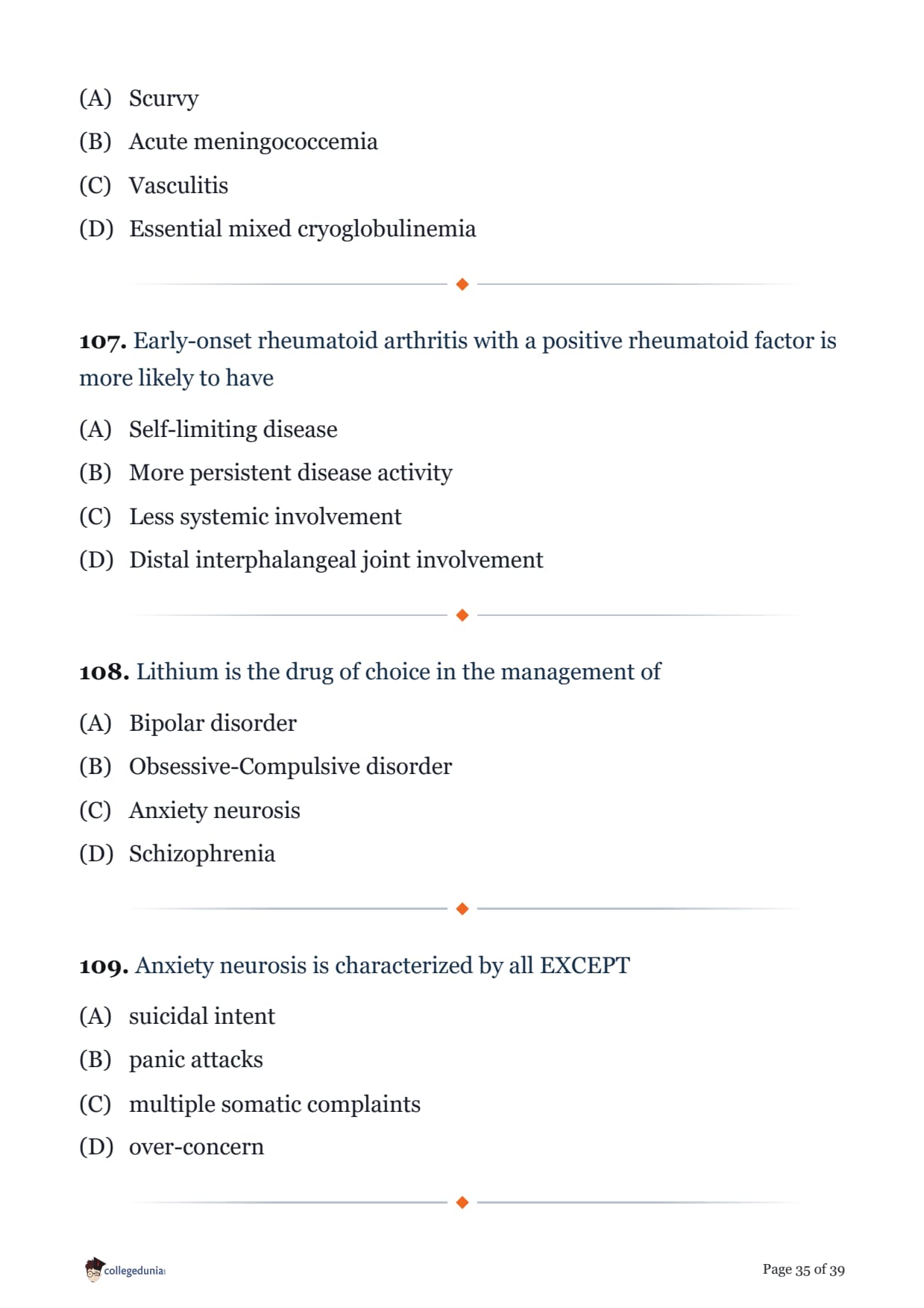
Palpable purpura may be seen in the following EXCEPT
Early-onset rheumatoid arthritis with a positive rheumatoid factor is more likely to have
Lithium is the drug of choice in the management of
Anxiety neurosis is characterized by all EXCEPT
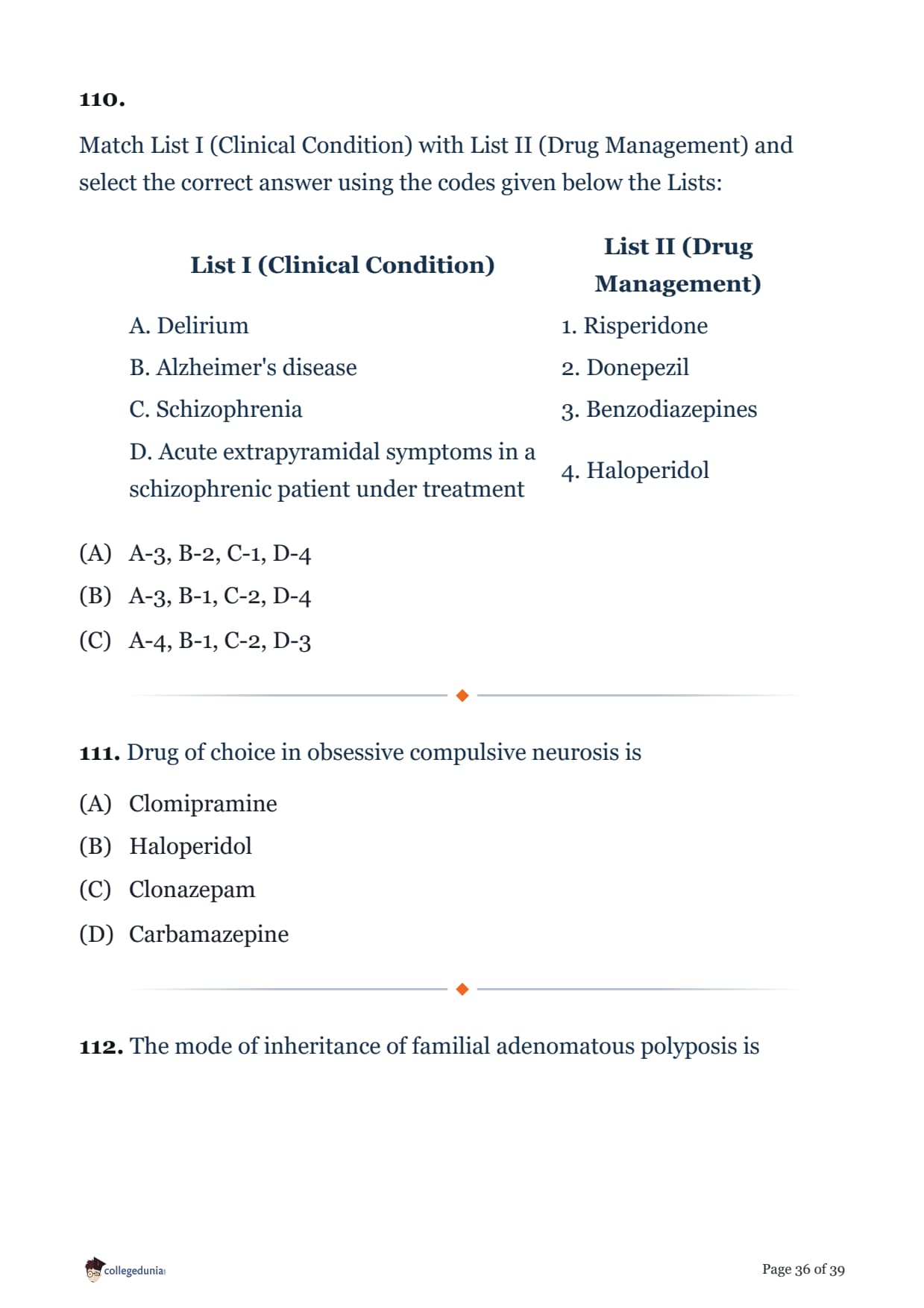
Match List I (Clinical Condition) with List II (Drug Management) and select the correct answer using the codes given below the Lists:
| List I (Clinical Condition) | List II (Drug Management) |
|---|---|
| A. Delirium | 1. Risperidone |
| B. Alzheimer's disease | 2. Donepezil |
| C. Schizophrenia | 3. Benzodiazepines |
| D. Acute extrapyramidal symptoms in a schizophrenic patient under treatment | 4. Haloperidol |
Drug of choice in obsessive compulsive neurosis is
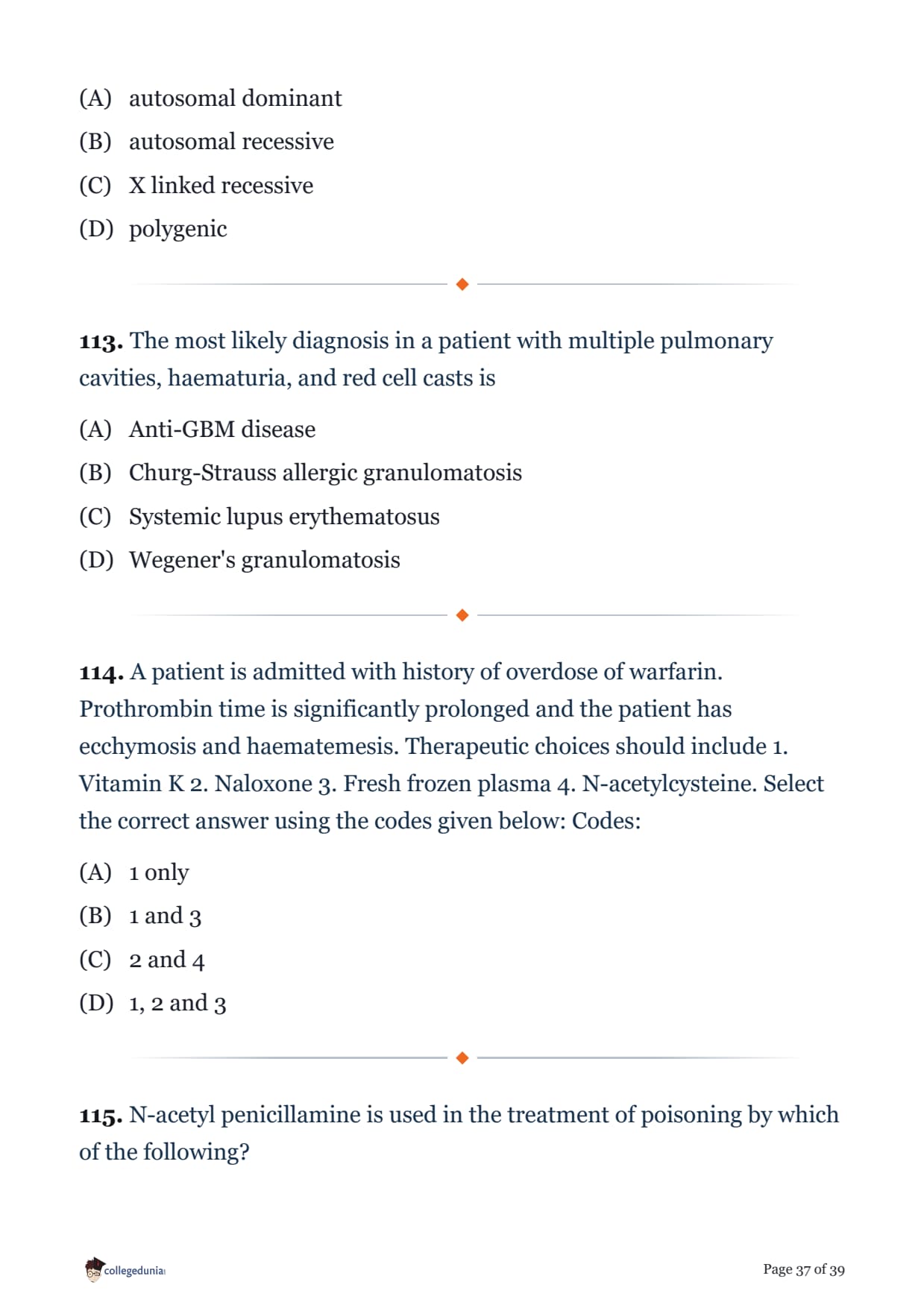
The mode of inheritance of familial adenomatous polyposis is
The most likely diagnosis in a patient with multiple pulmonary cavities, haematuria, and red cell casts is
A patient is admitted with history of overdose of warfarin. Prothrombin time is significantly prolonged and the patient has ecchymosis and haematemesis. Therapeutic choices should include 1. Vitamin K 2. Naloxone 3. Fresh frozen plasma 4. N-acetylcysteine. Select the correct answer using the codes given below: Codes:
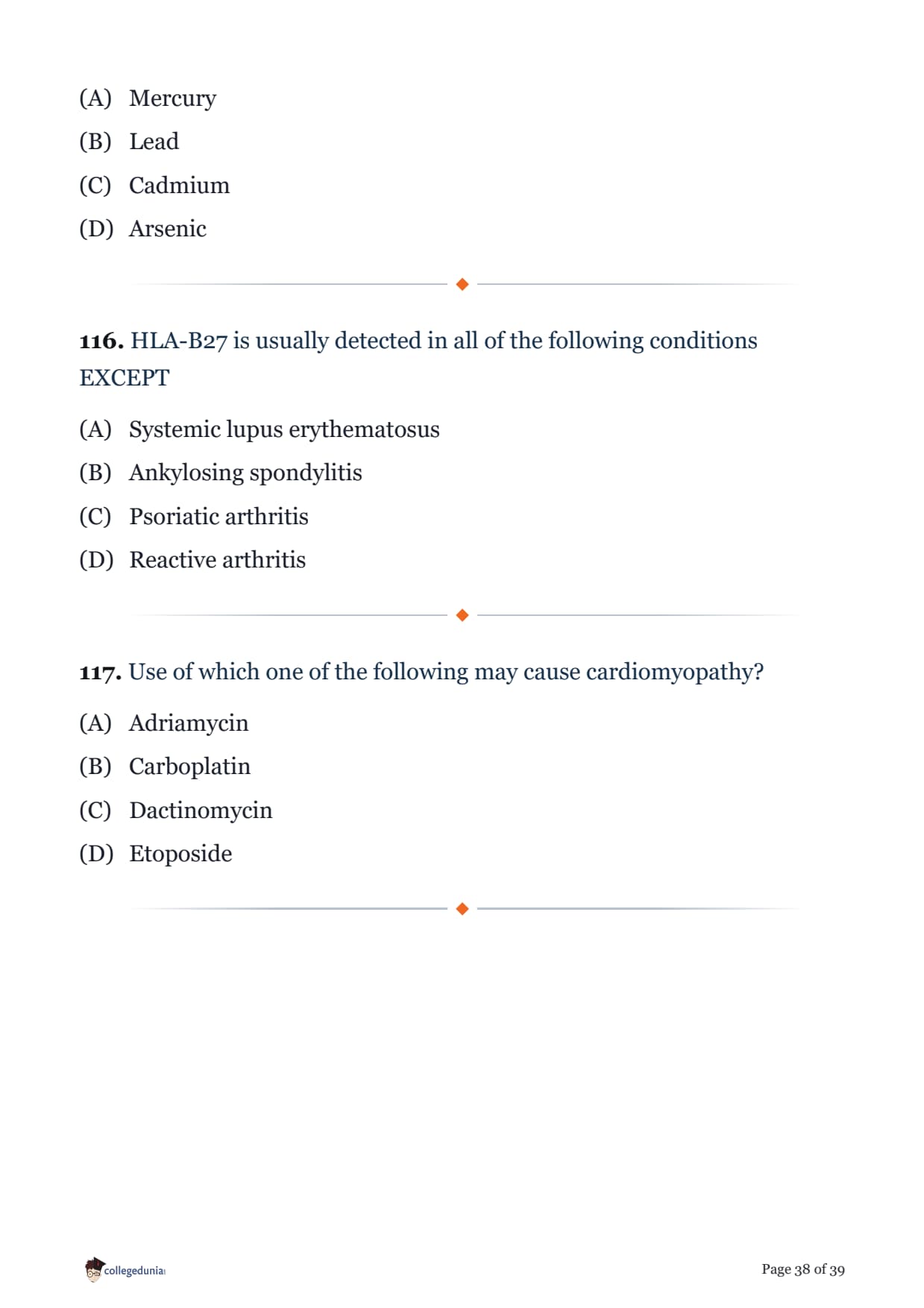
N-acetyl penicillamine is used in the treatment of poisoning by which of the following?
HLA-B27 is usually detected in all of the following conditions EXCEPT
Use of which one of the following may cause cardiomyopathy?
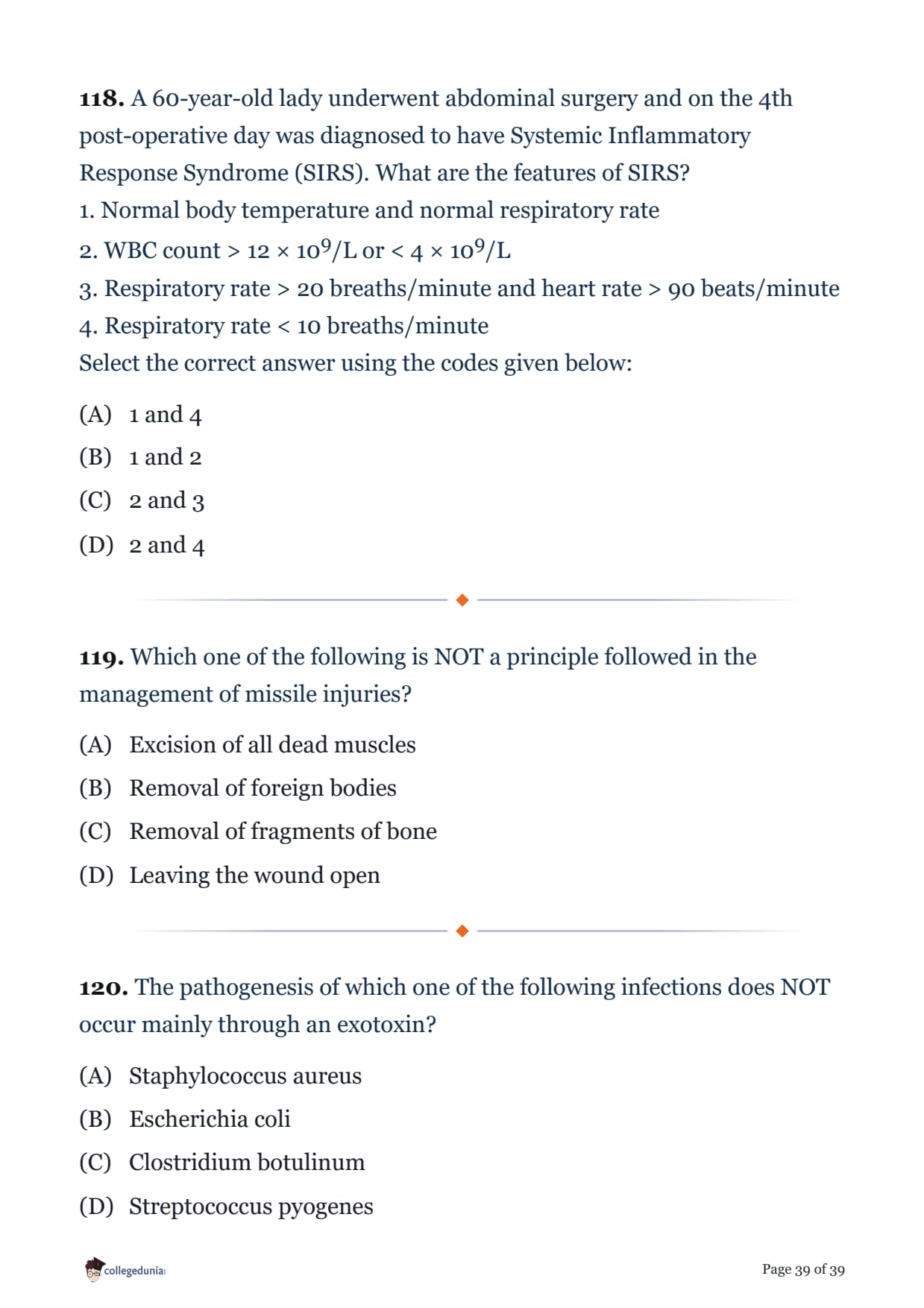
A 60-year-old lady underwent abdominal surgery and on the 4th post-operative day was diagnosed to have Systemic Inflammatory Response Syndrome (SIRS). What are the features of SIRS?
1. Normal body temperature and normal respiratory rate
2. WBC count > 12 × 109/L or < 4 × 10⁹/L
3. Respiratory rate > 20 breaths/minute and heart rate > 90 beats/minute
4. Respiratory rate < 10 breaths/minute
Select the correct answer using the codes given below:
Which one of the following is NOT a principle followed in the management of missile injuries?
The pathogenesis of which one of the following infections does NOT occur mainly through an exotoxin?
NEET PG 2004 Exam Pattern and Structure
The paper is a single objective test of single-best-answer multiple-choice questions drawn from across the MBBS syllabus, with no separate sections for pre-clinical, para-clinical and clinical subjects. Questions are mixed rather than grouped, so you move between surgery, medicine and pharmacology without warning.
- All 118 questions in this compiled paper are single-correct multiple-choice questions.
- Question styles include direct one-liners, clinical vignettes, "which is NOT true" exclusion questions, assertion-reason pairs and match-the-list items.
- The all-India quota this exam fed was raised from 25% to 50% of PG seats by the Supreme Court in May 2004, which widened the pool of seats these ranks competed for.
- AIPGMEE ran until 2012. The National Board of Examinations replaced it with NEET PG from 2013, and NEET PG remains the single entrance route to PG medical seats today.
High-Weightage Subjects in the NEET PG 2004 Paper
The 118 questions are unevenly spread, and knowing where the weight sits tells you what to revise before attempting the paper.
- Surgery dominates with 28 questions, covering trauma, hernia, biliary disease, gastrointestinal bleeding and surgical oncology.
- Medicine follows with 21 questions, and Pharmacology contributes 12, together with Surgery making up just over half the paper.
- Microbiology holds 8 questions, with Cardiology, Neurology and Dermatology on 5 each.
- Orthopedics, Pathology, Biochemistry and Psychiatry carry 4 questions each, with the remainder spread across ENT, Anaesthesia, Ophthalmology, Pediatric Surgery, Preventive Medicine, Anatomy, Endocrinology, Radiodiagnosis, Pediatrics, Obstetrics-Gynaecology and Medical Genetics.
- By difficulty, 70 questions are rated medium, 27 easy and 21 hard.
How to Use This NEET PG 2004 Paper
Treat it as a diagnostic first and a reading exercise second. The clinical reasoning tested here still maps closely onto the current NEET PG paper, even though the exam name and conducting body have changed.
- Attempt the question paper PDF in one sitting before opening the solutions, so your accuracy is honest.
- Work through the solutions booklet question by question; each answer explains why the other three options fail, which is where most of the learning sits.
- Pay attention to the exclusion questions. Nearly a quarter of this paper asks for the option that is NOT true, and misreading the stem is the most common avoidable error.
- Parts of this paper reflect 2004 practice. Where management has since moved on, the solution says so, so read it as history plus current context rather than a protocol to follow.
NEET PG 2004 Question Paper Discussion Video
Source: Dr.Hemant sharma
NEET PG 2004 Question Paper FAQs
Ques. What is the NEET PG 2004 question paper?
Ans. It is the All India Post Graduate Medical Entrance Examination (AIPGMEE) held in 2004, an objective multiple-choice test used to rank MBBS graduates for MD, MS and PG Diploma seats under the all-India quota. This compiled version carries 118 questions from the original booklet with worked solutions.
Ques. Who conducted the NEET PG 2004 (AIPGMEE) paper?
Ans. The All India Institute of Medical Sciences (AIIMS), New Delhi conducted AIPGMEE. It ran the exam until 2012, after which the National Board of Examinations took over postgraduate medical admissions and replaced it with NEET PG from 2013.
Ques. How many questions are in this NEET PG 2004 paper?
Ans. This compiled paper has 118 questions covering subjects from Surgery and Medicine through to Biochemistry, Psychiatry and Medical Genetics.
Ques. Which subject carries the most questions in NEET PG 2004?
Ans. Surgery has the largest share with 28 questions, followed by Medicine with 21 and Pharmacology with 12.
Ques. Is the NEET PG 2004 (AIPGMEE) paper still useful for NEET PG preparation?
Ans. Yes. The exam has since become NEET PG under the NBE, but the clinical subjects that dominate this paper, Surgery, Medicine and Pharmacology, still carry heavy weight today. Solving it gives practice at exactly the exclusion-style and vignette questions the current exam favours.
Ques. Where can I download the NEET PG 2004 question paper with solutions for free?
Ans. Both the question paper and the solved answer key are hosted as free PDFs in the download table and flipbook above, with a separate Check Solutions PDF giving a step-by-step explanation for every question.



Comments