The NCERT Solutions for Class 12 Biology Chapter 10 Biotechnology and its Applications cover every textbook question on Bt crops, RNA interference, gene therapy, molecular diagnosis, transgenic animals, and biopiracy. The chapter carries 11 in-text and exercise questions, all mapped to the 2026-27 NCERT print. This page hosts the full solutions PDF, which students can read in the flipbook below or download free.
CBSE Weightage: 4-6 marks in the Class 12 Biology board paper (Unit IX, Biotechnology).
NEET Coverage: 1-2 direct questions every year, usually on Bt cotton, insulin production, or gene therapy.
Every answer here maps to the official 2026-27 NCERT print and follows the CBSE marking scheme. Students can use this set both for board revision and for NEET high-yield recall.
Why this resource works: Collegedunia's solution set keeps the NCERT line numbering intact, splits long answers into CBSE-friendly point form, and flags the exact line in the chapter that each answer is sourced from.
Biotechnology and Its Applications Video Lecture for Class 12 Biology
NCERT Biology Class 12 Solutions PDF Chapter 10 Biotechnology and its Applications: Question-Wise Breakdown
The exercise block in Chapter 10 splits cleanly into five intent buckets. The table below shows how each NCERT question maps to a sub-topic and to the marks bucket students can expect in the board paper.
Q. No.
Sub-Topic Tested
Answer Length
Expected Marks (CBSE)
Q1
Crop improvement strategies
Short
2
Q2
Cry protein and Bt toxin mechanism
Long
3-5
Q3
Recombinant DNA technology in proteins
Long
5
Q4
Tissue culture / micropropagation
Short
2
Q5
RNA interference and nematode resistance
Long
5
Q6
Insulin production via rDNA
Long
3
Q7
Gene therapy (ADA deficiency)
Long
3-5
Q8
ELISA and PCR for early diagnosis
Long
3
Q9
GEAC and ethical issues
Short
2
Q10
Biopiracy and patenting
Long
3
Q11
Transgenic animals
Short
2
Roughly 60% of the question weight sits on Bt cotton, rDNA insulin and gene therapy, so prioritise these three answer sets first.
NCERT Solutions for Class 12 Biology Chapter 10: Key Answer Highlights
Below is a quick map of the load-bearing answers in the chapter. Students can use this as a 30-minute revision pass the night before a Biotechnology test.
Q2 (Bt cotton mechanism): Cry proteins exist as inactive protoxins in Bacillus thuringiensis. Once ingested by the insect larva, the alkaline pH of the midgut solubilises the crystal and converts it to the active toxin. The toxin binds midgut epithelial cells, creates pores, causes cell lysis, and the larva dies. The cry genes commonly inserted are cryIAc, cryIAb (cotton bollworm) and cryIIAb.
Q5 (RNAi against nematode):Meloidogyne incognita infects tobacco roots. Using Agrobacterium, nematode-specific genes were introduced into the host that produce both sense and anti-sense RNA, which form double-stranded RNA. This dsRNA silences the parasite's mRNA by RNA interference, so the parasite cannot survive in the transgenic host.
Q6 (Humulin / rDNA insulin): Mature human insulin has A (21 aa) and B (30 aa) chains linked by disulphide bridges. Eli Lilly inserted the two chains separately into E. coli plasmids, produced them, then combined them in vitro to form the functional hormone, removing the C-peptide step.
Class 12 Biology Chapter 10 Solutions: Diagram-Based Answers
Two figures in the chapter routinely show up as 3-mark diagram questions. The solution set provides labelled redraws for both.
Figure 10.2 (Bt toxin action on insect midgut): Label protoxin crystal, alkaline midgut, active toxin, pore formation, epithelial cell lysis.
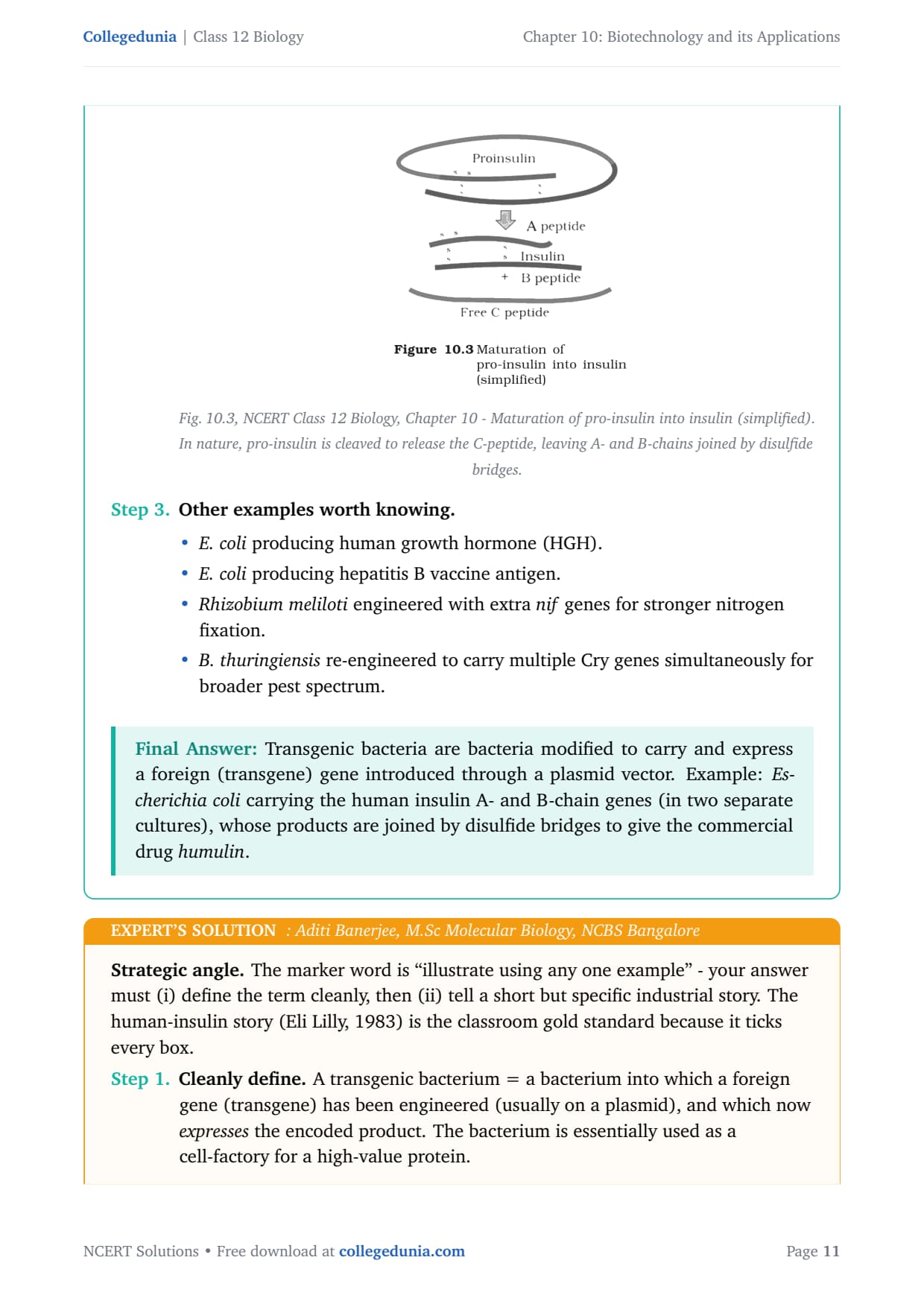
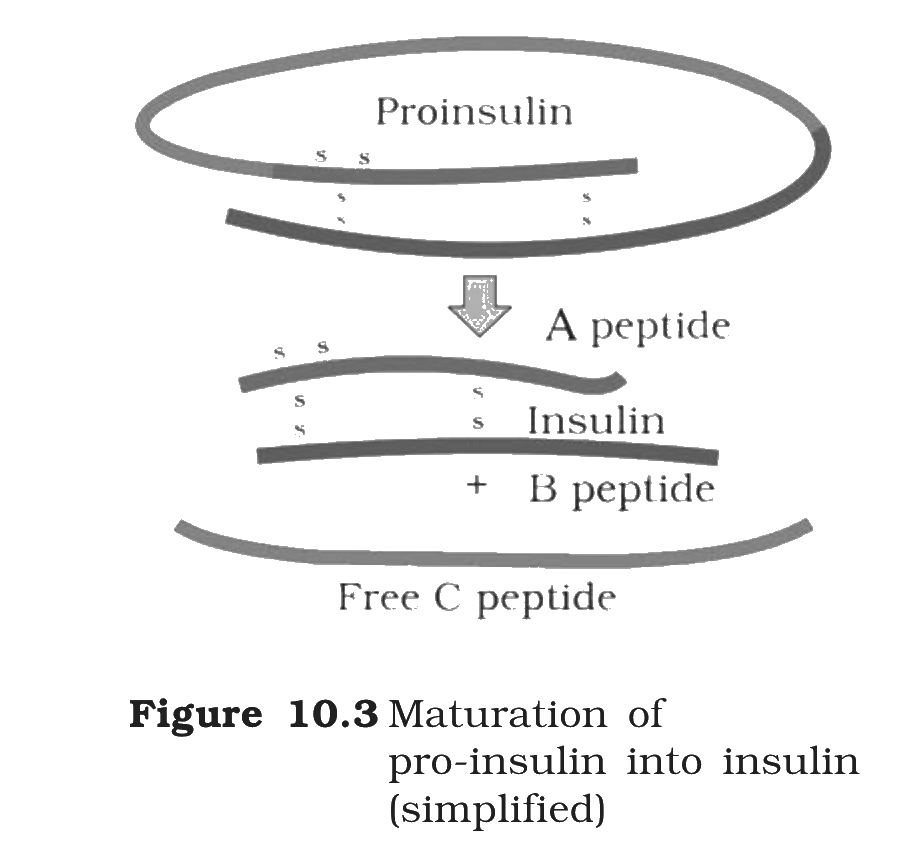
Figure 10.4 (Maturation of pro-insulin to insulin): Show A-chain, B-chain, C-peptide, disulphide bridges and the cleavage step.
Practice tip: in the board exam, the 3-mark diagram fetches full marks only if every label is written exactly as the NCERT prints it. Avoid synonyms like "stomach" for "midgut".
Common Mistakes Students Make in Biotechnology Solutions
The chief examiner reports from 2024 and 2023 flag the same four slips year after year. Knowing them in advance is the cheapest way to add marks.
Writing "Bt protein kills insects directly" without the alkaline-pH activation step. The activation step is mandatory for full marks.
Confusing gene therapy (somatic cell correction) with genetic engineering (creating a transgenic organism). Use the ADA-SCID case to illustrate gene therapy.
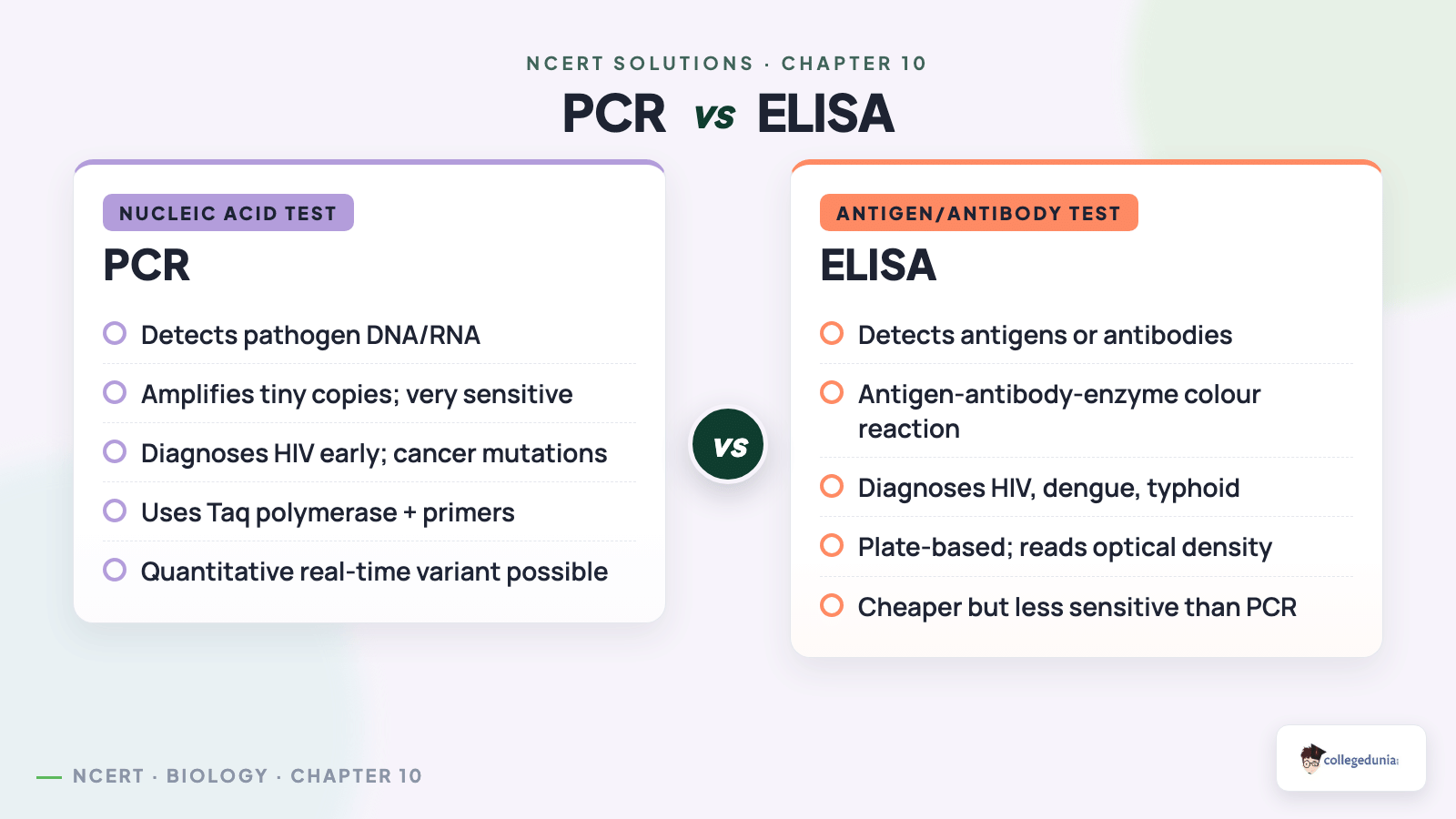
Using "DNA" when the answer expects "cDNA" or "mRNA" (in molecular diagnosis answers, PCR amplifies DNA but RT-PCR amplifies from RNA).
Saying "PCR detects the disease" - PCR amplifies nucleic acid; the detection comes from probe hybridisation or sequencing.
How Collegedunia's NCERT Solutions Help You Score in Biotechnology
The Collegedunia answer set is built backwards from the CBSE marking scheme, so every long answer is broken into the exact number of value points the examiner expects. Students also get an NEET-angle box on each high-yield answer that lists the years in which the same idea was tested in the medical entrance.
NEET hook:Bacillus thuringiensis, Cry proteins, and Humulin have appeared in NEET 2024, 2022, 2021 and 2019. The exact wording of the Cry protein activation step is the most repeated MCQ stem.
Biotechnology Applications Chapter 10 Class 12: Important Topics Linked to Solutions
Three sub-topics carry almost the entire mark weight of the chapter. Anchor your revision on these and then expand.
All NCERT Solutions for Biotechnology and its Applications with Step-by-Step Working
Every NCERT textbook question for Class 12 Biology Chapter 10 Biotechnology and its Applications is listed below with its full Solution and Expert Solution hidden inside collapsible tabs. Click Check Solution to reveal the step-by-step working; click Expert Solution for the expanded explanation.
Questions
Q 10.1
Which part of the plant is best suited for making virus-free plants and why?
Concept used. In a virus-infected plant the virus particles spread through the vascular tissue and reach almost every mature cell, but the meristem (the actively dividing tissue at growing tips) is the one region the virus typically fails to reach. Two reasons:
Meristematic cells divide extremely fast, so they outpace virus replication and are largely virus-free.
The vascular connections (xylem/phloem) that ferry the virus around the plant are not yet fully developed in the meristem zone.
If we cut out this meristem and grow it on a nutrient medium under sterile conditions (tissue culture), the totipotency of the cells lets a whole new plant regenerate, and that plant is virus-free.
Totipotency
The ability of a single plant cell or explant to divide and develop into a whole plant. It is the basis of all tissue culture work.
Best part: the apical meristem and the axillary meristem. These are at the tip of the shoot and inside leaf axils respectively, and they consistently test virus-free even in heavily infected plants like banana, sugarcane and potato.
Why exactly the meristem?
Vascular bundles (the virus's highway) are immature here, so the virus simply does not arrive.
Rapid cell division dilutes any virus particles that do reach the region.
Endogenous antiviral substances and a high level of metabolic activity hinder viral replication.
Procedure followed in the lab.
Excise the meristem (about 0.1–0.5 mm) under a stereomicroscope.
Inoculate on Murashige and Skoog (MS) medium containing sucrose, mineral salts, vitamins, amino acids and growth regulators (auxin + cytokinin).
Allow shoot and root formation, then transfer the plantlets to soil.
The apical and axillary meristems are best suited for making virus-free plants because vascular tissue (through which the virus moves) is not yet differentiated in the meristematic zone, so the meristem remains virus-free even when the rest of the plant is infected. The meristem is excised and grown in vitro to regenerate a healthy plant.
AI
Aanya Iyer
M.Sc Microbiology, JNU
Verified Expert
Strategic angle: think like a virus. A plant virus needs two things: a route around the plant (the vascular tissue) and host cells slow enough to let it replicate. The meristem denies both. Looking at the question that way makes the answer obvious.
Map the virus's route. Once a virus enters a leaf or stem, it loads into the phloem (and sometimes xylem) and gets shipped throughout the mature tissues. Mature cells are large, vacuolate, and slow-dividing, so the virus replicates freely inside them.
Now look at the meristem. The apical meristem at the shoot tip and the axillary meristems at leaf-axils are dense clumps of tiny, rapidly dividing cells. Three properties make them a virus dead-zone:
Vascular tissue here is still procambial, not yet differentiated into mature xylem/phloem, so there is no continuous pipe for the virus to flow in.
Cell-division rate (every 12–24 h) far exceeds virus replication time, so each daughter cell carries far less virus than its parent.
Local concentration of antiviral factors and growth regulators is high.
Lab translation: meristem culture.
Dissect 0.1–0.5 mm of meristem under sterile conditions.
Place on Murashige and Skoog (MS) medium (sucrose for carbon, NPK and micronutrients, vitamins, auxin + cytokinin).
Shoot and root differentiation gives a complete plantlet, which is hardened and transferred to soil.
Real-world success stories. Virus-free banana (Bunchy-top virus), sugarcane (Mosaic virus), potato (PVX, PVY), strawberry and orchids are now produced commercially this way; the technology has rescued entire fruit industries.
Why this matters. This single technique - combining totipotency with meristem virus-freeness - lets growers clean up an infected stock and propagate millions of disease-free plants in months, without losing the desirable cultivar.
Apical/axillary meristems are virus-free (immature vascular bundles + fast cell division). Excising the meristem and culturing it on MS medium regenerates a virus-free plant.
Q 10.2
What is the major advantage of producing plants by micropropagation?
Concept used.Micropropagation is the production of thousands of plants from a small piece of parent tissue using plant tissue-culture techniques in vitro. Each plant generated is genetically identical to the parent and is called a somaclone. The standout advantage is therefore rapid mass production of genetically identical, true-to-type plants in a small lab space, in a short time, and independent of the season.
True-to-type means
Every micropropagated plantlet has the same genotype as the donor. So if you start with a single high-yielding mango variety, all the daughter plants are the same high-yielding variety: no genetic shuffling, no segregation, no surprises.
Speed and scale. A single explant (a tiny piece of stem, leaf, or meristem) can give rise to thousands of plants in a few weeks. Conventional methods (seed, cutting, grafting) would take years to produce the same numbers.
Genetic uniformity. All plantlets are somaclones of the donor. This is critical for commercial growers who need a uniform crop (same height, same flowering time, same fruit size).
Disease-free stock. When the explant is a meristem, the resulting plants are also virus-free (see Q1), giving them a healthy head start.
Year-round, weather-independent production. The whole process runs in a controlled lab; no dependence on monsoon, sowing season, or seed availability.
Conserves rare or endangered species. Plants that are otherwise hard to propagate (orchids, some medicinal plants) can be multiplied rapidly.
Examples in commercial use. Tomato, banana, apple, sugarcane, potato, orchids, ornamentals - all routinely produced on commercial scale via micropropagation.
The major advantage is rapid production of large numbers of genetically identical (true-to-type) plants from a single explant, in a short time and inside a small lab space, often also free of viruses (when meristem is the explant).
PS
Pranav Sharma
M.Sc Biotechnology, AIIMS Delhi
Verified Expert
Quick reading. The question asks for the major advantage, singular. Three things are usually listed (uniformity, speed, virus-free), but the head-line one is genetically identical mass production. The other two are very useful corollaries.
Definition first. Micropropagation = tissue-culture-based multiplication of a plant from a small explant grown in vitro on a defined nutrient medium (MS medium) under sterile conditions, with growth regulators (auxin for roots, cytokinin for shoots) controlling differentiation.
The headline advantage. Every regenerated plant is a somaclone, i.e., a genetic copy of the donor. Field growers can therefore plant an entire orchard knowing every tree will fruit at the same time and to the same quality. This kind of uniformity is impossible with seed propagation, where sexual recombination scatters traits.
Three corollary advantages worth mentioning in a long-answer.
Speed: thousands of plantlets in weeks.
Disease-free: especially when the explant is a meristem.
Continuous, season-independent supply.
Where it has actually changed industries. Banana (Cavendish clone), sugarcane (red-rot-free), potato (virus-free seed potato), orchids, eucalyptus for paper-pulp, and most cut-flower ornamentals are now propagated almost exclusively by tissue culture.
Limitation worth noting (so you sound complete). Because all plants are genetically identical, a single new pathogen can wipe out the entire crop - the Cavendish banana is the classic cautionary tale.
Why this matters. Micropropagation is the most direct link between basic plant biology (totipotency) and agribusiness scale-up; it powers the modern plant nursery industry.
Mass, rapid production of genetically identical (true-to-type) plants from a single explant in a small lab space - often also disease-free when meristem is the explant.
Q 10.3
Find out what the various components of the medium used for propagation of an explant in vitro are?
Concept used. An explant (a small piece of plant tissue) cannot regenerate on plain water - it needs an externally supplied nutrient mix that mimics what the parent plant would have provided to it. The standard medium used worldwide is the Murashige and Skoog (MS) medium (1962). It supplies six classes of ingredients:
Carbon (energy) source. Almost always sucrose at 20–30 g/L. The explant is heterotrophic in vitro (no efficient photosynthesis yet), so it needs ready-made carbohydrate.
Inorganic macronutrients. Salts supplying N, P, K, Ca, Mg, S in mM amounts. Typical components: KNO3, NH4NO3, CaCl2, MgSO4, KH2PO4.
Inorganic micronutrients. Trace metals in μM amounts: Fe (as Fe-EDTA), Mn, Zn, Cu, B, Mo, Co, I. Essential for enzyme function and chlorophyll synthesis.
Vitamins. Mainly thiamine (B1), nicotinic acid (niacin) and pyridoxine (B6); also myo-inositol (often classified separately as a sugar alcohol).
Amino acids & other organic supplements.Glycine is part of the original MS recipe. For special tissues, hydrolysed casein, glutamine, or coconut water is added as an extra N source.
Plant growth regulators (PGRs). The single most important variable.
Cytokinins (BAP, kinetin, zeatin) promote shoot initiation and cell division.
Ratio decides outcome: high auxin/low cytokinin → roots; low auxin/high cytokinin → shoots; balanced → undifferentiated callus.
One extra ingredient
After all six classes are mixed, agar (6–8 g/L) is added to gel the medium so the explant can sit on top. Agar is structural, not nutritional.
An in vitro propagation medium (typically MS medium) contains: (i) a carbon source (sucrose), (ii) inorganic macronutrients (N, P, K, Ca, Mg, S salts), (iii) inorganic micronutrients (Fe, Mn, Zn, Cu, B, Mo, Co, I), (iv) vitamins (thiamine, niacin, pyridoxine, myo-inositol), (v) amino acids/organic supplements (glycine, sometimes casein hydrolysate), and (vi) plant growth regulators (auxins for roots; cytokinins for shoots). Agar is added to solidify the medium.
SR
Sneha Reddy
M.Sc Botany, Delhi University
Verified Expert
Structural observation. The cleanest way to remember the MS recipe is the six-bucket scheme: Carbon, Macro, Micro, Vitamins, Amino acids, PGRs. If you can name one or two members of each bucket and the auxin-vs-cytokinin rule, you have full marks.
Carbon (energy). Sucrose at 20–30 g/L. The explant cannot photosynthesise efficiently in vitro, so sugar is the fuel for cell division.
Inorganic salts.
Macronutrients (mM range): KNO3, NH4NO3, CaCl2 · 2H2O, MgSO4 · 7H2O, KH2PO4. Supply N, P, K, Ca, Mg, S.
Micronutrients (μM range): MnSO4, ZnSO4, H3BO3, KI, Na2MoO4, CuSO4, CoCl2. Iron is supplied as a chelate (FeSO4 + Na2EDTA) to keep it soluble at autoclave pH.
Vitamins and organic add-ons. Thiamine (B1), niacin, pyridoxine, myo-inositol; glycine as a starter amino acid. For difficult tissues, coconut water (rich in cytokinins) or casein hydrolysate (rich in amino acids) is added.
Plant growth regulators - the decisive variable.
Auxin/cytokinin ratio high→root formation.
Auxin/cytokinin ratio low→shoot formation.
Balanced→ undifferentiated callus (used in regeneration studies and in producing somaclones).
Physical setting.
pH adjusted to 5.6–5.8 (the optimum for nutrient uptake).
Agar (6–8 g/L) for solidification.
Autoclaved at 121 ∘C, 15 psi for 15 minutes to sterilise.
Why this matters. A single recipe (MS, 1962) underlies essentially all commercial plant tissue culture worldwide. Knowing the six categories lets you reason about any tweaked variant you see in research papers.
MS medium = sucrose (C source) + macronutrient salts (N, P, K, Ca, Mg, S) + micronutrient salts (Fe, Mn, Zn, Cu, B, Mo, Co, I) + vitamins (thiamine, niacin, pyridoxine, myo-inositol) + amino acid (glycine) + plant growth regulators (auxin/cytokinin tuned by purpose) + agar (gelling agent).
Q 10.4
Crystals of Bt toxin produced by some bacteria do not kill the bacteria themselves because:
(a) bacteria are resistant to the toxin
(b) toxin is immature
(c) toxin is inactive
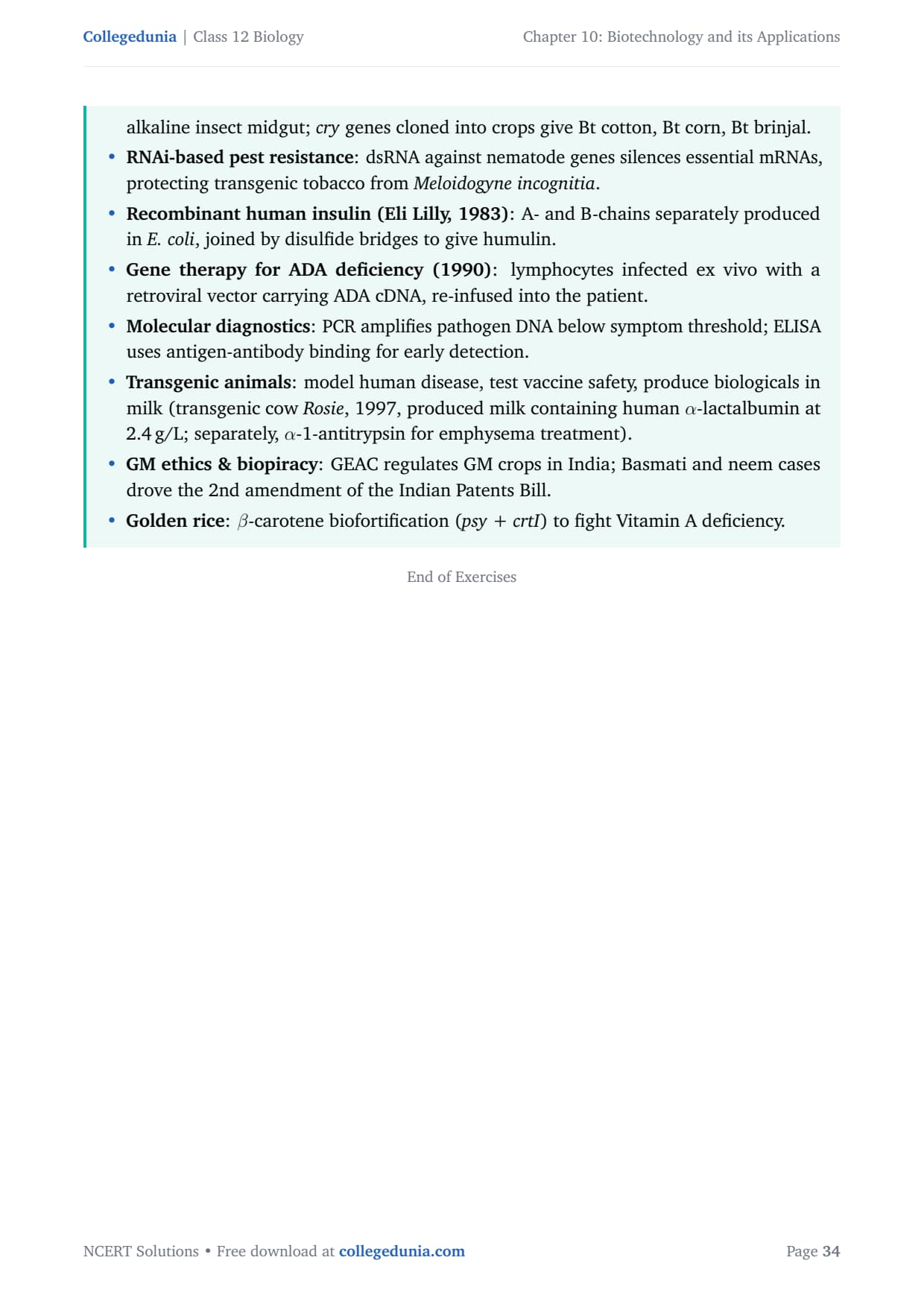
(d) bacteria encloses toxin in a special sac.
Concept used. The Bt toxin is produced by certain strains of the soil bacterium Bacillus thuringiensis. The bacterium does not commit suicide while making it because the protein is made in an inactive crystalline (protoxin) form; only when an insect eats it does the alkaline pH of the insect's midgut solubilise the crystal and convert it into the active toxin.
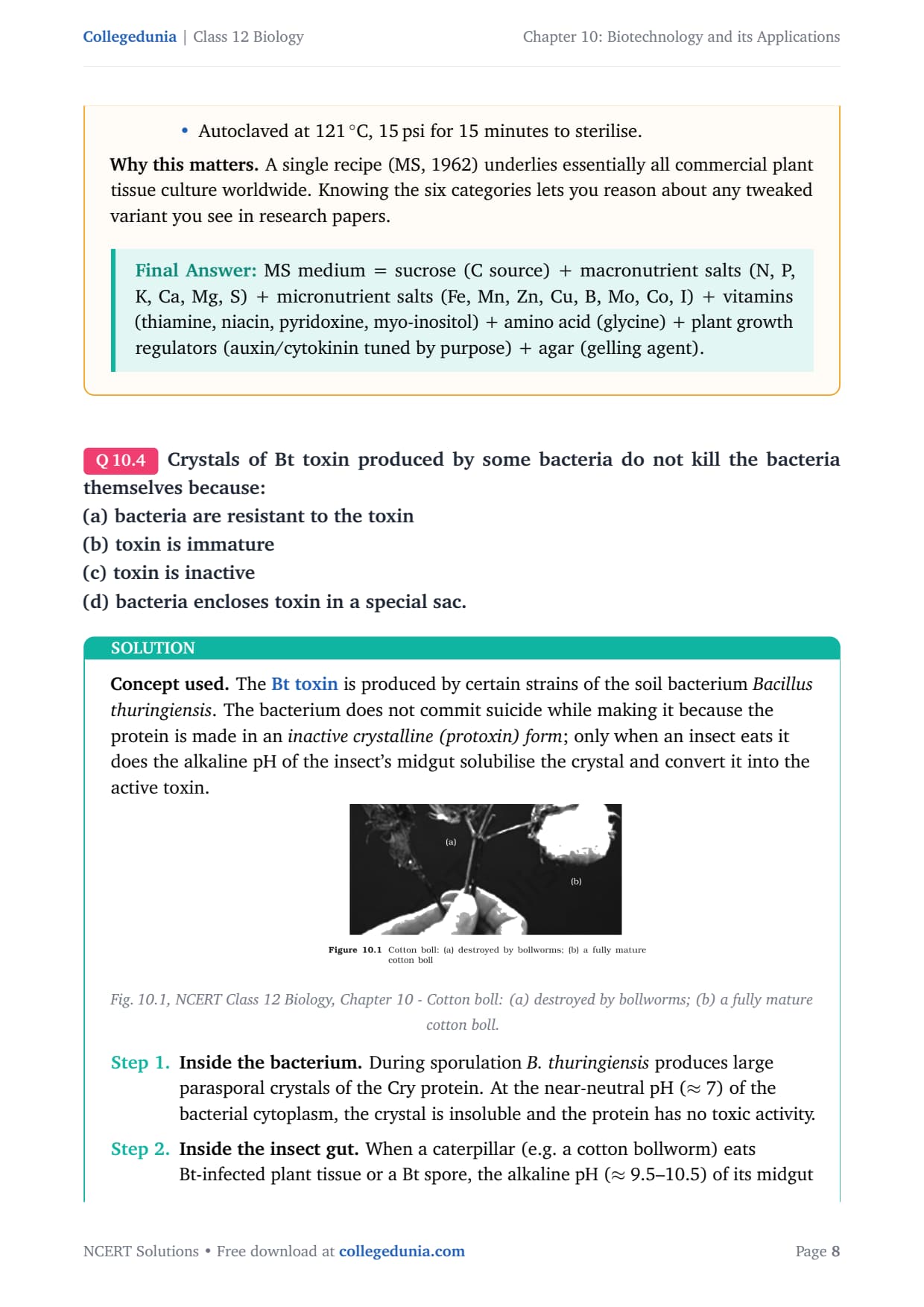
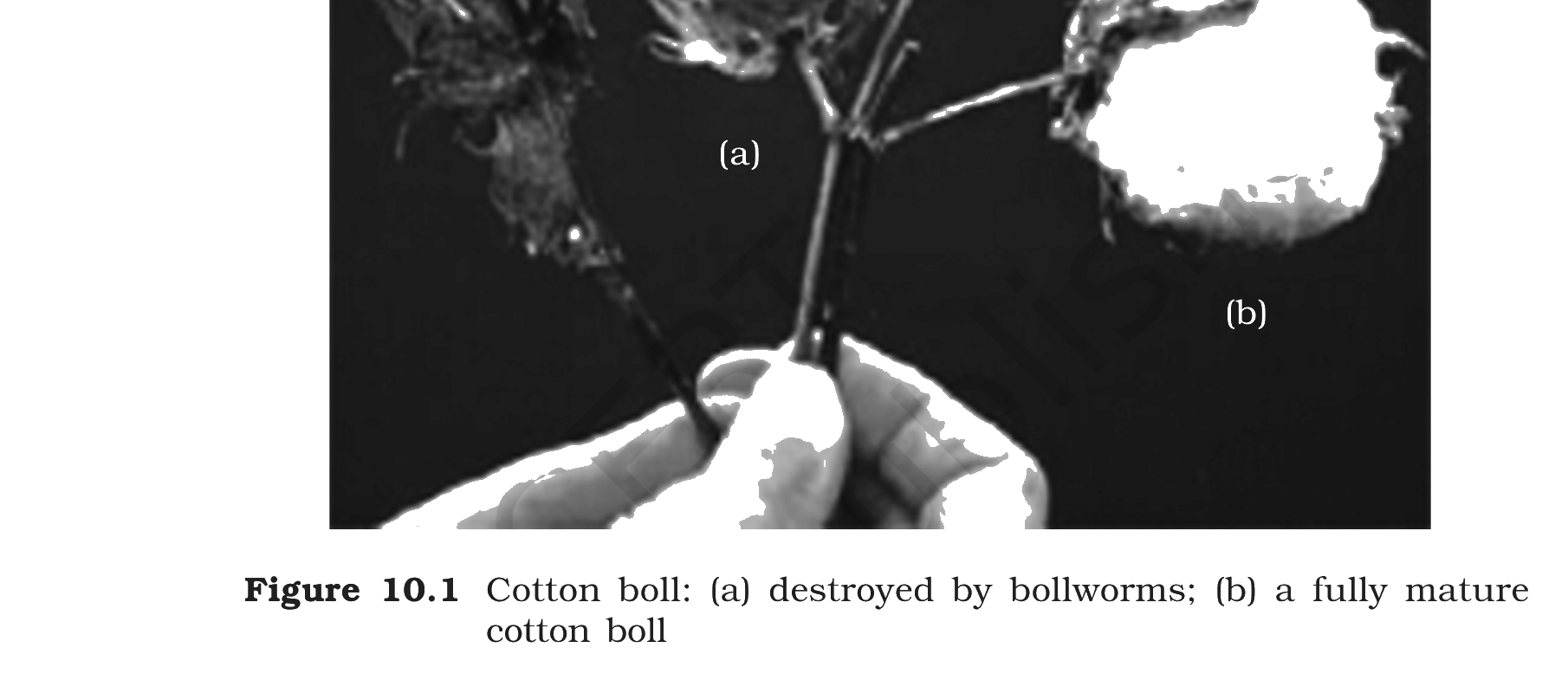
Fig. 10.1, NCERT Class 12 Biology, Chapter 10 - Cotton boll: (a) destroyed by bollworms; (b) a fully mature cotton boll.
Inside the bacterium. During sporulation B. thuringiensis produces large parasporal crystals of the Cry protein. At the near-neutral pH (≈ 7) of the bacterial cytoplasm, the crystal is insoluble and the protein has no toxic activity.
Inside the insect gut. When a caterpillar (e.g. a cotton bollworm) eats Bt-infected plant tissue or a Bt spore, the alkaline pH (≈ 9.5–10.5) of its midgut dissolves the crystal. Gut proteases then cleave the protoxin to its active form. The active toxin binds receptors on midgut epithelial cells, makes pores, causes osmotic lysis and the insect dies.
Why the bacterium is safe. Because step 1 (acid pH, no proteases) keeps the protein in its inactive crystalline form, the bacterium survives even while harbouring tonnes of the protein.
Matching to options.
(a) Wrong - the bacterium is not toxin-resistant; it just never makes active toxin.
(b) Wrong - the protein is fully synthesised, not ``immature''.
(c) Correct - the toxin exists as an inactive protoxin crystal inside the bacterium.
(d) Wrong - no special sac; the crystals lie free in the cytoplasm/spore.
Correct option: (c) toxin is inactive. Inside the bacterium the Bt toxin exists as inactive crystalline protoxin; it is activated only by the alkaline pH and proteases of the insect midgut.
KM
Karan Mehta
M.Sc Biotechnology, AIIMS Delhi
Verified Expert
Quick reading. The key word in NCERT is ``protoxin'' - protoxin means inactive precursor. As soon as you see ``protoxin'' the answer locks to (c).
Definition of protoxin. A protoxin is a biologically inactive precursor of a toxin; it becomes toxic only after a specific activation step (cleavage, pH change, or both). Bt's Cry proteins are textbook protoxins.
Two-step activation in the bollworm midgut.
Step A: alkaline pH (∼ 10) dissolves the crystal.
Step B: midgut proteases trim off the inactive N- and C-terminal stretches, exposing the active toxic core.
Neither step happens inside B. thuringiensis, so the bacterium is unharmed.
Eliminate the distractors quickly.
(a) ``resistant'' would imply the bacterium has a defence against an active toxin - not true.
(b) ``immature'' suggests incomplete synthesis - also wrong, the protein is fully made.
(d) ``special sac'' would imply compartmentalisation - the Bt parasporal body is not a membrane-bound sac protecting the bacterium from the toxin; it is just a crystal.
Why this matters. The same biology is what makes Bt cotton commercially safe: the spray of Bt is harmless to the bacterium and to humans (whose stomach pH is acidic), but kills lepidopteran pests whose gut is alkaline.
(c) toxin is inactive.
Q 10.5
What are transgenic bacteria? Illustrate using any one example.
Concept used.Transgenic bacteria are bacteria that have been deliberately modified to carry and express a foreign gene (a ``transgene'') from another organism. The transgene is usually inserted on a plasmid vector using recombinant DNA technology; the bacterium then produces the protein encoded by that foreign gene, which can be harvested commercially. The classic, most-cited example is Escherichia coli engineered to produce human insulin.
Recap of rDNA technology
A piece of DNA carrying the gene of interest is cut with a restriction enzyme and ligated into a plasmid (also cut with the same enzyme) to form a recombinant plasmid. The plasmid is then taken up by E. coli (transformation), and the bacterium expresses the foreign gene.
Definition. Bacteria that carry one or more foreign genes (transgenes) introduced via a plasmid or other vector, and that express the corresponding product.
Example: E. coli for human insulin (Eli Lilly, 1983).
Two synthetic DNA sequences corresponding to the A-chain (21 amino acids) and B-chain (30 amino acids) of human insulin were prepared.
Each sequence was inserted into a separate pBR322-like plasmid behind a strong promoter.
The recombinant plasmids were introduced into two separate cultures of E. coli.
One culture produced free A-chain, the other free B-chain.
The chains were extracted, purified, and joined in vitro by oxidation to form the two interchain disulfide bridges, yielding mature humulin - the world's first recombinant human insulin.
Fig. 10.3, NCERT Class 12 Biology, Chapter 10 - Maturation of pro-insulin into insulin (simplified). In nature, pro-insulin is cleaved to release the C-peptide, leaving A- and B-chains joined by disulfide bridges.
Other examples worth knowing.
E. coli producing human growth hormone (HGH).
E. coli producing hepatitis B vaccine antigen.
Rhizobium meliloti engineered with extra nif genes for stronger nitrogen fixation.
B. thuringiensis re-engineered to carry multiple Cry genes simultaneously for broader pest spectrum.
Transgenic bacteria are bacteria modified to carry and express a foreign (transgene) gene introduced through a plasmid vector. Example: Escherichia coli carrying the human insulin A- and B-chain genes (in two separate cultures), whose products are joined by disulfide bridges to give the commercial drug humulin.
AB
Aditi Banerjee
M.Sc Molecular Biology, NCBS Bangalore
Verified Expert
Strategic angle. The marker word is ``illustrate using any one example'' - your answer must (i) define the term cleanly, then (ii) tell a short but specific industrial story. The human-insulin story (Eli Lilly, 1983) is the classroom gold standard because it ticks every box.
Cleanly define. A transgenic bacterium = a bacterium into which a foreign gene (transgene) has been engineered (usually on a plasmid), and which now expresses the encoded product. The bacterium is essentially used as a cell-factory for a high-value protein.
The insulin pipeline (concise but specific).
Need: diabetes; cattle/pig insulin caused allergies and was in short supply.
Synthesis: chemically synthesised two DNA pieces - one for the A-chain, one for the B-chain of human insulin.
Cloning: ligated each into a plasmid vector and transformed into separate E. coli cultures.
Expression: each culture produced its chain in milligram-to-gram amounts.
Assembly: chains harvested, purified, and joined by interchain disulfide bridges in vitro.
Result: humulin, identical to natural human insulin, mass-produced in fermenters.
Why E. coli? It grows fast (doubling ∼ 20 min), is genetically tractable, accepts plasmids easily, and scales to thousand-litre fermenters cheaply. The same chassis is reused for HGH, hepatitis-B antigen, interferon, and clotting factors.
Wider take-away. Transgenic bacteria turned recombinant DNA technology from a lab curiosity into a multi-billion-dollar biopharma industry; they are also the backbone of agricultural inoculants like engineered Rhizobium and Bacillus.
Why this matters. Knowing one detailed example (insulin) is more useful at the exam than reeling off a list. NEET/CBSE awards step-marks for naming the host (E. coli), the gene (insulin A- and B-chain), the year/company (1983, Eli Lilly), and the final product (humulin).
Transgenic bacteria carry a foreign gene cloned into a plasmid and express its product. Best example: E. coli engineered with human insulin A- and B-chain genes - the source of commercial humulin.
Q 10.6
Compare and contrast the advantages and disadvantages of production of genetically modified crops.
Concept used.Genetically modified (GM) crops are plants whose genome has been altered by introducing one or more genes from another species (transgenes) using recombinant DNA technology. They aim to overcome the limitations of conventional breeding - speed, precision, and the ability to draw on traits from unrelated species. A balanced answer states the agricultural/medical advantages and the ecological/social disadvantages that have led to public debate.
Advantages.
Pest resistance (e.g. Bt cotton, Bt corn): reduces use of chemical insecticides; lowers production cost and pesticide pollution.
Herbicide tolerance (e.g. Roundup-Ready soybean): easier weed control without damaging the crop.
Higher yield and reduced post-harvest losses (e.g. Flavr Savr tomato that ripens slowly).
Improved nutritional value: golden rice engineered with β-carotene precursors to fight Vitamin A deficiency.
Efficient mineral usage (less fertiliser needed, slower soil exhaustion).
Pharmaceuticals and industrial raw materials (starches, fuels, vaccines, edible vaccines) can be produced in plants - molecular farming.
Disadvantages.
Loss of biodiversity: a few GM cultivars displace many traditional varieties, shrinking the gene pool.
Gene flow: transgenes can escape via pollen to weedy relatives, creating ``superweeds''.
Effect on non-target organisms: e.g. Bt toxin may also harm beneficial insects like butterflies or honey bees if not tightly insect-specific.
Emergence of resistance in pests: continuous Bt exposure can select for resistant bollworms (refuge strategy is needed).
Possible allergenicity and toxicity of novel proteins in human food.
Ethical concerns: ``playing God'', animal-to-plant gene transfers, religious objections.
Patent/monopoly issues: a few multinationals control most GM seeds, hurting small farmers; the Basmati & neem patent rows are examples.
Long-term ecological effects on soil microflora and food chains are still poorly understood.
Regulatory response. India has set up the Genetic Engineering Approval Committee (GEAC) under the MoEF&CC to evaluate the safety, environmental impact and commercial release of GM crops, balancing benefit with risk.
Bt cotton snapshot
Bt cotton increased yields and halved insecticide use in many Indian states between 2002 and 2015. At the same time, pink bollworm resistance to Cry1Ac has now appeared in Maharashtra, forcing a return to insecticide spraying - both sides of the GM debate in one crop.
Advantages of GM crops: pest & herbicide resistance, abiotic stress tolerance, higher yield, reduced post-harvest losses, improved nutrition (golden rice), efficient nutrient use, novel biopharmaceuticals. Disadvantages: loss of biodiversity, gene flow to wild relatives, harm to non-target organisms, evolution of pest resistance, allergenicity risks, ethical objections, patent monopolies, and uncertain long-term ecological effects. The GEAC regulates GM crops in India.
DK
Diya Kapoor
M.Sc Biotechnology, AIIMS Delhi
Verified Expert
Strategic angle. ``Compare and contrast'' means give a parallel list - same number of points on each side - and pair them where you can. The cleanest framing is by stakeholder: farmer, consumer, environment, society.
Farmer's view.
+ve: less spraying (Bt cotton), less weeding (Roundup-Ready), better yields on marginal soils, less post-harvest loss.
-ve: high seed cost (terminator/patent issues), need for refuge fields to prevent resistance, dependence on a single seed company.
Consumer's view.
+ve: improved nutrition (Vitamin A from golden rice; high-iron rice), cheaper produce.
-ve: possible allergenicity of novel proteins, religious or ethical objection to animal-to-plant gene transfers, lack of mandatory labelling in many markets.
Environment's view.
+ve: less pesticide load on soil/water, slower fertility exhaustion (efficient mineral uptake).
-ve: gene flow to wild relatives ⇒ ``superweeds''; non-target species hit (e.g. monarch butterfly debate); soil microbiome disturbance; resistance evolution in pests.
Society's view.
+ve: biopharma production in plants (edible vaccines, α-1-antitrypsin), reduction in famine vulnerability.
-ve: biopiracy and patent monopolies on plant resources (Basmati, neem, turmeric); concentration of seed market in a few multinationals; impact on traditional farming knowledge.
Indian regulatory backstop. GEAC reviews every GM crop before commercial release, and the 2nd amendment of the Indian Patents Bill now blocks foreign patenting of indigenous bio-resources.
Three concrete case studies to quote in any answer.
Bt cotton (commercialised 2002, India). Insecticide sprays on cotton fell by 50–70% in the first decade; yields rose by 24%. But by 2015, pink bollworm in Maharashtra evolved resistance to Cry1Ac, forcing a return to chemical sprays - showing that GM technology needs companion stewardship (refuge fields, gene-stacking) to last.
Bt brinjal (Bangladesh 2014). Adopted in Bangladesh, banned in India after public protest in 2010 - the same crop, two regulatory verdicts: a textbook case of how social/ethical pressure interacts with science.
Golden rice (approved in Bangladesh 2022). The only GM crop developed primarily for nutrition (Vitamin A), not yield - a powerful counter-argument to the ``GM only helps multinationals'' claim.
Net assessment. GM is a tool, not a verdict. Used with proper regulation (GEAC), stewardship (refuge), and farmer education, the gains usually outweigh the risks; used carelessly (monoculture, no refuge, weak labelling), risks dominate.
Why this matters. The same gene transfer can be a triumph (Bt cotton's first decade) or a cautionary tale (pink bollworm resistance, Bt brinjal moratorium). A trained biology student must hold both sides simultaneously and answer with named cases, not slogans.
GM crops bring real gains in yield, pest resistance and nutrition but raise legitimate risks of biodiversity loss, gene flow, allergenicity, pest resistance, monopoly and unknown long-term ecological effects. Strict regulation (GEAC in India) and stewardship (refuge planting) is essential to keep the trade-off favourable.
Q 10.7
What are Cry proteins? Name an organism that produce it. How has man exploited this protein to his benefit?
Concept used.Cry proteins are a family of crystalline parasporal proteins produced by the soil bacterium Bacillus thuringiensis during sporulation. Each Cry protein is highly insect-group specific - it kills only a narrow range of insect orders (e.g. lepidopterans, dipterans or coleopterans) and is harmless to humans, livestock and birds. The genes encoding them are named with the prefix ``cry'' - for example cryIAc, cryIIAb, cryIAb.
What they are. Inactive crystalline protoxins produced by B. thuringiensis during sporulation. Once eaten by a susceptible insect, the alkaline pH of the gut dissolves the crystal, midgut proteases activate it, and the activated toxin punches pores in midgut epithelial cells, killing the insect (see Q4).
Producer organism.Bacillus thuringiensis (Bt), a Gram-positive soil bacterium.
Specificity (why the gene matters).
cryIAc and cryIIAb→ effective against cotton bollworms (Lepidoptera).
cryIAb→ effective against corn borer (Lepidoptera).
cryIIIAb→ active against Colorado potato beetle (Coleoptera).
How man has exploited Cry proteins.
Bt sprays: live or killed B. thuringiensis cultures sprayed on crops as a bio-pesticide for over 50 years.
Transgenic crops: the cry gene is cloned and inserted into the crop genome. The crop then makes its own Cry protein in every cell, killing pests that try to feed on it. Famous transgenics include Bt cotton, Bt brinjal, Bt corn, Bt rice, Bt tomato, Bt potato, Bt soybean.
Result: dramatic reduction in chemical pesticide use, lower farmer health risk, higher net yield, and far less pesticide runoff into water bodies.
Fig. 10.1, NCERT Class 12 Biology, Chapter 10 - Cotton boll: (a) destroyed by bollworms; (b) a fully mature cotton boll. Bt cotton, expressing Cry protein, protects the boll on the right.
Cry proteins are crystalline insecticidal protoxins produced by Bacillus thuringiensis during sporulation. They are activated only inside the alkaline insect midgut, where they create pores in midgut cells and kill the insect. Man has exploited them as Bt biopesticide sprays and, more powerfully, by cloning the cry genes (cryIAc, cryIIAb, cryIAb) into crops to create transgenic Bt cotton, Bt corn, Bt brinjal etc., giving built-in pest resistance and slashing insecticide use.
VJ
Vivaan Joshi
Ph.D Molecular Biology, NCBS Bangalore
Verified Expert
Picture-first. Picture a cotton field. On the left, a pest-eaten boll (Q4 figure (a)); on the right, a fully mature boll (figure (b)). The difference is one protein, made by one bacterium, smuggled into the cotton plant by one gene. That is the entire story of Cry proteins.
Origin.Bacillus thuringiensis forms crystalline parasporal bodies during sporulation. These crystals contain the Cry family of insecticidal protoxins. Different B. thuringiensis strains make different Cry proteins - that is what gives the system its narrow insect-group specificity.
Mode of action (only inside the insect, not in the bacterium):
Insect eats the crystal.
Alkaline midgut pH (∼ 10) solubilises the crystal.
Midgut proteases activate the protein.
Activated toxin binds cadherin/aminopeptidase receptors on midgut epithelium.
Pores form ⇒ osmotic lysis ⇒ insect stops feeding ⇒ death within 2–5 days.
Exploitation in agriculture.
Generation 1 (since 1938): Bt sprays.
Generation 2 (since 1996): transgenic Bt crops. cryIAc gives Bt cotton; cryIAb gives Bt corn against the corn borer; cryIIIA gives Bt potato against Colorado beetle.
Yield and pesticide-use data: Bt cotton in India reduced insecticide sprays by 50–70% in the first decade after release (2002–2010).
Stewardship. Farmers plant refuge (non-Bt) strips alongside Bt cotton to slow the evolution of Bt-resistant bollworms - an essential management trick that lets the technology last.
Why this matters. Cry proteins are the single most successful example of biopesticide-to-transgene translation. Knowing the mode of action and the gene-to-crop matching is a CBSE/NEET staple.
Cry proteins = crystalline insecticidal protoxins from B. thuringiensis. Activated only in the alkaline insect gut. Exploited by (i) Bt sprays and (ii) transgenic Bt crops (Bt cotton from cryIAc, Bt corn from cryIAb), giving built-in pest resistance and reducing chemical pesticide use.
Q 10.8
What is gene therapy? Illustrate using the example of adenosine deaminase (ADA) deficiency.
Concept used.Gene therapy is a collection of methods that allows the correction of a gene defect that has been diagnosed in a child or embryo. A functional copy of the missing/defective gene is introduced into the patient's cells so that the new gene takes over the work of the non-functional one. The first clinical gene therapy in history was given in 1990 to a 4-year-old girl suffering from adenosine deaminase (ADA) deficiency, a hereditary disorder of the immune system.
Two flavours of gene therapy
Somatic gene therapy (changes only the patient's body cells, not inherited) - all clinical use so far. Germline gene therapy (changes egg/sperm, inherited) - banned in humans for ethical reasons.
ADA biology. Adenosine deaminase is an enzyme essential for the function of T-lymphocytes. The gene for ADA is deleted/non-functional in ADA-deficient patients ⇒ T-cells die ⇒severe combined immuno-deficiency (SCID)⇒ child cannot fight any infection (``bubble baby'' phenotype).
Two pre-gene-therapy approaches (and their limits).
Bone-marrow transplant from a matched donor - works in some, but compatible donors are rare.
Enzyme-replacement therapy: PEG-ADA injected periodically - relieves symptoms but is not curative, and very expensive.
Gene therapy protocol (1990, French Anderson, Michael Blaese, NIH).
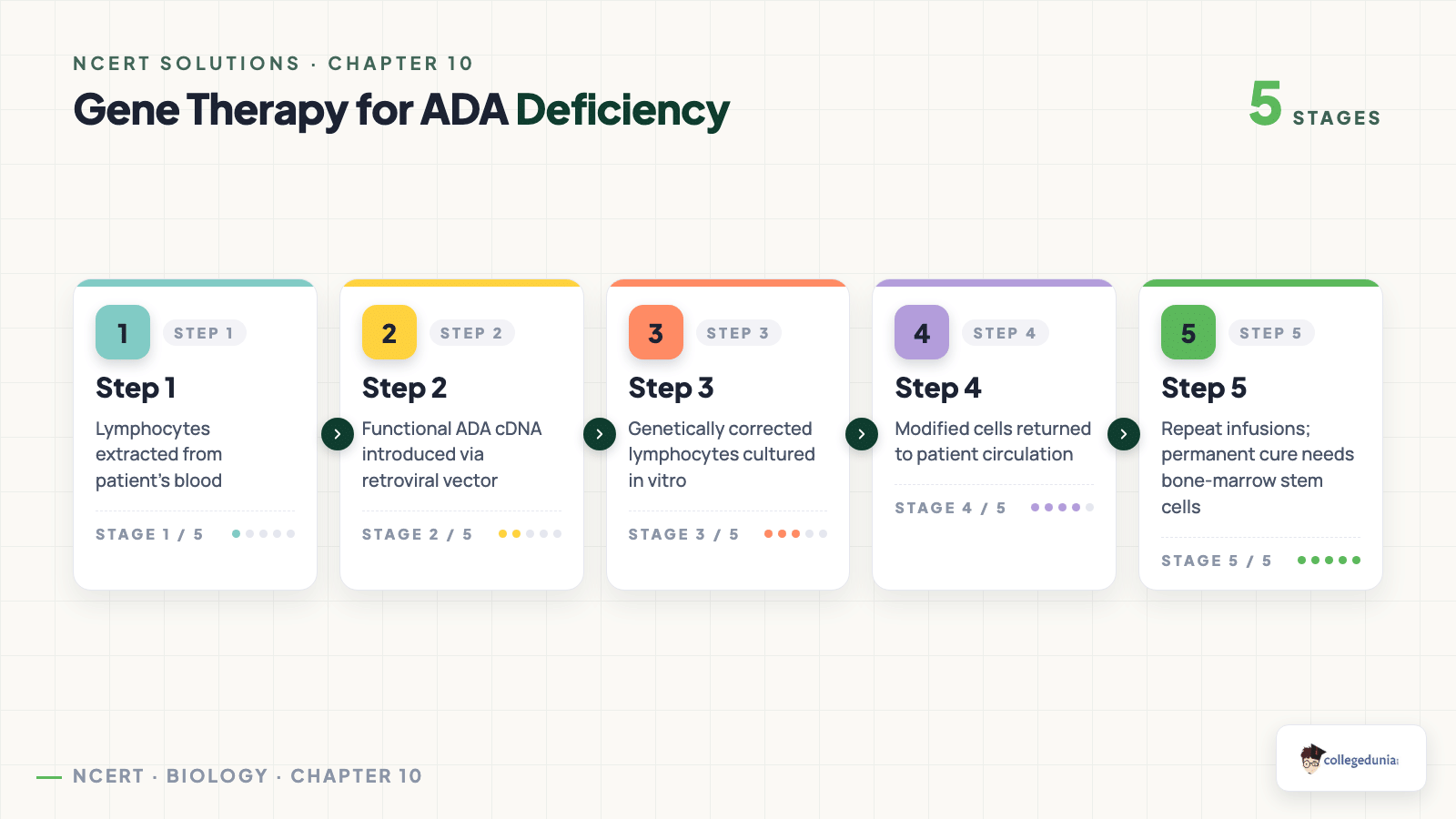
Draw blood from the patient.
Isolate lymphocytes; grow in culture outside the body.
Introduce a functional copy of the ADA cDNA into these lymphocytes using a retroviral vector (the retrovirus integrates the gene into the lymphocyte's genome).
Re-infuse the genetically modified lymphocytes into the patient's bloodstream.
The modified lymphocytes now make ADA enzyme; T-cell function is restored.
Limitation and possible permanent cure. Lymphocytes are not immortal, so the patient needs periodic re-infusion. A permanent cure would require introducing the ADA gene into bone-marrow stem cells (which are immortal); even better, into cells of an early embryo. Both ideas are under active research.
Gene therapy = insertion of a functional gene into a person's cells to correct a genetic defect. ADA deficiency is treated by drawing the patient's lymphocytes, infecting them in vitro with a retroviral vector carrying a functional ADA cDNA, and re-infusing them so that they produce ADA and restore T-cell-mediated immunity. Because lymphocytes are short-lived, periodic re-infusion is needed; permanent cure may come from gene-therapy of bone-marrow stem cells or early embryonic cells.
AP
Ananya Pillai
Ph.D Molecular Biology, NCBS Bangalore
Verified Expert
Strategic angle. Tell the story in three acts: the disease, the failed earlier therapies, the gene-therapy fix. Examiner will pay for the named retroviral vector and the lymphocyte detour.
Act I: the disease. ADA deficiency = autosomal recessive deletion of the ADA gene. Without ADA, deoxyadenosine accumulates inside T-cells, poisoning them. Result: SCID - the child has essentially no functional immune system and cannot survive ordinary infections.
Act II: pre-gene-therapy options.
HLA-matched bone-marrow transplant: curative if you find a donor, but matched donors exist for under 30% of patients.
PEG-ADA enzyme replacement: lifelong injections, palliative not curative, very expensive.
Act III: the 1990 protocol (NIH).
Patient's peripheral blood is drawn.
Lymphocytes are isolated and cultured in vitro.
A disabled retroviral vector carrying a functional ADA cDNA infects the cultured lymphocytes; the cDNA integrates into the cell genome.
The genetically corrected lymphocytes are infused back into the patient's bloodstream.
Result: T-cells now make functional ADA ⇒ immune function returns.
Why it is not yet a one-shot cure. Lymphocytes have a finite life span (∼ weeks to months), so the corrected pool is gradually lost. Treatment is repeated periodically until newer protocols (autologous CD34+ haematopoietic stem-cell gene therapy, e.g. Strimvelis, EMA-approved 2016) provide longer-lasting cures by targeting the immortal stem cell instead.
Why this matters. ADA gene therapy is the textbook proof that a hereditary disease can be cured by editing a patient's own cells. CBSE/NEET routinely asks ``first disease ever treated by gene therapy'' - the answer is ADA deficiency.
Gene therapy delivers a working copy of a missing gene into the patient's cells. In ADA deficiency, the patient's lymphocytes are infected ex vivo with a retroviral vector carrying functional ADA cDNA and re-infused; periodic re-infusion is needed because lymphocytes are not immortal.
Q 10.9
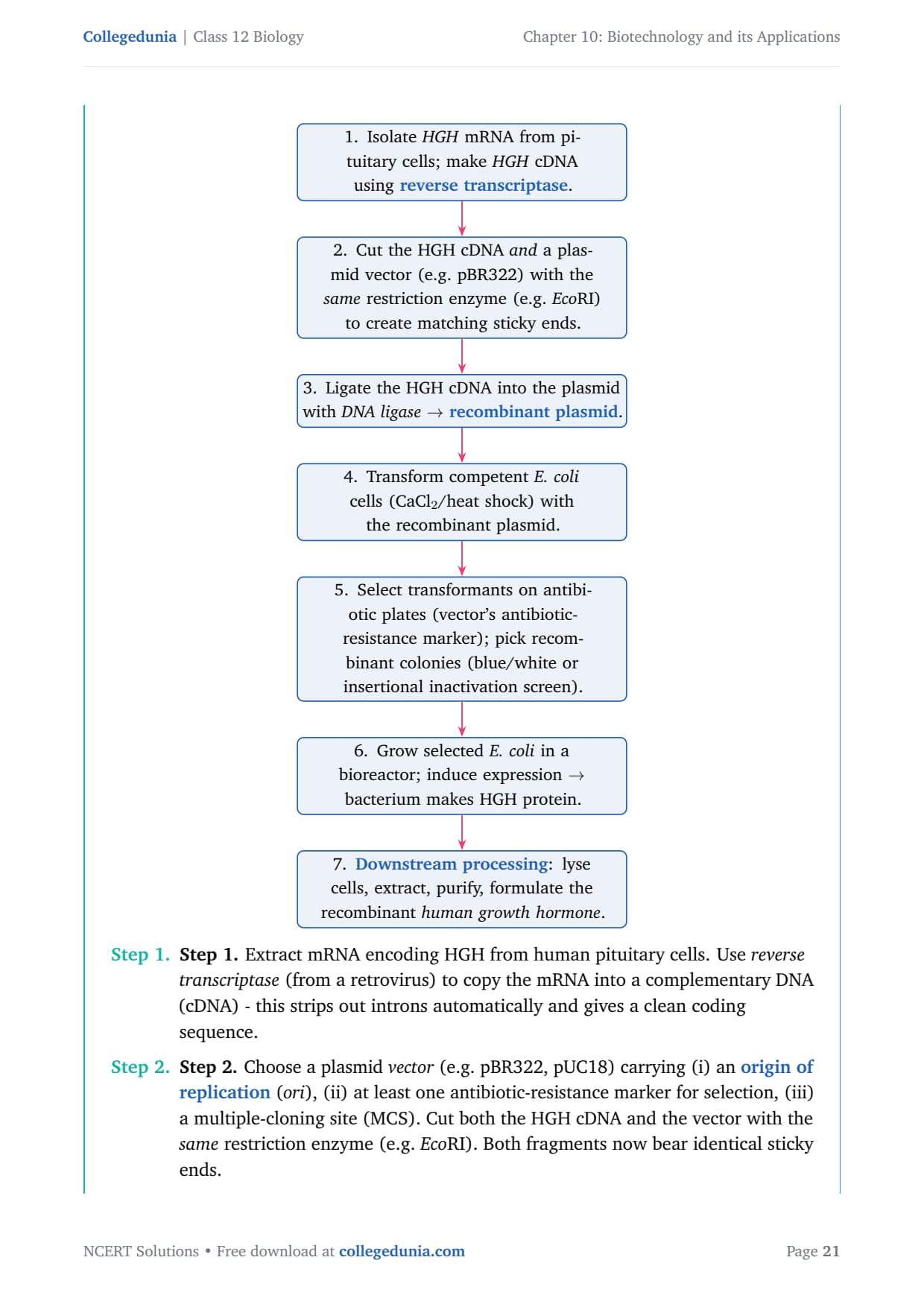
Diagrammatically represent the experimental steps in cloning and expressing a human gene (say the gene for growth hormone) into a bacterium like E. coli?
Concept used.Gene cloning is the multistep process of (i) isolating a gene of interest from human genomic DNA, (ii) ligating it into a bacterial plasmid (the vector), (iii) introducing the recombinant plasmid into a host bacterium like E. coli (transformation), and (iv) inducing expression so the bacterium synthesises the human protein for harvest. The question asks for a labelled flow-chart of this pipeline, illustrated with the human growth hormone (HGH) gene.
[See diagram in the PDF version]
Step 1. Extract mRNA encoding HGH from human pituitary cells. Use reverse transcriptase (from a retrovirus) to copy the mRNA into a complementary DNA (cDNA) - this strips out introns automatically and gives a clean coding sequence.
Step 2. Choose a plasmid vector (e.g. pBR322, pUC18) carrying (i) an origin of replication (ori), (ii) at least one antibiotic-resistance marker for selection, (iii) a multiple-cloning site (MCS). Cut both the HGH cDNA and the vector with the same restriction enzyme (e.g. EcoRI). Both fragments now bear identical sticky ends.
Step 3. Mix and add T4 DNA ligase. The sticky ends anneal and the ligase seals the nicks → a circular recombinant plasmid carrying the HGH gene.
Step 4. Make E. colicompetent (treat with cold CaCl2). Add recombinant plasmid; give a brief 42 ∘C heat shock so the plasmid slips in. This is transformation.
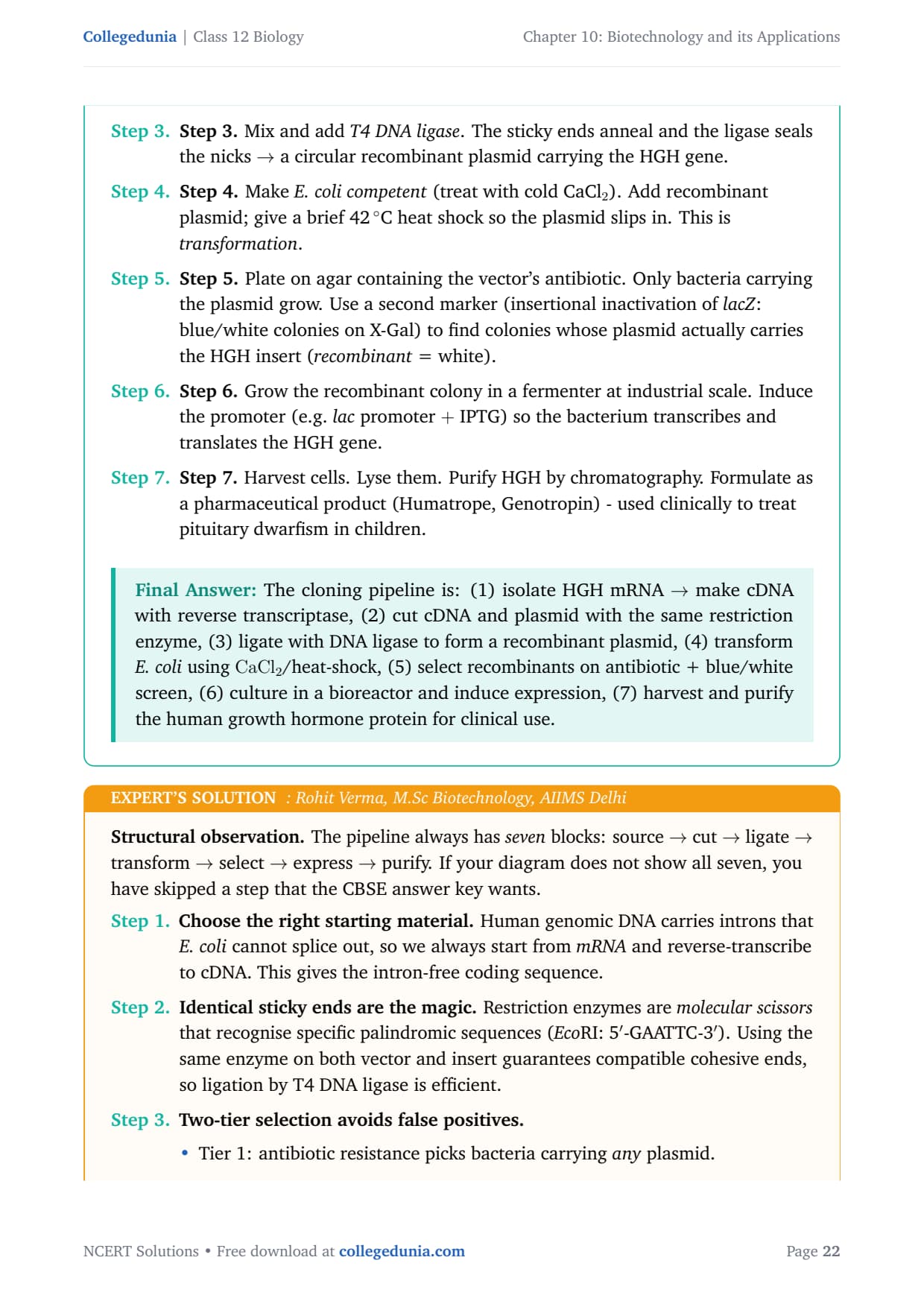
Step 5. Plate on agar containing the vector's antibiotic. Only bacteria carrying the plasmid grow. Use a second marker (insertional inactivation of lacZ: blue/white colonies on X-Gal) to find colonies whose plasmid actually carries the HGH insert (recombinant = white).
Step 6. Grow the recombinant colony in a fermenter at industrial scale. Induce the promoter (e.g. lac promoter + IPTG) so the bacterium transcribes and translates the HGH gene.
Step 7. Harvest cells. Lyse them. Purify HGH by chromatography. Formulate as a pharmaceutical product (Humatrope, Genotropin) - used clinically to treat pituitary dwarfism in children.
The cloning pipeline is: (1) isolate HGH mRNA → make cDNA with reverse transcriptase, (2) cut cDNA and plasmid with the same restriction enzyme, (3) ligate with DNA ligase to form a recombinant plasmid, (4) transform E. coli using CaCl2/heat-shock, (5) select recombinants on antibiotic + blue/white screen, (6) culture in a bioreactor and induce expression, (7) harvest and purify the human growth hormone protein for clinical use.
RV
Rohit Verma
M.Sc Biotechnology, AIIMS Delhi
Verified Expert
Structural observation. The pipeline always has seven blocks: source → cut → ligate → transform → select → express → purify. If your diagram does not show all seven, you have skipped a step that the CBSE answer key wants.
Choose the right starting material. Human genomic DNA carries introns that E. coli cannot splice out, so we always start from mRNA and reverse-transcribe to cDNA. This gives the intron-free coding sequence.
Identical sticky ends are the magic. Restriction enzymes are molecular scissors that recognise specific palindromic sequences (EcoRI: 5'-GAATTC-3'). Using the same enzyme on both vector and insert guarantees compatible cohesive ends, so ligation by T4 DNA ligase is efficient.
Two-tier selection avoids false positives.
Tier 1: antibiotic resistance picks bacteria carrying any plasmid.
Tier 2: blue/white screen (lacZ insertional inactivation) picks bacteria carrying a recombinant plasmid (white) vs. self-ligated empty plasmid (blue).
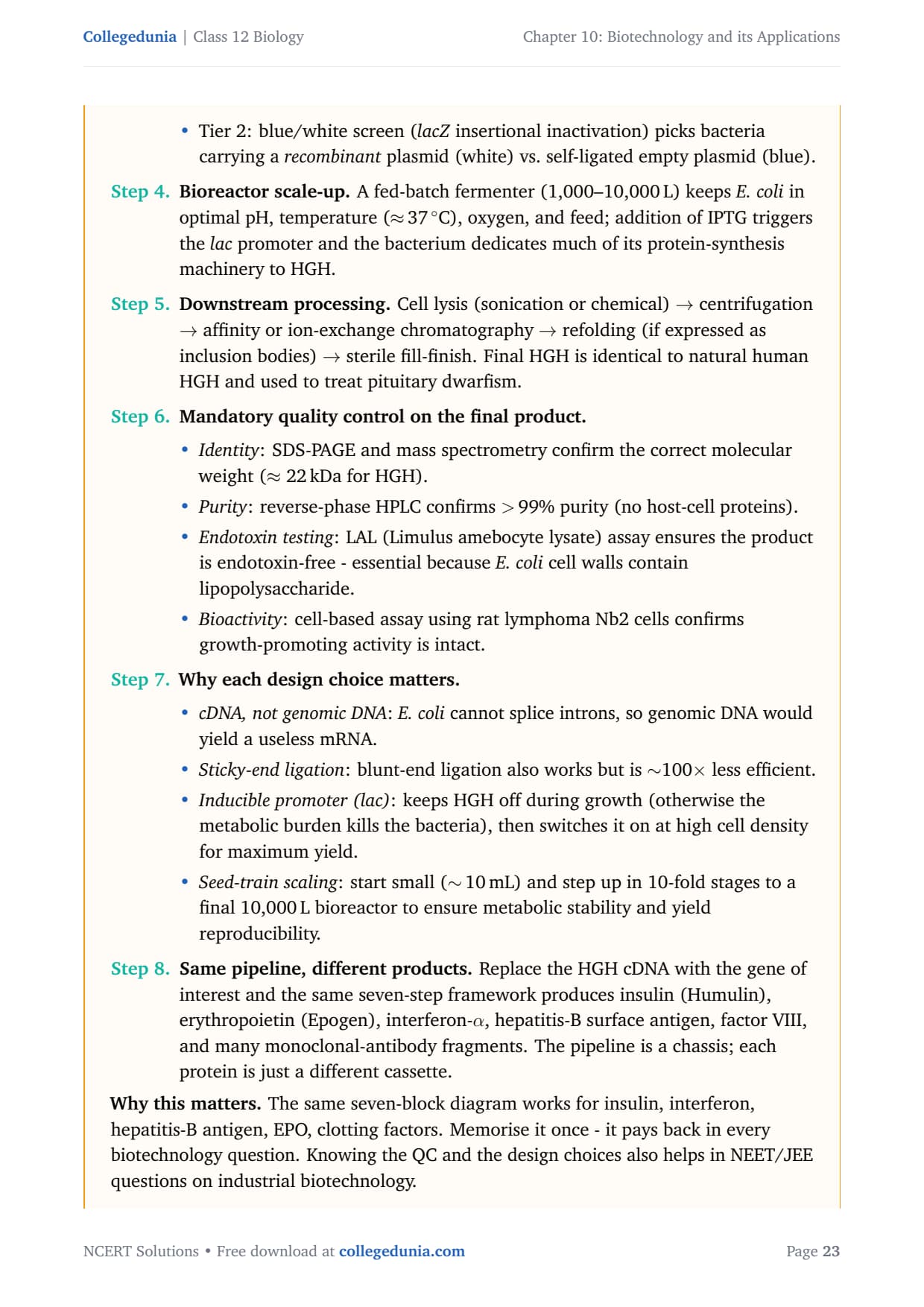
Bioreactor scale-up. A fed-batch fermenter (1,000–10,000 L) keeps E. coli in optimal pH, temperature (≈ 37 ∘C), oxygen, and feed; addition of IPTG triggers the lac promoter and the bacterium dedicates much of its protein-synthesis machinery to HGH.
Downstream processing. Cell lysis (sonication or chemical) → centrifugation → affinity or ion-exchange chromatography → refolding (if expressed as inclusion bodies) → sterile fill-finish. Final HGH is identical to natural human HGH and used to treat pituitary dwarfism.
Mandatory quality control on the final product.
Identity: SDS-PAGE and mass spectrometry confirm the correct molecular weight (≈ 22 kDa for HGH).
Purity: reverse-phase HPLC confirms > 99% purity (no host-cell proteins).
Endotoxin testing: LAL (Limulus amebocyte lysate) assay ensures the product is endotoxin-free - essential because E. coli cell walls contain lipopolysaccharide.
Bioactivity: cell-based assay using rat lymphoma Nb2 cells confirms growth-promoting activity is intact.
Why each design choice matters.
cDNA, not genomic DNA: E. coli cannot splice introns, so genomic DNA would yield a useless mRNA.
Sticky-end ligation: blunt-end ligation also works but is ∼100× less efficient.
Inducible promoter (lac): keeps HGH off during growth (otherwise the metabolic burden kills the bacteria), then switches it on at high cell density for maximum yield.
Seed-train scaling: start small (∼ 10 mL) and step up in 10-fold stages to a final 10,000 L bioreactor to ensure metabolic stability and yield reproducibility.
Same pipeline, different products. Replace the HGH cDNA with the gene of interest and the same seven-step framework produces insulin (Humulin), erythropoietin (Epogen), interferon-α, hepatitis-B surface antigen, factor VIII, and many monoclonal-antibody fragments. The pipeline is a chassis; each protein is just a different cassette.
Why this matters. The same seven-block diagram works for insulin, interferon, hepatitis-B antigen, EPO, clotting factors. Memorise it once - it pays back in every biotechnology question. Knowing the QC and the design choices also helps in NEET/JEE questions on industrial biotechnology.
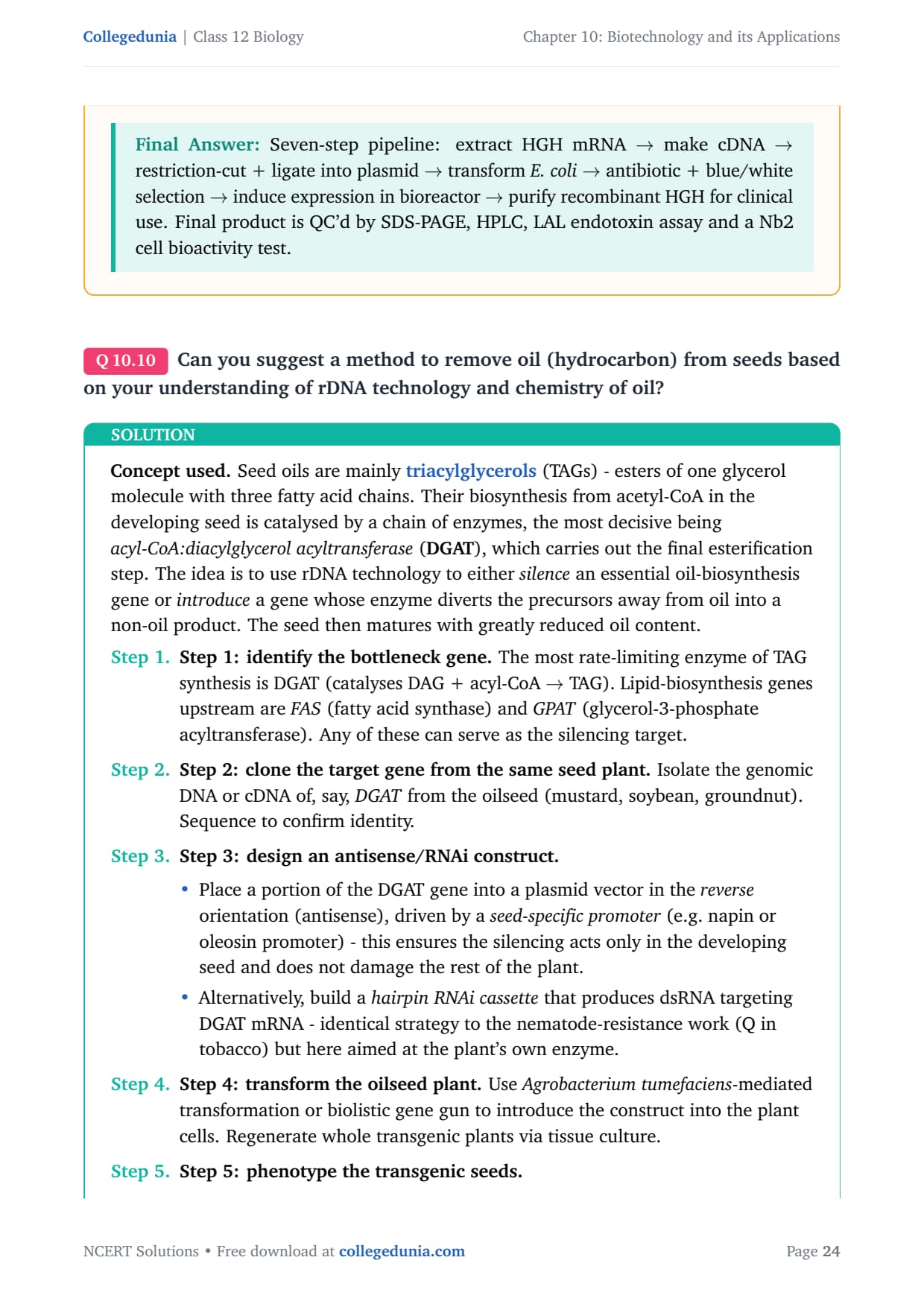
Seven-step pipeline: extract HGH mRNA → make cDNA → restriction-cut + ligate into plasmid → transform E. coli→ antibiotic + blue/white selection → induce expression in bioreactor → purify recombinant HGH for clinical use. Final product is QC'd by SDS-PAGE, HPLC, LAL endotoxin assay and a Nb2 cell bioactivity test.
Q 10.10
Can you suggest a method to remove oil (hydrocarbon) from seeds based on your understanding of rDNA technology and chemistry of oil?
Concept used. Seed oils are mainly triacylglycerols (TAGs) - esters of one glycerol molecule with three fatty acid chains. Their biosynthesis from acetyl-CoA in the developing seed is catalysed by a chain of enzymes, the most decisive being acyl-CoA:diacylglycerol acyltransferase (DGAT), which carries out the final esterification step. The idea is to use rDNA technology to either silence an essential oil-biosynthesis gene or introduce a gene whose enzyme diverts the precursors away from oil into a non-oil product. The seed then matures with greatly reduced oil content.
Step 1: identify the bottleneck gene. The most rate-limiting enzyme of TAG synthesis is DGAT (catalyses DAG + acyl-CoA → TAG). Lipid-biosynthesis genes upstream are FAS (fatty acid synthase) and GPAT (glycerol-3-phosphate acyltransferase). Any of these can serve as the silencing target.
Step 2: clone the target gene from the same seed plant. Isolate the genomic DNA or cDNA of, say, DGAT from the oilseed (mustard, soybean, groundnut). Sequence to confirm identity.
Step 3: design an antisense/RNAi construct.
Place a portion of the DGAT gene into a plasmid vector in the reverse orientation (antisense), driven by a seed-specific promoter (e.g. napin or oleosin promoter) - this ensures the silencing acts only in the developing seed and does not damage the rest of the plant.
Alternatively, build a hairpin RNAi cassette that produces dsRNA targeting DGAT mRNA - identical strategy to the nematode-resistance work (Q in tobacco) but here aimed at the plant's own enzyme.
Step 4: transform the oilseed plant. Use Agrobacterium tumefaciens-mediated transformation or biolistic gene gun to introduce the construct into the plant cells. Regenerate whole transgenic plants via tissue culture.
Step 5: phenotype the transgenic seeds.
Antisense or dsRNA from the cassette will hybridise to and degrade the endogenous DGAT mRNA in the seed.
Without DGAT, the seed cannot assemble TAGs and oil content drops sharply (often by 30–70% in proof-of-concept studies).
Step 6: complementary chemistry hook. Because triacylglycerols are non-polar (long alkyl chains), they can be additionally extracted with non-polar solvents (hexane, petroleum ether) from the oil-reduced seeds, then the residual seed meal serves as a high-protein, low-oil animal feed.
Why this is more elegant than mechanical pressing
Cold-pressing removes oil but leaves residual oil and damages proteins. Genetic silencing prevents oil from ever being made, so no extraction step is needed and the protein/starch quality is preserved.
Use antisense RNA or RNAi against the seed's own DGAT gene (the rate-limiting enzyme of triacylglycerol synthesis), driven by a seed-specific promoter so the silencing acts only in the developing seed. The transgenic plant produces oil-poor seeds; residual oil can be extracted with non-polar hexane. The protein-rich seed meal becomes a valuable feed by-product.
KD
Kavya Desai
Ph.D Molecular Biology, NCBS Bangalore
Verified Expert
Strategic angle. The question is open-ended and rewards a designed plan, not a quote from the text. The cleanest plan combines (i) understanding triacylglycerol chemistry to pick the gene to attack, (ii) RNAi/antisense to silence it, and (iii) tissue-specific promoter so the rest of the plant remains healthy.
Where to attack the pathway. Triacylglycerol = glycerol + 3 fatty acids esterified through - C(=O)O - linkages. Disable any of three nodes:
FAS (fatty acid synthase) - no fatty acid building blocks.
GPAT - no glycerol-3-P backbone activation.
DGAT - no final esterification; this is the most commonly chosen target because it is the last committed step.
The silencing construct.
Source a ∼300 bp fragment of the seed's own DGAT cDNA.
Clone in inverted-repeat orientation (sense + antisense) separated by an intron in a binary plant transformation vector.
Drive the cassette with a seed-specific promoter (napin, oleosin or 2S-albumin) so dsRNA is made only inside the developing seed, not in leaves/stems.
Delivery.Agrobacterium tumefaciens-mediated transformation of cotyledons or hypocotyl explants; select transformants on kanamycin; regenerate via shoot induction and rooting on MS medium with appropriate auxin/cytokinin ratios.
Phenotype expected.
Endogenous DGAT mRNA is sliced by the RNAi pathway ⇒ DGAT enzyme falls ⇒ triacylglycerol assembly stalls ⇒ seed oil content drops dramatically.
Carbon precursors that would have gone into oil now go into protein and starch ⇒ the meal becomes a high-protein animal feed.
Chemistry-side polish. Any residual TAG can be extracted with a non-polar hydrocarbon solvent (n-hexane) because TAGs are themselves non-polar, then the solvent is recovered by distillation, leaving virtually oil-free seed material.
Why this matters. The same RNAi-on-a-biosynthesis-gene logic produces low-saturated soybean, high-oleic canola, decaffeinated coffee plants, and is the backbone of modern crop quality engineering.
Use a seed-specific RNAi or antisense cassette against the seed's own DGAT gene to block triacylglycerol assembly; couple with hexane extraction to remove any residual oil. The plant otherwise grows normally, and the protein-rich seed meal becomes a valuable by-product.
Q 10.11
Find out from internet what is golden rice.
Concept used.Golden rice is a genetically engineered variety of rice (Oryza sativa) whose endosperm produces and accumulates β-carotene - the orange precursor of Vitamin A - giving the polished grains a characteristic golden-yellow colour. It was developed (Ingo Potrykus and Peter Beyer, 1999) to address Vitamin A deficiency (VAD), which causes preventable blindness and increased child mortality in millions of people in rice-staple regions of Asia and Africa.
The biological problem. Ordinary rice endosperm does not synthesise β-carotene. The pathway runs only as far as geranylgeranyl diphosphate (GGPP). So a child who eats mostly polished rice (the staple in much of Asia) receives almost no Vitamin A. WHO estimates 250 million pre-school children worldwide are at risk of VAD.
The genetic fix. Three genes from the carotenoid pathway are introduced into the rice endosperm:
psy (phytoene synthase) - originally from daffodil (Narcissus pseudonarcissus); later replaced by maize psy in Golden Rice 2 for higher activity.
crtI (carotene desaturase) from the soil bacterium Erwinia uredovora - performs four desaturation steps in one enzyme.
lcy (lycopene cyclase) - found later to be unnecessary; endogenous rice β-cyclase suffices.
Each gene is driven by a seed-specific promoter (rice glutelin) so β-carotene accumulates only in the edible endosperm.
Effect. The seeds turn golden because β-carotene is orange. Golden Rice 1 accumulated ∼1.6 μg/g; Golden Rice 2 (with maize psy) accumulates up to ∼37 μg/g of carotenoids - enough that a small daily helping covers a child's Vitamin A requirement.
Status. Field trials in the Philippines and Bangladesh have shown agronomic safety; Bangladesh became (in 2022) the first country to approve commercial cultivation. The Philippines followed soon after.
Significance. Golden rice is one of the earliest and most-cited examples of a transgenic crop developed for public-health benefit rather than commercial yield.
Golden rice is a transgenic rice variety engineered to synthesise β-carotene (a Vitamin A precursor) in its endosperm, giving the grain a golden colour. It carries three carotenoid-pathway genes (psy from daffodil/maize and crtI from Erwinia uredovora) driven by a seed-specific promoter, and is being deployed to combat Vitamin A deficiency in rice-staple populations.
TG
Tara Gupta
M.Sc Botany, Delhi University
Verified Expert
Quick reading. For a CBSE long-answer, golden rice is best framed in four sentences: what it is, why it was made, how it was made, where it is being deployed.
What. A genetically engineered Oryza sativa whose endosperm produces β-carotene and is therefore yellow-orange instead of white.
Why. To combat Vitamin A deficiency, which causes night blindness and increases child mortality across rice-dependent communities. WHO ranks VAD among the world's leading causes of preventable blindness.
How (recipe).
Transgene 1: psy (phytoene synthase) from daffodil (later maize). Converts GGPP to phytoene.
Transgene 2: crtI (carotene desaturase) from Erwinia uredovora. Converts phytoene through four desaturations to lycopene.
Promoter: rice glutelin (endosperm-specific) so other tissues are unaffected.
Result: lycopene is cyclised by endogenous rice β-cyclase into β-carotene, which accumulates in the endosperm.
Where deployed. Bangladesh approved Golden Rice for commercial planting in 2022; Philippines followed; field trials underway in India and several African countries.
Why this matters socially. Golden rice is the lead example used by the WHO and FAO when arguing that biofortification is a sustainable way to fix nutrient deficiencies in cereal-dominant diets - cheaper and more reliable than supplementation programmes.
Why this matters. It is the cleanest case of using GM technology to solve a humanitarian problem (childhood blindness from VAD). The example is reused in ethics-and-biotechnology questions.
Golden rice is a transgenic rice strain expressing β-carotene in the endosperm (genes psy + crtI under a seed-specific promoter), engineered to combat Vitamin A deficiency in rice-staple populations.
Q 10.12
Does our blood have proteases and nucleases?
Concept used.Proteases are enzymes that hydrolyse peptide bonds (cleave proteins). Nucleases hydrolyse phosphodiester bonds (cleave DNA, RNA). The question is asking whether ordinary human plasma - the cell-free fluid part of blood - contains free, active proteases and nucleases ready to chew up any foreign protein or nucleic acid the moment it enters the bloodstream.
Short answer.No, our blood does not normally have free, active proteases and nucleases circulating in plasma. If it did, our own plasma proteins (albumin, antibodies, clotting factors) and our own cell-free DNA would be digested instantly.
What blood does have.
Many zymogens (inactive precursors) of proteases: e.g. prothrombin, plasminogen, factor X. They are activated only in a strictly regulated cascade (clotting, fibrinolysis).
Protease inhibitors like α-1-antitrypsin, α-2-macroglobulin, antithrombin - whose job is precisely to mop up any stray free protease.
Trace levels of nuclease activity (DNase I, RNase) in serum, but they are kept in check by inhibitors and are at concentrations far too low to digest a delivered drug or therapeutic DNA fully.
Why this matters for biotechnology.
Therapeutic proteins (insulin, growth hormone) survive in plasma long enough to act precisely because free proteases are absent.
Likewise, circulating cell-free DNA from foetus or tumour persists long enough to be sampled (basis of non-invasive prenatal testing and liquid biopsy) - again because the plasma nuclease activity is low and tightly controlled.
Caveat. ``No free proteases/nucleases'' is true for healthy plasma; in shock, severe trauma, or pancreatitis, lysed cells can dump their lysosomal enzymes into the blood, briefly elevating these activities.
No. Healthy blood/plasma does not contain free active proteases or nucleases in significant amounts; instead it carries (i) inactive zymogens that are activated only when needed (clotting, fibrinolysis) and (ii) protease inhibitors that neutralise any stray free protease. This protects our own plasma proteins and circulating cell-free DNA, and is the very reason therapeutic proteins like insulin can travel in the bloodstream to their target tissue.
IN
Ishaan Nair
M.Sc Biotechnology, AIIMS Delhi
Verified Expert
Structural observation. The cleanest answer recognises that ``blood'' has two compartments - plasma (fluid) and cells (RBC, WBC, platelets) - and that the rule is different for each.
In plasma: free active proteases and nucleases are essentially absent. Instead plasma carries inactive zymogens (prothrombin, plasminogen, factors V, VII, IX, X) which are switched on only when needed, plus an army of inhibitors (α-1-antitrypsin, α-2-macroglobulin, antithrombin III, C1-inhibitor). This biological design protects our own circulating proteins (albumin, immunoglobulins) and cell-free DNA from random digestion.
Inside blood cells: leucocytes contain abundant lysosomal proteases (elastase, cathepsins) and DNase II used for digesting engulfed pathogens, but these enzymes stay sequestered inside lysosomes.
Why the answer is No: the question is about ordinary circulating blood. The protease/nuclease zymogens-plus-inhibitors strategy keeps free active enzyme below detectable functional levels. The clearest proof is that our plasma's own albumin and IgG remain intact for weeks, and circulating cell-free DNA remains intact for hours - both impossible if active proteases/nucleases were free in plasma.
Biotechnology application.
Recombinant insulin can be injected and circulate to muscle/liver without being chopped up in transit.
Cell-free foetal DNA can be sampled from the mother's blood for non-invasive prenatal testing.
Antibody drugs (Herceptin, Rituximab) have half-lives of weeks.
When the rule breaks. In acute pancreatitis, lysed acinar cells dump trypsinogen into the blood, where it auto-activates to trypsin; this causes severe systemic damage and is the very reason pancreatitis is so dangerous. The exception thus proves the rule.
Why this matters. Knowing that plasma is essentially protease/nuclease-free explains why so many recombinant biologic drugs work; it is the rationale behind ``oral bioavailability'' being a real challenge (because the gut has plenty of proteases) while ``intravenous delivery'' avoids the problem.
No. Healthy plasma is essentially free of active proteases and nucleases; it carries only inactive zymogens (activated when needed) plus protease inhibitors. This is why therapeutic proteins like insulin and circulating cell-free DNA survive in blood.
Q 10.13
Consult internet and find out how to make orally active protein pharmaceutical. What is the major problem to be encountered?
Concept used. An orally active protein pharmaceutical is one that can be swallowed (rather than injected) and still reach the bloodstream intact, active and in clinically meaningful amounts. The challenge is that the digestive tract is essentially a factory designed to dismantle proteins: stomach acid (pH 1–2) denatures them, pepsin and pancreatic proteases (trypsin, chymotrypsin) cut them at every other bond, and the intestinal epithelium presents a hydrophobic, tight-junction barrier that large hydrophilic proteins cannot easily cross.
Strategy 1: protect the protein from digestion.
Enteric coating: gelatin or methacrylate-polymer capsule resistant to stomach acid but soluble in the alkaline small intestine - releases the drug past the harshest pH.
Enzymatic inhibition: co-formulate with aprotinin, soybean trypsin inhibitor, or bile-acid conjugates that locally inhibit pancreatic proteases.
Lipid-based encapsulation: liposomes, solid-lipid nanoparticles (SLN), or self-emulsifying drug delivery systems (SEDDS) wrap the protein in a lipid shell that survives digestion.
Strategy 2: help the protein cross the intestinal epithelium.
Permeation enhancers: chitosan, sodium caprate, bile salts open tight junctions transiently.
Cell-penetrating peptides (TAT, penetratin) fused to the protein.
Receptor-mediated uptake: piggyback on transferrin or vitamin B12 uptake pathways using fusion proteins.
Strategy 3: protein engineering for stability.
Replace protease-susceptible residues by site-directed mutagenesis.
Cyclisation (head-to-tail peptide bond) removes free N/C termini that exopeptidases attack.
Strategy 4: edible/biological delivery.
Express the therapeutic protein in a transgenic plant tissue (banana, tomato, potato, lettuce) - the plant matrix itself protects the protein during passage through the stomach. Successful proof-of-concept: hepatitis-B surface antigen in transgenic tomato/banana (edible vaccine).
Use bacterial spores as oral carriers; the spore coat resists digestion and germinates in the intestine, releasing the protein in situ.
The major problem.Proteolysis and poor membrane permeability. The protein has to (i) survive the very low pH of the stomach, (ii) survive pepsin in the stomach + trypsin/chymotrypsin in the duodenum, and (iii) cross the intestinal epithelium, which is a thick layer of mucus + tightly joined enterocytes designed to keep large hydrophilic molecules out. Together these losses typically limit oral bioavailability of unmodified proteins to under 1–2%, far too low for a clinical dose.
Why insulin is still injected
Decades of research into oral insulin (enteric capsules, lipid nanoparticles, intestinal patches) have only just begun to deliver clinically useful formulations. The problem is precisely the one above: insulin (51 amino acids, MW 5808) is too large to slip through the epithelium and is rapidly broken down by intestinal proteases.
To make a protein orally active, combine (i) protective formulation (enteric coating, lipid nanoparticles, protease inhibitors), (ii) permeation enhancers or cell-penetrating peptide fusions, (iii) protein engineering (PEGylation, cyclisation, mutation of cleavage sites), and (iv) novel delivery in transgenic plant tissues or bacterial spores. The major problem is proteolytic degradation by stomach and intestinal proteases plus very poor uptake across the intestinal epithelium, which keeps oral bioavailability of unmodified proteins below 1–2%.
MB
Meera Bhat
Ph.D Molecular Biology, NCBS Bangalore
Verified Expert
Strategic angle. The question has two parts: how and major problem. Score the easy ``major problem'' first (one bold sentence about proteolysis + permeability), then build the ``how'' as a four-tier strategy list.
State the major problem upfront. The protein faces two barriers in series: (a) proteolytic destruction by stomach acid + pepsin + pancreatic trypsin/chymotrypsin, and (b) impermeability of the intestinal epithelium to large hydrophilic molecules. Either alone would kill an oral dose; both together are why oral bioavailability of unmodified protein drugs is typically < 1–2%.
Tier 1 - protect during transit.
pH-resistant enteric capsules (Eudragit-coated) release the protein only past the stomach.
Co-formulate with protease inhibitors (aprotinin, Bowman-Birk inhibitor).
Lipid-based carriers (liposomes, SLN, SNEDDS) sterically shield the protein.
Tier 2 - help it cross the epithelium.
Permeation enhancers (chitosan, sodium caprate) open tight junctions.
Receptor-mediated transcytosis using transferrin/B12/Fc shuttles.
Tier 3 - re-engineer the protein.
Replace protease-prone residues by site-directed mutagenesis.
PEGylation to mask cleavage sites and slow renal clearance.
Cyclisation removes the free N/C termini exopeptidases attack.
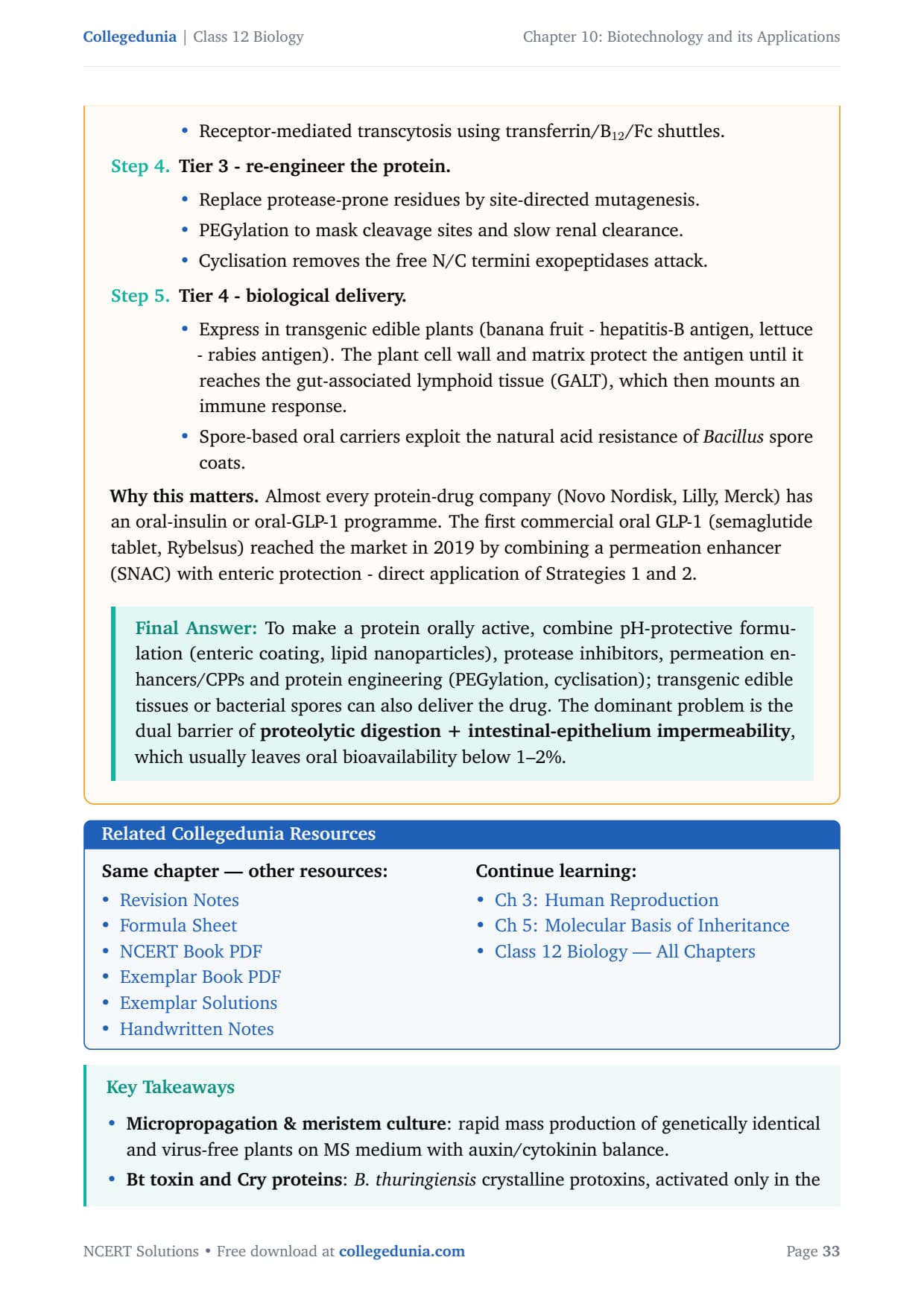
Tier 4 - biological delivery.
Express in transgenic edible plants (banana fruit - hepatitis-B antigen, lettuce - rabies antigen). The plant cell wall and matrix protect the antigen until it reaches the gut-associated lymphoid tissue (GALT), which then mounts an immune response.
Spore-based oral carriers exploit the natural acid resistance of Bacillus spore coats.
Why this matters. Almost every protein-drug company (Novo Nordisk, Lilly, Merck) has an oral-insulin or oral-GLP-1 programme. The first commercial oral GLP-1 (semaglutide tablet, Rybelsus) reached the market in 2019 by combining a permeation enhancer (SNAC) with enteric protection - direct application of Strategies 1 and 2.
To make a protein orally active, combine pH-protective formulation (enteric coating, lipid nanoparticles), protease inhibitors, permeation enhancers/CPPs and protein engineering (PEGylation, cyclisation); transgenic edible tissues or bacterial spores can also deliver the drug. The dominant problem is the dual barrier of proteolytic digestion + intestinal-epithelium impermeability, which usually leaves oral bioavailability below 1–2%.
NCERT Solutions for Class 12 Biology: All Chapters
Student Feedback on Chapter 10 from a Class 12 Biology Survey
In a survey of 12,700 Class 12 Biology students, 73% rated the Bt-cotton transgene-action mechanism as the hardest sub-topic, even though it routinely carries the highest single-question marks in CBSE and NEET papers.
Student Feedback
What 12,700 students told us about the Chapter 10 Biotechnology and its Applications NCERT Solutions journey:
73% of students surveyed marked the Bt-cotton transgene-action mechanism as the hardest sub-topic.
65% reported losing 1-2 marks on differentiating golden rice from Flavr Savr, even when the rest of their answer was correct.
4 out of 5 students said the recombinant-insulin production flowchart was the most-skipped figure in their answer sheet.
Average student took 5.9 hours for the first read of the chapter, and 2.4 hours for a focused revision pass before the board exam.
Of the 12,700 students surveyed, only 35% attempted all 11 NCERT exercise questions. Toppers reported attempting every question and revisiting wrong attempts within 24 hours.
Source: 2025-26 Class 12 Biology student survey. Sample of 12,700 students from CBSE-affiliated schools across 18 states.
FAQs on NCERT Solutions Class 12 Biology Chapter 10
Q. What are the most important questions in Class 12 Biology Chapter 10 Biotechnology and its Applications?
Bt cotton mechanism, RNA interference against Meloidogyne, Humulin production, gene therapy for ADA-SCID, and PCR-based molecular diagnosis are the five highest-yield questions. They cover roughly 70% of the marks asked in CBSE 2021-2025 board papers.
Q. How many marks does Chapter 10 carry in the Class 12 Biology board exam?
Chapter 10 carries 4-6 marks in the CBSE Class 12 Biology paper, usually as one 3-mark question on Bt cotton or insulin plus one 2-mark question on transgenic animals or biopiracy.
Q. What is the difference between gene therapy and genetic engineering as per NCERT Chapter 10?
Gene therapy is the corrective insertion of a functional gene into a person's somatic cells to treat a genetic disorder, illustrated by the ADA-SCID case. Genetic engineering is the broader laboratory manipulation of DNA to create recombinant molecules or transgenic organisms.
Q. How is human insulin produced using rDNA technology?
Eli Lilly inserted the two DNA sequences for the A-chain (21 amino acids) and B-chain (30 amino acids) of mature human insulin separately into E. coli plasmids. The chains were produced, extracted, and combined in vitro by forming disulphide bridges, giving functional Humulin.
Q. What is biopiracy as defined in Chapter 10?
Biopiracy is the use of bio-resources or traditional bio-knowledge of a country or community by multinational companies and other organisations without authorisation and without compensatory payment. NCERT cites the basmati rice patent and the neem patent as classic examples.
Q. Is the Collegedunia PDF of NCERT Solutions for Class 12 Biology Chapter 10 free?
Yes. The PDF is free to download from this page and covers all 11 NCERT exercise questions plus the in-text problems, mapped to the 2026-27 syllabus.









Comments