




Biodiversity and Conservation is a high-yield Ecology chapter for NEET and CBSE Class 12 boards. The NCERT text covers species-area slopes, IUCN Red List numbers, the Evil Quartet, and in-situ vs ex-situ conservation methods. This page hosts the verified 2026-27 NCERT reprint PDF, free to download and revise offline.
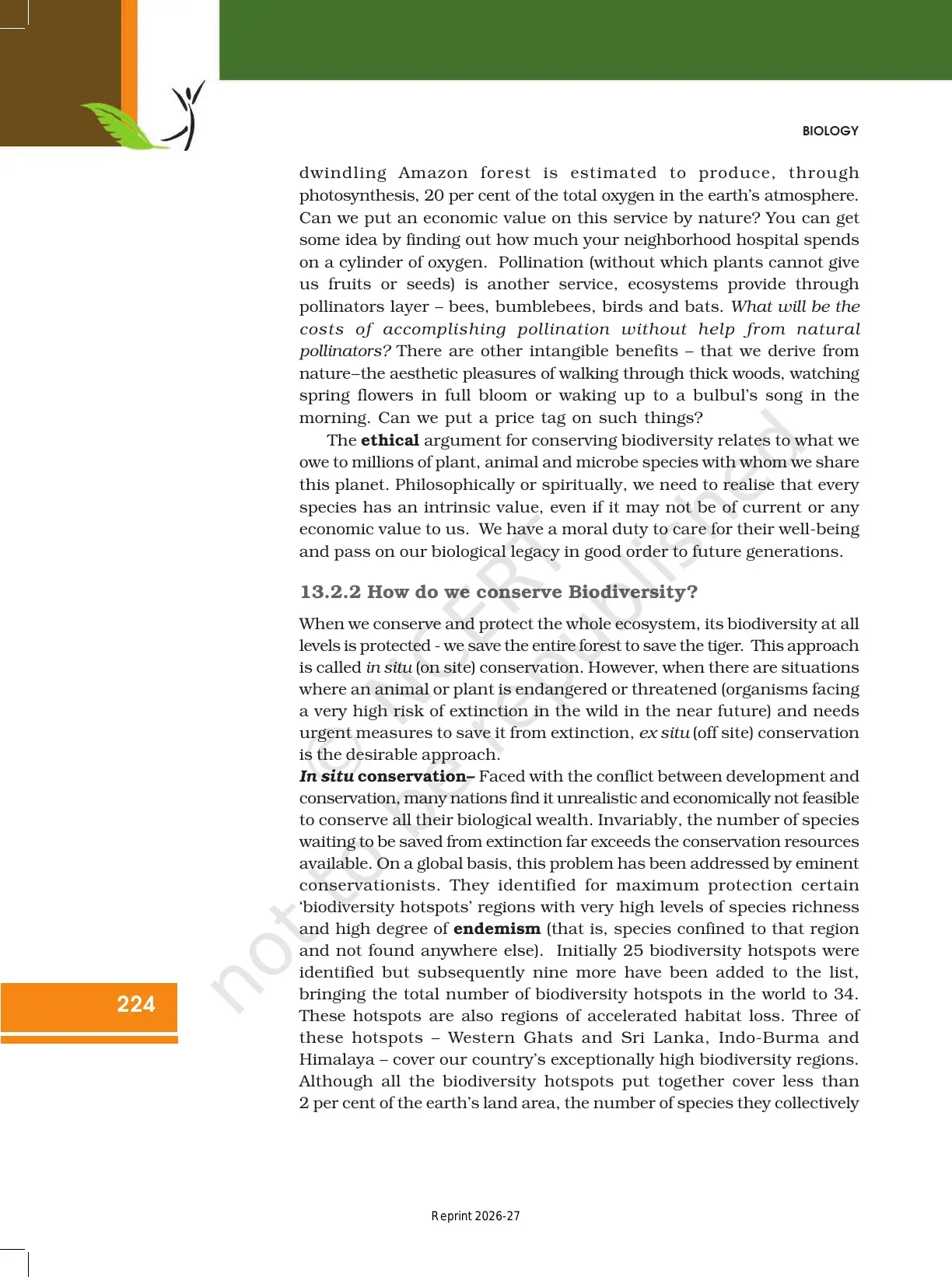
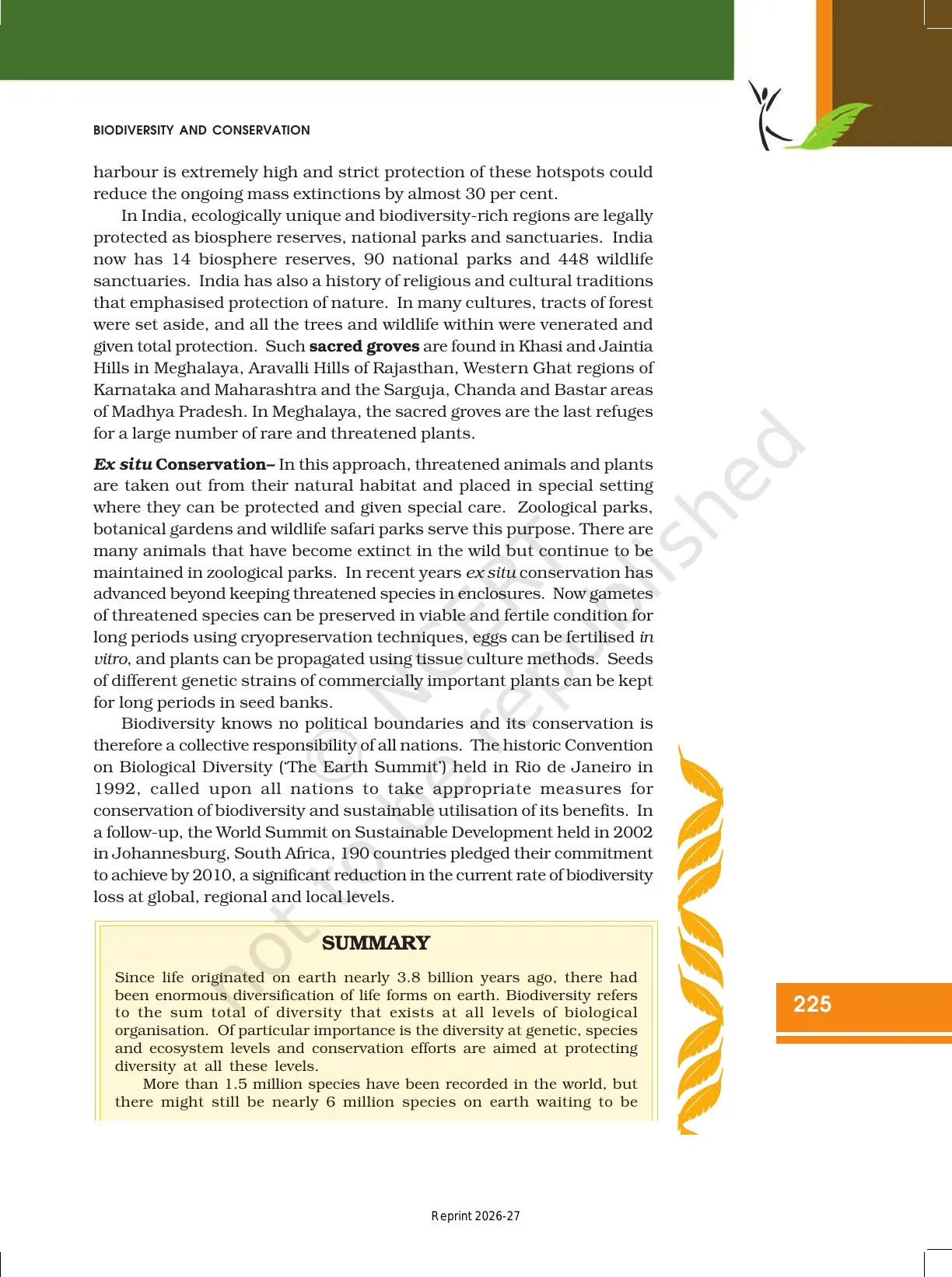
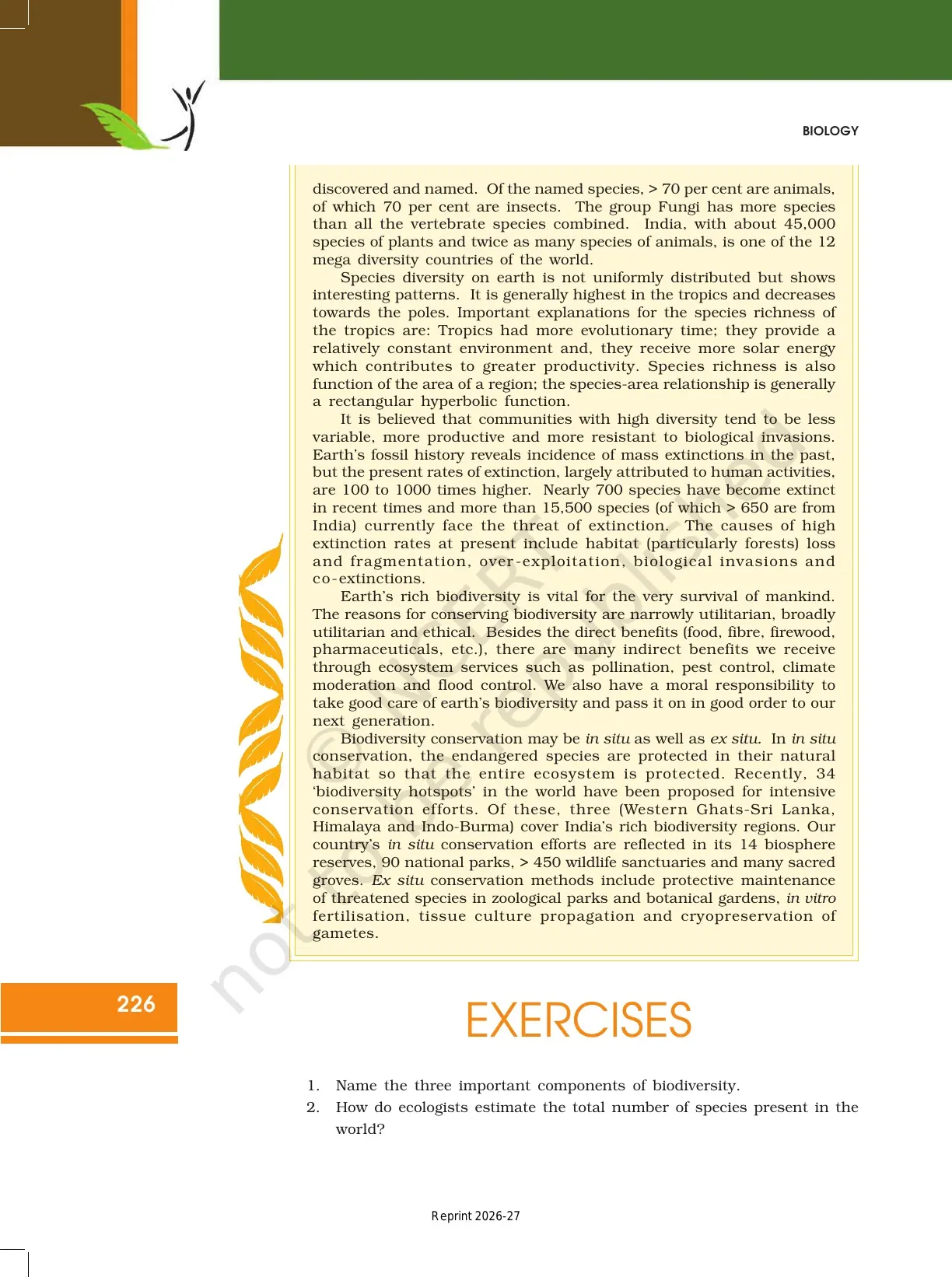
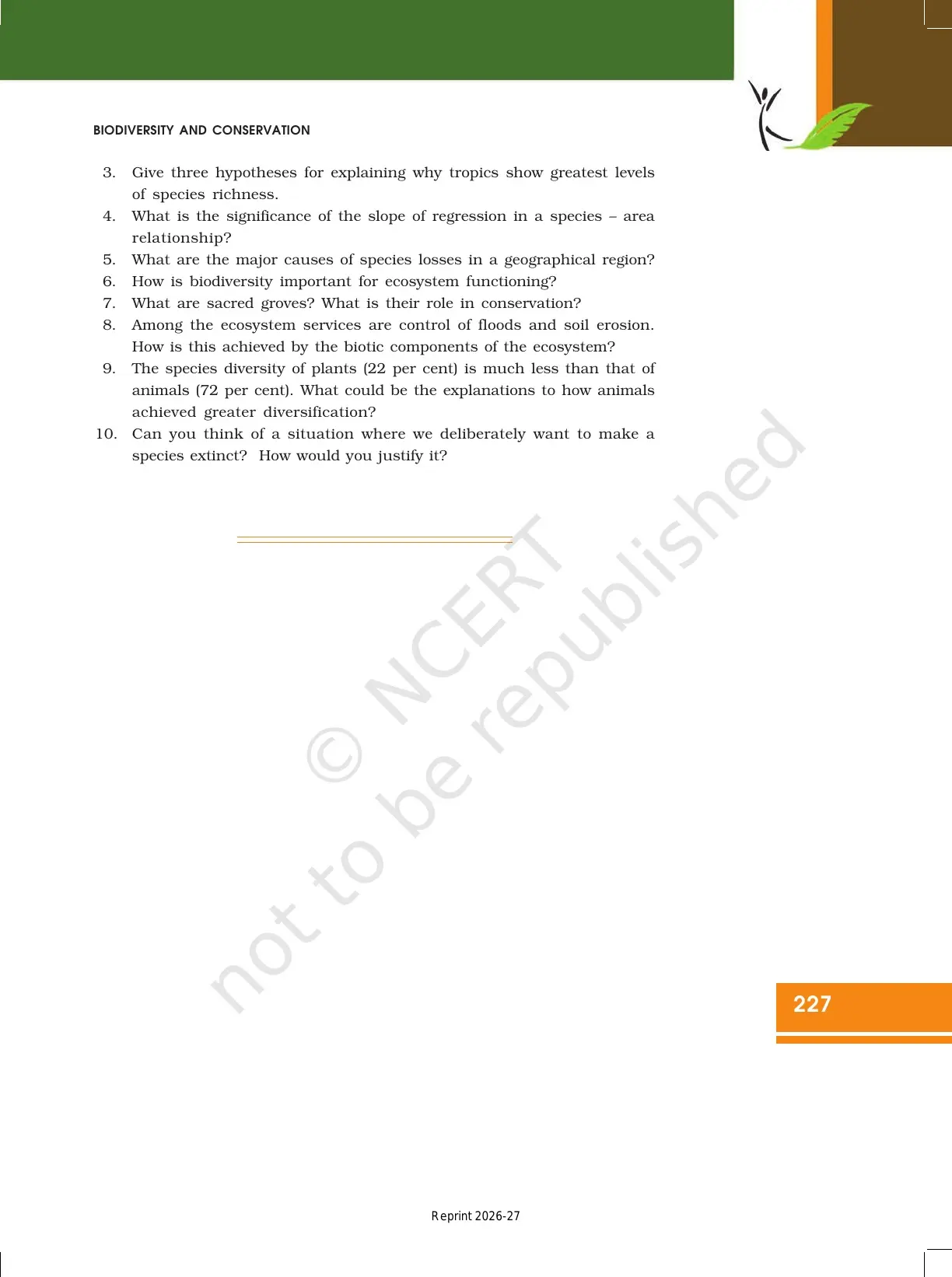

- CBSE Weightage: 4-6 marks from the Ecology unit, usually one 2-mark question plus one 3-mark or 5-mark long answer.
- NEET Weightage: 2-3 questions across recent NEET papers from the Ecology and Environment unit.
- CUET Weightage: 3-4 MCQs from the Biology domain section, mostly fact-recall on hotspots, Red List categories and conservation acronyms.
Biodiversity and Conservation Video Lecture for Class 12 Biology
Source: Competition Wallah on YouTube
Why Biodiversity and Conservation Matters for Class 12 Biology
Ecology contributes the largest single unit weightage in the NEET Biology paper - roughly 14 questions across the three Ecology chapters. The CBSE Biology paper assigns 10-12 marks to Ecology overall. Biodiversity and Conservation is the most fact-dense of the three chapters because it carries named lists, numerical estimates and conservation acronyms that translate directly into MCQ stems and short-answer questions. A careful read of the NCERT PDF is enough to attempt almost every question the chapter generates.
The chapter is also the most current. It is the only Class 12 Biology chapter that touches active policy: India's Wildlife Protection Act, Biological Diversity Act, sacred groves, the Rio and Nagoya conventions, and the Ramsar wetland list. Examiners frequently update the policy facts every two to three years, so the 2026-27 reprint is the version students must read.
How will Collegedunia's NCERT Book PDF Help You?
The Collegedunia mirror of the Class 12 Biology Chapter 13 PDF gives students the exact NCERT-published file for 2026-27, not a rewritten copy. The text layer is searchable, the figures retain their original Fig. 15.x labels, and the file is small enough to keep on a low-storage phone for revision before the board exam.
- Verified 2026-27 reprint with no third-party edits.
- Downloadable for offline revision in low-bandwidth zones.
- Searchable text layer - use Ctrl+F for terms like hotspots, Red List, Project Tiger, sacred groves.
- Cross-linked from the Collegedunia NCERT Solutions and Notes pages for this chapter.
NEET Question Map for the Biodiversity Chapter
This chapter has produced at least one NEET question every year for the last six attempts. The table below shows which sub-sections test-setters favour, so students know where to slow down during the NCERT read.
| NEET Year | Sub-section Probed | Question Type |
|---|---|---|
| 2025 | 15.3 Patterns of Biodiversity (species-area relationship) | MCQ on the slope value Z |
| 2024 | 15.1 + 15.2 Biodiversity levels and Rivet-popper hypothesis | Statement-match MCQ |
| 2023 | 15.6 Biodiversity hotspots in India | Direct-recall MCQ on the four hotspots |
| 2022 | 15.4 Loss of Biodiversity (Evil Quartet) | Assertion-Reason MCQ |
| 2021 | 15.5 Conservation (in-situ vs ex-situ) | MCQ on sacred groves vs biosphere reserves |
The two most repeated sub-sections are 15.3 (Patterns) and 15.6 (Hotspots). Both reward exact numbers from the NCERT text, so memorising the figures during the PDF read is non-negotiable for NEET.
What is Inside the Biodiversity and Conservation NCERT Book Chapter
Chapter 13 runs across roughly 15 pages and is part of Unit X, Ecology and Environment. The text moves from definitions and levels of biodiversity through patterns and loss, ending with the conservation framework.
| Section | Topic | Key Concepts Discussed |
|---|---|---|
| 15.1 | Biodiversity | Genetic, species and ecosystem diversity; alpha, beta and gamma diversity |
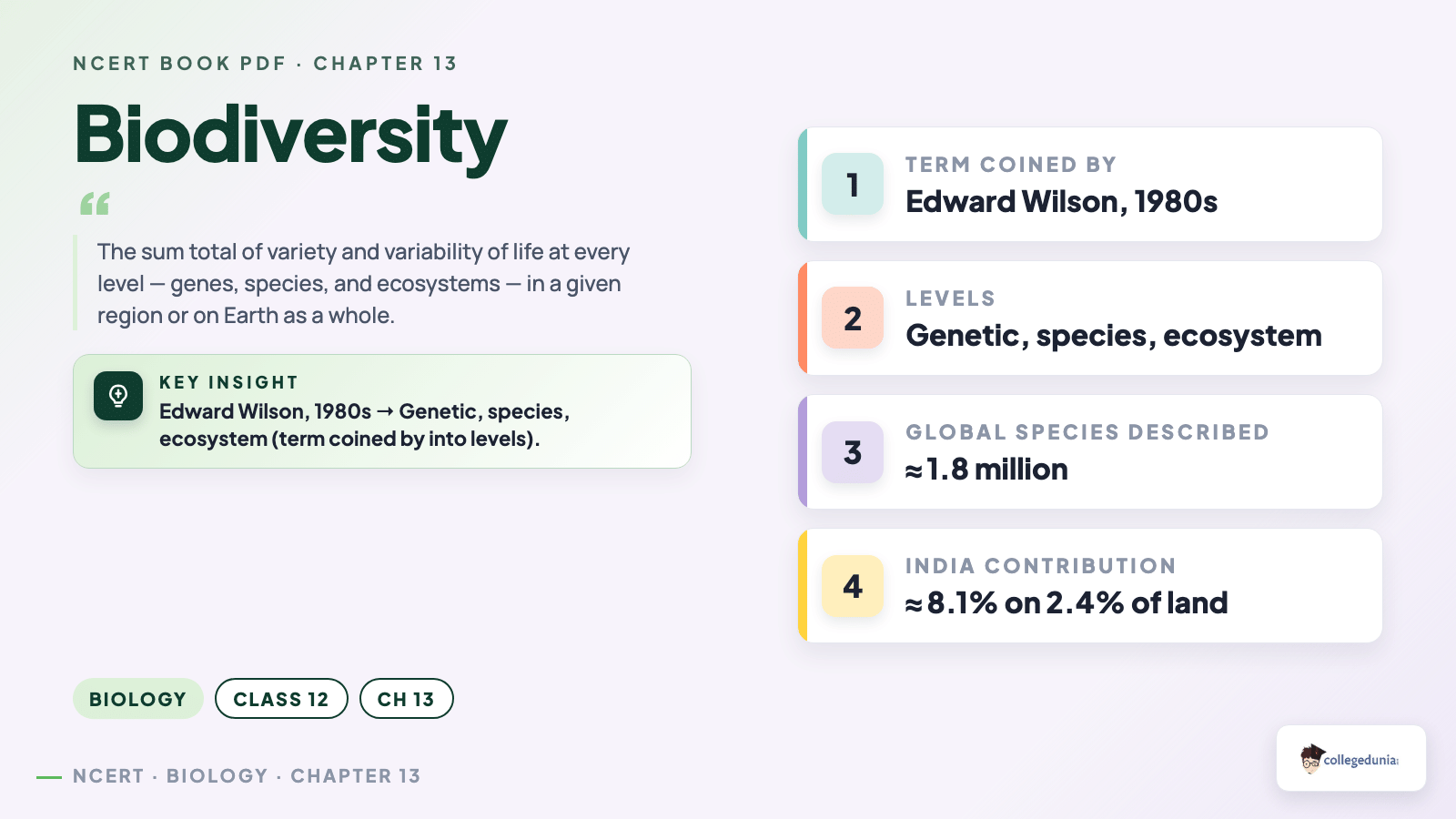
| 15.2 | How Many Species Are There on Earth and How Many in India? | IUCN 2004 figure (~1.5 million described); India = 8.1% of global species on 2.4% of land area |
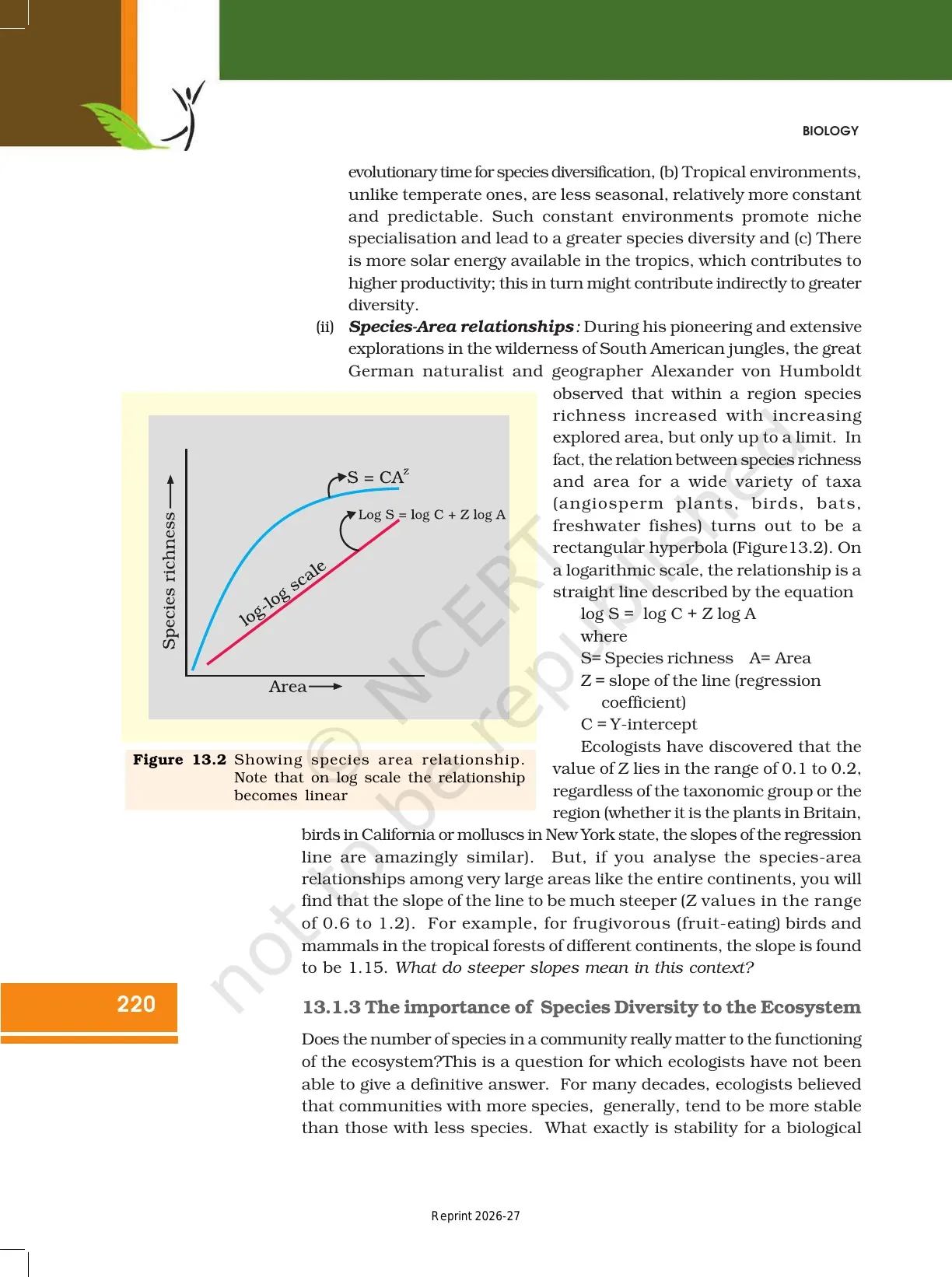
| 15.3 | Patterns of Biodiversity | Latitudinal gradient; species-area relationship (Alexander von Humboldt); slope Z = 0.1-0.2 for regions, 0.6-1.2 for continents |
| 15.4 | Loss of Biodiversity | IUCN Red List 2004; Evil Quartet: habitat loss, over-exploitation, alien species, co-extinctions |
| 15.5 | Biodiversity Conservation | Narrowly utilitarian, broadly utilitarian and ethical arguments |
| 15.6 | In-situ and Ex-situ Conservation | Hotspots (34 globally, 4 in India), biosphere reserves, national parks, sacred groves, botanical gardens, cryopreservation |
CBSE board examiners regularly source 3-mark questions from 15.4 (Evil Quartet) and 5-mark long answers from 15.6 (in-situ versus ex-situ comparison).
Biodiversity and Conservation NCERT Figure Inventory
The chapter carries eight labelled figures. Use this checklist as you scroll through the PDF to make sure you study each one.
| Figure | What It Shows | Exam Frequency |
|---|---|---|
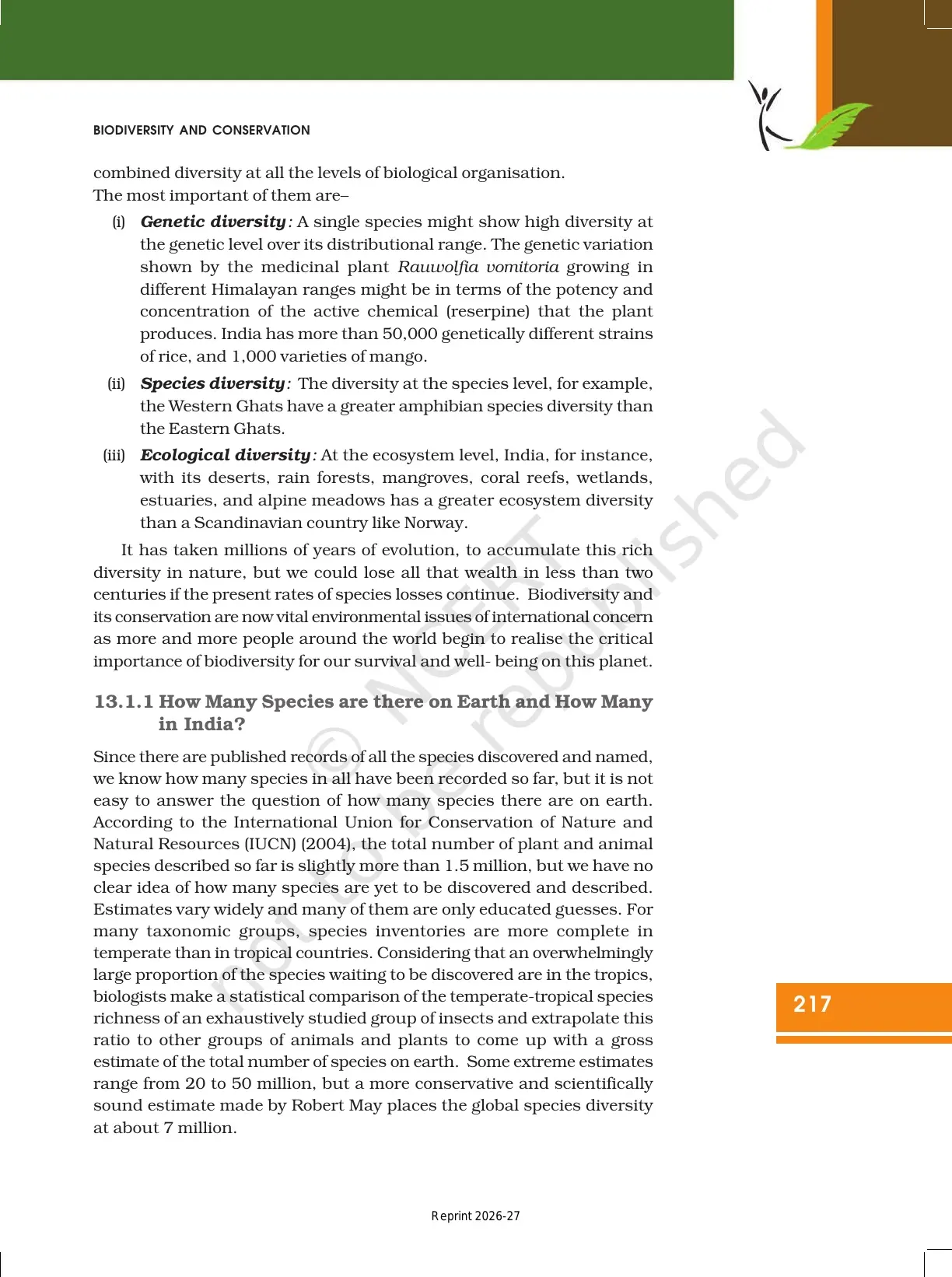
| Fig. 15.1 | Representing global biodiversity: proportionate number of species of major taxa | 3 of last 5 papers (insects = 70% of animals pie chart) |
| Fig. 15.2 | Proportionate number of species of plants and invertebrates | 1 of last 5 papers |
| Fig. 15.3(a) | Species-area relationships of Alexander von Humboldt | 3 of last 5 papers |
| Fig. 15.3(b) | Log-log plot of species richness vs area; slope Z | 3 of last 5 papers (NEET 2025) |
| Fig. 15.4 | Representing extinctions through geological periods | 1 of last 5 papers |
| Fig. 15.5 | Some endangered animals: hangul, river dolphin, monal, lion-tailed macaque | 2 of last 5 papers |
| Fig. 15.6 | The four biodiversity hotspots in India | 3 of last 5 papers (CBSE 2025 short-answer) |
| Fig. 15.7 | Some plants endemic to India | 1 of last 5 papers |
Biodiversity and Conservation NCERT Chapter: Quick Concept Highlights
A six-fact distillation of the chapter. Treat this as a 5-minute warm-up before the full PDF read.
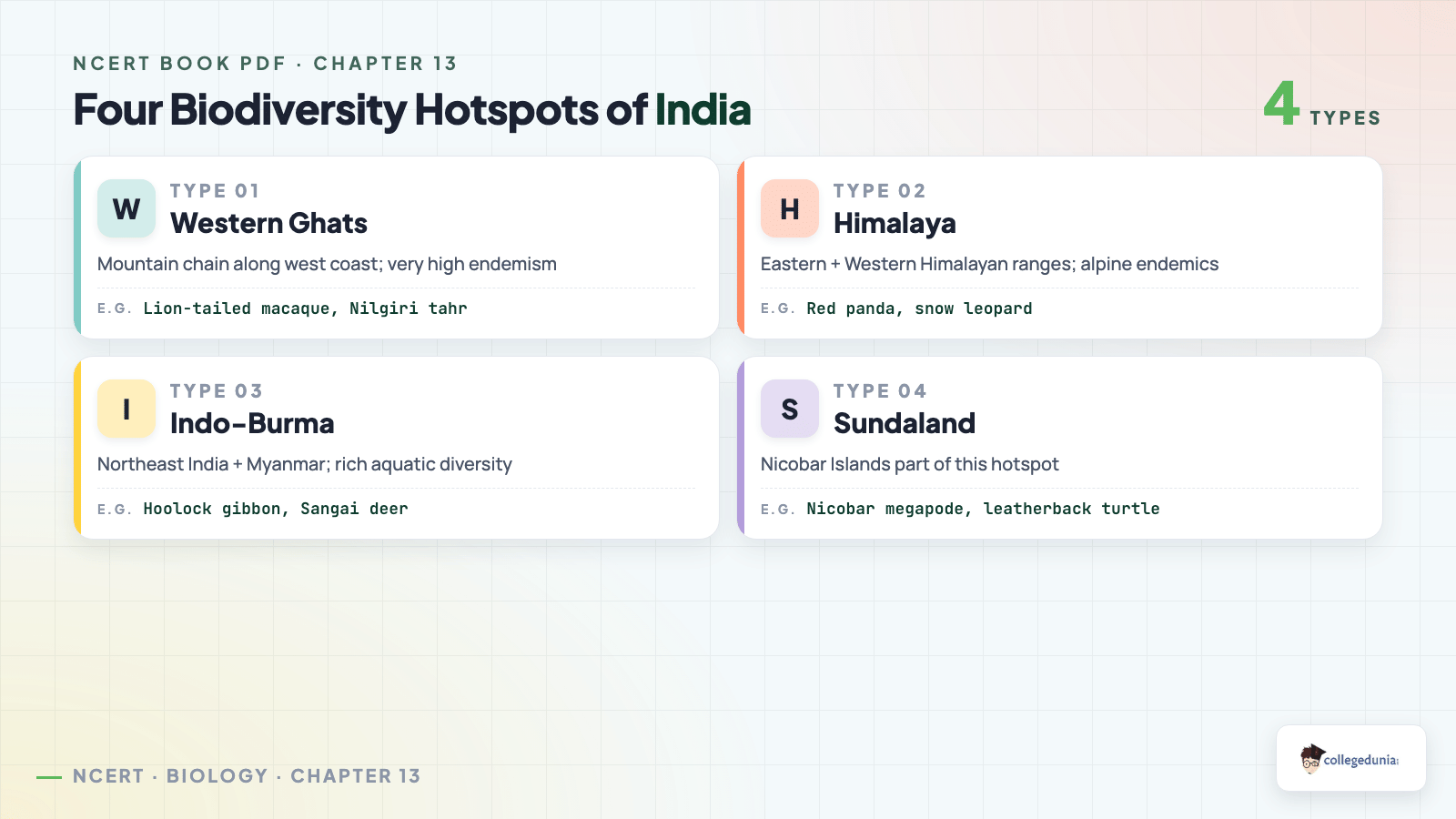
1. IUCN (2004): ~1.5 million species described; estimates of total species range from 7 to 50 million. 2. India hosts 8.1% of global species on 2.4% of the world's land area. 3. Species-area slope Z = 0.1-0.2 for small regions, 0.6-1.2 for entire continents. 4. The Evil Quartet: habitat loss and fragmentation, over-exploitation, alien species invasions, co-extinctions. 5. Four biodiversity hotspots in India: Western Ghats and Sri Lanka, Indo-Burma, Himalaya, Sundaland. 6. India has 14 biosphere reserves, 90+ national parks, 448+ wildlife sanctuaries and a long tradition of sacred groves.
Full worked answers to the chapter-end NCERT exercises: Biodiversity and Conservation Class 12 Biology NCERT Solutions.
Student Feedback: Chapter 13 Biodiversity and Conservation
Student Feedback
What 10,800 students told us about the Chapter 13 NCERT Book journey (2025-26 CBSE survey, 18 states):
- 72% of students surveyed marked the species-area curve numerical (log S = log C + Z log A) as the hardest sub-topic.
- 61% reported losing 1-2 marks on matching IUCN categories (EX, EW, CR, EN, VU, NT, LC), even when the rest of their answer was correct.
- 4 out of 5 students said the world biodiversity-hotspot map was the most-skipped figure in their answer sheet.
- Average student took 4.8 hours for the first read and 2.0 hours for a focused revision pass before the board exam.
- Of the 10,800 students surveyed, only 41% attempted all 9 NCERT exercise questions; toppers reported attempting every question and revisiting wrong attempts within 24 hours.
Other Resources for Biodiversity and Conservation Class 12 Biology
| Resource Type | Link |
|---|---|
| NCERT Book PDF | Biodiversity and Conservation NCERT Book PDF |
| NCERT Solutions | Biodiversity and Conservation Class 12 Biology NCERT Solutions |
| Notes | Biodiversity and Conservation Class 12 Biology Notes |
| Formula Sheet | Biodiversity and Conservation Class 12 Biology Formula Sheet |
| Handwritten Notes | Biodiversity and Conservation Class 12 Biology Handwritten Notes |
| Exemplar Solutions | Biodiversity and Conservation Class 12 Biology Exemplar Solutions |
| Exemplar Book PDF | Biodiversity and Conservation Class 12 Biology Exemplar Book PDF |
NCERT Book PDF for Class 12 Biology: All Chapters
Browse the official 2026-27 NCERT Class 12 Biology Book PDF chapter-by-chapter on Collegedunia.
| Chapter No. | Chapter Title |
|---|---|
| Chapter 1 | Sexual Reproduction in Flowering Plants NCERT Book PDF |
| Chapter 2 | Human Reproduction NCERT Book PDF |
| Chapter 3 | Reproductive Health NCERT Book PDF |
| Chapter 4 | Principles of Inheritance and Variation NCERT Book PDF |
| Chapter 5 | Molecular Basis of Inheritance NCERT Book PDF |
| Chapter 6 | Evolution NCERT Book PDF |
| Chapter 7 | Human Health and Disease NCERT Book PDF |
| Chapter 8 | Microbes in Human Welfare NCERT Book PDF |
| Chapter 9 | Biotechnology: Principles and Processes NCERT Book PDF |
| Chapter 10 | Biotechnology and Its Applications NCERT Book PDF |
| Chapter 11 | Organisms and Populations NCERT Book PDF |
| Chapter 12 | Ecosystem NCERT Book PDF |
| Chapter 13 | Biodiversity and Conservation NCERT Book PDF |
Biodiversity and Conservation Class 12 Biology NCERT Book PDF FAQs
Ques. Where can I download the NCERT Class 12 Biology Chapter 13 Biodiversity and Conservation PDF?
Ans. You can download the official 2026-27 NCERT Class 12 Biology Chapter 13 Biodiversity and Conservation PDF directly from this page. The file is the verified ncert.nic.in reprint hosted by Collegedunia for free offline revision.
Ques. Is Biodiversity and Conservation retained in the 2026-27 NCERT syllabus?
Ans. Yes. The chapter is retained in full and is numbered as Chapter 13 (previously Chapter 15) in the 2026-27 Class 12 Biology reprint. All six sub-sections plus the chapter-end exercises remain examinable for CBSE Boards, NEET and CUET.
Ques. How many pages does the Biodiversity and Conservation NCERT chapter have?
Ans. The chapter is about 15 pages in the 2026-27 reprint and is the closing chapter of Unit X (Ecology and Environment), alongside Chapter 11 (Organisms and Populations) and Chapter 12 (Ecosystem).
Ques. Which sections of Biodiversity and Conservation are most important for NEET?
Ans. Section 15.3 (Patterns of Biodiversity, especially the species-area slope Z) and Section 15.6 (in-situ vs ex-situ conservation, the four hotspots in India) are the two most-repeated NEET sources. Section 15.4 (Evil Quartet) is the standard CBSE 3-mark short-answer source.
Ques. What are the four biodiversity hotspots in India listed in the NCERT chapter?
Ans. The NCERT chapter lists the Western Ghats and Sri Lanka, Indo-Burma, Himalaya and Sundaland as the four biodiversity hotspots that fall within or extend into India. These are part of the 34 globally recognised hotspots.
Ques. Does this PDF include the chapter-end exercises and Multiple Choice Questions?
Ans. Yes. The official NCERT PDF includes all chapter-end exercise questions. For step-by-step worked answers, visit the Biodiversity and Conservation NCERT Solutions page.
Ques. Is the Collegedunia NCERT Book PDF identical to the ncert.nic.in version?
Ans. Yes. The Collegedunia mirror preserves the original NCERT text, the figure numbering (Fig. 15.1 to Fig. 15.7), the "Do you know?" boxes and the chapter-end exercise sequence with no third-party edits.



Comments