



| Updated On - Jun 24, 2026
IELTS Writing Task 1 is the 1st task in the IELTS Academic writing test. In IELTS Writing Task 1, candidates get visual information in the form of a table, graph, chart, or diagram. They need to summarise the given information in their own words.
IELTS Academic writing task 1 tests the ability to organize, present, and compare the given data. Applicants need to describe stages of a process or procedure, an object, an event, or a sequence of events.
- IELTS Writing Task 1 Practice Questions 2026
- IELTS Writing Task 1 Format 2026
- IELTS Writing Task 1 Questions Types 2026
- IELTS Writing Task 1 Practice Questions 2026
- Strategy to Solve IELTS Writing Task 1 2026
- Skills Required for IELTS Writing Task 1 2026
- Common Mistakes to Avoid in IELTS Writing Task 1
- IELTS Writing Task 1 Preparation Tips 2026
- FAQs
IELTS Writing Task 1 Practice Questions 2026
Applicants can practice these IELTS Writing Task 1 questions to get a better understanding of the questions in this section.
Download PDF for Answers of IELTS Academic Writing Task Practice Questions
IELTS Writing Task 1 Format 2026
The IELTS Writing test lasts for 60 minutes in total, with IELTS Writing Task 1 lasting for 20 minutes. Applicant must use full sentences in an academic or semi-formal style, written on the answer sheet only, as notes on the question paper are not marked. No bullet points or notes are allowed.
Here is all the information about the IELTS Writing Task 1:
| Test Parameters | Discription |
|---|---|
| Time limit | 20 minutes |
| Word limit | 150 words |
| Question type | Visual-based, such as a bar graph, line graph, or pie graph |
| Scoring criteria |
|
IELTS Writing Task 1 Questions Types 2026
The IELTS Writing task 1 includes factual questions. Candidates get questions to compare and present the data in words.
| Question Type | Description |
|---|---|
| Line graphs | A line graph depicts trends over time. |
| Bar charts | A bar graph depicts comparisons, linear or categorical. |
| Pie charts | A pie chart represents multiple data points in percentages. |
| Tabular graph | A tabular graph represents data in numerical or percentage form by categories |
| Maps | Maps represent comparisons over time or changes in any area. |
Another question that combines any two forms can also appear in the IELTS Writing Task 1. Candidates must provide an overview, select main features, and make comparisons without personal opinions.
Also read: IELTS Writing Task 1 Practice Tests 2026: Download Free PDFs with Answers
IELTS Writing Task 1 Practice Questions 2026
Applicants can practice these questions to score better in the IELTS Academic Writing test. These questions will help the candidate to understand the question format and types that can come in the IELTS Writing Task 1.
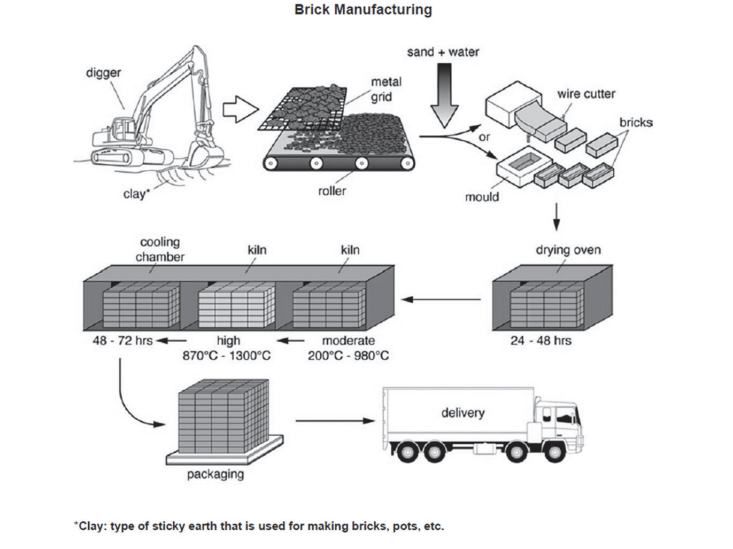
Sample 1
You should spend about 20 minutes on this task.
The diagram below shows the process by which bricks are manufactured for the building industry. Summarise the information by selecting and reporting the main features, and make comparisons where relevant. Write at least 150 words
Sample 2
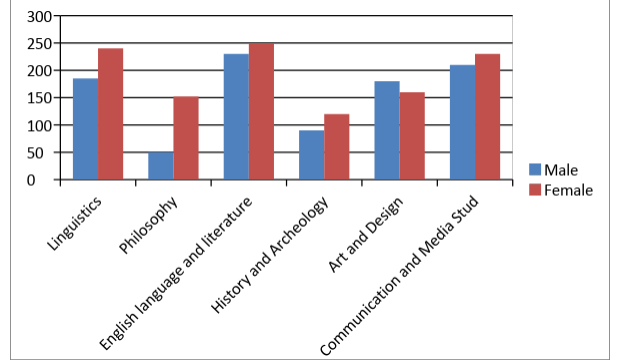
The chart below shows the proportion of male and female students studying six art-related subjects at a UK university in 2011. Summarise the information by selecting and reporting the main features, and make comparisons where relevant. Write at least 150 words.
Sample 3
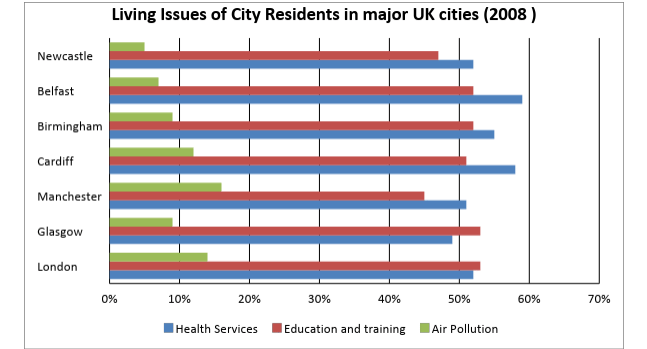
The chart below gives some of the most reported issues among people living in UK cities in 2008 (%). Summarise the information by selecting and reporting the main features, and make comparisons where relevant. Write at least 150 words.
Sample 4
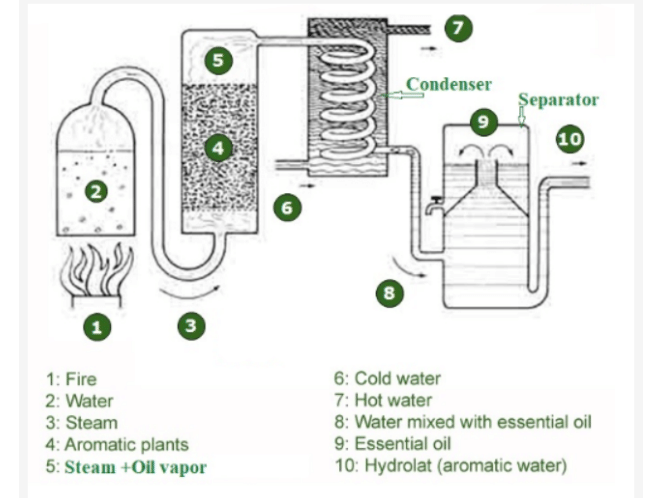
The diagram below shows how oil is expected in use of production of perfume. Write at least 150 words describing the process.
Sample 5
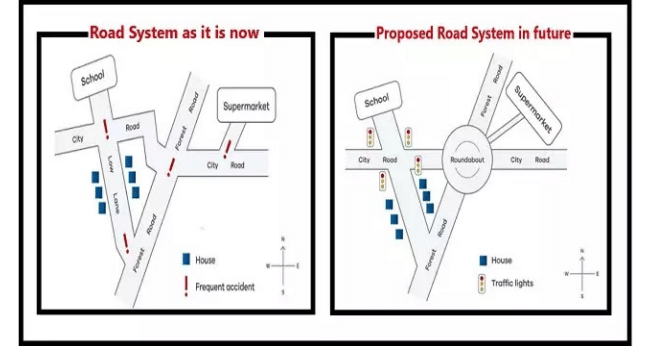
The maps show the road system as it is now and the proposed changes in the future to reduce the number of accidents. Write at least 150 words describing the new changes.
Sample Answer for IELTS Writing Task 1 2026
Answer to Sample 2
The bar chart illustrates the numbers of male and female students enrolled in six art-related subjects at a UK university in 2011.
Overall, female students had higher enrolment figures in most disciplines. English Language and Literature was the most popular subject among both genders, while Philosophy had the lowest number of male students. Art and Design was the only subject where male enrolment exceeded that of females.
Regarding subjects with a female majority, around 250 women and 230 men studied English Language and Literature. Similarly, Linguistics attracted approximately 240 female students, compared with 190 males. The largest gender gap was recorded in Philosophy, where female enrolment stood at about 150 students, three times the figure for males. In History and Archaeology, women also outnumbered men, at roughly 120 and 90 students respectively.
By contrast, Art and Design enrolled around 180 male students and 160 females. Communication and Media Studies also recorded high participation, with approximately 230 women and 210 men. Overall, female enrolment was dominant across the disciplines presented.
Download PDF for More IELTS Writing Task 1 Example
Strategy to Solve IELTS Writing Task 1 2026
Applicants must understand that the IELTS task 1 is about testing presentations of information in a formal style and coherent words. You only have 20 minutes to write 150 words answer for the given table, bar, or graph. Follow these strategies to get good IELTS scores:
- Analyze and read the given graph or visuals and question for 2-3 minutes. Identify the main trends that the graph follows, such as the highest and lowest points, overall changes, and key features.
- Write a clear introduction by paraphrasing the given question. Do not copy it directly from the given questions. Keep the introduction formal and creative.
- Divide the whole content into 3 parts:
- 1st the introduction, which should be precise and crisp.
- 2nd the main body, where you need to address the main data and information given in the graph or visuals.
- 3rd conclusion, which should be short and to the point, delivering the main highlights of the whole content and visuals.
- You can include a section to describe a step-by-step process if the given visuals are of any process or step-based data.
- Write 2-3 body paragraphs grouping similar data logically, using accurate figures and comparisons.
- Provide a concise overview paragraph highlighting the most significant trends or features without detailed numbers.
- Use formal academic language, avoid personal opinions, and ensure logical flow with linking words.
- Focus on time management, aim to finish within 18 minutes so that you can do a quick proofreading of your answer and correct any possible grammatical or sentence mistakes.
Skills Required for IELTS Writing Task 1 2026
Skills required for IELTS Writing Task 1 are coherence of words, a formal approach to writing an academic answer, and the ability to identify and highlight important data. Here’s a breakdown of required skills for the writing task:
- Coherence and Cohesion: Organize the main information logically with good paragraphing and a range of linking devices for smooth progression.
- Lexical Resource: Demonstrate a wide vocabulary for describing trends (increase, decline, fluctuation), comparisons, and precise data.
- Grammatical Range and Accuracy: Use varied sentence structures, appropriate tenses (past and present), and maintain error-free writing with good sentence flow.
- Task Achievement: Present a clear overview, cover all key features, and support them with accurate data from the visual.
- Focus on your ability to identify and highlight main trends instead of listing every detail simply in sentences or paragraphs. You can use bullet points or some other methods to highlight the important insights.
- Skill in making clear comparisons between different data sets or categories. If given a comparison bar graph, focus on the differences between the given data of one sect to another.
- You should be precise in using numbers, percentages, and fractions accurately. As one wrong number can disrupt the whole writing piece and result in a loss of points in covering the task.
Common Mistakes to Avoid in IELTS Writing Task 1
The applicants must be careful with their time limit and word limit. Any minor mistake can lead to poor grades. Here are some tips you should consider:
- Insufficient analysis of the data or superficial description without key features or comparisons can bring poor grades.
- Lack of coherence and cohesion in the content and poor organization should be avoided.
- The applicant should not give a missing or weak overview.
- Avoid writing opinions instead of factual reporting.
- Applicants should strictly avoid copying words from the question.
- Including too many minor details or irrelevant numbers makes your content vague.
- Writing under 150 words can lead to low scores.
- Applicants should be careful with time management. Poor time management can disturb the time limit of the IELTS Writing Task 2.
- Not using appropriate academic style, accurate vocabulary, or grammar.
- Plagiarism or using notes or bullet points leads to severe penalties.
Also read: IELTS Writing Tips and Strategies to Improve Your Band Score in 2026
IELTS Writing Task 1 Preparation Tips 2026
Applicants should practice IELTS Writing Task 1 questions with the timers on to avoid delay in the exam. Word limit is also a strict criterion for scoring. Candidates can follow these tips to score better in IELTS Writing Task 1:
- Spend about 20 minutes on the task. Practice with a timer on to get the accuracy.
- Analyze the visual carefully before writing, identify main features, plan an overview, and structure paragraphs (introduction or paraphrase, overview, detailed paragraphs with comparisons).
- Practice with sample tasks from official sources to understand the expected structure and style.
- Focus on formal language, accurate data description, varied vocabulary for trends and comparisons, and a range of grammatical structures.
- Time yourself, compare answers to model responses, and review assessment criteria. Regular practice with real sample visuals builds skills in summarizing.
Also read: IELTS Writing 2026: Practice Tests, Topics, & Question Types
In IELTS Writing Task 1, candidates have 20 minutes to write at least 150 words based on visual information such as graphs, charts, tables, maps, and diagrams. The task is assessed on Task Achievement, Coherence and Cohesion, Lexical Resource, and Grammatical Range and Accuracy. Strong performance depends on identifying key features, making relevant comparisons, and presenting the information in a clear academic style without personal opinions. Regular timed practice with different question types is the most effective way to improve accuracy and band scores.
FAQs
Ques. How much time should I spend on the IELTS Writing Task 1?
Ans. Although the total Writing test lasts 60 minutes, IELTS recommends spending about 20 minutes on Task 1 and the remaining 40 minutes on Task 2.
Ques. What are the marking criteria for IELTS Writing Task 1?
Ans. Examiners assess Task 1 using four criteria:
- Task Achievement
- Coherence and Cohesion
- Lexical Resource
- Grammatical Range and Accuracy
Each criterion contributes to the overall Writing score.
Ques. Should I include an overview in IELTS Writing Task 1?
Ans. Yes. IDP IELTS recommends organizing the response into three main parts, an introduction, an overview, and the main features supported by data from the visual.
Ques. What should I focus on when describing a graph or chart in IELTS Writing Task 1?
Ans. IELTS expects candidates to identify and report the most important features of the visual information. Minor details may be left out if they are not significant.
Ques. Is IELTS Writing Task 1 different in Academic and General Training IELTS?
Ans. Yes. In the Academic test, Task 1 requires candidates to describe visual information such as graphs, charts, tables, or diagrams. In the General Training test, Task 1 requires writing a letter in response to a given situation.


1787567517.png?tr=w-305,h-145,c-force?h=175&w=350&mode=stretch)



Comments