




ICSE Board conducted the Class 10 Biology (Science Paper 3) Board Exam 2026 on March 13, 2026. Class 10 Biology (Science Paper 3) Question Paper with Solution PDF is available here for download.
The ICSE Board Class 10 Biology (Science Paper 3) covered key topics from practical applications of biology, experiments, and observations in plant and animal physiology. The exam is marked out of 100, with 15 marks for MCQs, 65 for descriptive questions, and 20 for practical applications and internal assessments.
ICSE Board Class 10 2026 Biology (Science Paper 3) Question Paper with Solution PDF
| ICSE Board Class 10 Biology (Science Paper 3) Question Paper 2026 | Download PDF | Check Solution |
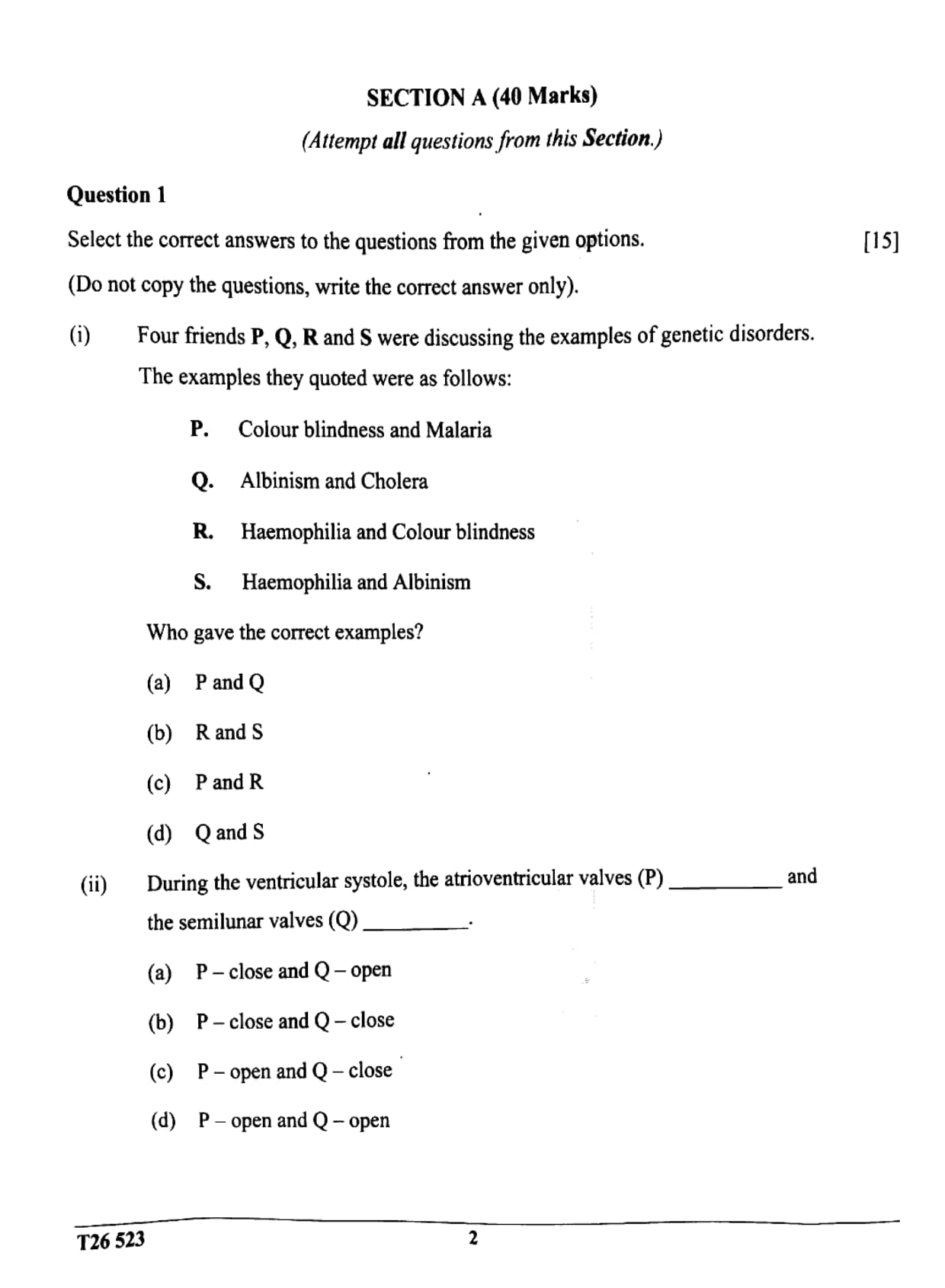
Four friends P, Q, R, and S were discussing the examples of genetic disorders. The examples they quoted were as follows:
P. Colour blindness and Malaria
Q. Albinism and Cholera
R. Haemophilia and Colour blindness
S. Haemophilia and Albinism
Who gave the correct examples?
View Solution
Step 1: Understanding genetic disorders.
Genetic disorders are caused by abnormalities in the genes or chromosomes. Let's analyze the examples:
- Colour blindness is a genetic disorder linked to the X chromosome.
- Albinism is a genetic disorder affecting the production of melanin in the body.
- Haemophilia is another genetic disorder, also linked to the X chromosome, affecting blood clotting.
- Malaria and Cholera are not genetic disorders; they are infectious diseases caused by pathogens, not genetic mutations.
Step 2: Analyzing the examples.
- P. Colour blindness and Malaria: Incorrect. Malaria is not a genetic disorder.
- Q. Albinism and Cholera: Incorrect. Cholera is not a genetic disorder.
- R. Haemophilia and Colour blindness: Correct. Both haemophilia and colour blindness are genetic disorders.
- S. Haemophilia and Albinism: Correct. Both haemophilia and albinism are genetic disorders.
Step 3: Conclusion.
The correct answer is (B) because both R and S quoted genetic disorders correctly.
Final Answer: R and S.
Quick Tip: Remember, genetic disorders are caused by abnormalities in genes or chromosomes, while infectious diseases are caused by pathogens like bacteria or viruses.
During the ventricular systole, the atrioventricular valves (P) _____ and the semilunar valves (Q) ______ .
View Solution
Step 1: Understanding ventricular systole.
During ventricular systole, the ventricles contract, leading to an increase in ventricular pressure. This pressure causes the atrioventricular (AV) valves (P) to close, preventing the backflow of blood into the atria. At the same time, the semilunar valves (Q) open, allowing blood to be ejected from the ventricles into the pulmonary artery and the aorta.
Step 2: Analyzing the options.
(A) P - close and Q - open: Correct. During ventricular systole, the AV valves close, and the semilunar valves open, as explained above.
(B) P - close and Q - close: Incorrect. The semilunar valves should open during ventricular systole.
(C) P - open and Q - close: Incorrect. The AV valves open only during ventricular diastole.
(D) P - open and Q - open: Incorrect. The AV valves should be closed during ventricular systole, not open.
Step 3: Conclusion.
The correct answer is (A) because during ventricular systole, the AV valves close and the semilunar valves open to allow blood flow from the ventricles.
Final Answer: P - close and Q - open.
Quick Tip: During ventricular systole, the atrioventricular valves close and the semilunar valves open to allow blood to flow into the arteries.
Assertion (A): A thick cuticle reduces transpiration by acting as a barrier.
Reason (R): Desert plants have large, thin leaves for transpiration.
View Solution
Step 1: Assertion analysis.
The assertion is stating that a thick cuticle reduces transpiration by acting as a barrier. This is true because a thick cuticle on plant surfaces prevents water loss through evaporation, which is important in reducing transpiration in plants, especially in desert environments.
Step 2: Reason analysis.
The reason mentions that desert plants have large, thin leaves for transpiration. This is also true, as desert plants often have modified leaves (such as thin or needle-like leaves) to minimize water loss while still allowing some transpiration. These adaptations help the plant survive in arid conditions.
Step 3: Conclusion.
Although both (A) and (R) are true, the reason (R) is not a direct explanation of why a thick cuticle reduces transpiration. The thick cuticle acts as a barrier to reduce water loss, but the adaptation of large, thin leaves in desert plants serves a different purpose related to minimizing water loss, not directly explaining the thick cuticle's function.
Final Answer: (D) Both (A) and (R) are true but (R) is not the correct explanation of (A). Quick Tip: A thick cuticle helps in reducing transpiration by acting as a barrier, while desert plants' leaf adaptations help minimize water loss. The two are separate adaptations for survival in arid environments.
A sequence of DNA has 300 nitrogenous base pairs, of which 75 are Guanine. What is the number of Thymine in this sequence?
View Solution
Step 1: Understanding base pairing in DNA.
In DNA, the nitrogenous bases follow a specific base-pairing rule: Adenine (A) pairs with Thymine (T), and Guanine (G) pairs with Cytosine (C). This means the amount of Adenine is equal to the amount of Thymine, and the amount of Guanine is equal to the amount of Cytosine.
Step 2: Analyzing the given information.
We are given that the DNA sequence has 300 nitrogenous base pairs, and 75 of them are Guanine. Since Guanine pairs with Cytosine, the number of Cytosine will also be 75. Therefore, the total number of Guanine and Cytosine combined is: \[ 75 + 75 = 150 base pairs. \]
Step 3: Calculating the remaining base pairs.
The total number of base pairs is 300. After accounting for the 150 base pairs of Guanine and Cytosine, the remaining base pairs are: \[ 300 - 150 = 150 base pairs. \]
Since Adenine pairs with Thymine in a 1:1 ratio, the number of Thymine will be half of the remaining base pairs: \[ \frac{150}{2} = 75 Thymine base pairs. \]
Step 4: Conclusion.
The number of Thymine in this DNA sequence is 100, so the correct answer is (B).
Final Answer: 100.
Quick Tip: In a DNA molecule, the number of Adenine molecules equals the number of Thymine molecules, and the number of Guanine molecules equals the number of Cytosine molecules.
Assertion (A): Abscisic acid promotes stomatal closure during a drought.
Reason (R): Abscisic acid helps the plant to conserve water during stress.
View Solution
Step 1: Assertion analysis.
Abscisic acid (ABA) is a plant hormone that plays a crucial role in regulating plant responses to stress, especially during drought conditions. One of its primary functions is to promote stomatal closure, which helps reduce water loss through transpiration, thereby conserving water.
Step 2: Reason analysis.
The reason states that abscisic acid helps the plant conserve water during stress, which is also true. ABA promotes stomatal closure, thus reducing transpiration and water loss during drought, helping the plant survive stressful conditions.
Step 3: Conclusion.
Since both the assertion (A) and the reason (R) are true, and the reason (R) directly explains the assertion (A), the correct answer is (C).
Final Answer: (C) Both (A) and (R) are true and (R) is the correct explanation of (A). Quick Tip: Abscisic acid plays a vital role in regulating plant responses to drought by promoting stomatal closure, which reduces water loss through transpiration. This is an important adaptation for conserving water during periods of stress.
Assertion (A): Leukoderma is the biological term for blood cancer.
Reason (R): An abnormal increase in the number of WBCs causes blood cancer.
View Solution
Step 1: Understanding Assertion (A).
Leukoderma is a skin condition characterized by the loss of pigmentation in certain areas, leading to white patches. It is not the biological term for blood cancer. The correct biological term for blood cancer is leukemia, not leukoderma. Therefore, Assertion (A) is false.
Step 2: Understanding Reason (R).
The reason states that an abnormal increase in the number of WBCs (white blood cells) causes blood cancer. This is partially true, as leukemia (a type of blood cancer) is characterized by the abnormal increase in WBCs. However, the statement is not fully correct, as other factors contribute to blood cancer, and not all cases of abnormal WBC increases lead to leukemia. Therefore, Reason (R) is false.
Step 3: Conclusion.
Since Assertion (A) is false and Reason (R) is also false, the correct answer is (A) that Assertion (A) is true and Reason (R) is false.
Final Answer: (A) (A) is true and (R) is false.
Quick Tip: Remember that leukoderma refers to skin pigmentation loss, while leukemia refers to blood cancer. The correct term for blood cancer is leukemia, not leukoderma.
A health organisation wants to educate the rural audience about population control using visually engaging methods. Which of these would be effective?
P. Posters
Q. Loudspeakers
R. Film shows
S. Street plays
View Solution
Step 1: Analyzing the options.
- P (Posters): Posters are a visually engaging method of communication that can be used to spread awareness effectively. They are often placed in public spaces and can catch the attention of the audience.
- Q (Loudspeakers): Loudspeakers, though useful for audio communication, are not visually engaging and thus don't fit the requirement.
- R (Film shows): Film shows are highly engaging, visually captivating, and an effective method to communicate messages about population control.
- S (Street plays): Street plays are a dynamic and visual method of conveying messages. They can involve real-time performances that engage the audience and drive home the message effectively.
Step 2: Conclusion.
Given that the question asks for visually engaging methods, we can eliminate loudspeakers (Q) as they do not fit the visual requirement. Posters (P), film shows (R), and street plays (S) are all effective visual methods for educating the rural audience on population control. Hence, the correct answer is (A).
Final Answer: (A) P, R and S. Quick Tip: Visually engaging methods such as posters, film shows, and street plays are effective for educating rural audiences as they capture attention and convey information in an easily understandable manner.
A family has a history of colour blindness. During a genetic testing, it was found that the mother is a carrier of colour blindness (X^C X) and the father has normal vision (XY). What is the probability of their sons being colour blind?
View Solution
Step 1: Understanding the inheritance of colour blindness.
Colour blindness is a sex-linked recessive trait carried on the X chromosome. In this case, the mother is a carrier of colour blindness (X^C X), meaning one of her X chromosomes carries the colour blindness gene, while the other carries the normal vision gene. The father has normal vision (XY), meaning his X chromosome carries the normal vision gene and his Y chromosome determines male sex.
Step 2: Determining possible combinations.
The mother can pass on either her X^C chromosome (carrying the colour blindness gene) or her normal X chromosome (X). The father will pass on either his X chromosome or his Y chromosome. The possible combinations for their sons (who must inherit the Y chromosome from their father) are:
- X^C (from mother) and Y (from father) → Colour blind son.
- X (from mother) and Y (from father) → Normal vision son.
Step 3: Probability calculation.
Since the mother has a 50% chance of passing on the X^C chromosome and a 50% chance of passing on the normal X chromosome, the probability of their son inheriting colour blindness is 50%.
Final Answer: 50%.
Quick Tip: Remember, since colour blindness is a recessive sex-linked trait, a son can only inherit it if he receives the X^C chromosome from his mother and the Y chromosome from his father.
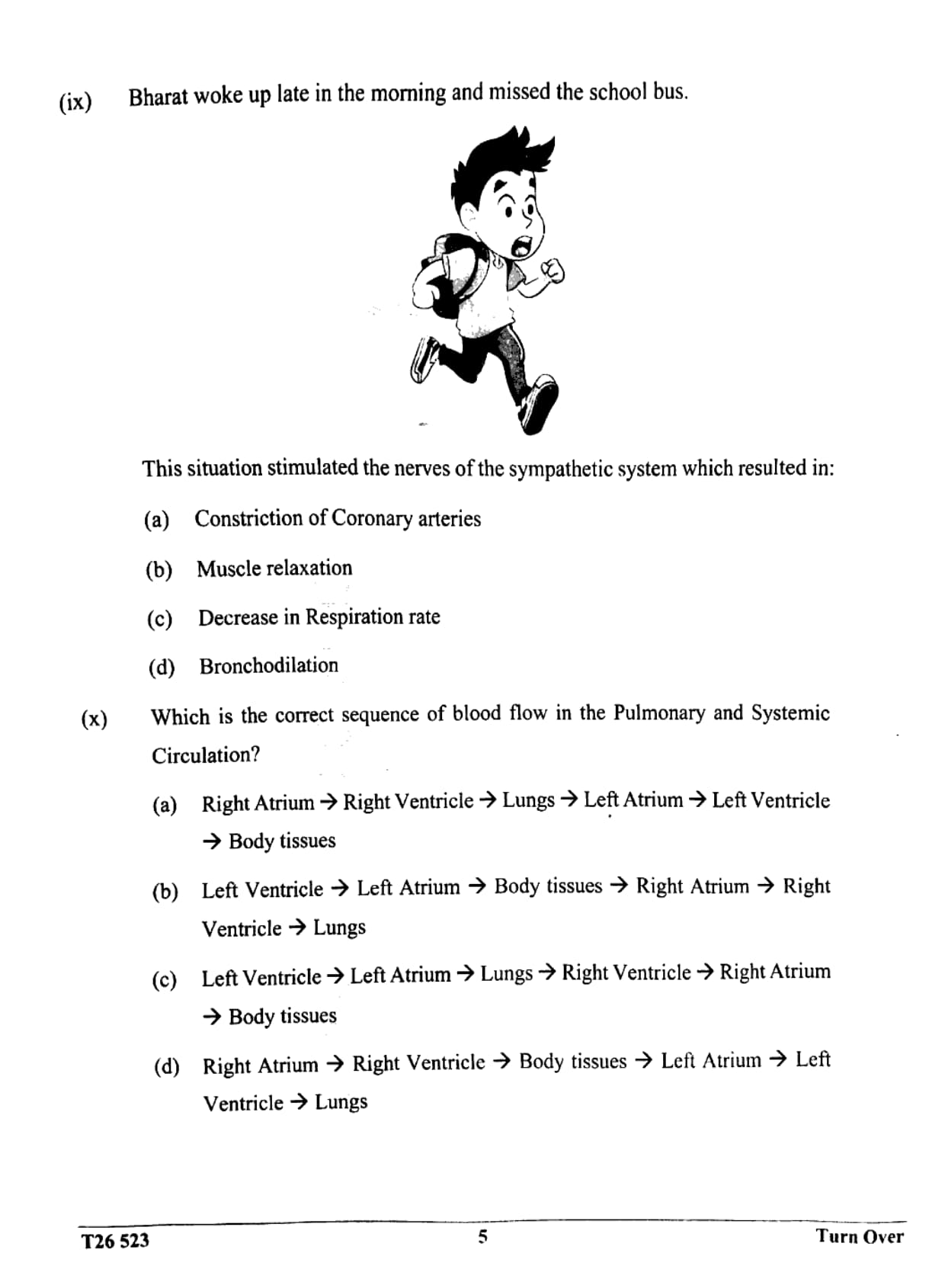
Bharat woke up late in the morning and missed the school bus.
This situation stimulated the nerves of the sympathetic system which resulted in:
View Solution
Step 1: Sympathetic Nervous System Response.
The sympathetic nervous system is activated during stressful or exciting situations, such as when someone wakes up late and experiences urgency. This leads to the "fight or flight" response, which prepares the body for quick action.
Step 2: Physiological Responses.
- Constriction of Coronary arteries (A): This is not a typical response of the sympathetic nervous system. It generally causes dilation of blood vessels to increase blood flow to muscles.
- Muscle relaxation (B): This is not a typical sympathetic response. Sympathetic stimulation generally causes muscle contraction and alertness, not relaxation.
- Decrease in Respiration rate (C): Sympathetic activation leads to an increase in respiration rate, not a decrease, to supply more oxygen to the muscles.
- Bronchodilation (D): This is the correct answer. Sympathetic activation causes bronchodilation, allowing more air to reach the lungs to increase oxygen supply during stressful situations.
Step 3: Conclusion.
Based on the "fight or flight" response, the sympathetic nervous system causes bronchodilation to increase airflow and prepare the body for quick physical action.
Final Answer: (D) Bronchodilation. Quick Tip: The sympathetic nervous system triggers responses like increased heart rate, bronchodilation, and muscle contraction to prepare the body for stress or physical exertion.
Which is the correct sequence of blood flow in the Pulmonary and Systemic Circulation?
View Solution
Step 1: Understanding the blood circulation system.
The circulatory system is divided into two main circuits: the pulmonary circulation and systemic circulation. The pulmonary circulation carries deoxygenated blood from the heart to the lungs, where it gets oxygenated. The systemic circulation carries oxygenated blood from the heart to the body tissues.
Step 2: Blood flow through the heart and body.
The correct sequence of blood flow is as follows:
1. Deoxygenated blood enters the Right Atrium from the body tissues.
2. It passes through the Right Ventricle.
3. From the Right Ventricle, the blood is pumped to the Lungs via the pulmonary artery, where it gets oxygenated.
4. The oxygenated blood returns to the Left Atrium via the pulmonary veins.
5. Blood moves into the Left Ventricle, which then pumps oxygenated blood to the body tissues through the aorta.
Step 3: Analyzing the options.
(A) Right Atrium → Right Ventricle → Lungs → Left Atrium → Left Ventricle → Body tissues: Correct. This is the accurate sequence of blood flow through the heart and circulatory system.
(B) Left Ventricle → Left Atrium → Body tissues → Right Atrium → Right Ventricle → Lungs: Incorrect. The blood does not go from the Left Ventricle to the Left Atrium before going to the body tissues.
(C) Left Ventricle → Left Atrium → Lungs → Right Ventricle → Right Atrium → Body tissues: Incorrect. This is not the correct sequence, as blood does not flow from the Left Atrium to the Lungs.
(D) Right Atrium → Right Ventricle → Body tissues → Left Atrium → Left Ventricle → Lungs: Incorrect. Blood from the Right Ventricle does not go directly to the body tissues; it first goes to the lungs.
Step 4: Conclusion.
The correct sequence of blood flow is given by option (A).
Final Answer: Right Atrium → Right Ventricle → Lungs → Left Atrium → Left Ventricle → Body tissues.
Quick Tip: The blood flow through the heart follows a specific order: Right Atrium → Right Ventricle → Lungs → Left Atrium → Left Ventricle → Body tissues. This ensures oxygenated and deoxygenated blood are separated.
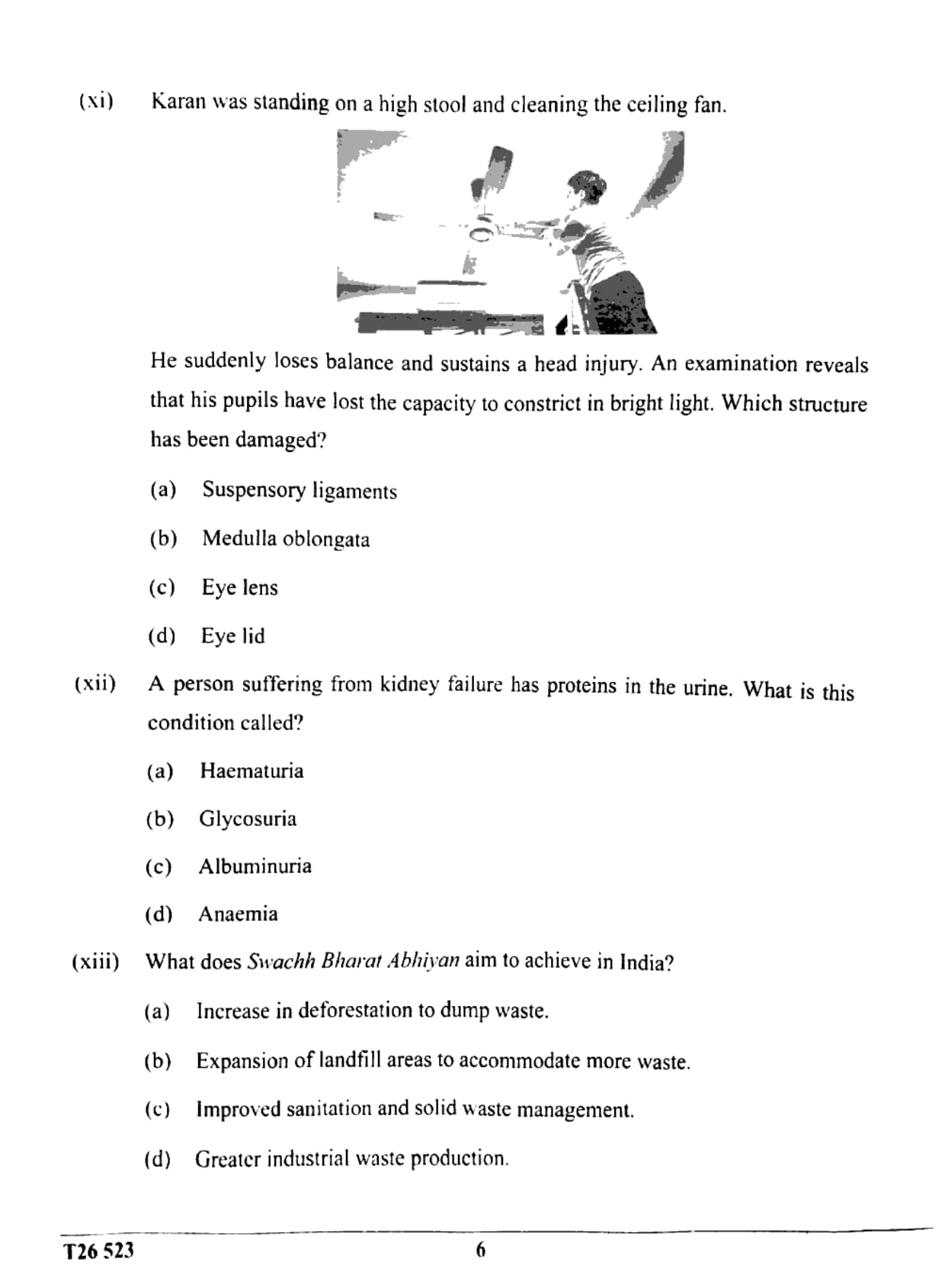
Karan was standing on a high stool and cleaning the ceiling fan.
He suddenly loses balance and sustains a head injury. An examination reveals that his pupils have lost the capacity to constrict in bright light. Which structure has been damaged?
View Solution
Step 1: Understanding the problem.
The loss of the ability to constrict pupils in bright light suggests a disruption in the autonomic regulation of the eye. The autonomic nervous system, which controls pupil constriction and dilation, is governed by structures in the brainstem, particularly the midbrain and the medulla oblongata.
Step 2: Analyzing the options.
- (A) Suspensory ligaments: These are ligaments that hold the eye lens in place. They don't have a direct role in controlling pupil constriction, so this is not the correct answer.
- (B) Medulla oblongata: The medulla oblongata, part of the brainstem, is responsible for regulating autonomic functions like heart rate, breathing, and pupil constriction. Damage to the medulla could impair the pupillary reflex.
- (C) Eye lens: The eye lens is responsible for focusing light onto the retina but does not control pupil constriction. This is not the correct answer.
- (D) Eye lid: The eyelid protects the eye and plays a role in blinking but does not regulate pupil constriction. This is not the correct answer.
Step 3: Conclusion.
The inability to constrict the pupils in bright light is indicative of damage to the medulla oblongata, which controls the autonomic functions of the pupils. Therefore, the correct answer is (B).
Final Answer: (B) Medulla oblongata. Quick Tip: The medulla oblongata plays a crucial role in regulating autonomic functions like pupil constriction and dilation. Damage to this area can impair these reflexes.
A person suffering from kidney failure has proteins in the urine. What is this condition called?
View Solution
Step 1: Understanding the condition.
Albuminuria is a condition where the protein albumin is found in the urine. This typically occurs when the kidneys are damaged, as in the case of kidney failure. In a healthy person, the kidneys prevent large molecules like proteins from entering the urine. However, in kidney failure, the filtration system is compromised, leading to the presence of albumin in the urine.
Step 2: Analyzing the options.
(A) Haematuria: Incorrect. Haematuria refers to the presence of blood in the urine, not protein.
(B) Glycosuria: Incorrect. Glycosuria is the presence of glucose in the urine, usually caused by uncontrolled diabetes.
(C) Albuminuria: Correct. Albuminuria is the presence of albumin (a protein) in the urine, often due to kidney problems.
(D) Anaemia: Incorrect. Anaemia refers to a condition where there is a lack of healthy red blood cells or hemoglobin in the blood.
Step 3: Conclusion.
The correct answer is (C) Albuminuria, as it refers to the presence of protein in the urine, which is a symptom of kidney failure.
Final Answer: Albuminuria.
Quick Tip: Albuminuria is a key indicator of kidney damage or disease. If detected, further tests are needed to determine the cause and severity.
What does Swachh Bharat Abhiyan aim to achieve in India?
View Solution
Step 1: Understanding Swachh Bharat Abhiyan.
Swachh Bharat Abhiyan, launched by the Government of India, is a nationwide campaign aimed at improving sanitation, promoting cleanliness, and managing waste in urban and rural areas. The focus is on eliminating open defecation, cleaning streets, and promoting waste segregation and management.
Step 2: Analyzing the options.
(A) Increase in deforestation to dump waste: Incorrect. Swachh Bharat Abhiyan does not aim to increase deforestation. It focuses on cleanliness and sanitation, not dumping waste.
(B) Expansion of landfill areas to accommodate more waste: Incorrect. The aim is not to expand landfills but to reduce waste generation and promote recycling.
(C) Improved sanitation and solid waste management: Correct. The main goal of Swachh Bharat Abhiyan is to improve sanitation and manage solid waste effectively.
(D) Greater industrial waste production: Incorrect. The campaign seeks to reduce waste production and improve waste management, not increase industrial waste.
Step 3: Conclusion.
The correct answer is (C) Improved sanitation and solid waste management.
Final Answer: Improved sanitation and solid waste management.
Quick Tip: Swachh Bharat Abhiyan is not just about cleanliness but also focuses on improving sanitation, waste management, and promoting a clean environment for all.
Varun’s mother added plenty of salt to the mango pickle she made. This is to:
View Solution
Step 1: Understanding the role of salt in pickles.
Salt is commonly used in pickling because it acts as a preservative by drawing out moisture and creating a hypertonic environment. This inhibits the growth of microorganisms, allowing the pickle to last longer.
Step 2: Analyzing the options.
- (A) Enhance the colour of the pickle: While salt may affect the texture and preservation, it does not directly enhance the colour of the pickle.
- (B) Inhibit the growth of microorganisms: Correct. Salt helps in creating a hostile environment for the growth of microorganisms by drawing out water, which preserves the pickle.
- (C) Increase the nutritional value: Salt does not increase the nutritional value of the pickle; its main purpose is preservation.
- (D) Create a hypertonic solution: Correct. Salt creates a hypertonic solution by drawing out water, which helps in preserving the pickle by reducing the possibility of microbial growth.
Step 3: Conclusion.
The correct answer is (B) and (D), as salt is primarily used to inhibit the growth of microorganisms and to create a hypertonic solution.
Final Answer: (B) and (D). Quick Tip: Salt acts as a preservative by creating a hypertonic environment that inhibits the growth of microorganisms, which is why it is often used in pickling.
During which phase of the menstrual cycle does the endometrium shed?
View Solution
Step 1: Understanding the menstrual cycle.
The menstrual cycle consists of several phases: the follicular phase, ovulatory phase, luteal phase, and menstrual phase. During the menstrual phase, the endometrial lining sheds, which leads to menstruation.
Step 2: Analyzing the options.
- (A) Follicular phase: This phase is marked by the development of follicles in the ovaries and the buildup of the endometrial lining, not shedding.
- (B) Ovulatory phase: This is when ovulation occurs, but the endometrial lining does not shed during this phase.
- (C) Menstrual phase: Correct. The menstrual phase is when the endometrial lining sheds, leading to menstruation.
- (D) Luteal phase: During this phase, the body prepares for pregnancy, and the endometrial lining thickens, but it does not shed.
Step 3: Conclusion.
The correct answer is (C), as the shedding of the endometrium occurs during the menstrual phase.
Final Answer: (C) Menstrual phase. Quick Tip: The menstrual phase is when the endometrial lining sheds, marking the beginning of menstruation, and it is a part of the menstrual cycle.
The tropic movement wherein the tendrils of a pea plant twine around a support.
View Solution
Step 1: Define Tropic Movement.
Tropic movements are directional movements of plant parts in response to environmental stimuli, such as light, gravity, or touch. The tendrils of pea plants exhibit a type of tropic movement known as thigmotropism, which is a response to touch or physical contact.
Step 2: Identify the Process.
In thigmotropism, the tendrils of the plant grow and twist around a support in search of physical contact. This helps the plant secure itself to nearby structures for support, aiding its growth in an upward direction.
Step 3: Explain the Role of Thigmotropism.
As the tendrils come into contact with a support, cells on the side of the tendril opposite to the contact area grow faster, causing the tendril to coil around the support. This movement ensures the plant's survival in its environment.
Quick Tip: Thigmotropism is crucial for climbing plants, as it helps them secure themselves to supports in order to reach sunlight.
A defect in our eye in which some parts of the object are in focus while the other parts are blurred.
View Solution
Step 1: Define the Defect.
This condition is known as astigmatism. Astigmatism occurs when the curvature of the cornea or lens of the eye is irregular, causing light to focus on multiple points instead of a single point on the retina.
Step 2: Cause of Astigmatism.
In a normal eye, light is refracted evenly to focus on a single point on the retina, creating a clear image. However, in an eye with astigmatism, the irregular curvature of the cornea or lens causes light to be focused at multiple points, leading to blurred vision, especially for objects at certain distances.
Step 3: Symptoms and Correction.
People with astigmatism may experience blurred vision, eye strain, and headaches. The condition can be corrected with eyeglasses, contact lenses, or surgery, depending on its severity.
Quick Tip: Astigmatism is a common refractive error and can often be easily corrected with corrective lenses or surgery.
The type of waste generated in hospitals and pathological laboratories.
View Solution
Step 1: Identify hospital and laboratory waste.
Hospital and pathological laboratories generate various types of waste, including biomedical waste, which consists of items like used syringes, gloves, bandages, and contaminated items. These are classified as hazardous due to the potential risk of infection.
Step 2: Categorize the waste.
The waste generated can be categorized into infectious, non-infectious, sharps, chemical, and pharmaceutical waste. Infectious waste includes blood-soaked materials, while sharps include needles and scalpel blades.
Step 3: Handling and disposal.
Proper disposal methods must be used to prevent environmental contamination and public health risks. Waste is typically sterilized, incinerated, or disposed of in landfills, depending on the category and potential hazards. Quick Tip: Proper segregation and disposal of hospital waste are essential to prevent health hazards and environmental damage. Always follow medical waste disposal protocols.
The surgical technique for females that can be used to prevent pregnancy.
View Solution
Step 1: Define the surgical technique.
The surgical technique used to prevent pregnancy in females is called tubal ligation, also known as female sterilization.
Step 2: Describe the procedure.
In this procedure, the fallopian tubes are either cut, tied, or blocked, preventing eggs from traveling from the ovaries to the uterus. This makes it impossible for sperm to fertilize the eggs.
Step 3: Benefits and considerations.
Tubal ligation is a permanent method of contraception. It is highly effective but should only be chosen by women who are certain they do not want children in the future. Quick Tip: Tubal ligation is a permanent contraceptive option. Consider other reversible methods before opting for this surgery.
The evolutionary process by which new species arise from the existing ones.
View Solution
Step 1: Define Speciation.
The process by which new species arise from the existing ones is called speciation. Speciation is a key concept in evolutionary biology, as it explains the formation of new and distinct species from a common ancestor.
Step 2: Mechanisms of Speciation.
Speciation can occur through various mechanisms such as:
- Allopatric speciation, where geographic isolation leads to the formation of new species.
- Sympatric speciation, where new species arise from a single population without geographic isolation, often due to ecological or behavioral differences.
- Parapatric speciation, which occurs when populations are adjacent to each other but occupy different habitats or environments.
Step 3: Role of Genetic Divergence.
As these populations become isolated, genetic divergence occurs over time, and the differences accumulate, leading to the emergence of distinct species. This divergence can result from natural selection, genetic drift, or mutations. Quick Tip: Speciation is a fundamental process in the diversification of life. It can occur through geographic isolation, ecological factors, or genetic changes.
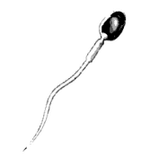
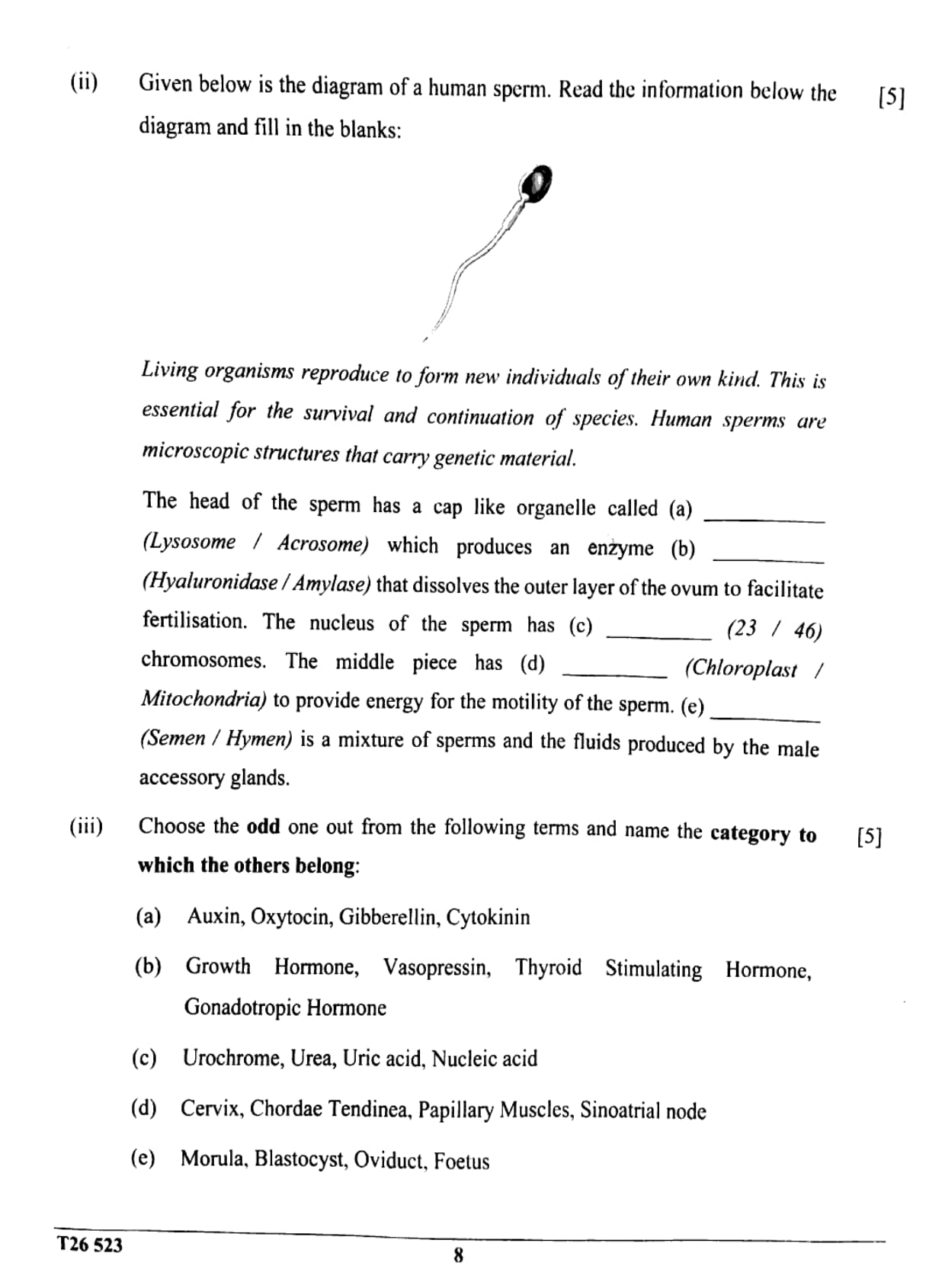
Given below is the diagram of a human sperm. Read the information below the diagram and fill in the blanks:
View Solution
Step 1: Explanation of the sperm structure.
Human sperm are microscopic structures that carry genetic material. The sperm structure includes the head, middle piece, and tail, each with specialized functions.
Step 2: Fill the blanks.
(a) Acrosome is the cap-like organelle on the head of the sperm. It contains enzymes like Hyaluronidase that help dissolve the outer layer of the ovum to facilitate fertilization.
(b) The enzyme produced by the acrosome is Hyaluronidase, which dissolves the outer layer of the ovum during fertilization.
(c) The nucleus of the sperm has 23 chromosomes, which carry the genetic information required for the creation of a new individual.
(d) The middle piece of the sperm contains Mitochondria that provide the energy needed for the motility of the sperm, allowing it to swim towards the egg.
(e) Semen is a mixture of sperm and the fluids produced by the male accessory glands, which help nourish and protect the sperm during their journey to the egg.
Quick Tip: The sperm consists of a head (with acrosome for fertilization), a middle piece (containing mitochondria for energy), and a tail for motility. All are essential for successful fertilization.
Choose the odd one out from the following terms and name the category to which the others belong:
View Solution
Step 1: Identify the odd term.
We are provided with five sets of terms. Let's go through each set and identify the odd term:
(a) Auxin, Oxytocin, Gibberellin, Cytokinin:
These are all plant hormones, except Oxytocin, which is a hormone found in humans and animals.
(b) Growth Hormone, Vasopressin, Thyroid Stimulating Hormone, Gonadotropic Hormone:
These are all human/animal hormones, so no odd term here.
(c) Urochrome, Urea, Uric acid, Nucleic acid:
Urochrome is a pigment found in urine, whereas the other terms are nitrogenous waste products.
(d) Cervix, Chordae Tendinea, Papillary Muscles, Sinoatrial node:
The odd term is Sinoatrial node, as it is related to the heart's electrical activity, while the others are structures in the heart involved in mechanics.
(e) Morula, Blastocyst, Oviduct, Foetus:
The odd term is Oviduct, as it is a structure through which the egg passes, while the others are stages or forms of development. Quick Tip: The odd one out can often be identified by its function or category, which may be different from the other terms in the set.
Mohit, a 30-year-old man was a software professional leading a sedentary life. He showed signs of high blood sugar during a routine health check-up despite having a normal body weight.
The hormonal disorder he is suffering from.

View Solution
Step 1: Understand the condition.
High blood sugar levels can indicate a hormonal disorder. Despite a normal body weight, a sedentary lifestyle may contribute to the development of metabolic issues, including insulin resistance.
Step 2: Identify the hormonal disorder.
The condition that Mohit is likely suffering from is Type 2 Diabetes Mellitus. This disorder is characterized by high blood sugar levels resulting from insulin resistance, where the body's cells do not respond to insulin effectively. It is commonly associated with a sedentary lifestyle, unhealthy eating habits, and genetic factors.
Step 3: Diagnosis and Management.
Type 2 diabetes is typically diagnosed through blood tests measuring fasting blood glucose levels, HbA1c, or oral glucose tolerance tests. Lifestyle changes, including regular physical activity, a balanced diet, and possibly medication, are key to managing this condition.
Quick Tip: Early detection of Type 2 diabetes is crucial. Regular health check-ups, physical activity, and a balanced diet can help prevent or manage the condition.
The hormone responsible for this disorder.
View Solution
Step 1: Understanding the Hormonal Imbalance.
The hormonal disorder Mohit is likely suffering from is Type 2 Diabetes Mellitus. This disorder is associated with an imbalance in insulin production or its efficiency in the body. The key hormone responsible for regulating blood sugar levels is Insulin. Insulin is produced by the pancreas and plays a crucial role in regulating glucose metabolism by facilitating the uptake of glucose into the cells for energy production.
Step 2: Role of Insulin in the Body.
Insulin helps lower blood sugar levels by promoting the absorption of glucose by muscle and fat cells and by stimulating the liver to store glucose as glycogen. In Type 2 Diabetes, the body becomes resistant to insulin, meaning the cells no longer respond to it effectively. This resistance forces the pancreas to produce more insulin to compensate for the inability of cells to respond. Over time, the pancreas may not be able to keep up with the demand, leading to high blood sugar levels, or hyperglycemia.
Step 3: Insulin Resistance in Type 2 Diabetes.
The key characteristic of Type 2 Diabetes is insulin resistance, where the body’s cells, particularly muscle and fat cells, fail to respond to insulin properly. As a result, glucose builds up in the bloodstream, leading to the symptoms and long-term complications associated with the disorder. Insulin resistance can be influenced by various factors such as poor diet, lack of physical activity, obesity, and genetic predisposition.
Quick Tip: Insulin resistance, the hallmark of Type 2 Diabetes, impairs the ability of the body to use insulin efficiently, leading to higher blood glucose levels.
The organ that secretes this hormone.
View Solution
Step 1: Understanding the Role of the Pancreas.
The Pancreas is the organ responsible for secreting insulin. It is located behind the stomach and plays a critical role in regulating blood sugar levels. The pancreas contains clusters of cells known as the islets of Langerhans, which are specialized to produce various hormones, including insulin.
Step 2: Function of the Islets of Langerhans.
The Islets of Langerhans contain different types of cells, each responsible for secreting specific hormones:
- Beta cells produce insulin, which lowers blood sugar levels.
- Alpha cells produce glucagon, which raises blood sugar levels by stimulating the liver to release stored glucose.
In a healthy individual, the pancreas maintains a balance between insulin and glucagon to regulate blood glucose levels.
Step 3: Insulin Secretion and Blood Sugar Regulation.
When blood sugar levels rise after eating, the pancreas releases insulin to help cells absorb glucose. In individuals with Type 2 Diabetes, the body’s cells do not respond to insulin as effectively, and the pancreas may produce more insulin to compensate. Over time, the pancreas may struggle to keep up with the demand for insulin production, leading to chronically high blood sugar levels.
Step 4: Pancreatic Dysfunction in Diabetes.
In some cases of Type 2 Diabetes, the beta cells in the pancreas become exhausted from constantly producing high amounts of insulin, which leads to a further decline in insulin production. This makes it harder for the body to regulate blood glucose levels, resulting in the need for external insulin therapy in advanced stages. Quick Tip: The pancreas plays a key role in regulating blood sugar through the secretion of insulin and glucagon, both of which help maintain glucose homeostasis.
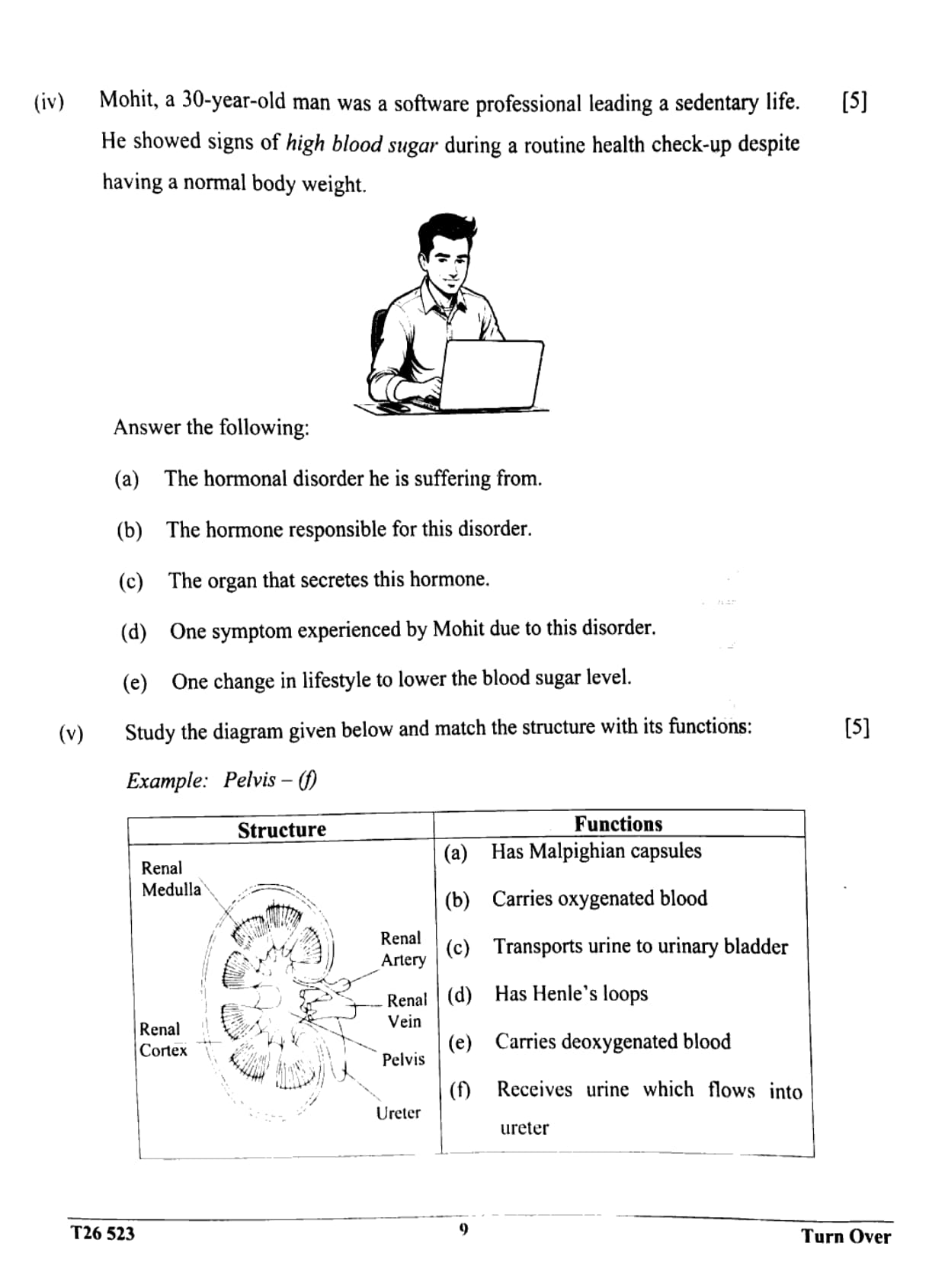
Study the diagram given below and match the structure with its functions:
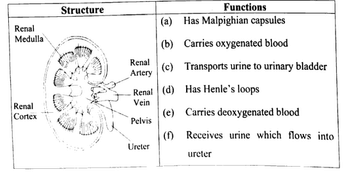
View Solution
Step 1: Identify the Structure and Its Function.
The diagram shows the structure of a kidney, and we need to match each structure with its corresponding function. Below is the matching of each structure to its respective function:
Renal Medulla - (d) Has Henle’s loops.
The renal medulla contains the renal pyramids, which have Henle’s loops that are essential for the reabsorption of water and salts from urine.
Renal Cortex - (a) Has Malpighian capsules.
The renal cortex contains the Malpighian (or renal) capsules, which are involved in the filtration of blood to form urine.
Renal Artery - (b) Carries oxygenated blood.
The renal artery supplies oxygenated blood to the kidneys, allowing them to filter blood and regulate the body's water and salt balance.
Renal Vein - (e) Carries deoxygenated blood.
The renal vein drains deoxygenated blood from the kidneys back into the circulatory system after the kidneys have filtered it.
Pelvis - (f) Receives urine which flows into the ureter.
The renal pelvis collects the urine produced by the kidneys and transports it to the ureter, which carries it to the urinary bladder.
Ureter - (c) Transports urine to the urinary bladder.
The ureter is responsible for transporting urine from the renal pelvis to the urinary bladder for storage before excretion. Quick Tip: The kidney is responsible for filtering blood, reabsorbing water and salts, and excreting waste products as urine. Each structure within the kidney plays a vital role in this process.
Which is the resting but metabolically active stage of the cell cycle?
View Solution
Step 1: Define the Stages of the Cell Cycle.
The cell cycle consists of several stages: Interphase (G1, S, G2), and Mitotic phase (M phase, which includes mitosis and cytokinesis). During these stages, the cell grows, replicates its DNA, and divides.
Step 2: Focus on the Resting but Metabolically Active Stage.
The resting but metabolically active stage of the cell cycle is Interphase, particularly the G0 phase. In the G0 phase, cells are in a resting state, but they are still metabolically active. They perform essential functions, such as protein synthesis, maintaining cell structure, and other maintenance tasks, but they do not prepare for cell division.
Step 3: Importance of G0 Phase.
The G0 phase is typically observed in differentiated cells that have permanently exited the cell cycle, such as neurons and muscle cells. These cells are not actively dividing, but they still carry out the necessary functions required for survival. Quick Tip: The G0 phase is a type of quiescence where cells are metabolically active but not dividing. It is crucial for maintaining the function of differentiated cells.
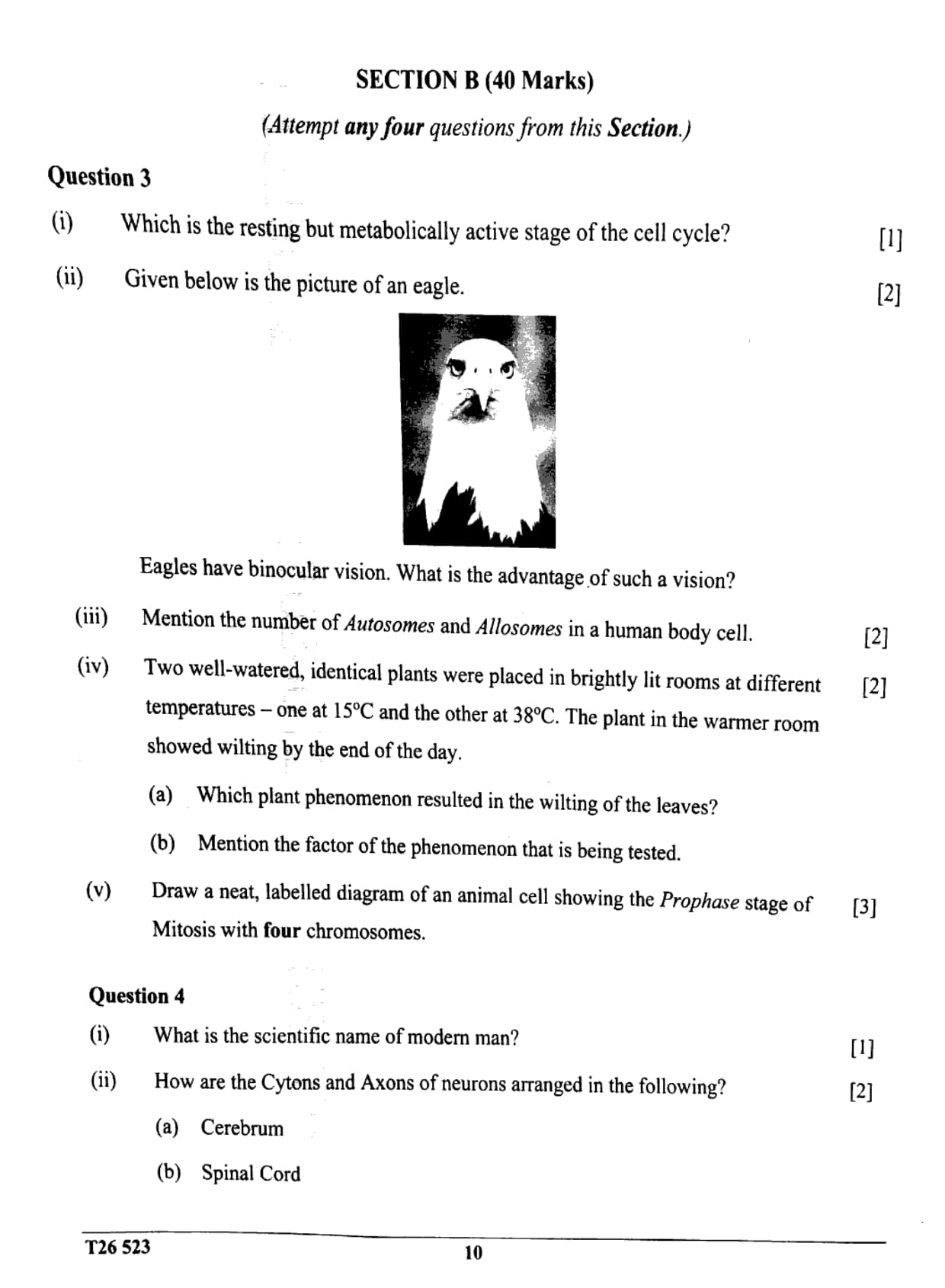
Given below is the picture of an eagle.
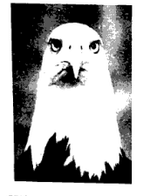
View Solution
Eagles have binocular vision, which means that both eyes are positioned in such a way that they focus on the same object simultaneously. This gives them a field of view where both eyes overlap, allowing them to perceive depth and distance accurately.
Step 1: Advantages of Binocular Vision.
The main advantage of binocular vision for eagles is that it provides stereoscopic vision, meaning they can judge distances accurately, which is crucial for hunting and diving. Eagles need to be able to judge the exact distance to their prey from a great height and at high speeds.
Step 2: Precision in Hunting.
This depth perception allows eagles to strike their prey with precision. They can swoop down from a great height and grab their prey in mid-air or on the ground with remarkable accuracy, ensuring a successful hunt.
Step 3: Enhanced Focus.
Binocular vision also helps eagles focus on prey over long distances, providing them with clear and sharp images of objects far away, which is vital when hunting from the sky.
Quick Tip: Binocular vision is crucial for predatory birds, such as eagles, as it allows them to accurately judge distance and speed, essential for successful hunting.
Draw a neat, labelled diagram of an animal cell showing the Prophase stage of Mitosis with four chromosomes.
View Solution
Step 1: Describe the Prophase stage.
Prophase is the first stage of mitosis where the chromatin condenses into visible chromosomes, the nuclear membrane begins to break down, and the spindle fibers start to form. In an animal cell, the centrioles move to opposite poles of the cell.
Step 2: Key features in Prophase.
- Chromosomes are visible as two chromatids joined at the centromere.
- The nuclear membrane starts to disintegrate.
- The spindle fibers begin to form and extend from the centrioles.
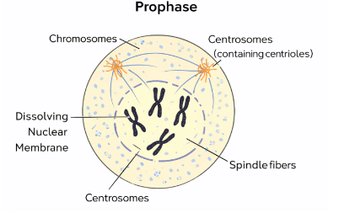
Step 3: Label the diagram.
In the diagram, four chromosomes should be clearly visible, and labels should indicate the centromere, chromatid, nuclear membrane, spindle fibers, and centrioles. Quick Tip: In prophase, chromosomes become visible, and the nuclear membrane begins to break down. This is essential for the cell to proceed to the next stages of mitosis.
What is the scientific name of modern man?
View Solution
The scientific name of modern man is Homo sapiens. The genus name is Homo, which includes all human species, and the species name sapiens means "wise" or "discerning," reflecting the higher intelligence of modern humans compared to other species in the genus.
How are the Cytons and Axons of neurons arranged in the following?
(a) Cerebrum
(b) Spinal Cord
View Solution
(a)
Step 1: Understanding the Arrangement in the Cerebrum.
In the cerebrum, the cytons (cell bodies) of neurons are predominantly located in the outer part, known as the gray matter. The axons, which transmit nerve impulses, are found in the inner region, called the white matter. The axons are myelinated, which gives the white matter its color and helps in the rapid transmission of nerve signals.
Step 2: The Role of Cytons and Axons.
The cytons in the cerebrum are responsible for processing and integrating sensory input and generating motor outputs. The axons extend from the cytons and form long connections with other parts of the nervous system, facilitating communication across the brain and spinal cord.
(b)
Step 1: Understanding the Arrangement in the Spinal Cord.
In the spinal cord, the cytons are located in the gray matter, which is centrally located in a butterfly-shaped region. The axons are found in the surrounding white matter. Similar to the cerebrum, the axons in the spinal cord are myelinated to ensure faster signal transmission.
Step 2: The Role of Cytons and Axons in the Spinal Cord.
The cytons in the spinal cord process sensory input from the body and send motor commands to muscles. The axons of these neurons transmit signals to and from the brain, playing a crucial role in reflex actions and voluntary movements.
Who proposed the theory of Natural Selection?
View Solution
Step 1: Who proposed the theory?
The theory of Natural Selection was proposed by Charles Darwin. He is known for his contributions to the theory of evolution, where he explained how species evolve over time due to the process of natural selection.
Step 2: Explanation of the theory.
Natural Selection is the process by which organisms better adapted to their environment tend to survive and produce more offspring, leading to the gradual evolution of species. Quick Tip: Charles Darwin's theory of natural selection revolutionized the understanding of evolution and species adaptation.
Name the organism which was used as an example to explain Industrial Melanism.
View Solution
Step 1: Identify the organism.
The organism used as an example to explain Industrial Melanism is the Peppered Moth (Biston betularia).
Step 2: Explain the phenomenon.
Industrial Melanism refers to the darker coloration of organisms, which is often a result of environmental changes, such as pollution. The Peppered Moth evolved darker coloration during the Industrial Revolution, when soot from factories darkened the environment, making the lighter-colored moths more visible to predators. Quick Tip: The Peppered Moth is a classic example of industrial melanism, showing how environmental changes can drive evolutionary adaptation.
Differentiate between Plasmolysis and Deplasmolysis.
View Solution
Step 1: Define Plasmolysis.
Plasmolysis is the process in which the plasma membrane of a plant cell pulls away from the cell wall due to water loss when the cell is placed in a hypertonic solution. In this state, water moves out of the cell, causing the cytoplasm to shrink.
Step 2: Define Deplasmolysis.
Deplasmolysis is the reverse process of plasmolysis, where the cell is placed in a hypotonic solution, causing water to move into the cell. This results in the plasma membrane pushing against the cell wall as the cell becomes turgid again.
Step 3: Comparison.
- Plasmolysis occurs when the plant cell loses water, leading to shrinkage of the cytoplasm.
- Deplasmolysis occurs when the plant cell gains water, causing the cytoplasm to expand and the plasma membrane to press against the cell wall.
Step 4: Key Difference.
The key difference between plasmolysis and deplasmolysis is the direction of water movement: plasmolysis involves water loss, while deplasmolysis involves water gain. Quick Tip: Plasmolysis is observed in hypertonic solutions (water moves out), while deplasmolysis occurs in hypotonic solutions (water moves in).
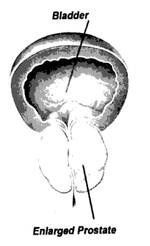
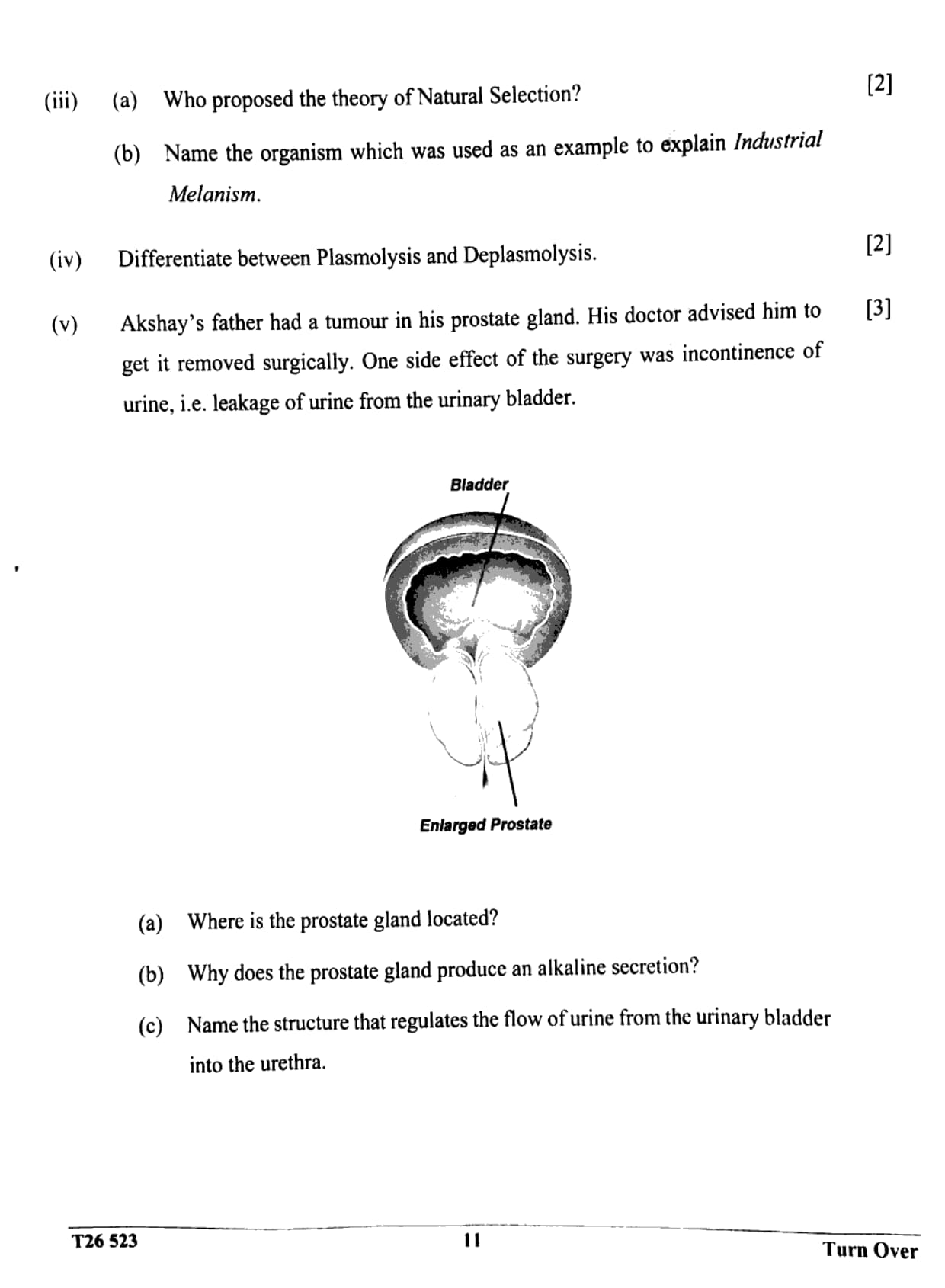
Akshay's father had a tumour in his prostate gland. His doctor advised him to get it removed surgically. One side effect of the surgery was incontinence of urine, i.e. leakage of urine from the urinary bladder.
View Solution
Step 1: Where is the prostate gland located?
The prostate gland is located just below the urinary bladder and surrounds the urethra. It is a part of the male reproductive system and plays a role in the production of seminal fluid.
Step 2: Why does the prostate gland produce an alkaline secretion?
The prostate gland produces an alkaline secretion to neutralize the acidic environment of the female reproductive tract. This helps protect the sperm and increases their motility during fertilization. Semen, which contains sperm, must be neutral to survive the acidic conditions in the vaginal environment. The alkaline secretion from the prostate gland helps to increase sperm viability and function.
Step 3: Name the structure that regulates the flow of urine from the urinary bladder.
The structure that regulates the flow of urine from the urinary bladder is the urethral sphincter. It is a muscular valve that controls the release of urine during urination. The urethral sphincter allows for voluntary control over urination by relaxing to allow urine to flow out and contracting to retain urine in the bladder. Quick Tip: The prostate gland is located near the bladder and urethra, and it plays an essential role in both reproductive and urinary functions in men. The urethral sphincter controls urine flow, while the prostate's alkaline secretion helps protect sperm in the acidic environment.
RBCs do not have nuclei. Discuss its advantage.
View Solution
Step 1: Understanding the Structure of RBCs.
Red Blood Cells (RBCs) are unique because they do not have nuclei. During their maturation process, RBCs lose their nucleus, which is a characteristic feature of these cells.
Step 2: Advantages of RBCs Lacking Nuclei.
The absence of a nucleus in RBCs provides several advantages:
- Increased Surface Area for Oxygen Transport: Without a nucleus, the cell can be more flexible and its cytoplasm can be maximized to carry more hemoglobin, which is responsible for oxygen transport.
- More Space for Hemoglobin: Since RBCs have more space for hemoglobin, they can carry a larger amount of oxygen, increasing the efficiency of oxygen transport to tissues.
- Flexibility: The lack of a nucleus makes RBCs more flexible, allowing them to squeeze through narrow capillaries and deliver oxygen to tissues more effectively.
Step 3: Conclusion.
The lack of a nucleus is an evolutionary advantage for RBCs because it allows them to carry more oxygen and navigate the circulatory system more efficiently. This adaptation enhances their role in respiration and overall health.
Quick Tip: The lack of a nucleus in RBCs is a key adaptation that allows for optimal oxygen transport and flexibility in the circulatory system.
Arrange the following food chains in a proper sequence.
Small fish, Algae, Mosquito larvae, Kingfisher
View Solution
The correct sequence for the food chain is:
Algae → Mosquito larvae → Small fish → Kingfisher
Step 1: Explanation of the Food Chain.
- Algae serve as the primary producers, forming the base of the food chain by converting solar energy into chemical energy through photosynthesis.
- Mosquito larvae feed on algae, making them primary consumers.
- Small fish feed on mosquito larvae, acting as secondary consumers.
- Kingfisher is a tertiary consumer that preys on small fish.
(b) Frog, Snail, Crow, Green leaves
% Solution
Solution:
The correct sequence for the food chain is:
Green leaves → Snail → Frog → Crow
Step 1: Explanation of the Food Chain.
- Green leaves are the primary producers that provide food for herbivores.
- Snail feeds on green leaves, acting as a primary consumer.
- Frog preys on the snail, functioning as a secondary consumer.
- Crow is a tertiary consumer that feeds on the frog.
Quick Tip: In food chains, the organisms are arranged according to their trophic levels, starting from producers (plants) to primary, secondary, and tertiary consumers.
A 28-year-old pregnant lady goes to a gynecologist for a check-up. Her doctor explains that there is normal growth of the foetus and the placenta is functioning well.
View Solution
(a) Mention one function of the placenta.
One important function of the placenta is to facilitate the exchange of nutrients and gases between the mother and the foetus. The placenta allows oxygen and nutrients, such as glucose, to pass from the mother’s bloodstream to the foetus, and it also removes waste products, such as carbon dioxide, from the foetus to the mother's bloodstream.
(b) What connects the placenta to the foetus?
The umbilical cord connects the placenta to the foetus. The umbilical cord contains blood vessels that transport oxygen, nutrients, and waste products between the mother and the foetus, ensuring the foetus receives the necessary substances for growth and development.
Quick Tip: The placenta is essential for supporting the developing foetus by providing nutrients, oxygen, and removing waste products through the umbilical cord.
Mention any two secondary sexual characteristics in a 15-year-old boy.
View Solution
Step 1: Define Secondary Sexual Characteristics.
Secondary sexual characteristics are traits that develop during puberty and distinguish males from females but are not directly involved in reproduction. These characteristics are influenced by sex hormones, such as testosterone in males.
Step 2: Two Secondary Sexual Characteristics in a 15-year-old Boy.
Two examples of secondary sexual characteristics in a 15-year-old boy are:
1. Growth of facial hair: Boys start developing facial hair, such as a mustache and beard, as a result of increased testosterone production.
2. Deepening of the voice: The larynx grows larger during puberty, leading to a deeper voice. This is also a result of the increased levels of testosterone.
Quick Tip: Secondary sexual characteristics in males are influenced by the hormone testosterone and typically appear during puberty.
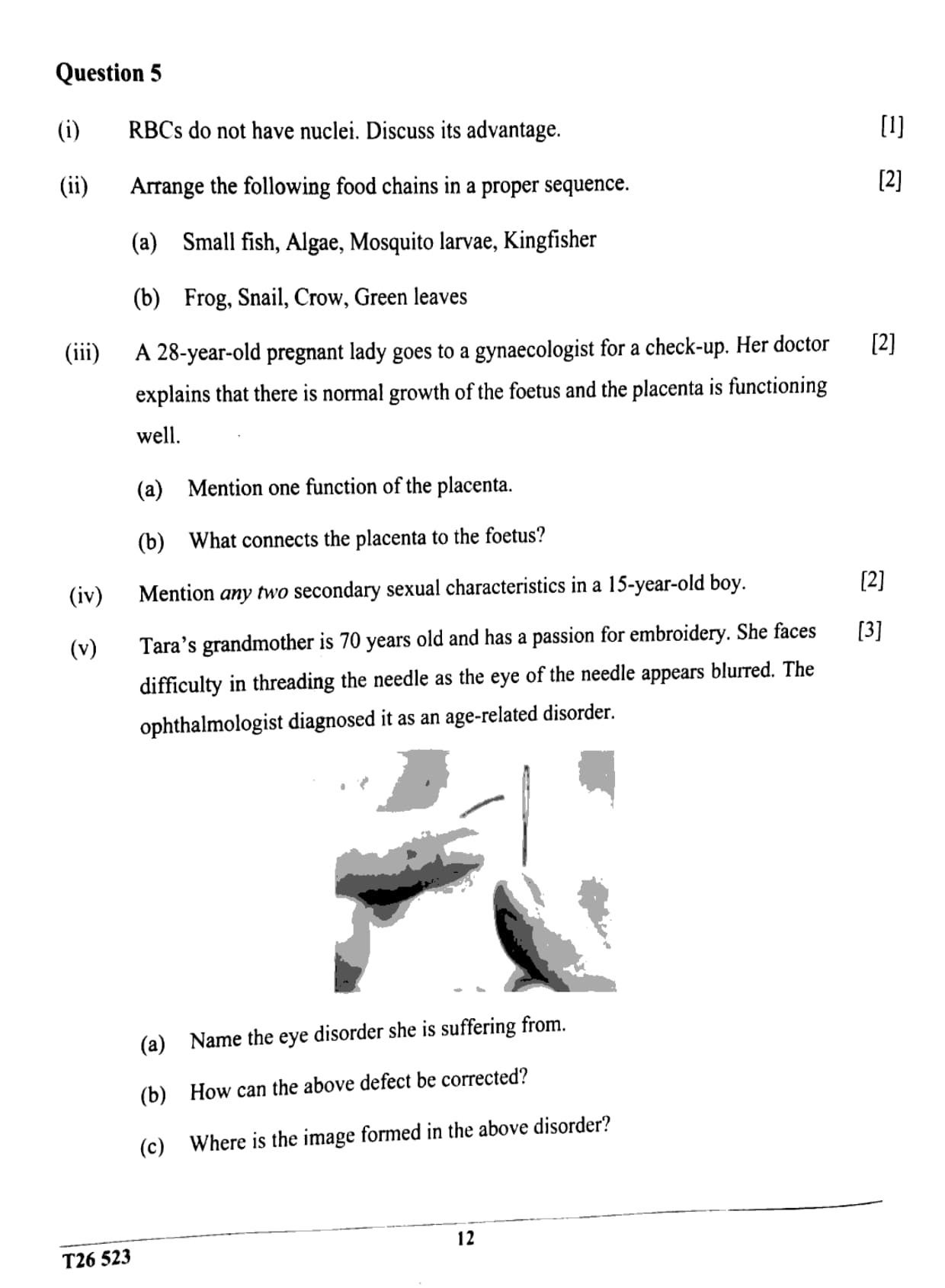
Tara's grandmother is 70 years old and has a passion for embroidery. She faces difficulty in threading the needle as the eye of the needle appears blurred. The ophthalmologist diagnosed it as an age-related disorder.
(a) Name the eye disorder she is suffering from.
(b) How can the above defect be corrected?
(c) Where is the image formed in the above disorder?
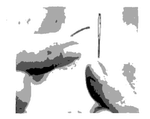
View Solution
(a) Name the eye disorder she is suffering from.
The eye disorder Tara's grandmother is suffering from is known as Presbyopia. This is an age-related disorder where the ability to focus on nearby objects decreases due to the hardening of the lens and weakening of the eye's ciliary muscles.
(b) How can the above defect be corrected?
Presbyopia can be corrected using bifocal or reading glasses, or in some cases, contact lenses. These help to focus on nearby objects by compensating for the loss of accommodation.
(c) Where is the image formed in the above disorder?
In presbyopia, the image is formed behind the retina due to the inability of the eye lens to change its shape adequately to focus on close objects. Quick Tip: Presbyopia typically affects people over the age of 40 and can be corrected with optical aids such as glasses or contact lenses.
Explain the term 'Population Density' with reference to human beings.
View Solution
Step 1: Define Population Density.
Population density refers to the number of individuals living in a unit area or volume, typically measured in people per square kilometer or per square mile. It is a key indicator used to understand how crowded or spread out a population is within a particular area.
Step 2: Population Density in Human Beings.
In reference to human beings, population density is often used to describe the concentration of people in a specific region, city, or country. High population density typically occurs in urban areas, while rural areas tend to have a lower population density. It affects various factors such as the availability of resources, infrastructure, and the quality of life in that region.
Step 3: Example.
For example, a densely populated city like New York or Tokyo has a high population density, meaning there are many people living in a small area, whereas a rural area in a developing country may have a low population density, meaning fewer people spread over a larger area. Quick Tip: Population density can influence social, economic, and environmental factors in a region, such as resource allocation, infrastructure development, and the spread of diseases.
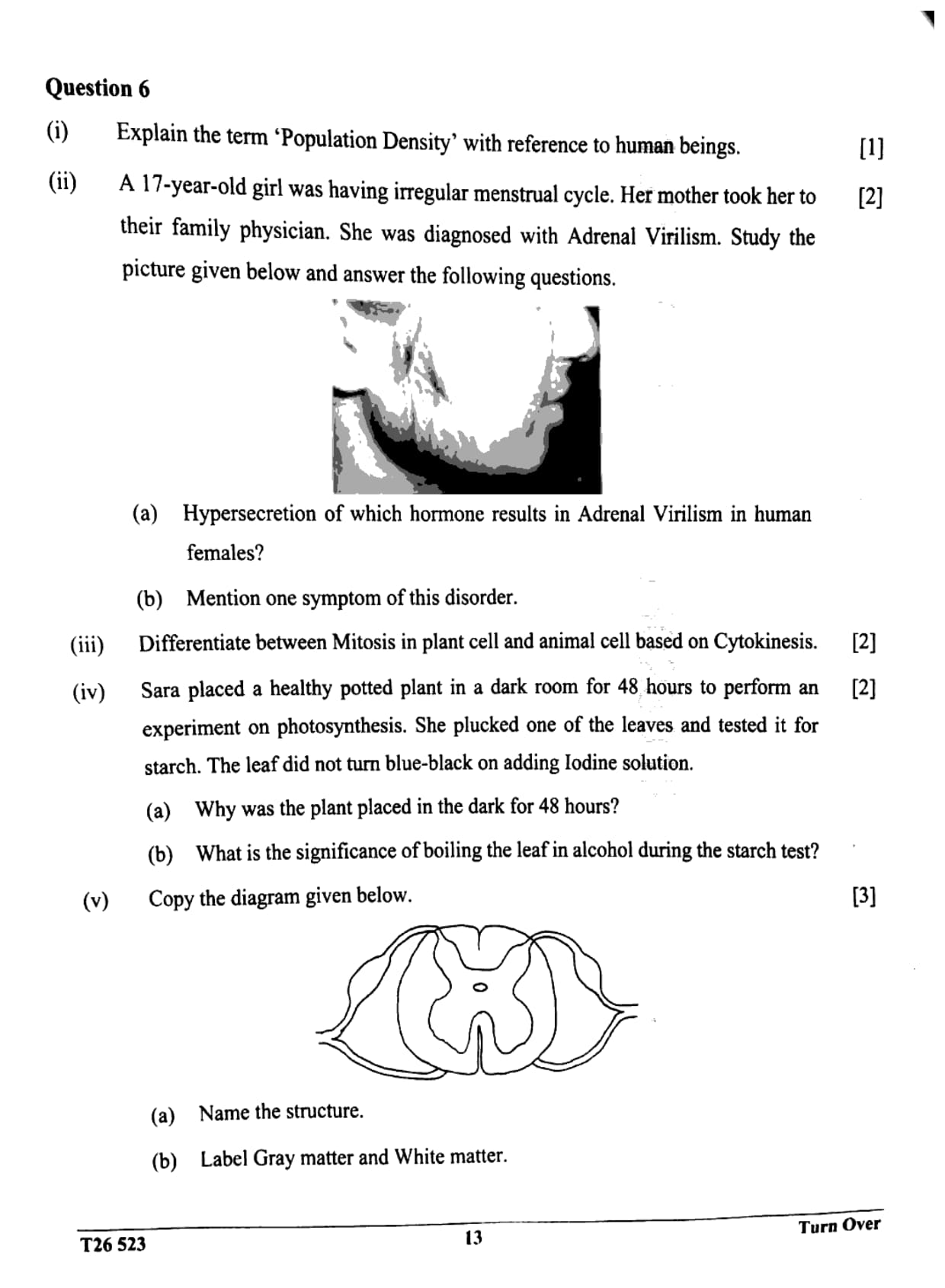
A 17-year-old girl was having irregular menstrual cycle. Her mother took her to their family physician. She was diagnosed with Adrenal Virilism. Study the picture given below and answer the following questions.
(a) Hypersecretion of which hormone results in Adrenal Virilism in human females?
(b) Mention one symptom of this disorder.
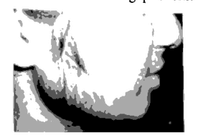
View Solution
(a) Hypersecretion of which hormone results in Adrenal Virilism in human females?
Adrenal Virilism in human females is caused by the hypersecretion of testosterone. This overproduction of testosterone by the adrenal glands leads to the development of male-like characteristics in females.
(b) Mention one symptom of this disorder.
One of the common symptoms of Adrenal Virilism is the development of male secondary sexual characteristics in females, such as deepening of the voice and excessive growth of facial and body hair (hirsutism). Quick Tip: Adrenal Virilism is a disorder resulting from overproduction of male hormones (androgens) like testosterone in females. Symptoms may include hirsutism and voice deepening.
Differentiate between Mitosis in plant cell and animal cell based on Cytokinesis.
View Solution
Step 1: Define Cytokinesis.
Cytokinesis is the final step of cell division, where the cytoplasm divides, resulting in two daughter cells. It occurs after the completion of mitosis, the process of nuclear division.
Step 2: Cytokinesis in Animal Cells.
In animal cells, cytokinesis is achieved through a process known as cleavage furrow formation. The cell membrane pinches inward along the center of the cell, driven by a contractile ring of actin filaments, until the cell is pinched into two separate daughter cells.
Step 3: Cytokinesis in Plant Cells.
In plant cells, cytokinesis occurs through a process known as cell plate formation. A structure called the phragmoplast forms at the center of the cell, and vesicles containing cell wall materials fuse to form a new cell wall, dividing the cell into two daughter cells.
Step 4: Key Differences.
- In animal cells, cytokinesis is characterized by the formation of a cleavage furrow that pinches the cell membrane.
- In plant cells, cytokinesis involves the formation of a cell plate that develops into a new cell wall. Quick Tip: Cytokinesis differs in plant and animal cells due to the presence of a rigid cell wall in plants, requiring a cell plate for division.
Sara placed a healthy potted plant in a dark room for 48 hours to perform an experiment on photosynthesis. She plucked one of the leaves and tested it for starch. The leaf did not turn blue-black on adding Iodine solution.
(a) Name the structure.
(b) Label Gray matter and White matter.
View Solution
(a) Why was the plant placed in the dark for 48 hours?
The plant was placed in the dark for 48 hours to deprive it of light. This is done to stop photosynthesis, as light is necessary for the plant to produce glucose. In the absence of light, the plant does not carry out photosynthesis and thus cannot produce starch.
(b) What is the significance of boiling the leaf in alcohol during the starch test?
Boiling the leaf in alcohol helps to remove the chlorophyll from the leaf and makes it easier to detect the presence of starch. The alcohol also softens the leaf, making it more receptive to the iodine solution, which stains the starch blue-black if present. Quick Tip: Boiling the leaf in alcohol removes pigments and helps in staining the starch with iodine. Without light, the plant cannot produce starch during the experiment.
Copy the diagram given below.
(a) Name the structure.
(b) Label Gray matter and White matter.
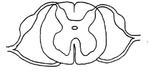
View Solution
(a) Name the structure.
The structure shown in the diagram is the Cross-section of the Spinal Cord. The spinal cord is a crucial part of the central nervous system that transmits neural signals between the brain and the rest of the body.
(b) Label Gray matter and White matter.
In the diagram, the Gray matter is located in the central region of the spinal cord, resembling a butterfly shape. It consists of neuron cell bodies, dendrites, and unmyelinated axons.
The White matter surrounds the gray matter and contains myelinated axons that transmit signals along the spinal cord. Quick Tip: The gray matter is involved in processing information, while the white matter is responsible for transmitting signals across the spinal cord.
Write the overall chemical equation for photosynthesis.
View Solution
The overall chemical equation for photosynthesis is:
\[ 6CO_2 + 6H_2O \xrightarrow{light\ energy} C_6H_{12}O_6 + 6O_2 \]
Explanation:
In photosynthesis, carbon dioxide and water react in the presence of light energy, absorbed by chlorophyll, to produce glucose and oxygen. The glucose produced is used as an energy source by the plant, while oxygen is released as a by-product. Quick Tip: Photosynthesis is a process used by plants to convert light energy into chemical energy, which is stored as glucose.
Expand the abbreviations:
(a) NADP
(b) ADP
View Solution
NADP stands for Nicotinamide Adenine Dinucleotide Phosphate. It is an important coenzyme in photosynthesis that helps carry electrons during the light-dependent reactions.
(b) ADP
% Solution
Solution:
ADP stands for Adenosine Diphosphate. It is a nucleotide that plays a key role in energy transfer within the cell. During photosynthesis, ADP is converted to ATP (Adenosine Triphosphate) to store energy.
Quick Tip: NADP and ADP are crucial in the process of photosynthesis, helping in energy transfer and electron transport during the reactions.
Explain the term Synapse.
View Solution
Step 1: Define Synapse.
A synapse is the junction or gap between two neurons or between a neuron and another cell, such as a muscle or a gland. It is the point at which a nerve impulse is transferred from one neuron to another or to an effector cell. The synapse ensures that electrical signals can be transmitted efficiently across the nervous system, enabling communication between different parts of the body.
Step 2: Types of synapses.
Synapses are classified into two main types:
- Electrical synapses: These synapses allow direct flow of ions between cells through gap junctions. This type of synapse allows very rapid signal transmission and is found in certain areas of the brain and the heart.
- Chemical synapses: These synapses involve the release of neurotransmitters to transmit the signal across the synaptic cleft (the gap between the cells). The chemical signals then bind to receptors on the postsynaptic cell, initiating a response.
Step 3: Mechanism of transmission at a chemical synapse.
At a chemical synapse, the transmission of nerve impulses occurs as follows:
1. When an action potential (nerve impulse) reaches the axon terminal of the presynaptic neuron, it triggers the release of neurotransmitters stored in vesicles.
2. The neurotransmitters are released into the synaptic cleft (the gap between the two cells) through exocytosis.
3. These neurotransmitters then bind to receptors on the membrane of the postsynaptic neuron (or effector cell, such as a muscle).
4. This binding opens ion channels, leading to a change in the postsynaptic cell's membrane potential and allowing the transmission of the signal to continue.
5. Once the neurotransmitter has completed its action, it is broken down by enzymes or reabsorbed by the presynaptic neuron. Quick Tip: Synapses are crucial for communication within the nervous system. Electrical synapses allow rapid signal transmission, while chemical synapses provide more complex signaling, such as learning and memory.
Name the neurotransmitter that allows the transmission of impulses across the synapse.
View Solution
Step 1: Identify the neurotransmitter.
The neurotransmitter that allows the transmission of impulses across the synapse is acetylcholine. Acetylcholine is a chemical messenger that plays a vital role in transmitting nerve impulses in both the central nervous system (CNS) and peripheral nervous system (PNS). It is primarily involved in the transmission of signals between neurons and muscles, especially at the neuromuscular junction, where it activates muscle contraction.
Step 2: Role of acetylcholine in synaptic transmission.
At the synapse, acetylcholine is released from the presynaptic neuron in response to an action potential. It then travels across the synaptic cleft and binds to specific receptors (called cholinergic receptors) on the postsynaptic neuron or effector cell (e.g., muscle). This binding opens ion channels in the postsynaptic membrane, allowing the influx of sodium ions, which initiates a response, such as the generation of an action potential in the postsynaptic cell or muscle contraction.
Step 3: Types of acetylcholine receptors.
Acetylcholine acts on two types of receptors:
1. Nicotinic receptors: Found at the neuromuscular junction and in the autonomic ganglia. These receptors are ion channels that, when activated by acetylcholine, lead to depolarization of the postsynaptic membrane and the initiation of an action potential.
2. Muscarinic receptors: Found in the heart, smooth muscles, and various glands. These receptors are G-protein-coupled receptors that mediate slower, longer-lasting effects such as the regulation of heart rate and smooth muscle contraction.
Step 4: Degradation of acetylcholine.
Once acetylcholine has transmitted its signal, it must be broken down to prevent continuous stimulation of the postsynaptic cell. This is done by the enzyme acetylcholinesterase, which breaks acetylcholine into acetic acid and choline. The choline is then reabsorbed by the presynaptic neuron to be used for the synthesis of more acetylcholine. Quick Tip: Acetylcholine is crucial for various functions such as muscle movement, heart rate regulation, and memory. Its action is rapidly terminated by acetylcholinesterase to prevent overstimulation.
What is the role of the following?
(a) Leydig cells
View Solution
Step 1: Define Leydig Cells.
Leydig cells, also known as interstitial cells, are located in the testes, specifically in the spaces between the seminiferous tubules. They are crucial for the production of testosterone, the primary male sex hormone.
Step 2: Role of Leydig Cells.
Leydig cells are responsible for synthesizing and secreting testosterone, which plays a key role in the development of male secondary sexual characteristics such as facial hair, deep voice, and muscle mass. Testosterone also regulates spermatogenesis (the production of sperm) in the seminiferous tubules. Quick Tip: Leydig cells are important for the hormonal regulation of male reproductive functions, particularly the production of testosterone.
Seminiferous tubules
View Solution
Step 1: Define Seminiferous Tubules.
Seminiferous tubules are tightly coiled structures located within the testes. They are the sites of spermatogenesis, where sperm cells are produced.
Step 2: Role of Seminiferous Tubules.
The primary role of the seminiferous tubules is to produce sperm through the process of spermatogenesis. This process involves the division and maturation of germ cells into sperm cells. The tubules are lined with spermatogenic cells and Sertoli cells that nourish and support the developing sperm. Quick Tip: The seminiferous tubules are the functional units of the testes, where sperm production occurs.
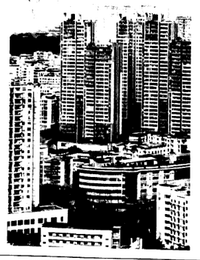
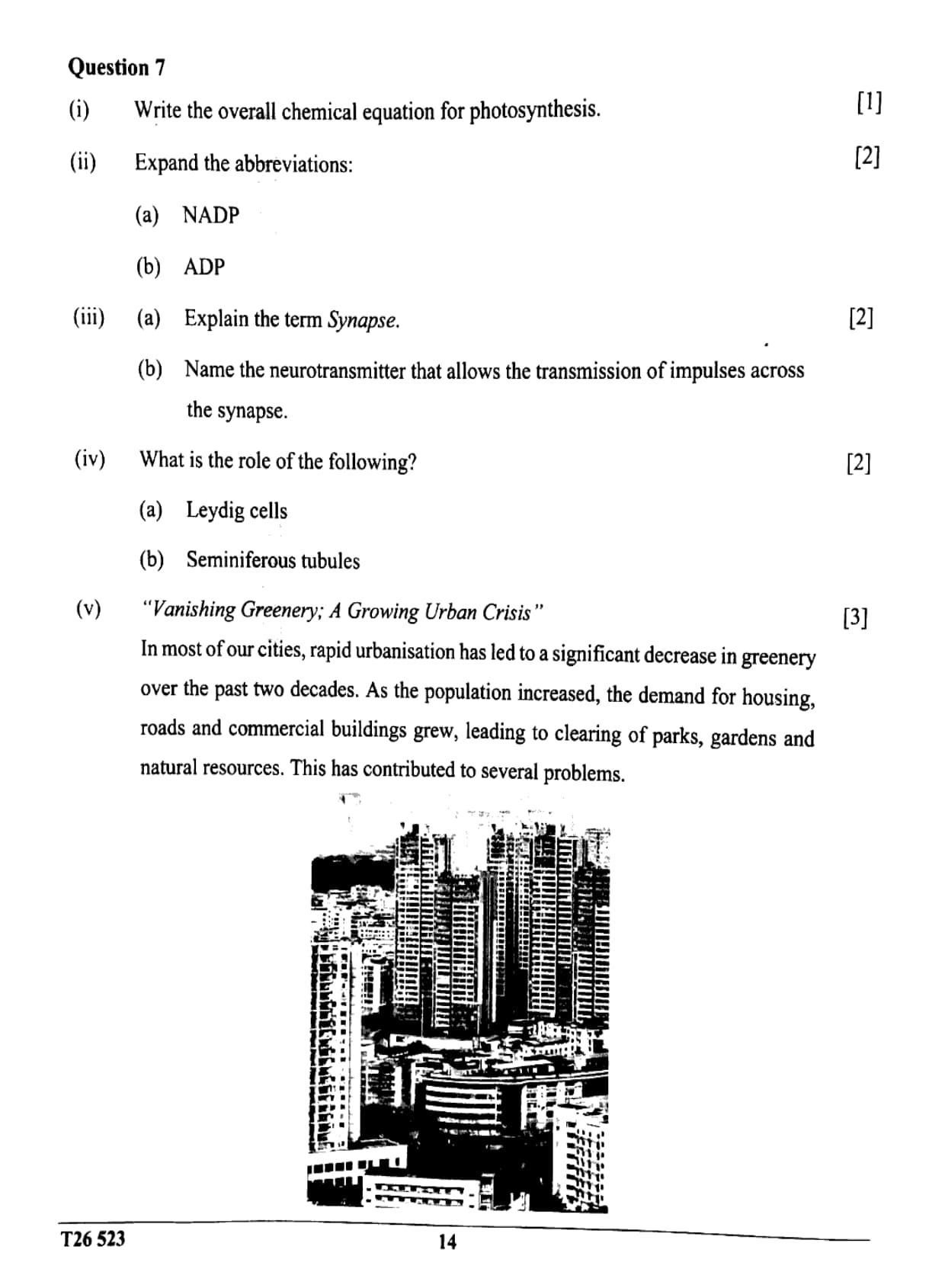
"Vanishing Greenery; A Growing Urban Crisis"
In most of our cities, rapid urbanisation has led to a significant decrease in greenery over the past two decades. As the population increased, the demand for housing, roads and commercial buildings grew, leading to clearing of parks, gardens, and natural resources. This has contributed to several problems.
(a) Mention one significant problem caused by the reduction in urban greenery.
(b) How do green plants contribute to improving the air quality?
(c) What role can you, as a citizen, play in protecting urban greenery?
View Solution
(a) Mention one significant problem caused by the reduction in urban greenery.
One significant problem caused by the reduction in urban greenery is increased air pollution. The reduction of trees and plants decreases the ability of the environment to absorb pollutants like carbon dioxide, leading to poorer air quality and contributing to health problems for the population.
(b) How do green plants contribute to improving the air quality?
Green plants improve air quality through a process known as photosynthesis. During photosynthesis, plants absorb carbon dioxide from the air and release oxygen. This helps in reducing the amount of harmful gases in the air, thus improving air quality.
(c) What role can you, as a citizen, play in protecting urban greenery?
As a citizen, you can contribute to protecting urban greenery by participating in tree planting initiatives, avoiding littering, and supporting policies that promote the conservation of parks and green spaces. Additionally, you can spread awareness about the importance of greenery and advocate for its preservation. Quick Tip: Urban greenery helps in reducing pollution, maintaining biodiversity, and improving mental health. Citizens play a key role in preserving and expanding green spaces through collective action and awareness.
Name the fluid present between the meninges in spinal cord.
View Solution
Step 1: Name the fluid.
The fluid present between the meninges in the spinal cord is called Cerebrospinal Fluid (CSF). This fluid is found in the subarachnoid space between the arachnoid mater and pia mater. Quick Tip: Cerebrospinal fluid (CSF) is a clear fluid that cushions and protects the spinal cord and brain.
What is its function?
View Solution
Step 1: Function of CSF.
Cerebrospinal Fluid (CSF) serves several vital functions, including:
1. It acts as a cushion or shock absorber for the brain and spinal cord, protecting them from mechanical injury.
2. It helps in the circulation of nutrients and removal of waste products from the brain.
3. It maintains the chemical stability of the central nervous system (CNS). Quick Tip: CSF plays a key role in protecting the brain and spinal cord from trauma, supporting metabolic functions, and maintaining homeostasis in the CNS.
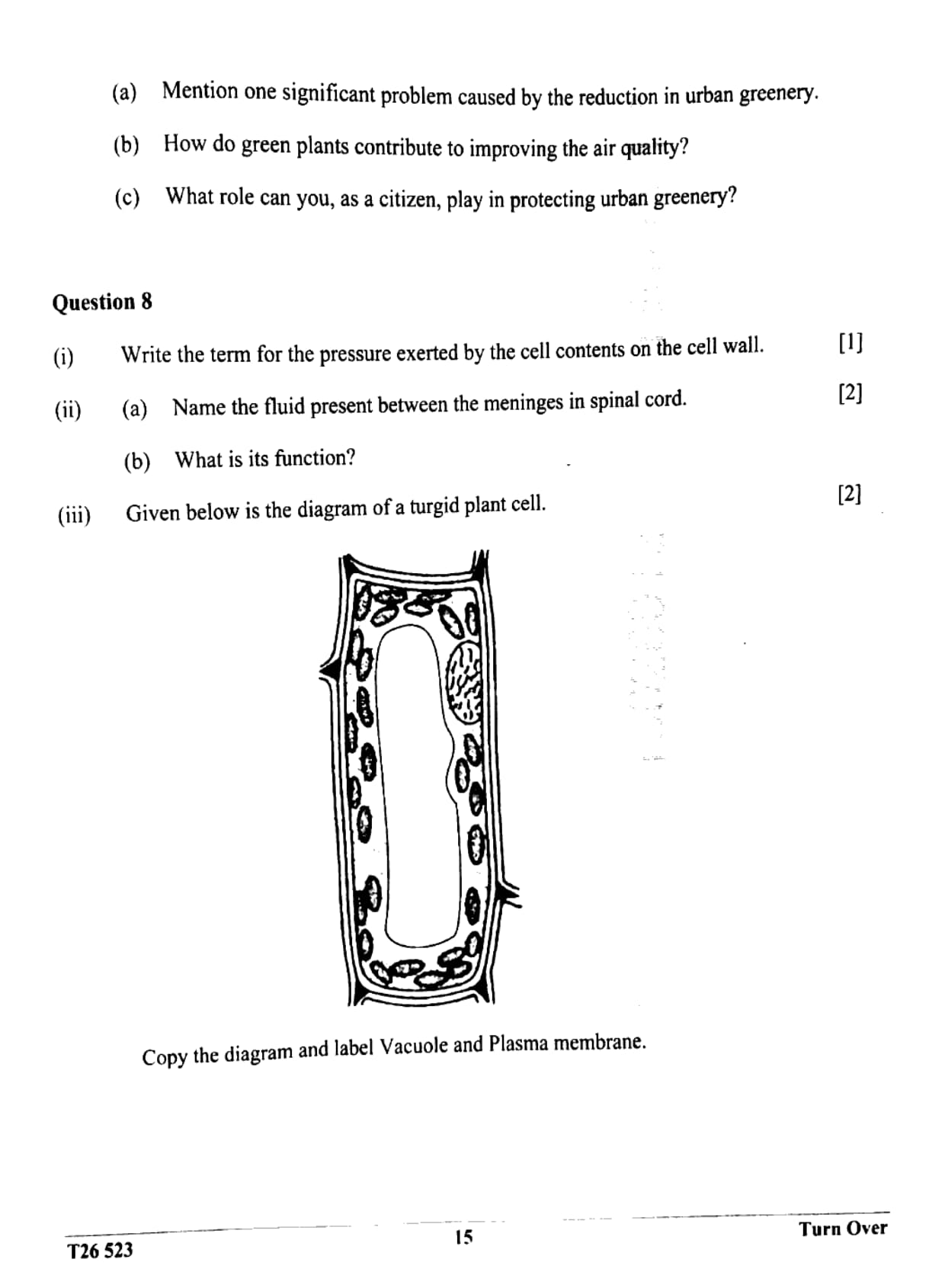
Given below is the diagram of a turgid plant cell.
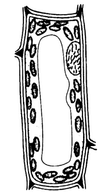
View Solution
(a) Label the Vacuole and Plasma Membrane.
In a turgid plant cell, there are two key structures that need to be labelled:
1. Vacuole
The vacuole is a large, membrane-bound organelle found at the center of a plant cell. It contains cell sap, which is a mixture of water, sugars, salts, and waste products. The vacuole plays several important roles in plant cells, including:
- Storage: It stores nutrients, waste products, and other substances the cell might need or want to expel.
- Turgor Pressure: The vacuole is critical in maintaining turgor pressure within the cell. This pressure is created by the water filling the vacuole, pushing against the cell wall, which helps keep the plant cell rigid and supports the overall structure of the plant.
2. Plasma Membrane
The plasma membrane, also known as the cell membrane, is the outermost layer of the cell. It surrounds the entire cell and separates the internal components from the external environment. The plasma membrane plays a crucial role in maintaining the cell's integrity and homeostasis. Its functions include:
- Selective Permeability: The plasma membrane controls the movement of substances into and out of the cell. It allows essential nutrients to enter the cell and waste products to be expelled. It also helps regulate the internal environment by controlling the concentration of ions and other molecules inside the cell.
- Protection and Structure: The plasma membrane provides structural support to the cell and protects it from harmful substances. It also plays a role in communication with other cells through receptors on its surface, which can respond to signals from the environment or neighboring cells.
Step 2: Importance of Vacuole and Plasma Membrane.
- The vacuole helps maintain the shape and size of the cell, making it an essential component for plant growth and rigidity. Without the vacuole, plant cells would lack the necessary turgor pressure, and the plant would wilt.
- The plasma membrane is important for the cell’s interaction with its environment. By selectively allowing substances to pass through, it ensures that the cell can take in necessary materials, expel waste, and maintain a balanced internal environment. Quick Tip: The vacuole is responsible for maintaining turgor pressure in plant cells, while the plasma membrane controls the movement of substances into and out of the cell, ensuring proper cellular function.
Select and write the two biodegradable wastes from the given list:
Styrofoam, Metallic cans, Decaying fruits, Plastic bottles, Newspapers
View Solution
Step 1: Identify biodegradable wastes.
Biodegradable wastes are those that can be decomposed by natural organisms, such as bacteria, fungi, or other decomposers, into simpler substances over time.
Step 2: Select biodegradable wastes.
From the given list, the two biodegradable wastes are:
- Decaying fruits
- Newspapers
Step 3: Explanation.
- Decaying fruits are organic materials that decompose naturally and can be broken down by microorganisms.
- Newspapers are made of paper, which is biodegradable and decomposes with the help of bacteria and fungi.
Quick Tip: Biodegradable wastes decompose naturally and can be composted. Non-biodegradable wastes, such as plastic, do not decompose and cause long-term environmental harm.
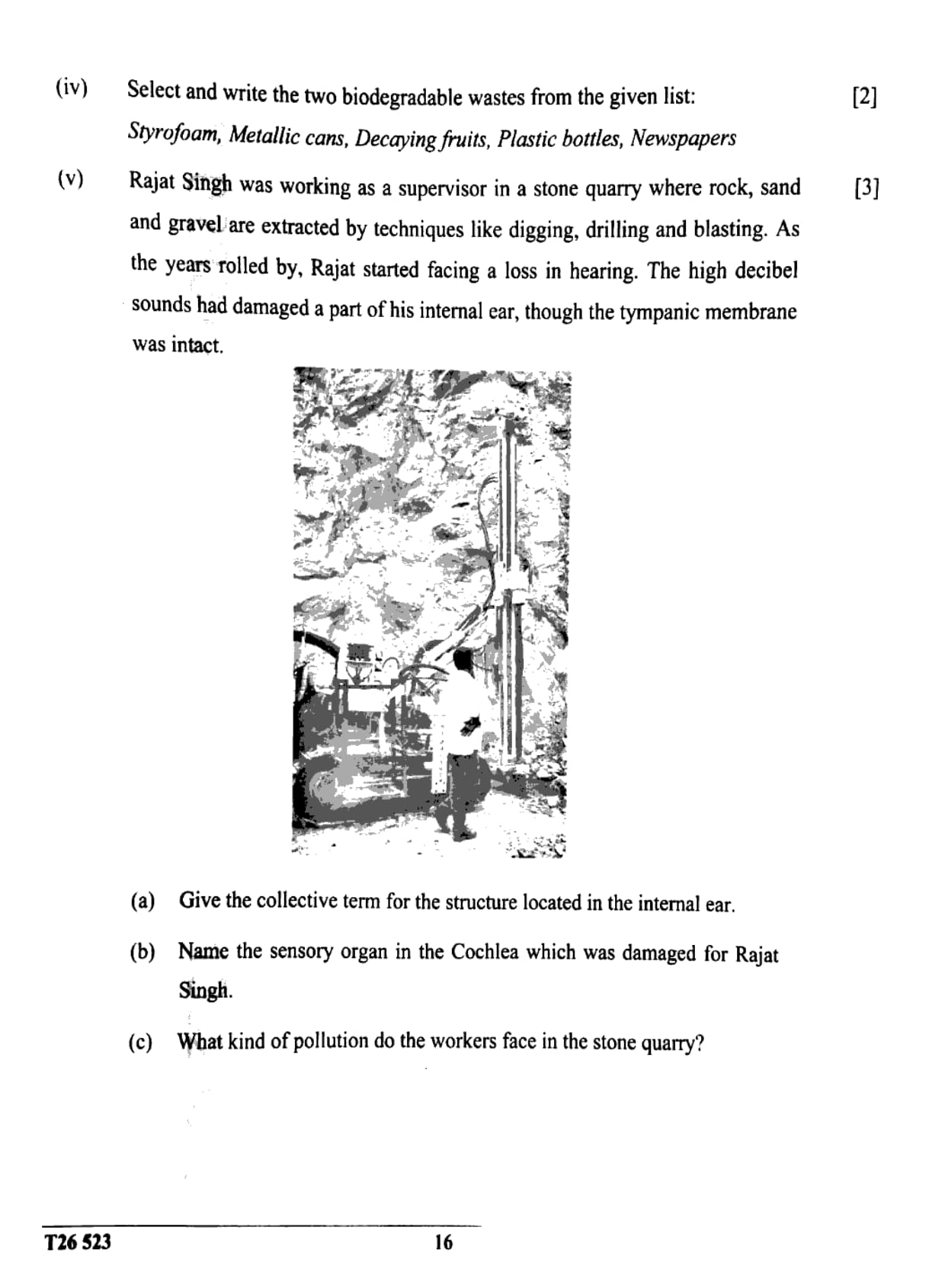
Rajat Singh was working as a supervisor in a stone quarry where rock, sand and gravel are extracted by techniques like digging, drilling, and blasting. As the years rolled by, Rajat started facing a loss in hearing. The high decibel sounds had damaged a part of his internal ear, though the tympanic membrane was intact.
(a) Give the collective term for the structure located in the internal ear.
(b) Name the sensory organ in the Cochlea which was damaged for Rajat
Singh.
(c) What kind of pollution do the workers face in the stone quarry?
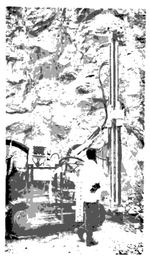
View Solution
(a) Give the collective term for the structure located in the internal ear.
The collective term for the structure located in the internal ear is the labyrinth. It consists of the cochlea, vestibule, and semicircular canals, all of which contribute to hearing and balance.
(b) Name the sensory organ in the Cochlea which was damaged for Rajat Singh.
The sensory organ in the cochlea that was damaged for Rajat Singh is the organ of Corti. It contains hair cells that are responsible for converting sound vibrations into electrical signals for the brain to interpret as sound.
(c) What kind of pollution do the workers face in the stone quarry?
The workers in the stone quarry are primarily exposed to noise pollution. The high decibel levels from the drilling and blasting operations can lead to hearing damage and other health issues related to prolonged exposure to loud noises.
Quick Tip: Noise pollution, especially in industries like stone quarrying, can cause irreversible damage to hearing if proper protective measures are not taken.



Comments