




The Council for the Indian School Certificate Examinations (CISCE) successfully conducted the ICSE Class 10 Geography (HCG Paper 2) Exam 2026. The ICSE Board Class 10 Geography HCG Paper 2 Question Paper with Solution PDF is now available for download.
The ICSE Board Class 10 Geography (HCG Paper 2) covered key topics from physical geography, climatic conditions, human geography, and map work. Students should focus on understanding geographical features, climate patterns, human-environment interaction, and practicing map skills. The exam is marked out of 100, with 80 marks for theory paper and 20 for internal assessments.
ICSE Board Class 10 2026 Geography (HCG Paper 2) Question Paper with Solution PDF
| ICSE Class 10 Geography HCG Paper 2 Question Paper 2026 | Download PDF | Check Solution |

Study the extract of the Survey of India Map Sheet No. G43S7 and answer the following questions:
What is the social significance of the temple that is found at the six-figure grid reference 362001?
View Solution
The temple located at the six-figure grid reference 362001 likely holds immense social significance within the local community. Temples, especially in rural and urban settings in India, have long been centers of religious, social, and cultural life. This particular temple could serve several purposes for the community:
Step 1: Religious and Cultural Hub.
Temples are often the focal point for spiritual practices, festivals, and rituals. In such a setting, it becomes a space for community members to come together for religious services, prayer, and festivals, thereby fostering unity among people. The temple likely plays an integral role in the cultural life of the area, with traditional dances, music, and other community activities taking place in its vicinity.
Step 2: Social Functions.
Beyond its role in worship, the temple may also serve as a venue for social functions such as marriages, communal meals, and gatherings. These events not only fulfill religious needs but also serve as platforms for people to socialize and maintain close-knit ties within the community.
Step 3: Symbol of Heritage and Identity.
Additionally, the temple might hold historical significance, representing the cultural heritage of the area. Such religious structures often symbolize a community's values, history, and identity, contributing to the collective memory of the people. Quick Tip: Temples are important community centers in many regions, serving both as places of worship and as social and cultural hubs for the local population.
What is the reason for very few settlements in the southeastern quarter of the map extract?
View Solution
The reason for the scarcity of settlements in the southeastern quarter of the map extract can be attributed to several geographical and environmental factors. Most commonly, such a situation arises due to the following reasons:
Step 1: Challenging Terrain.
One significant geographical barrier could be the presence of rugged terrain, such as mountains, hills, or uneven landforms. These natural features make it difficult to construct roads, build infrastructure, or practice agriculture, all of which are essential for sustaining large populations. Settlements typically avoid such areas due to the high costs and difficulties associated with developing the land.
Step 2: Lack of Water Sources.
Another possible reason could be the absence of reliable water sources. Water is crucial for drinking, agriculture, and other daily activities. In the absence of rivers, lakes, or wells, the area may be unsuitable for human habitation. Many regions with few settlements suffer from inadequate access to fresh water, which directly affects agriculture and human well-being.
Step 3: Unfavorable Soil and Climate Conditions.
The region could have poor soil quality and unfavorable climatic conditions, such as frequent droughts, high temperatures, or inadequate rainfall. Such conditions make it difficult for people to cultivate crops or sustain livestock, resulting in fewer settlements. Additionally, extreme weather patterns could make the area less hospitable.
Step 4: Limited Accessibility.
If the area is difficult to reach due to a lack of roads or proximity to transport hubs, settlements will naturally be limited. Areas that are isolated by difficult geography or poor transportation infrastructure often see fewer settlements. Quick Tip: Geographical challenges such as rugged terrain, lack of water, poor soil, and limited access to transportation often deter settlements in certain regions.
What is 3r in grid square 3501?
View Solution
The notation "3r" in grid square 3501 refers to a specific location within that grid square on a map. Grid references on topographic maps are generally used to pinpoint locations with great precision. Here's a breakdown of how to interpret the notation:
Step 1: Understanding the Grid System.
A six-figure grid reference is typically divided into smaller squares. For example, in the case of the six-figure grid reference 3501, the area is divided into smaller parts using both horizontal and vertical divisions. The "3r" notation indicates a sub-section or a specific point within grid square 3501. This helps in locating a more precise feature within that larger grid area.
Step 2: Importance of Sub-divisions.
The "3r" designation might be referring to one of the smaller divisions within grid square 3501. Grid squares on maps are divided to increase accuracy, especially in cases where the land features are large or too spread out to be easily indicated by the larger grid square alone. For instance, "3r" could indicate a specific location such as a river, road, or building within the larger area of 3501.
Step 3: Usage of the Reference.
By using this grid reference, people can identify more specific points on the map. The "3r" helps map readers quickly locate small features that might otherwise be difficult to pinpoint with just the larger grid square number. This system is especially helpful in navigation, surveying, and in any task that requires high precision. Quick Tip: Grid references like "3r" are used to locate specific points within a larger grid square on maps, offering greater accuracy in identifying land features.
Identify one relief feature found in the grid square 3796.
View Solution
One of the relief features found in grid square 3796 is a hill. In geographical terms, a hill is a raised area of land, smaller than a mountain, and typically characterized by a more rounded top. Here's how we can determine this from a map:
Step 1: Relief Features on Topographic Maps.
Topographic maps use contour lines to represent the shape and elevation of the land. These lines indicate areas of equal elevation. When the contour lines are close together, it usually indicates steep slopes, which often occur at hills or mountains. Conversely, if the contour lines are more spaced apart, it indicates flat or gently sloping areas.
Step 2: Identifying Hills.
On a map, a hill will typically be shown by contour lines that form a series of concentric circles or ovals. The innermost circle represents the summit or the highest point of the hill. As the contour lines move outward, they represent lower elevations. By analyzing grid square 3796, we can observe the contour lines to identify the presence of a hill.
Step 3: Interpreting Map Features.
In grid square 3796, the presence of closely spaced contour lines indicates a significant elevation change, suggesting a hill. The location of this hill makes it an important geographical feature in that region. Quick Tip: In topographic maps, closely spaced contour lines represent steeper areas such as hills or mountains, while widely spaced lines indicate flat areas.
The area shown on the map extract has seasonal streams, but in 3903 a large perennial water source can be seen. What may be the reason for the presence of this large perennial source of water?
View Solution
The reason for the presence of a large perennial water source in grid square 3903 is likely due to the presence of an underground water reservoir or aquifer. Unlike seasonal streams, which rely on rainfall and only flow during the wet season, perennial water sources such as rivers or springs are sustained throughout the year.
Step 1: Underground Water Sources.
In many regions, underground reservoirs or aquifers maintain a steady flow of water, even during dry months. These sources tap into water stored beneath the Earth's surface, providing a continuous flow of water regardless of seasonal changes.
Step 2: Localized Geographic Features.
The presence of springs or large perennial rivers could also explain the constant water flow. Such perennial sources are typically fed by groundwater, snowmelt, or larger water bodies upstream, which provide a constant supply of water, even in areas with dry climates. Quick Tip: Perennial water sources are typically sustained by underground water reservoirs or springs, providing water year-round, unlike seasonal streams.
Which other source of water seen on the map extract is perennial?
View Solution
Another perennial source of water seen on the map extract could be a lake or a reservoir. Unlike seasonal streams that depend on rainfall, lakes and reservoirs typically have a more consistent water level, especially if they are fed by perennial rivers or groundwater.
Step 1: Water Body Characteristics.
Lakes and reservoirs are artificial or natural water bodies that store water throughout the year. These water sources often supply water for irrigation, drinking, and industrial use, making them important perennial sources.
Step 2: Continuous Water Supply.
Unlike seasonal streams, which only carry water during certain times of the year, lakes and reservoirs store a large volume of water, providing a continuous and reliable source of water supply to nearby areas. Quick Tip: Lakes and reservoirs are typically perennial water sources, providing consistent water supply throughout the year, unlike seasonal streams.
While travelling for work from Dhaneri (3100) to Marwada (3197) along the metalled road, Sahil crossed over a number of 'causeways'. Why are causeways present in the area shown on the map extract?
View Solution
Causeways are raised roads or pathways that are built to cross over areas that are prone to flooding or are otherwise low-lying. In the area shown on the map extract, causeways are likely present due to the following reasons:
Step 1: Presence of Low-Lying or Flood-Prone Areas.
The terrain in the area might have areas that are subject to seasonal flooding or waterlogging. A causeway helps in providing a stable route across such areas by elevating the road above the level of surrounding water, ensuring that vehicles and pedestrians can cross without being affected by water.
Step 2: Natural Watercourses.
Causeways are often constructed across natural watercourses, such as streams, small rivers, or seasonal drains, to keep the road accessible year-round. In areas where these watercourses fluctuate with the seasons, causeways provide a means of maintaining road access even during high-water periods.
Step 3: Infrastructural Necessity.
Given the importance of road transport for local movement and connectivity, constructing causeways ensures that transportation infrastructure remains operational during all seasons, preventing the road from being washed out or submerged in the rainy season. Quick Tip: Causeways are raised roads built over flood-prone or low-lying areas to provide safe and continuous passage, especially in regions with seasonal watercourses.
Identify the drainage pattern seen in the grid square 3697.
View Solution
The drainage pattern seen in grid square 3697 is a dendritic drainage pattern.
In a dendritic pattern, the tributaries of the river or stream resemble the branches of a tree. This pattern forms in regions where the underlying rock is relatively uniform, allowing rivers and streams to flow in a branching manner.
Step 1: Characteristics of Dendritic Drainage.
Dendritic drainage is the most common pattern and typically occurs in areas where the terrain is gentle, and the rock layers are uniform and easily eroded. It results in a tree-like appearance with smaller streams joining larger ones at acute angles.
Step 2: Identifying the Pattern on the Map.
On the map, the river or streams appear to be branching out in a way that looks like a tree with various smaller streams joining a main river or watercourse, confirming that this is a dendritic drainage pattern. Quick Tip: A dendritic drainage pattern resembles the branching of a tree, typically found in areas with uniform rock types and gentle slopes.
What is the difference in altitude between the highest point on the map extract and the contour height in grid square 3203?
View Solution
To determine the difference in altitude between the highest point on the map extract and the contour height in grid square 3203, we need to compare the two following elements:
Step 1: Identify the Highest Point on the Map.
The highest point on the map extract can be identified by locating the peak or the highest contour lines. The altitude of the highest point is typically indicated by the highest contour line or spot height marked on the map. From the map extract, we can see that the highest point is at a specific contour value.
Step 2: Identify the Contour Height in Grid Square 3203.
Grid square 3203 has a contour line, and the elevation at this point is indicated by the contour value. From the map, we can find the specific contour height associated with this grid square.
Step 3: Calculate the Difference in Altitude.
Once we have the altitude of the highest point and the contour height for grid square 3203, we subtract the two values to find the difference in altitude. Quick Tip: To find the difference in altitude, subtract the lower elevation (contour height) from the higher elevation (highest point on the map).
What is the black horizontal line made between 98 and 99 northings called?
View Solution
The black horizontal line between 98 and 99 northings is known as a latitudinal grid line or parallel line.
Step 1: Explanation of Grid Lines.
In topographic maps, grid lines are used to mark specific coordinates on the map. Vertical lines represent eastings (east-west direction), and horizontal lines represent northings (north-south direction). The black horizontal line between 98 and 99 northings indicates a specific latitude on the map.
Step 2: Role of Northings.
The northing lines represent the distance north of the equator, and they help map users navigate the map by providing a way to measure position in the north-south direction. The line between 98 and 99 northings would represent a specific area that lies between these two latitudes. Quick Tip: Horizontal lines between northings on topographic maps represent specific latitudes and are key to identifying positions in the north-south direction.
On the outline map of India provided:
(i) Mark and name the fold mountain range of India.
(ii) Mark with an arrow and name the river also known as the 'Sorrow of Bihar'.
(iii) Shade and label the Gulf of Kutch.
(iv) Mark and label the Karakoram Pass.
(v) Mark and label an offshore oil field of India.
(vi) Shade and label the Laterite soil area in the northeastern part of India.
(vii) Mark and name the shared capital city of Punjab and Haryana.
(viii) Mark and label the Western Ghats.
(ix) Shade and label the river Krishna.
(x) Shade and label an area of dense population.
View Solution
Step 1: Fold mountain range of India.
The fold mountain range of India is the Himalayas, which is the highest mountain range in the country, located in the northern part of India.
Step 2: 'Sorrow of Bihar' river.
The river known as the "Sorrow of Bihar" is the Kosi River, which causes frequent floods in the state of Bihar.
Step 3: Gulf of Kutch.
The Gulf of Kutch is located along the western coast of India in the state of Gujarat.
Step 4: Karakoram Pass.
The Karakoram Pass is located on the India-Pakistan-China border, in the Karakoram mountain range.
Step 5: Offshore oil field of India.
The Mumbai High offshore oil field is one of the largest oil fields of India, located in the Arabian Sea.
Step 6: Laterite soil area in northeastern India.
The Laterite soil is predominantly found in the northeastern region of India, especially in parts of Assam, Meghalaya, and Nagaland.
Step 7: Shared capital city of Punjab and Haryana.
The shared capital city of Punjab and Haryana is Chandigarh.
Step 8: Western Ghats.
The Western Ghats are a mountain range that runs parallel to the western coast of India, passing through states like Maharashtra, Goa, Karnataka, Kerala, and Tamil Nadu.
Step 9: River Krishna.
The Krishna River flows through the states of Maharashtra, Karnataka, and Andhra Pradesh.
Step 10: Area of dense population.
The Ganga-Brahmaputra Delta region, particularly the area around Kolkata and the surrounding districts, is an area of dense population in India. Quick Tip: Remember: India has a diverse geographical landscape, and understanding its key features such as mountain ranges, rivers, and soil types is crucial for geographical knowledge.
Mawsynram, the rainiest place in the world, gets the rain from:
View Solution
Step 1: Understanding the rain patterns.
Mawsynram, located in India, receives the most rainfall in the world, primarily from the South-west monsoon winds that originate in the Bay of Bengal.
Step 2: Analysis of other options.
- (A) Incorrect: The Arabian Sea branch does not directly influence Mawsynram.
- (C) Incorrect: Western Disturbances bring winter rain, but Mawsynram's rainfall is more related to the monsoon.
- (D) Incorrect: The North-east monsoon wind does not significantly contribute to Mawsynram's rainfall.
Step 3: Conclusion.
Therefore, the correct answer is (B), as the Bay of Bengal branch of the South-west monsoon winds is responsible for Mawsynram's high rainfall.
Final Answer: South-west monsoon wind - Bay of Bengal branch.
Quick Tip: Mawsynram receives the highest rainfall in the world due to the moisture-laden winds from the Bay of Bengal during the South-west monsoon season.
Choose the characteristic that is true about Laterite soil:
View Solution
Step 1: Understanding Laterite soil.
Laterite soil is rich in iron and aluminum and undergoes desiccation (drying out) under high temperature and low rainfall conditions.
Step 2: Analysis of other options.
- (A) Incorrect: Laterite soil is not clayey but rather coarse in texture.
- (B) Incorrect: Laterite soil is not moisture-retentive; it is usually dry due to its nature.
- (C) Incorrect: Laterite soil is not particularly rich in calcium, but it contains iron and aluminum.
Step 3: Conclusion.
The correct answer is (D), as Laterite soil undergoes desiccation in dry conditions, leading to its hardened structure.
Final Answer: It undergoes desiccation.
Quick Tip: Laterite soils are common in tropical regions and undergo desiccation due to the high temperatures and low moisture conditions. They are rich in iron and aluminum but not in calcium.
Identify the option which is most similar to:
Tropical Evergreen vegetation : Tall trees and hardwood
View Solution
Step 1: Understanding Tropical Evergreen vegetation.
Tropical Evergreen vegetation is characterized by tall trees and hardwood, as these areas receive heavy rainfall throughout the year. The vegetation remains lush and dense.
Step 2: Analysis of options.
- (a) Incorrect: Tropical Deciduous vegetation has seasonal shedding of leaves, unlike the evergreen nature of tropical vegetation.
- (b) Correct: Tropical Desert vegetation features small leaves and spines to conserve water, a similar adaptation to the dense, moisture-conserving nature of tropical evergreen vegetation.
- (c) Incorrect: Coniferous forests grow in mountain regions, but this does not match the characteristics of tropical evergreen vegetation.
- (d) Incorrect: Littoral vegetation refers to plants near the coast, often adapted for saltwater, which does not directly compare to tropical evergreen vegetation.
Step 3: Conclusion.
The correct answer is (b), as Tropical Desert vegetation is similar in its adaptive features (small leaves and spines) compared to the tropical evergreen vegetation's ability to conserve moisture.
Final Answer: Tropical Desert vegetation : Small leaves and spines.
Quick Tip: Tropical Evergreen vegetation is known for its tall trees, hardwood, and dense canopy. Tropical Desert vegetation, while sparse, adapts with small leaves and spines to conserve water.
Assertion (A): Irrigation is practised in large parts of India.
Reason (R): India has a variety of soil types.
View Solution
Step 1: Understanding Assertion (A).
Irrigation is indeed practiced widely in India due to the variability in rainfall and climate across the country.
Step 2: Understanding Reason (R).
India's variety of soil types, such as alluvial, black, and red soil, affects agricultural practices, but it is not directly related to the need for irrigation. The primary reason for irrigation is the irregular distribution of rainfall.
Step 3: Conclusion.
Both Assertion (A) and Reason (R) are true, but Reason (R) is not the correct explanation for Assertion (A), as irrigation is needed due to the irregularity of rainfall rather than the variety of soil types.
Final Answer: Both (A) and (R) are true but (R) is not the correct explanation of (A).
Quick Tip: Irrigation is essential in India due to the irregularity of rainfall, not just the variety of soil types. Different soils require different irrigation techniques, but rainfall distribution is the key factor.
Identify the type of coal that has the highest calorific value.
View Solution
Step 1: Understanding types of coal.
Coal types are classified based on their calorific value and carbon content. The four main types of coal, from lowest to highest calorific value, are: peat, lignite, bituminous, and anthracite.
Step 2: Analysis of the options.
(a) Peat: Incorrect. Peat has the lowest calorific value of all the coal types.
(b) Lignite: Incorrect. Lignite has a relatively low calorific value.
(c) Bituminous: Incorrect. Bituminous coal has a moderate calorific value but is not the highest.
(d) Anthracite: Correct. Anthracite has the highest calorific value due to its high carbon content and low moisture content.
Step 3: Conclusion.
The highest calorific value is found in anthracite coal.
Final Answer: Anthracite. Quick Tip: Anthracite is the highest grade of coal, with the highest carbon content and calorific value, making it the most efficient for burning.
The residue of \hspace{2cm} forms an important part of the cattle feed manure.
View Solution
Step 1: Understanding the question.
Groundnut residues, after harvesting, are commonly used in cattle feed manure due to their high nutritional value and fiber content, making them an excellent feed supplement for livestock.
Step 2: Analysis of options.
- (a) Correct: Groundnut residues are commonly used in cattle feed manure.
- (b) Incorrect: Coffee residue is not commonly used in cattle feed.
- (c) Incorrect: Jute is not typically used for cattle feed.
- (d) Incorrect: Pulses are not typically used as a primary component of cattle feed manure.
Step 3: Conclusion.
The correct answer is (a), as groundnut residue is commonly used in cattle feed manure.
Final Answer: Groundnut.
Quick Tip: Groundnut residues are rich in protein and fiber, making them valuable for use in cattle feed manure.
Identify the crop that is grown in the Rabi cropping season.
View Solution
Step 1: Understanding the Rabi cropping season.
Rabi crops are typically sown in the winter season (October to December) and harvested in the spring (March to April). Mustard is one of the most common Rabi crops grown in India.
Step 2: Analysis of options.
- (a) Incorrect: Sugarcane is a tropical crop, usually grown in the Kharif season.
- (b) Incorrect: Rice is mostly grown during the Kharif season.
- (c) Correct: Mustard is a typical Rabi crop.
- (d) Incorrect: Cotton is usually grown in the Kharif season.
Step 3: Conclusion.
The correct answer is (c), as Mustard is a typical Rabi crop.
Final Answer: Mustard.
Quick Tip: Rabi crops, such as mustard, are planted in the winter months and harvested in spring, while Kharif crops are planted in the monsoon season.
Which industry is ideally located close to the raw material producing:
View Solution
Step 1: Understanding the proximity to raw material.
Industries such as sugar, cotton, and jute are ideally located near the raw materials they require to minimize transportation costs and to ensure fresh supply.
Step 2: Analysis of options.
- (a) Incorrect: Silk is obtained from sericulture, which is usually practiced in specific areas, not requiring close proximity to a raw material.
- (b) Incorrect: The jute industry is typically located in areas near jute-producing regions, such as West Bengal.
- (c) Incorrect: Cotton textile industries are located near cotton-producing regions, but the proximity to raw material is less crucial than in sugar industries.
- (d) Correct: The sugar industry is ideally located close to sugarcane-producing areas, as it requires fresh sugarcane for processing.
Step 3: Conclusion.
The correct answer is (d), as the sugar industry is most efficiently located near sugarcane-producing regions.
Final Answer: Sugar industry.
Quick Tip: Industries like sugar processing are ideally located near raw material sources, such as sugarcane, to minimize transportation costs and ensure freshness.
Which of the following is NOT suitable for composting?
View Solution
Step 1: Understanding composting.
Composting is the process of breaking down organic matter into nutrient-rich soil. This is typically done using biodegradable materials such as fruit peels, egg shells, tea leaves, and other organic waste.
Step 2: Analysis of the options.
(a) Fruit peels: Suitable. Fruit peels are rich in organic matter and are great for composting.
(b) Egg shells: Suitable. Egg shells break down easily and add valuable calcium to the compost.
(c) Neem soap: Not suitable. Neem soap contains chemicals that could harm the beneficial microorganisms in composting, making it unsuitable.
(d) Used tea leaves: Suitable. Used tea leaves are organic and can be easily composted.
Step 3: Conclusion.
Neem soap is not suitable for composting due to its chemical content, which can negatively impact the composting process.
Final Answer: Neem soap. Quick Tip: Avoid adding items with chemicals, such as soaps or synthetic materials, to compost. Stick to organic waste for the best results.
Identify the pair of cities which are most likely to be the termini of the waterway shown in the above picture:
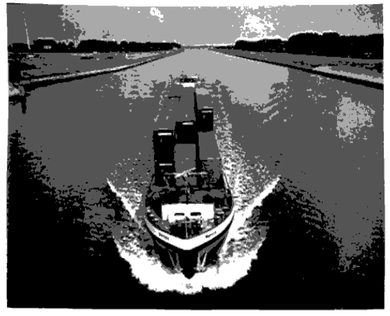
View Solution
Step 1: Understanding the context of the picture.
The image depicts a waterway transport system, likely showing the use of the National Waterway 1, which runs between Prayagraj (formerly Allahabad) and Haldia. This waterway is a crucial inland water transport route for cargo, connecting the Ganga-Bhagirathi-Hooghly river system.
Step 2: Evaluation of the options.
(a) Prayagraj and Haldia: Correct. These cities are connected by National Waterway 1, making them the most likely termini for the waterway shown.
(b) Mumbai and Goa: Incorrect. While Mumbai and Goa have ports, they are not part of the waterway shown in the image.
(c) Chennai and Vishakhapatnam: Incorrect. These cities are located on the east coast, but they are not connected by the depicted waterway.
(d) Kochi and Mangaluru: Incorrect. These cities are located in the western coastal region of India, not along the waterway shown.
Step 3: Conclusion.
The waterway shown in the image most likely connects Prayagraj and Haldia via the National Waterway 1.
Final Answer: Prayagraj and Haldia. Quick Tip: National Waterway 1 connects Prayagraj to Haldia and is an important inland waterway for transporting goods in India.
Name a state in India which is the first to receive the summer monsoon and is also the last to see its retreat.
View Solution
Step 1: Identify the state.
The state of Kerala in India is the first to receive the summer monsoon and is also the last to see its retreat.
Step 2: Explain the monsoon's arrival.
The summer monsoon generally arrives in India in June. Kerala, being located on the western coast, is the first state to receive the monsoon rains.
Step 3: Explain the monsoon's retreat.
Kerala also experiences the last retreat of the monsoon, which generally happens around September, after covering the rest of India. Quick Tip: Kerala is significant for both the onset and retreat of the Indian summer monsoon due to its geographical location along the western coast.
Mention the weather conditions experienced during the retreating monsoon season.
View Solution
Step 1: Define retreating monsoon.
The retreating monsoon season occurs during the months of September to November, when the monsoon winds start to withdraw from India.
Step 2: Weather conditions.
During this season, the weather conditions are characterized by:
- Decreasing rainfall across most parts of the country.
- Clear skies and lower humidity levels.
- Cooler temperatures in northern and central India, with some parts of the south continuing to experience rainfall.
Step 3: Changes in air pressure.
The air pressure begins to rise over the landmass as the monsoon winds retreat, causing drier conditions in many areas. Quick Tip: The retreating monsoon season marks the transition from heavy rains to drier conditions in India, especially in the northern and central regions.
Study the map showing the area that receives rains during winter and answer the questions that follow:
Name the wind which brings rainfall to:
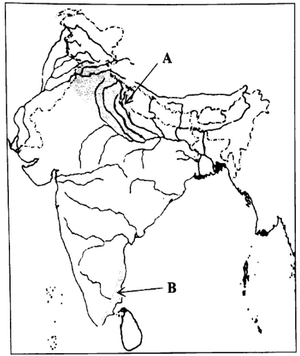
1. the shaded area labelled A.
2. the shaded area labelled B.
View Solution
N/A
How is the rain brought by the winds named by you in (a) above, beneficial for the area shaded A and the area shaded B?
View Solution
Step 1: Benefits for area A.
The winter rainfall brought by the Western Disturbance is crucial for the rabi crops in the northwestern states of India, including wheat, barley, and mustard. The rainfall helps in the proper growth of these crops.
Step 2: Benefits for area B.
The rain brought by the Northeast Monsoon is important for the agricultural activities in the eastern coastal regions, especially for the cultivation of crops like rice, groundnut, and cotton. It also helps in replenishing groundwater levels in the region. Quick Tip: Winter rainfall from the Western Disturbance is vital for rabi crops, while the Northeast Monsoon helps in agriculture and groundwater recharge in the eastern regions of India.
Shyam attended winter trekking camps in both Nainital and in Ooty. He observed that the mountains in Nainital were ice-covered, whereas, in Ooty, they were ice-free.
As a student of Geography, explain the reason for the difference in climate of Nainital and Ooty?
View Solution
Step 1: Difference in altitude.
Nainital is located at a higher altitude (around 2,084 meters above sea level) compared to Ooty, which is situated at a lower altitude (around 2,240 meters above sea level). However, Nainital experiences colder temperatures during the winter due to its position closer to the Himalayas, where the influence of altitude and latitude leads to cooler conditions.
Step 2: Influence of geographical location.
The climate in Nainital is also influenced by its proximity to the Himalayas, which receive more snowfall due to their higher elevation and climatic conditions. Ooty, being located in the Nilgiri Hills, experiences a subtropical highland climate with less intense cold, which is why it does not have snow during winter. Quick Tip: The main reason for the difference in the climate of Nainital and Ooty is the difference in their altitudes and geographical locations.
If Shyam goes to Kochi in the same season, what difference of climate will he experience?
View Solution
Step 1: Climate of Kochi.
Kochi, located in Kerala on the southwestern coast of India, has a tropical climate. During winter, Kochi experiences mild and pleasant temperatures due to its coastal location. It does not experience snowfall and has higher humidity levels.
Step 2: Comparison with Nainital and Ooty.
Compared to Nainital and Ooty, Kochi will be significantly warmer and more humid. While Nainital and Ooty experience cooler temperatures, especially in the winter months, Kochi enjoys a tropical climate with mild winters but no snow or frost. Quick Tip: The difference in climate is mainly due to altitude and geographical location. Hill stations like Nainital and Ooty are colder than coastal cities like Kochi, which enjoy a tropical climate.
Why is there a decrease in temperature in the month of June after the high temperature of May?
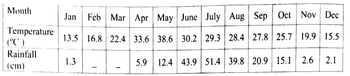
View Solution
Step 1: Influence of rainfall.
The high temperature in May is followed by a decrease in June because the onset of the monsoon brings heavy rainfall. The cooling effect of the rain lowers the temperature, despite the high temperature in May.
Step 2: Cloud cover.
Additionally, cloud cover during the monsoon months (especially June) blocks direct sunlight, which also contributes to the drop in temperature. Quick Tip: The decrease in temperature after May is primarily due to the cooling effect of monsoon rains and cloud cover.
Calculate the total rainfall of the station during the rainy season and give your answer in cm.
View Solution
Step 1: Identify the rainy season.
The rainy season in India generally occurs from June to September. Therefore, we consider the rainfall data from June to September for calculating the total rainfall.
Step 2: Total rainfall calculation.
Rainfall during the rainy season is the sum of rainfall from June to September:
\[ Total Rainfall = 43.9 + 51.4 + 39.8 + 20.9 = 155.9 \, cm. \]
Thus, the total rainfall during the rainy season is 155.9 cm. Quick Tip: Total rainfall during the rainy season is the sum of rainfall from June to September.
Is station X located near the sea or away from the sea? Give a reason for your answer.
View Solution
Step 1: Characteristics of station X's climate.
Station X experiences high temperatures in May, followed by a drop in temperature during the rainy season. The significant rainfall from June to September and the moderate temperatures indicate that the station is likely near a large body of water, such as the sea, which helps moderate temperatures and brings monsoon rains.
Step 2: Conclusion.
Given these characteristics, it is reasonable to conclude that station X is located near the sea. Quick Tip: The high monsoon rainfall and temperature moderation suggest that station X is likely near the sea.
Observe the picture of ex-situ soil given below and answer the questions that follow:
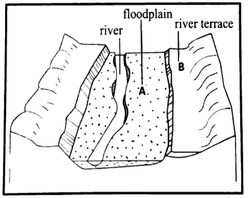
View Solution
Step 1: Identify the soil types marked as A and B.
In the given diagram, the soil marked as A is \textit{Floodplain soil, and the soil marked as B is \textit{River terrace soil.
Step 2: Describe Floodplain soil (A).
Floodplain soil is deposited by river floods, characterized by fine, alluvial material. It is rich in nutrients and is often used for agriculture due to its fertility.
Step 3: Describe River terrace soil (B).
River terrace soil is found on raised riverbanks and terraces formed by the periodic movement of rivers. It has well-drained, coarse-textured soil that is less fertile than floodplain soil due to its limited nutrient availability.
Step 4: Which soil is more fertile and why?
The soil marked as A (Floodplain soil) is more fertile than the soil marked as B (River terrace soil). This is because floodplain soil is frequently replenished with fresh, nutrient-rich deposits during floods, making it more suitable for agricultural use. Quick Tip: Floodplain soils are highly fertile due to constant replenishment by floodwaters, making them ideal for farming.
Name the soil component derived from the decay of dead plants and animals.
View Solution
The soil component derived from the decay of dead plants and animals is called humus. It is an organic material that contributes to soil fertility by providing essential nutrients. Quick Tip: Humus is crucial for maintaining soil structure, improving water retention, and enhancing soil fertility.
Why is the component mentioned by you in (a) important for agriculture?
View Solution
Step 1: Role of humus in soil.
Humus is important for agriculture because it improves soil structure, making it looser and better for plant roots to penetrate. It also enhances water retention and drainage in the soil, which is vital for plant growth.
Step 2: Nutrient supply.
Humus provides essential nutrients to the plants, such as nitrogen, phosphorus, and potassium, which are necessary for healthy plant growth. It also increases the soil's ability to hold these nutrients, reducing the need for chemical fertilizers. Quick Tip: Humus enhances soil fertility, water retention, and nutrient supply, making it vital for sustainable agriculture.
In arid regions, trees are planted in rows perpendicular to wind direction.
View Solution
In arid regions, trees are planted perpendicular to the wind direction to reduce the wind speed and minimize soil erosion. This arrangement helps in reducing the loss of moisture from the soil by shielding the land from strong winds, which are common in such areas. Quick Tip: Planting trees perpendicular to the wind helps reduce wind erosion and moisture loss, which is critical in arid regions.
Black soil does not get leached.
View Solution
Black soil, also known as regur soil, is rich in clay content, which has high water retention capacity. This characteristic helps in preventing the leaching of nutrients as the water does not drain quickly through the soil. Instead, it retains the nutrients, making it fertile. Quick Tip: Black soil's high clay content and water retention capacity prevent leaching, thus maintaining its fertility.
It is difficult to grow rice in red soil without the help of irrigation.
View Solution
Red soil is typically low in water retention capacity, making it prone to drying out quickly. As rice requires a lot of water for its growth, the lack of moisture retention in red soil makes it difficult to grow rice without irrigation. The soil must be constantly moist for optimal rice growth. Quick Tip: Rice requires abundant water for growth, and red soil's low water retention makes irrigation essential for its cultivation.
What is soil conservation?
View Solution
Soil conservation refers to the set of practices that are designed to protect the soil from degradation, erosion, and loss of fertility. This is achieved by preventing the loss of soil through natural elements such as wind and water and by maintaining soil health for future agricultural productivity.
Step 1: Prevention of soil erosion.
Soil erosion is the removal of the topsoil layer due to wind, water, or human activity. Soil conservation practices prevent this erosion by stabilizing the soil. For example, planting trees or cover crops helps in reducing wind and water erosion.
Step 2: Maintenance of soil fertility.
Soil conservation also involves the preservation of soil fertility, which is essential for successful agriculture. Techniques such as crop rotation, the use of organic fertilizers, and minimizing the use of chemical fertilizers help maintain the nutrient levels in the soil.
Step 3: Sustainable land use.
Soil conservation practices emphasize sustainable land use, ensuring that the land remains productive over the long term. This can include proper water management, controlled grazing, and preventing over-cultivation or deforestation. Quick Tip: Soil conservation is essential to prevent the loss of soil, ensuring that agricultural lands remain fertile and productive over time.
Name two areas in north India where soil conservation is required.
View Solution
Soil conservation is crucial in areas that are prone to soil erosion, often due to heavy rainfall, hilly terrain, or deforestation. In north India, two areas where soil conservation is particularly needed are:
Step 1: Himachal Pradesh.
Himachal Pradesh is a mountainous state that faces severe soil erosion due to its steep terrain and heavy rainfall during the monsoon season. Soil conservation techniques such as terracing and afforestation are needed to reduce erosion and preserve soil fertility. The region's agriculture is dependent on the fertile soil, making soil conservation efforts vital for sustaining crop production and reducing landslides.
Step 2: Uttarakhand.
Uttarakhand, known for its hilly terrain and rich biodiversity, is another region in north India where soil conservation is required. The deforestation and overgrazing in the state have caused significant soil erosion. Moreover, heavy rains during the monsoon further contribute to the soil loss. To prevent this, methods such as contour ploughing, terracing, and afforestation are crucial to stabilize the soil and improve its water retention capacity. Quick Tip: Hilly regions like Himachal Pradesh and Uttarakhand require effective soil conservation techniques due to their susceptibility to soil erosion caused by deforestation and heavy rainfall.
Name two methods of soil conservation practised in India.
View Solution
Soil conservation methods are used across India to reduce soil erosion, improve soil fertility, and enhance agricultural productivity. Two widely practised methods of soil conservation in India are:
Step 1: Terracing.
Terracing is a method used in hilly areas where the land is divided into a series of flat steps. This helps to reduce the speed of water runoff, preventing soil erosion. The flat surface allows for better water retention and provides more space for crops to grow. Terracing is common in the hilly regions of Himachal Pradesh, Uttarakhand, and parts of the Western Ghats.
Step 2: Contour Ploughing.
Contour ploughing involves ploughing the land along the contours of the slopes, rather than up and down the hill. This helps to reduce water runoff and allows the soil to retain moisture better. It also reduces the erosion of topsoil and is commonly practised in regions with gentle slopes. This method is used in states like Madhya Pradesh, Maharashtra, and Andhra Pradesh. Quick Tip: Terracing and contour ploughing are effective methods to conserve soil and water, particularly in hilly areas where soil erosion is a major concern.
Why are forests important for the Indian economy?
View Solution
Step 1: Understanding the importance of forests.
Forests play a crucial role in the Indian economy by contributing to a wide range of sectors including agriculture, industry, and tourism. They provide essential resources such as timber, fuelwood, medicinal plants, and non-timber products.
Step 2: Forests' role in environmental protection.
Forests also help in maintaining environmental stability. They prevent soil erosion, regulate the water cycle, and act as carbon sinks, contributing to the reduction of climate change impacts.
Step 3: Contribution to employment and rural economy.
Forests provide direct employment to millions of people, especially in rural areas, through activities such as wood collection, forest-based crafts, and ecotourism.
Step 4: Forests and biodiversity.
India's forests are rich in biodiversity, supporting a wide range of wildlife. This biodiversity is not only essential for ecological balance but also forms the basis for eco-tourism, which contributes significantly to the economy. Quick Tip: Forests are vital to the economy of India as they provide resources, protect the environment, support livelihoods, and contribute to biodiversity and tourism.
A sustainable system of managing a piece of land through combined production of agricultural crops, forest crops, and animal rearing.
View Solution
The system described in the question is known as Agroforestry. Agroforestry is a sustainable land management practice that integrates trees with agricultural crops and livestock on the same land. This system is designed to optimize the use of land and resources in a way that benefits both the environment and the people involved in farming.
Step 1: Agroforestry’s role in land management.
Agroforestry systems involve cultivating crops (food crops or forest crops), managing trees or forests, and rearing livestock together. This combination maximizes land use efficiency, as trees provide shade for crops, preventing soil erosion and improving water retention. Additionally, trees contribute organic matter to the soil, enhancing soil fertility over time.
Step 2: Environmental benefits.
Agroforestry practices have significant environmental benefits, such as improving biodiversity, reducing soil erosion, and increasing carbon sequestration. The integration of trees in farming systems helps to conserve the ecosystem, promoting a healthy environment while still being productive.
Step 3: Economic benefits.
For farmers, agroforestry provides diversified income sources from crops, timber, fruits, and livestock, making them less dependent on a single crop. The practice also helps in reducing the need for chemical fertilizers and pesticides, lowering the cost of production and improving long-term soil health. Quick Tip: Agroforestry is a win-win strategy, enhancing agricultural productivity while protecting the environment and improving biodiversity.
Planting of trees along the side of roads, railway lines and on hill slopes.
View Solution
The practice of planting trees along the side of roads, railway lines, and on hill slopes is known as Afforestation. This process involves the establishment of forests or planting trees in areas where there were no previous forests or trees. It is often carried out in areas that are prone to soil erosion or where land restoration is required.
Step 1: Preventing soil erosion.
One of the primary benefits of afforestation is its ability to prevent soil erosion. Trees planted on hill slopes and along roadsides act as a barrier against wind and water, reducing the velocity of runoff. This helps in stabilizing the soil and preventing it from being washed away during heavy rains, which is particularly important in regions with steep terrain.
Step 2: Improving air quality.
Afforestation also improves air quality. Trees act as natural air filters, absorbing carbon dioxide and releasing oxygen. The increase in greenery around roadways and railway lines contributes to the reduction of air pollution, making the environment healthier for people living in these areas.
Step 3: Enhancing biodiversity.
Afforestation promotes biodiversity by providing habitats for wildlife, thus improving the ecological balance. Trees along roads and railway lines also provide a natural corridor for animals to move, ensuring that wildlife can thrive and migrate across landscapes that have been fragmented by human activity.
Step 4: Aesthetic value and climate regulation.
Additionally, afforestation along these areas helps improve the aesthetic value of the environment. The greenery also plays a role in regulating the microclimate by providing shade, reducing heat, and improving the overall climatic conditions of the area. Quick Tip: Afforestation is essential for combating soil erosion, enhancing biodiversity, and improving air quality, particularly along roadsides, railway lines, and hill slopes.
Name the type of vegetation seen in the given image.
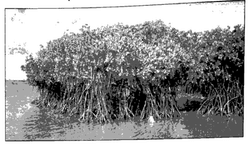
View Solution
The type of vegetation seen in the above image is Mangrove Forest. Mangrove forests are specialized ecosystems found along coastal areas where saltwater and freshwater mix. These forests are primarily located in the intertidal zones of tropical and subtropical regions. Mangrove trees are uniquely adapted to survive in saline, waterlogged soils with fluctuating tides.
Step 1: Characteristics of Mangrove Forests.
Mangrove forests have unique characteristics that enable them to thrive in challenging environments. The vegetation seen in the image is dominated by mangrove trees, which are adapted to brackish water and tidal flooding. These forests help in preventing coastal erosion, supporting marine biodiversity, and acting as a natural barrier during storms and cyclones.
Step 2: Importance of Mangrove Forests.
Mangrove forests are crucial for the ecosystem as they serve as nurseries for many marine species, provide habitat for a wide range of wildlife, and help protect coastal areas from storm surges and erosion. The roots of mangrove trees stabilize the sediment, reducing the risk of soil erosion and protecting the shoreline. Quick Tip: Mangrove forests provide vital ecosystem services, such as coastal protection, marine biodiversity, and carbon sequestration.
Mention one adaptive feature of the trees of this vegetation.
View Solution
One of the most important adaptive features of mangrove trees is the presence of aerial roots, also known as \textit{pneumatophores. These roots grow above the surface of the soil or water and allow the tree to take in oxygen from the air. The soil in which mangroves grow is often waterlogged and lacks oxygen, so aerial roots enable the mangrove trees to survive in such low-oxygen conditions.
Step 1: Function of Aerial Roots.
The aerial roots of mangrove trees grow upwards from the ground and extend above the water's surface, allowing the plant to obtain oxygen directly from the air. This adaptation is critical in areas where the soil remains submerged for long periods, as it ensures that the tree can breathe and survive in waterlogged environments.
Step 2: Other Adaptations.
In addition to aerial roots, mangrove trees also have specialized salt glands that help them excrete excess salt. This allows them to survive in the saline environment of coastal waters. The roots of mangrove trees also serve to stabilize the soil and reduce erosion, acting as a natural barrier to protect the coastline. Quick Tip: Mangrove trees' aerial roots are an essential adaptation that allows them to thrive in saline, oxygen-poor, and waterlogged soils.
Name a region where this type of vegetation is commonly found in India.
View Solution
Mangrove forests are commonly found in the Sundarbans region, located in the coastal areas of West Bengal, India. The Sundarbans is the largest mangrove forest in India and one of the largest in the world. It is a UNESCO World Heritage Site and is known for its rich biodiversity, including the Bengal tiger, and its role in protecting the coastline from natural disasters such as storms and cyclones.
Step 1: Features of the Sundarbans.
The Sundarbans is a vast network of tidal waterways, mudflats, and islands, where mangrove forests thrive. The region is critical for both local communities and wildlife, offering essential ecosystem services such as coastal protection, carbon sequestration, and providing a breeding ground for marine species.
Step 2: Importance of Mangrove Forests in Sundarbans.
The mangrove forests of the Sundarbans play a vital role in maintaining the balance of the ecosystem. They act as a buffer against the encroachment of seawater, prevent soil erosion, and support rich biodiversity, including endangered species like the Bengal tiger. The region is also home to numerous species of fish, crustaceans, and migratory birds. Quick Tip: The Sundarbans is the most famous region in India for mangrove forests, providing critical ecological and economic benefits to the local population.
Desert vegetation has long roots.
View Solution
Desert vegetation typically has long roots as an adaptation to survive in the harsh conditions of arid regions. These long roots allow the plants to reach deep underground water sources, which are essential for their survival in the absence of regular rainfall.
Step 1: Adaptation to limited water supply.
In deserts, water is scarce, so plants need to adapt to these conditions. Long roots enable the plants to tap into groundwater, which is often deep beneath the surface. This adaptation is crucial for maintaining the plant's water supply throughout the year.
Step 2: Function of deep roots.
Besides accessing water, deep roots also anchor the plants firmly in the soil, helping them withstand strong winds and preventing them from being uprooted in the loose, sandy soils typical of deserts. Quick Tip: Desert vegetation's long roots are a key adaptation for survival in arid environments, enabling access to underground water and providing stability.
At higher altitudes, trees are often conical in shape.
View Solution
At higher altitudes, trees are often conical in shape as an adaptation to the cold and heavy snowfall. The conical shape allows snow to slide off the tree more easily, preventing the branches from breaking under the weight of snow accumulation.
Step 1: Protection from snow.
In regions with heavy snowfall, the conical shape ensures that the snow doesn't accumulate on the branches, which could cause them to bend or break. Instead, the snow slides off, preserving the structural integrity of the tree.
Step 2: Wind resistance.
The conical shape also helps reduce the wind resistance. In high-altitude areas, where wind speeds are often strong, the narrow top and wide base of conical trees reduce wind drag, preventing damage to the tree's structure.
Step 3: Adaptation to extreme conditions.
This adaptation allows trees to thrive in the cold, windy, and snowy environments of higher altitudes, where trees with broader canopies might struggle to survive. Quick Tip: Conical-shaped trees in higher altitudes are adapted to prevent snow accumulation and reduce wind resistance, ensuring survival in harsh conditions.
Tropical Monsoon Forests are also called 'Tropical Deciduous Forests'.
View Solution
Tropical Monsoon Forests are often referred to as Tropical Deciduous Forests because of their characteristic seasonal behavior. These forests experience distinct wet and dry seasons, and during the dry season, most of the trees shed their leaves to conserve water. This leaf-shedding process is what classifies them as deciduous forests.
Step 1: Seasonal shedding of leaves.
In tropical monsoon forests, trees lose their leaves in the dry season as a response to water scarcity. This is a characteristic feature of deciduous forests, which shed their leaves annually in response to the changing weather conditions.
Step 2: Adaptation to monsoon climates.
Tropical monsoon forests are adapted to regions with distinct wet and dry seasons, typical of tropical regions. The monsoon season provides a significant amount of rainfall, but during the dry season, the lack of water causes many trees to shed their leaves, thus adapting to the environment's seasonal changes.
Step 3: Biodiversity and productivity.
Despite the dry season, tropical monsoon forests remain highly productive and biodiverse, supporting a wide range of plant and animal species. The seasonal shedding of leaves helps conserve moisture and protect the trees during the harsh dry periods. Quick Tip: Tropical Monsoon Forests are also known as Tropical Deciduous Forests because they shed their leaves during the dry season to conserve water.
Raghu wants to irrigate his large field in a manner that will ensure uniform water distribution across the field along with water conservation.
Name the irrigation method that will be suitable as per his need.
View Solution
The irrigation method that will be suitable for ensuring uniform water distribution and water conservation in Raghu's large field is the Drip Irrigation method.
Step 1: What is Drip Irrigation?
Drip irrigation is a highly efficient method of irrigation that delivers water directly to the roots of plants through a network of pipes, tubes, and emitters. It involves slow, controlled release of water, which minimizes evaporation and ensures that water is distributed evenly across the field.
Step 2: Why is it suitable?
For Raghu’s large field, drip irrigation ensures uniform water distribution, as it supplies water directly to the plant roots. It also reduces water wastage, as water is applied only where it is needed, avoiding run-off and evaporation, making it highly suitable for large-scale, water-efficient farming. Quick Tip: Drip irrigation is the most water-efficient method as it reduces water wastage through evaporation and runoff, delivering water directly to the plant roots.
How will the method of irrigation mentioned by you in (a) above help to conserve water?
View Solution
Drip irrigation helps conserve water in the following ways:
Step 1: Reduced evaporation.
Unlike traditional surface irrigation methods, drip irrigation delivers water directly to the plant roots, reducing the surface area exposed to the air. This minimizes evaporation, which is a significant source of water loss in open irrigation systems, especially in hot climates.
Step 2: Precise water application.
Drip irrigation ensures that water is delivered only to the root zone of plants, reducing runoff and water wastage. This precise application ensures that plants receive just the right amount of water, avoiding over-irrigation and under-irrigation.
Step 3: Water savings.
This method can save up to 50% of the water compared to traditional irrigation methods, making it ideal for areas where water conservation is crucial. It ensures that water is used efficiently and effectively, reducing the need for additional water sources.
Step 4: Suitability for arid regions.
Drip irrigation is especially beneficial in arid and semi-arid regions, where water is scarce. The method is designed to maximize water use efficiency, making it suitable for large fields in such regions. Quick Tip: Drip irrigation saves water by applying water directly to the plant roots, reducing evaporation, runoff, and water wastage.
What is the difference between Inundation canals and Perennial canals?
View Solution
Step 1: Define Inundation Canals.
Inundation canals are those canals which are filled with water only during the rainy season or when the river is in flood. These canals do not have a regular water supply and are often dependent on seasonal variations.
Step 2: Define Perennial Canals.
Perennial canals, on the other hand, are supplied with water throughout the year. They are connected to a consistent water source, such as a dam or a reservoir, ensuring a continuous flow of water irrespective of seasonal changes.
Step 3: Key Differences.
- Water Supply: Inundation canals rely on seasonal flooding for water, whereas perennial canals have a continuous water supply.
- Reliability: Inundation canals are unreliable for irrigation, while perennial canals provide a dependable source of water throughout the year.
- Usefulness: Perennial canals are more efficient for agriculture, providing consistent water supply for crops in all seasons. Quick Tip: Inundation canals depend on seasonal floods, while perennial canals are reliably supplied with water year-round.
How is 'groundwater' different from 'surface water'?
View Solution
Step 1: Definition of Groundwater.
Groundwater is the water stored beneath the Earth's surface, in aquifers, and is accessed through wells or natural springs. It is generally replenished by rainfall and seepage.
Step 2: Definition of Surface Water.
Surface water refers to the water found in rivers, lakes, ponds, and other bodies of water above the Earth's surface. It is primarily replenished by precipitation and runoff from higher altitudes.
Step 3: Key Differences.
- Groundwater is stored underground, while surface water is found above ground.
- Groundwater is more stable and less prone to evaporation compared to surface water, which is more vulnerable to seasonal variations and human activities. Quick Tip: Groundwater is stored beneath the Earth's surface, while surface water is found in rivers, lakes, and other open bodies of water.
Why is the groundwater level rapidly declining in India?
View Solution
Step 1: Over-extraction of Groundwater.
The rapid decline in groundwater levels in India is primarily due to the over-extraction of water for agricultural, industrial, and domestic use, far exceeding the natural replenishment rate.
Step 2: Lack of Rainwater Harvesting.
In many areas, there is a lack of adequate rainwater harvesting techniques, which leads to insufficient recharge of groundwater aquifers during monsoon seasons.
Step 3: Poor Water Management.
Additionally, inefficient irrigation practices, especially in agriculture, have exacerbated the problem by using large amounts of water without effective conservation or management methods. Quick Tip: Over-extraction, lack of rainwater harvesting, and poor water management are key contributors to the rapid depletion of groundwater in India.
Name one conservation measure that will help in recharging the groundwater.
View Solution
Step 1: Rainwater Harvesting.
One effective conservation measure to recharge groundwater is rainwater harvesting. This involves collecting rainwater from rooftops or other surfaces and storing it in tanks or underground reservoirs.
Step 2: Benefits of Rainwater Harvesting.
Rainwater harvesting helps in replenishing groundwater aquifers, especially during the monsoon season, ensuring a steady supply of water throughout the year and reducing the pressure on existing water sources. Quick Tip: Rainwater harvesting is an effective method for recharging groundwater by capturing and storing rainwater for later use.
Wells are a common means of irrigation in Northern India.
View Solution
Step 1: Availability of Groundwater.
Wells are commonly used in Northern India for irrigation because the region has an abundant supply of groundwater, which is easily accessible through wells.
Step 2: Convenience and Cost-Effectiveness.
Wells are relatively easy to construct and maintain, making them a convenient and cost-effective source of irrigation for small-scale farmers in Northern India, especially in regions where surface water is scarce. Quick Tip: Wells are an efficient and accessible irrigation method in areas with abundant groundwater resources.
Many state governments have restricted the use of tubewells.
View Solution
Step 1: Groundwater Depletion.
State governments have restricted the use of tubewells to prevent over-extraction of groundwater. Excessive use of tubewells has led to a significant decline in the groundwater table, which is unsustainable.
Step 2: Environmental Impact.
Overuse of tubewells can cause long-term environmental issues, such as the drying up of wells, loss of natural water sources, and damage to ecosystems. To preserve water resources, many governments have imposed restrictions on their usage. Quick Tip: The restriction on tubewells is aimed at conserving groundwater and ensuring sustainable water use for future generations.
Tank irrigation is a popular method of irrigation used in Karnataka.
View Solution
Step 1: Traditional Water Storage.
Tank irrigation is a popular method in Karnataka because the region has a rich history of building tanks and reservoirs for water storage. These tanks are filled during the rainy season and used for irrigation during dry periods.
Step 2: Efficient Water Use.
Tank irrigation ensures efficient water distribution to agricultural fields. Tanks are well-suited for regions with uneven rainfall, as they store water from monsoon rains and provide a reliable source for irrigation during drier months. Quick Tip: Tank irrigation is an effective traditional method of managing water resources, particularly in areas with erratic rainfall patterns.
How is 'groundwater' different from 'surface water'?
View Solution
Groundwater and surface water are two different types of water sources that differ in terms of location, availability, and characteristics:
Step 1: Groundwater.
Groundwater refers to water that is found beneath the Earth's surface in aquifers, which are layers of water-bearing rock or sediment. It is stored in underground reservoirs and can be accessed through wells, springs, or boreholes. Groundwater is typically more stable in terms of availability and is an important source of drinking water and irrigation in many regions.
Step 2: Surface Water.
Surface water, on the other hand, is water found on the Earth's surface, such as rivers, lakes, ponds, and reservoirs. It is subject to fluctuations in availability due to seasonal changes, rainfall patterns, and human activities. Surface water is more vulnerable to pollution and contamination from various sources like industrial waste and runoff.
Step 3: Key Differences.
- Groundwater is typically more protected from contamination as it is underground, while surface water is more exposed and prone to contamination.
- Groundwater is usually used for long-term water supply, whereas surface water is often used for immediate or short-term needs like irrigation or industrial processes. Quick Tip: Groundwater is stored underground and is less susceptible to pollution, while surface water is exposed to the environment and can be easily contaminated.
Umesh and Sagar are employed in iron ore mines in two different districts of Odisha. What are their possible places of work?
View Solution
Step 1: Iron Ore Mining in Odisha.
Odisha is one of the leading producers of iron ore in India. Two prominent districts in Odisha known for iron ore mining are Keonjhar and Sundargarh.
Step 2: Possible Places of Work.
- Umesh could be employed in the iron ore mines of Keonjhar, a major iron ore mining region.
- Sagar could be employed in the iron ore mines of Sundargarh, another district rich in iron ore deposits. Quick Tip: Keonjhar and Sundargarh are two major districts in Odisha known for their iron ore mining activities.
State any two uses of copper.
View Solution
Step 1: Electrical Conductivity.
Copper is widely used in electrical wiring and cables due to its excellent electrical conductivity. It allows efficient transmission of electricity with minimal loss.
Step 2: Manufacturing Alloys.
Copper is used in the production of various alloys, such as bronze and brass. These alloys have applications in making coins, jewelry, and machinery parts. Quick Tip: Copper is essential in electrical applications and alloy production due to its superior conductivity and malleability.
The Bhakra Nangal project is a joint venture of which state governments?
View Solution
Step 1: Joint Venture.
The Bhakra Nangal project is a joint venture between the state governments of Punjab and Himachal Pradesh.
Step 2: Project Collaboration.
This project was developed for the purpose of irrigation and hydropower generation and has greatly contributed to the development of the region. Quick Tip: The Bhakra Nangal project is a collaboration between Punjab and Himachal Pradesh for water management and power generation.
Name the river on which this project is based.
View Solution
Step 1: River Name.
The Bhakra Nangal project is based on the Sutlej River, which is one of the major rivers of the northern Indian region.
Step 2: Role of Sutlej River.
The Sutlej River provides the necessary water resources for the project, facilitating both irrigation and power generation. Quick Tip: The Sutlej River is the primary water source for the Bhakra Nangal project, providing water for irrigation and electricity generation.
Mention two benefits of the Bhakra Nangal project.
View Solution
Step 1: Benefit 1 - Irrigation.
One of the key benefits of the Bhakra Nangal project is its role in irrigation. The project has helped in the irrigation of vast agricultural lands in Punjab, Haryana, and Rajasthan, boosting agricultural productivity.
Step 2: Benefit 2 - Hydroelectric Power Generation.
Another important benefit of the Bhakra Nangal project is the generation of hydroelectric power. The project has a hydroelectric power station that contributes to the region’s electricity supply. Quick Tip: The Bhakra Nangal project benefits the region by providing irrigation for agriculture and generating hydroelectric power.
The renewable energy produced by the natural rise and fall of ocean waters.
View Solution
Step 1: Definition of Tidal Energy.
Tidal energy is a form of renewable energy that is generated by the natural rise and fall of ocean waters. This movement of water is caused by the gravitational pull of the moon and the sun on the Earth's oceans, which creates tides.
Step 2: How Tidal Energy Works.
Tidal energy is harnessed using tidal turbines, which are similar to underwater wind turbines. The turbines capture the energy produced by the moving water during the high and low tide cycles. The kinetic energy of the moving water is converted into electrical energy.
Step 3: Tidal Power Plants.
There are two main types of tidal power plants: tidal stream systems and tidal range systems. Tidal stream systems use the flow of water, while tidal range systems use the difference in water levels between high and low tides to generate power.
Step 4: Environmental Impact and Benefits.
Tidal energy is considered a clean and renewable source of energy because it does not produce greenhouse gases or pollution. Additionally, it is highly predictable, making it a reliable source of energy. However, its use is limited to coastal areas, and the construction of tidal power plants can affect marine ecosystems. Quick Tip: Tidal energy is a predictable and renewable energy source, but it is mostly limited to coastal areas where tidal ranges are significant.
An ore of aluminium.
View Solution
Step 1: What is Bauxite?
Bauxite is the primary ore from which aluminium is extracted. It is a reddish-brown rock that contains a high percentage of aluminium minerals, such as gibbsite, boehmite, and diaspore. It is found in tropical and subtropical regions, particularly in countries like Australia, Brazil, and Guinea.
Step 2: The Extraction Process.
Bauxite is processed through the Bayer Process, which involves refining the ore to obtain alumina (aluminium oxide). This alumina is then reduced to aluminium metal through the Hall-Héroult process, which involves electrolyzing the alumina in molten cryolite.
Step 3: Importance of Bauxite.
Bauxite is the most important source of aluminium, and the demand for aluminium has grown due to its wide range of applications. Aluminium is lightweight, strong, and corrosion-resistant, making it ideal for use in industries such as aerospace, transportation, packaging, and construction.
Step 4: Environmental Impact.
While bauxite extraction and alumina refining can have environmental impacts, such as habitat destruction and water contamination, modern mining techniques aim to reduce these effects. The aluminium industry is also working towards recycling aluminium to minimize the need for new bauxite mining. Quick Tip: Bauxite is the primary ore of aluminium, and it is processed through the Bayer Process to extract alumina, which is then reduced to aluminium metal.
A mineral that is used to make steel strong and resistant to rusting.
View Solution
Step 1: What is Chromite?
Chromite is a mineral composed of iron chromium oxide (FeCr2O4). It is the primary ore of chromium, a metal that is widely used in steel production. Chromite is found in large deposits in countries like South Africa, Kazakhstan, and India.
Step 2: Role of Chromium in Steel.
Chromium is added to steel to improve its strength, hardness, and resistance to corrosion. Steel containing chromium is known as stainless steel, which is highly resistant to rusting and staining. The addition of chromium also enhances the steel's ability to withstand high temperatures.
Step 3: Benefits of Chromium in Steel.
Chromium forms a thin layer of chromium oxide on the surface of the steel, which acts as a protective barrier against rust and corrosion. This makes stainless steel ideal for use in environments where exposure to moisture and chemicals is common, such as in kitchen appliances, medical equipment, and construction materials.
Step 4: Environmental Considerations.
The extraction of chromite and the production of chromium can have environmental impacts, including habitat destruction and pollution. However, chromium is an essential material for manufacturing stainless steel, which has numerous applications in various industries. Quick Tip: Chromite is the ore from which chromium is extracted. Chromium is used in steel to improve its strength and resistance to rust, making it ideal for producing stainless steel.
Differentiate between subsistence farming and commercial farming.
View Solution
Subsistence Farming:
Subsistence farming is a type of farming where the primary goal is to grow food and other products for the farmer's own consumption. It involves small-scale production and is mainly focused on feeding the farmer's family or community rather than producing surplus for sale. In subsistence farming, the farmer uses traditional methods, and the land is often worked by hand or with simple tools.
Commercial Farming:
Commercial farming, on the other hand, involves the large-scale production of crops and livestock for sale in the market. The main objective is to generate profit through the sale of agricultural products. Commercial farming uses advanced technology, machinery, and high-input methods to maximize productivity and efficiency. The crops grown are typically for commercial purposes, such as export or local sale, rather than for personal consumption.
Key Differences:
- Purpose: Subsistence farming is for self-consumption, while commercial farming is for profit generation.
- Scale: Subsistence farming is small-scale, whereas commercial farming is large-scale.
- Technology: Subsistence farming uses traditional methods, while commercial farming uses modern technology and machinery.
- Market Focus: Commercial farming is focused on selling products in the market, while subsistence farming focuses on local consumption. Quick Tip: Subsistence farming is small-scale, self-sufficient farming, while commercial farming involves large-scale production for profit and market sales.
Name a state that leads in the production of jute.
View Solution
The state that leads in the production of jute is West Bengal.
Step 1: Jute Production in India.
West Bengal is the largest producer of jute in India, contributing a significant percentage of the total jute production in the country. The state has favorable climatic conditions and the required infrastructure to support large-scale jute farming and processing. Quick Tip: West Bengal is the leading producer of jute in India, thanks to its favorable climate and favorable farming conditions for jute cultivation.
Mention a geographical factor that is responsible for the state mentioned in (a) above being the leading producer of jute.
View Solution
Step 1: Geographical Factor - Favorable Climate.
The geographical factor responsible for West Bengal being the leading producer of jute is its favorable climate. The state has a humid tropical climate, which is ideal for the cultivation of jute. The warm and wet weather, especially during the monsoon season, provides the necessary conditions for jute to thrive.
Step 2: Soil Conditions.
Additionally, the alluvial soil found in the region, particularly along the banks of the Ganges and other rivers, is rich in nutrients and supports the healthy growth of jute crops. Quick Tip: The humid tropical climate and alluvial soil of West Bengal provide the ideal conditions for jute cultivation.
Why are Silver Oak trees and Cardamom trees planted in coffee plantations along with the coffee plants?
View Solution
Step 1: Role of Silver Oak Trees.
Silver Oak trees are planted in coffee plantations to provide shade for the coffee plants. Coffee plants thrive in shaded conditions, especially in regions with direct sunlight. Silver Oak trees help in maintaining an optimal microclimate for coffee cultivation by blocking the harsh sun rays and providing protection from wind.
Step 2: Role of Cardamom Plants.
Cardamom trees are often planted in coffee plantations because they grow well under similar climatic conditions as coffee. Additionally, they help in improving the biodiversity of the plantation, preventing soil erosion, and enriching the soil with organic matter, all of which benefit coffee growth. Quick Tip: Silver Oak trees provide necessary shade for coffee plants, while Cardamom plants contribute to soil health and biodiversity in the plantation.
State two climatic conditions that favour the cultivation of coffee.
View Solution
Step 1: Temperature Range.
Coffee plants require a warm and temperate climate. The ideal temperature range for coffee cultivation is between 18°C to 24°C, as this range promotes optimal growth and bean production.
Step 2: Rainfall and Humidity.
Coffee plants require substantial rainfall, typically between 1500 mm to 2500 mm annually. The rainfall should be evenly distributed throughout the year to ensure consistent growth. Additionally, a humid environment aids in the proper development of coffee plants. Quick Tip: A warm temperature range and sufficient rainfall are essential for the successful cultivation of coffee plants.
Name the cropping season in which Bajra is grown.
View Solution
Step 1: Bajra's Cropping Season.
Bajra, also known as pearl millet, is primarily grown during the Kharif season. The Kharif season in India generally runs from June to September, coinciding with the monsoon period.
Step 2: Why Kharif Season?
Bajra requires warm temperatures and moderate rainfall, both of which are provided during the Kharif season. The crop thrives in these conditions and is harvested before the winter season sets in. Quick Tip: Bajra is a Kharif crop that thrives in the warm, rainy conditions of the monsoon season, making it ideal for cultivation from June to September.
Why is wheat not cultivated extensively in West Bengal and the extreme southern states of India?
View Solution
Step 1: Temperature Requirements for Wheat.
Wheat requires a cool climate for proper growth, with a temperature range of 10°C to 15°C. West Bengal and the extreme southern states of India experience higher temperatures, particularly during the wheat growing season, which is not suitable for wheat cultivation.
Step 2: Soil and Irrigation Constraints.
Additionally, the soils in these regions are not always ideal for wheat, and the lack of sufficient irrigation facilities further limits its cultivation. Rice is more suited to the climate and soil of West Bengal and southern India, where water availability is higher. Quick Tip: Wheat requires a cooler climate and specific temperature range, which makes it unsuitable for cultivation in the warmer regions of West Bengal and southern India.
Why is the cultivation of soybean gaining popularity in recent times?
View Solution
Step 1: Nutritional Benefits.
Soybean cultivation is gaining popularity due to its high protein content and nutritional benefits. It is a rich source of plant-based protein, making it a key component in vegetarian and vegan diets.
Step 2: Demand for Soybean Products.
The increasing demand for soybean oil, tofu, soy milk, and other processed products has contributed to its popularity. Additionally, soybean is used in animal feed, which has driven its cultivation in agriculture.
Step 3: Adaptability to Varied Climates.
Soybean is a versatile crop that can be cultivated in a variety of climates, which makes it an attractive option for farmers looking to diversify their crops and increase yields. Quick Tip: Soybean is gaining popularity due to its nutritional value, versatile applications, and adaptability to different climates.
‘Not all areas of India are suitable for establishing a large-scale industry.’ Give two reasons for the above statement.
View Solution
The establishment of large-scale industries in India is limited by several geographical and socio-economic factors. Two key reasons are:
Step 1: Availability of Raw Materials.
Industries require a consistent supply of raw materials, which may not be available in all parts of India. For example, industries like steel and cement are usually located near areas that have abundant deposits of iron ore, coal, or limestone. Lack of raw materials in certain regions can make them unsuitable for large-scale industries.
Step 2: Infrastructure and Connectivity.
Certain regions of India lack the necessary infrastructure, such as transportation networks, electricity, and water supply, which are crucial for large-scale industries. Poor infrastructure can increase operational costs, making it difficult to establish and run industries in such areas. Quick Tip: Regions with adequate raw materials and infrastructure are more suitable for large-scale industries.
‘The contribution of the electronics industry is crucial for the progress and development of the Indian economy.’ State two arguments in favour of this statement.
View Solution
The electronics industry plays a vital role in the progress and development of the Indian economy. Two key arguments in favor of this statement are:
Step 1: Boost to Technological Innovation.
The electronics industry drives technological innovation in India by producing advanced products like mobile phones, computers, and consumer electronics. This, in turn, promotes the growth of other industries such as information technology (IT), telecommunications, and automation, contributing to the overall economic development.
Step 2: Employment Generation and Export Potential.
The electronics industry generates significant employment opportunities in manufacturing, research and development, and sales. Additionally, India’s electronics sector has a huge export potential, as demand for electronic goods continues to rise globally, contributing to foreign exchange earnings and enhancing India’s position in the global market. Quick Tip: The electronics industry is a key driver of technological progress, employment, and export growth in India’s economy.
Work in sugar mills is a seasonal activity.
View Solution
Geographical Reason:
Work in sugar mills is seasonal because sugarcane, the raw material for sugar production, is harvested once a year, typically during the winter and early spring months. Sugarcane cultivation depends on the monsoon rains, and the harvest season usually aligns with the sugarcane growth cycle. This creates a peak season for milling operations, making it a seasonal activity. Quick Tip: The seasonal nature of sugar milling is tied to the harvesting cycle of sugarcane, which only occurs once a year.
The cotton textile industry is widely distributed in India.
View Solution
Geographical Reason:
The cotton textile industry is widely distributed in India due to the availability of raw cotton, which is grown in various regions, particularly in states like Gujarat, Maharashtra, and Tamil Nadu. Additionally, India's vast network of transport infrastructure (roads, railways, ports) facilitates the movement of raw materials and finished goods. The presence of cheap labor and a growing domestic market also contribute to the widespread distribution of cotton textile mills across the country. Quick Tip: The wide distribution of the cotton textile industry in India is due to the availability of cotton, efficient transport, and a large labor force.
Vishakhapatnam steel plant has a unique locational advantage that enables it to procure raw materials easily and market the finished products with ease.
View Solution
Geographical Reason:
The Vishakhapatnam steel plant enjoys a unique locational advantage because it is located on the eastern coast of India, close to major ports like the Vishakhapatnam Port. This allows easy access to imported raw materials such as coal and iron ore. Additionally, the plant's location on the coast facilitates the export of finished steel products to international markets, making it a strategic hub for steel production and trade. Quick Tip: Vishakhapatnam's proximity to ports allows easy access to raw materials and supports efficient export of finished products, giving it a locational advantage.
Name the oldest iron and steel industry of India.
View Solution
The oldest iron and steel industry of India is Tata Steel, formerly known as Tata Iron and Steel Company (TISCO). It was established in 1907 by Jamsetji Tata, marking a significant milestone in India's industrial history.
Step 1: Significance of Tata Steel.
Tata Steel is one of the largest steel producers in the world and has played a pivotal role in the development of the Indian economy. It laid the foundation for industrial growth and contributed significantly to the establishment of India's steel industry.
Step 2: Legacy.
The establishment of Tata Steel was a turning point, as it not only provided India with a domestic source of iron and steel but also helped in the development of other industries in India, such as transportation and infrastructure. Quick Tip: Tata Steel, established in 1907, is the oldest and most significant steel industry in India.
Where is it located?
View Solution
Tata Steel is located in Jamshedpur, in the state of Jharkhand, India. The city is strategically located near the rich deposits of iron ore and coal, which are essential raw materials for the steel industry.
Step 1: Why Jamshedpur?
Jamshedpur, also known as the "Steel City," was chosen for its proximity to natural resources such as iron ore, coal, and limestone, making it an ideal location for setting up a steel plant. The town also had access to transportation networks, facilitating the easy movement of raw materials and finished products.
Step 2: The Development of Jamshedpur.
Jamshedpur's establishment as a steel city also led to the development of associated infrastructure, including housing, schools, hospitals, and recreational facilities, contributing to the city's urbanization and growth. Quick Tip: Jamshedpur, located in Jharkhand, is the site of Tata Steel, chosen for its proximity to essential raw materials like iron ore and coal.
Name a centre from where it gets its coal supply.
View Solution
Tata Steel gets its coal supply primarily from Jharia, a coal mining area in the state of Jharkhand, India. Jharia is one of the richest coalfields in India and has been supplying coal to Tata Steel for decades.
Step 1: Coal Mines in Jharia.
Jharia is located near Dhanbad, known as the "Coal Capital of India." The coal from Jharia is of high quality, particularly coking coal, which is essential for steel production in Tata Steel's plant.
Step 2: Importance of Jharia.
The proximity of Jharia coalfields to Tata Steel's plant in Jamshedpur makes it an ideal source of coal, reducing transportation costs and ensuring a steady supply of coal for production. Quick Tip: Jharia, located near Dhanbad, is the key coal supplier to Tata Steel, providing high-quality coking coal for steel production.
Inland water transport is more popular in Northern India as compared to Peninsular India. Give two reasons.
View Solution
Inland water transport is more popular in Northern India for several reasons:
Step 1: Availability of navigable rivers.
Northern India has many long and wide rivers like the Ganga, Yamuna, and Brahmaputra that are navigable, providing an efficient means of transport for goods and people. These rivers are used for inland water transport, especially in regions with limited road or rail infrastructure.
Step 2: Flat terrain and low population density.
The plains of Northern India have a relatively flat terrain, which makes it easier to establish and maintain waterways. In contrast, the Peninsular region of India has rugged terrain with hills and plateaus, which is less suitable for the development of inland waterways. Additionally, the northern plains have a lower population density in some regions, making water transport more viable. Quick Tip: In Northern India, inland water transport is facilitated by the availability of large, navigable rivers and the flat terrain of the region.
What is the purpose of developing the Golden Quadrilateral in India?
View Solution
The purpose of developing the Golden Quadrilateral in India is to improve connectivity between the major cities of the country and boost economic development.
Step 1: Economic Growth and Trade.
The Golden Quadrilateral is a network of highways connecting the four major metros of India – Delhi, Mumbai, Chennai, and Kolkata. This project aims to facilitate faster movement of goods and people, promoting trade, commerce, and industrial growth. It reduces travel time and costs, making India’s economy more competitive globally.
Step 2: Infrastructure Improvement.
By improving the road infrastructure, the Golden Quadrilateral promotes better access to rural areas, enhances tourism, and improves access to healthcare and education. It also supports the smooth movement of agricultural produce, reducing wastage and improving food security. Quick Tip: The Golden Quadrilateral aims to enhance connectivity, economic growth, and infrastructure development by linking key cities in India.
Mr. Kumar’s father wanted to travel comfortably to Patna to stay with his brother for a week.
View Solution
The most likely mode of transport for Mr. Kumar's father would be train.
Mr. Kumar’s father would prefer a comfortable journey, and traveling by train is ideal for long-distance travel such as Delhi to Patna. Trains offer comfortable seating, sleeper options, and dining facilities, making it suitable for a week-long stay. Additionally, trains are an economical and relaxing option for travel. Quick Tip: For long-distance travel, trains provide a comfortable and cost-effective mode of transport, especially for extended stays.
Mr. Kumar’s son had to attend a meeting in Ahmedabad that very evening.
View Solution
The most likely mode of transport for Mr. Kumar's son would be flight.
Since Mr. Kumar’s son needs to attend a meeting in Ahmedabad that evening, air travel would be the quickest and most efficient option. Flights are ideal for traveling long distances in a short period, allowing him to arrive on time for the evening meeting. Quick Tip: Flights are the best option for urgent or time-sensitive travel, as they provide the fastest means of transport over long distances.
Mr. Kumar’s daughter had to meet her friend who lives in the same city, taking with her some fresh vegetables grown in their kitchen garden.
View Solution
The most likely mode of transport for Mr. Kumar's daughter would be walking or bicycle.
Since the friend lives in the same city and the purpose of the travel is personal, a short-distance mode of transport like walking or cycling would be the most practical and eco-friendly choice. Additionally, taking fresh vegetables along with her makes walking or cycling more convenient. Quick Tip: For short distances within the same city, walking or cycling is the most practical and environmentally friendly option.
The presence of a number of ports has strengthened the transport sector of India.
View Solution
Geographical Reason:
India has a long coastline along the Arabian Sea and the Bay of Bengal, with several natural harbors and ports. These ports facilitate both international and domestic trade, making sea transport an essential part of India's economy. Ports like Mumbai, Chennai, Kolkata, and Kochi act as key gateways for importing and exporting goods, which strengthens the transport sector by providing easy access to global markets. Quick Tip: India's long coastline and numerous ports make it a vital hub for international trade, boosting the transport sector significantly.
The number of airports in the country is on the rise.
View Solution
Geographical Reason:
India is experiencing rapid urbanization and economic growth, which has led to an increase in air travel demand. With the country's vast size and a large population, airports are being developed in both metro and smaller cities to meet the needs of domestic and international travelers. Additionally, the growth of the tourism and business sectors has further contributed to the rise in the number of airports in India. Quick Tip: The rise in the number of airports in India is due to the country's economic growth, urbanization, and increasing demand for air travel.
Railways are considered ideal for transportation of bulky goods over long distances.
View Solution
Geographical Reason:
Railways are ideal for transporting bulky goods over long distances because trains can carry a large amount of goods at once. India's extensive railway network connects even the remotest areas, making it possible to transport heavy and bulky goods like coal, minerals, and agricultural products efficiently and at a lower cost compared to other modes of transport. Additionally, railways have a large carrying capacity, making them more suitable for long-distance transportation. Quick Tip: Railways are the most efficient mode of transport for bulky goods over long distances due to their large capacity and cost-effectiveness.
What impact does waste accumulation have on our environment?
View Solution
Waste accumulation has several negative impacts on the environment, which can affect both natural ecosystems and human health. Some of the key impacts are:
Step 1: Soil Pollution.
When waste is dumped improperly, it often ends up in landfills, where it can decompose and release harmful substances such as toxic chemicals, heavy metals, and plastics into the soil. This pollution can contaminate groundwater and reduce soil fertility, making it difficult for plants to grow and affecting agricultural productivity.
Step 2: Air Pollution.
Decomposing waste in landfills, particularly organic waste, produces methane gas, a potent greenhouse gas that contributes to climate change. Additionally, the burning of waste releases harmful pollutants into the air, leading to respiratory problems and contributing to global warming.
Step 3: Water Pollution.
Waste accumulation in water bodies, such as rivers, lakes, and oceans, leads to water contamination. This affects aquatic life and the overall ecosystem, as toxic chemicals and plastics can harm marine organisms. Polluted water also affects human communities that rely on these water sources for drinking, irrigation, and sanitation.
Step 4: Biodiversity Loss.
Waste accumulation can also contribute to the destruction of habitats. For example, plastics and other non-biodegradable waste can entangle animals or be ingested, leading to injury or death. This disrupts local biodiversity and harms the balance of ecosystems. Quick Tip: Proper waste management and recycling can help reduce pollution, conserve natural resources, and protect the environment from waste accumulation.
Name the waste management practice shown in the given picture.

View Solution
The waste management practice shown in the picture is Composting.
Composting is a biological process where organic waste, such as kitchen scraps, leaves, and other biodegradable material, is broken down into humus by microorganisms. This practice helps in recycling organic waste into useful compost, which can be used as fertilizer for plants and gardens. Quick Tip: Composting is an eco-friendly way of recycling organic waste and improving soil quality.
State two benefits of this waste management practice.
View Solution
Benefit 1: Reduces Landfill Waste.
Composting helps divert organic waste from landfills, thereby reducing the overall waste going to landfills. This helps in managing waste more sustainably.
Benefit 2: Improves Soil Fertility.
The compost produced through this process is rich in nutrients, which can be used to enrich the soil, improve plant growth, and enhance soil structure. Quick Tip: Composting reduces landfill waste and provides nutrient-rich compost that benefits soil health.
Udit wants his younger sister to bring about a few lifestyle changes to help her contribute towards a cleaner and healthier environment. Suggest three advice that Udit may provide her in this regard.
View Solution
To help his sister contribute towards a cleaner and healthier environment, Udit can suggest the following three lifestyle changes:
Step 1: Reduce, Reuse, Recycle.
Udit can advise his sister to reduce waste by buying fewer disposable items, reuse products whenever possible, and recycle materials like paper, plastic, and metal. This will reduce the amount of waste sent to landfills and contribute to conserving resources.
Step 2: Adopt a Sustainable Diet.
Udit can encourage his sister to eat a more plant-based diet, which has a lower environmental impact than consuming meat. By reducing meat consumption, especially from large-scale industrial farming, she can help reduce greenhouse gas emissions, water usage, and land degradation.
Step 3: Use Energy Efficient Appliances.
Udit can suggest that his sister switch to energy-efficient appliances, such as LED light bulbs, energy-saving air conditioners, and water heaters. She should also make an effort to turn off appliances when not in use, reducing unnecessary energy consumption and her carbon footprint. Quick Tip: Small lifestyle changes like reducing waste, adopting a sustainable diet, and using energy-efficient appliances can make a significant difference in creating a cleaner and healthier environment.
Waste should be segregated before disposal.
View Solution
The reason for segregating waste before disposal is to ensure that different types of waste, such as biodegradable, recyclable, and hazardous, are treated appropriately. Segregation allows for efficient recycling and composting of waste, reduces contamination, and minimizes the impact of hazardous materials on the environment. Quick Tip: Segregating waste helps in managing it more effectively, ensuring proper disposal, recycling, and reducing environmental harm.
Dumping could be harmful for the environment.
View Solution
The reason dumping waste can be harmful to the environment is that it leads to contamination of soil, water, and air. When waste is not properly managed, it can leach harmful chemicals into the ground, pollute water sources, and release toxic gases into the atmosphere, all of which have severe negative impacts on ecosystems and human health. Quick Tip: Improper waste dumping can lead to environmental pollution, which affects water quality, soil fertility, and air quality.
Radioactive waste is the most harmful waste.
View Solution
The reason radioactive waste is considered the most harmful is that it contains unstable isotopes that emit harmful radiation. This radiation can cause severe health issues, including cancer, genetic mutations, and even death. Additionally, radioactive waste remains hazardous for thousands of years, posing long-term environmental and health risks if not properly contained and disposed of. Quick Tip: Radioactive waste is highly dangerous due to the long-lasting effects of radiation on human health and the environment.
Class 10 ICSE Geography Last Minute Revision 2026



Comments