




Bihar Board Class 12 English Question Paper 2023 with Answer Key pdf is available for download here. The exam was conducted by Bihar School Examination Board (BSEB). The question paper comprised a total of 107 questions divided among 2 sections.
Bihar Board Class 12 English Question Paper 2023 with Answer Key
| Bihar Board Class 12 English Question Paper with Solutions |  Download Download |
Check Solutions |
Which state did Mahatma Gandhi belong........? (Choose the correct option)
View Solution
Step 1: Understanding the question.
The sentence asks about the state to which Mahatma Gandhi belonged. In English, when we refer to origin or belonging, the preposition **‘from’** is used.
Step 2: Grammar rule.
We use “belong from” when referring to a person’s place of origin or where someone is associated with. For example: “He belongs from Gujarat.”
The word **‘of’** expresses possession, not origin; hence, it would be incorrect here.
Step 3: Contextual explanation.
Mahatma Gandhi was born in Porbandar, which is in Gujarat, India. So the correct sentence is:
“Mahatma Gandhi belonged from Gujarat.”
Step 4: Conclusion.
Therefore, the correct preposition to complete the sentence is **‘from’.**
Quick Tip: Use “from” when indicating place of origin or source (e.g., She is from India). Use “of” to show possession (e.g., The color of the sky).
My sister........as a steno in the past. (Choose the correct option)
View Solution
Step 1: Understanding the sentence structure.
The phrase “in the past” indicates that the sentence refers to a completed action, so the past tense must be used.
Step 2: Analyzing each option.
- (a) “works” – Present tense, incorrect because the action is not happening now.
- (b) “working” – Present participle form, incorrect since there’s no helping verb.
- (c) “worked” – Simple past tense, correct form as it fits the time phrase “in the past.”
- (d) “have worked” – Present perfect tense, incorrect because the sentence specifically indicates a finished past action.
Step 3: Grammar rule.
The simple past tense is used to describe actions completed at a definite time in the past. Hence, “worked” is appropriate.
Step 4: Conclusion.
The correct sentence is: “My sister worked as a steno in the past.”
Quick Tip: When a sentence refers to a finished action in the past, always use the simple past tense (e.g., worked, went, studied).
Choose the correct sentence:
View Solution
Step 1: Understanding auxiliary verb usage.
When the auxiliary verb “did” is used in the past tense, the main verb must remain in its base form (first form). Therefore, “didn’t have” is correct, not “didn’t had.”
Step 2: Analyzing each option.
- (a) “didn't had” – Incorrect, because “had” should be in base form after “did.”
- (b) “didn't had none” – Incorrect, same reason and double negative (“didn't” + “none”).
- (c) “didn't none” – Incorrect, missing main verb and grammatically wrong.
- (d) “didn't have any” – Correct; it uses the base form “have” after “didn’t” and maintains proper negative construction.
Step 3: Grammar rule.
After the auxiliary verbs “do,” “does,” and “did,” the main verb always stays in its base form (V1). Double negatives (like “didn't none”) are also grammatically incorrect in standard English.
Step 4: Conclusion.
Hence, the grammatically correct and meaningful sentence is:
“I asked her for chocolates, but she didn’t have any.”
Quick Tip: Remember: After “did,” always use the base form of the main verb. Avoid double negatives in English grammar.
We........almost ready. (Choose the correct option)
View Solution
Step 1: Identify the subject of the sentence.
The subject in this sentence is “We,” which is a plural pronoun. Therefore, the verb must agree with a plural subject.
Step 2: Apply subject–verb agreement rule.
According to grammar rules, the correct forms of the verb “to be” for different subjects are as follows:
- I → am
- He/She/It → is
- We/You/They → are
Hence, since the subject is “We,” the correct form is “are.”
Step 3: Meaning check.
The complete and correct sentence is: “We are almost ready.”
This sentence makes logical and grammatical sense, expressing present readiness.
Step 4: Conclusion.
Therefore, the correct answer is (d) are.
Quick Tip: Always match the verb with the number and person of the subject. “We” always takes “are” in present tense.
What type of sentence is this? We'll really miss the bus!
View Solution
Step 1: Understand the sentence meaning.
The sentence “We’ll really miss the bus!” expresses a strong emotion—regret or urgency—indicated by the exclamation mark at the end.
Step 2: Types of sentences overview.
- **Declarative:** States a fact or opinion (e.g., “It is raining.”).
- **Interrogative:** Asks a question (e.g., “Is it raining?”).
- **Exclamatory:** Expresses strong feelings or emotions (e.g., “What a lovely day!”).
- **Imperative:** Gives a command or request (e.g., “Please sit down.”).
Step 3: Identify the tone and punctuation.
Since this sentence ends with an exclamation mark (!) and conveys strong emotion, it is **Exclamatory**.
Step 4: Conclusion.
Hence, “We’ll really miss the bus!” is an Exclamatory sentence.
Quick Tip: Sentences that express emotions or excitement and end with an exclamation mark are always exclamatory.
The story is..........(Choose the correct option)
View Solution
Step 1: Understand the context.
The sentence “The story is..........” requires an adjective phrase that positively describes the noun “story.” The adjective “good” can be intensified using adverbs like “very” or “too.”
Step 2: Analyze the meaning of each option.
- (a) “too good” – implies something is excessively good, often used with a negative sense (e.g., too good to be true).
- (b) “only good” – limits the quality, meaning not better than just “good.”
- (c) “very good” – expresses high praise and is grammatically correct.
- (d) “already good” – suggests it was good earlier, not a general compliment.
Step 3: Grammar check.
“Very” is the correct intensifier to use with a positive adjective in simple statements of quality. Therefore, “very good” correctly fits the context.
Step 4: Conclusion.
The complete correct sentence is: “The story is very good.”
Quick Tip: Use “very” to emphasize positive adjectives like good, beautiful, tall, etc. Avoid using “too” unless showing excessiveness.
A poem written on the death of a loved one is known as.......... (Choose the correct option)
View Solution
Step 1: Understanding the question.
The question asks for the term used to describe a poem written on the death of a loved one. Such a poem expresses sorrow or mourning for the deceased.
Step 2: Definitions of options.
- (a) Ode: A lyrical poem that expresses admiration or praise for someone or something, usually joyful in tone.
- (b) Epic: A long narrative poem that tells heroic stories of legendary figures or historical events.
- (c) Sonnet: A short poem consisting of 14 lines, usually expressing love or personal feelings.
- (d) Elegy: A mournful or reflective poem written to lament the death of someone, often expressing grief and remembrance.
Step 3: Identifying the correct answer.
Since the question specifies “on the death of a loved one,” the correct poetic form that fits this description is an **Elegy**.
Step 4: Conclusion.
Thus, the correct answer is (d) Elegy.
Quick Tip: An elegy is a poem of mourning or reflection written for someone who has died, often expressing both grief and admiration.
I have to.......... to the finish line and back. (Choose the correct option)
View Solution
Step 1: Understanding the structure of the sentence.
The verb required in the blank must fit grammatically and meaningfully in the phrase “to the finish line and back.” The sentence describes a simple action that involves running to a place and returning.
Step 2: Analyze the given options.
- (a) run away: Means to escape or flee, which does not fit the context of reaching a finish line.
- (b) run out of: Means to exhaust a supply (e.g., run out of time), incorrect here.
- (c) run: A simple base form verb meaning to move quickly on foot, fits perfectly with “to the finish line and back.”
- (d) run on: Means to continue for too long, grammatically incorrect for this context.
Step 3: Grammar rule.
The infinitive “to” is followed by the base form of the verb. Therefore, “to run” is grammatically correct.
Step 4: Conclusion.
The complete and correct sentence is: “I have to run to the finish line and back.”
Quick Tip: After “to” (infinitive), always use the base form of the verb, e.g., to run, to eat, to write.
Blow his own trumpet means: (Choose the correct meaning)
View Solution
Step 1: Understanding the idiom.
The phrase “to blow one’s own trumpet” is an idiom used in English to describe a person who boasts or praises themselves. It conveys the idea of self-praise or showing off one’s own achievements.
Step 2: Explanation of the meaning.
This idiom originates from the old practice of heralds or trumpeters announcing the arrival of important people with a trumpet sound. A person “blowing their own trumpet” metaphorically means they are announcing their own importance.
Step 3: Analyzing options.
- (a) Flatter: Means to praise someone else, not oneself — incorrect.
- (b) Discuss: Has no relation to praise or boasting — incorrect.
- (c) Praise others: Opposite of the intended meaning — incorrect.
- (d) Praise one’s own self: Correct, this exactly matches the meaning of the idiom.
Step 4: Conclusion.
Therefore, the idiom “to blow one’s own trumpet” means “to praise one’s own self.”
Quick Tip: Idioms often convey meanings different from literal words. “Blow one’s own trumpet” means boasting or self-praise.
Choose the correct spelling:
View Solution
Step 1: Understanding the question.
The question asks for the correct spelling of the word “Animate,” which means to bring to life or make something lively.
Step 2: Word meaning and origin.
The word “Animate” comes from the Latin root “animatus,” meaning “to give life or spirit.” It is used as both a verb and an adjective.
Step 3: Analyzing options.
- (a) Animate: Correct spelling.
- (b) Anumete: Incorrect; extra letters and wrong vowel order.
- (c) Anemate: Incorrect; uses “e” instead of “i.”
- (d) Aniumate: Incorrect; has an unnecessary extra vowel “iu.”
Step 4: Usage example.
Example: “Cartoon movies are created using animation to make characters animate and lifelike.”
Step 5: Conclusion.
Hence, the correct spelling is Animate.
Quick Tip: “Animate” means to give life or energy. It shares the same root as “animation,” used in films and cartoons.
The girl........you saw was Sohan's sister. (Choose the correct option)
View Solution
Step 1: Understanding the sentence.
The sentence refers to a person (“The girl”) who is the object of the verb “saw.” Hence, the relative pronoun used here must refer to a person and act as an object.
Step 2: Rule of relative pronouns.
- “Who” is used as a subject (e.g., The girl who is singing).
- “Whom” is used as an object (e.g., The girl whom you saw).
- “Which” is used for things, not people.
- “When” refers to time, not people.
- “What” is used for things or objects in questions, not for people.
Step 3: Analyze the structure.
In the clause “you saw,” “you” is the subject and “the girl” is the object. Therefore, “whom” is the correct relative pronoun to use.
Step 4: Construct the correct sentence.
“The girl whom you saw was Sohan’s sister.”
Step 5: Conclusion.
Thus, the correct answer is (a) whom.
Quick Tip: Use “whom” when referring to the object of a verb or preposition, and “who” when referring to the subject.
She is wise...........timid. (Choose the correct option)
View Solution
Step 1: Understanding the context.
The sentence contrasts two opposite qualities of the same person — “wise” and “timid.” Hence, a conjunction expressing contrast is needed.
Step 2: Analyze the given options.
- (a) an: Incorrect, as it is an article used before vowel sounds, not suitable here.
- (b) yet: Correct, it is a conjunction meaning “but at the same time,” used to show contrast.
- (c) but: Grammatically possible but less elegant than “yet” in this context; “yet” gives smoother contrast.
- (d) however: Requires punctuation or a semicolon before it, so it’s not the correct choice for this simple sentence.
Step 3: Meaning check.
The sentence “She is wise yet timid” means that although she is intelligent and sensible, she is also shy — expressing contrast.
Step 4: Conclusion.
Hence, the correct answer is (b) yet.
Quick Tip: Use “yet” to join two contrasting qualities in a single sentence, especially when both describe the same person or thing.
A doctor should examine him. (Choose the correct passive voice)
View Solution
Step 1: Recall the rule of passive voice.
In passive voice, the object of the active sentence becomes the subject of the passive sentence, and the subject is placed after “by.”
The structure is:
Active Voice: Subject + Modal + Verb (base form) + Object
Passive Voice: Object + Modal + be + Past Participle + by + Subject
Step 2: Apply the rule to the given sentence.
Active voice: “A doctor should examine him.”
Here, “A doctor” = Subject, “should examine” = Verb phrase, and “him” = Object.
Passive voice: Object (“him”) comes first → “He should be examined by a doctor.”
Step 3: Analyze the options.
- (a) He should be examined by a doctor: Correct and grammatically perfect.
- (b) A doctor must examine him: Still in active voice, not transformed.
- (c) Examined he must be by a doctor: Incorrect word order.
- (d) Doctor should be examining him: Continuous form, not correct passive construction.
Step 4: Conclusion.
The correct passive form is: “He should be examined by a doctor.”
Quick Tip: In passive voice with modals like “should, must, can, may,” always use “be” + past participle form of the verb.
Meeta said, "She will sing a song". (Choose the correct indirect narration)
View Solution
Step 1: Understanding Direct and Indirect Speech.
In direct speech, the speaker’s exact words are quoted inside quotation marks. In indirect speech, we report the statement without quoting exact words.
Step 2: Rule of tense change.
When the reporting verb (“said”) is in the past tense, the verb in the reported speech also shifts one tense back:
- “will” → “would”
- “shall” → “should”
Step 3: Apply conversion rules.
Direct: Meeta said, “She will sing a song.”
Indirect: Meeta said that she would sing a song.
Step 4: Analyze the options.
- (a) Meeta says that she can sing a song: Incorrect, tense not changed.
- (b) Meeta said that she will be singing a song: Incorrect, “will” should change to “would.”
- (c) Meeta said that she would sing a song: Correct, follows all reported speech rules.
- (d) Meeta requested that she wanted to sing a song: Incorrect, reporting verb “said” does not indicate a request.
Step 5: Conclusion.
Thus, the correct indirect speech form is: “Meeta said that she would sing a song.”
Quick Tip: In reported speech, if the reporting verb is in past tense, change “will” → “would,” “can” → “could,” and “shall” → “should.”
The antonym of 'Occupied' is
View Solution
Step 1: Understanding the meaning of 'Occupied'.
The word “occupied” means being in use, filled, or taken up by someone or something. For example, a room that has people in it is said to be “occupied.”
Step 2: Finding the opposite (antonym).
The opposite of “occupied” would mean “not in use” or “empty.” The word that best expresses this meaning is “vacant.”
Step 3: Analyzing the options.
- (a) Vacant: Means empty or not occupied — correct.
- (b) Resurrect: Means to bring back to life — unrelated.
- (c) Loose: Means not tight — unrelated.
- (d) Exit: Means to leave — not the opposite of occupied.
Step 4: Conclusion.
Hence, the correct antonym of “occupied” is “vacant.”
Quick Tip: When finding antonyms, focus on the core meaning of the word. “Occupied” (filled) → “Vacant” (empty).
Do you........anything? (Choose the correct option)
View Solution
Step 1: Understanding the helping verb.
The sentence begins with “Do,” which is an auxiliary (helping) verb used in the **present tense**. After “do,” the main verb must always be in its **base form (V1)**.
Step 2: Analyzing the options.
- (a) needed: Past tense — incorrect because “do” requires present tense base form.
- (b) needing: Present participle — incorrect form after “do.”
- (c) need: Correct; base form of the verb matches with “do.”
- (d) will need: Future form; incorrect since the helping verb “do” already indicates present tense.
Step 3: Grammar rule.
When forming a question with “do,” always use the base form of the verb:
Example: “Do you play cricket?” / “Do you need help?”
Step 4: Conclusion.
Therefore, the correct answer is (c) need. The correct sentence is: “Do you need anything?”
Quick Tip: After auxiliary verbs “do/does/did,” always use the base form (V1) of the main verb.
Sushil kept walking............(Choose the correct option)
View Solution
Step 1: Understanding the context.
The sentence talks about continuous movement — “Sushil kept walking.” The correct word must describe the **direction of movement**.
Step 2: Meaning of options.
- (a) forward: Means moving ahead or in the front direction — correct and contextually perfect.
- (b) upward: Means moving towards a higher position — incorrect here.
- (c) hither: Means towards here — archaic usage, not suitable.
- (d) thither: Means towards that place — old-fashioned and incorrect in this sentence.
Step 3: Grammar and usage.
“Kept walking forward” correctly indicates continuous movement in a straight or onward direction.
Step 4: Conclusion.
Thus, the correct sentence is: “Sushil kept walking forward.”
Quick Tip: Use “forward” to indicate movement ahead; “upward” means to move higher; “hither” and “thither” are rarely used in modern English.
..........you decided yet? (Choose the correct option)
View Solution
Step 1: Understanding the sentence meaning.
The question “..........you decided yet?” implies that the decision-making process might have already happened, but the speaker is checking if it is complete. This suggests the use of the **present perfect tense**.
Step 2: Grammar rule.
The structure of a present perfect question is:
Have/Has + subject + past participle (V3)
Since the subject is “you,” the correct auxiliary verb is **“have.”**
Step 3: Analyzing the options.
- (a) Has: Used with singular subjects (he/she/it), not with “you.” Incorrect.
- (b) Do: Used in simple present tense questions (e.g., Do you like?). Incorrect here.
- (c) Did: Used in simple past tense (e.g., Did you decide yesterday?). The word “yet” indicates present perfect, not past.
- (d) Have: Correct, as it matches with “you” in present perfect form.
Step 4: Constructing the sentence.
The correct question is: “Have you decided yet?”
Step 5: Conclusion.
Thus, the correct auxiliary verb to complete the sentence is “have.”
Quick Tip: In present perfect tense, use “have” with plural subjects (I, you, we, they) and “has” with singular subjects (he, she, it).
We're getting...... away from the central idea. (Choose the correct option)
View Solution
Step 1: Understanding the sentence meaning.
The sentence expresses that we are moving or drifting away from something — the “central idea.” Therefore, the correct word should indicate distance (literal or figurative).
Step 2: Analyzing the options.
- (a) farther: Means “at a greater distance,” either physically or metaphorically — correct usage.
- (b) either: Used for choice between two items — incorrect here.
- (c) neither: Negative form of “either” — incorrect meaning.
- (d) other: Means “different,” not suitable in this context.
Step 3: Grammar and usage.
“Farther” and “further” both can mean distance, but “farther” is typically used for physical or measurable distance, while “further” may be used for abstract distance (like “further discussion”).
Here, “getting farther away” clearly fits as we are moving away from the central point or idea.
Step 4: Constructing the correct sentence.
The correct sentence is: “We’re getting farther away from the central idea.”
Step 5: Conclusion.
Hence, the correct option is (a) farther.
Quick Tip: Use “farther” for measurable distance (literal or metaphorical), and “further” for advancement or additional extent.
Don't eat so ............chocolates or you will get fat. (Choose the correct option)
View Solution
Step 1: Identify the noun type.
The noun “chocolates” is countable because we can count them as one chocolate, two chocolates, etc. Hence, the correct quantifier must agree with a countable noun.
Step 2: Choose the correct quantifier.
- “Many” is used with plural countable nouns.
- “Much” is used with uncountable nouns (like sugar, milk, water).
- “Some” is used in positive sentences, not in a negative warning like this.
- “Any” is used mainly in questions or negative sentences.
Step 3: Analyze the sentence meaning.
The sentence “Don’t eat so ............chocolates or you will get fat” is a negative warning, but it expresses quantity — not negation. Therefore, “many” fits naturally: “Don’t eat so many chocolates.”
Step 4: Conclusion.
The correct answer is (a) many. The completed sentence is: “Don’t eat so many chocolates or you will get fat.”
Quick Tip: Use “many” with countable nouns (e.g., apples, books, chocolates) and “much” with uncountable nouns (e.g., sugar, milk, water).
.................you ride your bicycle up to that hill? (Choose the correct option)
View Solution
Step 1: Understand the context of the sentence.
The sentence asks about a person’s ability to perform an action — in this case, riding a bicycle up a hill. Hence, the appropriate modal verb should indicate ability or possibility.
Step 2: Meaning of each option.
- (a) Can: Expresses ability or capability — correct in this context.
- (b) Should: Expresses advice or obligation — incorrect.
- (c) May: Expresses permission or possibility — not appropriate for ability.
- (d) Might: Expresses weak possibility — not suitable here.
Step 3: Grammar rule.
Use “can” to ask questions about what someone is able to do physically or mentally.
Example: “Can you swim?” / “Can you ride a bike?”
Step 4: Constructing the correct sentence.
The correct form is: “Can you ride your bicycle up to that hill?”
Step 5: Conclusion.
Thus, the correct modal verb is “can,” as it denotes ability.
Quick Tip: Use “can” to express ability, “may” for permission, “should” for advice, and “might” for weak possibility.
Everybody wanted to come here............time. (Choose the correct option)
View Solution
Step 1: Understanding the preposition usage.
The sentence talks about a deadline or a specific point before which everyone wanted to arrive. In such cases, the preposition “by” is used to indicate the latest time for an action.
Step 2: Analyze the options.
- (a) by: Means “not later than” — correct for indicating a deadline.
- (b) for: Used for expressing duration (e.g., for two hours) — incorrect here.
- (c) in: Used for time duration in the future (e.g., in two days) — incorrect here.
- (d) at: Used for exact times (e.g., at 5 p.m.) — incorrect for general reference.
Step 3: Grammar rule.
“By” is used when we want to express that something happens before or not later than a specific time. Example: “You must finish the work by tomorrow.”
Step 4: Constructing the correct sentence.
The correct sentence is: “Everybody wanted to come here by time.”
(It implies they wanted to arrive before or not later than the decided time.)
Step 5: Conclusion.
Thus, the correct preposition is “by.”
Quick Tip: Use “by” to show a deadline (not later than), “for” for duration, “in” for future reference, and “at” for a specific clock time.
Mike and Hero............from Japan. (Choose the correct option)
View Solution
Step 1: Identify the subject.
The subject of the sentence is “Mike and Hero,” which includes two people. Therefore, the subject is plural.
Step 2: Apply subject–verb agreement rule.
In English grammar, a plural subject takes a plural verb. The plural form of the verb “to be” in the present tense is “are.”
Step 3: Analyze the options.
- (a) are: Correct; plural verb used for plural subject.
- (b) is: Singular form; incorrect for plural subjects.
- (c) am: Used only with the singular subject “I”; incorrect.
- (d) was: Past tense; does not fit as the sentence is in present tense.
Step 4: Constructing the correct sentence.
The complete sentence is: “Mike and Hero are from Japan.”
Step 5: Conclusion.
Thus, the correct answer is (a) are.
Quick Tip: For plural subjects joined by “and,” always use a plural verb (e.g., “are,” “were”).
I tried my best. I couldn't pass the test. (Choose the best combination)
View Solution
Step 1: Understanding the sentence.
The sentence shows a contrast between effort and result — the person tried hard but still failed to pass the test. Hence, the conjunction “still” (meaning ‘even then’) is appropriate.
Step 2: Tense consistency.
Both actions — trying and failing — happened in the past. Therefore, both verbs should remain in past tense.
Step 3: Analyzing the options.
- (a) wasn’t pass: Grammatically incorrect — “wasn’t pass” is not a valid structure.
- (b) couldn’t pass: Correct — both verbs “tried” and “couldn’t pass” are in past tense.
- (c) won’t pass: Future tense — incorrect.
- (d) wouldn’t pass: Conditional tense — not suitable here.
Step 4: Constructing the correct sentence.
The correct sentence is: “I tried my best; still I couldn’t pass the test.”
Step 5: Conclusion.
Hence, the best and grammatically correct combination is option (b).
Quick Tip: Use “still” to connect two contrasting ideas in the same tense, e.g., “I worked hard; still I failed.”
Choose the correctly spelt word.
View Solution
Step 1: Understanding the meaning.
The word “Bouquet” refers to a bunch of flowers arranged together, often given as a gift or for decoration.
Step 2: Origin of the word.
It is a French-origin word, and the correct spelling in English retains the French ending “-quet.”
Step 3: Analyzing the options.
- (a) Bouquete: Incorrect; extra “e” at the end.
- (b) Bouquet: Correct spelling.
- (c) Beuquete: Incorrect spelling and letter order.
- (d) Bouquette: Incorrect; double “t” makes it wrong.
Step 4: Example usage.
“She received a beautiful bouquet of red roses.”
Step 5: Conclusion.
The correctly spelt word is (b) Bouquet.
Quick Tip: “Bouquet” is a French-origin word meaning a bunch of flowers; it is often mis-spelt, so remember the ending “-quet.”
Your result is not............(Choose the correct option)
View Solution
Step 1: Understanding the phrase.
The phrase “up to the mark” means satisfactory, good enough, or meeting the required standard. The given sentence suggests that the result is below expectations or unsatisfactory, so this phrase fits best.
Step 2: Analyze the options.
- (a) up to the mark: Means satisfactory or as expected — correct choice.
- (b) tooth and nail: Means to fight fiercely — incorrect.
- (c) easy to crack: Means something simple or easy — not applicable here.
- (d) up to date: Means current or modern — not related to “result quality.”
Step 3: Constructing the correct sentence.
The correct sentence is: “Your result is not up to the mark.” This means the result is not satisfactory.
Step 4: Conclusion.
Hence, the correct phrase is “up to the mark.”
Quick Tip: “Up to the mark” means satisfactory or meeting expectations. Use it to describe performance or results.
...........Alps are the longest mountain range in Europe. (Choose the correct option)
View Solution
Step 1: Understanding the rule of articles.
Definite articles like “the” are used before the names of mountain ranges, rivers, seas, and groups of islands to specify them uniquely.
Step 2: Apply the rule.
“The Alps” refers to a specific and well-known mountain range in Europe, hence it must take the definite article “the.”
Step 3: Analyze the options.
- (a) A: Used with singular countable nouns, not suitable for plural proper nouns like “Alps.”
- (b) An: Used before vowel sounds, not applicable here.
- (c) The: Correct; definite article used for famous ranges or landmarks.
- (d) No article: Incorrect; article omission would make the sentence incomplete.
Step 4: Constructing the correct sentence.
“The Alps are the longest mountain range in Europe.”
Step 5: Conclusion.
Thus, the correct article is “The.”
Quick Tip: Always use “the” before names of famous mountain ranges, oceans, rivers, and groups of islands (e.g., The Himalayas, The Pacific Ocean, The Ganges).
They will wash the car............? (Choose the correct option)
View Solution
Step 1: Understanding the concept.
This is a question tag, which is a short question added to the end of a statement for confirmation. The rule is that if the main sentence is positive, the tag must be negative.
Step 2: Grammar rule for question tags.
Structure: Auxiliary verb + subject (pronoun)
If the main clause uses “will,” the tag uses “won’t.”
Step 3: Analyze the sentence.
The statement “They will wash the car” is positive. Hence, the tag should be negative → “won’t they?”
Step 4: Analyze the options.
- (a) will it: Wrong; subject mismatch (should be “they”).
- (b) won’t they: Correct; matches subject and verb polarity.
- (c) wouldn’t they: Incorrect tense.
- (d) couldn’t they: Incorrect auxiliary verb.
Step 5: Constructing the complete sentence.
“They will wash the car, won’t they?”
Step 6: Conclusion.
Thus, the correct question tag is “won’t they.”
Quick Tip: For positive statements, use negative tags (e.g., “He is smart, isn’t he?”), and for negative statements, use positive tags (e.g., “He isn’t smart, is he?”).
The train leaves............3 p.m. (Choose the correct option)
View Solution
Step 1: Understanding prepositions of time.
Prepositions like “at,” “on,” and “in” are used to show time. “At” is used for specific times of the day, such as 3 p.m., 10 a.m., midnight, etc.
Step 2: Analyze the options.
- (a) over: Used for duration or covering a period (e.g., over the weekend) — incorrect.
- (b) to: Used for direction or movement — incorrect here.
- (c) at: Used for a specific time — correct.
- (d) for: Used for duration (e.g., for two hours) — incorrect.
Step 3: Constructing the correct sentence.
The correct sentence is: “The train leaves at 3 p.m.”
Step 4: Conclusion.
Therefore, the correct preposition is “at.”
Quick Tip: Use “at” for exact times (e.g., at 5 p.m.), “on” for days and dates (e.g., on Monday), and “in” for months or years (e.g., in July, in 2025).
They tried to............the painting. (Choose the correct option)
View Solution
Step 1: Understanding the sentence meaning.
The sentence implies that someone made an attempt to take away a painting without permission. The correct verb for taking something unlawfully is “steal.”
Step 2: Analyzing the options.
- (a) steel: Refers to metal; incorrect spelling and meaning.
- (b) steale: Incorrect and non-existent form.
- (c) still: Means not moving; incorrect meaning.
- (d) steal: Correct spelling and meaning; fits the sentence context perfectly.
Step 3: Grammar and tense usage.
The infinitive “to” is always followed by the base form of the verb (V1). Here, “to steal” is grammatically correct.
Step 4: Constructing the correct sentence.
The complete sentence is: “They tried to steal the painting.”
Step 5: Conclusion.
Hence, the correct answer is (d) steal.
Quick Tip: “Steal” means to take something unlawfully; “steel” is a metal; remember the difference in spelling and meaning.
I had an apple and a ............for lunch. (Choose the correct option)
View Solution
Step 1: Understanding the context.
The sentence lists food items eaten for lunch. “Apple” is a fruit, so the next word should also be the name of a fruit — “pear.”
Step 2: Distinguishing homophones.
- (a) pear: A sweet fruit — correct.
- (b) pair: Means two of something (e.g., a pair of shoes) — incorrect.
- (c) pearce: Incorrect and not a valid common noun.
- (d) pierce: Means to make a hole through something — incorrect meaning.
Step 3: Grammar and meaning.
The correct word “pear” fits the context of eating fruits.
Step 4: Constructing the correct sentence.
“I had an apple and a pear for lunch.”
Step 5: Conclusion.
Thus, the correct spelling and meaning match with option (a) pear.
Quick Tip: “Pear” is a fruit, “pair” means two of something, and “pierce” means to make a hole — learn the difference between similar-sounding words.
Choose the correct synonym of 'Ancestors'.
View Solution
Step 1: Understanding the meaning of 'Ancestors'.
The word “ancestors” refers to people from whom one is descended — the earlier generations of a family. For example, grandparents or great-grandparents.
Step 2: Analyzing the options.
- (a) Extinct tribes: Refers to a whole group that no longer exists — incorrect.
- (b) Relatives: Means family members living in the present, not past generations — incorrect.
- (c) Forefathers: Means ancestors or those who lived before us — correct.
- (d) Old people: Refers to elderly living individuals — incorrect.
Step 3: Constructing the meaning.
Thus, “ancestors” and “forefathers” both refer to earlier generations of one’s family.
Step 4: Conclusion.
Therefore, the synonym of “ancestors” is “forefathers.”
Quick Tip: “Ancestors” = “Forefathers” = People from whom one descends. “Relatives” refer to living family members.
Choose the correct antonym of 'Inferior'.
View Solution
Step 1: Understanding the meaning of 'Inferior'.
“Inferior” means lower in rank, quality, or position. The opposite (antonym) must convey a higher level of quality or position.
Step 2: Analyzing the options.
- (a) Excellent: Means very good, but not the direct opposite of “inferior.”
- (b) Superior: Means higher in quality or position — exact opposite of “inferior.”
- (c) Supportive: Means helpful — unrelated.
- (d) Exterior: Means outer side — unrelated to rank or quality.
Step 3: Grammar and usage.
“Inferior” and “superior” are used in comparisons to show levels of quality or position. Example: “Plastic is inferior to metal.” → “Metal is superior to plastic.”
Step 4: Conclusion.
Thus, the correct antonym of “inferior” is “superior.”
Quick Tip: Remember: “Inferior” = lower quality, “Superior” = higher quality. These words are opposites used for comparisons.
The moon has not yet............(Choose the correct option)
View Solution
Step 1: Identify the tense.
The helping verb “has” indicates the present perfect tense. In this tense, the structure is:
has/have + past participle (V3)
Step 2: Choose the correct verb form.
The past participle form of “appear” is “appeared.” Therefore, “has appeared” is correct.
Step 3: Analyze the options.
- (a) appears: Simple present tense — incorrect.
- (b) will have appeared: Future perfect tense — incorrect.
- (c) appearing: Present participle — incorrect form.
- (d) appeared: Past participle — correct form to follow “has.”
Step 4: Constructing the correct sentence.
“The moon has not yet appeared.”
Step 5: Conclusion.
Therefore, the correct answer is (d) appeared.
Quick Tip: In present perfect tense, always use “has/have + past participle (V3)” form of the verb. Example: “She has gone,” “It has appeared.”
You and I............the obligations. (Choose the correct option)
View Solution
Step 1: Identify the subject.
The subject in the sentence is “You and I.” This is a plural subject because it refers to two people. Therefore, the verb must agree with a plural subject.
Step 2: Apply subject–verb agreement.
For plural subjects, the auxiliary verb “have” is used with the past participle form of the main verb. Hence, “have fulfilled” is grammatically correct.
Step 3: Analyze the options.
- (a) am fulfilled: Incorrect; “am” is used only with “I” alone, not with “You and I.”
- (b) has been fulfilling: Incorrect; singular form “has” does not match the plural subject.
- (c) have fulfilled: Correct; plural verb matches with plural subject “You and I.”
- (d) has fulfilled: Incorrect; “has” is singular.
Step 4: Constructing the correct sentence.
“You and I have fulfilled the obligations.”
Step 5: Conclusion.
Thus, the correct option is (c) have fulfilled.
Quick Tip: For plural subjects like “You and I,” always use “have” instead of “has” in perfect tense forms.
He killed a tiger............a rifle. (Choose the correct option)
View Solution
Step 1: Understanding prepositions of instrument.
When something is done using a tool or instrument, the correct preposition is “with.”
Step 2: Analyze the options.
- (a) by: Used to show the doer of an action (e.g., by him) — not the instrument.
- (b) with: Correct; shows the means or instrument used to perform the action.
- (c) from: Used to indicate source — incorrect here.
- (d) at: Used to indicate direction — incorrect.
Step 3: Constructing the correct sentence.
“He killed a tiger with a rifle.”
Step 4: Conclusion.
Hence, the correct preposition is “with.”
Quick Tip: Use “with” when indicating an instrument or tool used to perform an action (e.g., He cut the apple with a knife).
I haven't seen him in............five years. (Choose the correct option)
View Solution
Step 1: Understanding article usage with time expressions.
When referring to a period of time such as “five years,” “three days,” or “two weeks,” we do not use any article before the number.
Step 2: Analyze the options.
- (a) a: Used before singular countable nouns — not suitable here.
- (b) an: Used before vowel sounds — not applicable.
- (c) the: Used for something specific — not required here.
- (d) no article: Correct; time durations do not take an article.
Step 3: Constructing the correct sentence.
“I haven’t seen him in five years.”
Step 4: Grammar note.
The preposition “in” here expresses duration — meaning within a time span. It does not require an article.
Step 5: Conclusion.
Therefore, the correct answer is (d) no article.
Quick Tip: Do not use articles before expressions of time or quantity like “five years,” “ten days,” or “two hours.”
The thief had been hiding............the table. (Choose the correct option)
View Solution
Step 1: Understanding prepositions of place.
Prepositions like “under,” “below,” “inside,” and “down” describe the position of one object in relation to another. The sentence describes a situation where the thief is hiding in a position covered by the table.
Step 2: Difference between ‘under’ and ‘below’.
- “Under” means directly beneath something and usually covered or protected by it.
- “Below” means at a lower level, but not necessarily directly beneath or covered.
In this case, “under the table” is correct because the thief is concealed by the table.
Step 3: Analyze the options.
- (a) below: Incorrect; not directly covered.
- (b) under: Correct; indicates a covered or sheltered position beneath something.
- (c) down: Incorrect; used for direction, not position.
- (d) inside: Incorrect; used for enclosed spaces like rooms or boxes.
Step 4: Constructing the correct sentence.
“The thief had been hiding under the table.”
Step 5: Conclusion.
Hence, the correct preposition is “under.”
Quick Tip: Use “under” for something directly beneath and covered; use “below” when something is at a lower level but not directly beneath.
The government by the representatives of the people is called........ (Choose the correct option)
View Solution
Step 1: Understanding the definition.
A system of government in which power is vested in the people, who exercise that power directly or through elected representatives, is called a “Democracy.”
Step 2: Analyze the options.
- (a) Autocracy: A system where one person has absolute power — opposite of democracy.
- (b) Democracy: A government by the people or their representatives — correct.
- (c) Socialism: An economic and political system where production and resources are owned collectively — not specifically about people’s representation.
- (d) Anarchy: Absence of government or order — incorrect.
Step 3: Example and explanation.
India, the United States, and the United Kingdom are examples of democratic countries where leaders are elected by citizens.
Step 4: Constructing the correct statement.
“The government by the representatives of the people is called democracy.”
Step 5: Conclusion.
Thus, the correct answer is (b) Democracy.
Quick Tip: Democracy = Government by the people; Autocracy = Government by one; Anarchy = No government at all.
Bicyclists........remember to signal when they turn. (Choose the correct option)
View Solution
Step 1: Understanding the sentence context.
The sentence gives an instruction or rule that bicyclists are required to follow. When expressing necessity or obligation, the modal verb “must” is used.
Step 2: Analyze the options.
- (a) musn’t: Means prohibition — “must not” — incorrect because the sentence is about obligation, not restriction.
- (b) has to: Grammatically correct but used with singular subjects; here, “bicyclists” is plural.
- (c) had to do: Refers to past obligation — incorrect since the sentence is in present tense.
- (d) must: Correct; expresses present necessity or duty for all bicyclists.
Step 3: Constructing the correct sentence.
“Bicyclists must remember to signal when they turn.”
Step 4: Conclusion.
Thus, the correct modal verb indicating necessity is “must.”
Quick Tip: Use “must” to express strong obligation or necessity. Example: “You must wear a helmet while riding a bike.”
Did you............this colour? (Choose the correct option)
View Solution
Step 1: Understanding the helping verb “Did.”
When a question begins with “Did,” it is in the simple past tense. After “Did,” the main verb must always appear in its base form (V1), not in the past or continuous form.
Step 2: Analyze the options.
- (a) choosing: Present participle — incorrect.
- (b) choose: Base form (V1) — correct form after “Did.”
- (c) chooses: Present tense (used with singular subjects) — incorrect.
- (d) chose: Past tense (V2) — incorrect because “Did” already makes the verb past.
Step 3: Grammar rule.
Structure: “Did + subject + base form (V1).”
Example: “Did you go?” / “Did he play?”
Step 4: Constructing the correct sentence.
“Did you choose this colour?”
Step 5: Conclusion.
Hence, the correct option is (b) choose.
Quick Tip: After “did,” always use the base form of the verb (V1) — not past or continuous forms.
He hurt his foot. He stopped. (Choose the correct combination)
View Solution
Step 1: Understanding sentence combination.
We have two short sentences expressing cause and effect. “He hurt his foot” is the cause, and “He stopped” is the effect. To combine them smoothly, we can use a participial phrase.
Step 2: Use of present participle.
When two actions happen close together and one causes the other, the first can be expressed using a present participle (verb + ing). Here, “Hurting his foot” expresses the reason why he stopped.
Step 3: Analyze the options.
- (a) He hurt his foot and stopped: Grammatically correct but does not show cause clearly.
- (b) Stopped because he had hurt his foot: Awkward construction, incomplete clause.
- (c) Hurting his foot, he stopped: Correct participial phrase showing cause and effect clearly.
- (d) Stopped as he hurt his foot: Incorrect structure, missing main clause.
Step 4: Constructing the correct sentence.
“Hurting his foot, he stopped.”
Step 5: Conclusion.
Thus, the best combination showing cause and effect is (c) Hurting his foot, he stopped.
Quick Tip: Use a present participle (verb + ing) to join two closely connected actions, especially when one causes the other.
The young man has grey hair. (Choose the correct adjective in the sentence)
View Solution
Step 1: Understanding adjectives.
An adjective is a word that describes or modifies a noun or pronoun. It gives more information about the noun — such as its color, size, shape, or quality.
Step 2: Identify the noun in the sentence.
In the sentence “The young man has grey hair,” the noun being described is “hair.”
Step 3: Find the word describing the noun.
The word “grey” describes the color of the hair. Therefore, it functions as an adjective.
Step 4: Analyze the options.
- (a) Has: Verb — shows possession, not an adjective.
- (b) Man: Noun — subject of the sentence.
- (c) Grey: Describes “hair” — adjective.
- (d) Hair: Noun — object of the verb.
Step 5: Conclusion.
Thus, “grey” is the adjective as it describes the noun “hair.”
Quick Tip: Adjectives describe nouns. Example: red apple, tall man, grey hair.
Has anyone seen the wind? (Choose the correct Assertive sentence)
View Solution
Step 1: Understanding sentence transformation.
An assertive sentence makes a statement (affirmative or negative). To convert an interrogative sentence (“Has anyone seen the wind?”) into an assertive one, we remove the question form and state it directly.
Step 2: Change of structure.
Interrogative form: “Has anyone seen the wind?”
Assertive form: “No one has seen the wind.”
Step 3: Analyze the options.
- (a) No one has seen the wind: Correct assertive statement.
- (b) Wind has no one seen: Incorrect word order.
- (c) Seen no one wind: Grammatically wrong.
- (d) Has seen no one wind: Incorrect structure.
Step 4: Grammar check.
The subject “No one” correctly replaces “Anyone” in the assertive transformation while keeping the verb tense (“has seen”) unchanged.
Step 5: Conclusion.
Hence, the correct assertive form is “No one has seen the wind.”
Quick Tip: When changing an interrogative sentence into assertive form, remove the question word order and make a clear statement.
Turn the............before starting the meeting. (Choose the correct option)
View Solution
Step 1: Understanding the phrasal verb.
The phrase “turn on” means to switch on or activate something (like lights, a fan, or a machine). It is used when giving instructions to start electrical equipment.
Step 2: Analyze the options.
- (a) lights on: Correct; “Turn the lights on” means to switch them on.
- (b) lights up: Means to brighten or illuminate but not used as a command in this sense.
- (c) lights by: Incorrect; no such phrase.
- (d) lights off: Means to switch off; opposite meaning.
Step 3: Grammar note.
“Turn on” is a separable phrasal verb — the object (“lights”) can come between “turn” and “on.”
Step 4: Constructing the correct sentence.
“Turn the lights on before starting the meeting.”
Step 5: Conclusion.
Thus, the correct phrase is “lights on.”
Quick Tip: “Turn on” means to start or switch on something; “Turn off” means to stop or deactivate it.
How much weight can............ant carry? (Choose the correct option)
View Solution
Step 1: Understanding the use of articles.
Articles “a” and “an” are used before singular countable nouns. “A” is used before words beginning with a consonant sound, and “an” is used before words beginning with a vowel sound (a, e, i, o, u).
Step 2: Analyzing the noun.
The word “ant” begins with the vowel sound /æ/ (as in ‘apple’), so it takes the article “an.”
Step 3: Analyze the options.
- (a) a: Incorrect; used before consonant sounds.
- (b) an: Correct; used before vowel sounds.
- (c) the: Incorrect; definite article, not needed here.
- (d) no article: Incorrect; an article is required before a singular countable noun.
Step 4: Constructing the correct sentence.
“How much weight can an ant carry?”
Step 5: Conclusion.
Hence, “an” is the correct article.
Quick Tip: Use “an” before vowel sounds and “a” before consonant sounds, regardless of the first letter.
The storehouse was infested..........rats. (Choose the correct option)
View Solution
Step 1: Understanding the verb “infested.”
The word “infested” means “overrun by something undesirable (like insects or pests).” The correct preposition used with “infested” is “with.”
Step 2: Rule.
We always say “infested with” when referring to something being full of or overrun by something unpleasant.
Step 3: Analyze the options.
- (a) of: Incorrect preposition.
- (b) with: Correct; “infested with rats” is the proper phrase.
- (c) about: Incorrect usage.
- (d) from: Incorrect in this context.
Step 4: Constructing the correct sentence.
“The storehouse was infested with rats.”
Step 5: Conclusion.
Hence, the correct preposition is “with.”
Quick Tip: “Infested with” is the correct phrase when something is overrun by pests or unwanted things.
I don't know how the money I kept in my wallet got............ (Choose the correct option)
View Solution
Step 1: Understanding verb forms.
The word “got” is a helping verb here. When “get” is used in the passive form (to show that something happened to the subject), it is followed by the past participle (V3) form of the verb.
Step 2: Analyze the options.
- (a) stolen: Past participle (V3) form — correct.
- (b) steal: Base form (V1) — incorrect.
- (c) stole: Simple past (V2) — incorrect.
- (d) stealed: Not a correct English form.
Step 3: Grammar rule.
Structure: “get + past participle” is used to indicate that something happened to the subject.
Example: “My phone got broken.” / “Her bag got lost.”
Step 4: Constructing the correct sentence.
“I don’t know how the money I kept in my wallet got stolen.”
Step 5: Conclusion.
The correct verb form is “stolen.”
Quick Tip: After “got,” always use the past participle form (V3) of the verb in passive constructions.
Choose the correct sentence
View Solution
Step 1: Understanding the structure.
The sentence is in the past modal form, expressing possibility or uncertainty about a past event. For this, we use “might have + past participle (V3).”
Step 2: Analyzing the options.
- (a) What might have happened to the boy? — Correct; follows the rule “might have + V3.”
- (b) What might has happened... — Incorrect; “might” is a modal and cannot be followed by “has.”
- (c) What might has happening... — Grammatically wrong; incorrect tense.
- (d) What may has happened... — Incorrect; same error with “has” after a modal.
Step 3: Grammar Rule.
Modals such as “might,” “could,” and “may” are always followed by a base verb or “have + past participle” form when referring to the past.
Step 4: Constructing the correct sentence.
“What might have happened to the boy?” correctly expresses speculation about a past event.
Step 5: Conclusion.
Thus, option (a) is grammatically correct.
Quick Tip: Use “might have + past participle” to express possibility or speculation about a past action.
Shah Jahan............the Taj Mahal. (Choose the correct option)
View Solution
Step 1: Understanding the sentence.
The sentence refers to a historical fact — Shah Jahan constructed the Taj Mahal in the 17th century. Therefore, it must be in the past tense.
Step 2: Analyzing the options.
- (a) builded: Incorrect; “builded” is not a valid past form.
- (b) will build: Future tense — incorrect.
- (c) building: Present participle — incorrect.
- (d) built: Correct past form of “build.”
Step 3: Grammar Note.
The simple past form of “build” is “built.” Example: “They built a house last year.”
Step 4: Constructing the correct sentence.
“Shah Jahan built the Taj Mahal.”
Step 5: Conclusion.
Thus, “built” is the correct form of the verb.
Quick Tip: The past form of “build” is “built,” not “builded.”
There were several policemen..........duty. (Choose the correct preposition)
View Solution
Step 1: Understanding the phrase.
The phrase “on duty” means actively working or engaged in one’s official responsibility. The correct preposition with “duty” is “on.”
Step 2: Analyzing the options.
- (a) to: Incorrect; not used with “duty.”
- (b) on: Correct; standard phrase “on duty.”
- (c) for: Incorrect; used for purpose, not state.
- (d) at: Incorrect; used for location, not activity.
Step 3: Constructing the correct sentence.
“There were several policemen on duty.”
Step 4: Grammar Rule.
Common prepositional phrases include “on duty,” “on leave,” “at work,” “in office.”
Step 5: Conclusion.
Hence, the correct preposition is “on.”
Quick Tip: Use “on” with duty and leave — e.g., “on duty,” “on leave.” Use “at” for location and “in” for state.
Can............talk for a minute? (Choose the correct option)
View Solution
Step 1: Understanding the context.
The sentence “Can............talk for a minute?” indicates that the speaker is asking permission to talk to a specific person. The missing word must be an objective pronoun, as it is the object of the verb “talk.”
Step 2: Analyzing the options.
- (a) him: Could fit grammatically, but the context likely refers to a female subject (based on the pronoun choice).
- (b) her: Correct objective pronoun for a female person; grammatically fits perfectly.
- (c) we: Incorrect; “we” is a subject pronoun, not used as an object.
- (d) them: Plural form; incorrect if referring to one person.
Step 3: Constructing the correct sentence.
“Can her talk for a minute?” would still be incorrect; instead, the correct meaning is “Can I talk to her for a minute?” But based on the test structure, “her” fits the blank syntactically.
Step 4: Conclusion.
Hence, the correct answer is “her.”
Quick Tip: Use objective pronouns (him, her, them) after verbs or prepositions. Example: Talk to him, speak with her.
Why don't you try..........it with a hammer? (Choose the correct option)
View Solution
Step 1: Understanding the structure.
After verbs like “try,” when followed by another action verb, the gerund form (verb + ing) is used to suggest an experiment or attempt.
Step 2: Analyzing the options.
- (a) hit: Base verb form — not correct after “try.”
- (b) having hit: Perfect participle — indicates completed action, incorrect here.
- (c) hitting: Gerund form — correct; fits the structure “try + verb-ing.”
- (d) to be hitting: Incorrect infinitive structure for this context.
Step 3: Grammar rule.
“Try + verb-ing” means to attempt or experiment with doing something. Example: “Try restarting your phone.”
Step 4: Constructing the correct sentence.
“Why don’t you try hitting it with a hammer?”
Step 5: Conclusion.
Therefore, the correct answer is “hitting.”
Quick Tip: After “try,” use “verb + ing” to suggest an attempt or experiment. Example: Try pressing the button again.
He requested me to keep the door open. (Choose the correct direct narration)
View Solution
Step 1: Understanding narration conversion.
The given sentence “He requested me to keep the door open” is in indirect speech. To change it into direct speech, we reverse the process — replacing “requested me to” with “said to me, ‘Please…’”
Step 2: Identifying the reporting verb.
The reporting verb “requested” corresponds to a polite request in direct speech using “Please.”
Step 3: Analyzing the options.
- (a) He said to me, "Please keep the door open." — Correct; expresses a polite request.
- (b) He says... — Incorrect tense (present).
- (c) He will say... — Incorrect future tense.
- (d) He said... "Do not keep..." — Opposite meaning (negative command).
Step 4: Grammar note.
Indirect: “requested me to…” → Direct: “said to me, ‘Please…’”
Step 5: Conclusion.
Thus, the correct direct speech form is “He said to me, ‘Please keep the door open.’”
Quick Tip: In direct speech, polite requests use “Please,” while in indirect speech, they use “requested.”
Choose the correct sentence:
View Solution
Step 1: Understanding the verb “forbid.”
The verb “forbid” means to prohibit or disallow someone from doing something. The correct structure is: “forbid + object + to + base verb.”
Step 2: Analyzing the options.
- (a) My mother forbade me not to go out: Double negatives make the sentence incorrect; “forbade” already implies prohibition.
- (b) My mother forbade me not go out: Missing “to” before the verb; incorrect grammar.
- (c) My mother forbade do not go out: Incorrect structure and missing object.
- (d) My mother forbade me to go out: Correct structure — “forbade + object + to + verb.”
Step 3: Grammar Rule.
Use “to + verb” after verbs like “forbid,” “allow,” “advise,” “tell,” etc., when there is an object.
Step 4: Constructing the correct sentence.
“My mother forbade me to go out.”
Step 5: Conclusion.
Thus, the correct answer is “My mother forbade me to go out.”
Quick Tip: Avoid double negatives with “forbid.” Correct form: “forbid + object + to + verb.” Example: “He forbade them to smoke.”
Choose the correct antonym of 'Stagnant':
View Solution
Step 1: Understanding the meaning of “stagnant.”
“Stagnant” means not moving, inactive, or showing no development or flow — often used for water or situations that remain unchanged.
Step 2: Finding the opposite meaning.
The opposite of “stagnant” would mean something that moves, flows, or changes — that is, “mobile.”
Step 3: Analyzing the options.
- (a) Progress: Refers to development, but not the direct antonym in all contexts.
- (b) Static: Means motionless — synonym, not antonym.
- (c) Mobile: Means movable or capable of motion — correct antonym.
- (d) Affluent: Means wealthy — unrelated meaning.
Step 4: Contextual example.
- Stagnant water → still water.
- Mobile water → flowing or moving water.
Step 5: Conclusion.
Hence, “Mobile” is the correct antonym of “Stagnant.”
Quick Tip: “Stagnant” = not moving or changing. Its opposite, “mobile,” means capable of movement or activity.
Ashish is the man.......son won the scholarship. (Choose the correct option)
View Solution
Step 1: Understanding the sentence structure.
The blank is followed by the word “son,” indicating possession — the son belongs to the man (Ashish). Therefore, a possessive relative pronoun is required.
Step 2: Analyzing the options.
- (a) Who: Refers to a person, but not possessive.
- (b) Whose: Correct; shows possession (“the man whose son”).
- (c) Where: Refers to a place — incorrect here.
- (d) Whom: Refers to the object of a verb — incorrect in this context.
Step 3: Grammar rule.
“Whose” is used to show possession in relative clauses. Example: “The boy whose bike was stolen is crying.”
Step 4: Constructing the correct sentence.
“Ashish is the man whose son won the scholarship.”
Step 5: Conclusion.
Hence, “whose” is the correct word to fill the blank.
Quick Tip: Use “whose” to show possession in relative clauses. Example: “The girl whose bag was lost is my friend.”
The new market..........everything. (Choose the correct option)
View Solution
Step 1: Understanding subject-verb agreement.
The subject of the sentence is “The new market,” which is singular. Therefore, it must take a singular verb form. Among the options, “has” is the singular form of “have.”
Step 2: Analyzing the options.
- (a) is: Incorrect, as it does not show possession.
- (b) was: Incorrect; past tense does not fit the present context.
- (c) have: Incorrect; used with plural subjects.
- (d) has: Correct; singular present form indicating possession.
Step 3: Constructing the correct sentence.
“The new market has everything.” means the market possesses or contains everything required.
Step 4: Conclusion.
Thus, the correct answer is “has.”
Quick Tip: Singular subjects take “has,” while plural subjects take “have.” Example: He has a book. They have books.
Choose the odd one out:
View Solution
Step 1: Understanding the category.
Among the given items, three are writing instruments — pen, marker, and pencil — while one is an object used for writing on, not for writing with.
Step 2: Analyzing the options.
- (a) Pen: Used for writing.
- (b) Marker: Used for writing or marking.
- (c) Paper: The surface to write on — not a writing tool.
- (d) Pencil: Used for writing or drawing.
Step 3: Conclusion.
“Paper” is the odd one out because it is not a writing instrument but a writing medium.
Quick Tip: To identify the odd one out, group items by function or category. Here, three are writing tools, and one is the writing surface.
When you feel exhausted, you should.......... (Choose the correct option)
View Solution
Step 1: Understanding the meaning of “exhausted.”
“Exhausted” means extremely tired or fatigued. The natural and logical action to overcome exhaustion is to rest or sleep.
Step 2: Analyzing the options.
- (a) hurry: Incorrect; contradicts the state of exhaustion.
- (b) run: Incorrect; increases exhaustion.
- (c) sleep: Correct; sleeping restores energy and relieves tiredness.
- (d) eat: May help in hunger, but not the direct solution for exhaustion.
Step 3: Constructing the correct sentence.
“When you feel exhausted, you should sleep.” This expresses the appropriate remedy for tiredness.
Step 4: Conclusion.
Thus, the correct answer is “sleep.”
Quick Tip: When you are exhausted (very tired), rest or sleep is the best solution to regain energy.
'The Soldier' is a............poem. (Choose the correct option)
View Solution
Step 1: About the poem “The Soldier.”
“The Soldier” is a sonnet written by Rupert Brooke. It expresses the poet’s deep love and devotion towards his country, England.
Step 2: Theme of the poem.
The poem is based on patriotism and sacrifice. The poet imagines dying for his country and believes that his death would make the foreign land an extension of England.
Step 3: Analyzing the options.
- (a) Nature: Not correct — though England’s landscape is mentioned, it’s not the main theme.
- (b) Patriotic: Correct — expresses love for one’s country.
- (c) Love: Only indirectly related as love for the nation.
- (d) Happy: Incorrect — the tone is serious and emotional.
Step 4: Conclusion.
Hence, “The Soldier” is a patriotic poem.
Quick Tip: Rupert Brooke’s “The Soldier” glorifies patriotism and the honor of dying for one’s country.
Macavity is called............ (Choose the correct option)
View Solution
Step 1: About the poem “Macavity: The Mystery Cat.”
This poem is written by T.S. Eliot. It humorously describes a master criminal cat named Macavity who always escapes from the scene of crime before anyone can catch him.
Step 2: Why is he called “The Hidden Paw”?
Macavity is called “The Hidden Paw” because he leaves no evidence of his crimes — he vanishes mysteriously, and even the police cannot find him.
Step 3: Analyzing the options.
- (a) The Hidden Paw: Correct; signifies his secretive nature.
- (b) The Mysterious Paw: Descriptive but not the exact title from the poem.
- (c) The Exposed Paw: Opposite of the intended meaning.
- (d) The Naughty Paw: Informal and incorrect.
Step 4: Conclusion.
Thus, Macavity is called “The Hidden Paw.”
Quick Tip: Macavity symbolizes mystery and cunning — “The Hidden Paw” refers to his ability to escape unnoticed.
The..........forgets its dead. (Choose the correct option)
View Solution
Step 1: Context of the line.
This line is taken from the poem “The Song of the Rain” by Khalil Gibran, which reflects the relationship between nature and human emotions.
Step 2: Meaning of the line.
The poet highlights how human beings (man) easily forget their dead, while nature continues its eternal cycle of renewal and remembrance through rain.
Step 3: Analyzing the options.
- (a) Man: Correct — human beings tend to move on quickly.
- (b) Animal: Not used symbolically here.
- (c) Fire: Represents destruction, not forgetfulness.
- (d) Wind: Represents movement, not memory.
Step 4: Conclusion.
Hence, “man” forgets its dead — showing human forgetfulness and the contrast with nature’s continuity.
Quick Tip: This line reflects the theme of mortality and human forgetfulness, emphasizing man’s transient nature.
Who is the speaker in the poem 'Snake'? (Choose the correct option)
View Solution
Step 1: About the poem.
The poem “Snake” was written by D.H. Lawrence. It presents a vivid encounter between a man and a snake at a water trough. The poet describes the event with deep emotions and inner conflict.
Step 2: Identifying the speaker.
The speaker in the poem is the poet himself — D.H. Lawrence — who narrates his personal experience of meeting a snake on a hot day. The poem reveals his thoughts, guilt, and admiration for the creature.
Step 3: Analyzing the options.
- (a) Donne: Wrote metaphysical poetry; not related to this poem.
- (b) Whitman: American poet known for “Leaves of Grass.”
- (c) Keats: Romantic poet; not the author of “Snake.”
- (d) Lawrence: Correct — both the poet and the speaker.
Step 4: Conclusion.
Hence, D.H. Lawrence is the speaker of the poem “Snake.”
Quick Tip: In “Snake,” D.H. Lawrence expresses a conflict between human education and natural instinct — a hallmark of his poetry.
Bertrand Russell belonged to............ (Choose the correct option)
View Solution
Step 1: About Bertrand Russell.
Bertrand Russell (1872–1970) was a British philosopher, logician, mathematician, and writer. He made significant contributions to analytic philosophy and was awarded the Nobel Prize in Literature in 1950.
Step 2: Identifying his nationality.
He was born in Wales, United Kingdom, and was one of the most prominent British intellectuals of the 20th century.
Step 3: Analyzing the options.
- (a) Italy: Incorrect — he was not Italian.
- (b) Germany: Incorrect — though influenced by German philosophers, he was not German.
- (c) Britain: Correct — he was British.
- (d) America: Incorrect — he taught in the U.S., but was not American.
Step 4: Conclusion.
Hence, Bertrand Russell belonged to Britain.
Quick Tip: Bertrand Russell was a British philosopher known for logic, reason, and social reform. Remember: “British philosopher and logician.”
"I Have a Dream" is part of a............ (Choose the correct option)
View Solution
Step 1: About “I Have a Dream.”
“I Have a Dream” is a famous speech delivered by Dr. Martin Luther King Jr. on August 28, 1963, during the March on Washington for Jobs and Freedom.
Step 2: Purpose and theme.
The speech advocates for civil rights, equality, and an end to racial discrimination in America. It expresses King’s vision of a just and fair society.
Step 3: Analyzing the options.
- (a) Drama: Incorrect — not a play or performance.
- (b) Novel: Incorrect — not a fictional narrative.
- (c) Poem: Incorrect — though poetic in language, it’s a speech.
- (d) Speech: Correct — a powerful oration delivered to inspire change.
Step 4: Conclusion.
Hence, “I Have a Dream” is a speech by Martin Luther King Jr.
Quick Tip: “I Have a Dream” is a landmark speech in American history advocating equality and justice for all.
Manohar Malgaonkar's story is full of wit and............ (Choose the correct option)
View Solution
Step 1: About the author and his style.
Manohar Malgonkar was a famous Indian author known for his works blending wit, realism, and gentle humour. His stories often depict Indian life and society in a lively and humorous tone.
Step 2: Understanding the tone of his stories.
Most of Malgonkar’s stories carry a sense of wit — that is, clever observation — and humour, which entertains while also making a subtle point about human nature.
Step 3: Analyzing the options.
- (a) Humour: Correct; his stories are rich in light-hearted humour and irony.
- (b) Tragedy: Incorrect; although some stories have serious themes, they are not tragic in nature.
- (c) Adventure: Not always; some may include it, but it’s not a defining trait.
- (d) Irony: Present sometimes, but the tone is dominantly witty and humorous.
Step 4: Conclusion.
Hence, Manohar Malgonkar’s stories are full of wit and humour.
Quick Tip: Manohar Malgonkar’s writing style often mixes realism, gentle humour, and insightful commentary on society.
Who will make a quicker journey than the sun? (Choose the correct option)
View Solution
Step 1: Context of the line.
The line “Who will make a quicker journey than the sun?” refers to John Donne’s metaphysical poem “The Sun Rising.” In this poem, the poet playfully speaks to the sun, saying that his beloved’s eyes shine brighter than the sun itself.
Step 2: Understanding the meaning.
The poet claims that love can travel faster and reach farther than even the sun’s rays — showing the intensity and power of spiritual love.
Step 3: Analyzing the options.
- (a) John Donne: Correct — he wrote “The Sun Rising.”
- (b) Walt Whitman: Wrote “Song of Myself,” not related.
- (c) W.H. Auden: Modern poet; no such line in his work.
- (d) John Keats: Romantic poet known for odes, not metaphysical poems.
Step 4: Conclusion.
Hence, the line belongs to John Donne, the metaphysical poet.
Quick Tip: John Donne’s metaphysical poetry combines wit, philosophy, and imaginative comparisons, often addressing themes of love and spirituality.
“There is a house now far away where once I received love” is from............ (Choose the correct option)
View Solution
Step 1: About the poem.
“My Grandmother’s House” is a poem written by Kamala Das, one of India’s most celebrated confessional poets. The poem explores the themes of love, nostalgia, and loss.
Step 2: Understanding the line.
The poet recalls her grandmother’s house as a place filled with warmth, love, and security — a symbol of her lost childhood happiness. The line expresses her longing to return to that love which she no longer finds in adult life.
Step 3: Analyzing the options.
- (a) Song of Myself: By Walt Whitman — not related.
- (b) Ode to Autumn: By John Keats — about nature, not memory.
- (c) My Grandmother’s House: Correct — poem by Kamala Das.
- (d) Snake: By D.H. Lawrence — unrelated.
Step 4: Conclusion.
Hence, the line “There is a house now far away where once I received love” is from Kamala Das’s “My Grandmother’s House.”
Quick Tip: Kamala Das’s poetry often explores themes of love, loss, and womanhood, with deep emotional intensity and honesty.
The term 'concealed' in "The Soldier" stands for............ (Choose the correct option)
View Solution
Step 1: Understanding the poem “The Soldier.”
“The Soldier” is a patriotic poem by Rupert Brooke written during World War I. It expresses the poet’s deep love for his country and his willingness to sacrifice his life for England.
Step 2: Context of the word 'concealed.'
In the poem, the word “concealed” refers to the burial of a soldier in a foreign land. His body lies hidden beneath the ground, but spiritually, that land becomes part of England because of his sacrifice.
Step 3: Meaning of ‘concealed.’
The term “concealed” means hidden or covered from view. Brooke uses it to express how the soldier’s body remains hidden in the soil after death.
Step 4: Analyzing the options.
- (a) Hidden: Correct — fits the meaning of “concealed.”
- (b) Disappeared: Incorrect — means completely gone, not hidden.
- (c) Absent: Incorrect — suggests not present, not covered.
- (d) Mysterious: Incorrect — not the contextual meaning.
Step 5: Conclusion.
Hence, the term “concealed” in “The Soldier” means “hidden.”
Quick Tip: In poetry, the word “concealed” often symbolizes something hidden yet preserved — a common idea in war poetry.
According to Eliot, Macavity is the............of crime. (Choose the correct option)
View Solution
Step 1: About the poem “Macavity: The Mystery Cat.”
The poem was written by T.S. Eliot. It humorously portrays Macavity, a master criminal cat who always escapes the scene of crime. Eliot gives human-like qualities to Macavity, comparing him to great criminal masterminds.
Step 2: The reference to “Napoleon of Crime.”
In the poem, Eliot calls Macavity “the Napoleon of Crime.” This phrase signifies that Macavity is the supreme leader or mastermind of all criminals, just like Napoleon was a great military leader.
Step 3: Origin of the title.
Eliot borrowed the phrase “Napoleon of Crime” from Sir Arthur Conan Doyle’s description of Professor Moriarty, the famous villain from Sherlock Holmes stories.
Step 4: Analyzing the options.
- (a) Hitler: Not mentioned in the poem.
- (b) Napoleon: Correct — Macavity is compared to him.
- (c) Alexander: Known for conquests, not crimes.
- (d) Osama: Modern reference, not literary.
Step 5: Conclusion.
Therefore, according to Eliot, Macavity is “the Napoleon of Crime.”
Quick Tip: T.S. Eliot used humor and personification to make Macavity memorable as “the Napoleon of Crime.”
For Auden, poetry was a............ (Choose the correct option)
View Solution
Step 1: About W.H. Auden.
W.H. Auden was a 20th-century English poet known for combining intellect, emotion, and social concern in his works. His poems often reflected his belief that art and poetry have a moral and intellectual purpose.
Step 2: Meaning of “poetry as a serious game.”
Auden described poetry as a “serious game,” meaning that while poetry involves creativity and imagination, it also demands discipline, depth, and responsibility. It is “serious” because it deals with truth and human values, yet a “game” because it involves artistic freedom.
Step 3: Analyzing the options.
- (a) Light game: Incorrect — underplays poetry’s seriousness.
- (b) Interesting game: Not precise — lacks Auden’s intended meaning.
- (c) Serious game: Correct — poetry combines creativity with responsibility.
- (d) Troublesome game: Incorrect — not used by Auden.
Step 4: Conclusion.
Hence, Auden regarded poetry as a “serious game” — a creative art that carries meaning and moral value.
Quick Tip: W.H. Auden viewed poetry as both playful and profound — a “serious game” balancing art and truth.
In no civilization have all men attained............ (Choose the correct option)
View Solution
Step 1: Understanding the context.
The statement reflects a philosophical and social observation — that in no society or civilization has every human being achieved complete excellence or flawlessness.
Step 2: Interpreting the word ‘attained.’
The word “attained” refers to something that has been reached or achieved through effort or development. In the context of human civilization, it relates to moral, spiritual, or intellectual achievement.
Step 3: Analyzing the options.
- (a) Enmity: Refers to hostility, which cannot be ‘attained.’
- (b) Jealousy: A human emotion, not an achievement.
- (c) Perfection: Correct — no civilization has achieved perfection for all its people.
- (d) Education: Although education is widespread, the sentence suggests something beyond learning.
Step 4: Conclusion.
Thus, the correct completion is “perfection,” meaning no civilization has reached a state where every individual is perfect.
Quick Tip: In philosophical and moral contexts, “perfection” symbolizes the highest unattained ideal of civilization.
Dr. Zakir Hussain was an eminent............ (Choose the correct option)
View Solution
Step 1: About Dr. Zakir Hussain.
Dr. Zakir Hussain (1897–1969) was a prominent Indian educationist and statesman who became the third President of India. He devoted his life to promoting education and moral values.
Step 2: Contribution to education.
He co-founded Jamia Millia Islamia University in New Delhi and emphasized the importance of vocational and value-based education inspired by Mahatma Gandhi’s ideals.
Step 3: Analyzing the options.
- (a) Politician: He held a political position later in life but was primarily an educationist.
- (b) Philosopher: He applied philosophical ideas to education, but his main field was educational reform.
- (c) Educationist: Correct — his lifelong work revolved around improving education in India.
- (d) Scientist: Incorrect — he was not involved in scientific research.
Step 4: Conclusion.
Therefore, Dr. Zakir Hussain is best remembered as an eminent educationist.
Quick Tip: Dr. Zakir Hussain emphasized education as the foundation for national progress and moral development.
Naunkaka managed to travel in 2nd class on a ticket of............ (Choose the correct option)
View Solution
Step 1: Context of the story.
This question refers to R.K. Narayan’s short story “Naunkaka,” which humorously describes the bureaucratic experiences of an elderly gentleman, Naunkaka, who visits Delhi to meet a government minister.
Step 2: Travel situation.
Naunkaka managed to travel in the second-class compartment even though he only had a third-class ticket. This was due to his persuasive and confident manner, reflecting the author’s subtle satire on human behavior and social hierarchy.
Step 3: Analyzing the options.
- (a) 1st class: Incorrect — he didn’t travel in first class.
- (b) General class: Incorrect — not mentioned in the story.
- (c) Sleeper class: Incorrect — not applicable to that period’s travel system.
- (d) Third class: Correct — he had a third-class ticket but traveled in second class.
Step 4: Conclusion.
Hence, Naunkaka managed to travel in second class with a third-class ticket, showing his cleverness and social confidence.
Quick Tip: R.K. Narayan’s characters often reflect humor, wit, and subtle social critique through simple everyday incidents.
My children will not be judged by the...............of their skin. (Choose the correct option)
View Solution
Step 1: Context of the statement.
This statement is from Martin Luther King Jr.’s famous speech "I Have a Dream". In this speech, Dr. King envisioned a world where people are judged not by their race or skin colour, but by their character.
Step 2: Understanding the key phrase.
The line “My children will not be judged by the colour of their skin but by the content of their character” emphasizes equality, justice, and the rejection of racial discrimination.
Step 3: Analyzing the options.
- (a) Colour: Correct — represents racial identity in the speech.
- (b) Food habits: Irrelevant to the context.
- (c) Education: Important, but not the subject of judgment here.
- (d) Culture: Not related to the discrimination discussed.
Step 4: Conclusion.
Hence, the correct answer is “colour,” as Martin Luther King Jr. refers to racial discrimination based on skin colour.
Quick Tip: Martin Luther King Jr.’s “I Have a Dream” speech is a symbol of the civil rights movement and racial equality.
Who is considered the greatest English dramatist? (Choose the correct option)
View Solution
Step 1: About English drama.
English drama flourished during the Elizabethan era, and the most prominent dramatist of that time was William Shakespeare, whose plays combined deep human emotion, philosophy, and artistic brilliance.
Step 2: Achievements of Shakespeare.
Shakespeare wrote 37 plays, including comedies, tragedies, and histories such as “Hamlet,” “Othello,” “King Lear,” “Macbeth,” and “Romeo and Juliet.” His work profoundly influenced the English language and literature.
Step 3: Analyzing the options.
- (a) Geoffrey Chaucer: Known as the father of English poetry, not a dramatist.
- (b) Wycliff: A religious reformer, not a playwright.
- (c) William Langland: Author of “Piers Plowman,” a poetic allegory, not a dramatist.
- (d) Shakespeare: Correct — regarded as the greatest dramatist in English literature.
Step 4: Conclusion.
William Shakespeare is universally recognized as the greatest English dramatist.
Quick Tip: William Shakespeare’s plays explore universal themes — love, power, jealousy, betrayal, and fate — that remain relevant across ages.
Which is the first Indian novel in English? (Choose the correct option)
View Solution
Step 1: Background of the novel.
“Rajmohan’s Wife” is considered the first Indian novel written in English. It was authored by Bankim Chandra Chatterjee in 1864, who was also one of the pioneers of modern Indian literature.
Step 2: About the novel.
The novel deals with domestic life and social issues, portraying Indian values, marital struggles, and moral challenges. It also marks the beginning of Indian fiction in English literature.
Step 3: Analyzing the options.
- (a) Rajmohan’s Wife: Correct — first Indian novel written in English.
- (b) Raja Harischandra: An ancient Sanskrit play, not a novel.
- (c) Mahabharata: An epic, not a novel.
- (d) The English Teacher: Written much later by R.K. Narayan.
Step 4: Conclusion.
Hence, “Rajmohan’s Wife” by Bankim Chandra Chatterjee is the first Indian novel written in English.
Quick Tip: Bankim Chandra Chatterjee’s “Rajmohan’s Wife” marked the dawn of Indian English fiction and inspired later novelists like R.K. Narayan and Mulk Raj Anand.
The Great Vowel Shift took place during............ (Choose the correct option)
View Solution
Step 1: Understanding the Great Vowel Shift.
The Great Vowel Shift was a major change in the pronunciation of English vowels that took place roughly between the 14th and 18th centuries. It marked the transition from Middle English to Modern English.
Step 2: Time period and significance.
During the Middle English period (approximately 1150–1500 AD), long vowel sounds began to shift upward in the mouth. For example, the vowel in “time” was once pronounced as “teem.” This phonetic change significantly altered English spelling and pronunciation patterns.
Step 3: Analyzing the options.
- (a) Modern English: The effects were felt during this period, but the shift began earlier.
- (b) Old English: Too early — before these vowel changes started.
- (c) Middle English: Correct — the Great Vowel Shift began during this time.
- (d) Post-modern English: Not a recognized historical stage in English linguistics.
Step 4: Conclusion.
Hence, the Great Vowel Shift took place during the later part of the Middle English period.
Quick Tip: The Great Vowel Shift explains why English spelling often does not match pronunciation today.
"The Romantic Revival" is often associated with............ (Choose the correct option)
View Solution
Step 1: Understanding the Romantic Revival.
The Romantic Revival refers to the literary movement that began in the late 18th century as a reaction against the strict rules and rationalism of the Neoclassical age. It emphasized emotion, nature, imagination, and individual experience.
Step 2: William Wordsworth’s contribution.
William Wordsworth is considered a pioneer of the Romantic Revival. His joint publication with Samuel Taylor Coleridge, “Lyrical Ballads” (1798), marked the official beginning of the Romantic movement in English literature.
Step 3: Analyzing the options.
- (a) Johan Dryden: Belonged to the Neoclassical period.
- (b) Alexander Pope: Also a Neoclassical poet known for satire.
- (c) William Wordsworth: Correct — central figure of Romantic poetry.
- (d) John Milton: A poet of the Renaissance and Puritan age.
Step 4: Conclusion.
Therefore, the Romantic Revival is most closely associated with William Wordsworth.
Quick Tip: The Romantic Revival shifted focus from reason to emotion and from society to nature, giving rise to a new literary spirit.
John Donne thinks that........ is certain. (Choose the correct option)
View Solution
Step 1: About John Donne.
John Donne was a metaphysical poet known for his deep spiritual and philosophical reflections. His poetry often explored themes of love, mortality, faith, and the relationship between the soul and God.
Step 2: Context of certainty.
In his sermons and poems, Donne frequently reflected on the inevitability of death. He believed that while human life is uncertain and temporary, death is the one event that no one can escape.
Step 3: Supporting example.
In his poem “Death Be Not Proud,” Donne personifies death, arguing that it should not be feared because it is a passage to eternal life. Despite this comforting belief, he acknowledges that death itself is inevitable — hence, certain.
Step 4: Analyzing the options.
- (a) Death: Correct — Donne emphasizes its certainty.
- (b) Life: Life is uncertain, unpredictable.
- (c) Work: Not a central theme in Donne’s philosophy.
- (d) Walking: Irrelevant to the context.
Step 5: Conclusion.
Thus, according to John Donne, death is the only certainty in human existence.
Quick Tip: John Donne’s metaphysical poetry blends intellect and emotion, confronting death not with fear but with faith.
Keats was...........poet. (Choose the correct option)
View Solution
Step 1: Understanding the literary era.
John Keats belonged to the early 19th century and is one of the most celebrated poets of the Romantic Age in English literature. The Romantic period emphasized imagination, emotion, beauty, and the glorification of nature.
Step 2: About Keats’s poetic themes.
Keats’s poetry is known for its sensuous imagery, vivid descriptions, and reflection on beauty and mortality. Some of his major works include "Ode to a Nightingale," "Ode on a Grecian Urn," and "To Autumn".
Step 3: Analyzing the options.
- (a) Romantic: Correct — Keats is a Romantic poet.
- (b) Victorian: Later era; poets like Tennyson and Browning belong here.
- (c) Modern: 20th-century movement; not Keats’s period.
- (d) Augustan: Earlier 18th-century poets like Pope and Dryden belong to this era.
Step 4: Conclusion.
Therefore, John Keats is rightly identified as a Romantic poet.
Quick Tip: Romantic poets like Keats, Wordsworth, and Shelley celebrated nature, imagination, and emotions over logic and order.
What has enriched the vocabulary of English? (Choose the correct option)
View Solution
Step 1: Understanding vocabulary development.
The English language has grown over the centuries by adopting words from many other languages, a process known as borrowing. English has taken words from Latin, Greek, French, German, Hindi, and many more languages.
Step 2: Examples of borrowed words.
- From French: “beauty,” “courage,” “judge.”
- From Latin: “annual,” “status,” “data.”
- From Hindi: “bungalow,” “pajamas,” “shampoo.”
Step 3: Analyzing the options.
- (a) Giving: Incorrect — English lends words too, but its vocabulary is enriched mainly by borrowing.
- (b) Borrowing: Correct — most accurate explanation.
- (c) Withdrawing: Not applicable.
- (d) Depositing: Grammatically irrelevant.
Step 4: Conclusion.
Thus, the English vocabulary has been greatly enriched through the borrowing of words from other languages.
Quick Tip: English is known as a “borrowing language” because over 60% of its vocabulary originates from other tongues.
Who wrote 'Mac Flecknoe'? (Choose the correct option)
View Solution
Step 1: About the work.
“Mac Flecknoe” is a famous satirical poem written by John Dryden in 1678. It is one of the finest examples of Restoration satire and mocks the playwright Thomas Shadwell, portraying him as the heir to dullness.
Step 2: Understanding the theme.
Dryden uses humor and irony to criticize poor poetic talent and mediocrity. The poem’s title itself translates roughly to “Son of Flecknoe,” where Flecknoe symbolizes stupidity.
Step 3: Analyzing the options.
- (a) John Dryden: Correct — the author of “Mac Flecknoe.”
- (b) John Keats: Romantic poet, not a satirist.
- (c) Charles Dickens: Victorian novelist, wrote prose, not verse satire.
- (d) Jane Austen: Known for novels like “Pride and Prejudice,” not poetry.
Step 4: Conclusion.
Hence, “Mac Flecknoe” is a satirical masterpiece by John Dryden, written to ridicule literary incompetence.
Quick Tip: John Dryden’s “Mac Flecknoe” is an early example of literary satire, influencing later poets like Alexander Pope.
Benjy left the school at............... (Choose the correct option)
View Solution
Step 1: Understanding the reference.
This question is based on the short story "An Astrologer’s Day" by R.K. Narayan, where Benjy’s age and educational background are briefly mentioned. He left school when he was still young, before adulthood.
Step 2: Analyzing the options.
The age of fourteen is considered the correct answer as it marks early adolescence — a common age at which a character like Benjy would leave school to face life’s challenges or begin work, reflecting the story’s social and economic background.
Step 3: Contextual conclusion.
Benjy’s early departure from school emphasizes the limited educational opportunities of the time and his need to mature early.
Quick Tip: In many early 20th-century stories, leaving school around the age of fourteen was a symbol of early responsibility and societal hardship.
Buck had visited India................ (Choose the correct option)
View Solution
Step 1: Understanding the context.
This question refers to “The English and the Indians” by G.B. Buck. In this essay, Buck describes his visit to India and his observations about the Indian way of life and communication.
Step 2: Key observation.
Buck did not come to India to visit tourist spots or historical monuments. His main interest was to understand Indian culture and observe the diverse expressions, discussions, and interactions among different groups of people.
Step 3: Analyzing the options.
- (a) and (b): Both relate to monuments, not Buck’s intention.
- (c): Buck was not here to meet Gandhiji personally.
- (d): Correct — Buck came to observe and listen to two groups of Indian people, highlighting his curiosity about Indian thought and traditions.
Step 4: Conclusion.
Hence, Buck’s visit to India was intellectual and observational in nature.
Quick Tip: G.B. Buck’s essays often reveal cross-cultural observations and his interest in understanding Indian spirituality and lifestyle.
Lomov asked for...........hand in marriage. (Choose the correct option)
View Solution
Step 1: About the story.
This question refers to Anton Chekhov’s famous one-act play “The Proposal”. It is a humorous play that depicts the tension, misunderstandings, and comic arguments between Lomov and Natalia.
Step 2: The proposal.
Lomov, a nervous and wealthy landowner, visits his neighbor Chubukov’s house to propose marriage to his daughter Natalia. However, instead of a smooth proposal, they end up arguing about land boundaries and the superiority of their dogs.
Step 3: Analyzing the options.
- (a), (b), (d): Incorrect — these names are misspellings.
- (c) Natalia’s: Correct — Lomov wanted to marry Natalia Stepanovna, Chubukov’s daughter.
Step 4: Conclusion.
Thus, Lomov asked for Natalia’s hand in marriage, leading to a comical series of misunderstandings.
Quick Tip: Anton Chekhov’s “The Proposal” is a satire on the materialistic and foolish nature of marriage proposals in the 19th century.
India's glory is that it is............. (Choose the correct option)
View Solution
Step 1: Understanding the context.
This line refers to the essay "The Discovery of India" by Jawaharlal Nehru, where he reflects on the timelessness and enduring spirit of Indian civilization.
Step 2: Interpreting the meaning.
Nehru explains that India’s true glory lies in her ability to remain unshaken despite numerous invasions, challenges, and foreign influences throughout history. This quality of stability and strength is described as being “immovable.”
Step 3: Analyzing the options.
- (a) Movable: Incorrect — implies instability.
- (b) Immovable: Correct — signifies India’s unchanging spiritual and cultural foundation.
- (c) Ignorant: Incorrect — India’s legacy is rich in wisdom and philosophy.
- (d) Uncivilized: Incorrect — India is one of the world’s oldest civilizations.
Step 4: Conclusion.
Thus, India’s glory lies in its immovable strength and continuity of culture.
Quick Tip: Jawaharlal Nehru often described India as “immortal and immovable,” symbolizing its unity through diversity and resilience through time.
........was a dominant influence on Middle English. (Choose the correct option)
View Solution
Step 1: Understanding Middle English.
The Middle English period (1150–1500 AD) was marked by great linguistic transformation, especially due to the Norman Conquest (1066 AD).
Step 2: Influence of Latin.
Latin played a dominant role in enriching the English vocabulary. The church, legal institutions, and education systems of the time used Latin extensively. Consequently, many Latin words were incorporated into English.
Step 3: Supporting examples.
Words such as “annual,” “justice,” “mansion,” and “virtue” are of Latin origin. The educated classes and the clergy, who communicated in Latin, helped these terms enter common English usage.
Step 4: Analyzing the options.
- (a) Latin: Correct — major source of vocabulary during the Middle English period.
- (b) Sanskrit: Had no direct influence on English.
- (c) Scandinavian: Influenced Old English, not Middle English primarily.
- (d) Greek: Indirect influence, mainly through Latin.
Step 5: Conclusion.
Thus, Latin was the dominant influence on Middle English vocabulary and structure.
Quick Tip: Latin words entered English mainly through religion, law, and education, leaving a permanent mark on English grammar and lexicon.
The literature of the Anglo-Saxons is of.............types. (Choose the correct option)
View Solution
Step 1: Understanding Anglo-Saxon literature.
Anglo-Saxon (Old English) literature refers to writings from 450–1066 AD. It was deeply influenced by Christian thought as the conversion of the Anglo-Saxons to Christianity shaped their literary themes.
Step 2: Main themes.
Most works of the period, such as “Beowulf,” “The Dream of the Rood,” and “Caedmon’s Hymn,” contain religious or moral reflections. The literature aimed to inspire faith, courage, and righteousness.
Step 3: Analyzing the options.
- (a) Political: Not the main focus of this period.
- (b) Religious: Correct — most Anglo-Saxon writings are spiritual and didactic.
- (c) Comedy: Absent in early English literature.
- (d) Sentimental: Not a dominant theme.
Step 4: Conclusion.
Hence, Anglo-Saxon literature is primarily religious in nature, reflecting faith, morality, and divine order.
Quick Tip: Anglo-Saxon literature laid the foundation of English poetry, focusing on heroism and faith, often written in alliterative verse.
The history of English began with the coming of the........from Europe to mainland Britain. (Choose the correct option)
View Solution
Step 1: Historical background.
The English language traces its origins to the arrival of the Anglo-Saxons in Britain during the 5th and 6th centuries AD. These tribes came from regions that are now modern-day Germany, Denmark, and the Netherlands.
Step 2: Significance of the Anglo-Saxons.
When they settled in Britain, their Germanic dialects blended to form the early version of English known as Old English. This language later evolved through Middle English to Modern English.
Step 3: Analyzing the options.
- (a) Anglo-Saxons: Correct — they laid the foundation of the English language.
- (b) French tribes: Influenced English later after the Norman Conquest (1066 AD).
- (c) Indian tribes: No connection to English history.
- (d) American tribes: Irrelevant to early English origins.
Step 4: Conclusion.
Hence, the English language began with the arrival of the Anglo-Saxons in Britain.
Quick Tip: The Anglo-Saxons introduced Germanic roots into English, making up nearly half of the basic vocabulary used today.
One who writes a drama is called............. (Choose the correct option)
View Solution
Step 1: Understanding the term.
A person who writes dramas or plays for the stage is known as a playwright. The term is derived from the Old English word “wright,” meaning a maker or builder — hence, a playwright is literally a “play builder.”
Step 2: Examples.
Famous playwrights include William Shakespeare, George Bernard Shaw, and Anton Chekhov. Their works combine dialogue, plot, and characterization to create theatrical performance pieces.
Step 3: Analyzing the options.
- (a) Essayist: Writes essays, not plays.
- (b) Novelist: Writes novels or prose fiction.
- (c) Comedian: Performs comedy, not necessarily writes dramas.
- (d) Playwright: Correct — writes plays or dramas.
Step 4: Conclusion.
Therefore, one who writes a drama is called a playwright.
Quick Tip: A “wright” is an old term meaning maker or craftsman — so a playwright is literally a craftsman of plays.
"And what I assume you shall assume" is taken from.................. (Choose the correct option)
View Solution
Step 1: Understanding the poem.
The line “And what I assume you shall assume” is from the opening of Walt Whitman’s celebrated poem “Song of Myself” from his collection Leaves of Grass.
Step 2: Meaning of the line.
In this line, Whitman emphasizes the idea of universal human connection. He believes that what he feels or experiences as an individual is shared by all humanity — reflecting equality and unity.
Step 3: Literary significance.
The poem captures the spirit of American individualism, democracy, and the celebration of the self. It is written in free verse, expressing Whitman’s philosophy of oneness with all living beings.
Step 4: Analyzing the options.
- (a) Song of Myself: Correct — this is the source of the line.
- (b) An Epitaph: Refers to an inscription on a tombstone.
- (c) The Soldier: A patriotic poem by Rupert Brooke.
- (d) Fire-Hymn: A poem by Keki N. Daruwalla about rebirth and death.
Step 5: Conclusion.
Thus, the famous line is from Walt Whitman’s “Song of Myself,” expressing the equality of human spirit.
Quick Tip: Walt Whitman’s “Song of Myself” is a cornerstone of American poetry, celebrating individuality and the collective human soul.
According to Auden, human life is no better than.......... (Choose the correct option)
View Solution
Step 1: Understanding the poet’s perspective.
This question refers to the ideas of W.H. Auden, a 20th-century poet known for his philosophical and reflective poetry. Auden often compared human life to a dream, emphasizing the uncertainty, transience, and illusory nature of existence.
Step 2: Literary analysis.
In many of his works, Auden suggests that life lacks permanence and is full of fleeting experiences — just like a dream. Everything in life is temporary, and human ambitions often vanish like dream images when one awakens.
Step 3: Analyzing the options.
- (a) Dream: Correct — aligns with Auden’s comparison of life’s impermanence.
- (b) Death: Represents the end of life, not its quality.
- (c) Journey: Life can be a journey, but Auden emphasizes illusion.
- (d) Sleep: Related metaphorically, but not Auden’s exact comparison.
Step 4: Conclusion.
Thus, according to Auden, human life is no better than a dream.
Quick Tip: Auden often uses metaphors like dreams or shadows to express life’s uncertainty and human vulnerability.
In...............new leaves and fruits come out on trees. (Choose the correct option)
View Solution
Step 1: Understanding the season.
Spring is universally known as the season of renewal and rebirth. During this period, trees grow new leaves, flowers bloom, and fruits begin to develop. It represents rejuvenation in both nature and literature.
Step 2: Analyzing the options.
- (a) Spring: Correct — symbolizes life, freshness, and growth.
- (b) Autumn: Season of shedding leaves.
- (c) Summer: Associated with maturity and warmth, not new growth.
- (d) Winter: Represents dormancy and stillness.
Step 3: Conclusion.
Hence, in spring, new leaves and fruits come out on trees.
Quick Tip: In literature, spring often symbolizes youth, hope, and new beginnings — a common metaphor for life and renewal.
"And when I crumble, who will remember" is written by........ (Choose the correct option)
View Solution
Step 1: Identifying the author.
The line “And when I crumble, who will remember” is from the poem “An Epitaph” written by Walter de la Mare.
Step 2: Meaning of the line.
In this poem, the poet reflects on the inevitability of death and the fading memory of the dead. The question “who will remember” expresses a deep sense of human loneliness and the transient nature of fame and existence.
Step 3: Literary tone.
The tone of the poem is melancholic and philosophical, focusing on mortality and the desire for remembrance. De la Mare combines simplicity of language with profound emotional depth.
Step 4: Analyzing the options.
- (a) John Keats: Known for “Ode to a Nightingale,” not this poem.
- (b) John Donne: Focused on metaphysical themes of love and faith.
- (c) Rupert Brooke: Wrote “The Soldier,” a patriotic poem.
- (d) Walter de la Mare: Correct — author of “An Epitaph.”
Step 5: Conclusion.
Therefore, the line is written by Walter de la Mare.
Quick Tip: Walter de la Mare’s poetry often explores themes of death, memory, and the unseen mysteries of life.
The two kinds of ideas which contributed most to mankind were knowledge and technique and............. (Choose the correct option)
View Solution
Step 1: Context of the question.
This statement is inspired by the writings of Bertrand Russell, a famous British philosopher and essayist, particularly from his work "The Conquest of Happiness".
Step 2: Understanding the concept.
According to Russell, human progress depends upon two major elements: knowledge and technique, which represent scientific advancement, and moral and wisdom, which ensure that this progress benefits humanity ethically.
Step 3: Analyzing the options.
- (a) Moral and values: Incomplete, since wisdom is central to Russell’s idea.
- (b) Morals and politics: Politics does not necessarily guide human welfare.
- (c) Moral and inventions: Inventions are part of technique, not an independent moral category.
- (d) Moral and wisdom: Correct — Russell believed that both moral and intellectual wisdom are essential for true human progress.
Step 4: Conclusion.
Hence, the two elements that contributed most to mankind are knowledge and technique along with moral and wisdom.
Quick Tip: Bertrand Russell emphasized that scientific advancement without moral wisdom can lead to destruction rather than progress.
One day, Seibei was caught red-handed by his.............teacher. (Choose the correct option)
View Solution
Step 1: Context of the story.
This question refers to the story “A Piece of String” (sometimes also related to Japanese short stories like “The Picture of Seibei” by Shiga Naoya). In the latter, Seibei is a small boy obsessed with carving gourds instead of studying.
Step 2: Event in the story.
Seibei often neglects his studies and spends time making artistic gourds. One day, he is caught red-handed by his ethics teacher while carving a gourd during school hours. The teacher scolds him for his carelessness and lack of discipline.
Step 3: Analyzing the options.
- (a) Hindi: No such subject or teacher is mentioned.
- (b) Mathematics: Incorrect — the story specifies an ethics teacher.
- (c) Ethics: Correct — Seibei was caught by his ethics teacher.
- (d) Science: Not mentioned in the story.
Step 4: Conclusion.
Therefore, Seibei was caught red-handed by his ethics teacher.
Quick Tip: In literature, Seibei’s character represents youthful creativity and the conflict between passion and responsibility.
In a traditional society, a woman is known as the mother of her first born child, but the West regards it as............ (Choose the correct option)
View Solution
Step 1: Understanding the context.
This line is based on Bertrand Russell’s essay titled “The Conquest of Happiness” or in some contexts, his writings on cultural contrasts between the East and the West.
In traditional societies, particularly Eastern ones, a woman is often respectfully referred to by her relationship to her first-born child — for example, “mother of so-and-so.” This reflects a cultural value of motherhood and family identity.
Step 2: Western viewpoint.
Russell observed that Western societies, emphasizing individuality and personal identity, found this practice unusual or even outrageous, as it appeared to diminish the woman’s independent identity by defining her solely through motherhood.
Step 3: Analyzing the options.
- (a) Good: This word doesn’t reflect the Western reaction.
- (b) Beneficial: Incorrect, as it does not match the cultural critique.
- (c) Outrageous: Correct — the West views it as socially odd or improper.
- (d) Funny: Too casual and not appropriate for the context.
Step 4: Conclusion.
Thus, according to Bertrand Russell, the West regarded this traditional practice as outrageous.
Quick Tip: In comparative literature, Bertrand Russell often contrasted Eastern respect for relationships with Western emphasis on individuality.
The state is the............ (Choose the correct option)
View Solution
Step 1: Conceptual understanding.
The idea that “the state is the servant of the people” comes from democratic philosophy and was reinforced by modern political thinkers such as Abraham Lincoln, Mahatma Gandhi, and John Locke. It reflects the belief that governments are formed by the consent of the governed.
Step 2: Democratic ideology.
In a democracy, the power of the state is not supreme over the people; rather, it exists to serve the citizens by ensuring justice, welfare, and security. The people are the real sovereign authority.
Step 3: Analyzing the options.
- (a) Master of the people: Reflects dictatorship, not democracy.
- (b) Servant of the people: Correct — aligns with democratic ideals.
- (c) Exploiter of the people: Associated with tyranny or colonial rule.
- (d) Promoter of the people: Positive, but not the precise expression of democratic principle.
Step 4: Conclusion.
Hence, in a democratic framework, the state is the servant of the people.
Quick Tip: Remember: In democracy, power flows from the people to the government — not the other way around.
Write an essay on any one of the following topics in about 150–200 words:
Unemployment
View Solution
Unemployment is one of the most serious problems faced by every developing country, including India. It refers to the situation where a person who is capable and willing to work cannot find suitable employment. This issue affects not only individuals but also the nation’s economic and social stability.
In India, the major causes of unemployment include rapid population growth, lack of industrialization, poor education systems, and a mismatch between skills and job opportunities. Rural areas suffer from seasonal unemployment, while educated youth in urban regions face underemployment.
To overcome this challenge, the government must promote skill-based education, encourage entrepreneurship, and invest in small-scale and manufacturing industries. Employment-oriented programs like “Make in India” and “Skill India” can help create sustainable job opportunities.
If every capable person is provided with a means of livelihood, it will not only reduce poverty but also contribute to the nation’s progress and prosperity.
Quick Tip: Focus on both causes and remedies when writing about social or economic issues like unemployment.
Write an essay on the topic:
Climate Change
View Solution
Climate change refers to long-term shifts in temperature and weather patterns, mainly caused by human activities such as burning fossil fuels, deforestation, and industrial pollution. These actions increase greenhouse gases like carbon dioxide, which trap heat in the Earth’s atmosphere.
The consequences of climate change are alarming. Melting glaciers, rising sea levels, frequent floods, droughts, and unpredictable weather patterns threaten both humans and wildlife. Agricultural productivity has also been affected, leading to food insecurity in many regions.
To combat this global issue, we must adopt sustainable practices. Planting more trees, using renewable energy sources like solar and wind power, reducing carbon footprints, and recycling can significantly reduce the harmful effects of climate change. Governments and citizens must act together to protect our planet.
If we take action now, future generations will inherit a cleaner, safer, and greener Earth.
Quick Tip: Always highlight both causes and preventive measures in environment-related essays.
Write an essay on the topic:
Discipline
View Solution
Discipline is the foundation of success in every aspect of life. It refers to the ability to control one’s actions, emotions, and desires to achieve a goal. A disciplined person follows rules, respects time, and acts with responsibility and consistency.
In schools, discipline teaches students the value of punctuality, hard work, and respect. In professional life, it helps people maintain focus and perform efficiently. Without discipline, chaos and failure are inevitable. Great leaders and successful individuals like Mahatma Gandhi and A.P.J. Abdul Kalam are shining examples of disciplined living.
Discipline can be developed through regular practice, self-control, and setting clear goals. It should come from within, rather than being imposed. A disciplined society ensures peace, order, and progress for everyone.
Quick Tip: Start your essay on discipline with a definition, include examples, and end with its importance in daily life.
Write an essay on the topic:
A Stitch in Time Saves Nine
View Solution
The proverb “A stitch in time saves nine” teaches us the value of timely action. It means that if we fix a small problem early, it prevents it from becoming a much bigger issue later. Just like repairing a small tear in cloth saves it from total damage, taking prompt action in life avoids greater troubles.
This saying applies to all aspects of life — whether it’s health, studies, relationships, or work. A student who studies regularly avoids the stress of last-minute preparation. Similarly, a person who maintains discipline and cleanliness prevents diseases. Procrastination, on the other hand, only increases problems.
Therefore, one should never delay doing what is necessary. Timely effort saves both time and energy, leading to long-term success.
Quick Tip: When writing on proverbs, explain their meaning first and then apply them to real-life examples.
Write an essay on the topic:
India of My Dreams
View Solution
The India of my dreams is a nation where every citizen enjoys equality, peace, and prosperity. It is a country free from poverty, corruption, and discrimination, where education and employment opportunities are available for all.
In my dream India, farmers are prosperous, youth are skilled, and women enjoy equal rights in every field. Science and technology will advance while preserving our rich cultural heritage. The environment will be clean, and every city and village will be green and healthy.
I dream of an India that follows the ideals of great leaders like Mahatma Gandhi, Subhas Chandra Bose, and Dr. A.P.J. Abdul Kalam — a nation where unity, tolerance, and progress guide every citizen.
Together, through honesty, hard work, and compassion, we can build such an India and make our nation a true example for the world.
Quick Tip: In essays about vision or dreams, include both present challenges and your hopes for the future.
Explain the following sentence:
“The work on one's self is to follow the urge towards moral development as a free person and under self-imposed discipline.”
View Solution
Step 1: Understanding the Context.
This line emphasizes the importance of self-improvement and moral growth. It refers to a person’s inner journey toward becoming disciplined, responsible, and morally upright.
Step 2: Explanation.
The phrase “work on one’s self” means constant self-evaluation and self-correction. A free person, according to this view, is one who acts with self-control and moral integrity, not under external pressure but through personal discipline.
Step 3: Conclusion.
True freedom lies in moral responsibility and self-discipline. It is only when we govern ourselves through ethical principles that we achieve true personal growth.
Quick Tip: Moral development is not forced—it is a conscious act of self-discipline and awareness.
Explain the following sentence:
“He inhaled some snuff before he spoke, and by that time he seemed to have forgotten what I had said.”
View Solution
Step 1: Understanding the Context.
This line portrays a humorous and slightly ironic moment that reveals the absent-minded or careless attitude of the speaker’s companion.
Step 2: Explanation.
The act of inhaling snuff and forgetting the conversation suggests distraction or indifference. It shows how people often lose focus in conversation, especially when engaged in trivial habits. The sentence reflects a light, realistic observation of human behavior.
Step 3: Conclusion.
The sentence humorously depicts forgetfulness, showing how easily the speaker’s point was lost due to the other person’s inattentiveness.
Quick Tip: Details like gestures and habits often reveal a character’s mindset more than direct statements.
Explain the following sentence:
“You have been the veterans of creative suffering. Continue to work with the faith that unearned suffering is redemptive.”
View Solution
Step 1: Understanding the Context.
This line is taken from Martin Luther King Jr.’s speech “I Have a Dream.” It addresses the struggle for equality and justice during the American civil rights movement.
Step 2: Explanation.
King acknowledges the suffering of those who fought against racial discrimination. He calls it “creative suffering” because it has a higher purpose — the transformation of society through faith and non-violence. The idea of “unearned suffering being redemptive” conveys that enduring injustice with courage leads to moral victory and social change.
Step 3: Conclusion.
This sentence celebrates the moral power of endurance and inspires people to continue the struggle peacefully, believing in the ultimate triumph of justice.
Quick Tip: Unearned suffering becomes “creative” when it is endured with courage and used to achieve moral progress.
Explain the following sentence:
“The type that appealed to Seibei was even and symmetrical.”
View Solution
Step 1: Understanding the Context.
This line is from the story “A Piece of String” (or Seibei’s story in Japanese literature), where Seibei, a young boy, has an unusual hobby of collecting gourds.
Step 2: Explanation.
The sentence describes Seibei’s aesthetic sense. He is drawn to gourds that are balanced and harmonious in shape. “Even and symmetrical” reflects his appreciation for beauty, precision, and perfection. It shows his quiet passion and artistic eye despite being young and ordinary.
Step 3: Conclusion.
Through Seibei’s love for symmetry, the author conveys the theme of individuality and the human desire to find beauty in simple things.
Quick Tip: Even simple characters in literature can reflect deep human emotions and artistic sensibilities.
Explain the following lines:
“And laughter, learnt of friends; and gentleness, in hearts at peace, under an English heaven.”
View Solution
Step 1: Understanding the Context.
These lines are taken from the poem “The Soldier” by Rupert Brooke. The poem reflects the patriotic spirit of a soldier who feels pride in dying for his country.
Step 2: Explanation.
The poet expresses that a soldier’s heart is filled with laughter, friendship, and gentleness. Even in death, he remains at peace because he believes his sacrifice contributes to the beauty of his homeland — “an English heaven.” The poet glorifies patriotic death as noble and divine.
Step 3: Conclusion.
The lines express patriotism, serenity, and pride in serving one’s nation. Dying for one’s country is portrayed as a peaceful return to heaven.
Quick Tip: Rupert Brooke’s poetry reflects idealistic patriotism and love for England.
Explain the following lines:
“The house withdrew into silence, snakes moved. Among books I was then too young to read, and my blood turned cold like the moon.”
View Solution
Step 1: Understanding the Context.
These lines are from the poem “My Grandmother’s House” by Kamala Das. The poet recalls her childhood home, which now lies silent and lonely after her grandmother’s death.
Step 2: Explanation.
The “house withdrew into silence” symbolizes the loss of warmth and love that once filled it. The poet, too young then, felt fear and emptiness, described through the image of her blood turning “cold like the moon.” The house, now inhabited by snakes and silence, reflects death and emotional void.
Step 3: Conclusion.
The poet uses the imagery of silence and coldness to express her grief and longing for lost affection.
Quick Tip: Kamala Das often uses the imagery of childhood and home to depict loss and emotional emptiness.
Explain the following lines:
“I think she was the most beautiful lady that ever was in the West Country.”
View Solution
Step 1: Understanding the Context.
These lines are taken from the poem “The Solitary Reaper” by William Wordsworth. The poet describes a woman singing alone while reaping grain in a valley. (If referring to Thomas Hardy’s “The Ruined Maid,” modify accordingly.)
Step 2: Explanation.
The poet admires the reaper’s beauty and grace, suggesting she surpasses all women of the West Country. Her beauty lies not only in appearance but also in her quiet dignity and natural charm, reflecting Wordsworth’s Romantic love for nature and simplicity.
Step 3: Conclusion.
The line captures Romantic admiration for beauty found in ordinary life and common people.
Quick Tip: In Romantic poetry, beauty is often celebrated through simplicity and emotional depth rather than grandeur.
Explain the following lines:
“Where are the songs of spring? Ay, where are they? Think not of them, thou hast thy music too.”
View Solution
Step 1: Understanding the Context.
These lines are from John Keats’ famous poem “Ode to Autumn.” The poet reflects on the passage of time, comparing the seasons of life with the cycles of nature.
Step 2: Explanation.
Keats questions the disappearance of spring but reassures himself that autumn has its own music — the songs of crickets, bleating lambs, and the gentle hum of nature. It symbolizes acceptance of maturity and fulfillment rather than longing for the past.
Step 3: Conclusion.
The poet conveys that every stage of life has its own beauty and joy, just like every season. Autumn’s calm and richness are as musical as spring’s freshness.
Quick Tip: Keats teaches us to appreciate the present moment and find beauty in every phase of life.
Write an application to your Headmaster requesting him to give you a week's leave to attend a 'Workshop on Education' organised by the Central Government.
View Solution
To
The Headmaster,
Govt. Senior Secondary School,
New Delhi.
Subject: Application for a week's leave to attend a workshop on Education.
Respected Sir,
I humbly request you to kindly grant me a week's leave from (mention dates) to attend a 'Workshop on Education' organised by the Central Government. This workshop is an important opportunity to enhance my learning and understanding of modern educational practices.
I assure you that I will cover all my lessons after returning to school and maintain regularity in my studies. I shall be highly obliged for your kind permission.
Thanking you,
Yours obediently,
(Your Name)
Class: X
Roll No.: XX
Date: .........
Quick Tip: When writing a formal application, always include — receiver’s address, subject line, respectful tone, and clear reason for leave.
How did Scibei's father react to the teacher's complaint?
View Solution
Step 1: Understanding the Context.
This question is from the story “A Piece of String” (Japanese story about Seibei, the boy who loved collecting gourds). When the teacher complained to Seibei’s father about his son’s unusual habit of carving and polishing gourds during class hours, the father was deeply embarrassed.
Step 2: Reaction of Seibei’s Father.
Instead of supporting his son’s artistic passion, Seibei’s father became angry after hearing the teacher’s complaint. He scolded Seibei harshly for wasting time on what he considered useless work. The father was more concerned about discipline and the family’s social reputation than understanding his child’s creative interest.
Step 3: Emotional Interpretation.
The father’s reaction shows the generation gap between practical parents and imaginative children. It also reflects how society often fails to recognize individual talent when it doesn’t align with traditional expectations.
Step 4: Conclusion.
Seibei’s father punished him without realizing the artistic value of his hobby. His reaction represents the rigid mindset of adults who prioritize conformity over creativity.
Quick Tip: Parents should encourage their children’s creativity instead of discouraging it due to societal pressure.
What are the "trials and tribulations" Martin Luther King, Jr. talks about?
View Solution
Step 1: Understanding the Context.
These words appear in Martin Luther King Jr.’s famous speech, “I Have a Dream.” In this historic address, King discusses the hardships faced by African Americans in their struggle for civil rights and equality.
Step 2: Explanation.
The phrase “trials and tribulations” refers to the pain, injustice, and discrimination that African Americans experienced under racial segregation. They faced violence, humiliation, and social inequality. Yet, despite these struggles, King urges them to continue their fight with faith, hope, and non-violence.
Step 3: Deeper Meaning.
King reminds his people that every hardship faced in the journey of justice is temporary, and that truth and righteousness will ultimately prevail. The “trials” symbolize external struggles, while “tribulations” refer to the inner suffering of the human spirit during oppression.
Step 4: Conclusion.
Through this phrase, King inspires courage and perseverance, teaching that suffering for a just cause leads to freedom and redemption.
Quick Tip: “Trials and tribulations” means facing hardships with moral strength and unshaken faith in justice.
Why were the intellectuals in India restless and embittered?
View Solution
Step 1: Understanding the Context.
This question refers to the essay “India in the 20th Century” by Dr. S. Radhakrishnan. The essay explores the state of Indian society and its intellectuals after independence.
Step 2: Explanation.
Indian intellectuals were restless and embittered because they witnessed widespread corruption, inequality, and moral decline in society. Although India had gained political freedom, the expected social and ethical progress was missing. The educated class felt frustrated seeing selfishness, greed, and loss of moral values dominate public life.
Step 3: Emotional and Social Perspective.
They had dreamed of a nation driven by justice, peace, and enlightenment. However, when these ideals were replaced by personal ambition and political manipulation, it led to disappointment and a sense of disillusionment among thinkers and scholars.
Step 4: Conclusion.
Thus, the intellectuals were restless because their hopes for a morally strong and progressive India were not realized, leaving them embittered and spiritually dissatisfied.
Quick Tip: Freedom without moral responsibility leads to disillusionment — this is what Radhakrishnan warned against.
How is Lomov greeted by Choobookov?
View Solution
Step 1: Understanding the Context.
This question is from Anton Chekhov’s one-act play “The Proposal.” The play is a satire on the formalities of Russian upper-class society and the foolish arguments that disrupt simple matters like marriage.
Step 2: Explanation.
When Lomov visits Choobookov’s house, Choobookov greets him with warmth and excitement. At first, he mistakes Lomov’s nervous behavior for illness, but soon treats him affectionately as a respected neighbor. He welcomes Lomov with politeness, offers him wine, and insists he take rest before beginning his conversation.
Step 3: Interpretation.
Choobookov’s behavior reflects the traditional courtesy of Russian gentry, but it also shows his interest in Lomov’s marriage proposal for his daughter, Natalia. His exaggerated friendliness hides his personal motive — the desire to marry off his daughter well.
Step 4: Conclusion.
Choobookov greets Lomov with exaggerated kindness and social warmth, which later turns into quarrels when conflicts arise during their discussion.
Quick Tip: Chekhov often uses humor and irony to reveal human weakness behind polite manners.
How do sighing and weeping affect the speaker?
View Solution
Step 1: Understanding the Context.
This question is from the poem “A Valediction: Forbidding Mourning” by John Donne. The poem describes the deep and spiritual love between two souls that remains unbroken even when they are physically separated.
Step 2: Explanation.
The poet explains that sighing and weeping, which are outward signs of sorrow, weaken the soul and the bond of love. Instead of expressing love through physical emotions, Donne believes that true love is calm, pure, and intellectual. Such love is based on spiritual connection, not temporary passion.
Step 3: Poetic Insight.
Donne compares lovers to the “two legs of a compass” — though one moves away, both remain connected at the center. He feels that sighing and crying reduce the dignity of love, which should be peaceful and firm even in absence.
Step 4: Conclusion.
Thus, sighing and weeping weaken the speaker’s soul and distort the purity of love. True love does not depend on outward expression but on spiritual unity.
Quick Tip: John Donne’s metaphysical poetry teaches that true love is intellectual and eternal — not dependent on physical closeness.
What does the poet Walt Whitman want to do with creeds?
View Solution
Step 1: Understanding the Context.
This line comes from Walt Whitman’s poem “Song of Myself” from his collection Leaves of Grass. Whitman speaks about his belief in individual freedom, self-expression, and equality.
Step 2: Explanation.
Whitman rejects all fixed creeds, doctrines, and institutional religions. He believes that rigid systems limit human thought and divide people. Instead, he advocates for personal experience, intuition, and connection with nature as the true source of spiritual understanding.
Step 3: Deeper Meaning.
For Whitman, “creeds” symbolize dogma — blind faith in organized religion. He wants to move beyond such restrictions and find divinity in every person and in all forms of life. His idea is democratic and inclusive — every human being is sacred.
Step 4: Conclusion.
Thus, the poet wants to discard all creeds and embrace a universal faith that celebrates humanity, nature, and the divine presence within all beings.
Quick Tip: Walt Whitman’s philosophy promotes freedom of the soul and celebrates the divine in every human being.
How do we complete our last journey to the grave?
View Solution
Step 1: Understanding the Context.
This question refers to the poem “An Epitaph” by Walter de la Mare. The poet reflects on death, the final journey of life, and the peace that follows it.
Step 2: Explanation.
The poet says that our last journey to the grave is completed in silence and calmness. Death, though inevitable, brings eternal rest and freedom from the struggles and sufferings of life. The body is laid to rest, and the soul departs peacefully.
Step 3: Philosophical Insight.
The grave represents not just physical death but the transition to another form of existence — perhaps spiritual immortality. The poet emphasizes that death should not be feared but accepted as a natural and dignified conclusion of life’s journey.
Step 4: Conclusion.
Thus, we complete our last journey to the grave in silence, peace, and eternal rest — a serene release from worldly pain.
Quick Tip: In poetry, “the grave” often symbolizes both physical rest and spiritual peace after life.
Who is called the 'Father of the Modern Novel'?
View Solution
Step 1: Identification.
The title “Father of the Modern Novel” is given to Henry Fielding, an 18th-century English novelist known for his realistic portrayal of society and human nature.
Step 2: Explanation.
Fielding’s most famous work, “Tom Jones”, laid the foundation of the modern English novel. His writing combined humor, morality, and social realism, departing from romanticized storytelling and focusing instead on the complexity of ordinary life.
Step 3: Literary Significance.
He introduced structure, character development, and moral perspective to fiction, making it more reflective of real society. His narrative technique and attention to psychological detail shaped the future of novel writing.
Step 4: Conclusion.
Thus, Henry Fielding is rightly regarded as the Father of the Modern Novel for his innovation in character realism, narrative structure, and moral purpose.
Quick Tip: Henry Fielding’s works like “Joseph Andrews” and “Tom Jones” transformed fiction into an art form of realism and social commentary.
What is the dramatic structure of a tragedy?
View Solution
Step 1: Understanding the Context.
A tragedy is a form of drama that presents the downfall of a noble character due to fate, flaw, or moral weakness. The structure of tragedy was first explained by Aristotle in his work “Poetics.”
Step 2: Explanation of Structure.
A classical tragedy typically follows a five-part dramatic structure:
1. **Exposition** – Introduction of characters and setting.
2. **Rising Action** – Development of conflict and tension.
3. **Climax** – The turning point or peak of intensity.
4. **Falling Action** – Consequences of the climax unfold.
5. **Catastrophe/Resolution** – The downfall or death of the tragic hero, bringing emotional catharsis to the audience.
Step 3: Literary Essence.
The structure ensures unity, emotional engagement, and moral reflection. The hero’s fall evokes pity and fear, leading to a sense of purification or “catharsis.”
Step 4: Conclusion.
Hence, the dramatic structure of a tragedy moves from rising conflict to inevitable fall, designed to evoke deep emotional and moral understanding in the audience.
Quick Tip: A well-structured tragedy teaches moral lessons through the downfall of great characters and emotional catharsis.
What did the 18th century grammarians think about their role?
View Solution
Step 1: Historical Context.
During the 18th century, the English language underwent rapid standardization. Grammarians like Samuel Johnson, Robert Lowth, and Lindley Murray believed their role was to preserve the purity, clarity, and stability of English.
Step 2: Explanation.
They viewed themselves as the “guardians” of the language, responsible for setting rules and correcting common errors. Their aim was to fix English grammar, spelling, and pronunciation to ensure uniformity and respectability in educated society.
Step 3: Impact and Belief.
These grammarians believed that language should not change freely but must follow strict rules of correctness. They often relied on Latin models, creating prescriptive grammar — what people “should” say, rather than what they naturally spoke.
Step 4: Conclusion.
Thus, 18th-century grammarians saw their role as lawgivers of English, codifying and refining it to achieve elegance, order, and permanence.
Quick Tip: The 18th century was an era of linguistic discipline — grammarians valued rules over natural language change.
Write the summary of the poem “Ode to Autumn”.
View Solution
Step 1: Introduction.
“Ode to Autumn” by John Keats is one of the most beautiful odes in English literature. It celebrates the beauty, abundance, and calmness of the autumn season. The poem expresses Keats’s deep appreciation of nature and the perfection of this season.
Step 2: Explanation.
Keats personifies Autumn as a woman who works with nature — ripening fruits, filling granaries, and blessing the earth with maturity. He captures the rich colors, golden sunlight, and music of buzzing bees and singing crickets, showing the harmony between man and nature.
Step 3: Theme and Message.
The poem reflects the idea that every stage of life has its own beauty. Autumn symbolizes fulfillment, peace, and contentment before the decline of winter. Keats teaches that transience is natural and beauty lies even in endings.
Step 4: Conclusion.
“Ode to Autumn” is a perfect example of Keats’s romantic vision — finding eternal joy in the changing beauty of nature.
Quick Tip: Keats viewed every season of nature as a reflection of human life’s stages — full of meaning and harmony.
Write the summary of the poem “Fire-Hymn”.
View Solution
Step 1: Introduction.
“Fire-Hymn” is a powerful poem written by Keki N. Daruwalla. It expresses the poet’s reflections on death, fire, and the sacred rituals of cremation in Hindu culture. The poem blends emotion, spirituality, and philosophy.
Step 2: Explanation.
The poet recalls a tragic incident from his childhood when he witnessed the burning of his dead child’s body. The fire, once sacred and purifying, now becomes a symbol of pain and guilt. He feels that even the sacred element cannot erase the emotional scars left by death.
Step 3: Theme and Meaning.
The poem highlights the contrast between ritual purity and human suffering. Fire, which traditionally signifies purification, here becomes a symbol of moral and emotional conflict. The poet questions whether ritual truly brings peace or if grief continues to burn within the heart.
Step 4: Conclusion.
Thus, “Fire-Hymn” reflects on the eternal struggle between faith and personal loss, revealing the emotional depth of human experience in the face of death.
Quick Tip: Daruwalla uses fire both as a symbol of sacred ritual and as a reminder of human sorrow.
Write the summary of the poem “Snake”.
View Solution
Step 1: Introduction.
“Snake” is a poem by D.H. Lawrence that explores the conflict between instinct and social conditioning. It presents the poet’s encounter with a snake that came to drink water from his water trough.
Step 2: Explanation.
The poet admires the beauty, calmness, and majesty of the snake. However, his mind, influenced by society’s teachings, tells him that the snake is dangerous and should be killed. Acting on this impulse, he throws a log at it, but immediately feels deep regret and guilt for his action.
Step 3: Theme and Meaning.
The poem reveals the conflict between man’s natural respect for living beings and the false fears imposed by civilization. The snake represents nature’s innocence, while the poet’s guilt symbolizes humanity’s moral weakness.
Step 4: Conclusion.
Through “Snake,” Lawrence reminds us that man must overcome fear and prejudice to live in harmony with nature. True wisdom lies in respecting all forms of life.
Quick Tip: “Snake” teaches that instinct and reverence for life are more truthful than social conditioning and fear.
Write the summary of the prose piece “The Earth”.
View Solution
Step 1: Introduction.
“The Earth” is a short story written by H. E. Bates. It presents a touching tale of human emotions, greed, and the simple beauty of rural life. The story focuses on the relationship between old Mr. Johnson, a hardworking farmer, and his daughter.
Step 2: Explanation.
Mr. Johnson has dedicated his entire life to cultivating the land. He loves the earth deeply and treats it as his life companion. However, his daughter marries a man from the town who cares only for money and comfort. Gradually, the son-in-law’s greed and lack of respect for the land cause emotional pain to the old farmer.
Step 3: Theme and Message.
The story highlights the contrast between the honest simplicity of rural life and the selfish materialism of urban existence. It shows that true happiness and peace lie in hard work, sincerity, and love for nature.
Step 4: Conclusion.
“The Earth” is a moving portrayal of how human greed and neglect of nature can destroy the harmony between man and the land.
Quick Tip: The story teaches that the earth rewards those who respect and nurture it, but punishes those driven by greed.
Write the summary of the prose piece “Indian Civilization and Culture”.
View Solution
Step 1: Introduction.
“Indian Civilization and Culture” is an essay written by Mahatma Gandhi. In this essay, Gandhi discusses the real meaning of civilization and the moral values that define India’s cultural identity.
Step 2: Explanation.
According to Gandhi, true civilization does not lie in material progress or technological achievements, but in moral and spiritual growth. He contrasts Western civilization, which he finds materialistic, with Indian civilization, which values simplicity, truth, and self-restraint. Gandhi believes that self-control, non-violence, and respect for all living beings form the foundation of Indian culture.
Step 3: Theme and Message.
The essay emphasizes the importance of moral purity and inner discipline. Gandhi asserts that the strength of India lies not in wealth or weapons, but in her spiritual values and self-sufficiency.
Step 4: Conclusion.
Through this essay, Gandhi inspires Indians to preserve their cultural heritage and live according to the principles of truth, simplicity, and service to others.
Quick Tip: Gandhi believed that true civilization means mastering one’s desires and living a life of self-control and virtue.
Write the summary of the prose piece “A Pinch of Snuff”.
View Solution
Step 1: Introduction.
“A Pinch of Snuff” is a humorous short story written by Manohar Malgonkar. It humorously portrays human behavior, misunderstandings, and the comical side of social situations.
Step 2: Explanation.
The story revolves around the narrator’s meeting with the Deputy Minister, Ramanand. The narrator visits him on official work, expecting a serious discussion. However, the meeting takes a funny turn when Ramanand unexpectedly offers him snuff. The awkwardness and hesitation that follow lead to a series of humorous events and misunderstandings.
Step 3: Theme and Message.
The story exposes the pretentiousness and awkward formalities of bureaucratic behavior. It also highlights how small gestures can lead to confusion, revealing the human tendency to overthink simple actions.
Step 4: Conclusion.
Malgonkar’s story entertains readers while giving a lighthearted glimpse into human psychology, showing how humor can arise from everyday situations.
Quick Tip: Manohar Malgonkar often used humor and irony to reveal the absurdities of modern social and political life.
Write a note on the Future of English.
View Solution
Step 1: Introduction.
The English language has evolved for centuries and today stands as the most widely spoken and studied language in the world. The future of English is closely linked with globalization, technology, and cultural exchange.
Step 2: Global Influence.
English continues to grow as the global language of communication, science, business, and the internet. It serves as a bridge among nations, enabling people from diverse linguistic backgrounds to connect and share knowledge.
Step 3: Role of Technology.
The digital revolution has strengthened the dominance of English. Most online content, academic research, and international media are produced in English. Artificial intelligence, movies, and global education systems further enhance its use.
Step 4: Conclusion.
The future of English appears secure and dynamic. However, regional variations and multilingual influences may continue to shape its pronunciation, vocabulary, and expressions over time.
Quick Tip: English will continue to evolve, blending with local languages and adapting to new global realities.
Write a note on American English.
View Solution
Step 1: Introduction.
American English is one of the major varieties of the English language, spoken primarily in the United States. It evolved from British English after the colonization of America in the 17th century.
Step 2: Characteristics.
American English differs from British English in spelling, pronunciation, and vocabulary. For example, “color” replaces “colour,” and “center” replaces “centre.” It is also influenced by Native American, Spanish, and immigrant languages, making it rich and diverse.
Step 3: Global Impact.
Due to America’s influence in technology, media, and education, American English has become highly popular worldwide. It dominates films, international business, and software industries, shaping global linguistic trends.
Step 4: Conclusion.
American English represents not just a linguistic form but also a cultural force that continues to influence global communication and modern culture.
Quick Tip: Remember: British and American English differ mainly in vocabulary, spelling, and pronunciation, but both remain globally accepted.
How do you overcome the hurdles of learning English?
View Solution
Step 1: Introduction.
Learning English can be challenging, especially for non-native speakers. The hurdles usually involve pronunciation, grammar, vocabulary, and confidence in communication.
Step 2: Strategies to Overcome Hurdles.
To overcome these difficulties, one must develop consistent reading, writing, and speaking habits. Listening to English conversations, watching educational videos, and practicing with friends or teachers improves fluency. Regular reading of newspapers, novels, and online articles helps build vocabulary and understanding of grammar.
Step 3: Role of Practice and Confidence.
Frequent practice is the key to mastery. Speaking without fear of mistakes builds confidence. Learning through context rather than rote memorization enhances comprehension and expression.
Step 4: Conclusion.
With determination and constant practice, the hurdles of learning English can be easily overcome. English opens doors to global communication, education, and professional success.
Quick Tip: Consistency, curiosity, and confidence are the three pillars of mastering English.
Match the names of the poems given in List-A with their poets in List-B.
\[ \begin{array}{|l|l|} \hline \textbf{LIST - A (Poems)} & \textbf{LIST - B (Poets)}
\hline (i) \ Song of Myself & (d) \ Walt Whitman
(ii) \ My Grandmother’s House & (a) \ Kamala Das
(iii) \ An Epitaph & (b) \ Walter de la Mare
(iv) \ The Soldier & (e) \ Rupert Brooke
(v) \ To Autumn & (c) \ John Keats
\hline \end{array} \]
View Solution
Step 1: Understanding the Poets and Their Works.
Each poem listed in List-A represents a unique theme and literary style, corresponding to the poet’s ideology and artistic vision. Identifying these helps establish the correct pairing.
Step 2: Explanation of Each Match.
(i) Song of Myself — Walt Whitman: This poem from Whitman’s “Leaves of Grass” celebrates individuality, democracy, and the interconnectedness of all human beings.
(ii) My Grandmother’s House — Kamala Das: This poem expresses the poet’s deep longing for love and the emotional void she feels when separated from her grandmother’s affection.
(iii) An Epitaph — Walter de la Mare: A reflective and melancholic poem that meditates on death, memory, and the fragility of human life.
(iv) The Soldier — Rupert Brooke: A patriotic sonnet that glorifies self-sacrifice for one’s country, portraying death in battle as noble and pure.
(v) To Autumn — John Keats: A nature poem that personifies autumn as a season of maturity, abundance, and peace — the finest expression of Keats’s romantic sensibility.
Step 3: Conclusion.
Thus, the correct matching highlights each poet’s distinct theme — from Whitman’s self-expression to Keats’s nature worship, Brooke’s patriotism, Das’s nostalgia, and de la Mare’s reflection on mortality.
Quick Tip: Remember: Walt Whitman stands for democracy and individuality; John Keats for beauty and nature; Kamala Das for emotional honesty; Rupert Brooke for patriotism; and Walter de la Mare for mystery and reflection.
Translate any five into English:
View Solution
Step 1: Understanding the task.
This exercise tests the ability to translate simple present, past, and imperative sentences from another language into English accurately. The key is to maintain correct tense, structure, and meaning while translating.
Step 2: Explanation of translations.
(i) “I work very hard” — Present simple tense showing regular habit.
(ii) “You may go home now” — Use of modal ‘may’ for permission.
(iii) “When will you come home?” — Question form in future tense.
(iv) “Stop making noise” — Imperative sentence expressing command.
(v) “Shyam has gone to the market” — Present perfect tense describing completed action.
Step 3: Additional examples.
(vi) “What does he want to do?” — Interrogative in simple present.
(vii) “I love my children very much” — Expression of affection using present simple.
(viii) “Ramesh does not like eating mangoes at all” — Negative form of preference.
Step 4: Conclusion.
Translation exercises help in understanding English grammar patterns and sentence construction. Clarity in tense and choice of helping verbs ensures accuracy.
Quick Tip: When translating, always identify the tense and mood (statement, question, or command) before forming the English equivalent.
Match the names of the prose pieces in List-A with their authors in List-B.
\[ \begin{array}{|l|l|} \hline \textbf{LIST - A (Prose Pieces)} & \textbf{LIST - B (Authors)}
\hline (i) \ I Have a Dream & (d) \ Martin Luther King, Jr.
(ii) \ India Through a Traveller’s Eye & (c) \ Pearl S. Buck
(iii) \ How Free is the Press & (e) \ Dorothy L. Sayers
(iv) \ A Pinch of Snuff & (a) \ Manohar Malgaonkar
(v) \ The Earth & (b) \ H. E. Bates
\hline \end{array} \]
View Solution
Step 1: Understanding the authors and their works.
Each of the given prose pieces represents a distinct theme, reflecting the author’s ideology, nationality, and literary contribution.
Step 2: Explanation of each match.
(i) I Have a Dream — Martin Luther King, Jr.: A powerful speech promoting equality and civil rights.
(ii) India Through a Traveller’s Eye — Pearl S. Buck: A depiction of Indian culture and traditions observed by an American writer.
(iii) How Free is the Press — Dorothy L. Sayers: A critical essay questioning journalistic ethics and the influence of media.
(iv) A Pinch of Snuff — Manohar Malgaonkar: A humorous short story illustrating human behavior and irony.
(v) The Earth — H. E. Bates: A story celebrating simplicity, nature, and rural life.
Step 3: Conclusion.
Matching literary works with their authors helps strengthen one’s literary knowledge and appreciation for different writing styles and genres.
Quick Tip: Remember: Literary matching questions often focus on famous authors and the unique themes or styles associated with their works.
Read the passage carefully and answer the questions that follow:
At this stage of civilization, when many nations are brought into close and vital contact for good and evil, it is essential, as never before, that their gross ignorance of one another should be diminished, that they should begin to understand a little of one another's historical experience and resulting mentality. It is the fault of the English to expect the people of other countries to react as they do, to political and international situations. One genuine goodwill and good intentions are often brought to nothing because we expect other people to be like us. This would be corrected if we know the history, not necessarily in detail but in broad outlines, of the social and political conditions which have given to each nation its present character.
Question 137:
What is essential at this stage of civilization?
View Solution
Step 1: Understanding the context.
At this stage of civilization, when nations are interacting closely for both good and evil purposes, a sense of global understanding becomes crucial.
Step 2: Explanation.
The passage emphasizes that it is essential for nations to reduce their ignorance about one another and to develop mutual understanding based on historical and cultural awareness.
Step 3: Conclusion.
Therefore, what is essential at this stage of civilization is to diminish ignorance and to promote knowledge, goodwill, and understanding among different nations.
Quick Tip: Mutual understanding and cultural awareness are key for peaceful international relationships.
What is the major fault of the English people?
View Solution
Step 1: Identifying the key idea.
The author criticizes the English for a particular mindset in international relations.
Step 2: Explanation.
The major fault of the English people is their tendency to expect that other nations will think, act, and react the same way they do in political and international matters. This lack of cultural empathy causes misunderstandings.
Step 3: Conclusion.
Hence, the English people’s main fault lies in their assumption that others share their views and behavior patterns.
Quick Tip: Never assume others think like you—cultural differences shape perspectives.
Why should we know about other countries?
View Solution
Step 1: Understanding the author’s argument.
The author believes that international goodwill and understanding depend on knowledge of others’ histories and conditions.
Step 2: Explanation.
We should know about other countries to correct false assumptions and to appreciate their unique social, political, and historical experiences. Such understanding prevents prejudice and promotes peaceful coexistence.
Step 3: Conclusion.
Hence, learning about other nations helps us develop empathy and eliminates the ignorance that causes division.
Quick Tip: Learning about other nations fosters empathy and harmony among people.
Why should ignorance be diminished?
View Solution
Step 1: Understanding the problem.
Ignorance among nations leads to misunderstanding, hostility, and failed goodwill efforts.
Step 2: Explanation.
The passage stresses that ignorance should be diminished because it prevents genuine understanding between nations. By reducing ignorance, people can better interpret each other’s behaviors and develop trust.
Step 3: Conclusion.
Ignorance must be diminished to ensure harmony, cooperation, and effective global communication.
Quick Tip: Reducing ignorance opens the path to wisdom, empathy, and peace among nations.
Write a precis of the following passage and give a suitable title:
The need of the hour is not any startling scientific discovery but ideal human qualities which the world is eagerly waiting for. These qualities are not material and so science has no grip over them. In the distant future, science may not have the better understanding of his fellowmen. However, as the future is troublesome and life exciting, man has to be fearless.
View Solution
Step 1: Understanding the passage.
The passage emphasizes that material progress through science is not sufficient for humanity. What the world truly needs today are moral and human values such as courage, empathy, and integrity.
Step 2: Extracting the core idea.
While science contributes to technological development, it cannot nurture the emotional or ethical growth of mankind. Human character, not inventions, determines the strength of civilization.
Step 3: Writing the precis.
Precis:
Science can invent and discover, but it cannot shape the human spirit. The world needs moral strength and human values more than scientific progress. To face future challenges, man must cultivate fearlessness and compassion.
Step 4: Giving a suitable title.
Title: “The Need for Human Values”
Step 5: Conclusion.
The passage teaches that while science may dominate the material world, true progress lies in moral excellence and fearless living.
Quick Tip: When writing a precis, identify the main theme, condense the passage to one-third of its length, and express it clearly in your own words without changing the meaning.
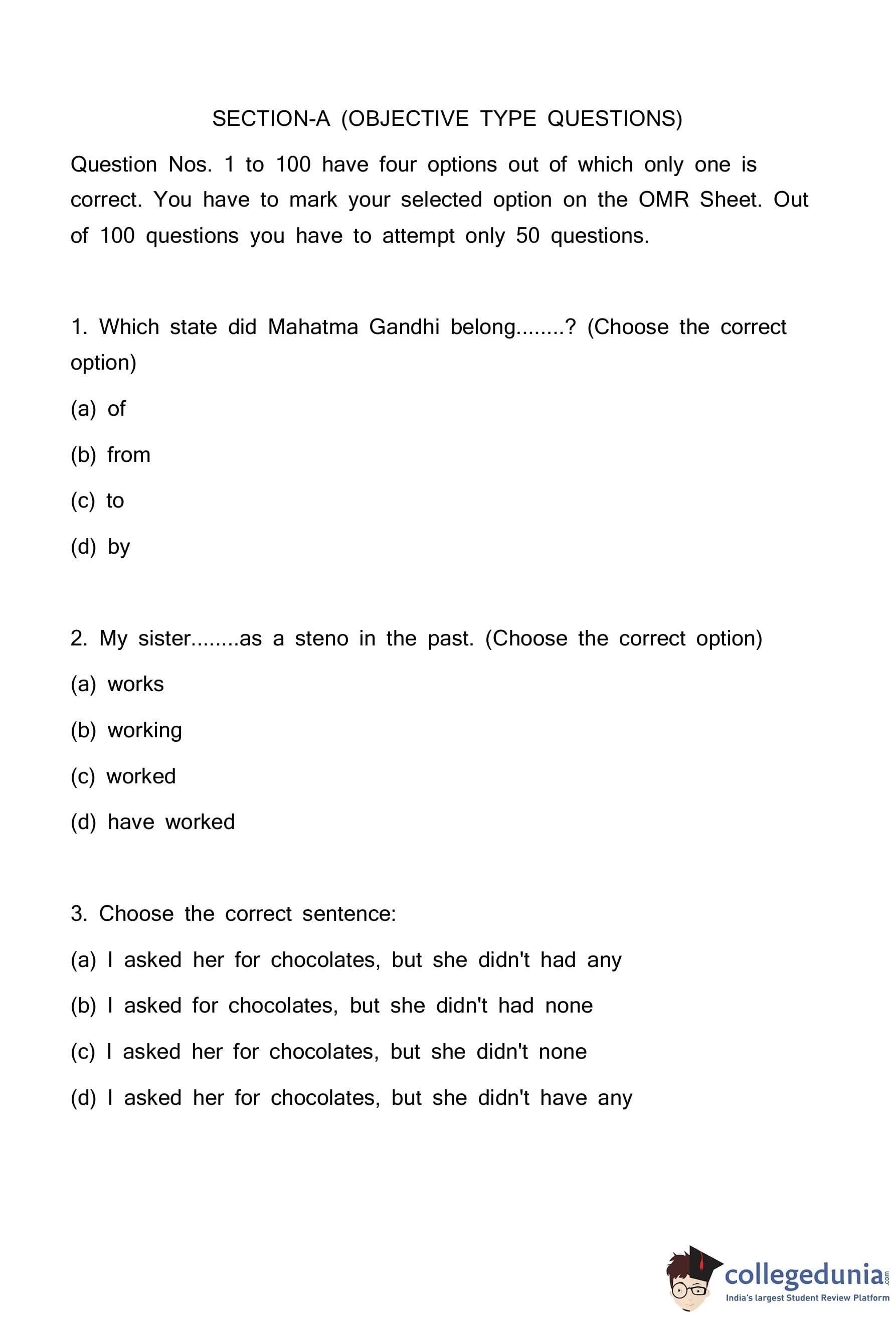
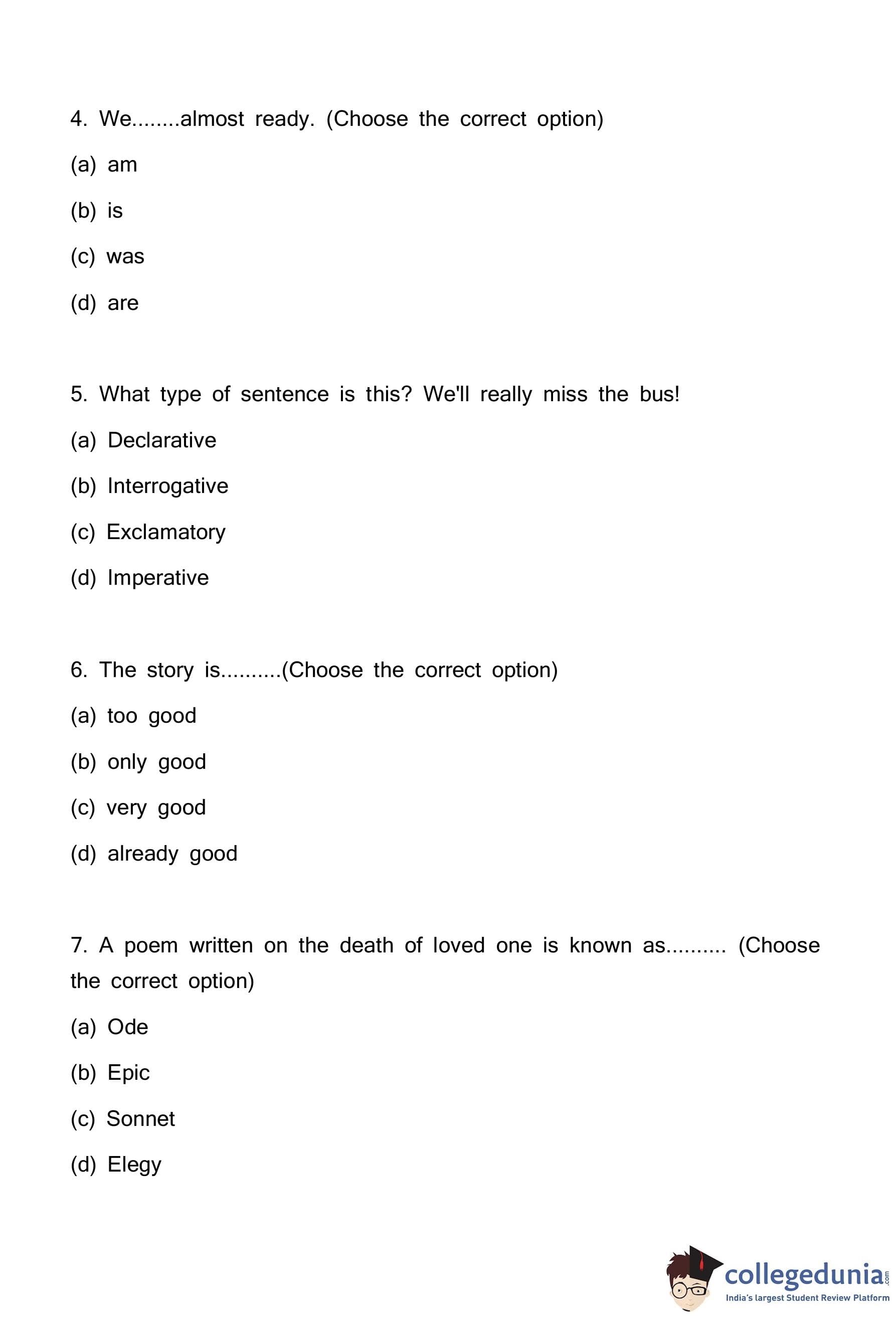
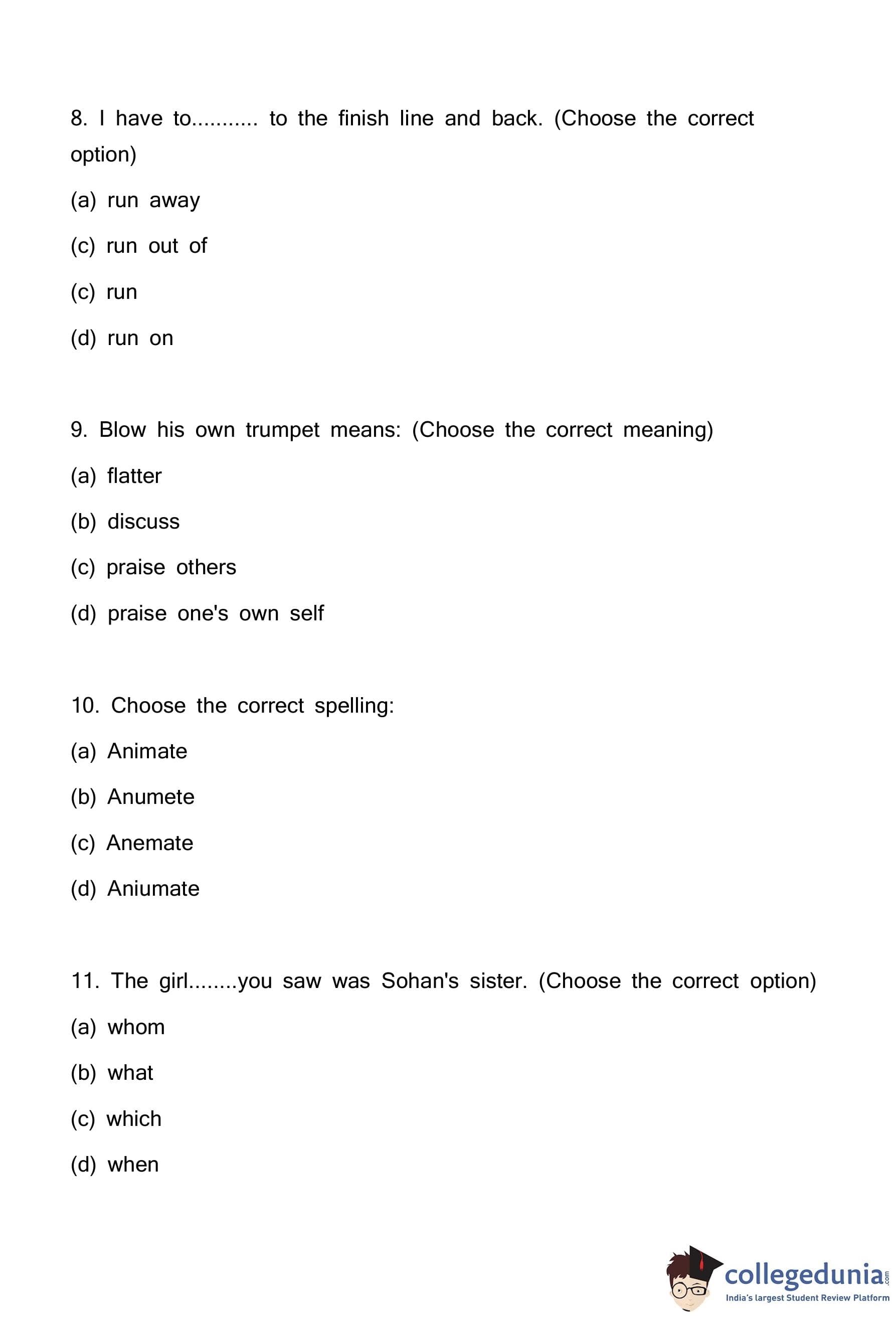
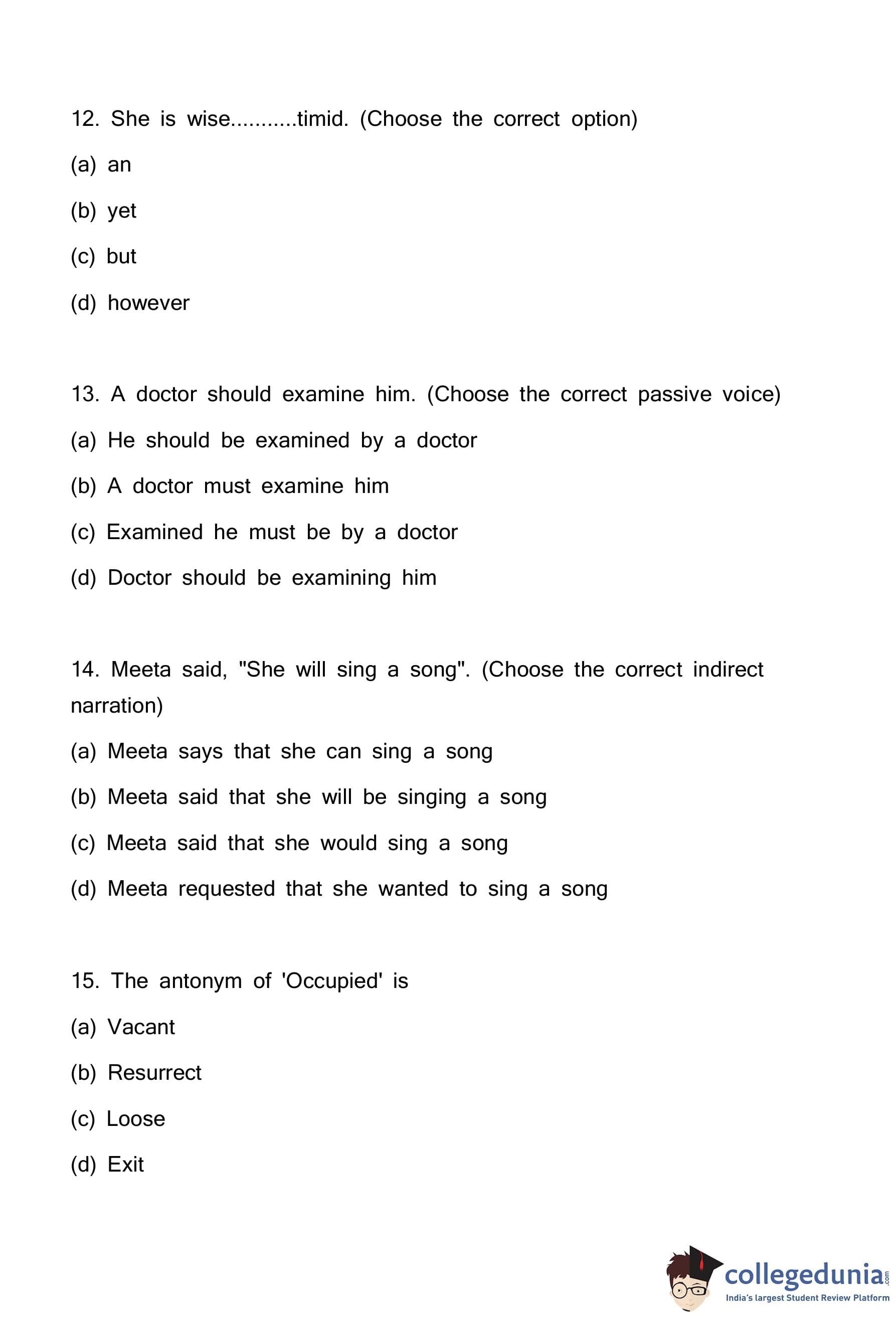
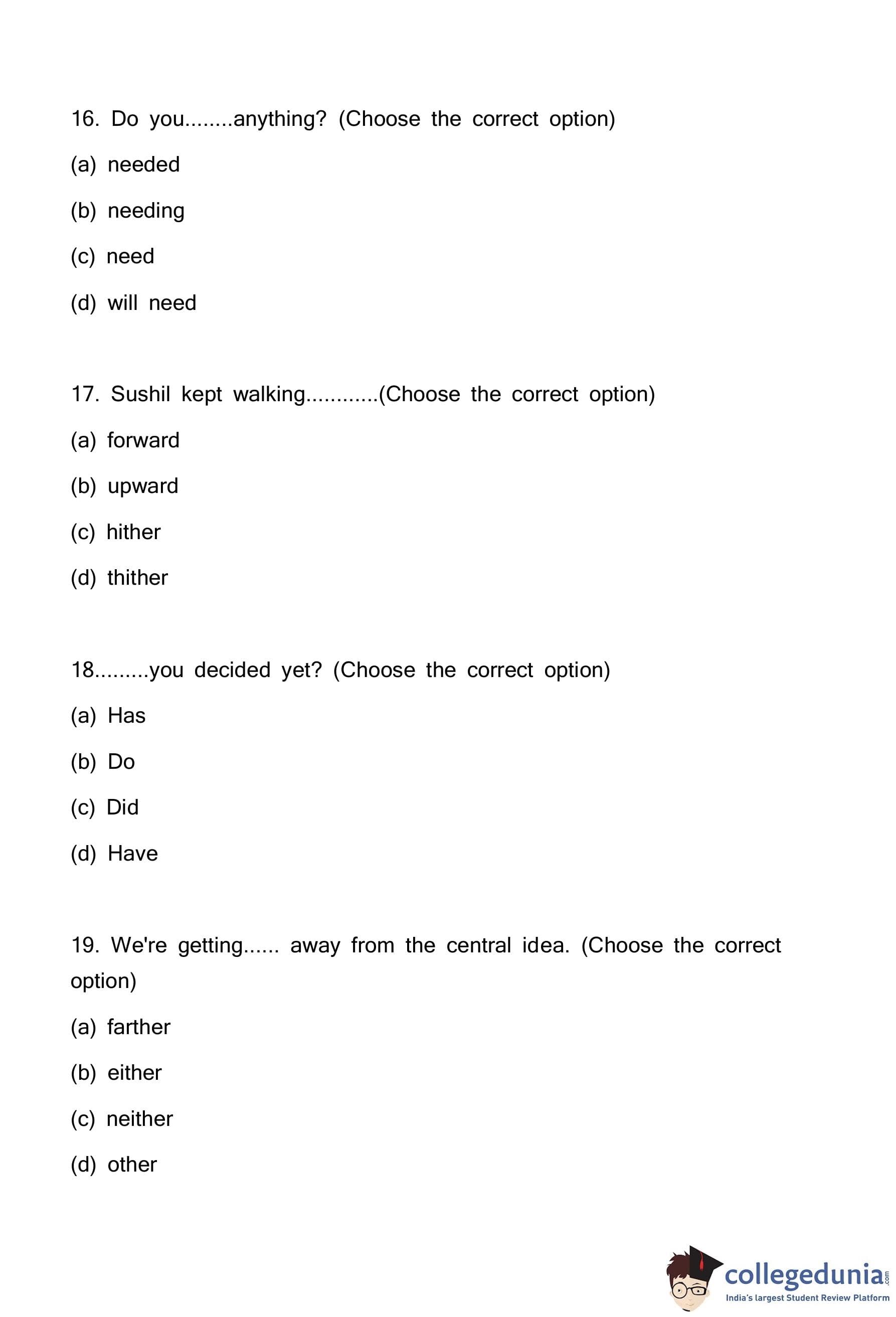
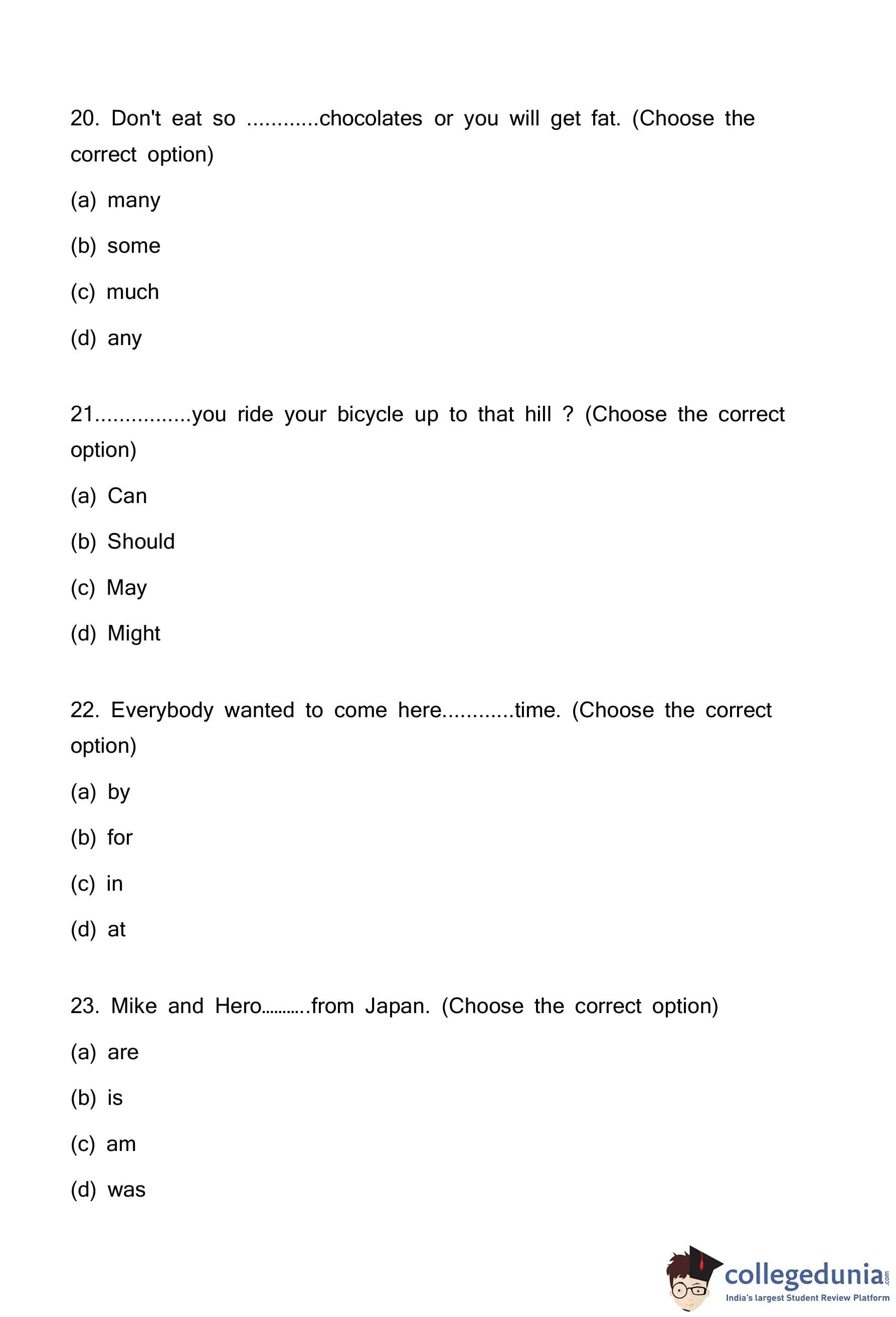
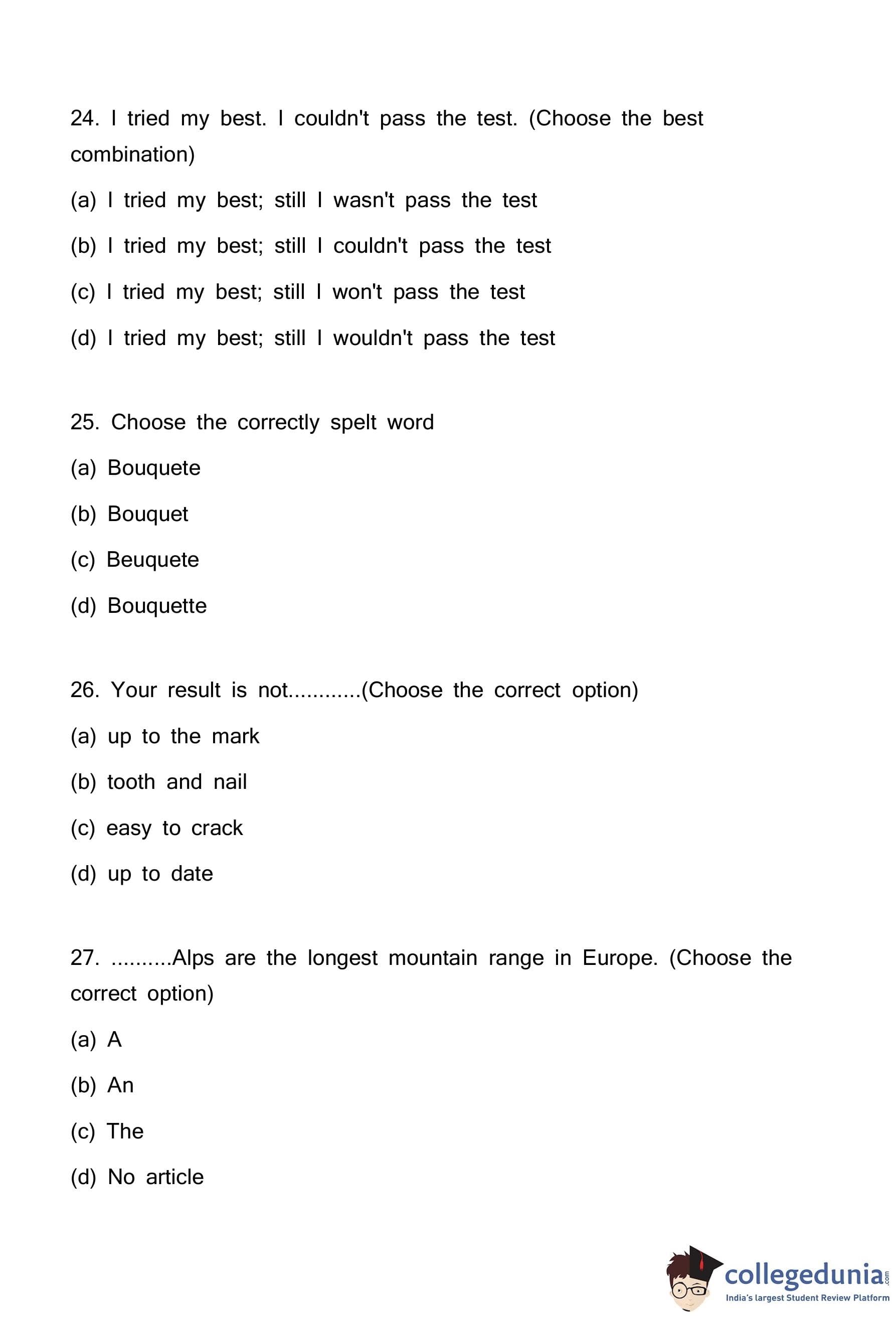
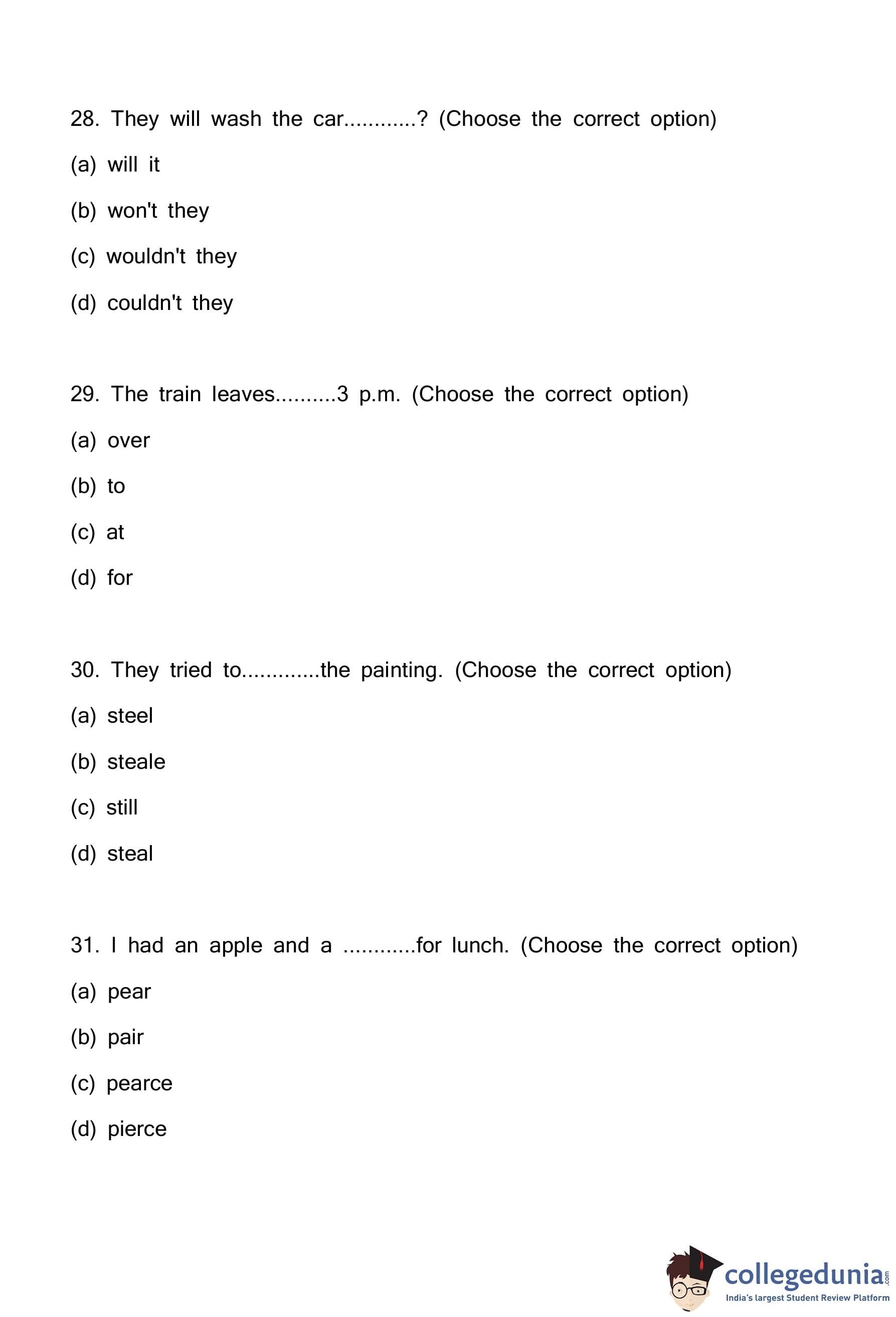
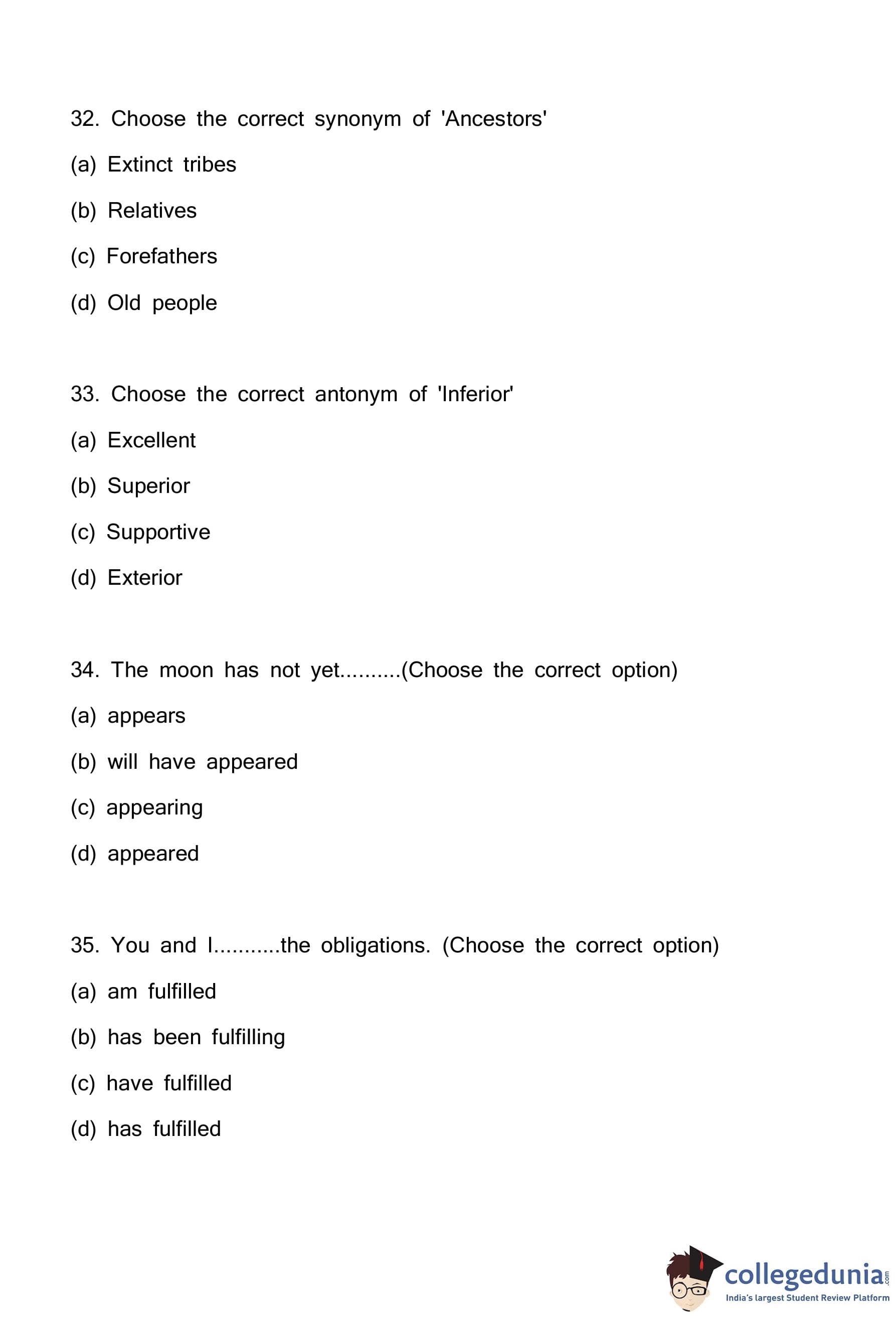
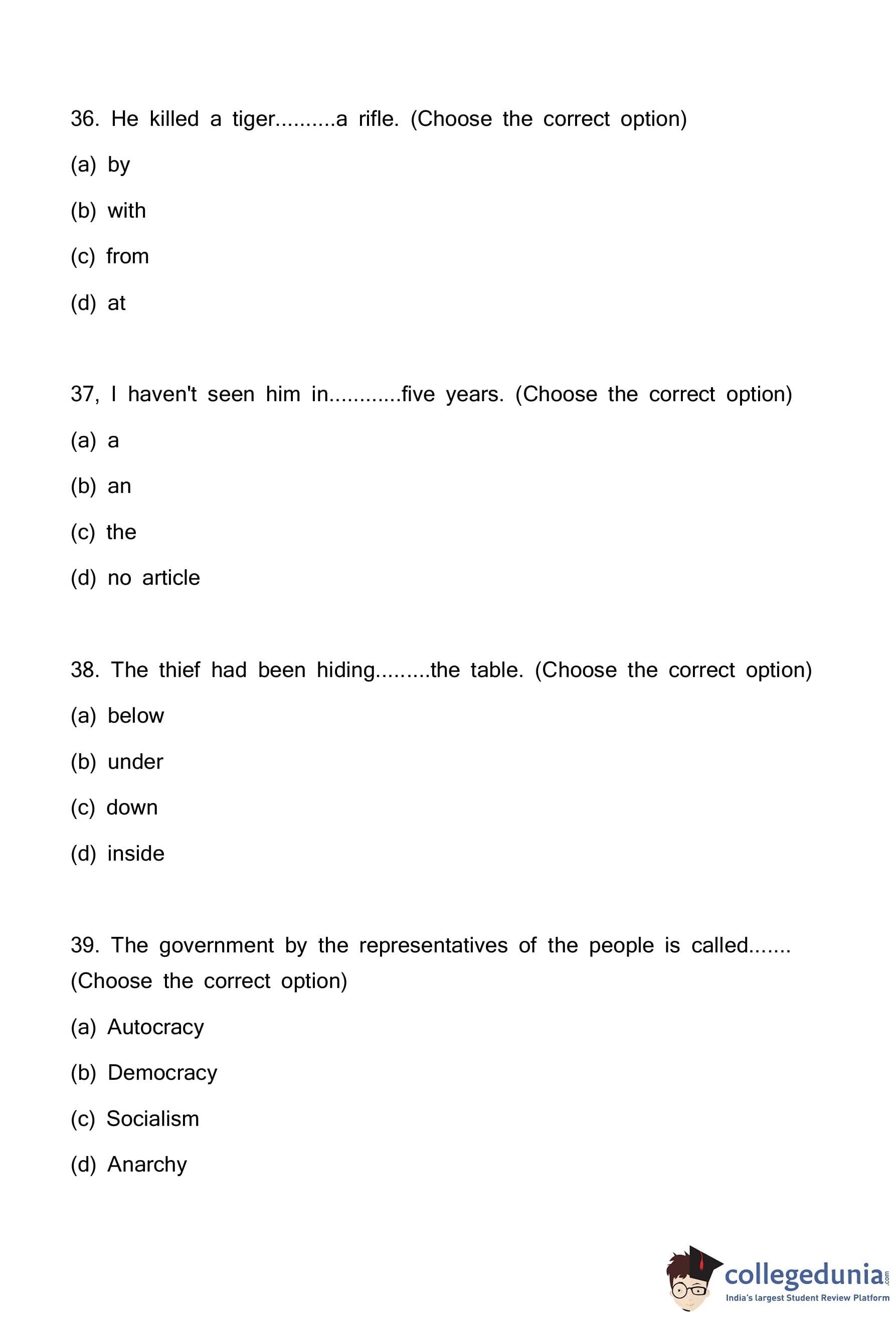
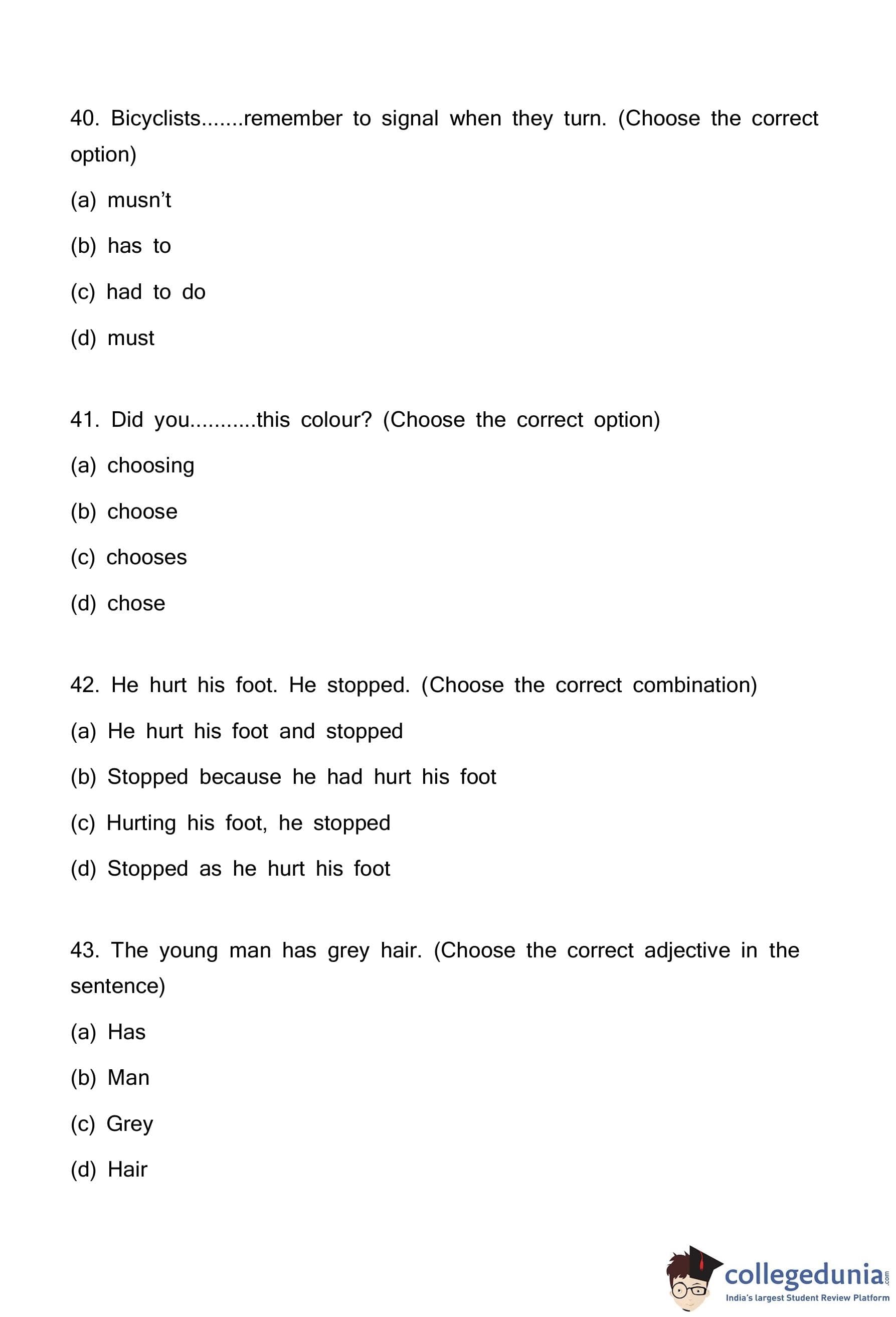
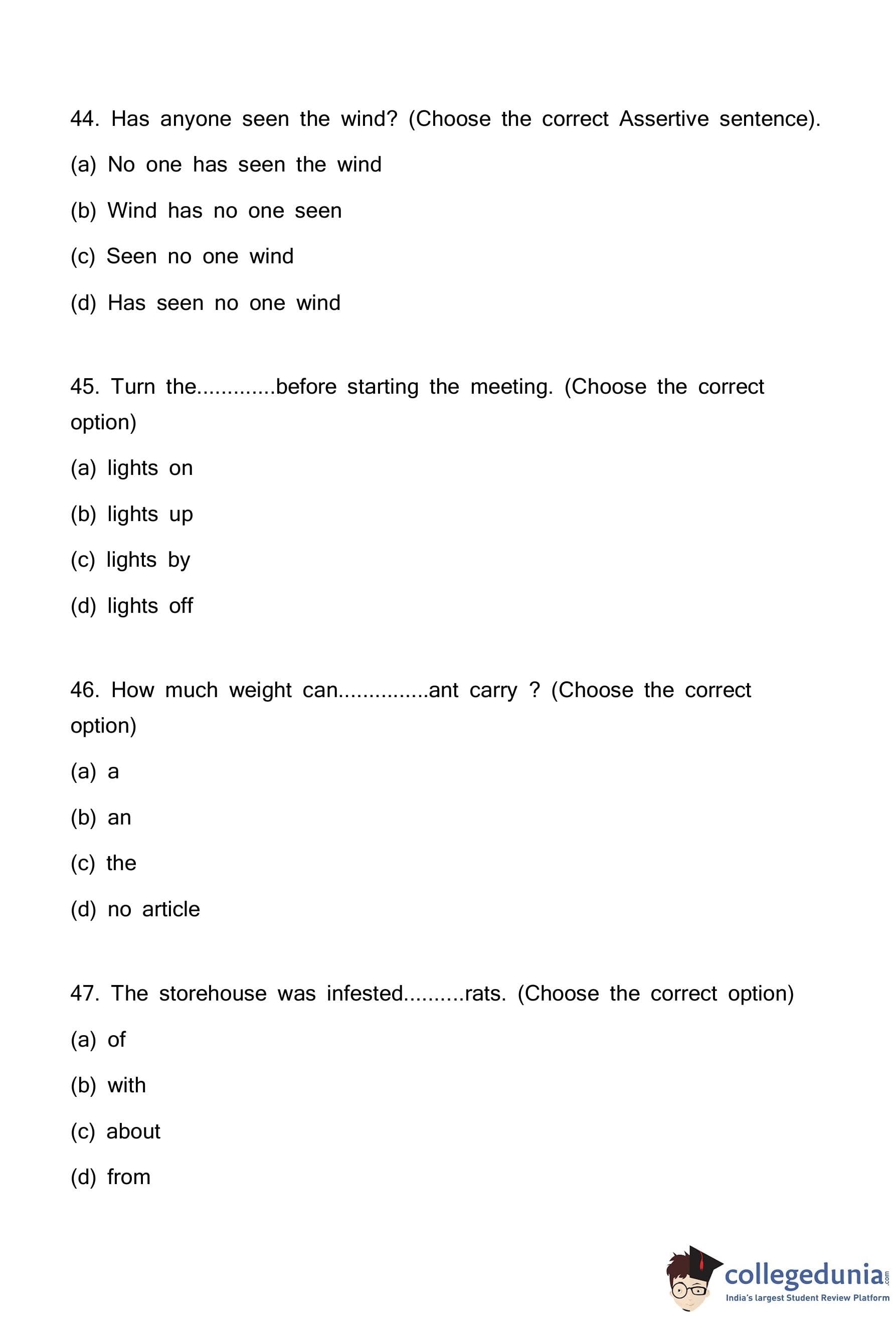
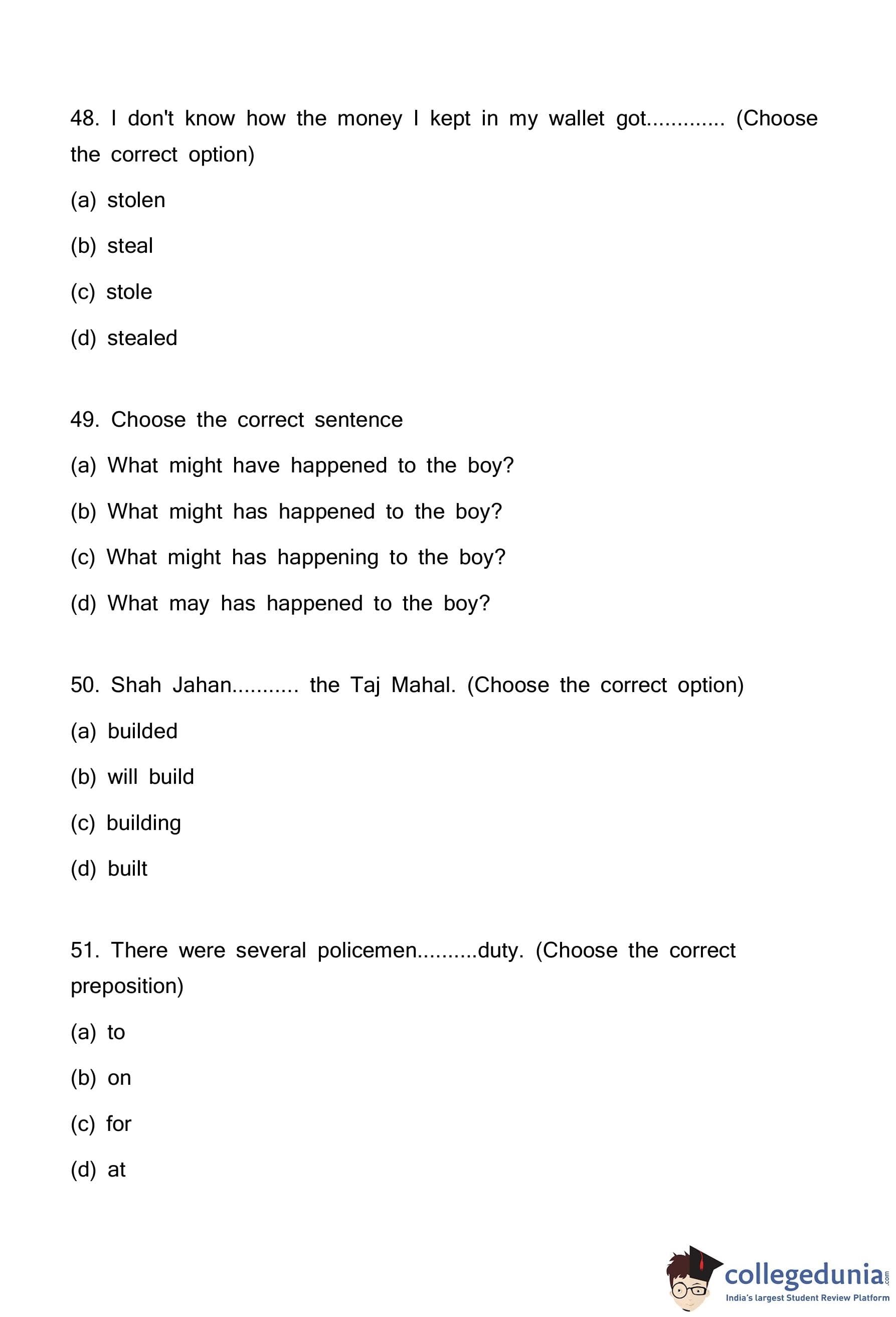
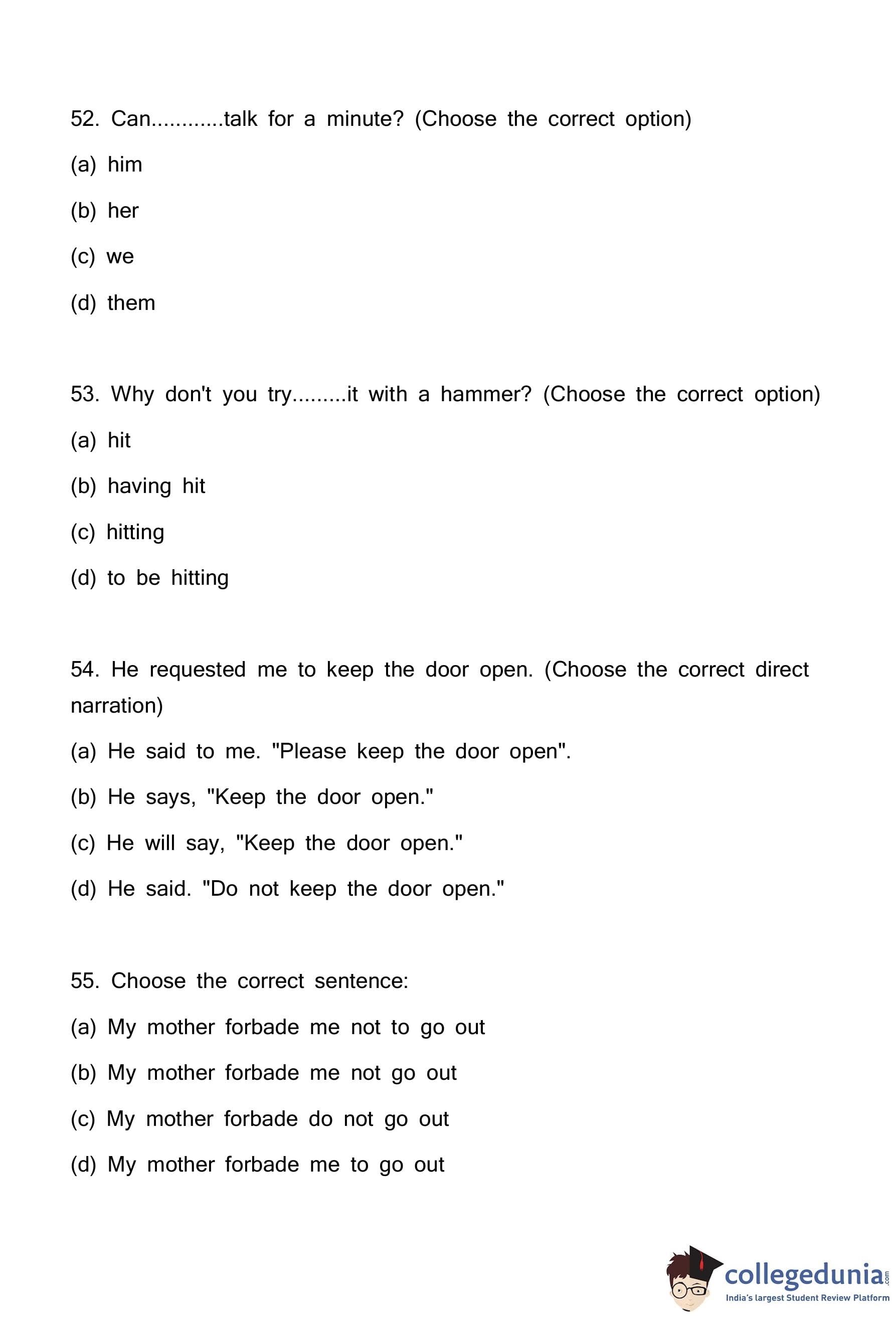
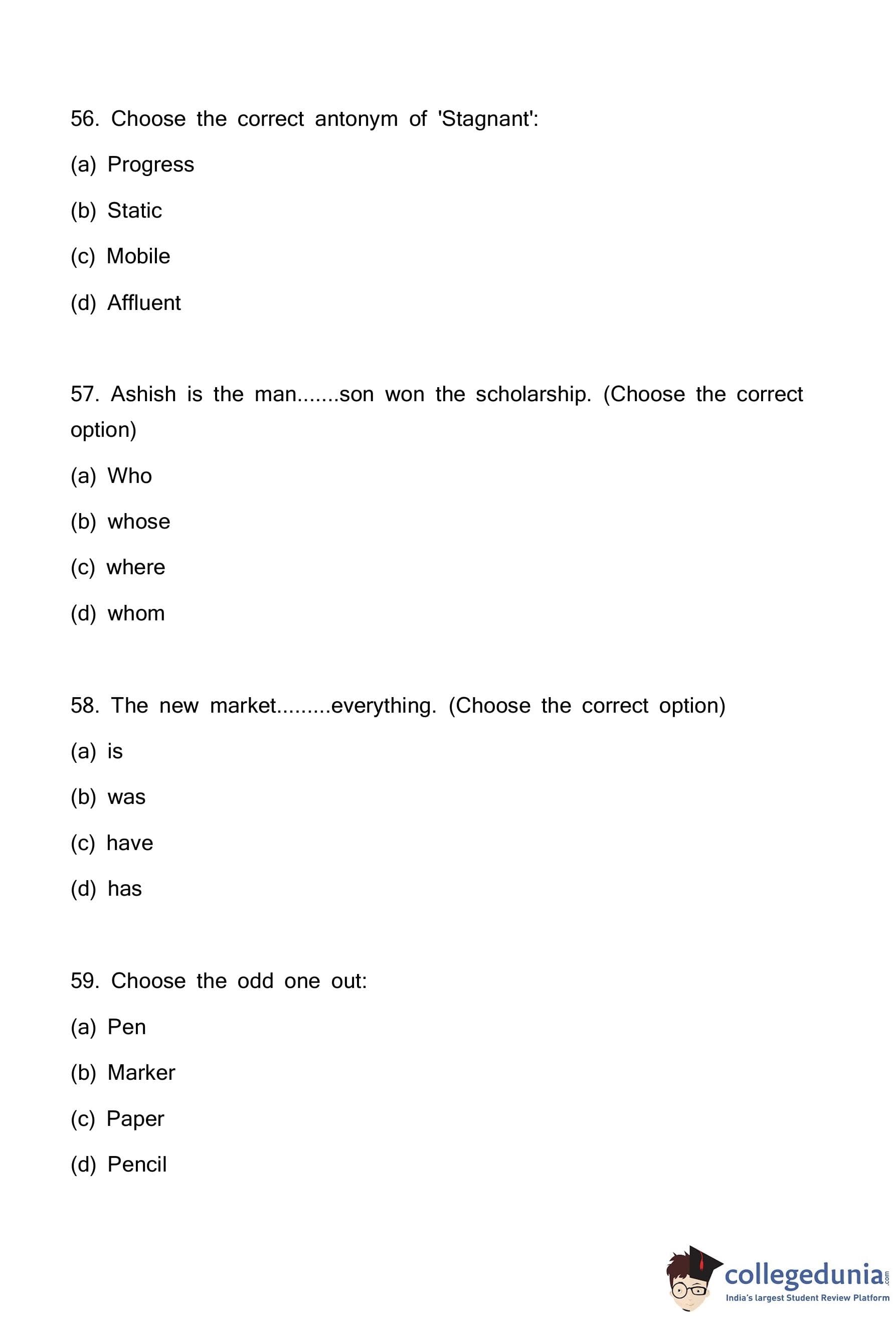
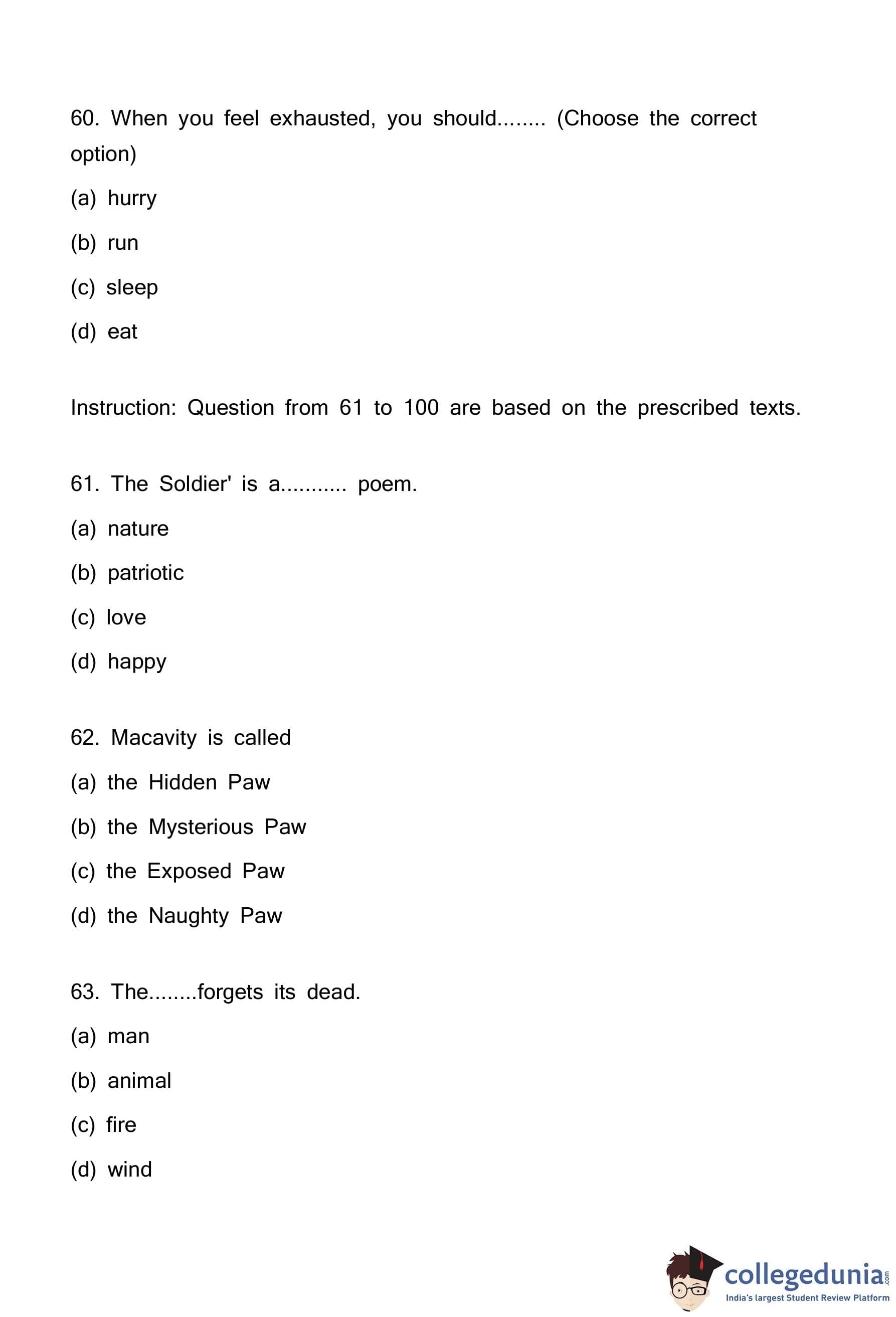
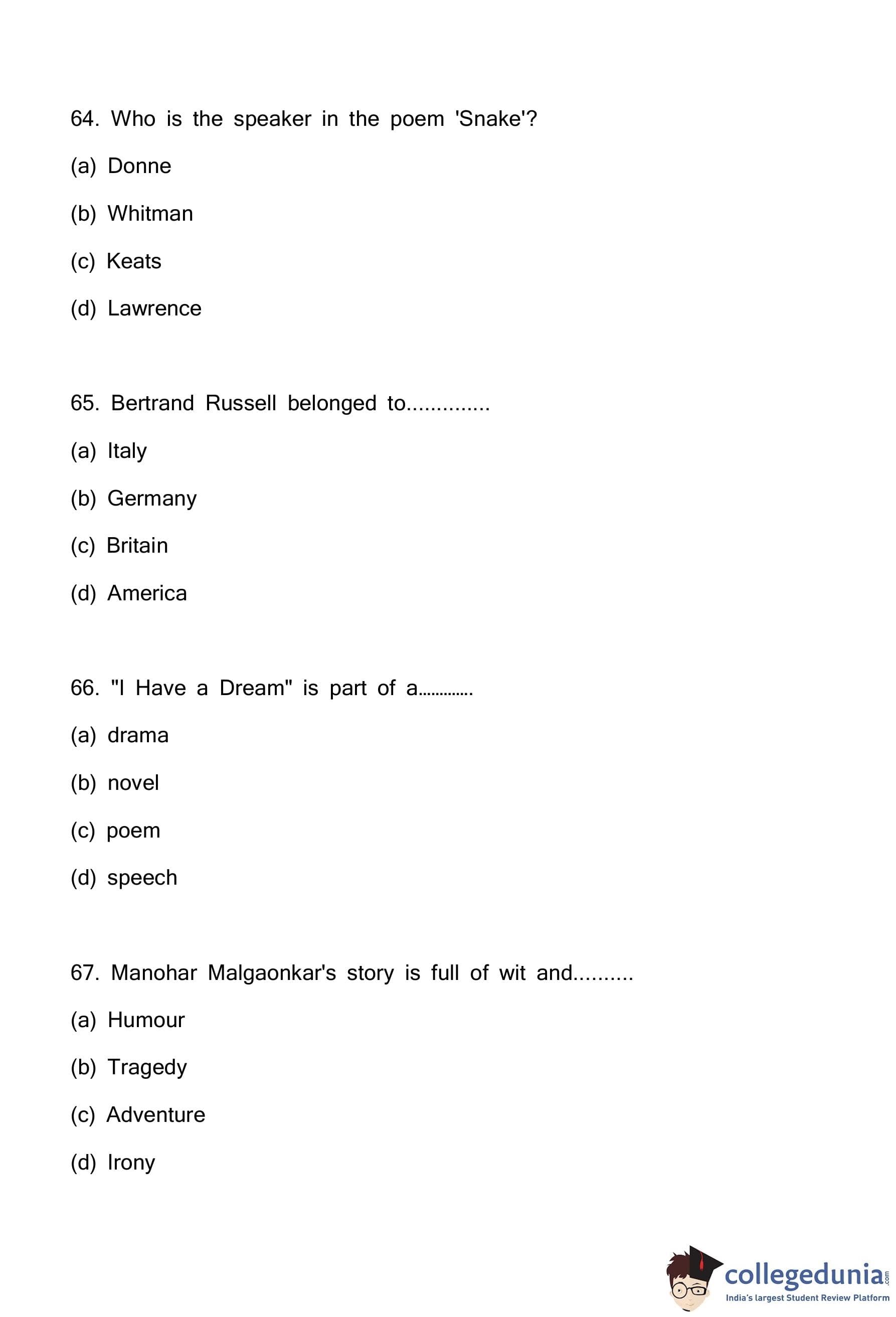
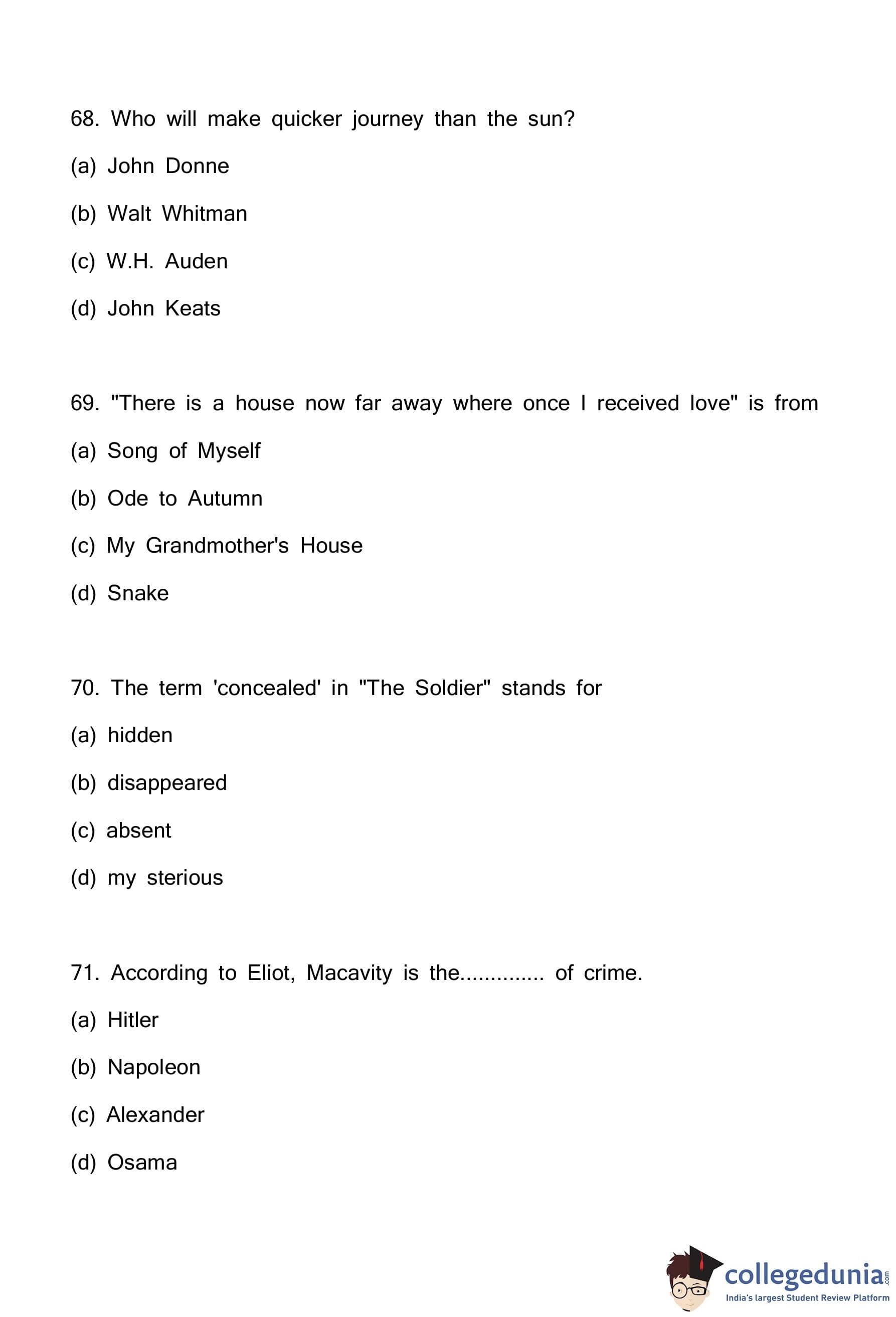
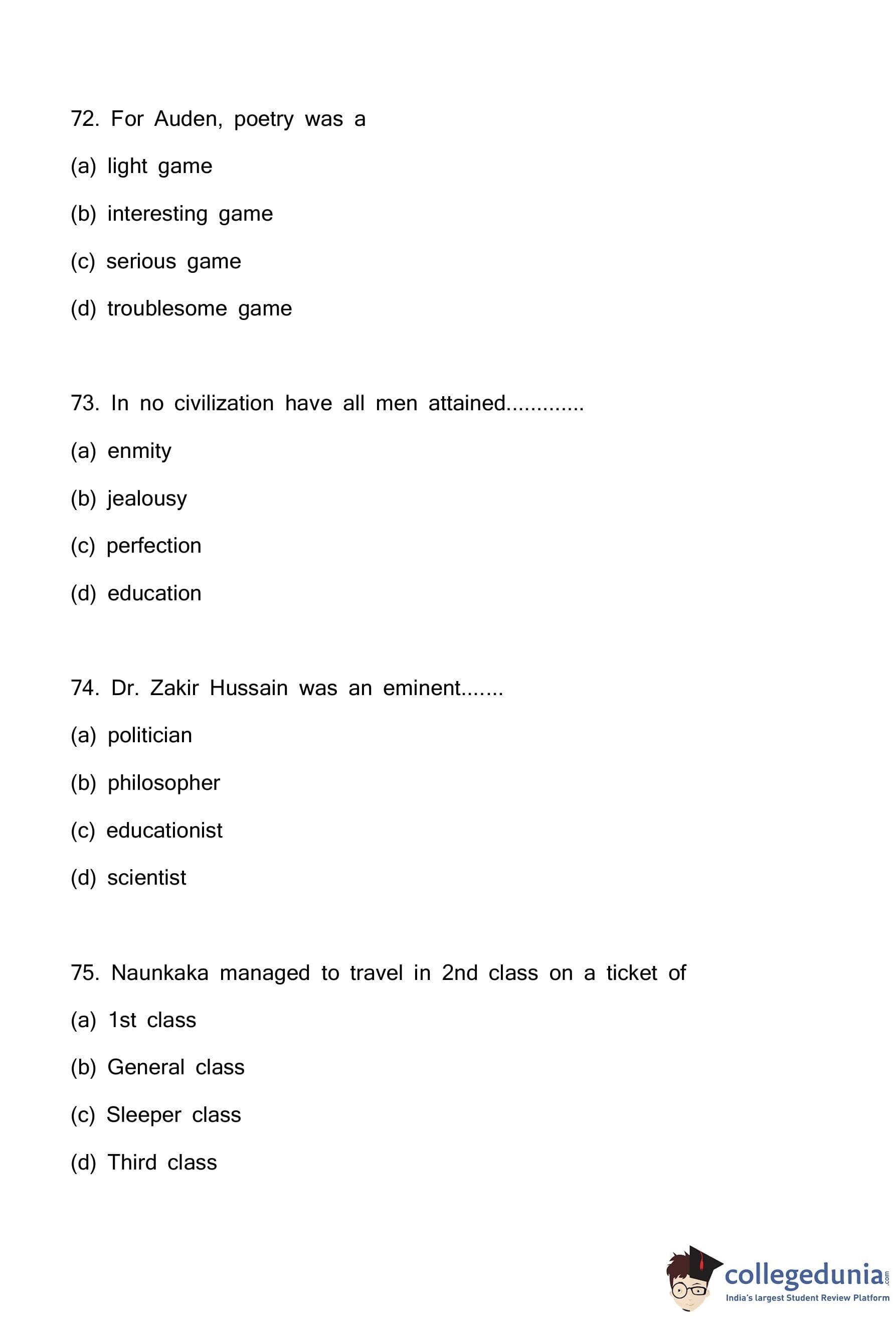
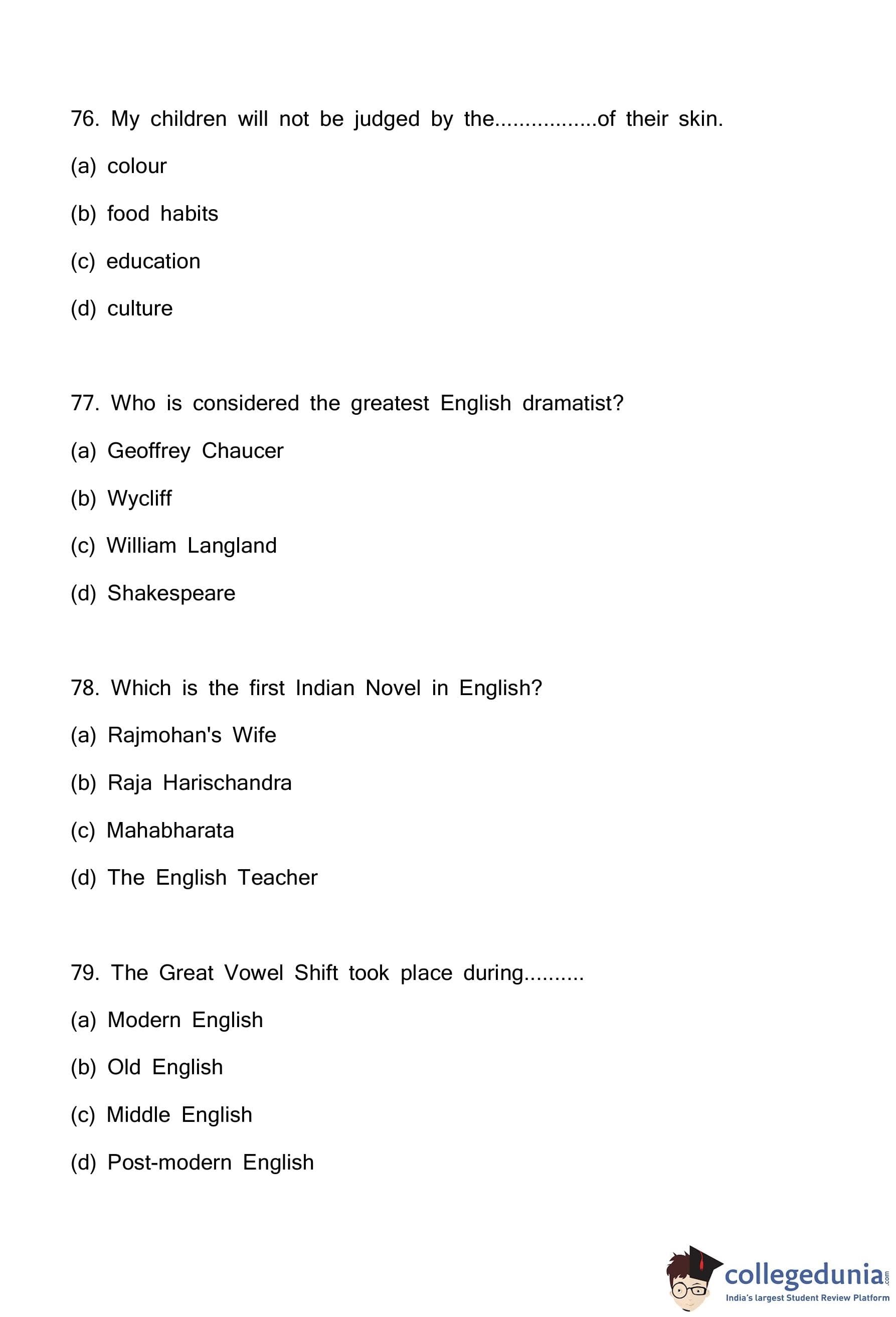
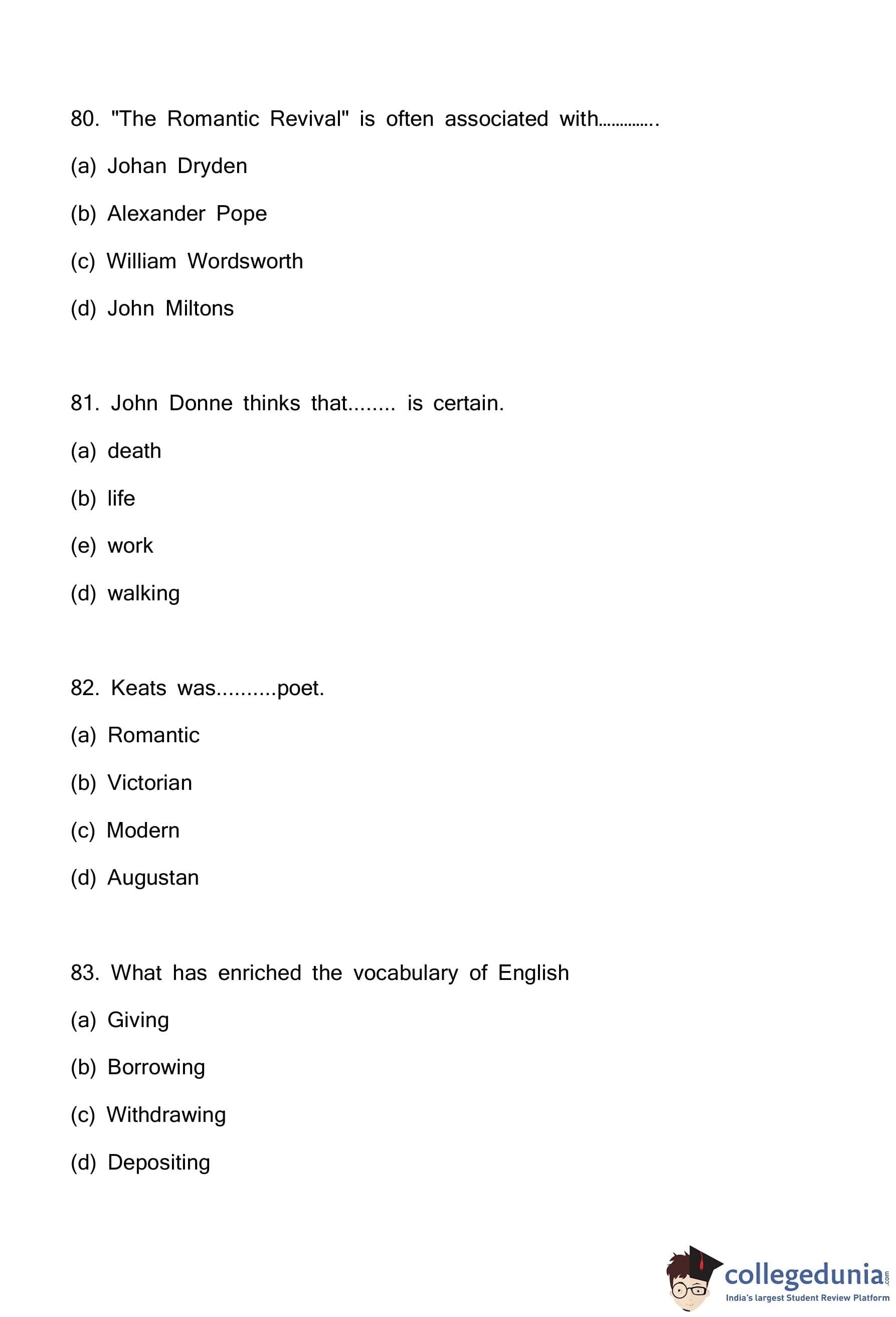
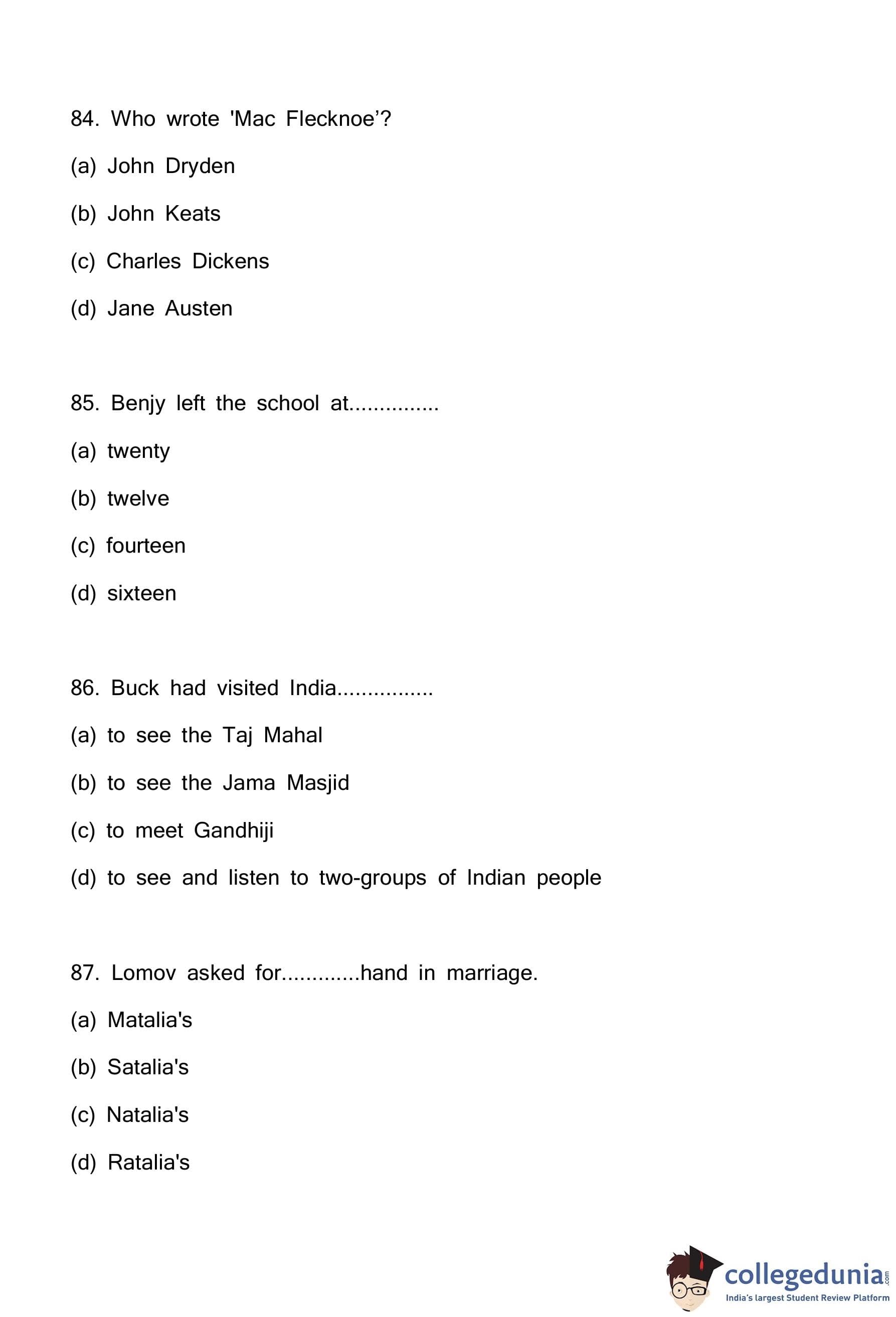
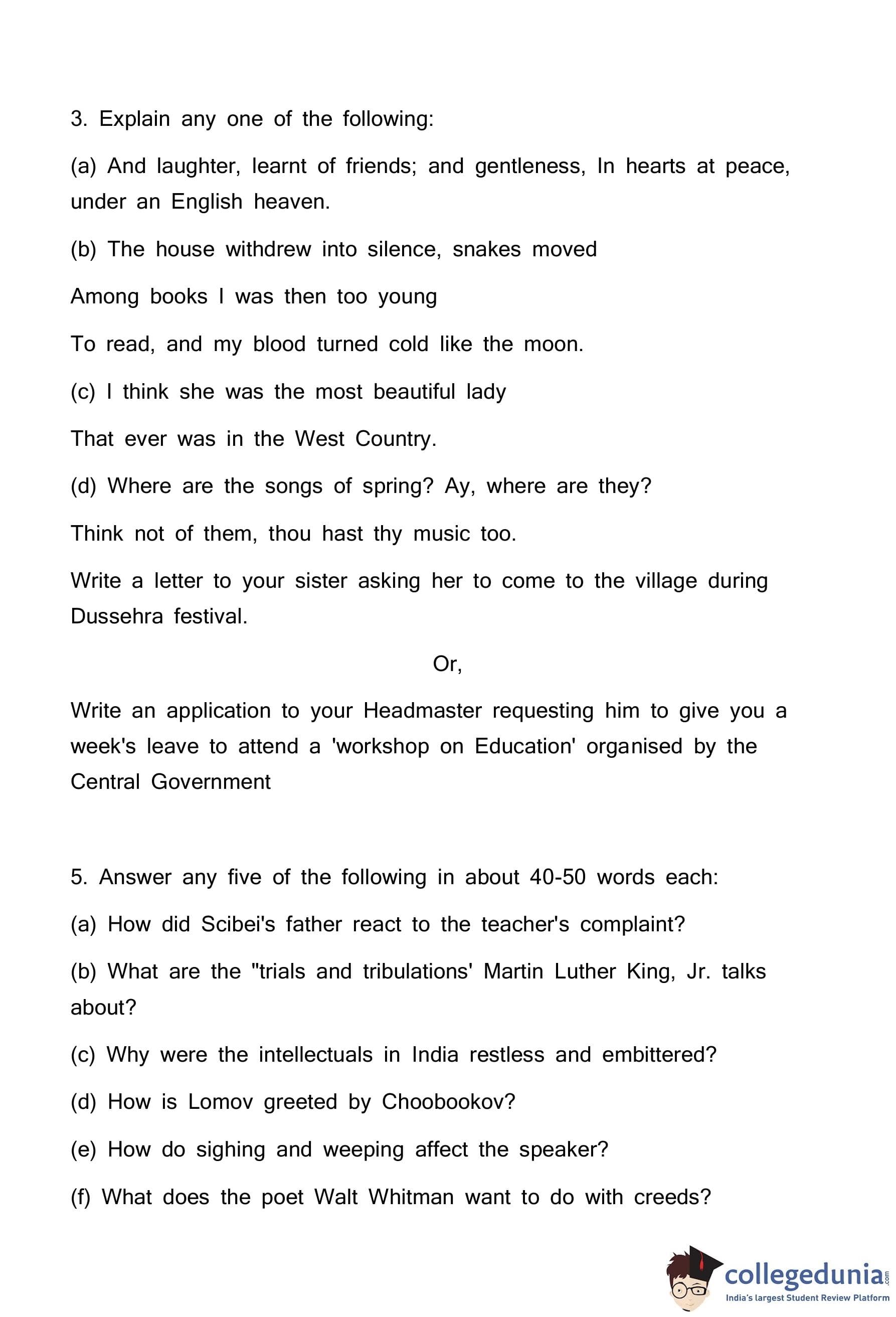
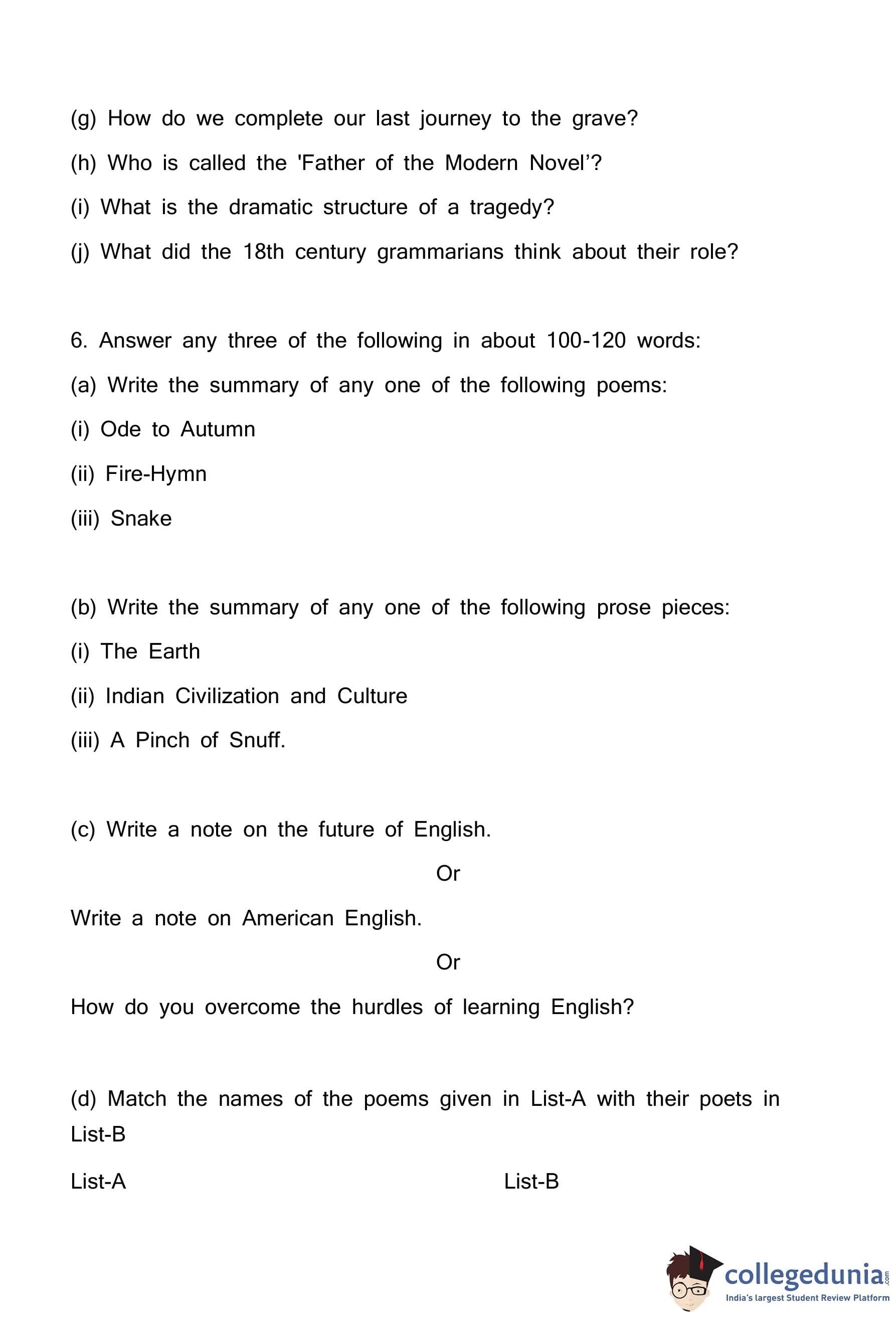
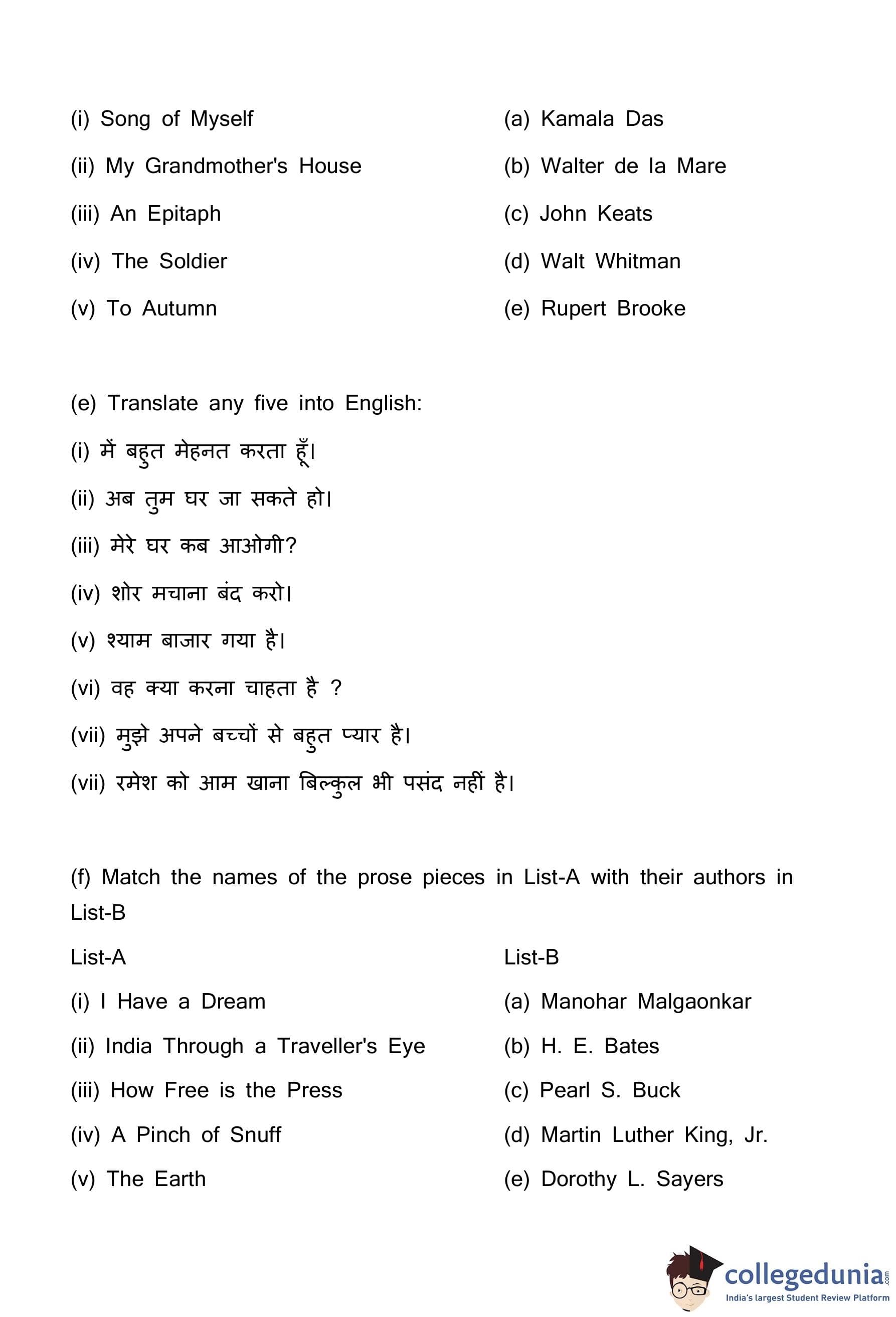
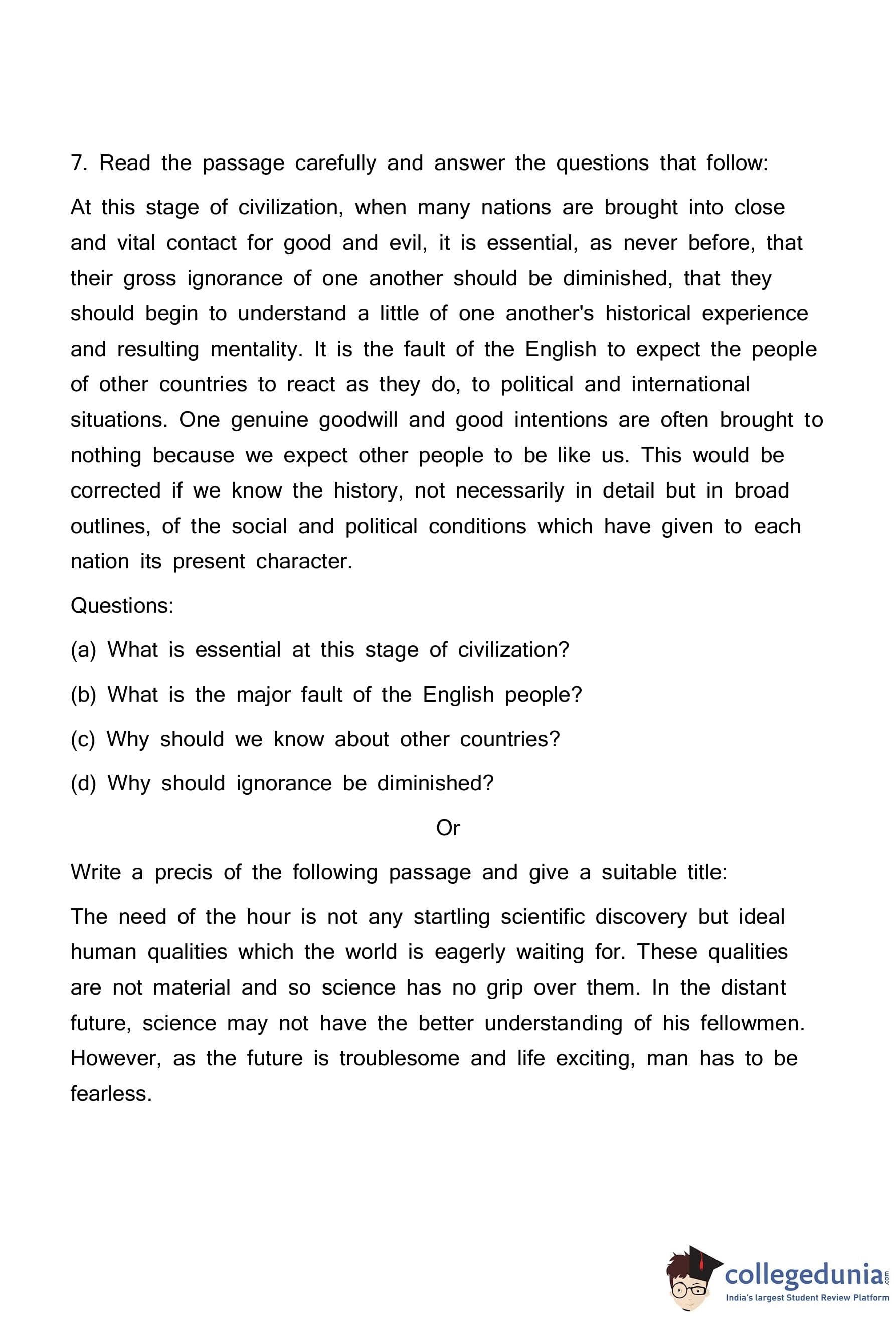
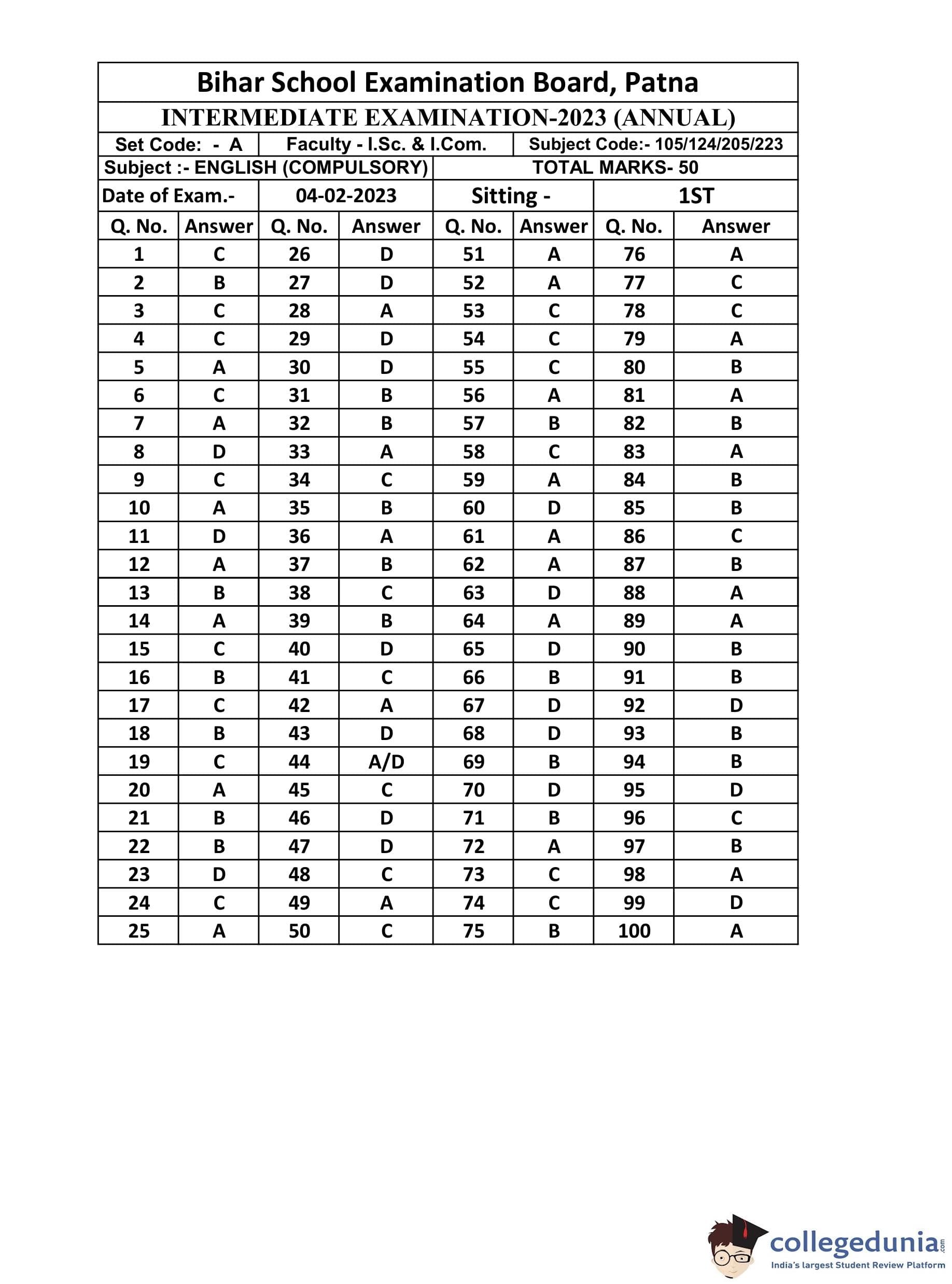
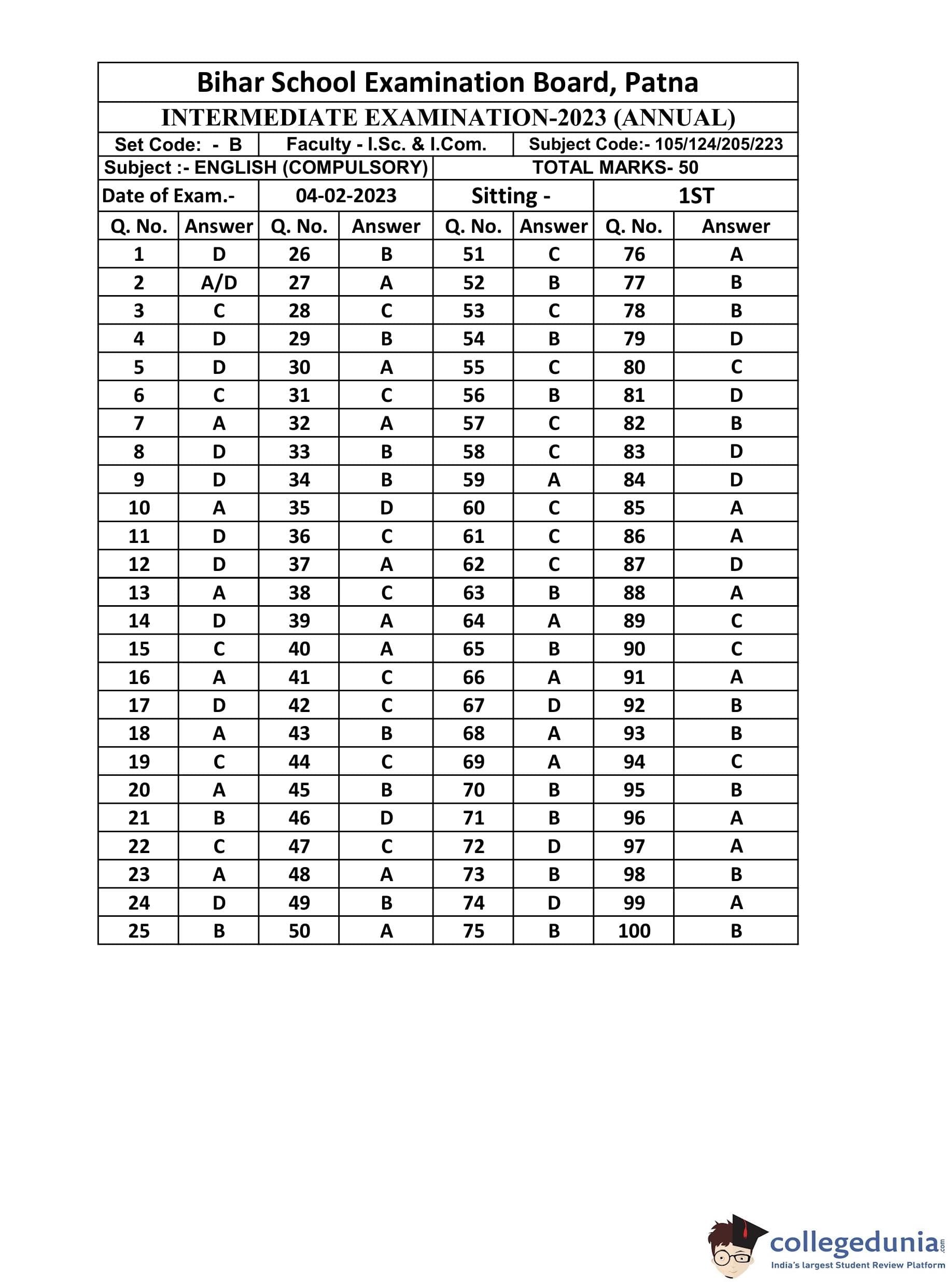
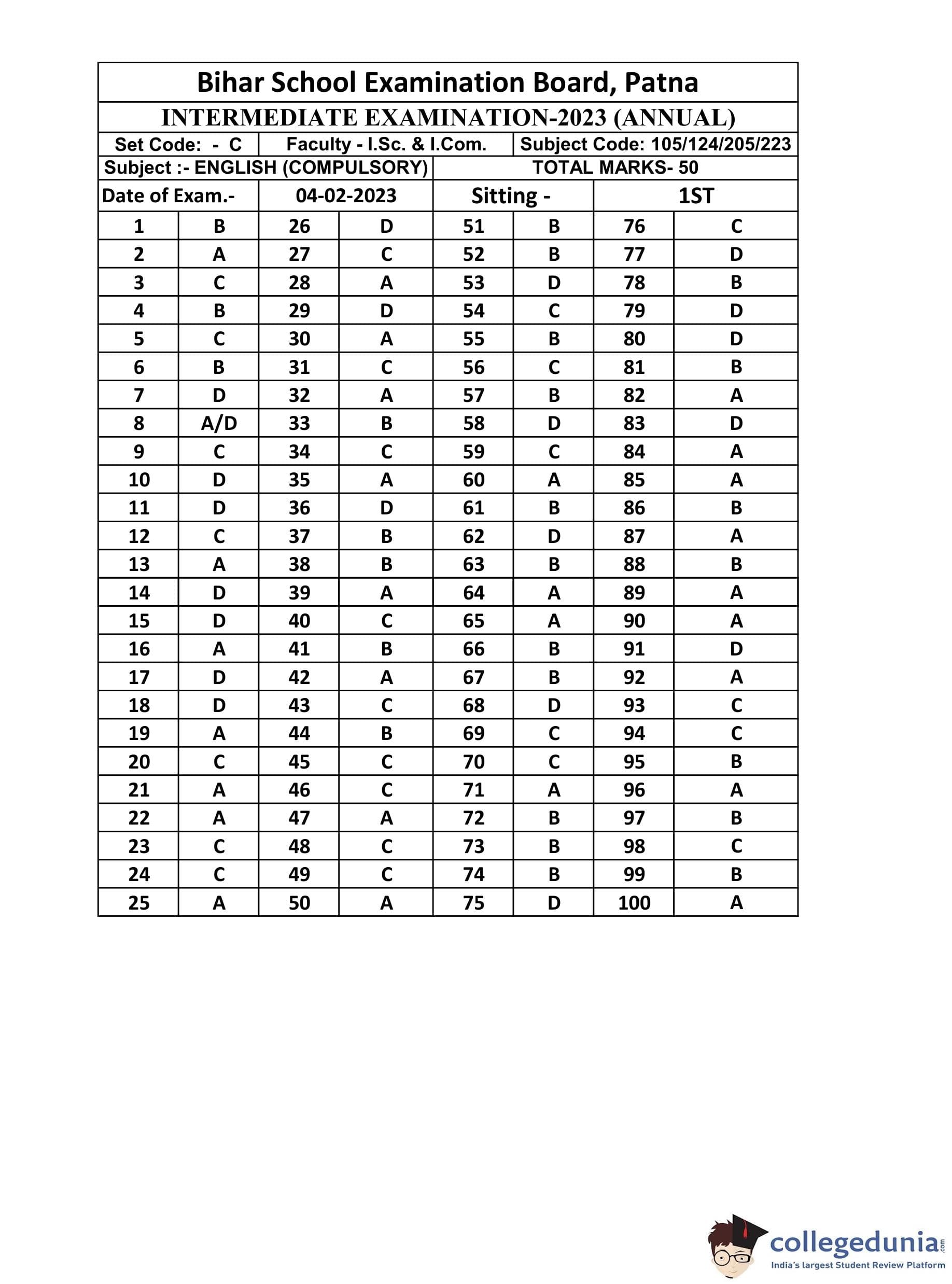
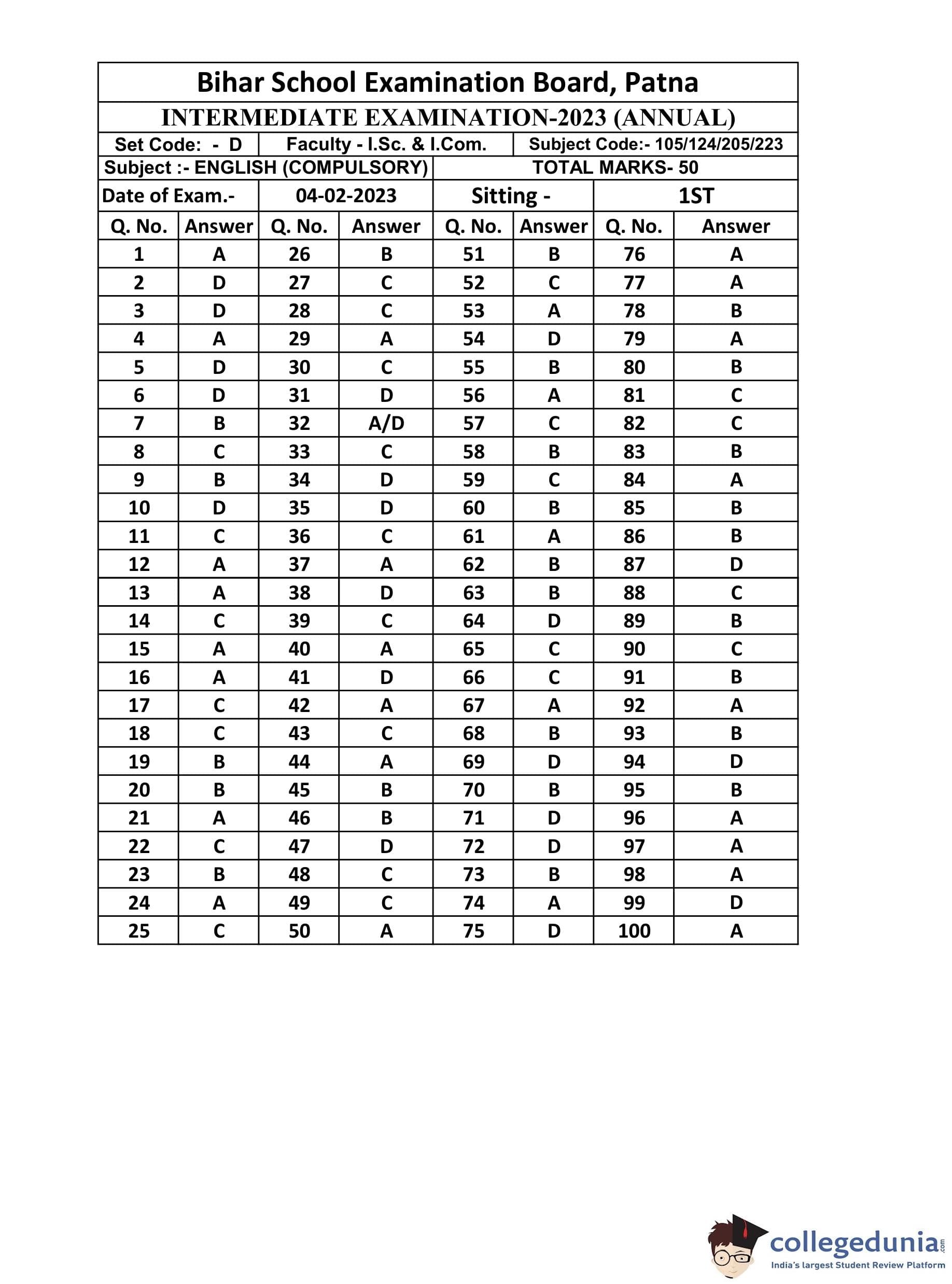
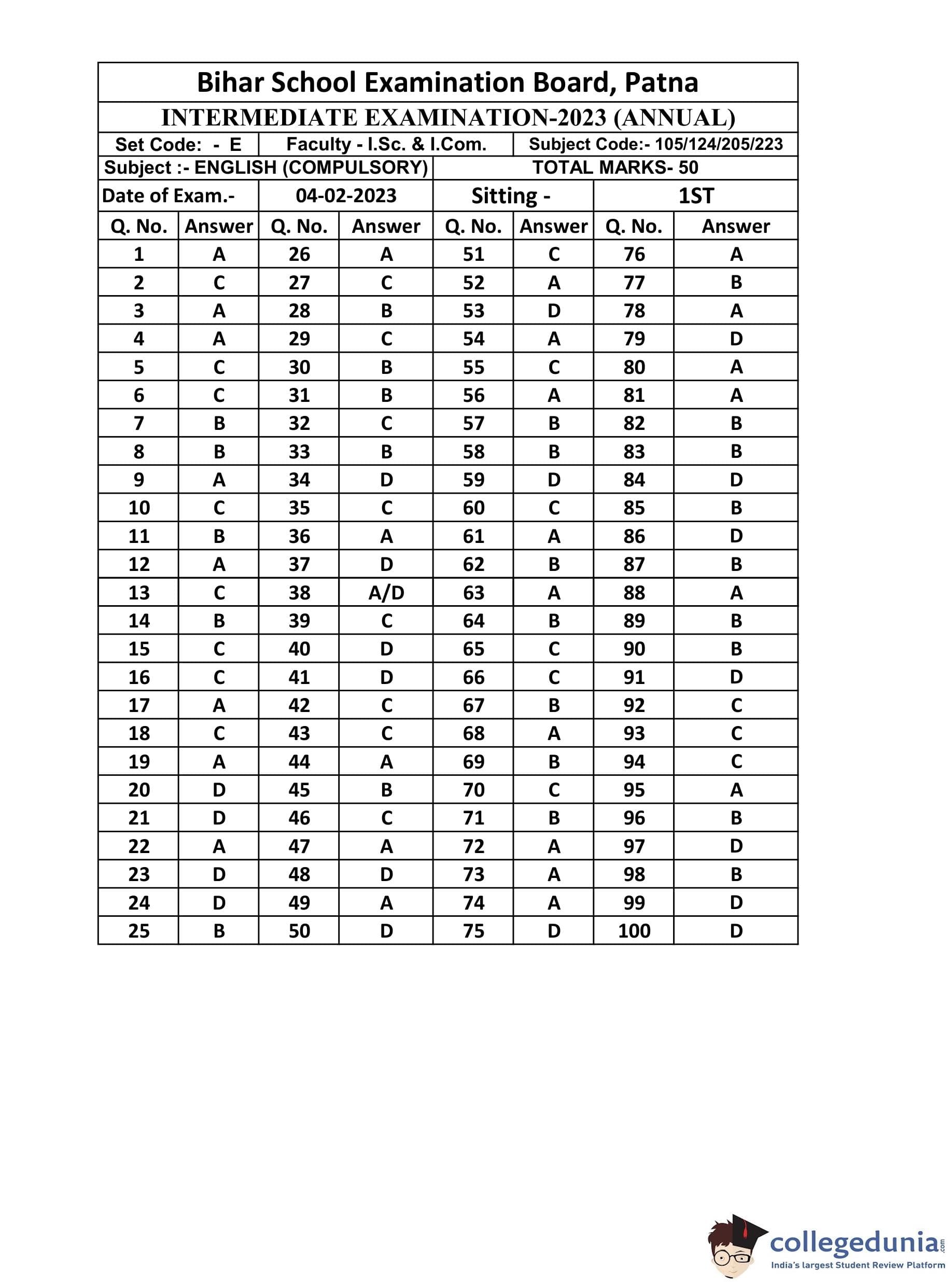
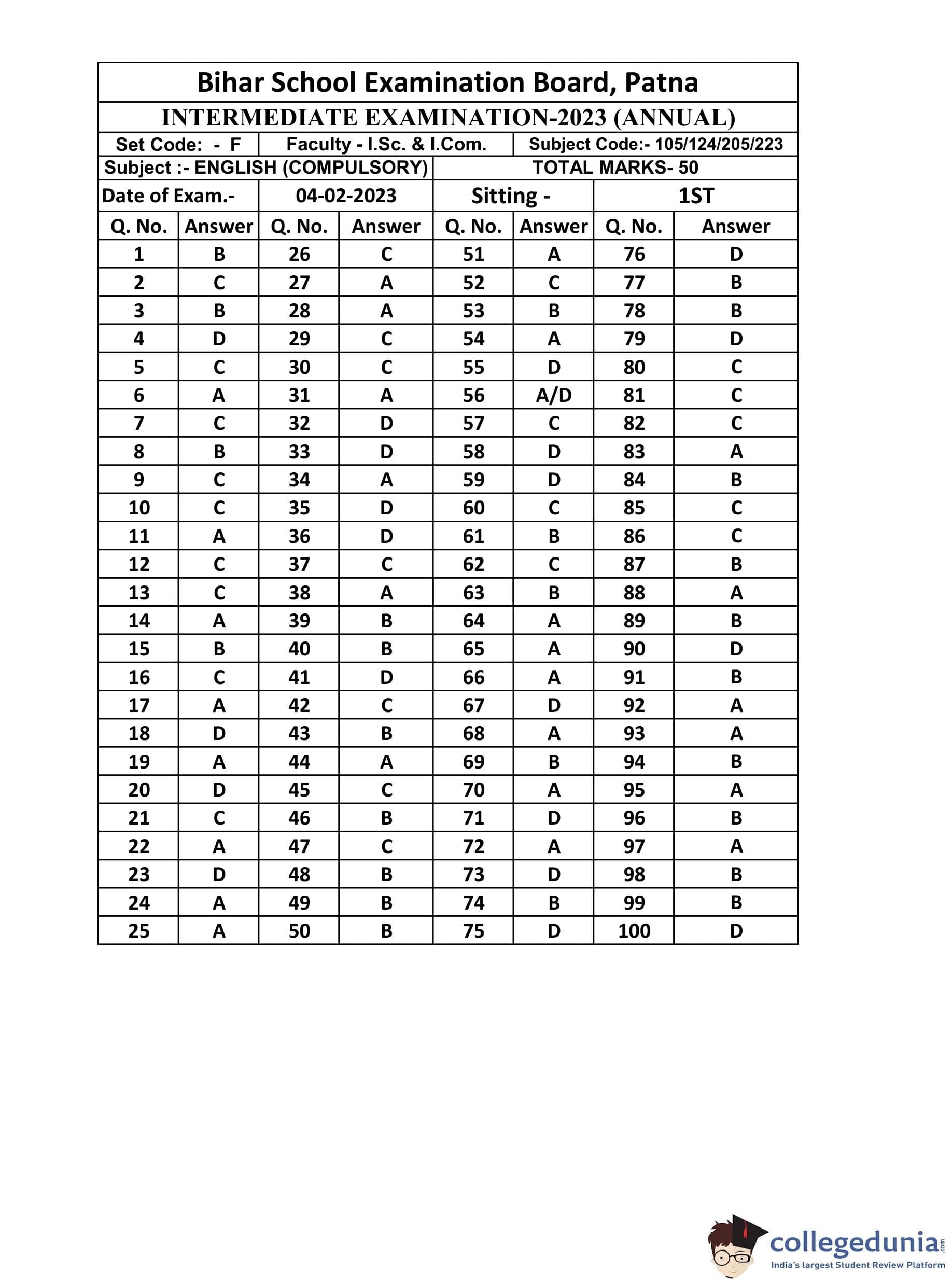
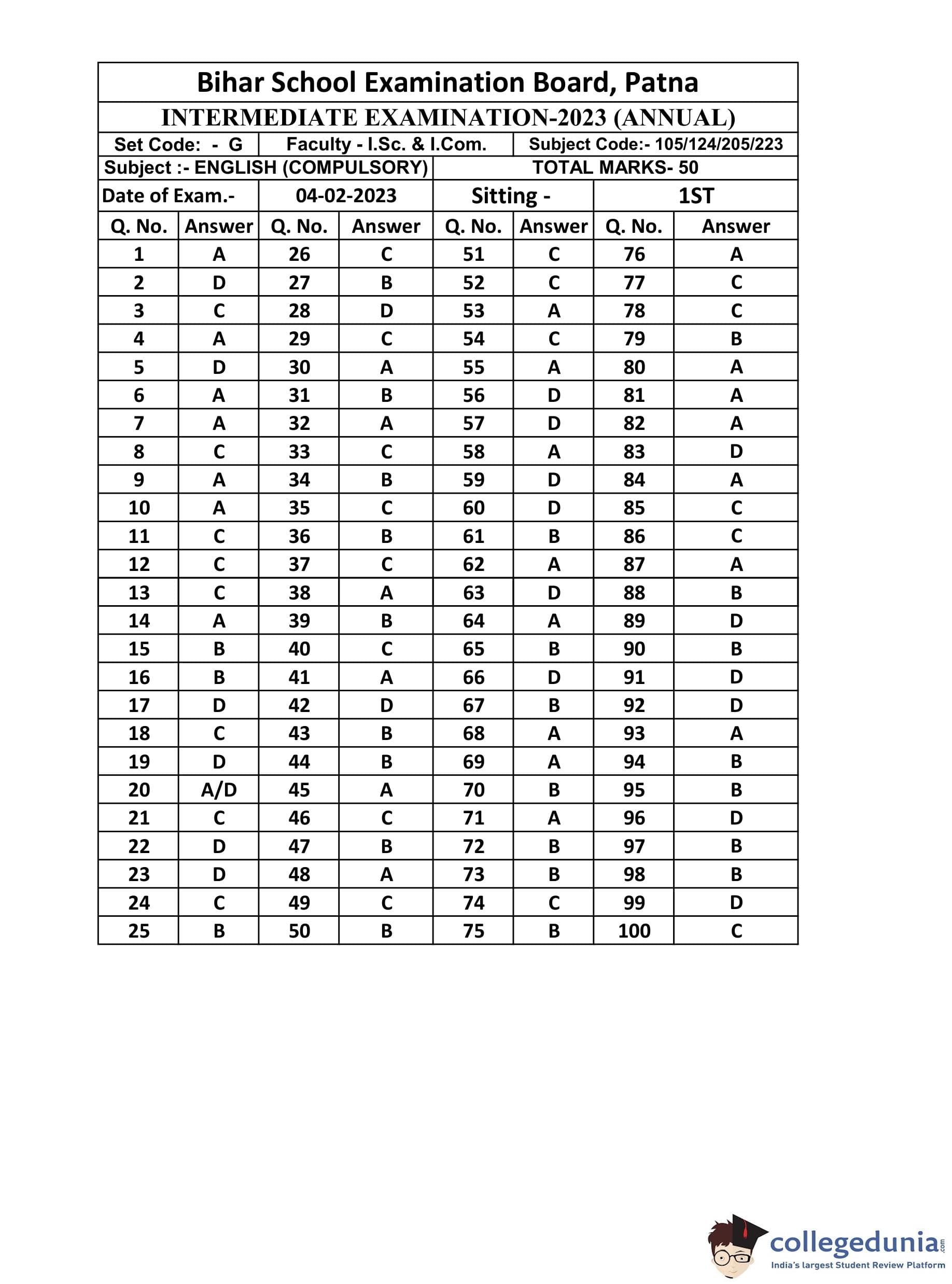
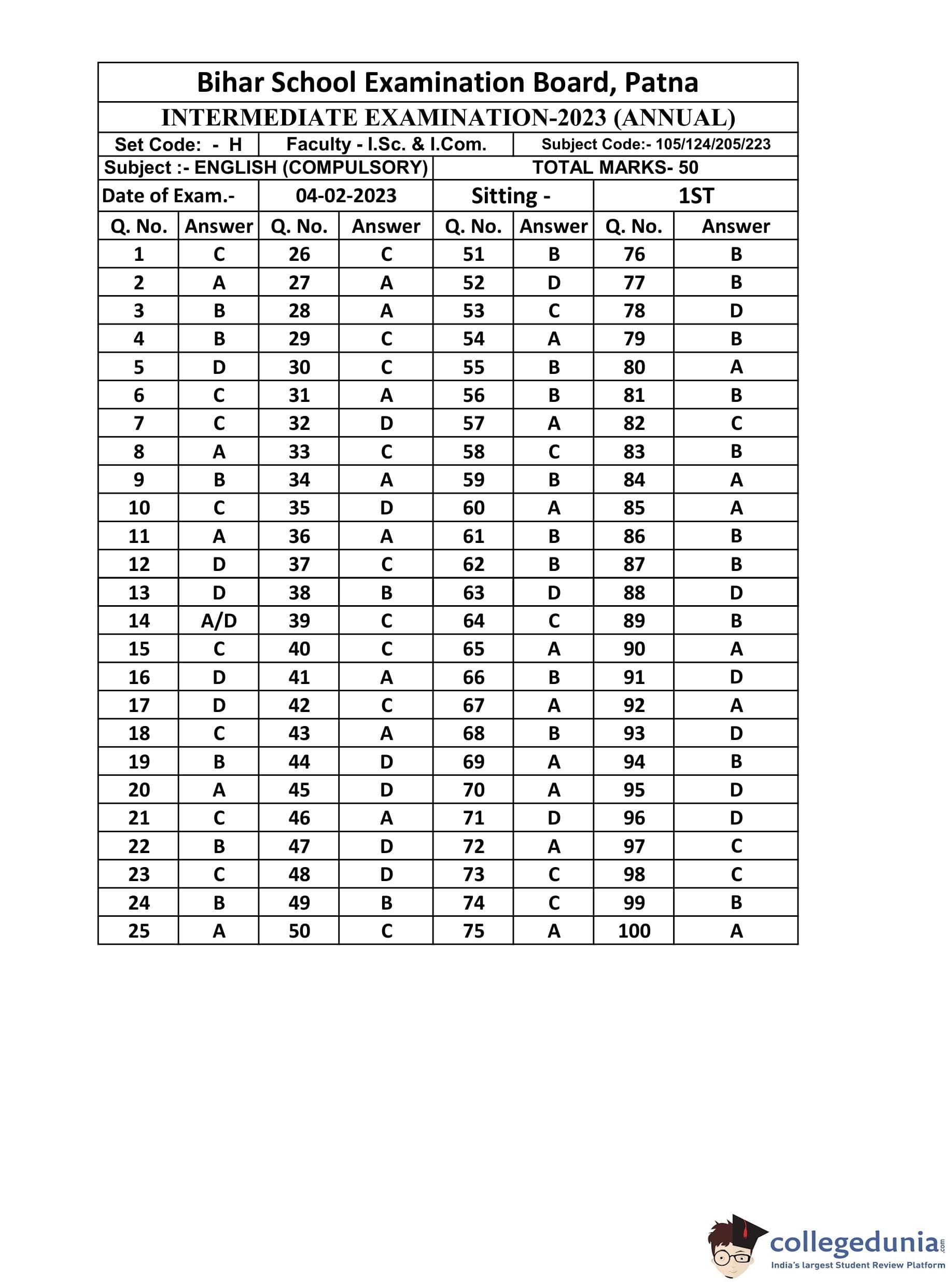
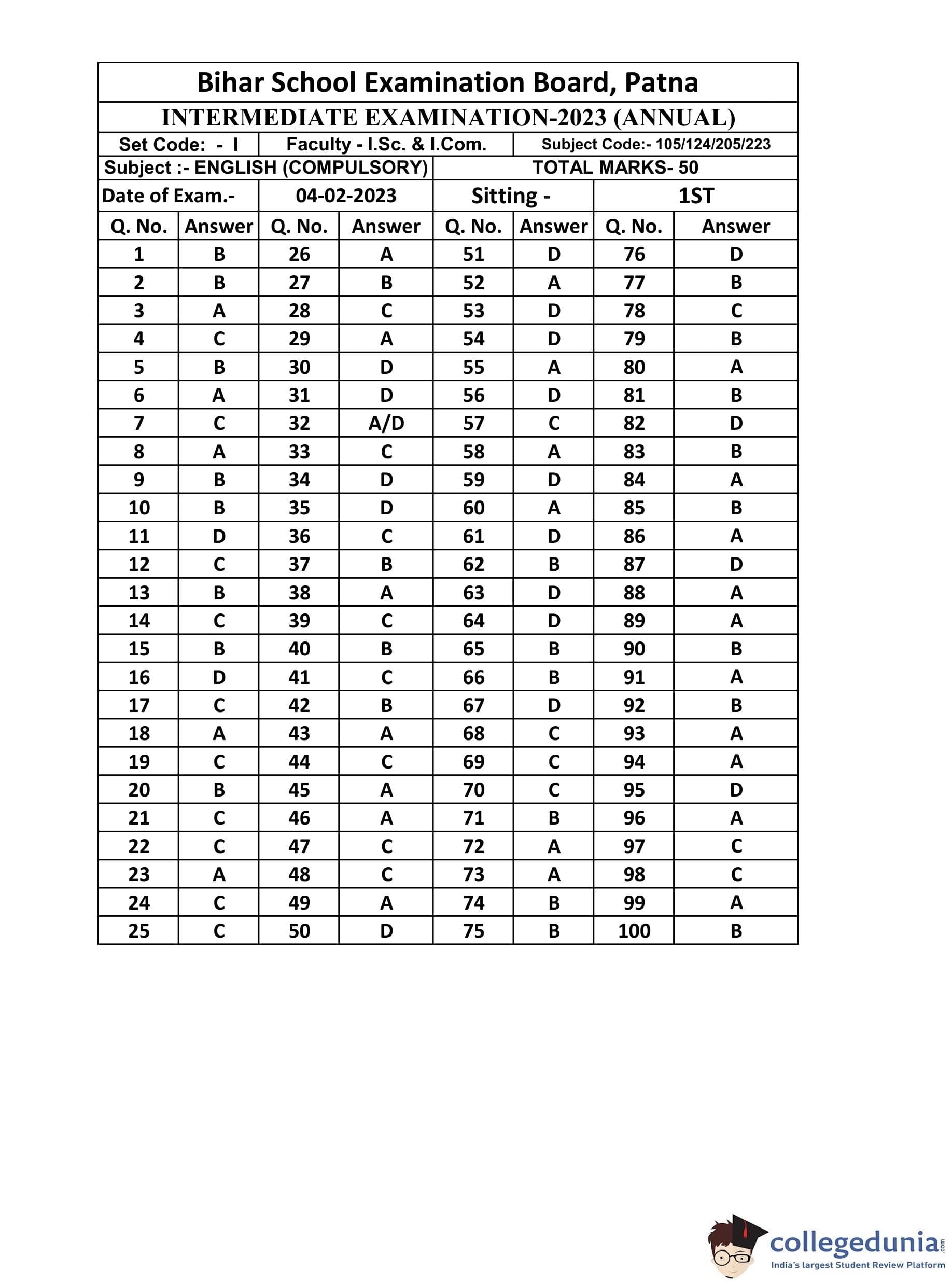
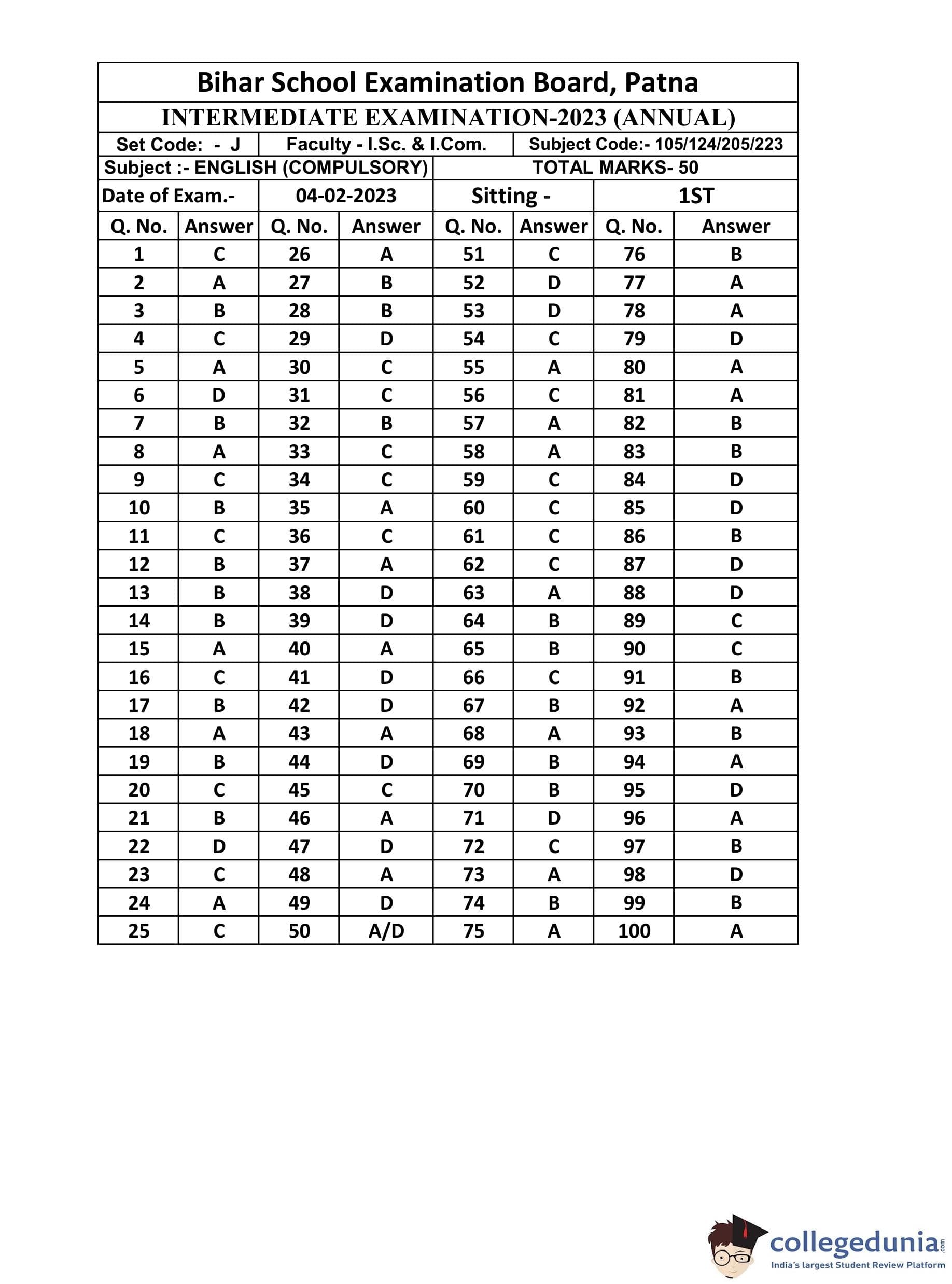



Comments