




Bihar Board Class 12 Sociology - 325 - Set-B Question Paper 2025 PDF with Answer Key and Solutions PDF is available for download here.The exam was successfully organized by IIT Bombay. The question paper comprised a total of 138 questions.
Bihar Board Class 12 Sociology - 325 - Set-B Question Paper 2025 with Solutions PDF
| Bihar Board Class 12 Question Paper 2025 with Solutions PDF |  Download Download |
Check Solutions |
Culture is acquired by man through which medium?
View Solution
Step 1: Explanation of the Medium for Acquiring Culture.
Culture is primarily acquired through learning. It is the process by which individuals understand and adopt the behaviors, traditions, and values of their society.
Step 2: Analysis of options.
- (A) Learning: Learning is the primary medium through which culture is transmitted to individuals.
- (B) Thought: Thought alone cannot transfer culture; it requires the process of learning.
- (C) Birth: Birth does not directly impart culture, though it determines one's environment.
- (D) None of these: The correct medium for acquiring culture is learning.
Step 3: Conclusion.
The correct answer is (A) Learning, as culture is primarily learned.
Quick Tip: Culture is learned through interactions and experiences, not just inherited at birth.
Which is the process through which the culture of a society is transmitted to children?
View Solution
Step 1: Explanation of Socialization.
Socialization is the process through which individuals learn and internalize the values, beliefs, and norms of their society. It is the main process through which children acquire culture.
Step 2: Analysis of options.
- (A) Socialization: Socialization is the primary process through which culture is transmitted to children.
- (B) Accumulation: Accumulation refers to the collection of things, not the transmission of culture.
- (C) Assimilation: Assimilation is the process by which individuals adapt to a new culture, but it is not the process of transmitting culture to children.
- (D) Actualization: Actualization refers to realizing one's potential, which is not related to the transmission of culture.
Step 3: Conclusion.
The correct answer is (A) Socialization, as it is the process through which culture is transmitted to children.
Quick Tip: Through socialization, children learn the values, beliefs, and behaviors that are expected in their society.
......... is the acceptance of or adjustment to new situations.
View Solution
Step 1: Understanding the Concept of Acceptance.
The process of accepting or adjusting to new situations is referred to as attitude. It influences how individuals respond to new or unfamiliar circumstances.
Step 2: Analysis of options.
- (A) Personality: Personality refers to an individual's characteristic patterns of thinking, feeling, and behaving, not specifically the process of adjustment.
- (B) Attitude: Attitude refers to the way an individual responds to new situations, so it is the correct answer.
- (C) Self-esteem: Self-esteem relates to an individual's perception of their own worth, not how they adjust to new situations.
- (D) Leadership: Leadership involves guiding others, not directly related to the concept of accepting new situations.
Step 3: Conclusion.
The correct answer is (B) Attitude, as it refers to how we accept and adjust to new situations.
Quick Tip: A positive attitude helps individuals cope better with new and challenging situations.
Who coined the concept of 'Looking Glass Self'?
View Solution
Step 1: Understanding the 'Looking Glass Self'.
The concept of 'Looking Glass Self' was coined by Charles Horton Cooley. It suggests that individuals develop their self-concept by perceiving how others view them.
Step 2: Analysis of options.
- (A) G.H. Mead: Mead was a sociologist known for his work on symbolic interactionism, but he did not coin the 'Looking Glass Self'.
- (B) Sigmund Freud: Freud developed the theory of psychoanalysis, not the 'Looking Glass Self'.
- (C) Ruth Benedict: Benedict was an anthropologist, but she did not coin this concept.
- (D) C.H. Cooley: Cooley is the sociologist who developed the 'Looking Glass Self' concept, explaining that we form our self-identity based on others' perceptions.
Step 3: Conclusion.
The correct answer is (D) C.H. Cooley, as he introduced the 'Looking Glass Self'.
Quick Tip: The 'Looking Glass Self' helps explain how self-identity is shaped by social interactions and the perception of others.
Which of the following is the first stage of socialization?
View Solution
Step 1: Understanding the first stage of socialization.
G.H. Mead introduced the theory of stages of socialization, where the first stage is the "Play Stage". In this stage, children begin to imitate others and understand the concept of roles, which is crucial for learning social norms.
Step 2: Analysis of options.
- (A) Ruth Benedict: Benedict focused on cultural anthropology, not the stages of socialization.
- (B) G.H. Mead: Mead introduced the theory of socialization and its stages, including the "Play Stage" as the first stage.
- (C) C.H. Cooley: Cooley's theory focuses on the "Looking Glass Self," not the stages of socialization.
- (D) Sigmund Freud: Freud developed the theory of psychoanalysis and focused on early childhood development but not directly on the stages of socialization.
Step 3: Conclusion.
The correct answer is (B) G.H. Mead, as he proposed the "Play Stage" as the first stage of socialization.
Quick Tip: The "Play Stage" by G.H. Mead helps children learn about roles and the concept of self through imitation and role-playing.
What is the gap between material and non-material culture known as?
View Solution
Step 1: Understanding Cultural Lag.
Cultural lag refers to the period of time it takes for non-material culture (such as values, beliefs, and norms) to adapt to changes in material culture (such as technology or inventions). This concept was introduced by sociologist William Fielding Ogburn.
Step 2: Analysis of options.
- (A) Cultural identity: Cultural identity refers to the feeling of belonging to a group, which is not related to the gap between material and non-material culture.
- (B) Subculture: Subculture refers to a group that shares some cultural aspects with the larger society but has distinct characteristics. This is unrelated to the gap between material and non-material culture.
- (C) Cultural fusion: Cultural fusion refers to the blending of different cultures, but it does not specifically refer to the gap between material and non-material culture.
- (D) Cultural lag: This is the correct term for the gap between changes in material culture and the slower adaptation of non-material culture to those changes.
Step 3: Conclusion.
The correct answer is (D) Cultural lag, as it refers to the gap between material and non-material culture.
Quick Tip: Cultural lag occurs when society’s non-material culture struggles to keep up with material culture, especially in times of technological change.
Which of the following is a primary group?
View Solution
Step 1: Understanding Primary Groups.
Primary groups are small, close-knit groups where individuals interact on a personal and emotional level. These groups are typically characterized by strong, personal relationships. The family is a prime example of a primary group.
Step 2: Analysis of options.
- (A) Nation: A nation is a large, complex society and not a primary group.
- (B) Village: A village is a community, but it is too large and not as intimate as a primary group.
- (C) Family: The family is a primary group where relationships are intimate and personal.
- (D) Labour union: A labour union is a secondary group, formed for a specific purpose and characterized by less personal interaction.
Step 3: Conclusion.
The correct answer is (C) Family, as it is the most intimate and personal form of primary group.
Quick Tip: Primary groups are the first and most significant relationships in a person’s life, often forming the basis of one's social identity.
Which of the following is formed from the interaction with others?
View Solution
Step 1: Understanding the Concept of Self.
The concept of "Self" is formed through interaction with others. Through social interactions, we develop our understanding of who we are and how we relate to others. This is an ongoing process influenced by society.
Step 2: Analysis of options.
- (A) Identity: Identity is related to one's understanding of who they are, but it is shaped through interactions that form the self.
- (B) Personality: Personality refers to the characteristic patterns of thoughts and behaviors, which are partly shaped by interactions.
- (C) Culture: Culture is learned through social interactions, but it is broader than the concept of self.
- (D) Self: The self is directly formed through interaction with others. This is the correct answer.
Step 3: Conclusion.
The correct answer is (D) Self, as it is the result of social interactions and how we perceive ourselves in relation to others.
Quick Tip: The development of the self is a social process that occurs through interactions and social experiences.
Which of the following is the most important socialising agency?
View Solution
Step 1: Understanding Socialization Agencies.
Socialization is the process by which individuals learn and internalize the values and norms of their society. Family is often considered the most important agency for socialization because it is where individuals first learn about social roles, values, and behaviors.
Step 2: Analysis of options.
- (A) Law: Laws regulate behavior but are not a primary agent of socialization.
- (B) Family: The family is the first and most significant agency for socializing children, teaching values, and norms.
- (C) Religion: Religion also plays a role in socialization but is not as universally influential as the family.
- (D) School: Schools contribute to socialization but do so after the primary lessons learned from family.
Step 3: Conclusion.
The correct answer is (B) Family, as it is the primary agency for socializing individuals.
Quick Tip: The family provides the foundation for values and norms that influence a person's behavior throughout life.
What is Comte's theory of three stages on the basis of which society has developed?
View Solution
Step 1: Understanding Comte's Theory.
Auguste Comte, the father of sociology, proposed that societies develop through three stages: the theological stage, the metaphysical stage, and the positive stage. In the theological stage, explanations of the world are based on religious beliefs. In the metaphysical stage, abstract philosophical reasoning takes over. Finally, in the positive stage, science and empirical evidence are used to explain the world.
Step 2: Analysis of options.
- (A) Theological, Metaphysical, Positive: This is the correct order of the stages proposed by Comte.
- (B) Positive, Theological, Metaphysical: This order is incorrect according to Comte's theory.
- (C) Metaphysical, Positive, Theological: This order does not reflect Comte's stages of societal development.
- (D) None of these: Since (A) is the correct option, (D) is incorrect.
Step 3: Conclusion.
The correct answer is (A) Theological, Metaphysical, Positive. These are the stages in which society evolves according to Comte's theory.
Quick Tip: Comte's theory shows the progression of human thought from religious to scientific explanations of the world.
Which among the following is the function of family?
View Solution
Step 1: Understanding the Functions of Family.
The family plays several essential roles, including providing a stable environment for the sexual satisfaction of partners, raising and nurturing children, and procreating children. These are fundamental functions that support the socialization process.
Step 2: Analysis of options.
- (A) Sex satisfaction: The family provides a stable environment for the sexual relationships of adults.
- (B) Upbringing of children: One of the most critical roles of the family is to nurture and raise children, teaching them societal norms and values.
- (C) Procreation of child: The family is the primary social institution for the procreation and raising of children.
- (D) All of these: All of these are functions of the family, making (D) the correct answer.
Step 3: Conclusion.
The correct answer is (D) All of these, as the family plays all these roles in society.
Quick Tip: The family is the fundamental social unit responsible for maintaining social order through various functions.
What is the name of the book written by Kautilya?
View Solution
Step 1: Understanding the work of Kautilya.
Kautilya, also known as Chanakya, was a prominent ancient Indian scholar and statesman. His most famous work is the "Arthashastra," a treatise on statecraft, economics, and military strategy.
Step 2: Analysis of options.
- (A) Arthashastra: This is the correct title of the book written by Kautilya.
- (B) Political Science: Political Science is a discipline, not the title of Kautilya’s book.
- (C) Anthropology: Anthropology is a field of study, not a work by Kautilya.
- (D) Sociology: Sociology is another discipline, not the title of Kautilya’s book.
Step 3: Conclusion.
The correct answer is (A) Arthashastra, as it is the famous book written by Kautilya.
Quick Tip: The "Arthashastra" by Kautilya is a comprehensive manual on governance, economics, and warfare.
Which is the second stage of the Ashram system?
View Solution
Step 1: Understanding the Ashram System.
The Ashram system, described in Hindu tradition, divides life into four stages (Ashrams): Brahmacharya (student phase), Grihastha (householder phase), Vanaprastha (retired phase), and Sanyas (renunciation phase). The second stage is Brahmacharya, the student phase, where one focuses on education and learning.
Step 2: Analysis of options.
- (A) Vanaprastha: This is the third stage of the Ashram system, not the second.
- (B) Brahmacharya: This is the correct answer, as it is the second stage, focused on education and celibacy.
- (C) Sanyas: This is the final stage, where individuals renounce worldly life.
- (D) Grihastha: This is the householder stage, but it is the third stage, not the second.
Step 3: Conclusion.
The correct answer is (B) Brahmacharya, as it is the second stage of the Ashram system.
Quick Tip: The Ashram system is designed to guide individuals through different phases of life, each with specific duties and responsibilities.
Which among the following is not the function of kinship?
View Solution
Step 1: Understanding the Functions of Kinship.
Kinship plays a significant role in various social functions, such as providing social security, determining family structures, and establishing status within society. However, kinship is not directly responsible for social disorganisation.
Step 2: Analysis of options.
- (A) Means of social disorganisation: Kinship does not function as a cause of social disorganisation; rather, it plays a stabilising role in society.
- (B) Social security: Kinship systems provide support in times of need, such as emotional or financial help.
- (C) Determination of family and marriage: Kinship structures play a critical role in defining family relations and marriage arrangements.
- (D) Status determination: Kinship plays an important role in determining social status and hierarchy in various societies.
Step 3: Conclusion.
The correct answer is (A) Means of social disorganisation, as kinship does not directly cause social disorganisation.
Quick Tip: Kinship systems are fundamental in providing social support and structuring family and social relationships.
Who propounded the concept of 'Missing Women'?
View Solution
Step 1: Understanding the 'Missing Women' Concept.
Amartya Sen, the Nobel-winning economist, introduced the concept of 'Missing Women' to highlight the disproportionate number of women missing from the population due to factors like gender discrimination, neglect, and violence. This issue is especially prevalent in parts of Asia, where female infants and children are often neglected or subjected to harmful practices.
Step 2: Analysis of options.
- (A) Amartya Sen: Sen is the correct answer, as he coined the term 'Missing Women' to address the global gender inequality in terms of mortality rates and gender bias.
- (B) Abhish Bose: Abhish Bose did not introduce the concept of 'Missing Women'.
- (C) S.C. Dube: S.C. Dube is known for his work in sociology and social anthropology, but not for the 'Missing Women' concept.
- (D) Sachchidanand: Sachchidanand is not associated with the 'Missing Women' concept.
Step 3: Conclusion.
The correct answer is (A) Amartya Sen, as he propounded the concept of 'Missing Women'.
Quick Tip: Amartya Sen’s concept of 'Missing Women' highlights the devastating effects of gender inequality and neglect.
Which of the following is not a Hindu ritual?
View Solution
Step 1: Understanding Hindu Rituals.
Hindu rituals are ceremonies or practices that are an integral part of Hindu life. These include rites of passage like Chudakarana (the first haircut), Upanayana (the sacred thread ceremony), and marriage ceremonies. However, Purushartha refers to the four goals of life—Dharma, Artha, Kama, and Moksha—not a specific ritual.
Step 2: Analysis of options.
- (A) Chudakarana: This is a Hindu ritual performed on a child's first haircut.
- (B) Upanayana: This is the sacred thread ceremony, an important Hindu rite of passage.
- (C) Marriage: Marriage is a key ritual in Hindu culture, with distinct rituals and customs.
- (D) Purushartha: Purushartha refers to the four pursuits of life and is not a ritual.
Step 3: Conclusion.
The correct answer is (D) Purushartha, as it is a concept, not a ritual.
Quick Tip: Purushartha is a philosophical concept in Hinduism, outlining the four goals of life: Dharma, Artha, Kama, and Moksha.
What is the name of the person of Indian origin who is contesting the US Presidential Election, 2024?
View Solution
Step 1: Context of the 2024 US Presidential Election.
Rishi Sunak, an individual of Indian origin, has been active in the political sphere and was a key figure in the UK elections. However, he is not contesting the 2024 US Presidential Election. Kamala Harris, an American politician of Indian and African descent, is a significant figure in US politics. As per the 2024 election, no Indian-origin individual is running for president. The correct answer in this case should be Kamala Harris (Vice President) for reelection. Thus, the assumption about contesting the presidential election is incorrect in the original context.
Step 2: Analysis of options.
- (A) Rishi Sunak: Not running for US President in 2024, but he is an important figure in UK politics.
- (B) Kamala Harris: As vice president, Kamala Harris is a key contender for the next presidential term.
- (C) Hilary Clinton: Hilary Clinton is not contesting the 2024 election.
- (D) Donald Trump: Donald Trump is contesting the election, but he is not of Indian origin.
Step 3: Conclusion.
The answer regarding the specific individual contesting the 2024 election needs to be clarified in context. Kamala Harris is a leading figure in the 2024 race.
Quick Tip: While Rishi Sunak is not contesting the US presidential race, Kamala Harris and Donald Trump are major figures in the 2024 election.
Which one of the following is not an indicator of cultural diversity in India?
View Solution
Step 1: Understanding Cultural Diversity in India.
India is a culturally diverse country with a rich mix of races, castes, religions, and traditions. These aspects contribute to the country's diversity. Class, on the other hand, refers to the socio-economic status of individuals and does not directly represent cultural diversity in the same sense.
Step 2: Analysis of options.
- (A) Race: India has diverse racial groups, contributing to its cultural diversity.
- (B) Caste: The caste system is a significant part of India's cultural structure and diversity.
- (C) Class: While important in terms of socio-economic status, class is not a direct indicator of cultural diversity.
- (D) Religion: India is home to a wide range of religious communities, which are central to its cultural diversity.
Step 3: Conclusion.
The correct answer is (C) Class, as it is not a direct indicator of cultural diversity in India.
Quick Tip: Cultural diversity in India is primarily reflected through race, caste, and religion, while class refers to economic distinctions.
Who among the following is the author of the book, 'Social Structure of Values'?
View Solution
Step 1: Understanding the Author.
Radhakamal Mukherjee was a renowned Indian sociologist who authored the book "Social Structure of Values." His work focused on Indian society and the social structures that define it.
Step 2: Analysis of options.
- (A) Radhakamal Mukherjee: Correct. He is the author of "Social Structure of Values."
- (B) D.P. Mukherjee: D.P. Mukherjee was an important sociologist, but not the author of this particular book.
- (C) M.N. Srinivas: M.N. Srinivas was a prominent sociologist, known for his work on caste and social structure, but not for this book.
- (D) S.C. Dube: S.C. Dube also contributed significantly to sociology, but he did not write this book.
Step 3: Conclusion.
The correct answer is (A) Radhakamal Mukherjee, as he authored the book "Social Structure of Values."
Quick Tip: Radhakamal Mukherjee is known for his contribution to Indian sociology, particularly in social values and structure.
Privatization of education is a consequence of which one of the following?
View Solution
Step 1: Understanding Privatization in Education.
Privatization of education refers to the increasing involvement of private entities in providing education, often as a response to the limitations of public education. This trend is strongly influenced by globalisation, as markets and ideas from other countries and cultures shape national policies.
Step 2: Analysis of options.
- (A) Urbanisation: While urbanisation influences education demand, it is not the primary cause of privatization.
- (B) Globalisation: Globalisation has led to greater market forces in education, resulting in the privatization of educational institutions.
- (C) Development of science and technology: Technology plays a role in education but is not directly responsible for privatization.
- (D) Increase in population: While population growth increases educational demand, it does not directly lead to privatization.
Step 3: Conclusion.
The correct answer is (B) Globalisation, as it has facilitated the privatization of education by introducing market-driven models.
Quick Tip: Globalisation often leads to the privatization of sectors like education, as global markets influence local practices.
In which of the following cities the Paralympic Games, 2024 were organised?
View Solution
Step 1: Context of the 2024 Paralympic Games.
The 2024 Paralympic Games were scheduled to be held in Paris, France. However, Tokyo, Japan, hosted the previous Paralympic Games in 2020, delayed to 2021 due to the pandemic.
Step 2: Analysis of options.
- (A) Paris: Paris is scheduled to host the 2024 Summer Paralympics, but not the 2020 (held in 2021).
- (B) Tokyo: Tokyo hosted the 2020 Paralympic Games.
- (C) New York: New York did not host the Paralympic Games.
- (D) London: London did not host the 2024 Paralympic Games.
Step 3: Conclusion.
The correct answer is (B) Tokyo, as they hosted the 2020 Paralympic Games (held in 2021). Paris will host the 2024 Paralympics.
Quick Tip: The 2020 Paralympic Games were held in Tokyo, Japan, despite being delayed to 2021.
Who started the Swadeshi Movement?
View Solution
Step 1: Understanding the Swadeshi Movement.
The Swadeshi Movement was a part of the Indian freedom struggle, which aimed to boycott British goods and promote Indian-made products. It was started by leaders like Bal Gangadhar Tilak in the early 20th century to unite Indians against British rule.
Step 2: Analysis of options.
- (A) Lal Mohan Ghosh: Lal Mohan Ghosh played a role in the movement, but he did not start it.
- (B) Raj Narayan Basu: Raj Narayan Basu was involved in the movement, but not its initiator.
- (C) Bal Gangadhar Tilak: Bal Gangadhar Tilak was a key figure in starting the Swadeshi Movement.
- (D) Jawaharlal Nehru: Nehru was important in India's freedom movement but not in starting the Swadeshi Movement.
Step 3: Conclusion.
The correct answer is (C) Bal Gangadhar Tilak, as he played a pivotal role in initiating the Swadeshi Movement.
Quick Tip: The Swadeshi Movement was crucial in mobilizing public sentiment against British colonial rule, focusing on self-reliance and independence.
In which year was 'Dangerous Drug Act' enacted?
View Solution
Step 1: Understanding the Dangerous Drug Act.
The Dangerous Drugs Act was enacted in 1933 to control the import, manufacture, and sale of drugs that were considered dangerous and harmful. The Act aimed to regulate narcotics and prevent drug abuse.
Step 2: Analysis of options.
- (A) 1938: This is not the correct year.
- (B) 1930: The Dangerous Drug Act was not enacted in 1930.
- (C) 1933: This is the correct year when the Dangerous Drug Act was passed.
- (D) 1935: This is incorrect.
Step 3: Conclusion.
The correct answer is (C) 1933. The Dangerous Drug Act was enacted in 1933.
Quick Tip: The Dangerous Drug Act of 1933 was a significant step in controlling the illegal use of narcotics and regulating their trade.
In which year was the National Scheduled Caste Commission established?
View Solution
Step 1: Understanding the National Scheduled Caste Commission.
The National Scheduled Caste Commission was established in 2002 to address the concerns of the Scheduled Castes in India. The commission works to safeguard their rights and improve their social and economic conditions.
Step 2: Analysis of options.
- (A) 2000: This is incorrect as the commission was not established in 2000.
- (B) 2002: Correct, the National Scheduled Caste Commission was established in 2002.
- (C) 2004: This is incorrect.
- (D) 2006: This is also incorrect.
Step 3: Conclusion.
The correct answer is (B) 2002, as the National Scheduled Caste Commission was established in this year.
Quick Tip: The National Scheduled Caste Commission works to improve the conditions of Scheduled Castes by ensuring that their rights are protected.
What is communalism?
View Solution
Step 1: Understanding Communalism.
Communalism refers to a political or social ideology where people are divided along religious or ethnic lines, leading to conflicts and social disintegration. It fosters division and can weaken national unity.
Step 2: Analysis of options.
- (A) A process of disintegration: Correct. Communalism leads to disintegration by dividing people based on religion or ethnicity.
- (B) A planned action: While communalism can sometimes be manipulated for political gain, it is not specifically a planned action.
- (C) Related with an interest group: Communalism is not just related to interest groups; it involves broader societal divisions.
- (D) A religious action: Communalism is not simply a religious action; it involves the misuse of religion to create divisions.
Step 3: Conclusion.
The correct answer is (A) A process of disintegration, as communalism divides society along religious or ethnic lines.
Quick Tip: Communalism leads to societal disintegration by fostering division and weakening the fabric of a unified society.
In which year was the 'Kaka Kalelkar Commission' constituted?
View Solution
Step 1: Understanding the Kaka Kalelkar Commission.
The Kaka Kalelkar Commission was appointed in 1953 by the Government of India to examine the status of the backward classes in India and make recommendations for their welfare.
Step 2: Analysis of options.
- (A) 1952: This is incorrect as the commission was constituted in 1953.
- (B) 1953: Correct. The Kaka Kalelkar Commission was constituted in 1953.
- (C) 1954: This is incorrect.
- (D) 1955: This is also incorrect.
Step 3: Conclusion.
The correct answer is (C) 1954. The Kaka Kalelkar Commission was constituted in this year to investigate the condition of backward classes.
Quick Tip: The Kaka Kalelkar Commission was a crucial step in recognizing and addressing the concerns of backward classes in India.
In which of the following tribes is the youth organisation known as 'Gitiora'?
View Solution
Step 1: Understanding the Munda Tribe.
The Munda tribe is one of the prominent tribes in India, mainly located in the Chotanagpur plateau. The youth organization known as 'Gitiora' is associated with the Munda tribe.
Step 2: Analysis of options.
- (A) Gond: The Gond tribe has its own social structure but is not associated with 'Gitiora.'
- (B) Oraon: The Oraon tribe also has distinct practices but is not related to the 'Gitiora' organization.
- (C) Munda: Correct. The 'Gitiora' youth organization is part of the Munda tribe's social structure.
- (D) Khasi: The Khasi tribe, while unique in its customs, does not have 'Gitiora.'
Step 3: Conclusion.
The correct answer is (C) Munda, as the 'Gitiora' youth organization is a part of their culture.
Quick Tip: The Munda tribe is known for its cultural traditions and the 'Gitiora' youth organization, which plays an important role in socializing the youth.
In which year was Indian National Congress established?
View Solution
Step 1: Understanding the Establishment of Indian National Congress.
The Indian National Congress (INC) was founded in 1885 by Allan Octavian Hume, with the aim of providing a platform for the political expression of the Indian people under British colonial rule.
Step 2: Analysis of options.
- (A) 1857: This is the year of the first War of Indian Independence, not the formation of the INC.
- (B) 1885: Correct. The Indian National Congress was established in 1885.
- (C) 1917: This year marks the beginning of the non-cooperation movement, not the formation of INC.
- (D) 1947: India gained independence in 1947, but INC was already formed by then.
Step 3: Conclusion.
The correct answer is (B) 1885, as the Indian National Congress was established in this year.
Quick Tip: The Indian National Congress played a vital role in India's independence movement, with its founding in 1885 marking the beginning of formal political activity.
Who is the author of the book 'Hindu Society at Cross Road'?
View Solution
Step 1: Understanding the Book 'Hindu Society at Cross Road'.
The book 'Hindu Society at Cross Road' was written by K.M. Panikkar. It examines the changes and challenges faced by Hindu society during the colonial period and offers insights into its future trajectory.
Step 2: Analysis of options.
- (A) K.M. Panikkar: Correct. K.M. Panikkar is the author of the book 'Hindu Society at Cross Road.'
- (B) M.N. Srinivas: M.N. Srinivas is a prominent sociologist, but he is not the author of this book.
- (C) Ram Ahuja: Ram Ahuja was a sociologist but did not write this book.
- (D) N.K. Bose: N.K. Bose was a sociologist, but he is not associated with this particular work.
Step 3: Conclusion.
The correct answer is (A) K.M. Panikkar, as he wrote 'Hindu Society at Cross Road.'
Quick Tip: K.M. Panikkar's 'Hindu Society at Cross Road' provides an in-depth analysis of the structural changes in Hindu society during British colonialism.
Who among the following emphasised on the role of charismatic leadership in social change?
View Solution
Step 1: Understanding Charismatic Leadership.
Max Weber, a famous sociologist, emphasized the role of charismatic leadership in social change. According to him, charismatic leaders are individuals who inspire devotion and obedience from followers through their extraordinary personal qualities.
Step 2: Analysis of options.
- (A) Max Weber: Correct. Weber is known for his theory of charismatic leadership, which plays a significant role in social change.
- (B) Rajini Kothari: Kothari was an Indian sociologist, but he is not associated with the concept of charismatic leadership.
- (C) Sorokin: Sorokin focused on social and cultural dynamics but did not emphasize charismatic leadership.
- (D) Pareto: Pareto focused on elites and their role in social change, but not specifically on charismatic leadership.
Step 3: Conclusion.
The correct answer is (A) Max Weber, as he emphasized the role of charismatic leadership in social change.
Quick Tip: Charismatic leadership, as proposed by Weber, plays a key role in mobilizing social movements and driving change.
Which of the following is the best way to understand caste system?
View Solution
Step 1: Understanding the Jajmani System.
The Jajmani system is a traditional economic system in rural India, where different castes had specific roles to perform. The relationship between castes was marked by mutual dependence, but often there was a conflict of interest and distrust. This conflict arose from the hierarchical nature of caste, with higher castes exploiting lower ones.
Step 2: Analysis of options.
- (A) Mutual trust and cooperation of the people: This option is incorrect because, in the Jajmani system, there was no absolute mutual trust or cooperation due to the caste-based hierarchy.
- (B) Conflicting interest of the people: This option is close, but it does not cover the element of distrust. Conflicting interests alone don't fully explain the Jajmani system.
- (C) Oppression and suppressive measures adopted by jajmans: Although oppression existed in the system, this option focuses only on the negative aspect and overlooks other dynamics like mutual dependency.
- (D) Conflicting interest and distrust of the people: This is the correct answer because the Jajmani system was based on both conflicting interests and distrust between castes, especially between jajmans (landowners) and lower castes.
Step 3: Conclusion.
The correct answer is (D) Conflicting interest and distrust of the people, as this accurately reflects the tension and mutual dependence within the Jajmani system.
Quick Tip: The Jajmani system was based on mutual dependence but also on deep-seated conflicts and mistrust between different castes, especially the higher and lower castes.
In which year did the family planning programme in India suffer a setback?
View Solution
Step 1: Understanding the Family Planning Setback.
In 1975-76, India’s family planning program suffered a major setback due to the controversial forced sterilization during the Emergency period. This caused a lot of public backlash, and the program lost credibility.
Step 2: Analysis of options.
- (A) 1975-76: Correct. The family planning program suffered a setback during this period due to forced sterilization.
- (B) 1990-91: This was not a significant period for a setback in family planning, so it is incorrect.
- (C) 1995-96: There was no major setback during these years.
- (D) 2000-2001: There was no major setback in this period either.
Step 3: Conclusion.
The correct answer is (A) 1975-76, as this is when the family planning program faced significant setbacks.
Quick Tip: The Emergency period (1975-77) in India had a significant impact on the family planning program, due to controversial measures like forced sterilizations.
Chipko Movement is an example of which of the following?
View Solution
Step 1: Understanding the Chipko Movement.
The Chipko Movement was a non-violent protest in India in the 1970s against deforestation, where people hugged trees to protect them from being cut down. It is considered a part of the ecological movement aimed at preserving the environment.
Step 2: Analysis of options.
- (A) Redemptive movement: Redemptive movements focus on radical change in individuals, not the environment.
- (B) Reformative movement: Reformative movements seek partial change in the system, but the Chipko movement is more ecological in nature.
- (C) Ecological movement: Correct. The Chipko movement is an example of an ecological movement aimed at protecting the environment.
- (D) Naxalite movement: The Naxalite movement was a violent insurgency, not an environmental protest.
Step 3: Conclusion.
The correct answer is (C) Ecological movement, as the Chipko movement was focused on environmental conservation.
Quick Tip: The Chipko Movement is a powerful example of grassroots environmental activism in India, focusing on protecting forests.
Who has given the concept of 'Bimaru States'?
View Solution
Step 1: Understanding 'Bimaru States'.
The term 'Bimaru States' was coined by Ashish Bose in the 1980s to describe the economically backward and underdeveloped states of India, namely Bihar, Madhya Pradesh, Rajasthan, and Uttar Pradesh. These states were struggling with high poverty rates, low literacy, and poor health indicators.
Step 2: Analysis of options.
- (A) Ashish Bose: Correct. Ashish Bose coined the term 'Bimaru States' to highlight the poor socio-economic conditions in these states.
- (B) Amartya Sen: Amartya Sen is a Nobel laureate economist, but he did not coin this term.
- (C) D.P. Mukherjee: D.P. Mukherjee was an important sociologist, but he did not coin the 'Bimaru' term.
- (D) I.P. Desai: I.P. Desai did not coin the term 'Bimaru States.'
Step 3: Conclusion.
The correct answer is (A) Ashish Bose, who coined the term 'Bimaru States' to highlight the challenges of these states.
Quick Tip: The term 'Bimaru States' is an important concept in understanding regional disparities in India.
Who has first used the term 'faction' in the study of rural society?
View Solution
Step 1: Understanding the concept of 'Faction'.
The term 'faction' in the study of rural society was first introduced by S.C. Dube. It refers to the informal groups and divisions that often emerge within a rural society, particularly in terms of power, resources, or family dynamics.
Step 2: Analysis of options.
- (A) Raymond Firth: Raymond Firth was a prominent anthropologist, but he did not coin the term 'faction' in relation to rural society.
- (B) S.C. Dube: Correct. S.C. Dube used the term 'faction' to describe the informal divisions and conflicts within rural communities.
- (C) Ashish Bose: Ashish Bose focused on rural development but did not use the term 'faction' in this context.
- (D) Rajni Kothari: Rajni Kothari was an important sociologist but not associated with the term 'faction' in rural society.
Step 3: Conclusion.
The correct answer is (B) S.C. Dube, as he was the first to use the term 'faction' in the study of rural society.
Quick Tip: S.C. Dube's work on factions in rural society helps us understand the internal divisions and power struggles in villages.
Which of the following is not the kinship usage?
View Solution
Step 1: Understanding Kinship Terms.
Kinship usage refers to the customs and practices governing the relationship between individuals based on blood, marriage, or social ties. Terms like avunculate (relation between a man and his sister's children), couvade (custom where a father participates in childbirth customs), and avoidance (rituals of avoidance in some cultures) all refer to kinship practices. However, 'classified' is not a kinship term.
Step 2: Analysis of options.
- (A) Avunculate: This refers to a type of kinship relation and is a correct kinship usage.
- (B) Couvade: Couvade refers to a custom associated with male involvement in childbirth, also a kinship term.
- (C) Avoidance: Avoidance refers to certain kinship rituals in which people avoid certain relatives, a correct kinship practice.
- (D) Classified: This is not a kinship term, so it is the correct answer.
Step 3: Conclusion.
The correct answer is (D) Classified, as it is not related to kinship usage.
Quick Tip: Kinship terms help in understanding social structures, rituals, and family relationships within cultures.
How does modernization view development?
View Solution
Step 1: Understanding Modernization.
Modernization theory views development as a multi-faceted process involving significant societal, economic, and cultural changes. It is often seen as evolutionary, meaning societies gradually progress from traditional to modern states, with an emphasis on longer life expectancy and other improvements in well-being.
Step 2: Analysis of options.
- (A) Revolutionary: While modernization can be revolutionary, it is generally seen as an evolutionary process.
- (B) Evolutionary: Correct. Modernization is often viewed as an evolutionary process where societies move from traditional to modern forms.
- (C) Longer life expectancy: This is one of the outcomes of modernization, but it is not the only way development is viewed.
- (D) All of these: Correct. Modernization views development as involving evolutionary change, greater life expectancy, and other societal improvements.
Step 3: Conclusion.
The correct answer is (D) All of these, as all aspects reflect the broad view of development in the context of modernization.
Quick Tip: Modernization theory suggests that societies evolve through predictable stages, improving in terms of technology, health, and social systems.
What is the means of cultural transmission?
View Solution
Step 1: Understanding Cultural Transmission.
Cultural transmission refers to the process by which culture is passed from one generation to another. Language is one of the primary means of this transmission, allowing individuals to communicate and share cultural knowledge, values, and traditions.
Step 2: Analysis of options.
- (A) Education: Education is a key means of cultural transmission, but language is more fundamental as it facilitates education and socialization.
- (B) Society: Society is the context in which cultural transmission occurs, but it is not a direct means.
- (C) Language: Correct. Language is the most fundamental means through which culture is transmitted.
- (D) Archaeology: Archaeology studies past cultures but is not a direct means of cultural transmission in the present.
Step 3: Conclusion.
The correct answer is (C) Language, as it is the primary means of transmitting culture.
Quick Tip: Language plays a vital role in transmitting culture, as it is the medium through which traditions, values, and knowledge are communicated across generations.
According to classical phrase of Marx what is proletariat?
View Solution
Step 1: Understanding Proletariat in Marx's Theory.
In Marxist theory, the proletariat refers to the working class, who do not own the means of production and must sell their labor to survive. "Class in themselves" refers to the proletariat's objective position in society, but they are not yet aware of their collective potential as a class that can challenge the capitalist system.
Step 2: Analysis of options.
- (A) Class in themselves: Correct. This refers to the proletariat's objective position in the class structure before they achieve class consciousness.
- (B) Class for themselves: This refers to the proletariat's awareness of their collective interests and potential for revolutionary action.
- (C) Class by themselves: This is not a term used by Marx in his analysis of the proletariat.
- (D) Class through themselves: This is not a term used in Marxist theory.
Step 3: Conclusion.
The correct answer is (A) Class in themselves, which refers to the proletariat's position in society before gaining class consciousness.
Quick Tip: Marx's concept of 'class in themselves' reflects the working class's objective social position, which can evolve into 'class for themselves' when they develop awareness of their collective interests.
Who said, "Civilization is always progressing but culture is not"?
View Solution
Step 1: Understanding the quote.
The quote "Civilization is always progressing but culture is not" was said by Herbert Spencer. Spencer was a sociologist who viewed civilization as an ongoing, linear progression, but he believed culture did not necessarily advance in the same way.
Step 2: Analysis of options.
- (A) Johnson: Johnson did not say this quote.
- (B) MacIver: MacIver did not say this quote.
- (C) Spencer: Correct. Herbert Spencer is credited with this quote.
- (D) Merton: Merton did not say this quote.
Step 3: Conclusion.
The correct answer is (C) Spencer, as he is the sociologist who made this statement.
Quick Tip: Herbert Spencer viewed civilization as a progressive force, but he saw culture as a more static entity.
Who used the term 'faction' in the study of rural society?
View Solution
Step 1: Understanding 'Faction' in Rural Society.
S.C. Dube used the term 'faction' in rural society to describe informal groups or divisions within a community, often related to political or social conflicts. These factions could influence the power structures and social dynamics in rural areas.
Step 2: Analysis of options.
- (A) Raymond Firth: Raymond Firth was an anthropologist who did not focus on the concept of 'faction' in rural society.
- (B) S.C. Dube: Correct. S.C. Dube used the term 'faction' to describe informal divisions within rural communities.
- (C) Ashish Bose: Ashish Bose focused on rural issues but did not coin the term 'faction.'
- (D) Rajni Kothari: Rajni Kothari was involved in political sociology but did not use 'faction' in rural society studies.
Step 3: Conclusion.
The correct answer is (B) S.C. Dube, as he was the first to use the term 'faction' in the context of rural society.
Quick Tip: S.C. Dube's concept of 'faction' helps understand the informal power dynamics and conflicts within rural societies.
What is the reason for the spread of AIDS?
View Solution
Step 1: Understanding the Spread of AIDS.
AIDS (Acquired Immune Deficiency Syndrome) is caused by the HIV virus and spreads through several means, including unprotected sexual contact, the use of shared needles, and contact with infected blood. All of these methods contribute to the transmission of the virus.
Step 2: Analysis of options.
- (A) Unprotected sexual contact: Correct. This is one of the primary means of spreading HIV.
- (B) Use of shared needles: Correct. This is another significant way HIV is transmitted, particularly among intravenous drug users.
- (C) Contact with infected blood: Correct. HIV can also be transmitted through blood transfusions or contact with contaminated blood.
- (D) All of these: Correct. All of the above methods contribute to the spread of AIDS.
Step 3: Conclusion.
The correct answer is (D) All of these, as all of the listed factors contribute to the transmission of AIDS.
Quick Tip: To prevent the spread of AIDS, it is crucial to use protection during sexual contact, avoid sharing needles, and ensure the safety of blood transfusions.
Who is the first philosopher who undertook a systematic study of the society and is said to be the first sociologist in history?
View Solution
Step 1: Understanding Early Philosophy of Society.
Plato, an ancient Greek philosopher, is often considered the first to have systematically studied society, addressing topics like justice, governance, and societal roles. His work laid the foundation for later sociological thought.
Step 2: Analysis of options.
- (A) Plato: Correct. Plato’s work is foundational in the study of society and politics, laying the groundwork for sociology.
- (B) Socrates: Socrates focused more on ethics and philosophy but did not systematically study society as Plato did.
- (C) Thomas Aquinas: Aquinas was influential in theology and philosophy but did not focus on sociology.
- (D) Confucius: Confucius was important in social thought but is not typically credited with being the first sociologist.
Step 3: Conclusion.
The correct answer is (A) Plato, who systematically studied and discussed social structures in his works.
Quick Tip: Plato’s contributions to political theory and societal structure are often considered foundational for the field of sociology.
The action oriented towards a social norm is known as?
View Solution
Step 1: Understanding Social Norms.
Conformity refers to the act of aligning one’s behavior or actions with societal norms, expectations, or rules. It is the action that individuals take in response to social norms.
Step 2: Analysis of options.
- (A) Acceptance: Acceptance refers to acknowledging or agreeing with norms but does not necessarily involve acting on them.
- (B) Control: Control refers to regulating behavior, but not necessarily in response to norms.
- (C) Conformity: Correct. Conformity is the active process of aligning behavior to meet societal norms.
- (D) Approval: Approval refers to the acceptance of behavior, not the act of adhering to social norms.
Step 3: Conclusion.
The correct answer is (C) Conformity, as it involves the action of aligning with social norms.
Quick Tip: Conformity is a fundamental concept in sociology, as it reflects how individuals align with societal norms and expectations.
The rewards and punishments associated with role expectations are known as?
View Solution
Step 1: Understanding Mores.
Mores are norms that are widely observed and have great moral significance. Violating mores results in severe punishment or disapproval. They include social expectations tied to morality, like prohibitions against theft or violence.
Step 2: Analysis of options.
- (A) Norms: Norms are general guidelines for behavior, but not specifically tied to rewards and punishments in the same way as mores.
- (B) Values: Values are broader beliefs about what is important in society, not necessarily tied to specific rewards or punishments.
- (C) Restrictions: Restrictions are limits placed on behavior but not necessarily associated with rewards and punishments.
- (D) Mores: Correct. Mores are norms with significant moral implications, often tied to rewards and punishments for conformity or violation.
Step 3: Conclusion.
The correct answer is (D) Mores, as they are specifically linked with rewards and punishments based on moral expectations.
Quick Tip: Mores are critical in understanding societal reactions to behavior, as violations can lead to strong social penalties.
The process by which an individual learns the culture of his/her society is known as?
View Solution
Step 1: Understanding Socialisation.
Socialisation is the process through which individuals learn and internalize the norms, values, and behaviors that are accepted by society. It begins in childhood and continues throughout life.
Step 2: Analysis of options.
- (A) Socialisation: Correct. Socialisation is the process through which an individual learns the culture of their society.
- (B) Internalisation: Internalisation refers to the process of adopting societal norms, but socialisation is a broader term.
- (C) Sanskritisation: Sanskritisation refers to the process of lower castes adopting the rituals and practices of higher castes, not the broader cultural learning process.
- (D) Modernisation: Modernisation refers to societal progress, not the individual learning process.
Step 3: Conclusion.
The correct answer is (A) Socialisation, as it refers to the lifelong process through which individuals learn societal culture.
Quick Tip: Socialisation is key to understanding how individuals develop their identity and role within society.
What is the most important agency of socialisation in the early childhood?
View Solution
Step 1: Understanding the Role of Family.
In early childhood, the family plays the most significant role in socialising the child. The family is where a child first learns social norms, values, and behaviors, making it the most critical agent of socialisation.
Step 2: Analysis of options.
- (A) Family: Correct. The family is the first and most important agency of socialisation in early childhood, as children learn language, social norms, and emotional bonds here.
- (B) Peer groups: Peer groups become more influential as children age, but they are not the primary socialising agents in early childhood.
- (C) School: Schools play a significant role in later childhood, but family remains the most influential agent at an early age.
- (D) Mass media: Mass media can influence behavior but is not as critical as family in early childhood.
Step 3: Conclusion.
The correct answer is (A) Family, as it is the most important agency of socialisation in early childhood.
Quick Tip: The family is the first and most impactful agent of socialisation, shaping the early development of values and behaviors.
Which of the following features belongs to the primary group?
View Solution
Step 1: Understanding Primary Group.
A primary group is a small group of people who engage in face-to-face interaction, where relationships are personal and intimate. Members of a primary group have a deep sense of belonging and affection for one another.
Step 2: Analysis of options.
- (A) Large group of people: Primary groups are typically small and intimate, not large.
- (B) Face-to-face relationship: Correct. Primary groups are characterized by face-to-face relationships.
- (C) Lack of sense of belonging: This is a characteristic of secondary groups, not primary groups.
- (D) Formal relationship: Primary groups are informal, with personal and intimate relationships, not formal.
Step 3: Conclusion.
The correct answer is (B) Face-to-face relationship, as primary groups are defined by these intimate interactions.
Quick Tip: Primary groups, such as family and close friends, are fundamental in developing personal relationships and social norms.
Who of the following is the chairman of the National Integration Council?
View Solution
Step 1: Understanding the National Integration Council.
The National Integration Council (NIC) of India is chaired by the Prime Minister. It is a body that focuses on addressing issues related to national integration, communal harmony, and social cohesion.
Step 2: Analysis of options.
- (A) President of India: The President of India is not the chairperson of the NIC.
- (B) Chief Justice of India: The Chief Justice of India is not involved in the NIC as its chairperson.
- (C) Speaker of Lok Sabha: The Speaker is the head of the Lok Sabha but not the NIC.
- (D) Prime Minister of India: Correct. The Prime Minister of India chairs the National Integration Council.
Step 3: Conclusion.
The correct answer is (D) Prime Minister of India, as they are the chairperson of the National Integration Council.
Quick Tip: The National Integration Council is crucial for promoting national unity and tackling issues related to social harmony in India.
Why do we need National Integration?
View Solution
Step 1: Understanding National Integration.
National integration is vital for ensuring the social and economic development of a country. It helps in unifying diverse communities and regions into a cohesive nation, ensuring stability and prosperity.
Step 2: Analysis of options.
- (A) To promote social-economic development: National integration promotes social and economic unity, which is necessary for overall development.
- (B) To make the nation solid and united: Integration helps in unifying diverse cultural, linguistic, and regional groups within the nation.
- (C) To keep our freedom secured: National integration ensures the security of the nation by fostering unity.
- (D) All of these: Correct. All the options are part of the reasons why national integration is important.
Step 3: Conclusion.
The correct answer is (D) All of these, as all of the listed reasons contribute to the importance of national integration.
Quick Tip: National integration is crucial for ensuring the social, economic, and political stability of a nation.
Who has written the book 'Social Stratification and Change in India'?
View Solution
Step 1: Understanding the Book.
The book 'Social Stratification and Change in India' is written by Yogendra Singh, a renowned Indian sociologist. It explores the complex social hierarchies and the processes of social change in India.
Step 2: Analysis of options.
- (A) Yogendra Singh: Correct. Yogendra Singh is the author of this influential book on social stratification and change.
- (B) M.N. Srinivas: M.N. Srinivas is an important sociologist, but he did not write this book.
- (C) Ram Ahuja: Ram Ahuja wrote extensively on social issues but not on this specific topic.
- (D) Leela Dube: Leela Dube was a prominent sociologist, but she did not write this book.
Step 3: Conclusion.
The correct answer is (A) Yogendra Singh, as he authored the book 'Social Stratification and Change in India.'
Quick Tip: Yogendra Singh’s work provides deep insights into the complexities of social stratification and the process of social change in India.
Who has given a list of kinship terms in North India?
View Solution
Step 1: Understanding Kinship Terms in North India.
N. K. Bose was a prominent sociologist who studied kinship in India. He is credited with providing a comprehensive list of kinship terms used in North India, which helped in understanding social structures and relationships within families and communities.
Step 2: Analysis of options.
- (A) A. R. Desai: A. R. Desai was an important sociologist, but he did not provide a list of kinship terms in North India.
- (B) Irawati Karve: Irawati Karve is known for her work on kinship, but N. K. Bose is specifically credited with the list of kinship terms in North India.
- (C) N. K. Bose: Correct. N. K. Bose provided a list of kinship terms used in North India.
- (D) K. M. Kapadia: K. M. Kapadia was a sociologist, but not associated with the list of kinship terms in North India.
Step 3: Conclusion.
The correct answer is (C) N. K. Bose, as he is the one who gave the list of kinship terms in North India.
Quick Tip: N. K. Bose's work on kinship terms in North India is crucial in understanding the complexity of family and social relationships in Indian society.
Nepotism, favouritism and misuse of power are examples of which of the following?
View Solution
Step 1: Understanding Nepotism, Favouritism, and Misuse of Power.
Nepotism, favouritism, and misuse of power are all forms of corruption. They involve individuals using their power or influence for personal gain, often at the expense of fairness or justice.
Step 2: Analysis of options.
- (A) Ignorance: Ignorance refers to lack of knowledge and does not directly relate to nepotism or misuse of power.
- (B) Conflict: Conflict refers to disputes or disagreements, not necessarily linked to nepotism or misuse of power.
- (C) Corruption: Correct. Nepotism, favouritism, and misuse of power are all examples of corruption, which involves unethical practices in positions of power.
- (D) Social solidarity: Social solidarity refers to the unity and cohesion of a society, which is the opposite of corruption.
Step 3: Conclusion.
The correct answer is (C) Corruption, as these practices are all forms of corruption.
Quick Tip: Corruption in its various forms, like nepotism and favouritism, undermines fairness and can damage social trust.
What is the ethos of Islam?
View Solution
Step 1: Understanding the Ethos of Islam.
The ethos of Islam involves the belief in the messianic tradition, where history is seen as a progressive unfolding of divine will. Islam focuses on guidance from God, and it carries a historical and messianic perspective on the role of prophets and the ultimate fulfillment of divine justice.
Step 2: Analysis of options.
- (A) Messianic historical: Correct. The ethos of Islam incorporates a messianic historical outlook, viewing history as part of a divine plan.
- (B) Hierarchal: While Islam has a structure, it is not fundamentally defined by hierarchical social order.
- (C) Purity and pollution: This relates to some of the rituals in Islam but is not the core ethos.
- (D) None of these: Incorrect, as the ethos of Islam aligns with messianic historical concepts.
Step 3: Conclusion.
The correct answer is (A) Messianic historical, as Islam is deeply tied to a messianic and historical understanding of divine will.
Quick Tip: In Islam, history is understood as a divinely guided process, with the ultimate aim being the fulfillment of God's will.
Which one of the following theories has been propounded by Herbert Risley?
View Solution
Step 1: Understanding Herbert Risley’s Theory.
Herbert Risley, a British anthropologist, proposed the theory of the dominant caste. He argued that caste in India is not solely based on religion but also on the power and dominance of certain castes in local areas, particularly in rural India. The dominant caste holds political, economic, and social power.
Step 2: Analysis of options.
- (A) Theory of dominant caste: Correct. Risley’s theory emphasizes the role of power and influence in determining the dominant caste in society.
- (B) Religious theory of caste system: This was not proposed by Risley.
- (C) Occupational theory of caste system: This theory is associated with other scholars but not with Risley.
- (D) Racial theory of caste system: This theory was not developed by Risley.
Step 3: Conclusion.
The correct answer is (A) Theory of dominant caste, as this was Risley’s contribution to understanding the caste system.
Quick Tip: Herbert Risley’s Theory of Dominant Caste highlights the role of power and influence, rather than strictly religious or occupational factors, in determining caste dominance.
Who believed that religion is a precipitant of social change?
View Solution
Step 1: Understanding Max Weber's View on Religion.
Max Weber believed that religion plays a crucial role in social change. In his work "The Protestant Ethic and the Spirit of Capitalism," Weber argued that certain religious beliefs, particularly those in Protestantism, were a key factor in the development of capitalism in the West. He saw religion as a driving force in shaping economic and social behavior.
Step 2: Analysis of options.
- (A) Karl Marx: Marx viewed religion more as an opiate for the people, not a driving force for social change.
- (B) Max Weber: Correct. Weber saw religion, particularly Protestantism, as a key force in shaping social and economic change.
- (C) Emile Durkheim: Durkheim saw religion as a cohesive force in society, but he did not emphasize it as a catalyst for social change.
- (D) Auguste Comte: Comte was focused on sociology as a science and did not place as much emphasis on religion as a cause of social change.
Step 3: Conclusion.
The correct answer is (B) Max Weber, as he believed religion could be a precipitant of social change.
Quick Tip: Max Weber’s analysis of the Protestant Ethic highlights how religious ideas can influence the development of economic systems and social structures.
The constitution has abolished untouchability under which Article?
View Solution
Step 1: Understanding Article 17 of the Indian Constitution.
Article 17 of the Indian Constitution specifically addresses untouchability. It prohibits the practice of untouchability in any form, making it an offense under the law. This article ensures that no person can be treated as untouchable and guarantees equality for all.
Step 2: Analysis of options.
- (A) Article 15: Article 15 prohibits discrimination on grounds of religion, race, caste, sex, or place of birth, but it does not specifically address untouchability.
- (B) Article 16: Article 16 deals with equality of opportunity in matters of public employment but does not mention untouchability.
- (C) Article 12: Article 12 defines the term "State" in relation to Fundamental Rights, not untouchability.
- (D) Article 17: Correct. Article 17 explicitly abolishes untouchability and makes its practice a punishable offense.
Step 3: Conclusion.
The correct answer is (D) Article 17, as it specifically addresses the abolition of untouchability in India.
Quick Tip: Article 17 of the Indian Constitution plays a crucial role in upholding the principle of equality by abolishing untouchability and ensuring equal treatment for all citizens.
In the Indian context, which statement is true?
View Solution
Step 1: Understanding the Indian Caste System.
In the modern Indian context, the caste system and class system are often intertwined, with caste-based identities still influencing social status and economic class. The overlap between these two systems is significant, especially in rural areas, where caste-based discrimination continues despite class advancements.
Step 2: Analysis of options.
- (A) Caste system is entering into politics: While caste has played a role in politics, this is not the primary statement about caste and class systems.
- (B) Caste system is declining but class is becoming strong: This is partially true, but it overlooks the continuing overlap between class and caste.
- (C) Class and caste systems are overlapping: Correct. In India, caste and class are closely intertwined, and this overlap shapes social and economic realities.
- (D) Caste system is withering away: This is not entirely true, as caste-based discrimination persists in many regions.
Step 3: Conclusion.
The correct answer is (C) Class and caste systems are overlapping, as these systems continue to shape Indian society in complex ways.
Quick Tip: Despite modernization, caste and class remain deeply interconnected in India, influencing social dynamics and opportunities.
The increase in the proportionate population in urban areas of a country is known as which of the following?
View Solution
Step 1: Understanding Urbanisation.
Urbanisation refers to the process by which an increasing proportion of a country’s population moves from rural areas to urban areas, leading to the growth of cities. This process involves the expansion of infrastructure, industries, and services to accommodate the growing urban population.
Step 2: Analysis of options.
- (A) Colonisation: Colonisation refers to the expansion of one country’s control over another, not the growth of urban areas.
- (B) Urbanisation: Correct. Urbanisation is the process of population migration to urban areas, leading to city growth.
- (C) Rustication: Rustication refers to the process of going to the countryside, not urban migration.
- (D) Unplanned development: While urbanisation may sometimes be unplanned, the term itself refers to the growth of urban areas rather than the nature of the development.
Step 3: Conclusion.
The correct answer is (B) Urbanisation, as it specifically refers to the growth of urban populations.
Quick Tip: Urbanisation is a key indicator of societal transformation, reflecting shifts from rural lifestyles to urban centers driven by industrialization and economic opportunities.
Which school of thought opined that sociology is a general science?
View Solution
Step 1: Understanding the Synthetic School.
The Synthetic school of thought, led by sociologists like Auguste Comte, proposed that sociology is a general science that studies human behavior across all aspects of life. This school emphasized integrating knowledge from various fields to understand society as a whole.
Step 2: Analysis of options.
- (A) Synthetic school: Correct. This school of thought viewed sociology as a general science that synthesizes knowledge from multiple disciplines to study society.
- (B) Formal school: This school focuses more on the technical aspects of sociology and not on its general scientific nature.
- (C) Vienna school: The Vienna school is known for its contributions to social research and methods, but it does not view sociology as a general science.
- (D) Conflict school: This school emphasizes social conflict as the driving force of societal change but does not regard sociology as a general science.
Step 3: Conclusion.
The correct answer is (A) Synthetic school, which views sociology as a general science integrating various fields of study.
Quick Tip: The Synthetic school’s approach is foundational to sociology, as it blends various perspectives to understand society as a whole.
Who said, "Industries are the temples of modern India"?
View Solution
Step 1: Understanding the Quote.
Jawaharlal Nehru, the first Prime Minister of India, made the statement "Industries are the temples of modern India" to emphasize the importance of industrialization in India’s economic and social development. This was part of his vision to build a strong, self-reliant nation.
Step 2: Analysis of options.
- (A) Mahatma Gandhi: Gandhi was opposed to industrialization in the form promoted by Nehru and did not make this statement.
- (B) Sardar Patel: While Patel was an important leader, this quote is not attributed to him.
- (C) Jawaharlal Nehru: Correct. Nehru is credited with this statement, reflecting his vision for India's industrial development.
- (D) Leela Dube: Leela Dube was a prominent sociologist but not associated with this quote.
Step 3: Conclusion.
The correct answer is (C) Jawaharlal Nehru, as he is the one who said, "Industries are the temples of modern India."
Quick Tip: Jawaharlal Nehru viewed industrialization as essential for India’s economic progress, which is reflected in his famous statement about industries.
Which one of the following factors is negatively correlated with modernization?
View Solution
Step 1: Understanding Modernization and its Correlates.
Modernization refers to the process by which societies transform from traditional to modern, adopting technological, social, and political changes. Factors like achievement motivation and cosmopolitanism are positively correlated with modernization, as they foster openness and development. However, orthodox religiosity tends to be negatively correlated with modernization, as it often promotes traditional and rigid structures that resist change.
Step 2: Analysis of options.
- (A) Empathy: Empathy is not negatively correlated with modernization; in fact, it can foster greater social cohesion and development.
- (B) Orthodox religiosity: Correct. Orthodox religiosity tends to resist modern, progressive changes, making it negatively correlated with modernization.
- (C) Achievement motivation: Achievement motivation is positively correlated with modernization, as it encourages progress and development.
- (D) Cosmopolitanism: Cosmopolitanism is positively correlated with modernization, as it promotes openness to different cultures and ideas.
Step 3: Conclusion.
The correct answer is (B) Orthodox religiosity, as it often resists the changes associated with modernization.
Quick Tip: Modernization is often associated with openness to change, and orthodox religiosity can hinder the acceptance of such changes due to its attachment to traditional beliefs.
Who has mentioned 'purity and pollution criteria' in the study of caste hierarchy in India?
View Solution
Step 1: Understanding 'Purity and Pollution' in Caste Studies.
Louis Dumont is known for his analysis of the caste system in India, where he emphasized the concepts of "purity" and "pollution" as central to understanding the caste hierarchy. He argued that the caste system in India was structured around these values, which dictated social interaction and hierarchies.
Step 2: Analysis of options.
- (A) Andre Beteille: Beteille is known for his work on caste but did not specifically use the 'purity and pollution' criteria.
- (B) Louis Dumont: Correct. Dumont highlighted the role of 'purity' and 'pollution' in the caste system, making him the correct answer.
- (C) J. H. Hutton: Hutton contributed to the study of caste but did not emphasize 'purity and pollution' criteria.
- (D) Majumdar: Majumdar is an important figure in sociology but is not associated with the 'purity and pollution' criteria in caste studies.
Step 3: Conclusion.
The correct answer is (B) Louis Dumont, as he prominently discussed 'purity and pollution' in the caste hierarchy.
Quick Tip: Louis Dumont’s work on caste and the concepts of purity and pollution is key to understanding the social dynamics in Indian society.
Which one of the following is not a source of diversity in India?
View Solution
Step 1: Understanding Diversity in India.
India is known for its vast diversity, which is seen in various aspects such as culture, religion, language, and even geographical features. The national emblem, while a symbol of the nation, does not contribute to the diversity of the country.
Step 2: Analysis of options.
- (A) Culture: Culture is a major source of diversity in India, with different regions having distinct traditions, practices, and customs.
- (B) Religion: India is home to various religions, including Hinduism, Islam, Christianity, Sikhism, Buddhism, and others, making religion a significant source of diversity.
- (C) Language: India has hundreds of languages spoken across the country, contributing to its linguistic diversity.
- (D) National Emblem: The national emblem is a symbol of India's unity, not a source of its diversity.
Step 3: Conclusion.
The correct answer is (D) National Emblem, as it represents the unity of India rather than its diversity.
Quick Tip: India's diversity is rooted in its culture, religion, and languages, all of which contribute to the rich social fabric of the nation.
In which year did Srinivas propound the concept of westernization?
View Solution
Step 1: Understanding Westernization.
Srinivas coined the term 'Westernization' in 1957 to describe the process by which Indian society adopted elements of Western culture, especially in areas such as education, politics, and technology, while still retaining its traditional social structures.
Step 2: Analysis of options.
- (A) 1952: This was before Srinivas coined the concept of westernization.
- (B) 1956: This is not the correct year for the concept's introduction.
- (C) 1957: Correct. This is the year when Srinivas introduced the concept of Westernization in his work.
- (D) 1962: This is not the correct year.
Step 3: Conclusion.
The correct answer is (C) 1957, as it is the year when Srinivas introduced the concept of Westernization.
Quick Tip: Westernization refers to the adoption of Western culture and practices, particularly in modernizing societies like India.
Who is credited with the establishment of the foundation of sociology in France?
View Solution
Step 1: Understanding Auguste Comte’s Contribution.
Auguste Comte is considered the father of sociology. He established sociology as a scientific discipline and introduced the concept of positivism, which emphasized the application of scientific methods to study society.
Step 2: Analysis of options.
- (A) Auguste Comte: Correct. Comte is widely regarded as the founder of sociology and its scientific study in France.
- (B) Spencer: Herbert Spencer made significant contributions to sociology but is not credited with its foundation.
- (C) Durkheim: Durkheim was an important sociologist who built on Comte's work but did not establish sociology in France.
- (D) Marx: Marx is known for his work on class struggle and economics, but he is not credited with founding sociology in France.
Step 3: Conclusion.
The correct answer is (A) Auguste Comte, who is credited with the establishment of sociology as a distinct scientific discipline.
Quick Tip: Auguste Comte’s emphasis on positivism shaped sociology as a discipline based on scientific methods and empirical observation.
Who said, “Students Credit Card Scheme” is related with which stage of education?
View Solution
Step 1: Understanding the Students Credit Card Scheme.
The Students Credit Card Scheme is designed to assist students in financing their higher education. This initiative helps students obtain loans for courses and academic expenses at the higher education level.
Step 2: Analysis of options.
- (A) Primary stage: This scheme is not applicable to the primary education stage.
- (B) Secondary stage: This scheme is not designed for secondary education students.
- (C) Higher secondary stage: This stage is not the focus of the scheme.
- (D) Higher education: Correct. The scheme is specifically targeted at students pursuing higher education.
Step 3: Conclusion.
The correct answer is (D) Higher education, as the Students Credit Card Scheme is for financing higher education.
Quick Tip: The Students Credit Card Scheme is an important initiative for supporting students in higher education by providing financial assistance.
Which one of the following is known as prohibition regarding marriage?
View Solution
Step 1: Understanding the Prohibitions Regarding Marriage.
In many societies, marriage is governed by rules that prohibit certain types of unions. These rules are typically known as endogamy, exogamy, and incest taboo. Endogamy prohibits marrying outside one’s social group, while exogamy requires individuals to marry outside a specific group. The incest taboo forbids marriage between close blood relatives.
Step 2: Analysis of options.
- (A) Endogamy: This is a marriage prohibition but does not include all types of marriage prohibitions.
- (B) Exogamy: Exogamy is a specific type of marriage regulation but does not cover all prohibitions.
- (C) Incest taboo: This prohibition deals with marriage between close blood relatives but does not cover all restrictions.
- (D) All of these: Correct. Endogamy, exogamy, and the incest taboo are all examples of marriage prohibitions.
Step 3: Conclusion.
The correct answer is (D) All of these, as they all refer to prohibitions regarding marriage.
Quick Tip: Marriage prohibitions like endogamy, exogamy, and incest taboo help maintain social order by regulating who can marry whom.
Which among the following castes does not come under the Extremely Backward Class (EBC)?
View Solution
Step 1: Understanding the Classification of Backward Classes.
In India, various castes are categorized as backward or extremely backward to provide them with reservation benefits in education and employment. However, certain castes, despite being backward, are not classified as Extremely Backward Classes (EBC). Yadavs, for instance, are considered OBCs but not as EBCs in some regions.
Step 2: Analysis of options.
- (A) Teli: Teli is often considered a backward caste and may fall under EBC in some regions.
- (B) Nonia: Nonia is categorized as an EBC caste in some states.
- (C) Yadav: Correct. Yadav is generally categorized as OBC but not EBC in many states.
- (D) Nai: Nai is considered an EBC caste in many regions.
Step 3: Conclusion.
The correct answer is (C) Yadav, as it is not classified as EBC in many regions.
Quick Tip: The classification of castes as OBC, EBC, or SC/ST can vary by region and is subject to governmental policies.
Ghurye has classified the problems of tribes into how many parts?
View Solution
Step 1: Understanding Ghurye's Classification of Tribal Problems.
G.S. Ghurye, a renowned sociologist, identified and classified the problems faced by tribes in India into three main categories. These categories are: 1) the social problems, 2) the political problems, and 3) the economic problems faced by tribal communities.
Step 2: Analysis of options.
- (A) Two: Ghurye identified more than two categories of tribal problems.
- (B) Three: Correct. Ghurye classified the problems into three categories—social, political, and economic.
- (C) Four: Ghurye did not classify the problems into four categories.
- (D) Five: Ghurye did not classify the problems into five parts.
Step 3: Conclusion.
The correct answer is (B) Three, as Ghurye classified the problems of tribes into three parts.
Quick Tip: Ghurye's classification of tribal problems provides a comprehensive view of the challenges faced by indigenous communities in India.
Who said, “Sociology and Anthropology are twin sisters”?
View Solution
Step 1: Understanding the Quote.
A. L. Kroeber, an American anthropologist, is known for his work on the relationship between sociology and anthropology. He stated that sociology and anthropology are "twin sisters," as they are both concerned with understanding human society, culture, and behavior, though their methods and focus areas may differ.
Step 2: Analysis of options.
- (A) A. L. Kroeber: Correct. Kroeber famously referred to sociology and anthropology as twin sisters.
- (B) B. K. Malinowski: Malinowski was an important figure in anthropology but did not make this statement.
- (C) F. Ginsberg: Ginsberg was a sociologist but is not credited with this quote.
- (D) R. Brown: R. Brown was a sociologist and anthropologist but did not make this statement.
Step 3: Conclusion.
The correct answer is (A) A. L. Kroeber, as he referred to sociology and anthropology as twin sisters.
Quick Tip: Sociology and anthropology are closely linked fields, both studying human societies but from different perspectives and methods.
Who wrote the book ‘Human Society’?
View Solution
Step 1: Understanding 'Human Society'.
Ram Ahuja is a prominent sociologist known for his work on the sociology of social change, and he is the author of the book "Human Society." The book provides insights into various aspects of society, including its structure, functioning, and transformation.
Step 2: Analysis of options.
- (A) Ram Ahuja: Correct. Ram Ahuja wrote the book "Human Society," which is widely used in sociology courses.
- (B) Kingsley Davis: Kingsley Davis was a renowned sociologist, but he did not write "Human Society."
- (C) Charles Darwin: Darwin was a naturalist known for his work on evolution, not for writing "Human Society."
- (D) Maclver: While Maclver was an influential sociologist, he did not author "Human Society."
Step 3: Conclusion.
The correct answer is (A) Ram Ahuja, as he is the author of the book "Human Society."
Quick Tip: Ram Ahuja’s "Human Society" is a foundational text in sociology that examines the structure and dynamics of society.
Who said, “Hindu marriage is a religious sacrament”?
View Solution
Step 1: Understanding the Quote.
K. M. Kapadia, a prominent sociologist, is known for his book "The Hindu Marriage" in which he described Hindu marriage as a religious sacrament rather than a mere social contract. He emphasized that for Hindus, marriage holds deep religious significance, linking it to spiritual life and divine law.
Step 2: Analysis of options.
- (A) P. N. Prabhu: P. N. Prabhu was a notable scholar but did not make this statement.
- (B) P. V. Young: P. V. Young did not discuss Hindu marriage as a religious sacrament.
- (C) K. M. Kapadia: Correct. Kapadia is the author of this view on Hindu marriage.
- (D) K. N. Panikkar: K. N. Panikkar made significant contributions to sociological thought but did not make this specific statement.
Step 3: Conclusion.
The correct answer is (C) K. M. Kapadia, who emphasized that Hindu marriage is a religious sacrament.
Quick Tip: K. M. Kapadia’s work offers an in-depth understanding of Hindu marriage rituals and their spiritual significance.
Which of the following is not a source of diversity in India?
View Solution
Step 1: Understanding Diversity in India.
India is one of the most diverse countries in the world, with vast variations in culture, religion, and language across regions. These differences contribute to its rich diversity. The national emblem, however, is a symbol of unity and does not contribute to the country's diversity.
Step 2: Analysis of options.
- (A) Culture: Culture is a major source of diversity, with different traditions, customs, and art forms across India.
- (B) Religion: Religion is a significant source of diversity in India, with multiple religions coexisting.
- (C) Language: Language is a key contributor to India’s diversity, with hundreds of languages spoken across the country.
- (D) National Emblem: The National Emblem represents the unity of India, not its diversity.
Step 3: Conclusion.
The correct answer is (D) National Emblem, as it represents national unity rather than diversity.
Quick Tip: India’s diversity is shaped by its cultural, religious, and linguistic variations, which are key aspects of its identity.
Classificatory affinity is associated with which of the following relatives?
View Solution
Step 1: Understanding Classificatory Affinity.
Classificatory affinity refers to the classification of a person as a relative based on certain social rules rather than biological connections. In some cultures, a person’s spouse's brother or sister is categorized as a close relative, even though they are not directly related by blood.
Step 2: Analysis of options.
- (A) Bhabi: Bhabi (brother’s wife) is classified as a close relative under the classificatory system in some societies.
- (B) Chacha: Chacha refers to the paternal uncle, but it does not have the same classificatory affinity as Bhabi.
- (C) Mausa: Mausa (mother's brother) is also a close relative, but not typically classified under the same rules as Bhabi.
- (D) Mama: Mama (mother’s brother) also holds a close relationship but is not typically part of the classificatory affinity system.
Step 3: Conclusion.
The correct answer is (A) Bhabi, as she is often classified under the classificatory system of affinity in various cultures.
Quick Tip: Classificatory affinity helps to expand the concept of kinship by including individuals as relatives based on social and cultural norms, not just biological ties.
Who had led the ‘Santhal revolt’?
View Solution
Step 1: Understanding the Santhal Revolt.
The Santhal Revolt of 1855-1856 was led by two tribal leaders, Sidhu and Kanhu Murmu, against the British East India Company’s oppressive policies, including land revenue collection. The revolt was a significant expression of tribal resistance.
Step 2: Analysis of options.
- (A) Bheema Nayak: Bheema Nayak led the rebellion in the Gonds and was not associated with the Santhal Revolt.
- (B) Veer Narayan Singh: Veer Narayan Singh led a revolt among the Gonds but was not involved in the Santhal Revolt.
- (C) Sidhu and Kanhu: Correct. Sidhu and Kanhu were the leaders of the Santhal Revolt.
- (D) Birsa Munda: Birsa Munda led the Munda Rebellion, not the Santhal Revolt.
Step 3: Conclusion.
The correct answer is (C) Sidhu and Kanhu, as they led the Santhal Revolt against British rule.
Quick Tip: The Santhal Revolt was a crucial event in India’s colonial history, marking the first large-scale tribal uprising against British rule.
Wearing sacred thread like Brahmins by a low caste person is an example of which of the following?
View Solution
Step 1: Understanding Sanskritization.
Sanskritization is a process in which lower castes adopt the customs, rituals, and practices of higher castes in an attempt to improve their social status. Wearing the sacred thread like Brahmins is a clear example of this process.
Step 2: Analysis of options.
- (A) Modernisation: Modernisation refers to the process of social change driven by technology and scientific advancement, not by caste imitation.
- (B) Sanskritization: Correct. This is the process in which lower caste groups adopt practices of higher castes to improve their social standing.
- (C) Urbanization: Urbanization refers to the growth of cities and towns, not the adoption of higher caste rituals.
- (D) Westernization: Westernization refers to the adoption of Western culture, not caste-based rituals.
Step 3: Conclusion.
The correct answer is (B) Sanskritization, as it refers to the process of lower castes adopting the practices of higher castes.
Quick Tip: Sanskritization is a unique social process in India where lower castes emulate the higher castes to gain social respect.
The ‘SABALA’ scheme is centred on which of the following?
View Solution
Step 1: Understanding the SABALA Scheme.
The SABALA scheme was launched by the Government of India to address the needs of adolescent girls, providing them with access to education, health services, and other benefits. It also focuses on the empowerment of women, especially those from marginalized sections. Therefore, it targets destitute women, adolescent girls, and also includes maternity benefits.
Step 2: Analysis of options.
- (A) Maternity benefit: While maternity benefit is part of the scheme, it does not exclusively define it.
- (B) On destitute women: The scheme focuses on the empowerment of destitute women but also targets adolescent girls.
- (C) On adolescent girls: The scheme specifically addresses the needs of adolescent girls, but it also includes other groups.
- (D) All of them: Correct. The SABALA scheme focuses on destitute women, adolescent girls, and maternity benefits, addressing multiple needs.
Step 3: Conclusion.
The correct answer is (D) All of them, as the SABALA scheme covers a range of beneficiaries, including adolescent girls, destitute women, and provides maternity benefits.
Quick Tip: The SABALA scheme aims to uplift adolescent girls and women, providing a holistic approach to their education, health, and empowerment.
Which one of the following is the family system of the Munda tribe?
View Solution
Step 1: Understanding the Munda Tribe’s Family System.
The Munda tribe, primarily found in Jharkhand and surrounding regions, follows a matriarchal family system. In this system, lineage and inheritance pass through the mother, and women play a central role in the family structure.
Step 2: Analysis of options.
- (A) Matriarchal: Correct. The Munda tribe follows a matriarchal system where descent and inheritance are traced through the female line.
- (B) Patriarchal: This is not the family system of the Munda tribe, as they follow a matriarchal system.
- (C) Both (A) and (B): The Munda tribe follows only a matriarchal system.
- (D) Neolocal: Neolocal refers to the practice of establishing a new residence, but it does not describe the Munda tribe’s family system.
Step 3: Conclusion.
The correct answer is (A) Matriarchal, as the Munda tribe follows a matriarchal family system.
Quick Tip: In a matriarchal family system, women hold the primary role in decision-making and inheritance, as seen in the Munda tribe.
Balwant Rai Mehta Committee’s recommendations are related to which of the following?
View Solution
Step 1: Understanding the Balwant Rai Mehta Committee.
The Balwant Rai Mehta Committee, formed in 1957, was tasked with studying the Panchayati Raj system and recommending measures for its improvement. The committee's recommendations primarily focused on strengthening local self-government in rural areas, which led to the development of the Panchayati Raj system.
Step 2: Analysis of options.
- (A) Women: Although the committee’s recommendations had an impact on all sectors, it was primarily focused on the Panchayati Raj system, not specifically on women.
- (B) Panchayati Raj: Correct. The Balwant Rai Mehta Committee is most known for its role in the introduction of Panchayati Raj in India, aiming to decentralize governance.
- (C) Tribal welfare: The committee's focus was not specifically on tribal welfare but on decentralization through Panchayati Raj.
- (D) Minority: The committee did not specifically address minority issues but focused on governance reforms through Panchayati Raj.
Step 3: Conclusion.
The correct answer is (B) Panchayati Raj, as the committee's primary recommendations revolved around the decentralization of power through Panchayati Raj institutions.
Quick Tip: The Balwant Rai Mehta Committee's report laid the foundation for the establishment of the Panchayati Raj system in India, which aimed at empowering rural local governance.
Personality is the subjective aspect of which of the following?
View Solution
Step 1: Understanding Personality.
Personality refers to the enduring traits and characteristics that make an individual unique. It is shaped by culture, social interactions, and personal experiences. Culture plays a significant role in shaping personality, as it provides the norms and values that influence behavior.
Step 2: Analysis of options.
- (A) Culture: Correct. Personality is deeply influenced by culture, which provides the context in which individuals develop their unique traits and behaviors.
- (B) Mob: A mob refers to a large, disorganized group of people, not directly related to personality formation.
- (C) Audience: An audience is a group of people who listen to or watch a performance, not a direct influence on personality.
- (D) Crowd: A crowd is a large number of people gathered together, but it does not shape an individual's personality in the same way culture does.
Step 3: Conclusion.
The correct answer is (A) Culture, as culture shapes the personality traits of individuals by providing a framework for social behavior.
Quick Tip: Personality development is closely tied to cultural influences, as culture dictates much of the social behavior and values that shape individual personalities.
Which of the following develops in a child only through the interaction with own family members?
View Solution
Step 1: Understanding the Development of the Self.
The concept of "self" in sociology refers to an individual’s understanding of their own identity, formed largely through social interaction. A child’s sense of self is primarily developed through interactions within their family, as this is where they first learn social roles, behavior expectations, and identity.
Step 2: Analysis of options.
- (A) Culture: While culture influences personality and behavior, it is not exclusively developed through family interactions but through wider social exposure.
- (B) Mind: The mind is shaped by both biological factors and social experiences, not just the family.
- (C) Self: Correct. The self is developed through the child's interaction with their family, which shapes their identity, values, and behaviors.
- (D) Personality: Personality is shaped by both family and broader social interactions, not solely the family.
Step 3: Conclusion.
The correct answer is (C) Self, as a child’s sense of self is primarily developed through early family interactions.
Quick Tip: The "self" is a social construct, formed primarily through early interactions with family, which provide the foundation for identity and social understanding.
What is the group used for comparison called?
View Solution
Step 1: Understanding Reference Groups.
A reference group is a group of people with whom an individual compares themselves, either in terms of values, behaviors, or attitudes. These groups serve as a benchmark for self-evaluation and guide individuals in forming their own standards.
Step 2: Analysis of options.
- (A) Reference group: Correct. A reference group is used as a comparison point for an individual, helping them shape their identity and behavior.
- (B) In-group: An in-group refers to a group with which an individual identifies, but it is not used primarily for comparison.
- (C) Out-group: An out-group is a group with which an individual does not identify, but it is also not primarily used for comparison.
- (D) Practitioner group: This term is not commonly used in the context of sociological comparison.
Step 3: Conclusion.
The correct answer is (A) Reference group, as it is the group used for comparison to form norms and standards.
Quick Tip: Reference groups serve as a critical tool in the socialization process, helping individuals understand and assess their own place in society.
Under which scheme are graduate girls given a scholarship of Rs. 25,000?
View Solution
Step 1: Understanding the Mukhyamantri Kanya Utthan Yojana.
The Mukhyamantri Kanya Utthan Yojana is a government scheme that provides financial assistance to graduate girls. Under this scheme, girls are given a scholarship of Rs. 25,000 as a part of the state government's effort to promote education among girls and to support them in pursuing higher studies.
Step 2: Analysis of options.
- (A) Mukhyamantri Kanya Utthan Yojana: Correct. This scheme specifically offers Rs. 25,000 to graduate girls as a scholarship.
- (B) Sabala Scheme: The Sabala scheme focuses on empowering adolescent girls, but it does not offer this specific scholarship amount.
- (C) Beti Bachao Beti Padhao: This scheme is aimed at improving the welfare of girls, but it does not provide a specific scholarship of Rs. 25,000.
- (D) Janani Yojna: This scheme is related to maternal health and does not offer scholarships to graduate girls.
Step 3: Conclusion.
The correct answer is (A) Mukhyamantri Kanya Utthan Yojana, as it provides the Rs. 25,000 scholarship for graduate girls.
Quick Tip: Mukhyamantri Kanya Utthan Yojana is an important state initiative that helps financially assist graduate girls in continuing their education and personal development.
How much honorarium is fixed for Mukhiya?
View Solution
Step 1: Understanding Mukhiya's Honorarium.
The Mukhiya, as the head of a Panchayat, is entitled to an honorarium for their services in local governance. The honorarium amount is typically decided by the state or central government depending on the size of the Panchayat and the resources available. For many states, the honorarium fixed is Rs. 5,000.
Step 2: Analysis of options.
- (A) 3,000 ₹: This is below the typical honorarium for a Mukhiya.
- (B) 4,000 ₹: This option is not commonly fixed as the honorarium for a Mukhiya.
- (C) 5,000 ₹: Correct. This is the typical honorarium amount fixed for the Mukhiya in most areas.
- (D) 6,000 ₹: This honorarium amount is not standard and exceeds the typical amount fixed for Mukhiya in most states.
Step 3: Conclusion.
The correct answer is (C) 5,000 ₹, which is the fixed honorarium for Mukhiya in most areas.
Quick Tip: Mukhiya is the head of the Panchayat, and their honorarium is fixed based on state or central government guidelines, typically around 5,000 ₹.
Who has been awarded by Nobel Peace Prize for child labour eradication campaign?
View Solution
Step 1: Understanding the Nobel Peace Prize for Child Labour.
Kailash Satyarthi, an Indian social activist, was awarded the Nobel Peace Prize in 2014 for his efforts in the fight against child labour and his campaign for children's rights. He worked extensively to eliminate child slavery and promote education for every child.
Step 2: Analysis of options.
- (A) Kailash Satyarthi: Correct. He was awarded the Nobel Peace Prize for his work in eradicating child labour.
- (B) Anna Hazare: Anna Hazare is an anti-corruption activist, but he did not receive the Nobel Peace Prize for child labour.
- (C) Malala Yusuf Zai: Malala is a Nobel laureate for her work in girls' education, but not specifically for child labour eradication.
- (D) Mother Teresa: Mother Teresa won the Nobel Peace Prize for her work in humanitarian service, but not specifically for child labour.
Step 3: Conclusion.
The correct answer is (A) Kailash Satyarthi, who received the Nobel Peace Prize for his child labour eradication efforts.
Quick Tip: Kailash Satyarthi's efforts have been monumental in combating child labour and advocating for children's rights, leading to his Nobel Peace Prize.
What is domestic violence?
View Solution
Step 1: Understanding Domestic Violence.
Domestic violence refers to violence or abuse occurring within a domestic setting, particularly between intimate partners or family members. It can involve physical, emotional, psychological, or economic harm. It typically involves one partner exerting power and control over the other.
Step 2: Analysis of options.
- (A) Religious violence: This refers to violence between people of different religions and is not related to domestic violence.
- (B) Family violence: This is similar but does not specifically emphasize the abusive relationship within a family. Domestic violence usually implies an intimate relationship.
- (C) Violence within family: Correct. Domestic violence specifically refers to abuse that occurs within a family, typically in intimate relationships.
- (D) Community violence: This refers to violence within a community setting, not specifically within the family.
Step 3: Conclusion.
The correct answer is (C) Violence within family, as it defines domestic violence.
Quick Tip: Domestic violence involves harm or control tactics used within intimate relationships and families, and it's important to recognize its various forms.
Which of the following is a cause of human trafficking?
View Solution
Step 1: Understanding Human Trafficking.
Human trafficking involves the illegal trade of people for exploitation or commercial gain. Trafficked individuals may be forced into prostitution, labor, or even illegal activities like organ trade or forced marriage. It is a severe violation of human rights.
Step 2: Analysis of options.
- (A) Extraction of organs: Yes, organ trafficking is a form of human trafficking where individuals are trafficked for the purpose of organ removal and illegal sale.
- (B) Prostitution: Yes, trafficking for prostitution is one of the most common forms of human trafficking, where victims are exploited sexually.
- (C) Forced marriage: Yes, forced marriage is another form of trafficking where individuals, often young girls, are trafficked and forced into marriage.
- (D) All of these: Correct. All of the listed options are forms of human trafficking, contributing to the global problem.
Step 3: Conclusion.
The correct answer is (D) All of these, as they all represent different forms of human trafficking.
Quick Tip: Human trafficking takes various forms, including organ trade, prostitution, and forced marriages, all of which are human rights violations.
ISI, the religious terrorist organization, is associated with which religion of the following?
View Solution
Step 1: Understanding ISI.
The Inter-Services Intelligence (ISI) is a Pakistani intelligence agency that has been associated with various controversial activities, including supporting terrorist groups. It is predominantly associated with Islamist terrorism and has been involved in supporting religious terrorist organizations with Islamic motivations.
Step 2: Analysis of options.
- (A) Hindu: ISI is not associated with Hinduism.
- (B) Islam: Correct. ISI has been linked with Islamic extremist groups, particularly those operating in and around Pakistan.
- (C) Christianity: ISI is not linked to Christian terrorist organizations.
- (D) Judaism: ISI is not associated with Judaism or Jewish organizations.
Step 3: Conclusion.
The correct answer is (B) Islam, as ISI is primarily associated with supporting Islamic extremist groups.
Quick Tip: ISI has been linked with various Islamic extremist groups, making it a controversial entity in terms of international relations and security.
Who advocated the 'Policy of Isolation' for the tribals of India?
View Solution
Step 1: Understanding the Policy of Isolation.
Verrier Elwin, a British-born anthropologist and social worker, is known for advocating the "Policy of Isolation" for the tribals in India. This policy was aimed at protecting the tribal communities from the impact of modernity and mainstream Indian society, advocating for their cultural preservation.
Step 2: Analysis of options.
- (A) G. S. Ghurye: Ghurye was an important figure in Indian sociology, but he did not promote isolation for tribals; he studied their integration into society.
- (B) M. N. Srinivas: Srinivas focused on the concept of 'Sanskritization' and did not specifically advocate for isolation of tribals.
- (C) K. B. Bailey: Bailey was known for his work in social anthropology but not for the policy of isolation for tribals.
- (D) Verrier Elwin: Correct. Elwin advocated the "Policy of Isolation" for tribals to protect them from the detrimental effects of external influences.
Step 3: Conclusion.
The correct answer is (D) Verrier Elwin, as he strongly supported the Policy of Isolation for tribals.
Quick Tip: Verrier Elwin is considered the father of tribal studies in India and advocated for the protection of tribals through the Policy of Isolation.
Who said that the process of thesis, antithesis and synthesis is the law of change?
View Solution
Step 1: Understanding Thesis, Antithesis, and Synthesis.
The process of thesis, antithesis, and synthesis was introduced by the German philosopher Georg Wilhelm Friedrich Hegel. Hegel argued that history progresses through dialectical processes, where each stage (thesis) is opposed by its opposite (antithesis), and the conflict between the two results in a synthesis, which then becomes the new thesis.
Step 2: Analysis of options.
- (A) Marx: Karl Marx was influenced by Hegel's dialectical method but adapted it to focus on material conditions and class struggle.
- (B) Hegel: Correct. Hegel is the philosopher who introduced the dialectical process of thesis, antithesis, and synthesis.
- (C) Coser: Coser was a sociologist who worked on conflict theory but did not introduce the concept of dialectical progression.
- (D) Dahrendorf: Dahrendorf contributed to conflict theory but did not focus on dialectics in the way Hegel did.
Step 3: Conclusion.
The correct answer is (B) Hegel, who developed the dialectical process of thesis, antithesis, and synthesis.
Quick Tip: Hegel's dialectical process is central to his philosophy of history, where change occurs through contradictions and their resolutions.
Who said, "Sociology is the science of social groups"?
View Solution
Step 1: Understanding Sociology.
Sociologist R. Maclver described sociology as the study of social groups and their relationships. He emphasized that the behavior and structure of these groups define the scope and subject matter of sociology.
Step 2: Analysis of options.
- (A) Maclver: Correct. Maclver defined sociology as the science of social groups, focusing on how groups function and interact in society.
- (B) Johnson: Johnson contributed to the understanding of social structure, but he did not define sociology in the same way Maclver did.
- (C) Giddings: Giddings was a prominent sociologist, but his definition of sociology focused on social organizations and not solely social groups.
- (D) Ogburn and Nimkoff: Ogburn and Nimkoff defined sociology differently, but they did not focus on it being solely the science of social groups.
Step 3: Conclusion.
The correct answer is (A) Maclver, who famously defined sociology as the science of social groups.
Quick Tip: R. Maclver’s definition of sociology emphasizes the importance of social groups in shaping individual and collective behavior in society.
Who said that "to understand the change in Indian society, study of its traditions is essential"?
View Solution
Step 1: Understanding Ghurye's Contribution.
G. S. Ghurye, a pioneer of Indian sociology, emphasized that in order to understand the social change occurring in India, one must study the traditions and cultural practices that shaped its society. He believed that Indian traditions were essential to understanding social dynamics and changes.
Step 2: Analysis of options.
- (A) P. N. Prabhu: While P. N. Prabhu contributed to Indian sociology, he did not emphasize the study of traditions as essential to understanding social change in India.
- (B) R. K. Mukherjee: Mukherjee was an important sociologist, but his work focused more on social problems and modernity, not specifically on the role of tradition in social change.
- (C) Ghurye: Correct. Ghurye famously said that studying Indian traditions is essential to understanding the social changes occurring in India.
- (D) Sachchidanand: Sachchidanand did not make this specific claim regarding traditions and social change.
Step 3: Conclusion.
The correct answer is (C) Ghurye, who emphasized the role of traditions in understanding social change in India.
Quick Tip: Ghurye’s perspective on Indian society underscores the importance of understanding its cultural traditions to comprehend the ongoing social changes.
Which among the following is not the characteristic of modernization?
View Solution
Step 1: Understanding Modernization.
Modernization refers to the process by which societies progress in terms of industrialization, technological advancement, and social development. Modernization often leads to social mobility, the development of democratic values, and scientific and technological advancements.
Step 2: Analysis of options.
- (A) Development of science and technology: Modernization is closely linked with the advancement of science and technology. This is a defining characteristic of modernization.
- (B) Social mobility: Social mobility, which refers to the movement of individuals within the social structure, is a key feature of modernization.
- (C) Development of democratic values: The development of democratic values is an important aspect of modernization, especially in societies transitioning towards more inclusive political systems.
- (D) Importance of tradition: The importance of tradition is not a characteristic of modernization. Modernization often involves breaking away from traditional structures to embrace more progressive and adaptive ways of thinking.
Step 3: Conclusion.
The correct answer is (D) Importance of tradition, as modernization typically involves reducing the emphasis on traditional customs and practices.
Quick Tip: Modernization often leads to shifts in social structures, with less emphasis on tradition and more focus on technological advancement, social mobility, and democratic values.
What should be the minimum age of the voter to take part in the voting of Gram Panchayat?
View Solution
Step 1: Understanding Gram Panchayat Elections.
In India, the minimum age for a voter to participate in Panchayat elections (local government elections) varies by the level of governance. The legal age for voting in Gram Panchayat elections is 21 years. However, the minimum age for voting in other general elections (such as Lok Sabha or Vidhan Sabha elections) is 18 years.
Step 2: Analysis of options.
- (A) 21 years: This is the minimum age for voting in Panchayat elections.
- (B) 18 years: This is the minimum age for voting in general elections, not Panchayat elections.
- (C) 25 years: Correct. This is the minimum age for voting in Gram Panchayat elections as per Indian election law.
- (D) 31 years: This is incorrect as it is too high for voting in any elections.
Step 3: Conclusion.
The correct answer is (C) 25 years, as this is the required minimum age for voting in Gram Panchayat elections.
Quick Tip: In India, the minimum age for voting in Panchayat elections is 21 years, but the minimum age for general elections is 18 years.
Which of the following is the national bird of India?
View Solution
Step 1: Understanding the National Bird.
The national bird of India is the Peacock (Pavo cristatus), which is a symbol of grace, beauty, and elegance. The peacock is also the national symbol of India and holds cultural significance in many traditions.
Step 2: Analysis of options.
- (A) Swan: The swan is a graceful bird but is not India's national bird.
- (B) Duck: The duck is not India's national bird.
- (C) Peacock: Correct. The peacock is India's national bird, representing the country's natural beauty and diversity.
- (D) Parrot: The parrot is an exotic bird but not the national bird of India.
Step 3: Conclusion.
The correct answer is (C) Peacock, as it is India's national bird.
Quick Tip: The peacock, known for its vibrant colors and symbolism, is the national bird of India.
Human society differs from animal society on which ground?
View Solution
Step 1: Understanding Human Society vs. Animal Society.
Human societies differ significantly from animal societies in terms of cultural development. While animals may exhibit social structures and behaviors, human societies are unique in their ability to create, share, and transmit culture, including beliefs, values, languages, and customs.
Step 2: Analysis of options.
- (A) Culture: Correct. Human society is distinguished by its ability to develop complex cultures, which influence behavior, social norms, and traditions.
- (B) Protection: While protection is important in both human and animal societies, it is not a primary distinction.
- (C) Monogamy: Monogamy is practiced in some animal species, but it is not a key distinguishing feature of human society.
- (D) Cooperation: Cooperation exists in both human and animal societies, though it is more complex in humans.
Step 3: Conclusion.
The correct answer is (A) Culture, as this is the defining characteristic of human society.
Quick Tip: Culture is the primary distinction between human and animal societies, allowing humans to create complex social systems and interactions.
Indus Valley Civilization is associated with which of the following?
View Solution
Step 1: Understanding the Indus Valley Civilization.
The Indus Valley Civilization is known for its advanced urban planning, architecture, and social organization. It is considered one of the earliest urban civilizations in the world, with well-planned cities such as Mohenjo-Daro and Harappa.
Step 2: Analysis of options.
- (A) Rural civilization: The Indus Valley Civilization was not a rural society; it was highly urbanized.
- (B) Religious civilization: While religion played a role, the civilization is better known for its urban characteristics.
- (C) Industrial civilization: The Indus Valley did not exhibit industrialization as seen in later civilizations.
- (D) Urban civilization: Correct. The Indus Valley Civilization was an advanced urban civilization with planned cities, drainage systems, and trade networks.
Step 3: Conclusion.
The correct answer is (D) Urban civilization, as this best describes the Indus Valley Civilization's advanced city planning and urban lifestyle.
Quick Tip: The Indus Valley Civilization is one of the world's oldest urban civilizations, marked by planned cities and advanced drainage systems.
Which among the following is the logical explanation of religion?
View Solution
Step 1: Understanding Religion and its Explanation.
Secularization refers to the process by which religion loses its influence over various aspects of society, including politics, education, and social norms. It is a logical explanation for the transformation of religious practices and their role in modern societies.
Step 2: Analysis of options.
- (A) Sanskritization: Sanskritization is a concept in Indian sociology where lower caste groups attempt to adopt practices of higher castes. It does not explain religion itself.
- (B) Secularization: Correct. Secularization is the process by which religion's influence over societal structures diminishes, making it a logical explanation of religion in modern contexts.
- (C) Modernization: Modernization is the process of societal development that includes technological and social progress but does not specifically explain religion.
- (D) None of these: Incorrect, as secularization is a recognized concept that explains religion in modern societies.
Step 3: Conclusion.
The correct answer is (B) Secularization, as it explains the diminishing role of religion in modern societies.
Quick Tip: Secularization explains how religion becomes less central in society as other aspects of life, such as politics and technology, become more influential.
In which century was British rule established?
View Solution
Step 1: Understanding the Establishment of British Rule.
British rule in India began in the mid-18th century, particularly after the Battle of Plassey in 1757, which marked the beginning of the British East India Company’s dominance in India.
Step 2: Analysis of options.
- (A) 16th: Incorrect. British rule was not established in the 16th century.
- (B) 17th: British influence began in the 17th century, but full control was established later.
- (C) 18th: Correct. British rule in India was firmly established in the 18th century, with key events like the Battle of Plassey in 1757.
- (D) 20th: Incorrect. British rule was already well-established by the 20th century.
Step 3: Conclusion.
The correct answer is (C) 18th, as British rule in India began in the 18th century, particularly with the Battle of Plassey in 1757.
Quick Tip: British rule in India was formally established in the 18th century, following the victory in the Battle of Plassey in 1757.
Describe two functions of clan.
View Solution
A clan is a group of people who share a common ancestor and often function as a close-knit community. The two main functions of a clan are:
Step 1: Social Control.
A clan serves as a system of social control, enforcing rules and norms within the group. It ensures that the behavior of members aligns with the customs and traditions of the clan, providing stability and cohesiveness within the community.
Step 2: Mutual Support.
A clan also functions as a support system, where members provide financial, emotional, and social assistance to each other, especially in times of need, such as during sickness, death, or other crises. This ensures that the clan remains united and can collectively thrive. Quick Tip: In clans, the emphasis on shared ancestry fosters solidarity and mutual support among members, making them a vital social unit in traditional societies.
Mention two problems faced by agricultural labourers in rural areas.
View Solution
Agricultural laborers in rural areas face several challenges. Two prominent problems are:
Step 1: Low Wages.
Agricultural laborers often receive low wages for their hard work, which does not meet their basic needs. This low wage is a result of seasonal employment, lack of bargaining power, and the surplus labor available in rural areas.
Step 2: Lack of Job Security.
These workers do not have job security or a stable source of income. They are usually employed on a seasonal or temporary basis, and many face periods of unemployment during off-seasons, leading to financial instability for their families. Quick Tip: Agricultural laborers' lives are marked by economic insecurity due to fluctuating wages and seasonal employment, making it difficult to maintain a stable livelihood.
Throw light on two salient features of tribal religion.
View Solution
Tribal religions are deeply connected to nature and the community's traditions. Two important features of tribal religion are:
Step 1: Animism.
Tribal religions are largely animistic, meaning that they believe in the presence of spiritual beings in all elements of nature, such as trees, rivers, animals, and mountains. These natural entities are often worshiped or respected as sacred.
Step 2: Ancestor Worship.
Another key feature of tribal religion is the worship of ancestors. Tribes believe in the spiritual presence of their ancestors, who are revered and honored through rituals, offerings, and ceremonies to maintain a connection with the past and gain protection from spirits. Quick Tip: In tribal religions, animism and ancestor worship help reinforce social cohesion and the community's deep connection with nature and their history.
Write two provisions of Mandal Commission.
View Solution
The Mandal Commission, set up by the Indian government in 1979, aimed at identifying socially and economically backward communities and recommending measures for their upliftment. Two major provisions of the Mandal Commission are:
Step 1: Reservation of Jobs.
The Mandal Commission recommended that 27% of government jobs be reserved for OBCs (Other Backward Classes) to ensure their representation in public sector employment.
Step 2: Educational Reservations.
It also recommended that a proportionate number of educational seats in universities and colleges be reserved for OBCs, ensuring equal opportunities for educational advancement. Quick Tip: The Mandal Commission's recommendations were significant in promoting social justice by offering reservations in employment and education for OBCs.
Write two rights of a girl child.
View Solution
The rights of a girl child are fundamental to her well-being and development. Two essential rights of a girl child are:
Step 1: Right to Education.
Every girl child has the right to education, ensuring she can pursue schooling without discrimination. Education empowers girls and helps break the cycle of poverty.
Step 2: Right to Protection from Abuse.
A girl child has the right to protection from all forms of abuse, including physical, emotional, and sexual harm. This right ensures her safety and well-being at home, school, and in society. Quick Tip: Ensuring a girl child's right to education and protection is essential to her development and future empowerment in society.
Write the nature of joking relation in tribal societies.
View Solution
In tribal societies, joking relationships play an important role in maintaining social bonds. These relationships are characterized by:
Step 1: Social Bonding.
Joking relations in tribal societies serve as a means to build and reinforce social relationships between individuals. It is an informal way of communicating that breaks social barriers and fosters friendship.
Step 2: Conflict Resolution.
Joking can also help in resolving conflicts, as it provides a non-threatening way for people to express grievances or differences. It allows for tension release without resorting to formal confrontation. Quick Tip: In tribal societies, joking relationships are important for social cohesion and conflict resolution, serving as a lighthearted way to address sensitive issues.
Describe any two taboos prevalent among tribes.
View Solution
Tribal societies often adhere to certain taboos, which are considered sacred and are strictly followed. Two prominent taboos among tribes are:
Step 1: Taboos against Inter-marriage.
Among many tribes, there are strict taboos against marrying outside one’s clan or tribe. Intermarriage is often forbidden to maintain tribal purity and prevent disrupting established social structures.
Step 2: Taboos against Eating Certain Animals.
Certain animals, especially those that are sacred or revered in tribal culture, are forbidden to be eaten. For example, in many tribal societies, eating animals like tigers or elephants is prohibited because they are considered spiritually significant or are symbols of tribal identity. Quick Tip: Tribal taboos serve to maintain cultural identity and social cohesion, and they often relate to prohibitions on marriage and food practices.
Write two causes of Industrial Revolution.
View Solution
The Industrial Revolution was a transformative period that brought about significant changes in industry, society, and the economy. Two key causes of the Industrial Revolution are:
Step 1: Technological Advancements.
The invention of new machinery, such as the steam engine, significantly boosted industrial production by increasing efficiency and reducing manual labor. This innovation was crucial in revolutionizing industries such as textiles, mining, and transportation.
Step 2: Access to Natural Resources.
The availability of coal and iron ore in Britain played a key role in fueling the Industrial Revolution. These resources were essential for running the machines and producing goods on a larger scale. Quick Tip: Technological innovations and the availability of raw materials like coal were critical to the Industrial Revolution's rapid expansion and success.
Mention two types of Purushartha.
View Solution
Purushartha refers to the four objectives or goals of human life in Hindu philosophy. Two types of Purushartha are:
Step 1: Dharma.
Dharma refers to righteousness, moral values, and the duties that one must follow to live a virtuous life. It includes ethical conduct, respect for law, and fulfilling one’s responsibilities.
Step 2: Artha.
Artha pertains to wealth, prosperity, and success in material and economic pursuits. It emphasizes the importance of earning and managing wealth in a way that supports one’s family and contributes to society. Quick Tip: Dharma and Artha are integral to the well-rounded development of an individual, combining moral and material pursuits in life.
Mention two features of tribal family.
View Solution
Tribal families have unique features that set them apart from other forms of family structures. Two prominent features are:
Step 1: Patrilineal Descent.
In many tribal societies, family lineage is traced through the father’s side. This patrilineal system determines inheritance and kinship ties. The children belong to the father's clan, and family property is passed down through the male line.
Step 2: Collective Family Life.
Tribal families often live in extended groups, where multiple generations may reside together in the same household. These extended families function as a close-knit unit, with shared responsibilities, resources, and support systems. Quick Tip: The structure of a tribal family is often collective and patriarchal, with an emphasis on extended family ties and the male lineage.
Write two impacts of industrialization on caste system.
View Solution
Industrialization has had a significant impact on traditional social structures, including the caste system. Two important impacts are:
Step 1: Erosion of Traditional Occupations.
With the rise of industrialization, traditional caste-based occupations began to lose their importance. For example, many artisans and laborers from lower castes found opportunities in factories, which undermined the rigid occupational roles dictated by the caste system.
Step 2: Creation of New Social Classes.
Industrialization led to the rise of new classes based on economic power rather than caste. The working class and the industrial capitalists emerged, leading to a shift in social mobility and opportunities for people from different castes to work together. Quick Tip: Industrialization played a crucial role in weakening the caste system by reducing the reliance on caste-based occupations and fostering the development of new social hierarchies.
Throw light on the necessity of industrialization in India.
View Solution
Industrialization plays a crucial role in the socio-economic development of a country. In the case of India, the necessity of industrialization can be understood from the following perspectives:
Step 1: Economic Growth.
Industrialization is essential for boosting economic growth in India. It creates job opportunities, enhances productivity, and generates wealth, leading to an increase in national income. By shifting from agriculture to industry, India can achieve sustainable economic development.
Step 2: Technological Advancements.
Industries often lead to technological advancements, which improve efficiency and innovation. These advancements are critical for India's global competitiveness, helping the country keep pace with international development.
Step 3: Infrastructure Development.
With industrialization, the infrastructure of the country also develops. This includes better transportation, communication, and energy production systems that benefit not only the industries but also the entire society. Quick Tip: Industrialization is a driving force for economic growth, technological progress, and overall infrastructure development in India.
What is meant by scheduled caste?
View Solution
Scheduled Castes (SCs) are groups of people who are identified as socially and economically disadvantaged by the Indian Constitution. These communities were historically marginalized and subjected to discrimination and untouchability.
Step 1: Constitutional Definition.
The term "Scheduled Castes" refers to those communities that are listed in the Constitution of India under Schedule 5. These communities were formerly referred to as "untouchables" due to their social exclusion from the traditional Hindu caste system.
Step 2: Legal Protection.
Scheduled Castes are provided legal protection and affirmative action by the government to ensure their social, educational, and economic upliftment. They are entitled to reserved seats in educational institutions, government jobs, and political representation. Quick Tip: Scheduled Castes are groups historically subjected to social exclusion, and the government provides them legal protection to ensure their upliftment.
Analyse the status of Muslim women.
View Solution
The status of Muslim women in India is shaped by social, cultural, and religious factors, and it varies greatly based on region, class, and education level. Key factors that influence the status of Muslim women are:
Step 1: Role of Religion and Culture.
Islamic teachings, as interpreted in different regions, often influence the status of Muslim women. While the Quran promotes equality, traditional practices, such as restrictive interpretations of religious texts, can limit women's freedom in certain areas.
Step 2: Education and Employment.
Education and employment opportunities for Muslim women have traditionally been limited due to societal norms and lack of access to resources. However, with increasing education and empowerment initiatives, many Muslim women are now pursuing higher education and entering the workforce.
Step 3: Legal and Political Rights.
In recent years, Muslim women have gained political and legal rights. Various women’s rights movements have worked toward ensuring equal rights for Muslim women in marriage, divorce, inheritance, and employment. Quick Tip: While Muslim women face challenges rooted in cultural and religious traditions, there have been significant strides in their education, legal rights, and political participation.
Which is called the Dalit class?
View Solution
The Dalit class refers to communities in India that were historically oppressed and considered outside of the Hindu caste system's four primary varnas (Brahmins, Kshatriyas, Vaishyas, and Shudras). They were previously known as "Untouchables."
Step 1: Definition of Dalit.
Dalit refers to those who were marginalized, oppressed, and subjected to untouchability and exclusion from the mainstream society. They belong to communities that face social discrimination based on their caste.
Step 2: Recognition in the Constitution.
The term "Dalit" was later recognized legally and politically, and the Indian Constitution prohibited untouchability and discrimination against them. The government has introduced various measures for the social and economic upliftment of Dalits. Quick Tip: The Dalit class refers to communities historically subjected to social exclusion and legal discrimination, and they now have constitutional protections and affirmative action.
Describe two duties of Vanaprasthi.
View Solution
Vanaprasthi is one of the four stages of life in Hindu philosophy. It refers to the stage when an individual has completed their duties in the household and begins to focus on spiritual development. Two duties of Vanaprasthi are:
Step 1: Detachment from Material Life.
Vanaprasthi must detach themselves from material life, including familial responsibilities, and focus more on meditation, prayer, and spiritual growth. This marks a shift from worldly concerns to the pursuit of liberation (moksha).
Step 2: Ascetic Practices.
During the Vanaprastha stage, individuals are expected to live an ascetic life, often retreating to a secluded area or forest to engage in meditation and study sacred texts. This helps them prepare for renunciation of the physical world and devotion to higher spiritual pursuits. Quick Tip: Vanaprasthi is the stage of life dedicated to spiritual growth and detachment from material pursuits, with a focus on asceticism and self-realization.
Throw light on the two obstacles in the success of Panchayati Raj.
View Solution
Panchayati Raj is the system of local self-government in India, where rural areas are governed by elected bodies. Despite its importance, there are significant obstacles in its successful implementation:
Step 1: Lack of Awareness.
Many rural populations are not fully aware of their rights and duties under Panchayati Raj, leading to apathy and reduced participation in the system. Education and awareness campaigns are needed to empower people in rural areas.
Step 2: Political Interference.
The Panchayati Raj system often faces interference from local political figures and authorities, undermining its autonomy. This reduces the effectiveness of the system and limits its ability to implement policies independently. Quick Tip: Increasing awareness and reducing political interference are essential to ensure the success and effectiveness of the Panchayati Raj system in rural governance.
Mention two functions of family court.
View Solution
Family courts play an important role in resolving family-related disputes in a fair and quick manner. The two main functions of family courts are:
Step 1: Settlement of Family Disputes.
Family courts help in resolving various family-related issues such as marital disputes, child custody, maintenance, and divorce. They focus on providing an amicable resolution to the parties involved, aiming to restore harmony in families.
Step 2: Protection of Women's Rights.
Family courts also ensure the protection of women’s rights by handling cases related to domestic violence, dowry harassment, and other matters affecting women. The court strives to ensure that the legal rights of women and children are upheld and provides the necessary orders for their protection and support. Quick Tip: Family courts aim to resolve family disputes efficiently while safeguarding the rights of women and children in marital and domestic issues.
What is social development?
View Solution
Social development refers to the improvement in the well-being and quality of life of individuals and communities. It includes the creation of social institutions, improvement in living standards, and the reduction of inequalities in society.
Step 1: Economic Improvement.
Social development is closely linked with economic development. As people’s financial status improves, they gain access to better education, healthcare, and other essential services, thus promoting social well-being.
Step 2: Social Justice and Equality.
Social development emphasizes the creation of fair and just societies where everyone has equal opportunities. This includes tackling issues such as poverty, gender inequality, and discrimination based on caste, religion, or ethnicity.
Step 3: Social Security and Participation.
A key element of social development is providing social security and fostering active participation in the social, economic, and political life of a nation. Empowering marginalized groups and creating inclusive systems are essential aspects of social development. Quick Tip: Social development involves improving the quality of life by promoting equality, justice, and economic well-being for all individuals.
Describe the organisation of child labour school.
View Solution
Child labour schools are designed to provide education to children who are engaged in work instead of attending formal schools. These schools aim to rescue children from hazardous work conditions and offer an alternative to exploitative practices.
Step 1: Objective.
The main objective of child labour schools is to provide basic education and vocational training to children who have been removed from work environments. These schools focus on their physical and mental rehabilitation.
Step 2: Curriculum and Pedagogy.
The curriculum in child labour schools is designed to be flexible and child-friendly, offering courses that help children learn basic literacy, numeracy, and life skills. Vocational training in areas like tailoring or handicrafts may also be included.
Step 3: Support Systems.
These schools provide psychological and social support to children, helping them reintegrate into society and encouraging their families to send them to regular schools. These programs are typically run by NGOs or supported by government initiatives. Quick Tip: Child labour schools provide education and skills training for children removed from work, helping them reintegrate into society and build a better future.
What kind of players are associated with Paralympic Games?
View Solution
The players associated with the Paralympic Games are athletes with disabilities who compete in a wide range of sports. These athletes have physical, visual, or intellectual impairments, and the events are specially designed to accommodate their abilities.
Step 1: Categories of Impairments.
The athletes competing in the Paralympic Games fall under different categories based on the type of impairment. This includes physical impairments (e.g., amputations or spinal injuries), visual impairments (e.g., blindness), and intellectual disabilities.
Step 2: Types of Sports.
Paralympic sports include athletics, swimming, wheelchair basketball, sitting volleyball, and many other events. These sports are adapted to suit the needs of the athletes, ensuring a fair competition.
Step 3: Inclusive and Empowering.
The Paralympic Games provide a platform for athletes with disabilities to showcase their talents and break barriers. These events also help raise awareness about the capabilities of people with disabilities and promote inclusivity. Quick Tip: Paralympic athletes are categorized based on their impairments, and they compete in adapted sports that allow them to showcase their abilities.
Mention any two policies of land reform in India.
View Solution
Land reform policies in India aim to reduce inequalities in land distribution and promote economic equity. Some key policies include:
Step 1: The Land Ceiling Act.
This act was introduced to limit the amount of land that any individual or family could own. The surplus land was redistributed to landless peasants or farmers. It aimed to reduce the concentration of land ownership in the hands of a few.
Step 2: Tenancy Reform Act.
This policy aimed to protect the rights of tenant farmers and ensure that landowners could not unfairly evict tenants. It also provided security of tenure to sharecroppers and made the terms of tenancy more equitable. Quick Tip: Land reforms like the Land Ceiling Act and Tenancy Reform Act are aimed at reducing land inequality and improving the livelihood of the rural poor.
What do you understand by bonded labour?
View Solution
Bonded labour refers to a form of modern-day slavery where individuals are forced to work to pay off debts or loans, often under exploitative conditions. These workers typically have no freedom to leave their employer and work for little or no pay.
Step 1: Debt Bondage.
In bonded labour, a person pledges their labor (and sometimes their family's labor) as collateral to repay a loan. The terms of the loan are often such that the debt becomes impossible to repay, leading the individual to work indefinitely without pay.
Step 2: Illegal Practice.
Bonded labour is illegal under Indian law, but it persists in many sectors such as agriculture, brick kilns, and construction, due to poverty, illiteracy, and lack of law enforcement. Quick Tip: Bonded labour is a form of forced labor where individuals are trapped in debt and forced to work to repay loans, often under exploitative conditions.
Write two cultural features of gender.
View Solution
The cultural features of gender reflect how society perceives and assigns roles to individuals based on their gender. Two main cultural features of gender are:
Step 1: Gender Roles.
Gender roles refer to the expectations and behaviors that a society considers appropriate for individuals based on their gender. For example, in many cultures, women are expected to be caretakers, while men are typically seen as the breadwinners. These roles are learned and reinforced through socialization from a young age.
Step 2: Gender Identity and Expression.
Gender identity refers to an individual’s internal sense of being male, female, or something else. In many societies, gender identity is aligned with the biological sex of a person, but some cultures recognize non-binary genders. Gender expression refers to how individuals express their gender identity, through clothing, behavior, or speech, which can vary widely across different cultures. Quick Tip: Gender roles and identities vary across cultures and may change over time, reflecting social, cultural, and historical contexts.
Write two features of cultural diversity in the Indian context.
View Solution
India is known for its rich cultural diversity, which is manifested in various forms. The two key features of cultural diversity in India are:
Step 1: Linguistic Diversity.
India is home to hundreds of languages and dialects, with 22 official languages and over 1,600 spoken languages. This linguistic diversity is reflective of the deep regional and cultural differences within the country.
Step 2: Religious Diversity.
India is a multi-religious country, with a vast variety of religious practices. Major religions in India include Hinduism, Islam, Christianity, Sikhism, Buddhism, and Jainism. This diversity plays a significant role in shaping the social, cultural, and political landscape of the nation. Quick Tip: India's cultural diversity is its strength, encompassing varied languages, religions, and traditions that have coexisted for centuries.
Throw light on two differences between caste and tribe.
View Solution
The distinction between caste and tribe is important in understanding the social structure of India. The two main differences between caste and tribe are:
Step 1: Social Organization.
- Caste: Caste is a hereditary social stratification system that divides people into rigid hierarchical groups, each with its own role and responsibilities. Caste identity is strongly linked with occupation and social standing.
- Tribe: Tribes are distinct groups with their own cultures, traditions, and territories. Tribal identity is more fluid and is often associated with territorial boundaries and traditional livelihoods.
Step 2: Endogamy.
- Caste: In the caste system, endogamy is strictly followed, meaning individuals are expected to marry within their caste.
- Tribe: Tribes typically have more flexibility regarding marriage practices and often allow intermarriage between different tribal groups. Quick Tip: Caste systems are based on social hierarchy, whereas tribes have a more flexible and community-oriented social structure.
Mention two features of Varna system.
View Solution
The Varna system in Hindu society is an ancient classification system that divides society into four main groups. Two key features of the Varna system are:
Step 1: Hereditary Division.
The Varna system is hereditary, meaning individuals are born into one of the four Varnas (Brahmins, Kshatriyas, Vaishyas, and Shudras), and their social status is determined by their birth. This hierarchical system divides people based on their occupation and duties.
Step 2: Rigidity.
The Varna system is rigid and discourages mobility between the Varnas. This rigidity enforces strict rules about interaction, marriage, and occupation, with Brahmins at the top and Shudras at the bottom. Quick Tip: The Varna system is a key element of the traditional Hindu social structure, influencing roles, duties, and status for centuries.
What is town planning?
View Solution
Town planning refers to the process of designing and organizing the physical, economic, and social infrastructure of urban areas to ensure a balanced and sustainable development. The goal of town planning is to create an environment that supports the efficient use of resources, provides adequate facilities for the community, and promotes social and economic development.
Step 1: Urban Development.
Town planning involves the zoning of land for residential, commercial, industrial, and recreational purposes. It aims to manage growth in a way that minimizes overcrowding, ensures access to services, and promotes sustainable practices.
Step 2: Infrastructure Planning.
It includes the development of infrastructure such as roads, water supply, sanitation, electricity, and transportation systems, ensuring they meet the needs of the population and enhance quality of life. Quick Tip: Effective town planning is crucial for the sustainable development of urban areas and ensuring a good quality of life for residents.
Write two provisions of Bihar Janani Suraksha Yojana.
View Solution
The Bihar Janani Suraksha Yojana (BJSY) is a maternal health scheme aimed at improving the health and welfare of pregnant women in Bihar. Two key provisions of the scheme are:
Step 1: Financial Assistance for Institutional Deliveries.
Under the scheme, financial assistance is provided to women for institutional deliveries in government hospitals or private accredited hospitals. This ensures access to professional medical care during childbirth.
Step 2: Incentives for Safe Deliveries.
The program provides financial incentives to encourage women to deliver in hospitals, ensuring a safer delivery process and reducing maternal and infant mortality rates. The scheme also supports transportation costs to medical facilities. Quick Tip: Bihar Janani Suraksha Yojana aims to provide financial support for safer childbirth, especially in rural and underserved areas.
What do you mean by Sanskritization?
View Solution
Sanskritization is a social process in which lower castes or tribal groups adopt the customs, rituals, and lifestyle of higher castes, particularly the Brahmins, in an attempt to gain social status and improve their position in the social hierarchy.
Step 1: Social Mobility.
Through Sanskritization, lower castes often try to emulate the practices of higher castes, including adopting their dress codes, language, and even religious rituals. This process helps in gaining acceptance in society and achieving a higher social status.
Step 2: Influence on Social Structure.
This process has been observed as a way for socially marginalized groups to integrate into mainstream society. It also reflects the rigidity and hierarchical nature of the caste system, where the position of an individual is largely determined by their caste. Quick Tip: Sanskritization is a way for lower castes to improve their social standing by adopting the practices of higher castes.
Highlight the role of globalization in social change.
View Solution
Globalization is the process by which the world is becoming more interconnected through the exchange of goods, ideas, information, and culture. It has played a significant role in social change across various societies, especially in the context of urbanization, cultural exchange, and economic development.
Step 1: Economic Change.
Globalization has led to significant changes in the economic structure of societies. It has opened up new markets, allowed access to global goods and services, and has connected people to job opportunities worldwide. The advent of the internet and advanced technology has transformed the way business is conducted and created new avenues for economic growth.
Step 2: Cultural Exchange.
The spread of ideas and values through globalization has also led to cultural exchanges. People from different cultures have been able to influence one another, leading to a blending of cultures. This is evident in the rise of global media, the spread of global languages, and the fusion of traditional and modern practices.
Step 3: Social Mobility.
Globalization has improved social mobility by making it easier for individuals to move across borders in search of education, employment, and a better quality of life. It has provided new opportunities for marginalized groups and individuals to participate in the global economy.
Step 4: Social Justice and Awareness.
As a result of globalization, awareness about human rights, social justice, and gender equality has increased. The international community has come together to address social issues such as poverty, inequality, and environmental sustainability. Quick Tip: Globalization facilitates cultural exchange, economic growth, and social mobility, contributing to global social change.
What are the main problems of rural community?
View Solution
Rural communities, despite being essential to a country’s agricultural economy, face a variety of challenges that hinder their development and growth. These challenges are multi-faceted, affecting the social, economic, and political aspects of rural life.
Step 1: Lack of Infrastructure.
One of the primary challenges faced by rural communities is the lack of adequate infrastructure. Rural areas often have limited access to roads, electricity, clean water, and sanitation, which makes living conditions difficult and contributes to the cycle of poverty.
Step 2: Educational and Health Services.
Rural communities often lack sufficient educational and health facilities. This results in a lower standard of education and poor healthcare outcomes. The lack of schools, hospitals, and trained professionals leads to high rates of illiteracy, malnutrition, and preventable diseases.
Step 3: Unemployment and Poverty.
Rural areas typically have limited job opportunities. The reliance on agriculture, which can be unpredictable, leads to unemployment and poverty. The absence of diversified industries in rural areas forces people to remain dependent on agriculture, further limiting economic growth.
Step 4: Migration.
As a result of limited opportunities in rural areas, there is often significant migration from rural to urban areas. This leads to overcrowding in cities while rural areas face a shortage of workforce, reducing productivity and social stability in rural communities.
Step 5: Gender Inequality.
In rural communities, gender inequality remains a significant issue. Women often face discrimination in terms of access to education, healthcare, and employment. They are also subject to traditional practices that restrict their personal freedom and opportunities for economic participation. Quick Tip: Improving infrastructure, education, healthcare, and employment opportunities is essential for the development of rural communities.
Write an essay on corruption in public life.
View Solution
Corruption in public life is a significant issue that impacts the governance, economy, and development of a country. It undermines trust in public institutions and results in the misallocation of resources, creating inefficiency and inequality.
Step 1: Definition and Forms of Corruption.
Corruption can be defined as the abuse of power for personal gain. It manifests in various forms such as bribery, embezzlement, favoritism, and nepotism. Corruption can occur at all levels of government – local, regional, and national – and is often perpetuated by a lack of accountability, transparency, and oversight.
Step 2: Causes of Corruption.
Corruption is often driven by greed, lack of ethics, and poor governance structures. In many cases, inadequate legal frameworks and ineffective law enforcement agencies allow corrupt practices to thrive. Cultural factors and social norms can also play a role, as people may view corruption as a normal part of life or as a necessary means of survival.
Step 3: Impact of Corruption.
The negative impacts of corruption are vast and far-reaching. It reduces the quality of public services, as funds meant for education, healthcare, and infrastructure are siphoned off. It also hampers economic growth by discouraging investment, increases inequality, and undermines social trust. Corruption can also lead to political instability and a weakening of democratic institutions.
Step 4: Solutions to Combat Corruption.
To address corruption, a multi-pronged approach is necessary. Strengthening legal systems, increasing transparency in public administration, and ensuring accountability through independent watchdog agencies are key measures. Public awareness campaigns and encouraging civic engagement can also help in reducing corruption. Furthermore, fostering a culture of integrity and ethics among the public servants can contribute to curbing corrupt practices. Quick Tip: Combating corruption requires a robust legal framework, transparency, and an engaged citizenry.
Discuss the concept and characteristics of westernization.
View Solution
Westernization refers to the adoption of Western cultural, social, political, and economic practices. It typically involves the spread of Western values, lifestyles, and institutions, often through globalization, colonization, or modernization processes.
Step 1: Historical Context of Westernization.
Westernization became prominent during the colonial era when European powers, particularly Britain, France, and Spain, expanded their influence across the globe. Colonized societies adopted Western customs, education systems, languages, and political structures, often replacing their indigenous cultures.
Step 2: Cultural Impact.
One of the main characteristics of Westernization is the influence on local culture. Western dress, food, entertainment, and lifestyle often replace traditional customs and practices. Western education systems, media, and technology also play a significant role in spreading Western values.
Step 3: Social Changes.
Westernization has led to significant social changes in many countries. The spread of Western ideas of individualism, democracy, and capitalism has reshaped traditional social structures, particularly in post-colonial nations. However, it has also led to cultural erosion and loss of indigenous identities.
Step 4: Economic Changes.
Westernization has often been associated with the introduction of capitalist economies and the spread of industrialization. Many countries have embraced Western economic models, which emphasize market competition, consumerism, and global trade. This has contributed to economic growth in many countries, though it has also created economic disparities.
Step 5: Criticism of Westernization.
Critics argue that Westernization leads to cultural imperialism, where Western values dominate and replace indigenous cultures. This has caused cultural homogenization, where societies lose their traditional ways of life. Westernization is also criticized for promoting materialism and environmental degradation. Quick Tip: Westernization is often a complex process that involves cultural, social, political, and economic change, and it is critical to balance modernization with cultural preservation.
Discuss the present changes occurring in the status of scheduled castes.
View Solution
Scheduled Castes (SCs), also known as Dalits, have historically faced social discrimination and marginalization in India. However, recent decades have seen significant changes in their status due to a combination of social, political, and legal developments.
Step 1: Legal and Constitutional Measures.
The Indian Constitution, through Articles 15, 17, and 46, guarantees rights to SCs and seeks to protect them from discrimination. The abolition of untouchability (Article 17) and the provision for affirmative action (reservation in education, employment, and politics) have provided SCs with opportunities for advancement.
Step 2: Political Empowerment.
Political representation for SCs has improved, with affirmative action policies ensuring their inclusion in various elected bodies. The reservation system has paved the way for Dalit leaders to take up prominent roles in the government and public life, including the election of Dalit Presidents and Chief Ministers in some states.
Step 3: Economic and Educational Progress.
In recent years, SCs have gained more access to education and economic opportunities. Government programs like scholarships, skill development initiatives, and rural development schemes have contributed to lifting the economic status of many Dalits. Access to better education has helped increase literacy rates and provided more opportunities for employment.
Step 4: Social Movements.
Dalit movements, such as the Dalit Panther Movement and Dr. B.R. Ambedkar's legacy, have significantly raised awareness about caste-based discrimination. These movements have played a critical role in challenging the social hierarchies and pushing for equal rights and dignity.
Step 5: Challenges Remain.
Despite the progress, challenges remain. Caste-based discrimination persists in rural areas, and Dalits continue to face social exclusion and violence. The economic advancement of SCs has been uneven, and many remain trapped in traditional occupations. More efforts are needed to address these challenges. Quick Tip: While legal and political advancements have improved the status of Dalits, social and economic barriers still persist, requiring further efforts for equality.
Discuss the changing status of women in Indian society.
View Solution
The status of women in Indian society has undergone significant changes over the past few decades. Historically, women faced oppression in patriarchal societies, but contemporary India has seen a gradual shift due to legal reforms, educational opportunities, and changing social norms.
Step 1: Legal Reforms.
India has implemented various legal reforms aimed at ensuring gender equality. Laws such as the Hindu Succession Act (1956), Protection of Women from Domestic Violence Act (2005), and the Maternity Benefit Act (1961) have empowered women. The landmark judgement of the Supreme Court regarding women’s rights in property and marital laws has made significant strides in legal equality.
Step 2: Educational and Economic Empowerment.
Women’s education and participation in the workforce have risen over time. Government schemes such as Beti Bachao Beti Padhao and Sukanya Samriddhi Yojana encourage female education and financial independence. Women are now entering diverse professions, and the gender gap in education and workforce participation is gradually closing.
Step 3: Political Participation.
Women’s political participation has increased due to reserved seats in Panchayats and local bodies. Many women have risen to political leadership positions, such as Chief Ministers, Parliamentarians, and even Presidents. The involvement of women in decision-making processes continues to grow.
Step 4: Social Movements and Activism.
Women’s movements in India, especially those advocating for women’s rights, have been instrumental in changing societal attitudes toward women. Activists and organizations have brought attention to issues like domestic violence, sexual harassment, and child marriage, leading to increased awareness and action.
Step 5: Challenges and Future Needs.
Despite significant progress, challenges persist, including gender-based violence, pay disparity, and limited access to opportunities for women in rural areas. To fully achieve gender equality, societal attitudes must evolve, and more comprehensive policies are needed to address issues such as sexual harassment, discrimination in workplaces, and equal access to resources. Quick Tip: Despite significant progress in women’s rights, gender inequality remains an issue, requiring continued efforts in legal, social, and economic spheres.
What is Gram Sabha? What are the major functions of Gram Sabha?
View Solution
The Gram Sabha is a village-level institution in India that is responsible for various local governance activities. It consists of all adult members of a village or Panchayat who are registered as voters. It is an essential institution in the Panchayati Raj system, which plays a vital role in the decentralized governance structure of India.
Step 1: Composition and Functioning.
The Gram Sabha comprises all adult members of a village, including men and women, irrespective of caste or economic status. It is the foundation of rural democracy in India. The Gram Sabha meets at least twice a year to discuss important local issues, governance, and development initiatives.
Step 2: Major Functions of Gram Sabha.
- Function 1: Discussing Development Plans. The Gram Sabha is responsible for discussing and approving the village-level development plans. These plans typically include infrastructure development, sanitation, education, and healthcare.
- Function 2: Allocation of Funds. The Gram Sabha discusses the allocation and utilization of funds for local development. It approves the budget for the village and ensures that the resources are utilized efficiently.
- Function 3: Monitoring the Functioning of Panchayats. The Gram Sabha monitors the activities of the Gram Panchayat and ensures that the elected representatives are carrying out their duties properly. It has the power to remove Panchayat members if necessary.
- Function 4: Discussing Social Welfare Issues. It deals with social welfare programs like education, sanitation, and healthcare, and reviews their progress. The Gram Sabha also works towards ensuring the protection of marginalized sections of society.
- Function 5: Legal and Administrative Issues. The Gram Sabha resolves disputes at the village level and addresses legal matters related to land rights, caste issues, and social discrimination.
Step 3: Legal Authority.
The Gram Sabha has constitutional backing under Article 243 (A) of the Indian Constitution. It plays a significant role in implementing the policies of the Panchayati Raj system and works towards promoting local self-governance. Quick Tip: The Gram Sabha is a critical body in rural India that ensures local democracy and accountability in the Panchayati Raj system.
Describe the changes taking place in the caste system at present.
View Solution
The caste system in India, once rigid and strictly hierarchical, is undergoing significant changes in contemporary society. These changes are driven by various social, political, economic, and legal factors.
Step 1: Legal and Constitutional Changes.
The Indian Constitution, particularly through Articles 15 and 17, abolished untouchability and prohibited discrimination on the basis of caste. Legal measures such as reservations in education and employment for Scheduled Castes (SCs), Scheduled Tribes (STs), and Other Backward Classes (OBCs) have promoted social equality and upward mobility for the lower castes.
Step 2: Economic and Educational Progress.
Economic mobility has increased as caste-based discrimination has decreased in various sectors of life. People from lower castes are accessing better education, jobs, and entrepreneurial opportunities, especially in urban areas. As a result, the gap between the castes in terms of wealth and social status has narrowed.
Step 3: Impact of Urbanization.
Urbanization has significantly weakened the caste system, as people in cities are more likely to work in diverse industries and interact with individuals from different castes. In metropolitan areas, caste identity is becoming less relevant in social and professional interactions.
Step 4: Changing Social Norms.
The caste system is also being challenged by social movements and progressive ideologies, particularly among the youth. Inter-caste marriages and relationships are becoming more common, and caste-based social practices like untouchability are being actively resisted. These changes reflect a shift towards a more egalitarian society.
Step 5: Persisting Inequality.
Despite these positive changes, caste-based discrimination continues to persist, particularly in rural areas. The traditional caste-based hierarchy is still strong in many villages, where people from lower castes continue to face discrimination, violence, and social exclusion. Quick Tip: The caste system is evolving with the help of legal reforms, economic mobility, and social awareness, but challenges remain, especially in rural India.
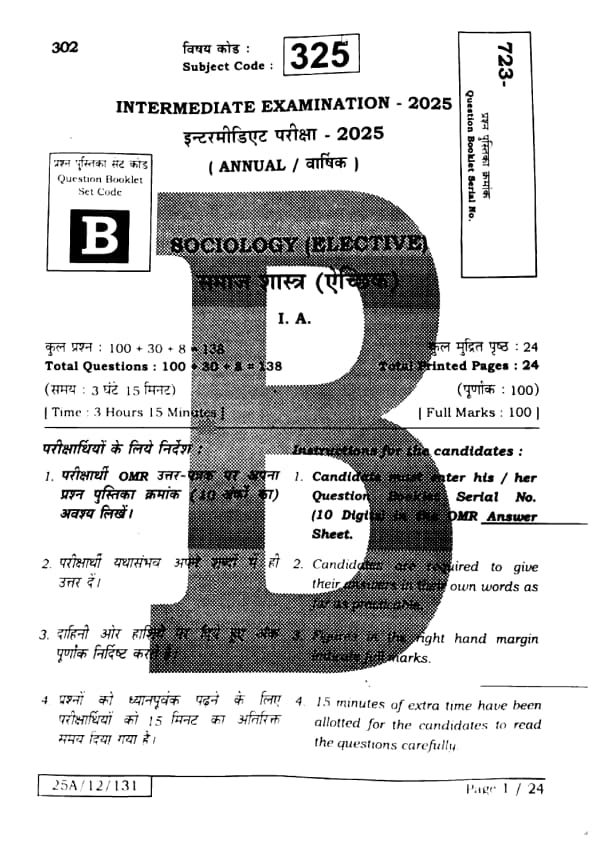
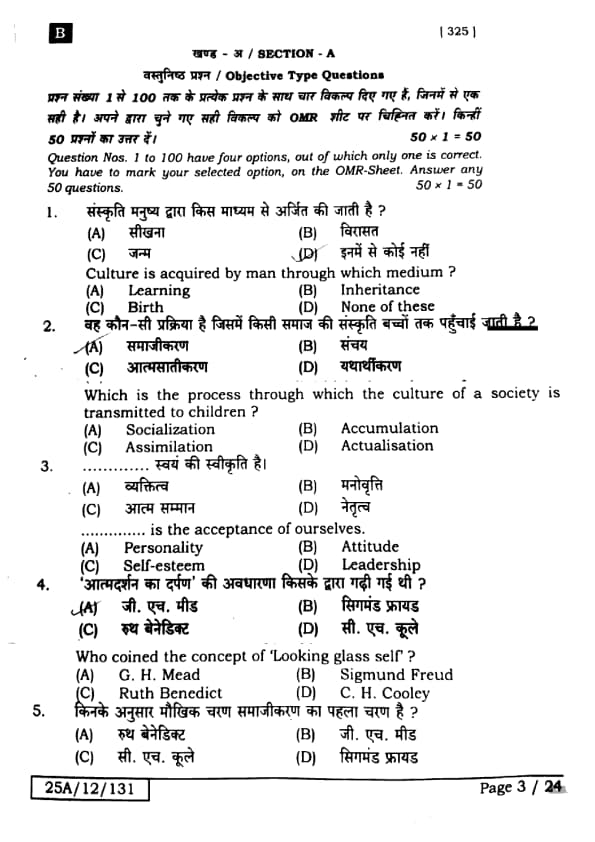
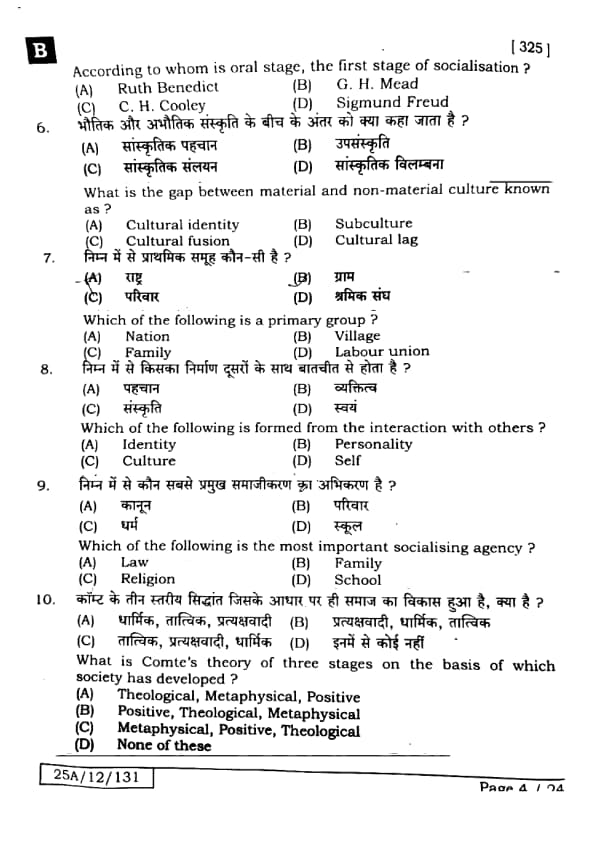
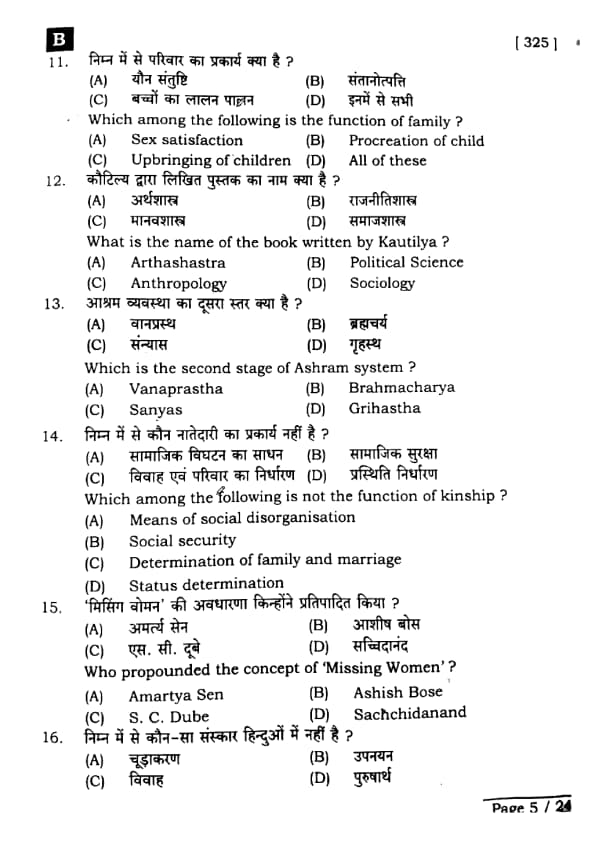
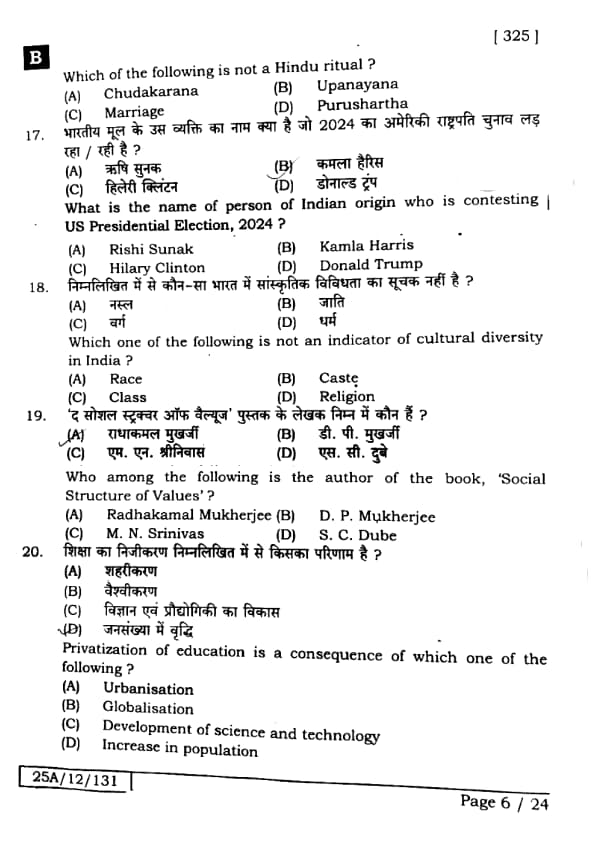
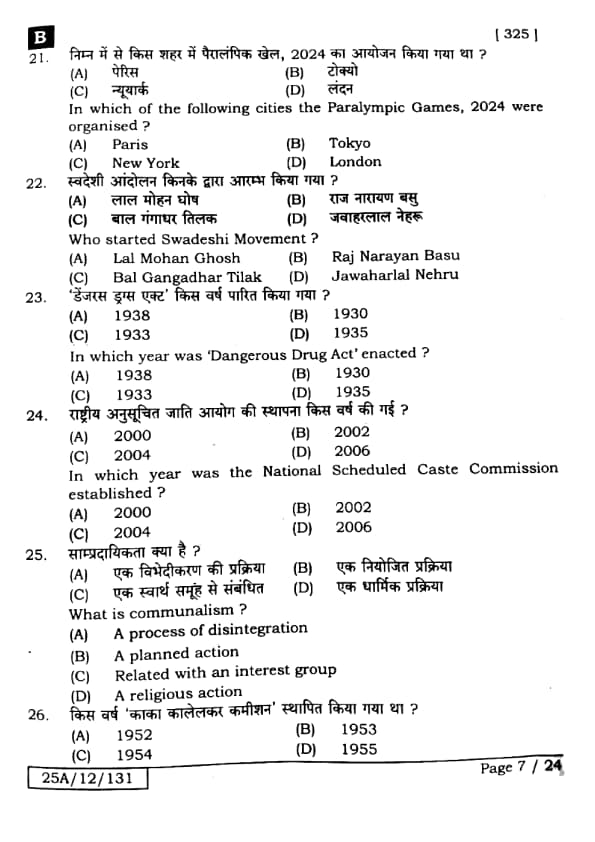
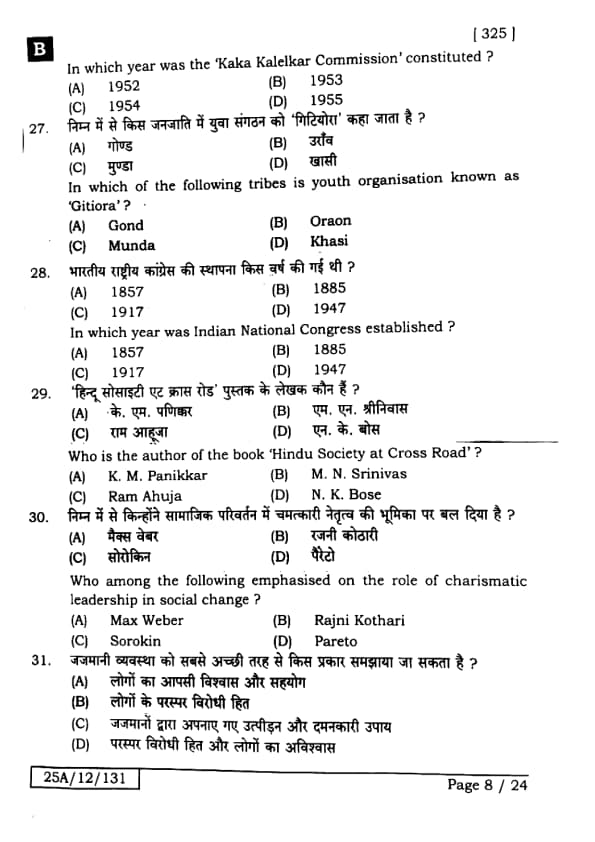
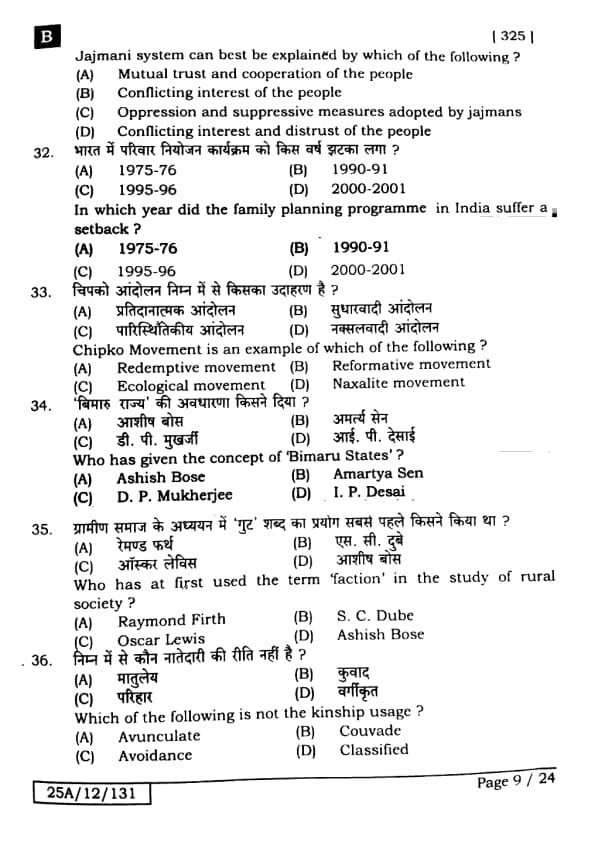
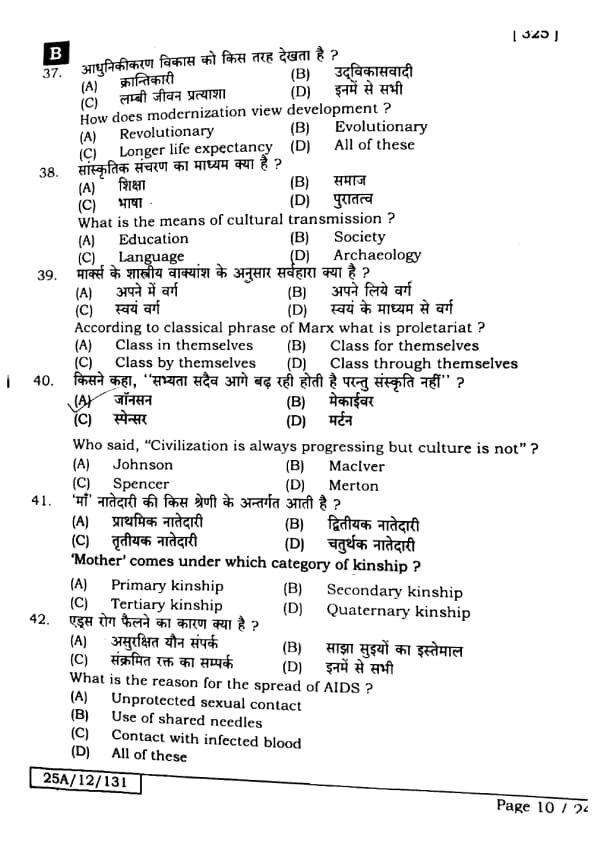
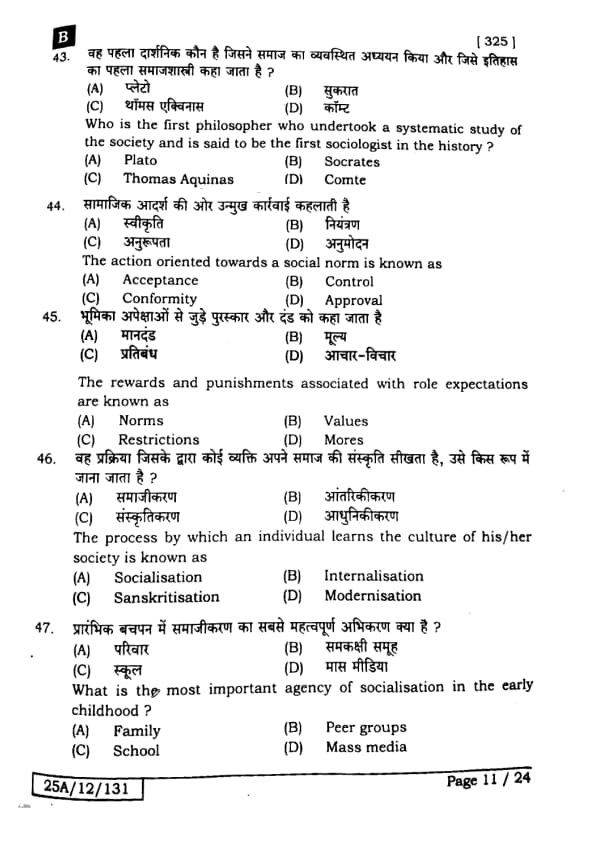
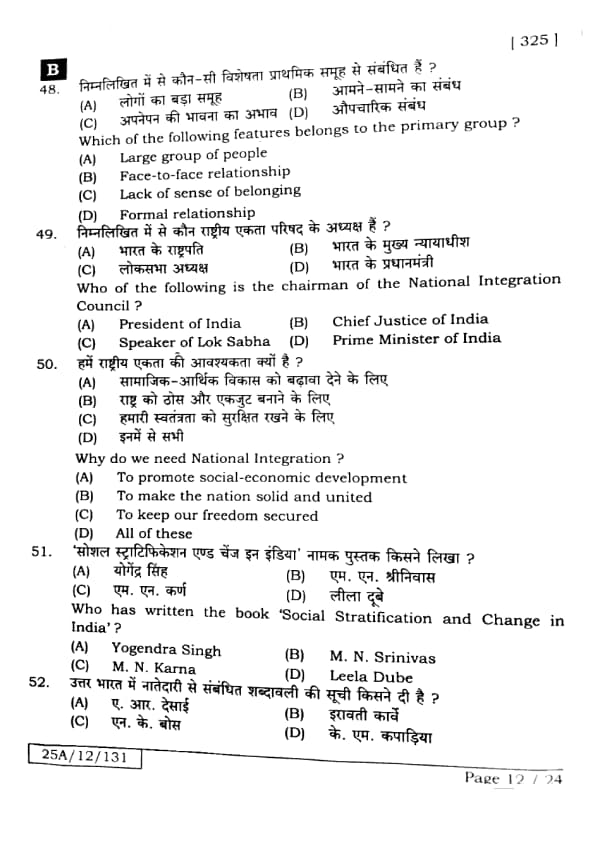
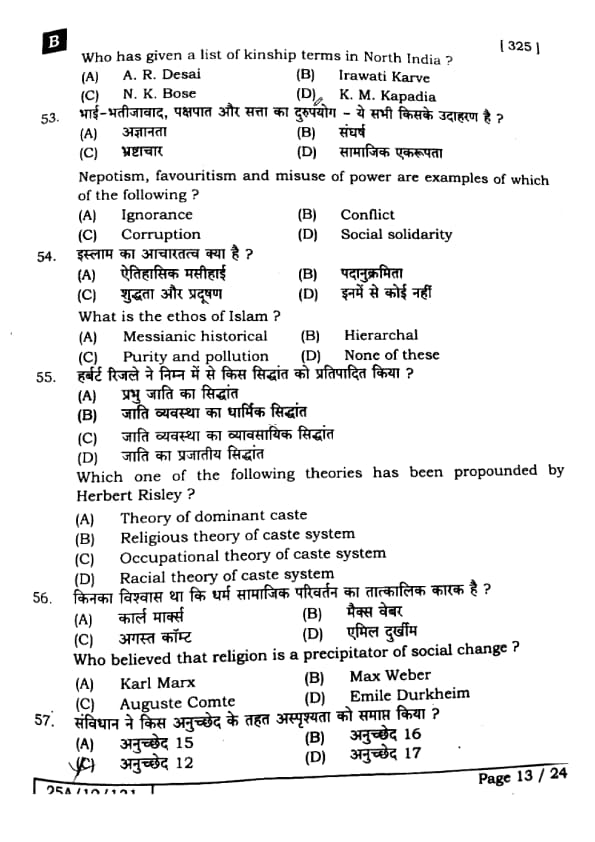
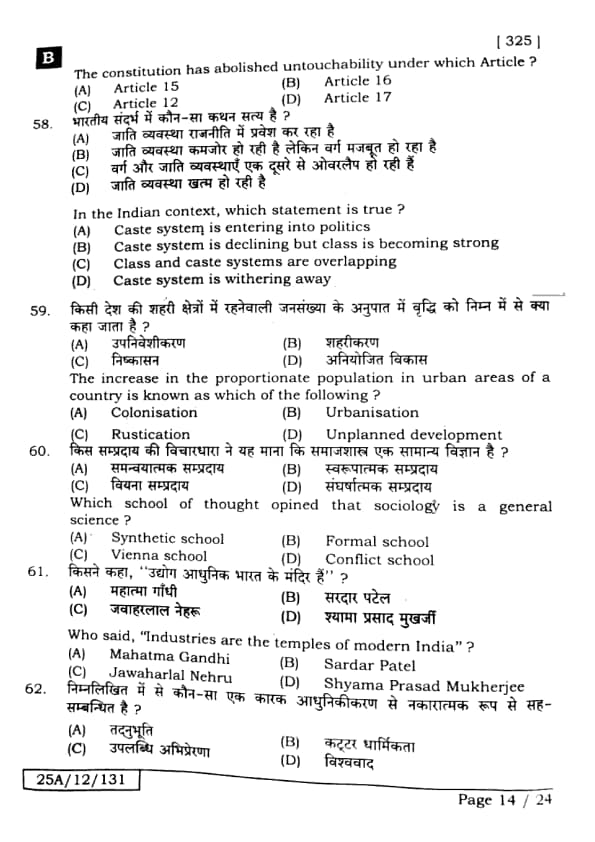
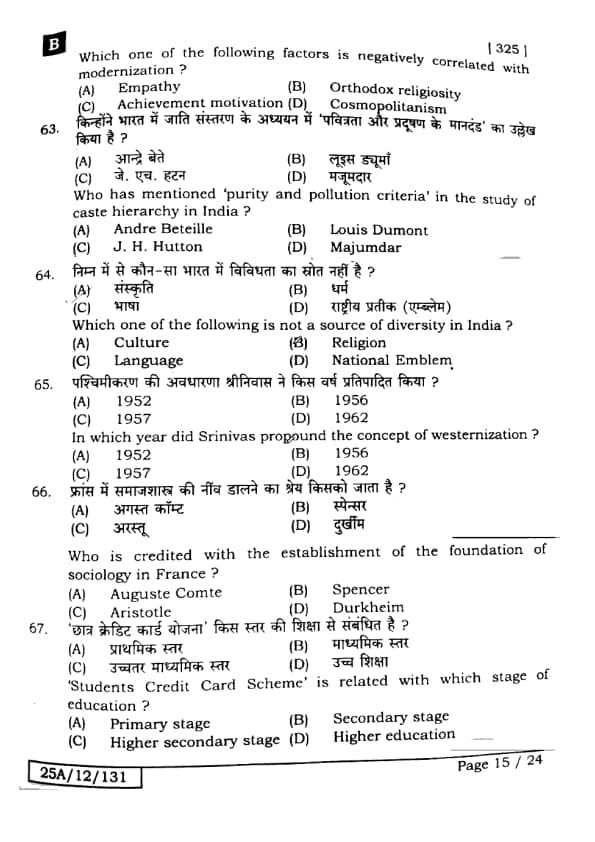
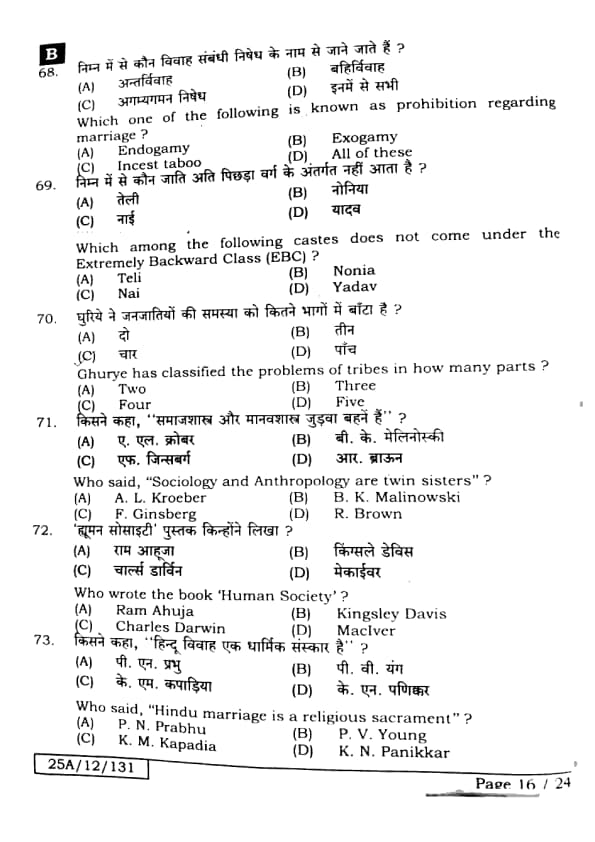
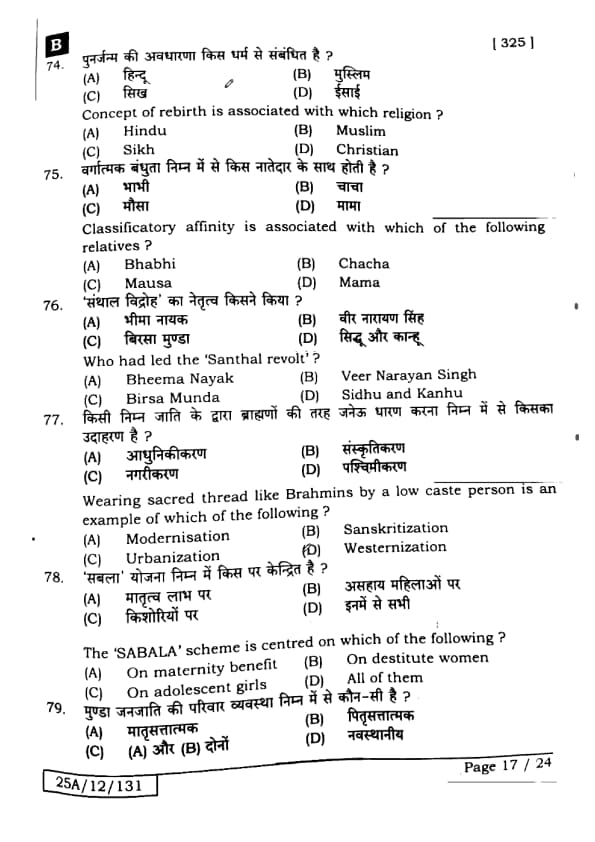
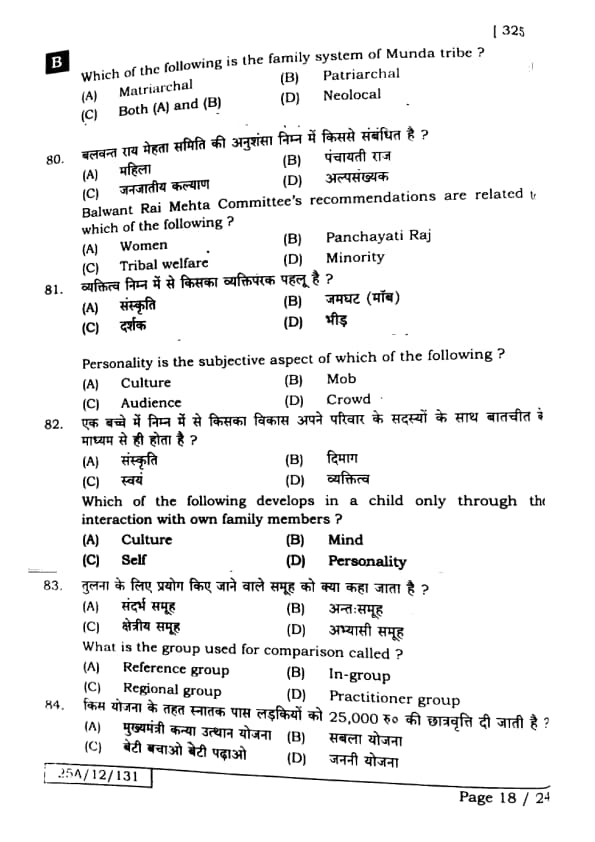
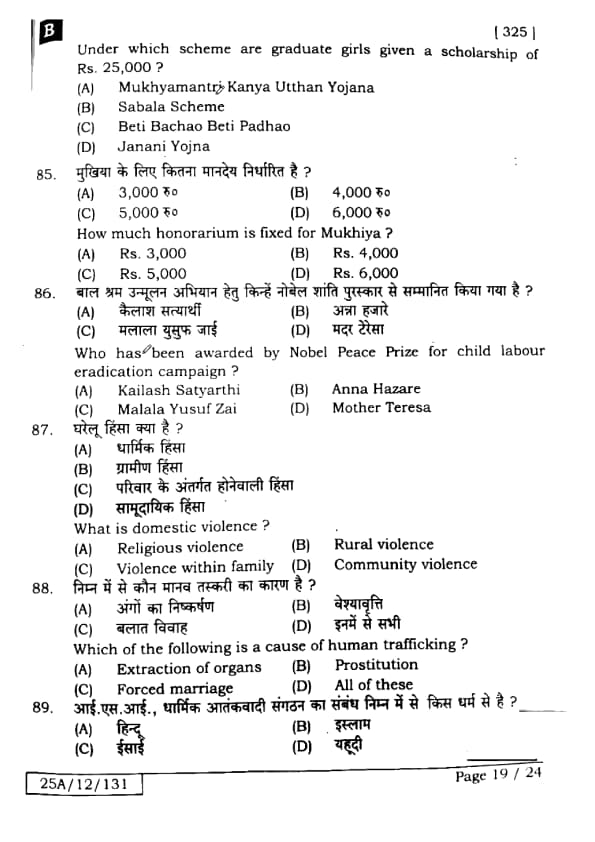
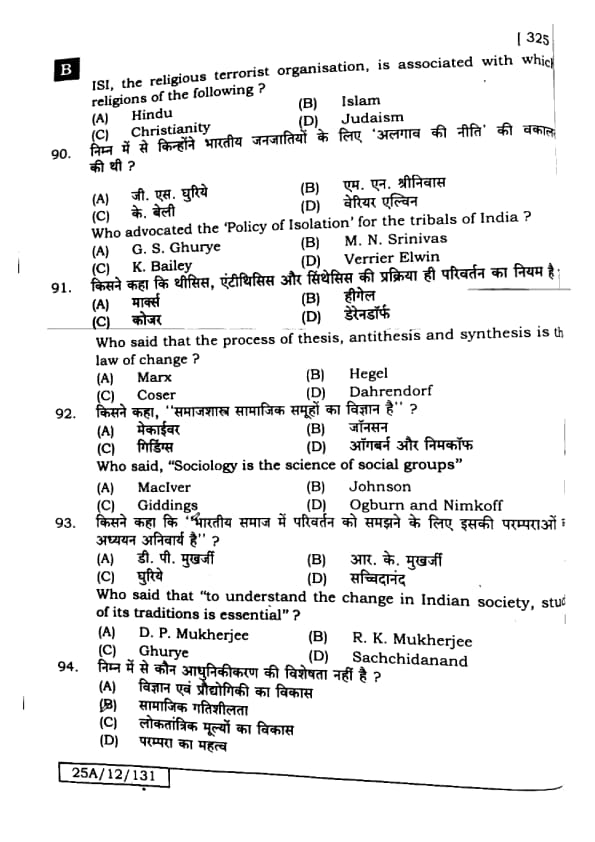
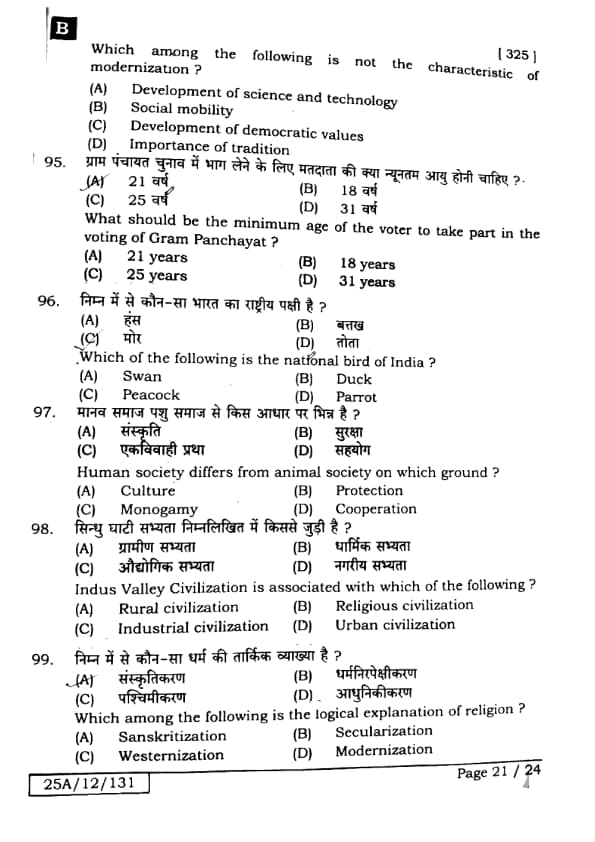



Comments