




BIHAR Board Class 12 Question Paper 2025 PDF with Answer Key and Solutions PDF is available for download here.
BIHAR Board Class 12 Question Paper 2025 with Solutions PDF
| BIHAR Board Class 12 Question Paper 2025 with Solutions PDF |  Download Download |
Check Solutions |

In which year has Fritz Heider propounded Balance theory?
View Solution
Fritz Heider propounded the \textit{Balance Theory in the year 1958. This theory is grounded on the fundamental idea that individuals seek to maintain consistency and harmony in their relationships.
According to the Balance Theory, people prefer relationships that are balanced or consistent. When an imbalance or inconsistency arises in relationships, individuals experience discomfort or tension.
To reduce this discomfort, individuals are motivated to restore balance by changing their attitudes, perceptions, or relationships. This process helps maintain psychological stability and social harmony.
In summary, the Balance Theory explains how people strive for consistency in their social relationships and take actions to resolve any imbalance they perceive. Quick Tip: Balance Theory suggests that people tend to form or maintain relationships that are in harmony, and if there is any imbalance, they will try to correct it to avoid psychological discomfort.
The negative attitude towards a specific group is called:
View Solution
The term ``Prejudice'' refers to a negative attitude, belief, or feeling directed toward a specific group. This attitude is often formed without sufficient knowledge, experience, or understanding of the group.
Prejudice typically involves \textit{stereotyping, where generalized and oversimplified beliefs are attributed to all members of the group. It can also lead to \textit{discrimination, which is the unfair treatment of individuals based on characteristics such as race, gender, ethnicity, religion, or other social categories.
Such prejudiced attitudes and behaviors can create social divisions, reinforce inequalities, and negatively impact the targeted groups as well as society at large. Quick Tip: Prejudice is often based on stereotypes and can lead to harmful discrimination. Understanding the root causes of prejudice is key to reducing its impact in society.
Who said, "Intelligence is the ability to learn"?
View Solution
The statement ``\textit{Intelligence is the ability to learn'' was made by David Wechsler, a renowned American psychologist.
Wechsler is best known for developing several widely used intelligence tests, including the Wechsler Adult Intelligence Scale (WAIS). These tests have had a significant impact on the field of psychological assessment by providing standardized measures of intelligence.
His work emphasized the importance of understanding intelligence as a multifaceted construct, including the ability to learn from experience, solve problems, and adapt to new situations. Quick Tip: David Wechsler emphasized the importance of intelligence as a capacity for adapting to new situations and solving problems, which is why his definition focused on the ability to learn.
A child has I.Q. between 90–100. In which of the following categories will he/she be placed?
View Solution
An Intelligence Quotient (I.Q.) score between 90 and 100 falls within the ``\textit{Average'' range.
Most standard I.Q. classification systems consider scores from 90 to 109 as indicative of average intelligence.
This range represents the central portion of the normal distribution of intelligence scores in the general population, where the majority of people are expected to fall. Quick Tip: I.Q. categories are typically classified as: - Below 70: Intellectual Disability, - 70–89: Below Average, - 90–109: Average, - 110–119: Above Average, - 120 and above: Superior or Genius.
Which theory of intelligence was propounded by Charles Spearman?
View Solution
Charles Spearman proposed the Two-factor theory of intelligence. According to this theory, intelligence is composed of two components:
A general factor (g), which influences performance on all cognitive tasks. This factor represents the overall mental ability that underlies diverse cognitive functions.
Specific factors (s), which influence abilities in particular areas or tasks. These factors account for individual differences in specific skills such as mathematical ability, verbal skills, or spatial reasoning.
Thus, Spearman's theory suggests that while there is a common underlying intelligence factor, individuals also possess unique abilities specific to certain tasks. Quick Tip: Spearman's "g factor" is a foundational concept in intelligence research. It suggests that a core general intelligence underlies all mental activities, while "s factors" are task-specific abilities.
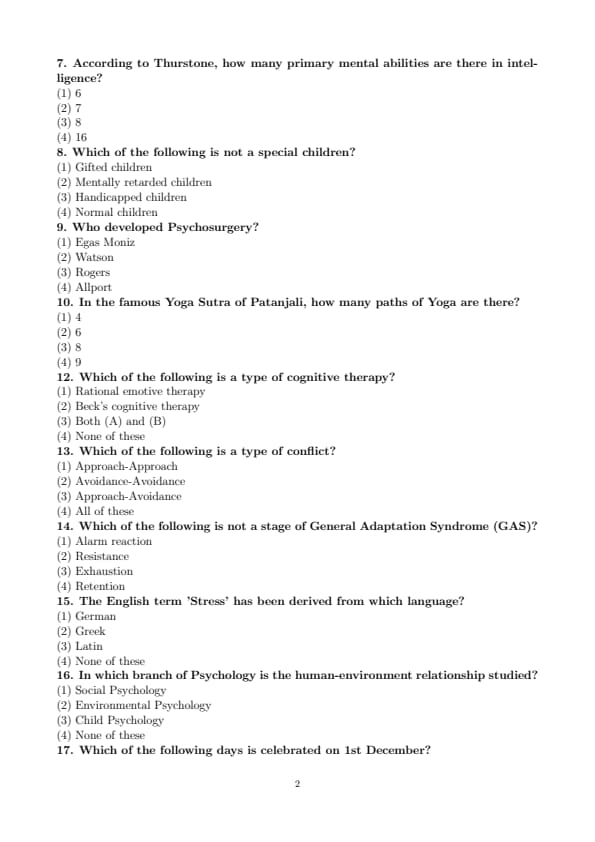
According to Thurstone, how many primary mental abilities are there in intelligence?
View Solution
Louis L. Thurstone proposed that intelligence is not a single general factor, but is instead composed of seven primary mental abilities. According to Thurstone, these abilities represent distinct dimensions of intelligence.
The seven primary mental abilities are:
Verbal comprehension
Word fluency
Number facility
Spatial visualization
Associative memory
Perceptual speed
Reasoning
Thurstone’s theory emphasizes that these abilities operate independently, and an individual's intelligence profile may vary across these different dimensions. Quick Tip: Thurstone’s theory challenged Spearman's single-factor theory by identifying multiple distinct cognitive abilities, emphasizing that intelligence is multi-dimensional.
Which of the following is not a special children?
View Solution
Special children refer to those who have exceptional needs, either due to disabilities or because they are gifted and require specialized educational interventions.
This category includes:
Gifted children — those with exceptional talents or intellectual abilities beyond the average.
Mentally retarded (intellectually disabled) children — those with significant limitations in intellectual functioning and adaptive behavior.
Handicapped children — those with physical or sensory impairments that affect their daily functioning.
It is important to note that normal children do not fall under the category of special children, as they do not require such specialized interventions. Quick Tip: "Special children" is an umbrella term for children with unique educational needs due to physical, intellectual, emotional, or behavioral differences. Normal children follow typical development patterns and do not require specialized interventions.
Who developed Psychosurgery?
View Solution
Psychosurgery was developed by Egas Moniz, a Portuguese neurologist. He is best known for pioneering the procedure known as the prefrontal lobotomy in the 1930s, which was used as a treatment for certain mental disorders.
Moniz’s work in this field was highly influential, and in recognition of his contributions, he was awarded the Nobel Prize in Physiology or Medicine in 1949.
Although psychosurgery has become controversial over time, Moniz’s pioneering efforts laid the foundation for surgical approaches to mental health treatment. Quick Tip: Psychosurgery involves surgical intervention in the brain to treat mental illness. Though now largely obsolete, it marked a significant historical step in biological psychiatry.
In the famous Yoga Sutra of Patanjali, how many paths of Yoga are there?
View Solution
Patanjali's Yoga Sutra outlines eight paths or stages of Yoga, collectively known as Ashtanga Yoga.
These eight limbs of Yoga are:
Yama
Niyama
Asana
Pranayama
Pratyahara
Dharana
Dhyana
Samadhi
Each stage represents a step towards spiritual growth and self-realization in the practice of Yoga. Quick Tip: Ashtanga Yoga means "Eight-Limbed Yoga," emphasizing a holistic approach to physical, mental, and spiritual development as per Patanjali’s teachings.
Which of the following is a type of cognitive therapy?
View Solution
Both Rational Emotive Therapy (developed by Albert Ellis) and Beck's Cognitive Therapy (developed by Aaron Beck) are prominent forms of cognitive therapy.
These therapies focus on identifying and changing \textit{dysfunctional thinking patterns that negatively affect emotions and behavior.
By restructuring irrational or maladaptive thoughts, both approaches aim to improve emotional well-being and promote healthier coping strategies.
While they share similar goals, Rational Emotive Therapy emphasizes challenging irrational beliefs directly, whereas Beck's Cognitive Therapy focuses more on recognizing and modifying automatic negative thoughts. Quick Tip: Cognitive therapies aim to modify negative thought patterns to treat psychological disorders, making them effective for depression, anxiety, and other mental health issues.
Which of the following is a type of conflict?
View Solution
In psychology, there are three main types of conflict:
Approach-Approach Conflict: This occurs when an individual must choose between two desirable options, both of which have positive outcomes.
Avoidance-Avoidance Conflict: This type involves choosing between two undesirable options, both of which have negative consequences.
Approach-Avoidance Conflict: In this conflict, a single option has both appealing and unappealing aspects, leading to mixed feelings about the decision. Quick Tip: Understanding different types of conflict helps in analyzing decision-making processes and the psychological tension involved in choices.
Which of the following is not a stage of General Adaptation Syndrome (GAS)?
View Solution
The General Adaptation Syndrome (GAS), proposed by Hans Selye, consists of three distinct stages that describe the body's response to stress:
Alarm reaction: This is the initial reaction to a stressor, where the body recognizes the threat and activates the fight-or-flight response.
Resistance: In this stage, the body attempts to adapt to the ongoing stressor by mobilizing resources to cope and maintain function.
Exhaustion: If the stress persists for too long, the body's resources become depleted, leading to decreased resistance and potential health problems.
It is important to note that the term ``Retention'' is not a stage of the General Adaptation Syndrome. Quick Tip: GAS explains how the body responds to stress in three phases — initial shock, adaptation, and eventual depletion if stress persists.
The English term 'Stress' has been derived from which language?
View Solution
The English word ``Stress'' is derived from the German word ``Stress'', which originally meant hardship, adversity, or distress. This term was first adopted into the English language in the early 17th century, primarily to describe physical pressure or strain applied to materials.
Over time, the meaning of the word expanded beyond its physical origins. By the 20th century, stress began to be used in psychology and medicine to describe the body's response to demanding or challenging situations, both physical and emotional.
Today, stress refers to the physiological and psychological reactions experienced when an individual perceives that environmental demands exceed their adaptive capacity. It encompasses a broad range of responses, including tension, anxiety, and changes in behavior and health.
Thus, the evolution of the term ``stress'' reflects a shift from its original usage in describing mechanical strain to a complex concept involving human emotional and physical well-being. Quick Tip: Understanding the etymology of psychological terms helps grasp their deeper meanings and historical context.
In which branch of Psychology is the human-environment relationship studied?
View Solution
Environmental Psychology is a branch of psychology that studies the dynamic interaction between humans and their physical surroundings.
This field focuses on understanding how various environments—such as natural settings, urban spaces, workplaces, and homes—affect human behavior, emotions, and overall well-being.
Environmental psychologists examine how environmental factors like noise, crowding, pollution, and design influence people's moods, cognitive functioning, social interactions, and stress levels.
The knowledge gained from this field is applied to improve architectural design, urban planning, and policies to create healthier, more supportive environments for individuals and communities. Quick Tip: Environmental Psychology explores how natural and built environments influence human thoughts, feelings, and actions.
Which of the following days is celebrated on 1st December?
View Solution
World AIDS Day is observed annually on 1st December around the world.
The primary purpose of this day is to raise awareness about HIV/AIDS, educate people on the modes of transmission and prevention, and reduce the stigma associated with the disease.
It is also a day to commemorate those who have lost their lives to AIDS-related illnesses and to support those living with HIV.
World AIDS Day encourages global cooperation in prevention, treatment, and research efforts aimed at ultimately eradicating the disease. Quick Tip: Remember important international days as they highlight key global issues and promote public awareness and action.
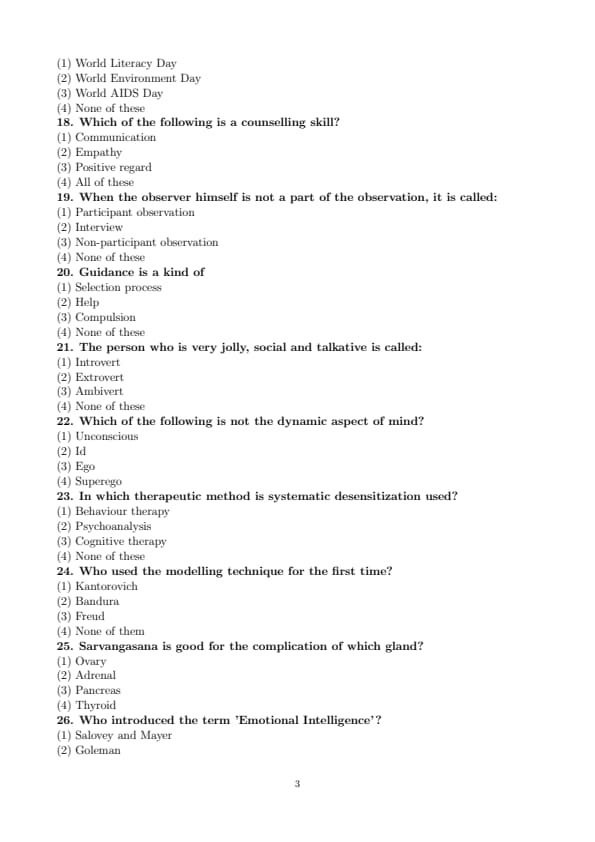
Which of the following is a counselling skill?
View Solution
Effective counselling requires the development and application of multiple essential skills, including:
Communication: The ability to listen actively and express thoughts and feelings clearly, ensuring mutual understanding between the counsellor and the client.
Empathy: The capacity to understand and share the feelings and perspectives of the client, which helps build trust and rapport.
Positive Regard: Accepting and respecting the client unconditionally, without judgment or criticism, fostering a safe and supportive environment for growth.
Together, these skills create the foundation for effective therapeutic relationships and successful counselling outcomes. Quick Tip: Counselling skills like empathy, communication, and positive regard are foundational for building trust and facilitating client growth.
When the observer himself is not a part of the observation, it is called:
View Solution
In Non-participant observation, the observer carefully watches the subjects or group being studied without actively engaging or participating in their activities.
This method allows the observer to maintain a detached and objective stance, minimizing the influence on the behavior of the subjects.
Non-participant observation is often used when it is important to observe natural behavior in a setting without interference from the researcher. Quick Tip: Non-participant observation helps reduce observer bias by keeping the observer separate from the situation being studied.
Guidance is a kind of
View Solution
Guidance is a supportive process aimed at helping individuals gain a better understanding of themselves and their environment.
Through guidance, individuals are encouraged to explore their interests, abilities, and options, enabling them to make informed and suitable decisions regarding their personal, educational, or career paths.
It is important to note that guidance is neither a process of selection nor compulsion; rather, it empowers individuals to take responsibility for their choices and actions. Quick Tip: Guidance involves assisting people in making informed choices and solving personal or educational problems.
The person who is very jolly, social and talkative is called:
View Solution
An Extrovert is an individual who is outgoing, sociable, and energized by interactions with others.
Extroverts tend to be lively, talkative, and comfortable in social settings, often seeking out opportunities to engage with people.
Their preference for external stimulation contrasts with introverts, who are more reserved and energized by solitary activities. Quick Tip: Extroverts gain energy from social interactions, whereas introverts recharge through solitude; ambiverts have traits of both.
Which of the following is not the dynamic aspect of mind?
View Solution
In Freud’s psychoanalytic theory, the three dynamic structures of personality are the Id, Ego, and Superego. These structures interact continuously and influence an individual's thoughts, feelings, and behaviors.
The Id is the unconscious part of personality that operates on the pleasure principle, seeking immediate gratification of basic instincts and desires.
The Ego functions according to the reality principle, mediating between the unrealistic demands of the Id and the external world.
The Superego represents internalized moral standards and ideals, providing guidelines for making judgments.
On the other hand, the Unconscious refers to a level or layer of the mind where thoughts, memories, and desires remain outside of conscious awareness. It is not considered a dynamic structure, but rather a part of the mind that influences behavior indirectly. Quick Tip: Remember: Id, Ego, and Superego are dynamic forces shaping personality, while the unconscious is the mental level containing hidden memories and desires.
In which therapeutic method is systematic desensitization used?
View Solution
Systematic desensitization is a behavioral therapy technique designed to reduce phobic or anxiety responses.
The process involves gradually exposing the patient to the feared object or situation in a controlled and step-by-step manner, often starting with the least anxiety-provoking scenario and moving toward more challenging exposures.
Simultaneously, the patient is taught relaxation techniques, such as deep breathing or progressive muscle relaxation, to counteract anxiety and promote a sense of calm.
Through repeated exposure combined with relaxation, the patient learns to replace the fear response with a relaxation response, ultimately diminishing the phobic reaction. Quick Tip: Systematic desensitization is effective for treating phobias by combining relaxation with gradual exposure to feared stimuli.
Who used the modelling technique for the first time?
View Solution
Albert Bandura was the first to utilize the modelling technique, a fundamental concept in his Social Learning Theory.
This technique demonstrates that individuals can learn new behaviors by observing and imitating the actions of others, rather than solely through direct experience or reinforcement.
Bandura's work highlighted the importance of observational learning, attention, retention, reproduction, and motivation in the acquisition of new behaviors.
The modelling technique has since been widely applied in educational settings, therapy, and behavior modification programs. Quick Tip: Modelling involves learning through observation and imitation, a key concept in social learning theory developed by Bandura.
Sarvangasana is good for the complication of which gland?
View Solution
Sarvangasana, commonly known as the shoulder stand, is a yoga posture renowned for its therapeutic benefits.
One of its key advantages is the improvement of thyroid gland function. This is achieved by stimulating increased blood flow to the neck region, where the thyroid gland is located.
Regular practice of Sarvangasana can help regulate metabolism, balance hormone secretion, and contribute to overall endocrine health.
Additionally, this pose promotes relaxation, improves circulation, and strengthens the shoulders and upper back. Quick Tip: Certain yoga postures like Sarvangasana can positively influence endocrine glands, especially the thyroid, by improving circulation and hormonal balance.
Who introduced the term 'Emotional Intelligence'?
View Solution
The term Emotional Intelligence was first introduced by psychologists Peter Salovey and John Mayer in 1990.
They defined emotional intelligence as the ability to perceive, understand, manage, and regulate emotions in oneself and others.
This concept emphasizes the importance of emotional awareness and control as key components of effective personal and social functioning.
Since then, emotional intelligence has become a significant area of research in psychology, influencing fields such as education, leadership, and mental health. Quick Tip: Emotional Intelligence involves recognizing and regulating emotions, which is essential for personal and social competence.
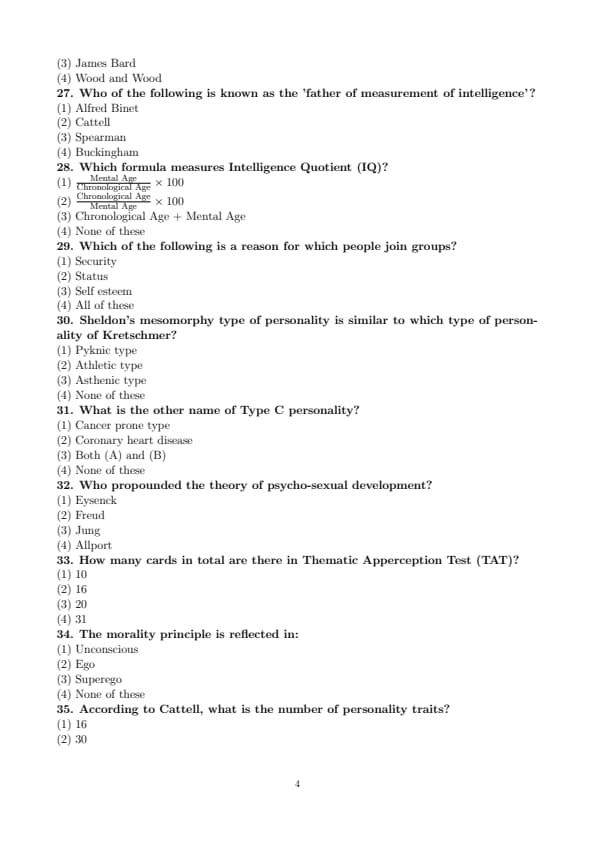
Who of the following is known as the 'father of measurement of intelligence'?
View Solution
Alfred Binet is widely regarded as the father of intelligence measurement.
He developed the first practical intelligence test in the early 20th century, which was designed to identify children who needed special educational assistance.
Binet’s work laid the foundation for modern intelligence quotient (IQ) testing and greatly influenced the field of psychological assessment.
His approach emphasized measuring a range of cognitive abilities rather than focusing on a single trait. Quick Tip: Alfred Binet’s work was crucial in creating standardized intelligence tests, helping identify children needing special educational support.
Which formula measures Intelligence Quotient (IQ)?
View Solution
The Intelligence Quotient (IQ) is calculated using the following formula:
\[ IQ = \frac{Mental Age}{Chronological Age} \times 100. \]
This formula was originally developed by Alfred Binet to assess the intellectual development of children.
Later, Lewis Terman adapted and popularized this concept in the Stanford-Binet Intelligence Scale, making IQ a widely used measure of intelligence.
The IQ score provides a standardized way to compare an individual's cognitive abilities relative to their age group. Quick Tip: IQ is a ratio expressing a person's mental ability relative to their age group, standardized to a mean of 100.
Which of the following is a reason for which people join groups?
View Solution
People join groups for a variety of reasons, including:
Need for Security: Being part of a group provides safety, support, and protection from external threats.
Social Status: Membership in certain groups can enhance an individual's prestige, influence, or social standing.
Self-Esteem: Belonging to a community helps individuals feel valued and accepted, boosting their confidence and sense of identity.
Overall, group membership fulfills fundamental human needs related to belonging, identity, and psychological well-being. Quick Tip: Groups fulfill various psychological and social needs such as belonging, identity, and support.
Sheldon's mesomorphy type of personality is similar to which type of personality of Kretschmer?
View Solution
Sheldon’s mesomorphy body type is characterized by a muscular, well-built, and athletic physique.
This body type corresponds closely to Kretschmer’s athletic type personality, which is also described as robust, strong, and muscular.
Both theories suggest a link between physical constitution and personality traits, emphasizing the relationship between body build and behavioral tendencies. Quick Tip: Sheldon and Kretschmer both linked body types with personality traits, aiding early psychological typologies.
What is the other name of Type C personality?
View Solution
Type C personality is characterized by a tendency to suppress or inhibit emotional expression, especially negative emotions such as anger or anxiety.
Individuals with this personality type often display a cooperative, compliant, and unassertive demeanor.
Research has linked Type C personality traits with an increased risk of developing certain illnesses, particularly cancer, which is why it is sometimes referred to as the cancer prone type.
This association highlights the potential impact of emotional regulation and stress on physical health. Quick Tip: Personality types like Type A, B, and C are studied for their links to health risks, with Type C often associated with cancer susceptibility.
Who propounded the theory of psycho-sexual development?
View Solution
Sigmund Freud propounded the theory of psycho-sexual development, which explains personality development as a series of stages, each centered on the pleasure derived from different erogenous zones of the body.
The stages include:
Oral Stage (0-1 year): Pleasure centers on the mouth, such as sucking and biting.
Anal Stage (1-3 years): Focus on bowel and bladder control.
Phallic Stage (3-6 years): Pleasure zone is the genitals; coping with incestuous feelings.
Latency Stage (6-puberty): Dormant sexual feelings; focus on social and intellectual skills.
Genital Stage (puberty onwards): Maturation of sexual interests and establishment of mature relationships.
Freud’s theory emphasizes that unresolved conflicts during any stage could influence adult personality and behavior. Quick Tip: Freud’s psycho-sexual stages include oral, anal, phallic, latency, and genital stages, emphasizing the role of early childhood experiences.
How many cards in total are there in Thematic Apperception Test (TAT)?
View Solution
The Thematic Apperception Test (TAT) consists of a series of 31 picture cards depicting ambiguous scenes.
It is used to assess a person's patterns of thought, attitudes, observational capacity, and emotional responses by asking them to create stories about the images.
The test aims to uncover underlying motives, concerns, and how individuals perceive social situations, providing insight into their personality dynamics.
The TAT is widely used in clinical psychology for personality assessment and therapeutic purposes. Quick Tip: TAT cards are ambiguous images designed to elicit stories revealing a person’s inner feelings and conflicts.
The morality principle is reflected in:
View Solution
In Freud’s theory of personality, the superego represents the moral conscience.
It embodies the internalized societal and parental standards of right and wrong, guiding the individual to act in socially acceptable and ethical ways.
The superego strives for perfection and judges actions, producing feelings of pride or guilt depending on whether behavior aligns with its moral standards.
It functions alongside the id, which seeks immediate gratification, and the ego, which mediates between the two. Quick Tip: The superego acts as the moral compass, while the ego mediates between the superego and the id.
According to Cattell, what is the number of personality traits?
View Solution
Raymond Cattell identified 16 personality traits, which he proposed as the fundamental building blocks of human personality.
Based on these traits, he developed the 16 Personality Factor (16PF) questionnaire, a widely used psychometric tool for personality assessment.
The 16PF measures a broad range of personality characteristics, helping to understand individual differences in behavior, emotions, and interpersonal relations.
Cattell’s work has significantly influenced personality psychology and various applied fields such as clinical, occupational, and counseling psychology. Quick Tip: Cattell’s 16PF is a widely used personality assessment tool based on his 16-factor theory.
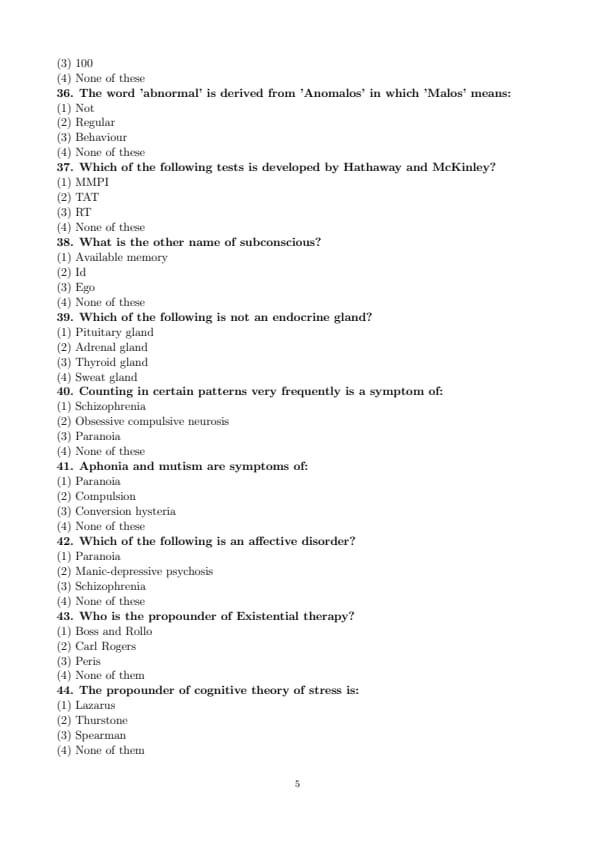
The word 'abnormal' is derived from 'Anomalos' in which 'Malos' means:
View Solution
The word “abnormal” is derived from the Greek word \textit{anomalos.
In this word, the prefix \textit{a- means \textit{“not”, and \textit{malos means \textit{“regular” or \textit{“according to rule”.
Therefore, abnormal literally means \textit{“not regular” or \textit{“not normal”, indicating deviation from what is usual or typical. Quick Tip: Understanding word origins helps clarify the meaning of psychological terms like 'abnormal'.
Which of the following tests is developed by Hathaway and McKinley?
View Solution
The Minnesota Multiphasic Personality Inventory (MMPI) was developed by Starke Hathaway and J. C. McKinley.
The MMPI is a widely used psychometric tool designed to assess personality structure and detect psychopathology.
It consists of a comprehensive set of statements that individuals respond to, allowing clinicians to identify a range of psychological conditions and personality traits.
Since its introduction, the MMPI has undergone revisions and remains one of the most reliable instruments in clinical psychology. Quick Tip: MMPI is one of the most widely used and researched standardized psychometric tests of adult personality and psychopathology.
What is the other name of subconscious?
View Solution
The subconscious is often described as \textit{“available memory”, referring to the part of the mind that stores information not currently in conscious awareness.
This information is not actively in the forefront of our thoughts but remains accessible and can be retrieved when needed.
The subconscious plays a crucial role in influencing thoughts, behaviors, and memories without our direct awareness.
It bridges the gap between conscious processes and deeper unconscious elements of the mind. Quick Tip: The subconscious stores memories and processes that influence behavior without conscious awareness.
Which of the following is not an endocrine gland?
View Solution
The sweat gland is classified as an exocrine gland because it secretes sweat through ducts onto the surface of the skin.
In contrast, glands such as the pituitary, adrenal, and thyroid are endocrine glands, which release hormones directly into the bloodstream.
This difference in secretion mechanisms distinguishes exocrine glands, which have ducts, from endocrine glands, which are ductless and regulate bodily functions via hormones. Quick Tip: Endocrine glands release hormones into the blood; exocrine glands release substances through ducts to body surfaces.
Counting in certain patterns very frequently is a symptom of:
View Solution
Frequent counting in specific patterns is a common symptom of Obsessive-Compulsive Neurosis (OCD).
Individuals with OCD engage in repetitive behaviors, such as counting, washing, or checking, which they perform in an attempt to relieve anxiety and distress.
These compulsive actions are driven by persistent and intrusive thoughts called obsessions, which create discomfort that the compulsions temporarily alleviate.
OCD is a chronic psychological disorder that significantly impacts daily functioning but can be managed with therapy and medication. Quick Tip: Obsessive-compulsive behaviors often involve repetitive actions like counting, checking, or cleaning to reduce distress.
Aphonia and mutism are symptoms of:
View Solution
Aphonia (loss of voice) and mutism (inability to speak) are common symptoms of conversion hysteria.
Conversion hysteria is a psychological condition in which emotional distress or conflict is expressed through physical symptoms that cannot be explained by medical causes.
In this condition, psychological trauma manifests as neurological symptoms such as paralysis, blindness, or speech disturbances, including aphonia and mutism.
These symptoms are involuntary and typically serve as a defense mechanism against psychological stress. Quick Tip: Conversion hysteria involves physical symptoms without a medical cause, often linked to psychological conflicts.
Which of the following is an affective disorder?
View Solution
Manic-depressive psychosis, commonly known as bipolar disorder, is classified as an affective disorder.
This condition is characterized by extreme mood swings that alternate between periods of mania—marked by elevated mood, increased energy, and impulsive behavior—and depression, which involves feelings of sadness, low energy, and hopelessness.
Bipolar disorder significantly impacts an individual's daily functioning and requires comprehensive treatment including medication and psychotherapy. Quick Tip: Affective disorders primarily involve disturbances in mood or emotion, such as depression and bipolar disorder.
Who is the propounder of Existential therapy?
View Solution
Existential therapy was primarily propounded by Medard Boss and Rollo May.
This therapeutic approach focuses on exploring fundamental aspects of human existence, including the search for meaning, the experience of freedom and choice, and the inevitability of death.
Existential therapy helps individuals confront anxieties related to existence and encourages authentic living by emphasizing personal responsibility and self-awareness.
It is widely applied in counseling to address issues such as existential crises, depression, and anxiety. Quick Tip: Existential therapy emphasizes personal responsibility, freedom, and the search for meaning in life.
The propounder of cognitive theory of stress is:
View Solution
Richard Lazarus proposed the cognitive theory of stress, which emphasizes the crucial role of cognitive appraisal in determining how individuals perceive and respond to stressful situations.
According to this theory, stress is not merely a reaction to external events but depends on an individual’s evaluation of the significance and demands of those events.
There are two types of cognitive appraisal:
Primary appraisal: Assessing whether an event is irrelevant, benign-positive, or stressful.
Secondary appraisal: Evaluating one’s resources and options to cope with the stressor.
This model highlights the subjective nature of stress and the importance of perception in psychological well-being. Quick Tip: Cognitive theory of stress focuses on how people interpret and evaluate stressors, influencing their emotional and physiological responses.
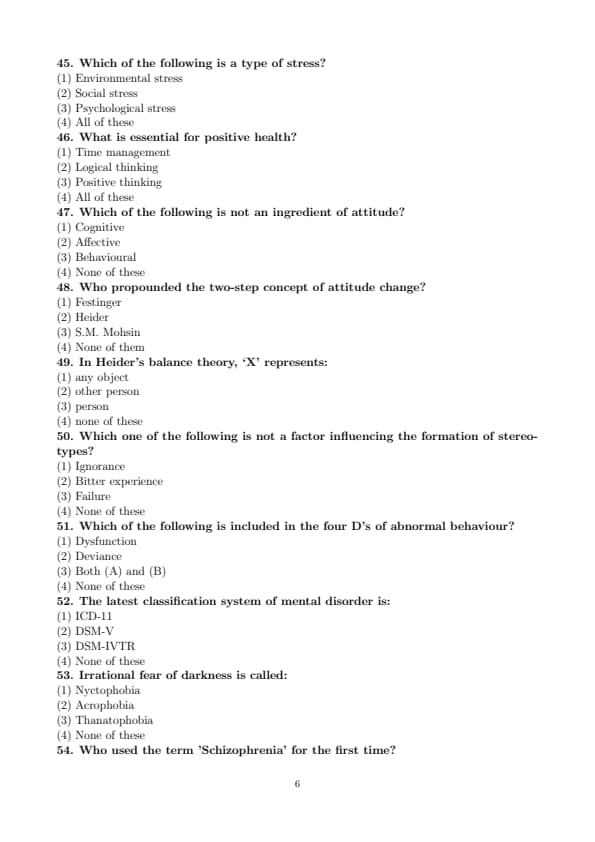
Which of the following is a type of stress?
View Solution
Stress can arise from a variety of sources, encompassing:
Environmental factors: such as noise, pollution, or extreme weather conditions.
Social situations: including conflicts, social pressure, or relationship issues.
Psychological conditions: like anxiety, depression, or traumatic experiences.
Therefore, all these sources contribute to different types of stress, highlighting its multifaceted nature.
Understanding the origin of stress is crucial for effective management and coping strategies. Quick Tip: Stress manifests in multiple forms, and recognizing different types helps in effective management.
What is essential for positive health?
View Solution
Positive health requires a holistic approach that combines several key factors to maintain overall well-being:
Good time management: Organizing and prioritizing tasks effectively to reduce stress and increase productivity.
Logical thinking: Making rational and well-informed decisions that promote mental clarity and problem-solving.
Positive thinking: Cultivating an optimistic mindset to enhance emotional resilience and motivation.
Together, these elements contribute to a balanced and healthy lifestyle, fostering both physical and mental health. Quick Tip: Holistic health incorporates mental, emotional, and behavioral practices for a balanced life.
Which of the following is not an ingredient of attitude?
View Solution
Attitude consists of three main components:
Cognitive component: This involves beliefs, thoughts, and knowledge about an object or situation.
Affective component: This includes feelings and emotions toward the object or situation.
Behavioural component: This relates to the way the attitude influences how we act or behave.
Therefore, all the listed options are essential ingredients that together form an individual's attitude. Quick Tip: Remember, attitude is a combination of thoughts, feelings, and behaviours towards an object or situation.
Who propounded the two-step concept of attitude change?
View Solution
S.M. Mohsin proposed the two-step concept of attitude change, which emphasizes a sequential process involving:
Initial persuasion: The first step where an individual is exposed to persuasive communication or information that influences their attitude.
Reinforcement: The second step involves strengthening and stabilizing the changed attitude through repeated exposure or validation.
This concept highlights that attitude change is not instantaneous but occurs through a process of persuasion followed by reinforcement to ensure lasting effects. Quick Tip: Attitude change can occur in stages, often beginning with exposure and followed by reinforcement.
In Heider’s balance theory, ‘X’ represents:
View Solution
In Heider’s balance theory, the symbol \( X \) denotes any object or idea toward which a person holds an attitude.
This forms a triad consisting of three elements:
The person (P),
Another individual (O),
And the object or idea (\( X \)).
The theory focuses on the balance or imbalance among the relationships within this triad, where consistency in attitudes leads to psychological balance. Quick Tip: Heider’s balance theory explains how individuals seek harmonious relationships among people and objects.
Which one of the following is not a factor influencing the formation of stereotypes?
View Solution
Ignorance, bitter experience, and failure can all contribute to the formation of stereotypes; hence, none of these is excluded as a factor.
Ignorance arises when individuals lack adequate knowledge or understanding of a particular group, leading them to form assumptions based on incomplete or inaccurate information. This lack of awareness can result in generalizations that are oversimplified and often unfounded.
Bitter experience plays a role when individuals have negative or disappointing encounters with a particular group, which then shape their views of that group as a whole. These experiences, while personal, may be generalized to others who share similar characteristics, thus reinforcing stereotypes. The subjective nature of these experiences means they are not always representative of the group in question, but they can still deeply influence an individual's perceptions.
Failure is another key factor in stereotype formation. When individuals encounter failure, they may look for external factors to blame, and if a particular group is associated with the context in which the failure occurred, stereotypes can be formed. For example, individuals might attribute their inability to succeed in a specific context to the characteristics of a group, instead of examining broader factors such as personal limitations, circumstances, or systemic issues. This tendency to generalize based on failure reinforces stereotypes and perpetuates biased thinking.
In conclusion, ignorance, bitter experience, and failure are all significant contributors to the formation of stereotypes, and none of these factors should be dismissed as irrelevant in understanding how stereotypes are developed and maintained. Quick Tip: Stereotypes often arise from limited knowledge, personal experiences, and failures, leading to generalized beliefs.
Which of the following is included in the four D's of abnormal behaviour?
View Solution
The four D's of abnormal behavior are Dysfunction, Deviance, Distress, and Danger. These criteria are commonly used in psychology to help determine whether a particular behavior may be considered abnormal.
Dysfunction refers to a breakdown in cognitive, emotional, or behavioral functioning. When an individual's behavior interferes significantly with their ability to carry out daily activities—such as work, relationships, or self-care—it is considered dysfunctional.
Deviance refers to behavior that violates societal norms or expectations. This does not automatically imply abnormality, as deviant behavior can be context-dependent; however, when such behavior is extreme or persistent, it may be considered a sign of abnormality.
Given that both Dysfunction and Deviance are part of the four D’s, they are valid criteria for identifying abnormal behavior. Therefore, both are correctly included in the assessment of psychological abnormality. Quick Tip: To identify abnormal behavior, consider the four D's: Deviance, Dysfunction, Distress, and Danger.
The latest classification system of mental disorder is:
View Solution
The International Classification of Diseases, 11th Revision (ICD-11) is the latest classification system for mental disorders, released by the World Health Organization (WHO).
ICD-11 serves as a global standard for diagnosing health conditions, including both physical and mental disorders. It is designed to be used by healthcare professionals worldwide, ensuring consistency in the diagnosis and treatment of diseases across different countries and healthcare systems.
Compared to its predecessor (ICD-10), ICD-11 incorporates advances in medical knowledge, improved clinical utility, and greater integration of scientific evidence. It includes updated definitions and criteria for mental, behavioral, and neurodevelopmental disorders, aiming for better accuracy and cultural sensitivity.
The implementation of ICD-11 supports international efforts to improve mental health care and data collection, as well as to enhance global public health monitoring and planning. Quick Tip: ICD-11 provides updated diagnostic criteria and classification for mental and physical disorders globally.
Irrational fear of darkness is called:
View Solution
Nyctophobia is the irrational fear of darkness, often leading to anxiety and avoidance behaviors during nighttime or in dark places.
This phobia is more than a simple discomfort with darkness; it can trigger intense emotional and physical responses such as rapid heartbeat, sweating, trembling, shortness of breath, or even panic attacks. Individuals with nyctophobia may go to great lengths to avoid dark environments, which can interfere with daily functioning and quality of life.
Nyctophobia is commonly seen in children, but it can persist into adulthood if not addressed. In some cases, it may be linked to past traumatic experiences or an overactive imagination.
Treatment options typically include cognitive-behavioral therapy (CBT), exposure therapy, and in some cases, medication to manage anxiety symptoms. With proper intervention, individuals can learn to manage or overcome their fear of darkness. Quick Tip: Phobias are intense, irrational fears of specific objects or situations, such as darkness (Nyctophobia).
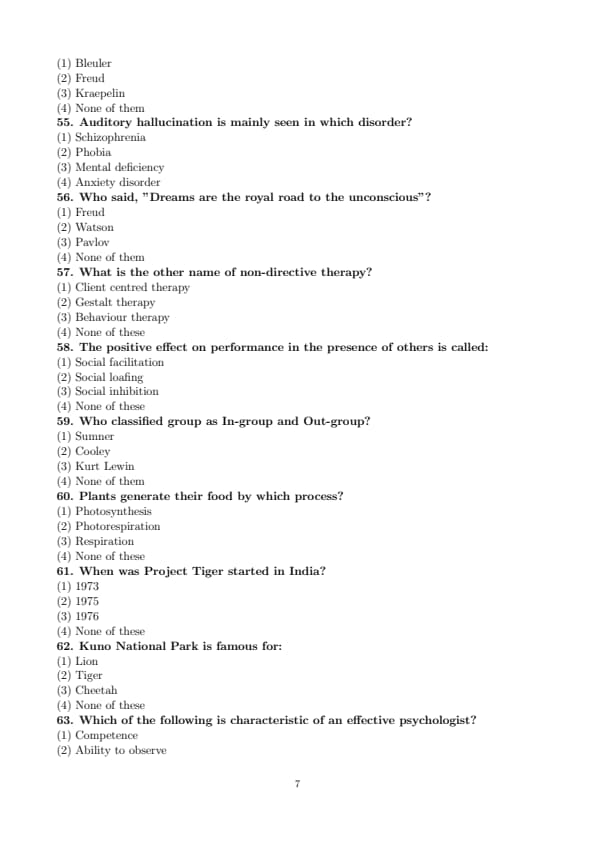
Who used the term 'Schizophrenia' for the first time?
View Solution
Emil Kraepelin was among the first psychiatrists to study and classify mental disorders systematically. He initially used the term \textit{“dementia praecox” to describe a mental illness characterized by early onset and progressive cognitive deterioration.
Although Kraepelin did not coin the term “schizophrenia”, he laid the groundwork for its conceptualization as a distinct disorder. It was later the Swiss psychiatrist Eugen Bleuler who introduced the term \textit{“schizophrenia” in the early 20th century to better capture the fragmented thinking and emotional experience associated with the condition.
Schizophrenia is now recognized as a severe mental disorder characterized by disorganized thinking, distorted perceptions, abnormal behaviors, and impaired functioning. Symptoms may include hallucinations, delusions, disorganized speech, and social withdrawal.
Kraepelin’s work was foundational in differentiating schizophrenia from mood disorders, and his classifications greatly influenced the development of modern psychiatric diagnosis. Quick Tip: Kraepelin is known as the father of modern psychiatric classification.
Auditory hallucination is mainly seen in which disorder?
View Solution
Auditory hallucinations, such as hearing voices that are not actually present, are a characteristic symptom commonly associated with schizophrenia.
These hallucinations typically involve hearing one or more voices that may comment on the individual’s behavior, engage in conversation with the person, or give commands. The voices are usually perceived as distinct from the individual’s own thoughts and may be experienced as coming from outside the head.
Auditory hallucinations are a type of \textit{positive symptom of schizophrenia, meaning they represent an excess or distortion of normal functions. They can be highly distressing and may significantly impair a person’s ability to concentrate, communicate, or function in daily life.
While auditory hallucinations are most strongly linked to schizophrenia, they can also occur in other conditions such as severe mood disorders, substance-induced psychosis, or neurological illnesses. However, their frequent and persistent occurrence is a hallmark feature in the diagnosis of schizophrenia.
Effective treatment often involves a combination of antipsychotic medication and psychotherapy to help manage the symptoms and improve the individual’s quality of life. Quick Tip: Hallucinations involve perceiving sensations that are not actually present, with auditory hallucinations being most common in schizophrenia.
Who said, "Dreams are the royal road to the unconscious"?
View Solution
Sigmund Freud proposed that dreams provide valuable insight into the unconscious mind, referring to them as the "royal road" to understanding hidden desires and internal conflicts.
According to Freud's psychoanalytic theory, dreams are a manifestation of repressed wishes and thoughts that are not accessible during waking life. Through the symbolic imagery and narratives in dreams, unconscious material can be revealed.
Freud distinguished between the \textit{manifest content of a dream—the actual storyline and imagery experienced—and the \textit{latent content, which represents the hidden psychological meaning behind the dream.
By analyzing dreams, Freud believed individuals could gain deeper self-awareness and resolve inner conflicts, which could contribute to mental health and personal growth. Quick Tip: Freud's psychoanalytic theory emphasizes the significance of dreams in revealing unconscious thoughts.
What is the other name of non-directive therapy?
View Solution
Non-directive therapy, also known as client-centred therapy, was developed by Carl Rogers. This therapeutic approach emphasizes creating a supportive and non-judgmental environment in which clients are encouraged to explore their thoughts and feelings freely.
The therapist provides empathy, unconditional positive regard, and genuineness, allowing clients to lead the direction of therapy at their own pace. This contrasts with more directive forms of therapy where the therapist takes an active role in guiding the session.
The goal of non-directive therapy is to facilitate self-directed growth and personal insight, helping clients achieve greater self-awareness, self-acceptance, and psychological well-being.
Carl Rogers’ approach has been highly influential in humanistic psychology and remains widely used in various counseling and therapeutic settings. Quick Tip: Client-centred therapy focuses on empathy, unconditional positive regard, and genuineness to facilitate healing.
The positive effect on performance in the presence of others is called:
View Solution
Social facilitation refers to the tendency for individuals to perform better on simple or well-learned tasks when they are in the presence of others.
This phenomenon occurs because the presence of others increases physiological arousal, which can enhance an individual's ability to execute tasks they are already skilled at.
However, it is important to note that social facilitation can have the opposite effect on complex or new tasks, where the presence of others may increase anxiety and hinder performance, a concept known as social inhibition.
Overall, social facilitation highlights how the social environment can influence an individual's behavior and performance. Quick Tip: Social facilitation enhances performance in the presence of others, while social loafing reduces individual effort.
Who classified group as In-group and Out-group?
View Solution
William Graham Sumner introduced the concepts of In-group and Out-group to describe social group dynamics.
An In-group refers to a social group with which an individual identifies and feels a sense of belonging. Members of an in-group typically share common interests, values, or characteristics.
Conversely, an Out-group consists of those individuals or groups perceived as different or outside one’s own social group. Distinguishing between in-groups and out-groups can lead to favoritism toward one’s own group and prejudice or discrimination against others.
Sumner’s concepts highlight how group identification shapes social behavior, influences intergroup relations, and contributes to phenomena such as group cohesion and conflict. Quick Tip: In-group and Out-group dynamics explain how people categorize social groups based on belonging and difference.
Plants generate their food by which process?
View Solution
Plants generate their own food through the process of photosynthesis, a vital biological process that converts light energy into chemical energy.
During photosynthesis, plants take in carbon dioxide from the air and water from the soil. Using sunlight absorbed by chlorophyll in their leaves, they transform these raw materials into glucose, a type of sugar that serves as energy and building material for growth.
Oxygen is released as a byproduct of this process, which is essential for the survival of most living organisms on Earth.
Photosynthesis not only sustains the plant itself but also forms the basis of the food chain, supporting life on our planet. Quick Tip: Photosynthesis is the key process by which plants produce glucose and oxygen using sunlight.
When was Project Tiger started in India?
View Solution
Project Tiger was launched in India in 1975 with the primary goal of protecting Bengal tigers and conserving their natural habitat.
This initiative was established in response to the alarming decline in tiger populations due to poaching, habitat loss, and human-wildlife conflict.
Project Tiger focuses on creating and managing protected areas known as tiger reserves, which provide safe habitats for tigers to live and breed.
The project has played a significant role in increasing the tiger population and raising awareness about wildlife conservation in India.
It continues to be a vital program in preserving biodiversity and ensuring the survival of the Bengal tiger, an iconic and endangered species. Quick Tip: Project Tiger is one of the major wildlife conservation initiatives by the Indian government.
Kuno National Park is famous for:
View Solution
Kuno National Park, located in the state of Madhya Pradesh, India, is well-known as a key site for the reintroduction and conservation of Asiatic cheetahs.
The park was selected due to its suitable habitat conditions, including open grasslands and scrub forests, which are ideal for supporting the survival of cheetahs.
The Asiatic cheetah, once widespread across India, is now critically endangered and survives in very limited numbers, primarily in Iran. India has been making efforts to reintroduce this species to restore ecological balance and biodiversity.
Kuno National Park's conservation efforts aim to provide a safe environment for these cheetahs, helping to increase their population and protect the species from extinction.
This initiative is part of broader wildlife conservation programs focused on protecting endangered species and their habitats in India. Quick Tip: Kuno National Park plays a significant role in efforts to conserve the critically endangered Asiatic cheetah.
Which of the following is characteristic of an effective psychologist?
View Solution
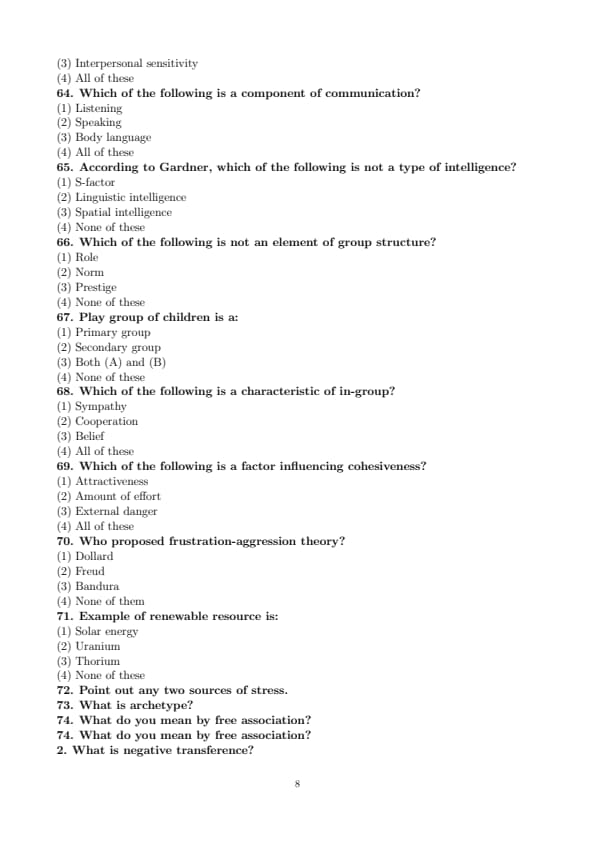
An effective psychologist possesses several key qualities that enable them to understand and assist clients effectively.
Firstly, competence is essential, meaning the psychologist has the necessary knowledge, training, and skills to apply psychological principles and techniques appropriately.
Secondly, keen observation skills allow the psychologist to notice subtle verbal and non-verbal cues, which can provide important insights into a client’s thoughts, feelings, and behaviors.
Lastly, interpersonal sensitivity enables the psychologist to build rapport, show empathy, and create a safe, supportive environment for clients to express themselves openly.
Together, these qualities help psychologists facilitate meaningful therapeutic relationships and promote positive outcomes for their clients. Quick Tip: Key qualities of psychologists include both technical skills and emotional intelligence.
Which of the following is a component of communication?
View Solution
Communication involves multiple components that work together to facilitate effective interaction between individuals.
These components include listening, which is the active process of receiving and interpreting messages accurately; speaking, which involves clearly expressing thoughts and ideas through verbal language; and body language, which encompasses non-verbal cues such as facial expressions, gestures, and posture.
Each of these elements plays a critical role in ensuring that the intended message is conveyed and understood correctly, thereby reducing misunderstandings and enhancing interpersonal connections.
Effective communication requires the integration of these components, as well as attention to context and cultural factors that influence how messages are sent and received. Quick Tip: Effective communication requires both verbal and non-verbal skills such as speaking and body language.
According to Gardner, which of the following is not a type of intelligence?
View Solution
Gardner's theory of multiple intelligences proposes that intelligence is not a single general ability but consists of various distinct types, including linguistic intelligence, which involves language skills, and spatial intelligence, which relates to the ability to visualize and manipulate objects in space.
In contrast, the S-factor refers to Spearman's concept of \textit{general intelligence, often denoted as \textit{g, which posits that a single underlying ability influences performance across diverse cognitive tasks.
Therefore, while Gardner's framework emphasizes multiple independent intelligences, the S-factor is part of a different theoretical approach focusing on a unified general intelligence.
As a result, the S-factor is not included in Gardner's theory of multiple intelligences. Quick Tip: Gardner proposed multiple intelligences beyond traditional IQ, emphasizing diverse cognitive abilities.
Which of the following is not an element of group structure?
View Solution
Role, norm, and prestige are all considered important elements of group structure that help define relationships and behaviors within a group.
A role refers to the set of expected behaviors and responsibilities assigned to an individual within the group, guiding how members interact and contribute to group goals.
Norms are the shared rules or standards of behavior that regulate members’ actions and maintain order and predictability within the group.
Prestige involves the level of respect or status an individual holds in the group, which can influence their influence and the dynamics of group decision-making.
Together, these elements shape the functioning of the group by establishing clear expectations and social hierarchies among members. Quick Tip: Group structure consists of roles, norms, status, and prestige that organize social interaction.
Play group of children is a:
View Solution
A play group of children is considered a primary group because it involves close, personal, and enduring relationships that are typical of such groups.
Primary groups are characterized by intimate face-to-face interactions, emotional bonds, and a strong sense of belonging among members.
In the context of a children's play group, members engage in shared activities, develop friendships, and experience socialization processes that shape their social and emotional development.
These relationships tend to be long-lasting and significant in influencing the attitudes and behaviors of the individuals involved.
Therefore, a children's play group exemplifies the essential qualities of a primary group. Quick Tip: Primary groups are characterized by intimate, face-to-face interaction, like families and play groups.
Which of the following is a characteristic of in-group?
View Solution
In-groups are characterized by shared sympathy, cooperation, and common beliefs among their members.
Members of an in-group typically feel a strong sense of belonging and loyalty to one another, which fosters trust and mutual support.
These groups often develop shared norms, values, and goals that guide behavior and strengthen social bonds.
The collective identity of an in-group can influence members' attitudes and actions, distinguishing them from those outside the group, often referred to as out-groups.
This dynamic plays a significant role in social cohesion, group solidarity, and sometimes intergroup conflict. Quick Tip: In-groups create a sense of belonging through mutual support and shared values.
Which of the following is a factor influencing cohesiveness?
View Solution
Cohesiveness in groups is influenced by several key factors that strengthen the bonds between members and enhance group unity.
One important factor is the attractiveness of group members, which includes the social appeal or likability that members have for one another, encouraging positive interactions and affiliation.
Another factor is the amount of effort that members put into the group, such as participation, commitment, and cooperation, which fosters a sense of shared purpose and investment.
Additionally, external threats or dangers can increase cohesiveness by uniting members against a common challenge, thereby reinforcing solidarity and mutual support.
Together, these factors help maintain group cohesion, improve functioning, and influence the overall effectiveness of the group. Quick Tip: Group cohesiveness strengthens when members find each other attractive, invest effort, and face common challenges.
Who proposed frustration-aggression theory?
View Solution
The frustration-aggression theory, proposed by John Dollard and his colleagues, suggests that frustration often leads to aggressive behavior.
According to this theory, when an individual's goal-directed behavior is blocked or thwarted, it creates a state of frustration. This frustration, in turn, can trigger aggressive responses as an attempt to remove or overcome the obstacle.
The theory emphasizes that aggression is a natural consequence of frustration, although not all instances of frustration result in aggression due to various mediating factors such as social norms and individual differences.
Dollard and his colleagues' work laid the foundation for understanding the relationship between emotional states and behavior, influencing later research in social psychology and aggression. Quick Tip: Frustration-aggression theory explains aggressive behavior as a response to blocked goals.
Example of renewable resource is:
View Solution
Solar energy is considered a renewable resource because it is naturally replenished by the sun and is sustainable over time.
Unlike non-renewable resources such as uranium and thorium, which are finite and deplete with use, solar energy is abundant and will continue to be available as long as the sun exists.
Renewable resources like solar energy provide a cleaner alternative to fossil fuels and nuclear materials, helping to reduce environmental pollution and mitigate climate change.
The sustainable nature of solar energy makes it a key component in the transition towards greener and more sustainable energy systems worldwide. Quick Tip: Renewable resources can be naturally replenished, such as solar, wind, and hydro energy.
Point out any two sources of stress.
View Solution
Two common sources of stress are:
Work-related pressures, such as meeting tight deadlines, managing a heavy workload, and handling job insecurity or performance expectations.
Interpersonal conflicts, including disagreements or misunderstandings within family, friendships, or social relationships, which can lead to emotional strain and distress. Quick Tip: Stress can arise from various sources including environmental demands and personal relationships.
What is archetype?
View Solution
An archetype is a universal, symbolic pattern or image that recurs across cultures and literature, representing fundamental human motifs and themes, as proposed by Carl Jung in his analytical psychology. Quick Tip: Archetypes are primal symbols or themes found universally in myths, dreams, and art.
What do you mean by free association?
View Solution
Free association is a psychoanalytic technique developed by Sigmund Freud, in which a person says whatever comes to mind without censorship or filtering.
This method allows unconscious thoughts, feelings, and memories to surface, providing insight into hidden conflicts and desires that may influence behavior.
By encouraging spontaneous verbal expression, free association helps the therapist identify patterns, symbols, and repressed material that are crucial for psychoanalytic interpretation and therapeutic progress.
This technique remains a foundational tool in psychoanalysis for exploring the unconscious mind. Quick Tip: Free association helps reveal hidden conflicts by encouraging spontaneous verbal expression.
What do you mean by free association?
View Solution
Free association is a psychoanalytic technique developed by Sigmund Freud, where a person says whatever comes to mind without censorship or filtering.
This process helps in uncovering unconscious thoughts, feelings, and desires that might be hidden from conscious awareness.
By allowing thoughts to flow freely, the therapist can gain insight into the individual's inner conflicts and unresolved issues.
Free association remains a fundamental method in psychoanalysis for exploring the unconscious mind and facilitating therapeutic progress. Quick Tip: Free association helps reveal hidden conflicts by encouraging spontaneous verbal expression.
What is negative transference?
View Solution
Negative transference refers to a psychological phenomenon in which a person projects negative emotions, such as anger, frustration, or resentment, onto a therapist (or other figures). These emotions are typically derived from unresolved feelings in past relationships, often with authority figures, such as parents. The patient might unconsciously transfer these feelings to the therapist during the course of treatment. Quick Tip: Negative transference can hinder therapeutic progress. It is important for both the therapist and the patient to be aware of and work through these emotions in order to foster a healthier therapeutic relationship.
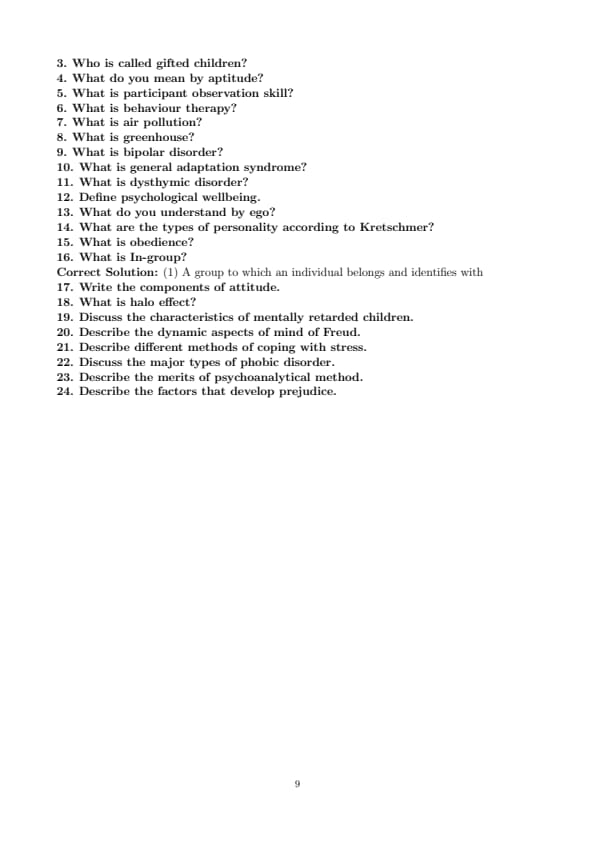
Who is called gifted children?
View Solution
Gifted children are those who show exceptional levels of aptitude or competence in one or more areas such as intellectual, creative, artistic, or leadership capacity. Typically, they have an IQ above 130 and may demonstrate advanced reasoning, problem-solving, or academic skills at an early age. Identification often involves a combination of IQ tests, academic performance, and teacher recommendations. Quick Tip: Giftedness is not limited to academics—students can be gifted in music, art, leadership, or creativity. Early identification and appropriate support are essential to help them reach their full potential.
What do you mean by aptitude?
View Solution
Aptitude refers to an individual’s natural ability or potential to acquire skills or knowledge in a particular domain. It indicates how easily and effectively someone can learn something new, such as mathematics, music, language, or mechanical tasks. Aptitude is often assessed through standardized tests to determine suitability for a certain field or profession. Quick Tip: Aptitude differs from achievement. While achievement shows what a person already knows or has learned, aptitude predicts what a person is capable of learning in the future.
What is participant observation skill?
View Solution
Participant observation is a qualitative research method where the researcher becomes actively involved in the setting or group being studied while simultaneously observing behaviors, interactions, and events. This technique helps gain deeper insights into social practices, cultural norms, and real-life dynamics by experiencing them firsthand. Quick Tip: Participant observation is commonly used in anthropology and sociology. It requires strong interpersonal skills, objectivity, and the ability to balance participation with critical observation.
What is behaviour therapy?
View Solution
Behaviour therapy is a form of psychotherapy that focuses on modifying harmful or unhelpful behaviors. It is based on the principles of classical and operant conditioning. Techniques such as reinforcement, punishment, systematic desensitization, and exposure therapy are used to help individuals develop more constructive behaviors and eliminate problematic ones. It is commonly used to treat phobias, anxiety disorders, and addictions. Quick Tip: Behaviour therapy emphasizes the present behavior and measurable outcomes, rather than delving into past experiences. It is action-oriented and often involves homework and practice outside therapy sessions.
What is air pollution?
View Solution
Air pollution refers to the contamination of the atmosphere by harmful chemicals, particulates, or biological materials that pose a risk to human health, animals, plants, and the environment. Common sources include vehicle emissions, industrial discharges, burning of fossil fuels, and natural sources like volcanic eruptions. Pollutants such as carbon monoxide, sulfur dioxide, nitrogen oxides, and particulate matter are especially dangerous when present in high concentrations. Quick Tip: Air pollution doesn't just affect breathing—it contributes to climate change, acid rain, and can damage crops. Reducing emissions and increasing green cover are key preventive measures.
What is greenhouse?
View Solution
A greenhouse is a structure made primarily of transparent materials like glass or plastic, designed to grow plants by providing them with a controlled environment. It traps heat from the sun, maintaining a warm internal temperature that helps plants grow even in cold weather. The greenhouse effect within this structure ensures optimal light, humidity, and protection from pests or harsh weather. Quick Tip: Don’t confuse a greenhouse with the “greenhouse effect” — the former is a physical structure for plants, while the latter is a global phenomenon where gases trap heat in Earth’s atmosphere.
What is bipolar disorder?
View Solution
Bipolar disorder is a mental health condition marked by extreme mood swings, including emotional highs (mania or hypomania) and lows (depression). During manic phases, individuals may feel euphoric, energetic, or irritable, while depressive phases involve feelings of sadness, hopelessness, and lack of energy. This disorder affects mood regulation and requires proper diagnosis and treatment. Quick Tip: Bipolar disorder is different from regular mood swings; it involves intense and prolonged episodes that significantly impact daily functioning and quality of life.
What is general adaptation syndrome?
View Solution
General Adaptation Syndrome (GAS) is a concept developed by Hans Selye that describes the body's short-term and long-term reactions to stress. It consists of three stages:
Alarm stage: Immediate reaction to stress, activating the fight-or-flight response.
Resistance stage: The body adapts to the stressor and tries to cope.
Exhaustion stage: Prolonged stress depletes the body's resources, leading to decreased function and potential illness. Quick Tip: Understanding GAS helps in recognizing how chronic stress affects health and highlights the importance of stress management techniques.
What is dysthymic disorder?
View Solution
Dysthymic disorder, also known as persistent depressive disorder, is a chronic form of depression characterized by a depressed mood lasting for at least two years in adults (one year in children and adolescents). Symptoms are usually less severe than major depression but can still significantly affect daily functioning and quality of life. Quick Tip: Dysthymia often goes undiagnosed because symptoms can be mistaken for personality traits like pessimism or low energy. Early recognition and treatment improve outcomes.
Define psychological wellbeing.
View Solution
Psychological wellbeing refers to an individual’s overall mental state characterized by positive feelings, a sense of purpose, personal growth, autonomy, and effective functioning in social and personal life. It is more than just the absence of mental illness; it includes flourishing in life and resilience in the face of challenges. Quick Tip: Psychological wellbeing is multidimensional, including emotional, psychological, and social components. Promoting it improves quality of life and reduces risk of mental disorders.
What do you understand by ego?
View Solution
In psychoanalytic theory, the ego is the conscious, rational part of the personality that mediates between the primitive desires of the id, the moral standards of the superego, and reality. It helps an individual make realistic and socially appropriate decisions, balancing instinctual needs and societal rules. Quick Tip: The ego operates on the reality principle, helping us delay gratification and navigate everyday life effectively.
What are the types of personality according to Kretschmer?
View Solution
Kretschmer classified personalities based on body types:
Endomorphic: Rounded, soft body; associated with a sociable, relaxed personality.
Mesomorphic: Muscular and strong build; linked to assertive and energetic traits.
Ectomorphic: Thin and fragile build; connected to introverted and sensitive characteristics. Quick Tip: Kretschmer's theory links physical constitution with temperament, but personality is influenced by many other factors including environment and experiences.
What is obedience?
View Solution
Obedience is a form of social influence where an individual complies with a direct order or command from an authority figure. It plays a significant role in maintaining social order but can sometimes lead to negative outcomes if authority is misused. Quick Tip: Obedience differs from conformity; obedience involves authority commands, while conformity is adapting behavior to fit group norms.
What is In-group?
Correct Solution: (1) A group to which an individual belongs and identifies with
View Solution
An in-group is a social group with which an individual identifies and feels a sense of belonging. Members of an in-group typically share common interests, values, or characteristics, and tend to favor and cooperate more with each other compared to outsiders. Quick Tip: Understanding in-group and out-group dynamics is key to studying social identity, prejudice, and intergroup behavior.
Write the components of attitude.
View Solution
Attitude is composed of three components:
Cognitive component: Beliefs, thoughts, and knowledge about the attitude object.
Emotional (Affective) component: Feelings or emotions towards the attitude object.
Behavioral component: The way one behaves or intends to behave toward the attitude object. Quick Tip: Remember, attitude affects behavior but is also influenced by cognition and emotions. This tri-component model is key to understanding human responses.
What is halo effect?
View Solution
The halo effect is a cognitive bias in which the perception of one positive quality of a person, object, or brand influences the overall evaluation of that person or thing. For example, if someone is physically attractive, people might also assume they have other positive traits like intelligence or kindness, even without evidence. Quick Tip: The halo effect can lead to unfair judgments; being aware of it helps improve objective decision-making.
Discuss the characteristics of mentally retarded children.
View Solution
Mentally retarded children, now more appropriately referred to as children with intellectual disabilities, typically exhibit the following characteristics:
Below-average intellectual functioning and slower cognitive development.
Difficulty in learning and understanding new concepts.
Delays in speech and language development.
Poor social and communication skills.
Challenges in daily living activities and adaptive behavior.
Possible motor coordination difficulties. Quick Tip: Early intervention, special education, and supportive environments can significantly improve the quality of life and development for children with intellectual disabilities.
Describe the dynamic aspects of mind of Freud.
View Solution
Freud’s dynamic model of the mind consists of three interacting components:
Id: The primitive, unconscious part that seeks immediate gratification of basic instincts and desires.
Ego: The rational part that mediates between the unrealistic id and the external real world; operates on the reality principle.
Superego: The moral conscience that incorporates societal norms and values, striving for perfection.
These three components are in constant interaction, creating internal psychological conflict that shapes behavior and personality. Quick Tip: Remember, the dynamic aspects refer to how these three forces constantly interact and influence mental life, not just their static presence.
Describe different methods of coping with stress.
View Solution
Methods of coping with stress include:
Problem-solving: Actively addressing the source of stress by finding solutions.
Seeking social support: Talking to friends, family, or professionals for emotional and practical help.
Relaxation techniques: Practices such as deep breathing, meditation, yoga, and progressive muscle relaxation to reduce physical and mental tension.
Cognitive restructuring: Changing negative thought patterns to more positive ones.
Time management: Organizing tasks to reduce pressure and avoid overload. Quick Tip: Effective coping combines both problem-focused and emotion-focused strategies to manage stressors and emotional responses.
Discuss the major types of phobic disorder.
View Solution
Phobic disorders are anxiety disorders characterized by excessive and irrational fears. The major types include:
Social Phobia (Social Anxiety Disorder): Fear of social situations where one might be judged or embarrassed.
Specific Phobia: Intense fear of a specific object or situation such as heights, animals, or flying.
Agoraphobia: Fear of places or situations where escape might be difficult or help unavailable, often leading to avoidance of public places. Quick Tip: Phobic disorders can be effectively treated with therapies like cognitive-behavioral therapy (CBT) and exposure therapy.
Describe the merits of psychoanalytical method.
View Solution
The psychoanalytical method, developed by Freud, has several merits:
It uncovers unconscious conflicts and motives that influence behavior.
Emphasizes the importance of early childhood experiences in personality development.
Helps in understanding complex mental disorders and emotional problems.
Provides a comprehensive framework for therapy focusing on insight and emotional healing.
Encourages exploration of dreams, free association, and transference, revealing hidden thoughts. Quick Tip: While psychoanalysis is intensive and time-consuming, it remains influential in understanding personality and psychotherapy.
Describe the factors that develop prejudice.
View Solution
Prejudice develops due to various factors including:
Stereotyping: Oversimplified and generalized beliefs about a group.
Social Learning: Prejudiced attitudes learned from family, peers, and media.
Economic Competition: Competition over scarce resources leading to hostility between groups.
In-group Bias: Favoring one's own group and discriminating against outsiders.
Authoritarian Personality: Individuals with rigid, conformist attitudes are more prone to prejudice. Quick Tip: Reducing prejudice involves promoting empathy, education, and cooperative intergroup contact.




Comments