




BIHAR Board Class 12 Question Paper 2025 PDF with Answer Key and Solutions PDF is available for download here.
BIHAR Board Class 12 Question Paper 2025 with Solutions PDF
| BIHAR Board Class 12 Question Paper 2025 with Solutions PDF |  Download Download |
Check Solutions |

The essence of management is:
View Solution
Coordination is considered the essence of management because it is required at every level and in every function of management.
While functions like staffing, organizing, and planning are important, they all need to be coordinated effectively to achieve the organizational goals in the most efficient way.
Without proper coordination, even the most well-structured plans and efforts may fail, as the various elements within the organization might work in silos, leading to inefficiencies.
Coordination ensures that:
All departments and individuals work in harmony: By ensuring that every part of the organization is aligned with the overall goals, coordination helps all departments and employees function as a unified whole, rather than working in isolation.
There is no duplication of efforts: When tasks and responsibilities are clearly coordinated, it minimizes the risk of duplication or overlapping efforts, saving both time and resources.
Resources are used optimally: Proper coordination ensures that resources—be it human, financial, or material—are allocated efficiently and are used to their full potential to achieve the desired outcomes.
Conflicts are minimized, and synergy is created: When all parts of the organization are well-coordinated, potential conflicts are reduced, and synergy is fostered, enabling individuals and teams to work together toward a common goal with enhanced effectiveness.
Thus, among all managerial functions, coordination acts as the binding force, making it the core or essence of management. It ensures that all efforts are aligned and directed toward the organization's overall success. Quick Tip: Coordination is not a separate function but is inherent in all other functions of management — planning, organizing, staffing, directing, and controlling.
Co-ordination is:
View Solution
Co-ordination is a fundamental and necessary function of management.
It ensures that all departments and employees are working harmoniously toward the common goals of the organization. Without coordination, there would be confusion, duplication of work, and inefficiency, which could ultimately derail the organization's progress.
Coordination facilitates the smooth integration of activities and resources, allowing the organization to function as a cohesive whole rather than a collection of disconnected parts.
Aligns activities across all levels and functions: Coordination ensures that tasks and activities at various levels of the organization are aligned with one another, preventing conflicts or misunderstandings between different departments or teams.
Helps unify individual efforts into organizational success: When all individuals and teams are working together toward a common goal, their collective efforts contribute to the broader success of the organization. Coordination is what brings these individual contributions together in a productive and effective way.
Ensures effective communication and synchronization: One of the key aspects of coordination is communication. It ensures that information flows smoothly across different departments, helping to synchronize efforts and prevent misunderstandings or errors that could impact the project's progress.
Therefore, co-ordination is not optional or a waste of time — it is essential for the smooth functioning of any organization. Without effective coordination, even the most well-planned strategies can falter, leading to inefficiency and failure to achieve objectives. Quick Tip: Remember: Co-ordination is called the "essence of management" because it integrates all functions and activities within an organization.
Management in India is:
View Solution
Management in India is necessary for the efficient functioning of organizations, economic growth, and the overall development of the country.
As India continues to grow as a global economic power, professional management plays a crucial role in driving both organizational success and national progress. Through strategic planning, resource allocation, and operational efficiency, management contributes to the country’s overall economic and social development.
Professional management helps in:
Optimal utilization of limited resources: Given that resources such as capital, labor, and time are finite, effective management ensures they are used in the most productive and efficient way possible. This prevents waste and maximizes the value generated from available resources.
Enhancing productivity and competitiveness: Good management practices enhance the productivity of both individuals and organizations, which, in turn, increases competitiveness. As businesses become more competitive, they can contribute more to the national economy and create a stronger global presence for India.
Creating employment and innovation: Management not only focuses on optimizing existing processes but also drives innovation. This leads to the creation of new industries, businesses, and jobs, contributing to the overall employment rate and economic stability.
Achieving social and business objectives: Effective management balances both business goals and social responsibilities, ensuring that businesses contribute to societal well-being while also achieving financial success. This harmony promotes sustainable growth and a positive business environment.
It is not a luxury or unnecessary; rather, it is an essential requirement for both private and public sector enterprises. Without professional management, organizations, regardless of their size or sector, are likely to face inefficiencies and struggles in meeting their objectives. Therefore, management is key to sustaining growth and success in a rapidly changing economy. Quick Tip: In a developing country like India, effective management plays a vital role in nation-building by promoting efficiency and growth across sectors.
The process of production design is divided into:
View Solution
The process of production design is typically divided into four categories:
Product Design: Product design focuses on creating the concept of the product, including its functionality, appearance, and user experience. This phase involves extensive research and development (R&D) to ensure that the product meets customer needs, industry standards, and is manufacturable. Effective product design helps reduce production costs, improve quality, and ensure customer satisfaction.
Process Design: Process design refers to the planning and structuring of the manufacturing processes required to produce the product. This involves selecting the appropriate technology, machinery, and processes that will be used in production. Efficient process design ensures that production is streamlined, cost-effective, and adaptable to changes in demand or market conditions.
Production Planning: Production planning is the process of organizing and scheduling production activities to meet delivery deadlines, quality standards, and cost constraints. It involves forecasting demand, determining resource requirements, and establishing timelines. Proper planning ensures that materials, labor, and equipment are available when needed, helping avoid delays and wastage.
Production Control: Production control focuses on overseeing the production process to ensure that operations are carried out according to plan. It includes monitoring progress, ensuring quality control, managing inventories, and adjusting plans as necessary. Effective production control helps maintain efficiency, minimize downtime, and ensure that the final product meets the required specifications.
Each of these categories plays a critical role in ensuring the product is designed, produced, and delivered efficiently and economically. The success of a product depends on how well these elements are integrated and executed. Quick Tip: Production design integrates product requirements with manufacturing capabilities, ensuring efficient and cost-effective production.
Marketing expenditure is a burden on:
View Solution
Marketing expenditure is considered a burden on all of these — industry, businessmen, and consumers — in the following ways:
Industry: Industries face increased costs in both production and promotion. To effectively market their products, companies must invest in advertising, market research, branding, and sales efforts. These costs add to the overall cost of doing business and can reduce profit margins if not managed efficiently.
Businessmen: Businessmen, particularly small and medium enterprises (SMEs), often need to allocate a significant part of their budget to marketing in order to remain competitive in the marketplace. This includes expenses related to online marketing, traditional advertising, and promotional activities. While necessary, this can strain resources, especially for businesses with limited capital.
Consumers: Ultimately, consumers bear the cost of marketing, as these expenses are often passed down to them through higher prices for products and services. Companies factor marketing costs into the final price, which means that consumers indirectly pay for these marketing campaigns. This can impact purchasing decisions, particularly for price-sensitive customers.
Hence, marketing costs are distributed across the entire supply chain and impact all parties involved — from manufacturers to end consumers. As such, careful management of marketing expenditure is crucial for minimizing its negative impact on prices and ensuring the sustainability of business practices. Quick Tip: While marketing is essential for growth, excessive marketing expenditure can increase product prices and reduce overall efficiency.
Naked debentures are:
View Solution
Naked debentures are those debentures which are unsecured, meaning they are not backed by any collateral or asset security.
In other words, when an investor purchases a naked debenture, they are not provided with any tangible assets or property as collateral to safeguard their investment.
This type of debenture is purely dependent on the financial stability and creditworthiness of the issuing company.
Thus, the risk for investors is higher compared to secured debentures, as they do not have the security of assets that could be liquidated in case of default.
However, if the issuing company is financially strong, the returns on these debentures can be attractive, as the company may offer higher interest rates to compensate for the additional risk.
Investors, therefore, need to carefully evaluate the company's financial health before investing in naked debentures.
Unlike secured debentures, they do not carry any charge on the company’s assets.
They generally carry higher risk and thus might offer higher interest rates. Quick Tip: Remember: Naked debentures = Unsecured debentures (no asset backing).
Price policy is:
View Solution
Price policy aims to balance the interests of all stakeholders — consumers, government, and product manufacturers. A well-designed price policy ensures fairness, market stability, and economic sustainability.
By setting appropriate price levels and regulating pricing mechanisms, a price policy helps achieve a balanced distribution of benefits across all parties involved.
A well-structured price policy ensures:
Consumers get fair prices: A fair price policy ensures that consumers are not overburdened by excessively high prices while still being able to access quality products and services. It protects consumers from price exploitation and promotes competition among producers.
Government controls inflation and market stability: A proper price policy allows the government to regulate inflation, prevent price manipulation, and maintain economic stability. By controlling prices on essential goods and services, the government can prevent the economy from overheating or experiencing excessive volatility.
Manufacturers can cover costs and earn profits: A balanced price policy ensures that manufacturers can set prices high enough to cover production costs while also generating a reasonable profit. Without adequate pricing, producers may struggle to stay in business, which can lead to shortages or reduced competition in the market.
Thus, an effective price policy is generally in favour of all parties involved, as it fosters a healthy, competitive market while ensuring economic balance and sustainability for consumers, manufacturers, and the economy as a whole. Quick Tip: Price policy plays a key role in regulating market dynamics and ensuring equitable benefits for all stakeholders.
Entrepreneurial traits deal with:
View Solution
Entrepreneurial traits primarily involve risk bearing behaviour, as entrepreneurs take on uncertainty in business ventures.
While job creation and profit-making are important outcomes of entrepreneurship, the willingness to take calculated risks is what truly differentiates entrepreneurs from others. Entrepreneurs are driven by the opportunity to innovate, grow, and succeed, even in the face of potential failure or financial loss.
The key elements of entrepreneurial risk bearing behaviour include:
Acceptance of uncertainty and potential losses: Entrepreneurs understand that taking risks involves uncertainty, but they are willing to bear that uncertainty to pursue new opportunities. They acknowledge the possibility of failure, yet they are prepared to take proactive steps to mitigate risks and learn from setbacks.
Innovation and economic growth through risk-taking: Entrepreneurs often innovate by introducing new products, services, or business models, which require taking risks. These innovations drive economic growth by creating new industries, markets, and job opportunities. Their willingness to take risks not only contributes to their own success but also drives broader societal progress.
In conclusion, while entrepreneurial ventures are inherently risky, it is the entrepreneurs' ability to bear these risks, innovate, and drive economic progress that plays a pivotal role in shaping industries and markets. Quick Tip: Risk bearing is a core characteristic that defines entrepreneurial spirit and success.
..... is easy in formation.
View Solution
Sole trading, also called sole proprietorship, is the easiest form of business to form because:
Minimal legal formalities: Sole proprietorships are subject to very few legal requirements, making them easier to establish compared to other business structures. There are no complex registration or documentation processes required, which reduces the burden on the entrepreneur.
Can be started by a single individual: Unlike partnerships or corporations that require multiple individuals or shareholders, a sole proprietorship can be initiated by a single individual. This allows for full control and decision-making power without the need for agreement with partners or shareholders.
Low cost and simple management: The operational costs for a sole proprietorship are generally low, as there is minimal need for staff or office infrastructure. Additionally, managing a sole proprietorship is relatively straightforward since the owner has complete control over operations, allowing for fast decision-making and flexibility.
In contrast, partnership and joint stock companies require more legal procedures, registration, and formalities. These business structures involve greater complexity in terms of governance, legal compliance, and the division of profits and liabilities. Therefore, while sole proprietorships are easier to establish, other forms of business may offer benefits in terms of shared responsibility and resource pooling. Quick Tip: Sole proprietorship is the simplest and quickest form of business formation.
Selection of enterprise depends on:
View Solution
The selection of an enterprise largely depends on the self ability of the entrepreneur, which includes their skills, knowledge, financial capacity, and willingness to take risks.
These factors are essential as they directly impact the entrepreneur's ability to manage and grow the business effectively.
The skills and knowledge an entrepreneur possesses will influence their decision-making, problem-solving, and overall leadership within the business.
Similarly, financial capacity plays a crucial role in determining the entrepreneur's ability to invest in and sustain the enterprise.
Additionally, the willingness to take risks is often what sets successful entrepreneurs apart from others, as it involves venturing into uncertain markets or new ideas.
While factors like the size of the trade or business and the rights associated with the enterprise are important, they tend to be secondary to the entrepreneur’s own capabilities and mindset.
In essence, the entrepreneur’s self ability is the key factor that determines the success of the enterprise in the long run. Quick Tip: An entrepreneur’s ability and resources primarily determine the type and scale of enterprise chosen.
The form of organisation is determined by:
View Solution
The form of organisation is primarily determined by the size of business. Larger businesses tend to have more complex organizational structures such as corporations, while smaller businesses often operate as sole proprietorships or partnerships. Quick Tip: Size of the business influences the choice of organizational form due to factors like capital requirement, management complexity, and liability.
An essential condition of a successful entrepreneur is:
View Solution
A successful entrepreneur requires a combination of leadership, control, and innovation. Each of these traits plays a crucial role in ensuring the success of the entrepreneur and their venture.
These three qualities work together to help the entrepreneur navigate challenges, inspire their team, and stay ahead of the competition.
The key aspects of each trait are:
Leadership: Leadership is essential for motivating and guiding the team towards the common goals of the business. An effective leader can inspire confidence, drive, and commitment among employees and stakeholders. Leadership involves decision-making, communication, and the ability to handle challenges in a way that encourages team collaboration and growth.
Control: Control refers to the entrepreneur's ability to manage resources effectively, ensuring that time, capital, and human resources are utilized efficiently. Entrepreneurs need to keep track of finances, operations, and team performance to ensure that the business stays on track and moves toward its objectives. Control is about maintaining order, monitoring progress, and making adjustments when needed.
Innovation: Innovation is the driving force behind business growth. Entrepreneurs need to be creative and open to new ideas, whether it's developing new products, improving existing ones, or finding more efficient processes. Innovation keeps the business competitive and responsive to market changes, enabling the entrepreneur to adapt and thrive in dynamic environments.
Therefore, all these traits — leadership, control, and innovation — work together to contribute to entrepreneurial success. By mastering these qualities, entrepreneurs can build strong businesses, motivate their teams, manage risks, and continuously innovate to remain competitive in the marketplace. Quick Tip: Successful entrepreneurship is a blend of multiple skills and qualities working in harmony.
Which is defined as discovery of business opportunities?
View Solution
The discovery of business opportunities is best defined by invention, which involves creating new ideas, products, or processes that open up new markets or enhance existing ones.
Invention is the driving force behind innovation, as it allows businesses to distinguish themselves in competitive markets.
By inventing new solutions or improving existing ones, entrepreneurs can tap into unmet needs, provide better value, and establish a unique market position.
Marketing: Marketing is crucial as it focuses on promoting products to the target audience, raising awareness, and encouraging sales.
Promotion: Promotion involves creating and implementing communication strategies to convey the value of a product or service to potential customers. This can include advertising, public relations, and sales tactics.
Invention: Invention is the core of identifying new opportunities. It is the initial spark that leads to innovation, setting the foundation for creating novel products or services that meet customer needs or solve existing problems.
Each of these elements plays an important role in business development, but invention is the key to discovering and capitalizing on new opportunities. Quick Tip: Business opportunities arise through invention and innovation, forming the foundation of entrepreneurship.
A good plan is:
View Solution
A good plan should be flexible to accommodate unforeseen changes and uncertainties.
While it might require significant effort and time to create a plan, its adaptability is crucial for long-term success and resilience in dynamic environments.
Flexibility allows a plan to adjust in response to new information, changing conditions, and unexpected challenges, helping the business stay on track even when circumstances evolve.
Expensive and time-consuming plans: While detailed and well-researched plans can be expensive and time-consuming to develop, their flexibility ensures resilience in the face of unforeseen events or market shifts.
Rigid plans: A rigid plan, one that does not allow for adjustments, often fails to adapt to changing circumstances. This inflexibility can lead to missed opportunities or the inability to address emerging challenges effectively.
In conclusion, while a well-crafted plan is important, it is the ability to adapt and adjust that will truly determine the success of the venture. Quick Tip: Flexibility in planning allows businesses to respond effectively to challenges and opportunities.
DPR is a/an:
View Solution
DPR stands for Detailed Project Report, which serves as an implementation plan.
A Detailed Project Report is a comprehensive document that outlines the full scope of a project, providing a structured framework for its execution.
It includes various aspects of the project such as technical, financial, and operational details, which help ensure that all aspects of the project are thoroughly planned and accounted for.
The DPR serves as a guide for all stakeholders, including project managers, investors, and team members, to align on objectives, strategies, and timelines.
Key components of a DPR typically include:
Technical Details: This includes the technology or methodology to be used, the technical requirements, design specifications, and any research or development needed.
Financial Details: A comprehensive financial breakdown of the project, including estimated costs, funding sources, and budget allocation for different phases.
Operational Details: This includes the operational plan for the project's implementation, including timelines, resource allocation, and staffing requirements.
In essence, the DPR acts as a roadmap for the successful completion of the project, ensuring that all crucial aspects are planned for and managed efficiently.
It outlines how the project will be implemented.
Helps stakeholders understand the scope and execution. Quick Tip: DPR is essential for turning project ideas into actionable steps.
Project report is the summary of:
View Solution
A project report is a comprehensive summary that includes facts, information, and analysis related to the project.
This report serves as a crucial tool for stakeholders, providing them with the necessary insights to evaluate the project's feasibility, assess risks, and make informed decisions moving forward.
The project report essentially bridges the gap between raw data and actionable conclusions, helping decision-makers understand the scope, potential, and challenges of the project.
Facts: Facts provide the concrete data and objective information that form the foundation of the report. These can include numerical data, timelines, and documented observations that represent the project's current status.
Information: Information organizes the raw facts into a coherent structure, turning the data into meaningful content. This is where the facts are presented in context, providing stakeholders with an understanding of the project's purpose, progress, and goals.
Analysis: Analysis interprets the data and information to derive conclusions, identify trends, and assess implications. It is through the analysis that stakeholders can evaluate the project's success, potential challenges, and the effectiveness of the strategies employed.
In summary, a project report serves as a crucial communication tool that consolidates facts, information, and analysis to guide informed decision-making throughout the project lifecycle. Quick Tip: A well-prepared project report integrates facts, information, and analysis for clarity and decision-making.
Money spent on the preparation of project is:
View Solution
Money spent on the preparation of a project is considered an expenditure because it is a cost incurred during the planning stage and does not generate immediate returns.
Expenditure represents money spent on activities that are essential to the project's initiation but do not directly contribute to the generation of income or assets in the short term.
Although it is a necessary part of the project development process, the preparation cost does not create tangible capital assets or generate returns right away.
Not an investment: It is not classified as an investment because it does not lead to the creation of capital assets or other long-term economic benefits. Investments typically result in the acquisition of valuable assets, which can be used for generating future returns.
Necessary for project development: Despite not generating immediate returns, expenditure is necessary for the proper planning and development of a project. Without this upfront investment in time, resources, and preparation, the project cannot proceed effectively or efficiently.
In conclusion, while expenditures do not generate direct returns, they are a critical step in ensuring the smooth execution of a project and laying the groundwork for future success. Quick Tip: Project preparation costs are treated as expenditures, part of initial project expenses.
Project appraisal is a/an:
View Solution
Project appraisal involves evaluating the feasibility and potential success of a project, primarily focusing on its profitability analysis. The goal is to determine whether the project is financially viable, sustainable, and worth pursuing. This process helps investors and decision-makers assess risks and make informed choices about whether to move forward with the project or not.
A thorough project appraisal typically includes financial projections, cost-benefit analysis, and evaluation of the project's alignment with business objectives.
In the context of project appraisal, the following distinctions are important:
Expert analysis: Expert analysis refers to the evaluation of the project by specialists or professionals with deep knowledge in specific areas relevant to the project, such as finance, engineering, or market research. These experts provide valuable insights and guidance, ensuring that all aspects of the project are assessed thoroughly and accurately.
Export analysis: Export analysis, on the other hand, refers to the study of foreign trade dynamics, including the potential for selling goods and services in international markets. While export analysis is important in the broader context of international business, it is not directly related to the profitability or viability analysis of a specific project.
Thus, project appraisal is focused on understanding the financial and operational feasibility of a project, and distinguishing it from areas like export analysis ensures that the evaluation stays on track and relevant to the project’s core objectives. Quick Tip: Project appraisal ensures that investments lead to profitable and sustainable outcomes.
NPV method relates with:
View Solution
The Net Present Value (NPV) method takes into account the time value of money, which is a financial principle stating that money available now is worth more than the same amount in the future. This is because money today can be invested to earn a return, while money received in the future does not have the same earning potential.
NPV is used to evaluate investment opportunities by comparing the present value of cash inflows with the present value of cash outflows. By considering the time value of money, it provides a more accurate measure of an investment's profitability.
The key aspects of NPV include:
NPV discounts future cash flows to present values: In order to compare future cash flows with current investments, NPV discounts these future amounts back to their present value using a discount rate. The discount rate typically reflects the required rate of return or the cost of capital. This process ensures that future cash inflows are appropriately valued in today's terms.
Inflated value is not the basis of NPV: NPV does not rely on inflated or nominal values, but instead on real values that have been adjusted for inflation. By using real values, the NPV method ensures that the evaluation is based on the actual purchasing power of money, offering a more accurate assessment of profitability and investment viability.
Thus, NPV provides a reliable method for assessing the financial attractiveness of a project or investment by considering the time value of money, ensuring that future cash flows are appropriately valued and inflation is accounted for. Quick Tip: NPV helps in evaluating the profitability of investments by considering the value of money over time.
Which of the following is a kind and source of resources?
View Solution
Resources come in various forms, each contributing uniquely to the production and operational processes of a business. These resources are classified into the following key categories:
Physical resources: Physical resources include tangible assets such as \textit{machinery, \textit{land, buildings, and equipment. These resources are fundamental for the production of goods and services, as they are used in the manufacturing or delivery process. Physical resources often represent a significant investment and are essential for maintaining production capacity and operational efficiency.
Technical resources: Technical resources refer to the specialized knowledge, \textit{skills, and \textit{technology required to carry out production processes or deliver services. These resources can include machinery and software systems that enable automation, as well as the technical expertise of employees. Advances in technology play a crucial role in improving productivity and innovation within a business.
Human resources: Human resources refer to the \textit{labor and \textit{expertise provided by employees and workers. This includes the collective skills, knowledge, and experience of the workforce, which are critical for making decisions, solving problems, and ensuring that day-to-day operations run smoothly. Human resources are often considered one of the most valuable assets of a business because they drive innovation, customer service, and organizational growth.
Together, these resources—physical, technical, and human—constitute the essential inputs for production and business operations. Efficiently managing and optimizing the use of these resources is crucial for maximizing productivity and achieving business objectives. Quick Tip: All types of resources—physical, technical, and human—are vital for business success.
Various public utility undertakings have to invest heavily on:
View Solution
Public utility undertakings such as \textit{electricity, \textit{water supply, and \textit{transportation require heavy investments in fixed assets. These assets are crucial for the establishment, maintenance, and expansion of the infrastructure necessary to provide reliable services to the public.
Fixed assets in the context of public utilities typically include:
Infrastructure: This encompasses the physical structures and systems needed to deliver the service, such as power plants, water treatment facilities, pipelines, electrical grids, and transportation networks. The quality and capacity of infrastructure directly impact the efficiency and reliability of the service provided.
Machinery: This includes the equipment and machinery used in the operations of public utilities, such as turbines, pumps, transformers, and vehicles for transportation services. Regular maintenance and upgrading of machinery are necessary to ensure smooth operations and minimize downtime.
Equipment: Specialized equipment, such as meters for measuring electricity or water usage, control systems for managing the flow of services, and safety equipment, is essential for daily operations. These assets help ensure service quality, monitor usage, and prevent system failures.
Investing in these fixed assets is essential for public utility companies to operate efficiently, meet the growing demand for services, and ensure long-term sustainability. However, the high capital requirements for these investments often necessitate government support or long-term financing arrangements. Quick Tip: Fixed assets are long-term assets essential for public utility services.
The source of fixed capital is not:
View Solution
Fixed capital is typically raised through long-term sources, which provide the necessary funds for the establishment and expansion of business operations. These sources are essential for acquiring assets such as buildings, machinery, and equipment that are required for long-term business activities. The primary sources of fixed capital include:
Issue of shares: Companies often raise fixed capital by issuing shares to the public or private investors. This allows the company to raise equity capital without incurring debt. Shareholders become partial owners of the company and are entitled to dividends and a share in the company’s profits, depending on the number of shares they hold. The issue of shares is a popular method of raising funds as it does not create an obligation for repayment, unlike loans or debentures.
Debentures: Debentures are long-term debt instruments issued by a company to raise capital. These are essentially loans that must be repaid over a set period, often with interest. Debentures provide the company with immediate funds without diluting ownership, but they create a liability that the company must repay, usually along with interest. Debenture holders are creditors, and they do not have voting rights in the company unless specified in the terms.
Long-term loans (e.g., from IFCI): Long-term loans from financial institutions like the Industrial Finance Corporation of India (IFCI) or commercial banks are another common source of fixed capital. These loans are repaid over a long period, often several years, and are used to finance capital-intensive projects. While loans provide immediate capital, they come with the obligation of interest payments and eventual repayment of principal.
It is important to note that creditors represent short-term liabilities, such as accounts payable or trade credit, and are not considered a source of fixed capital. Creditors are typically owed for short-term purchases or operational expenses, and their obligations are settled within a short period, usually within a year. Unlike long-term sources of fixed capital, creditors do not provide funding for the long-term acquisition of assets.
In conclusion, the sources of fixed capital are long-term in nature and enable businesses to invest in infrastructure, machinery, and other assets that support growth and long-term sustainability. Quick Tip: Fixed capital requires long-term funding sources, unlike creditors which provide short-term credit.
Determinant of working capital is:
View Solution
Working capital is the capital required by a business to cover its day-to-day operational expenses, such as paying wages, purchasing raw materials, and covering other short-term costs. The amount of working capital needed can vary depending on several factors, including the size of the enterprise, the period of the manufacturing process, and the availability of raw materials. Let’s explore how each of these factors influences working capital needs:
Size of the enterprise: Larger enterprises typically require more working capital due to the increased volume of operations. Larger businesses have more employees, higher production volumes, and often operate in multiple markets, all of which require more funds to manage daily activities. Small businesses, on the other hand, may operate with a leaner capital structure and need less working capital, as their operations are generally more focused and less complex.
Period of the manufacturing process: The length of the manufacturing cycle plays a crucial role in determining working capital requirements. If a business has a long production cycle, where raw materials are converted into finished goods over an extended period, it will need a higher amount of working capital to cover the costs incurred during that time. Conversely, businesses with a short production cycle can operate with less working capital, as they are able to quickly turn raw materials into finished goods and generate revenue.
Availability of raw materials: If raw materials are easily available and can be purchased in bulk, the business can negotiate favorable payment terms, which may reduce the immediate need for working capital. On the other hand, if raw materials are scarce or require long lead times, the business may need to maintain a higher level of working capital to ensure that production continues without delays. The costs and availability of raw materials directly impact how much cash flow is needed to maintain ongoing operations.
In conclusion, working capital is influenced by a variety of internal and external factors that directly impact how much capital a business needs to maintain smooth daily operations. By carefully managing these factors, a business can optimize its working capital, ensuring it has enough liquidity to meet operational needs without overextending its resources. Quick Tip: Multiple factors collectively determine the working capital requirements of a business.
The determinant of bonus decision is:
View Solution
The decision to declare a bonus is a critical one for a company, as it involves both financial considerations and the well-being of employees. This decision depends on several key factors that collectively determine whether the company can afford to pay a bonus and how much can be distributed. These factors include:
Amount of profit available: The most direct factor in deciding whether to declare a bonus is the company’s profitability. If the business has made sufficient profit during the financial year, it can afford to reward its employees with a bonus. Profitability indicates that the company has the necessary financial cushion to distribute a portion of its earnings to employees without jeopardizing its financial health.
Liquidity of funds: Even if the company is profitable, it may still face challenges in declaring a bonus if there is insufficient liquidity. Liquidity refers to the cash flow available to the business. A company might be profitable on paper but may have money tied up in assets, accounts receivable, or long-term investments. Therefore, the company must ensure it has enough liquid funds to pay the bonus without affecting its ability to meet other short-term obligations, such as operating expenses or debt repayments.
Age of the company: The age and maturity of the company can also play a role in its ability to declare a bonus. Younger companies, especially startups or businesses in their early growth stages, may need to reinvest profits into the business to fuel expansion, rather than distributing bonuses. Established companies, with stable revenue streams and a solid financial foundation, are more likely to declare bonuses regularly as they have a track record of profitability and liquidity.
In conclusion, the decision to declare a bonus is not based on a single factor but on a combination of profitability, liquidity, and the company’s maturity. These factors must be carefully considered to ensure that the bonus does not strain the company’s financial resources and that it is sustainable in the long term. Quick Tip: Bonus decisions are influenced by profitability, cash availability, and company’s maturity.
The part of regular working capital is:
View Solution
Regular working capital refers to the capital needed by a business to meet its day-to-day operational expenses. It includes both permanent working capital and temporary working capital, each of which plays a unique role in maintaining smooth business operations.
Among these, permanent working capital is a key component. Permanent working capital represents the minimum amount of investment required in current assets to ensure that the business can operate continuously. It is often referred to as \textit{fixed working capital, as it remains relatively constant over time and is essential for the ongoing functioning of the business.
Permanent working capital is typically required to maintain the following:
Inventory levels: Businesses need a certain amount of inventory to fulfill customer orders, even during off-peak periods. This level of inventory must be maintained consistently, irrespective of seasonal fluctuations in sales.
Receivables: A business needs to ensure that a portion of its capital is allocated to accounts receivable, as it allows the company to provide credit to customers while still being able to operate.
Cash reserves: Sufficient cash must be available to cover day-to-day expenses such as salaries, rent, and utilities, even when revenues are not immediately coming in.
Permanent working capital is crucial because it ensures that a business can continue its operations without disruption, regardless of seasonal changes or market fluctuations. Unlike temporary working capital, which can vary based on operational needs, permanent working capital is considered a stable and long-term investment.
In summary, permanent working capital (or fixed working capital) is the minimum required investment in current assets to keep a business running. It serves as the foundation of regular working capital and helps ensure that the company has enough resources to meet its ongoing operational needs. Quick Tip: Permanent working capital is essential and always maintained in the business.
Net working capital means:
View Solution
Net working capital (NWC) is a key financial metric that measures the liquidity position of a business and its ability to meet short-term obligations. It is calculated as the difference between current assets and current liabilities.
Current assets are assets that are expected to be converted into cash or used up within a year or within the company’s operating cycle. These include cash, accounts receivable, inventory, and other short-term assets.
Current liabilities, on the other hand, are obligations that the company must settle within a year or during the company’s operating cycle. These typically include accounts payable, short-term loans, and other debts due for payment in the short term.
Thus, Net Working Capital is calculated as:
\[ Net Working Capital (NWC) = Current Assets - Current Liabilities \]
This metric provides valuable insights into the company’s ability to pay its short-term debts with its short-term assets. A positive NWC indicates that the company has more current assets than current liabilities, suggesting good liquidity and the ability to cover short-term obligations. On the other hand, a negative NWC indicates that the company may face liquidity issues, as it has more short-term liabilities than assets, which could lead to difficulties in paying off its obligations.
Net working capital is an important indicator for creditors, investors, and management as it provides a snapshot of the company's financial health. Proper management of working capital ensures that the business can continue to operate smoothly without the risk of running into cash flow problems.
In conclusion, net working capital serves as a measure of a company’s liquidity, helping stakeholders assess the firm’s ability to meet short-term financial commitments. Effective management of NWC is crucial for sustaining day-to-day operations and ensuring financial stability. Quick Tip: Net working capital = Current Assets − Current Liabilities; a key indicator of short-term financial health.
Increase in Fixed Assets due to cash purchase is:
View Solution
When fixed assets increase due to a cash purchase, it indicates that the company is utilizing its available funds to acquire long-term assets, such as machinery, equipment, or property. In this case, cash is being used, and as a result, it represents an application of funds.
An application of funds refers to the use or outflow of financial resources by the company to acquire assets or make payments that contribute to its long-term operations. In this scenario, the cash outflow is used to purchase fixed assets, which are considered non-current assets. These assets help in the company’s production processes and long-term growth.
When cash is spent on acquiring fixed assets, it results in the following financial impact:
Decrease in cash balance: The immediate effect of using cash to purchase fixed assets is a reduction in the company’s cash reserves. This cash outflow decreases the company’s liquidity, which must be carefully managed to avoid cash shortfalls.
Increase in fixed assets: Simultaneously, the company’s balance sheet reflects an increase in its fixed assets. These are long-term investments that will be used over many years, contributing to the company’s ability to generate revenue in the future.
Impact on financial position: Though the company's cash reserves decrease, the overall value of its assets increases. This reflects a shift in the company’s financial structure from liquid assets (cash) to illiquid, long-term assets (fixed assets).
In conclusion, purchasing fixed assets with cash is an example of the application of funds. It involves an outflow of funds from the business, reducing liquidity in exchange for acquiring assets that will provide long-term benefits. Proper management of these applications is critical for maintaining a healthy balance between liquidity and asset growth. Quick Tip: Purchase of fixed assets with cash reduces cash balance, representing application of funds.
Current Assets include:
View Solution
Current assets are defined as assets that can be easily converted into cash or used up within one year or within the company’s operating cycle, whichever is longer. These assets are essential for the day-to-day functioning of a business as they are used to meet short-term financial obligations. Common examples include cash, inventory, and accounts receivable.
One important category of current assets is debtors. Debtors represent the amounts of money owed to the business by customers who have purchased goods or services on credit. These amounts are expected to be collected within the short term, typically within a year. Debtors are considered current assets because they are expected to be converted into cash within a short time frame.
On the other hand, furniture and goodwill do not fall under current assets:
Furniture: Furniture is a physical, tangible asset used in the company’s operations. It is considered a \textit{fixed asset, also known as non-current asset, because it is expected to provide long-term utility to the business and is not meant for quick conversion into cash.
Goodwill: Goodwill is an \textit{intangible asset that represents the value of a company’s brand, reputation, customer relationships, and other non-physical assets. Goodwill is considered a long-term asset, as it is not easily convertible to cash and is expected to have an indefinite useful life.
Finally, investments can vary in nature:
Long-term investments: These are investments made in stocks, bonds, or other securities that the company intends to hold for more than one year. These are classified as non-current assets on the balance sheet.
Current investments: Investments that are intended to be sold or liquidated within a year are considered current assets. For example, short-term marketable securities that can be quickly converted into cash are classified as current assets.
In conclusion, current assets are crucial for a business’s liquidity and short-term operational needs. Debtors, being amounts owed to the business, are classified as current assets, while furniture and goodwill fall under fixed and intangible assets, respectively. Investments can be either long-term or current assets, depending on the intention behind holding them. Quick Tip: Current assets include cash, debtors, inventory, and other assets convertible to cash within a year.
Planning is:
View Solution
Planning involves setting goals and objectives and is fundamentally a mental process that guides decision-making and action towards achieving desired outcomes. Hence, it is goal-oriented, objective-oriented, and a mental process. Quick Tip: Planning is a comprehensive process involving mental activity aimed at achieving specific goals and objectives.
The function of decision making is of:
View Solution
Decision making is a critical function performed at all levels of management—lower, middle, and top. Each level makes decisions relevant to their scope of authority and responsibility. Quick Tip: Effective management requires decision making at every organizational level.
According to George R. Terry, the types of planning are:
View Solution
George R. Terry identified six types of planning, which provide a structured framework for organizing activities and achieving objectives in management. Quick Tip: Remember: Terry's management theory includes 6 types of planning.
Planning is for:
View Solution
Planning primarily focuses on future actions and decisions. It involves forecasting and preparing for upcoming events to achieve desired goals effectively. Quick Tip: Planning is future-oriented and helps guide actions and decisions ahead.
“A plan is a trap to capture the future.” This statement is of:
View Solution
The statement “A plan is a trap to capture the future” is attributed to Newman, emphasizing how planning helps anticipate and prepare for future uncertainties. Quick Tip: Newman’s quote highlights the essence of planning as a tool to foresee the future.
Of all managerial activities, planning is the:
View Solution
Planning is considered the beginning of all managerial activities because it sets the direction and foundation for other functions like organizing, staffing, directing, and controlling. Quick Tip: Effective management starts with proper planning as the first step.
Planning is:
View Solution
Planning is an essential function of management that helps set objectives and outline actions, making it necessary for efficient and effective organizational performance. Quick Tip: Planning prevents wastage and provides a roadmap for achieving goals.
Which of the following is a type of opportunity?
View Solution
Opportunities can be existing in the environment or created by individuals or organizations through innovation and initiative. Quick Tip: Opportunities arise both from external environments and through proactive creation.
Economic policies determine:
View Solution
Economic policies influence the overall environment in which businesses operate, affecting both the volume (scale) and direction (focus) of business activities. Quick Tip: Economic policies shape business decisions by impacting market conditions and growth opportunities.
Which of the following is important for environment?
View Solution
All aspects — searching for opportunities, maintaining existence, and achieving success — are important for the environment as they contribute to sustainable development and growth. Quick Tip: A balanced approach considering opportunities, survival, and success supports environmental sustainability.
Subsidy is:
View Solution
A subsidy is a form of financial aid or concession provided by the government to reduce the cost of goods or services, thereby encouraging production or consumption. Quick Tip: Subsidies help support businesses or consumers by lowering costs.
Which of the following is not a method of demand forecasting?
View Solution
Demand forecasting methods include survey, statistical, and leading indication methods. Production method is not a recognized method of demand forecasting. Quick Tip: Choose forecasting methods based on data availability and business context.
Which of the following is not to be considered while selecting product or service?
View Solution
While selecting a product or service, marketing assessment, competition, and practicability are key factors. Product planning is a subsequent step after selection. Quick Tip: Focus on market and feasibility factors before product planning.
Lack of standardisation of the equipment is due to:
View Solution
Lack of standardisation of equipment typically arises from external constraints such as varying market demands, diverse supplier standards, and industry practices. Quick Tip: External factors often influence standardisation in industries.
Modernisation improves:
View Solution
Modernisation leads to improvements in products, processes, and production capacity by incorporating new technologies and methods. Quick Tip: Modernisation enhances overall efficiency and competitiveness.
Which of the following is not considered with quantifiable projects?
View Solution
Family welfare projects are generally qualitative and difficult to quantify, unlike power generation, mineral production, and water supply which are measurable and quantifiable. Quick Tip: Quantifiable projects have measurable outcomes; family welfare is mostly qualitative.
Project life cycle is not:
View Solution
The typical project life cycle includes stages like normalisation and stabilisation, but "instructive stage" is not a recognized phase. Quick Tip: Understand common project life cycle stages for better project management.
Expansion project helps in:
View Solution
Expansion projects primarily aim to capitalize on additional opportunities by increasing capacity or market reach. Quick Tip: Expansion projects focus on growth and exploiting new opportunities.
A project is:
View Solution
A project is typically considered a cluster of related activities aimed at achieving a specific objective. Quick Tip: Projects involve coordinated tasks grouped together for a goal.
Techno-economic analysis deals with the identification of:
View Solution
Techno-economic analysis primarily focuses on understanding the demand potential to ensure the viability and feasibility of projects. Quick Tip: Identifying demand potential is crucial in techno-economic assessments.
In relation to Indian industries entrepreneurship is:
View Solution
Entrepreneurship is essential for the growth, innovation, and development of Indian industries. Quick Tip: Entrepreneurship drives economic progress and industrial development.
Which of the following characteristics should an entrepreneur have?
View Solution
An entrepreneur should possess innovation, risk-taking ability, and initiative to successfully start and manage ventures. Quick Tip: Key entrepreneurial traits include innovation, risk-taking, and initiative.
Entrepreneur assists in:
View Solution
Entrepreneurs play a vital role in poverty alleviation, economic development, and capital formation by creating jobs and driving economic activity. Quick Tip: Entrepreneurship contributes broadly to economic and social progress.
Which of the following is a quality of a successful entrepreneur?
View Solution
A successful entrepreneur must possess decision-making ability, leadership ability, and risk-bearing ability. Quick Tip: Successful entrepreneurs combine multiple key qualities including decision-making, leadership, and risk-taking.
Which of the following is a concept of entrepreneurship?
View Solution
Entrepreneurship encompasses both professional and result-oriented concepts, combining skills and outcome focus. Quick Tip: Remember that entrepreneurship involves a professional approach as well as result orientation.
“Basically entrepreneurship is a creative activity.” Who said this?
View Solution
Joseph Schumpeter is credited with defining entrepreneurship as a creative activity involving innovation and new combinations. Quick Tip: Schumpeter emphasized innovation as the core of entrepreneurship.
Entrepreneurship is a game of
View Solution
Entrepreneurship primarily requires skill to identify opportunities, innovate, and manage resources effectively. Quick Tip: Skills such as decision-making, leadership, and risk management are vital in entrepreneurship.
Purchase of goodwill by issue of debenture is
View Solution
When goodwill is purchased by issuing debentures, no actual cash flow occurs as it is an accounting entry where debentures are issued in exchange for goodwill. Quick Tip: Issuing debentures to purchase assets like goodwill does not involve cash flow immediately.
Which of the following is a non-current liability?
View Solution
A mortgage loan is a non-current liability because it is a long-term debt typically payable over several years.
Bank overdraft and outstanding salaries are current liabilities, and prepaid expenses are assets. Quick Tip: Non-current liabilities are obligations payable after one year, such as mortgage loans and bonds.
The term ‘Fund’ as used in Fund Flow Analysis means
View Solution
In fund flow analysis, 'fund' refers to working capital, which is the excess of current assets over current liabilities. It reflects the liquidity available to the business for its operations. Quick Tip: Fund Flow Analysis primarily deals with changes in working capital, i.e., excess of current assets over current liabilities.
Operating ratio is
View Solution
Operating ratio measures the efficiency of a company's management by comparing operating expenses to net sales. It is classified as a profitability ratio because it indicates how much profit is left after covering operating costs. Quick Tip: Operating Ratio = (Operating Expenses / Net Sales) \(\times 100\), used to assess profitability.
Profitability ratio is generally shown in
View Solution
Profitability ratios are typically expressed as percentages to indicate the proportion of profit earned relative to sales, assets, or equity. Quick Tip: Profitability ratios like Net Profit Margin, Return on Assets, etc., are usually represented as percentages for easy interpretation.
Which of the following is not operating expense?
View Solution
Operating expenses include day-to-day costs like advertisement, wages, and rent. Preliminary expenses written off are capital expenses and not part of operating expenses. Quick Tip: Operating expenses relate to the core business operations; capital expenses are treated separately.
P/V ratio is
View Solution
The P/V ratio (Profit-Volume ratio) is defined as the contribution as a percentage of sales: \[ P/V ratio = \frac{Contribution}{Sales} \times 100. \] Quick Tip: P/V ratio helps in analyzing profitability related to sales volume.
Which of the following is not a limitation of Break-even analysis?
View Solution
Break-even analysis assumes certain limitations such as technical stability, applicability issues in multi-product firms, and changes in selling price affecting results. However, cost segregation is not typically considered a limitation of break-even analysis itself. Quick Tip: Break-even analysis is best suited for single-product firms with stable costs and prices.
Venture capital contains:
View Solution
Venture capital involves investing in new or emerging businesses that carry both high risk and venture risk due to the uncertainty and potential for high returns. Quick Tip: Venture capital typically finances startups and early-stage companies with high growth potential and risks.
Risk Capital Foundation was established by:
View Solution
Risk Capital Foundation was established by IFCI (Industrial Finance Corporation of India) to promote venture capital in India and support new ventures. Quick Tip: IFCI plays a significant role in industrial finance and promoting risk capital in India.
The social responsibility of Management is:
View Solution
Management’s social responsibility extends to all stakeholders including employees, government, customers, and society at large. It involves ethical behavior and contributing positively to society. Quick Tip: Social responsibility ensures sustainable and ethical business practices benefiting all stakeholders.
"Management is a profession.” This statement is of:
View Solution
George R. Terry defined management as a distinct profession with principles and practices. He emphasized that management has its own body of knowledge and techniques. Quick Tip: Remember, George R. Terry is known for defining management as a profession.
Management is an art of:
View Solution
Management involves both performing tasks oneself and guiding or delegating work to others. It combines personal effort with coordination of others' work to achieve organizational goals. Quick Tip: Management is about efficiently utilizing resources, including both self-effort and teamwork.
How does a manager achieve his objectives?
View Solution
A manager achieves objectives by both doing things right (efficiency) and doing the right things (effectiveness). Combining these ensures optimal use of resources and accomplishment of goals. Quick Tip: Efficiency is about resource utilization; effectiveness is about goal achievement. Both are essential for managerial success.
State any two points of utility of Break Even Point.
View Solution
Point 1: \textit{Profit Planning and Decision Making:
The Break-even Point helps businesses determine the minimum level of sales needed to cover all fixed and variable costs. This information is crucial for management in setting sales targets, pricing strategies, and assessing the viability of new products or services. If sales fall below the break-even point, the business will incur losses, which is vital for decision-making and long-term planning.
Point 2: \textit{Financial Risk Assessment:
BEP is a useful tool for evaluating the financial risk associated with different levels of production or sales. By knowing the break-even point, businesses can assess how sensitive their profitability is to changes in cost structures or sales volumes. It helps in understanding how much margin of safety exists before the company starts incurring losses, which is especially important in uncertain economic conditions. Quick Tip: The Break-even Point (BEP) is the level of sales at which total revenues equal total costs, resulting in neither profit nor loss. Understanding BEP is crucial for financial planning and risk management.
How will you identify entrepreneurial opportunities?
View Solution
Entrepreneurial opportunities can be identified through the following ways:
Market Research: Analyzing gaps in the market, customer pain points, and unmet needs can lead to discovering viable business opportunities.
Observing Trends: Keeping track of industry trends, technological innovations, and social changes helps spot emerging opportunities.
Problem-Solving: Identifying everyday problems or inefficiencies in existing systems and finding innovative solutions can lead to new ventures.
Networking and Feedback: Talking to customers, mentors, and professionals can uncover insights into potential business ideas.
SWOT Analysis: Evaluating strengths, weaknesses, opportunities, and threats helps assess feasibility and relevance of an opportunity. Quick Tip: Successful entrepreneurs often look for gaps in the market or inefficiencies in existing solutions. Observation, creativity, and research are key tools in spotting opportunities.
What do you understand by venture capital?
View Solution
Venture capital is a form of private equity financing provided to startups and early-stage companies that have high growth potential but are often risky and unproven. Venture capitalists invest money in exchange for ownership equity and play a vital role in helping companies scale by offering financial support, mentorship, and business expertise.
Key Characteristics:
Involves high risk and potentially high return.
Typically invested in stages such as seed, early-stage, and growth stage.
Investors gain partial ownership and may influence company decisions. Quick Tip: Venture capital helps innovative startups grow rapidly by providing both funding and strategic support. It's a key part of the startup ecosystem.
Describe any two economic factors affecting business environment.
View Solution
Two key economic factors affecting the business environment are:
Inflation:
Inflation refers to the general rise in the prices of goods and services over time. It affects businesses by increasing the cost of raw materials, labor, and overheads. As inflation rises, companies may need to increase prices to maintain profit margins, which can affect consumer demand and overall business performance.
Interest Rates:
Interest rates, set by central banks, influence the cost of borrowing money. Higher interest rates can lead to higher borrowing costs for businesses, making it harder to finance expansion or investments. Conversely, lower interest rates can stimulate borrowing and investment, encouraging business growth. Interest rates also affect consumer spending and demand for goods and services. Quick Tip: Economic factors such as inflation and interest rates have a direct impact on business operations. Businesses must monitor these variables to adjust their strategies effectively.
What are the two objectives of financial management?
View Solution
The two primary objectives of financial management are:
Profit Maximization:
The goal of profit maximization aims to increase the profitability of the business. Financial management focuses on making decisions that will lead to higher revenue and cost efficiency, ensuring the company’s financial success over the long term. Profit maximization involves managing costs, optimizing revenue, and making investment decisions that contribute to higher profits.
Wealth Maximization (or Shareholder Wealth Maximization):
Wealth maximization is considered a more comprehensive objective. It focuses on maximizing the value of the firm for its shareholders by increasing the market value of its shares. This involves making decisions that will enhance the company’s long-term value, ensuring the company remains financially stable and continues to grow in a way that benefits its shareholders. Quick Tip: While profit maximization focuses on short-term gains, wealth maximization aims for sustainable long-term growth, aligning the company’s objectives with shareholder interests.
State two examples each of fixed cost and variable cost.
View Solution
Two examples each of fixed costs and variable costs are as follows:
Fixed Costs:
Fixed costs are expenses that do not change with the level of production or sales. They remain constant regardless of business activity.
\textit{Rent: The cost of leasing a building or office space remains the same regardless of how much is produced or sold.
\textit{Salaries of Permanent Employees: Salaries paid to employees who are on a fixed wage do not vary with production levels.
Variable Costs:
Variable costs are expenses that change in direct proportion to the level of production or sales.
\textit{Raw Materials: The cost of raw materials increases as production increases.
\textit{Direct Labor: The wages of workers involved in production may vary depending on the number of hours worked or units produced. Quick Tip: Fixed costs remain constant regardless of production, while variable costs fluctuate with the level of output. Understanding these helps businesses in cost management and pricing decisions.
State any two differences between Fund Flow Statement and Balance Sheet.
View Solution
Two key differences between Fund Flow Statement and Balance Sheet are as follows:
Purpose:
\textit{Fund Flow Statement: The primary purpose of a fund flow statement is to show the movement of funds (inflows and outflows) during a particular period, explaining the changes in financial position.
\textit{Balance Sheet: The balance sheet provides a snapshot of the company’s financial position at a specific point in time, showing assets, liabilities, and shareholders' equity.
Time Frame:
\textit{Fund Flow Statement: Covers a period of time, usually a year or a quarter, showing the sources and uses of funds during that time.
\textit{Balance Sheet: Represents the financial position at a single point in time, typically at the end of a financial period (e.g., year-end). Quick Tip: The Fund Flow Statement tracks changes in financial position over a period, while the Balance Sheet provides a snapshot of assets, liabilities, and equity at a specific moment.
State any two features of modern concept of marketing.
View Solution
Two key features of the modern concept of marketing are:
Customer-Centric Approach:
The modern concept of marketing focuses on understanding and meeting the needs and wants of customers. It emphasizes creating value for customers and building long-term relationships, rather than just selling products or services. Customer satisfaction and loyalty are central to this approach.
Integrated Marketing:
In modern marketing, all aspects of marketing activities are interconnected and aligned to achieve the overall business goals. This includes product development, pricing, promotion, and distribution strategies, all working together to deliver a consistent message and customer experience. Quick Tip: Modern marketing goes beyond just selling; it's about creating value, building relationships, and ensuring a seamless, customer-focused approach to all business activities.
Why and when is seed capital needed?
View Solution
Seed capital is the initial funding required to start a new business or project. It is crucial for covering the early-stage costs of setting up the business, including product development, market research, legal fees, and initial marketing. Seed capital is typically sourced from the founder’s personal savings, family, friends, or angel investors.
When is Seed Capital Needed?
Seed capital is required at the very early stages of a business or startup, often before the business has generated any revenue. This funding is used for activities such as:
Developing a prototype or a minimum viable product (MVP).
Conducting market research and testing business ideas.
Establishing legal and operational structures for the business.
Why is Seed Capital Needed?
Seed capital is essential to:
Kickstart the business operations before it becomes self-sustaining.
Attract further funding by demonstrating the viability and potential of the business.
Cover initial costs that are necessary for getting the business off the ground and preparing for the next stages of growth. Quick Tip: Seed capital is a crucial stepping stone that enables entrepreneurs to move from the idea stage to the operational stage of their business. It lays the foundation for future growth and additional funding rounds.
What is promotion of business?
View Solution
Promotion of business refers to the activities and strategies implemented by a company to increase awareness of its products or services, attract customers, and ultimately boost sales and revenue. It is an essential part of the marketing mix and involves various communication techniques to engage the target audience.
Key Elements of Business Promotion:
Advertising:
Advertising is a paid form of communication through various media channels such as television, radio, print, and online platforms. Its goal is to reach a large audience and inform them about the company's offerings.
Sales Promotion:
Sales promotion includes short-term incentives, such as discounts, offers, or giveaways, to encourage customers to make a purchase or take immediate action.
Public Relations (PR):
Public relations involve managing the company’s image and fostering positive relationships with the public, media, and other stakeholders. This helps build credibility and trust with customers.
Personal Selling:
Personal selling involves direct interaction between the sales team and potential customers to persuade them to make a purchase. This can happen through in-person meetings, phone calls, or online communication.
Direct Marketing:
Direct marketing involves reaching out to customers directly, typically through emails, telemarketing, or direct mail, to promote specific products or services. Quick Tip: Promotion is about making your business and its offerings visible to potential customers. A well-rounded promotional strategy uses multiple channels to reach and engage the target audience effectively.
Is planning futuristic? Explain.
View Solution
Yes, planning is futuristic. In the context of business and management, planning is a process that involves setting goals, formulating strategies, and determining actions to achieve future objectives. The essence of planning is that it prepares an organization for future challenges and opportunities by forecasting and anticipating changes.
How Planning is Futuristic:
Anticipates Future Trends:
Planning involves studying market trends, consumer behavior, technological advancements, and other external factors. This helps businesses predict what might happen in the future and take proactive steps to align their resources and strategies with these anticipated changes.
Provides a Roadmap for the Future:
A well-developed plan outlines the long-term vision of the company, setting clear objectives for the future. By having a roadmap, organizations can track progress, adjust to changing circumstances, and make informed decisions to stay on course towards achieving future goals.
Helps in Risk Management:
By forecasting future uncertainties and risks, planning helps identify potential problems before they arise. This allows businesses to develop contingency strategies and minimize the negative impact of unforeseen events.
Facilitates Strategic Growth:
Planning is instrumental in identifying opportunities for growth, innovation, and expansion. It helps organizations strategically allocate resources, enter new markets, and diversify their offerings, ensuring that they remain competitive and forward-looking. Quick Tip: Effective planning is not just about preparing for the present; it’s about predicting future trends and aligning your actions today to achieve success tomorrow.
What is the importance of quality control?
View Solution
Quality control (QC) refers to the process of monitoring and evaluating the quality of products or services to ensure they meet the required standards and specifications. It involves various activities such as inspections, testing, and audits, which are implemented to prevent defects, improve production processes, and ensure customer satisfaction.
Importance of Quality Control:
Ensures Consistency and Reliability:
Quality control ensures that products or services are consistent in quality. This helps maintain reliability, ensuring that customers receive the same standard of goods or services each time they make a purchase.
Customer Satisfaction:
By maintaining high-quality standards, businesses can meet or exceed customer expectations. Satisfied customers are more likely to return and recommend the product or service, which contributes to the long-term success of the business.
Reduces Costs:
Implementing quality control helps identify defects early in the production process, reducing the likelihood of defective products reaching the market. This can lead to cost savings by minimizing waste, reducing returns, and preventing the need for rework or repairs.
Compliance with Standards and Regulations:
Quality control ensures that products and services comply with industry standards and legal requirements. This is especially crucial in sectors like pharmaceuticals, food, and manufacturing, where adherence to safety and quality regulations is mandatory.
Improves Efficiency:
By identifying areas of improvement in production or service processes, quality control helps streamline operations, reduce errors, and optimize resources, leading to overall efficiency gains in the business. Quick Tip: Quality control is essential not only for maintaining product standards but also for building brand reputation and customer loyalty. Investing in QC is a long-term strategy for business success.
Give any two advantages of sales promotion.
View Solution
Sales promotion involves short-term incentives or activities designed to encourage immediate action or sales. It can be in the form of discounts, coupons, contests, or free samples, aimed at stimulating consumer interest and driving sales.
Two Advantages of Sales Promotion:
Increases Short-Term Sales:
Sales promotions help boost immediate sales by attracting customers with discounts, offers, or special deals. This is particularly effective during off-peak periods or when trying to move excess stock.
Encourages Brand Loyalty:
By offering customers incentives like loyalty rewards or special promotions for repeat purchases, sales promotions can help build brand loyalty. Customers are more likely to return if they feel they are getting additional value. Quick Tip: Sales promotions are a great way to generate quick sales and build customer loyalty, but they should be used strategically to avoid diminishing the perceived value of your product.
State any two elements which affect physical resources.
View Solution
Physical resources refer to the tangible assets required for the production of goods or services, such as land, machinery, equipment, and buildings. Various elements can affect the effective utilization and management of these resources.
Two Elements Affecting Physical Resources:
Technology:
Advances in technology can significantly affect physical resources by improving production processes, enhancing efficiency, and increasing the longevity of equipment. For example, automation or the use of advanced machinery can reduce reliance on manual labor and increase output.
Maintenance and Upkeep:
The condition of physical resources is influenced by regular maintenance. Proper maintenance ensures that machinery and equipment are operating efficiently and reduces the risk of breakdowns, which could disrupt production and increase costs. Quick Tip: Efficient management of physical resources involves both using modern technology and maintaining resources properly to ensure smooth operations and minimize downtime.
What is retained earning?
View Solution
Retained earnings refer to the portion of a company's net income that is retained or reinvested in the business rather than being distributed to shareholders as dividends. It is reported under shareholders' equity on the balance sheet and represents the cumulative amount of profits that have been kept in the company for growth, expansion, or debt repayment.
Importance of Retained Earnings:
Reinvestment in the Business:
Retained earnings provide a source of internal funding for a company to invest in its operations, such as purchasing new equipment, expanding to new markets, or developing new products, without relying on external debt or equity financing.
Debt Reduction:
Companies may use retained earnings to pay off existing liabilities or reduce debt, thus improving their financial health and decreasing interest costs.
Strengthening the Financial Position:
By retaining earnings, a company can strengthen its equity base, which can improve its ability to obtain future financing at favorable terms. Quick Tip: Retained earnings are a critical source of financing for businesses, helping them grow and become more resilient by reinvesting profits rather than distributing them as dividends.
What are Industrial Parks?
View Solution
Industrial parks are designated areas or zones that are developed specifically for industrial or manufacturing purposes. They are designed to provide businesses with the infrastructure and services needed to operate efficiently, such as roads, utilities, waste management, and sometimes even housing or office spaces. These parks help concentrate industrial activities in a controlled environment, providing both economic and operational advantages.
Key Features of Industrial Parks:
Infrastructure Support:
Industrial parks typically provide essential infrastructure, including roads, power supply, water, telecommunications, and waste disposal systems. This reduces the operational costs for businesses and ensures smoother operations.
Proximity to Markets and Resources:
Many industrial parks are strategically located near key transportation hubs, such as ports, highways, and airports, to facilitate the movement of goods. Additionally, they may be situated close to raw material suppliers or labor pools.
Specialized Zones:
Some industrial parks are tailored for specific industries, such as technology, manufacturing, or textiles. This allows for industry-specific facilities and resources, which can increase efficiency and collaboration among similar businesses.
Incentives and Tax Benefits:
Governments often offer incentives, tax exemptions, or subsidies to businesses located in industrial parks, which can help reduce the financial burden on companies and attract foreign investment. Quick Tip: Industrial parks provide businesses with a ready-made, cost-effective environment to start and scale operations, while benefiting from shared infrastructure and potentially lower overhead costs.
Give two definitions of management.
View Solution
Management can be defined in several ways, reflecting its multifaceted role in organizations. Below are two common definitions of management:
Definition by Harold Koontz:
"Management is the process of planning, organizing, leading, and controlling the efforts of organizational members and of using organizational resources efficiently and effectively to achieve organizational goals."
Definition by Peter Drucker:
"Management is doing things right; leadership is doing the right things."
This definition emphasizes the role of management in ensuring that tasks are carried out efficiently and effectively to achieve organizational goals. Quick Tip: Management is not just about overseeing tasks, but about ensuring that resources are utilized effectively to achieve the desired outcomes while navigating both efficiency and effectiveness.
What is feasibility study?
View Solution
A feasibility study is an analysis conducted to assess the viability of a proposed project or business idea. The study evaluates the potential for success by examining factors such as financial resources, market conditions, technical requirements, and legal considerations. Its primary goal is to determine whether the project is worth pursuing and if it can be completed within the given constraints, such as time, budget, and resources.
Key Elements of a Feasibility Study:
Market Feasibility:
This aspect assesses the demand for the product or service in the target market. It involves studying customer needs, market trends, competitor analysis, and potential market share.
Technical Feasibility:
Technical feasibility evaluates whether the necessary technology, expertise, and resources are available to execute the project. It considers infrastructure requirements, technical challenges, and the skillset needed to complete the project.
Financial Feasibility:
This component analyzes the financial viability of the project, including the estimated costs, potential revenues, and profitability. It also examines the return on investment (ROI) and funding sources.
Legal and Regulatory Feasibility:
A feasibility study also reviews the legal and regulatory framework surrounding the project, ensuring that all necessary permits, licenses, and compliance requirements are met.
Operational Feasibility:
This assesses the operational aspects, such as the resources, time, and human capital needed to implement the project successfully. Quick Tip: A well-conducted feasibility study provides crucial insights that help minimize risks and ensure the long-term success of a project or business venture. It serves as a foundation for decision-making and planning.
State any two objectives of project report.
View Solution
A project report is a detailed document that outlines the objectives, methodologies, and outcomes of a project. It serves as a comprehensive guide to the project’s purpose, progress, and potential impact. The key objectives of a project report are to provide clarity, communicate progress, and support decision-making.
Two Objectives of Project Report:
To Provide a Clear Overview of the Project:
One of the main objectives of a project report is to offer a detailed description of the project’s goals, scope, and methodologies. It helps stakeholders understand what the project aims to achieve, how it will be carried out, and the resources required for its completion.
To Evaluate and Track Progress:
A project report is used to monitor the progress of a project against its planned milestones. It provides insights into whether the project is on schedule, within budget, and meeting its objectives. It also helps in identifying potential problems and taking corrective actions if needed. Quick Tip: A well-written project report serves as both a roadmap for executing the project and a tool for assessing its performance, ensuring that stakeholders are aligned and informed at every stage.
What factors should an entrepreneur consider while selecting a product or service?
View Solution
When selecting a product or service to offer, an entrepreneur must carefully evaluate a variety of factors to ensure the idea aligns with market demand, business goals, and available resources. The right choice can contribute significantly to the success of the venture, while poor selection may lead to business failure.
Key Factors to Consider:
Market Demand:
An entrepreneur should ensure that there is sufficient demand for the product or service in the target market. Conducting market research to identify customer needs, preferences, and trends is essential for this.
Competition:
Analyzing the competition is crucial. The entrepreneur needs to assess whether the market is saturated with similar products or services and whether they can offer something unique or differentiate themselves in a competitive landscape.
Profitability:
The product or service should have a clear path to profitability. An entrepreneur should evaluate the cost of production, pricing strategies, and potential profit margins to ensure the venture is financially viable.
Available Resources:
The entrepreneur must assess if they have the necessary resources (capital, expertise, technology, etc.) to successfully develop and deliver the product or service. This includes both financial and human resources.
Scalability:
The product or service should have the potential for growth. The entrepreneur should consider whether the business can scale over time, expand to new markets, and increase capacity as demand grows.
Regulatory and Legal Factors:
It’s important to consider any legal requirements or regulations associated with the product or service. Entrepreneurs must ensure that the offering complies with industry standards, safety regulations, and legal constraints.
Personal Interest and Expertise:
The entrepreneur should select a product or service that aligns with their personal interest, knowledge, and expertise. Passion for the product can help maintain motivation and drive, while expertise can help navigate challenges effectively. Quick Tip: Choosing the right product or service is not just about identifying opportunities, but about ensuring that it matches market demand, is profitable, and aligns with available resources and the entrepreneur’s vision.
Mention the characteristics of a successful entrepreneur.
View Solution
A successful entrepreneur possesses a combination of personal traits, skills, and abilities that enable them to identify opportunities, take risks, and build a sustainable business. These characteristics help entrepreneurs navigate challenges, make strategic decisions, and drive innovation.
Characteristics of a Successful Entrepreneur:
Risk-Taking Ability:
Successful entrepreneurs are willing to take calculated risks. They are not afraid of failure but view it as a learning experience. Their ability to take risks enables them to seize new opportunities and innovate.
Vision:
Entrepreneurs have a clear vision of where they want to take their business. They can foresee potential opportunities and challenges and have a long-term strategy to achieve their goals.
Persistence and Determination:
The ability to overcome setbacks and stay focused on objectives is crucial. Successful entrepreneurs are determined and don’t give up easily, even when faced with obstacles or failure.
Adaptability:
The business environment is constantly changing, and successful entrepreneurs can adapt to these changes. Whether it's adjusting their business model or adopting new technologies, adaptability allows them to stay competitive and relevant.
Leadership Skills:
An entrepreneur needs strong leadership skills to motivate, inspire, and lead their team. Being able to build and manage a team effectively is essential for growing and scaling a business.
Financial Acumen:
A successful entrepreneur understands the financial aspects of running a business. This includes budgeting, financial planning, understanding profit margins, managing cash flow, and making sound financial decisions.
Creativity and Innovation:
Entrepreneurs often bring new ideas and innovative solutions to the market. Creativity allows them to develop unique products or services, solve problems, and differentiate their business from competitors.
Decision-Making Ability:
Entrepreneurs need to make quick and effective decisions, especially under pressure. Strong decision-making skills help entrepreneurs move their business forward, solve problems, and seize opportunities.
Time Management Skills:
Managing time effectively is crucial for entrepreneurs. With many responsibilities and tasks to juggle, successful entrepreneurs know how to prioritize and allocate their time to the most important aspects of their business.
Strong Work Ethic:
Successful entrepreneurs are often driven by a passion for their business and put in the effort necessary to make it succeed. Their commitment and work ethic are essential to pushing the business towards its goals. Quick Tip: Being a successful entrepreneur requires a combination of practical skills and personal qualities that enable individuals to handle uncertainty, lead their teams, and maintain focus on long-term objectives.
Define planning and mention its features.
View Solution
Planning is the process of setting objectives, determining the actions required to achieve those objectives, and outlining the steps necessary to reach a desired outcome. It involves looking ahead and deciding in advance what needs to be done, when, how, and by whom. Planning is essential for ensuring that resources are allocated efficiently and that goals are achieved in a systematic and organized manner.
Features of Planning:
Goal-Oriented:
Planning is always done with a specific goal in mind. It focuses on achieving the desired objectives, whether short-term or long-term, by mapping out the necessary steps to accomplish them.
Future-Oriented:
Planning is inherently forward-looking. It involves forecasting future events and conditions and preparing for them in advance. The emphasis is on anticipating challenges and opportunities before they arise.
Continuous Process:
Planning is not a one-time activity. It is an ongoing process that requires constant review and adjustment. As circumstances change, plans must be modified to stay on track towards achieving the objectives.
Decision-Making Process:
Planning involves making decisions about what needs to be done, when, and how. It requires choosing the best course of action based on available information and resources, which is critical for achieving efficiency.
Pervasive:
Planning is necessary at all levels of an organization. Whether it’s strategic planning at the top management level or operational planning at the lower levels, planning is a key component of organizational success.
Efficiency-Oriented:
Effective planning helps in making optimal use of available resources, reducing waste, and improving the efficiency of processes. By having a clear plan, organizations can avoid unnecessary expenses and minimize risks.
Flexibility:
While planning provides a structured path, it should allow room for flexibility. The ability to adjust the plan as situations change ensures that the organization can respond to new opportunities or unexpected challenges.
Time-Bound:
Every plan has specific timelines within which the objectives need to be achieved. Planning ensures that deadlines are met and that progress is monitored at regular intervals. Quick Tip: Planning is critical for any organization, as it provides a roadmap for achieving objectives. It helps reduce uncertainty, improves decision-making, and ensures that resources are used efficiently.
Explain the different kinds of capital.
View Solution
Capital refers to the financial resources and assets required for the production of goods and services. It plays a critical role in any business or economy, as it enables the acquisition of necessary tools, machinery, and infrastructure. Different kinds of capital are needed depending on the nature of the business and its stage of development.
Different Kinds of Capital:
Financial Capital:
Financial capital refers to the money and funds needed by a business to start, operate, and expand its activities. It can come from various sources, such as equity (owner’s investment), debt (loans), or retained earnings (profits reinvested in the business). Financial capital is crucial for purchasing assets, meeting operational expenses, and funding growth.
Human Capital:
Human capital refers to the skills, knowledge, and experience possessed by the workforce. It represents the abilities and talents of employees, which directly affect the productivity and efficiency of the business. Investment in training and development enhances human capital, leading to improved performance.
Social Capital:
Social capital refers to the relationships, networks, and connections that a business or entrepreneur has within the community or industry. These relationships can provide access to resources, information, partnerships, and new opportunities. Social capital often facilitates business development, collaboration, and market entry.
Physical Capital:
Physical capital includes tangible assets like machinery, equipment, buildings, and technology that are used in the production of goods and services. It plays a critical role in business operations, as businesses require physical resources to produce their output and deliver their products or services.
Intellectual Capital:
Intellectual capital refers to the intangible assets of a business, such as patents, trademarks, copyrights, proprietary technologies, and brand value. It is the knowledge-based capital that provides competitive advantage and innovation. Intellectual capital is often what differentiates companies in technology, creative industries, and research-intensive sectors.
Natural Capital:
Natural capital refers to the environmental resources and raw materials that businesses use in their operations, such as land, water, minerals, and energy. These resources are essential for production processes in industries like agriculture, manufacturing, and energy.
Cultural Capital:
Cultural capital refers to the shared values, beliefs, traditions, and practices within an organization or community. It can influence consumer preferences, business strategies, and organizational behavior. A strong cultural capital can enhance brand loyalty and customer engagement. Quick Tip: A successful business requires more than just financial capital. Effective use of human, social, intellectual, and physical capital can help drive innovation, efficiency, and growth.
Explain the characteristics of a good brand.
View Solution
A good brand is one that successfully differentiates itself in the market and resonates with its target audience. It is built on a combination of tangible and intangible factors that create a memorable and trusted image in the minds of consumers. The characteristics of a good brand are essential for long-term success, customer loyalty, and market growth.
Characteristics of a Good Brand:
Clarity:
A good brand has a clear and straightforward message. It conveys what the brand stands for, its values, and its purpose. Consumers should easily understand what the brand offers and why it matters to them.
Consistency:
Consistency is key to building trust and recognition. A good brand maintains uniformity in its visual identity, messaging, and customer experience across all touchpoints—whether it’s in advertising, product packaging, or customer service.
Differentiation:
A strong brand stands out in the marketplace. It offers something unique that distinguishes it from competitors. Whether it’s through product innovation, superior customer service, or a compelling brand story, a good brand has a clear competitive advantage.
Relevance:
A good brand is relevant to its target audience. It meets the needs, desires, and expectations of customers in its market. It must evolve with the changing preferences and trends in order to maintain its appeal over time.
Authenticity:
Authenticity means that the brand stays true to its core values and promises. A good brand is transparent, honest, and delivers on its commitments. Consumers appreciate brands that are genuine and trustworthy.
Emotional Connection:
A good brand creates an emotional bond with its audience. It resonates on a deeper level, going beyond just functional benefits. Strong brands evoke feelings of trust, loyalty, excitement, or even nostalgia, which keeps customers coming back.
Memorability:
A good brand is easy to remember and recognize. Its logo, name, slogan, or design should be distinctive and stand out in the consumer’s mind. The more memorable the brand, the more likely consumers are to recall it when making purchasing decisions.
Trustworthiness:
Trust is a fundamental element of a strong brand. Consumers want to know that they can rely on the brand to deliver high-quality products or services consistently. Trust is built over time through positive experiences, reliable performance, and good customer service.
Adaptability:
A good brand is flexible and able to evolve with the changing market landscape. It can adapt to new trends, technologies, and customer expectations while staying true to its core values and identity.
Strong Identity:
A good brand has a well-defined identity that reflects its mission, vision, and core values. This identity is communicated clearly through its logo, colors, typography, and tone of voice, making it instantly recognizable and aligned with the brand's personality. Quick Tip: A good brand is more than just a logo or product—it’s about creating a meaningful connection with customers through clarity, consistency, and authenticity, while standing out in a crowded marketplace.
Explain the responsibilities of an entrepreneur towards society.
View Solution
Entrepreneurs have a significant impact on the society in which they operate. Beyond their role as business owners, they have social, ethical, and environmental responsibilities. A successful entrepreneur must contribute positively to society by adhering to ethical practices, creating jobs, and working toward the well-being of the community. Their actions not only affect their business but also influence the economy, environment, and social fabric of the society.
Responsibilities of an Entrepreneur Towards Society:
Creating Employment Opportunities:
One of the most important responsibilities of an entrepreneur is to generate employment. By starting and running a business, entrepreneurs create jobs for individuals, contributing to the reduction of unemployment and the enhancement of living standards in society.
Contributing to Economic Growth:
Entrepreneurs contribute to the economy by producing goods and services, generating income, and paying taxes. Their businesses help to increase the overall wealth of society and improve the economic infrastructure, leading to growth and development.
Promoting Innovation and Technology:
Entrepreneurs often drive innovation and technological advancements. By introducing new products, services, and processes, they not only enhance consumer welfare but also help to improve industry standards and productivity, benefitting society at large.
Ethical Business Practices:
Entrepreneurs have a responsibility to engage in ethical practices. This includes fairness in business transactions, transparency, honesty, and avoiding any form of exploitation. Ethical behavior promotes trust and credibility, which are crucial for long-term success.
Environmental Responsibility:
Entrepreneurs should be conscious of their business’s impact on the environment. They should aim to adopt sustainable practices, reduce waste, and minimize pollution. Supporting green initiatives and eco-friendly products also helps society by preserving natural resources for future generations.
Corporate Social Responsibility (CSR):
Entrepreneurs are expected to contribute to social welfare through CSR initiatives. This can include activities such as donating to charity, supporting education, healthcare, or contributing to local community development. It helps improve the overall quality of life for society's most vulnerable members.
Fair Treatment of Employees:
Entrepreneurs must treat their employees with respect, providing fair wages, job security, and a safe working environment. Ensuring a work-life balance and offering opportunities for career growth contribute positively to the workforce and society.
Supporting Local Communities:
Entrepreneurs can contribute to society by supporting local communities and small businesses. They may engage in initiatives such as sponsoring local events, partnering with community organizations, or promoting local talent, which in turn helps build stronger community ties.
Consumer Protection:
Entrepreneurs must ensure the safety and quality of their products or services. Providing accurate information, maintaining product standards, and offering fair pricing all contribute to consumer protection and the well-being of society.
Fostering a Culture of Responsibility:
Entrepreneurs, as role models, have the responsibility to promote a culture of corporate social responsibility, fairness, and integrity. Their actions set an example for other businesses and entrepreneurs, encouraging them to adopt socially responsible practices. Quick Tip: Entrepreneurs not only focus on profits but also play an essential role in the development of society by creating employment, contributing to economic and social welfare, and practicing sustainability and ethical responsibility.
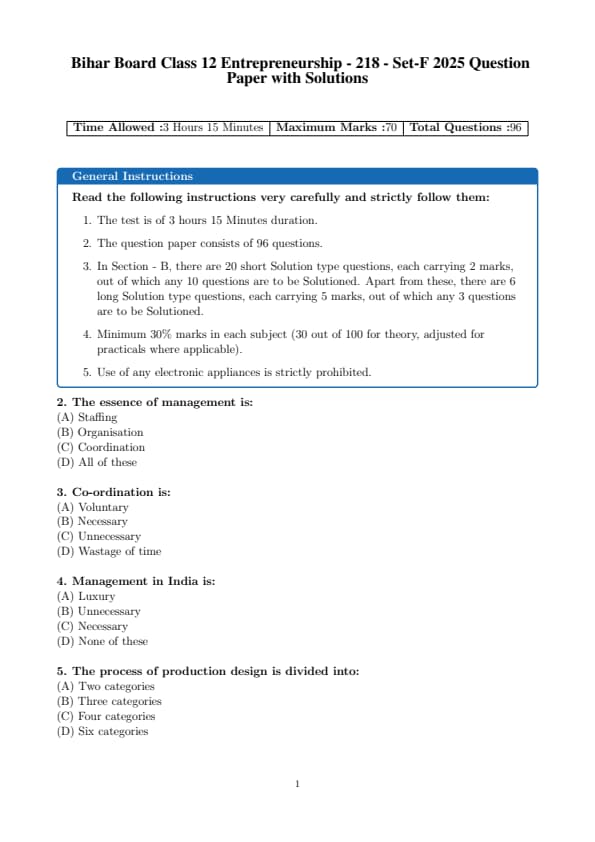
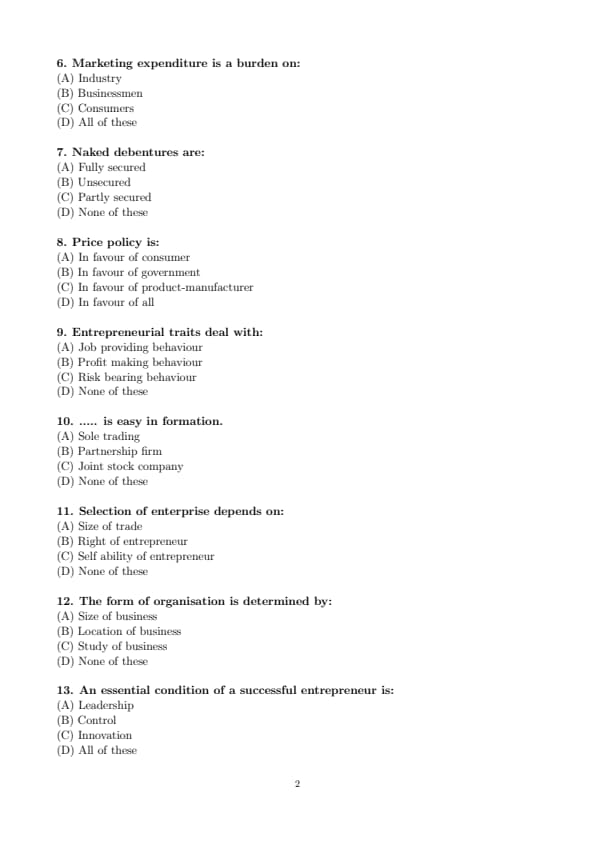
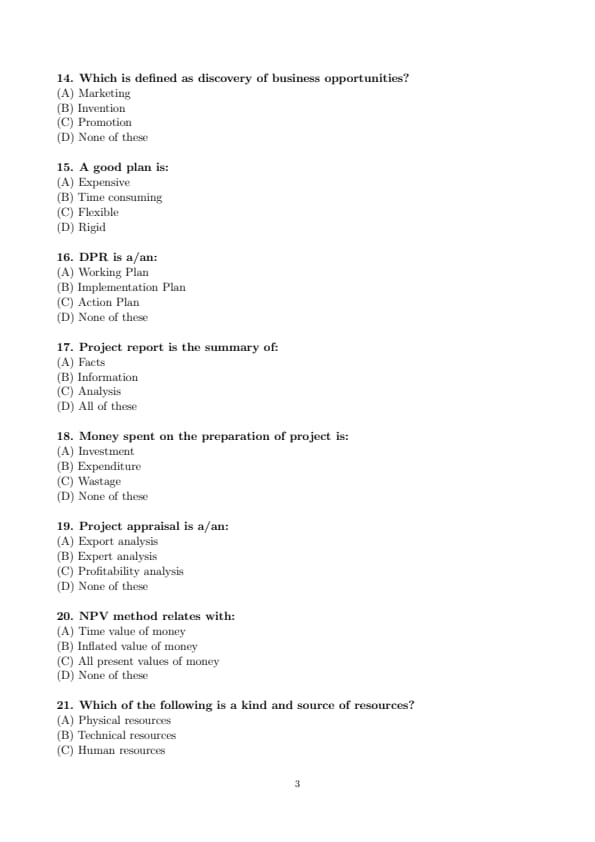
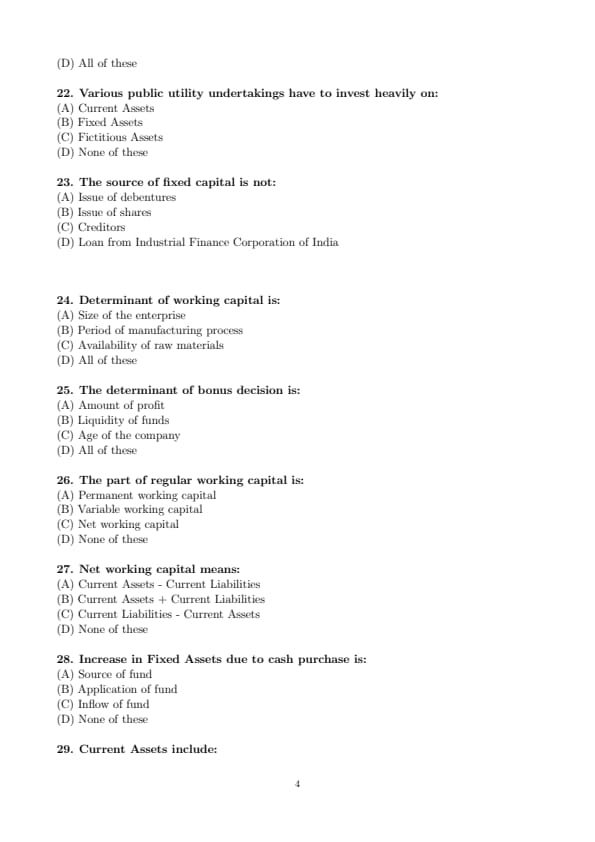

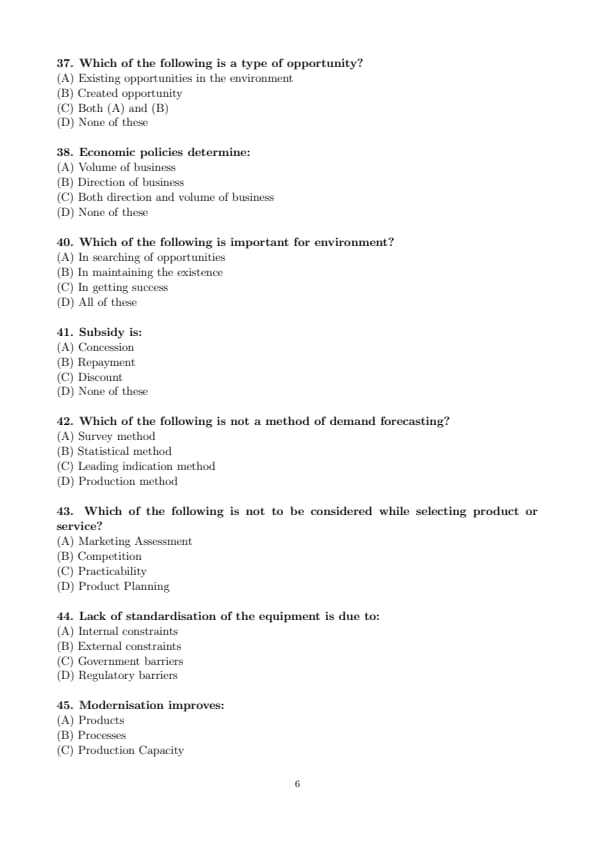
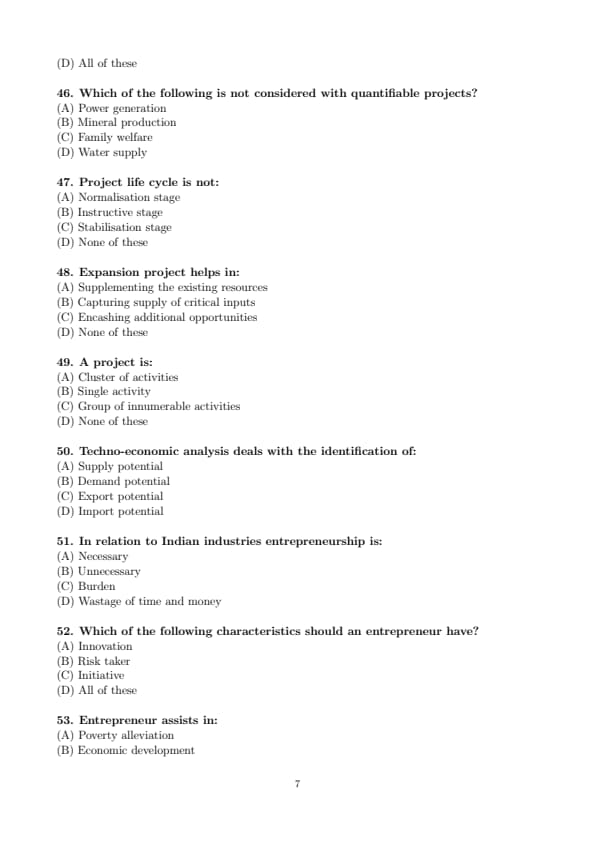
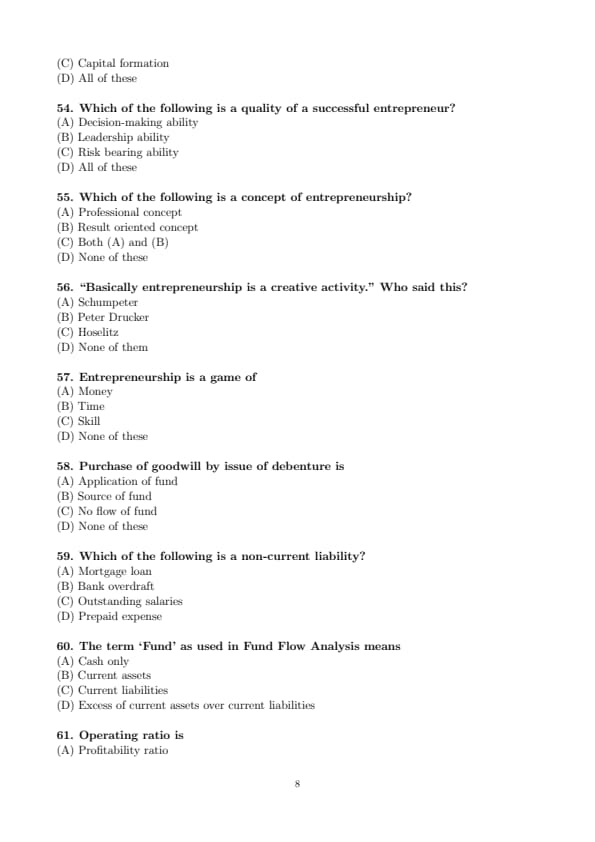
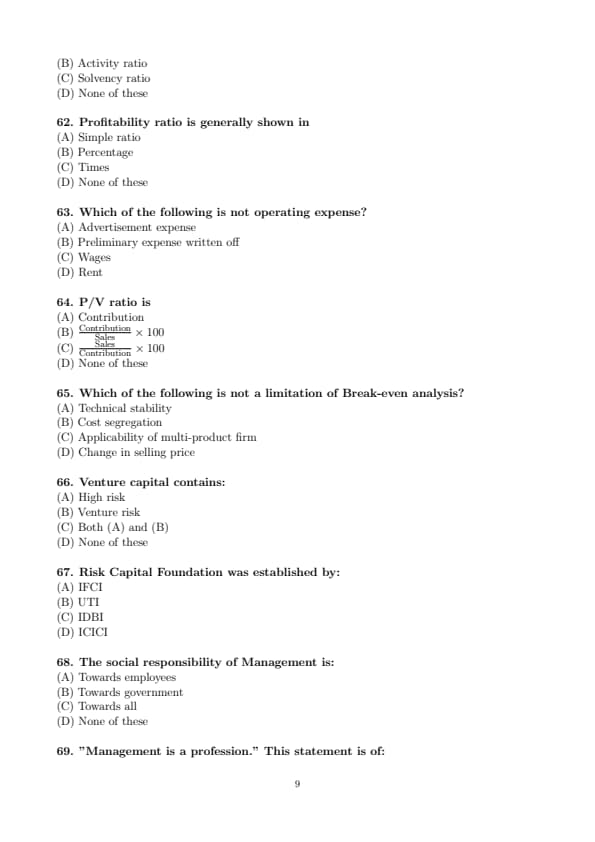




Comments