




SNAP Profit, Loss and Discount PYQ, free to download as a 30-page PDF. The bank carries 20 solved questions from the 2006 to 2025 papers and takes roughly two days to work through, so split it across margins and false weights.
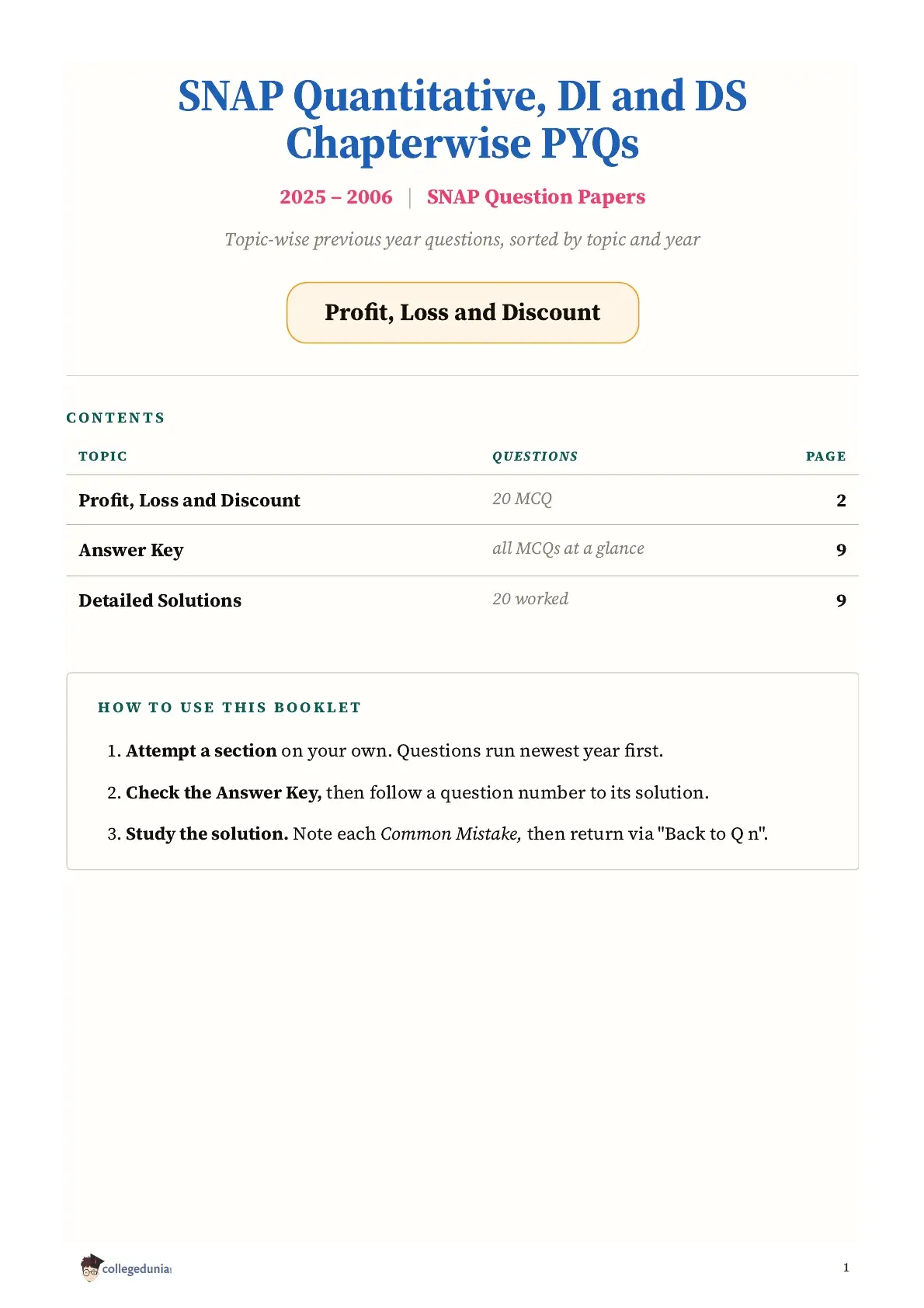
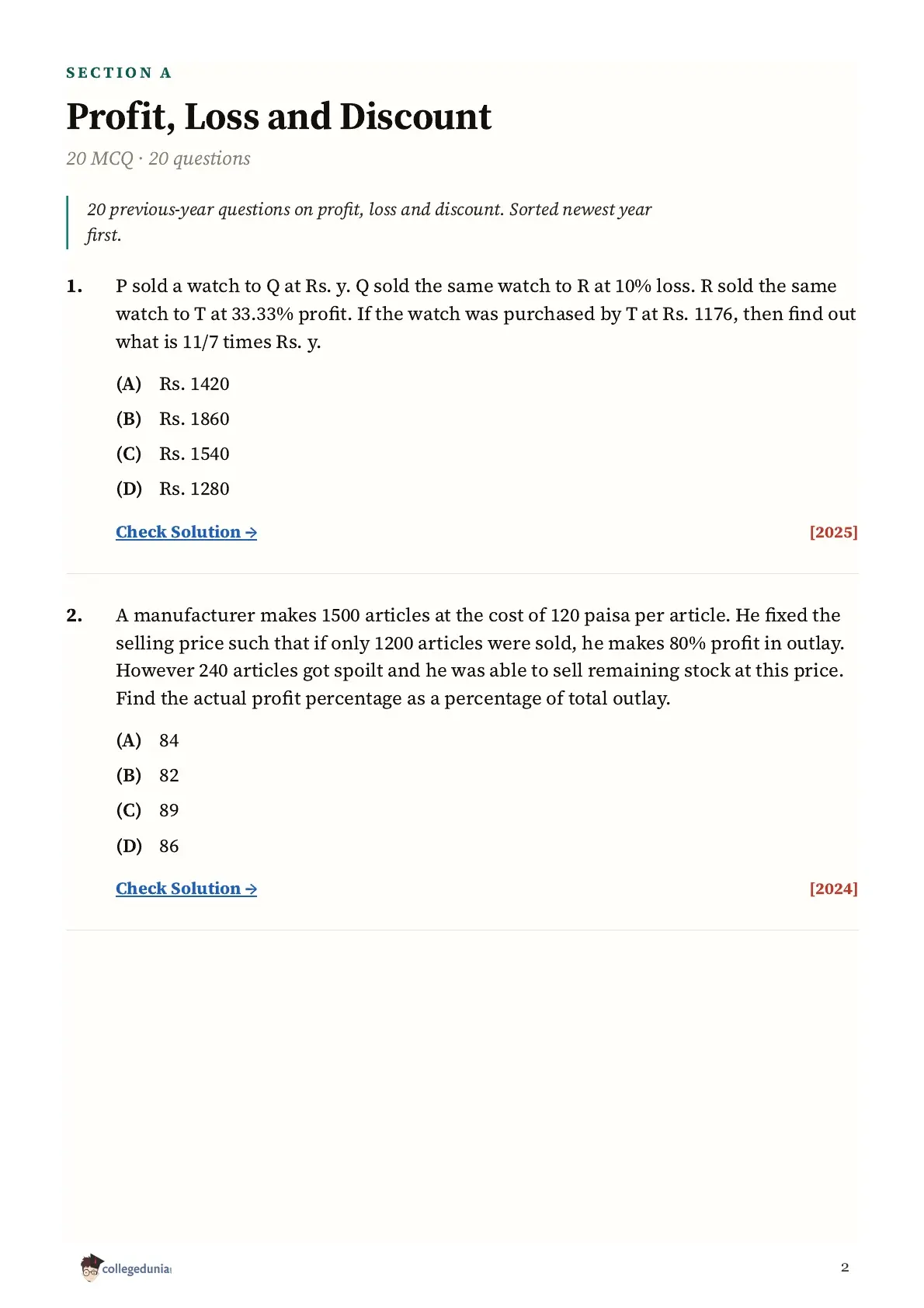
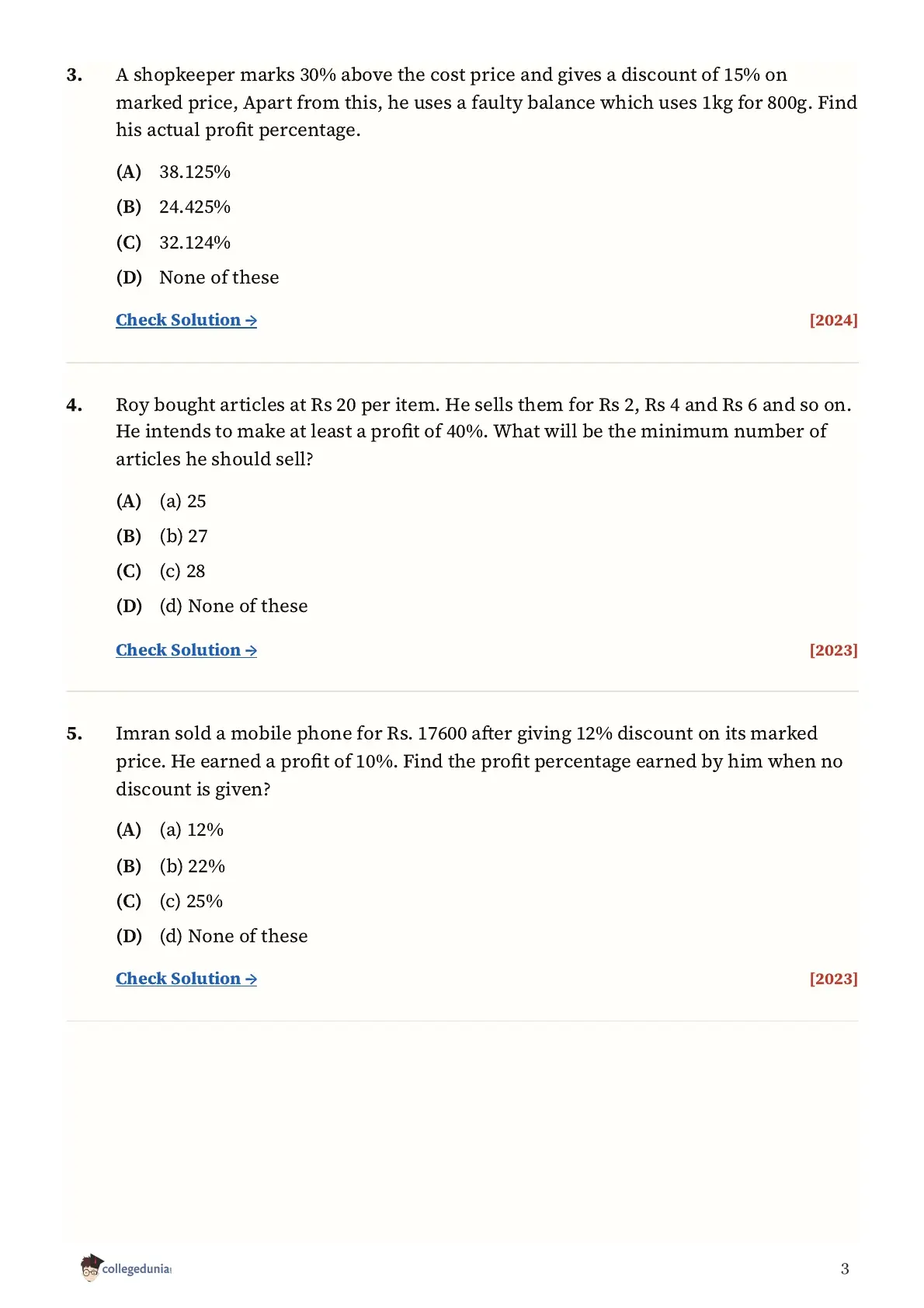
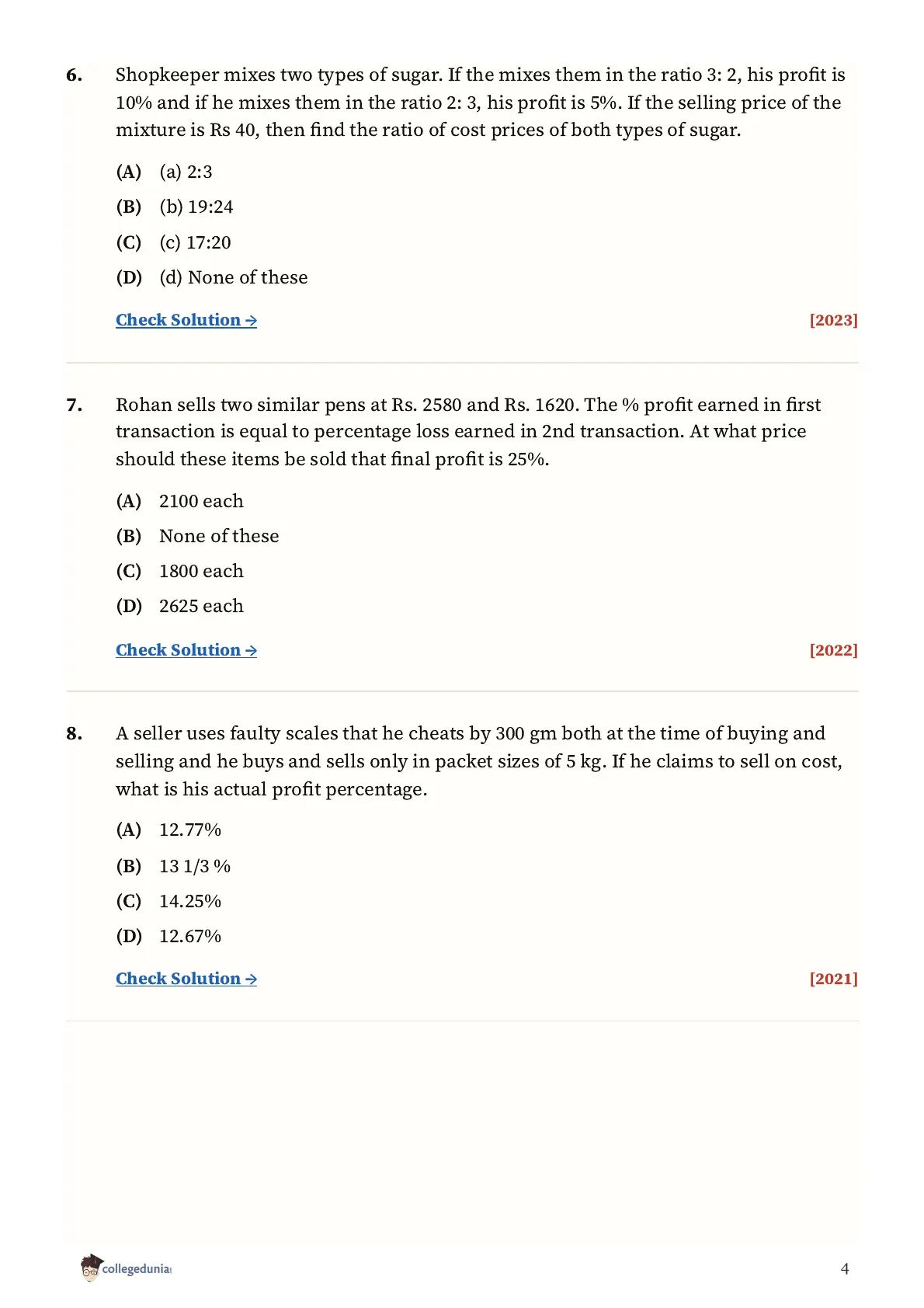
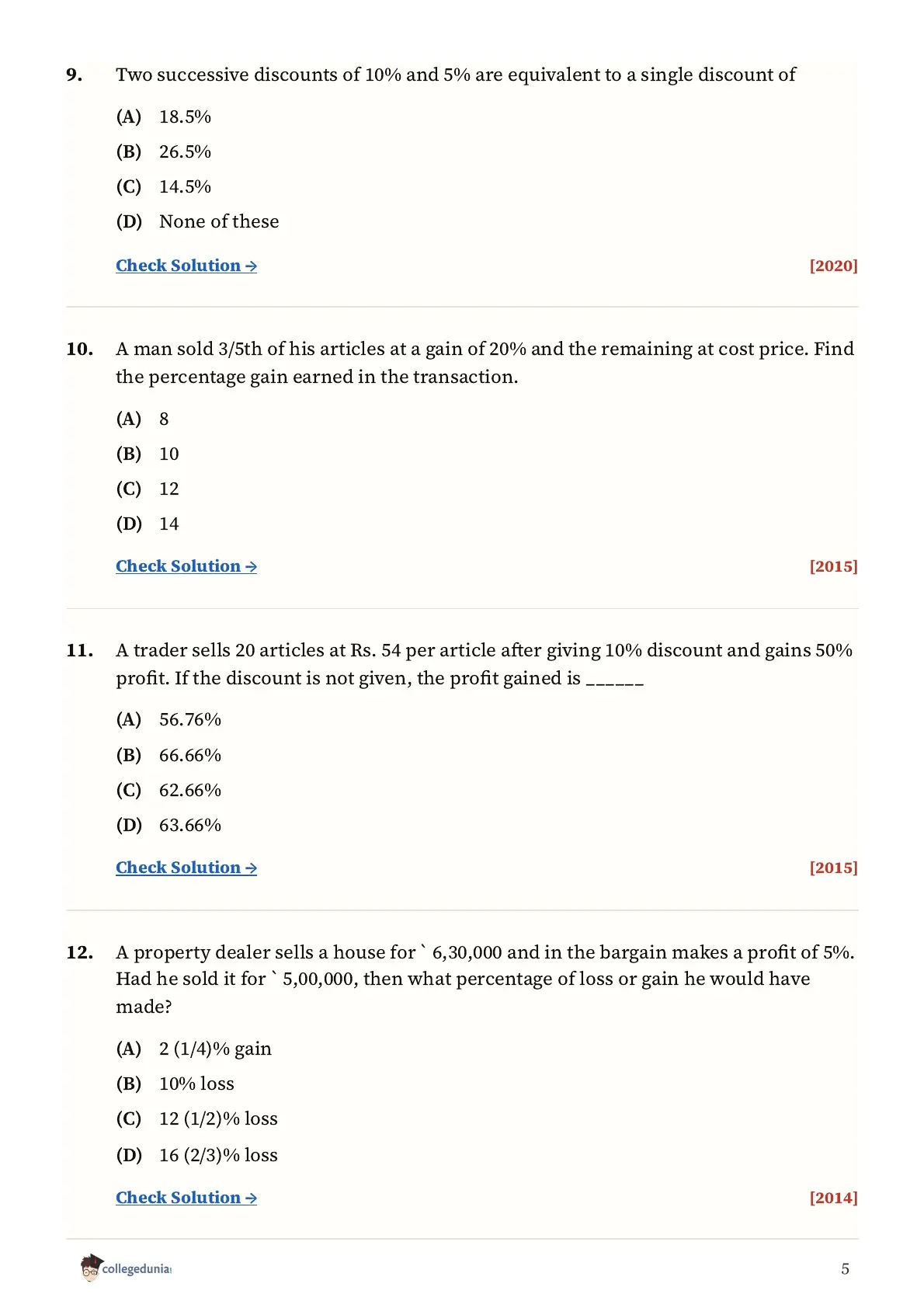
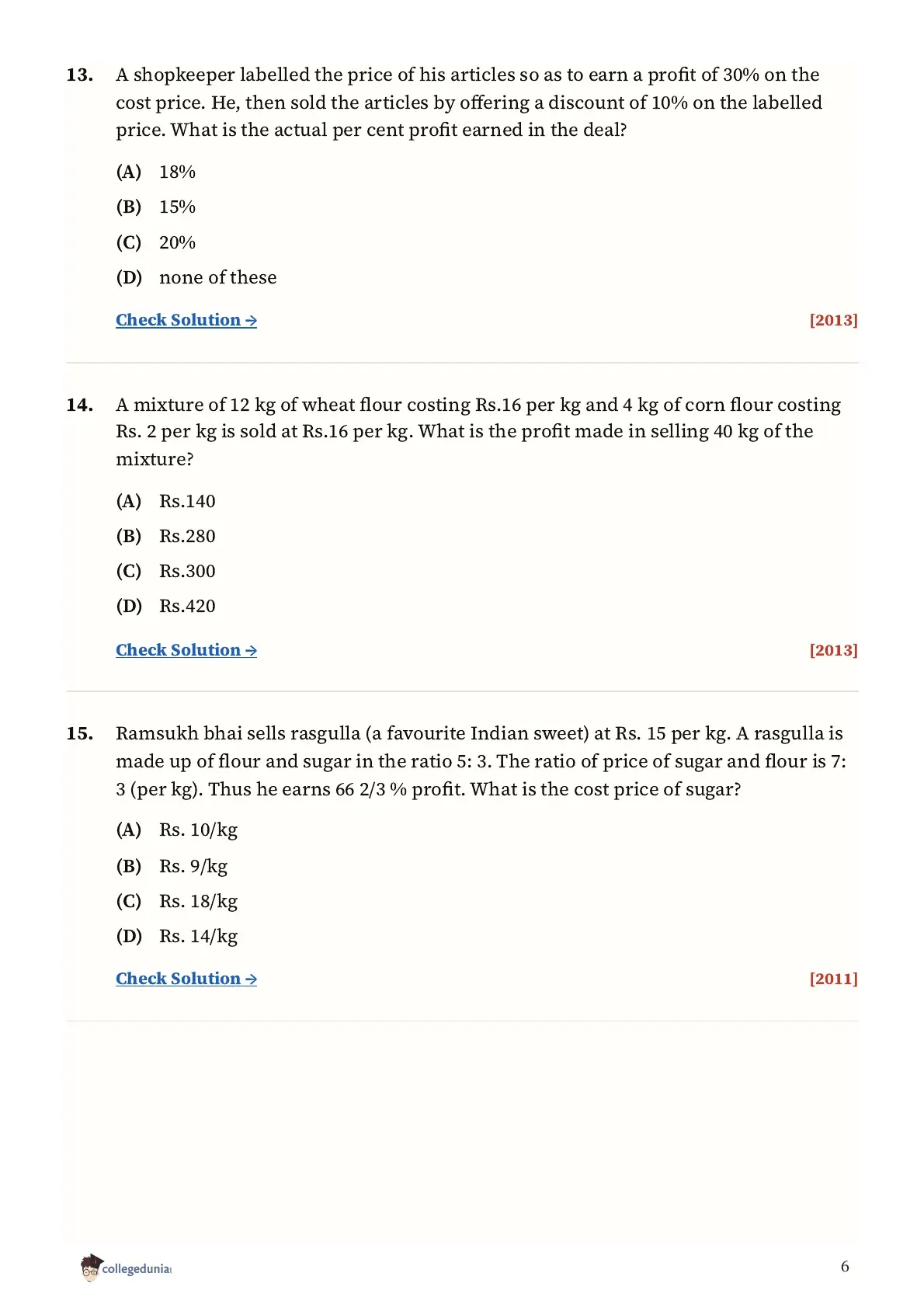
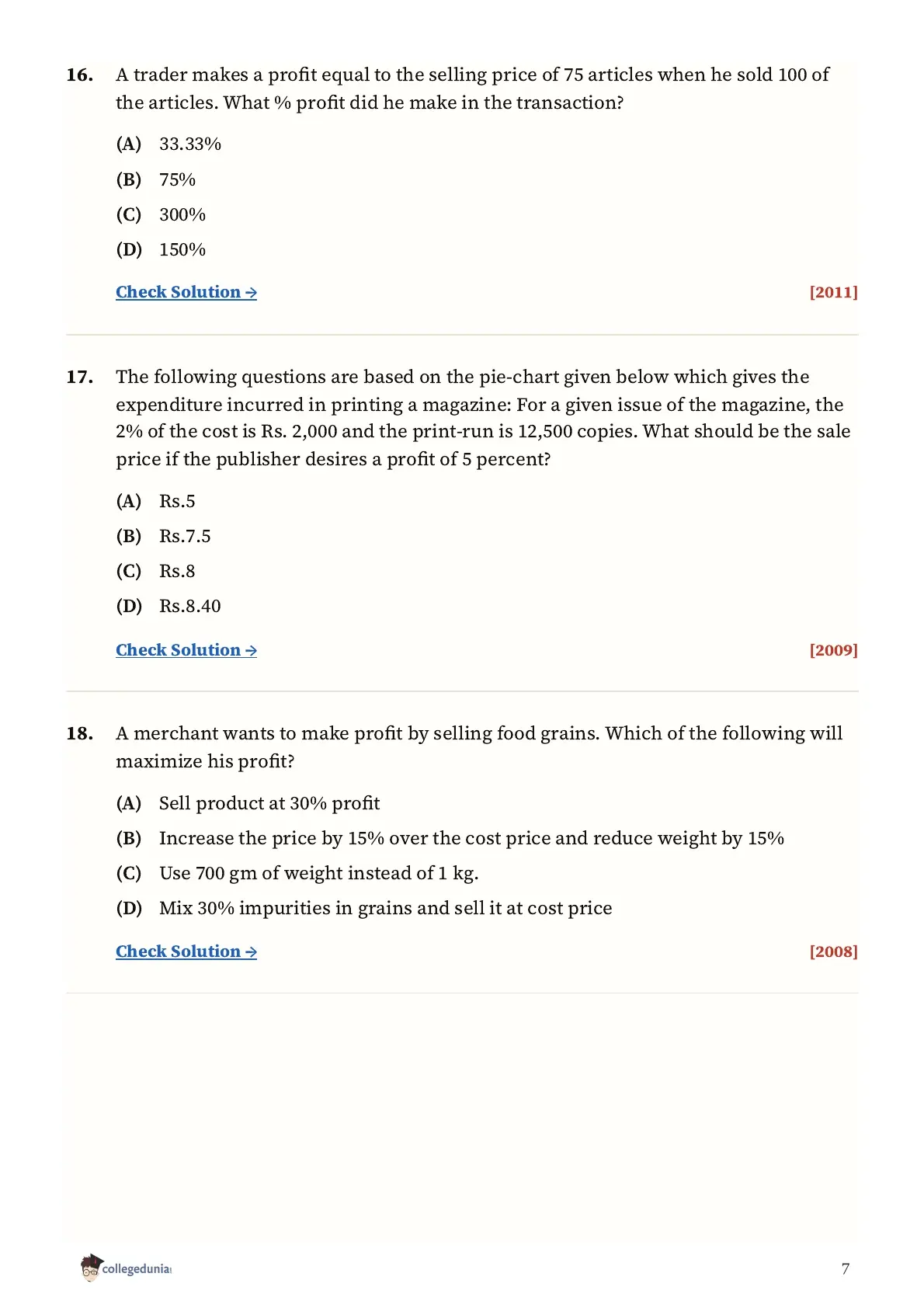
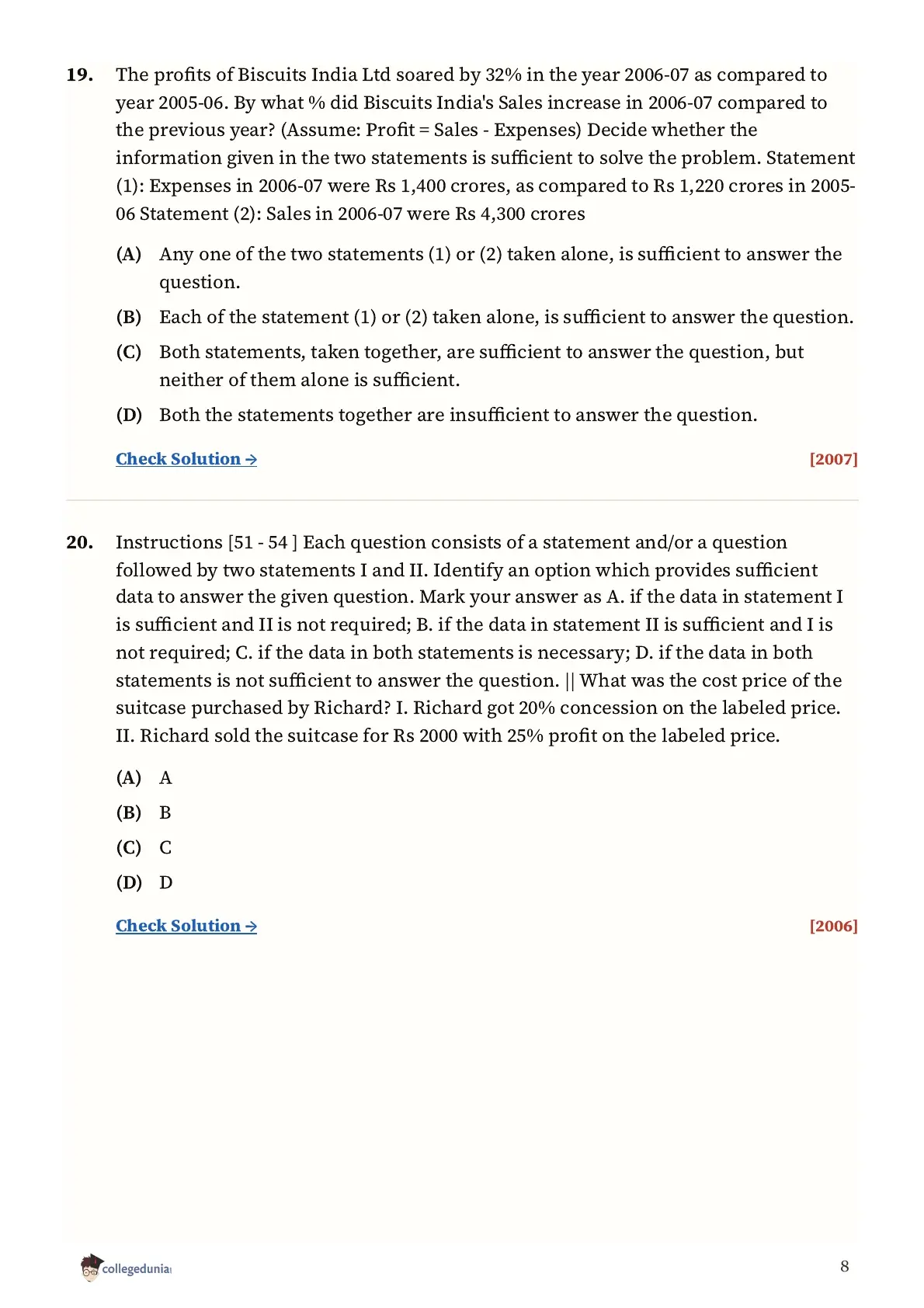
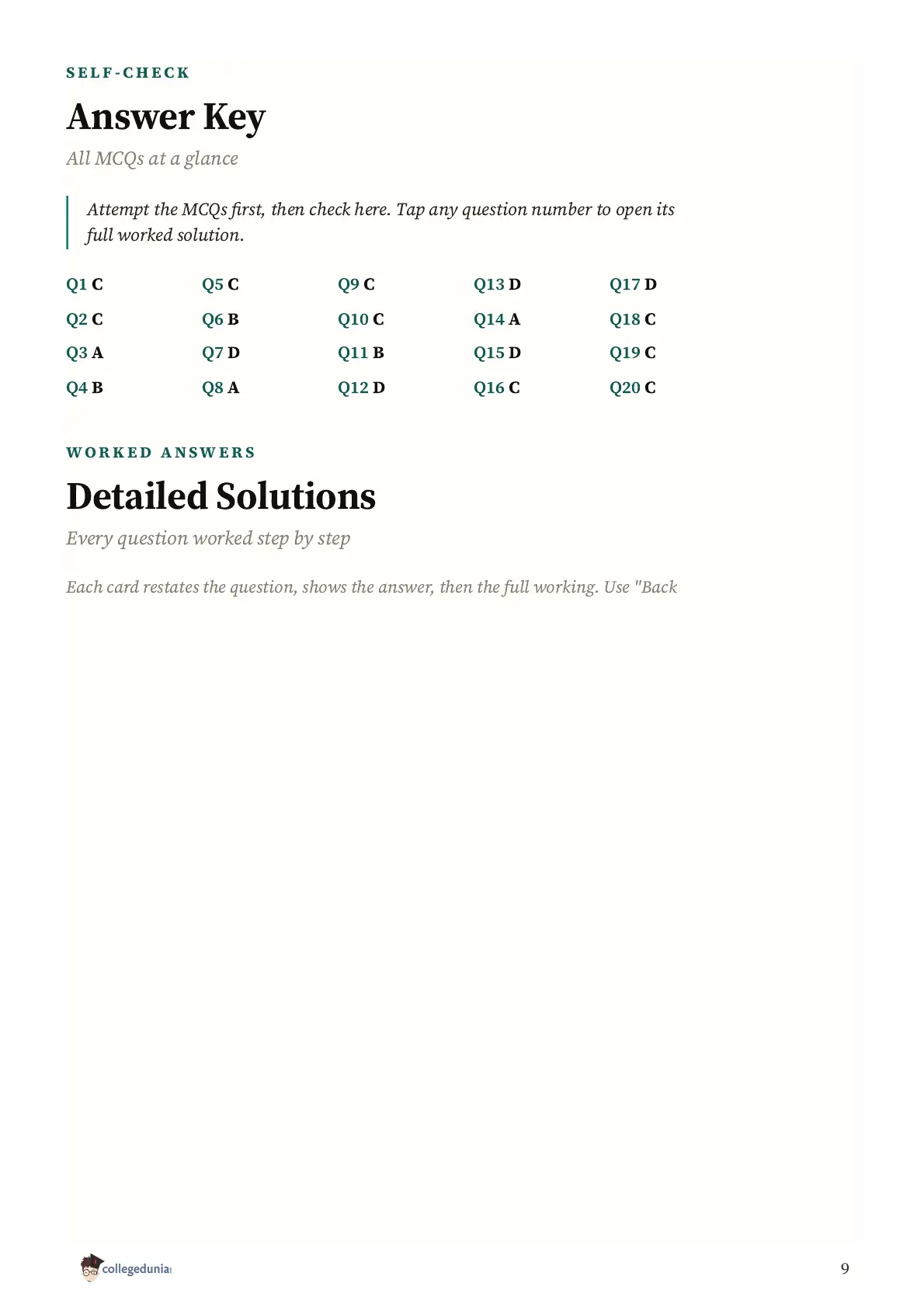
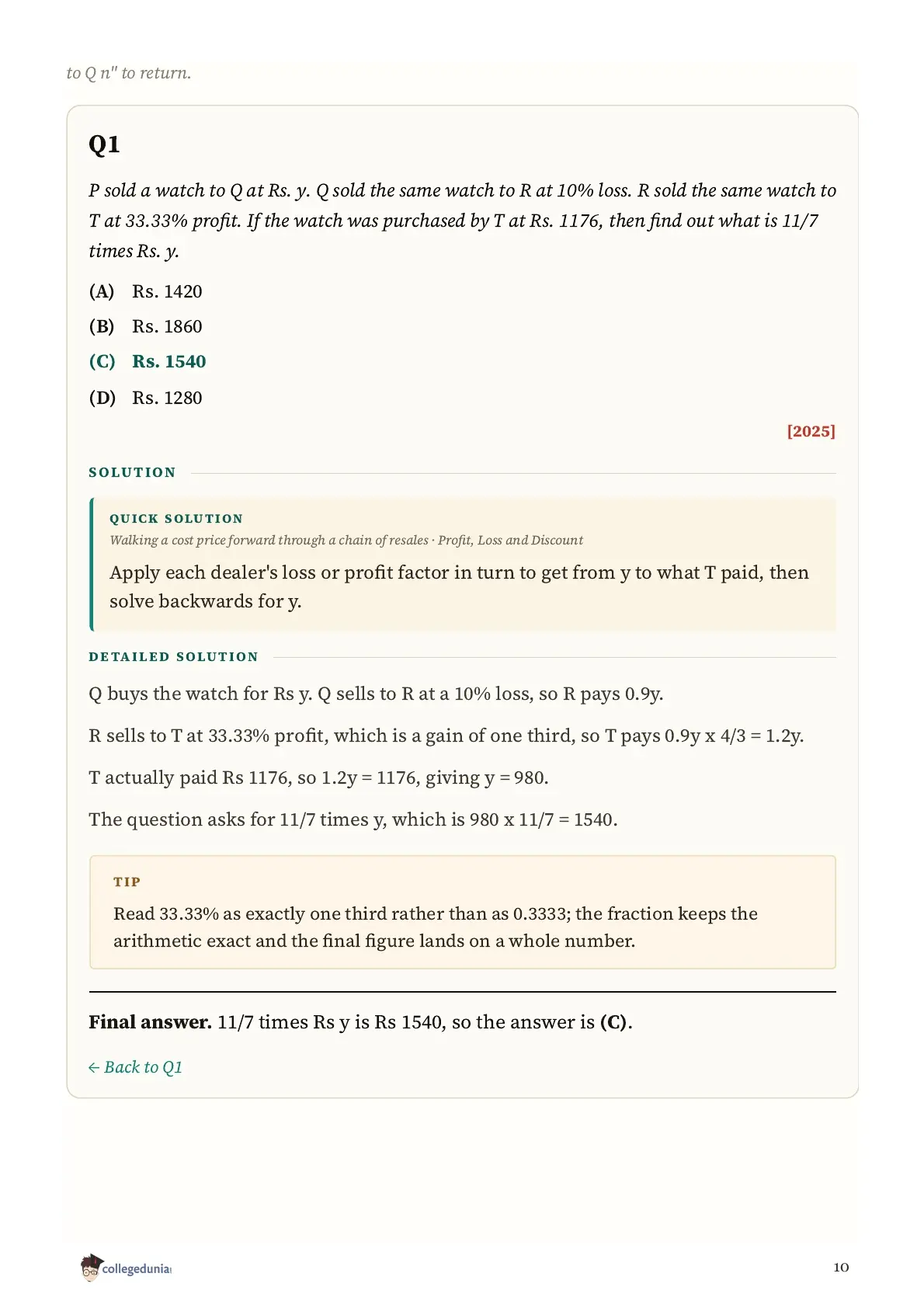
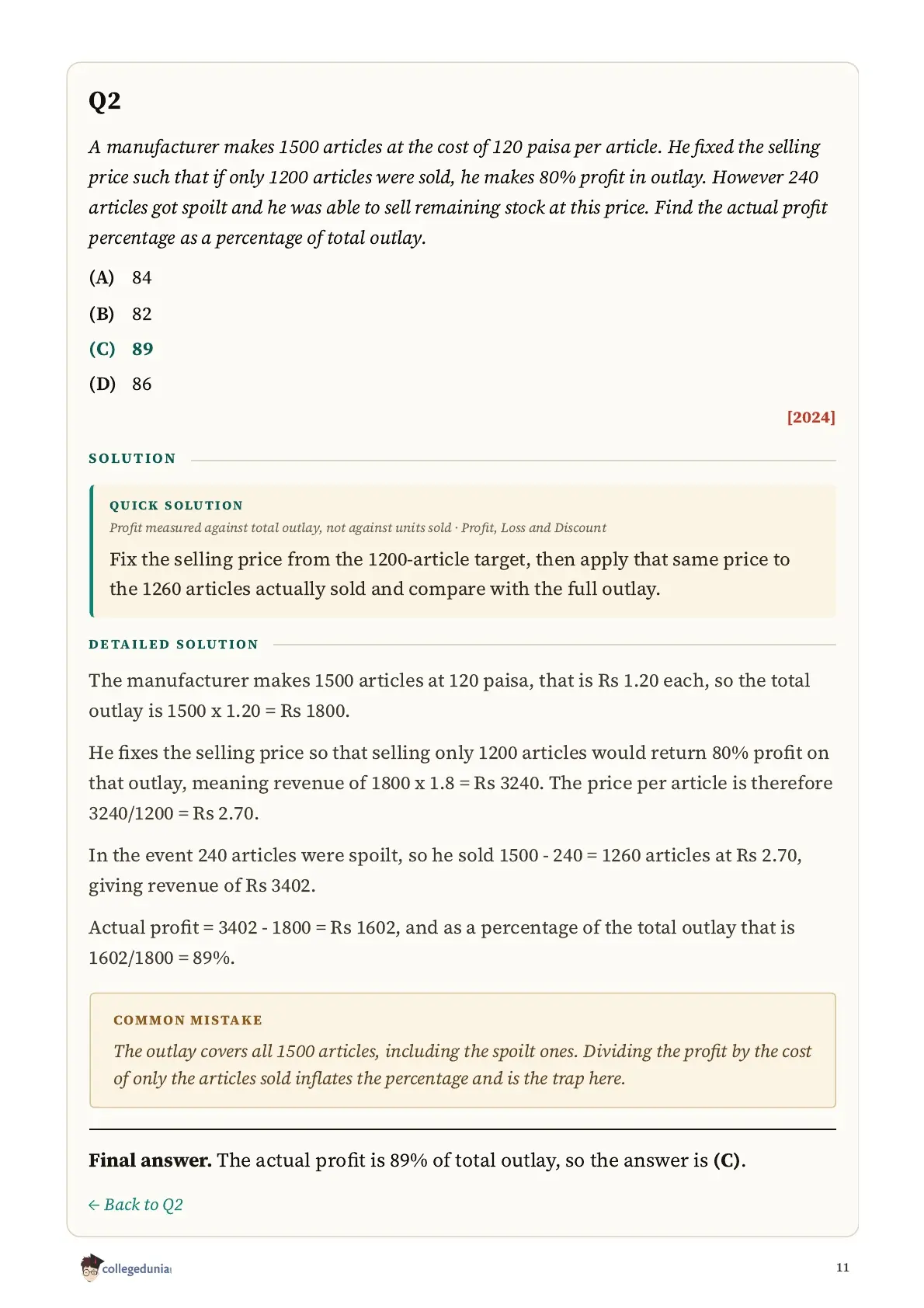
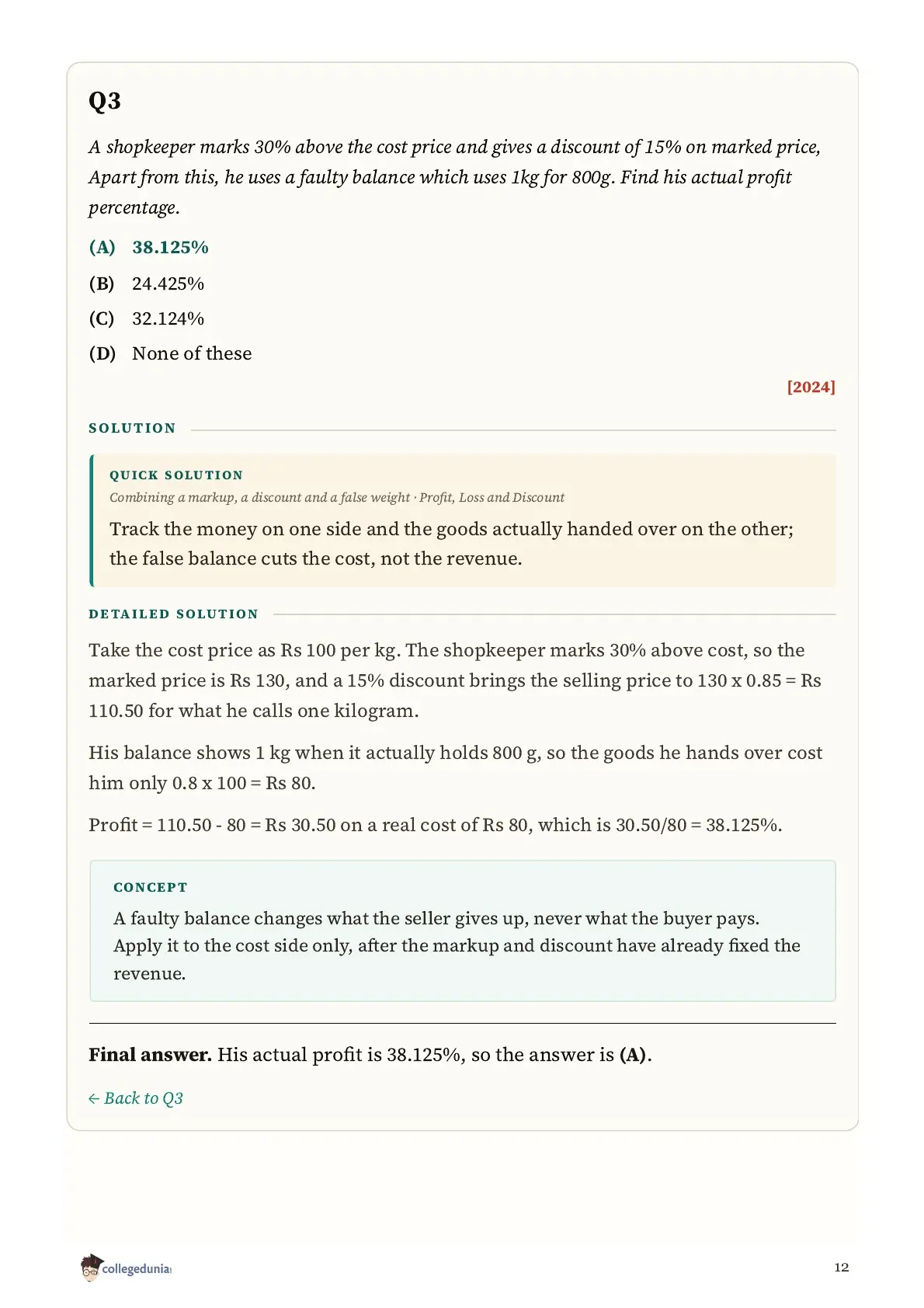
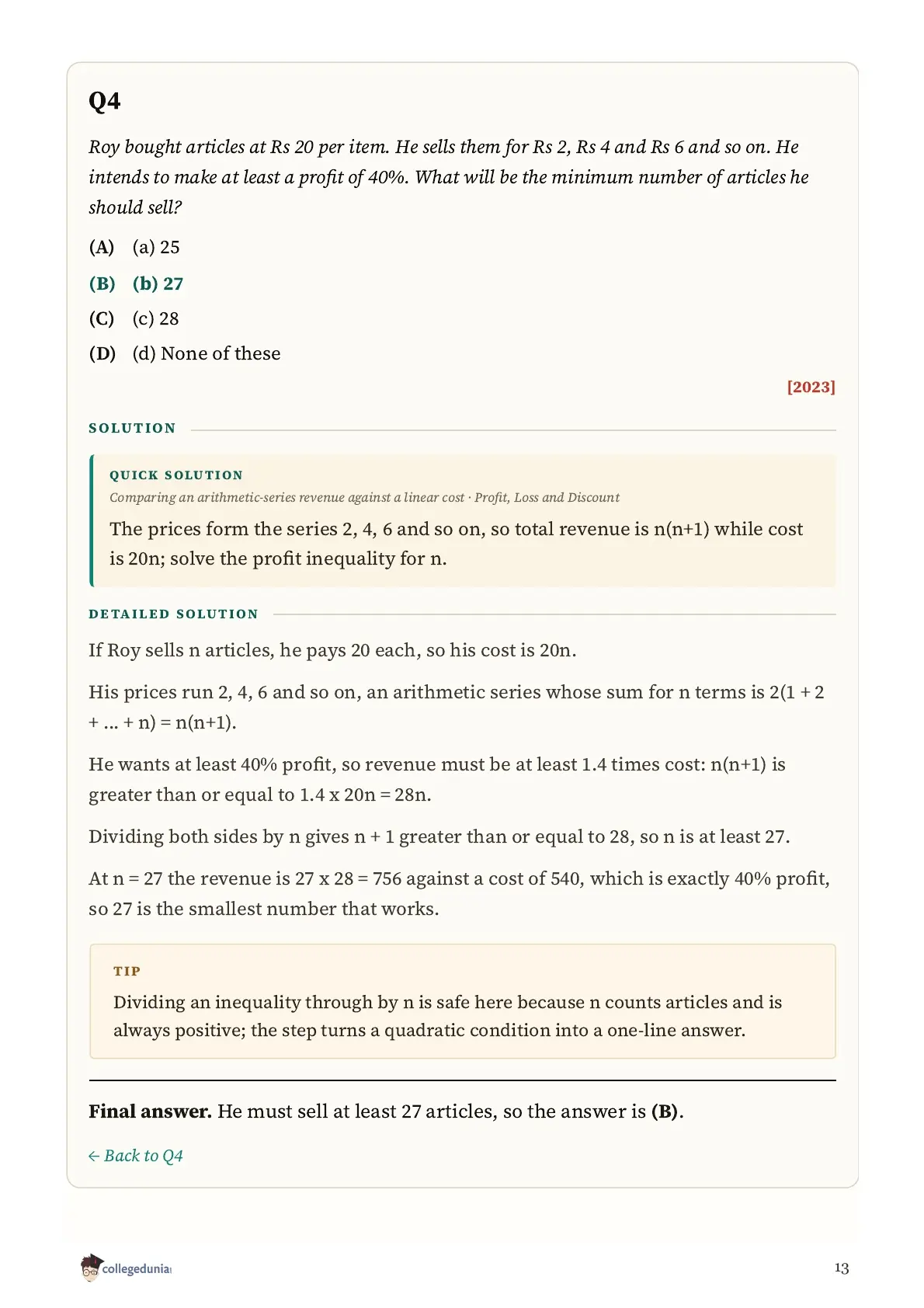
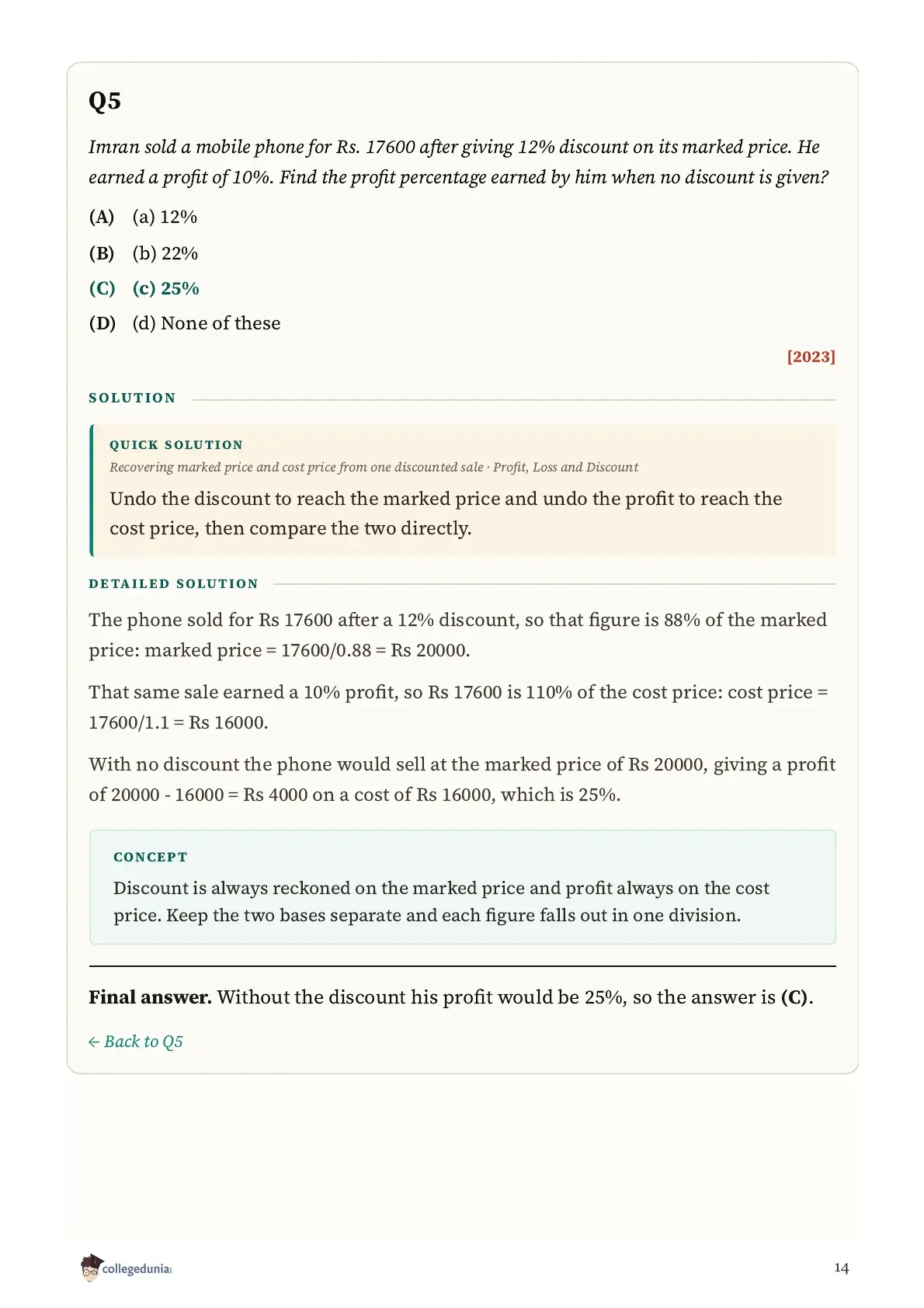
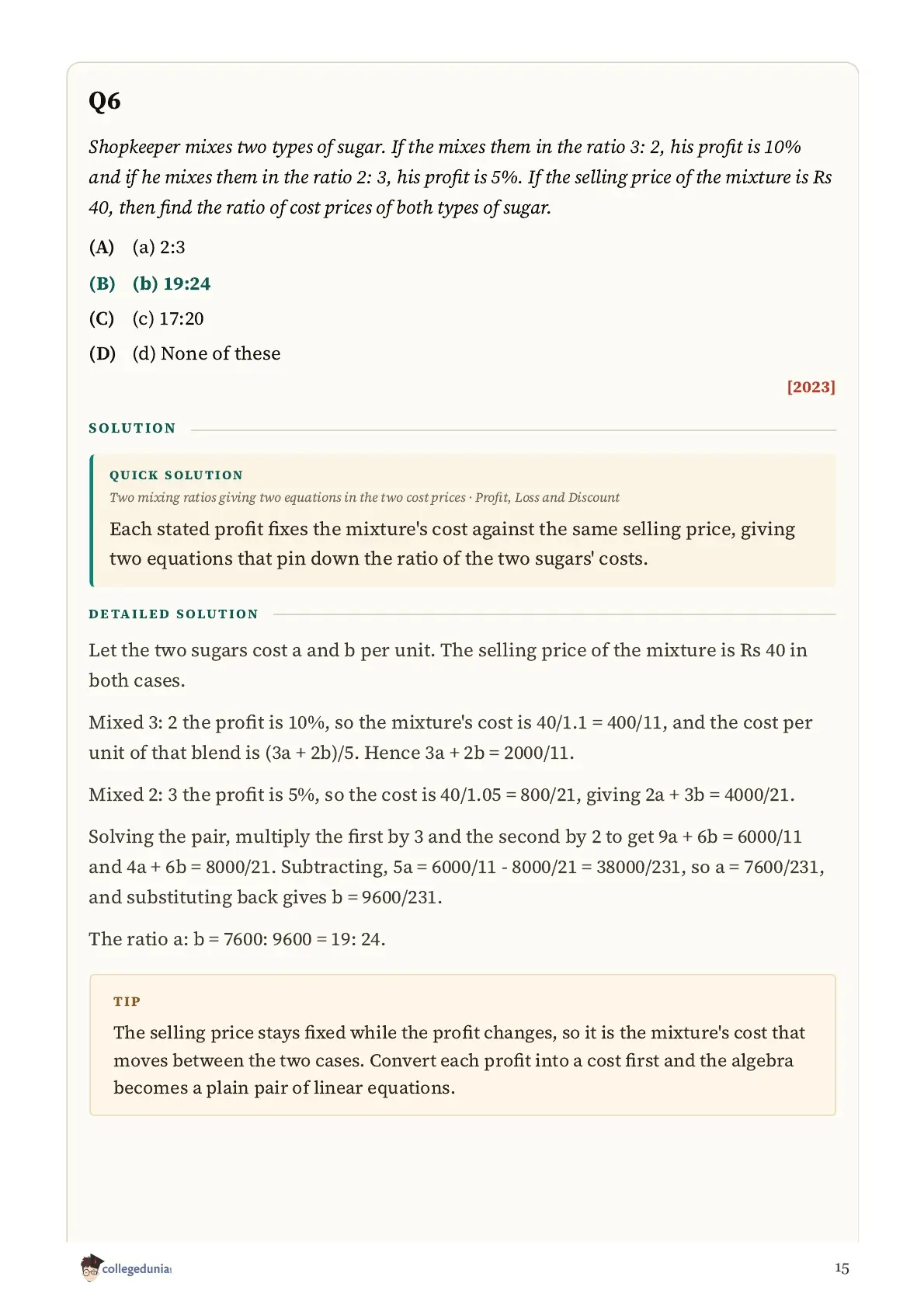
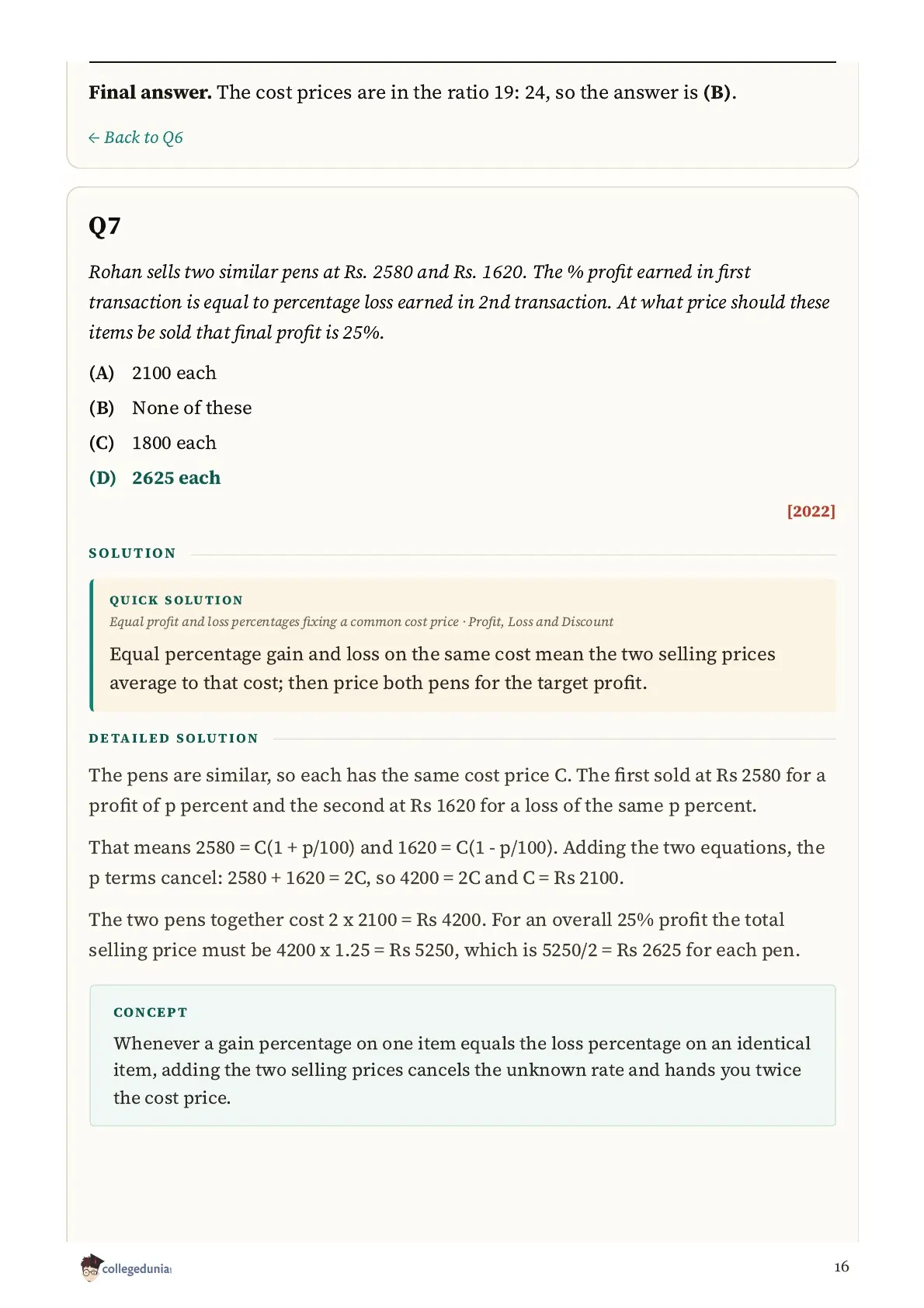
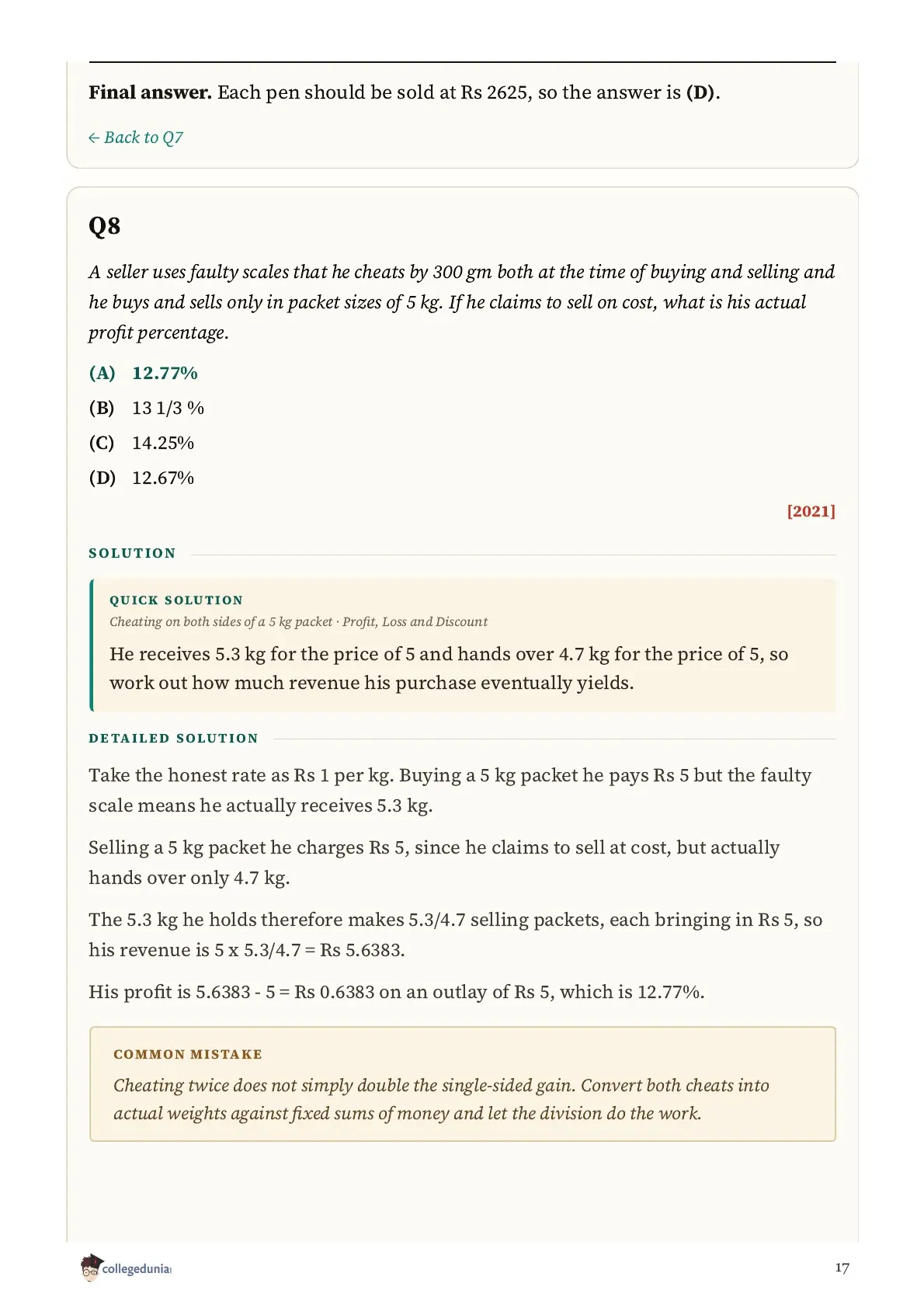
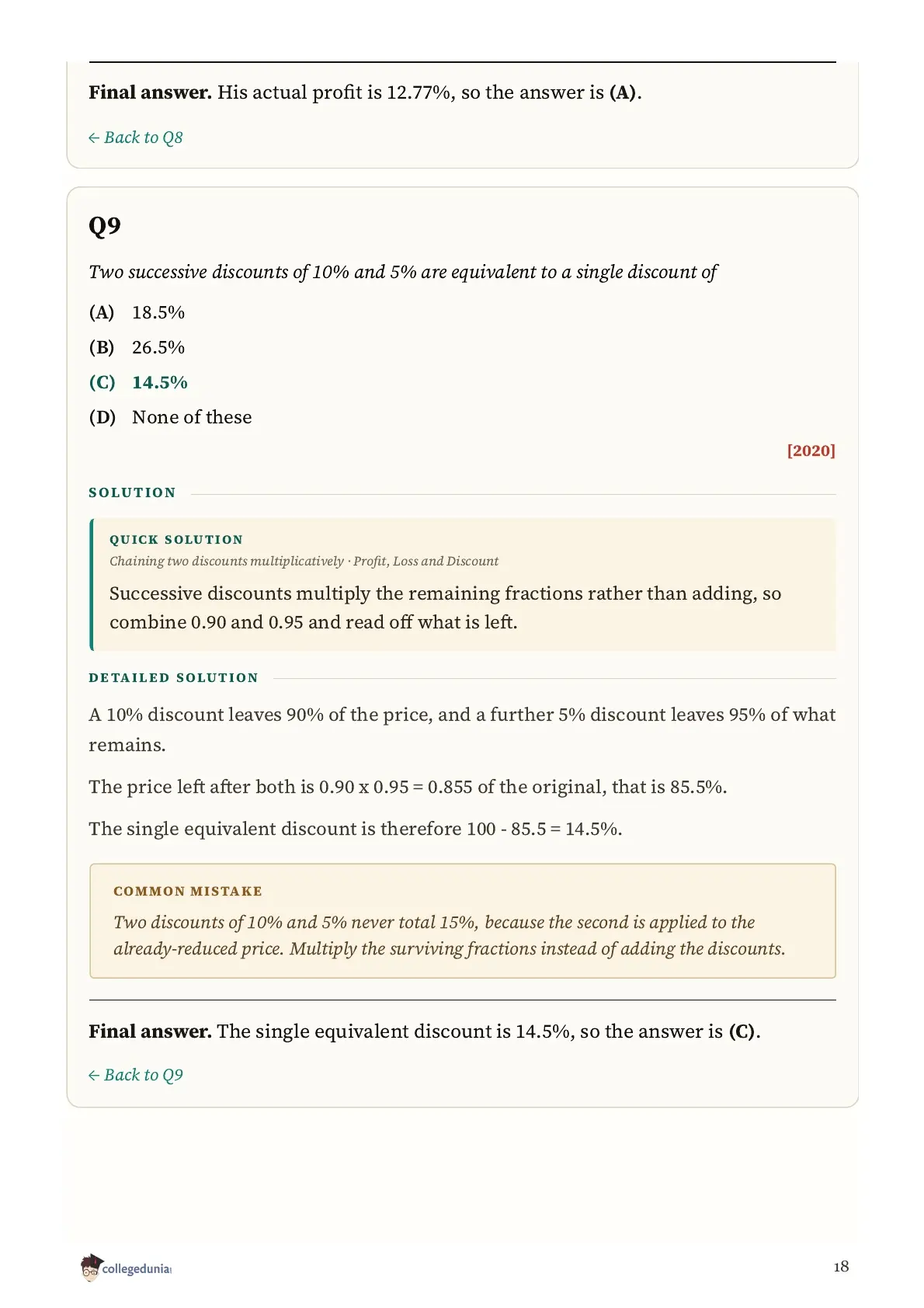
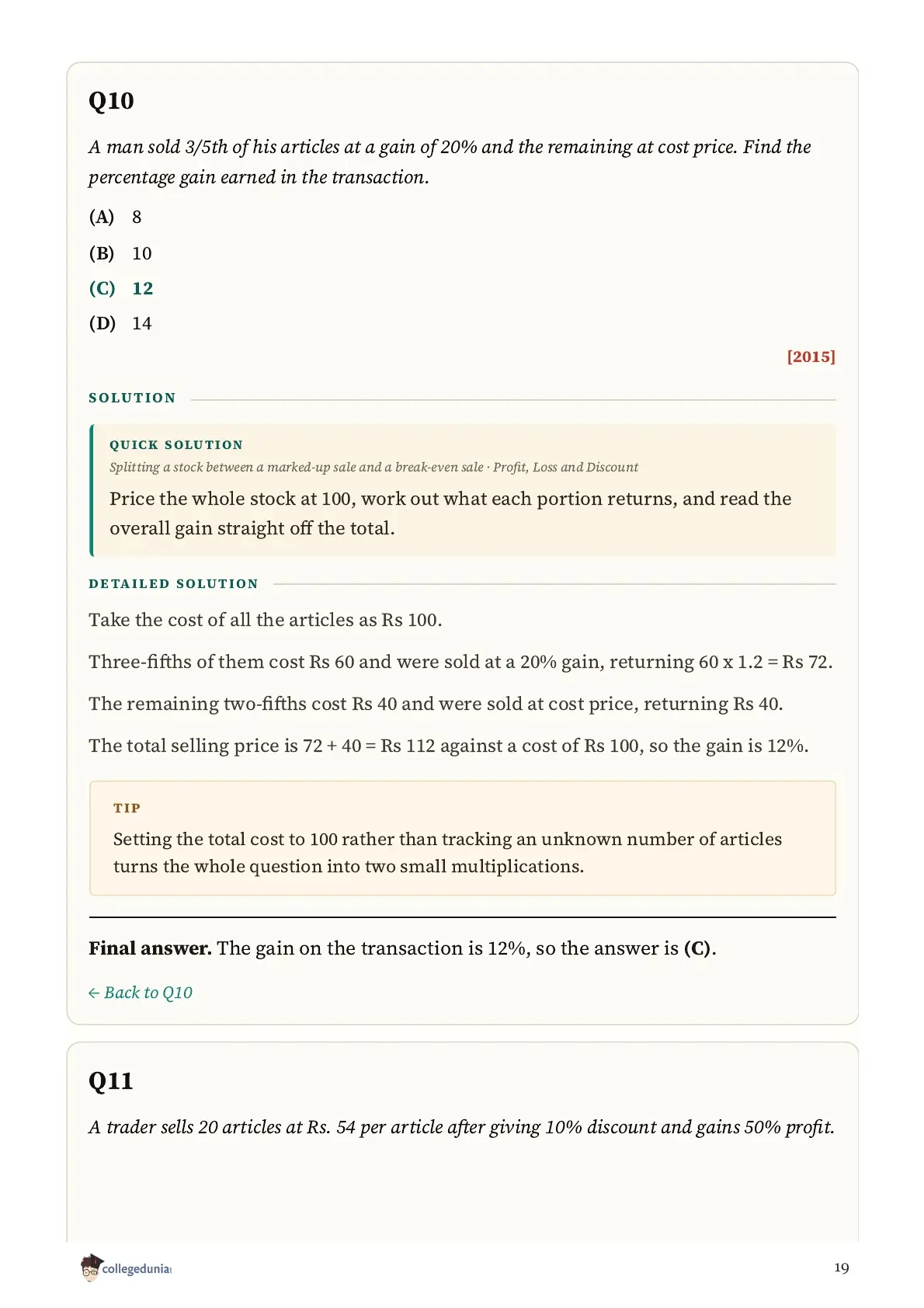
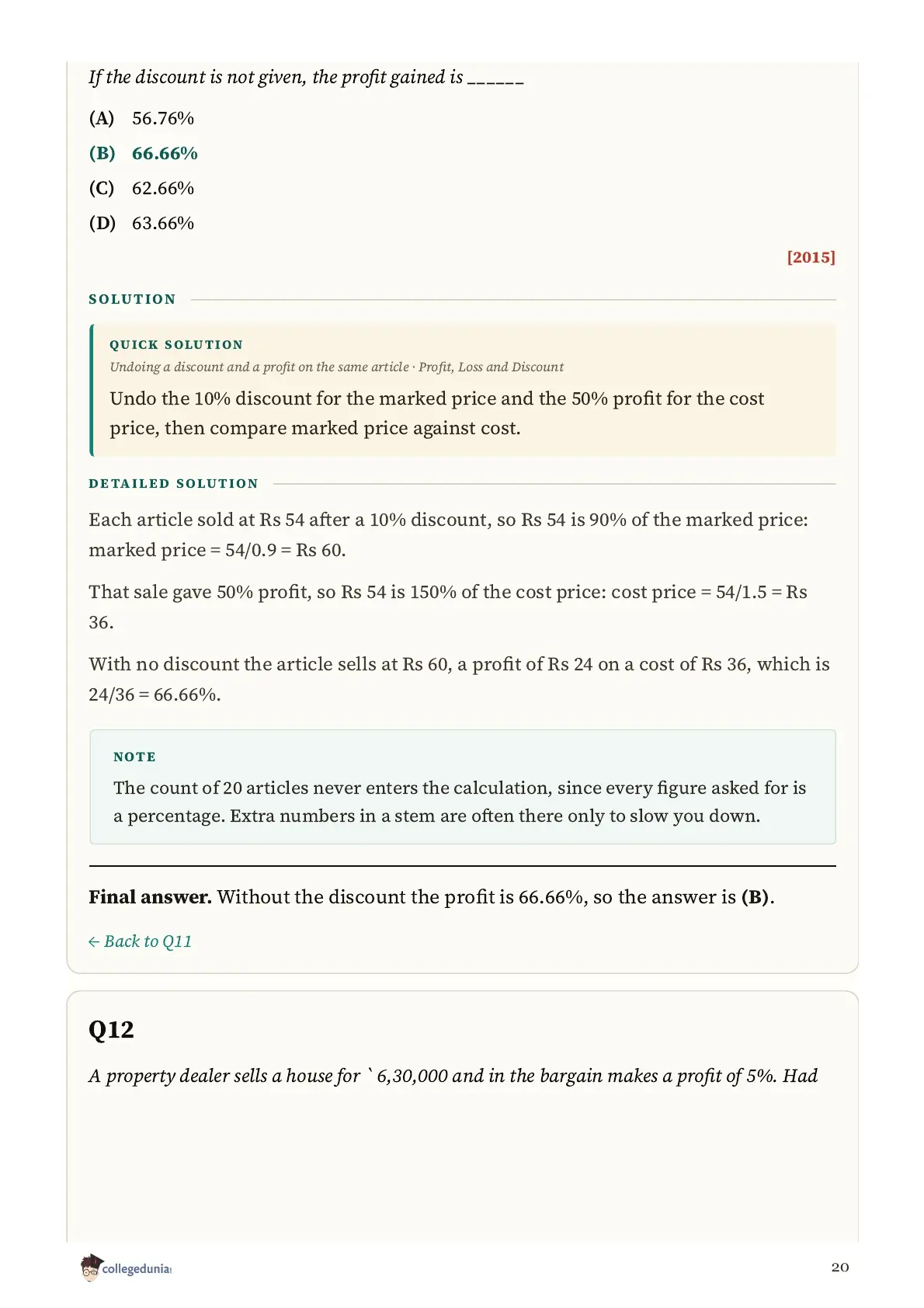
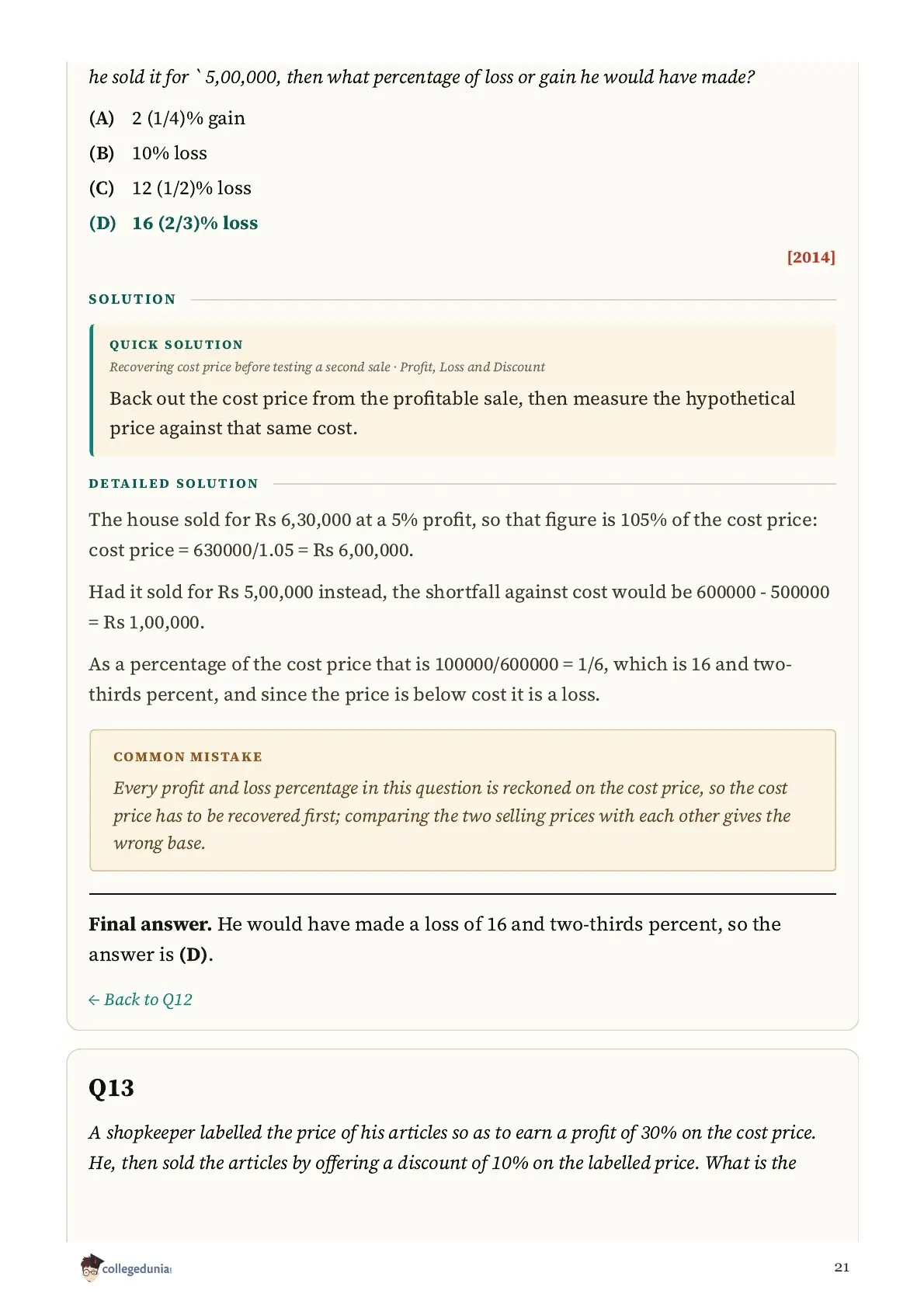
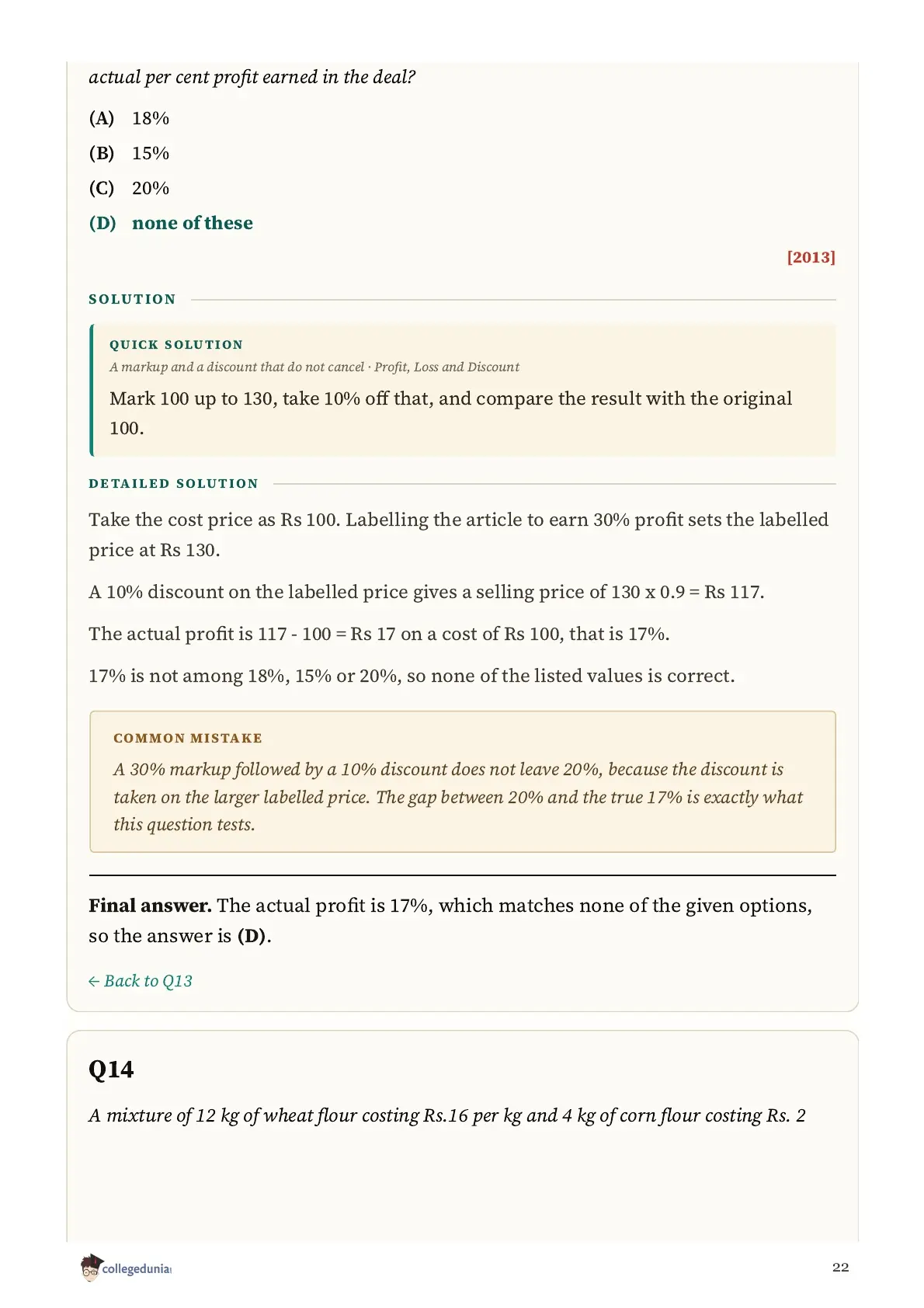
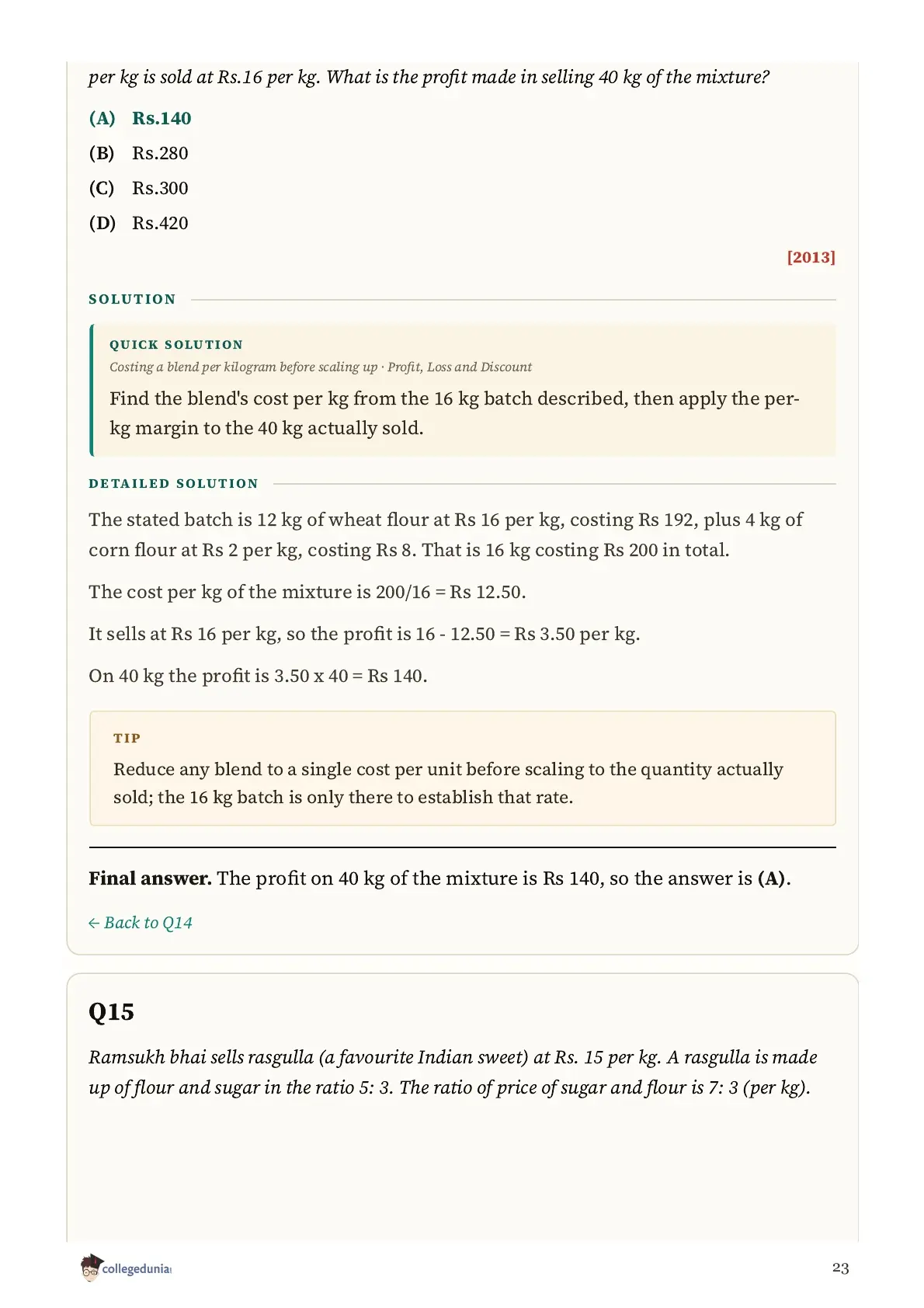
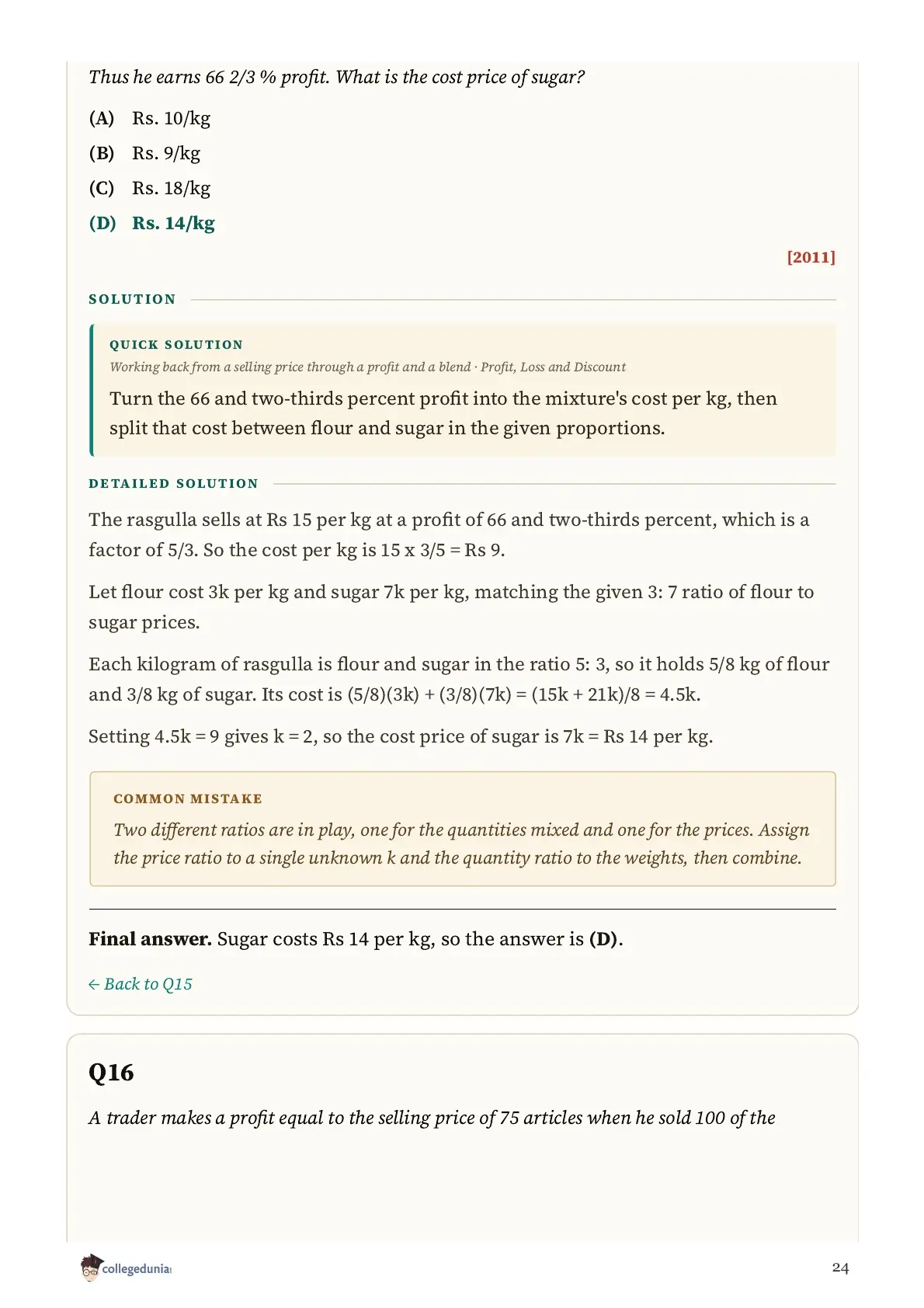
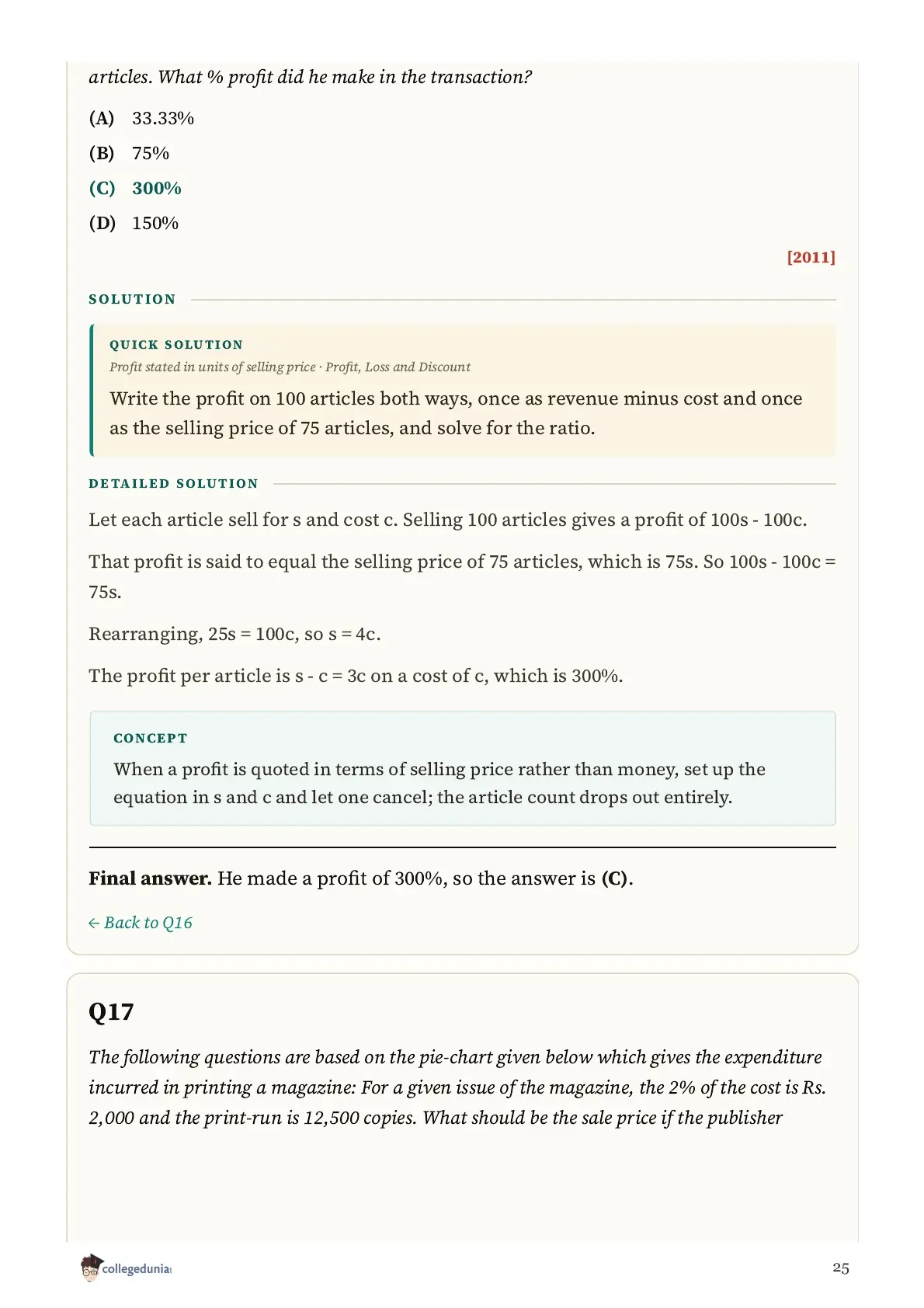
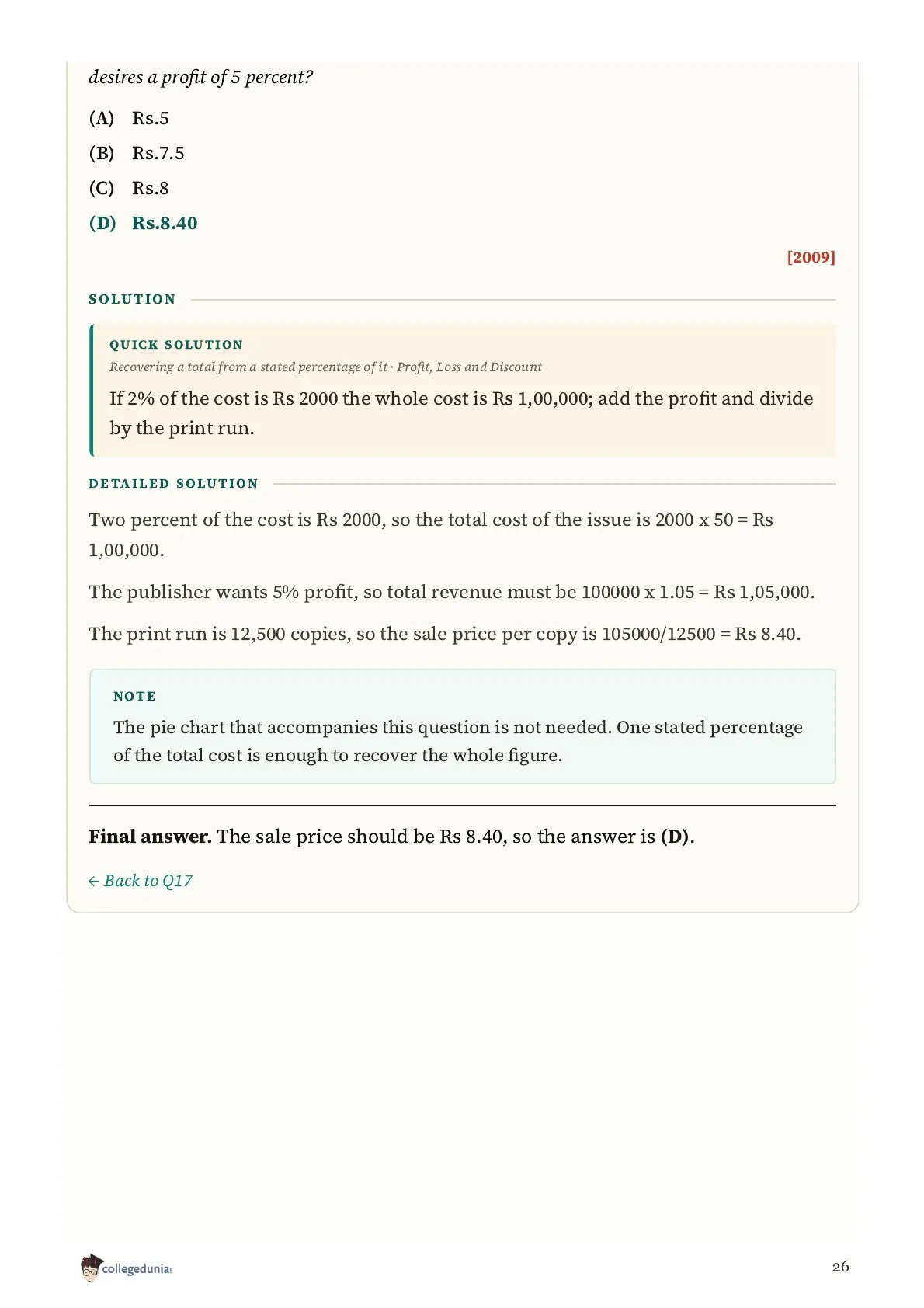
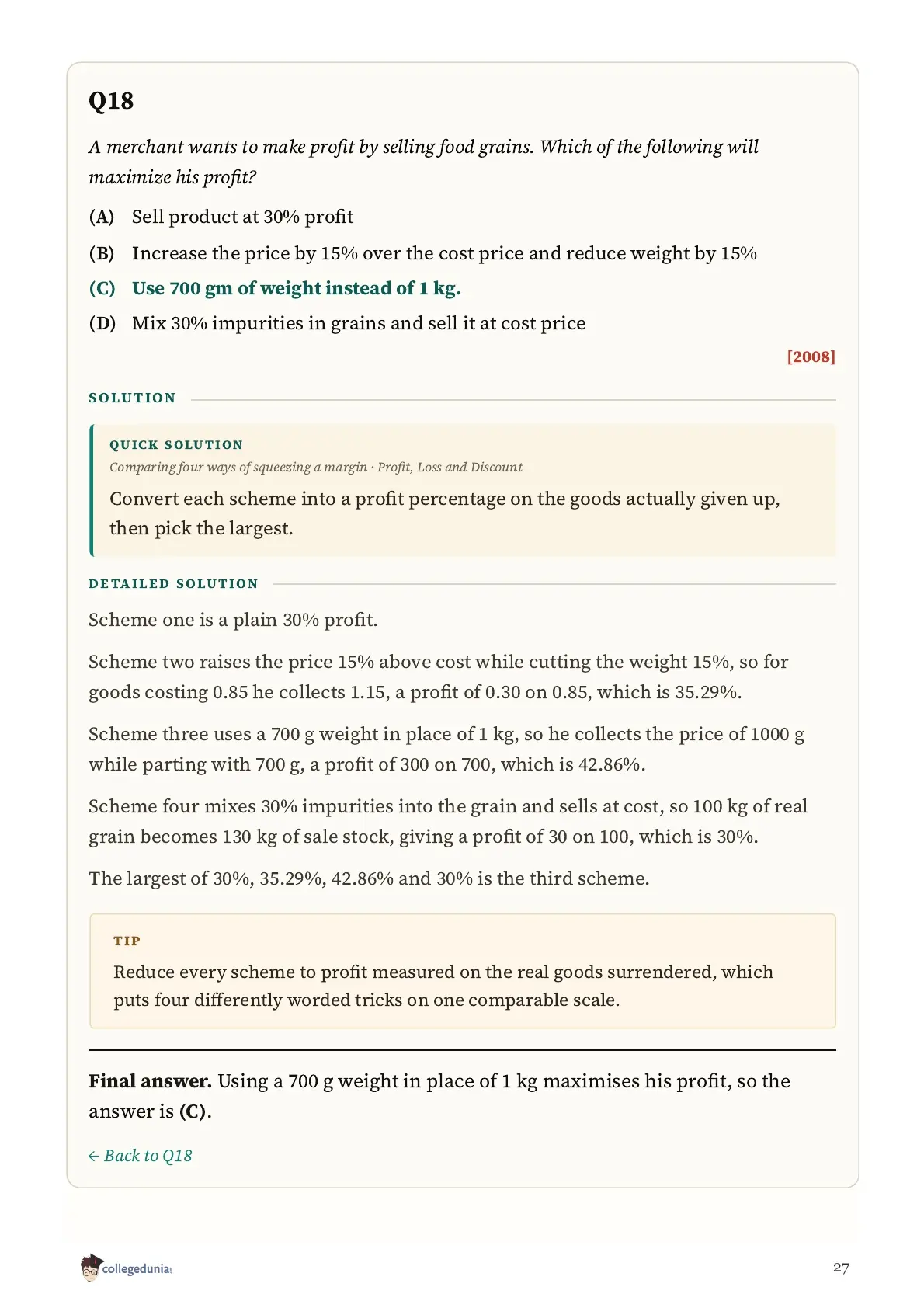
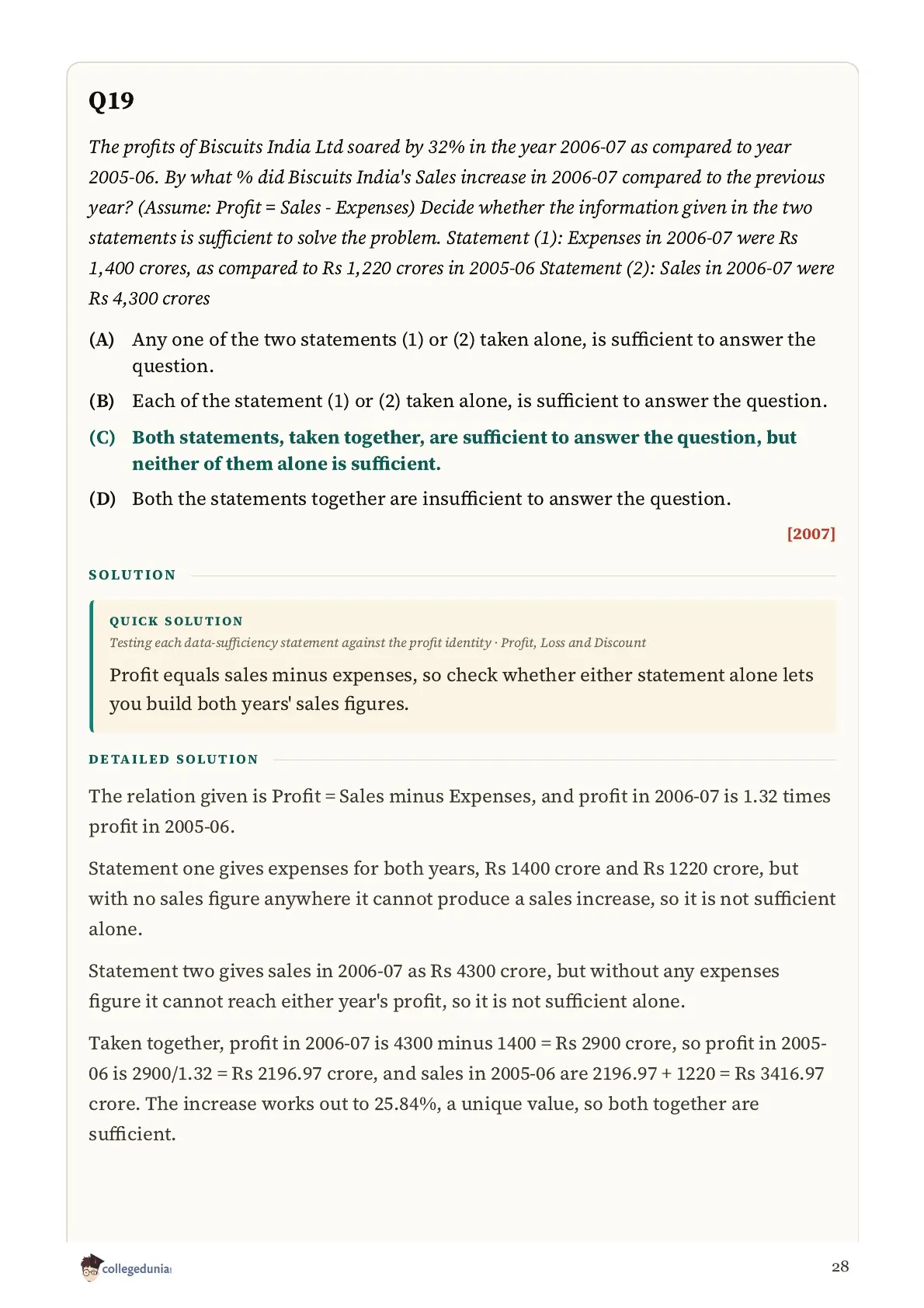
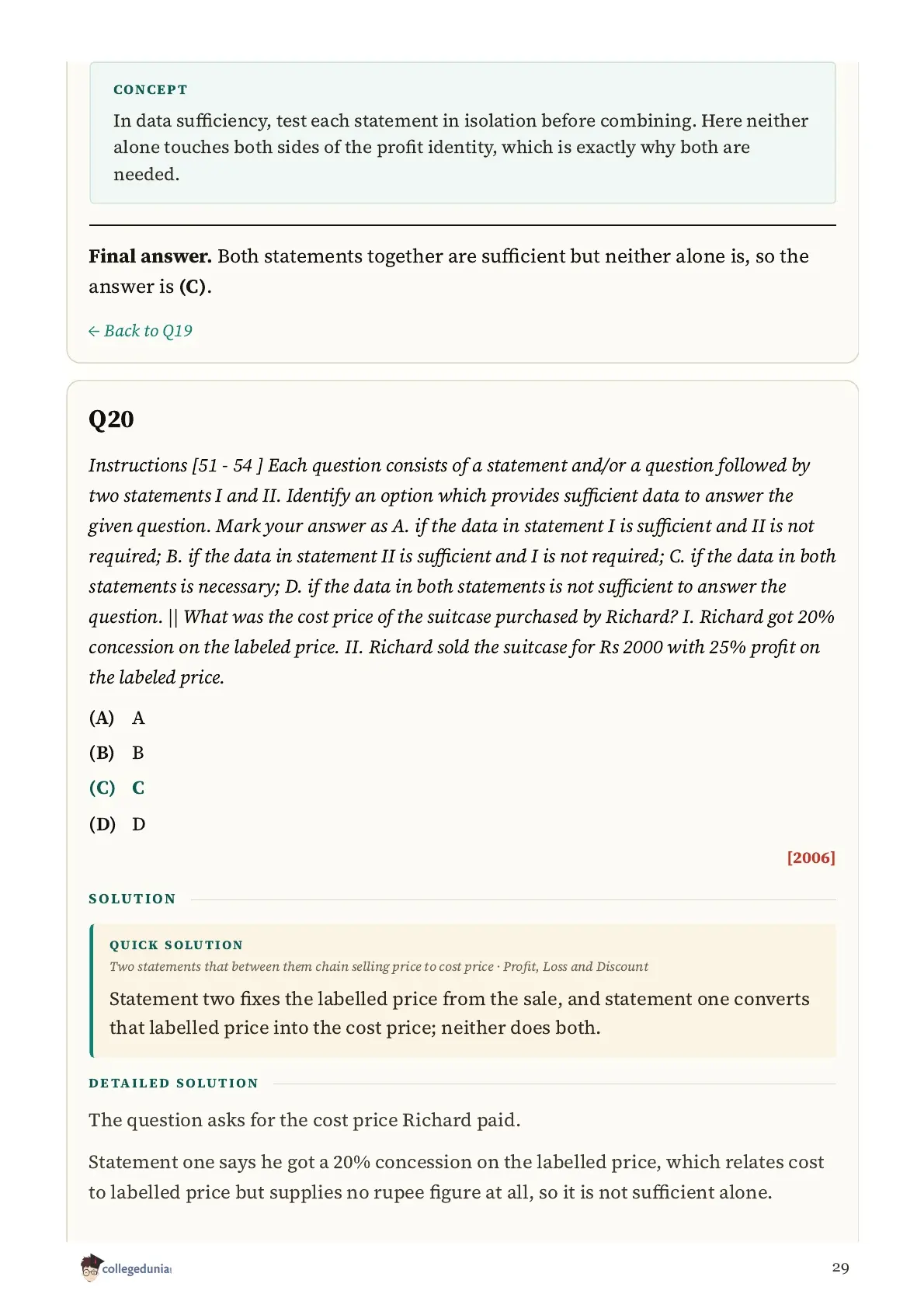
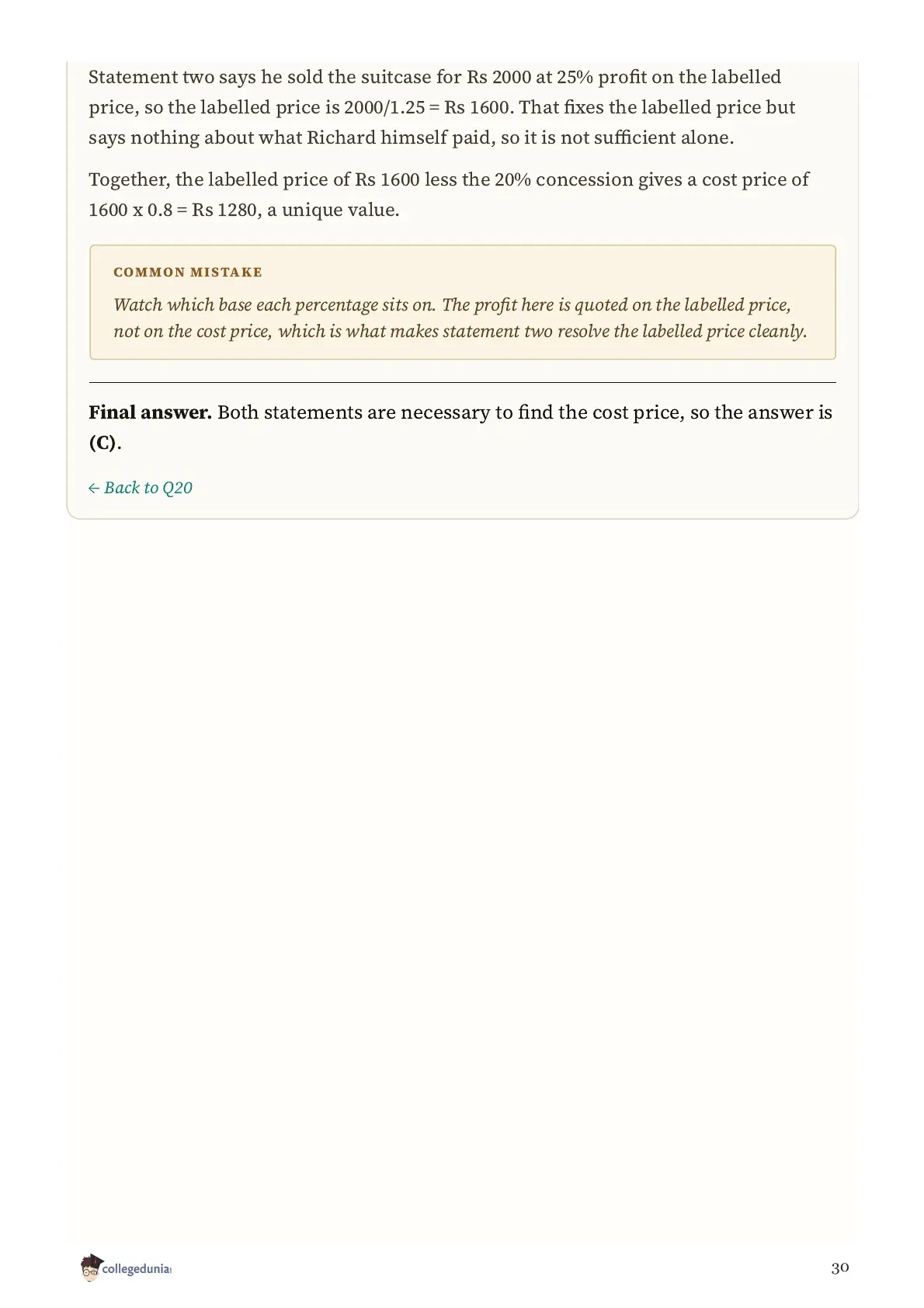
Questions run newest year first, with the options exactly as printed. The answer key follows, then a worked solution for each one.
SNAP Profit and Loss Weightage
Profit and loss sits in the Quantitative, Data Interpretation and Data Sufficiency section, 20 of SNAP's 60 questions. It is one of the topics SNAP returns to most often, and it rarely tests a single formula on its own.
| Papers | Questions in this bank |
|---|---|
| 2006 to 2010 | 4 |
| 2011 to 2015 | 7 |
| 2018 to 2020 | 1 |
| 2021 to 2025 | 8 |
The recent papers lean on it harder than the middle years did. Eight of the twenty come from 2021 onward, usually layering two or three ideas into one question.
What the 20 Questions Cover
- Markup and discount together, where a labelled price is marked up then discounted and the two do not cancel
- False weights and faulty balances, including one question that cheats on both the buying and the selling side
- Chained resales, where an article passes through three hands at different gains and losses
- Blends sold at a margin, where the cost per unit must be built before any profit is taken
- Data sufficiency, where the question is whether the statements pin the cost price down at all
How to Approach the Set
Set the cost price to 100 whenever the question is entirely in percentages. It removes the algebra outright and it works on more of this bank than any other single habit.
Keep the two bases apart: discount sits on the marked price, profit sits on the cost price. Mixing them is what the markup-then-discount questions are built to catch. Successive discounts compound, so multiply what survives rather than adding the discounts together.
A false weight applies to the cost side only. It changes what the seller gives up, never what the buyer pays, and getting that the wrong way round inverts the answer.
When None of the Options Is Right
One question here resolves to "none of these" and is worth studying rather than skipping. An article is labelled to earn 30% profit, then sold at a 10% discount on that label.
Take the cost as 100. The label is 130, the sale is 117, so the profit is exactly 17%. The options offer 18%, 15% and 20%, and the reasoning that 30 minus 10 leaves 20 is precisely the error being tested.
Common Mistakes
- Subtracting a discount from a markup as though both sat on the same base
- Adding two successive discounts instead of compounding what remains
- Measuring profit against the cost of only the goods sold when the question says outlay
- Applying a false weight to the revenue rather than to the cost
- Reading 33.33% as 0.3333 instead of exactly one third, which breaks a whole-number answer
Two to Solve First
The 2021 question where the seller cheats on both sides, taking 300 g extra when buying and giving 300 g short when selling, in 5 kg packets, while claiming to sell at cost. The two cheats do not simply add. Converting each into an actual weight against a fixed sum of money is the only reliable route.
Then the 2023 mixing-ratio pair. The same two sugars blended 3:2 return 10% profit and blended 2:3 return 5%, at one fixed selling price. Turning each profit into the blend's cost gives two linear equations that fix the ratio of the cost prices.
Video Solutions
Source: MBA Pathshala
Using the Answer Key
Attempt the whole set before checking anything, allowing about ninety seconds each. Mark the key in one pass, right or wrong only, then read the solution for every miss and every lucky guess. Each opens with a one-line quick solution you can stop at and retry from.
For the rest of the section, the SNAP Averages, Mixtures and Alligation PYQs and the SNAP Permutations, Combinations and Probability PYQs cover the other repeated quant topics.
SNAP Profit, Loss and Discount PYQ FAQs
Ques. How many profit and loss questions come in SNAP?
Ans. One to three most years, inside the Quantitative, Data Interpretation and Data Sufficiency section, often blended with discounts or false weights rather than asked plainly.
Ques. Which years does this bank cover?
Ans. 2006 to 2025, with the weight tilted towards the recent papers: eight of the twenty come from 2021 onward.
Ques. Why does one answer say none of these?
Ans. One question marks an article up 30% and then discounts it 10%, which leaves exactly 17% profit rather than the 20% the options invite. The solution shows the working that arrives at 17%.
Ques. What is the fastest way into this topic?
Ans. Setting the cost price to 100 in any all-percentage question. It converts most of these into arithmetic you can do in your head, and it is the move the bank rewards most often.
Ques. Is this an official SNAP answer key?
Ans. No. Symbiosis does not publish an answer key for SNAP. Every answer here was worked out from the question itself and shown with the full working, so you can check it rather than trust it.
Ques. Can the PDF be downloaded free?
Ans. Yes. All 30 pages can be read on this page and downloaded at no cost.



Comments