




The free ncert class 12 english vistas pdf chapter 6 Memories of Childhood is the official Reprint 2026-27 release from NCERT, aligned to the CBSE 2026-27 English Core syllabus. The chapter is a paired autobiographical extract by two women from marginalised communities - Zitkala-Sa (Gertrude Simmons Bonnin, 1876-1938), a Native American writer, and Bama (b. 1958), a Tamil Dalit writer - and runs to about 7 pages in the Vistas supplementary reader as the final literature piece of Class 12 Vistas.
- CBSE Weightage: 6 marks per Vistas Long Answer in Section C, drawn from the three Reading with Insight questions
The chapter carries 3 Reading with Insight questions at the end - all CBSE Vistas Long Answers are pulled from this block. Read the source PDF before the Solutions or Notes on Collegedunia.

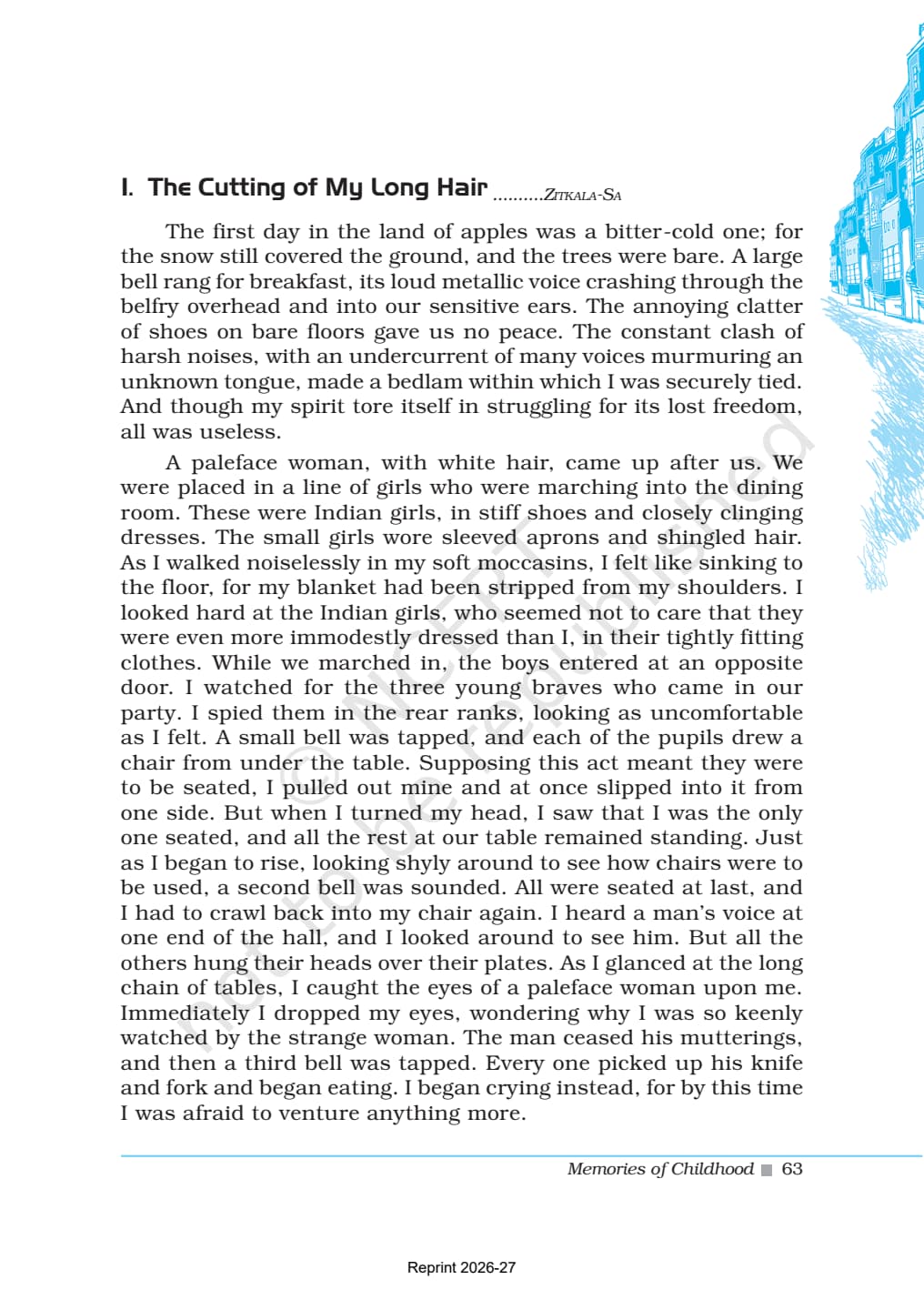


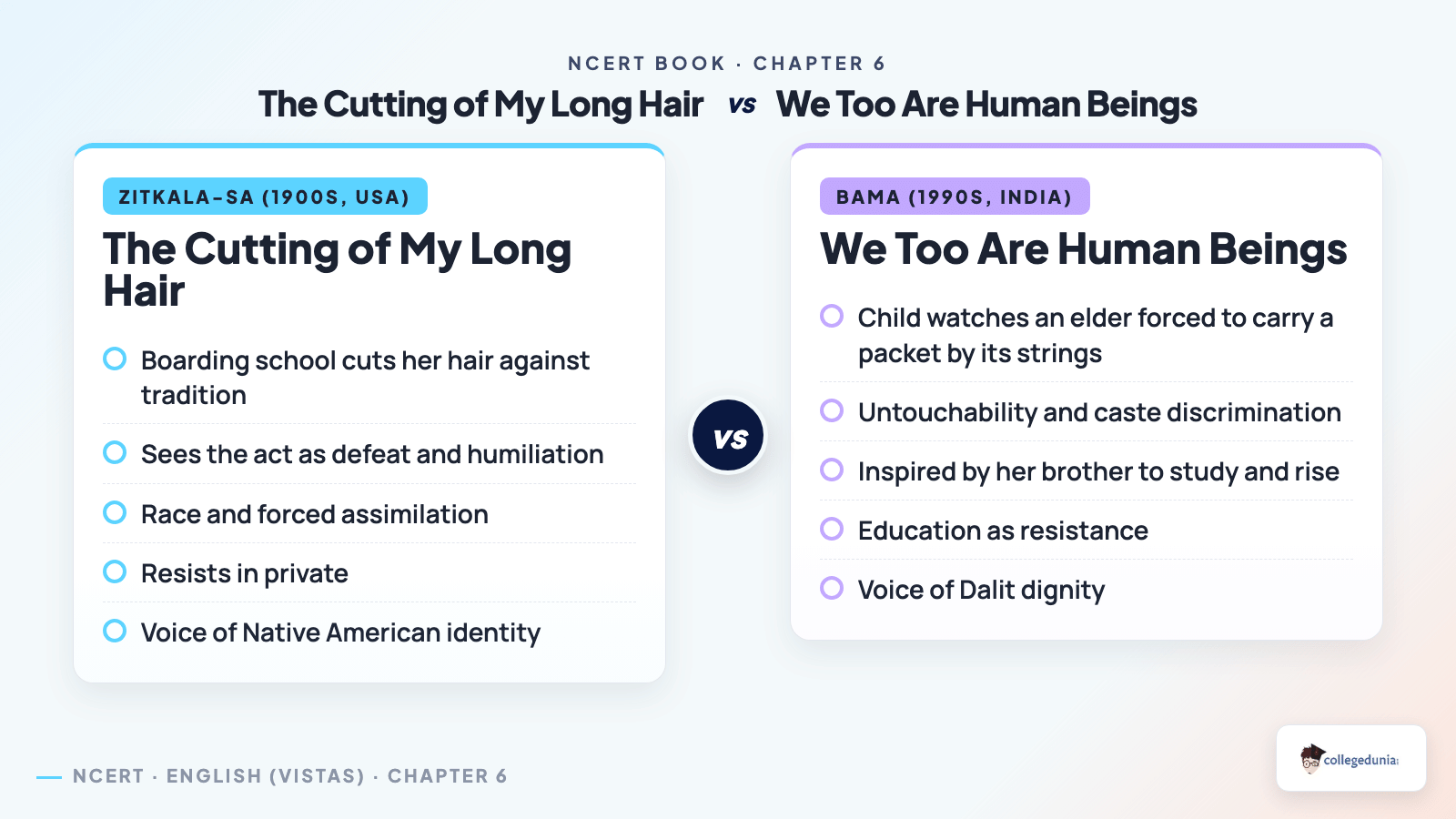
Part I, The Cutting of My Long Hair, recalls Zitkala-Sa's first day at the Carlisle Indian Boarding School in Pennsylvania, where her long hair is forcibly cut as part of the school's settler-colonial assimilation programme. Part II, We Too are Human Beings, is from Bama's autobiography Karukku (1992) and recalls an eight-year-old's first encounter with caste segregation in a Tamil village - a Dalit elder forced to carry a parcel by its string so that the upper-caste landlord is not polluted by touch.
This page is the entry point to the official NCERT source material. Pair it with the Collegedunia NCERT Solutions and Notes for active practice and revision.
Also Check:
- Memories of Childhood Class 12 NCERT Solutions PDF
- Memories of Childhood Class 12 Vistas Notes
- CBSE Class 12 English Syllabus 2026-27
What's Inside the Chapter 6 Memories of Childhood NCERT PDF
The Reprint 2026-27 edition keeps Chapter 6 of NCERT Class 12 Vistas intact at about 7 pages. One Before-you-Read note introduces both writers, followed by two clearly labelled parts and a final Reading with Insight question block.
| NCERT Block | Pages | What It Covers |
|---|---|---|
| Before you Read and Authors block | 1 | Zitkala-Sa (Gertrude Simmons Bonnin, 1876-1938); Bama (b. 1958); the comparative-autobiography premise |
| Part I: The Cutting of My Long Hair (Zitkala-Sa) | 2 to 3 | First day at Carlisle; the bells and dining drill; Judewin's warning; the hair meaning in Zitkala-Sa's people; the hiding under the bed; the forced haircut |
| Part II: We Too are Human Beings (Bama) | 2 to 3 | The walk home; the parcel by the string; Annan's explanation; the turn to study and the autobiography Karukku |
| Reading with Insight | 1 | Three Long-Answer prompts on commonality of theme, the early origins of rebellion, and the comparison of discriminations |
Memories of Childhood Video Chapter Walkthrough
Source: Magnet Brains on YouTube
Class 12 Vistas Chapter 6 End-of-Chapter Question Inventory
The chapter ends with three Reading with Insight questions. CBSE pulls one 6-mark Long Answer from this block every Vistas slot. The table maps every question to the concept it tests.
| Q# | Prompt | Skill Tested |
|---|---|---|
| Q1 | The two accounts are based in two distant cultures. What is the commonality of theme found in both of them? | Comparative reading; the child, the body, anger, study, voice |
| Q2 | Do you agree that injustice in any form cannot escape being noticed even by children? | Value-based reasoning; childhood as political subject |
| Q3 | What kind of discrimination does Zitkala-Sa's experience depict? What are their responses to their respective situations? | Historical specificity; comparative resistance |
How to Use the NCERT Class 12 Vistas Chapter 6 PDF
- Read the two parts as a pair. The chapter's argument is in the pairing. Do not read Zitkala-Sa first and then forget about her when you reach Bama; the two extracts are answering the same question from two distant cultures.
- Mark the closing lines. Part I closes on "one of many little animals driven by a herder"; Part II closes on "We too are human beings." Underline both - they are the chapter's two thesis sentences.
- Note the historical specifics. The Carlisle Indian Industrial School was founded in 1879 under Richard Henry Pratt's slogan "kill the Indian, save the man." Bama's autobiography Karukku was published in 1992; the title means Palmyra leaves and also contains the word karu (embryo, seed) meaning freshness. These specifics are 1-mark MCQ material.
- Pair with the Collegedunia Solutions. Once you have read the source PDF, work through the three Reading with Insight questions using the Collegedunia NCERT Solutions PDF for the model long-answer shape.
- Use the handwritten notes for the last-week refresh. The 5-page handwritten-notes notebook compresses the entire chapter into a 20-minute revision.
Related Resources for Class 12 English Vistas Chapter 6
- Memories of Childhood Class 12 NCERT Solutions
- Memories of Childhood Class 12 Vistas Notes
- Memories of Childhood Handwritten Notes
FAQs on Memories of Childhood NCERT PDF
FAQs on Memories of Childhood NCERT PDF
Is the Memories of Childhood NCERT PDF free to download?
Yes. The official NCERT PDF of Class 12 English Vistas Chapter 6 Memories of Childhood is published by NCERT under the Reprint 2026-27 edition and is free for student download. Collegedunia hosts a clean copy of the PDF directly in this article.
Who wrote Memories of Childhood in Class 12 Vistas?
The chapter is a paired autobiographical extract by Zitkala-Sa (Gertrude Simmons Bonnin, 1876-1938), a Native American writer and activist, and Bama (b. 1958), the pen-name of a Tamil Dalit writer from a Roman Catholic family. The extracts are from Zitkala-Sa's The School Days of an Indian Girl (1900) and Bama's Karukku (1992).
How many pages is Chapter 6 in the NCERT Class 12 Vistas PDF?
Chapter 6 Memories of Childhood runs to about 7 pages in the NCERT Class 12 Vistas Reprint 2026-27 PDF, including the Before you Read note, both parts (Zitkala-Sa and Bama), and the three Reading with Insight questions at the end.
How many questions are in Reading with Insight for Memories of Childhood?
There are three Reading with Insight questions at the end of Chapter 6, covering the commonality of theme between the two accounts, the early origins of rebellion in childhood, and the comparison of discriminations (settler-colonial assimilation versus caste segregation).



Comments