



These handwritten notes on Class 12 Business Studies Chapter 1 Nature and Significance of Management are scanned student pages for quick revision, covering Koontz's definition, the seven characteristics, and the levels and functions of management, in line with the 2026-27 CBSE syllabus.
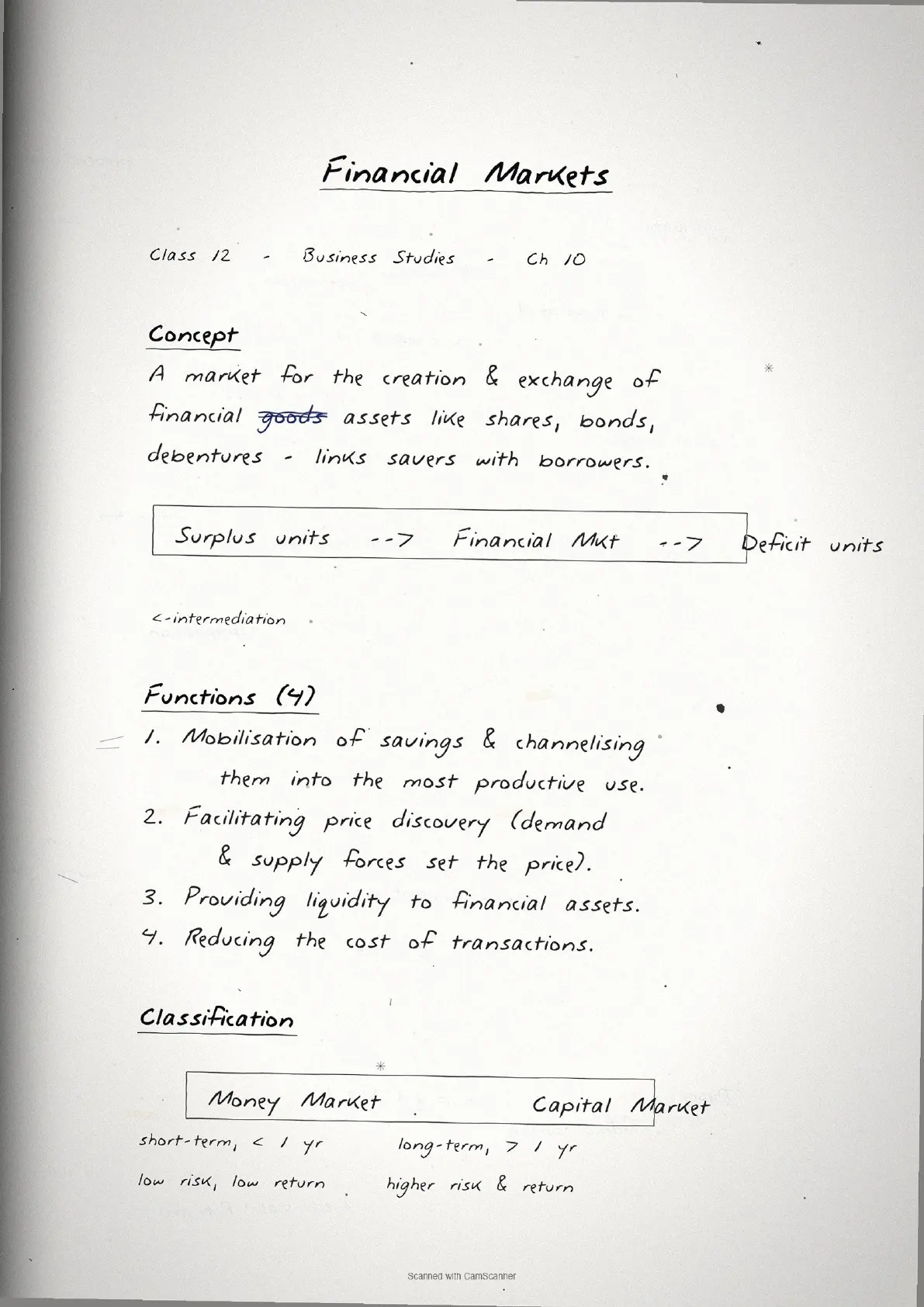
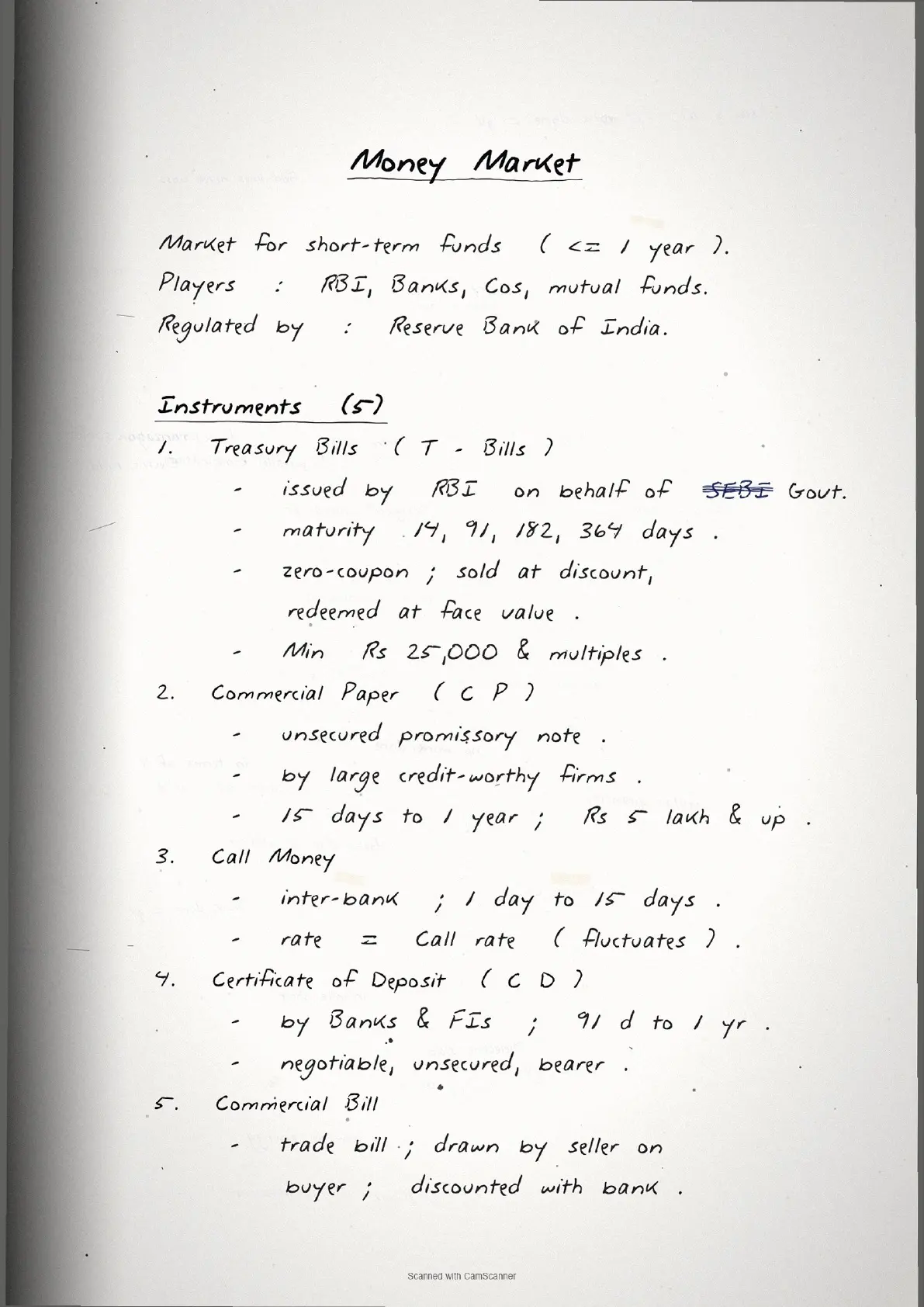
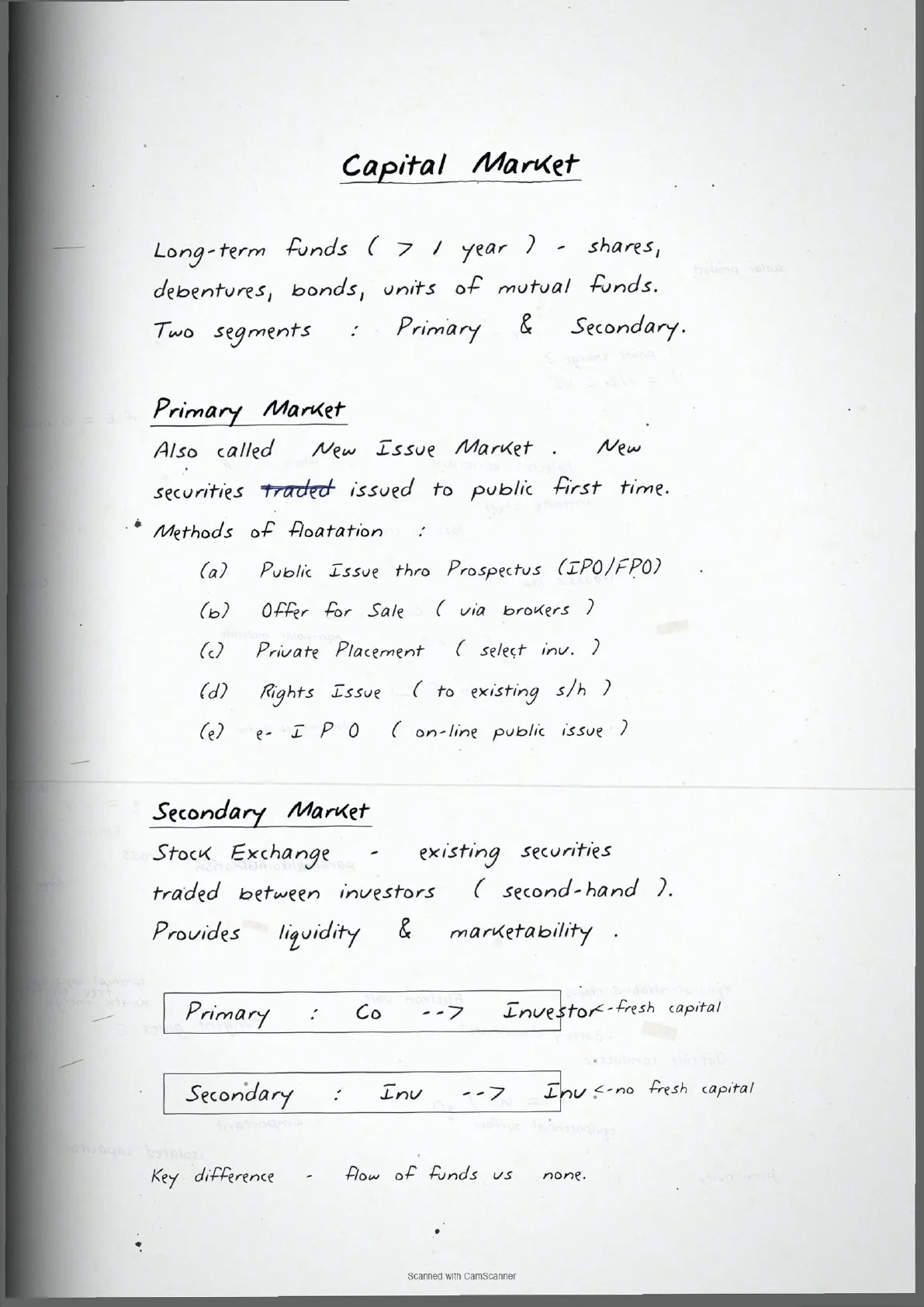
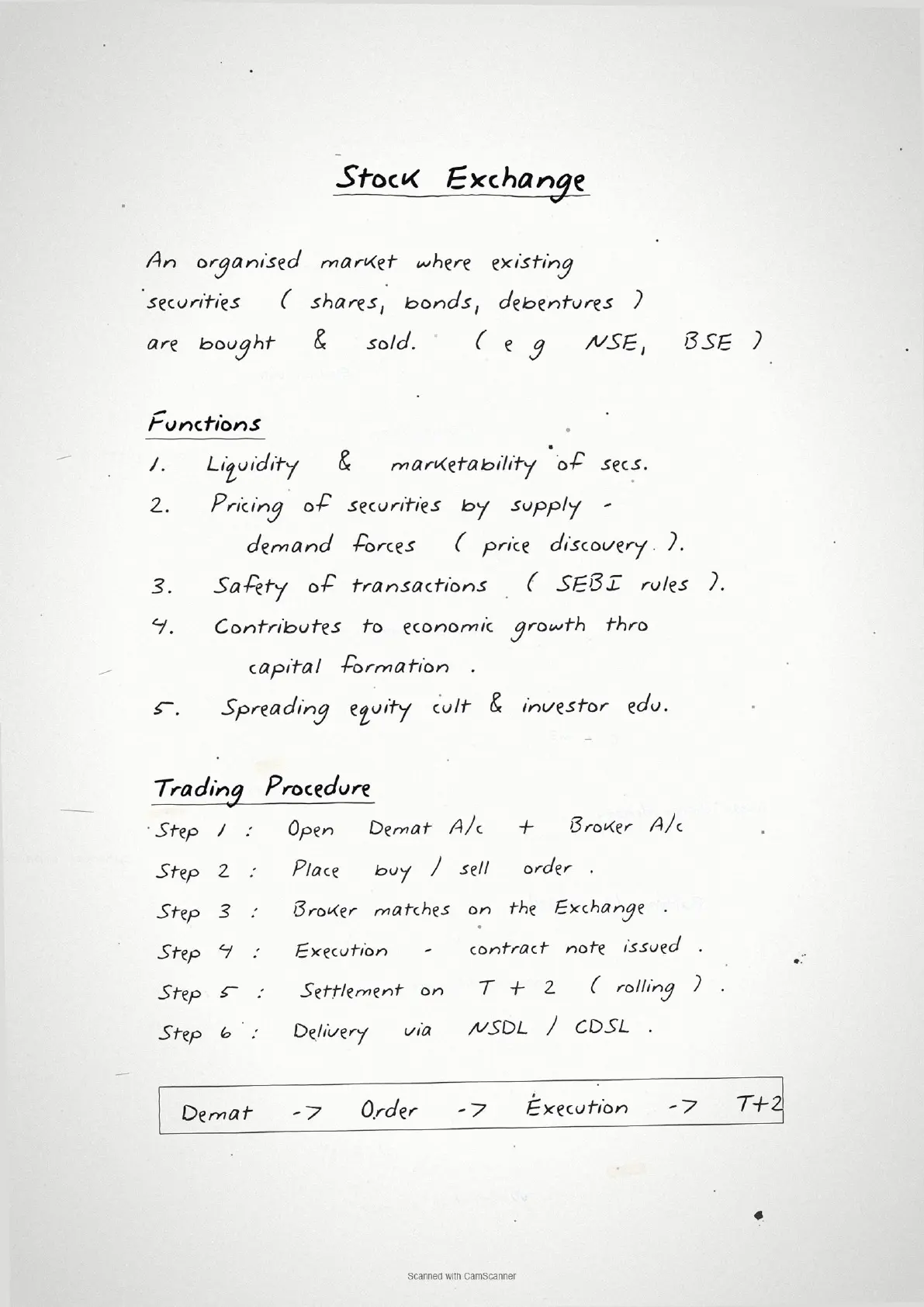
- CBSE Weightage: 6 to 10 marks (Unit 1, Principles and Functions of Management)
- Style: Student-friendly scanned-style layout with concept boxes, mnemonics and quick-recap callouts
What is Covered in the Class 12 Business Studies Chapter 1 Handwritten Notes
These notes are built for the last revision round in the final hours before the exam. The layout, concept cards, mnemonics (GAM-C-GDI for characteristics, POSDC for functions) and exam-cue boxes are calibrated to fix Chapter 1 in long-term memory.
| Section | Key Concept | Memory Aid |
|---|---|---|
| 1. Definition | Process to achieve goals effectively and efficiently | "And" not "or" |
| 2. Characteristics | 7 features of management | GAM-C-GDI |
| 3. Objectives | Organisational, Social, Personal | O-S-P |
| 4. Importance | 5-point list (group goals, efficiency, dynamic, personal, society) | G-E-D-P-S |
| 5. Nature | Art (full) + Science (partial) + Profession (partial) | "To a large extent" |
| 6. Levels | Top, Middle, Supervisory | Decide-Plan-Execute |
| 7. Functions | Planning, Organising, Staffing, Directing, Controlling | POSDC |
| 8. Coordination | Essence; deliberate, all-pervasive, continuous, integrative | "Essence of management" |
Nature and Significance of Management Video Walkthrough
Source: Magnet Brains on YouTube
How to Use the Chapter 1 Nature and Significance of Management Notes
- First read: go through cover-to-cover in 30 minutes; absorb the concept boxes.
- Mnemonic drill: recite GAM-C-GDI (characteristics) and POSDC (functions) out loud three times.
- Case-cue mapping: read the "real-world" boxes and the case-cue tables; lock the pattern.
- Last-night flick: the 7-point Key Takeaways at the end is your 5-minute pre-exam refresh.
These four steps take about 45 minutes in total. Most students run through them the night before the exam, then do a final flick through the concept boxes during the last free period on exam day.

Student Feedback
In a Collegedunia poll of 410 Class 12 Commerce students, 81% said the GAM-C-GDI and POSDC mnemonics helped them recall Chapter 1 faster than reading the NCERT textbook alone. 3 in 4 said the concept boxes made the "art vs science vs profession" distinction clear on the first read.
Other Resources for Class 12 Business Studies Chapter 1 Nature and Significance of Management
| Resource | Link |
|---|---|
| NCERT Solutions | Nature and Significance of Management NCERT Solutions |
| Revision Notes | Nature and Significance of Management Class 12 Notes |
| Handwritten Notes | Nature and Significance of Management Handwritten Notes |
| NCERT Book PDF | Nature and Significance of Management NCERT Book PDF |
Handwritten Notes for Class 12 Business Studies: All Chapters
| Chapter | Handwritten Notes Link |
|---|---|
| Chapter 2 | Principles of Management Handwritten Notes |
| Chapter 3 | Business Environment Handwritten Notes |
| Chapter 4 | Planning Handwritten Notes |
| Chapter 5 | Organising Handwritten Notes |
| Chapter 6 | Staffing Handwritten Notes |
| Chapter 7 | Directing Handwritten Notes |
| Chapter 8 | Controlling Handwritten Notes |
| Chapter 9 | Financial Management Handwritten Notes |
| Chapter 10 | Financial Markets Handwritten Notes |
| Chapter 11 | Marketing Handwritten Notes |
| Chapter 12 | Consumer Protection Handwritten Notes |
FAQs on Handwritten Notes for Chapter 1
FAQs on Handwritten Notes for Chapter 1
Are handwritten notes enough for the board exam?
For last-mile revision, yes. But pair them with the NCERT Solutions PDF for answer-writing practice and the NCERT textbook for full chapter reading. Handwritten notes are most effective in the final week.
What is the GAM-C-GDI mnemonic?
GAM-C-GDI captures the seven characteristics of management: Goal-oriented, All-pervasive, Multi-dimensional, Continuous, Group activity, Dynamic, Intangible.
What is POSDC?
POSDC is the mnemonic for the five functions of management formalised by James A.F. Stoner and traceable to Henri Fayol: Planning, Organising, Staffing, Directing, Controlling. They form a continuous loop.
Why is coordination called the essence of management?
Mary Parker Follett described management as "the art of getting things done through others" and treated coordination as the deliberate synchronisation of group effort. Coordination integrates every other function (planning, organising, staffing, directing, controlling) into a unified group effort towards the organisational goal. Without coordination, the other functions cannot deliver results.
How is management an art and a science at the same time?
Management has the theoretical body of knowledge (Taylor, Fayol) of a science and the personalised application plus creativity of an art. Hence it is both, with the art side fully present and the science side partly present (social science, not physical).
Who is the Father of Modern Management?
Henri Fayol, the French mining engineer and industrialist, is called the Father of Modern Management. His classification of the manager's role into forecasting, planning, organising, commanding, coordinating and controlling is the direct ancestor of the POSDC framework studied in Class 12 Business Studies Chapter 1.



Comments