




These Contemporary Centres of Power Class 12 Notes give a quick, exam-ready summary of how the European Union, ASEAN and China rose as new centres of power, set to the 2026-27 CBSE syllabus. The notes pull together every key date, term and idea from Chapter 2 of Contemporary World Politics. Students can use them for a fast revision the night before a test or to fix the main ideas before they attempt the back-exercise questions.
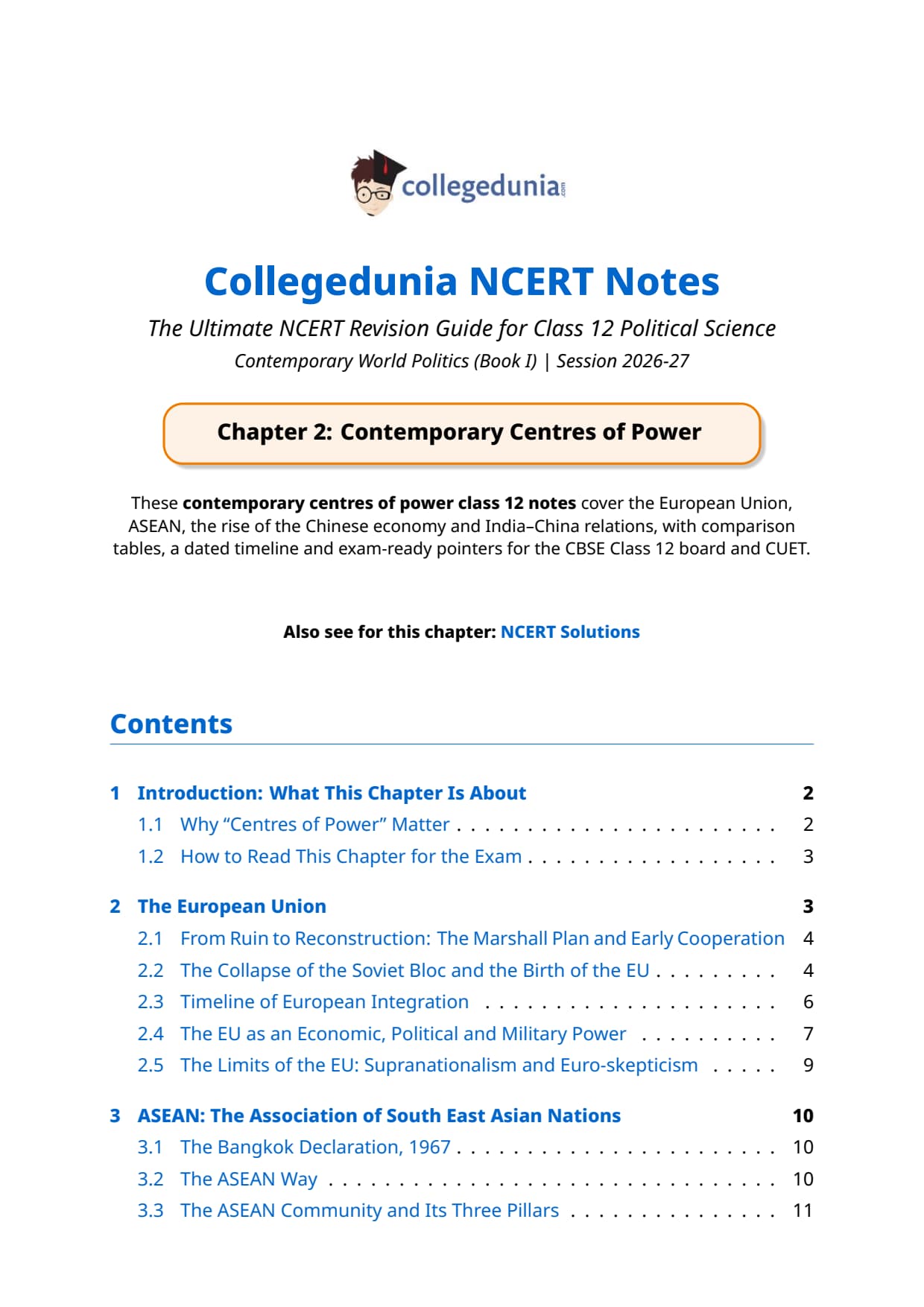
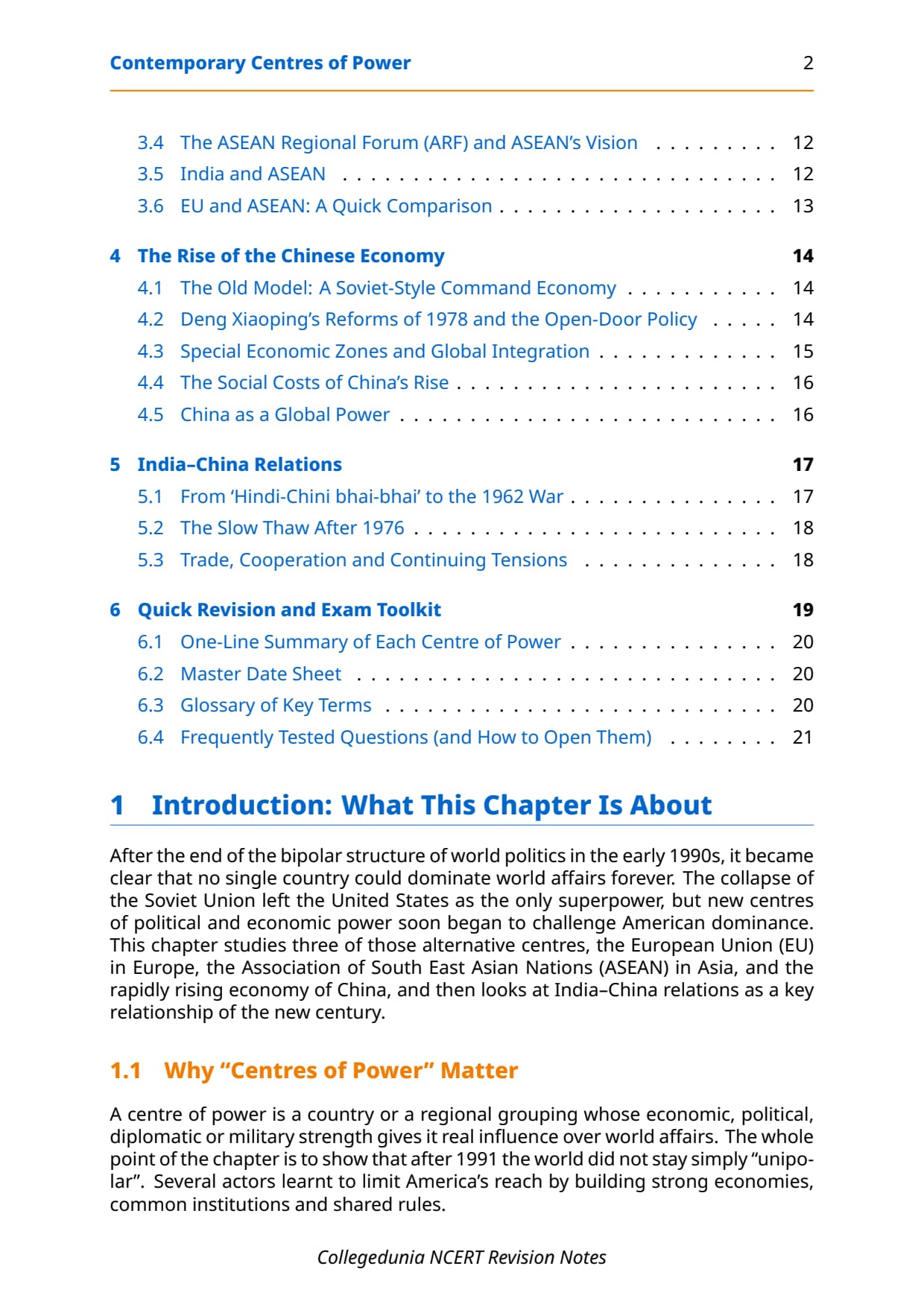
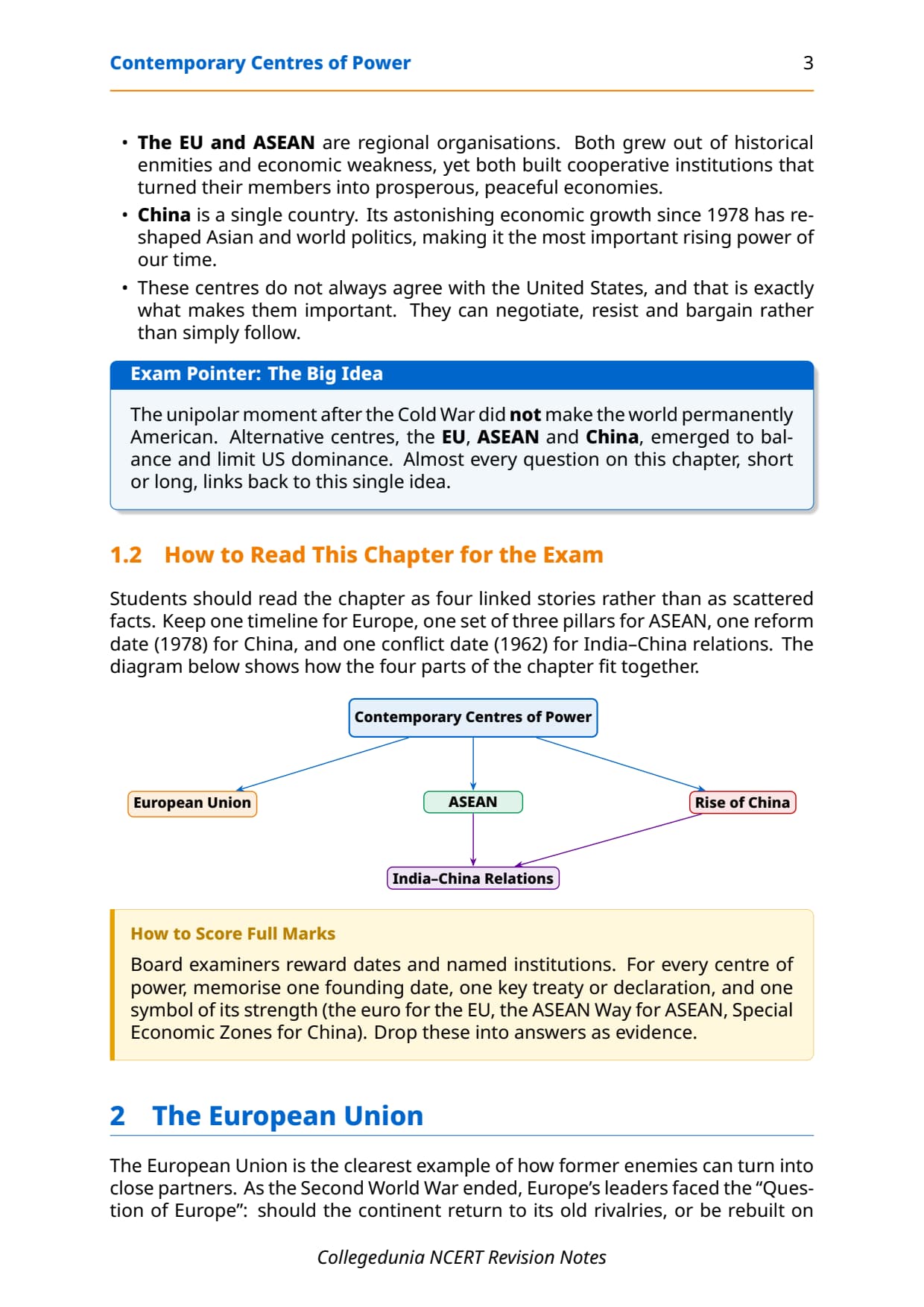
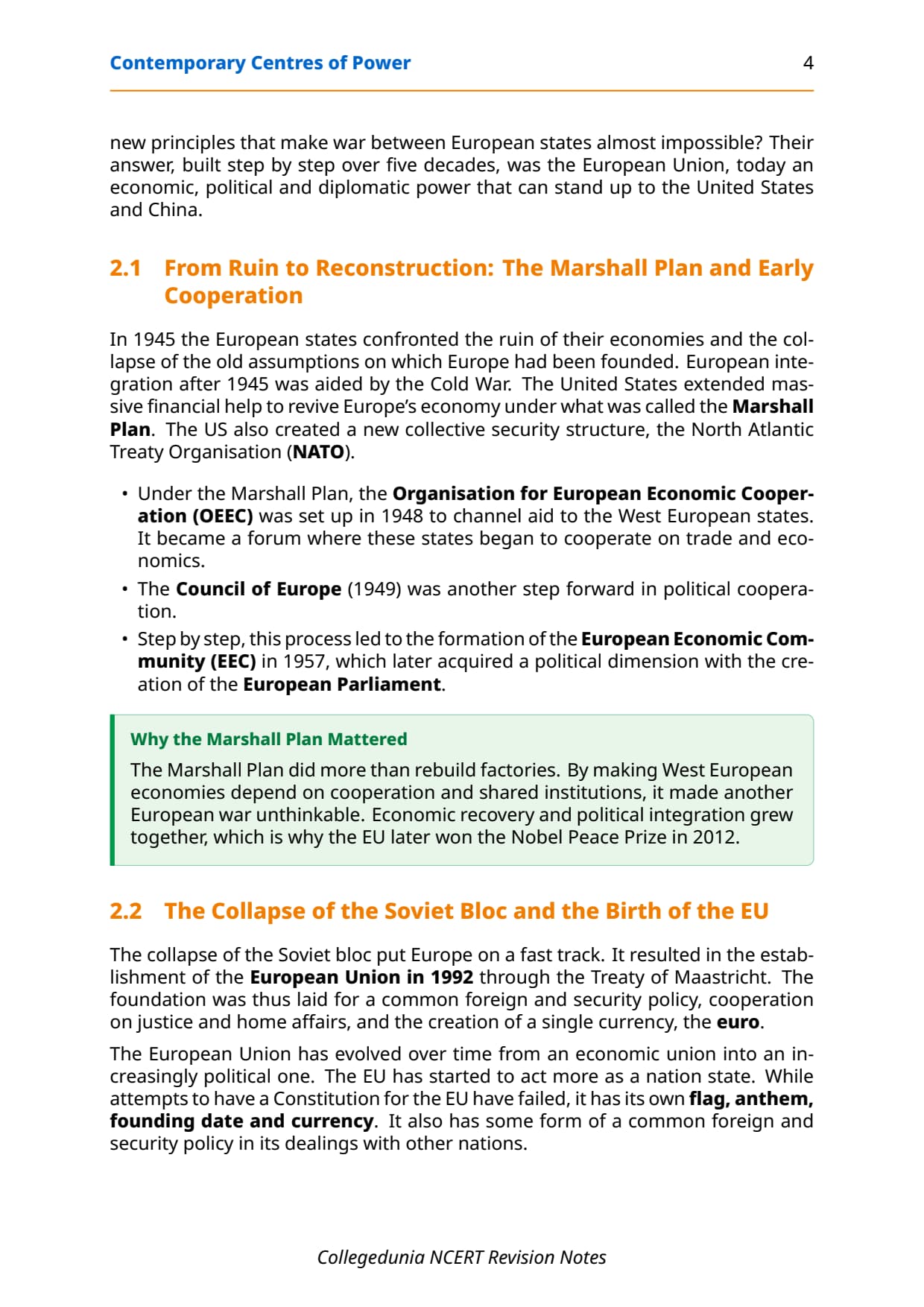
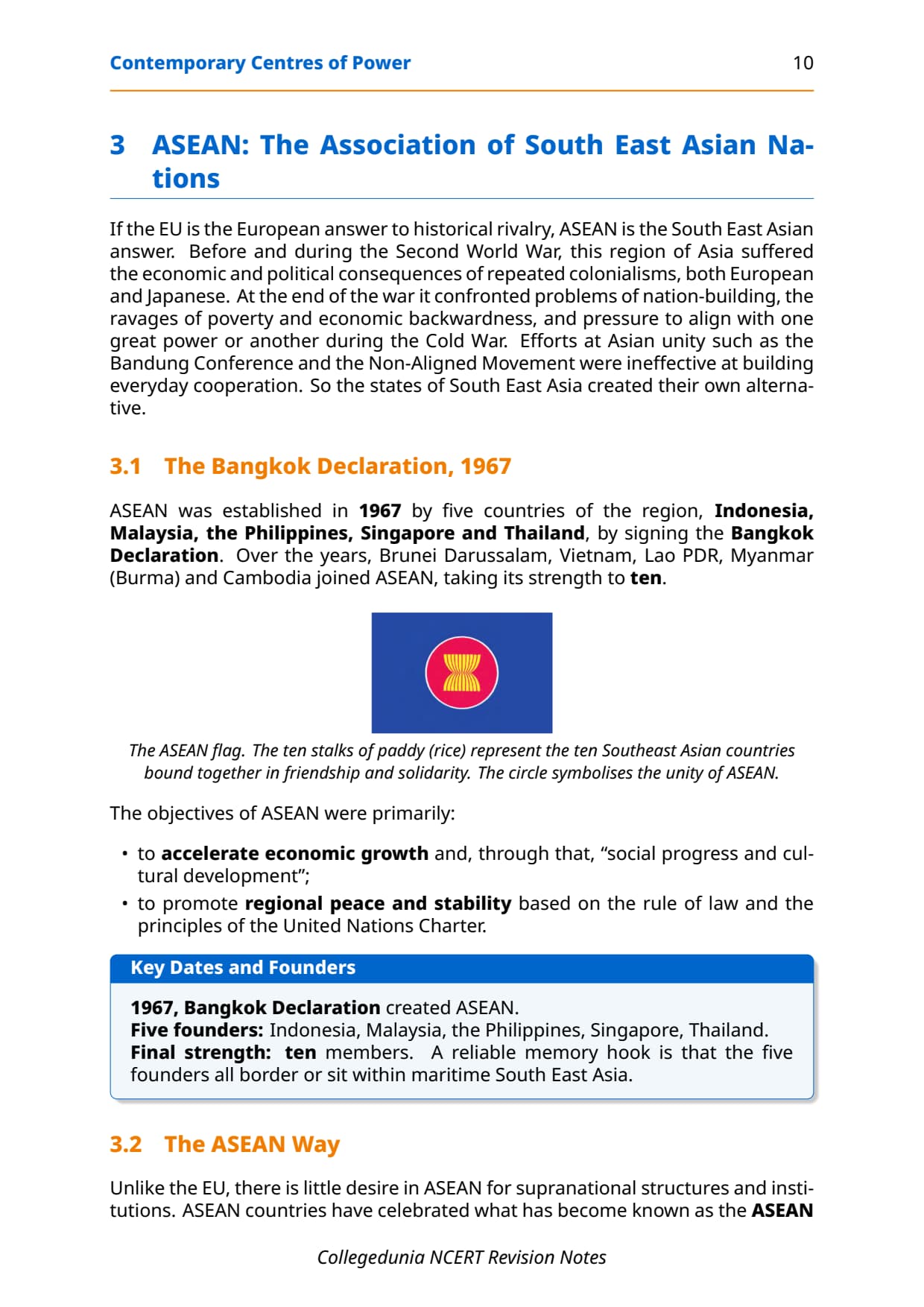
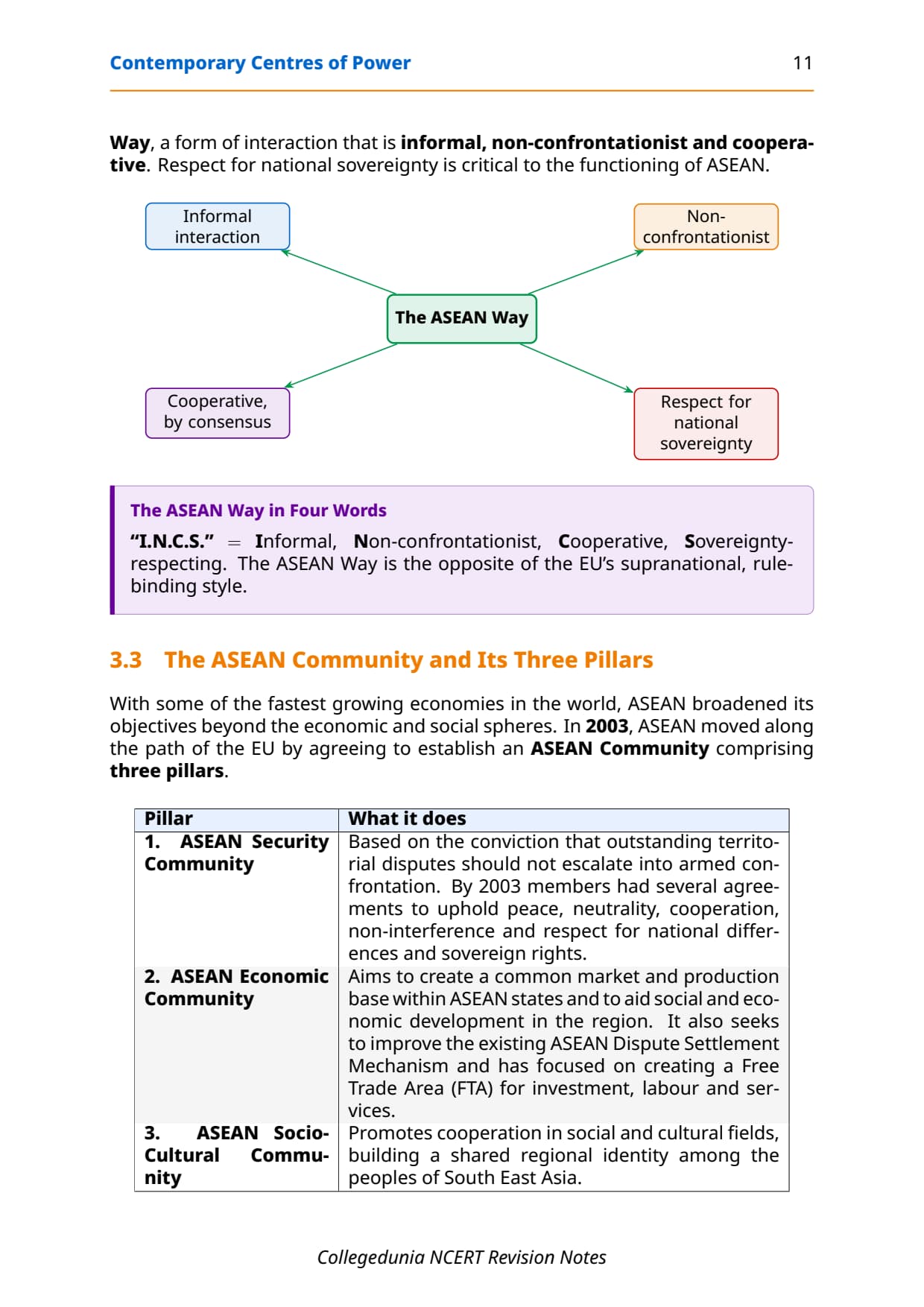
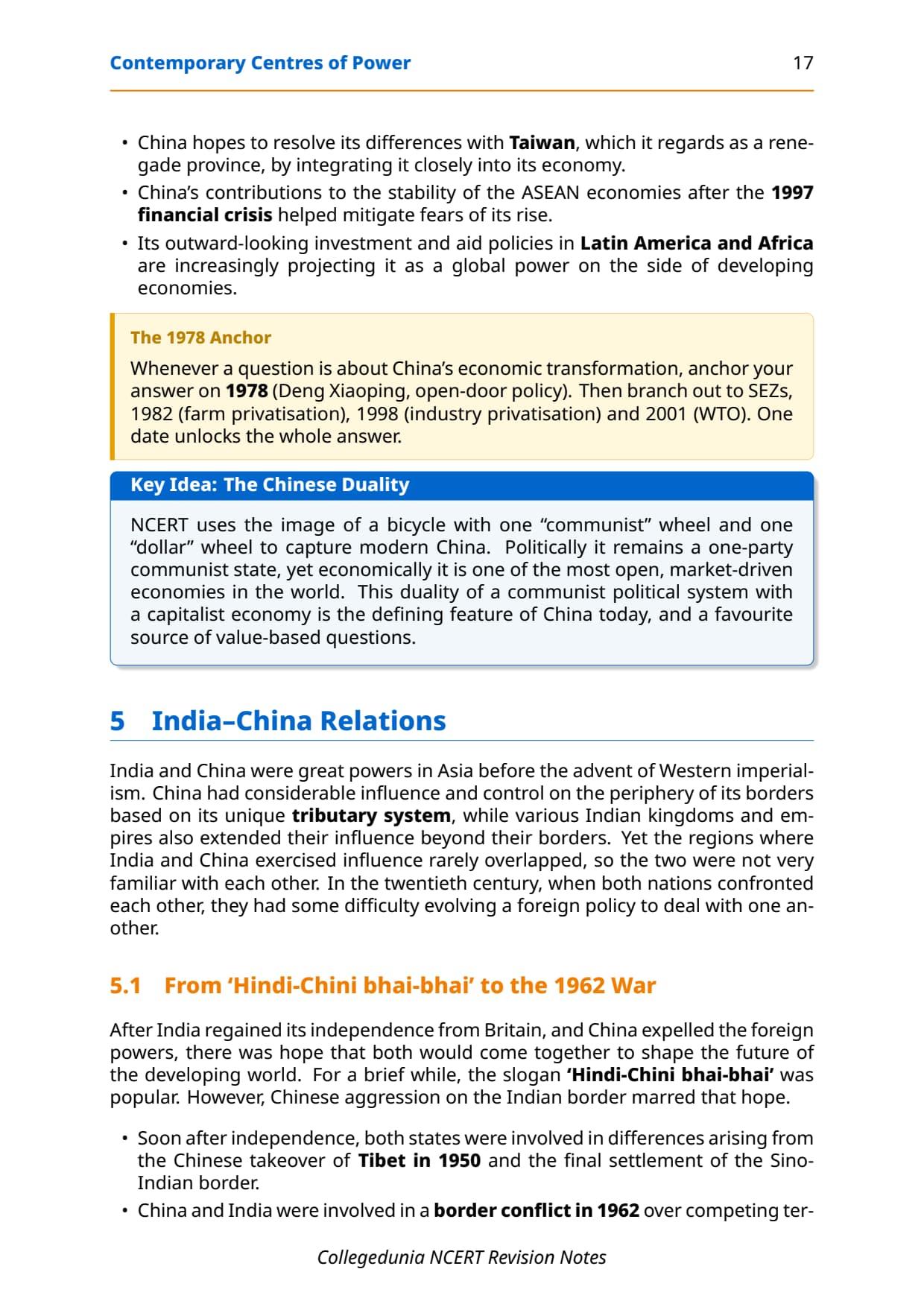
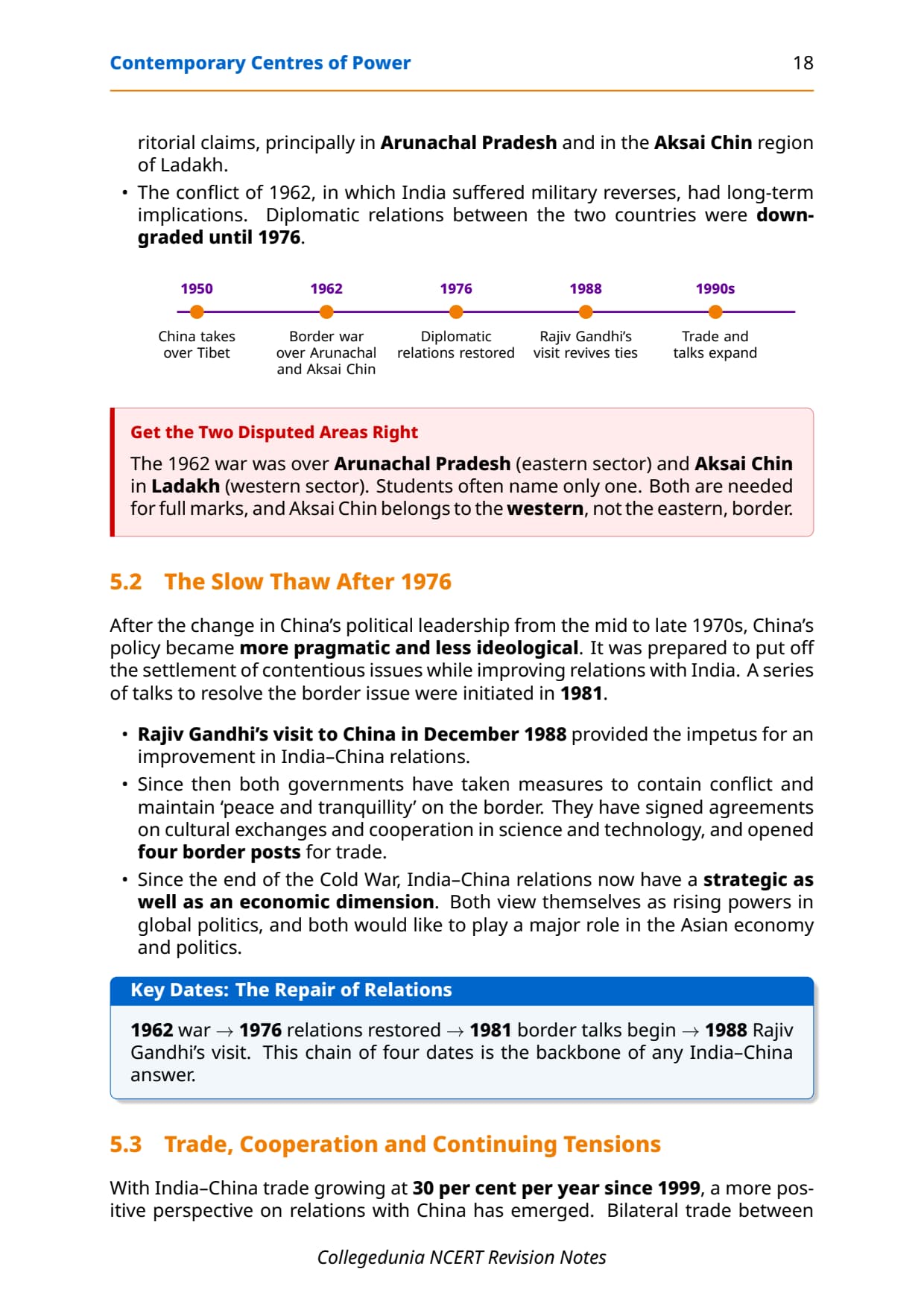
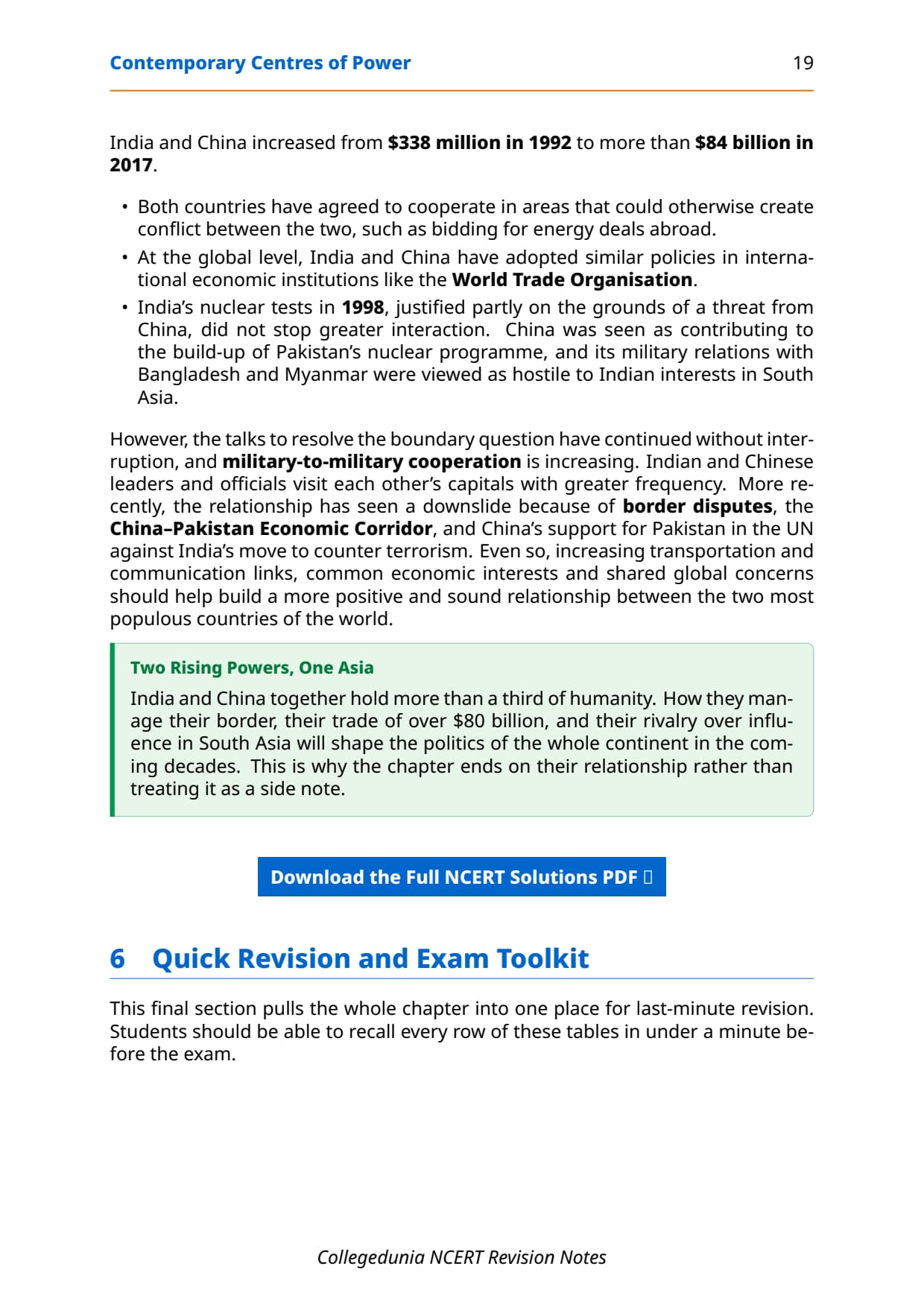
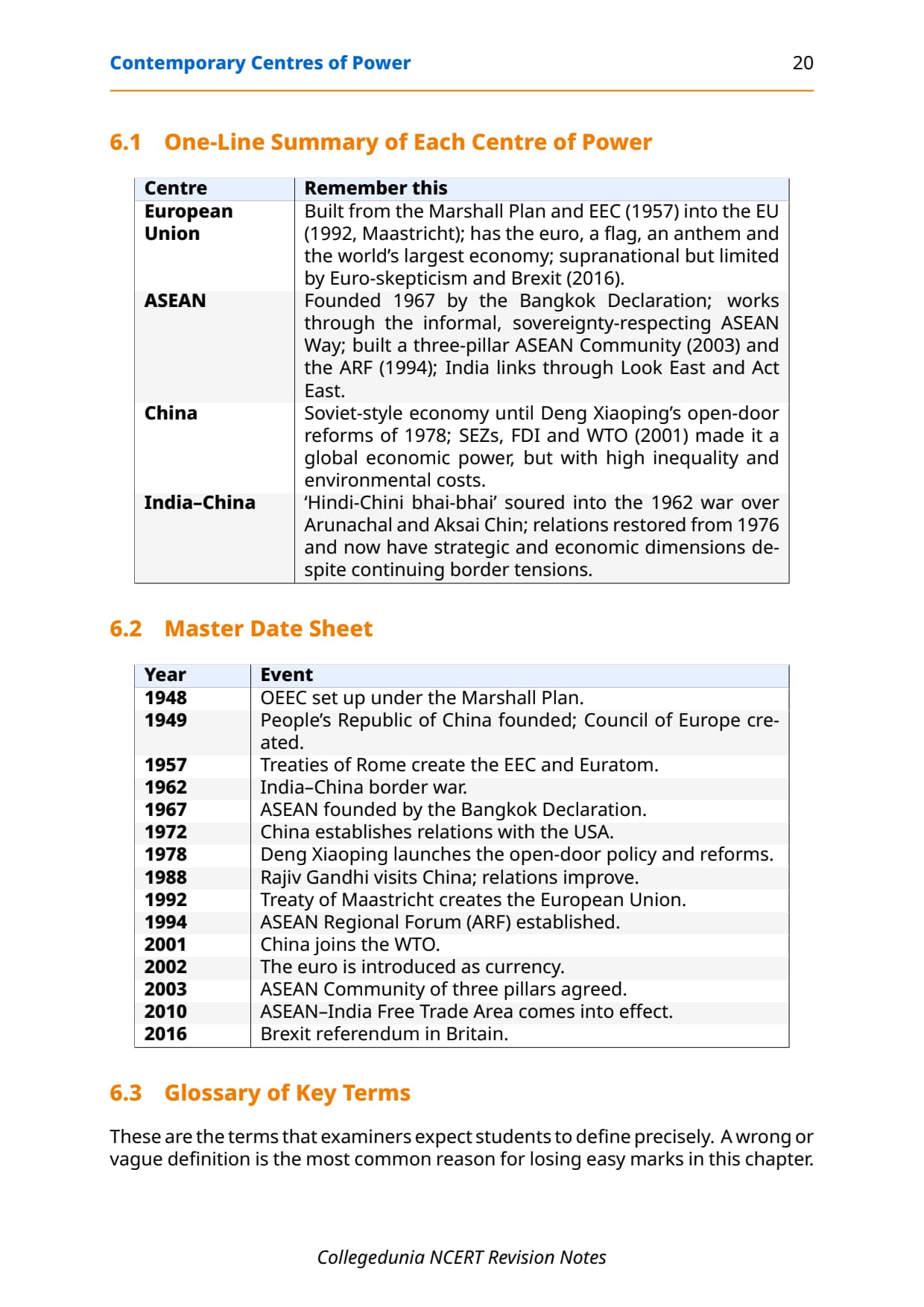
- Covers the EU, ASEAN, the rise of China and India-China relations in one place.
- This Class 12 Political Science chapter usually carries 5 to 6 marks in the board paper.
- Pairs with the NCERT Solutions, Handwritten Notes and Book PDF linked lower on this page.
These Contemporary Centres of Power Class 12 notes are written from the official NCERT Contemporary World Politics textbook and checked against the last five years of CBSE board papers.
Student Feedback: In a Collegedunia poll of 8,510 Class 12 Political Science students taken before the 2026 boards, 72% of students said short, point-wise notes on the EU, ASEAN and China were the fastest way to revise this chapter. Most students kept the founding dates and key terms on a single sheet for last-minute recall.
Source: 2026-27 Class 12 Political Science student poll. Sample of 8,510 students from CBSE schools across 12 states.
What the Contemporary Centres of Power Notes Cover
Contemporary Centres of Power is the second chapter of Contemporary World Politics. After the bipolar order ended in the early 1990s, new centres of power rose to limit the dominance of the United States. The chapter studies three of them: the European Union, ASEAN and the rising economy of China.
The easiest way to organise your revision is to split the chapter into three threads:
- The EU: how Europe rebuilt step by step into a powerful bloc.
- ASEAN: the ASEAN Way, Vision 2020 and the three pillars.
- China: the open door reforms and the rise of its economy.
So these notes are really about how regional groupings now shape world politics. If you sort each fact under EU, ASEAN or China first, almost every question in Contemporary Centres of Power class 12 becomes easier to answer. Keep this three-part frame at the top of your revision sheet and slot each new detail into one of the boxes as you read.
The European Union as a Centre of Power
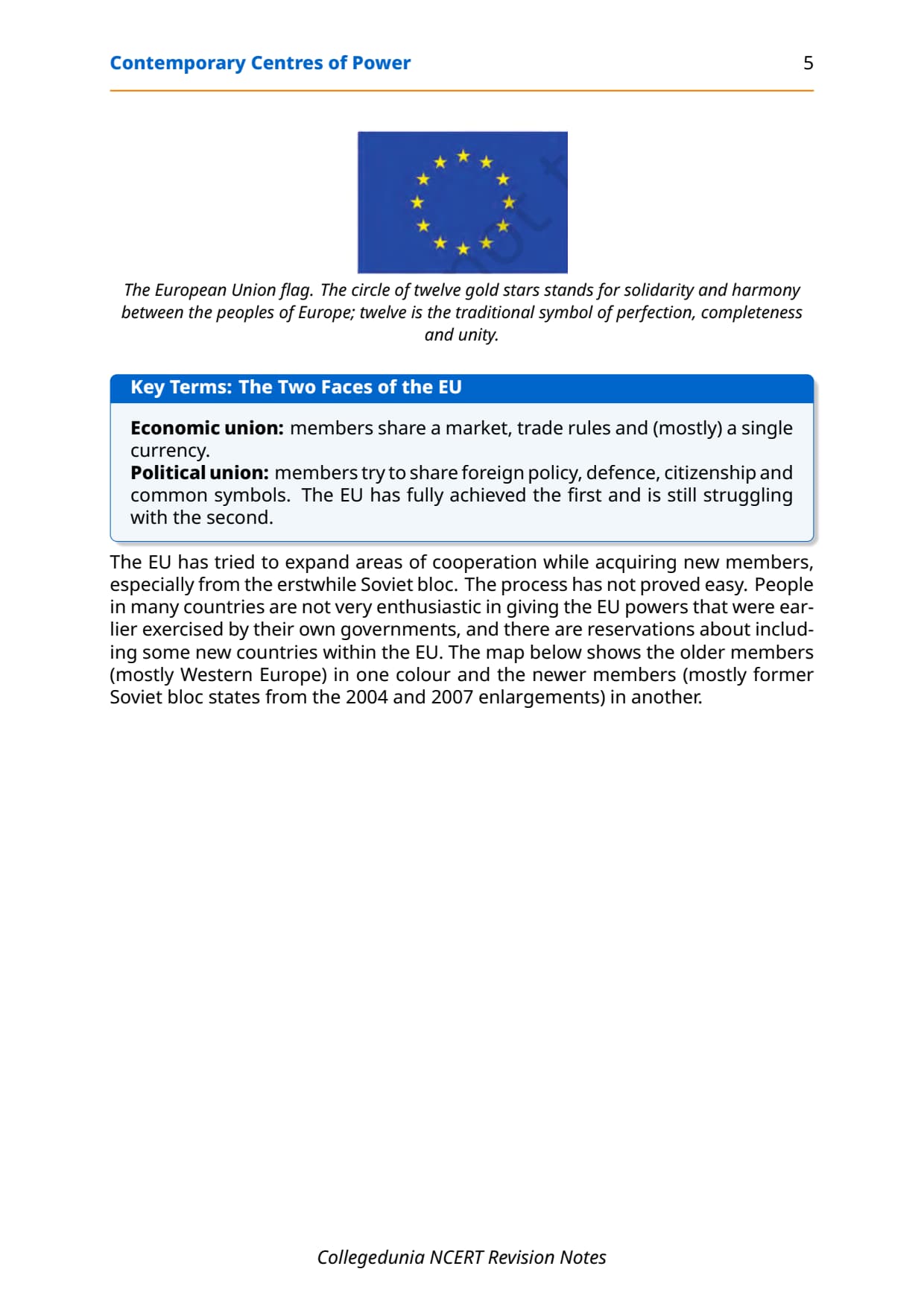
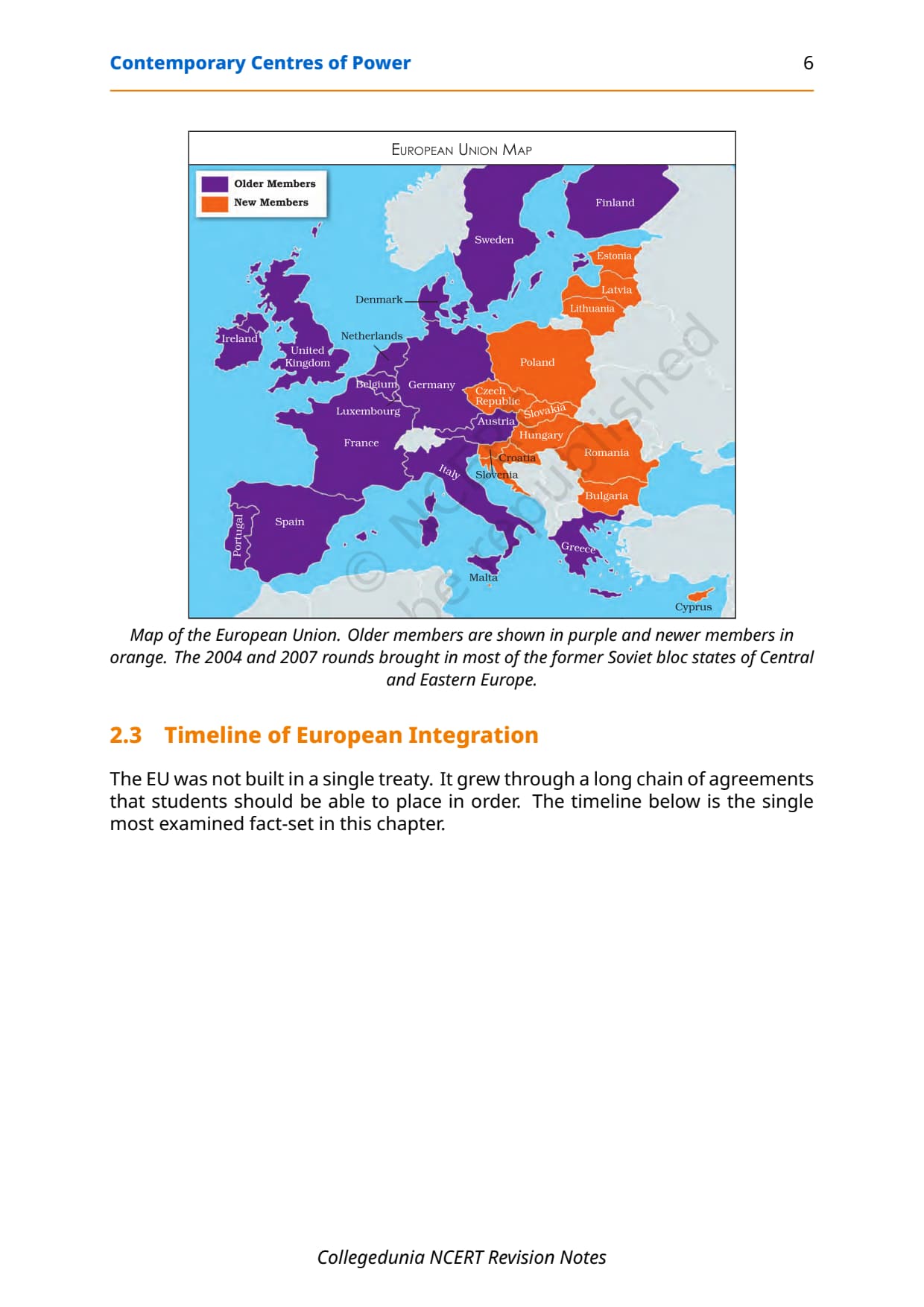
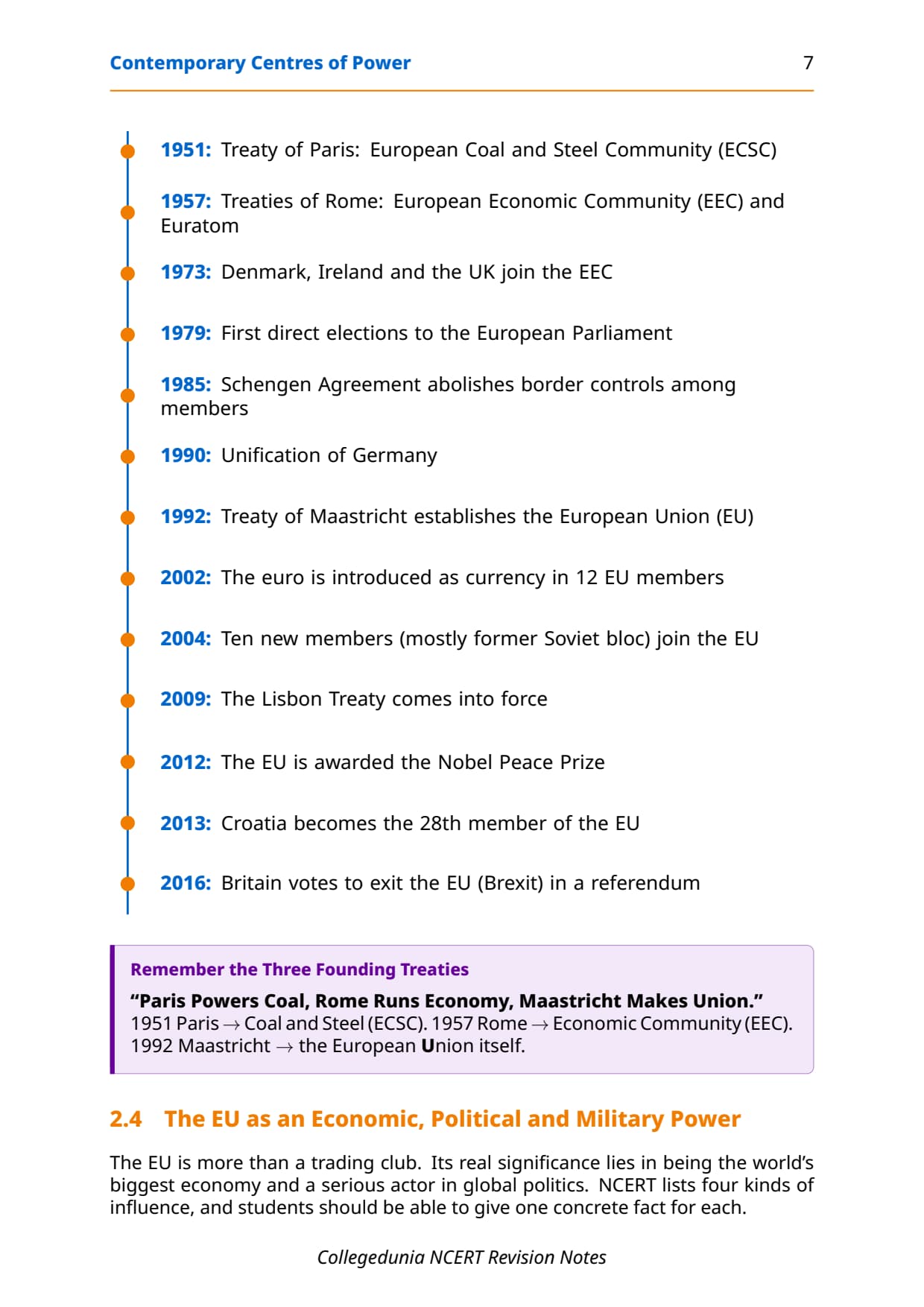
After the Second World War, Europe chose integration over old rivalries, joining its economies step by step until the EU was born in 1992. For quick revision, learn the EU as a short ladder of dates plus three sources of influence.
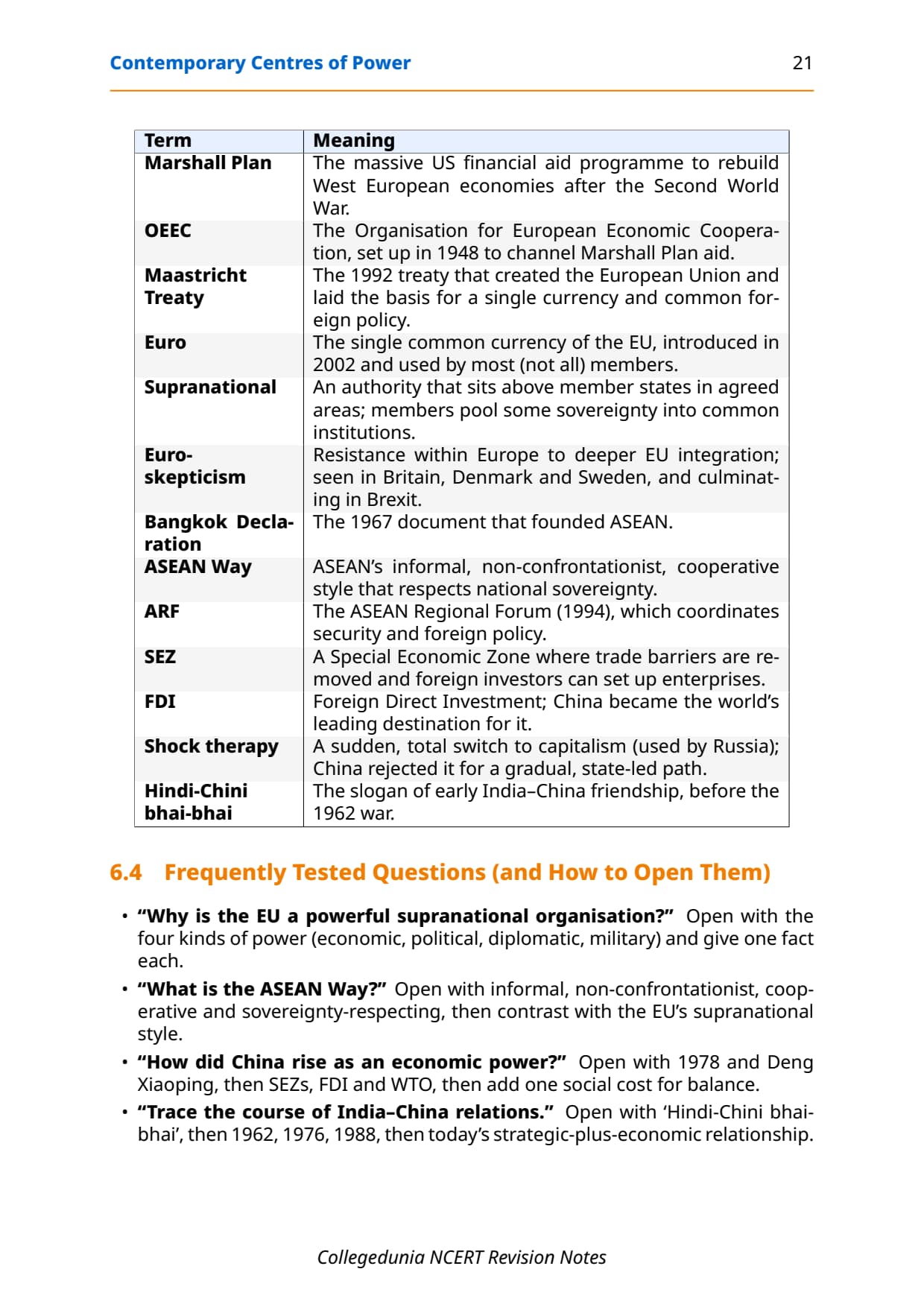
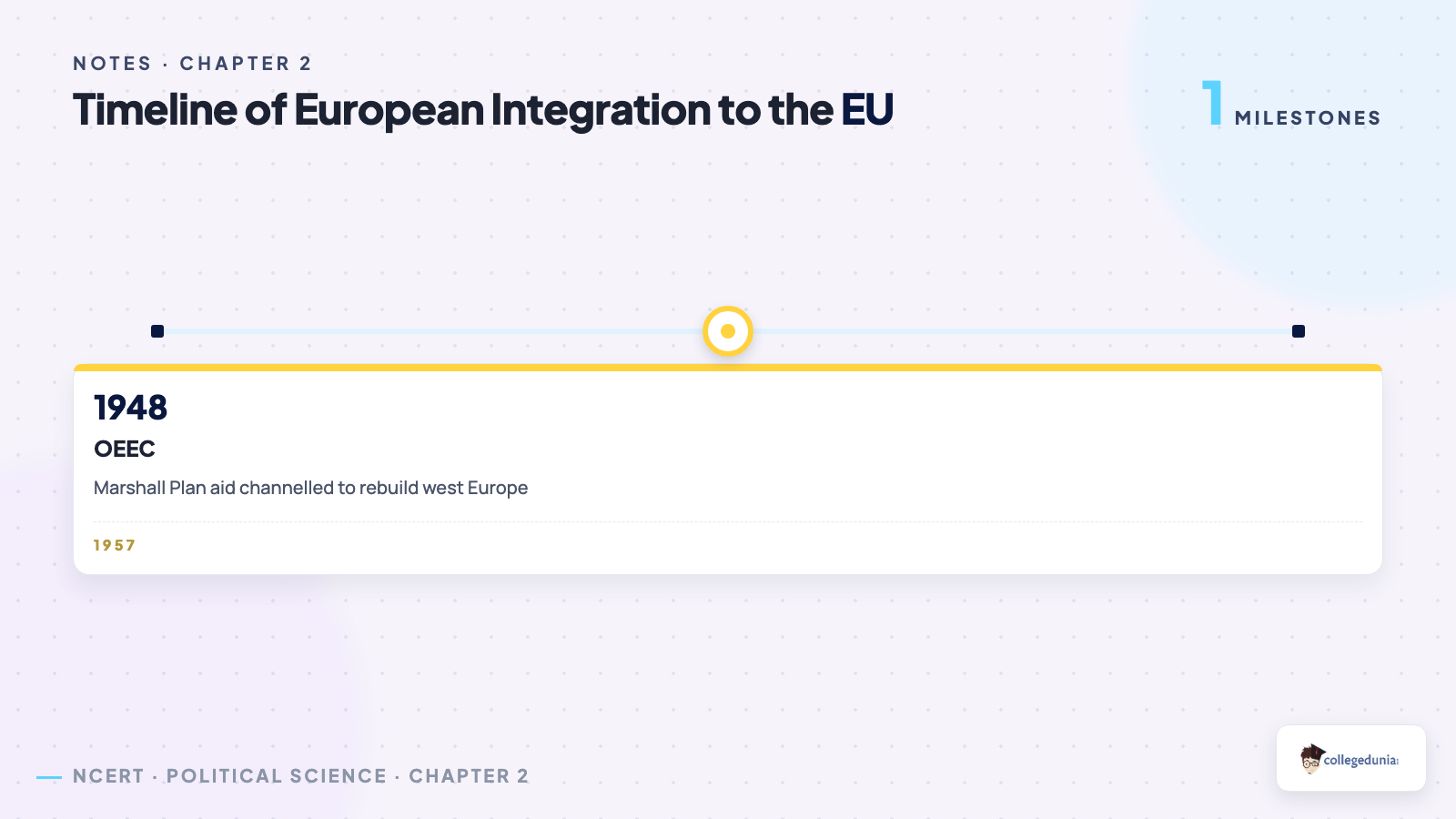
- Marshall Plan and OEEC, 1948: US aid rebuilt Europe and set up the OEEC.
- EEC, 1957: the Treaties of Rome created the European Economic Community.
- EU, 1992: the Maastricht Treaty turned the community into the European Union.
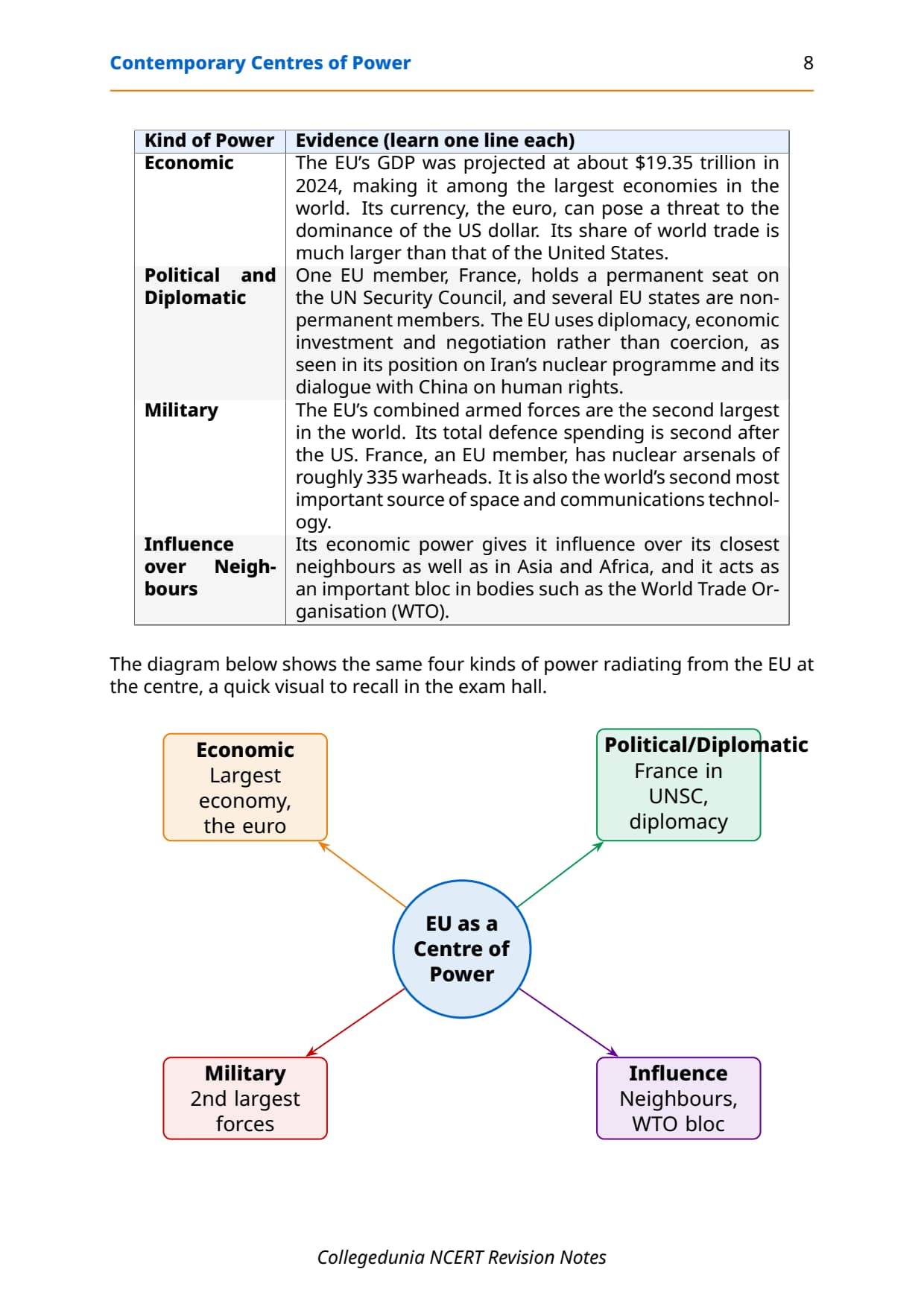
- Influence: the EU has economic, diplomatic and military power.
The point examiners test most is that the EU is influential across three areas at once. A huge economy with the euro, France's permanent UN Security Council seat, and the world's second-largest combined armed forces. Keep the limits ready too, since members keep their own foreign and defence policies and Euro-skepticism runs deep in places.
ASEAN and the ASEAN Way
ASEAN was set up by the Bangkok Declaration of 1967. Unlike the EU, it builds no supranational structures and moves by consensus. These notes keep its method, vision and structure as short, boxed points so they are easy to copy onto the answer sheet.
- The ASEAN Way: informal, non-confrontationist and cooperative interaction.
- Vision 2020: an outward-looking role for ASEAN, with negotiation over conflict.
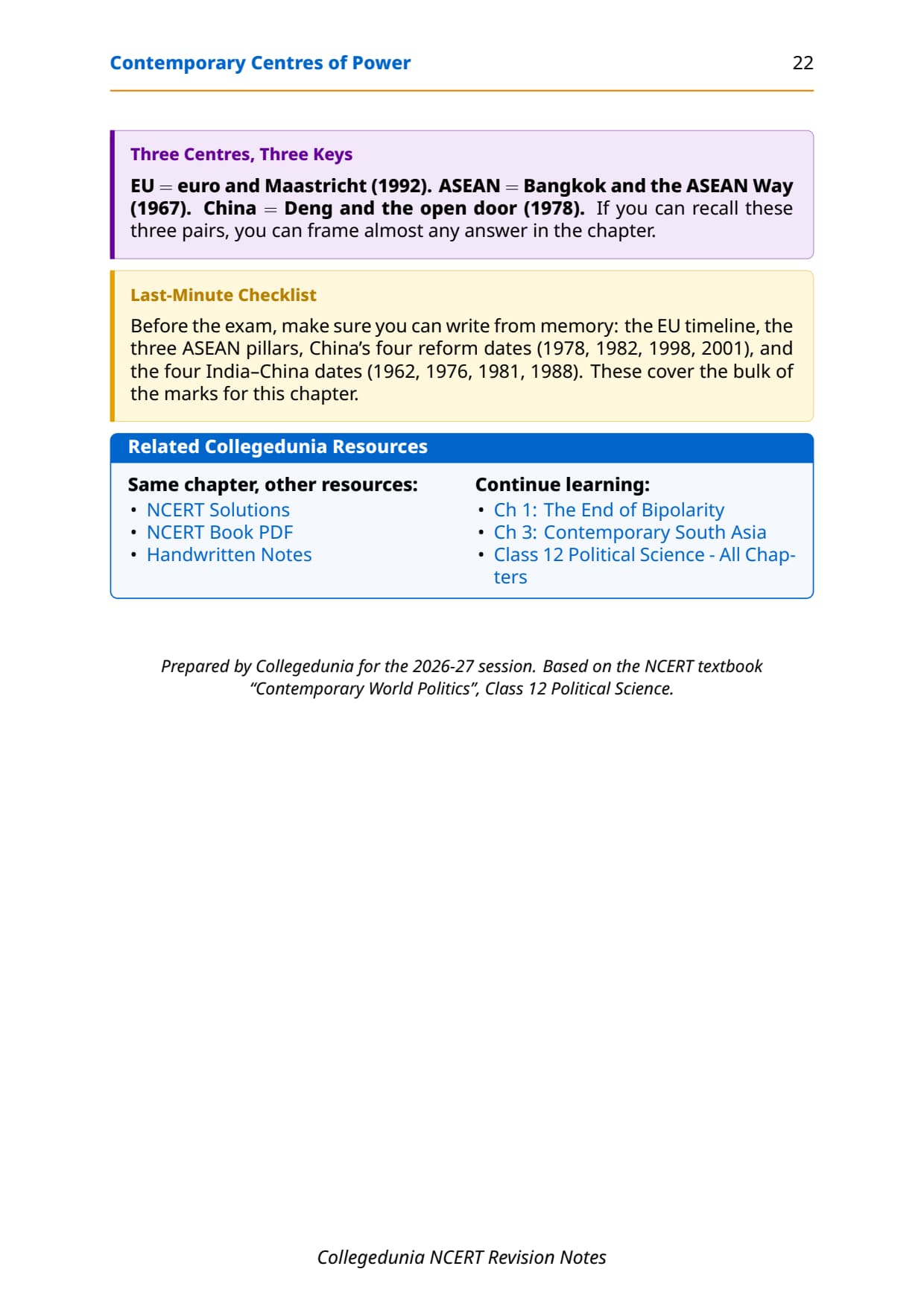
- Three pillars: Security Community, Economic Community and Socio-Cultural Community.
- ARF, 1994: the ASEAN Regional Forum is the security wing of ASEAN.
The most-tested point is that the ASEAN Way is a soft, cooperative style, not a defence policy. Lock it to three words: informal, non-confrontationist, cooperative. For the pillars question, name all three with one objective each. The ARF answers two facts at once, its 1994 founding and its security role.
The Rise of the Chinese Economy
China's economic rise is the third centre of power. The shift from a closed command economy to a fast-growing market economy is a long-answer favourite, so these notes keep it as a clear before-and-after table rather than a story.
| Feature | Command economy then vs market economy now |
|---|---|
| Ownership | State owned everything; now private farms and firms after the 1982 and 1998 reforms. |
| Openness | Closed and self-reliant; now open through Special Economic Zones and WTO entry in 2001. |
| Driver of growth | State-run heavy industry; now foreign trade, foreign direct investment and rural industry. |
| Result | Slow growth; now the world's fastest growing economy, set to be the largest by 2040. |
The one-line takeaway for your sheet is that China opened step by step, not through shock therapy. Deng Xiaoping announced the open door policy in 1978, the hinge of China's whole rise. Pin this date, because the same year marks the start of the economic rise and pays off in several questions.
India-China Relations and Regional Organisations
The chapter closes with India-China relations and why states form regional organisations. This topic links the chapter to India's foreign policy, so it is a regular short and long answer. The table keeps the disputes and their resolution side by side for fast revision.
| Contentious issue | How it can be resolved |
|---|---|
| Border dispute | The 1962 war over Arunachal Pradesh and Aksai Chin; continue boundary talks running since 1981. |
| Tibet | Differences from the 1950 takeover; manage through patient dialogue. |
| China-Pakistan ties | Nuclear help, the CPEC and UN blocking; ease through diplomacy and shared forums. |
The sharp point for your notes is that growing trade keeps both sides at the table. Regional organisations are set up for peace and prosperity: faster growth, stability, social progress and a stronger joint voice. Geographical proximity helps too, since nearby states share problems, trade routes and security concerns, so closeness makes it natural for them to band together.
Contemporary Centres of Power Important Questions and Exam Pointers
CBSE sets a steady mix of MCQ, short and long answers from this chapter. Knowing the pattern helps students decide how much to write and which topics to revise first. A focused list of Contemporary Centres of Power important questions saves a lot of time before the board exam.
- Long answer (5 to 6 marks): what makes the EU influential, or how China's economy changed.
- Short answer (4 marks): the ASEAN pillars, or the objectives of regional organisations.
- Source-based: a passage on European integration or India-China relations, with sub-parts.
- Objective and MCQ: the ASEAN Way, the open door policy, and the founding dates.
For quick recall, students often practise a short class 12 political science chapter 2 mcq drill and a list of Contemporary Centres of Power class 12 important questions. The most repeated items are the sources of EU influence and the China economy contrast, so keep those answer points ready in your own words. Reading these notes once, then writing the key lists from memory, is the fastest way to lock the chapter in.
Common Mistakes Students Make in This Chapter
A few errors cost marks every year. Most come from mixing up the founding dates or giving only one side of the EU question. Fixing these five points is the quickest way to lift a score, so add them to the end of your revision sheet.
- Saying China used shock therapy - it did not; it opened step by step from 1978.
- Confusing the EEC (1957) with the EU (1992) - keep the two founding years clearly separate.
- Naming only one border area for 1962 - both Arunachal Pradesh and Aksai Chin are needed.
- Forgetting the EU's limits - members keep their own foreign and defence policies.
- Describing the ASEAN Way as a defence policy or a road - it is an informal style of interaction.
Students who fix these five points usually move from average to high marks. The exam rewards a balanced view, so always give both the strength and the limit of the EU before you judge it. These notes flag each soft point so you can phrase it safely in the answer sheet.
How These Notes Pair with the Solutions and Book PDF
These revision notes summarise the chapter. To prepare fully, students should use them alongside the other resources for the same chapter, all linked in the table below. Read the notes first, then test yourself with the solutions, and open the book PDF whenever you need the original text and figures.
| Resource | Best used for |
|---|---|
| Contemporary Centres of Power NCERT Solutions | Step-by-step answers to all 14 back-exercise questions |
| Contemporary Centres of Power Handwritten Notes | Last-minute, one-shot revision in a scanned notebook style |
| Contemporary Centres of Power NCERT Book PDF | Reading the original NCERT chapter text and figures |
Tip: read these notes first, then attempt the solutions on your own, and only then check the model answers. That order builds memory faster than copying answers straight away.
All Class 12 Political Science Notes by Chapter
The table links the revision notes for every chapter in both Class 12 Political Science books, so students can move across the course in one click. Contemporary Centres of Power is highlighted.
| Chapter | Notes |
|---|---|
| Contemporary World Politics | |
| Chapter 1 | The End of Bipolarity |
| Chapter 2 | Contemporary Centres of Power |
| Chapter 3 | Contemporary South Asia |
| Chapter 4 | International Organisations |
| Chapter 5 | Security in the Contemporary World |
| Chapter 6 | Environment and Natural Resources |
| Chapter 7 | Globalisation |
| Politics in India Since Independence | |
| Chapter 1 | Challenges of Nation Building |
| Chapter 2 | Era of One-Party Dominance |
| Chapter 3 | Politics of Planned Development |
| Chapter 4 | India's External Relations |
| Chapter 5 | Challenges to and Restoration of the Congress System |
| Chapter 6 | The Crisis of Democratic Order |
| Chapter 7 | Regional Aspirations |
| Chapter 8 | Recent Developments in Indian Politics |
FAQs on Contemporary Centres of Power Class 12 Notes
Contemporary Centres of Power Class 12 Political Science Notes Common Questions
Ques. Where can I download the Contemporary Centres of Power Class 12 notes PDF?
Ans. You can download the Contemporary Centres of Power Class 12 Political Science notes PDF directly from this page. It is free, follows the 2026-27 NCERT, and covers the EU, ASEAN, China and India-China relations in a short, point-wise format.
Ques. What does the Contemporary Centres of Power chapter cover for Class 12?
Ans. It covers the rise of three alternative centres of power after bipolarity ended: the European Union, ASEAN and China. It also explains why states form regional organisations and how India deals with China.
Ques. What is the ASEAN Way?
Ans. The ASEAN Way is the informal, non-confrontationist and cooperative style in which ASEAN states deal with one another, with deep respect for national sovereignty. It is the soft method that explains ASEAN's success, not a binding military doctrine.
Ques. Why is Contemporary Centres of Power important for the board exam?
Ans. Because the EU, the China economy and India-China relations appear almost every year as long answers. Revising these notes well secures both the MCQ marks on dates and the long-answer marks on the EU and China.
Ques. How should I use these notes to revise quickly?
Ans. Read the notes once under the EU, ASEAN and China frame, keep all founding dates and key terms on one sheet, then write the key lists from memory. Finish by attempting a short class 12 political science chapter 2 mcq drill to test the small facts.



Comments